
Palazzos are the outfit I end up recommending most to guests who’ve already done one multi-day wedding in a lehenga and sworn never again. Wide trousers let you sit cross-legged at the pheras, climb into a car and dance at the sangeet without managing a skirt, which matters across long Indian wedding celebrations. The catch is proportion: all that width needs a top with shape, and the hem has to be cut for your shoes. Below are twenty complete looks, from a light haldi set to a sequinned reception outfit, with the jewelry, footwear and dupatta handling I’d use for each and the fit point that makes or breaks it.
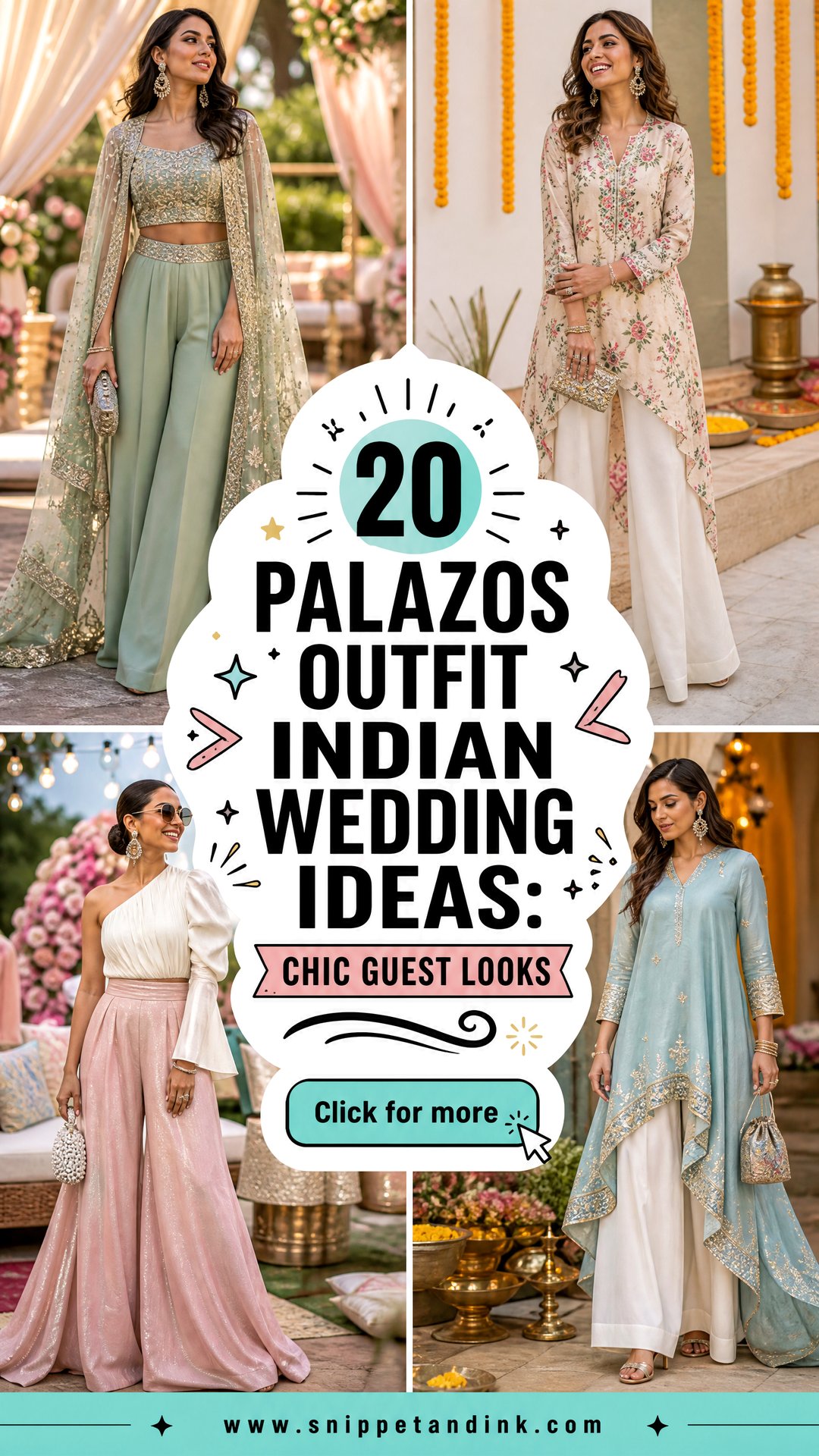
Hemming Palazzos for Juttis or Heels
Most palazzo outfits that look wrong in photos are wrong at the hem. Ready-made sets are cut long, and wide trousers that touch the floor collect dust, get stepped on during the pheras and catch on stairs. I decide the footwear first and hem to it.
- Pick your shoes for the function before any alteration. Flat juttis and three-inch platforms need hems inches apart.
- Wear them at the fitting and stand naturally. For heels, the back of the hem should just skim the floor and the front should cover most of the shoe.
- For flats, take the hem up to just above the floor. You’ll be walking on lawns, rugs and stage steps.
- Check the waistband by sitting down cross-legged. High-waisted palazzos must not dig in or drop when you sit on the floor during rituals.
If you’re attending several functions in different shoes, I’d rather you wear one comfortable block heel throughout than re-hem a set for each event. And fabric changes the width you need: crepe and georgette fall close to the leg, while silk and brocade stand out, so ask for a narrower cut in the stiffer fabrics.
1. Embroidered Kurta With Palazzo Pants
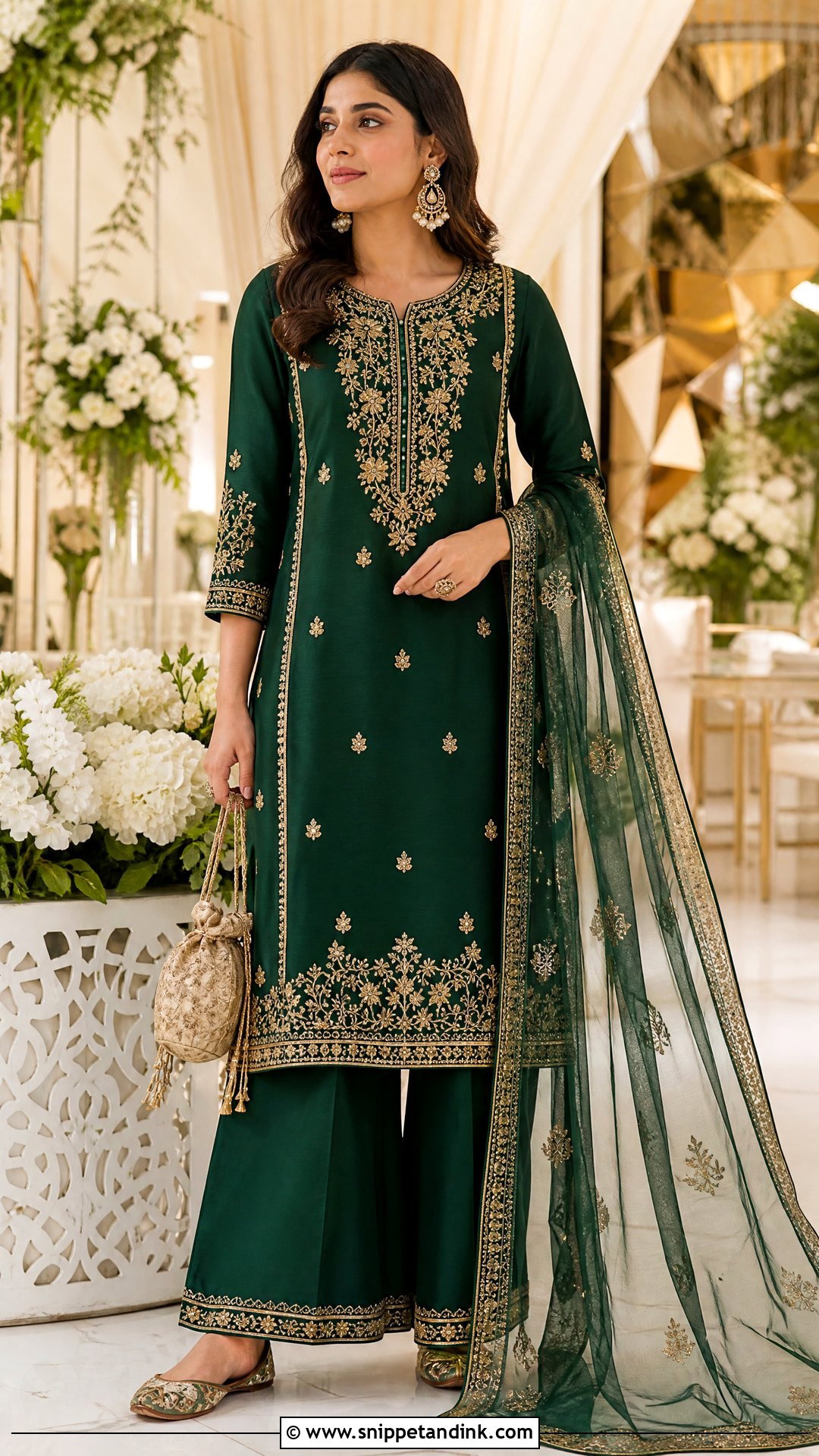
This is the safest palazzo outfit for the main ceremony, and the one I’d buy if you only buy one. A knee-length kurta with zari, threadwork or fine stone detail over matching palazzos with only a light flare keeps all the attention on the embroidery. The kurta length is what I check first: knee length lets the pants show; anything shorter starts to look casual. Add a sheer organza or net dupatta with a narrow border, kundan earrings, stacked bangles and embroidered juttis. Emerald, royal blue and wine read rich at night, while pastels suit a morning ceremony.
2. Peplum Top With Palazzo Pants
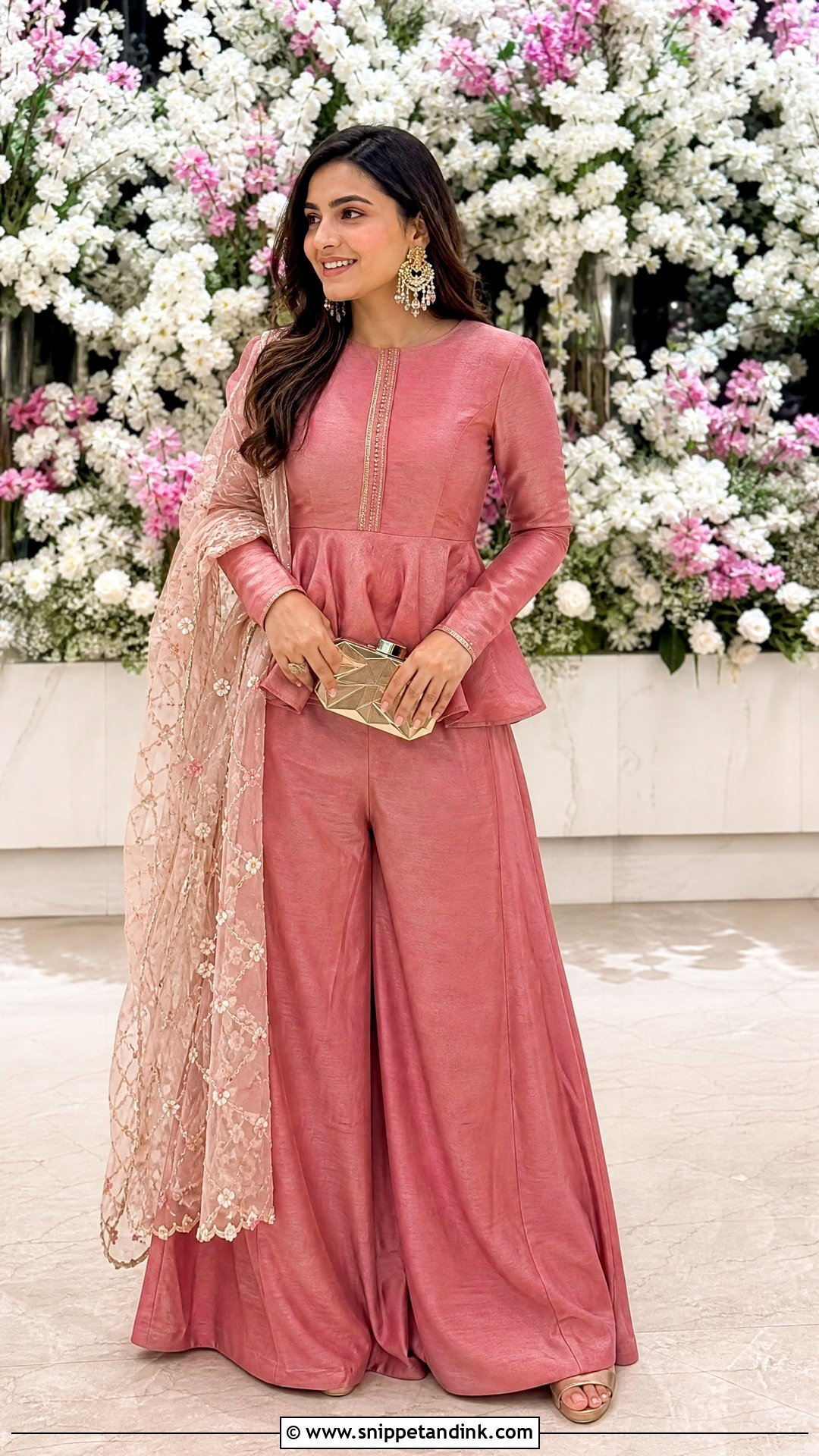
Wide pants and a loose top make anyone look shapeless. A peplum fixes that by marking the waist, provided it starts just below the natural waistline and flares gently rather than standing out like a frill. Raw silk, brocade and embroidered net hold the flare best; soft georgette peplums tend to collapse. A matching set gives a longer line, and a contrasting one is more playful for a sangeet. Chandelier earrings, block heels, and no necklace if the neckline is busy. A light dupatta over one shoulder covers you for more traditional moments.
3. Crop Top With Palazzo Pants And Cape
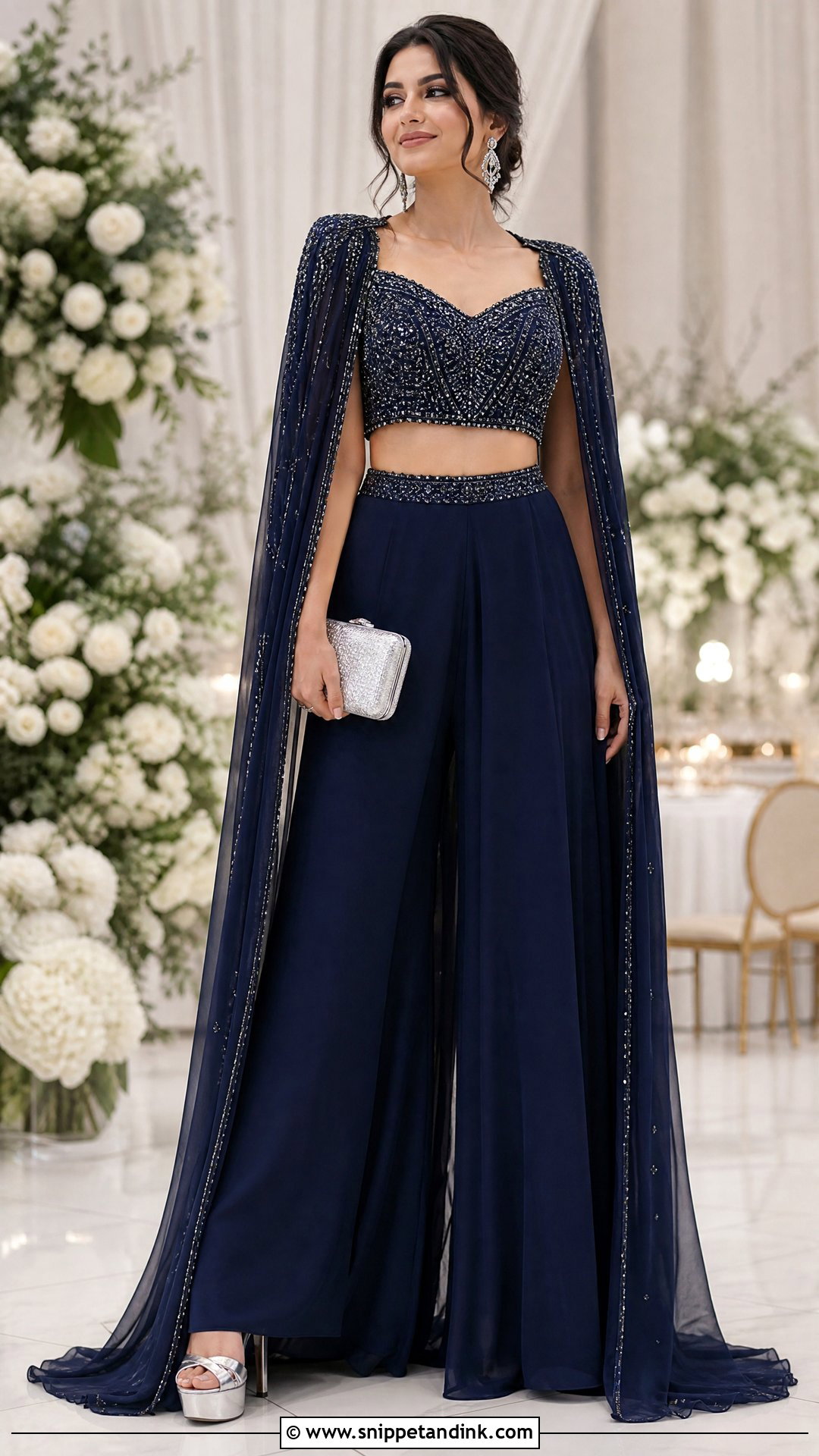
No dupatta to manage on the dance floor is the main reason I like a cape for a sangeet. Pair a fitted beaded or sequinned crop blouse with high-waisted palazzos, and make sure the waistband actually meets the blouse hem when you raise your arms; that’s the coverage check most people forget. The cape should fall past the hips or to the ankle. One color throughout, in navy, teal, plum or dusty rose, keeps the layers from looking busy. Crystal drops, a structured clutch, metallic platforms, and hair low or loose so the cape’s shoulders show.
4. Short Kurti With Brocade Palazzo Pants
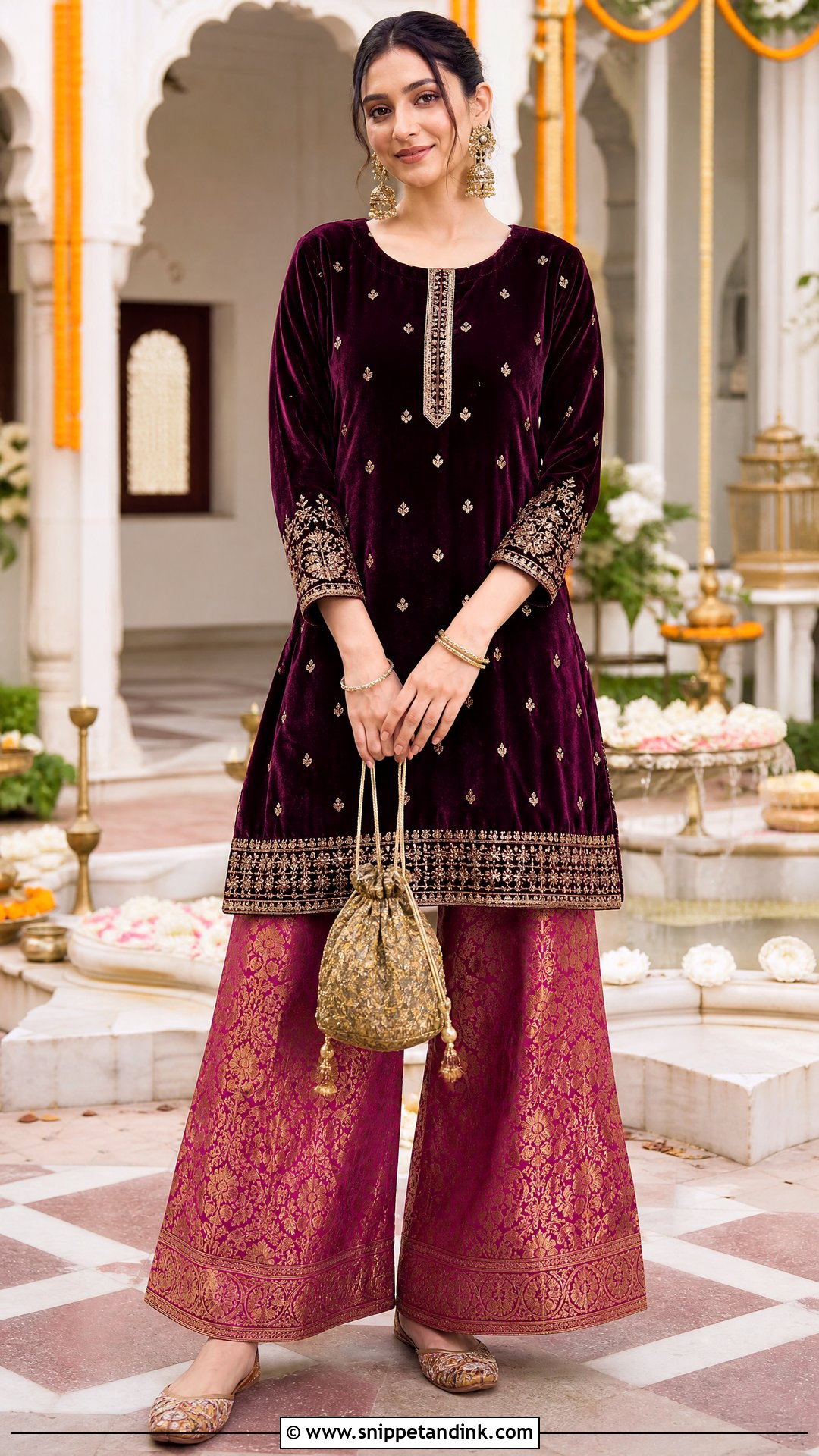
Brocade palazzos are the hero here, so the kurti has one job: stay out of the way. A fitted silk or velvet short kurti ending at the hip shows the full woven pattern. Brocade is stiff, so I’d ask for a controlled width rather than the widest cut, or the pants stand out from your legs like a skirt. Gold or silver weaves in deep red, emerald or midnight blue suit an evening function. Antique jhumkas, plain bangles and comfortable juttis. If you add a dupatta, keep it solid with a small border.
5. Floral Kurta With White Palazzo Pants
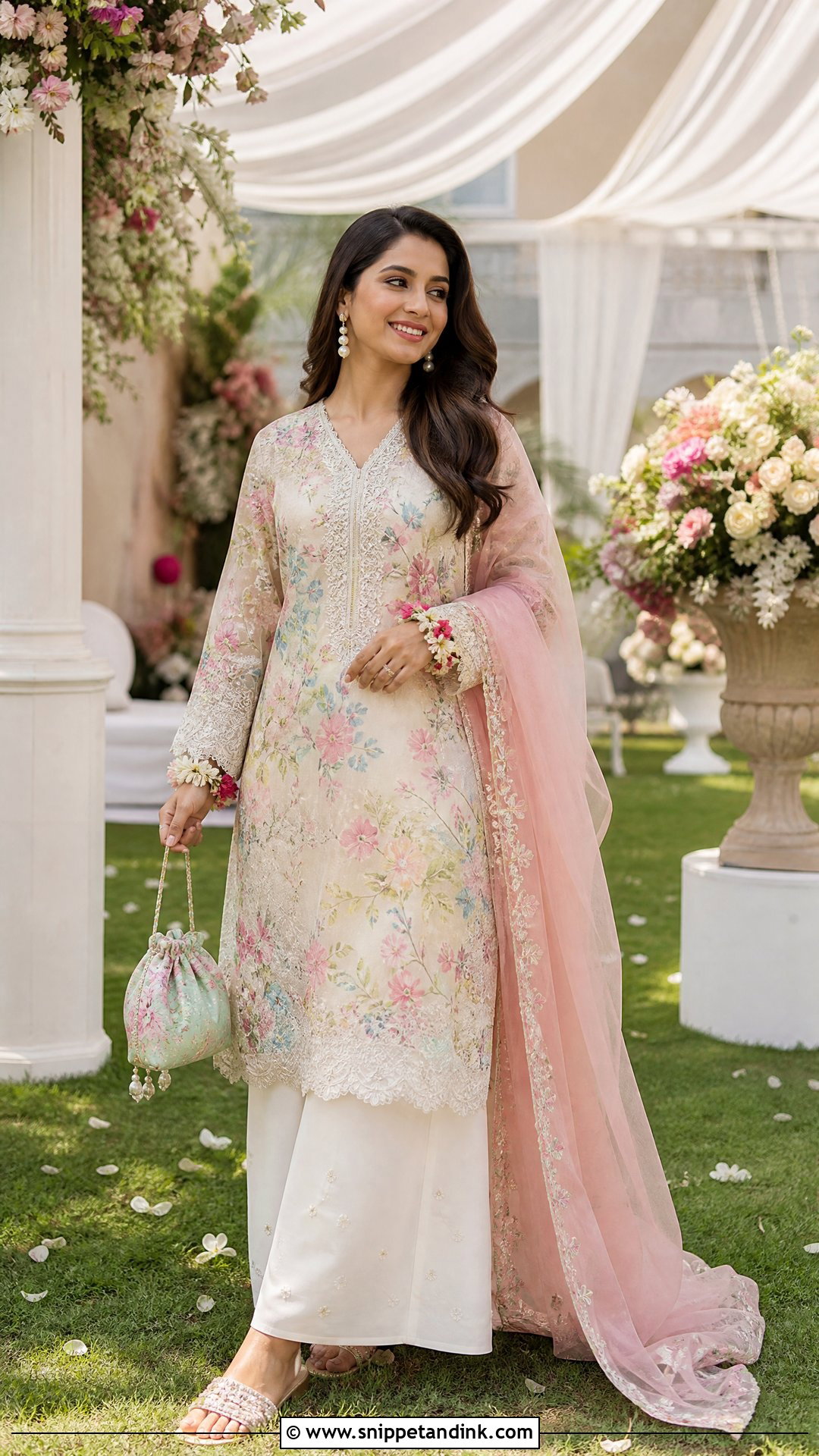
Daytime and outdoors, this is the combination I’d pick. A floral kurta with printed flowers, threadwork or light appliqué sits on white or ivory palazzos, which keep the whole outfit cool-looking in the sun. Bring one floral shade into a soft chiffon dupatta. White pants and an outdoor mehndi have one hazard: grass and henna. Choose a slightly cropped length so the hem clears the lawn. Pearl earrings, floral bangles, a pastel potli and low block heels or flat juttis that won’t sink into soft ground.
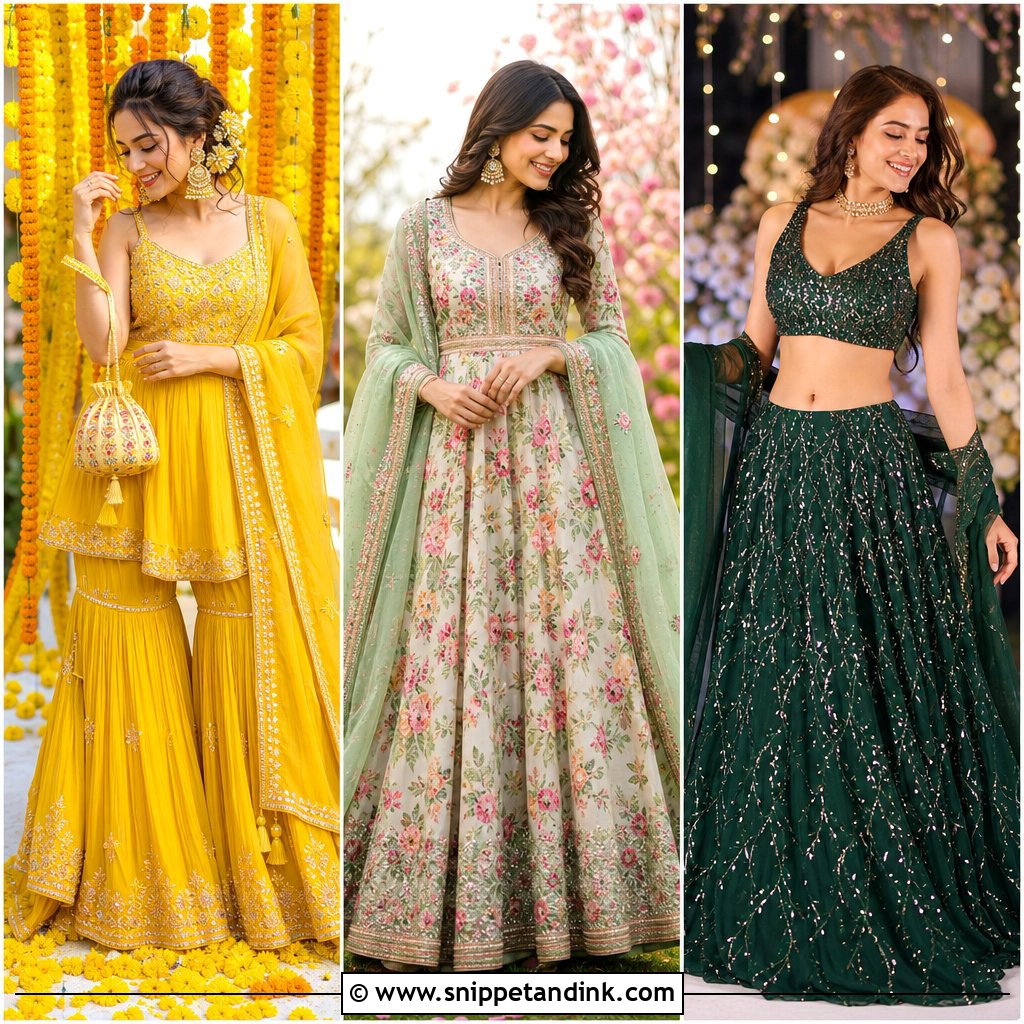
6. Yellow Palazzo Suit For Haldi
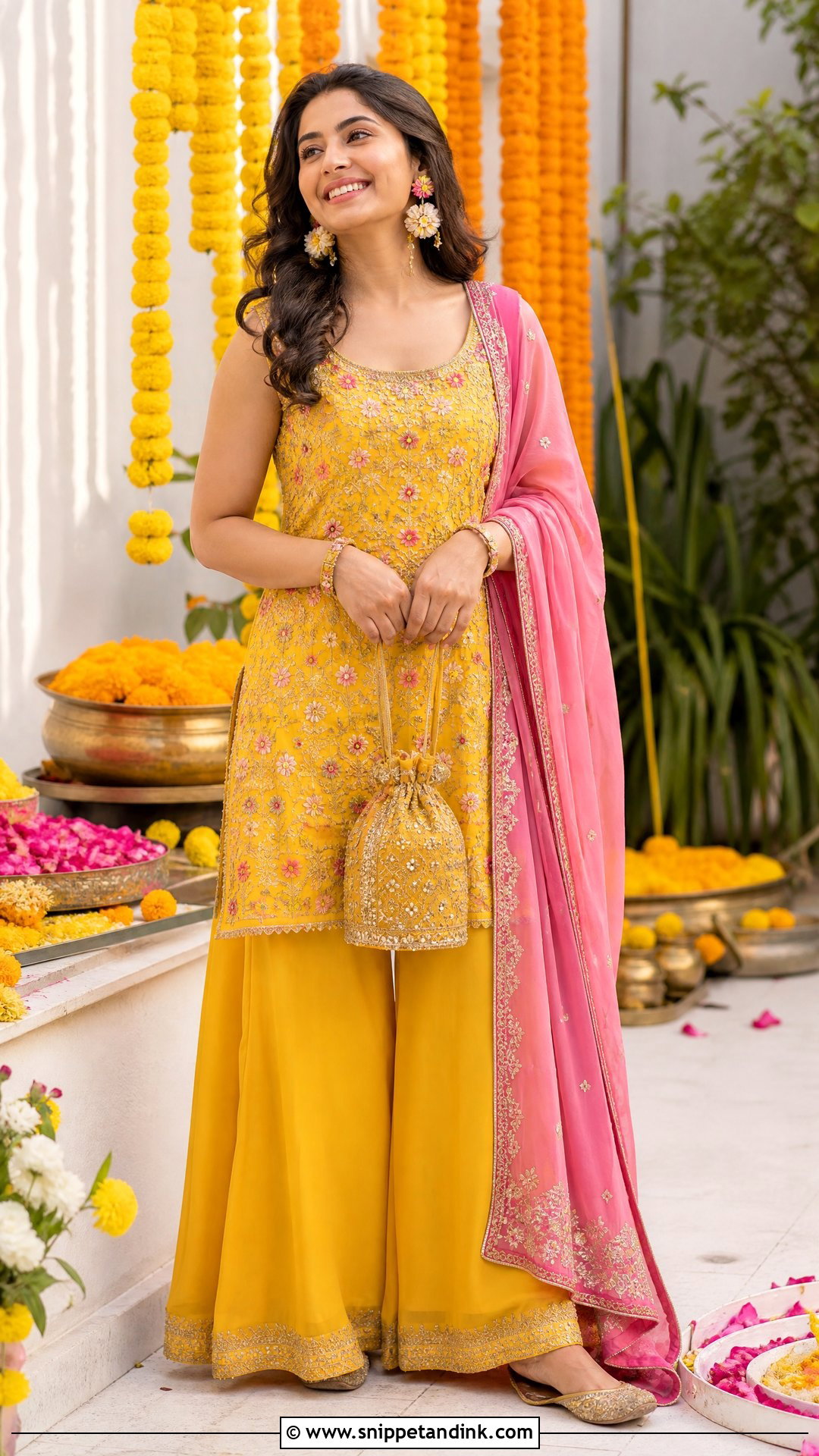
Turmeric stains, and at a haldi it ends up everywhere. That’s why a yellow palazzo suit in cotton silk, chanderi or light georgette makes sense: the color forgives splashes and the fabric breathes in daytime heat. Go for a short embroidered kurta with high-waisted palazzos. Leave precious jewelry at home; floral earrings and simple bangles are enough. Flat juttis help on wet floors during the rituals. A pink, green or orange dupatta adds color, as long as it’s light enough to pin securely to one shoulder.
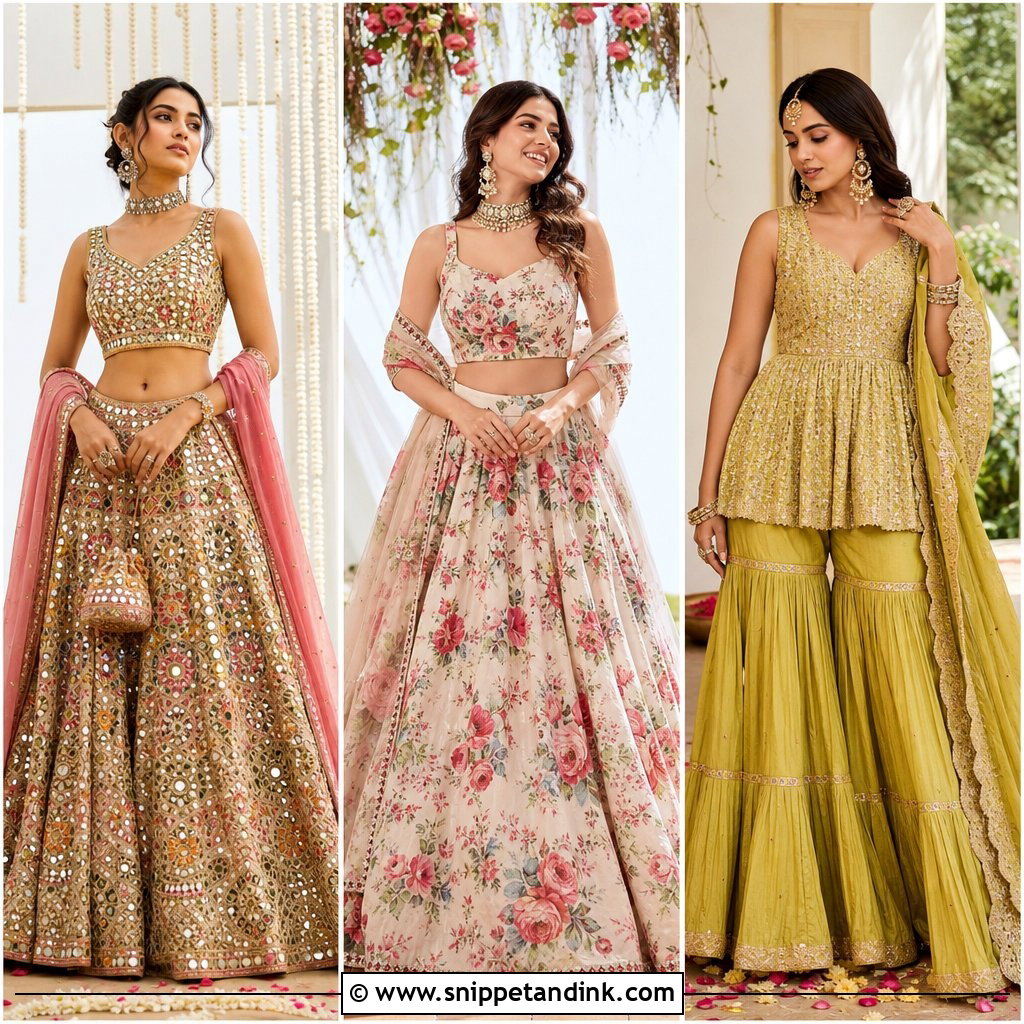
7. Mirror Work Palazzo Set For Mehndi
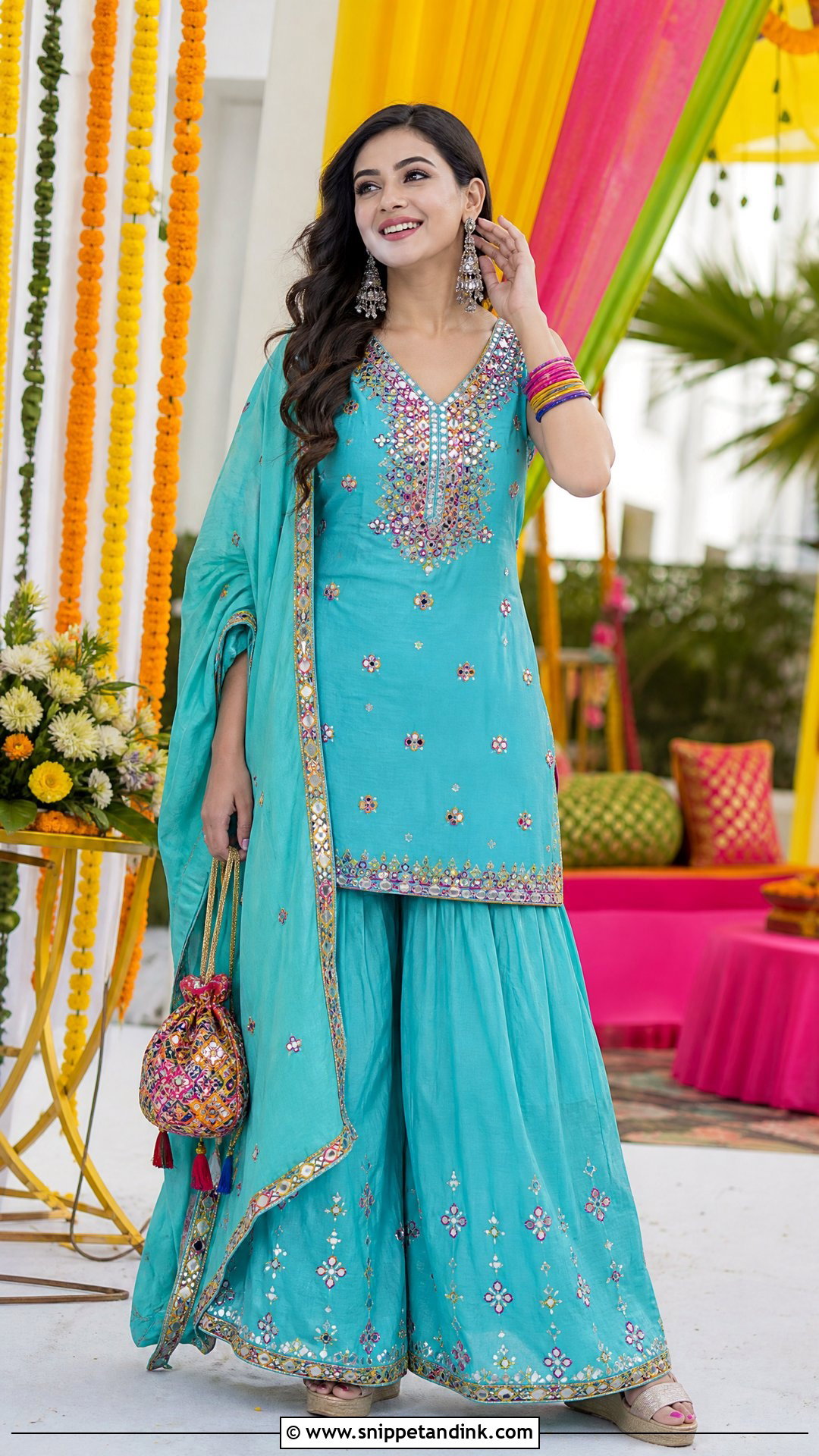
Mirror work is heavy, and where it sits on a palazzo set matters. I’d put the mirrors on a fitted short kurta or blouse and keep the pants plain apart from the waistband or hem; mirrors scattered across wide legs make them swing and drag. Turquoise, lime, fuchsia and orange suit a mehndi. Oxidized silver earrings, colorful bangles, wedges or juttis. Pin a light dupatta at one shoulder so your hands are free for henna, and hold off on hugging anyone until your designs have dried.
8. Velvet Kurta With Silk Palazzo Pants
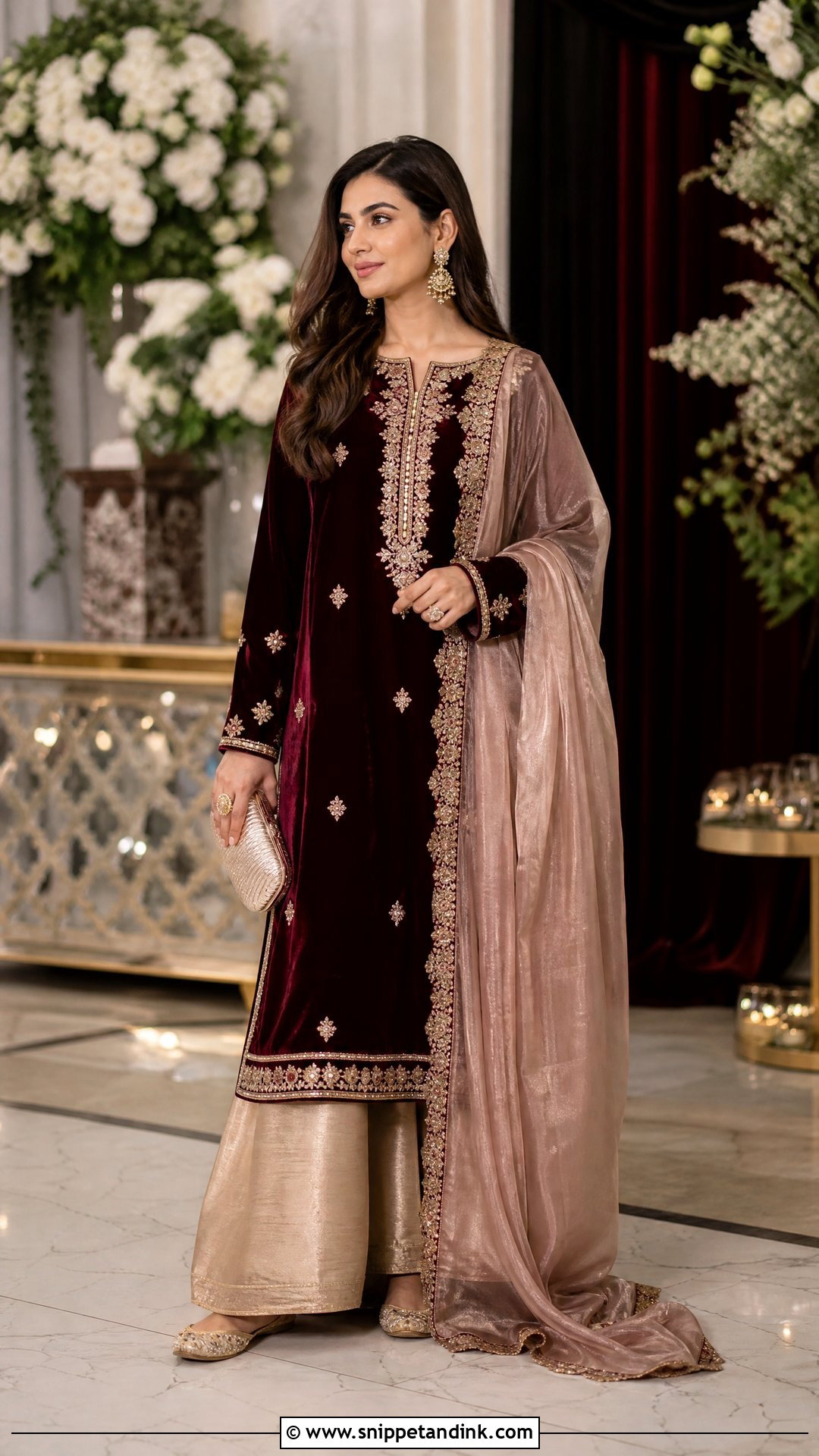
Velvet palazzo outfits belong at winter weddings and evening receptions; in a warm room, you’ll feel it within an hour. Keep the velvet on top only. A structured kurta with zari at the neckline, cuffs or hem over fluid silk palazzos gives you richness without weight on the legs. Burgundy, forest green, navy or plum velvet pairs with gold, champagne or matching pants. A tissue or organza dupatta adds contrast. Polki earrings, one statement ring and closed-toe juttis. Velvet crushes wherever you sit, so steam it, don’t iron it.
9. Anarkali Kurta With Palazzo Pants
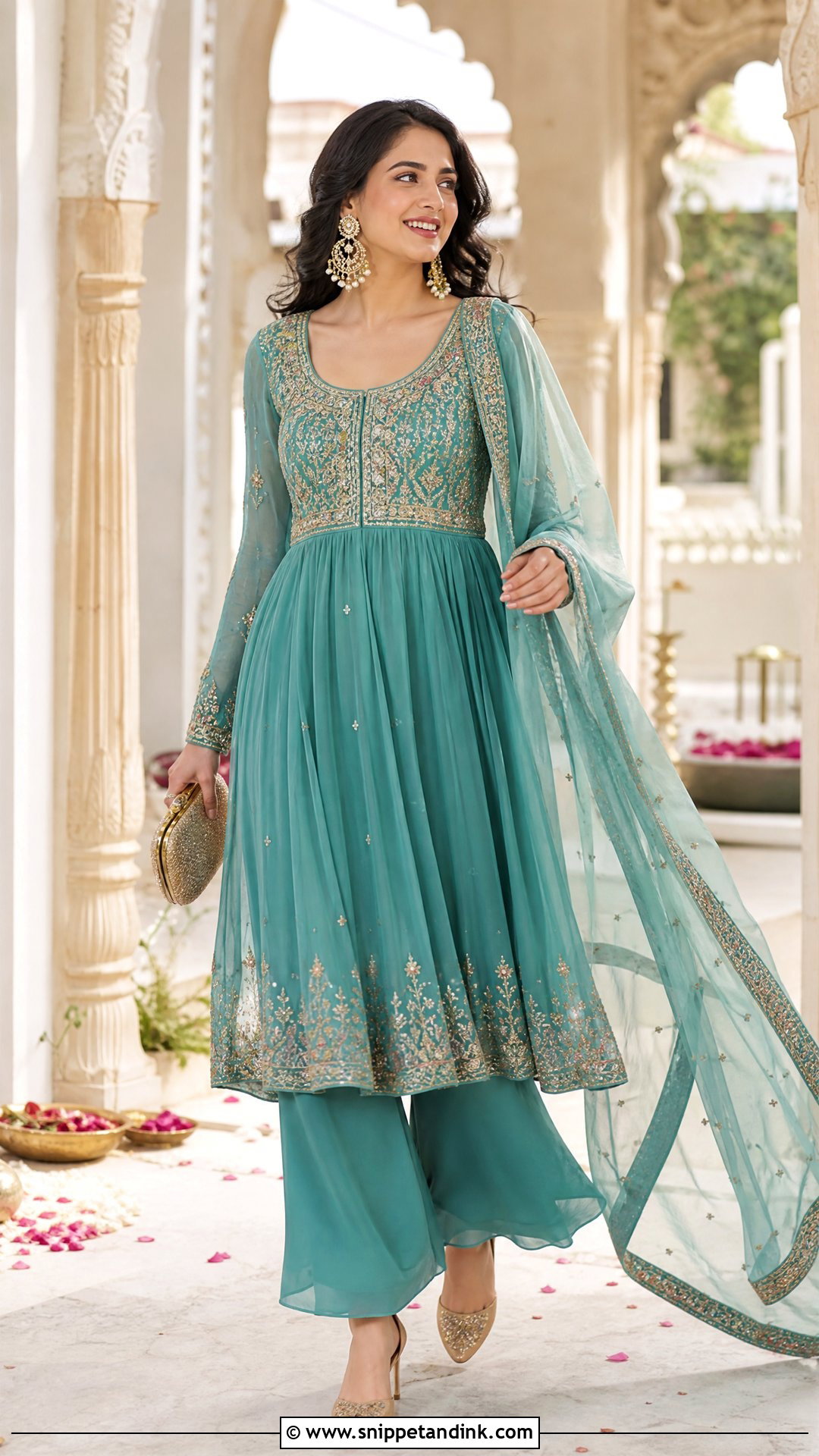
Length is everything with an Anarkali over palazzos. Between the knee and mid-calf, enough of the pants shows to read as a deliberate layered outfit; longer than that and it looks like a dress with trousers peeking out. A fitted bodice and a controlled flare stop the two layers from fighting. Georgette, silk or chiffon fall best. A light dupatta on one shoulder, chandbalis and an embroidered clutch, with heeled juttis or platforms so the pants don’t brush the floor. Tonal looks are refined; contrast pants make the layering more obvious.
10. Long Jacket With Palazzo Pants
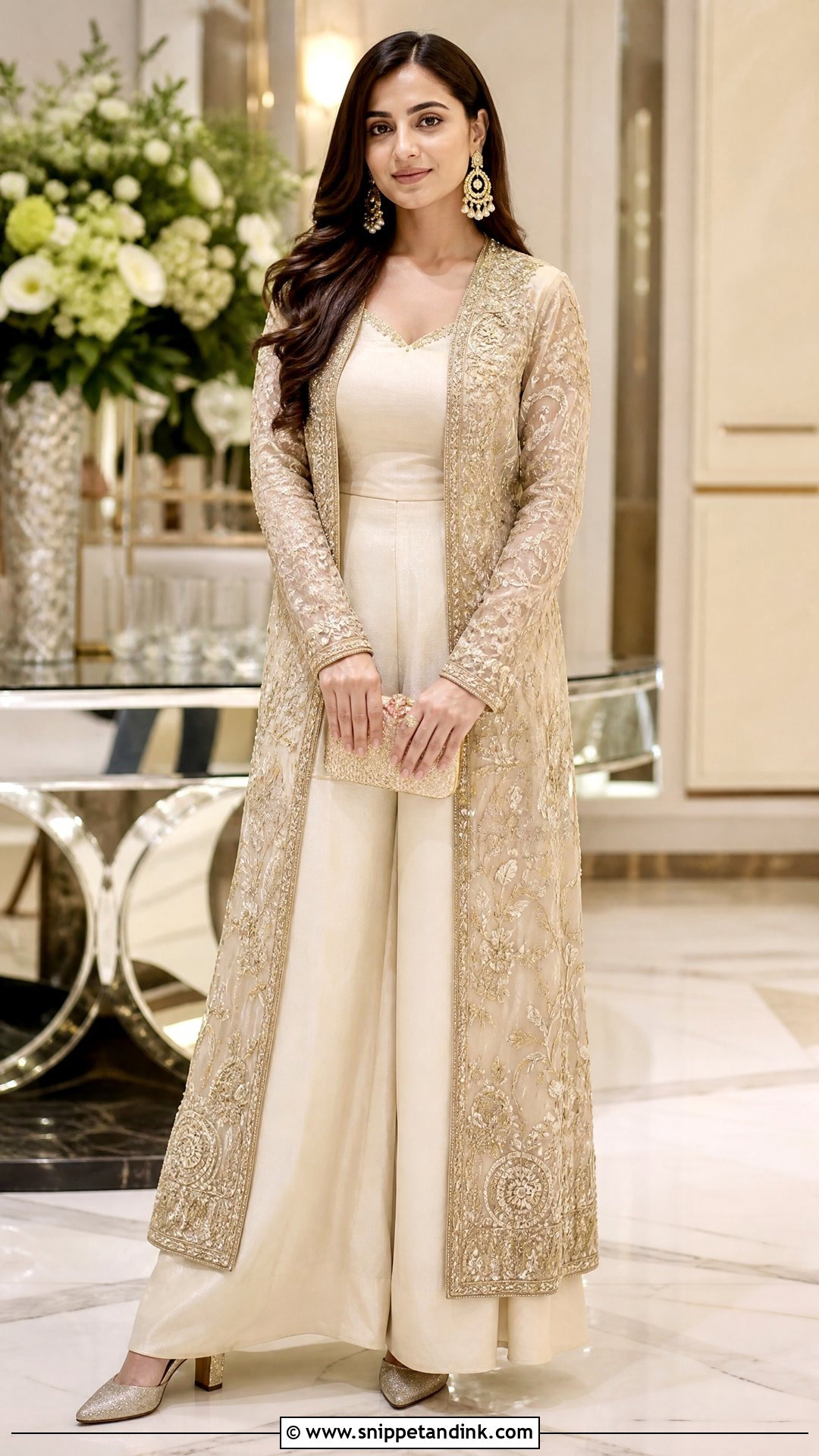
A long embroidered jacket over palazzos gives you reception-level presence without a heavy lehenga. Underneath, a fitted blouse, camisole or sleeveless kurta in a coordinating shade. Open-front jackets draw a long vertical line; closed ones add coverage. Put all the work on the jacket in zardozi, sequins or brocade panels, and keep the pants plain. I’d check the jacket’s shoulder width carefully, because a heavy jacket that’s slightly too wide slides back off the shoulders through the evening. Statement earrings, a hard-case clutch, pointed block heels.
11. One Shoulder Top With Palazzo Pants
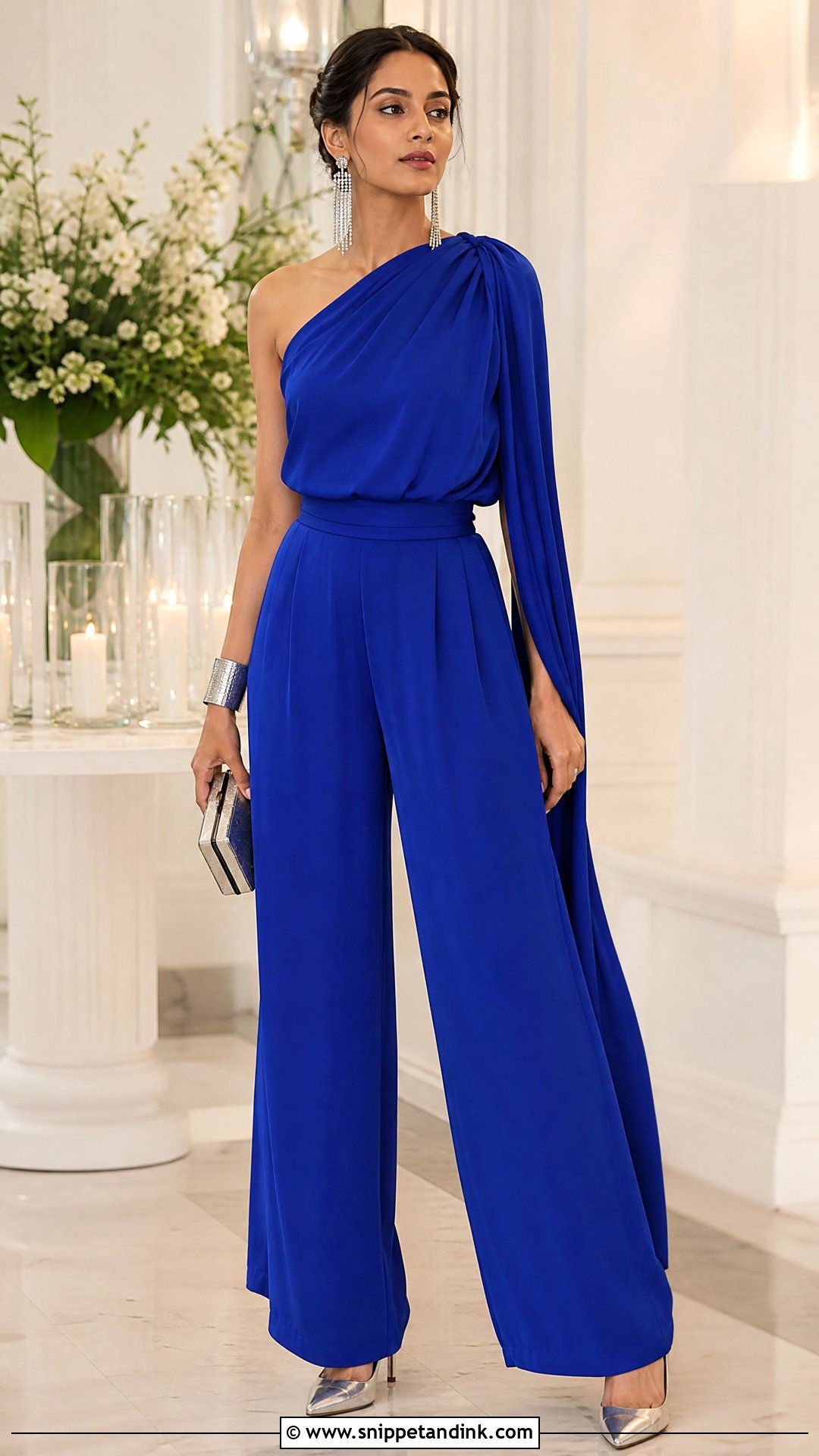
One-shoulder tops need support built in, not just a pretty drape. I look for structure through the bodice, ideally boning or a firm lining, because a soft one-shoulder top slowly slips toward the bare side every time you lift your arm. Pair it with high-waisted palazzos as a matching set in cobalt, emerald, aubergine or rose gold. Long earrings, a cuff and a compact clutch; nothing heavy at the neck. Platforms or pointed pumps hide under the hem. If you want more coverage, choose an attached shoulder drape rather than adding a loose dupatta.
12. Banarasi Palazzo Set With Silk Blouse
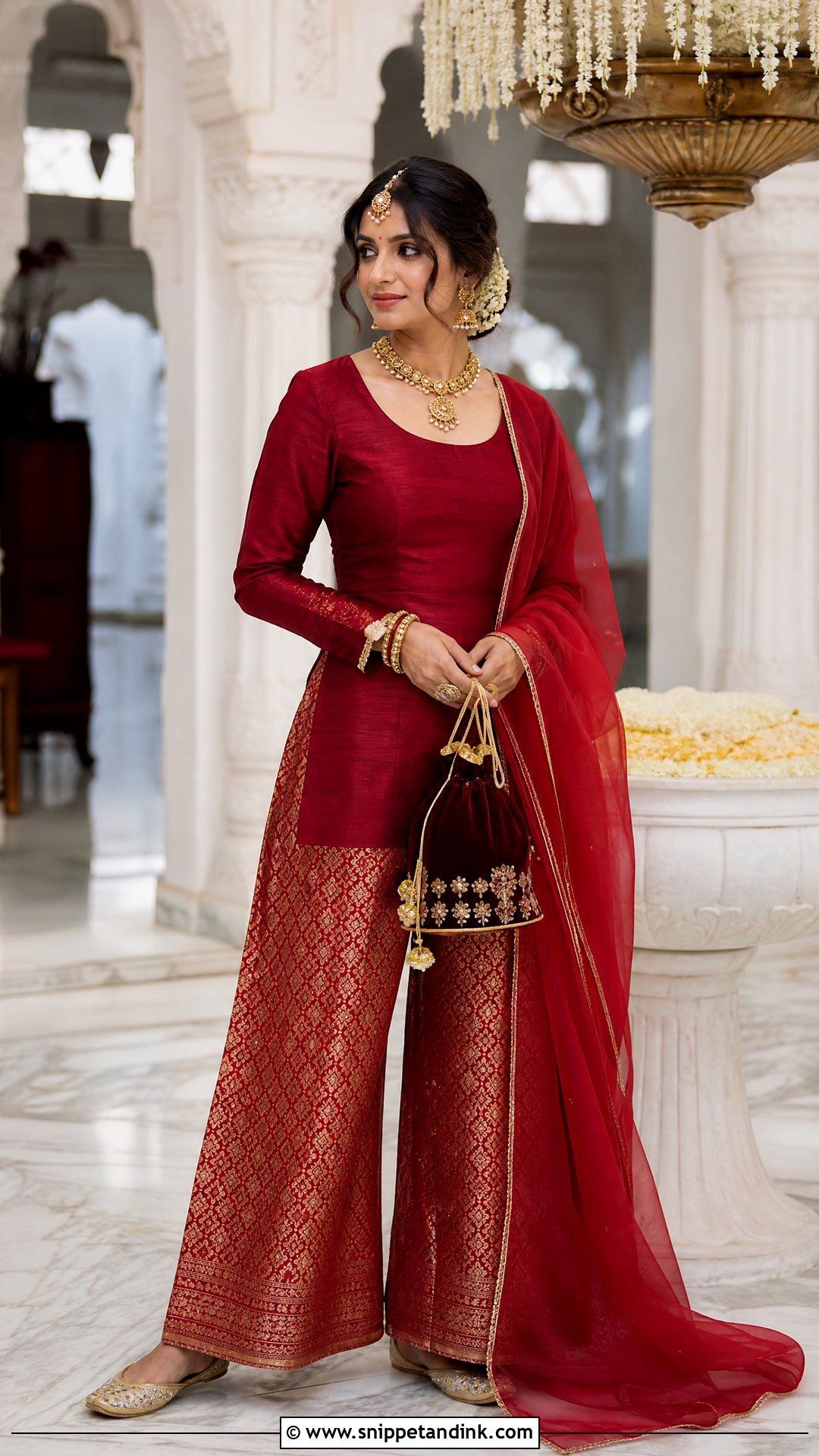
Banarasi fabric has body and sheen of its own, which is why I’d never cut Banarasi palazzos extremely wide; the woven fabric stands away from the leg instead of flowing. A controlled flare looks far better. Pair them with a fitted raw silk blouse or short kurti that picks up one color from the weave, and a solid organza, silk or tissue dupatta so the pattern stays the focus. Temple jewelry or a short kundan necklace, a plain velvet potli, gold juttis. It’s a good answer for a traditional ceremony when you want more freedom than a saree gives.
13. Sequin Palazzo Set For Sangeet
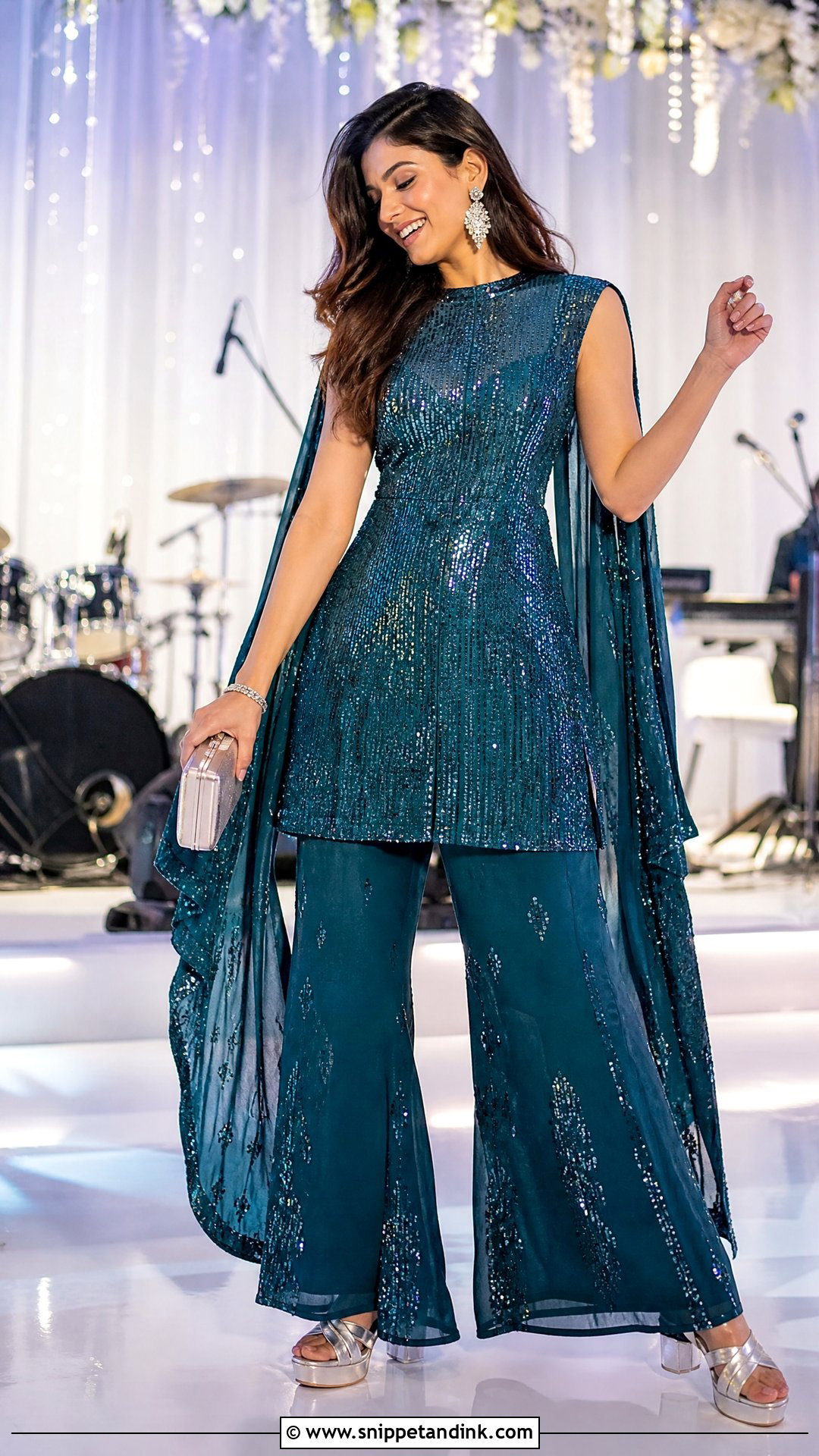
Fully sequinned palazzos are heavy, scratchy on the inner thigh and surprisingly hot. For a sangeet, put the sequins on a fitted blouse or short kurta and keep the pants lightly scattered or plain. Deep teal, silver gray, mauve and champagne look polished under party lighting. Crystal earrings, a slim bracelet, a small box clutch. Metallic block heels give stability while dancing. Skip the loose dupatta; an attached drape or a cape sleeve gives the same finish without anything to hold.
14. Pastel Palazzo Suit For Day Wedding
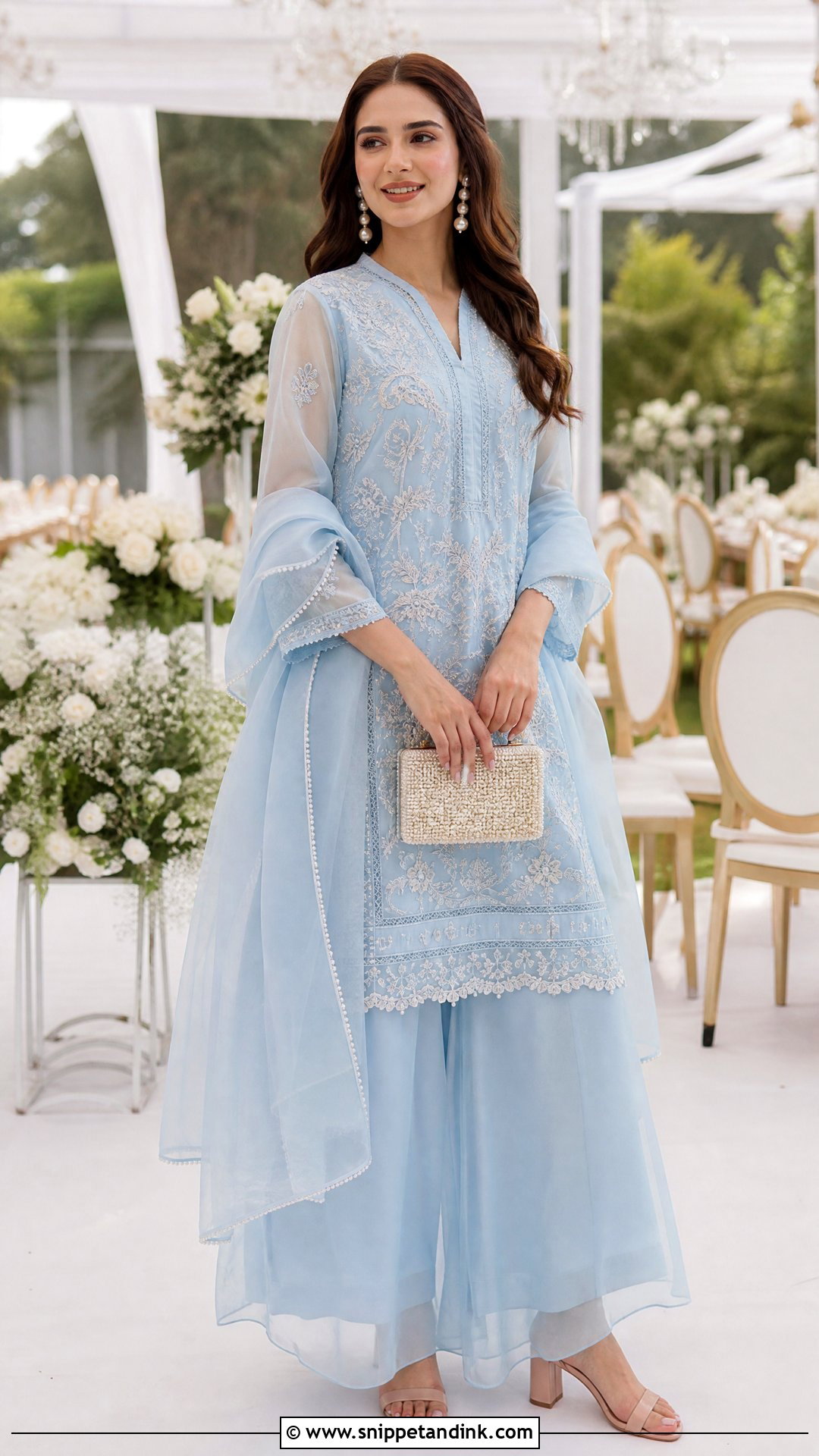
For a garden or summer day wedding, soft pastel palazzo suits in organza, chiffon or georgette look and feel right. Pick one of blush, powder blue, pistachio or mint and keep the kurta and pants matched for a long line. A sheer dupatta with a small pearl or thread border, pearl drops and a fine kundan piece. Pastels can look washed out in midday sun, so I’d choose a kurta with visible embroidery or a slightly deeper border to keep definition. Nude block heels or pastel juttis avoid a harsh line at the hem.
15. Asymmetrical Kurta With Palazzo Pants
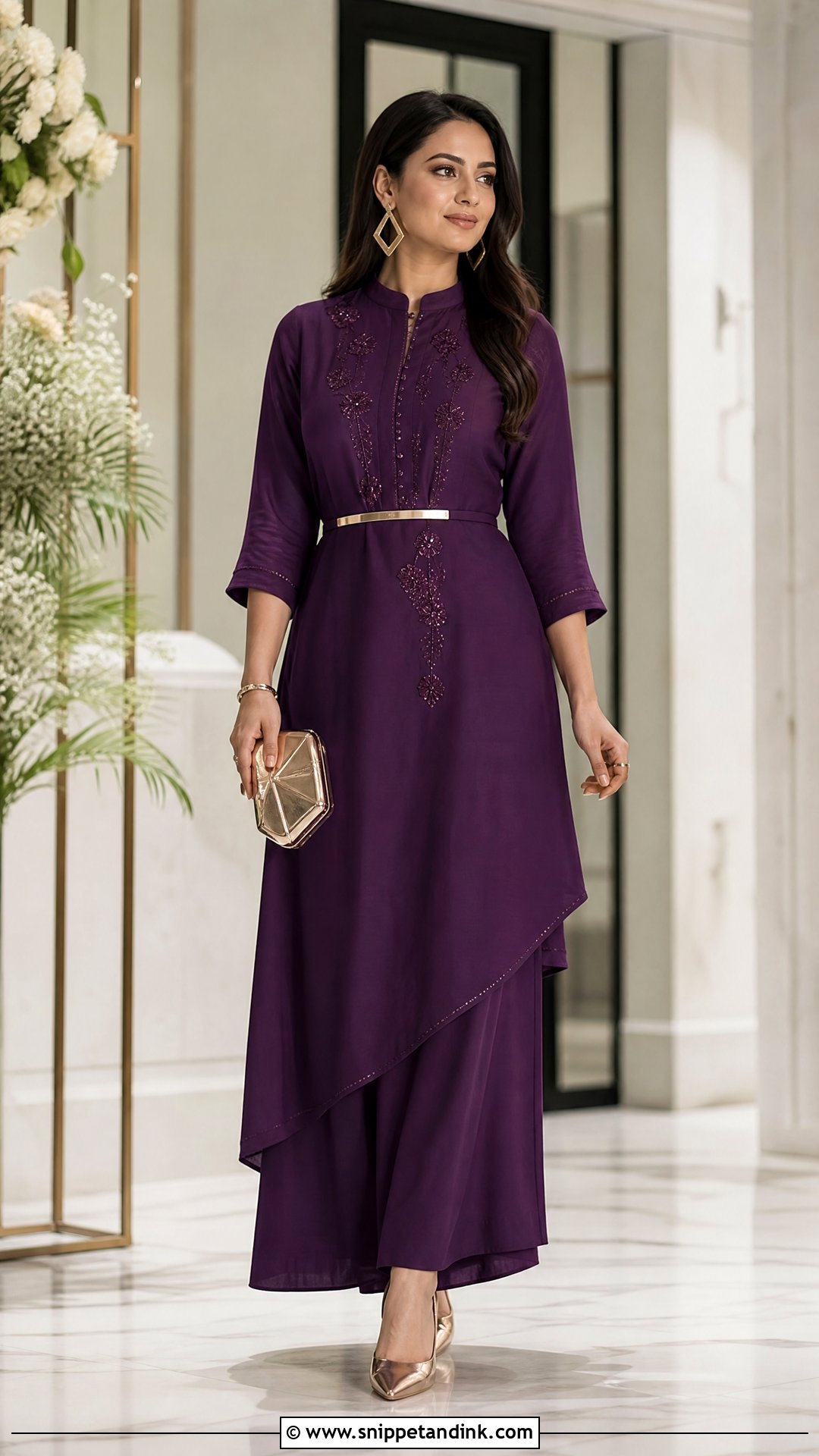
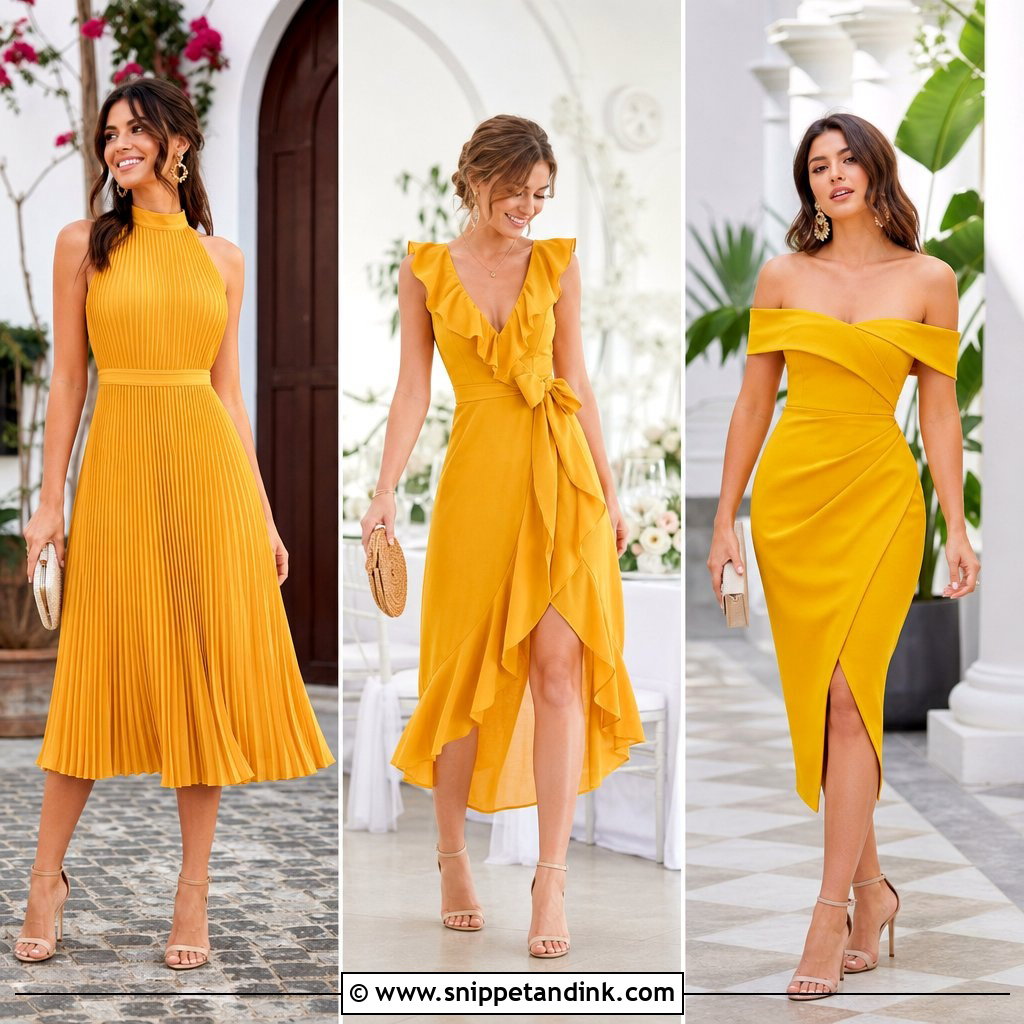
Asymmetry looks intentional only when everything else is fitted. A high-low hem, diagonal cut or draped side panel on the kurta reads modern over palazzos, but the shoulders and waist have to sit close or the top just looks oversized. Solid jewel tones show the cut best, with light embroidery at the neckline or hem. Geometric earrings and pointed heels; a narrow belt if the design allows it. Drape any dupatta along the shorter side so you don’t hide the hemline that makes this outfit worth wearing.
16. Ruffle Top With Palazzo Pants
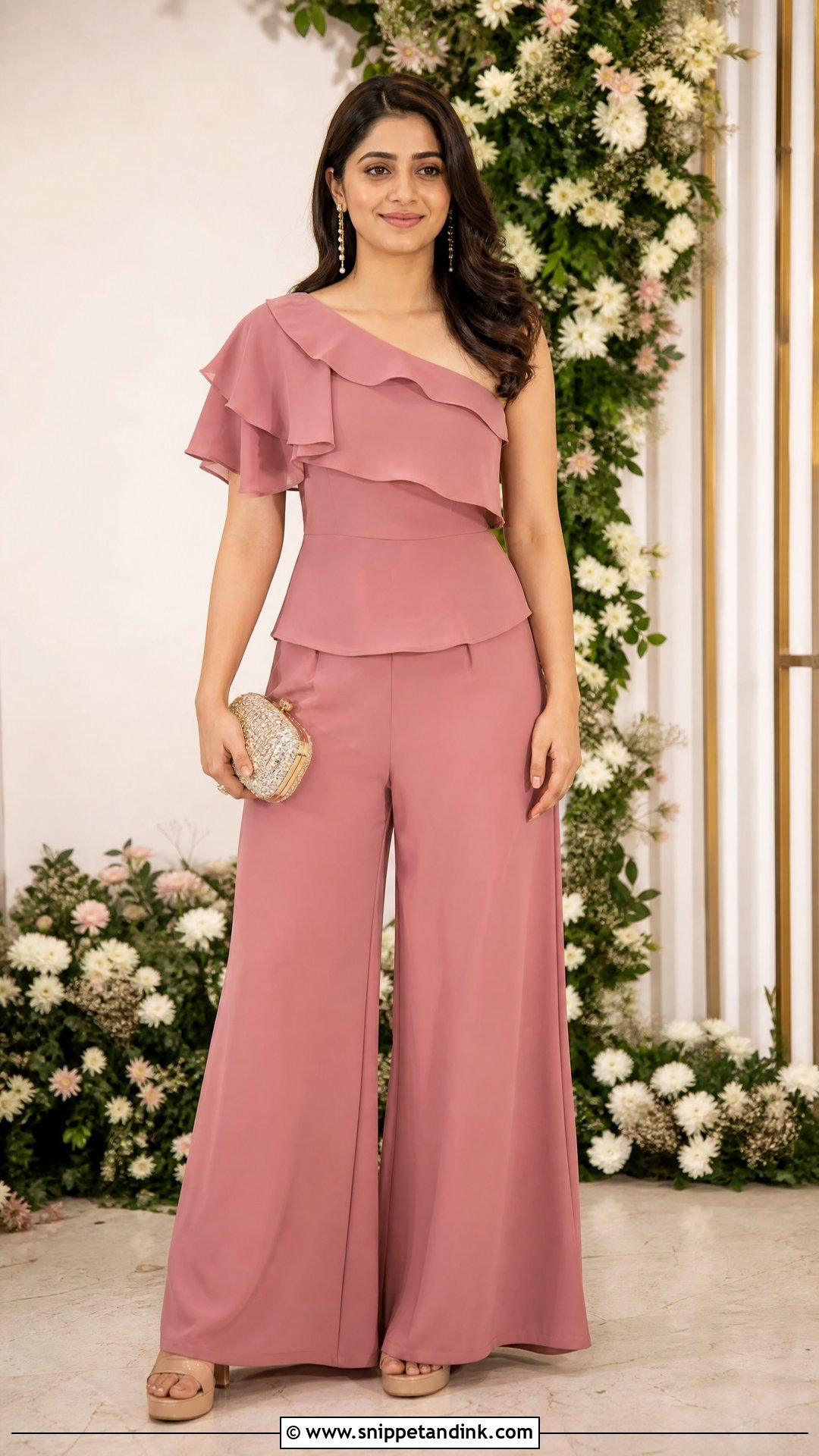
One ruffle, not three. A single defined ruffle at the neckline, sleeve or hem balances wide palazzos; multiple tiers on top plus width below and you lose your shape entirely. The top needs structure at the waist through a fitted, tucked or cropped cut. Satin, crepe and georgette hold a ruffle well. Add subtle beading for an evening event, slim drops, a jeweled clutch and platform sandals. Sleek hair keeps the ruffle visible. It’s playful enough for a sangeet or engagement.
17. High Neck Kurta With Palazzo Pants
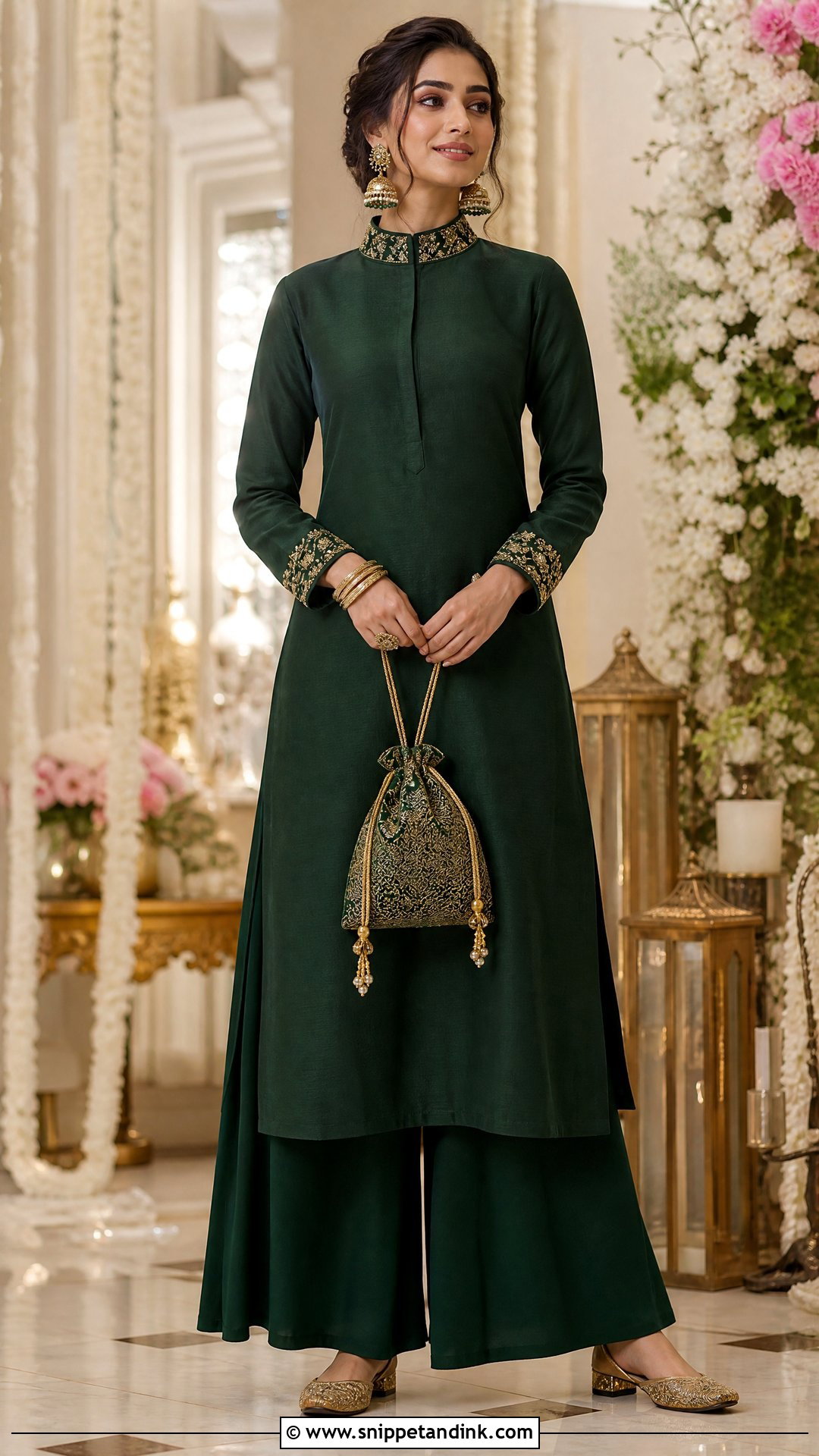
For a conservative venue or a cool-weather ceremony, a high-neck kurta over palazzos covers you well and still looks dressed up. Choose an embroidered, beaded or band-collar neckline with three-quarter or full sleeves. Same-color pants keep the line long. Since the neckline is already decorated, skip the necklace and wear statement earrings instead. The detail I watch on a high neck is comfort: a stiff embroidered collar can rub over a long ceremony, so check it’s lined. Drape the dupatta over both shoulders for formality, or along one arm for ease.
18. White Palazzo Suit With Colorful Dupatta
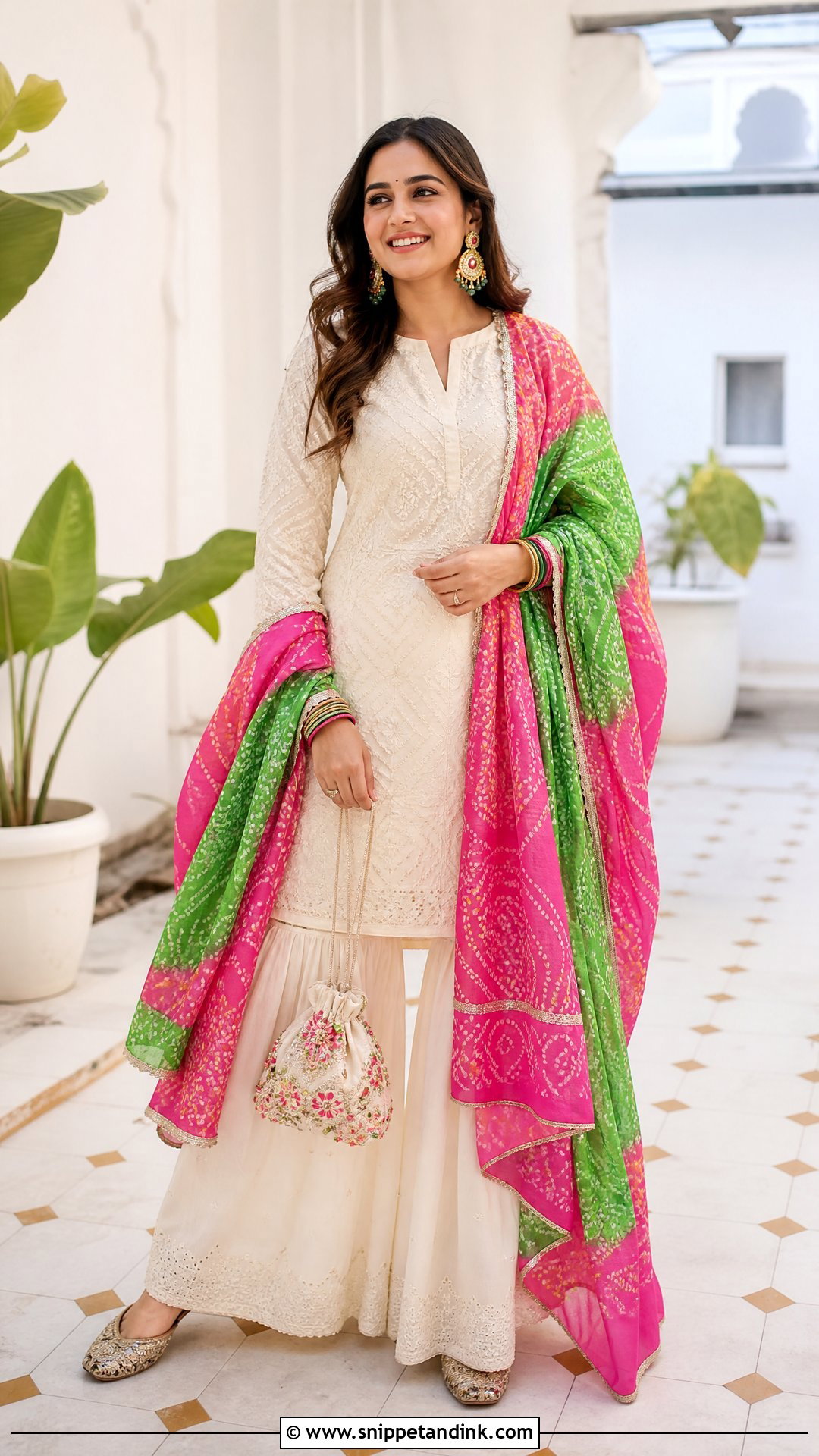
White as a guest is a question to ask before you buy, because some families and communities avoid it at weddings. Where it’s welcome, a well-tailored white or ivory palazzo suit with chikankari, tonal threadwork or pearls makes the perfect base for a richly colored dupatta. A bandhani, phulkari or Banarasi dupatta in pink, green or orange does all the festive work. Match one accessory to it, such as enamel earrings or a potli, and wear metallic juttis. It suits daytime functions best.
19. Printed Palazzo Set With Statement Jewelry
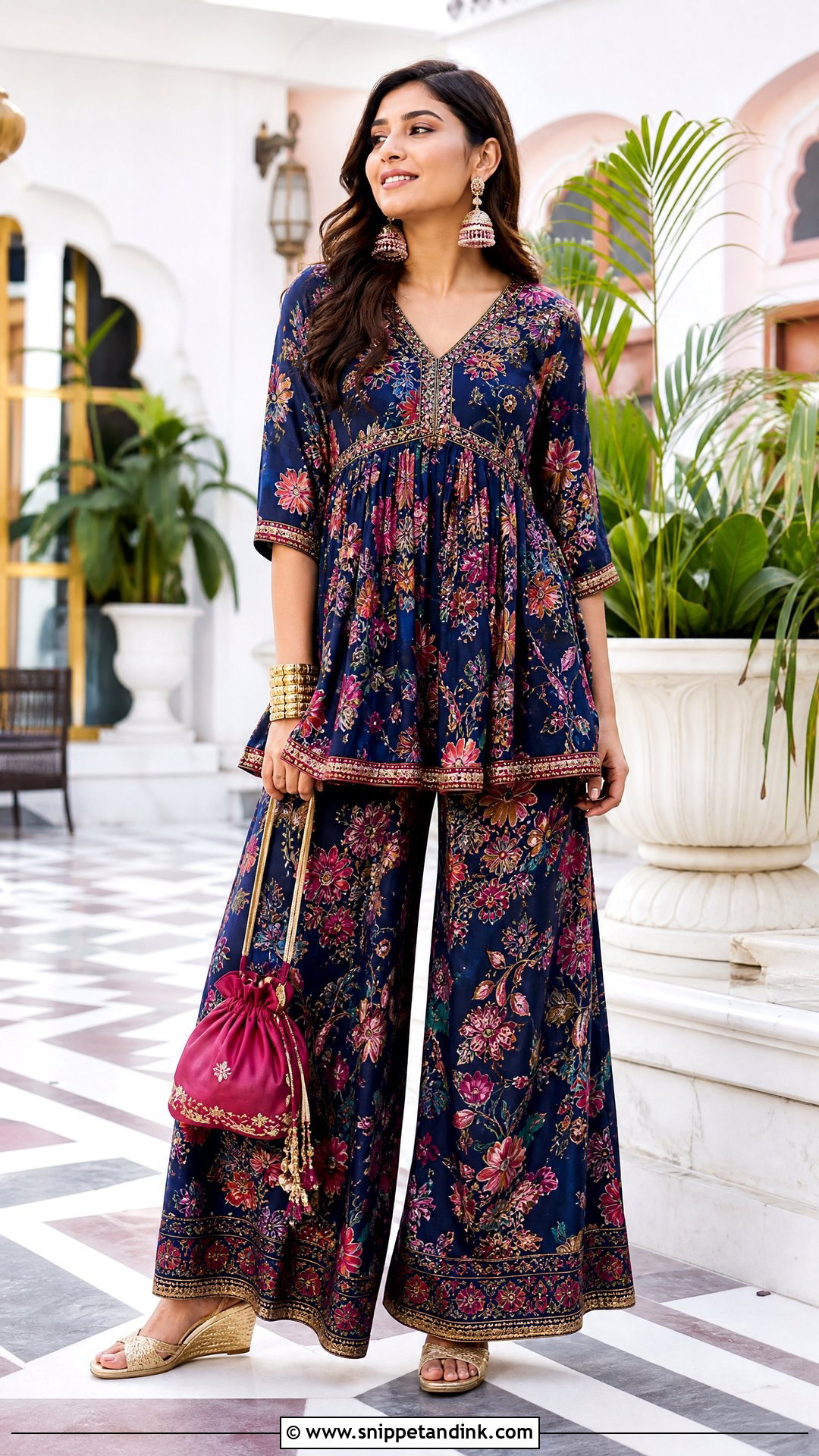
Prints are the easiest way to look festive at a welcome party, relaxed mehndi or destination wedding. Choose a coordinated short kurta and palazzo in floral, paisley, block-printed or geometric motifs, in silk blends, crepe or good cotton that holds some shape. The jewelry does the dressing up: large jhumkas, a bold cuff or a layered necklace. Carry a solid potli in one shade from the print, and skip the dupatta if the kurta is busy. Crepe palazzos are also the least creased after a suitcase, which matters at a destination wedding.
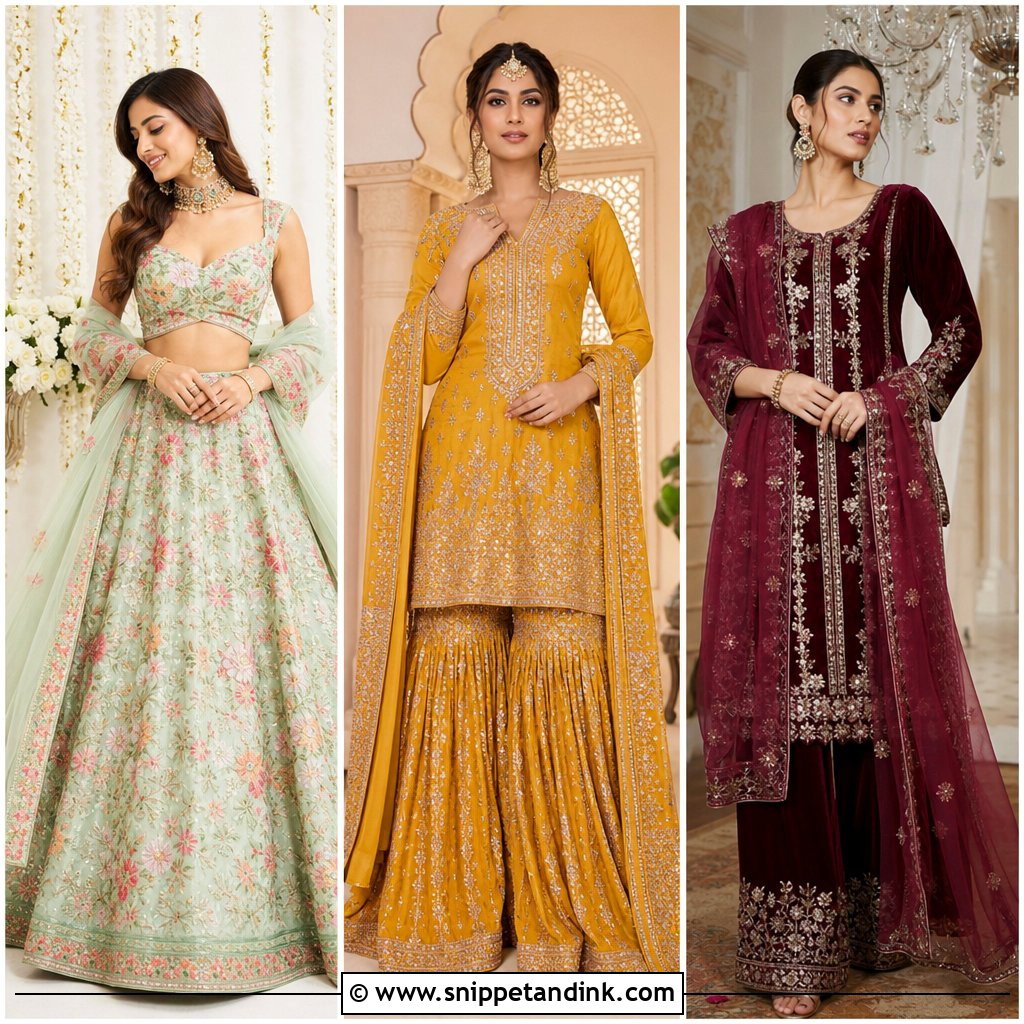

20. Saree Drape Top With Palazzo Pants
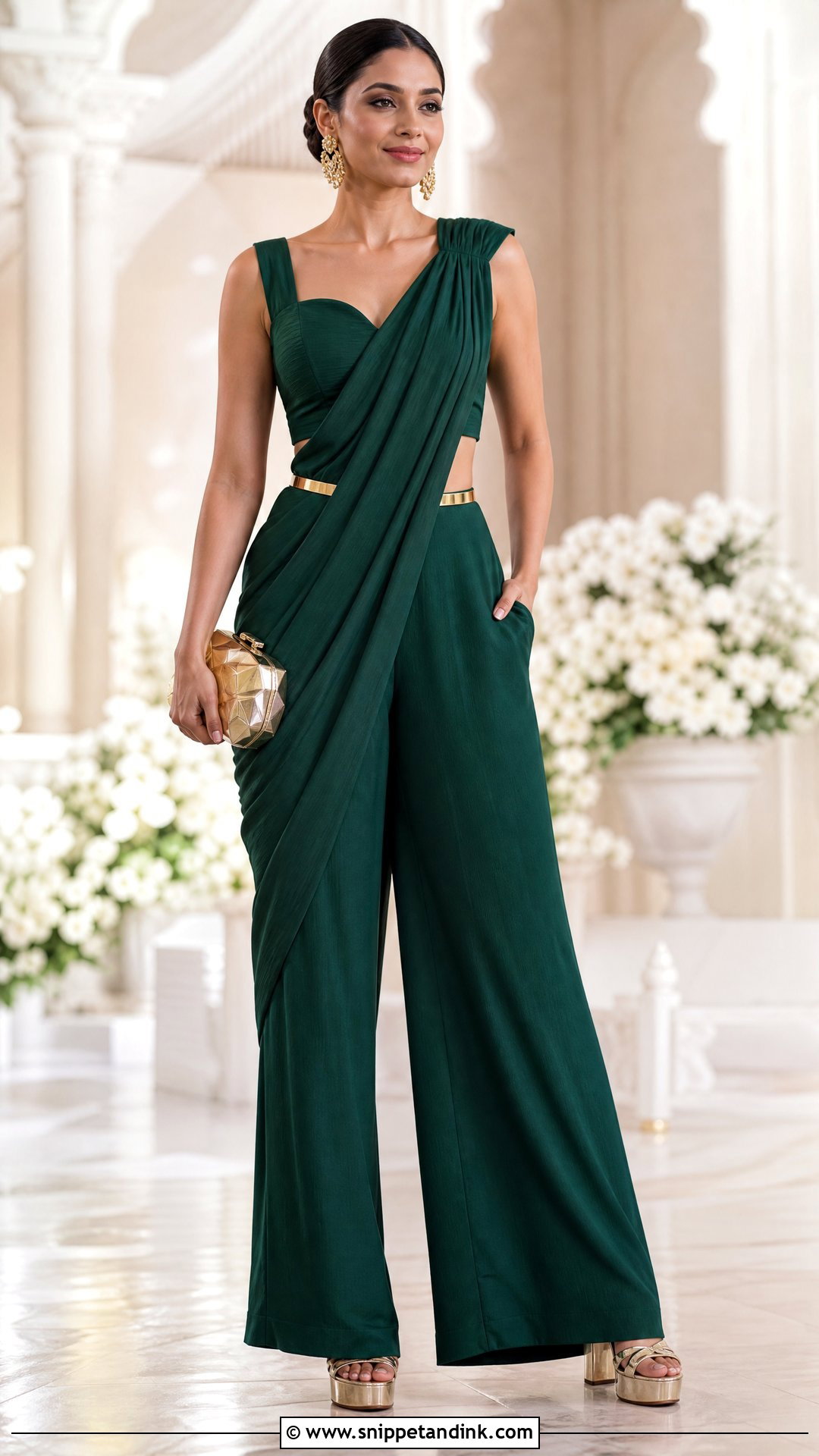
You get the drape of a saree here without pleats to re-tuck in a crowded hall. A fitted blouse carries an attached pleated panel that crosses the torso and falls over one shoulder, and high-waisted palazzos anchor everything. Crepe, satin or georgette let the drape fall softly; stiff silk makes the panel stick out. I check that the attached drape is stitched securely at the shoulder and waist, because that’s where it pulls when you sit. A waist belt, statement earrings and platform heels. Don’t add another dupatta.
Wide Trousers at the Mandap, the Buffet and the Bathroom
Palazzos earn their place over a long wedding day, but a few situations still catch people out. These are the ones I’d plan for.
Sitting on the floor
At many ceremonies guests sit on mats or low cushions. Wide legs make this comfortable, but a short kurta can ride up at the back, so test your outfit sitting cross-legged in front of a mirror.
Food and long hems
Buffet lines and plates of curry are hard on pale palazzos that sway as you walk. Darker colors or prints are a sensible choice for the main meal, and a hem that clears the floor keeps them out of spills.
Bathroom trips
Jumpsuit-style drape tops and attached capes make a trip to the restroom slow. If you’re choosing between two sets, the one with separate pieces and a simple side zip is the one you’ll be glad of at midnight.
Packing for a destination wedding
Roll crepe and georgette sets rather than folding them, and hang silk and velvet as soon as you arrive. A travel steamer is worth its space in the suitcase.
Width Below, Shape Above
Palazzos can take you through almost every function of an Indian wedding if you match the fabric and embellishment to the event. Prints and florals carry the daytime events, while velvet, brocade, sequins and embroidered jackets dress up the evenings. Whatever you choose, the top needs shape to balance the width below, and the hem has to be cut for the shoes you’ll wear. Keep jewelry to one strong piece, pick footwear you can stand in for hours, and let the outfit move with you.
You'll Like These Ideas:


Leave a Reply