
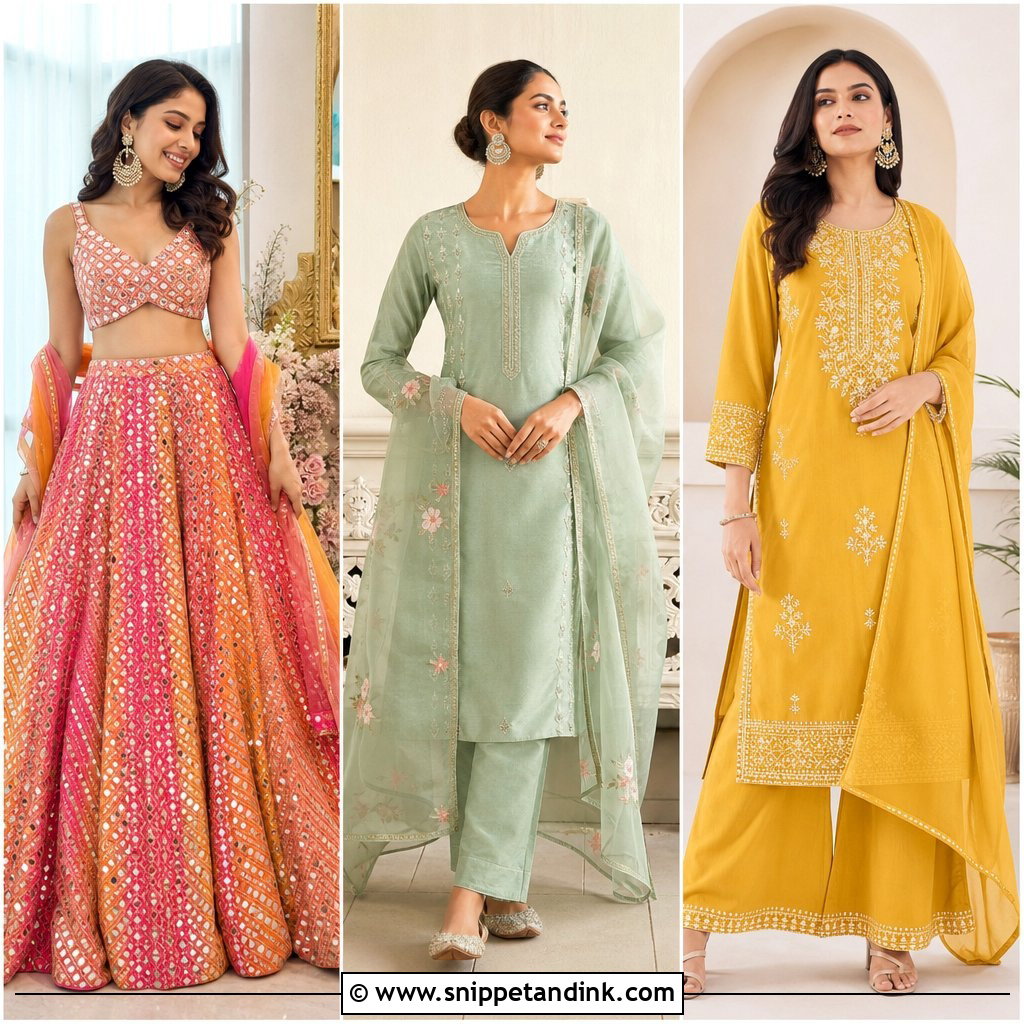
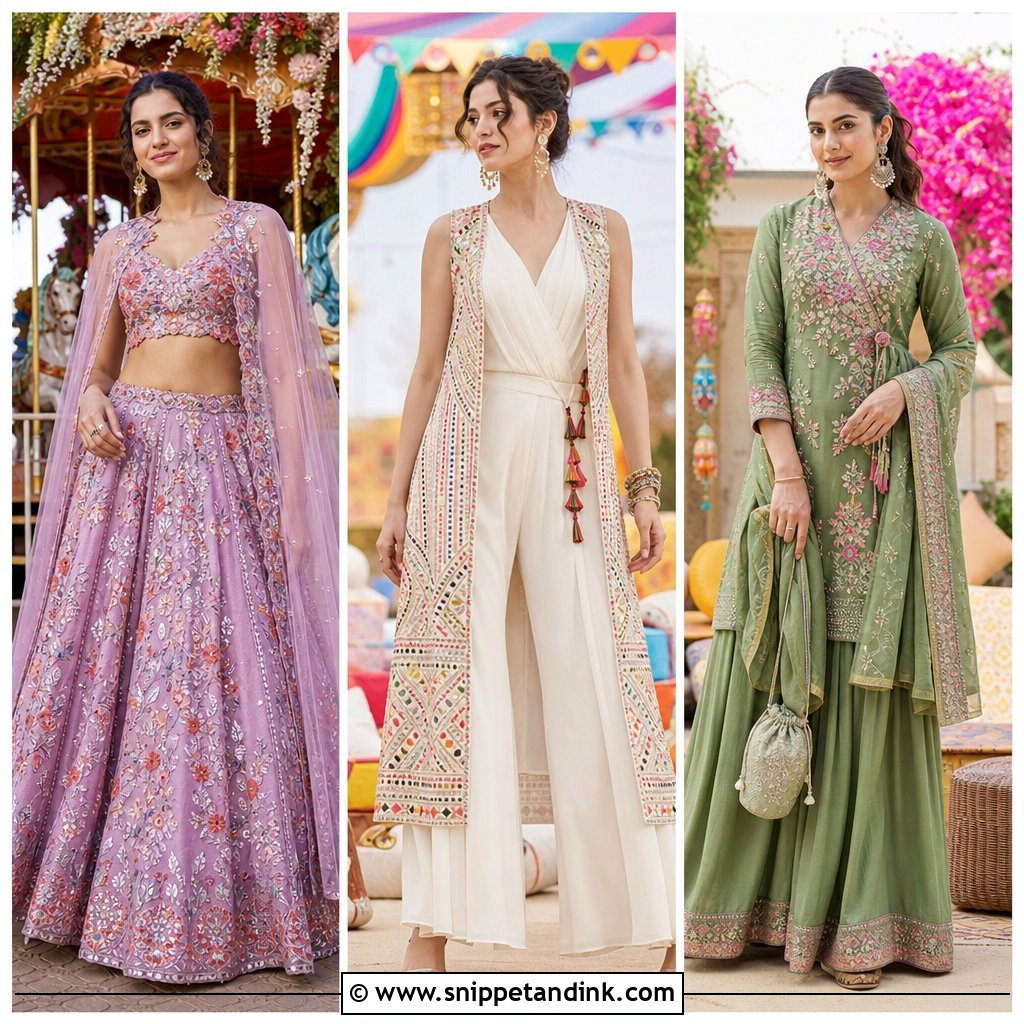
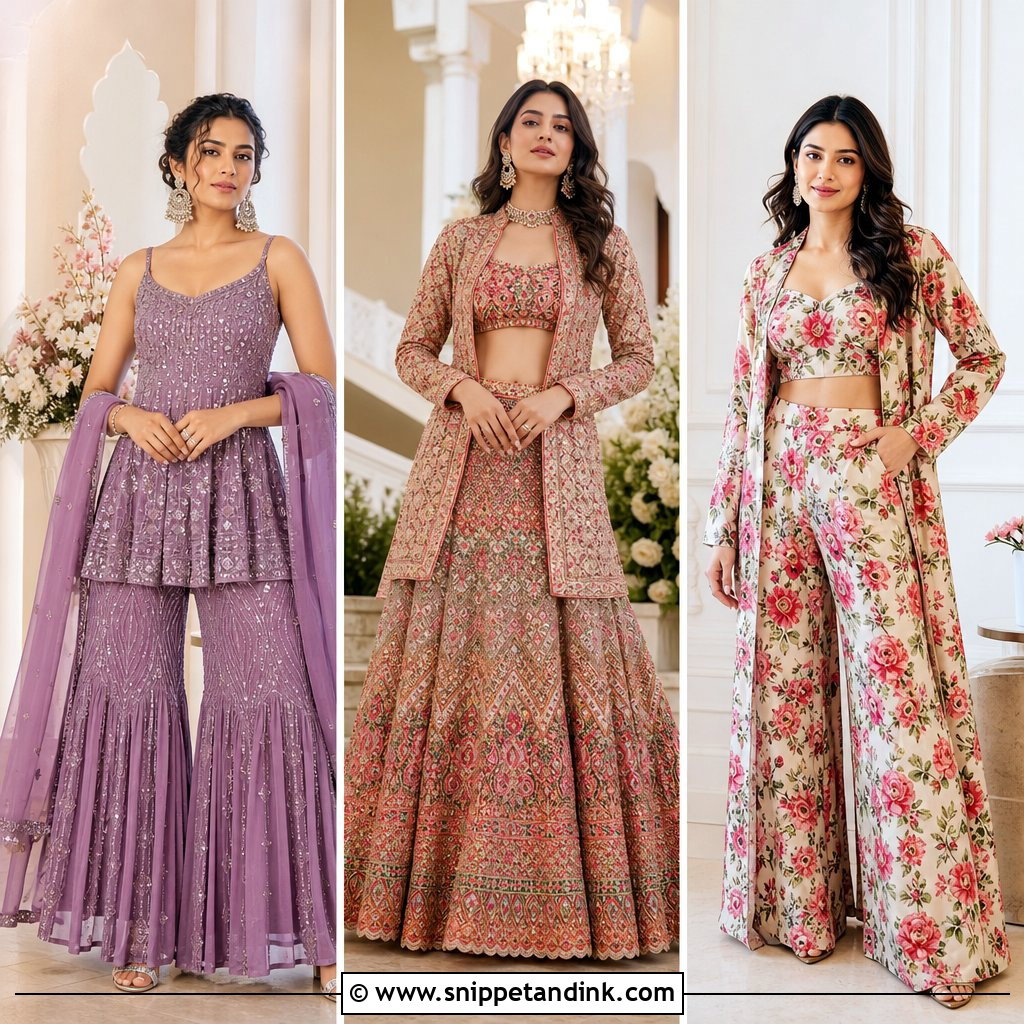
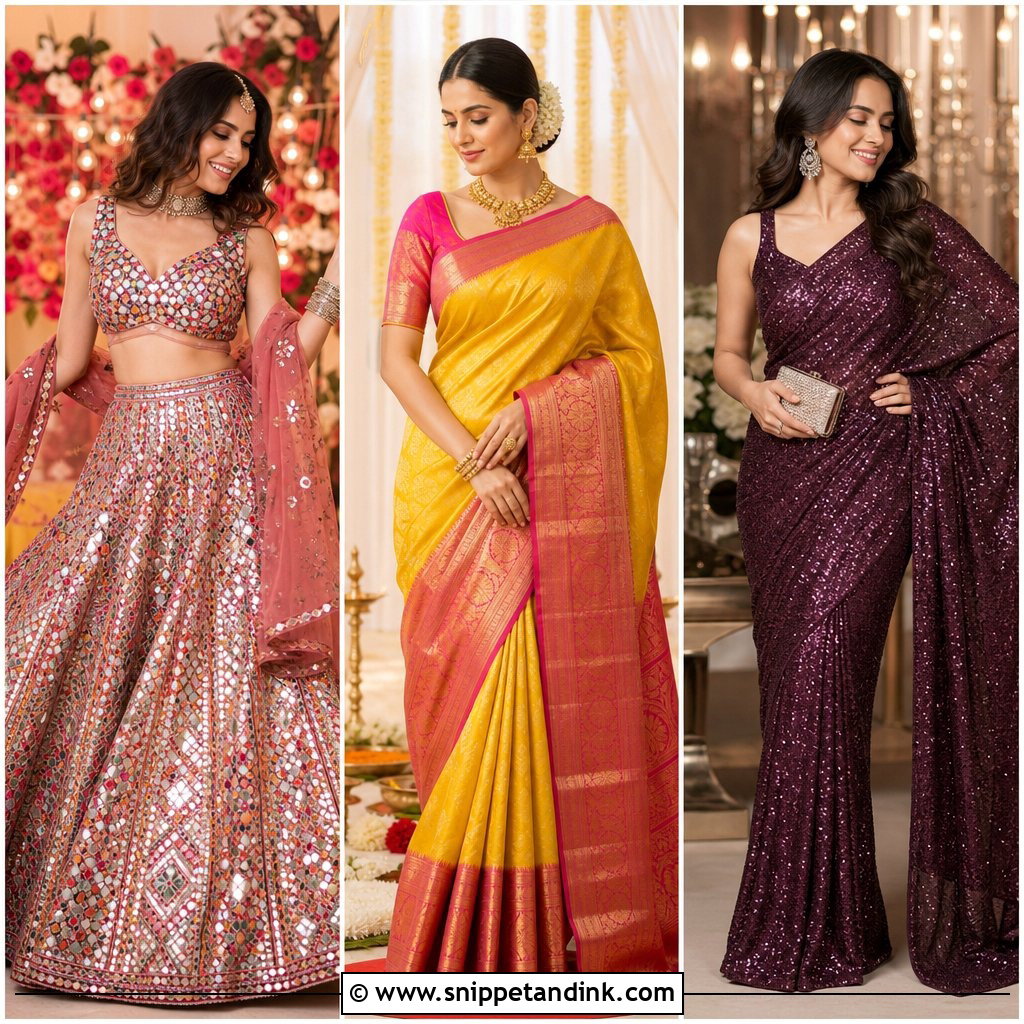
Dressing for your best friend’s wedding is a different brief from dressing a bride. You want to look like you made an effort, you will be in half the photos, and you may be dancing at midnight, yet you must not look like you are competing with her. When I style guests, I plan by function: mehendi needs movement and fabric that forgives a henna smudge, the sangeet can take shine, and the ceremony asks for something calmer. The 25 looks below cover lehengas, sarees, shararas, Anarkalis, cape sets and Indo-western pieces, with what I would pair with each.
Colours and Details I Keep Guests Away From
The one rule of guest dressing is that nobody should glance at you and wonder if you are the bride. In most North Indian and many other families, red and deep maroon with heavy gold work are still read as bridal, so I avoid them unless the bride says otherwise. Pale ivory and blush lehengas can do the same at a pastel wedding.
Beyond colour, I look at embellishment. Full zardozi, a heavy embroidered dupatta worn over the head and a long dupatta trail all belong to the bride. A guest outfit can have plenty of work as long as it is lighter in weight and quieter overall.
- Ask whether the families have a colour theme for any function. Many sangeet and haldi events now do.
- Check if any part of the ceremony needs covered shoulders or a head covering, especially in a temple or gurdwara.
- Black and white are avoided by some families at weddings; a quick question saves an awkward moment.
- If you are a bridesmaid, confirm whether the bride wants coordinated or matching outfits before you buy anything.
1. Pastel Lehenga For Indian Wedding
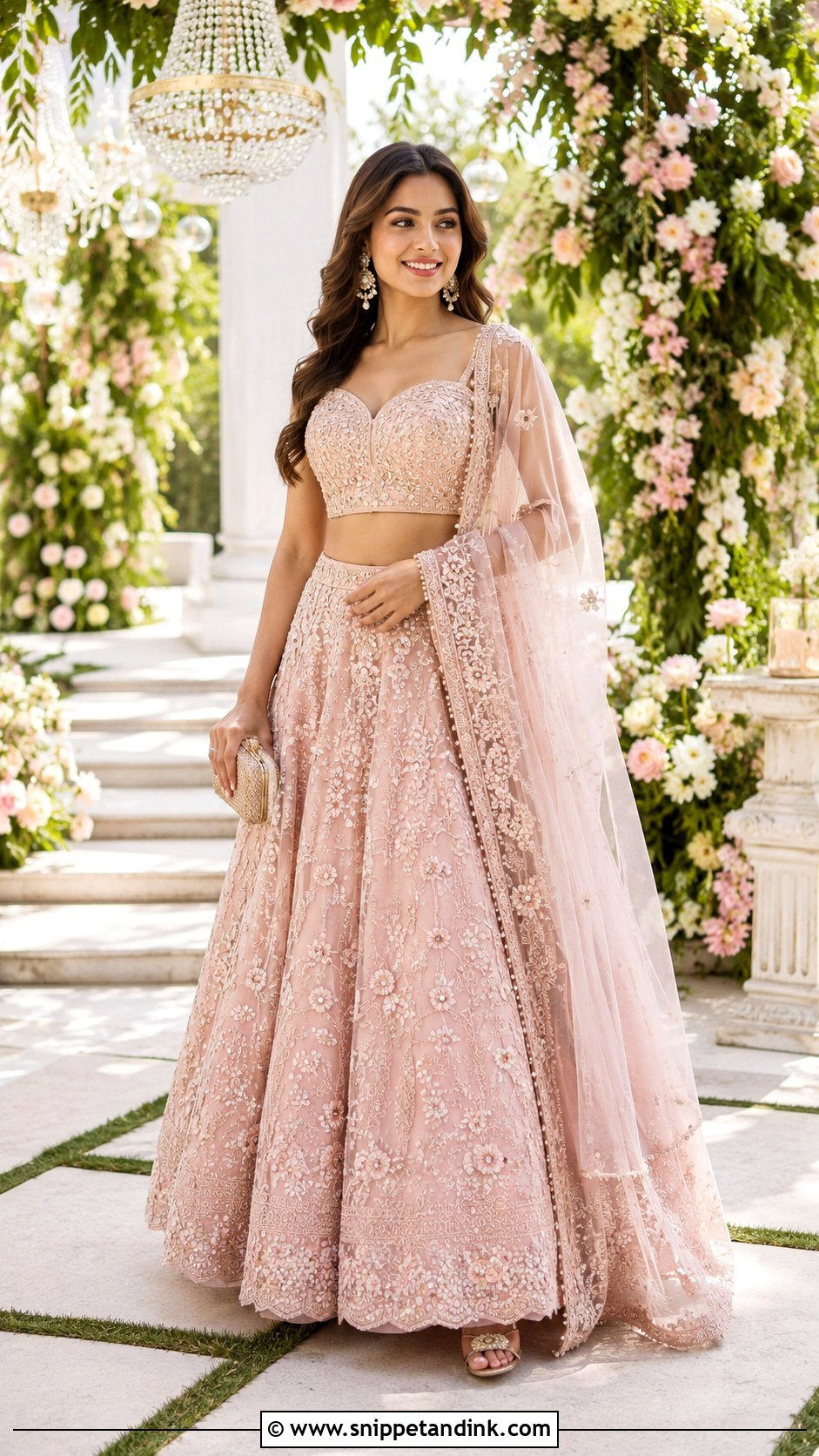
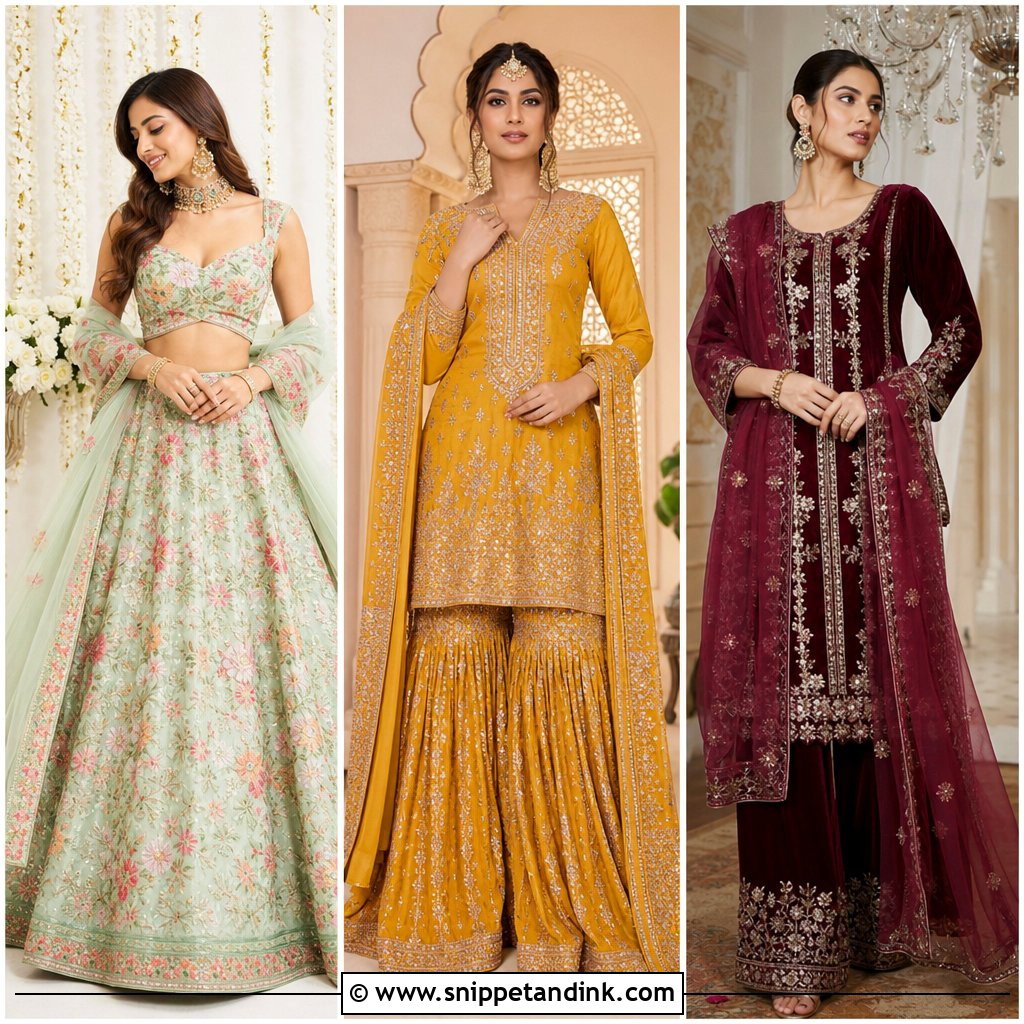
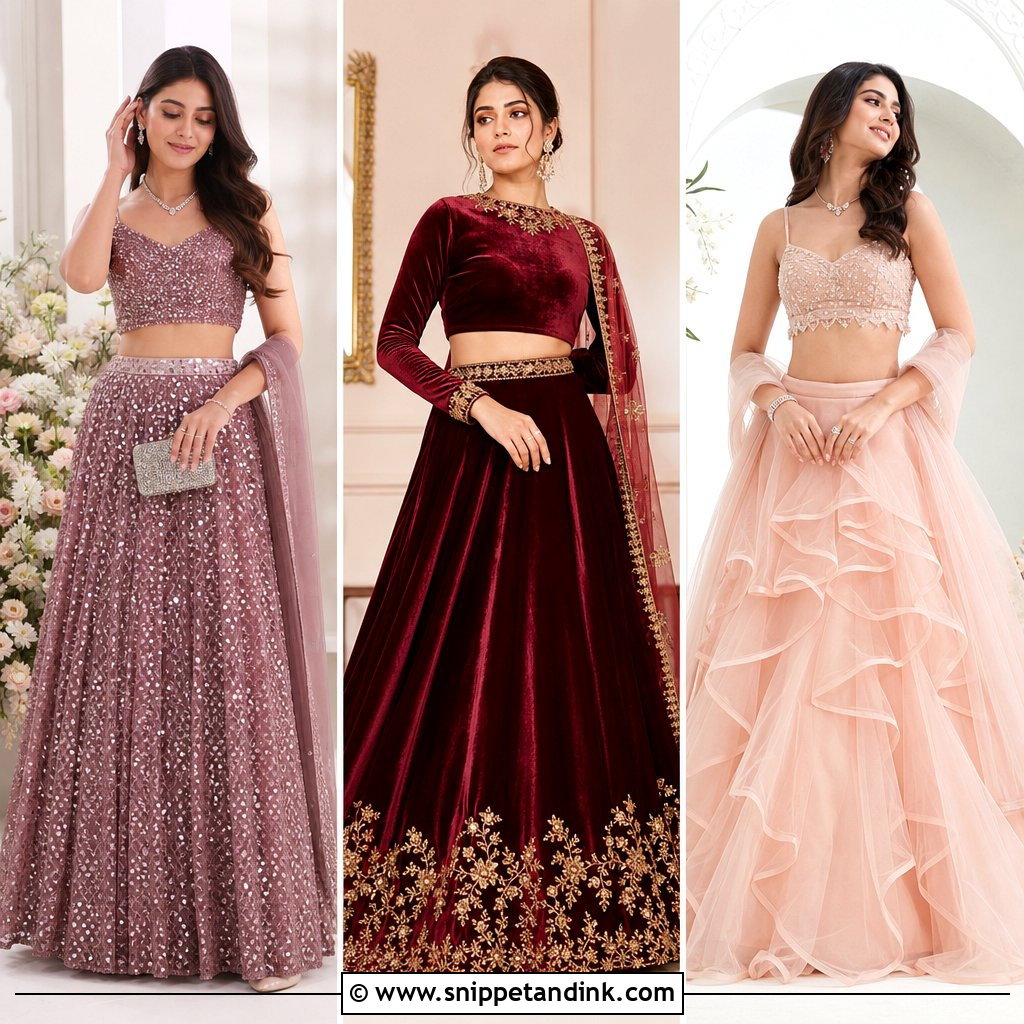
Pastel lehengas are the most requested guest outfit I style, and the shade needs more thought than the cut. Blush, powder blue, mint, lavender and peach all read fresh in daylight, but very pale ivory or blush can look close to bridal next to a pastel bride, so I check what she is wearing before we settle. Georgette or organza with delicate embroidery stays light through a long daytime ceremony or a garden venue. A fitted blouse, sheer dupatta, block heels and pearl or kundan earrings are enough. Keep makeup glowy so the softness of the colour carries through.
2. Silk Saree For Indian Wedding
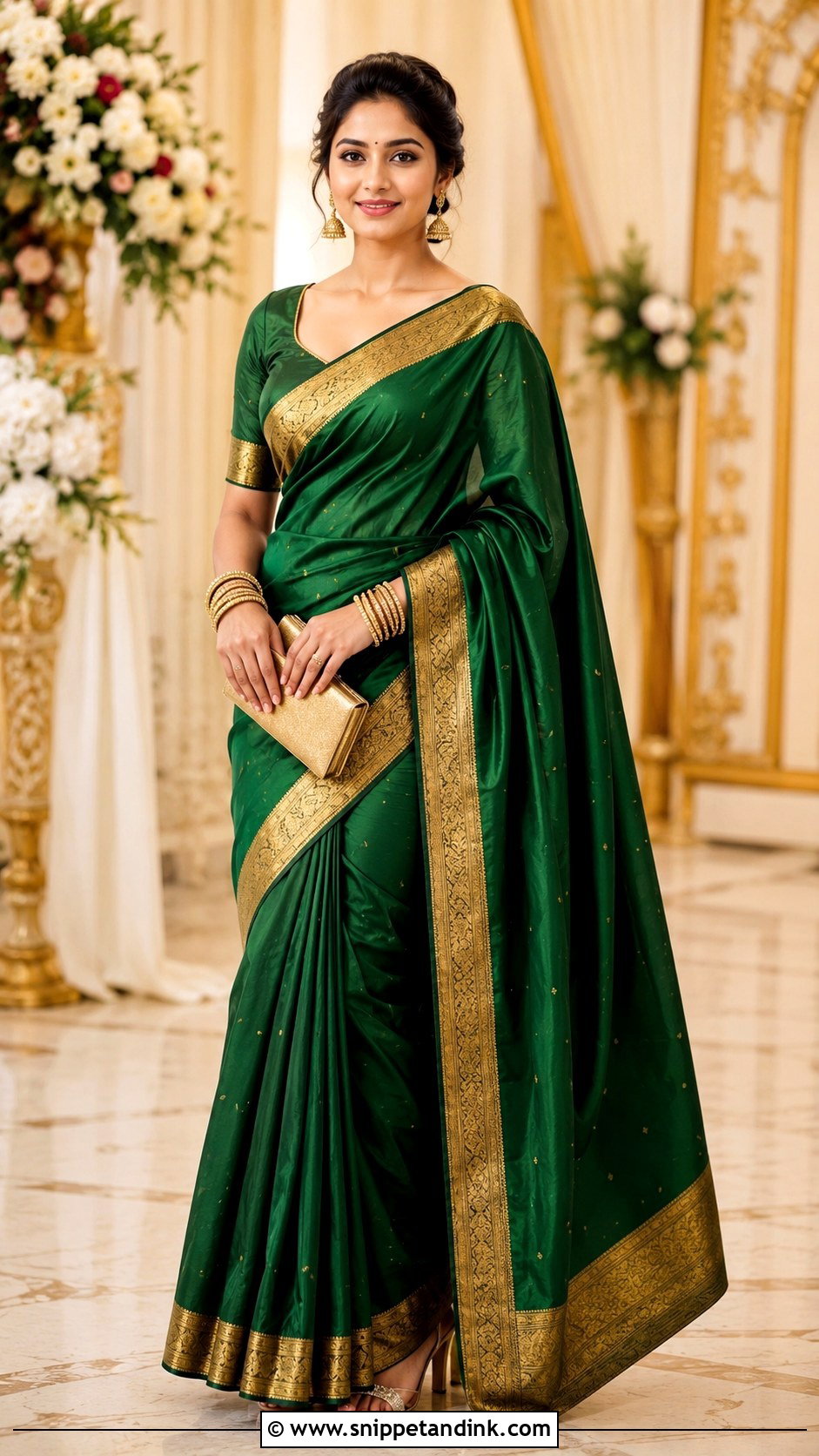
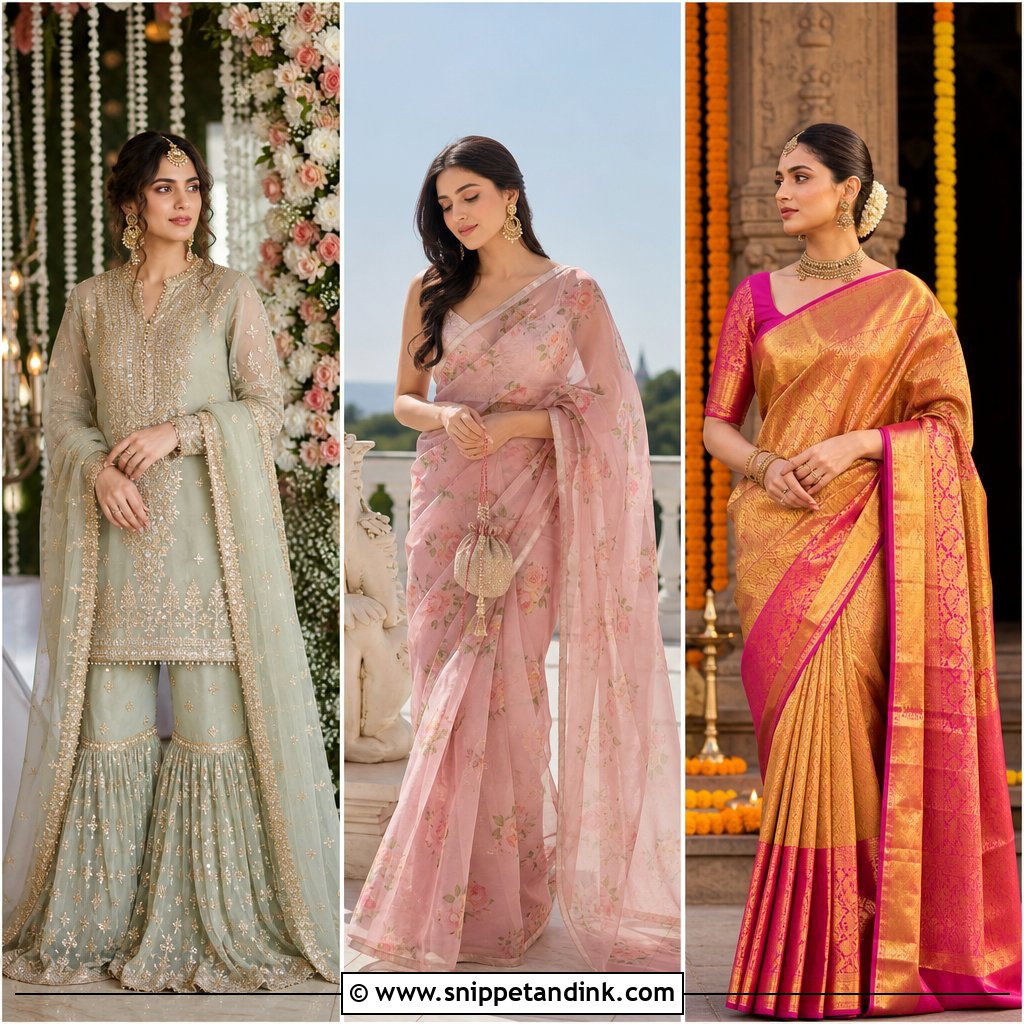
For the main ceremony, a silk saree earns approval from every aunt in the room. Emerald, royal blue, mustard, rani pink or deep purple are rich without crossing into bridal red. I like an elbow-length sleeve here; it looks considered in ritual photos and covers the arms in a temple or gurdwara setting. A zari border, gold jhumkas, bangles and a neat bun do the rest. Daytime calls for lighter jewelry and fresh flowers in the hair, while evening can take a statement necklace. Ask a friend to check your pleats from behind before you leave.
3. Sharara Set For Sangeet
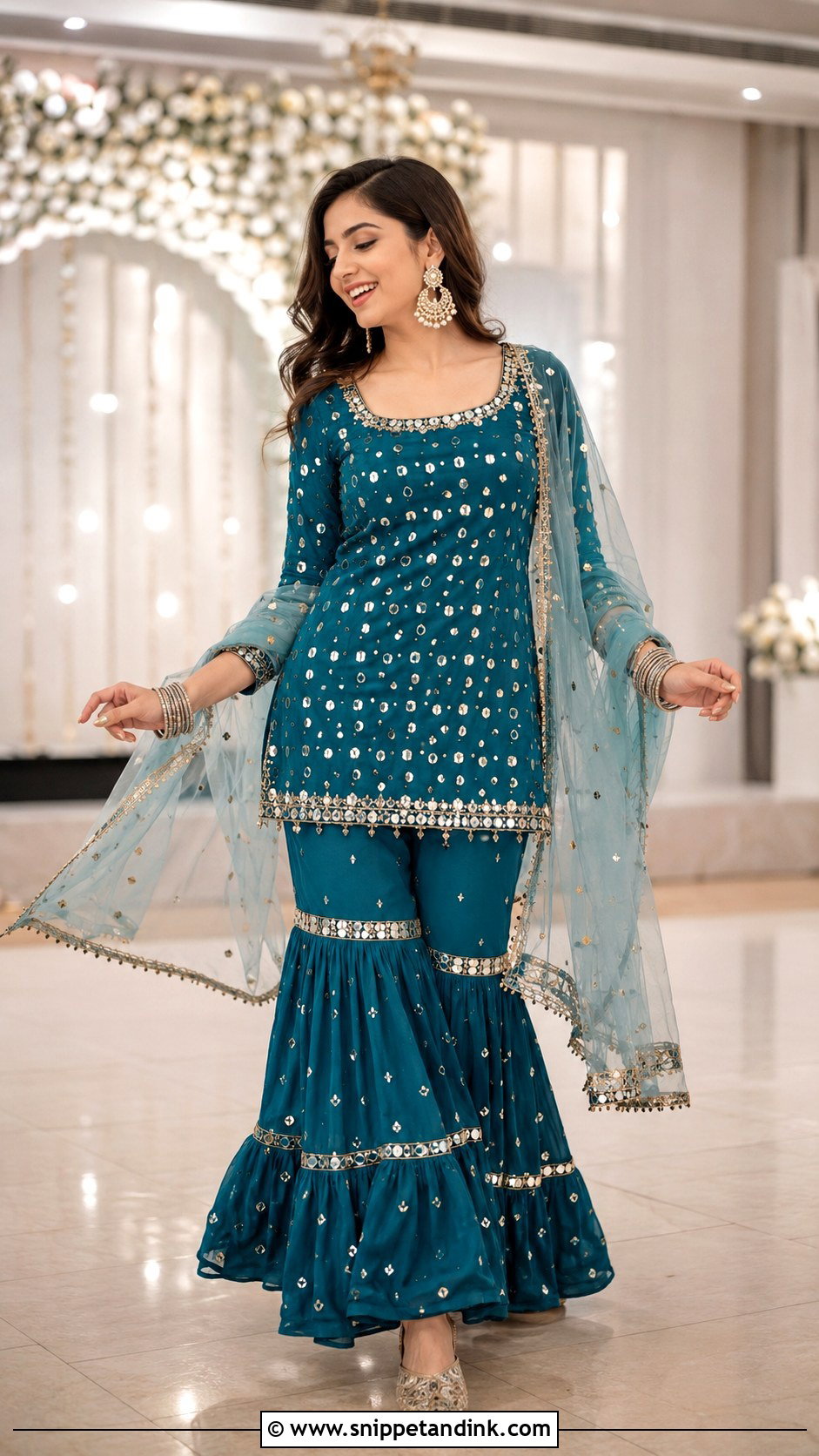
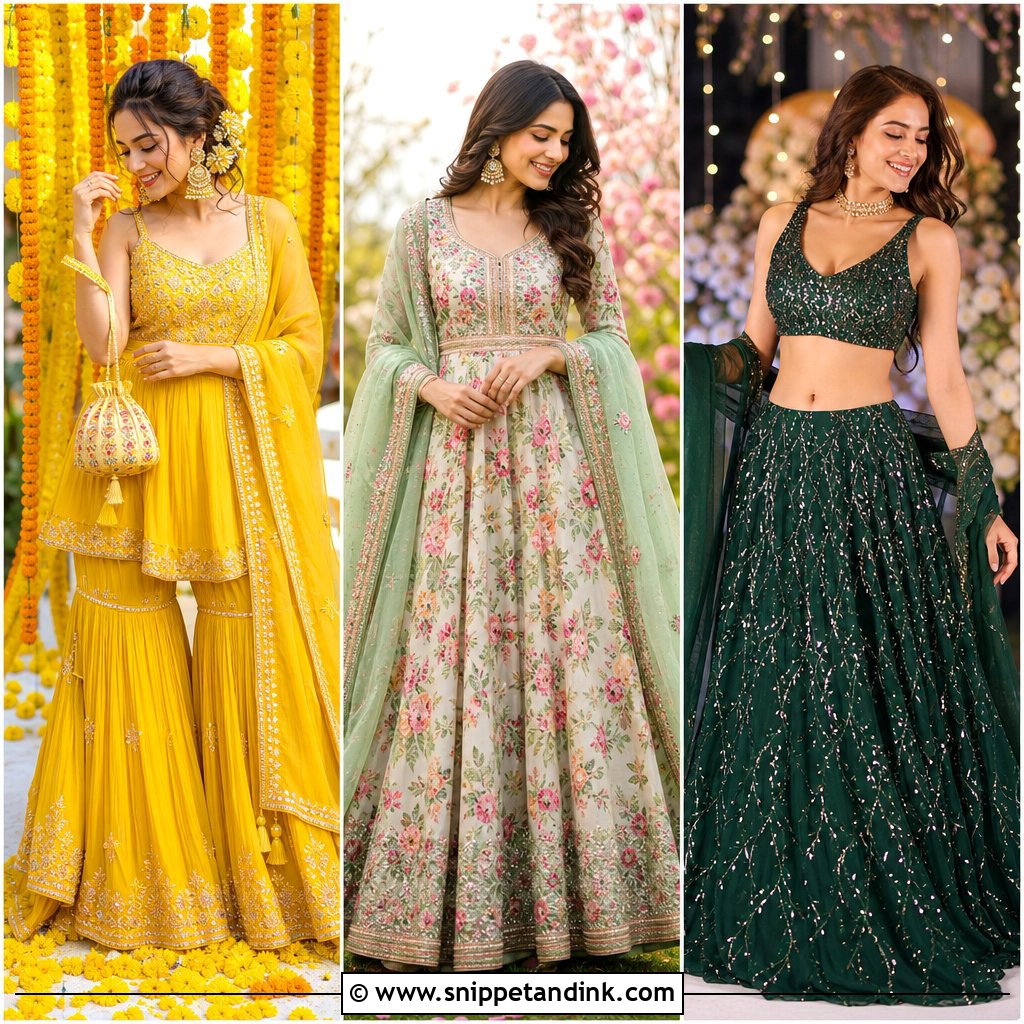
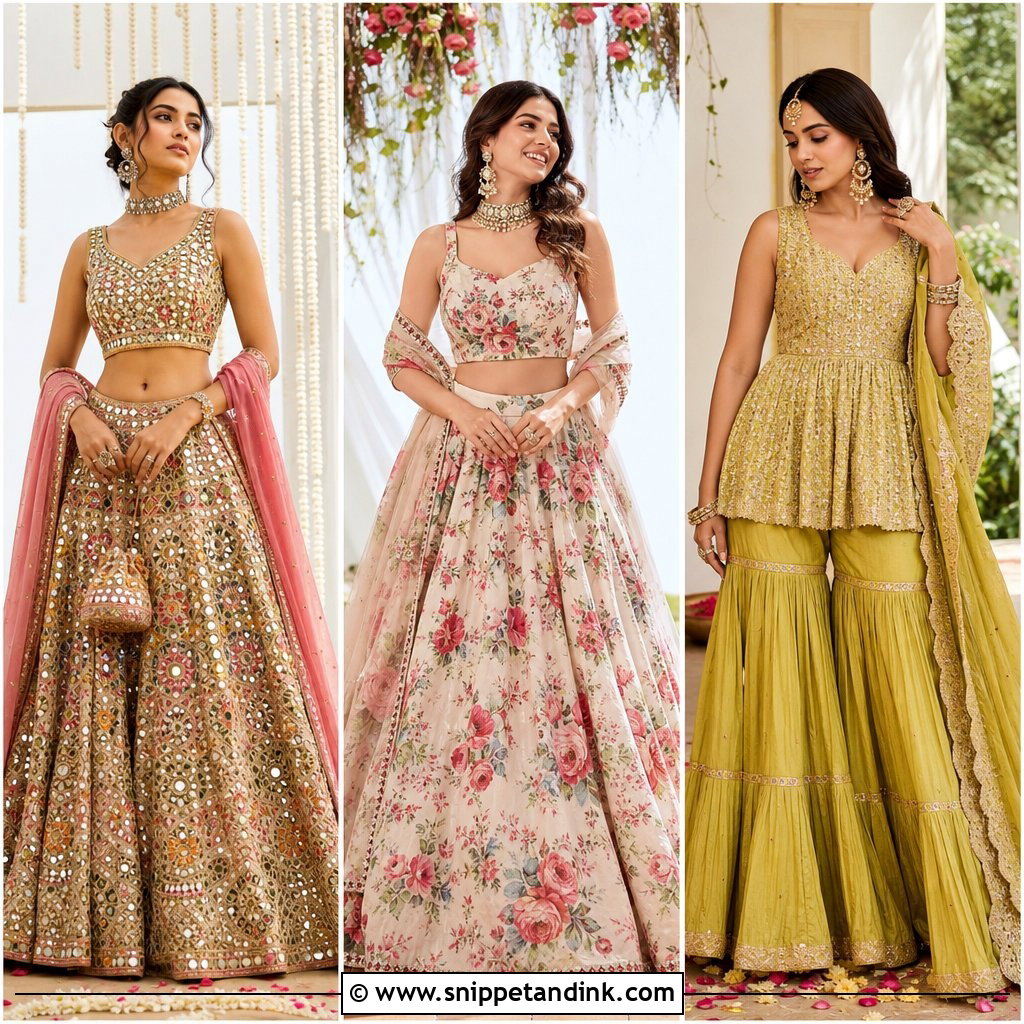
Dancing is what a sharara set does best. The wide flared pants swing with every step and the short kurti never gets in the way of a choreographed number. Fuchsia, teal, orange or emerald with mirror work, gota patti or sequins keeps it festive. The fitting point I care about is the waistband: shararas carry a lot of fabric, so the drawstring or elastic needs to sit firmly at the waist or the flare drops and you trip on it. Chandbalis, stacked bangles, embellished juttis and a potli finish the look.
4. Anarkali Suit For Wedding Guest
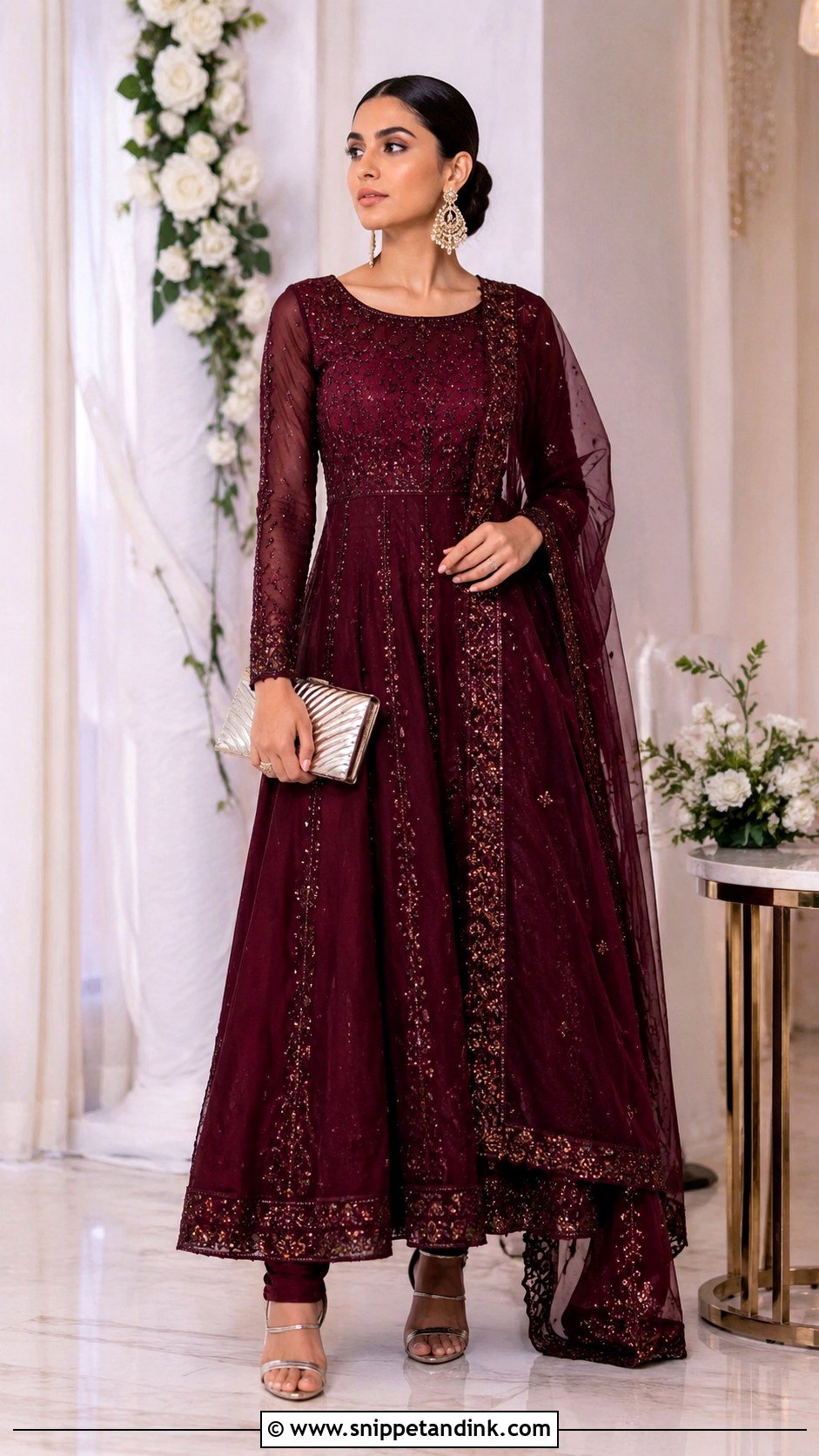
An Anarkali gives coverage and still feels dressy, which makes it the safe answer when you are unsure how traditional the family is. The long flared cut flatters most frames because the fullness begins high, just under the bust. Silk or cotton silk suits cooler months; chiffon and georgette breathe better in heat. Wine, navy, olive, rose or ivory with coloured embroidery avoids anything bridal. I’d pair it with slim pants, a light dupatta and heeled sandals. It is far lighter to wear for hours than a lehenga.
5. Sequin Saree For Reception
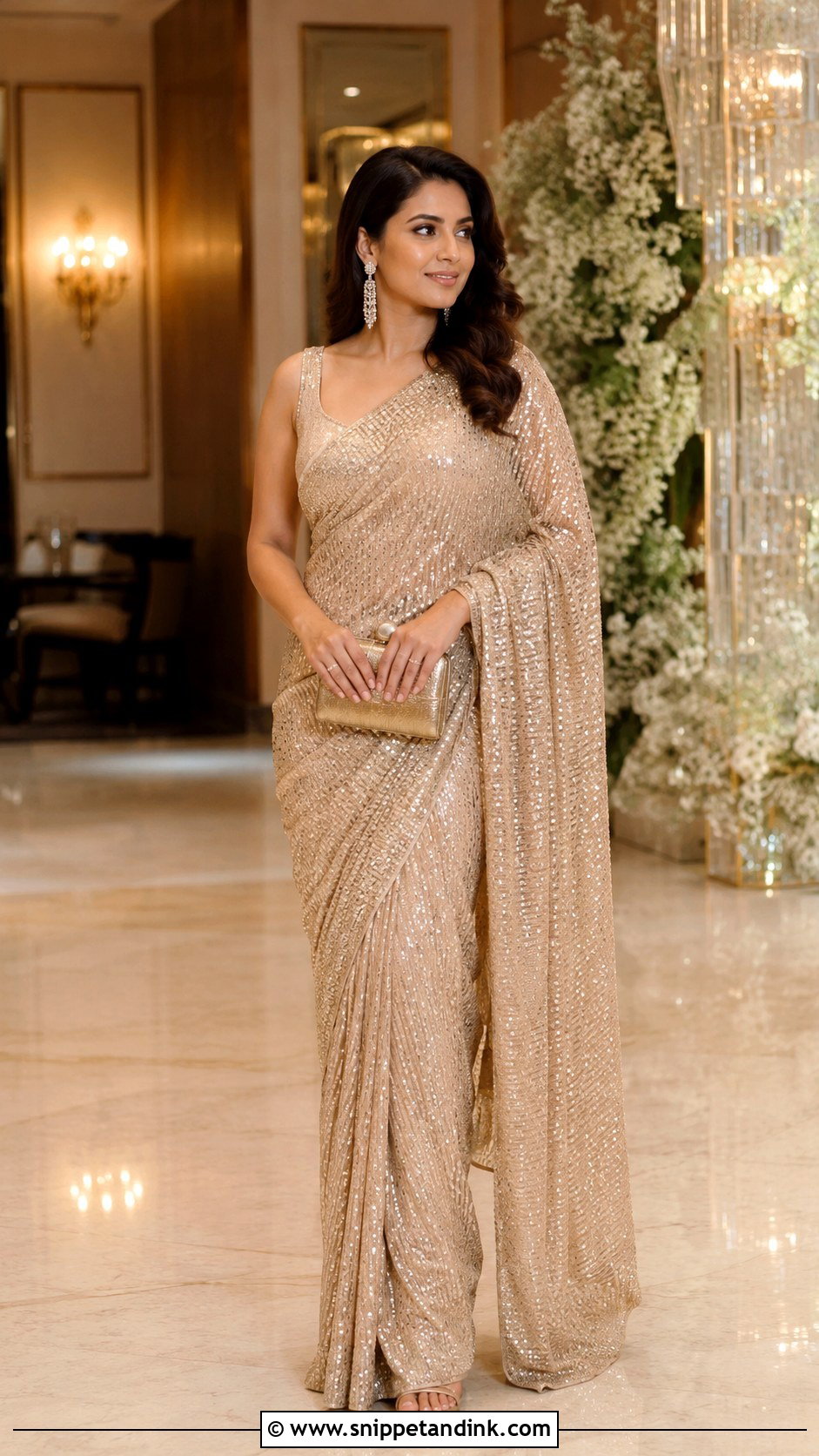
Sequins and reception lighting were made for each other. A pre-draped or lightweight sequin saree in champagne, rose gold, navy, plum or sage gives evening shine without a pile of jewelry. Black is worth checking with your friend first, since some families still avoid it at weddings. Heavy sequin sarees pull at the shoulder and feel scratchy by the third hour, so I always pick fine, flat sequins on georgette. Pair with a simple blouse, sleek hair, strappy heels and one strong accessory such as crystal earrings. A small structured clutch is all you need.
6. Floral Lehenga For Mehendi
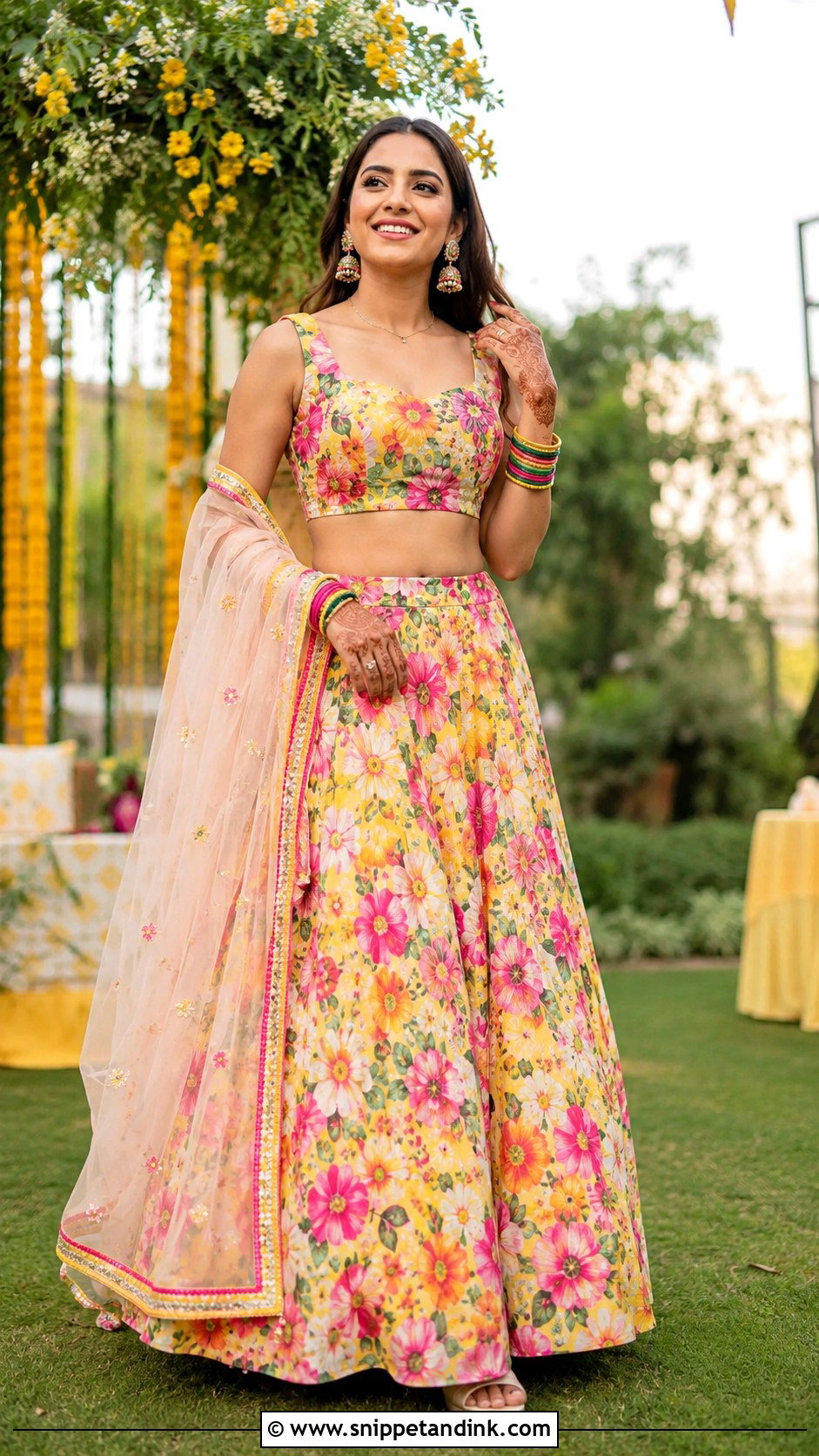
At a mehendi function, guests often get henna too, so I dress them in fabric that will not be ruined by a smudge and sleeves that push up past the wrist. A floral lehenga in green, yellow, coral or turquoise, with printed florals or light mirror work, sits right in the mood of the day. Skip stiff can-can under the skirt; you will be sitting on cushions for a while. A crop blouse, a light cape or dupatta, colourful bangles on the arm that is not being painted and wedges for grass all help. A braid keeps hair out of wet paste.
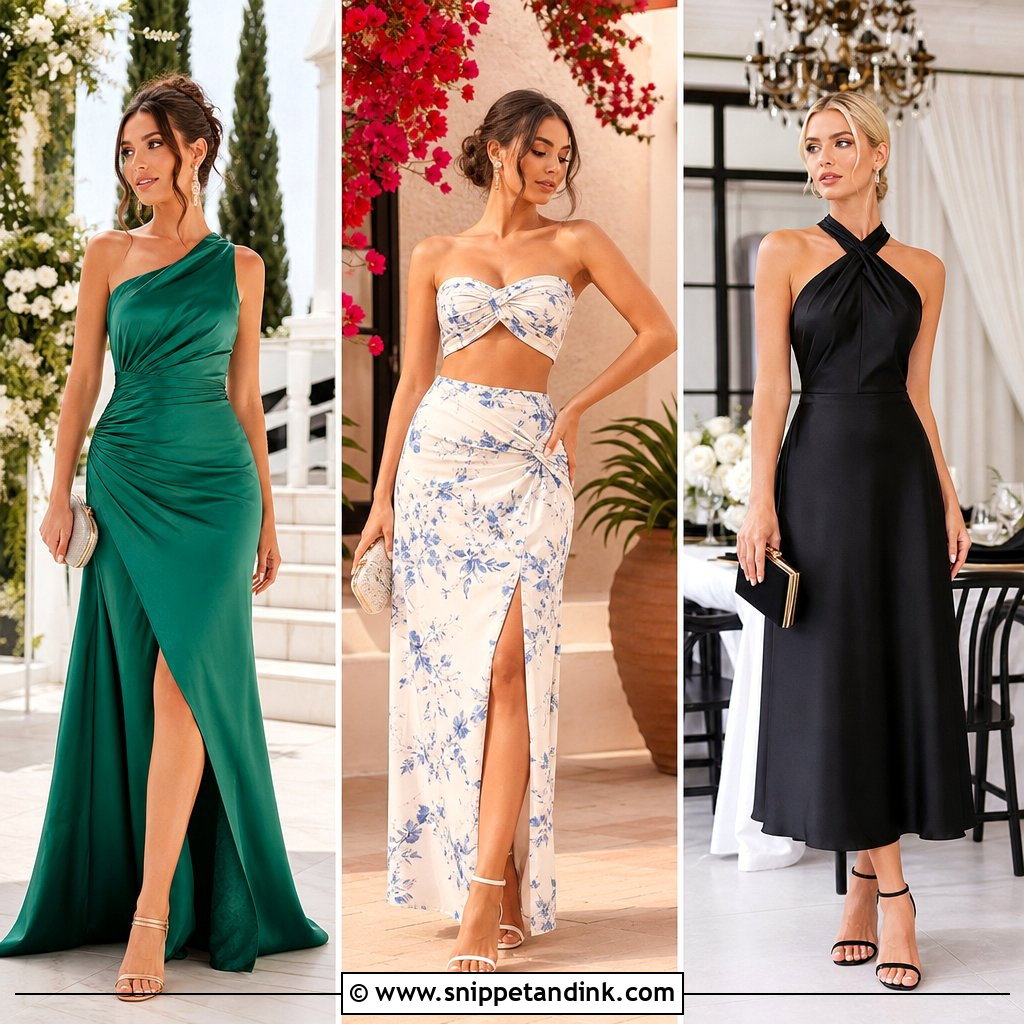
7. Indo Western Gown For Cocktail
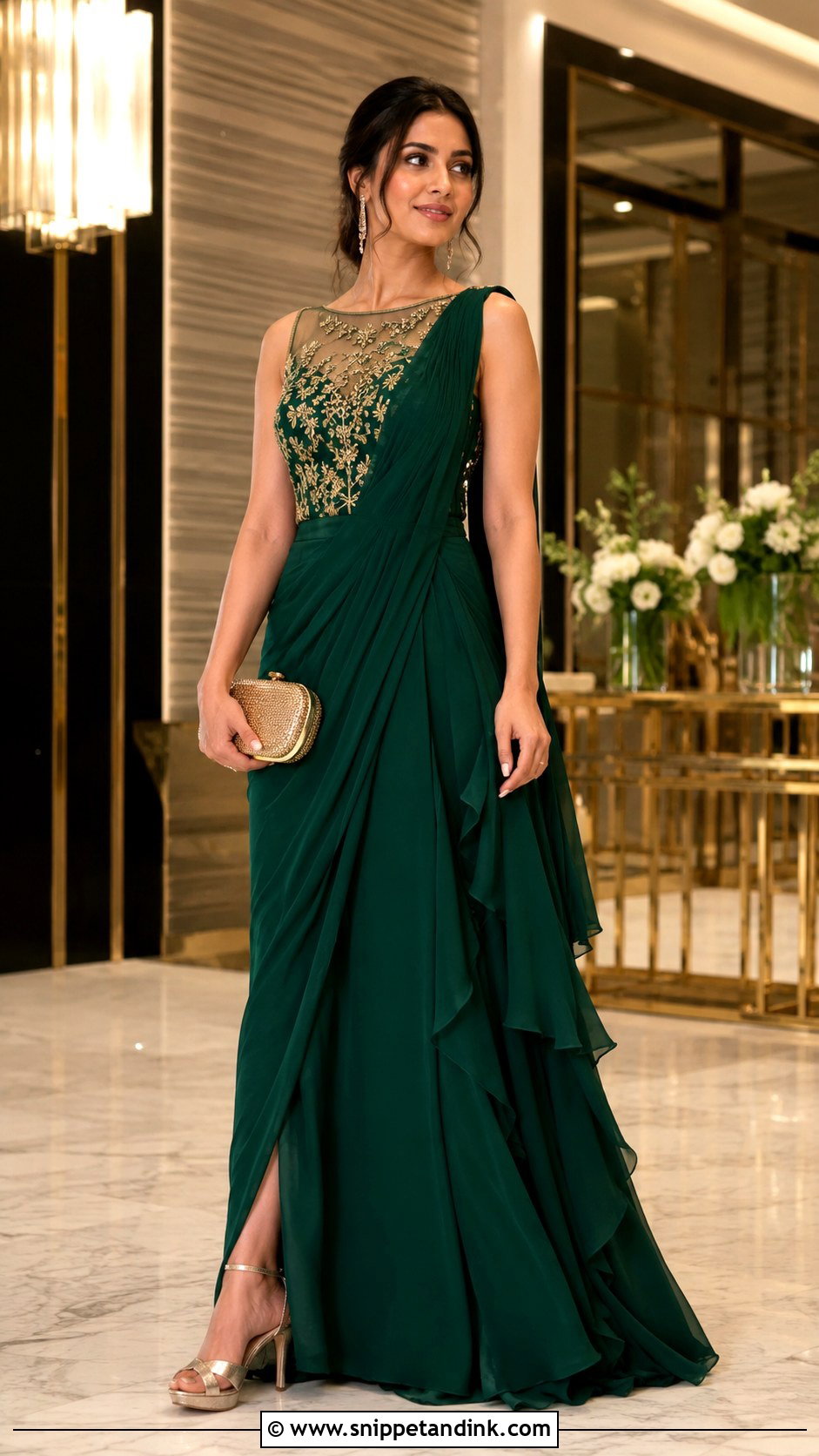
Cocktail nights often have the most Western dress code of the whole wedding, and an Indo-western gown lets you meet it without dropping the Indian detail. For a cocktail event, I look for a draped gown, embroidered bodice, cape sleeve or one-shoulder cut with subtle beading. Emerald, midnight blue, wine and plum hold up under low evening light; mauve and dusty rose suit softer palettes. Choose clean finishing over heavy zardozi, which can tip into bridal. Metallic heels, sleek earrings and a small clutch are enough.
8. Kurta Palazzo Set For Wedding
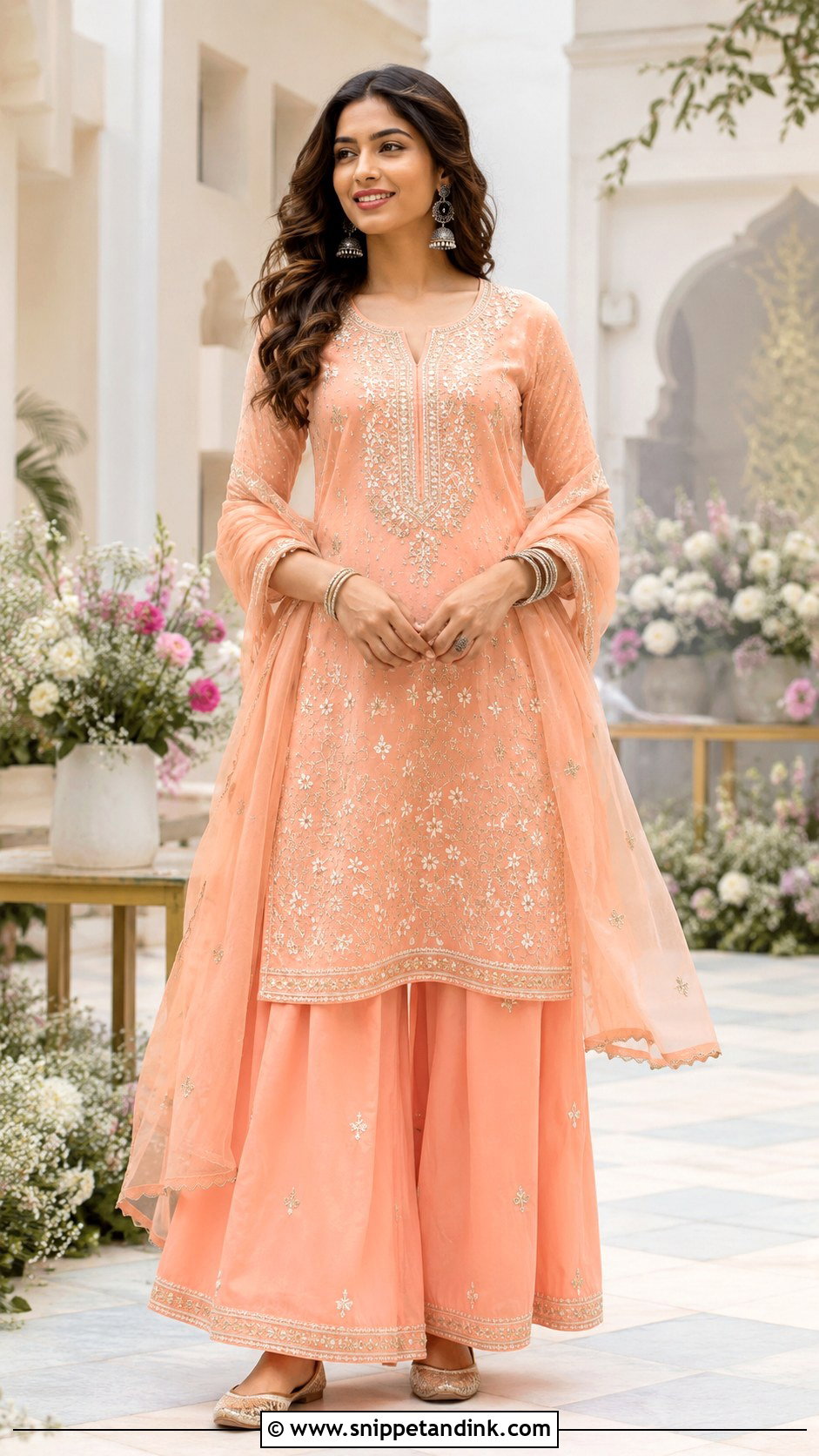
Haldi lunches, travel days and smaller family ceremonies rarely need more than a good kurta palazzo set. A straight or A-line kurta over wide palazzos in silk blend, chanderi or brocade looks wedding-ready, and zari borders or block print add enough detail. On a busy wedding weekend this is the outfit I pack for the day you are running errands for the bride and then attending a puja. Juttis, oxidized earrings, bangles and a low bun or blowout finish it. You will wear the kurta again long after the wedding.
9. Cape Lehenga For Wedding Guest
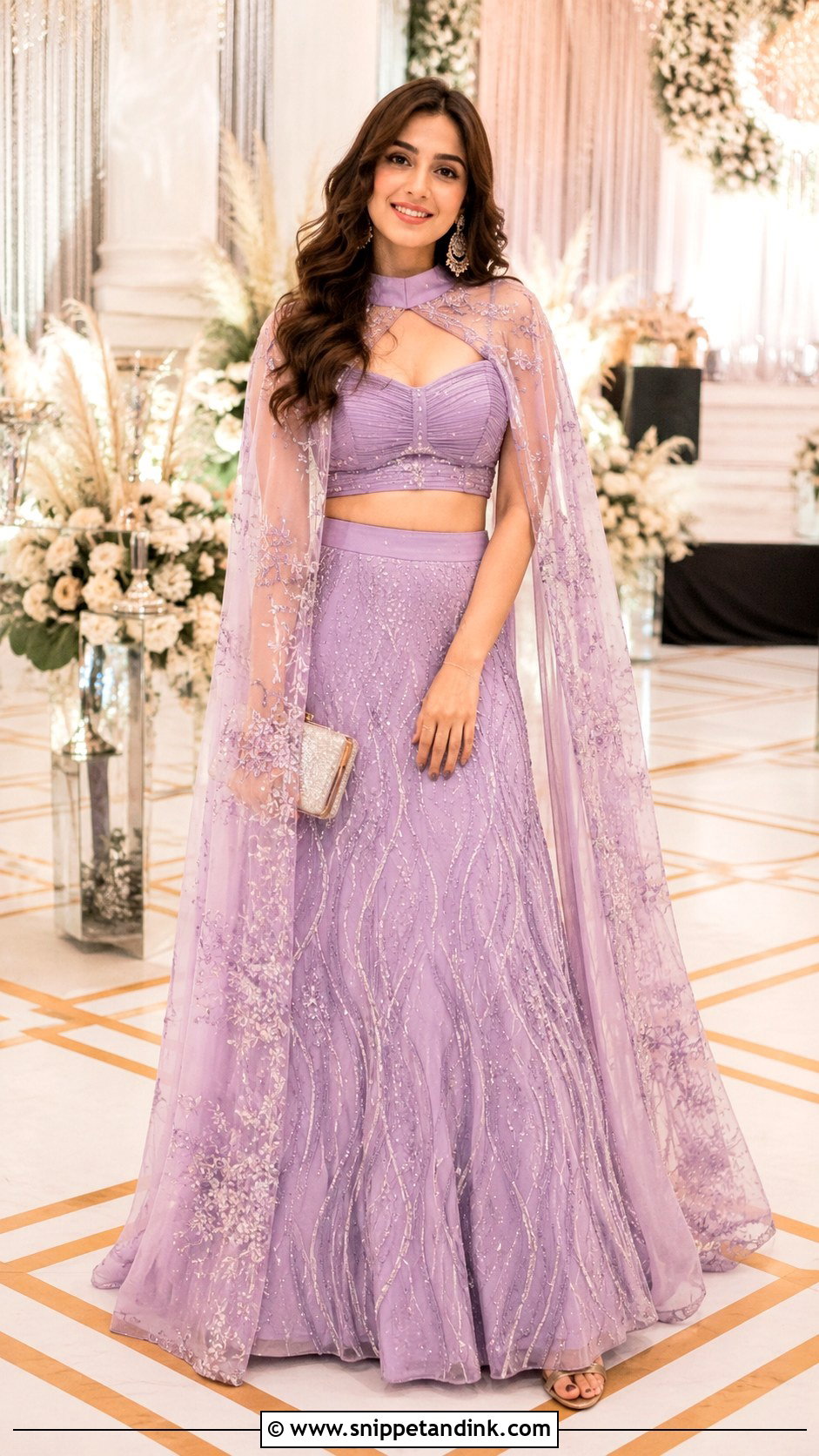
Cape lehengas solve the dupatta problem at events where you are moving between tables all night. The sheer embroidered cape gives coverage and floats in photos, but there is nothing to pin, slip or drag. Soft net, georgette or satin skirts suit sangeet, reception and engagement events. Lavender, teal, rose and silver are shades I keep coming back to. I ask that the cape is attached at the shoulder seam with a hook, not just draped, so it does not slide off during a hug. Keep jewelry quiet, then add heels, a sleek clutch and soft curls.
10. Gharara Set For Nikkah
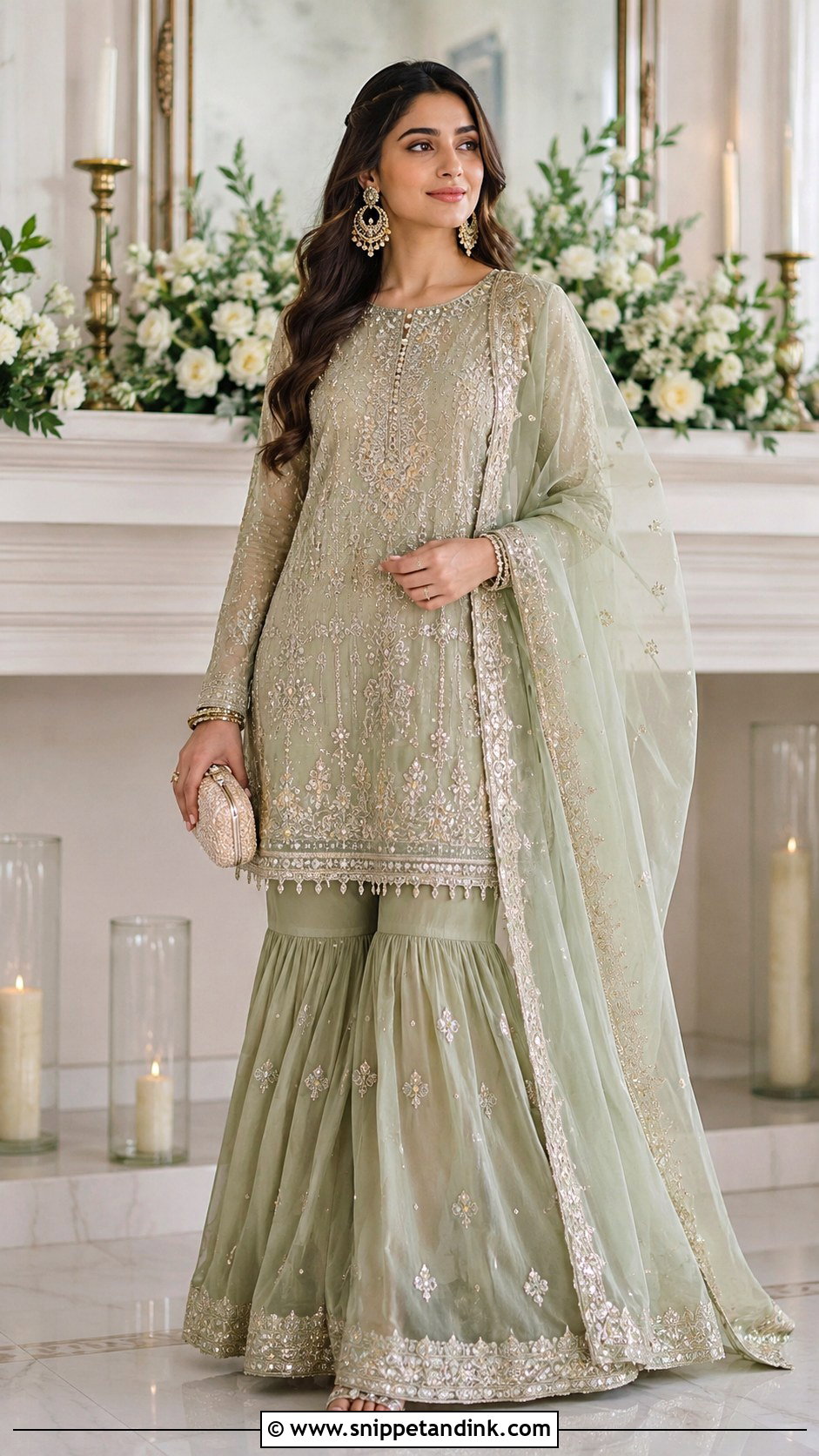
Gharara sets are where I start for a Nikkah. The fitted section at the knee and the flare below give a classic, structured shape, and the kurta with a dupatta covers well for a more traditional function. I suggest modest necklines, longer sleeves and silk, organza or chiffon depending on the season. Pastels, ivory with gold, sage, blush or deep jewel tones all work; check the time of day first. A dupatta that can be draped over the head during the ceremony is worth planning for. Add a passa, chandbalis and embroidered sandals.
11. Pre Draped Saree For Wedding
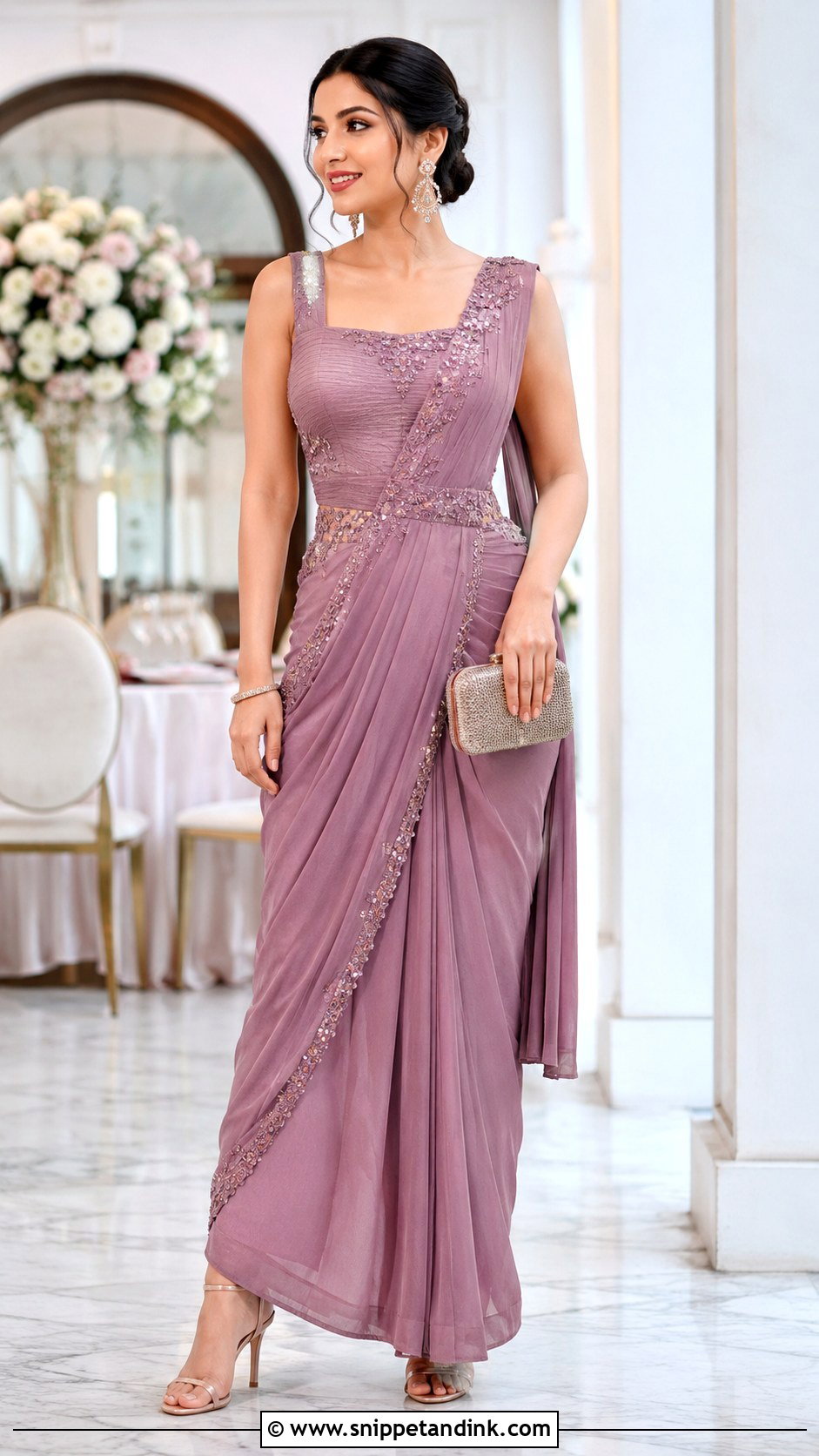
If you have never worn a saree for twelve hours, start with a pre-draped one. The pleats and pallu are stitched in, so they stay put through dinner, photos and dancing. A structured blouse and a soft, moving fabric like satin, crepe, chiffon or georgette suit cocktail nights, receptions and engagement parties. Before the wedding, I have clients practise sitting, climbing a few stairs and using the bathroom in it, since stitched drapes vary a lot by brand. Heels, drop earrings and a compact clutch finish it.
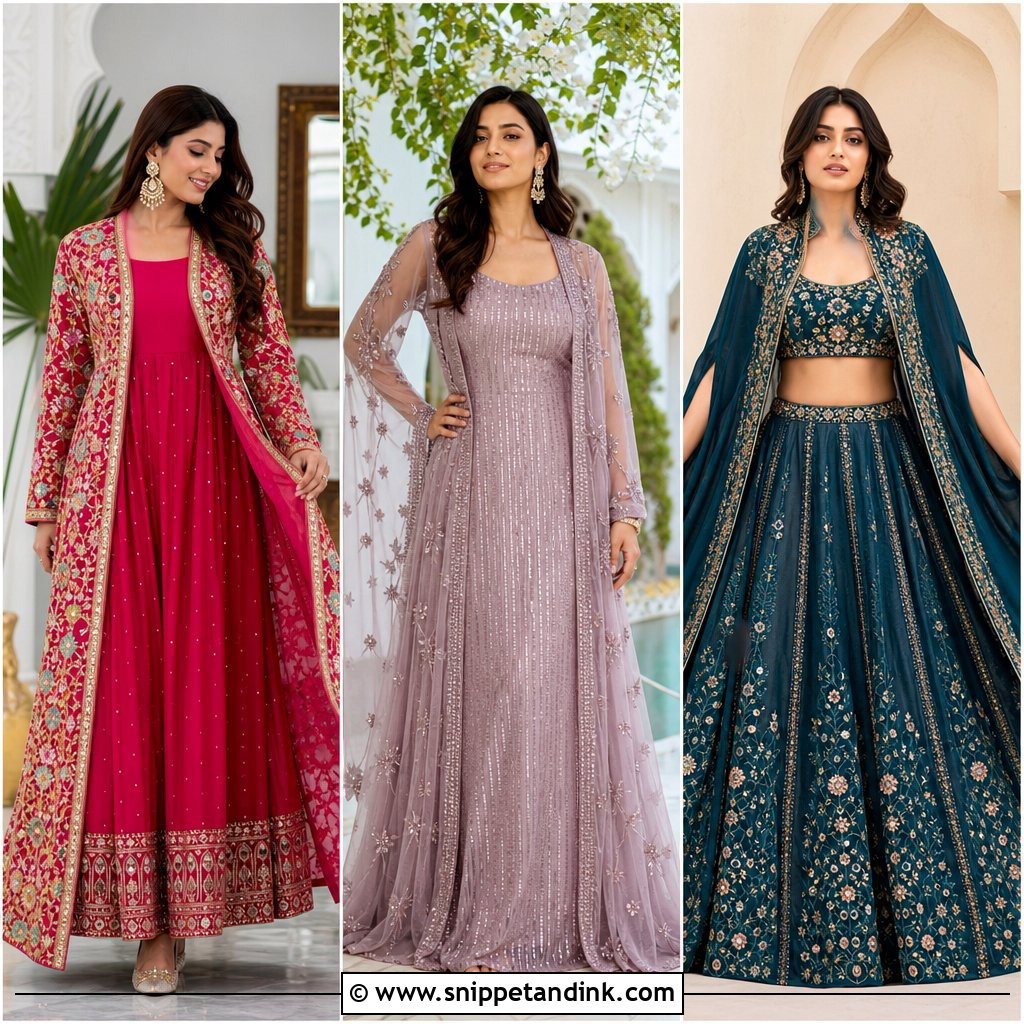
12. Jacket Lehenga For Indian Wedding
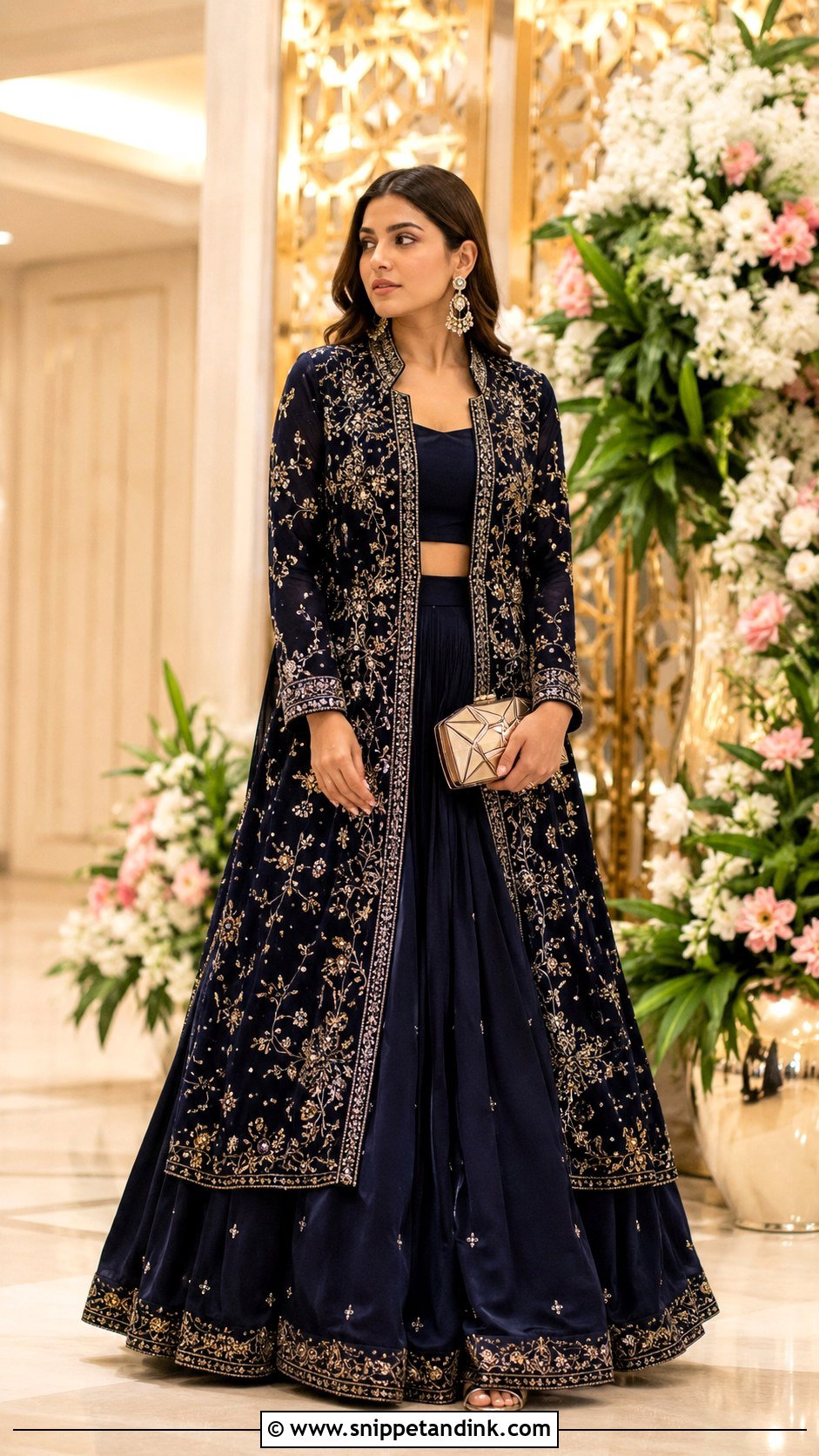
Venues with strong air conditioning are where a jacket lehenga earns its place, because the layer keeps you warm where a dupatta would not. The jacket can be short, long, sheer or structured. Daytime calls for florals or pastels; for evening I reach for velvet, brocade or sequins in navy, wine, emerald or gold. Since the jacket carries the detail, I keep the blouse and skirt simpler underneath. One check at fitting: lift your arms, because a long jacket cut tight at the armhole restricts movement on the dance floor. Statement earrings and heels are plenty.
13. Banarasi Saree For Wedding Guest
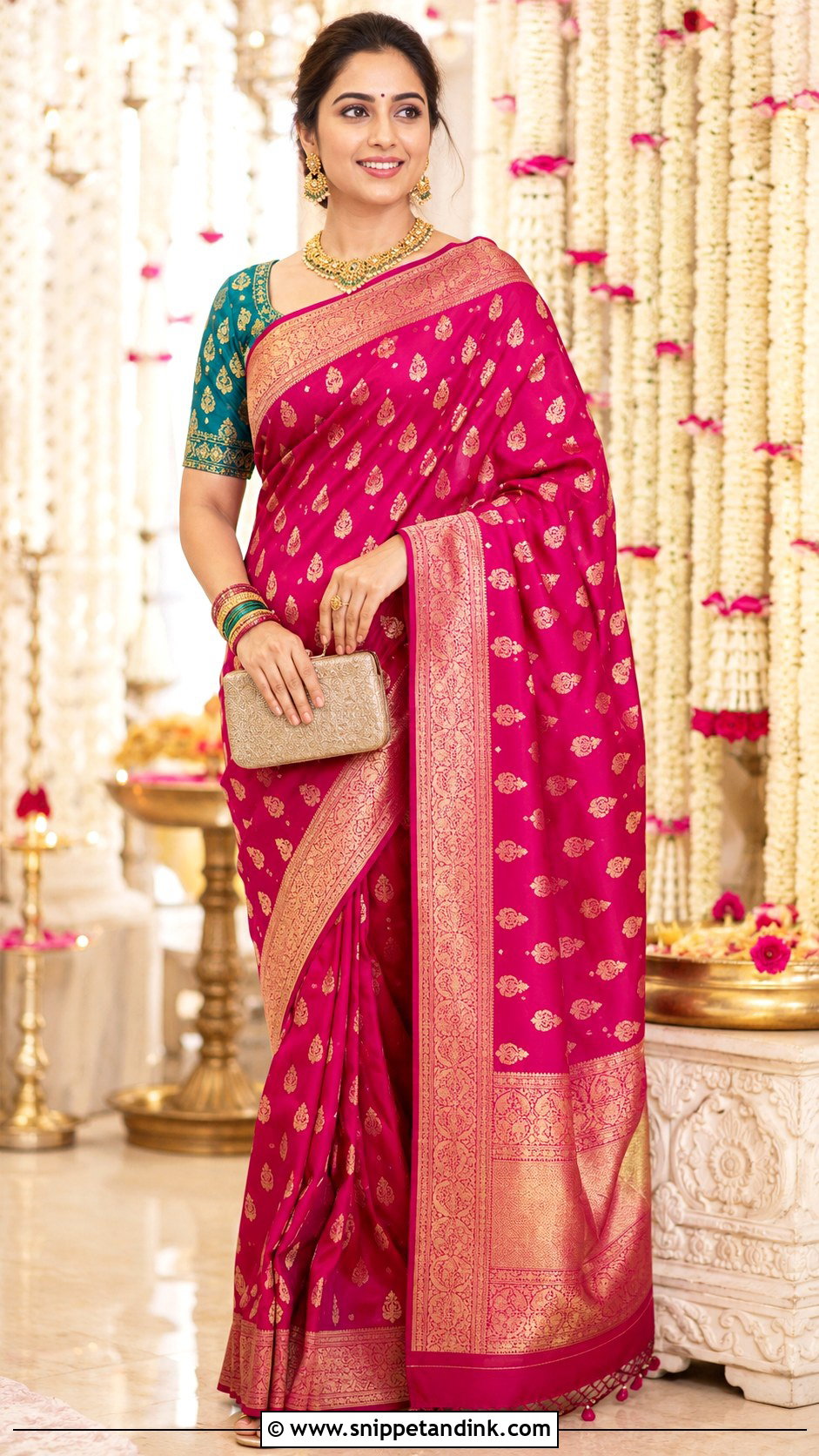
A Banarasi saree is a classic for a friend’s main ceremony. The woven zari makes it feel special with minimal styling. Teal, magenta, mustard, turquoise, purple and soft gold are guest-friendly; deep red is best left to the bride. A contrast blouse reads younger, while a matching one keeps it traditional. Heavy Banarasi weaves do not pleat as tightly as softer silks, so I use one or two extra safety pins at the pleats and pallu. Gold jewelry, a bindi, bangles and a low bun complete a look that never dates.
14. Mirror Work Lehenga For Sangeet
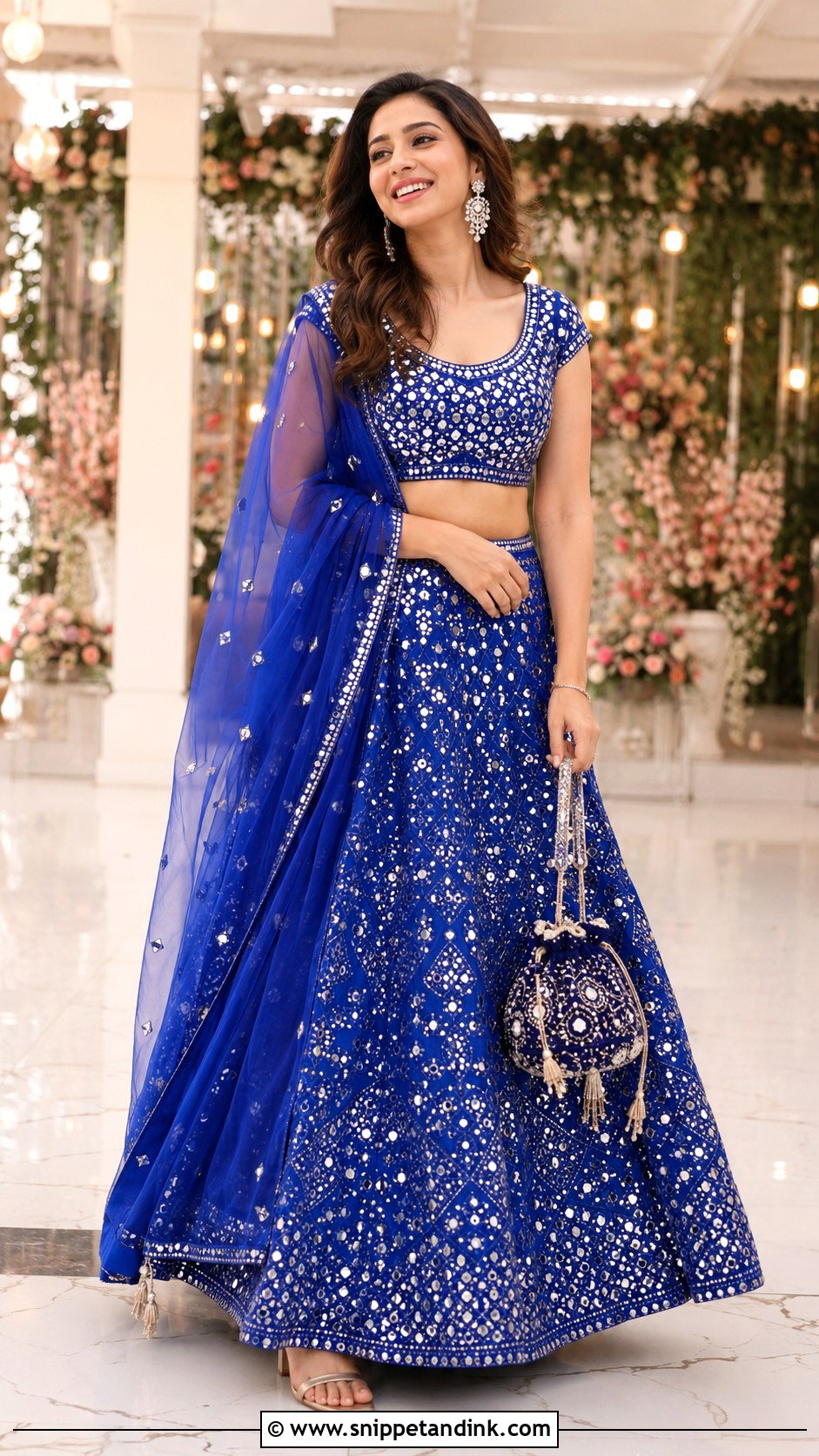
Mirror work is made for the sangeet stage. Every turn throws light back at the camera, which is why I keep jewelry to earrings and skip heavy necklaces that compete. Cobalt, hot pink, lime, orange and turquoise suit the energy of the night. Check the weight before you buy: a skirt covered in mirrors gets heavy around the waist after an hour of dancing, so look for mirrors used along the hem and border rather than all over. Wedges or low embellished heels beat stilettos here. Dewy makeup and loose waves suit it.
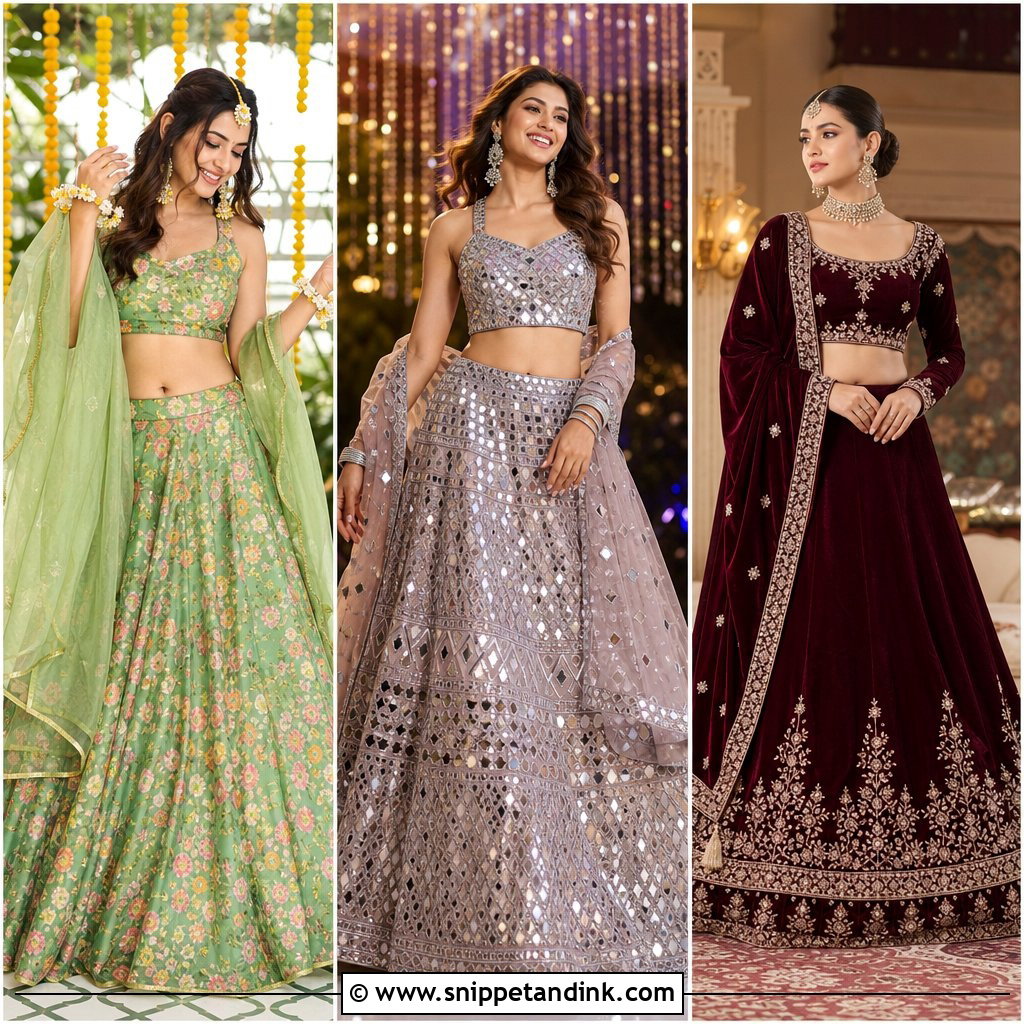
15. Chikankari Lehenga For Day Wedding
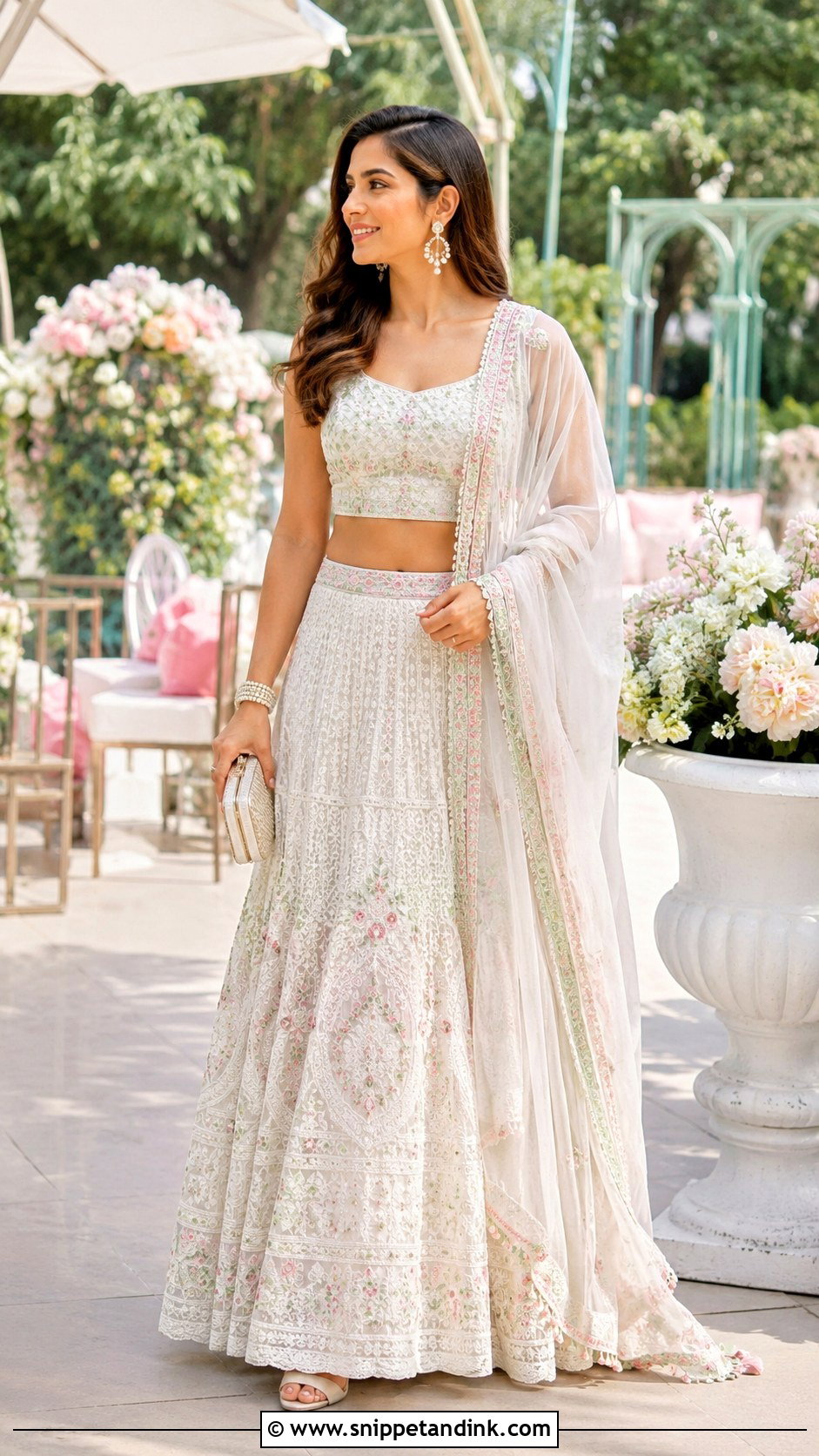
Chikankari is hand shadow work, airy and fine, so it is my choice for a hot daytime ceremony. Georgette, cotton, organza or chiffon in ivory, blush, mint, powder blue or lemon stays breathable in sun. My caution is the same as for any pale outfit at a wedding: if the bride is in a similar tone, choose a stronger pastel so you do not look matched. Pearl jewelry, nude heels and a soft dupatta suit the delicacy of the thread. Keep bangles off the embroidered sleeve, as fine stitches catch on metal edges.
16. Velvet Suit For Winter Wedding
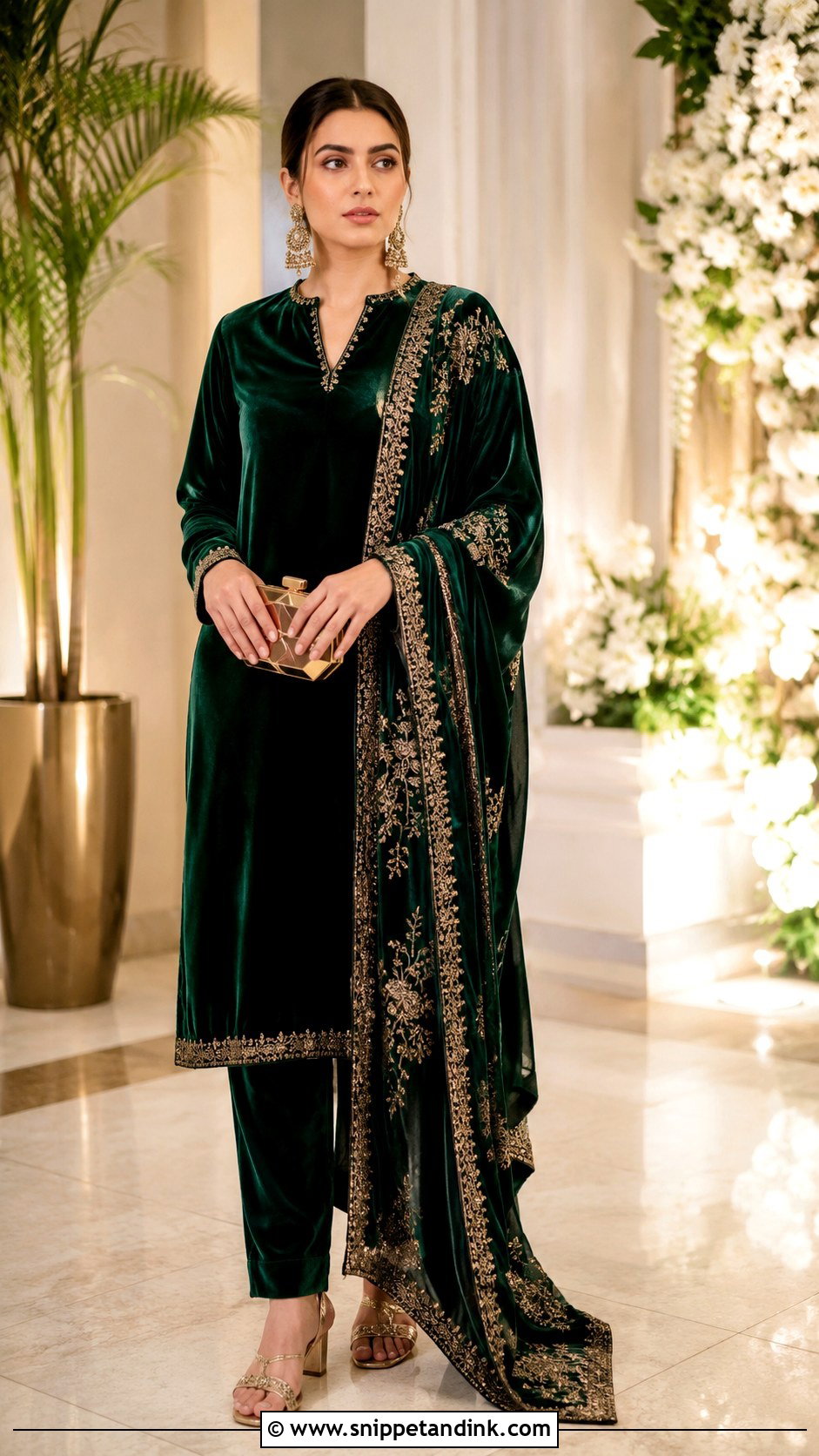
Winter weddings outdoors get properly cold after sunset, and velvet is the most elegant way I know to stay warm. Maroon, emerald, navy, plum or bottle green show the plush pile best. A straight kurta or Anarkali-style suit with embroidery at the neckline or hem pairs with cigarette pants or palazzos. Velvet crushes when packed tightly, so carry it on a hanger in a garment bag if you are travelling. Antique gold jewelry suits the texture, and block heels keep you steady on a cold lawn.
17. Organza Saree For Day Wedding
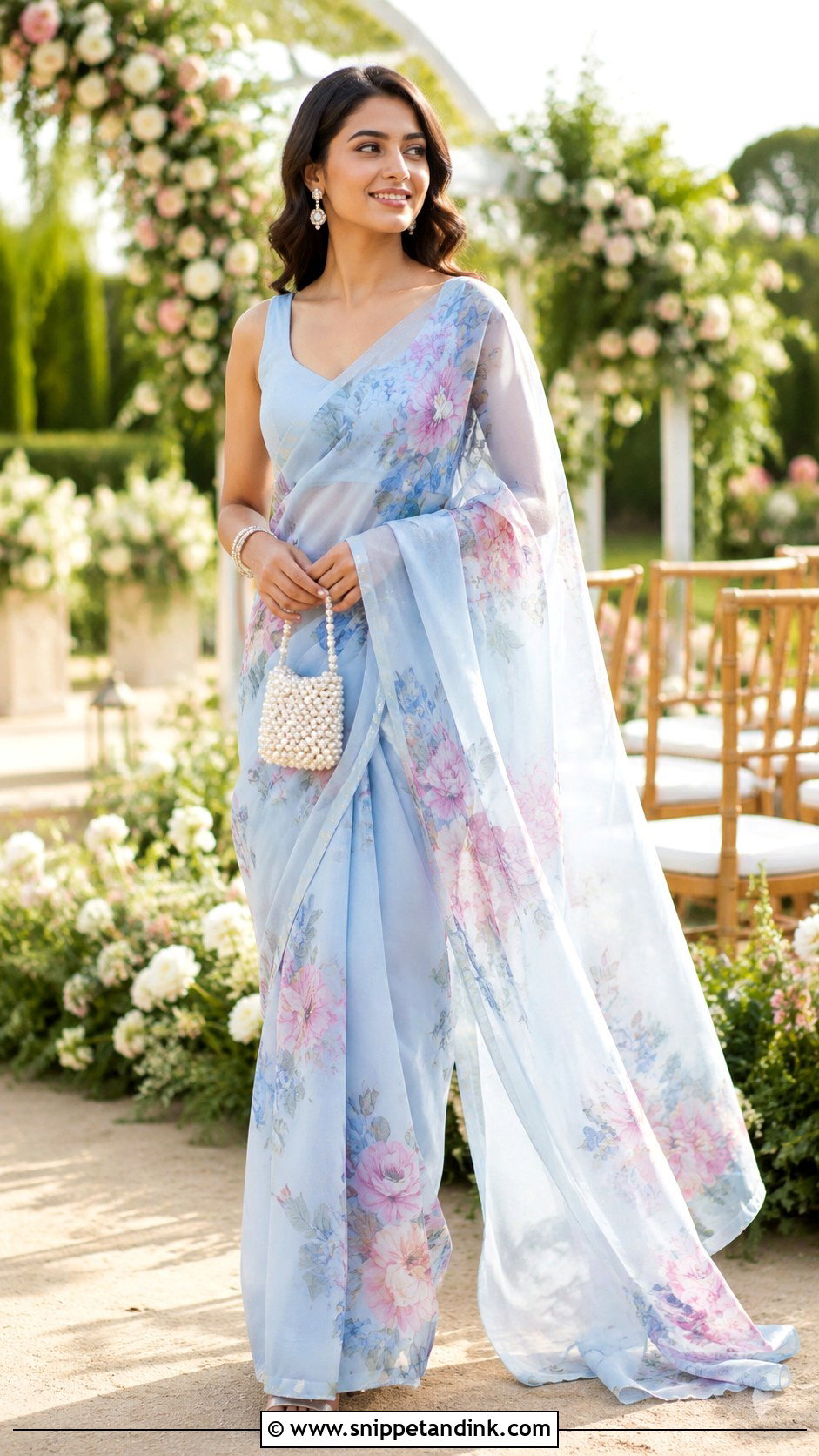
An organza saree holds a crisp, slightly sculpted shape, so it looks polished in daylight photos. Floral prints, pastel embroidery or a fine border suit garden venues and morning ceremonies. Because organza is springy, I pin it at the shoulder and pleats more firmly than a soft silk, or the pallu slowly lifts away. A simple blouse, pearl earrings, dainty bangles and comfortable heels for walking on grass are enough. Finish with soft curls or a low bun. It is light enough to wear through a long summer morning.
18. Dhoti Pant Set For Wedding
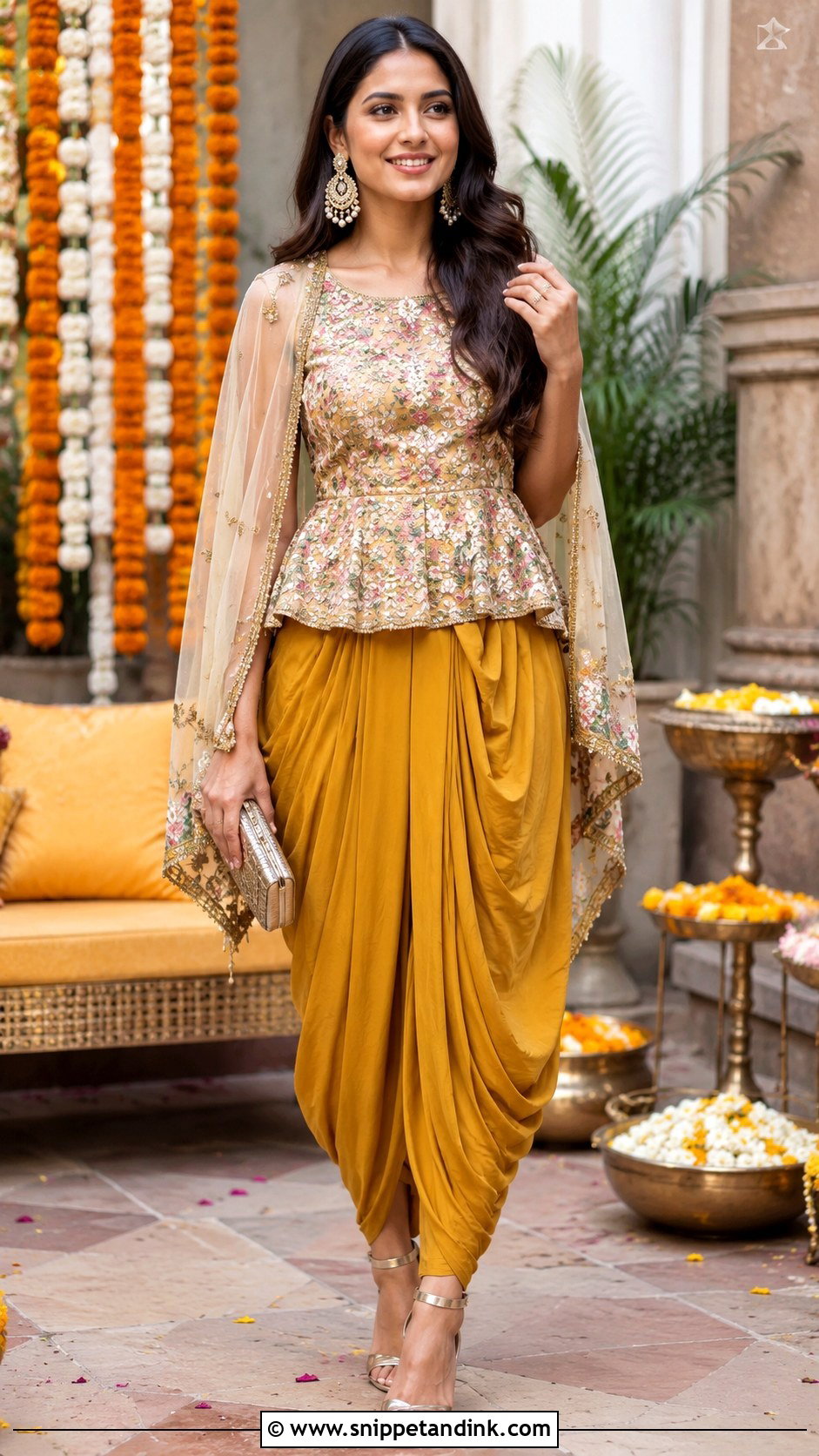
Dhoti pant sets suit the guest who wants to dance freely and look different from the room. The draped pants move well, while a kurta, peplum or crop blouse adds shape, and many sets come with a cape, jacket or stitched dupatta. Silk, crepe or georgette in mustard, teal, coral or deep green feel festive. I check the drape by having the client sit low on a cushion, since mehendi and haldi seating is often on the floor. Statement earrings and metallic heels complete it for cocktail, mehendi or haldi.
19. Ruffle Saree For Wedding Party
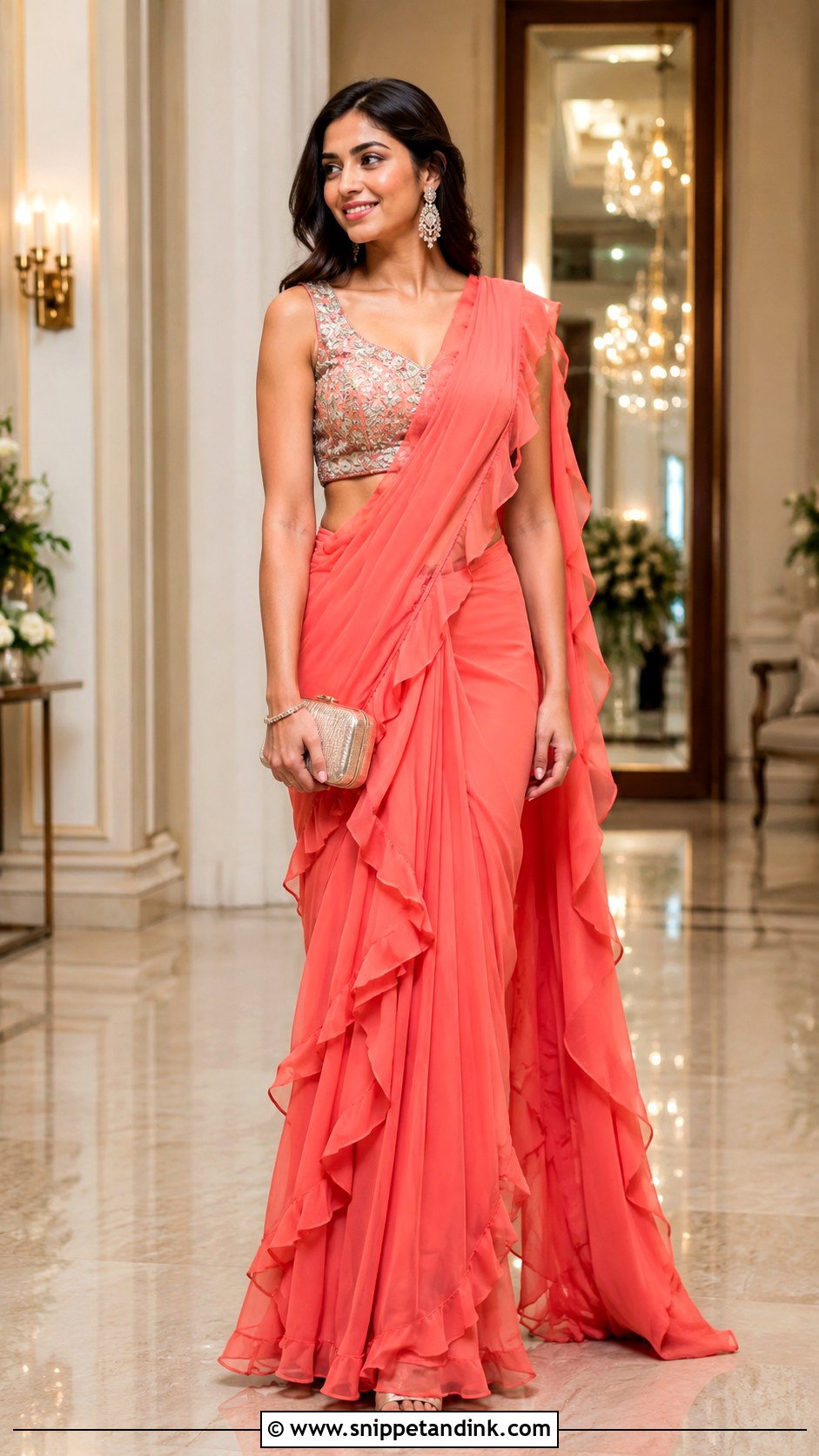
Ruffle sarees feel fun from the first step: the frill along the edge moves even when the saree itself is simple. For a wedding party or sangeet night, georgette, chiffon or pre-stitched satin is easiest to wear. Coral, lilac, turquoise or champagne keep it youthful. A sleeveless, halter or embroidered blouse suits it if the family’s dress code allows. Ruffles add volume at the hem, so I’d keep the pleats few and flat to avoid bulk at the front. Hoops or sleek drops and a small clutch are all the extras it needs.
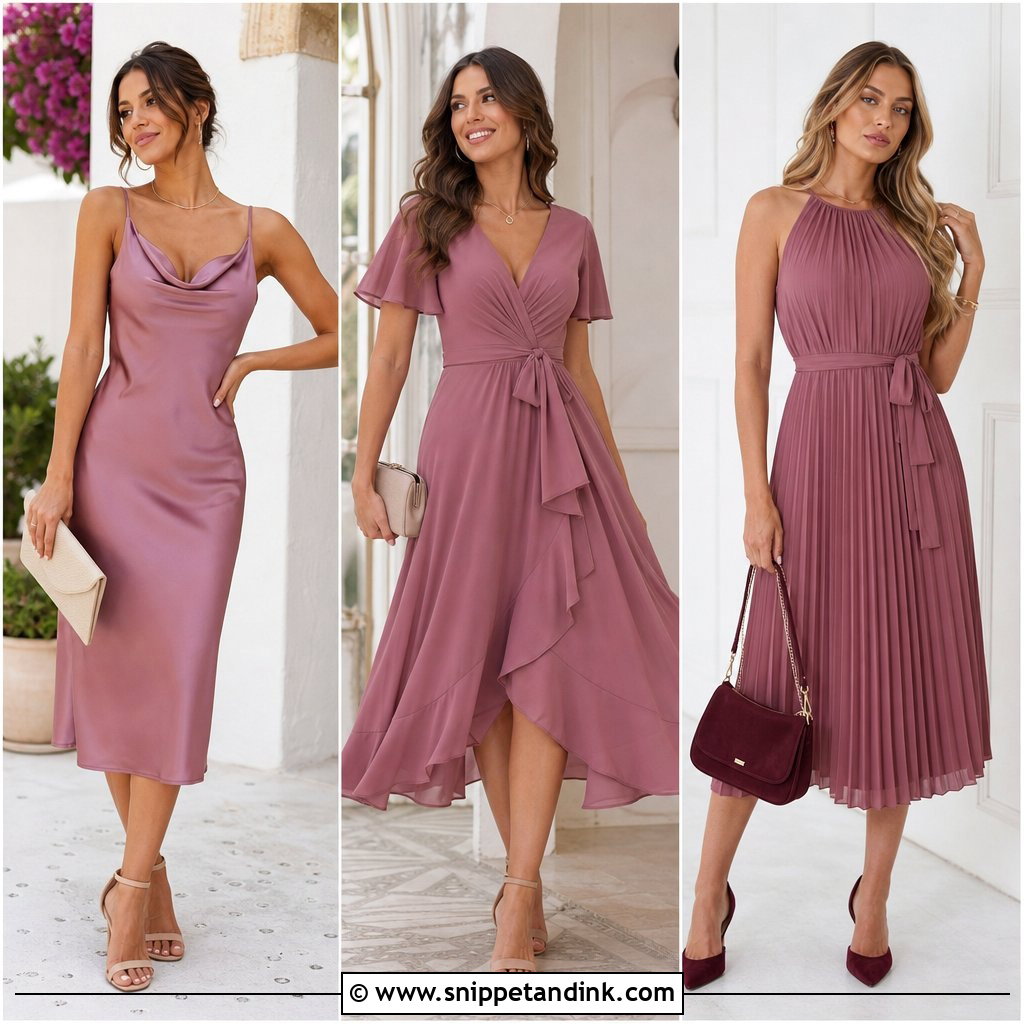
20. Short Kurti Skirt Set For Mehendi
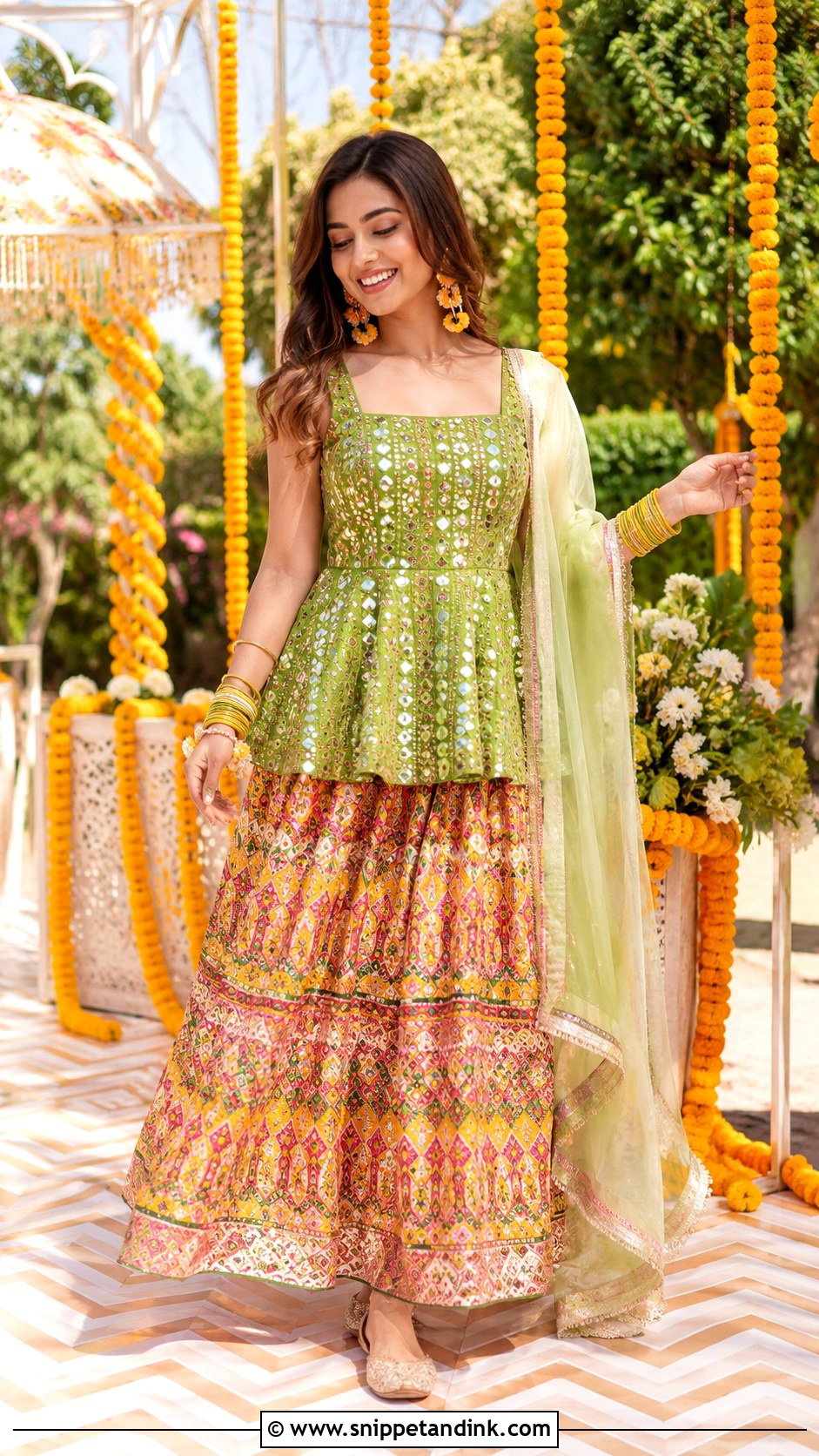
Mehendi and haldi involve a lot of sitting, and a short kurti with a long skirt handles it better than a fitted lehenga. The short top keeps things young, while the skirt gives the volume of traditional dress. Prints, mirror work and gota borders in yellow, green, pink or orange suit the day. Pin a light dupatta on one shoulder or skip it altogether. For haldi especially, I tell guests not to wear anything precious, because turmeric stains are hard to remove from pale silk. Juttis, bangles and playful earrings are all it needs.
21. Palazzo Saree For Wedding
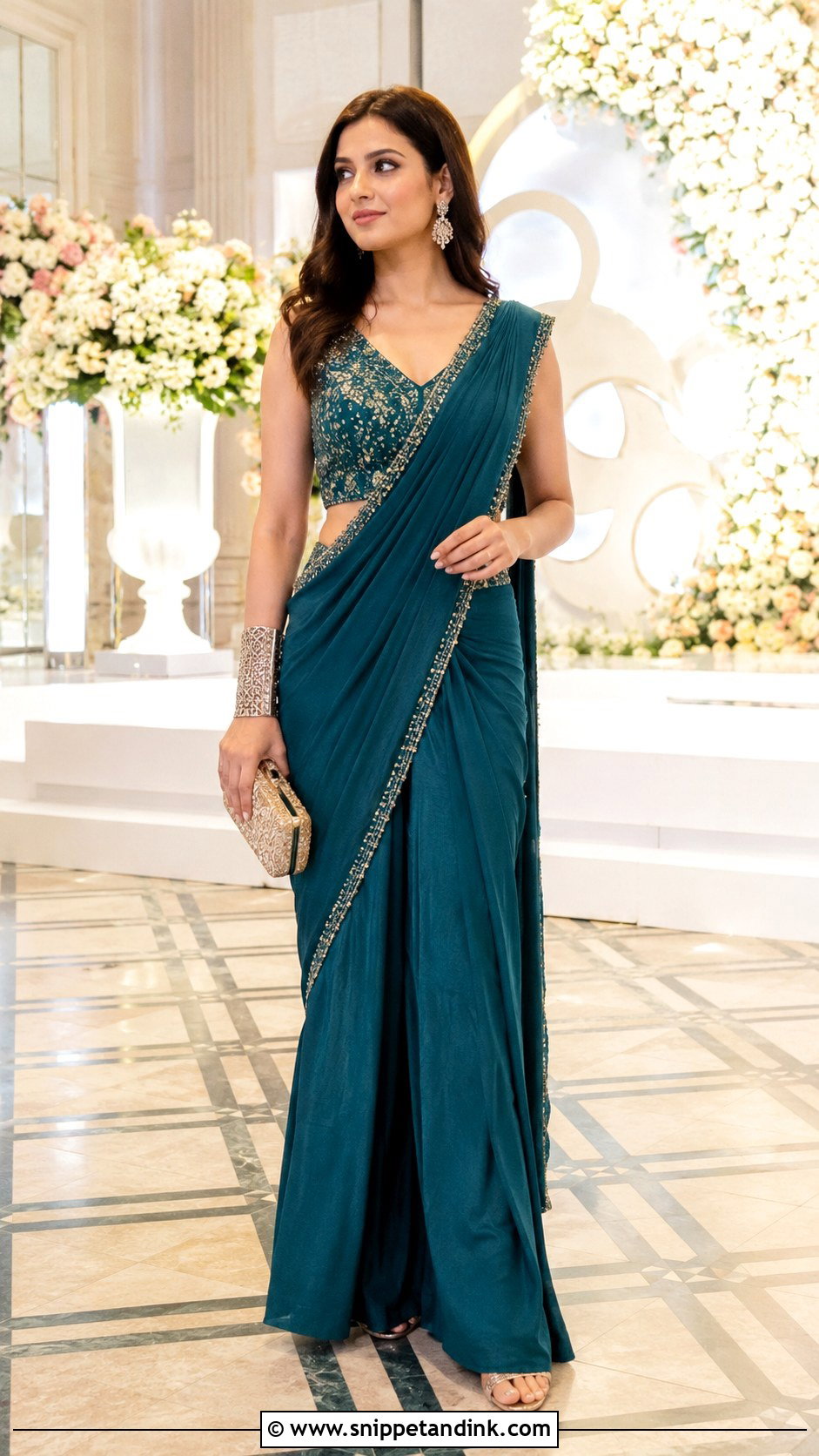
Palazzo sarees are the compromise I suggest to guests who love the saree look but hate managing pleats. The wide-leg bottoms take the place of the pleated section, and the pallu drapes as normal, so walking and dancing are easy. Embellished borders, soft sequins or an embroidered blouse dress it up. Mauve, teal, champagne, rust and navy look modern. I’d skip layered jewelry here and go for a statement cuff and earrings instead, which keep the clean lines intact for receptions, cocktails or a sangeet.
22. Printed Anarkali For Wedding
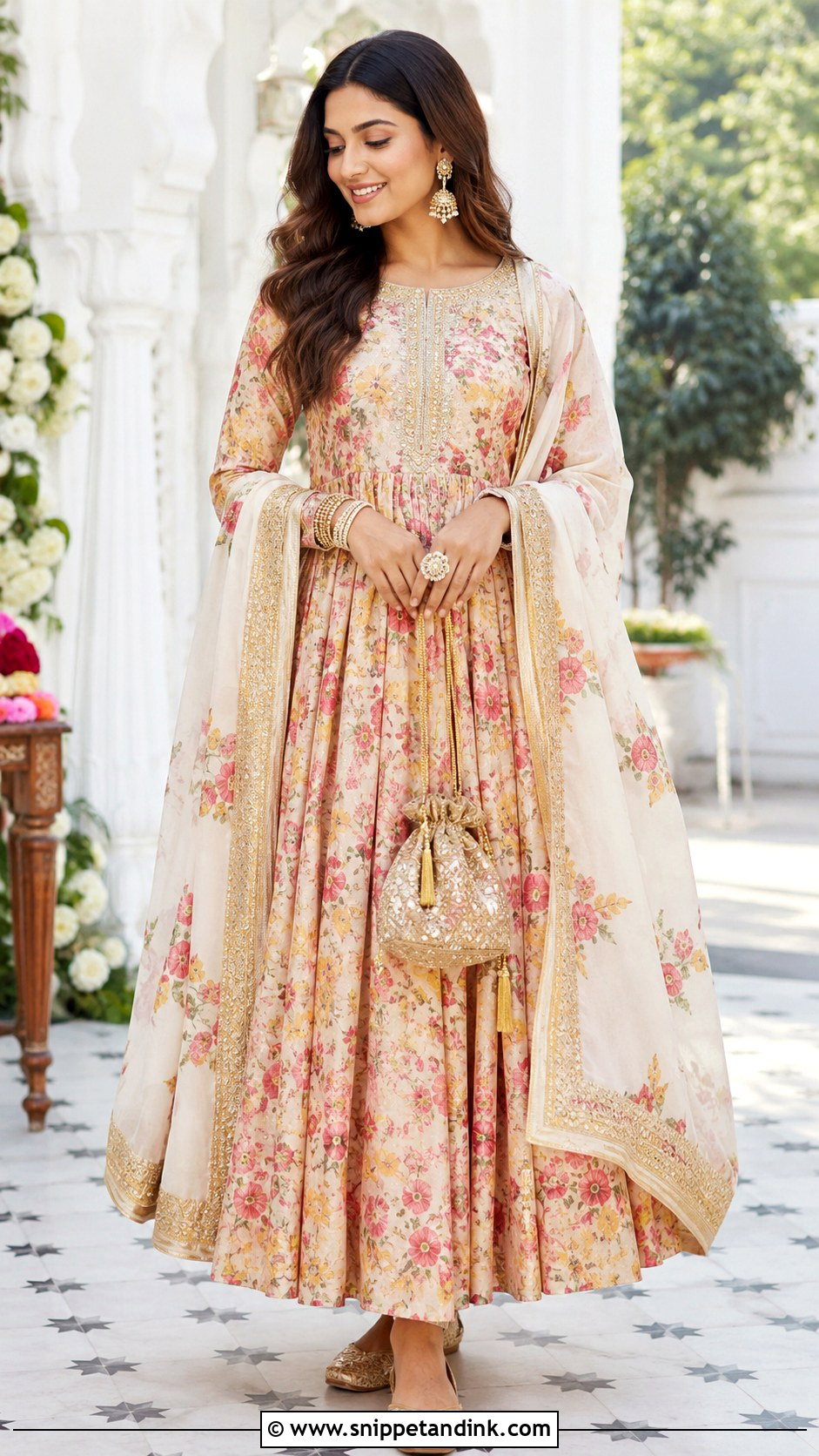
For daytime functions, a printed Anarkali feels dressed without being stiff. Floral, paisley, bandhani, kalamkari or block print designs in cotton silk, georgette or chiffon suit haldi, mehendi, welcome lunches and small ceremonies. Look at the print scale against your height: very large motifs can overwhelm a petite frame, while small repeats read neater in group photos. A busy print gets simple jewelry; a quiet one can take a statement earring. Finish with a bordered dupatta, jhumkas and embroidered flats or wedges.
23. Corset Lehenga For Reception
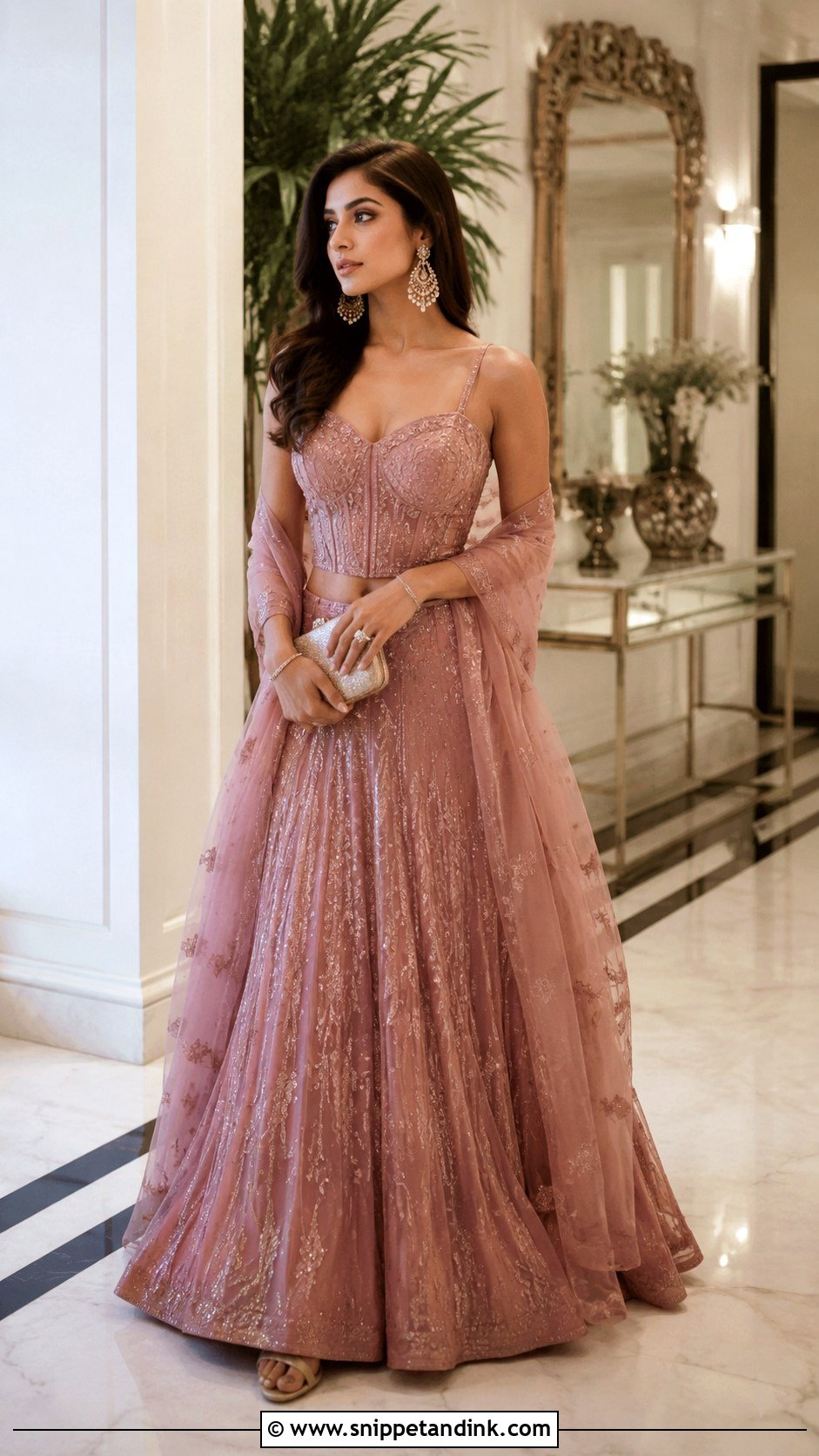
A corset lehenga brings a sharp, modern shape to a reception. The boned blouse defines the waist while the skirt keeps the outfit rooted in occasion wear. Satin, silk, organza or net with subtle sequins or tonal embroidery suits it, in champagne, sage, midnight blue, wine or dusty rose. The corset has to fit precisely; I always do a seated fitting, because boning that sits right standing can dig in at the hip once you sit down to dinner. Wear it with sleek heels, a mini clutch and statement earrings.
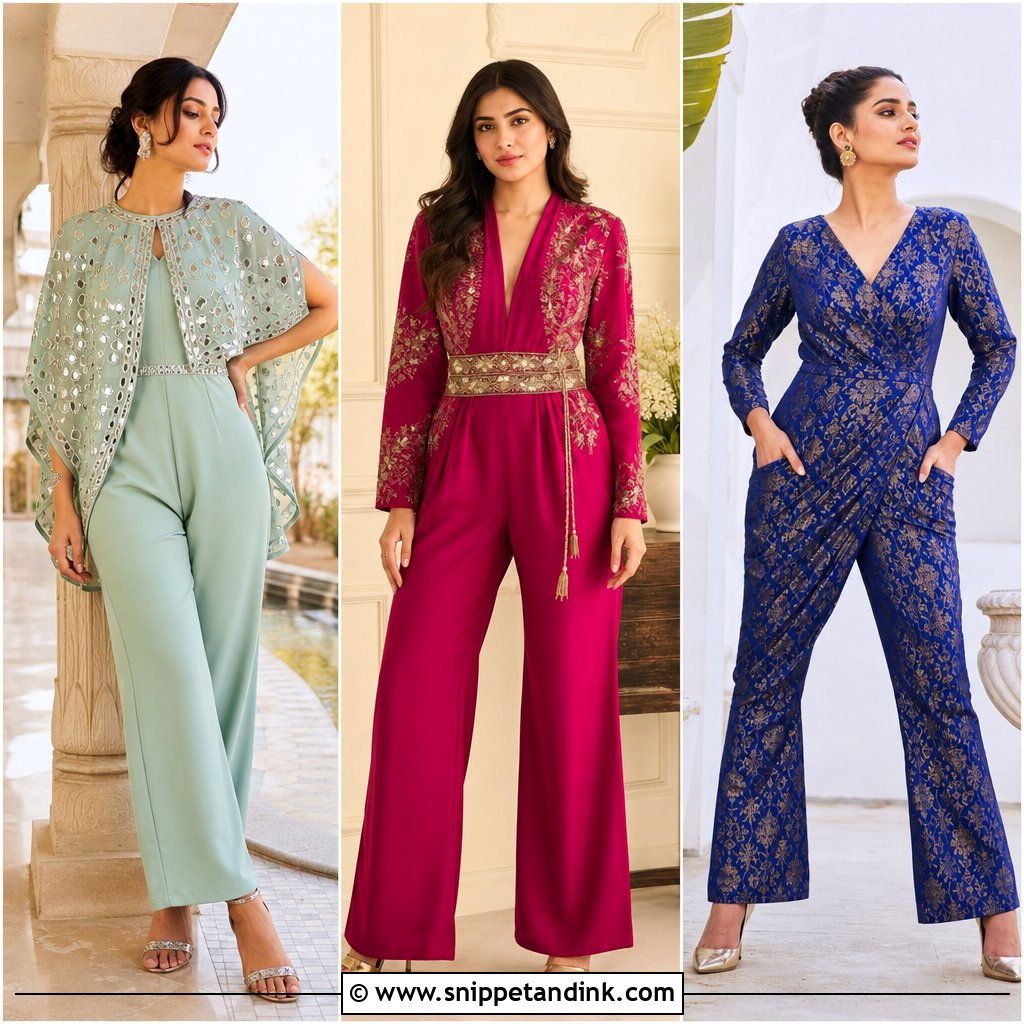
24. Co Ord Set For Indian Wedding
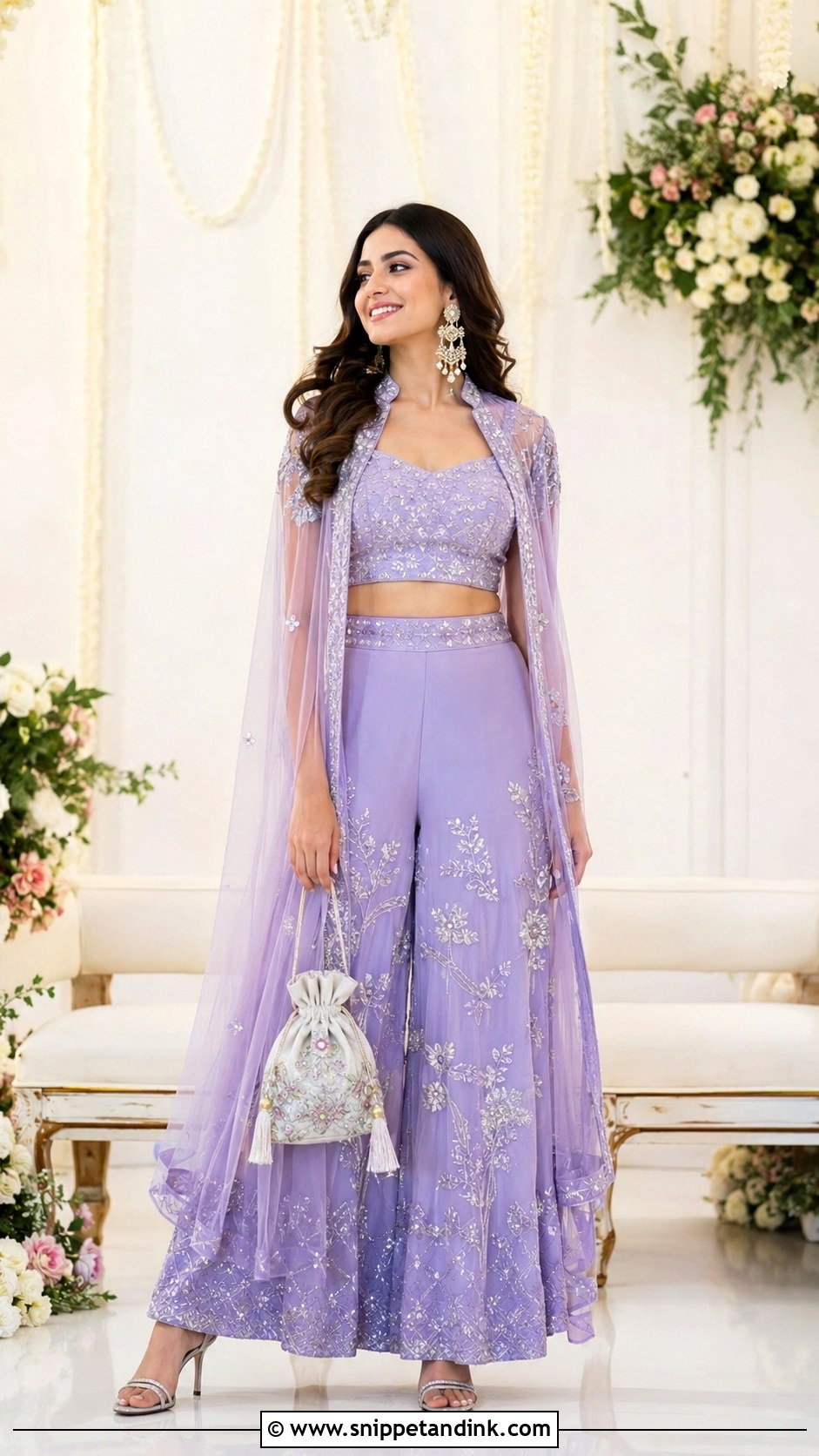
Co-ord sets are the easiest outfits to pack for a wedding you have to fly to. An embroidered top and pants, a crop top with skirt or a tunic set with a cape in silk, brocade, georgette or crepe looks dressy enough for smaller functions. Lime, pink, ivory with gold, rust, teal and lavender are fun picks. Crepe and georgette crease far less than silk in a suitcase. Add heels or juttis, a potli and bold earrings. You can split the pieces up and wear them separately afterward.

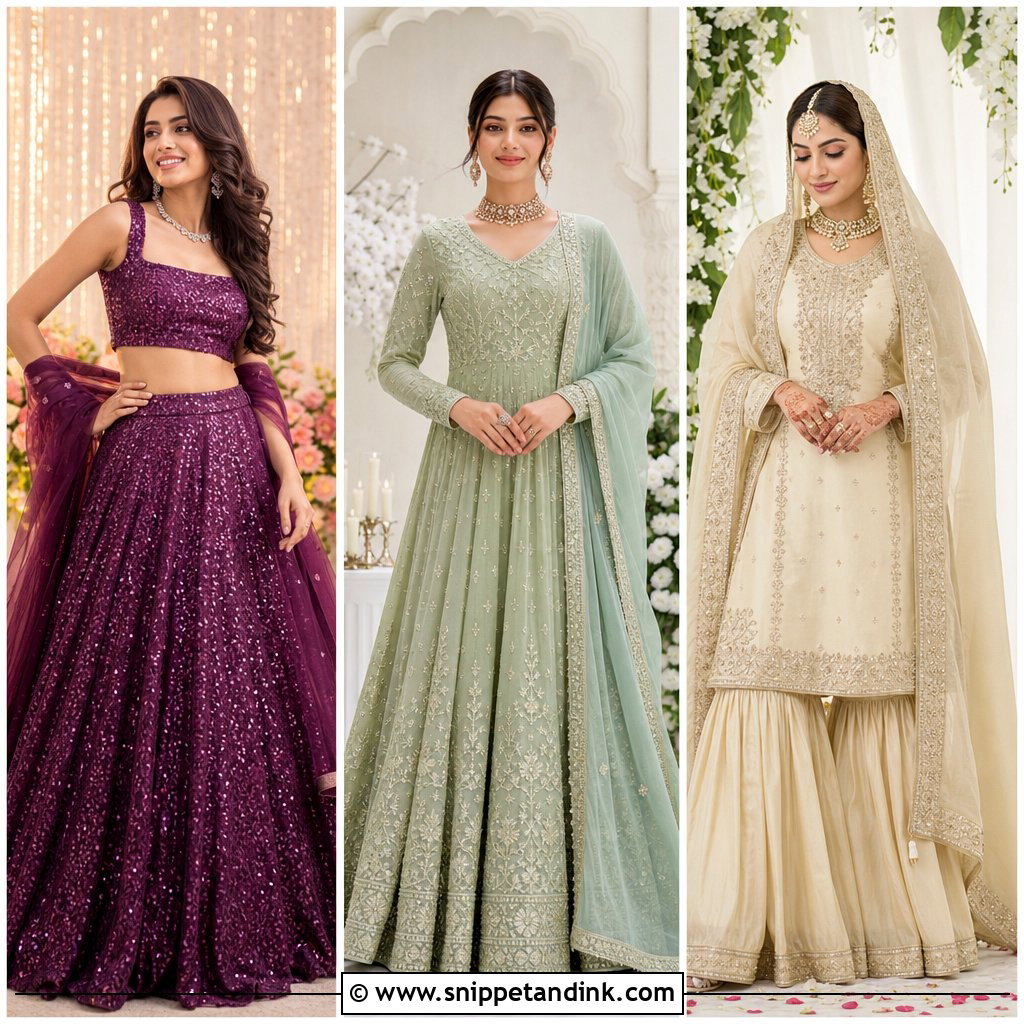
25. Lightweight Lehenga For Destination Wedding
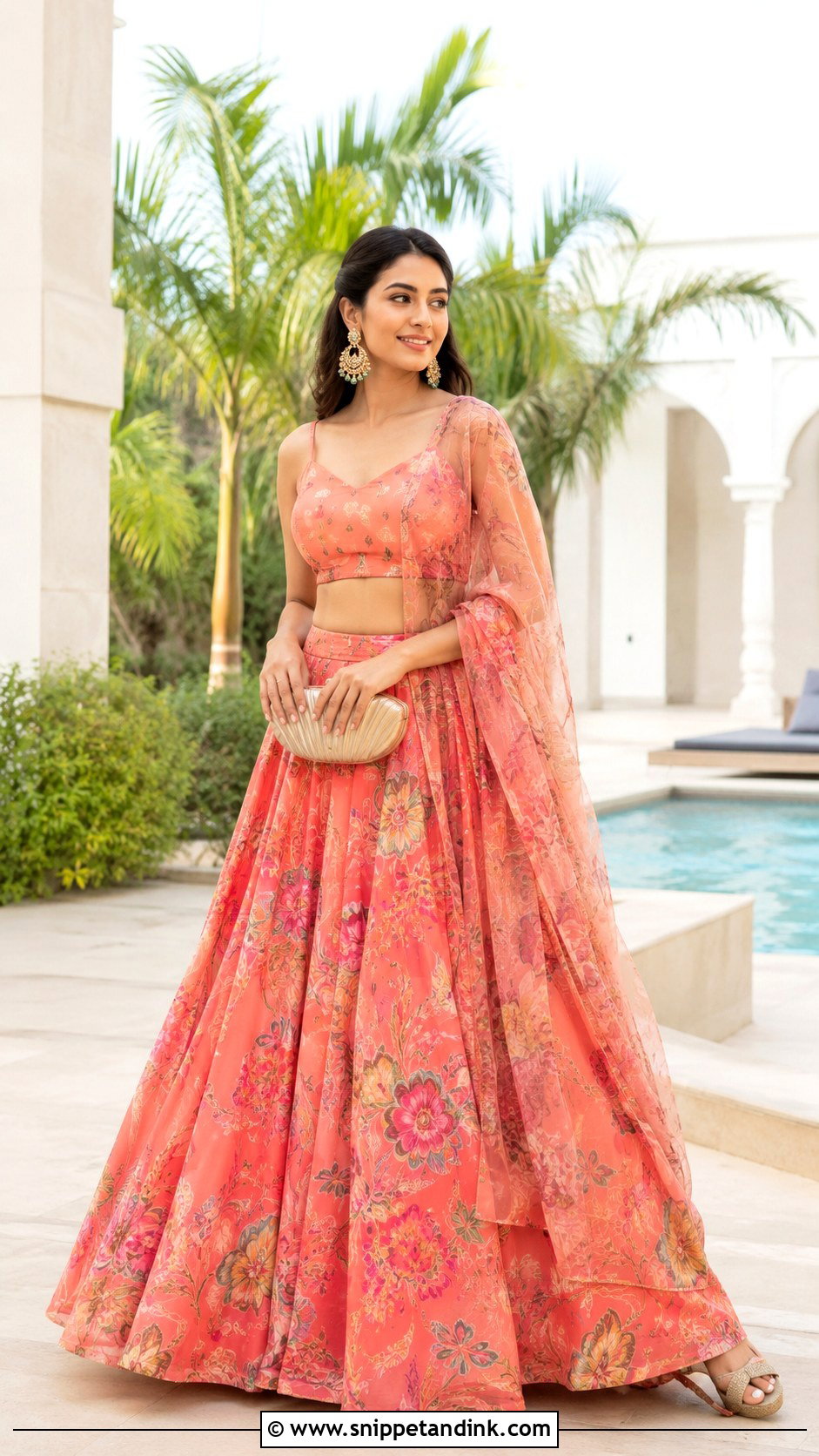
On a destination wedding you carry everything yourself, so weight matters as much as looks. Georgette, organza, chiffon or crepe lehengas pack small, while heavy velvet and layered can-can skirts take half a suitcase. Prints, minimal embroidery and mirror accents suit beach, resort and outdoor venues, especially in coral, aqua, lemon, blush or sage. On sand, wedges sink less than block heels and much less than stilettos. A crossbody potli keeps your hands free. You will still feel fresh on day three of the celebrations.
One Suitcase, Four Functions: Re-Wearing Pieces Across the Wedding
Most Indian weddings run over several events, and buying a full new outfit for each one adds up quickly. I plan guest wardrobes around pieces that can be split and rearranged, so the same skirt or blouse looks new at the next function.
Pieces that do double duty
- A plain, well-fitted gold or neutral blouse pairs with a lehenga skirt one night and a saree the next.
- A long embroidered jacket turns a simple kurta set from haldi wear into dinner wear.
- A statement dupatta changes the whole mood of a plain suit or lehenga.
- One pair of comfortable embellished juttis covers mehendi, haldi and most daytime events.
Packing so it arrives wearable
Roll cotton and crepe pieces and fold silks in tissue along their existing creases. Keep heavy lehengas in a garment bag on top of the case, and pack jewelry in a separate pouch so it does not snag the embroidery. A small travel steamer is worth its space; most hotel irons are too hot for organza and silk.
I also leave room for one spare: a simple kurta set you can wear if a function turns out more casual than you expected, or if something gets stained the night before.
Send the Bride a Photo Before You Buy
Dressing for your friend’s Indian wedding should feel exciting, not stressful. Start with the function, venue, weather and dress code, then pick a silhouette that lets you move. Lehengas, sarees, shararas, Anarkalis, gowns and fusion sets all work when the jewelry, shoes and bag are in proportion. Avoid anything too bridal, too tight to sit in or too heavy to manage for a long night. If you are unsure, send your friend a photo. She will appreciate being asked, and you will walk in knowing you got it right.
You'll Like These Ideas:


Leave a Reply