
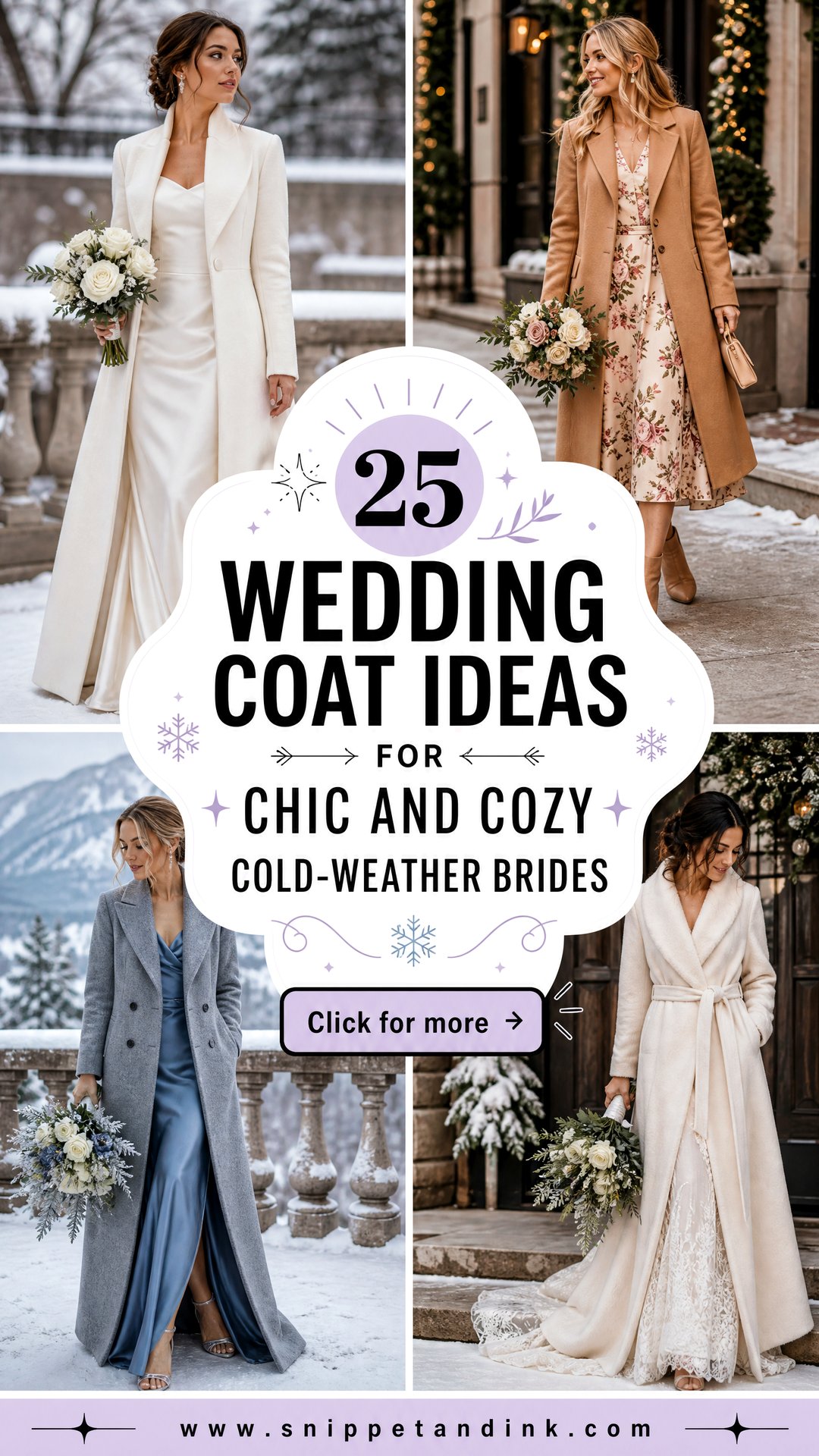
A good coat makes a cold-weather wedding look planned rather than improvised. It has to keep you warm, hold up in photos and still respect the dress code, and that applies to the bride, the bridesmaids and every guest standing outside for the confetti. I style coats as part of the outfit, not as something you shrug on in the car park: long wool over satin, faux fur jackets with velvet, cape coats with sleek heels, tailored shapes that look formal enough to keep on for portraits. Venue, dress length, colour and how cold it will really be all narrow the choice. Here are the combinations I put together most often, and what I check on each.
Try the Coat On Over the Actual Dress
Most coats are cut to go over a jumper and trousers, not a structured bodice or a full skirt. That’s why a coat that fits perfectly in the shop can pull across the back or refuse to close once the dress is under it. Wear or bring the outfit when you shop, and check these:
- Shoulders: the coat’s shoulder seam should sit at or just past yours. Too narrow and it crushes puffed or cap sleeves.
- Sleeves: lift your arms as if holding a bouquet. If the coat rides up to your forearms, go up a size or choose a cape.
- Closure: a coat buttoned over a full skirt pulls into a V. Over volume, a single top button or an open style hangs better.
- Lining: satin or silk lining lets the coat slide over the dress. Unlined wool grips fabric and lifts the hem as you walk.
- Length: a coat should end clearly above the hem or cover it entirely. An inch of dress peeking out below looks like a mistake.
If you’re the bride, take the coat to your final fitting. A seamstress can move a button or let out a side seam far more easily than she can alter the gown.
1. White Wool Wedding Coat With Satin Gown
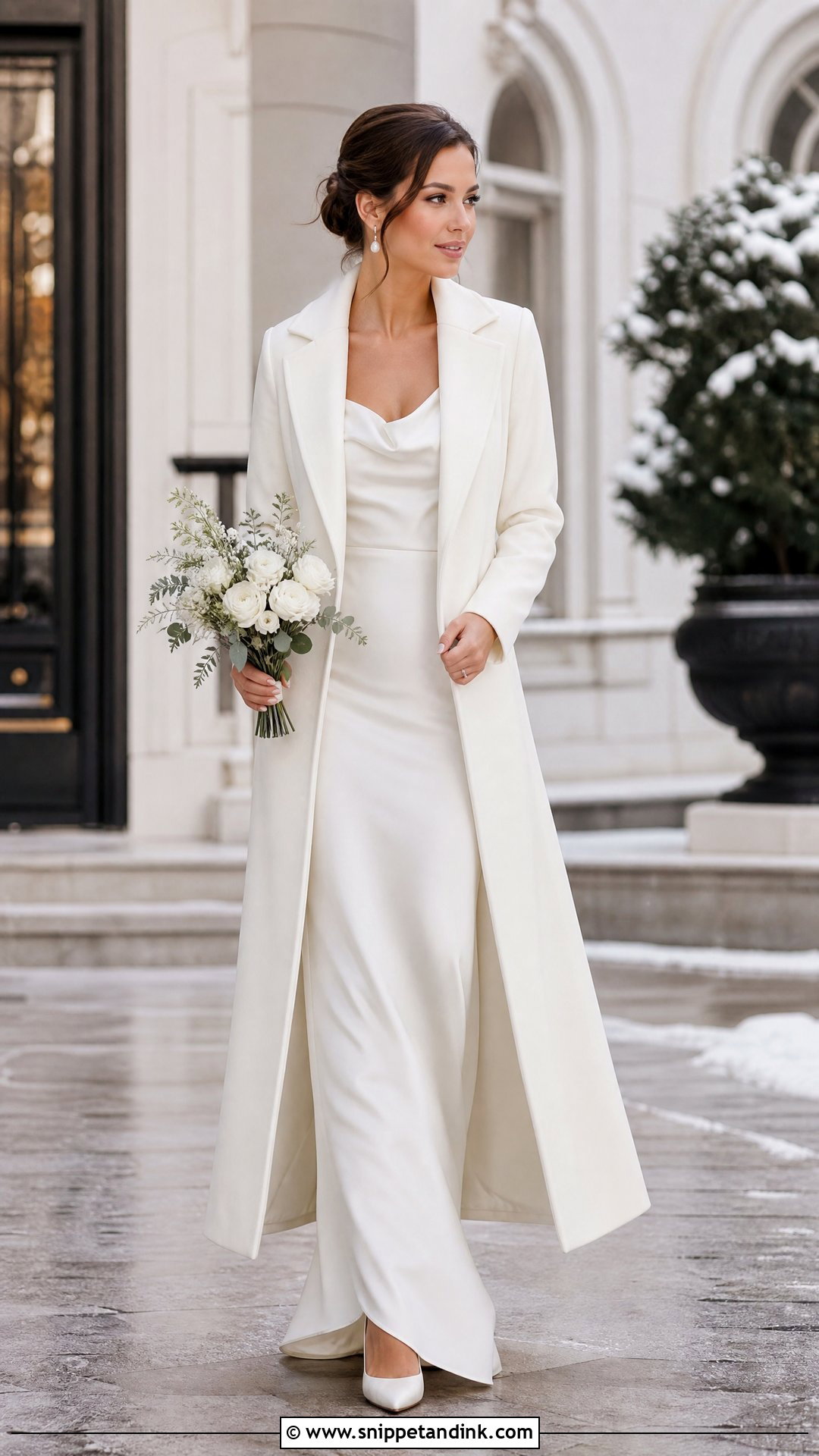
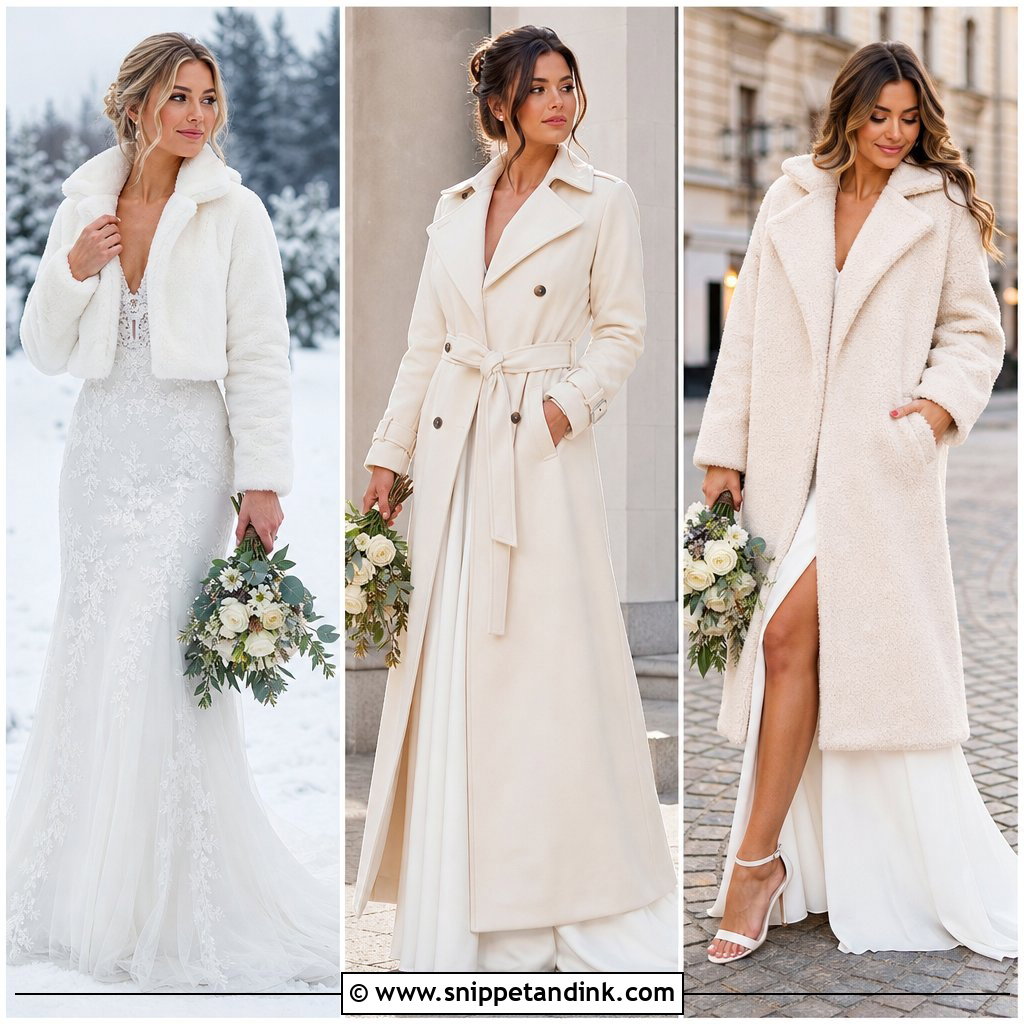
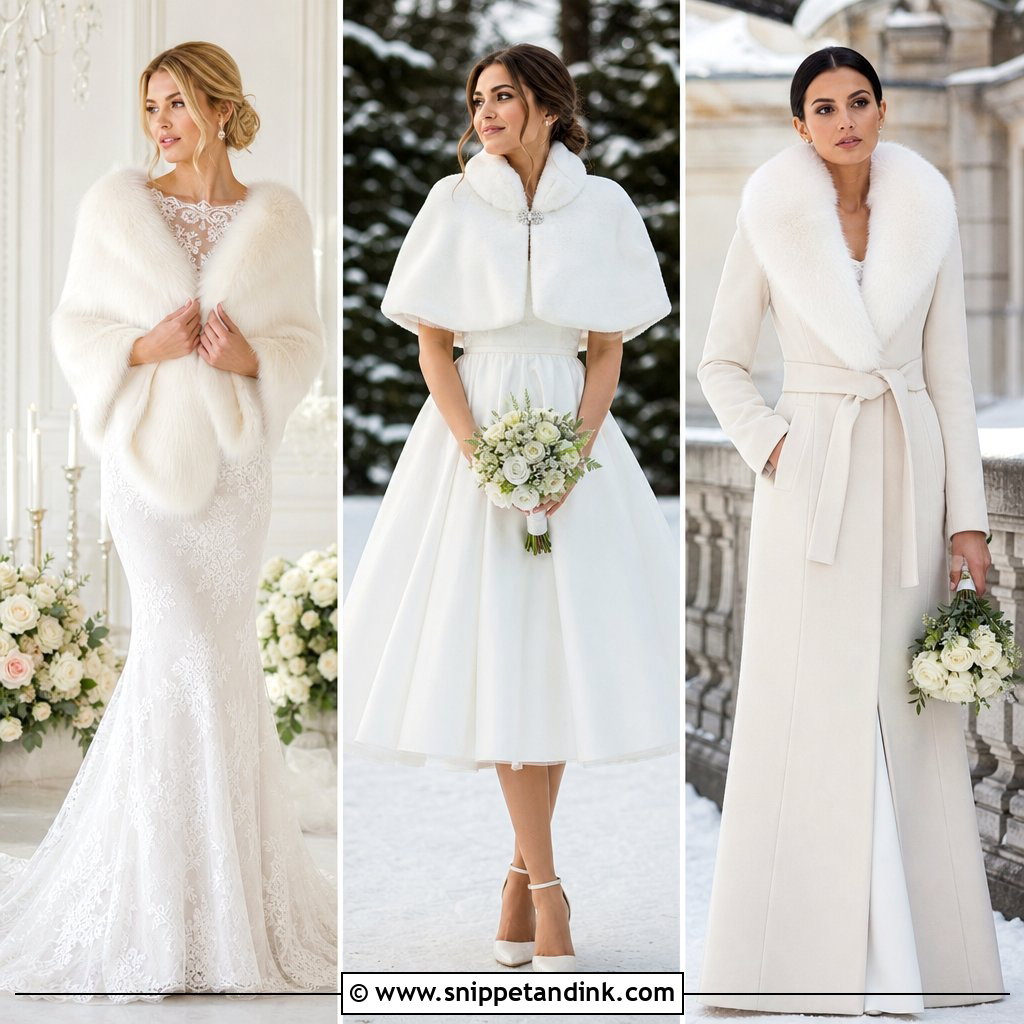
For a bride in winter, white wool over satin is the pairing I reach for first. The coat should fall close to the dress hem so the line runs unbroken from shoulder to floor; a coat that stops at the knee chops a long gown in half. Ask for a satin or silk lining, because unlined wool grips satin and drags it up as you walk. Pearl earrings, pointed ivory heels and a small bouquet are plenty. If your dress has lace or beading, keep the coat completely plain so the two textures don’t fight.
2. Faux Fur Wedding Coat With Velvet Dress
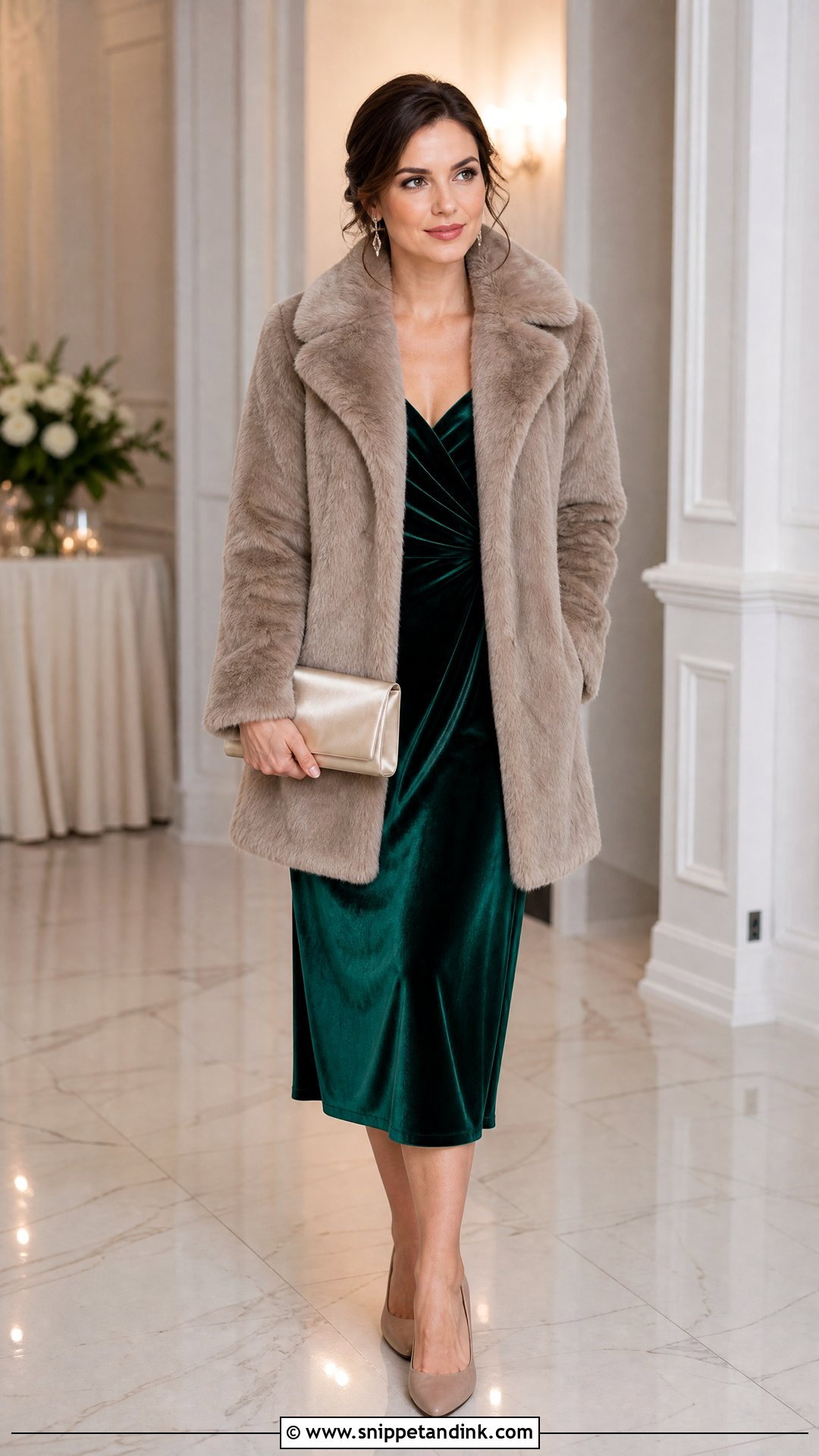
Faux fur over velvet is about texture, and the trick is to let only one piece be fluffy. Jewel-toned velvet in emerald, navy, burgundy or plum sits well under a cream, taupe, grey or chocolate faux fur. If the coat has a lot of volume, the dress should be simple in shape. I’d add heeled boots or closed pumps for icy paths, a satin clutch and small earrings. One practical warning: long-pile faux fur sheds onto dark velvet, so give the dress a once-over with a lint roller before photos.
3. Long Black Wedding Coat With Slip Dress
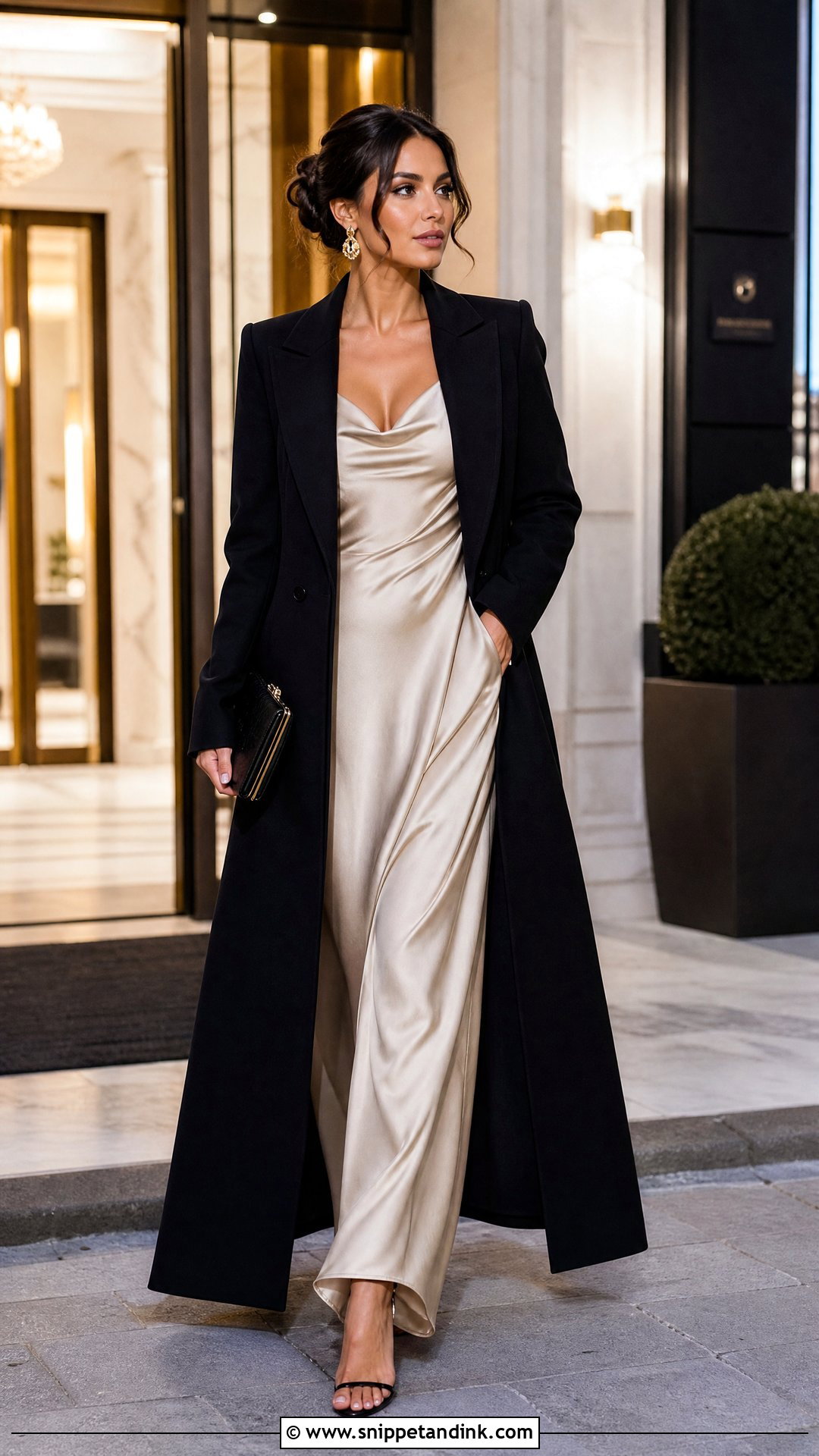
A long black coat is probably the most rewearable piece on this list, which is why I suggest it to guests so often. Over a satin slip dress in champagne, rust, forest green, navy or blush, it stops looking like a work coat and starts looking festive. It must be tailored, with a clean lapel and a length that clearly covers or clearly clears the hem. Strappy heels work for indoor venues; sleek ankle boots for a walk between buildings. Gold jewellery and a small structured bag finish it.
4. Camel Wedding Coat With Floral Midi Dress
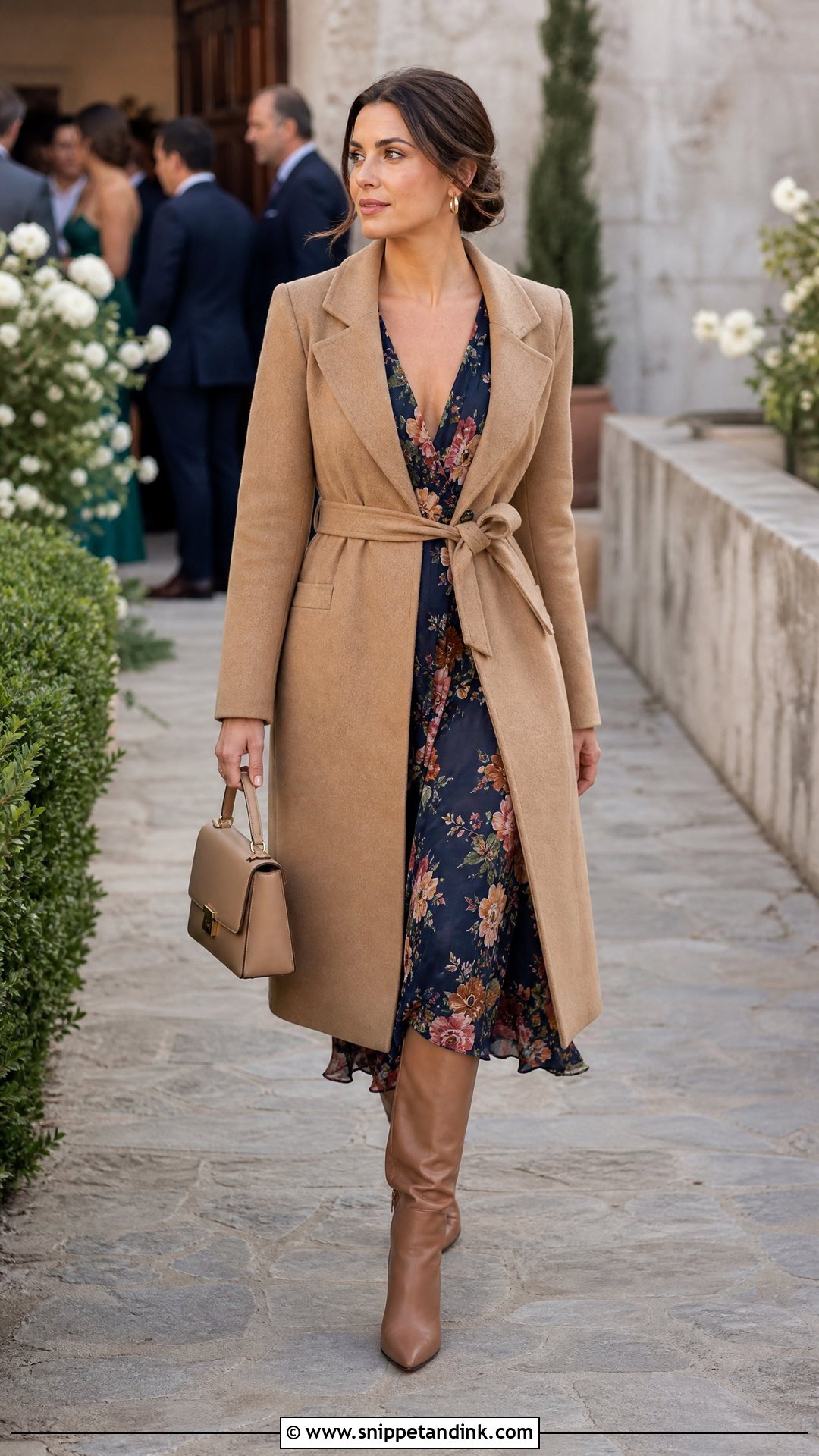
Camel softens a floral midi without adding weight. Pick a print with deeper seasonal colours such as burgundy, olive, navy, cream or brown, so the coat picks up one of them rather than sitting next to a pastel. Knee-high boots or block-heel pumps keep you steady on garden paths. A top-handle bag and simple hoops complete it. This is my answer for a dressy daytime wedding that stops short of black tie, and camel sits naturally against stone, greenery and city streets in photos.
5. Cape Wedding Coat With Column Dress
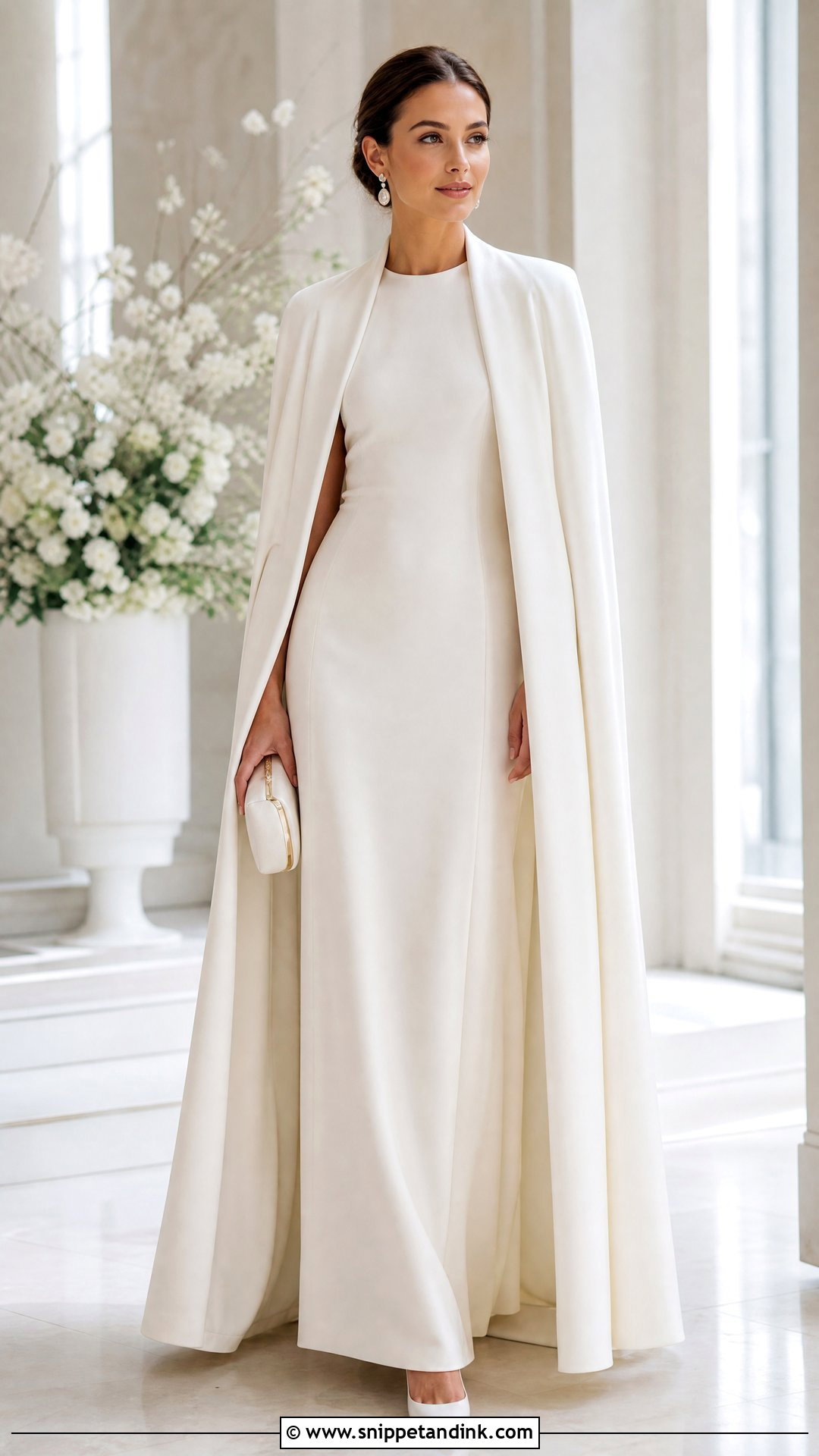
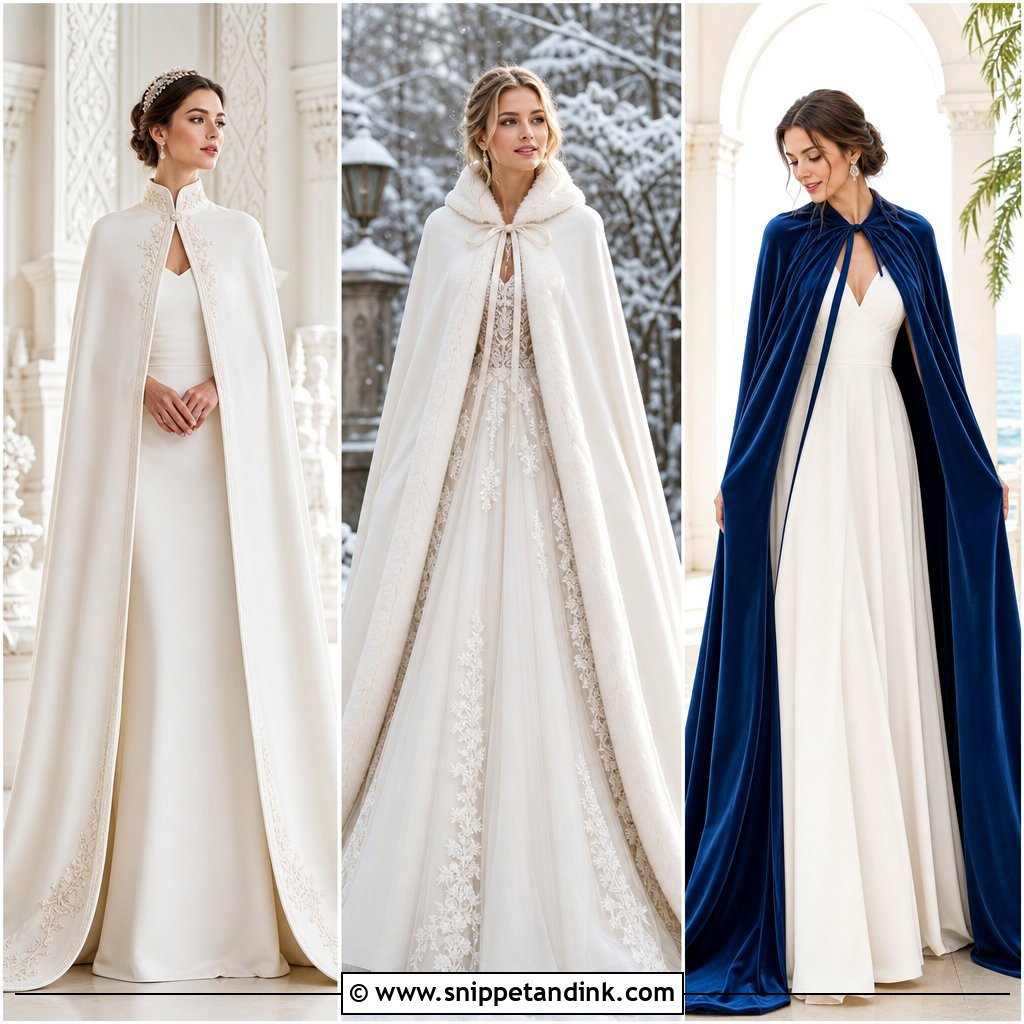
A cape coat leaves the dress visible from the front while covering the shoulders, so it suits a slim column, sheath or fitted crepe dress. Brides wanting drama without bulk can wear it in ivory; guests look sharp in navy, charcoal or burgundy. The limitation is your arms. Most capes have slits rather than sleeves, so holding a bouquet, a drink and a clutch at once gets awkward. Choose pointed pumps or slim heels and skip the big necklace; earrings sit better against the cape’s neckline.
6. Ivory Bridal Coat With Lace Dress
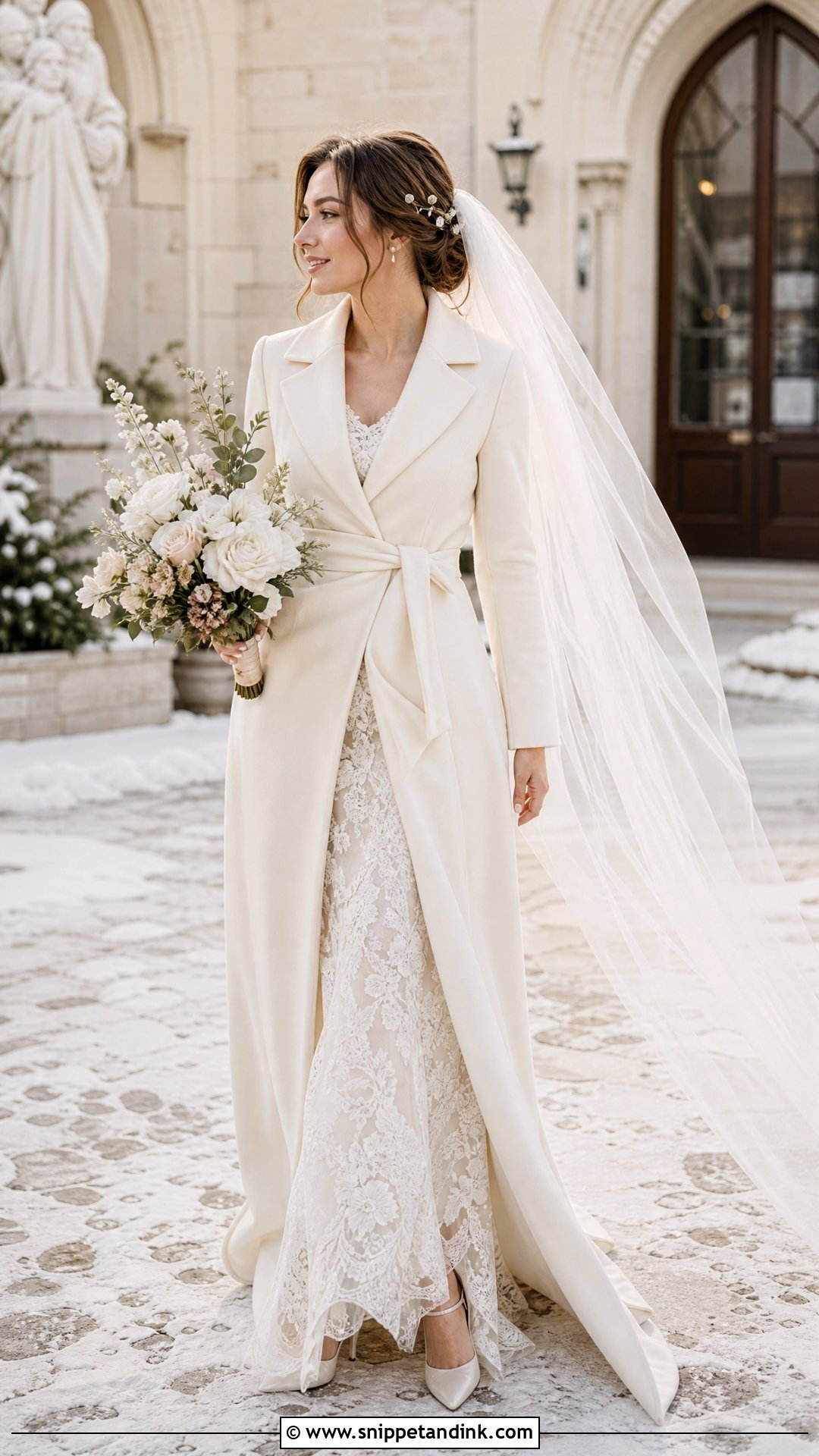
Ivory over lace is the pairing where colour matching matters most. Bright white and ivory look fine side by side in a fitting room and clash in outdoor photos, so I always check the coat against the dress in daylight. A wrap coat, princess coat or long tailored coat works when the lace gown has a neckline or sleeve detail you want visible. Leave the coat open at the collar so that detail still shows. Satin heels, pearl pins or a soft veil finish it, and the coat keeps you warm for winter portraits and outdoor exits.
7. Blush Wedding Coat With Champagne Dress
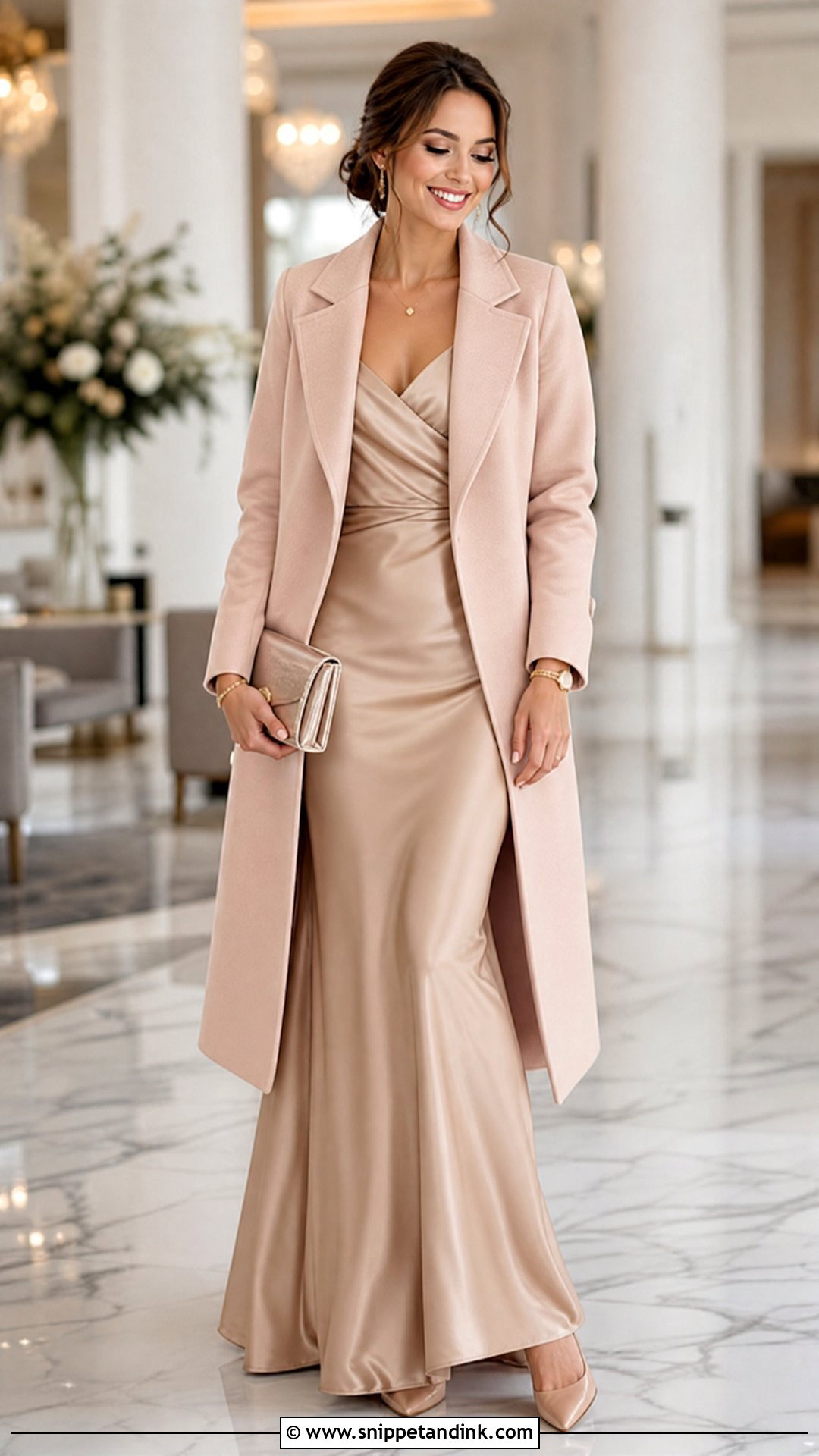
Blush and champagne are both warm and gentle, which keeps a winter outfit from feeling stark. A blush coat over a champagne satin or beaded dress can work for a bride, a bridesmaid or a guest depending on the dress code. I go for a smooth wool, wool-blend or brushed fabric; fuzzy boucle tends to snag beadwork. Nude heels, rose-gold jewellery and a small metallic clutch finish it. Save it for daytime, cool garden venues and hotel receptions, where soft light flatters these tones.
8. Navy Wedding Coat With Silver Dress
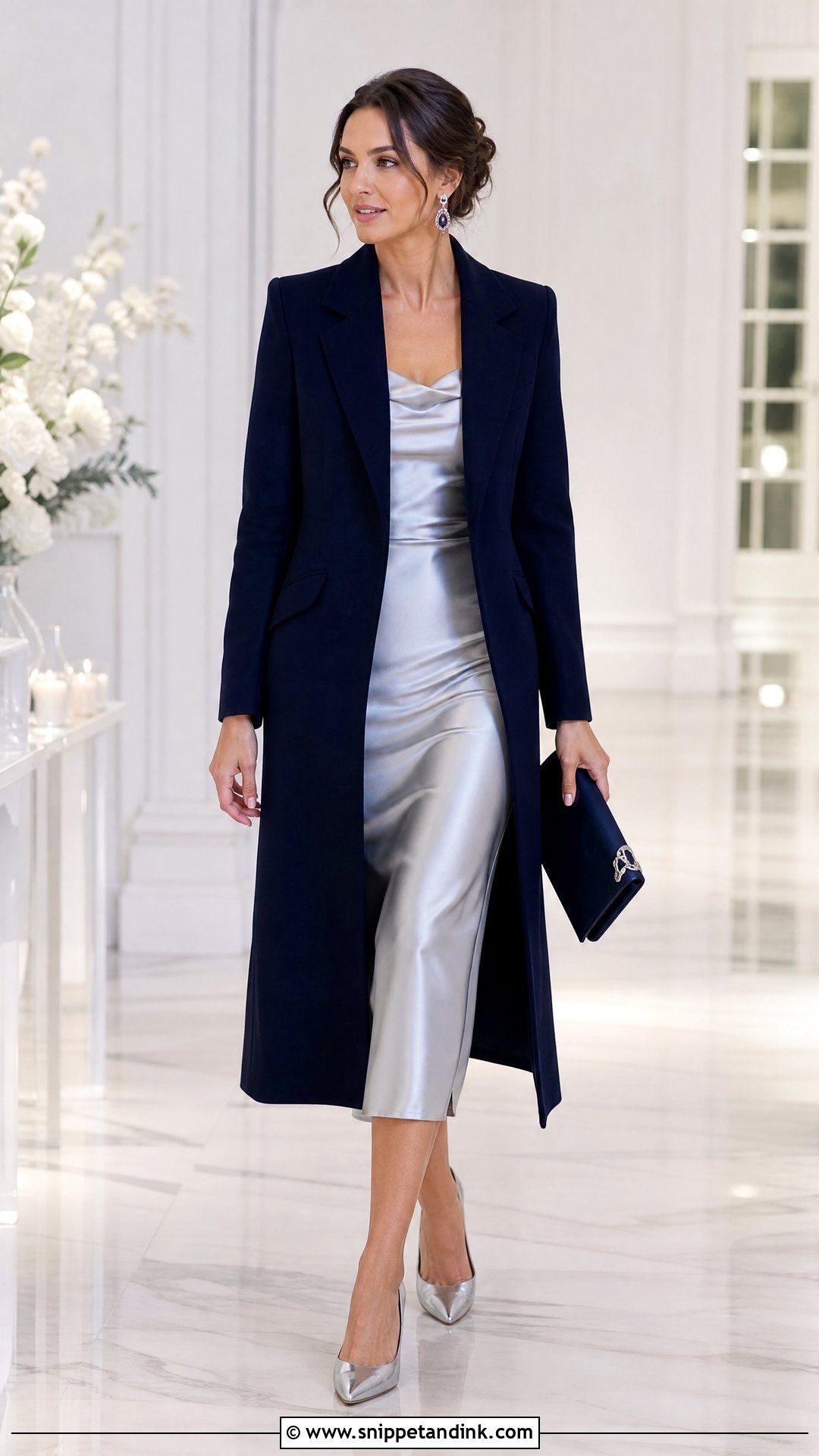
Navy gives you a formal evening outfit without falling back on black. Layer a sharply tailored navy coat over a silver satin, sequin or metallic-thread dress for winter receptions and cocktail or formal dress codes. Keep accessories cool: silver earrings, a navy clutch, pointed heels. The dark coat holds the shimmer in check. If the dress is heavily sparkled, choose a matte coat; two shiny surfaces together start to look flashy.
9. Burgundy Wedding Coat With Black Dress
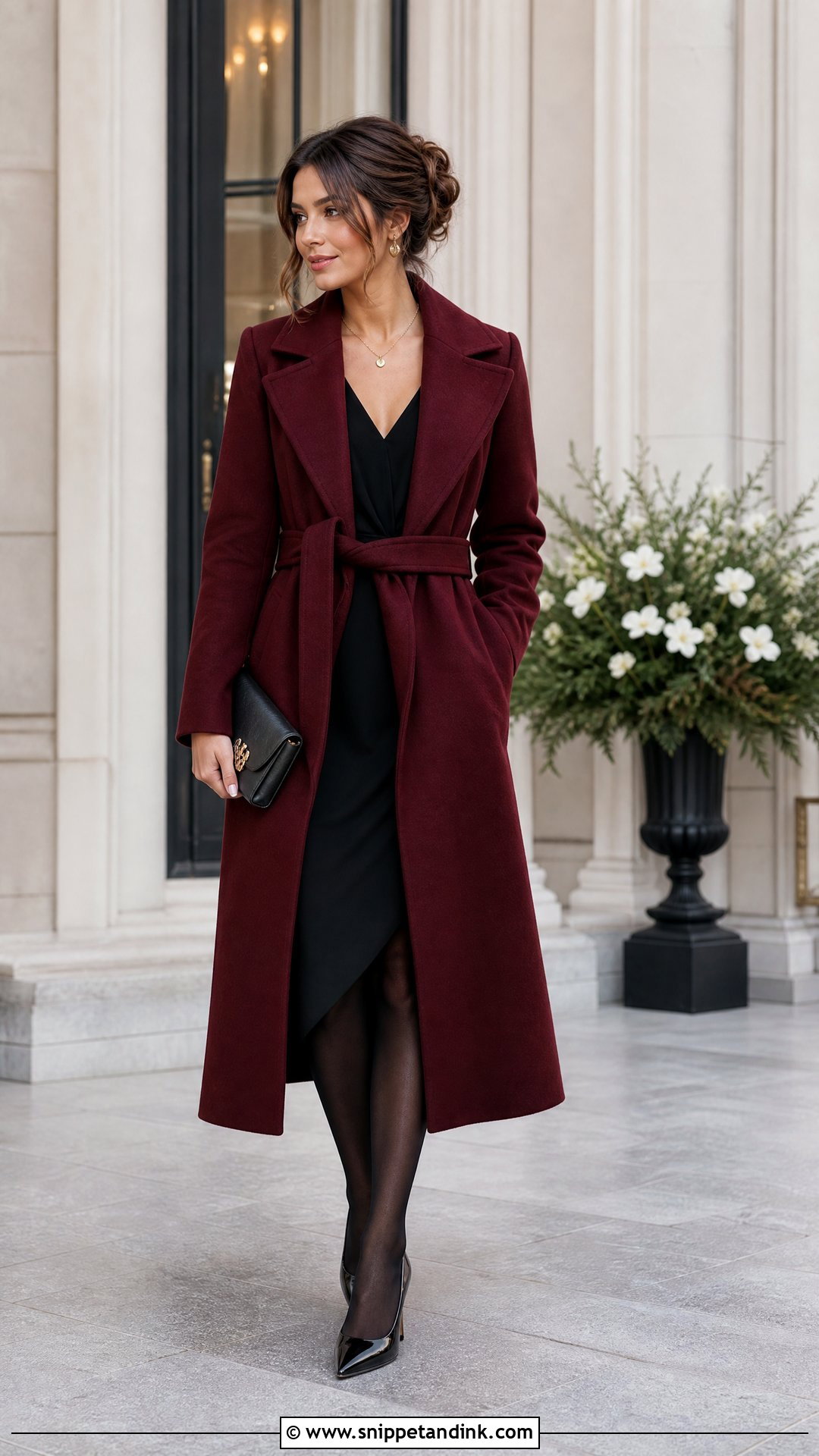
Burgundy and black is the guest outfit I suggest when someone wants colour but feels safest in black. Pair a burgundy wool coat with a black midi dress, black tights and pointed pumps or heeled boots, and the coat becomes part of the look instead of something you hide at the door. Gold or garnet jewellery adds warmth. Look for a coat that nips in at the waist or has a tie belt, because straight-cut wool over a fitted midi can look boxy.
10. Emerald Wedding Coat With Velvet Gown
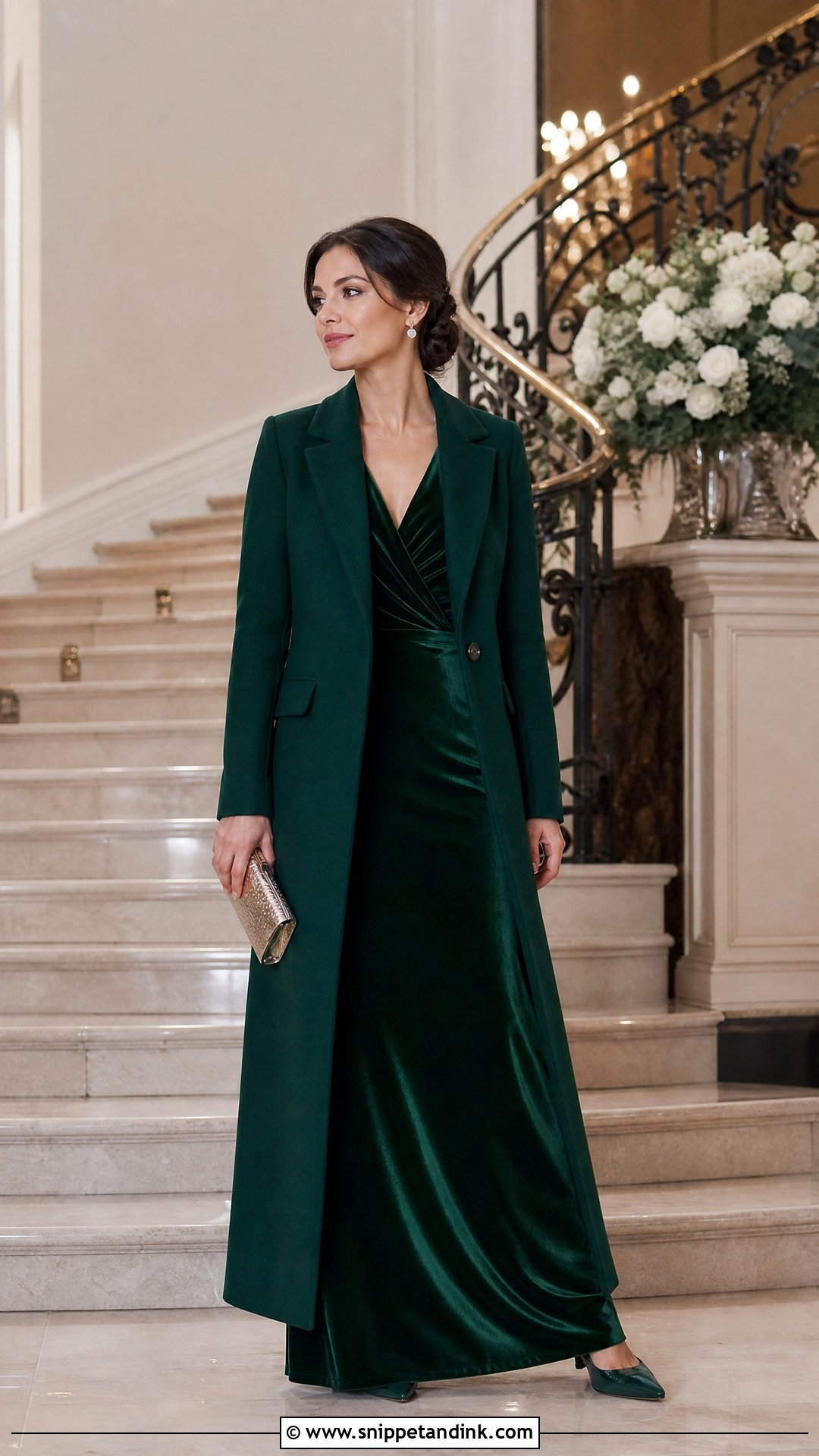
Velvet already has depth, so the coat over it should be smooth. A sleek emerald wool or tailored long coat works; a textured or fluffy coat makes the whole outfit heavy. Go tonal with a darker green velvet underneath, or let black, navy or champagne velvet calm it down. Closed-toe heels, a metallic clutch and simple earrings stop it overloading. It suits guests who want strong colour at a formal winter wedding, and bridesmaids when the couple has chosen a jewel-toned palette.
11. Tweed Wedding Coat With A-Line Dress
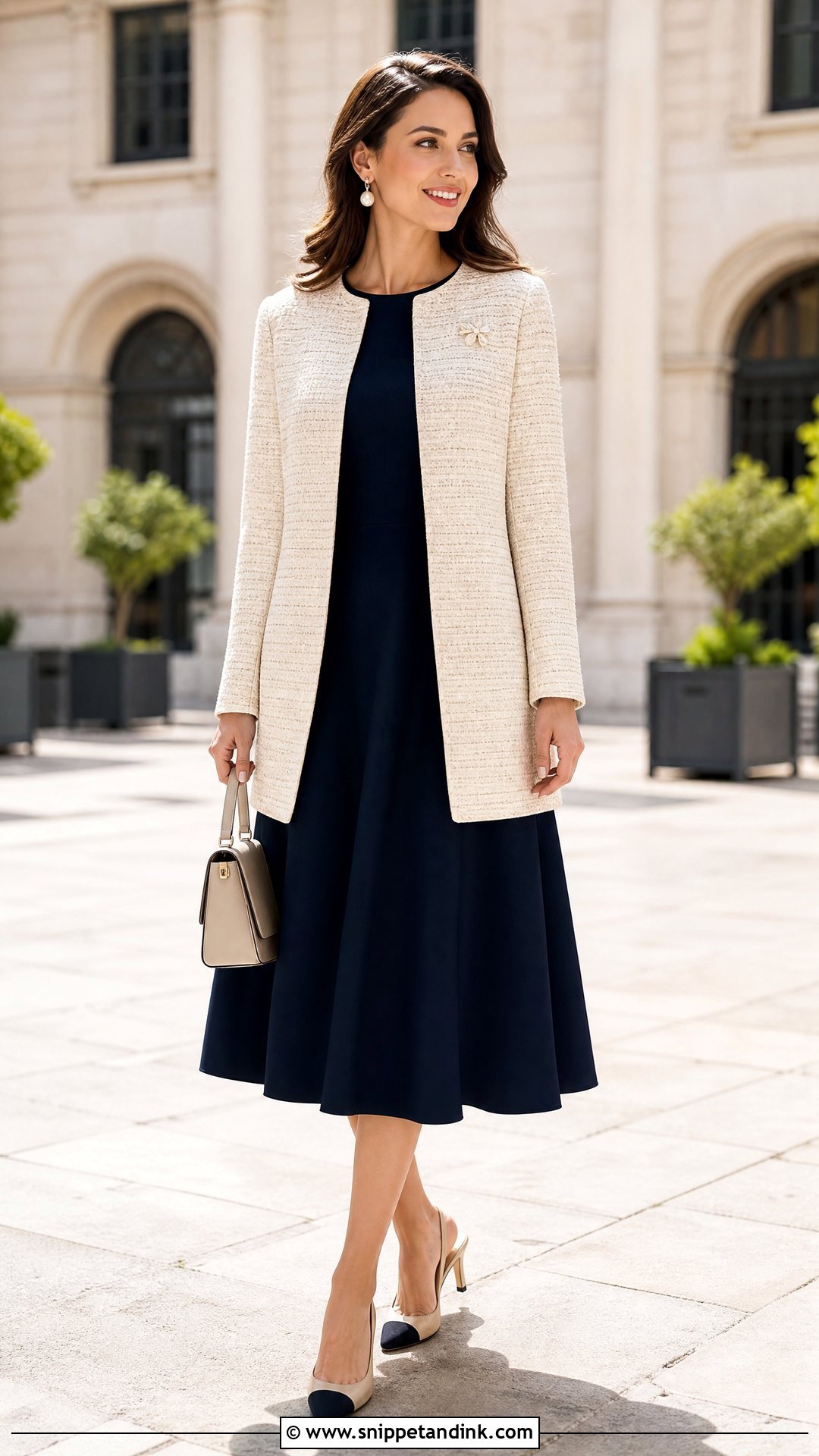
Tweed is a daytime fabric. It suits city venues and semi-formal ceremonies where a full evening coat would feel too much. Cream, blush, grey, navy or soft black tweed over a plain A-line midi, with slingback heels, a small structured bag and pearl or crystal earrings, looks neat and considered. Tweed carries its own pattern and texture, so the dress underneath should be a solid. Loose-weave tweed also catches on jewellery, which is worth knowing before you add a chunky bracelet.
12. Gray Wedding Coat With Blue Satin Dress
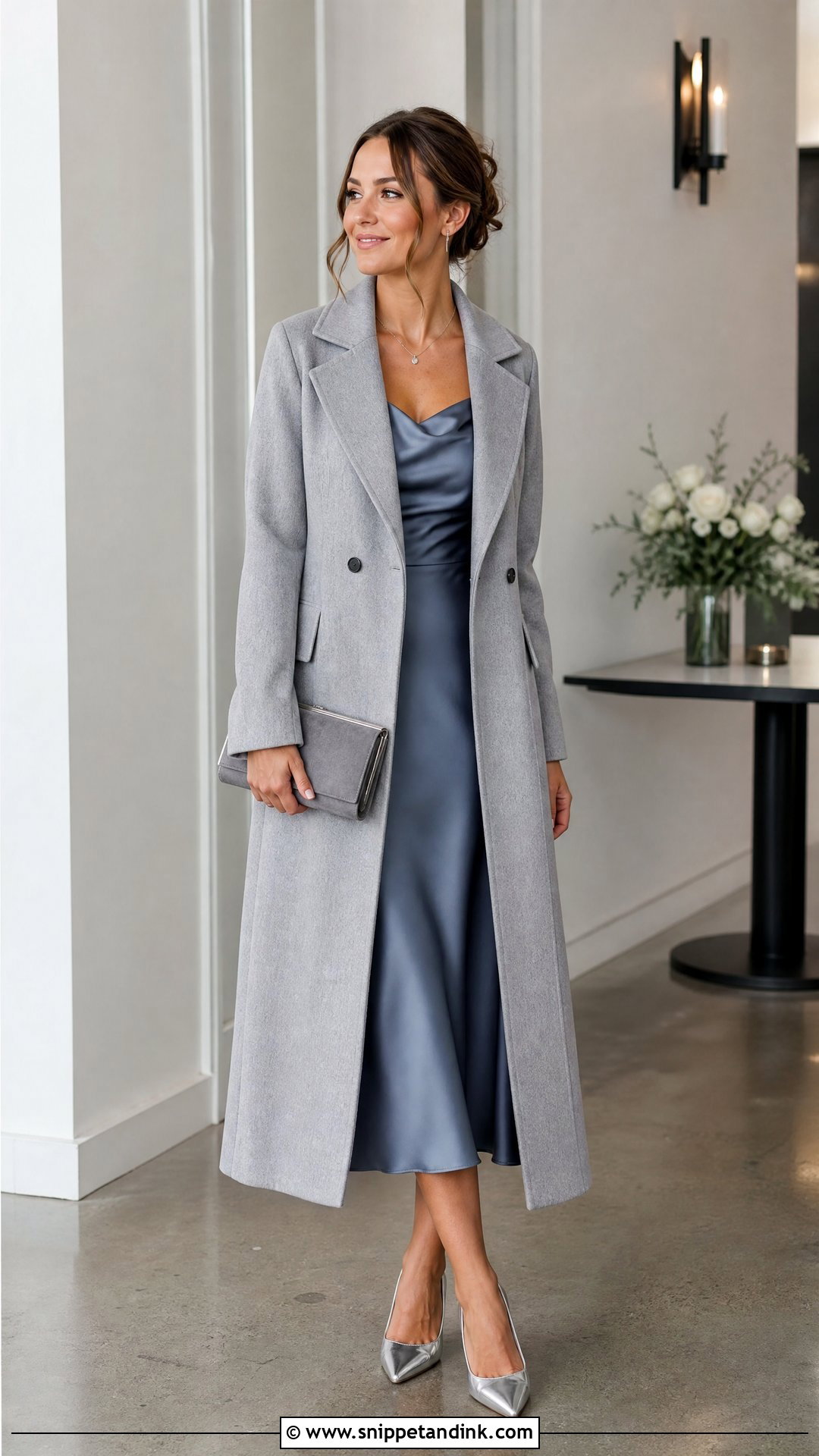
Grey over blue satin is the calm option, for guests who want something softer than black but just as smart. Dove grey suits powder blue; charcoal pairs with steel blue or navy for a more formal event. Silver heels, a grey clutch and delicate jewellery keep the palette cool. Match coat length to dress length: a long coat with a maxi, a knee-length coat with a midi. Matte wool against shiny satin gives the outfit interest without any added detail.
13. Cream Wedding Coat With Sequin Dress
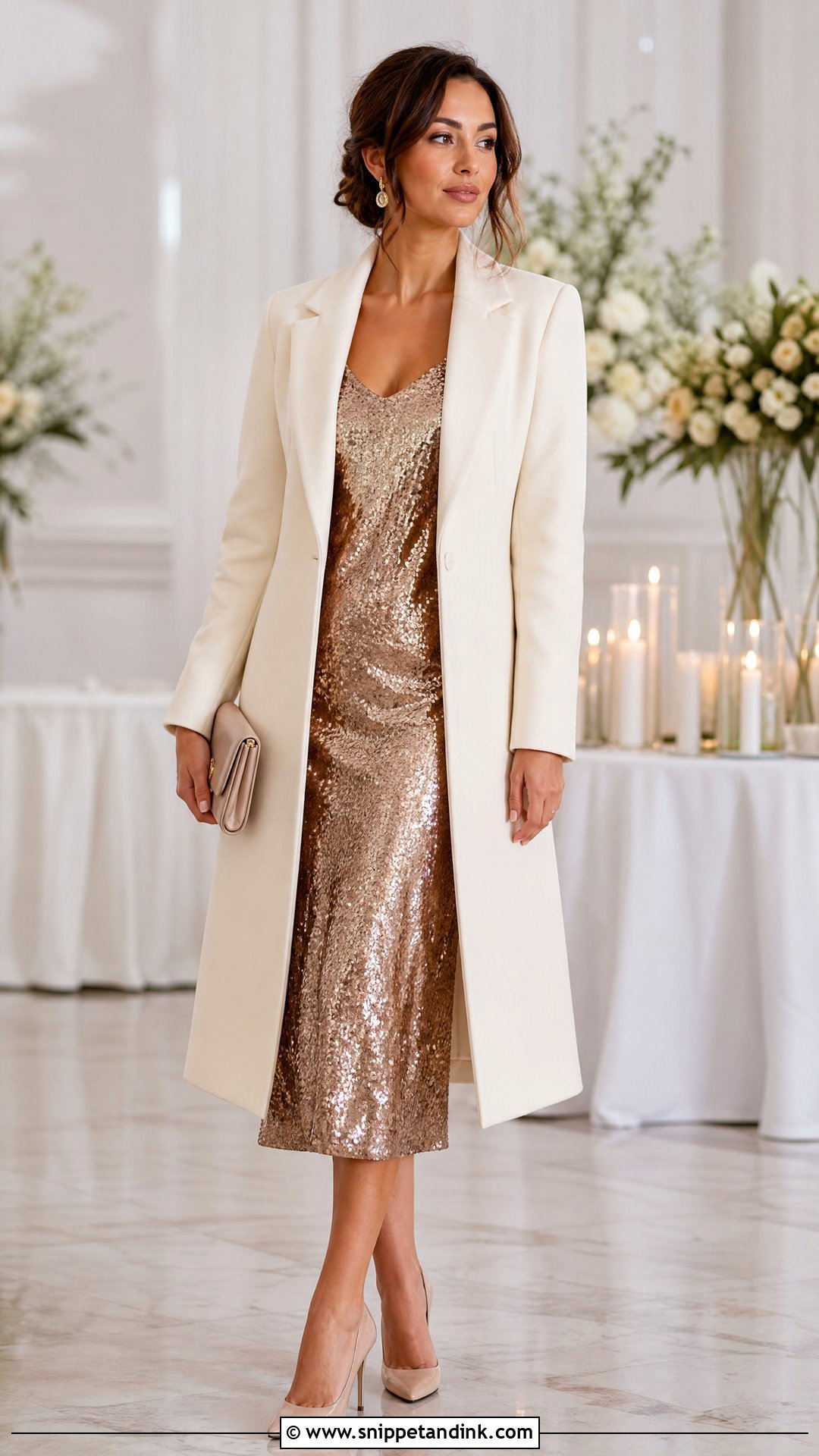
A smooth cream coat takes a sequin dress down a notch so it feels right for a wedding rather than a party. Sequin midis or maxis in gold, bronze, silver, navy or rose work underneath, with a simply tailored coat, neutral heels, a small clutch and very little jewellery. Sequins rub, though: they can pill the inside of a wool coat over a long evening, so a lined coat is kinder to both. As a guest, avoid pairing an all-white sequin dress with a cream coat, because together they read as bridal in photos.
14. Trench Wedding Coat With Pleated Dress
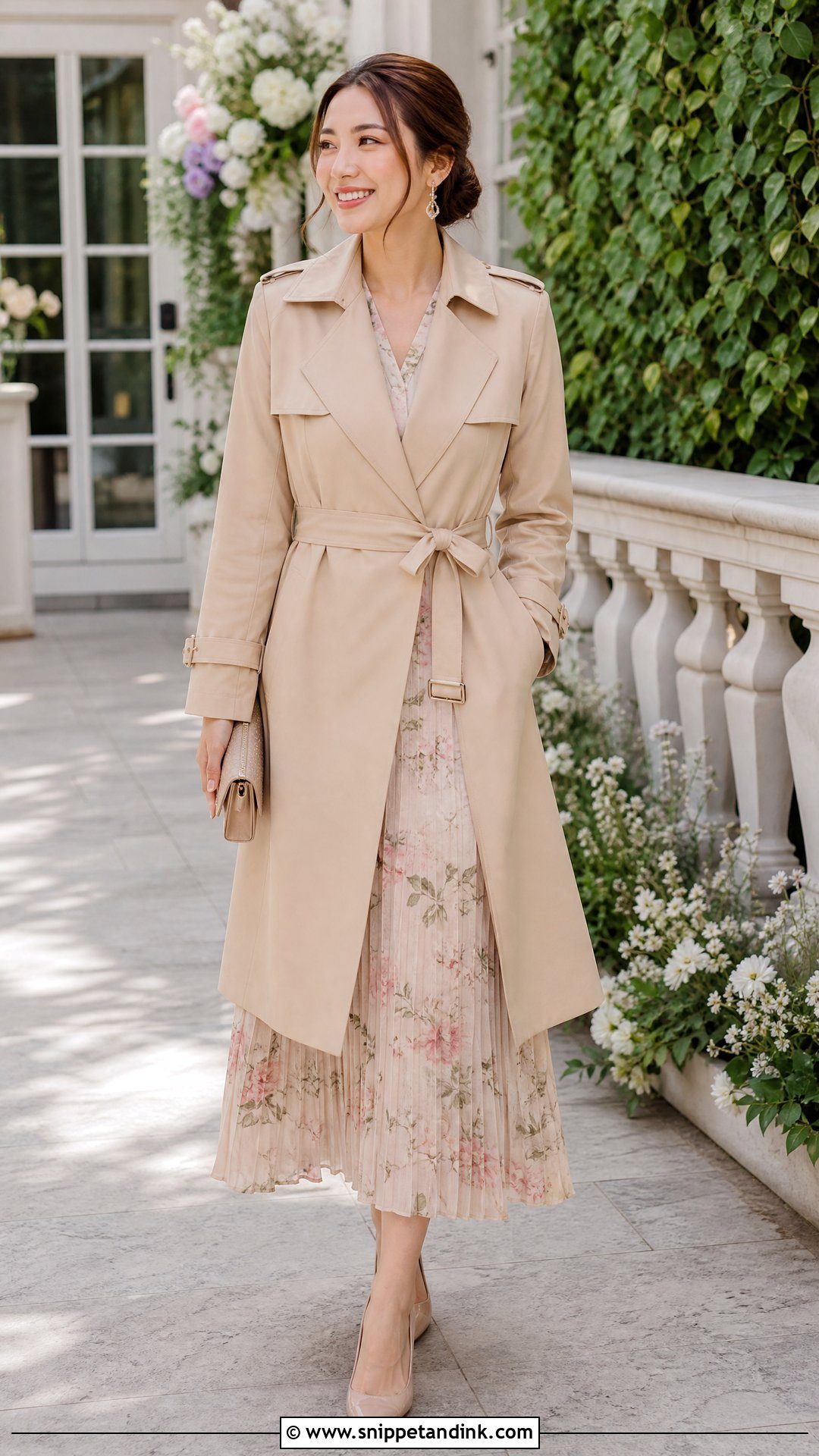
A trench wedding coat earns its place on wet or in-between days, when wool is too warm and you still need cover. Over a pleated midi in a soft floral, a solid jewel tone or a silky neutral, the belted waist keeps the outline tidy while the pleats move underneath. Beige, stone, navy or soft olive look most refined. Block heels handle damp grass, and a neat clutch and simple earrings finish it for daytime and outdoor weddings.
15. Shearling Wedding Coat With Knit Dress
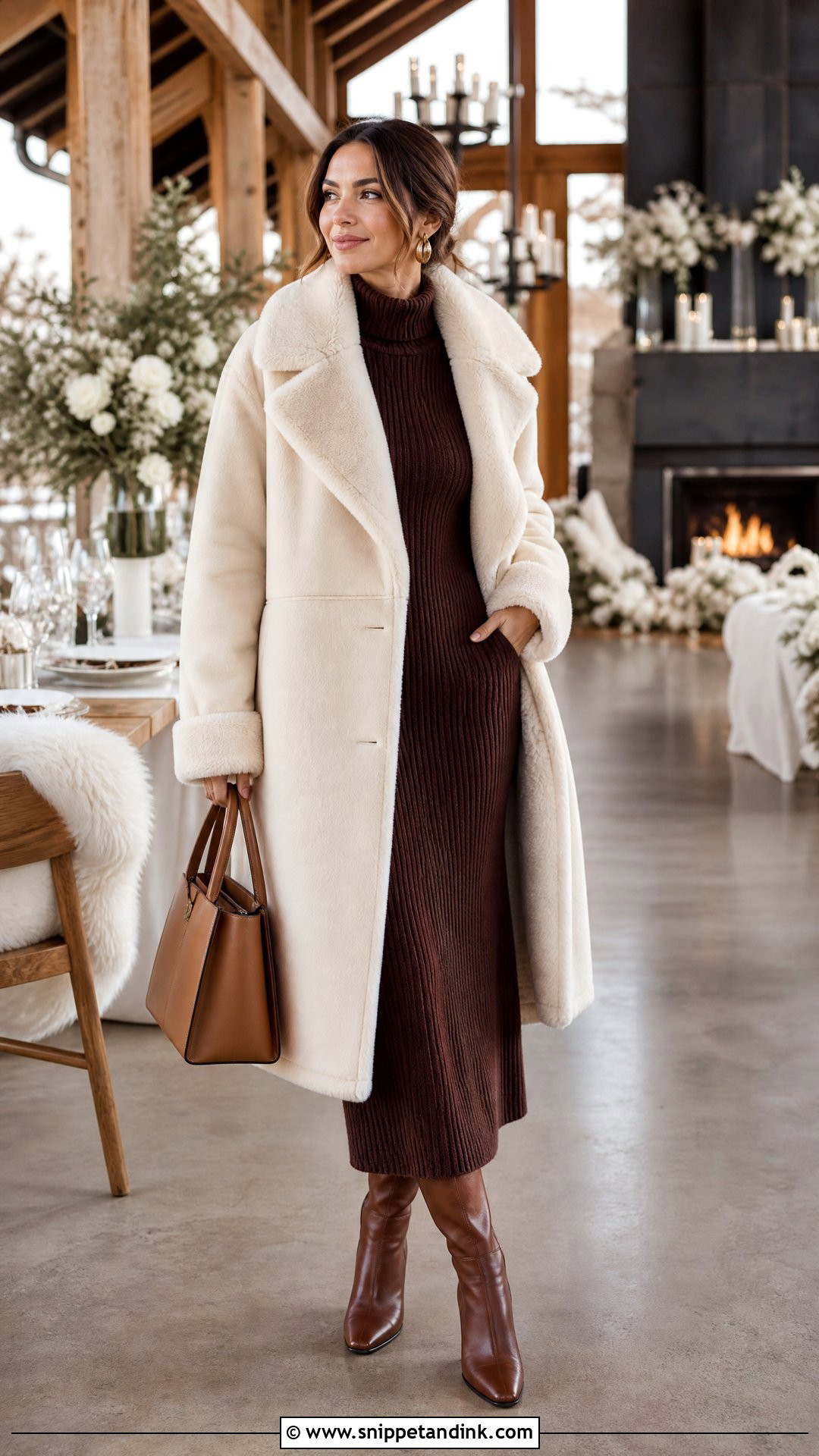
Shearling can look underdressed at a wedding, so I style it carefully and only for relaxed winter weddings. Keep the coat cream, tan, taupe or soft brown, and avoid anything rugged or very oversized. A ribbed knit dress in chocolate, ivory, charcoal or olive gives the cosy feeling while heeled boots and a structured bag keep it polished. Gold hoops or a sleek hair clip push it dressier. It belongs at rustic and mountain venues where staying warm matters as much as anything else.
16. Red Wedding Coat With Neutral Dress
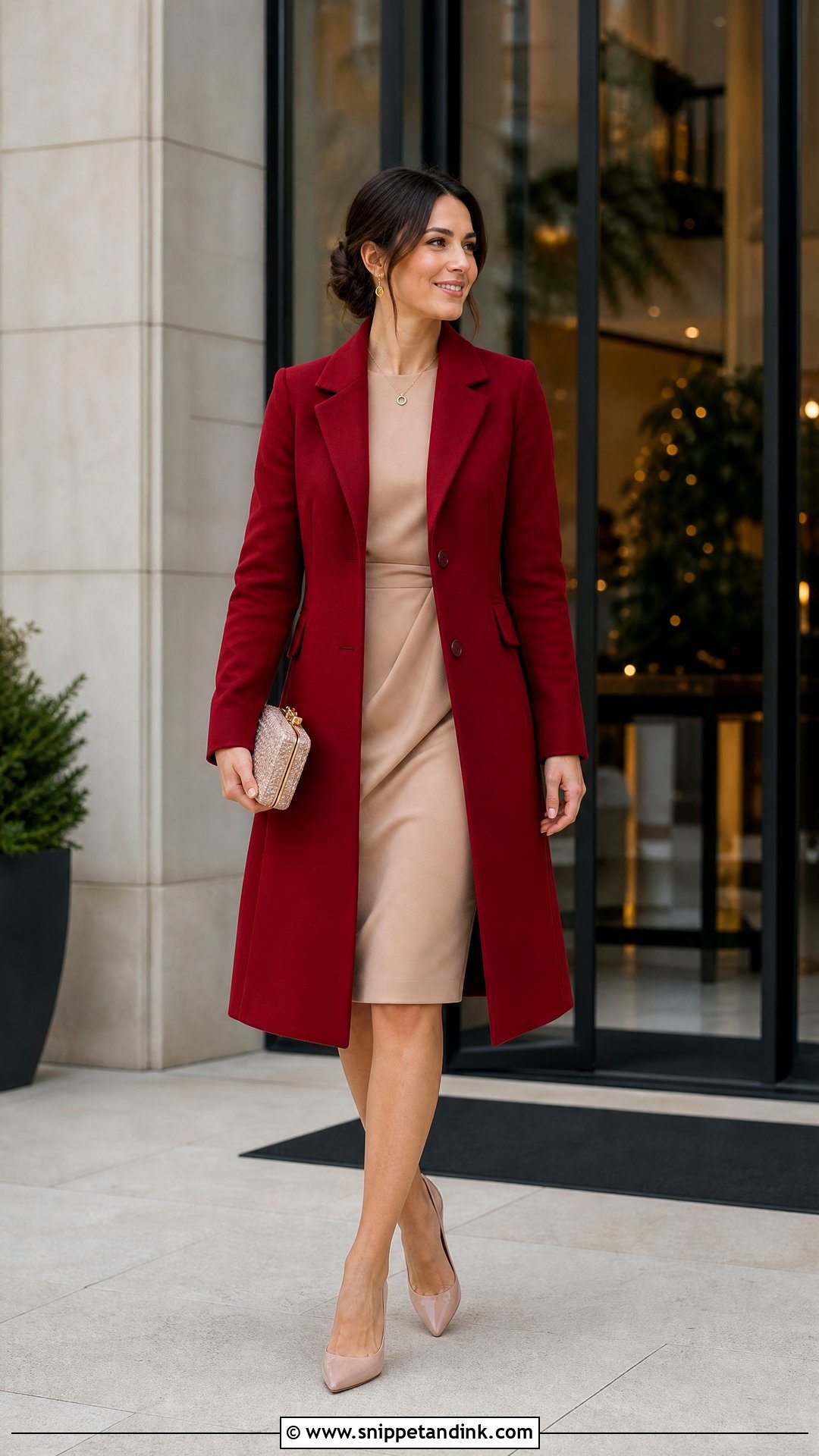
Red is the coat that will be in every group photo, so I keep everything under it quiet. A beige, black, navy, champagne or soft grey dress in a sleek shape such as a sheath, wrap or slip works best. Deeper reds like cranberry, cherry or garnet look richer than a bright fire-engine red, which can bounce colour onto the face. Simple heels, a small clutch and minimal jewellery are all it needs.
17. Feather Trim Wedding Coat With Mini Dress
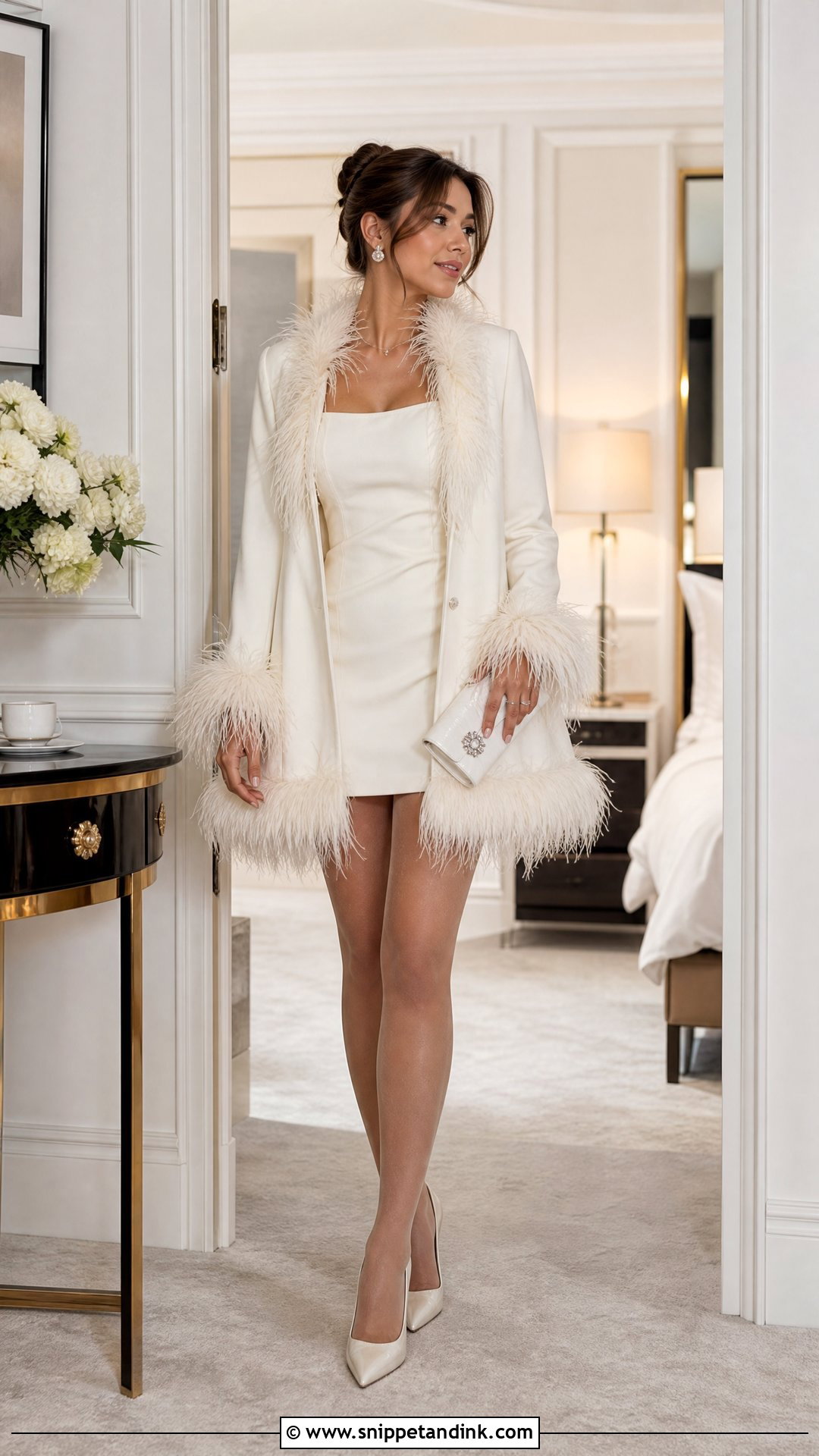
Feather trim is fun and fragile. It suits a bride’s reception outfit, a courthouse wedding or a guest where the dress code allows a short hemline. Ivory reads bridal; black, blush or champagne reads guest. The mini dress underneath must be plain, or the feathers start to look busy. Sheer tights, pointed heels and a compact clutch finish it. Keep this one indoors, because feathers go limp in rain and drizzle, and store it hanging so they don’t crush.
18. Wrap Wedding Coat With Maxi Dress
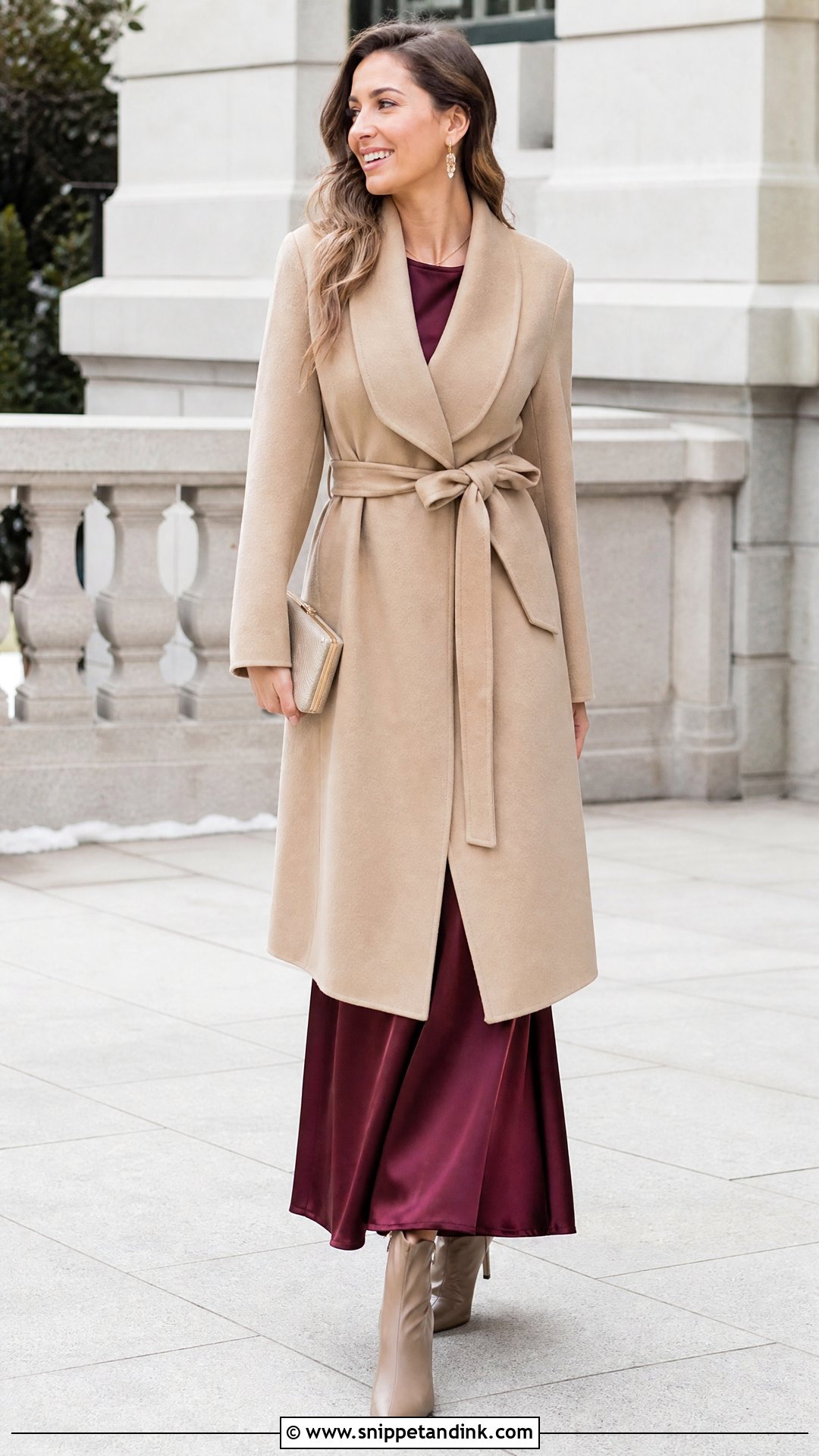
A wrap coat is the most adjustable shape here, which is why I put bridesmaids in it so often. The belt pulls in the waist over a long, flowing maxi so you don’t disappear inside the fabric, and it can be loosened after dinner. Ivory, camel, grey, black or blush all work over satin, chiffon, velvet or crepe. Choose heeled boots or pumps by the weather. Tie the belt at the side or back, not in a big bow at the front, and it photographs flatter and neater.
19. Brocade Wedding Coat With Simple Dress
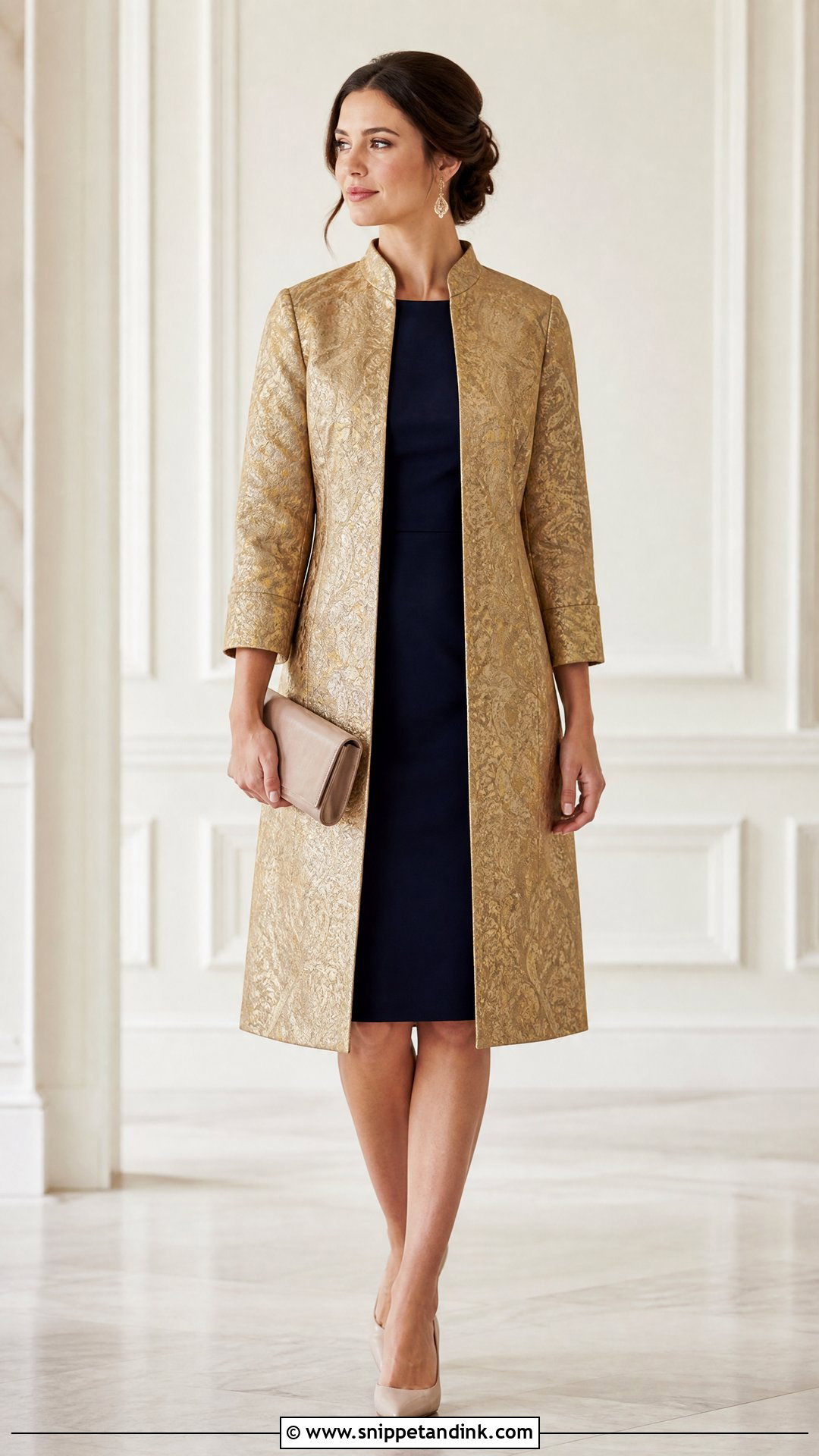
Brocade has a raised pattern and often a subtle shine, so it does the work of a statement dress while the dress itself stays plain. A sheath, slip or column gown underneath, in a solid colour, keeps the coat in focus. Soft gold, navy, emerald, burgundy or ivory brocade all feel suited to a wedding. It’s stiff, so look for a cut with room across the back, especially if you’ll be hugging people all day. Mothers of the couple often like it for the coverage it gives; understated heels and delicate earrings are enough.
20. Plaid Wedding Coat With Solid Midi Dress
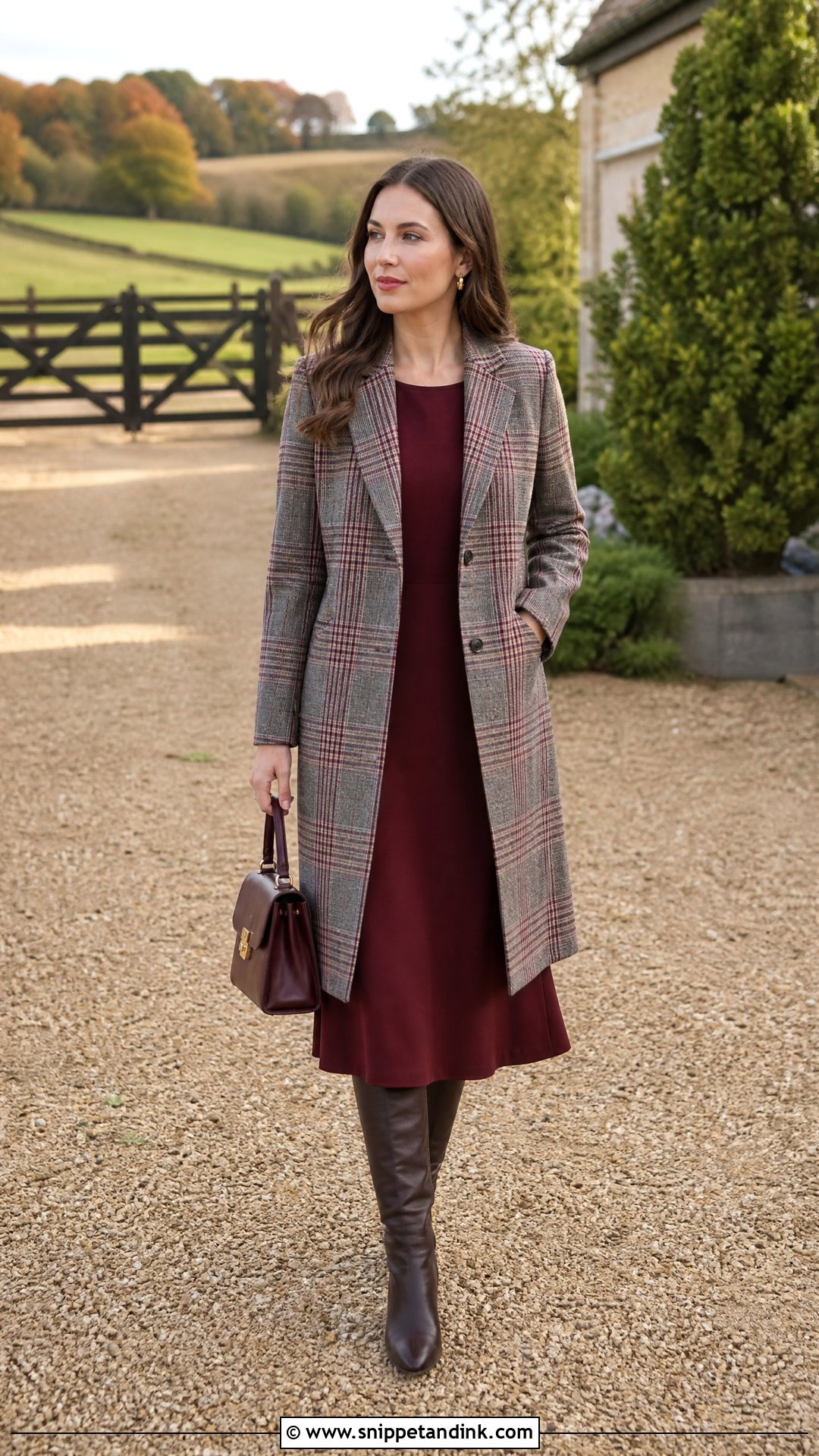
Plaid needs restraint at a wedding. A fine check in muted grey, camel, navy, burgundy or forest green looks refined; a loud oversized plaid looks like a weekend coat and is wrong for a formal event. Pull one colour from the plaid for a solid midi underneath, then add knee-high boots or classic pumps, a structured handbag and small earrings. Tailoring is what keeps it from looking casual, so check the shoulder seam sits on your shoulder. It belongs at autumn weddings, countryside venues and semi-formal daytime ceremonies.
21. Pink Wedding Coat With Black Jumpsuit
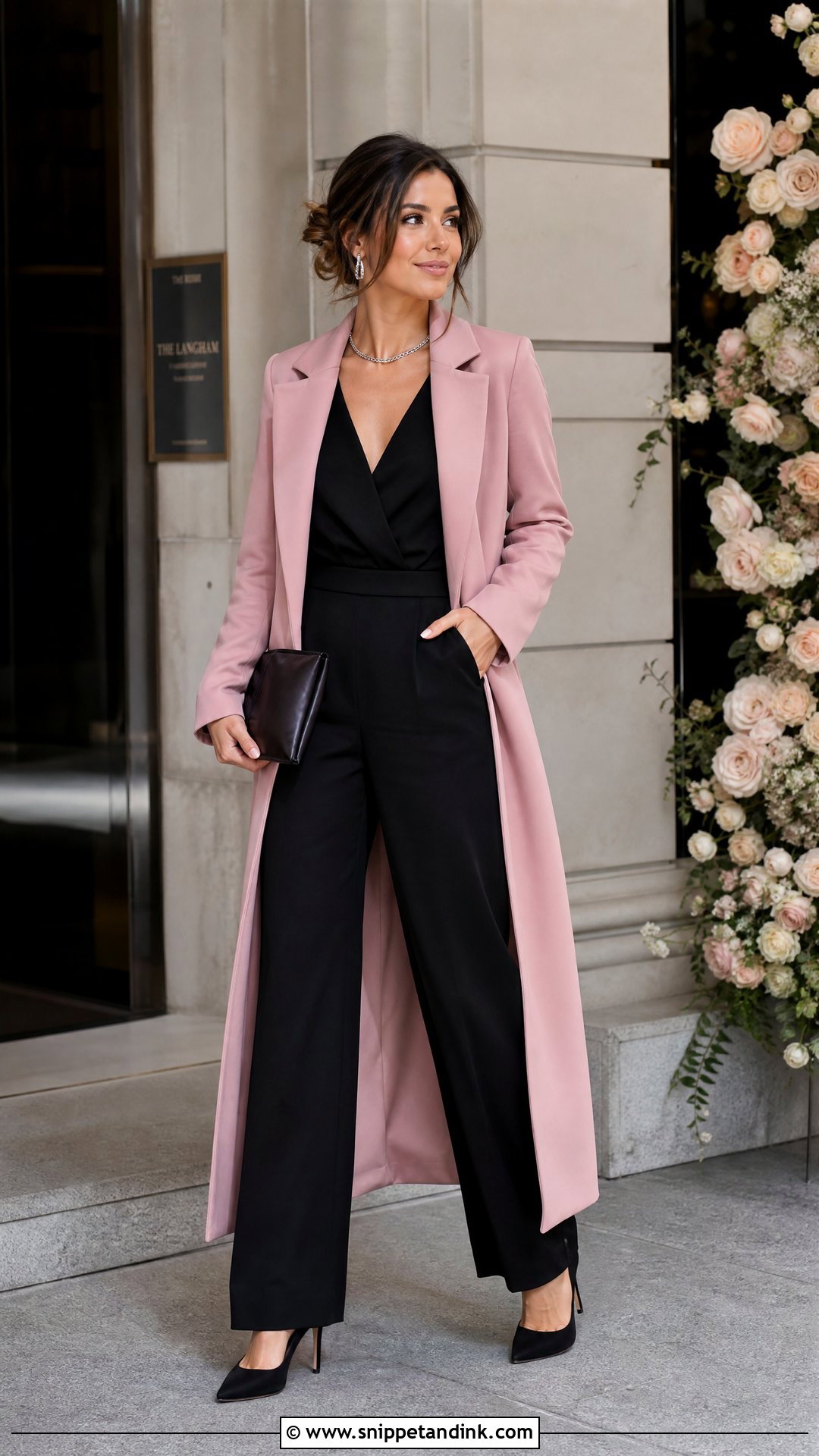
For a guest who doesn’t want a dress, a pink coat over a black jumpsuit solves the problem neatly. Blush, rose or dusty pink softens a tailored black jumpsuit with a defined waist or a wide leg. Black heels, a satin clutch and simple metallic jewellery finish it. Check the coat length against the trouser hem: a wide-leg jumpsuit under a coat that stops mid-calf can look cut off. It works for cocktail dress codes and city venues where you’ll want to move and dance.
22. Brown Wedding Coat With Rust Dress
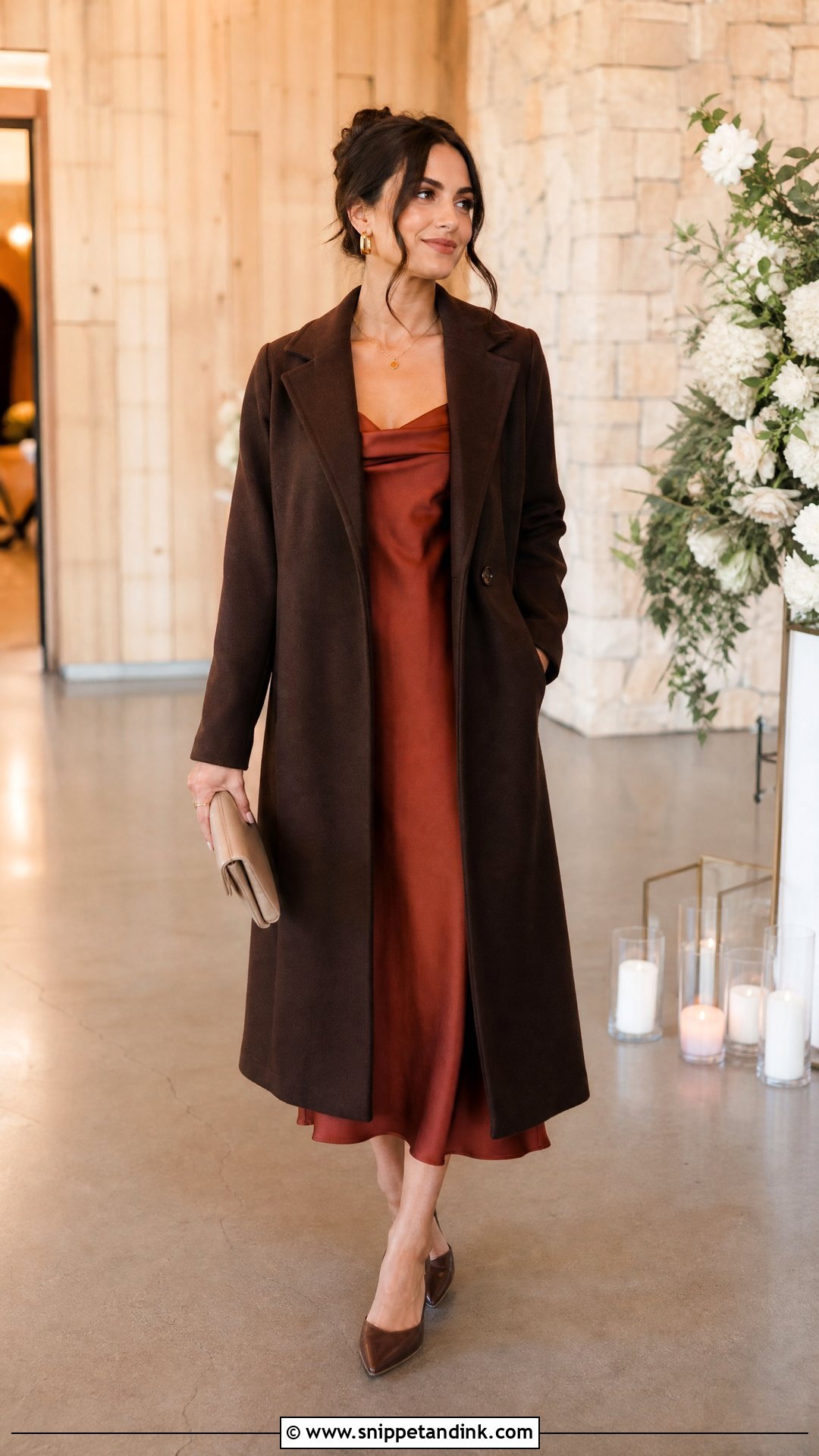
Brown and rust is a warm, seasonal pairing that never looks too bright. Choose a chocolate, espresso or camel-brown coat and wear it over a rust satin, crepe, or velvet dress, with bronze jewellery, brown heels or boots and a small neutral clutch. A long coat goes with a maxi; a shorter tailored coat with a midi. Keep makeup soft, because heavy warm-toned makeup on top of all that rust and brown can make the face look tired in photos.
23. Metallic Wedding Coat With Black Gown
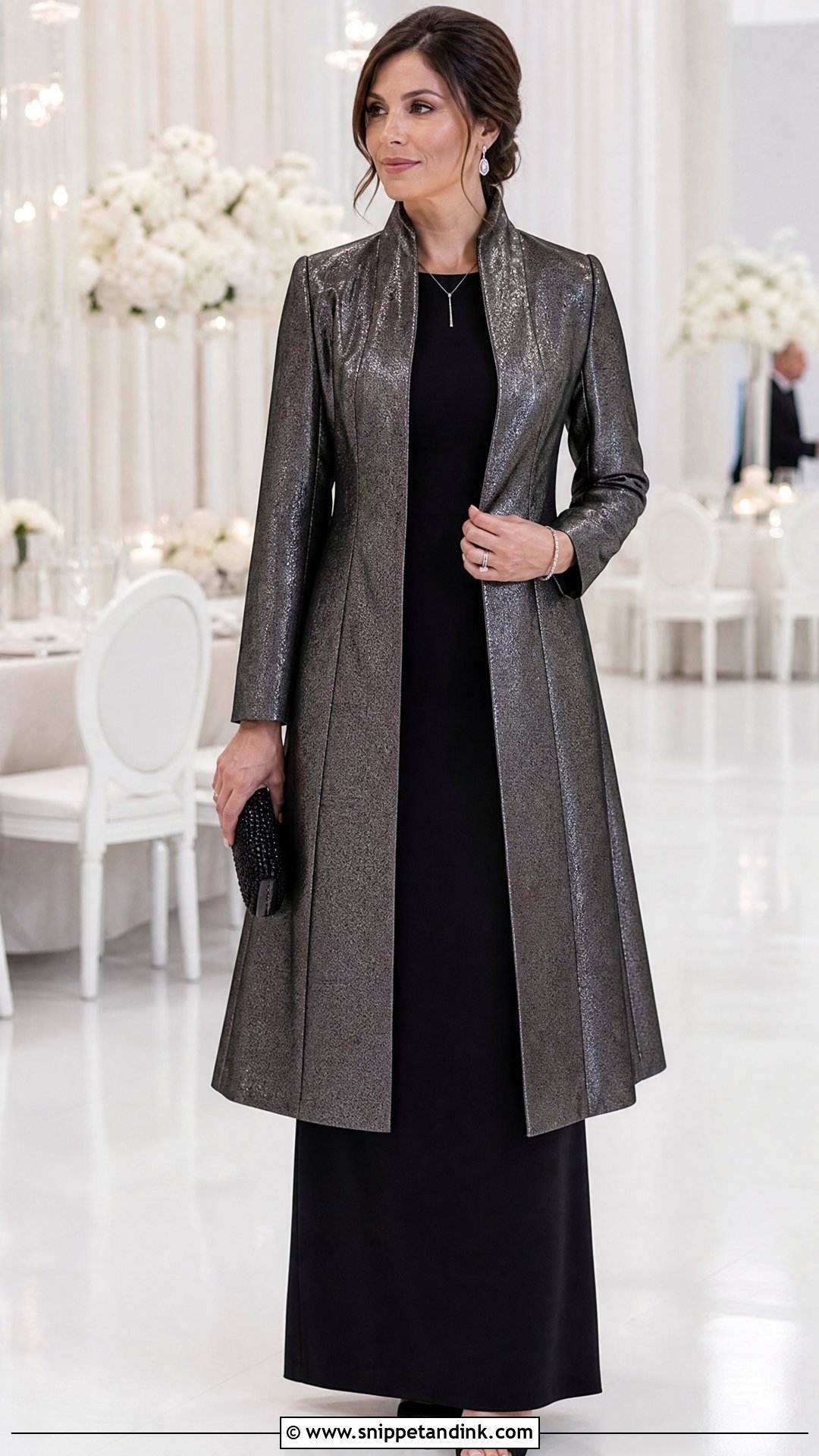
Metallic coats can easily look like costume. I choose a subtle silver, pewter, champagne or soft gold with a smooth finish and a simple cut, and layer it over a black column gown, satin maxi or formal jumpsuit. The black underneath grounds the shine. Black heels, a small evening bag and clean jewellery keep it formal enough for evening receptions and black-tie optional dress codes. Metallic fabric creases sharply, so hang it up the moment you arrive rather than folding it over a chair.
24. Short Bridal Coat With Tea Length Dress
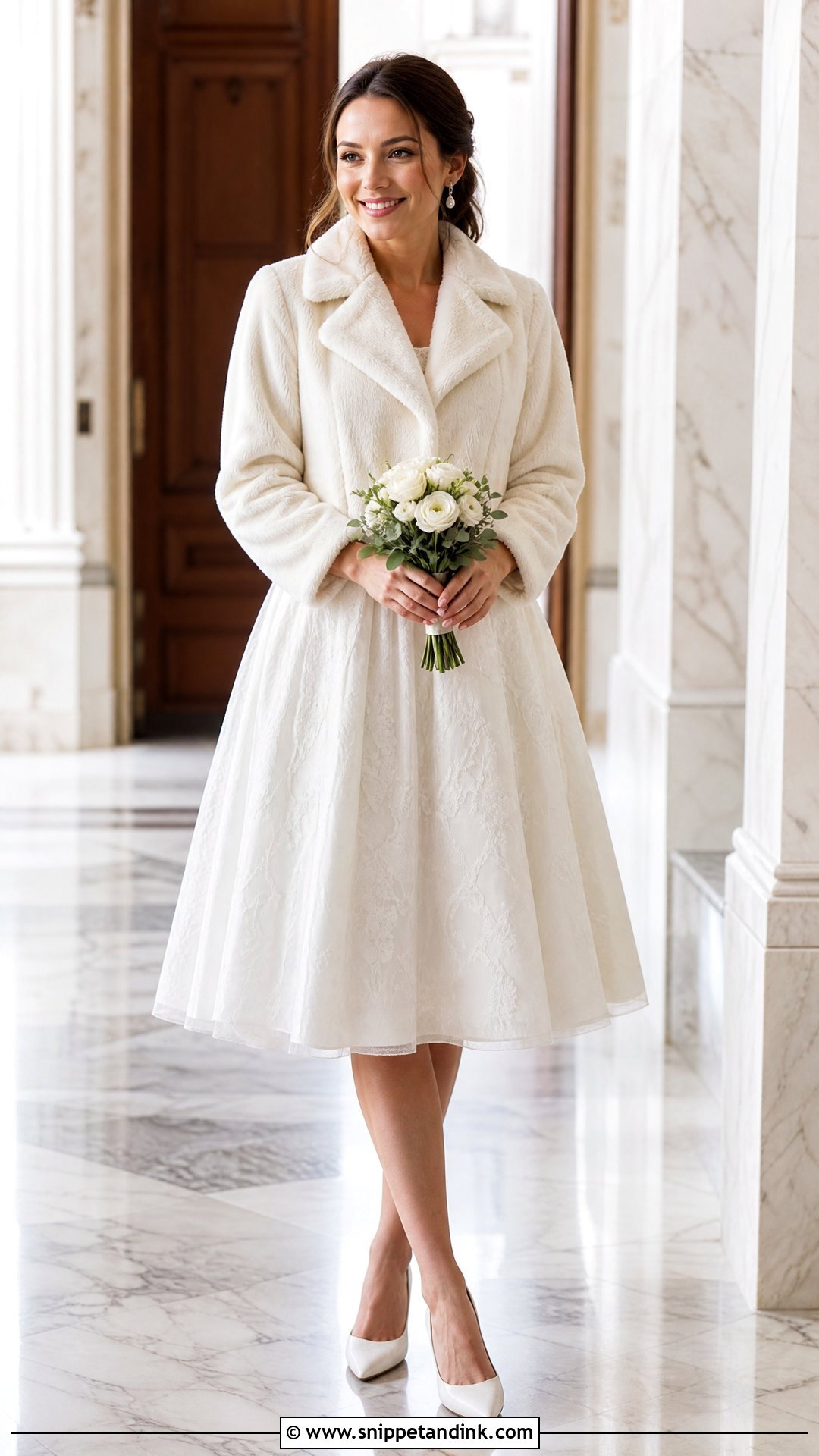
Proportion is everything here. A short bridal coat keeps the waist visible so a tea-length skirt shows its full shape, but it has to end at the waist or high hip; a coat that lands mid-thigh cuts across the skirt at the worst point. A cropped faux fur jacket, short wool coat or tailored bridal jacket in ivory, cream or soft blush all work. Classic pumps, pearl earrings and a small bouquet complete it, and it’s far easier to move in than a full-length coat at a courthouse or vintage-style ceremony.
25. Oversized Wedding Coat With Sleek Dress
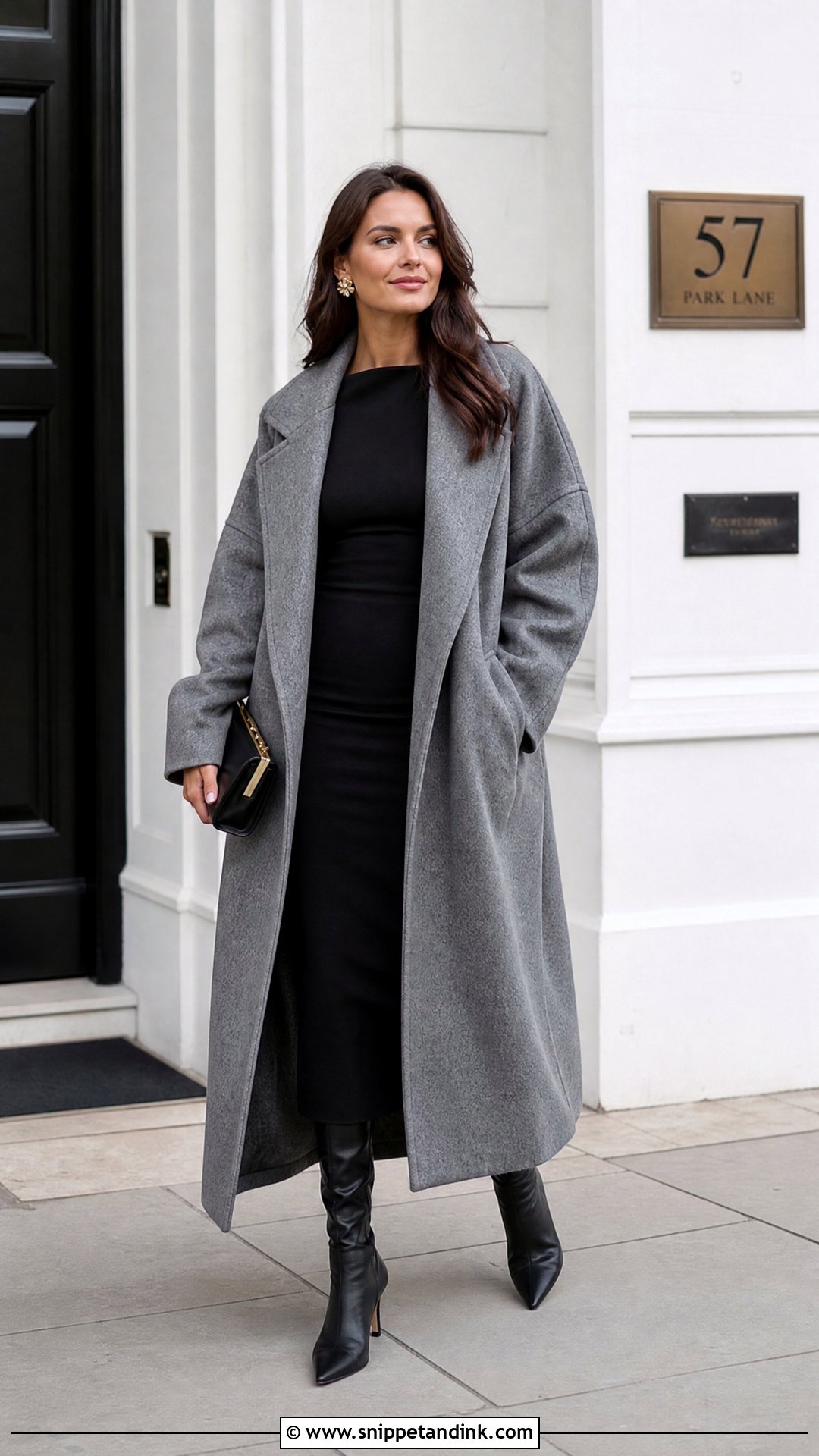
Oversized only looks deliberate when there is contrast underneath. A relaxed long coat in wool or brushed fabric needs a fitted column, slip or narrow midi dress, plus pointed heels or slim boots to lengthen the line. Keep it oversized but not sloppy: the shoulder seam can drop, but the sleeves should still end at your wrist so your hands show. Fabric quality shows most on this shape, because nothing tailored is holding it up. A structured clutch and simple earrings finish it for modern brides and fashion-minded guests.
Guests, Bridesmaids and the Ivory Coat Question
White and ivory coats look lovely on guests, which is exactly the problem. In a crowd outside the ceremony, a long cream coat over a pale dress can be mistaken for the bride in photos. If you’re a guest, keep a light coat paired with a clearly coloured dress, or choose camel, grey or a soft pastel instead.
Matching a bridal party
Couples sometimes buy matching coats for bridesmaids. I suggest one colour in a couple of shapes, such as a wrap and a straight cut, because one style rarely suits every body and every dress length. Order early; outerwear in specific colours sells out once the cold sets in.
Rain, snow and the coat check
- Wool sheds light rain, but wet wool smells and takes hours to dry. Pack a clear umbrella, which shows up well in photos.
- Snow leaves water marks on suede and faux fur. Shake it off quickly instead of rubbing.
- Ask whether the venue has a cloakroom. If not, plan who holds the bride’s coat during the ceremony.
Is Your Coat Part of the Outfit Yet?
A wedding coat is more than a layer you hand over at the door. It is in the arrival photos, the outdoor portraits, the confetti exit and the walk back to the car. Long wool reads classic, faux fur reads soft, a cape reads dramatic, and tailored shapes keep dresses and jumpsuits sharp. Pick colours and textures that support the outfit rather than cover it, and weigh warmth, dress length, venue and formality before you buy.
You'll Like These Ideas:


Leave a Reply