
A bridal cloak does two jobs at once: it keeps you warm on a cold walk to the ceremony, and it changes how you move through the aisle. The styles here run from winter velvet and faux-fur trim to sheer tulle, lace, pearls and floral embroidery. In spring and summer I reach for the light fabrics; in real cold, only lined velvet or wool does any good. Detachable versions give you two looks from one dress. What decides whether a cloak works is length, fabric weight and where it fastens, because a badly placed closure can hide the very neckline you chose the gown for.
Where a Cloak Fastens Decides How It Hangs
Brides fall for fabric first, but the closure is what makes a cloak sit well or slide off all evening. These are the attachment methods I see most, and what each one suits.
- Neck tie or clasp: simple and removable in seconds, but all the weight hangs from the throat. Fine for tulle and chiffon. On long velvet it pulls backward and presses on the windpipe after an hour.
- Shoulder hooks or thread loops sewn into the gown: the weight spreads across both shoulders and the cloak falls from the back of the dress. Best for cathedral lengths, beading and detachable styles. It needs a seamstress and a fitting.
- Snap tabs under the straps: almost invisible on strapped gowns, useless on strapless ones.
- Arm slits: not a closure, but on any floor-length cloak they decide whether you can hold the bouquet and lift your skirt on steps.
On a strapless dress with a heavy cloak, I have loops stitched into the bodice lining near the top of the back seams so the boning carries the weight rather than the fabric. Ask for this when you book alterations, since it is far easier to plan for than to add the week of the wedding.
1. Long Velvet Bridal Cloak With Ball Gown
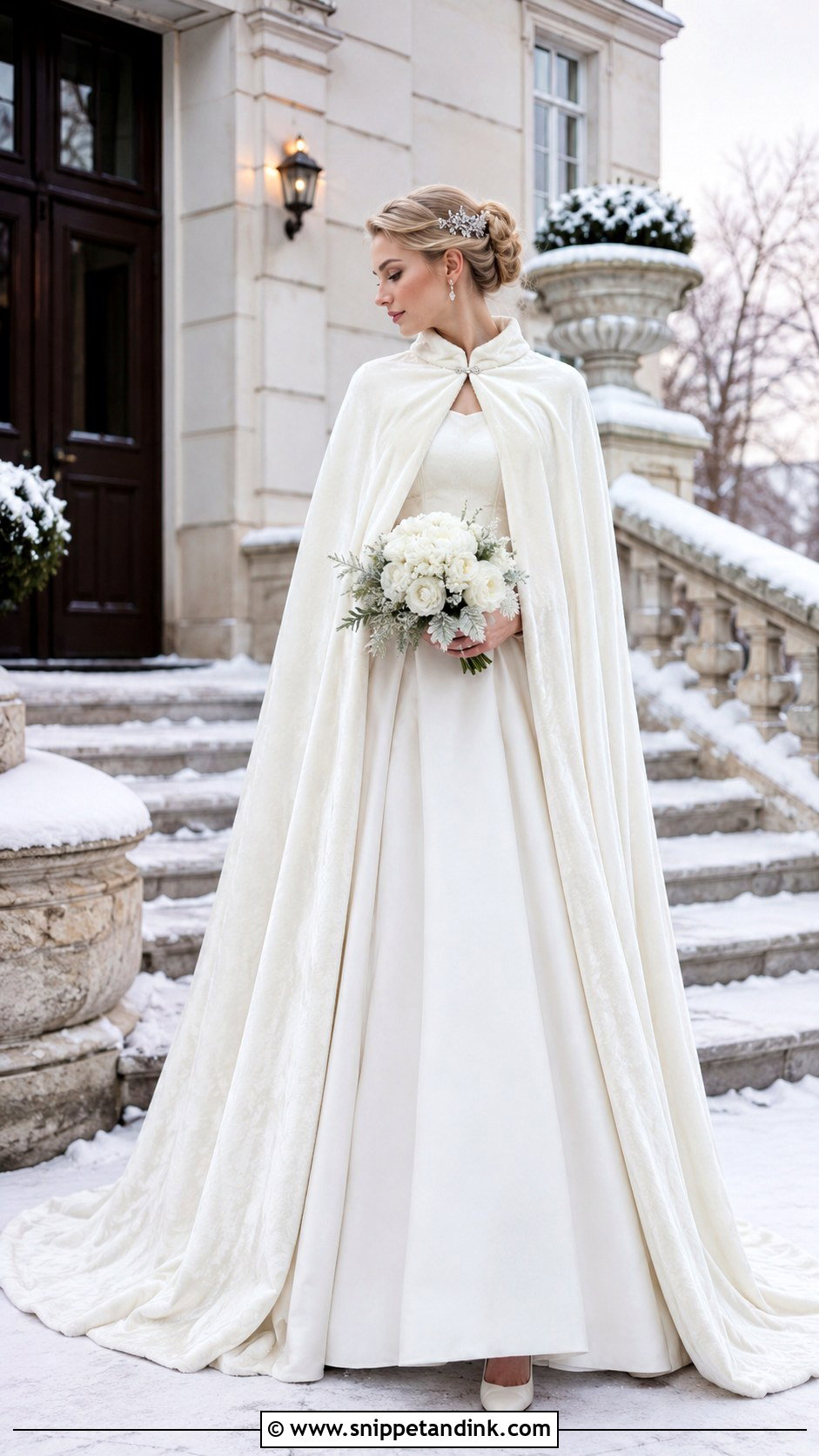
Long velvet over a structured ball gown is the classic winter pairing, and the full skirt is what makes it work: it carries the weight of the velvet without looking swamped. Aim for ivory or soft white velvet that sits near the dress shade; velvet’s pile shifts color with the light, so an exact match isn’t possible anyway. Satin pumps or bridal boots, a crystal comb and small drops are enough shine against the fabric. I always ask for arm slits or a loose front. A floor-length velvet cloak with no openings means you can’t hold a bouquet without bunching the front in your fists.
2. Hooded Bridal Cloak With Satin A-Line Dress
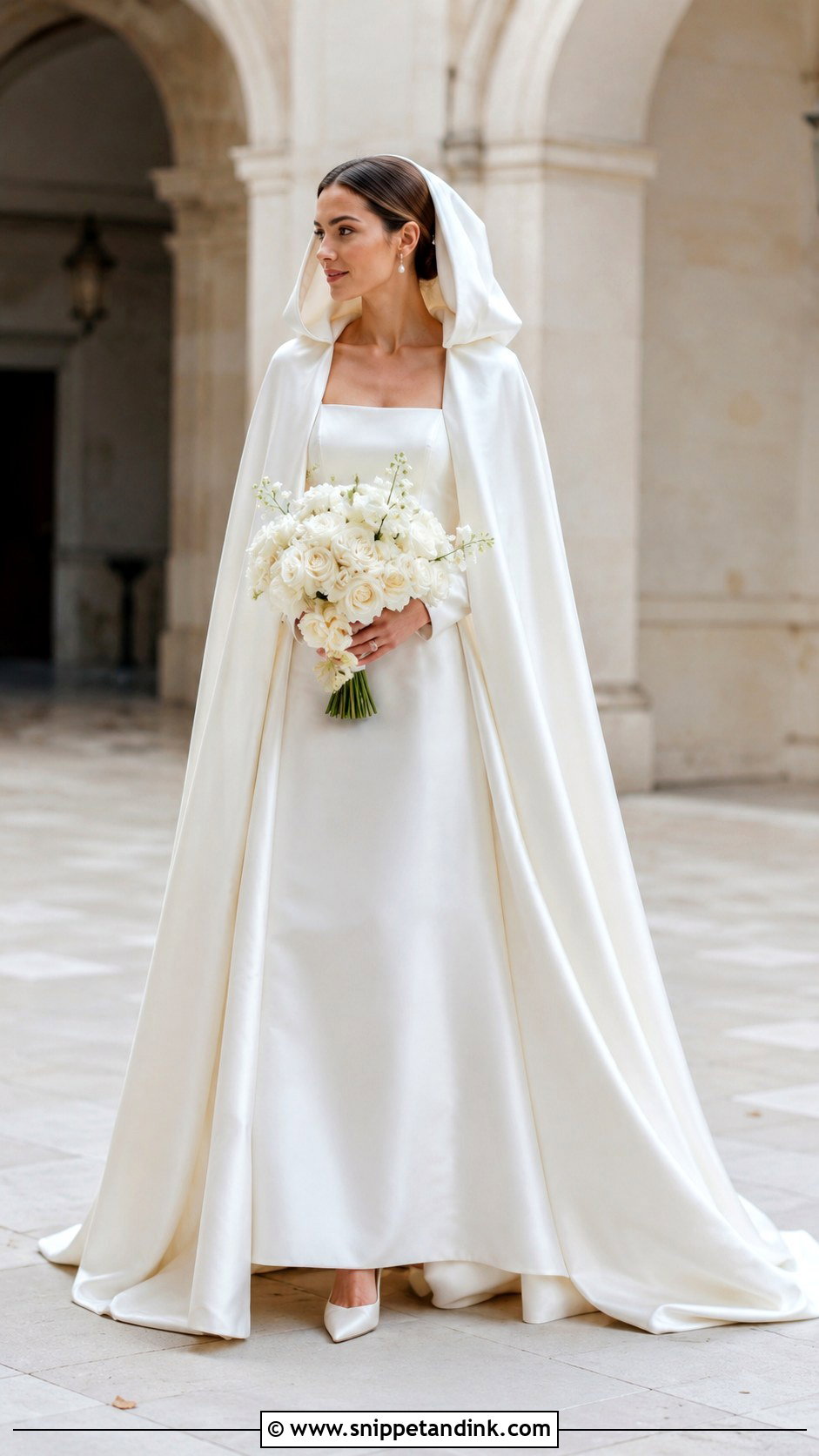
A soft hood framing a finished hairstyle is the reason most brides want this style. Wear a hooded bridal cloak over a satin A-line with a plain bodice so the hood and drape carry the look. Lined lightweight fabric suits autumn; velvet suits winter. The practical catch is hair. A hood pressed onto curls flattens them in minutes, so I ask the hairstylist to set a low bun or smooth waves and wear the hood loosely, lifted off the crown, then take it down indoors. A hidden hook or narrow satin tie keeps the neckline neat.
3. Faux Fur Trim Bridal Cloak With Long Sleeve Gown
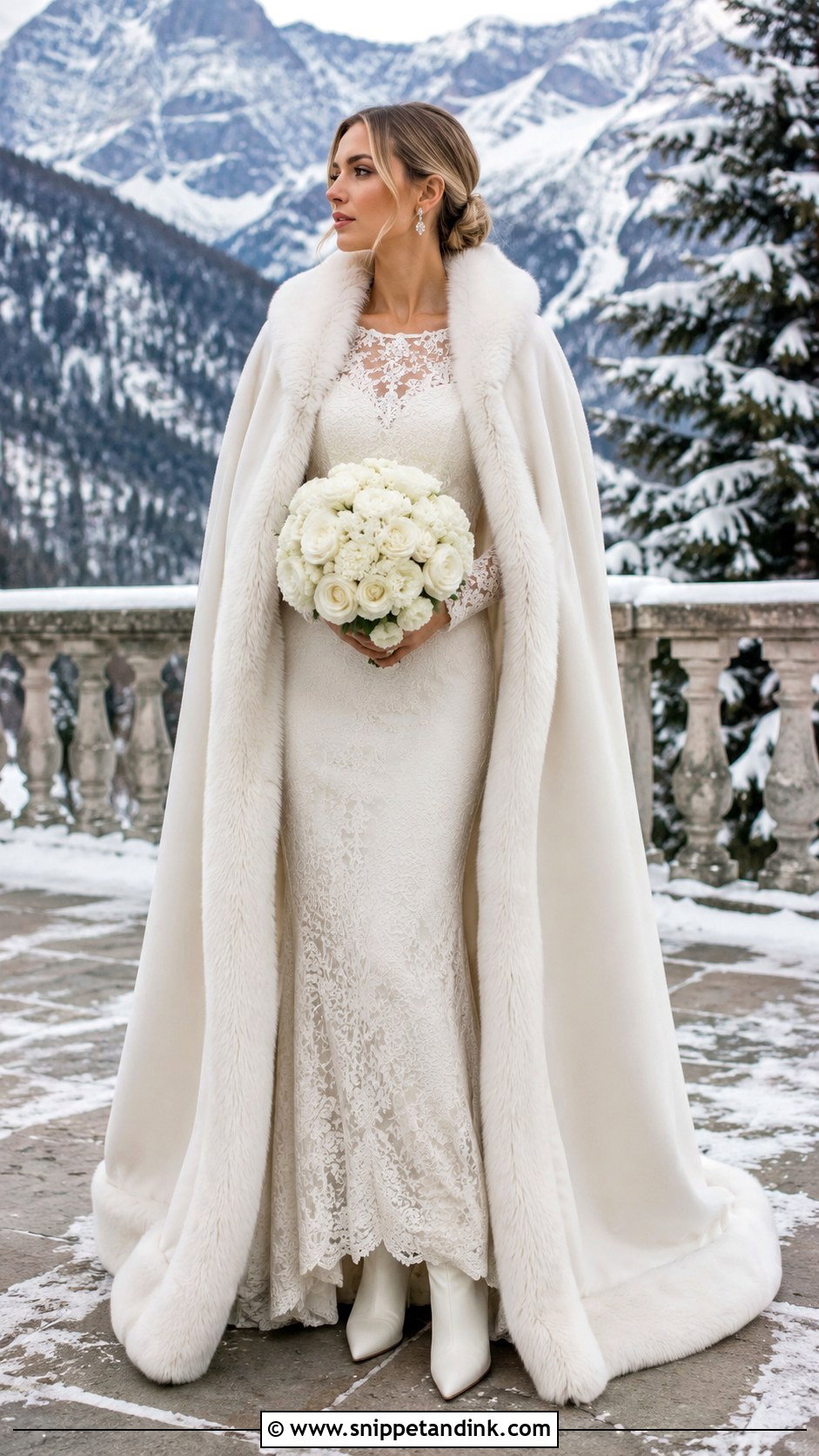
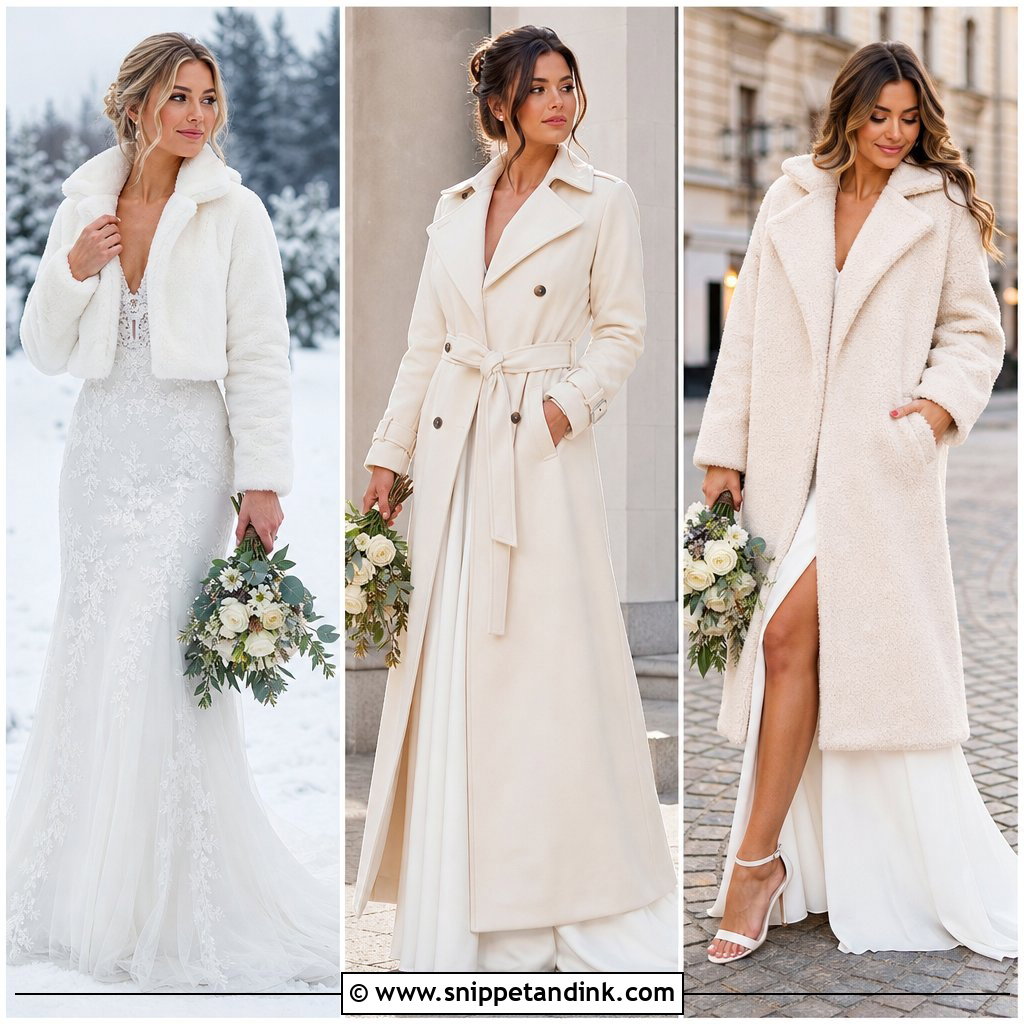
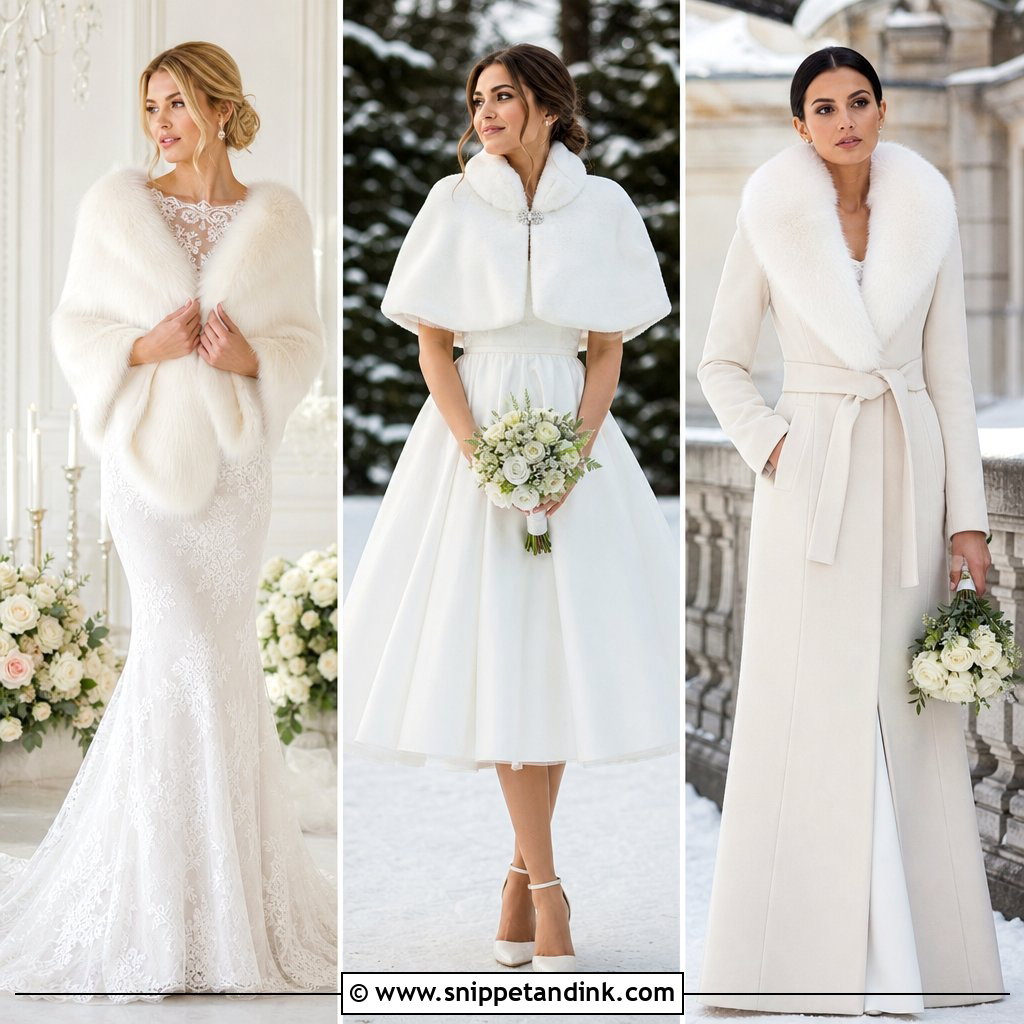
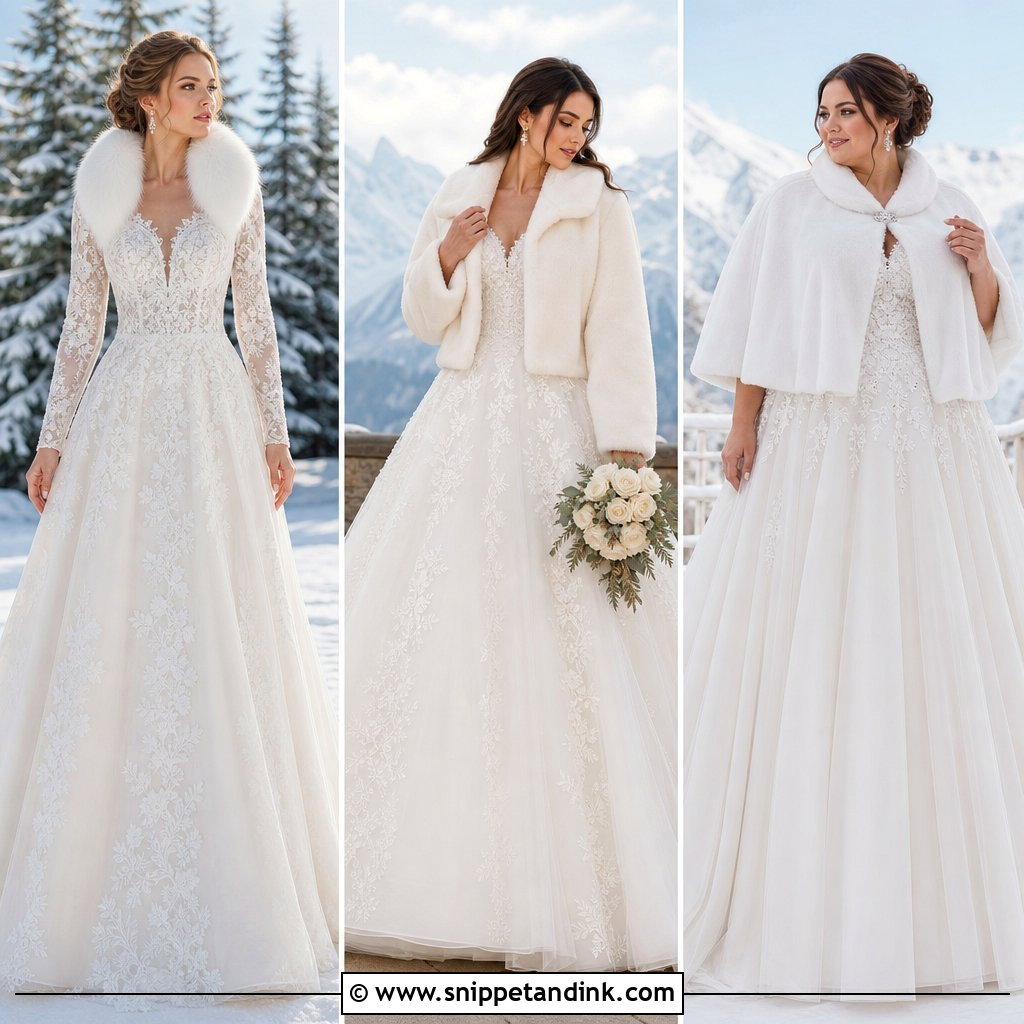
For snow, a faux-fur-trimmed bridal cloak over a long-sleeve gown keeps you warm on the walk and through outdoor portraits. Full length gives the most impact; hip length is easier to move in. Keep the trim fine and ivory; a thick border swamps the dress and starts to look like a costume. Lace sleeves feel romantic, crepe sleeves cleaner. Wear pale bridal boots outside and change into heels indoors. Faux fur is already a lot of texture, so leave gloves and hairpieces plain, and brush the trim gently before photos, since it flattens where the bouquet presses.
4. Sheer Tulle Bridal Cloak With Slip Dress
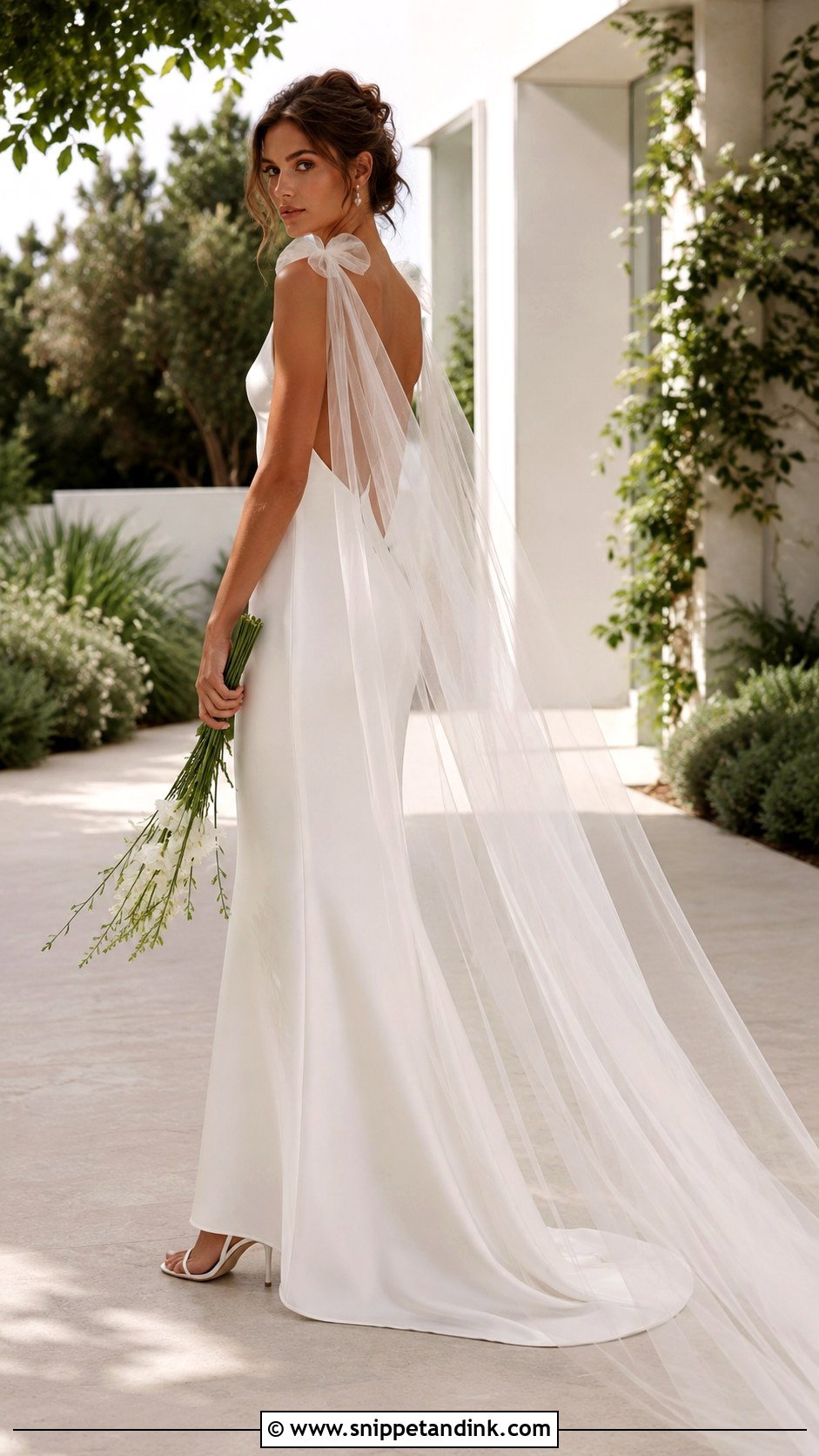
Sheer tulle over a bias-cut slip adds coverage without changing the line of the dress. I like a floor or cathedral length attached at the shoulders with nearly invisible closures, so the tulle seems to float behind you. Strappy heels, quiet earrings, a low bun and a narrow long-stemmed bouquet suit the streamlined shape. In warm weather this is the only cloak I’d recommend, because it gives the look of coverage with none of the heat of velvet or wool. Ask for soft bridal tulle rather than stiff net, which crackles and sticks out at the shoulders.
5. Lace Bridal Cloak With Mermaid Wedding Dress
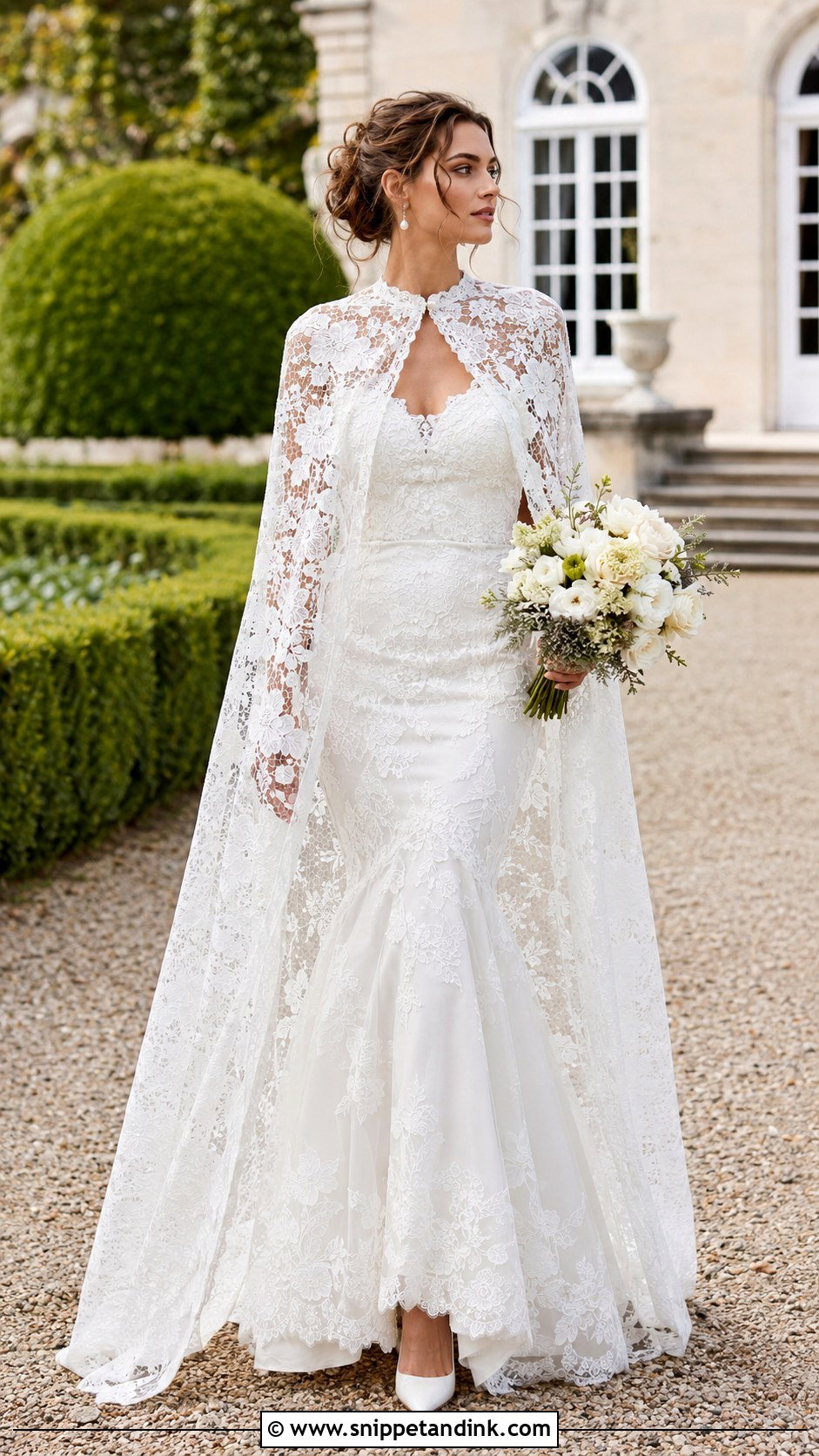
A fitted mermaid gown can feel severe on its own, and lace over it softens the line without losing the shape. I choose fine, Chantilly-style lace or an open floral that relates to any lace already on the gown. The cloak should start at the shoulders and open down the front so the waist shows before the flare. Pointed satin pumps, small pearls and an updo that keeps the neckline visible finish it, and you can skip the veil entirely. Two unrelated lace patterns in one outfit never look right. Busy dress, plain-bordered cloak; plain dress, and the cloak’s lace can take the lead.
6. Floral Applique Bridal Cloak With Simple Crepe Gown
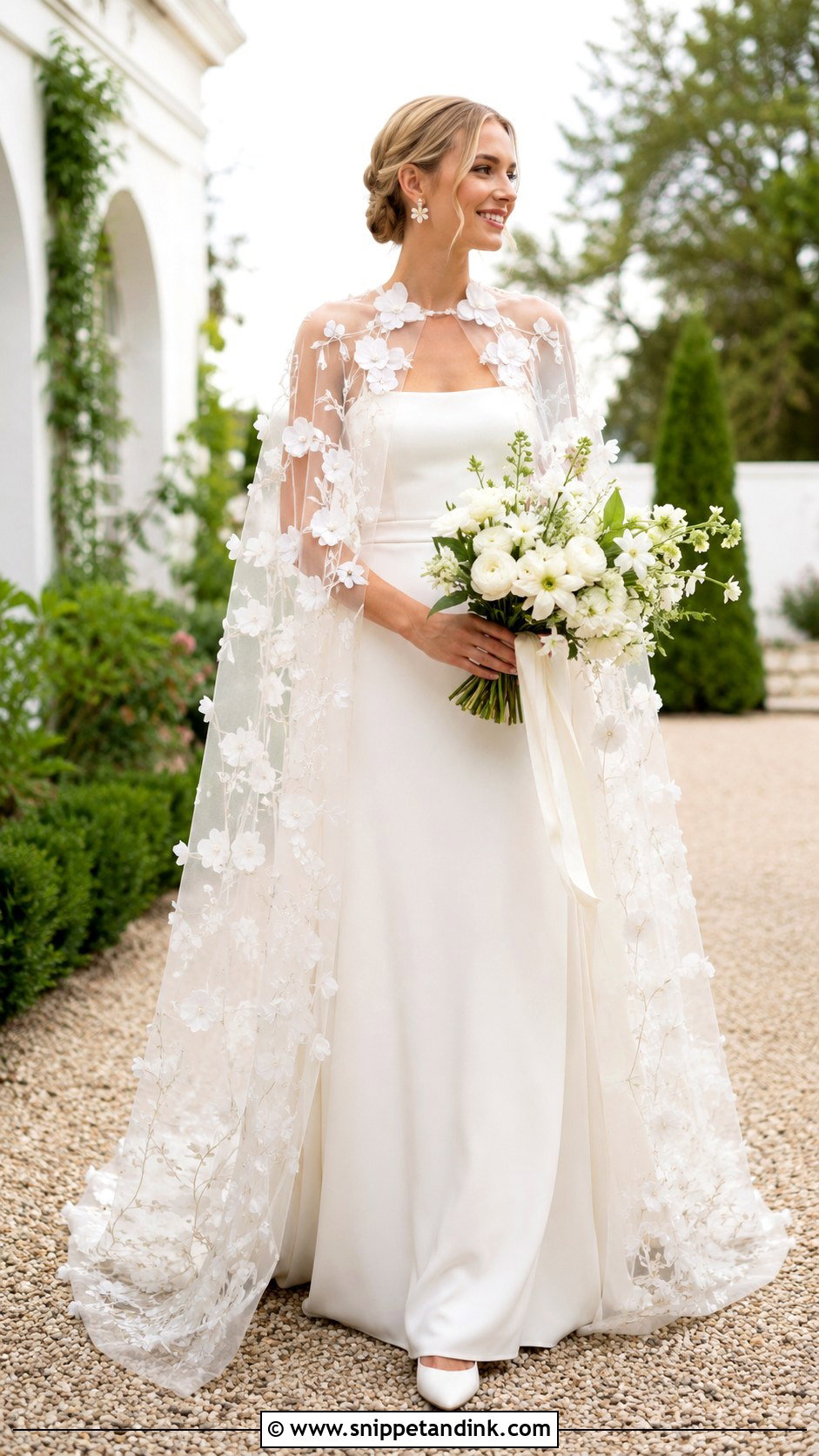
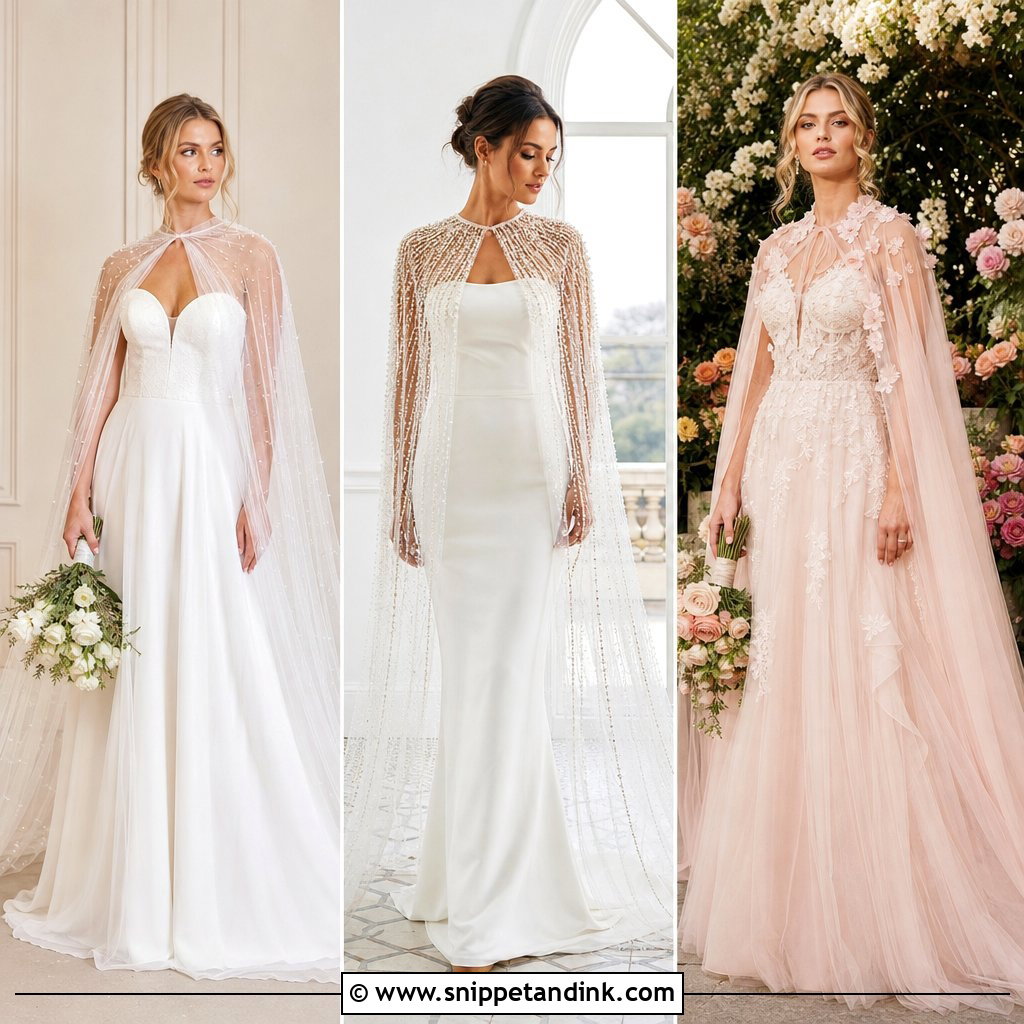
Raised appliqué flowers show best against plain crepe, where nothing else competes. Start with a clean column or A-line, then add a sheer cloak scattered with flowers that thin out toward the hem, so the lower part stays light and the dress shows through. White pumps, small floral earrings and a loose bouquet tie it together. If the appliqué clusters at the shoulders, skip the necklace. I also check the weight: heavy appliqué on fine tulle pulls the shoulders back, so a little horsehair or a stay tape under the attachment points helps it sit right. Gardens and spring estate weddings suit this one best.
7. Beaded Bridal Cloak With Strapless Wedding Dress
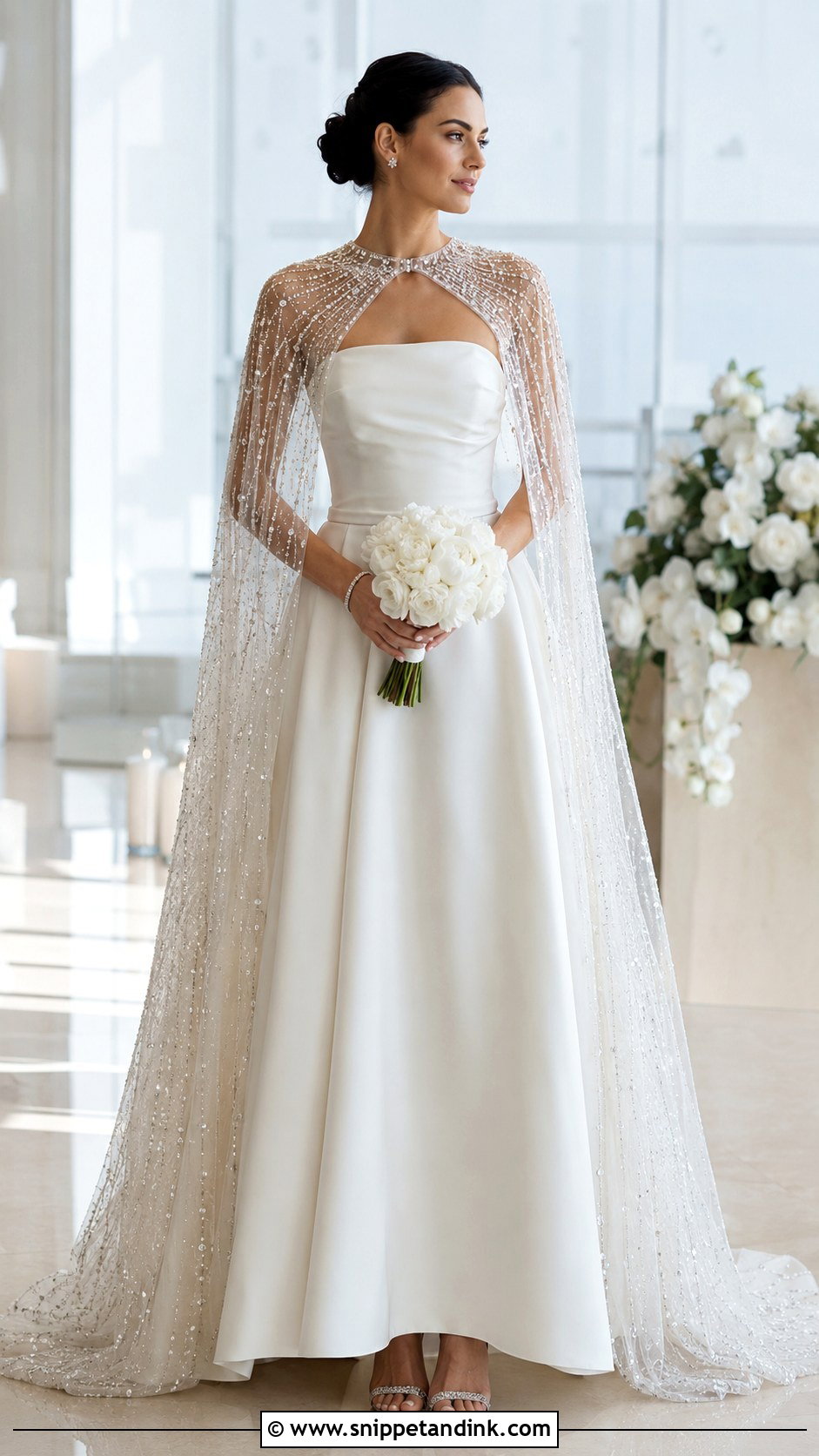
Strapless necklines leave the shoulders clear for a beaded cloak. Choose sheer fabric with scattered crystal or seed beads rather than dense beading everywhere, so it catches light while the gown’s shape still shows. A fitted bodice with an A-line or gently flared skirt is the right base. Metallic-neutral heels, a slim bracelet and small crystal studs are plenty; the cloak is already your jewelry, so no necklace. Before the wedding, rub the beaded edge over a scrap of the gown fabric or the hem allowance. Rough bead ends snag satin and pull lace, and you’ll want to know that at a fitting, not at the altar.
8. Pearl Bridal Cloak With Column Gown
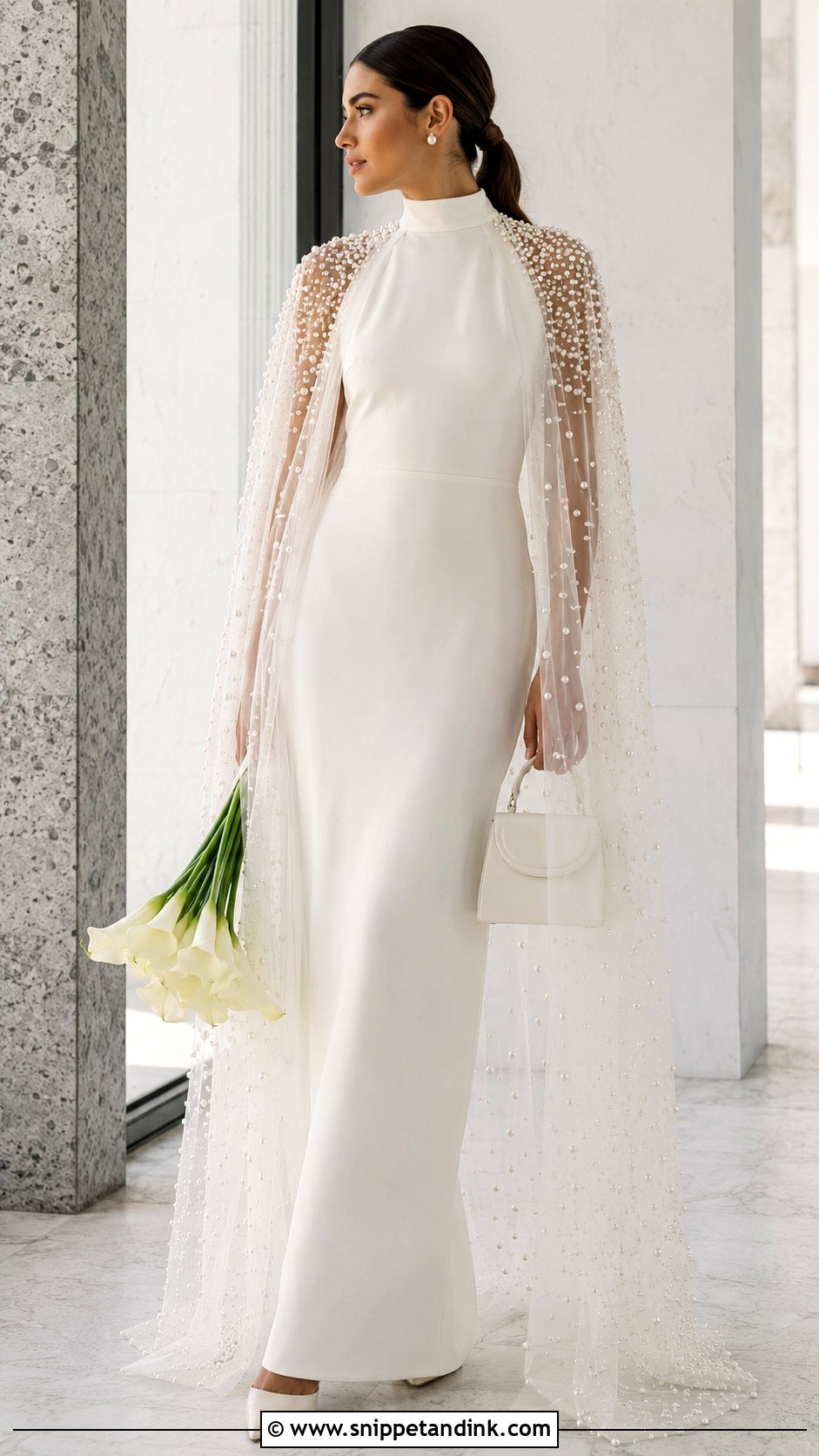
Widely spaced pearls on tulle keep a column gown light. A high neck looks sophisticated, a square or scoop neckline softer. Pointed heels, a small structured bag and pearl studs repeat the detail without crowding; I’d skip a big pearl necklace here. Hair can go into a neat bun, a sculpted ponytail or smooth waves, and calla lilies or another simple bouquet suit the clean line. Pearls are heavier than they look. Have your seamstress secure the cloak at both shoulders so the weight spreads evenly and doesn’t drag the neckline backward through the ceremony.
9. Short Bridal Cloak With Tea Length Wedding Dress
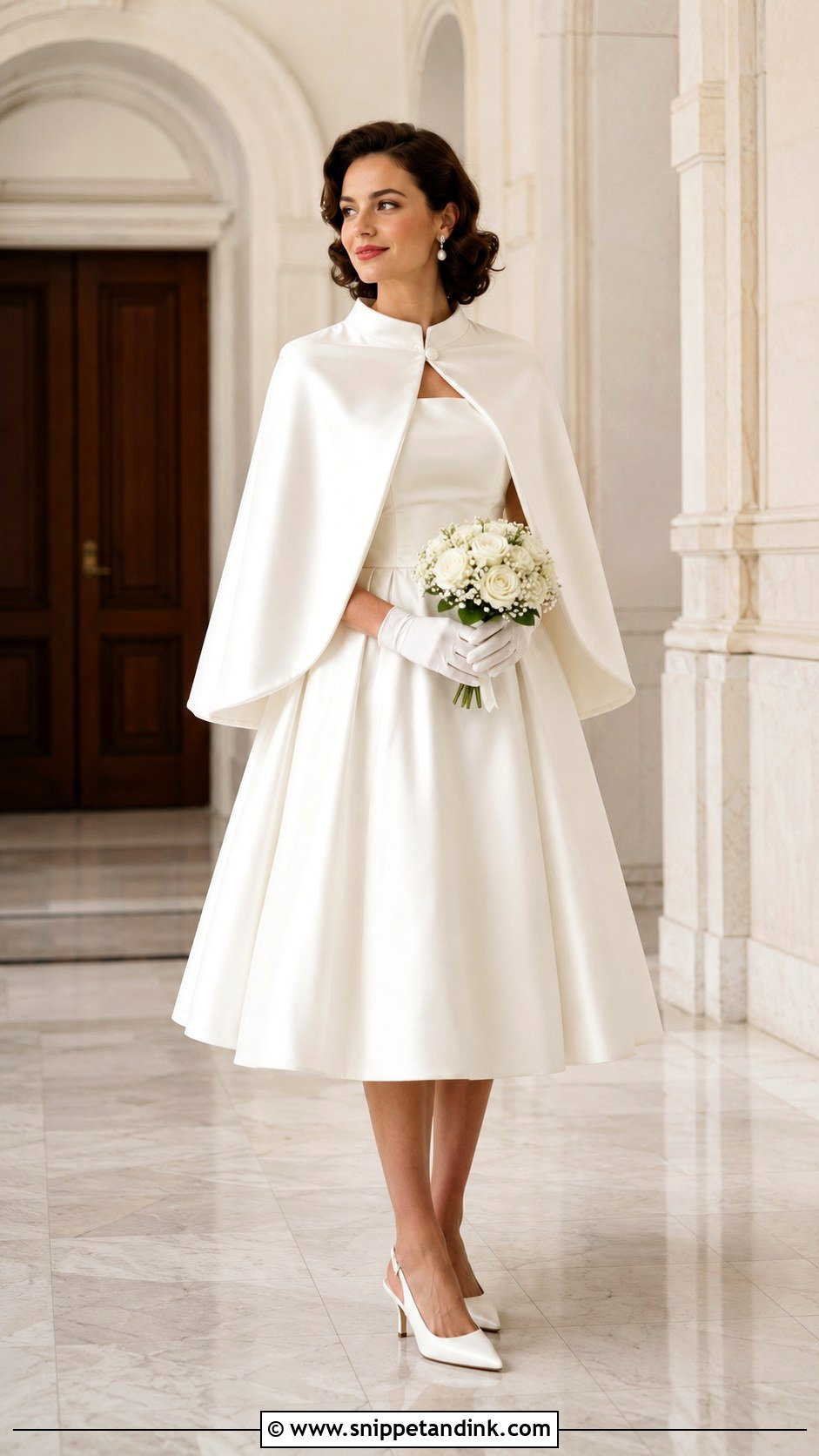
A short cloak over a tea-length dress has a playful, vintage feel. It must end at the waist or just below the hip, since anything that stops mid-thigh cuts the skirt in half. A structured capelet, satin-lined cloak or light wool all work. Pointed pumps, slingbacks or ankle straps show nicely under the shorter hem. Short gloves and pearls push the vintage mood; I’d use one or two such details, not five. A birdcage veil is optional, and a neat bun or curled bob works just as well. This is a good choice for courthouse and small venues where you’ll walk a lot.
10. High Collar Bridal Cloak With Minimalist Gown
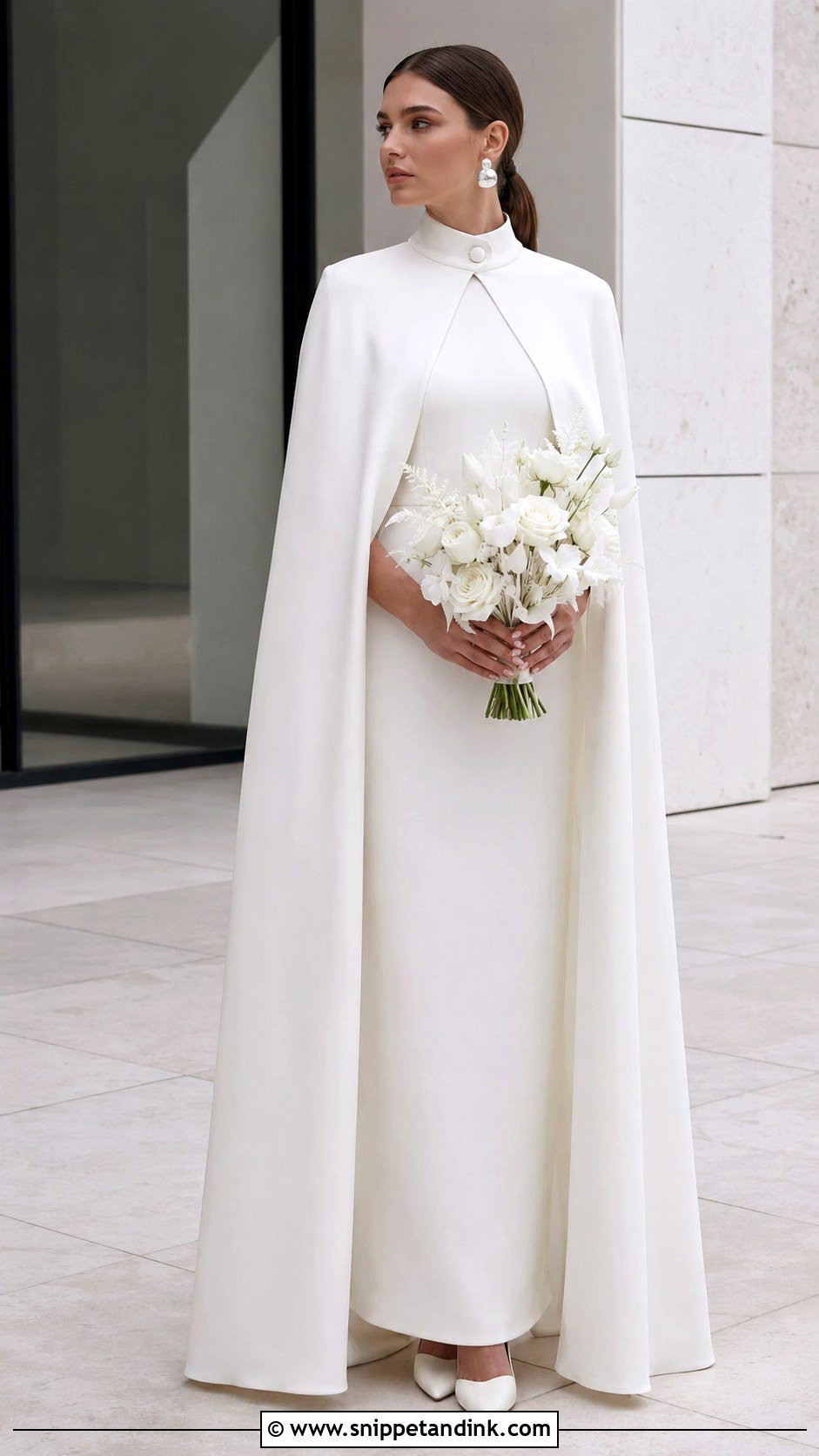
High collars look modern when the lines are sharp. Pair one with a minimalist crepe gown, column, fit-and-flare or a restrained A-line, and let the cloak close at the neck with a covered button and drop straight from the shoulders. Matte fabric is understated; satin reads more formal. Sleek pumps, sculptural earrings and a structured bouquet complete it, with hair in a low bun or smooth ponytail so the collar shows. The fitting test I insist on: turn your head fully both ways. If the collar brushes your jaw it will take foundation with it. Knee length moves easily; floor length makes the entrance.
11. Chiffon Bridal Cloak With Boho Wedding Dress
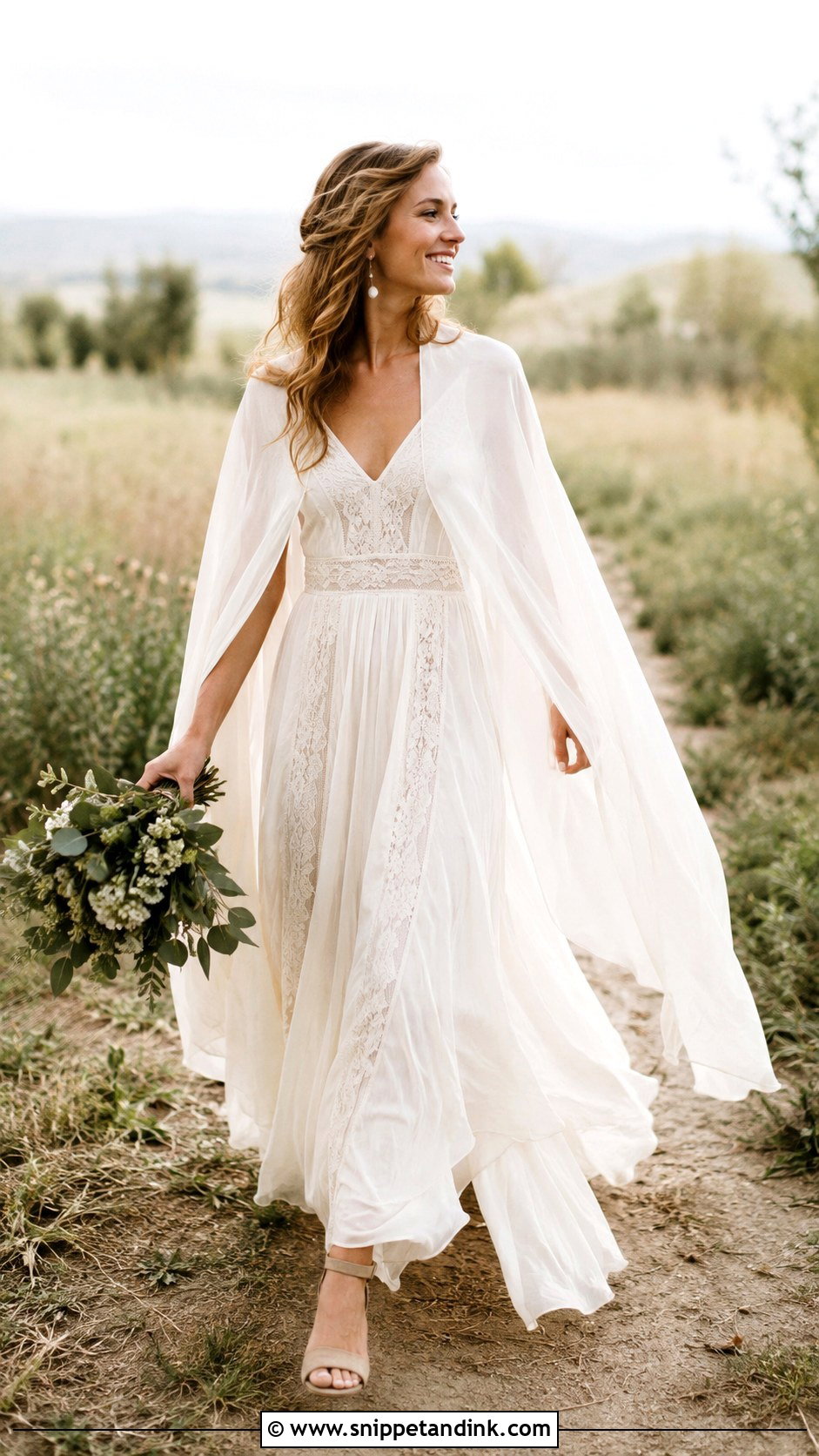
Chiffon moves in the slightest breeze, which is why it suits an outdoor boho wedding. Pair a loose A-line with subtle lace panels or flutter sleeves with a full-length chiffon cloak fastened lightly at the shoulders. On grass, block heels or embellished flats beat stilettos every time. Textured waves, delicate drops and an organic bouquet of greenery and white flowers finish it. Skip a long train under a long cloak; let the chiffon provide the movement. Very light chiffon also lifts and twists in wind, so I add secure loops at the shoulders and a small weight or two in the hem.
12. Embroidered Bridal Cloak With A-Line Wedding Dress
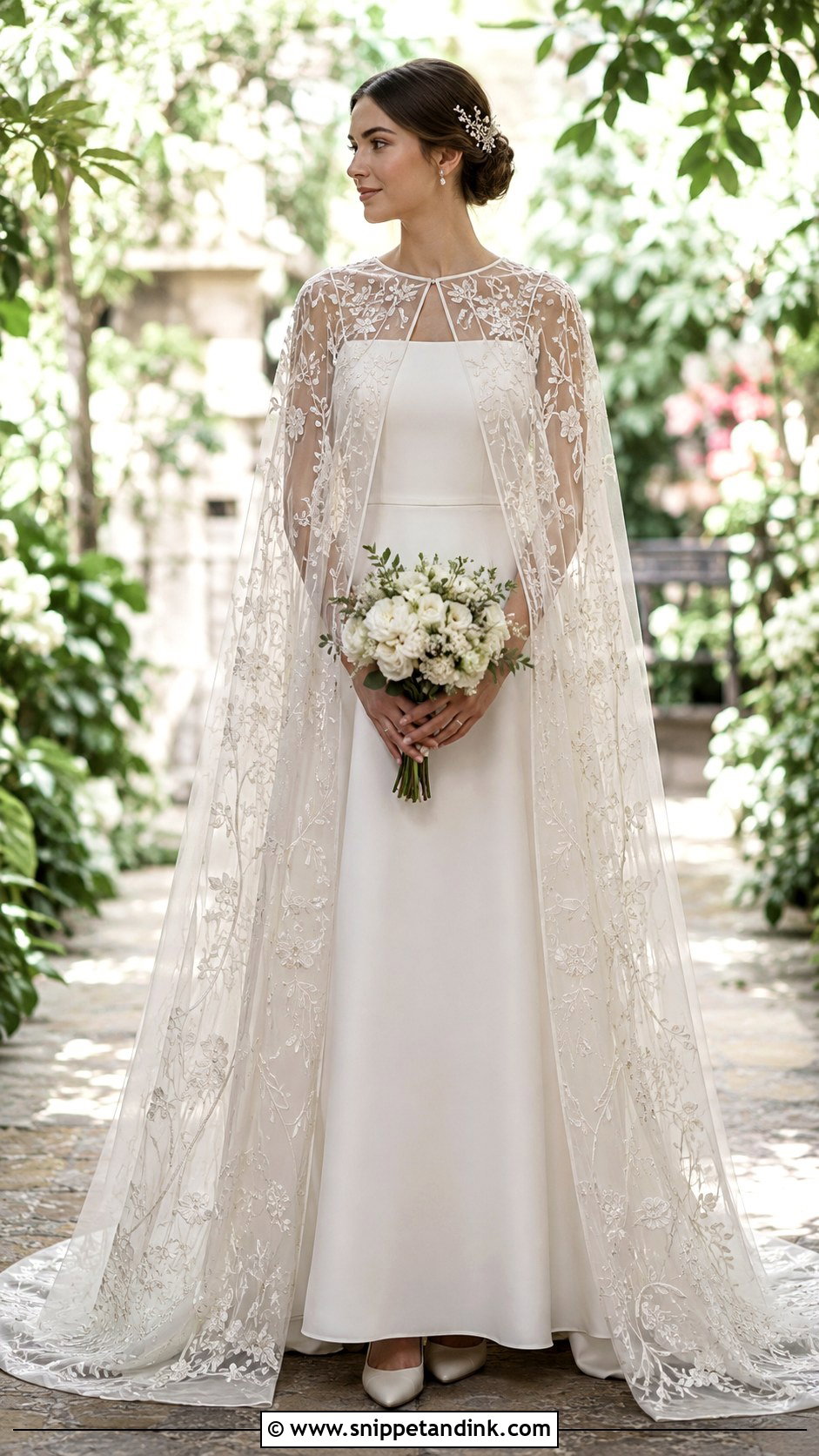
Embroidery is where a cloak can carry something personal: botanical vines, small stars, initials or flowers that mean something to you, worked into tulle or organza. Put it over a plain A-line so every motif is visible, with a simple neckline and shoes in ivory, silver or a soft color from the thread. Keep earrings small and the hair comb plain. For custom work, ask the maker for a stitched sample on the actual base fabric first, because thread looks different over ivory than over bright white. I’d put the important motifs on the shoulders and upper back. That’s what shows in portraits when the hem is moving or gathered.
13. Ivory Wool Bridal Cloak With Winter Wedding Dress
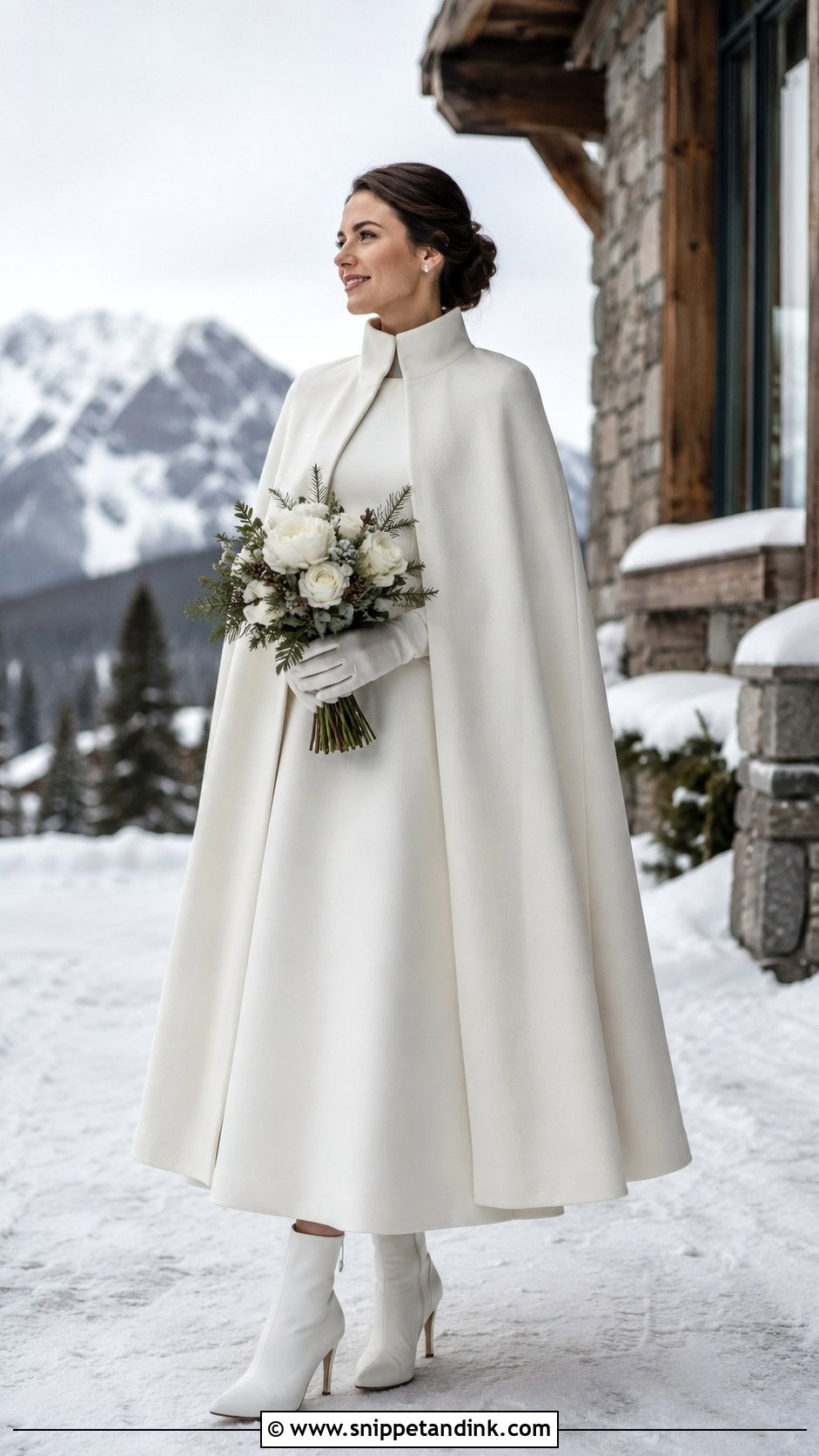
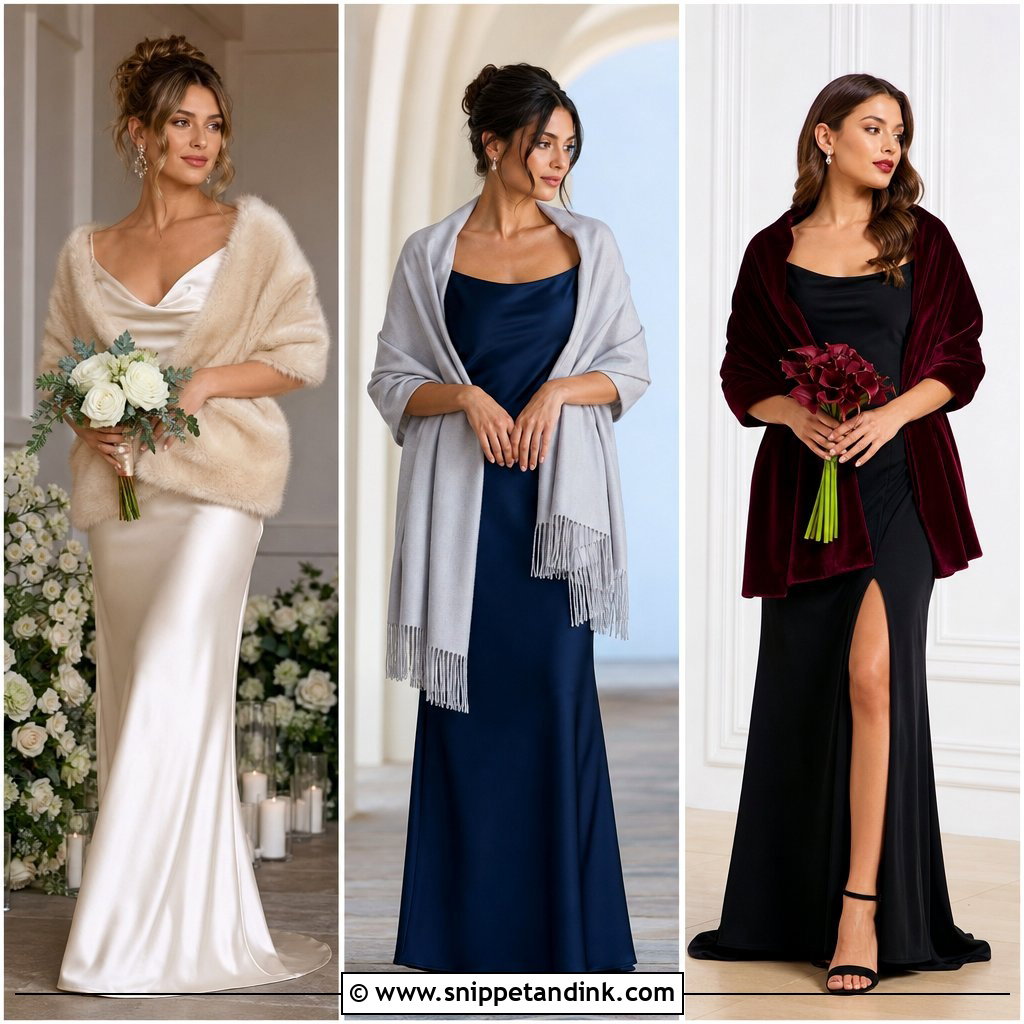
In real cold you need a fabric that actually holds heat, and an ivory wool or wool-blend cloak does that over a long-sleeve satin, crepe or mikado dress. Choose a smooth, finely woven cloth; a thick, fuzzy coating fabric looks like an everyday coat. Mid-calf is easiest to walk in, full length gives more drama for formal portraits. Add closed shoes or white leather boots, thermal tights if the skirt allows, and gloves you can slip off for the rings. Velvet and wool blends are the warmest choices I know for a winter ceremony, and taking the layer off indoors keeps you from overheating at the reception.
14. Satin Bridal Cloak With Off Shoulder Gown
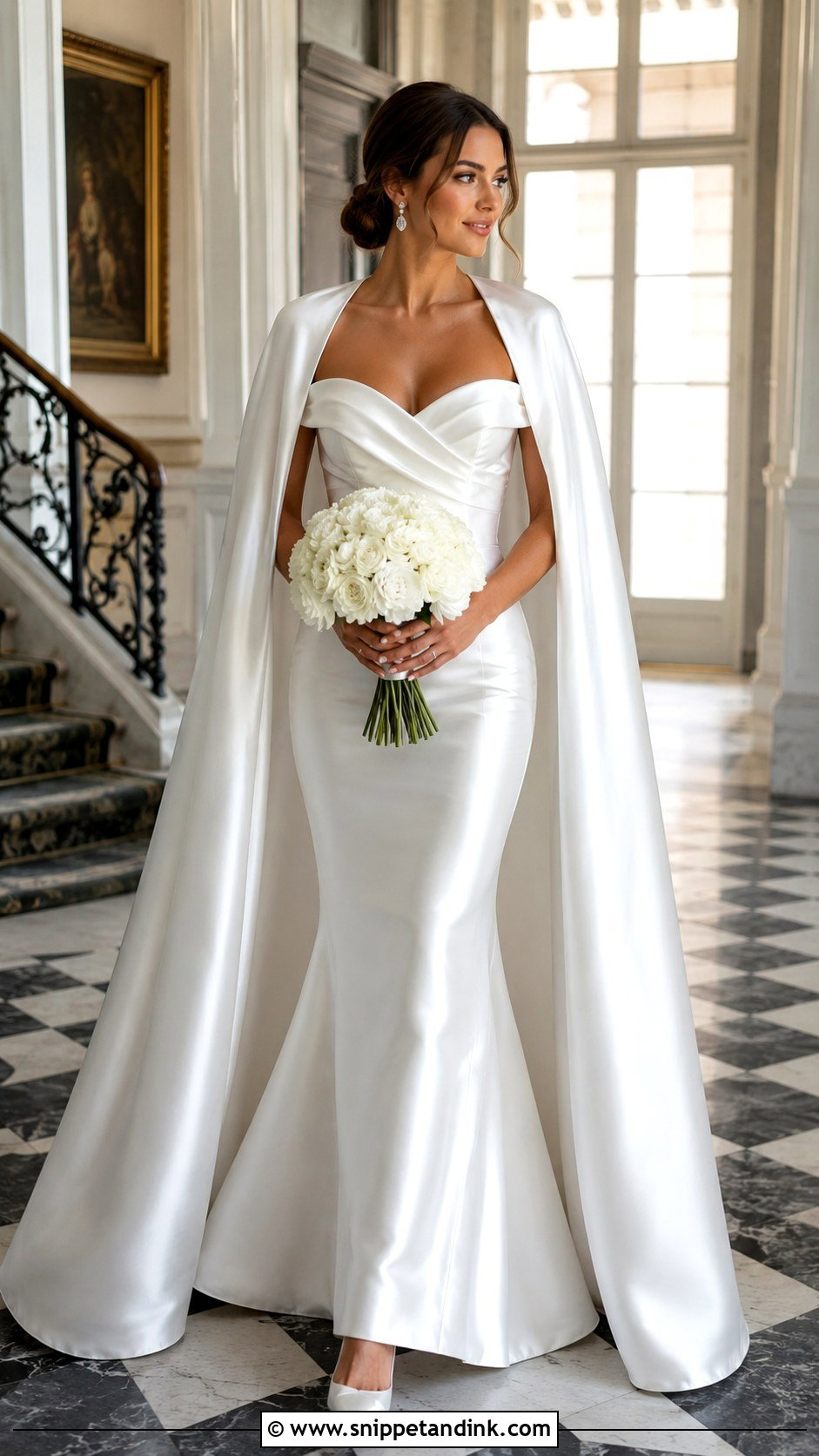
Satin over an off-the-shoulder gown keeps the surfaces smooth, but two satins rarely match by eye. I compare swatches in daylight, because one can look warm and another cool once the camera is on them. A full skirt or soft fit-and-flare balances the wide horizontal neckline. Pointed pumps, drop earrings and a low bun keep the shoulders on show when the cloak comes off. Never let a bulky clasp sit on the neckline itself. Concealed shoulder attachments or a narrow fastening at the upper chest are better. Full length for the ceremony; waist length if you only want light cover.
15. Capelet Bridal Cloak With Vintage Wedding Dress
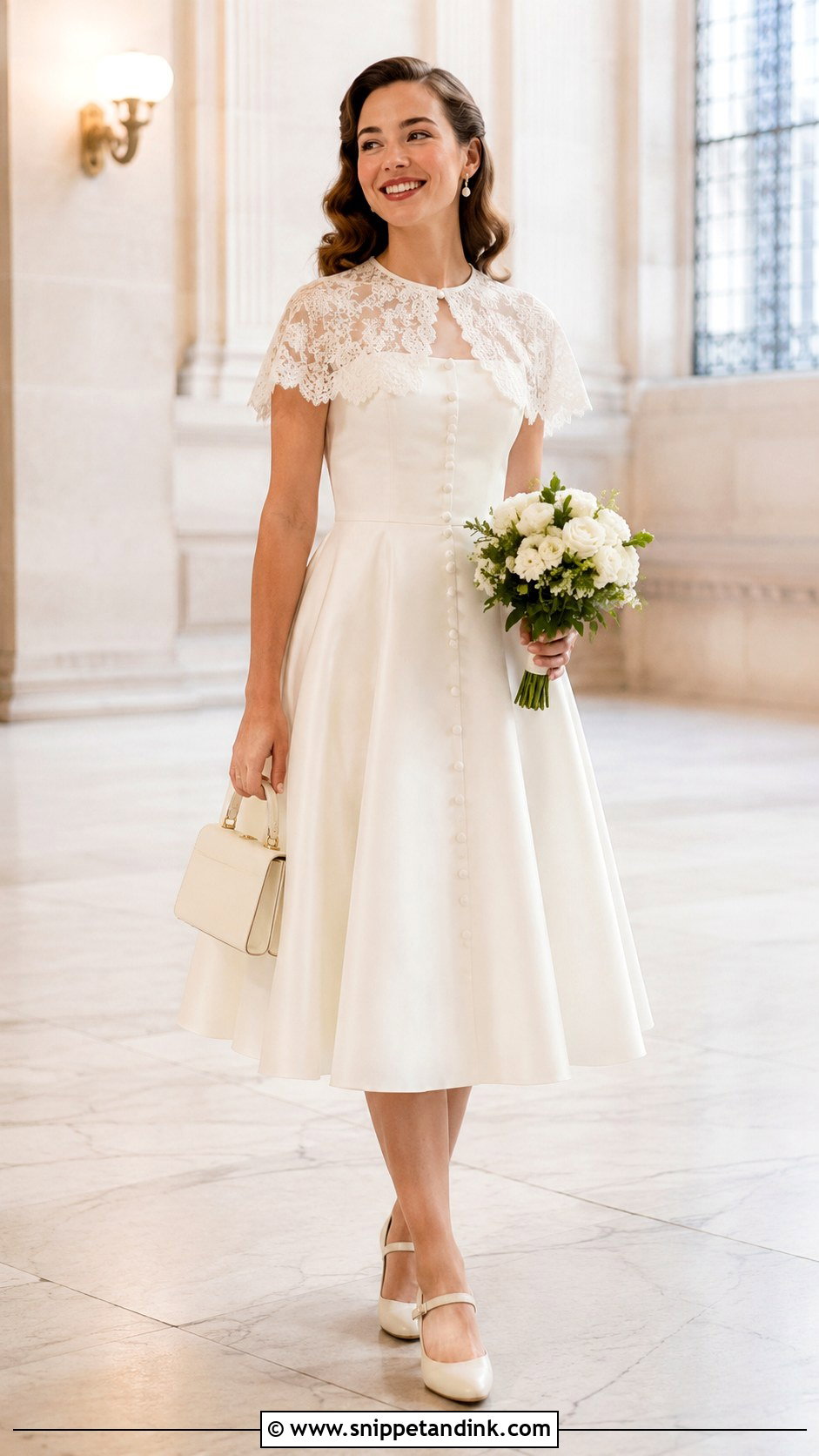
A capelet gives coverage to a vintage-style dress while leaving the waist and skirt alone. Lace, satin or soft velvet all work over a tea-length, bias-cut or button-backed gown, with Mary Janes, low block heels or slingbacks. Add a small structured bag, pearls and soft waves or a rolled updo. Hem placement matters most: the capelet should end clearly above or below the fullest part of the bust, never exactly across it, or it widens the chest. A small collar or single covered button frames the face. Ornate sleeves need a plain capelet; a minimal dress can take scalloped lace or light beading.
16. Cathedral Length Bridal Cloak With Fit And Flare Gown
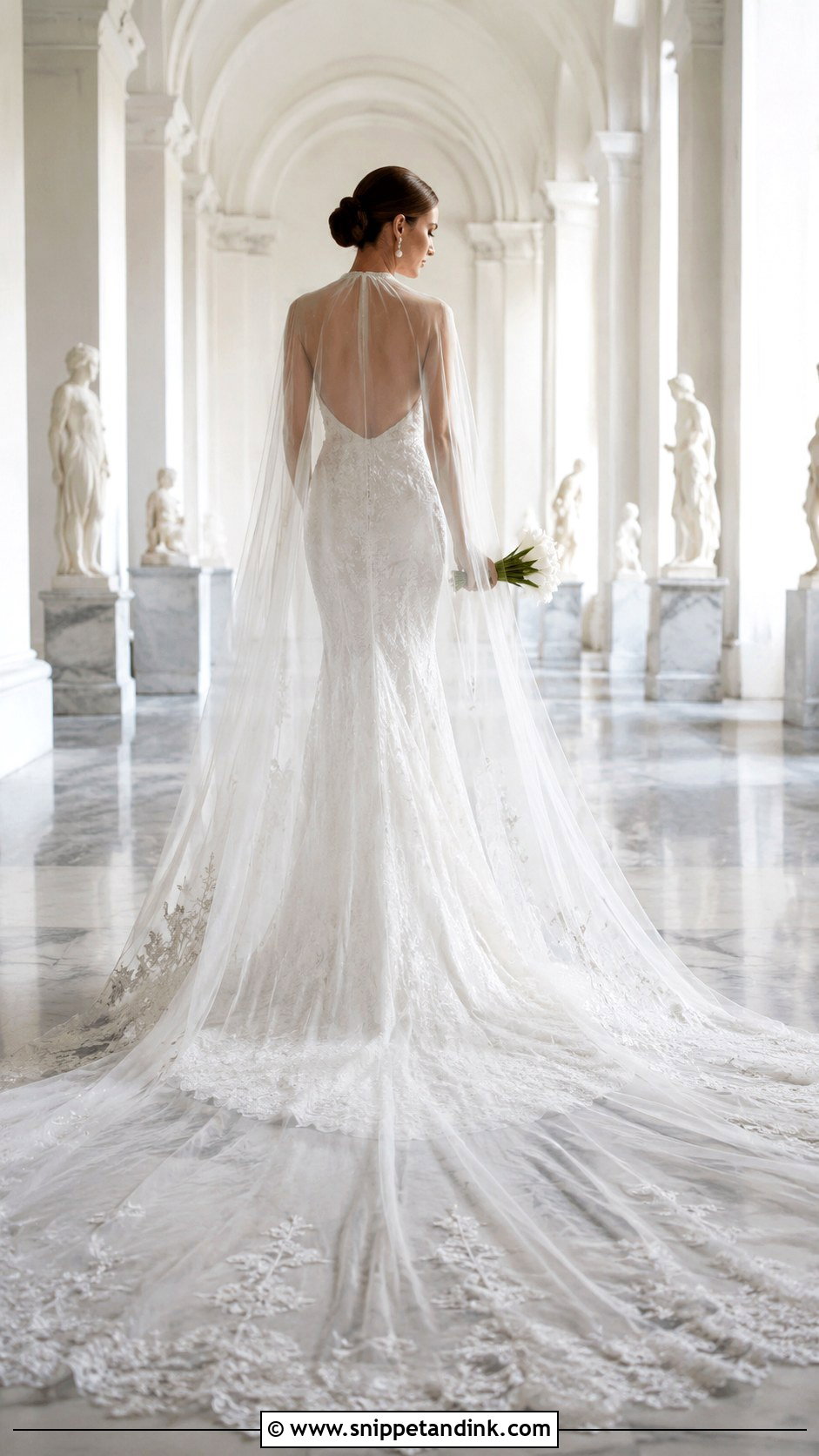
A cathedral cloak behind a fitted gown gives you the most dramatic walk of any style here. Attach sheer tulle or chiffon at the shoulders over a fit-and-flare that shapes the waist and hips, so the train and silhouette still show through. Keep heels simple and the updo secure, since loose strands tangle in shoulder hooks. Hold a narrow bouquet so it doesn’t push the front outward. At alterations, walk, turn and sit in the complete outfit. The cloak should start falling behind you rather than gathering at the hips. A wrist loop or discreet bustle option makes the reception much easier.
17. Blush Bridal Cloak With Ivory Wedding Dress
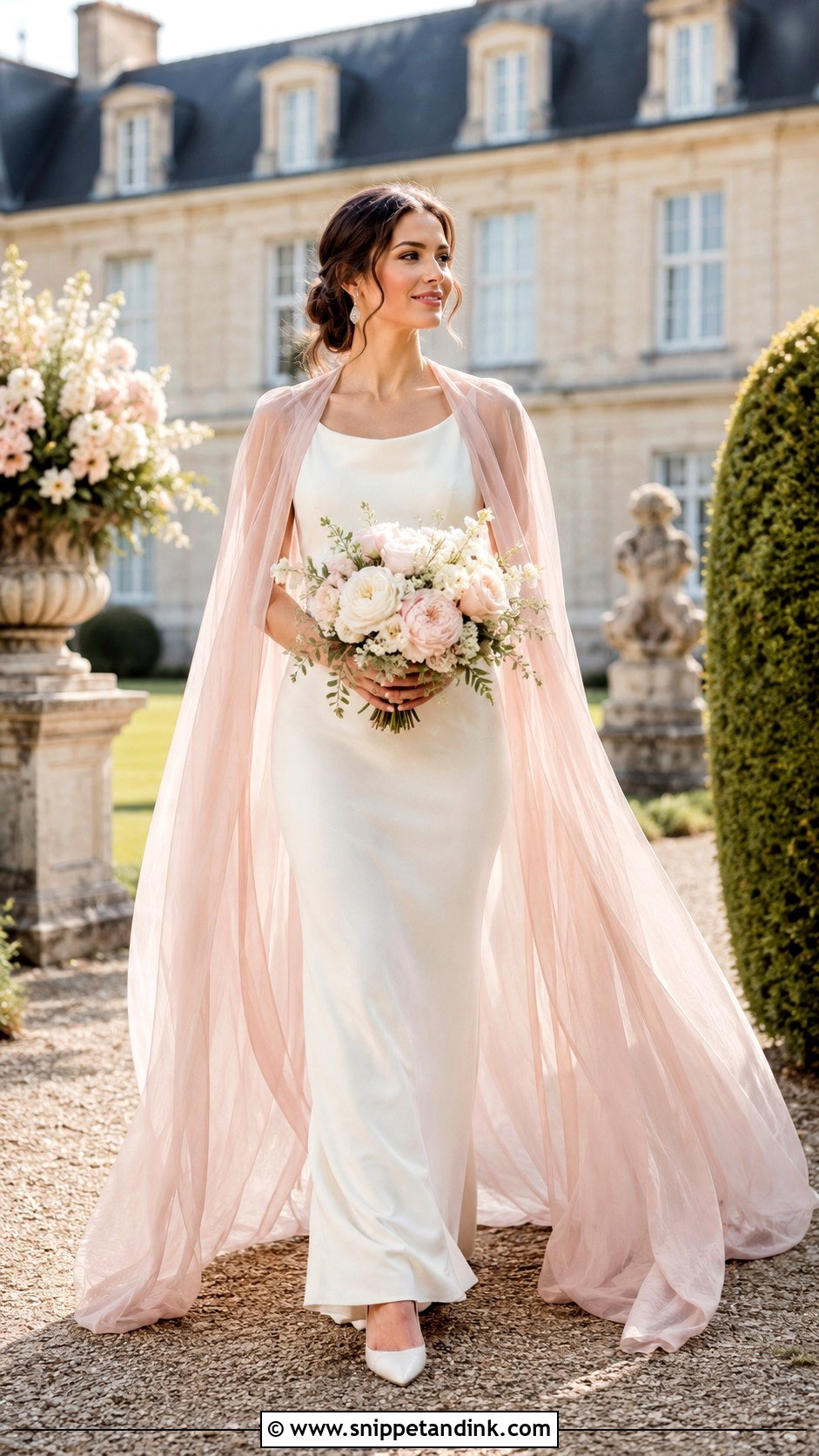
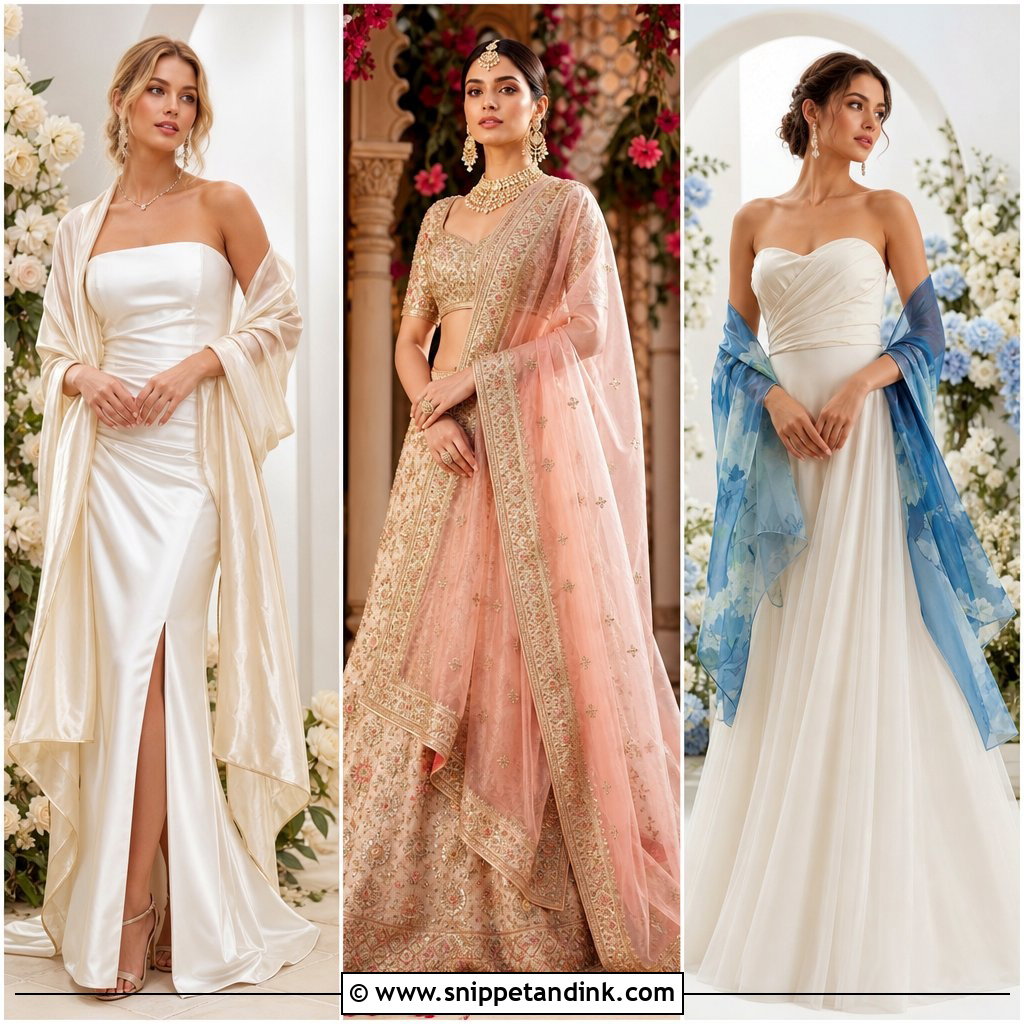
Blush over ivory adds color while keeping the bride clearly in white. Choose a dusty or muted rose rather than bright pink, and put it over a simple crepe, satin or tulle dress so the contrast looks planned. Sheer blush is the most subtle; blush velvet carries richer color for autumn and winter. Ivory shoes, rose-toned earrings and white and pale pink flowers complete it, with everything else neutral. Hold the fabric against the gown before ordering. Yellow-leaning ivory can make some blushes look muddy, while a neutral ivory lets almost any soft pink work.
18. Blue Bridal Cloak With Simple Wedding Gown
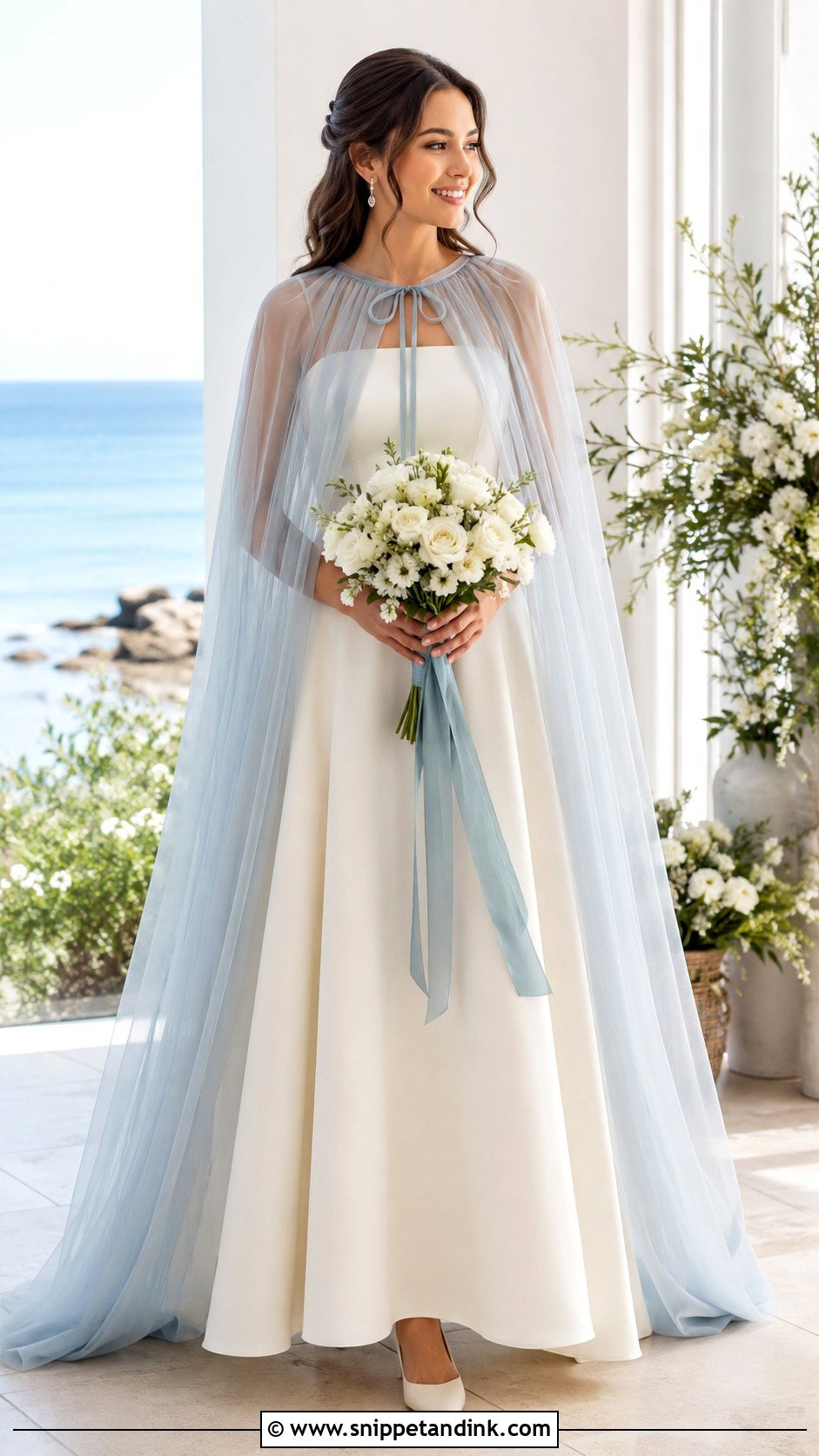
Pale blue over white or ivory is a soft way to bring in color. Misty blue tulle looks airy; dusty blue velvet is more formal and better for the cold. A simple A-line, column or slip dress leaves room for the cloak. Neutral heels, silver earrings and a white bouquet wrapped in matching ribbon finish it, and that’s enough blue. More blue accessories make it look like a uniform. Long cloaks give more color in photos, short ones a gentle accent. Check the shade in daylight and indoors, because some dusty blues drift grey under warm venue lighting.
19. Medieval Bridal Cloak With Corset Wedding Dress
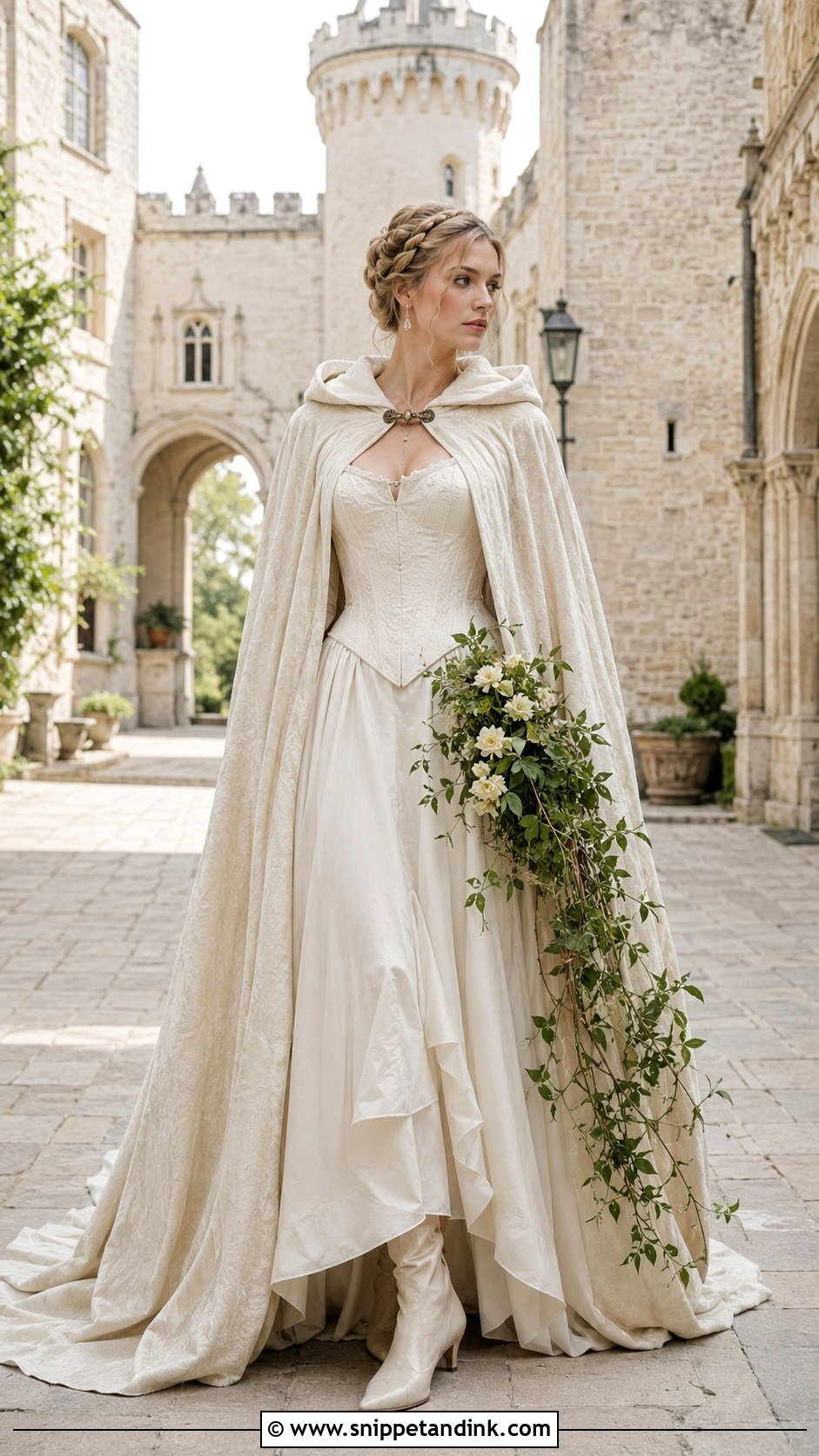
Medieval influence works when the fabrics are fine and the trim is restrained. A long hooded velvet cloak over a structured corset bodice and flowing A-line skirt, in ivory, cream, soft grey or muted sage, reads historical without tipping into costume. Pointed flats or low boots give support on stone floors and uneven paths. A braided updo, small drops and a loose trailing bouquet finish it. Pick one decorative feature only: narrow embroidery, covered buttons or a fine faux-fur edge. The hood should frame the face, not swallow it, so have it cut a little shallower than a winter coat hood. Castles, woodland and stone courtyards suit it best.
20. Detachable Bridal Cloak With Reception Dress
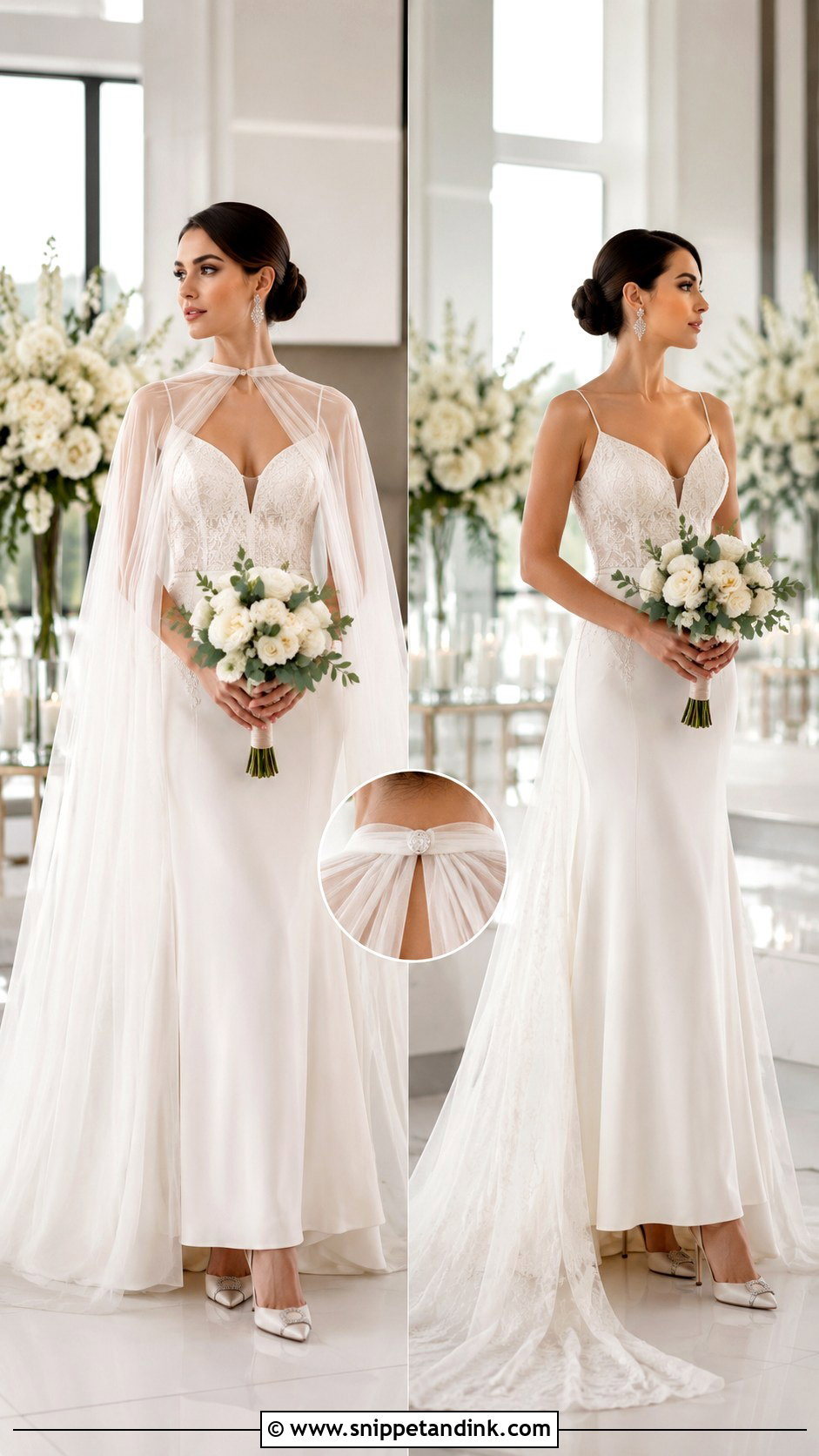
A detachable bridal cloak gives one gown two looks. For the ceremony, attach a full-length tulle, lace or satin cloak discreetly at the shoulders with formal heels, statement earrings and the full bouquet. After portraits, take it off to show the neckline, back or straps, and switch to comfortable shoes and smaller earrings for the reception. Ask your seamstress to reinforce the attachment points and give you spare loops or hooks. Then practice taking it off with your maid of honor, hair done, at least once before the day. Done in a hurry for the first time, it usually catches a curl.
How Warm a Cloak Really Keeps You at an Outdoor Ceremony
A cloak is open at the front and loose at the sides, so it lets in more air than a coat. In near-freezing weather, what you wear under the gown matters as much as the cloak itself.
- Lining does most of the work. A velvet or wool cloak lined in satin traps far more heat than an unlined one and slides over the dress without dragging.
- Thin thermal layers under the skirt, and nude thermal tights where the hem hides them, keep your legs warm while you stand still for vows.
- Hand warmers in a pocket or tucked inside the bouquet wrap help your fingers through the ring exchange.
- Wind is the real enemy. Stand with your back to it for photos and have someone hold the hem when a gust lifts it.
Lead times for made-to-order cloaks
Custom embroidery, hand beading and lined velvet are slow work, and many makers quote several weeks to a few months before shipping. Order early enough to leave time for a fitting with the gown, plus a second fitting if the attachment points need moving. Wrap it in tissue, store it hanging in a breathable bag, and steam velvet from the back rather than pressing it, which crushes the pile.
Walk It, Sit In It and Take It Off Once Before the Day
A good cloak looks like it belongs to the dress and the venue. Velvet, wool and faux-fur trim are for real cold; tulle, chiffon, lace and organza add movement without warmth. Weigh neckline, train, beading and fabric weight together rather than one at a time. Then wear the whole outfit at a final fitting with your shoes, hair, jewelry and a mock bouquet. That is when pulling, bunching, clashing undertones and fiddly closures show up, while there’s still time to fix them.
You'll Like These Ideas:


Leave a Reply