
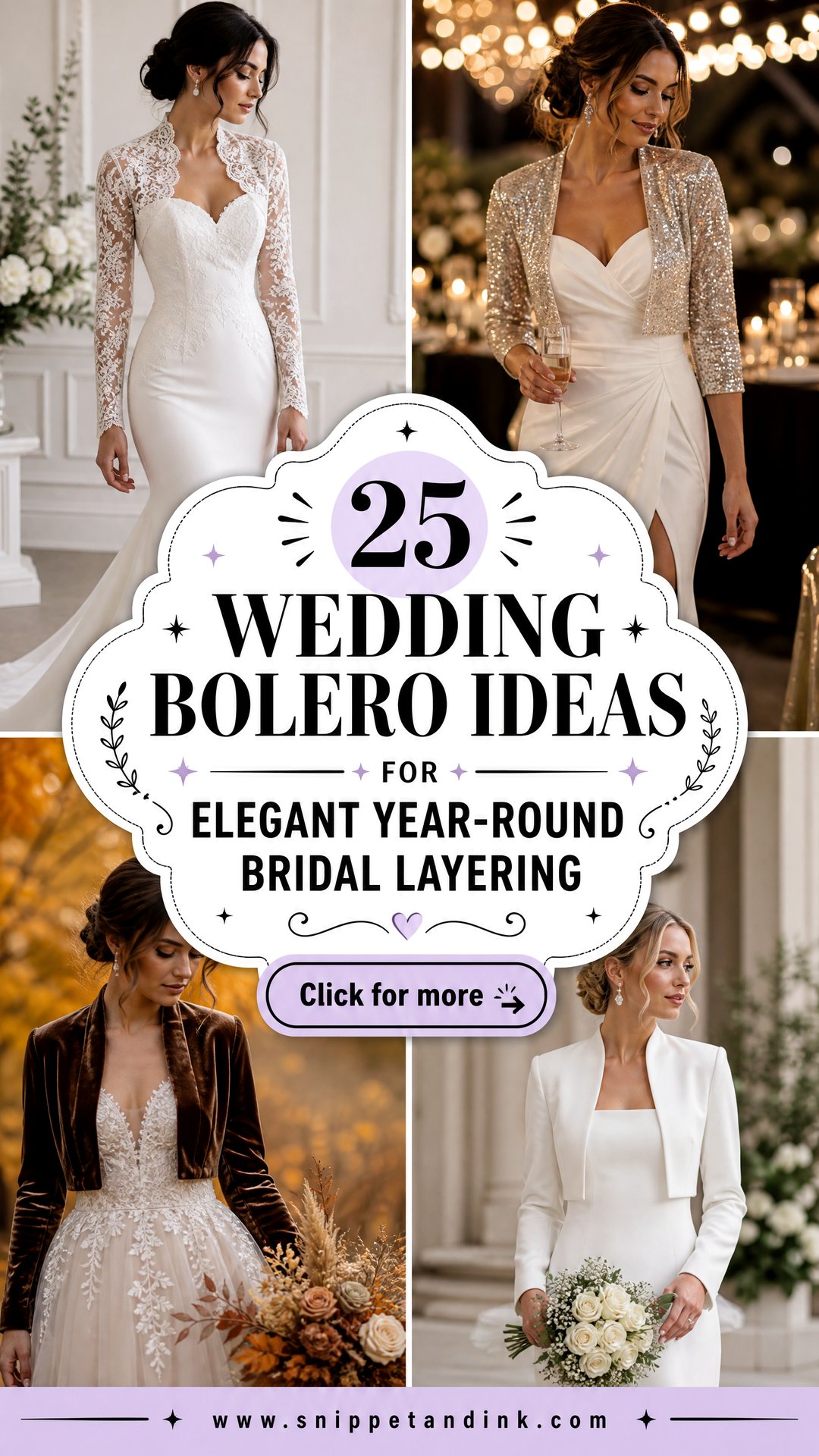
A bolero is the smallest piece in a bridal outfit and one of the hardest to get right, because it sits on the most photographed part of you. Done well, it covers the shoulders for a religious ceremony, warms you up in a cold venue and gives the same gown a second look when it comes off. Popular bridal layering trends right now include sheer lace jackets, cropped satin toppers, pearl details, feather trims and tulle sleeves. Which one suits you depends on the dress shape, the season and how long you’ll keep it on. Below are 25 bolero and gown pairings, with the fitting details I look at for each one.
Ivory Is Never Just One Color
The most common problem I fix with boleros isn’t fit. It’s color. Bridal whites range from bright optic white through soft white, ivory, diamond white and champagne, and every maker names them slightly differently. A bolero that’s one shade off makes the gown look dingy next to it, and the camera exaggerates the gap.
- Ask your gown shop for a fabric swatch, or cut one from the hem allowance if the dress has already been altered.
- Compare the swatch and the bolero in daylight by a window. Shop lighting is usually warm and flattens the difference.
- If you can’t match exactly, go a touch warmer than the dress rather than whiter. A slightly creamier layer reads as intentional; a whiter one makes the gown look yellow.
Texture matters as much as shade. Matte crepe under shiny satin, or the reverse, can look deliberate. Two satins of slightly different sheen rarely do. When in doubt, a sheer fabric like tulle or organza is the safest bet, because the gown’s own color shows through it.
1. Lace Wedding Bolero With Strapless Dress
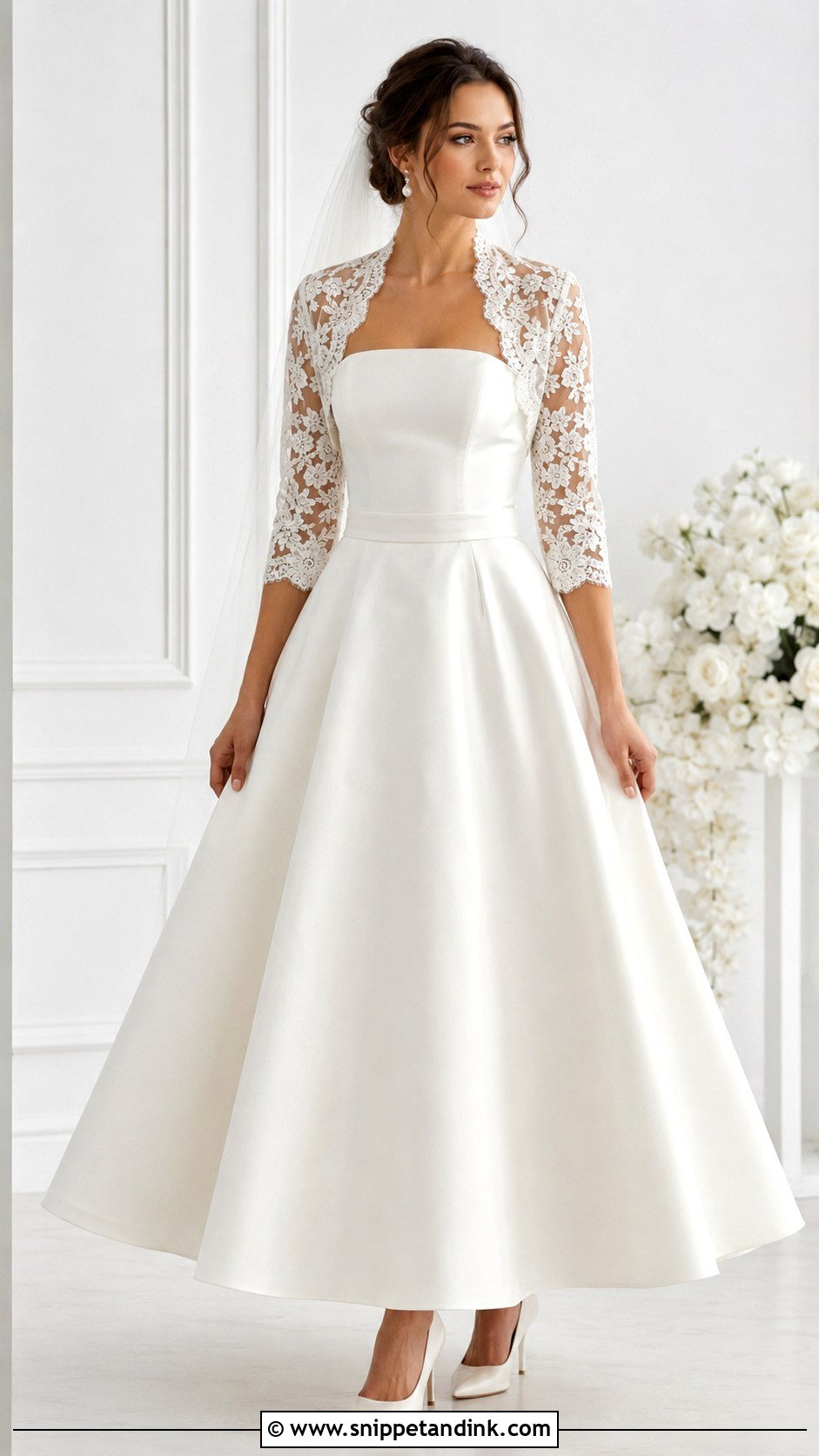
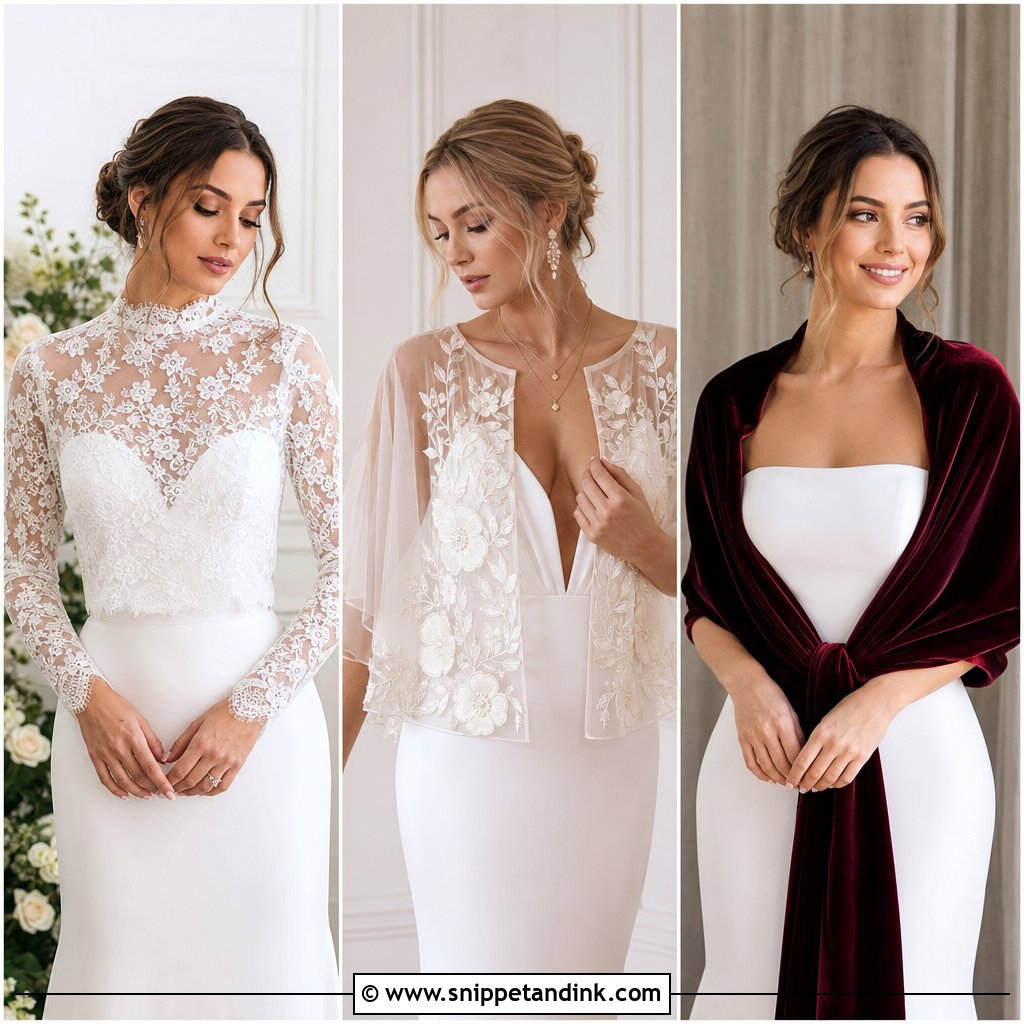
Strapless gown, lace bolero: it’s the pairing I’m asked for most, and the one where a mismatch shows fastest. The lace should echo the gown, through a similar floral motif, a scalloped edge or at least the same ivory. I keep the bolero cropped above the natural waist on A-line, ball gown and fit-and-flare dresses so the waistline stays visible. Short sleeves suit spring and summer; three-quarter sleeves read more formal. Pearl studs and a simple veil are plenty, since the lace is already doing the decorating.
2. Satin Wedding Bolero With A-Line Dress
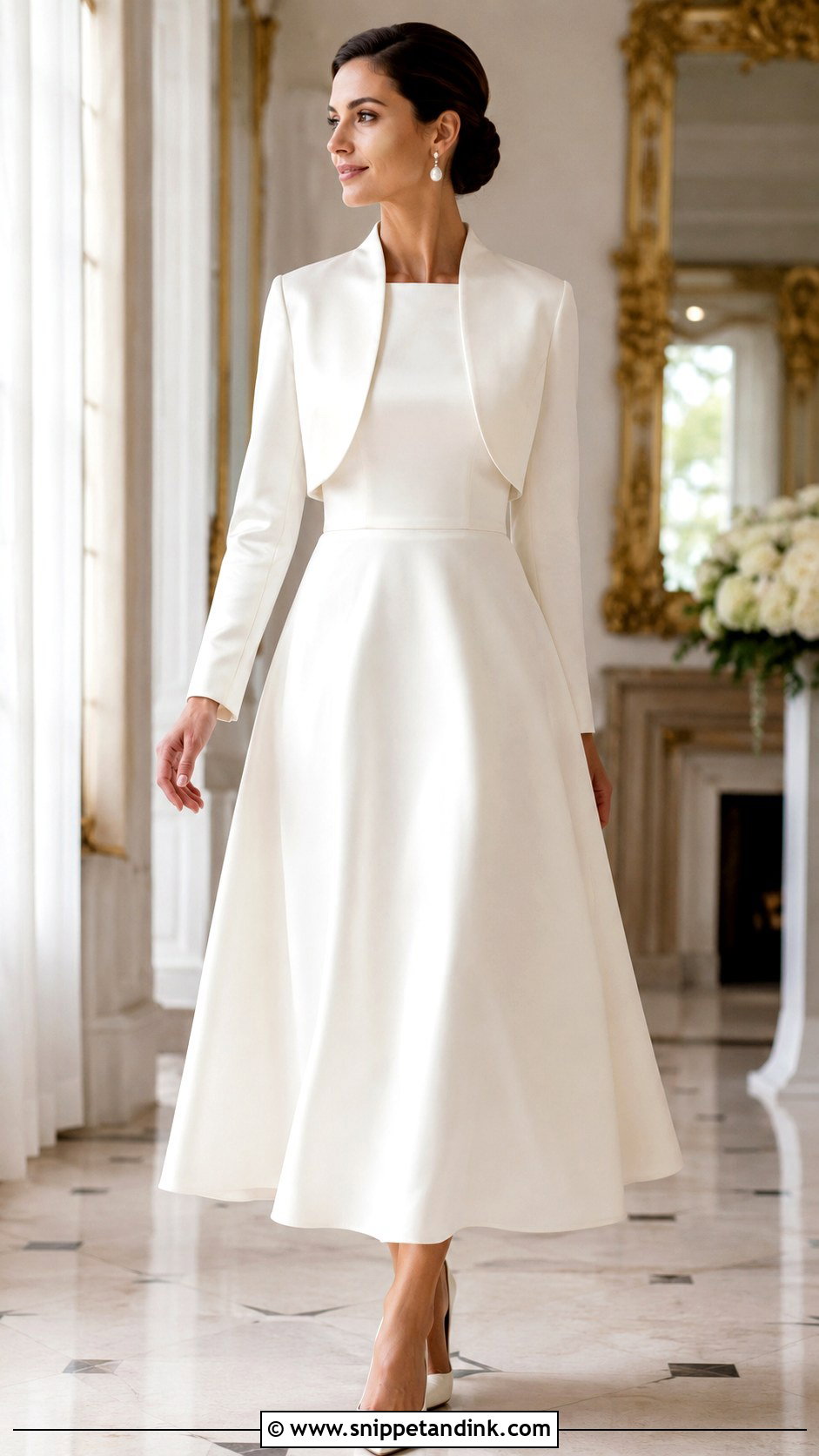
Satin shows every difference in shade, which is why I never order a satin bolero without a fabric swatch from the gown maker. Bright white, ivory and champagne satins look nearly identical online and nothing alike side by side. Cropped short, the bolero defines the waist above a full A-line skirt. Over a sweetheart bodice I want a softly curved front edge; with a minimal straight neckline, a straighter front. Pointed heels, pearl drops and a low bun keep it neat.
3. Tulle Wedding Bolero With Ball Gown
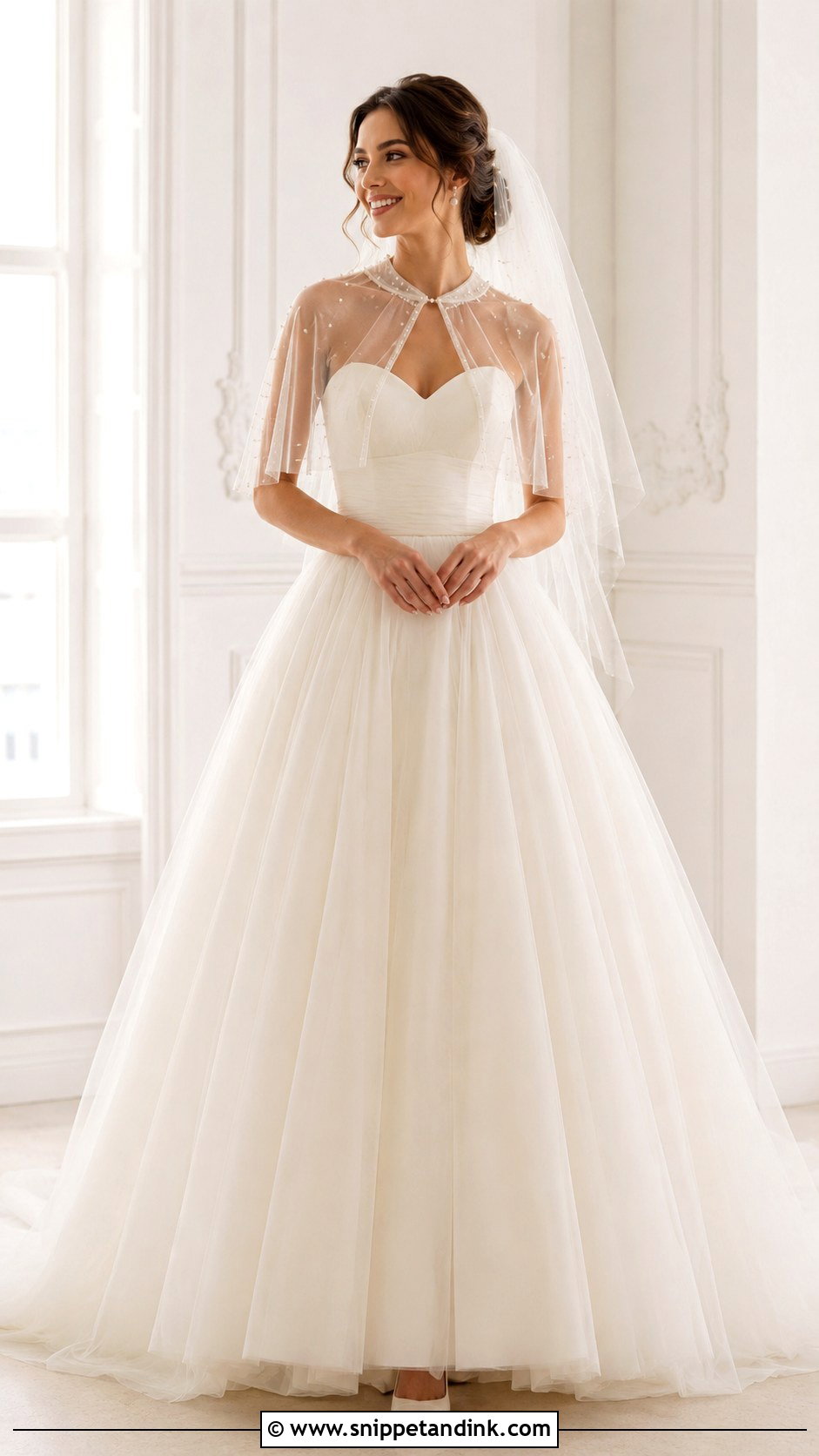
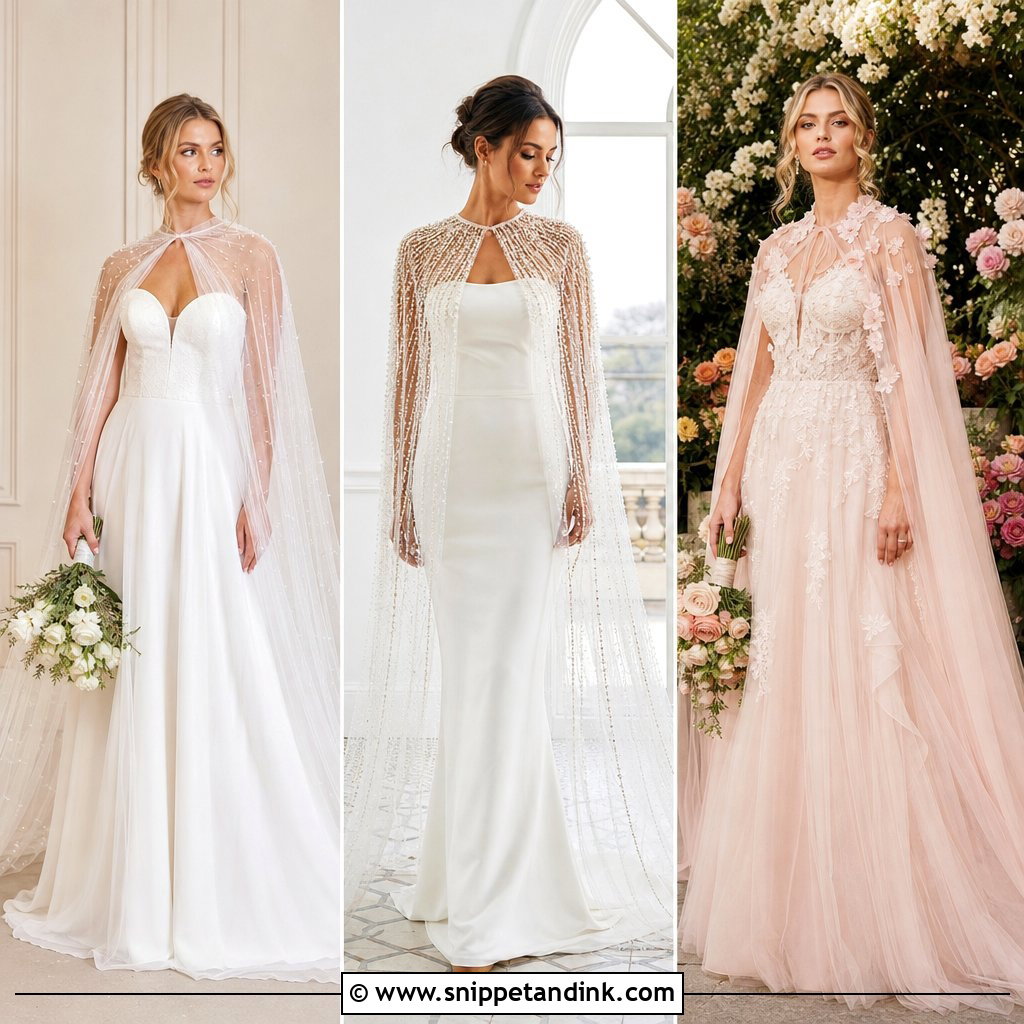
Tulle lets the bodice show through, so you get coverage without losing the dress. Over a ball gown, the bolero has to stay light: the skirt already carries plenty of volume and a heavy top makes the shoulders look broad. Tiny pearls, a little floral appliqué or a soft puff sleeve are enough detail. One honest warning: tulle catches on beading and on veil combs, so I check the gown’s bodice for rough embellishment before recommending it. A plain veil and dainty earrings keep the balance.
4. Pearl Wedding Bolero With Simple Dress
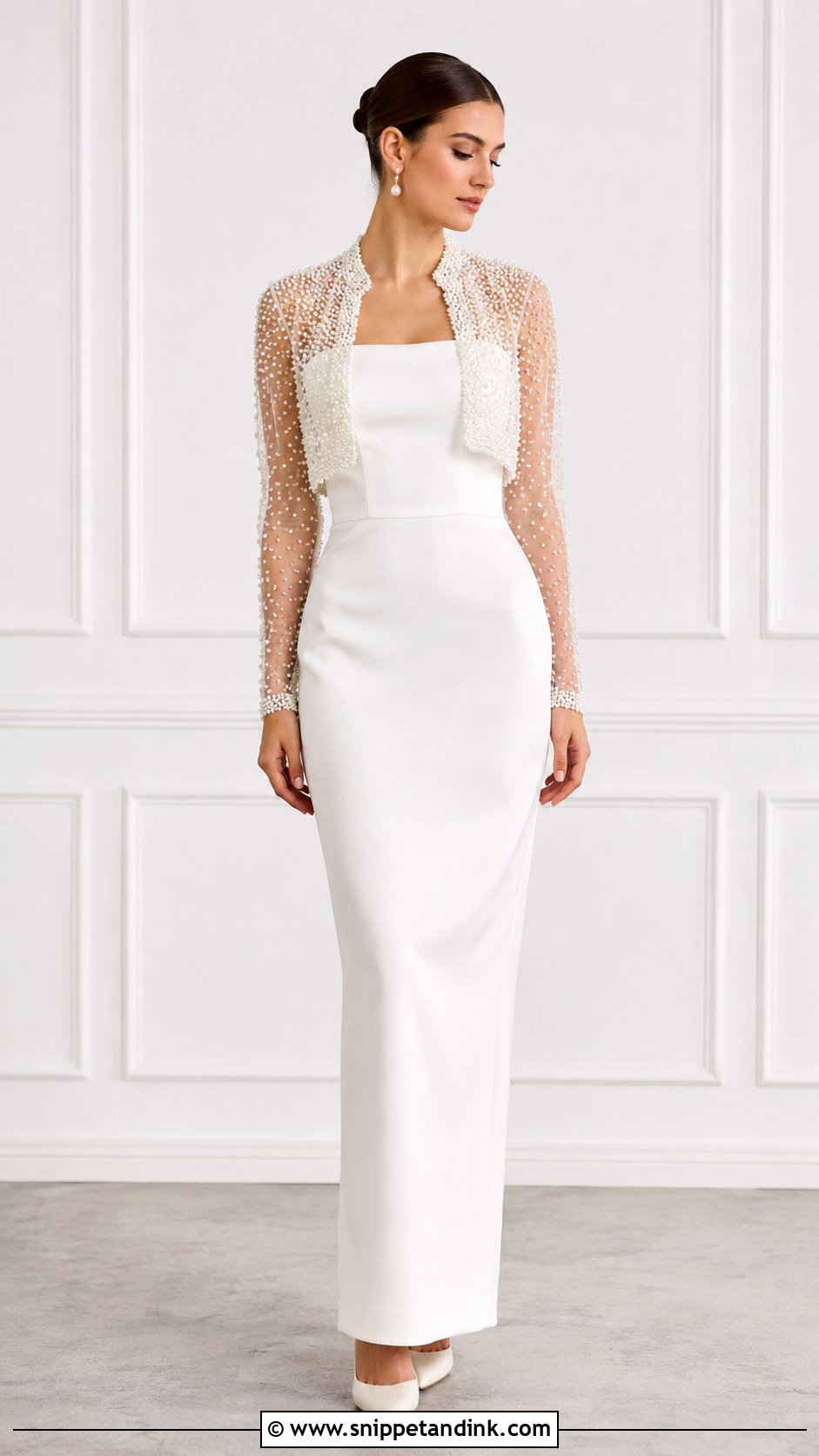
On a plain crepe, satin or mikado gown, a scattering of small pearls gives the eye something to settle on. I keep the shape neat and cropped, especially over a column or sheath, so it doesn’t add width at the bust. Check how the pearls are attached: hand-sewn pearls survive hugs and a veil pinned over them, while glued ones come away. Pearl earrings and a clean updo repeat the detail without adding anything new. Resist adding more embellishment; one textured piece is enough.
5. Long Sleeve Wedding Bolero With Mermaid Dress
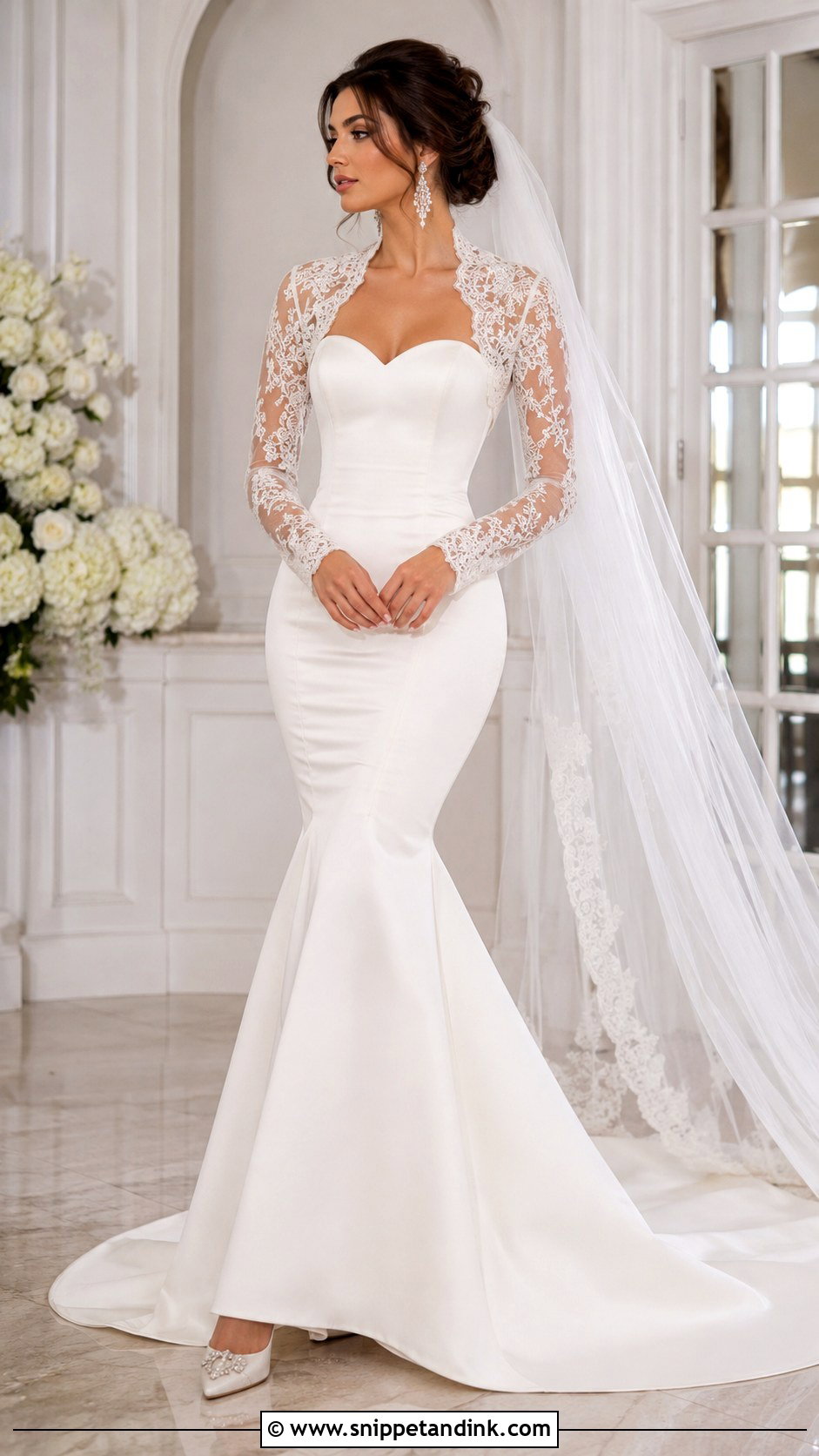
A mermaid gown is fitted to the knee, so any bulk at the waist or hips spoils the silhouette. That’s why I’d only pair one with a bolero that follows the body closely. Sheer lace, illusion tulle or stretch satin can all work, depending on the gown fabric. Long sleeves balance the dramatic flare at the hem and give a long, unbroken line. Keep the front open or softly curved so the neckline still shows. Slim heels and crystal earrings finish it.
6. Off Shoulder Wedding Bolero With Satin Gown
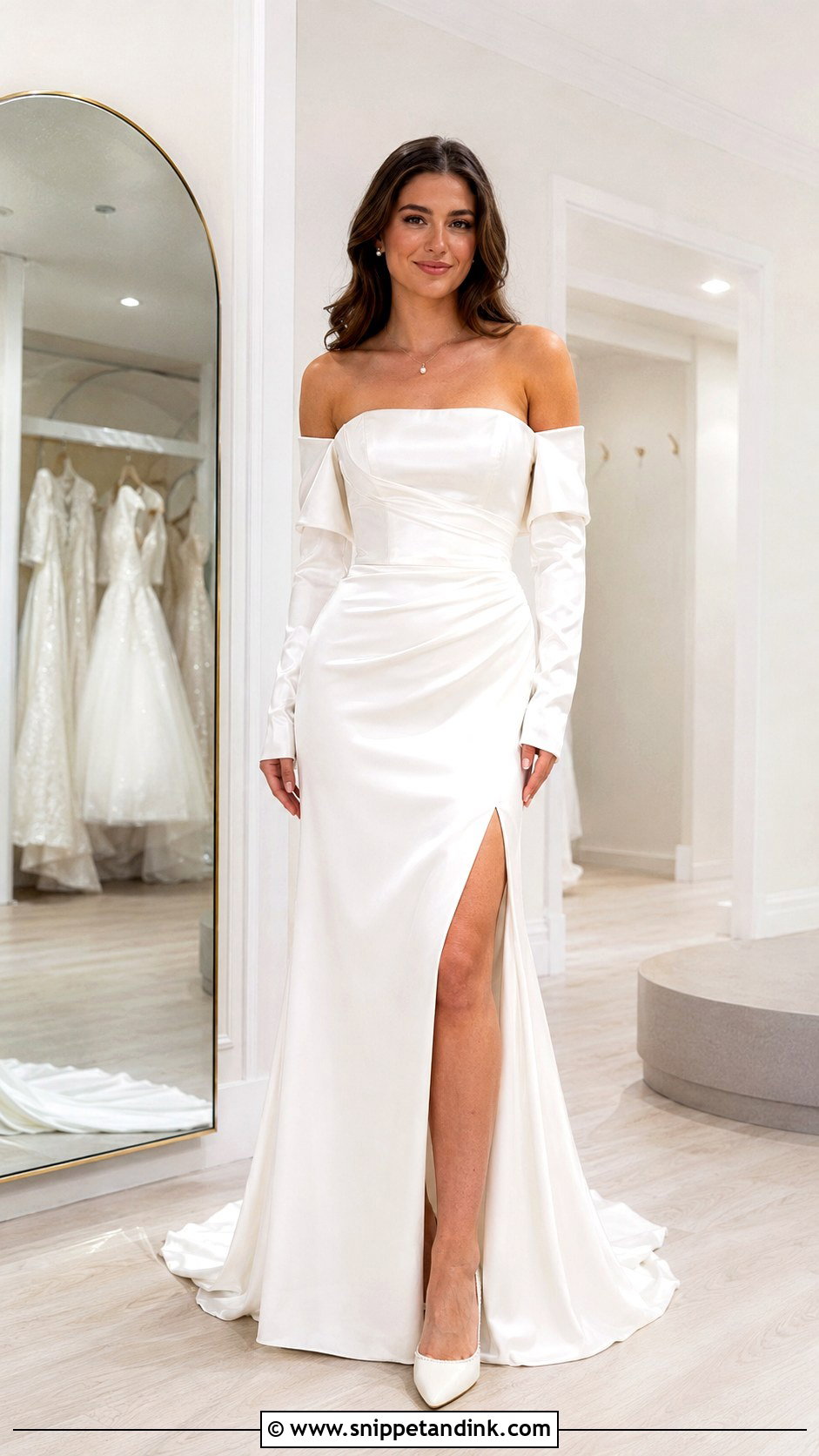
An off-shoulder bolero gives the look of sleeves while the collarbone stays bare. Its weakness is that it slides: off-shoulder bands creep up or down every time you lift your arms. I look for one with a firm elastic or boned band, or I have a seamstress add a small hook to the gown’s bodice to anchor it. On strapless satin, fitted or simple A-line gowns it’s very flattering once it stays put. A delicate necklace and a low bun keep attention on the neckline.
7. Sheer Wedding Bolero With Slip Dress
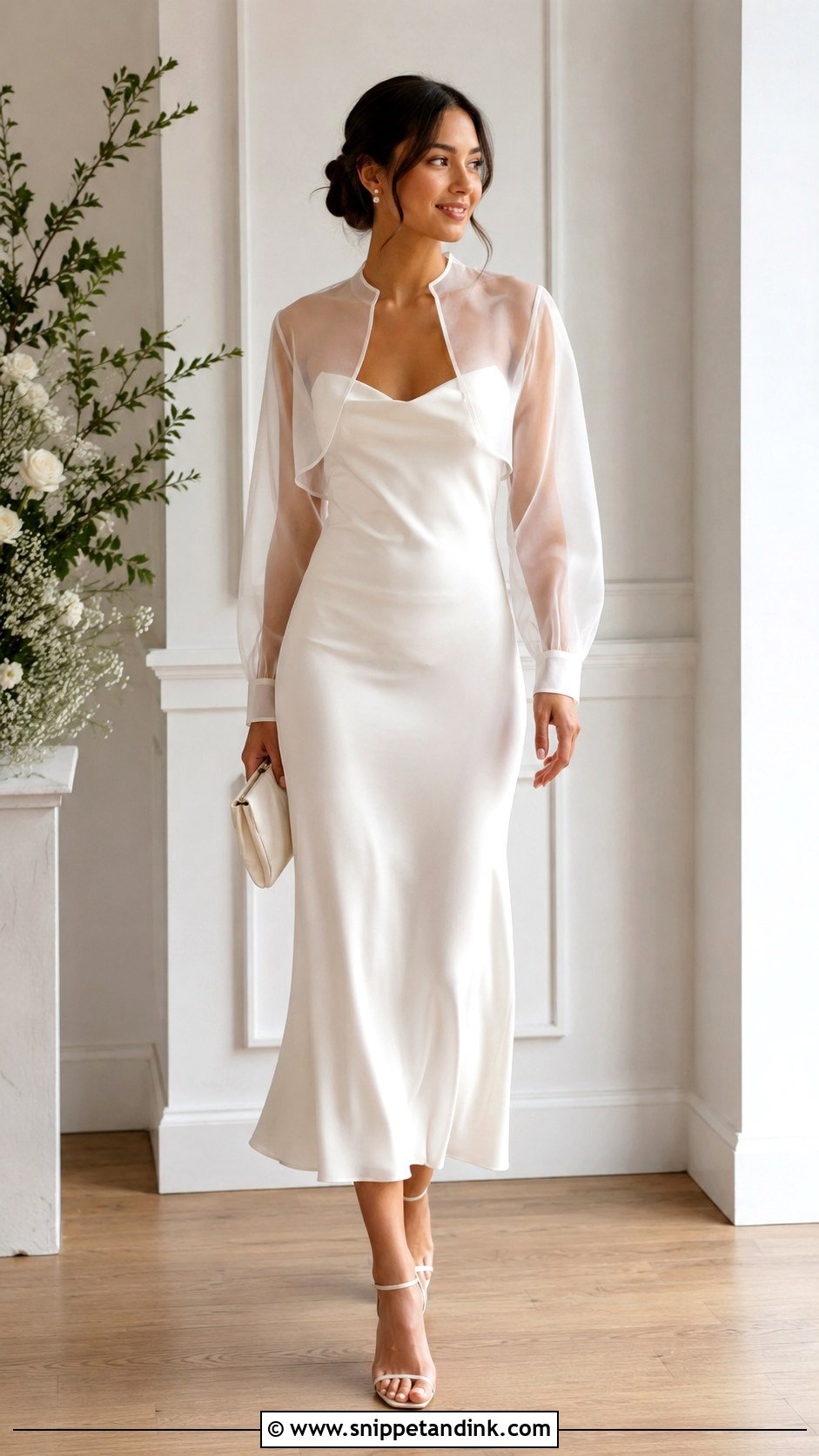
Organza, illusion mesh or fine tulle suit a slip dress because they keep its fluid line; anything stiff fights the bias cut. I’d keep the bolero slightly cropped and plain, since the dress is all about ease. Tiny embroidered flowers or a few pearls are fine if you want detail. Strappy heels, a small clutch and very little jewelry finish it. Be aware that sheer fabric over a silk slip shows every crease from sitting, so steam it just before you put it on.
8. Beaded Wedding Bolero With Plain Gown
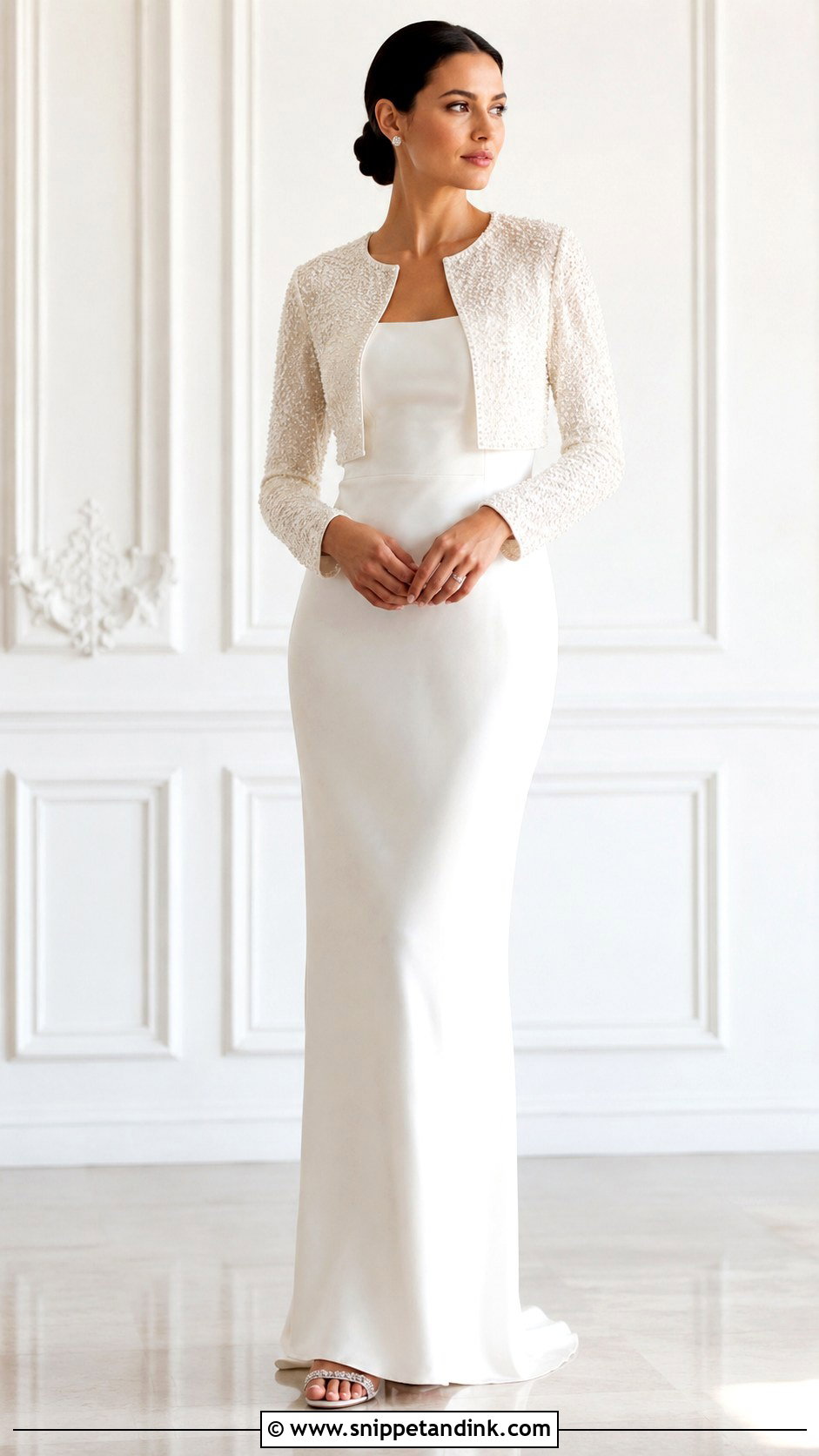
Beading turns a plain gown into something for portraits, though it adds weight. I look for fine beadwork that lies flat, especially if a veil will rest over the shoulders; raised beads snag tulle and pull threads. Silver, ivory, pearl or clear beads blend with most bridal fabrics. Keep the gown simple and let the bolero carry the sparkle. Crystal studs and a smooth hairstyle are all you need on top.
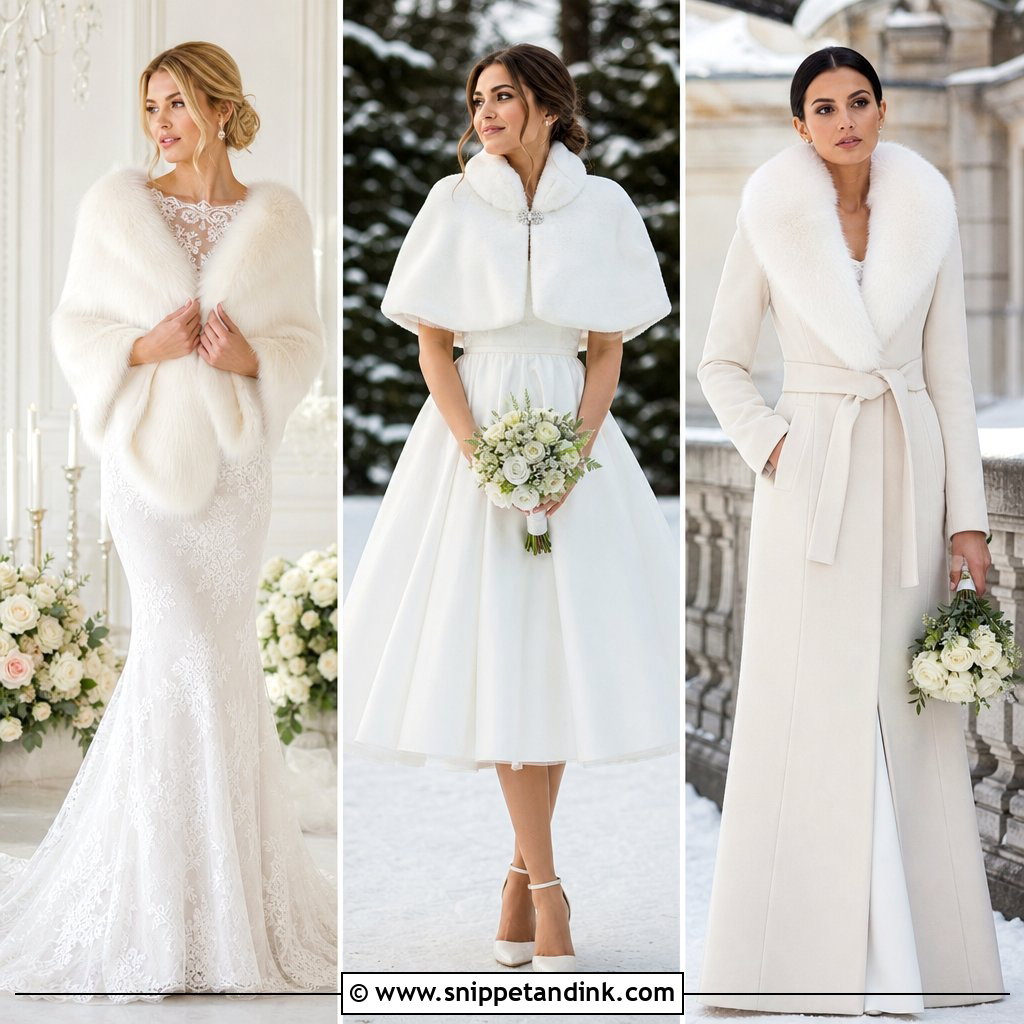
9. Faux Fur Wedding Bolero With Winter Dress
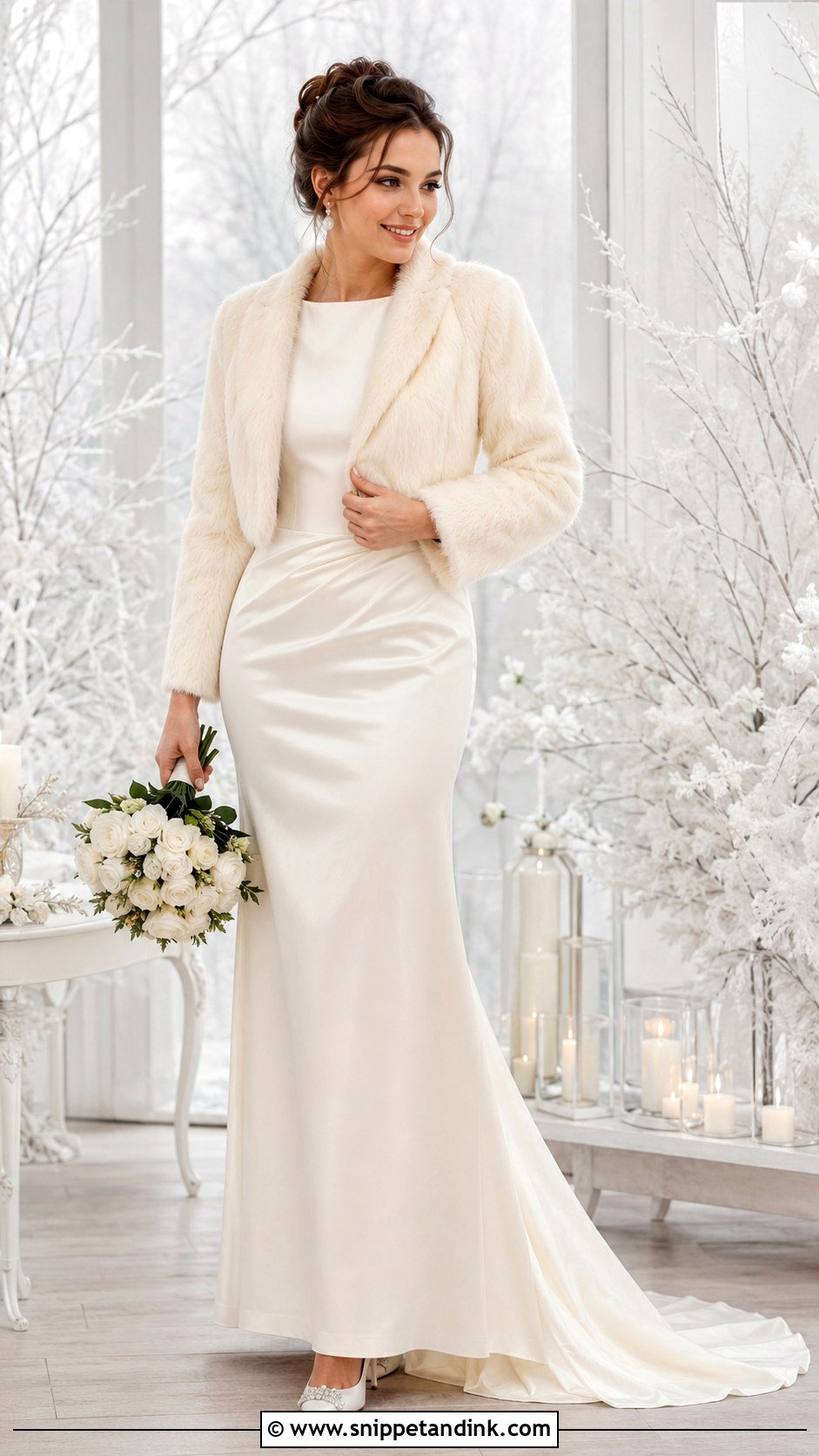
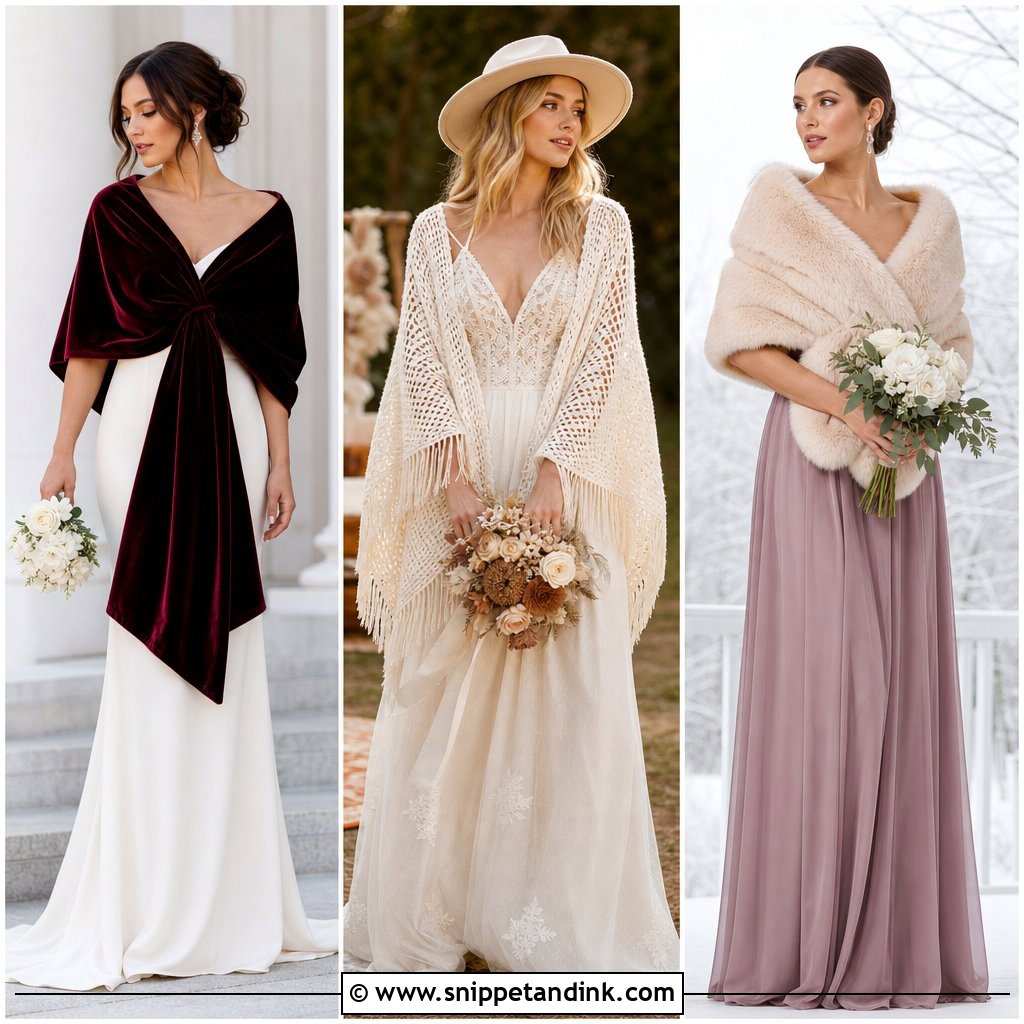
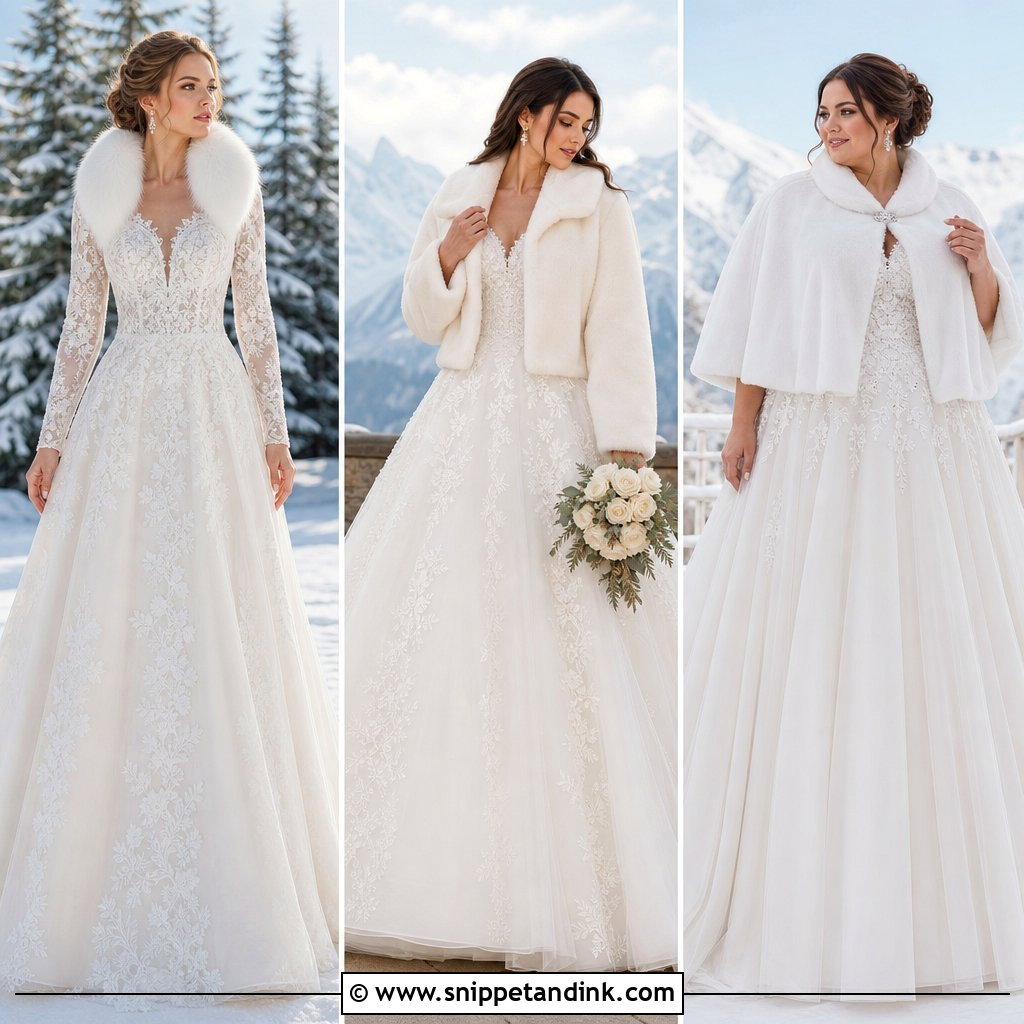
Cold-weather weddings are where a faux fur wedding bolero earns its place, especially for outdoor portraits or a venue that cools off after dark. Ivory, cream, soft gray or pale blush can be matched to your gown. Fur adds volume at the shoulders, so keep it cropped and skip the necklace. My one non-negotiable: raise your arms in it at the fitting. Faux fur boleros are often cut tight under the arm, and you need to hold a bouquet and hug people. Fur also sheds on dark suits, which is worth a lint roller in the emergency kit.
10. Feather Wedding Bolero With Minimal Dress
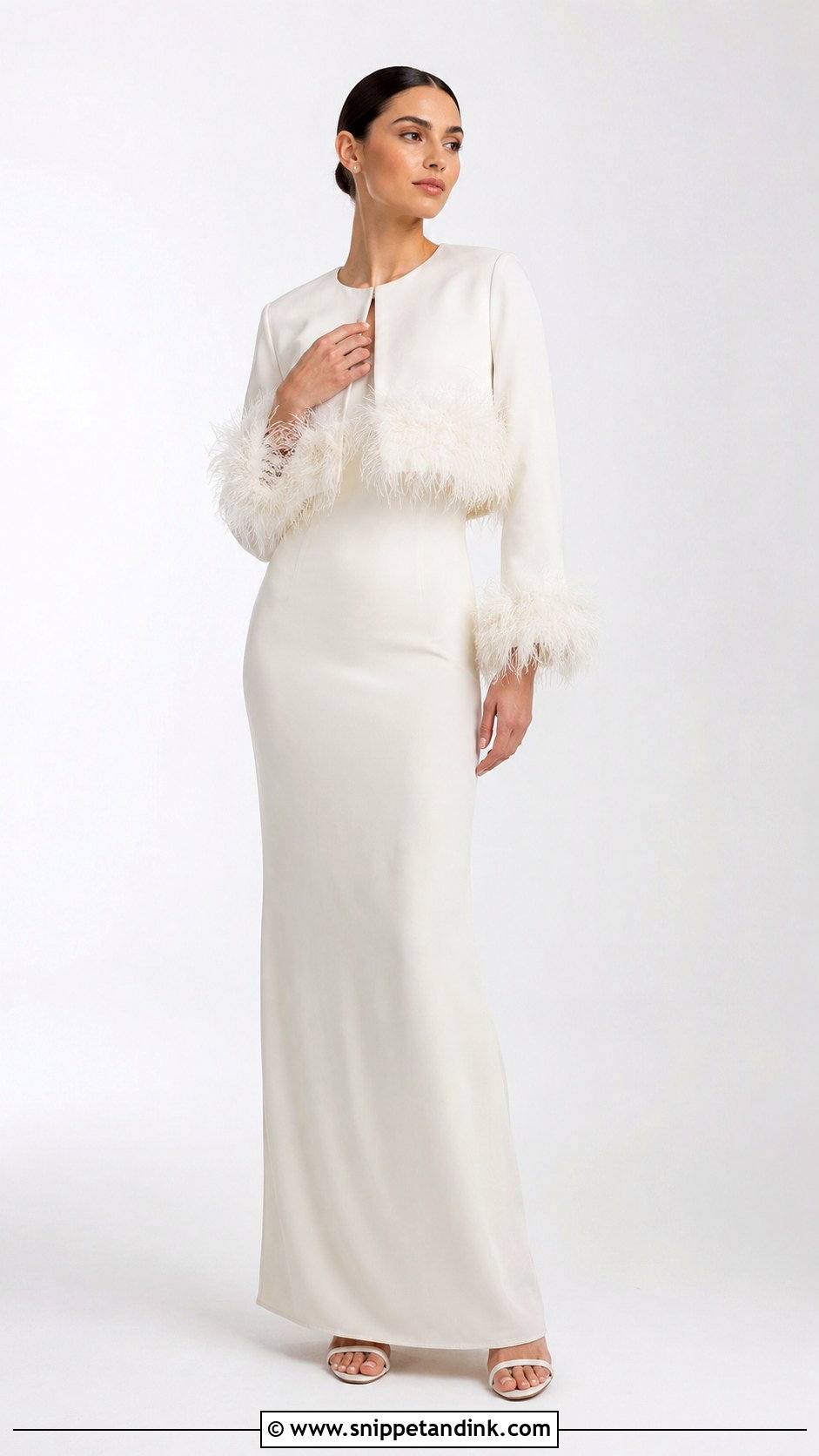
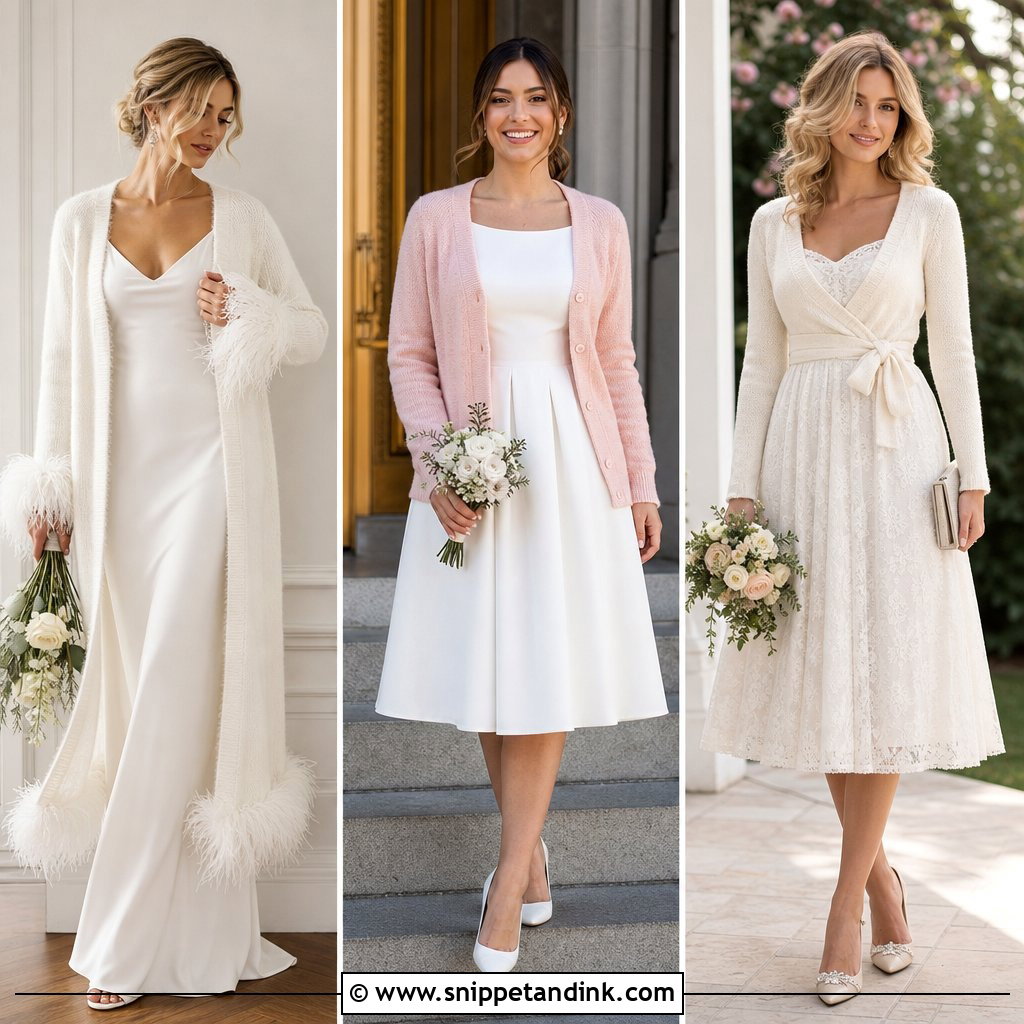
Feathers move with you, which is the whole appeal, and they also tickle your face and cling to lipstick. That’s why I steer brides toward feather trim at the cuffs or hem rather than around the neckline. Over a column, slip or fitted crepe gown the contrast looks editorial. Stay in soft ivory or white. Sleek heels, small earrings and either a simple veil or none at all keep it from tipping into costume.
11. Crochet Wedding Bolero With Boho Dress
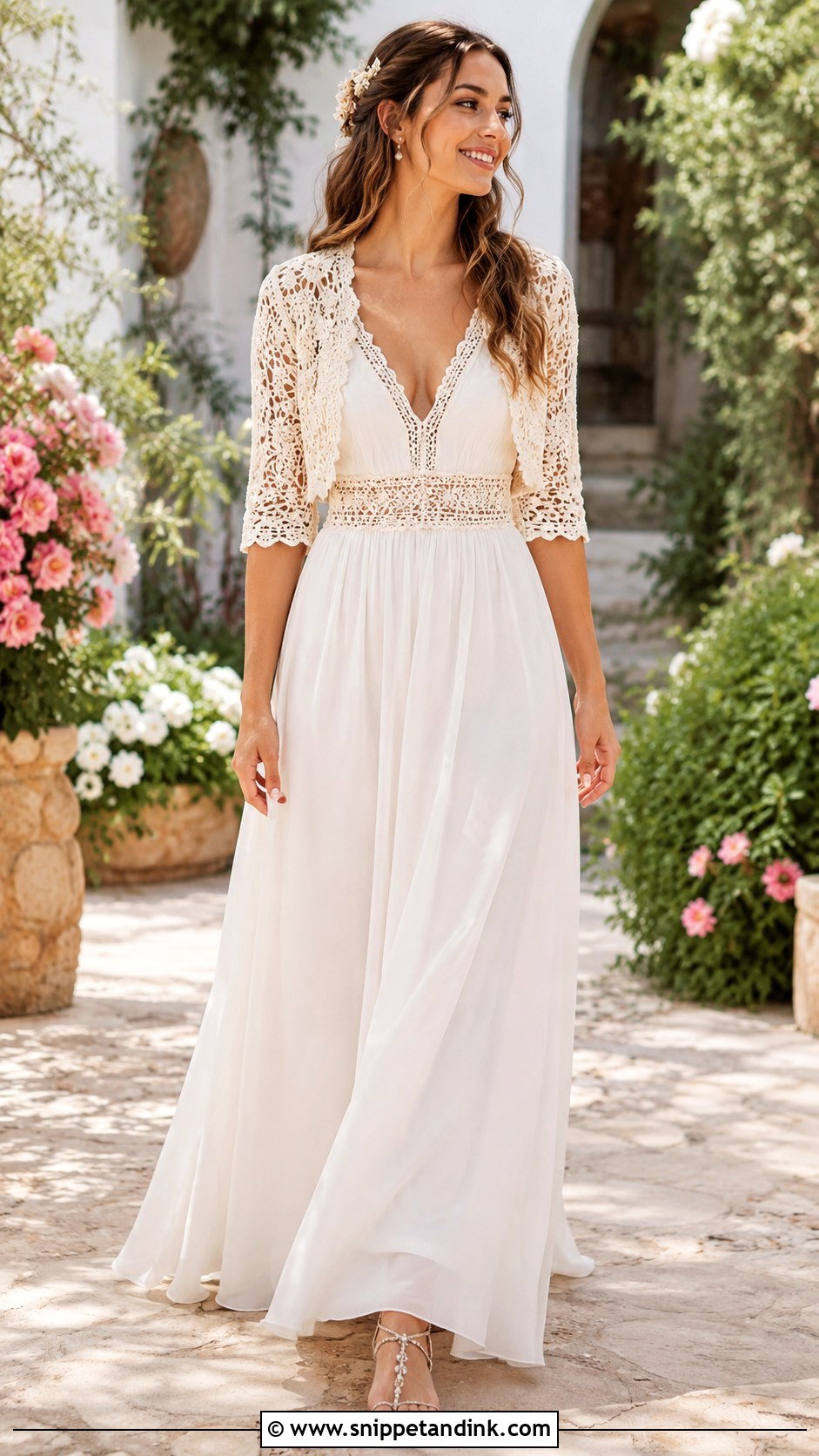
Crochet suits garden, beach, backyard and rustic weddings, where a slightly handmade feel belongs. The stitch should be fine; chunky crochet adds bulk and fights any lace or embroidery on the dress. Pair it with a flowy chiffon dress, an empire waist gown or a soft A-line. Cotton crochet stretches as you wear it, so if it’s borderline between two sizes, I go for the smaller. Tan or ivory sandals, loose waves and small hoops finish it.
12. Embroidered Wedding Bolero With Chiffon Dress
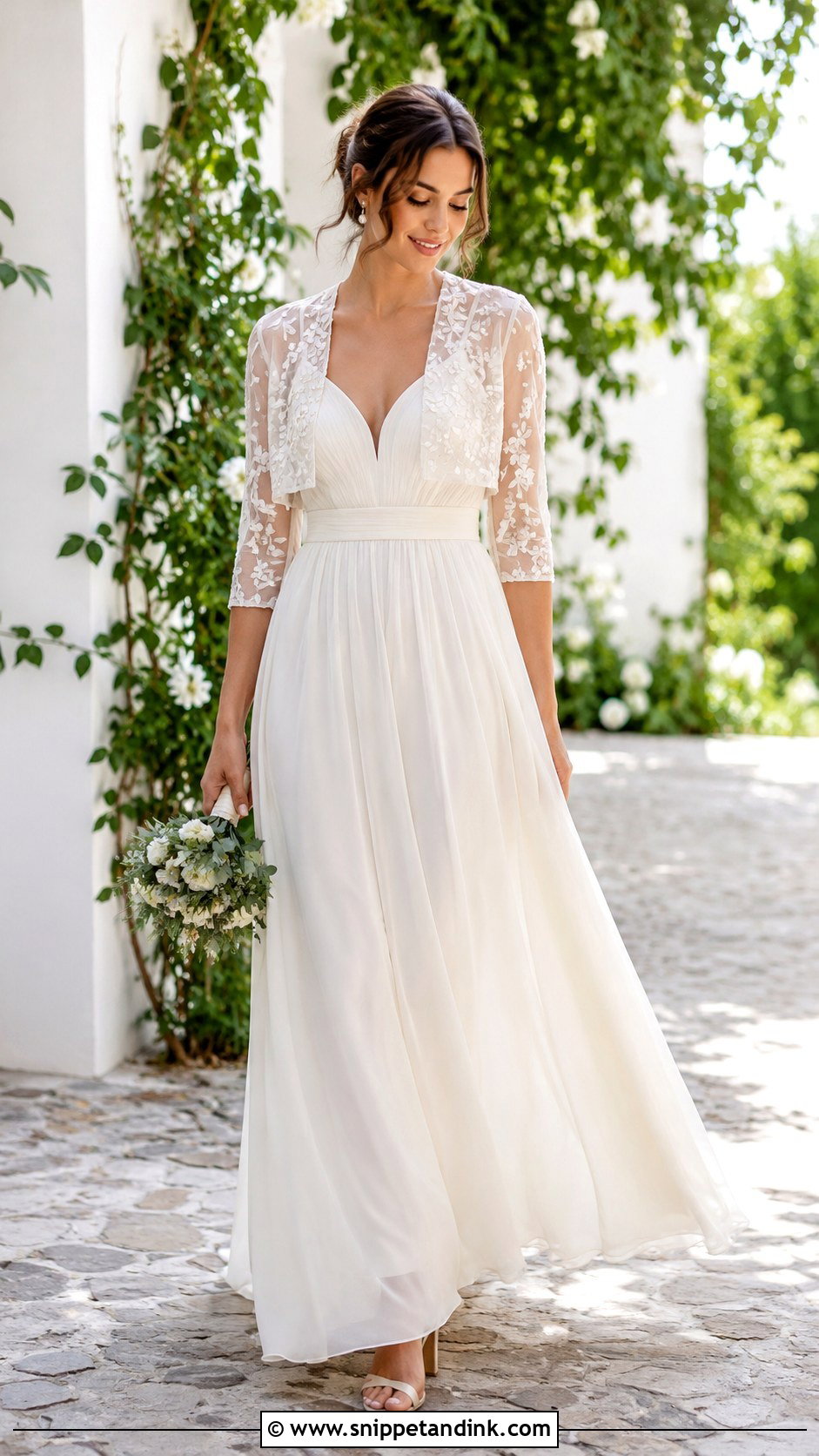
Chiffon on its own can look almost weightless in photos, and an embroidered bolero gives the top half some definition. I choose tonal threadwork, ivory on ivory or soft gold on champagne, because high-contrast embroidery pulls the eye away from your face. Floral or vine motifs suit empire waist, A-line and relaxed sheath dresses. Keep the base sheer so it stays airy. Block heels and a loose updo suit the relaxed mood.
13. High Neck Wedding Bolero With Strapless Gown
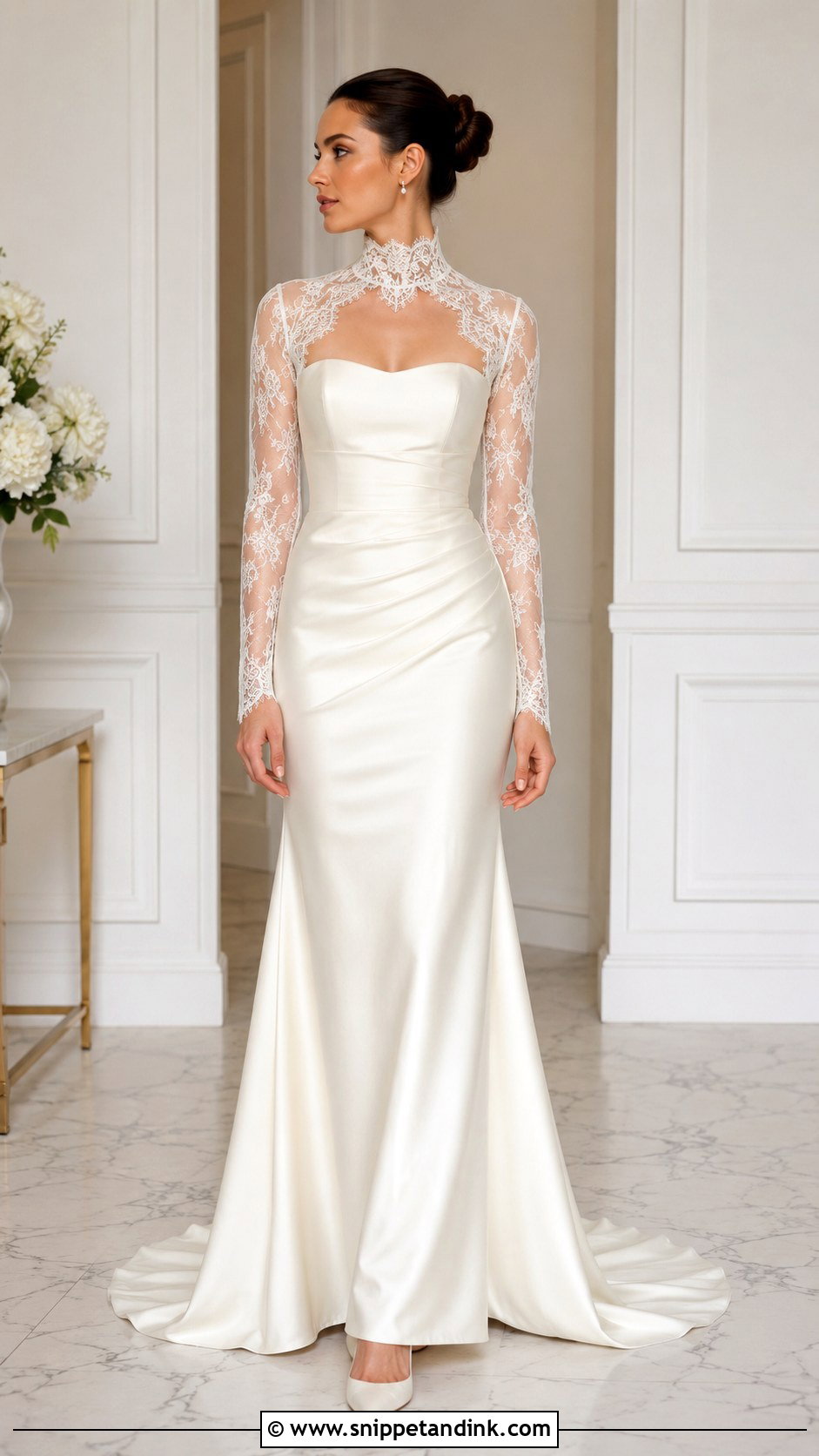
Put a high-neck bolero over a strapless gown and you have two weddings’ worth of outfit: covered and formal for the ceremony, open for the party. Sheer or lace keeps the high neck from feeling heavy. A sleek bun keeps the neck clear so the collar sits flat. Skip the necklace; small earrings are enough. Check the back closure: a row of tiny buttons looks lovely but needs someone else to fasten and undo it, which matters when you want a quick change.
14. Short Sleeve Wedding Bolero With Tea Length Dress
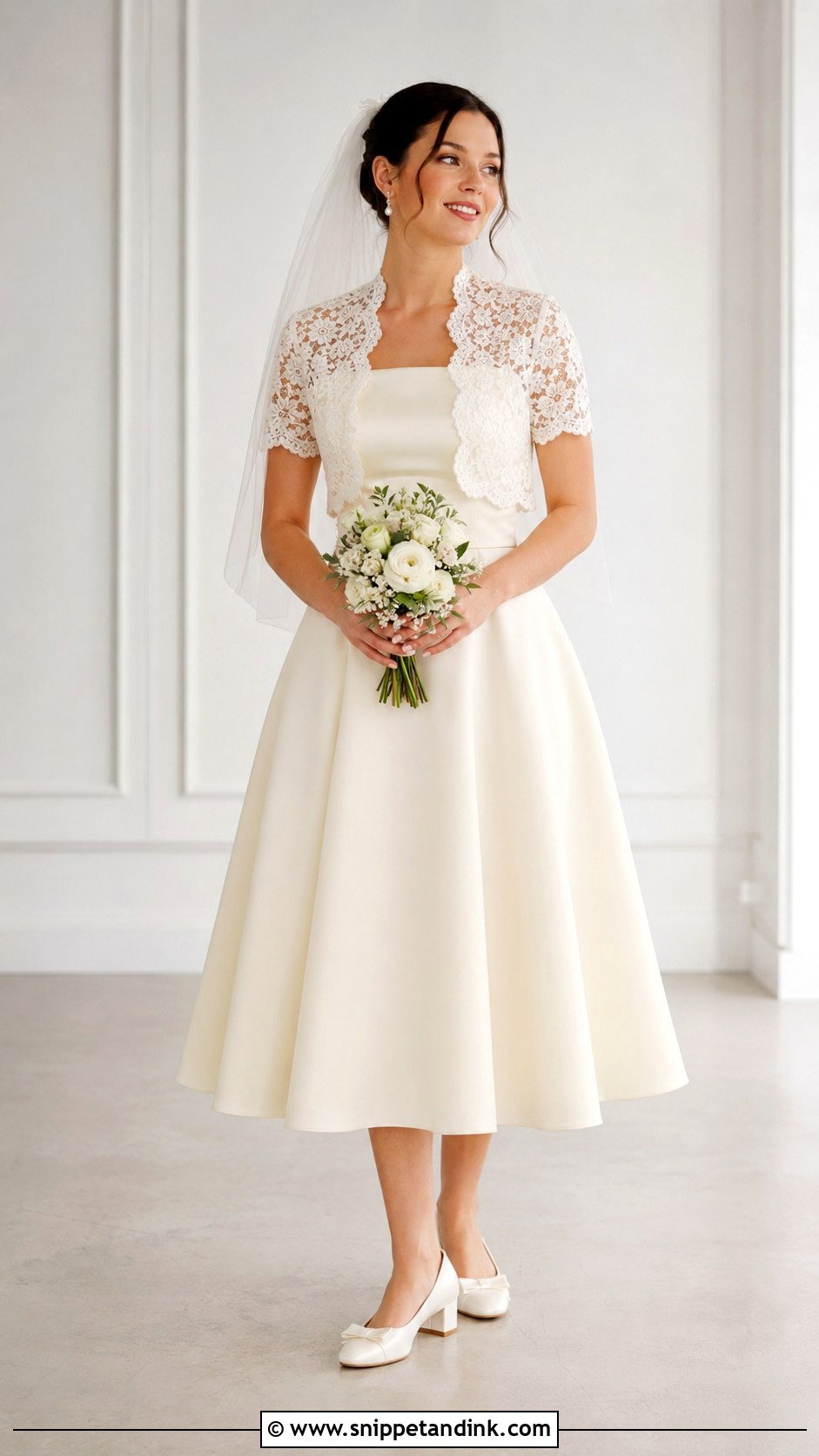
A tea-length hem shows the whole leg and the shoes, so the bolero has to keep things in proportion. A short-sleeve crop does that well over a fitted bodice and full skirt, especially with a belt marking the waist. Lace, satin or organza all work depending on the dress fabric. Choose shoes that are both special and comfortable, since they’re fully visible. It’s a natural fit for courthouse weddings and daytime gatherings.
15. Three Quarter Sleeve Wedding Bolero With Lace Dress
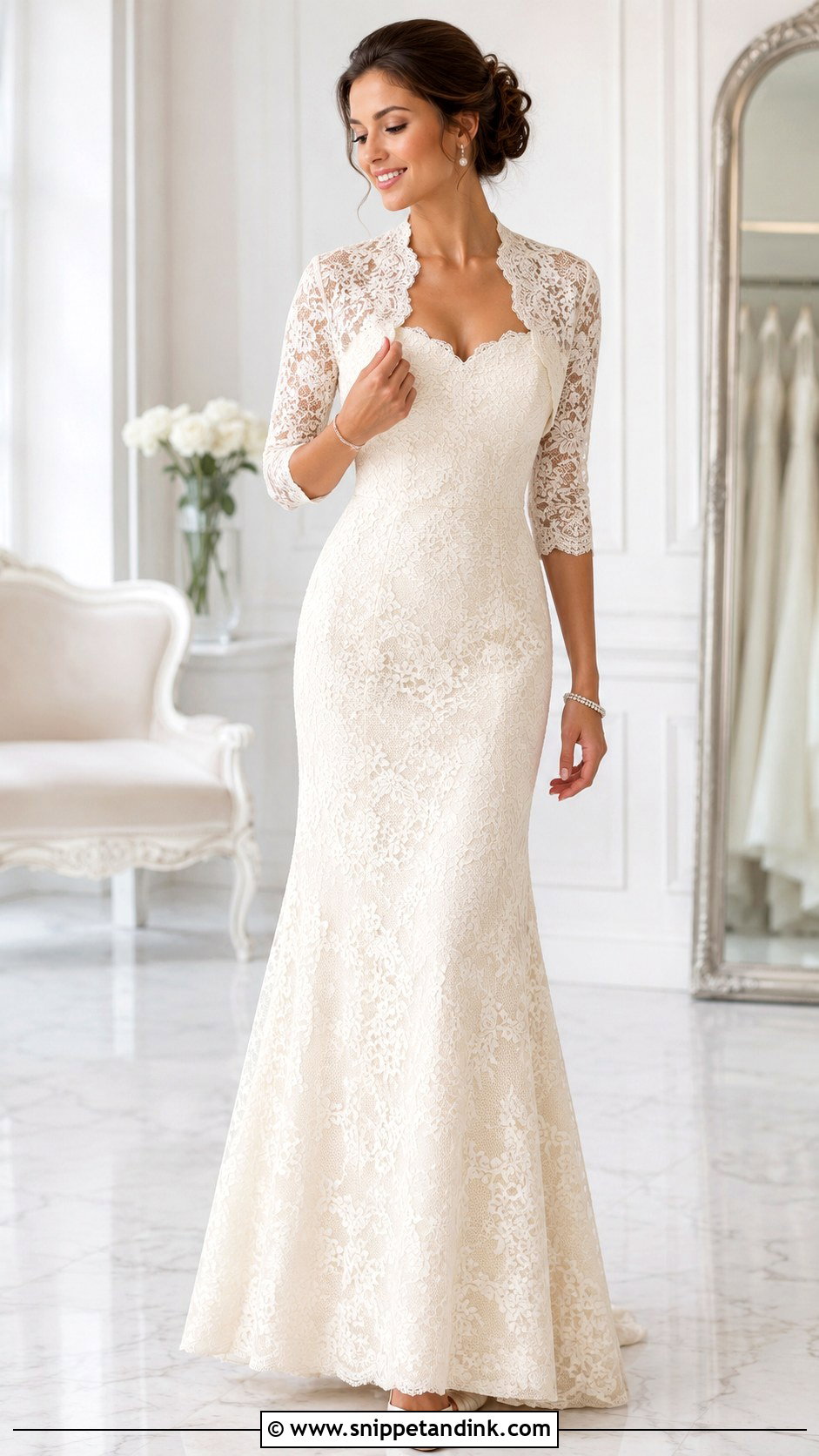
A three quarter sleeve wedding bolero covers the arms but leaves the wrists free, so a bracelet still shows and the sleeve never dips into food. Over a lace dress, the risk is two patterns clashing; I either match the motif or switch to a very fine plain sheer. The hem should sit just above the waist. A soft updo shows off the sleeves and neckline. It’s comfortable for a long day, and modest without looking heavy.
16. Organza Wedding Bolero With Modern Dress
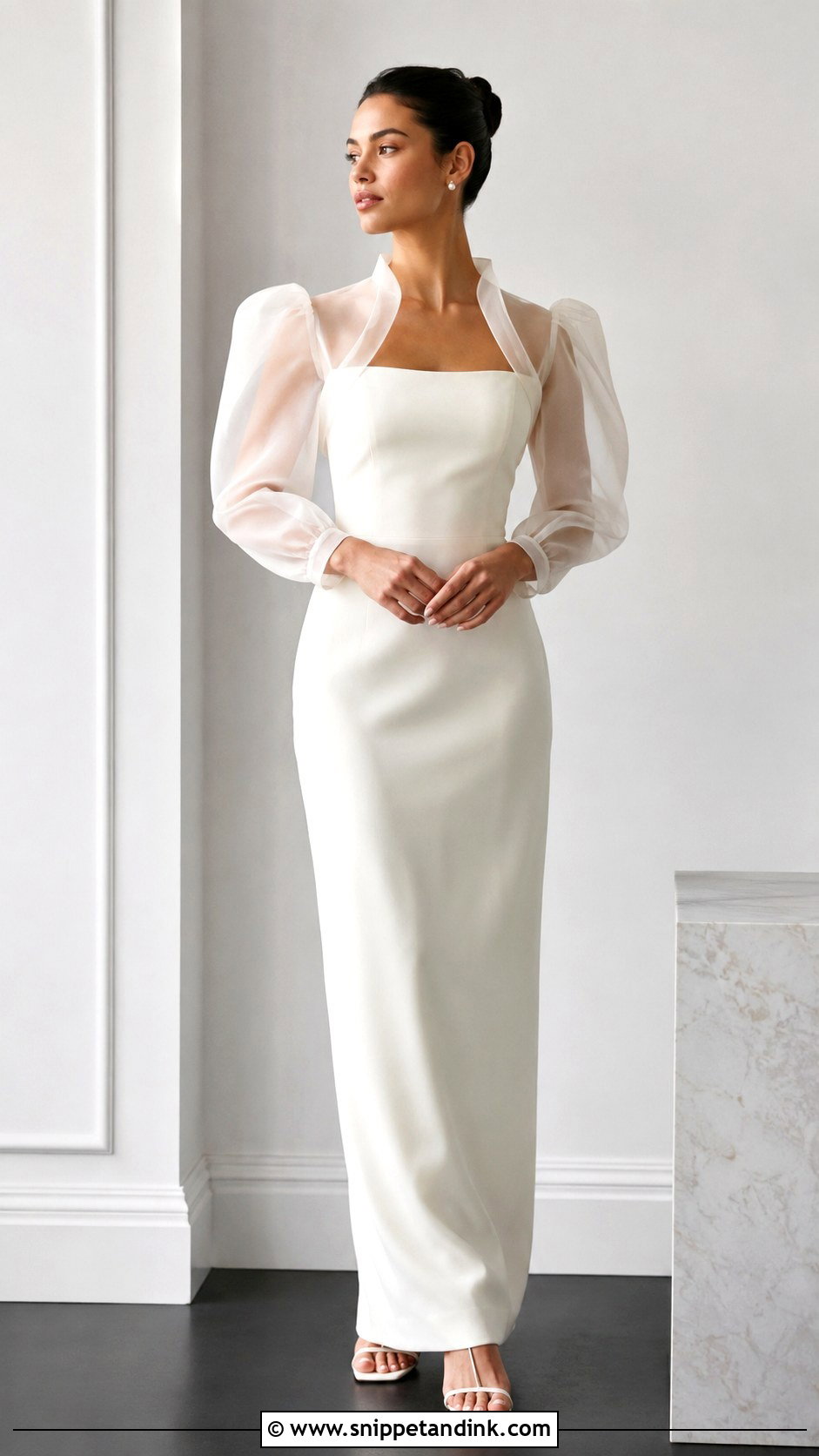
Organza is stiff enough to hold a puff sleeve, a clean edge or a slightly dramatic shoulder, and still light. Over a minimal column or straight-neckline gown, that structure looks deliberate. Keep it crisp and simple on an unembellished dress; add a subtle appliqué or a soft bow closure only if you want more. Organza creases where your arms bend, so I’d do one wear test at home and see how it looks after an hour. Square-toe heels and a smooth bun suit a city wedding.
17. Bow Wedding Bolero With Simple Bridal Dress
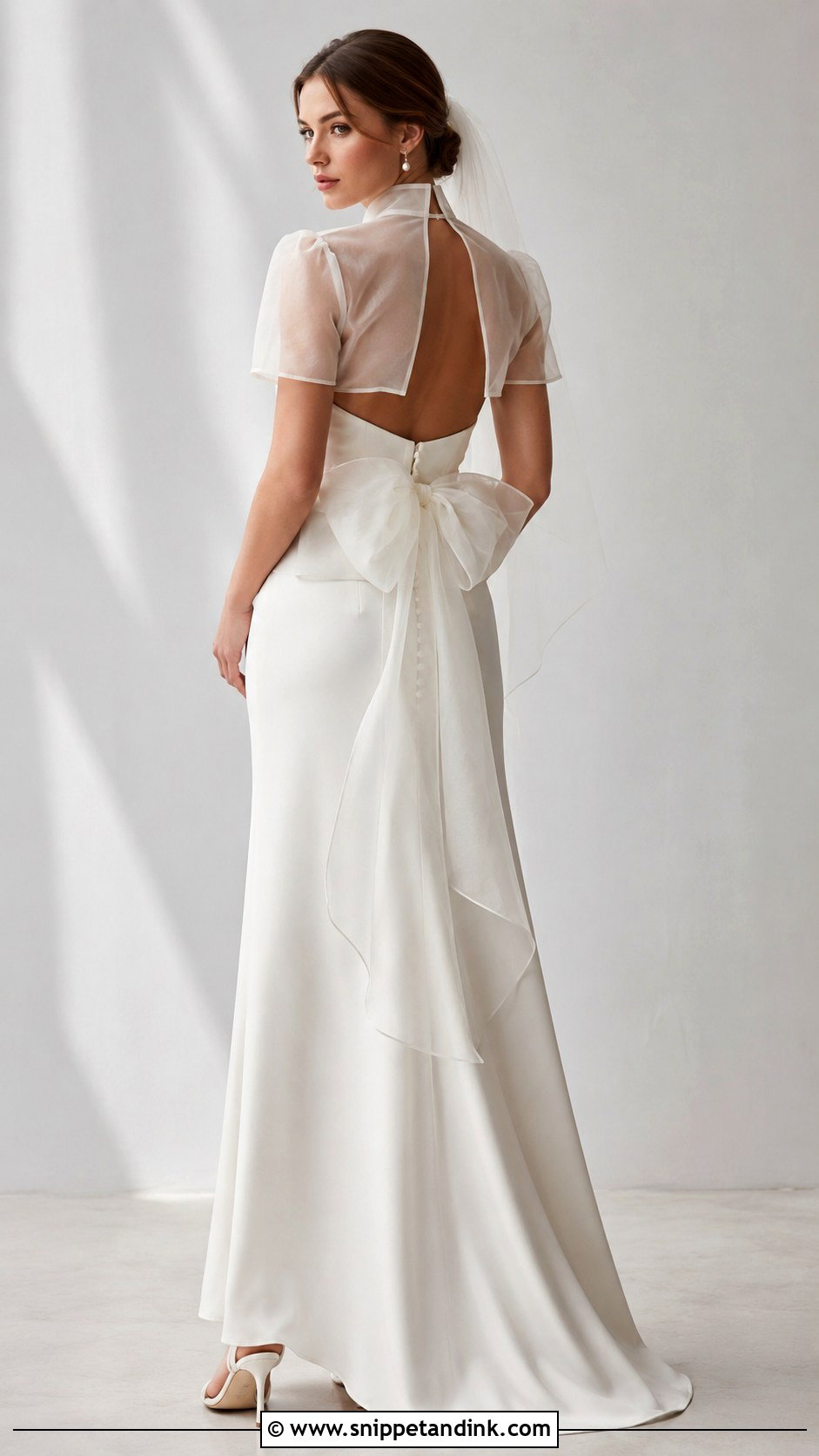
Guests see the back of a bride for most of a ceremony, which is why I like a bow placed at the back of a bolero over a clean strapless gown. It can also sit at the neckline or as a front closure, depending on the dress. Mikado, satin or organza hold a bow’s shape; soft fabrics droop by the reception. Satin heels and small pearl earrings keep everything else quiet. Check the bow under the veil, since a big back bow can lift the tulle oddly.
18. Cap Sleeve Wedding Bolero With Fit And Flare Dress
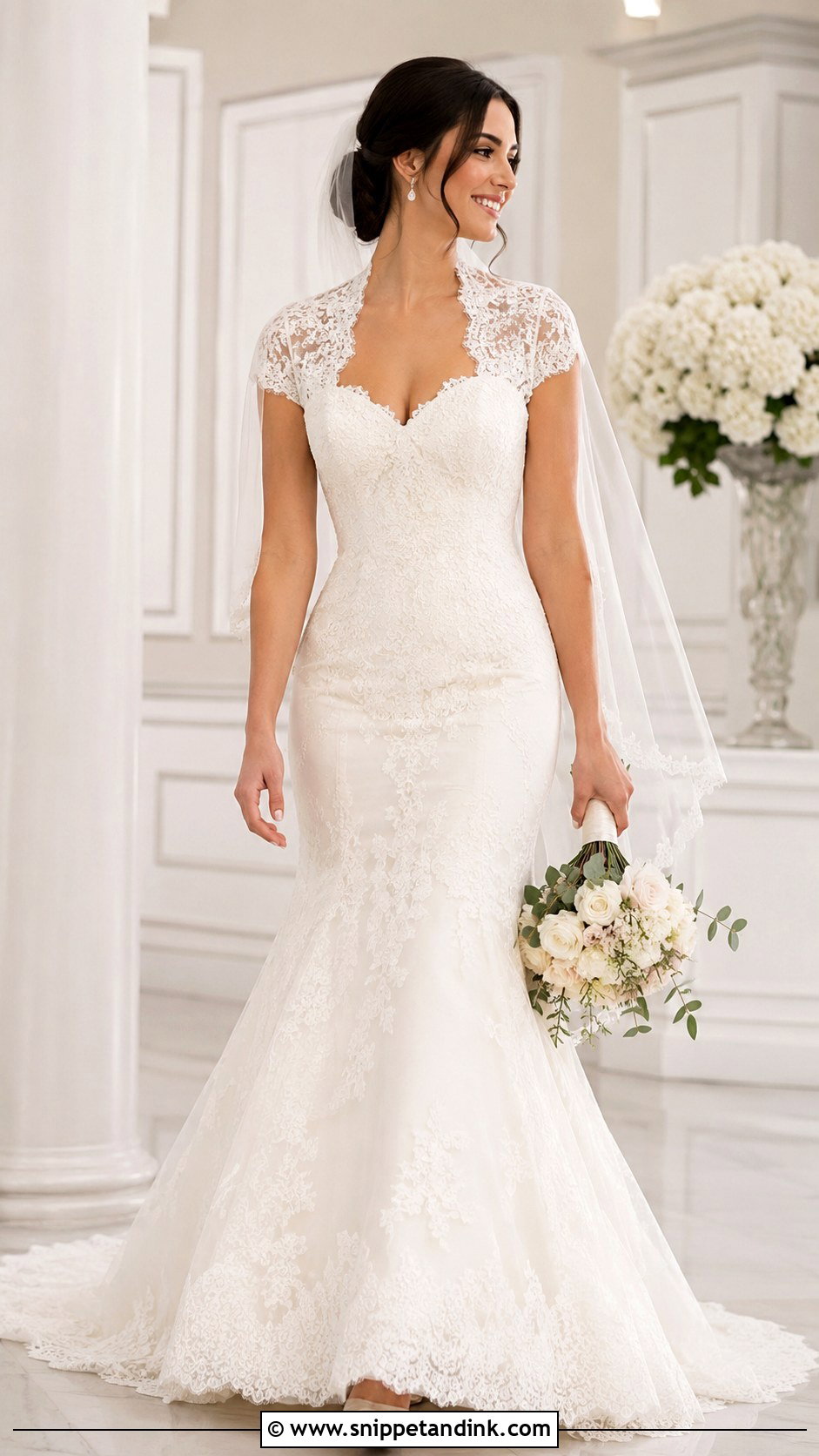
Cap sleeves cover just the top of the shoulder, so you get light coverage while your arms move freely. Lace and illusion tulle blend easily with a fitted bridal shape. I want the hem to stop at the narrowest point of the waist, which supports the fit-and-flare line instead of cutting across it. Drop earrings and a fingertip veil keep the proportions balanced. A good choice if you mainly want coverage for photos.
19. Floral Applique Wedding Bolero With Tulle Skirt
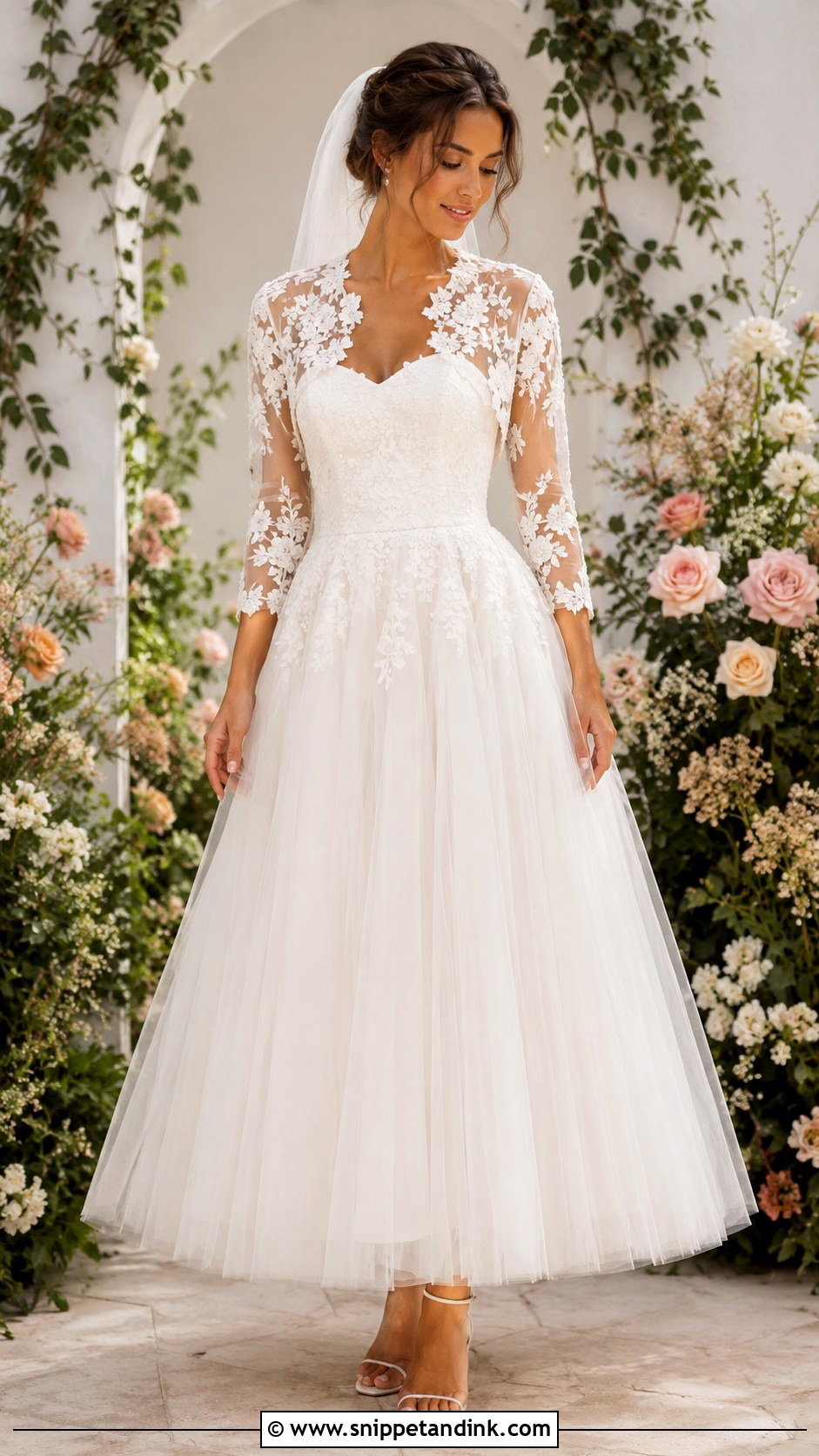
Appliqué flowers give dimension on top while the tulle skirt keeps everything light. I place them lightly around the neckline, shoulders or sleeves; a fully covered bolero competes with a big skirt and makes the outfit look busy. A fitted bodice underneath defines the waist. Keep the veil trim minimal so the flowers stay the focus. For a garden ceremony it reads naturally without looking themed.
20. Sequin Wedding Bolero With Reception Dress
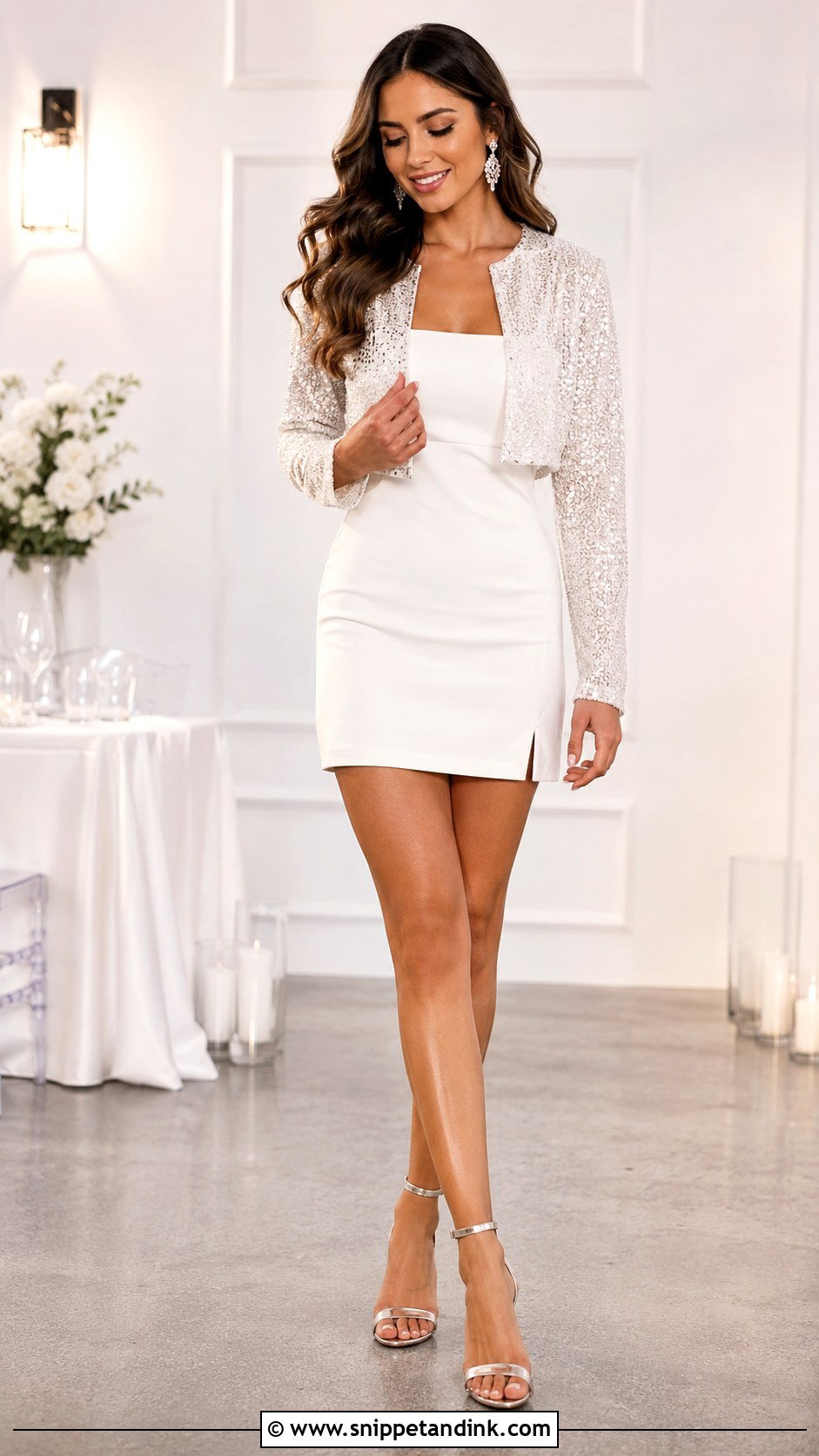
A sequin wedding bolero gives a simple reception dress sparkle without buying a second embellished outfit. It sits well over a mini, slip or sleek midi. Ivory, silver, pearl or champagne sequins keep it bridal. Sequins scratch the inside of the arm when you dance, so I look for a lined bolero, or at least one with smooth seams. Cropped and easy to slip off, it suits a smooth ponytail and metallic heels.
21. Velvet Wedding Bolero With Fall Dress
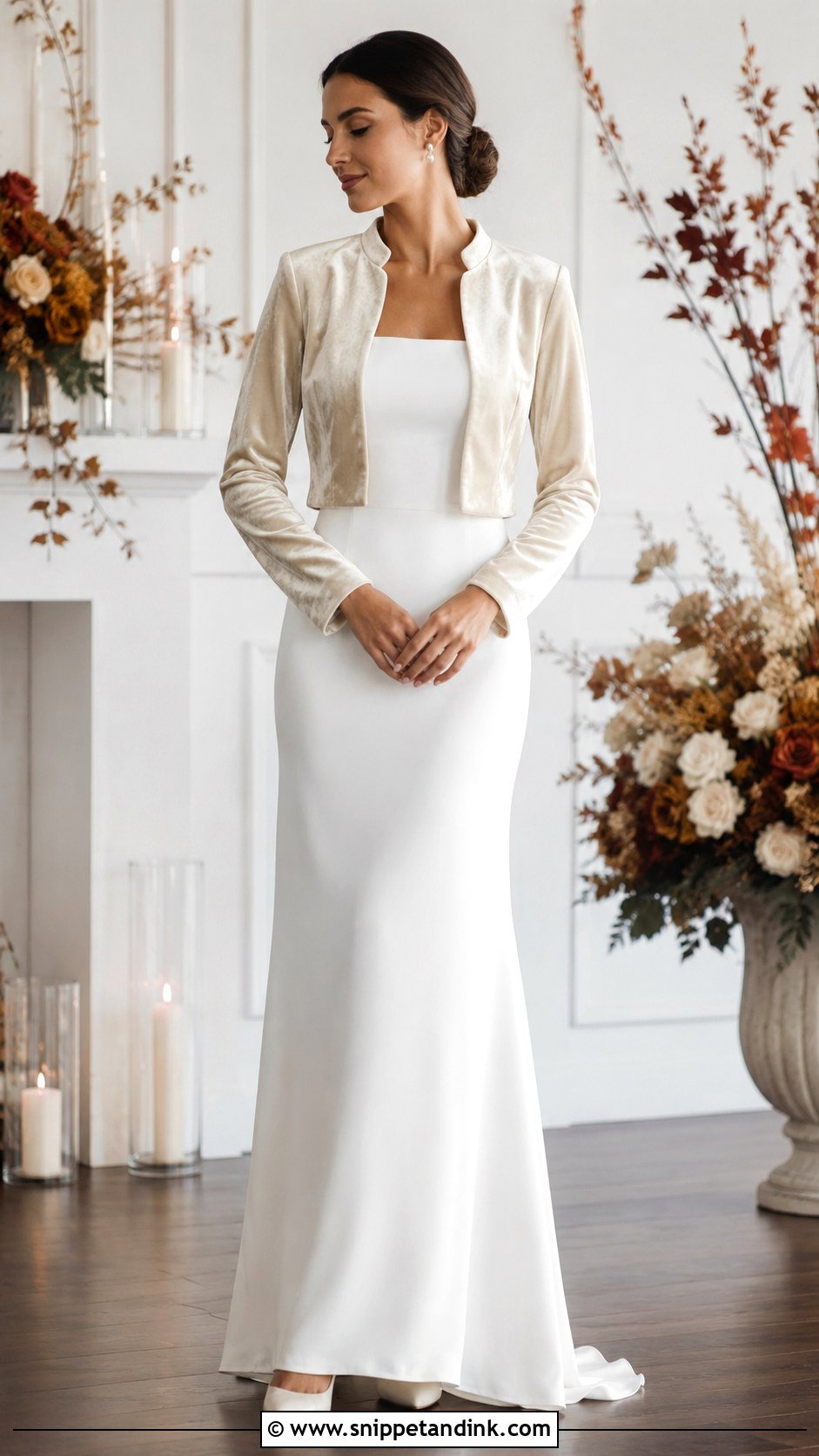
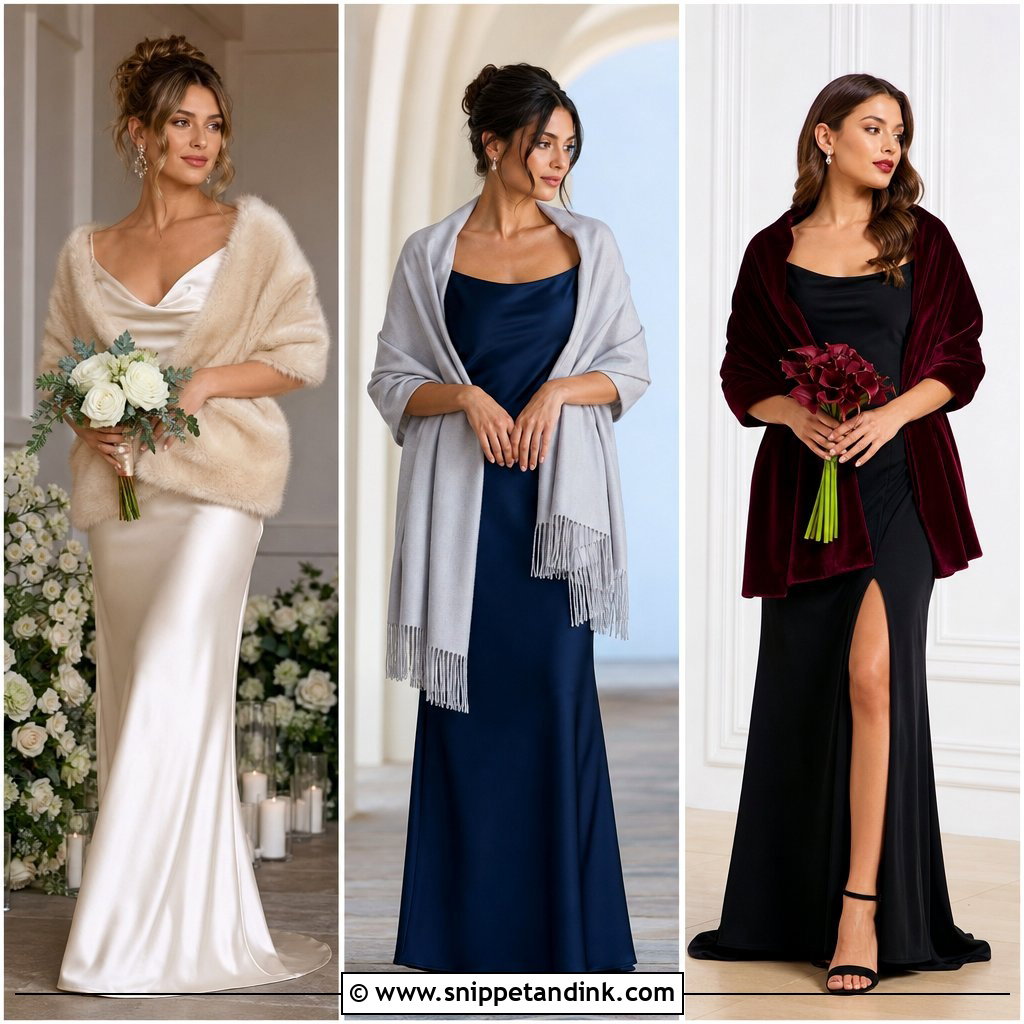
Velvet is warm and has a soft sheen that suits candlelit autumn venues. Ivory, cream, champagne or pale blush read bridal; deeper neutrals give more contrast. It works over satin, crepe or lace. Velvet marks easily when it’s pressed or folded, so I hang it on a padded hanger and steam from the inside, never ironing the pile. Keep it cropped so it doesn’t weigh the gown down, and finish with closed-toe heels and a low bun.
22. Seamed Wedding Bolero With Corset Dress
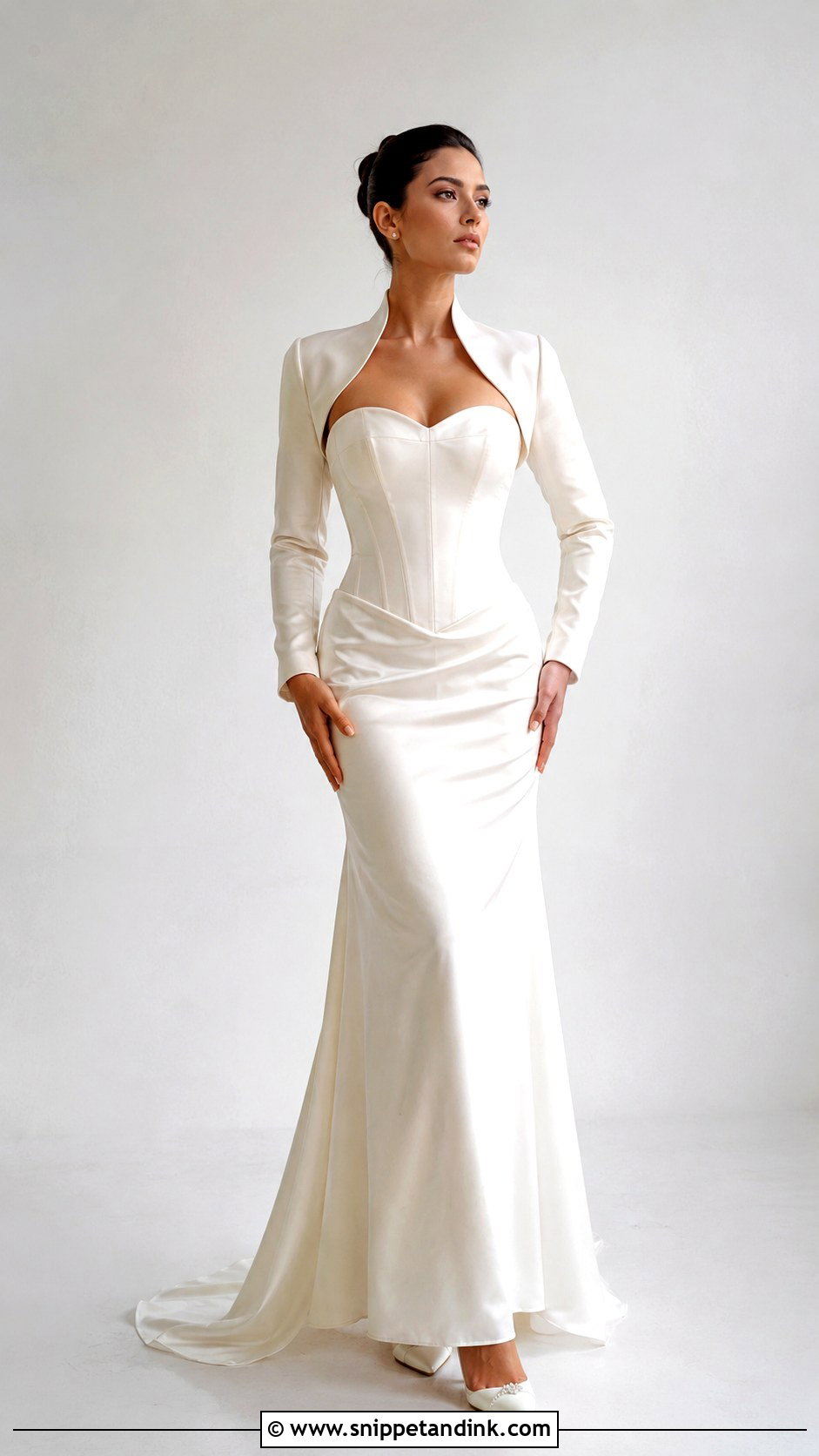
With a corset bodice, the bolero should mirror the seams rather than hide them. Curved seams, a fitted back and a hem that stops above the waist let the structure underneath show. Satin, mikado or crepe stay crisp. Visible boning calls for a plain bolero with no extra embellishment. Pointed heels and a sleek updo finish a tailored, controlled look, and the shoulders are still covered for the ceremony.
23. Ruffle Wedding Bolero With Romantic Dress
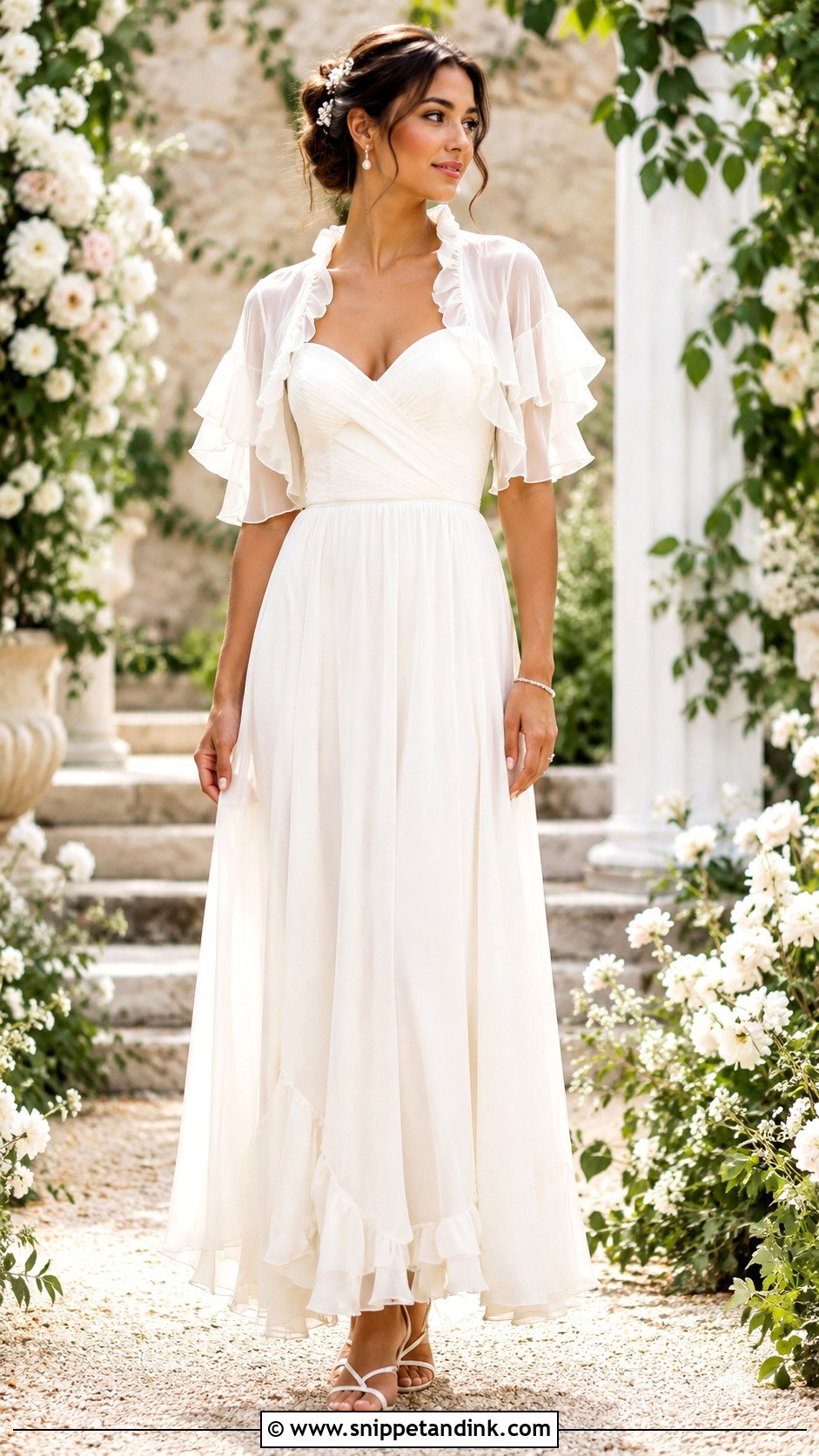
Ruffles look best when they’re light: a single frill of tulle, chiffon or organza along the sleeve edge or neckline. Anything fuller makes the shoulders look wider in photos. Flowing A-line dresses, soft lace gowns and chiffon skirts suit this best. If the bolero has volume near the shoulders, I lift the hair off them with an updo so the two don’t fight. Pearl earrings and a floral comb finish it.
24. Tailored Wedding Bolero With Column Dress
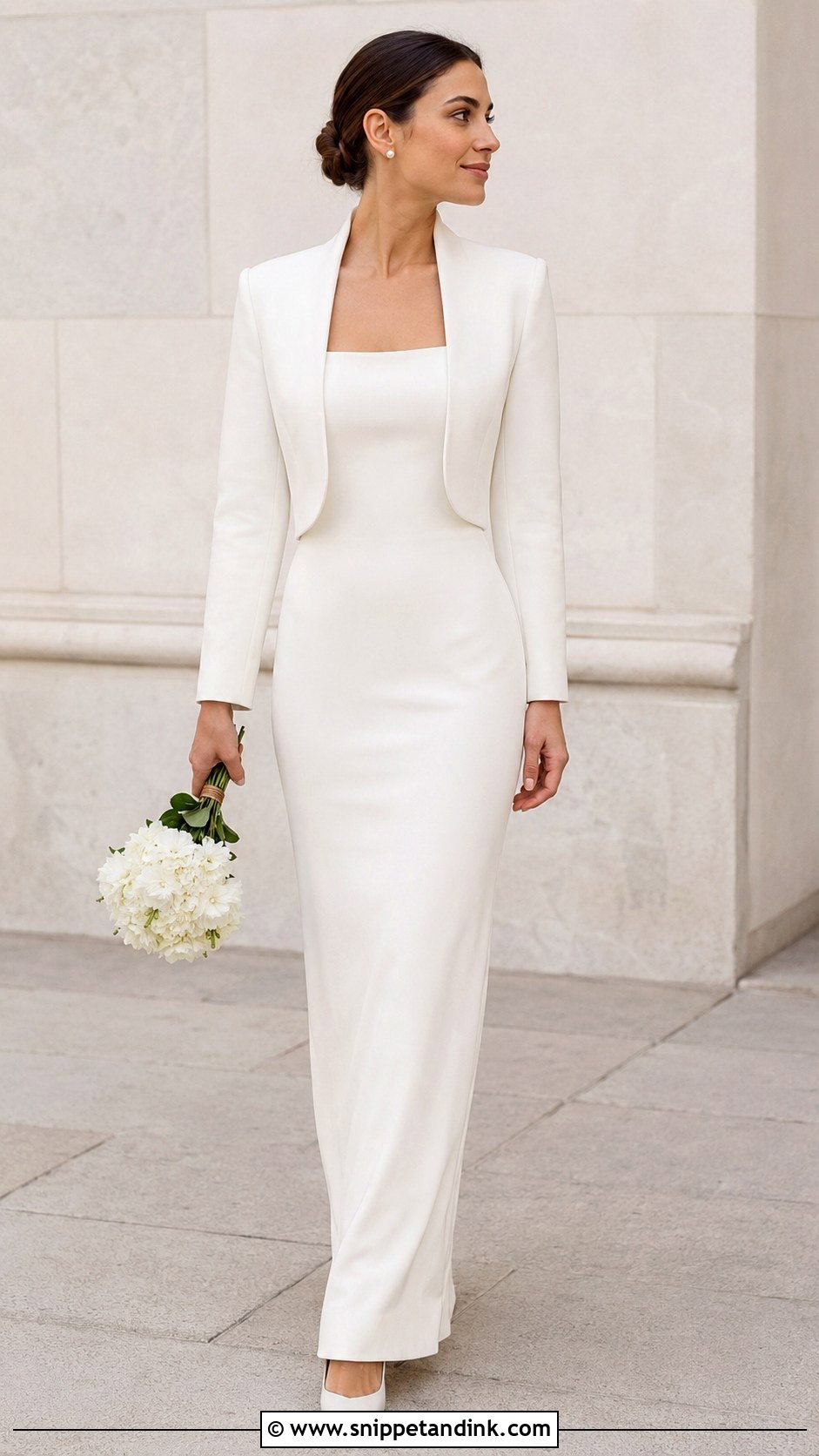
A sharp, tailored bolero gives a straight column dress a city-bride feel. Satin, crepe or mikado with crisp seams and a cropped length hold their shape all day. I keep the front open or lightly shaped so the neckline still shows. Have it fitted at the shoulders by a tailor; ready-made tailored boleros often gape at the back of the neck. Pointed pumps, pearl studs and a sleek clutch round it off.
25. Detachable Wedding Bolero With Two Looks
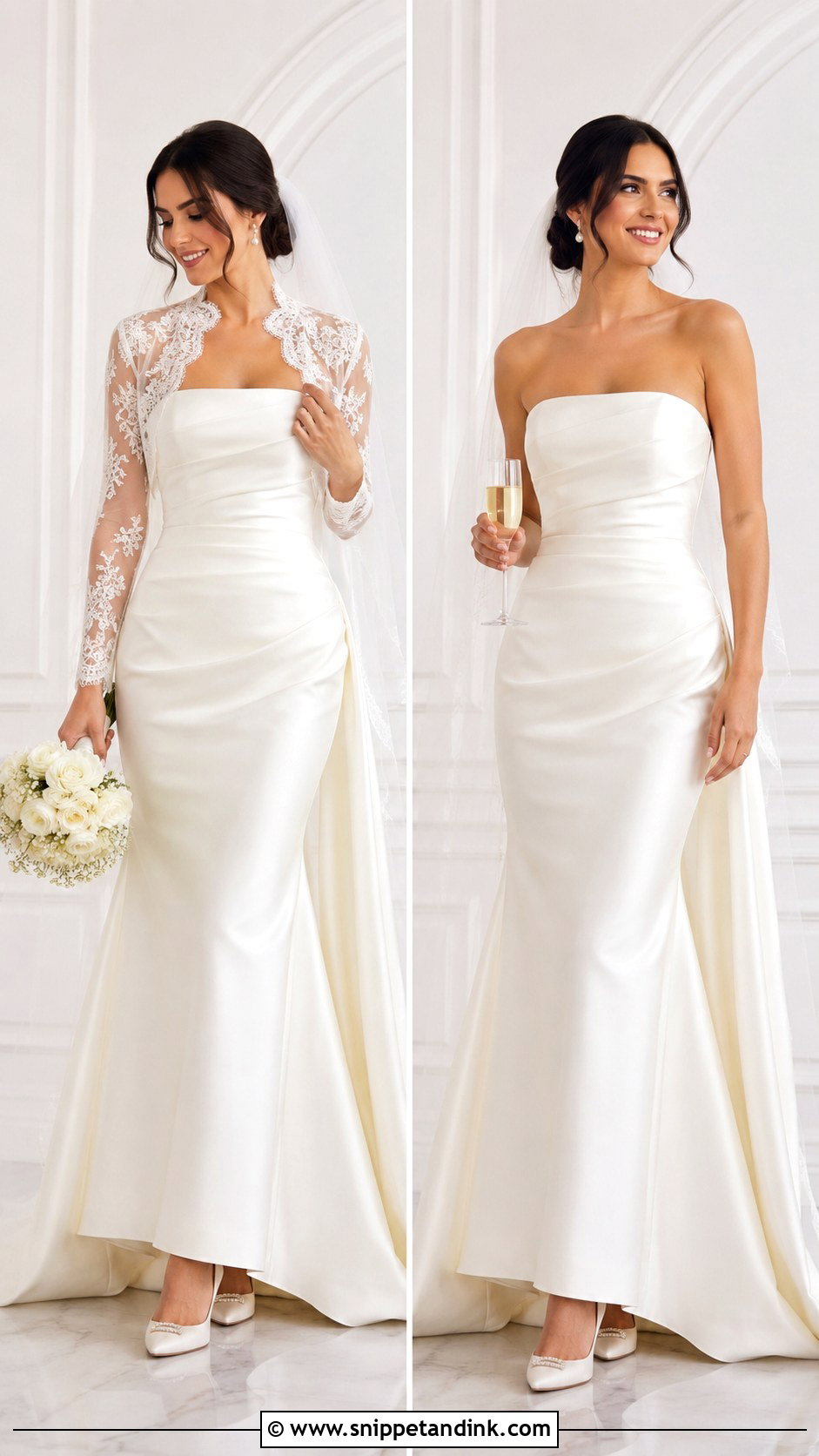
Taking a bolero off halfway through the day is the most practical trick in bridal styling. Wear it for the ceremony and portraits, then remove it for the reception. Lace, satin, tulle, organza and beaded styles all work, provided the closure is simple: a single hook or a ribbon tie, not a row of buttons. Practice taking it off yourself. Choose accessories that look right both ways, and decide in advance who will look after it once it’s off, because a bolero left on a chair gets sat on.
Raise Your Arms at the Fitting, Then Hug Someone
A bolero that looks right standing still can fail the moment you move. At a fitting, I ask brides to do everything they’ll do on the day: lift both arms as if fixing their hair, reach forward for a hug, hold a bouquet at the waist and sit down.
What to watch for
- The back seam pulling tight across the shoulder blades when you reach forward. That needs more width across the back, which a seamstress can sometimes let out.
- The whole bolero riding up toward your neck when you lift your arms. That usually means the armholes are cut too low.
- A gap at the back of the neck when you stand straight, which shows in every rear view of the ceremony.
- Lace or sequin edges scratching the inner arm.
Bring the bolero to your gown fittings, not just your own measurements, so the seamstress can adjust both together. Most alterations to a bolero are small, such as taking in the shoulders or shortening sleeves, but they need the gown on to be done properly.
Also plan where it goes when it comes off. A bridesmaid or your planner should have a padded hanger and a garment bag ready, so it survives for the after-party or for keeping.
One Gown, Two Looks, and a Bolero That Belongs
A bolero can add sleeves, add warmth, mark the waist or turn one gown into two looks. What matters most is that it looks like part of the dress. Match it to your gown’s fabric, neckline, color and shape so it never reads as an afterthought. Lace, satin, tulle, pearls, faux fur and clean tailoring each have a season and a silhouette they suit best. Take the gown to every bolero fitting, move in it the way you’ll move on the day, and the right one usually becomes obvious.
You'll Like These Ideas:


Leave a Reply