
Knitwear behaves nothing like woven bridal fabric, and that is both the charm and the challenge. A fine-gauge knit can look sleek and modern; crochet lace, pointelle and sculpted stitches look softer and more nostalgic. Openwork textures, vintage shapes and high necklines are all having a moment in bridalwear, which has brought knitted gowns into fitting rooms that never used to see them. The lining, the silhouette and the accessories decide whether the knit reads beach, winter, courthouse or black tie. Below are twenty-five knitted gowns across seasons, body shapes and levels of formality, with what I’d check before saying yes to each.
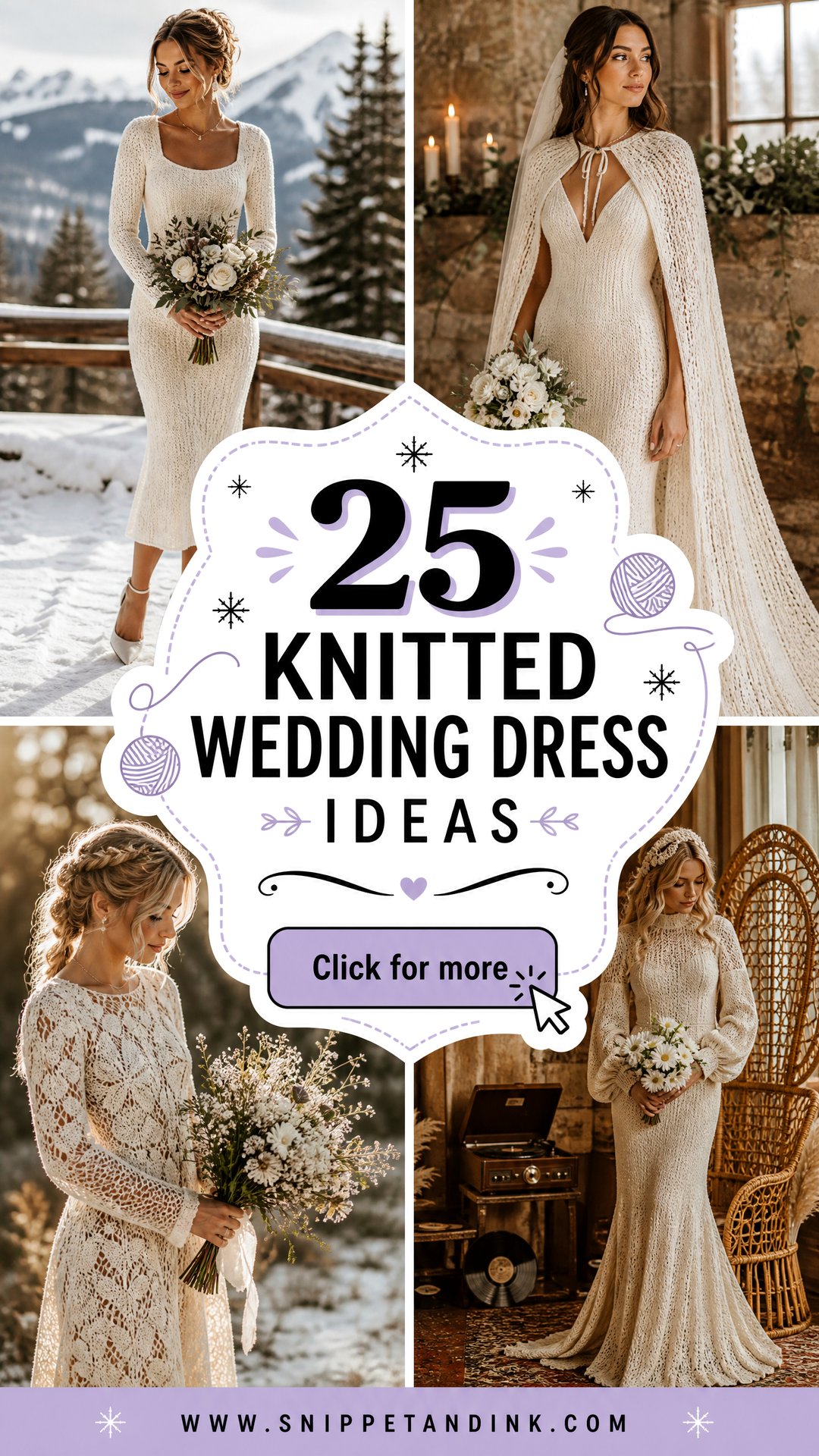
Why a Knit Gown Gets Longer by Evening
Knit is made of interlocking loops, not crossed threads, so gravity pulls it downward over time. A floor-length knit dress can drop noticeably between the morning photos and the last dance, especially in heavier yarns. That single fact shapes how I fit them.
- Hang the dress for a day before the final hem fitting so the knit settles, then hem it while you stand in your shoes.
- Leave the hem a touch shorter than you would on a woven gown, to allow for the drop.
- Ask for a woven lining or a waist stay that carries the skirt’s weight, so the knit isn’t hanging from your shoulders.
Fiber makes a bigger difference than pattern
Merino and wool blends are warm and drape well but can feel itchy at the neck for sensitive skin. Cotton breathes and suits warm weather, though it stretches more and recovers less. Silk blends add sheen and softness. Mohair and angora look dreamy but shed, and a shedding dress leaves fluff all over a dark suit in every hug, so warn your partner or skip them. Viscose blends drape beautifully but can grow considerably when warm and damp.
If the dress is handmade to order, ask the maker how long it takes before you commit to a date. Hand-knitting a full-length gown can take many weeks, and it leaves little room for remaking a panel if the fit is off.
1. Long Sleeve Knitted Wedding Dress
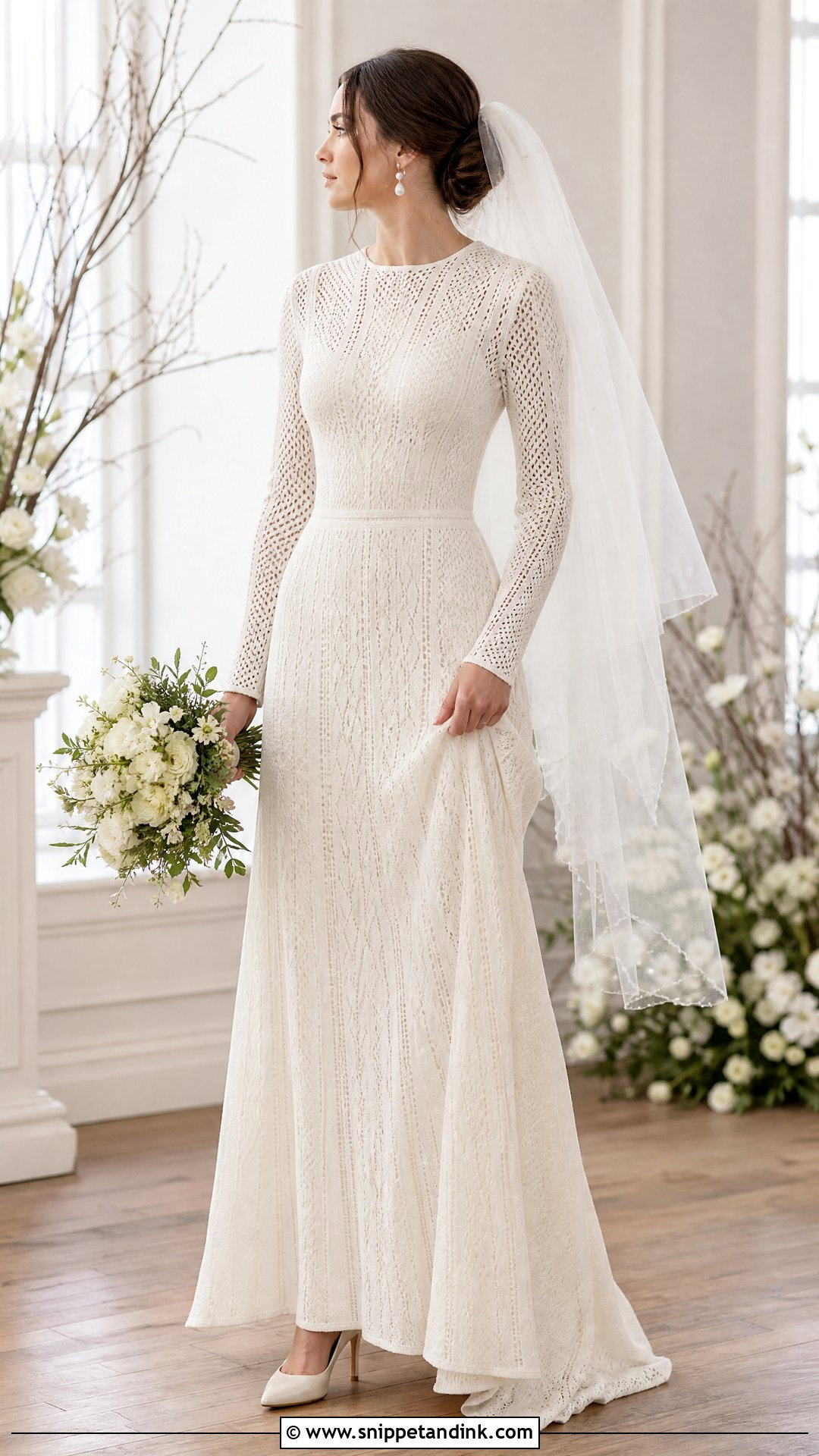
Long sleeves are where knit earns its place in a winter wedding: real warmth without a cover-up. I like a fitted bodice with fine openwork sleeves and a softly flared skirt. Wool blended with silk, cotton or viscose drapes far more smoothly than pure wool, which can look bulky at the cuff. An opaque lining keeps the stitch pattern visible without showing skin through the holes. Satin pumps, pearl drops and a low twisted bun suit it, with a fingertip veil or, for something modern, a structured hair bow. Watch the sleeve length at the fitting; knit sleeves stretch with wear and can creep over the knuckles by evening.
2. Crochet Lace Knitted Wedding Dress
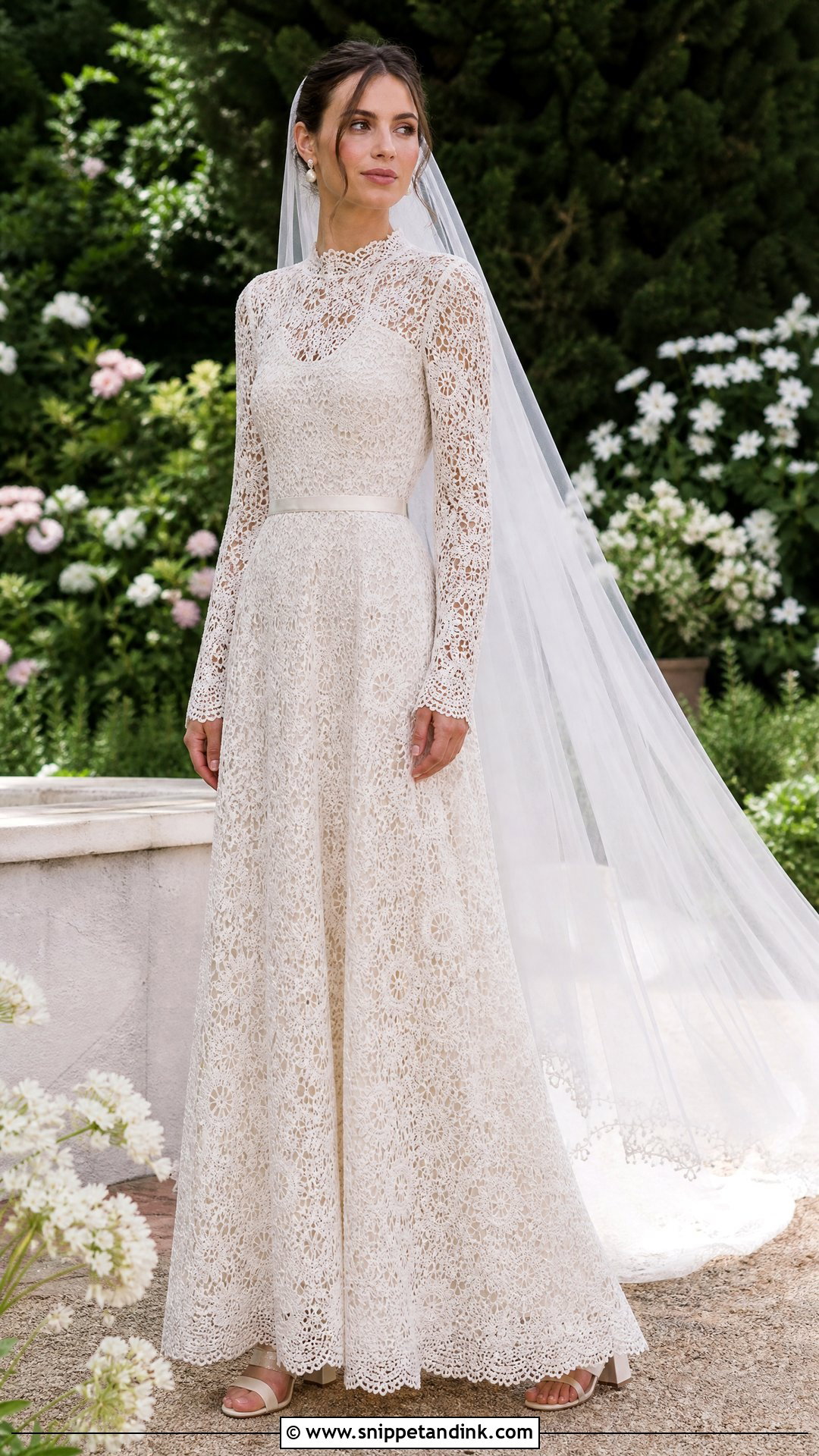
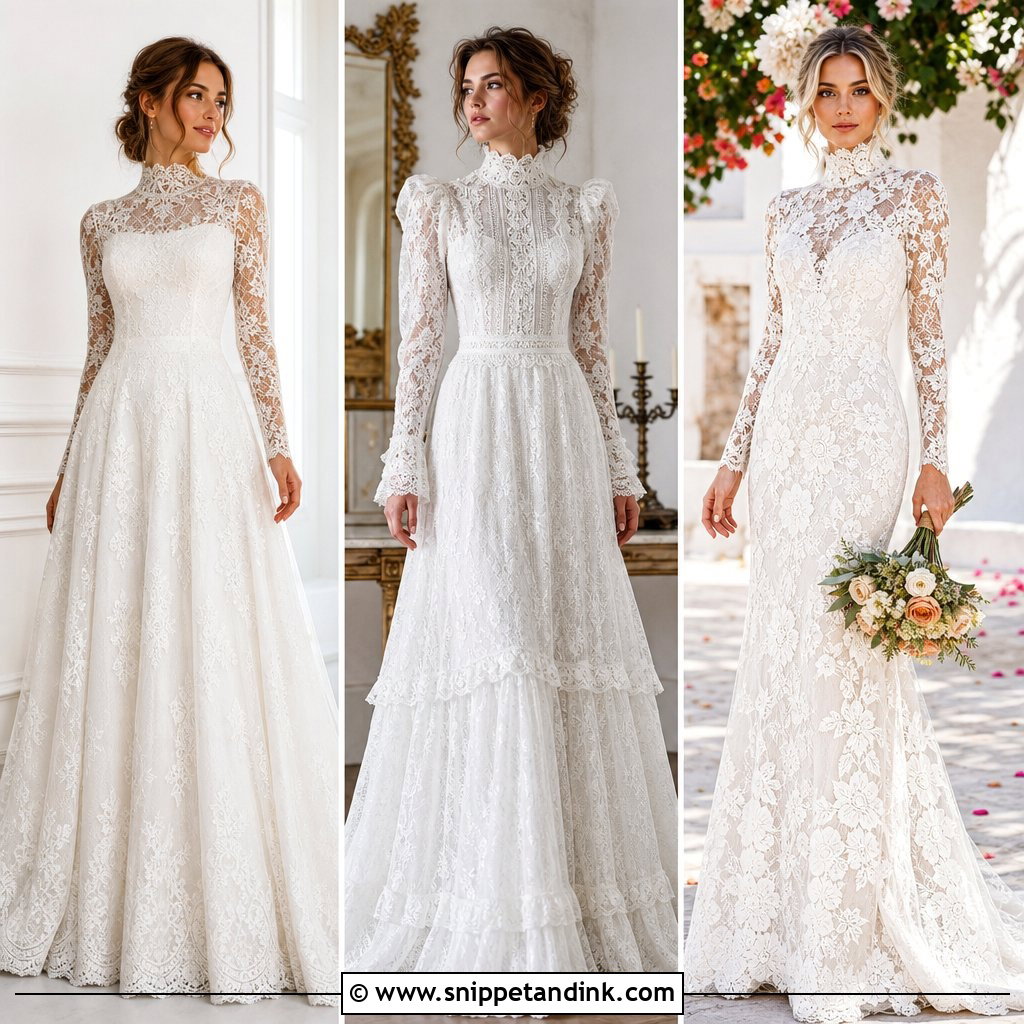
Crochet lace shows the handwork more than any other technique here. Fine floral motifs work better than big open stitches, which can look like a beach cover-up rather than a gown. A fitted ivory slip underneath gives the pattern a clean background in photographs. Keep the silhouette to a sheath or a gentle A-line so the texture stays elegant. Block-heel sandals, pearl studs and a chapel veil suit it, with a loose chignon. One thing to know about crochet: it is heavier than it looks, and a long crochet skirt pulls the bodice down over the day, so the dress needs a firm waist stay inside.
3. Beach Knitted Wedding Dress
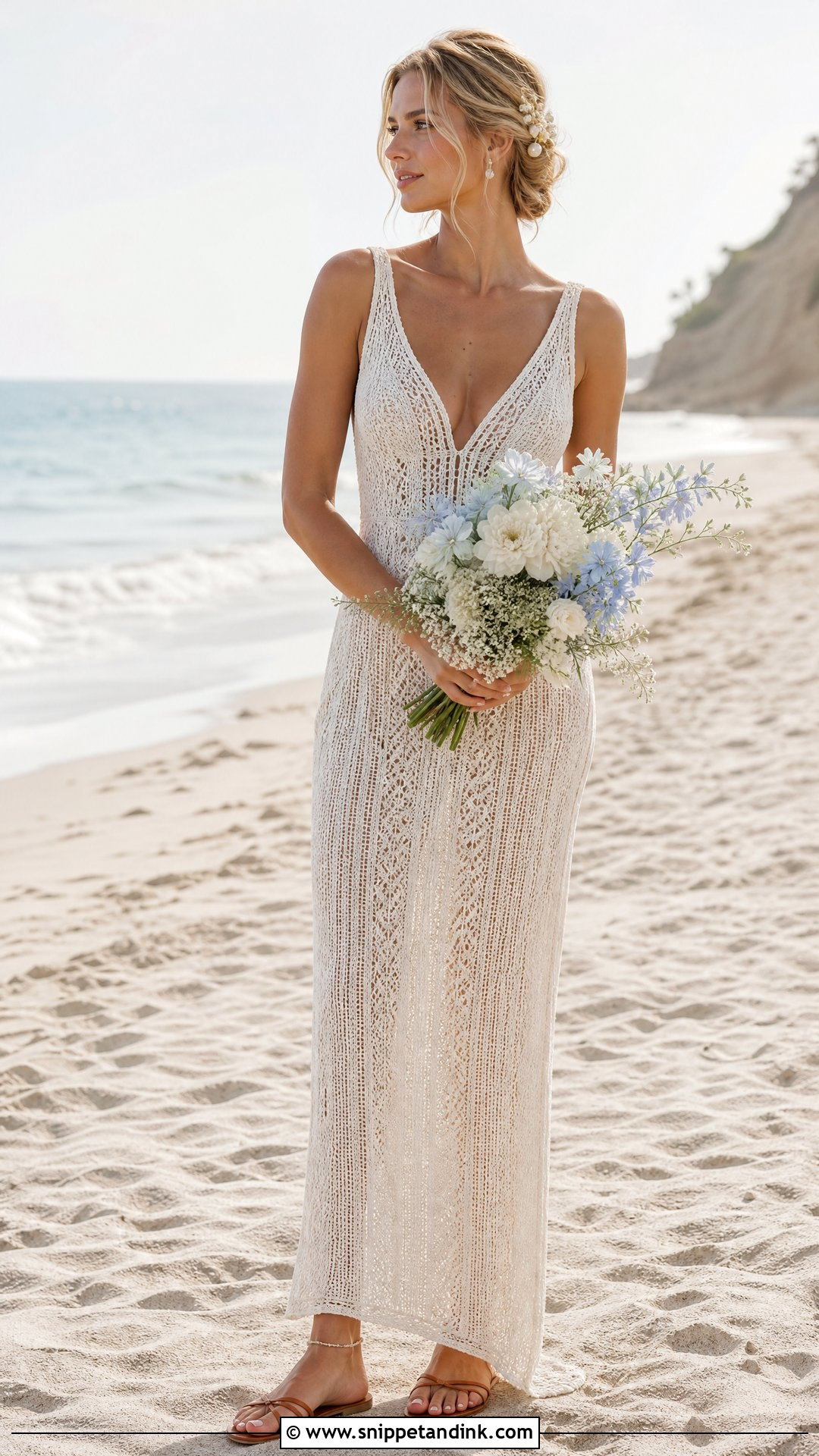
Lightweight cotton knit is the fiber I’d pick for the coast. It breathes, it moves in the breeze, and it doesn’t trap heat the way wool or acrylic does. Choose an openwork skirt over a fitted slip lining, with a plain scoop or V neck, and a column shape that won’t fight you on sand. Keep the hem just off the ground; wet sand pulls into knit stitches and is miserable to get out. Flat leather sandals and small earrings finish it. A veil will catch the wind, so a pearl comb or fresh flowers in the hair is the practical choice. Skip chunky yarns, which stretch and sag once they’re damp from sea air.
4. Boho Bell Sleeve Knitted Wedding Dress
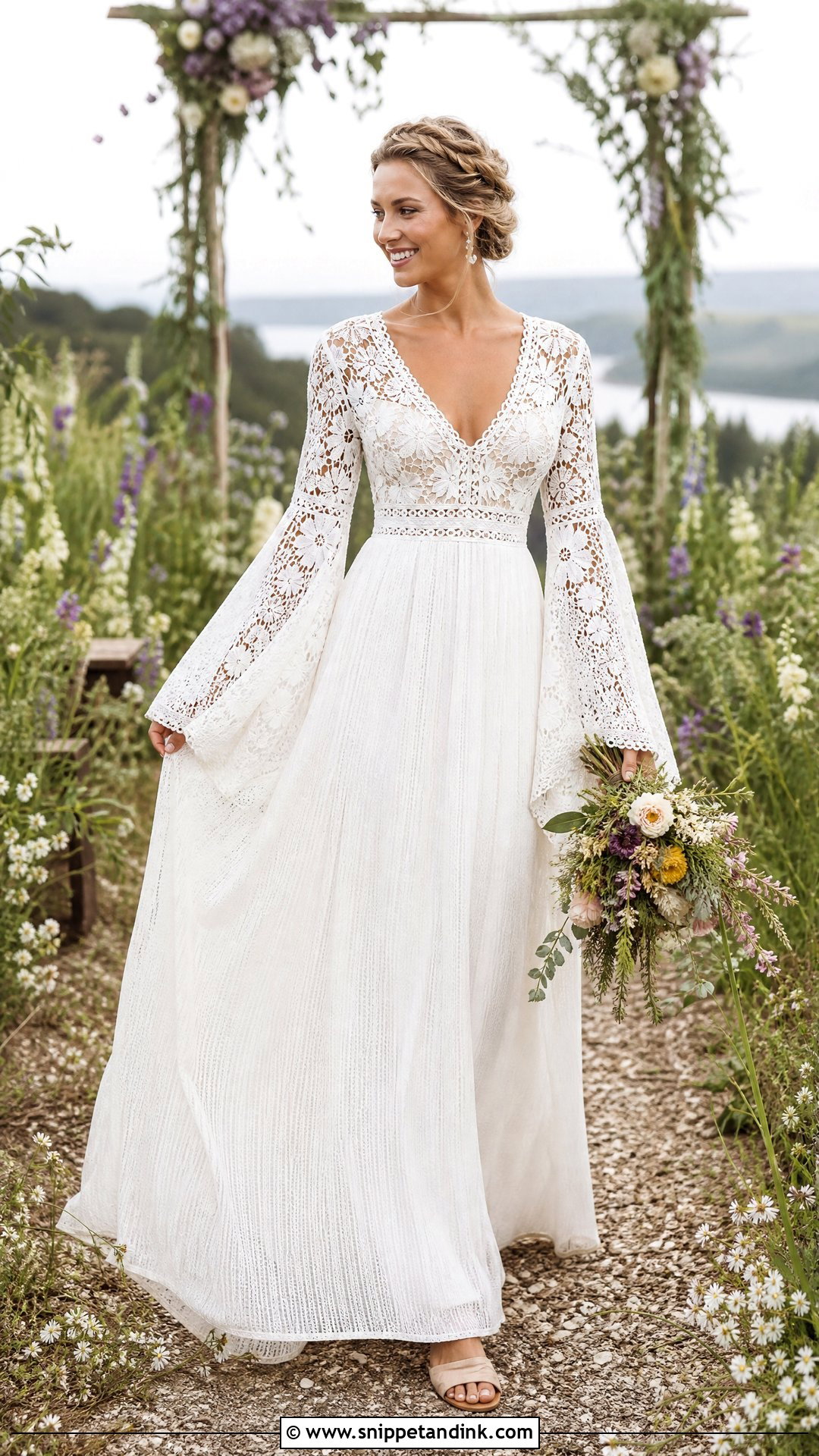
The boho bell sleeve knitted wedding dress only looks deliberate when the sleeve is slim through the upper arm and widens below the elbow. A bell that starts at the shoulder makes the whole top half look wide. Pair it with a defined waist and a flowing A-line skirt; floral crochet panels or geometric openwork add detail without beading. Ivory ankle boots or low sandals, layered pearl earrings and a braided updo suit an outdoor ceremony. Line it fully in a matched ivory. And practise the bouquet hold: bell sleeves drape over the stems and hide the flowers.
5. Minimalist Ribbed Knitted Wedding Dress
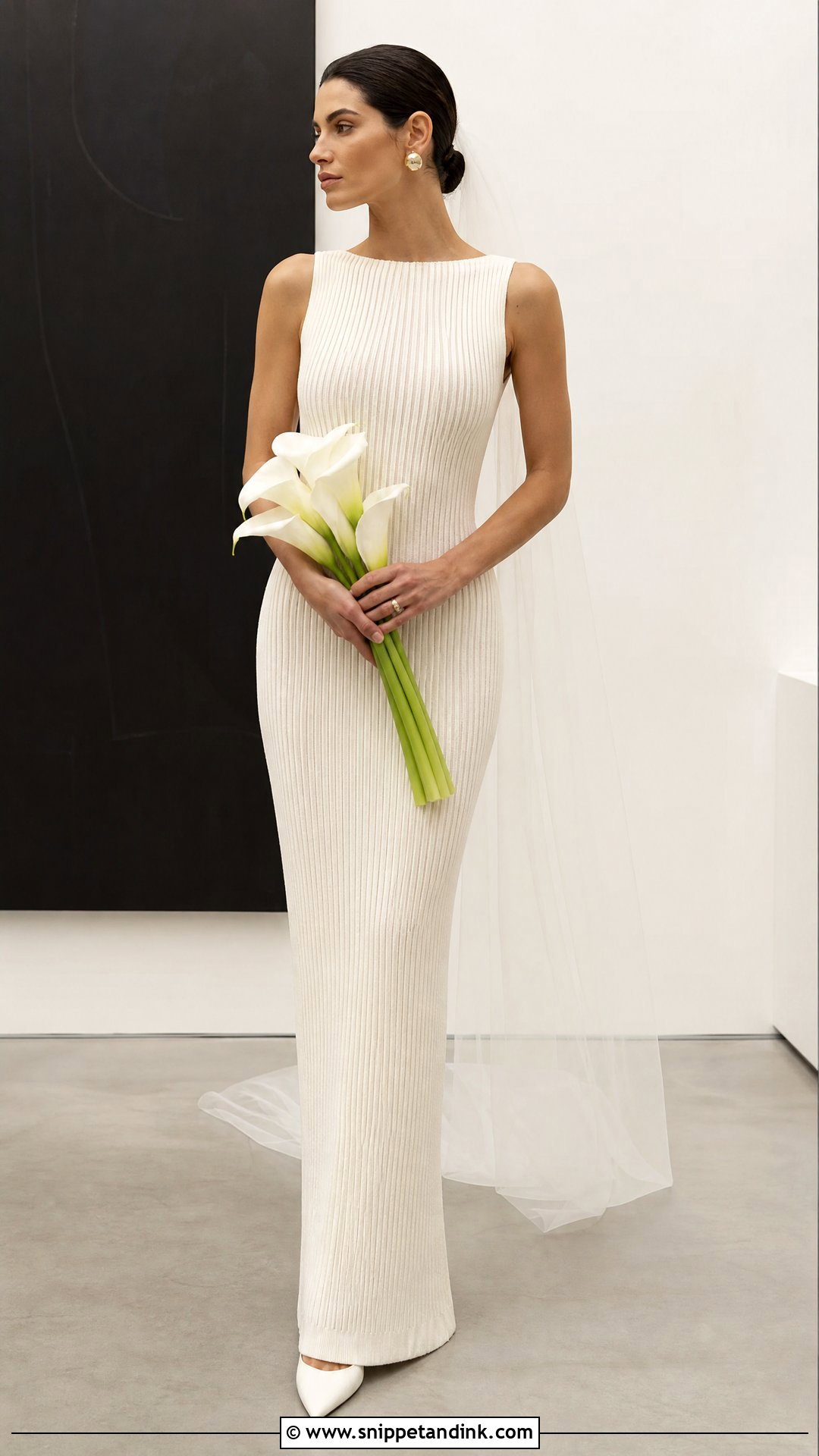
Fine vertical ribbing is the most modern knit in this list, and also the least forgiving. Rib stretches sideways, so it follows the body closely, and a lightweight rib will show every line underneath. I ask for a fabric substantial enough to skim rather than cling, over a smooth lining. A sleeveless column with a high boat neck suits a gallery, rooftop or modern venue. Pointed pumps, sculptural earrings and a sleek bun keep it clean; a small structured bag can replace a bouquet at a courthouse. Choose a plain veil or none.
6. Cable Knit Winter Wedding Dress
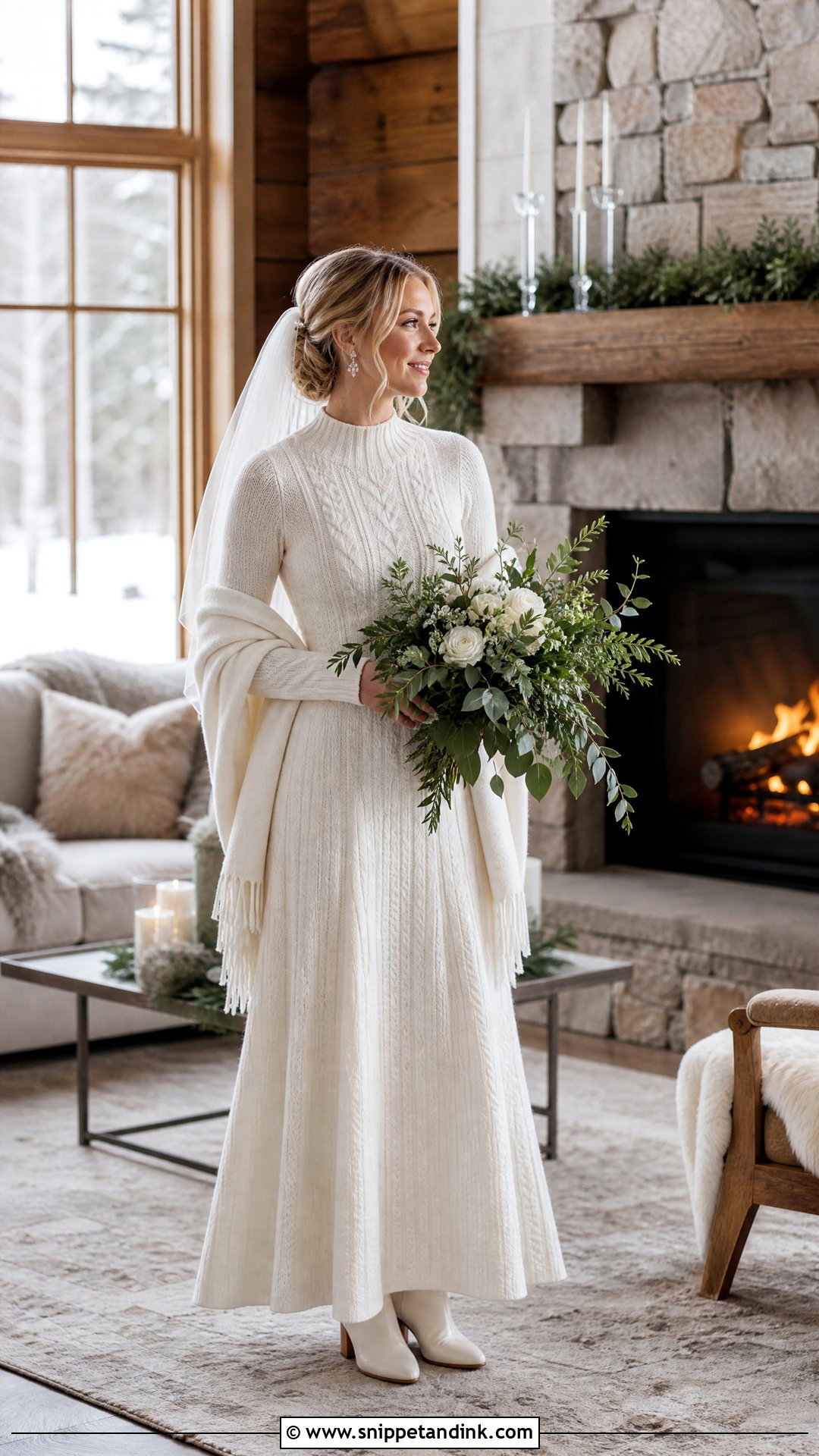
Cable knit says winter, and the trick is to keep it from saying sweater. I’d use cables on a fitted bodice only and switch to a finer-gauge knit for a softly flared skirt; cables all the way down add weight and bulk at the hips. A mock neck and long sleeves give warmth, and an ivory satin lining lets the skirt move. Closed-toe block heels, crystal earrings and a brushed cashmere wrap cover the outdoor photos; a winter-white wool coat works too. Wear the hair up so the neckline stays visible.
7. Off Shoulder Knitted Wedding Dress
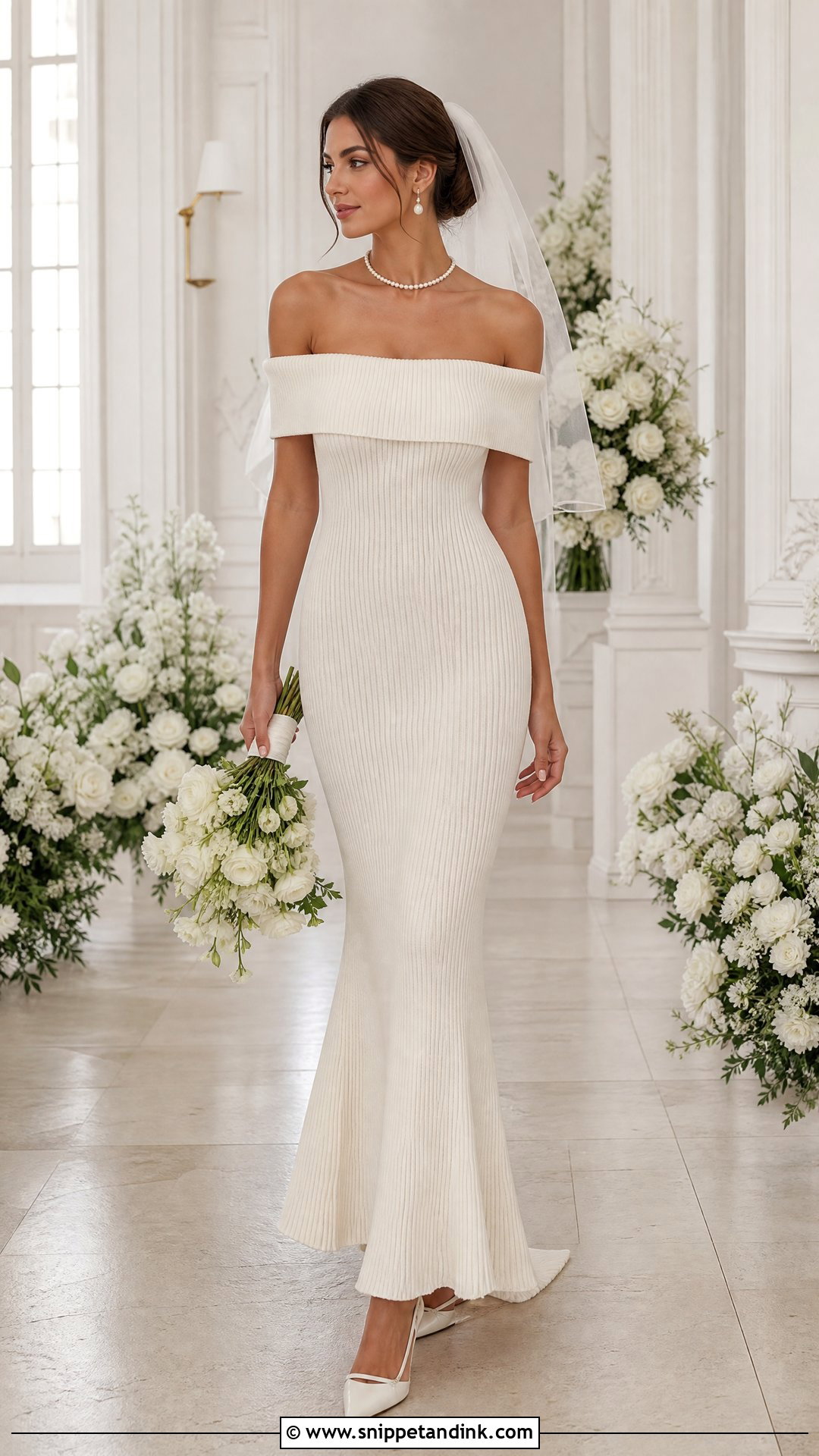
Off-shoulder knit stays in place only if the neckline is engineered for it. A folded band with elastic or silicone grip inside will hold; a loose single edge slides down the arm every time you lift your bouquet. Under that, a fitted bodice and gently flared skirt in fine rib give an hourglass line. Slingback heels, a short pearl necklace and a low bun or side-parted waves keep the collarbones clear. A shoulder-length veil suits it. For cold weather, bring a cropped ivory cape you can drop indoors.
8. High Neck Knitted Wedding Dress
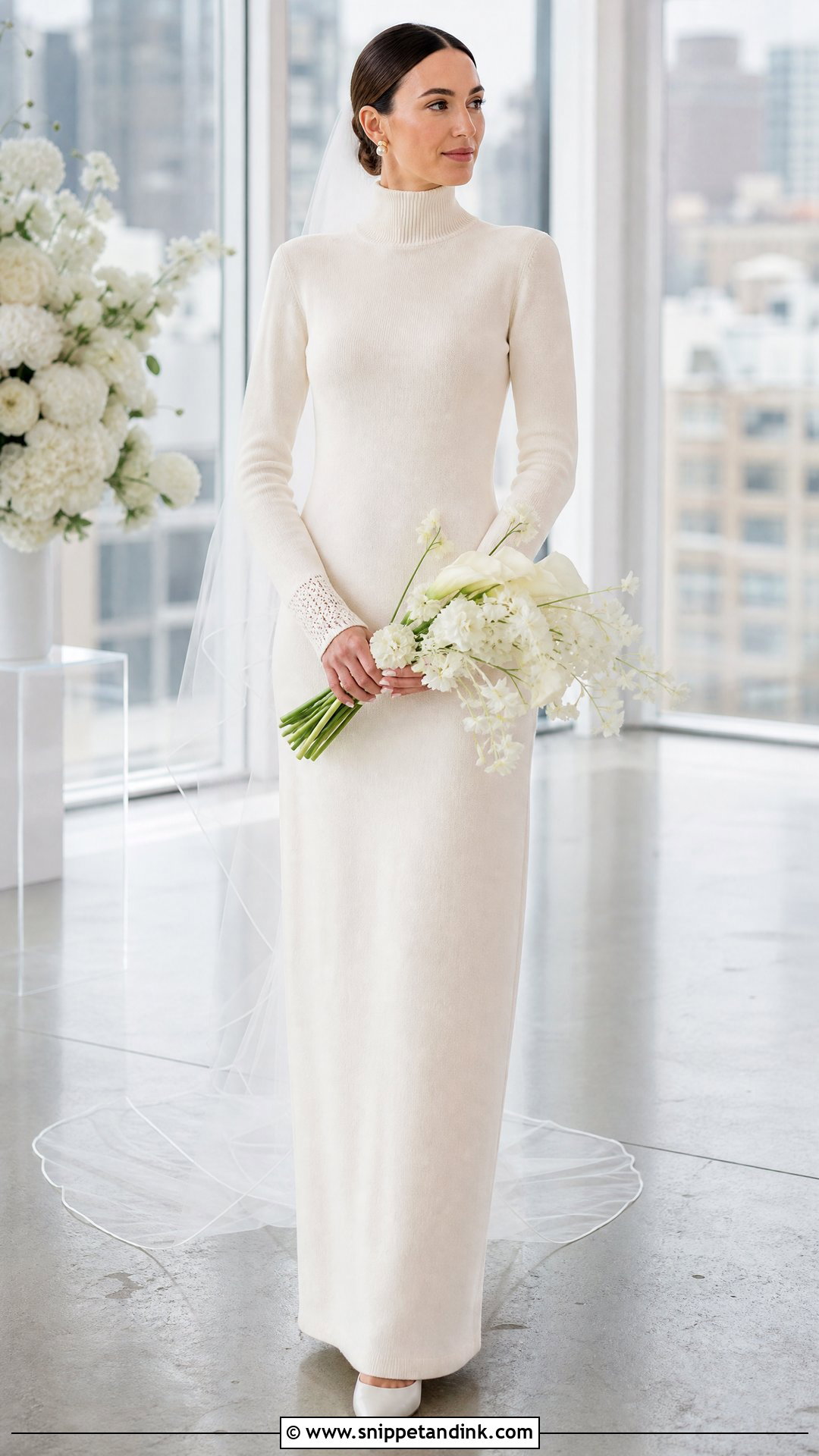
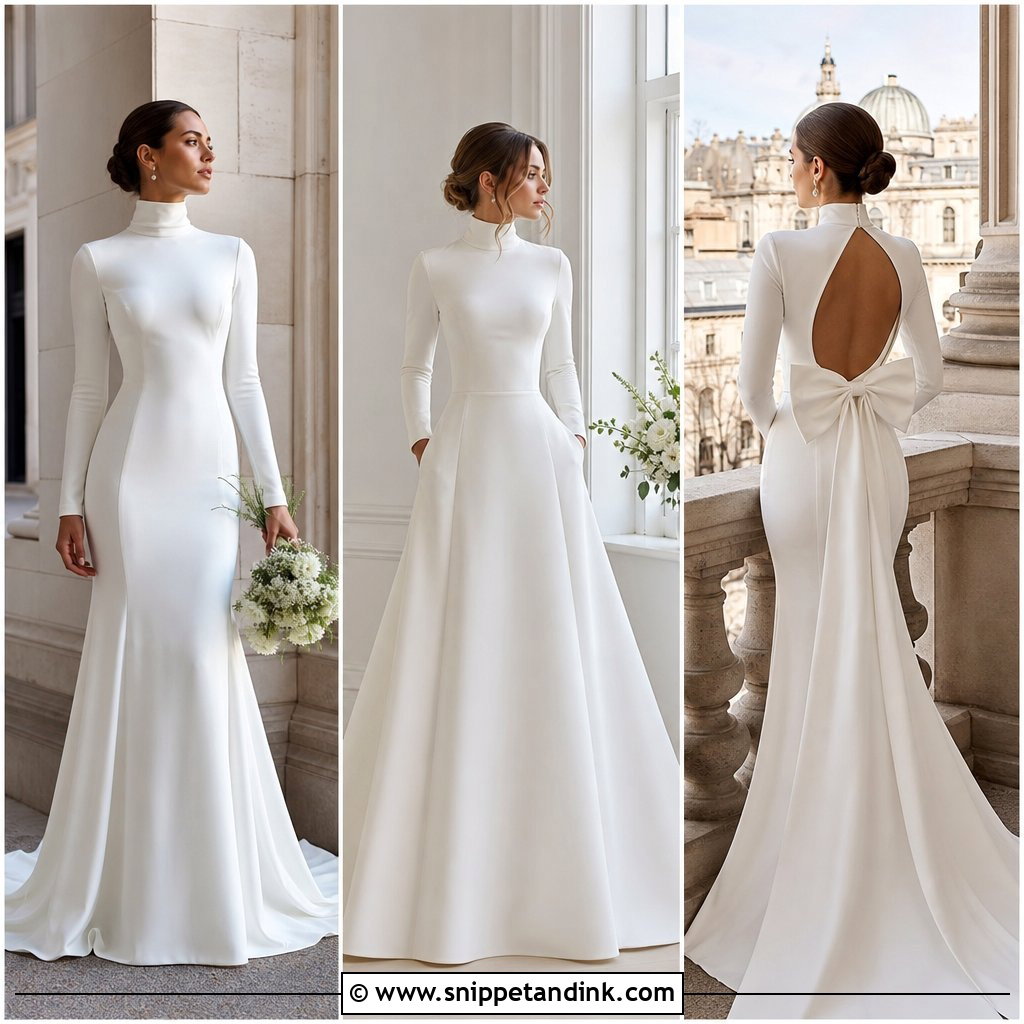
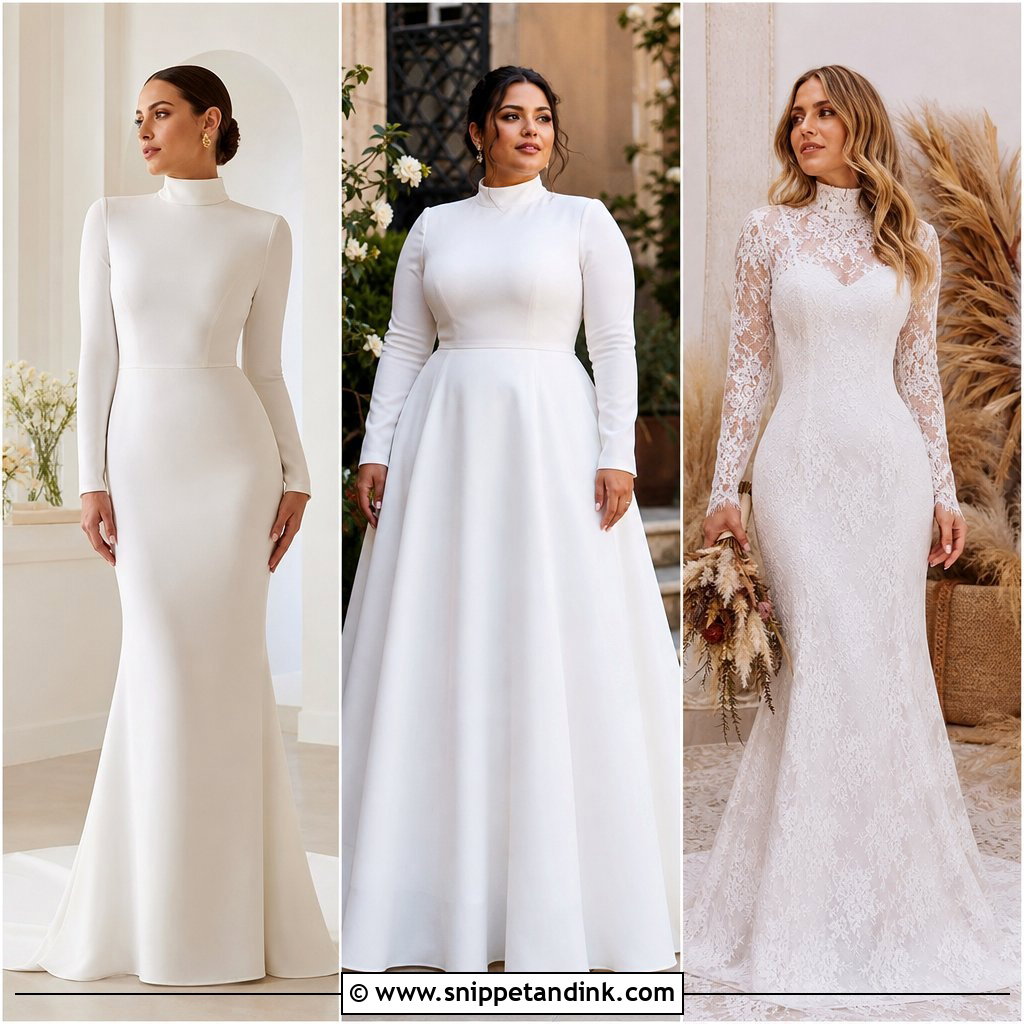
A high neck in knit needs a fine gauge, full stop. Thick yarn at the throat looks like a turtleneck; fine yarn reads sleek and fashion-led. A sleeveless gown with a mock neck, defined waist and long column skirt is the cleanest version; fitted sleeves with openwork cuffs add coverage. Skip the necklace and attach the veil below a center-parted bun so the collar shows. An open back or small keyhole balances the covered front. In a heated indoor venue, ask whether the yarn is a wool blend, since a high wool neck gets warm fast.
9. Backless Knitted Wedding Dress
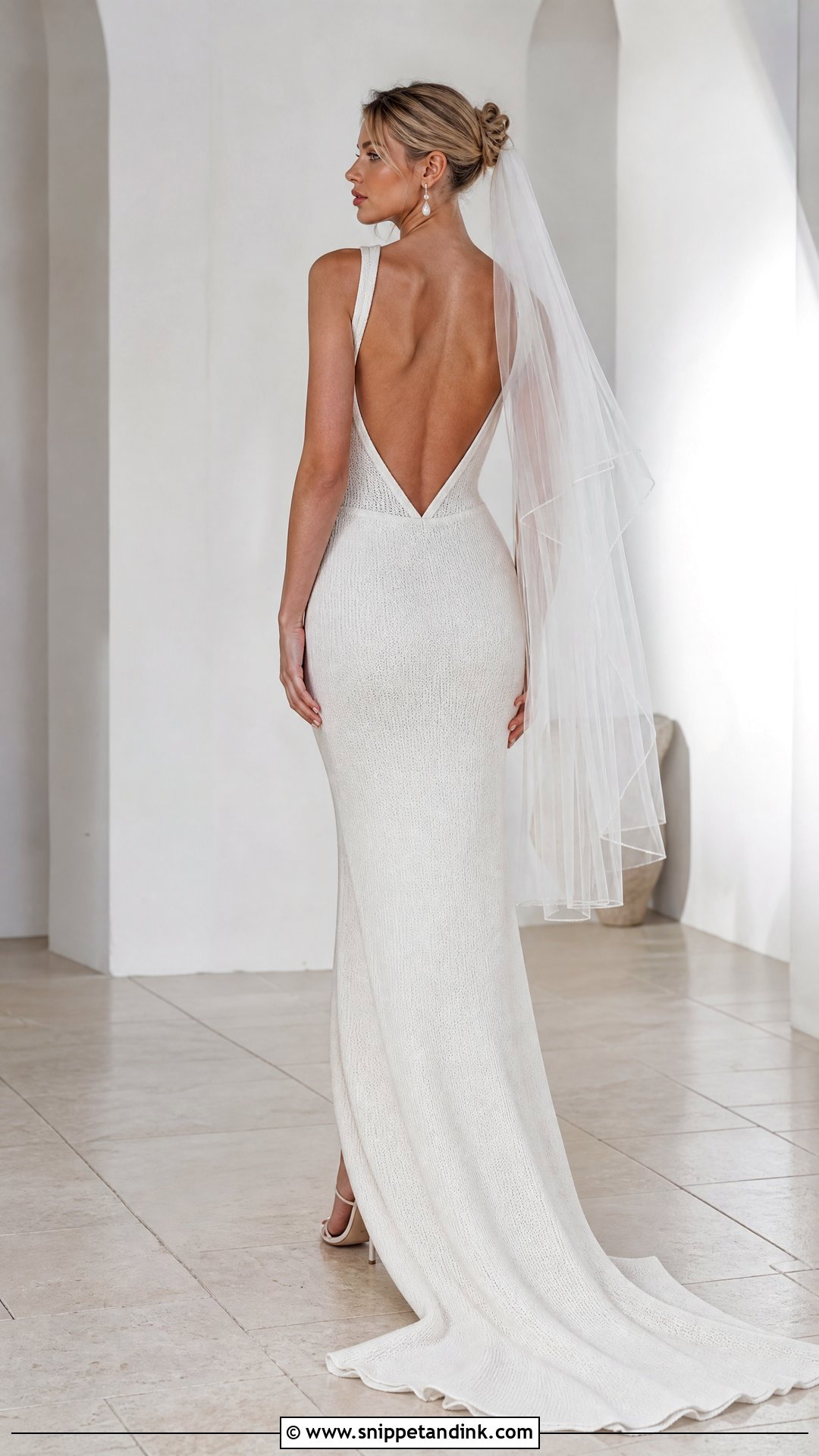
From the front it is quiet; from behind, a backless knitted wedding dress is the whole story. Knit edges roll and stretch when they’re left raw, so the back opening must be reinforced with a bound edge or an elastic band inside, or it will gape by the first dance. A low scoop, narrow V or geometric cutout all work on a close-knit bodice. Test your support solution at the fittings, not on the day. Heeled sandals and an updo show off the back, and a sheer veil should fall behind the opening rather than cover it.
10. Mermaid Knitted Wedding Dress
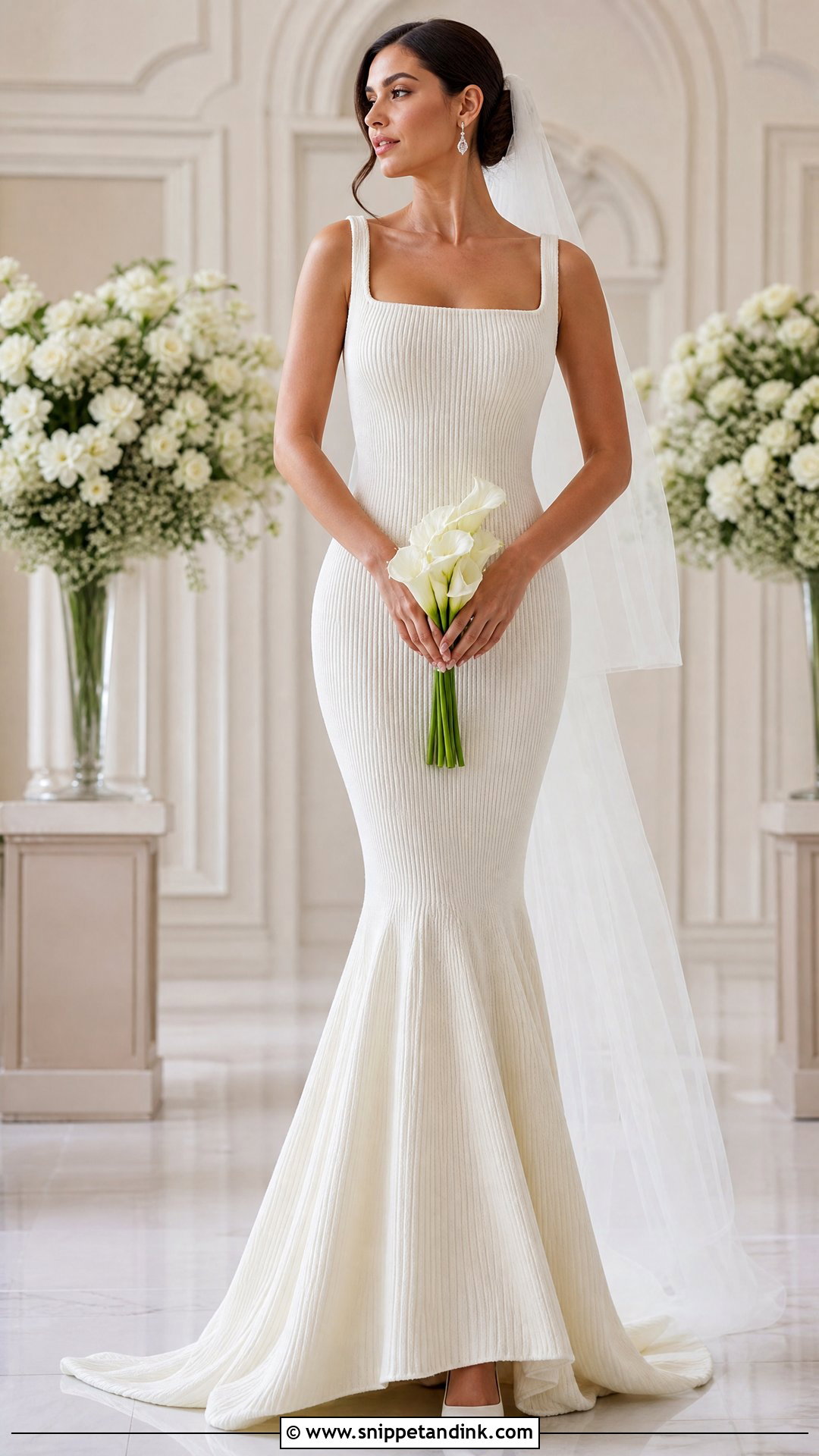
Knit’s natural stretch is what makes a mermaid shape possible without boning everywhere. The gown fits closely through waist, hip and thigh, then flares near the knee. Fine rib or dense lace-like knitting gives definition; a strong inner lining stops the knit from bagging at the seat after you’ve sat down a few times. Pointed pumps or platforms give the flare clearance. Keep the neckline simple and the bouquet narrow. Sheer knit sleeves with denser cuffs add coverage if you want it.
11. A Line Knitted Wedding Dress
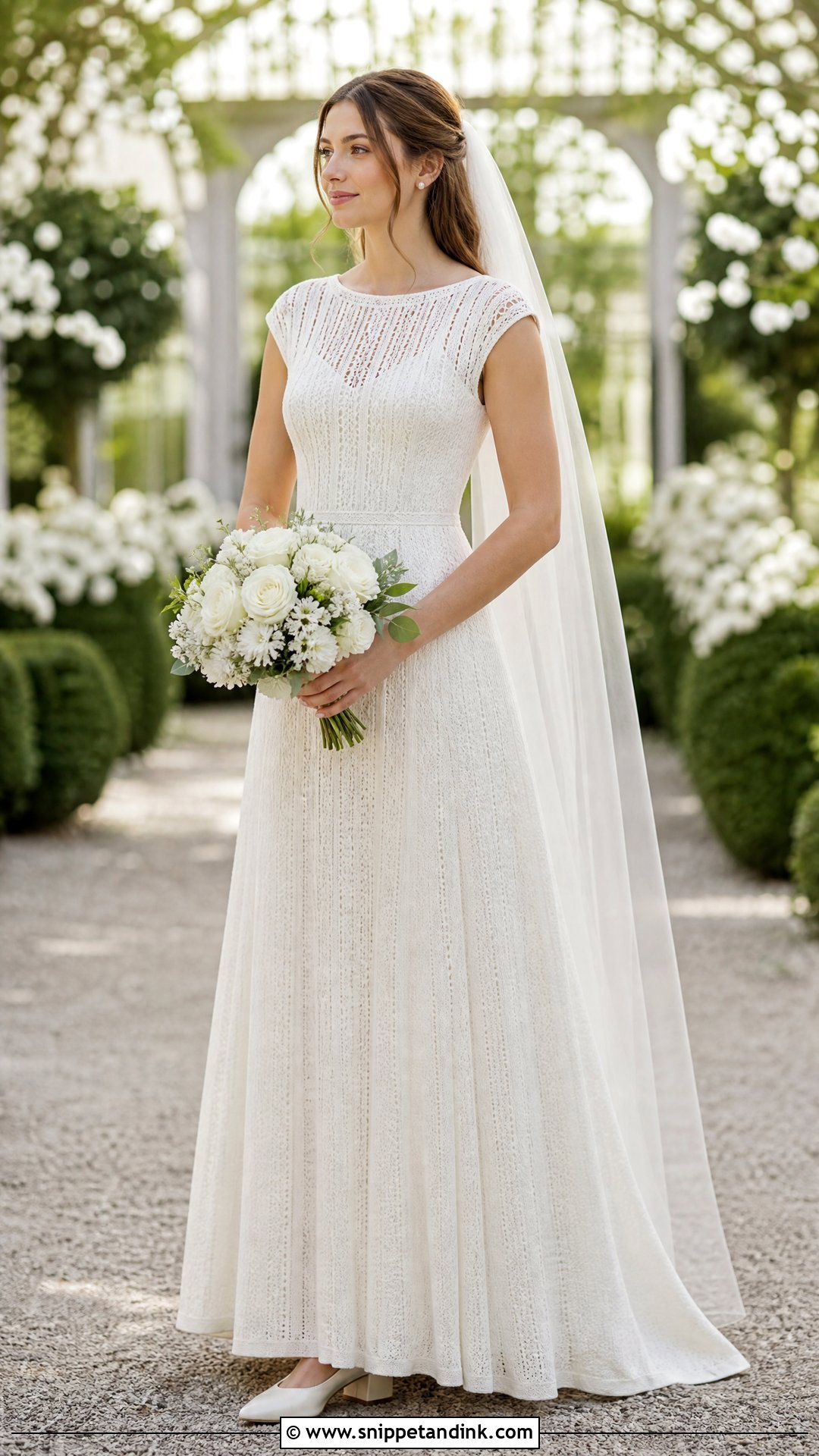
Texture without a body-hugging fit is what an A-line knit gives you. The bodice sits close, then the skirt widens gradually from the natural waist. I place pointelle or botanical stitches vertically where possible, since horizontal bands of pattern widen the hip visually. A fully lined base lets the skirt fall evenly. Low block heels, pearl studs, a gathered veil and a half-up style suit it. Add a satin sash or knitted belt only if the waist needs more definition.
12. Knitted Wedding Dress With Train
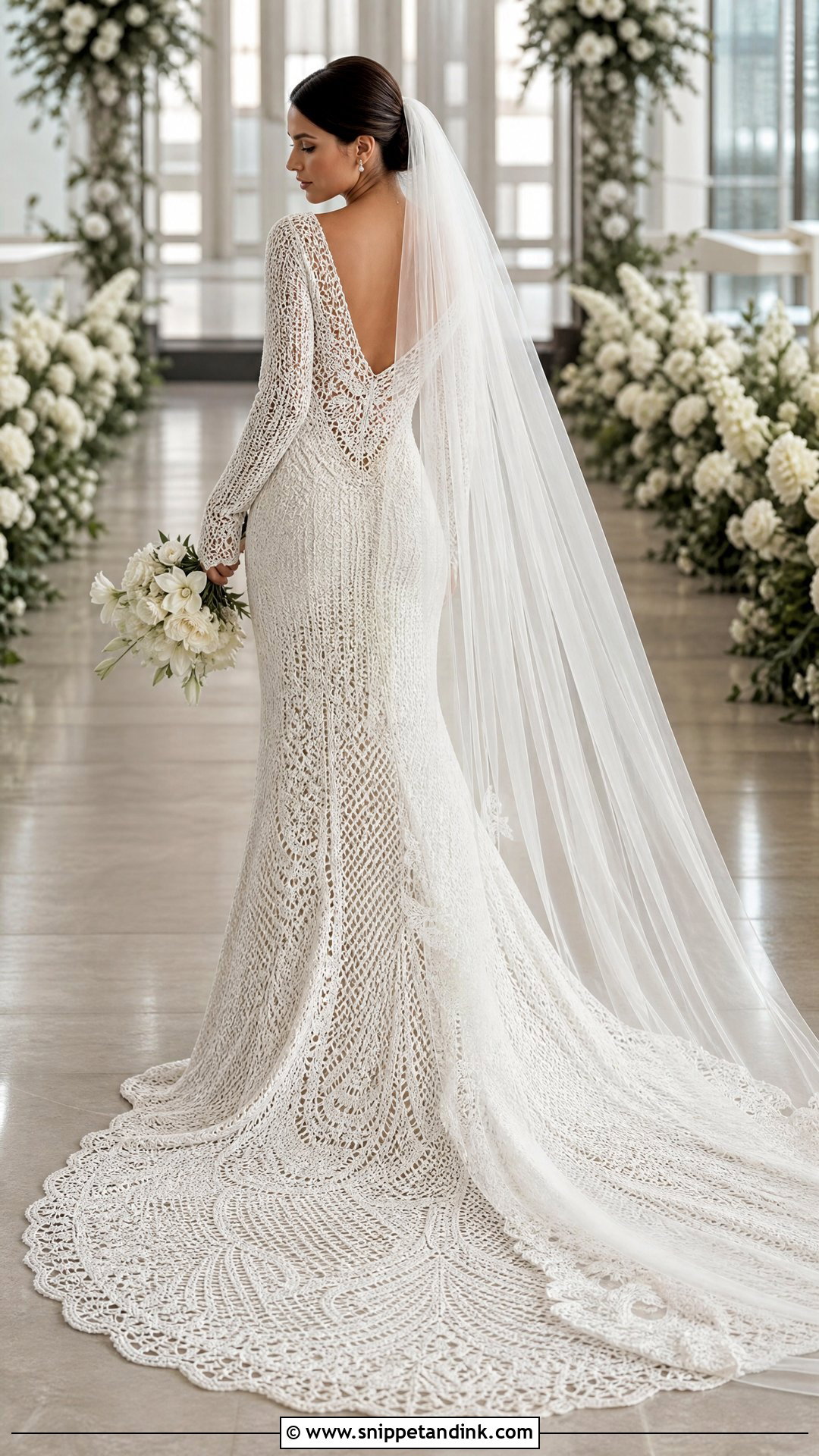
Trains and knit need care. A long knitted train drags, stretches and catches on every rough floorboard, so I ask for a chapel or sweep train in a finer, stable stitch with a woven lining underneath to carry the weight. That lining is what lets the hem glide instead of snag. Block heels, pearl earrings and a cathedral veil echo the length; a low bun shows the back. Ask the seamstress for a hidden bustle, ideally with ribbon loops rather than hooks, because hooks pull knit stitches.
13. Two Piece Knitted Wedding Dress
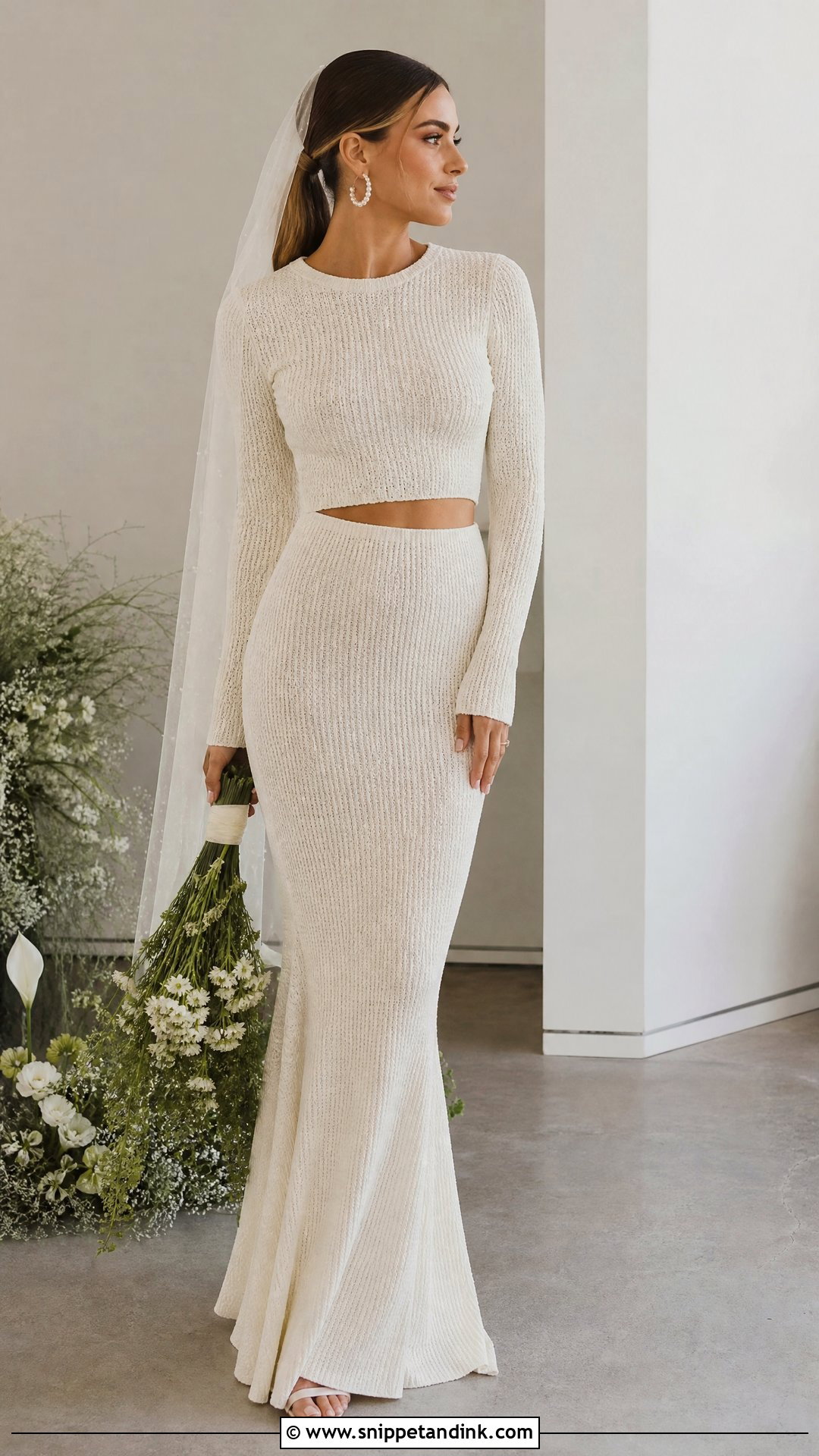
Separates suit knit well, and a two piece knitted wedding dress gives you options: a fitted top over a high-waisted skirt, with a sliver of skin or a top that overlaps the waistband. Buy both pieces from the same maker and ideally the same yarn lot. Ivory yarn varies slightly between dye batches, and the difference shows in daylight. A flowing A-line skirt reads romantic; a straight midi suits a courthouse. Slingbacks, pearl hoops and a sleek low ponytail finish it. The top, at least, will get worn again.
14. Midi Knitted Wedding Dress
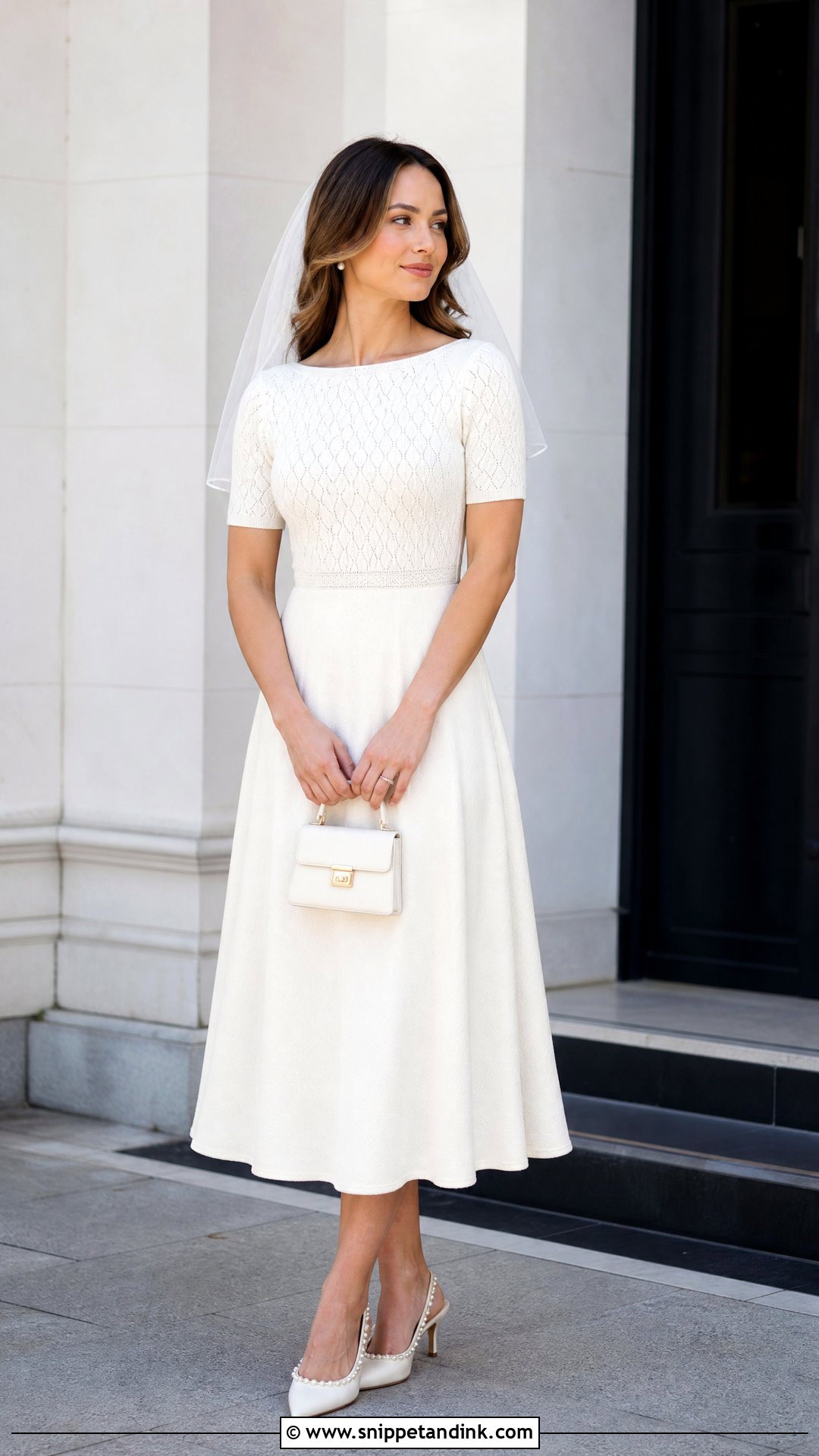
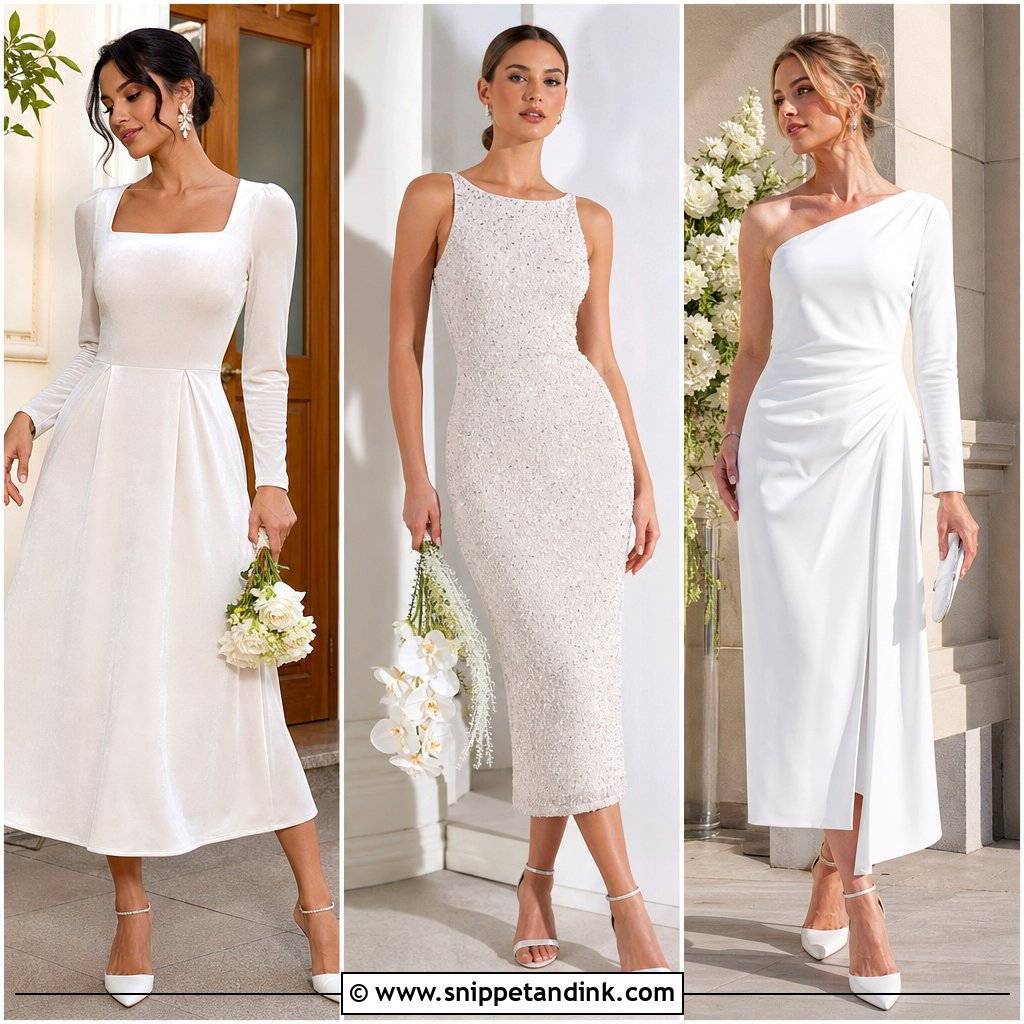
Midi length makes a knit gown feel intentional at a civil ceremony or small dinner. Aim for a hem between lower calf and ankle. A fitted pointelle bodice and softly flared skirt give movement. Your shoes are on display now, so pearl-trimmed pumps or ankle-strap sandals become part of the outfit. A short veil and a mini bag keep proportions balanced. Check that the lining ends just above the knit hem, not inches higher, or the openwork at the bottom turns see-through in sunlight.
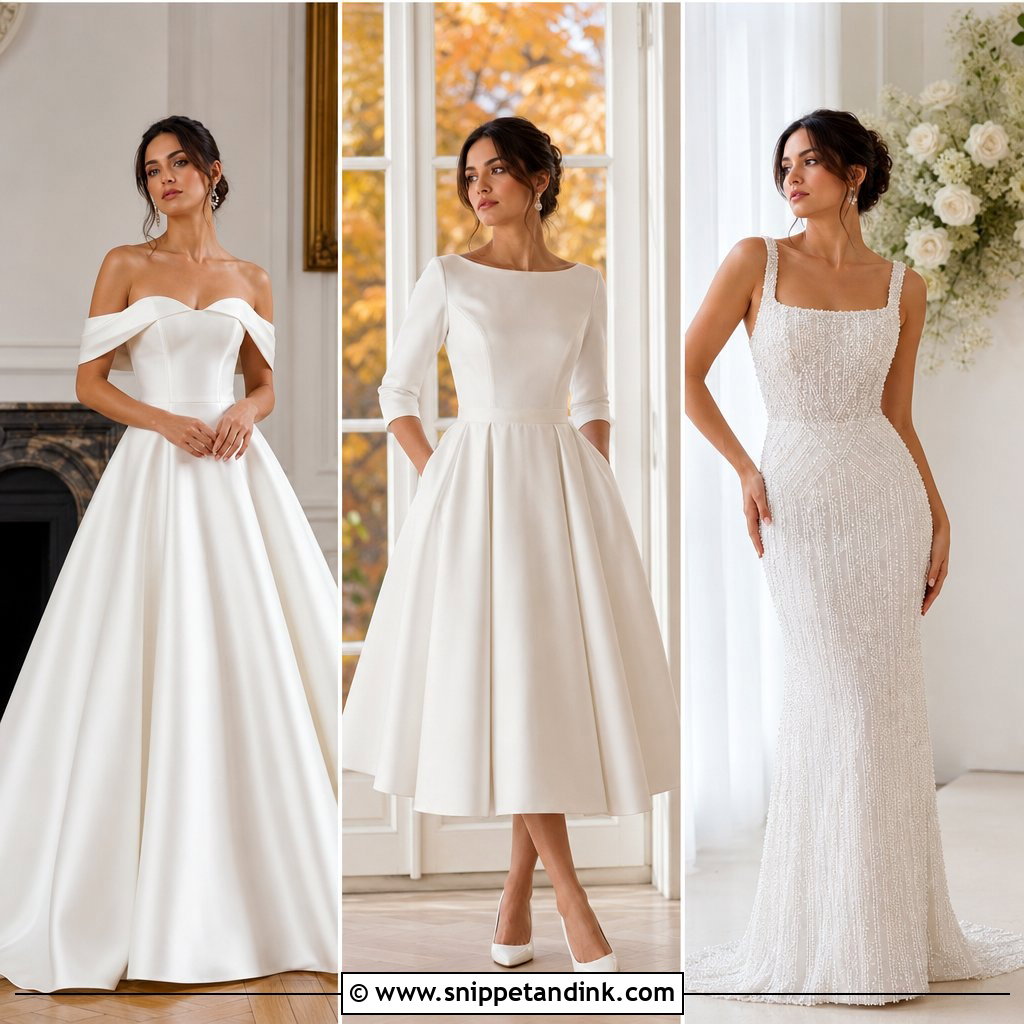
15. Mini Knitted Wedding Dress
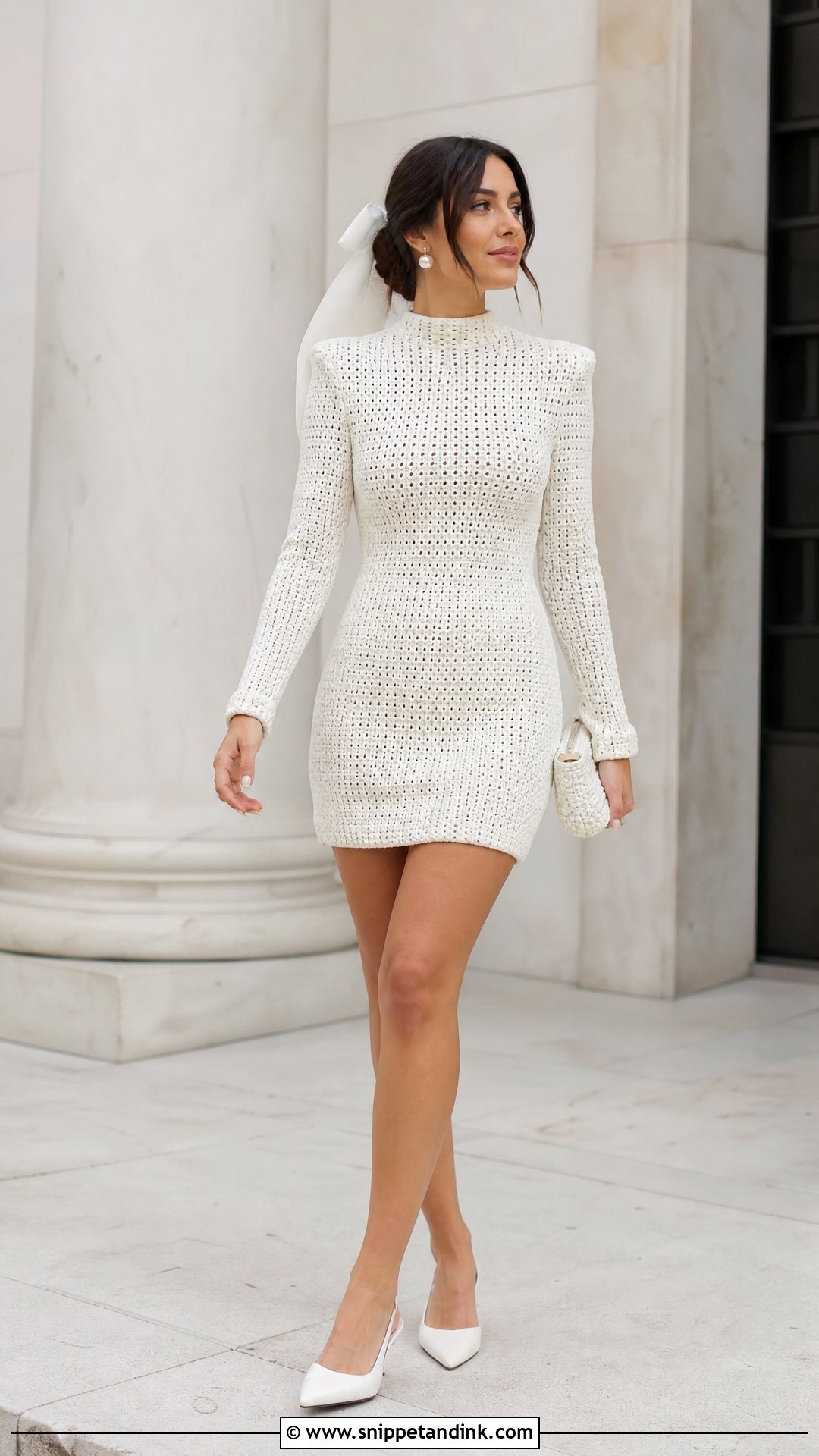
Short and knitted works for a courthouse, a reception change or a casual destination wedding. The knit has to be structured, though; a soft mini rides up when you walk and stretches at the seat when you sit. Long sleeves or a high neck balance the short hem. Pointed pumps, kitten heels or ankle boots depending on season, plus a short veil or an oversized bow, make it bridal. An opaque lining is non-negotiable here, because openwork gets revealing under camera flash.
16. Square Neck Knitted Wedding Dress
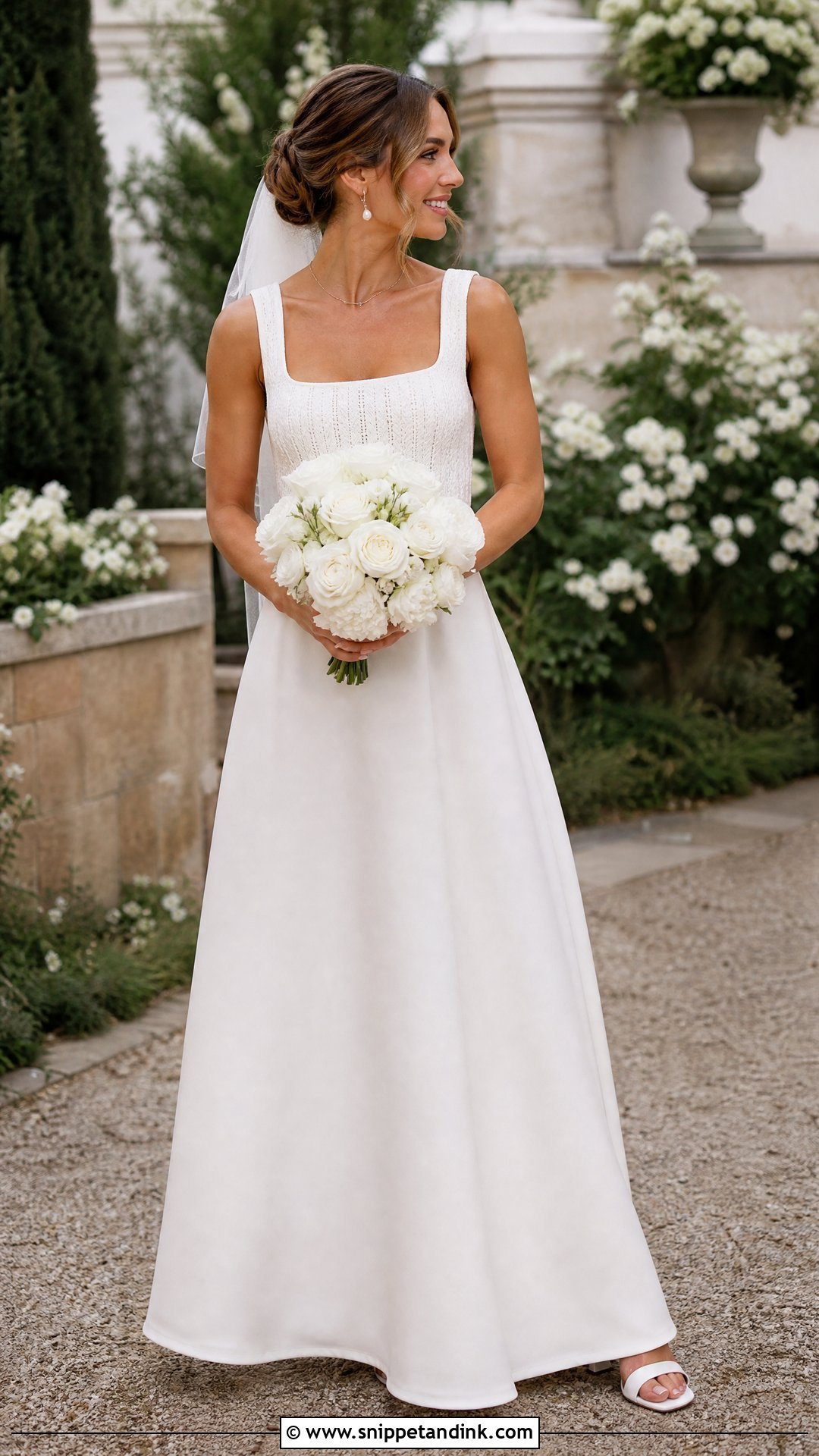
A square neckline gives soft knit some architecture. The edges must be reinforced with a firm binding or the corners will round off and sag after an hour, which ruins the whole point of the shape. Wide straps or fitted sleeves help hold it square. An empire or natural waist into an A-line skirt keeps volume modest. Pointelle on the bodice and a denser skirt is a good balance. A fine chain necklace is optional; pearl drops, low satin heels and a loose chignon are enough.
17. Halter Neck Knitted Wedding Dress
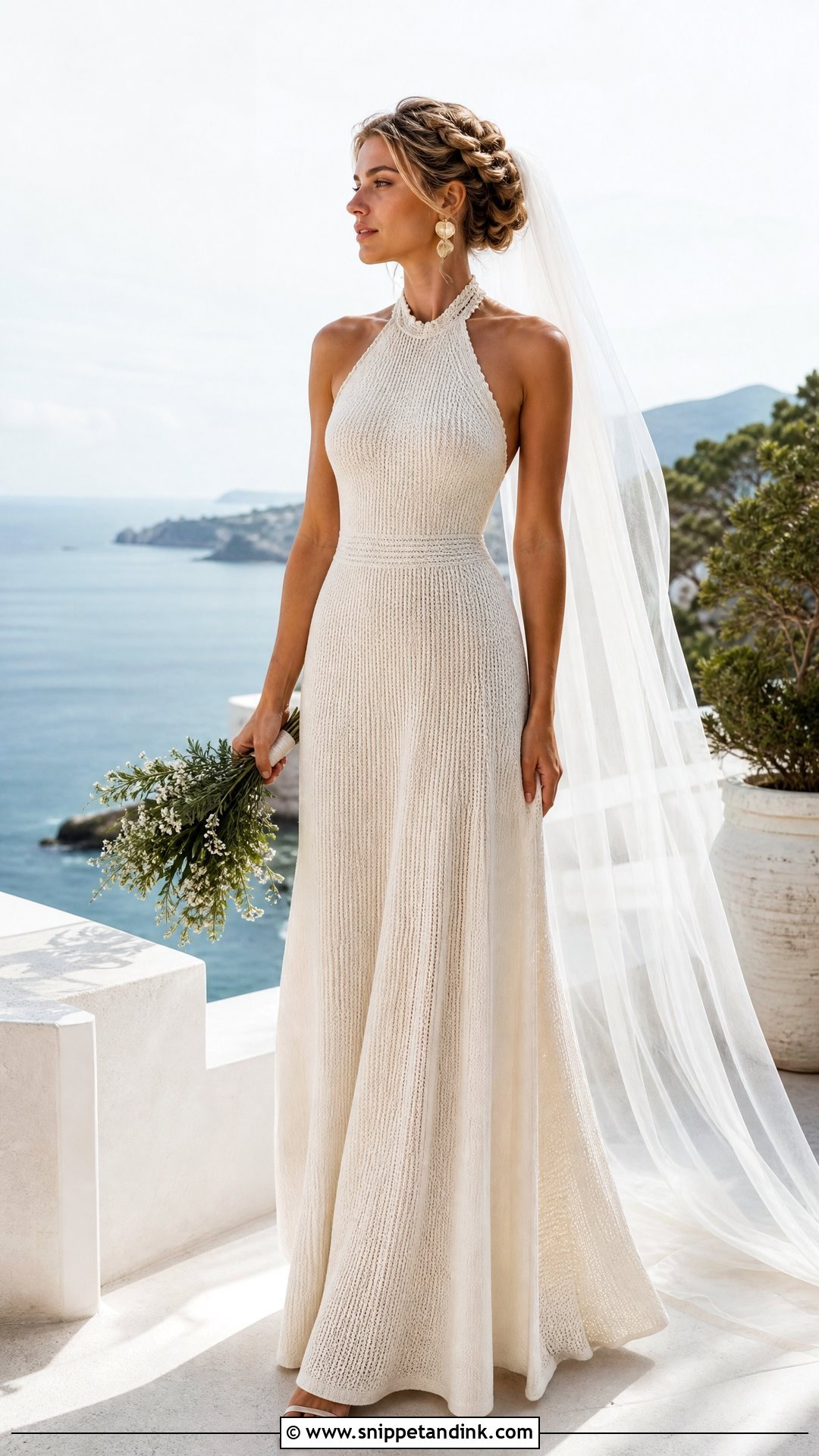
For a warm-weather wedding, a halter in fine cotton or silk-blend knit sits light on the body and leaves the shoulders free. A high halter reads modern and covered; a V-shaped one feels more coastal. Halters put all the skirt’s weight on the back of the neck, and knit skirts are heavy, so I check for an internal waist stay that shifts the load to the waist. A column suits the city, a flowing A-line suits outdoors. Skip the necklace, attach the veil below a neat bun and keep the bouquet small.
18. Puff Sleeve Knitted Wedding Dress
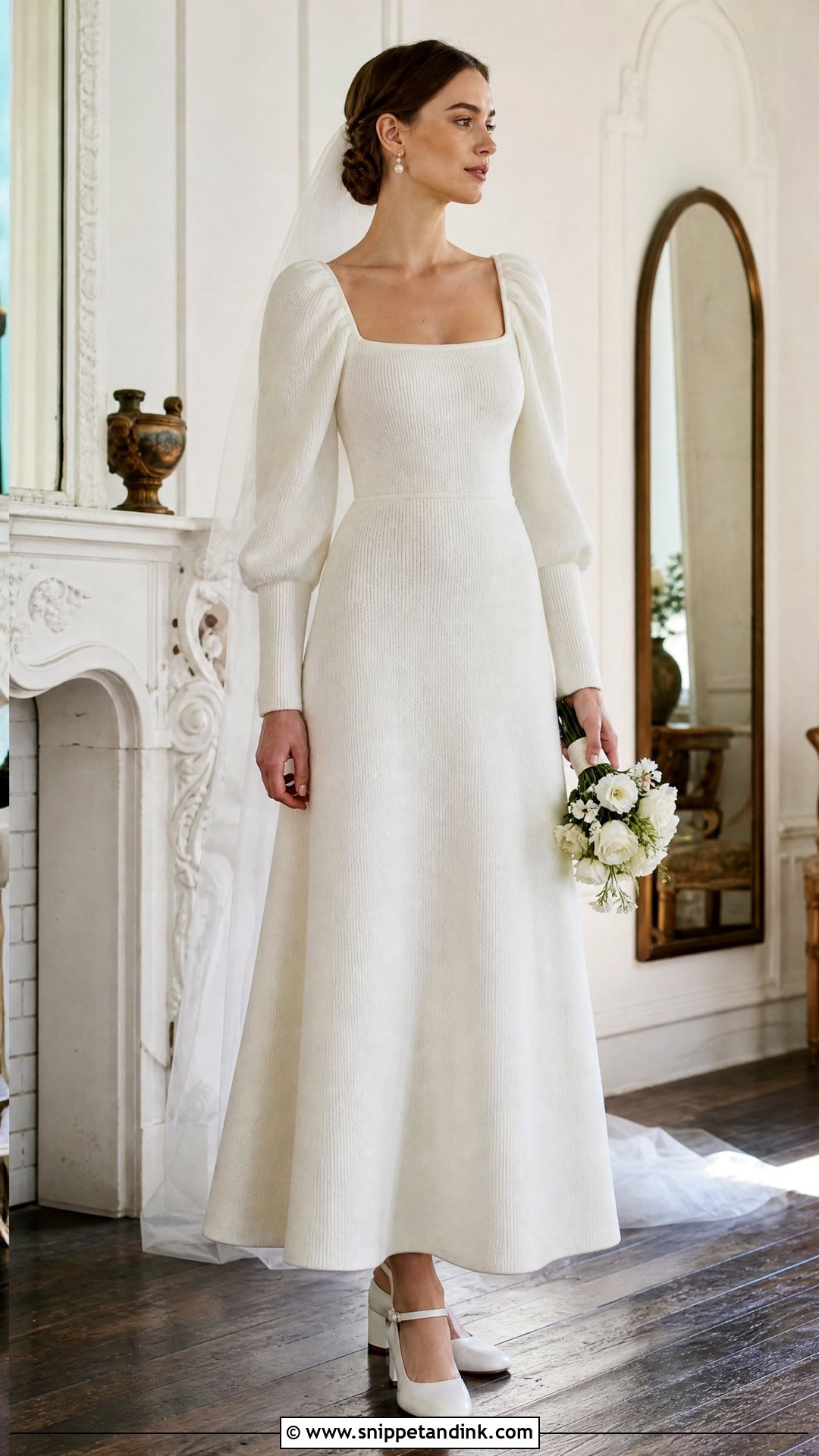
Puff sleeves give a vintage outline, but in knit they need help to hold up. Controlled fullness at the shoulder, often with a light tulle or organza support inside, and a fitted cuff at the wrist keep the shape from collapsing by afternoon. Pair them with a square-neck bodice and simple A-line skirt in fine-gauge yarn. Satin block heels and a low braided bun suit it, with a plain veil. Petite brides do better with a small puff; taller brides can carry longer sleeves and a fuller skirt.
19. Cape Sleeve Knitted Wedding Dress
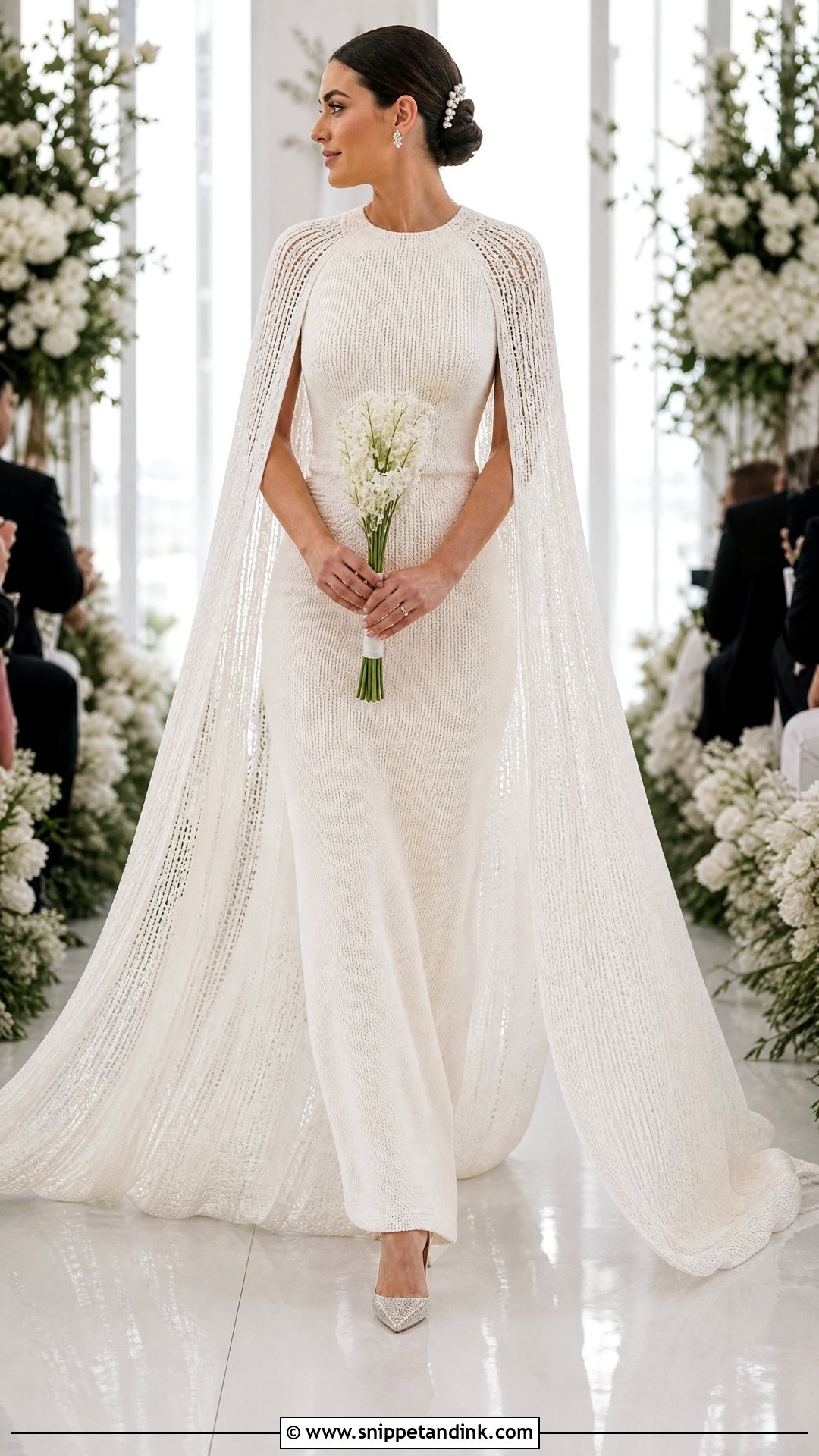
Cape sleeves cover the upper arm without the cling of a fitted sleeve, and they move dramatically on the walk down the aisle. Knitted panels from the shoulder fall loose at the sides; fine openwork at the edges gives them motion, while a denser bodice and lined skirt add structure. A long veil competes with the cape, so I’d use a pearl comb or a short blusher instead. Pointed heels, crystal studs and a sleek bun keep it clean. Hold the bouquet low and narrow so the cape can swing.
20. Floral Openwork Knitted Wedding Dress
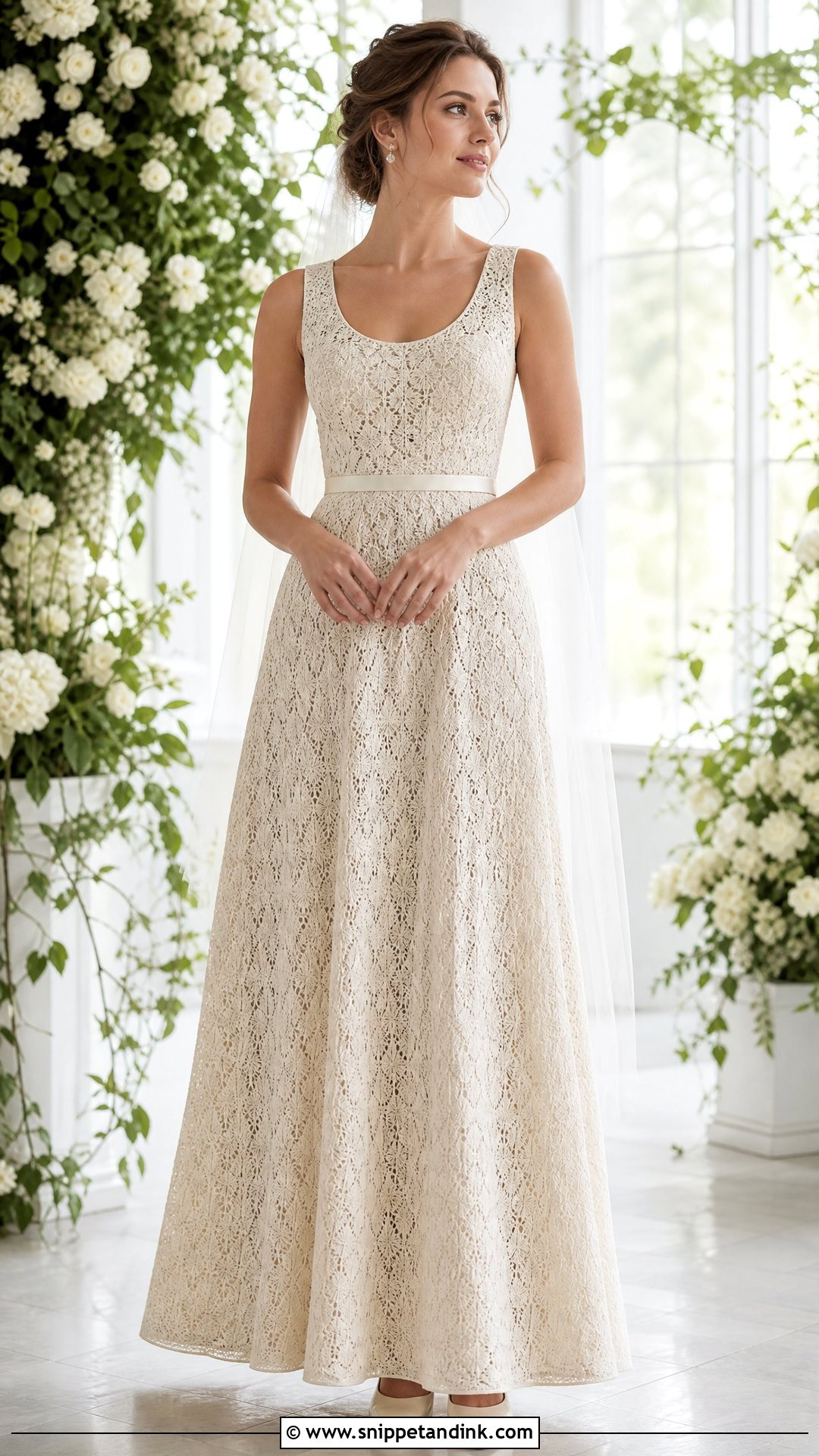
Openwork turns the stitch into the decoration. I look for motifs that repeat evenly, smaller near fitted areas and larger toward the hem, and for a matte ivory lining behind them; a shiny lining makes the flowers harder to read. A scoop neck and floor-length A-line keep the detailed surface calm. Plain satin pumps, tiny pearls and a soft updo suit it, with an unembellished veil. Openwork snags more than solid knit, so leave rings with prongs off until after the dress is on.
21. Pearl Embellished Knitted Wedding Dress
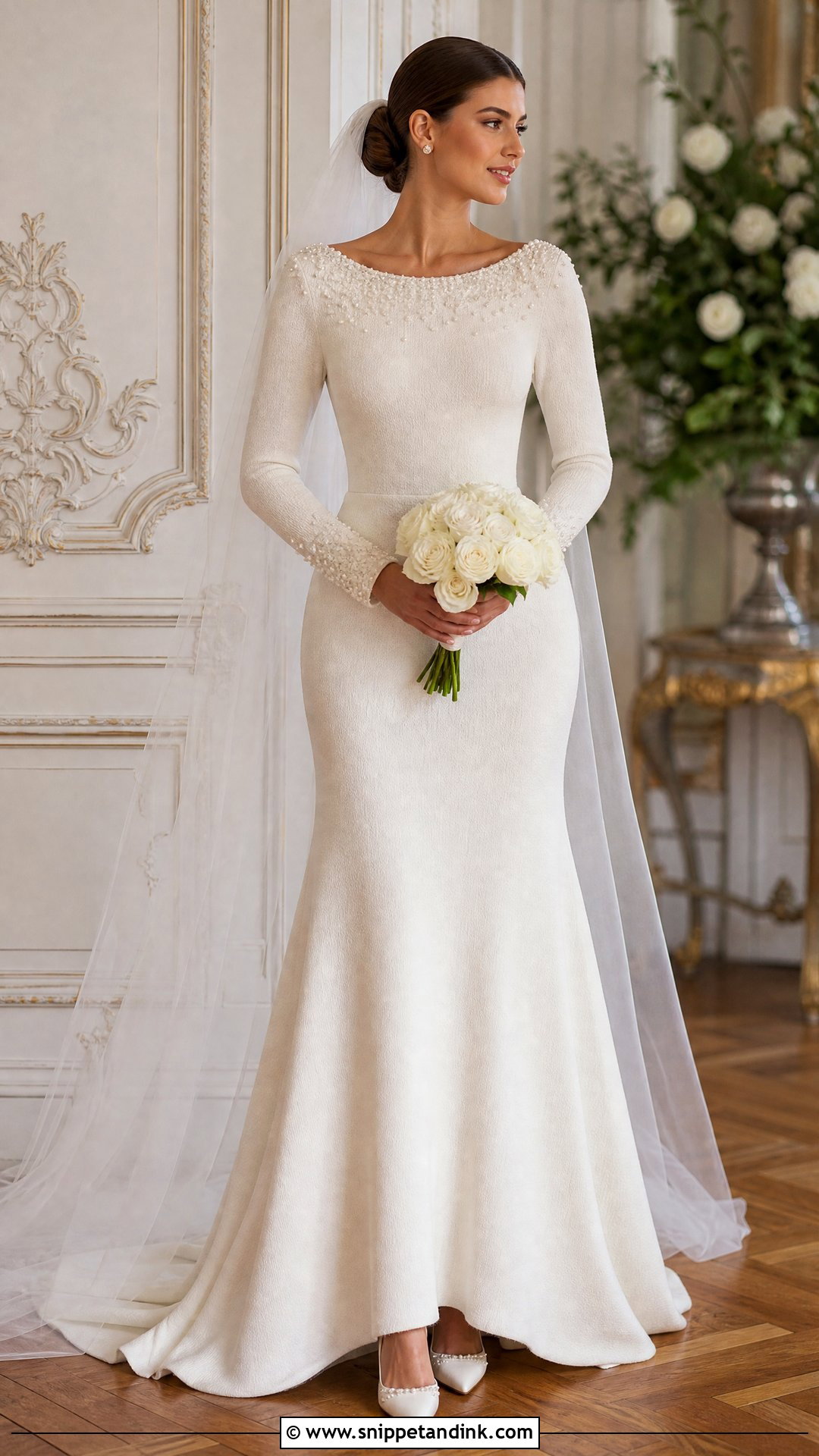
Pearls on knit should be scattered, not massed. A dense cluster of beads drags fine knit out of shape, and you’ll see the neckline sag under its own weight. Keep them to the neckline, cuffs or upper bodice. A fitted long-sleeve bodice and flowing skirt give the beading space. Pearl-trimmed pumps, small studs and a low bun are plenty; skip the statement necklace. Ask to see the inside: every pearl should be stitched on individually and the lining should cover the thread ends, which otherwise scratch.
22. Vintage 1970s Knitted Wedding Dress
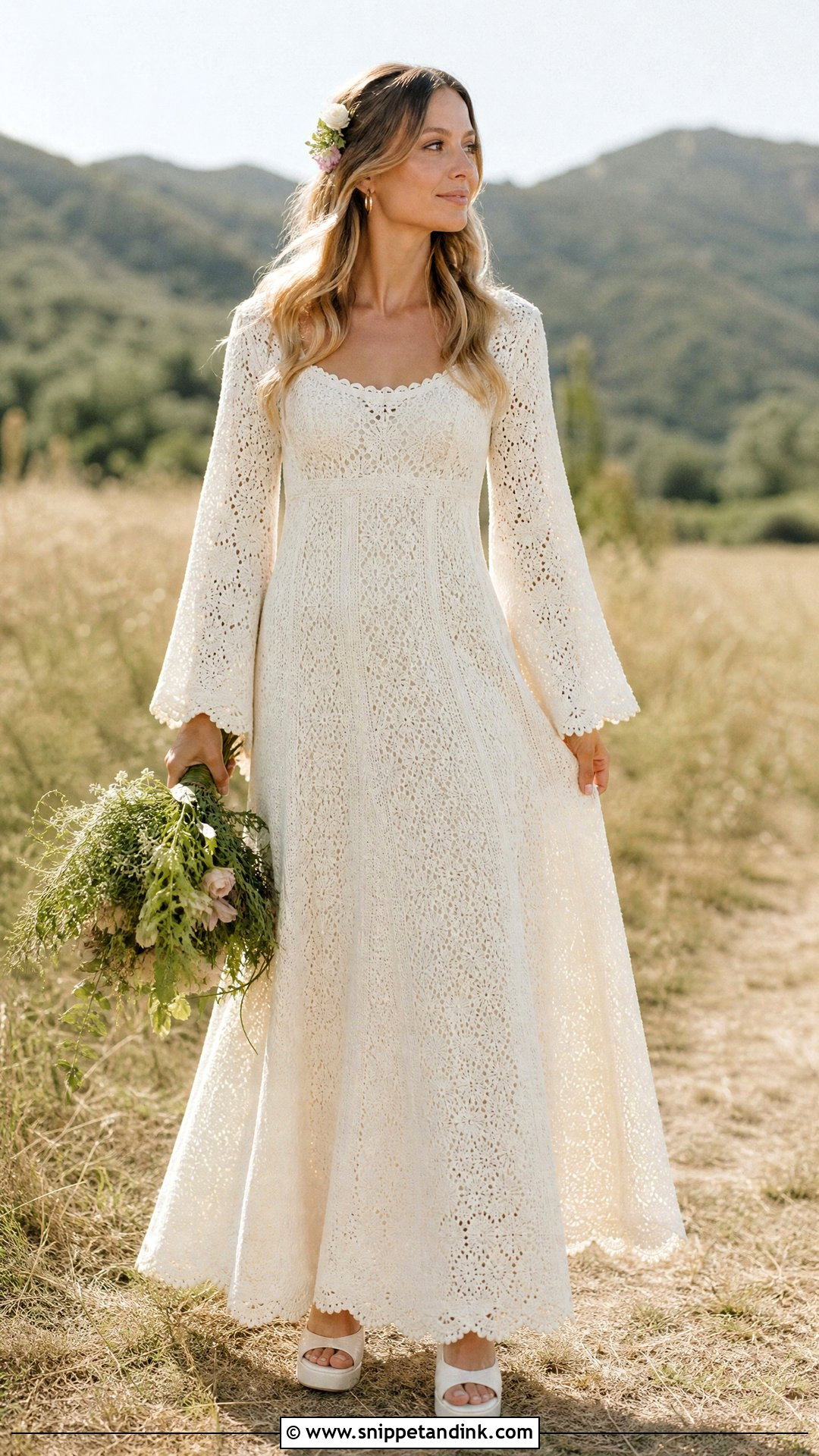
The seventies were full of knitted and crochet bridalwear, so this one has real history behind it. An empire waist or fitted bodice, a long gently expanding skirt and softly flared sleeves capture it. Scalloped cuffs and hems reference the era without tipping into costume. Platform sandals, small hoops and loose center-parted waves suit the mood; a floral comb looks more natural than a tiara. Match the lining color closely to the yarn, especially under large motifs. If you’re wearing a true vintage piece, have the seams checked, since old yarn can be brittle.
23. Courthouse Knitted Wedding Dress
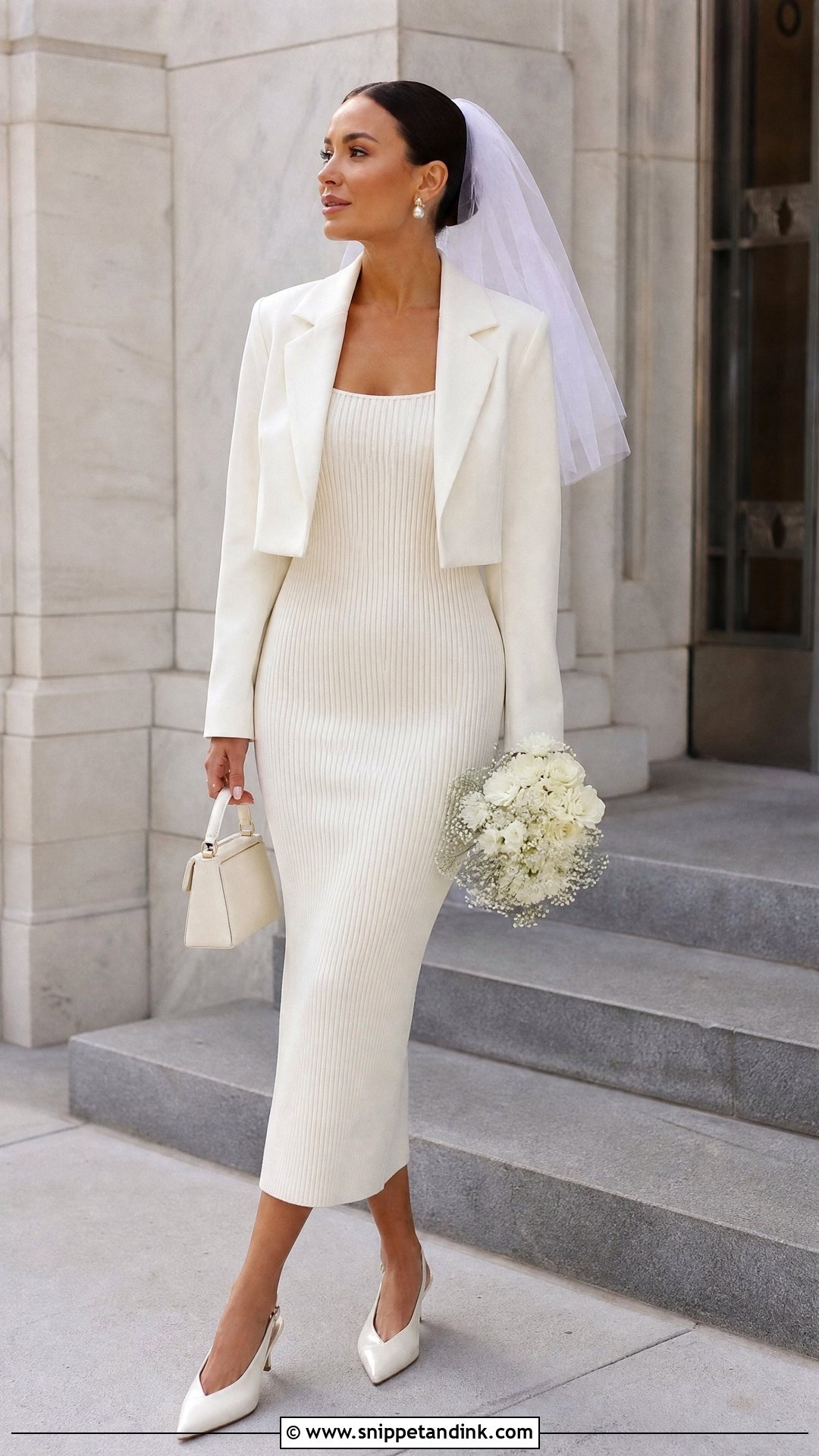
A courthouse knitted wedding dress has to survive car rides, a waiting room, stairs and lunch afterward. A fitted midi with long sleeves, a square neck and subtle ribbing works, in a knit dense enough to keep its shape after sitting. Thin knits bag at the seat. Slingback heels, pearl earrings and a small structured bag finish it, and a cropped ivory blazer adds a layer for cold steps outside. A birdcage veil or sleek hair bow separates it from an ordinary white dress.
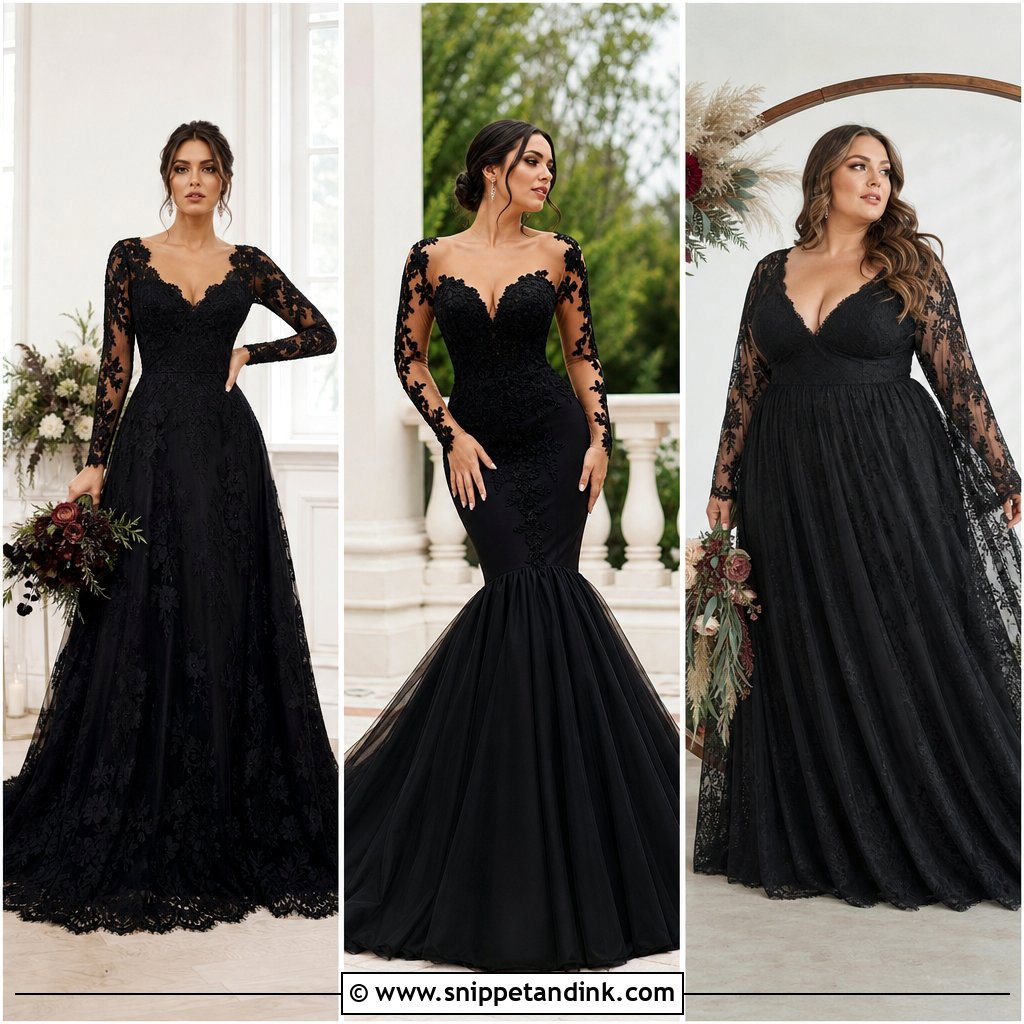
24. Plus Size Empire Waist Knitted Wedding Dress
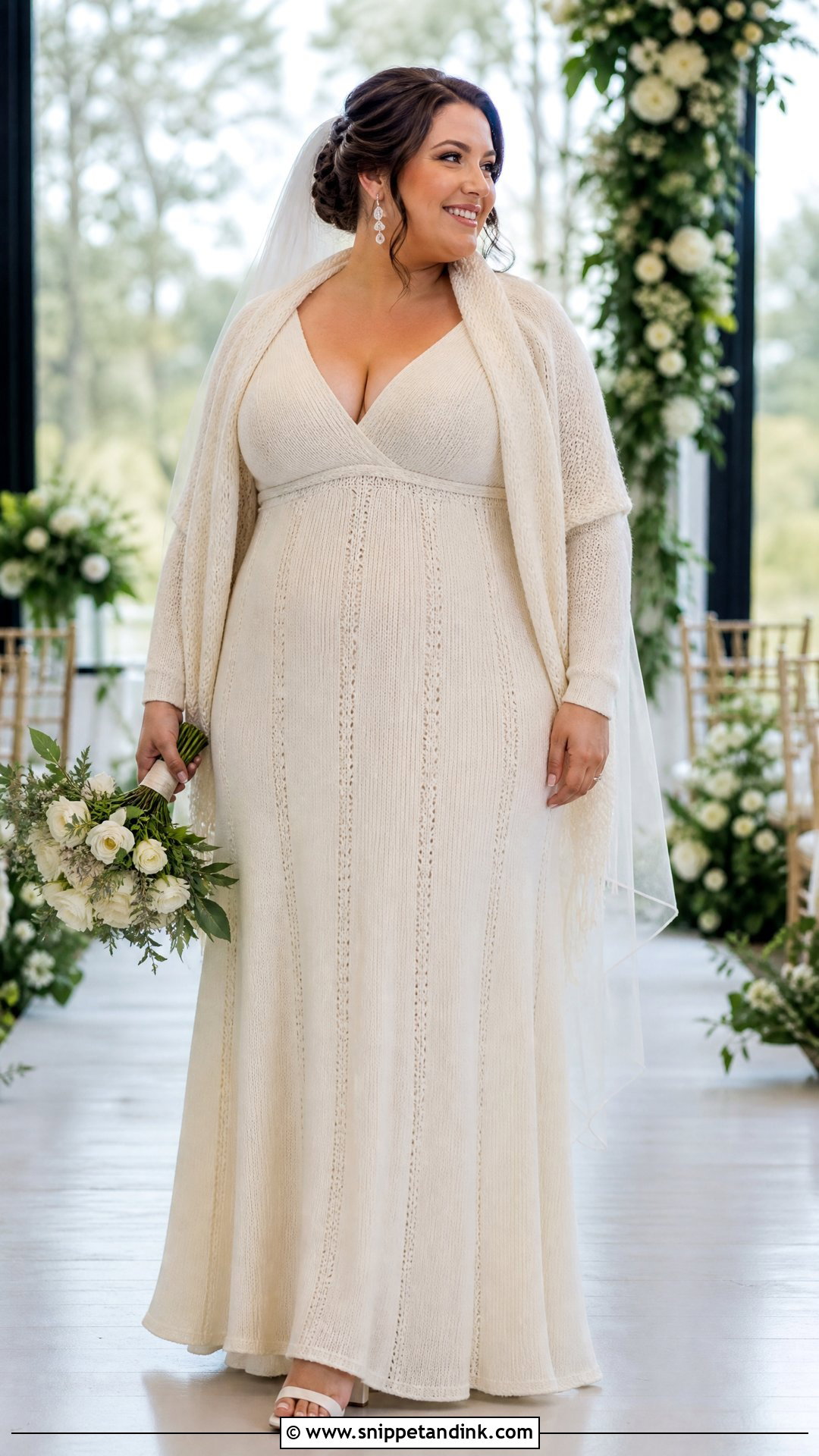
An empire waist gives plus-size brides shaping where they want it and lets the skirt move freely below. I place the seam just under the bust with a supportive lining inside, and keep the skirt in a knit that skims rather than clings. A V neck with three-quarter or full sleeves frames the face; vertical openwork panels add length. Stable block heels, drop earrings and a structured updo suit it. Measure carefully. Handmade knit stretches differently across the body, and a gown made too close-fitting will grow tighter at the bust and looser at the hem as it relaxes.
25. Maternity Wrap Knitted Wedding Dress
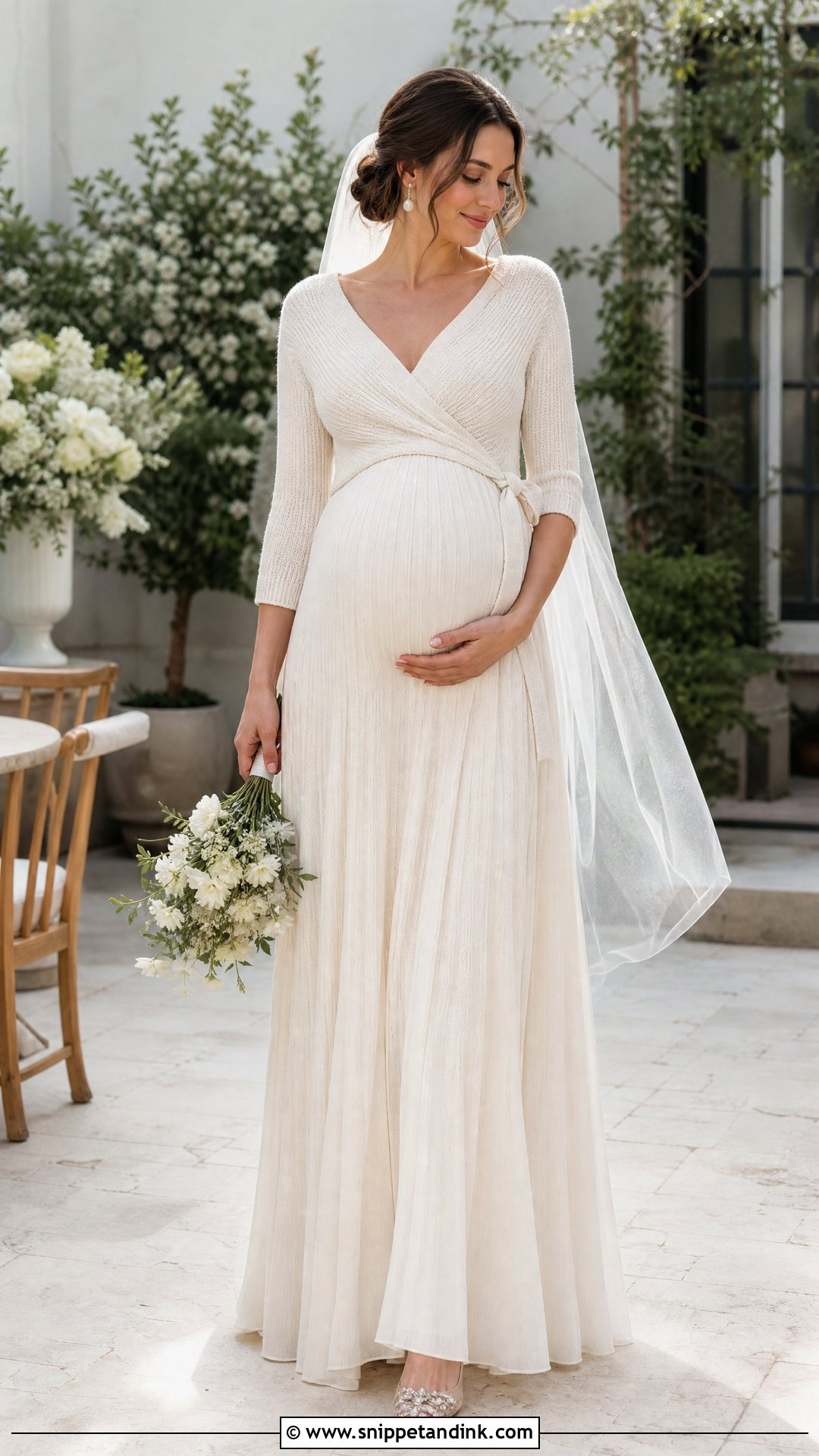
For a pregnant bride, knit is kind. It stretches with the body, and a wrap front adjusts as the bump changes. Choose a soft fine-gauge yarn, a crossover neckline, a raised waist and a flowing skirt over a full stretch lining. Anchor the wrap with a hidden tie or snap, because knit wraps slide open as you move. Three-quarter sleeves balance the neckline. Avoid beading or thick yarn at the waist where flexibility matters most. Low block heels, pearl earrings and a light fingertip veil make the day comfortable.
A Knit Gown Should Never Live on a Hanger
Hanging a knitted dress for weeks stretches the shoulders and lengthens the whole gown. Before and after the wedding, store it folded, with acid-free tissue between the folds, in a cotton bag. On the day itself it can hang for a few hours for photographs, ideally on a padded hanger with the weight supported by the internal loops at the waist.
Day-of fixes and aftercare
- Steam from a distance to relax creases; never press an iron flat onto knit, which crushes the stitches.
- If a loop snags, don’t cut it. Pull it gently through to the inside with a small crochet hook or a blunt needle.
- Remove pills by hand or with a fabric shaver, lightly, before the photos.
- Wool and silk blends need cool water and no agitation, or a cleaner who handles knitwear; hot water and tumble drying shrink and felt wool.
- Dry flat on a towel, reshaped to its measurements.
- Wool and silk attract moths, so add cedar or lavender to the storage bag and check it each season.
Treated this way, a knitted gown keeps its shape for years, and unlike most bridalwear, a midi or two-piece can come back out for anniversaries.
Yarn, Lining and Fit Decide How a Knit Gown Wears
Knitted bridalwear covers everything from fine modern rib to crochet lace and floral openwork. Cables and long sleeves belong to cold weather; halters and light cotton knits to the coast. Across all of them, the same things decide success: a supportive lining, secure construction at every edge, and accessories that sit beside the stitching rather than over it. Book fittings early, since knit relaxes and stretches with time, and plan a final check close to the date. Whatever the shape, a knit gown should feel as comfortable at midnight as it did at the ceremony.
You'll Like These Ideas:


Leave a Reply