
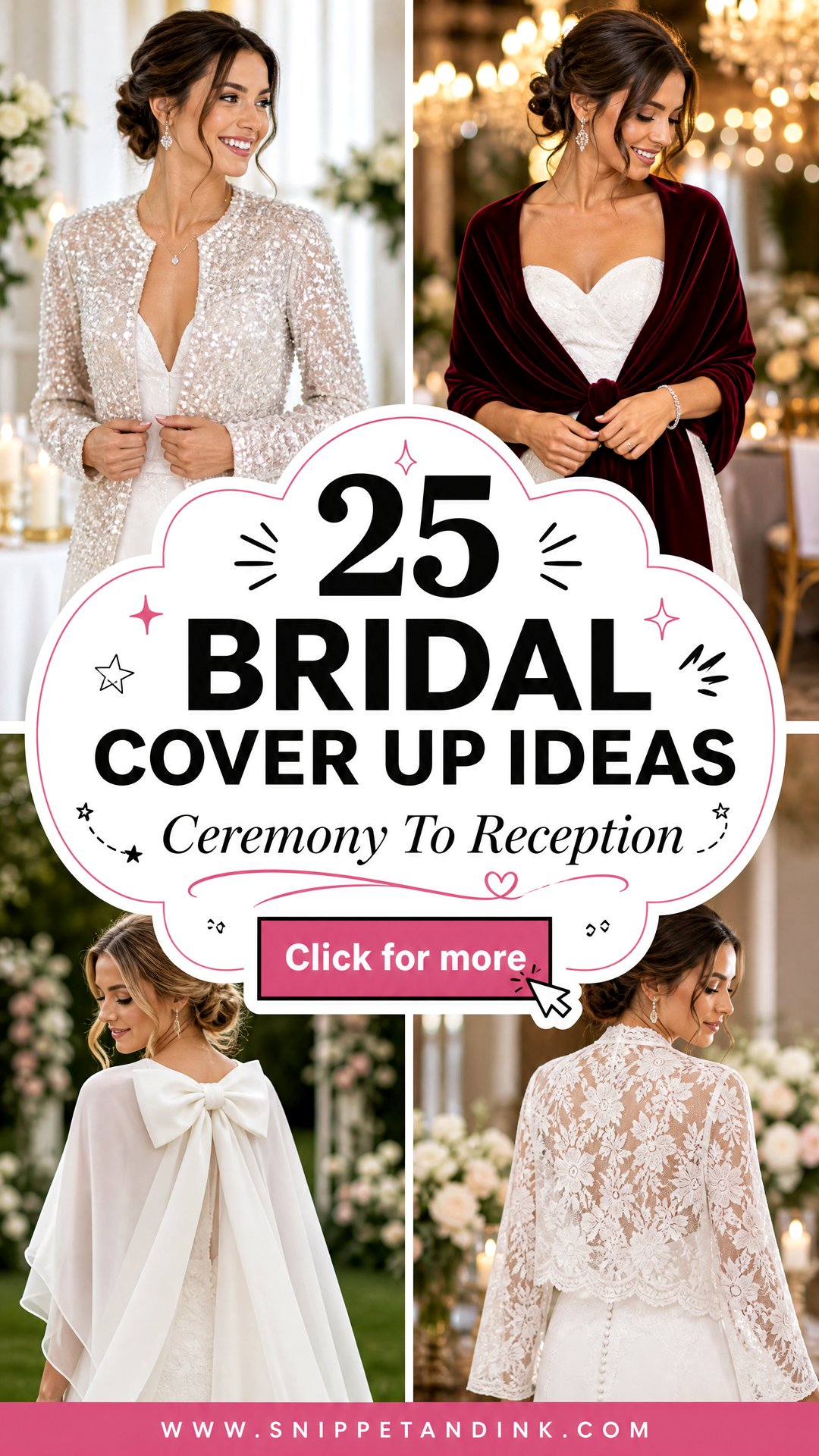
A cover up is the piece I end up adjusting most on a wedding morning, because it sits right where the gown does its best work: shoulders, neckline and waist. Done well, it adds warmth, modesty or a second mood without touching the dress itself. A sheer cape can give a plain gown real drama, a faux fur stole handles a January portrait session, and a lace bolero turns a strapless bodice into something church-ready. The ones that fail are almost always chosen from a photo, without the dress, so the fabric fights the gown or the hem lands in the wrong place. Below are the layers I reach for, with what each one needs from your dress to work.
Matching a Cover Up to the Dress You Already Own
I never shop for a cover up without the gown, or at least a fabric swatch and a clear photo of the bodice. Most of the decisions are made by the dress before style even comes into it.
- Neckline first. Strapless and sweetheart bodices take almost anything. A halter or high neck limits you to capes that open at the front or wraps that sit lower on the arms.
- Fabric weight second. A heavy layer over a light gown pulls the bodice down. Fur and velvet need a structured dress underneath; chiffon and tulle sit happily on a slip.
- Compare whites in daylight. Ivory, diamond white and off-white look identical in a shop and very different outside. Hold the two pieces together by a window.
- Check the closure. Ties loosen, and snaps and hooks stay put. If the piece will be on for the ceremony, I’d want something that won’t need fixing mid-vows.
Bring the cover up to your last dress fitting. A seamstress can add a hidden thread loop or a small snap so it stays aligned with the gown, which costs little and saves a lot of tugging in photos.
1. Bridal Faux Fur Stole
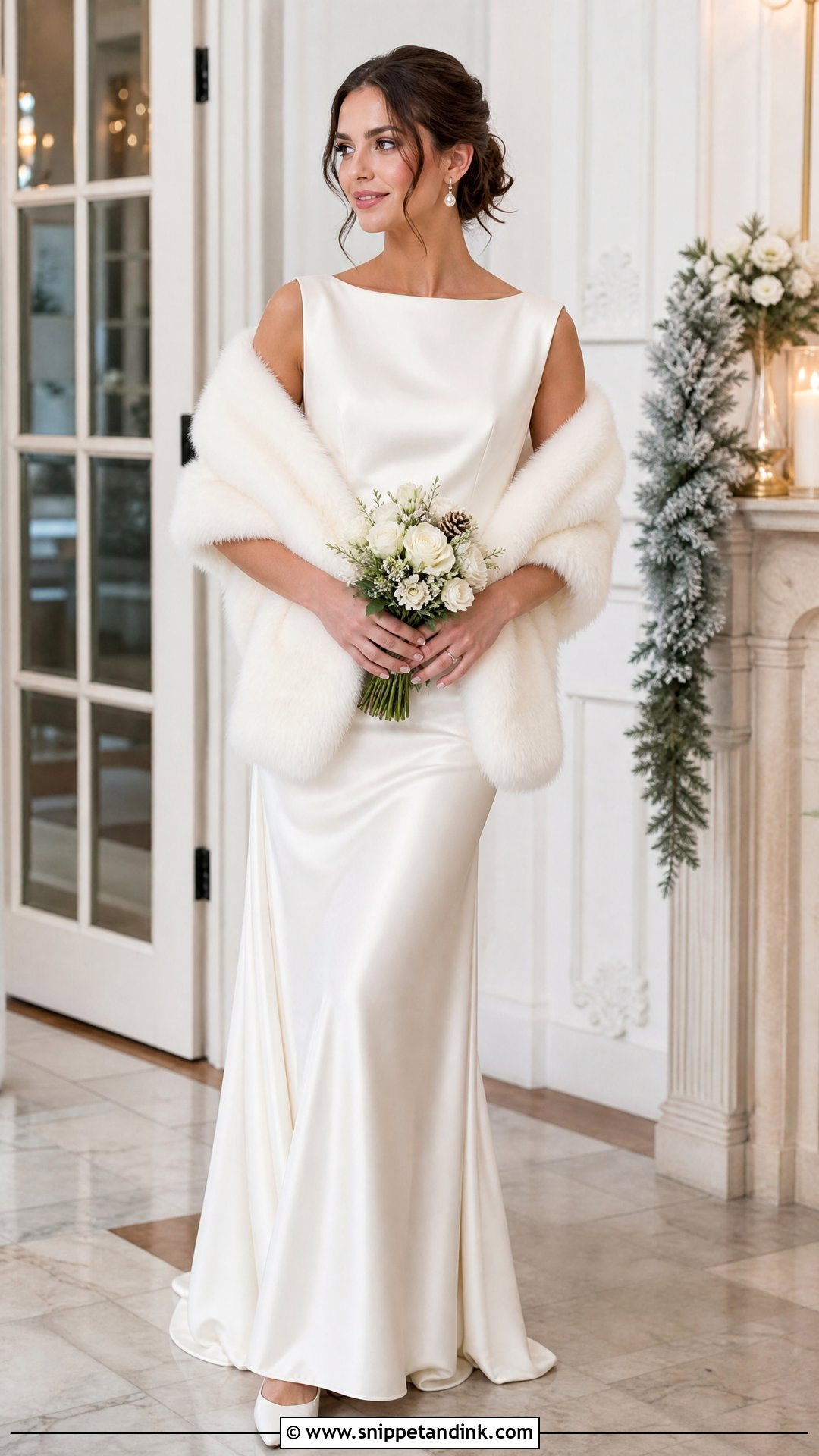
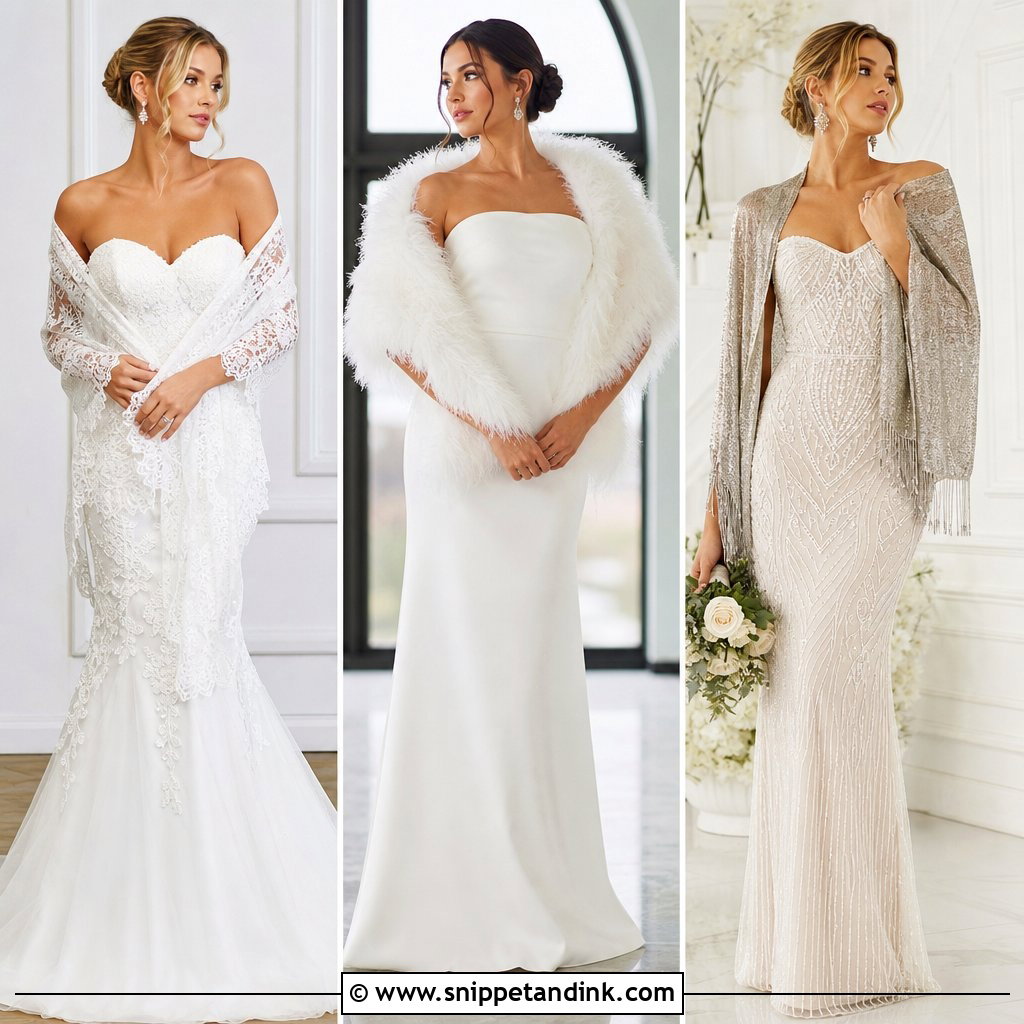
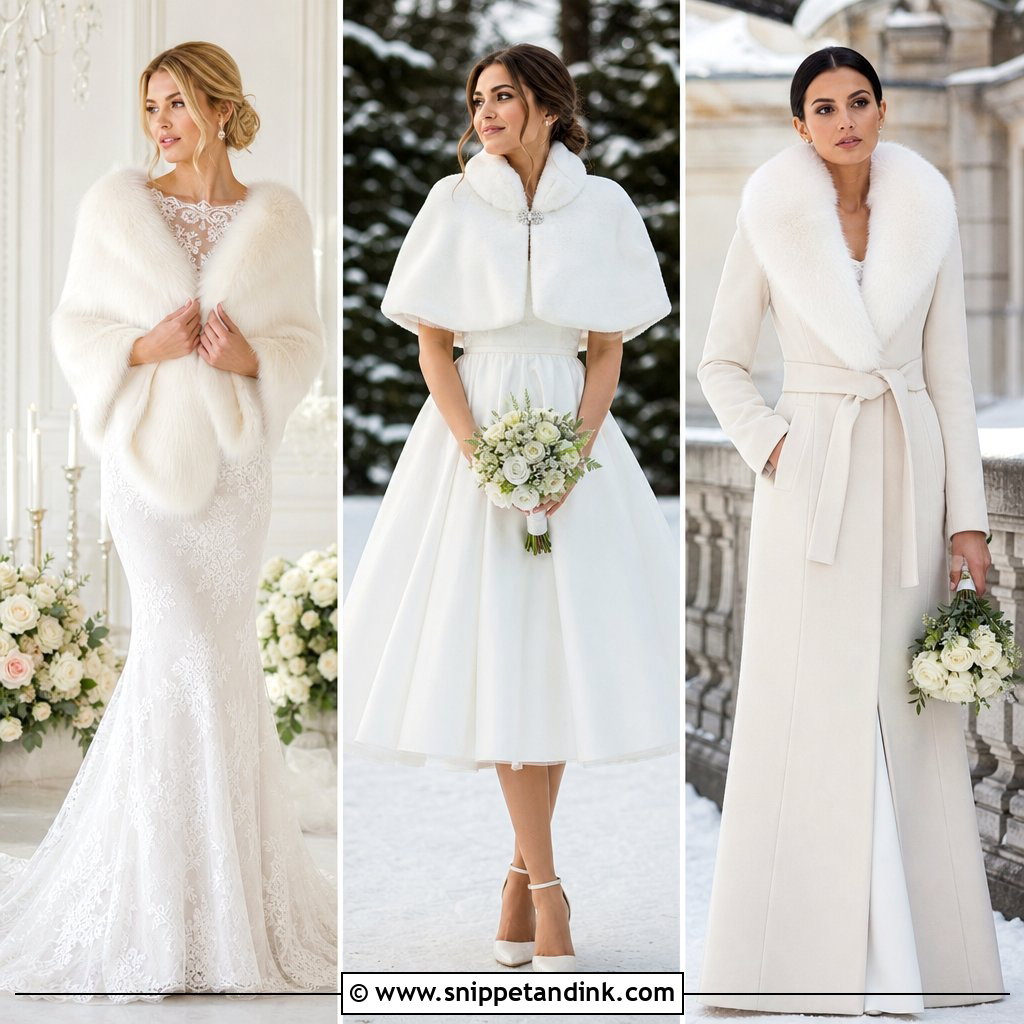
Faux fur is my default for a cold ceremony with a strapless dress. Match the pile to the gown’s white: a stark white stole next to an ivory satin bodice makes the dress look dingy in every photo, so hold them together in daylight before you buy. Keep it short enough to rest on the shoulder points rather than across the bust, which leaves the bodice visible. One honest warning: long-pile fur sheds onto dark suits during hugs, so a lint roller goes in my kit whenever a stole is on the list.
2. Bridal Lace Bolero
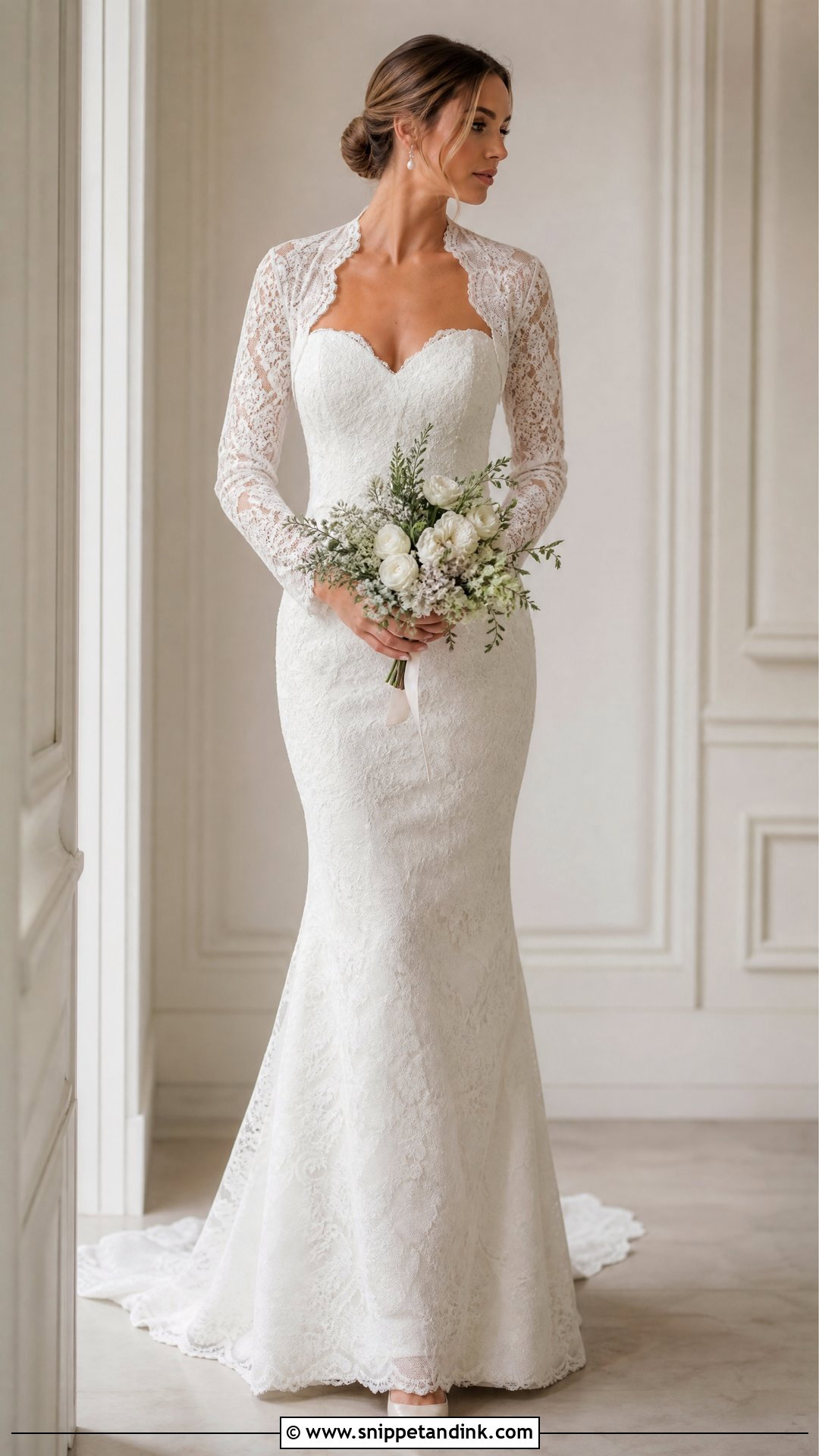
A bolero gives you sleeves without a seamstress cutting into the gown. The match matters more here than anywhere else, because the lace sits right against the bodice: lay a swatch of the bolero on the dress and check both the motif scale and the shade. Big floral motifs over a small-scale Chantilly bodice look like two different garments. I prefer a cropped cut that stops above the natural waist, since a bolero that ends mid-ribcage can make the torso look shorter when you sit.
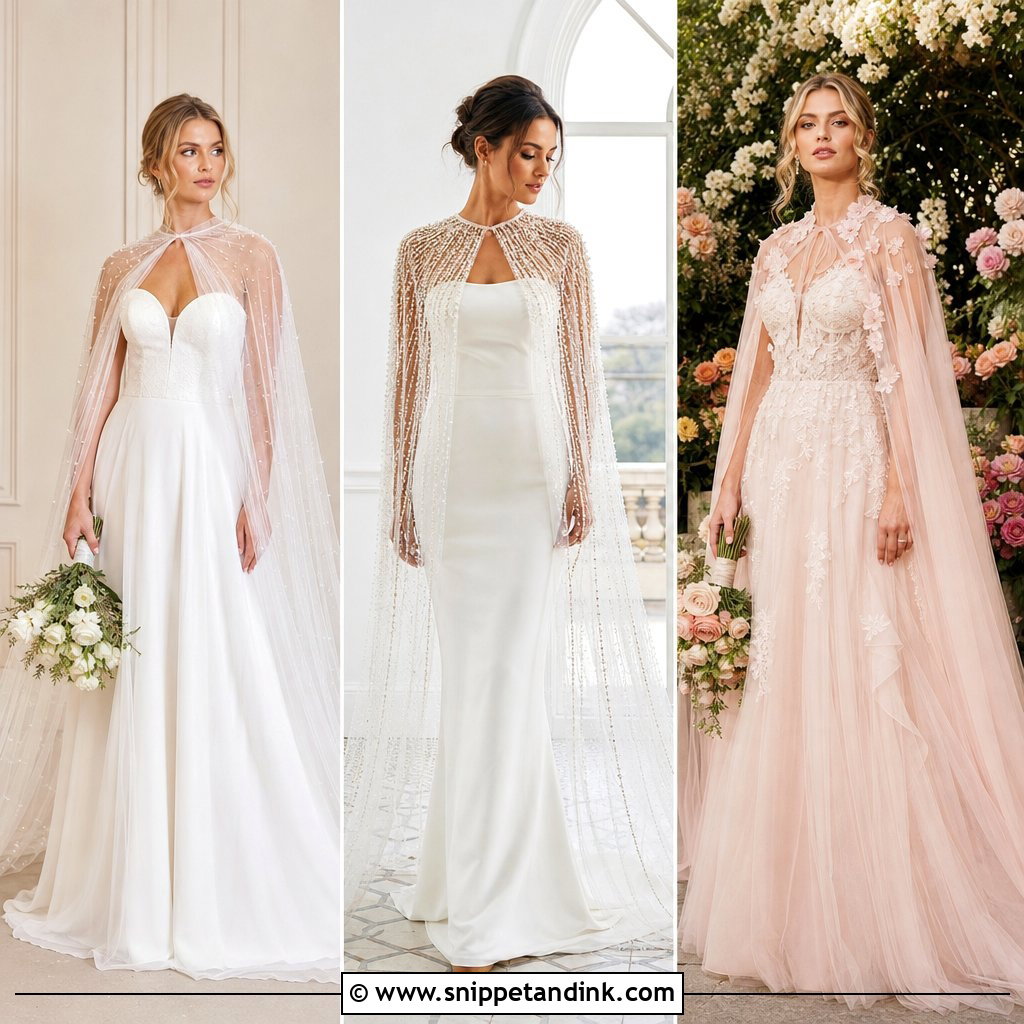
3. Bridal Tulle Cape
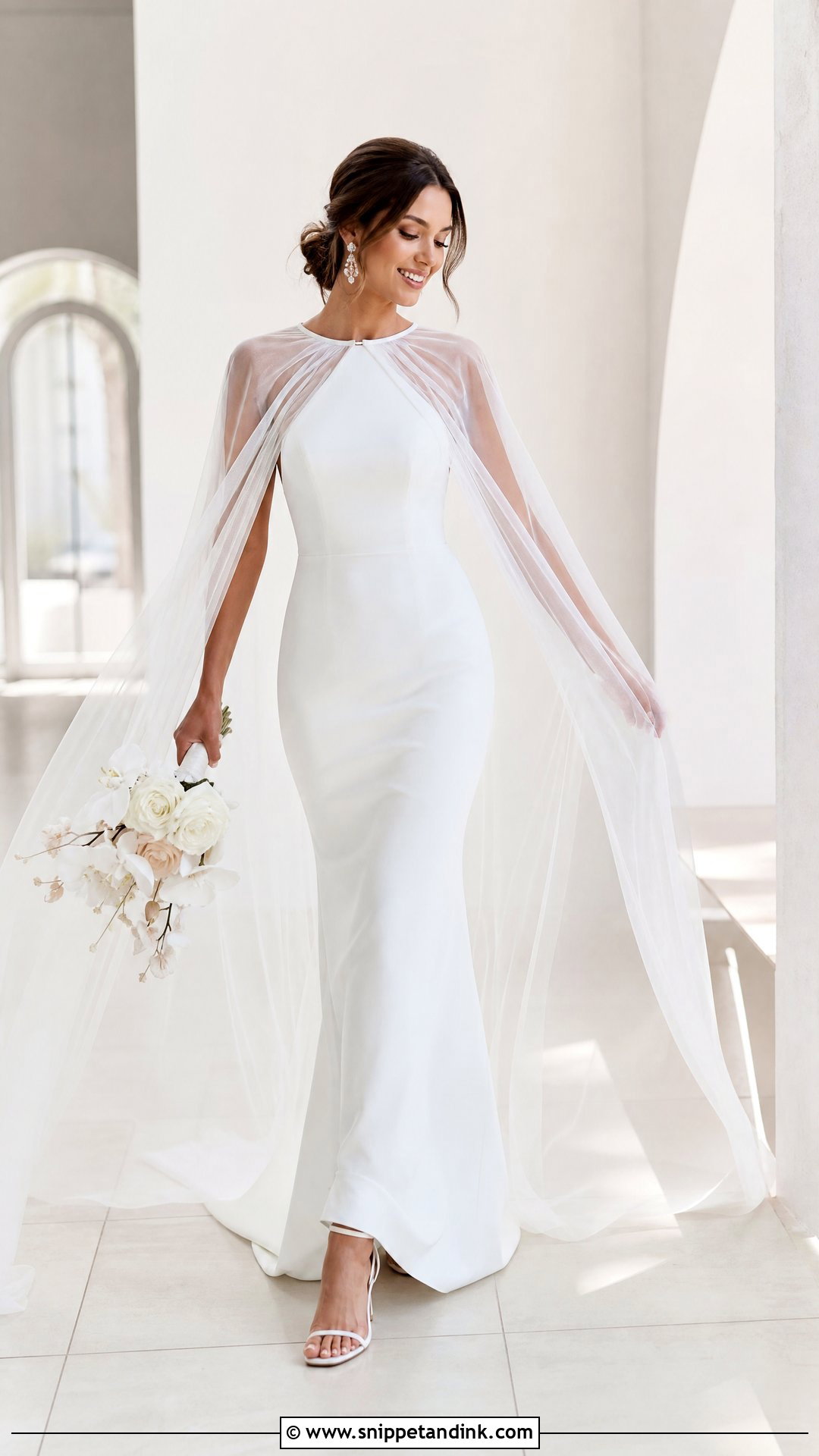
Tulle is the lightest cape you can wear, which is exactly why it moves so well walking down an aisle. It also catches on everything: bouquet stems, beaded bodices, the edge of a chair. If your gown has heavy beading at the shoulders, ask for a cape with a smooth tulle edge or a satin-bound neckline so the two don’t snag. A neck tie is easy, but a hook or snap at each shoulder sits flatter and won’t slide back during the first kiss. With a cape this sheer, I’d skip the veil entirely; two layers of tulle tend to blur into a cloud in photos.
4. Bridal Pearl Capelet
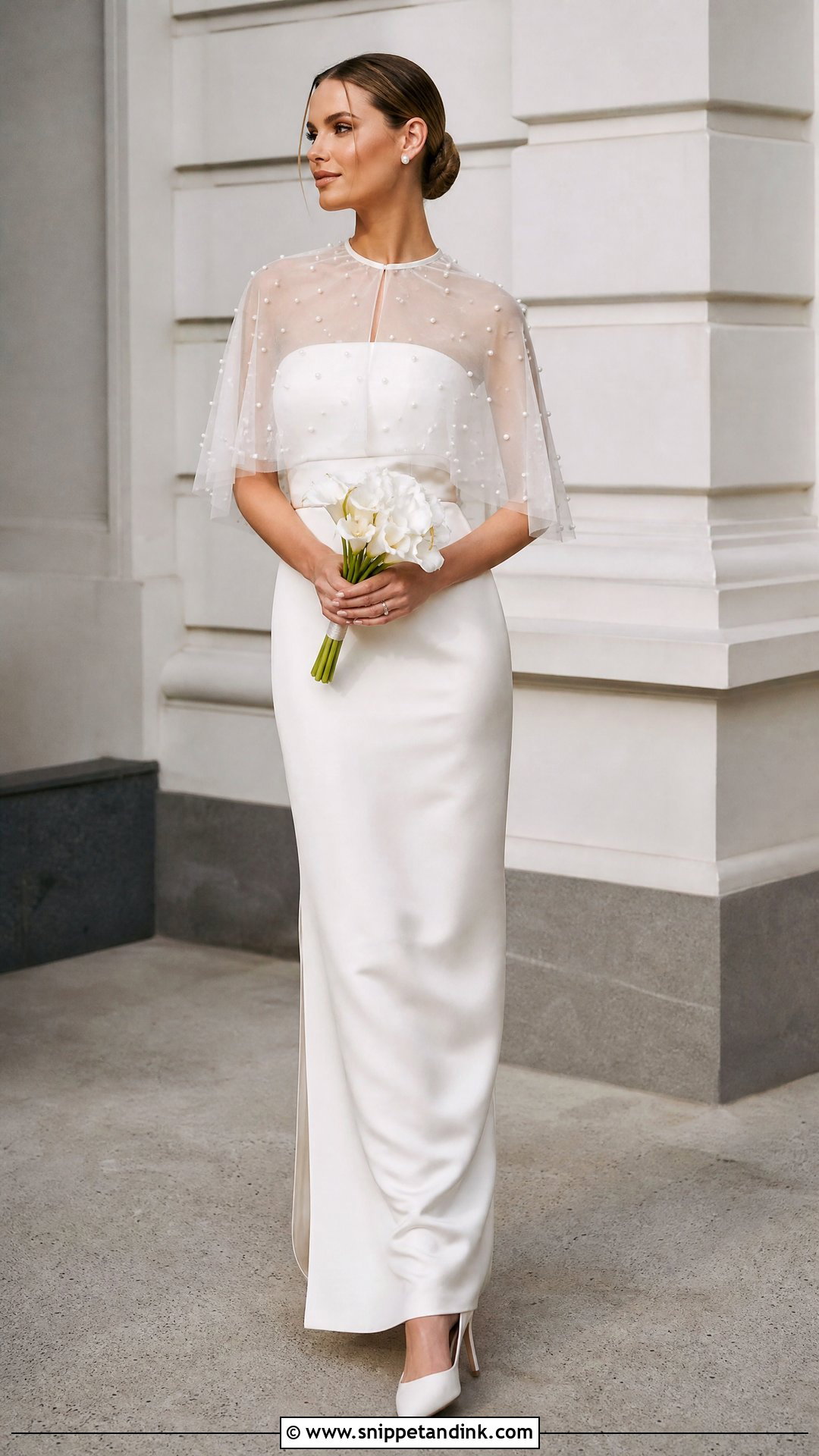
Pearl capelets are at their best over plain satin, crepe or mikado, where the only texture on the body is the pearls themselves. Check the weight before you commit. Hand-sewn pearl rows pull the front edge down as the day goes on, so I look for a capelet with a lining or a small inner tie that keeps it anchored. Small, spaced pearls read quietly on camera; dense clusters near the collarbone catch flash and can glare. Keep the rest of the jewelry to studs so the shoulders do the talking.
5. Bridal Satin Wrap
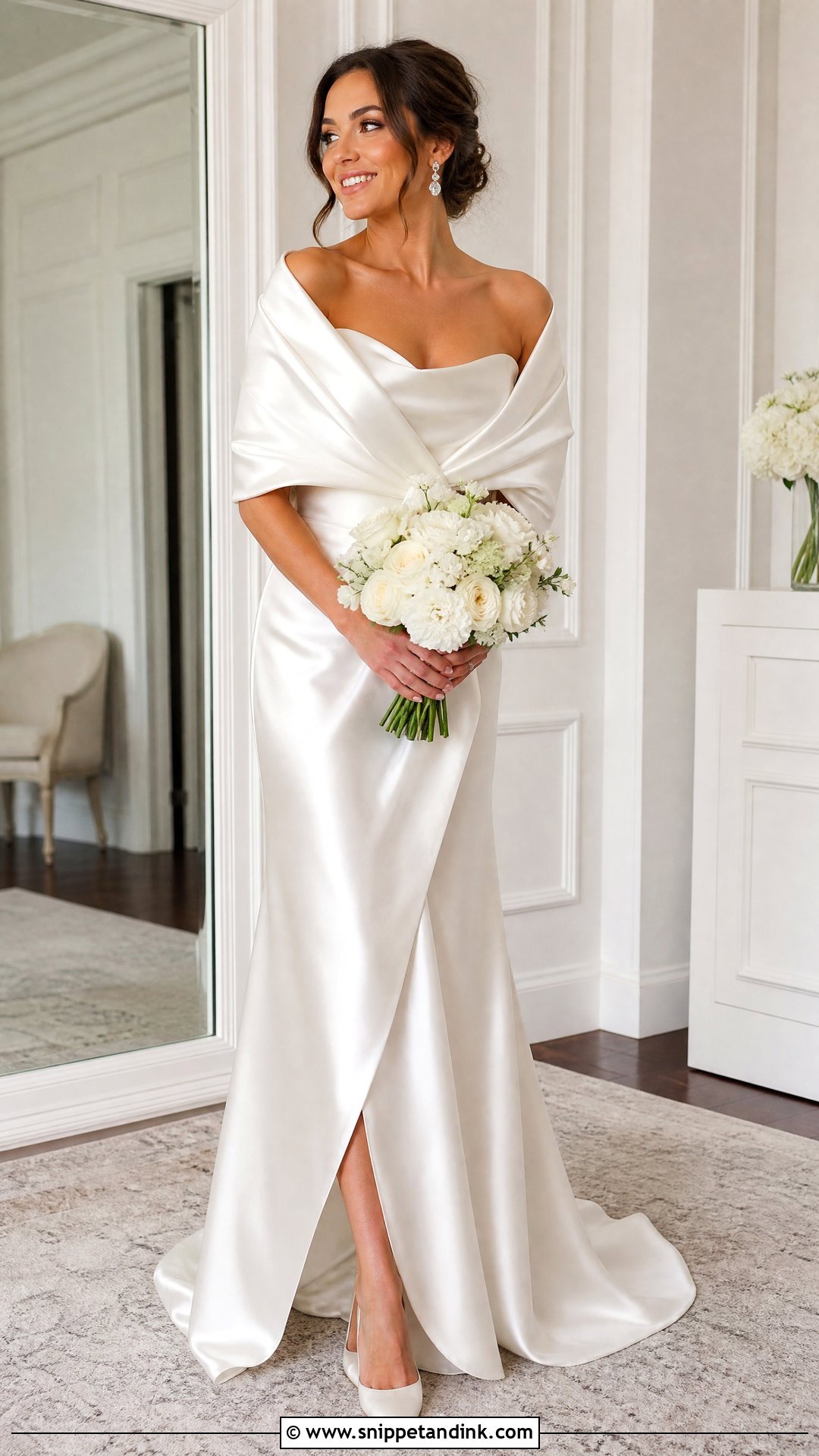
The problem with a satin wrap is slippage. Satin on satin has almost no grip, so a narrow wrap ends up around your elbows within the first ten minutes. Go wide enough to drape across both shoulder blades, and plan to secure it with a small brooch or a hidden snap at the front. Over lace or tulle it actually stays put better, because the textured surface holds the fabric. This is the layer I like for car rides between venues, since it folds into a clutch-sized bundle when it’s not needed.
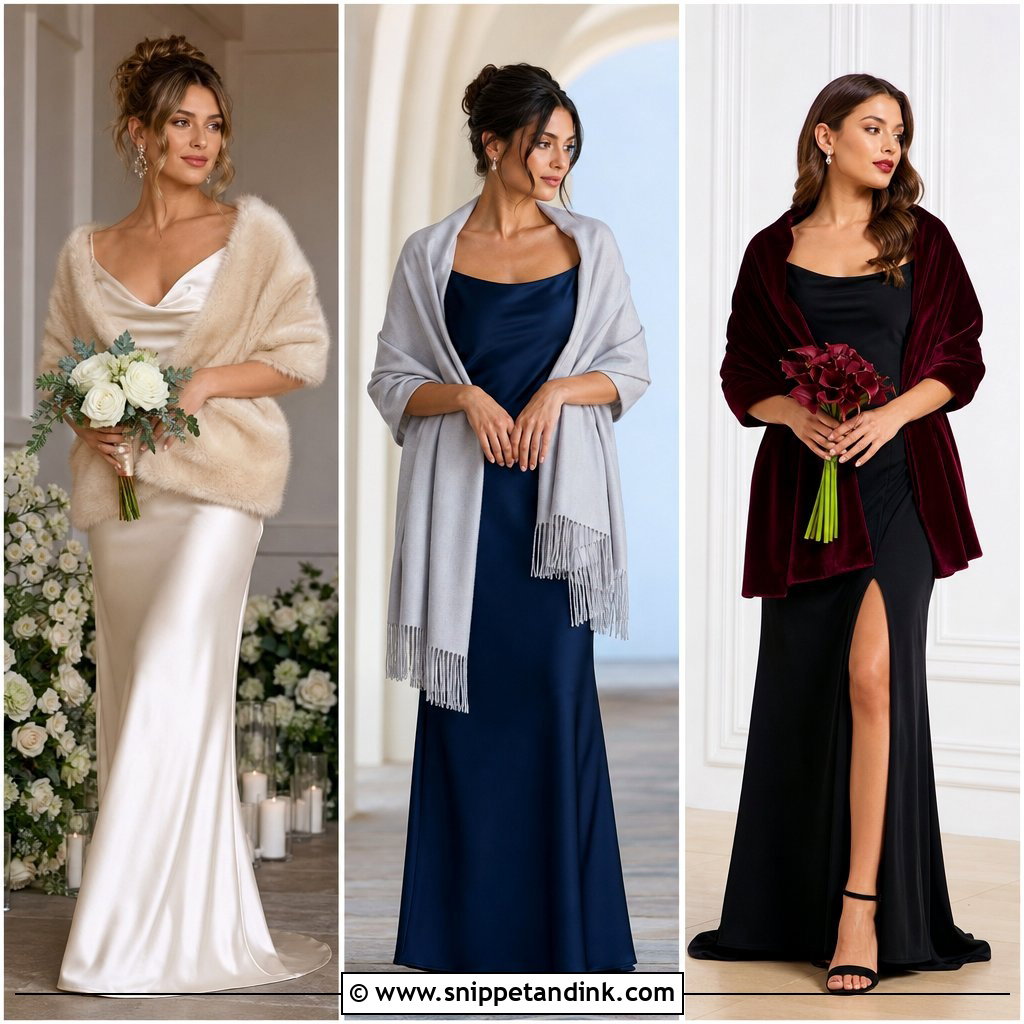
6. Bridal Cashmere Shawl
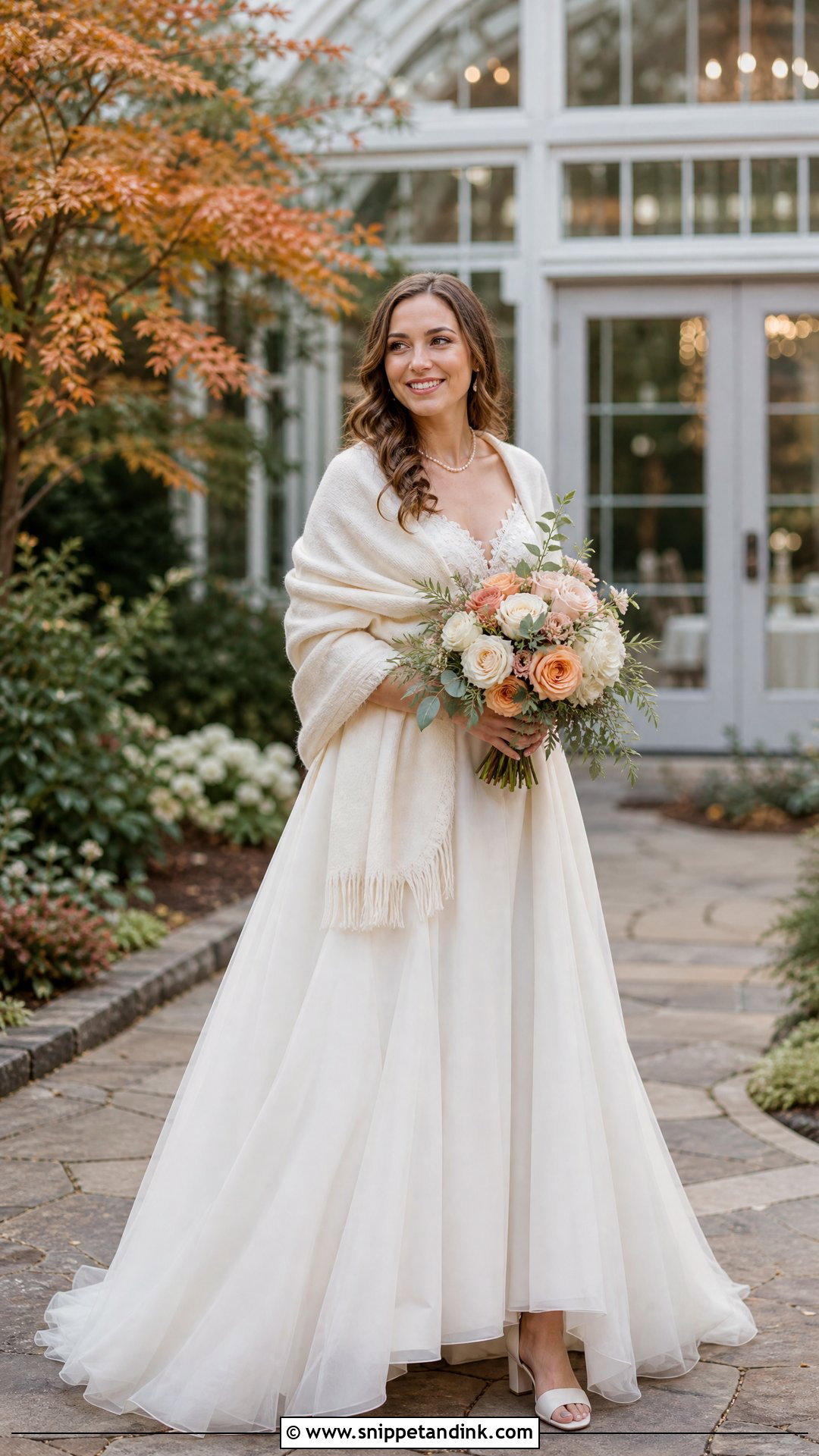
A bridal cashmere shawl is the comfort pick for fall and winter, and the one most brides keep wearing after the wedding. Its softness also means it pills where your bouquet arm rubs it, so a fine knit with a tight weave holds up better than a loose, fluffy one. Ivory, oatmeal or pale grey all work; a stark white cashmere tends to look blue next to warm ivory silk. For portraits I usually slip it off one shoulder or let the photographer drape it over your forearm, which shows the gown while keeping you warm between frames.
7. Bridal Feather Jacket
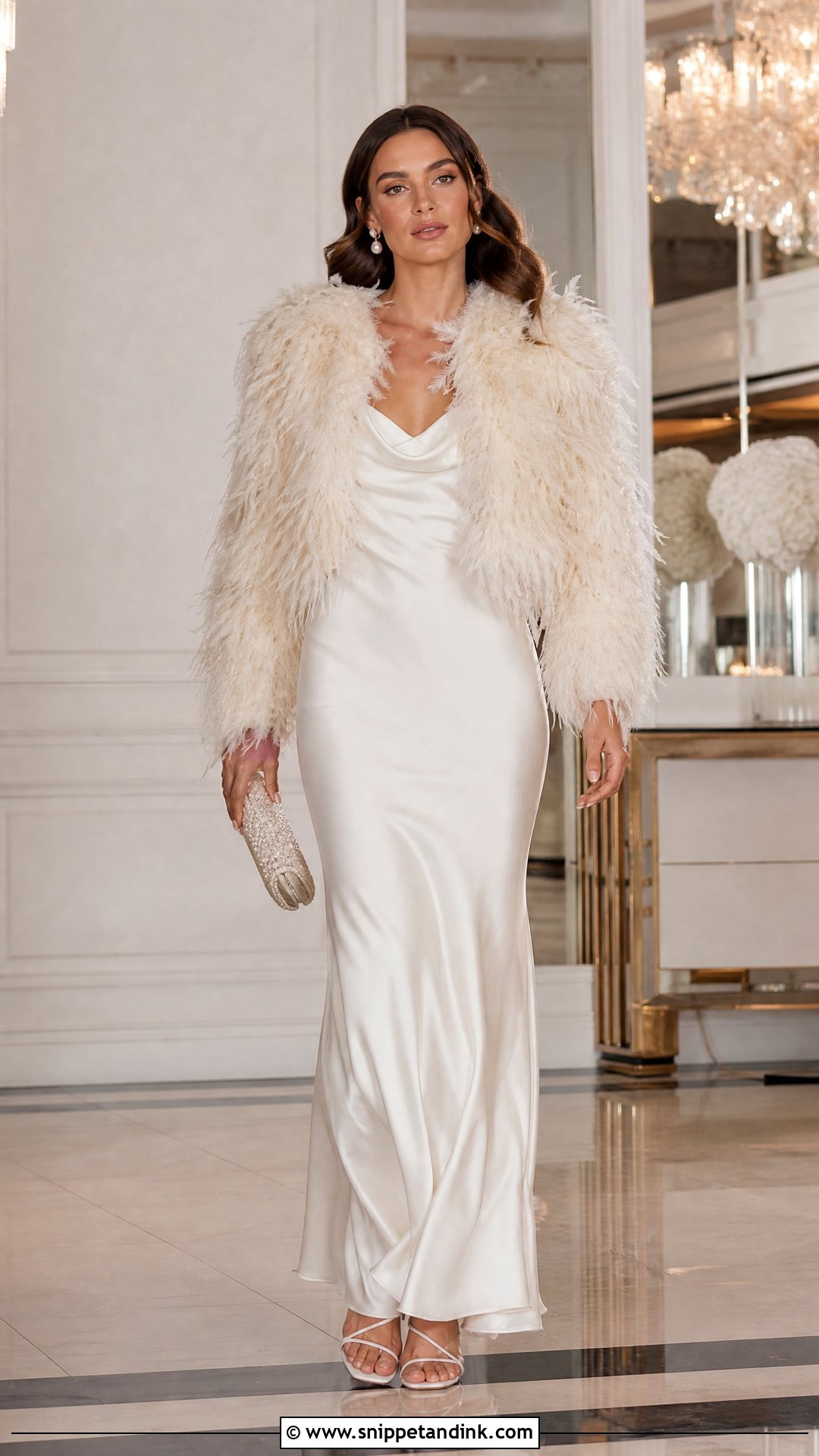
A bridal feather jacket is a reception piece, not a ceremony one. Feathers shed, snag on lace and flatten when you sit, so I put it on for the entrance and first dance rather than an hour of photos. It looks right over a column gown or satin slip, where nothing else competes. Keep the cut cropped; a long feather coat swallows anyone under about five foot six. Ostrich feathers are softer and move more on camera than marabou, which can look matted after a few hugs.
8. Bridal Blazer Outfit
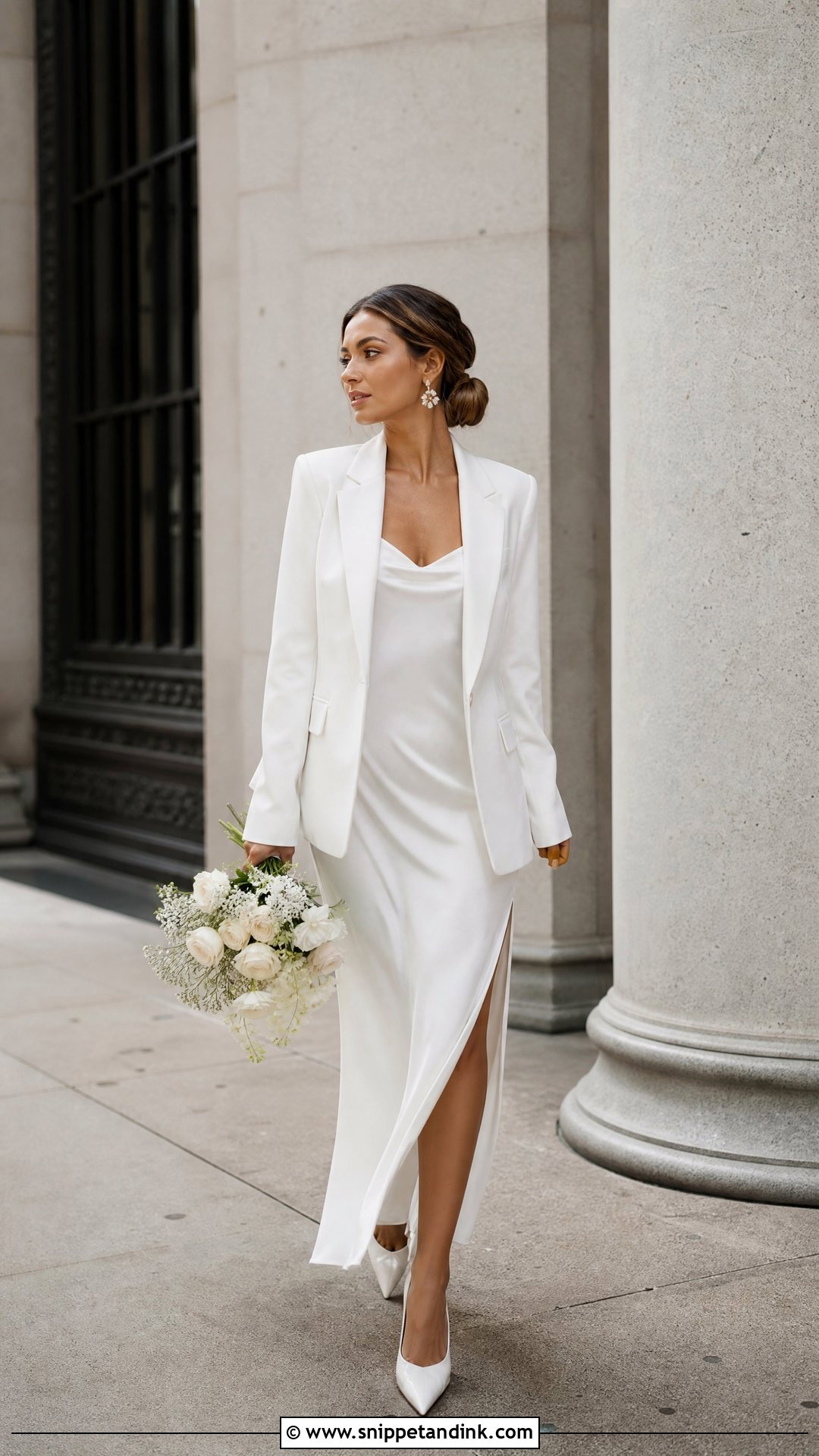
A bridal blazer outfit works when the gown underneath is simple and close to the body, like a slip, a jumpsuit or a crepe sheath. A full ball skirt under a blazer usually looks unbalanced. The fit check I do first is the shoulder seam: it should sit at your shoulder bone, because a blazer that’s even slightly wide reads as borrowed. Crepe or wool crepe holds sharp lines, while satin blazers wrinkle across the elbow after a few hours. Try the length over the dress itself; a cropped cut shows the waist, a longer one gives a more fashion-led silhouette.
9. Bridal Cropped Cardigan
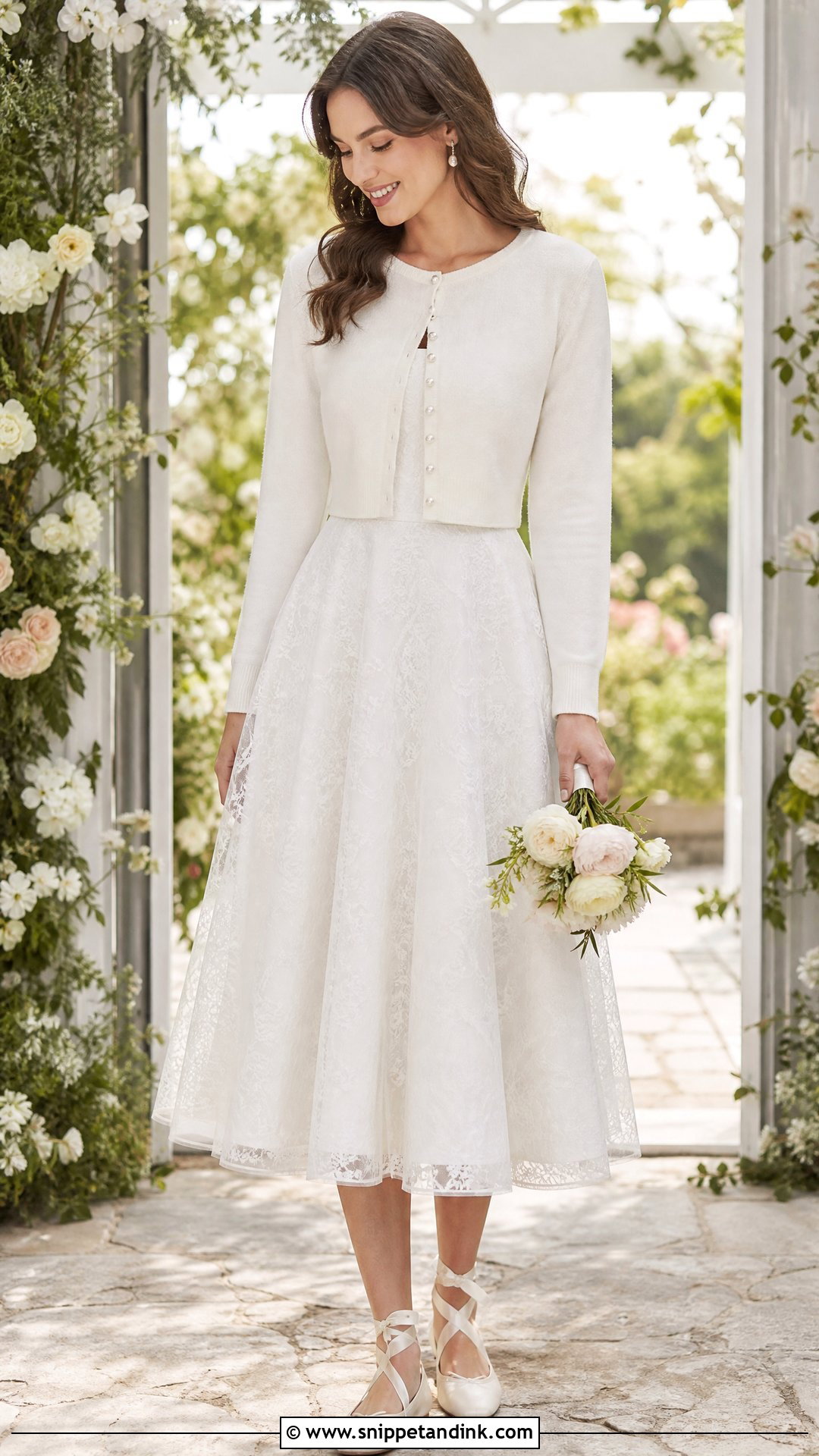
A cropped cardigan suits courthouse weddings, garden parties and elopements where a formal wrap would feel stiff. Bulky knits are the trap. Anything chunkier than a fine-gauge knit adds visible width at the shoulders and looks like a weekend sweater in photos. Pearl buttons or light beading make it feel deliberate. I’d pair it with a midi or tea-length dress rather than a train; the casual knit and a cathedral-length skirt rarely sit comfortably together.
10. Bridal Denim Jacket
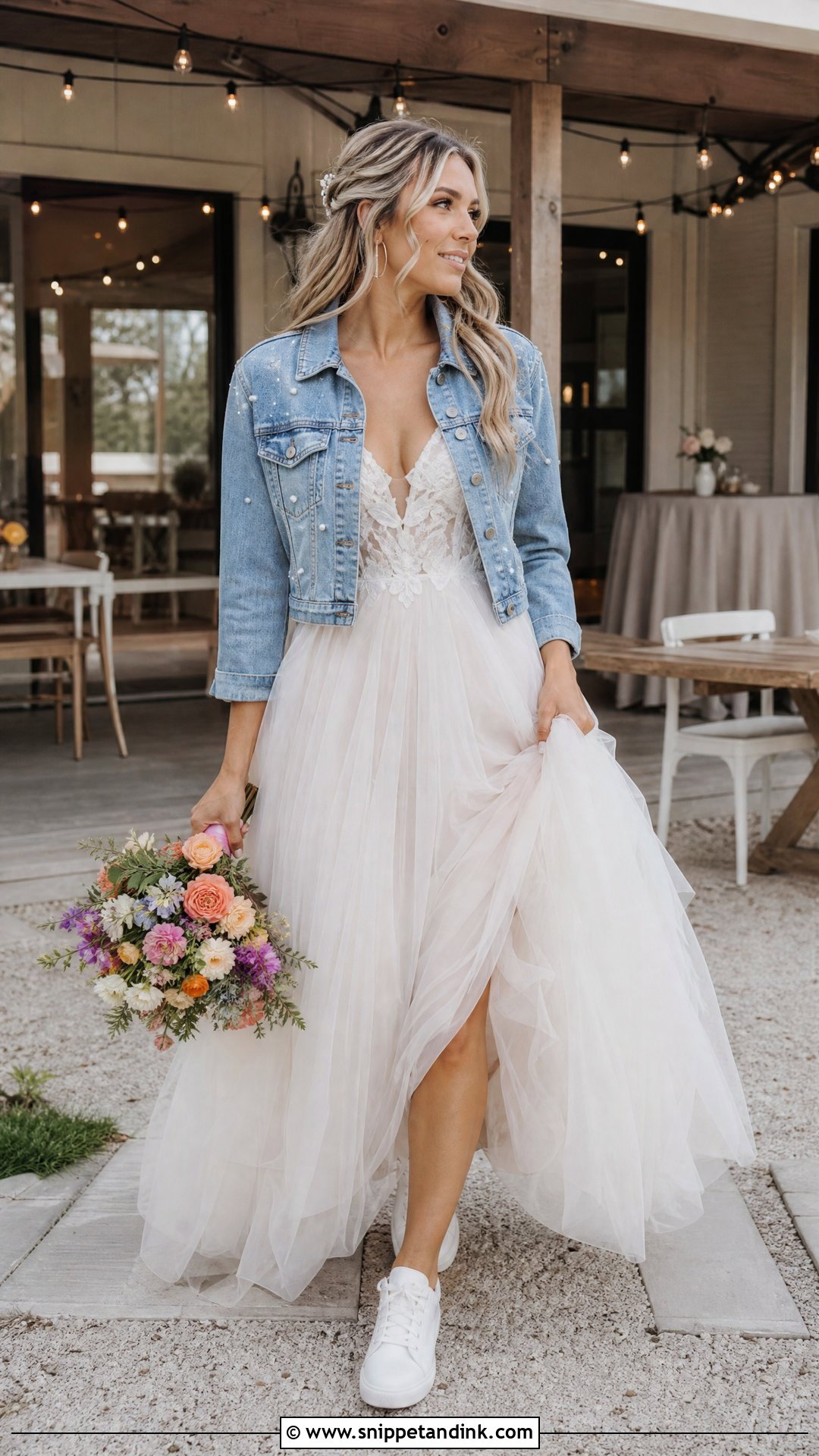
Denim is the one cover up where personality beats polish. A custom back, your new surname in pearls or embroidery, is what makes it worth wearing. White denim reads more bridal than blue, but blue looks fresher at a barn or backyard reception. Check the jacket’s colorfastness first: new indigo can rub off onto ivory lace, so wash it once before the wedding, or choose white. A cropped fit that ends at the waist works over tulle and slip dresses; a long boyfriend cut hides the shape of most gowns.
11. Bridal Leather Jacket
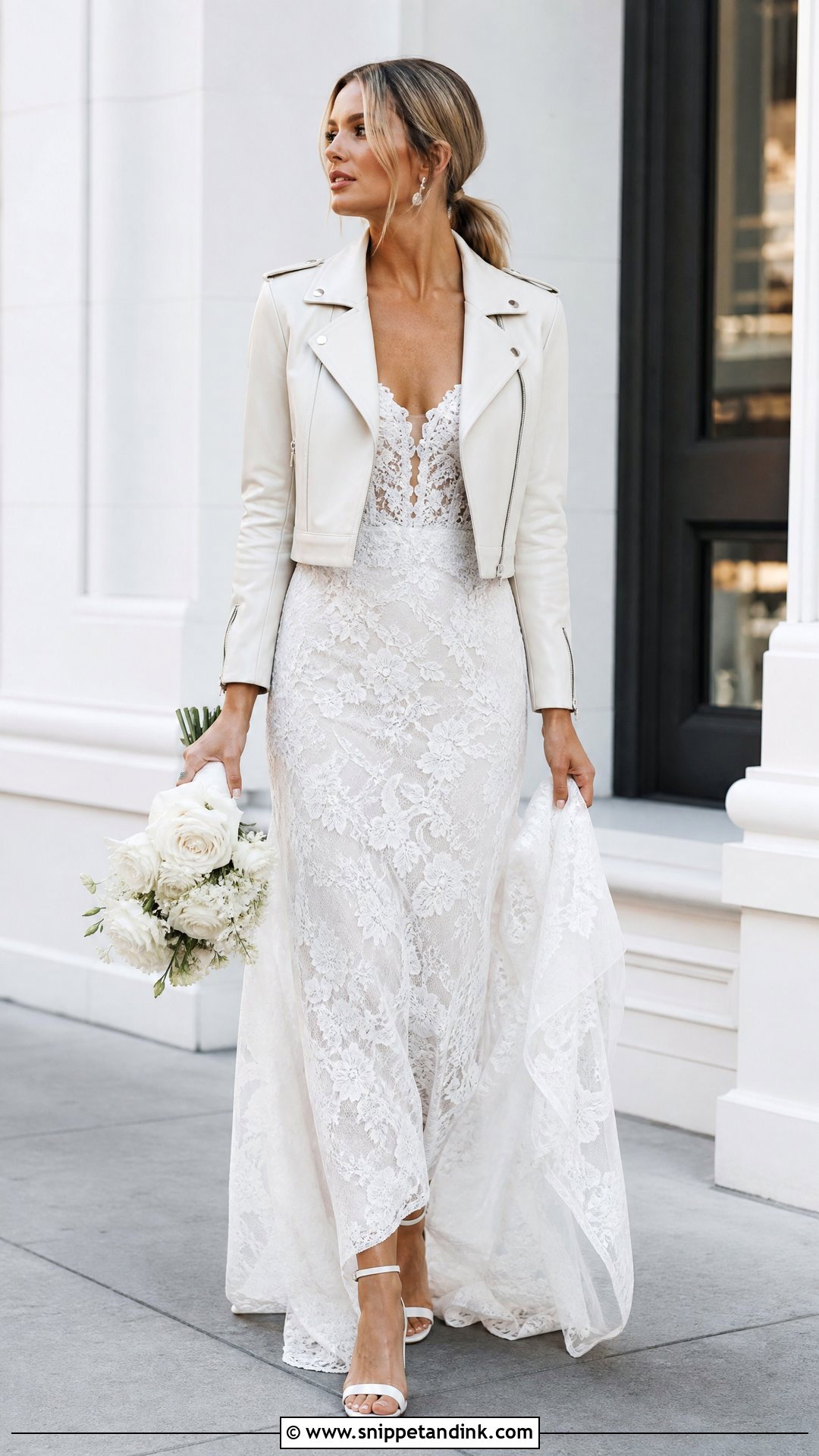
A leather moto is a contrast piece, and it only works if you want that tension between hard and soft. The cropped moto shape is the one to choose, because it stops at the waist and leaves the skirt visible. Real leather is warm and heavy, so it’s for a cool evening, not an afternoon in June. Pale leather also shows every mark from bouquet stems and makeup, so I tell brides to put it on after hair and makeup touch-ups are done and to keep foundation away from the collar.
12. Bridal Sequin Jacket
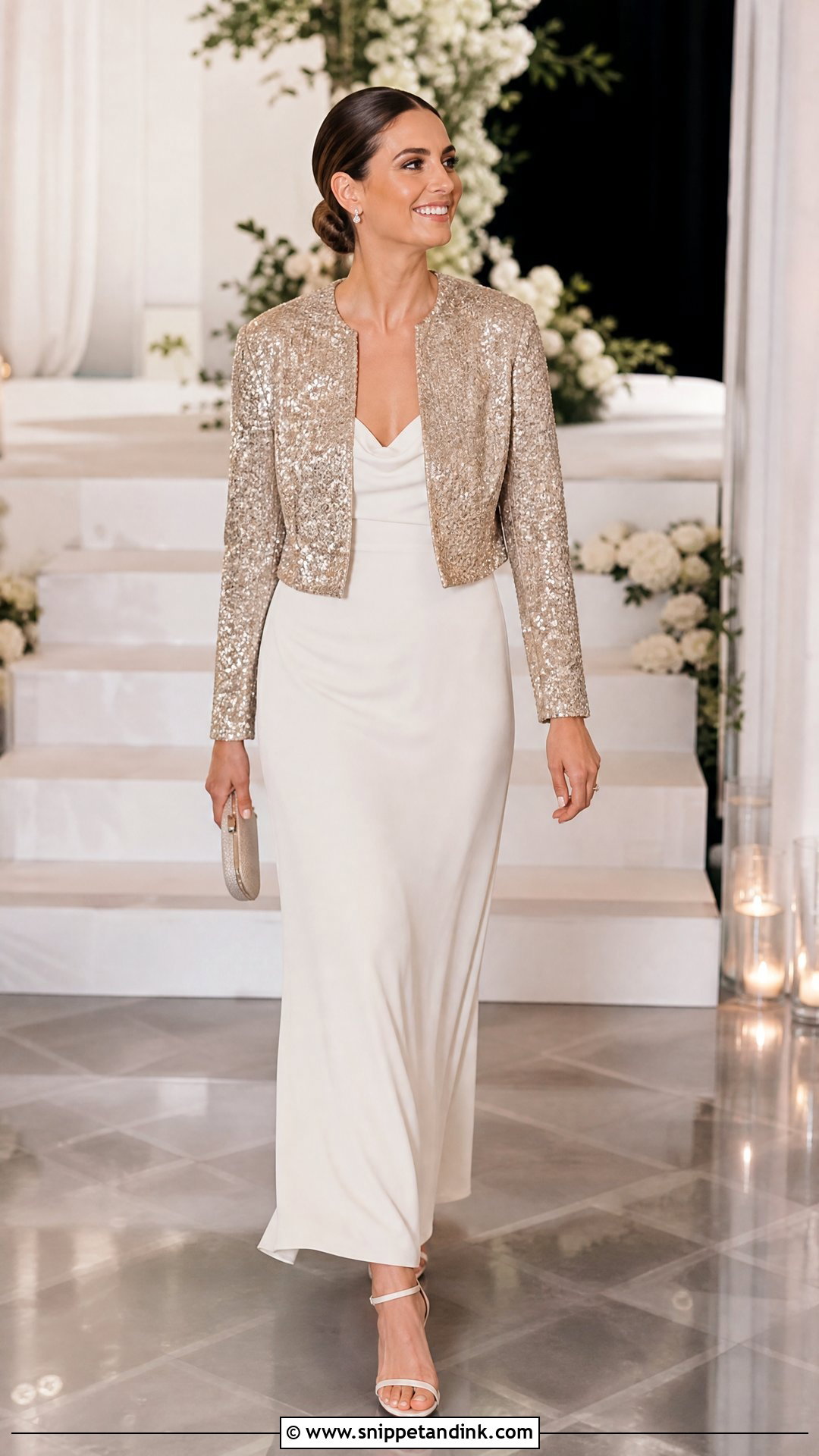
Sequins are my favorite way to give a simple gown a reception change without a second dress. A cropped bomber or short blazer keeps the sparkle in proportion; a long sequin coat starts to look like a costume. Look at the inside before you buy. Cheap sequin jackets have scratchy seams that rub the underarm raw by the end of the night, so a lined jacket is worth paying for. Sequins also snag on lace and beading, which makes this a better partner for a smooth satin or crepe dress.
13. Bridal Organza Cape
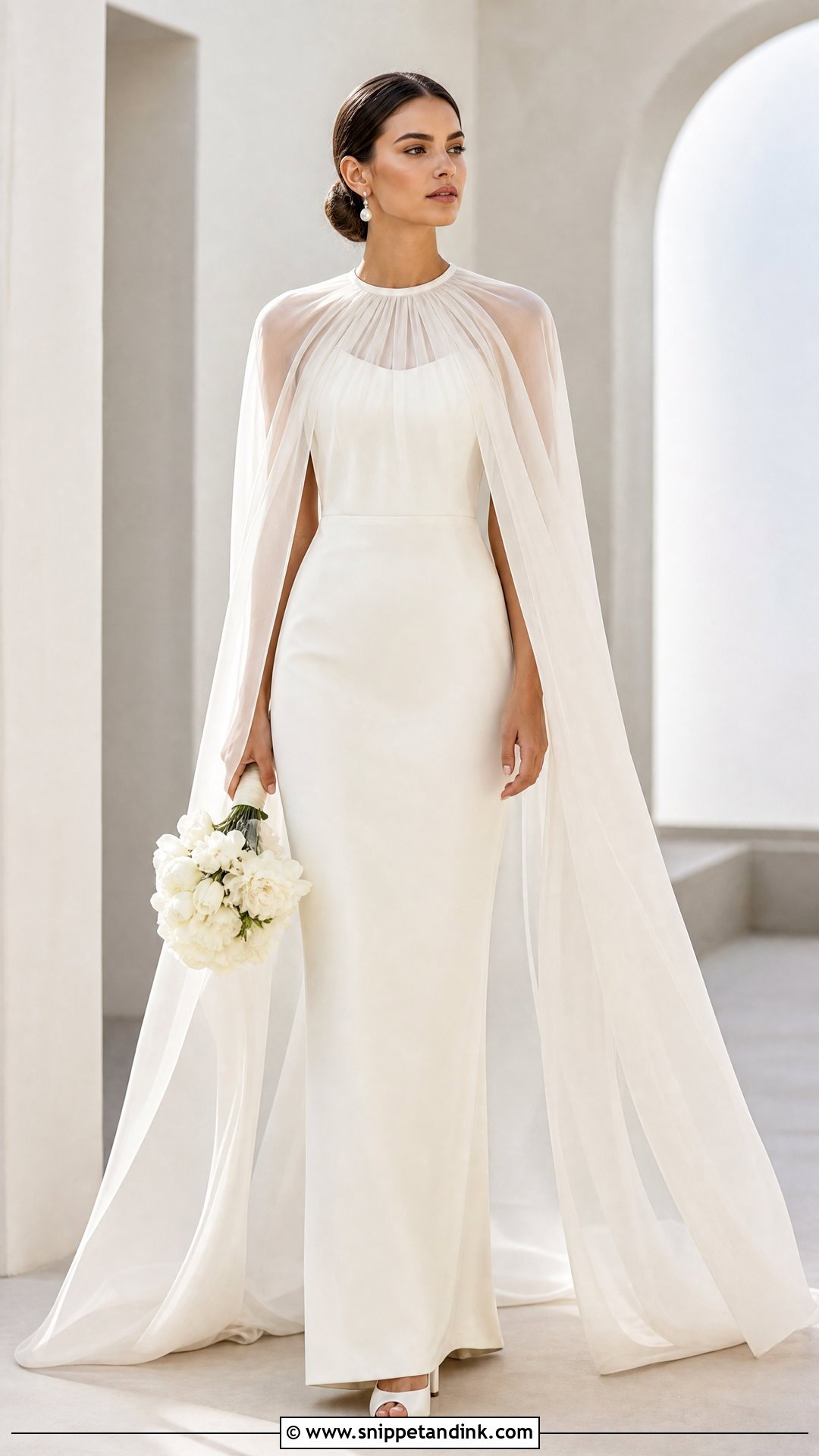
Organza is tulle’s crisper cousin. It holds a shape, so a short organza capelet stands out from the shoulders with some volume, and a long one falls in a clean line to the floor. I like it with a minimalist gown that needs one architectural detail. The one drawback is creasing: organza wrinkles in a suitcase and holds the crease, so steam it the morning of, never iron it, and hang it until you leave. A soft pleat or a small bow at the neck is all the decoration it needs.
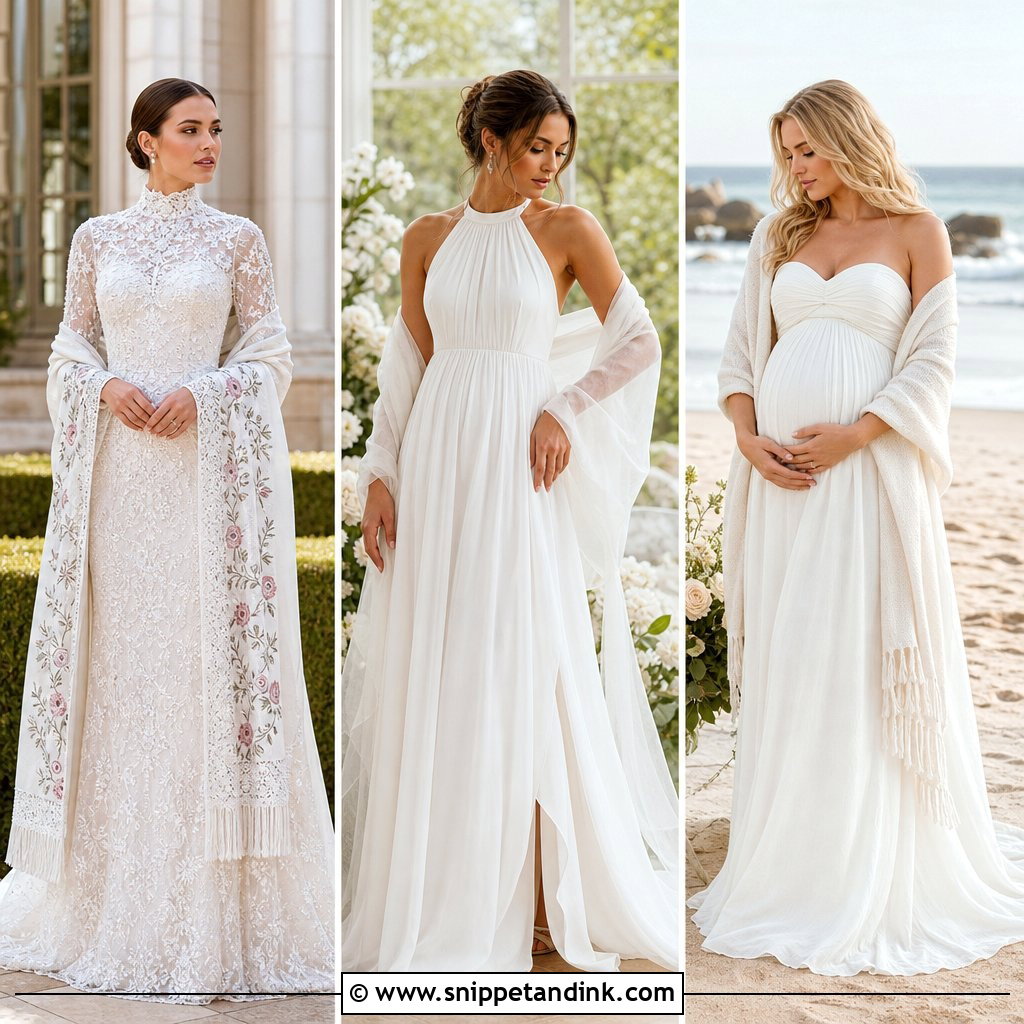
14. Bridal Chiffon Wrap
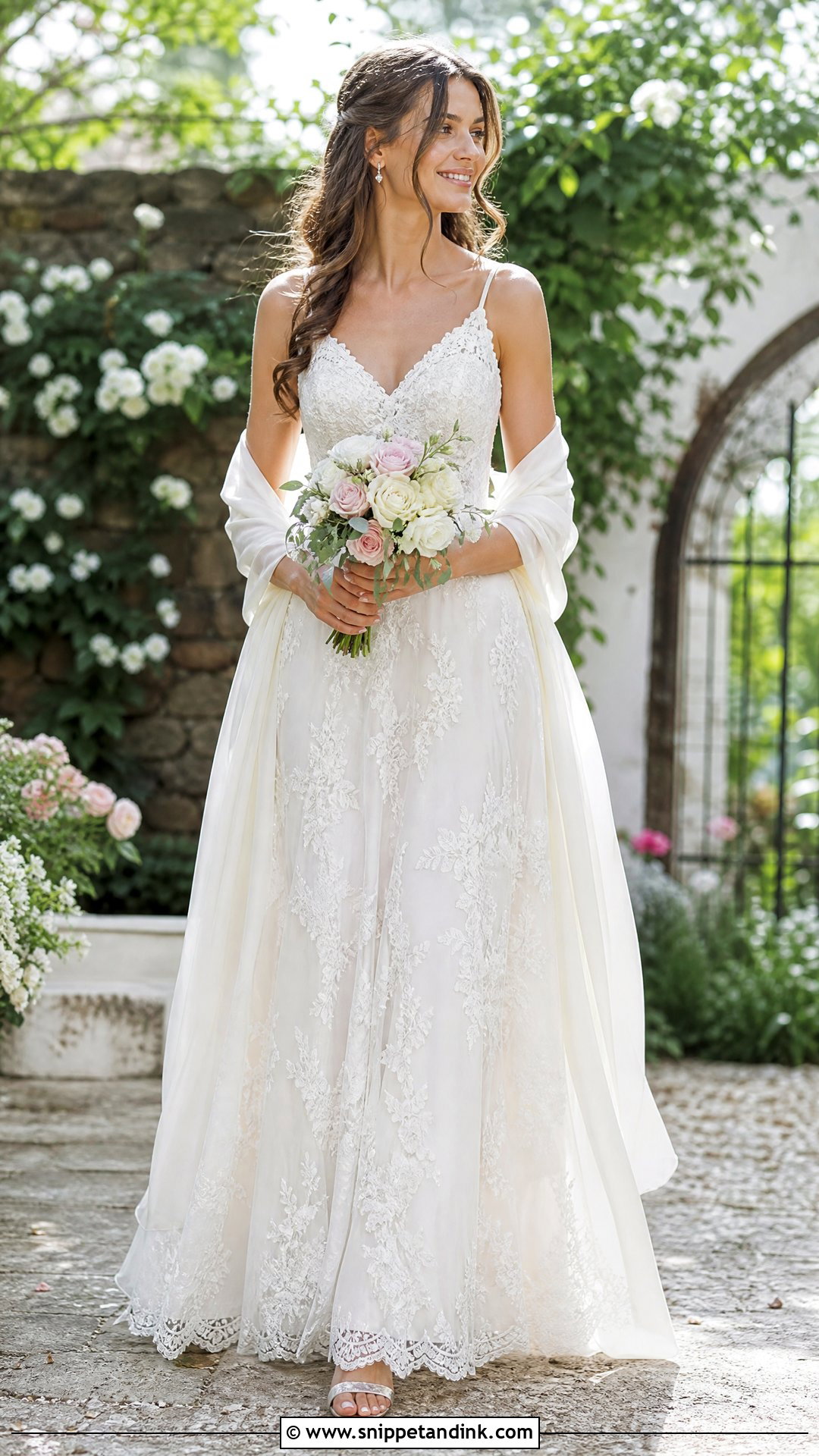
Chiffon is the warm-weather wrap. It weighs almost nothing and moves in a sea breeze, which suits beach ceremonies, spring gardens and destination weddings in the heat. Because it’s so light, it also blows away, so drape it through your elbows rather than over the shoulders alone. Chiffon pairs naturally with Grecian and flowing A-line gowns. A pale blush or champagne gives a hint of color; a near-match to the gown reads as part of the dress.
15. Bridal Beaded Capelet
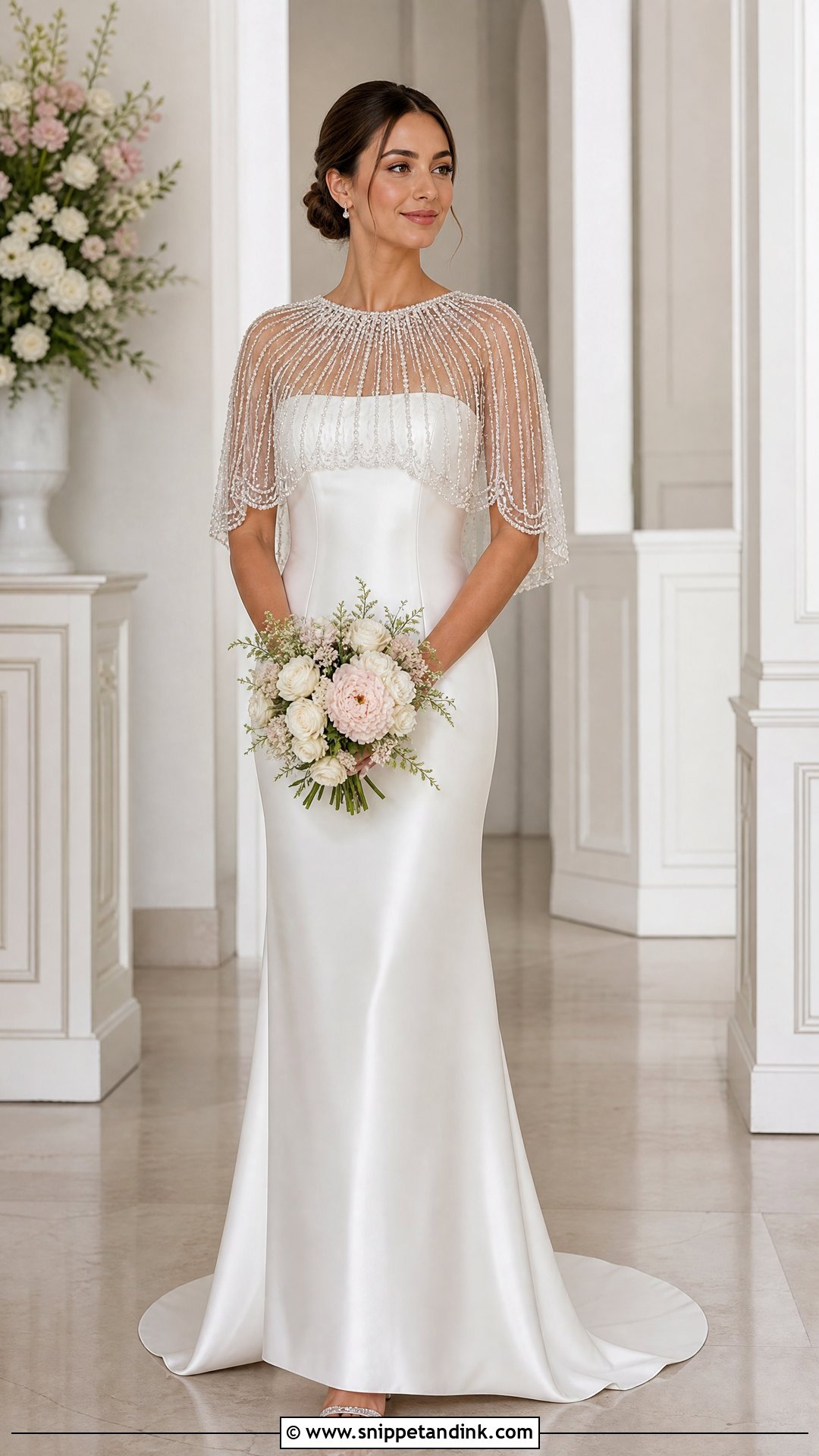
A beaded capelet can change a plain bodice in the time it takes to fasten a hook. Weight is the real issue. Heavy crystal beading drags a capelet backward, so the front rides up against your throat; I always have a bride wear one for twenty minutes at the fitting to see where it settles. Choose beadwork that echoes something already in the dress, such as a pearl if the gown has pearl buttons. It sits well over fitted satin, crepe and bridal jumpsuits.
16. Bridal Long Sleeve Topper
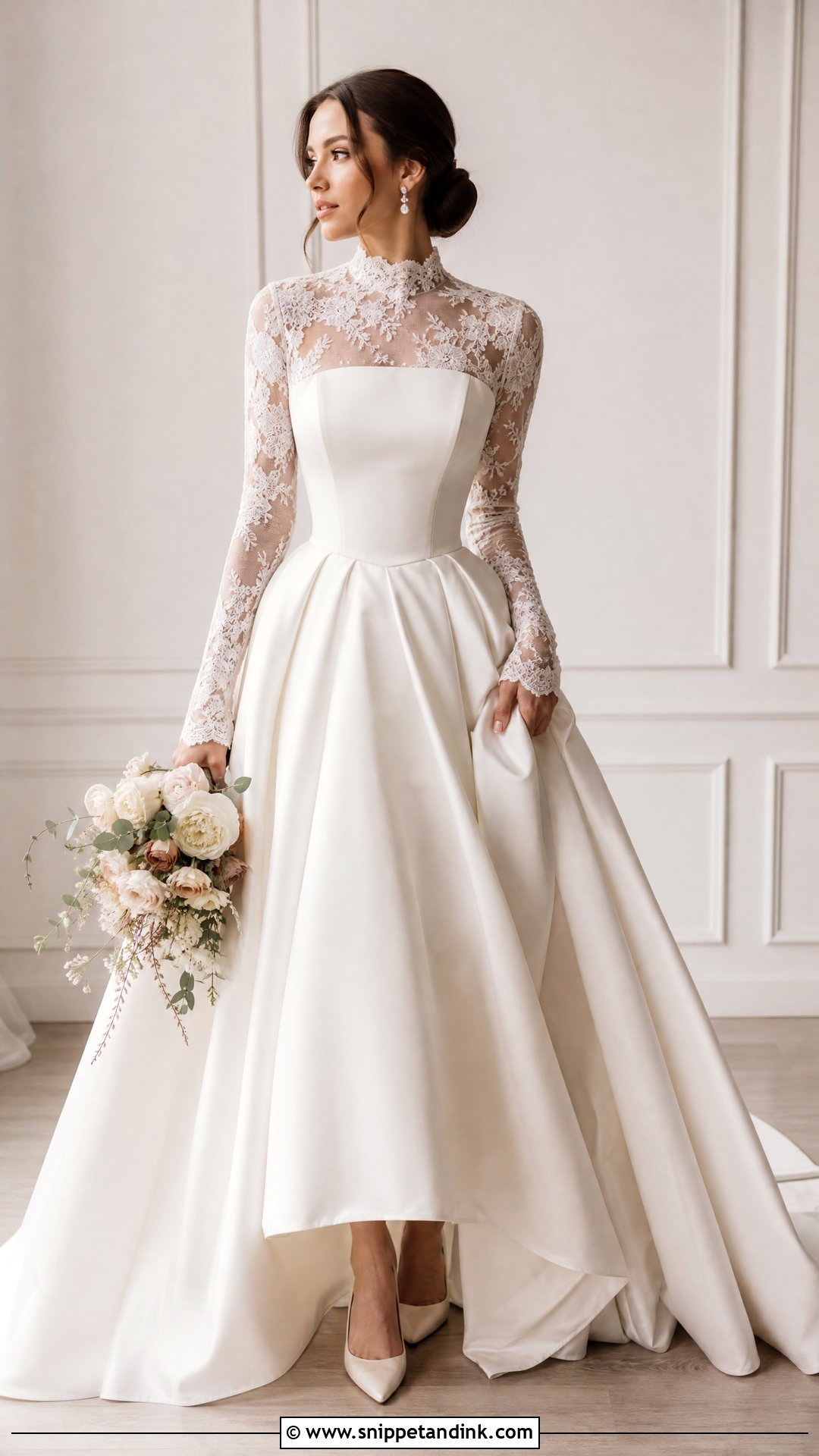
A bridal long sleeve topper is how I handle a bride who wants coverage for a religious ceremony and a strapless dress for the party. The alignment is what makes or breaks it: the topper’s neckline and waist seam need to line up with the dress, so bring it to your final fitting and let the seamstress tack small loops if it shifts. Sheer lace looks romantic, plain crepe looks clean. If the topper is lace and the gown is lace, the two patterns must match, or choose plain mesh instead.
17. Bridal Sheer Jacket
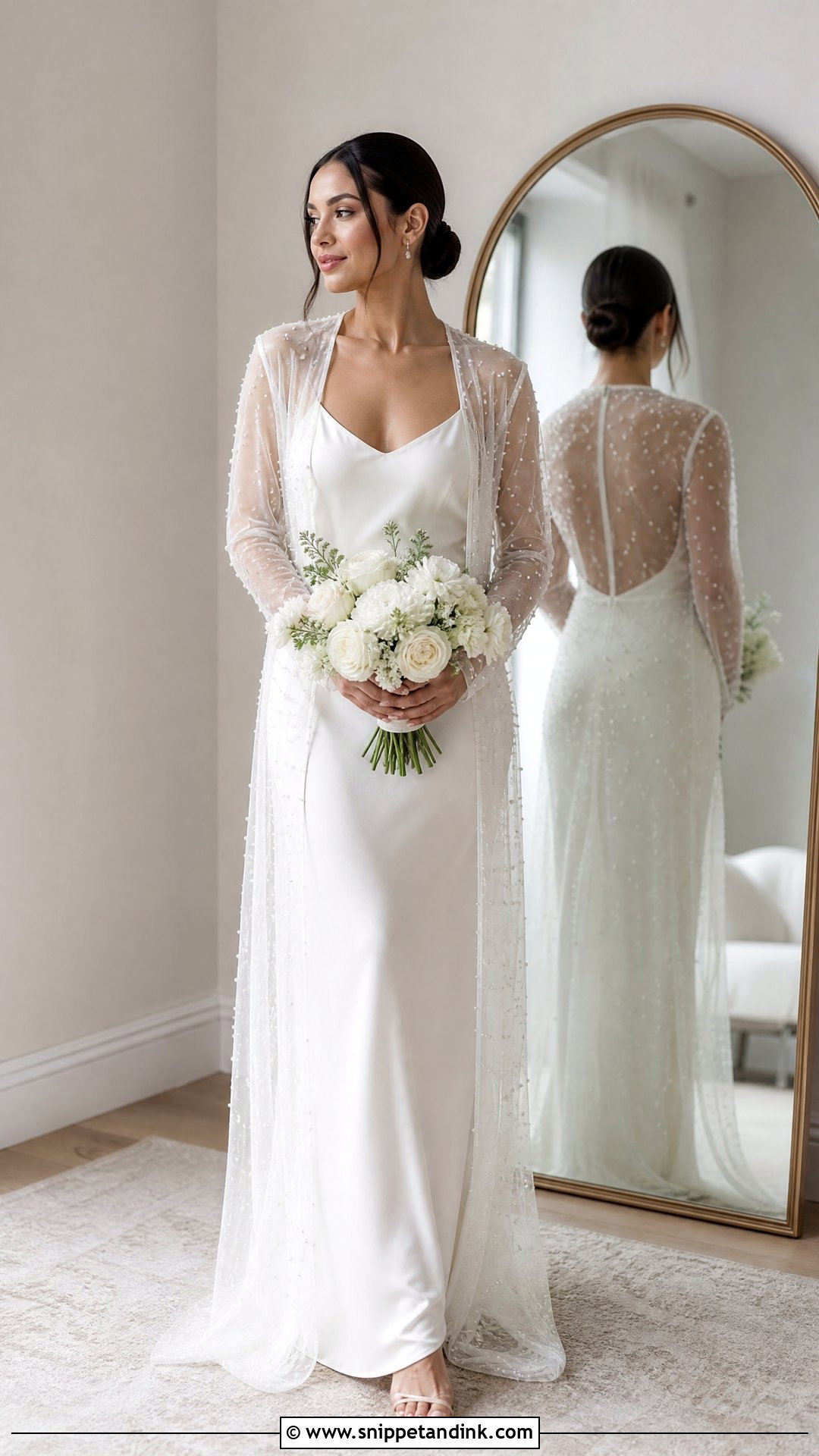
A sheer jacket gives you arm coverage while the gown still shows through. Fit is the detail to watch here: sheer sleeves that are too loose bunch at the elbow and look crumpled in photos, while sleeves that are too tight pucker at the armhole. Close but not clinging is right. Mesh is the most forgiving fabric; organza looks sharper but creases. Small pearls or a satin binding at the edge give it a finished look without any heaviness.
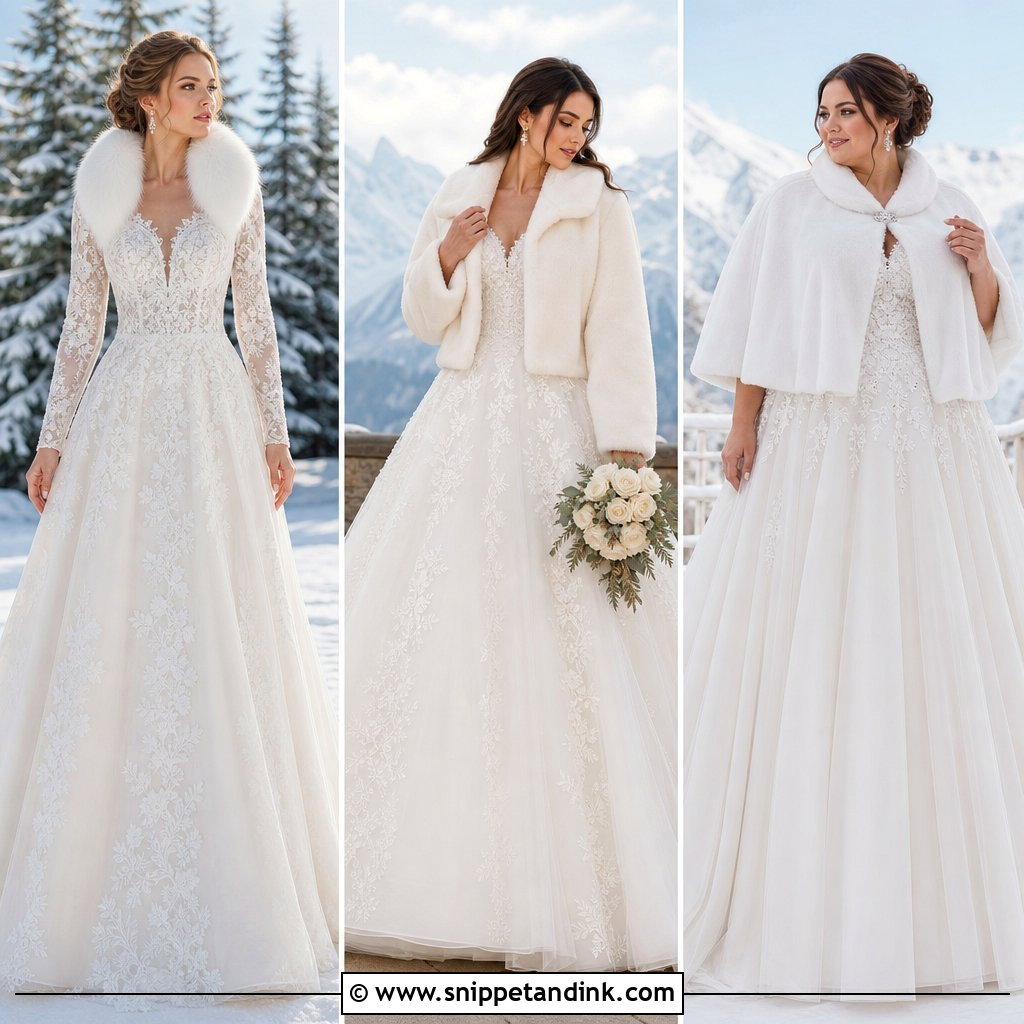
18. Bridal Cropped Fur Jacket
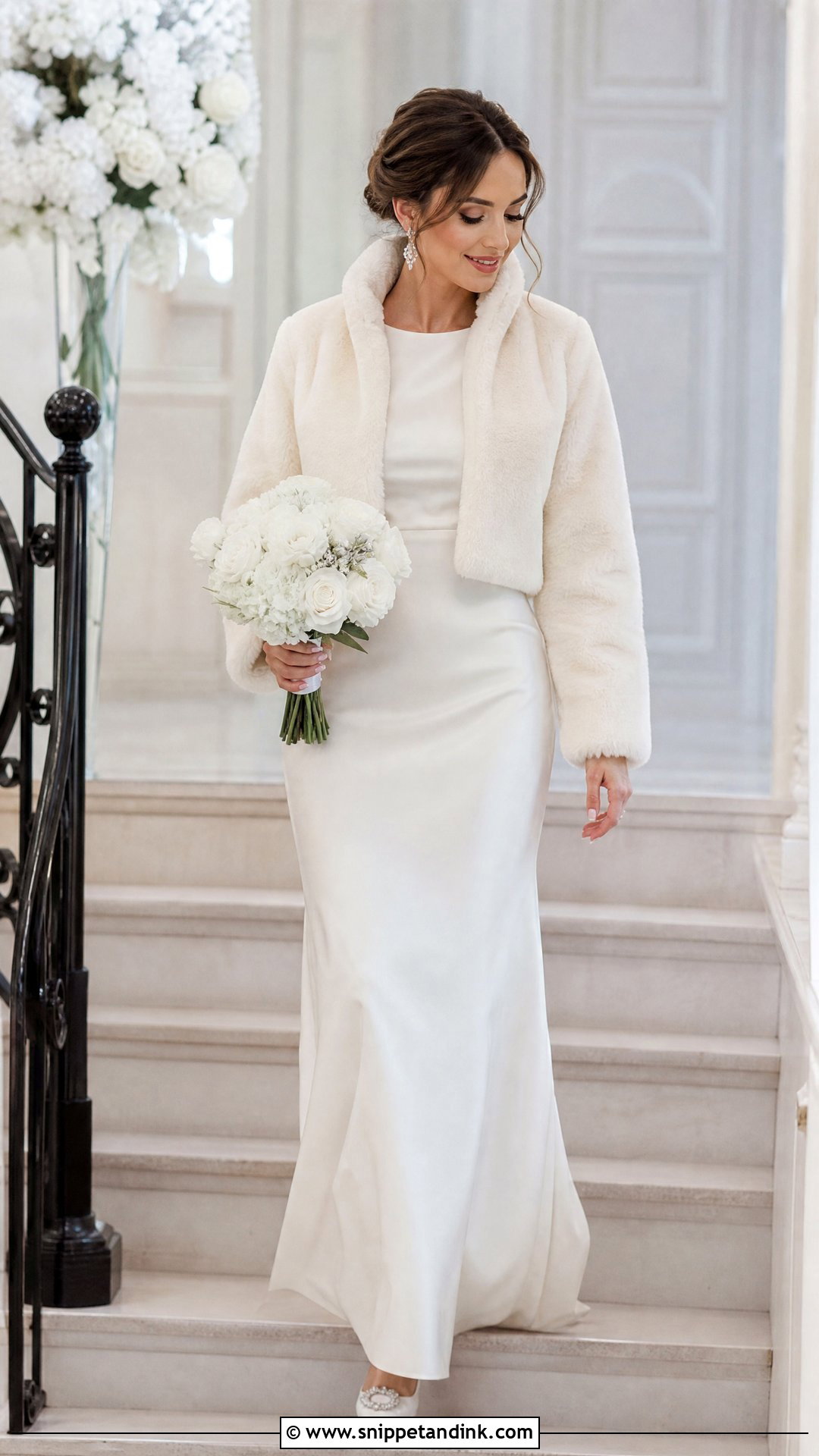
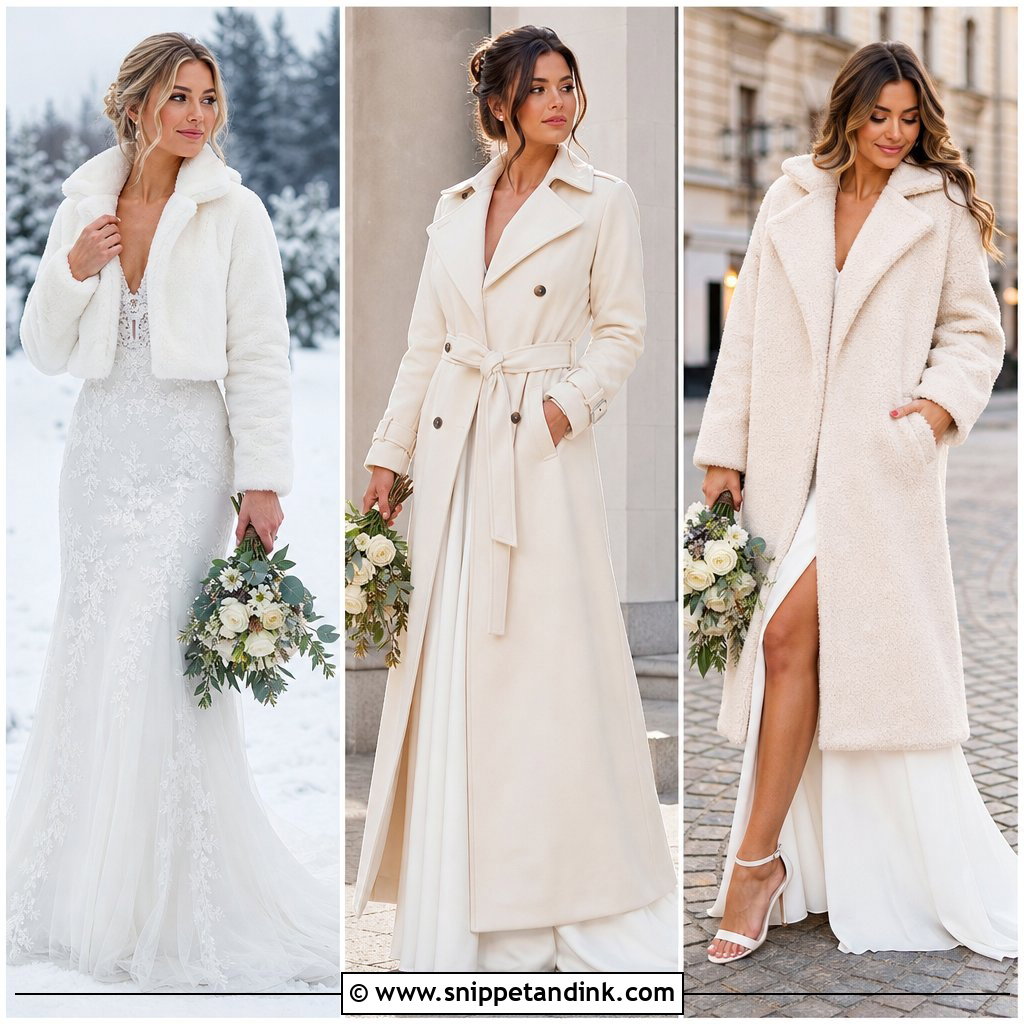
A cropped fur jacket is warmer than a stole because it closes, which matters at an outdoor portrait session in December. Keep the hem at or above the natural waist so the dress shape still shows. Sleeves are the part brides forget: a full-length fur sleeve gets in the way of the bouquet and the ring exchange, so I prefer three-quarter length. Ivory or cream is easiest; a pale grey can look great beside a cool-toned white gown.
19. Bridal Velvet Wrap
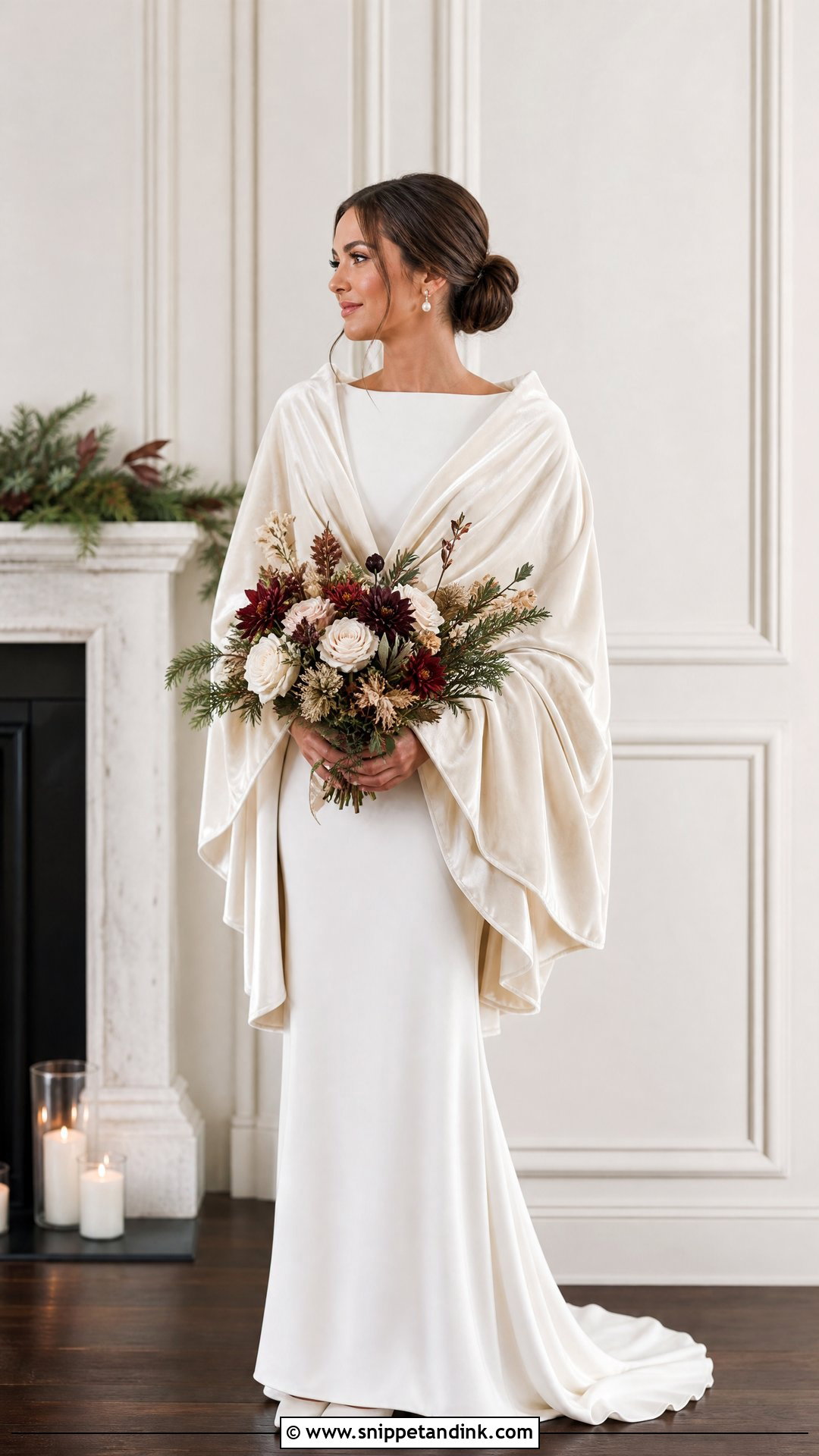
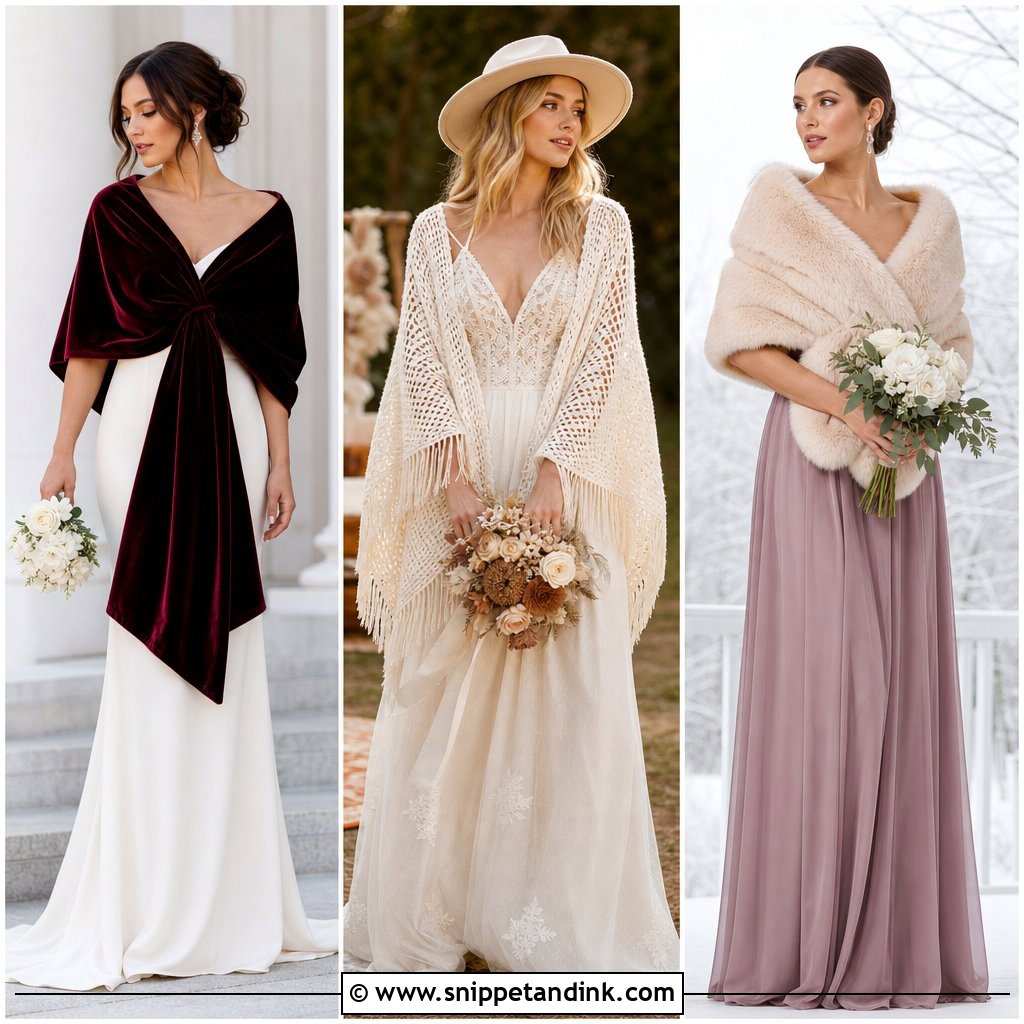
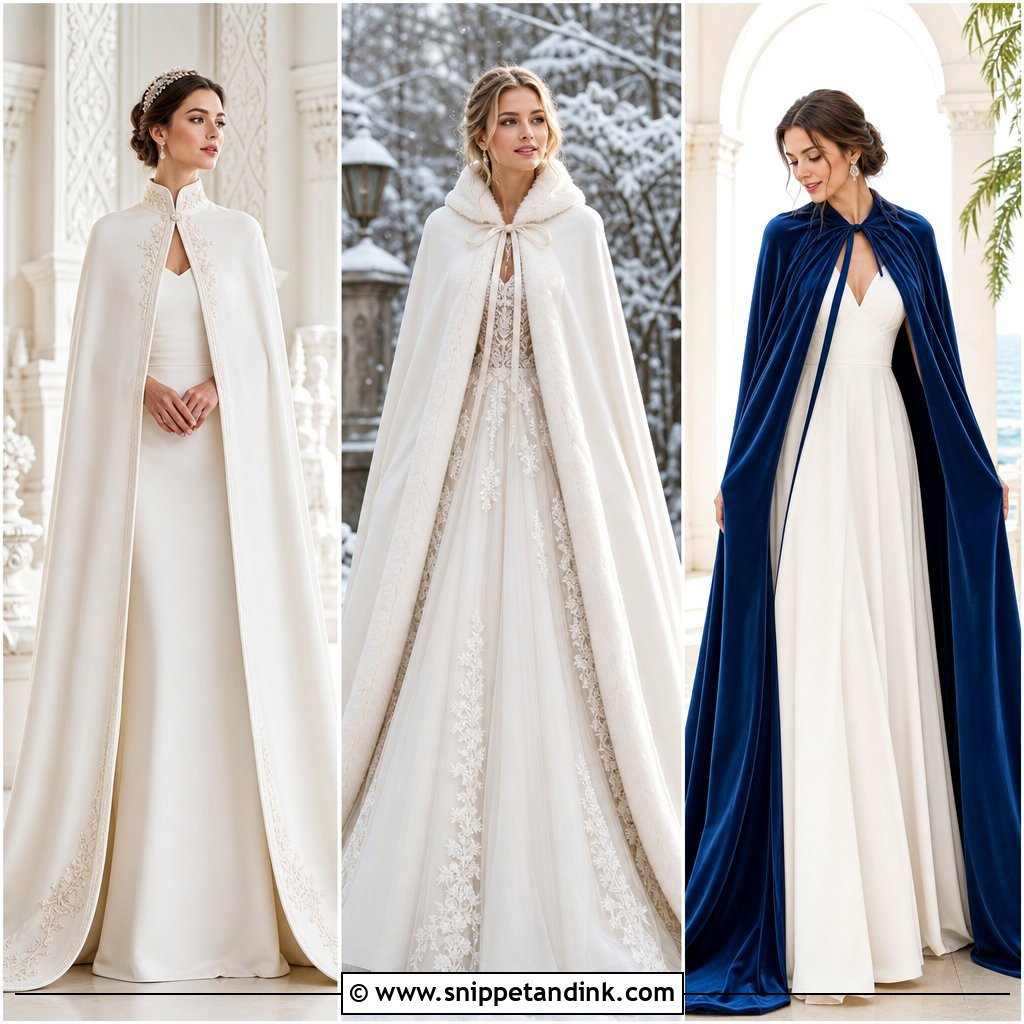
Velvet has more depth than any other wrap fabric, which makes it a fall and winter choice and a strong one for jewel-tone weddings. Ivory is classic, while dusty blue or champagne adds a quiet accent. Velvet crushes, though. Sitting on it in the car leaves pressure marks across the pile, so carry it over your arm until you arrive, and steam it from the back if it does mark. Because it’s heavy, keep it over simple gowns; on top of a lace bodice it hides everything.
20. Bridal Cape With Bow
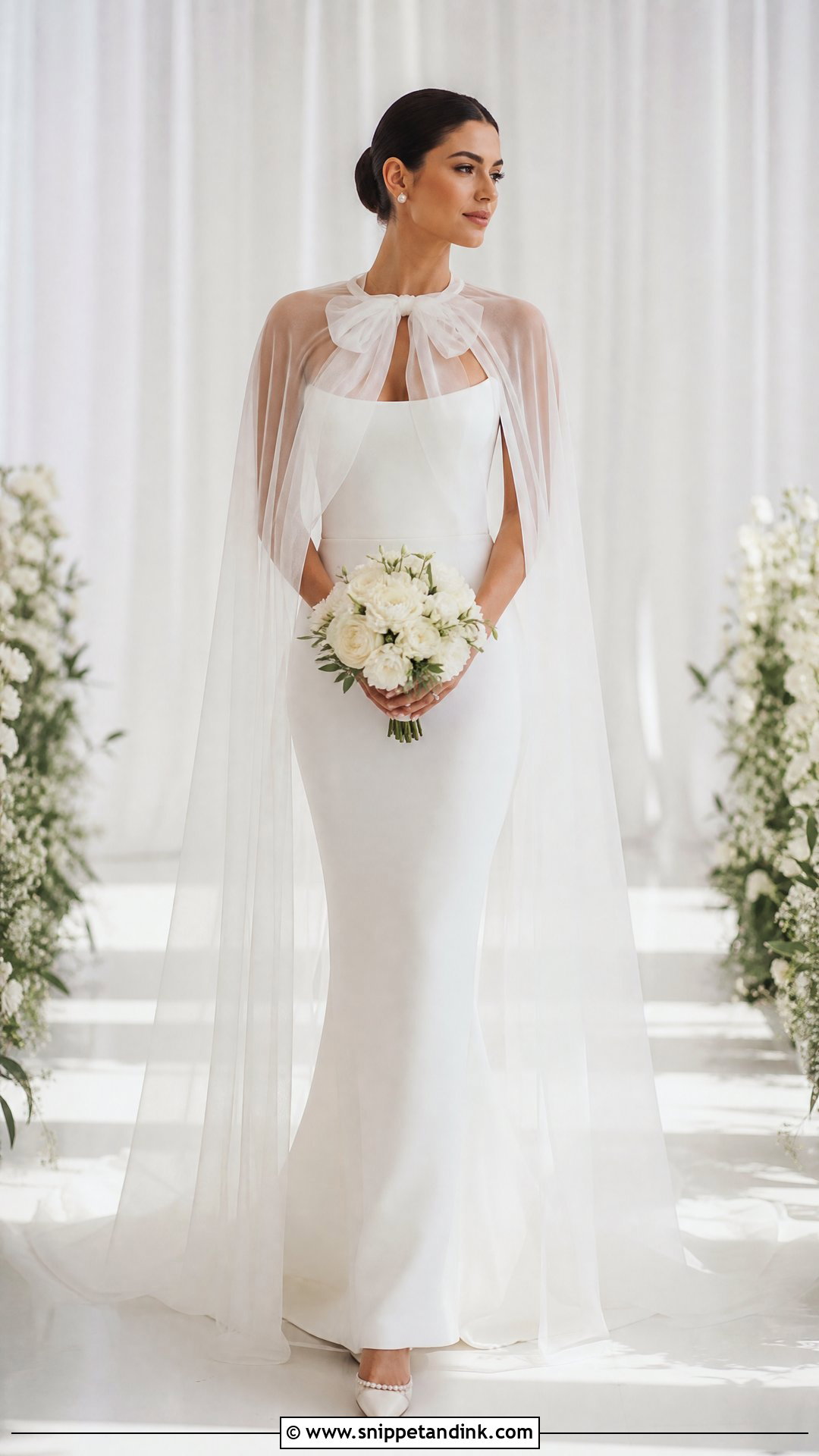
A cape with a bow gives the back of the dress a focal point, which is useful because guests spend the ceremony looking at your back. A long cape with a bow at the back looks dramatic walking up the aisle; a short cape with a shoulder bow feels playful. Where the bow sits matters for comfort: a big bow at the nape gets crushed against a chair, and you’ll feel it all through dinner. It’s a natural swap for a veil over a column dress or jumpsuit.
21. Bridal Lace Jacket
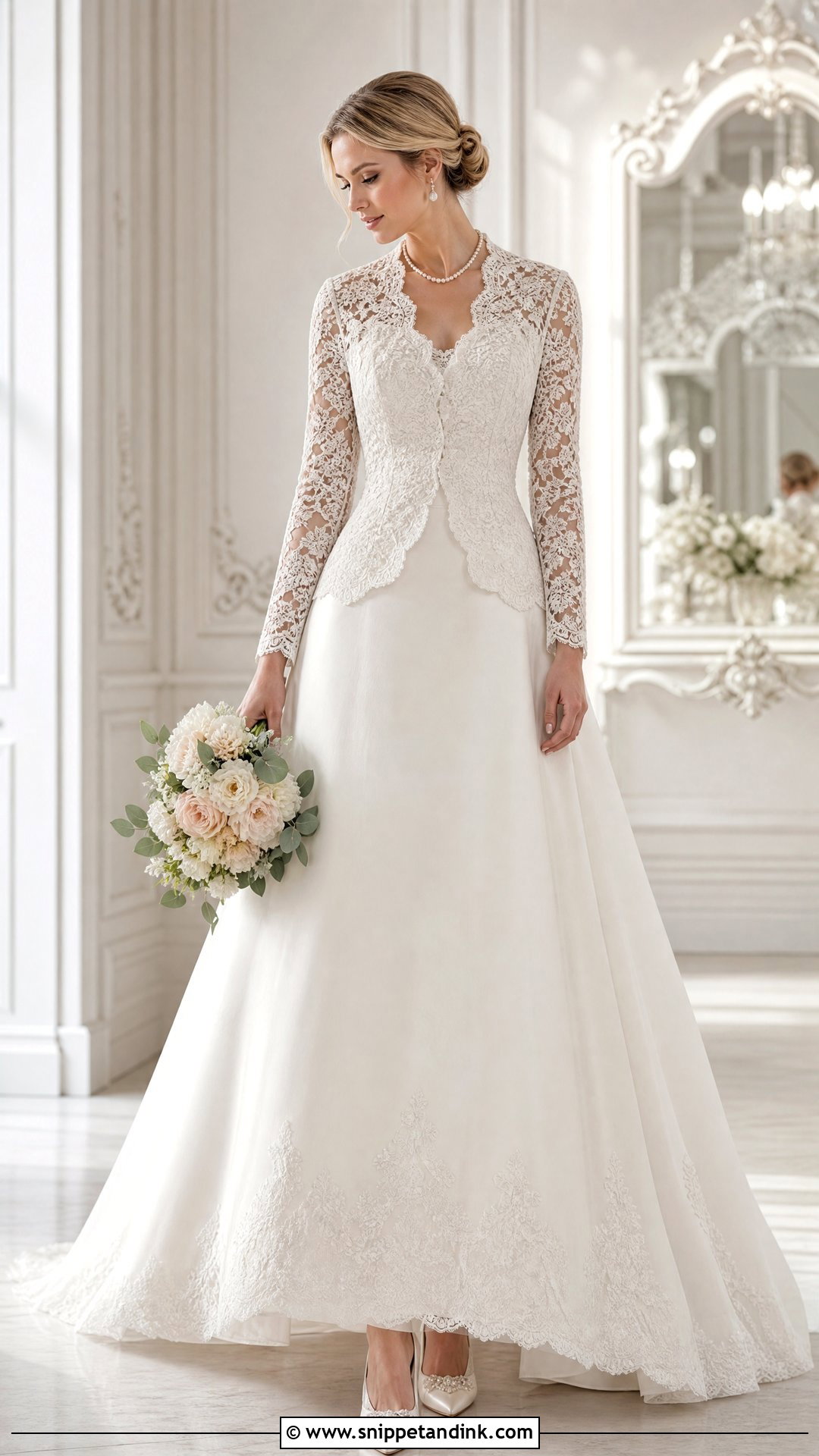
A lace jacket has more structure than a bolero and covers more of the back, which is why I suggest it for modest ceremonies and cold venues. Scalloped edges, covered buttons and a high neck all suit a slim gown. Matching is harder with a jacket because there’s so much more lace, so get a swatch and lay it against the gown in daylight, never under shop lighting. If the lace doesn’t match closely, contrast it deliberately instead, with plain tulle sleeves and a lace yoke.
22. Bridal Fringe Jacket
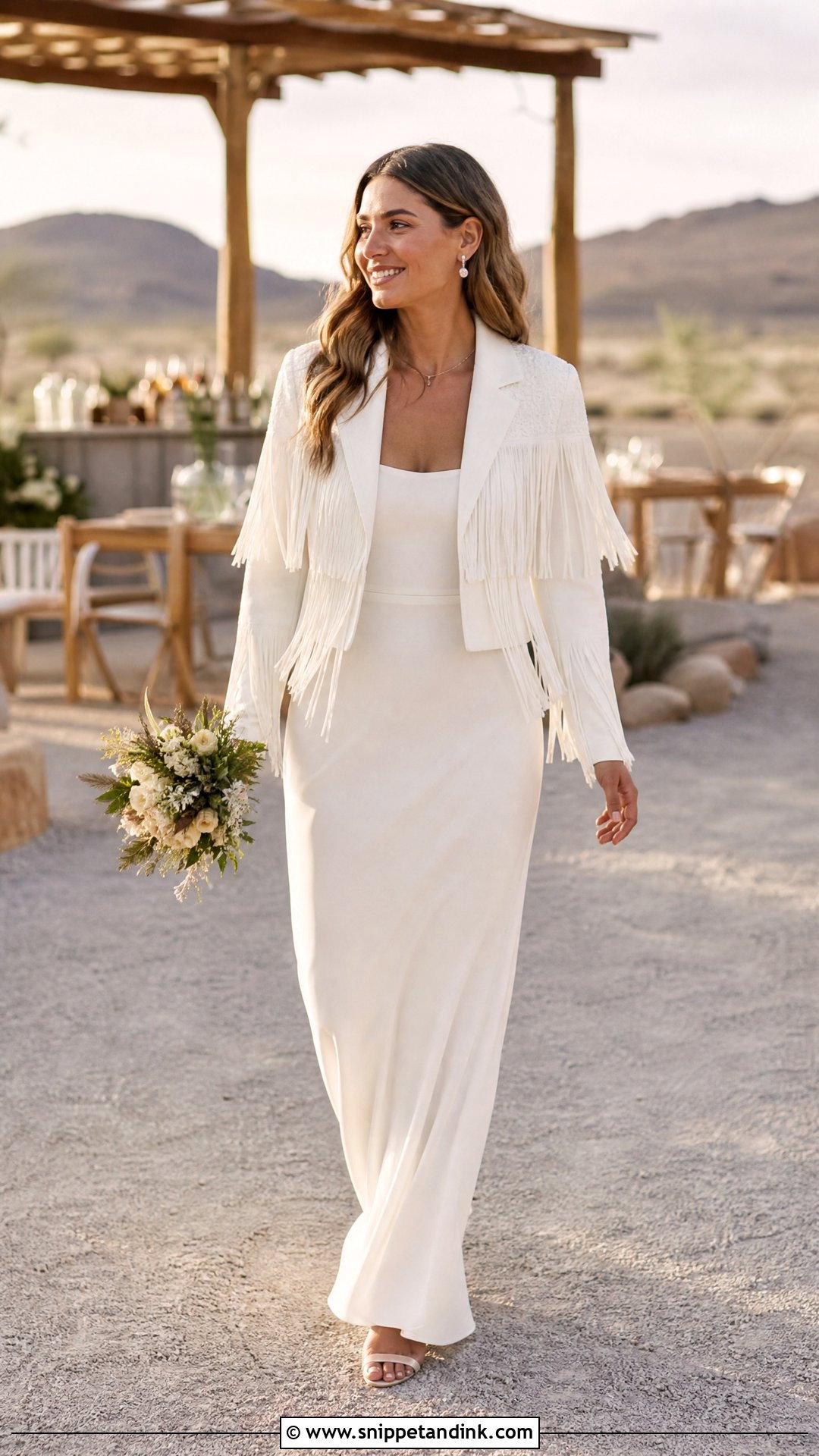
Fringe moves every time you do, and that motion is the whole point, so it shines at desert venues, outdoor receptions and dance-floor photos. Keep the dress underneath simple; fringe over beading or ruffles turns busy fast. Long fringe tangles when you hug, so I’d choose a medium length that swings without knotting. Ivory or cream keeps it bridal. A cropped jacket balances best.
23. Bridal Embroidered Jacket
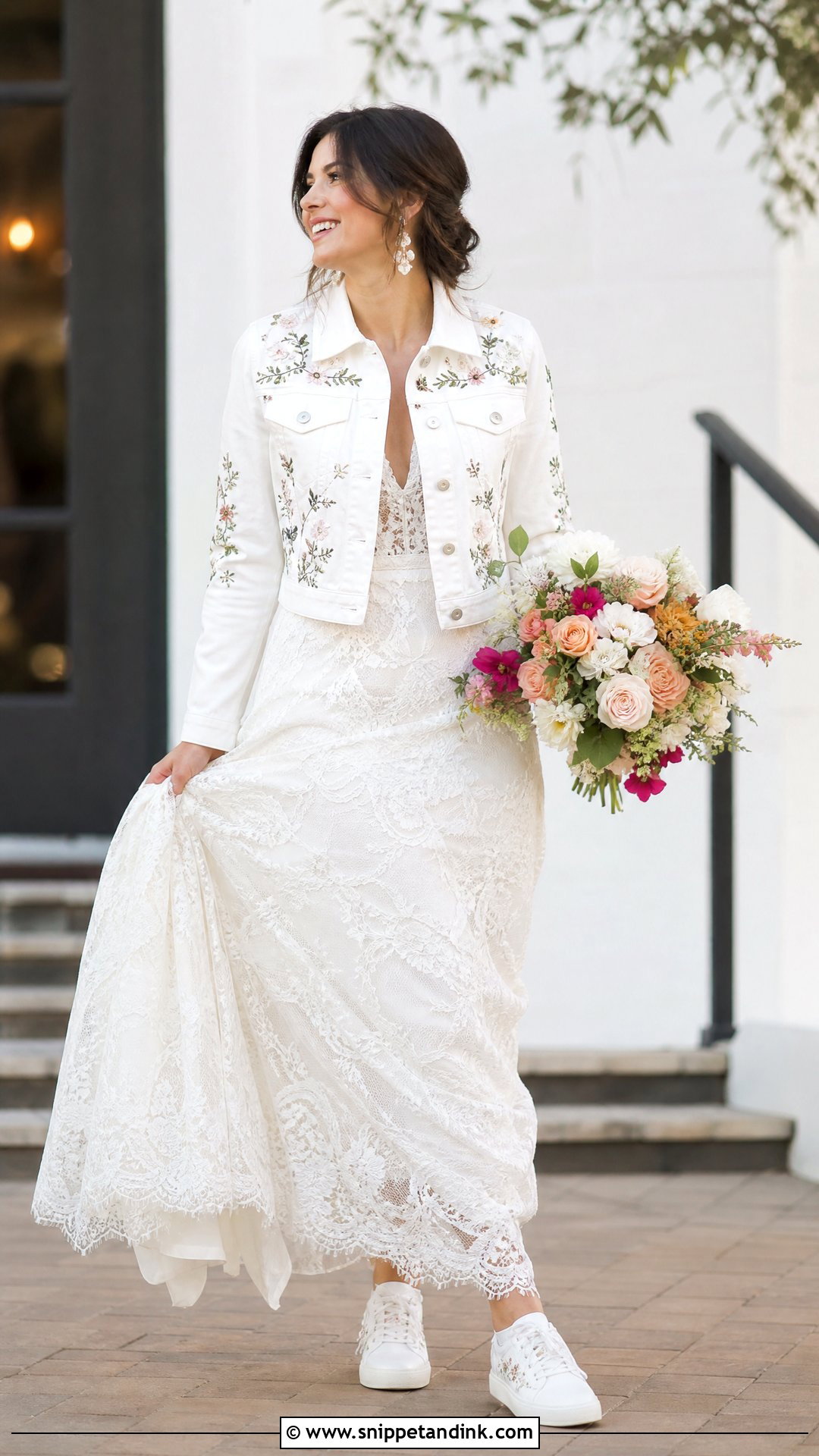
A bridal embroidered jacket is the most personal layer on this list, since you can stitch initials, your date or a line from your vows across the back. Hand embroidery takes time, so order it at least two to three months out and allow for one correction. Satin, white denim, organza and cotton all take embroidery differently: cotton and denim hold dense stitching, while organza needs a light hand to avoid puckering. Get it photographed from behind during getting-ready shots, while the light is still soft.
24. Bridal High Neck Capelet
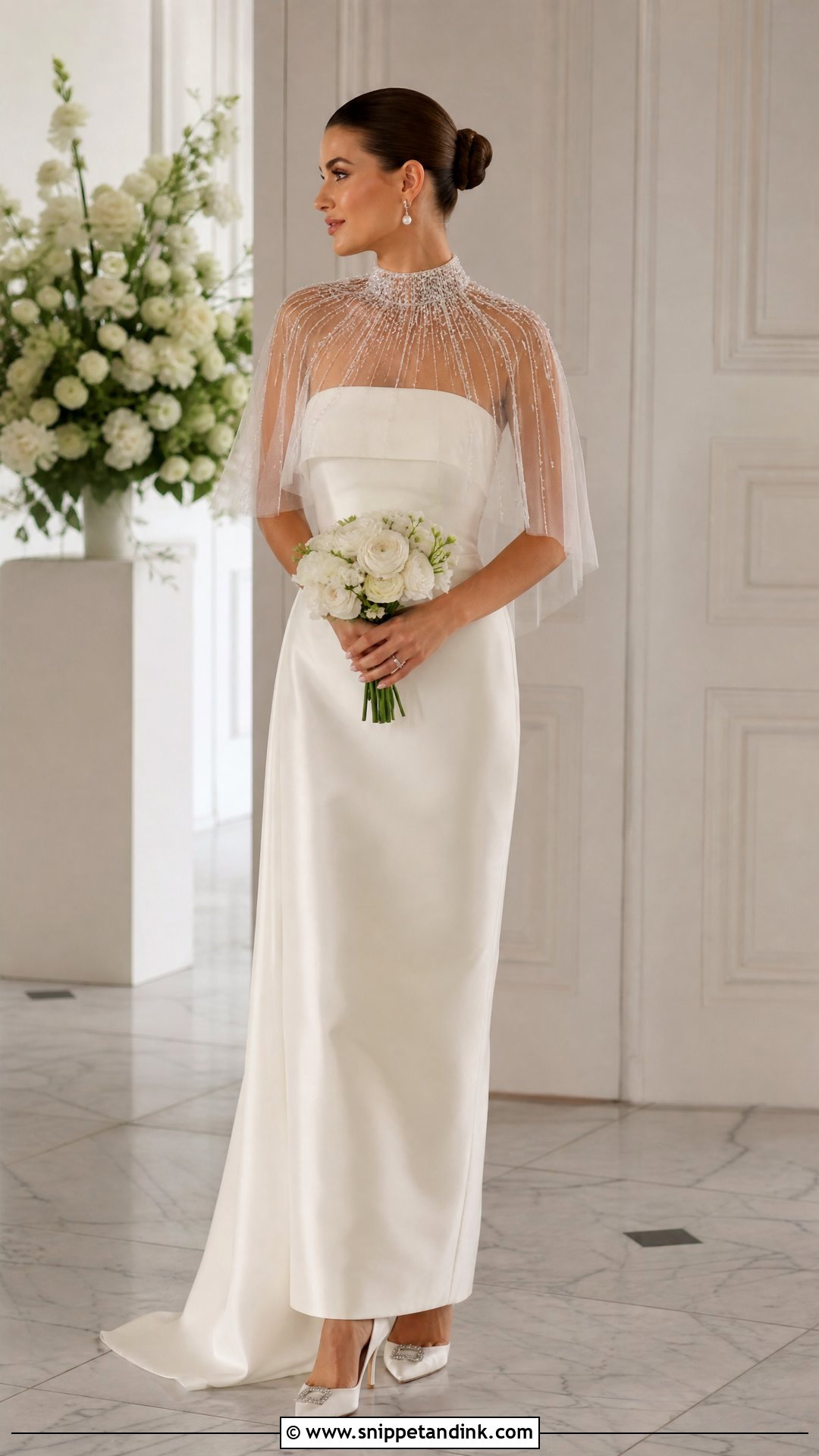
A high-neck capelet frames the face and gives full coverage at the shoulders and chest, which makes it a strong pick for a modest ceremony over a strapless or sweetheart gown. Pair it with an updo, since loose hair catches on the collar and hides the neckline. Skip necklaces entirely and let earrings carry the jewelry. Make sure the collar isn’t snug; you’ll be turning your head toward guests and the officiant all day, and a tight neckline leaves a red mark.
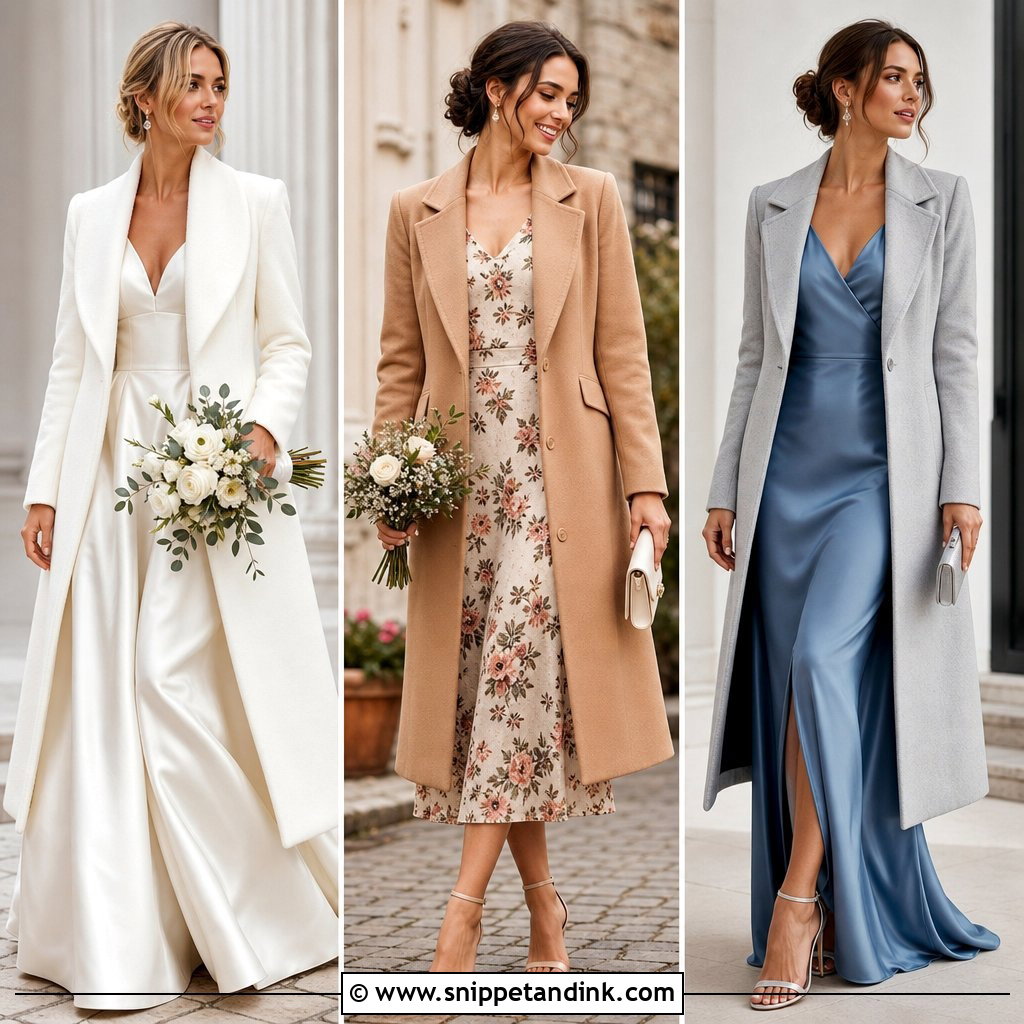
25. Bridal Wool Coat
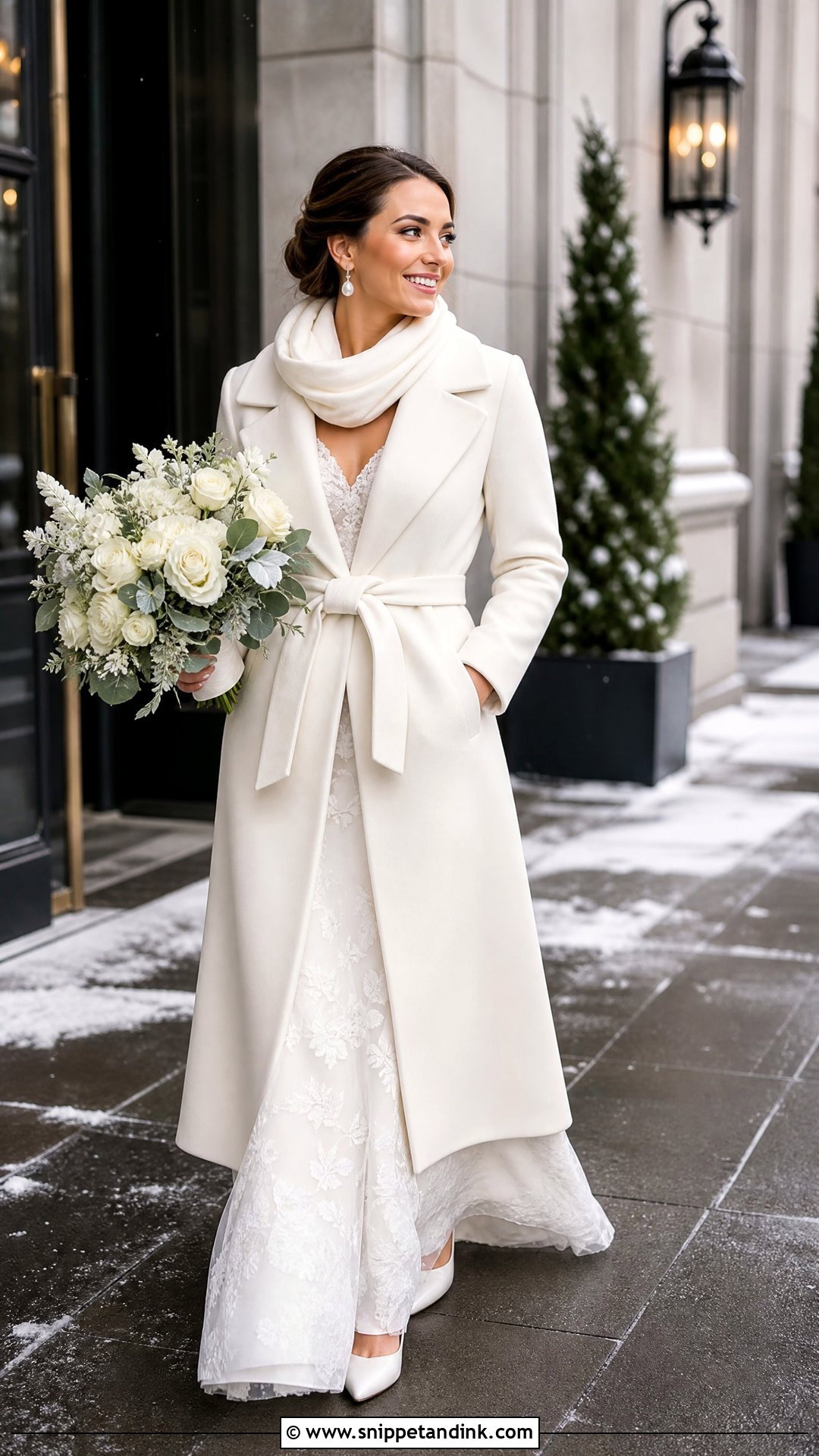
For a real winter day, a coat is the only layer that keeps you warm for portraits outside. The fit test is simple: put it on over the dress and sit down. If the skirt bunches up into the lap or the coat won’t close over the gown, it’s too narrow; if it hangs like a blanket, it’s too big. A wrap or belted coat adapts best to a full skirt. Ivory, camel and pale grey all photograph well against snow. Plan who will hold it during the ceremony, because a coat is too big to drape over a chair at the altar.
On, Off and Back On: Planning the Hand-Offs
Most brides take their cover up off at least twice, and the moment it comes off is when it gets lost, sat on or left at the venue. Decide in advance when it’s on and who carries it the rest of the time.
- Wear it for the walk in if the venue is a church or temple that asks for covered shoulders, then remove it for the recessional or the receiving line.
- Take it off for the first look and the main portraits unless warmth demands it. Most photographers want at least a few frames of the gown alone.
- Hand it to one named person, usually a bridesmaid or a parent, with a garment bag and a hanger. Folding fur or velvet into a tote leaves marks.
- Put it back on for evening portraits, outdoor transitions and the last hour, when venues cool and the dance floor empties.
Caring for It After the Wedding
Store anything delicate flat or on a padded hanger in a breathable cotton bag, never plastic, which traps moisture. Faux fur should be shaken out and brushed gently, not washed. Sequins and beads go to a specialist cleaner, since a machine pulls threads loose. Velvet should hang, never fold, and lace can be spot-cleaned on the inside if makeup has transferred. If you plan to wear it again, a cardigan, blazer or leather jacket will earn its keep for years; a feather jacket or long tulle cape is more often a keepsake.
The Layer That Makes Sense for Your Gown and Your Weather
A good cover up looks planned, not like something grabbed at the door. Start from your dress: neckline, fabric and silhouette decide most of the shortlist before season even comes in. A fur stole earns its place in a winter portrait, a sheer cape gives drama without weight, a blazer brings a sharper mood, and a lace bolero adds quiet coverage. Then wear it with your shoes, jewelry, hair and bouquet before the day. A layer that has been tried with the whole outfit is one you’ll forget you’re wearing.
You'll Like These Ideas:


Leave a Reply