
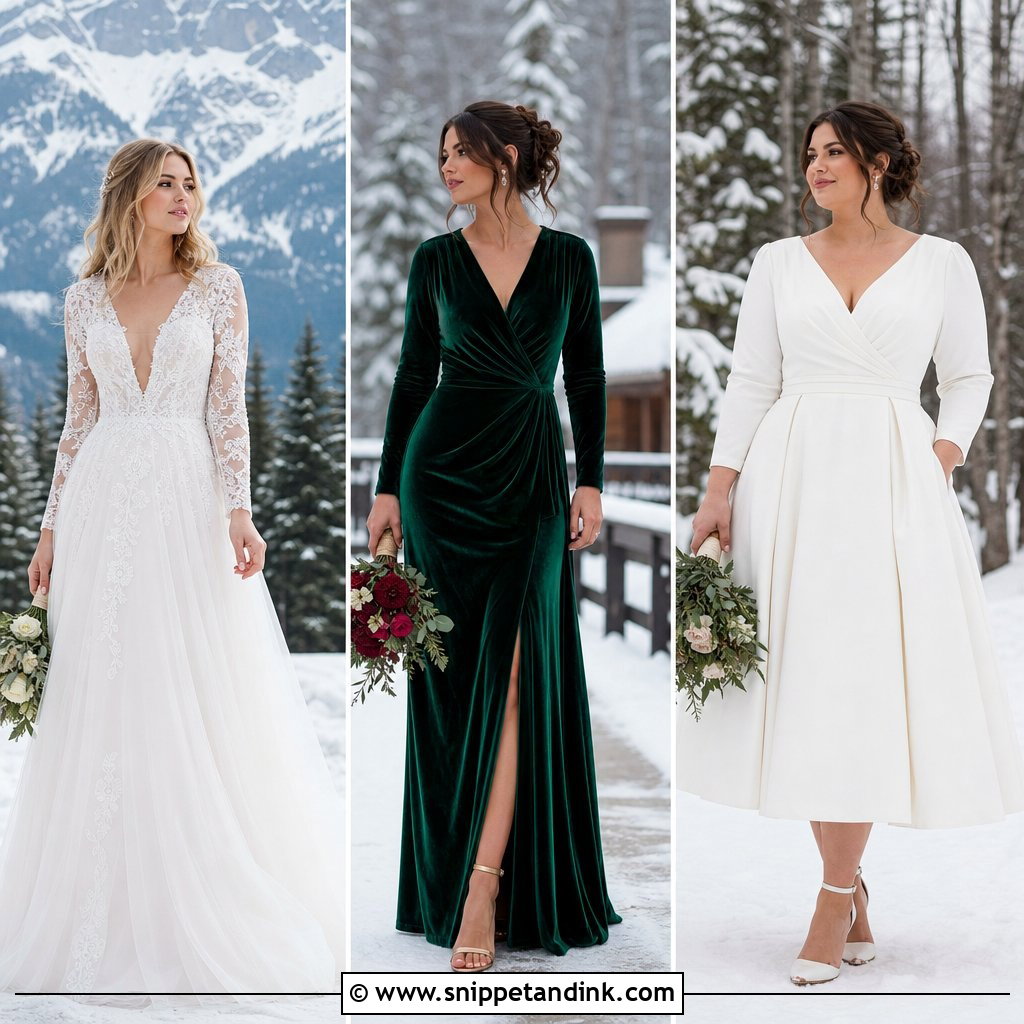
Snow, crisp air and low winter light make a wonderful backdrop for a wedding dress, but they also test it. Structured fabrics like Mikado, satin, velvet and heavier crepe hold their shape in the cold, and lace sleeves, capes, wraps and bridal coats add coverage without forcing you into a bulky silhouette. A ball gown, a fitted mermaid and a plain sheath can all look like winter. When I dress a bride for snow, I think about the accessories as early as the gown: closed-toe shoes, gloves, a little sparkle and outerwear that comes off quickly for outdoor portraits. The dresses below each come with the pieces that finish them.
Ivory, Diamond White or Pure White Against Real Snow
Snow changes how a wedding dress color reads, and it catches brides out more than any other winter detail. Fresh snow is a very bright, cool white. Under an overcast sky or in shade it turns faintly blue, and the dress is judged against it in every outdoor frame.
- Pure optical white matches snow closely, so the dress can blend into the background and lose its outline in wide shots.
- Diamond or soft white usually holds its own: still crisp, with just enough warmth to separate from the snow.
- Ivory looks rich and warm against snow and flatters most skin tones, but a very yellow ivory can look aged right next to it.
- Champagne and blush-lined gowns stand out clearly, which many photographers welcome on an all-white landscape.
When I’m helping a bride decide, I take the fabric swatch outside on a bright day and hold it against something white, a sheet of paper is enough, and look at it again in shade. That five-minute test tells you more than the shop mirror. Remember that the coat, the faux fur and the veil need to agree with the dress too, since three slightly different whites side by side look like a mistake.
1. Long Sleeve Lace Ball Gown
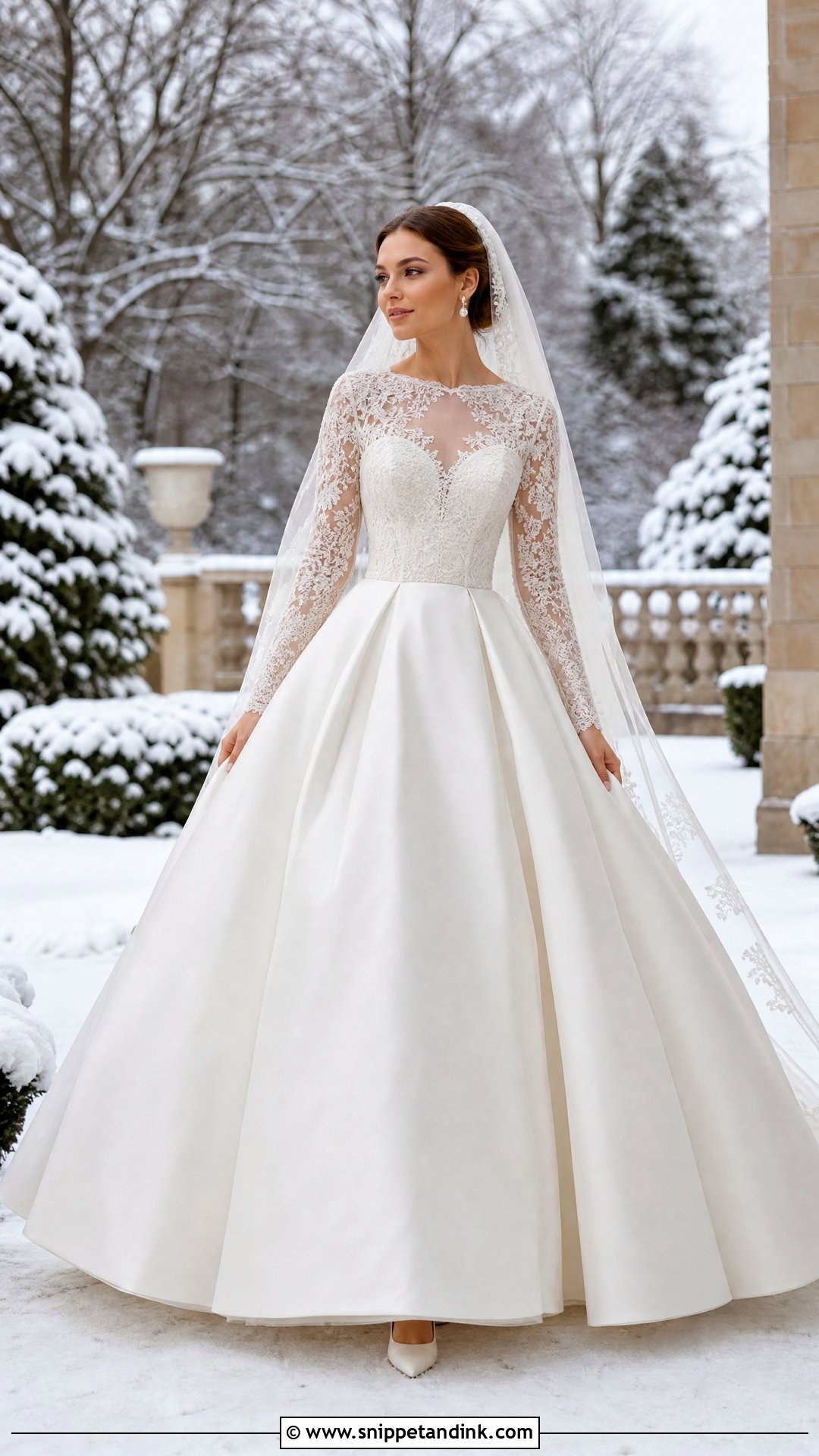
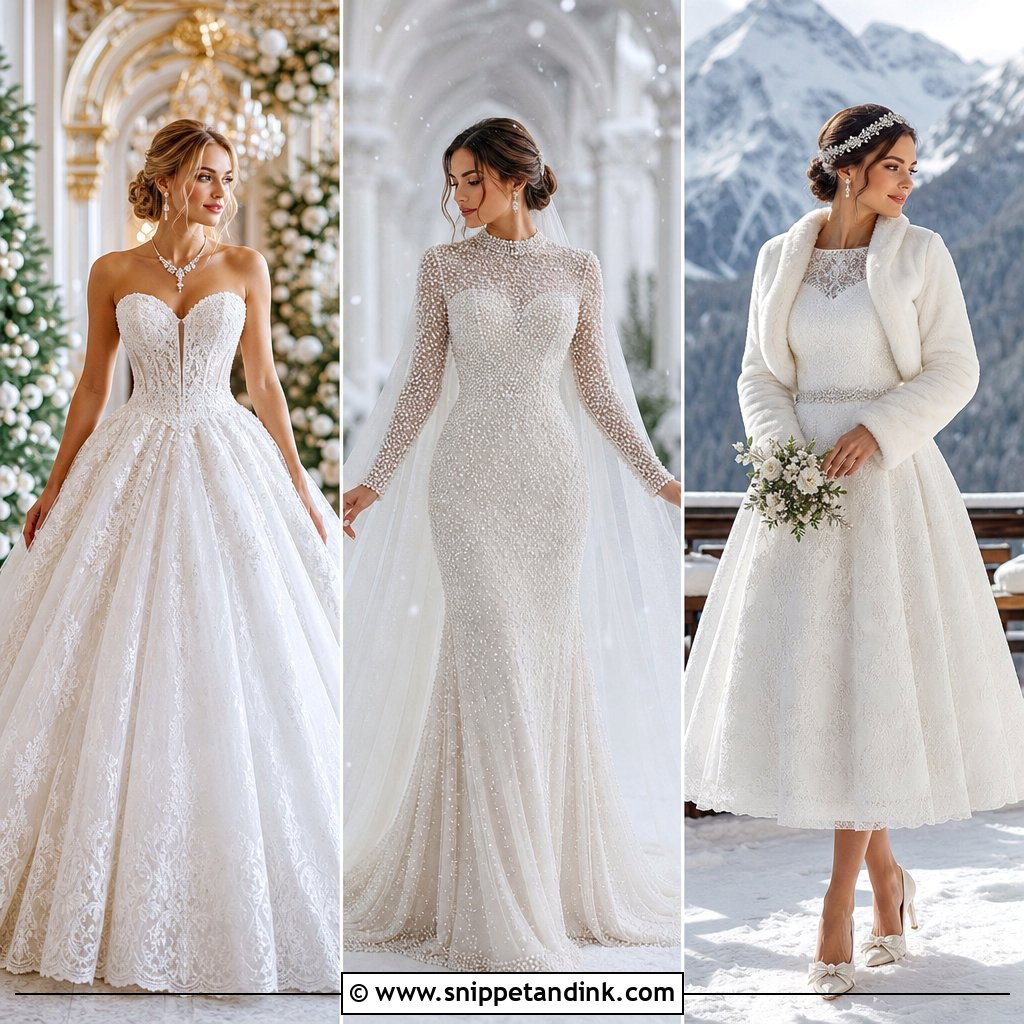
Lace over a fitted bodice with illusion sleeves, then a softly structured satin or tulle skirt: the defined waist is what keeps the volume in proportion on most figures. Pearl drops, a cathedral veil, ivory closed-toe pumps and a smooth low bun let the lace pattern show. Outside, a short faux-fur capelet warms the shoulders without hiding the skirt. Lace sleeves often bind at the elbow when the bodice is very fitted, so I have brides bend and reach during the appointment. A few small crystals on the lace catch the pale light without turning it into a sparkle dress.
2. Satin Wedding Dress With Cape
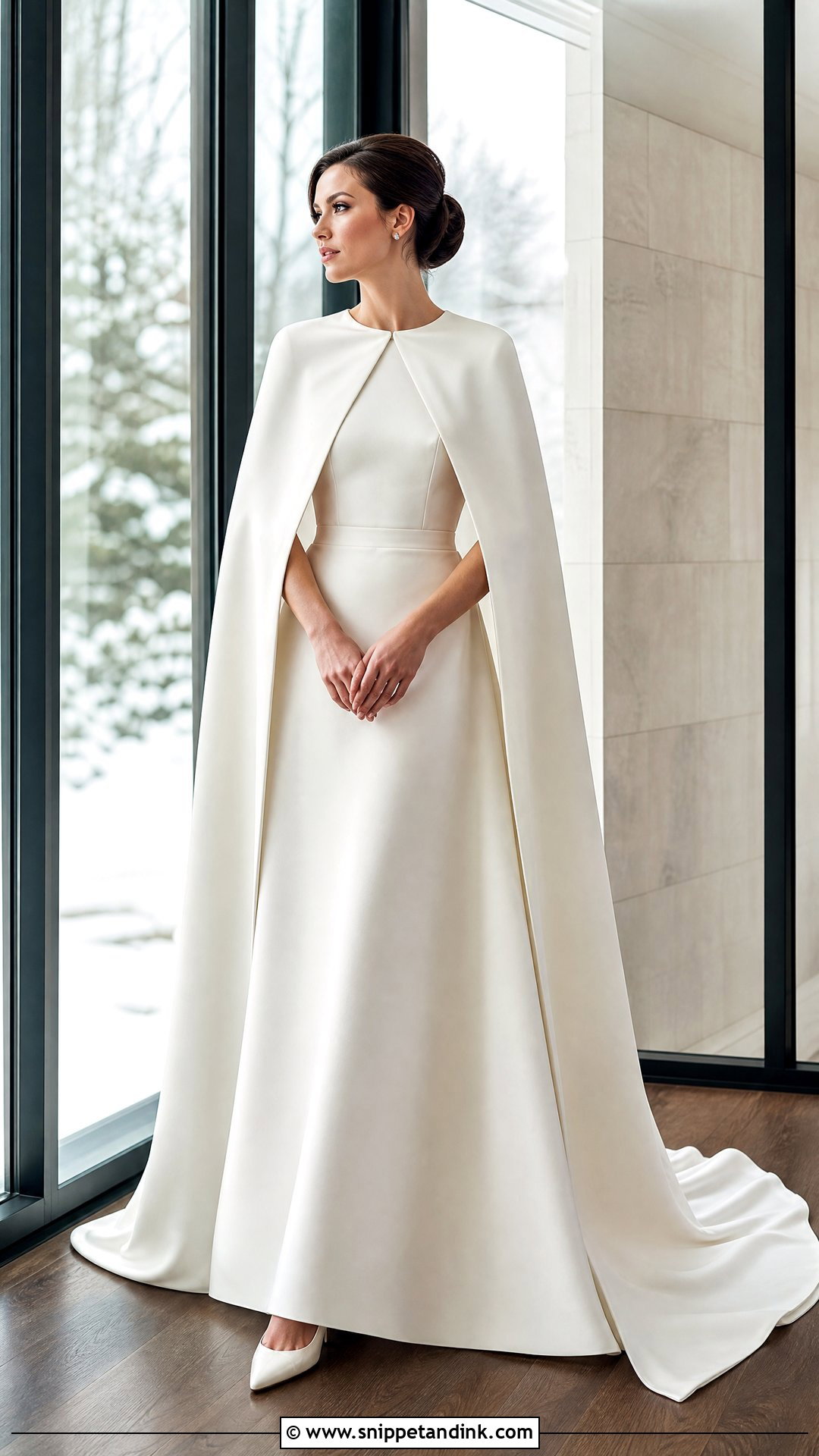
A long bridal cape over satin moves beautifully in snow, and it works best when the dress underneath stays simple. Pick a satin A-line or column with a square, bateau or softly draped neckline and little embellishment, then add a floor-length cape in the same ivory with covered buttons or a discreet clasp. Pointed pumps, crystal studs and a sleek chignon keep it clean. The cape can stand in for a veil and come off indoors. I check two things at the fitting: that the cape ends a few inches shorter than the train, so the layers don’t tangle, and that it’s lined, since an unlined chiffon cape is decoration, not warmth.
3. Mikado Wedding Ball Gown
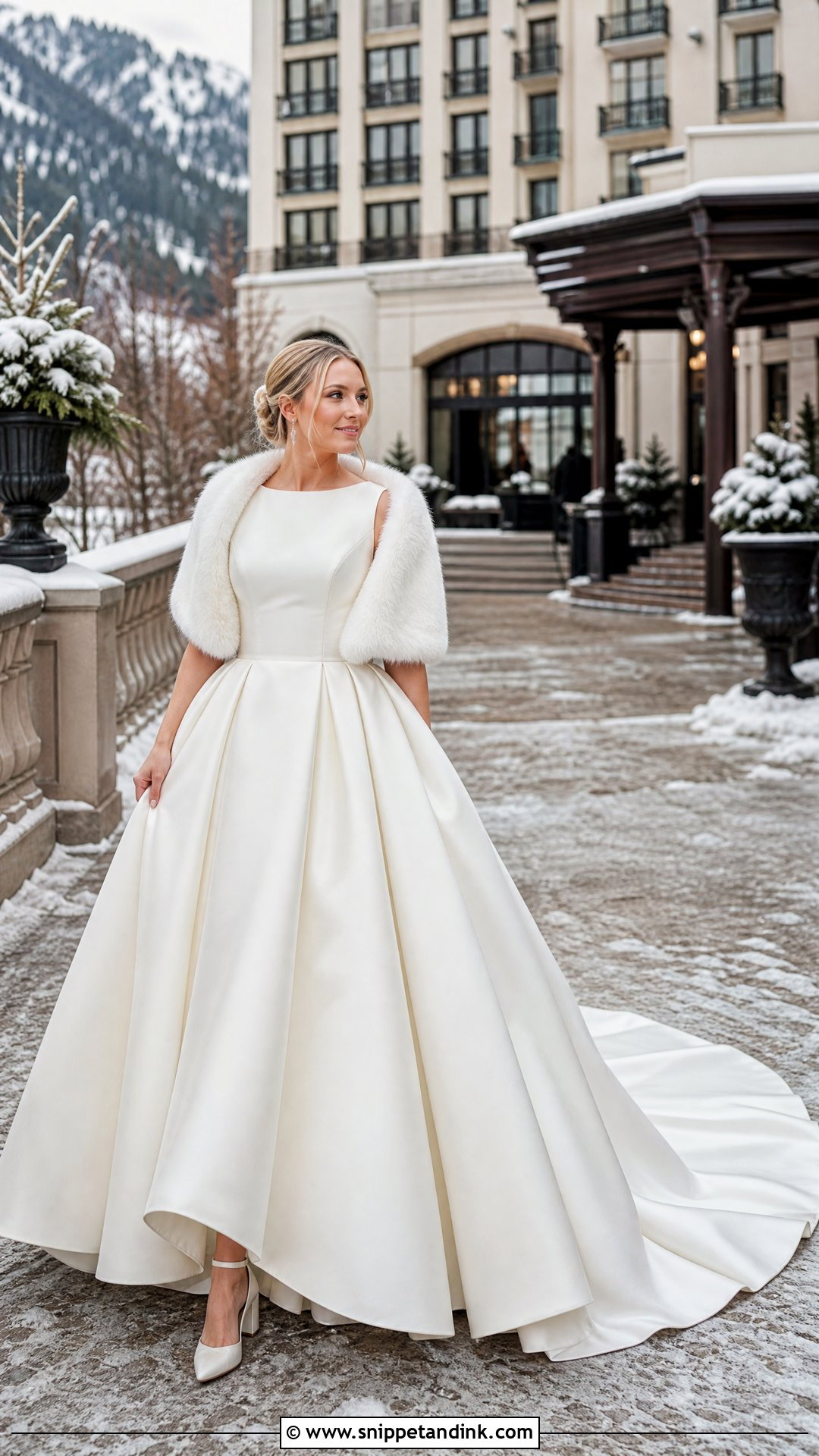
Mikado is built for grand rooms. Its stiffness holds a fitted bodice, defined waist and full skirt without any beading at all. I like it with a portrait neckline, long train, and pockets, styled with a fingertip veil, pearl and crystal earrings and satin block-heel pumps, and a fitted faux-fur wrap for the snow that comes off to show the bodice. Every seam and pleat shows in this fabric, so the alterations must be exact. Wear your actual wedding shoes to the hem fitting. Mountain lodges, hotels and formal ballrooms suit it.
4. Velvet Winter Wedding Dress
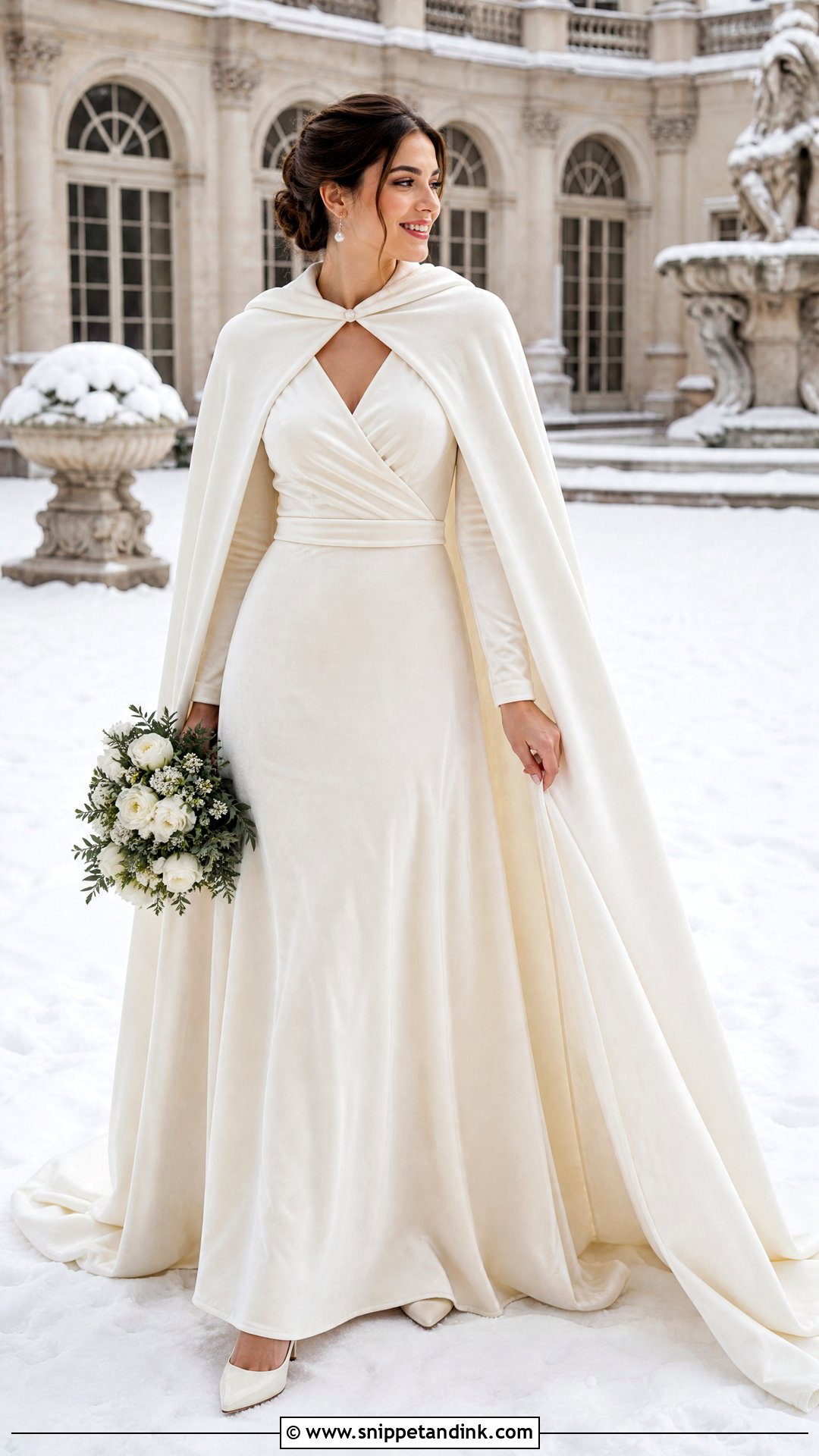
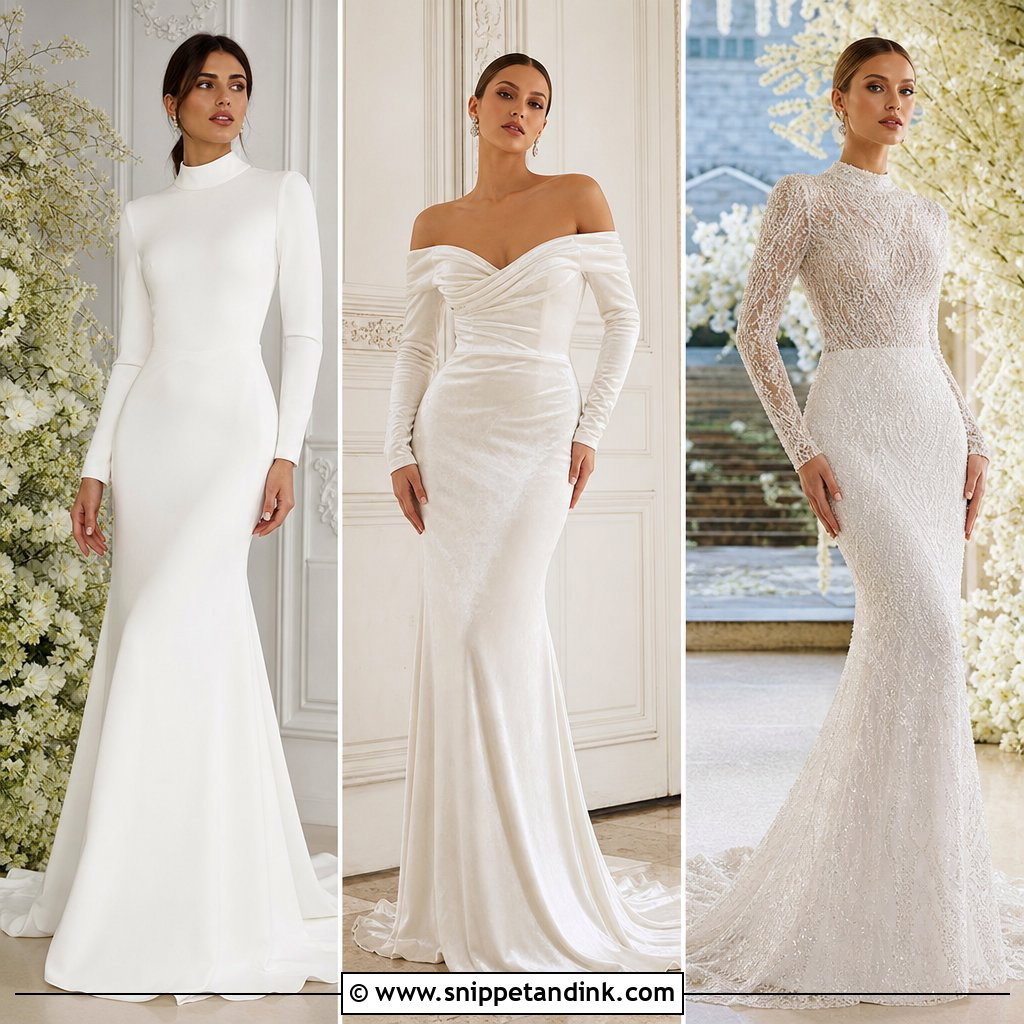
Ivory velvet has a softness no other bridal fabric matches, and it’s also the least forgiving of makeup. Foundation and bronzer show clearly on the pile at the neckline and cuffs, so I set the face well before the dress goes on. Choose long fitted sleeves, a defined waist and a gently flared skirt, with a wrap bodice or V-neck to stop the heavy cloth looking like a robe. Pearl earrings, a smooth veil, velvet or satin pumps and a small structured clutch are enough. Outside, add lined gloves and a matching velvet cape. Velvet changes tone as it moves, so look at it in daylight and under the venue’s lamps before you decide.
5. High Neck Lace Wedding Dress
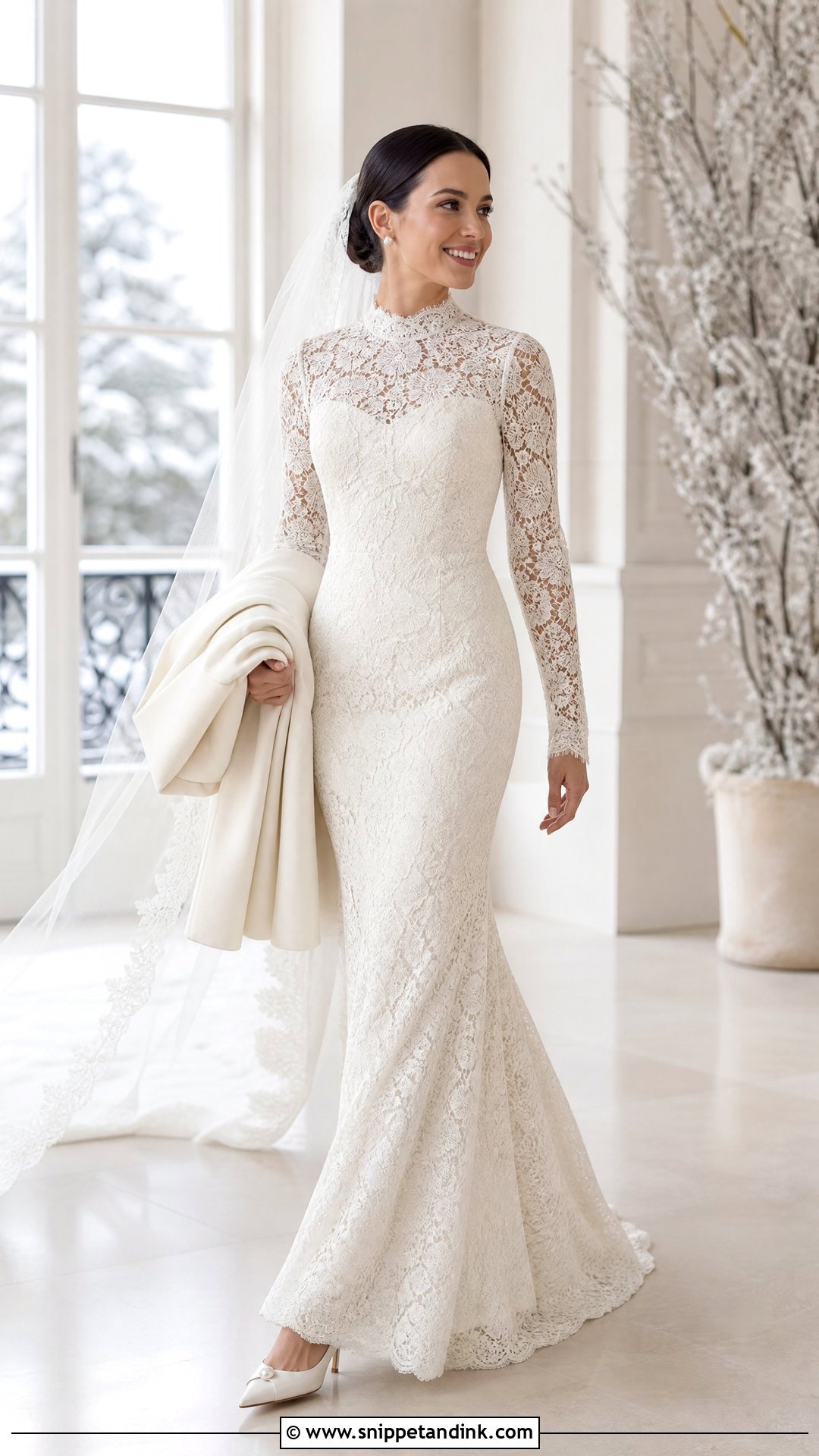
High necks frame the face, which means no necklace is needed and the earrings carry the jewelry. A fitted lace bodice with a lined front, sheer long sleeves and an A-line or fit-and-flare skirt, with covered buttons down the back, is the classic version. Pair it with a chapel veil set under a low bun, pearl studs, a delicate bracelet and closed-toe kitten heels. Outdoors, a plain tailored ivory coat, waist-length or full-length, won’t fight the lace. Brides with a shorter neck look easier in a soft mock neck than a tall, tight collar, which pushes up under the chin when you look down at your vows.
6. Wedding Dress With Faux Fur Wrap
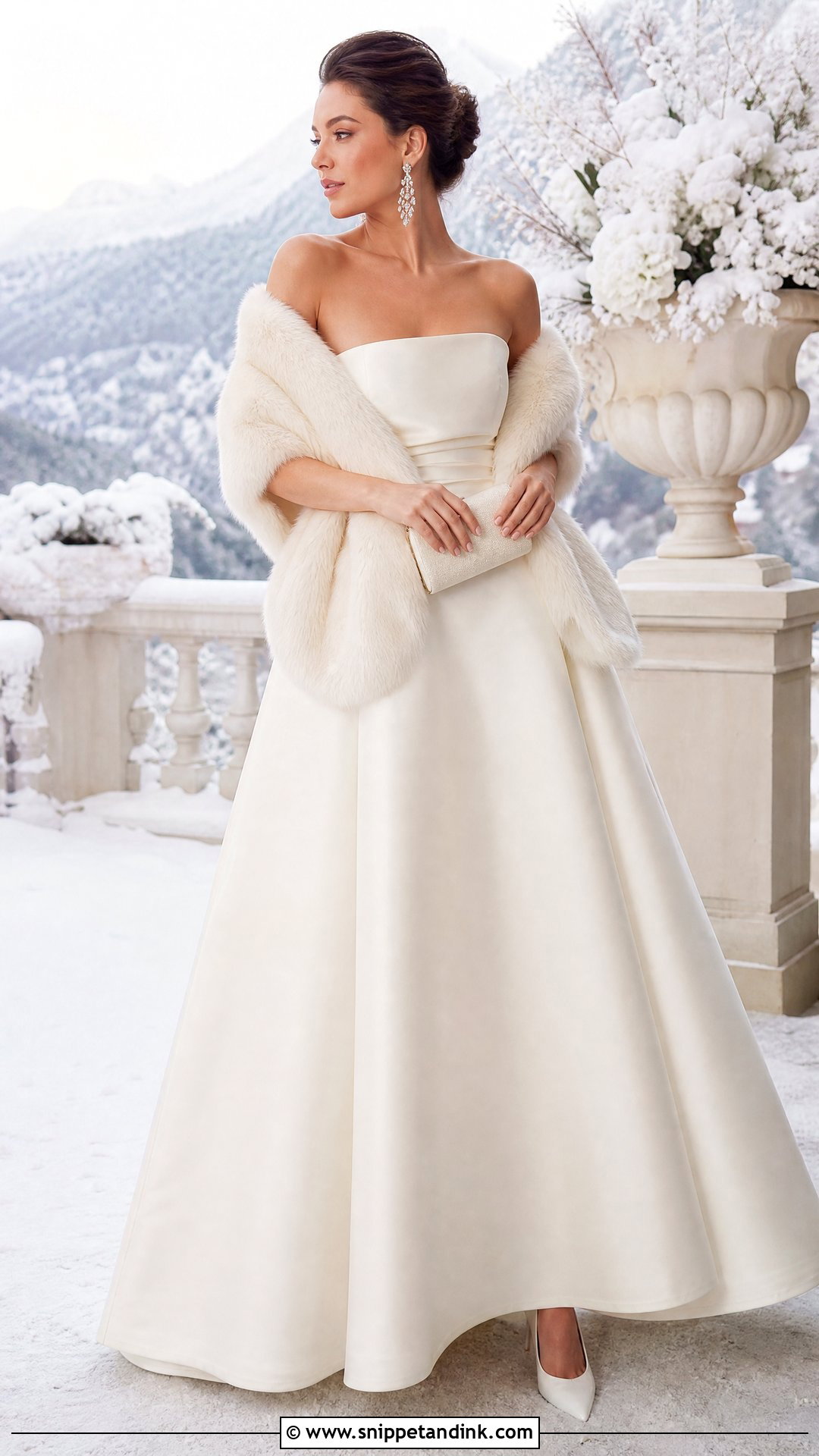
An open neckline and a snowfall can still go together. Start with a strapless, off-the-shoulder or sleeveless satin A-line and add a soft ivory faux-fur stole fastened with a hidden hook, a satin ribbon or a vintage-style brooch, with closed-toe pumps, crystal earrings and a polished updo. Shake the stole out and test it on dark fabric before the day; cheap fur sheds onto satin and shows in close-ups. Size matters too. A compact stole sits right on a small frame, while a wider wrap balances a fuller skirt or long train. Taking it off at the reception gives you a second look for free.
7. Sparkly Tulle Wedding Gown
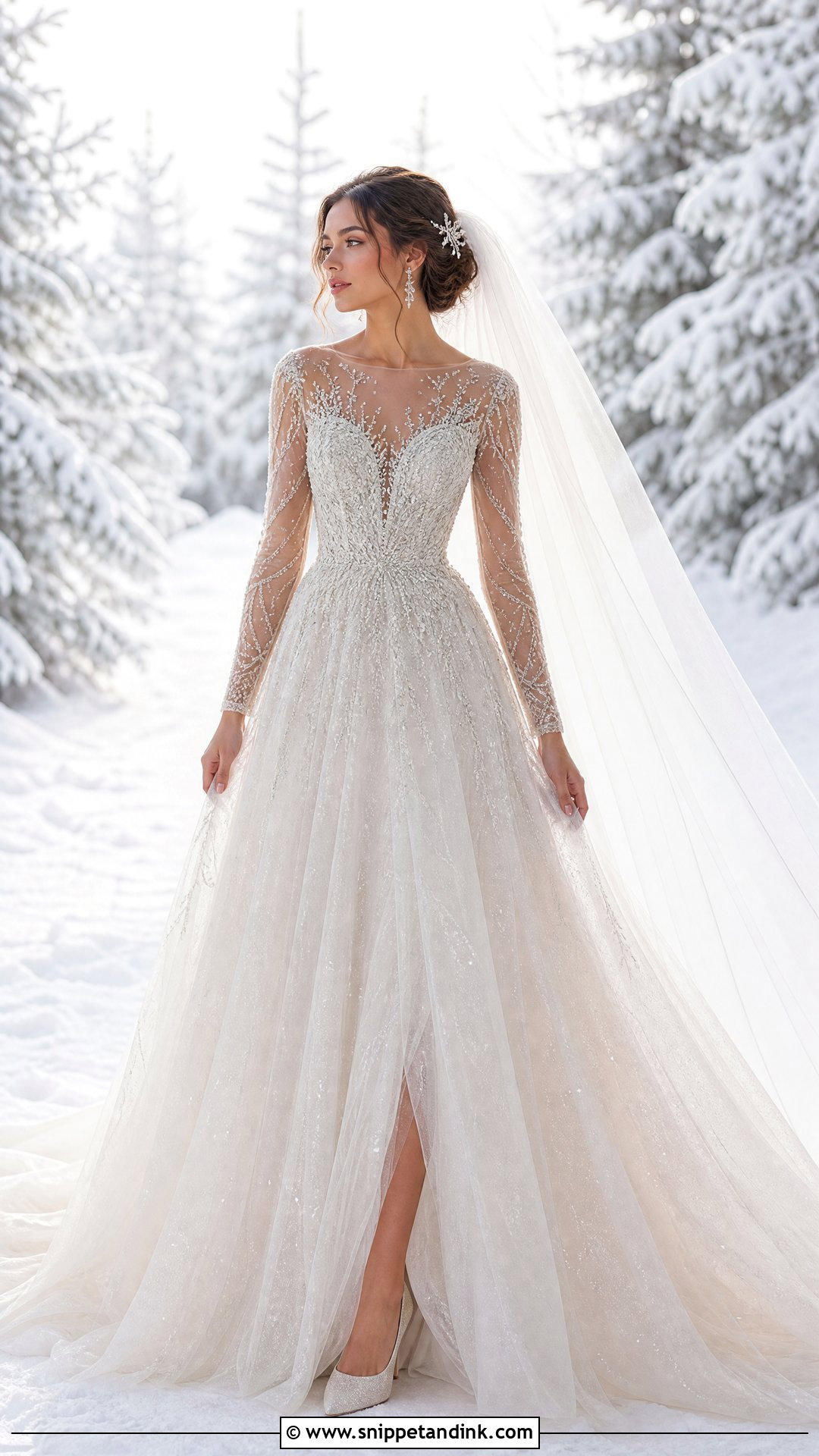
Glitter tulle works because it reads like falling snow on camera, but only when it’s restrained. I’d choose fine glitter tulle, scattered crystals or delicate beads over heavy decoration on every layer, on a fitted bodice with long illusion sleeves and a flowing A-line skirt. Crystal studs, silver-toned hairpins, ivory pointed heels and a plain tulle veil keep it balanced, with a smooth white cape or plain faux-fur jacket outdoors. Rub a corner of the tulle on your hand in the shop: some glitter rubs off onto skin, suits and car seats. Softly defined makeup and a neat bun or loose waves suit it, and bright windows or pale interiors make it glow.
8. Off The Shoulder Wedding Dress With Gloves
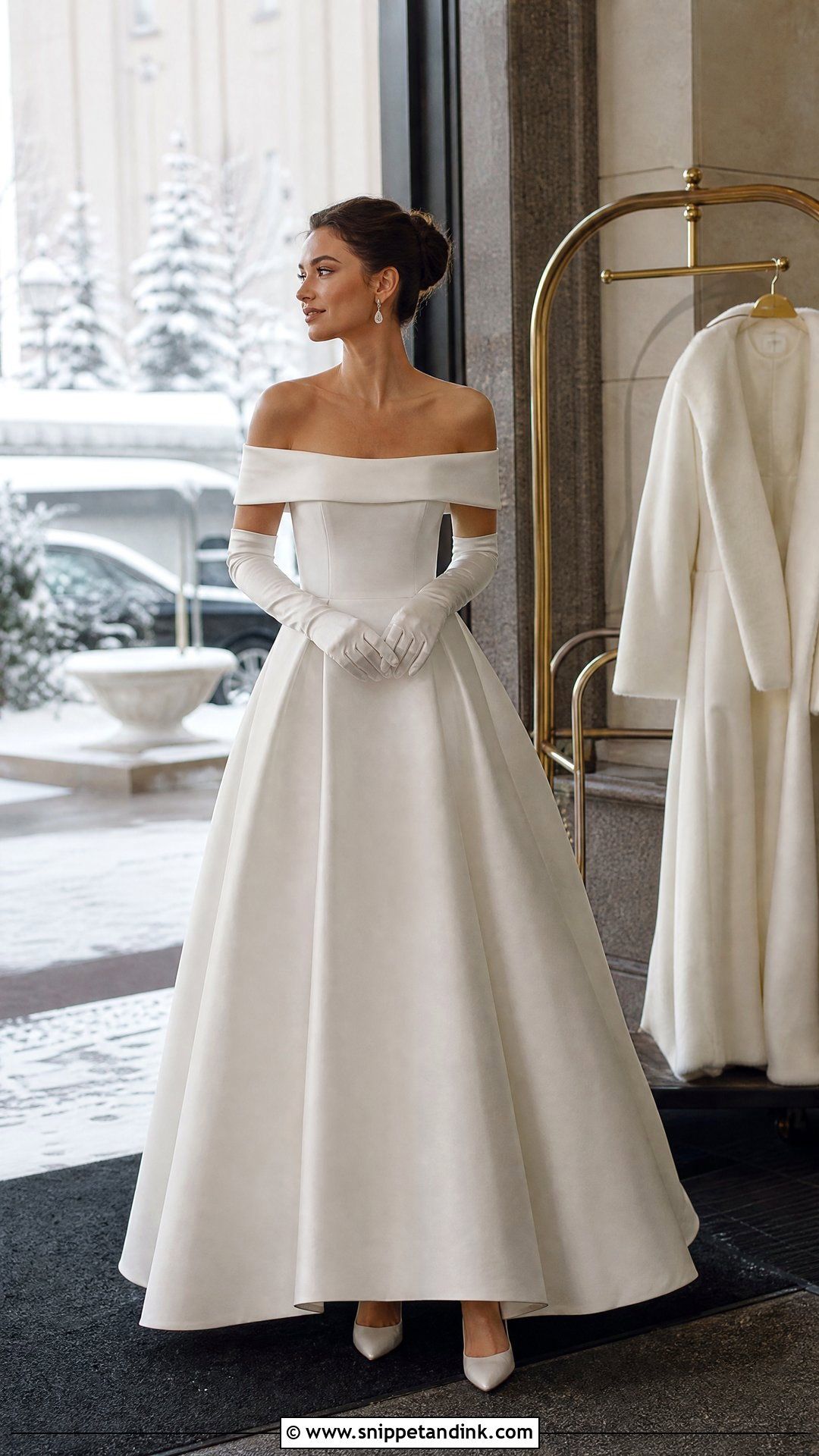
Bare shoulders in winter make sense once you add elegant bridal gloves, which bring the coverage down to the arm instead. A satin or Mikado dress with a structured bodice and full A-line skirt suits elbow-length satin gloves for formality or sheer pearl-dotted ones for something lighter, with a short necklace, studs, closed-toe heels and a low chignon. A floor-length wool-blend coat cut roomy enough not to flatten the bodice covers the walks between locations. The ring exchange is where gloves catch people out. Practise sliding the left glove off, or have a finger opening added, so you aren’t tugging at satin at the altar.
9. Long Sleeve Crepe Wedding Dress
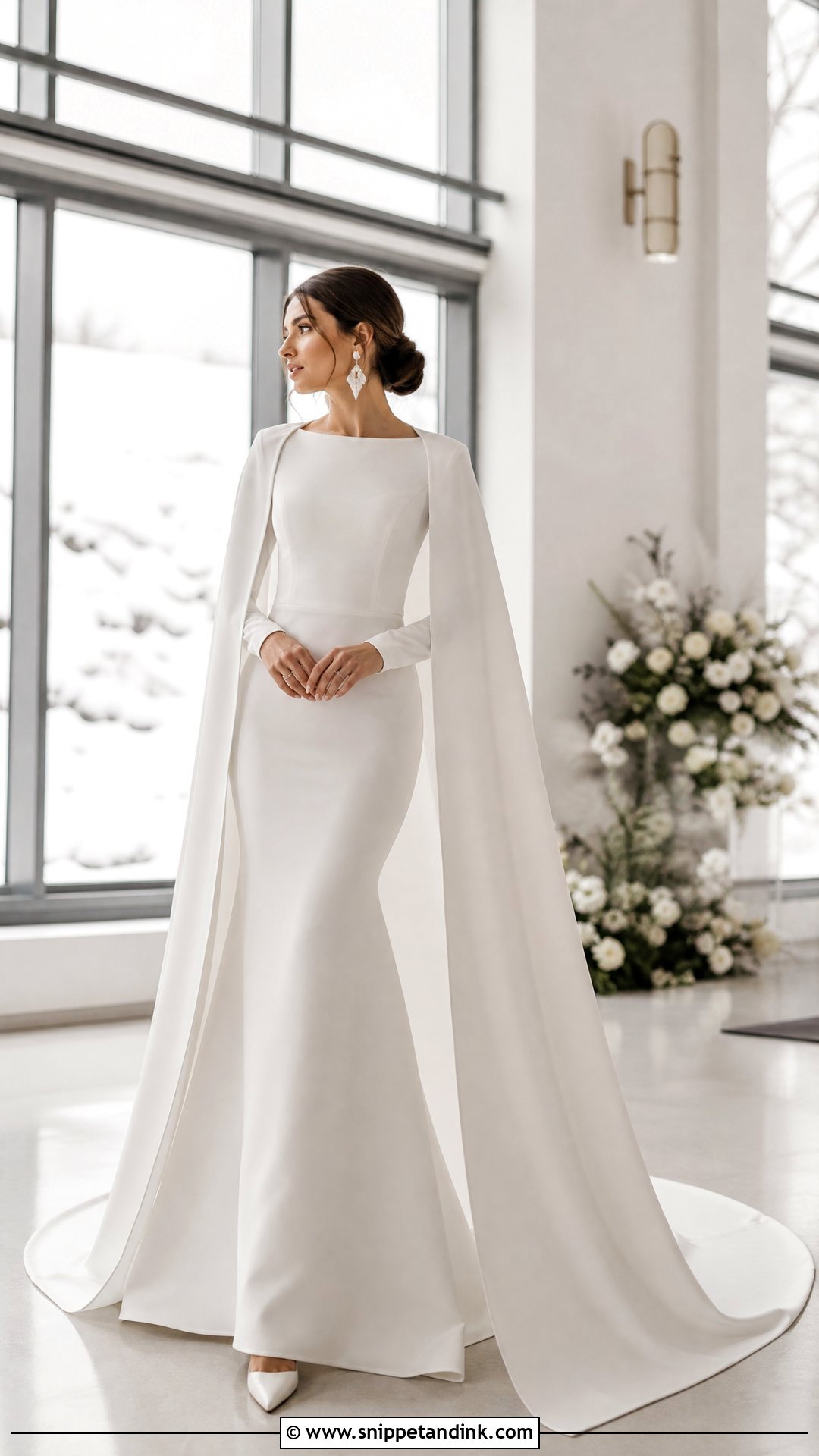
Crepe is honest fabric: smooth, matte and very good at showing what’s underneath. A long-sleeve column or fit-and-flare with a bateau neckline, low back, covered buttons or a detachable train gives the clean, modern line it’s chosen for, finished with sculptural earrings, ivory pointed pumps and a sleek veil without lace edging. A tailored coat or a simple satin cape adds warmth without breaking the mood. Stand in bright light at your fitting and look for underwear lines. Shapewear is optional; the right lining and careful alterations usually give the smoothest result.
10. Pearl Embellished Wedding Gown
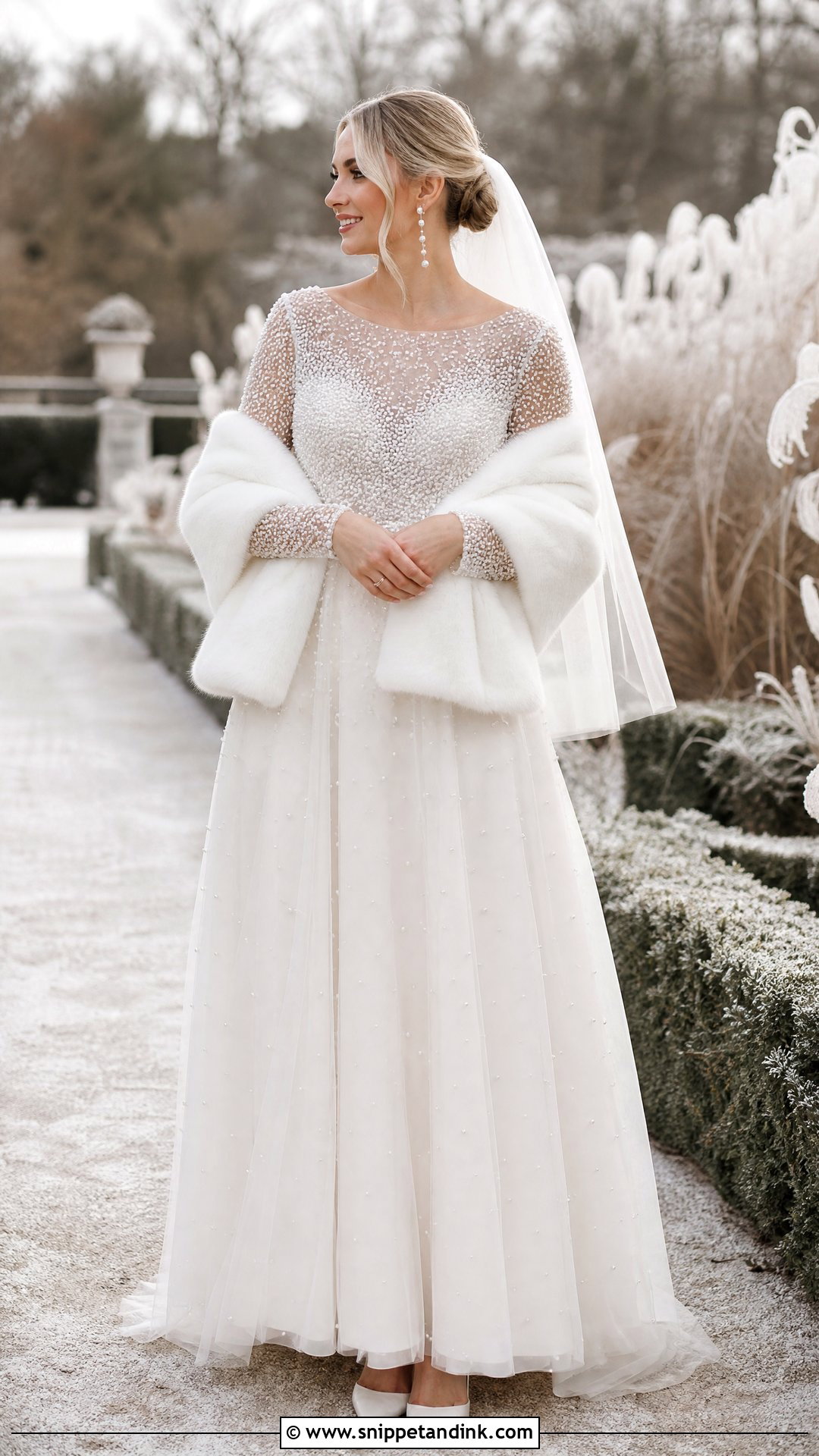
Pearls give a softer glow than crystals, which suits pale winter light and fair complexions especially well. Look for pearls scattered across the bodice, sleeves or upper skirt rather than crowded in one place, and an illusion neckline with sheer long sleeves so they appear to float on the skin. Pearl drops, a clean tulle veil, satin pumps and a pearl comb above a low bun bring it together; skip a heavy necklace. A smooth faux-fur wrap suits the rounded texture outdoors. Lift your arms at the fitting, because pearls sewn near the underarm can rub and snag the veil.
11. Wedding Dress With Detachable Sleeves
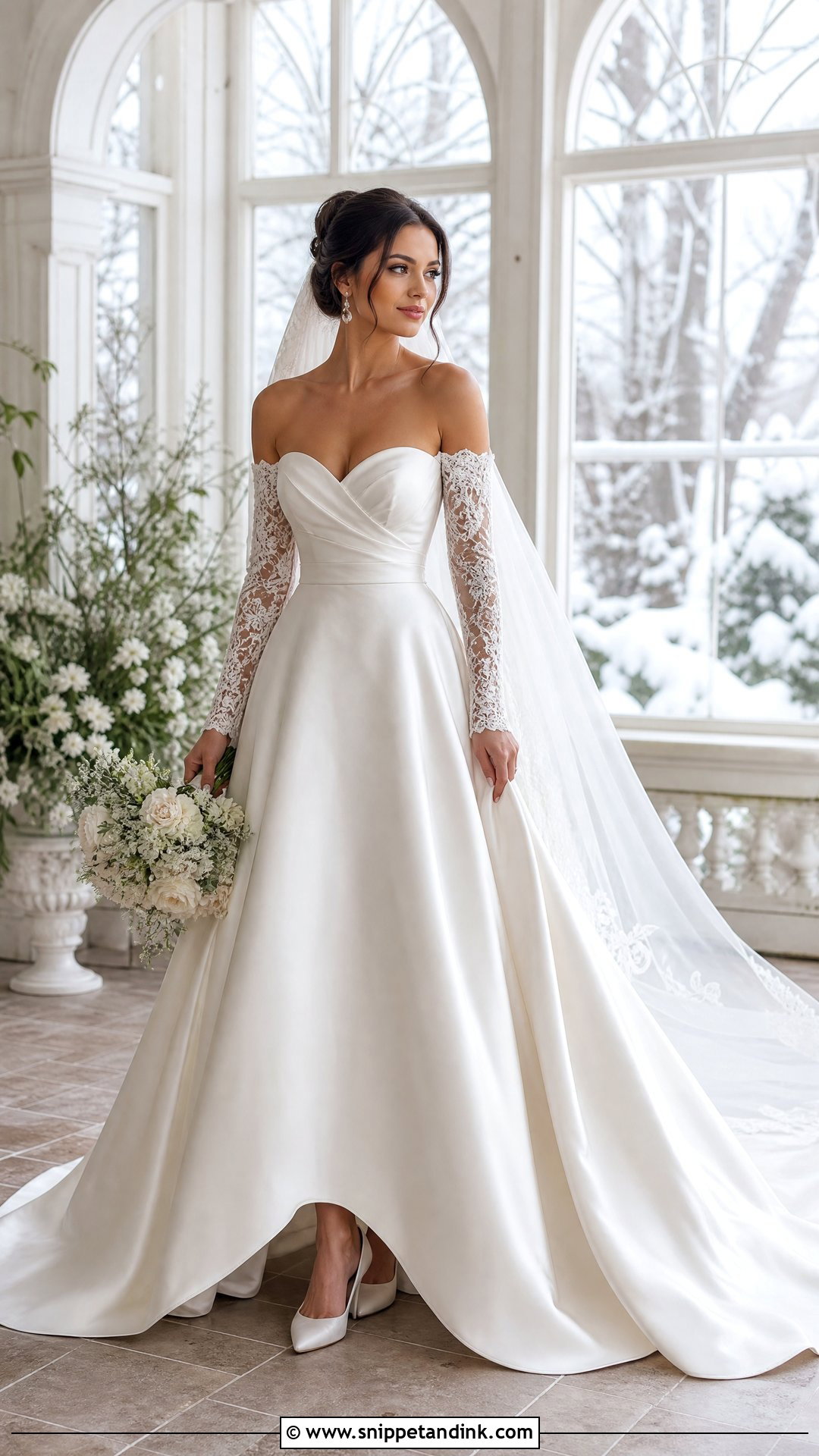
Detachable sleeves solve a very winter problem: a cold outdoor ceremony followed by a warm, crowded reception. Start with a strapless or sleeveless A-line in satin, Mikado or crepe, then add fitted lace sleeves for softness or structured satin ones for a cleaner line. Wear them with a cathedral veil, closed-toe pumps and delicate earrings, and take them off before dancing. They must attach under the bodice edge with no visible gap, so bring them to every alteration appointment. They’re decorative more than warm, though. For real outdoor time, I’d still add a cape.
12. Floral Jacquard Wedding Dress
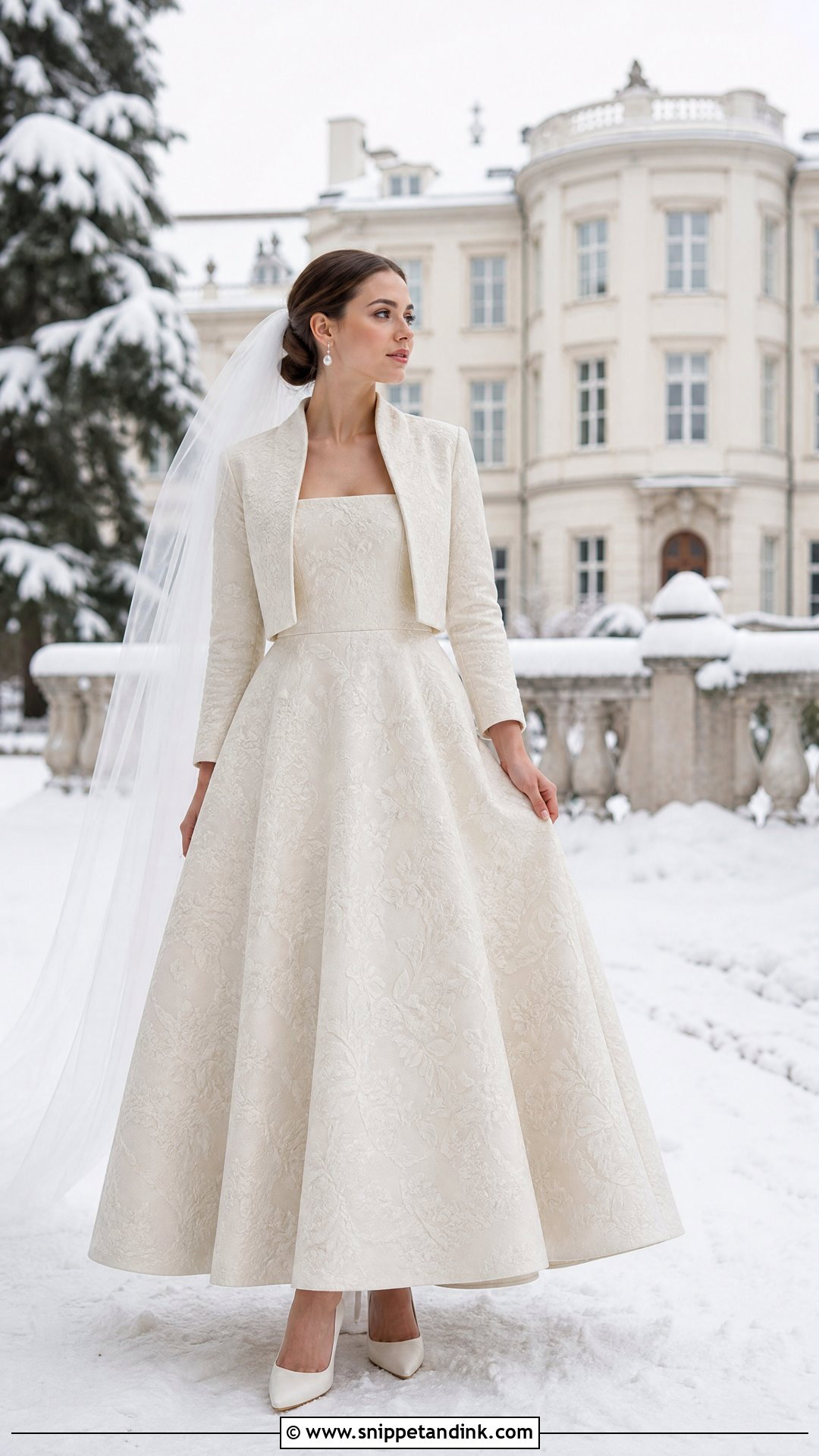
Jacquard has its pattern woven in, so the flowers rise from the fabric rather than sitting on top. On a structured A-line or ball gown with a clean bodice and full skirt, that texture is enough decoration by itself; a square or modest scoop neckline keeps it fresh. Pearl studs, a plain veil and ivory block heels for uneven ground finish it, and a short bridal jacket adds warmth without covering the skirt’s pattern. Keep the bouquet and hair accessories simple. I always view jacquard in daylight and indoor light, because the raised weave throws small shadows that can look busy in some photos and rich in others.
13. Wedding Dress With Hooded Cape
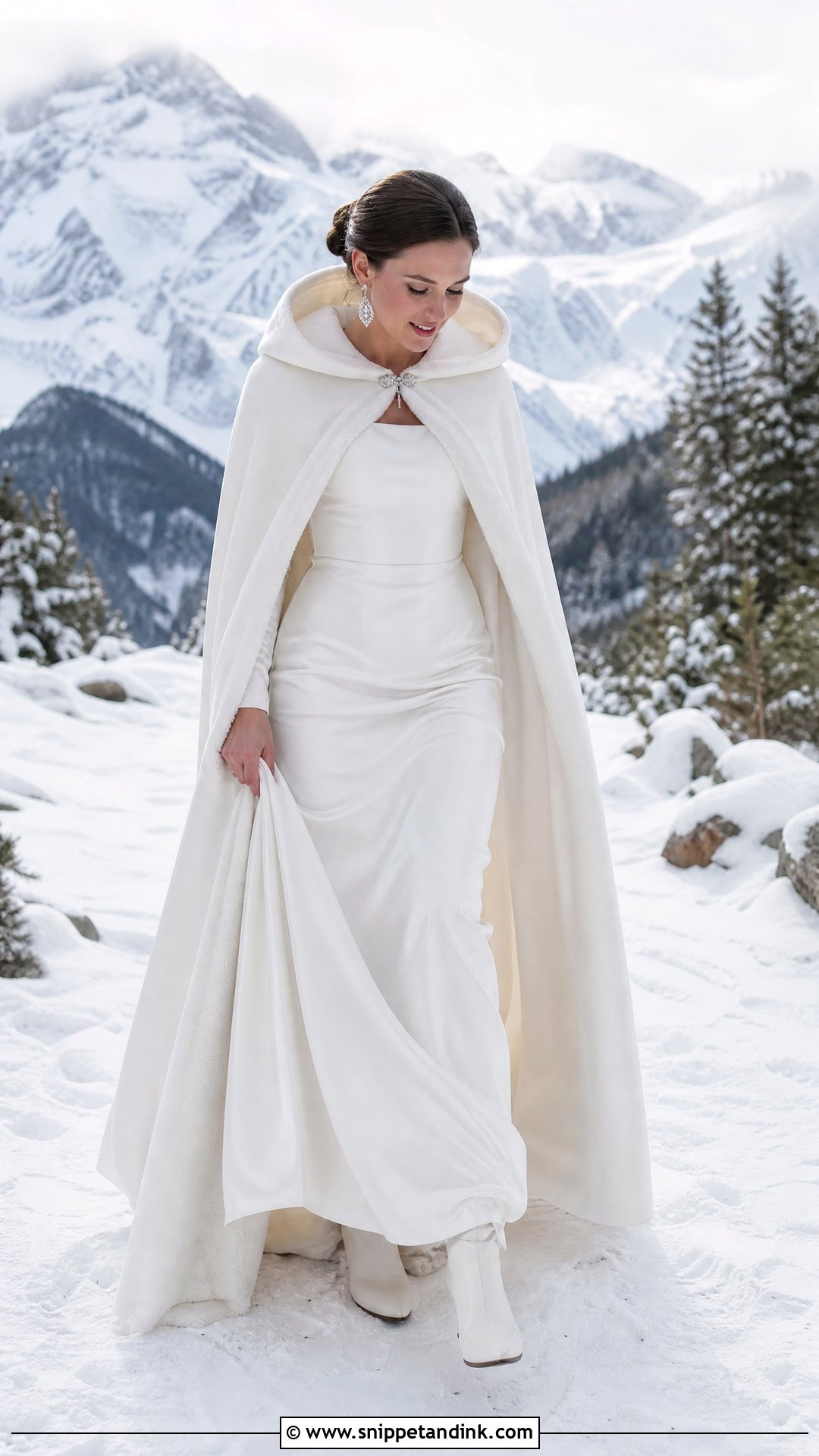
For a snowy outdoor entrance, a hooded bridal cape is the most practical layer on this list. Wear it over a simple satin, crepe or lace A-line, choose a lined floor-length cape, and check that the hood is deep enough to sit over your hair without crushing it. The front closure should rest above the bodice and stay put in a breeze. Closed-toe boots or block-heel pumps, small crystal earrings and a low bun suit it, and the veil is optional since the cape already frames you. Walk and turn in it beforehand, lifting it clear of wet ground, then take it off inside.
14. Silver Beaded Wedding Gown
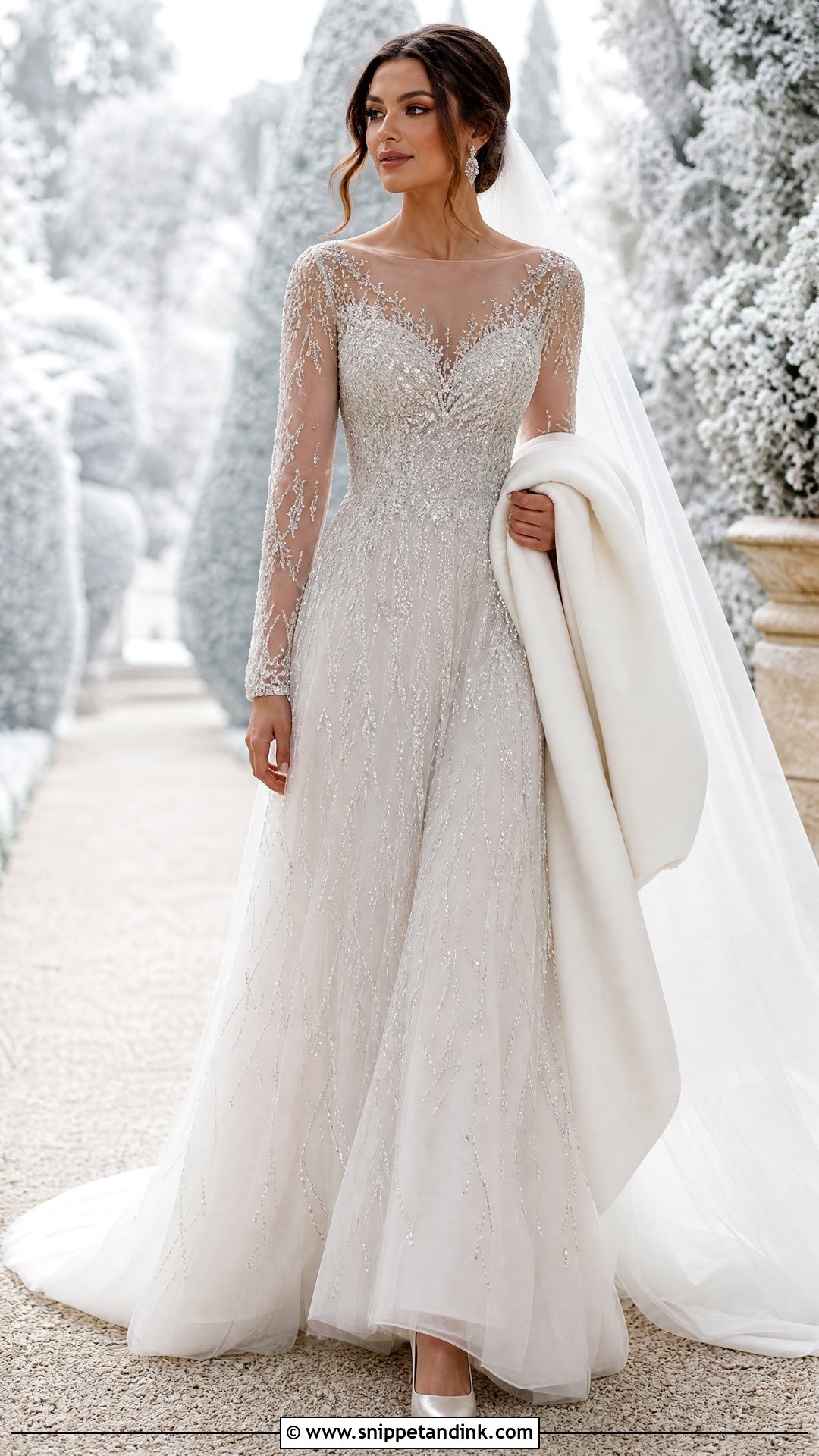
Silver beading looks like frost when it’s concentrated on the bodice, waist and sleeves and the skirt is left lighter. Add silver-toned earrings, a plain cathedral veil and ivory closed-toe satin heels, with a clean white wrap or tailored coat for warmth. Beaded gowns can be surprisingly heavy, and that weight hangs from the shoulders and waist all day. I ask brides to walk and sit for several minutes in the sample, and I check the inside of the sleeves for rough beads. A good internal structure spreads the weight so the dress doesn’t drag on you by the evening.
15. Square Neck Satin Wedding Dress
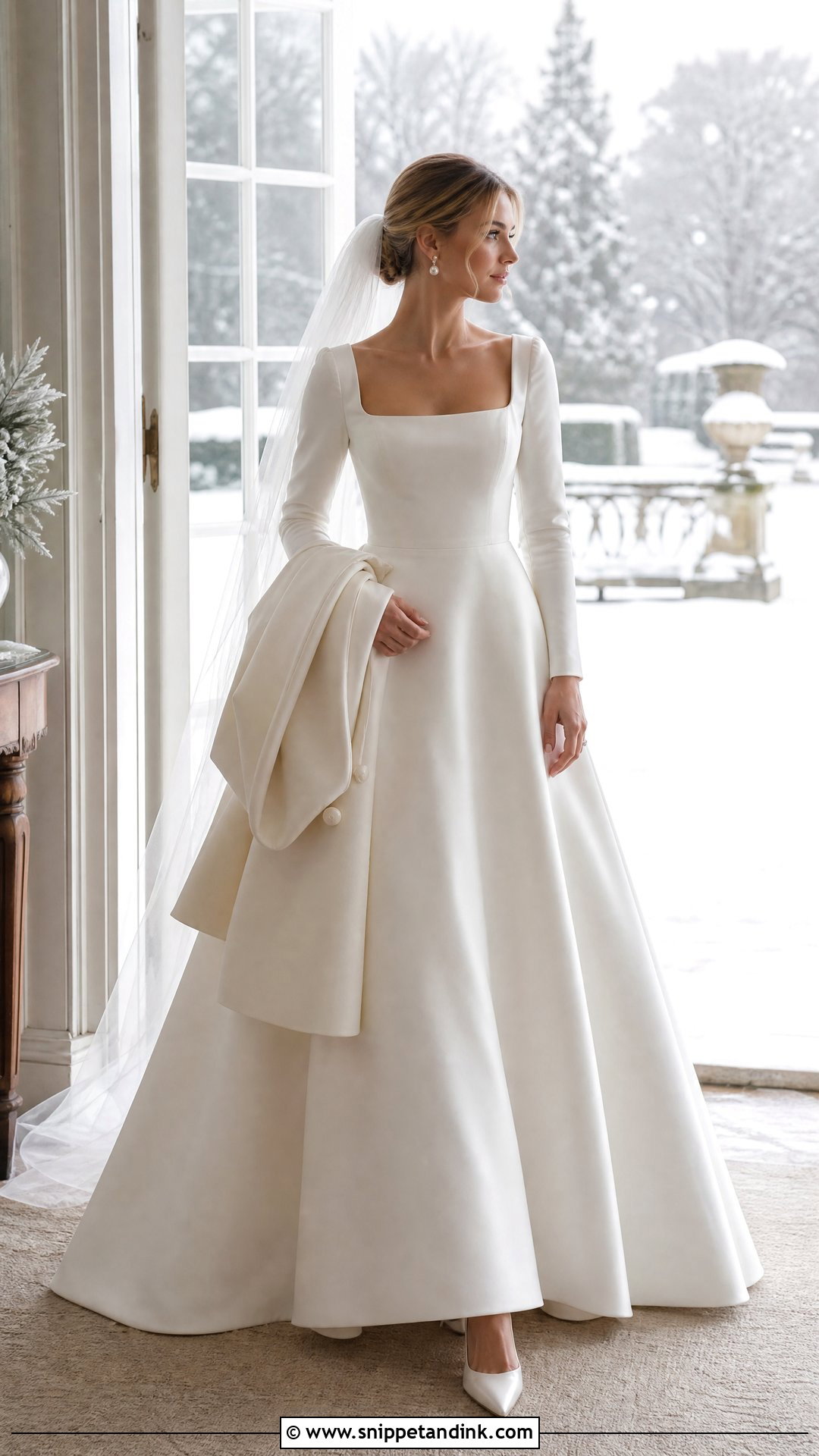
The square neck is a sharp, modern line, and in satin it stays crisp. Long fitted sleeves and an A-line skirt give coverage without looking old-fashioned, and covered back buttons with a medium train add quiet detail. Pearl earrings, a smooth fingertip veil, pointed satin pumps and a structured ivory coat for travel and photos are all it needs; leave the neckline bare. For a fuller bust, I look for strong internal support and straps set wide enough to feel secure. A gently curved square neckline softens the shape for anyone who finds the straight edge too severe.
16. Winter Wedding Dress With Bridal Coat
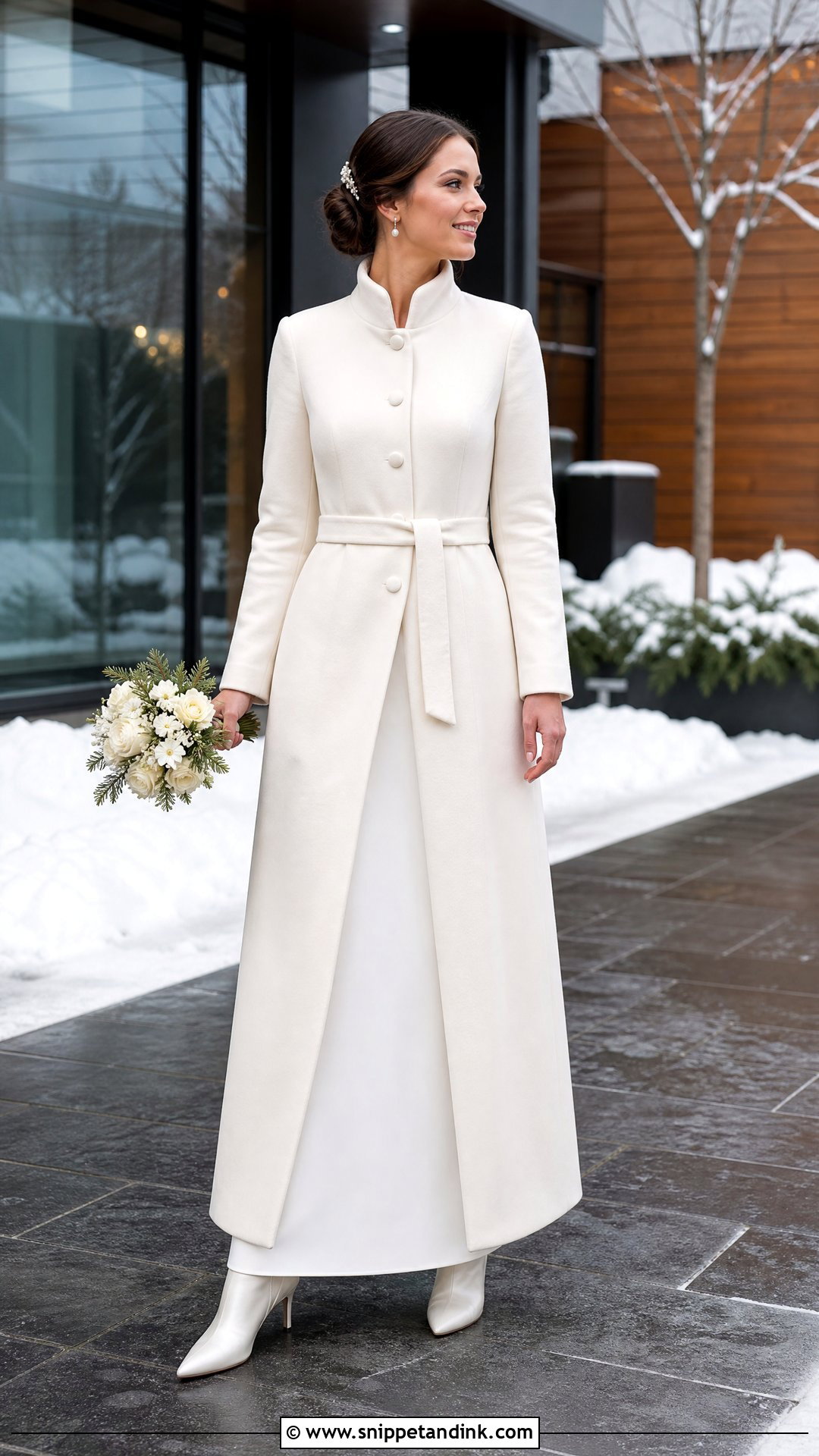
A bridal coat can winterize almost any gown, provided the dress underneath is simple enough to sit smoothly beneath it: a column, sheath or A-line. Choose a full-length coat in ivory wool blend, heavy satin or structured crepe, with room through the shoulders and waist so it doesn’t crush the dress, plus covered buttons, a narrow belt or a clean collar. Leather or satin ankle boots, pearl earrings and a compact bouquet complete it. A birdcage veil or a small comb sits better under a coat collar than a full veil, which bunches. Coat on for arrivals and snowy portraits, off indoors for the reveal.
17. Tea Length Winter Wedding Dress
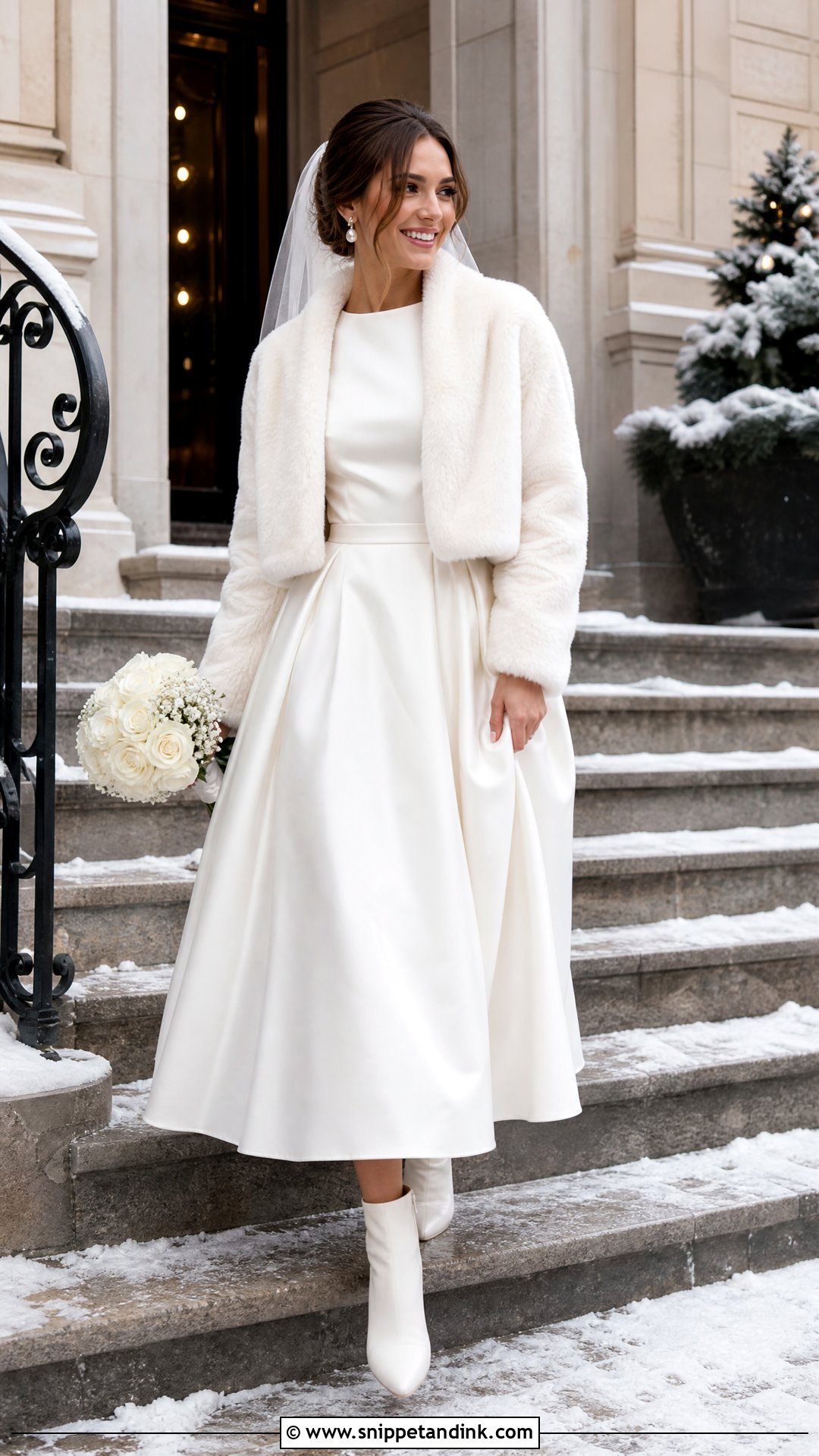
Tea length is the practical choice for a small winter wedding: no hem dragging through slush. Choose satin or brocade with long sleeves, a fitted waist and a skirt between knee and ankle, and treat the shoes as part of the outfit, ivory ankle boots, embellished pumps or block heels. Add pearl earrings, a short veil and a cropped faux-fur jacket for warmth. Opaque ivory tights help on very cold days; match the shade against the dress in daylight. A structured petticoat gives the skirt lift while leaving room to move. City venues, courthouse ceremonies and intimate indoor celebrations suit it.
18. Corset Ball Gown With Cape Sleeves
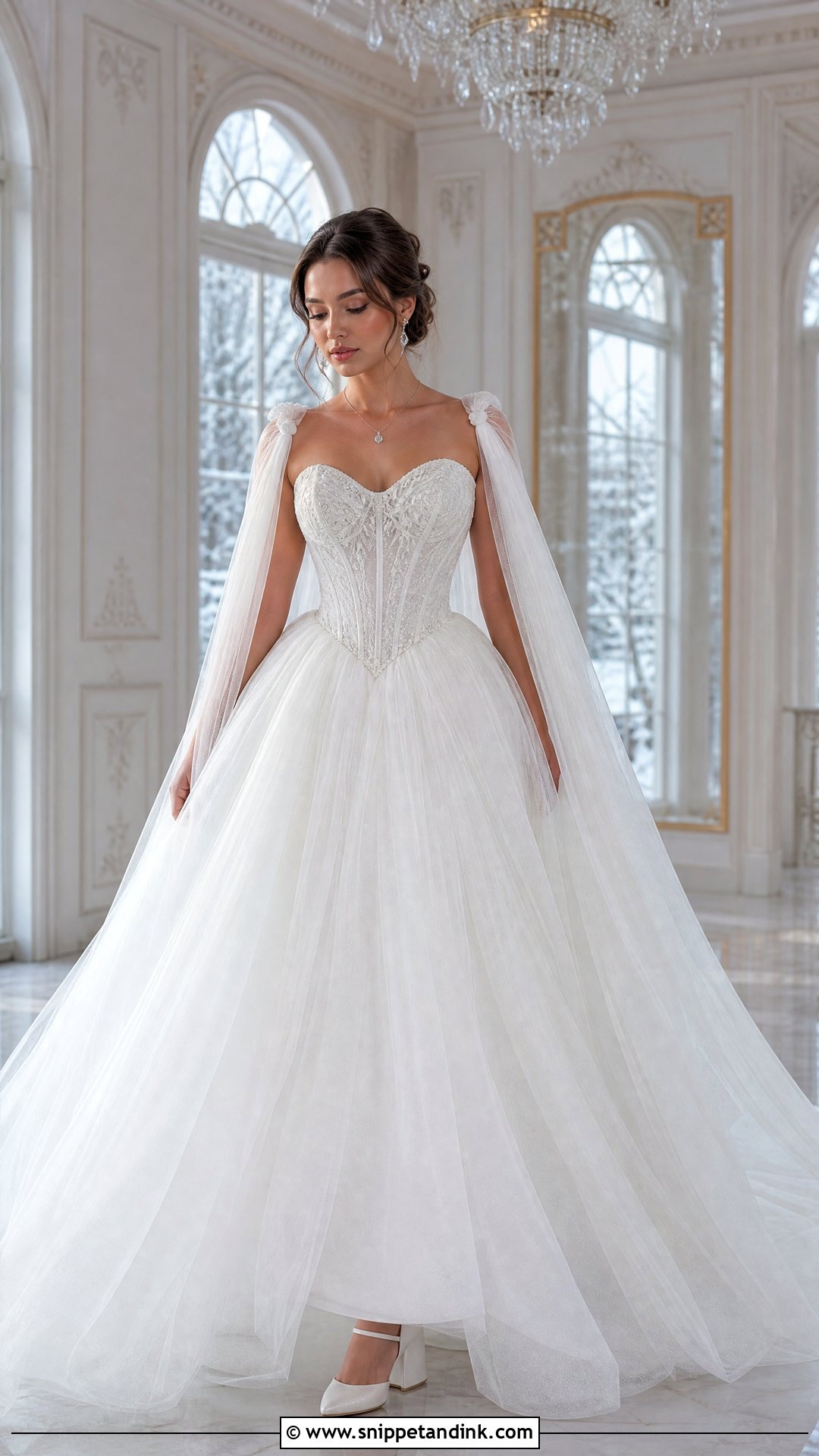
A corset bodice needs a stable fit to be comfortable for ten hours of sitting, eating and dancing, so I check it with a full breath and a sit-down before anything else. Look for visible seaming over a full satin or layered tulle skirt, with soft cape sleeves or a detachable shoulder cape falling from the shoulder toward the floor. They give movement without the restriction of fitted sleeves. A simple pendant, crystal studs and stable block-heel pumps finish it. Keep the veil short or skip it, since it tangles with cape panels. Cape sleeves aren’t warm, so add a lined wrap between photographs.
19. Plus Size A Line Winter Wedding Dress
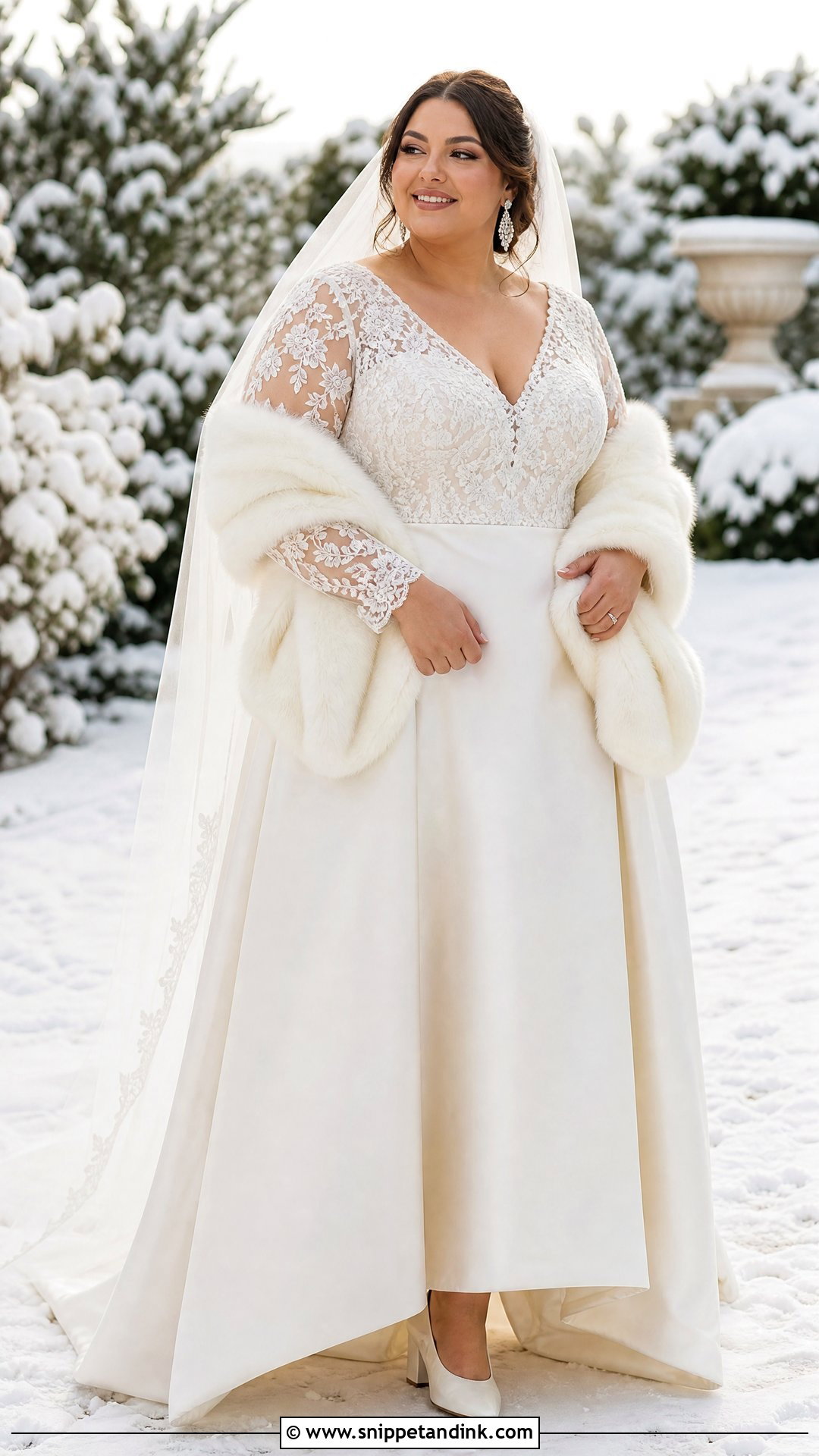
Fit, not hiding, is the whole point with a plus-size A-line. I look for a supportive bodice, long lace sleeves with enough width to lift the arms, a V or scoop neckline and a skirt that falls smoothly from the natural waist. Satin, Mikado and lined crepe give structure, and well-placed lace adds texture. Block-heel pumps, statement earrings and a chapel veil suit it, with a faux-fur stole or tailored cape that sits easily on the shoulders. Bust support, sleeve width, waist placement and hem length make the real difference. Ask the shop for samples in a size you can actually try on and move in.
20. Minimalist Wedding Dress With Cathedral Veil
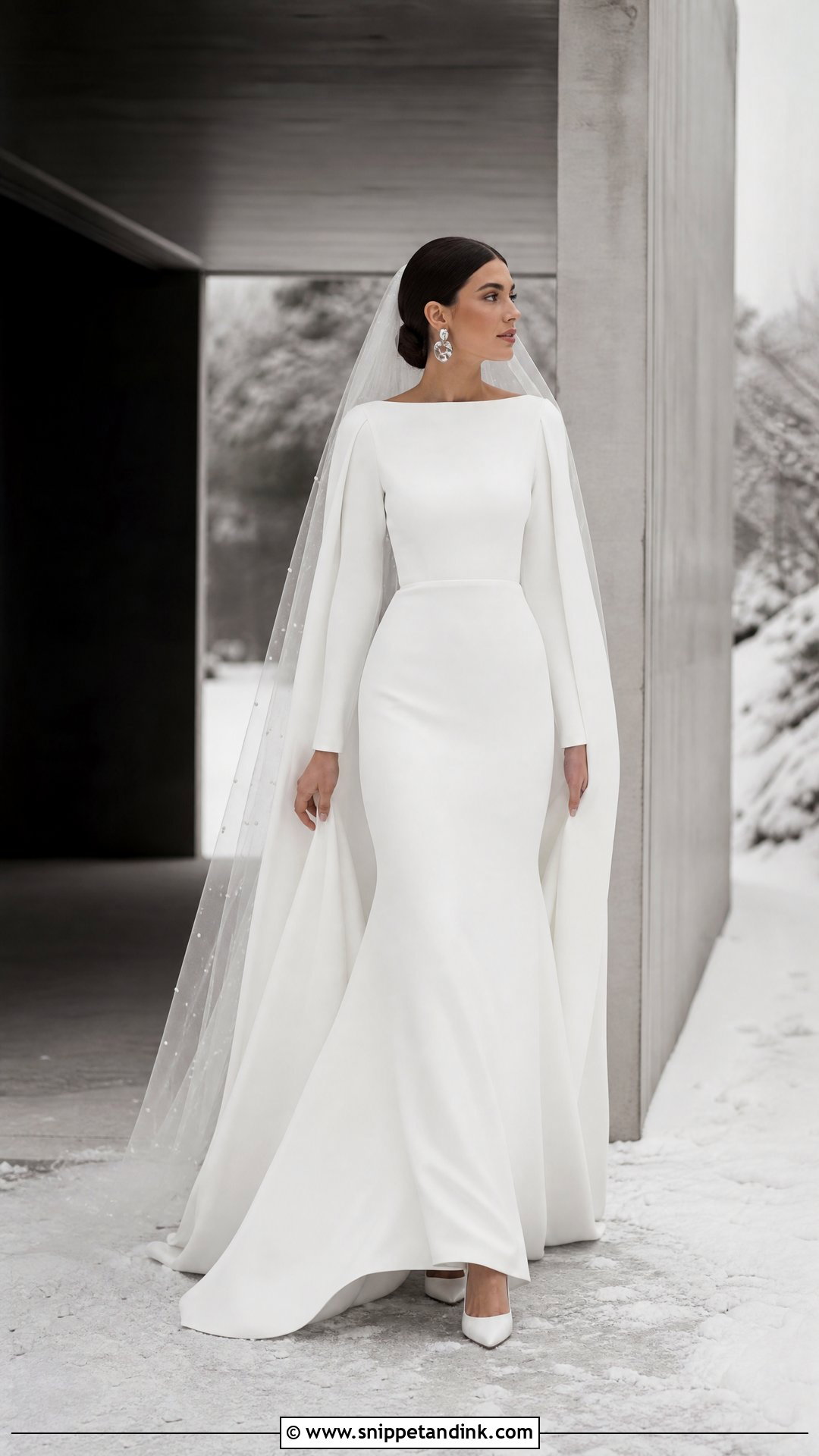
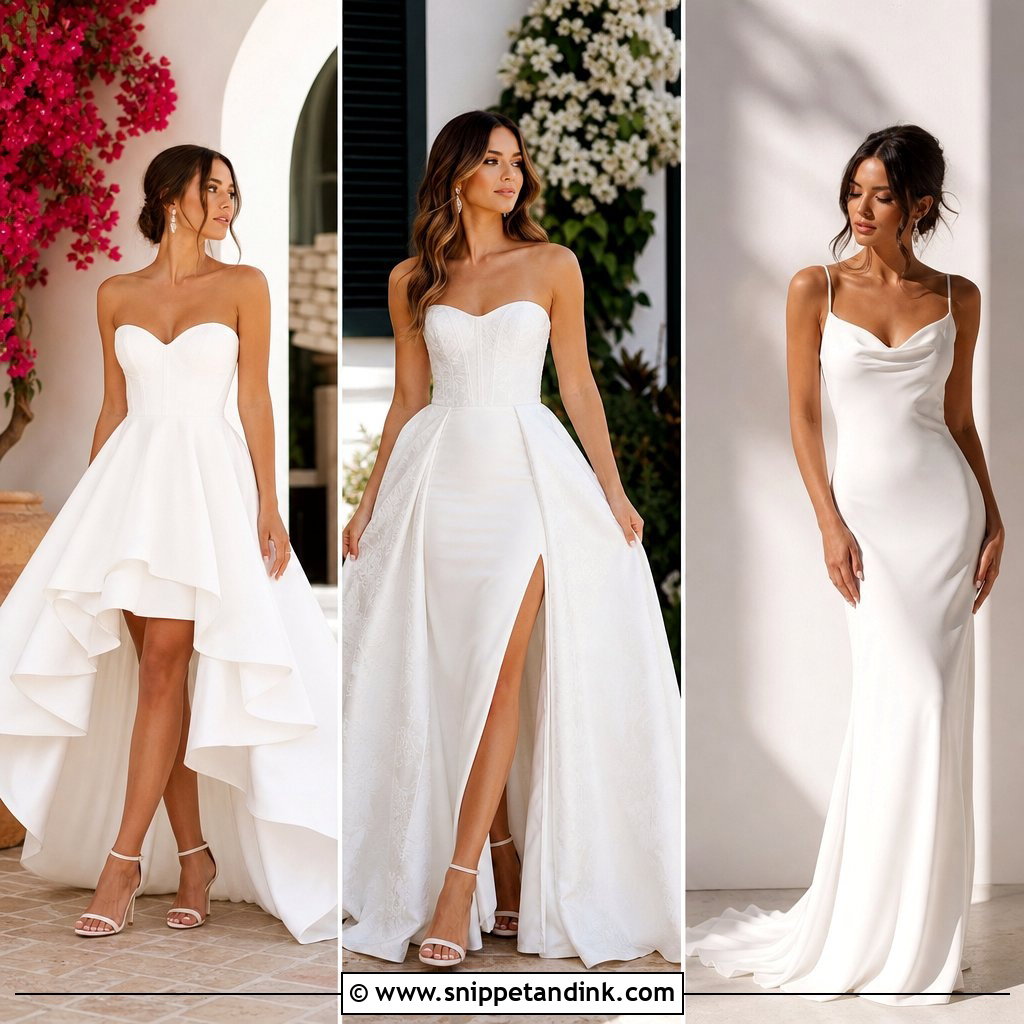
The plainest dress here often looks the most striking in snow. A long-sleeve satin or crepe gown with a clean neckline, fitted waist and softly flared skirt sets up a cathedral veil with fine crystal edging or scattered pearls. Sculptural earrings, pointed pumps and a neat chignon finish it, with a plain floor-length cape in the same shade of ivory for outdoor portraits. Leave off extra decoration; the impact comes from fit. Outdoors, a long veil turns into a sail in any breeze, so I anchor the comb with crossed pins under the bun and make sure the veil runs past the train.
Twenty Minutes Outside, Then Back In to Warm Up
Most snowy portrait sessions go best in short bursts. After fifteen or twenty minutes in real cold, hands redden, lips lose color and a bride starts to hold her shoulders up toward her ears, and every photo shows it. Plan two or three short trips outside instead of one long one, with a warm room or car close by.
What Goes Under and Around the Dress
- Boots or lined flats under a floor-length skirt, with the pretty shoes carried for close-ups. Fresh snow is slippery under smooth leather soles.
- Hand warmers tucked into a coat pocket or held between shots, so your hands look relaxed on the bouquet.
- Thermal leggings or tights under a full skirt; nobody sees them under tulle.
- A blanket or the coat placed over your shoulders the second the photographer lowers the camera.
Snowflakes melting on the hair can drop curls and frizz the hairline, so I ask the hairstylist to set the style firmly and keep a small umbrella nearby if it’s actively snowing. And keep your bouquet out of hard frost for long stretches, because some delicate flowers bruise or wilt in freezing air.
Layers Come Off; the Dress Is What Stays in Every Photo
Pick the dress for how it feels when you walk, sit and dance, then plan the weather around it. Ball gowns, fitted crepe, jacquard, sparkling tulle and lace can all handle a snowy wedding, as long as there’s a removable layer: a cape, a faux-fur wrap, a bridal coat or detachable sleeves that cover you outside and disappear at the reception. Add closed-toe shoes with real grip, accessories that stay put and a hairstyle that suits the neckline. Get that right and the day can feel like a snowy fairy tale without you shivering through it.
You'll Like These Ideas:



Leave a Reply