
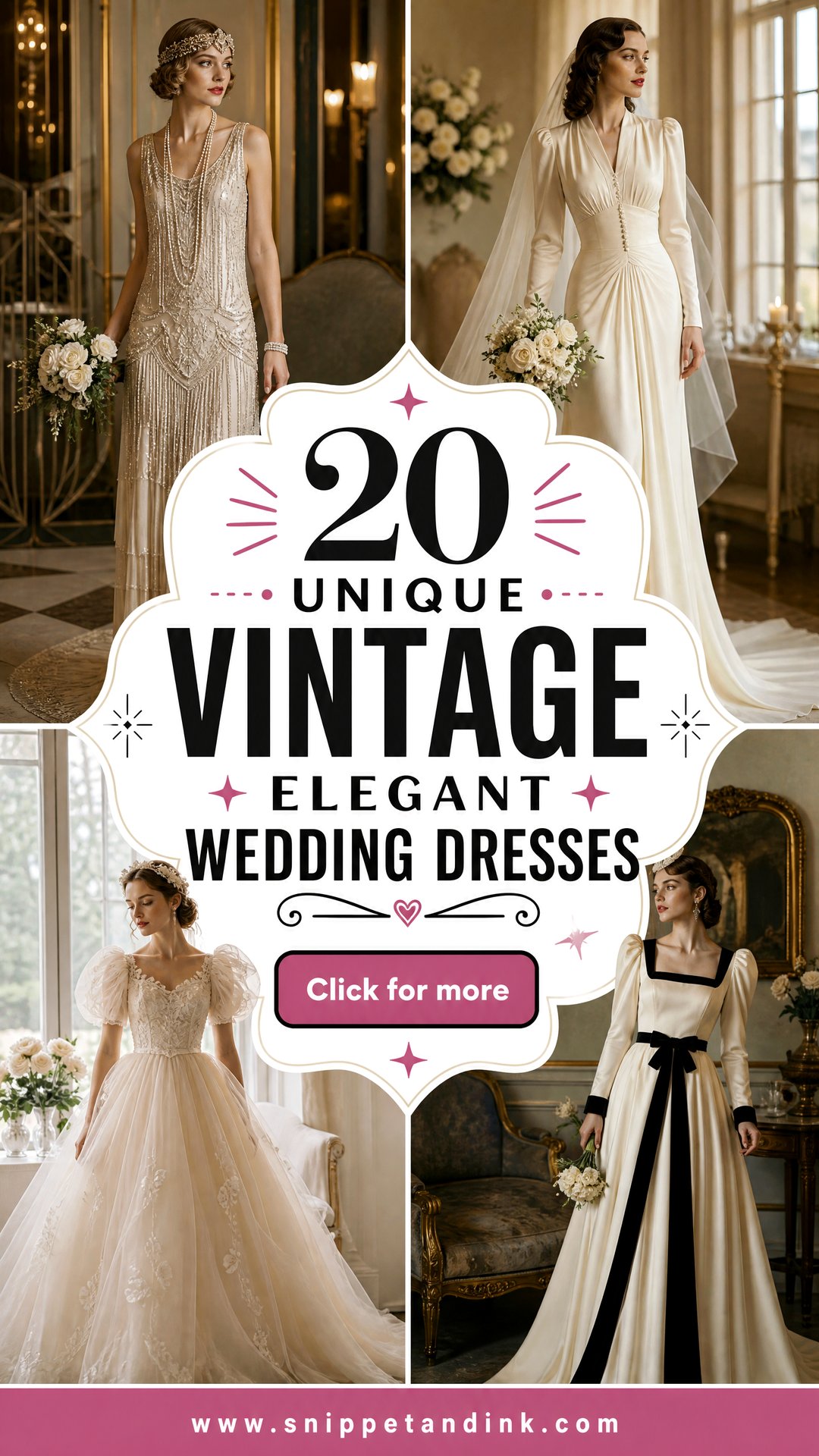
A vintage wedding dress borrows from a specific moment in fashion, and each decade has its own signature. Vintage-inspired bridal fashion covers Edwardian lace, 1920s drop waists, 1930s bias satin, 1950s tea-length skirts and the bare slip gowns of the 1990s. What makes these looks wearable now is modern construction underneath: supportive bodices, comfortable linings and slightly cleaner proportions. Basque waists, corseted bodices, high necks, layered lace and sculpted skirts are all very much in bridal shops at the moment. You can go for a full period feel or just a hint of one. Below are twenty dresses, with what I’d pair with each and the fit detail that decides whether it works.
Reading Each Decade by Where Its Waist Sits
When a bride tells me she wants vintage but can’t settle on an era, I stop talking about decades and start talking about waistlines. Each period put the waist somewhere different, and that placement decides how the dress feels on your body far more than lace or beading does.
- High, under the bust (Regency, 1970s): long and flowing, kind to a fuller middle, can look shapeless on a very slim, straight frame.
- Dropped to the hip (1920s): straight and relaxed, best on a narrow figure; curvier brides often prefer a softened version.
- Natural, and defined (1940s, 1950s): the most universally comfortable, and the easiest to alter.
- Pointed below the waist (Victorian, Basque): lengthens the torso, flatters most, but needs careful fitting if your torso is short.
- No seam at all (1930s bias, 1990s slip): pure line, very little support, and it shows everything underneath.
Try one dress from each group before you fall for details. You’ll usually know within minutes which waist feels like yours.
1. Edwardian High Neck Lace Wedding Dress
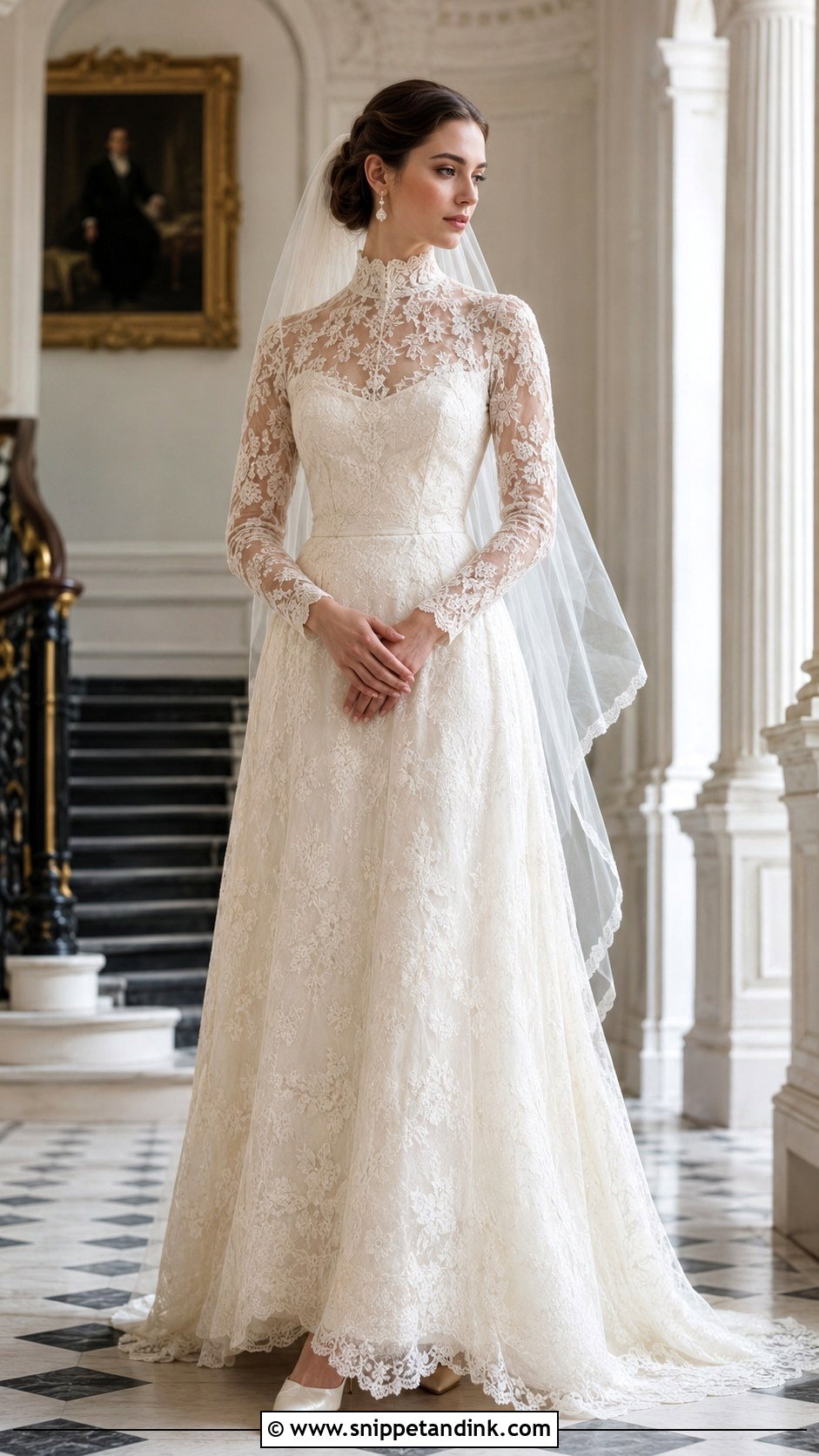
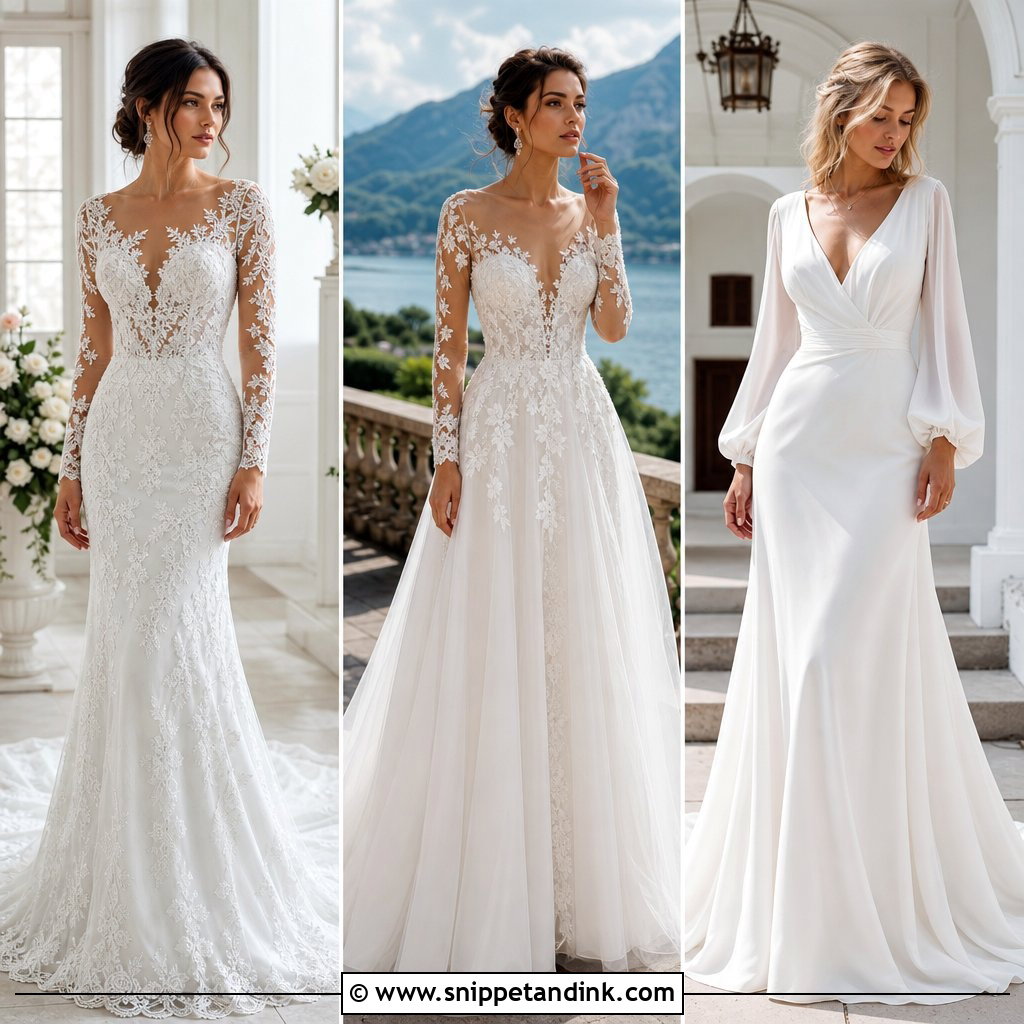
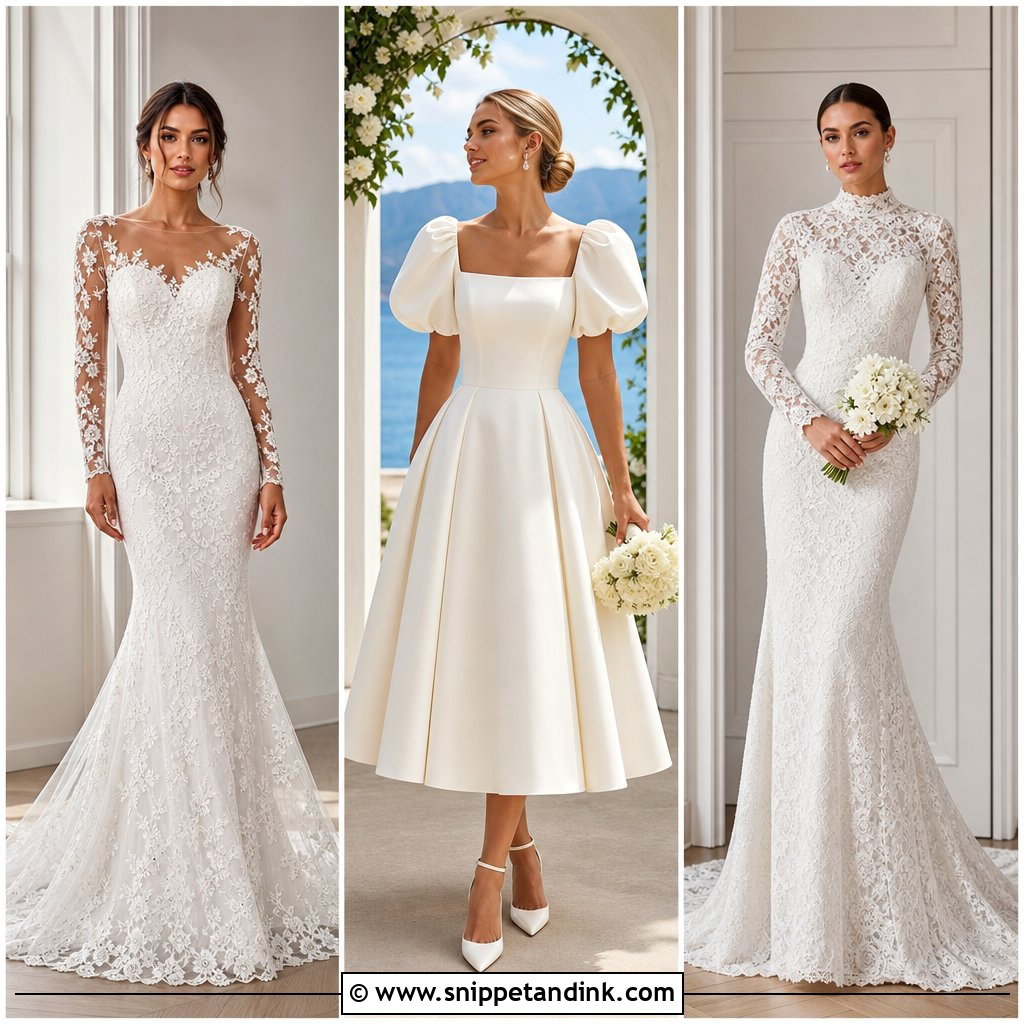
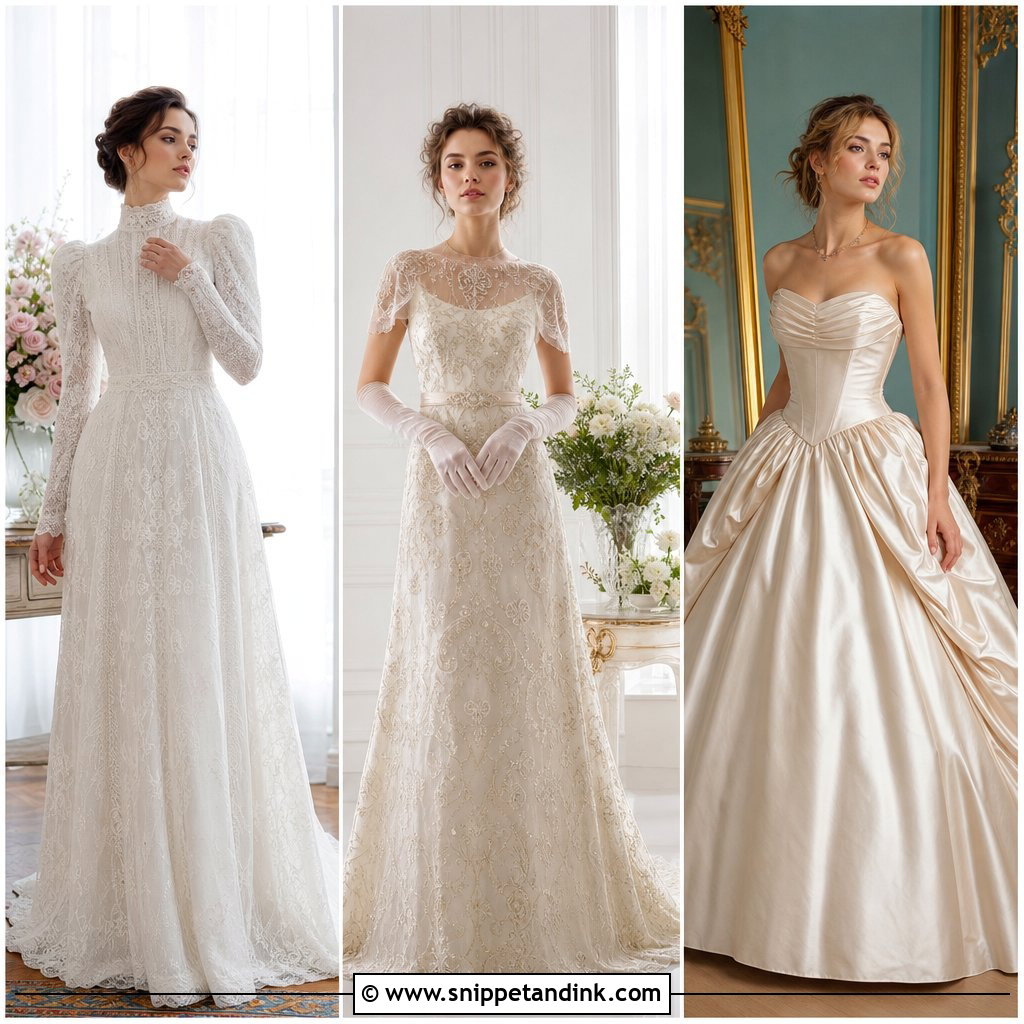
The high collar is the whole point of an Edwardian gown, and it’s also where fittings go wrong. A stiff collar that’s even slightly tight rubs the neck every time you turn, so I ask for it to be cut with a finger’s width of ease and lined in something soft. Choose a fitted lace bodice, defined waist and flowing A-line skirt, with sheer long sleeves to keep it light. Ivory lace over a champagne lining makes the pattern show. Pearl earrings, a low twisted bun, a plain fingertip veil and pointed satin pumps complete it. Historic houses, conservatories and formal interiors suit it best.
2. 1920s Beaded Drop Waist Wedding Dress
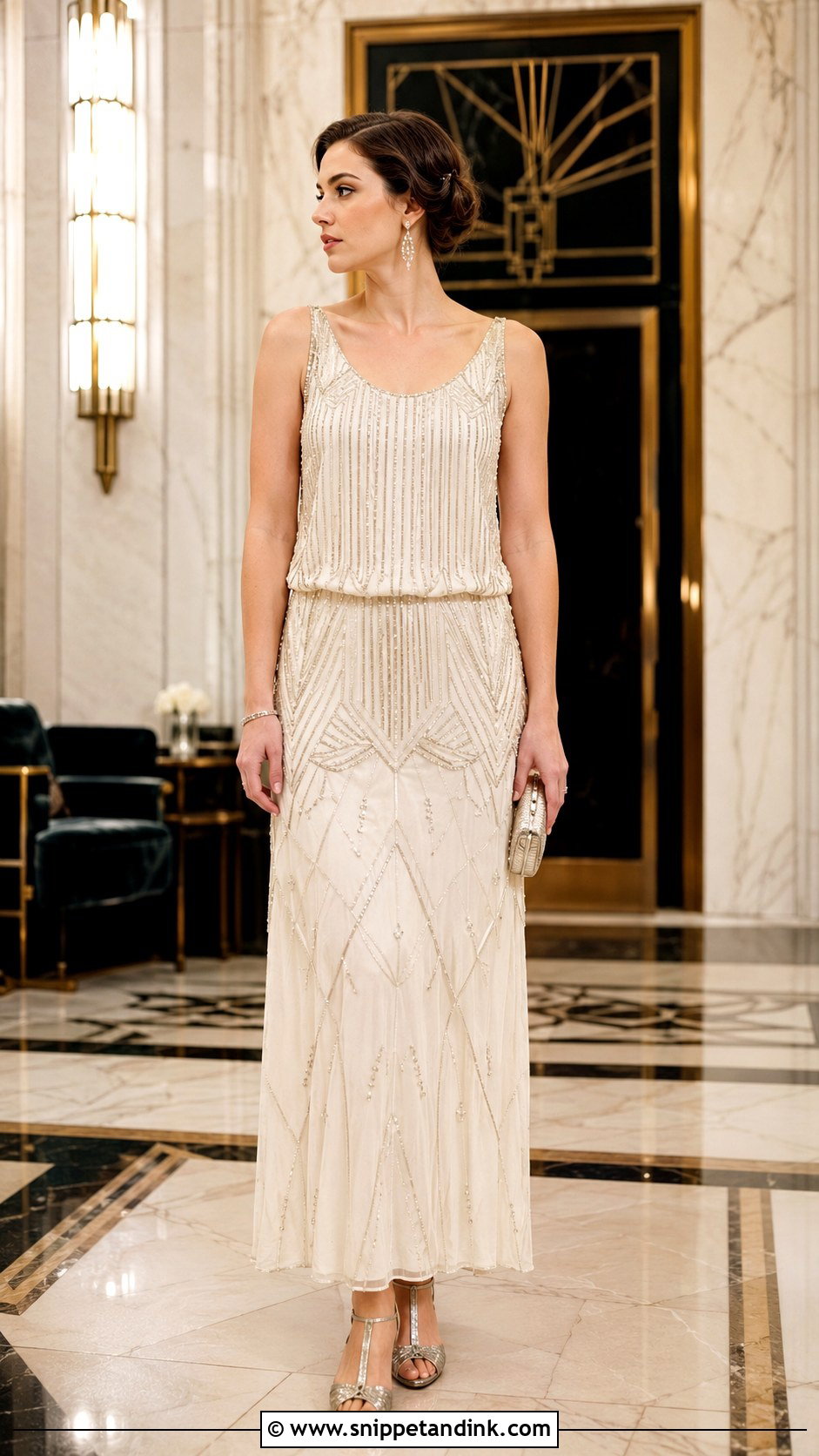
The 1920s drop waist sits around the hip, which means the dress hangs straight from the shoulders rather than shaping the waist. That’s freeing to wear, and it flatters a straighter figure most. Look for a column with a lowered seam, geometric beadwork, and a skirt that moves; illusion necklines and covered buttons belong to the same era. Soft ivory, pale gold or muted champagne suits the beading. Metallic low heels, crystal drops and a small clutch, with a finger-waved bob or a low side bun. One accessory and a simple veil are enough. Beaded gowns are heavy at the hem, so check the shoulder seams carry the weight comfortably.
3. 1930s Bias Cut Satin Wedding Dress
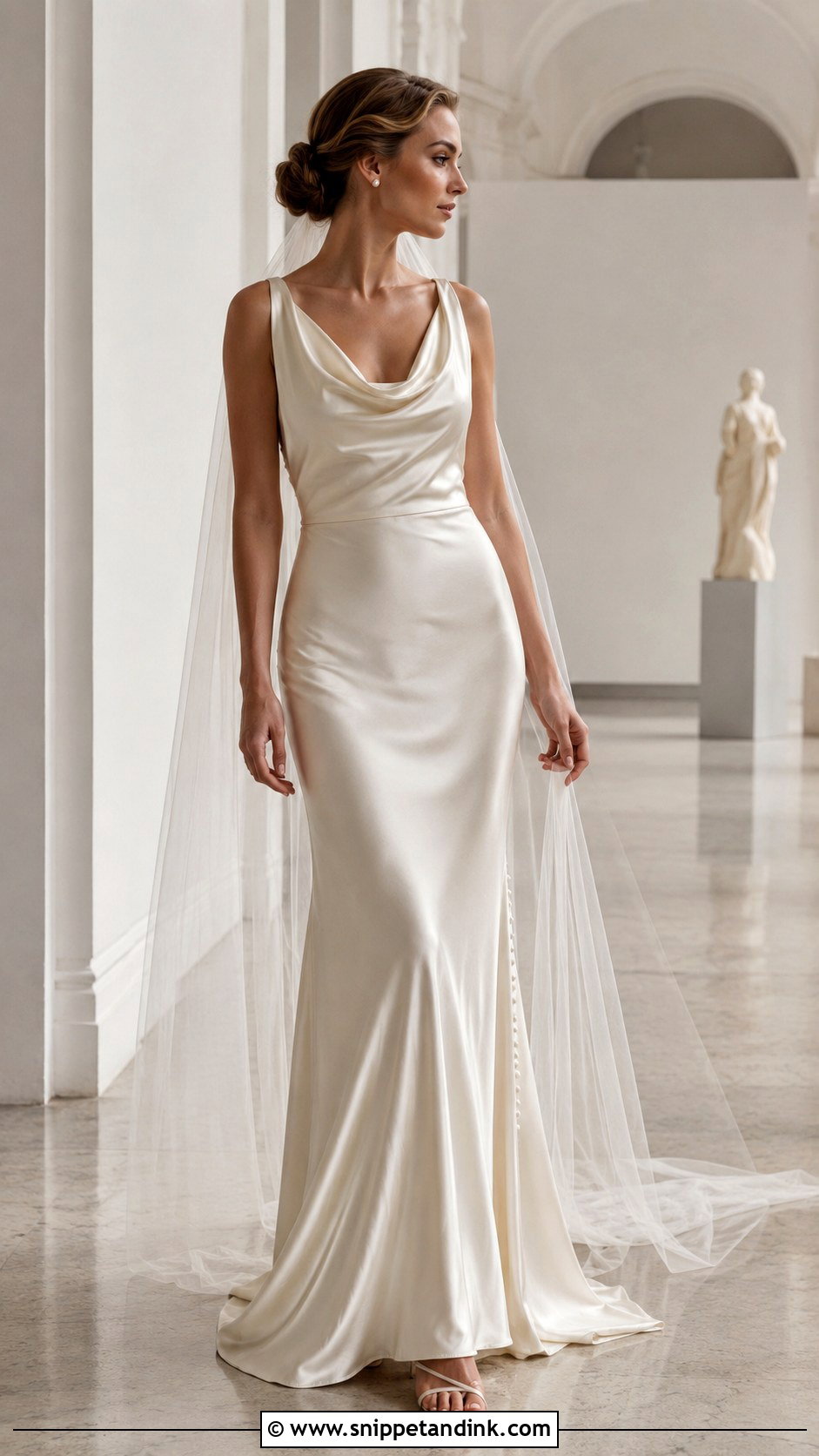
Bias cut means the fabric is cut diagonally across the grain, so it stretches and skims the body rather than being shaped by darts. That’s the movement that defined the 1930s. A 1930s bias cut wedding dress in satin looks liquid but shows everything beneath it, so laser-cut, edge-free underwear is essential. A cowl neck, soft gathers at the bust, covered back buttons or a modest train all suit it. Slim ivory sandals, pearl studs and a long veil under a smooth bun finish it. Bias fabric drops as it hangs, so a good seamstress lets the gown hang before setting the final hem.
4. 1940s Long Sleeve Crepe Wedding Dress
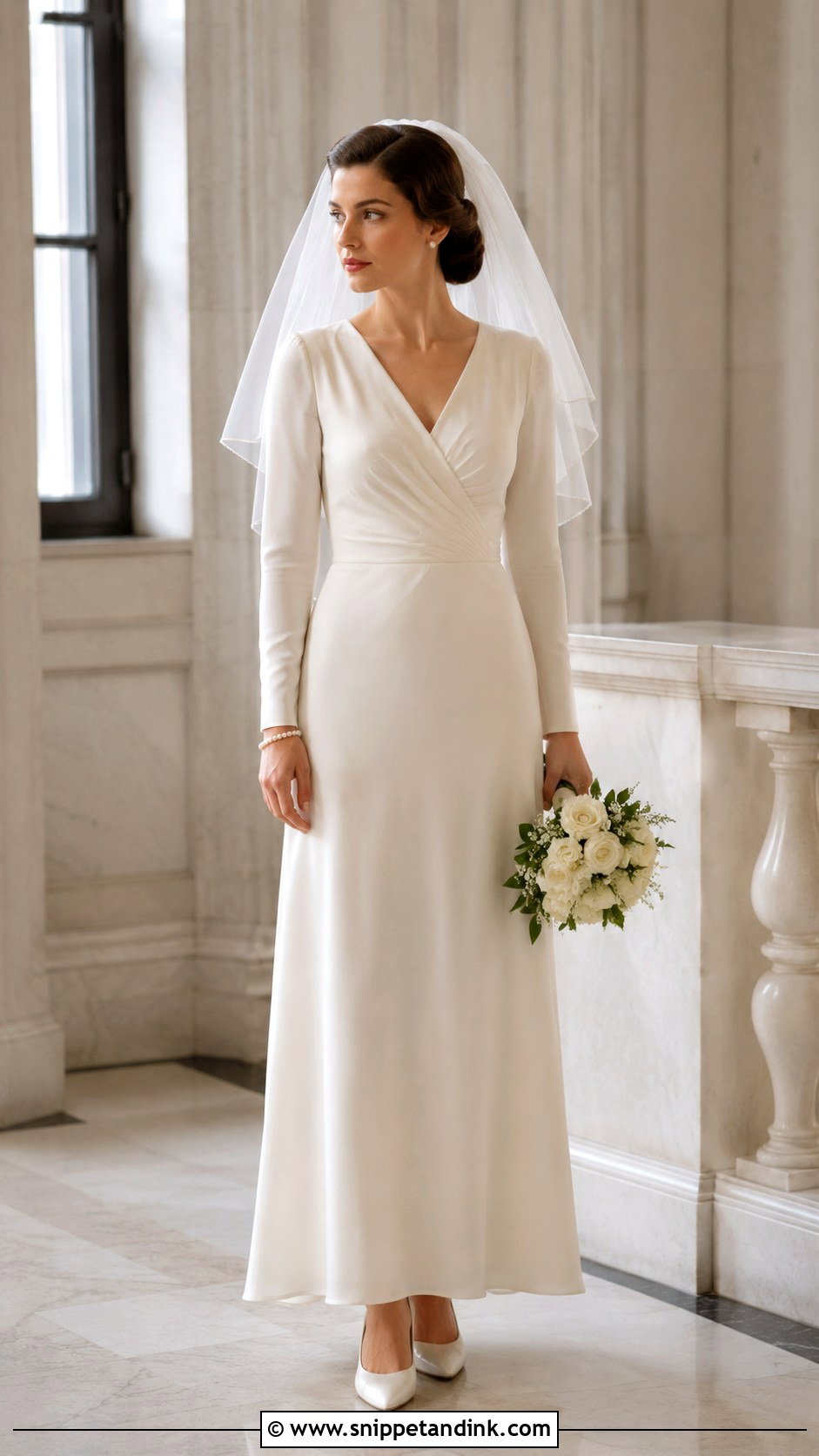
Forties bridal was neat, practical and quietly formal. A long-sleeved crepe gown with a defined waist and gently built-up shoulders captures it, usually with a V-neck, a gathered front and a narrow A-line skirt. Matte crepe has no shine to fight with in photographs. Closed pumps, a pearl bracelet and a shoulder-length veil complete it, with a tucked chignon or a polished side part. Covered buttons at the cuffs or down the back are the detail to look for. If you dance a lot, ask for a few pleats in the skirt instead of a tight column. Courthouses and daytime celebrations suit it.
5. 1950s Tea Length Lace Wedding Dress
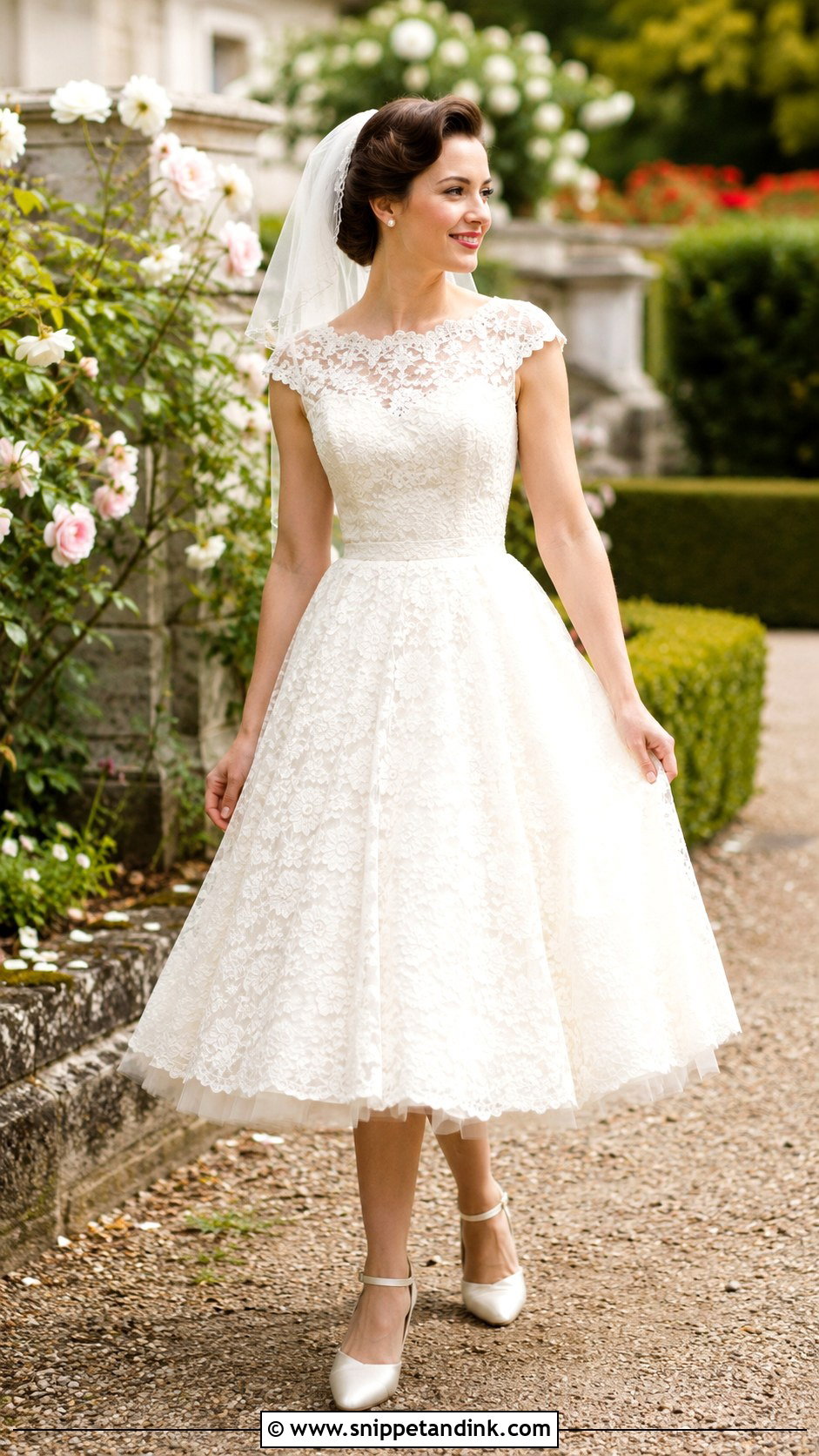
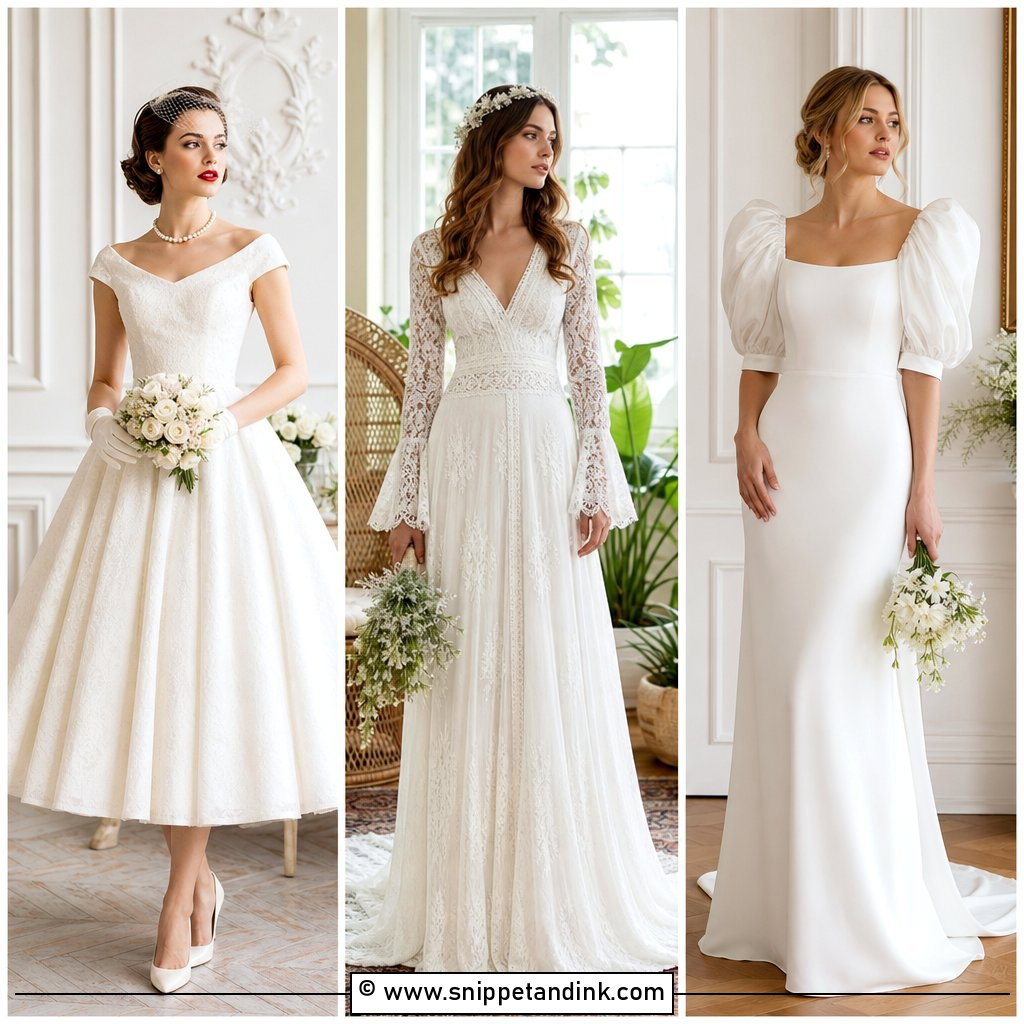
Tea length sits between knee and ankle, and a 1950s tea length lace wedding dress with a full skirt over a light petticoat is pure mid-century. Pick a fitted bodice and natural waist, then cap sleeves, a bateau neck or a lace overlay. The hem shows your shoes, so choose them carefully: pointed pumps, ankle-strap heels or embellished flats. Pearl studs, a short veil and soft curls finish it. The petticoat is the setting I adjust most. Too much net and it tips into costume; too little and the skirt collapses when you sit. One layer of soft tulle usually gets it right.
6. 1960s Mod Mini Wedding Dress
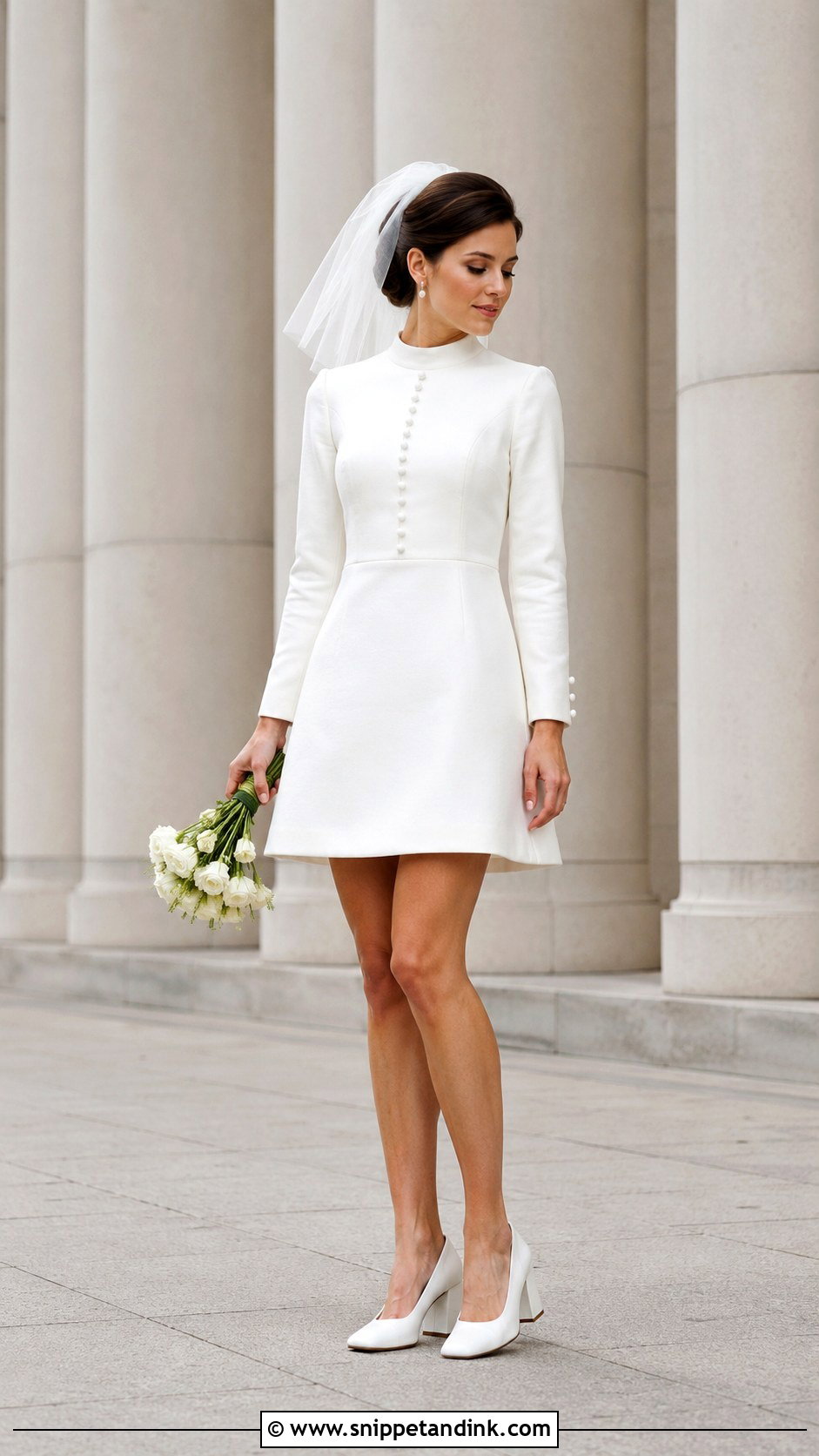
Short, crisp and graphic. A 1960s mod mini wedding dress works for a civil ceremony, a second outfit or a small modern venue. Choose a structured shift or A-line mini in a firm fabric, with a high neck and light waist shaping. Long sleeves balance the short hem; covered buttons or a small bow add period character. Block-heel pumps, pearl earrings and a compact bouquet, with a short veil, padded headband or flicked-out hair. Sit down in it before you buy. Shift dresses ride up more than you’d expect, so sheer ivory tights or a just-above-knee hem may suit you better.
7. 1970s Boho Lace Wedding Dress
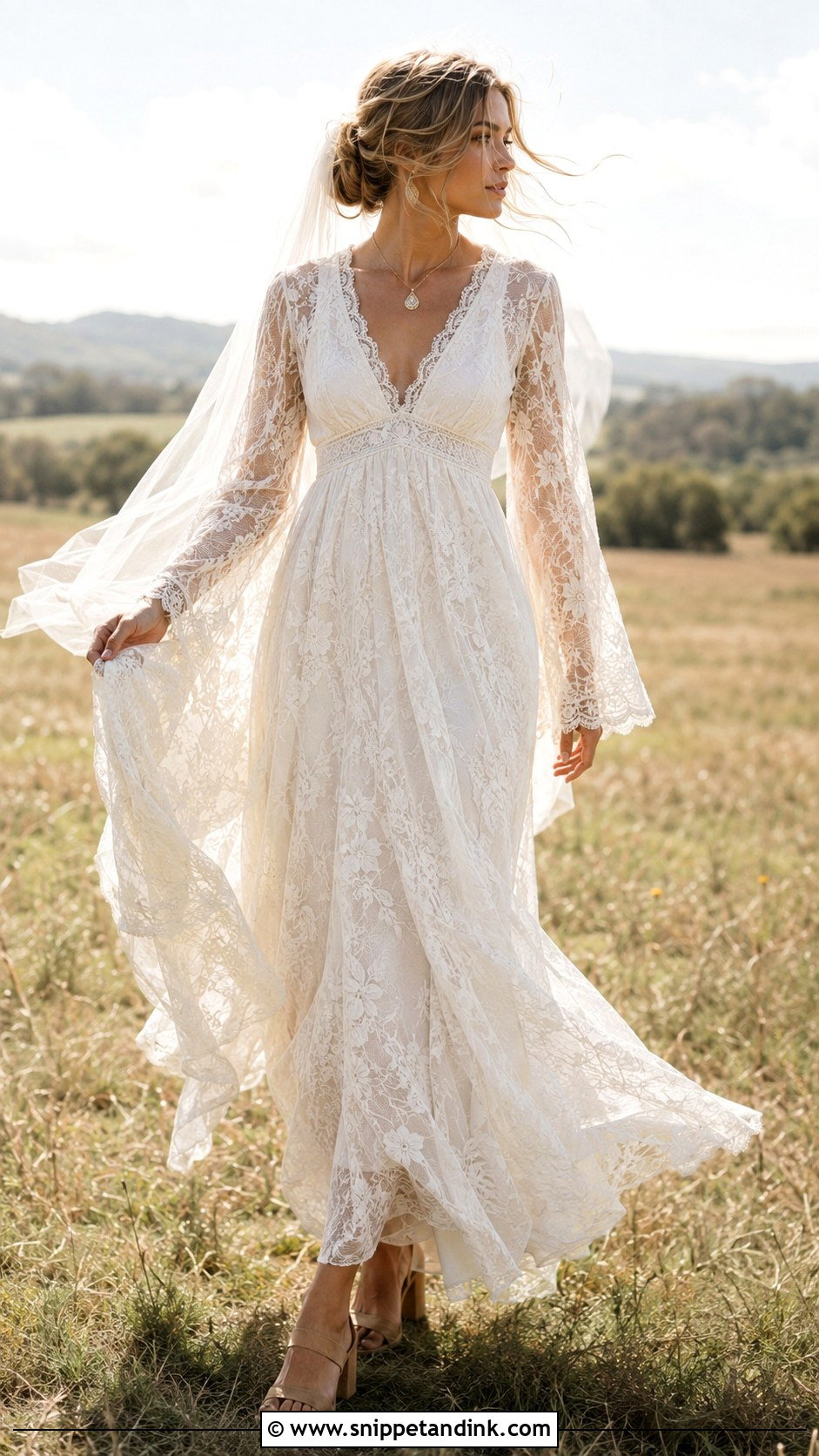
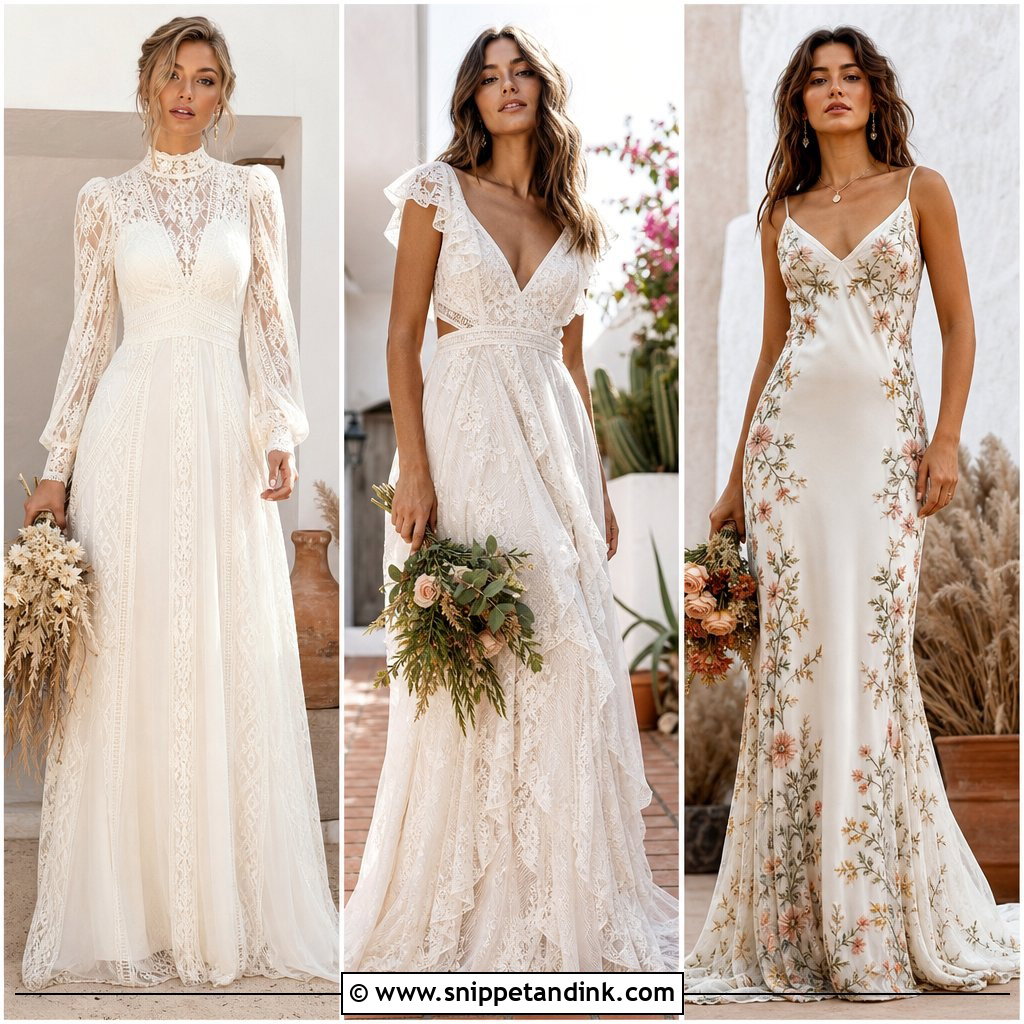
The 1970s boho wedding dress is soft and unstructured, usually with a raised waist, a flowing skirt and sheer bell or bishop sleeves. Crochet-style lace, floral motifs and gathered panels give it texture. I keep accessories simple: a fine pendant, suede block heels, a loose low bun and a light veil or floral comb. Line the bodice and skirt so the sleeves alone stay sheer. Gardens, woods and outdoor venues. Bell sleeves trail into food and catch on chair backs, so if you love them, consider a pair of discreet wrist loops for dinner. Hem it high enough to clear grass and roots.
8. Victorian Corset Ball Gown Wedding Dress
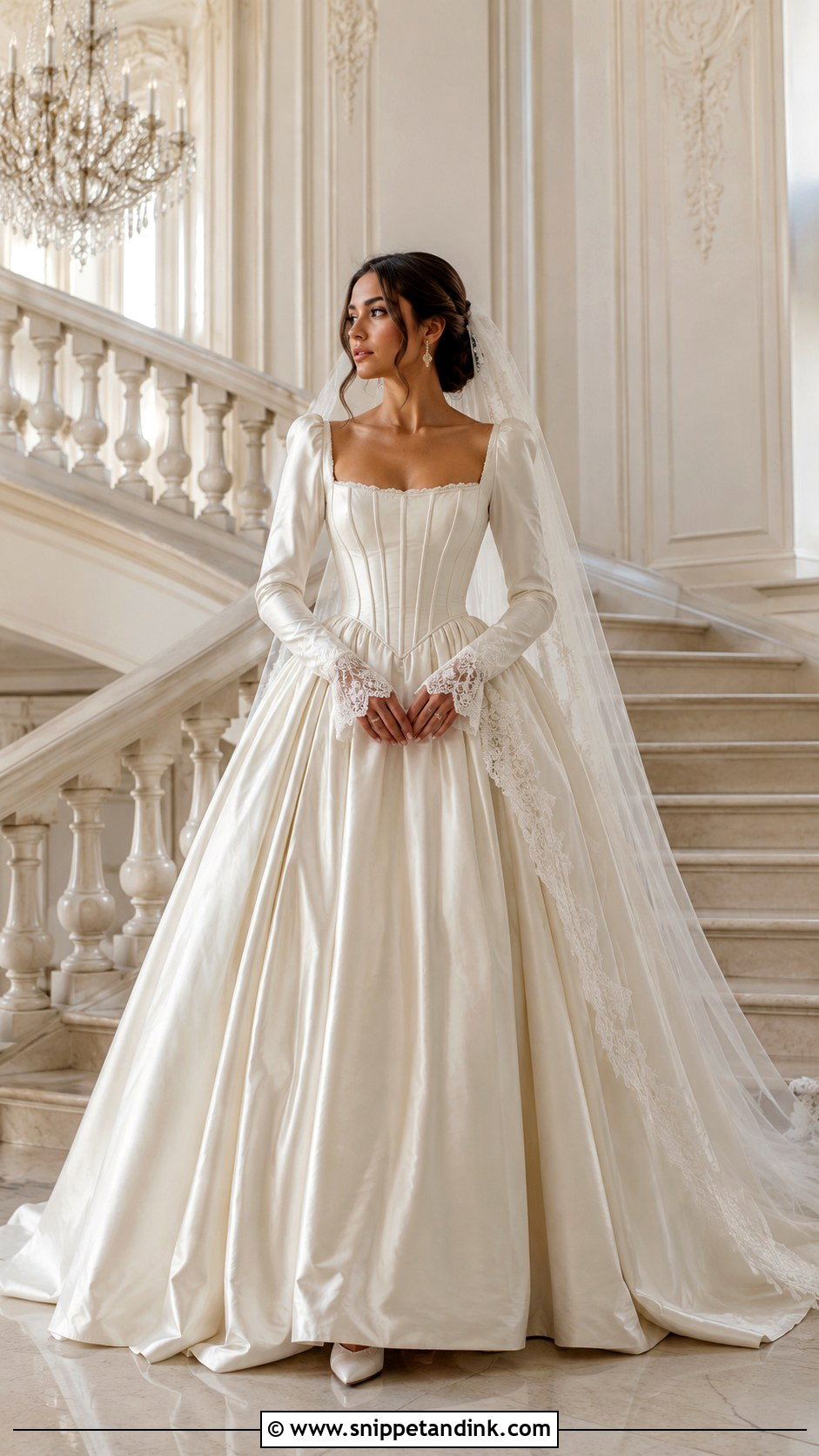
This is the most structured gown on the list. A Victorian-style ball gown pairs a corseted bodice with a pointed waist, square neck and full satin or silk-blend skirt, with lace at the neckline and cuffs. Cathedral veil, drop earrings, closed satin heels and a centre-parted bun. Modern boning should feel firm but never restrict breathing. Test it by sitting, raising your arms and taking a deep breath. The skirt already makes the statement, so keep the rest controlled and the palette all ivory. Ask for a bustle for the reception, because a train this full gets trodden on within an hour.
9. Basque Waist Lace Wedding Dress
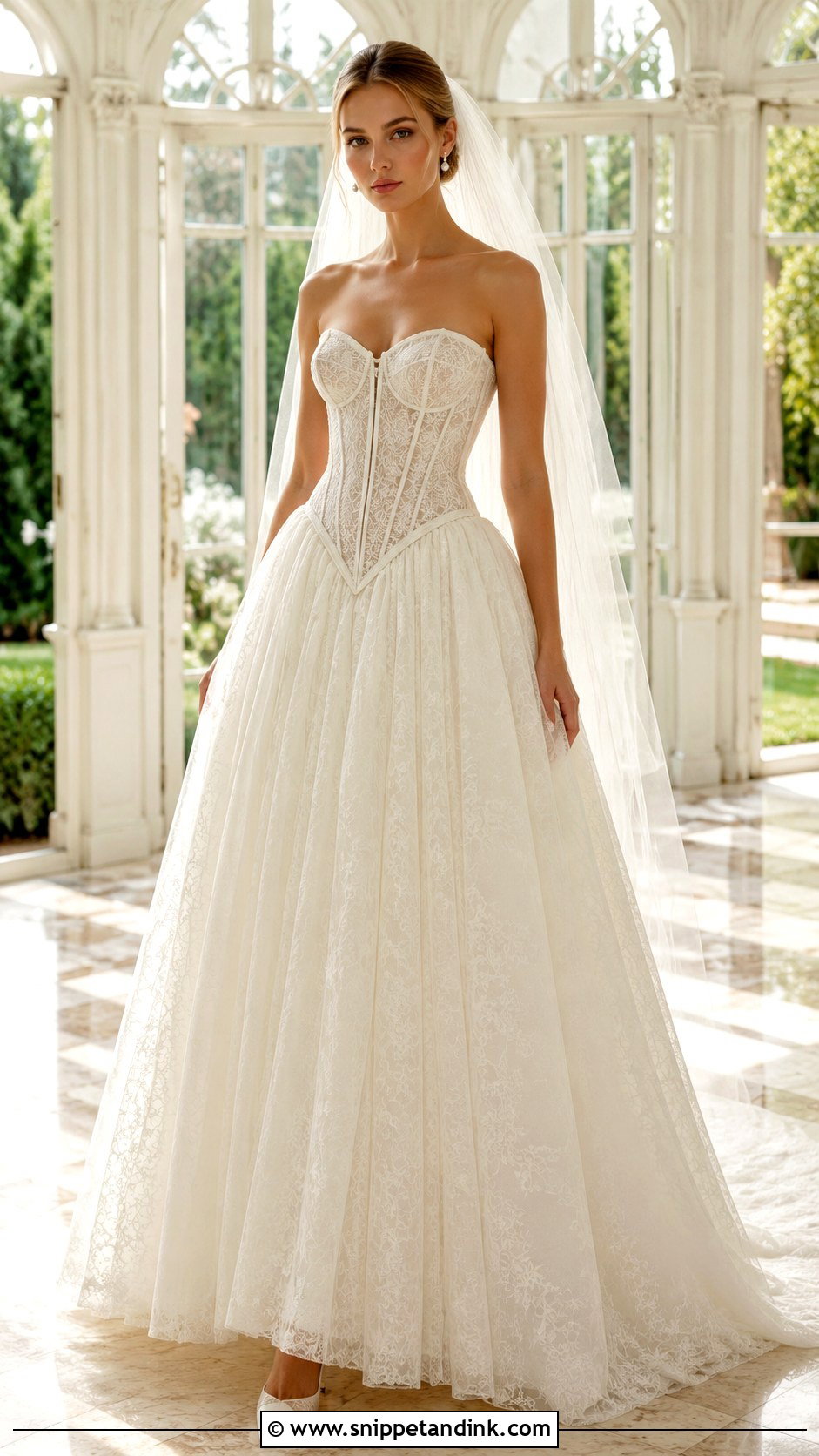
The Basque waist drops into a V below your natural waist, which lengthens the torso and makes the skirt look fuller. It’s one of the strongest vintage details in bridal shops right now, usually paired with corseted construction. Choose a boned lace bodice over a gathered ball gown or A-line skirt, with a plain tulle veil, pearl drops, pointed ivory heels and a low bun. Where the point ends matters. If it’s too low on a shorter torso, it digs into your lap every time you sit, so I mark it at the fitting with you seated, not standing.
10. Square Neck Satin A-Line Wedding Dress
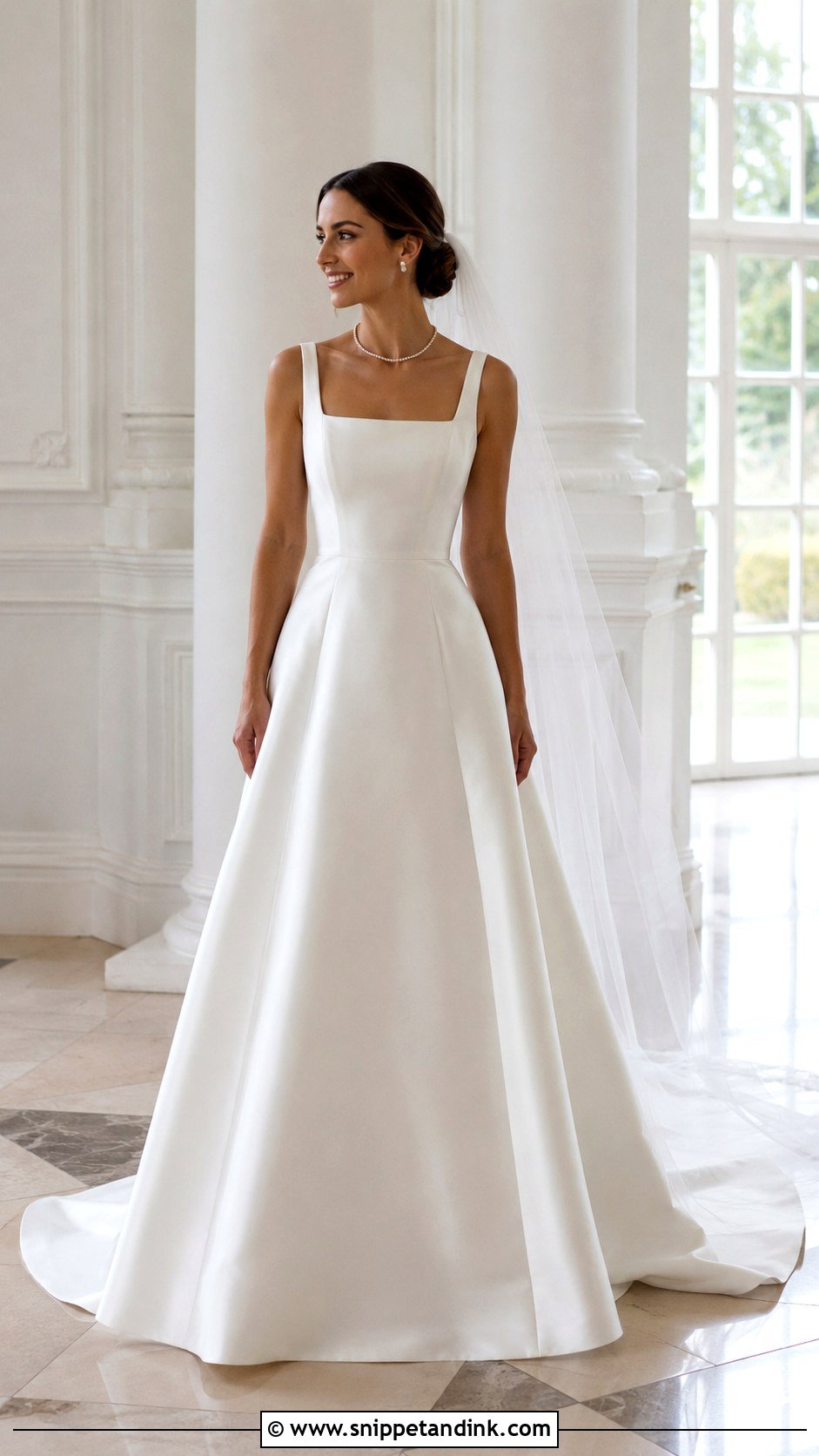
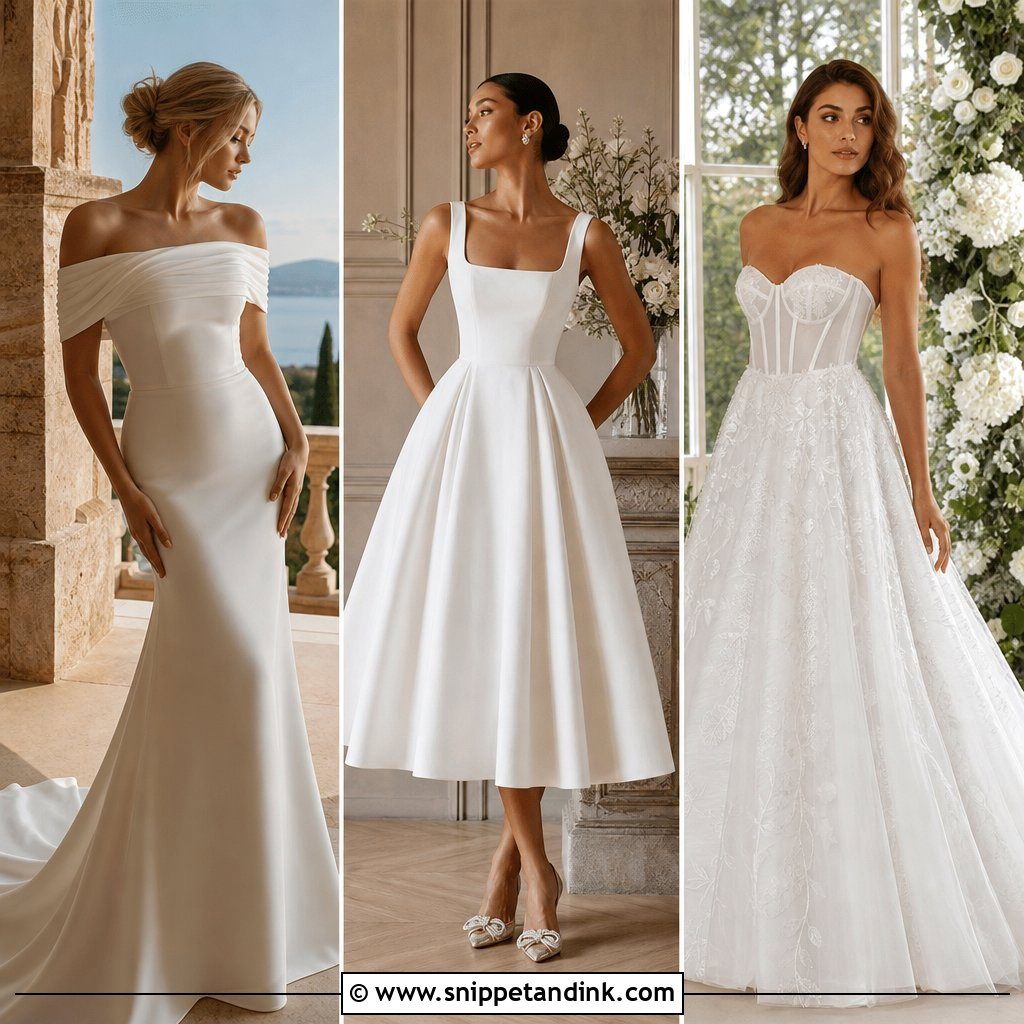
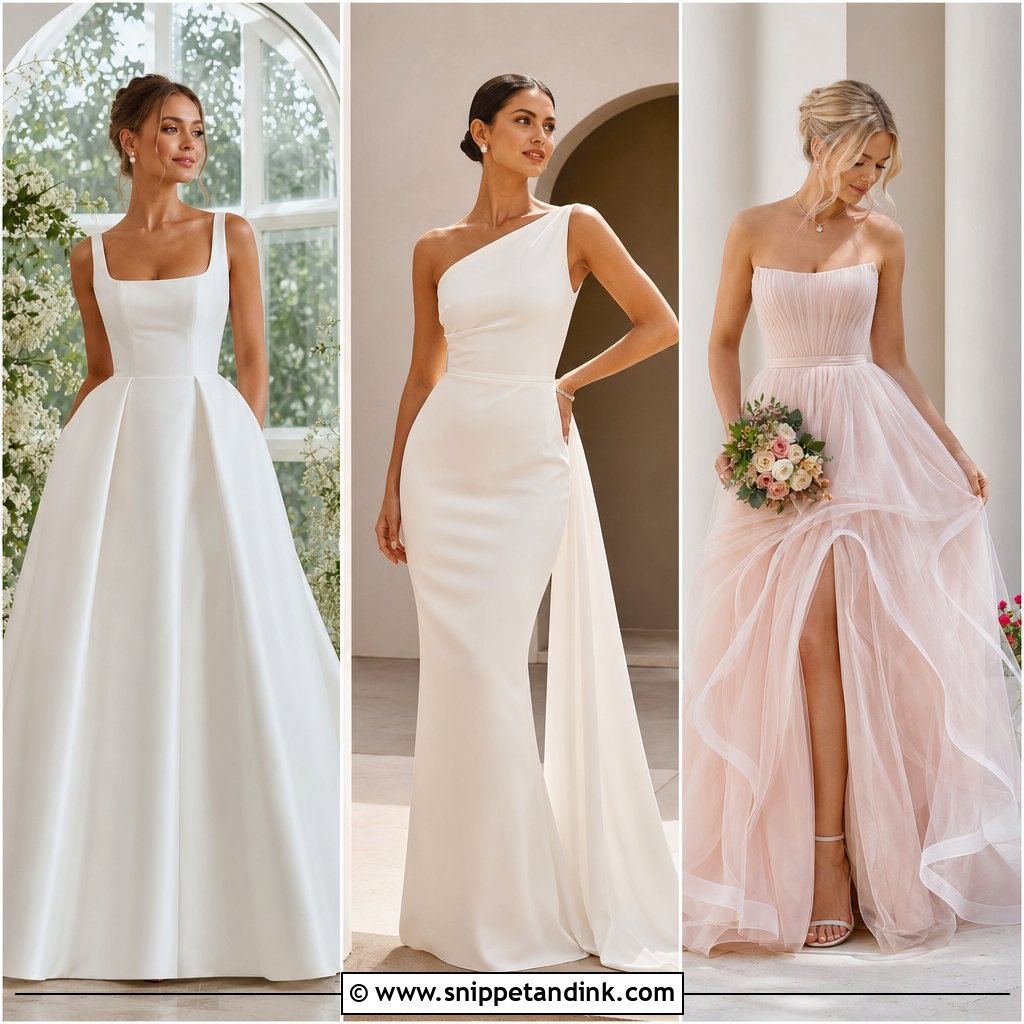
Square necklines frame the collarbones and suit a short pendant or pearl strand, which strapless gowns don’t. Choose a fitted bodice with wider straps and a softly flared satin skirt. Heavy satin gives structure; lighter satin moves more freely. Satin pumps, a structured mini bag for portraits and a long sheer veil with a narrow edge finish it, with a low bun or soft waves. Covered buttons down the back give it a historical touch. Lean forward at your fitting. Square necks gape at the corners if the straps are too long, and that’s easily fixed by shortening them.
11. Champagne Lace Overlay Wedding Dress
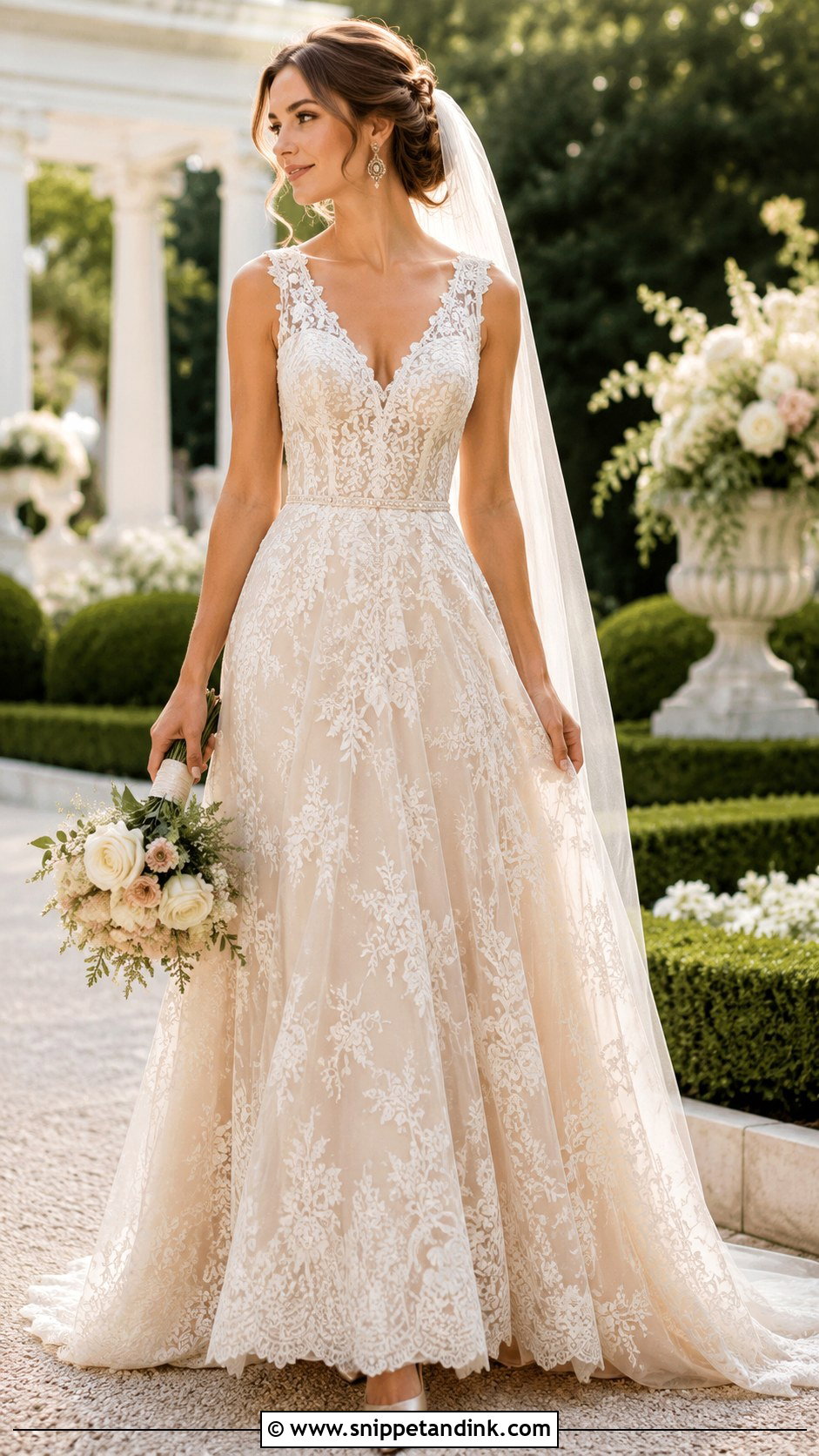
Lace over a darker lining is an old dressmaker’s trick: the champagne underlayer makes ivory lace look more defined and gives the gown an heirloom warmth. A fitted bodice, natural waist and A-line or narrow ball gown skirt suit it. Neutral satin heels, antique-style earrings and a soft ivory veil, with a bouquet in cream and muted pastels. Choose one metal, gold or silver, and stick to it. Champagne shades vary a lot. View a swatch against your skin in daylight and in the venue’s lighting, because the wrong undertone turns yellow or grey on some complexions.
12. Pearl Embellished Column Wedding Dress
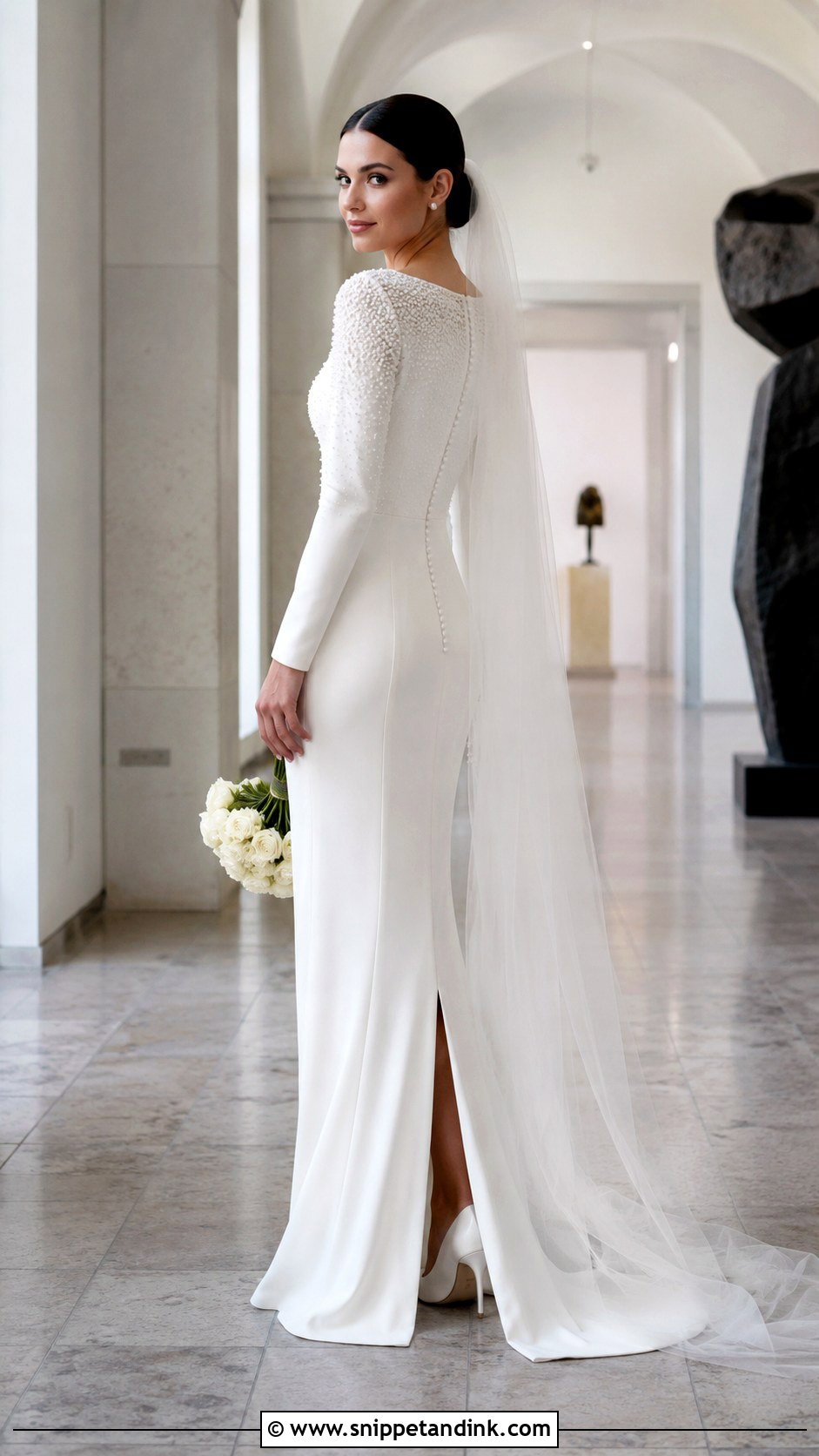
Pearls on a slim column read as old Hollywood. I’d place them at the neckline, sleeves or upper bodice, not all the way to the hem, over a crepe or satin base. Pearl studs, pointed pumps and a simple floor-length veil, with no big necklace. A polished bun or smooth waves keep the line vertical. Columns restrict your stride, so a discreet back slit helps. If the pearls sit on sleeves, check where your arms bend, because that’s where stitching wears through first.
13. Floral Embroidered Tulle Wedding Dress
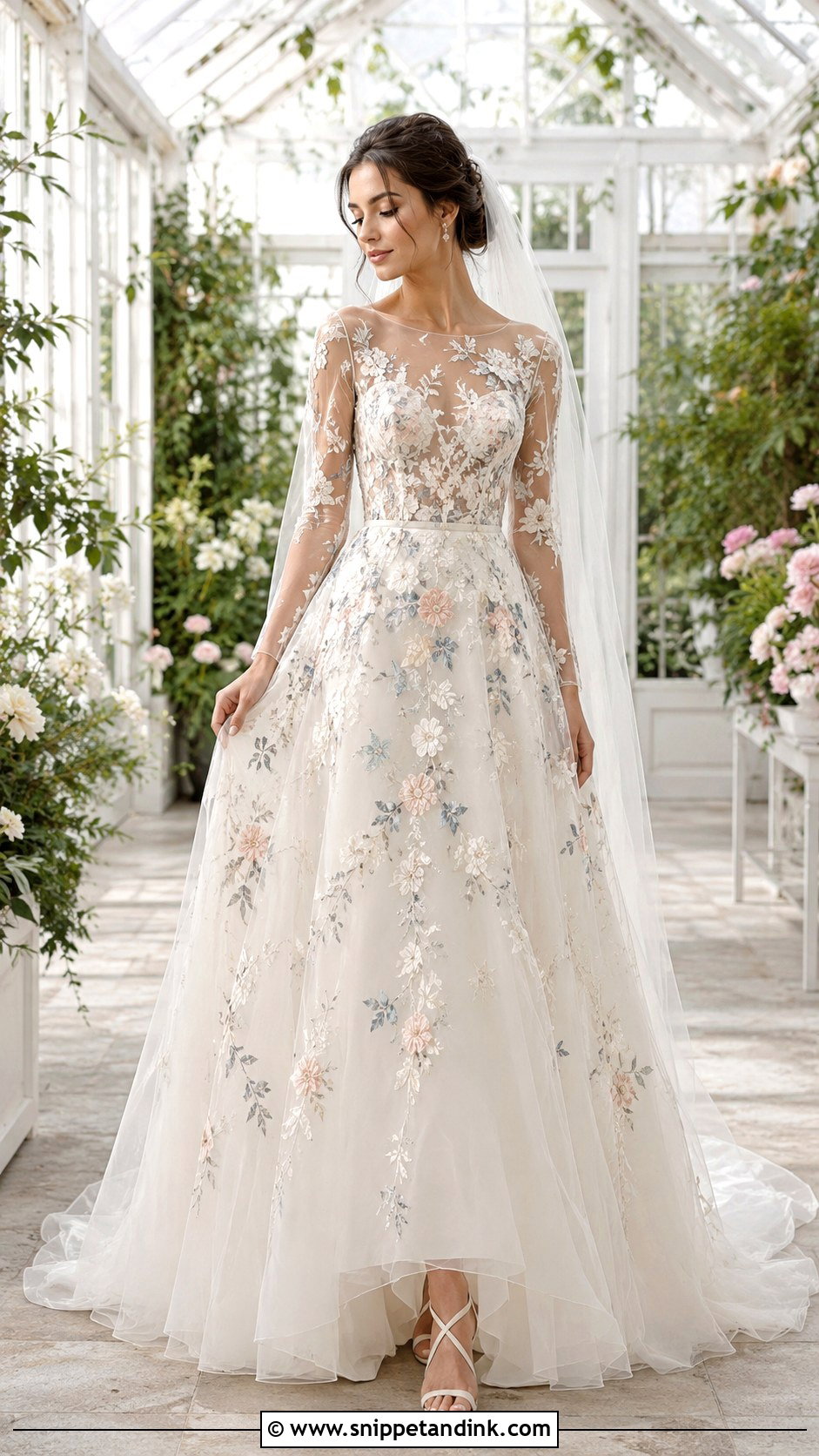
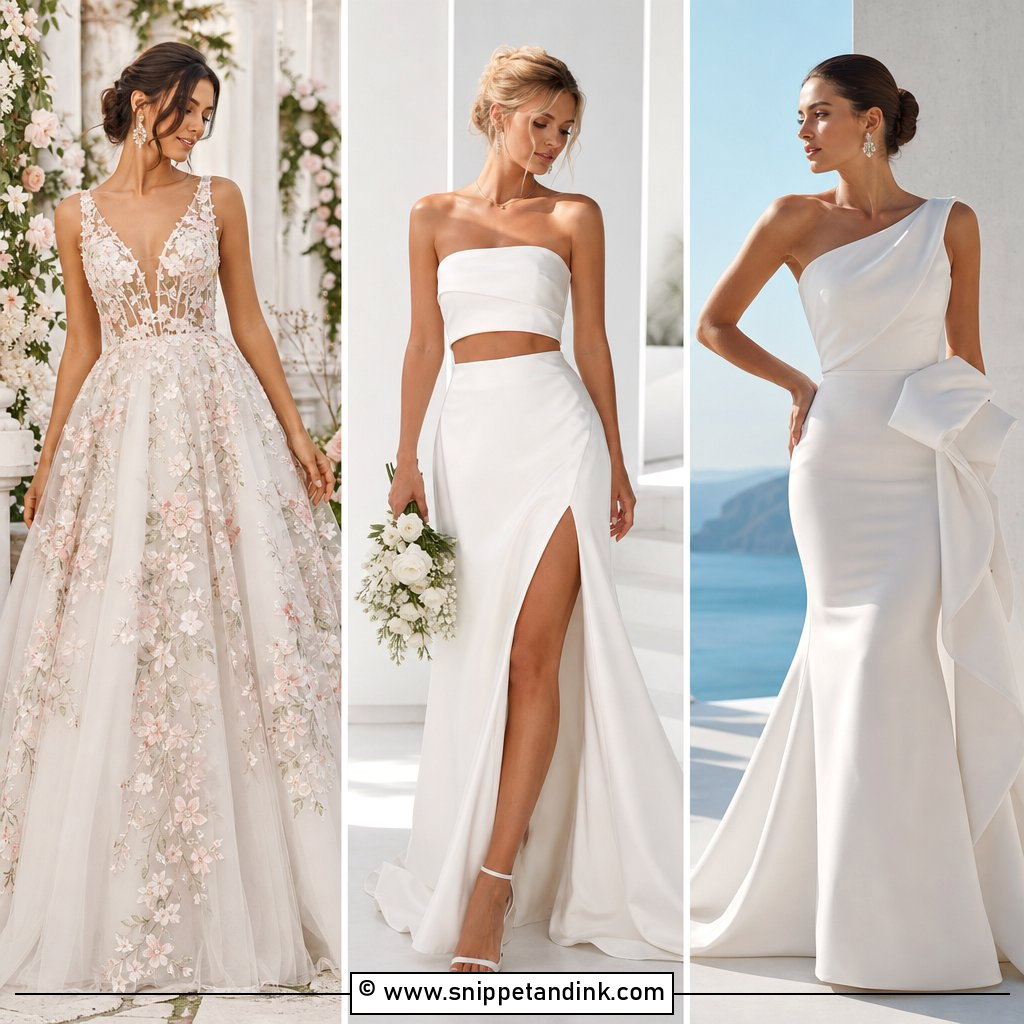
Embroidered flowers on tulle look as if they’re floating. An illusion bodice with carefully placed embroidery over a softly layered A-line skirt gives that effect. Tonal ivory is classic; blush, pale blue or green thread adds a little color. Keep earrings minimal, the veil plain and the heels slim, with a loose bun or half-up hair. Alterations are the tricky part. Motifs at the bust, waist and hem often have to be unpicked and re-sewn after taking in a seam, which takes time and costs more. Soft net underlayers stop the skirt feeling scratchy.
14. Cape Sleeve Lace Wedding Dress
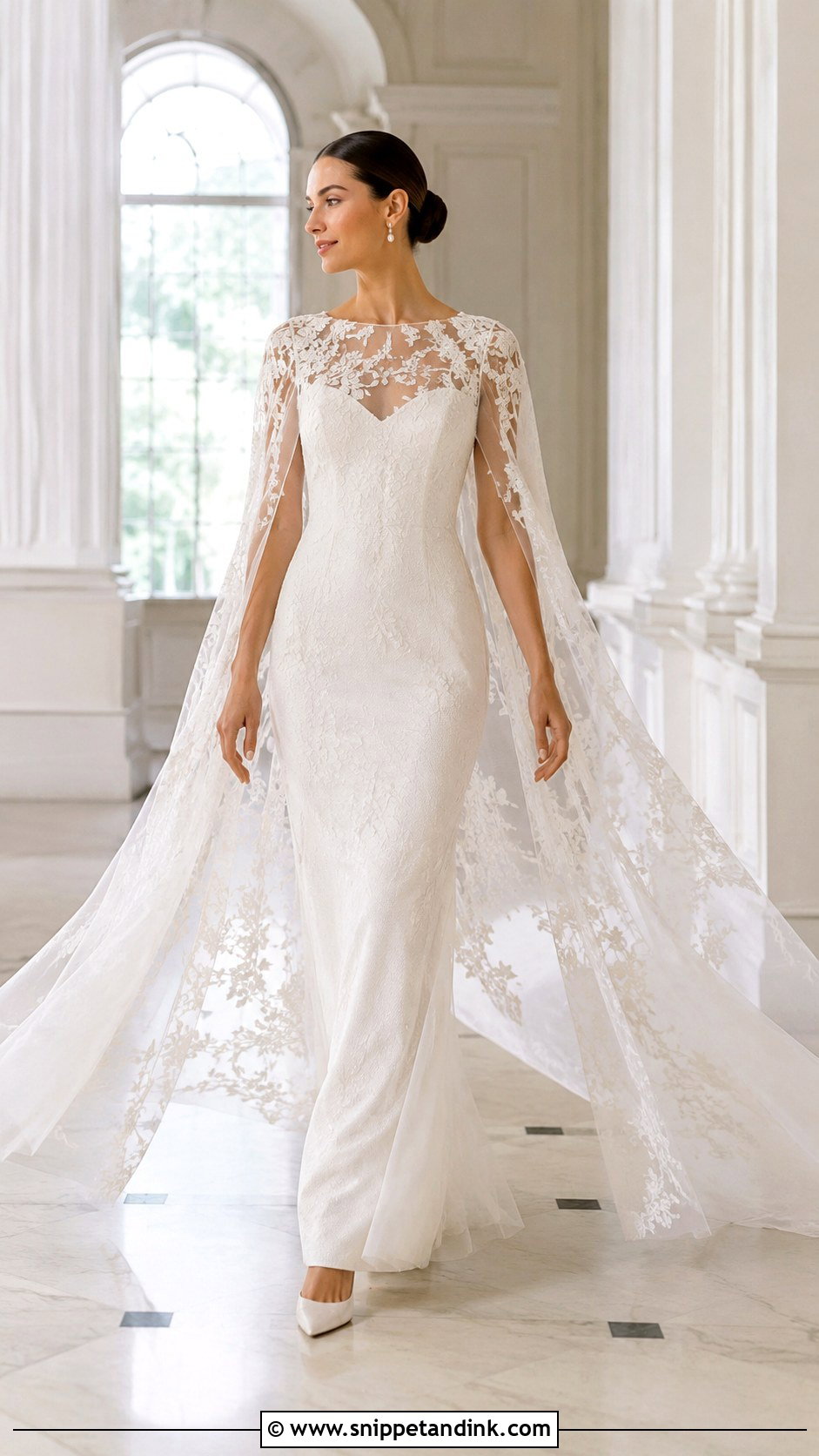
A cape attached at the neckline or upper back gives coverage and a lot of movement. Pair it with a fitted column or soft A-line, and keep the cape airy: Chantilly-style lace, dotted tulle or embroidered mesh. A low bun, small drop earrings and simple pointed heels finish it. With a floor-length cape, skip the veil; two long sheer layers hide the gown’s shape. A shorter cape works with a plain fingertip veil. Move your arms in every direction at the fitting. If the cape catches on your bouquet hand, it needs shortening at the front.



15. Bow Back Mikado Wedding Dress
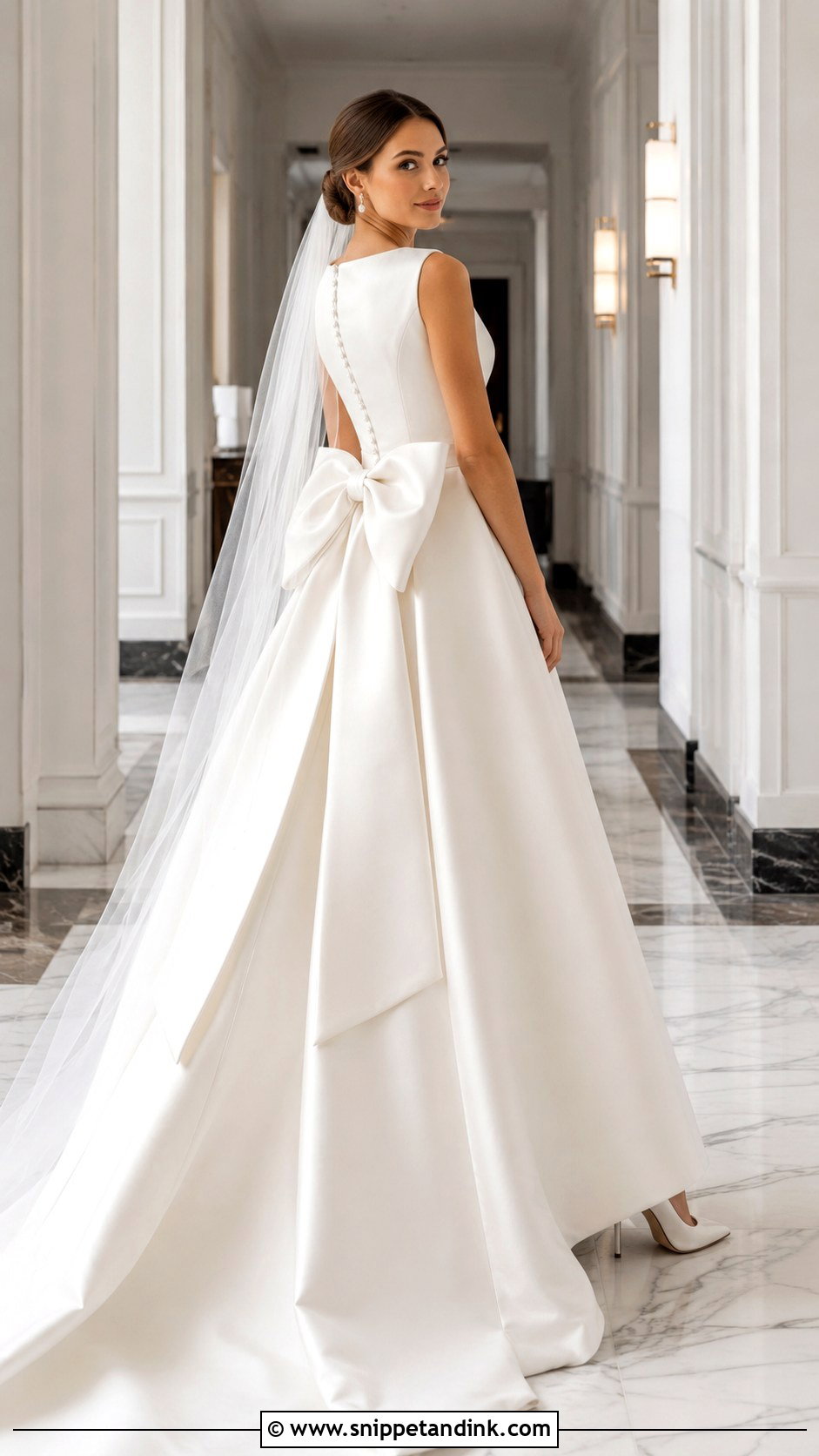
Mikado is a heavy, slightly crisp silk or silk-blend that holds sculpted shapes, which is why it’s the fabric for a structured bow. Choose a clean A-line or ball gown with a fitted bodice, a bateau, square or softly curved neckline, and a bow at the waist or upper back. Pearl earrings, satin pumps and a plain veil set above a smooth bun. The veil must be sheer enough to show the bow during the ceremony. A removable bow gives you options later. I check the loops from behind and in profile, because an oversized bow can swamp a small frame.
16. Scalloped Lace Mermaid Wedding Dress
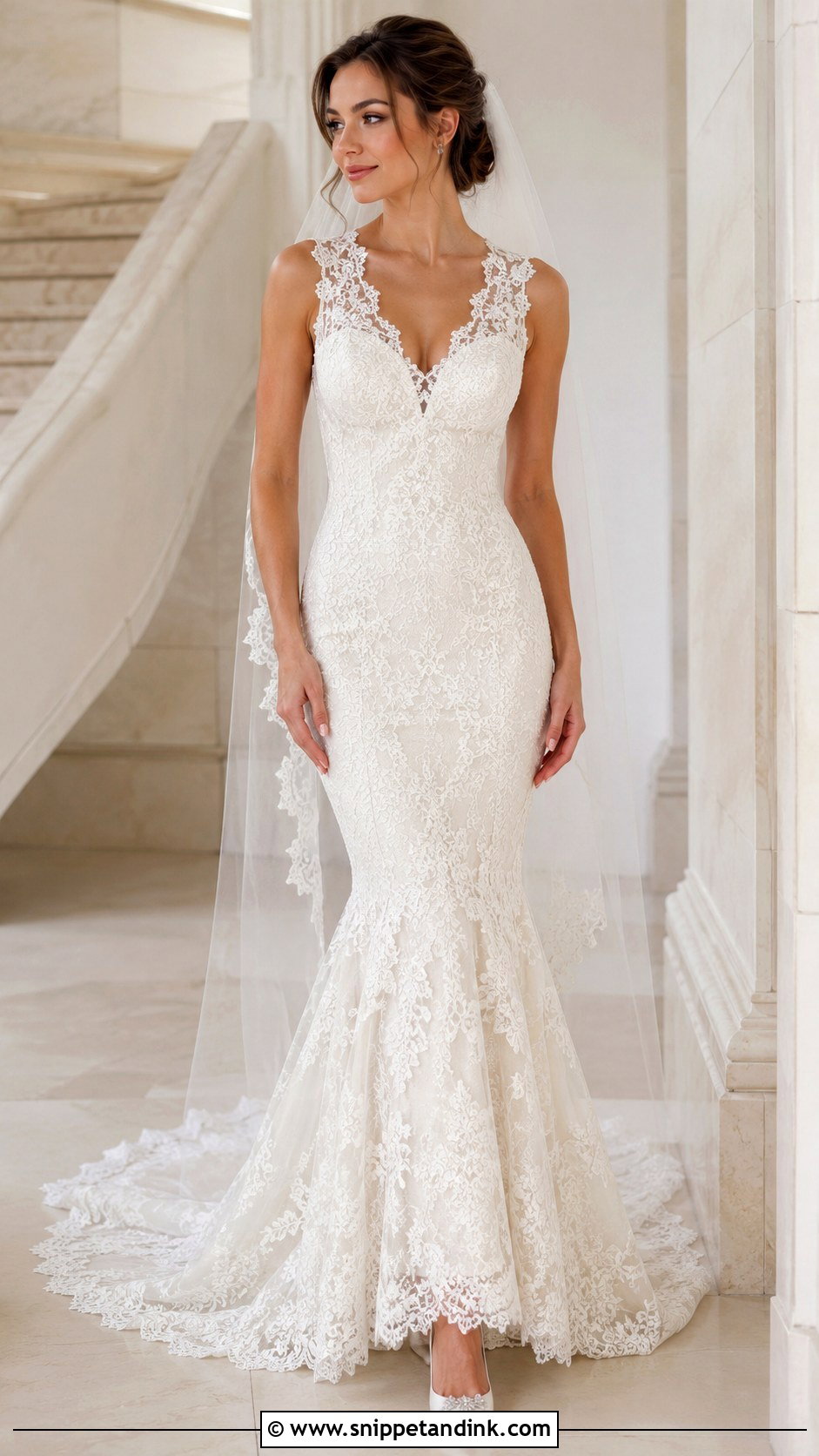
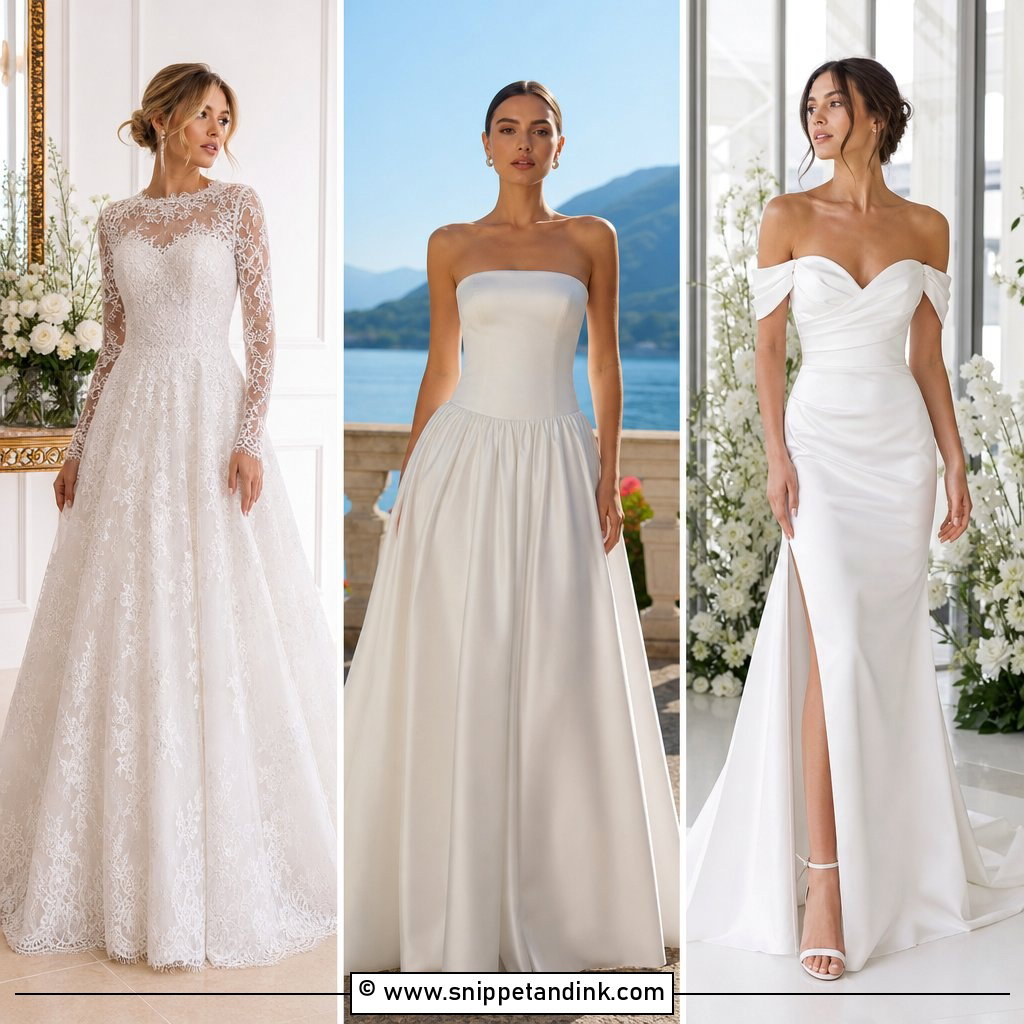
Scalloped edges give lace a finished, old-fashioned look without beading. On a mermaid, choose a supportive bodice, fitted hip and a flare starting near the knee, with scallops at the neckline, sleeve edge or train. Narrow veil, crystal studs, comfortable pointed heels and a side-parted low bun. Walk on stairs and sit down during the appointment; a very tight hip gets uncomfortable over dinner. Ask whether the lace is matched at the seams. Well-made gowns cut the lace motifs so they meet across seams, and that’s what makes them look expensive.
17. Puff Sleeve Organza Wedding Dress
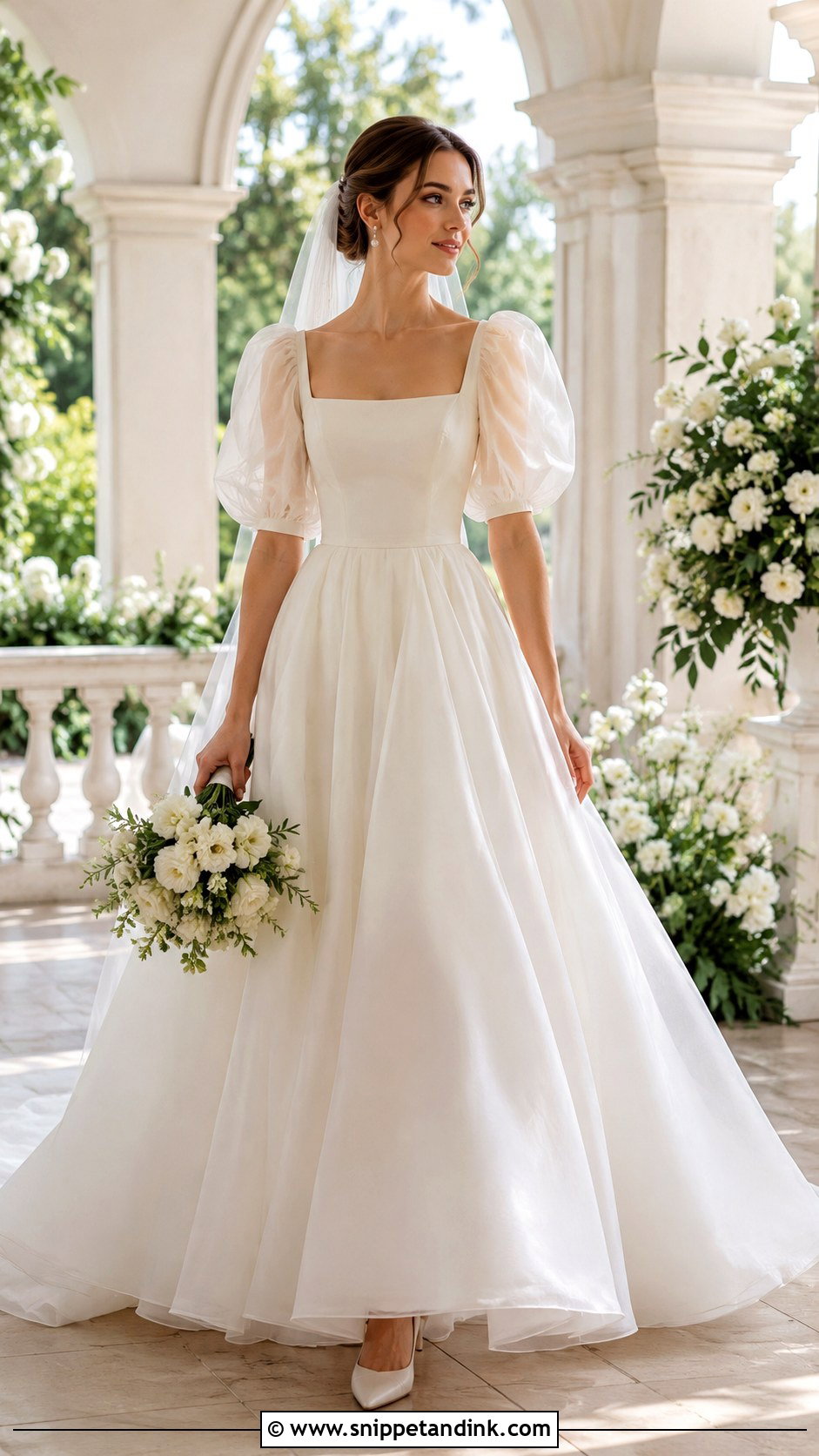
Puff sleeves add volume at the shoulder, so the rest of the dress needs restraint. Choose a fitted bodice, a defined waist and a full but light organza skirt. Sheer detachable sleeves give a vintage effect now and a cleaner look later. Pearl drops, closed heels and a plain veil, with a smooth low bun. Smaller puffs are subtler; elbow-length sleeves are more dramatic. Check the cuff or elastic doesn’t leave a red line on your arm. Good organza holds its shape but creases if crushed, so steam the sleeves just before you put them on.
18. Lace Jacket Column Wedding Dress
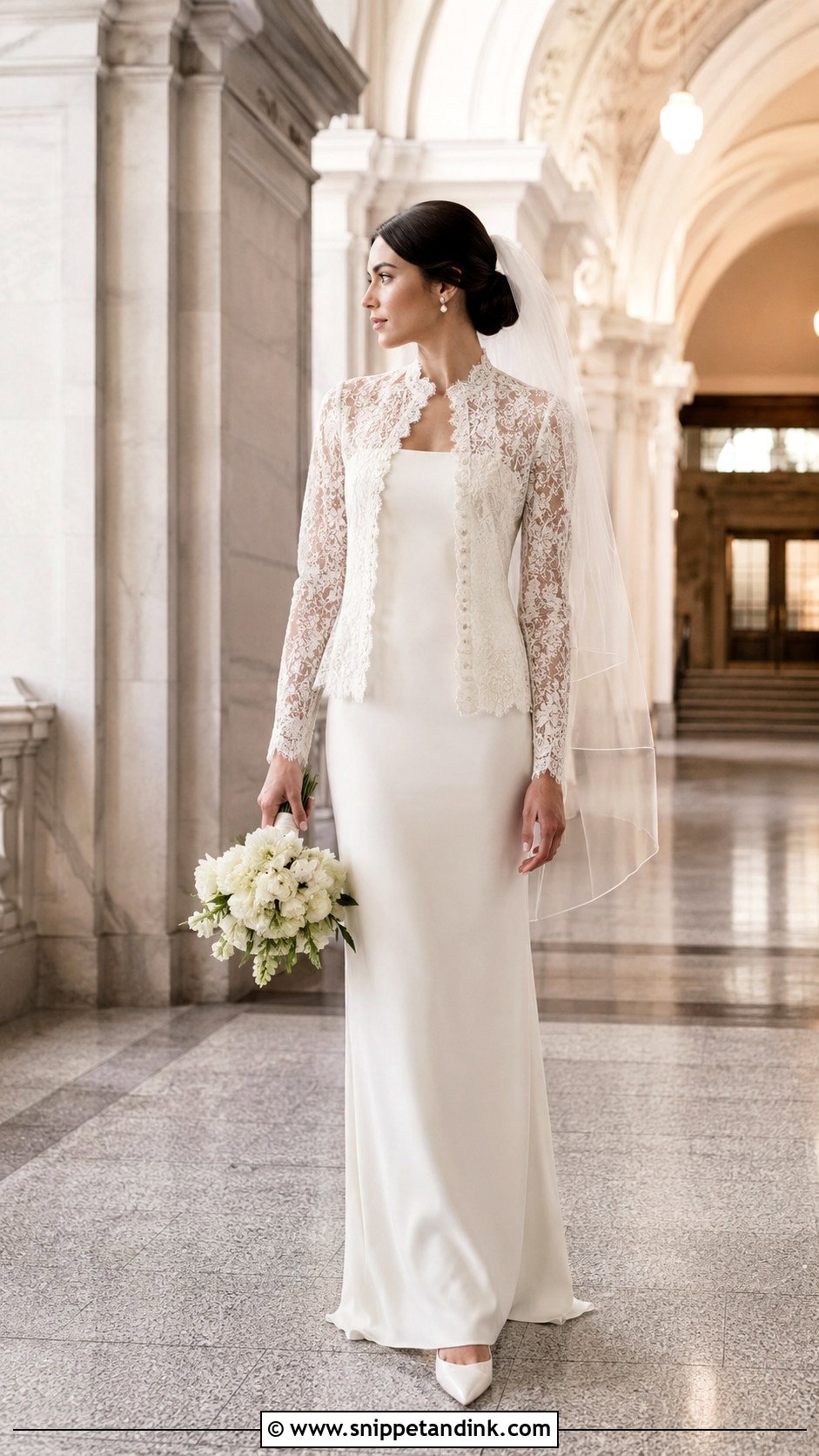
A lace jacket over a plain column gives you two looks from one outfit. Start with a sleeveless satin, crepe or silk gown, then add a fitted lace jacket with long sleeves, covered buttons and a neckline that lines up with the dress. Pearl earrings, pointed pumps and a clean fingertip veil for the ceremony, then off comes the jacket for the reception. Lace should contrast slightly with the smooth base but share its ivory undertone. The jacket must close without pulling across the shoulders or bust. If it does, it’ll strain every time you hug someone.
19. Blush Jacquard Wedding Dress
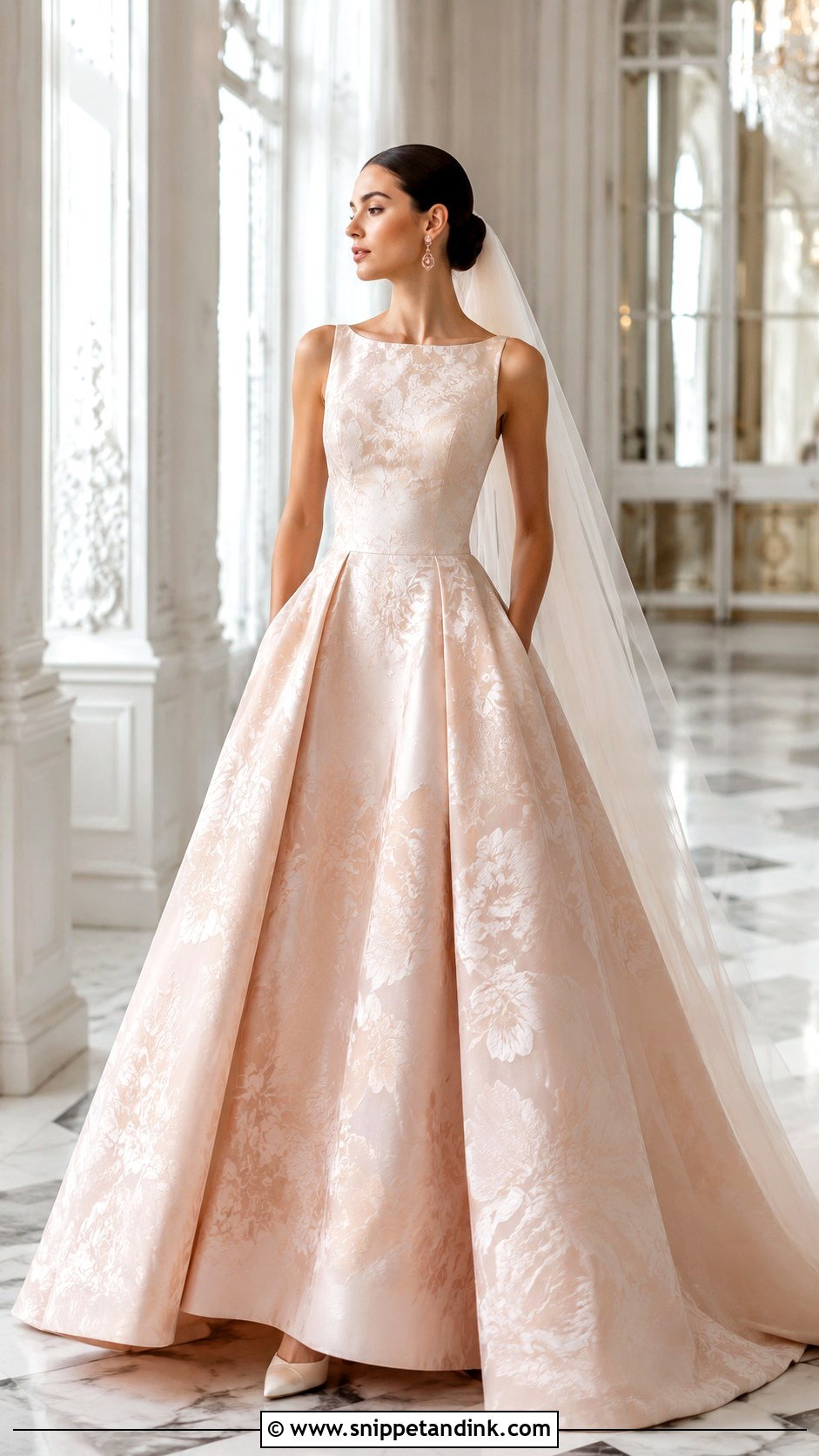
Jacquard is woven, not printed, so its floral pattern has depth and the fabric holds a structured shape. A blush jacquard A-line or ball gown with a fitted bodice and a clean neckline suits brides who want color without going bold. The pattern should read up close and blur from a distance. Ivory heels, rose-gold earrings, a pale neutral veil and a smooth updo complete it. Skip heavy jewelry. Pinks shift under artificial light, so view the fabric in daylight and indoors. A modest train and a few skirt pleats show off the weave.

20. Ivory Wedding Dress With Black Velvet Trim
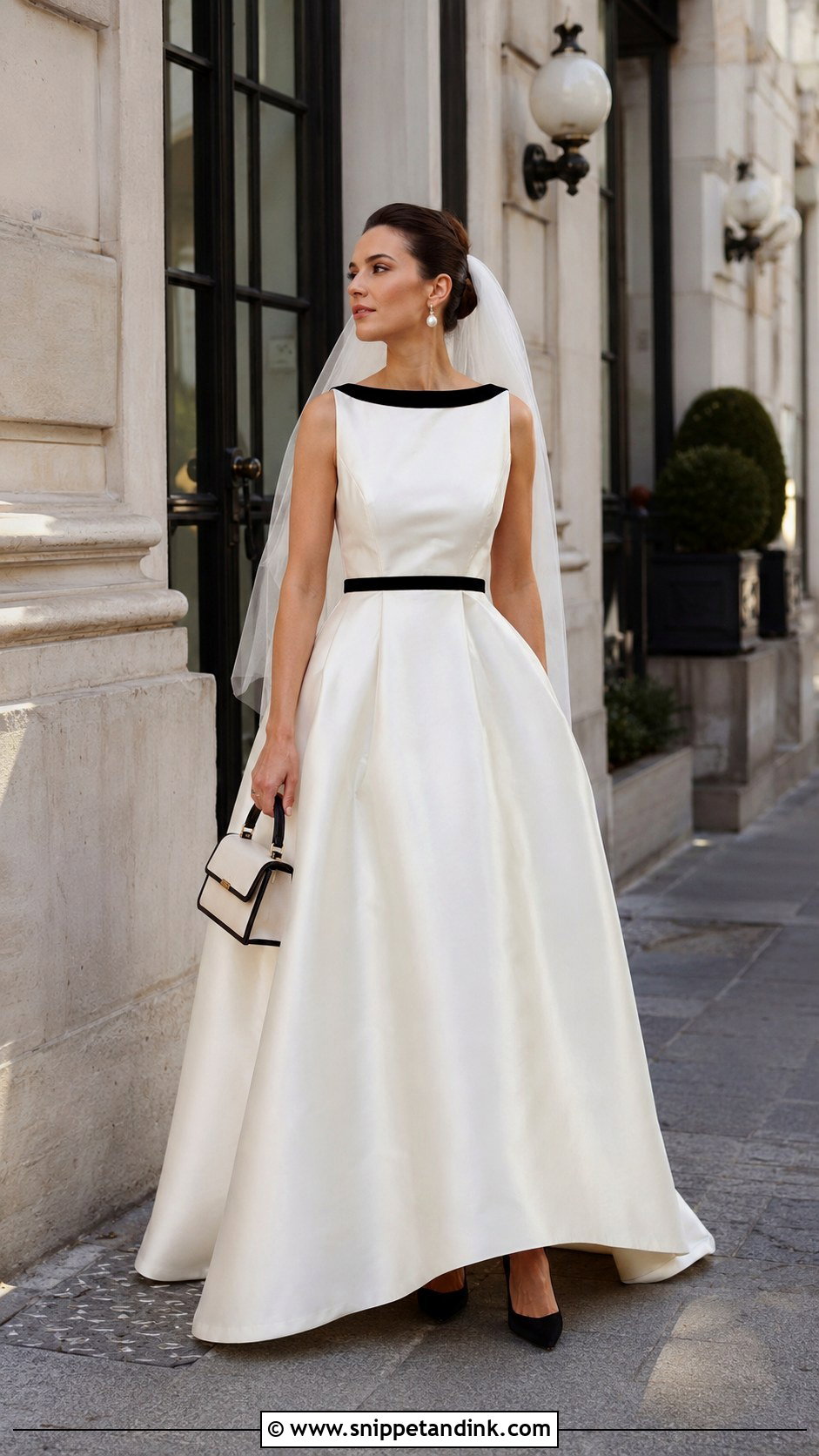
Black velvet trim on ivory is unconventional and very Victorian. A clean satin or crepe gown makes the best background for a narrow black ribbon at the neckline, waist, cuffs or bow. Keep the silhouette classic, A-line, column or tea length, so the contrast stays elegant. Black pointed pumps, pearl earrings and a plain ivory veil complete it; a small black bag can appear in portraits. Repeat the black two or three times at most. One practical warning: some black velvet ribbons can bleed dye if they get wet, so I test a scrap with a damp white cloth before it goes on the dress.
Wearing a Genuinely Old Dress, Not a Reproduction
An original gown from a past decade has a quality no reproduction quite matches, but it comes with conditions. Older silk can split along folds, a problem called shattering, and once it starts it can’t be repaired. Beaded 1920s dresses are heavy, and the beads slowly tear fragile chiffon if the dress is hung. Fabric yellows with age, sometimes unevenly. Sizes also ran smaller, and seam allowances were often narrow, so there may be very little to let out.
Before you buy, hold the fabric up to daylight and look for thin patches, and check under the arms for old stains. Then show it to a seamstress who works with vintage clothing. Many genuine gowns need a new lining, reinforced seams or a rebuilt bodice to survive a full wedding day. It’s often worth it, but plan that work into your timeline.
One Era Per Outfit, Not Three
The easiest way for a vintage dress to look like a costume is to mix decades: a 1920s headband, a 1950s petticoat and a 1970s bell sleeve on one bride. Pick the decade your dress belongs to and keep your hair, veil and shoes broadly in it, or keep them deliberately modern. A finger-waved bob with a bias-cut gown works. So does a sleek bun with almost anything. What rarely works is three periods arguing with each other. If you’re unsure, take an accessory away rather than adding one.
The Decade Matters Less Than the Fit
A vintage dress succeeds when its historical detail sits on a fit that’s comfortable and true to you. Maybe it’s the movement of 1930s satin, the swing of a 1950s tea length or the structure of a Victorian-inspired corset gown. Start with the silhouettes and fabrics that feel natural, then think about venue, season, shoes and formality. At every appointment, sit, walk, turn and lift your arms. Good alterations matter more than matching a period exactly. Finish with a few accessories that respect the era and still let you look like yourself.
You'll Like These Ideas:








Leave a Reply