
A vintage look works when the bride picks one era’s idea and wears it in her own way, not when she recreates a museum piece. The dresses below run from the Victorian era to the 1990s: high-neck lace, Art Deco beading, bias-cut satin, tea-length skirts and bare slips. Most vintage-inspired gowns made today borrow a period detail, like a drop waist, covered buttons or a bias skirt, and build it on modern support. I usually ask a bride which decade’s photographs she keeps going back to, then which part of that dress she actually loves. The neckline? The fabric? That answer narrows the list fast.
Genuine Vintage or a Reproduction?
A dress that was actually made in 1935 is a different purchase from a new gown in a 1930s style, and I always make sure a bride knows which one she’s buying. Genuine vintage is often one of a kind and beautifully made, but it comes with limits that a reproduction doesn’t have.
- Sizing: vintage dresses tend to run small and were cut for different undergarments, so ignore the label and measure the garment flat.
- Seam allowance: older gowns sometimes have generous seams that can be let out; many have almost none, which means it can only be taken in.
- Fabric condition: hold silk up to a window. Fine splits along the grain, known as shattering, can’t be repaired, only covered.
- Discoloration: yellowing and underarm marks may lift with specialist cleaning, but there’s no guarantee, so price the dress as if they stay.
If you love genuine vintage, bring the dress to a seamstress who works with older garments before you pay for it, and leave more time than usual. I’d allow at least four or five months for cleaning, repairs and alterations. A reproduction can be ordered in your size, altered freely and cleaned without risk, which is why most of the looks below are easier to find new.
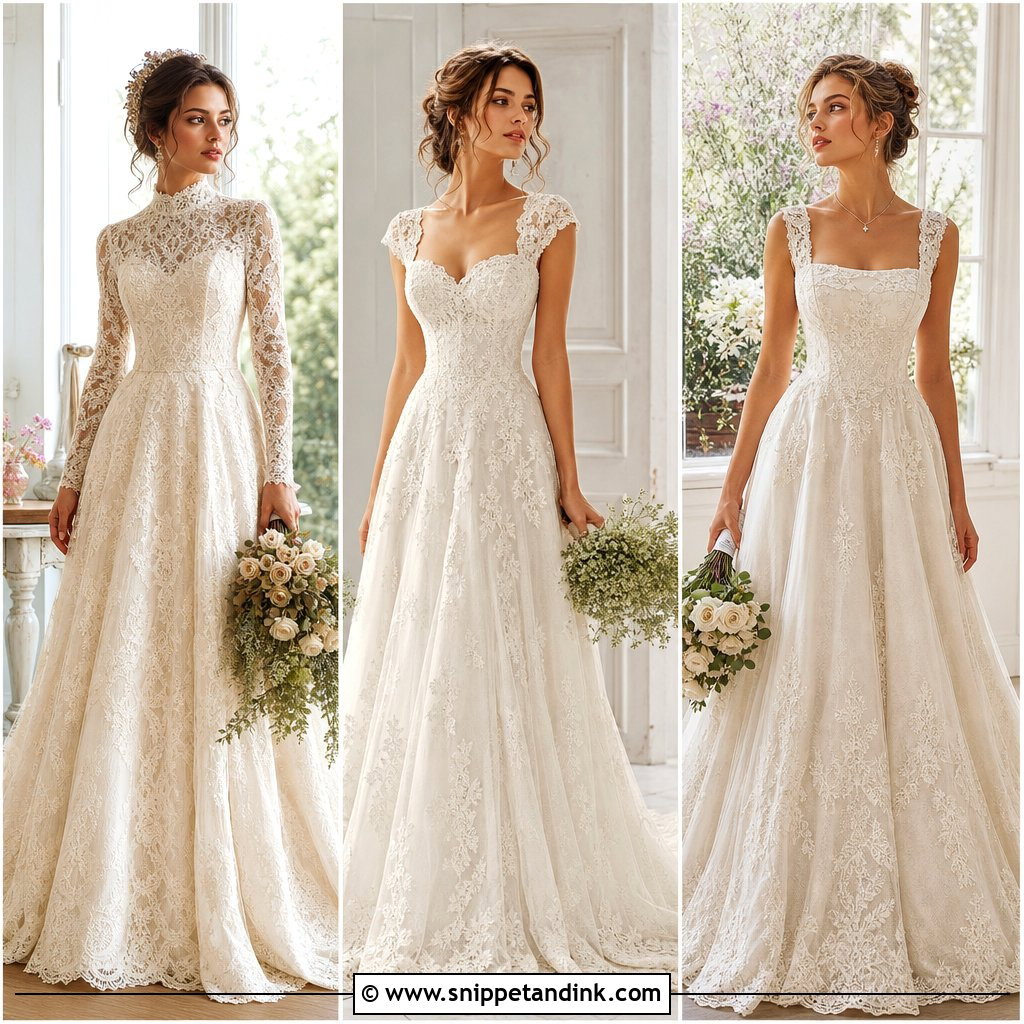
1. Victorian High Neck Lace Wedding Dress
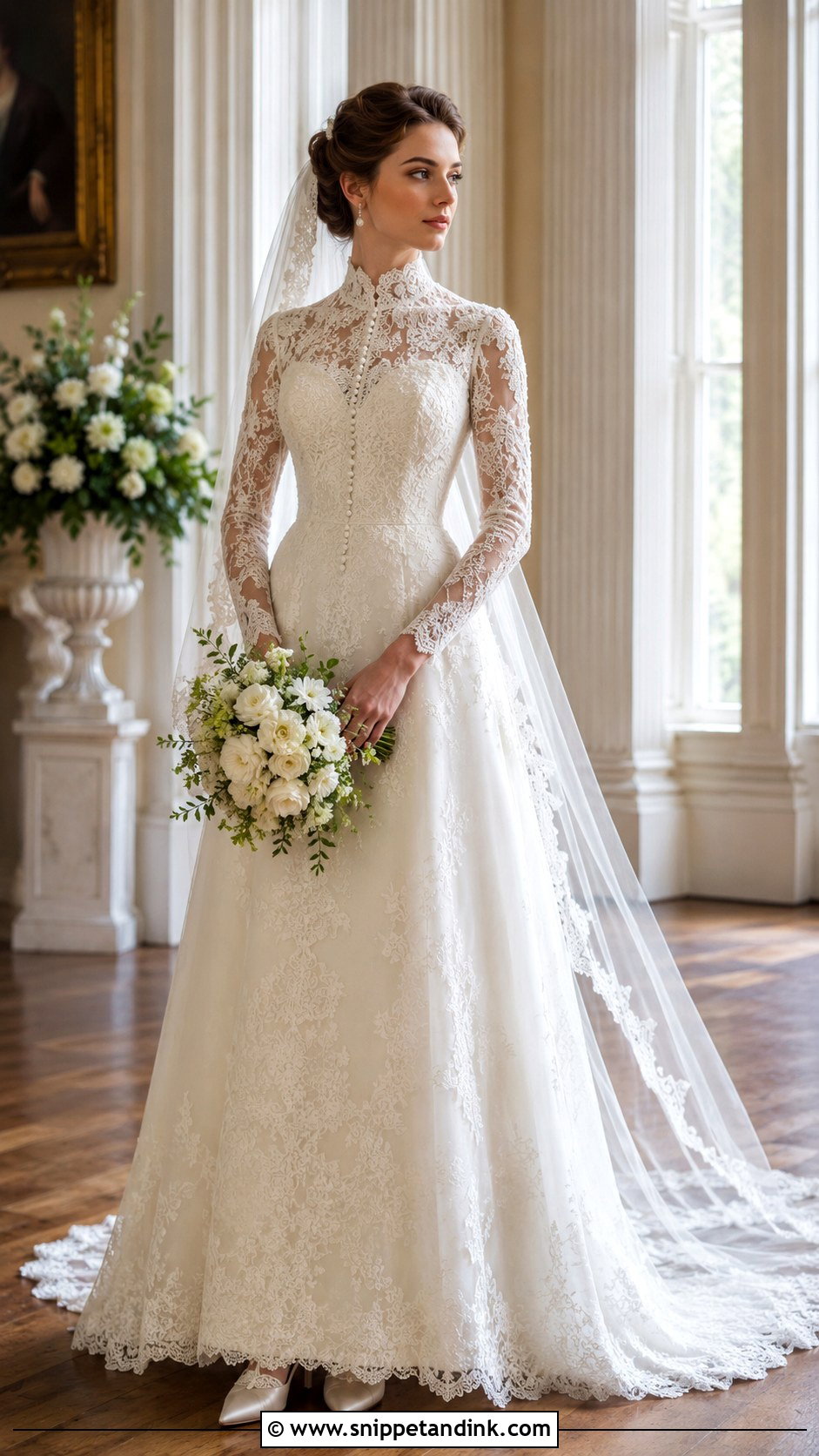
High necks, dense lace, covered buttons and a structured skirt are the details people read as Victorian. I’d choose an ivory A-line with a fitted lace bodice and long sleeves, and keep the jewelry to pearl drops, since the collar already frames the face. A low braided bun gives a cathedral veil somewhere to anchor beneath the hair. Real Victorian bodices were boned and stiff; if you want to dance, ask for sheer lace sleeves and a lighter skirt so the look stays period but you can still lift your arms. Historic estates and ballrooms suit it best.
2. Edwardian Lace Column Wedding Dress
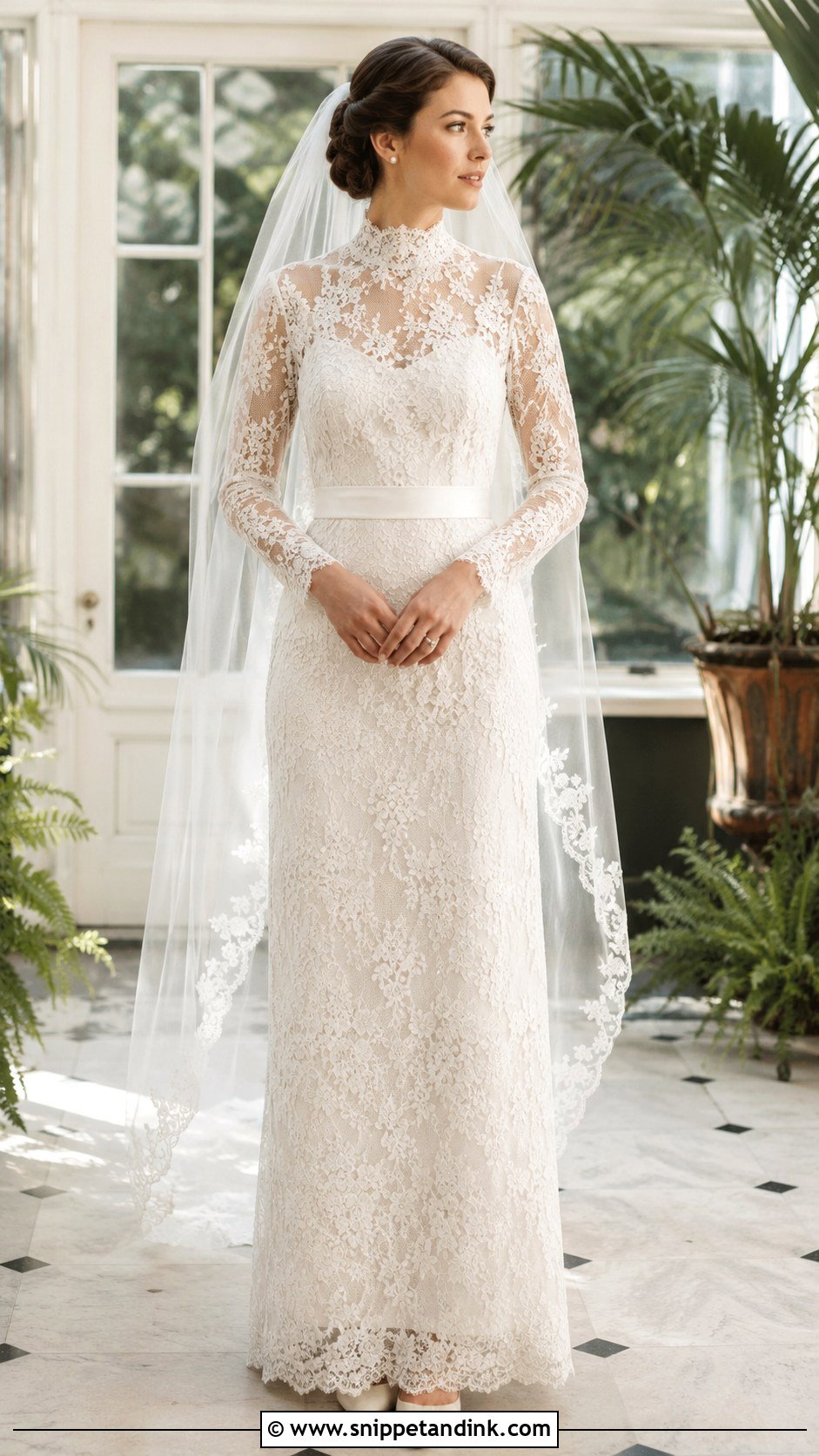
Edwardian dresses are softer than Victorian ones: a long column, an illusion high neck, airy lace and lightly gathered sleeves. A narrow satin ribbon at the waist gives shape without boning. I keep the veil at fingertip length so it doesn’t bury the bodice detail, and use a small floral comb and pearl studs. Conservatories and gardens suit this one. The thing to check is the lining. Edwardian-style lace over a heavy synthetic lining feels clammy within an hour, so look for a breathable lining and lace with some give.
3. 1920s Beaded Sheath Wedding Dress
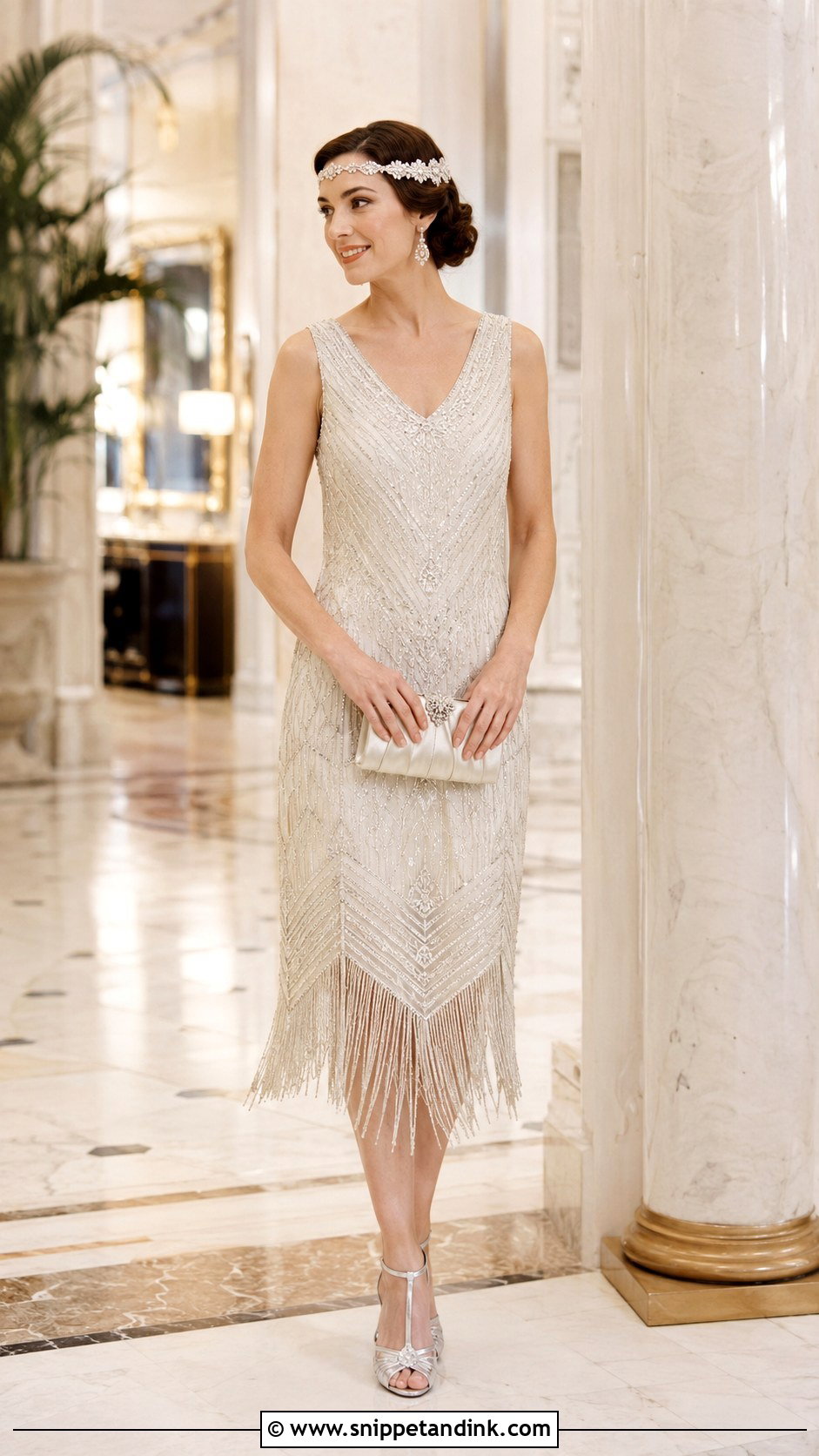
A 1920s beaded sheath wedding dress is all about movement, with geometric beading, a little fringe and Art Deco embroidery catching light as you walk. A true drop waist is the most period-correct option, but it flattens curves, so many brides I dress prefer a gently shaped waist. Weight is the honest drawback. Heavily beaded sheaths can weigh several kilos and pull the neckline down by evening, so try one on for at least half an hour. Silver T-strap heels, a crystal headband and smooth finger waves finish it without a veil.
4. 1920s Drop Waist Wedding Dress
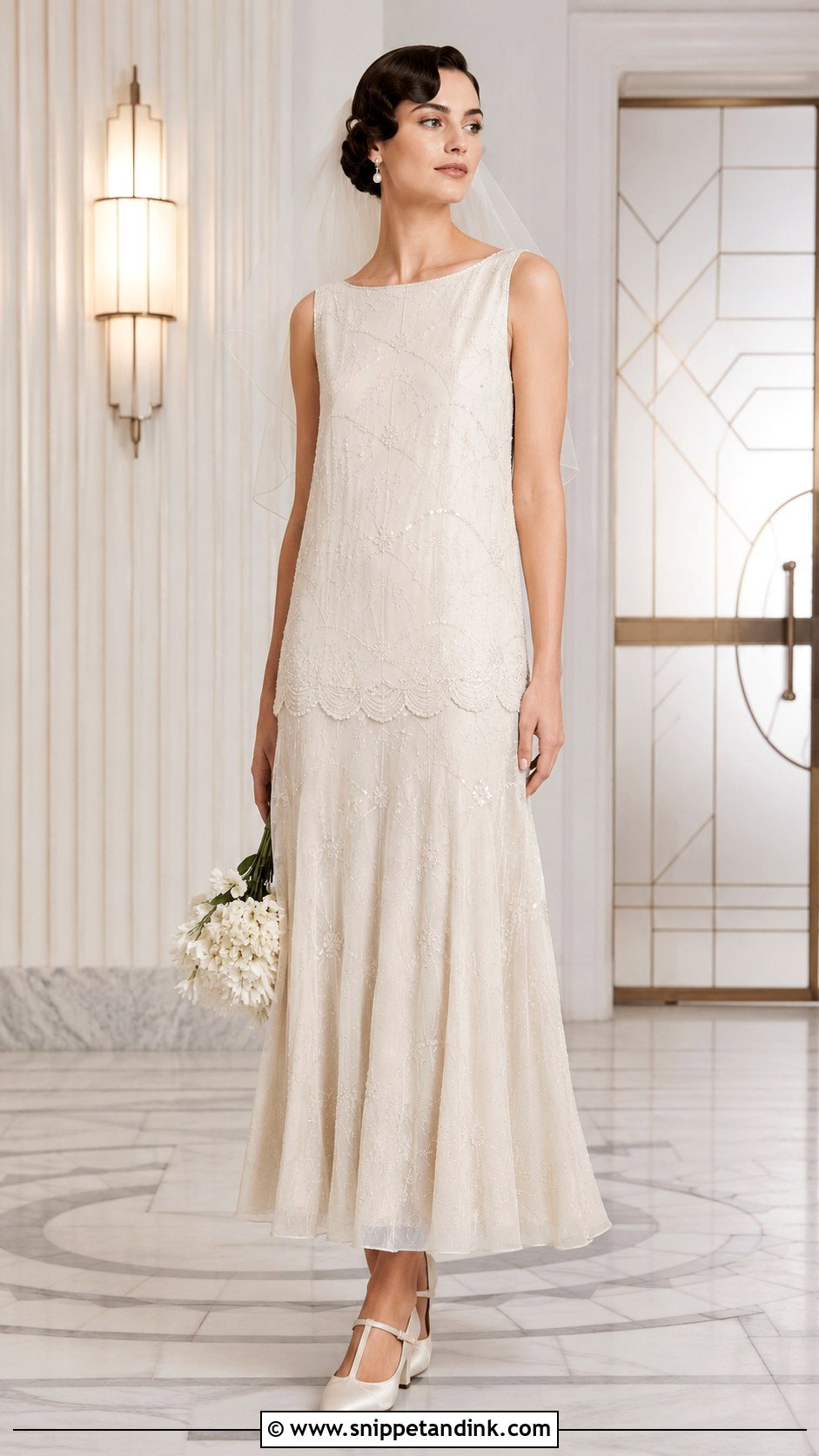
A drop waist sits at the upper hip instead of the natural waist, which makes it a comfortable choice if you dislike anything tight around your middle. A sleeveless bateau neck and a softly flared skirt keep it clean. I add low block-heel Mary Janes, pearl earrings and a short tulle veil on a simple comb, with a chin-length style or a low chignon. The seam is where this dress goes wrong. If it sits even slightly too high, it looks like a mistake rather than a choice, so have the tailor mark it with you standing straight and relaxed.
5. 1930s Bias Cut Satin Wedding Dress
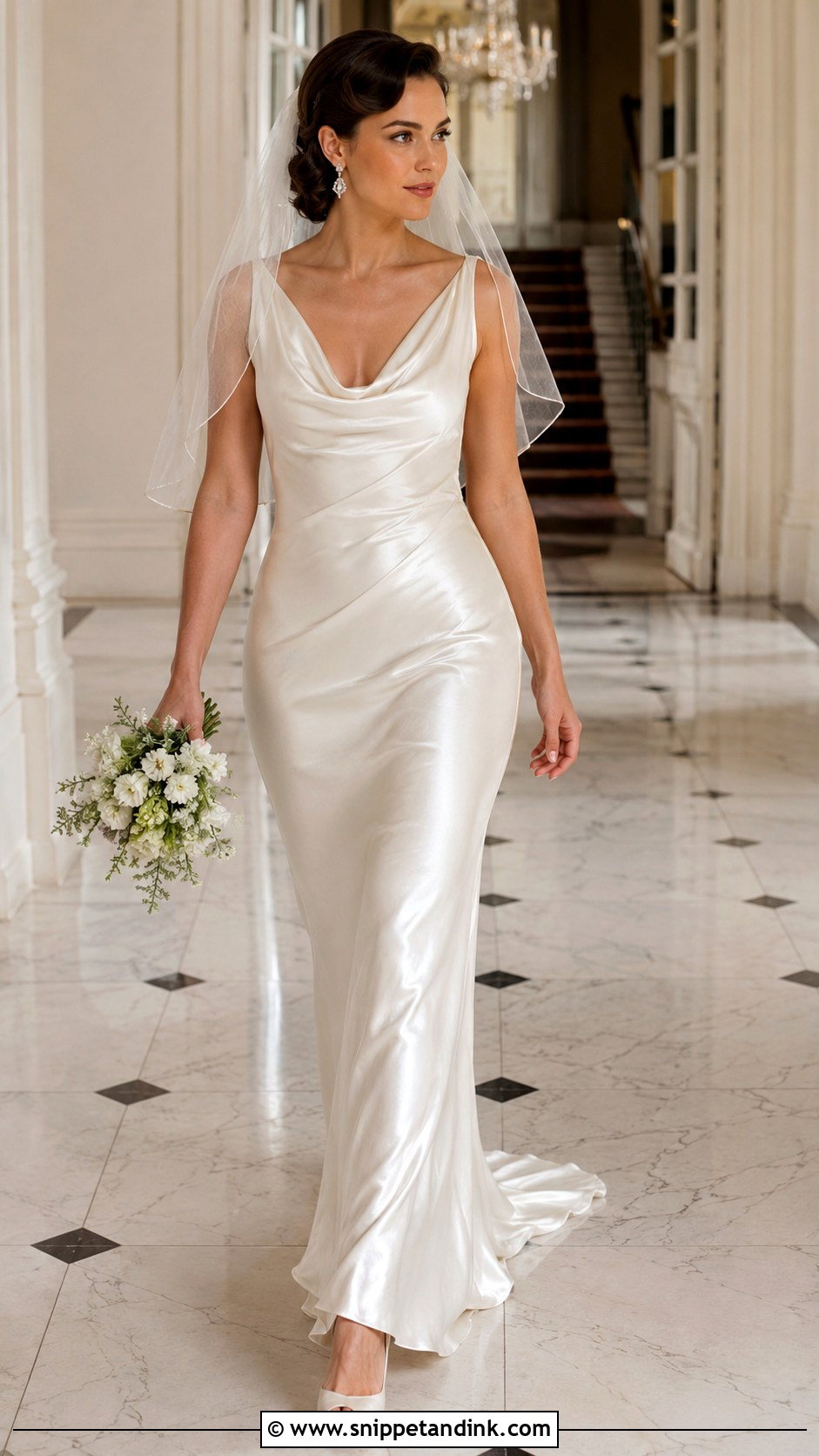
Satin cut on the bias stretches slightly across the grain, so a 1930s bias-cut satin wedding dress follows the body without boning. That’s also why it is unforgiving. Every seam, line and lump underneath shows, and I’d budget for line-free underwear and careful alterations before anything else. Look for a soft draped neckline, a natural waist, a slim skirt and a short train. Side-parted waves, peep-toe heels, crystal earrings and a shoulder-length veil keep the Old Hollywood mood. Bring a light wrap for a cool ceremony.
6. 1930s Cowl Back Wedding Dress
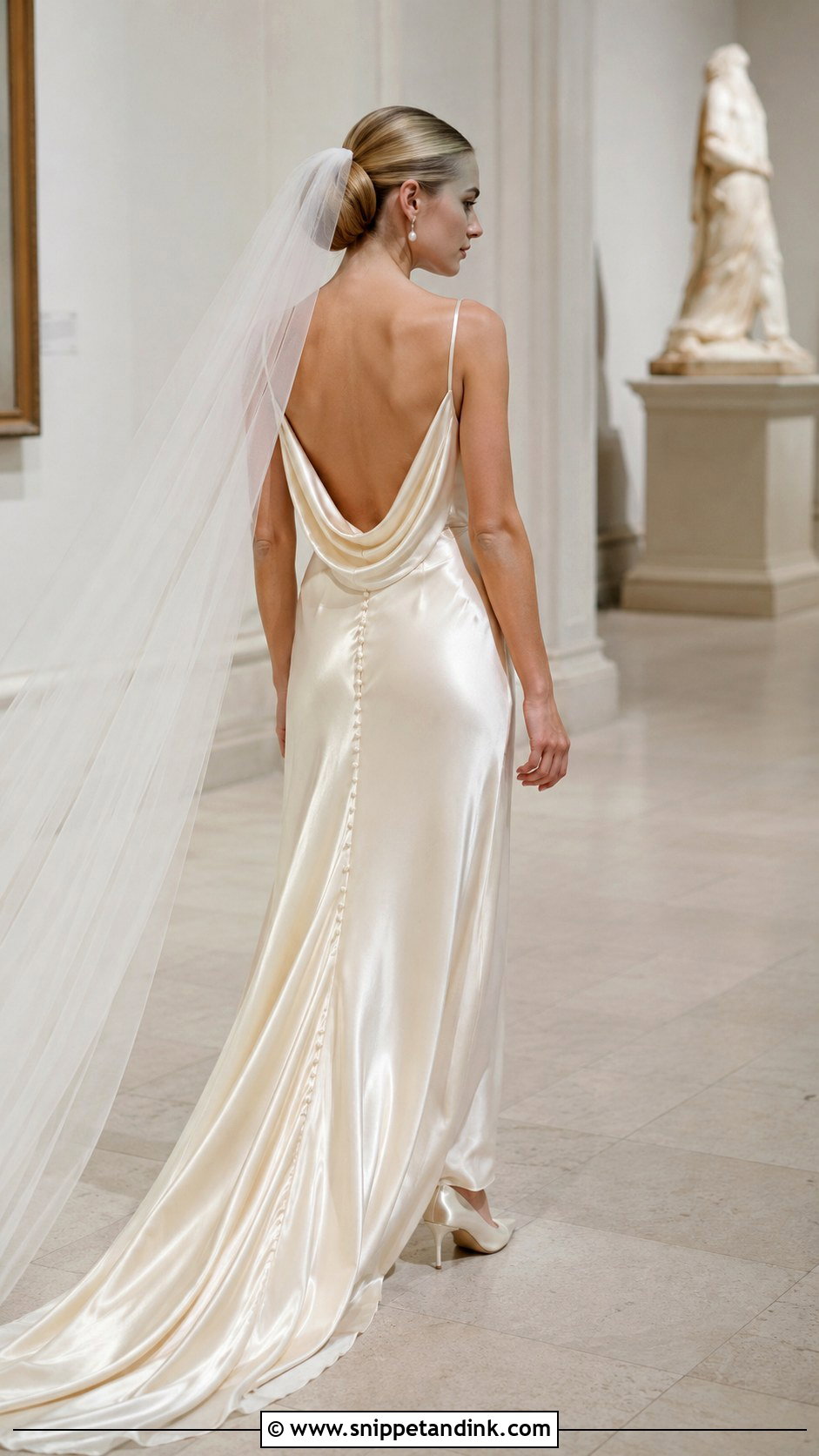
The back is the whole point. A cowl drapes in loose folds from shoulder to shoulder, and with a modest front it gives you a quiet entrance and a dramatic exit. I like slim crepe or silk with narrow straps, and a line of covered buttons under the drape if you want more detail. Attach a sheer chapel veil below a sculpted bun so it falls over the cowl instead of hiding it. A cowl can slide sideways when you dance. A couple of discreet tacks or a tiny weight inside the fold keeps it centered, and any good tailor will know how to do that.
7. 1940s Long Sleeve Crepe Wedding Dress
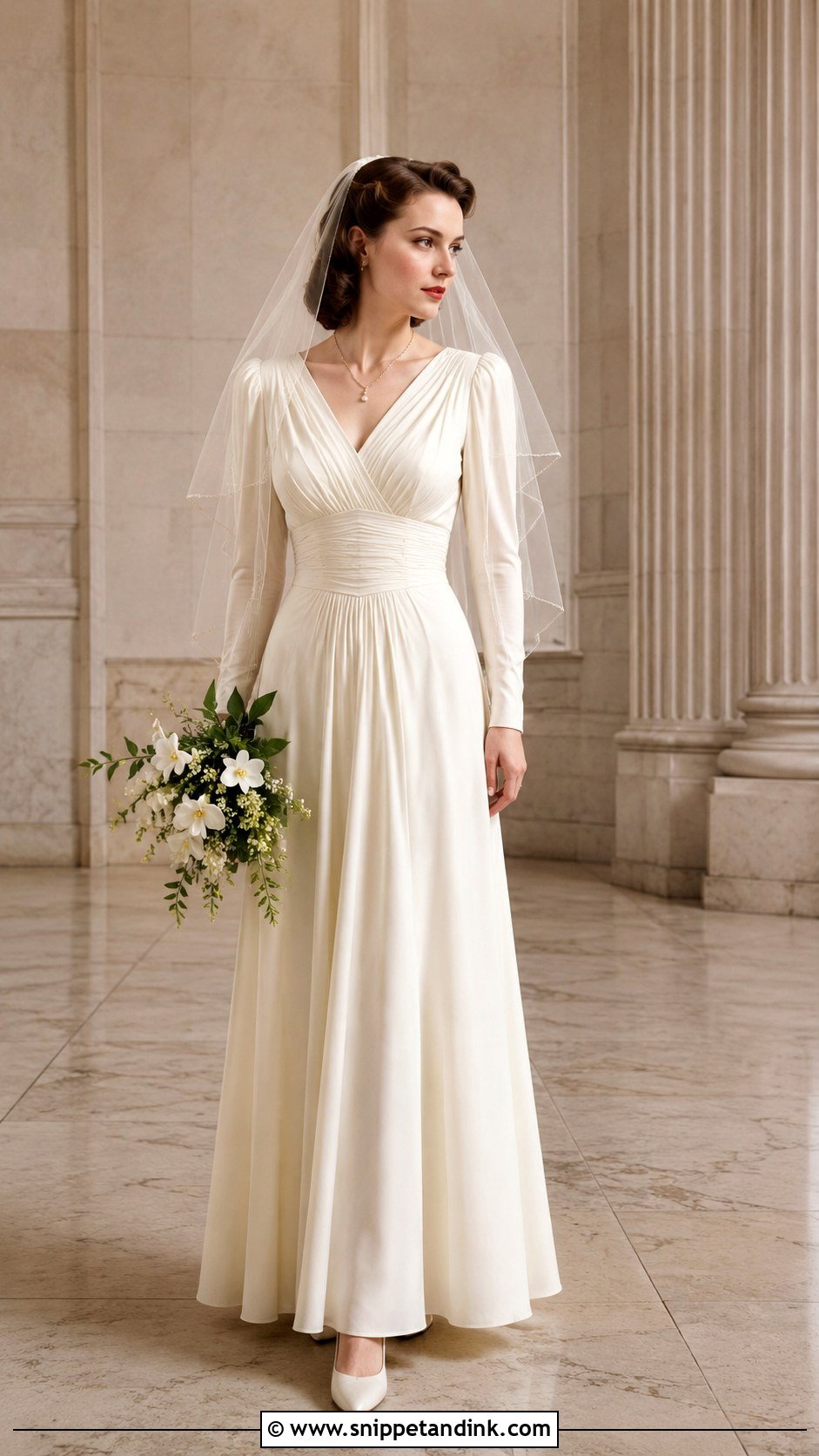
Wartime fabric limits shaped 1940s fashion into neat, tailored lines, and a long-sleeve crepe gown carries that well. Lightly structured shoulders, a defined waist, a V-neck and an A-line skirt are what I look for, with soft gathers at the bust instead of decoration. A rolled updo, closed-toe pumps, a small pearl pendant and a fingertip veil complete the look. Crepe is matte and slightly heavy, so it hangs straight and shows fit at the shoulders and sleeves immediately. If the shoulder seam sits even a centimetre past your shoulder, the whole dress looks borrowed.
8. 1940s Bridal Suit Wedding Dress
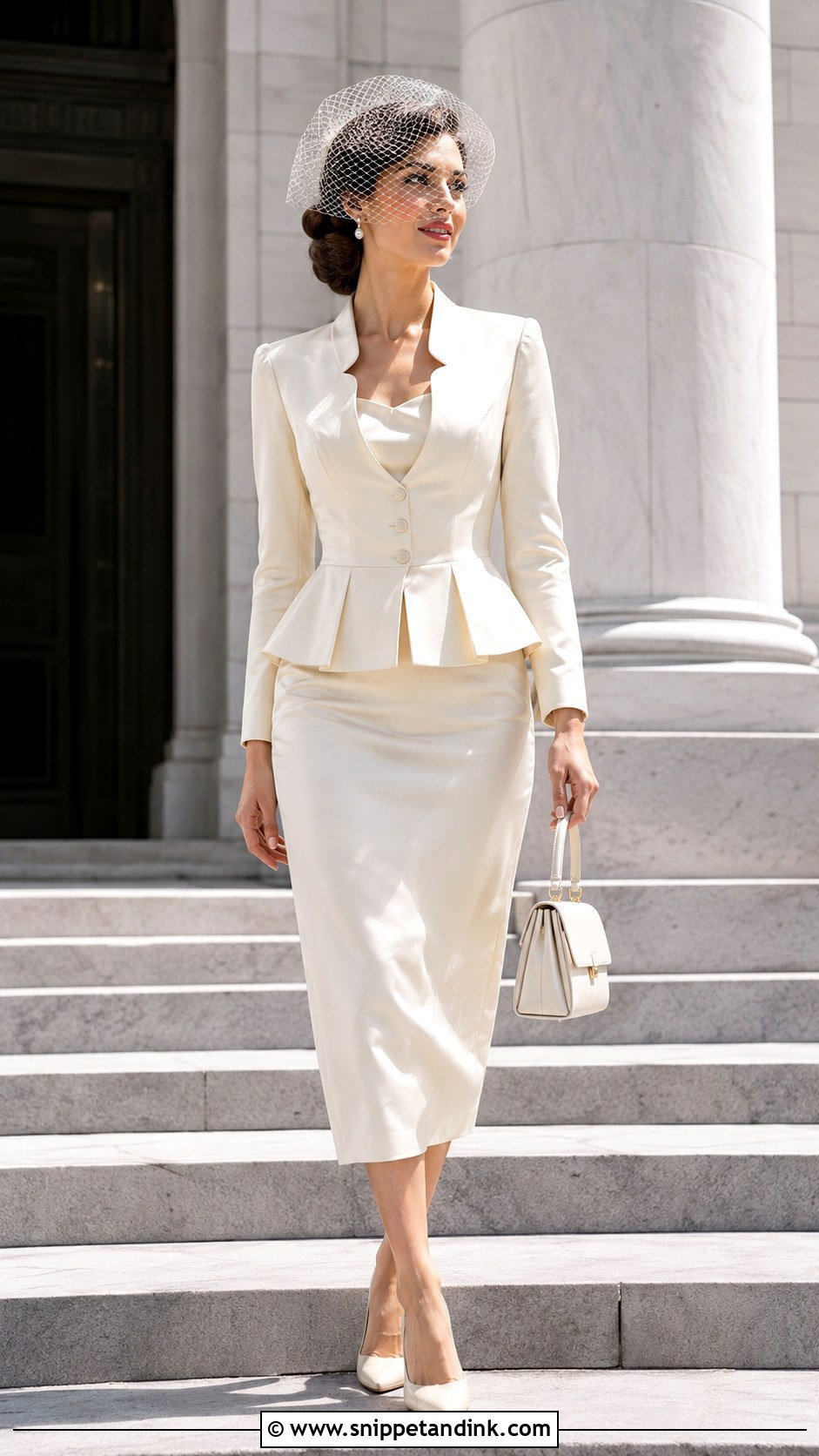
Plenty of brides who marry at city hall don’t want a gown at all. A 1940s-inspired bridal suit with an ivory peplum jacket, a fitted midi skirt and a silk camisole looks finished and is easy to wear again. I keep shoulder pads modest and the buttons covered, since big padded shoulders tip the outfit into costume. A birdcage veil, pointed pumps, pearl earrings and a structured top-handle bag complete it. Wool crepe works in cool months; a lighter textured weave for spring. The jacket should close without pulling at the button.
9. 1950s Tea Length Wedding Dress
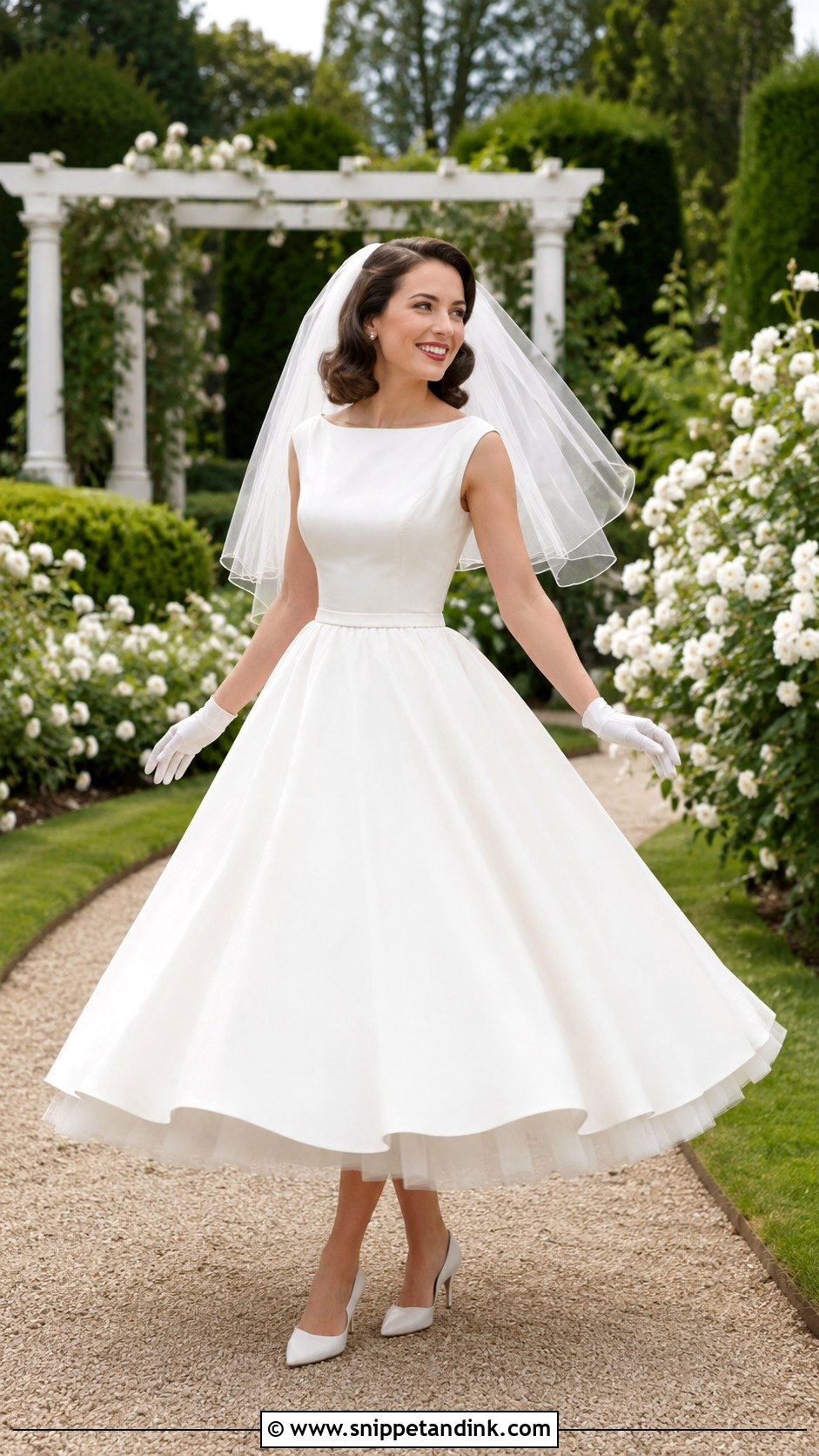
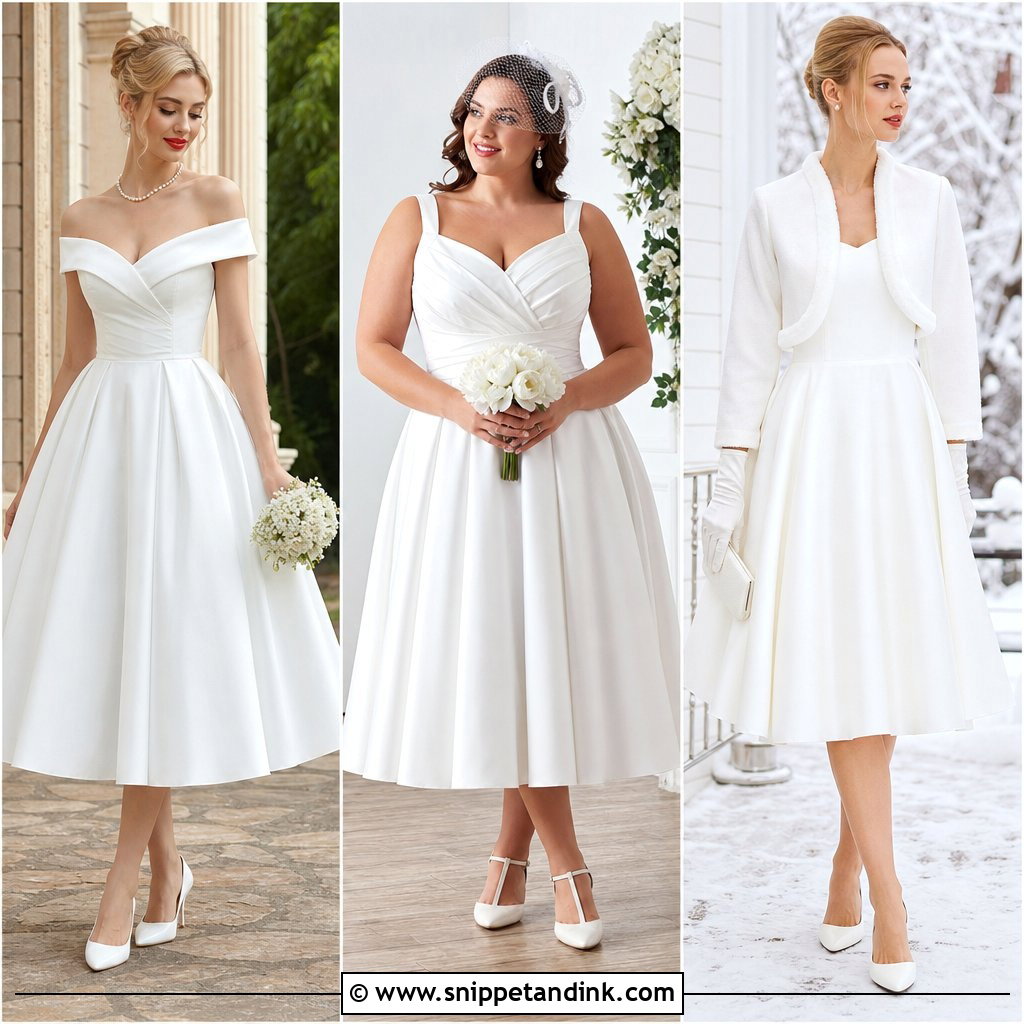
Tea length lands somewhere between the knee and the ankle, and a 1950s tea-length wedding dress is the easiest vintage silhouette to move and dance in. A fitted bodice, a defined natural waist and a full skirt over a light petticoat give the shape. Bateau or sweetheart necklines both work. Your shoes are on show the whole day, so I’d buy them before the final hem and wear them in at home. Slingbacks, short gloves, pearl studs and a shoulder-length veil keep it period. Ask for a soft net petticoat; stiff crinoline scratches through thin stockings.
10. 1950s Satin Ball Gown Wedding Dress
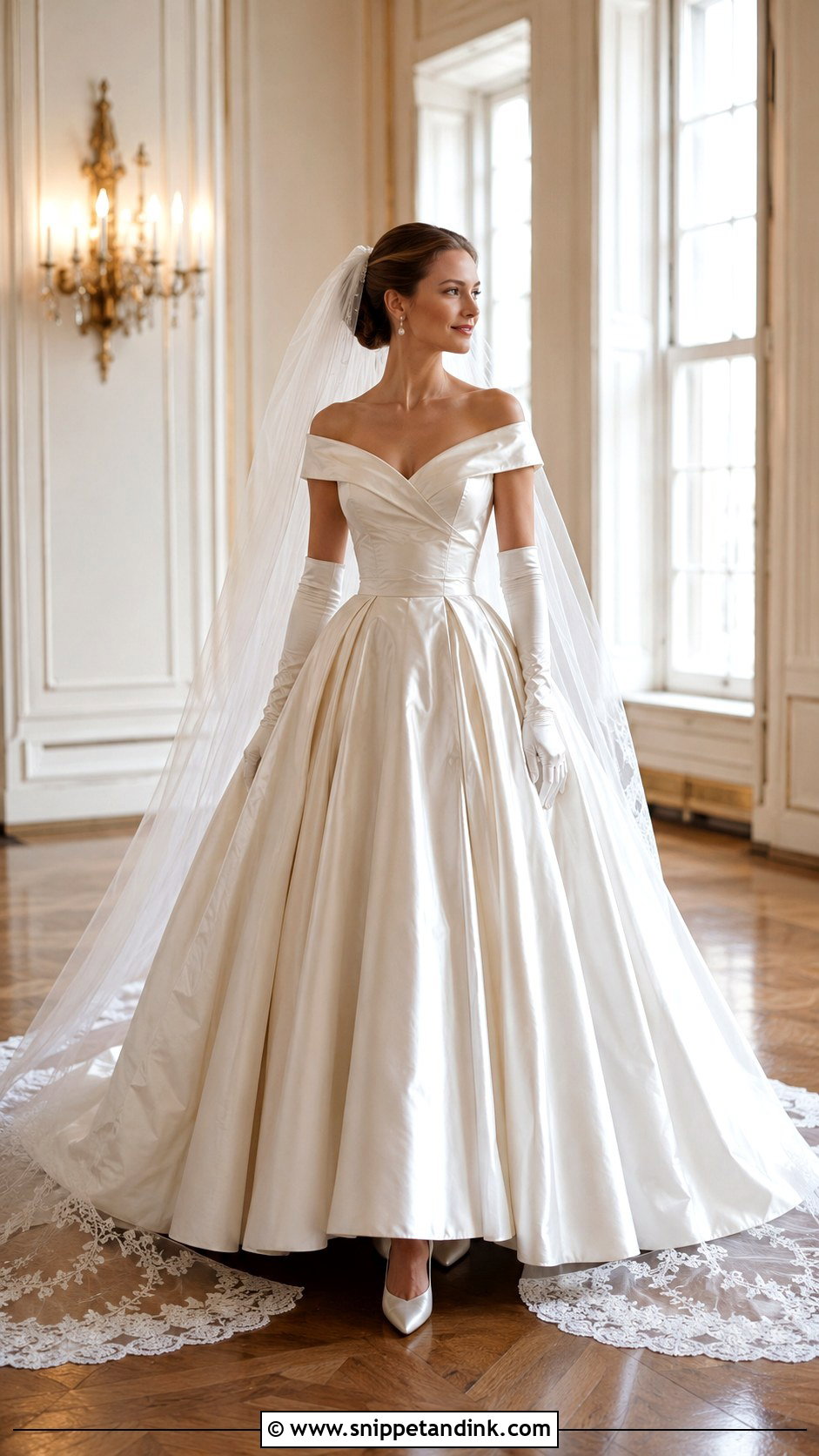
Ball gowns from the 1950s relied on structure: a boned bodice, a sharply defined waist and a skirt with real volume. Smooth satin shows that construction, so I keep surface decoration minimal. A scoop or off-shoulder neckline, elbow gloves, pearl drops, a smooth French twist and a cathedral veil to balance the skirt make the full look. Think about space. This gown needs a wide aisle, a large car and a venue where you won’t be squeezing between tables, and a satin skirt that size will need a bustle for the reception.
11. 1950s Lace Fit And Flare Wedding Dress
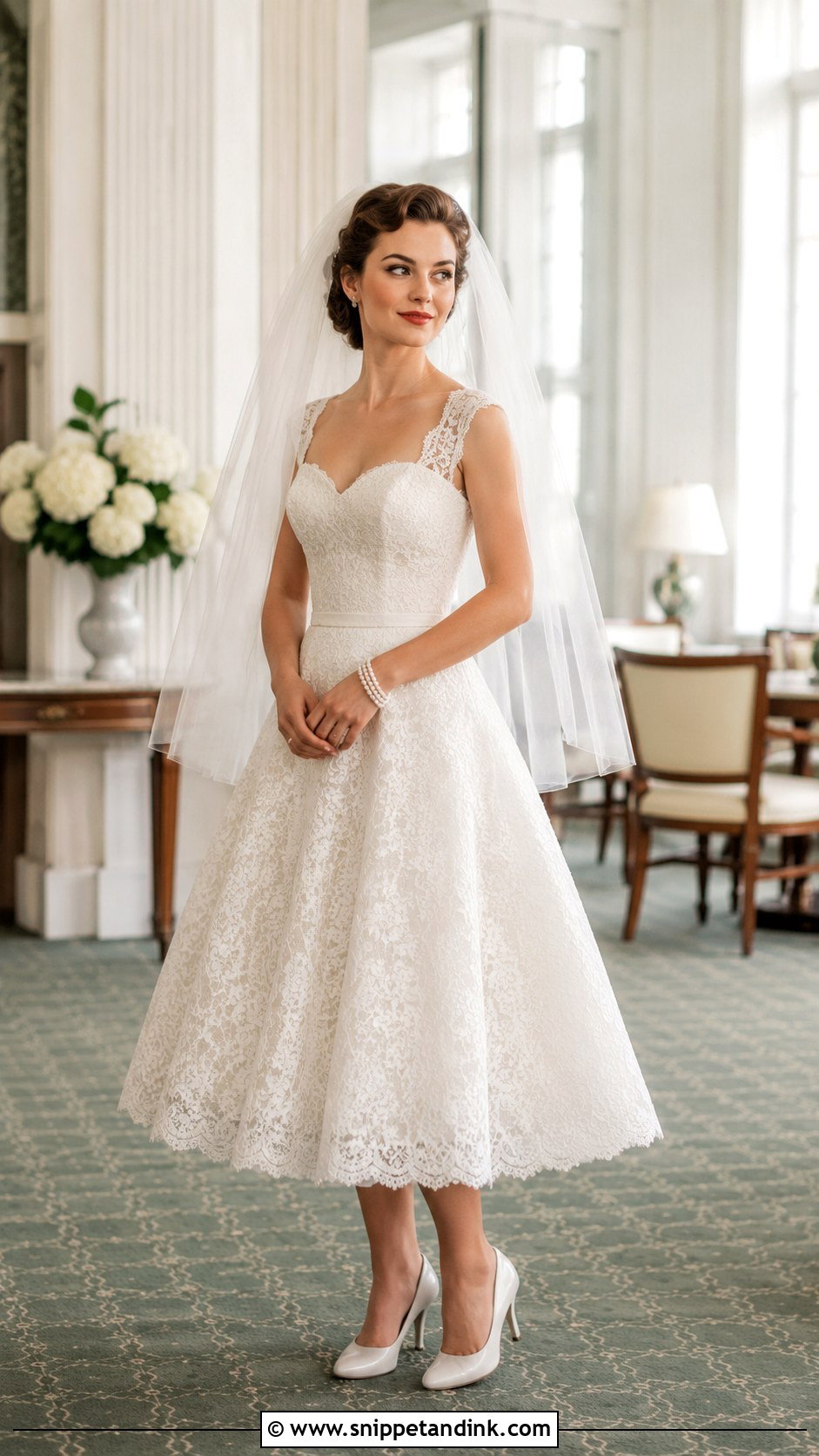
I suggest a lace fit-and-flare when a bride loves the 1950s but not the volume of a ball gown. A sweetheart neckline, a natural waist and a skirt that follows the hips before opening keep it feminine. Floral lace over an opaque ivory lining gives depth. Don’t let the skirt get too narrow at the knee, or you’ll be taking small steps all night, and ask for a hidden bustle for the train. Detachable lace sleeves or a bateau neckline add coverage for a religious ceremony without changing the shape.
12. 1960s Bateau Neck Wedding Dress
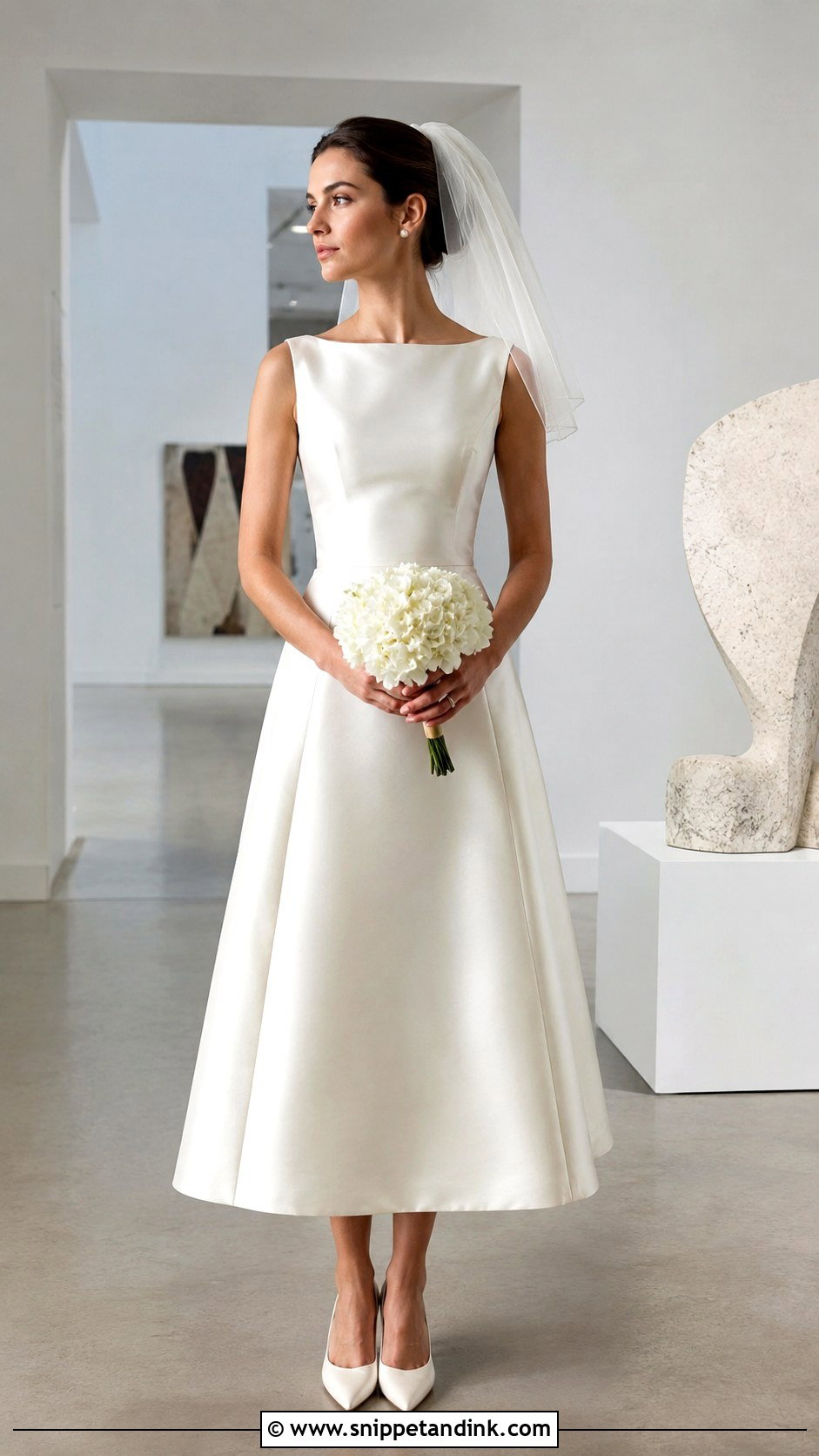
Construction does the work in a 1960s bateau gown. The wide neckline runs almost from shoulder to shoulder, the upper body is fitted and the A-line skirt falls simply, usually in satin or crepe. A row of covered buttons down the back adds one quiet detail. Pearl studs, pointed pumps, a short structured veil and a smooth low bun or flipped bob complete it. The bateau line flatters narrow shoulders but can widen broad ones; if that’s you, a slightly lower, softer curve at the neck helps.
13. 1960s Mod Mini Wedding Dress
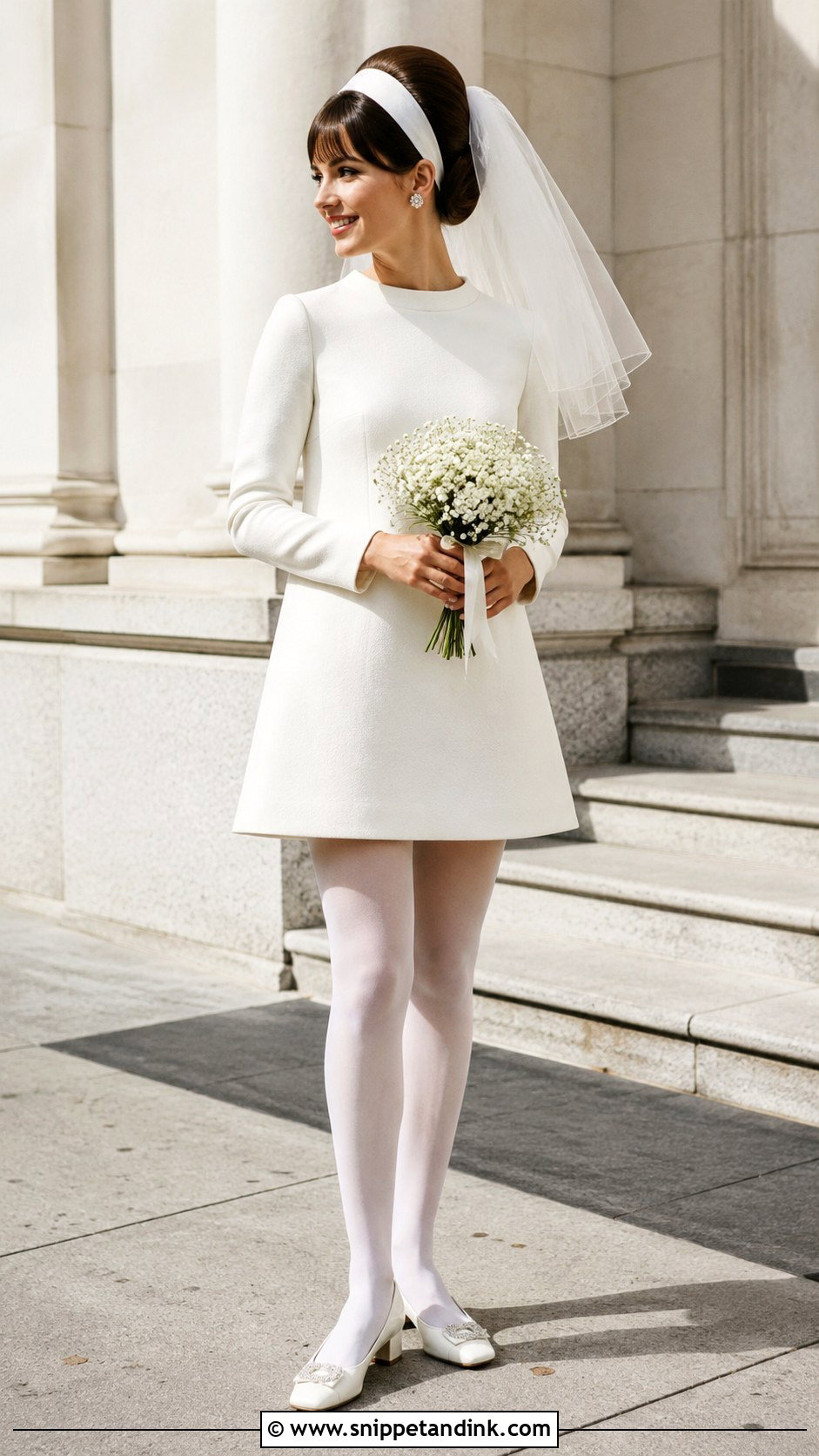
Short, structured and graphic, a mod mini suits a courthouse ceremony or a second outfit for the party. I’d choose an ivory A-line mini with long sleeves and a high rounded neck in a fabric with body, like heavy crepe or double-faced satin, so it holds its shape rather than clinging. Low block-heel pumps, small studs and a short veil on a wide headband finish it. Opaque ivory tights work in cold weather. Sit down in it before you buy. A mini that is fine standing can ride up more than you’d like in a car or at a dinner table.
14. 1960s Bow Back Wedding Dress
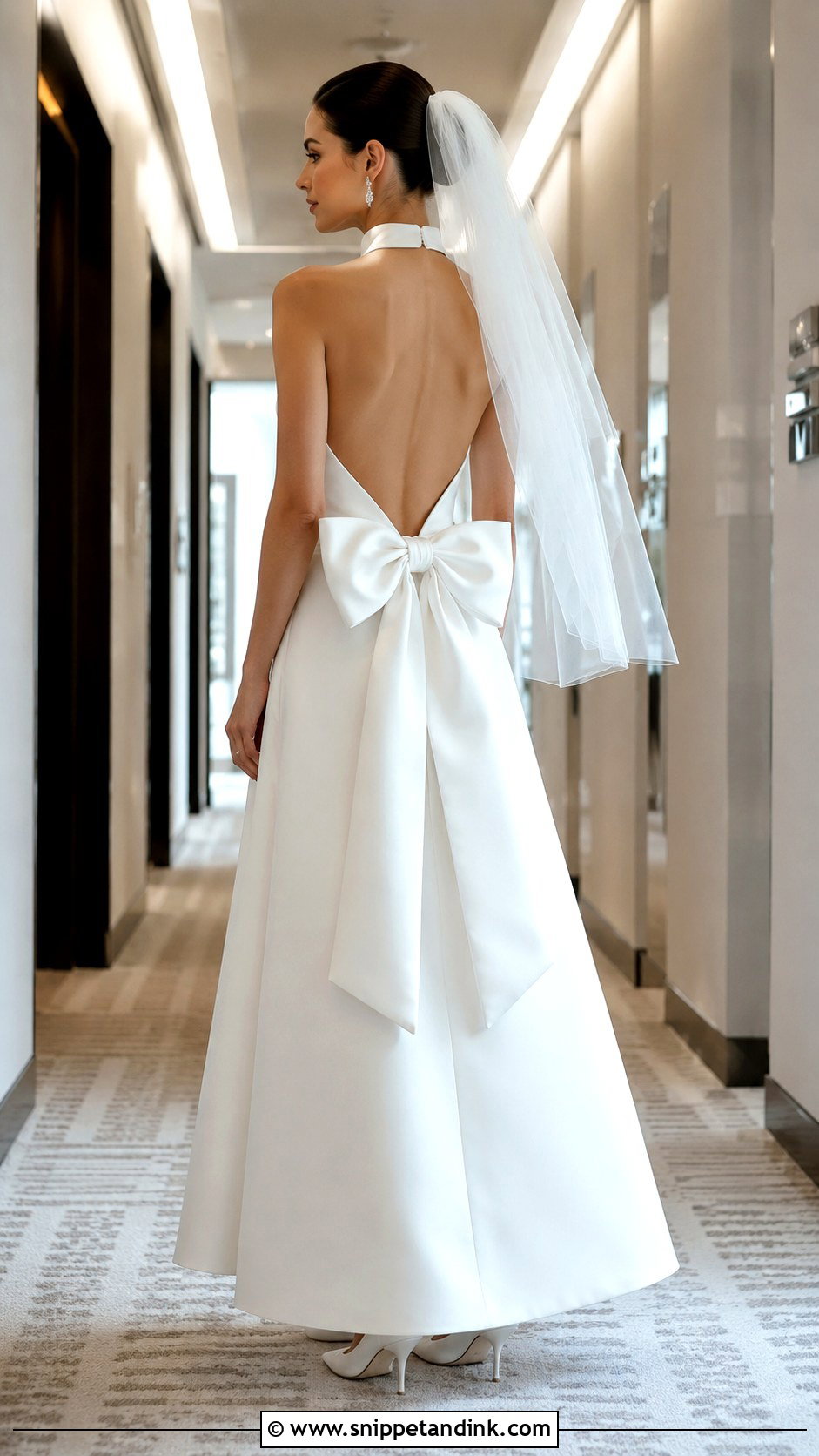
An oversized bow at the waist or upper back turns a plain 1960s satin gown into something people remember. The front stays clean with a high neckline, and the back opens low. Avoid a busy necklace, since the bow is the statement. My practical concern is weight: a large bow made from the same heavy satin as the dress can pull the back neckline down. Ask for a lighter interfacing inside the bow so it keeps its shape, plus a wrist loop and bustle for the reception. Pointed pumps, small crystal earrings and a tulle veil below a smooth bun are all it needs.


15. 1970s Boho Lace Wedding Dress
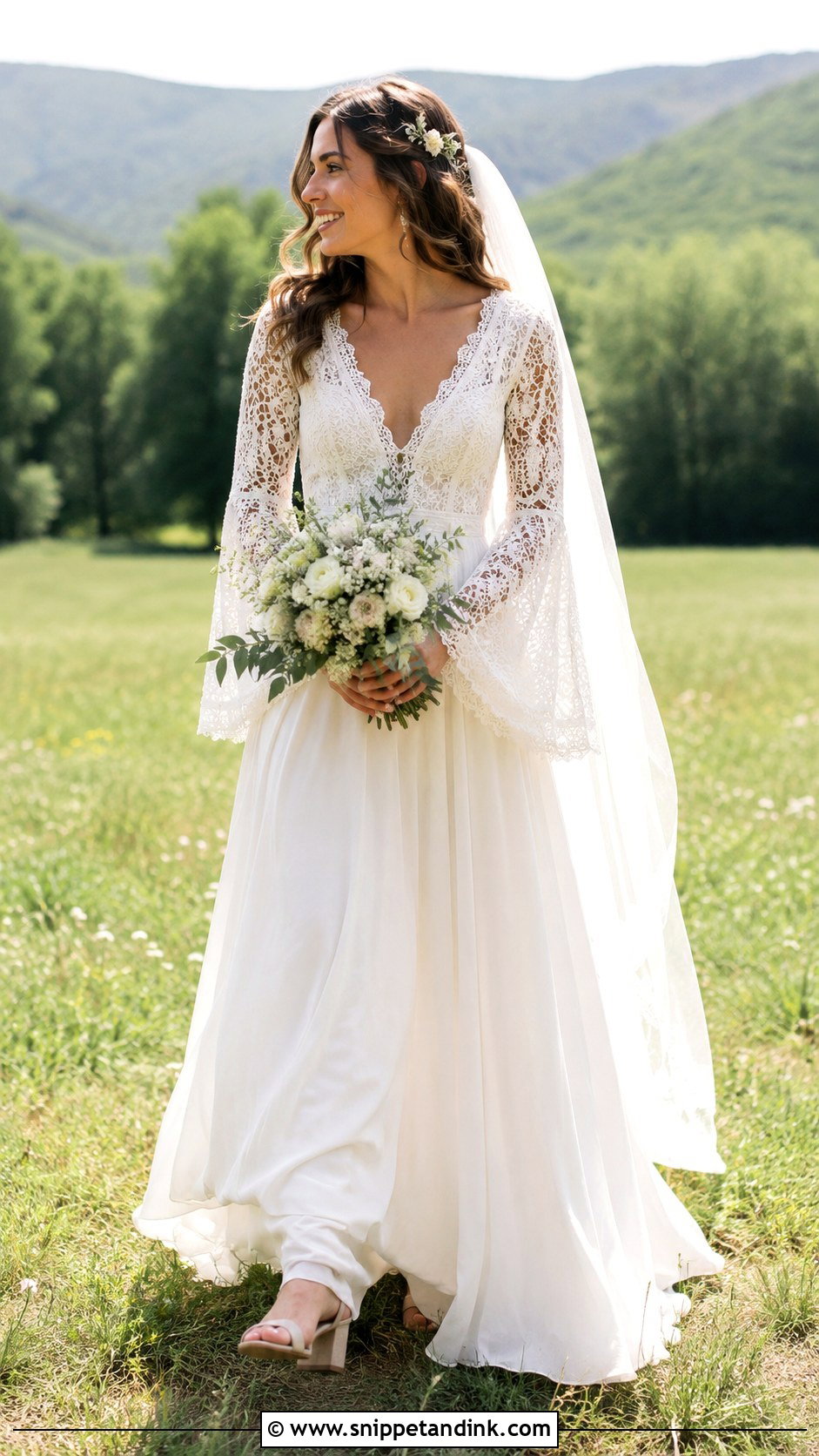
Bell sleeves, a modest V-neck and a skirt that moves in the breeze give a 1970s boho lace wedding dress its easy character. A fitted lace bodice over a lightly gathered chiffon or lace skirt suits meadows, gardens and barns. I’d pair it with low block-heel sandals that won’t sink into grass and a floral comb instead of a tiara. Check the sleeve width at the elbow. Bell sleeves that are cut narrow at the elbow restrict you when you eat or hug, and they can drag through food at the buffet if they’re very long.
16. 1970s Prairie Wedding Dress
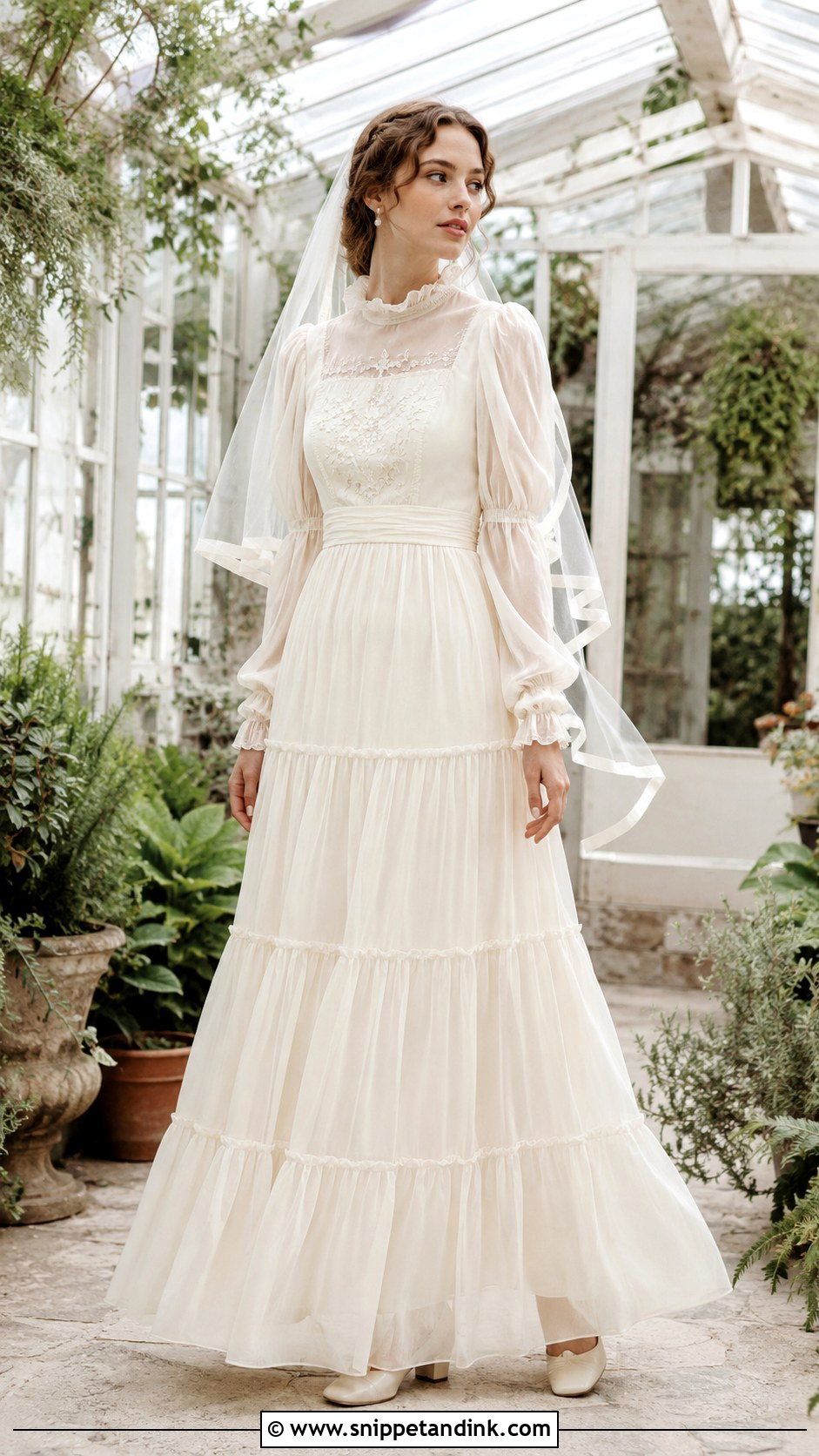
The prairie dress is the most modest vintage option here: a high ruffled neck, long gathered sleeves, an embroidered bodice and a skirt in soft tiers. I keep the embroidery tonal and the trims to a minimum; too many contrasting ribbons and it starts to look like a costume. A loosely braided updo, block heels, tiny pearls and a ribbon-trimmed veil suit farms, greenhouses and woodland. Several layers of cotton or lining add up, so look for a breathable lining if you’re marrying outside in summer.
17. 1980s Puff Sleeve Wedding Dress
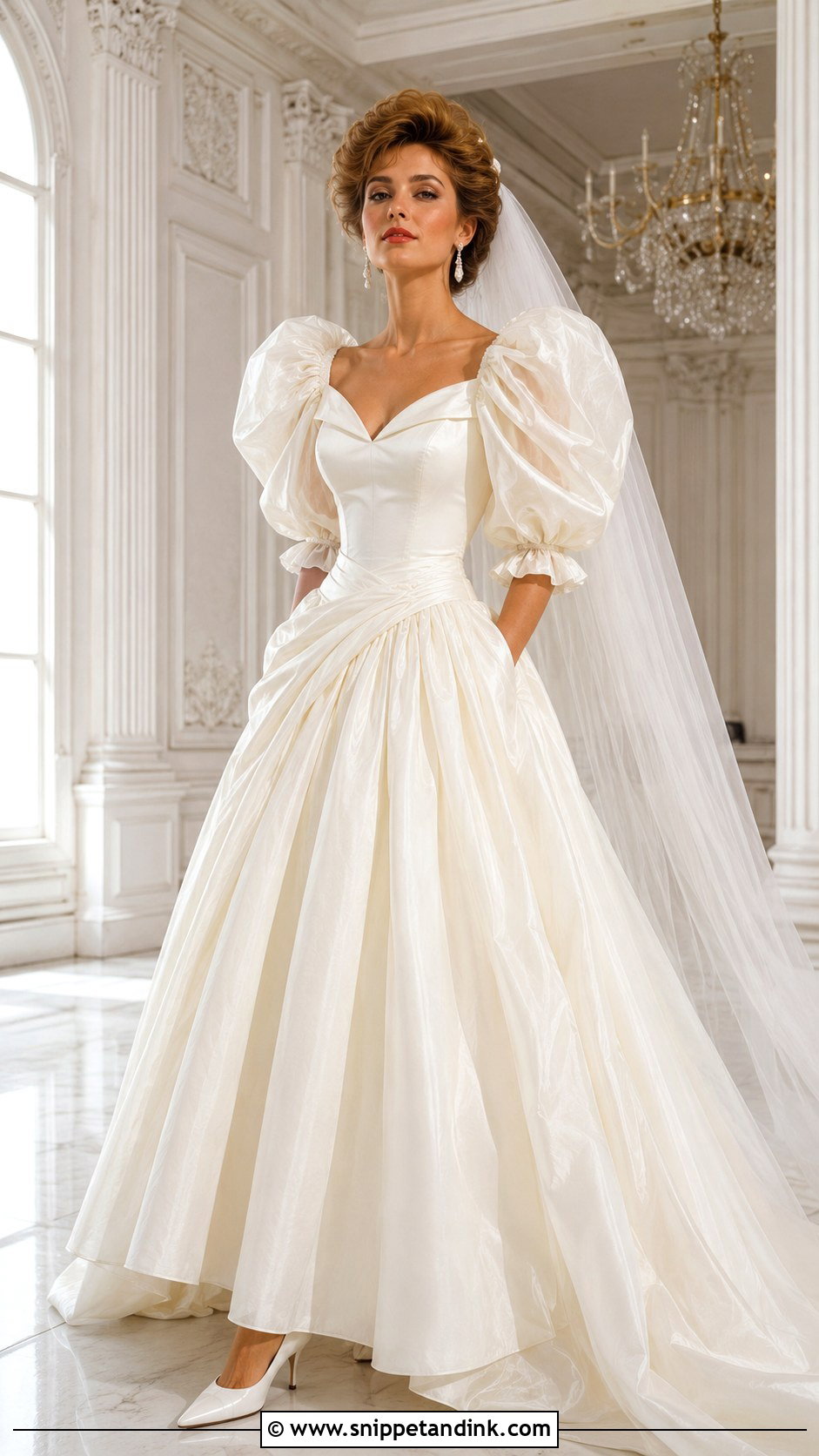
Big sleeves defined the 1980s, and they still work when the rest of the dress is calmer. I’d choose an ivory gown with a fitted waist, a sculpted neckline and sleeves that puff at the shoulder then narrow below the elbow. Keep embellishment to one place. Organza gives volume without the stiff, heavy layers of the original era. A long plain veil and a sleek low bun balance the sleeves, and pointed pumps and drop earrings finish it. This one wants a spacious venue; in a small room the volume crowds everyone around you.
18. 1980s Basque Waist Wedding Dress
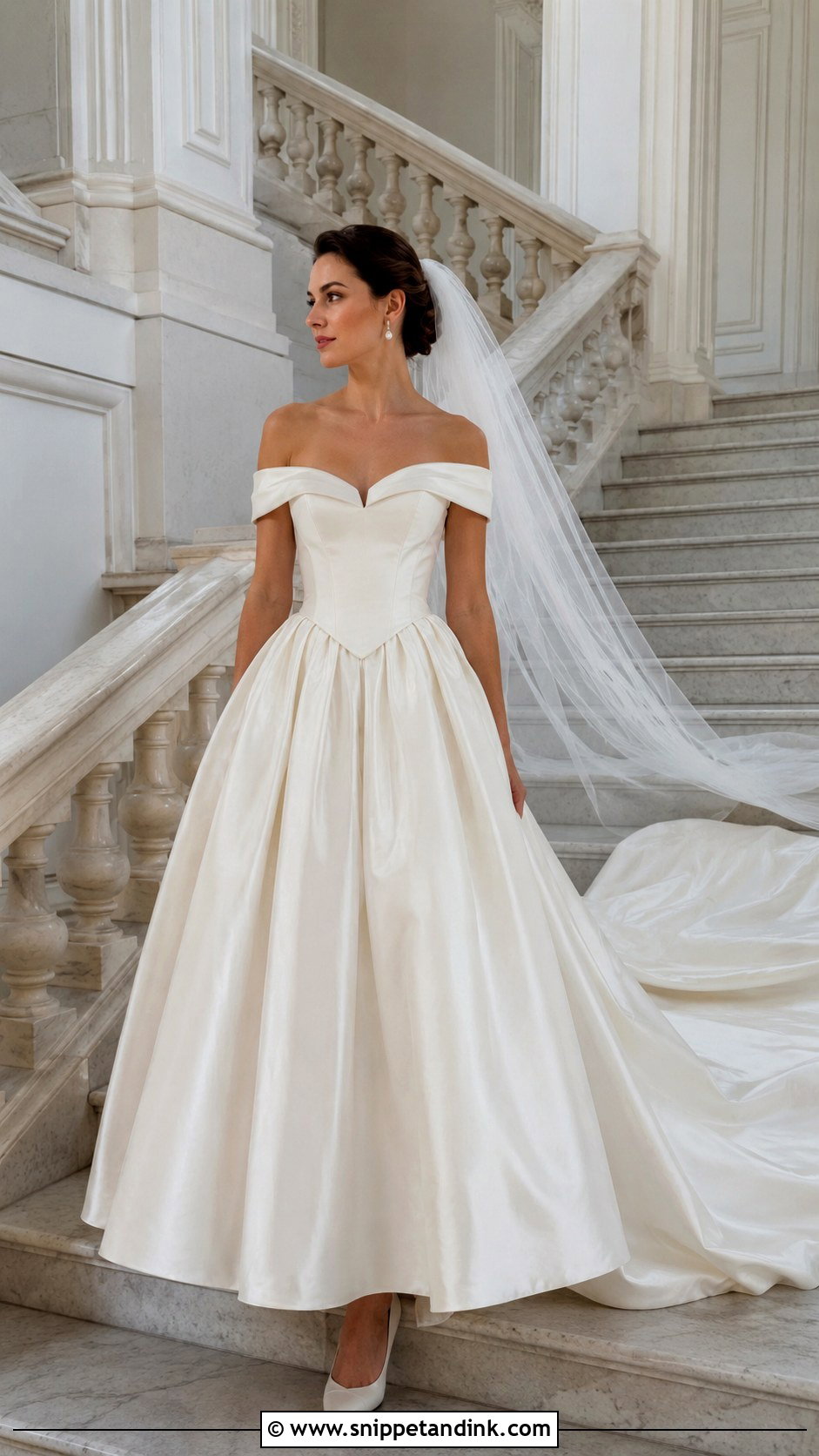
A basque waist dips into a V below the natural waist at the front, which lengthens the torso. With a fitted satin bodice, a full skirt and a medium train, it gives a strong 1980s shape. Off-shoulder sleeves or a soft scoop neck balance it. My rule is one or two period details, not all of them; a deep basque with huge ruffles, oversized sleeves and dense beading is too much. The point of the V must sit centered and flat, so ask the seamstress to check it while you sit, walk and raise your arms.
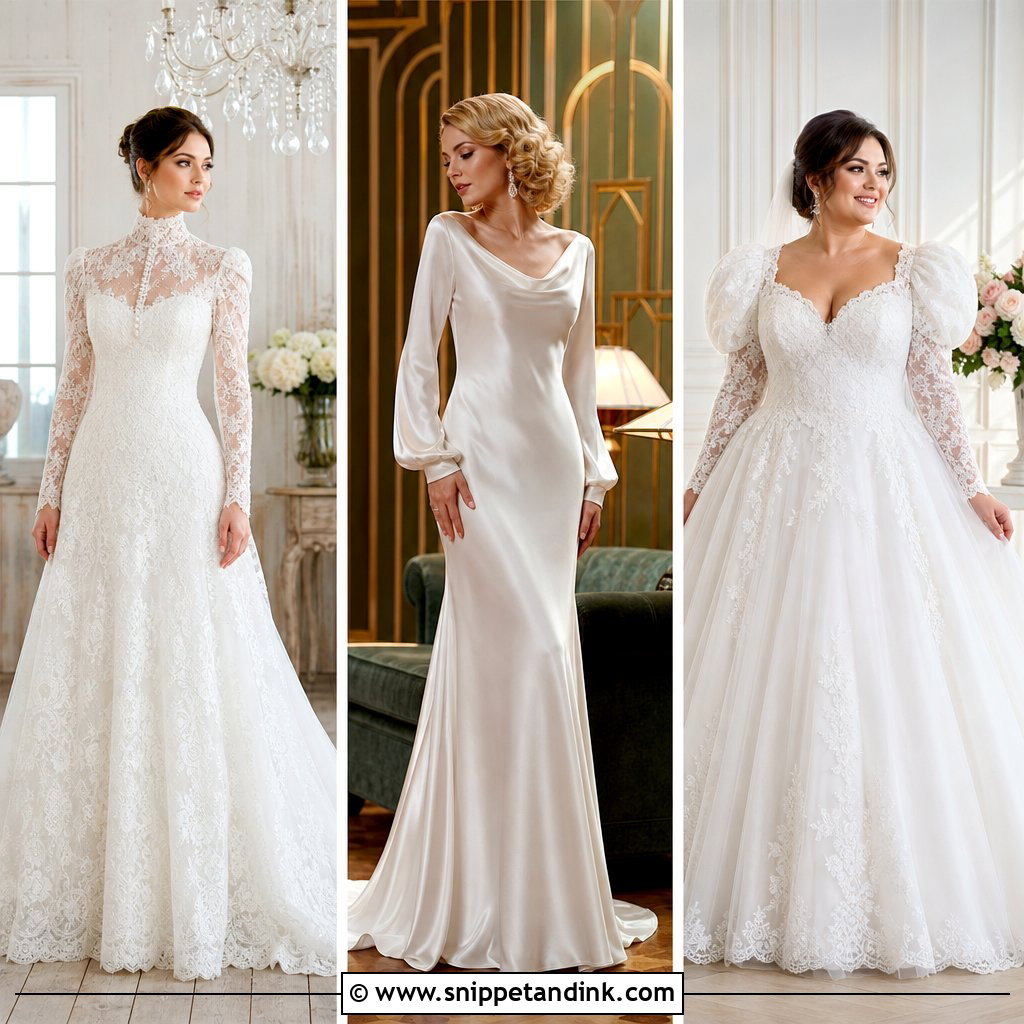
19. 1990s Minimalist Slip Wedding Dress
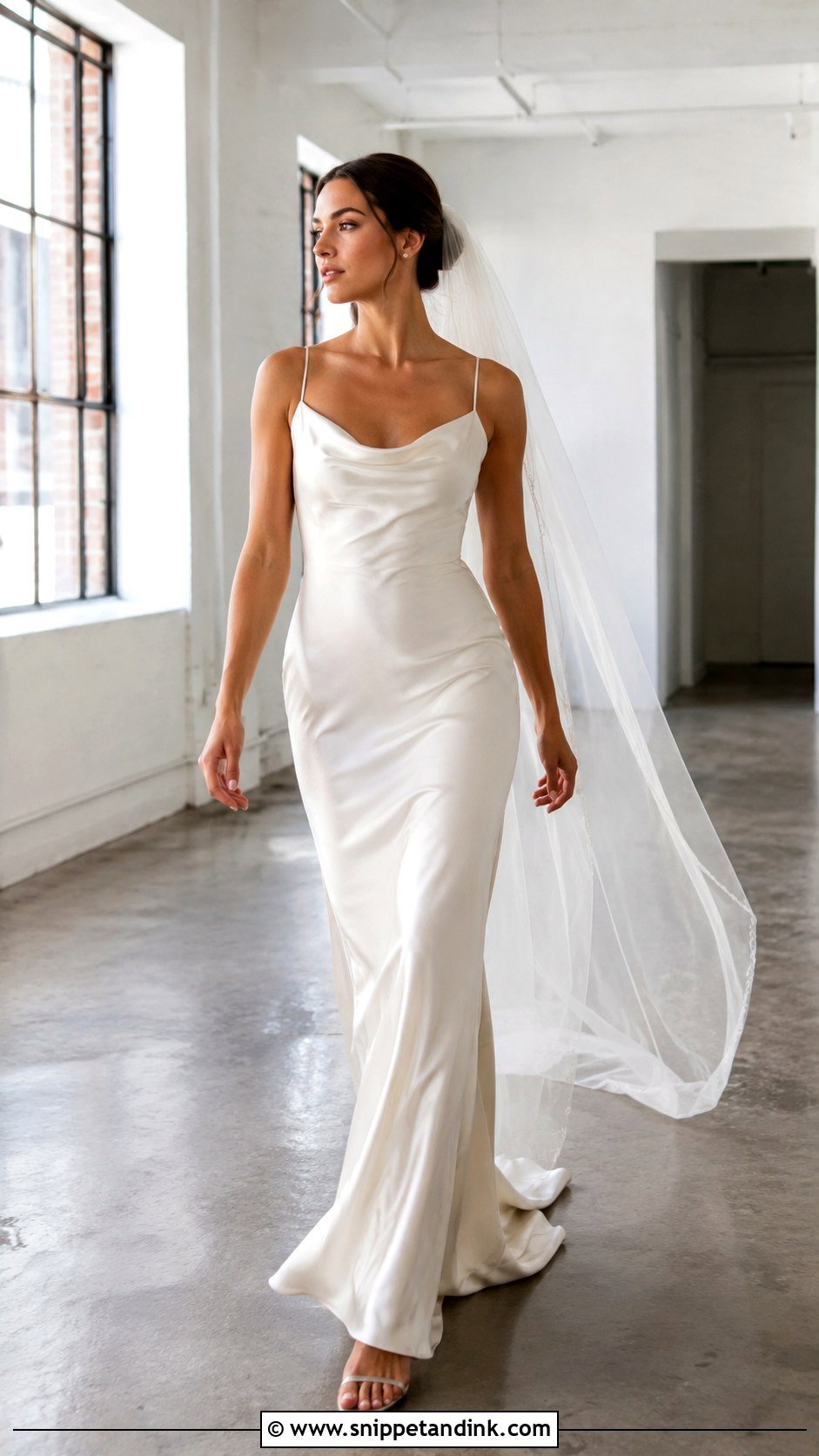
The 1990s slip is the simplest dress on the list and the least forgiving. Silk or satin cut on the bias, narrow straps and a long skirt that skims the body need perfect undergarments and precise alterations, because there is nothing to hide a seam or a strap line. The fabric should skim, never cling. I pair it with strappy heels, small studs, a sheer cathedral veil and a clean low bun. A matching satin bolero or detachable sheer sleeves add coverage for a church ceremony. Lofts, galleries and coastal venues all suit it.

20. 1990s Square Neck Wedding Dress
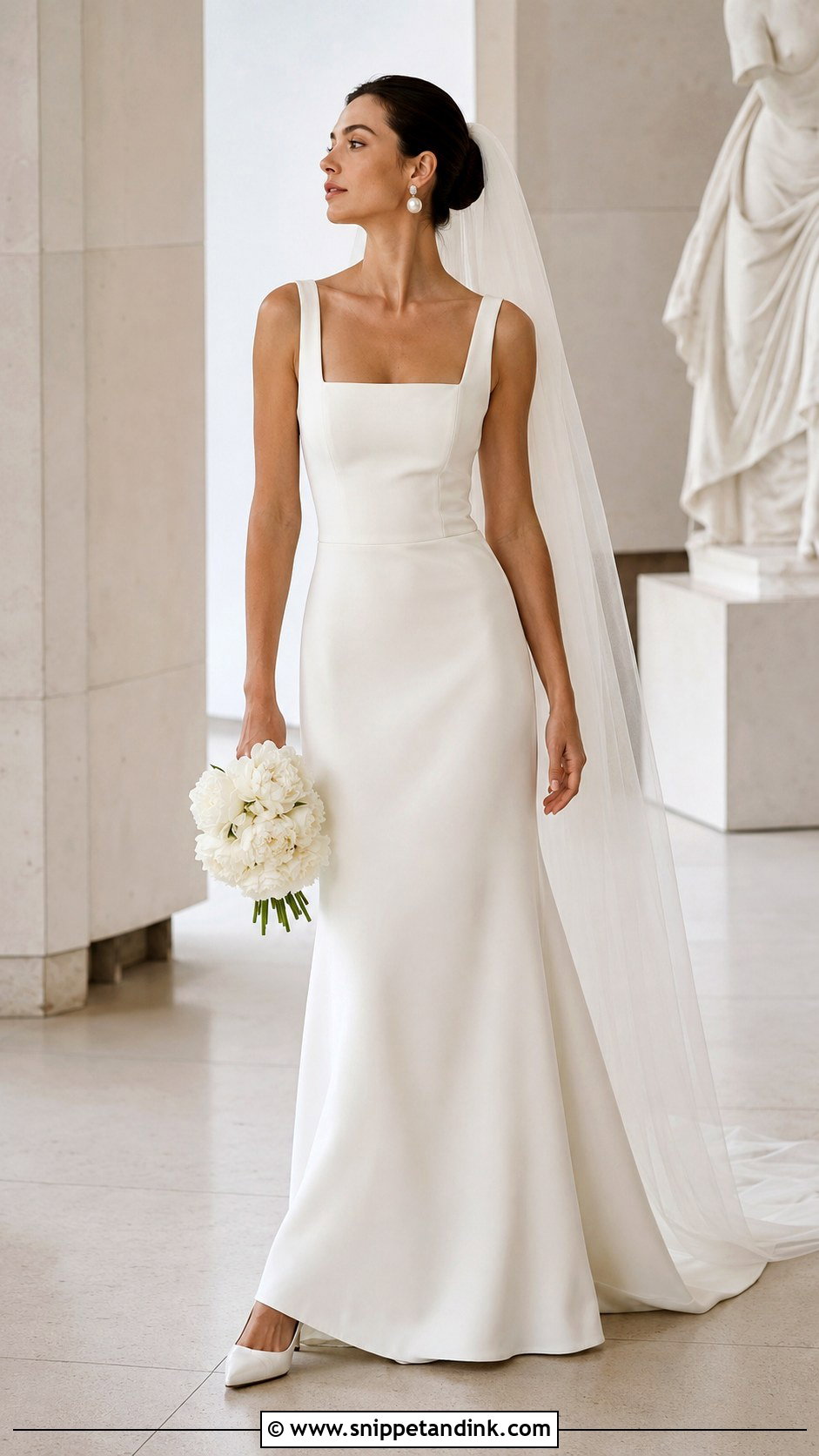
Wide straps and a square neckline give more support than a slip, and that is often why brides choose them. A clean ivory gown with a fitted bodice, a natural waist and a straight or softly flared skirt in matte crepe looks understated; satin makes it formal. The square neck frames the collarbones well. Closed-toe slingbacks, sculptural pearl earrings, a chapel veil and a sleek bun or ponytail keep it crisp. A tailored ivory coat in the same minimal lines works for winter. As with any plain dress, fabric quality and fit decide how expensive it looks.
The Underwear Each Decade Was Built Around
Vintage silhouettes depend on what goes underneath, and the wrong foundation is the most common reason a period gown looks off at a fitting. Buy the underwear before your first alteration appointment and wear it to every fitting after that.
Bias Cuts and Slips
1930s and 1990s gowns need nothing that leaves a line. I look for bonded-edge, skin-toned shaping briefs and either a stick-on bra or support sewn directly into the dress. Test the outfit in daylight; satin shows edges you can’t see in a fitting room.
Full Skirts and Structured Bodices
1950s and 1980s shapes rely on a defined waist and some volume. A longline bra or a light corset smooths the bodice, and the petticoat should be ordered with the dress so the hem is measured over it. A Victorian-style bodice usually has its own boning, so it needs less underneath, not more.
Drop Waists and 1920s Sheaths
These were designed for a straighter line, so heavy push-up padding fights the dress. A soft, low-profile bra and a full-length slip let beaded fabric hang correctly and stop it catching on skin.
Wearing an Era Without Wearing a Costume
A vintage look should feel like a nod to the past, not fancy dress. Start with the silhouette you feel most at ease in, whether that’s Victorian lace, a 1930s bias-cut satin gown, a full 1950s skirt or a 1990s slip, and then match the shoes, jewelry, veil and hair to the same decade. I’d rather see a bride choose one strong period detail and wear it well than stack five. Modern tailoring, breathable linings and secure closures make any of these eras much easier to live in for a full day.
You'll Like These Ideas:





Leave a Reply