
In Nigerian wedding fashion, the bridal train means the bride’s coordinated group of bridesmaids, not the fabric trailing behind her gown, and dressing that group is a bigger job than it looks. Six or ten women of different heights, shapes and comfort levels have to read as one unit during the entrance dance, the portraits and a reception that can run late into the night. Below are 20 complete looks, from satin and sequins to lace and Ankara, each with my notes on shoes, jewelry, bouquets and hair. I judge every one by the same test: will it still sit right on the slimmest and the curviest woman in the line after an hour of dancing?
When Every Bridesmaid Sews With Her Own Tailor
In many Nigerian trains, the bride picks the fabric and the style, then each bridesmaid takes her yards to her own tailor. It is practical and it respects everyone’s budget, but it is also where trains fall apart. Six tailors will read one picture six different ways, and the differences show the moment the women stand in a line.
What goes in the style brief
- Front, back and side pictures of the exact gown, plus a short written note on neckline depth, sleeve length and where the waist seam sits.
- The finished hem length measured from the floor in the chosen shoe, never a vague instruction like floor-length.
- The lining color and fabric, bought in the same order as the outer fabric.
- Where any print, lace motif or beading should be centered on the bodice.
- A date for the first fitting that still leaves room for a second one.
Buy all the fabric in one order. Dye lots shift, especially in satin and chiffon, and a bolt bought two weeks later can be a shade off. If the budget allows, one tailor sewing the whole train is the most reliable route to identical gowns. If not, I ask the tailors to see the first finished dress and work from it as the reference.
Give the tailors more time than feels necessary. Wedding season keeps good tailors busy, and a train sewn in a rush comes back with uneven hems and puckered zips. I like the fabric in the tailors’ hands two to three months ahead, with the last fitting about two weeks before the wedding so there is still time to fix what it reveals.
1. Emerald Green Mermaid Bridal Train Dress
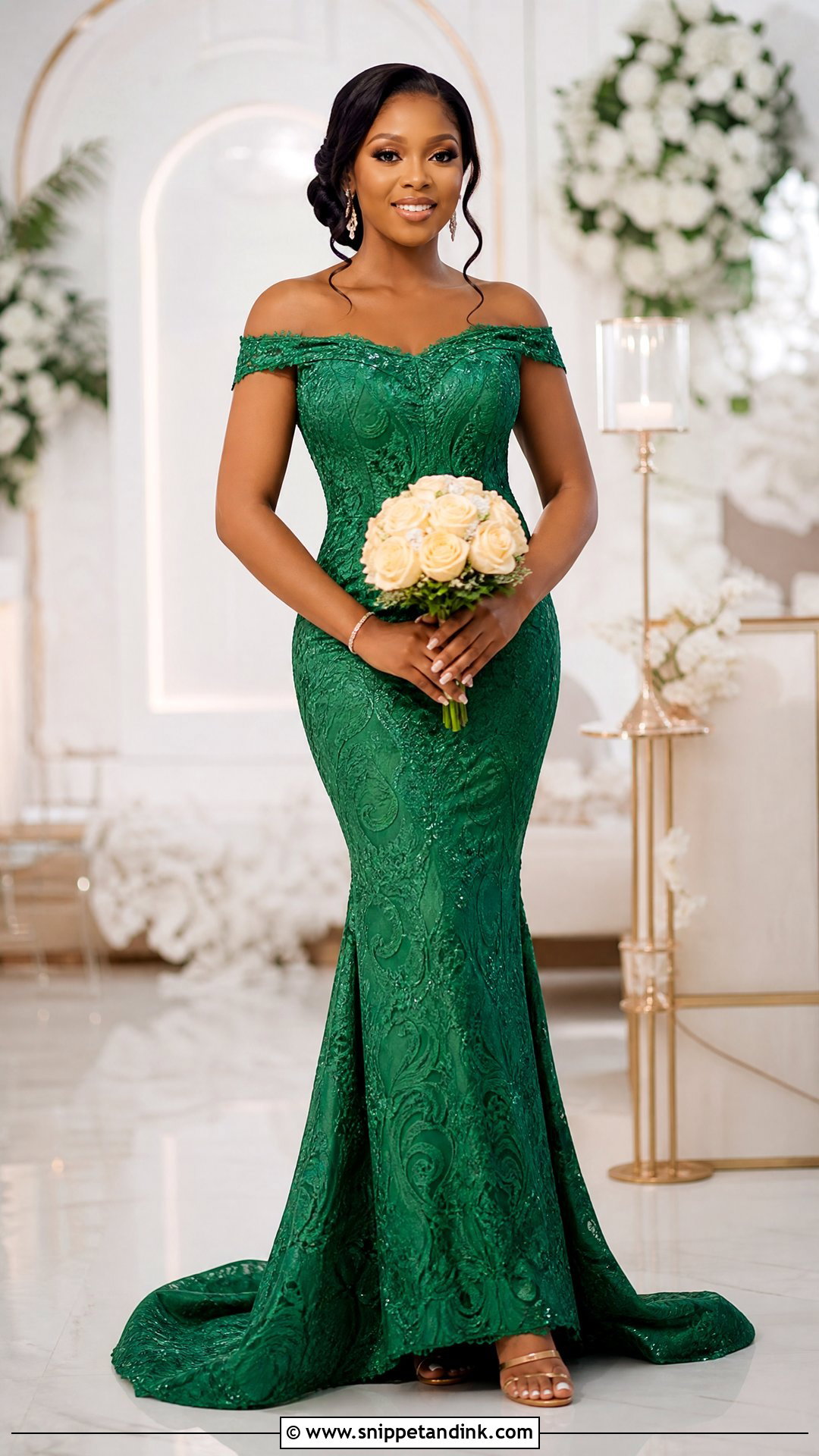
Emerald in a mermaid cut is one of the richest colors a train can wear, but the silhouette is the part I’d think hardest about. A mermaid gown has to follow each body through the hip and knee, so it punishes any bridesmaid whose tailor guesses where the flare starts; fix that point just below the knee and write it on every pattern. Structured lace or stretch crepe holds the line, and a softly draped off-shoulder neckline balances the volume at the hem. Gold metallic sandals, small drop earrings and a compact champagne bouquet keep the top half clean. Insist on a back slit or a stretch lining, because the entrance dance is exactly where a tight mermaid skirt gives up.
2. Burgundy Satin Bridal Train Dress
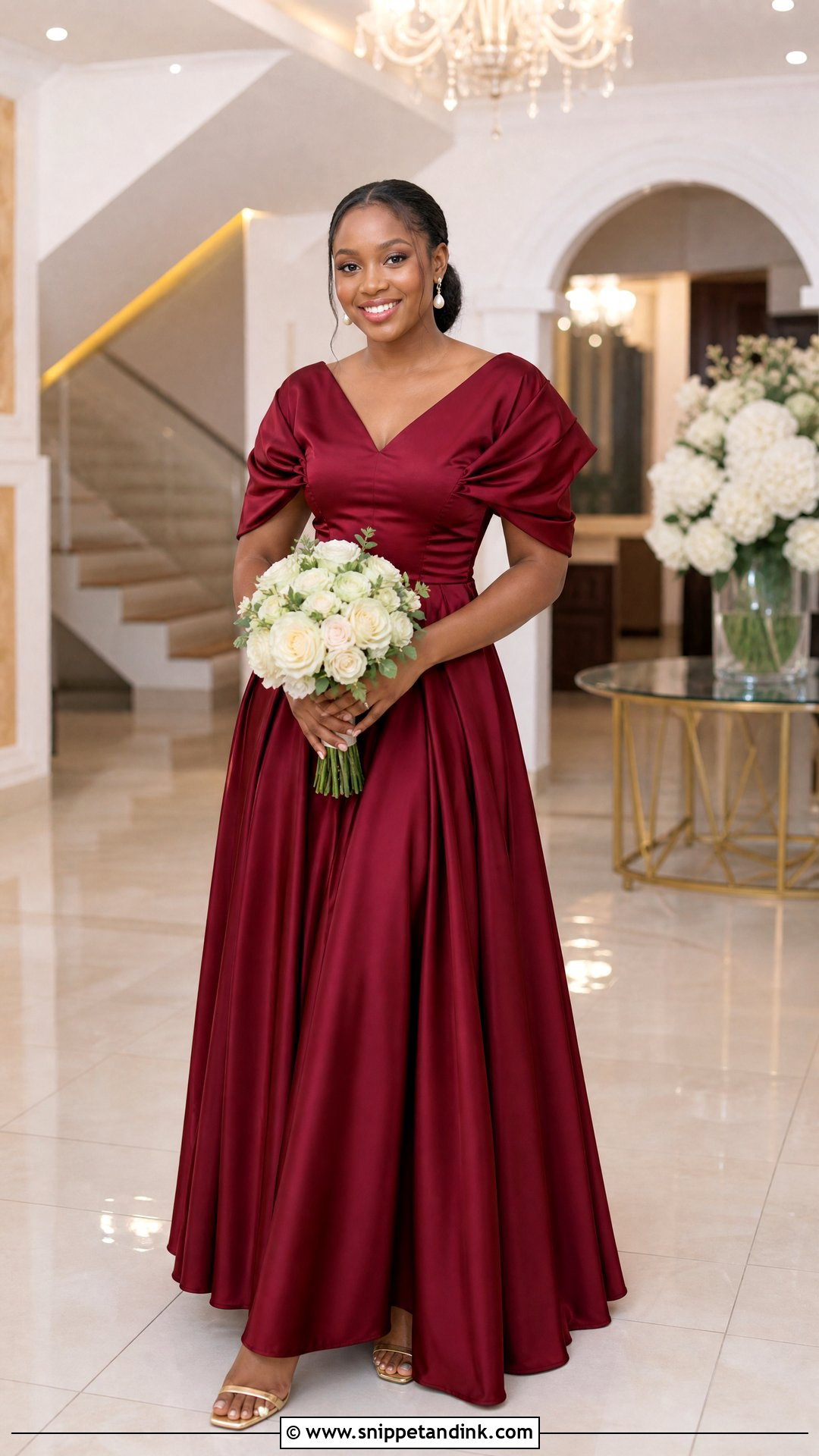
Satin shows everything, and burgundy satin shows it in a deep, warm sheen that catches every pull at the seams. That’s why I keep this one to a softly gathered waist, a fitted bodice and an A-line skirt, with no heavy ruching across the tummy, where creases settle the moment someone sits down. A modest V-neck with short draped sleeves leaves room for a proper bra. Nude or gold block heels give stability on a long day, and pearl earrings with a small cream bouquet lift the dark color near the face. Neat updos and natural makeup finish it. Champagne, blush or forest green decor suits it best.
3. Champagne Sequin Bridal Train Dress
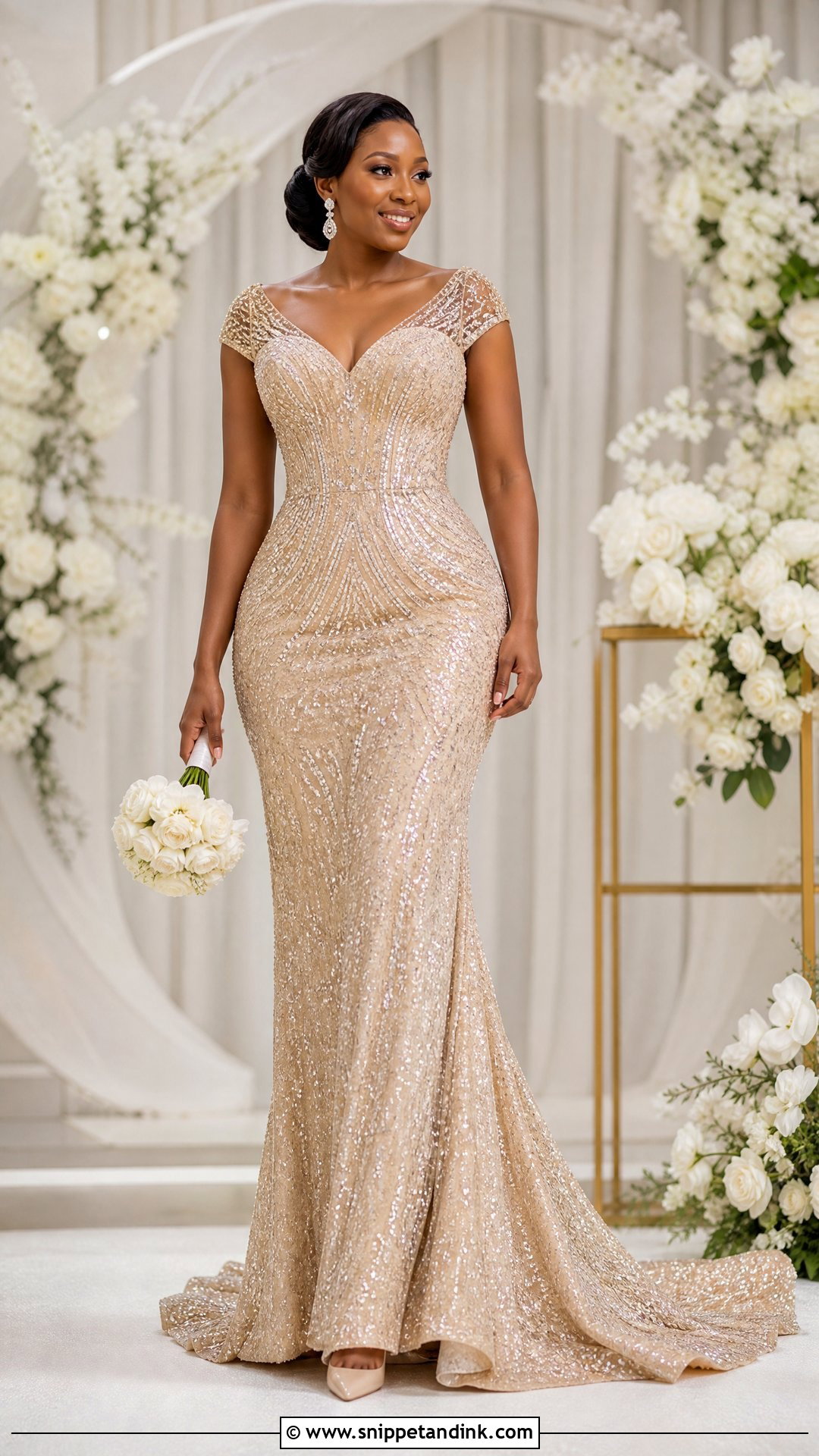
Sequins give a train sparkle without stealing the bride’s light, as long as the shade stays in the champagne family next to her ivory. I ask for a column or gentle trumpet cut with a fully lined bodice, because unlined sequin fabric scratches the inner arm within the first hour. A round neckline, cap sleeves and a slim waist seam give enough shape. Nude pointed-toe heels, crystal studs and small white rose bouquets keep the rest quiet. Satin clutches are handy for lipstick and phones, but collect them before the formal portraits. Keep the hair plain, a polished ponytail or a low chignon, since the fabric is already doing the work.
4. Dusty Rose Off-Shoulder Bridal Train Dress
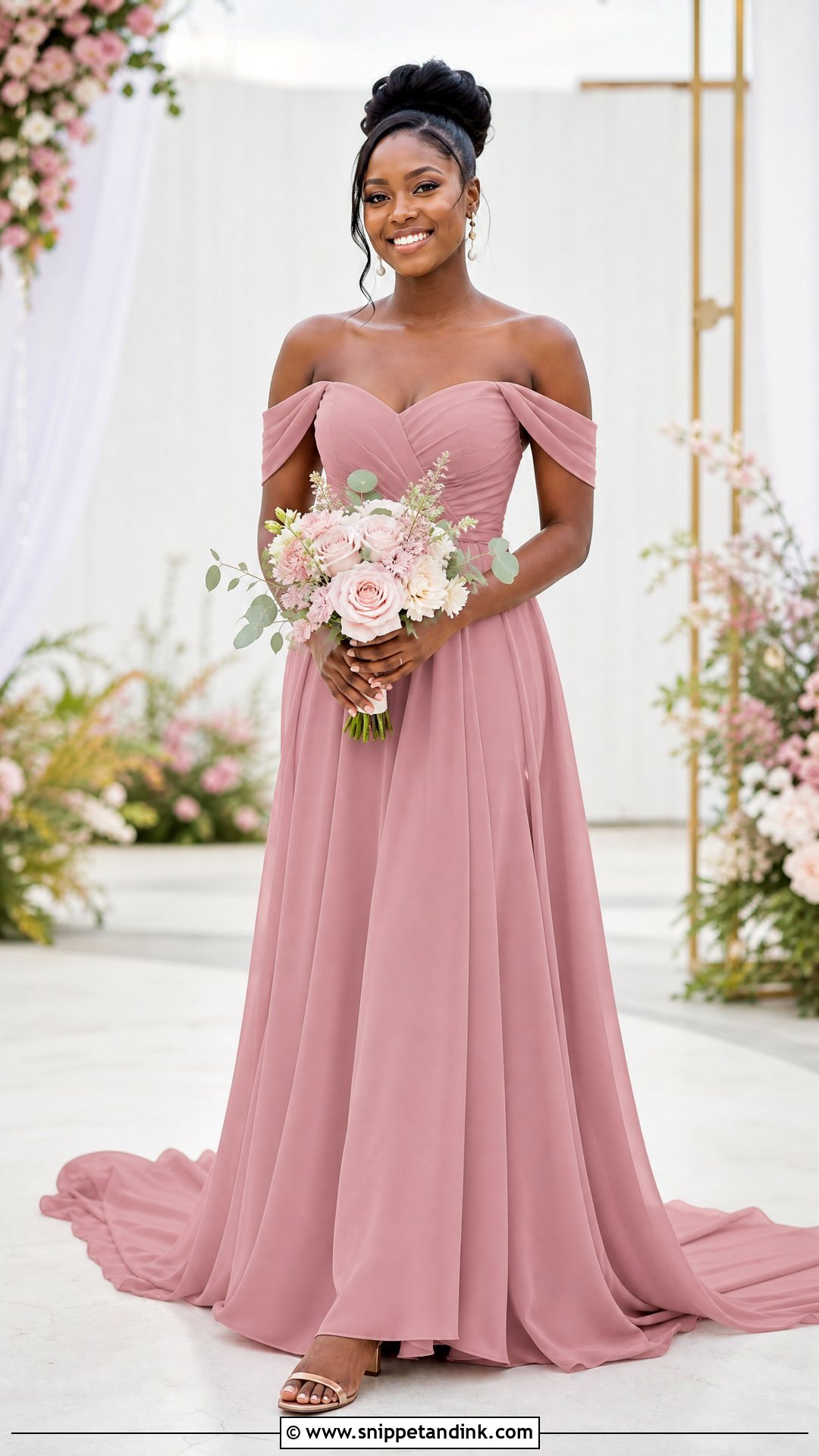
Off-shoulder necklines slide. That’s my first worry with any off-shoulder design for a group, so I’d build this dusty rose A-line on a structured bodice with internal straps and small pleated sleeves that sit on the upper arm instead of drifting down it. The chiffon skirt moves easily through the ceremony and the dancing. Rose-gold sandals, pearl drops and a white and pale pink bouquet suit the color, and a low braided bun keeps the neckline on show. Anyone who wants more coverage can add matching sheer sleeves without breaking the uniform look. It sits comfortably in a hall, a garden or a hotel ballroom.
5. Royal Blue One-Shoulder Bridal Train Dress
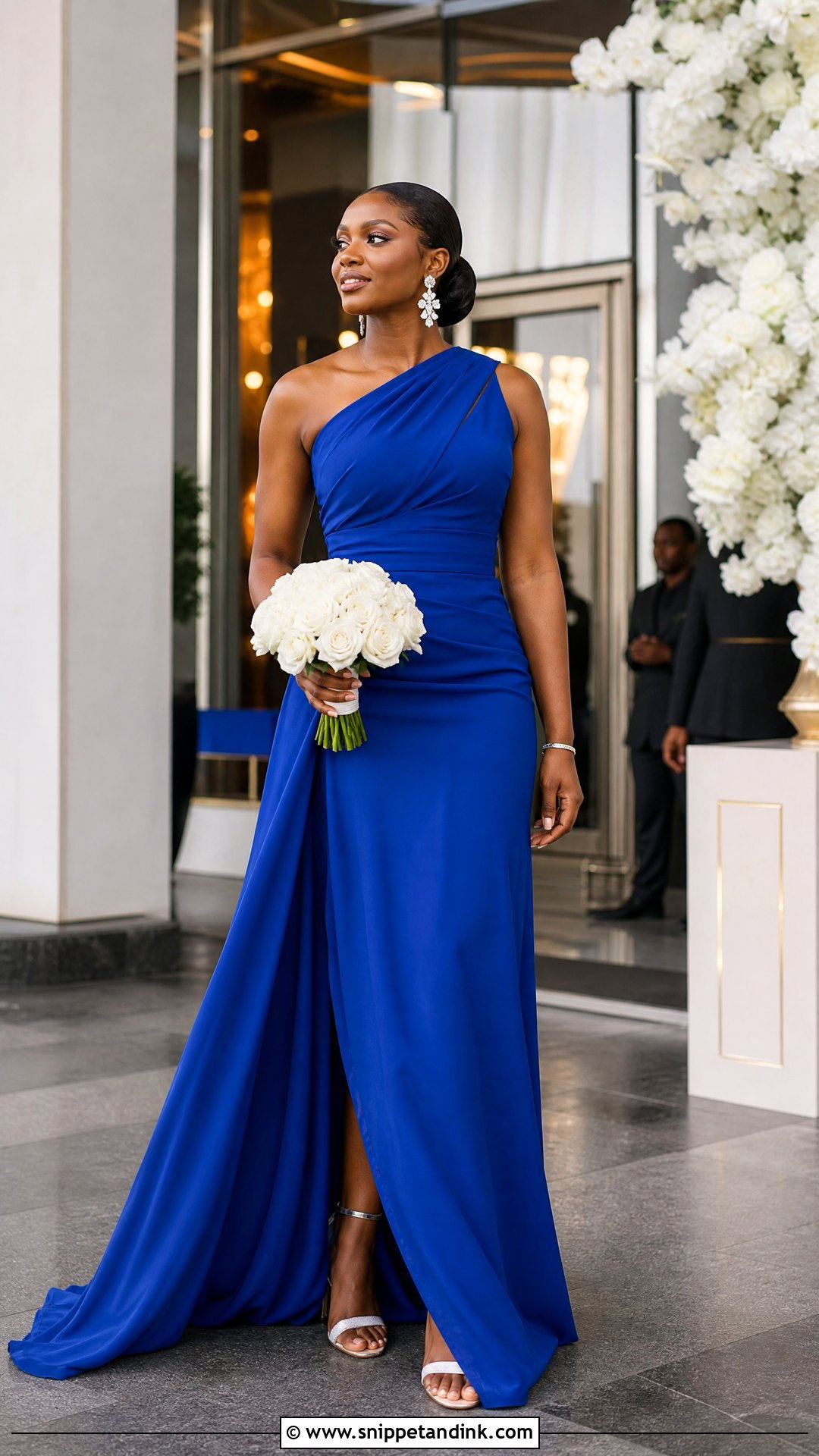
Royal blue reads clearly from the back of a hall and in every group shot. On a one-shoulder gown, I always do an arm test at the fitting: I ask her to raise a hand above her head as if she were spraying money on the dance floor. If the draped shoulder pulls the whole bodice up, it needs more ease. Matte crepe or chiffon over a smooth lining avoids bulk. Silver heeled sandals, crystal earrings and white or pale blue bouquets suit it, with side-swept curls placed on the bare shoulder so they don’t fight the drape. Stay with silver throughout instead of mixing metals.
6. Burnt Orange Pleated Bridal Train Dress
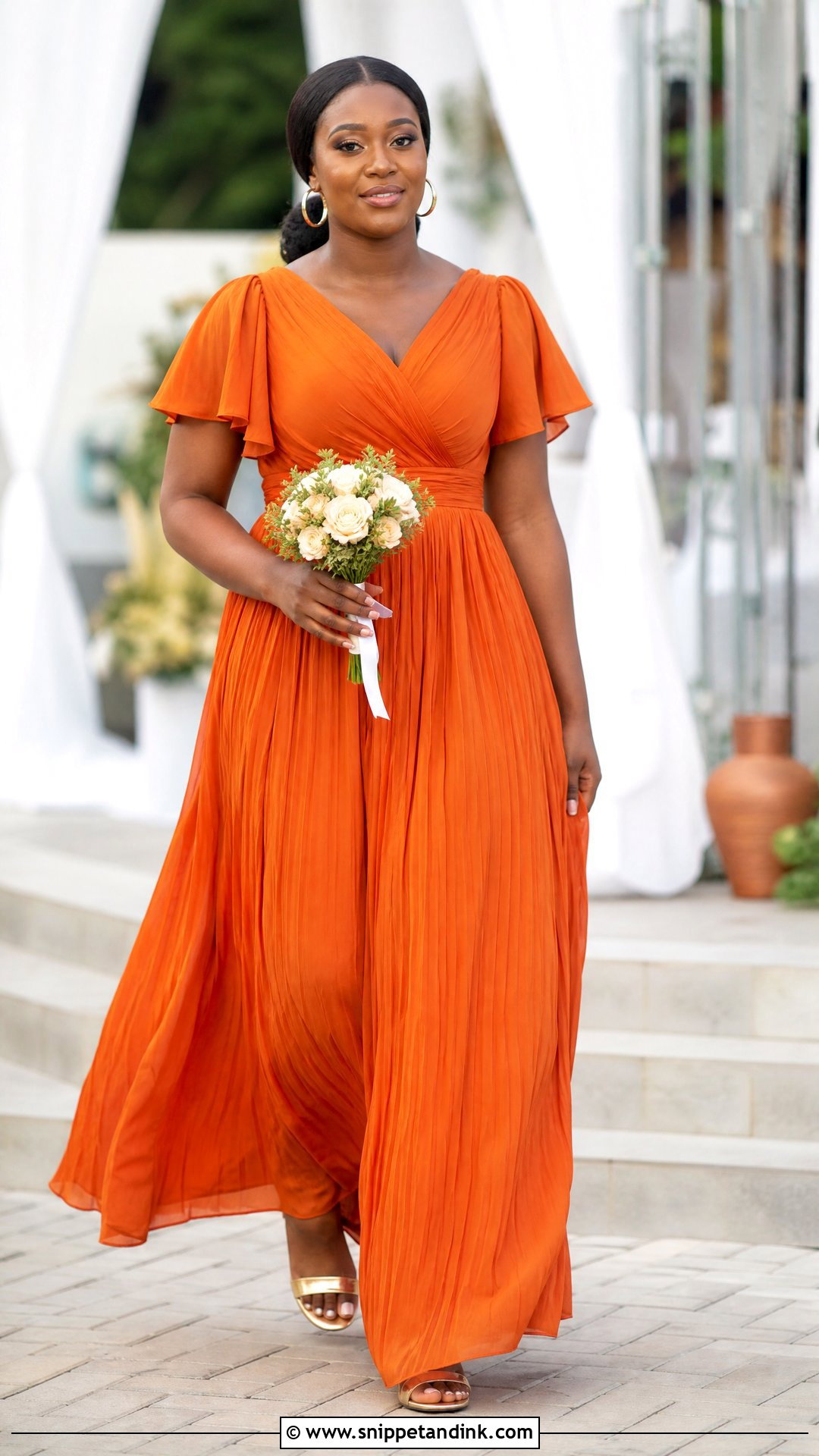
Burnt orange is warm without shouting, and in pleated chiffon it is one of the kindest gowns I can put on a mixed group. Pleats skim rather than cling, and an adjustable wrap bodice with a modest V and flutter sleeves handles different bust sizes far better than a fixed cup. A fitted waistband or a matching fabric belt gives definition. Gold block heels, simple hoops and cream bouquets let the color lead. Steam the pleats on the morning instead of ironing them; an iron flattens pleated chiffon unevenly and you’ll see it in close-ups. Cream, terracotta, chocolate and gold decor all sit comfortably beside it.
7. Lavender Chiffon Bridal Train Dress
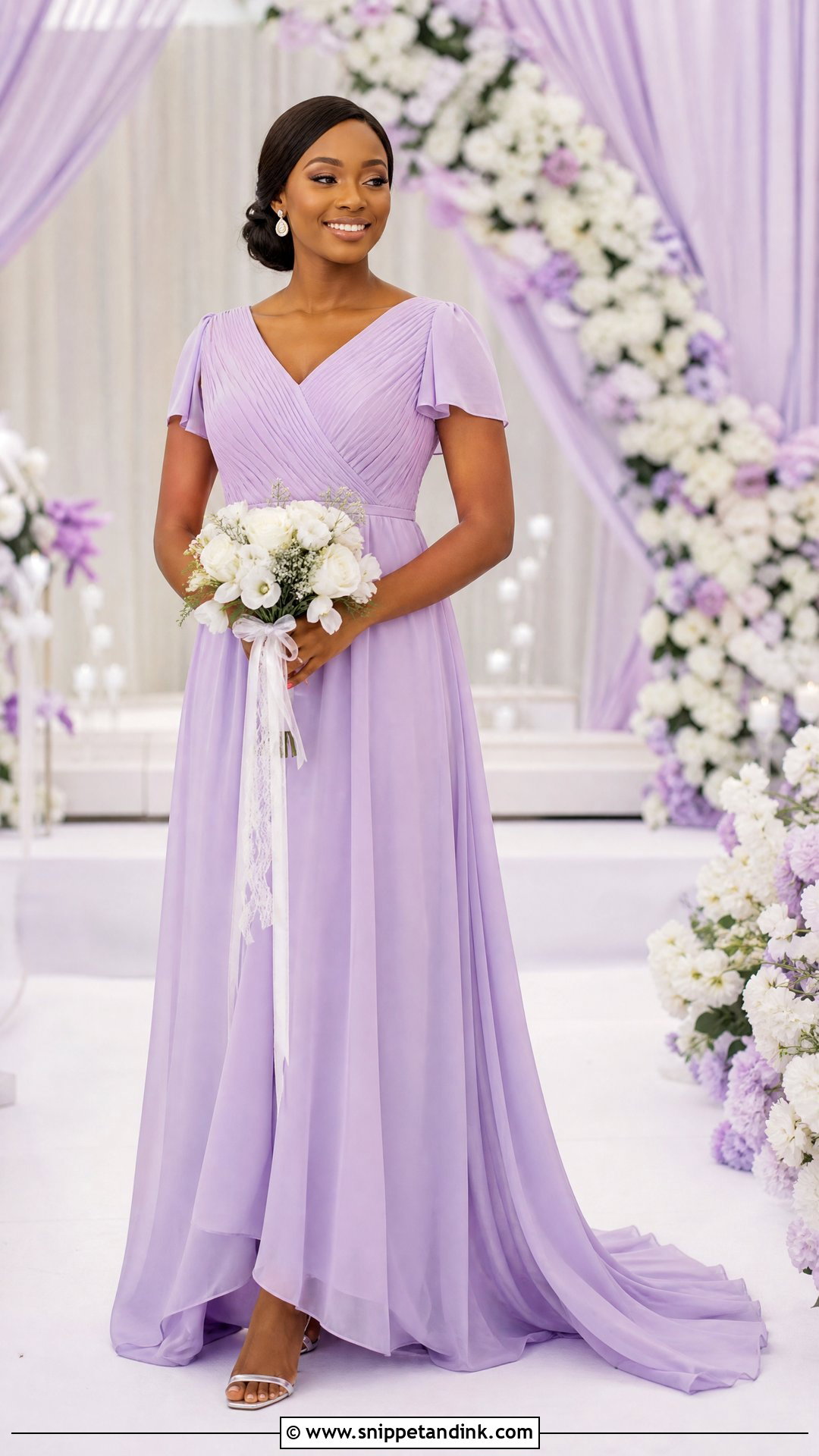
Pale chiffon turns see-through under a camera flash, so before anything else, insist on a full lavender or nude lining for this one. After that, the empire waist is generous: it gives room through the hips and lets the skirt float as she walks. A softly pleated bodice works with short sleeves or adjustable straps. Silver low heels, delicate drops and white bouquets with greenery keep it fresh, and small pearl pins in loose waves or low buns finish the hair. Lavender sits well against silver, ivory, plum and soft gray, and it never competes with the bride’s white.
8. Navy Blue Long-Sleeve Bridal Train Dress
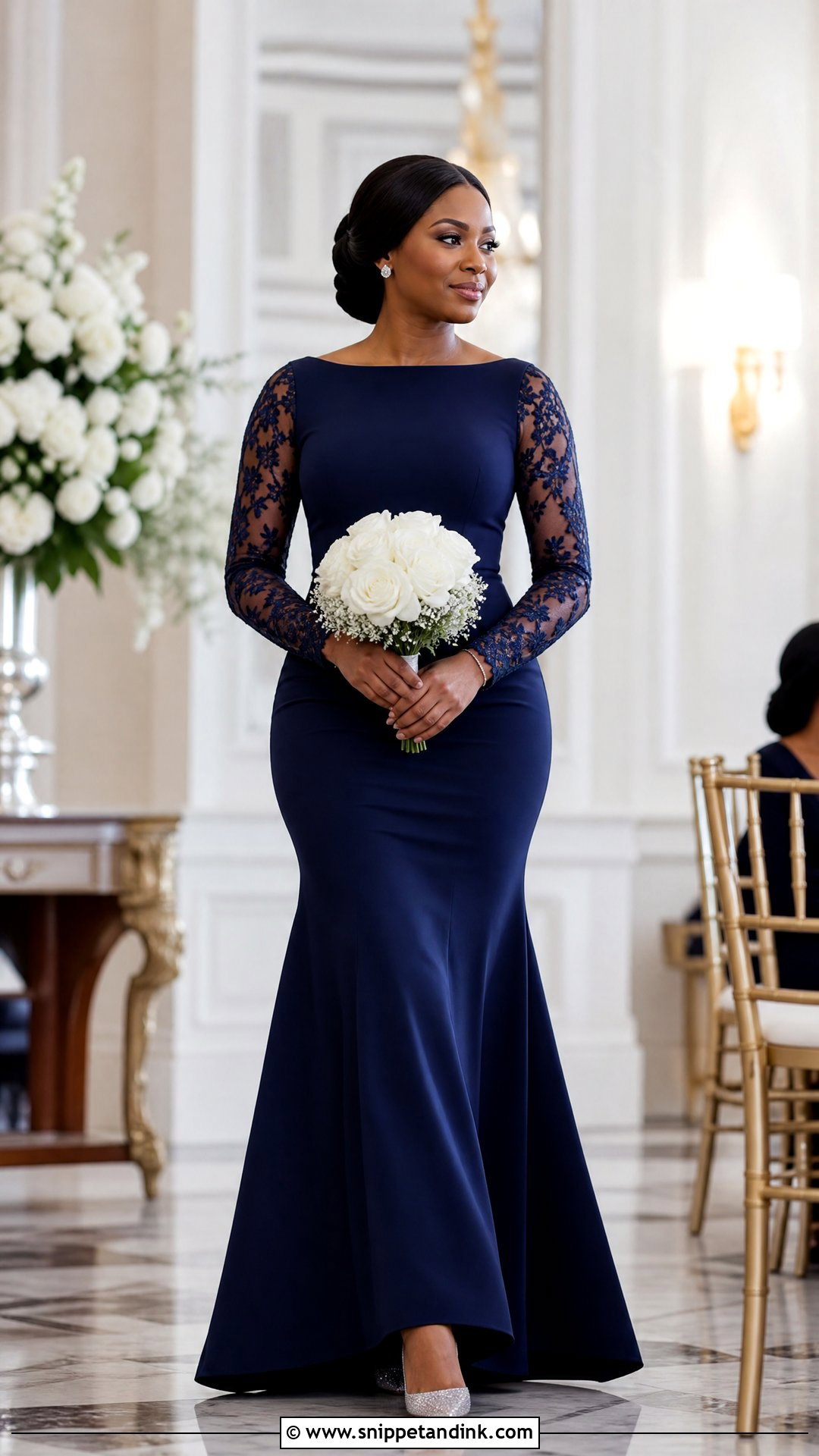
Long sleeves are what many bridesmaids quietly hope for, and navy makes them look deliberate rather than conservative. I’d pair a fitted crepe bodice with sheer lace sleeves, a bateau or round neck and a softly flared skirt, with a narrow belt to mark the waist. The detail I check is the sleeve lace itself. In a warm venue, pick a breathable lace and a light lining, because heavy layered sleeves become miserable by the reception. Silver pumps, pearl studs and white bouquets wrapped in navy ribbon suit it, with a polished bun or a center-parted ponytail. The cut flatters most heights and shapes, so it stays consistent across a large train.
9. Blush Pink Ruffle Bridal Train Dress
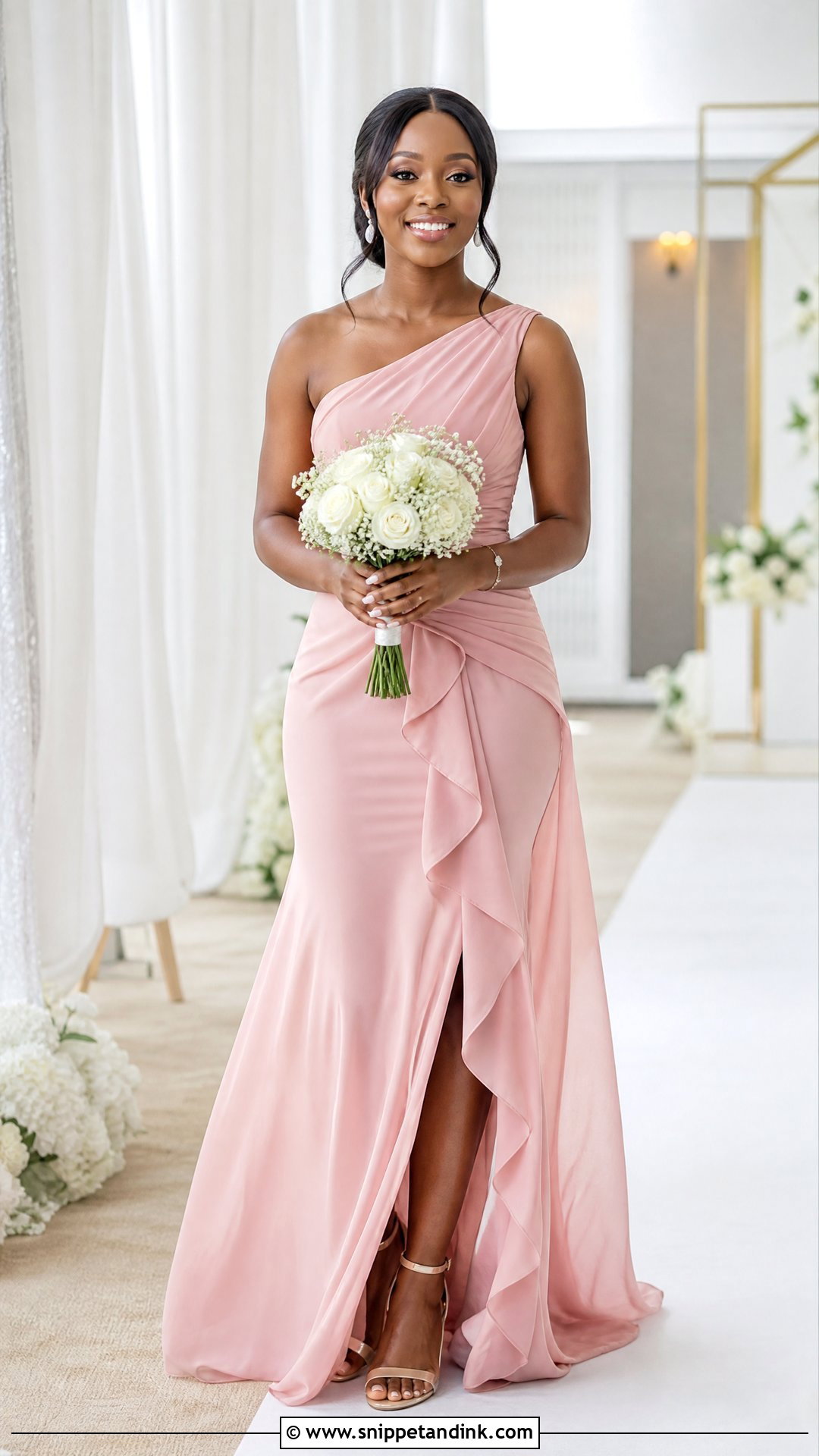
Blush is the shade most likely to betray you between fabric orders, so buy all of it from a single dye batch before anyone cuts. The ruffle on this gown runs diagonally across the neckline and should stay soft; a stiff ruffle stands away from the body and adds width where nobody wants it. A fitted waist and flowing chiffon skirt finish the shape, built on a hidden-strap or one-shoulder support so nothing shifts. Nude ankle-strap heels, pearl earrings and ivory bouquets hold it together. Soft curls or low ponytails tied with narrow blush ribbons suit the mood, and ivory, sage or burgundy accents frame it well.
10. Gold Lace Bridal Train Dress
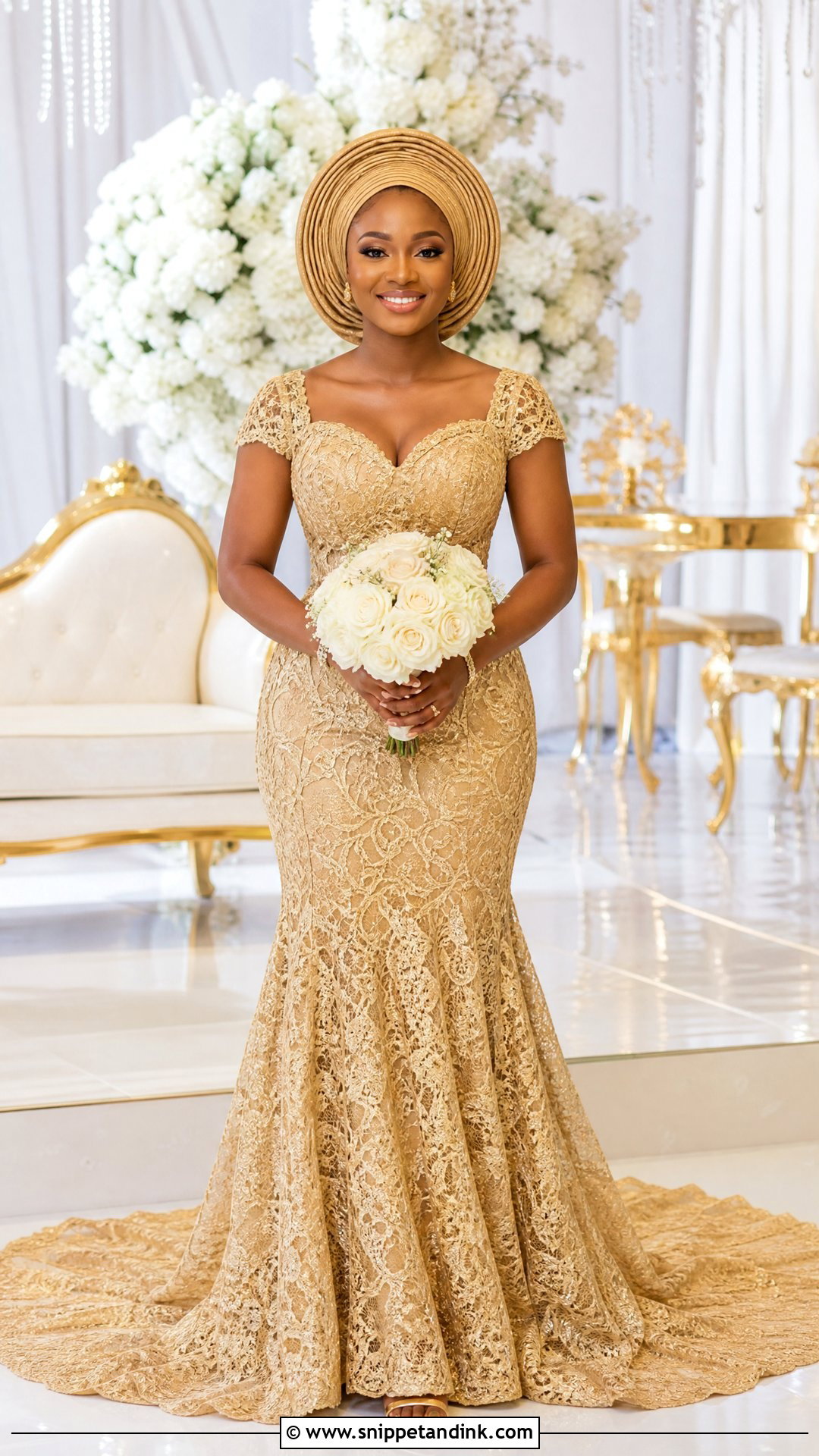
Gold lace is the most festive choice in this list, and it rewards restraint. I’d cut a fitted lace gown with a modest sweetheart neckline, short sleeves and a trumpet skirt, then spend the real effort on the lining. A nude or warm brown lining chosen to suit the bridesmaids’ skin tones makes the lace motif stand out, while a pale lining under deeper skin looks patchy through the open spaces of the lace. Keep the extras plain: gold sandals, small studs, cream bouquets and sleek low buns. If the train wears gele, agree on one fabric and one tying style, ideally tied by one person on the morning, so the heads match in every picture.
11. Sage Green Wrap Bridal Train Dress
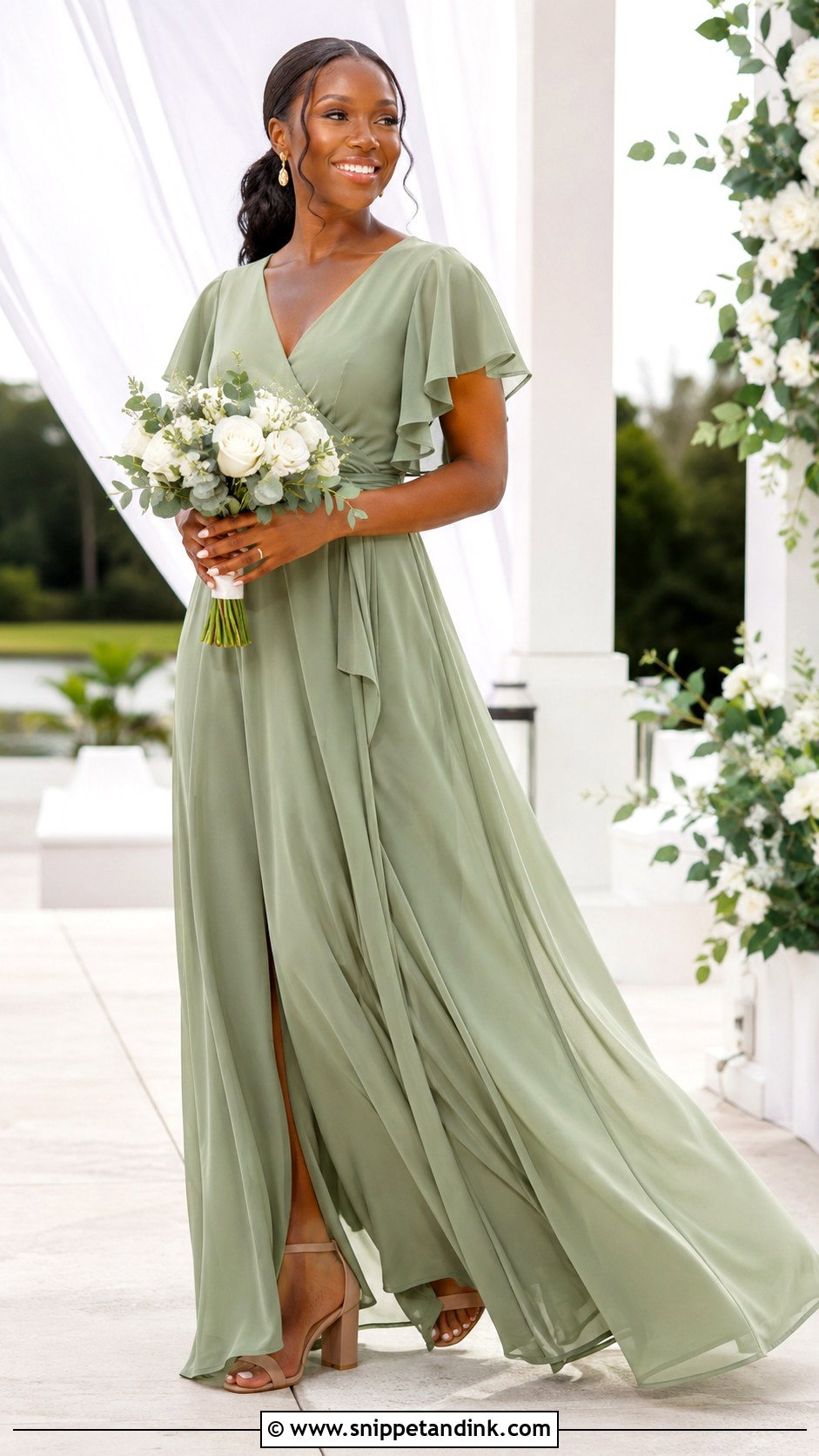
A wrap gown is my safest suggestion when the train covers a wide range of sizes, because each woman sets her own closure. Its weak point is the neckline, which opens when she bends or dances, so have hidden snaps sewn along the crossover. Sage is calm against darker party colors; matte satin makes it formal, layered chiffon keeps it airy. Nude block heels, small gold earrings and bouquets of white flowers with leafy greenery suit it, along with soft waves or low twisted buns. Hem every dress only after the shoes are chosen, so the whole line breaks at the same height.
12. Plum Corset Bridal Train Dress
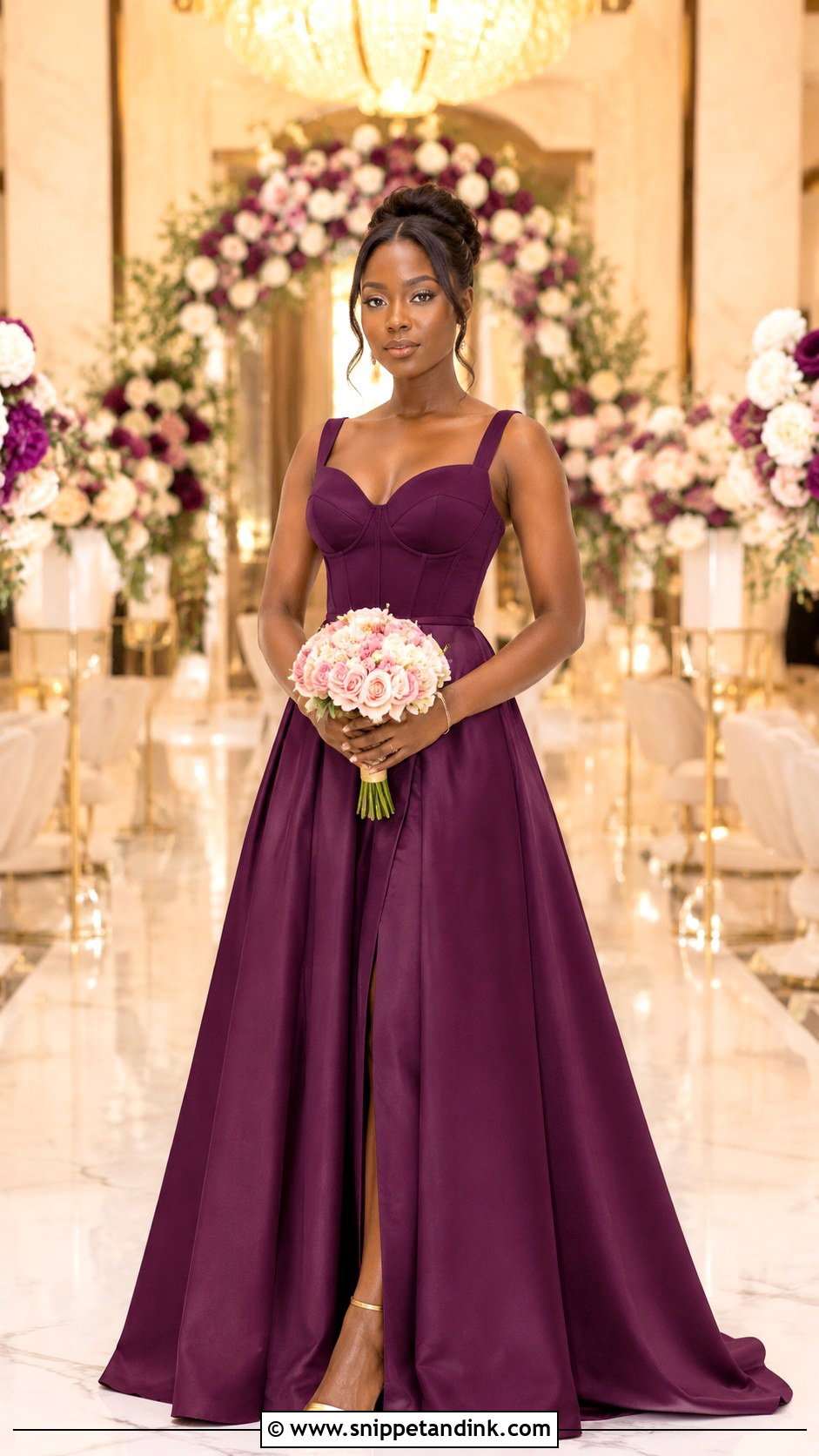
Plum is richer than burgundy and softer than black, and a corset-inspired bodice gives it real shape. My fitting rule for any boned bodice: she should be able to sit, breathe deeply and eat a plate of jollof without the bones digging in under the bust. A back lace-up closure helps, since it allows small adjustments on the day if someone’s measurements have shifted since the last fitting. Wide straps and an A-line skirt in matte satin, mikado or crepe hold the line. Gold heels, delicate earrings and pale pink bouquets bring light against the deep color, with smooth updos or side-parted waves. Beside a white bridal gown, plum gives a strong, clean contrast.
13. Baby Blue Cape Bridal Train Dress
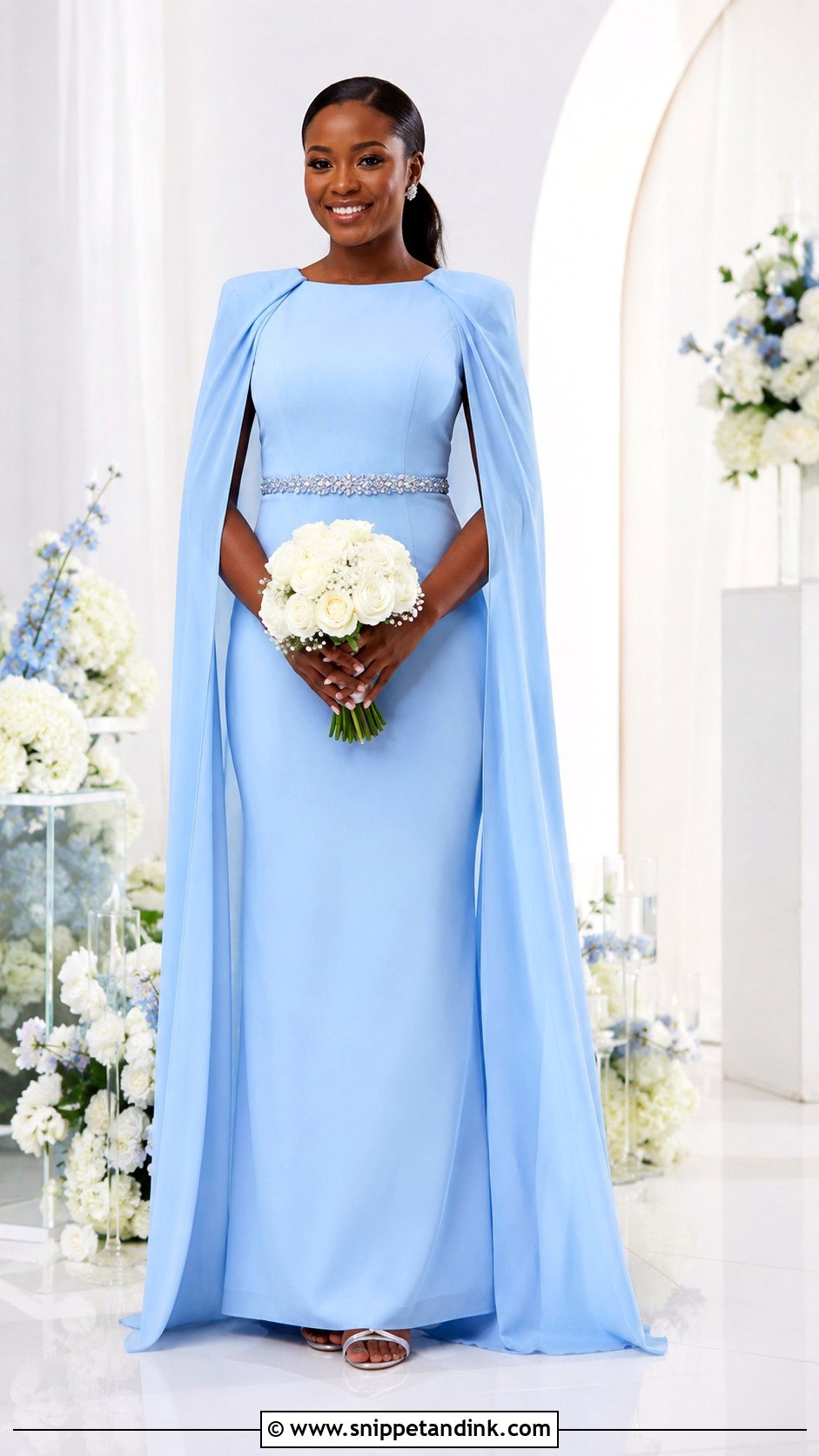
A cape covers the arms without sleeves that restrict movement, which matters more than people expect when the train dances in. Under it, a sleeveless column dress keeps the shape simple, and the chiffon cape can fall to the elbow or the waist. Match the lining exactly to the outer fabric; a white lining shows through pale blue chiffon and lightens it unevenly in photos. A narrow beaded waistband is all the embellishment it needs. Silver sandals, crystal studs and white bouquets suit the soft color, and low buns or smooth ponytails keep the cape’s neckline clear. It works in a formal hall as well as outdoors.
14. Chocolate Brown Satin Bridal Train Dress
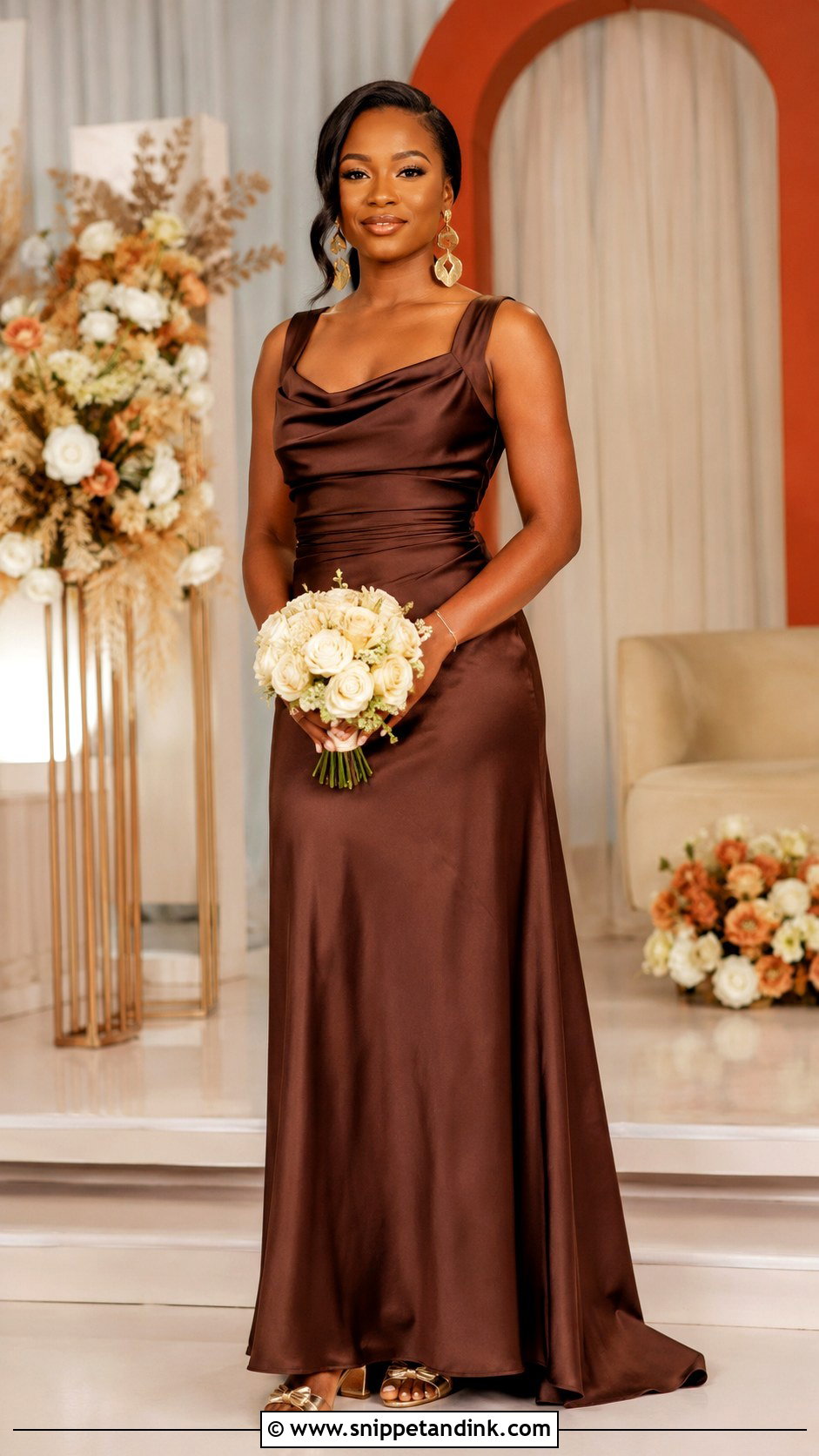
Brown satin is underrated. It looks warm and expensive, and a cowl-neck maxi gown with wide straps and a gently shaped waist is one of the most comfortable formal cuts I know. The cowl has to be cut on the bias so it falls in soft folds instead of gaping when she leans forward. Keep the back modest and place the straps so everyone can wear proper support. Satin exposes uneven seams, so this is a dress for a careful tailor. Gold sandals, sculptural earrings and cream bouquets with muted greenery suit it, with straight hair, soft curls or braided buns. Terracotta and emerald details look rich next to it.
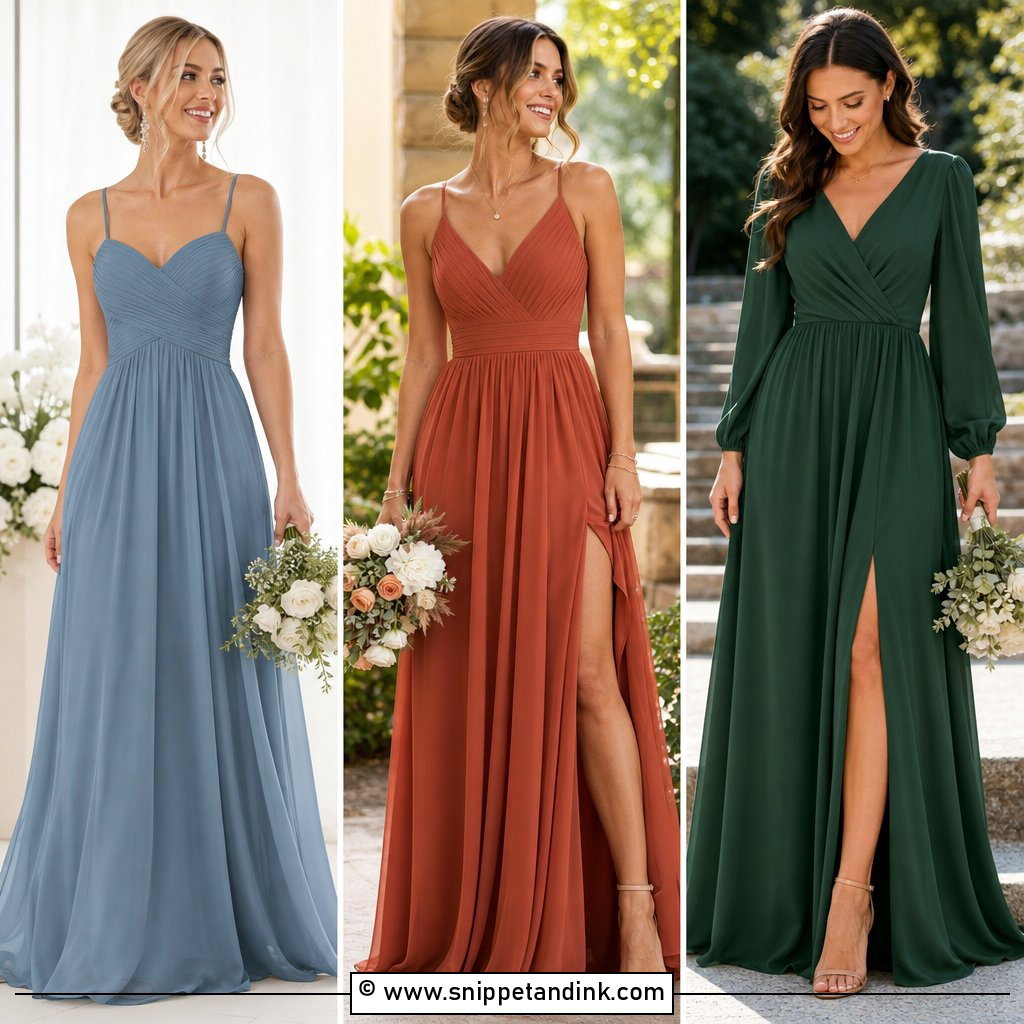
15. Coral Peplum Bridal Train Dress
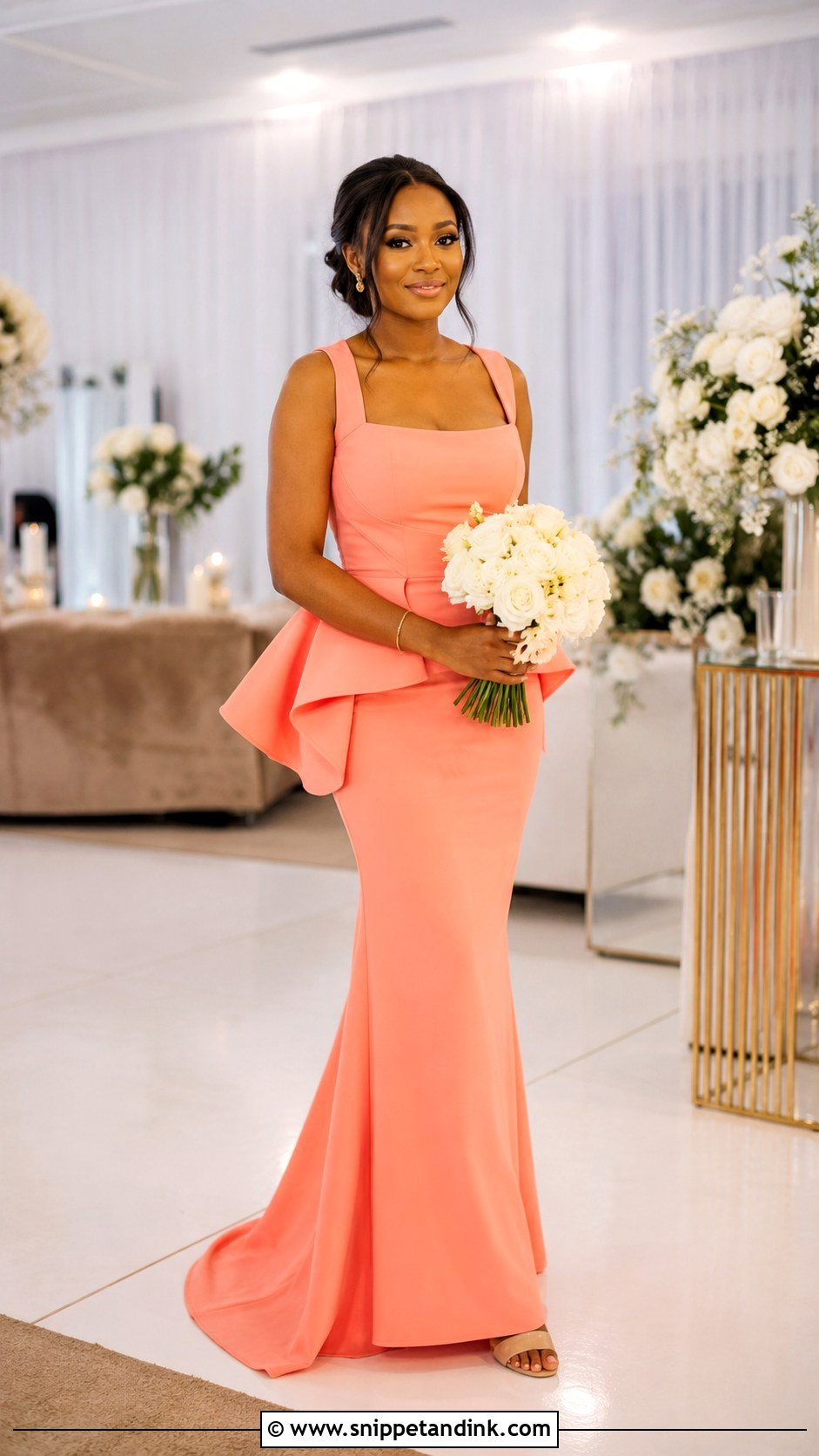
The peplum is the detail that goes wrong most often. Set it at the natural waist and keep it short and flat; a peplum that juts out adds width at the hip and dates the whole gown. Stretch crepe holds the structured bodice and square neckline while still letting her move, and a tailor can adjust the peplum depth slightly for taller or shorter bridesmaids without breaking the uniform look. Nude or gold heels, understated earrings and ivory bouquets calm the bright coral. High buns or braided ponytails keep it fresh, with cream, sage or navy accents nearby.
16. Red High-Neck Bridal Train Dress
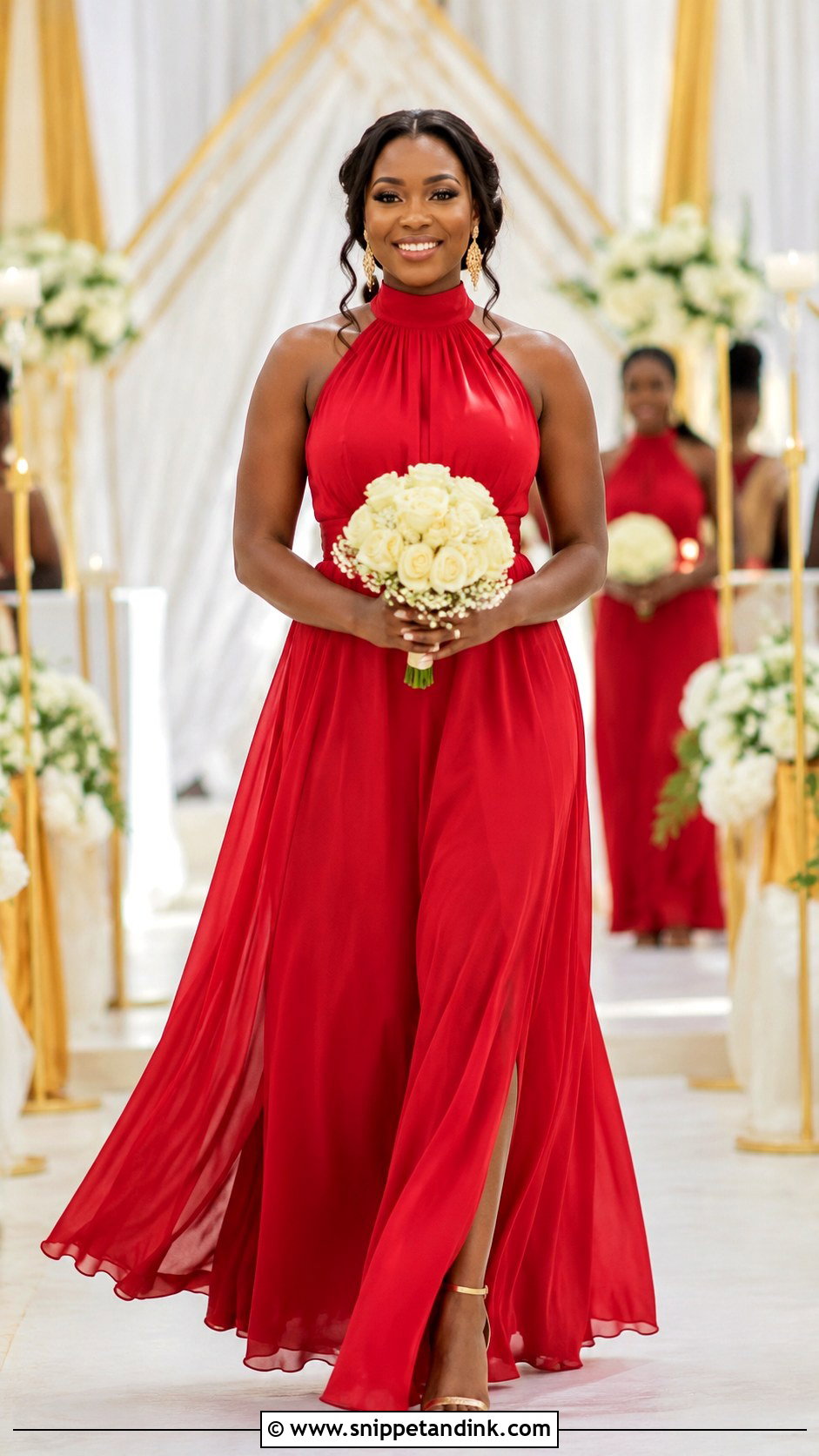
Reds vary wildly between suppliers, from orange-red to blue-red, so I order the whole train’s fabric at once rather than letting each bridesmaid buy her own. This high-neck gown is confident and fully covered at the front: a softly gathered neckline, bare arms, a fitted waistband and an A-line skirt, with a keyhole back for interest. Chiffon gives movement; crepe gives a sharper finish. A high neck needs the hair lifted off it, so high ponytails or neat buns work best. Gold ankle-strap heels, small statement earrings and simple cream bouquets complete it, and gold, ivory or black details sit comfortably around red.
17. Ankara and Chiffon Bridal Train Dress
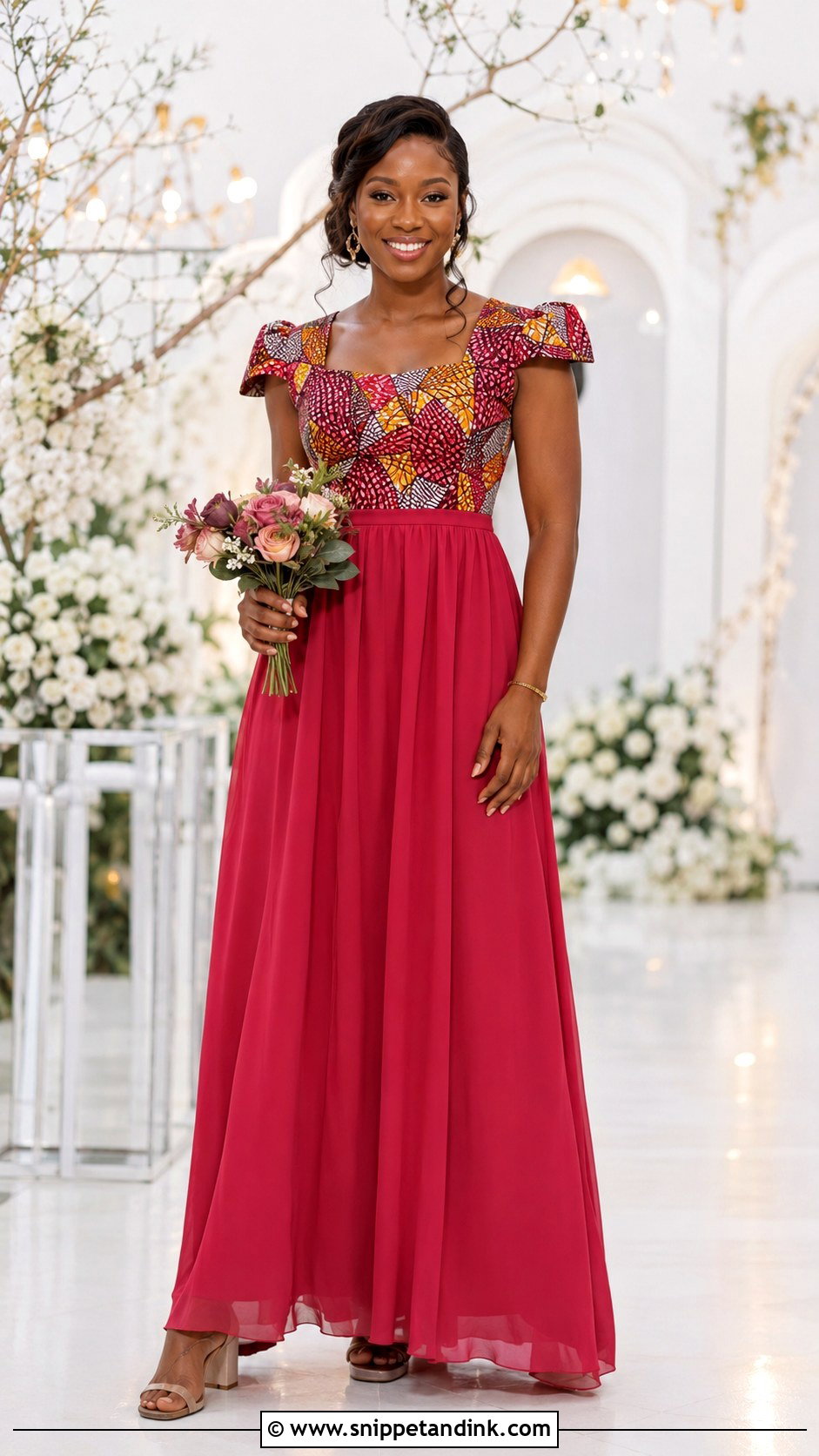
An Ankara and chiffon gown is how I’d bring Nigerian print into a train without the group looking busy. Put the Ankara in one place only, the bodice or the waistband, and match the chiffon skirt to a single shade pulled from the print. Wax prints have a direction, so tell every tailor which way the motif runs and where it should be centered on the bodice; misaligned prints are the first thing you notice in a lineup. A square neckline, short sleeves and a defined waist keep it neat. Neutral block heels, gold earrings and bouquets in colors from the fabric suit it, with braided buns, natural updos or sleek ponytails.
18. Silver Beaded Bridal Train Dress
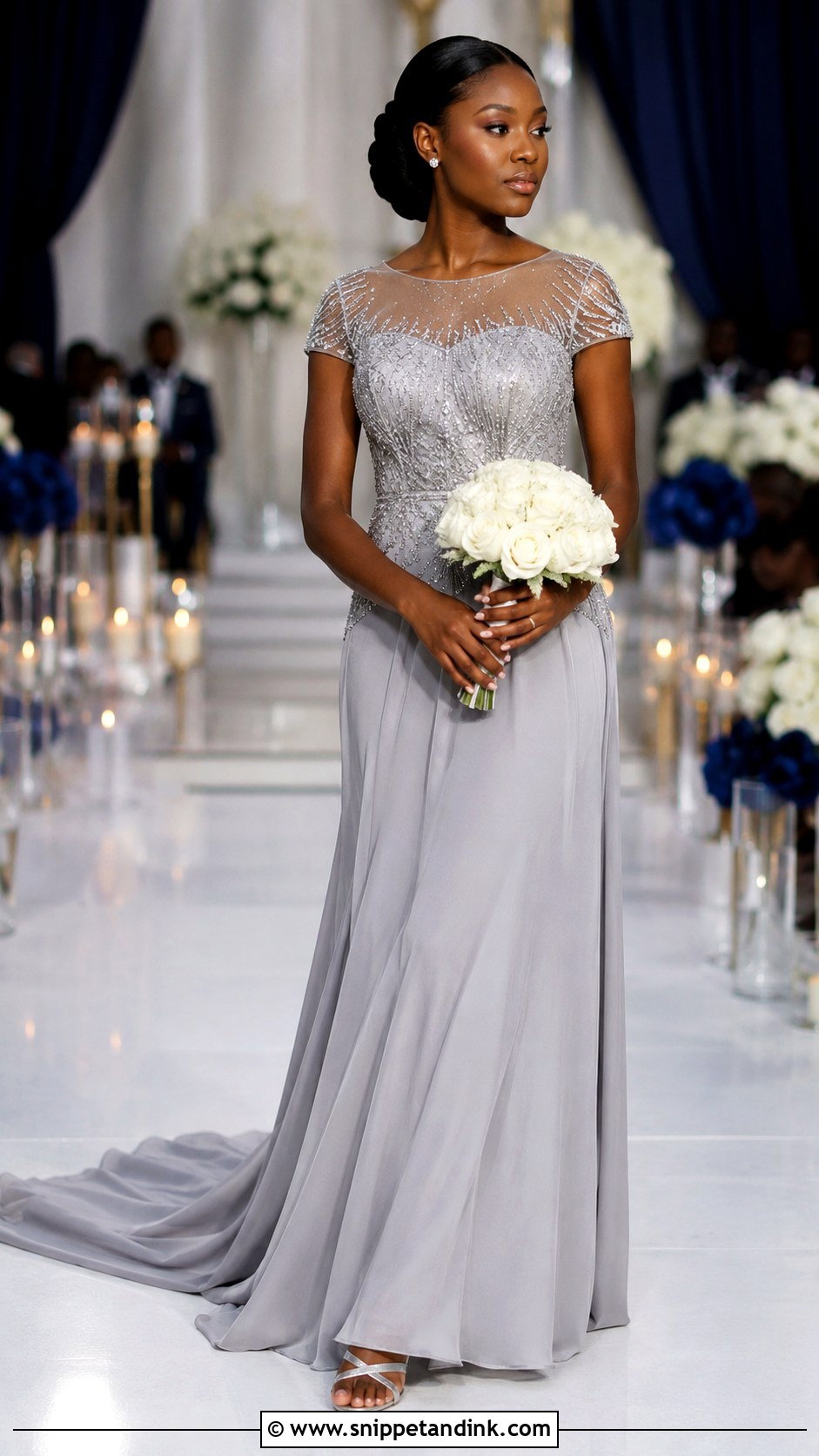
Beading is heavy, so I keep it above the waist and let a plain chiffon or tulle skirt carry the length. The fitted beaded bodice with short sheer sleeves needs a soft inner lining, and I run a finger around the armholes at every fitting, since beads there rub skin raw over a long evening. Silver low heels, crystal studs and white bouquets tied with gray ribbon keep it cool and bright. Smooth low buns or soft waves need almost no accessories. If the gowns come from different tailors, circulate one finished bodice as the sample so every dress uses the same bead pattern and density.
19. Mustard Yellow A-Line Bridal Train Dress
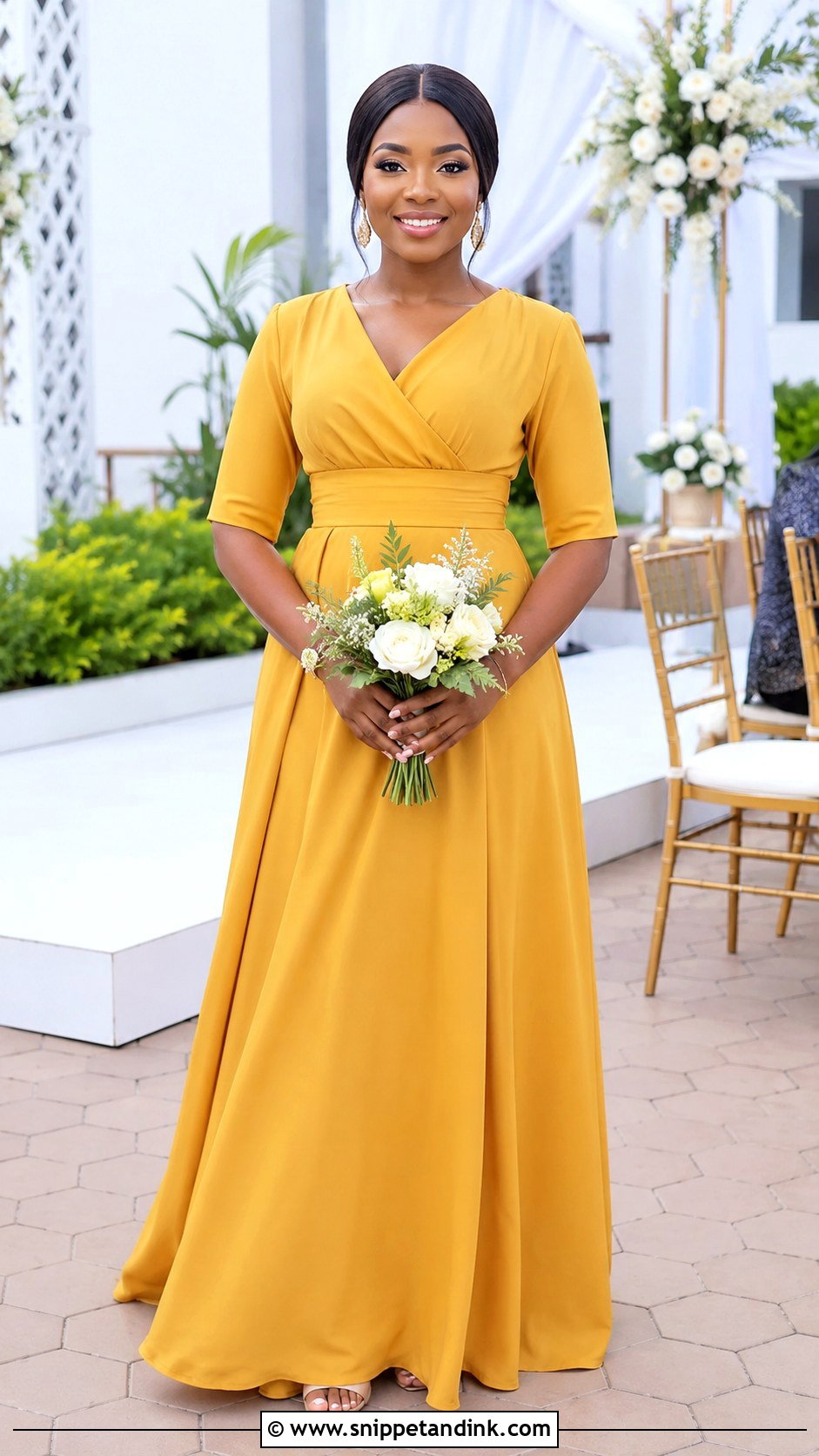
Mustard yellow is cheerful and very much at home at a Nigerian wedding, but it changes a lot under shine, so I’d choose matte crepe or chiffon to keep it rich. An A-line maxi with a wrap bodice, elbow-length sleeves and a wide fitted waistband gives comfort and shape. Nude heels, gold drop earrings and bouquets of cream flowers with green foliage suit it, with braided updos or defined natural curls. If the families are also wearing a printed aso ebi, match the mustard to that print directly by holding the swatch against the cloth in daylight. Forest green, navy and brown sit well beside it.
20. Black and Gold Bridal Train Dress
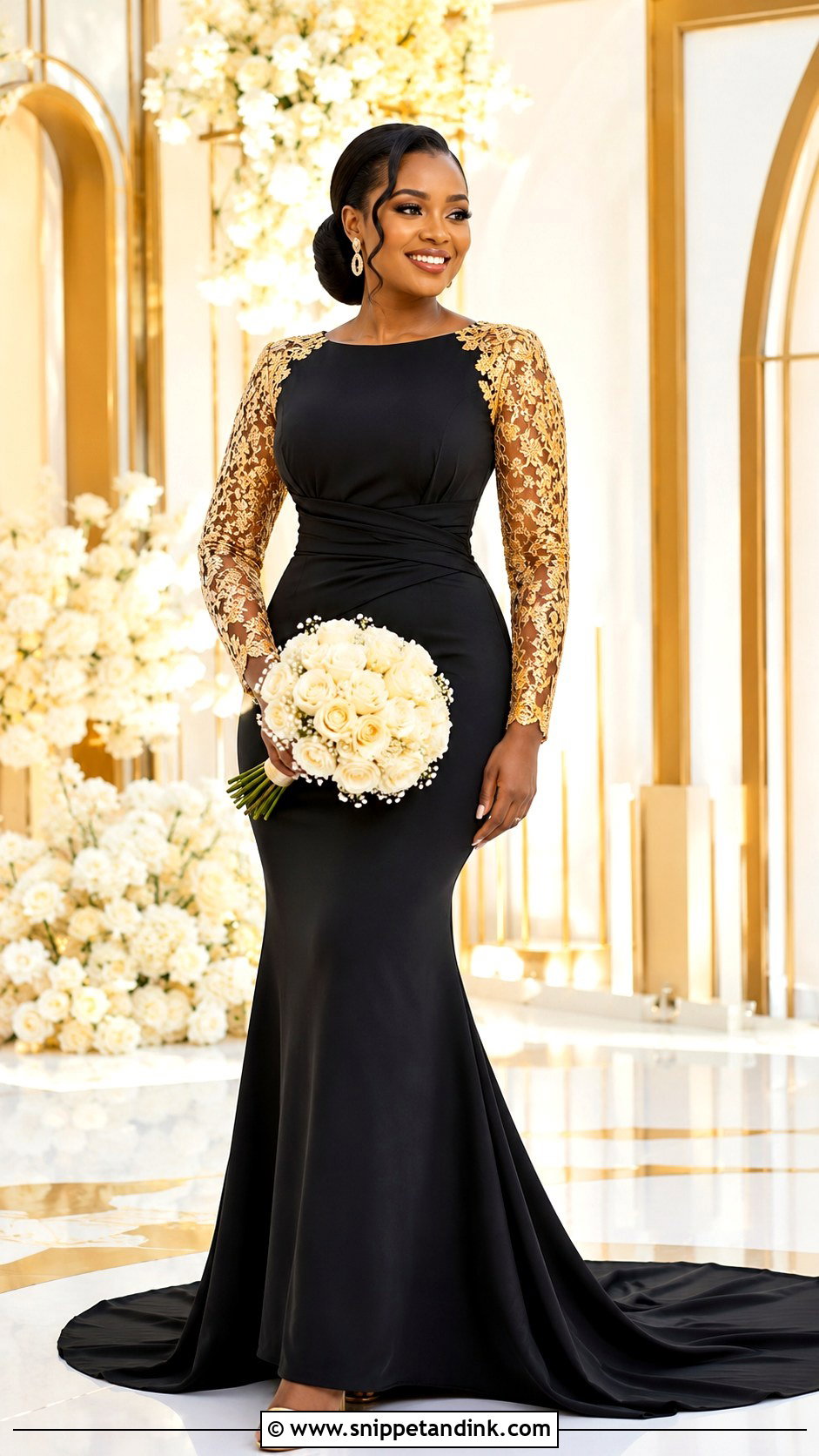
Black at a wedding needs the couple’s blessing first, so confirm it before anyone buys fabric. Done well, a black crepe gown with gold lace sleeves, a defined waist and a gently flared hem is dramatic and formal. Concentrate the gold at the neckline, sleeves or waistband rather than scattering it everywhere. Black soaks up heat at an outdoor venue, so use a breathable lining and skip extra layers. Gold sandals, small metallic earrings and cream bouquets brighten it, and polished buns or side-parted waves suit the clean line. Next to an ivory gown it gives the strongest contrast of any look here.
Will It Survive the Entrance Dance?
A Nigerian bridal train rarely just walks in. There is usually a rehearsed entrance, then hours of dancing, spraying and photos, often in serious heat. A gown that looks right on a hanger can fail at any of those moments, so I put every design through a short movement test at the final fitting, in the real shoes.
- Raise both arms overhead and hold them there. Straps, one-shoulder drapes and capes should stay where they are.
- Dance a few counts of the actual choreography. Mermaid and trumpet skirts need a slit or stretch to pass this.
- Sit on a hard chair for a full minute, then stand. Look for satin creases, a gaping cowl and boning that digs in.
- Bend forward as if picking up a dropped note, and check what the neckline shows from the front.
The bag I hand to the chief bridesmaid
Safety pins, double-sided fashion tape, a needle with thread in each dress color, blotting papers, a lint roller and a pair of flat shoes for whoever’s heels give up first. Leave the wet wipes out for satin; water can leave a ring on it, so blot spills with a dry cloth and let the mark fade rather than scrubbing.
Hems, Linings and the Last Fitting
Color gets the attention, but what makes a bridal train look finished is the tailoring: lining, shoe height, fabric weight and whether each woman can move freely. Book fittings early and ask every bridesmaid to bring the undergarments and shoes she will actually wear, so necklines, hems, sleeves and waists are corrected on her real shape. Whichever of these looks the bride settles on, from satin wraps to lace and Ankara, I’d commit to one direction, keep the materials identical across the group and give the tailors enough time to get it right.
You'll Like These Ideas:


Leave a Reply