
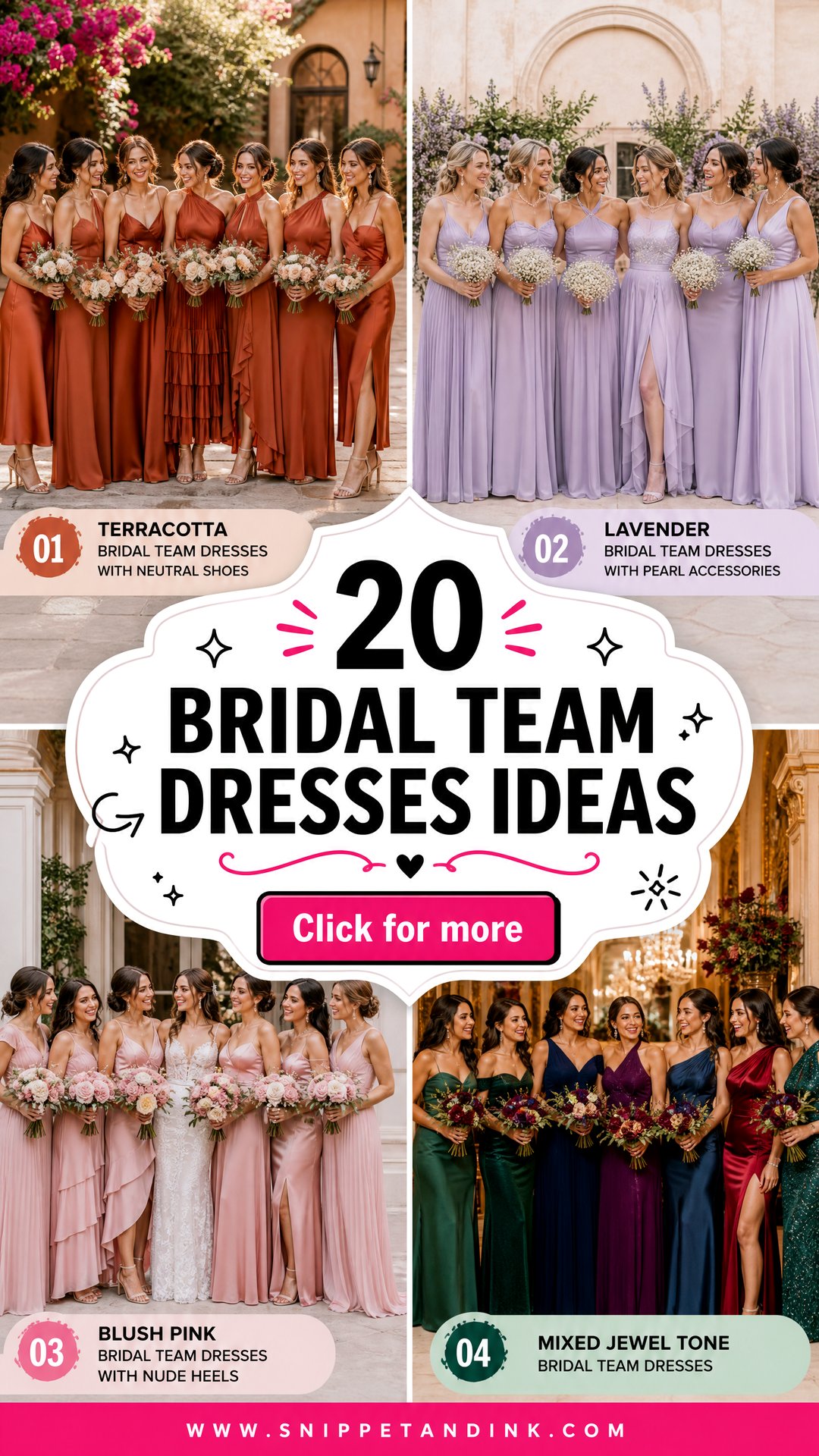
Six Dresses, One Order: Timing It So Nobody Panics
Picking the color is the fun part. Getting five or six people to order the right size, from the same dye lot, early enough for alterations is where I spend most of my bridesmaid-dress energy as a planner. Here’s the order I work in.
- Settle the color and fabric about six to eight months out. Order swatches and look at them in the venue’s light, not on a phone screen.
- Have everyone measured by a professional or a careful friend with a soft tape. Bridesmaid brands size by their own chart, which often runs smaller than regular store sizes, so go by measurements, never by usual size.
- Place orders together, ideally within the same week, about five to six months before the wedding. Many made-to-order dresses take several months to arrive, and dye lots can differ between orders.
- Book alterations as soon as the dresses land. A hem and a strap adjustment are quick; taking in a bodice or shortening sleeves takes longer, and seamstresses are busy in wedding season.
- Do a final try-on with shoes about two to three weeks before the day.
If one attendant joins late or is pregnant, I order her dress last and from the same collection, and accept that her shade may be very slightly off. It almost never shows once everyone’s holding flowers.
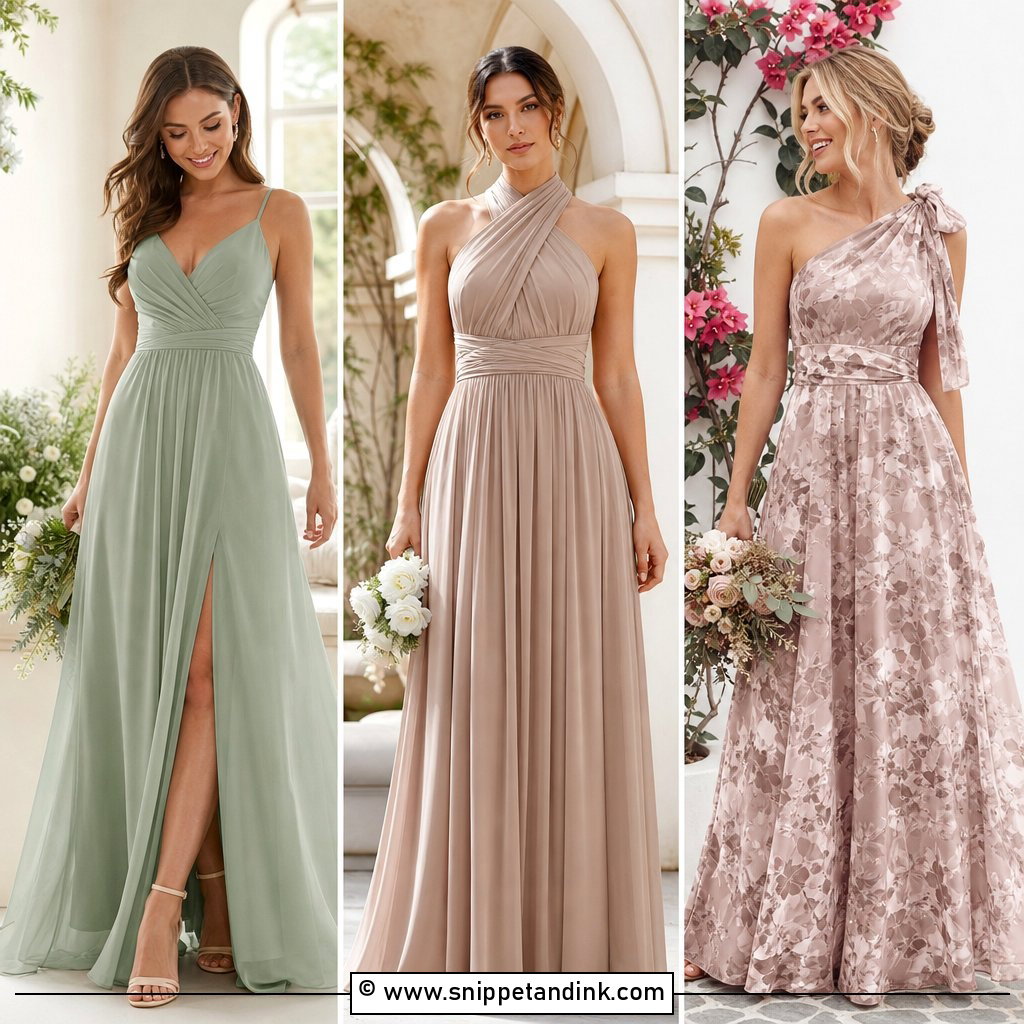
1. Sage Green Chiffon Bridal Team Dresses
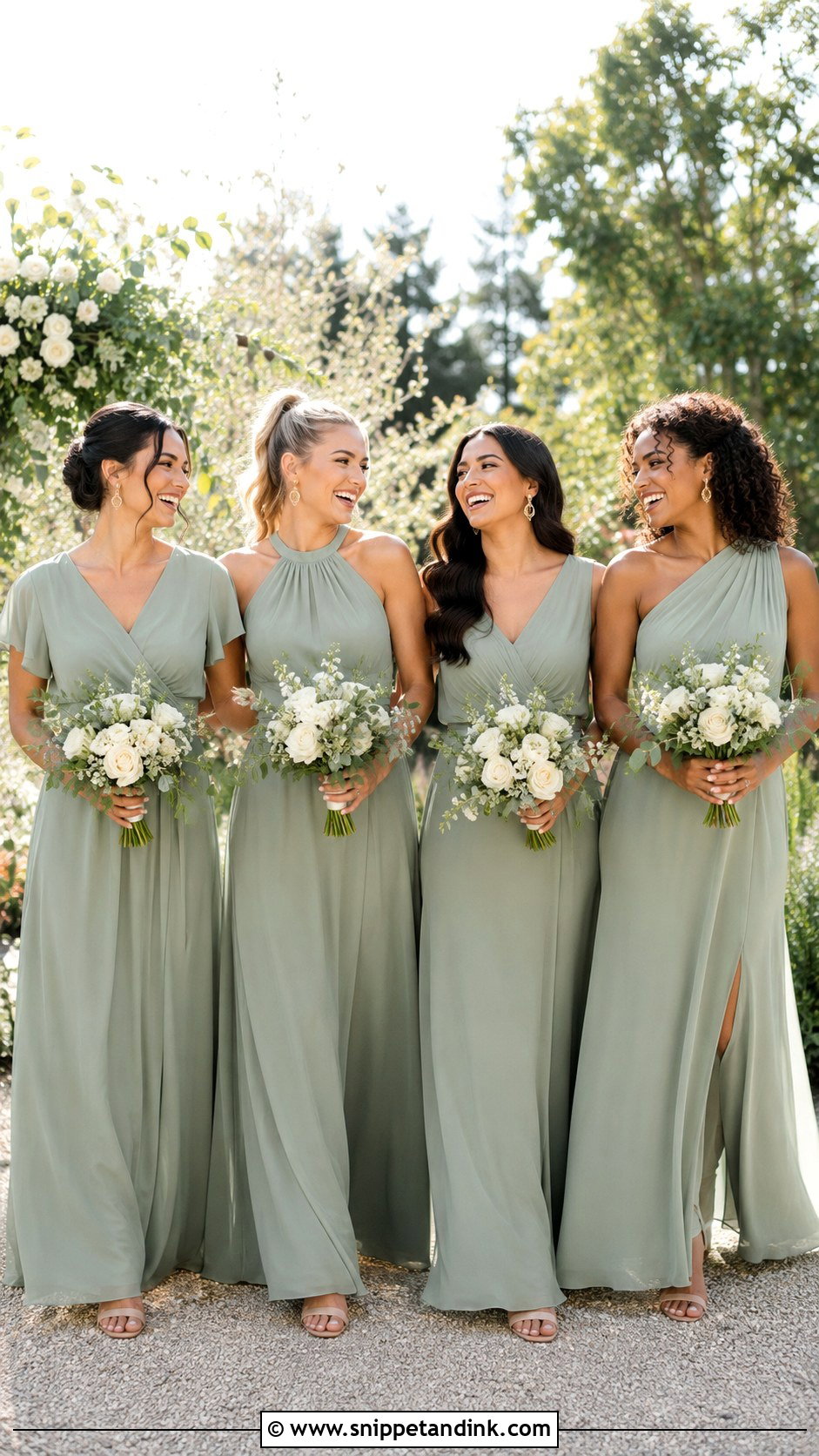
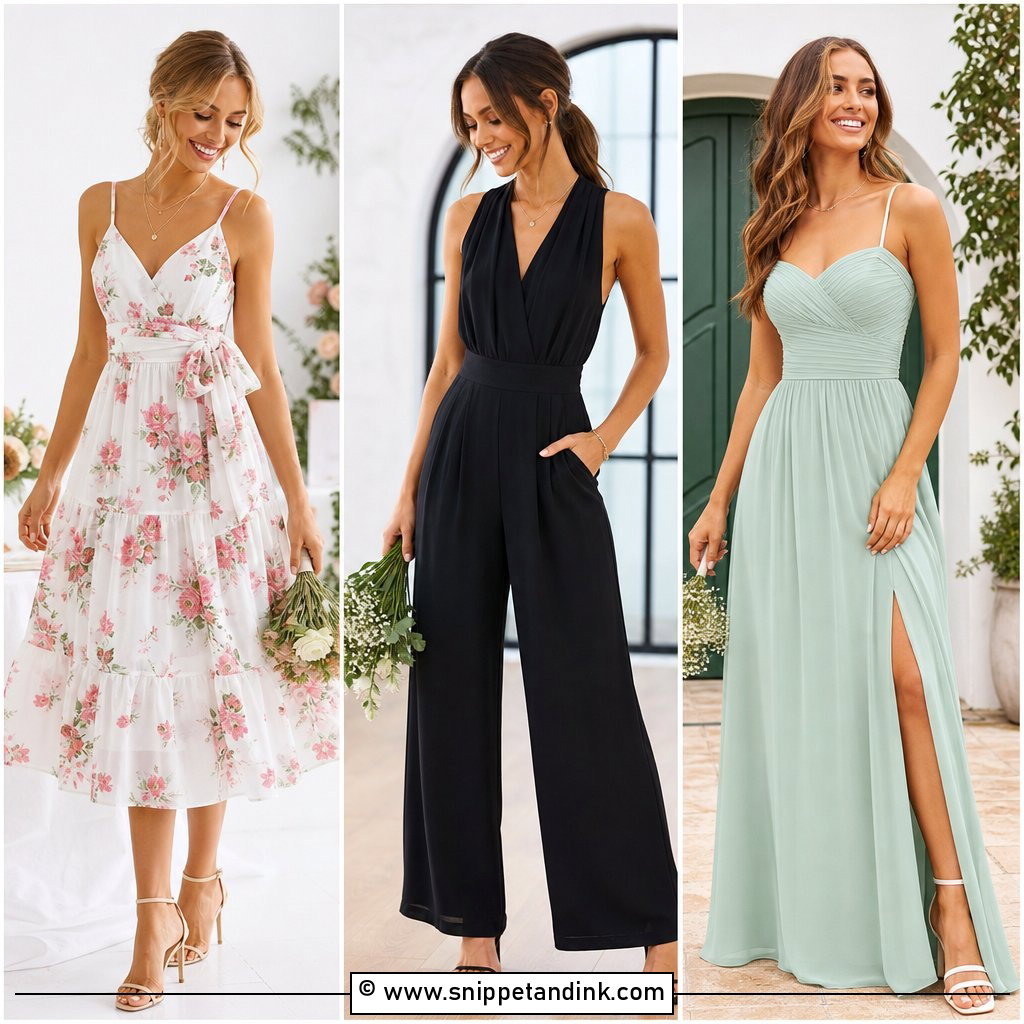
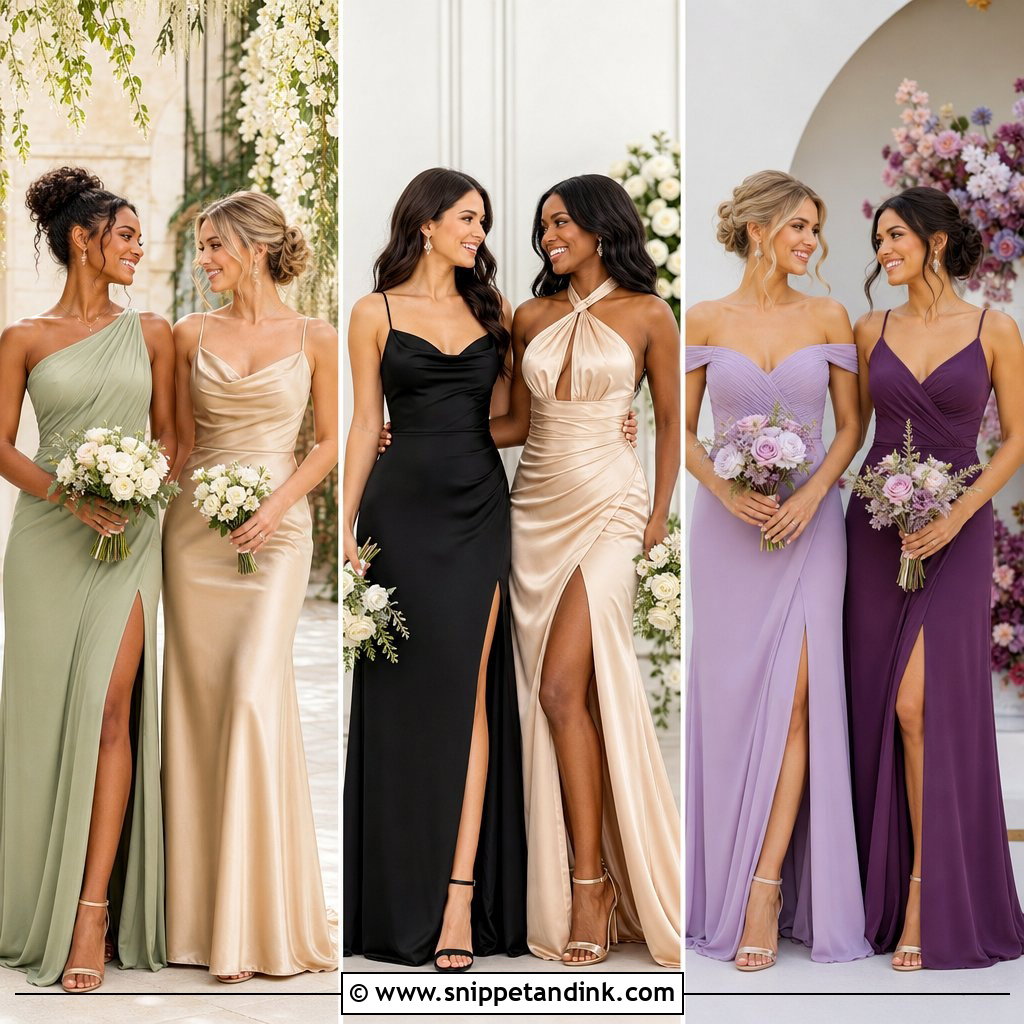
Sage chiffon is the color I see requested most for garden weddings, and it’s forgiving: it suits most skin tones and doesn’t fight the greenery. The trick is that sage disappears against a lawn and a hedge, so I ask the florist to put enough white in the bouquets to separate the dresses from the background. Keep everyone in one exact shade and floor length, then let necklines vary, from flutter sleeves to a halter or one shoulder. Nude block heels sink less into grass than stilettos. Fine gold earrings, a slim bracelet, a neutral clutch and loose waves or a low textured bun finish each look.
2. Dusty Rose Satin Bridal Team Dresses
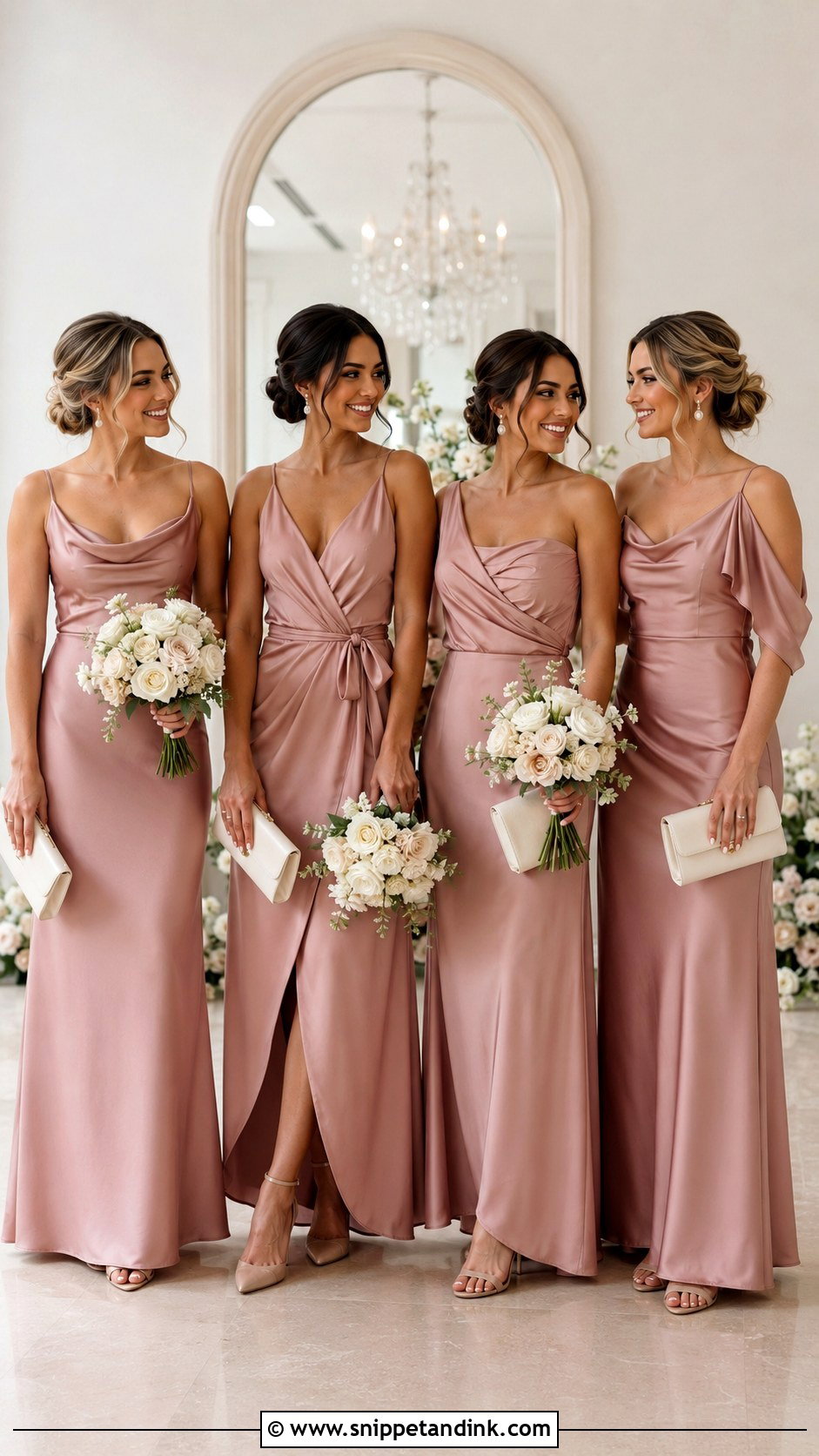
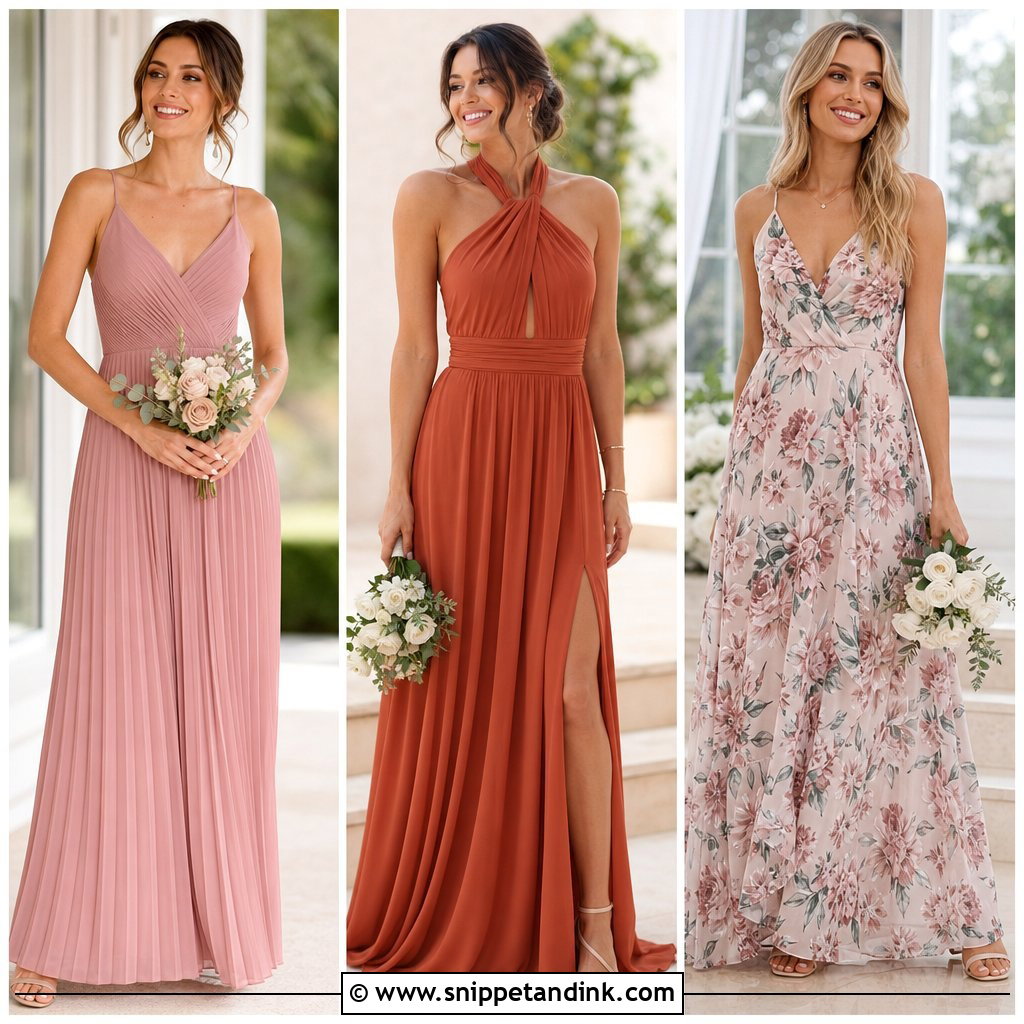
Silky dusty rose gowns look romantic but more polished than chiffon. Bias-cut maxis and soft wraps let the satin move without stiffness. Satin reflects light, though, and pink satin can read peach under warm venue lighting, so I always get swatches and look at them in the actual room before anyone orders. Draped sleeves or a cowl back help attendants who want more coverage; slim straps suit others. Champagne heels, pearl drops, cream clutches and sleek buns or brushed waves keep it simple. Ivory and muted pink flowers in the bouquets tie it together.
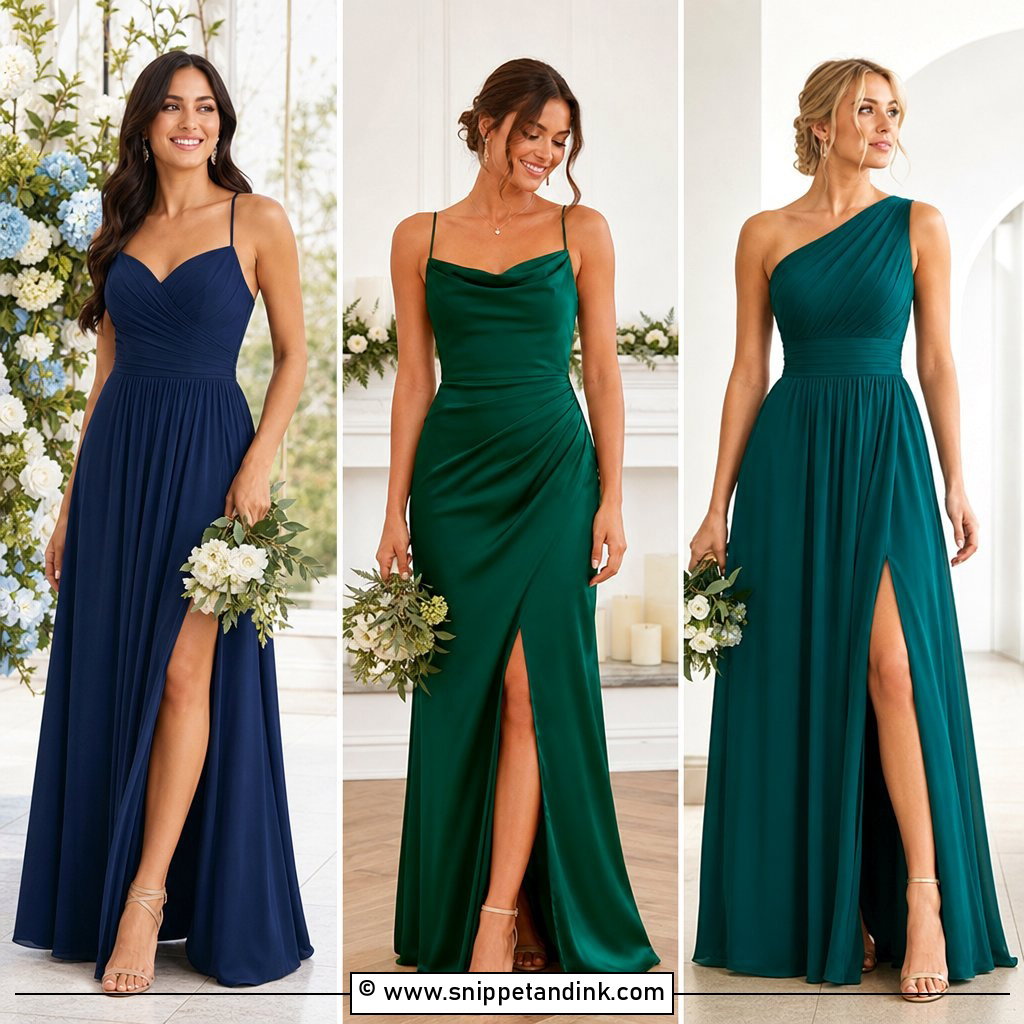
3. Navy Blue Bridal Team Dresses With Silver Heels
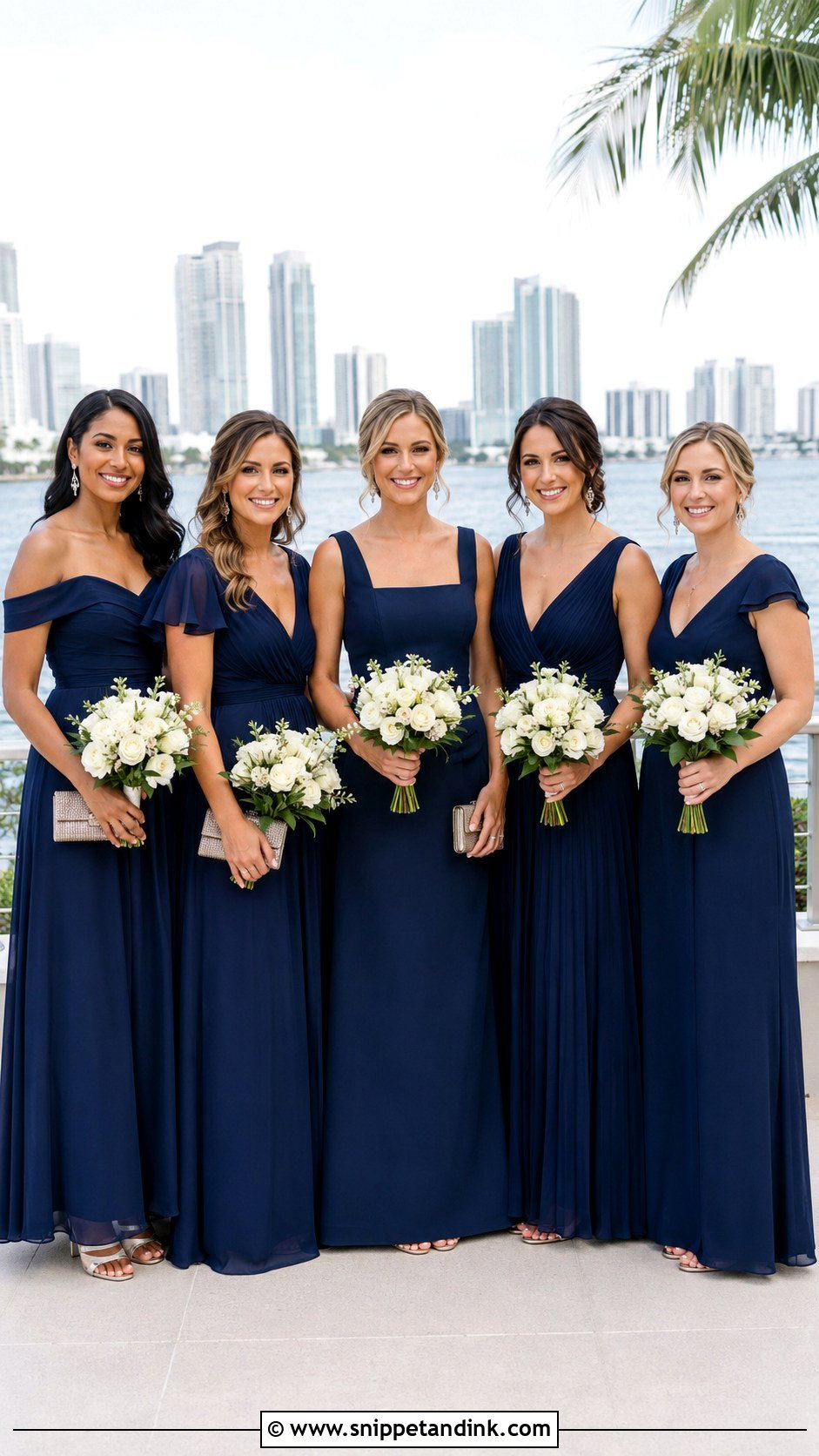
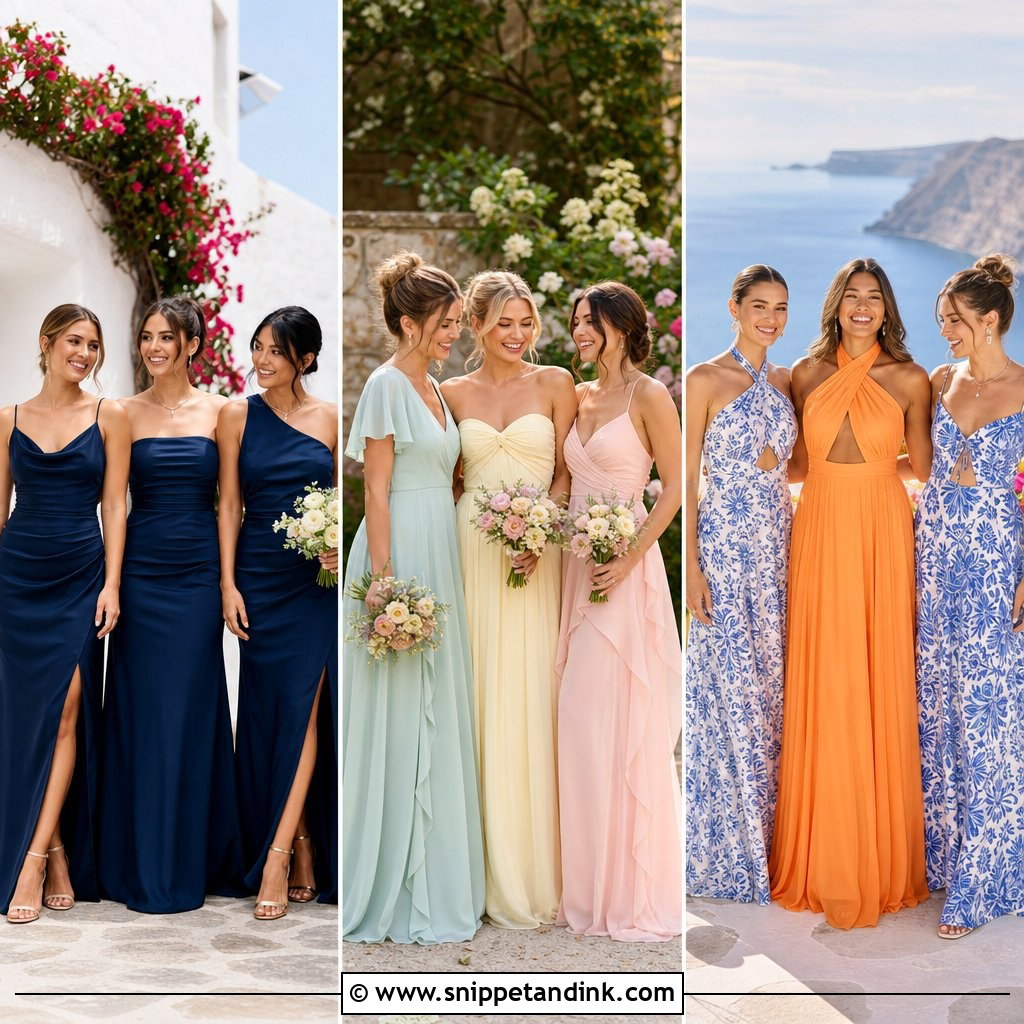
Navy gives depth for a formal wedding without the severity of black, and it’s one of the few colors almost every attendant already feels good in. Floor-length crepe or chiffon in one navy, with each person choosing her own cut, works well: wrap, square neck, cap sleeve or off the shoulder. Silver heels and crystal earrings brighten the dark fabric, and small metallic clutches keep it evening-ready. Choose sleek updos or polished waves to match the formality. One warning from the planning side: navies vary a lot between brands, so this is a color to buy from a single collection.
4. Champagne Bridal Team Dresses With Gold Accessories
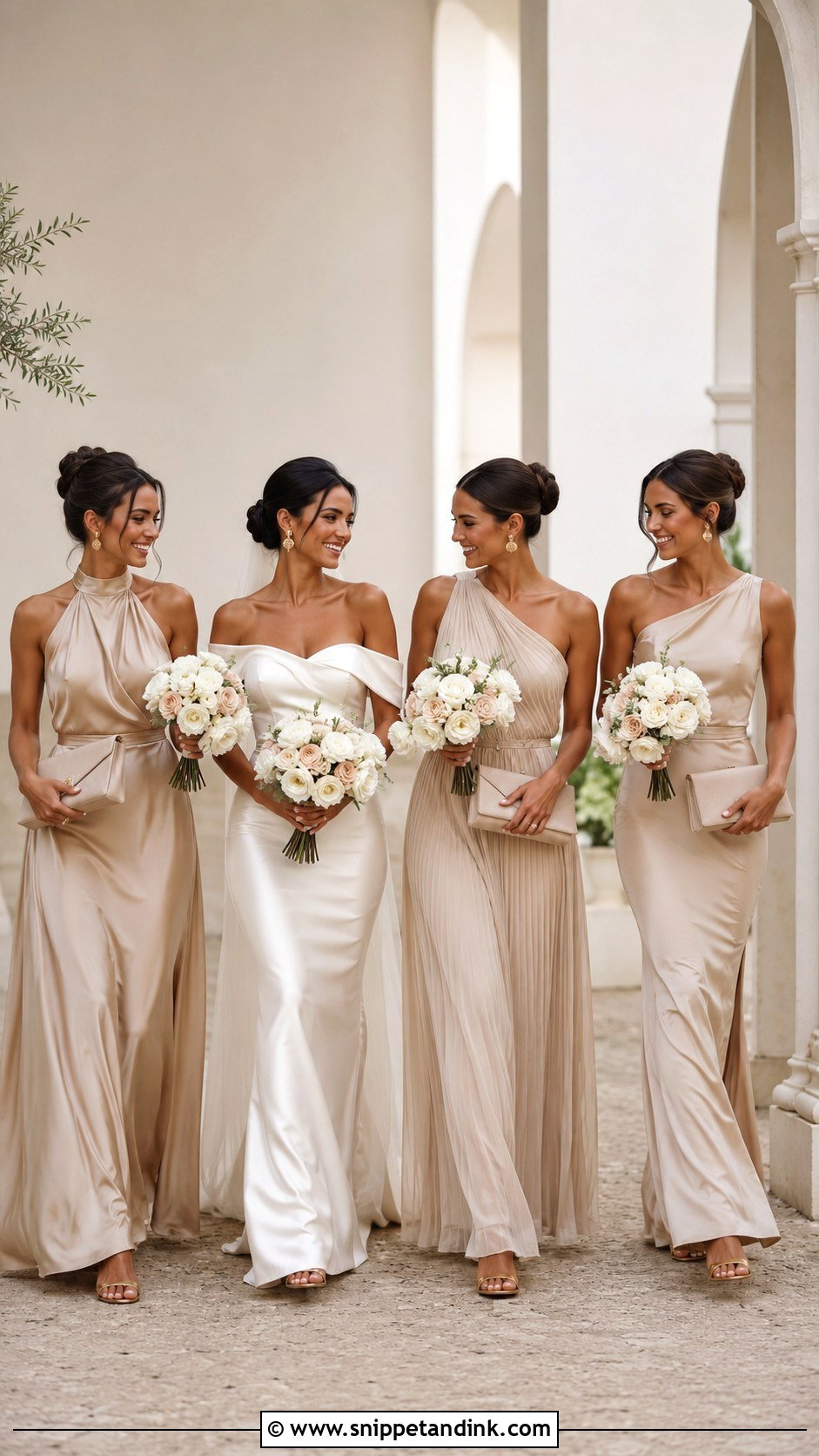
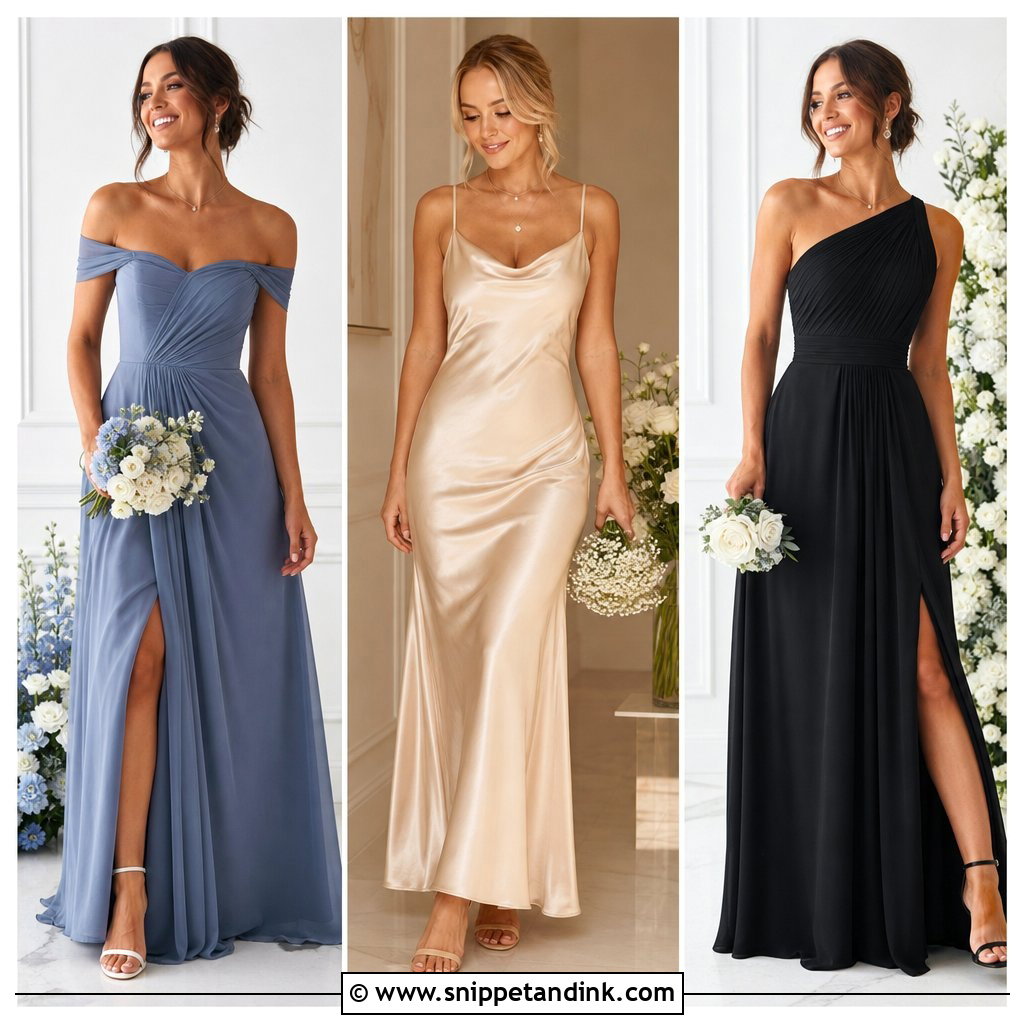
Champagne bridesmaids keep the palette neutral and the focus on the bride, but they come with a real risk. Next to an ivory or champagne wedding dress, a similar shade can look like a second bride in photographs. I compare every option against a swatch of the bride’s gown, outdoors in daylight, and pick something clearly darker or in a different fabric. Satin columns, pleated chiffon and draped one-shoulder dresses mix well when the undertone matches. Gold sandals, sculptural earrings, beige clutches, warm makeup and low buns finish it. It suits minimalist venues with cream and metallic decor.
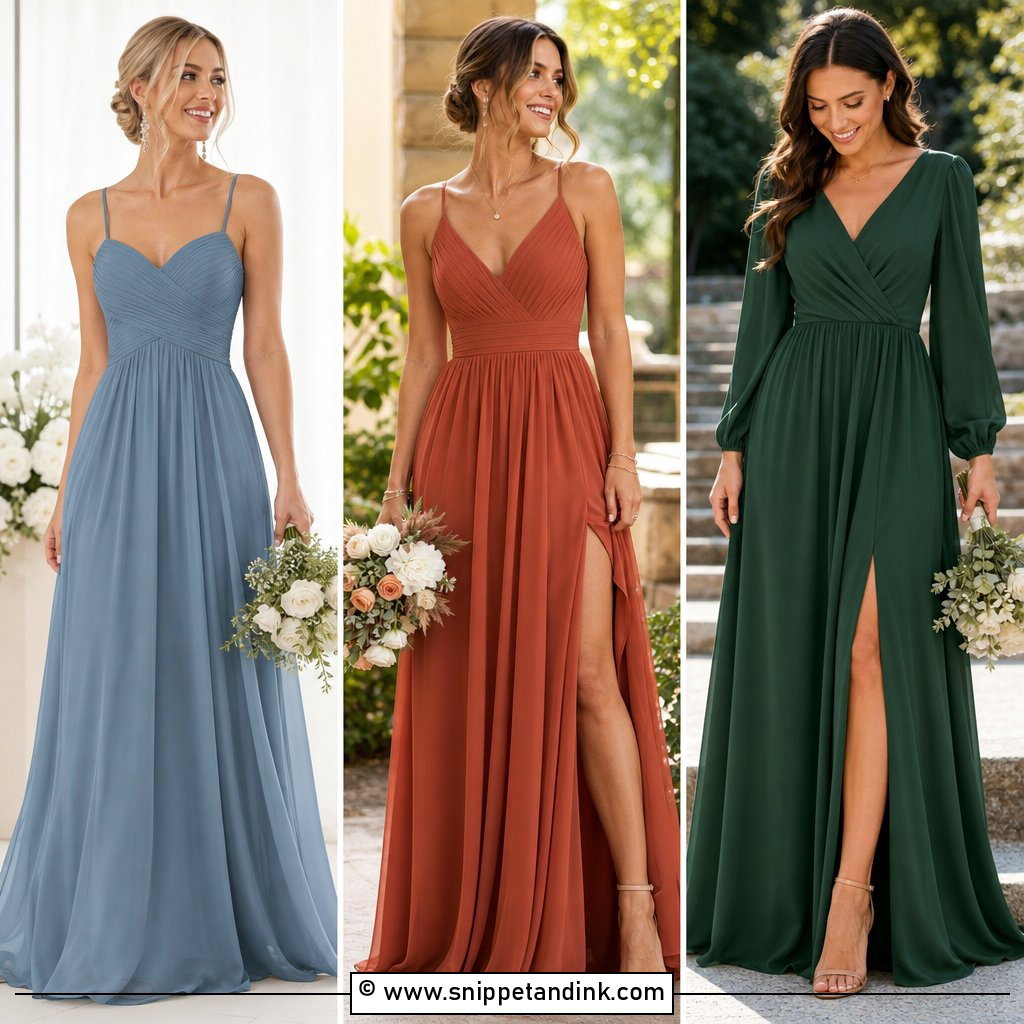
5. Terracotta Bridal Team Dresses With Neutral Shoes
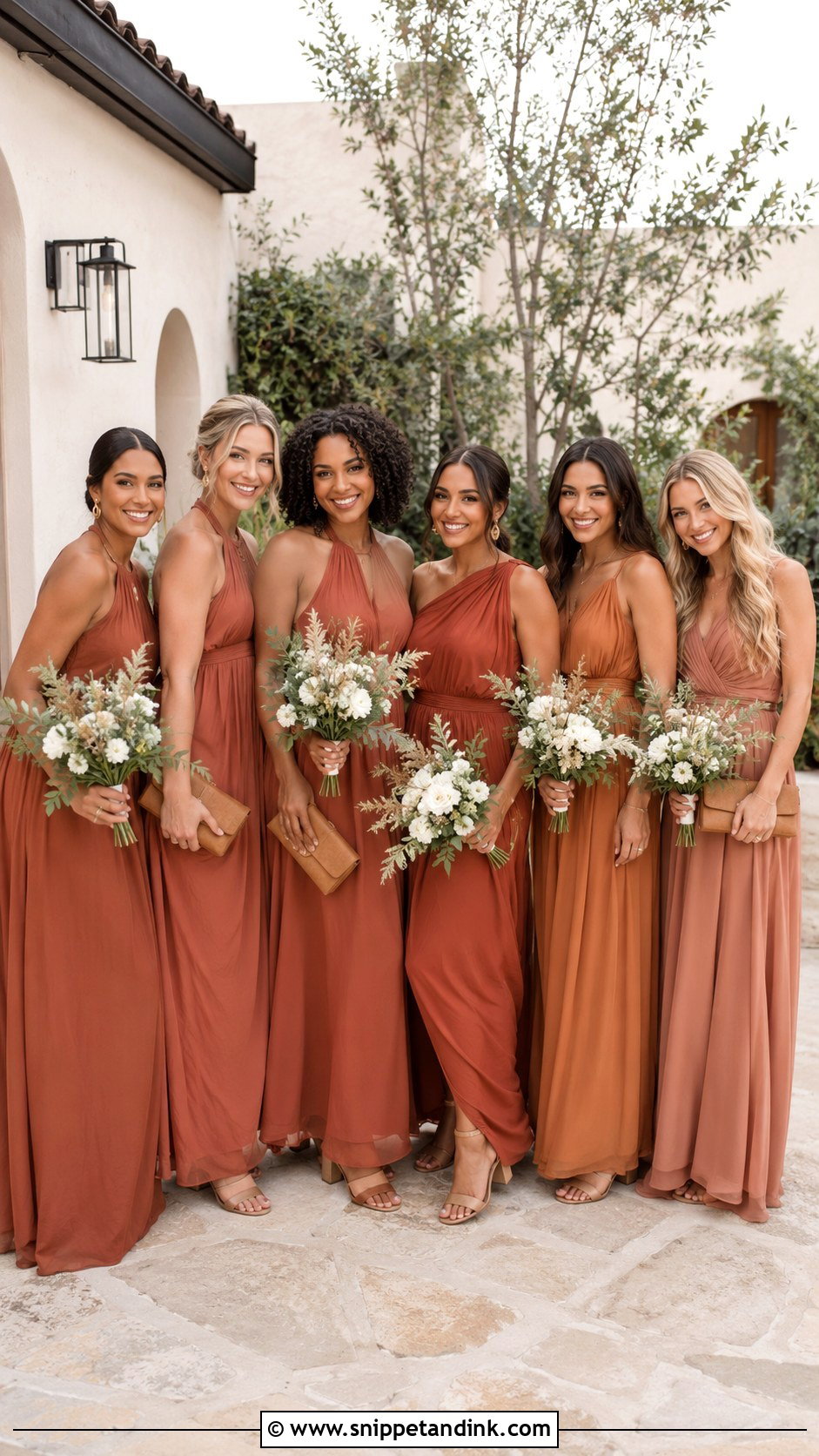
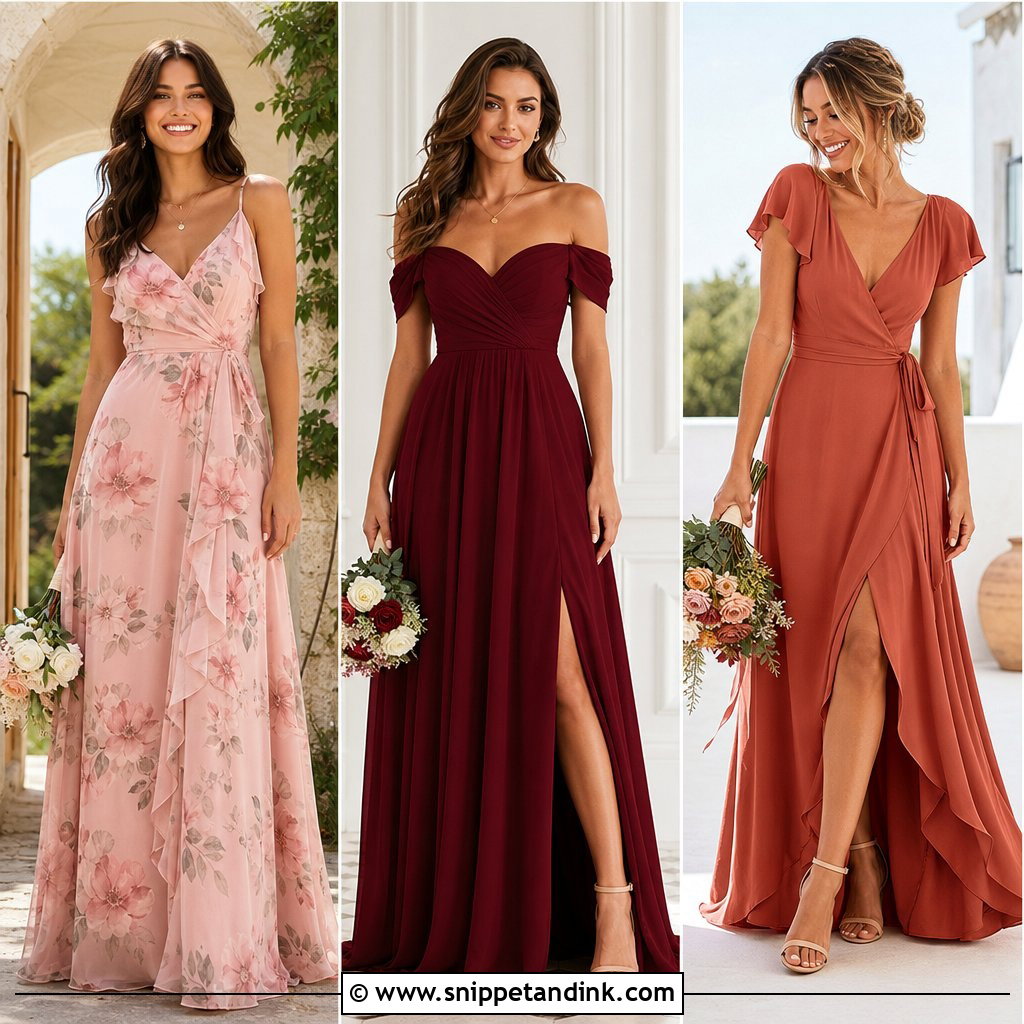
Terracotta is warm and grounded, and it’s at its best at an outdoor or fall wedding. A mix of rust, clay and cinnamon reads intentional when everyone wears the same length and a similar matte fabric; shiny satin in these shades can look brassy. Letting each attendant choose from three or four approved warm tones flatters more skin tones than forcing one. Tan block heels, simple gold jewelry and camel clutches suit it. Hair can vary if one detail repeats, such as a low bun or the same small floral pin. Cream flowers and dried grasses keep it from looking themed.
6. Black Satin Bridal Team Dresses
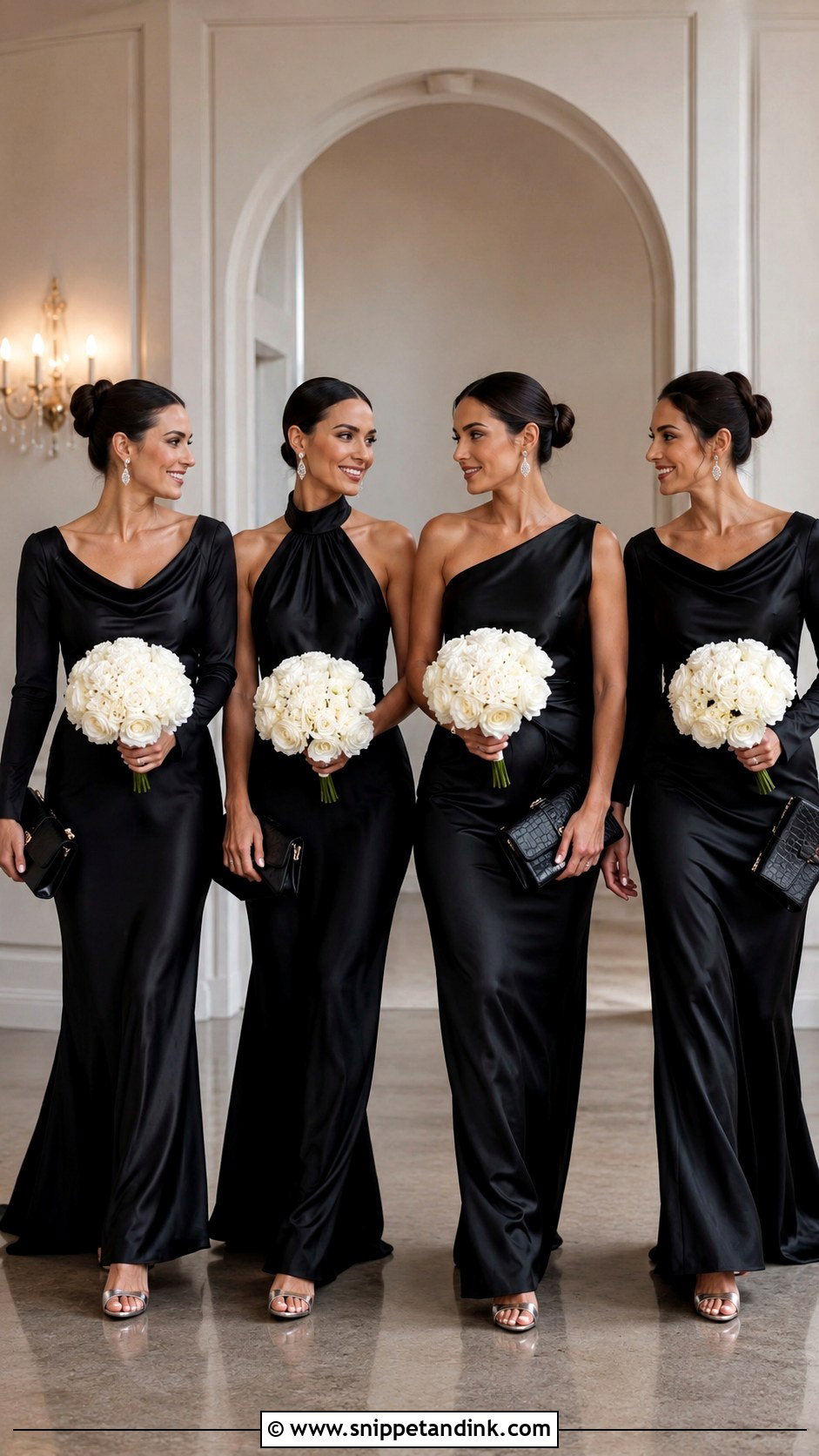
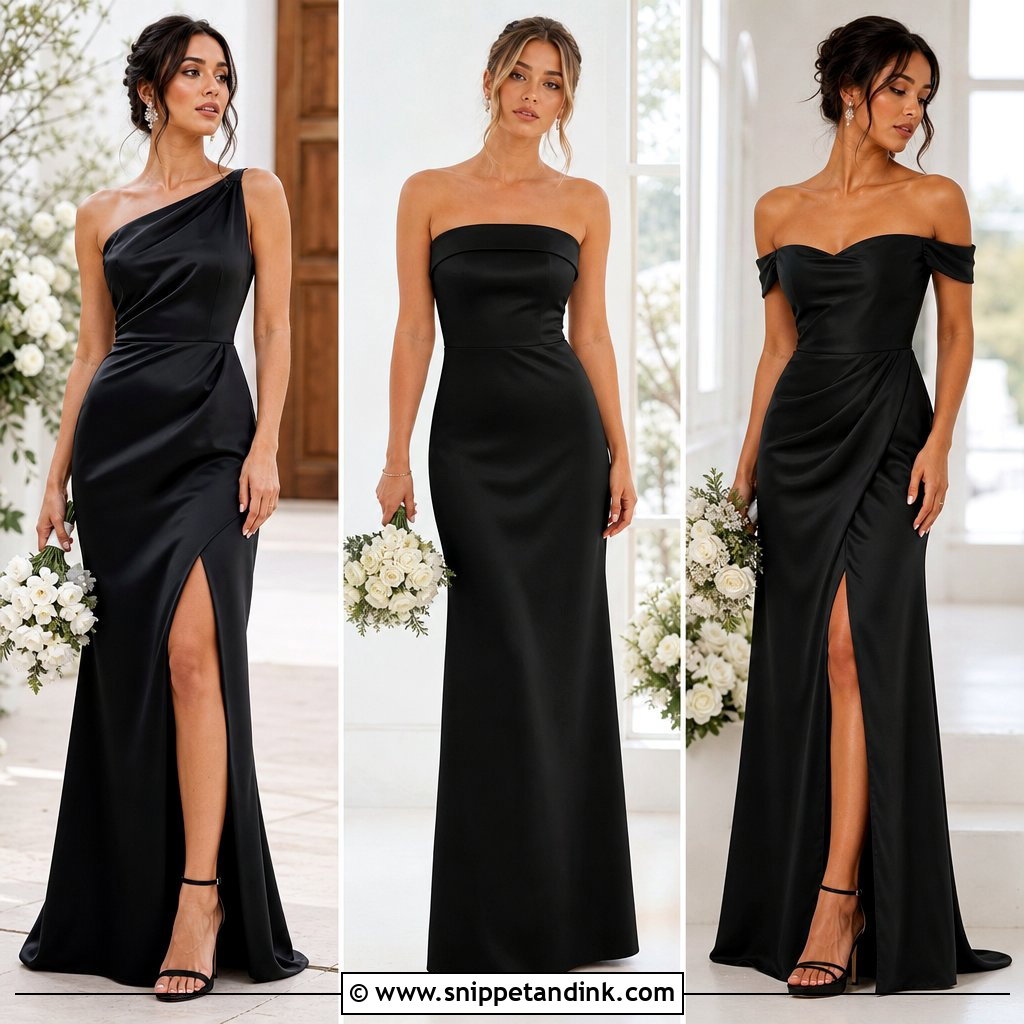
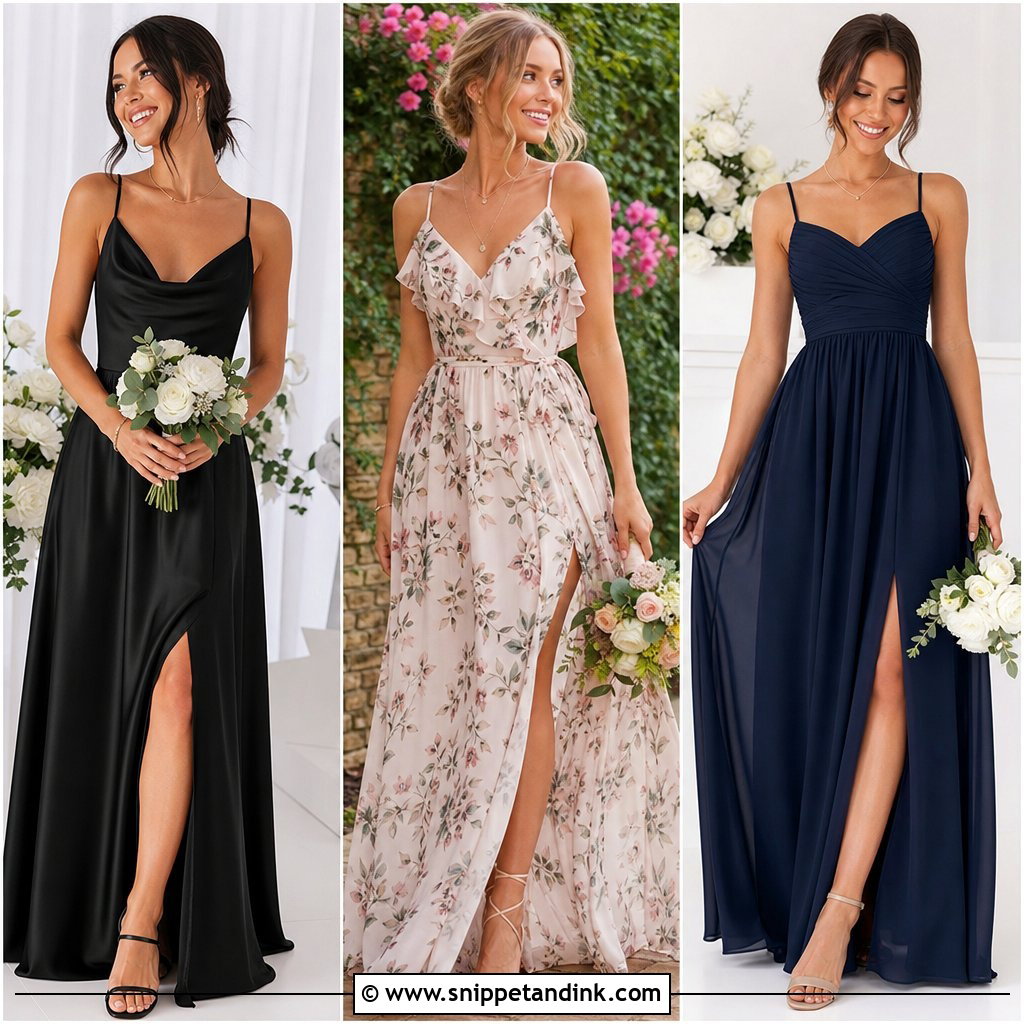
Black satin makes a sleek, formal bridal party, and it’s easy for attendants to find in their size. I’d fix the floor length and fabric and offer several cuts: Cowl-neck slips, long-sleeve columns, halters and one-shoulder dresses. Black and silver heels, small structured clutches and quiet crystal earrings keep it clean. White bouquets give a sharp contrast in photos. Some older relatives still read black as mourning, so it’s worth a quick word with family if that might come up. Keep accessories minimal, especially if the bride’s dress is detailed.
7. Floral Print Bridal Team Dresses
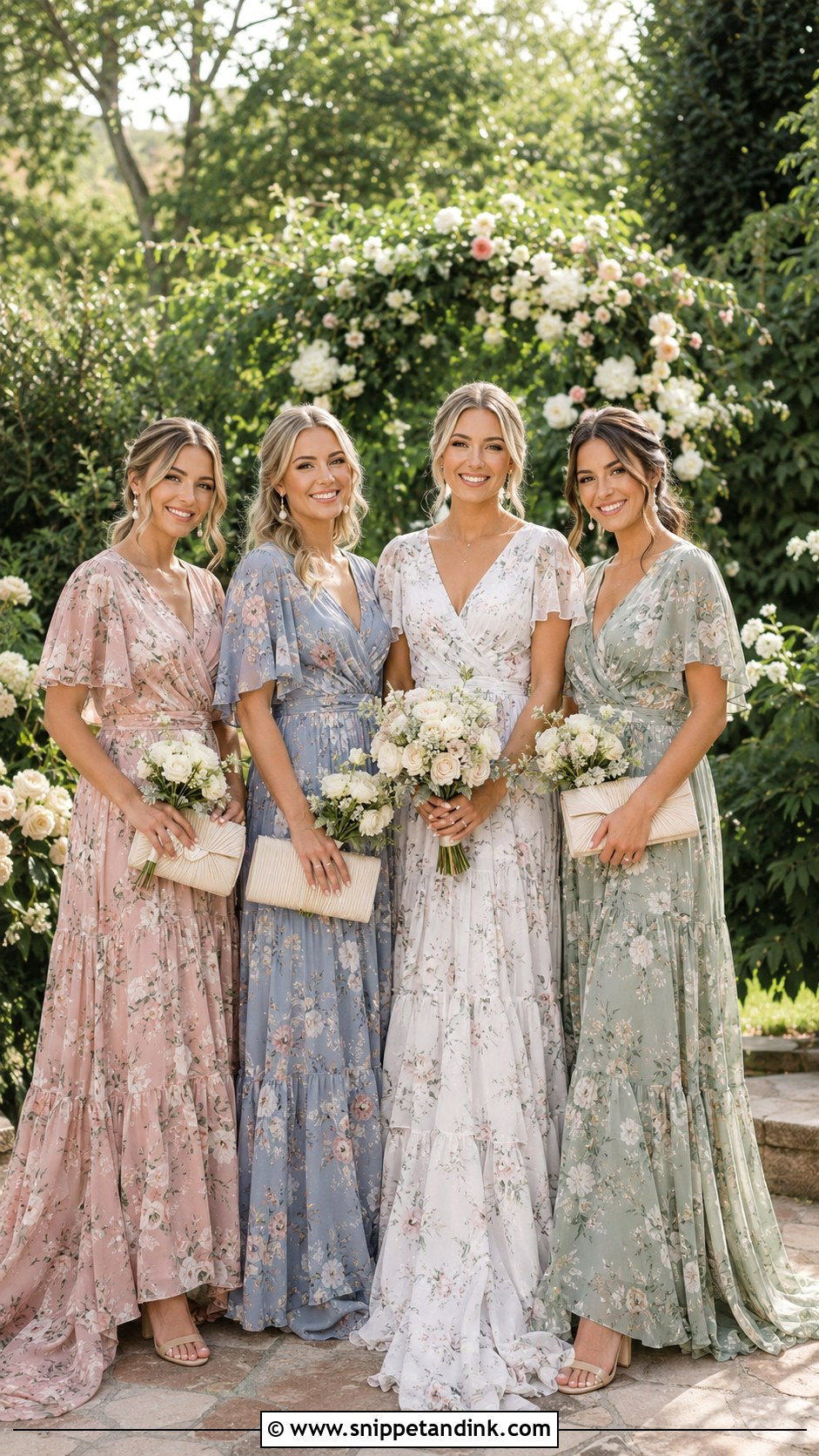
Florals are the riskiest choice on this list, and the most personal. What makes mismatched prints work is a shared background color and a similar flower scale; a large print next to a tiny ditsy one looks accidental. For example, muted pink, blue and green blooms all on ivory or pale blush. Flowing maxis with wrap bodices, flutter sleeves or tiered skirts suit the prints. Neutral heels, pearl studs and woven or cream clutches stay out of the way. I ask the florist to repeat one or two flowers from the fabric in the bouquets, which ties it all together.
8. Emerald Green Velvet Bridal Team Dresses
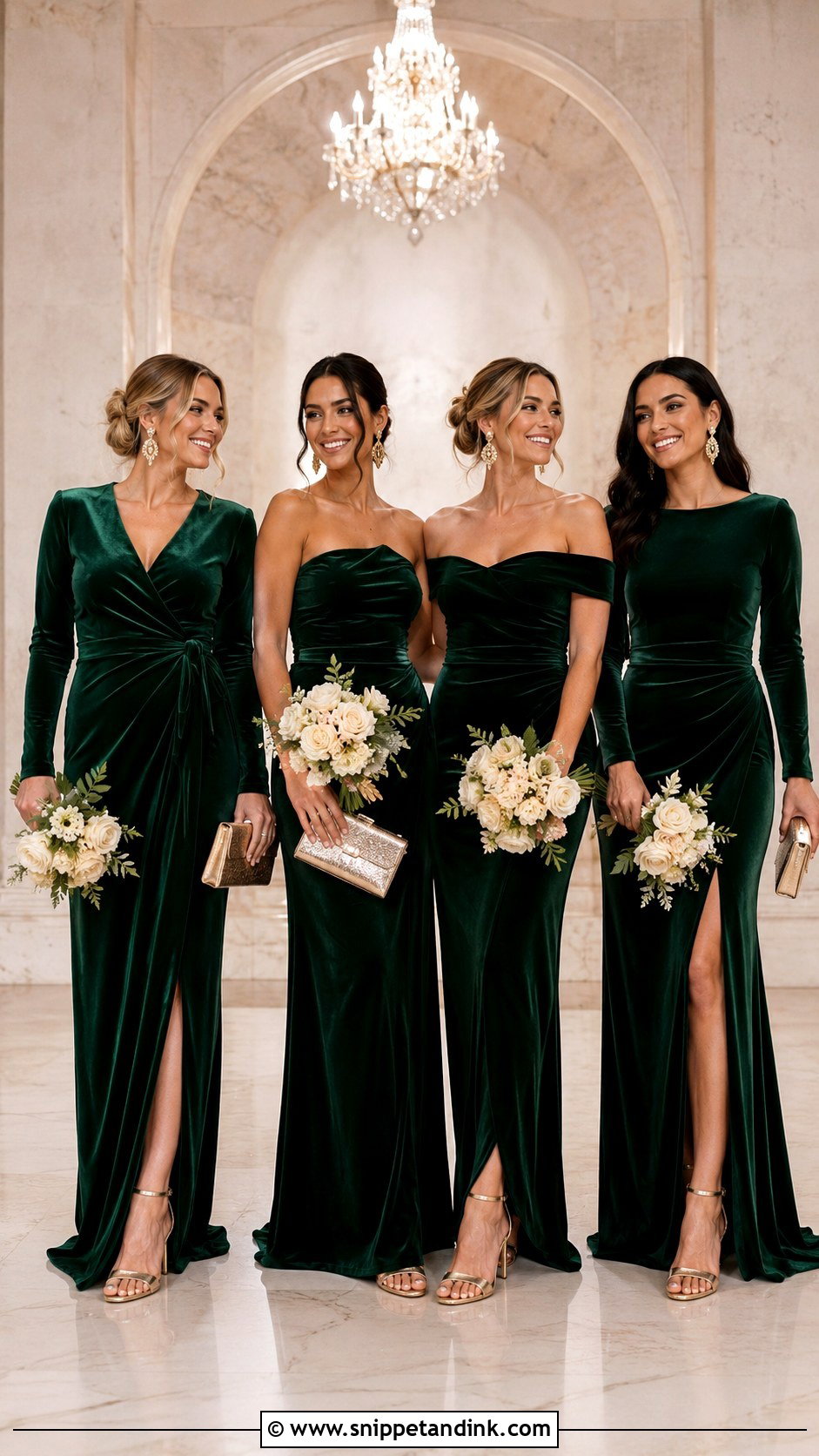
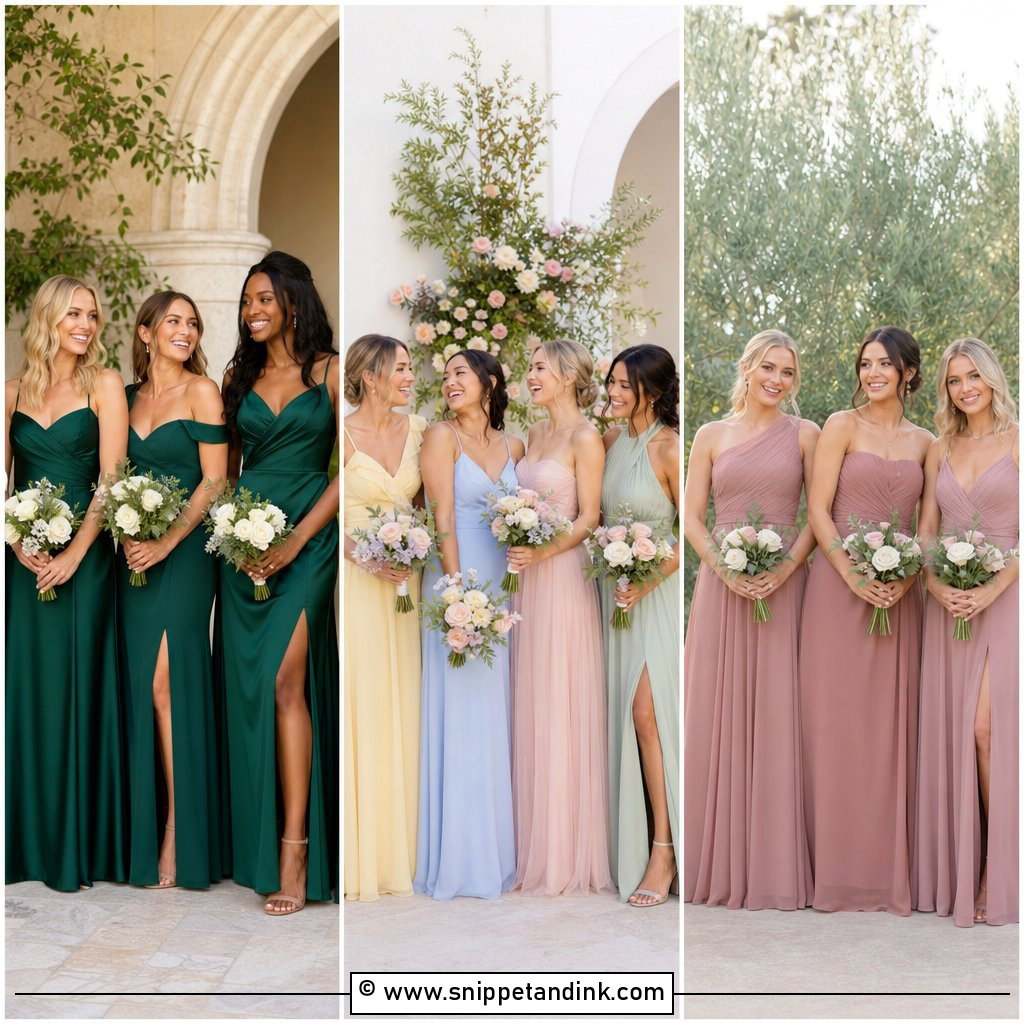
Emerald velvet has the depth a winter wedding needs. Wrap, column or off-the-shoulder velvet gowns look rich enough that accessories can stay small: gold heels, slim metallic clutches, modest statement earrings. Velvet shows crushing where people sit, so I warn attendants not to fold it in a suitcase and to hang it in a steamy bathroom the night before. Cream flowers with deep greenery and a little burgundy suit the jewel tone. Offer sleeveless dresses for warm indoor venues and long sleeves for cold ones. Keep everyone in one exact emerald, because velvet varies a lot between dye batches.
9. Dusty Blue Bridal Team Dresses
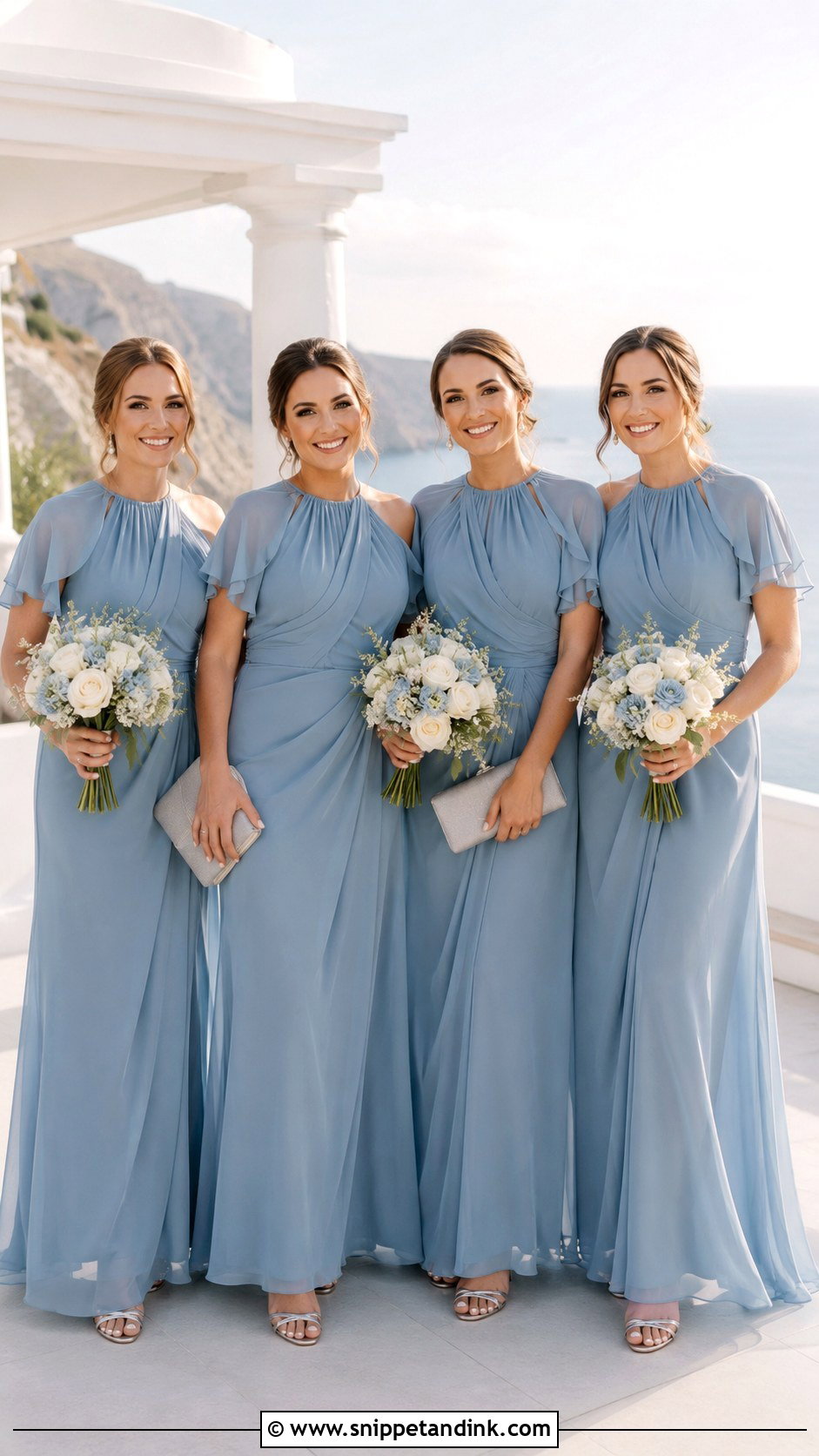
Dusty blue is calm and airy, which is why I see it so often for coastal, spring and summer weddings. Lightweight chiffon with a floor-length skirt moves well outdoors, and each attendant can pick her bodice: flutter sleeves, pleated straps, a wrap or a modest high neck. Silver sandals, pearl earrings and pale gray clutches suit the cool undertone. If the ceremony is on grass or sand, block heels or dressy flats save a lot of wobbling. Loose curls, half-up styles or textured low buns finish it, with white and pale blue flowers in the bouquets.
10. Burgundy Bridal Team Dresses With Gold Heels
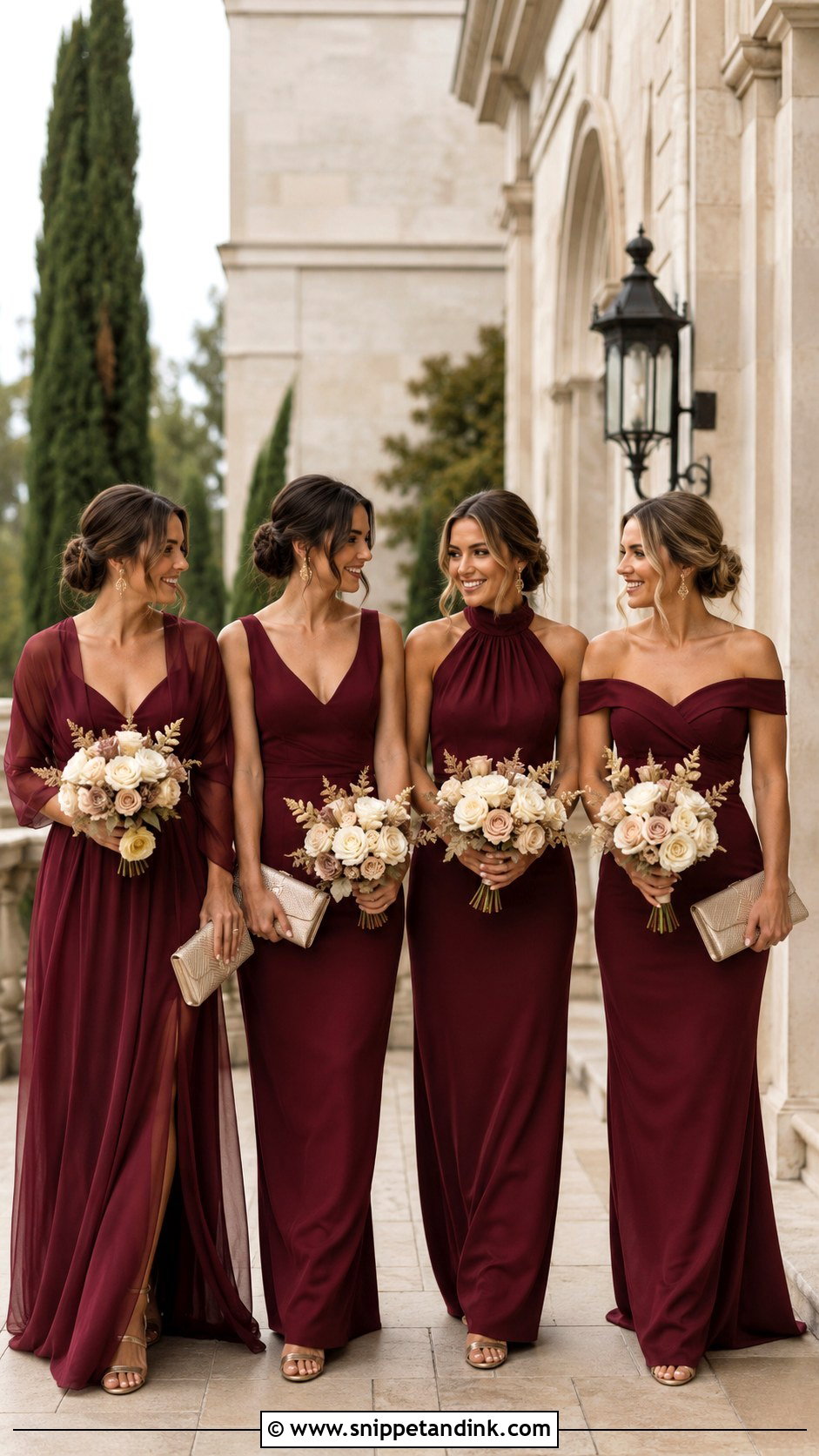
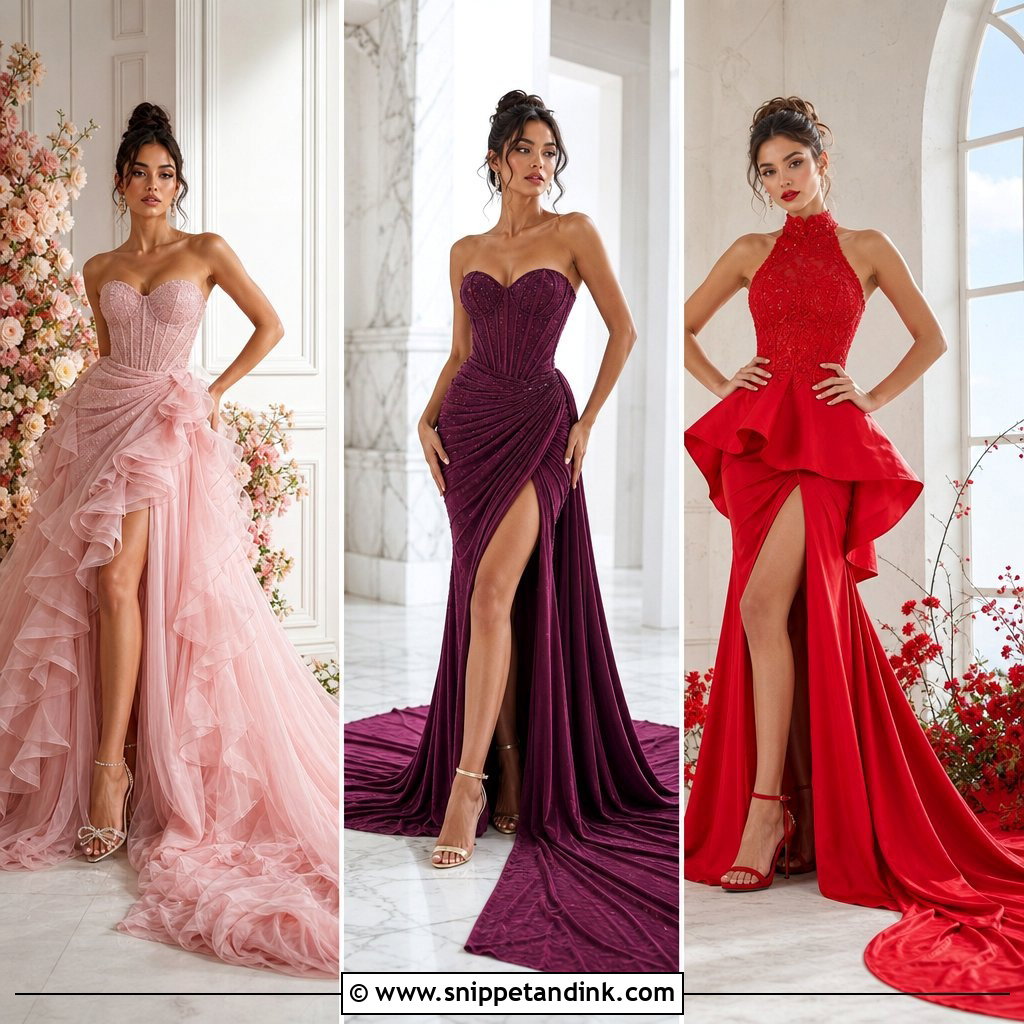
Burgundy is dramatic but classic. Chiffon, crepe or velvet can all work, but mixing them in one shade makes the colors look different, so pick one main fabric. Within it, offer wrap dresses, V-neck maxis, high necks and off-the-shoulder cuts. Gold heels and warm metallic earrings lift the dark color. Polished waves or low chignons suit it. I’d put cream and muted pink flowers in the bouquets so the gowns don’t look heavy. Burgundy is at its best in fall and winter, with candlelight and wood or stone around it.
11. Lavender Bridal Team Dresses With Pearl Accessories
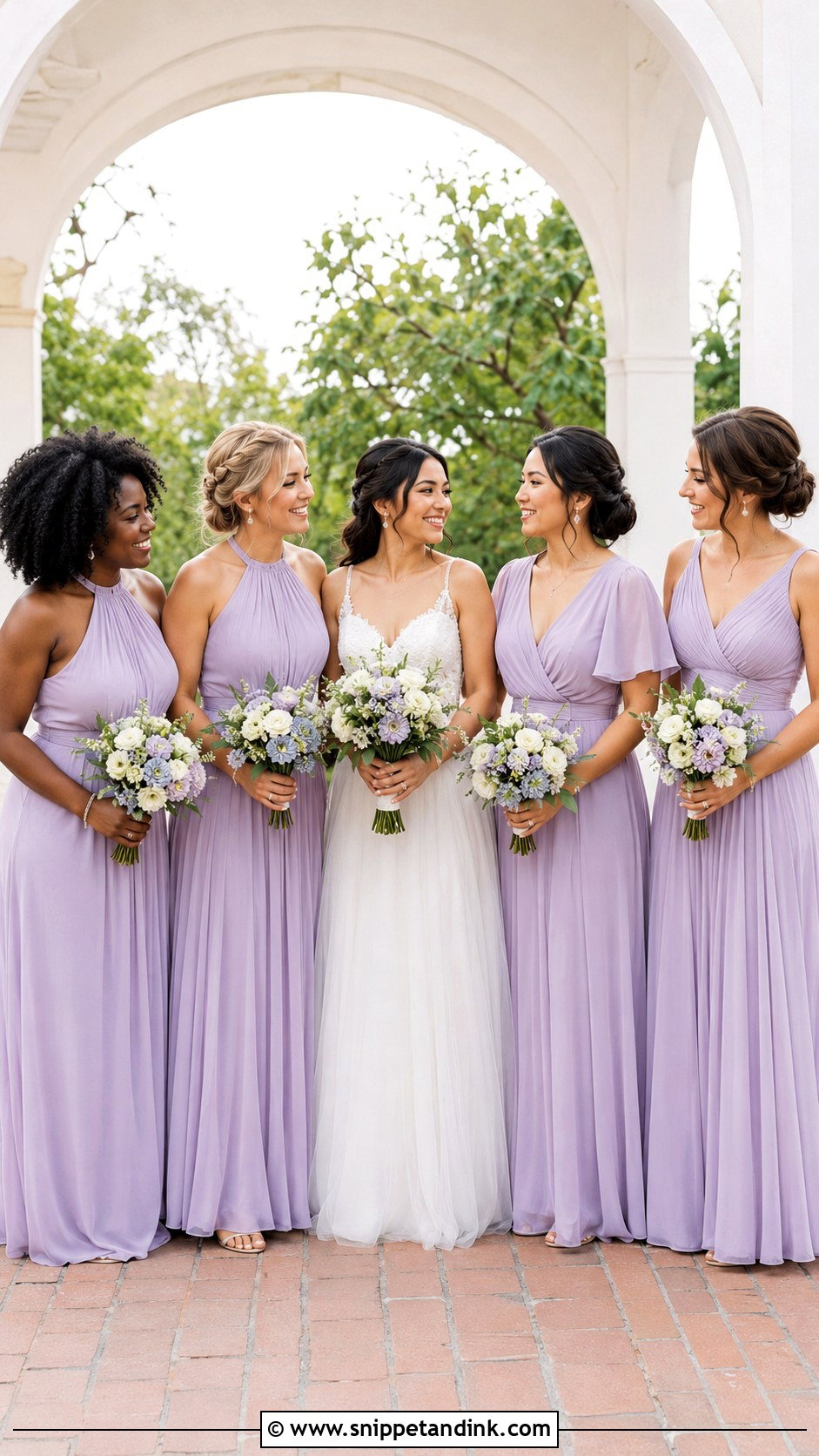
Lavender dresses add color without overpowering the flowers or the bride. Flowing chiffon maxis are an easy base when the group includes different heights and builds. Keep shade and fabric consistent, then vary halters, flutter sleeves, empire waists and pleated wraps. Lavender can lean gray or pink depending on the brand, so I insist on one supplier or a swatch every attendant checks against. Nude or silver heels, pearl earrings, pale clutches and loose braids or soft buns suit it. Repeating the same pearl piece or bouquet ribbon ties the group together.
12. Blush Pink Bridal Team Dresses With Nude Heels
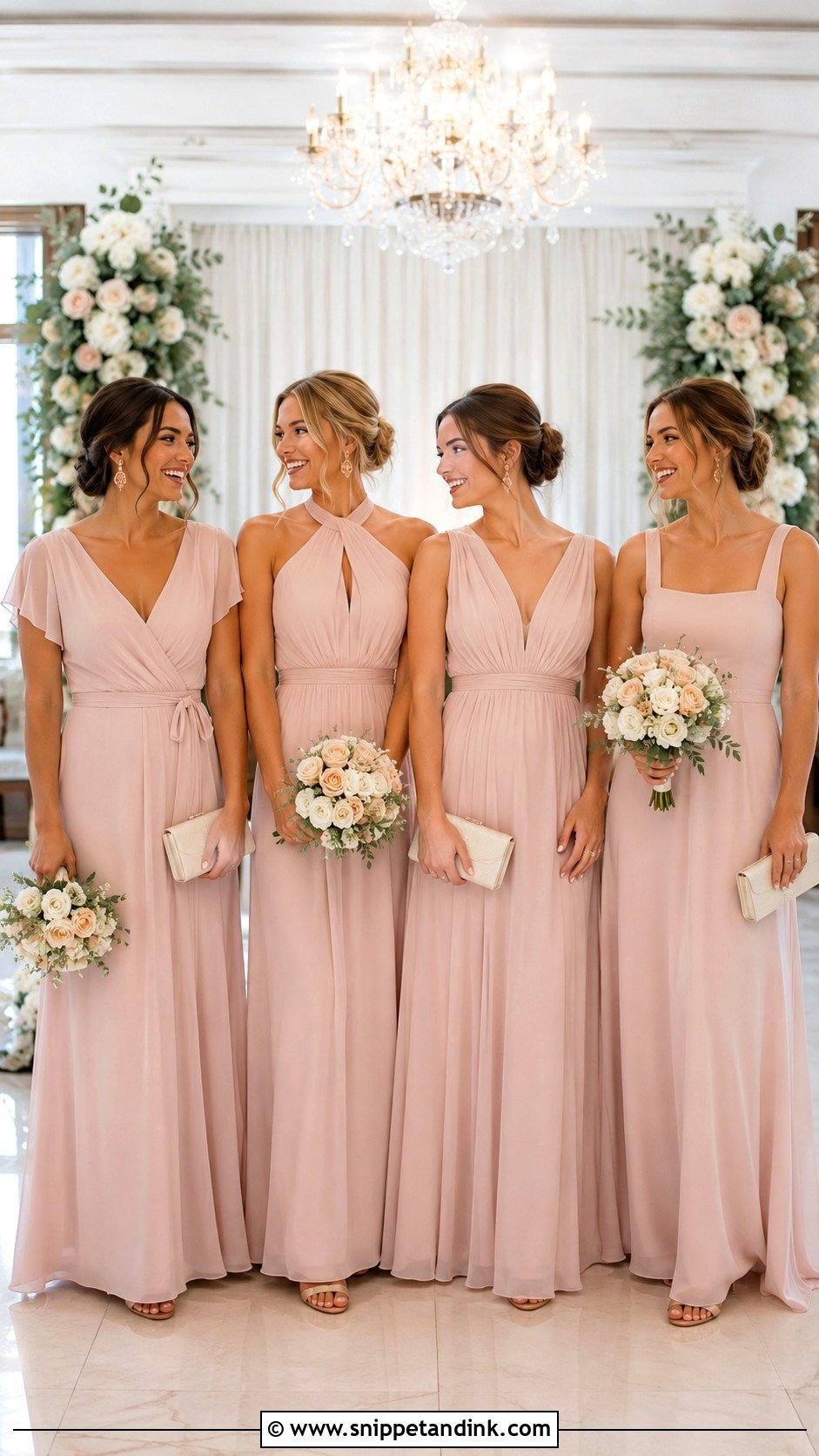
Blush varies more than any shade I work with, from pale peachy pink to a cool, almost lilac pink. One approved swatch and a check that every gown has the same warm or cool undertone saves a lot of grief. Floor-length chiffon with different necklines works well: a short-sleeve wrap for one, a sleeveless halter or pleated V-neck for another. Nude heels lengthen the line and rose-gold earrings add a little shine. Ivory clutches, natural makeup and low updos or loose curls finish it, with white, blush and peach flowers in the bouquets.
13. Mixed Jewel Tone Bridal Team Dresses
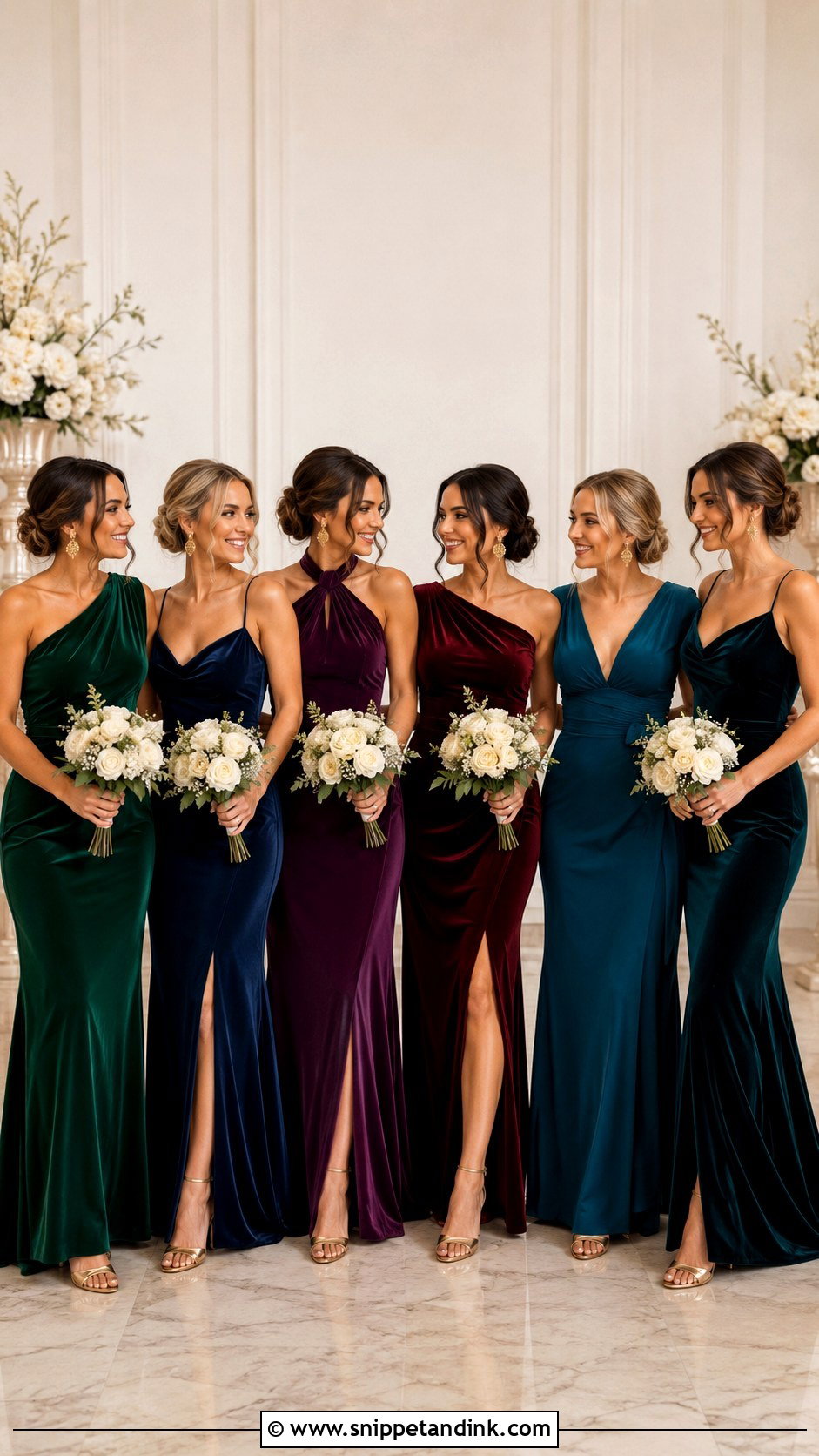
Would one color feel too limiting? Mixed jewel tones let each bridesmaid wear her own shade and still look connected. Emerald, sapphire, plum, burgundy and deep teal work well together, ideally all in velvet or all in matte satin. Keep every gown floor length and similarly formal. Gold heels and gold earrings repeat across the group. I assign colors before anyone shops, partly so the lineup can be balanced and partly so two people don’t end up in the same teal by accident. Cream blooms with deep greenery calm the bouquets, and sleek buns or polished waves finish it.
14. Pastel Mismatched Bridal Team Dresses
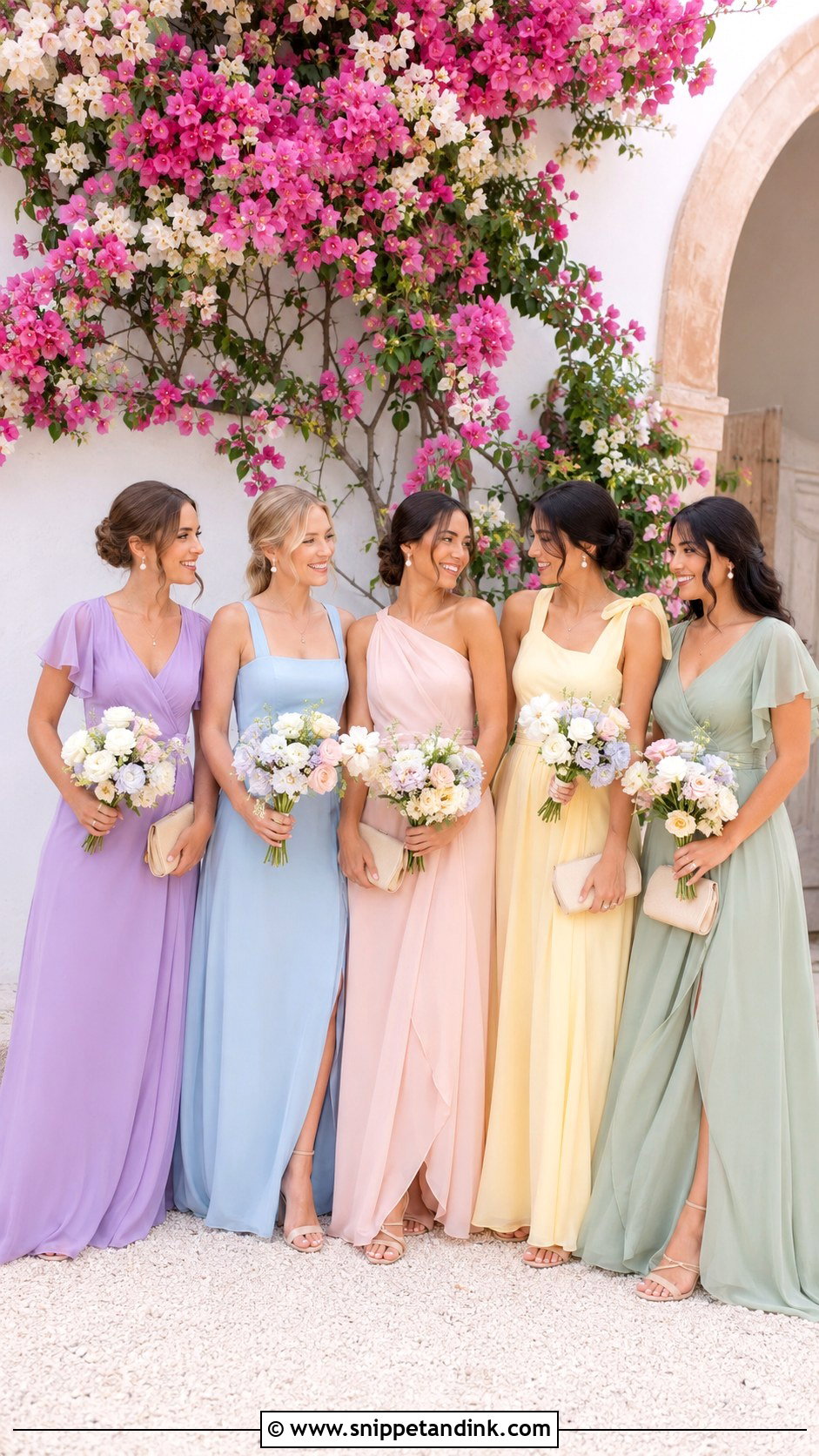
Pastels look modern when every shade has the same softness. I’d give attendants a controlled set of lavender, pale blue, blush, butter yellow and soft sage rather than open choice. Floor-length chiffon or tulle helps the colors connect. Each person can pick a wrap, square neck, one shoulder or flutter sleeve. Butter yellow is the shade that washes out pale skin most often, so I give it to whoever it suits best rather than whoever asks first. Nude sandals, pearl earrings, cream clutches and matching bouquet ribbons repeat across the group. Before the ceremony, I line the bridesmaids up by color so the shades are spread evenly.
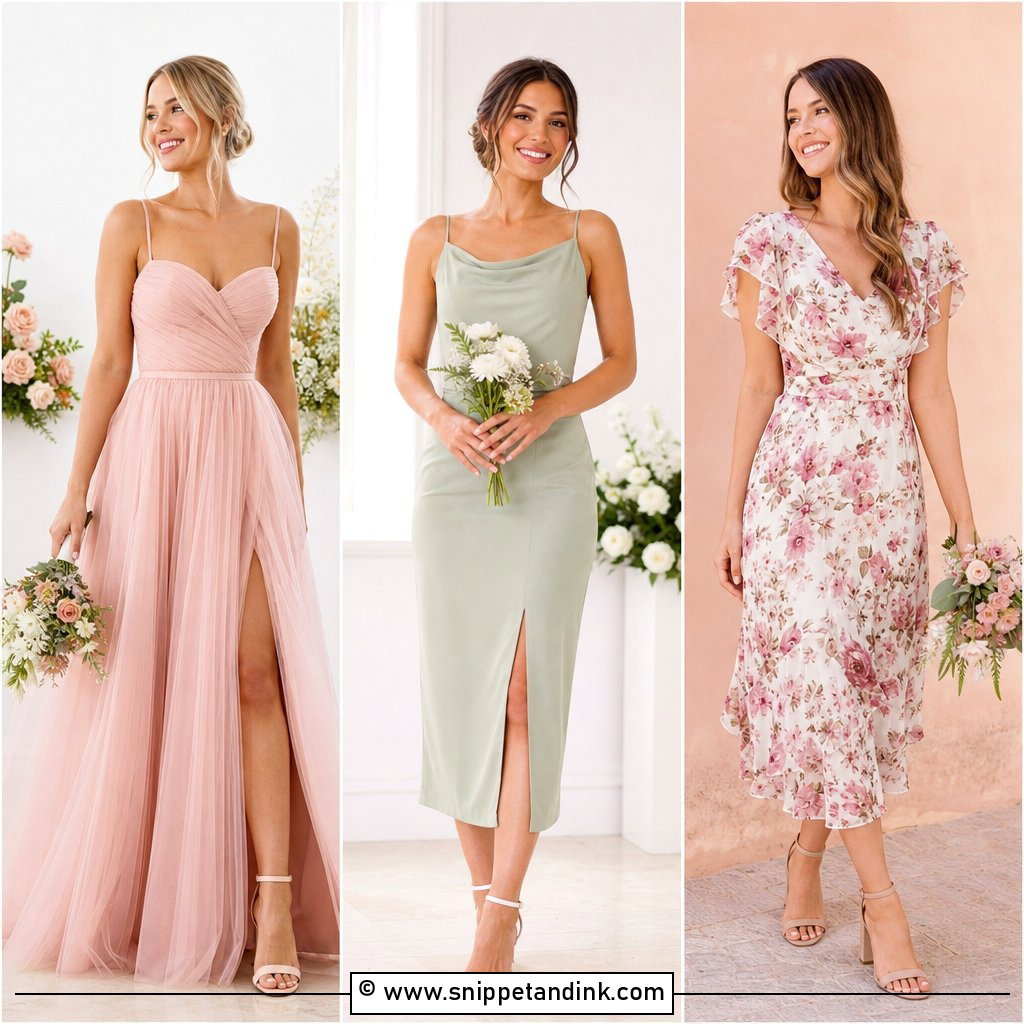
15. One-Shoulder Bridal Team Dresses
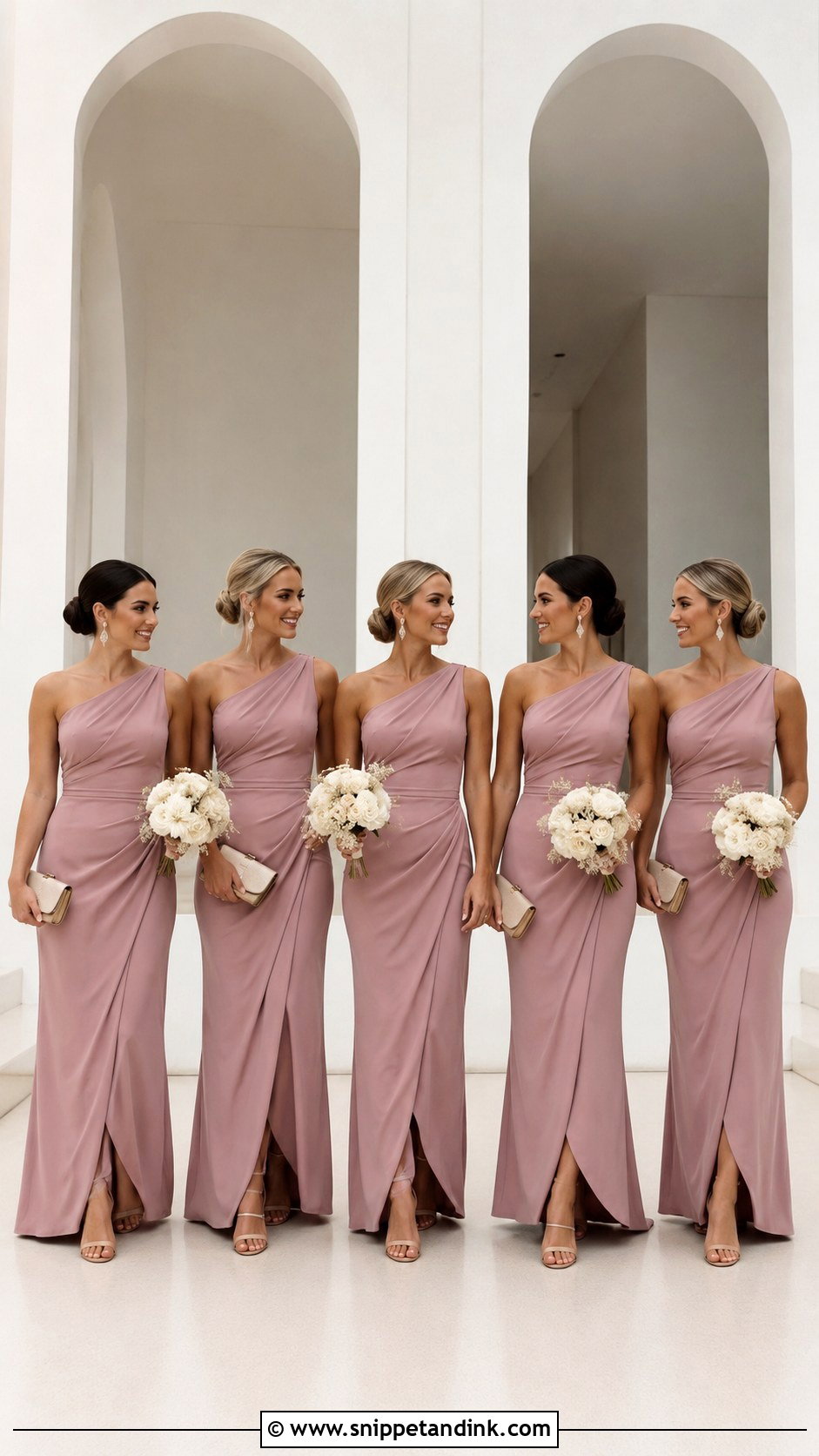
One-shoulder gowns give a group a clean, unified shape straight away. Pick one solid color, such as dusty rose, sage, navy or terracotta, and check that the drape sits comfortably across the bodice. Floor-length crepe holds the line while still moving. A one-shoulder strap can slip on narrow shoulders, so attendants should try it on with their arms raised, as if hugging. Skip necklaces entirely; heeled sandals, small drops and compact clutches are enough. Sleek low buns or side-swept waves keep the shoulder visible. Ask for slightly smaller bouquets so they don’t cover the bodice.
16. Long-Sleeve Bridal Team Dresses
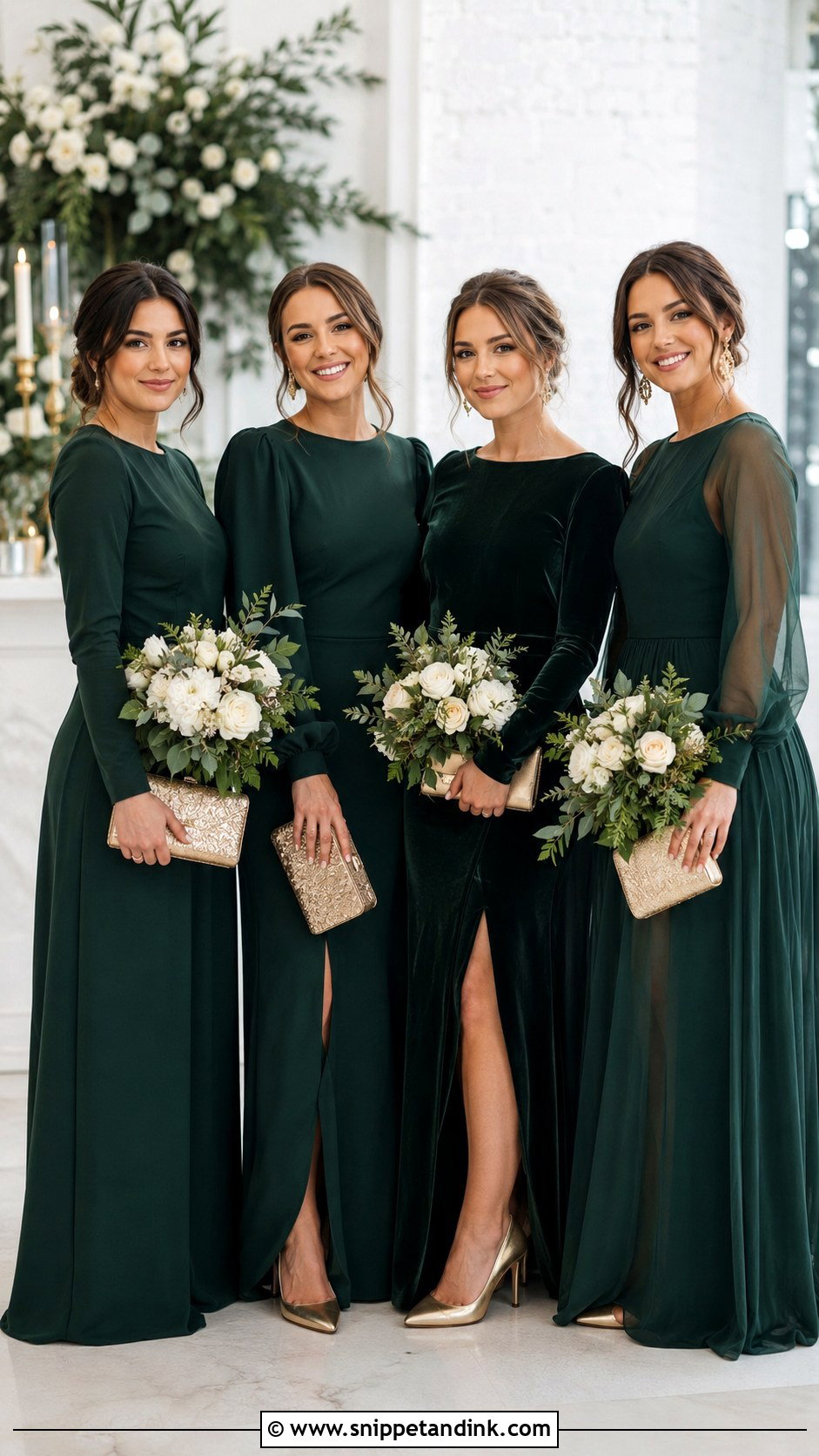
When temperatures drop, long sleeves give coverage and keep the silhouette formal. Floor-length chiffon, crepe or velvet all work, depending on season and venue. Fitted sleeves look polished; sheer chiffon sleeves feel lighter. Deep colors such as forest green, navy, plum, and burgundy suit cold weather. Closed-toe heels, metallic earrings and structured clutches go with them. I ask attendants to test reaching and dancing in the dress before ordering, because tight sleeves pull at the shoulder seam, and alterations to a sleeve are some of the trickiest a seamstress does.
17. Midi Bridal Team Dresses With Block Heels
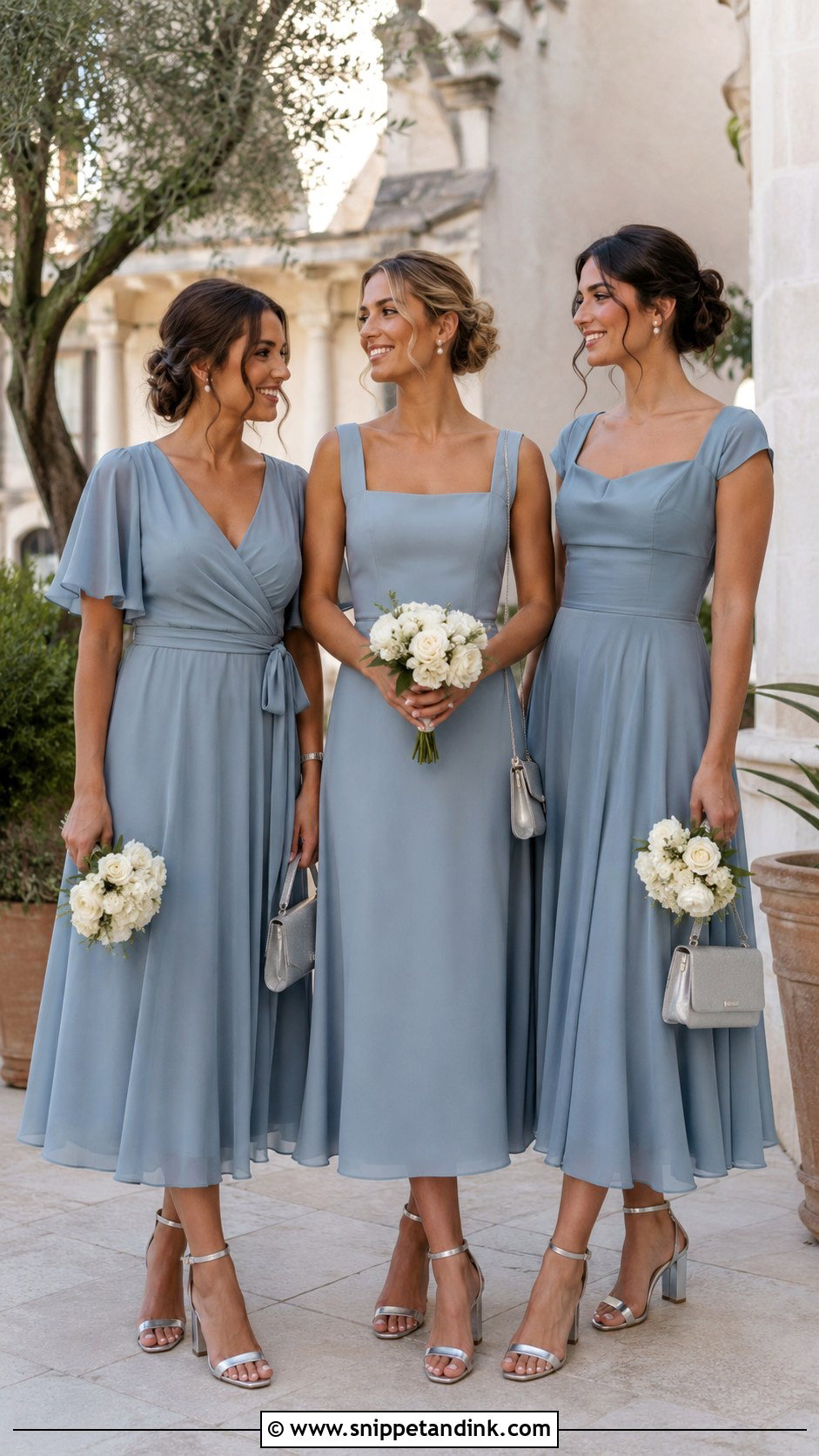
Midi dresses sit between formal and relaxed, and I suggest them for daytime, courthouse and small weddings. Matching tea-length dresses or coordinated cuts between knee and ankle both work, in one consistent fabric if possible. A shorter hem puts the shoes on show, so agree one shoe color, neutral, metallic or matching, before anyone buys. Block heels are steadier and suit the length. Pearl studs, small bags and simple bracelets are enough. Bouquets should be a little smaller than with full-length gowns. Soft waves, low ponytails or neat buns finish it.
18. Convertible Bridal Team Dresses
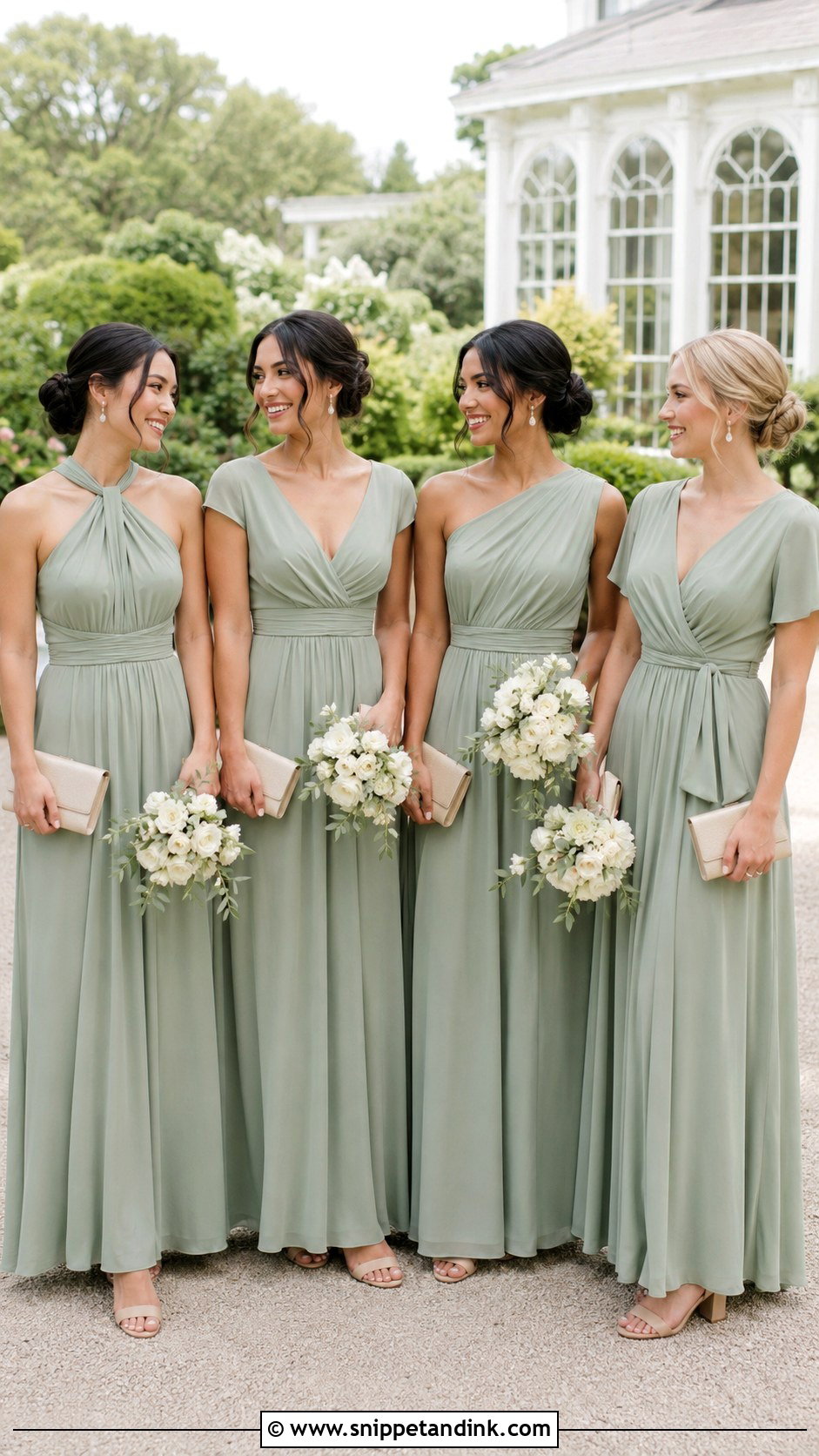
Convertible dresses are useful when everyone needs a different level of support or coverage. Long fabric panels wrap into a halter, cap sleeve, one shoulder or wrap bodice. Choose a floor-length design in soft jersey or chiffon. The catch is that someone has to remember how they tied it: I ask each bridesmaid to practice her wrap at home and send a photo, and I assign necklines so there’s an even mix. On the morning, a friend who has watched a tutorial is worth having in the room. Neutral block heels, simple earrings, fashion tape and smooth undergarments help it sit right.
19. Bridal Team Jumpsuits With Metallic Sandals
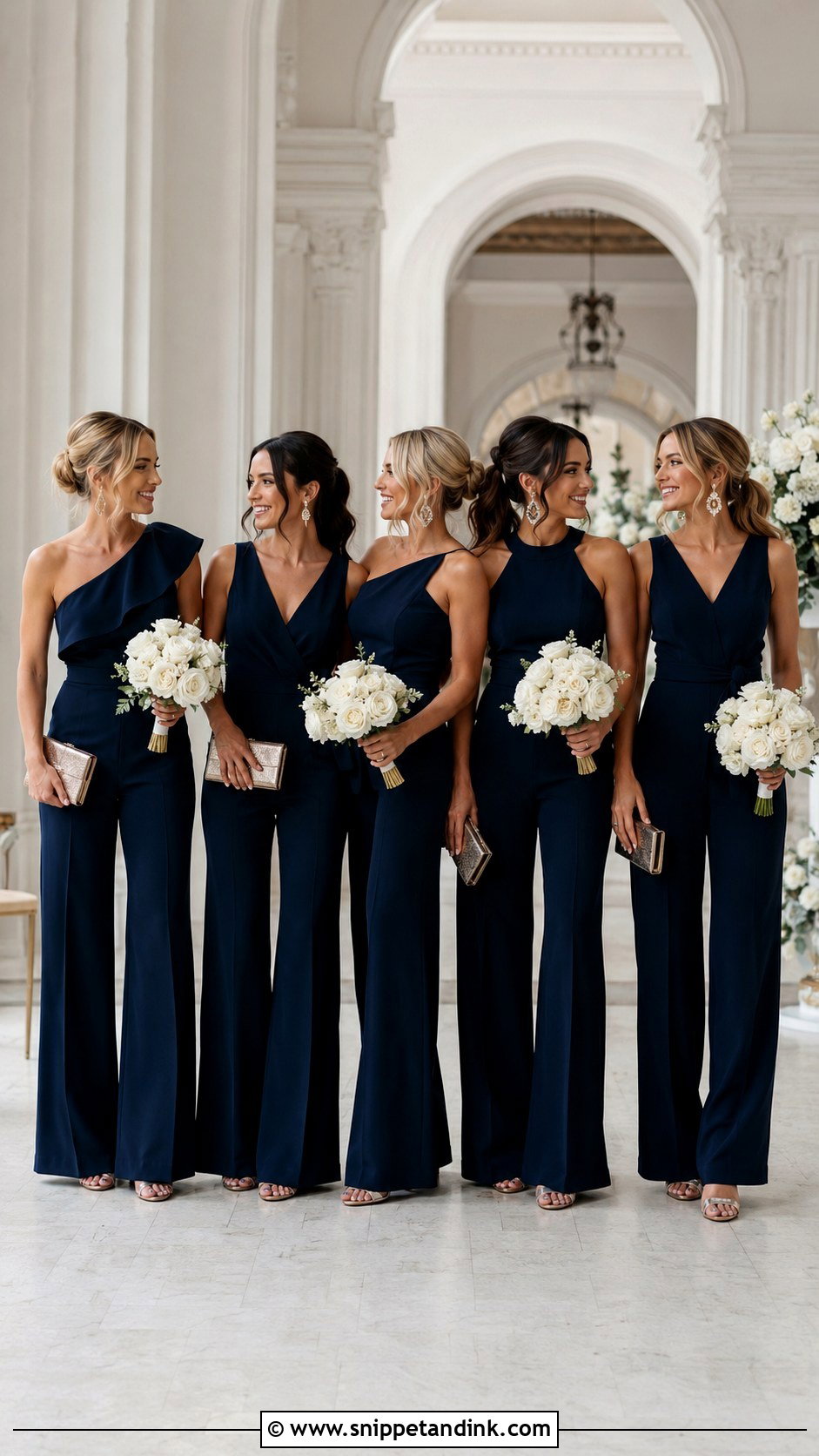
Not every attendant needs a gown. Wide-leg jumpsuits are modern and still elegant. Keep one color and fabric, such as navy crepe, dusty blue chiffon or black satin, and allow small neckline differences. Metallic sandals lengthen the line under the wide legs. Hemming is the part that needs planning: the trousers should just skim each person’s shoes, which means hemming in the exact shoes they’ll wear. Statement earrings, structured clutches and sleek ponytails or low buns finish it. Matching bouquets or wrist flowers link the jumpsuits to the rest of the party.
20. Matching Color Mixed Silhouette Bridal Team Dresses
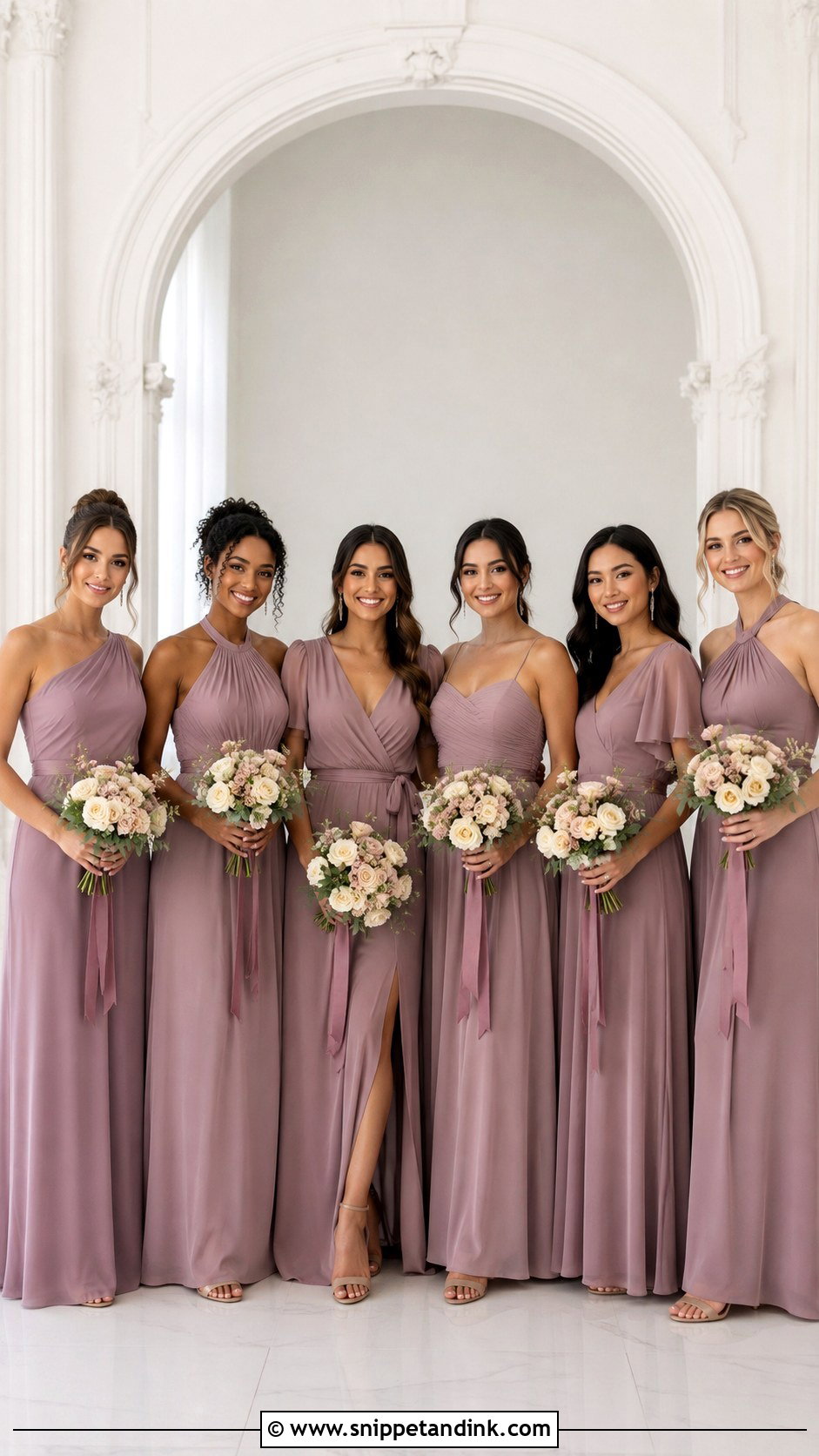
One exact color in several cuts is the approach I recommend most often, because it handles different bodies, ages and budgets without a fight. Start with a fabric swatch and a collection that offers many necklines in that shade. Each person picks a wrap, halter, empire waist, one shoulder or sleeved maxi, and length and fabric stay the same. Matching shoes, earrings and bouquet ribbons add consistency. I ask everyone to order within the same week or two. Dye lots differ, and dresses ordered months apart can come back noticeably different.
Money, Opinions and a Group Chat Full of Screenshots
Traditionally, attendants pay for their own dresses, and that’s exactly why the brief needs to be fair. Before sharing a single link, I’d set a realistic price ceiling, and have at least one option comfortably below it. If the bride wants a specific dress above that, she covers the difference. That conversation is much easier at the start than after someone has quietly struggled to pay.
Opinions are the other hazard. Asking six people to vote on colors in a group chat usually ends in a tie and hurt feelings. I prefer the bride to pick the color and fabric herself, then give each attendant freedom inside that, a neckline, a sleeve length, maybe a slit. People accept a decision more easily than a vote they lost.
Plan for different bodies from the start
Check before choosing a collection that it runs in every size you need, that it offers a maternity version if anyone may be pregnant, and that there’s a cut with sleeves or a higher neck for anyone who wants coverage for comfort or faith. Finding out after the order date that one person has no option is the most avoidable problem I see.
One Swatch, Several Necklines and a Group That Still Looks Together
Start with the wedding’s season, venue, formality and colors, and the shortlist narrows itself. Sage chiffon, blush, deep jewel tones and even jumpsuits can all look cohesive if a few details repeat: fabric, length, shoes, jewelry or bouquets. Get swatches, set a budget the whole party can manage, and leave time for ordering and alterations. Above all, think about each attendant’s comfort and how much coverage she wants. A group that feels good in what it’s wearing looks better in photographs than one forced into a single identical dress.
You'll Like These Ideas:


Leave a Reply