
Bridesmaid hair has a different brief from bridal hair. It has to hold through long ceremonies and a lot of dancing, look good in group photos, and sit one step below the bride. When I plan a bridal party, I start from the outfit, whether it’s a lehenga, saree, sharara, anarkali or an Indo-western gown, then think about jewellery, where the dupatta sits, the neckline and the weather. Soft buns with gajra, braids with pearls, curls built to survive the dhol, and sleek styles that hold a maang tikka straight are what I reach for most. Here are twenty, with notes on who each suits and how I make it last.
Fitting a Whole Bridal Party Into One Morning
When I style a bridal party, the clock is the hardest part. A simple bun or ponytail might take half an hour; a detailed braid or set curls can take closer to an hour, and timings vary with hair length and thickness. Multiply that by every bridesmaid, add the bride, and you’ll see why the schedule needs planning before the day.
- Arrive with clean, completely dry hair. Wash the night before or that morning, and skip oil and heavy conditioner, which make pins slide.
- Wear a button-front shirt so you can change without pulling anything over your head.
- Bring every accessory: tikka, gajra, pins, parandi. I can’t place a tikka I haven’t seen.
- Long, detailed styles go early in the schedule. Quick sleek styles go later, closer to the photos.
- If you have very thick hair, tell the stylist in advance. Blow-drying alone can take extra time.
Plan the bride’s hair to finish an hour before she needs to be dressed, not at the last minute, and leave a short gap at the end of the schedule. Somebody always arrives late or changes her mind about the tikka, and that buffer is what keeps the photographer from waiting.
1. Indian Bridesmaid Low Bun
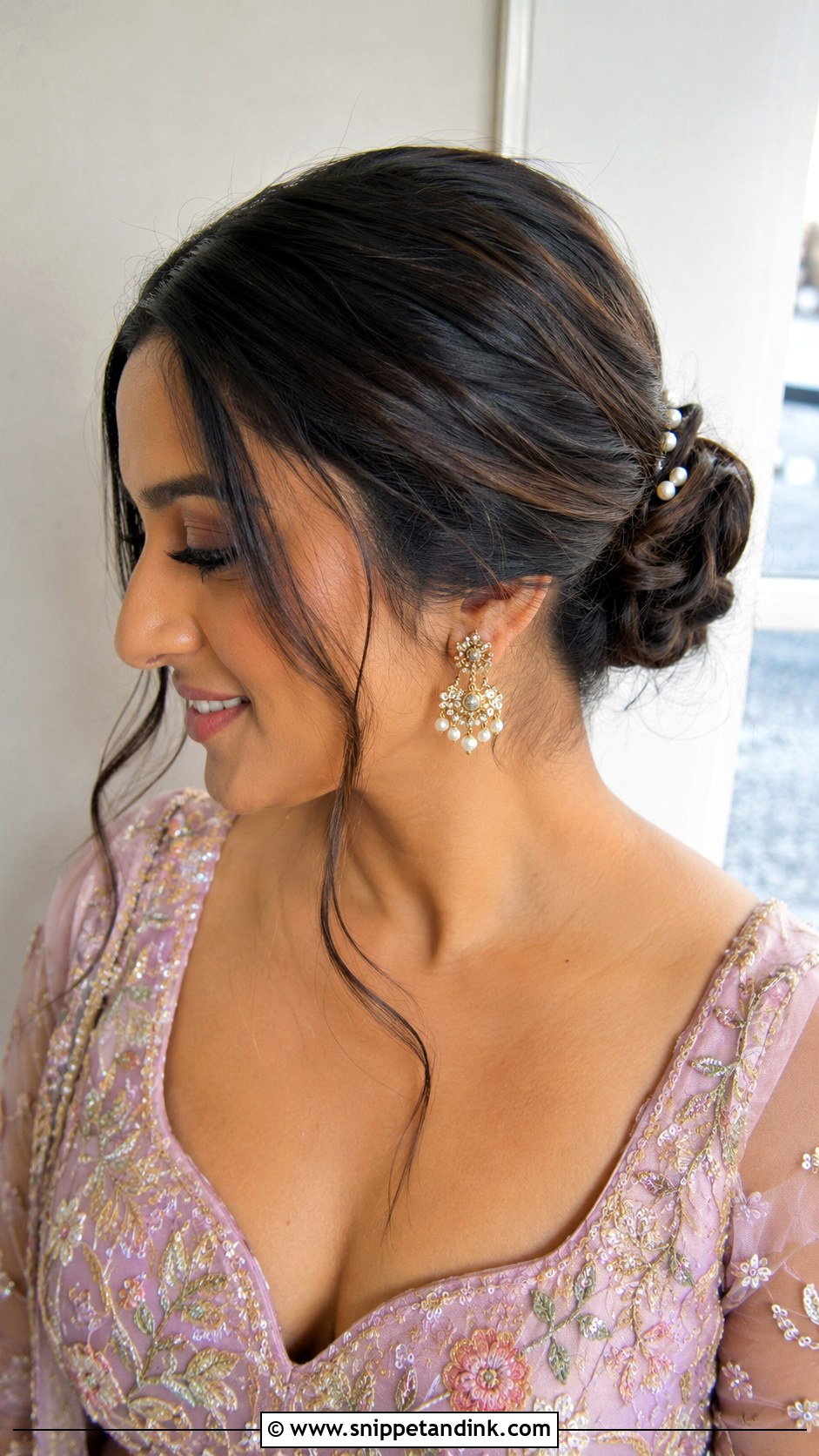
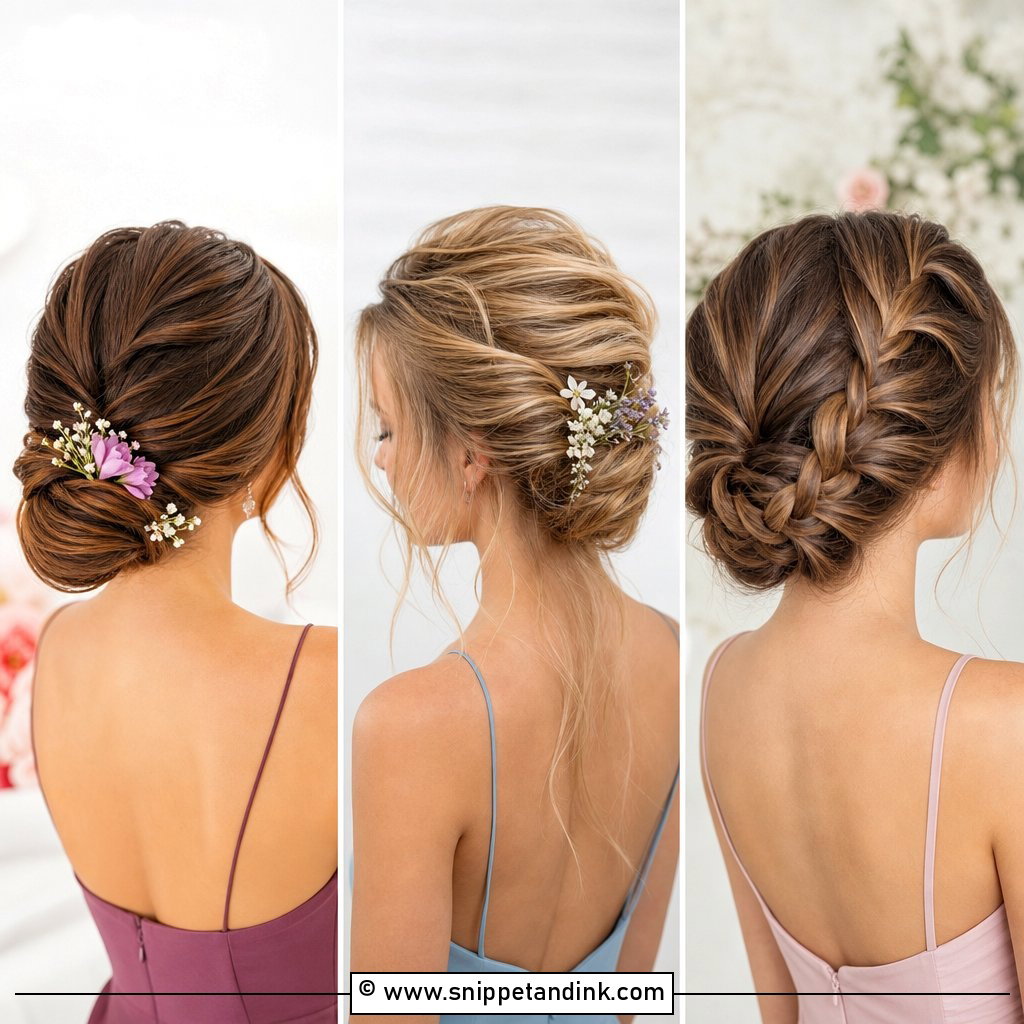
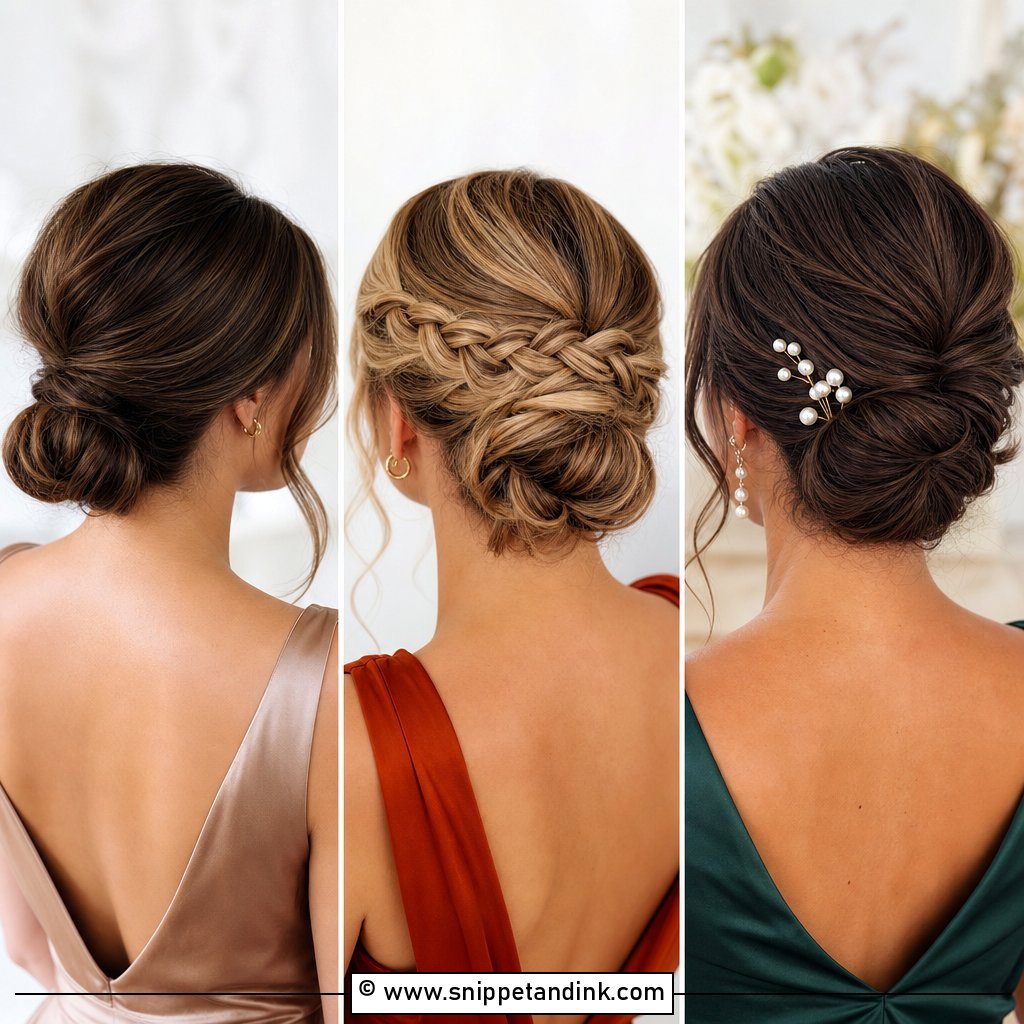
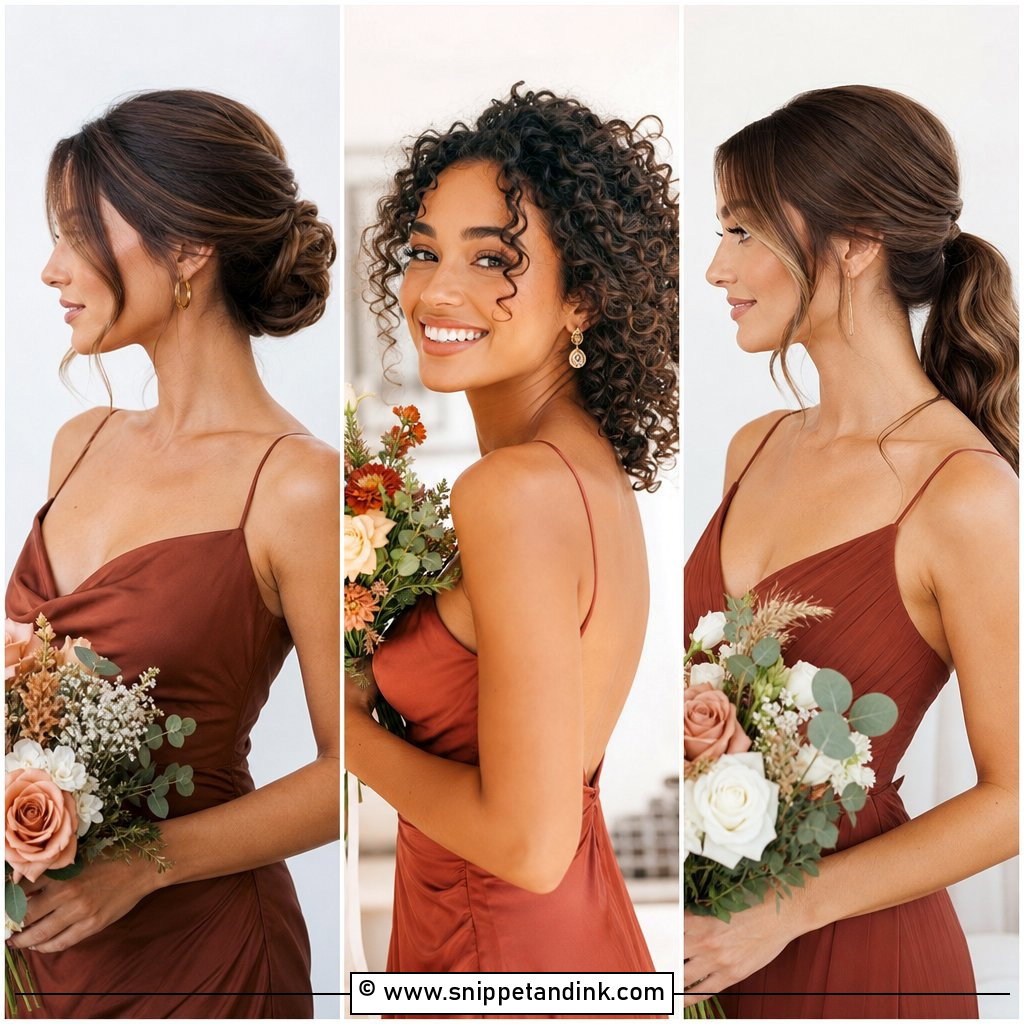
The low bun is the style I’d give a bridesmaid who isn’t sure what she wants, because it goes with nearly every outfit. It sits at the nape, out of the way of heavy earrings and a saree pallu. A centre or side part depends on face shape and the tikka. I build it on a small ponytail base with pins crossed into the elastic, which is why it stays put for hours. Smooth suits a formal ceremony; slightly textured suits the reception. A small gajra or a couple of pearl pins finish it, and in humid weather it keeps hair off the neck.
2. Indian Bridesmaid Gajra Bun
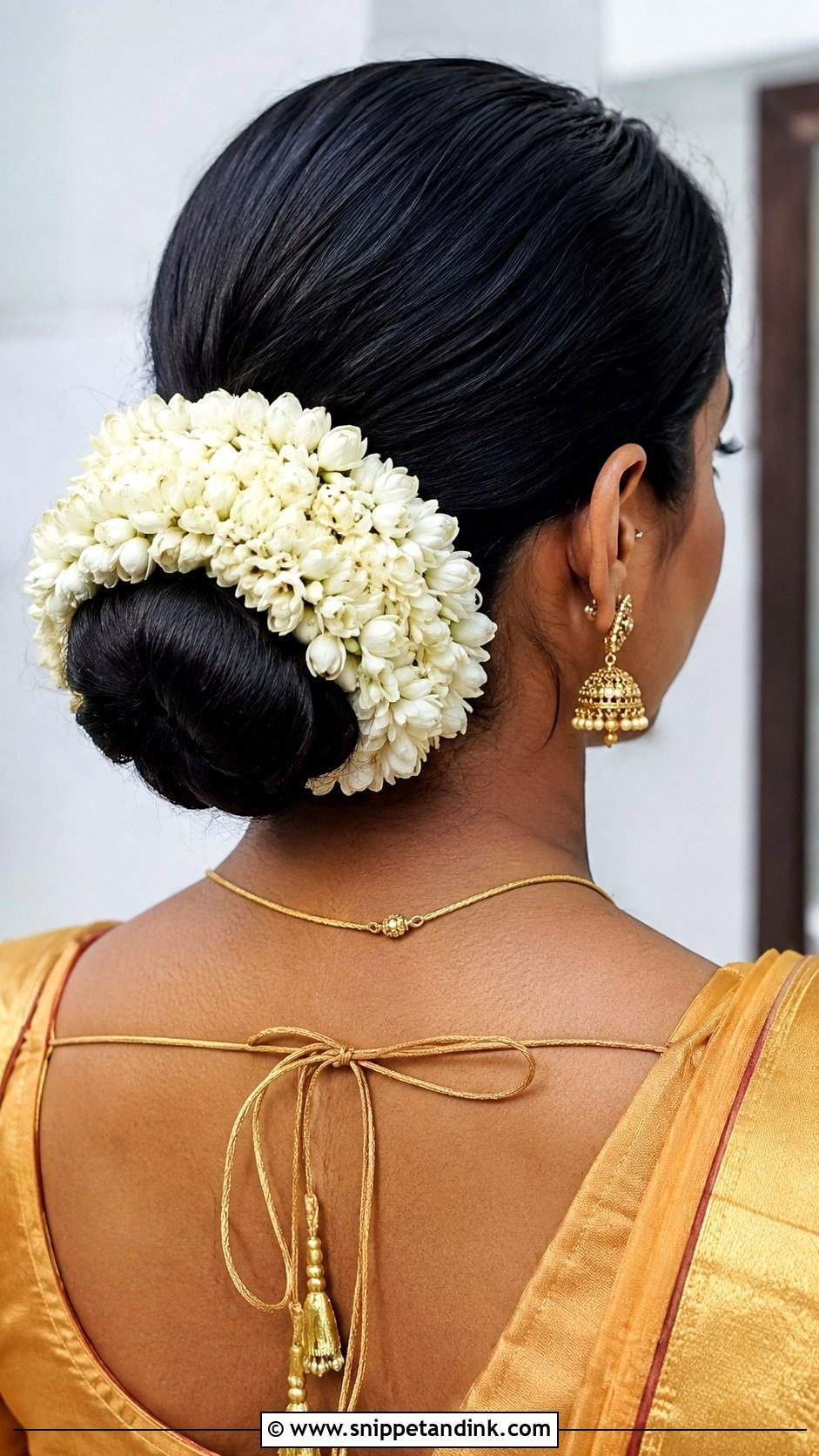
The gajra bun is the traditional pick with silk, Banarasi or classic lehengas. I set the bun low or just above the nape, then wind fresh jasmine around it in neat coils and pin each end under the bun so nothing pokes out. A sleek front holds a maang tikka best; a few face-framing pieces make it softer. Because so many group photos are taken from behind during rituals, the back of the head matters here more than people expect. With heavy necklaces and earrings, keeping hair up stops it tangling in the jewellery.
3. Indian Bridesmaid Braided Bun
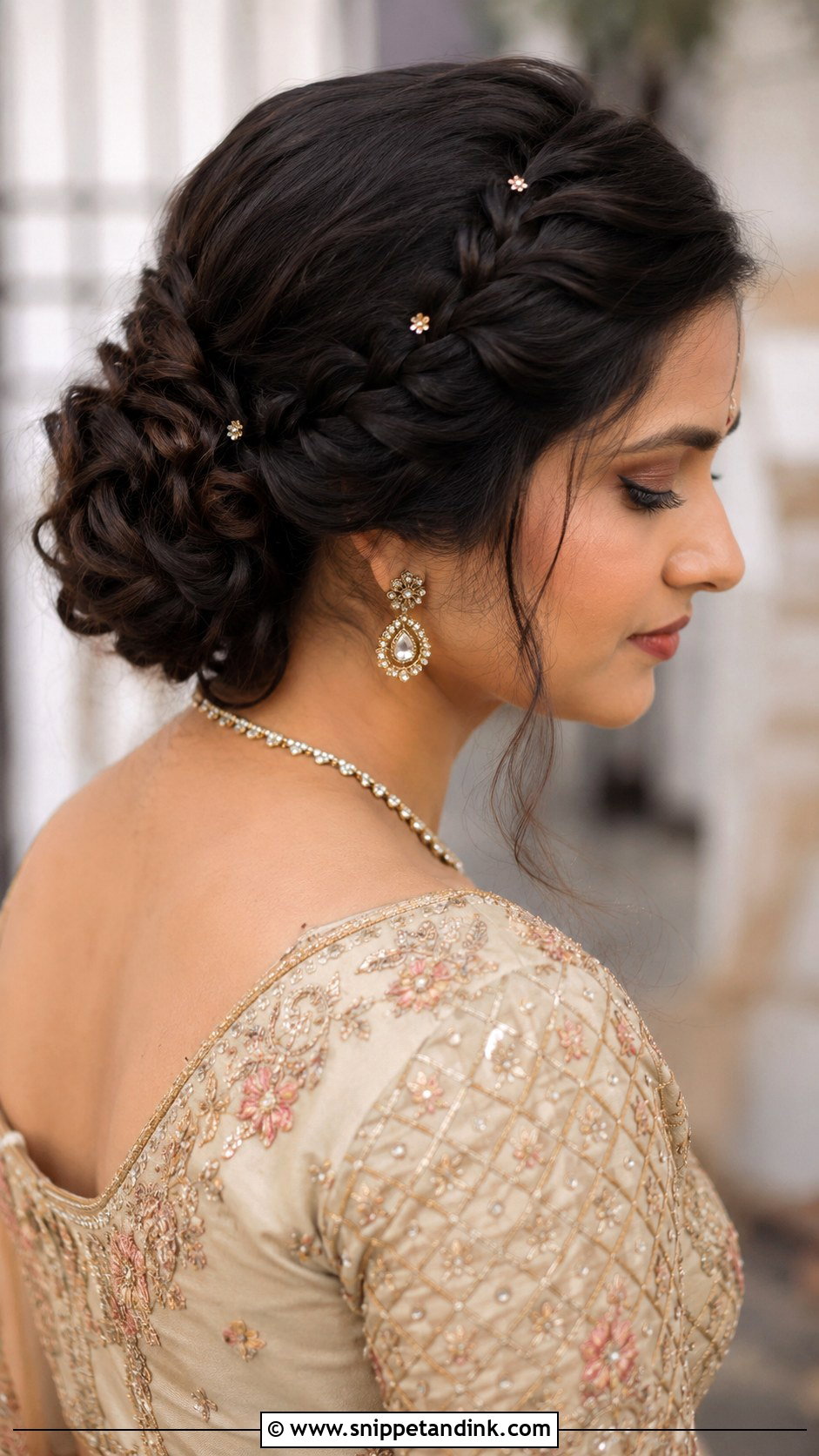
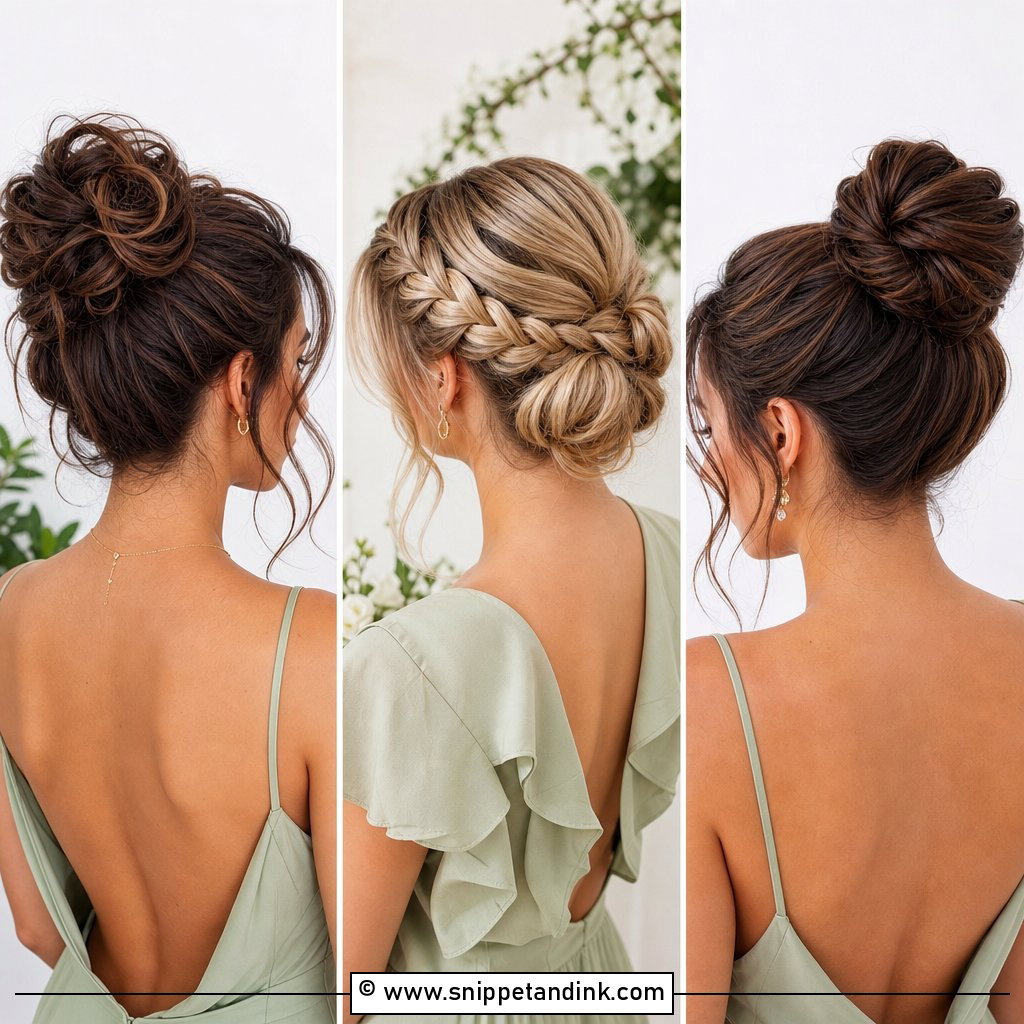
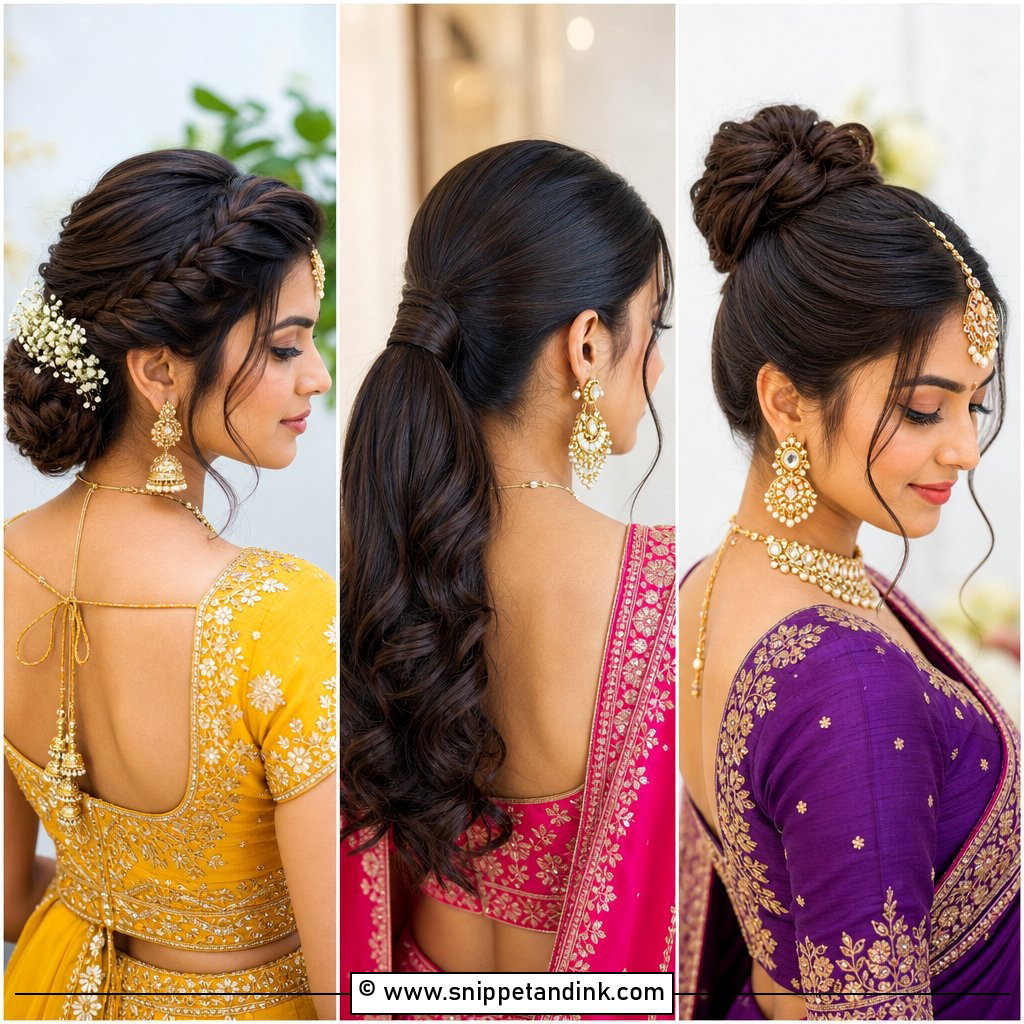
A braided bun has the security of an updo plus a little more detail. The braid can wrap the bun like a ring, twist into its base or run along one side before joining it. It suits blouses with detailed backs, since the neck stays clear. I braid before I form the bun, then pancake the braid slightly so it shows from a distance. Small pearls, gold pins or fresh flowers match it to the outfit. It is one of the most dance-proof styles on this list.
4. Indian Bridesmaid Messy Bun
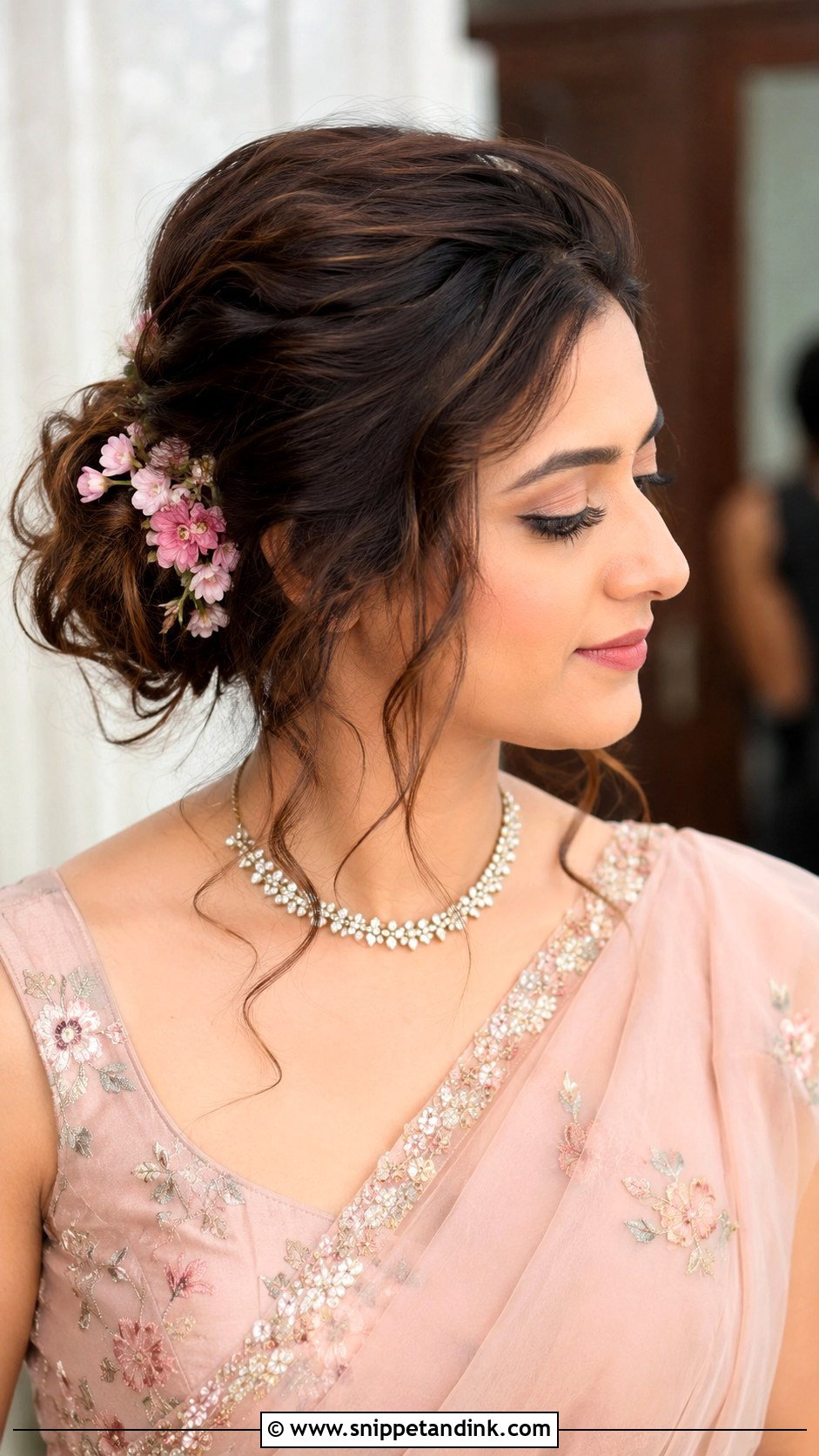
A messy bun for a wedding is never actually messy. The texture is planned: light volume at the crown, an airy bun and a few soft pieces at the face. I curl the hair first and brush the curls out, which gives grip so the bun holds without being tight. It goes with pastel lehengas, organza sarees and flowing gowns, and it fits the looser mood of a sangeet or reception. Delicate earrings or a small tikka keep it light. A strong-hold spray at the end stops the soft pieces from turning frizzy by midnight.
5. Indian Bridesmaid Sleek Bun
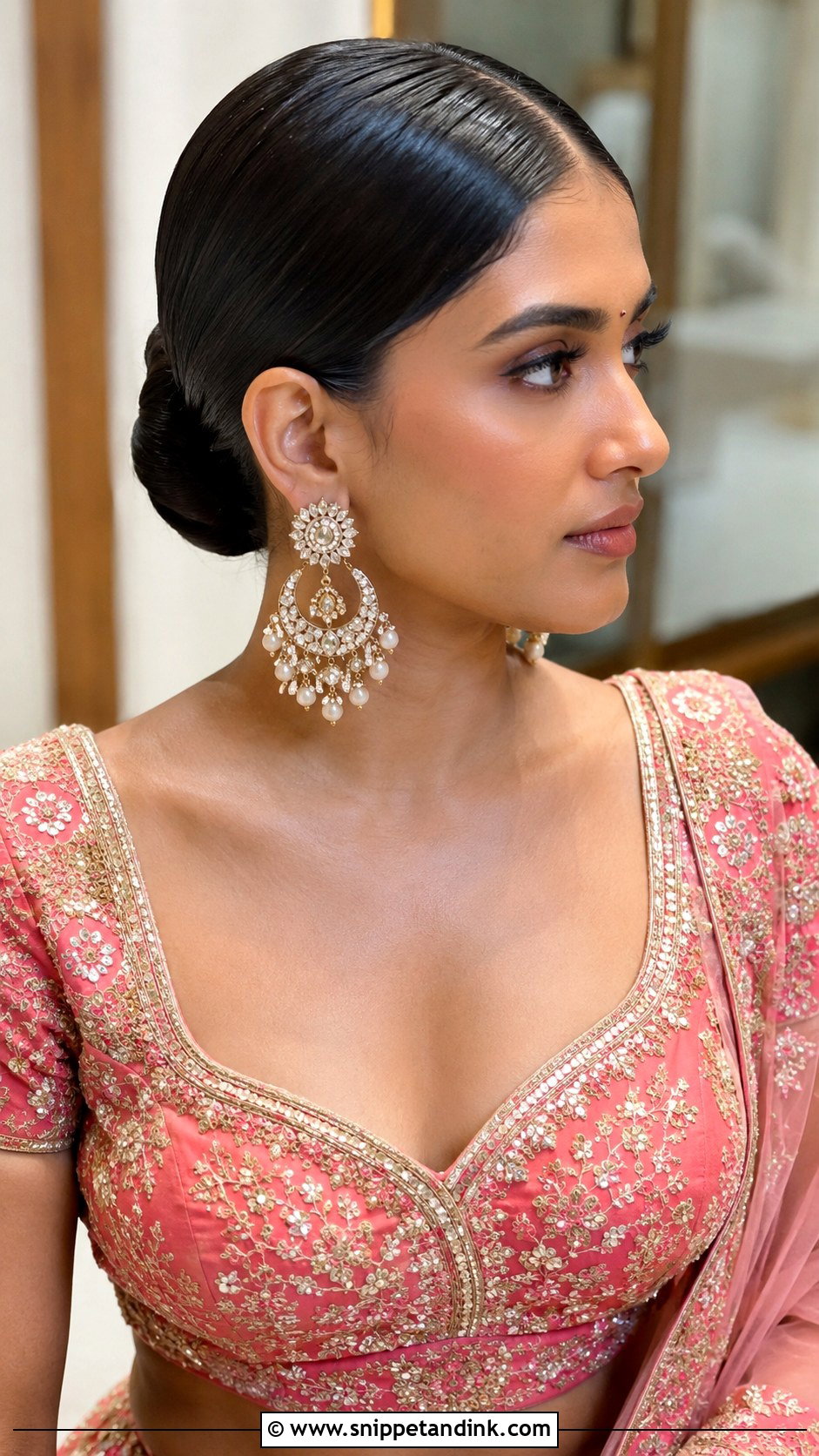
A sleek bun looks sharp and is my answer for heavy embroidery, a dramatic blouse or statement jewellery, because the hair doesn’t compete. The hair is smoothed close to the head, parted cleanly and gathered into a tight low or mid bun. It also gives a firm base for a tikka or matha patti. The common problem is frizz along the hairline after an hour outdoors, so I use an anti-frizz serum on damp hair before blow-drying, not only on top at the end. Strong pins matter here too.
6. Indian Bridesmaid Half Up Curls
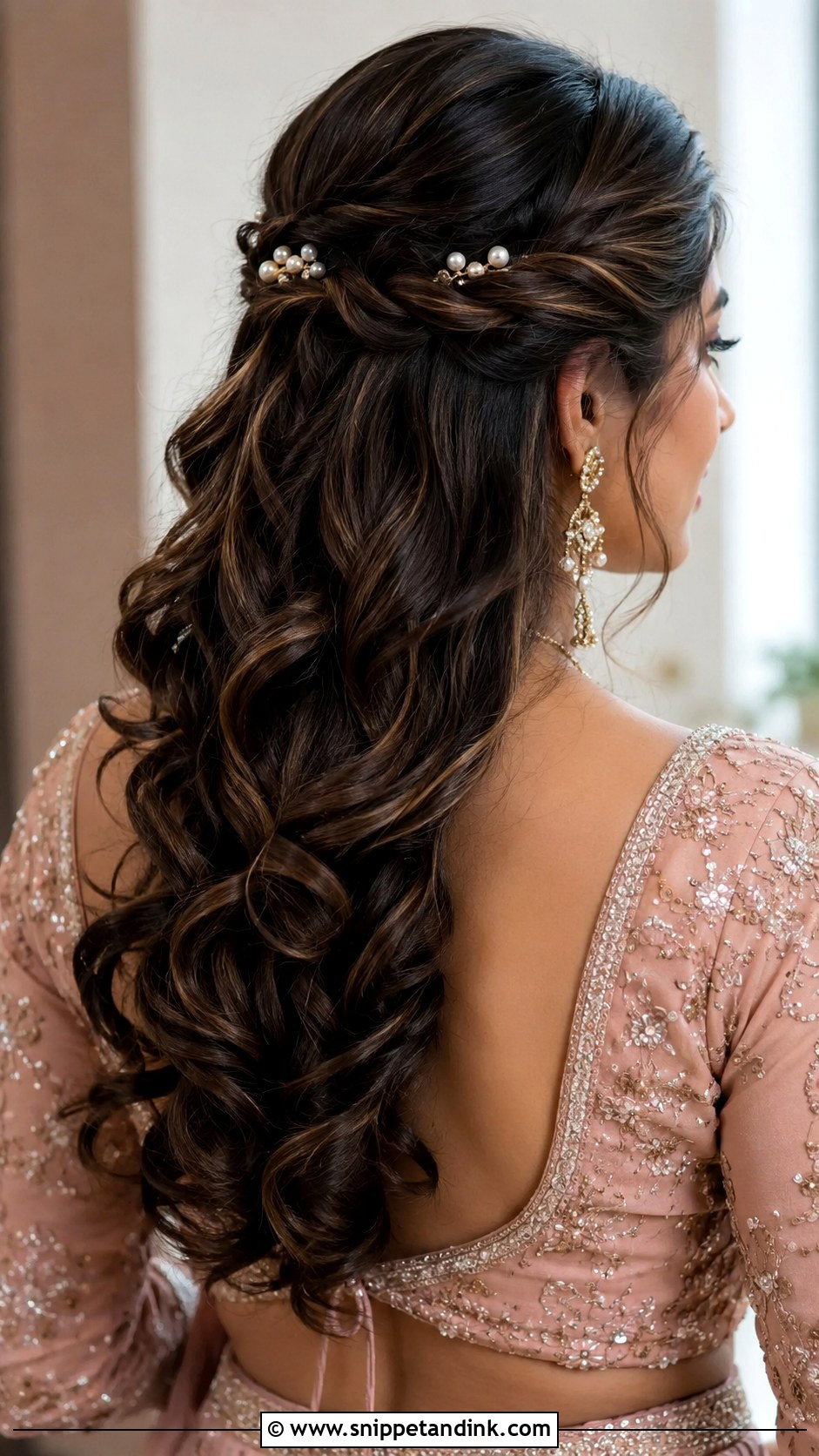
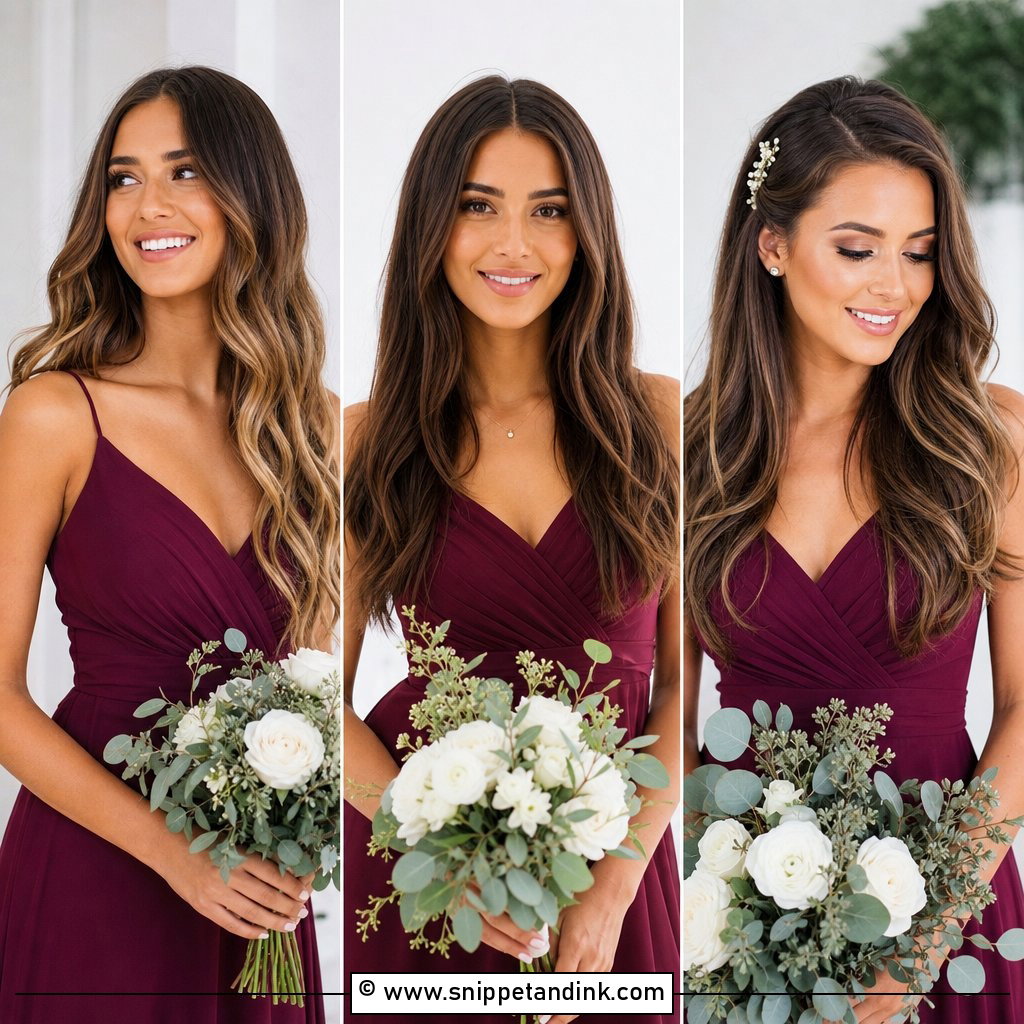
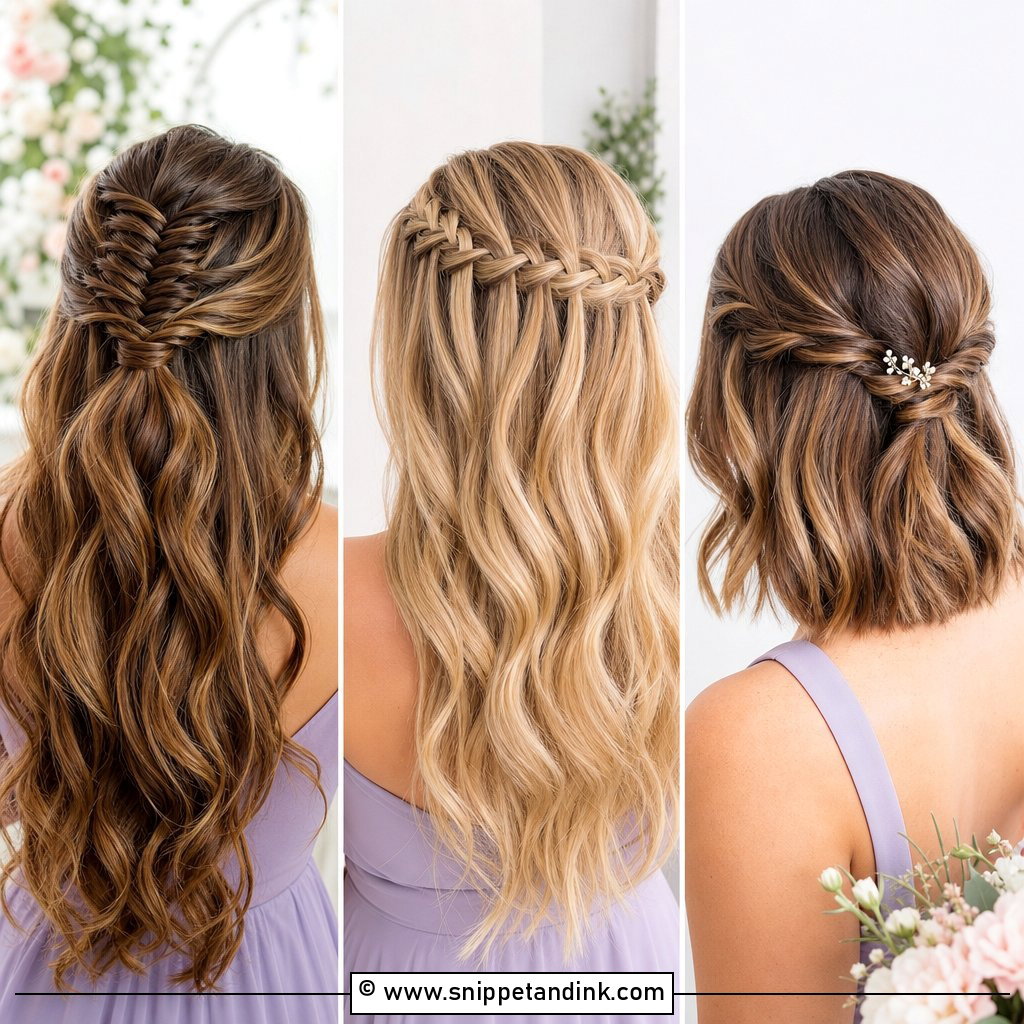
Half up curls keep hair down while holding it back from the face. The top section is pinned, twisted or softly braided, and the rest falls in curls over the shoulders. It suits lehengas, gowns and lighter sarees, and leaves space for earrings and a small tikka. I’d keep it for medium to long hair at the engagement, sangeet or reception. Fine hair loses curl fastest, so I set each curl and let it cool in a pin curl before brushing it out softly. A few pearl pins where the top section meets make it festive.
7. Indian Bridesmaid Side Braid
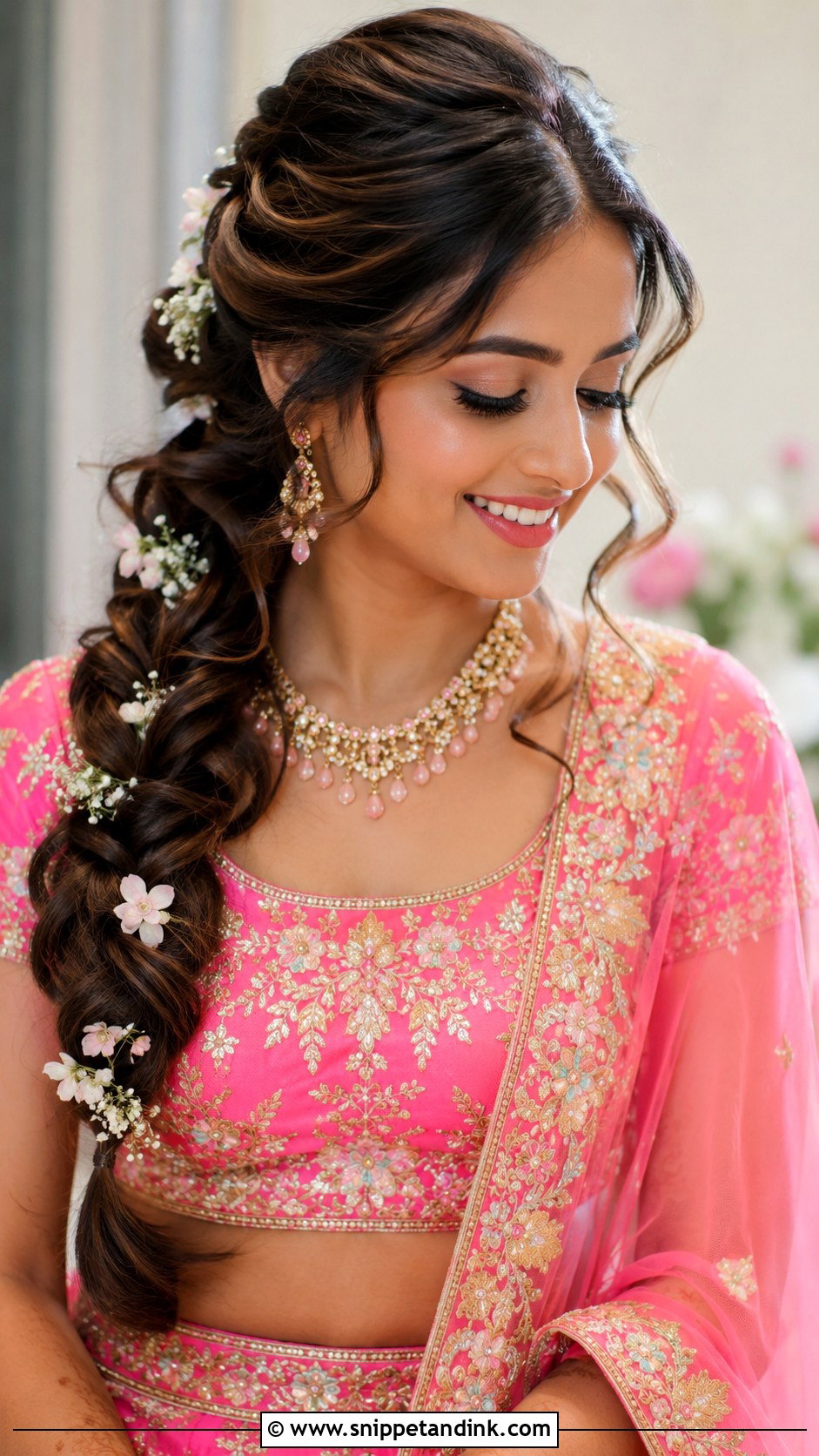
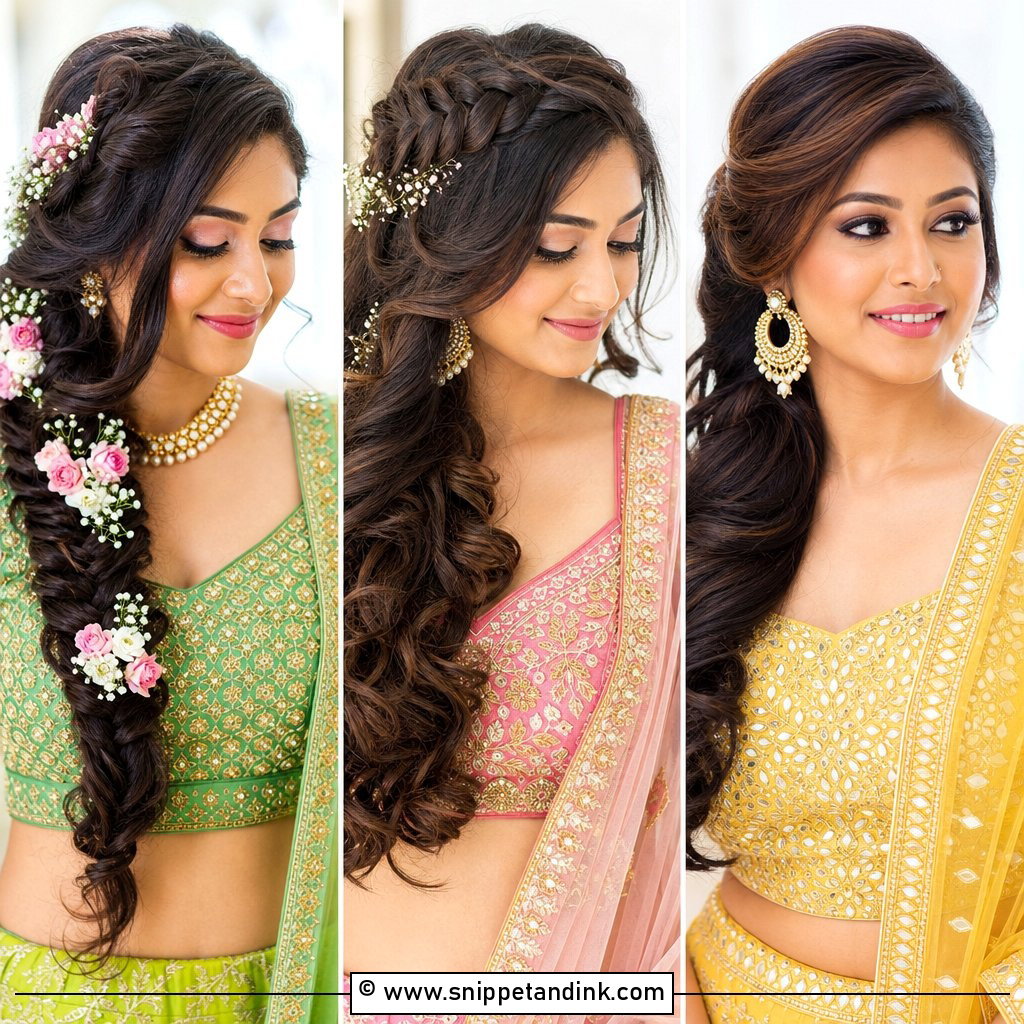
For mehendi and sangeet, where you’ll be dancing and sitting on the floor, a side braid is one of the most practical choices. It can be loose and voluminous, fishtail-style or a soft twist, with face-framing pieces left out. Lehengas, shararas and anarkalis suit the line it makes over one shoulder. Small flowers, pearl accents or a decorative parandi make it more traditional. Long or thick hair holds a side braid best; on layered hair, I secure the short pieces with a few hidden pins along the braid so they don’t escape.
8. Indian Bridesmaid Fishtail Braid
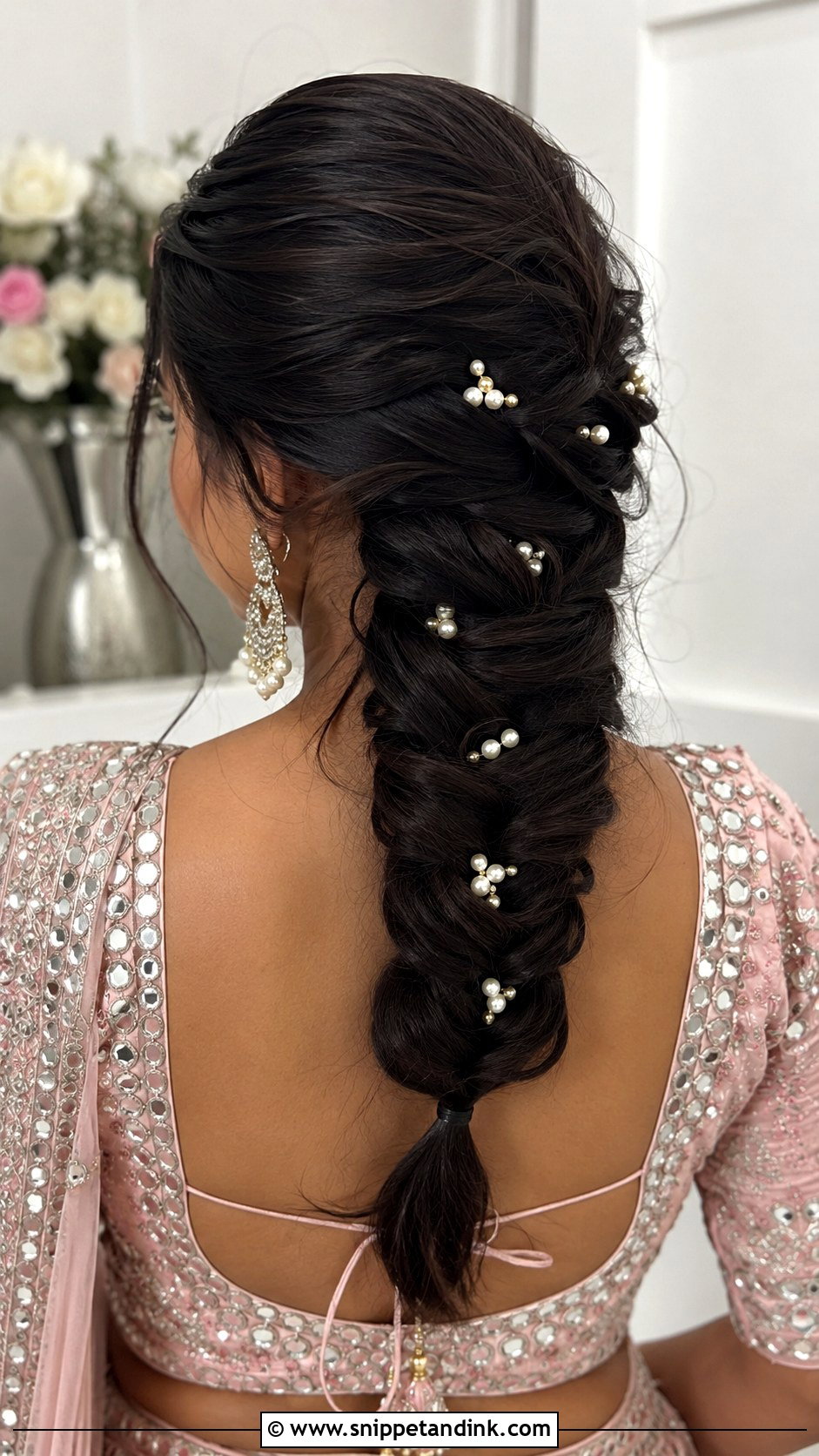
A fishtail is detailed but less formal than many braids, which suits bridesmaids well. Wear it to the side, down the back or loosened for volume. It pairs with mirror-work lehengas, embroidered suits and Indo-western outfits. On fine hair, a fishtail looks thin in photos, so I add clip-in extensions or a little padding inside the braid. A few pearl pins or tiny flowers tucked into the weave keep it festive without crossing into bridal. It holds well through a long celebration.
9. Indian Bridesmaid Long Braid With Parandi
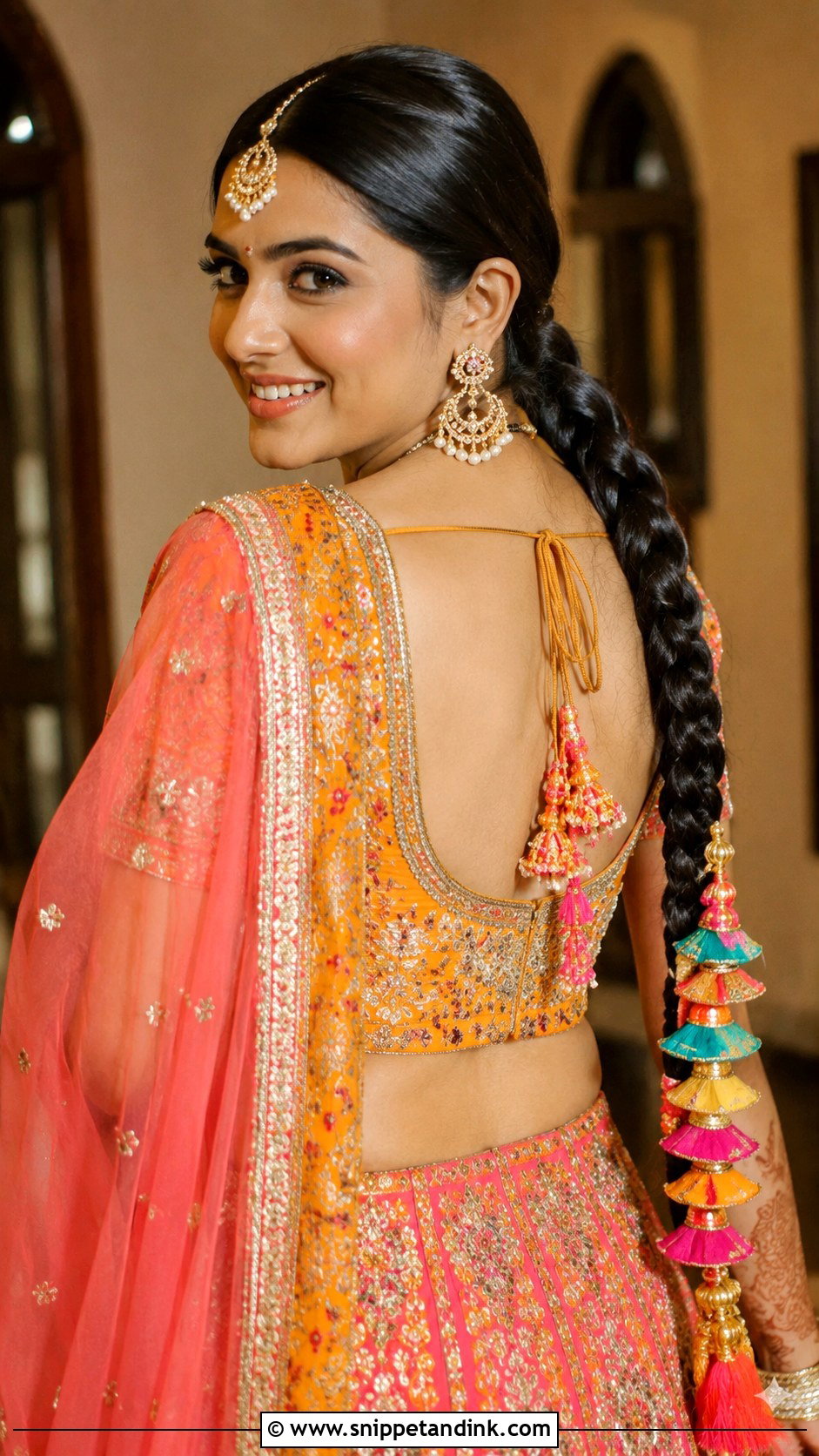
A long braid with parandi brings a Punjabi or North Indian festive feel, and it’s at its best at the mehendi or sangeet. The tassels swing when you move, so it shows up well in dance videos. Lehengas, shararas and bright salwar suits suit it. Keep the front smooth with a centre part, or add soft crown volume for more glamour. Choose a parandi in your outfit colours, but test its weight; heavy gota or beaded ones pull at the scalp after a few hours.
10. Indian Bridesmaid Bubble Braid
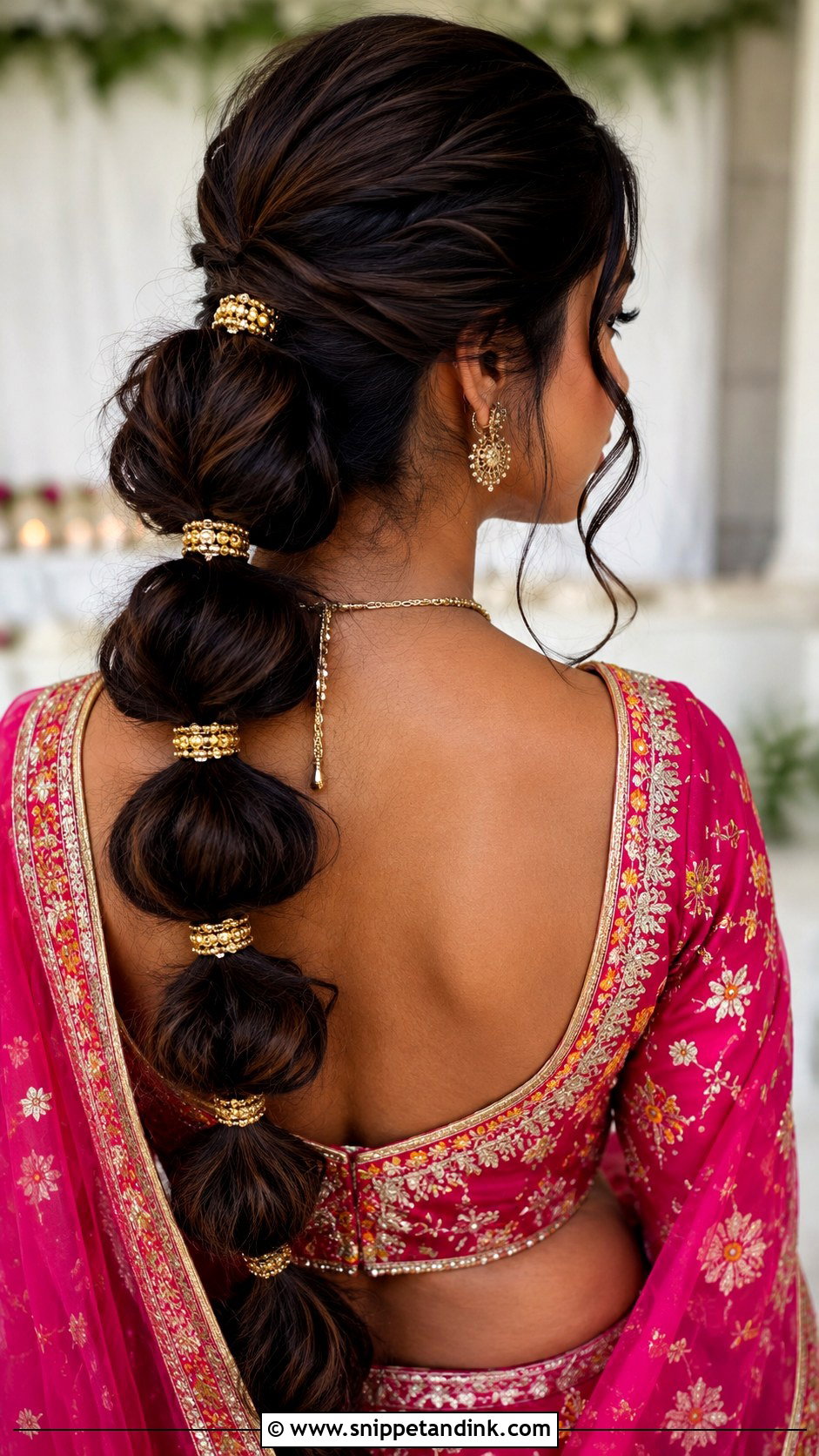
A bubble braid looks like a long, full plait without any weaving. I tie the hair in sections with clear elastics, then gently pull each one out into a rounded bubble. It’s quick to do and good fun for sangeet, cocktail, and mehendi events, and it moves well when dancing. Gold rings, pearl bands or tiny flower pins between the bubbles hide the elastics. It works best with long hair, extensions or thick wavy hair. Keep the front sleek or softly curled. If a bubble flattens, it’s easy to pull it back into shape yourself.
11. Indian Bridesmaid Open Curls
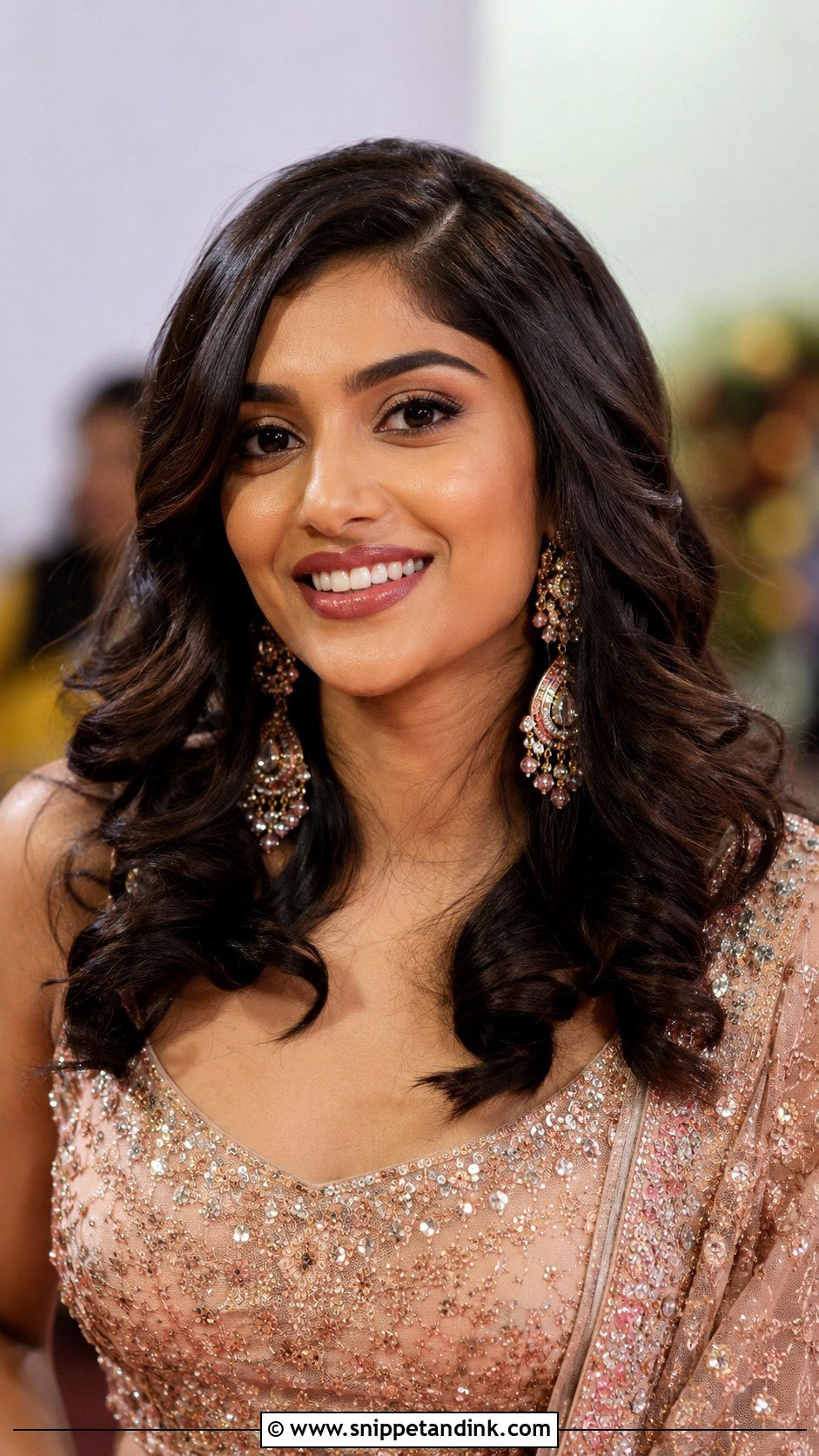
Open curls are for the reception, engagement or sangeet, when the outfit is dressy but less traditional. They suit lehengas, gowns and pre-draped sarees. The trick is smooth roots with defined curls that last. I use a heat protectant with some hold before curling and leave the scalp free of oil, because oil at the roots makes curls drop. A side part reads more dramatic; a centre part suits a tikka. In humidity, plan on a lighter, looser curl at the end of the night than you started with.
12. Indian Bridesmaid Soft Waves
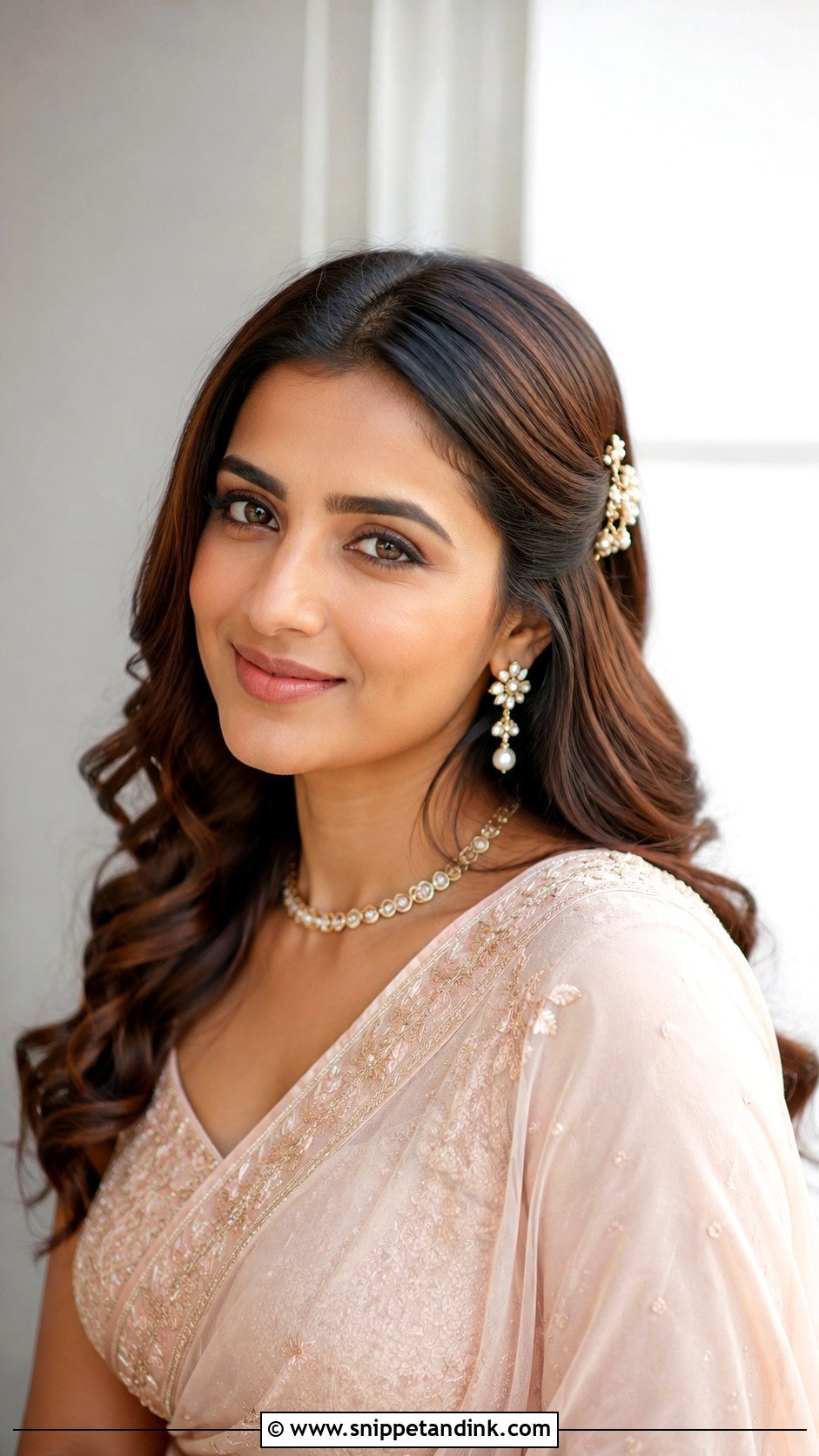
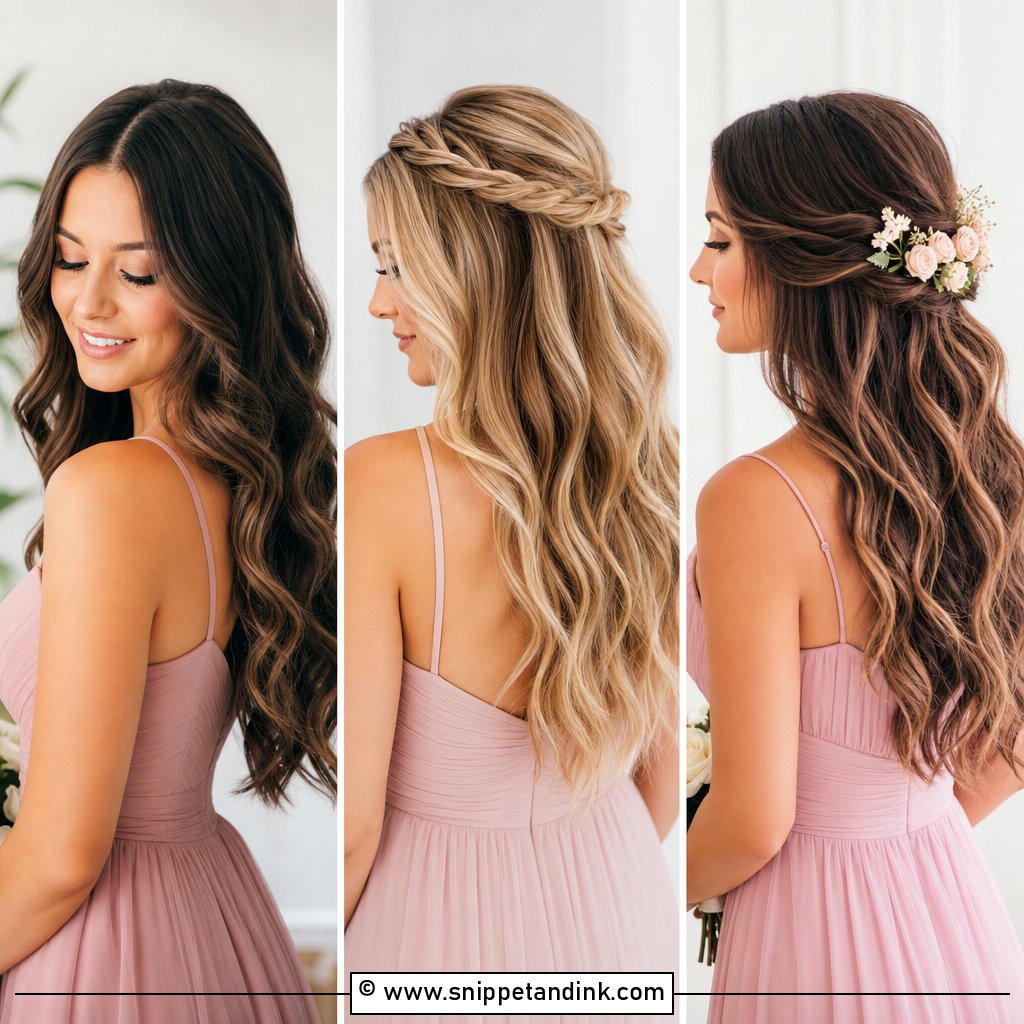
Soft waves are for the bridesmaid who dislikes tight curls but still wants shape. The bends sit through the mid-lengths and ends and should look glossy rather than crunchy. Modern sarees, pastel lehengas, gowns and Indo-western sets all suit them. I use a large barrel and brush through once cooled. A deep side part feels formal; a centre part looks current. One small accessory on one side is enough. The difference between wedding waves and everyday waves is the finish, so I smooth the surface with a little shine spray.
13. Indian Bridesmaid Hollywood Waves
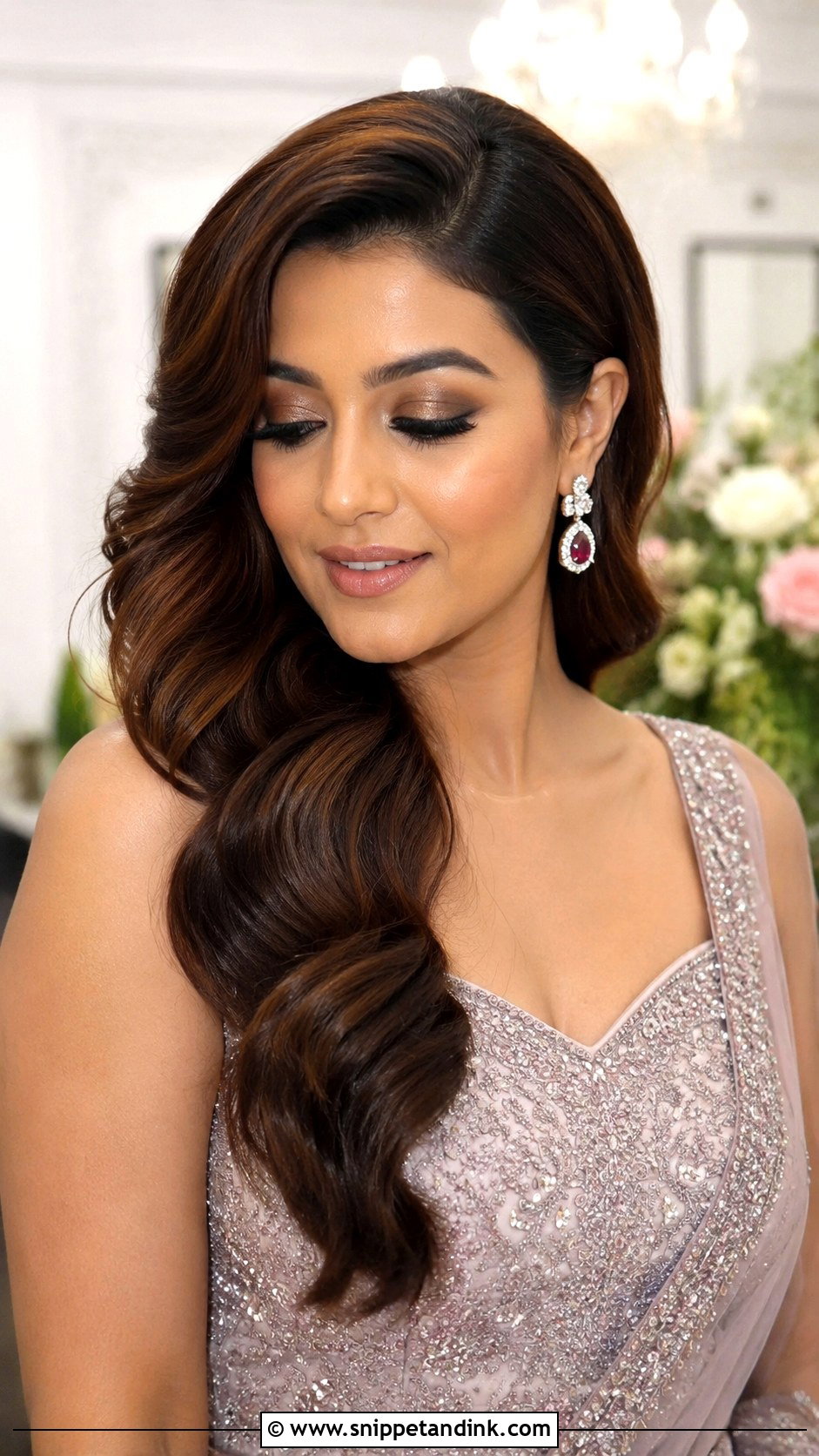
Hollywood waves are structured: the hair is curled in one direction, brushed into a single flowing S-pattern and pinned while it sets. That structure makes them look polished in photos and suits gowns, cocktail sarees and sleek lehengas, especially with statement earrings and off-shoulder or sweetheart necklines. A deep side part gives the classic shape. Keep accessories minimal; the waves are the feature. Under a heavy dupatta they flatten, so I’d save this look for the reception.
14. Indian Bridesmaid Ponytail
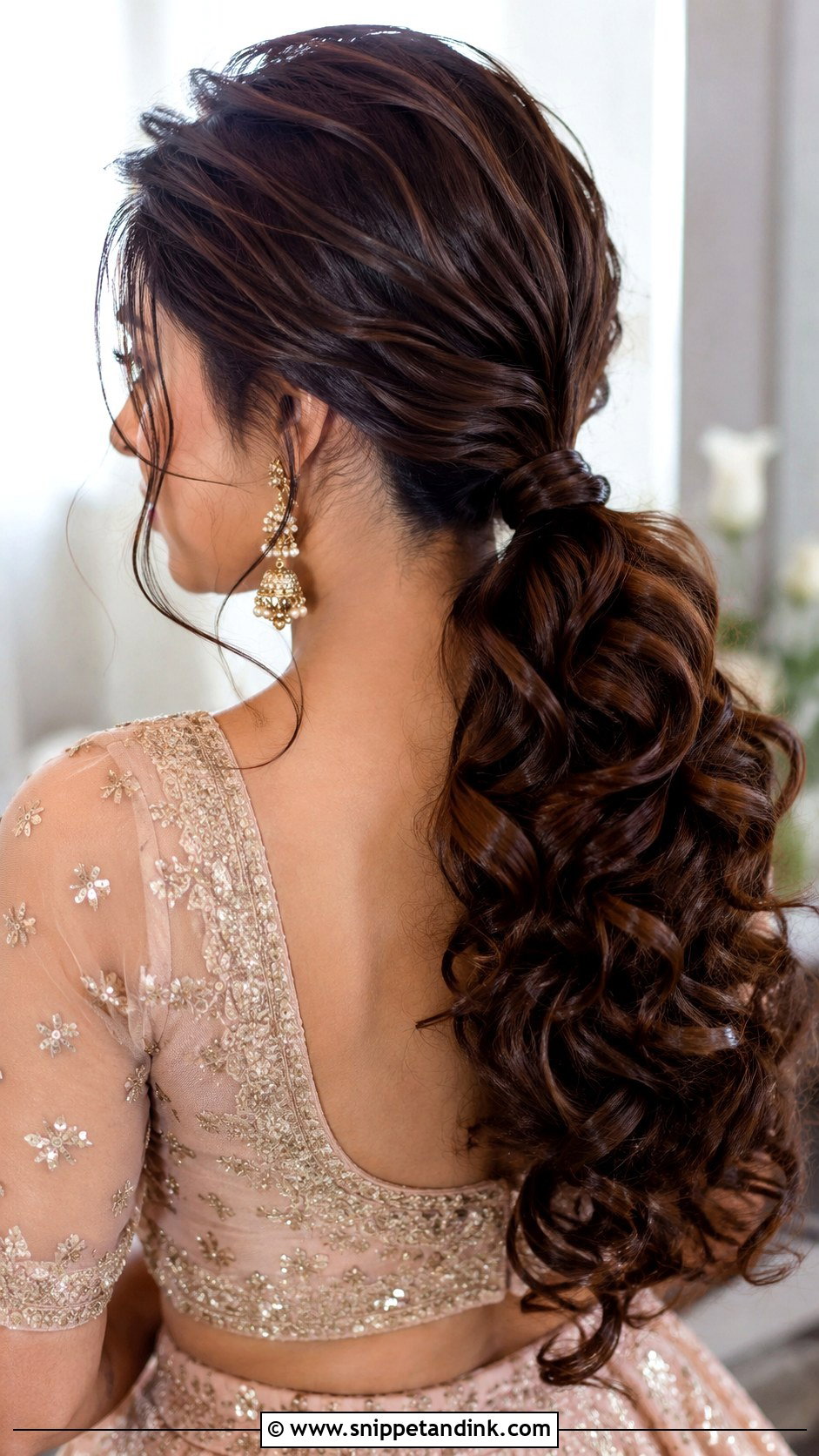
A ponytail is the most comfortable style here, and with some volume and polish it looks dressy enough for a wedding. Low feels elegant with sarees and gowns; high looks youthful with lehengas and shararas. I curl the length for bounce or keep it sleek, then wrap a strand around the elastic and pin it underneath. To stop a high ponytail sagging after a few hours, I secure it with two bobby pins crossed under the base. It keeps the face open for bold earrings, chokers and high-neck blouses.
15. Indian Bridesmaid Sleek Ponytail
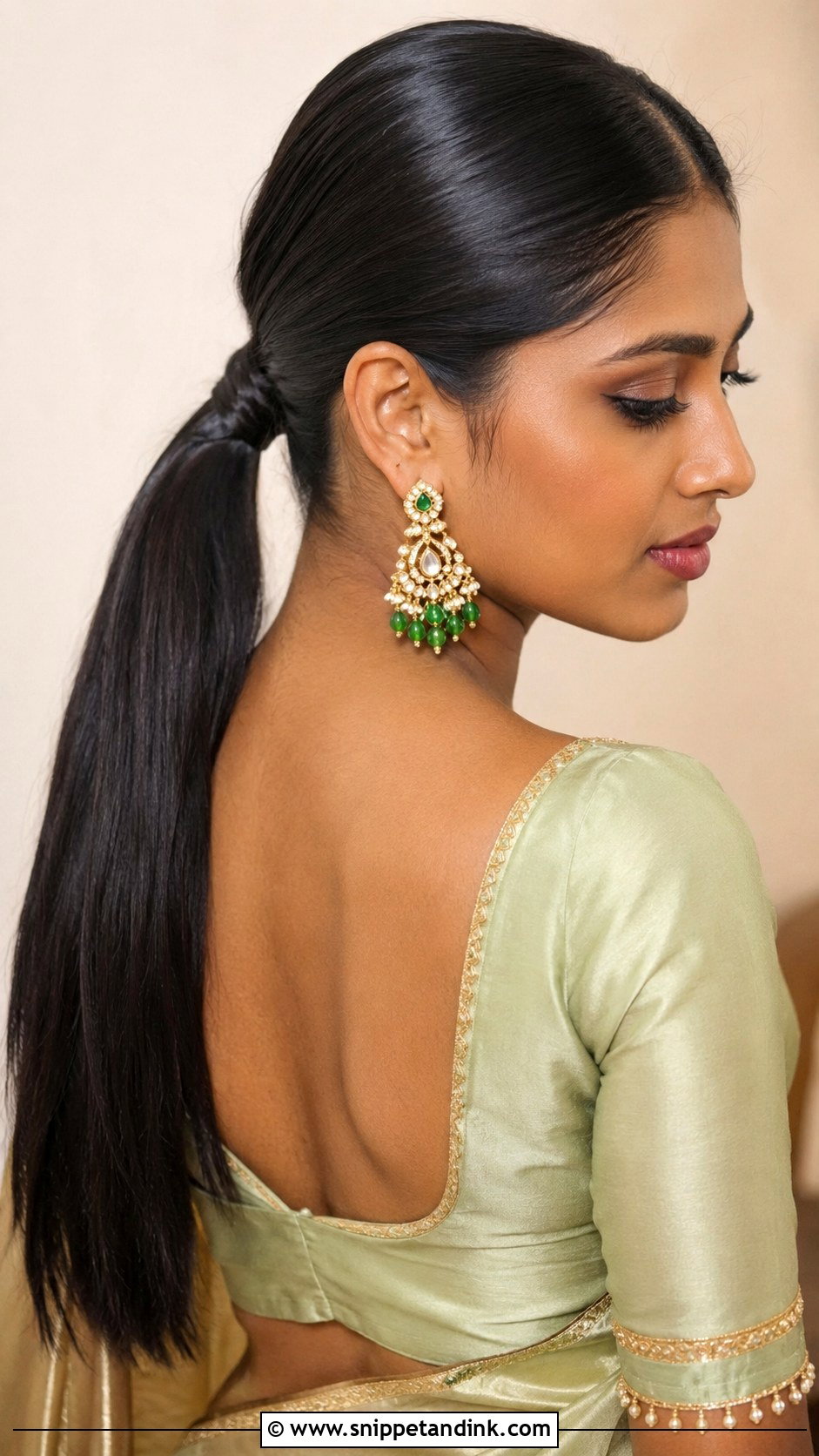
A sleek ponytail is a clean, modern look for contemporary lehengas, satin sarees and Indo-western gowns. The front is smooth and controlled; the length can be straight, wavy or curled at the ends. With heavy jewellery, it keeps hair away from the face. A middle part reads fashion-forward and a side part softer. Apply gel or styling cream sparingly with a fine-toothed brush, because too much product looks wet and flat in photos. One subtle accessory is enough with a simple outfit.
16. Indian Bridesmaid Crown Braid
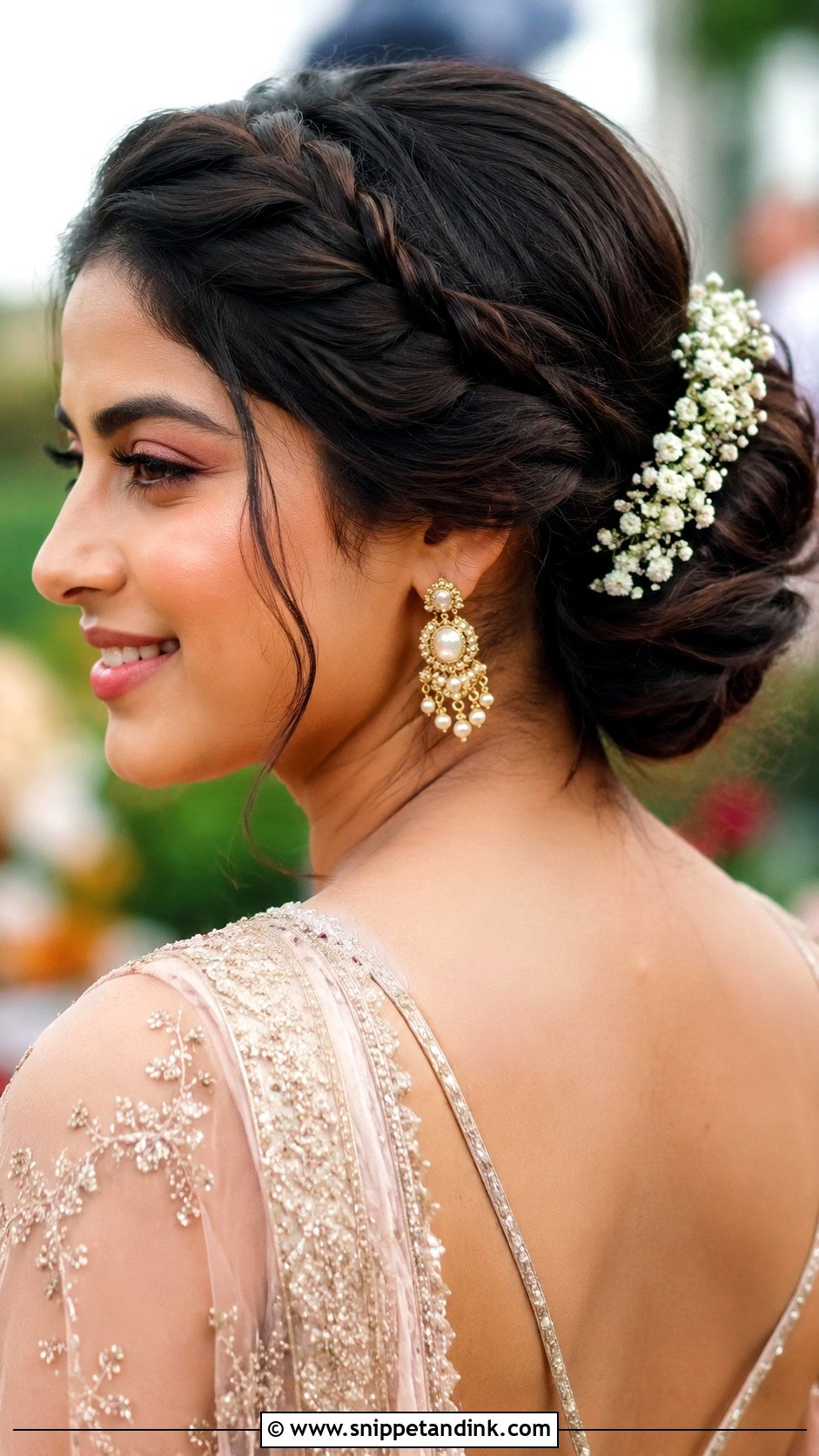
A crown braid sits around the head or across the front and blends into a bun, curls or a low twist. I like it for outdoor ceremonies, garden mehendi events and daytime weddings, because it stays secure in wind. It has detail from every angle and suits floral jewellery, pastel outfits and soft makeup. I braid it firmly at the base, then gently pull the outer loops for width so it looks full rather than tight. Tiny flowers or pearls tucked into the loops finish it.
17. Indian Bridesmaid Waterfall Braid
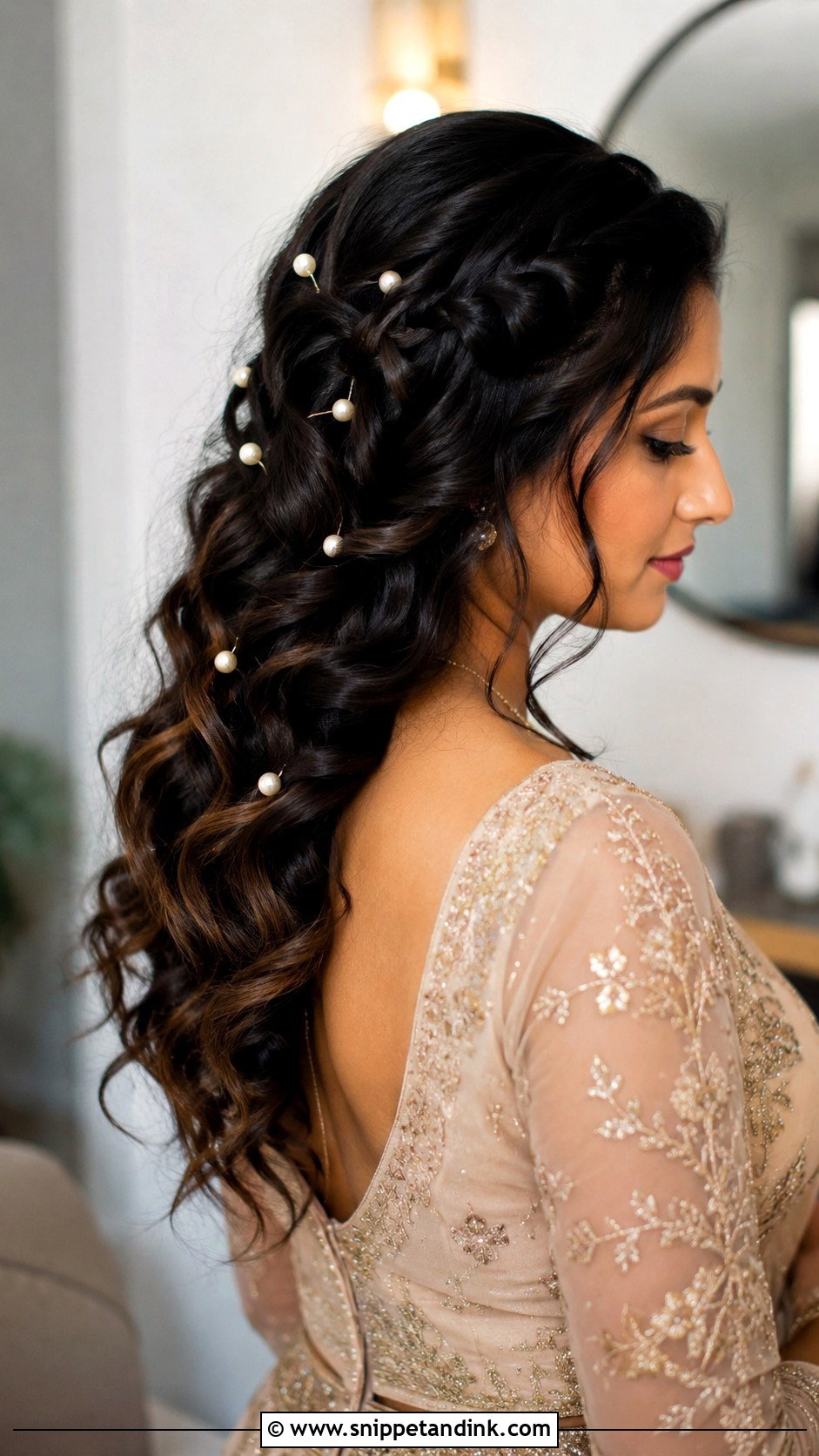
A waterfall braid runs across the crown or the side of the head, and with each stitch one strand is dropped to fall loose through the braid. It gives a soft, romantic look for engagement parties, mehendi and receptions, with lehengas, gowns and lighter sarees. The falling pieces need length to show, so I’d only suggest it for medium to long hair. I curl the loose lengths after braiding, not before, so the braid stays neat. A few pearl pins or small floral clips near the braid finish it.
18. Indian Bridesmaid Twisted Half Updo
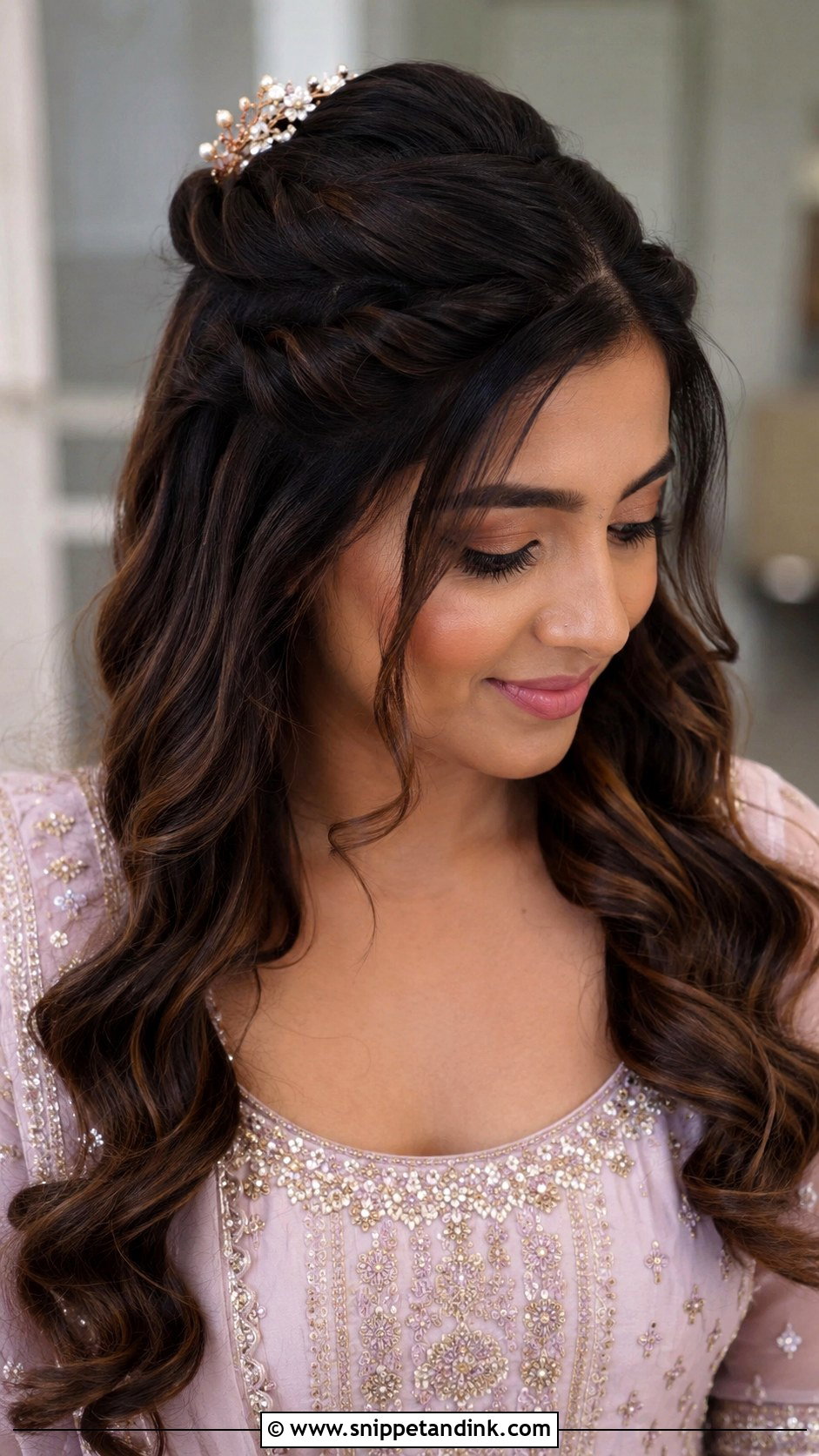
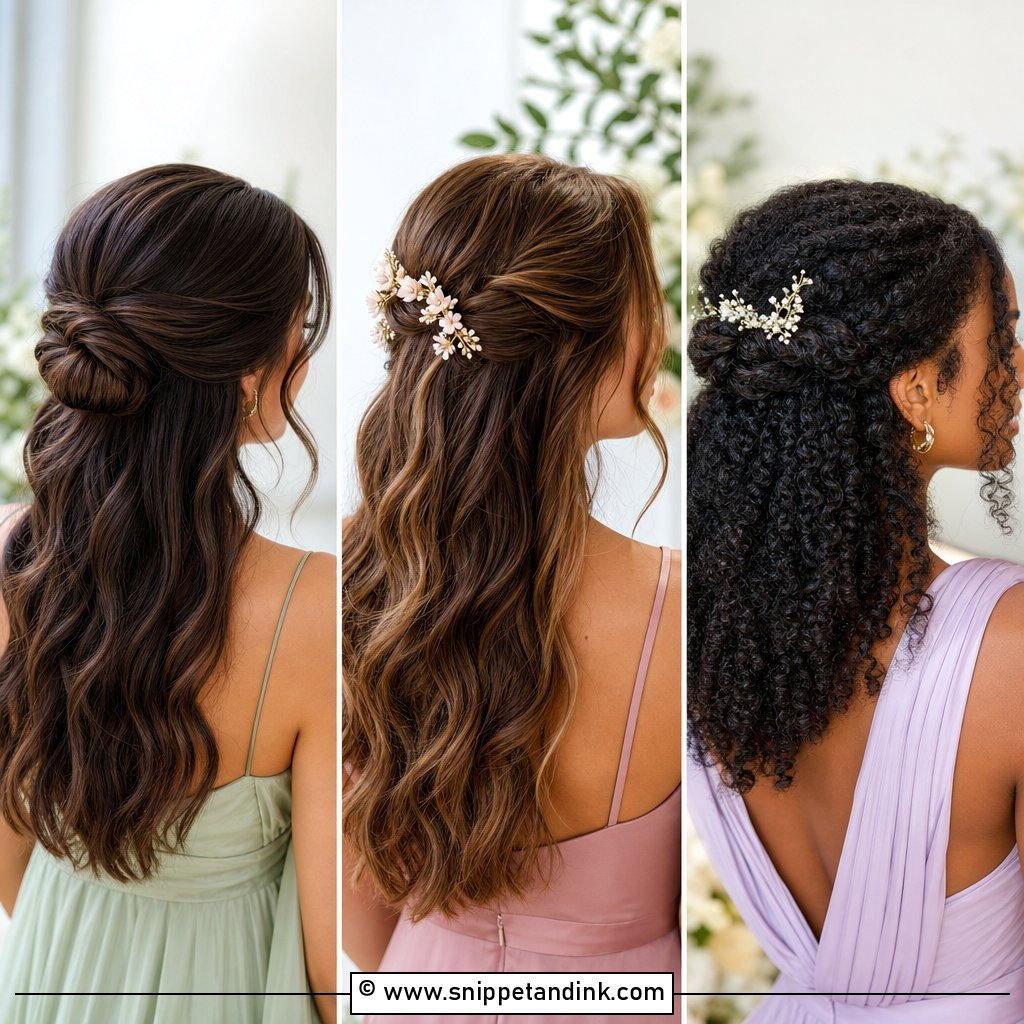
Two front sections are twisted back and pinned at the crown, and the rest falls in curls or waves. That’s the whole style, which is exactly why I recommend it for bridesmaids doing their own hair or a sister with limited time. It keeps the face open with hair still visible on the shoulders, and it suits lehengas, anarkalis and sarees with light dupattas. Pearls, flowers or a small jewelled clip cover the point where the twists meet. It flatters most face shapes and hair textures, so it’s useful when a whole group needs one style.
19. Indian Bridesmaid Floral Braid
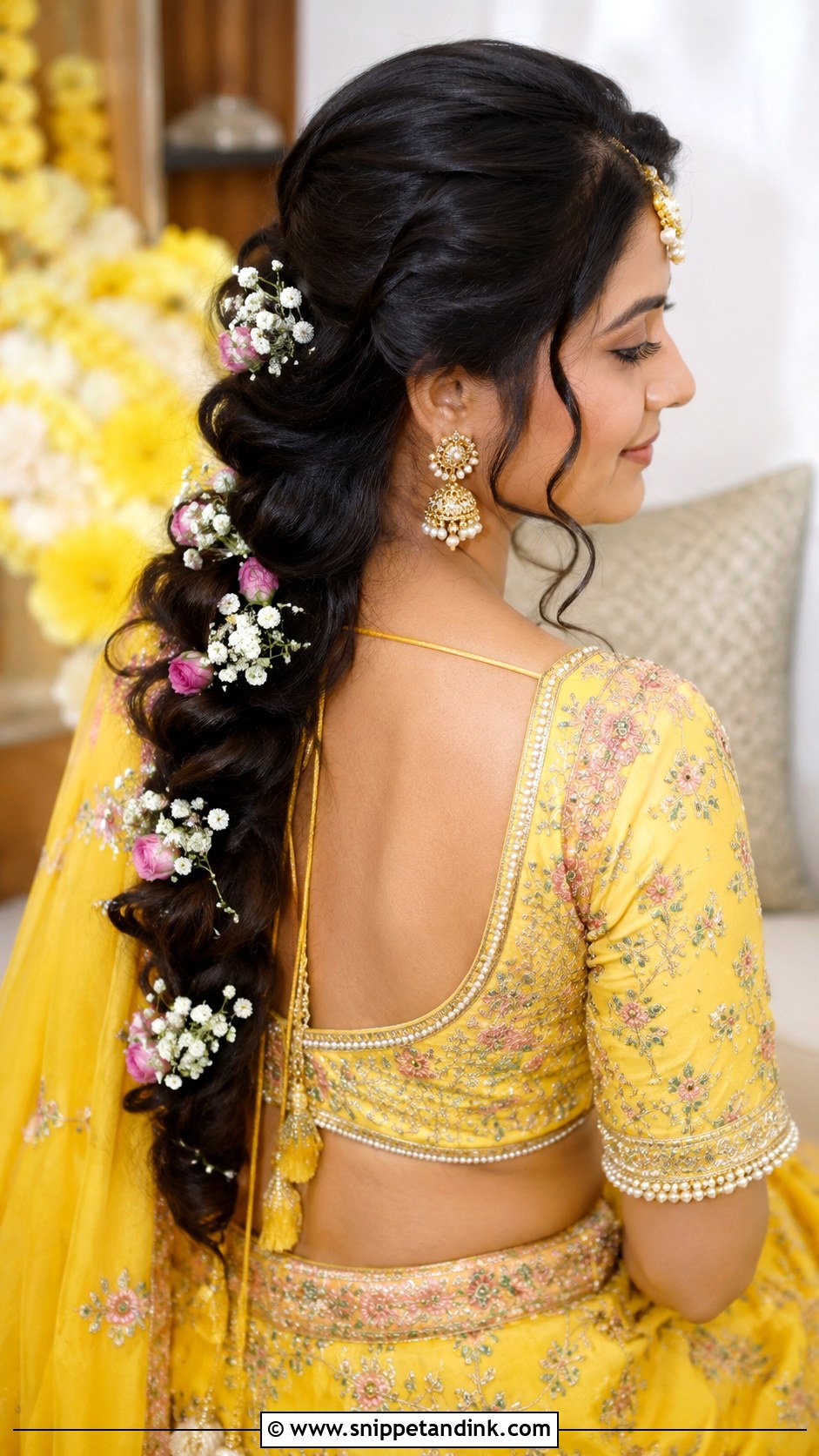
A floral braid is bright and festive, and it’s at home at the haldi, mehendi or a daytime wedding. Under the flowers can be a three-strand, fishtail or pull-through braid. I use flowers that match the outfit: jasmine, baby’s breath, small roses or marigold-style accents, wired or pinned into the braid. It pairs with bright lehengas, printed suits and floral jewellery. Keep the flowers small and light; at a haldi, expect the turmeric to reach them, so choose blooms you won’t mind losing.
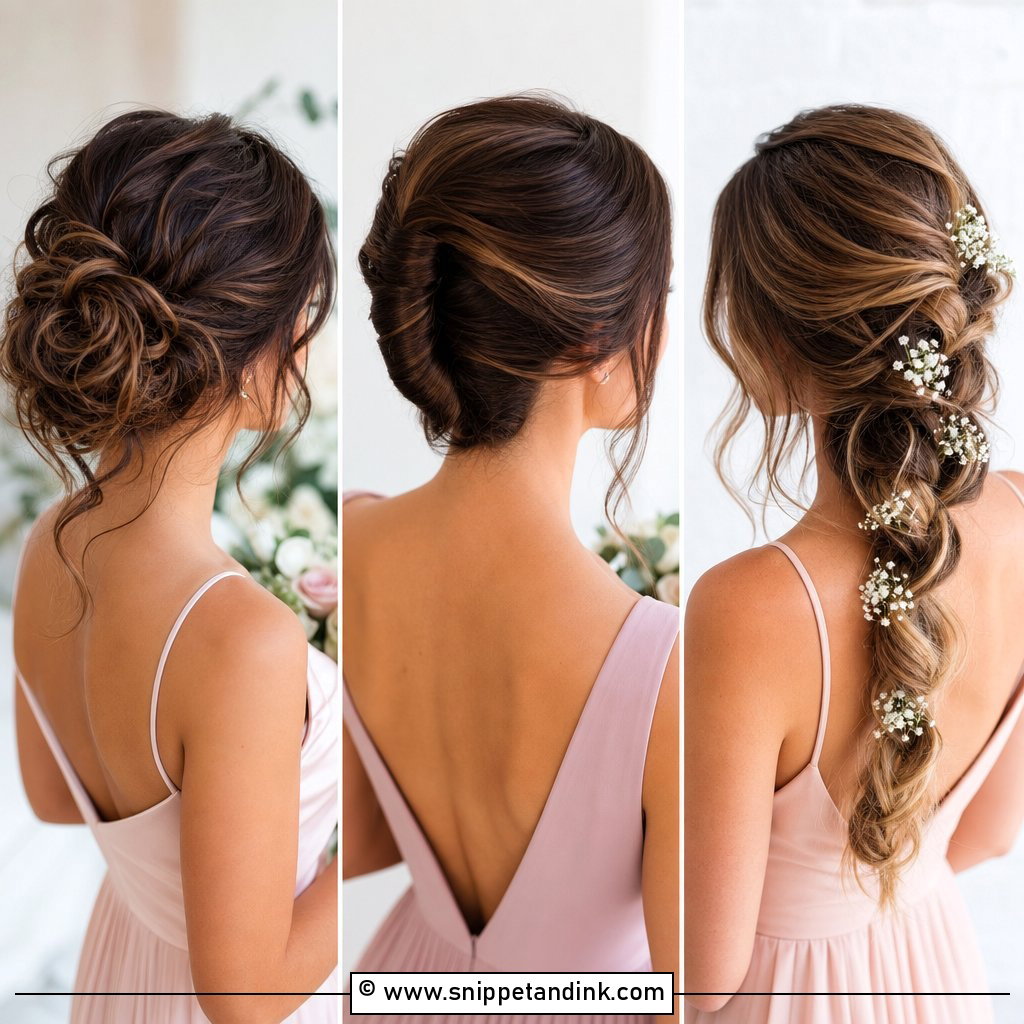
20. Indian Bridesmaid Maang Tikka Hairstyle
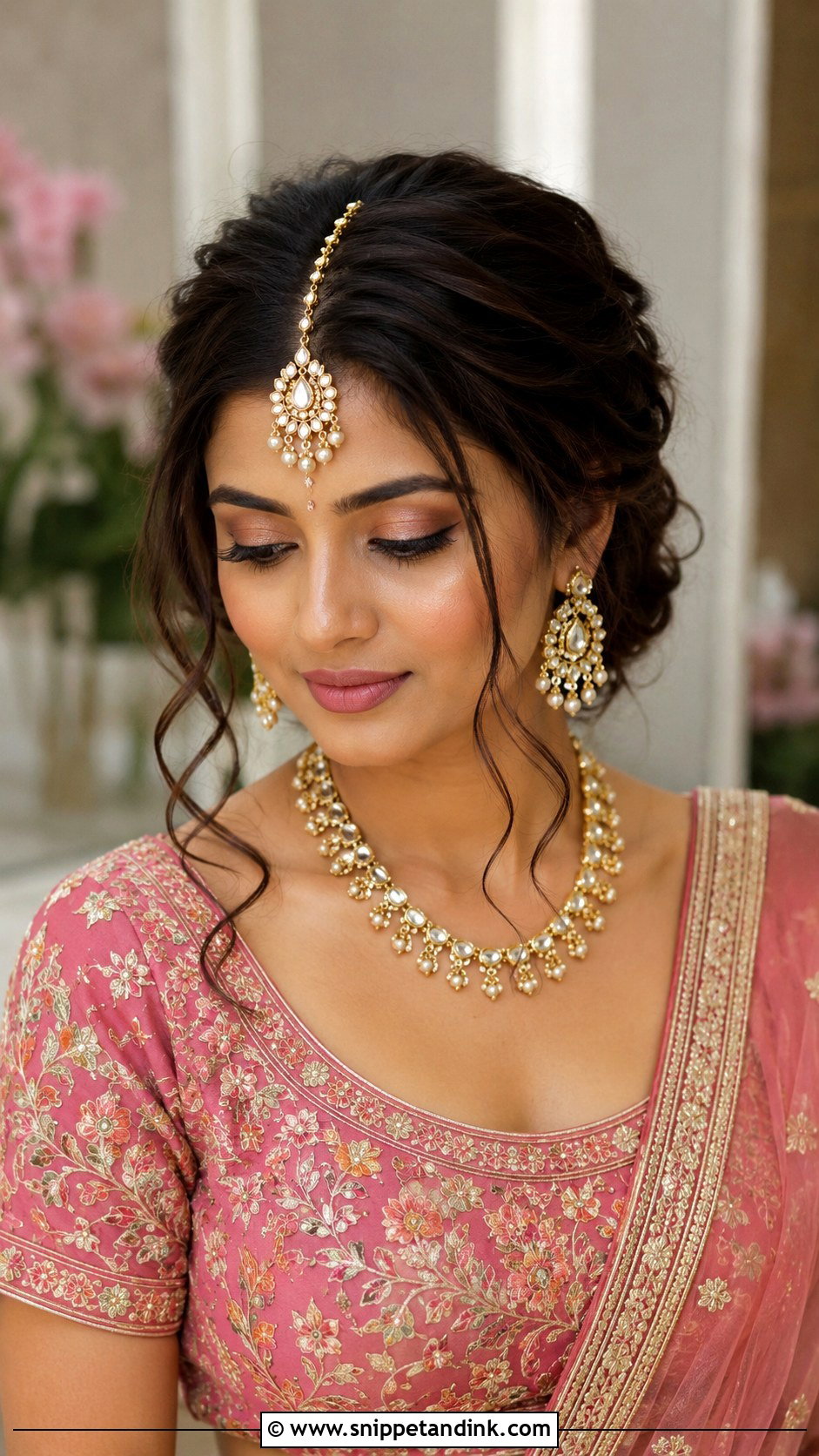
A maang tikka needs a clean centre part and balanced volume, so the chain hangs straight and the pendant sits in the middle of the forehead. Under it can be a low bun, half up curls, open waves or a long braid. For bridesmaids, I’d keep the tikka smaller than the bride’s. I pin the tikka’s hook into a small backcombed section at the crown, hidden with a bobby pin, before finishing the front, so it doesn’t drift when you dance or adjust the dupatta. Lehengas, sarees and anarkalis all suit it.
Looking Like a Group Without Wearing Identical Hair
Forcing six different hair types into one style rarely works. A sleek bun that looks sharp on thick straight hair looks thin on fine hair, and a fishtail on short hair simply doesn’t reach. I’d rather tie the group together with one shared detail and let each style suit the person.
- Same part for everyone, or the same side for any side-swept styles.
- The same flower or pin in every look, even when the styles differ.
- Updos for the ceremony, then each bridesmaid choosing her own style for the reception.
Short hair can still join in with sleek waves and a matching pin or a small braided section at the front. Naturally curly hair usually looks best defined rather than straightened, and it holds pins well. For bridesmaids who wear a hijab, I keep the hair underneath in a flat, low bun so the scarf sits smoothly, and the shared detail moves to the scarf pin instead.
Sangeet Curls, Ceremony Buns
Bridesmaid hair should be secure and suit the function. A sleek bun fits the main ceremony, while open curls or Hollywood waves suit the reception. Braids, parandis and floral styles feel right at the mehendi, haldi and sangeet because they move well and look festive. The best choice depends on your outfit, jewellery, hair length, the weather and how much dancing is planned. Bring reference photos to your stylist, try your accessories on beforehand and ask for enough hold to last the whole night.
You'll Like These Ideas:


Leave a Reply