
A bow is the hair accessory I talk brides out of most often, and also the one I’m happiest to see when it’s right. Get the fabric, the size and the shade of white right and it looks like it was made with the dress; get one of them wrong and it looks like a party favour. Some brides want a slim satin ribbon tucked into an updo, others a dramatic oversized bow that echoes the back of the gown. Below are 25 ways I’ve seen bows work with buns, waves, braids and ponytails, with notes on what each one needs to sit properly for a whole day.
Which Ribbon Fabric Holds Its Loops All Day
Before picking a style, pick a fabric, because the fabric decides whether a bow keeps its shape for ten hours or collapses by the first dance. These are the ones I see most often in bridal hair and how they behave.
- Double-faced satin: shiny on both sides, so it looks finished from every angle. Holds a medium bow well. Shows creases, so steam it before the day.
- Grosgrain: ribbed and stiff. The best choice for crisp, upright loops without wire, and it hides small creases.
- Velvet: rich and matte, but heavy and prone to crushing. Keep velvet bows small to medium and store them flat.
- Chiffon or silk: soft and drapey, so it won’t hold a defined bow. Use it where you want long tails that move.
- Wired or stiffened ribbon: holds any shape you give it, which suits oversized and structured bows, but can look artificial up close.
Colour matching is the other thing I check early. Wedding whites vary from bright white to ivory to warm champagne, and a bow that is too bright makes the dress look dull beside it. Ask your dress shop for a small fabric swatch, or hold the ribbon against the gown at a fitting, in daylight and under warm light.
1. Classic White Satin Bow Low Bun
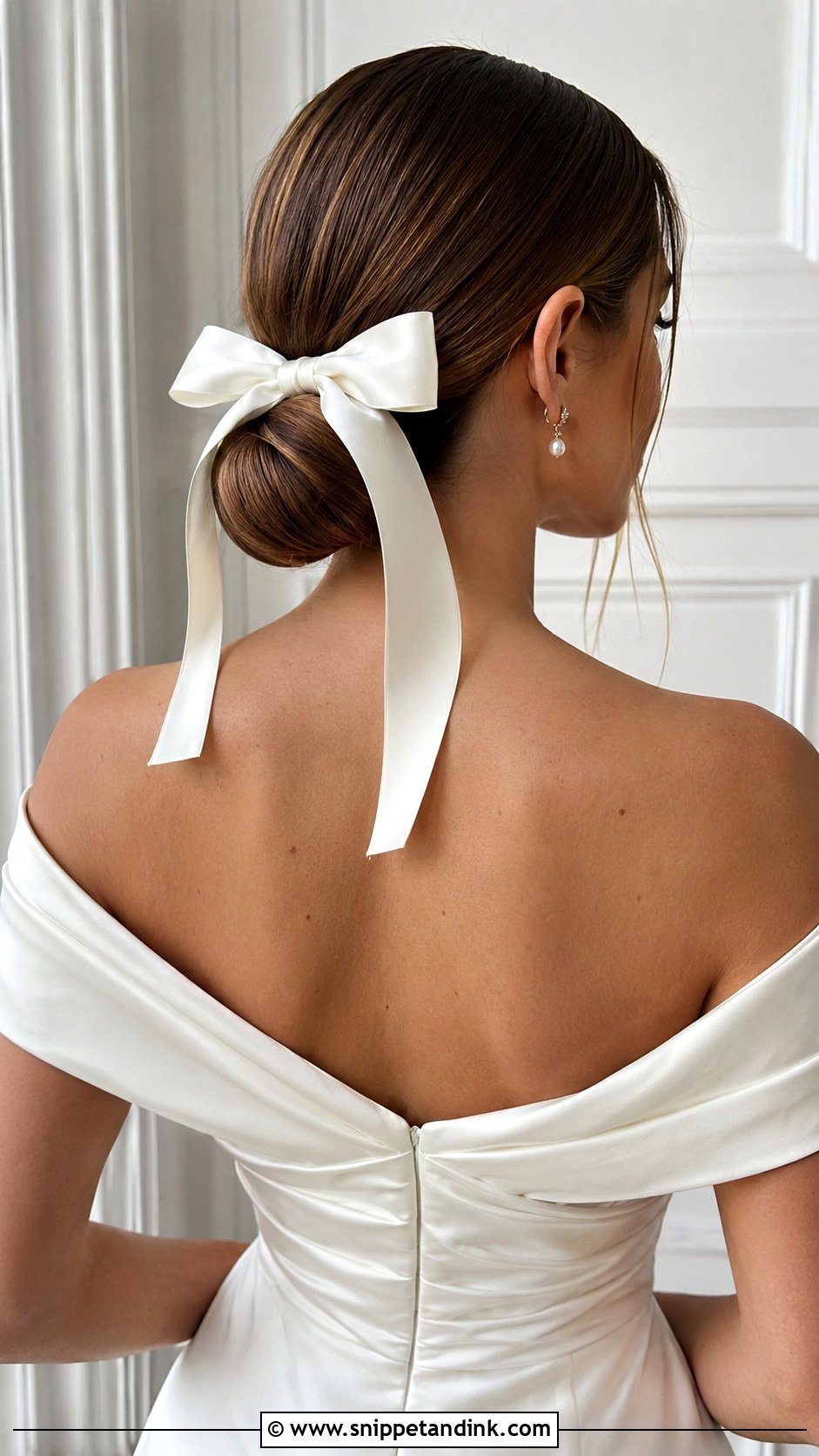
This is the bow I reach for when a bride wants one accessory and nothing else. A low bun gives the bow a flat, stable base at the nape, so it doesn’t tilt as you turn your head. The detail I check is the white: a bright optical-white satin next to an ivory dress makes the gown look yellow in photos, so I always hold the ribbon against the bodice first. A smooth hairline or a soft middle part both suit it.
2. Half-Up Champagne Bow With Loose Waves
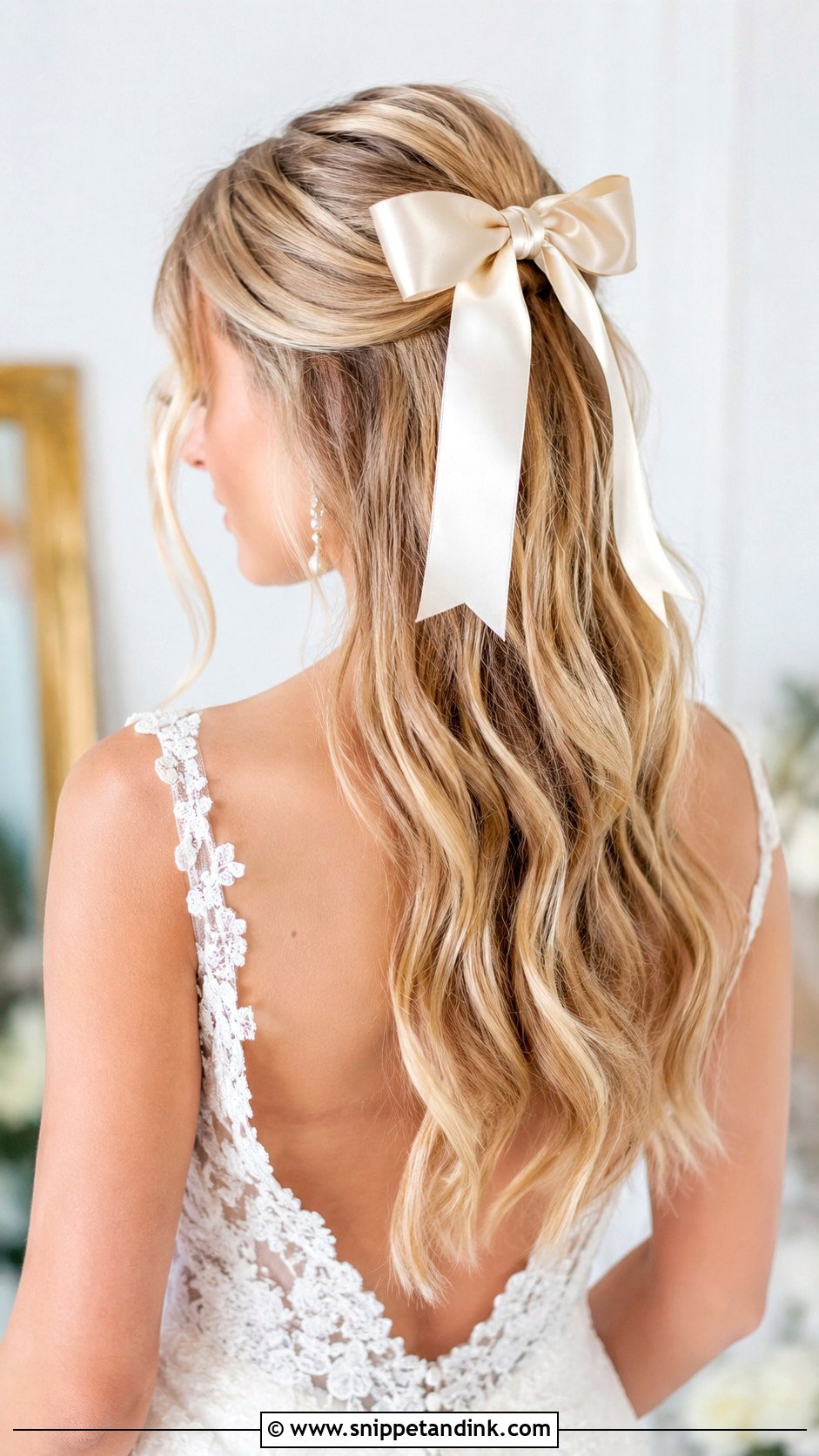
Picture soft, flowing waves cascading down your back, with a champagne bow where the top section is gathered. Champagne is the most forgiving bow colour I know on blonde and light brown hair because it sits close to the hair tone and doesn’t jump out as a white block. The weak point is the half-up gather itself. Loose waves are slippery, so the hairstylist should secure the section with a small elastic and crossed pins before the bow clips over it, otherwise the bow carries the weight and droops by the reception.
3. Sleek Low Ponytail With Black Velvet Bow
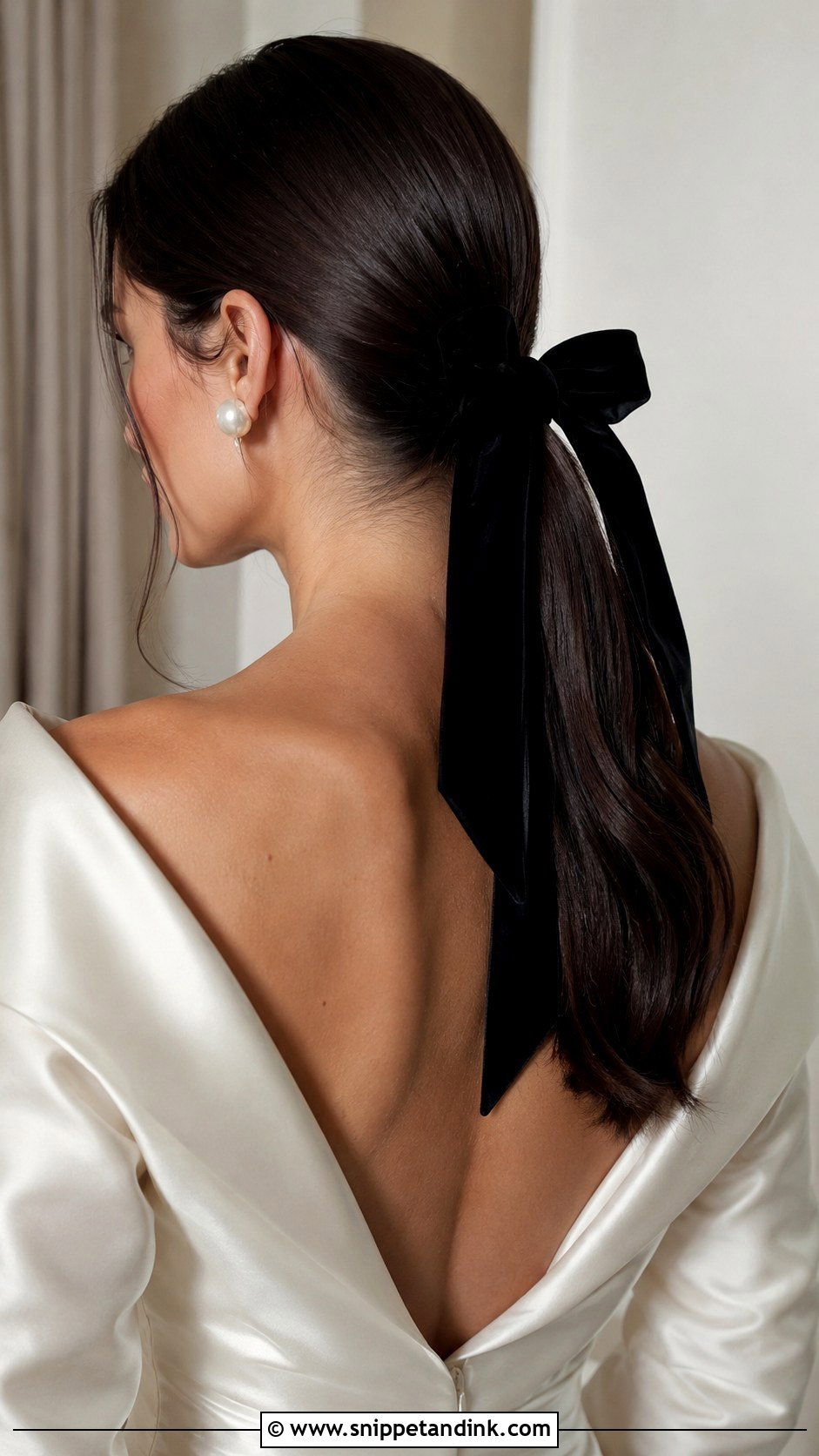
A sleek low ponytail tied with black velvet is the bow for a bride who wants contrast. Velvet absorbs light, so on camera it reads as a solid, graphic shape, which is lovely against blonde or grey hair and almost disappears on very dark hair. Be honest with yourself about that before ordering. I’d also check the dress: black velvet next to a satin slip dress looks deliberate, while next to tulle and lace it can feel borrowed from another outfit.
4. Romantic Braided Updo With Oversized Bow
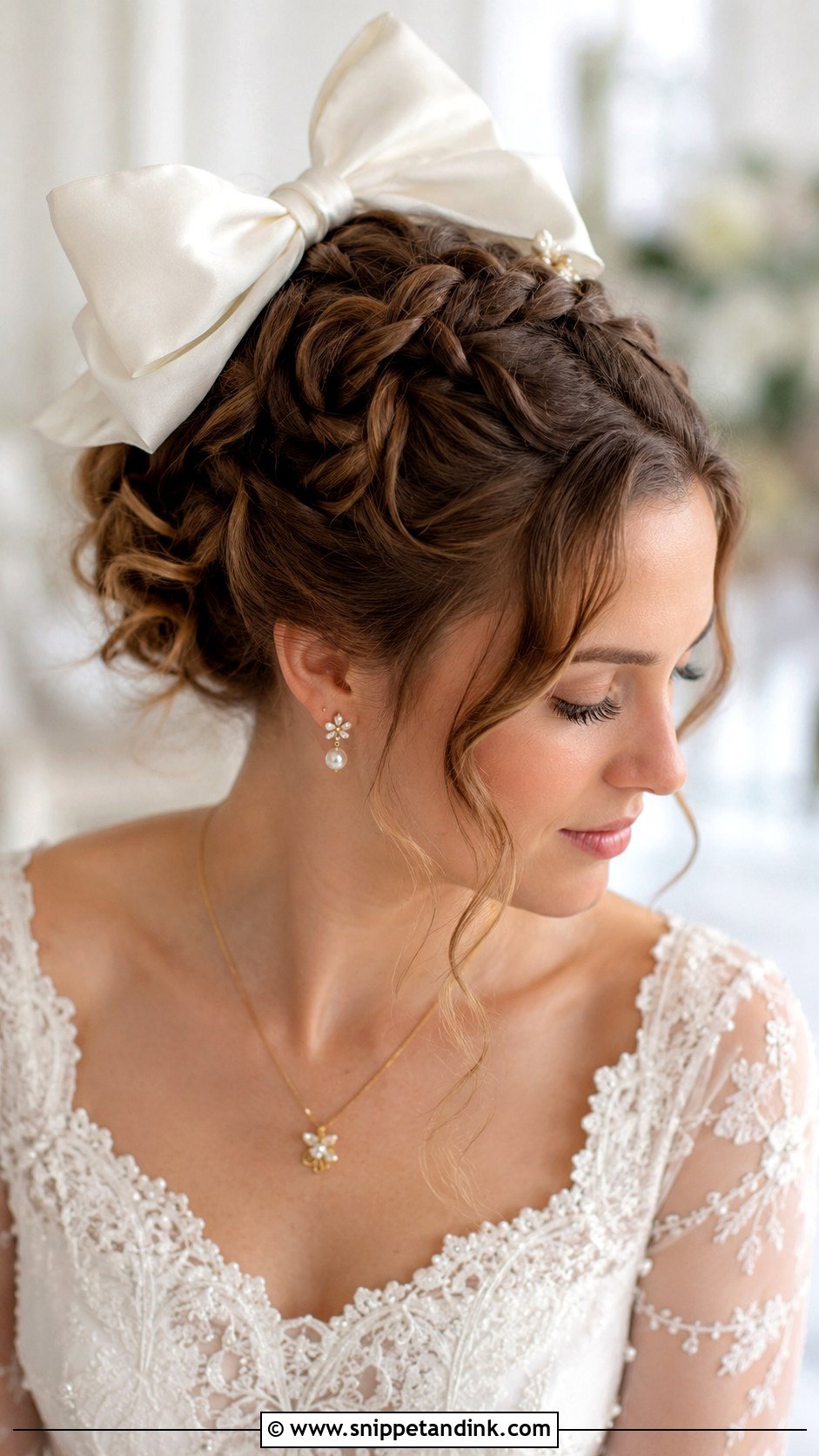
An oversized bow on a braided updo needs to be in proportion to the updo, not to the bride’s whole head. The braids already add bulk, so I measure the bow against the back of the style and keep the loops from extending beyond its edges. Placed a little above the braids, the bow becomes the focal point and the plaits act as its frame. Lace gowns and vintage themes suit it, and small flowers between the braids keep the texture going.
5. Soft Pink Bow Side Ponytail
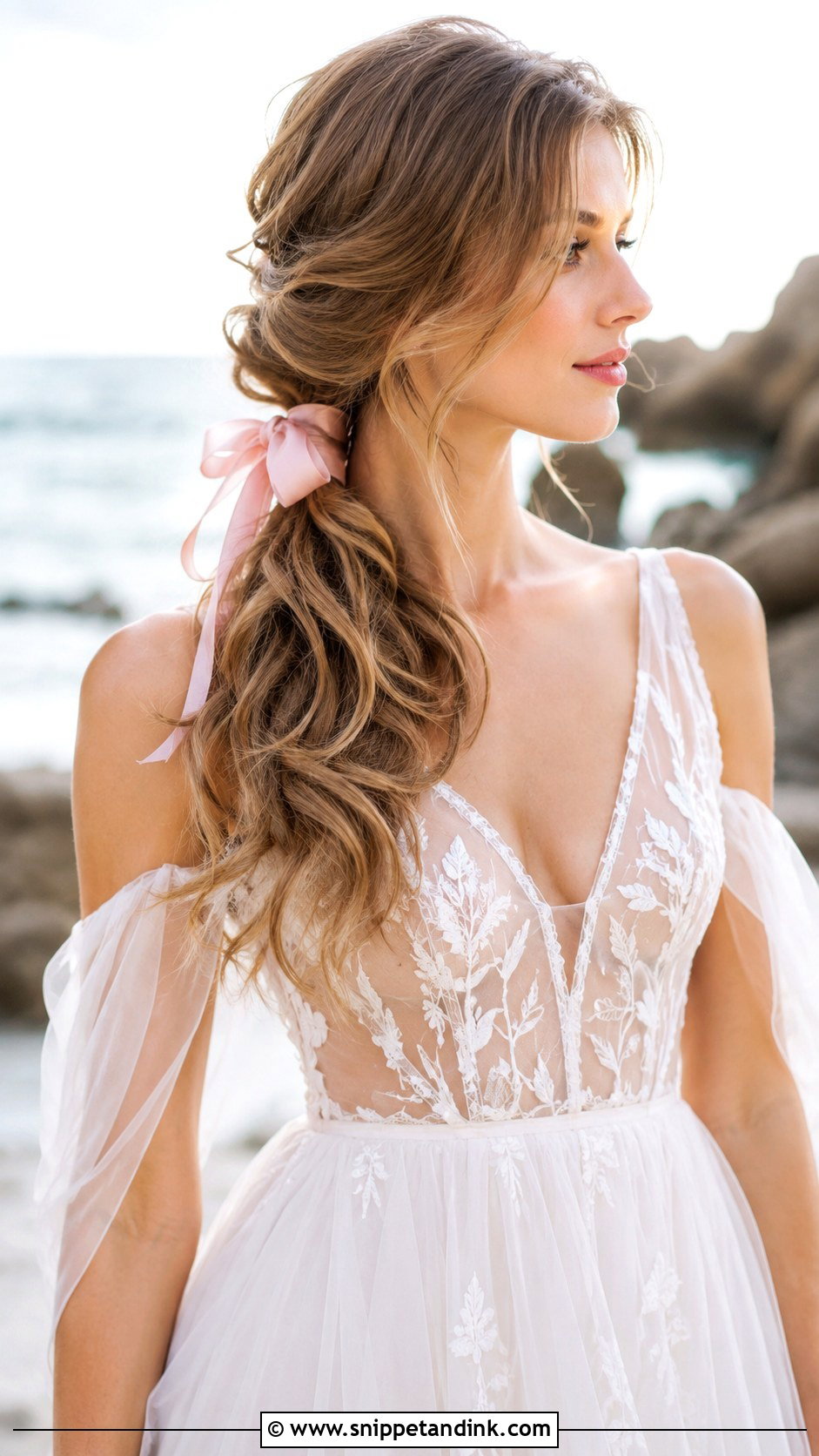
Pink is a colour I’d test in daylight before committing to. Soft pink flatters many skin tones, but some pale pinks turn peachy or grey under warm reception lighting. The side ponytail here is relaxed and lightly waved, so the bow can be a softer fabric like chiffon or silk that drapes rather than holds a stiff shape. It belongs at a beach or small outdoor wedding more than a formal hall.
6. Big White Bow With Side-Swept Curls
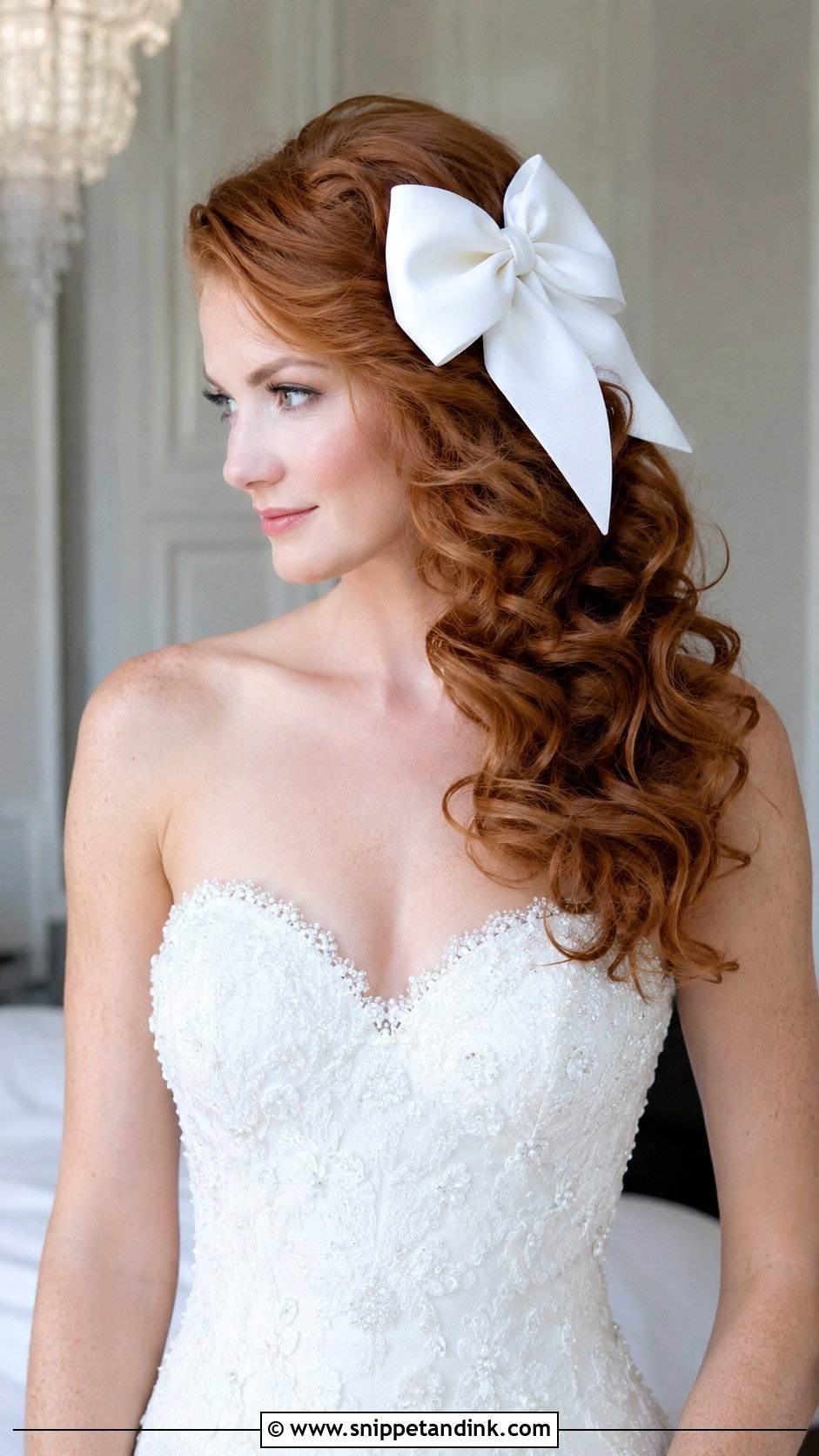
Side-swept curls with a big white bow is a balancing act, literally: the curls go over one shoulder and the bow sits on the opposite side so the head doesn’t look lopsided in profile. Grosgrain is my pick here because its ribbed weave holds a crisp bow without wire. Old Hollywood curls are heavy, and if the hair isn’t set well the bow side can look bare by evening, so I ask the stylist to pin the curls firmly at the nape. A detailed bodice keeps the whole look grounded.
7. Low Chignon With Delicate Ribbon Bow
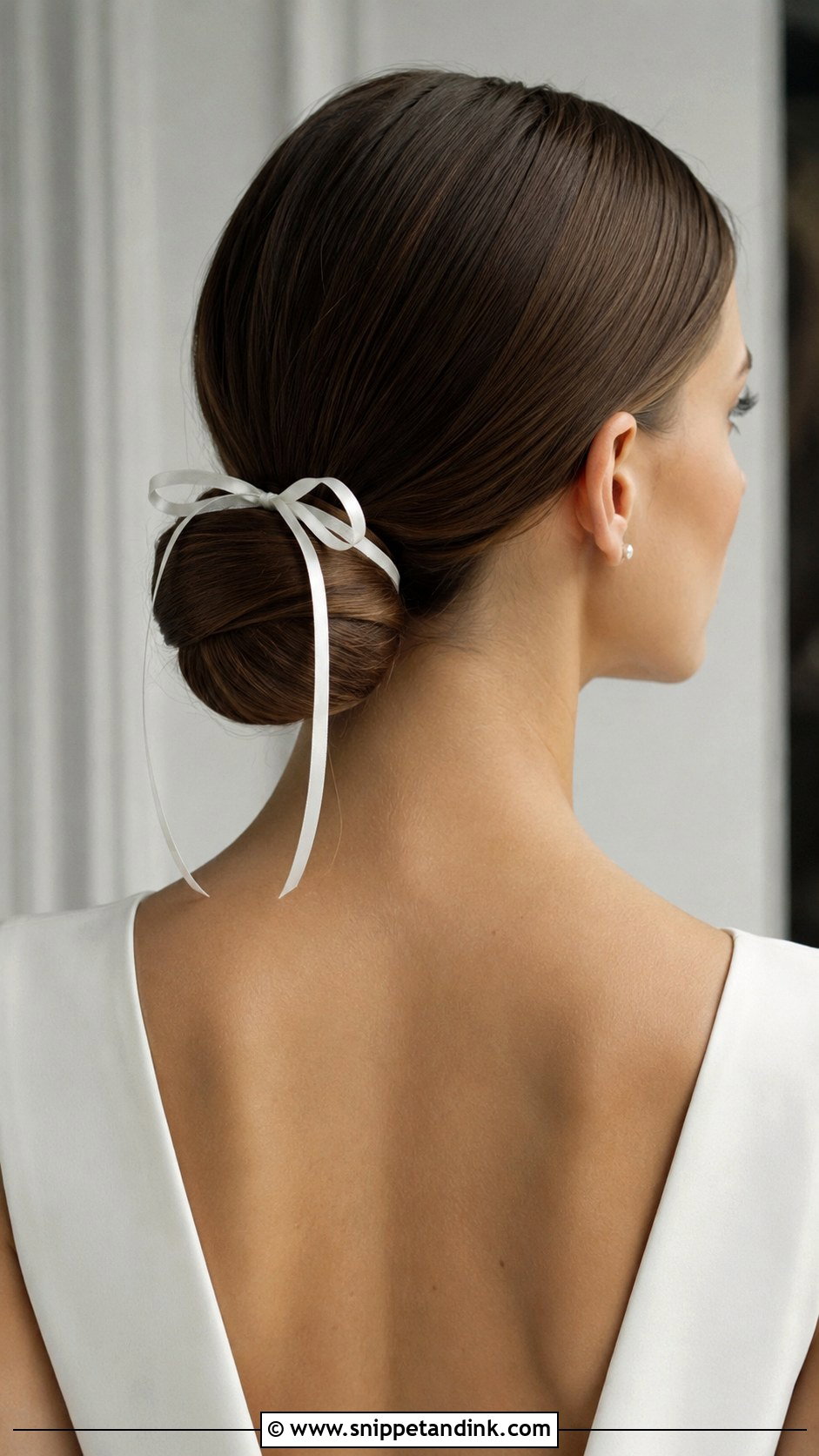
A thin ribbon on a low chignon is the bow for minimalists, and its success depends on scale. If the ribbon is narrower than about a finger’s width it can vanish in photos taken from a distance, so I usually go slightly wider than feels necessary. Matte satin works better than shiny on a sculpted chignon because it doesn’t compete with the hair’s own shine. Sleek gowns and simple earrings let it register.
8. Bubble Ponytail With Multiple Bows
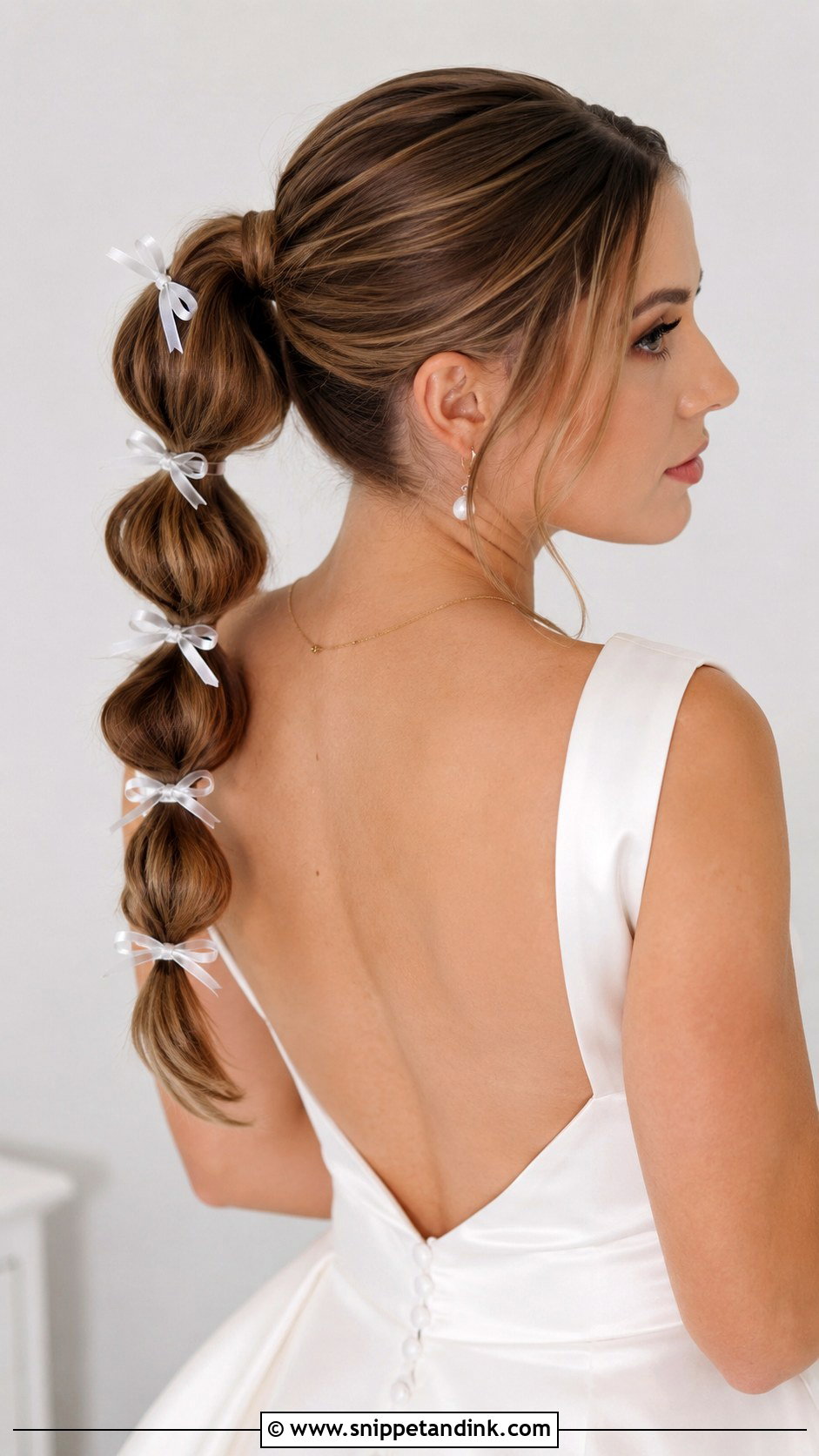
A playful bubble ponytail with a small bow at each section is a lot of detail, so it suits long, fairly straight hair best; on curly or very thick hair the bubbles get lost. The practical issue is the elastics. Each bubble is tied off, and each bow needs its own tiny clip or a tie around that elastic, so I suggest clear elastics covered by the bows. White or ivory keeps it bridal, while pastels push it toward casual.
9. Veil and Bow Combination Updo
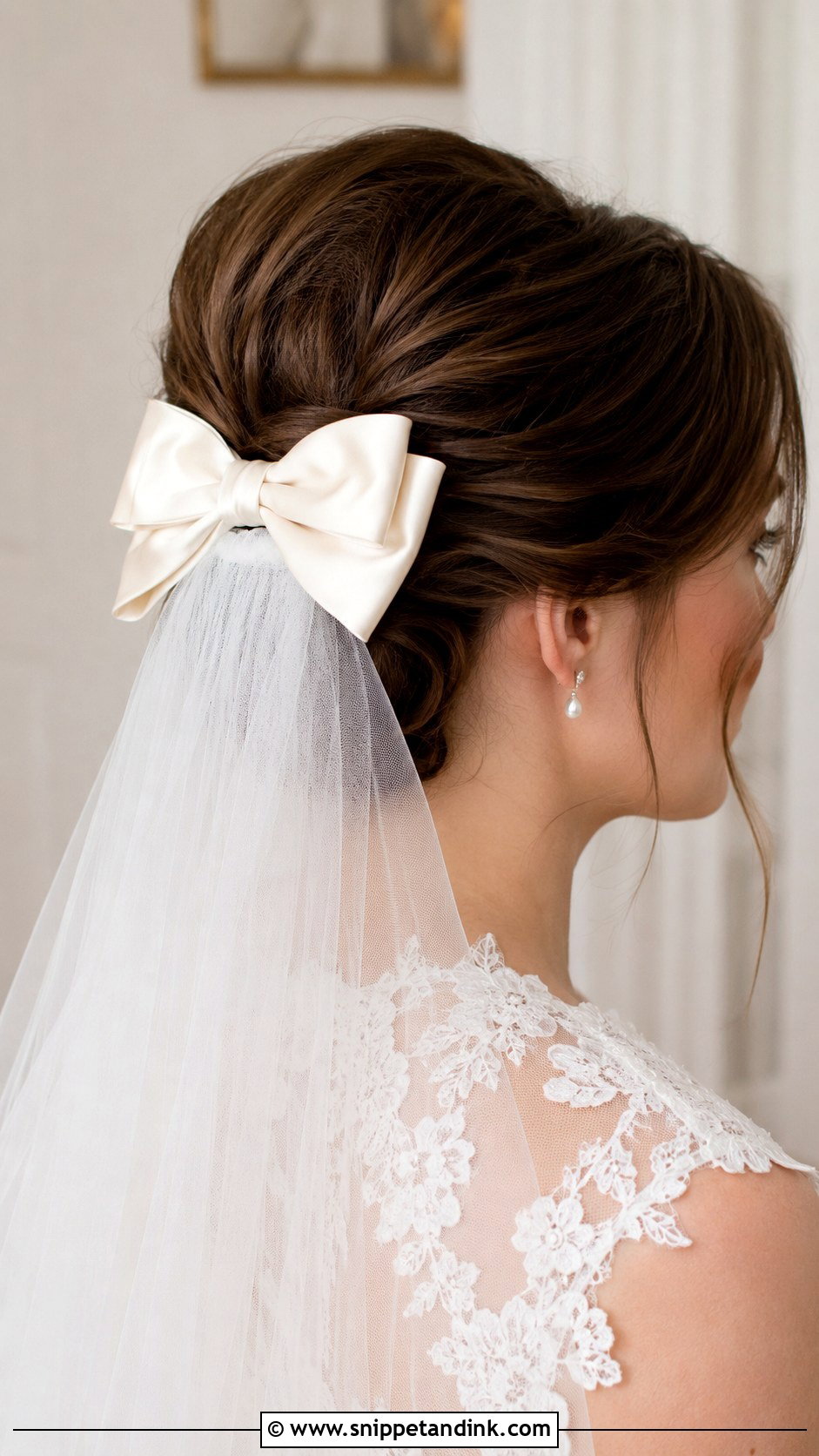
Wearing a veil and a bow together is mostly a placement question. The veil comb usually goes into the crown or just under the updo, and the bow sits just above it, so when you take the veil off after the ceremony the bow is already in place. That’s the version I prefer, because removing the veil doesn’t disturb the hair. Match the bow’s white to the veil, not only to the dress; veils come in several shades of ivory, and two whites next to each other can clash.
10. Long Loose Waves With Top Bow
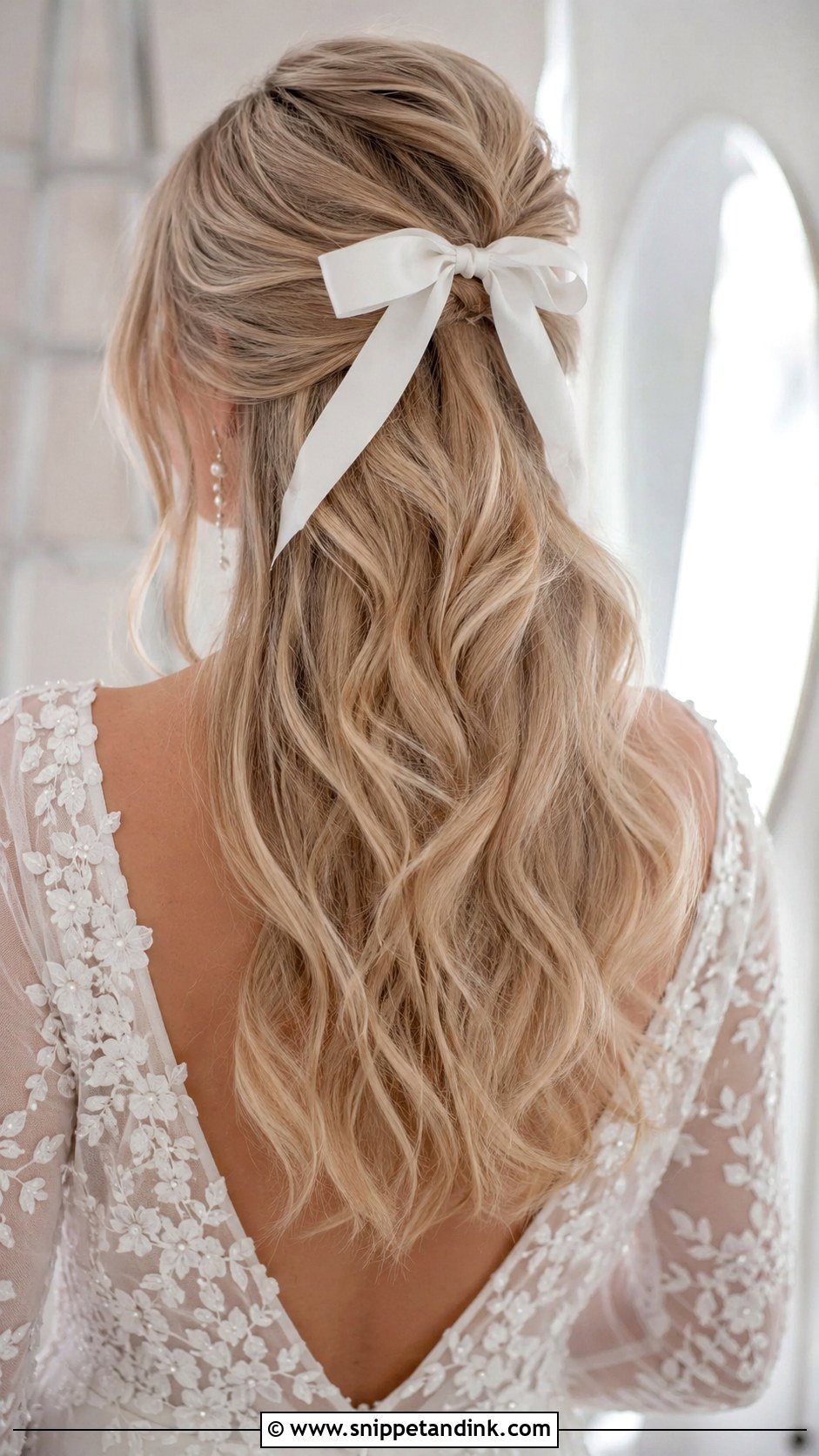
Loose waves with a bow at the crown is about as easy as wedding hair gets: the bow simply holds back the top section. What I watch is weight. Long hair worn down drags on the half-up section all day, so I prefer a lightweight satin bow rather than a heavy jewelled one in this position. A white or blush ribbon at a garden or boho wedding is plenty.
11. Sleek Bun With Lace Bow
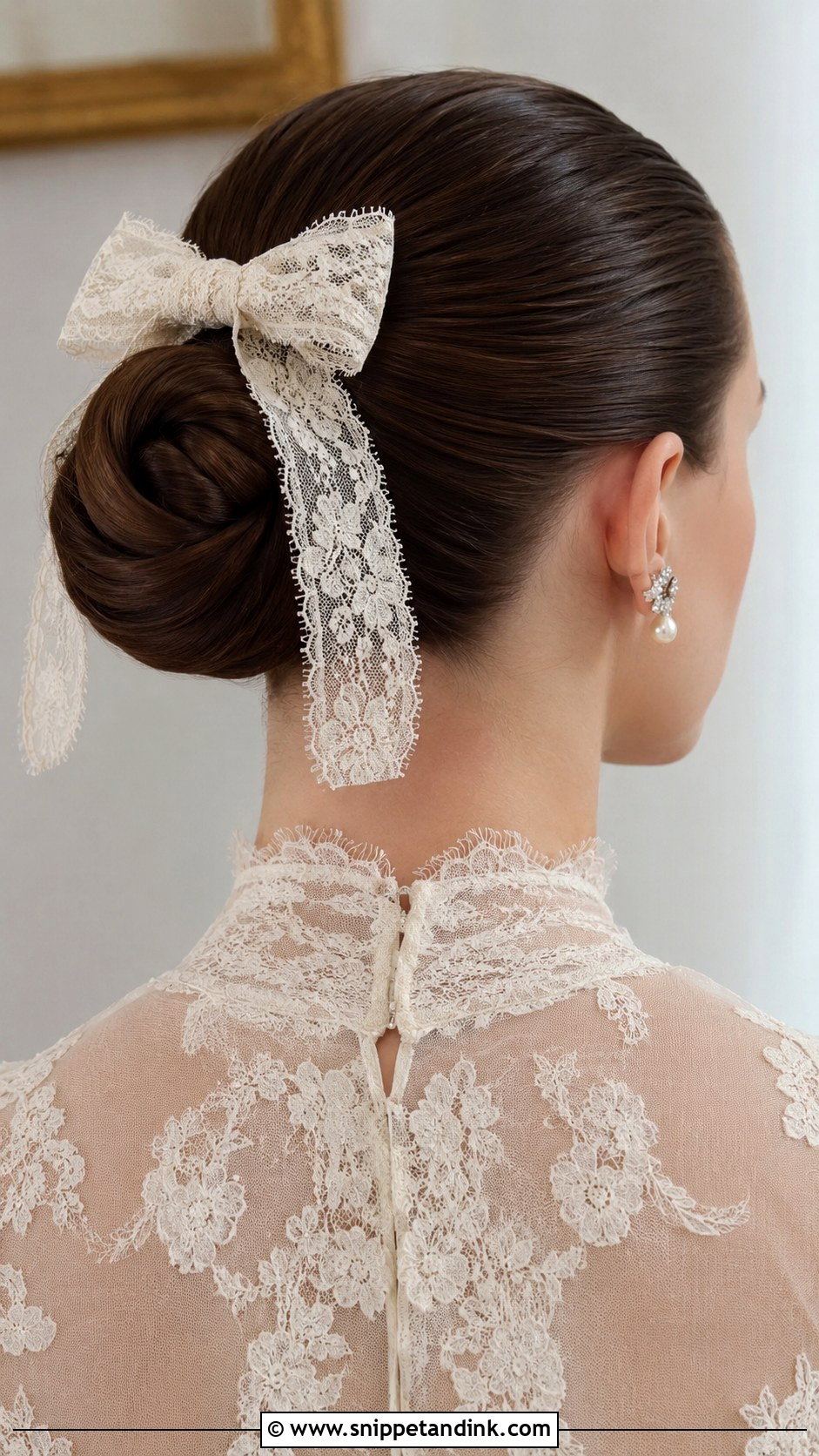
A lace bow brings texture to a smooth bun, and that’s why I like it on brides wearing lace. Even so, the lace on the bow doesn’t have to match the dress exactly; I’d rather choose something with a similar weight and colour than chase a perfect pattern match, which almost never happens. Ivory lace on a warm-toned gown is safe. Because the bun is plain, the back view does the work in photos, so check the bow is centred before you walk.
12. Twisted Updo With Pearl-Trimmed Bow
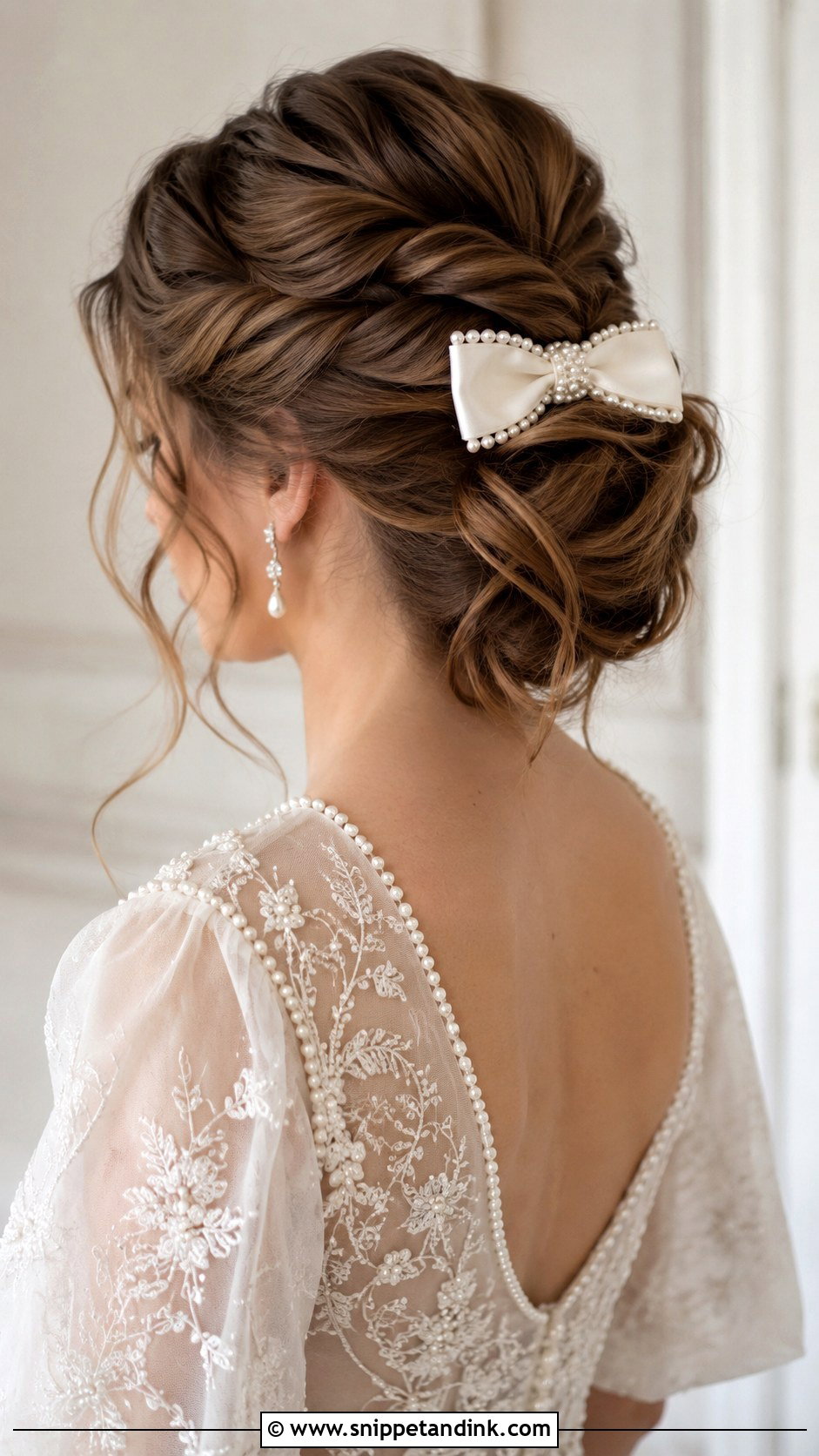
Pearl-trimmed bows have weight that a plain ribbon doesn’t, and in a twisted updo that weight needs somewhere to go. I ask for the bow to be anchored into one of the twists with a pin through its back, not just clipped onto the surface. The pearls catch light and pair naturally with pearl earrings, so keep other accessories quiet. Soft pieces around the face stop it from looking stiff.
13. Boho Braided Half-Up With Ribbon Bow
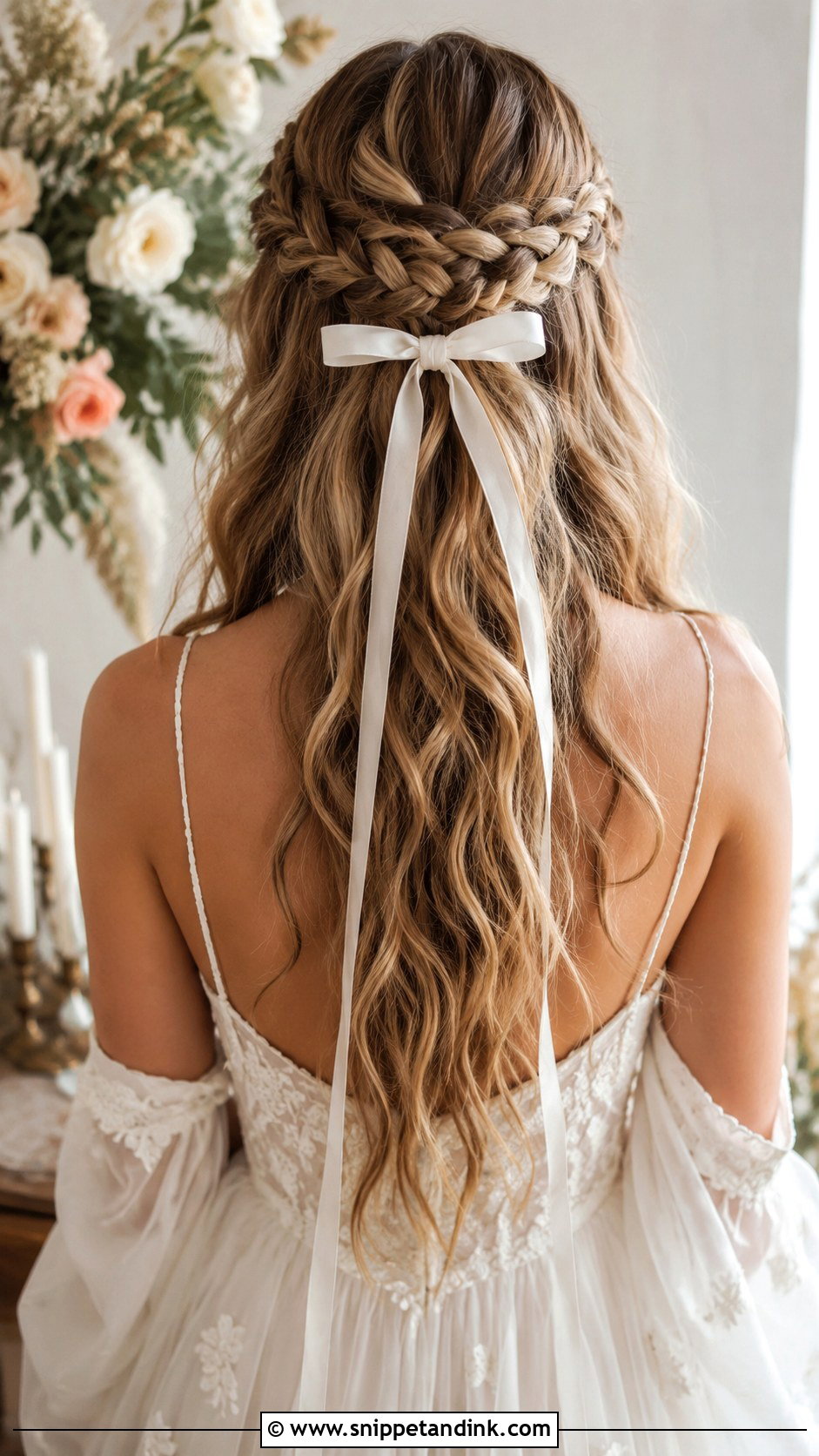
With a boho half-up braid, the bow is mostly about the tails. Long ribbon ends move when you walk and look softer than the bow itself, which suits outdoor and garden weddings. I cut the tails at an angle so they don’t fray during the day; a straight cut on satin can start unravelling after a few hours of movement. Ivory or blush ribbon is a natural fit, and a few small flowers woven into the braid sit well beside it.
14. Low Braid With Bangs and Bow
A low braid with soft bangs and a bow at the end is the simplest bow look here, and one of the most practical. The bow sits at the tail of the braid over one shoulder, so it’s visible in front-facing photos rather than only from behind. I’d put a small elastic under the bow so it can’t slip off the end of the braid during hugging. Long hair suits it best.
15. Voluminous Updo With Statement Bow
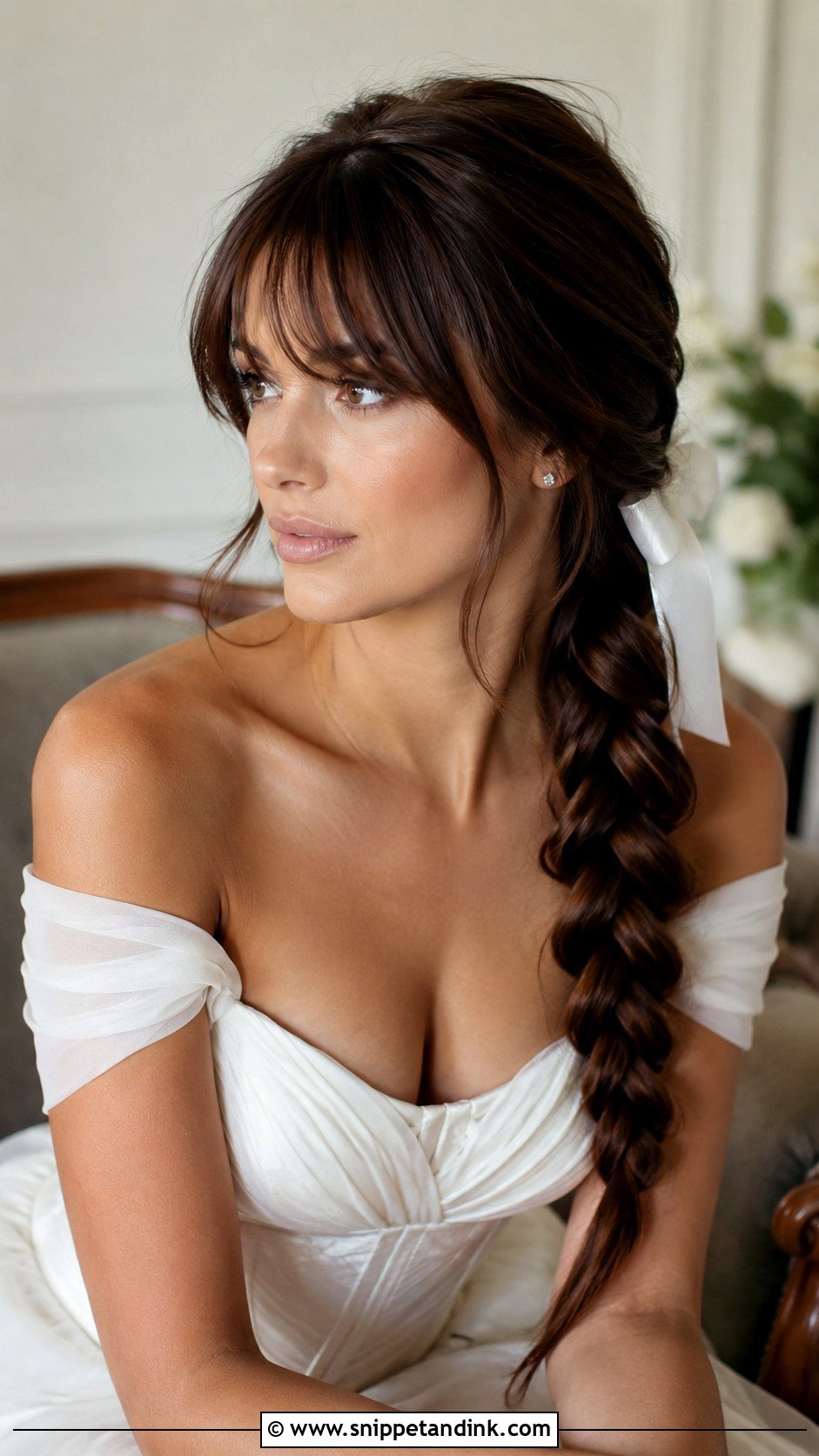
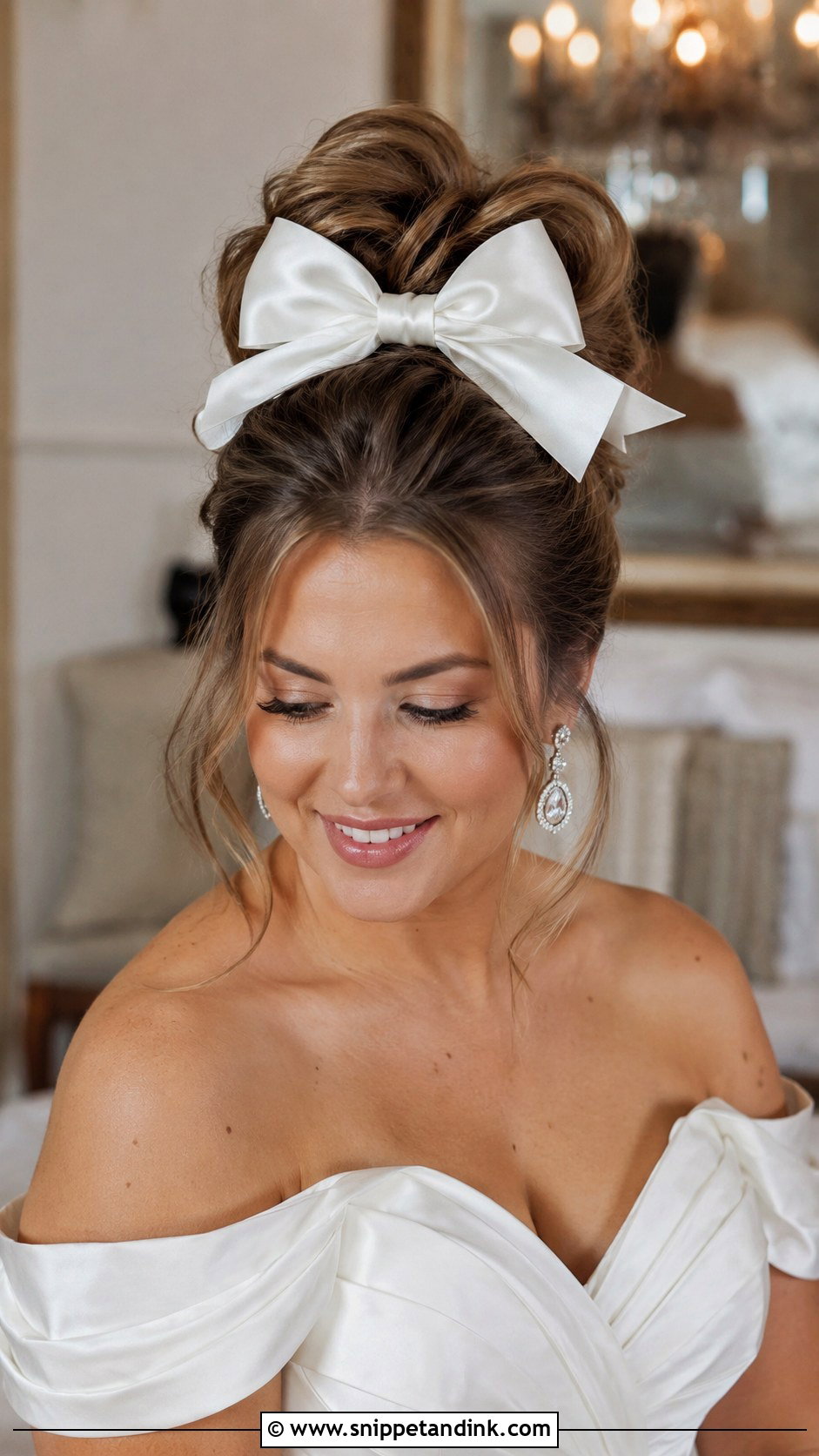
A full, voluminous updo can carry a large bow better than almost any other style, because the bow has a big surface to sit against. I check the proportions in a full-length mirror rather than a face mirror: if the bow is wider than the shoulders, it starts to look costumey. Structured grosgrain or a heavy satin keeps the shape. It suits formal ballgowns and big venues, and a few soft pieces near the face stop it from feeling rigid.
16. Sleek High Ponytail With Bow
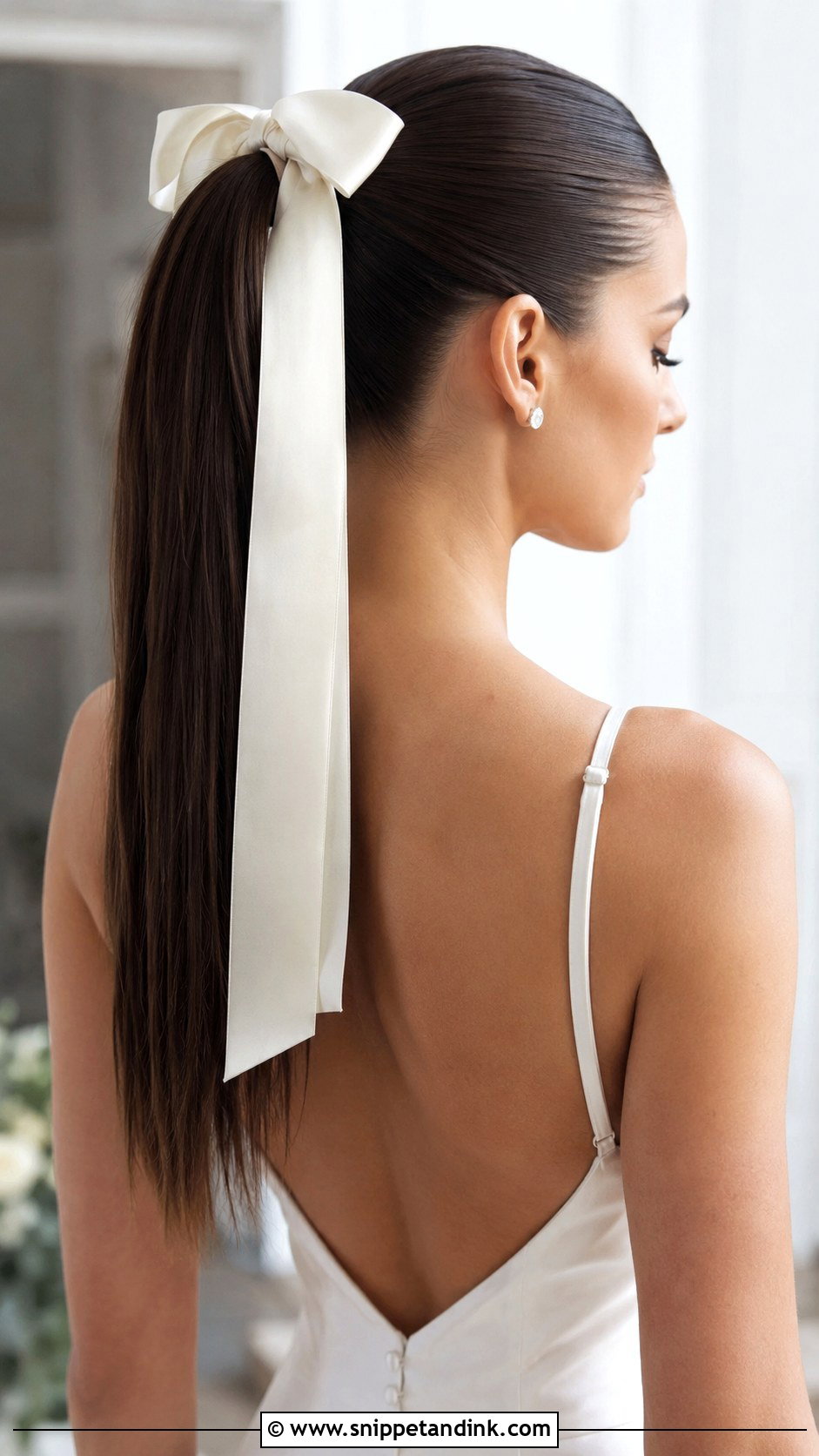
A bow tied around a high ponytail has to be secured to the elastic, not just knotted around the hair, because ribbon tied on smooth hair slides down within an hour. I tie it over a strong elastic and add a pin through the knot. The high pony shows off the neck and earrings well. It suits sleek gowns and contemporary weddings; for a long veil, it’s tricky, because the comb has to sit under the pony.
17. Soft Curls With Blush Bow Half-Up
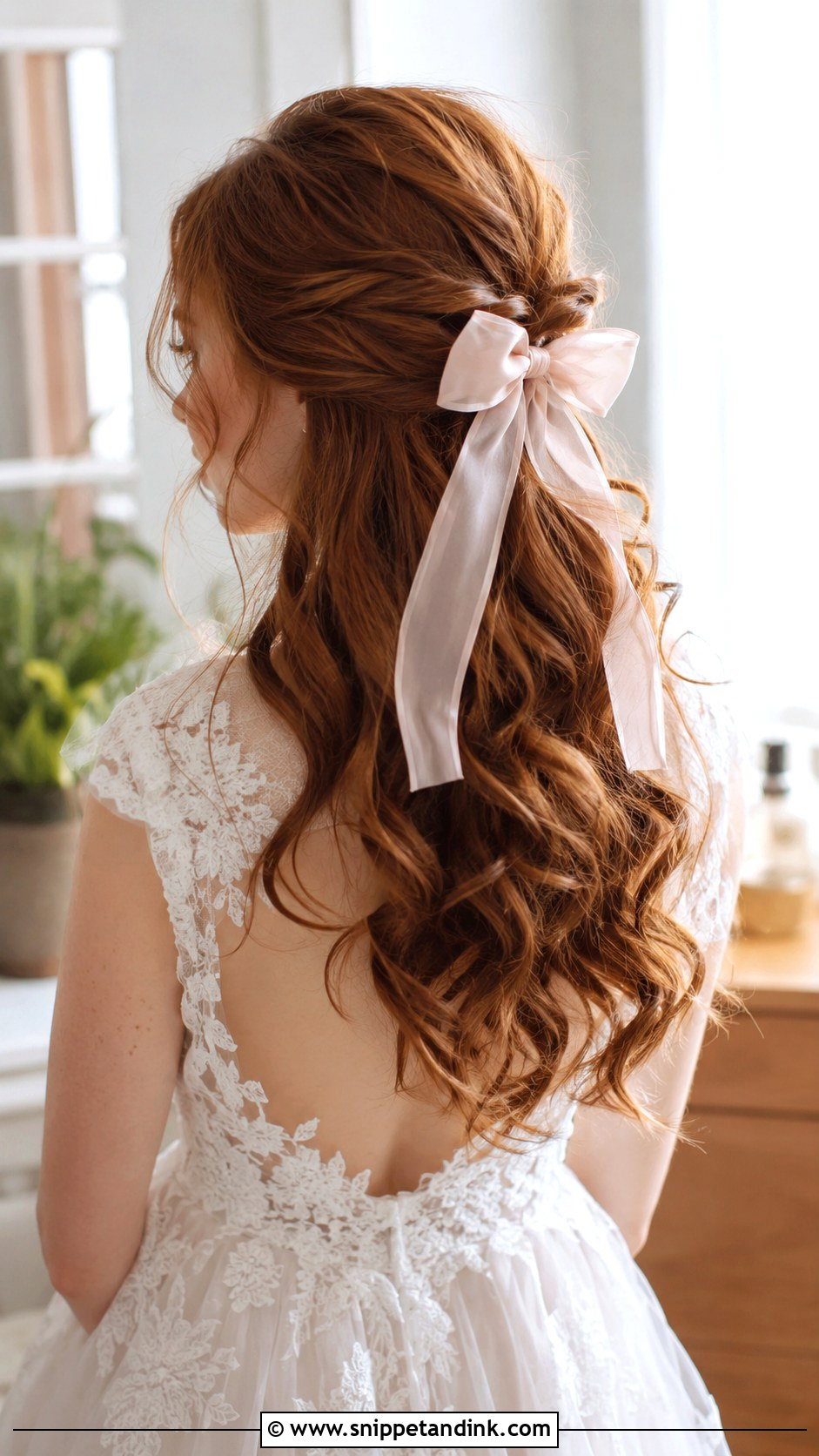
Blush is warmer than pink, and that warmth makes it kinder to fair skin than a cool pink. On half-up curls, a soft blush bow sits where the top sections meet. Spring and summer weddings suit it most, and I’d use small pearls or flowers around it only if the dress is very plain. If the gown already has blush details, match the bow to those rather than buying a new shade.
18. Vintage Finger Waves With Bow
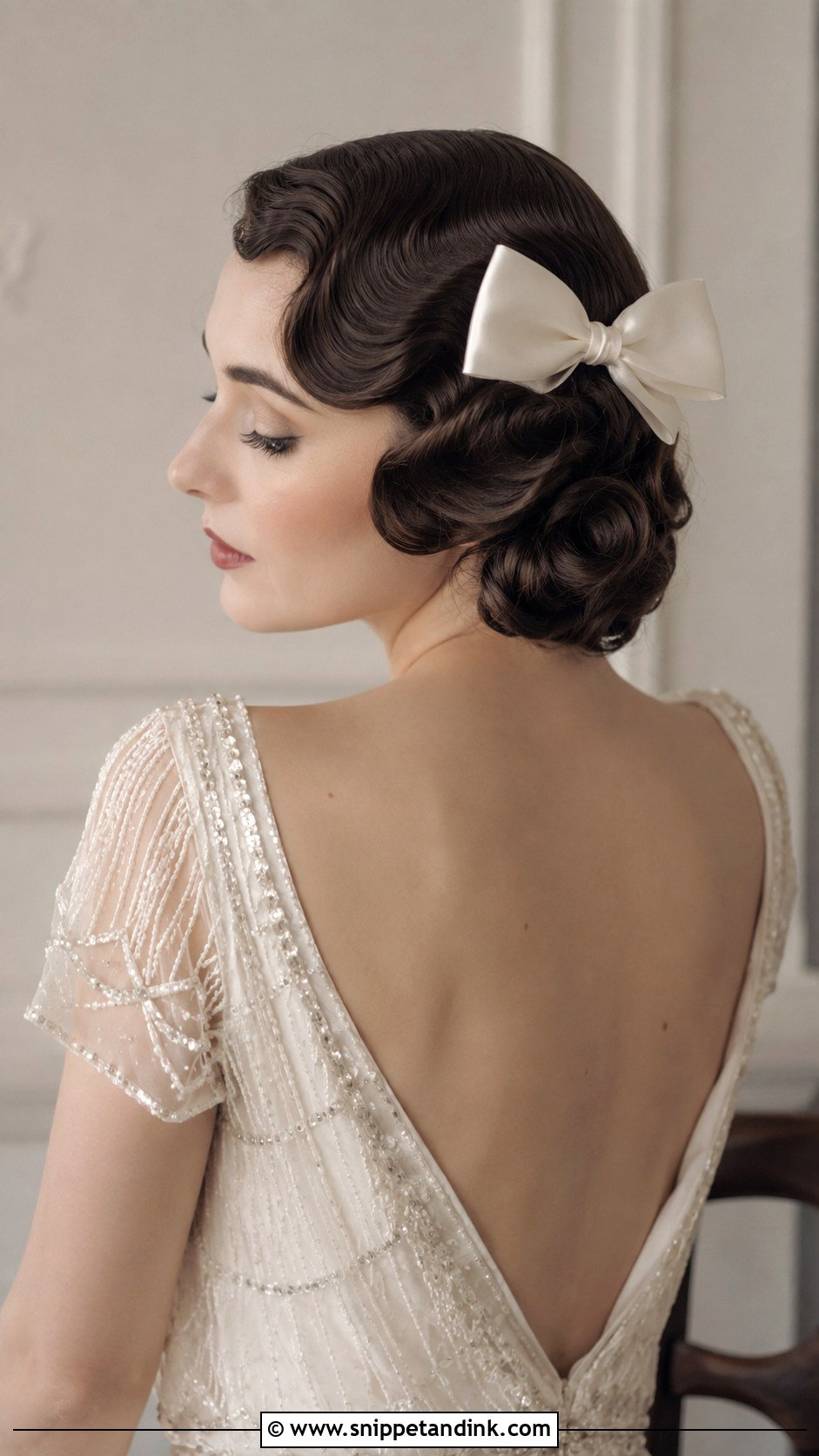
Finger waves are sculpted and shiny, so the bow has to be equally precise. A soft, floppy bow next to finger waves looks unplanned. I like a small satin bow placed at the side, just behind the last wave, where it reads like a period hair clip. Retro and art deco themes are the natural setting, along with vintage gowns and bolder jewellery.
19. Messy Bun With Oversized Satin Bow
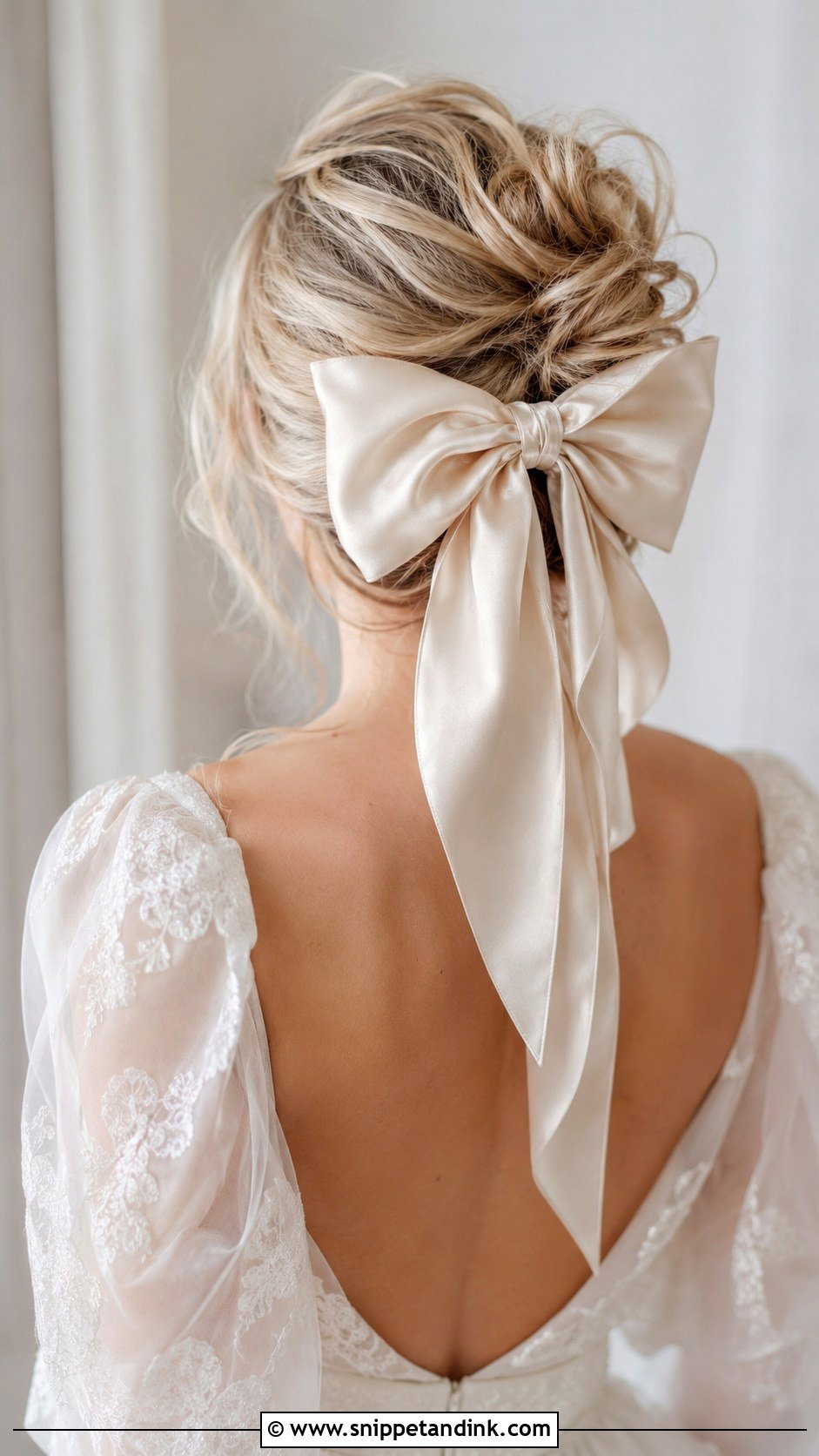
An oversized bow on a slightly messy bun shows how much contrast can do: the loose texture keeps the large bow from looking stiff. My test is weight again. A big satin bow on a soft, low-volume bun can pull it down, so I suggest the hairstylist build the bun over a small padding or pin it around a firm base. White or champagne satin keeps it bridal, and the look sits comfortably at both casual and formal weddings.
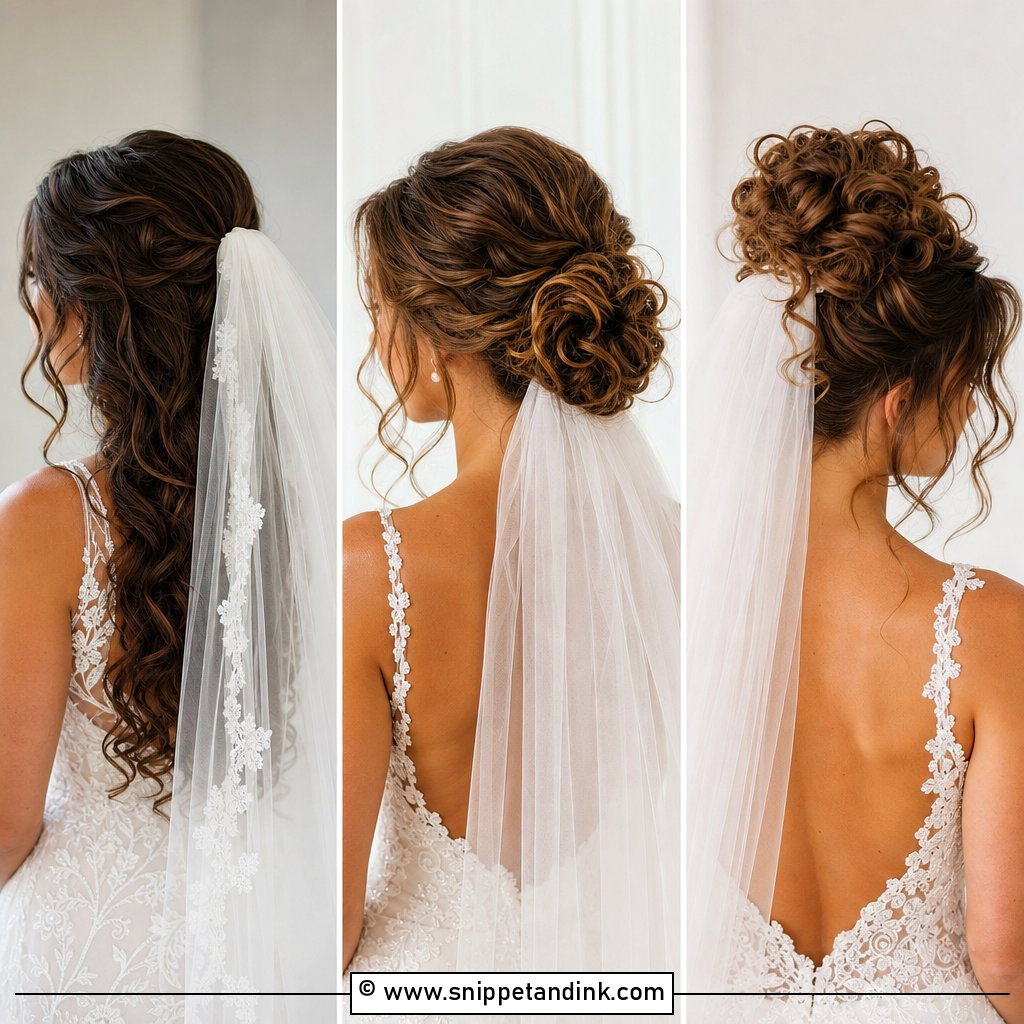
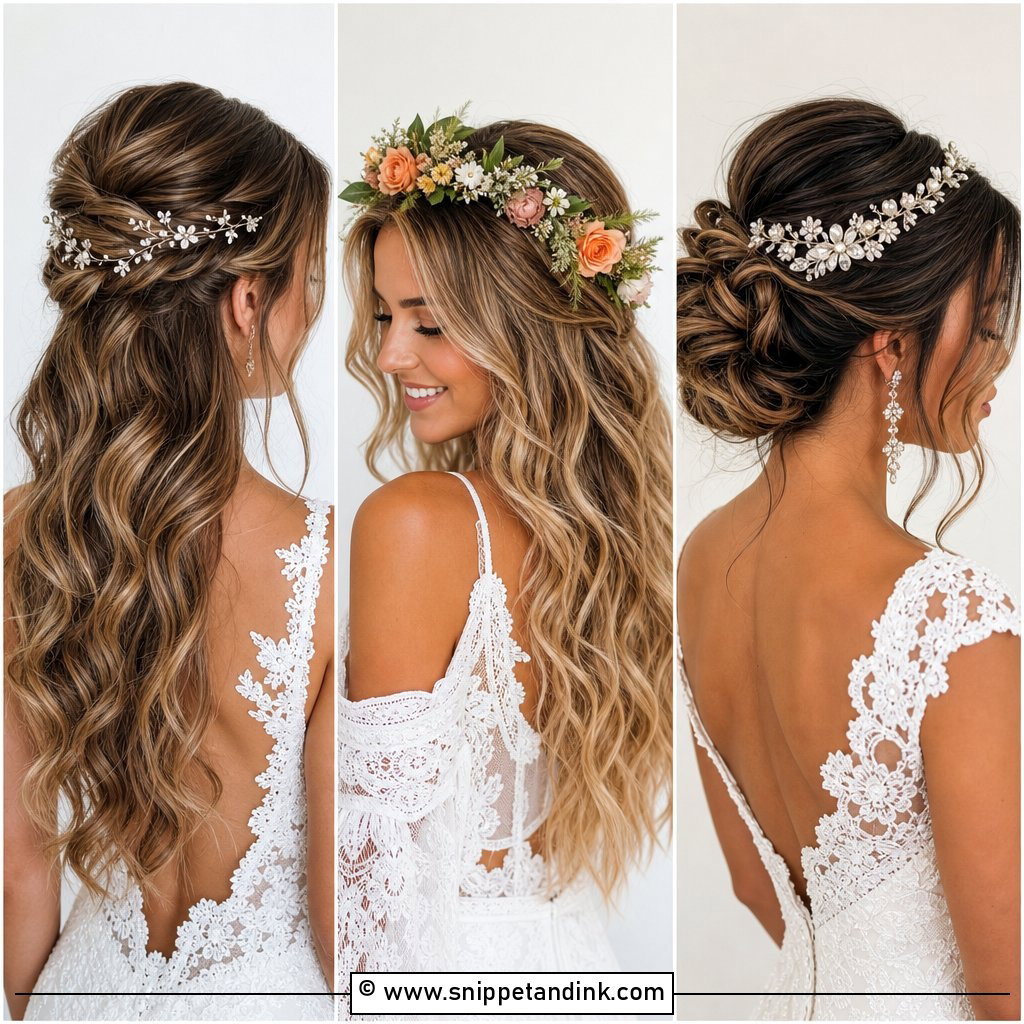
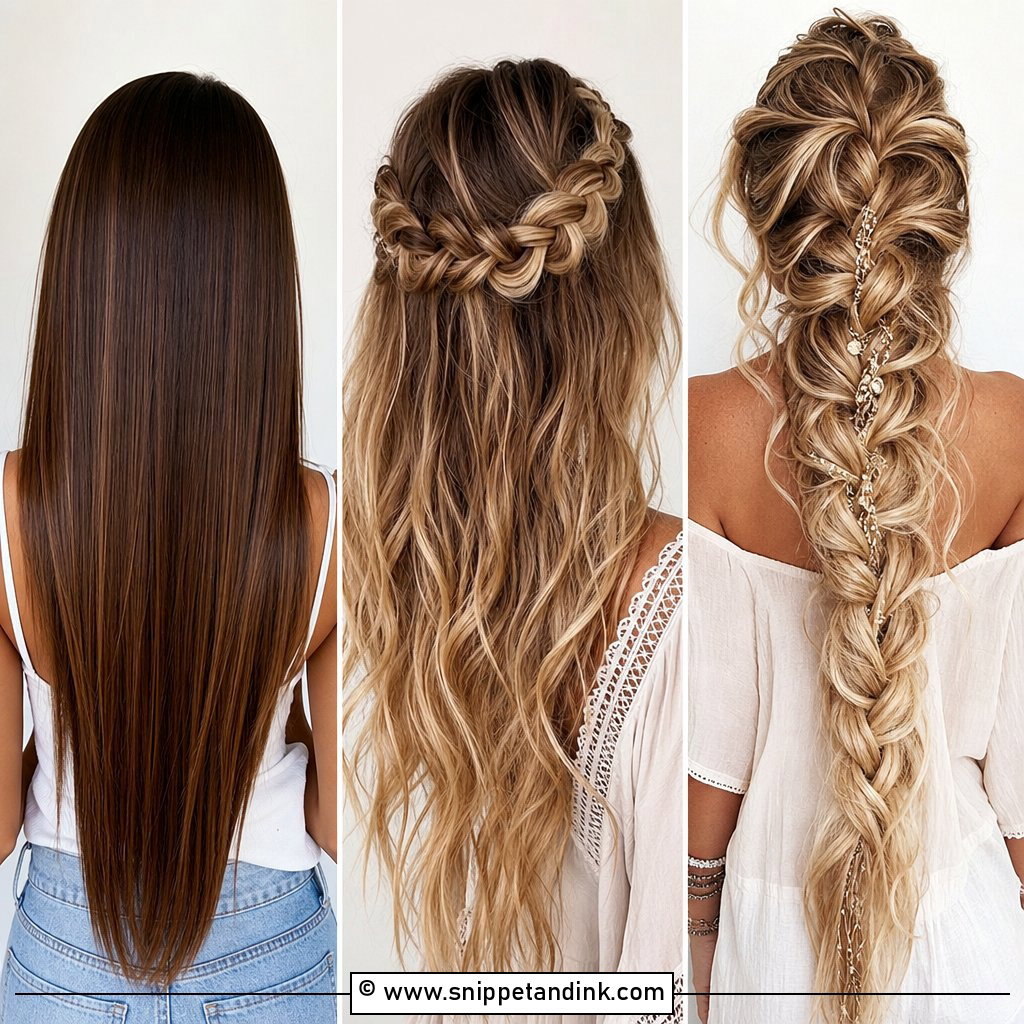
20. Double Bow Braided Ponytail
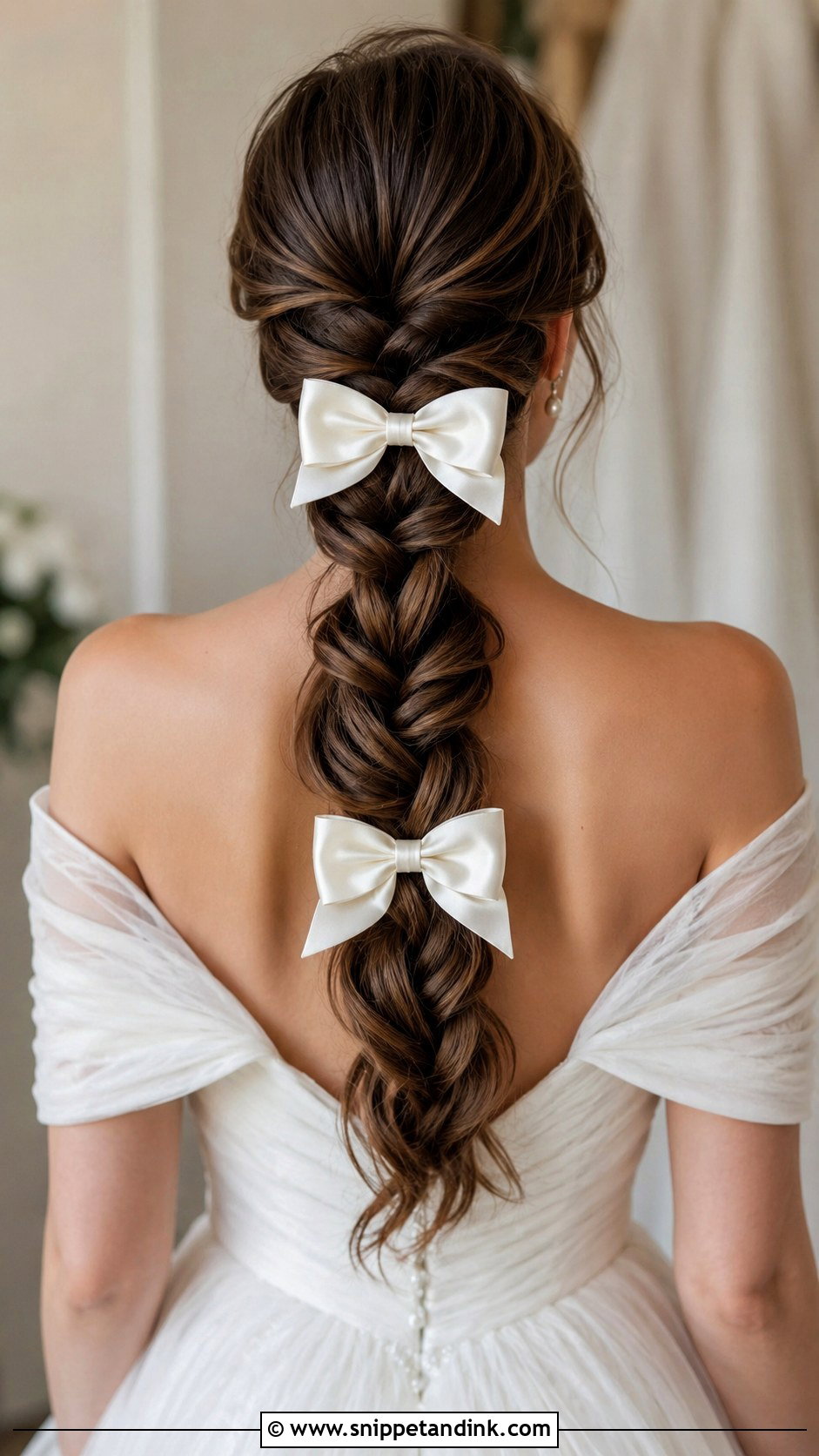
Two bows on a braided ponytail repeat the detail without overloading it, one at the top of the pony and one partway down the braid. I always place the second bow on a tie rather than just clipping it onto braid, so it can’t slide. Long, thick hair gives it enough length to space them out. The double bows should be the same fabric and width, or the eye reads them as a mistake.
21. Sleek Center Part Bun With Thin Bow
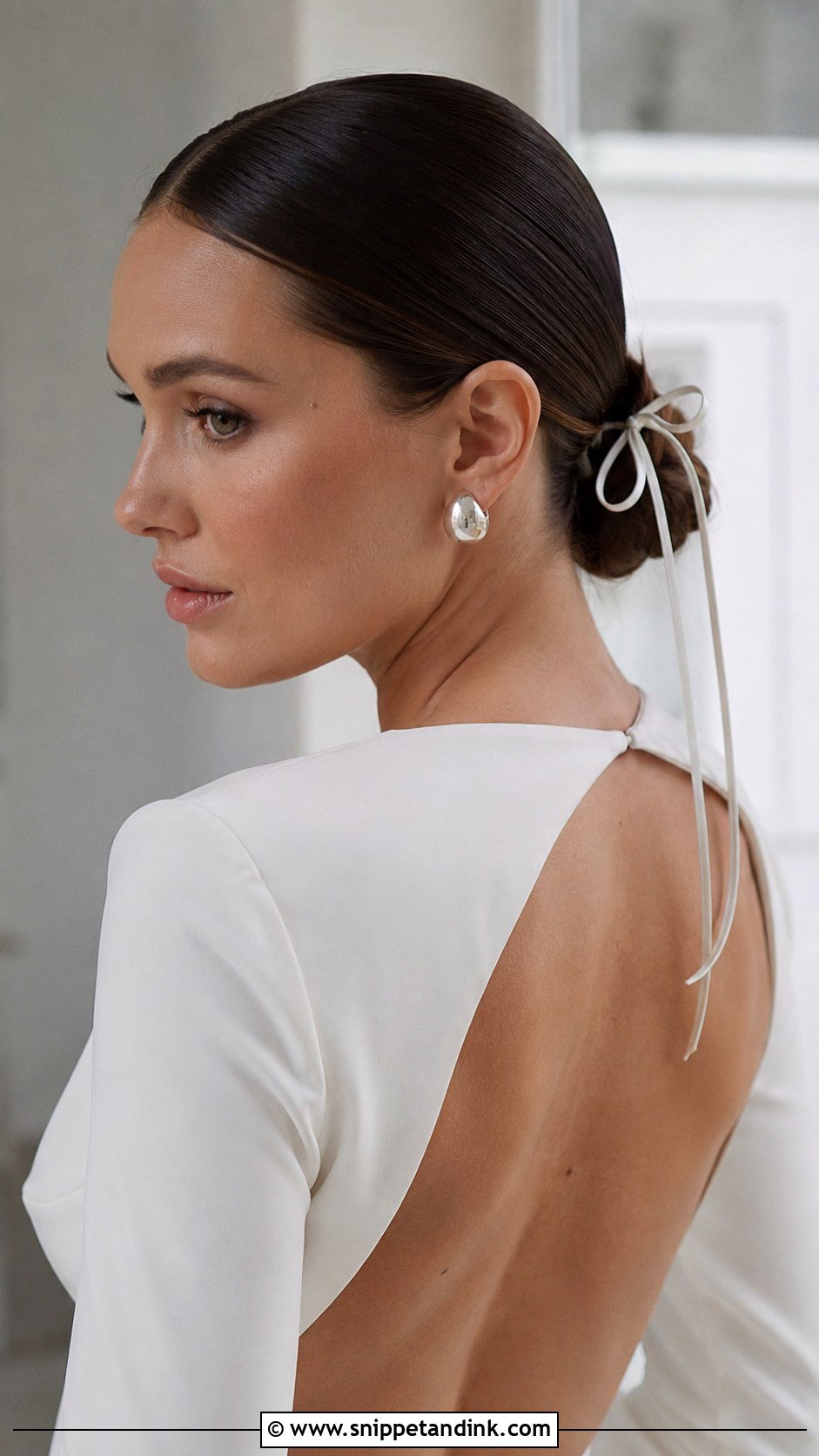
This is the most minimal bow on the list: a centre part, a smooth low bun and a thin ribbon. The centre part needs to be dead straight, since any wobble shows when the rest is so clean. I’d decide between white and black based on the dress, not the hair; black on a minimalist white gown is graphic and modern, while white is quieter. Simple jewellery keeps the balance.
22. Curly Updo With Bow for Natural Hair
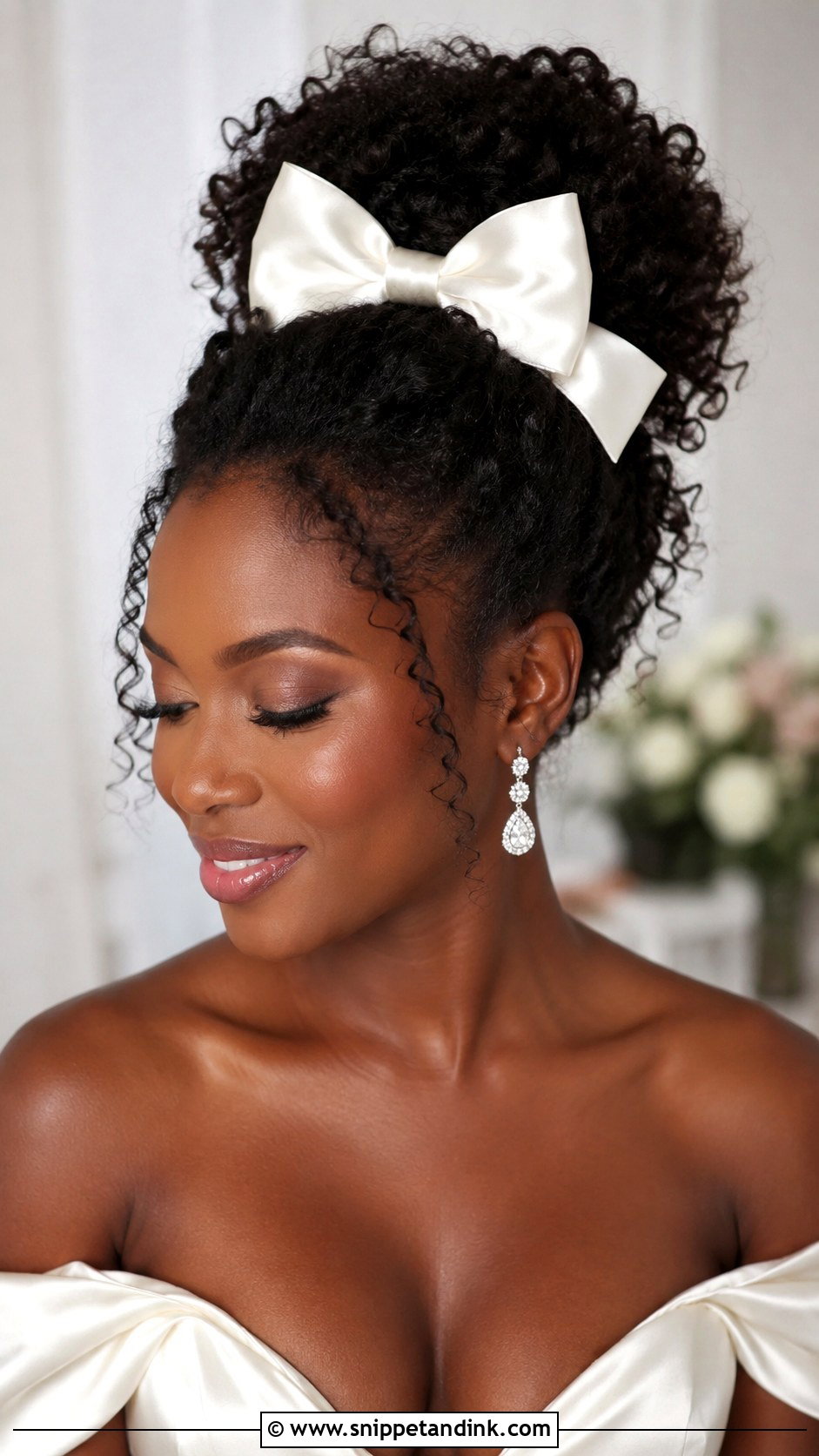
On a curly updo for natural hair, the bow should complement the texture rather than flatten it. I avoid clips that press into the curls; a ribbon tied around the base of the updo or a bow on a comb that slides in underneath keeps the coils intact. Ivory or white satin looks crisp against dark curls. Leaving a few curls loose around the face finishes it.
23. Side Bun With Cascading Ribbon Bow
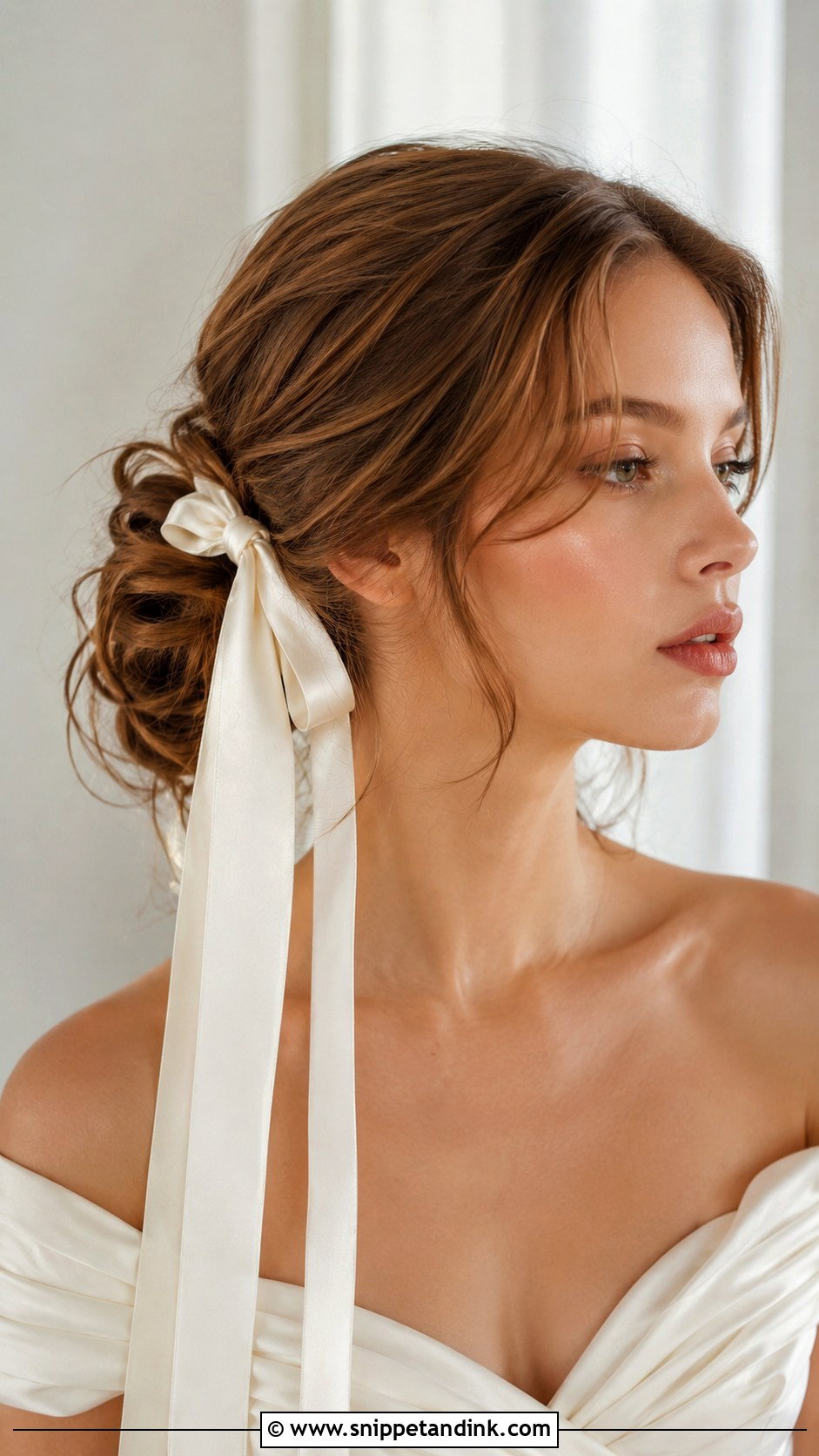
A side bun finished with a cascading ribbon bow moves the focus off-centre, which flatters an off-the-shoulder neckline. Long tails do the romantic part. I ask brides to sit down while trying it on, because long tails on one side can catch on the chair back or the dress straps. Ivory or blush ribbon keeps it warm, and a few loose tendrils near the face soften it.
24. Slicked-Back Bun With Structured Bow
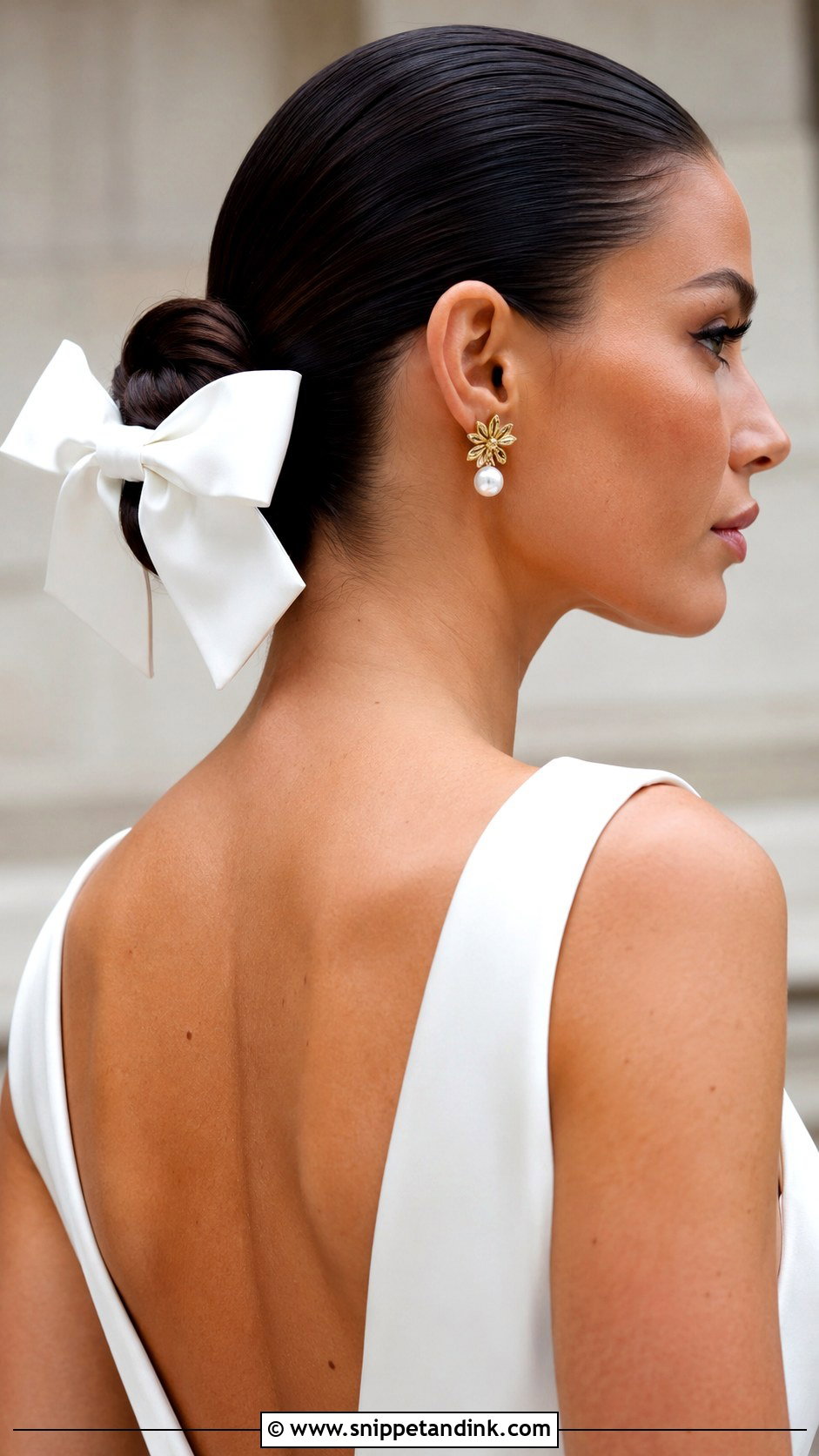
A structured bow is shaped to keep its loops, usually with stiffened fabric or a hidden wire, and that sculpted quality is what matches a slicked-back bun. I’d steer away from it if you want something soft; it is deliberately architectural. The bun needs a smooth, firm finish so the bow sits flat against it. White or black both work, and a sleek minimalist gown suits it best.
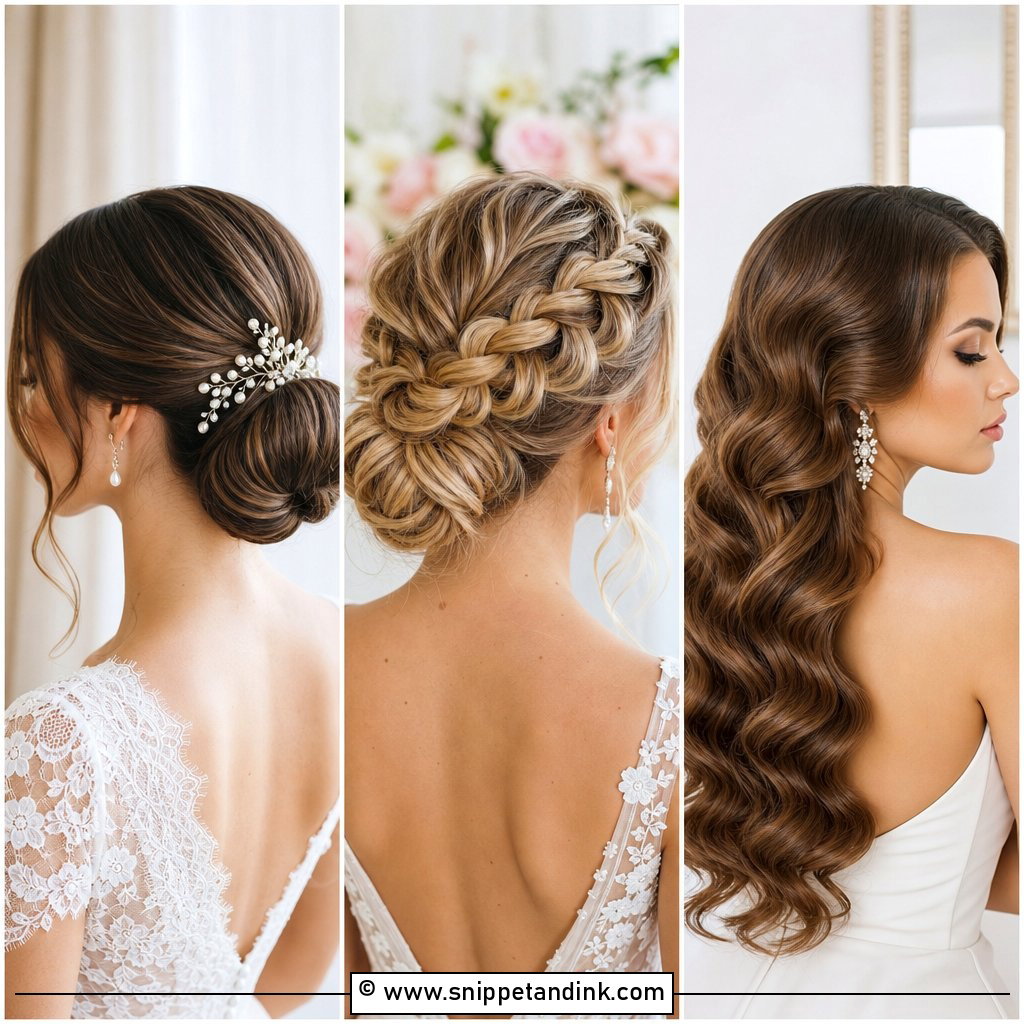
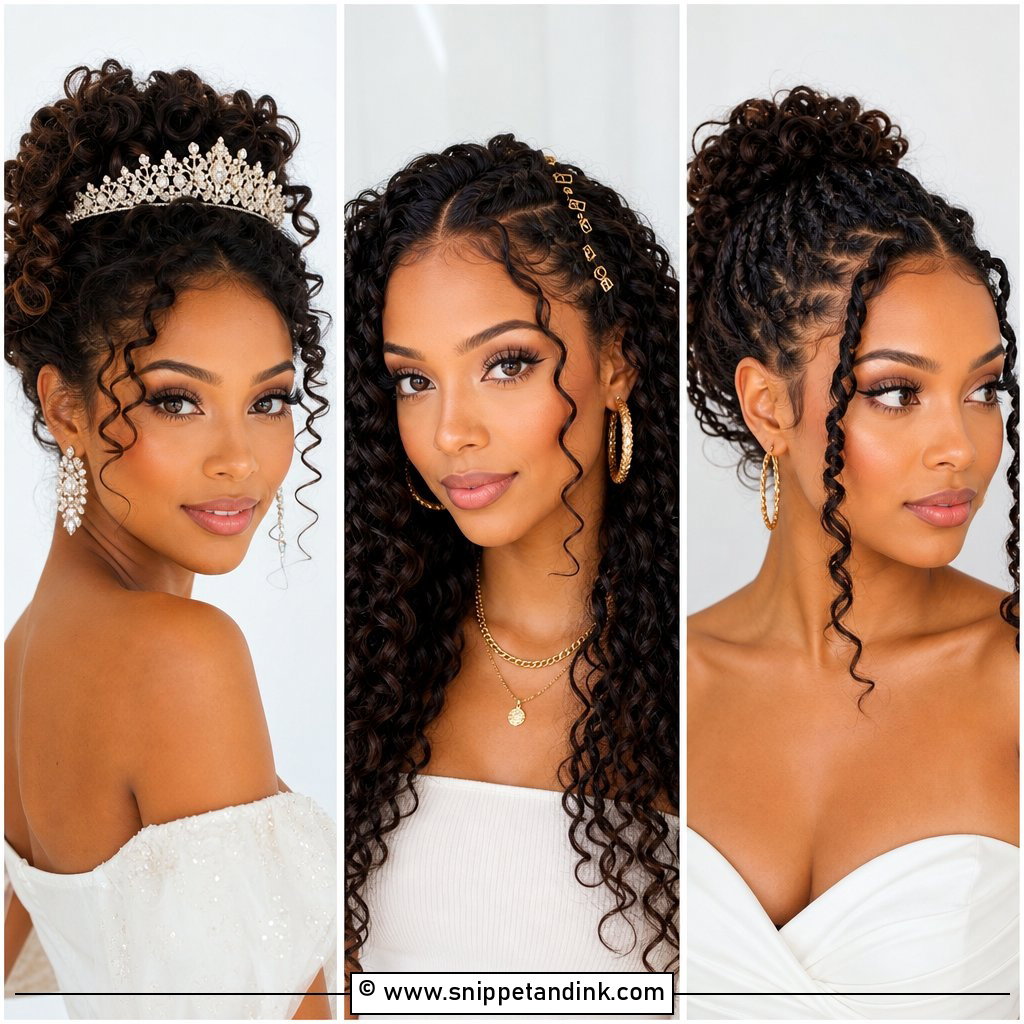
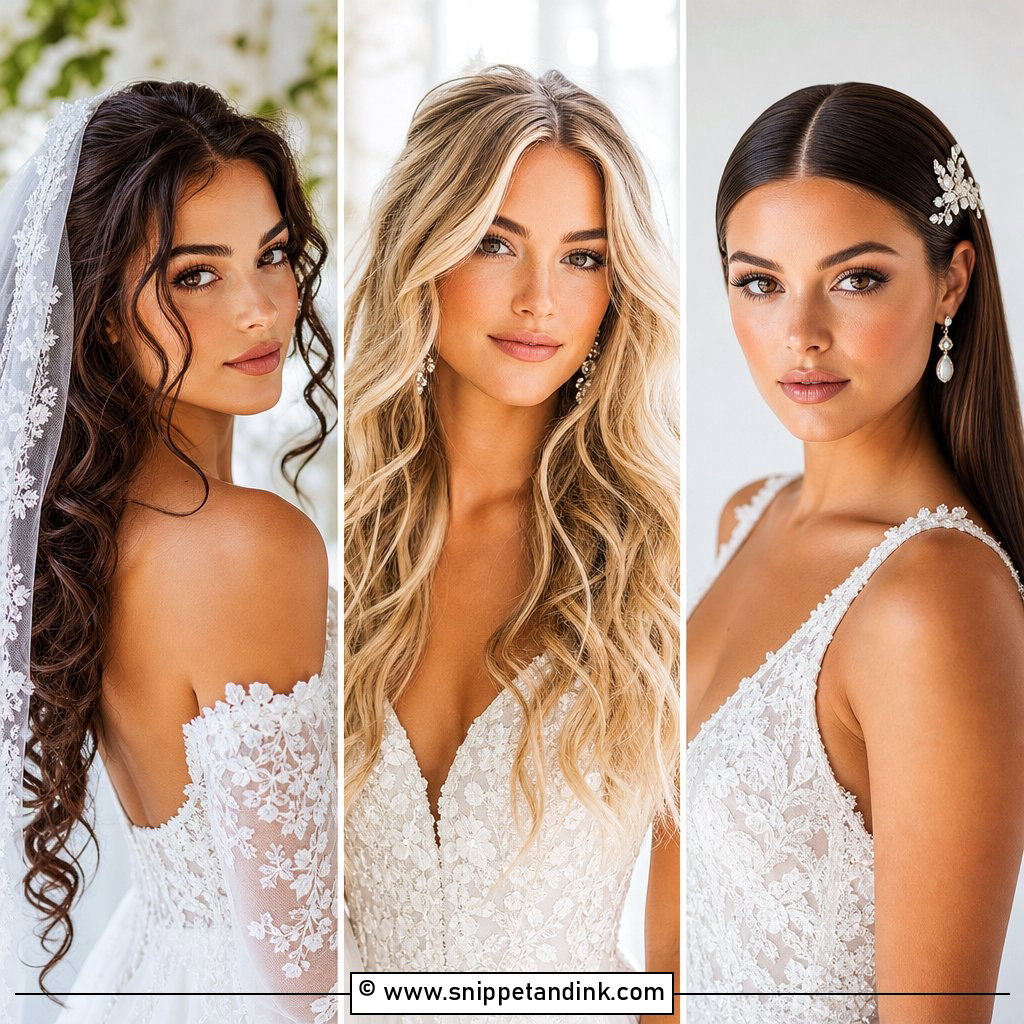
25. Flower Crown With Bow Accent
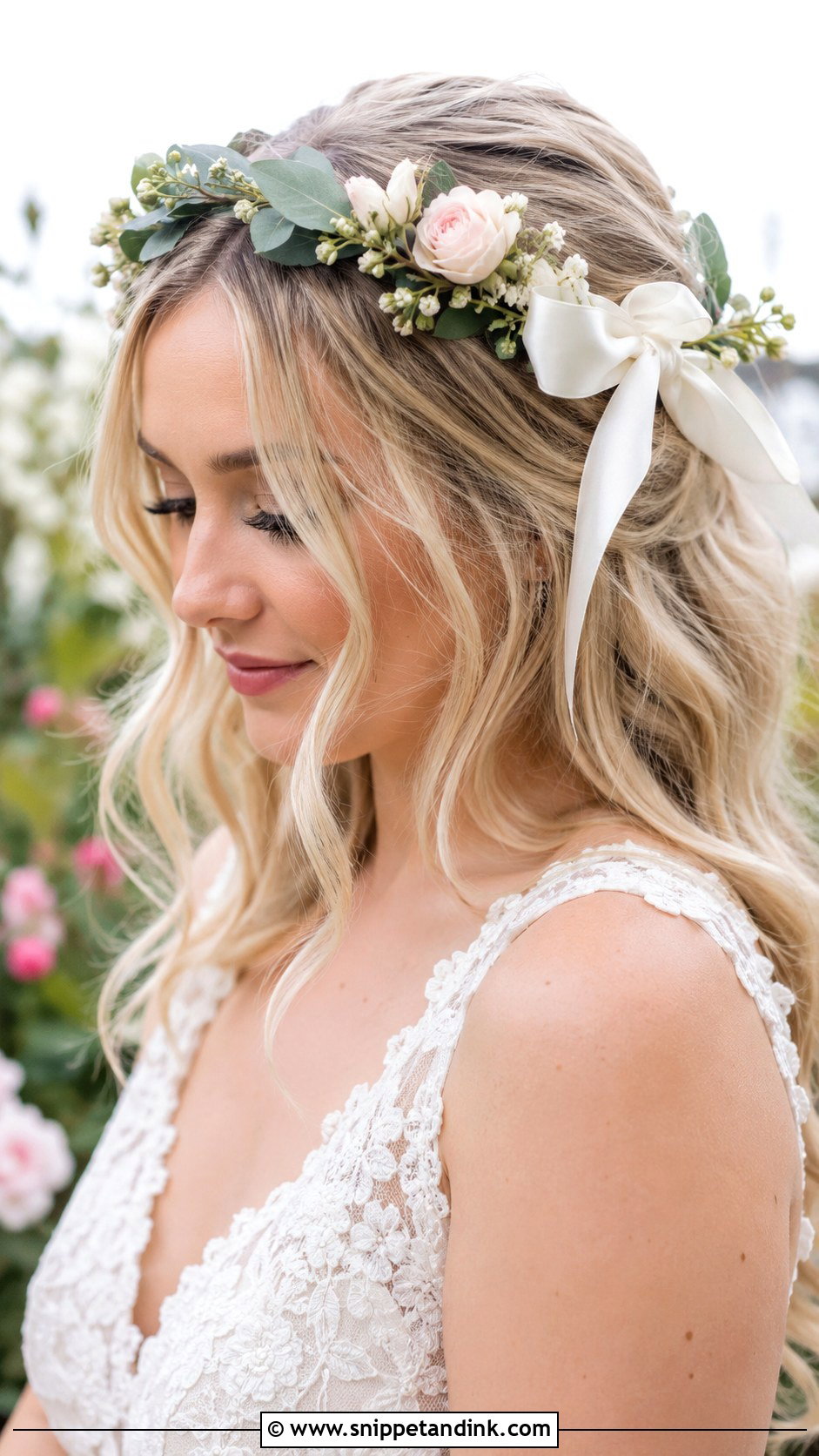
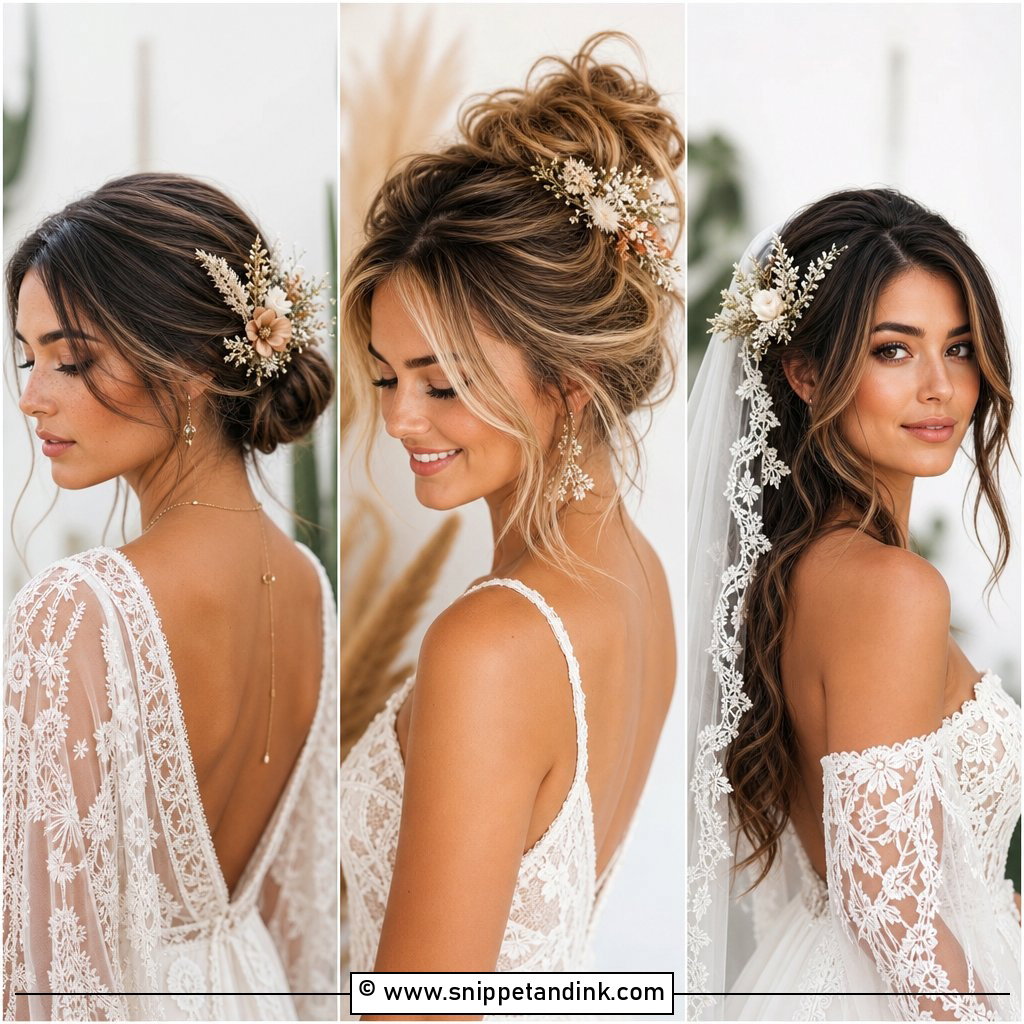
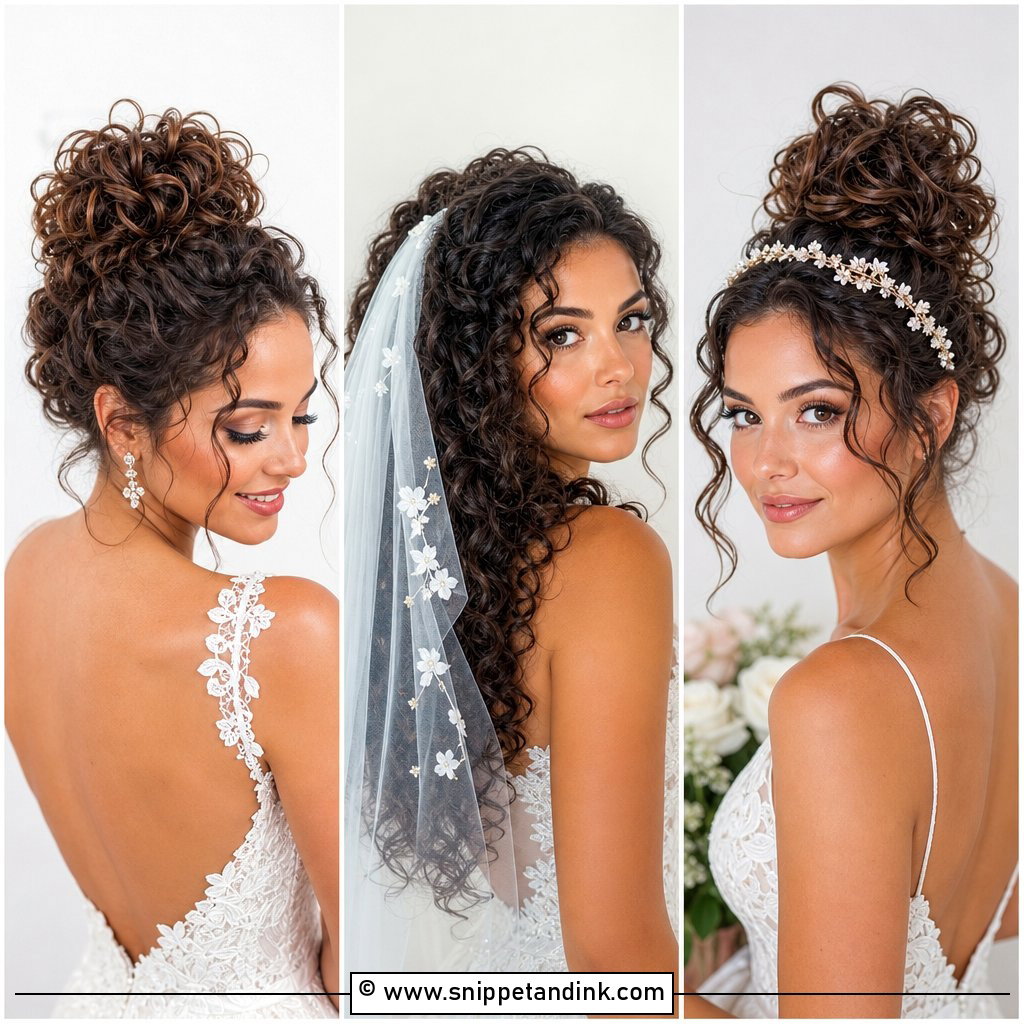
A flower crown plus a bow can easily become too much, so I keep the bow small and place it at the back where the crown fastens, which also hides the crown’s tie or wire. Soft pastel or ivory ribbons sit well with fresh flowers. Ask the florist to build the crown on a ribbon tie rather than a closed wire circle, so the bow can be part of the fastening. Loose waves or a relaxed updo suit it.
How a Bow Actually Stays in Your Hair
Most bows sold for weddings come on one of three fastenings, and each suits different hair. An alligator or snap clip works on smooth, straight sections but slips on silky hair unless there is a pin underneath for it to grip. A comb backing slides into an updo or bun and is the most secure for heavier bows. A plain ribbon, tied around a ponytail or braid, needs an elastic beneath it, or it will slide.
Whichever you use, give the bow to your hairstylist at the trial, not on the morning. They need to plan where the pins go so the bow has something to grip, and they need to see how it sits with your veil. If you plan to take the veil off later, make sure the bow can stay where it is when the comb comes out.
After the wedding
Satin and velvet bows crush easily, so I’d store yours flat in tissue in a box, away from light, which can yellow white satin over time. If it creases, steam it gently from a distance rather than ironing it directly; satin shines and scorches quickly under a hot iron.
The Bow Should Look Like Part of the Dress
The bows that work best are the ones that look like they belonged to the outfit from the start. Start with the dress: its white or ivory, its fabric and its back. Then look at your hairstyle and how much weight it can hold. Order two or three ribbons in slightly different shades, bring them to your hair trial, and try them with the dress or a swatch. Whichever one disappears into the outfit while still being seen is the right one.
You'll Like These Ideas:



Leave a Reply