
Minimal wedding dresses look simple on the hanger and turn out to be the hardest gowns to get right. With no lace or beading to pull the eye away, everything shows: how the fabric hangs, where a seam lands, whether the neckline stays flat when you breathe in. The shapes I fit most often right now are satin slips, crepe columns, clean ball gowns, tailored suits and short reception dresses, and all of them are below. Sleek doesn’t mean plain. It means every line on the dress is there on purpose.
Plain Fabric Shows Every Fitting Flaw, So Test It Properly
With lace or beading, a seam that’s slightly off disappears into the pattern. On satin or crepe, it doesn’t. When I take a bride shopping for a minimal gown, I spend less time on how it looks standing still in the mirror and more on how it behaves when she moves.
- Sit in it for five full minutes. Satin creases at the hip and lap; crepe mostly doesn’t. If you’ll be seated through a long dinner, that difference shows in every reception photo.
- Raise both arms and hug someone. A strapless or off-shoulder bodice that slips a little now will slip a lot more after three hours of dancing.
- Look at it near a window. Ivory, champagne and bright white read very differently in daylight, and some satins pick up a cool blue cast outdoors.
- Wear the right underwear from the first fitting: smooth nude briefs with no visible edges and the cups or bra you actually plan to use. Plain fabric shows every line.
- Check the zip and back seams with a hand mirror. During the ceremony, the back of the dress is what your guests stare at.
Allow more alteration time, not less
Made-to-order gowns usually take several months to arrive, and alterations normally run over two or three fittings in the last six to eight weeks. People assume a simple dress needs less work. In my experience it’s the opposite, because a hem or strap that’s a quarter inch off has nothing to hide behind.
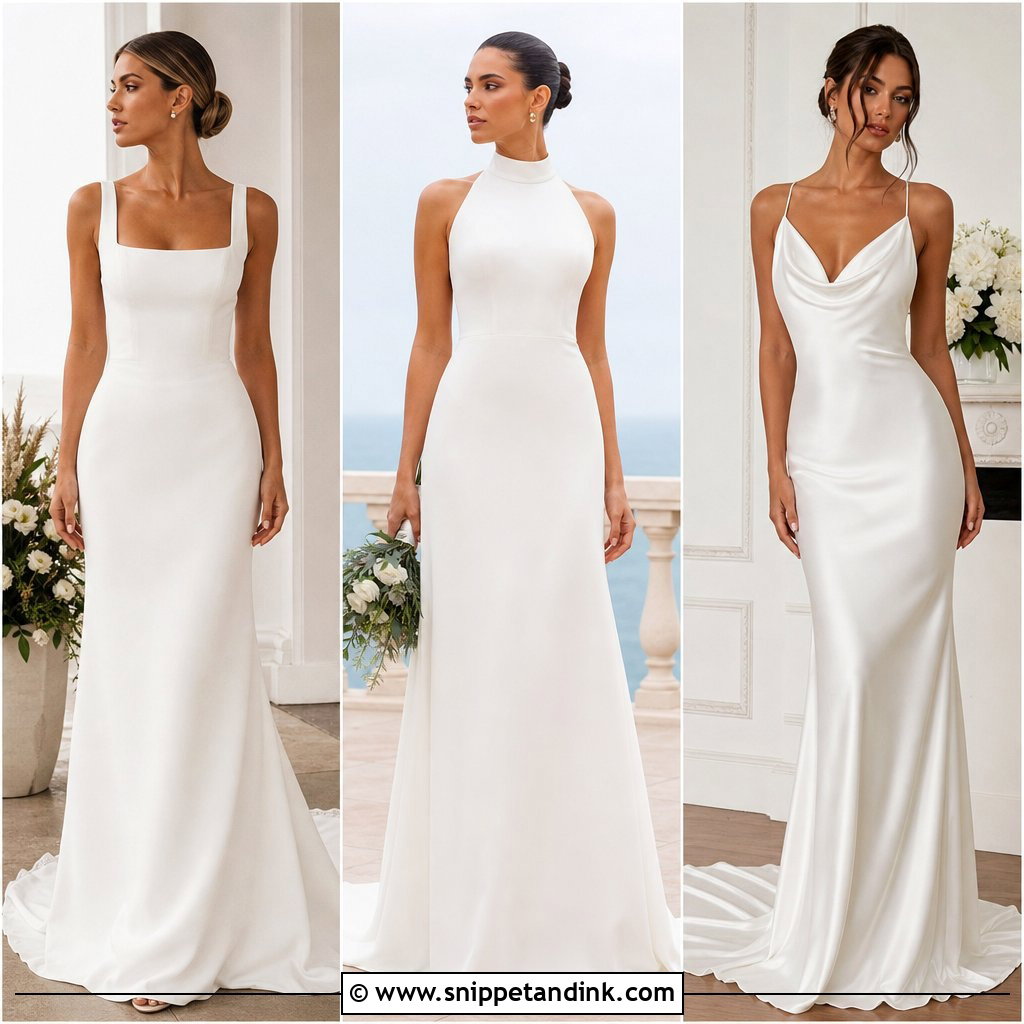
1. Satin Slip Wedding Dress
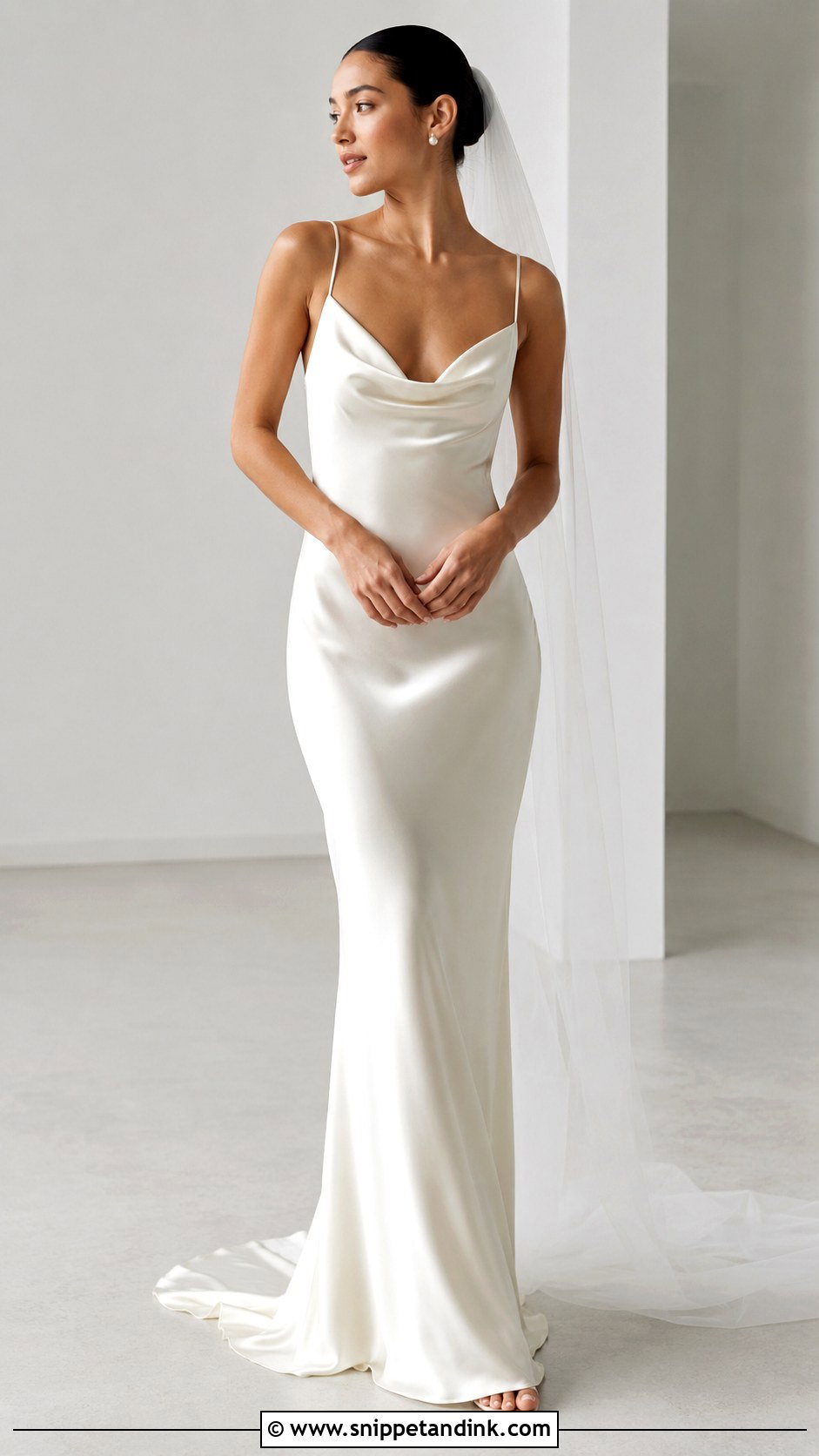
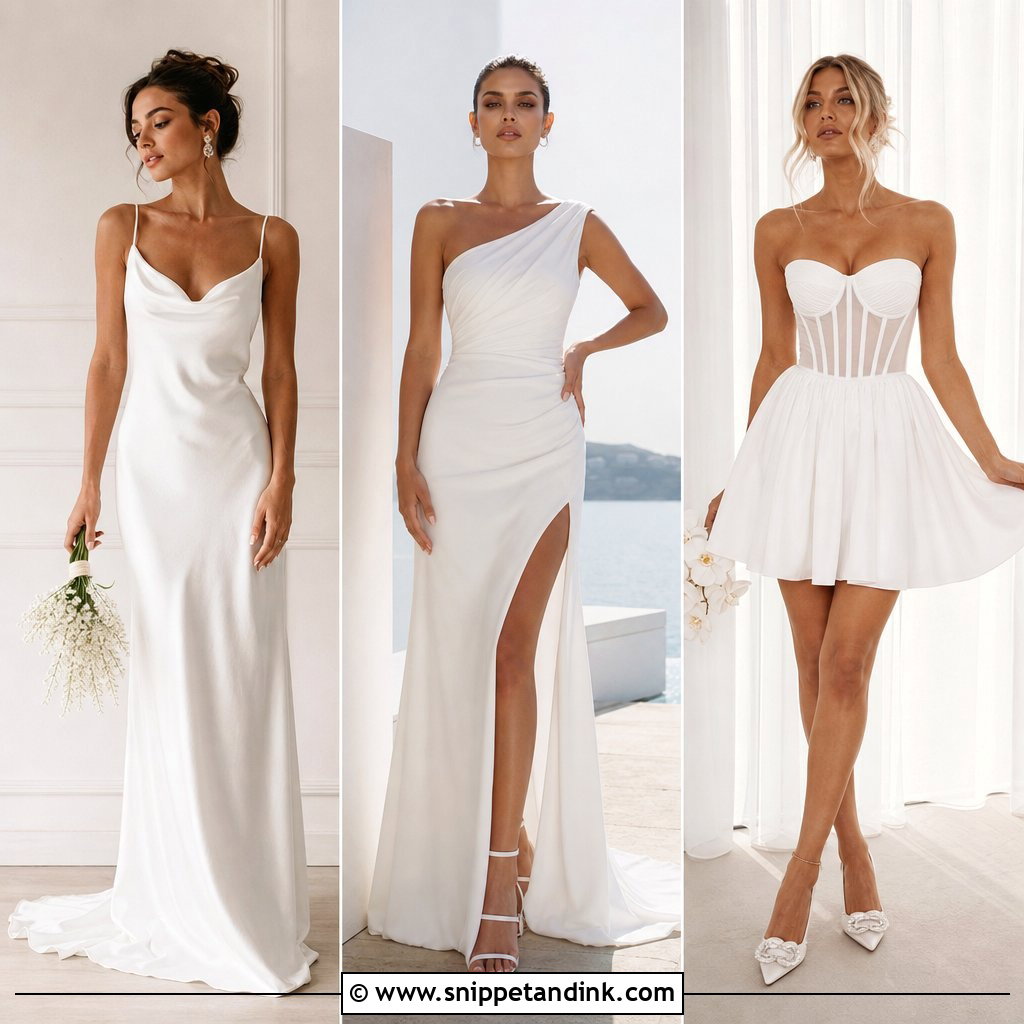
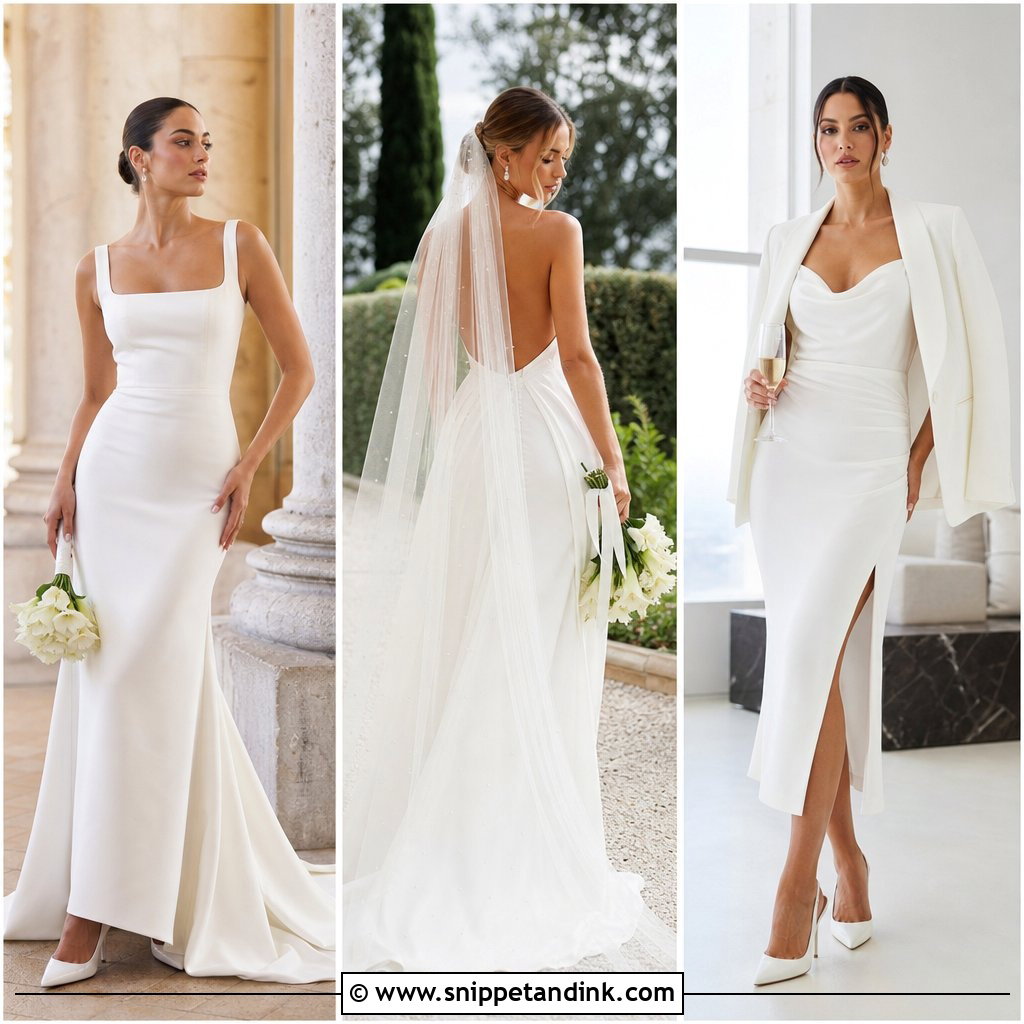
Bias-cut satin is the most honest fabric in bridal. It skims the body, so it also shows every undergarment line and every bit of cling. When I fit a slip, I size for the hips and take in the bust, because bias fabric drops lengthwise as it hangs and a too-tight cut pulls into diagonal ripples. Thin straps, a soft cowl and a low back are all the design it needs. Add pearl studs and a long sheer veil, and keep a tailored ivory blazer nearby for a cool evening at a city hotel.
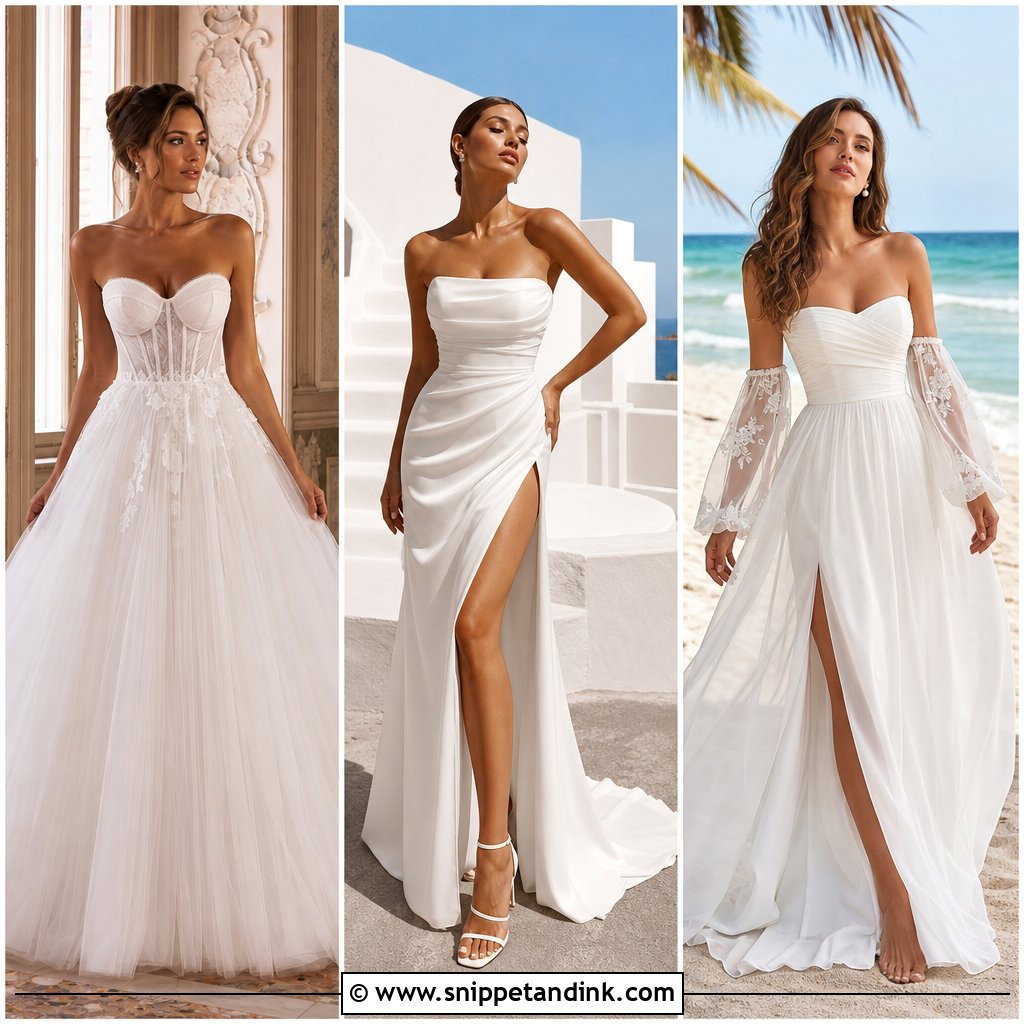
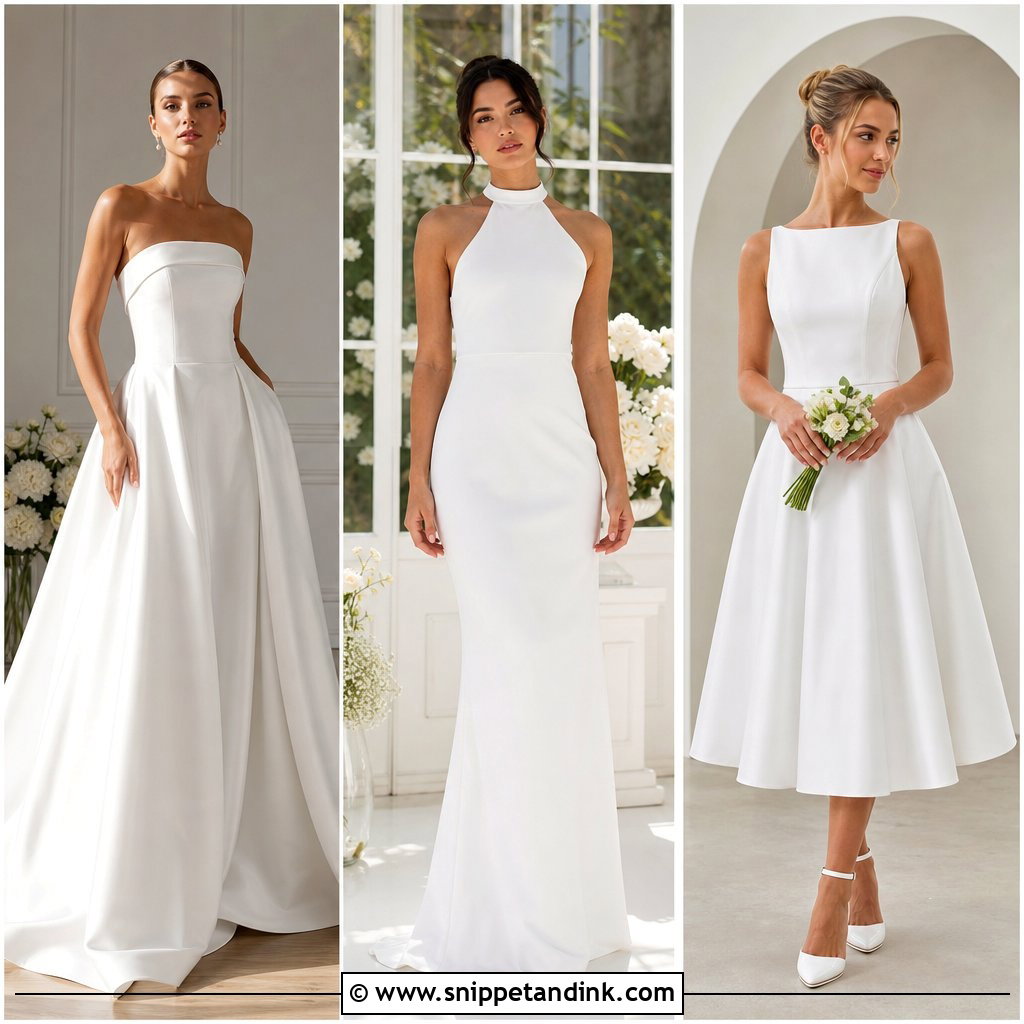
2. Strapless Column Wedding Dress
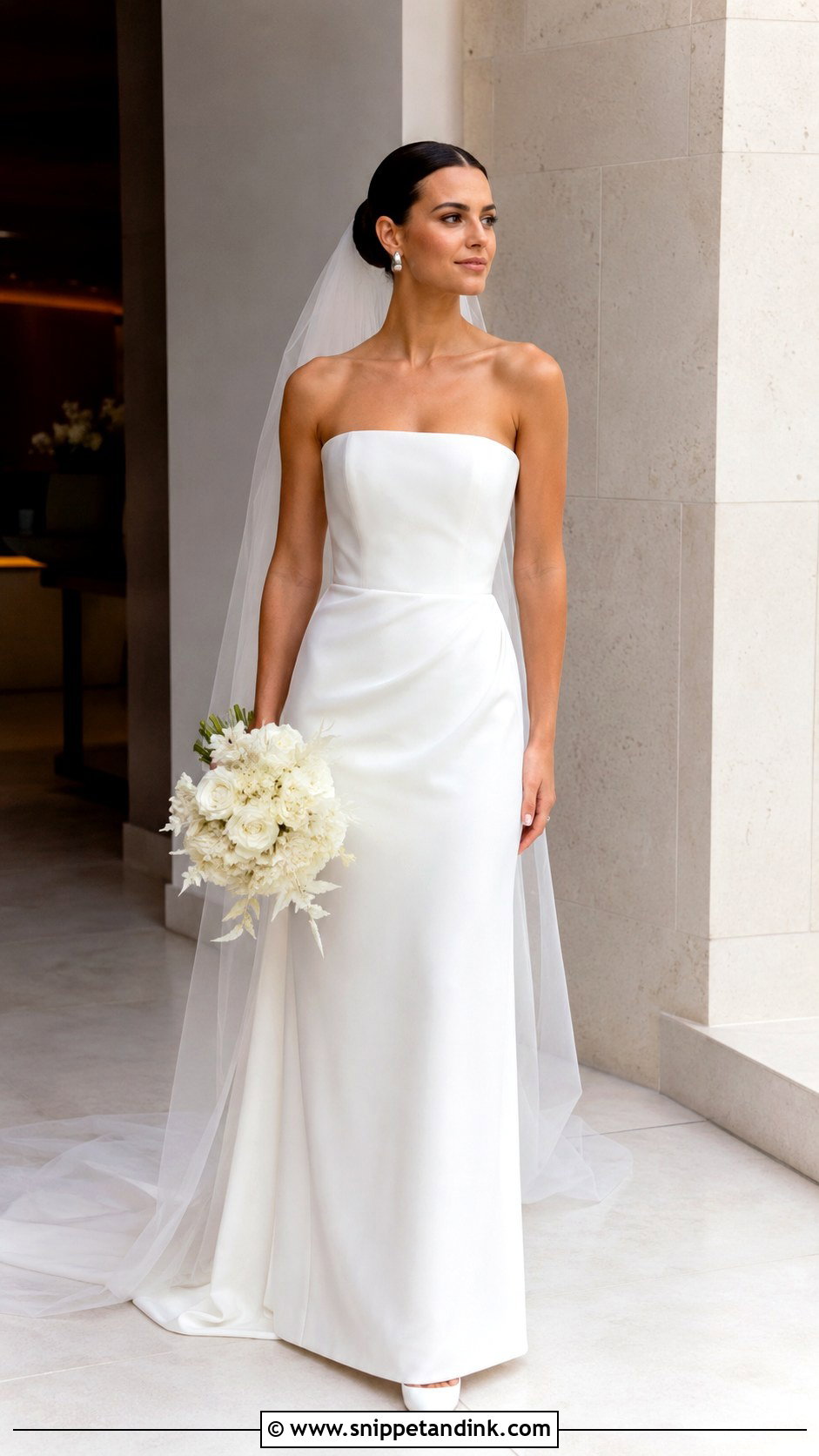
Strapless columns live or die on the bodice. Structured crepe, mikado or heavier satin holds the outline, but the real work happens in the inner corset. At fittings I ask brides to hug me and raise an imaginary glass; if the top edge gapes or slides, it gets taken in before we touch the hem. Pointed ivory heels, a sleek bun and sculptural earrings finish it, with a fingertip or cathedral veil depending on how formal the room is.
3. Long Sleeve Crepe Wedding Dress
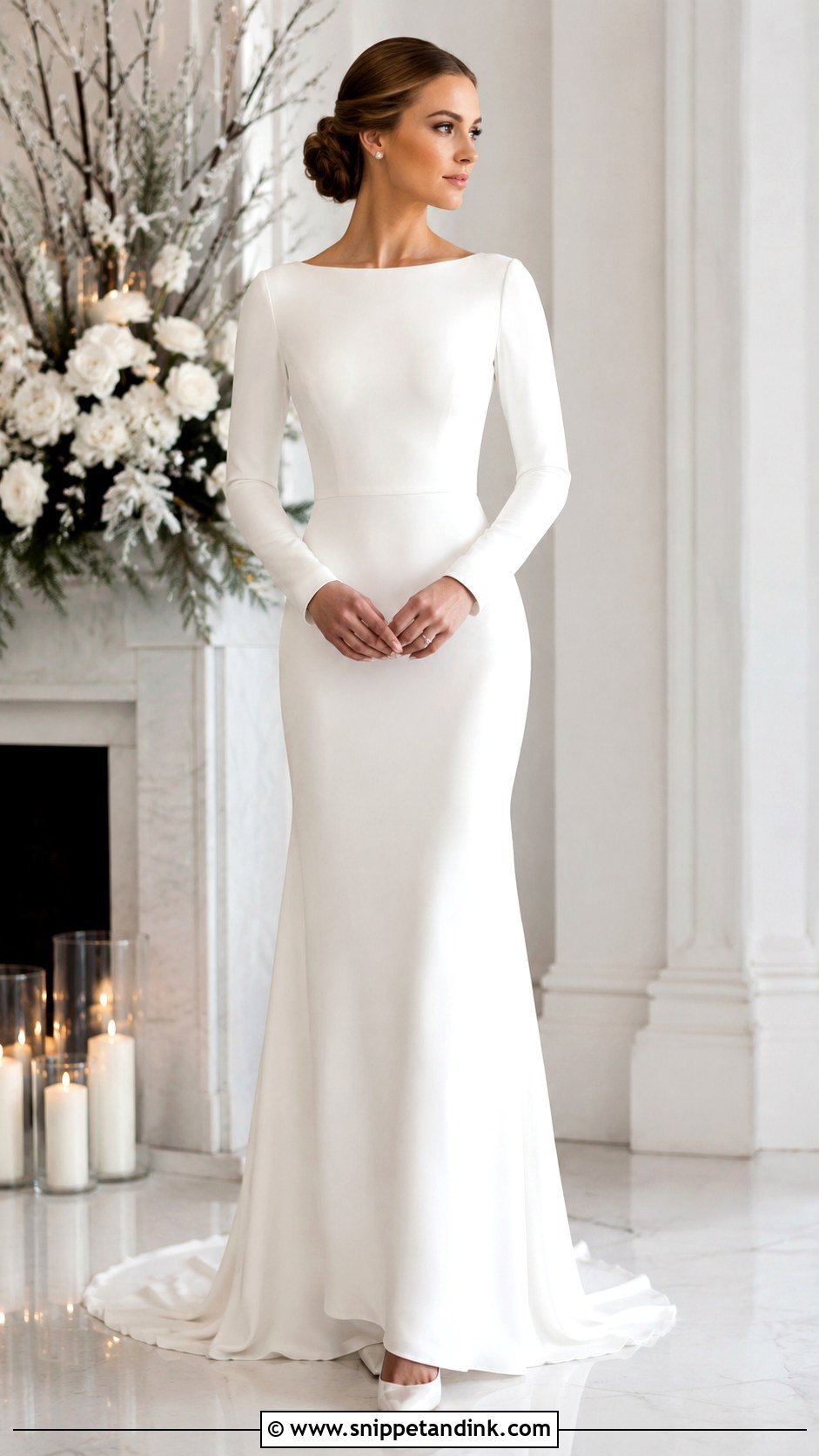
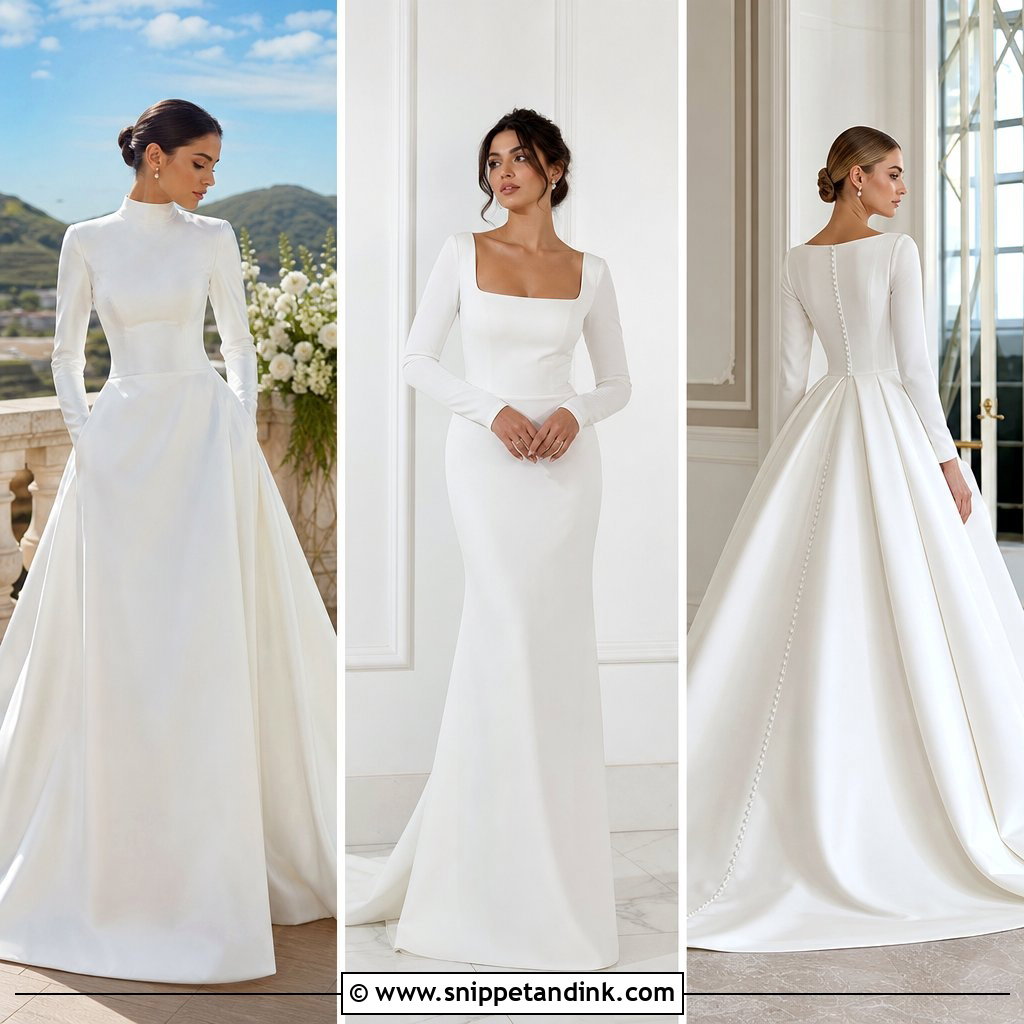
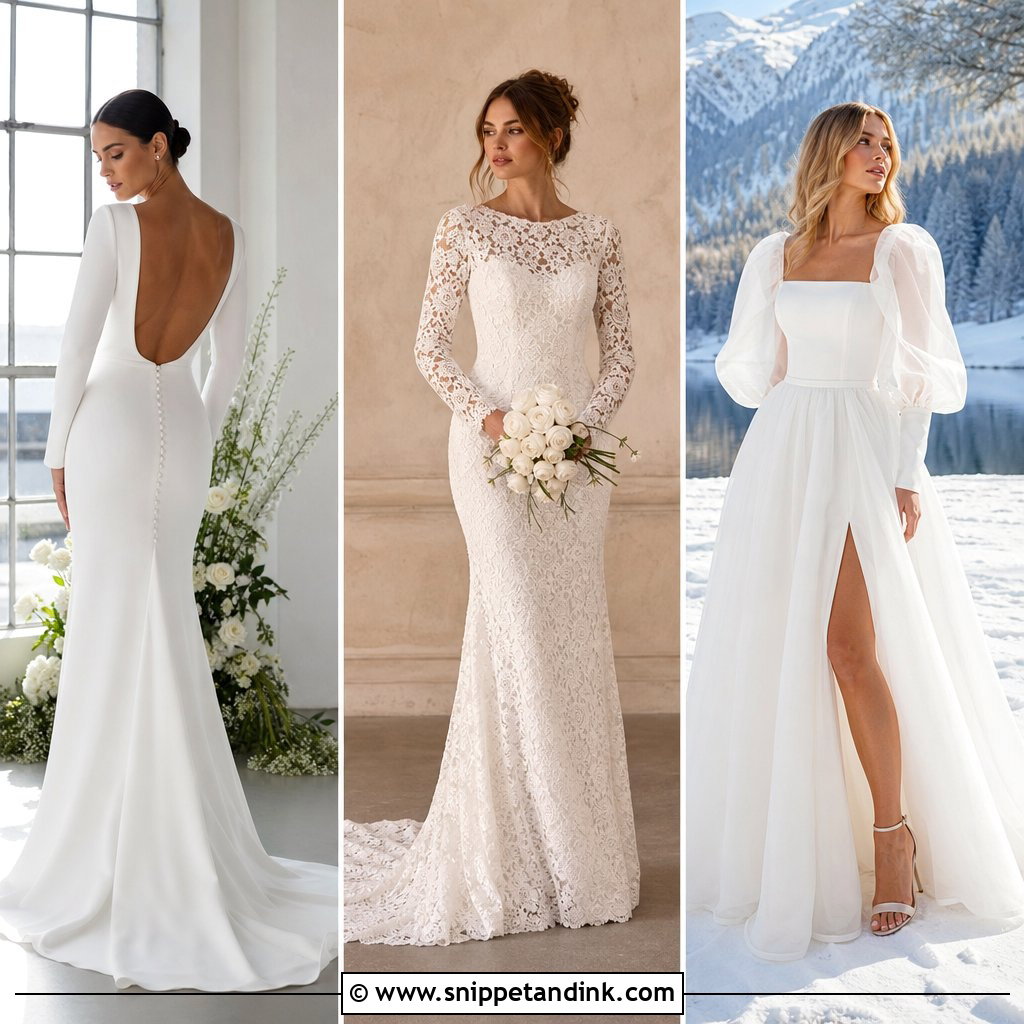
Matte crepe with long sleeves is the dress I reach for in autumn and winter, and for anyone who wants coverage without shine. The sleeve is where fittings get fussy. The armhole has to sit high enough that you can lift your arms for a hug without the whole bodice riding up with them. Bateau, square and deep V necklines each shift the mood, and small diamond studs with a low chignon are plenty when the skirt ends in a soft train.
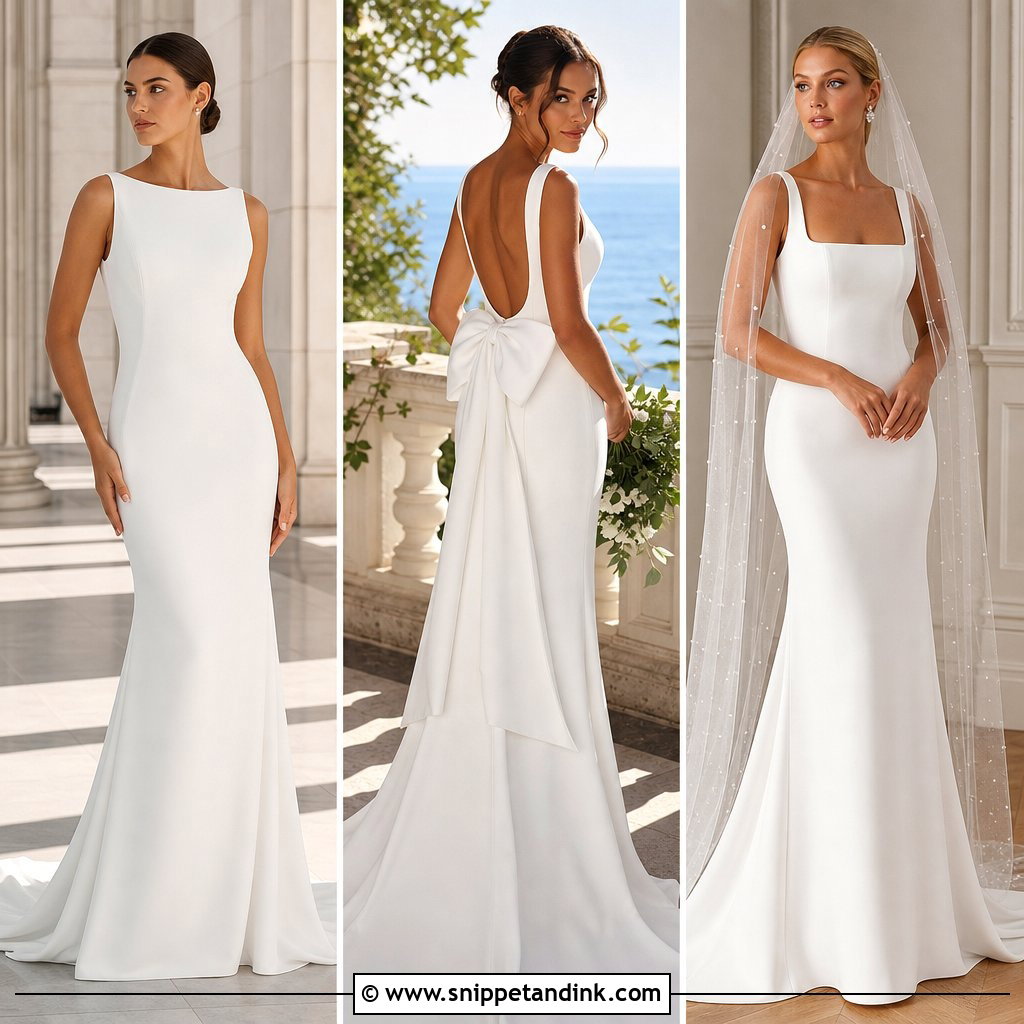
4. Square Neck Wedding Dress
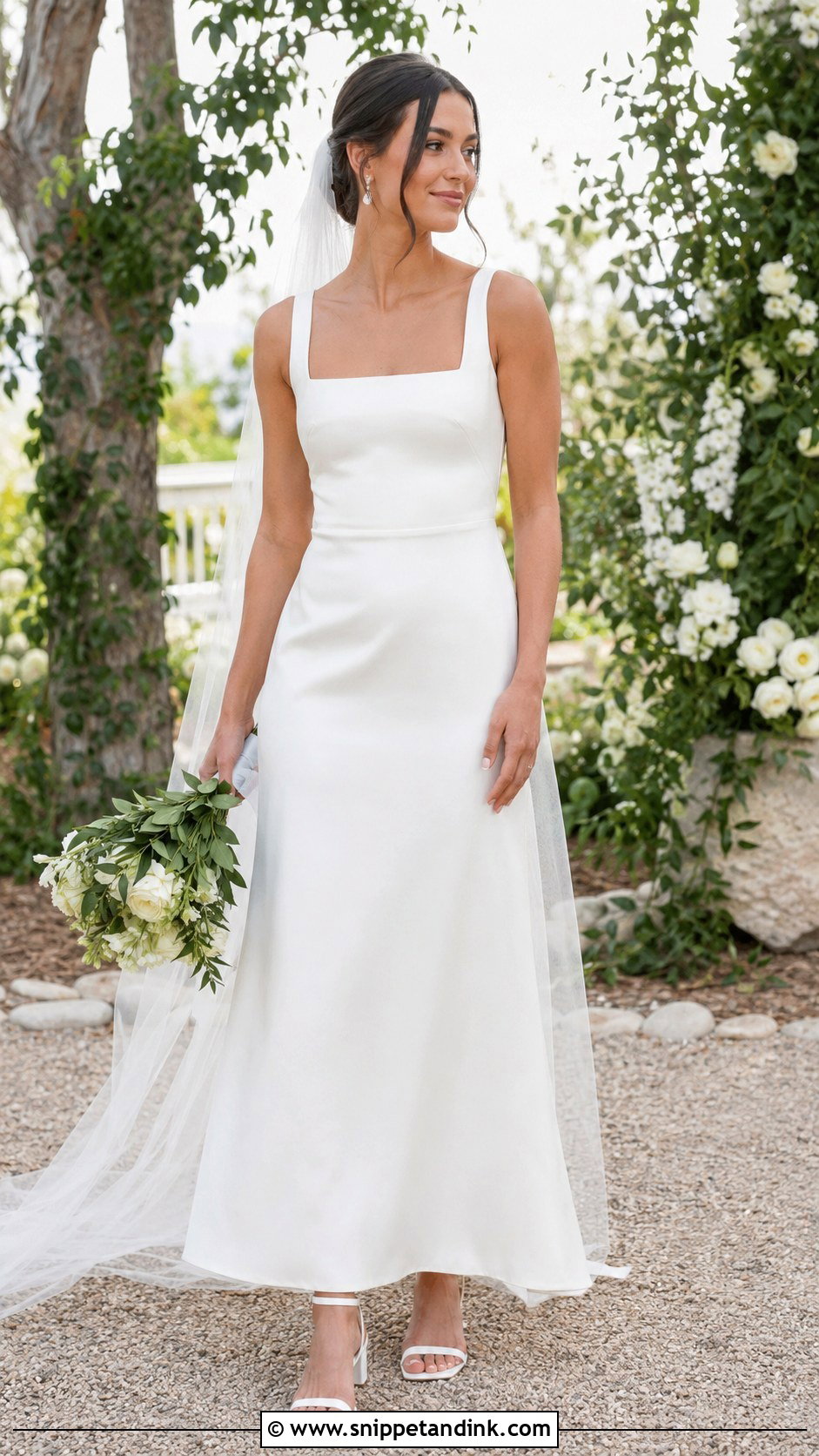
A square neckline frames the collarbones and gives the bodice a crisp architectural edge. Strap width changes it more than people expect. Wide straps feel classic and give real support on a fuller bust, while narrow ones look more delicate. I like it over a slim A-line in mikado, which keeps the corners of the neckline sharp instead of letting them curl. Block heels and simple drops are enough.
5. Halter Neck Wedding Dress
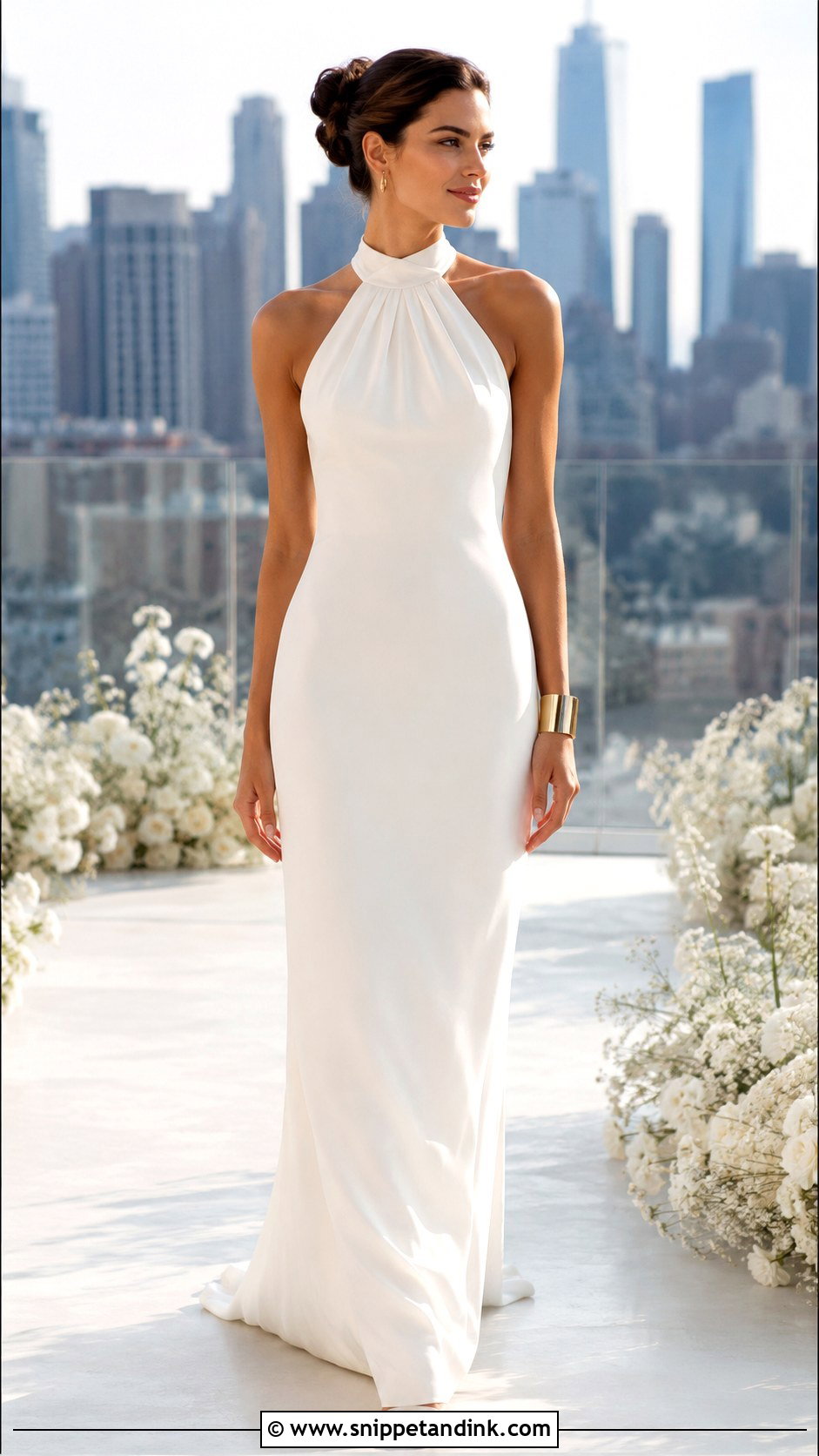
Halters lengthen the neck and show off the shoulders, so hair needs to be up. The thing I check first is skirt weight. A heavy satin gown hanging from a halter tie pulls on the back of your neck by the third hour, so the bodice should carry the weight and the strap should only steady it. Column, sheath and smooth mermaid shapes all suit it. Skip the necklace, attach a long veil low at the bun, and it suits a rooftop as easily as a ballroom.
6. Off Shoulder Wedding Dress
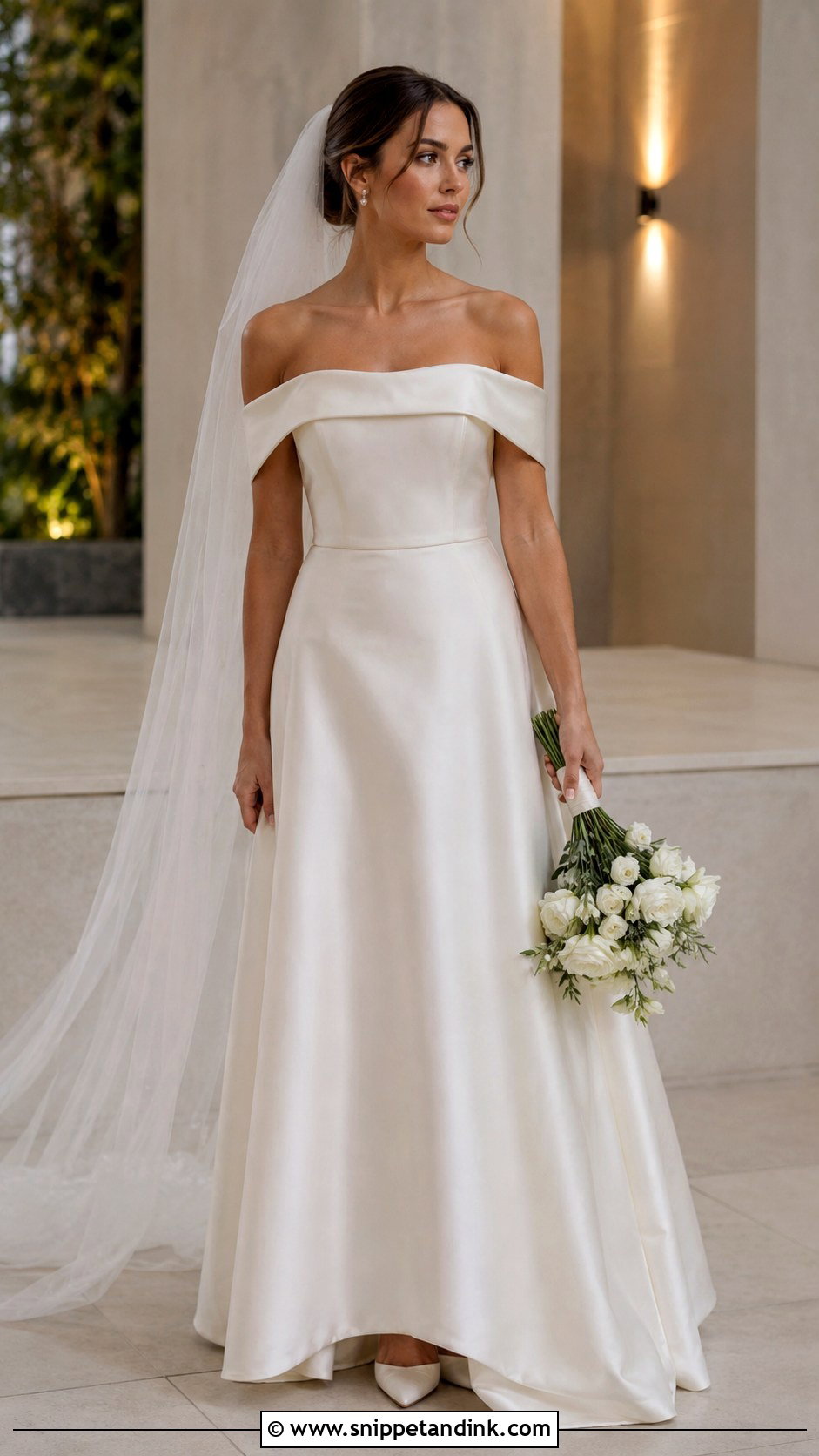
Off-shoulder bodices add a little romance, but they restrict your arms more than any other neckline. I always have the bride reach forward as if taking her bouquet. If the band cuts into the upper arm, it needs a softer elastic or a slightly lower set. Keep the rest of the gown clean, fitted crepe for a sculpted line or satin A-line for movement, with a smooth bun and pearl earrings.
7. Minimalist A Line Wedding Dress
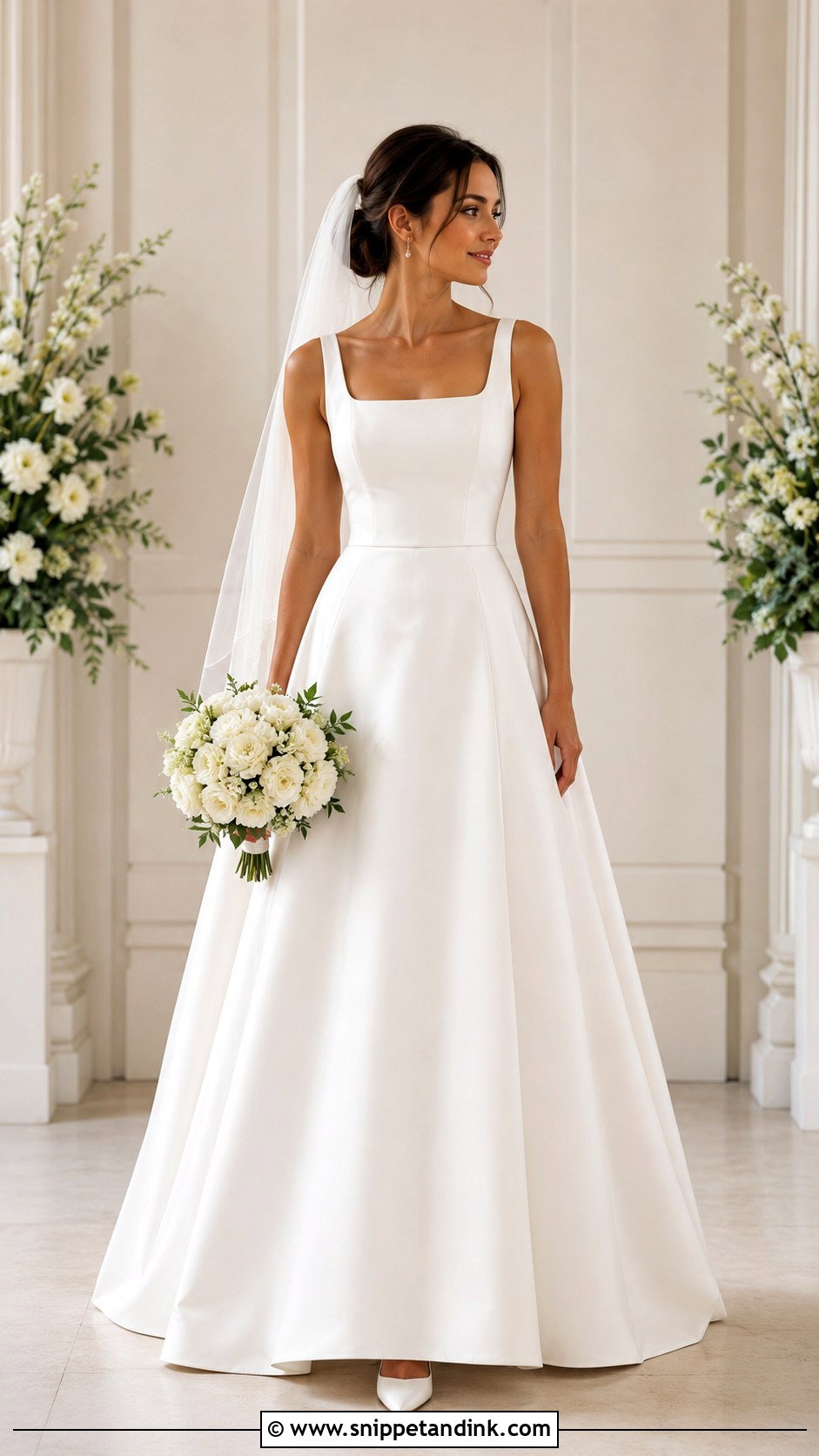
Not everyone wants a gown that clings. A minimal A-line gives you shape at the waist and room below it, which makes it the easiest silhouette to sit, dance and climb stairs in for twelve hours. In satin or mikado the skirt stands away from the body cleanly; in soft crepe it falls closer. Pick one neckline you love and keep the accessories quiet, because two statement pieces on a plain A-line start to fight each other.
8. High Neck Wedding Dress
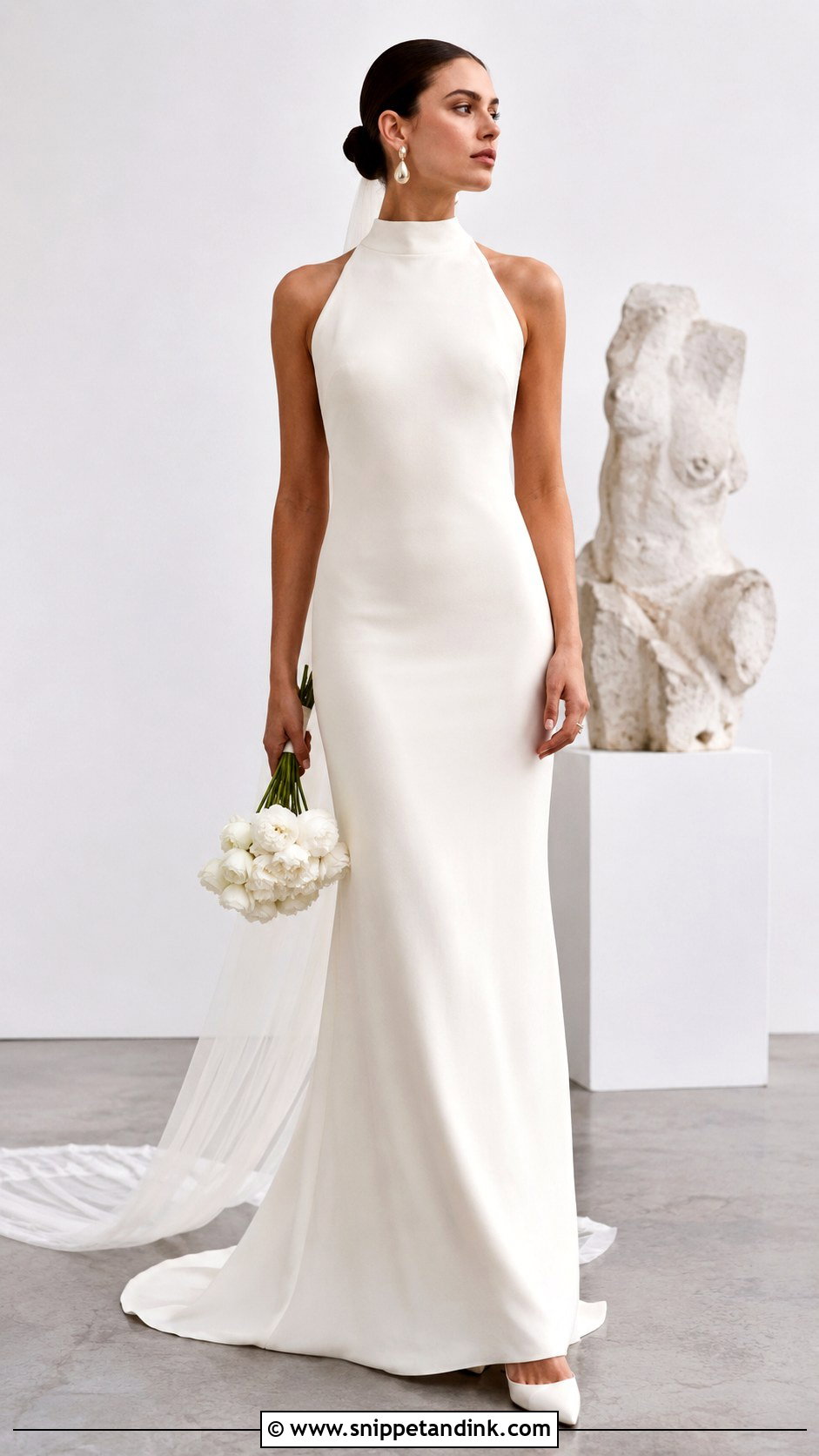
High necks look editorial on a fitted silhouette, and the fabric decides how comfortable they stay. Stretch crepe and jersey move with you. Stiff satin at the throat can feel like a collar by evening, so at the fitting I ask brides to swallow and turn their head both ways. Sleeveless reads modern; long sleeves read formal. With the neck covered, statement earrings and a low bun take over, and a slim bouquet keeps the long line going.
9. Backless Wedding Dress
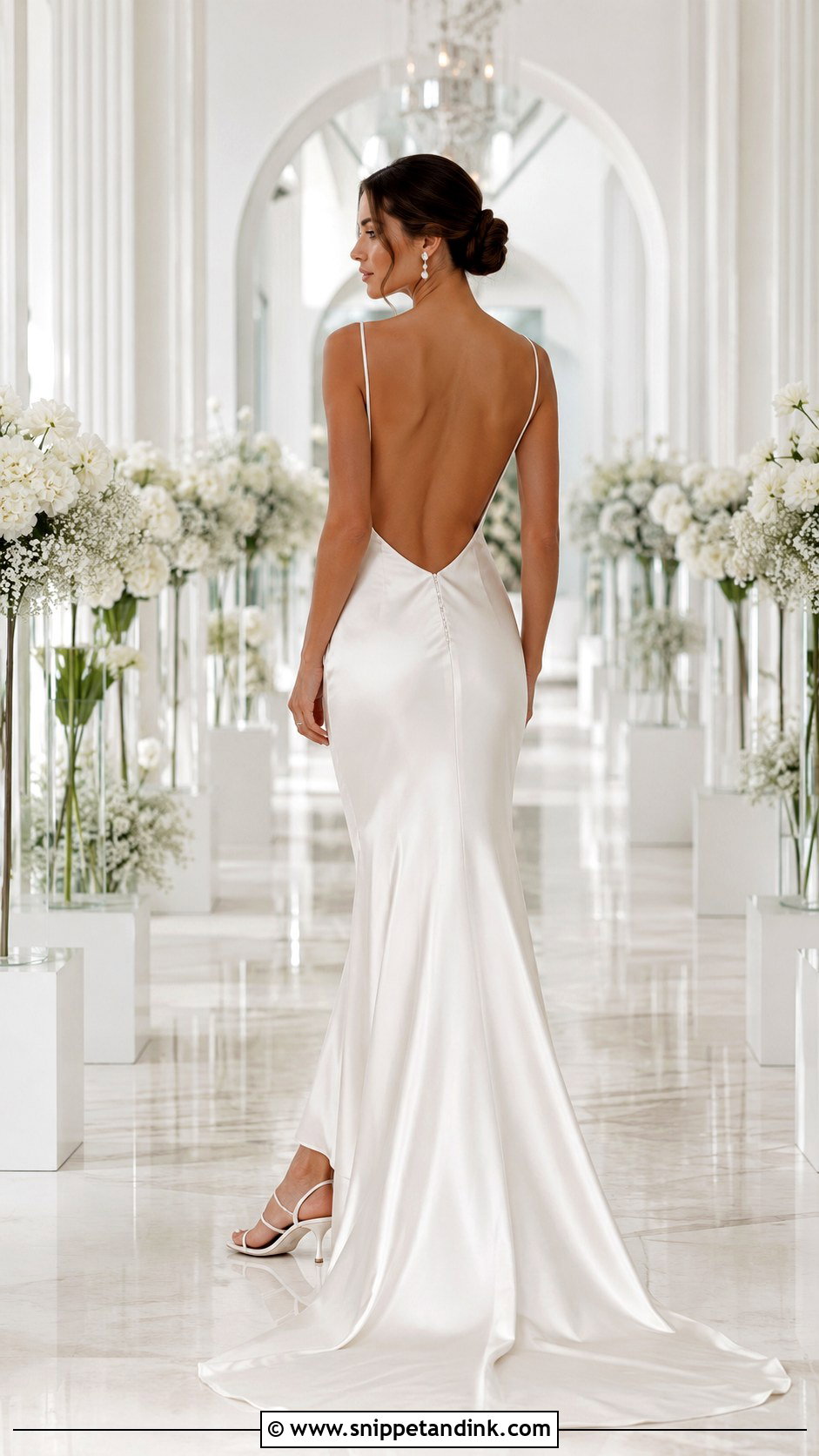
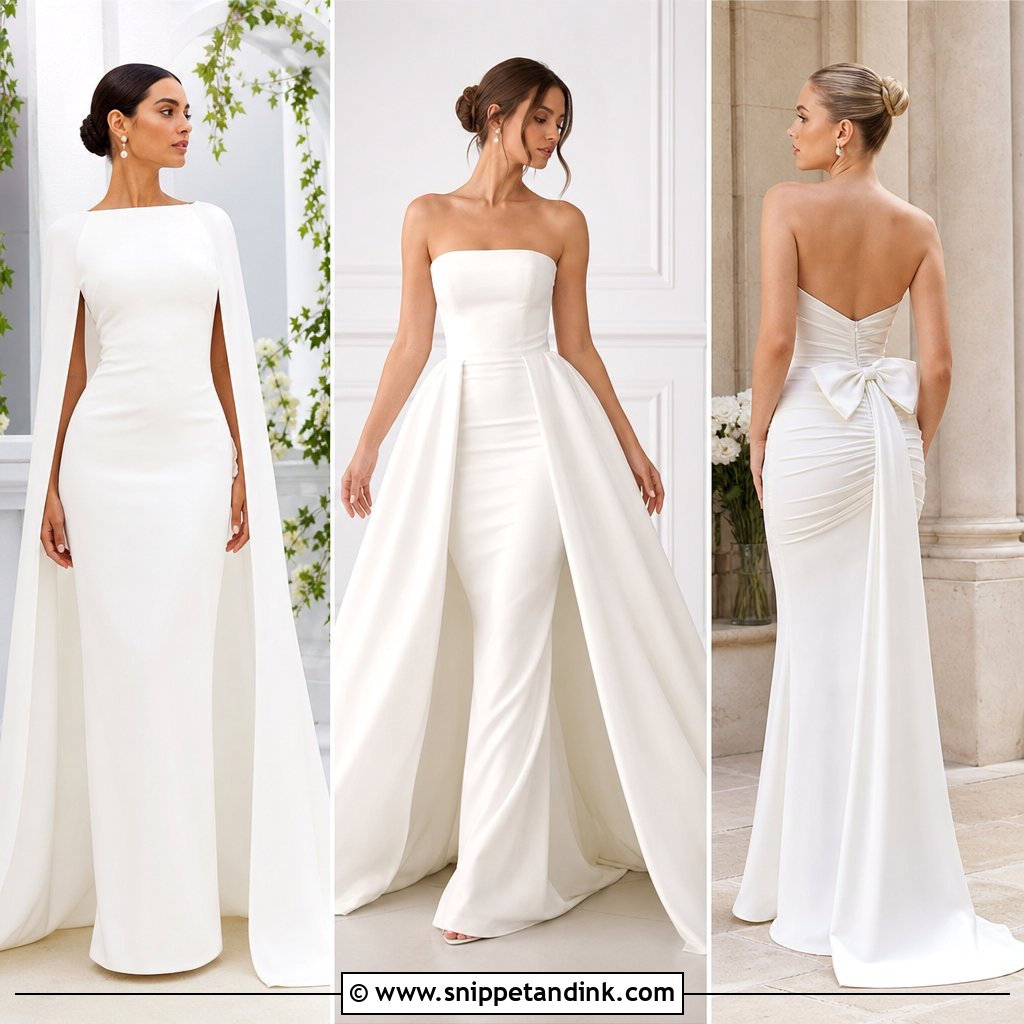
A backless wedding dress keeps the front quiet and saves its drama for the walk away. Support is the hard part. I build it in with cups sewn into the lining or clear elastic along the side seams, because stick-on solutions tend to lift once you get warm. Hair should stay off the back: a sleek bun, a deep side part or a polished ponytail. Guests look at the back of your dress for the whole ceremony, so this is a detail worth spending fitting time on.
10. One Shoulder Wedding Dress
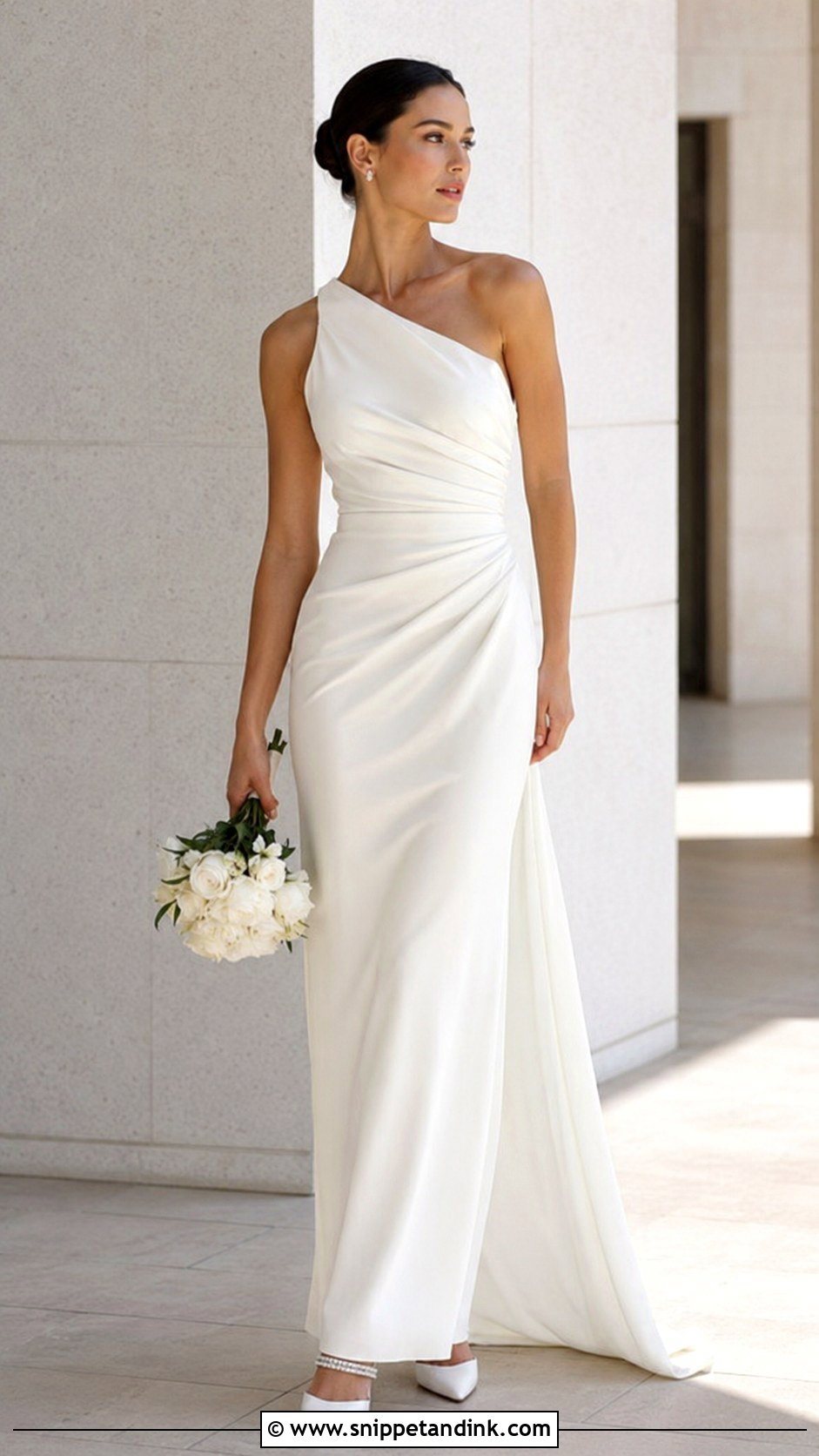
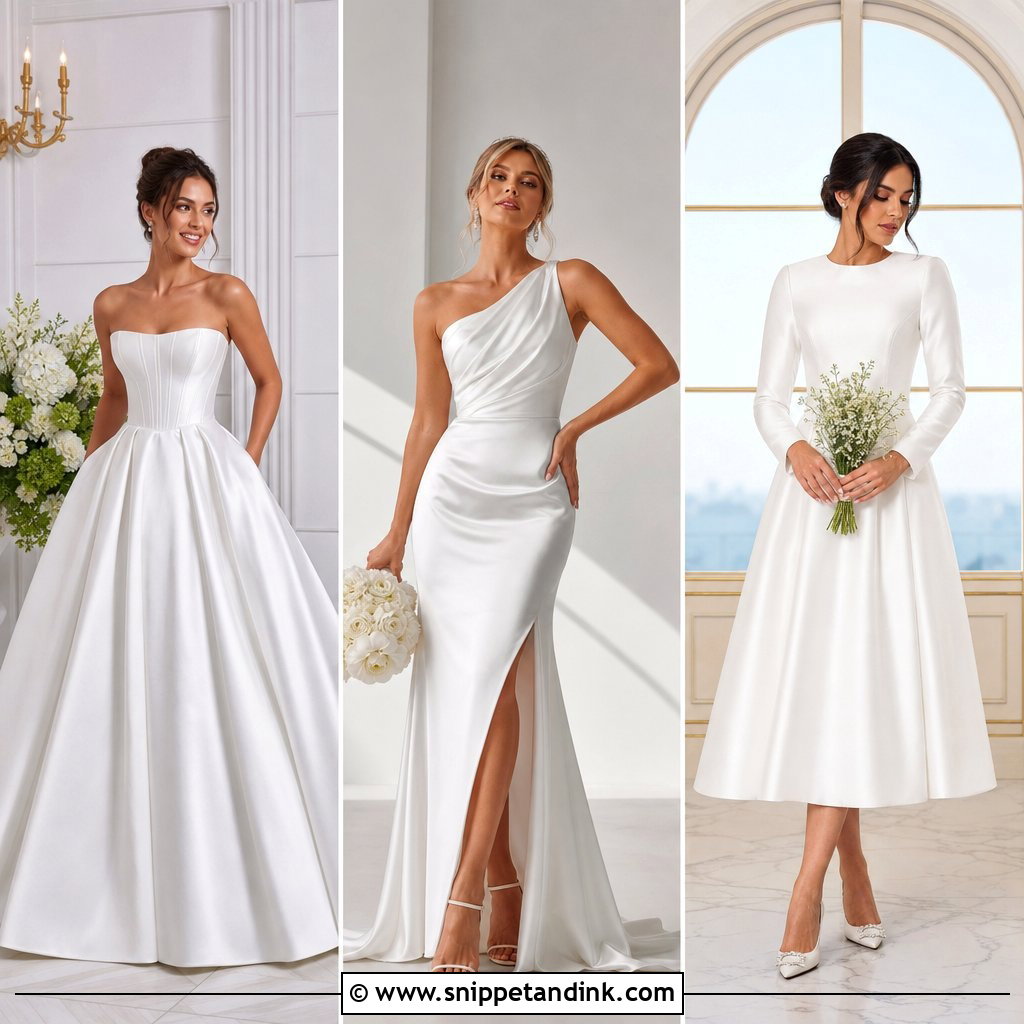
One shoulder adds asymmetry without a single stitch of lace. That one strap carries more load than you’d think, so I check that the bare side of the bodice is boned well enough not to slip when you raise your free arm. A slim column suits a city venue, a soft A-line gives more movement. No necklace at all. If you want a veil, attach it low so it doesn’t drag across the bare shoulder.
11. Mermaid Wedding Dress
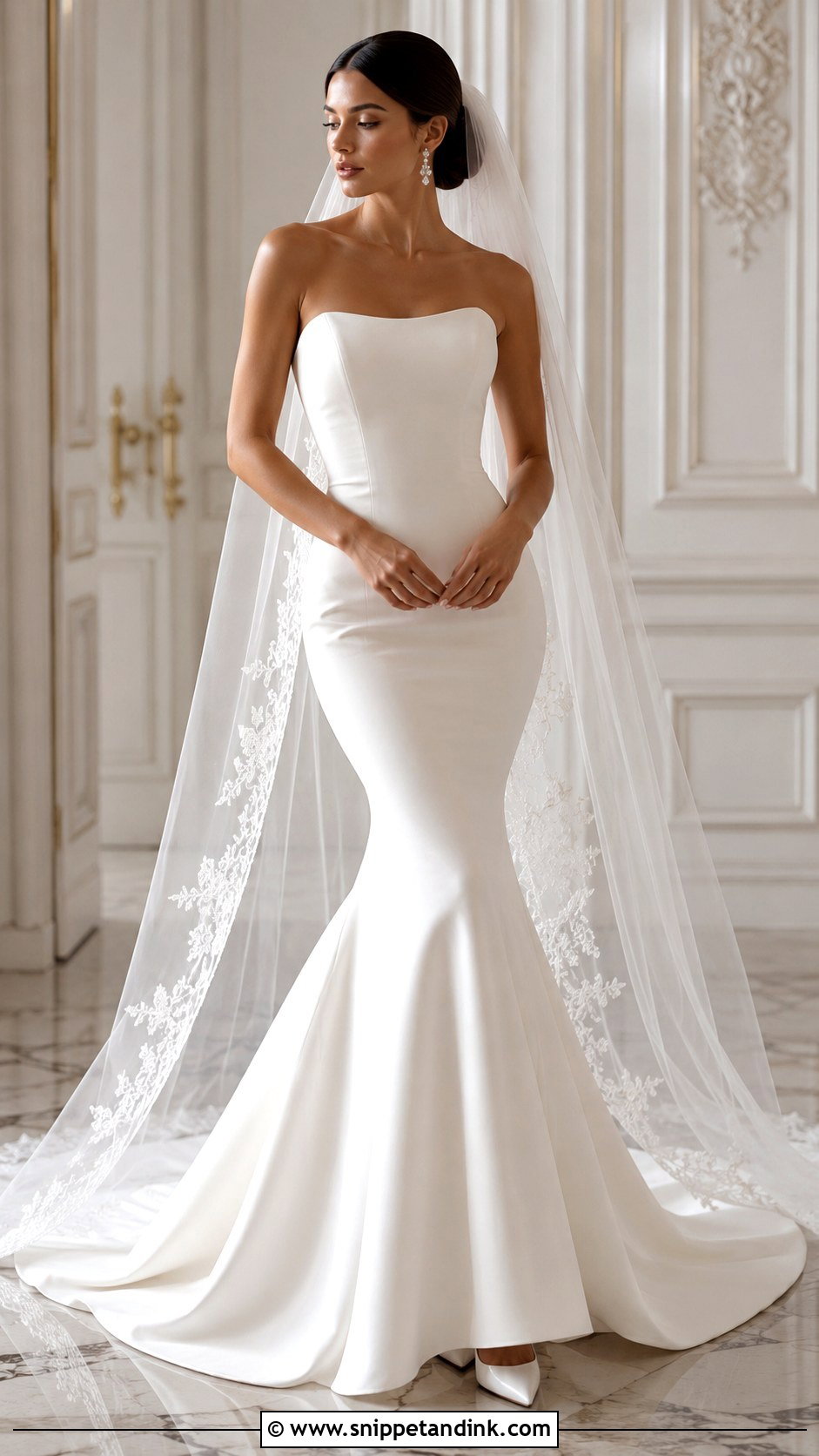
Clean mermaids in crepe, satin or mikado look sharper than beaded ones ever do. The knee is the critical point. If the flare starts too high, you can’t manage steps; too low, and you shuffle down the aisle. Before we finalize the hem, I have brides walk a flight of stairs and sit down at a table. Strapless, square and off-shoulder bodices all work, and pointed heels plus a long veil keep it formal.
12. Sheath Wedding Dress
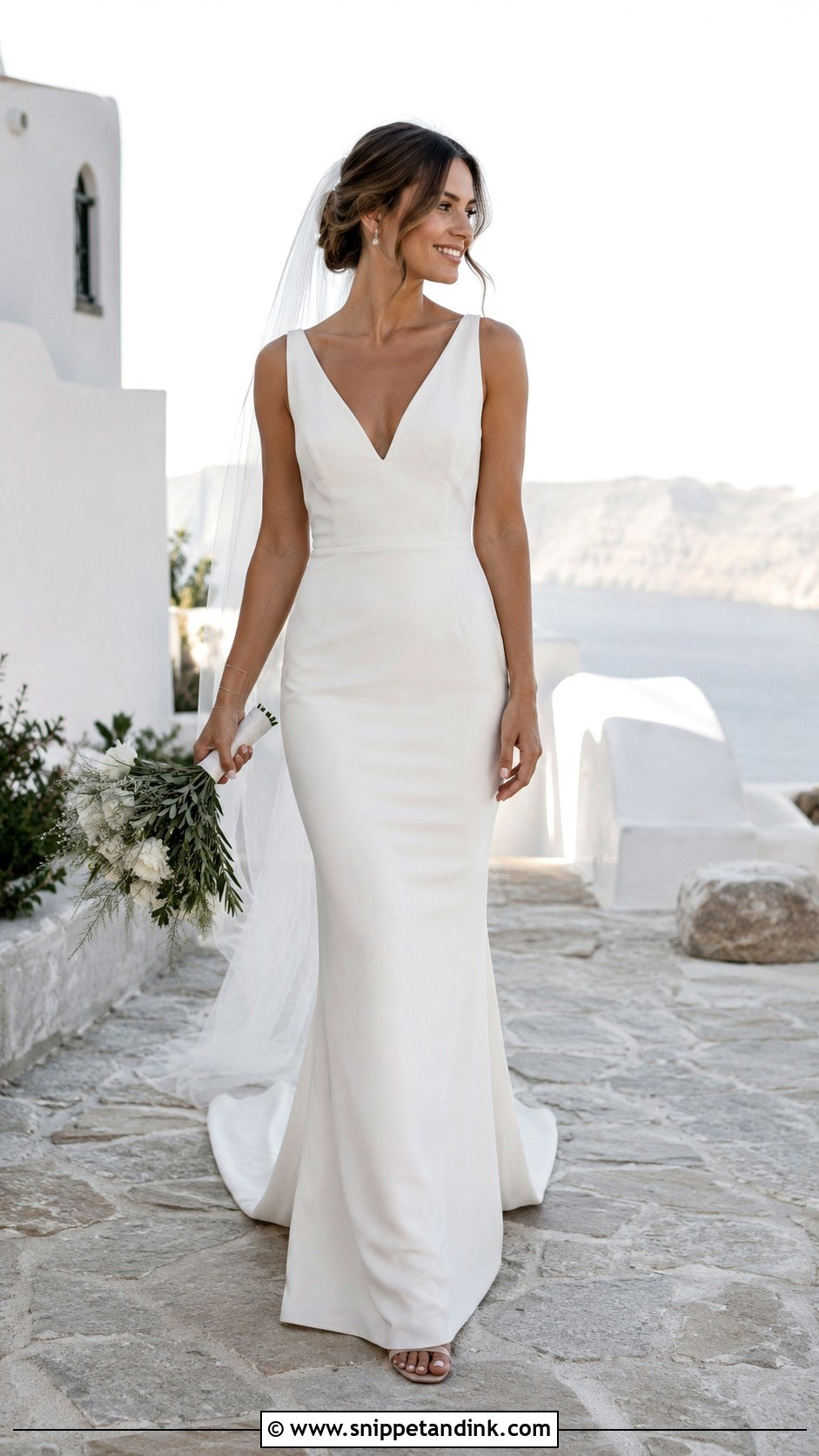
A sheath follows the body without flaring, and crepe is the usual fabric because it hangs smooth and forgives small bumps better than satin. The catch is the stride. A straight skirt can stop you mid-step, so a walking slit or a kick pleat at the back is worth asking for. V, scoop and straight strapless necklines all suit it, and it packs well enough to travel to a beach or a registry office.
13. Mikado Ball Gown Wedding Dress
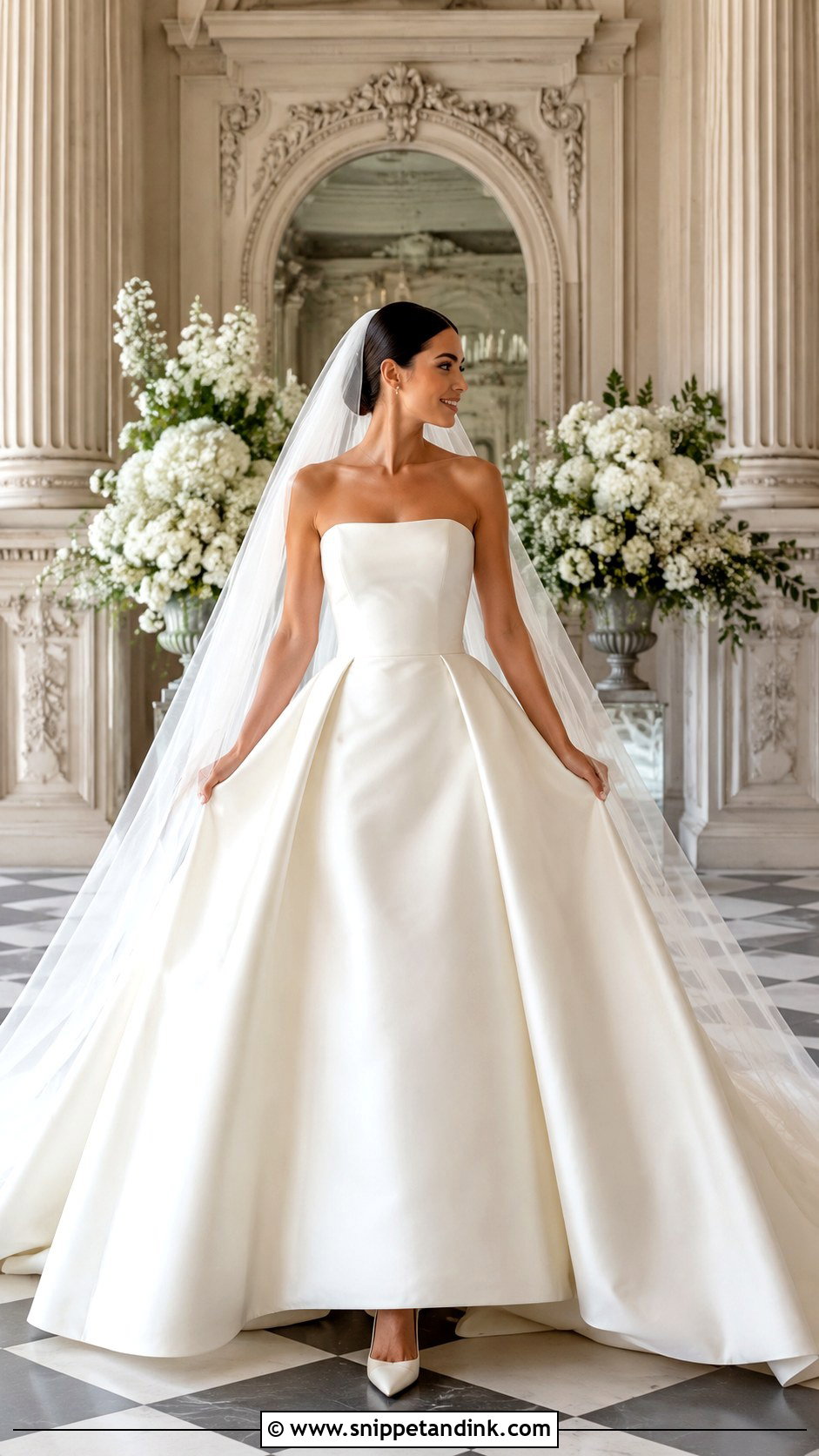
A mikado ball gown wedding dress gives you full princess volume with none of the lace. Mikado is a dense, slightly stiff silk blend, so the skirt holds its shape over a simple petticoat and the seams stay crisp in photos. The trade-off is weight. I tell brides to stand in it for twenty minutes at the shop before saying yes. Strapless and square necklines suit it best, with satin pumps and a long veil.
14. Crepe Fit And Flare Wedding Dress
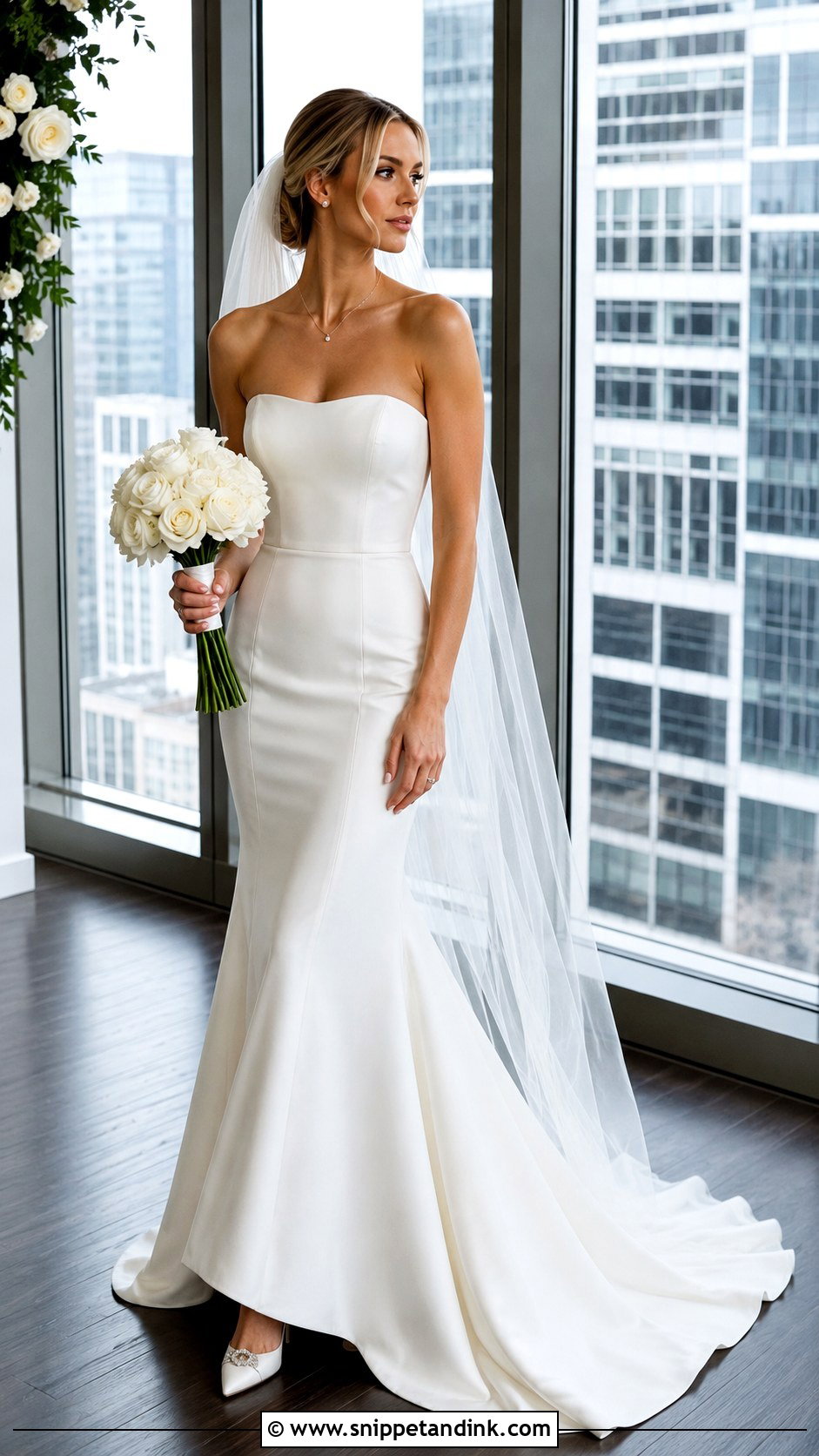
Fit and flare opens lower than an A-line but higher than a mermaid, which is the sweet spot if you want definition and still need to walk normally. Crepe is unforgiving here. It shows every seam and every pucker, so I only suggest it when you have a seamstress you trust. Strapless looks modern, long sleeves make it formal, and pointed heels with a narrow veil keep the outline clean.
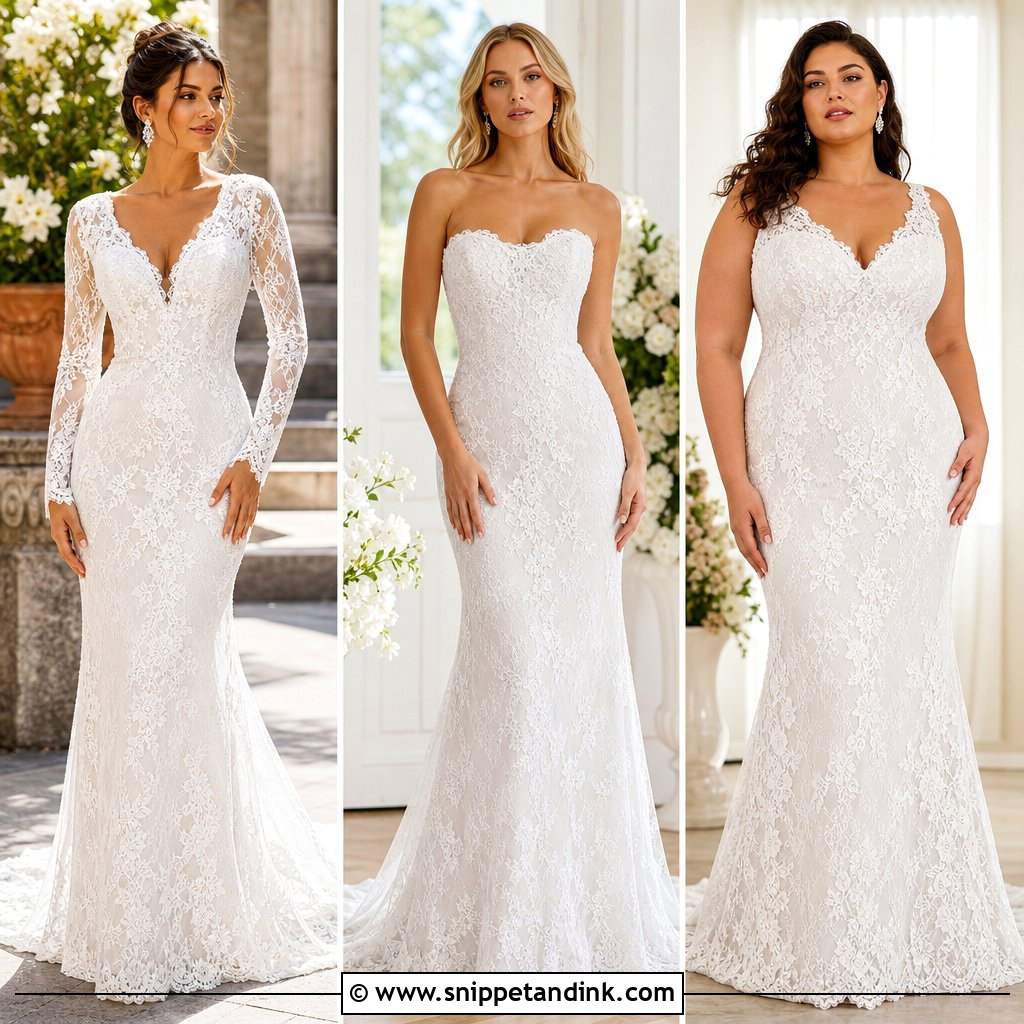
15. Silk Wedding Dress
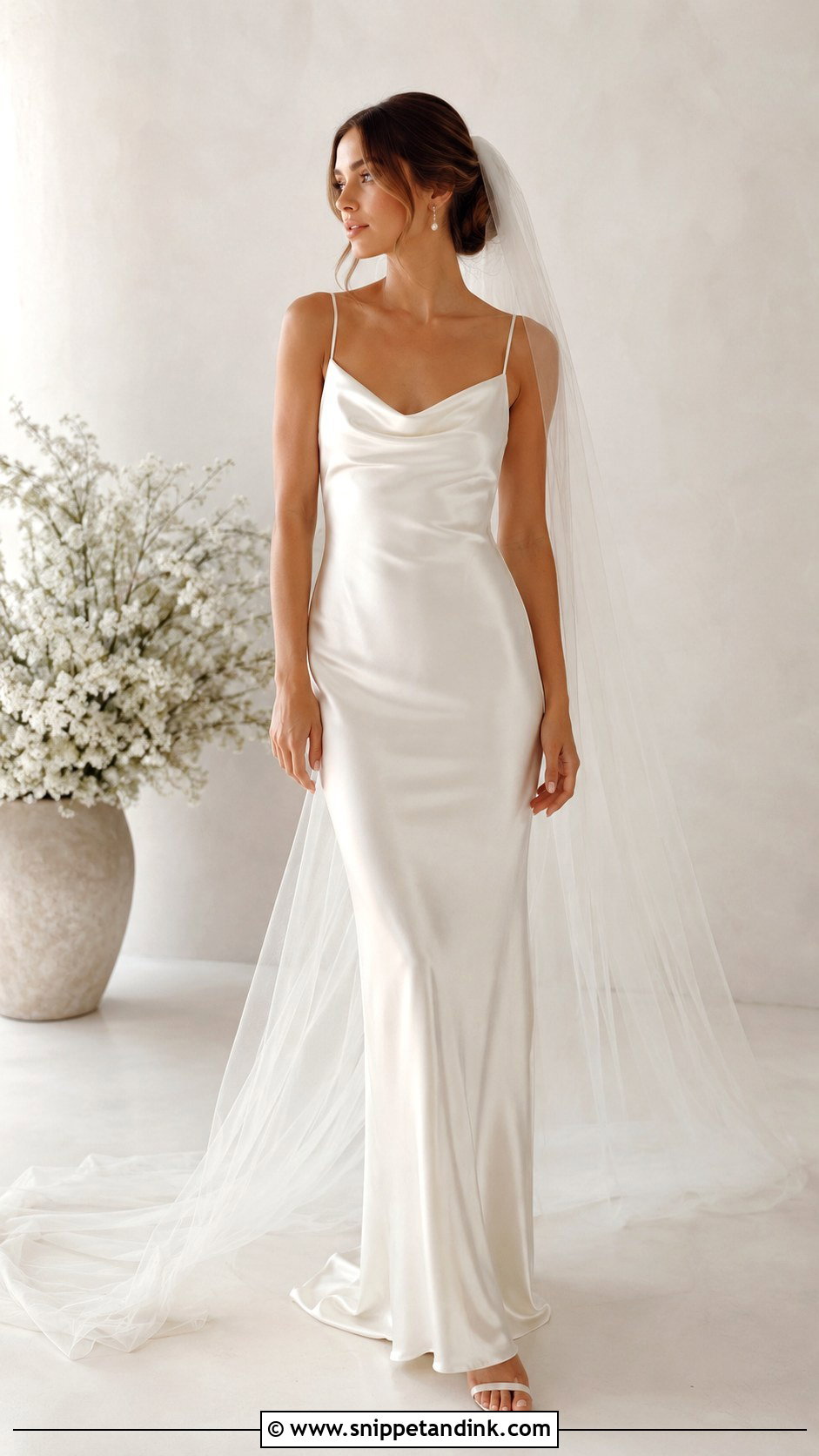
Real silk has a softer glow than polyester satin, and it moves more like water. It also water-spots and creases quickly. I steam silk from the inside on a low setting and never let an iron touch the face of the fabric. A bias slip or column in silk needs very little: soft waves, pearl earrings, slim sandals. If you want a little personality, a silk scarf in the hair does it without crowding the dress.
16. Blazer Wedding Dress
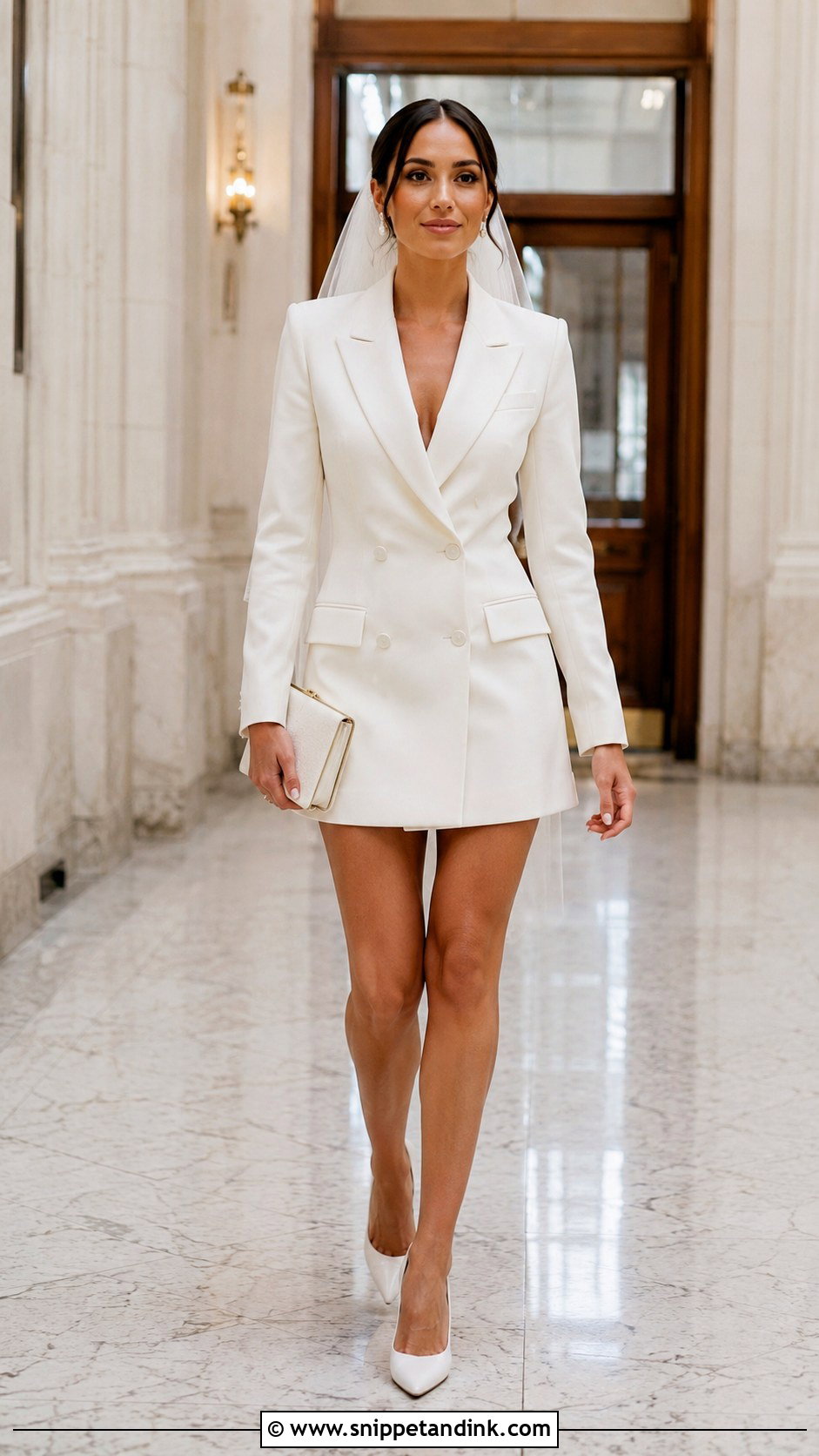
A blazer wedding dress is tailoring first, so I judge it the way I’d judge any jacket. The shoulder seam should sit right on the shoulder bone, and the lapels should lie flat when it’s buttoned. It comes as a mini, a midi or a long tuxedo gown. Pointed pumps and a structured clutch suit it, and a short veil keeps it reading as bridal at a courthouse ceremony or as a reception change.
17. Bridal Jumpsuit Wedding Outfit
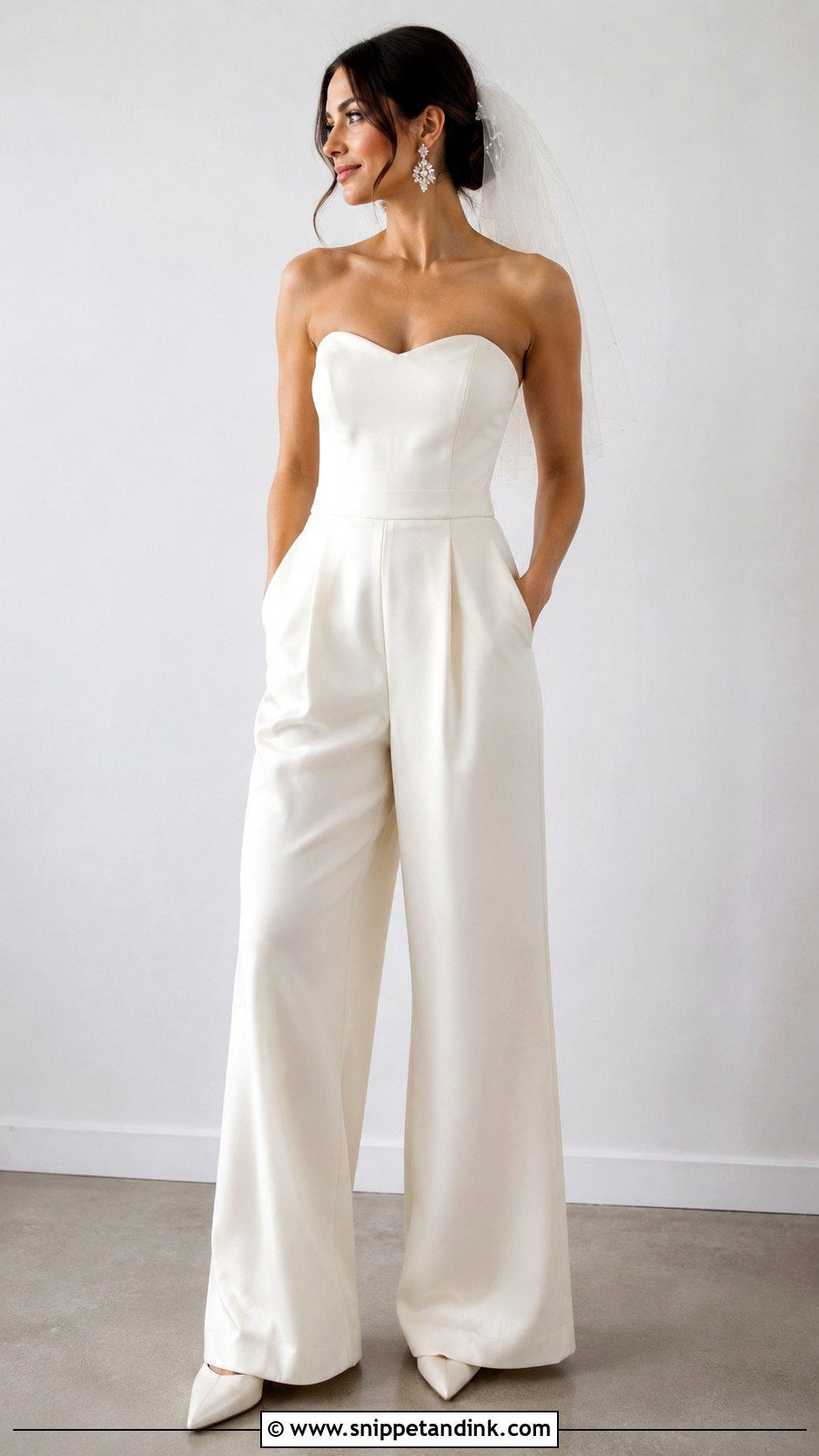
A bridal jumpsuit wedding outfit gives you full movement, and the fit point most people miss is the rise. Sit down and lean forward at the fitting. If the crotch pulls, the torso is too short, and no amount of hemming will fix it. Wide legs in a fluid crepe look the most bridal. Hem the trousers for the exact heels you’ll wear, then add a short veil or cape and one pair of statement earrings.
18. Wedding Dress With Cape
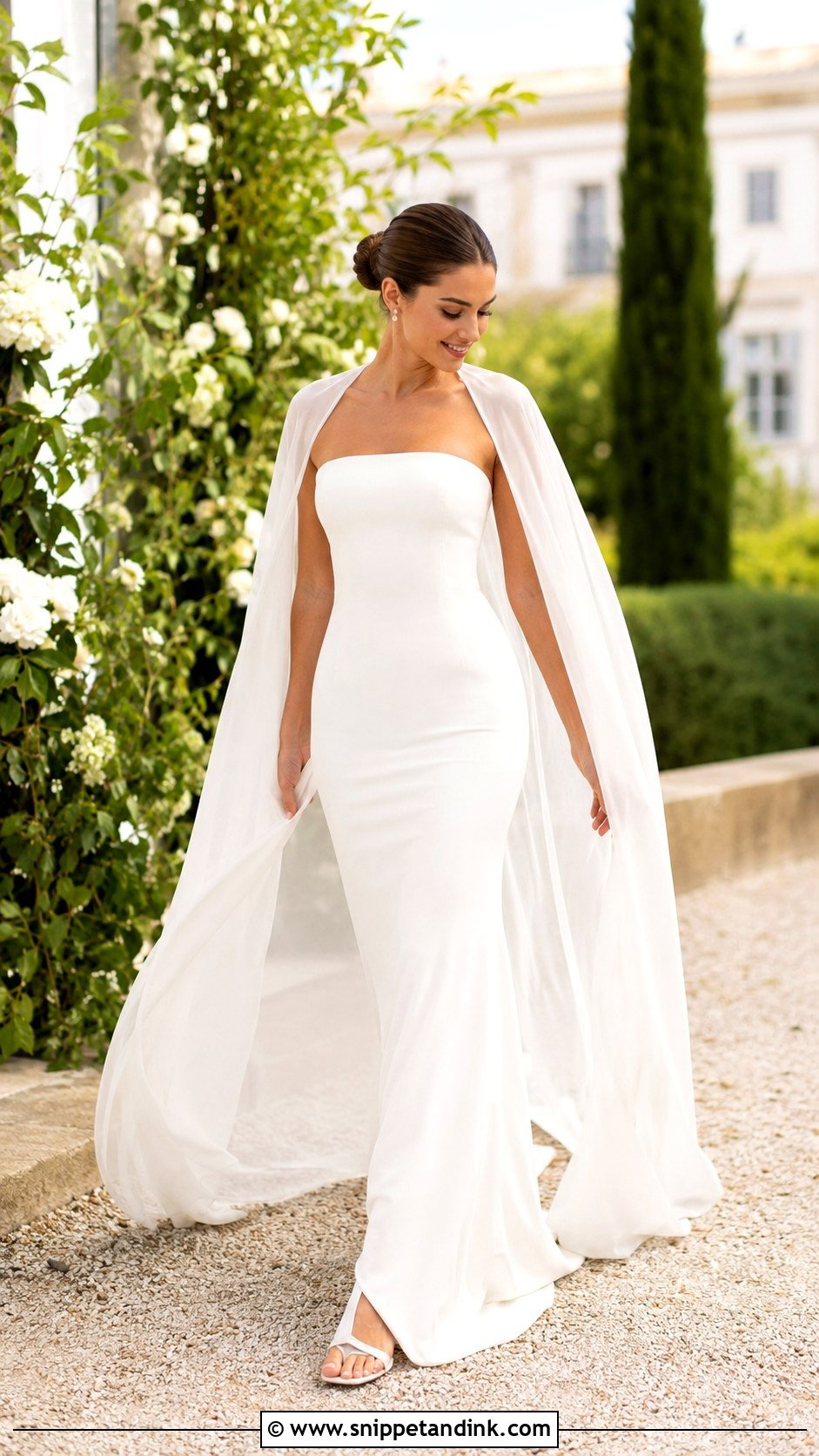
A cape gives you ceremony presence without a train that has to be bustled. The dress underneath can be very simple, a strapless column or a sheath. Sheer capes soften the line; structured ones look editorial. Make sure it fastens with hooks or snaps rather than only a tie, so it comes off cleanly before the first dance and you get a second look for the reception.
19. Wedding Dress With Overskirt
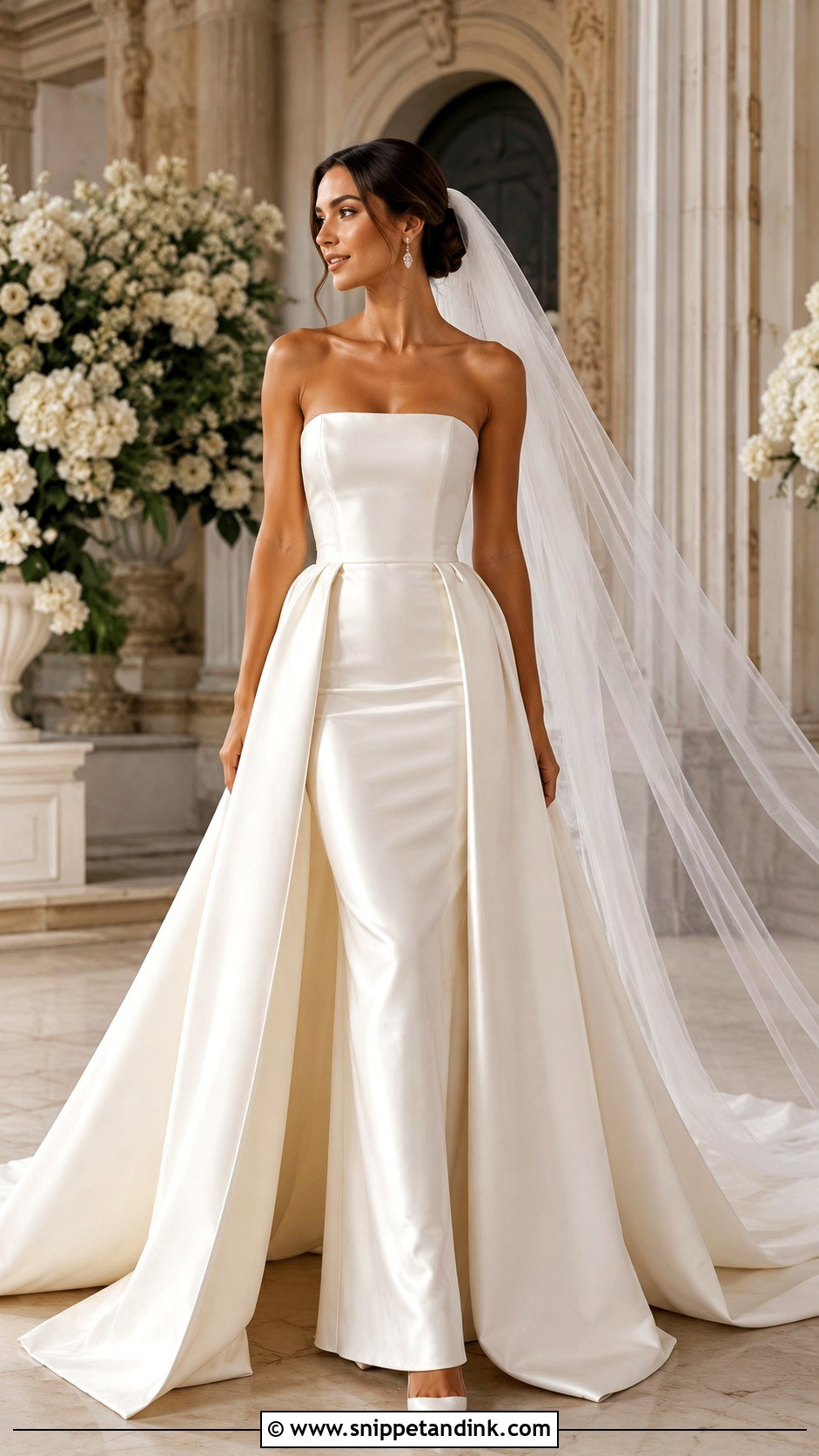
An overskirt gives you aisle volume and a clean reception silhouette in a single outfit. Underneath is usually a fitted column, sheath or mermaid. Practise taking it off at the final fitting with whoever will help on the day, because the waist hooks are fiddly and a fumbled change eats into reception time. Match the fabrics between the layers, and scale the veil to the overskirt rather than the slim dress beneath.

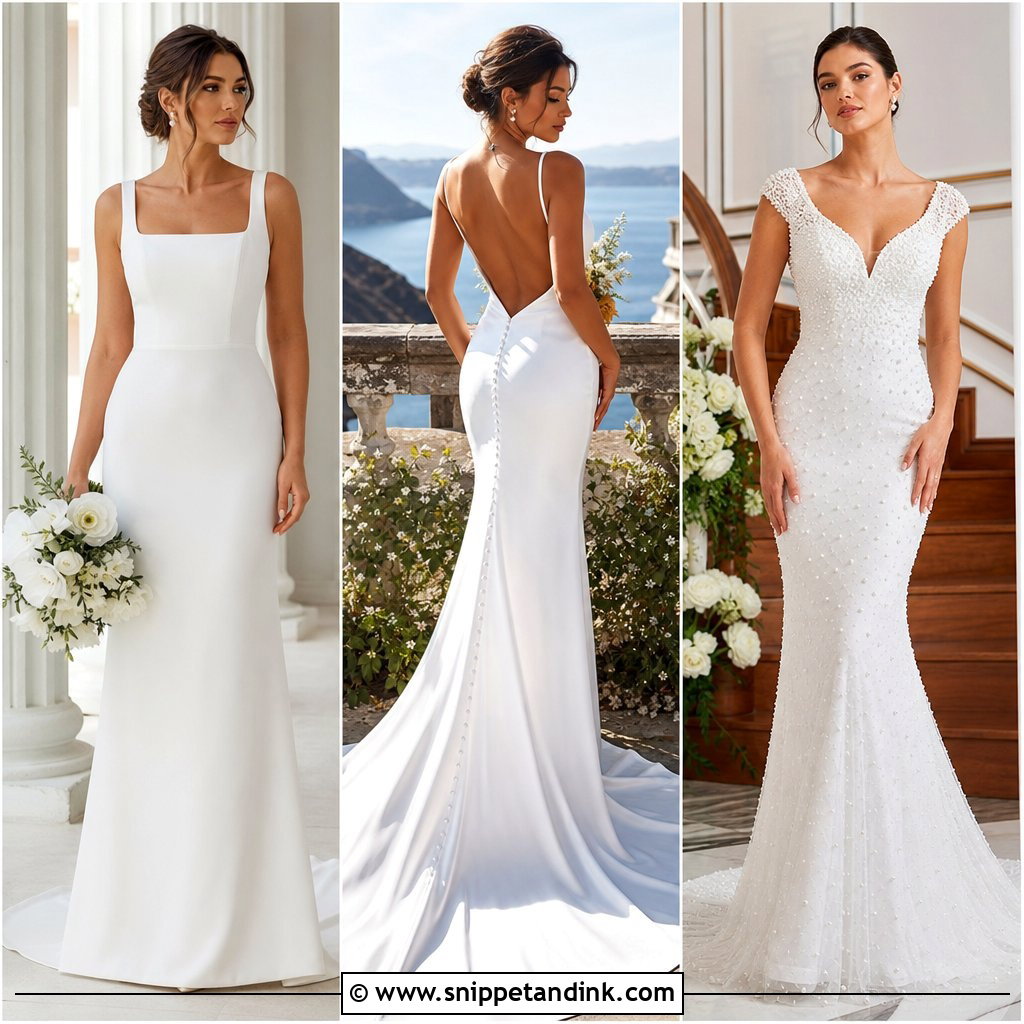

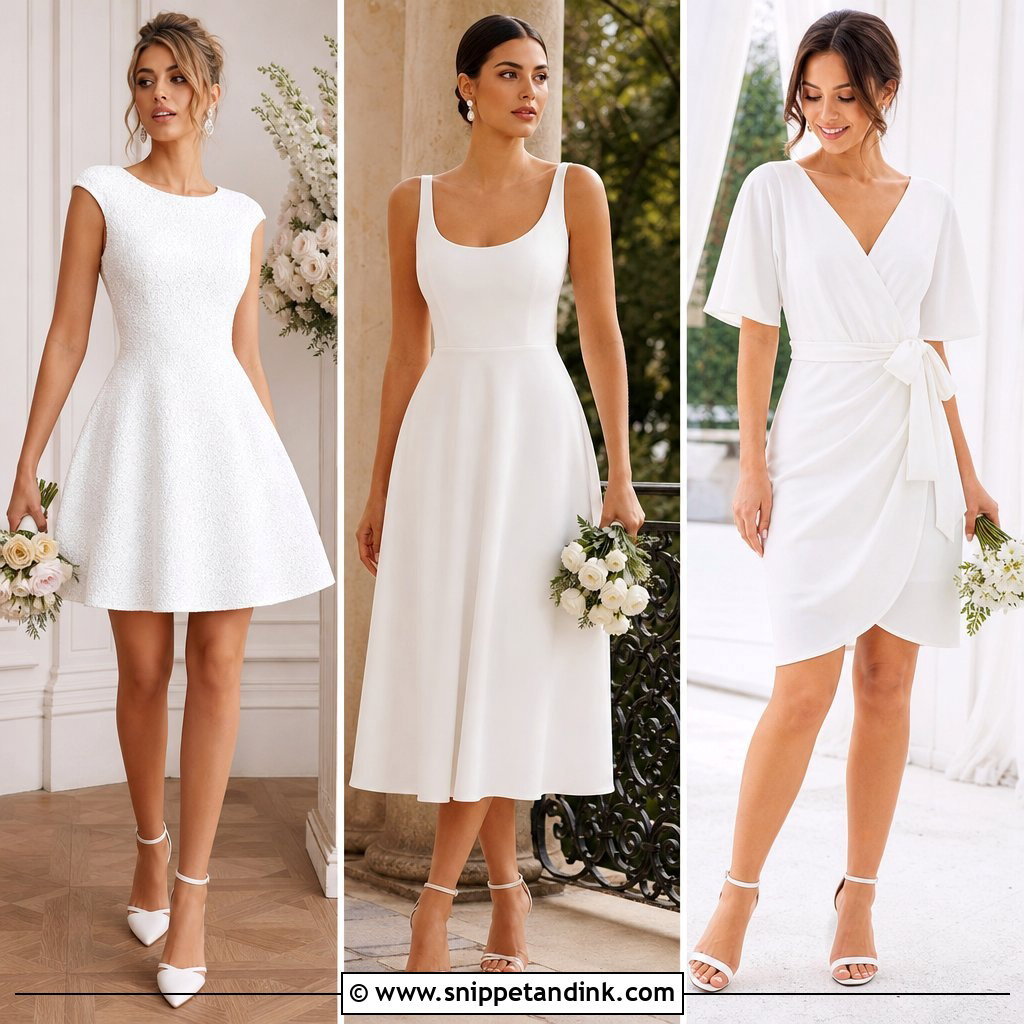
20. Tea Length Wedding Dress
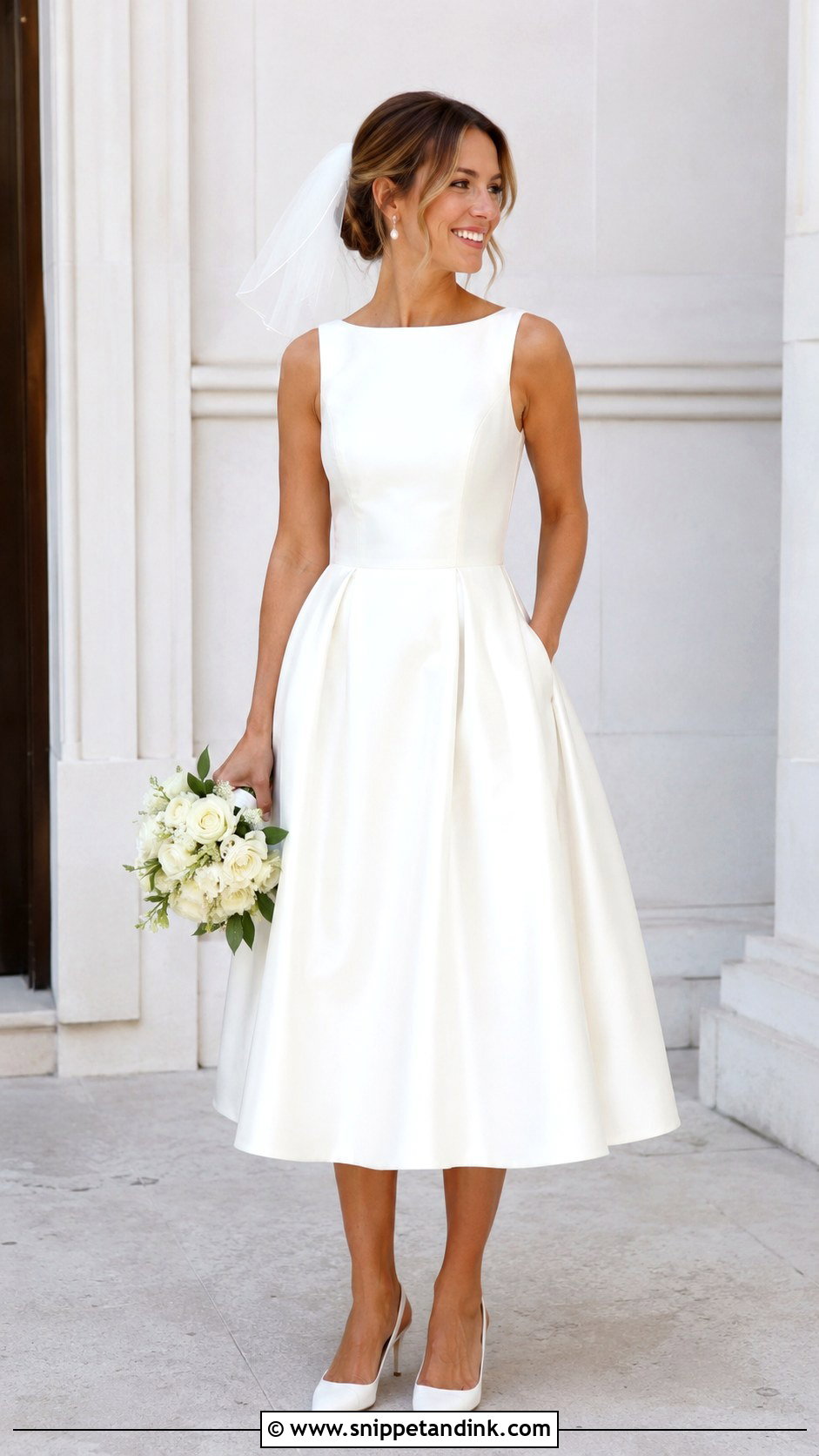
A tea length wedding dress stops between knee and ankle, so your shoes are on show all day. I pin the hem with the actual shoes on, since half an inch decides whether the length looks deliberate or accidental. Pointed pumps or slingbacks keep it polished. Clean satin reads modern, a structured bodice gives it a fifties shape, and pearl earrings with a short veil suit a garden ceremony or brunch reception.
21. Mini Wedding Dress
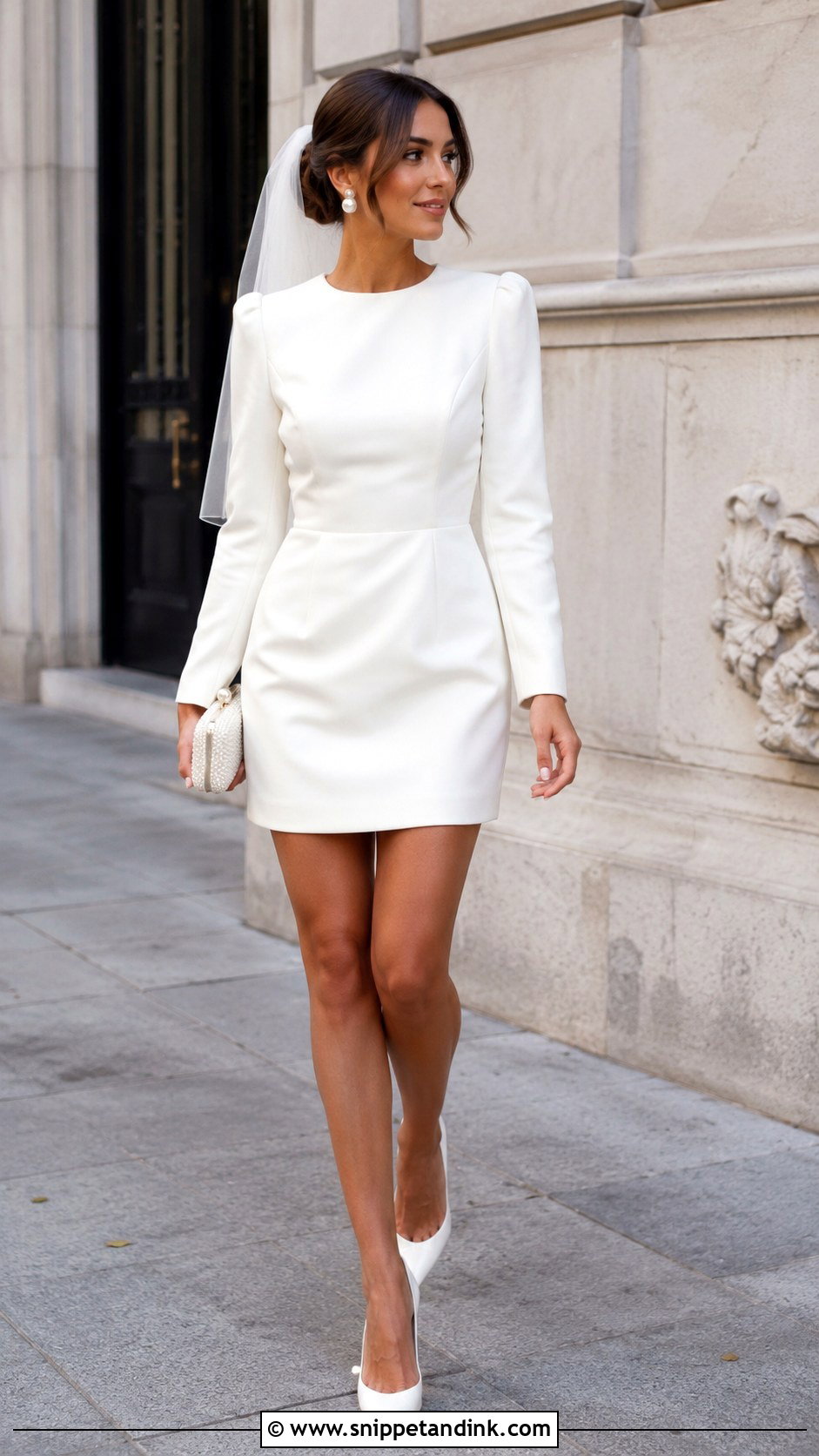
Minis look sophisticated when the fabric has body. Thin satin on a short dress creases across the hips the moment you sit, so I lean toward a heavier crepe or bonded satin shift. Pointed heels and a small clutch balance the hemline. A short veil or a bow makes it read as bridal, and sheer tights or a tailored coat cover you on a cold day.
22. Midi Wedding Dress
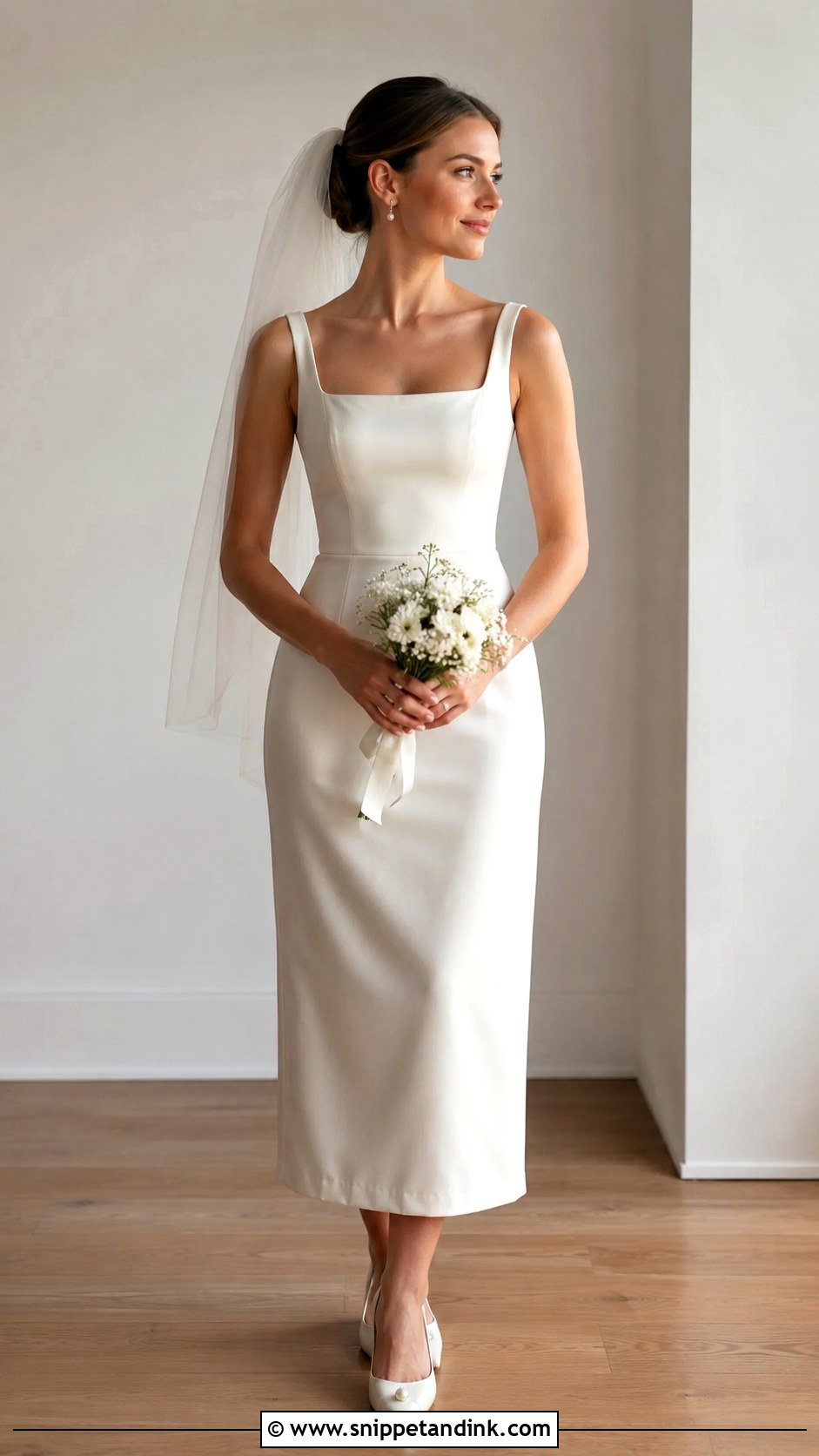
A midi sits between a gown and a cocktail dress, which suits civil ceremonies and smaller rooms. Fitted satin, square-neck crepe and strapless structured midis all hold their shape well. Because the hem shows your shoes, they deserve as much thought as the dress. It’s also the one bridal piece I see brides actually wear again, at an anniversary dinner or a family wedding.
23. Turtleneck Wedding Dress
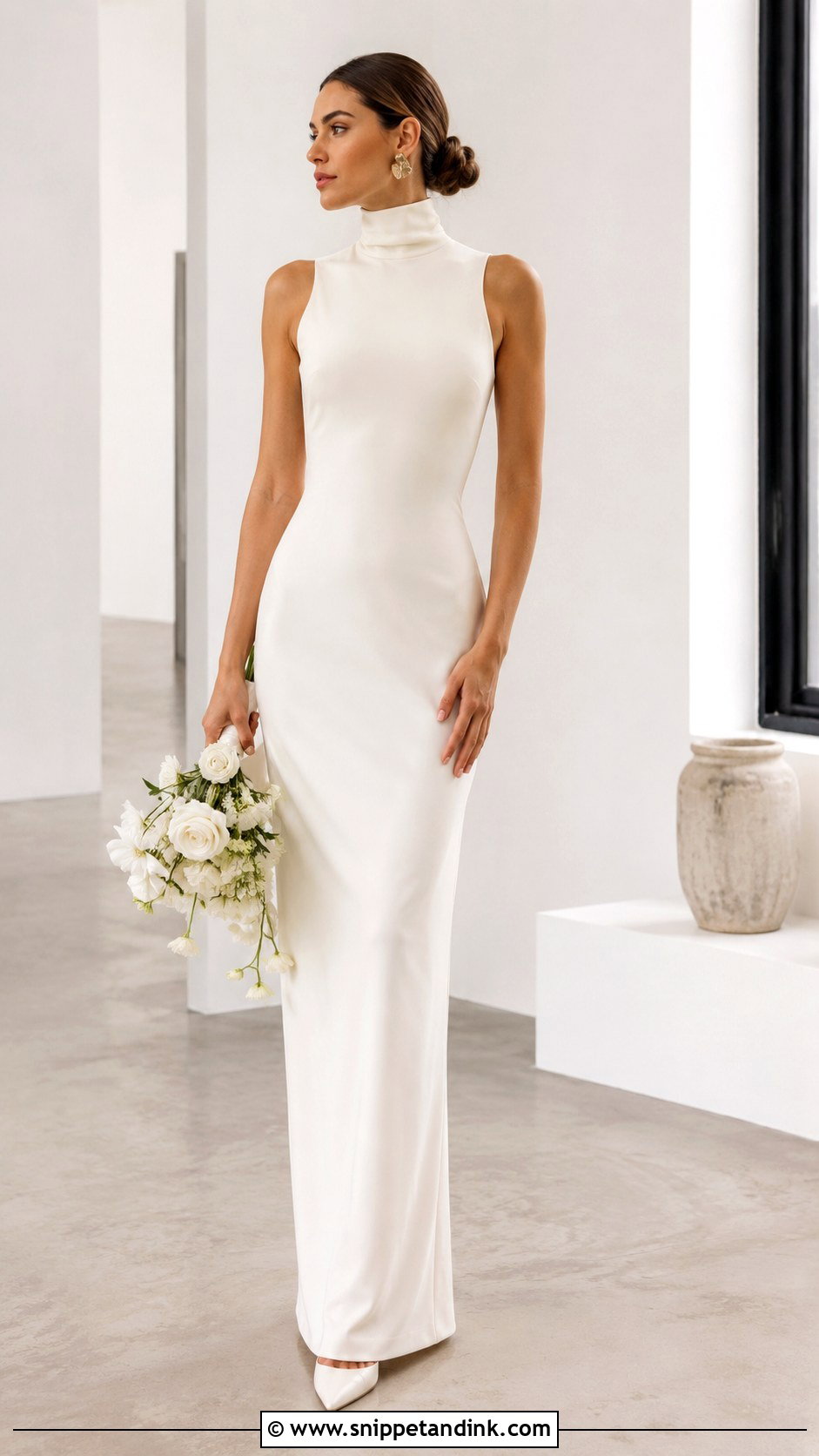
Turtlenecks give full coverage with one long, unbroken line, and the sleeveless versions look almost architectural. Comfort depends on stretch. A rigid collar feels tight once you’re warm from dancing, so I look for stretch crepe or a smooth bridal knit. A low bun and sculptural earrings suit it; a necklace would only crowd the collar. For winter weddings and gallery venues, this is often my first suggestion.
24. Scoop Neck Wedding Dress
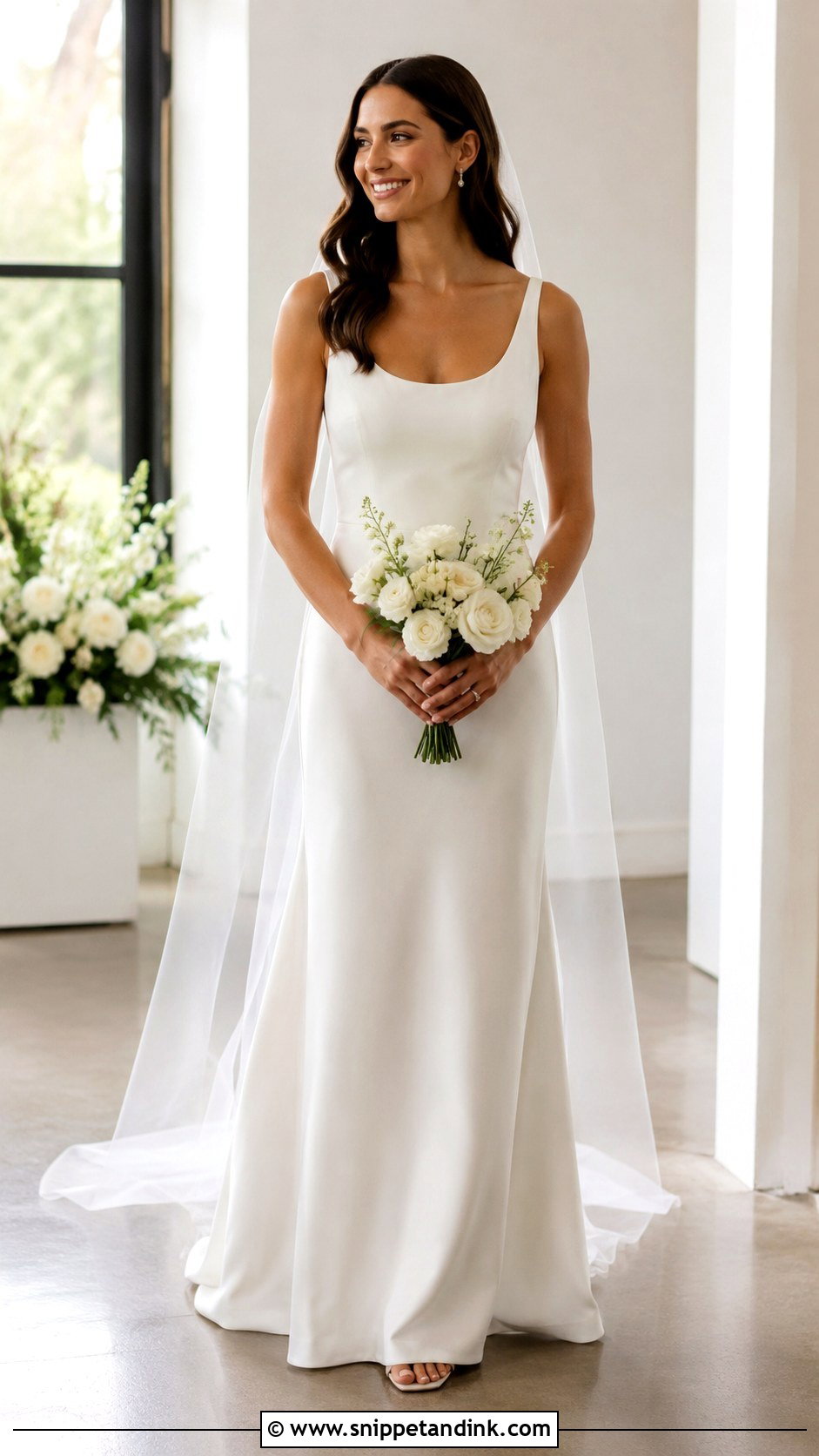
A scoop neck wedding dress frames the face and collarbone gently, which is why it suits so many brides. Depth is the detail I watch. When you lean forward to sign the register, a scoop cut too low shows more than you planned. It sits well on slips, sheaths and fitted crepe, with delicate earrings, a sheer veil and either soft waves or a clean bun.
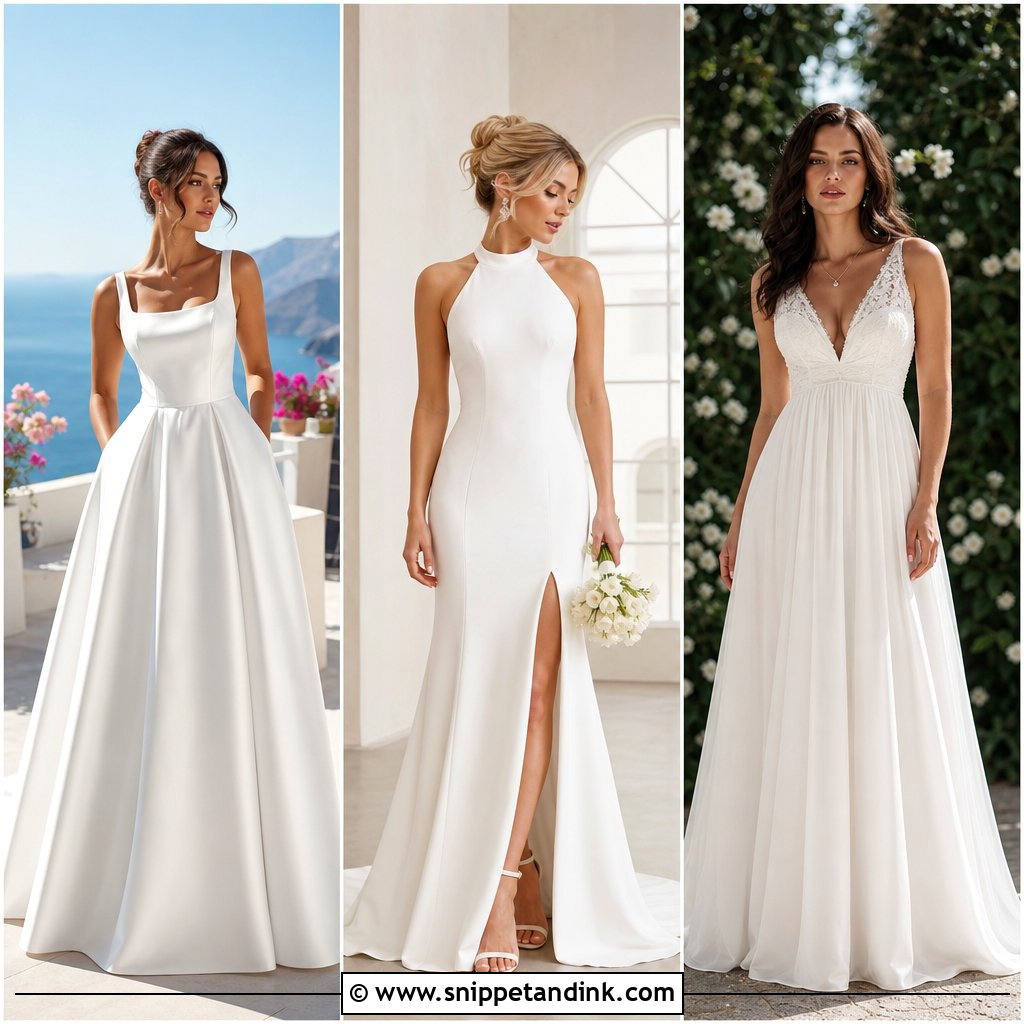
25. V Neck Wedding Dress
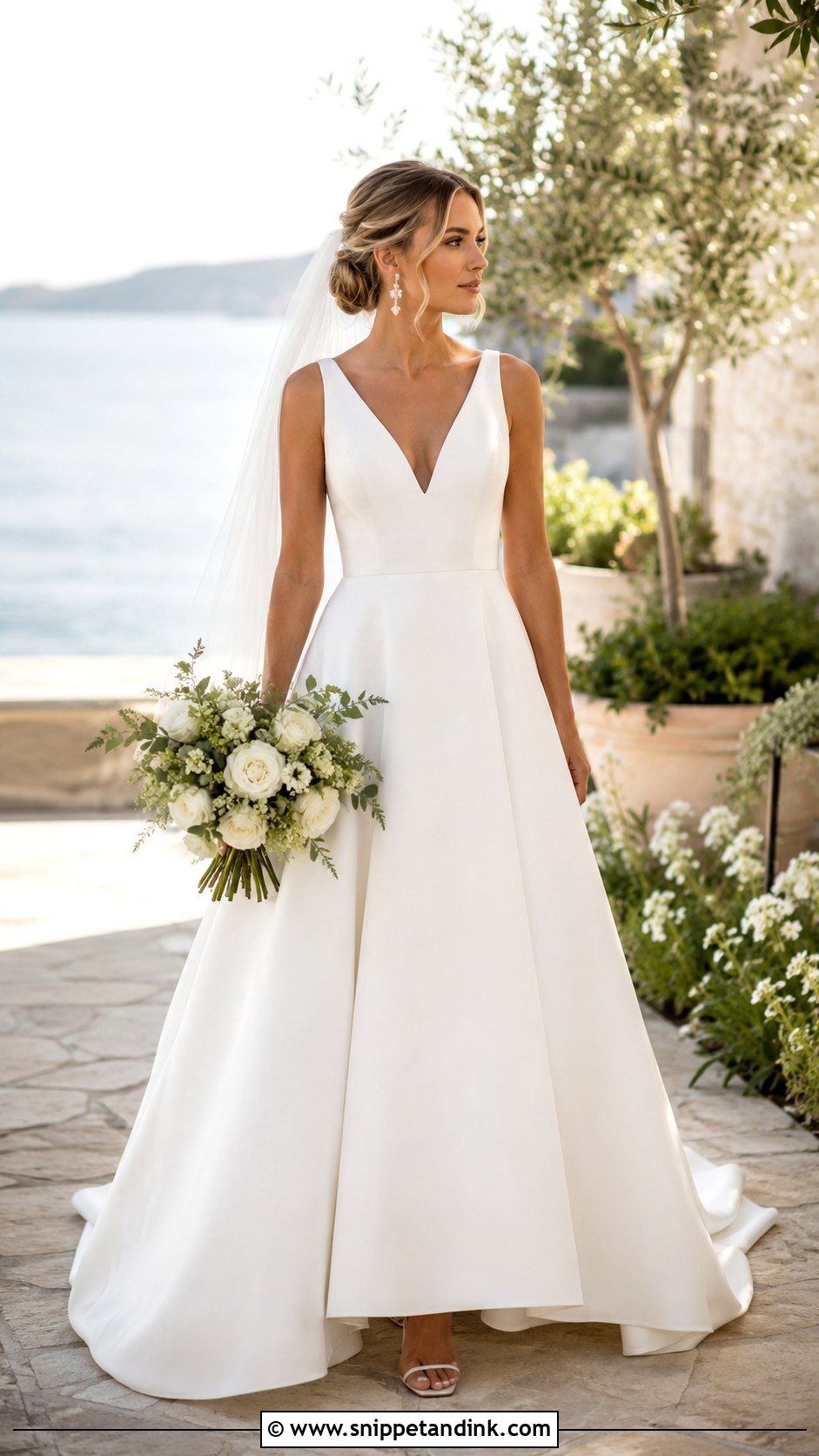
A V neck lengthens the torso, and its depth sets the tone: bold when it plunges, classic when it’s shallow. For a deep V I always add a fine mesh panel or fashion tape along the edges, because it will shift during a hug. Column, sheath and A-line shapes all carry it. Drop earrings echo the line of the V, so leave the necklace at home.
26. Cowl Neck Wedding Dress
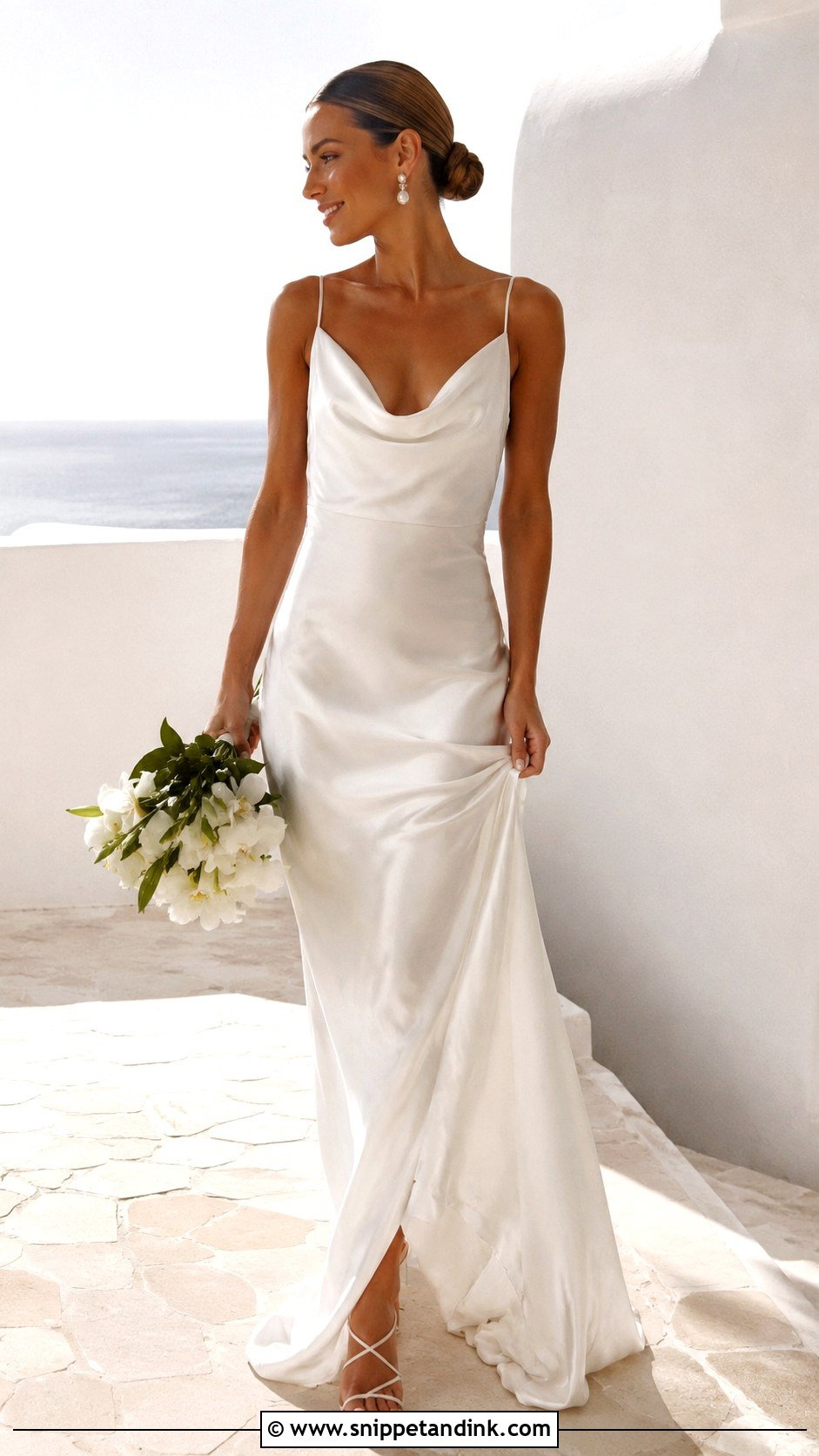
A cowl only drapes if the fabric is fluid, so satin and silk work and stiff crepe doesn’t. The drape also moves as you do. I tack the inside of the cowl at one point so it falls the same way in every photo. Strappy heels, pearl earrings and a smooth low bun suit the relaxed mood, and it folds into a suitcase better than most gowns, which helps for weddings abroad.
27. Strapless Satin Wedding Dress
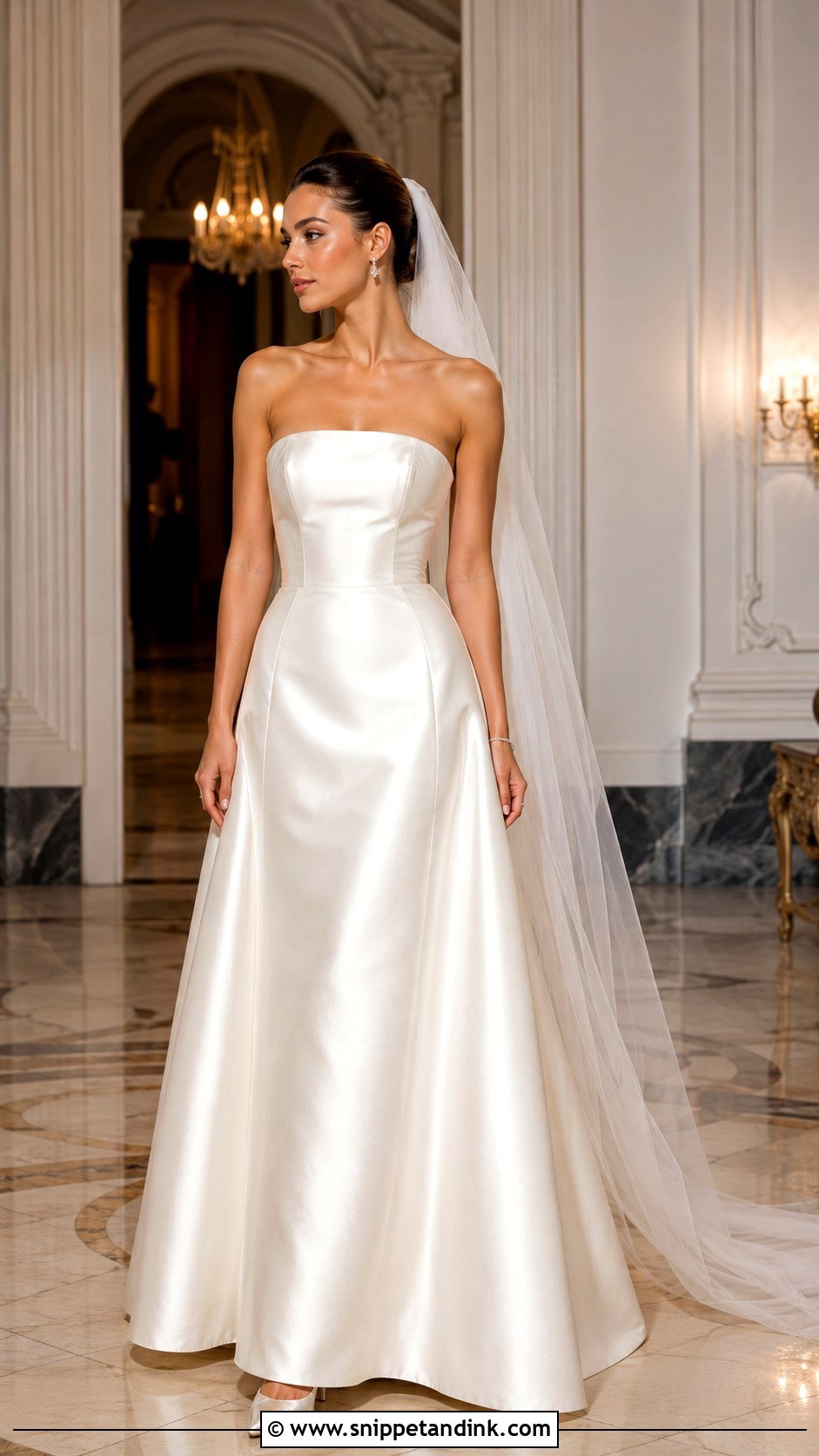
Satin catches the light, so a strapless satin gown needs almost nothing added to it. It also creases where you sit, and creases show more on a shiny surface than a matte one. I keep the dress hanging until the last possible minute with a steamer close by. A boned bodice holds the neckline steady, and a sleek updo with pearl or diamond studs finishes it for an evening or hotel wedding.
28. Wedding Dress With Slit
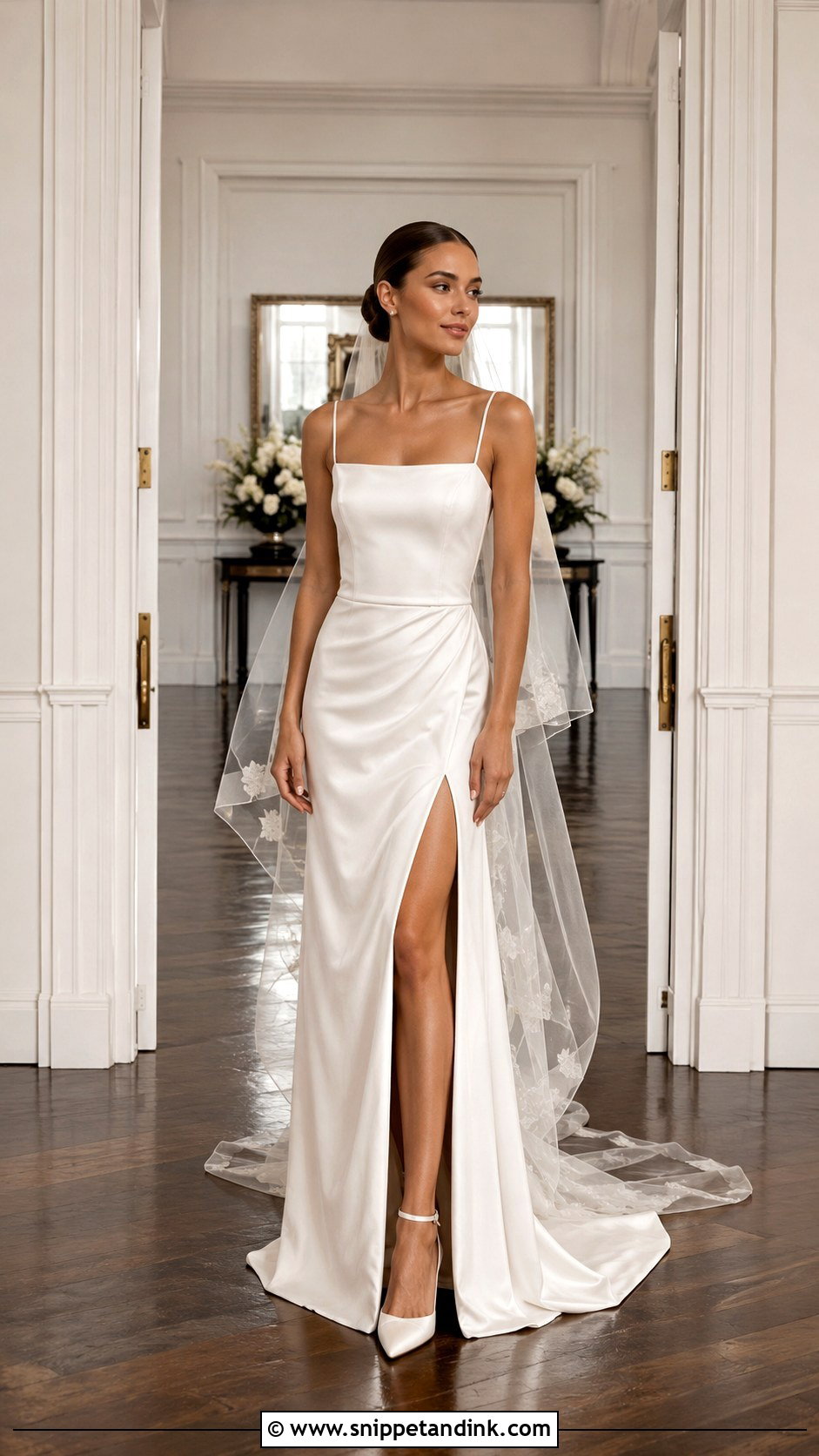
A slit adds movement and the one bit of edge a plain gown can use. Placement is everything. I mark it with the bride standing and then sitting, because a slit that looks modest upright can open to the hip at the head table. Satin columns, crepe sheaths and minimal A-lines all take one well. Your shoes will flash through the opening, so wear ones you like.
29. Two Piece Wedding Dress
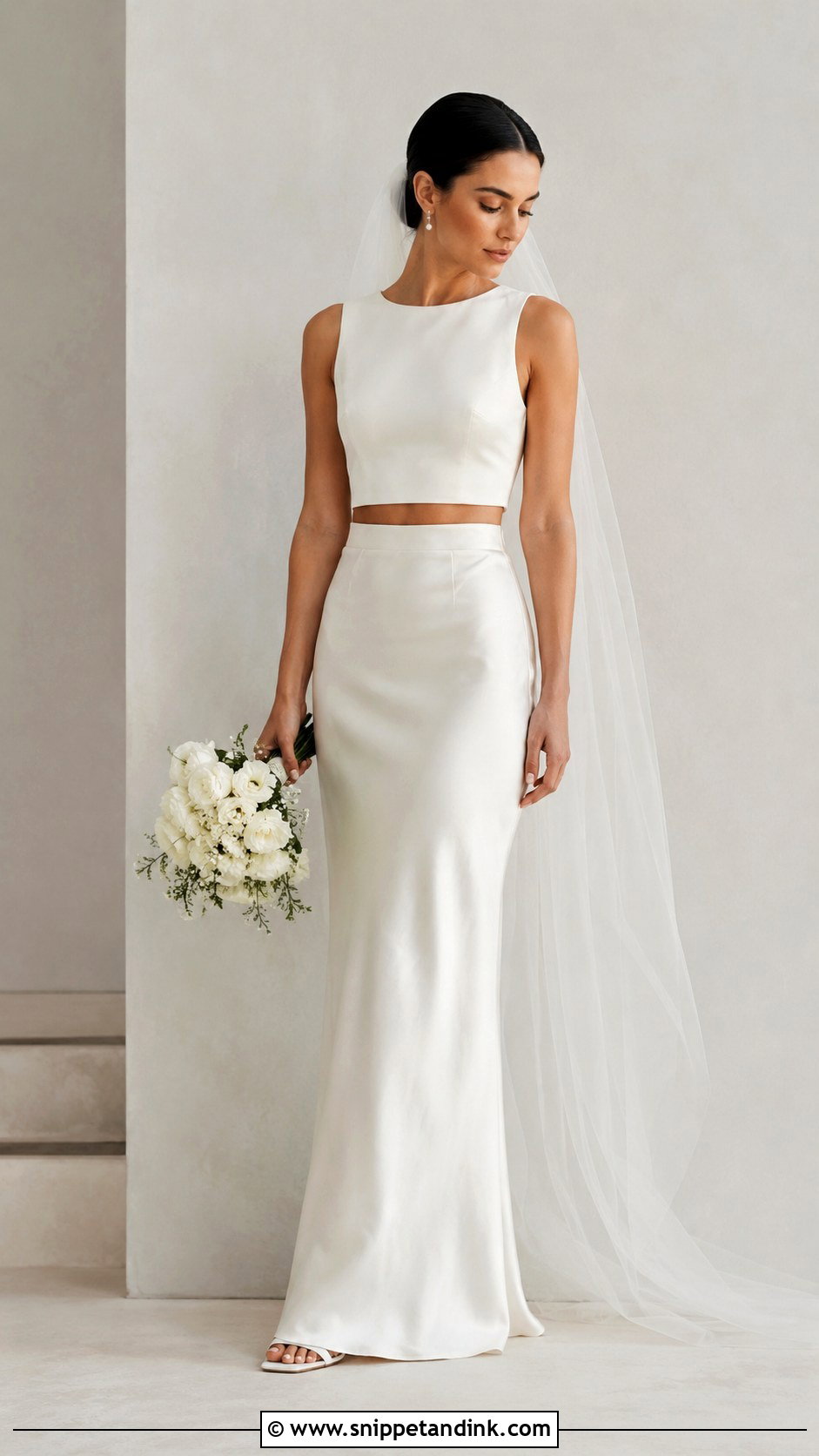
Separates give you options: a fitted top with a column skirt, a cropped satin bodice with a high waist, or a longline top over wide-leg trousers. The usual problem is the gap. I make sure the top overlaps the waistband by about an inch so no skin shows when you raise your arms. Matching the fabric and the exact shade of white matters most, because two slightly different whites side by side always look like a mistake.
30. Simple Lace Wedding Dress
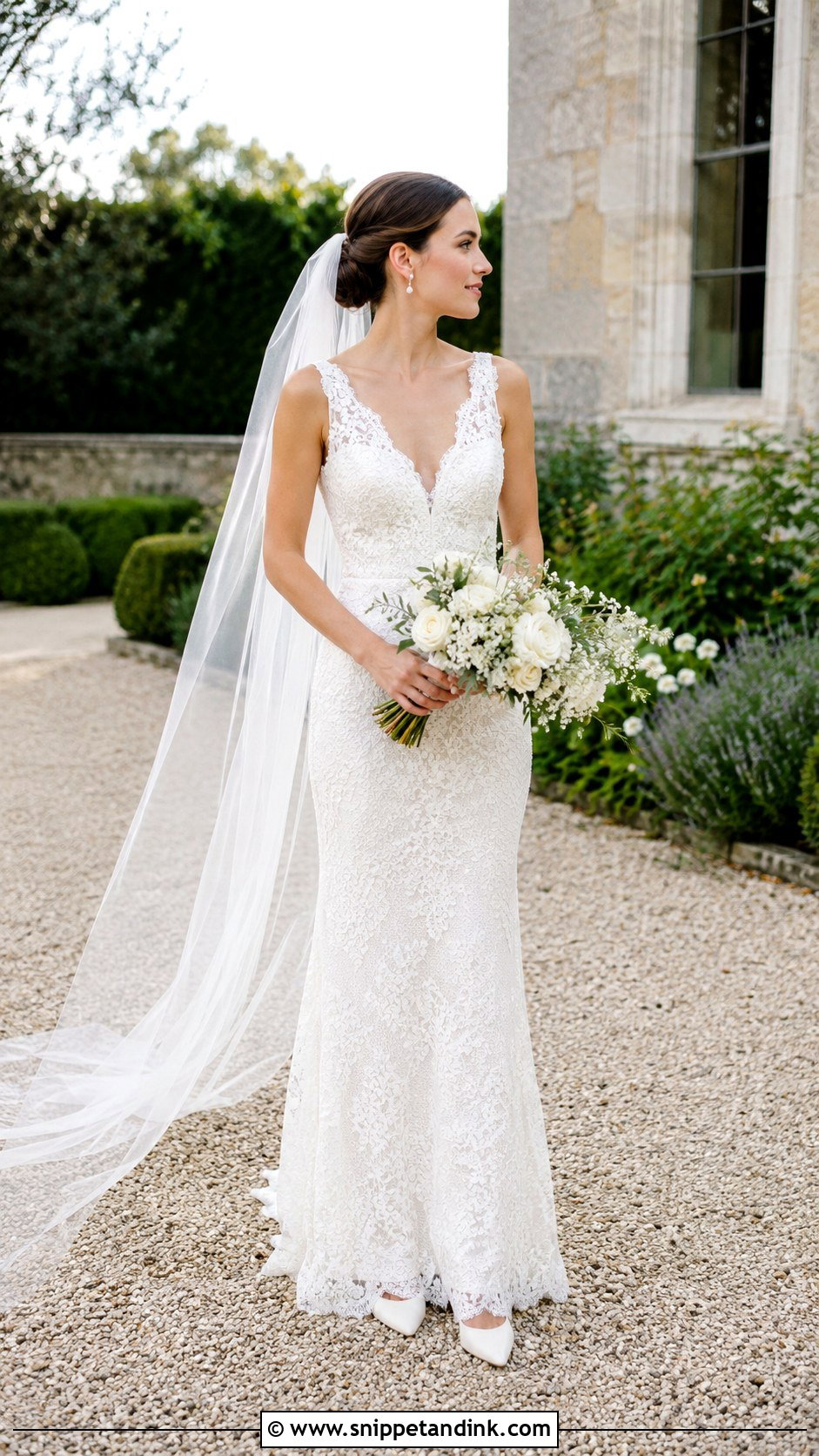
Lace can still look sleek if it’s fine and flat, a Chantilly or a light corded lace rather than a heavy beaded guipure. I check the lining color first. A nude lining under ivory lace changes the whole effect, and a contrasting one looks busy on a minimal shape. A fitted sheath or column keeps it clean, and smooth hair balances the texture of the lace.
Steaming, Bustling and Storing a Gown With Nothing to Hide Behind
Creases and marks show up on smooth fabric in a way they never would on lace, so the wedding morning matters as much as the fitting room did.
The morning of
Hang the dress the night before so the creases from transport can drop out. Steam from the inside on a low setting and keep the head moving. Satin and silk water-spot if the steamer spits, so test it on the inside of the hem first. Never press crepe on its face; it leaves a shine that won’t come out.
The bustle
Even a short train on a sleek gown needs bustling for the reception. Ask your seamstress to mark the hooks with colored thread, and bring the person who will do it on the day to the last fitting so they can practise twice. An under bustle, which tucks the train beneath the skirt, tends to stay invisible on clean satin.
After the wedding
Get the dress to a specialist cleaner within a few weeks. Champagne and sugar spills often look invisible at first, then oxidize into brown marks months later. For storage, wrap it in acid-free tissue inside a breathable cotton bag. Plastic traps moisture and can yellow white fabric over time.
On a Dress This Plain, the Alterations Are the Design
Sleek dresses reward brides who spend their effort on fit instead of decoration. Satin slip, structured column, blazer dress or jumpsuit, the shape and the fabric do the talking, and the shoes, jewelry and hair are there to back them up. Choose one detail to carry the look and keep everything else quiet. Then give your seamstress the time she needs, because on a gown this clean, her work is what people actually see.
You'll Like These Ideas:







Leave a Reply