
“Can you just cover it?” is the request I hear most from brides with a high hairline, and it’s rarely what they end up wearing. A forehead looks bigger mainly when the hair around it is pulled flat and tight, so the answer is softness more than coverage: soft volume, side parts, bangs, waves, and a few loose strands where the hairline meets the temples. The fifteen styles below hold up through a ceremony, a garden reception and a late dance floor. Every one adjusts for length and texture, and several don’t need a fringe at all.
Rather Not Cut a Fringe? Soften the Front Anyway
Many of the softest looks here involve bangs, and that’s a real commitment a few weeks before a wedding. If you’ve never worn them, or disliked them last time, I can get a similar softening effect from hair you already have.
- Move the part. Shifting it two or three centimetres off its usual line puts more hair across one side of the forehead instantly.
- Borrow from the sides. Longer pieces from just behind the temples can be curled forward to fall like a long curtain fringe, with the ends pinned into the updo.
- Twist the front section. A loose rope twist from the part toward the ear covers part of the hairline and anchors a veil or comb too.
- Try a clip-in. Wear it at the trial, then decide. If it looks right, it goes in on the morning and comes out before the after-party.
Any of these looks more natural if you practise at home a couple of times first. Hair gets used to falling in a new direction, and a part you’ve trained for two weeks holds far better than one forced on the morning.
1. Wedding Updo With Curtain Bangs
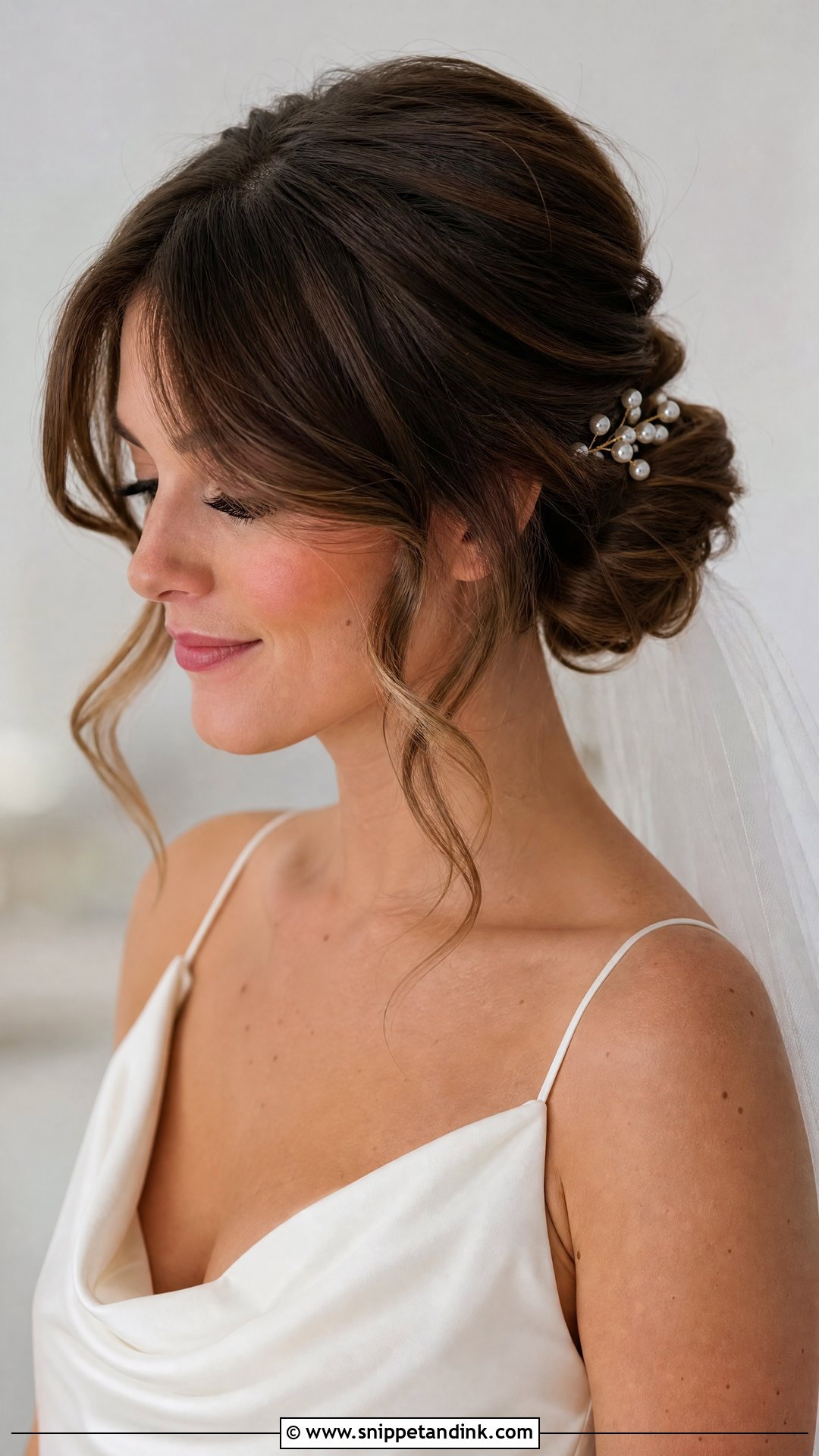
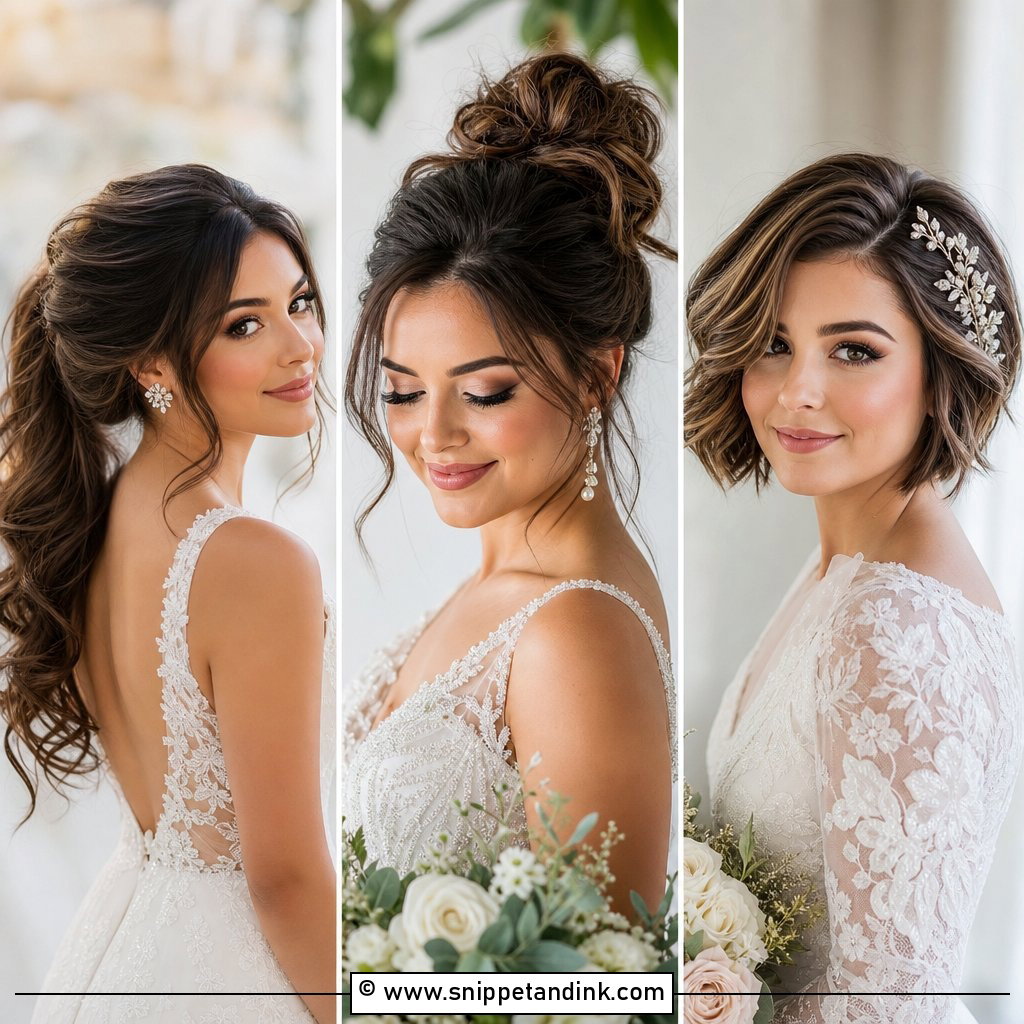
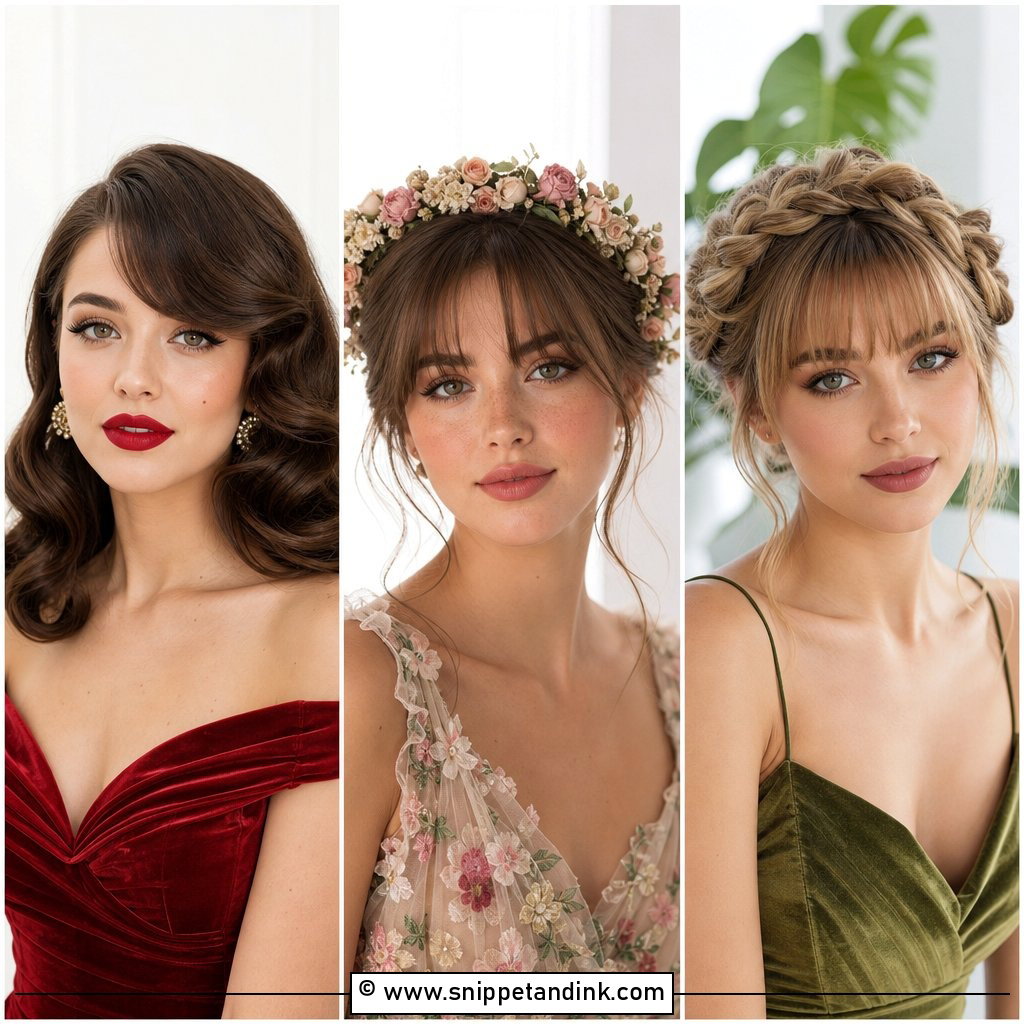
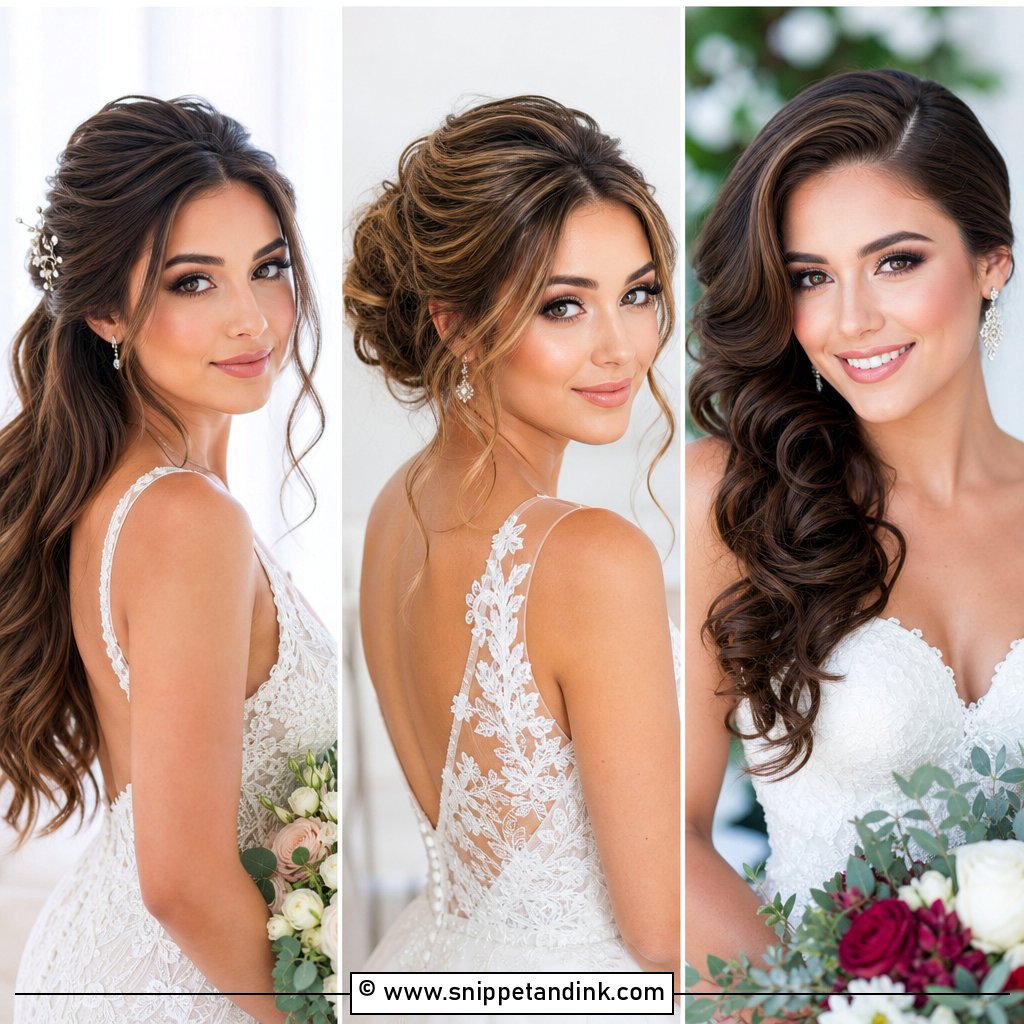
Close-up portraits are where this wedding updo with curtain bangs earns its place. The center part opens the face, and the longer pieces curve around the temples and cheekbones, so the hairline is softened without anything heavy sitting on it. I keep the bun low or mid-height. Higher than that and the whole silhouette stretches upward. Through the crown, I loosen the hair with my fingers after pinning, because a tight pullback shows every millimetre of the hairline.
2. Low Bun With Face Framing Pieces
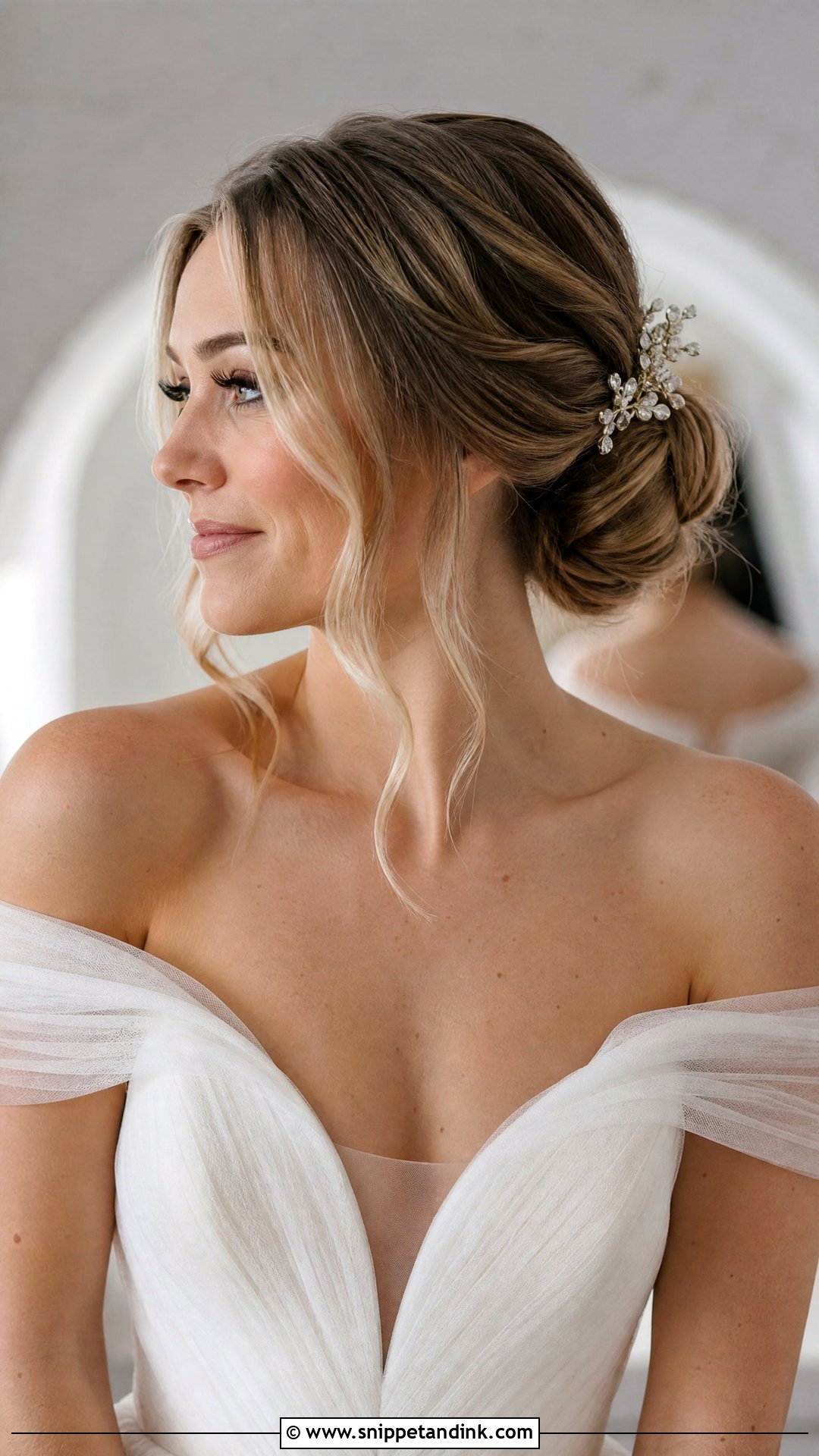
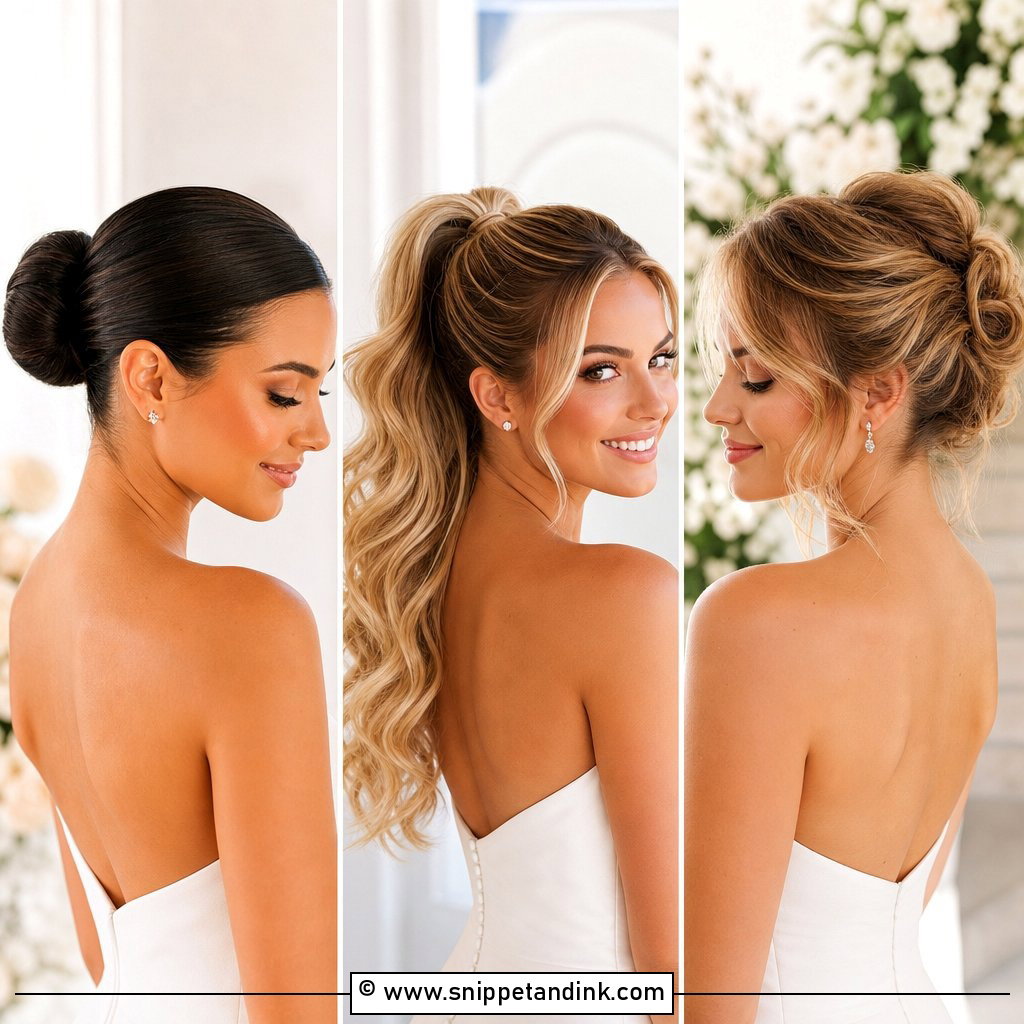
Slim strands are the secret. When I leave pieces out of a low bun, I take them from the temples, the cheekbones and sometimes the jaw, and keep each one narrow; thick chunks look like the bun fell apart. Those strands break up the hairline and move the eye toward your earrings and neckline. A smoother finish suits a formal ballroom, while a little texture handles an outdoor breeze better, since flyaways blend in instead of standing out.
3. Side Swept Wedding Hair
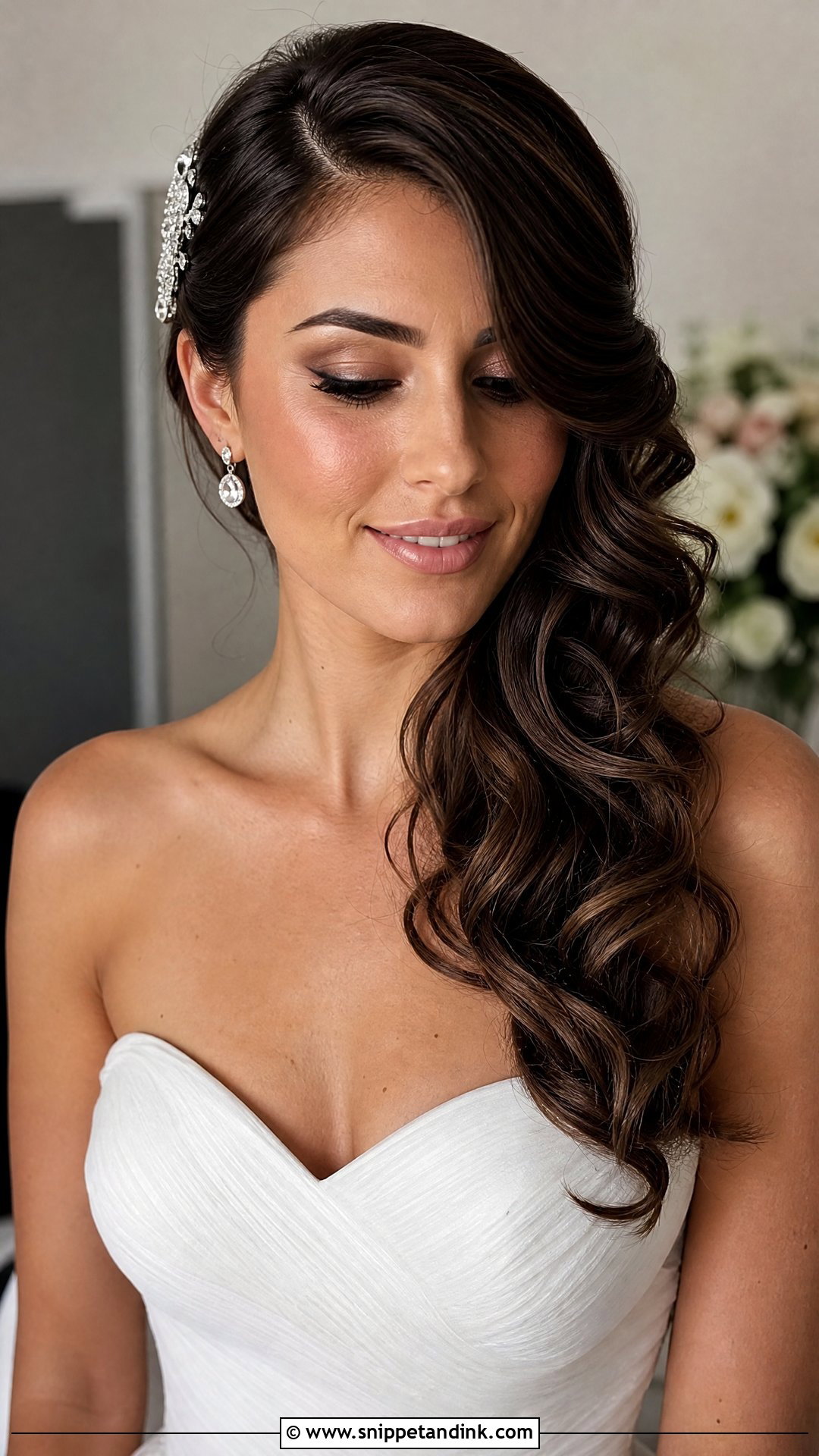
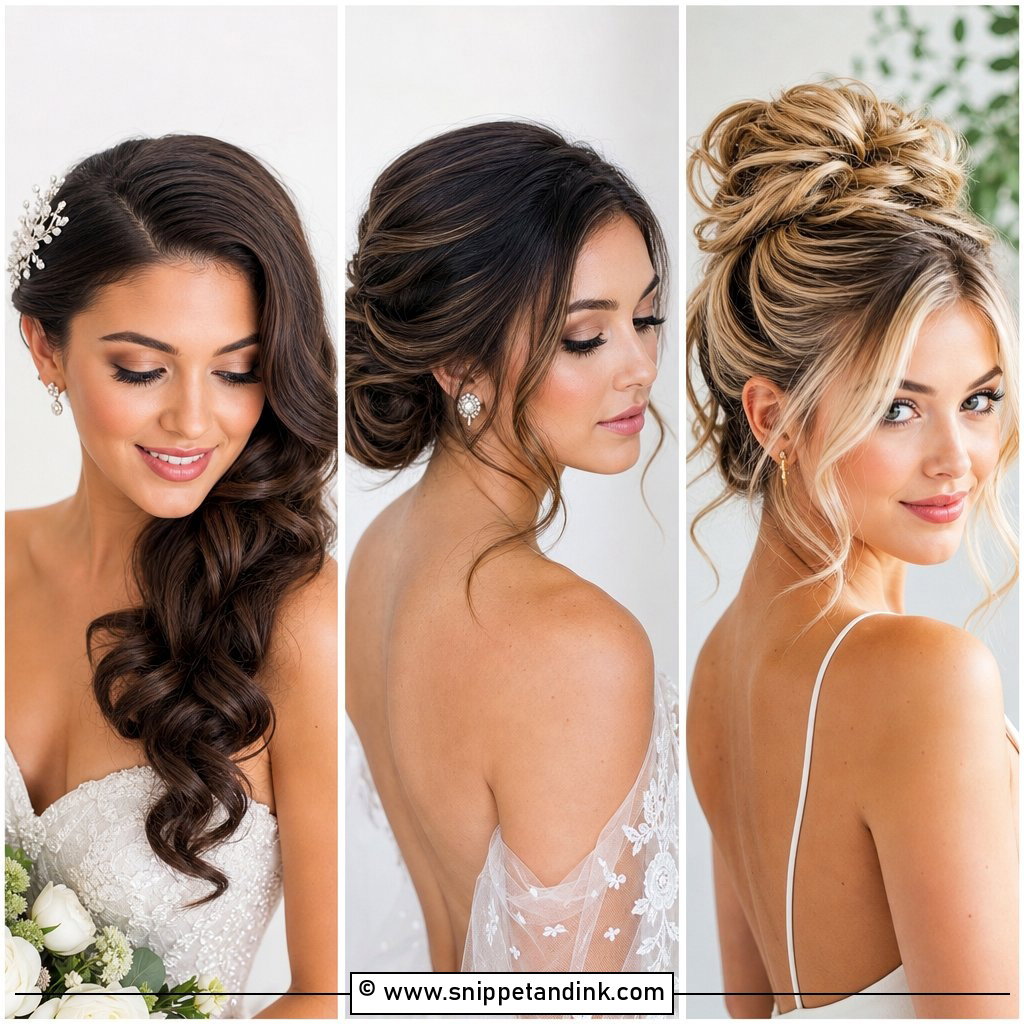
No scissors needed. A deep side part draws a diagonal across the forehead, which visually shortens it, and loose waves over one shoulder add volume on that side. For this to last, the back needs pinned support; I criss-cross grips behind the ear on the heavy side so the waves don’t slide around during the first dance. Keep the front soft. A firm-hold spray on a side sweep looks shiny and rigid in flash photos.
4. Half Up Wedding Hair With Curtain Bangs
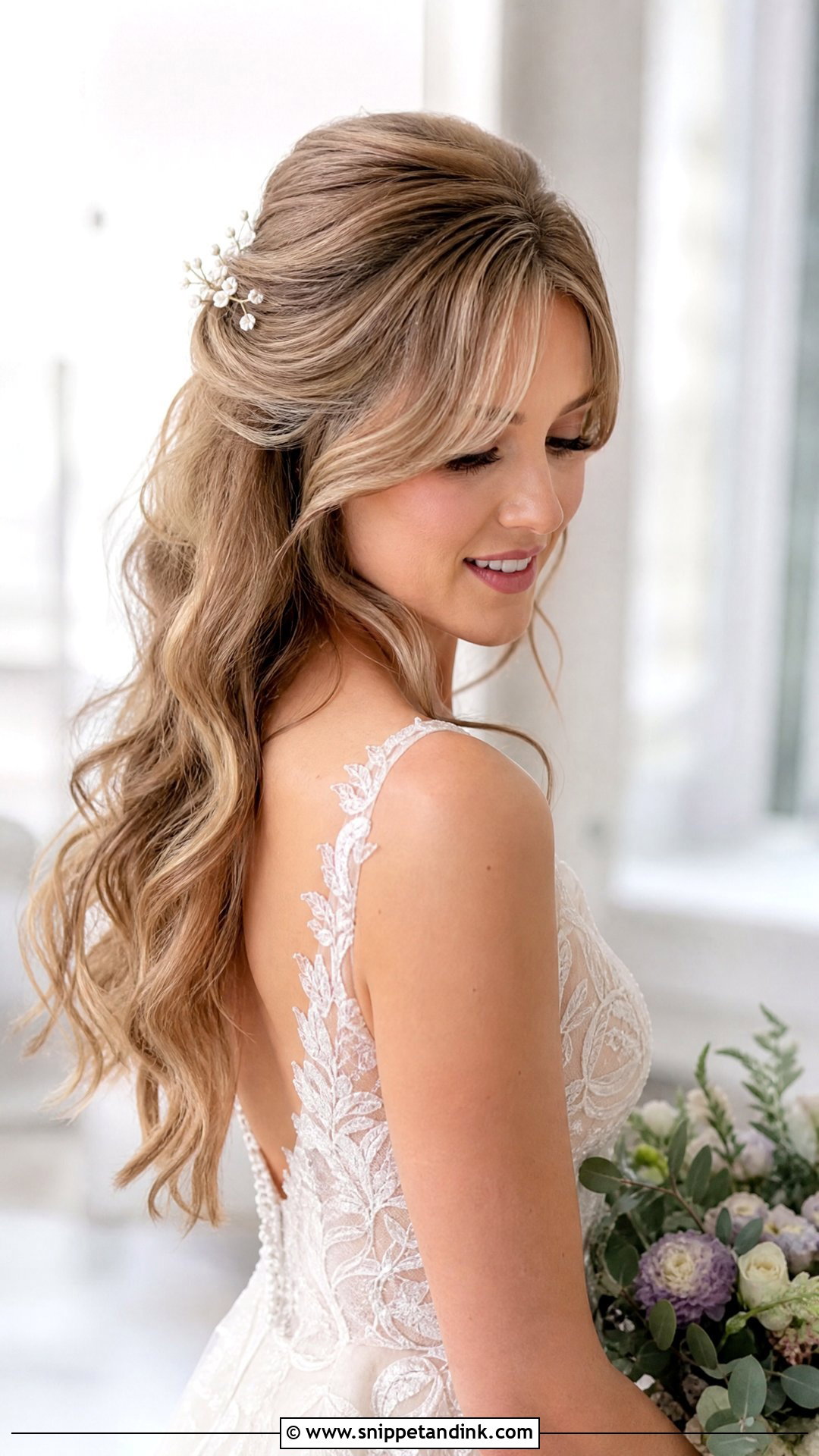
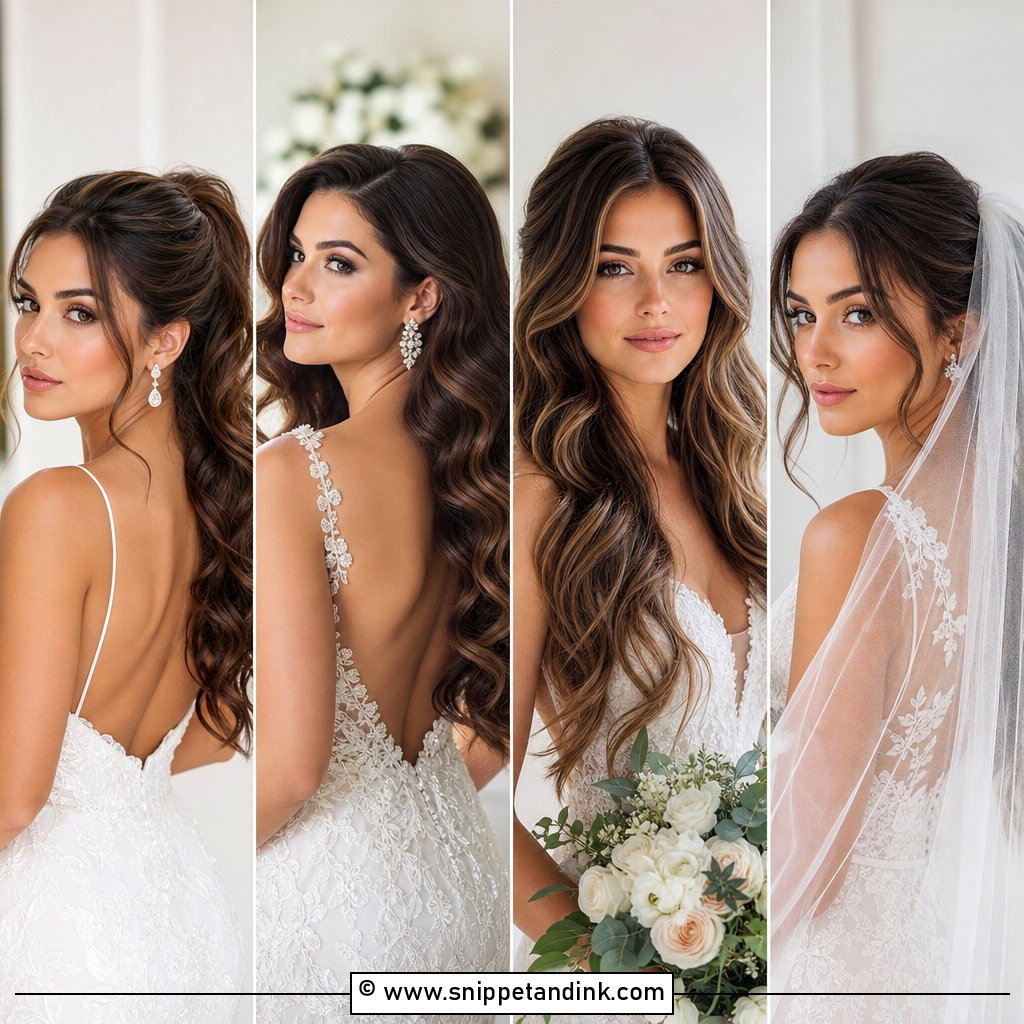
Would you rather have your hair down but still want some lift? Half-up with curtain bangs gives shape at the crown while the fringe frames the eyes and the lower waves stay full. What I avoid is tension on the top section. Pulled tight into a clip, it flattens the crown and exposes the forehead. A soft twist or a small pinned bun with air left in it keeps everything balanced and gives a veil or comb something to grip.
5. Loose Waves With Side Bangs
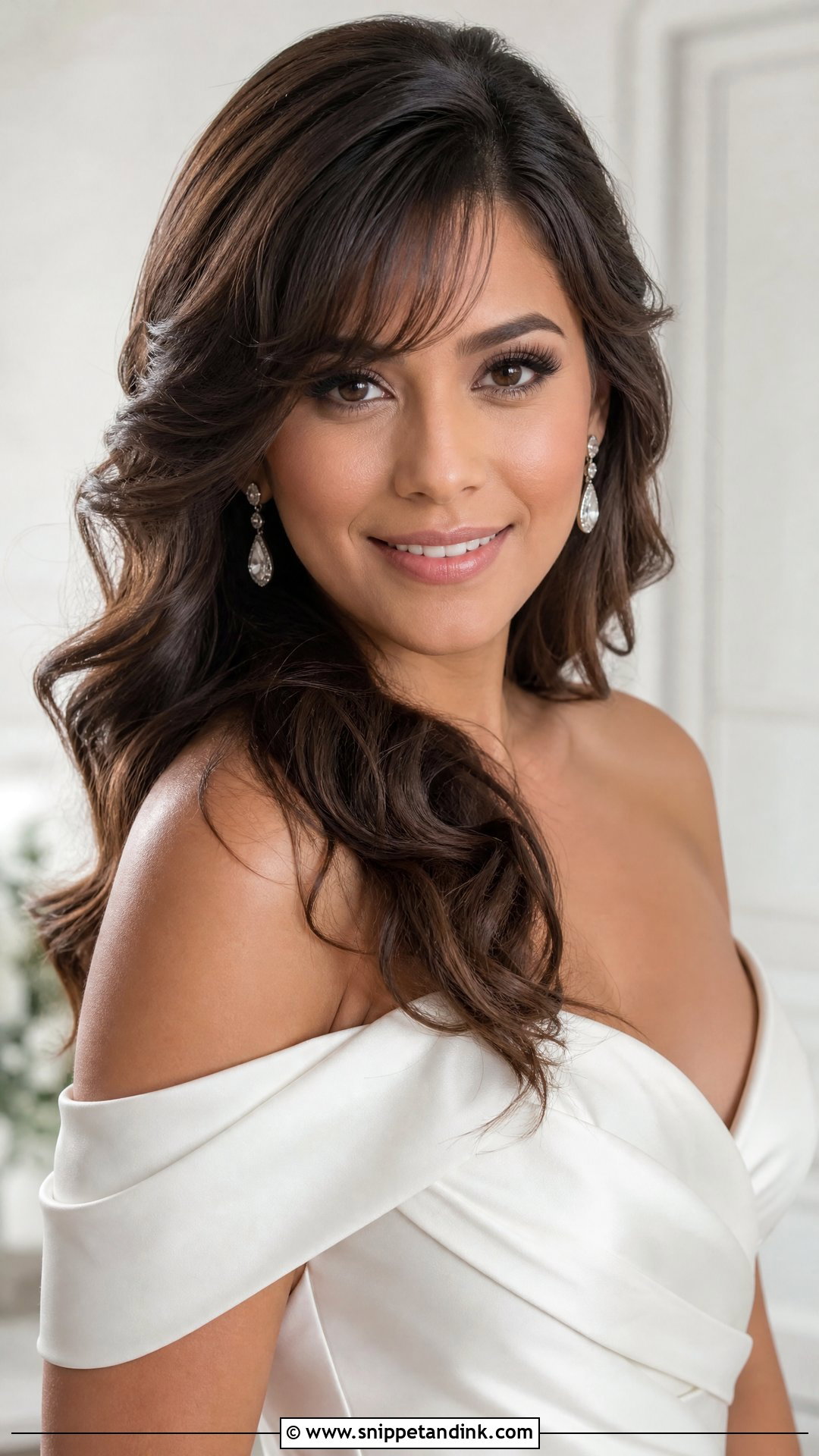
Brides nervous about wearing their hair fully up tend to settle here. The side bangs cover part of the forehead at an angle, and waves widen the face at the cheeks and shoulders. Bangs cut as one thick section look heavy against loose waves, so I blend them into face-framing layers. A light shine spray and a flexible hold keep the waves touchable; you should be able to run a hand through them and have them bounce back.
6. Textured Chignon With Wispy Bangs
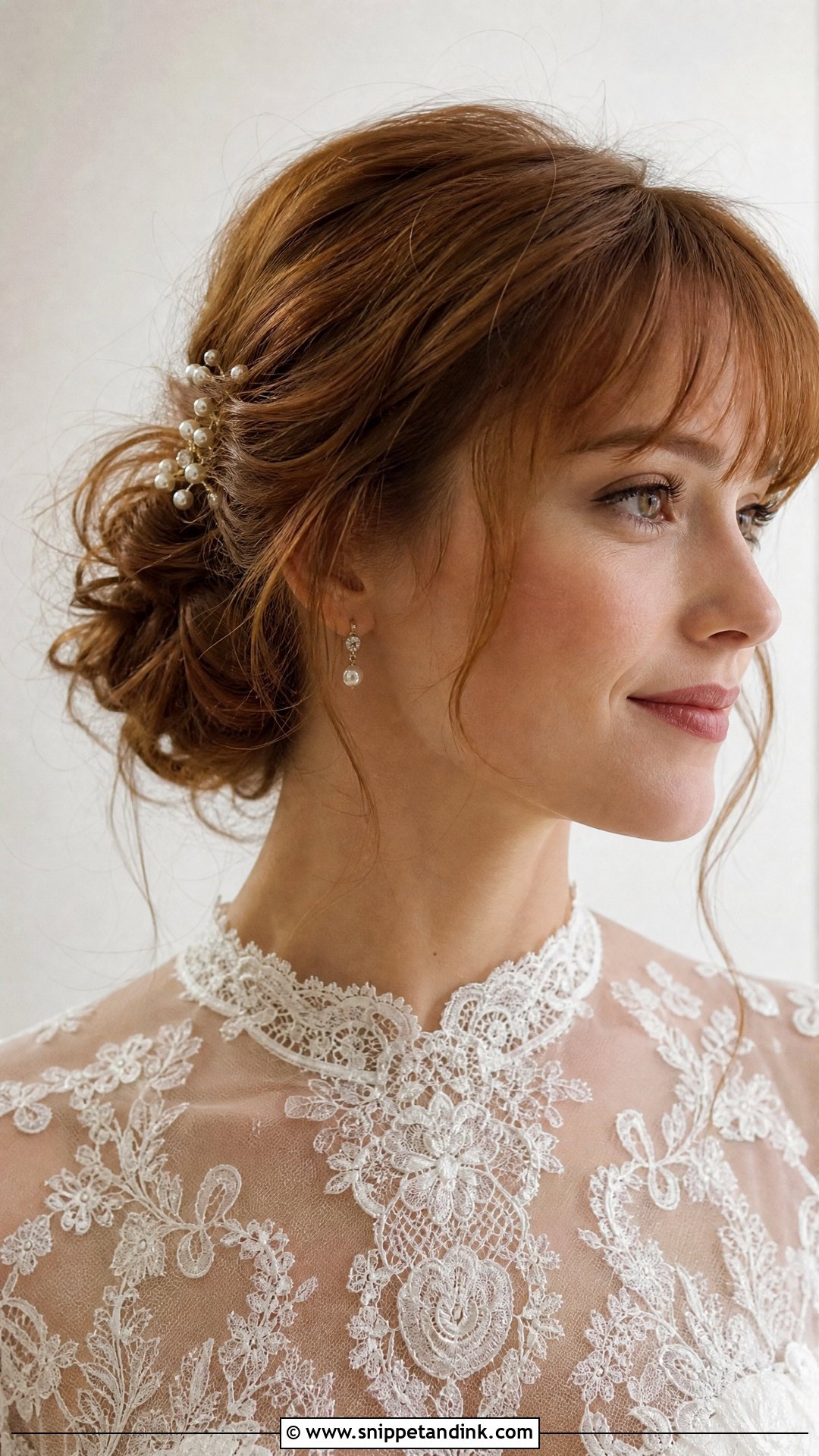
Lace, beading and vintage necklines all suit a low chignon, and adding a wispy fringe makes it kind to a big forehead. A textured chignon with wispy bangs covers lightly without hiding your features. I build texture through the bun with a crimper on the hidden sections underneath, which adds grip and fullness. Keep the bangs slightly separated so they look airy; when they clump, they read as greasy in photos.
7. Bridal Ponytail With Face Framing Layers
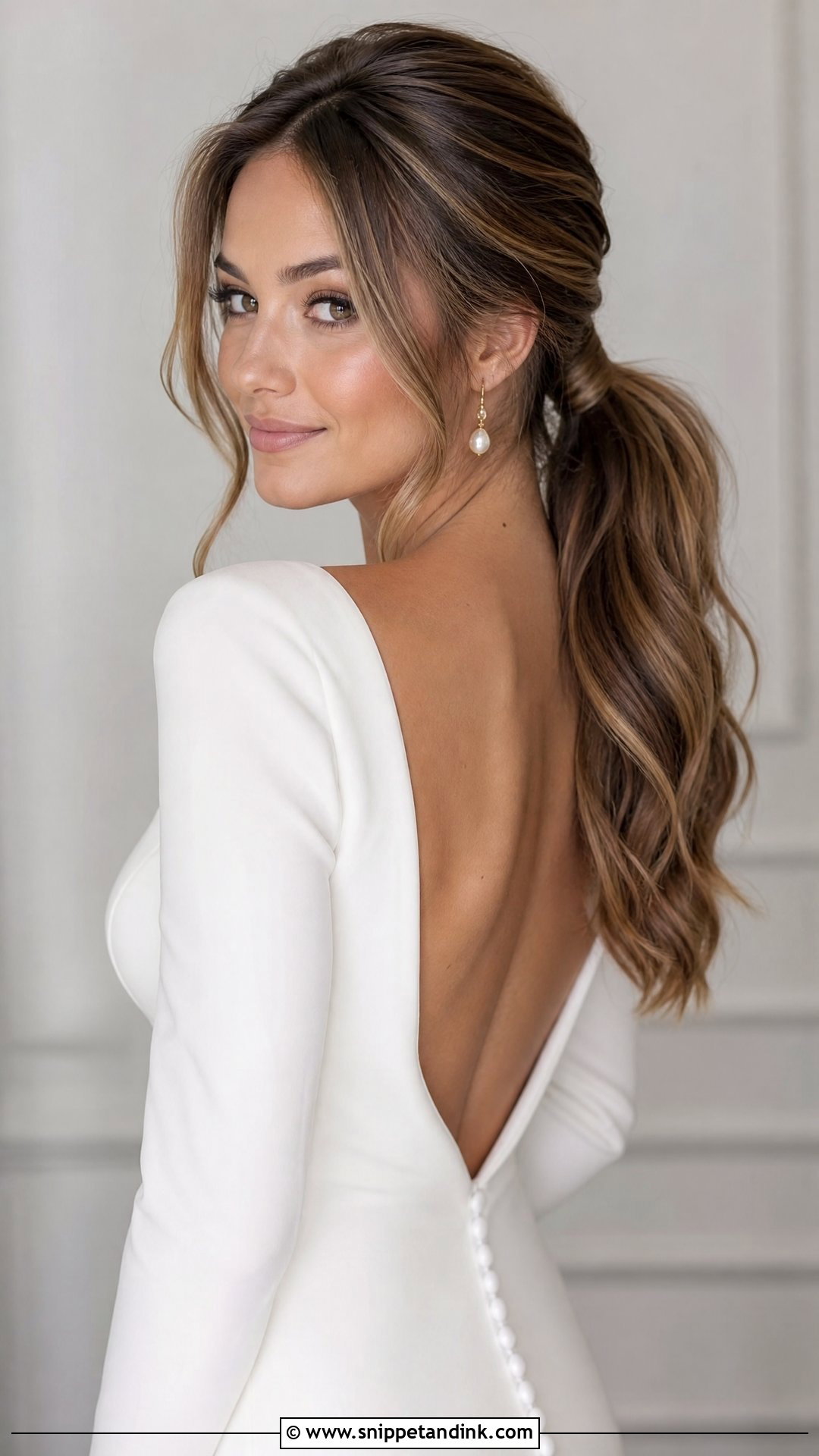
A sleek ponytail is risky with a high forehead, because the usual way of making it sleek is to brush the hairline flat. The trick is soft layers at the front that fall near the cheekbones and jaw. Mid or low height suits most faces better than high. I wrap a piece of hair around the elastic and pin it underneath, and wave the tail so it moves. It’s one of the most secure styles on this list, which matters at a long reception.
8. Messy Bun With Soft Bangs
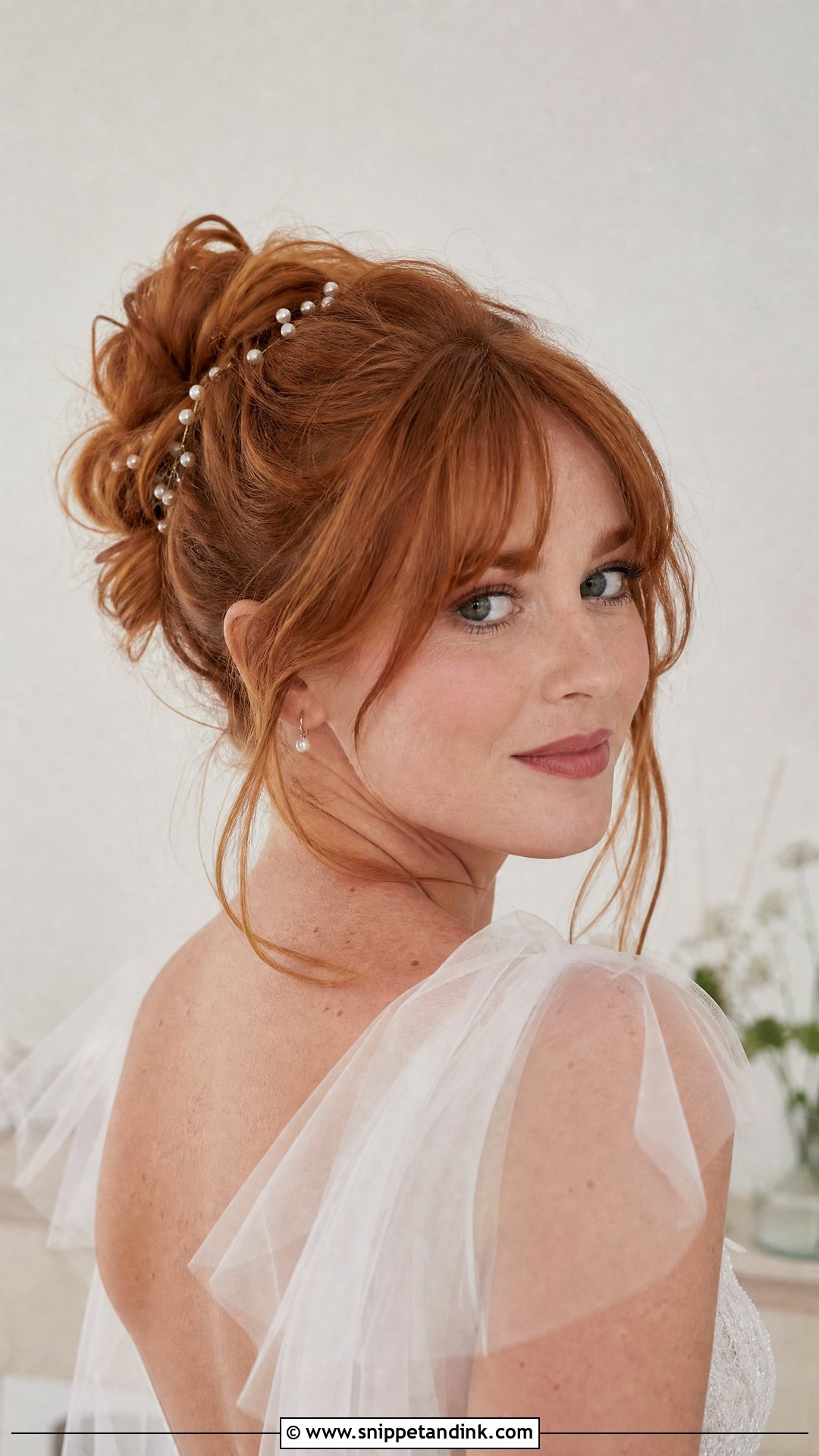
Fine and medium hair do well with this messy bun, since texture creates the impression of more hair than there is. The softness around the forehead keeps the style gentle. Curtain, side-swept or wispy bangs can all work. My caution: messy needs more pins than polished, not fewer. Each loose-looking loop is anchored, otherwise it won’t survive the hugs at the end of the aisle.
9. Hollywood Waves With Deep Side Part
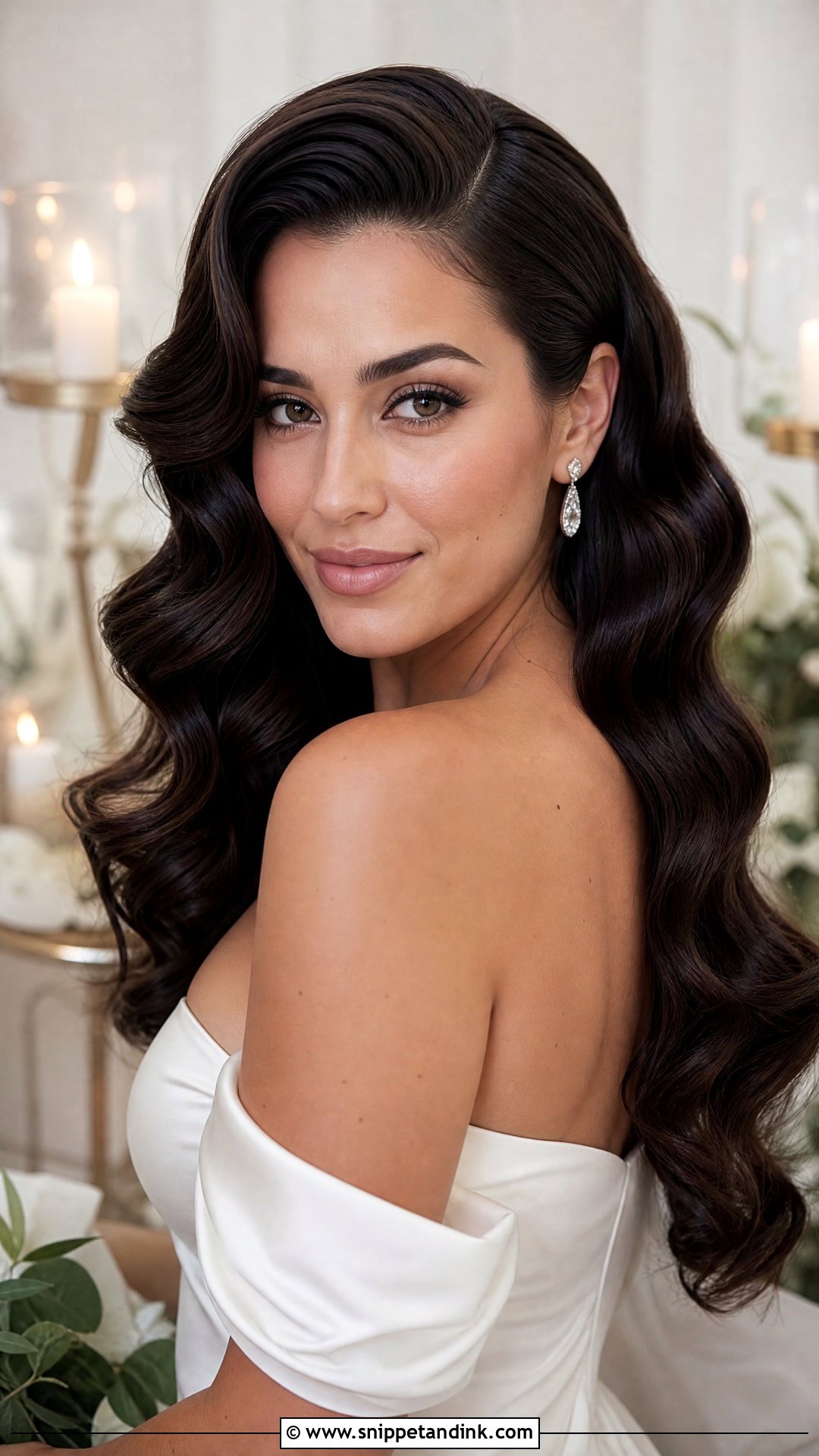
Hollywood waves with a deep side part place more hair over one side of the forehead and add width and shine around the face. Long hair, medium hair and extensions all take this shape well. What I watch is the front wave near the temple: lift it too high and the forehead looks taller, so I keep that first wave low and close to the brow. A strong hold is fine here, as long as the waves are brushed out after setting.
10. Braided Crown Wedding Hair
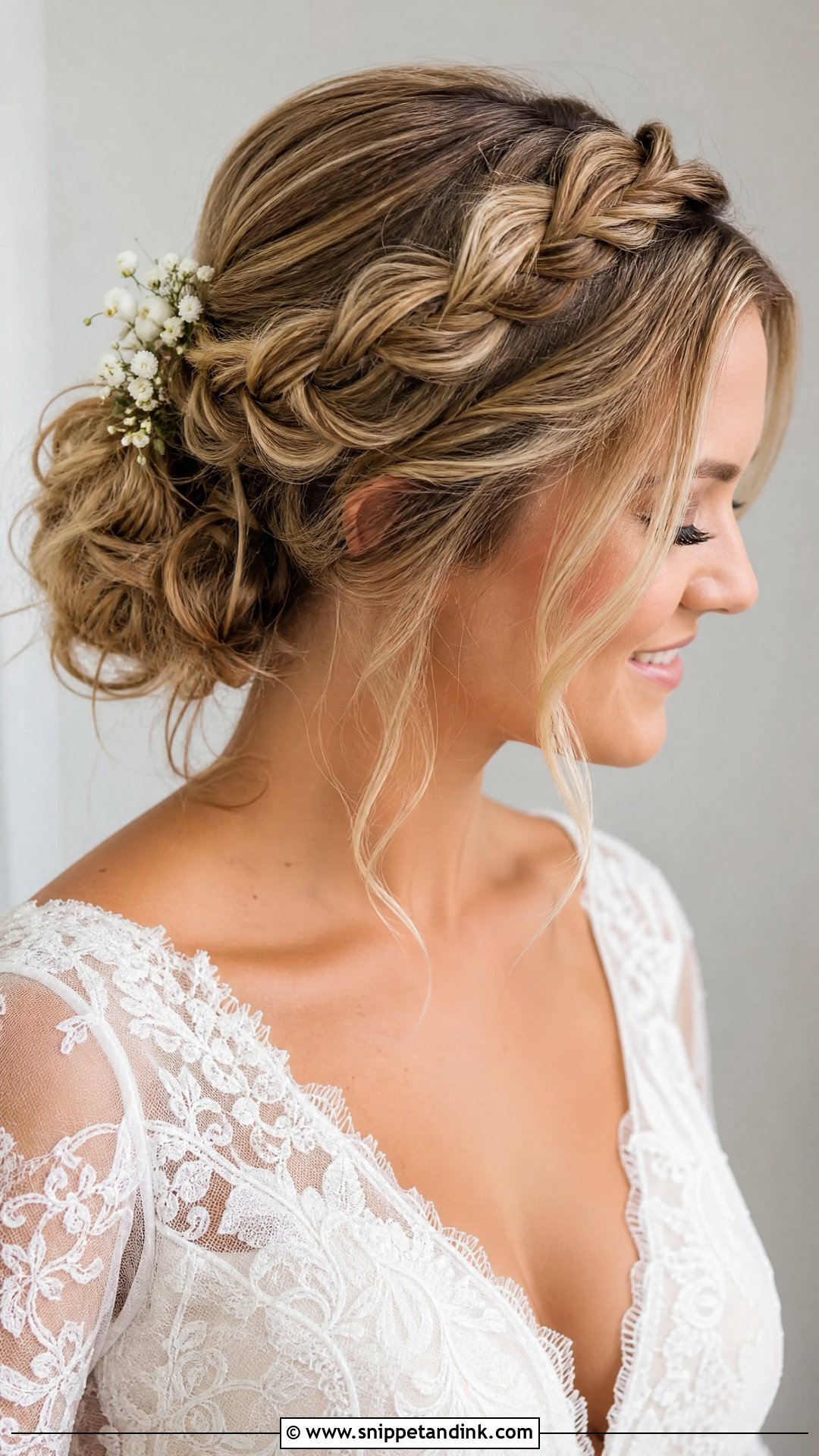
Placement makes or breaks a braided crown on a big forehead. If the braid sits forward and has loose face-framing pieces in front of it, the eye follows the texture instead of measuring the forehead. Set too far back, it does the opposite. Full crown, half crown or a braid leading into a low bun all work. I keep any flowers or pins small near the front; bulky decoration at the hairline adds the height we’re trying to avoid.
11. Long Layered Wedding Hair With Curtain Bangs
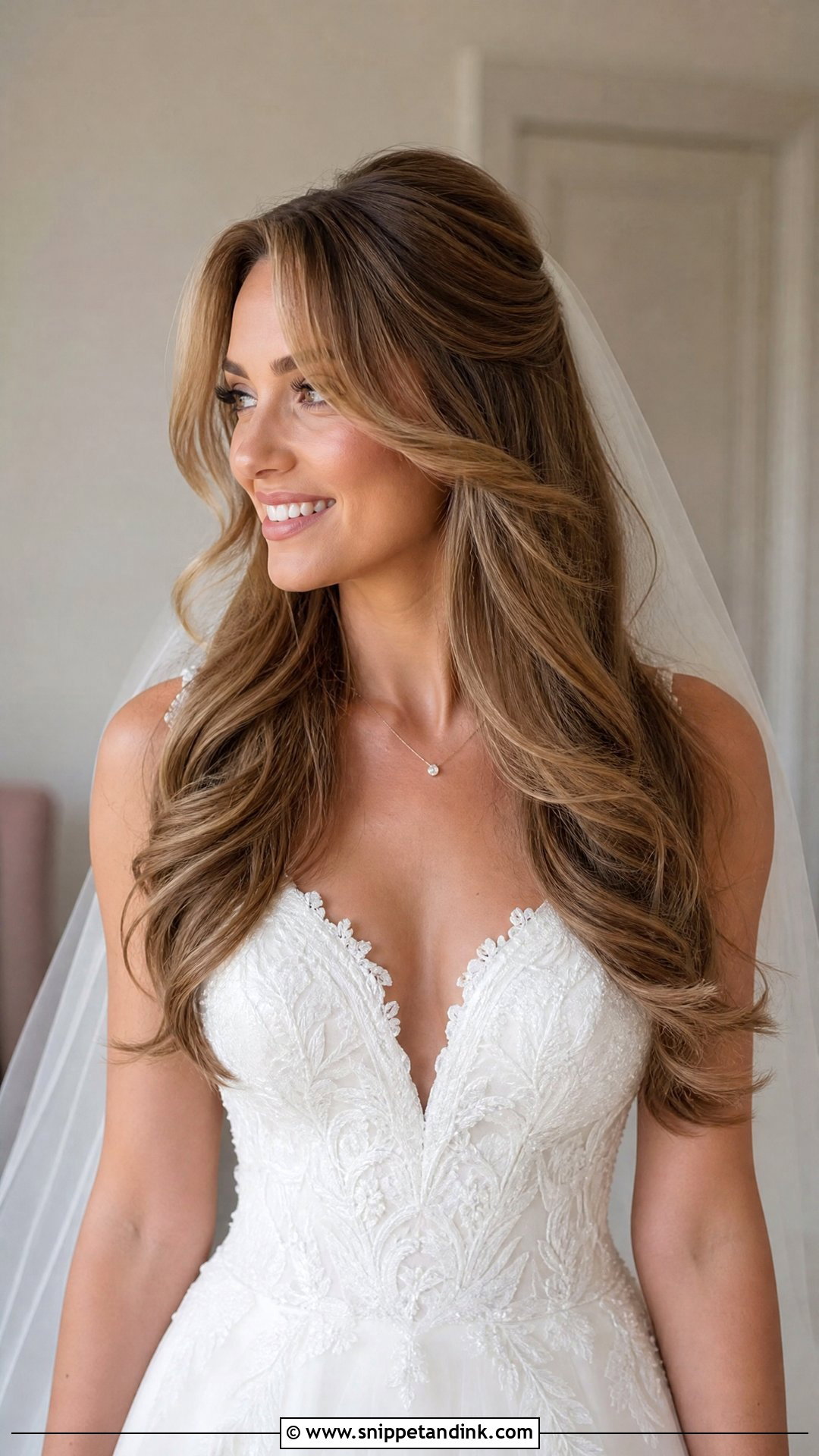
Layers give long hair shape through the lengths, while curtain bangs soften the top of the face, so balance runs from forehead to shoulders. Curls or brushed-out waves make the layers visible; worn straight, they can disappear. Think about the months after the wedding too. Bangs long enough to blend into the sides now will grow out without an awkward stage. A veil can sit at the crown or under the back section.
12. Short Bob Wedding Hair With Side Part
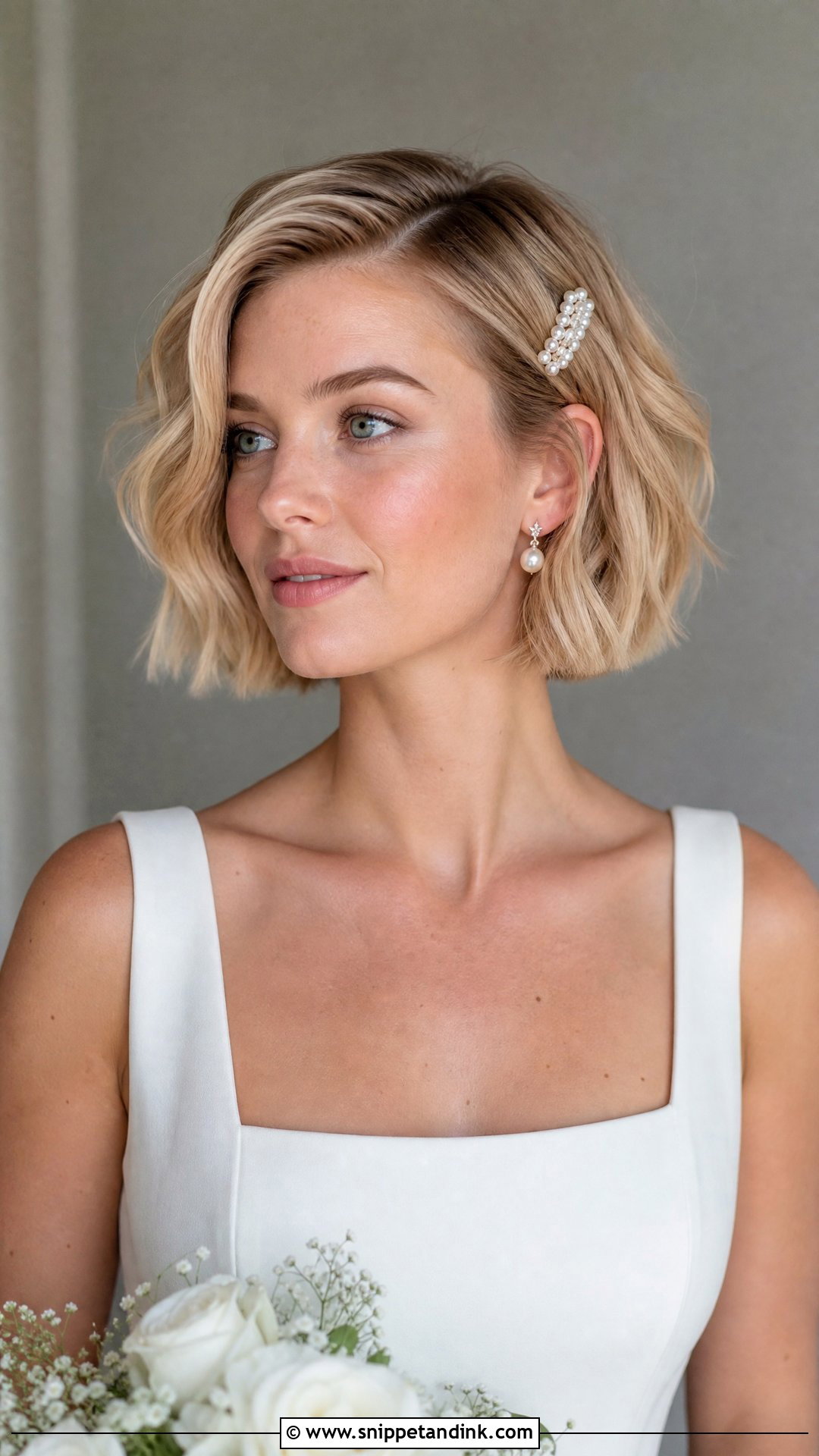
Short bob wedding hair with a side part creates asymmetry, while the length draws focus to the jaw and cheekbones. For a chin-length or slightly longer bob, I tuck one side behind the ear and let the front sweep across the forehead on the other. Polished bends dress it up without an updo. A pearl barrette works, but I place it low on the tucked side; up near the part, it adds height.
13. Curly Wedding Updo With Tendrils
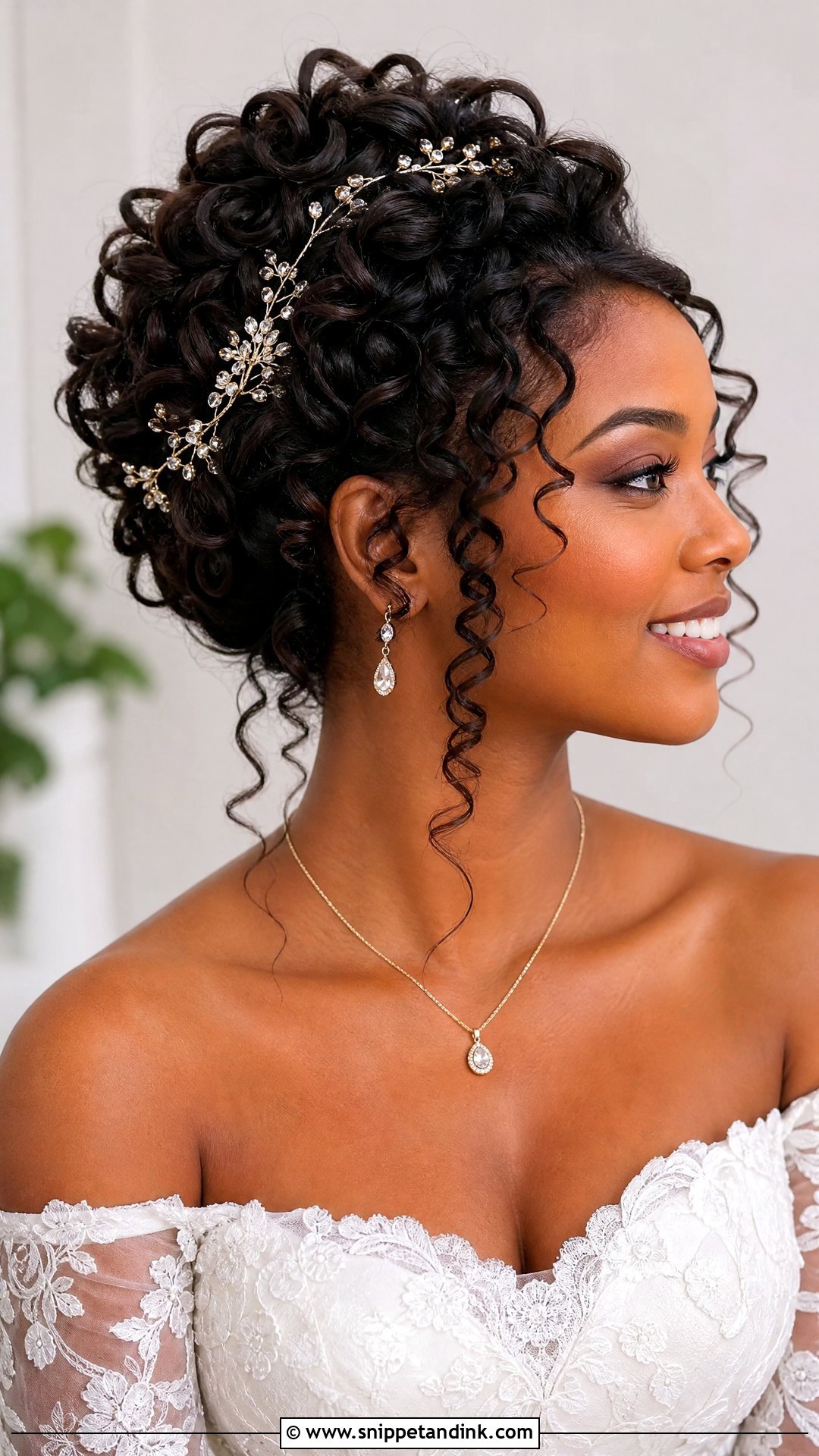
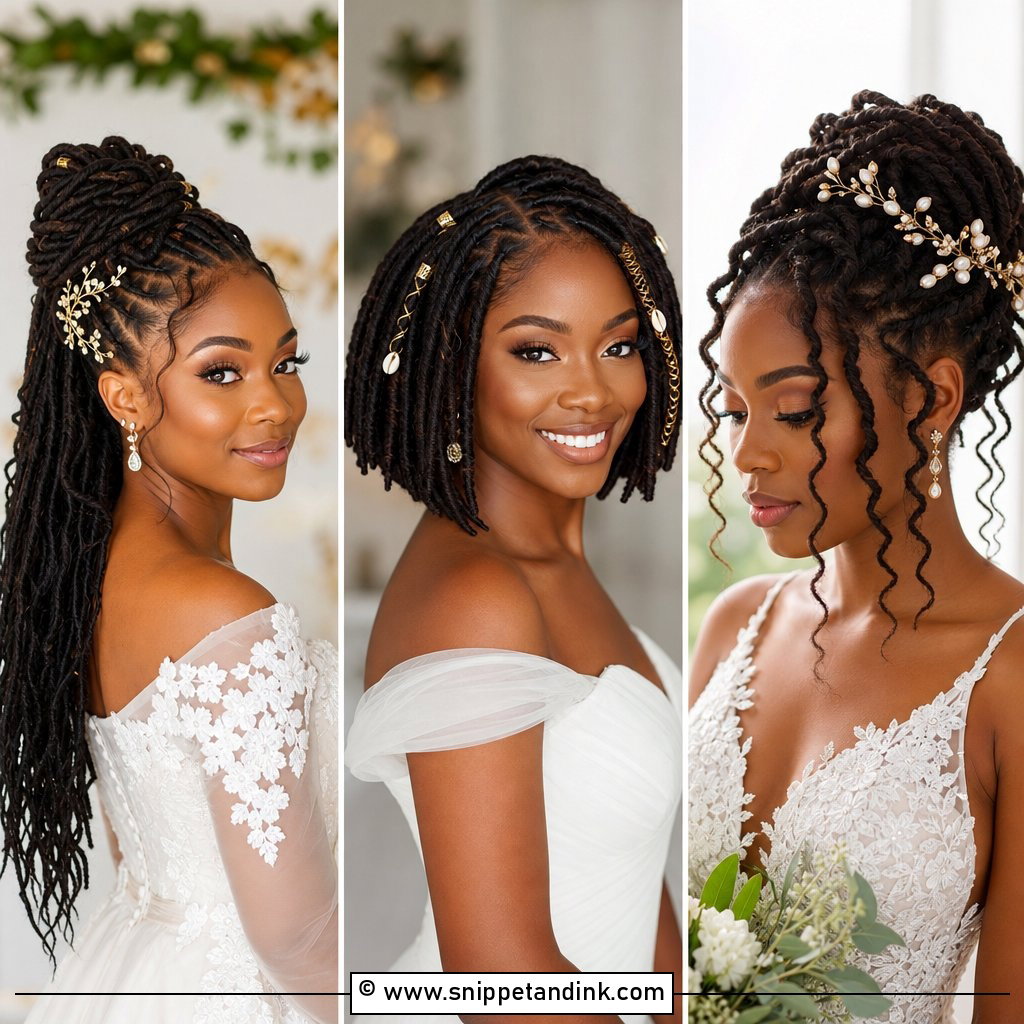
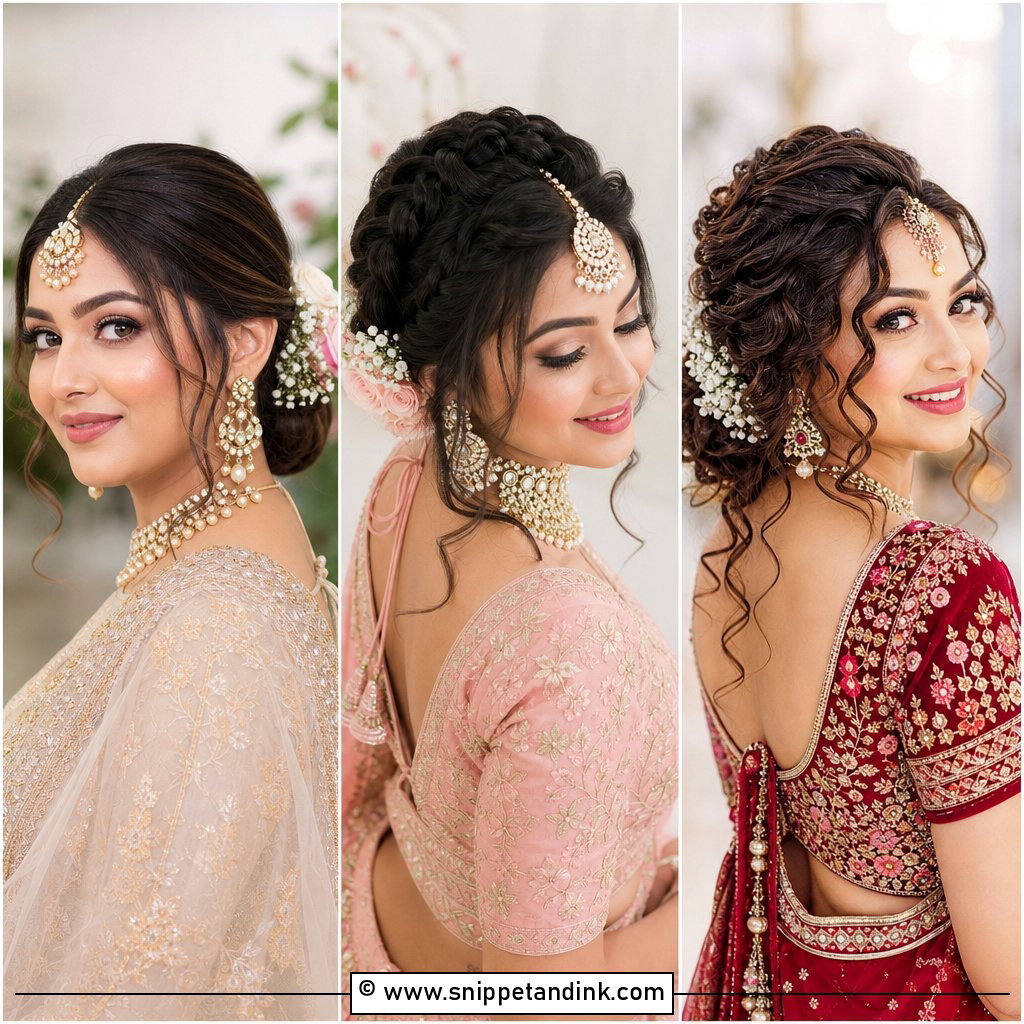
Natural curls, waves or set curls all suit a loose updo with tendrils, because the texture softens the whole outline of the face. The tendrils at the temples break up the forehead. I pin curls loosely and never brush them, which would turn defined curls into frizz. Low or mid placement keeps the face balanced. Use curl-friendly products and avoid touching the tendrils through the day; fingers separate them fast.
14. Veil Wedding Hair With Face Framing Bangs
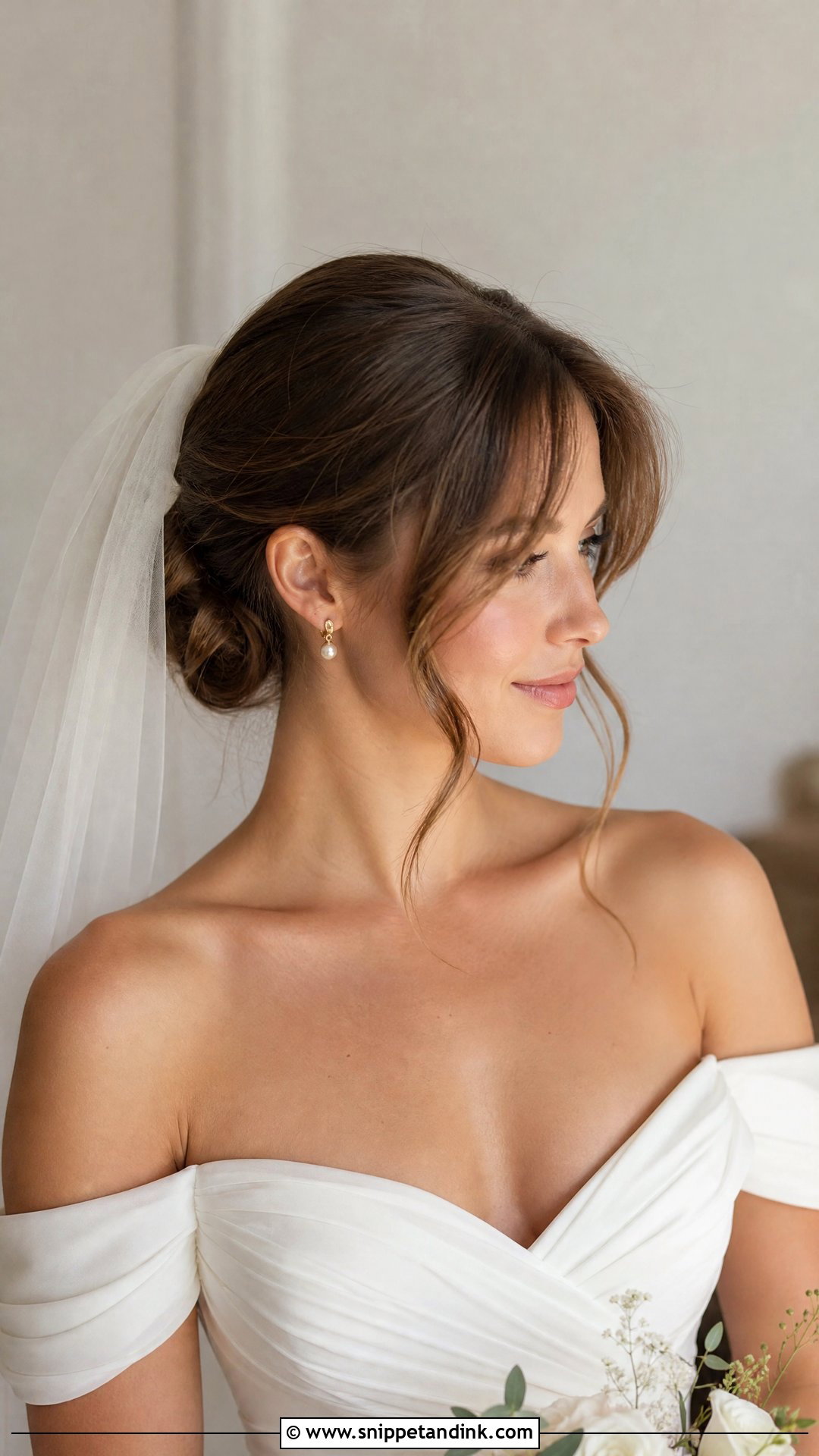
Slicking the front back under a veil is the most common misstep I correct at trials. The bangs soften the forehead, and the veil adds some height, but in a controlled way. Keep a few pieces loose around the temples and cheekbones, whether the base is a low bun, half-up waves or a chignon. The veil comb should sit where it supports the style without pressing the bangs flat; usually that’s under the bun rather than on top of the head.
15. Boho Wedding Hair With Face Framing Waves
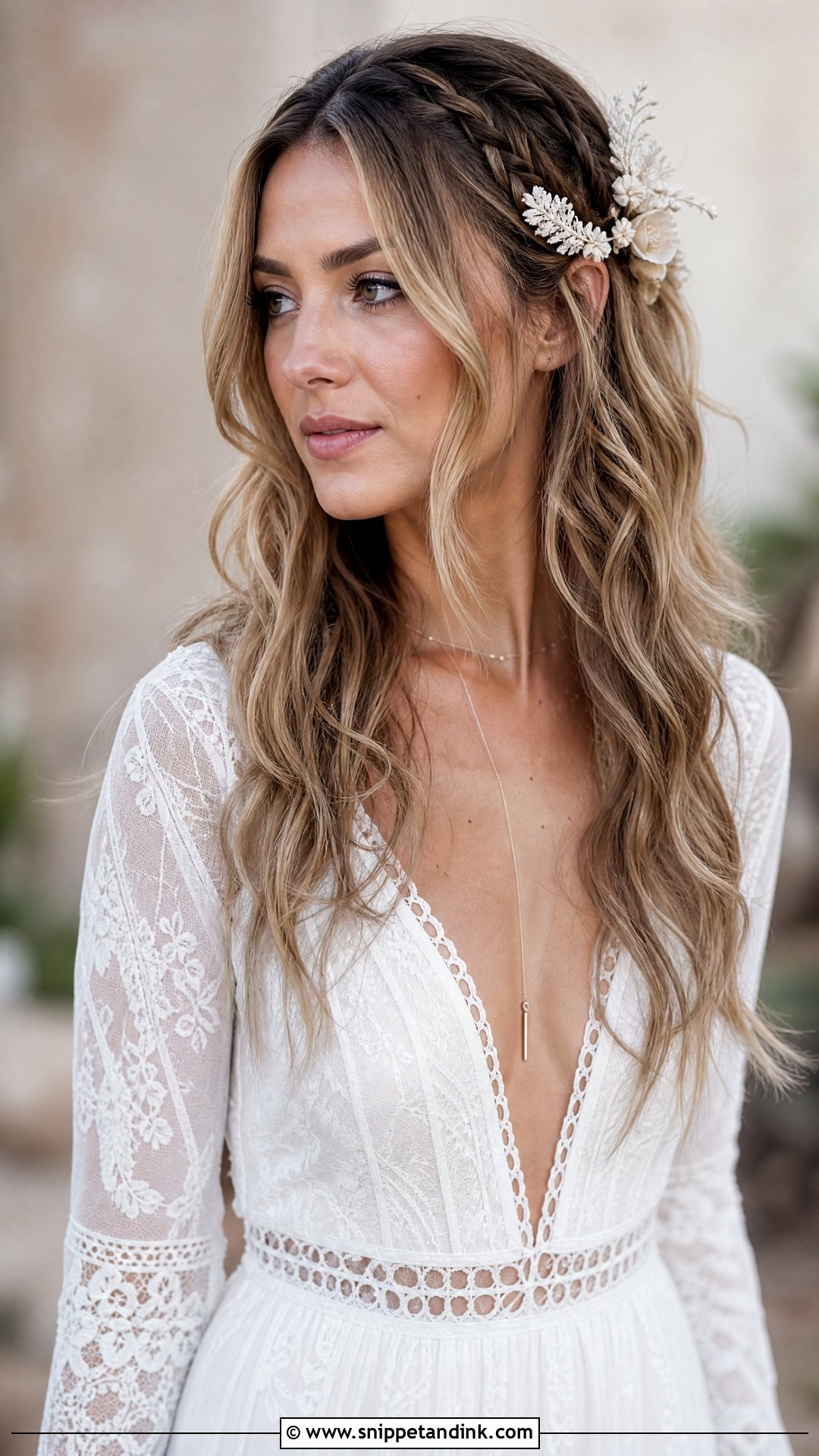
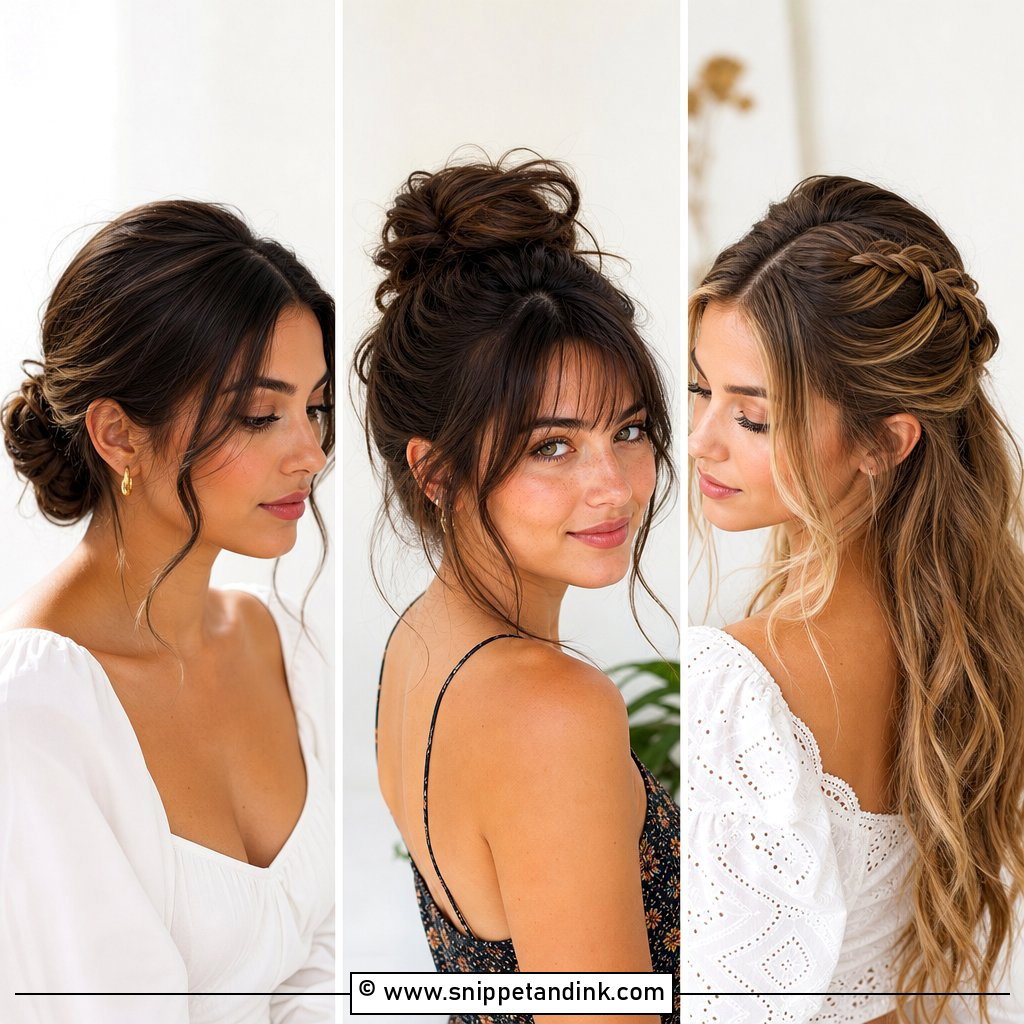
Boho waves are the most forgiving style here and the easiest to customize. The waves soften the face, while shorter front pieces fill some of the space at the hairline. You can wear it down, half-up or with small braids near the crown. I set it with a large barrel and break the curls up with my fingers, so it looks relaxed rather than overly curled. A flower comb or a dainty vine finishes it for a beach, garden or backyard wedding.
Thin Edges and a Receding Hairline Need a Lighter Hand
A big forehead isn’t always about bone structure. For some brides it’s a hairline that has thinned or moved back over time, often from years of tight ponytails, braids or extensions. That changes how I approach every style above.
Tension is the enemy
An updo pinned tightly at the front hurts by the speeches and stresses fragile edges further. I take the tension from the back and sides and leave the front loose. If you feel pulling at the temples during the trial, say so. It only gets worse over twelve hours.
Filling the gaps quietly
- A tinted root powder or hair fibers matched to your color fill sparse patches along the part and temples. They photograph well but can transfer onto a veil, so set them with a light mist of spray.
- If you color your hair, book the root touch-up a week or two before. Fresh regrowth at the hairline makes the forehead read larger in close-ups.
- Clip-in extensions should sit well away from thin areas. Weight hanging near weak edges is exactly what we’re avoiding.
A soft wave falling forward, or a few curls left out at the temples, hides more than a heavy structure could, and you’ll be far more comfortable at the end of the night.
Study the Side Profile, Not Just the Mirror
None of these big forehead wedding hairstyles asks you to change your face. They move attention a little: toward the eyes, the cheekbones, the earrings, the neckline. At your trial, wear a top cut roughly like your dress and ask for photos from the front, the side and the back. The side shot is the one people forget, and it’s where a tight hairline or a too-high bun shows up first. A shifted part or a couple of extra loose pieces usually solves whatever you don’t like.
You'll Like These Ideas:


Leave a Reply