
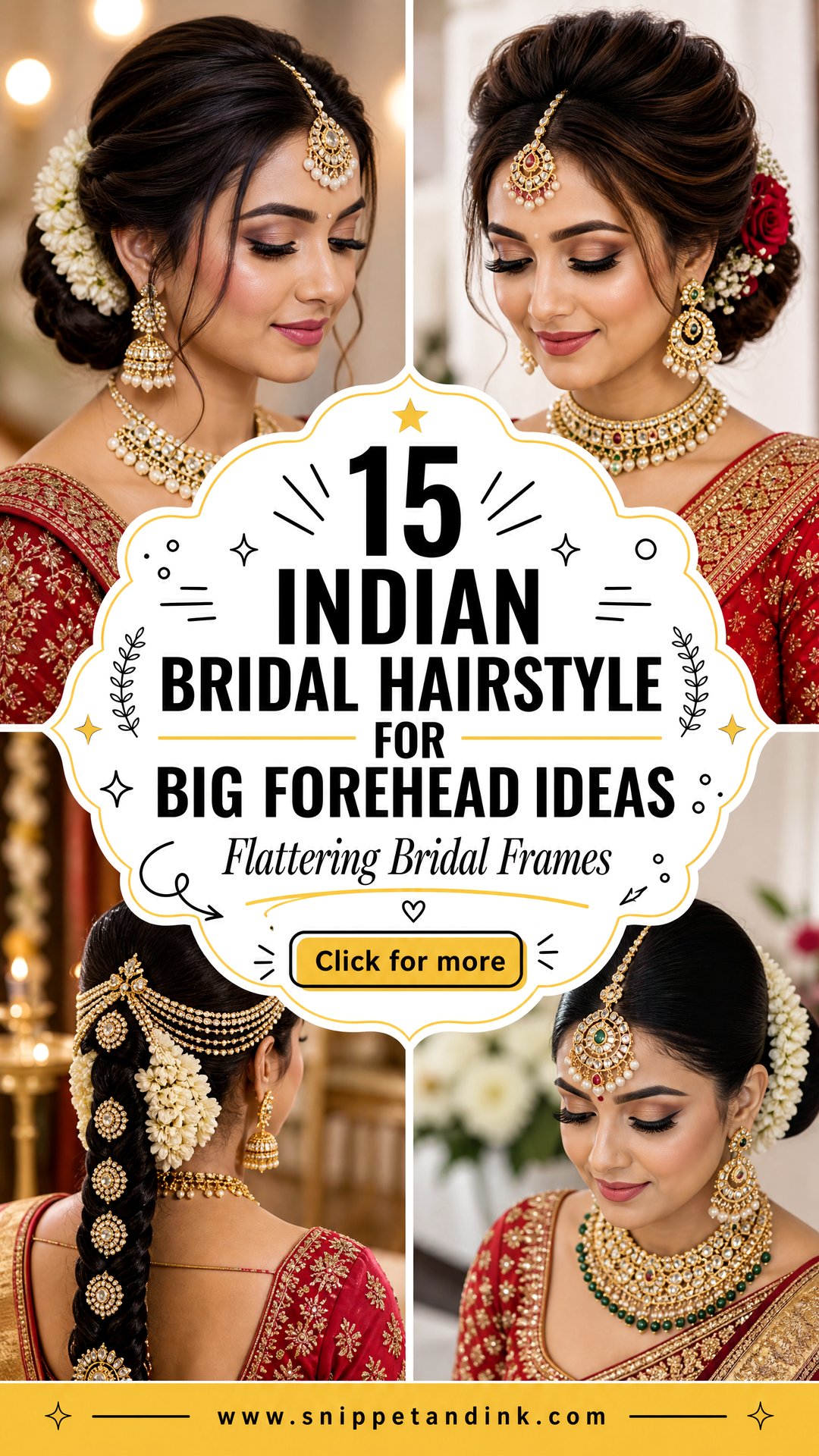
Most brides who mention a big forehead at the consultation expect me to cover it. I rarely do. On an Indian bride the forehead is where the matha patti, the tikka and the dupatta edge all meet, so the real job is balancing that space, not hiding it. A side part, a bit of lift at the roots or two soft front pieces can change the whole proportion of the face. The style also has to hold through pheras, photos, dancing and at least one outfit change, so every look below is built to stay put under jewelry and a pinned dupatta.
Part, Lift and Jewelry Are What I Check First on a Tall Forehead
At the trial I look at three things before I touch a brush. First, the natural part and any cowlick at the front, because forcing a part against the hair’s growth means it springs back by the evening. Second, the hairline itself: a high, straight hairline suits a side part, while a rounded or uneven one often looks softer with a few pieces left loose at the temples.
Third, I put the jewelry on before styling. A matha patti or tikka sits differently depending on how much volume is underneath it, and I’d rather build the hair around the chain than squeeze the chain onto a finished style.
- Check where the tikka drop falls. Between the hairline and the brows, closer to the middle, usually balances the face best.
- Keep crown volume behind the hairline, not on it. Height at the very front makes the face look longer.
- Pull the front gently. A tight pull lifts the brows and exposes more skin than you started with.
- Decide on bangs or clip-ins at least a month ahead, not the week of the wedding.
1. Indian Bridal Bun With Matha Patti
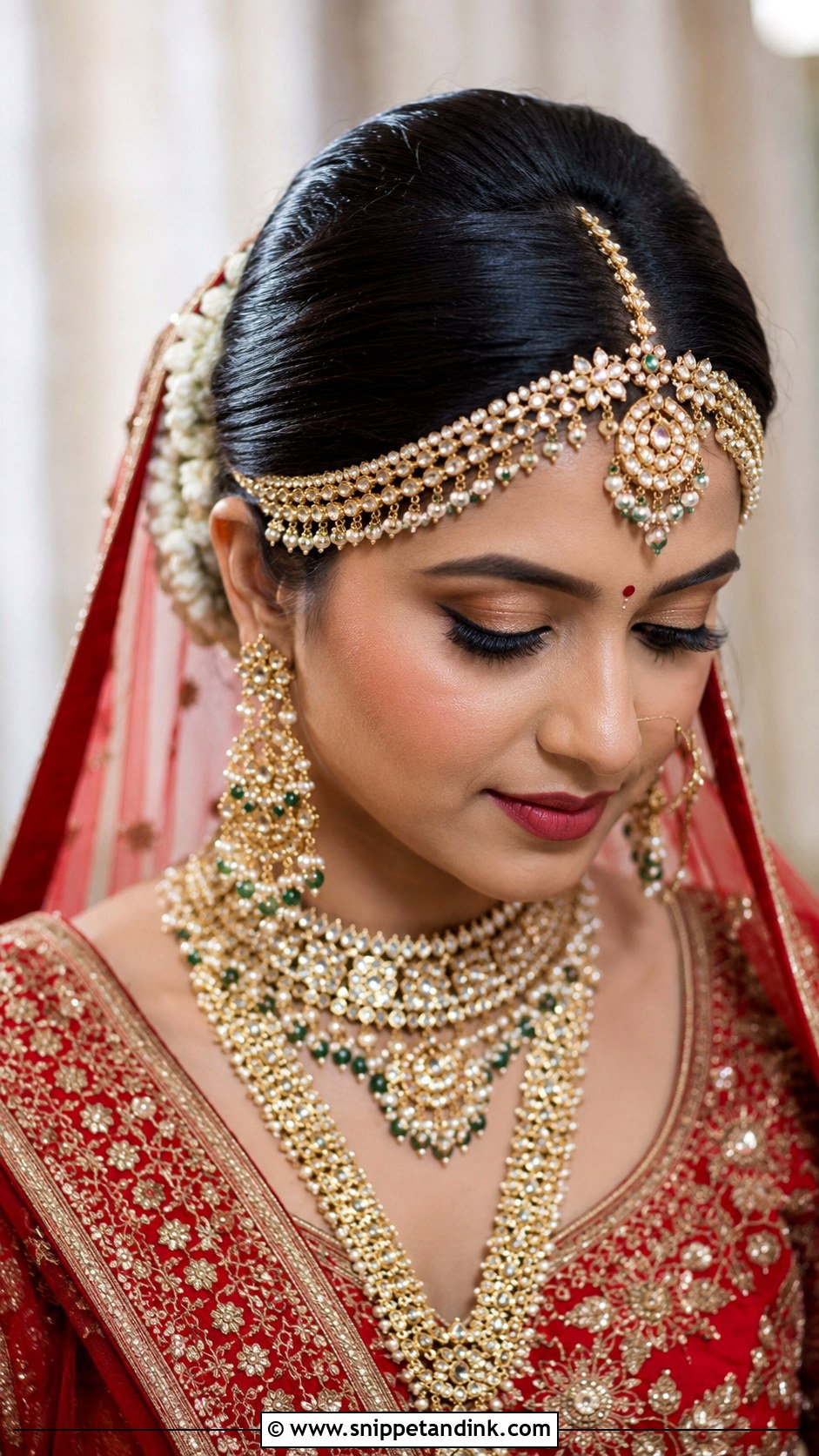
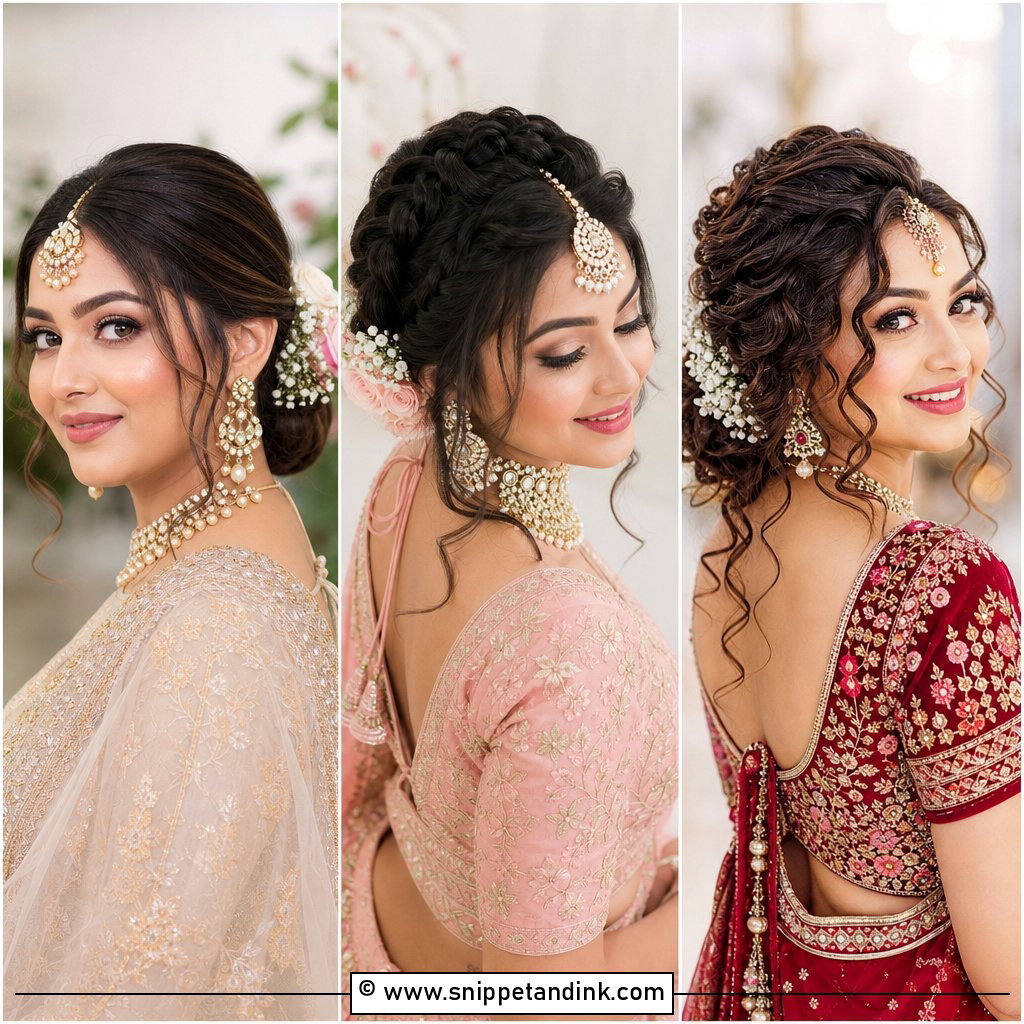
With a matha patti, the jewelry does half my work: the chain runs along the hairline and the centre drop sits right where the forehead feels widest. I keep a middle part here but never a flat one. I backcomb the crown lightly and smooth the sides without dragging the hairline back, because a tight pull lifts the brows and makes the forehead look taller. The Indian bridal bun with matha patti sits high enough to anchor the dupatta, which goes over it with a few U pins hidden in the bun itself.
2. Indian Bridal Low Bun With Maang Tikka
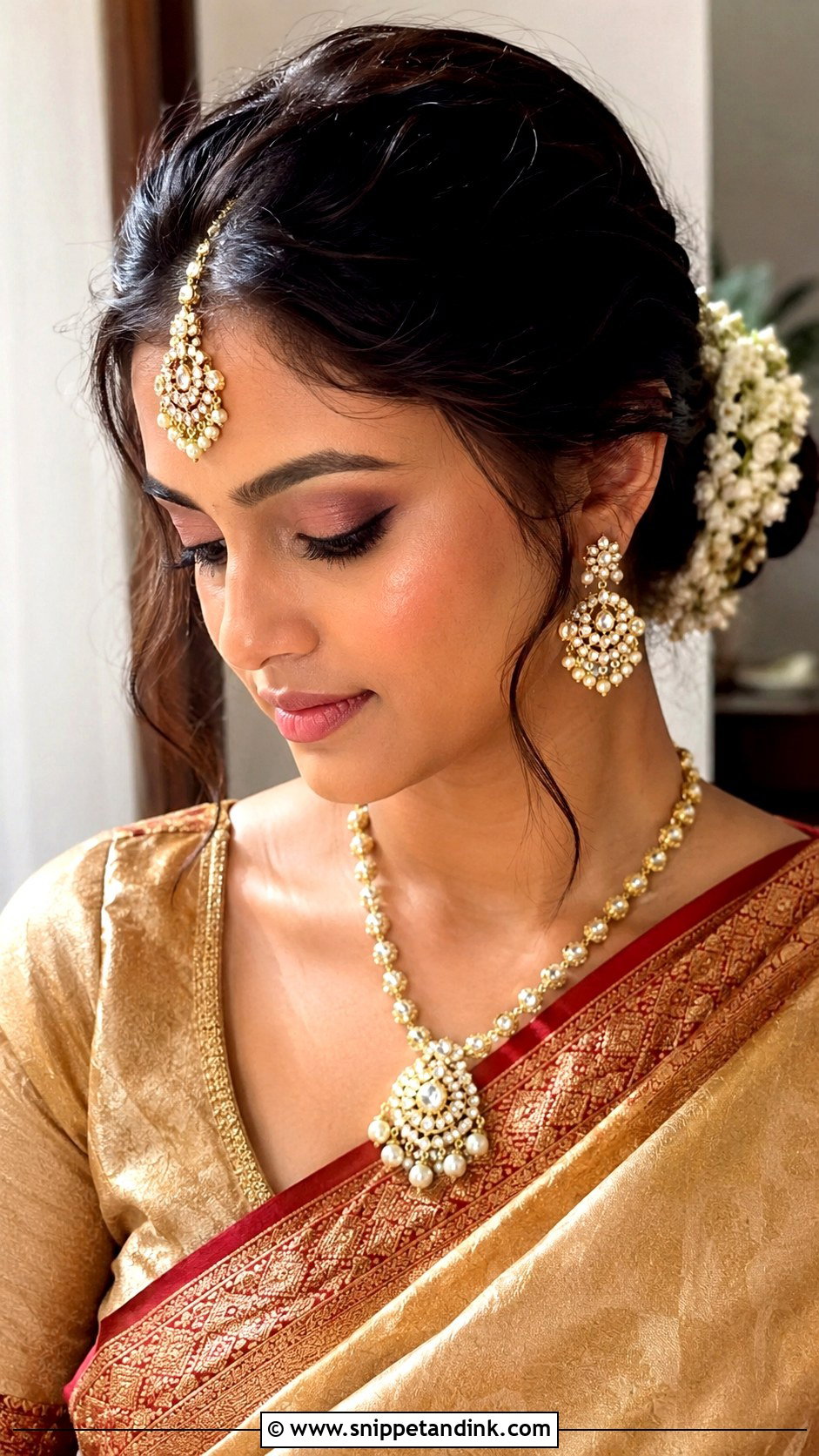
Where the tikka lands matters more than the bun. Hang it too high and it floats near the hairline, leaving a bare band of skin between the drop and the brows. I shorten the chain or re-pin it so the pendant sits a finger-width or so down the forehead. A low bun with a maang tikka also takes the weight of a heavy dupatta well, which is why I like it for long pheras. Leave the temples a little soft rather than glued flat.
3. Indian Bridal Side Part Bun
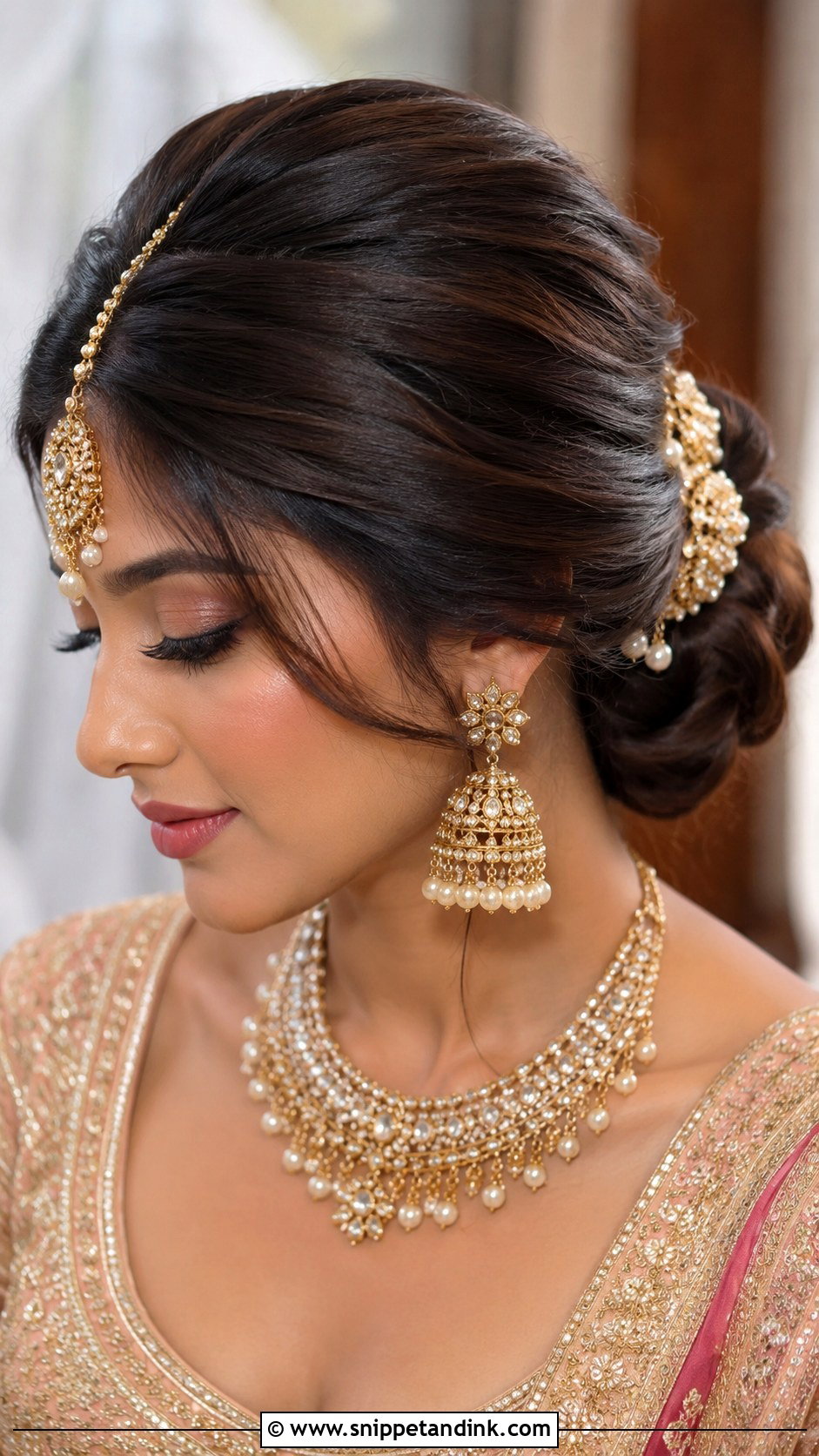
A centre part splits the forehead into two equal open panels. Move the part to the side and you get a diagonal line instead, which the eye reads as narrower. That’s the whole trick of the side part bun. I sweep a little of the heavier side forward near the hairline, then set the bun low at the nape or just above it so the dupatta has something firm to pin into. A passa on the heavy side looks right here, since it follows the line of the part.
4. Indian Bridal Bun With Side Swept Front
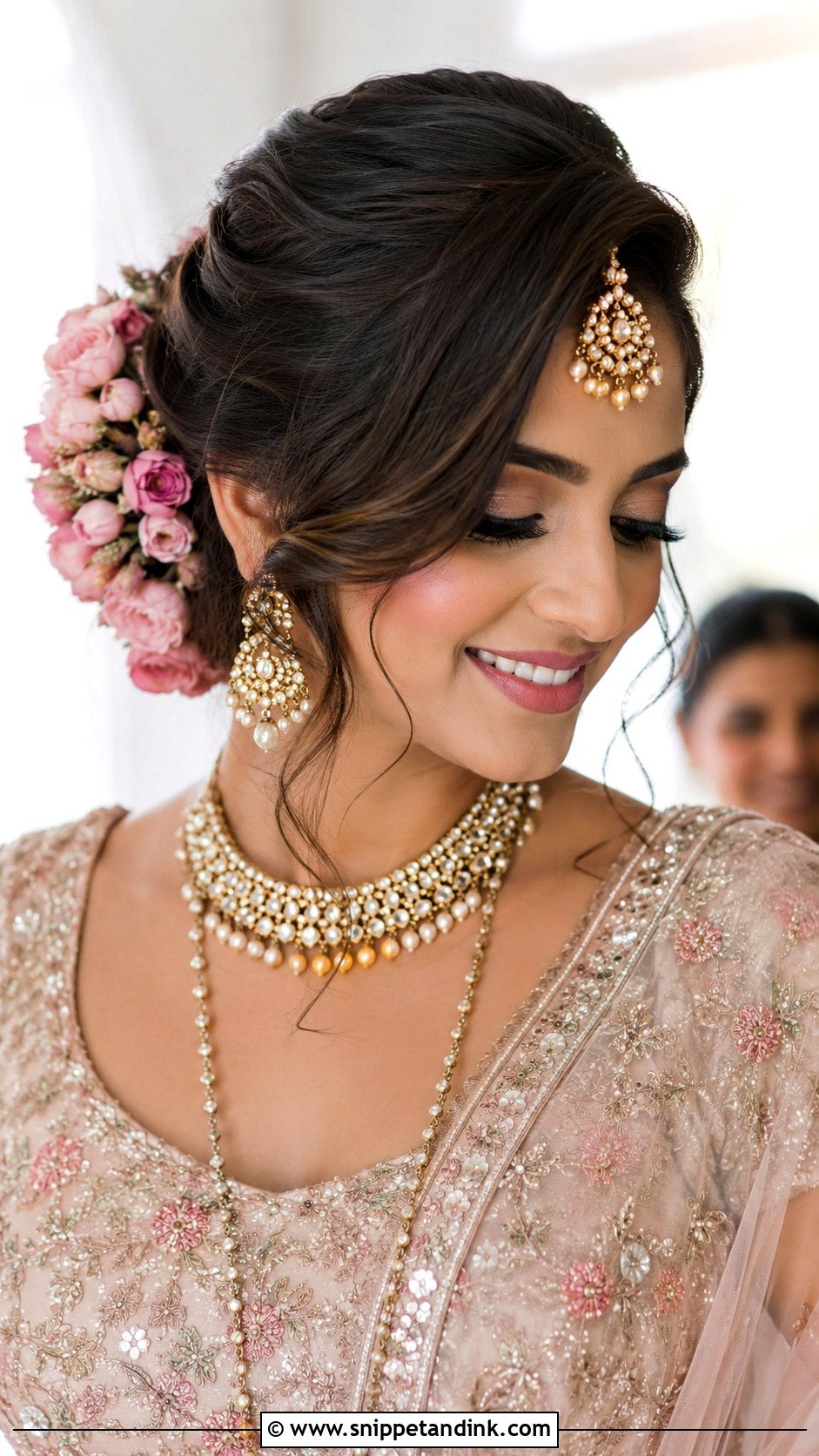
The sweep only works if it moves. I set it with a large round brush and a light hold spray, then pin it behind the ear where nobody sees the grip, so it crosses part of the forehead without sitting stiff like a helmet. On fine hair I add a small clip-in piece underneath for body. Jasmine, roses or gold pins in the bun are all fine, but keep the decoration on the side opposite the sweep or the head starts to look lopsided.
5. Indian Bridal Messy Bun With Face Framing Hair
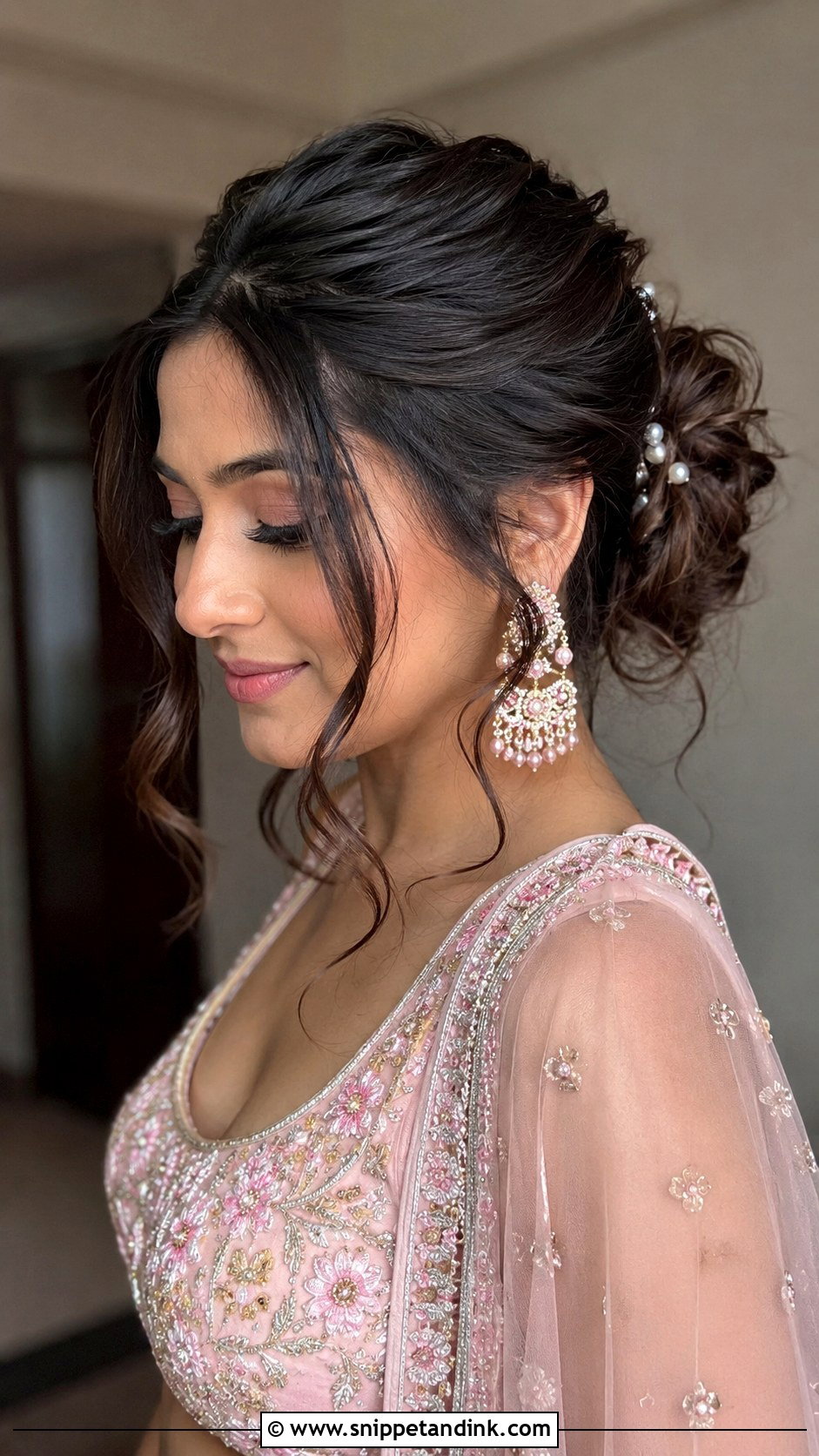
Undone styles take longer than sleek ones, which surprises people. Each loose piece around the face has to be curled, pinned in place while it cools and then released, or it just looks like hair that fell out. Done properly, those pieces soften the hairline and pull attention down toward the cheekbones. I’d steer you away from this one if your hair is very slippery and straight, since the texture drops within a couple of hours unless it’s prepped with a texturising spray first.
6. Indian Bridal Puff Bun With Maang Tikka
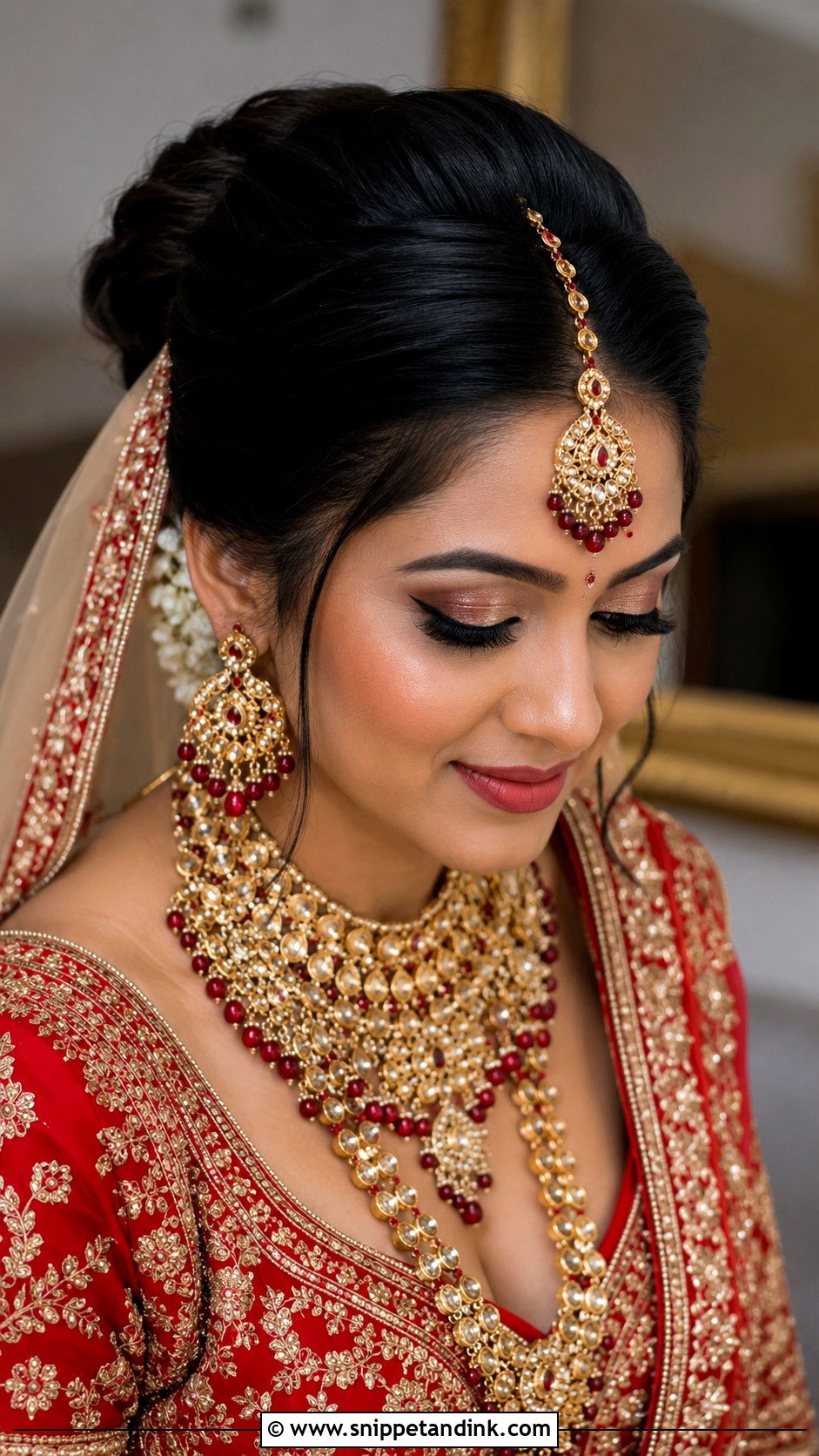
The puff is where I see the most mistakes on a big forehead. Built tall at the very front, it stretches the face upward and adds visual length to exactly the area you’re trying to balance. I place the volume further back at the crown and keep the front panel smooth, then set the maang tikka centre so it pulls the eye inward. Done that way, the shape holds up well under heavy lehengas and layered necklaces, and it still reads well in side profile.
7. Indian Bridal Open Curls With Maang Tikka
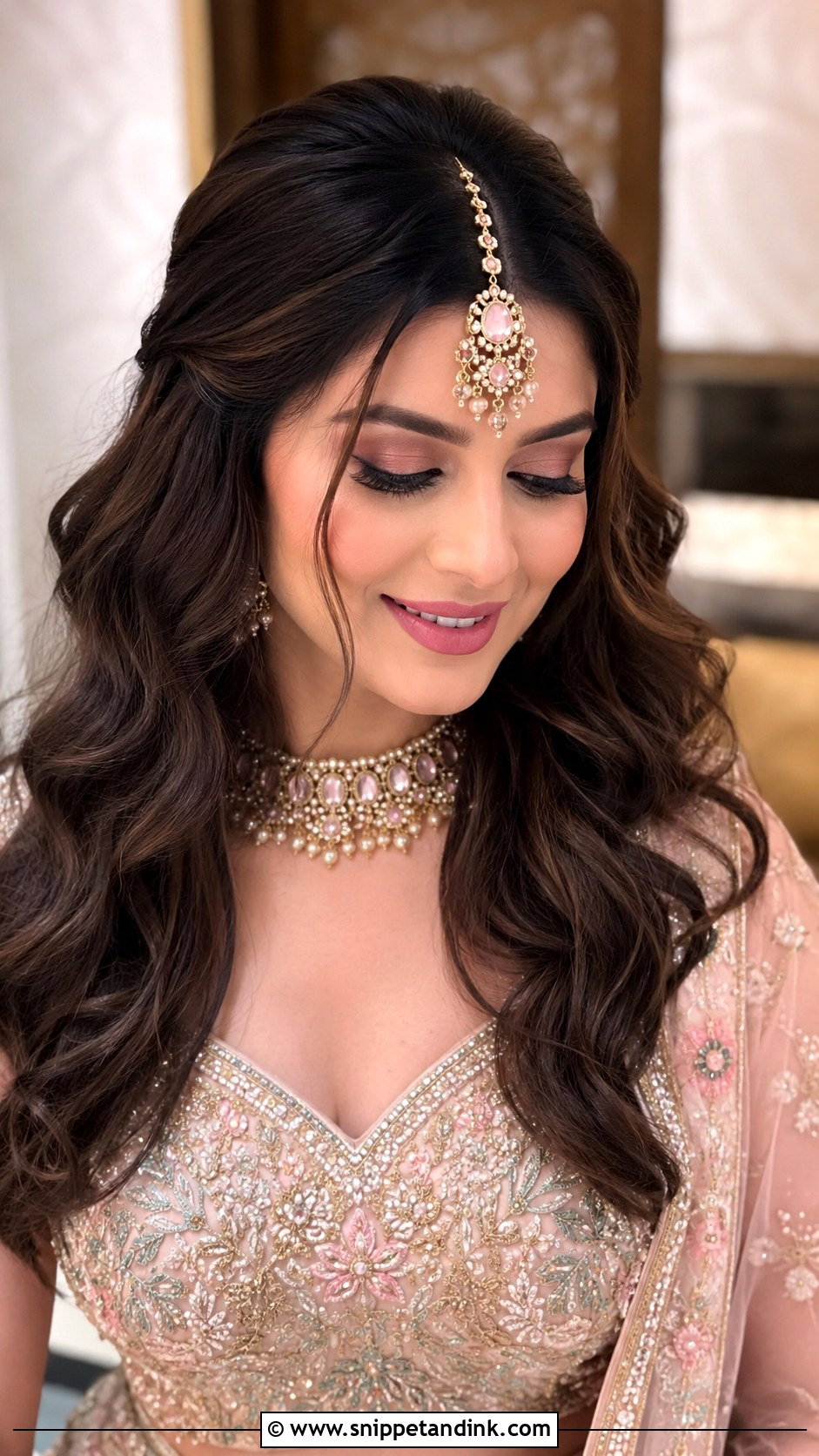
Open curls are my usual pick for engagements, receptions and mehndi, when you’re not carrying a dupatta on the head. Don’t scrape the front back. A soft centre part with curtain-style pieces, or a part shifted just off-centre, gives width at the cheeks and stops the forehead dominating. I curl in larger sections, let them cool fully and only brush through at the end so the curls stay defined for the evening. Pastel outfits and lighter stone jewelry suit this better than heavy bridal sets.
8. Indian Bridal Half Up Hairstyle With Front Layers
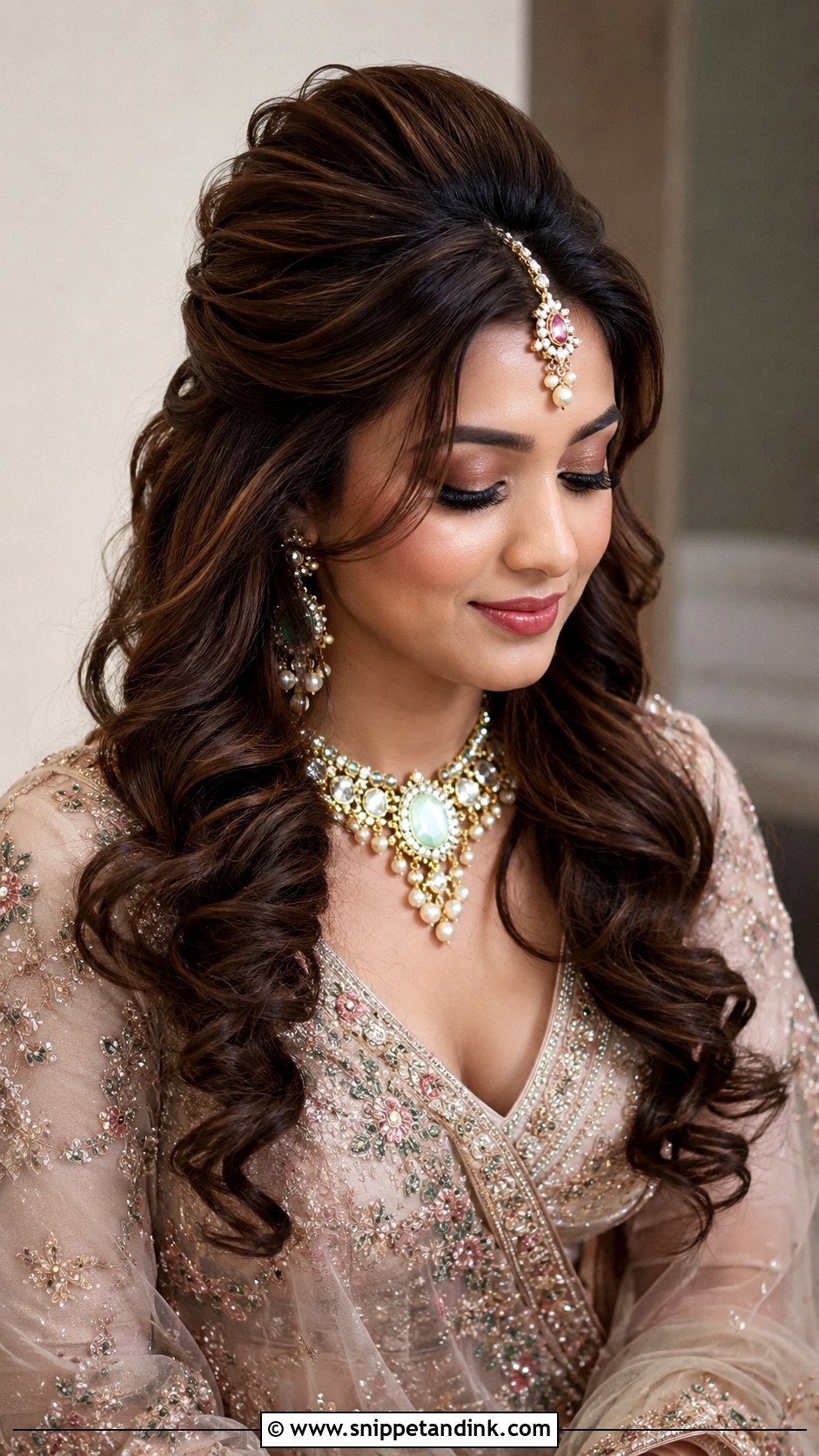
Half up gives you open hair while still giving the tikka something to hook into. The lifted top section must stay relaxed. If I pull it tight, the hairline gets exposed and the forehead looks bigger, so I tease the base and lift it in place instead. The front layers come down by the cheeks and the lengths get soft waves for fullness. I tend to suggest it for sangeet, reception, engagement, and modern lehenga looks with lighter jewelry.
9. Indian Bridal Braid With Front Puff
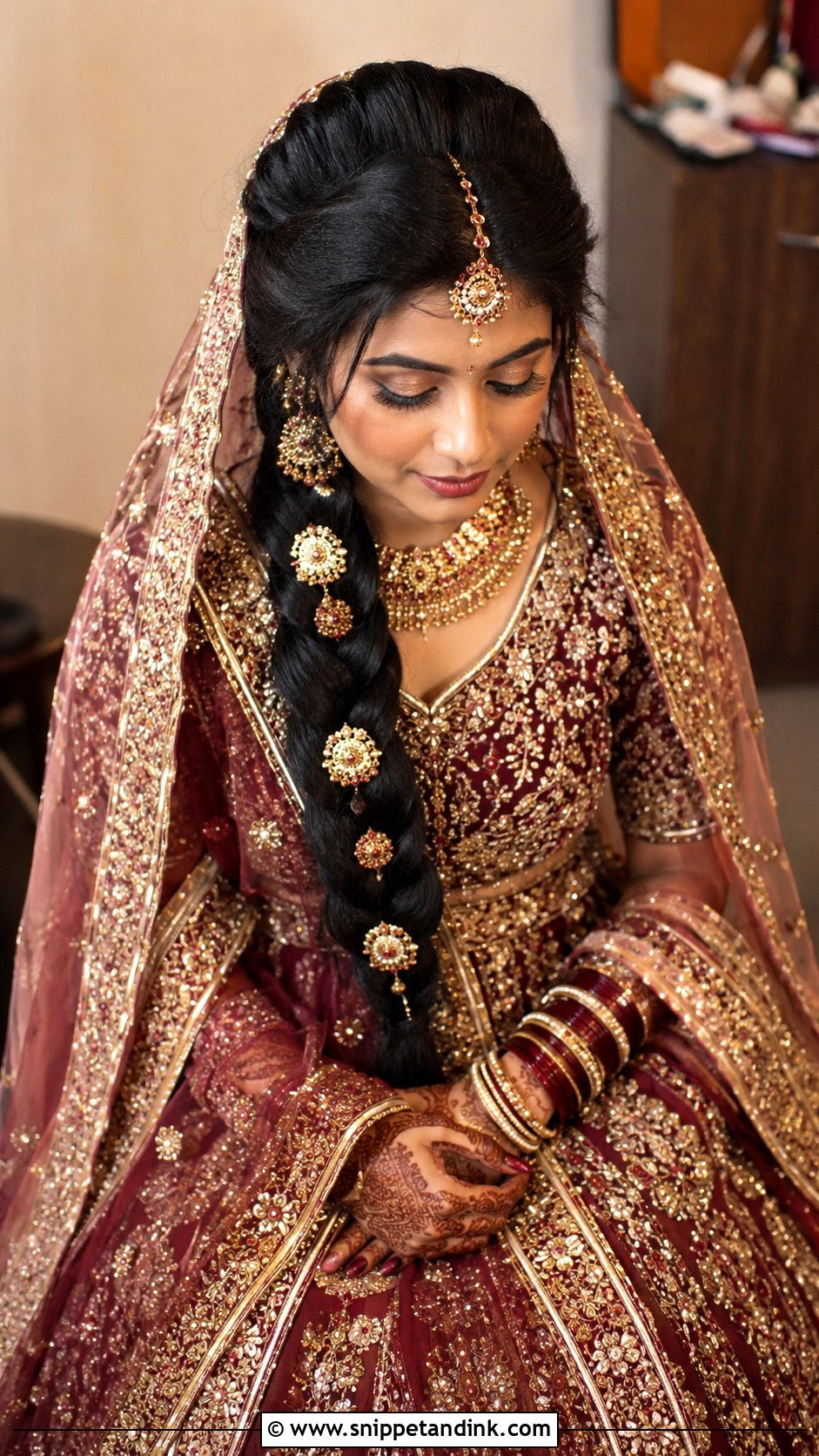
Keep the puff modest on an Indian bridal braid, roughly a gentle rise rather than a dome. The braid already gives the silhouette its length, so a tall front only stretches things further. A tikka or matha patti then sits in the middle of that forehead space. Flowers, gold accessories, pearls or jada pieces all go along the braid; I stitch heavier ones to the plait with thread rather than relying on pins alone, because pins work loose when you sit and stand through a long ceremony.
10. South Indian Bridal Braid With Matha Patti
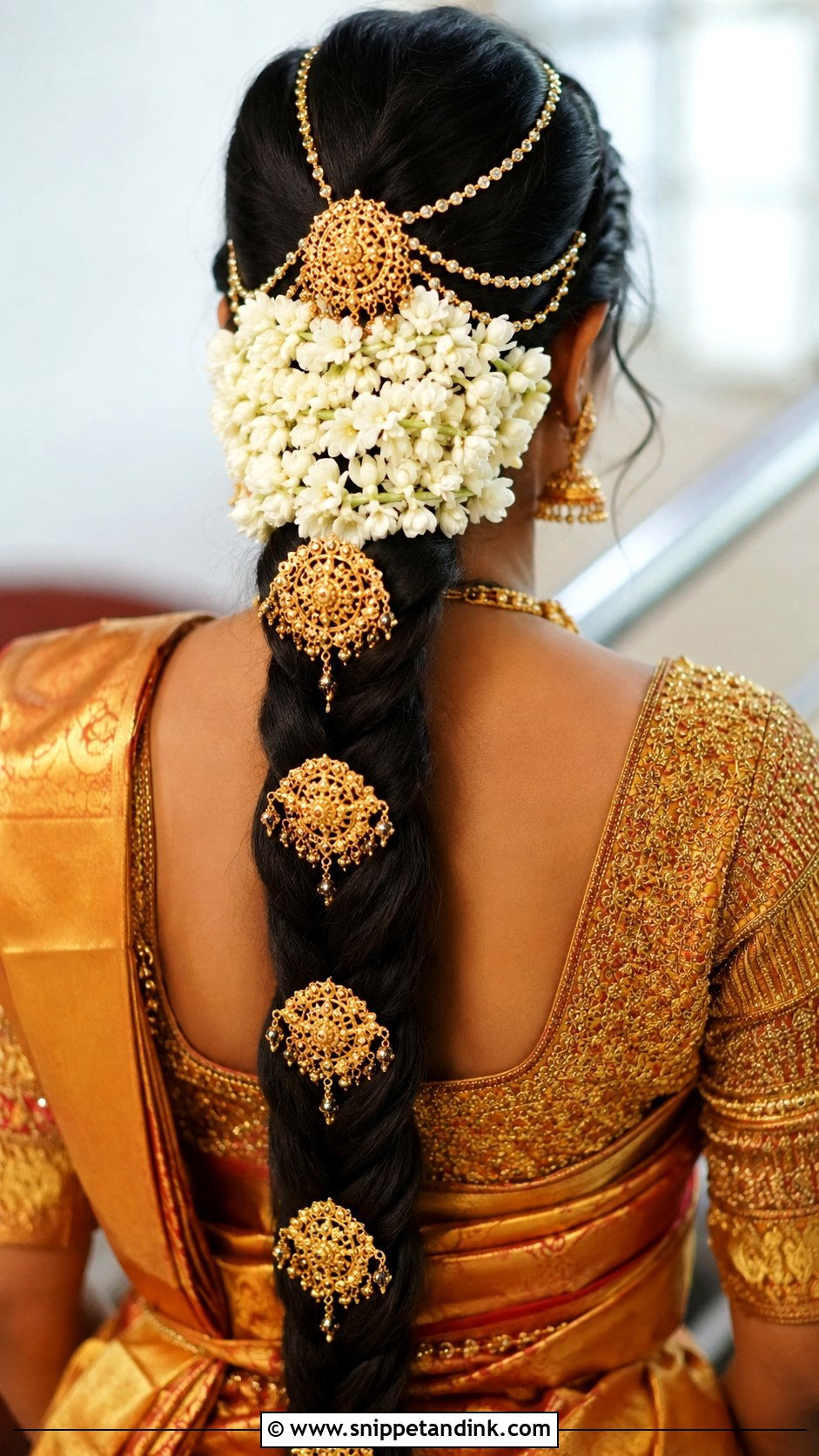
Temple jewelry and jasmine already give a South Indian bridal braid plenty of weight, so the matha patti frames the face while the plait runs long down the back. I keep the middle part but lift the roots slightly on either side so the top doesn’t sit flat against the scalp, which can make a broad forehead look broader. Jada ornaments are heavy. Build the braid around a firm base at the crown, and expect real jasmine to start browning by late afternoon in heat.
11. Indian Bridal Crown Braid Bun
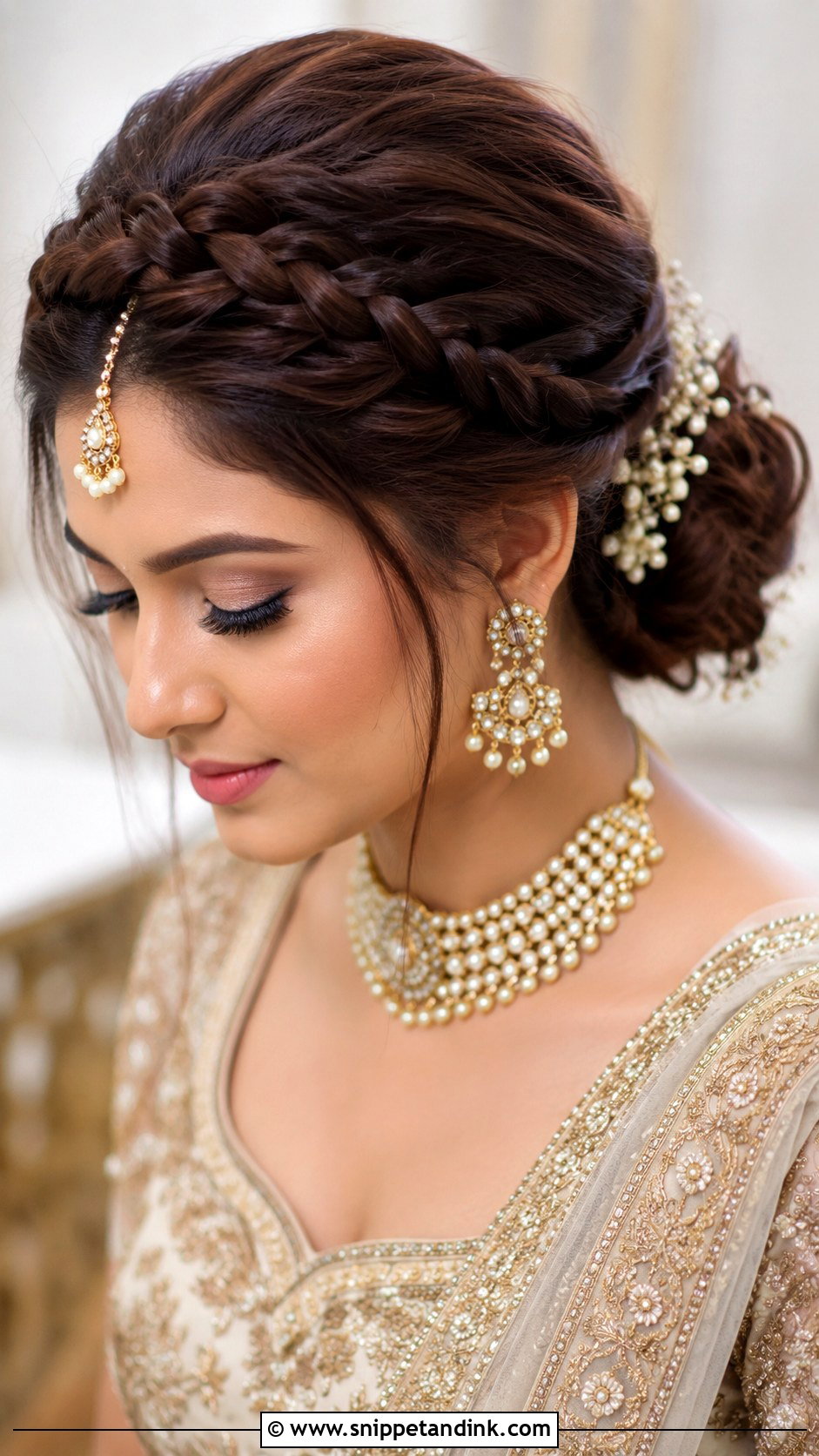
A crown braid adds texture near the front without leaning on jewelry. Run it along the hairline or just behind it and it breaks up the forehead visually, giving the head a fuller outline. I usually braid it slightly loose and pancake the edges for width. The low bun at the back holds the dupatta pins. On very short front layers this is hard to do cleanly, so check your length before you settle on it.
12. Indian Bridal Bun With Curtain Bangs
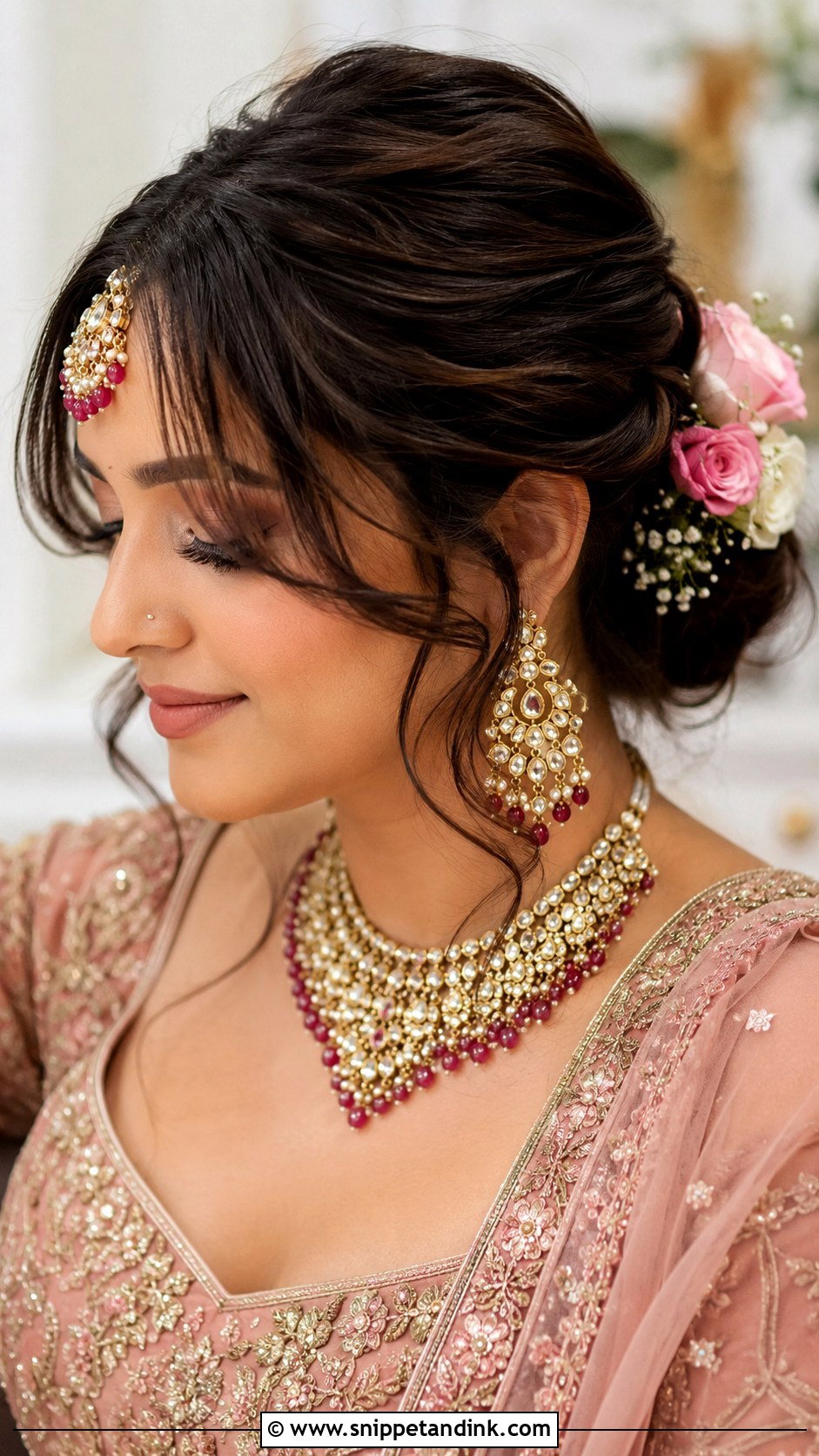
Curtain bangs are the quickest fix, and the one I’m most careful about. They need to part in the centre or just off it and blend into longer face-framing layers, so they cover part of the forehead without hiding your face. Cut them at least four weeks before the wedding so you’ve had a trim to settle the shape. If you’d rather not cut at all, clip-in front pieces matched to your shade give a similar effect for one day. The bun behind can be low, textured or dressed with flowers.
13. Indian Bridal Loose Braid With Face Framing Hair
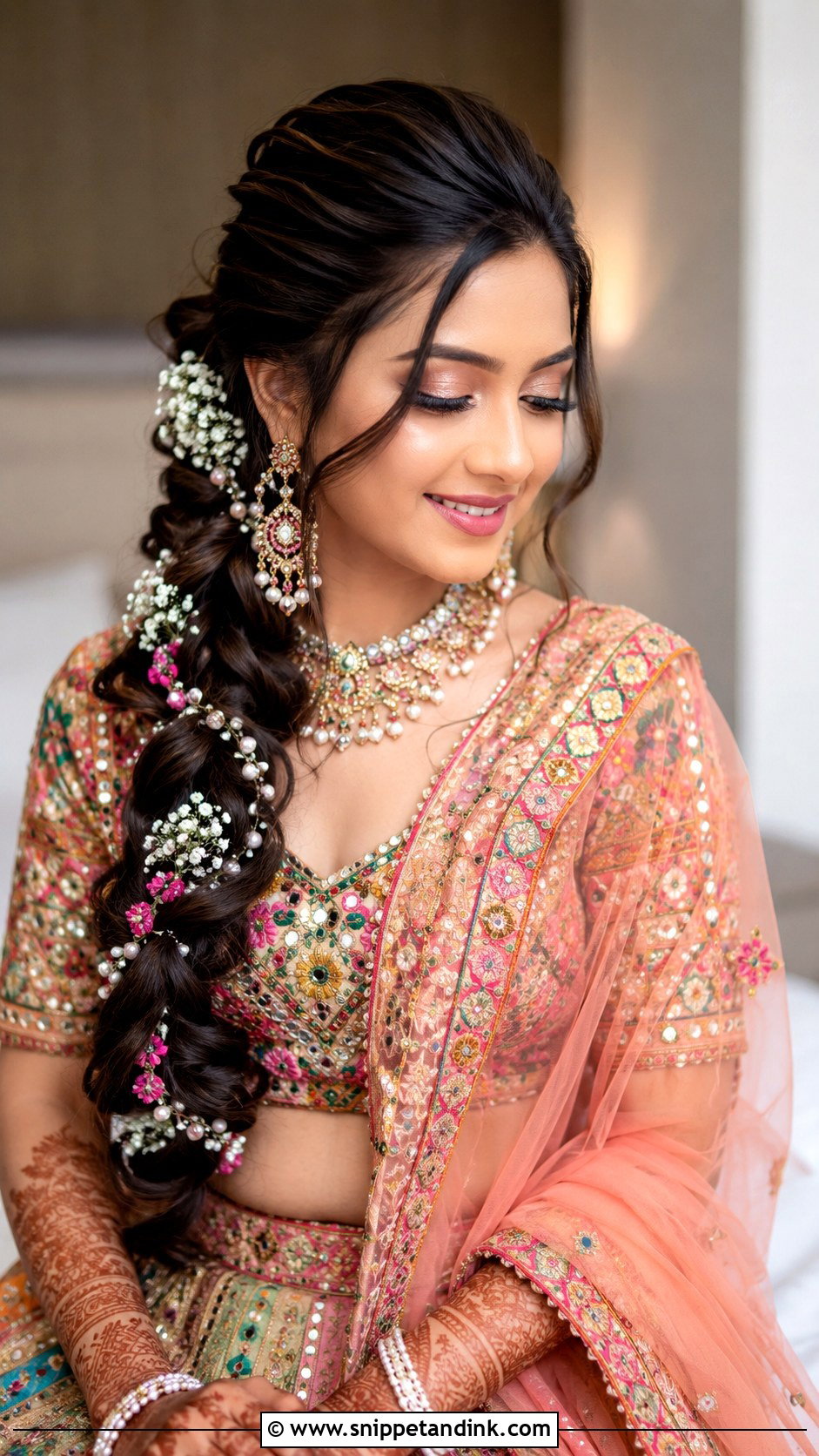
A loose braid with face-framing hair is the one brides find most comfortable to wear for many hours. The front pieces move, the braid keeps the rest under control, and nothing pulls at the scalp. I pull the plait apart a little for width and tuck pearls, small flowers or gold pins along it. Keep the hairline relaxed. It suits mehndi, haldi and sangeet, though I’d tighten the braid for the wedding itself if you’re dancing late.
14. Indian Bridal Sleek Bun With Heavy Maang Tikka
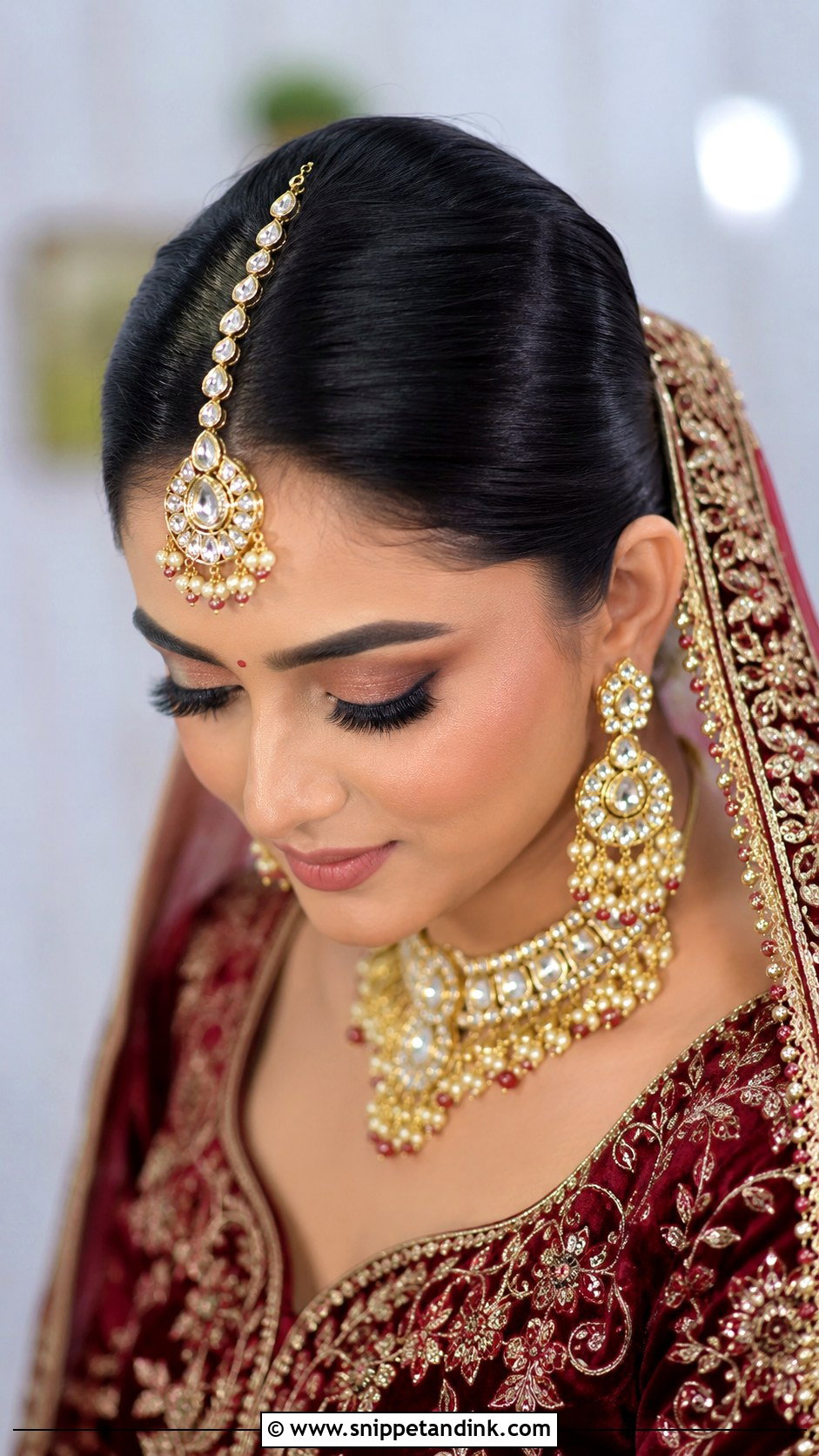
Sleek and a big forehead can work together, but the jewelry has to carry the front. A heavy maang tikka, matha patti or passa fills the space the smooth hair leaves open. I lift a little root right at the part with a fine-tooth comb so the top doesn’t look painted on, and I never pull it tight enough to hurt. A sleek finish frizzes fast in humidity, so I seal it with a light serum rather than heavy gel that flakes in photos. Structured dupattas and shararas sit very neatly over it.
15. Indian Bridal Waves With Side Part
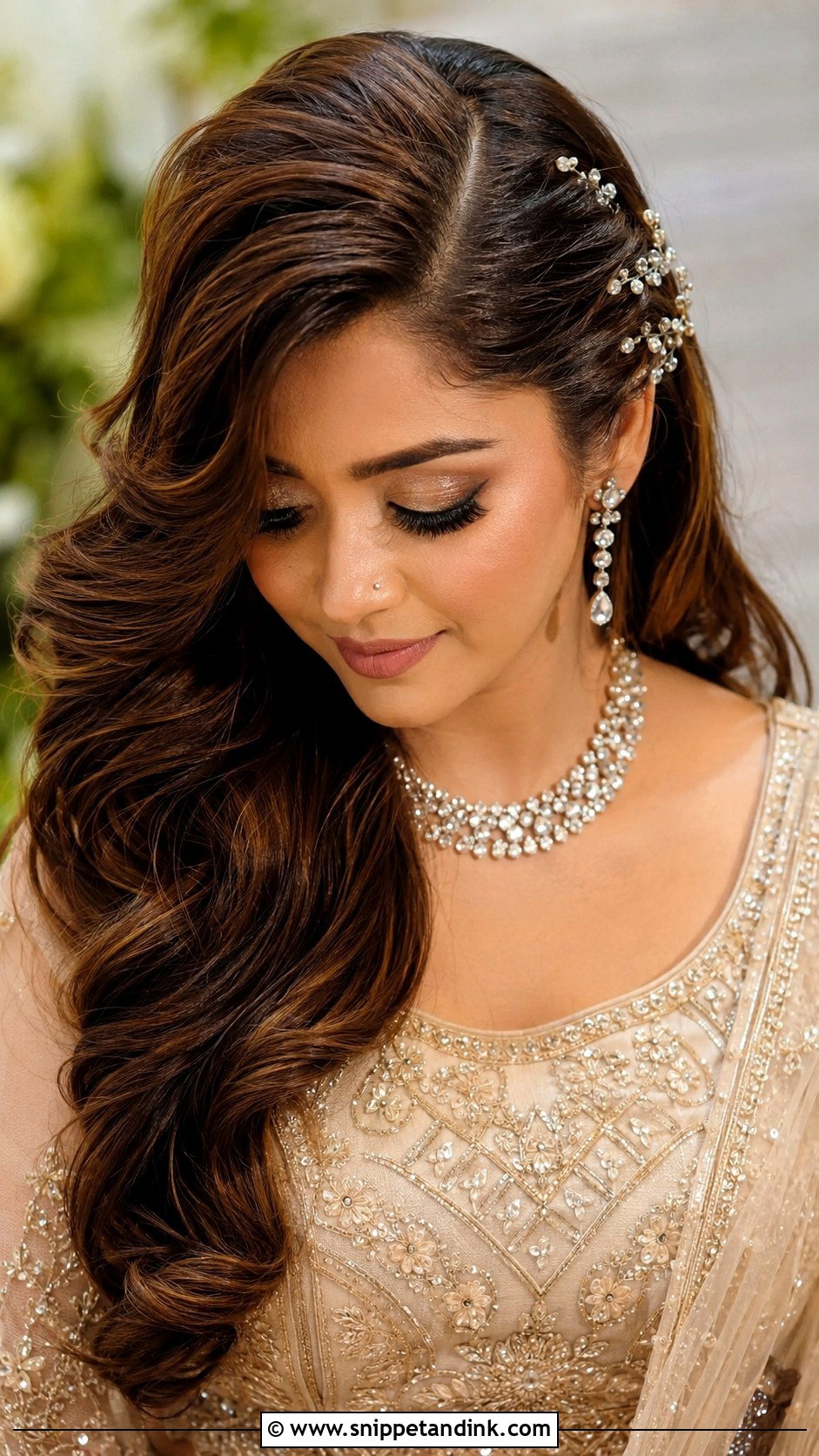
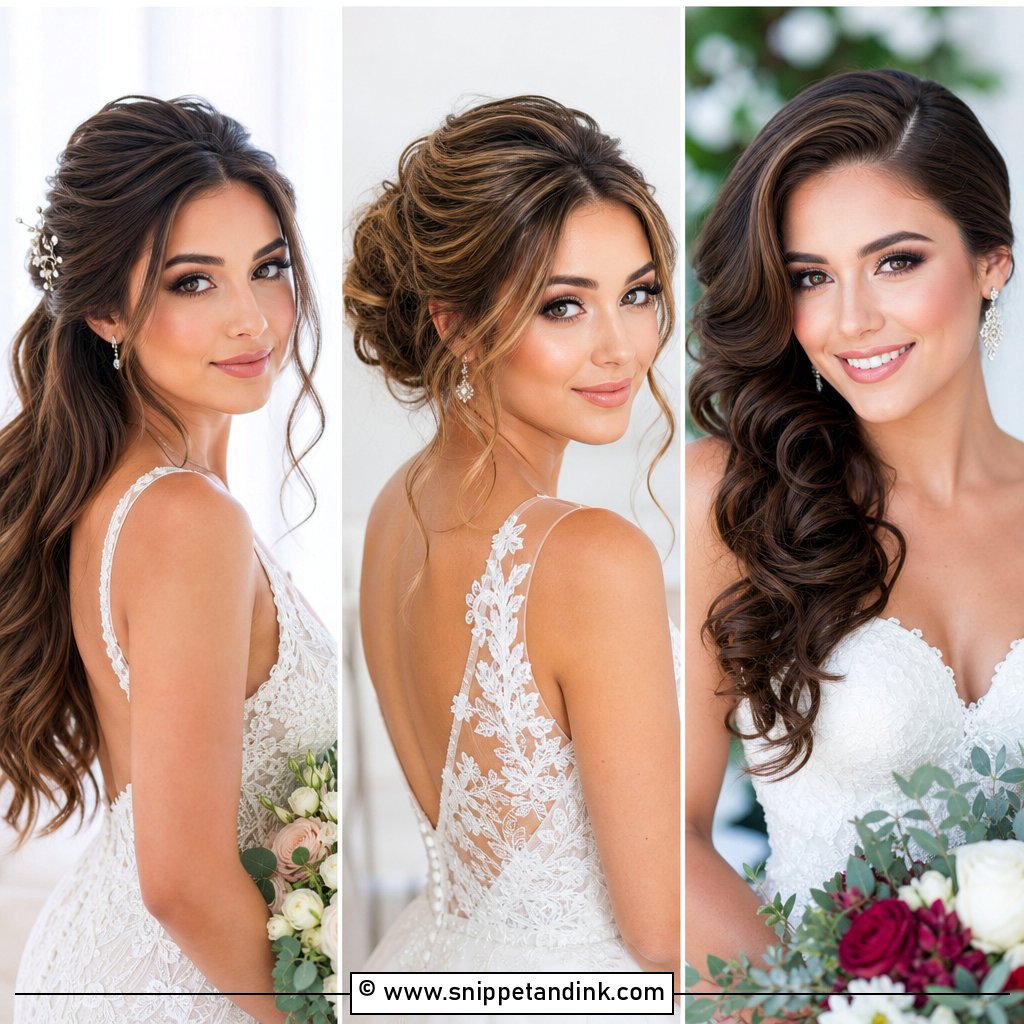
For a bride who’d rather have her hair down, side-parted waves do the most for a big forehead. The part throws a diagonal line across the top, and the waves add width at the cheeks and shoulders, which shortens the face visually. I keep this for receptions, cocktail events and engagements. Set the waves with heat, pin each one while it cools, and brush out only before you leave. A small tikka or a delicate passa on the parted side finishes it.
When the Dupatta Goes On, the Front Changes
A front section that looked balanced in the mirror can flatten the moment a heavy dupatta goes over the head. The weight presses the crown down, and the edge of the fabric becomes a new line across the forehead. So I always style the front with the dupatta in mind and pin it last, at the trial and on the day.
Where the edge should sit
I bring the dupatta edge forward to just behind the matha patti chain, so the jewelry stays visible and the fabric frames the top of the face. Pushed too far back, it exposes the full hairline. Pulled too far forward, it hides the jewelry you paid for. Pins go into the bun and the braid base, never into the front section, or they drag it flat.
Outfit changes and the reception
If you’re switching from a ceremony bun to open hair for the reception, plan that with your stylist in advance. Hair that has been tightly pinned for hours keeps kinks and flat spots, so I usually move to soft waves rather than sleek straight hair, and refresh the front with a quick round of heat and a side part. Ask for the half hour that takes to be written into the schedule.
The Front Section Matters Most
Your forehead doesn’t need hiding. It needs balancing, and the front few inches of hair plus the jewelry you hang there do nearly all of that work. A matha patti, a lower tikka, a side part, curtain bangs or a few soft pieces each change the proportion in a different way. Bring your actual jewelry and dupatta to the trial and test the front with them in place, because that’s how the look will be photographed all day.
You'll Like These Ideas:


Leave a Reply