
Stage hair works under conditions a wedding never puts it through: hot lights overhead, judges a metre away during interview, quick changes backstage and a walk that’s seen from the back of a ballroom. That’s why the pageant styles I trust are the ones that frame the face and keep a lifted, tidy outline from every angle. None of the looks below needs a complicated salon set. What they do need is proper prep, a little backcombing at the root, a flexible spray and pins you can’t see.
One Style for Interview, Another for Evening Gown?
Most pageants run in phases, and hair that suits a seated interview with judges close by isn’t always right for an evening gown walk seen from the back of the room. For interview I want hair that looks like the contestant on a very good day: smooth, face framing, nothing that pulls focus from what she’s saying. Evening gown is where volume, curl and accessories earn their place.
Changes between phases are usually tight, and there’s rarely a stylist backstage for every contestant. So I plan one base that converts quickly.
- Wear set curls loose for interview, then twist them half up with a jeweled clip for evening gown.
- Start with a sleek low ponytail for fitness or active wear, then wrap it into a bun in a few minutes.
- Keep curls pinned in large clips under a scarf until just before you walk, so they don’t drop while you wait.
- Avoid any plan that needs a full re-curl backstage. Irons are shared and time runs out.
1. Half Up Pageant Hair With Curls
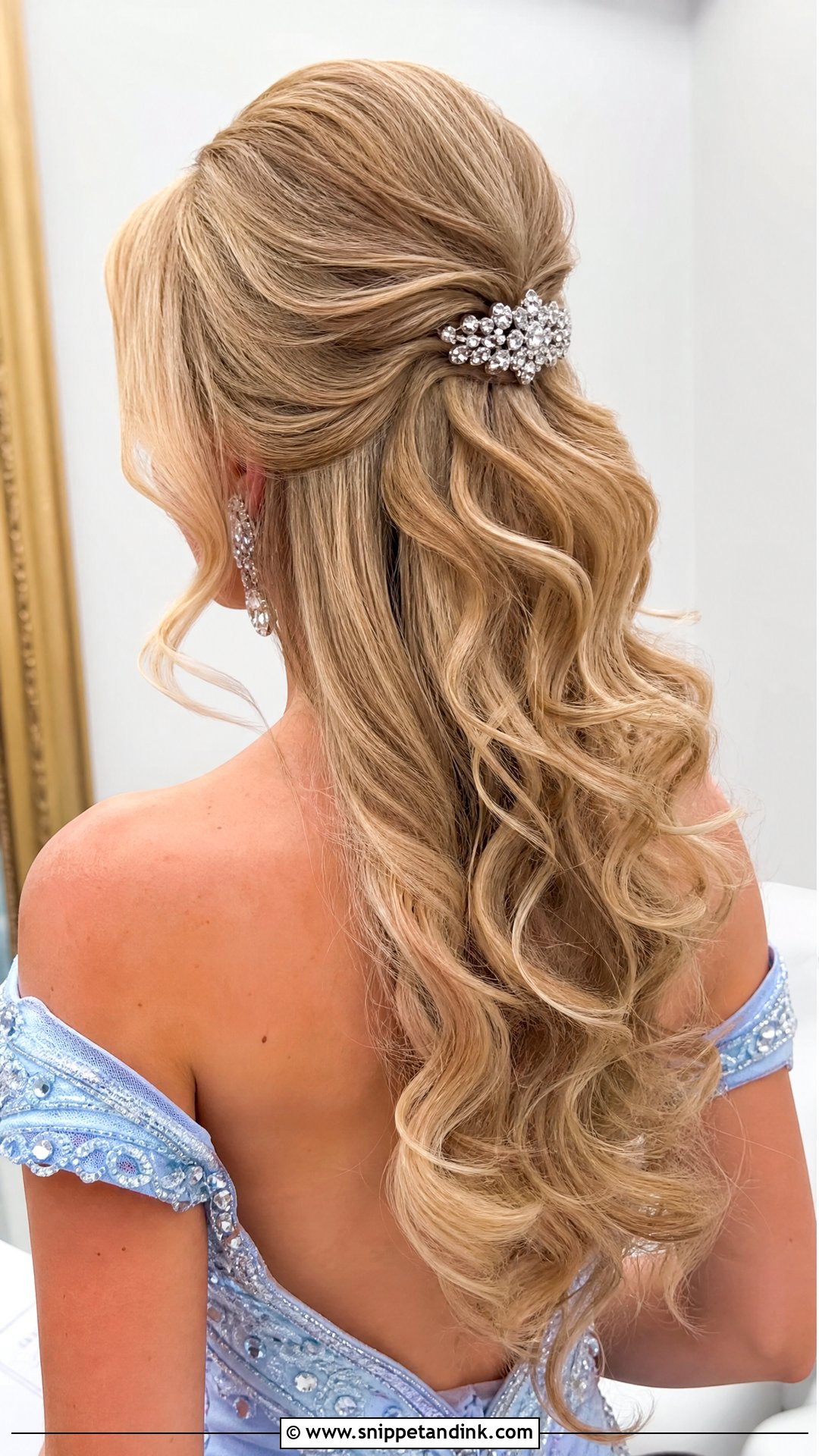
Half up pageant hair with curls shows off length while keeping the face clear, which judges notice in interview. The pinned section at the crown also gives a small crown or rhinestone clip something solid to grip, so I always backcomb lightly underneath before pinning. Curl the lower section all in one direction and brush through once it’s cold. Skip the crown volume and the whole style looks flat in front-on photos.
2. High Ponytail Pageant Hair
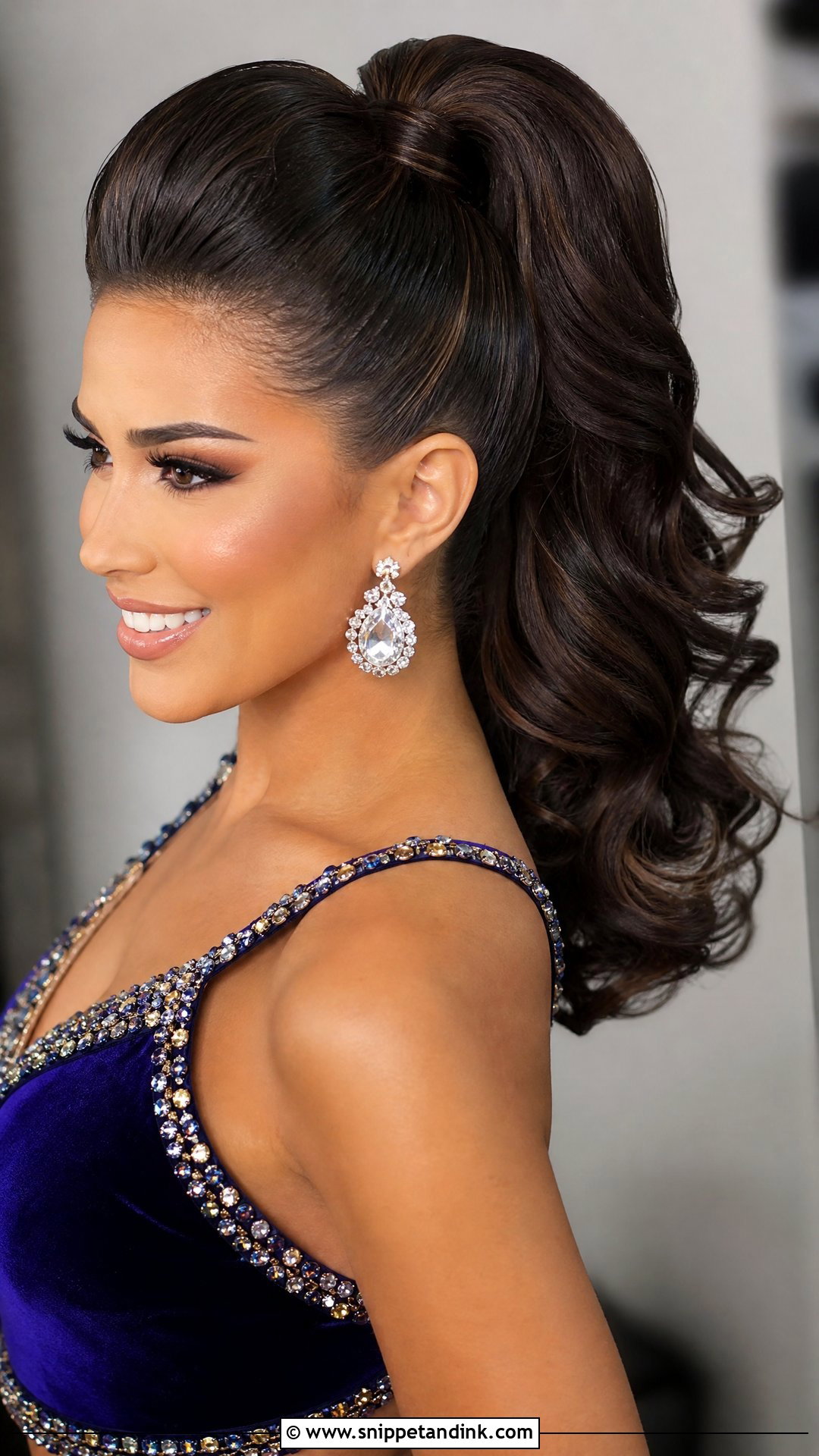
A high ponytail lifts the face and shows the neckline, and hair can’t fall forward while you’re turning on stage. The base is where it succeeds or fails. I brush it smooth with a boar bristle brush while the elastic goes on, then wrap a strand around it and pin underneath. A little backcombing under the tail props it up for height. Be aware it can pull on the scalp after a few hours; if a contestant gets headaches from tight ponytails, I’d pick a half up style instead.
3. Low Bun Pageant Hair
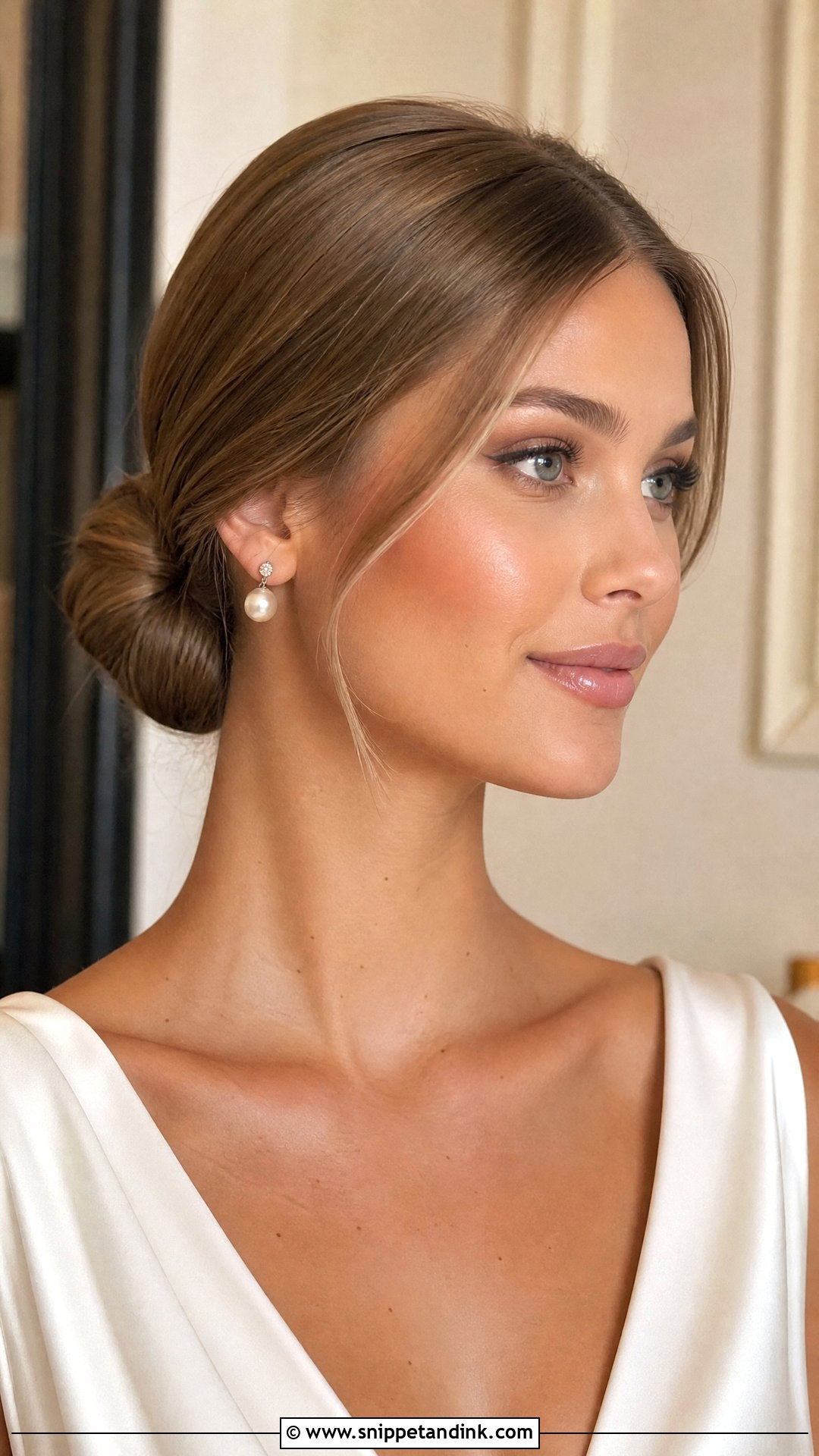
Low bun pageant hair suits an outfit that already has a lot going on at the neckline or back. It sits quietly at the nape, a little off center or dead center, and it doesn’t age a younger contestant the way a high, tight bun can. Face pieces are optional; on a long stage day they tend to get tucked away anyway. Cross the pins in an X so they lock against each other and mist once, lightly, so the bun stays soft rather than crunchy.
4. Side Swept Pageant Hair
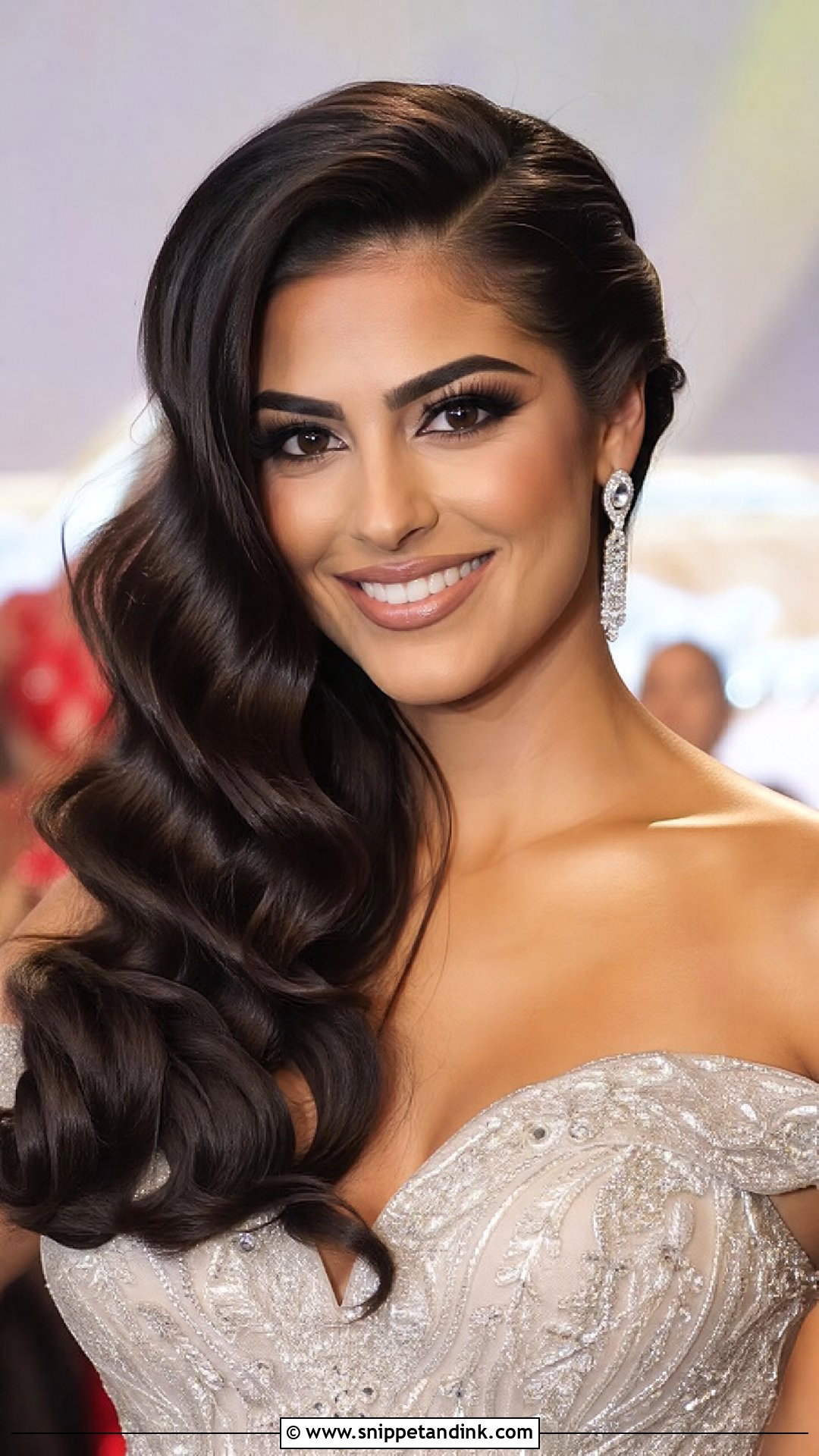
Sweeping everything over one shoulder gives the most drama for the least work, because all the curl volume ends up on the side the camera sees. A deep side part adds lift at the root. The hidden side is the weak point: without pins there, the hair slides back across as soon as you start walking or turning to pose, so I anchor it behind the ear with two or three crossed pins. Medium hair can do this with clip-in extensions for extra fullness.
5. Curly Pageant Hair Down
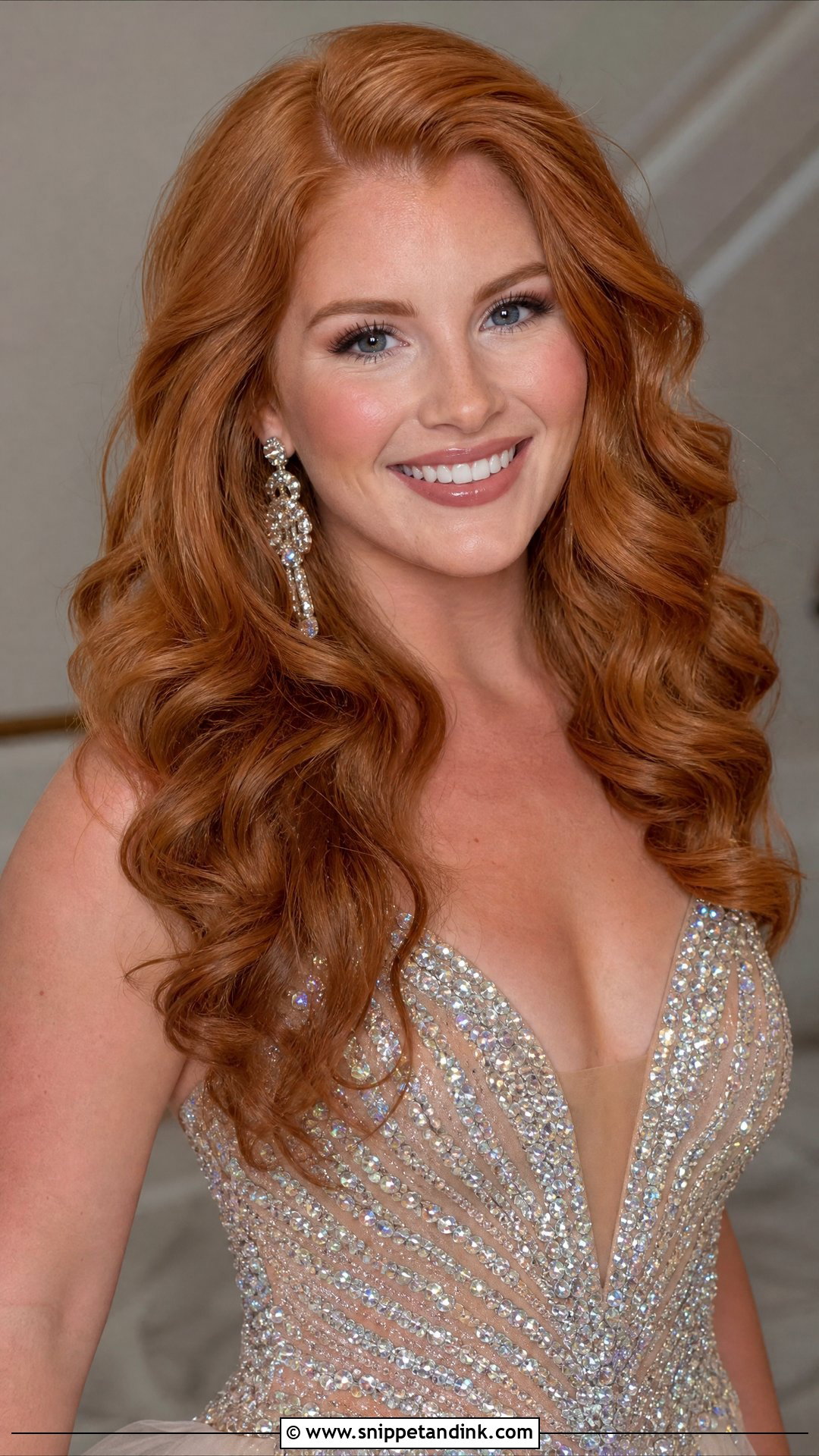
Curls down are a classic, but stage lights and a long day pull them looser than you’d think. The aim is controlled curl. Start with detangled, smooth hair, curl in even sections and pin each curl in a loop to cool if you have time; that set is what keeps them springy into the evening. Separate gently with your fingers afterwards. Full curls also balance the height of a crown without hiding the face.
6. Sleek Straight Pageant Hair
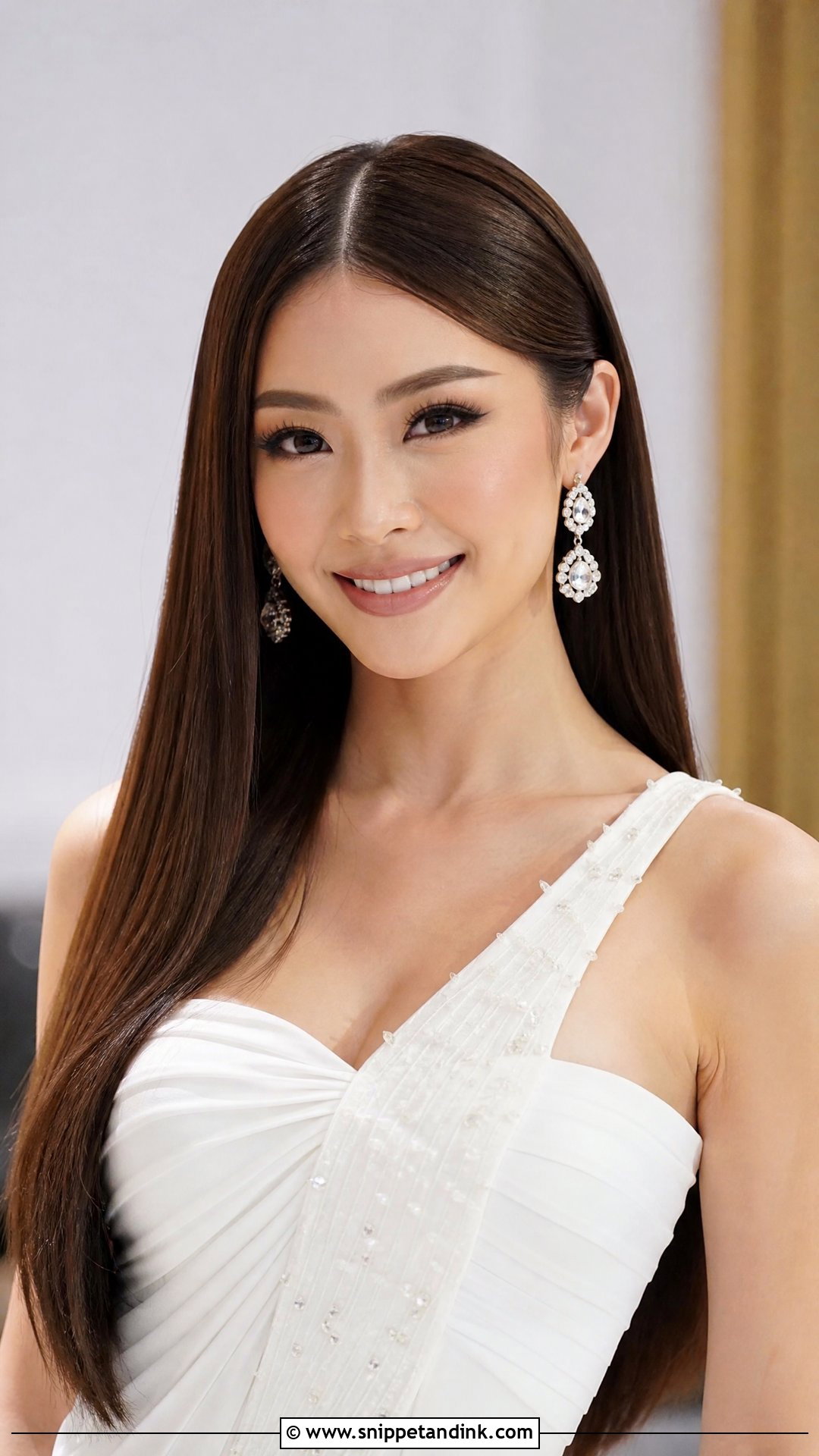
Sleek straight hair looks modern, but it hides nothing. Every flyaway at the hairline and every dull end shows under bright lights, so this is mostly about condition and prep: heat protectant, small sections and a smoothing balm along the hairline. A center part gives a runway feel; a side part softer. It needs no pinning, which makes it comfortable. Tuck one side behind the ear so your earrings and face stay visible to the judges.
7. Braided Crown Pageant Hair
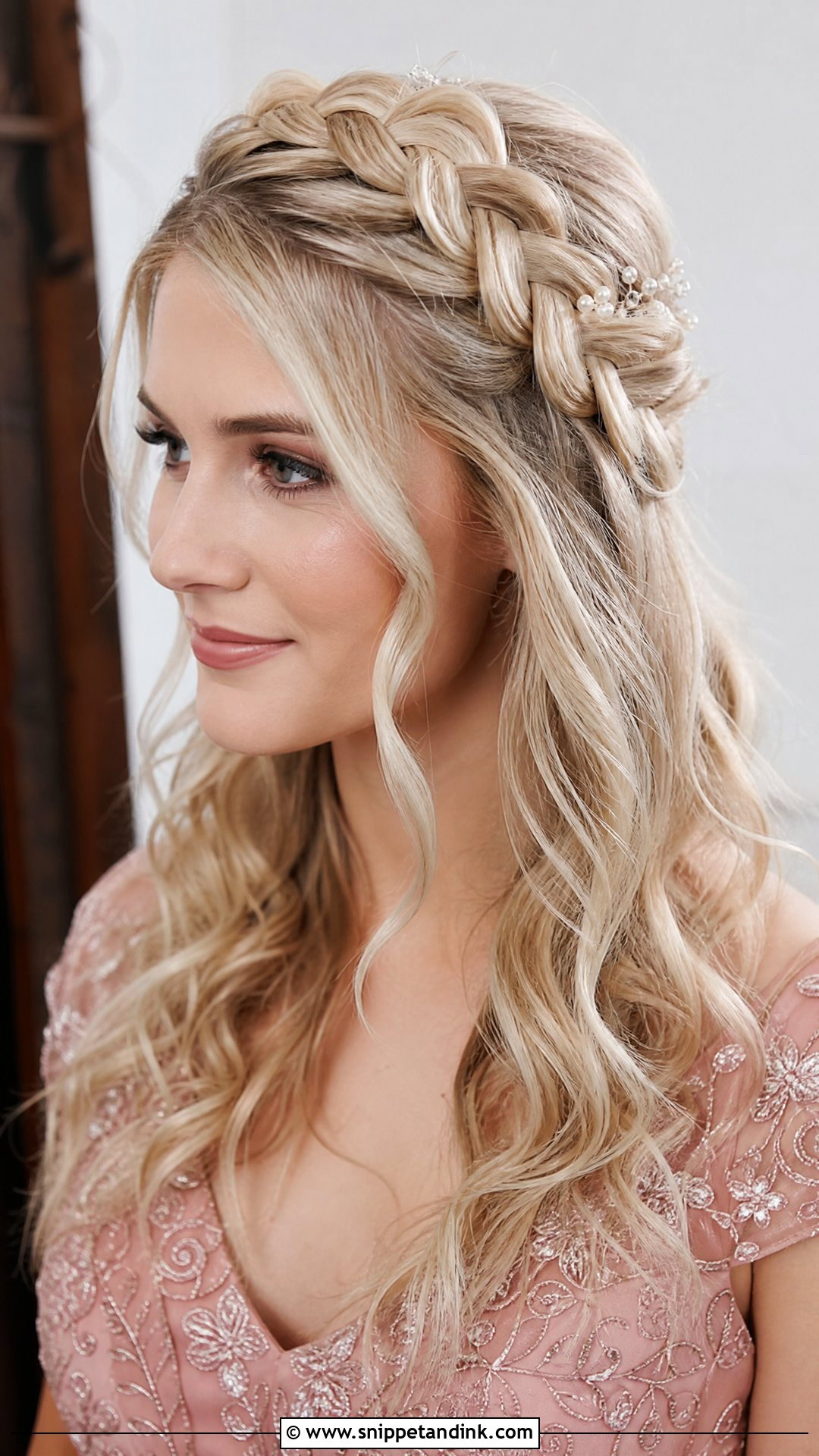
On a long pageant day, a braid along the hairline is the simplest way to keep short front pieces from drifting into your face during interview. It can run along the front or be wrapped around the crown, with the rest curled or pinned low. I braid it slightly tighter than I want and then loosen the edges once it’s secured, because a braid pulled apart first tends to unravel. Clear elastics and hidden pins keep it comfortable.
8. Bubble Ponytail Pageant Hair
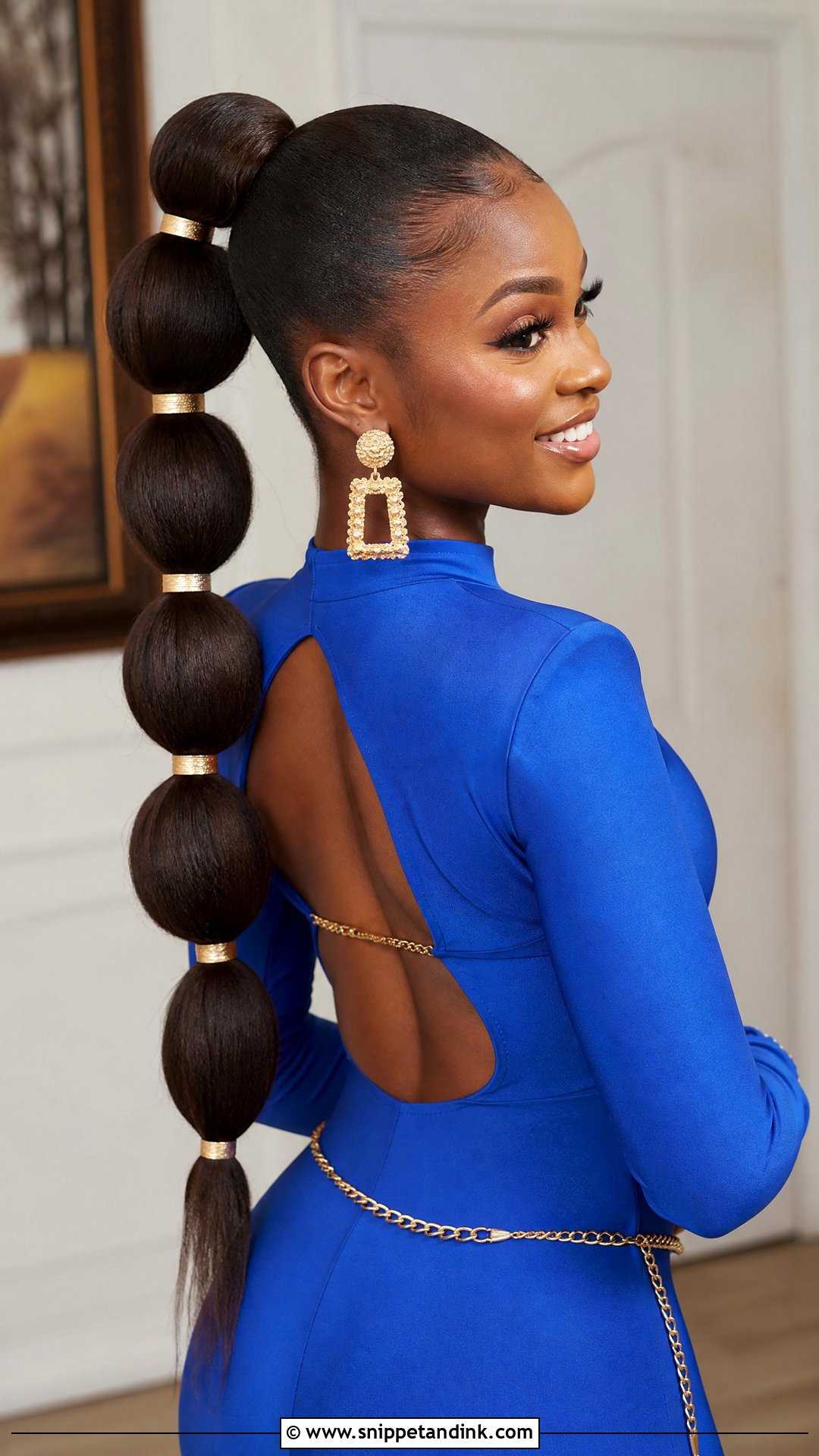
Bubble ponytail pageant hair is about as movement-proof as a style gets, which is why I like it for talent and fun fashion rounds. Smooth the ponytail first, place small elastics down the length at even spacing and tug each section outward into a round bubble. Uneven spacing is the usual giveaway, so measure with your fingers. Cover the elastics with thin strands of hair and finish with a shine mist.
9. Loose Wave Pageant Hair
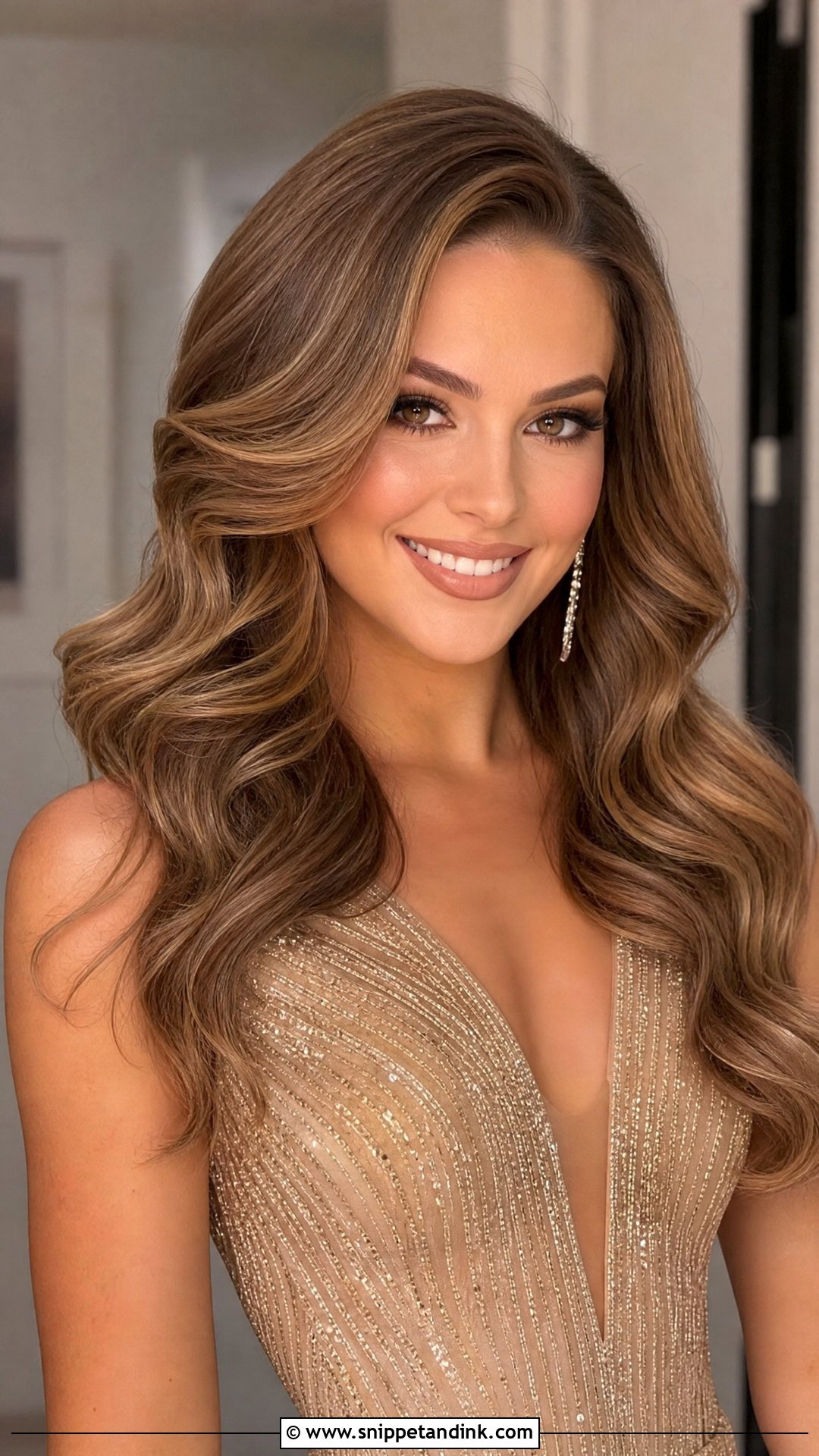
Loose wave pageant hair needs to look intentional, not beachy. Use a larger barrel, brush through lightly once cool and keep the top smooth with a little lift so the waves don’t drag the face down. Layered cuts show the movement best. I keep stiff sprays away from waves; a flexible hold lets them move on the walk without separating into strings.
10. High Bun Pageant Hair
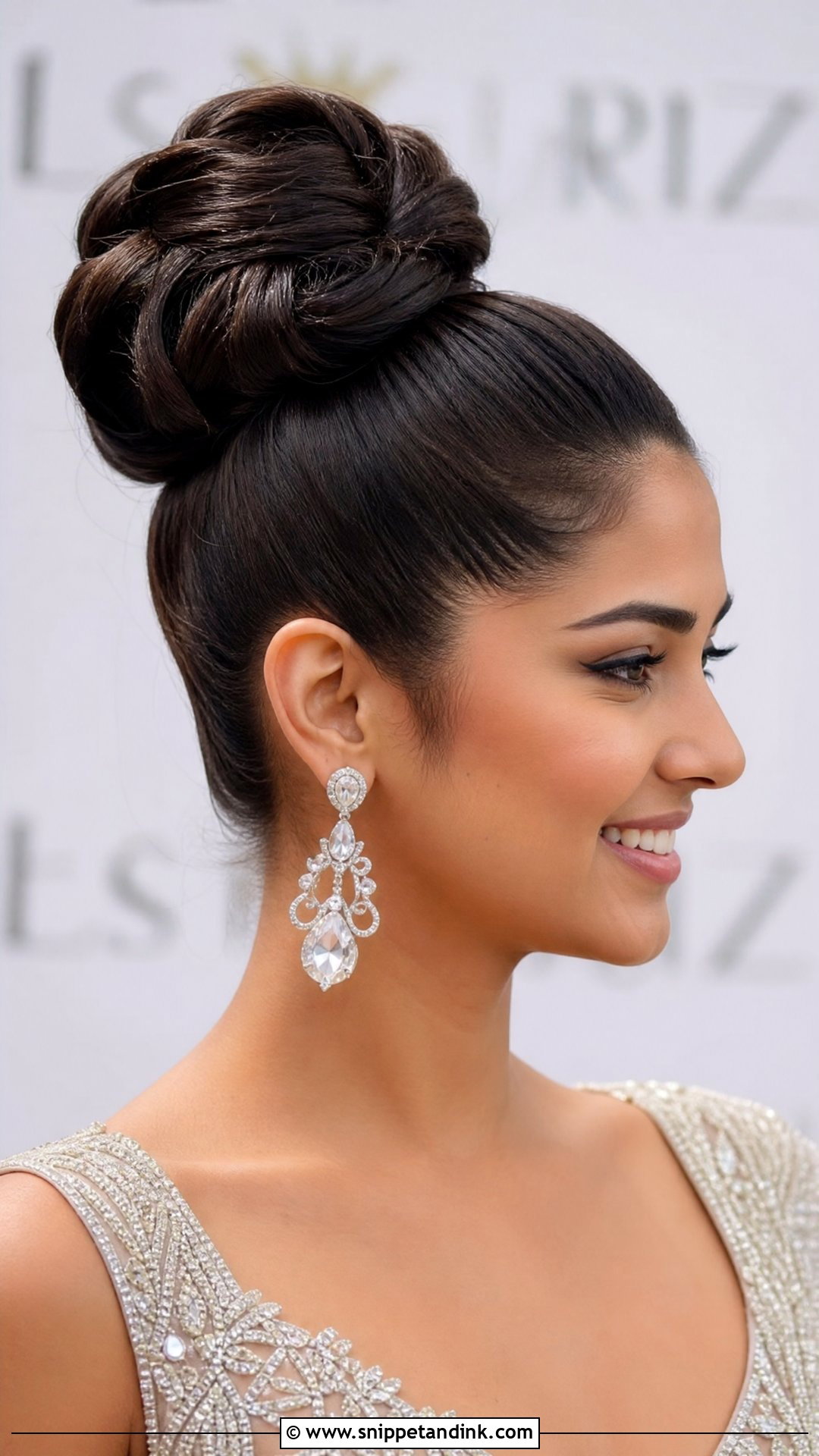
A high bun lengthens the neck and does a lot for posture on stage. Place it high enough to be seen from the front but low enough that it isn’t pulling on the scalp, which you’ll feel by the second hour. On fine hair, a donut form underneath builds fullness that the hair can’t make alone. Finish by brushing the hairline smooth. The one drawback, covered further down, is that it sits exactly where a crown goes.
11. Side Braid Pageant Hair
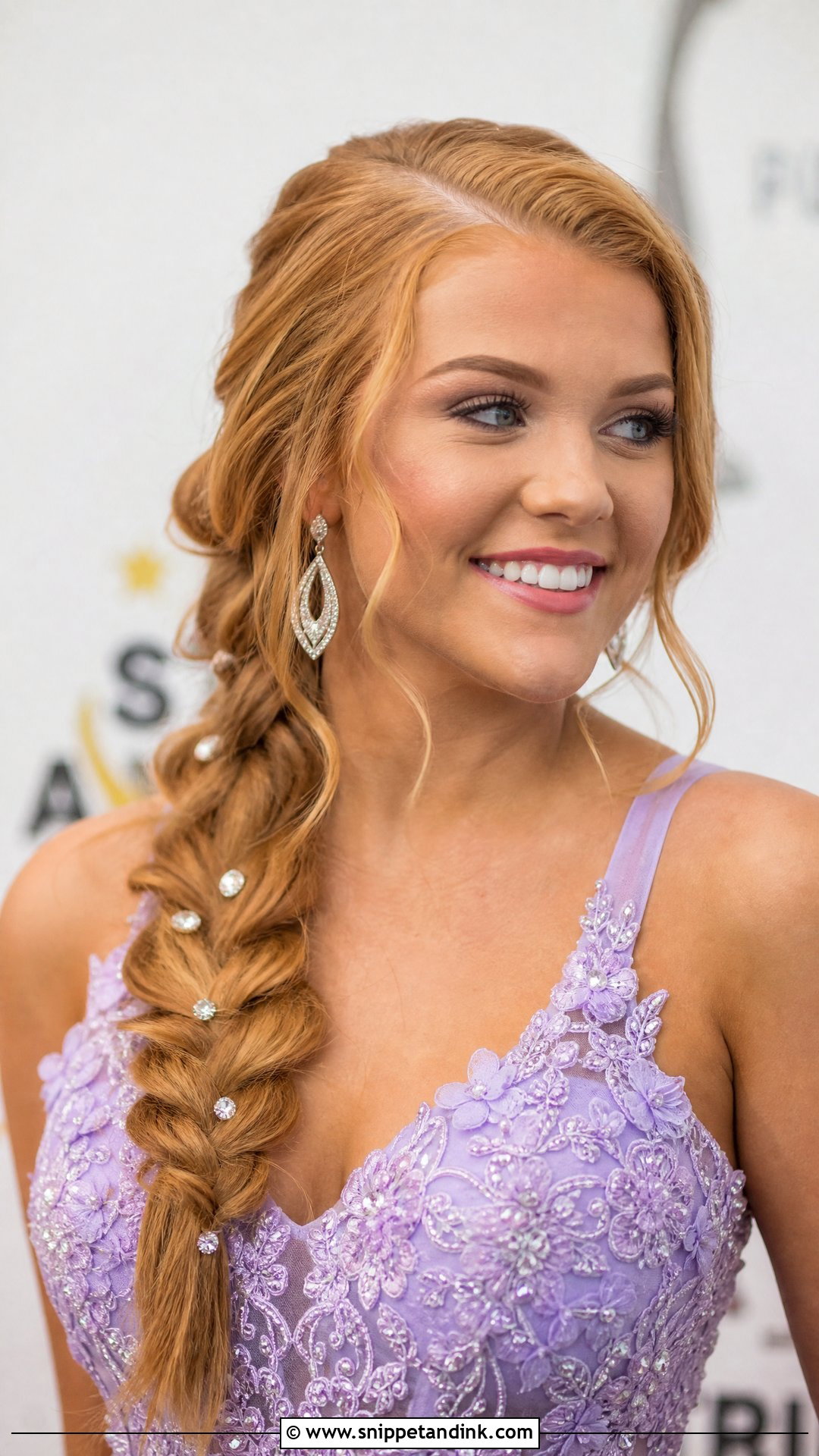
A side braid is charming and easy to control, and I find it suits younger contestants better than most of the updos here. Part to the side, sweep the hair over one shoulder and braid loosely. Curling first gives the braid more body, so it doesn’t look thin. Pull out a few face pieces if it feels too tight. Small decorative pins down the braid add a stage finish.
12. Natural Curl Pageant Hair
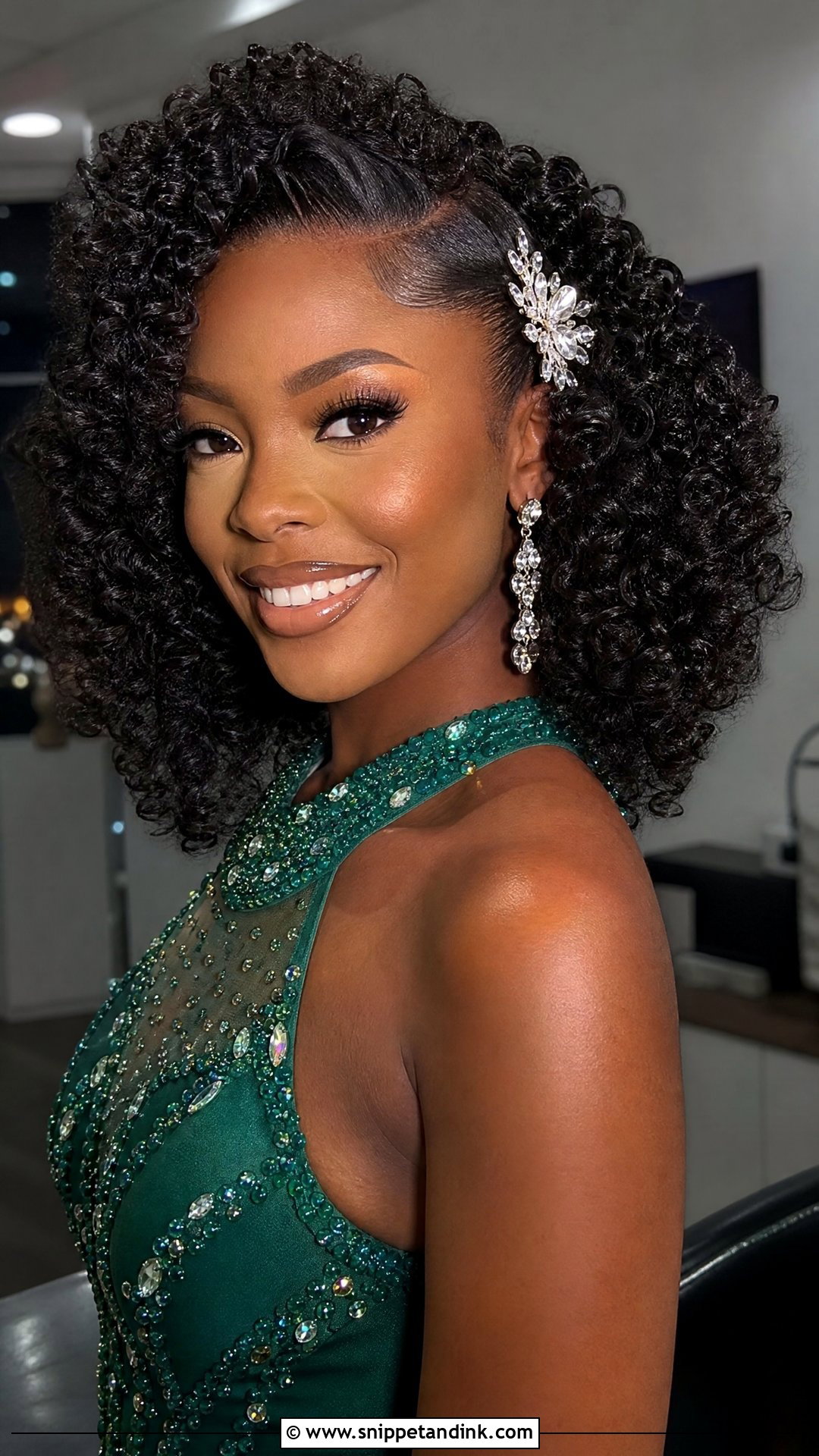
Natural curls can look polished on stage when the pattern is hydrated and defined rather than hidden. I apply a curl cream or gel that holds without flaking, since white flakes show under lights and in close-up photos. Leave the curls alone until they’re completely dry; separating them early creates frizz. Shape around the face so the curls open the features, then add one pinned section or a jeweled clip for polish.
13. Twisted Half Up Pageant Hair
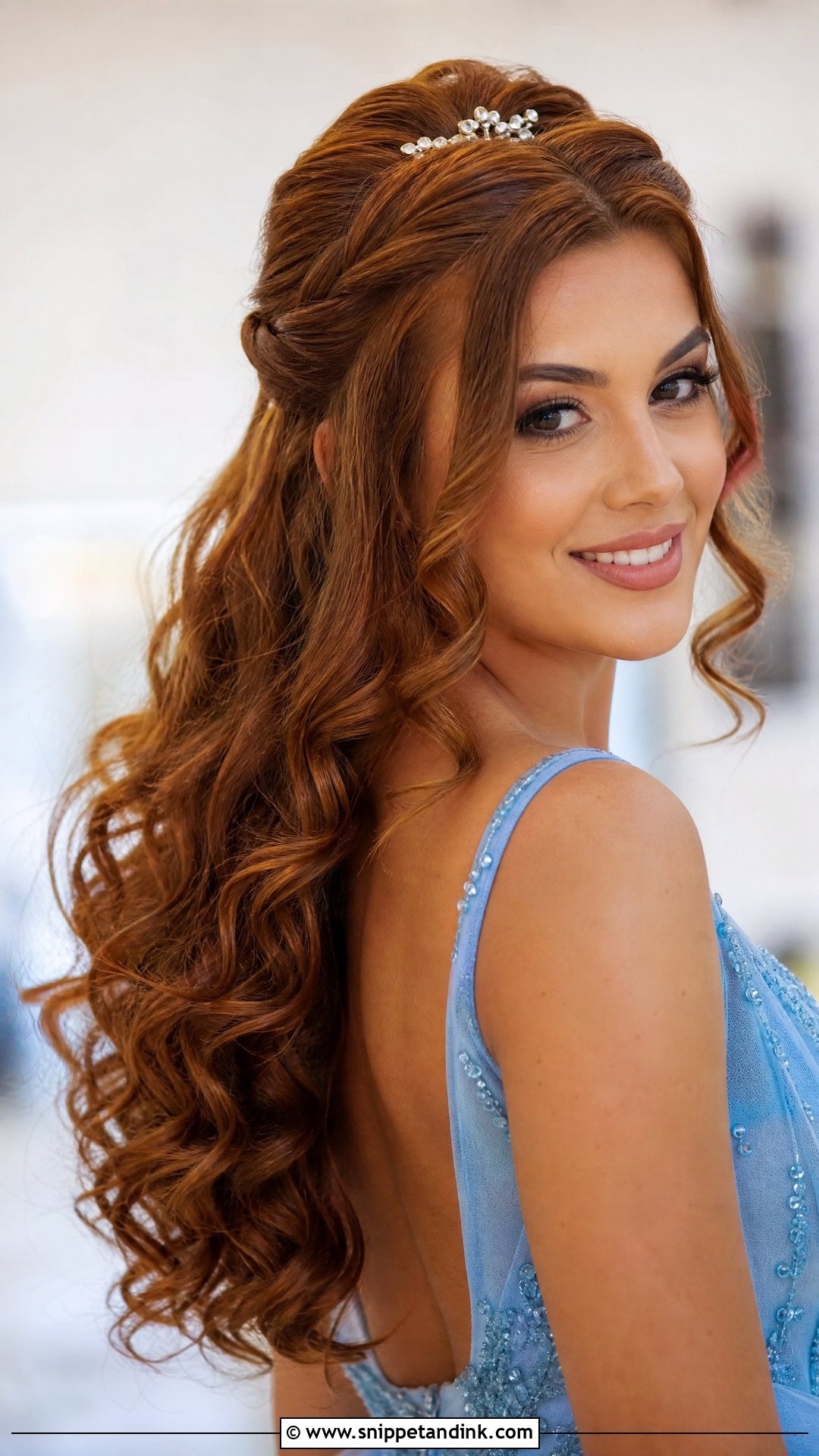
Twisting two front sections back to the crown is faster than braiding and gives curls or waves a finished frame. It’s my go-to when a contestant has to change looks quickly. Backcomb a little at the crown before pinning so the twist doesn’t sit flat against the head. A small jeweled clip or soft bow over the pins hides them.
14. French Twist Pageant Hair
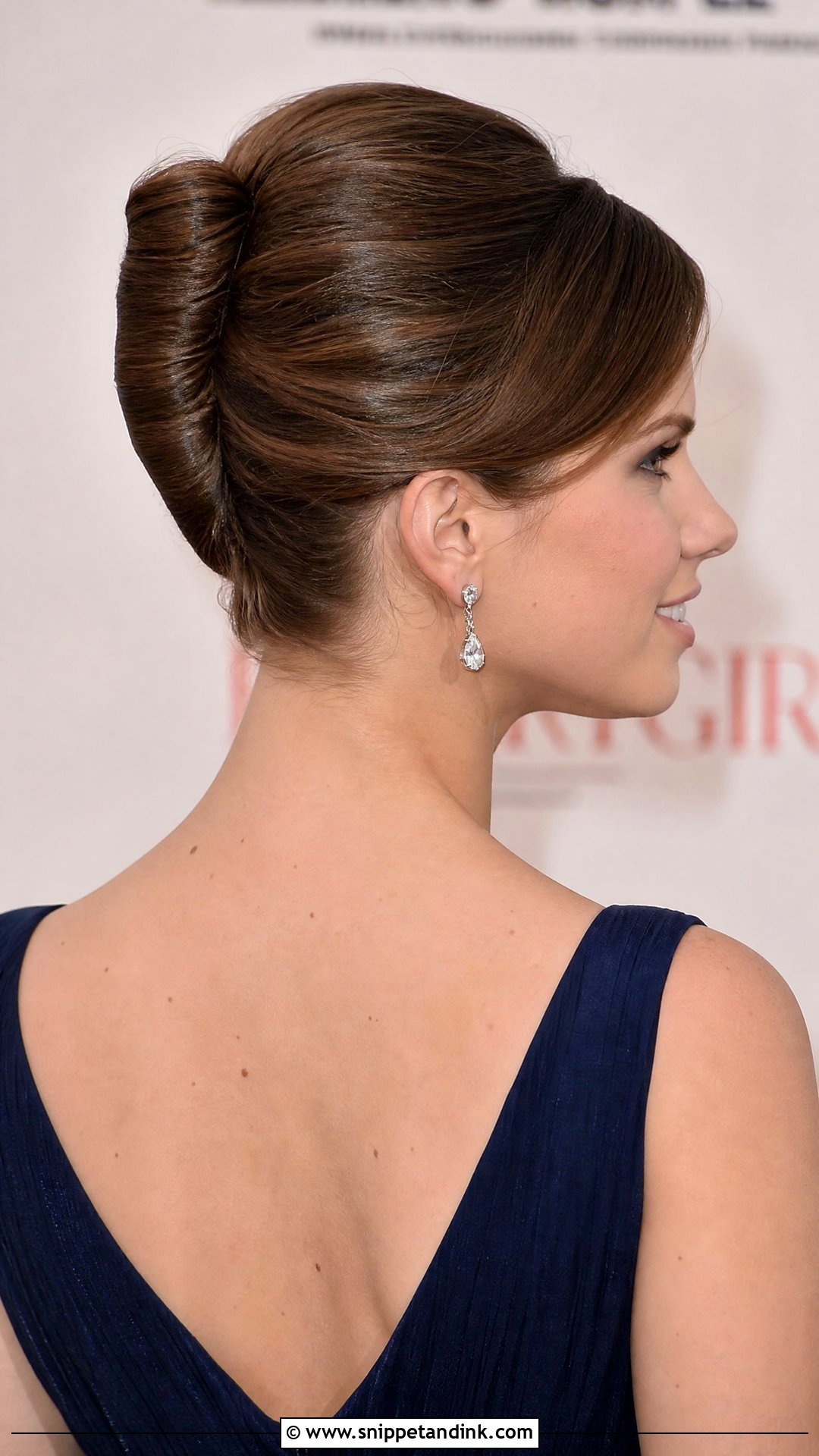
French twist pageant hair gives a clean vertical line that suits formal gown rounds. It looks advanced, but a simple version works: gather low, twist upward and pin along the seam with pins sliding into the fold. Clean hair slips, so prep with dry shampoo or a little backcombing. Leave the front smooth or sweep it softly to one side. It needs medium to long hair; shorter lengths won’t reach the twist.
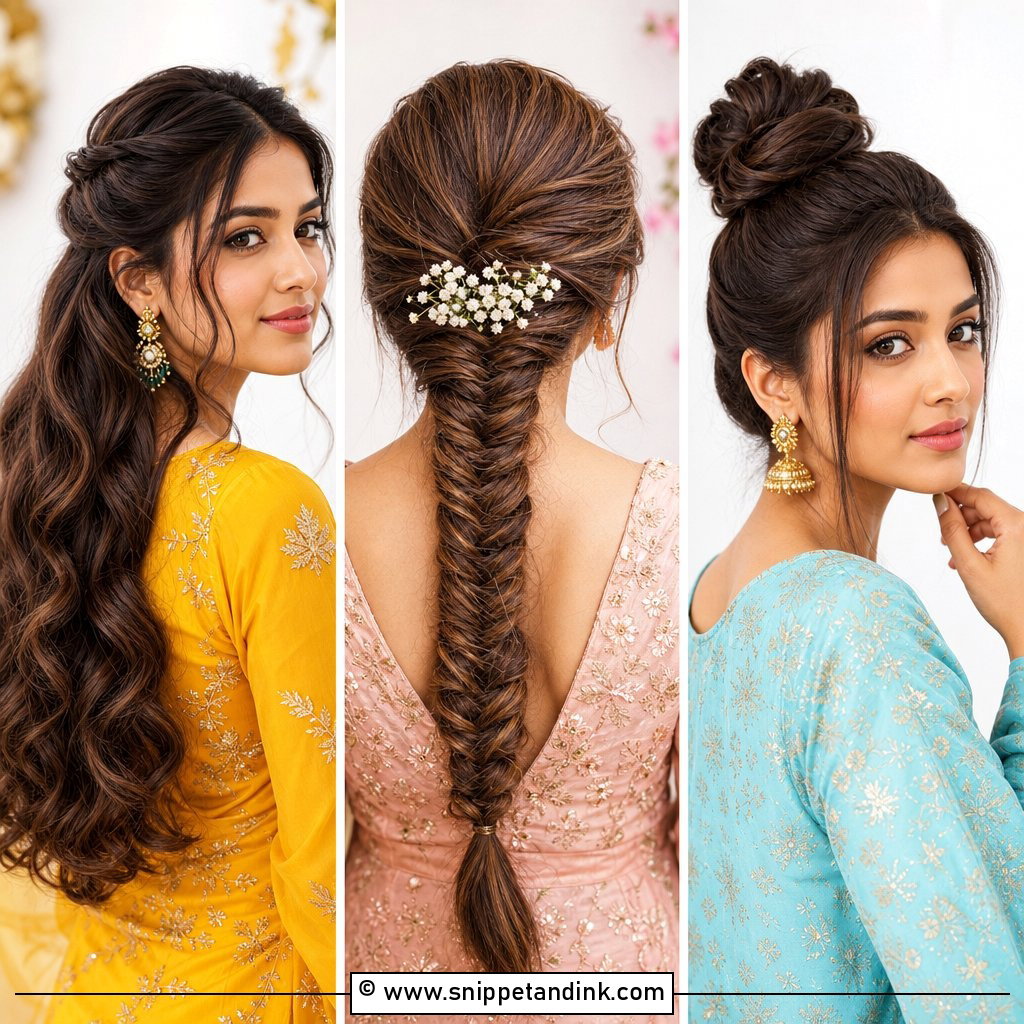
15. Short Pageant Hair With Curls
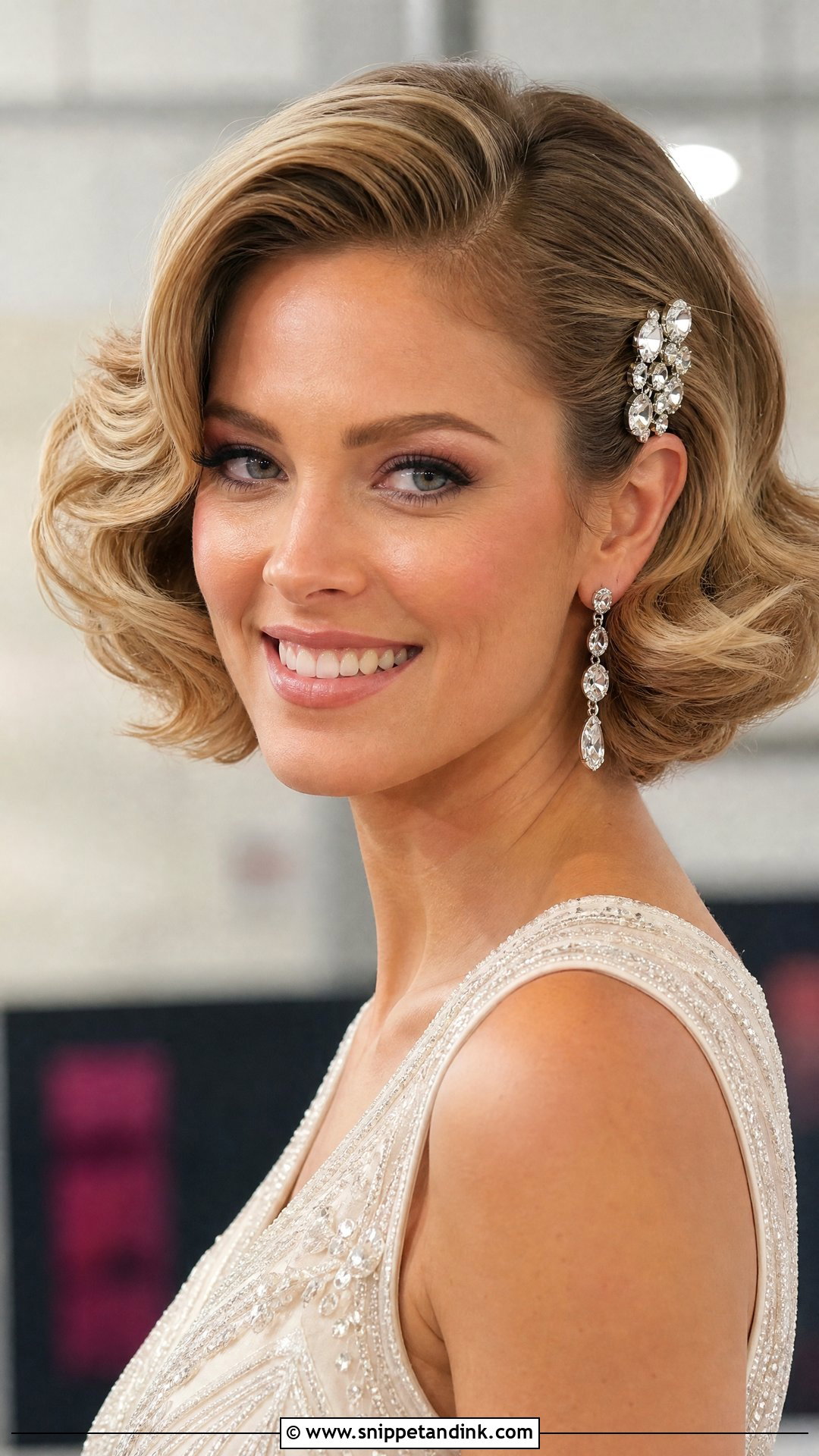
Short hair can look every bit as polished on stage. A curled bob, waved lob or short layered cut frames the face and shows earrings and the neckline. Curl in smaller sections than you would on long hair; the definition lasts longer. Root volume is the part people skip, and under hot lights short hair flattens quickly without it. Tuck one side back with a clip if needed and finish with a flexible spray.
Making Room for a Crown Someone Else Will Place
Contestants think a lot about how they’ll look and almost nothing about what happens if they win. A crown is usually set on quickly by someone standing behind or beside you, in front of an audience. If the top of the hair is tightly teased and lacquered, the combs skid or sit crooked in every photo after.
I leave a smooth, slightly cushioned area at the crown and cross two bobby pins there in advance so the combs have something to catch. Very high buns and big ponytails sit exactly where a crown wants to go, so if one is your evening look, know it may need pulling lower. Sashes cause a quieter problem: a side sweep on the sash shoulder hides the lettering in photos, so sweep the hair to the opposite side.
Little Miss, Teen and Miss Each Call for Something Different
Age divisions change what reads well. Younger girls look right in hair that’s fresh and age appropriate: soft curls, half up with a bow, a neat braid. Heavy teasing and grown-up updos make a child look like she’s borrowed someone else’s style, and they’re uncomfortable to sit in for hours.
Teens sit in between, where half up curls or a polished ponytail is the safest middle ground. Miss and Mrs divisions have the most freedom, and a French twist, high bun or sleek straight look reads as confident rather than too old. Whatever the age, comfort shows. A contestant touching a pin that’s digging in looks nervous, however good the hair is.
Do a Full Dress Rehearsal of the Hair, Not Just the Walk
The pageant styles that hold up are the ones that suit the contestant’s outfit, comfort level and age division, not just the photo she likes. Before the event, do a full practice run and photograph it from the front, side and back, then wear it for a few hours. That tells you whether a pin digs in, whether the shape stays balanced and whether it leaves room for a crown. Good prep and secure pins do the rest.
You'll Like These Ideas:



Leave a Reply