
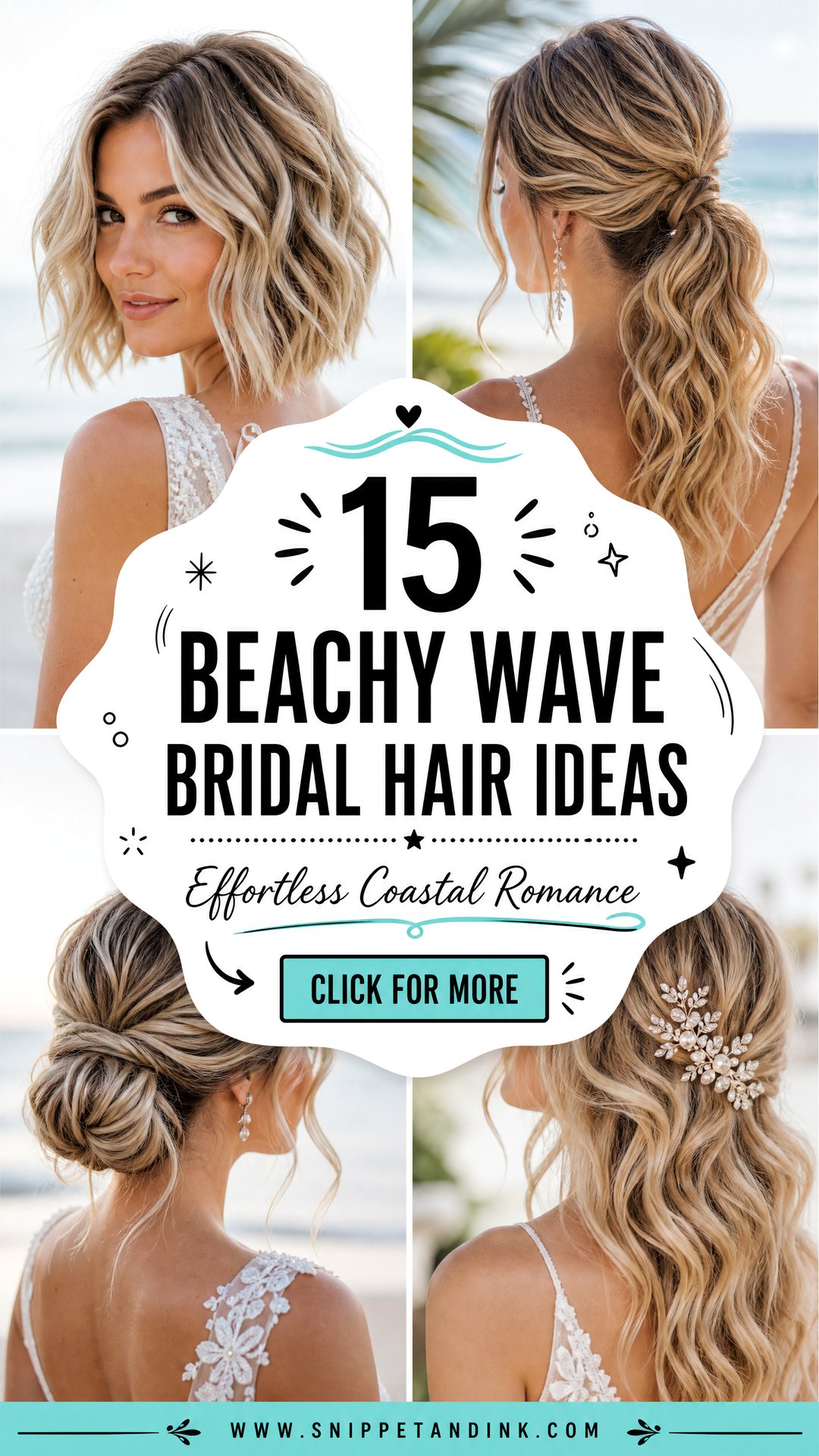
Beachy waves are the bridal hair I see saved on more mood boards than almost anything else, and I understand why. They look done without looking set, and they suit seaside weddings, garden ceremonies, courthouse elopements and easygoing receptions alike. The catch is that the undone look takes real planning to last. Below are fifteen ways I’d wear them, from fully down to a loose low bun, plus how I build the wave and how I adjust it for different hair.
How I Build a Beachy Wave, and Why Some Drop by Lunch
A beachy wave isn’t a curl that’s been brushed out by accident. I make it with a large curling wand or a flat iron, wrapping vertical sections away from the face, switching direction now and then, and leaving the last inch or two of each section straight. Those straight ends are what keep it reading as waves instead of ringlets.
The step people skip is cooling. Hair holds a shape once it cools in that shape, so I let each section cool, sometimes pinned in a loose coil, before I touch it. Brushing out warm hair is the fastest way to have flat lengths by the first toast.
- Wash the day before, not the morning of. Slightly lived-in hair grips a wave better than silky, freshly conditioned hair.
- Skip heavy conditioner and oil on the lengths that morning; they weigh the bend down.
- Go easy on salt spray. A little adds grit, but too much leaves hair dry and crunchy under a veil.
- Expect me to set the waves tighter than you want. They relax over the day, and that’s part of the plan.
1. Beachy Wave Bridal Hair Down
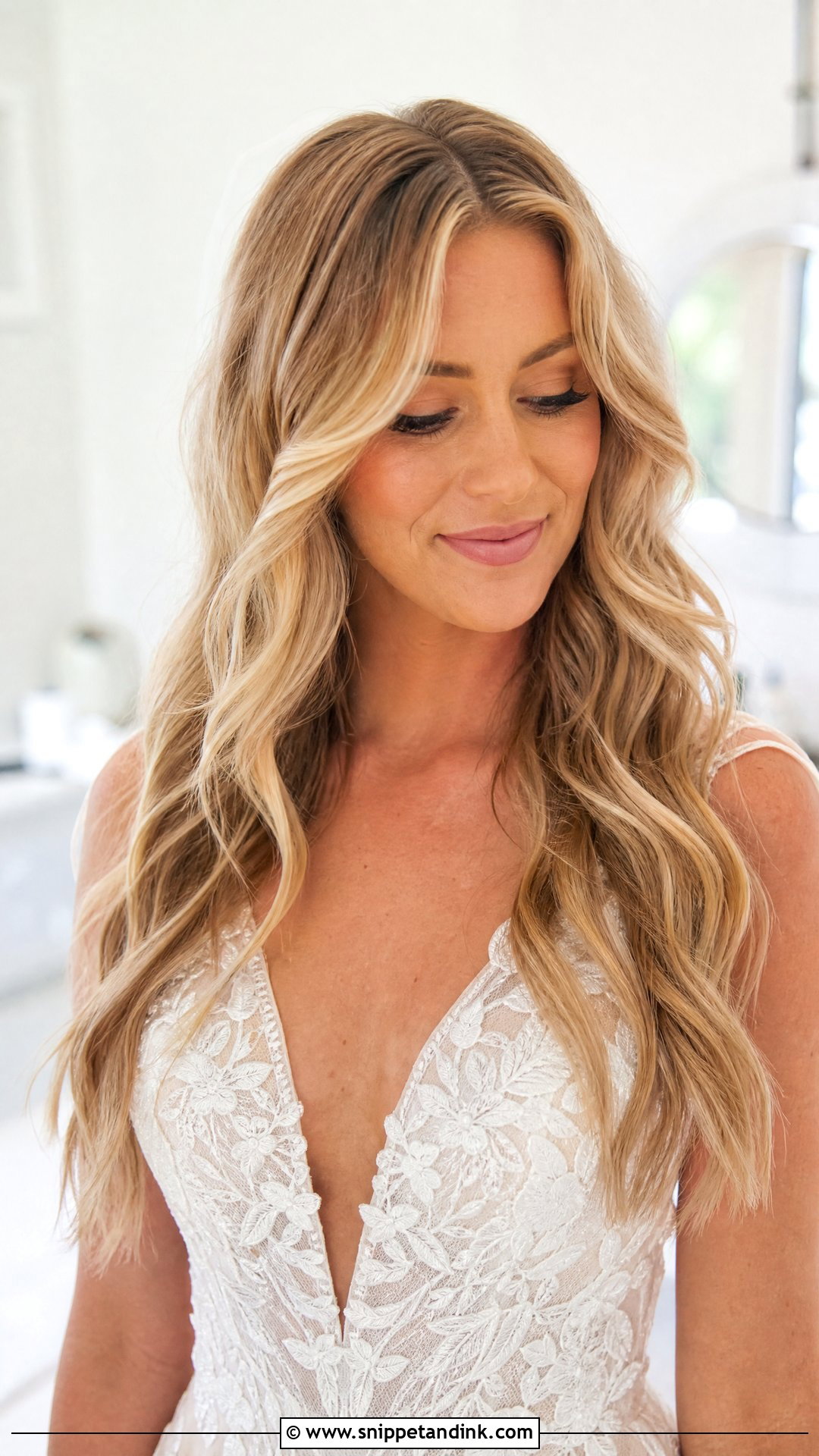
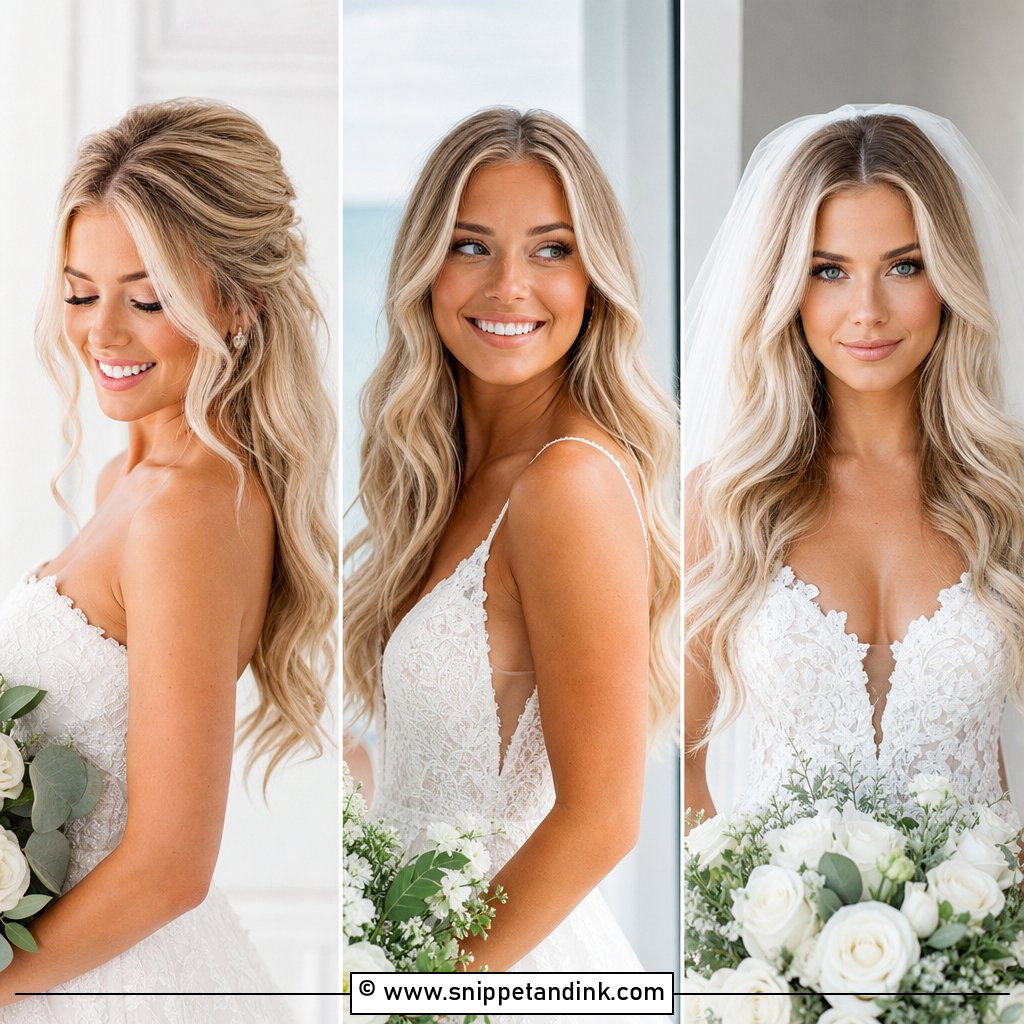
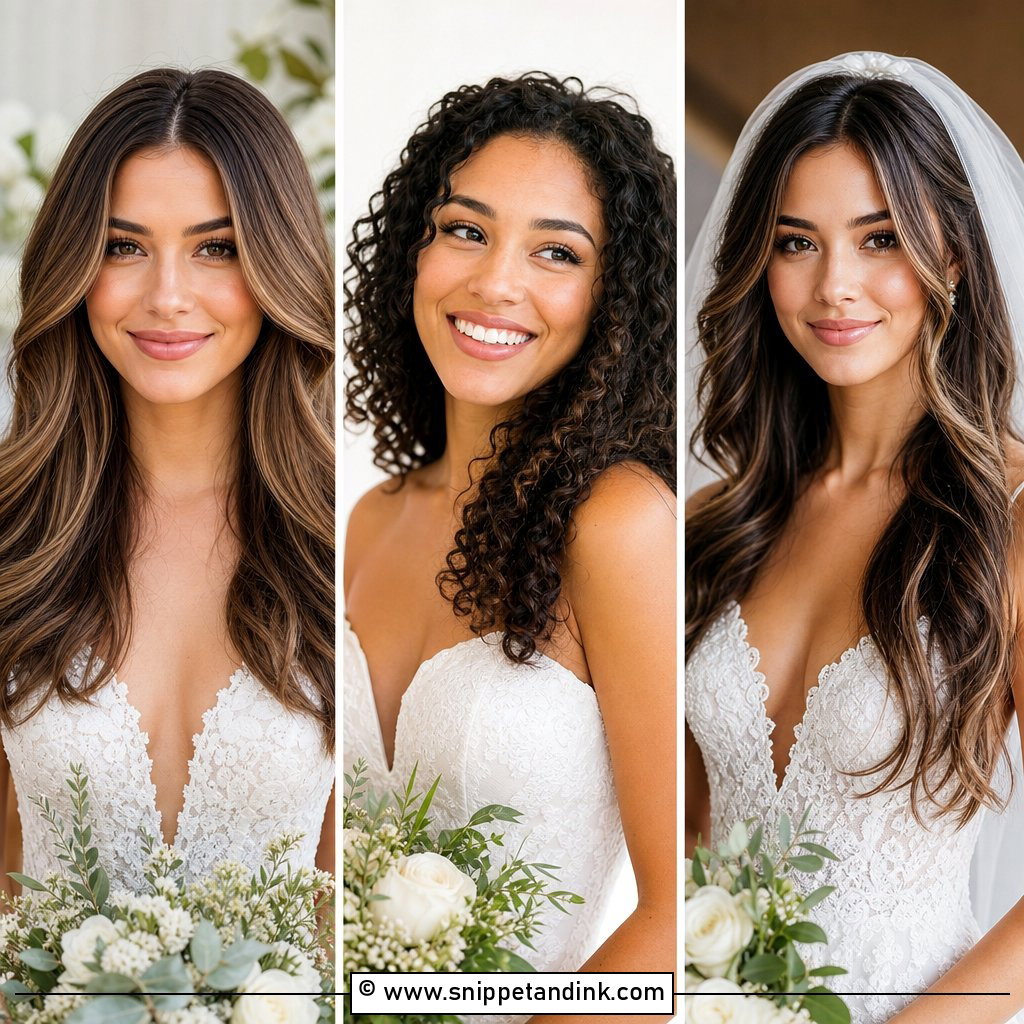
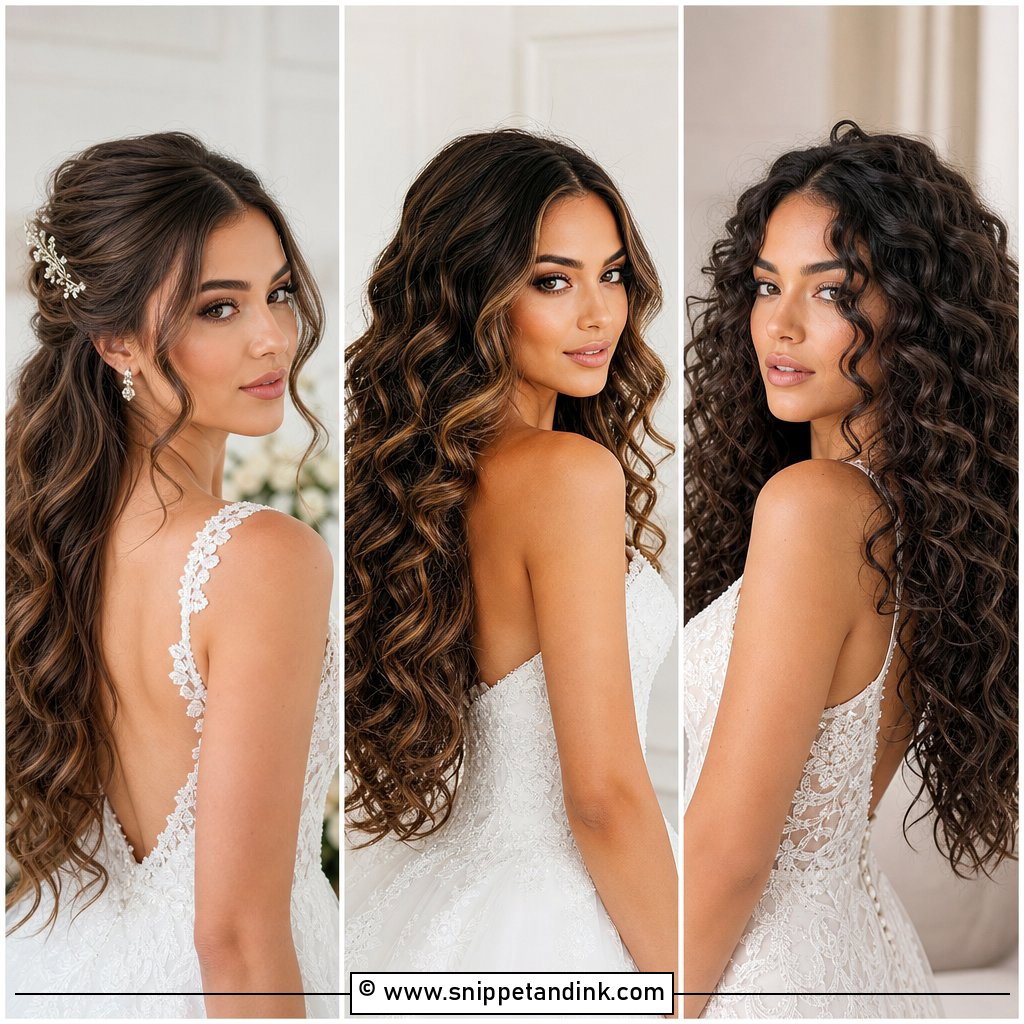
Fully down is the version that asks the most of the hair itself. Beachy wave bridal hair worn down has nothing pinned to lean on, so I set the waves from mid-lengths to ends, keep the crown lifted at the root and leave the front pieces to open up the face. It shows dimensional color well, which is why balayage and blended extensions look so good this way. Outdoors I finish with a flexible spray, never a crunchy one. Stiff waves crack apart the first time someone hugs you; flexible ones just move and settle back.
2. Half Up Beachy Wave Bridal Hair
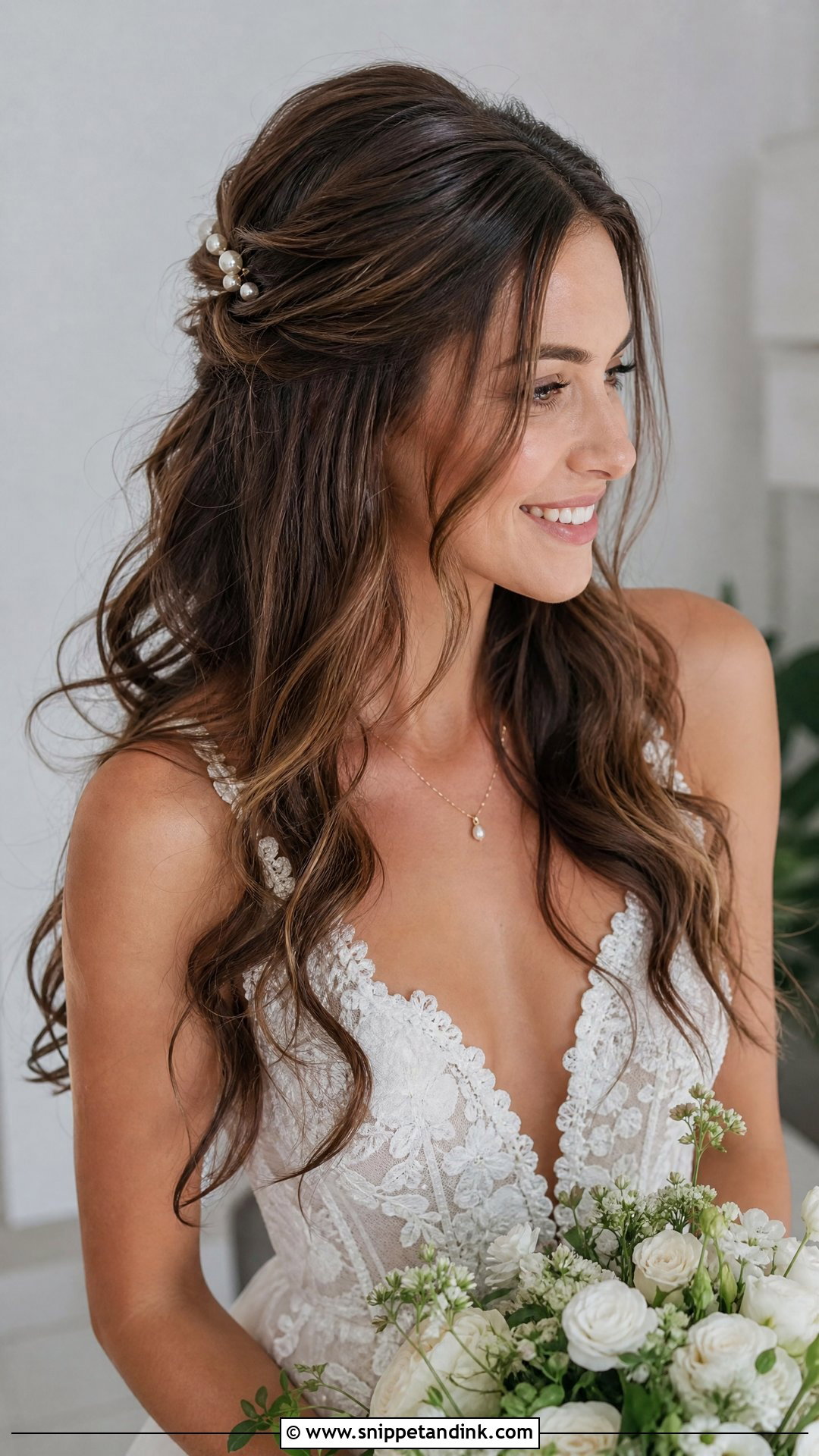
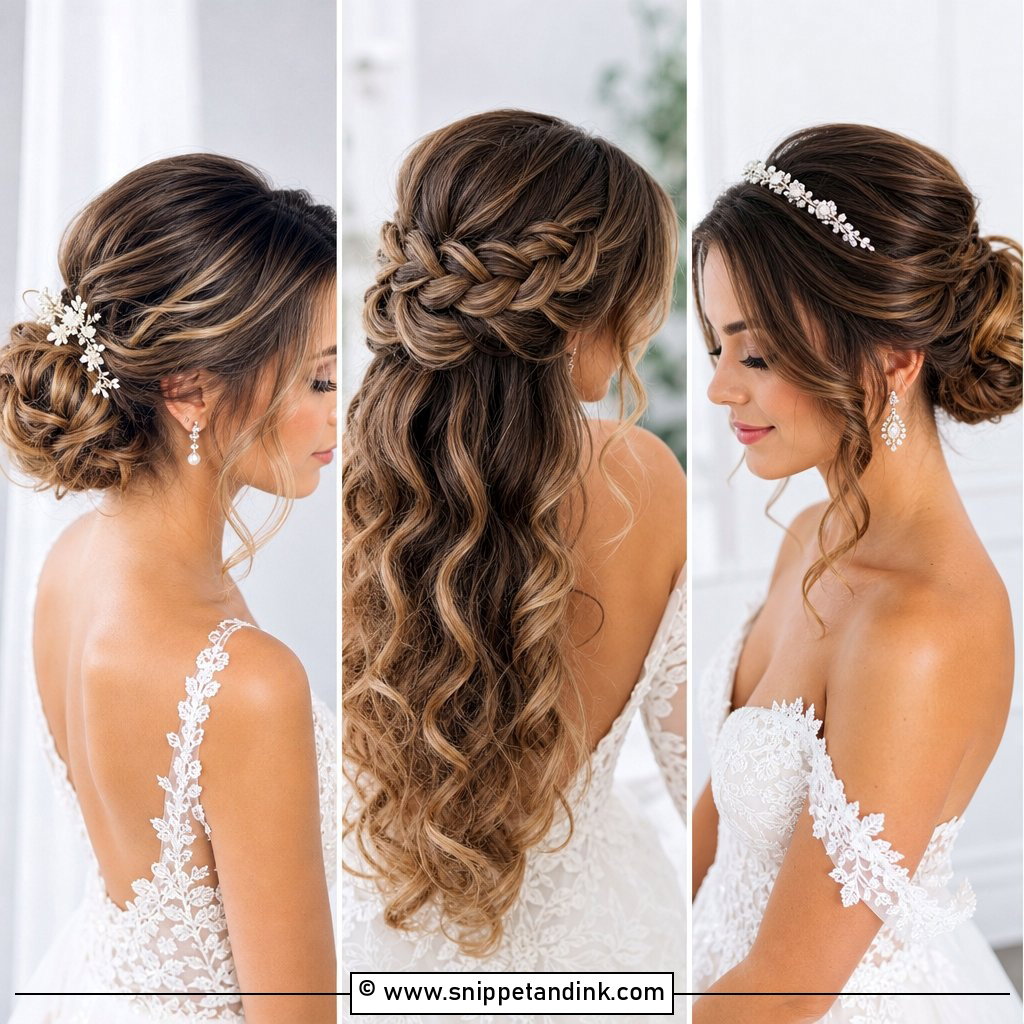
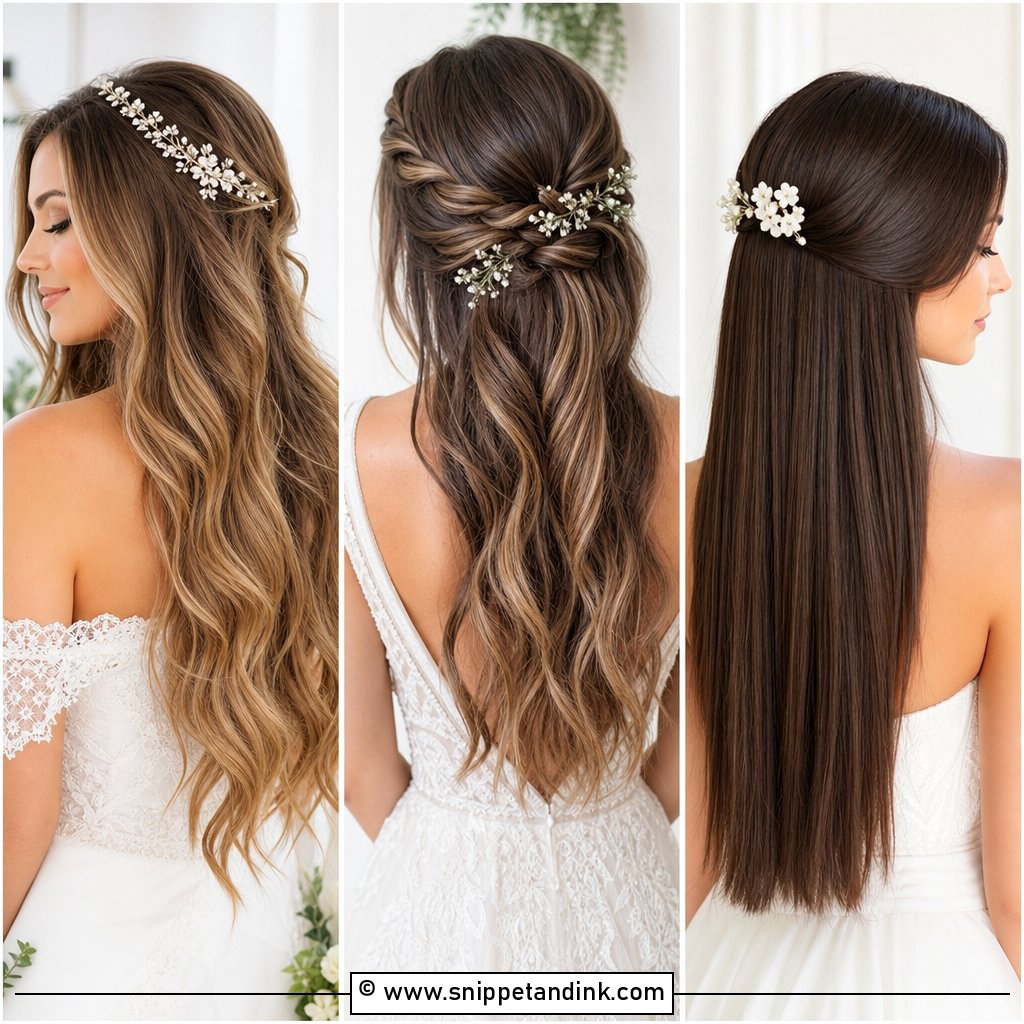
If you love your hair down but hate it falling into your face during vows, this is the compromise I suggest most. I take the top section back in a twist or a small braid and pin it with crossed bobby pins, which gives me a solid base for a veil comb later. The lengths underneath stay loose. Half up beachy wave bridal hair also forgives a lot: when the waves relax in the evening, the pinned section still holds the shape around your face.
3. Beachy Wave Bridal Hair With Veil
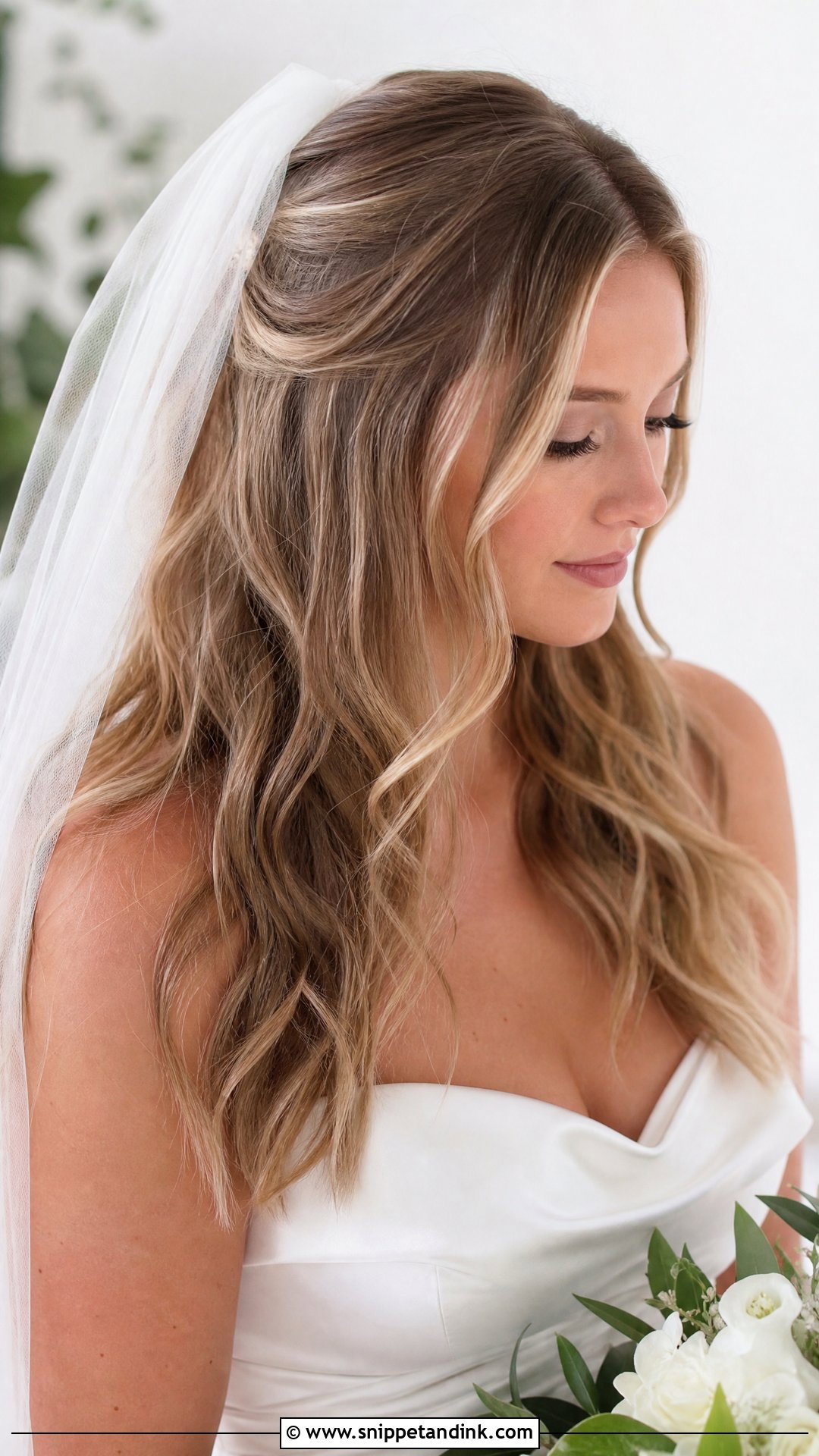
A veil and loose waves can work against each other. Tulle is light, but its comb still needs something firm to bite into, and loose wavy hair isn’t firm. So I build a hidden anchor first, usually a small pinned twist under the crown or a half-up section, and slide the comb into that. Placed this way, the veil sits on the anchor instead of pressing the waves flat. If you have long layers, keep the face-framing pieces smooth so they don’t tangle into the tulle edge when there’s a breeze.
4. Beachy Wave Bridal Hair With Pearl Pins
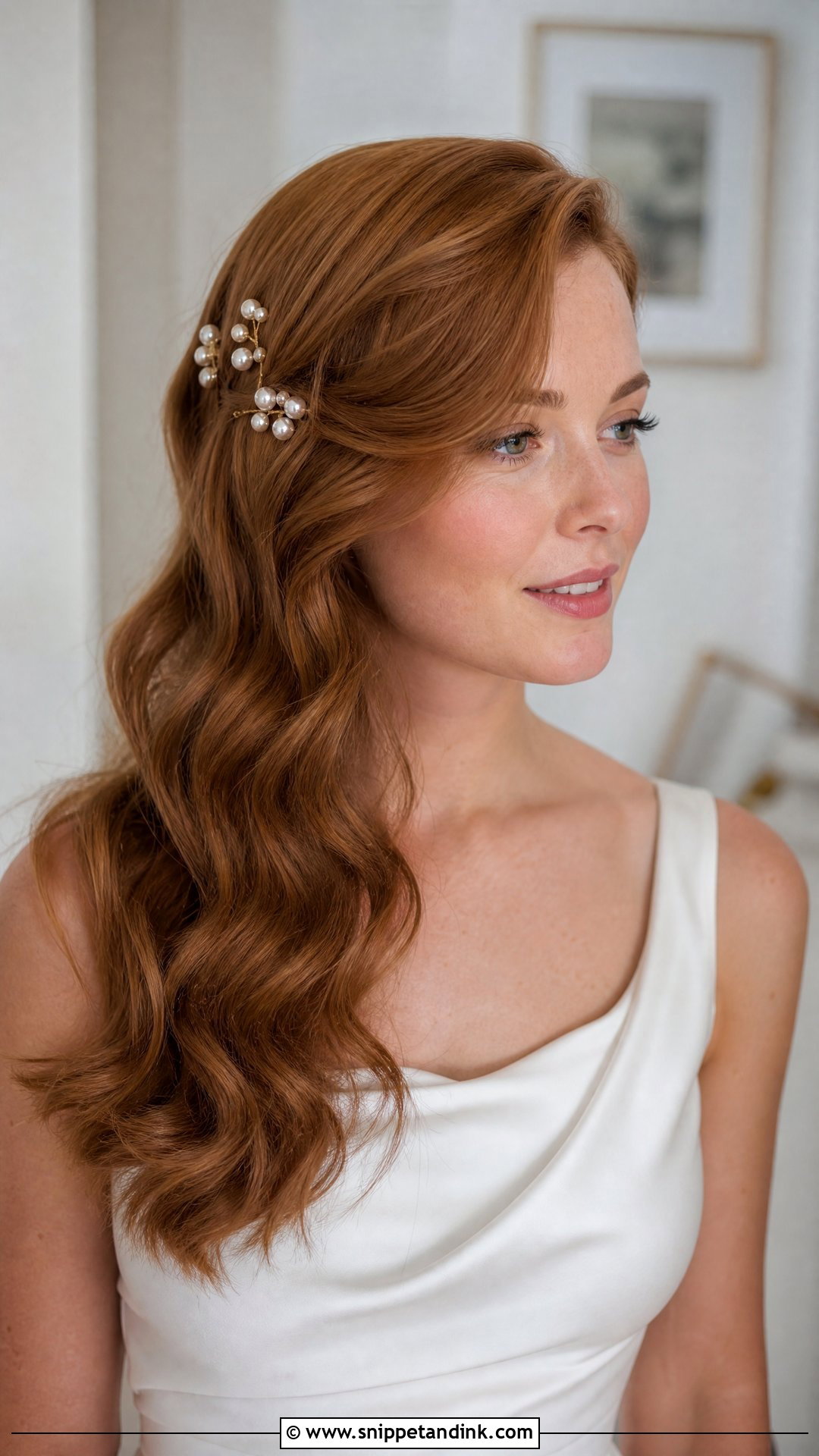
Pearls look better grouped than scattered. I place them in a small cluster along one side, around the twist of a half-up or at the back of the crown, and I push each pin in at an angle so the pearl sits on top of a wave rather than in the dip between two. Spread evenly across the head they start to look like polka dots. If your dress has pearl beading, a cluster near the ear ties the two together, and that’s enough decoration; I’d skip drop earrings in that case.
5. Beachy Wave Bridal Hair With Side Part
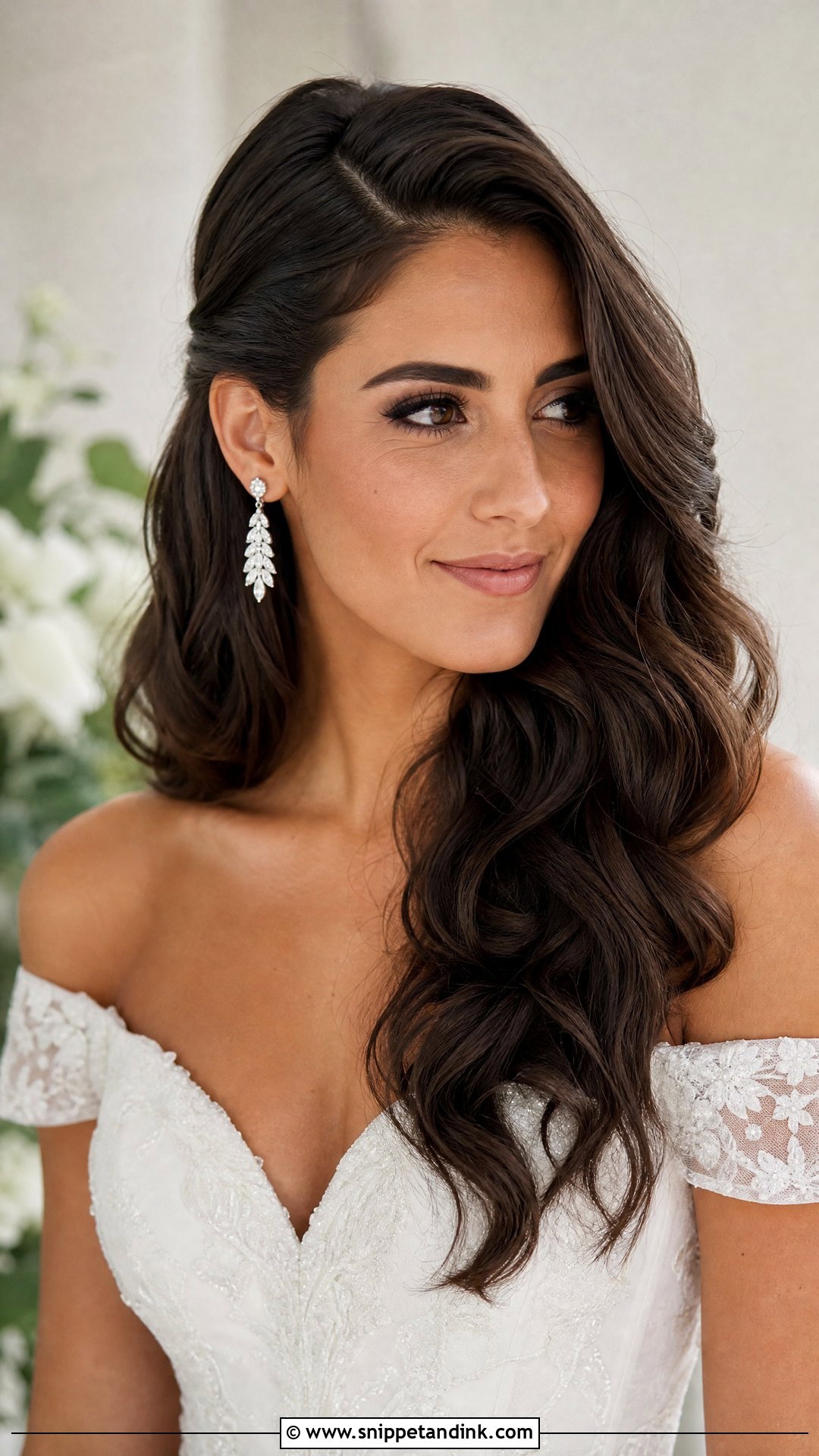
A deep side part gives you volume on top and a sweep across the forehead, a little closer to old Hollywood without the sculpted finish. I tuck the lighter side behind the ear, which shows off earrings and an asymmetric neckline. The thing I watch is separation: if the waves are raked apart with fingers too much, a side part turns fluffy on one side. I’d rather brush the waves lightly so they group into wider bends, then set them with a light hold that still lets them move.
6. Beachy Wave Bridal Hair With Middle Part
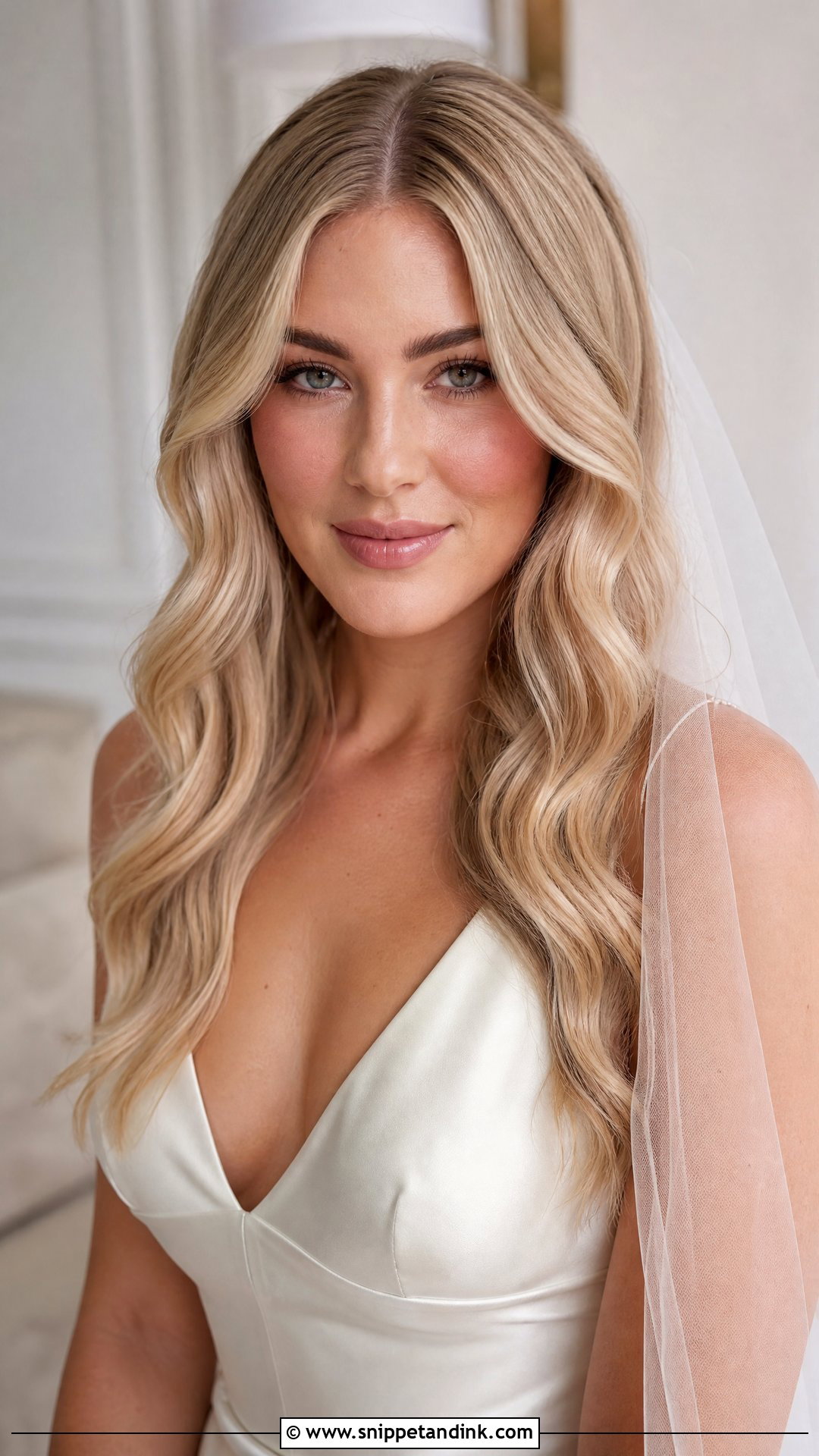
A middle part is honest. It shows every bit of symmetry in your face, so I always try it at the trial before committing. I start the waves just below the cheekbones; starting higher widens the face, while starting lower lets the top lie smooth and lengthens it. It sits well with minimal gowns, satin, off-shoulder necklines and simple veils. The fussy part is the part line itself, where flyaways and a visible scalp show in close-ups, so I smooth it with a little shine spray and a toothbrush rather than more product.
7. Long Beachy Wave Bridal Hair
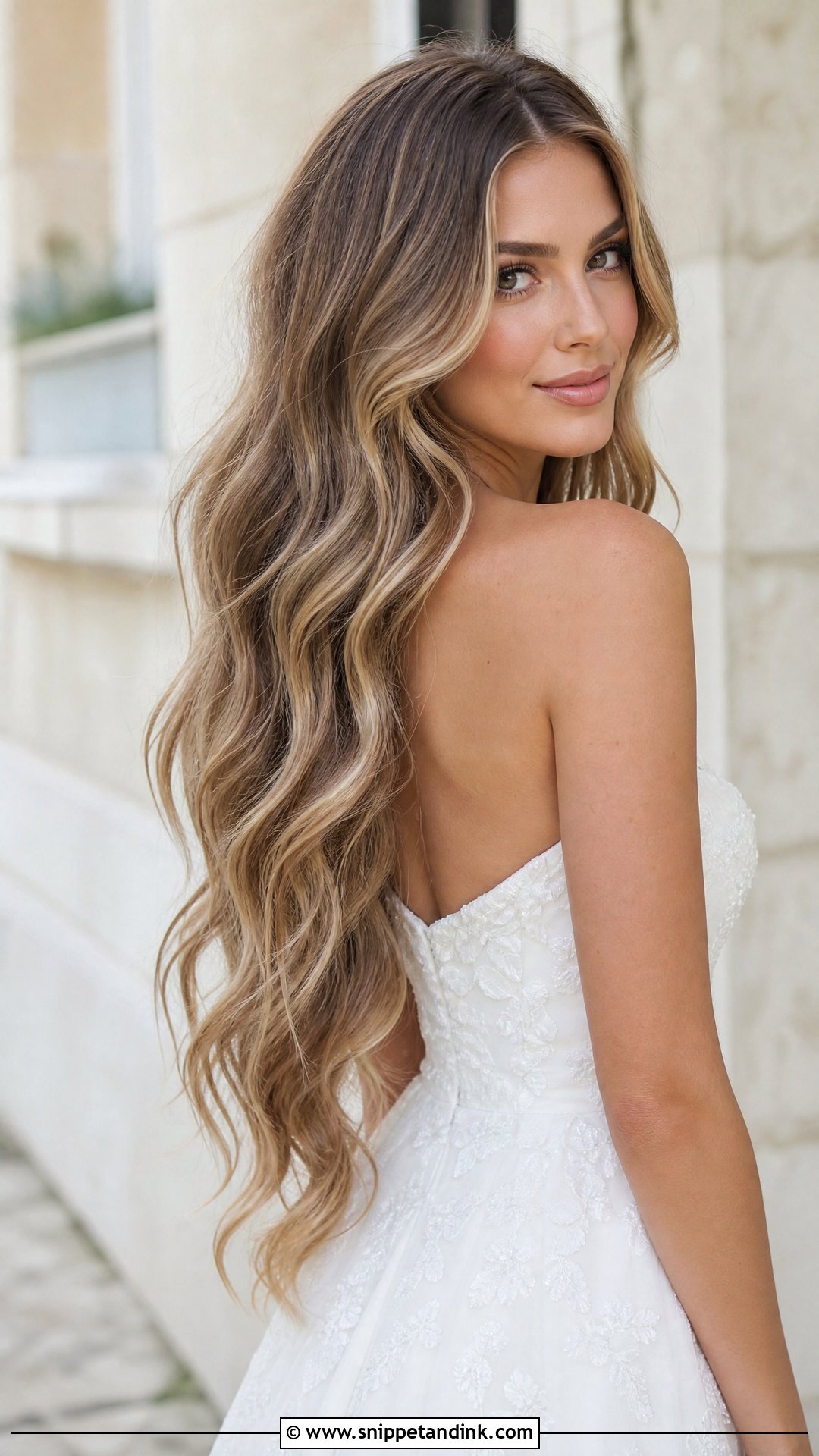
Long hair gives the wave room to fall in wide, open bends instead of tight curls. The trade-off is weight: one-length long hair pulls its own waves straight within a few hours, so I want layers cut in a few weeks before the wedding. Fine or shorter hair can borrow fullness from clip-ins or salon extensions, and extensions often hold a curl longer than natural hair. With strapless, square-neck and open-back dresses, the hair becomes part of the outline of the dress, so check the back view in the mirror at your trial.
8. Medium Beachy Wave Bridal Hair
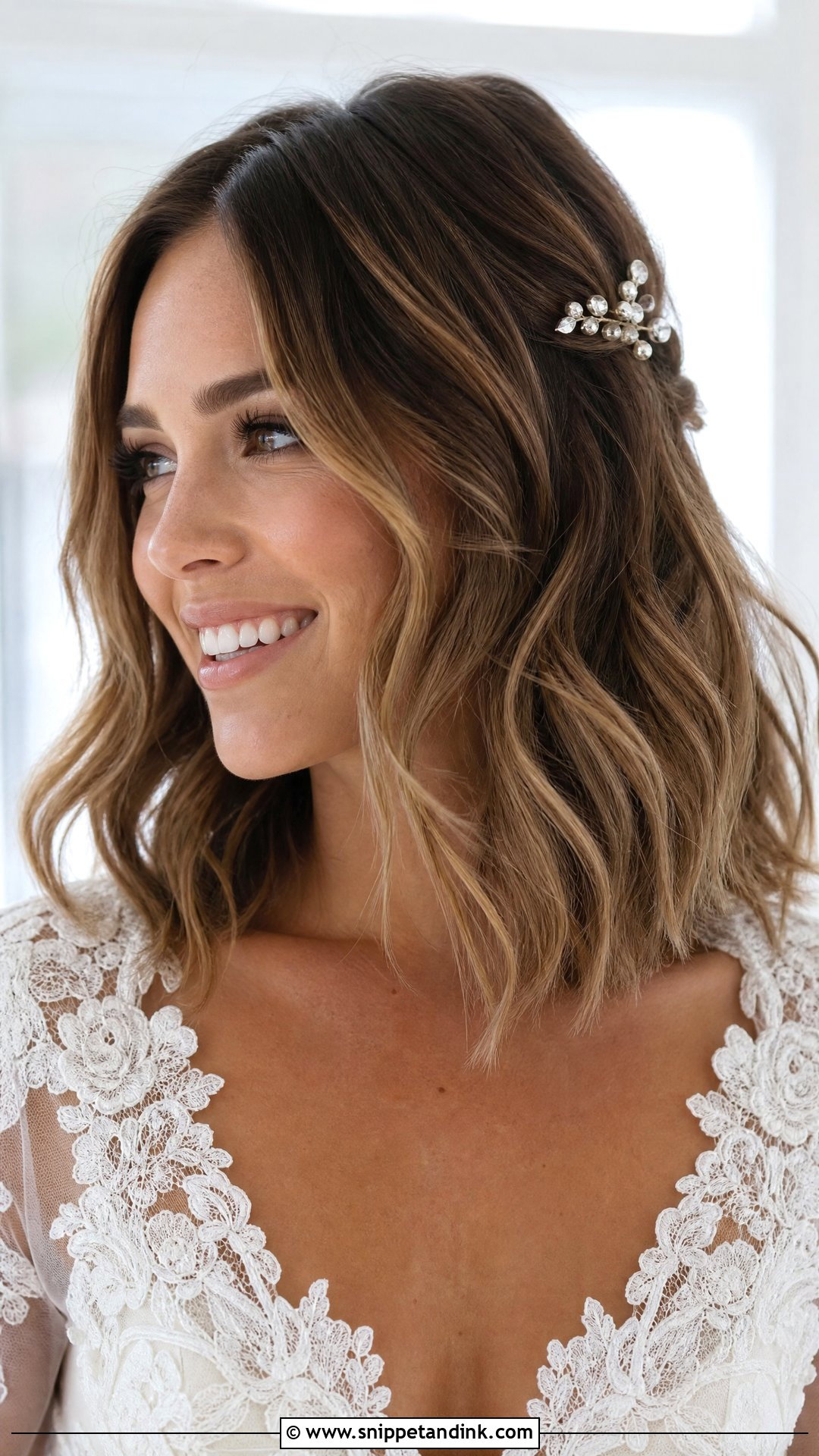
Shoulder-length hair and soft lobs are where beachy waves hold best, honestly. The hair is light enough not to drag the bend out, so the texture you leave the chair with is close to what you’ll have at the last dance. I give the sides a fuller bend for width and leave the ends a little straighter and undone. A barrette, a pearl comb or a few mini flowers suit this length better than a large headpiece, which can make shorter hair look crowded.
9. Short Beachy Wave Bridal Hair
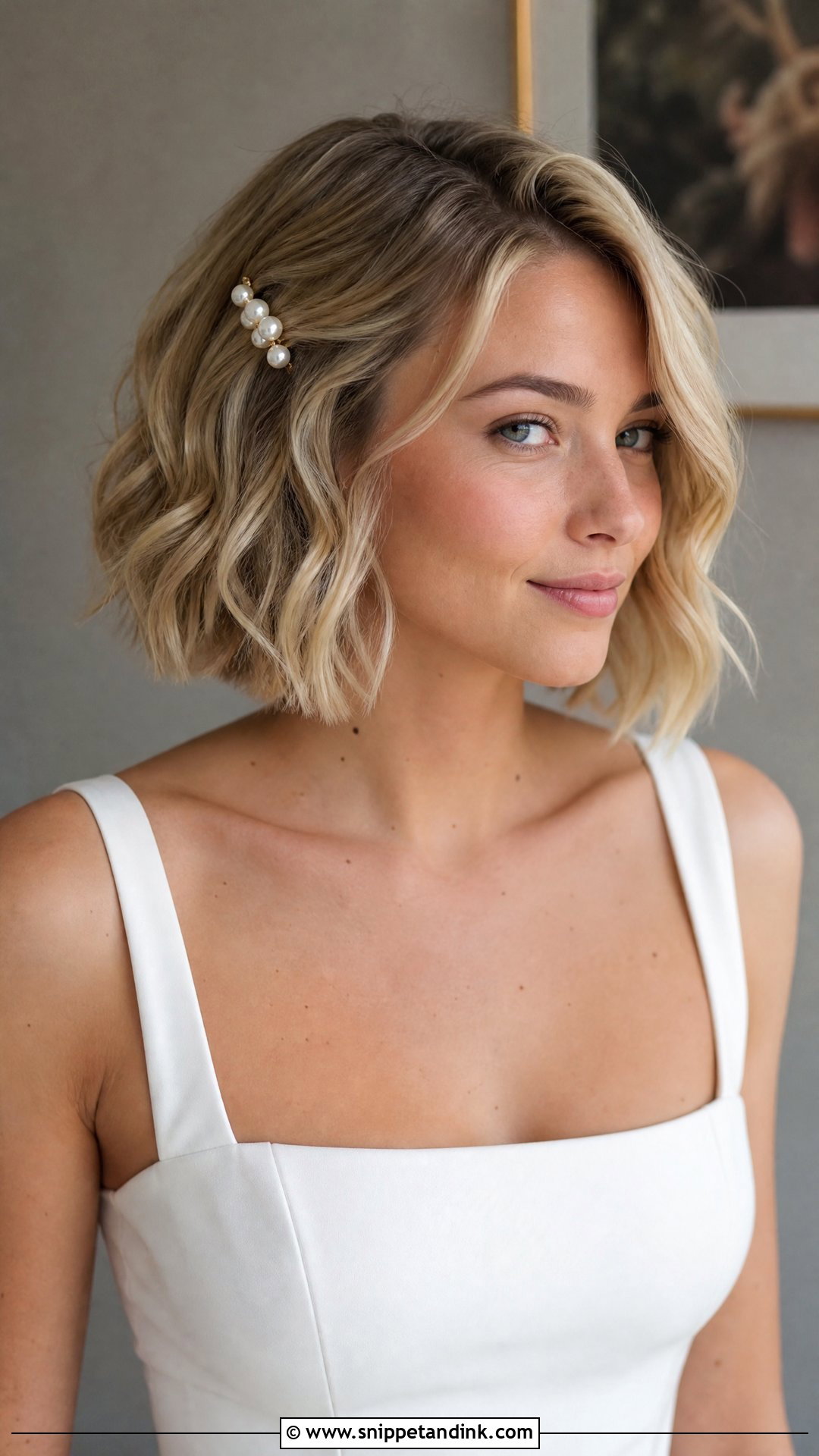
On a bob or a bixie, the risk is roundness. Wave every section the same way and the whole shape puffs into a ball, so I alternate directions and leave the back flatter than the sides. Short beachy wave bridal hair gets its definition from a pea-sized amount of flexible pomade worked into the ends, not from spray. One side tucked back with a pearl clip or a small comb keeps it bridal. It’s also the easiest length to keep tidy in heat, since there’s less hair to frizz.
10. Beachy Wave Bridal Hair Ponytail
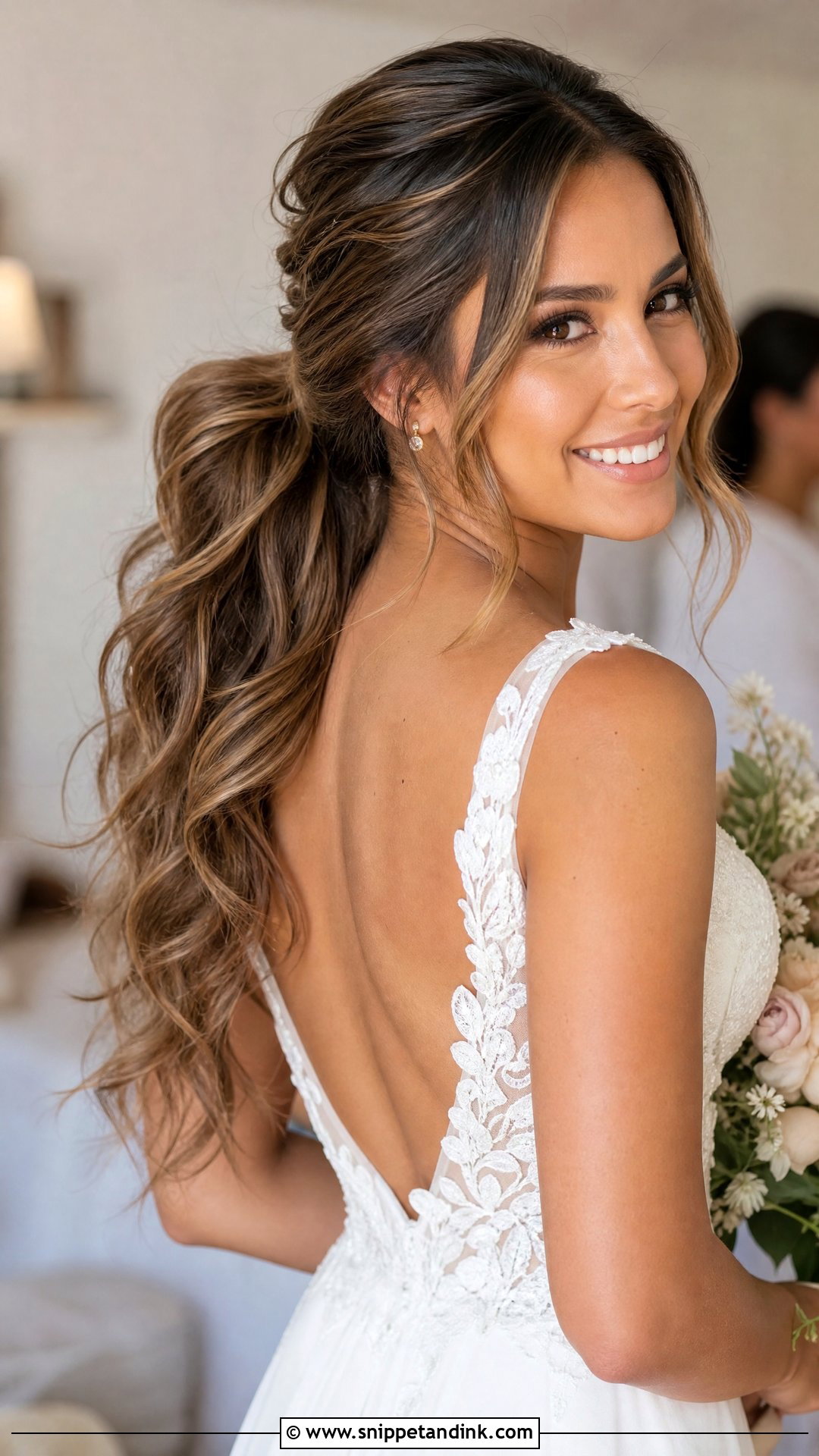
Windy venue? This is the one I reach for. A ponytail keeps the bulk of the hair together while the waves keep it from looking sporty. I set it low at the nape for a softer feel or centered for more lift, then wrap a thin section around the elastic and pin it underneath so no band shows. Before I tie it, I tease the crown slightly; a flat top makes a ponytail look like gym hair. A bow or a small comb just above the base is about all the decoration it needs.
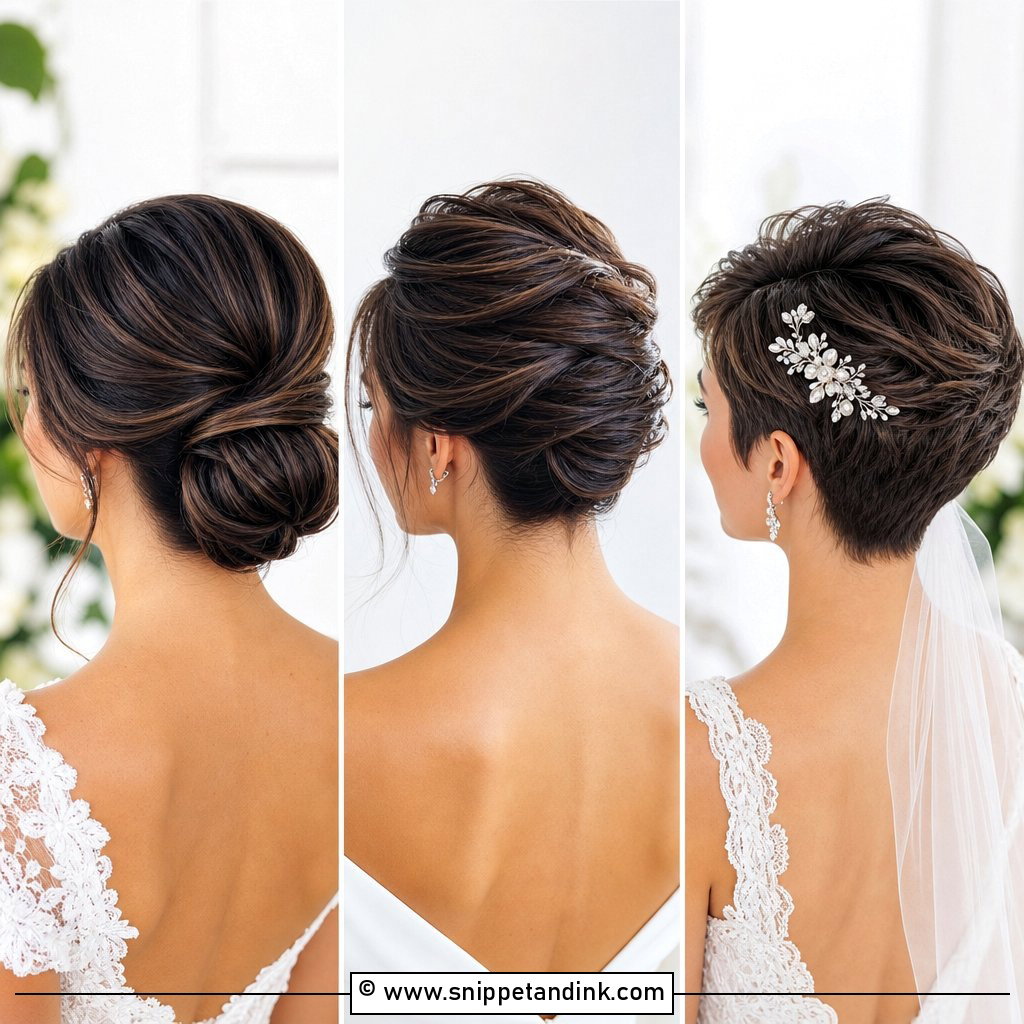
11. Beachy Wave Bridal Hair Low Bun
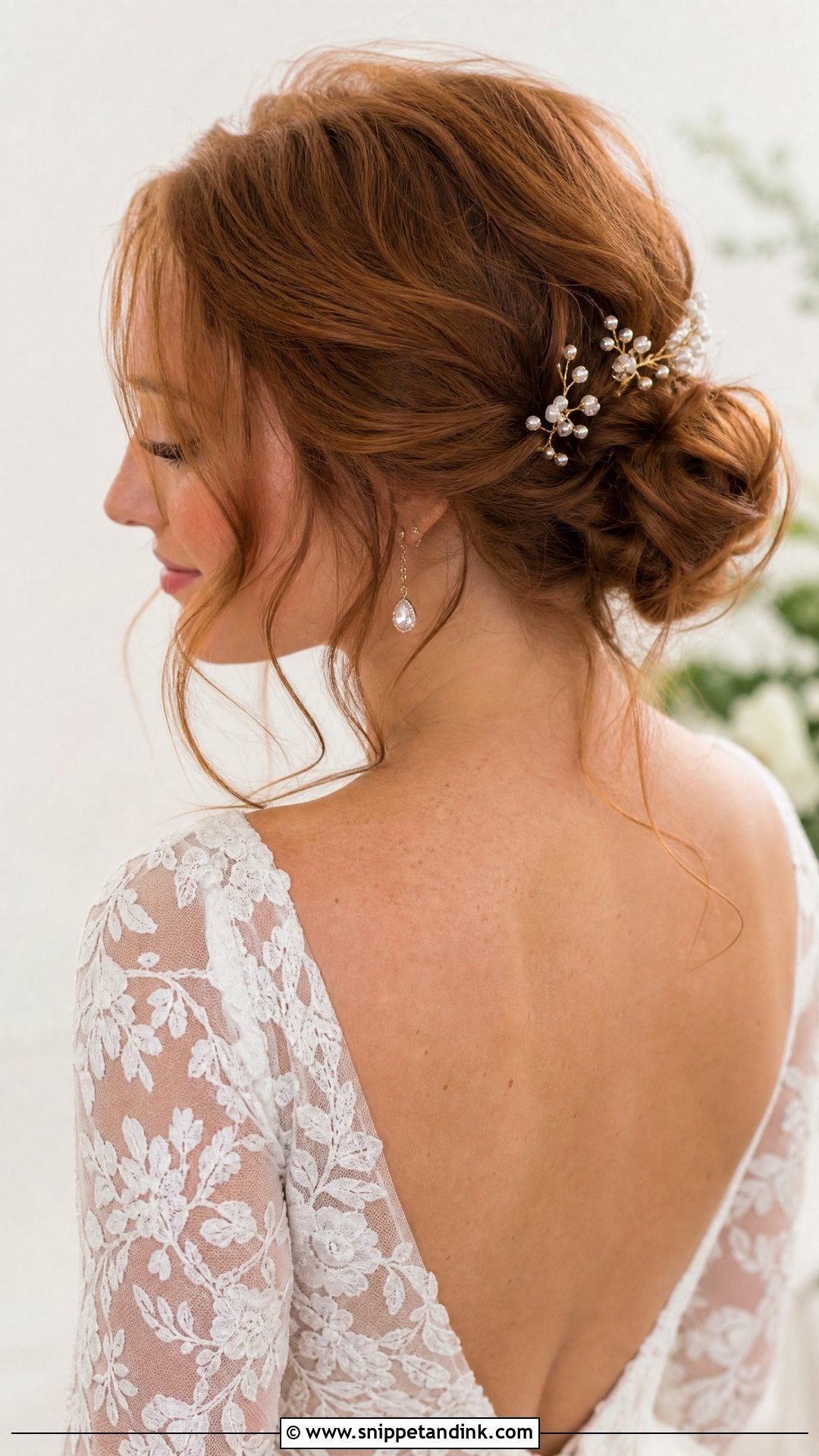
A low bun built from waves should look full and a bit loose, not like a ballet bun. I wave everything first, gather it at the nape, then pin the bun in two or three sections so each one keeps some dimension. Pinning it in one go flattens it. Leave a couple of pieces out around the cheekbones and jaw. It’s secure enough for a heavy veil or a cathedral length, and it’s the style I trust most for a long outdoor day.
12. Beachy Wave Bridal Hair With Braid
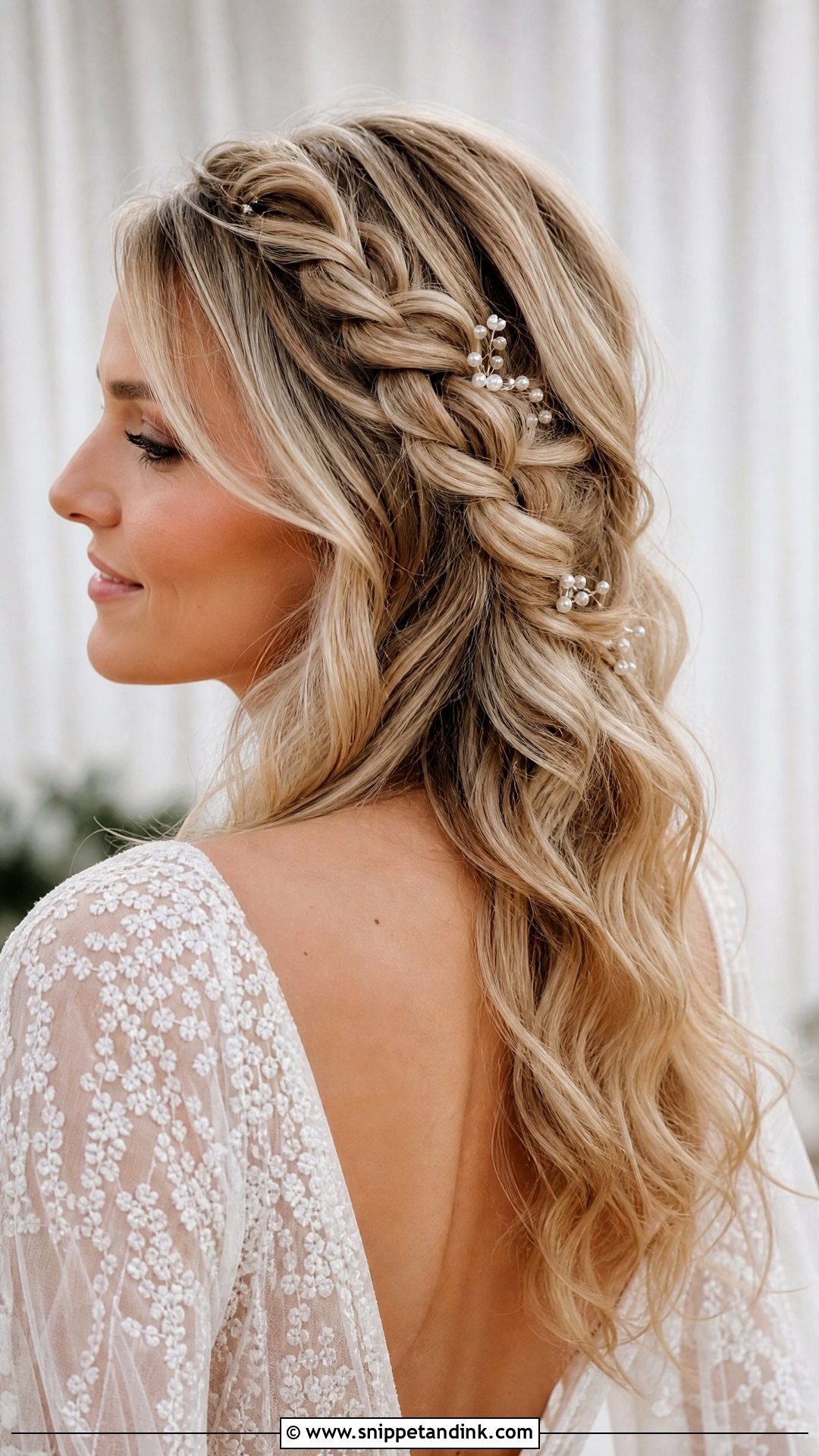
A braid gives waves some structure to play against. I like it along one side, across the crown or woven into a half-up section, and I always pancake it, pulling the loops wider with my fingers so it reads at the same scale as the waves. A tight braid next to loose hair looks like two different hairstyles. It fits outdoor ceremonies, coastal weddings and garden venues, and the braid itself is a good place to hide small flowers or gold pins, since it grips them better than loose hair does.
13. Beachy Wave Bridal Hair With Flower Crown
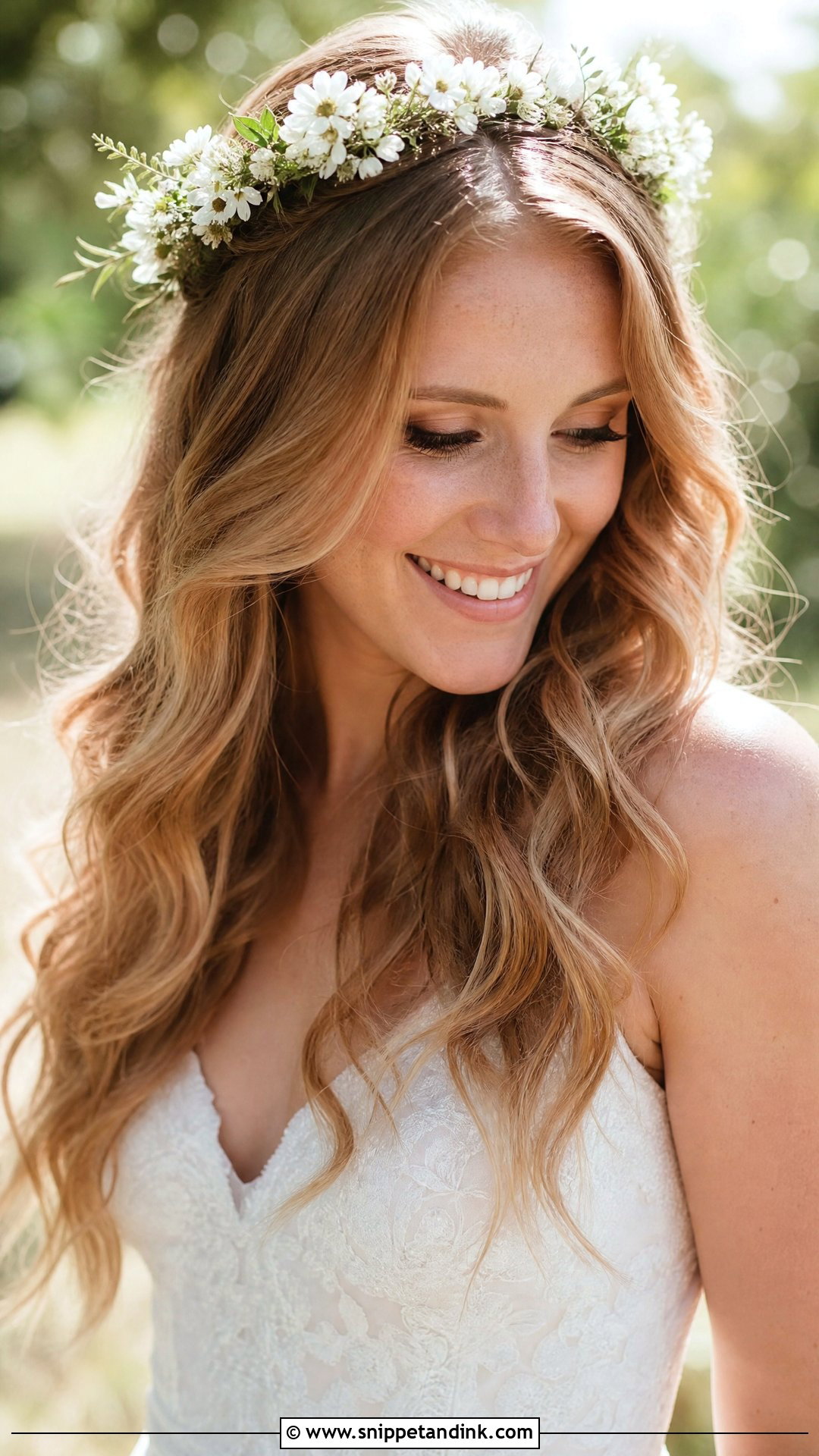
A flower crown can swallow the waves if they’re too soft. I define the top layer a little more firmly so it still shows beneath the crown, and I secure the crown with pins through its frame on both sides, not just behind the ears. Small blooms look more refined than big ones, especially with a lace or beaded dress. Talk to your florist about heat: some flowers wilt within an hour out of water on a warm day, so pick hardier ones that match the bouquet. Outdoors, it’s the most relaxed look on this list.
14. Beachy Wave Bridal Hair With Hair Comb
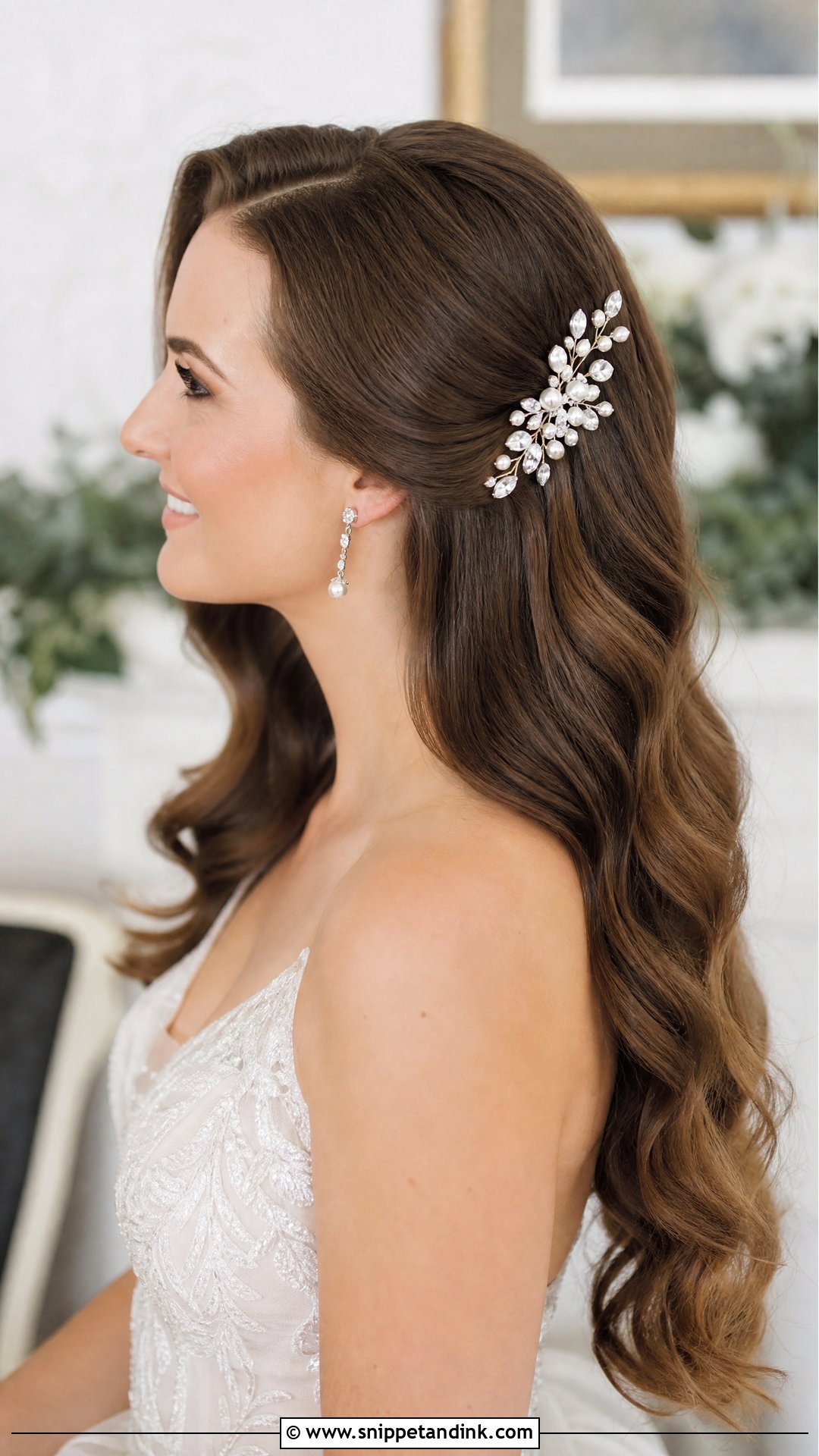
A comb is the easiest way to make waves feel like wedding hair without turning them into an updo. It can sit above a half-up twist, on one side or at the back where the waves start to fall. The detail that matters is what it’s anchored to. A comb pushed into loose hair slides out by the reception, so I always slip it into a hidden pinned section. Pearl, crystal, floral and gold all work; I match the metal to your earrings rather than to the dress.
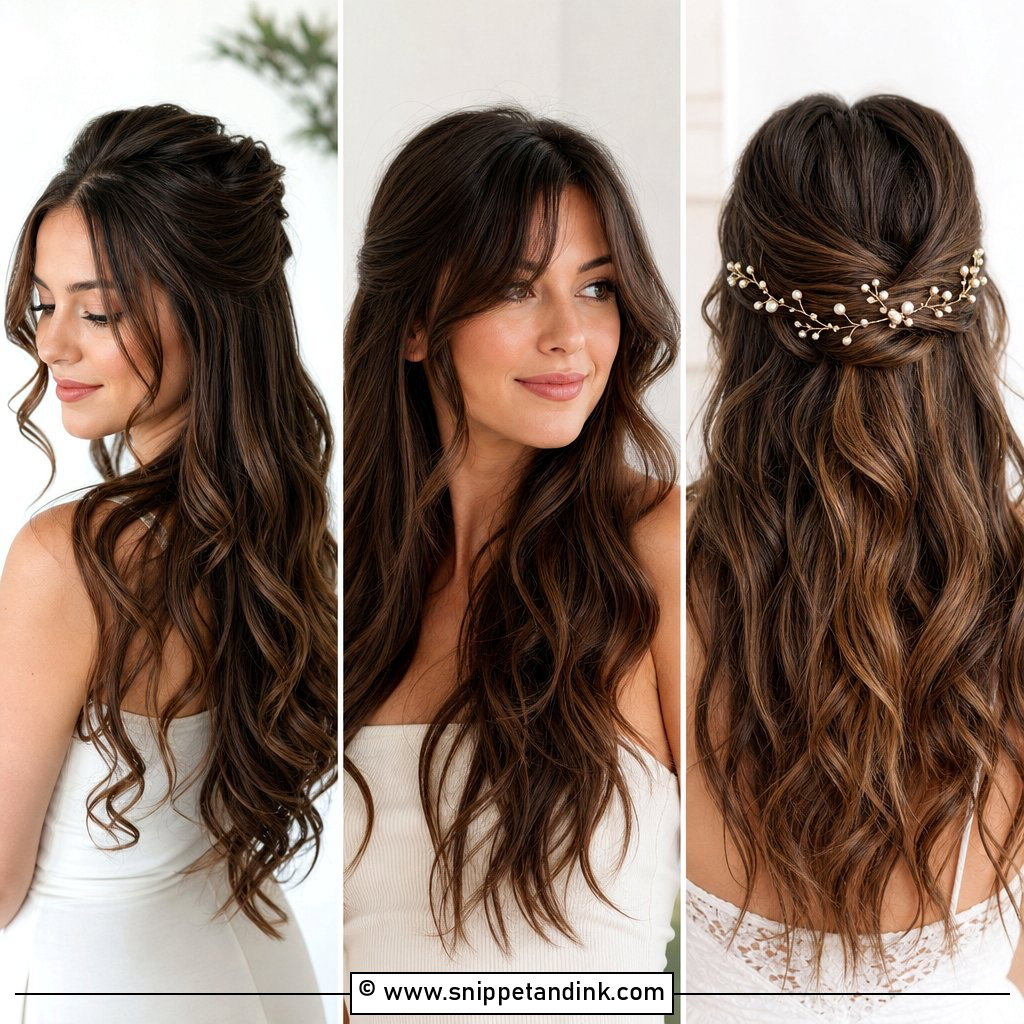
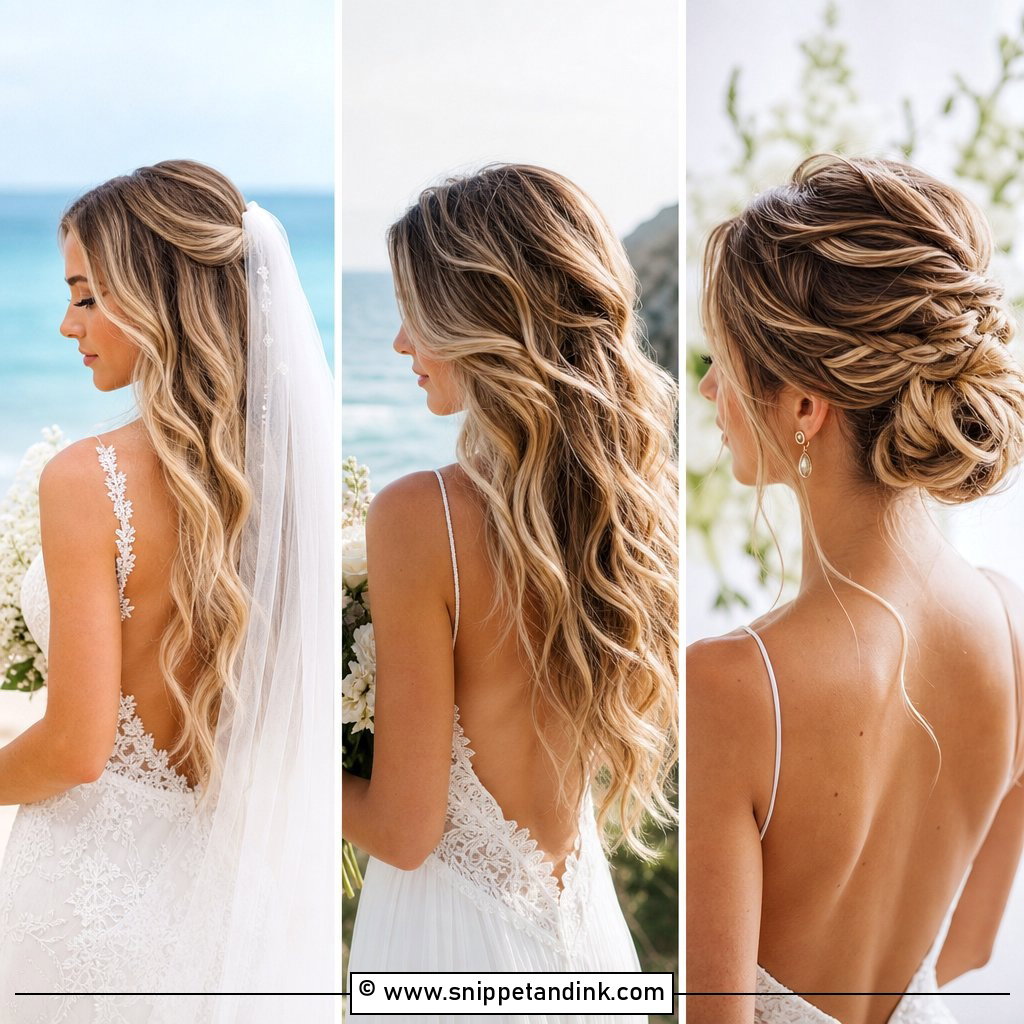
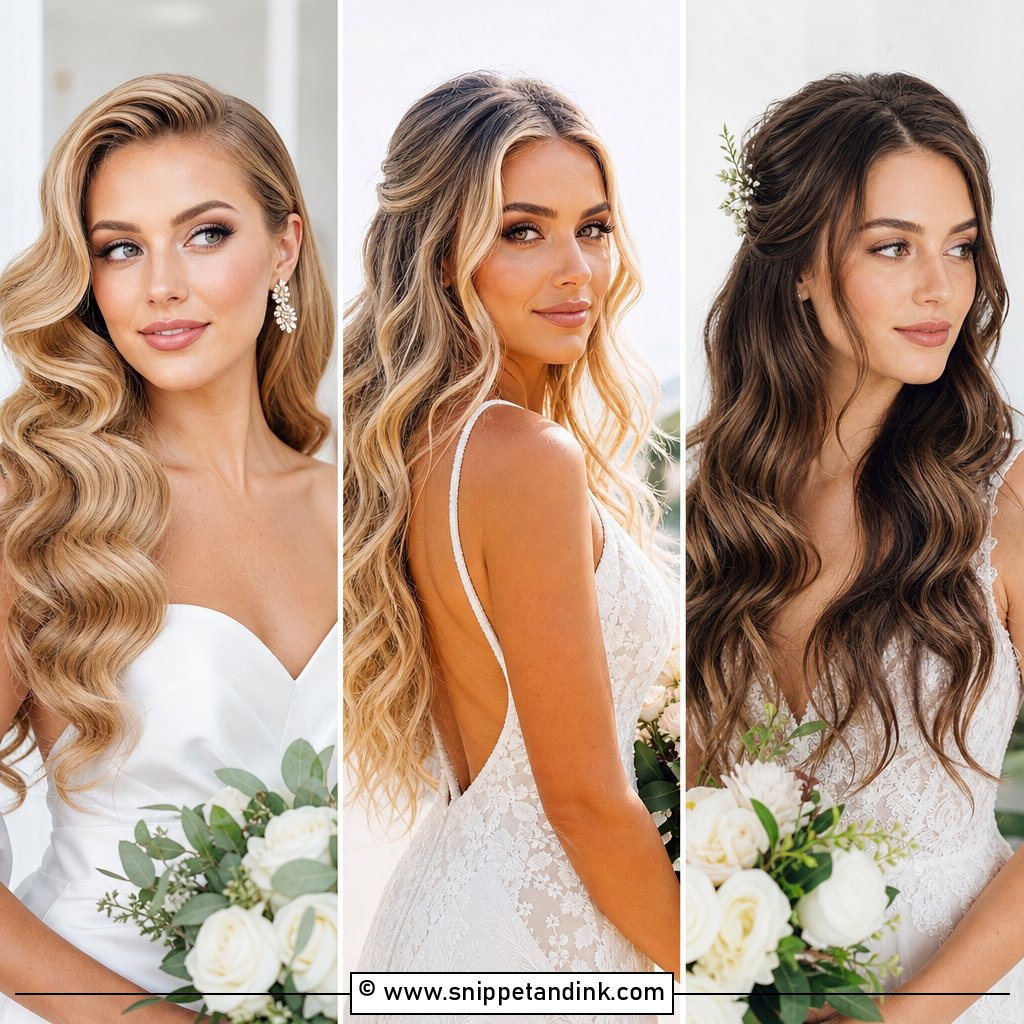
15. Beachy Wave Bridal Hair For Beach Wedding
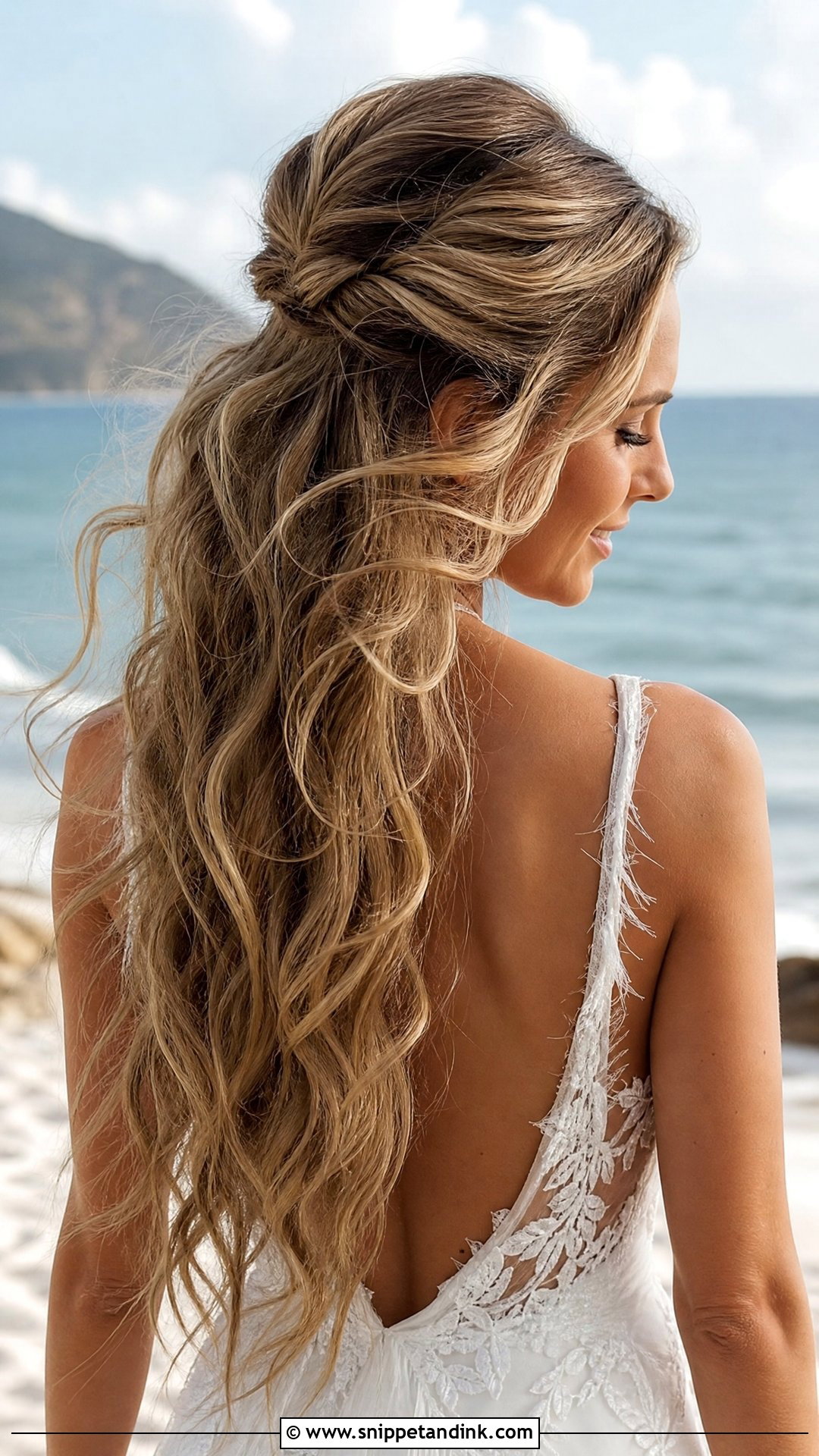
At the beach I plan for the waves to drop. Salt air, wind and humidity will all soften them, so I set them tighter than the reference photo and choose a style with some support, like half-up waves, a low ponytail, a braided accent or a pinned side. An anti-humidity spray at the start and a texture spray at the end make a real difference. What I avoid is chasing perfect, polished waves on sand. They frizz faster, and the hair ends up fighting the weather instead of moving with it.
Fine, Thick or Curly: Where Your Hair Will Struggle
The same photo turns out differently on different heads of hair, so it helps to know your weak spot before the trial.
Fine or Silky Hair
This is the hair that drops fastest. A volumizing mousse at the roots before blow-drying, texture spray between sections and a half-up or pinned style give the wave something to hold on to. I’d consider extensions here, not for length but for grip.
Thick or Heavy Hair
Thick hair holds a wave well but can turn wide and triangular. Have some internal weight taken out at a cut a few weeks before, and book a longer styling slot than usual.
Naturally Wavy or Curly Hair
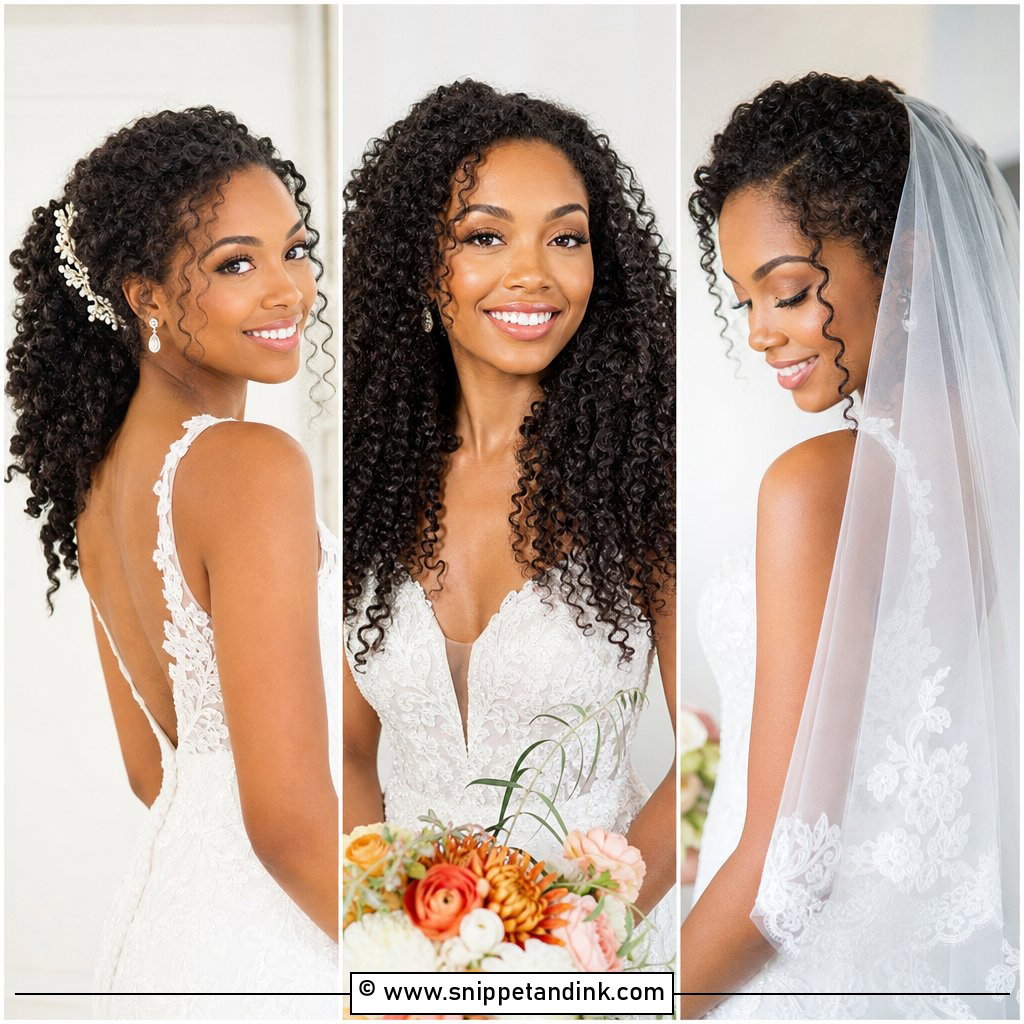
You may not need heat at all. Defining your own pattern with a cream and refining a few pieces around the face often looks more natural than straightening and rebuilding it. If you want a looser bend than you have, a silk press first is possible, but humidity on the day can undo it.
Hair Fixes a Bridesmaid Can Do at the Reception
Waves soften with hugs, wind and dancing. That’s fine, but a tiny bag handed to a bridesmaid keeps the softening pretty rather than flat:
- A travel texture spray or dry shampoo for roots that have gone limp
- Six to eight bobby pins in your hair color
- A small comb for the front pieces only, never the lengths
- A clear elastic, in case you want to turn the look into a low pony for dancing
Your Waves Will Relax, So Plan Where They Land
Every option here starts from the same wave, so the real decision is how much of your hair you want held in place. Fully down needs the most care, while a bun or ponytail needs almost none. Tell your stylist how long the day runs and what the weather might do, bring two or three photos you love, and wear a top with a similar neckline to the trial. Then look at the waves again a few hours later. That second look tells you far more than the first one in the chair.
You'll Like These Ideas:


Leave a Reply