
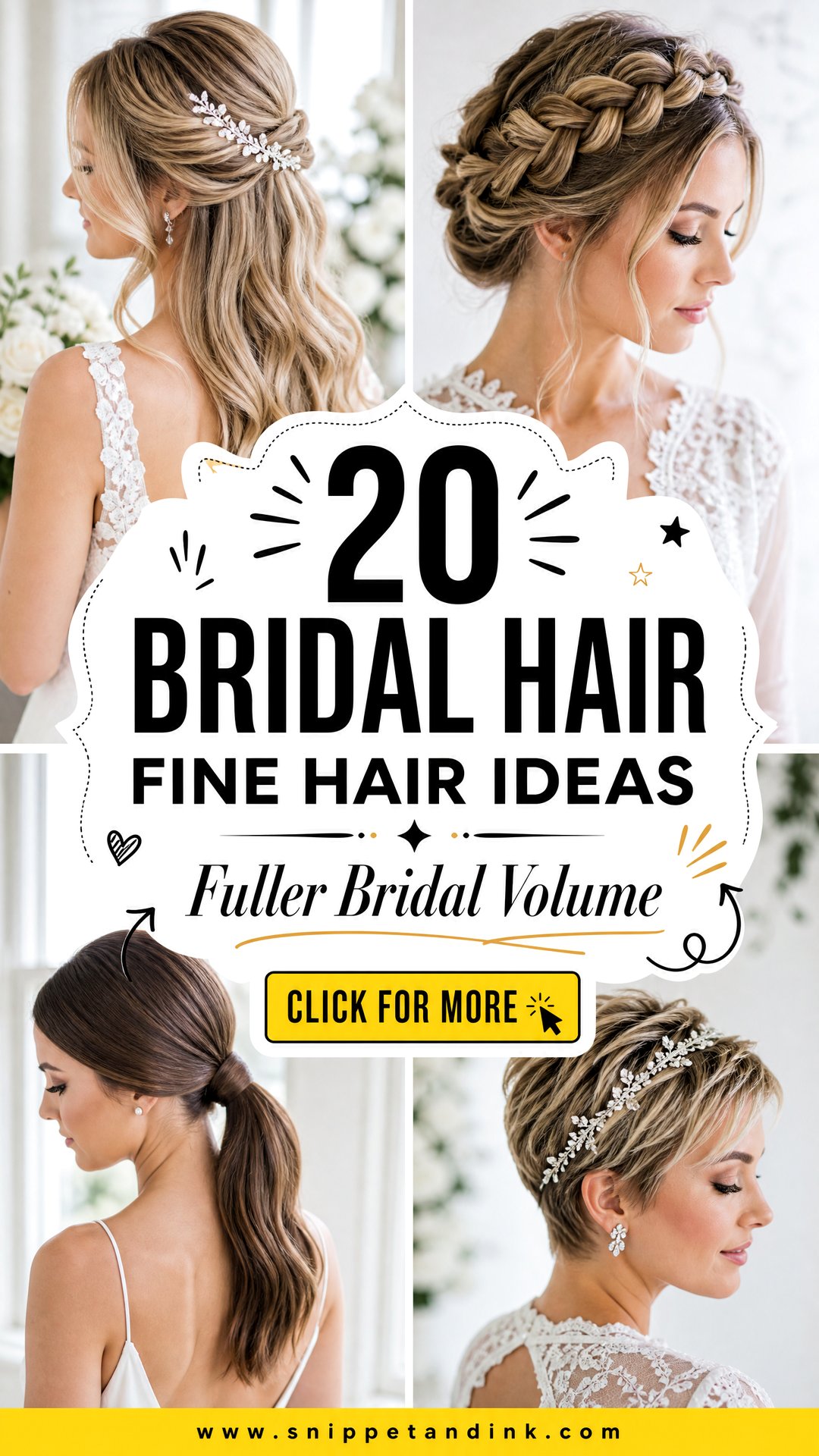
Fine hair is the hair I prep longest and pin most carefully on a wedding morning, and it rewards that work. Each strand is narrow, so it takes a curl fast and drops it just as fast, and it slides out of pins that would grip thicker hair without trouble. The answer is rarely more product. It’s a shape that builds width through texture, padding where nobody can see it, and pins that sit on a crisscross base. The ideas below cover buns, half up styles, short cuts, ponytails and braids, and for each one I’ve noted what keeps it full past the first dance.
Why Curls Slide Out of Fine Hair by Mid-Afternoon
Every fine-haired bride asks me the same thing at her trial: why does my curl vanish by lunchtime? It comes down to diameter. A thin strand holds less of the shape heat gives it, and moisture in the air relaxes it faster. Freshly washed hair is also slippery, so pins lose their bite.
Here is what I actually do about it, in order:
- Wash the night before, not the morning, so a little natural grip comes back by the time I start.
- Mousse at the root on damp hair, then a full blow-dry with a round brush lifting at the crown.
- Dry texture spray before the iron, not after. It gives the curl something to set around.
- Smaller sections than you’d use on thick hair, and every curl pinned to cool before it’s touched.
- Pins laid in a crisscross so each one locks against the next instead of sliding alone.
Skip heavy oils and conditioners on the morning itself. They feel nice and they undo every step above.
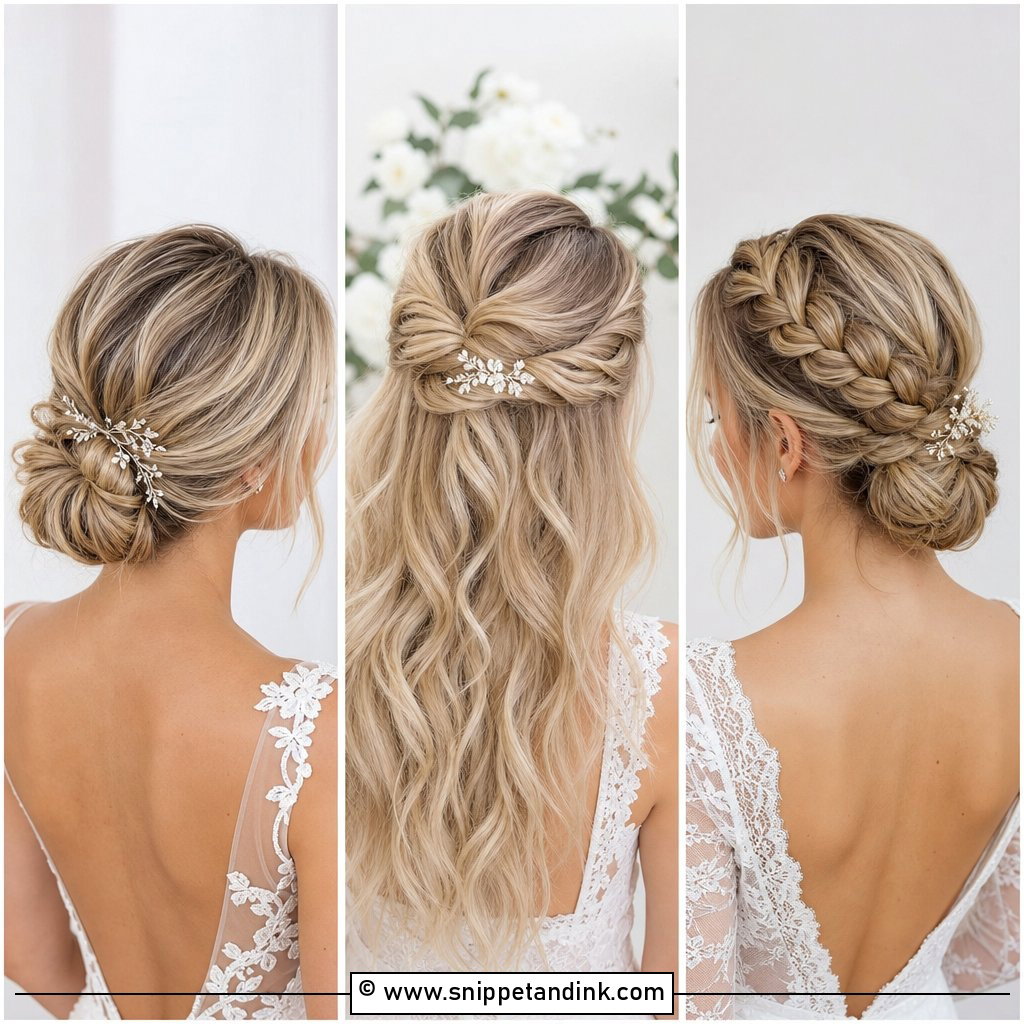
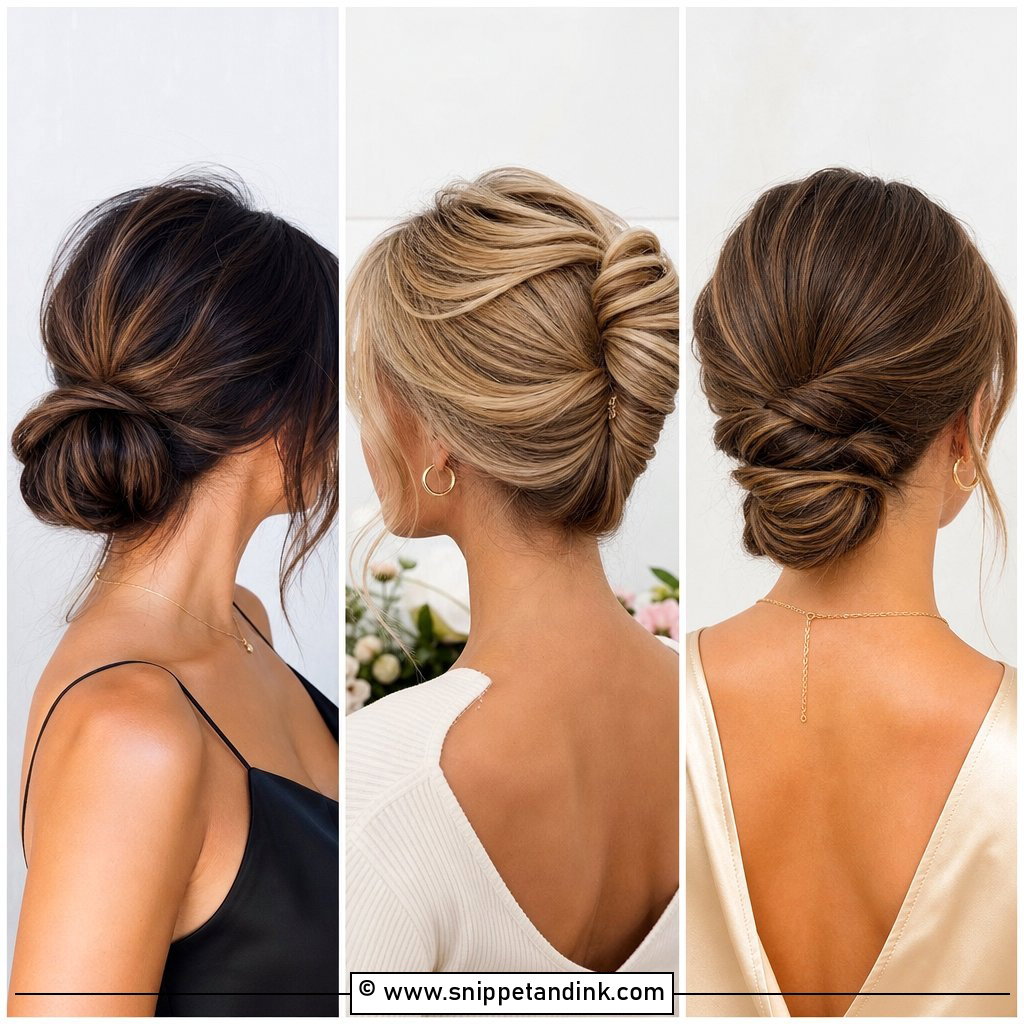
1. Low Bun For Fine Hair
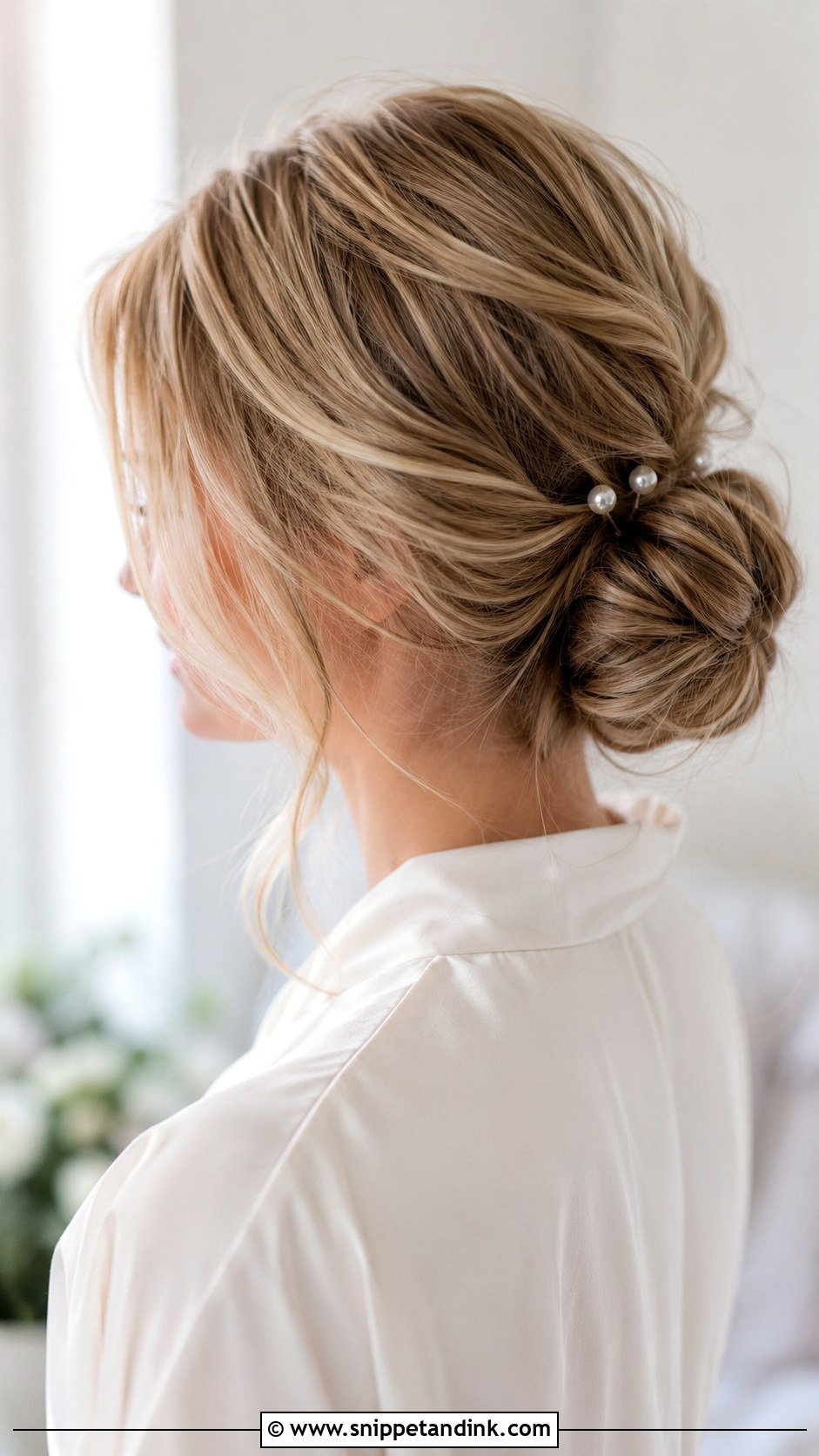
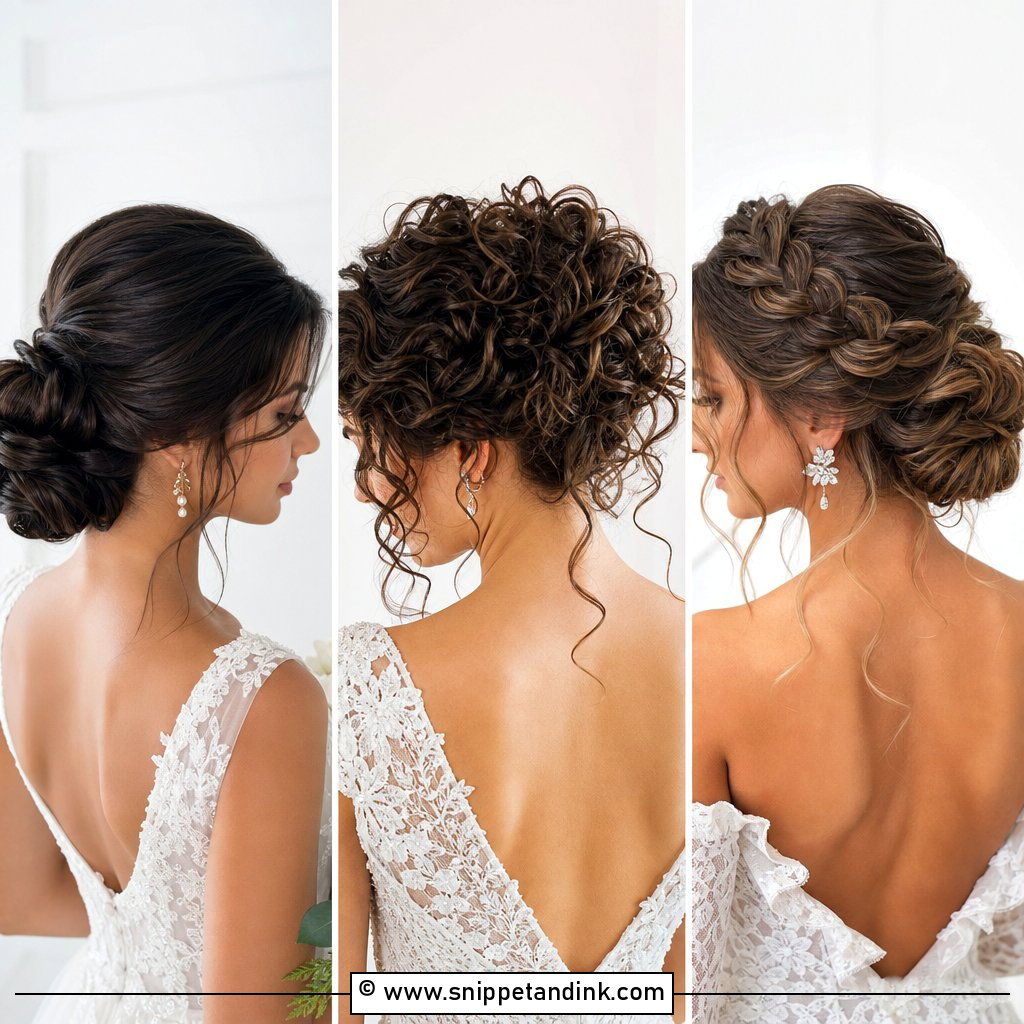
The low bun is where I start most fine-haired brides, because the nape is the one spot where a little padding disappears completely. I lift the roots at the crown first, then build the bun loosely and pull each section wider with my fingers before pinning. A small mesh filler in a shade close to your hair sits inside and stays invisible. What goes wrong is tension: pull the hair back tight and the scalp shows through at the temples, which the camera catches straight away. The back of this bun is what your guests stare at through the whole ceremony, so I check it in a hand mirror before the veil goes in.
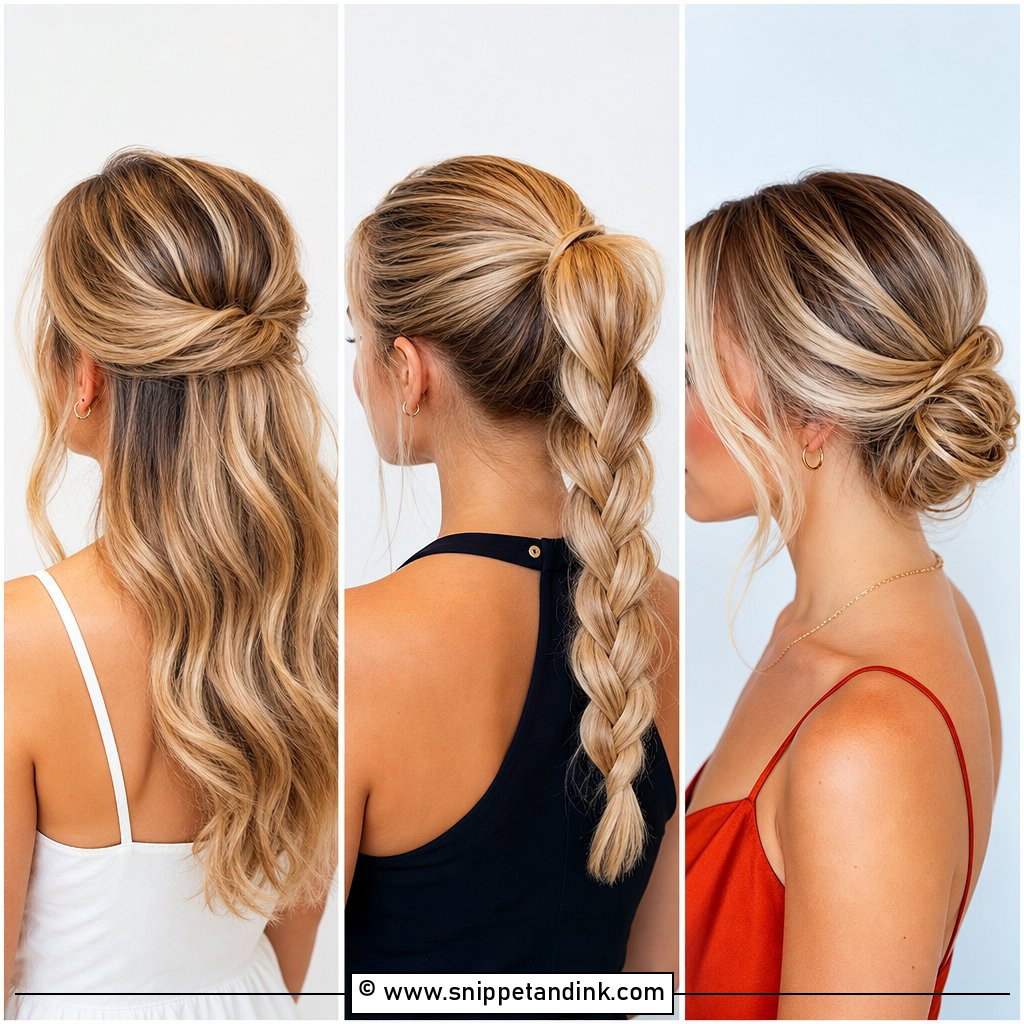
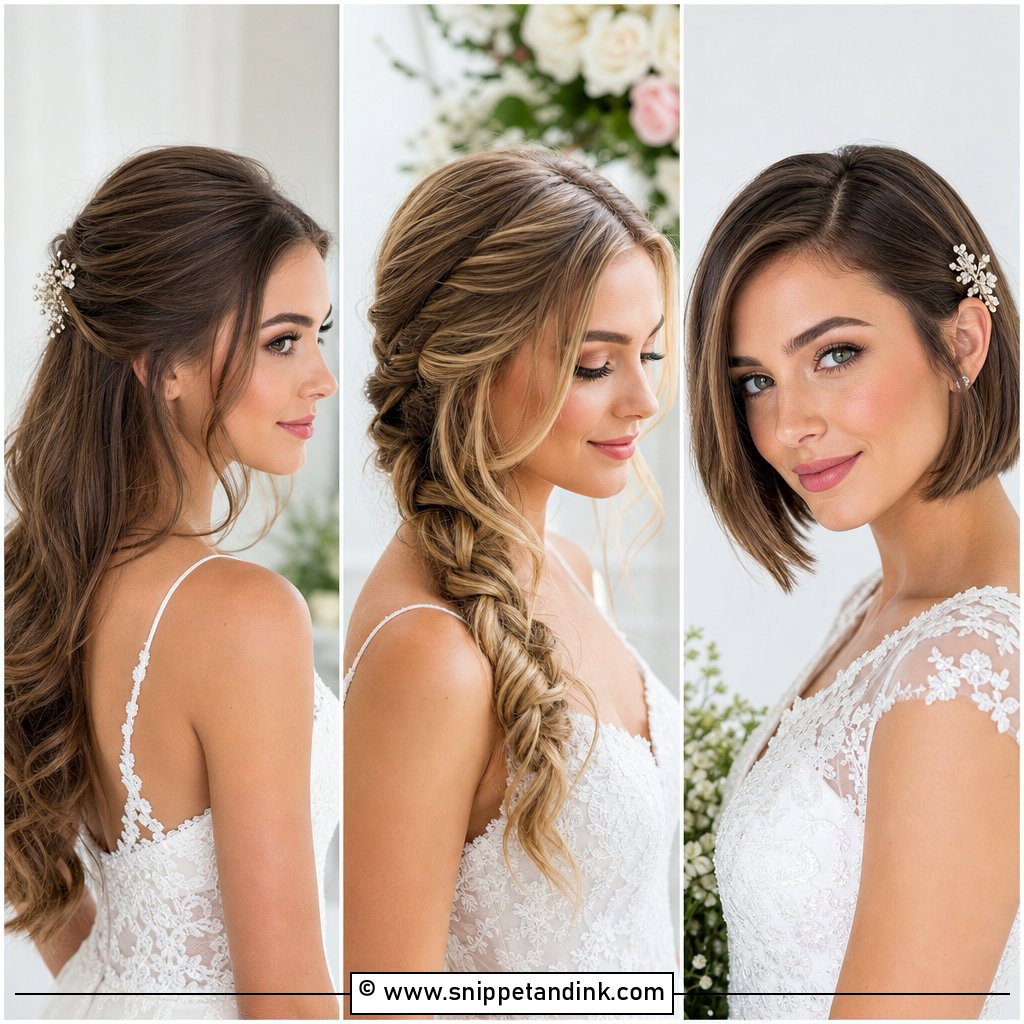
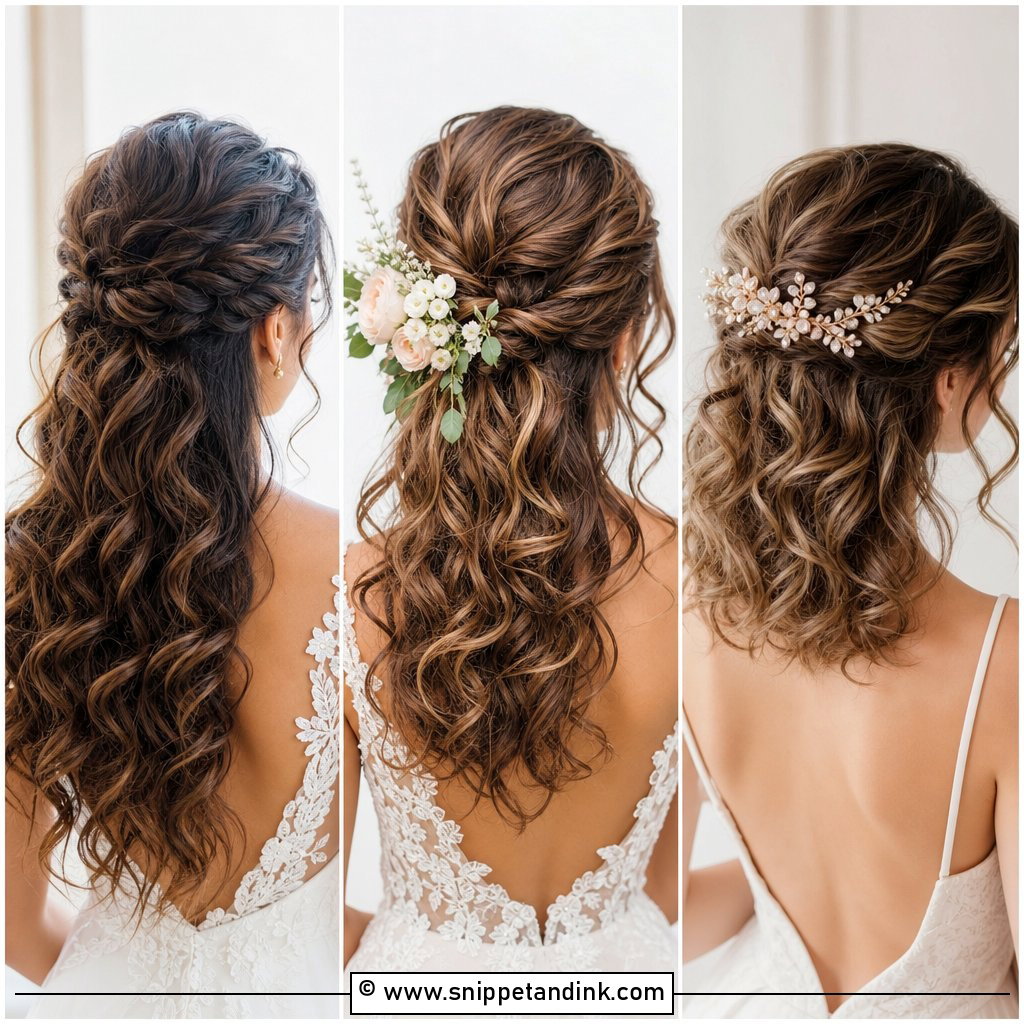
2. Half Up Half Down Fine Hair
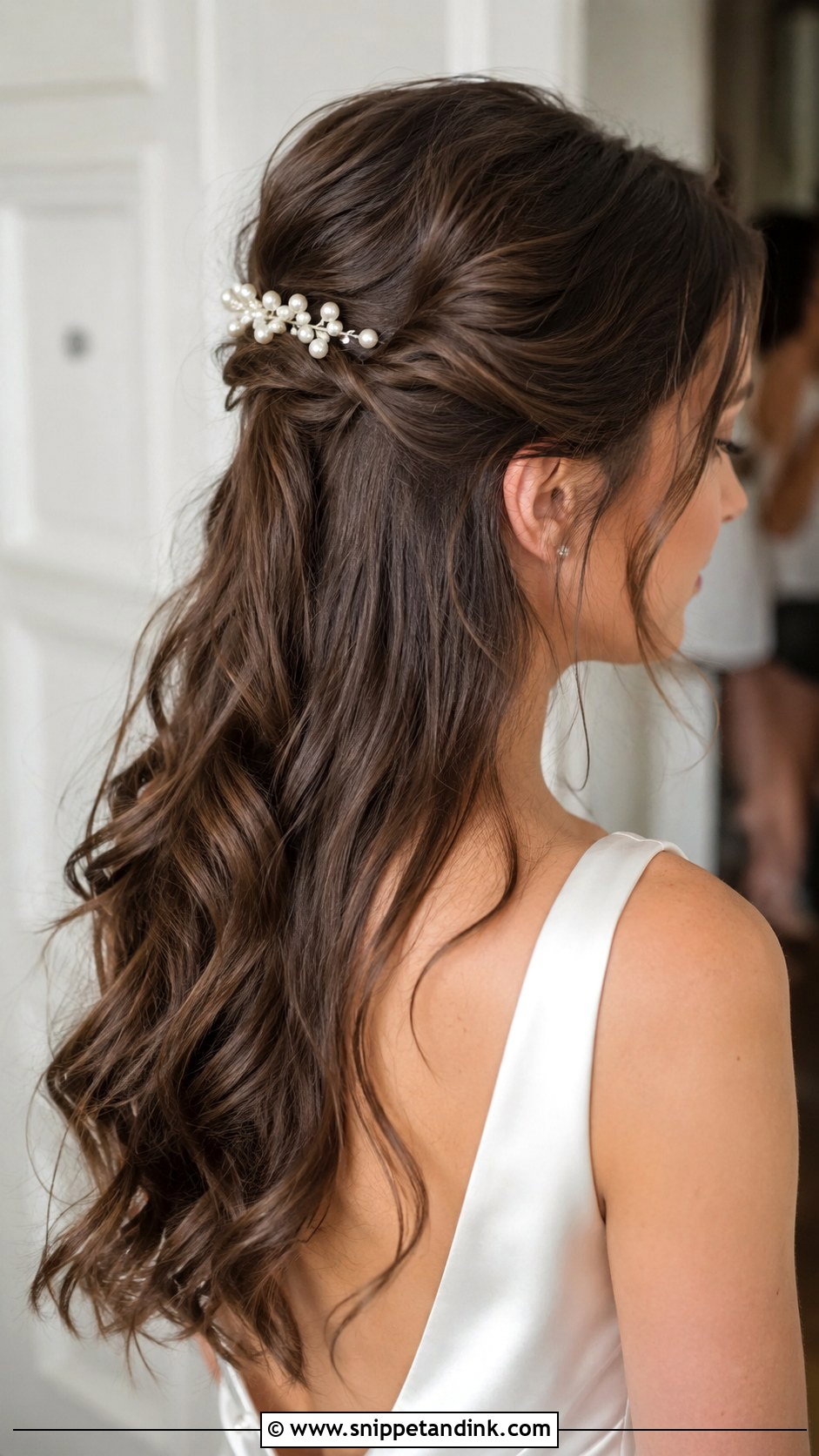
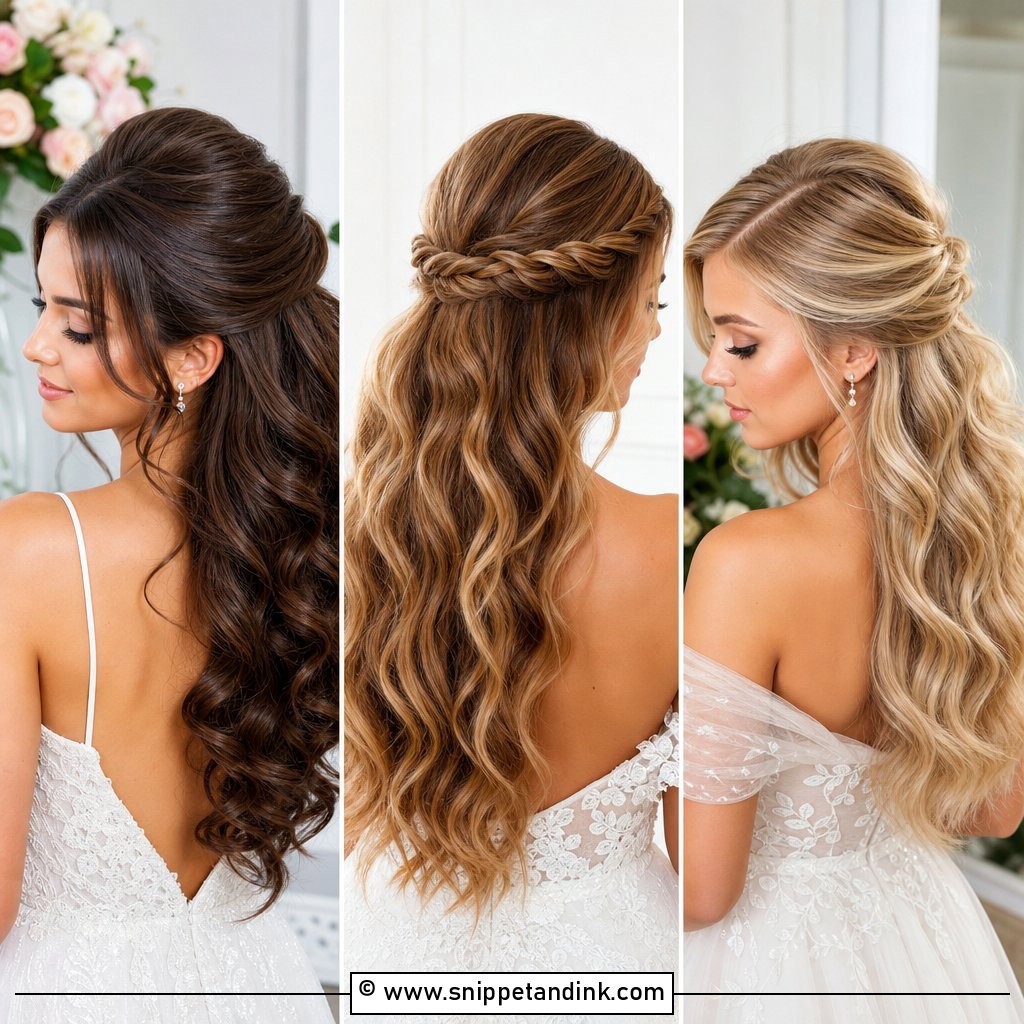
Half up suits fine hair when the top section is twisted rather than dragged back flat. A twist adds a few millimetres of height and gives pins something to bite. Through the lengths I prefer a soft wave over a tight ringlet, since tight curls on fine hair separate and show gaps. I spray texture on dry hair before the iron touches it, then brush the waves out once they’ve cooled fully. Shoulder length to long hair carries this best. Shorter than that and the bottom half can look thin next to the gathered top.
3. Textured Updo For Fine Hair
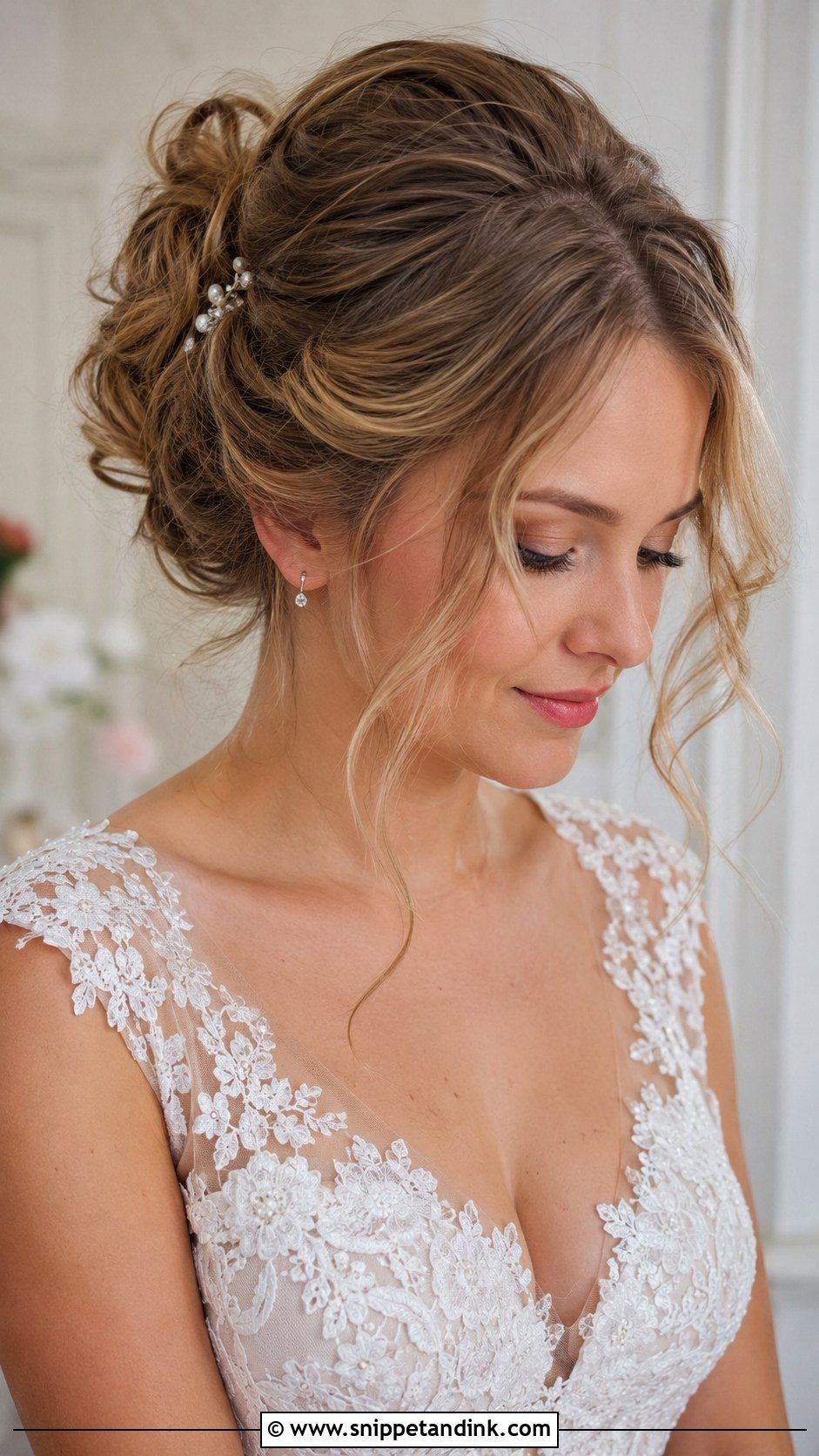
Texture is the cheapest volume there is. A textured updo is built from many small curled sections pinned in loose loops, so the eye reads lots of surface rather than counting hair. I backcomb only the underside of each section, never the outer layer, because that’s what keeps it tidy instead of frizzy. If your curls usually fall within an hour, this is the updo I’d point you to, since a curl pinned into place can’t drop. Leave a couple of face pieces out and keep them longer than you think; they shrink as the day goes on.
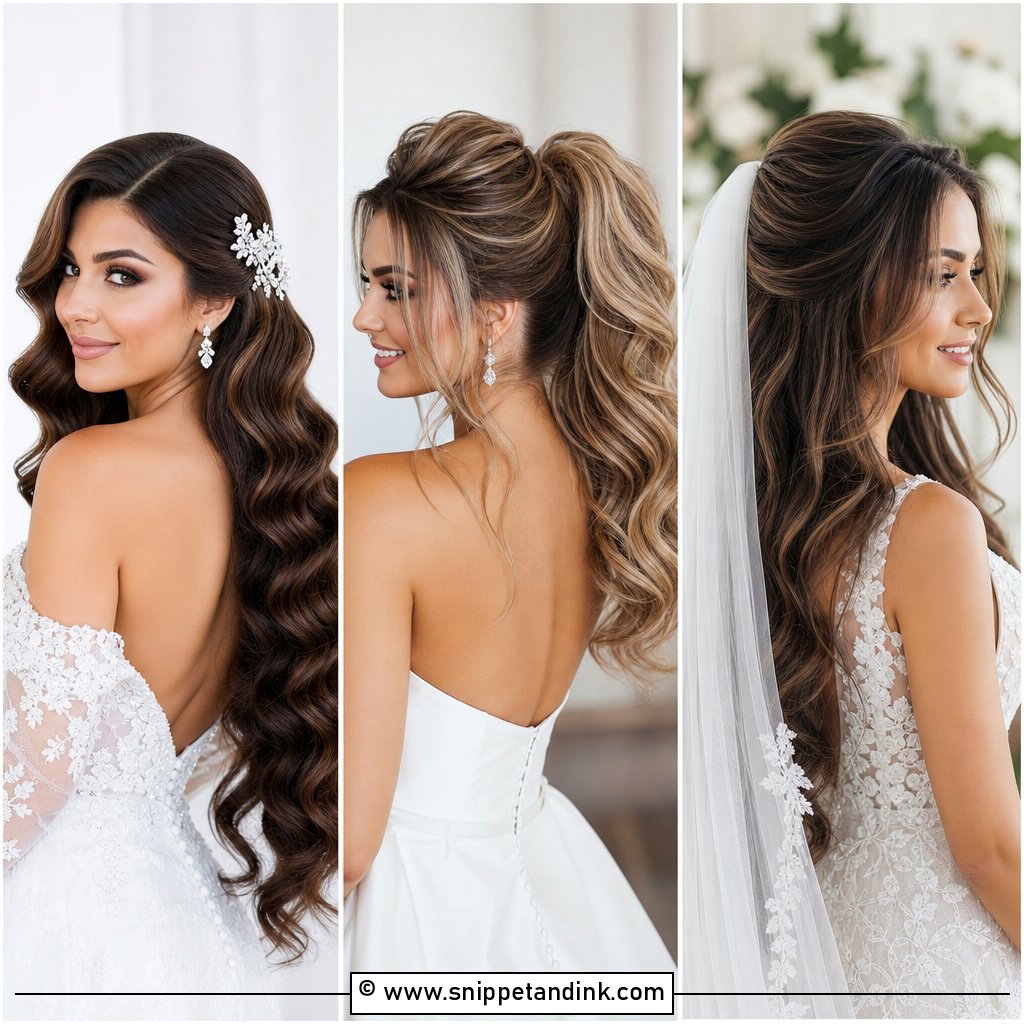
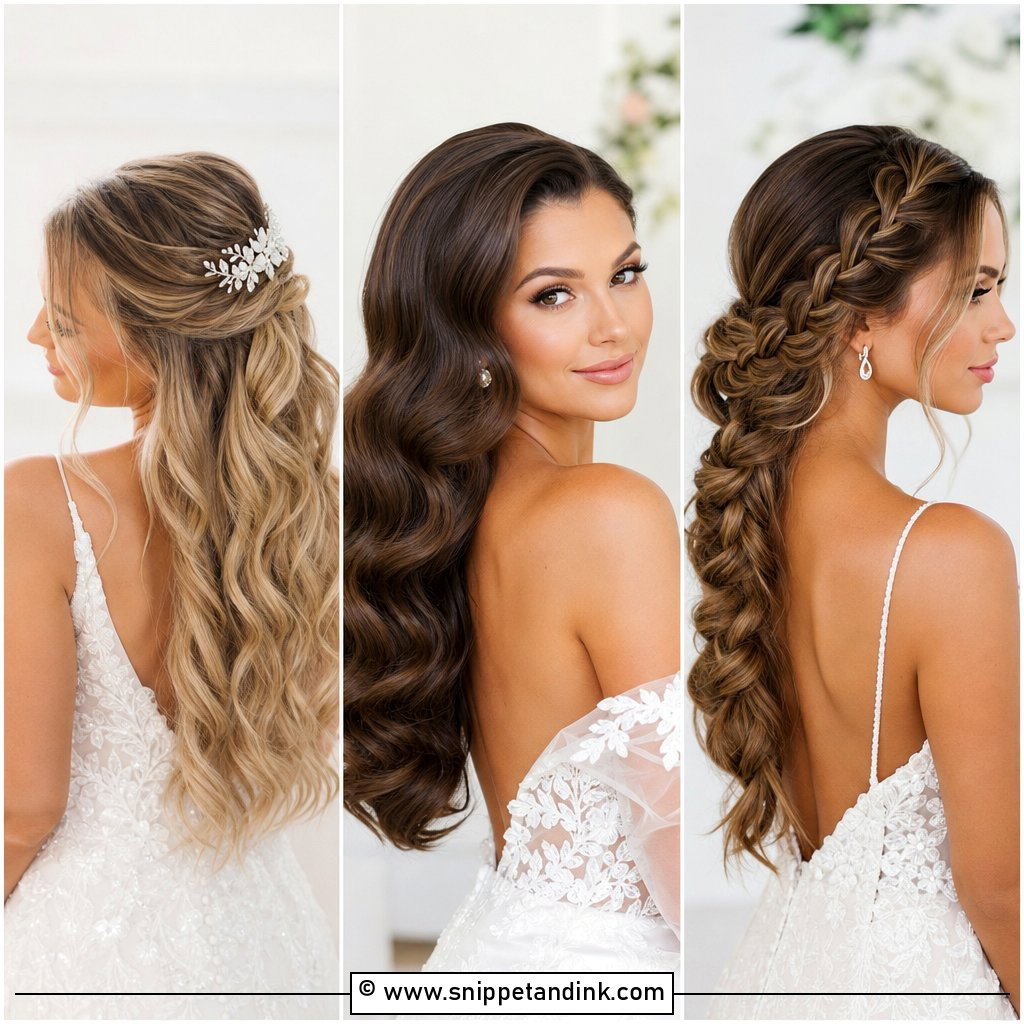
4. Soft Waves For Fine Hair
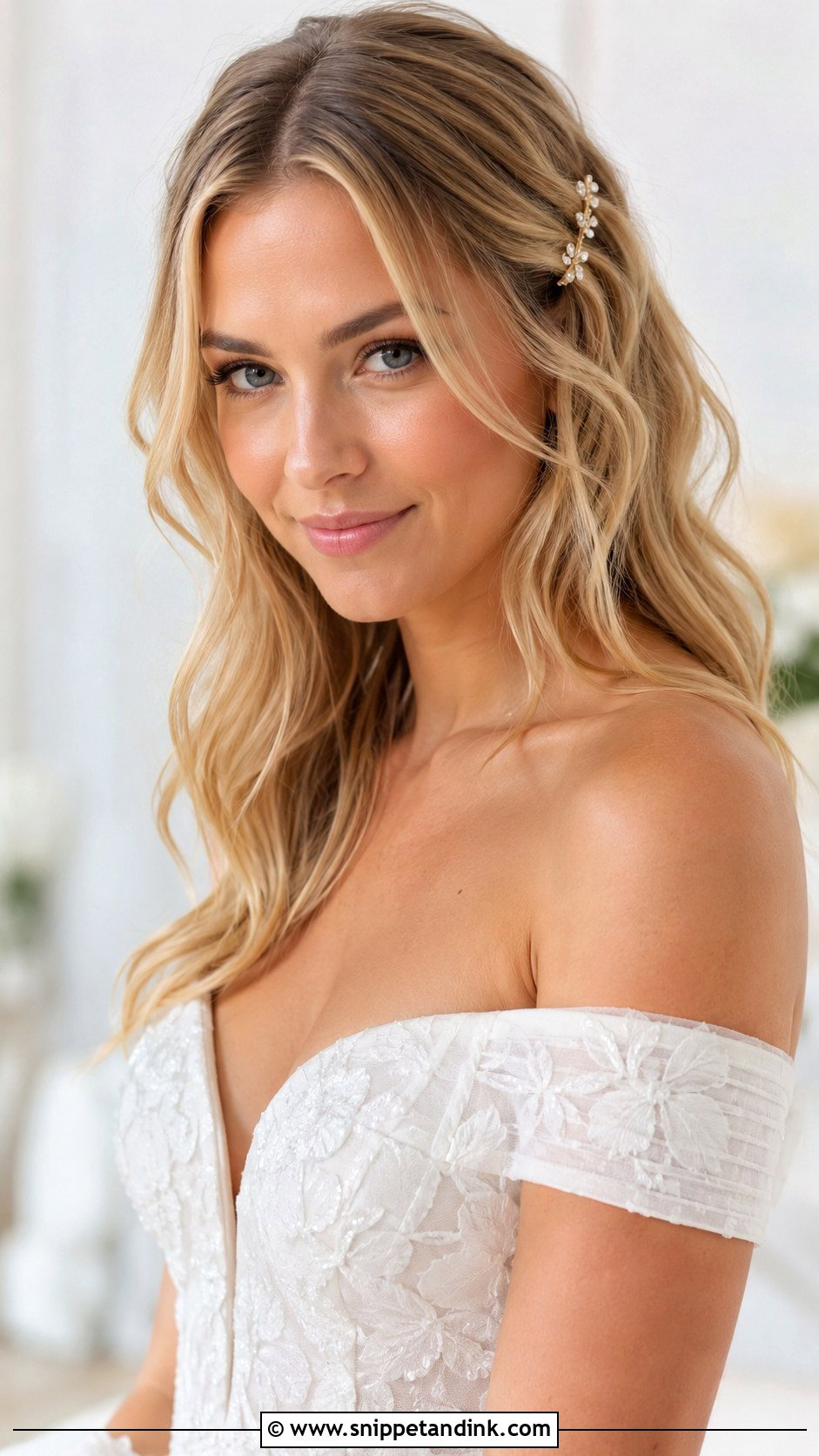
Worn down, fine hair needs waves that are brushed into wide bends, not a column of curls. I set them with a medium barrel, pin each curl to cool and only then brush, which is the step that turns separate curls into one soft mass. Prep is mousse at the root, a heat protectant through the lengths and a flexible spray that you can still run fingers through. Clip-in extensions at the sides and ends make a real difference here. I’d be honest with you, though: down styles on very fine hair in humid weather will soften by evening, so plan on it.
5. Hollywood Waves For Fine Hair
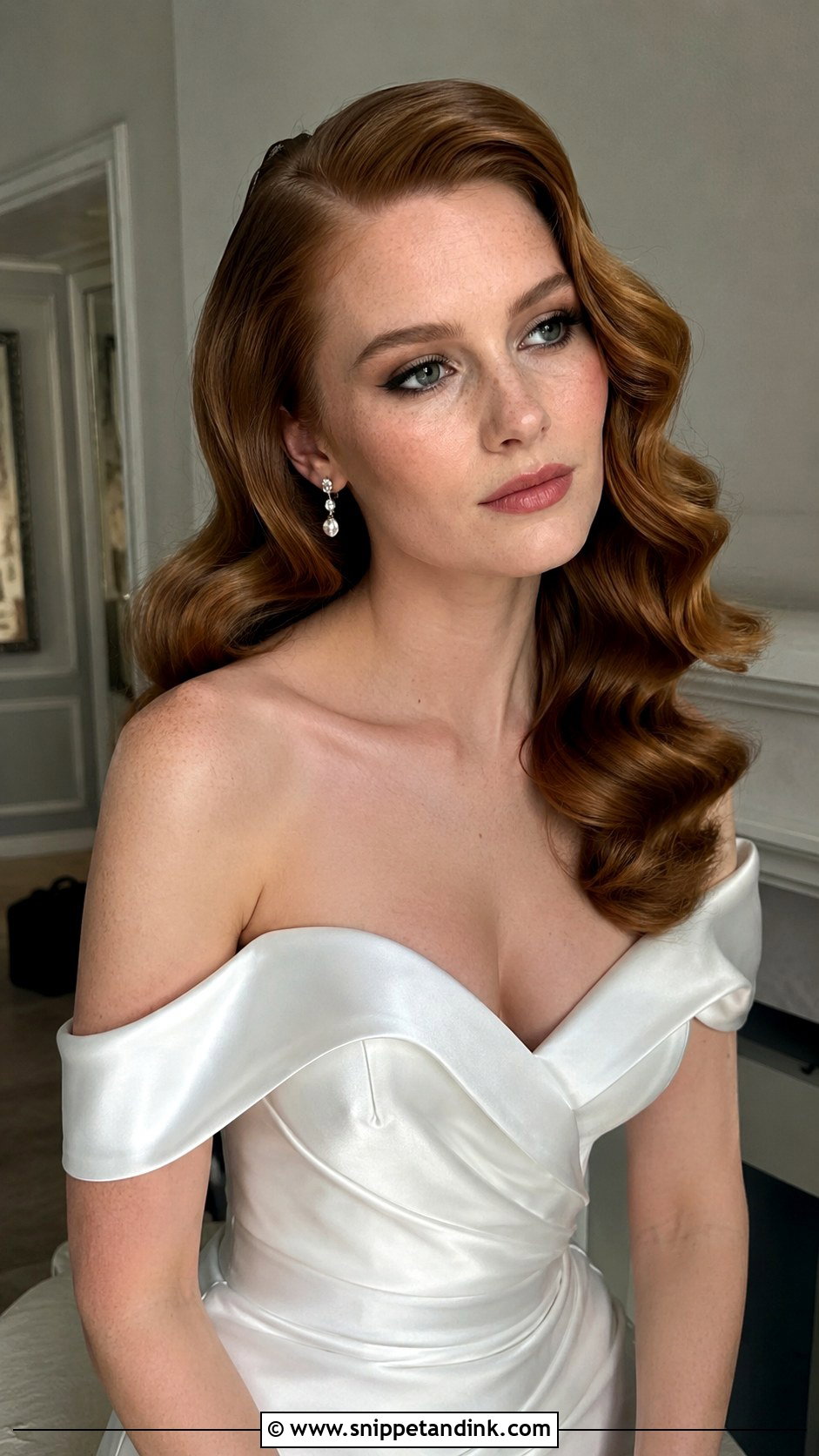
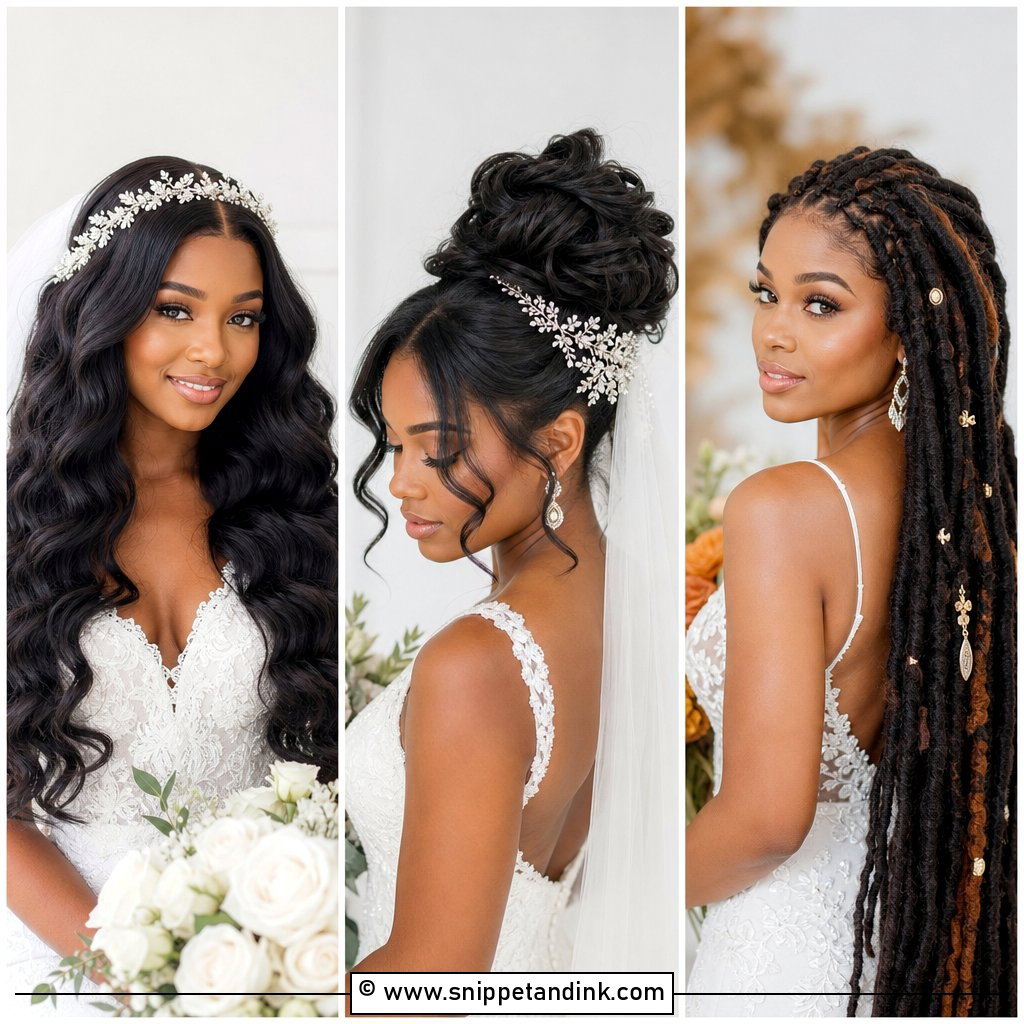
Hollywood waves are glossy and structured, and on fine hair that structure shows every thin patch along the wave line. My fix is to add a row or two of wefts underneath before setting, so the S shape holds the same thickness from root to end. Every curl goes in the same direction, is clipped while it cools, then brushed out with a boar bristle brush into one pattern. A deep side part puts the volume on one side where you want it. Choose a light shine spray; heavy serums make fine hair separate into strands, which ruins the effect with strapless and fitted gowns.
6. Braided Crown For Fine Hair
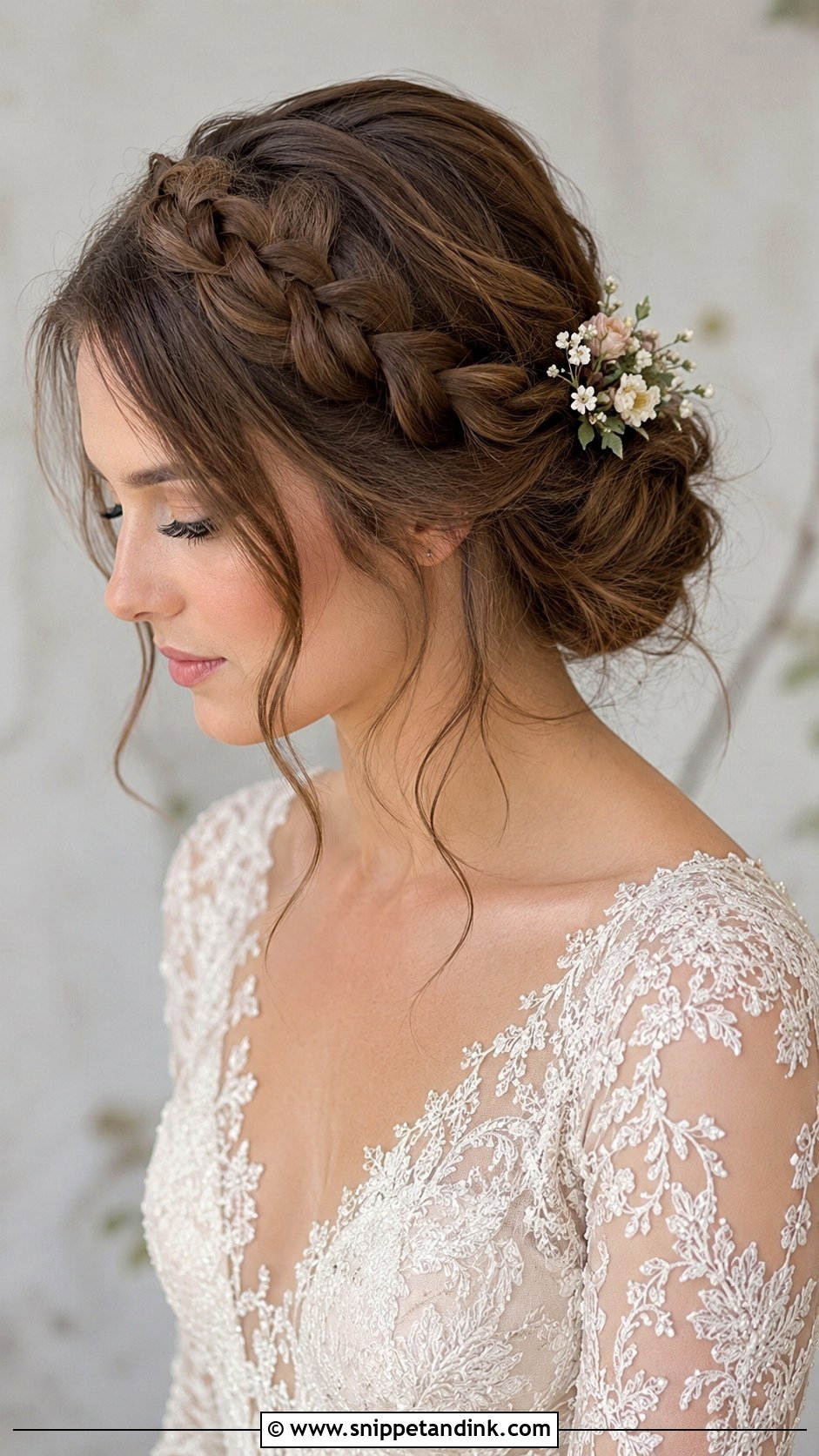
With a braided crown, I braid loosely and then pancake it, pulling the outer loops of each stitch wide after the braid is secured. That one step can double how thick it looks. A tight braid on fine hair does the opposite and shows the scalp between plaits. Behind the crown you can pin a low bun, tuck the ends, or leave waves down. Small pearl pins along the braid hide any anchoring pins, and the crown keeps the front secure in wind, which is why I suggest it for outdoor ceremonies.
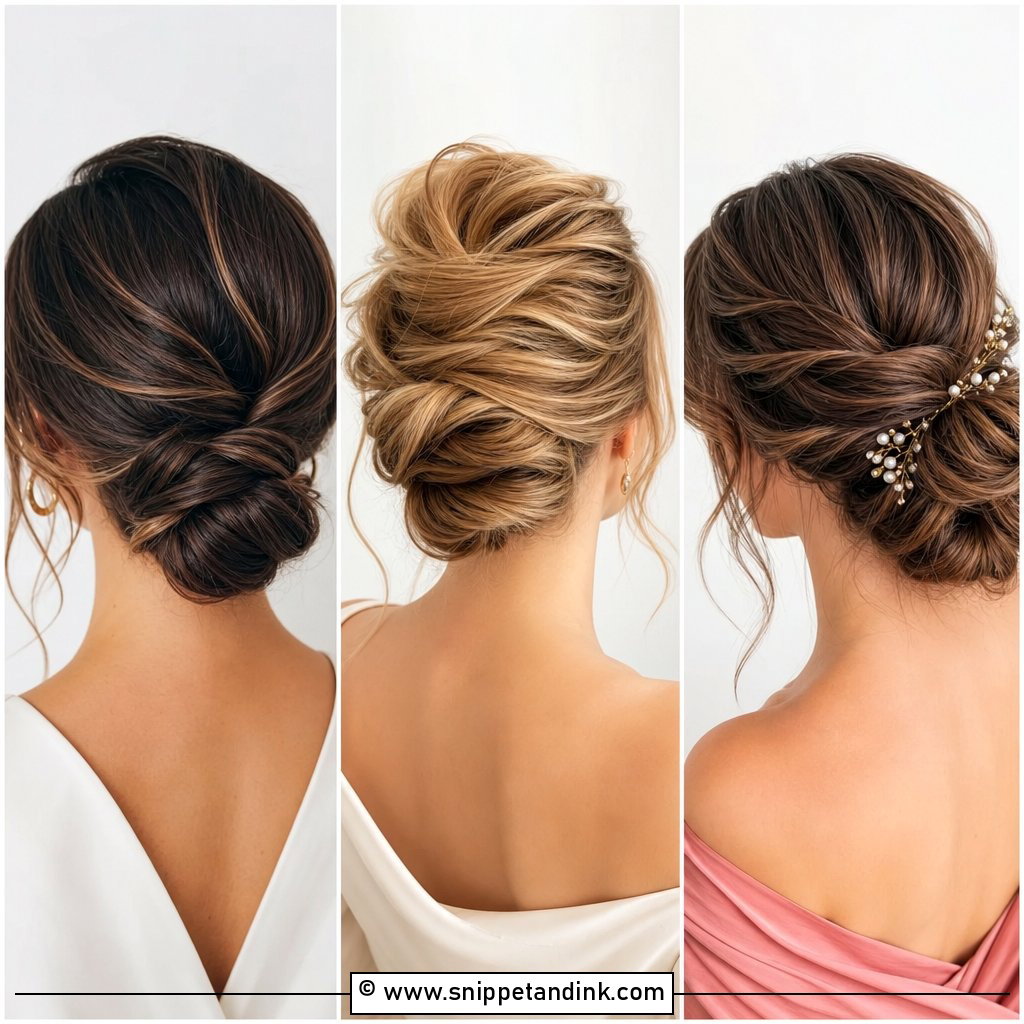
7. Loose Chignon For Fine Hair
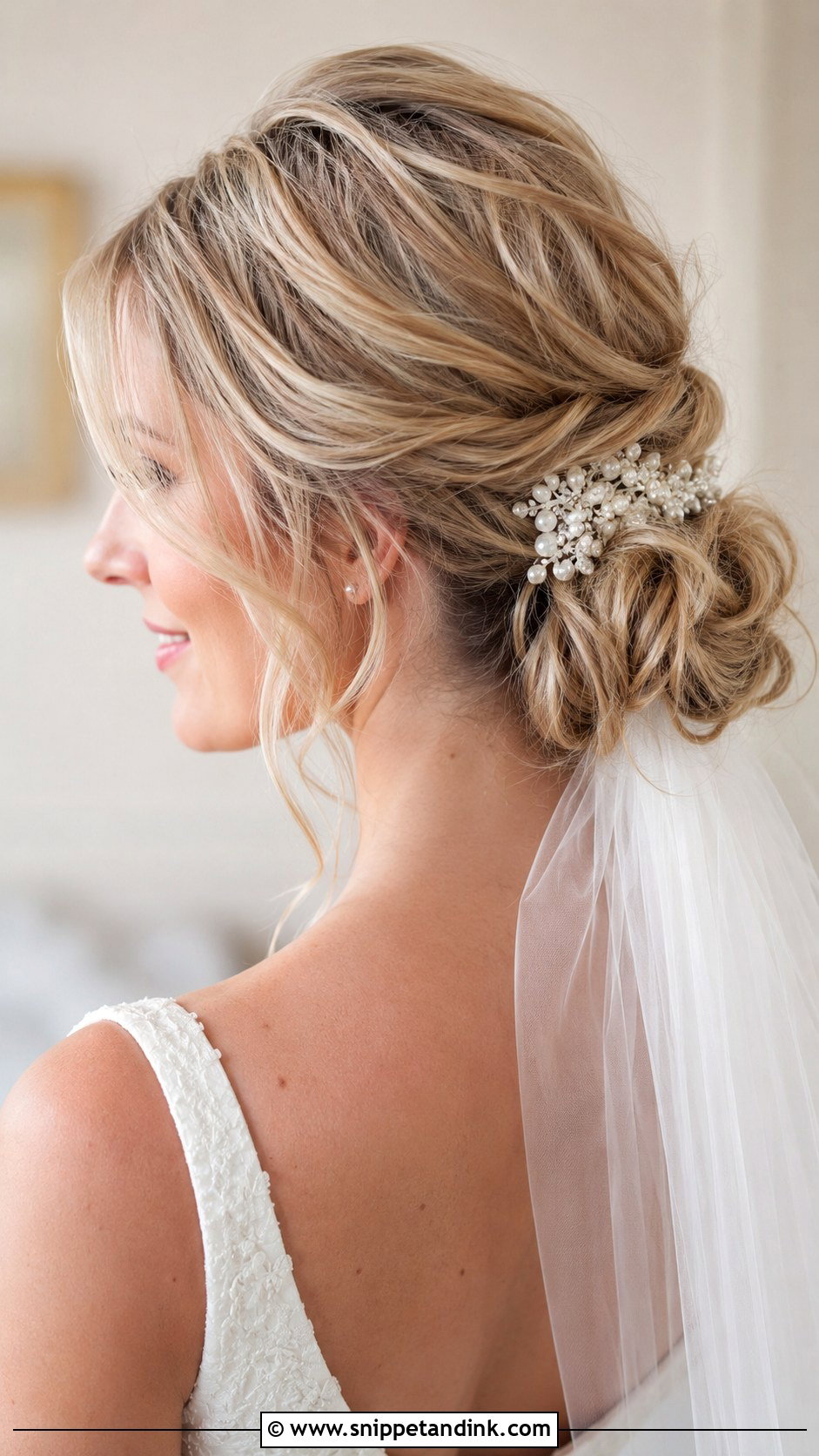
A loose chignon is a classic I trust on fine hair because it’s built from a twist, and a twist creates volume on its own. I keep it low at the neck, with lift at the crown and the sides swept back softly rather than slicked. Slicked sides make fine hair look like a third of its real amount from the front. The chignon also gives a veil comb a firm base to slide into. It sits comfortably with a high neckline or an off-shoulder dress, which is rarer than you’d expect from an updo.
8. Messy Bun For Fine Hair
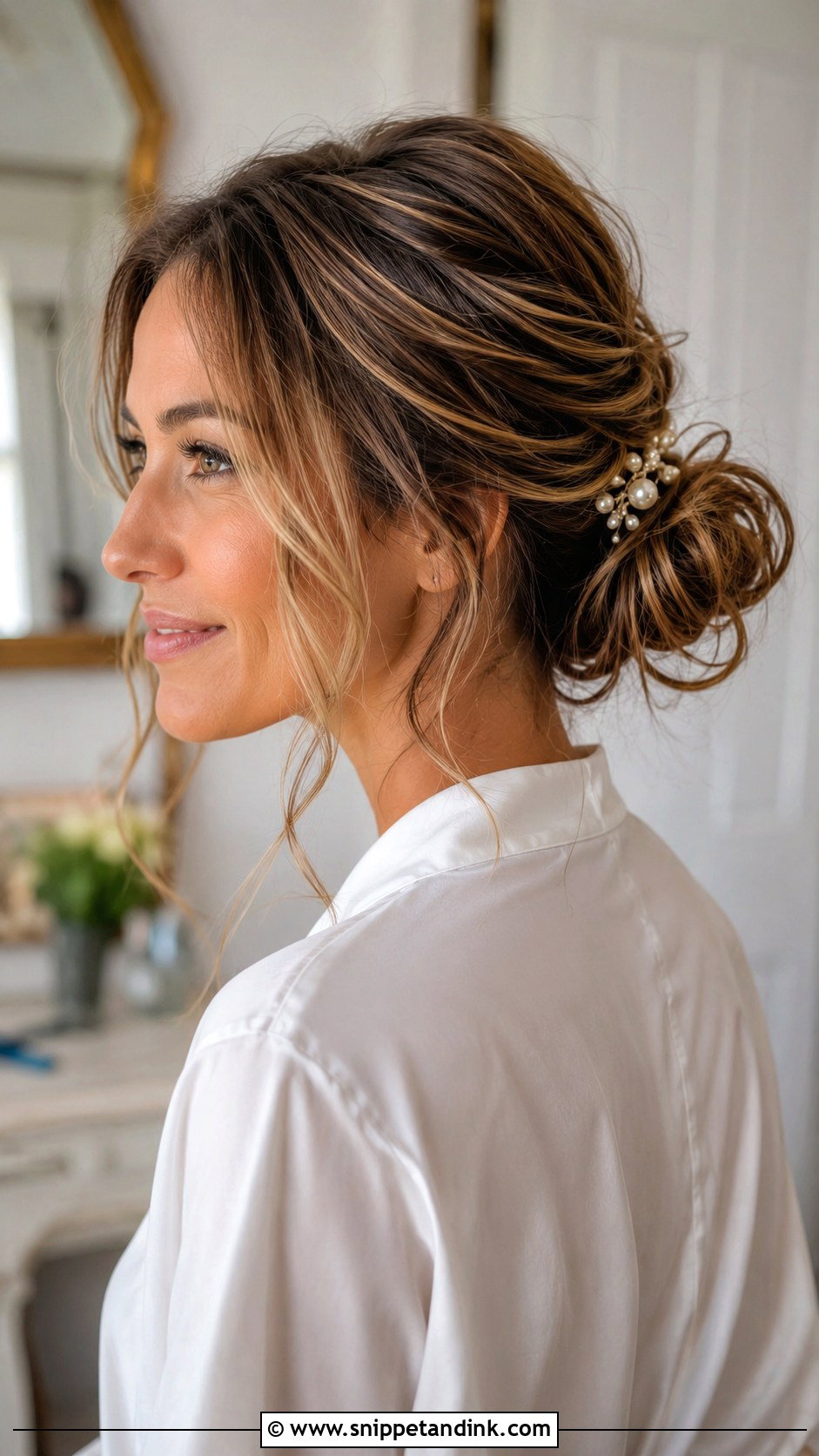
A messy bun looks casual, yet on a bride it takes more planning than a smooth one. Every loop is a curled section pinned on purpose, and I check it from three angles so no gap shows. Clean, silky fine hair is the enemy, because pins slide straight out. A dry texture spray before curling gives grip. I keep it low or mid-height with some lift at the crown. Dress it with a few pearl pins or a crystal comb, but don’t let the accessory sit where the bun is thinnest.
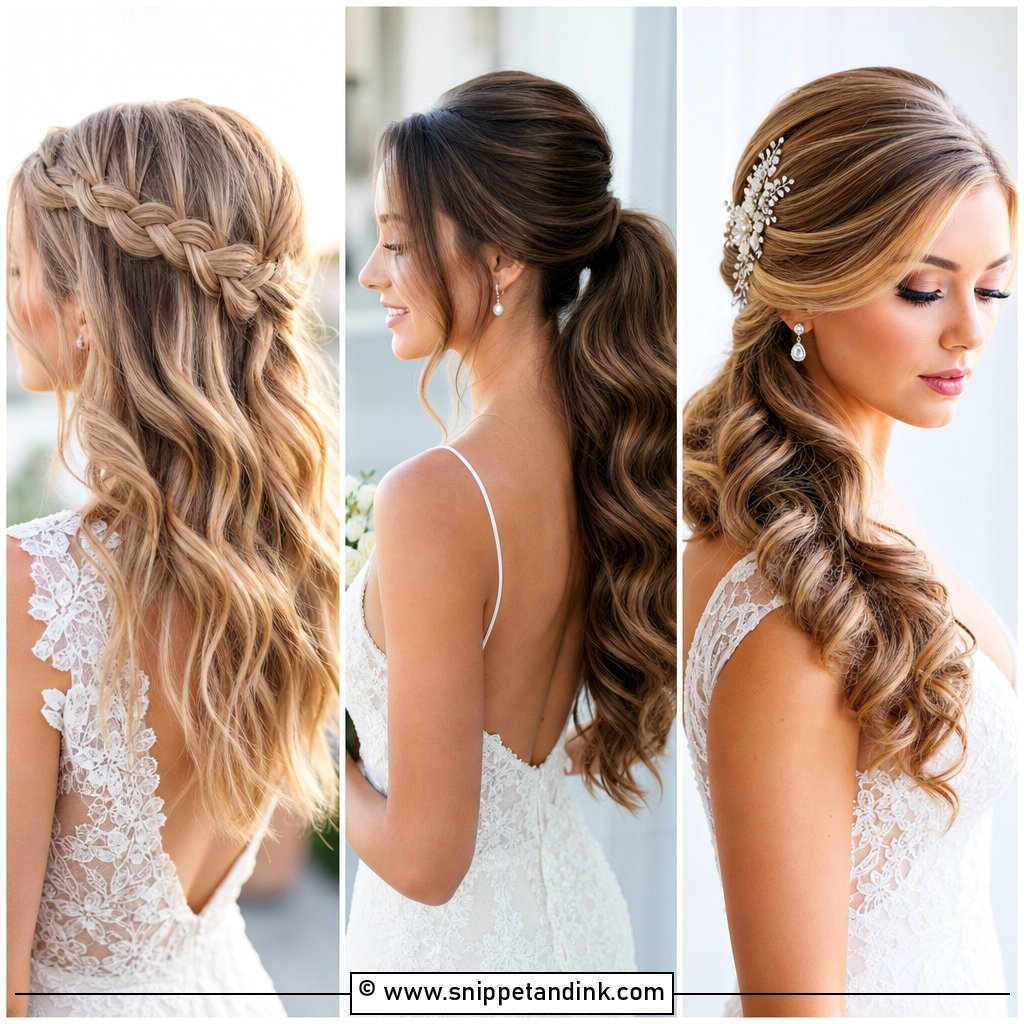
9. Sleek Low Ponytail Fine Hair
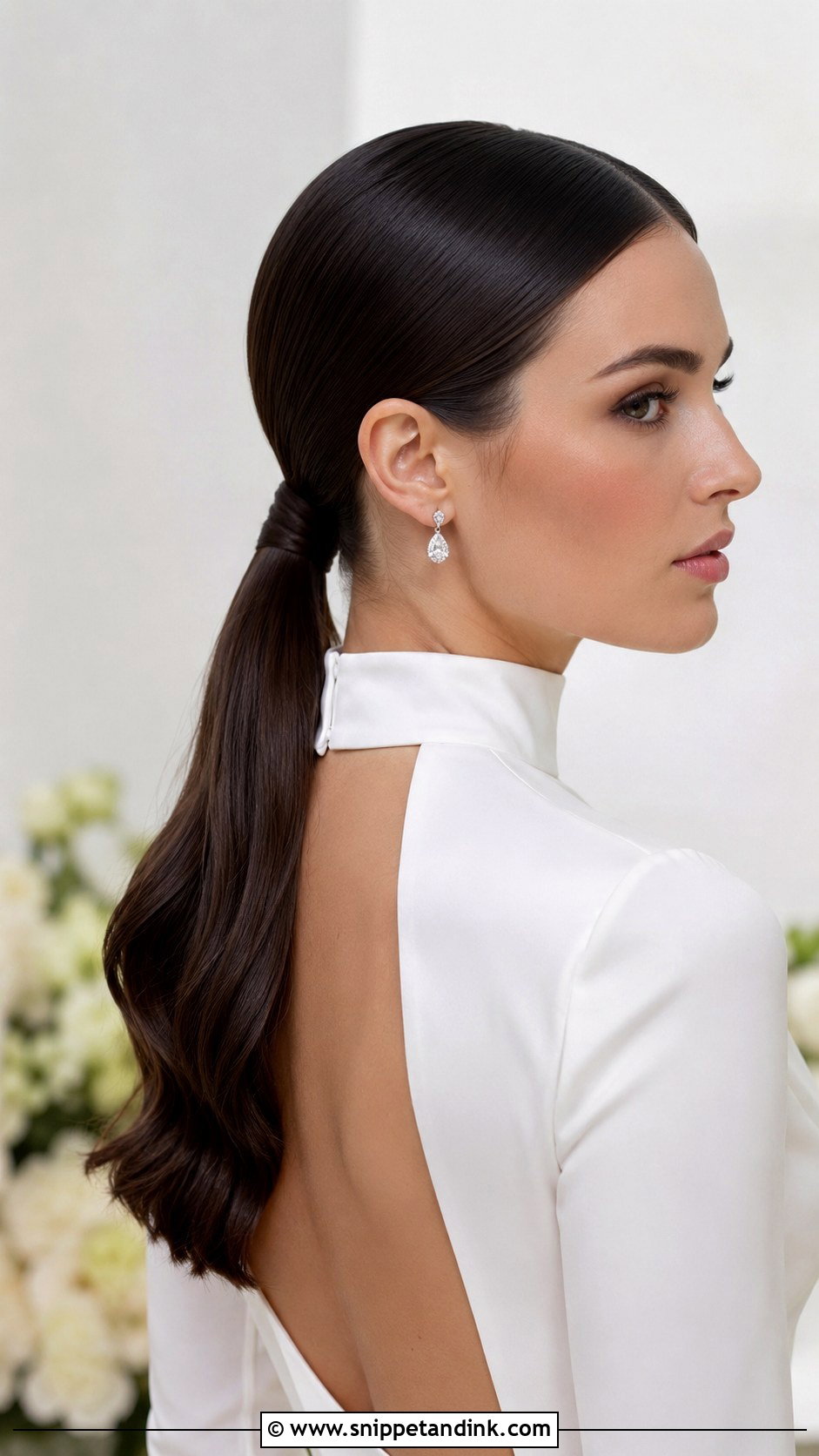
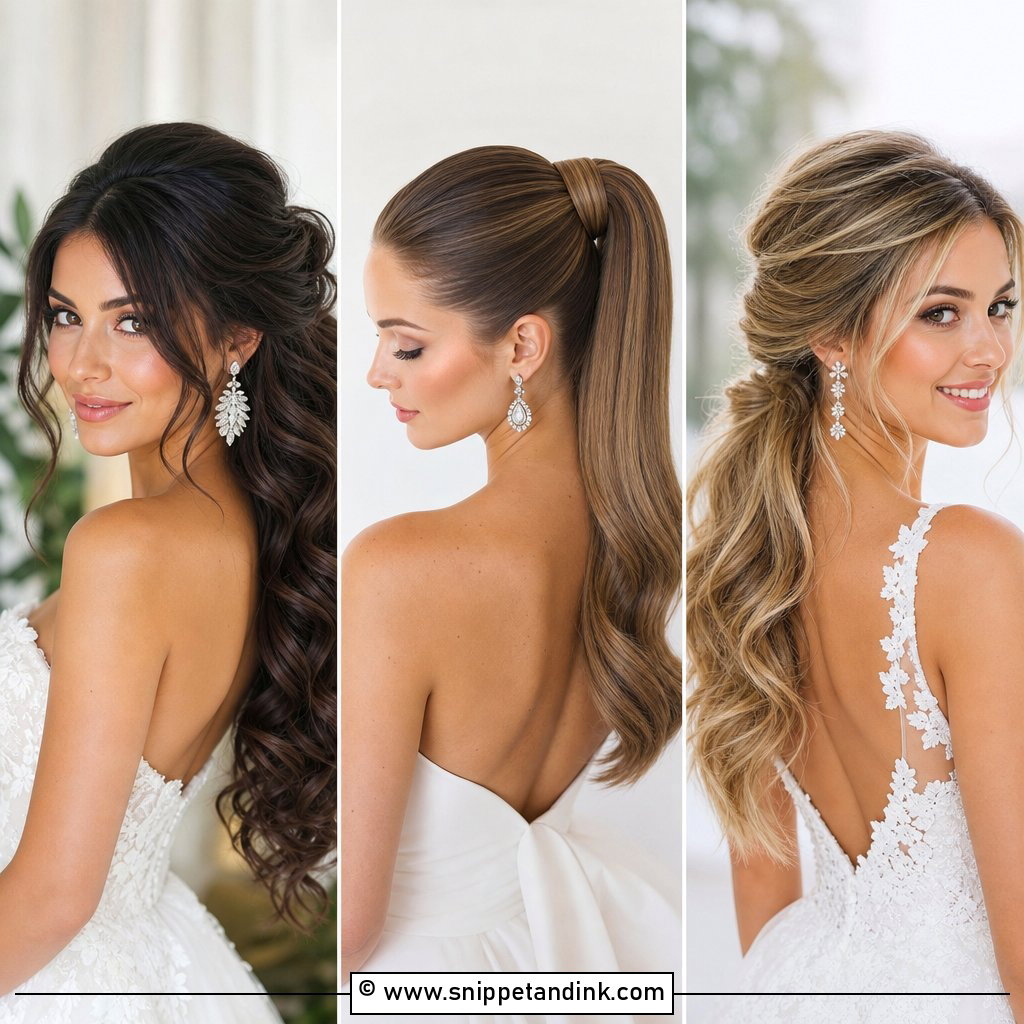
Sleek and fine is a tricky pairing, since smooth hair hides nothing. A sleek low ponytail can still work if the length is waved or topped up with a hidden extension tied into the base. I wrap a small piece of hair around the elastic and pin it underneath. Smoothing cream goes on the ends only; on the roots it makes fine hair look greasy within a couple of hours. Center part for a sharp finish, side part if you want it softer. With a detailed open back or a high neckline, the hair stays out of the way of the dress.
10. Volumized Ponytail Fine Hair
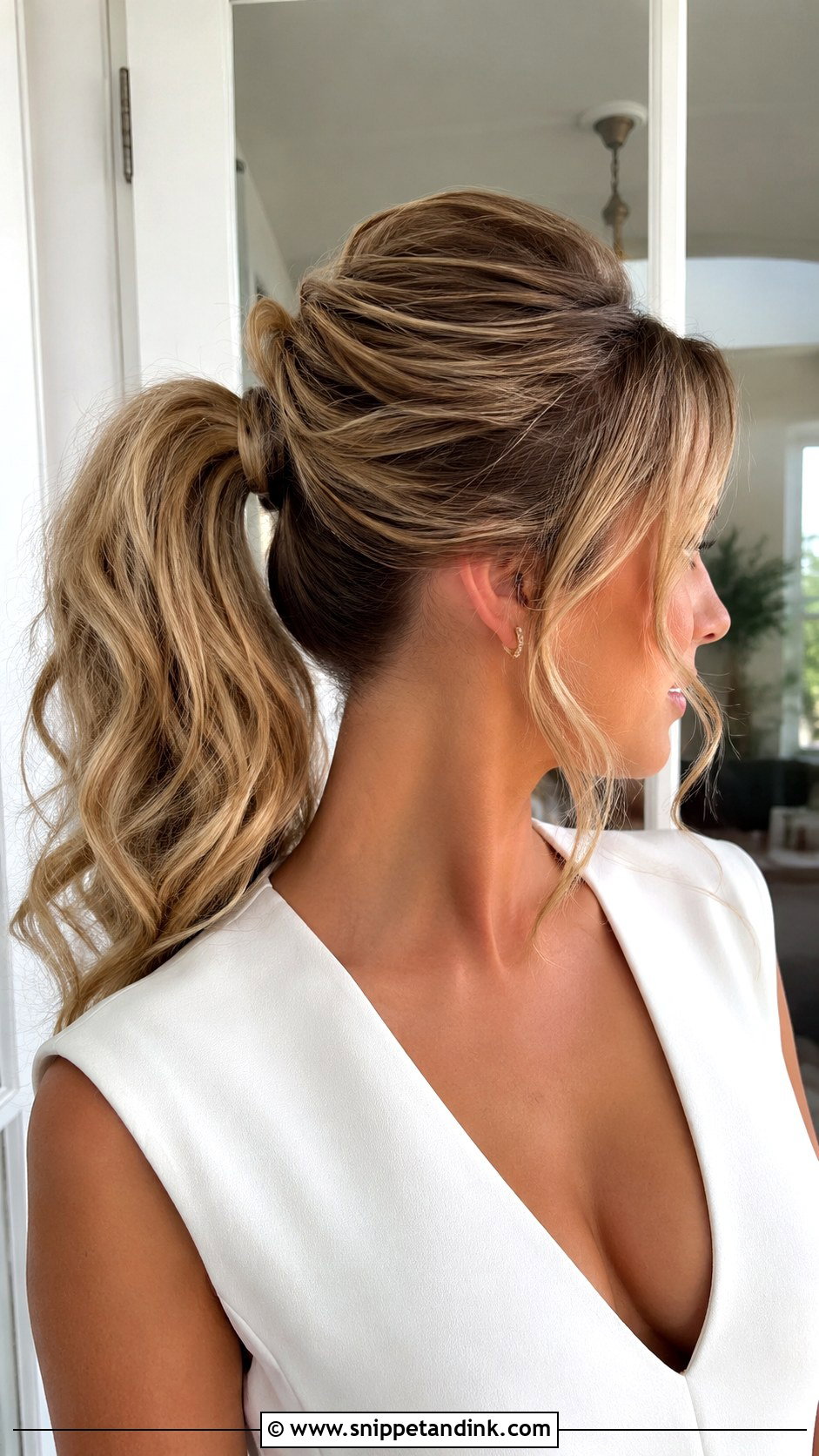
A volumized ponytail uses teasing at the crown and curls through the tail to make fine hair look bouncy. The trick I rely on is two ponytails stacked one above the other, the top one falling over the bottom. It adds length and hides the second elastic. Keep the base firm but not tight, or you’ll have a headache by the speeches. This is the style I suggest for a reception change because it swings when you dance and nothing gets in your eyes.
11. Side Swept Curls Fine Hair
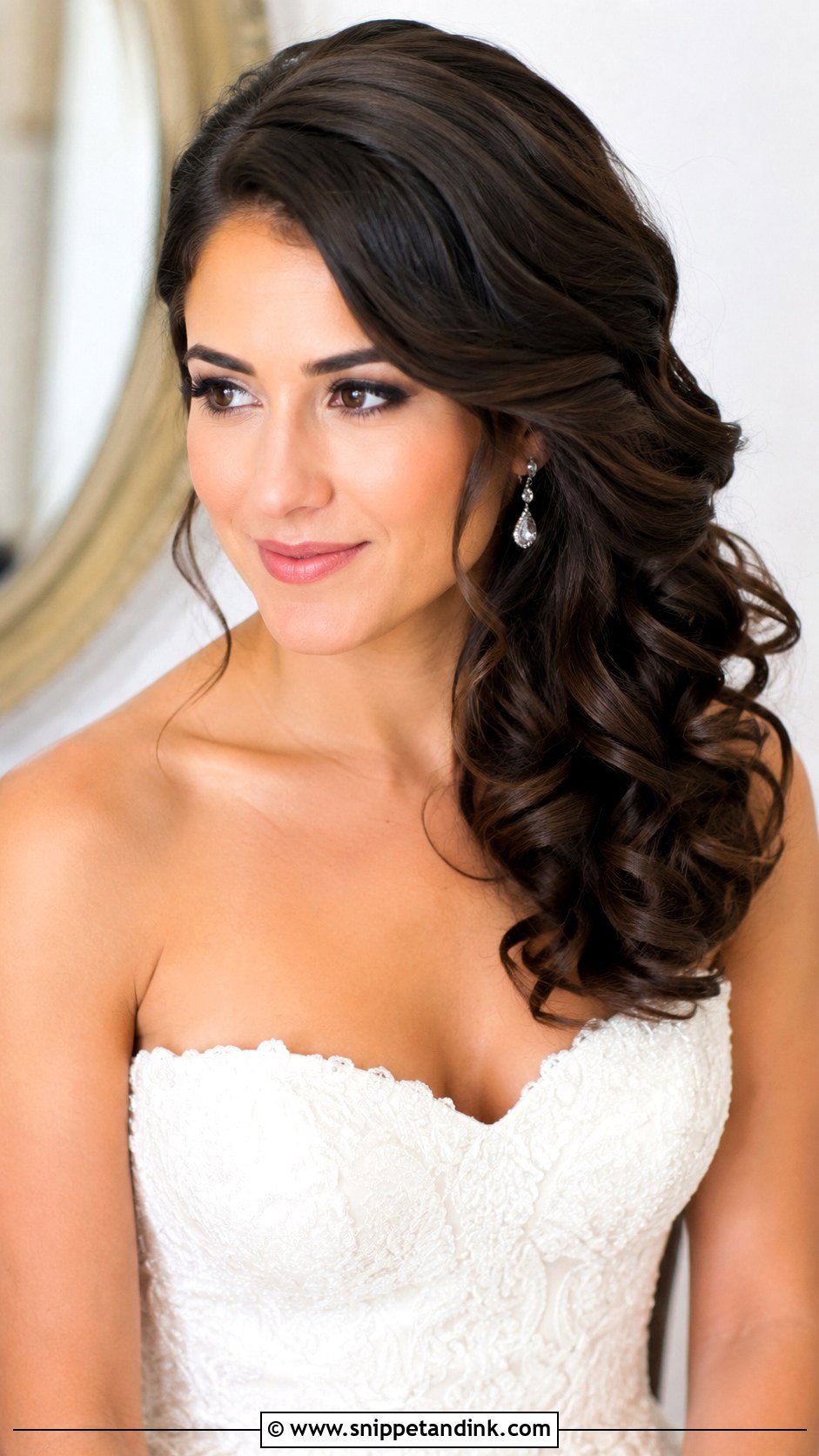
Sweeping all the curls over one shoulder concentrates the hair, so fine hair reads twice as dense on that side. I pin the curls underneath at the nape in a hidden crisscross so the whole drape stays put when you turn your head. A side part adds lift at the front. It sits naturally with a one-shoulder gown on the opposite side. If your ends are wispy, two or three clip-ins tucked under the drape fill the curl pattern without anyone knowing.
12. Short Bob Bridal Hair Fine Hair
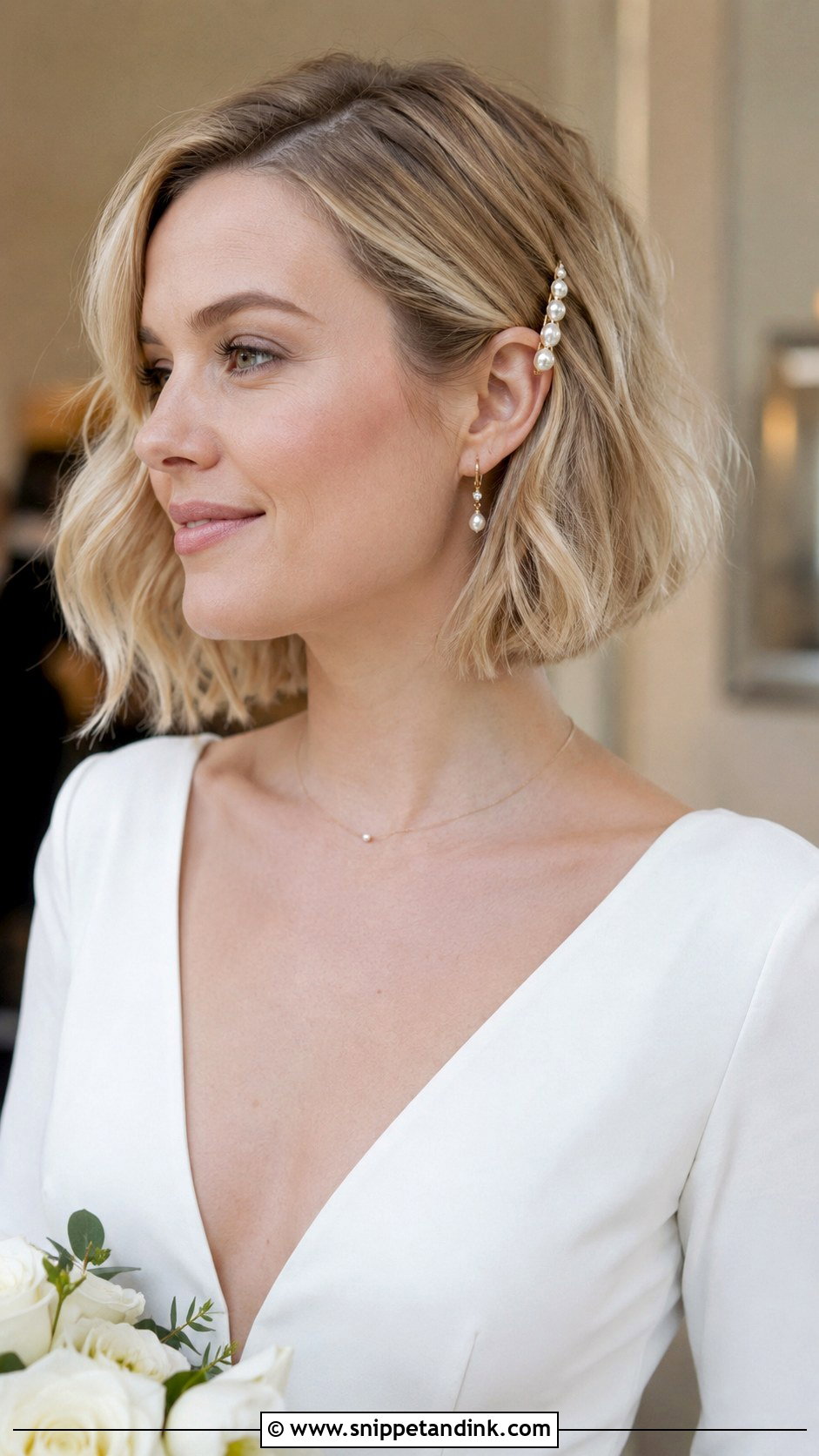
On a short bob, I don’t try to force an updo out of hair that is too short for one. A blunt bob already looks thicker than longer fine hair because the ends finish in a solid line. I add root lift, a smooth finish with bend through the middle, and maybe one side tucked behind the ear with a pin. A slim headband or a short veil on a comb both work well. It’s quick to touch up yourself, which matters at a city hall wedding without a stylist on hand.
13. Wavy Lob Bridal Hair Fine Hair
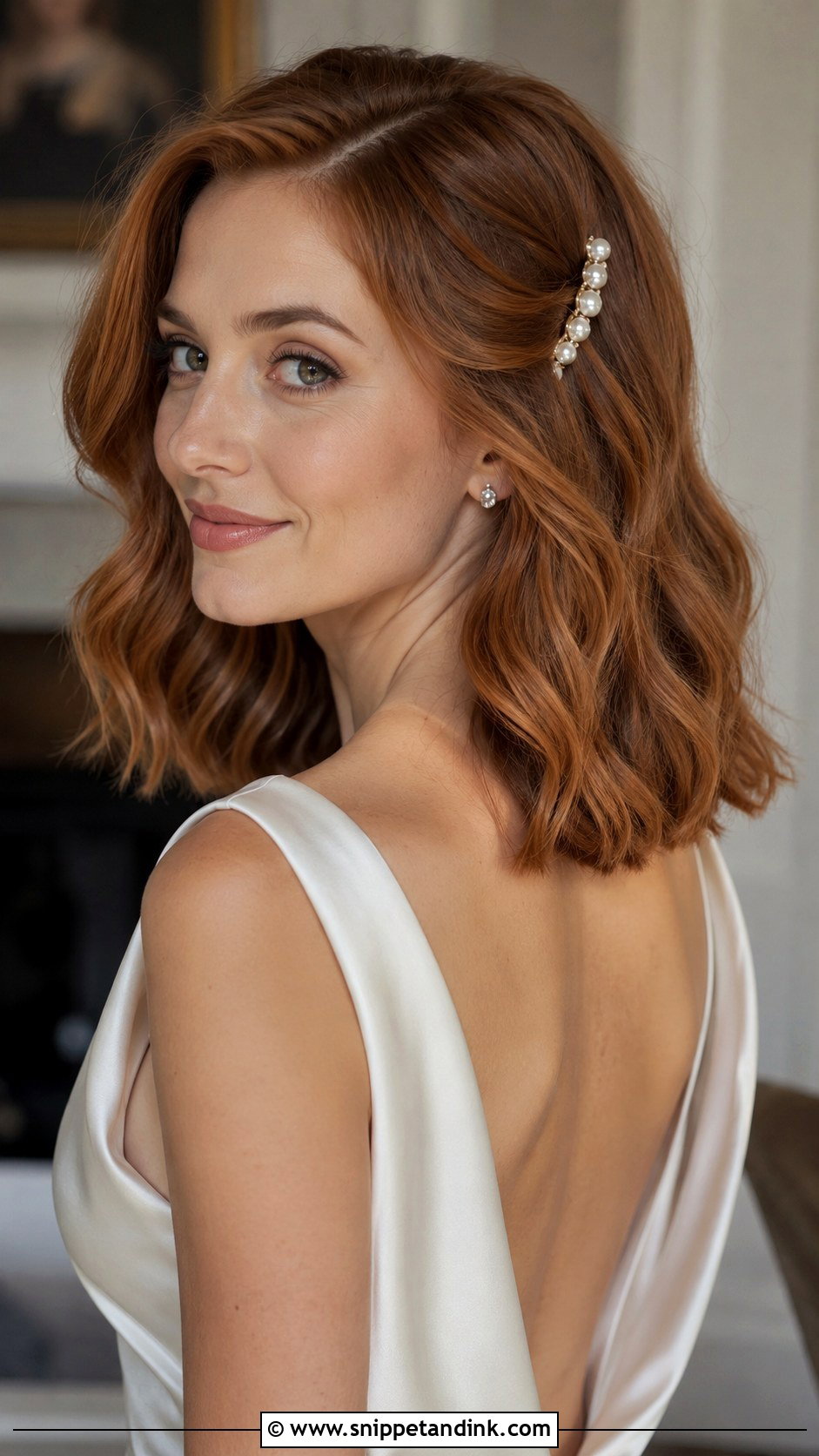
A wavy lob is long enough to curl and short enough that the ends stay thick. When fine hair struggles to hold, I pin each wave in a clip while it cools and brush it out only at the end. The result should feel soft under your hand rather than crunchy. A lob doesn’t need much decoration: one pearl barrette on the side or a small comb is enough. The cut’s simplicity is what keeps it modern.
14. Pixie Bridal Hair Fine Hair
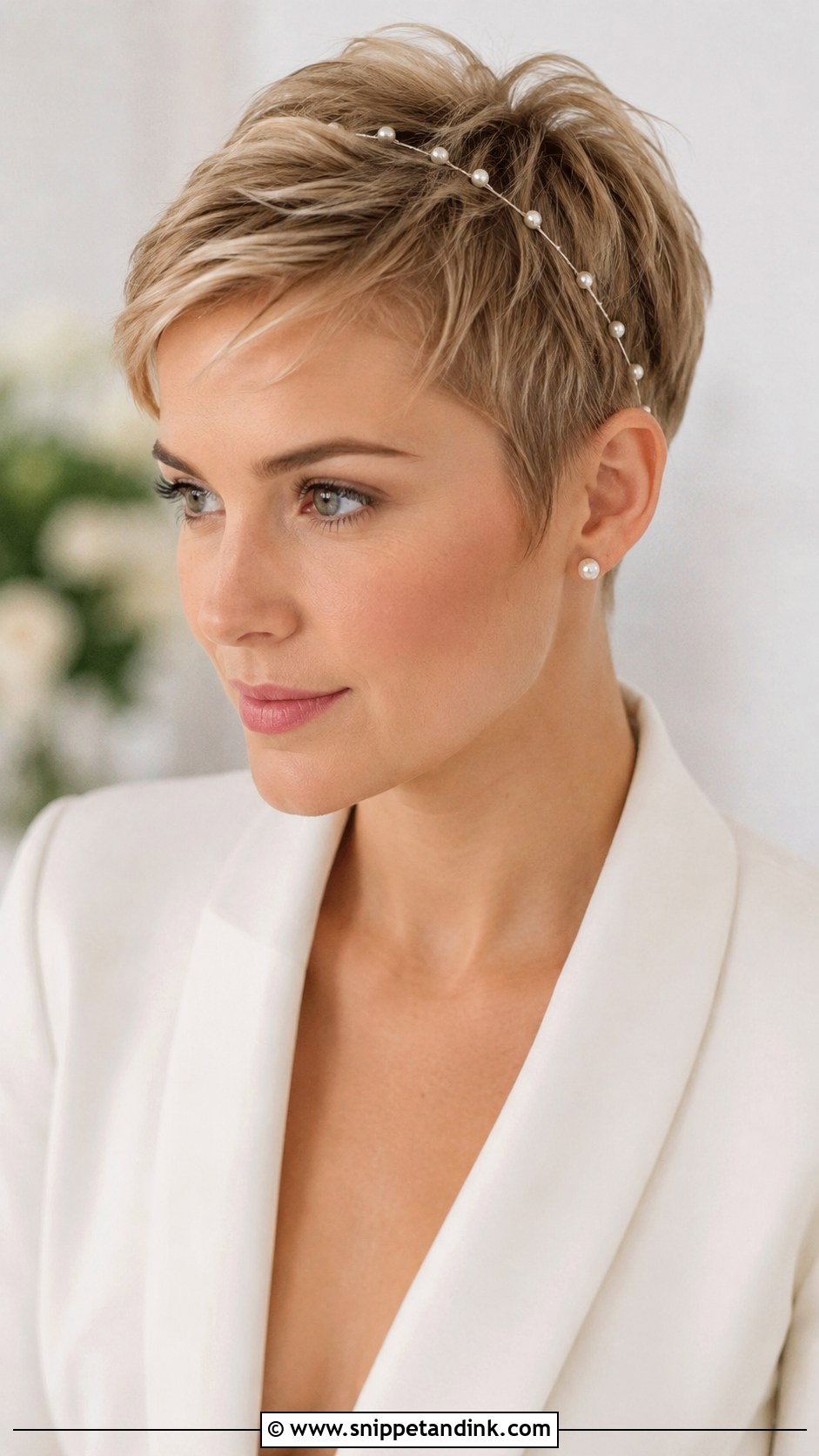
Fine hair often suits a pixie cut better than any other length, since there’s no weight pulling it flat. For a wedding I focus on lift at the crown with a little paste, smooth sides and a clean part. Book your last trim about a week before, not the day before, so the edges have softened. A crystal comb or tiny floral pins tucked above the ear give a bridal feel without hiding the shape. Heavy accessories on a pixie can tip it toward costume, so I keep them small.
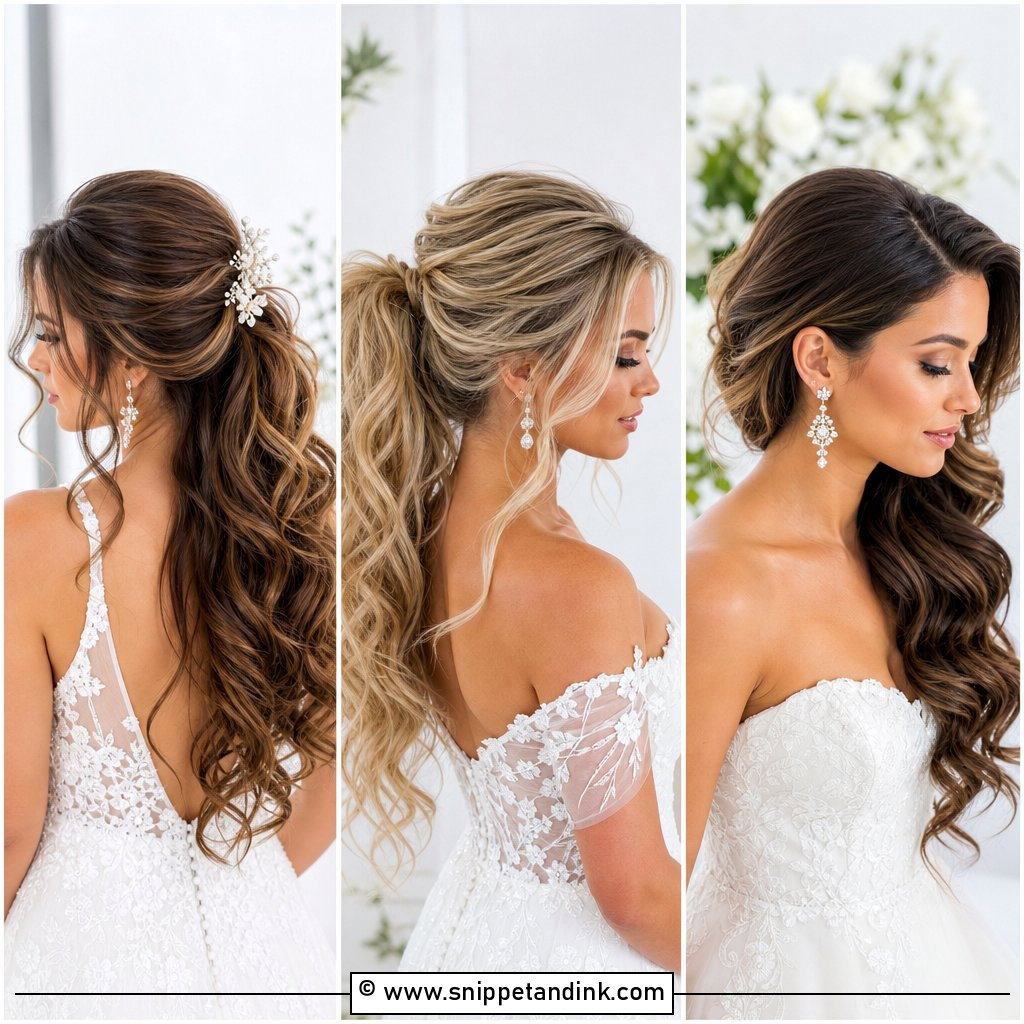
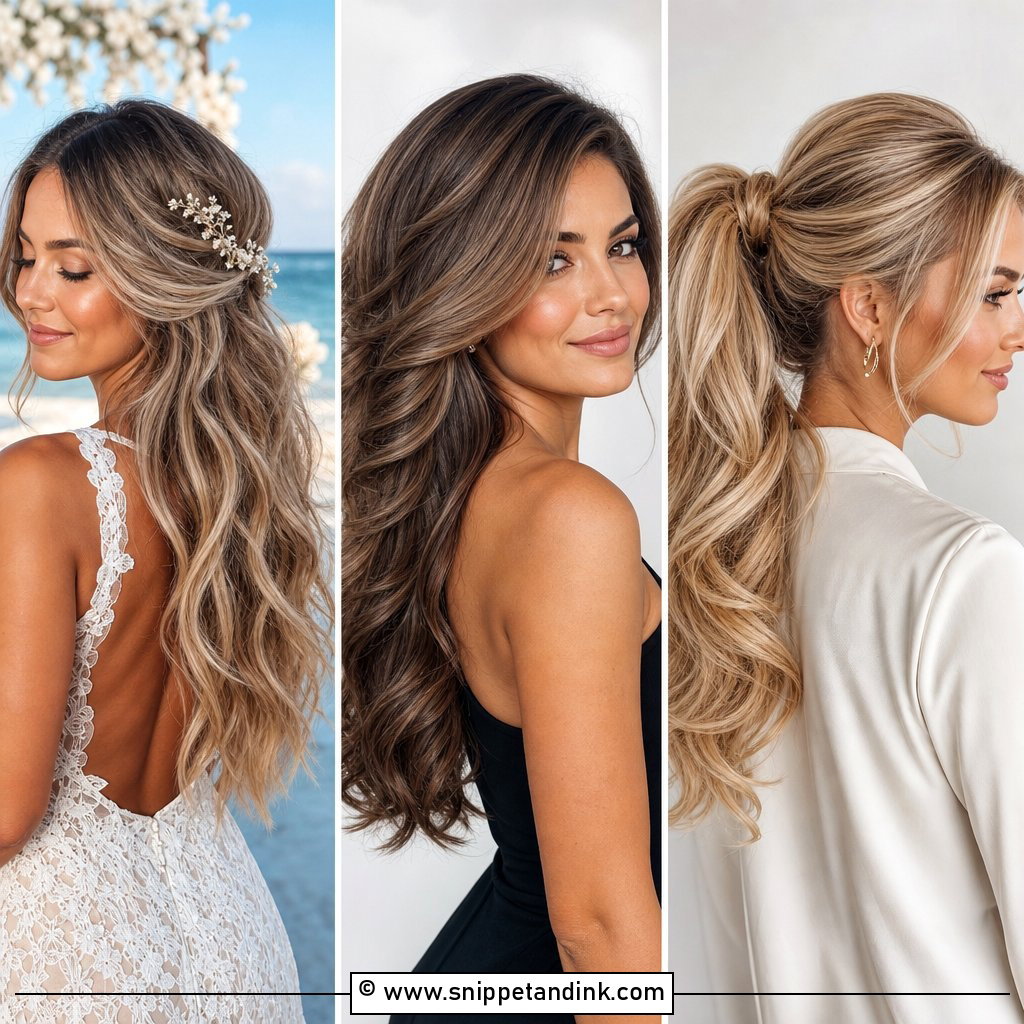
15. Twisted Half Up Fine Hair
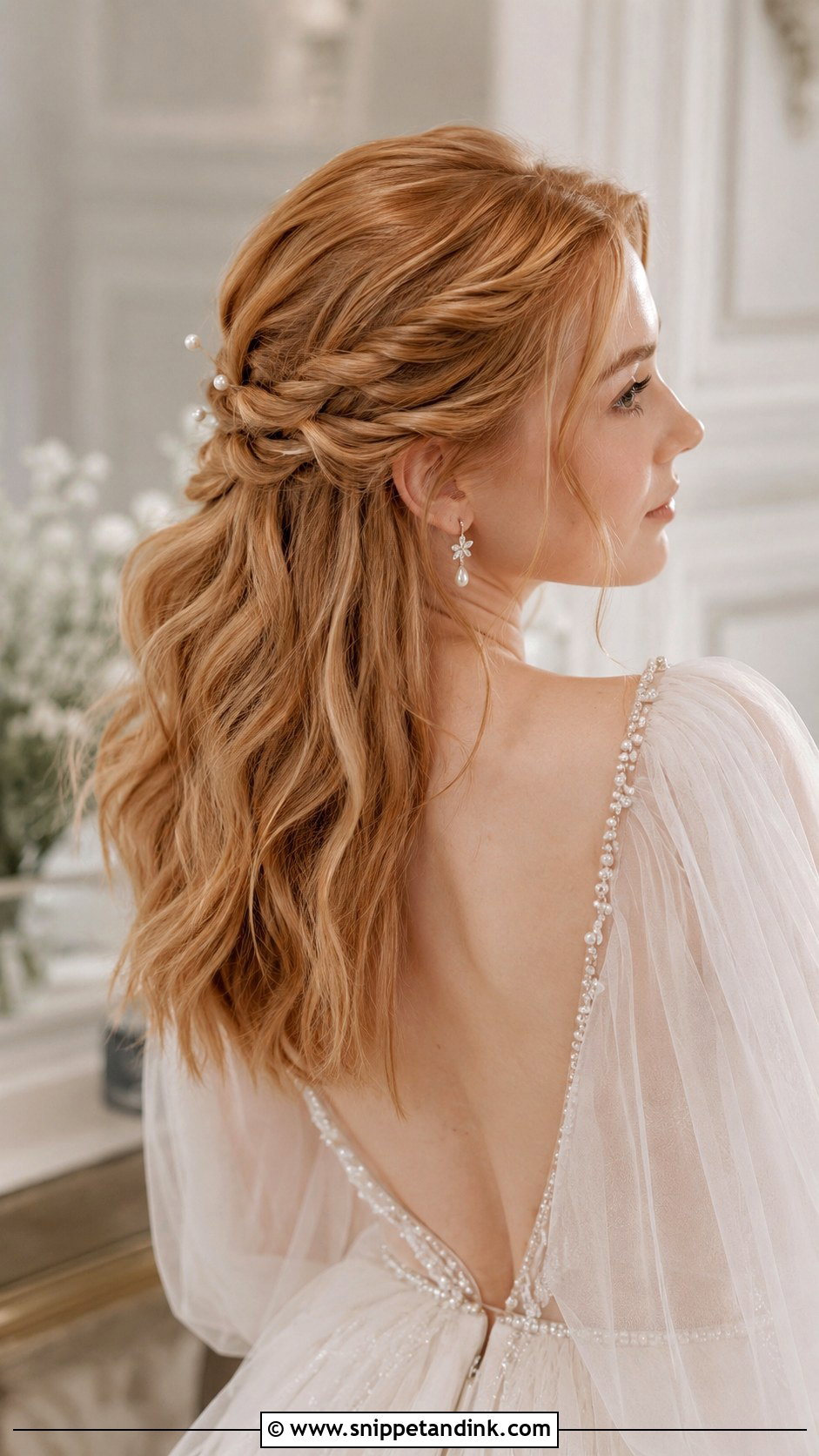
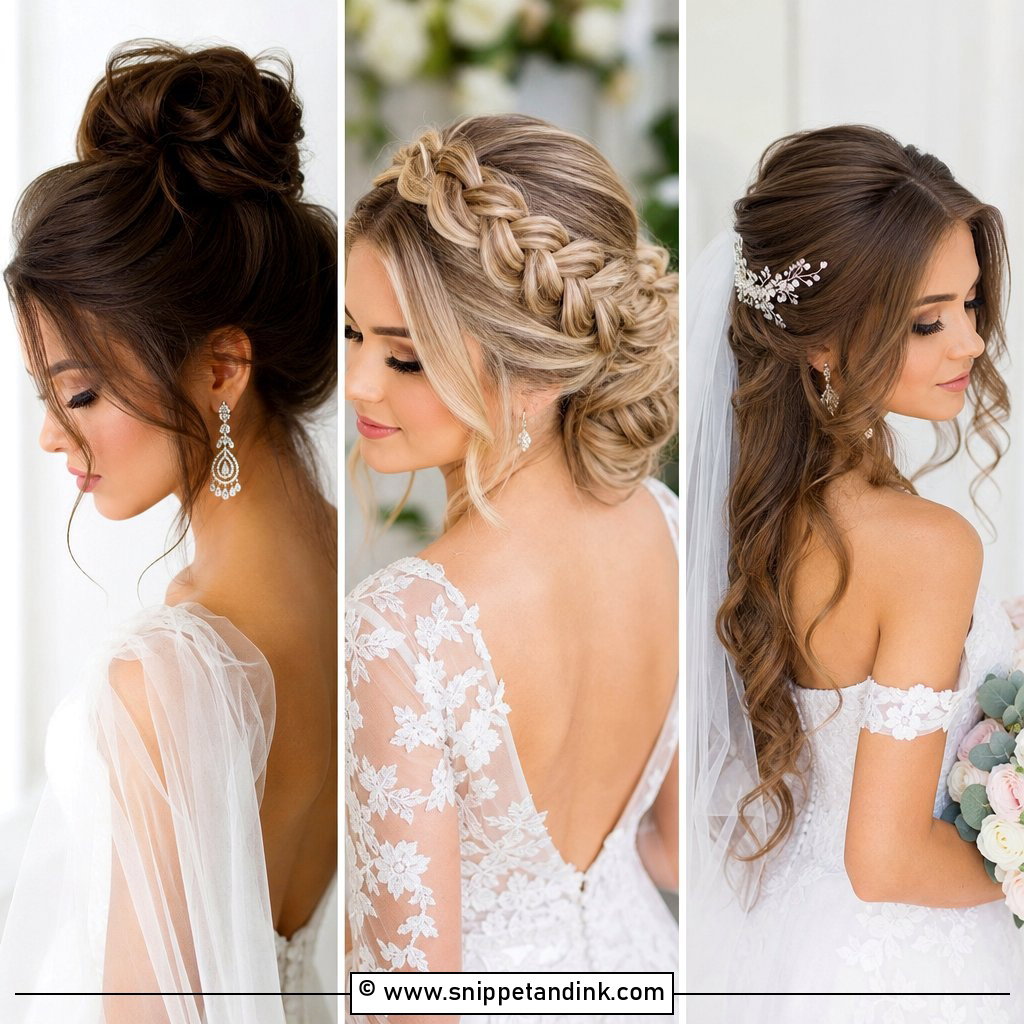
Twisting rather than braiding is gentler on fine hair and keeps the half up section from looking stringy. I take a twist from each side, loosen it with my fingertips, and pin them where they meet at the back. That point is where the volume collects, and it’s a good spot for a small comb. Curl the rest into loose waves. On medium and long fine hair it reads relaxed. On very short layers the twists tend to pop out, so I’d test it at your trial before committing.
16. High Bun For Fine Hair
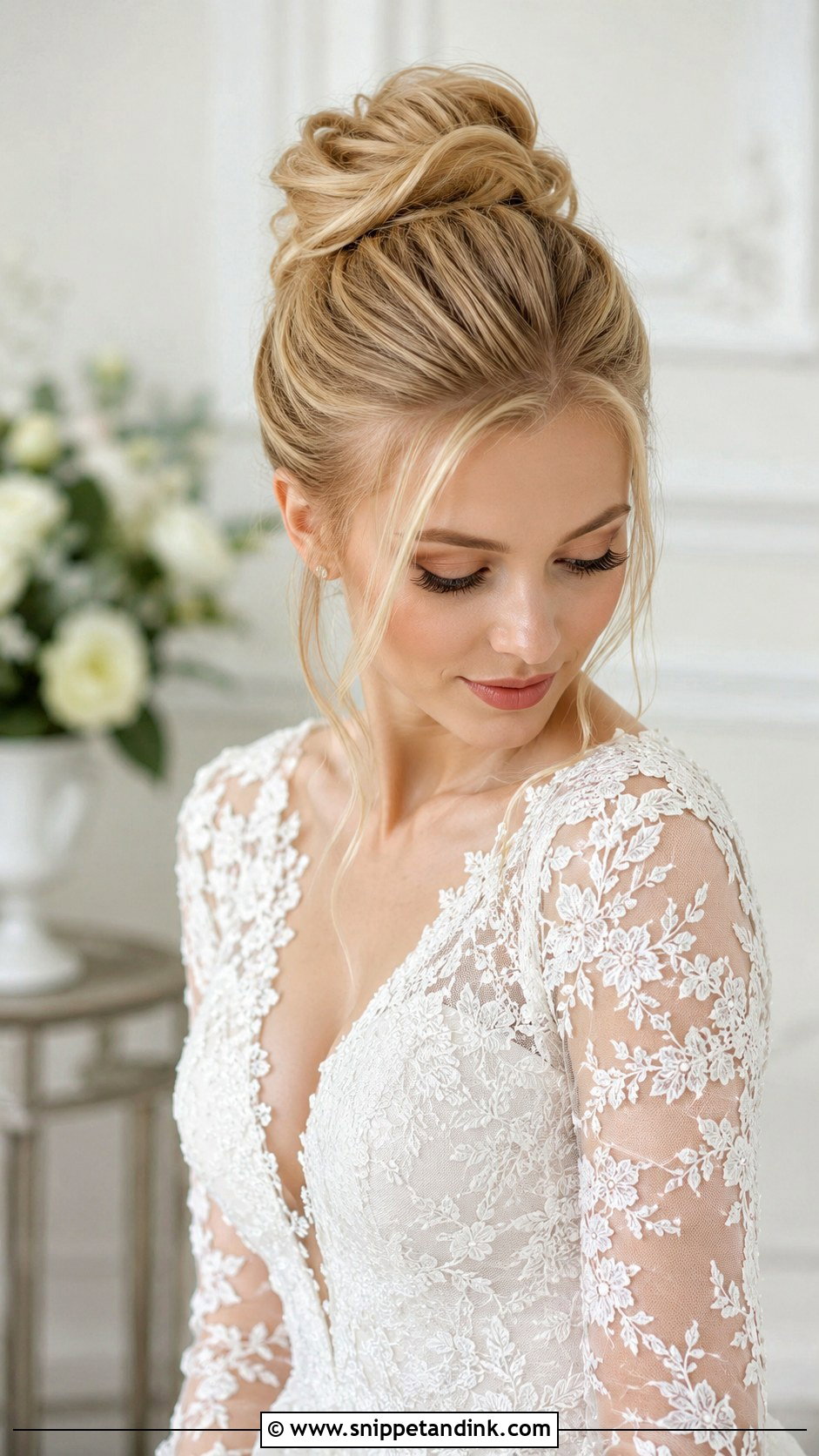
A high bun puts the whole style on show, so fine hair needs help. A bun form or doughnut wrapped with your own hair gives the size, and curled sections pinned around it hide the edge. I tease lightly at the base so the bun doesn’t sit on a flat patch. It’s the coolest option in summer heat with nothing touching your neck. With a long veil, I place the comb under the bun rather than on top so the weight doesn’t drag it backward.
17. Low Bun With Face Framing Fine Hair
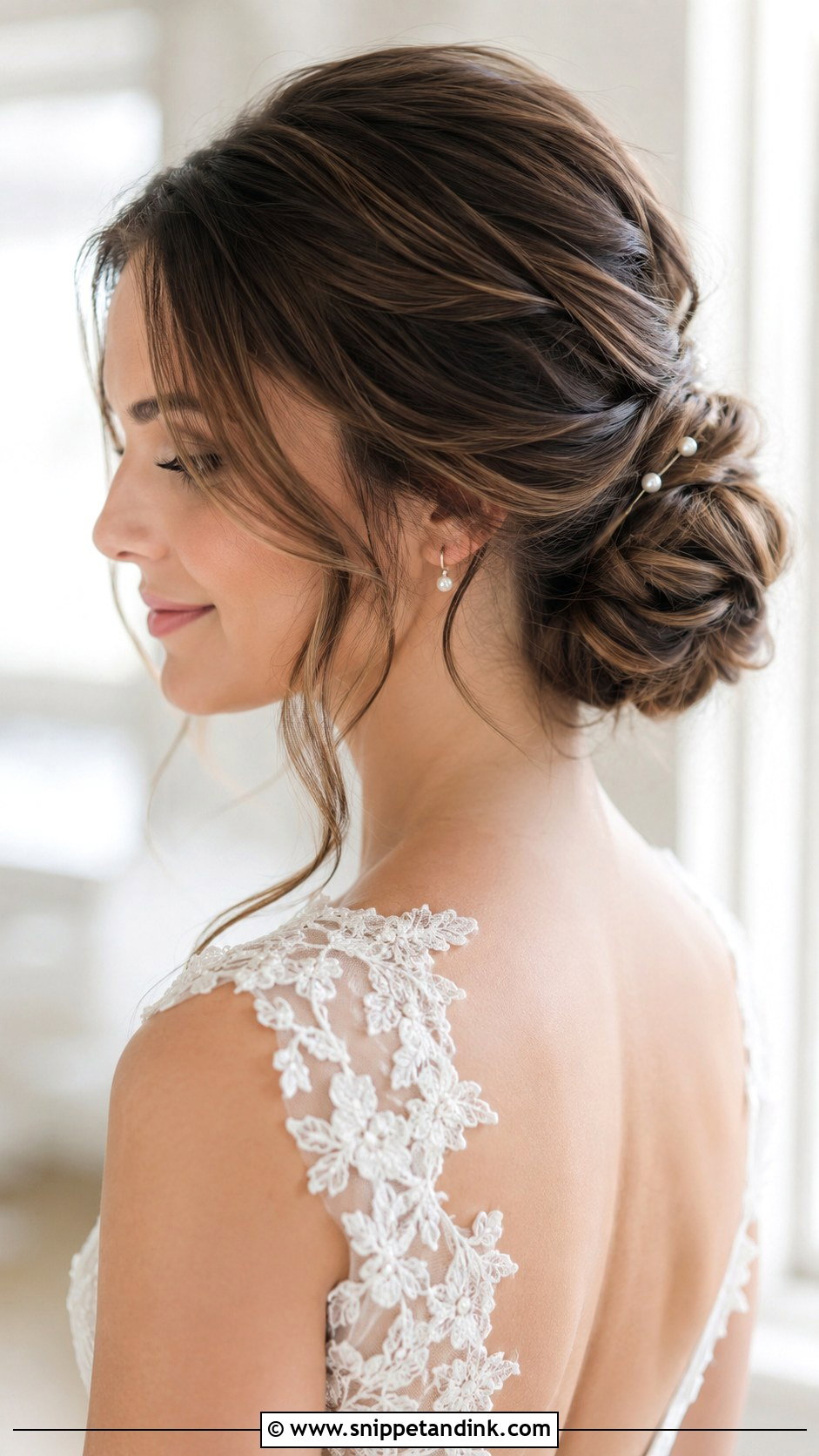
Face-framing strands are what make a low bun soft on a face rather than severe. I curl the front pieces away from the face and leave them a touch longer than looks right at first. The bun itself gets expanded section by section so it looks full at the nape. Curtain bangs or long layers make this easy. I always wave the hair before pinning, because a bend in each section gives it more grip and more body than straight fine hair ever has.
18. Bridal Hair With Pearl Pins Fine Hair
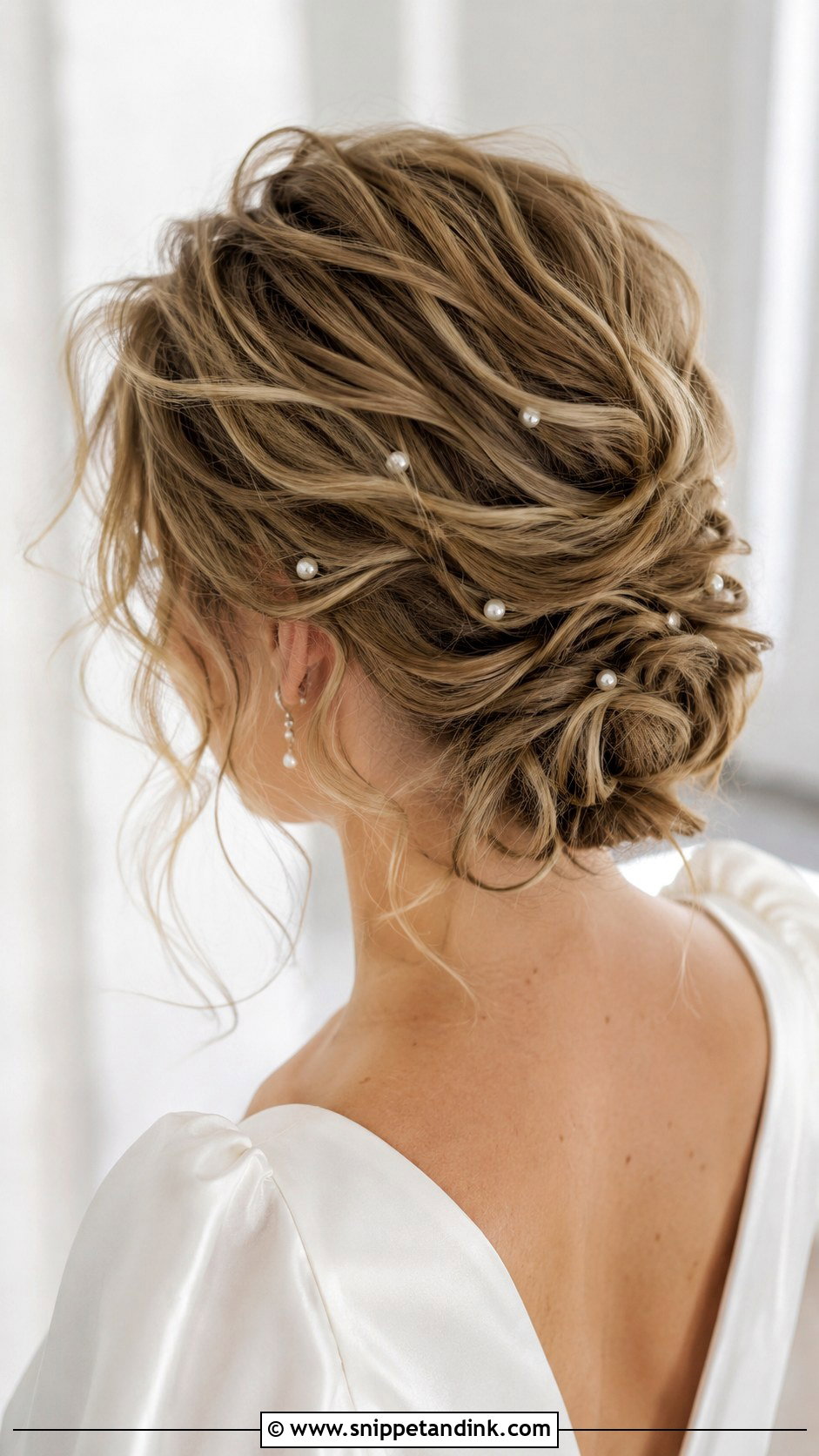
Pearl pins suit fine hair because they weigh almost nothing and grip with a short stem. I use a smaller size on fine hair; big pearls on long pins tend to slip and pull. Scatter them in a low bun, through a textured updo or along a half up twist, but let the shape underneath lead. My rule is to place them where the style turns or meets, so each one looks deliberate. Pearl earrings and a satin dress pick up the same sheen.
19. Bridal Hair With Veil Fine Hair
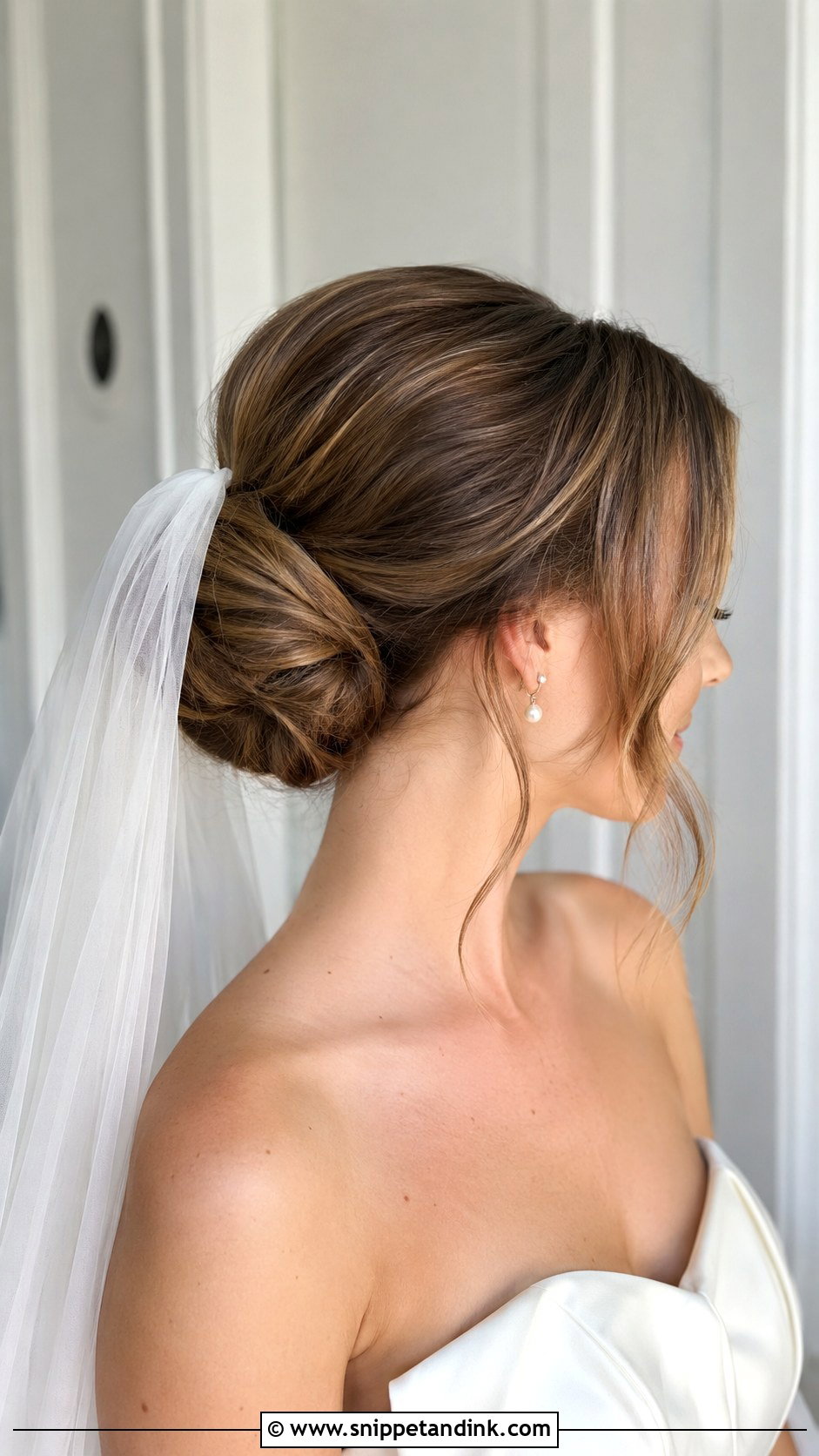
Fine hair can hold a veil all day if there’s a proper anchor. Low buns, chignons, half up styles and textured updos all give the comb something to grip. Down hair needs a hidden anchor: a small braid or two crossed pins under the crown where the comb slides in. I add texture spray right at that spot, not all over, because too much product makes the comb slip. As a bonus, a veil’s tulle softens the shoulders and makes the hair beneath look fuller in pictures.
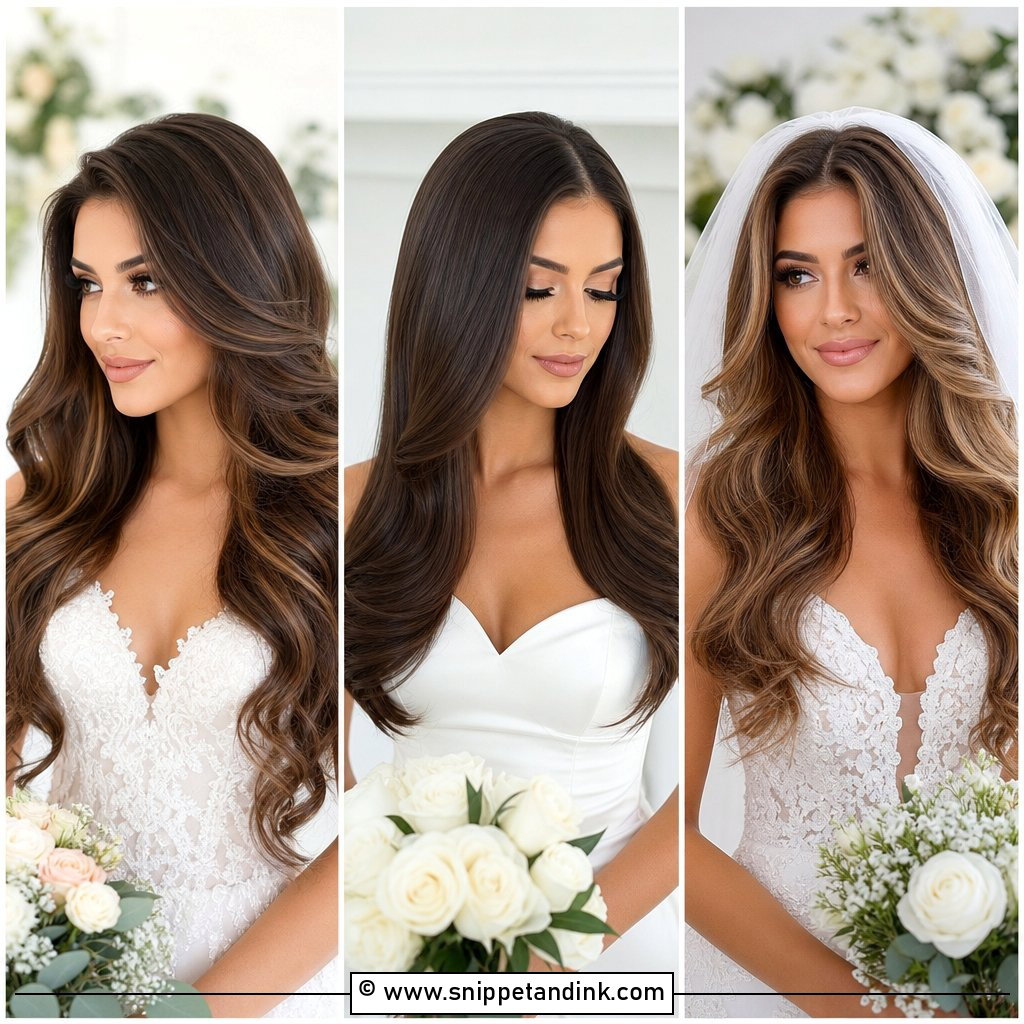
20. Bridal Hair With Hair Vine Fine Hair
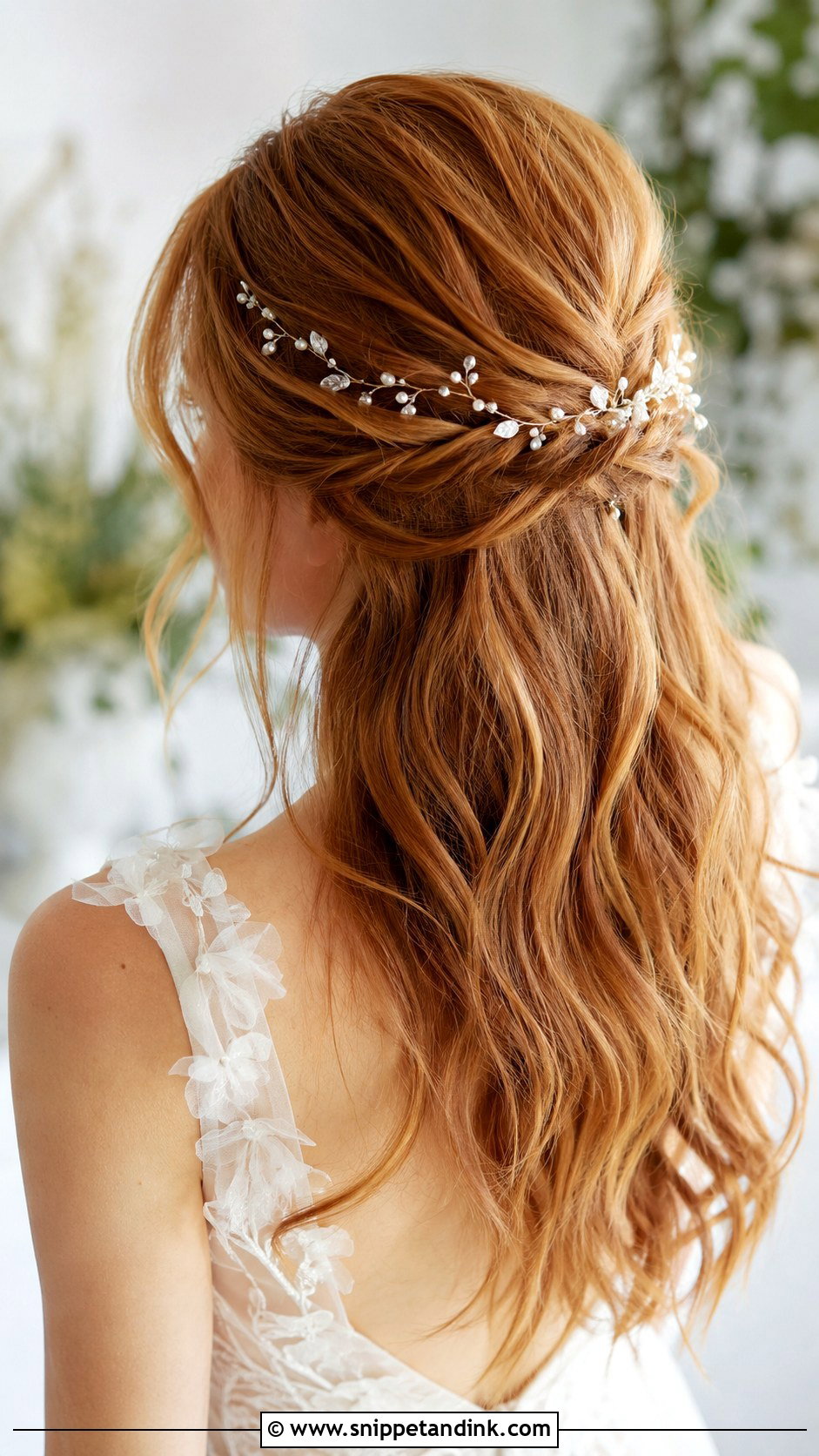
A hair vine bends to follow the style, which is why it suits fine hair better than a rigid comb. I wrap it around a low bun, along a braid or across the back of a half up style. Pick a light one with small pearls or crystals; heavy metal vines drag fine hair down and loosen the pins. I secure it with small bobby pins every few inches, threaded through the wire, so it stays comfortable for hours. On a garden or beach wedding, it adds detail without needing extra volume underneath.
Faking Density With Fillers, Wefts and Padding
Most of the fuller styles in this list rely on something hidden. That’s normal, and nobody looks closely enough at a wedding to spot it if it’s matched well.
Clip-ins and tape wefts
Clip-in wefts are the easiest addition for waves, ponytails and side swept styles. Match them to your ends, which are usually lighter than your roots, and buy them early enough to bring them to the trial. Fine hair can show the clip, so I place them a little lower than on thick hair and cover each row with a section of your own hair.
Bun fillers and padding
Mesh fillers and doughnuts make buns look full. Pick one close to your colour and smaller than you’d guess. An oversized form on fine hair is the giveaway, since there isn’t enough of your hair to cover it.
When to skip them
If your scalp is sensitive, or your hair is fragile from bleaching, extra weight on the clips can pull. I’d lean on texture and a twist-based style instead, and keep accessories small.
What Fine Hair Looks Like at Hour Ten
Updos built on fine hair usually hold better than down styles, because pinned curls can’t drop. Waves worn loose will relax a little by the evening, especially outdoors or in a warm room. That’s not failure, it just turns into softer bends.
Put a small kit in your bridesmaid’s bag: a few bobby pins in your colour, a travel texture spray and a comb with a tail. Lifting the crown with the tail and a quick mist at the roots takes two minutes and brings back most of the morning’s height before evening photos.
Fine Hair Needs Grip More Than Product
Fine hair doesn’t limit you; it just asks for a plan. Texture before curling, padding where it can hide, pins that lock against each other and accessories light enough not to drag. Low buns, half up styles, waves, ponytails, bobs, pixies and chignons all work when they’re built that way. Bring photos to your trial, wear the look for a few hours afterward, and tell your stylist exactly how it held. That honest report is how the version on the day ends up still full at the last dance.
You'll Like These Ideas:


Leave a Reply