
A lace frontal gives you a hairline you can part anywhere from ear to ear, which is exactly why it suits a bride who wants options. The catch is that every style asks something different of the unit underneath: a sleek part shows the lace, a high bun shows the perimeter, waves hide almost everything. I plan the style and the install together, alongside the neckline, the veil and how long you need to wear it. These frontal bridal hairstyles run from sleek to full curls, and for each one I note what the frontal has to do to pull it off.
Glue or Glueless for a Fourteen-Hour Wedding Day
The style you pick matters less than how the frontal is secured underneath it. A wedding is a long, warm, emotional day with hugging, dancing and a veil tugging at the back of your head, and I plan the install for all of that.
Adhesive installs
Glued lace gives the flattest, most convincing hairline and the strongest hold, which is why I usually start there for a bride. The trade-off is your skin. I patch test the exact adhesive weeks before the wedding, not the week of, because a reaction on the forehead is the last thing you want in close-ups.
Glueless with a band
An elastic band and a melting spray or wax stick are kinder to sensitive skin and easy to remove, but the hold is softer. They work well for sleek ponytails and low buns that put little strain on the front. Under a heavy cathedral veil or through hours of dancing, expect the edges to need a press back down.
Install timing
I install the day before or the morning of, so the hairline is fresh. If this is your first frontal, wear one for a full day a few weeks earlier. You will learn whether it itches, how warm it gets and how your scalp feels by evening.
1. Frontal Bridal Low Bun
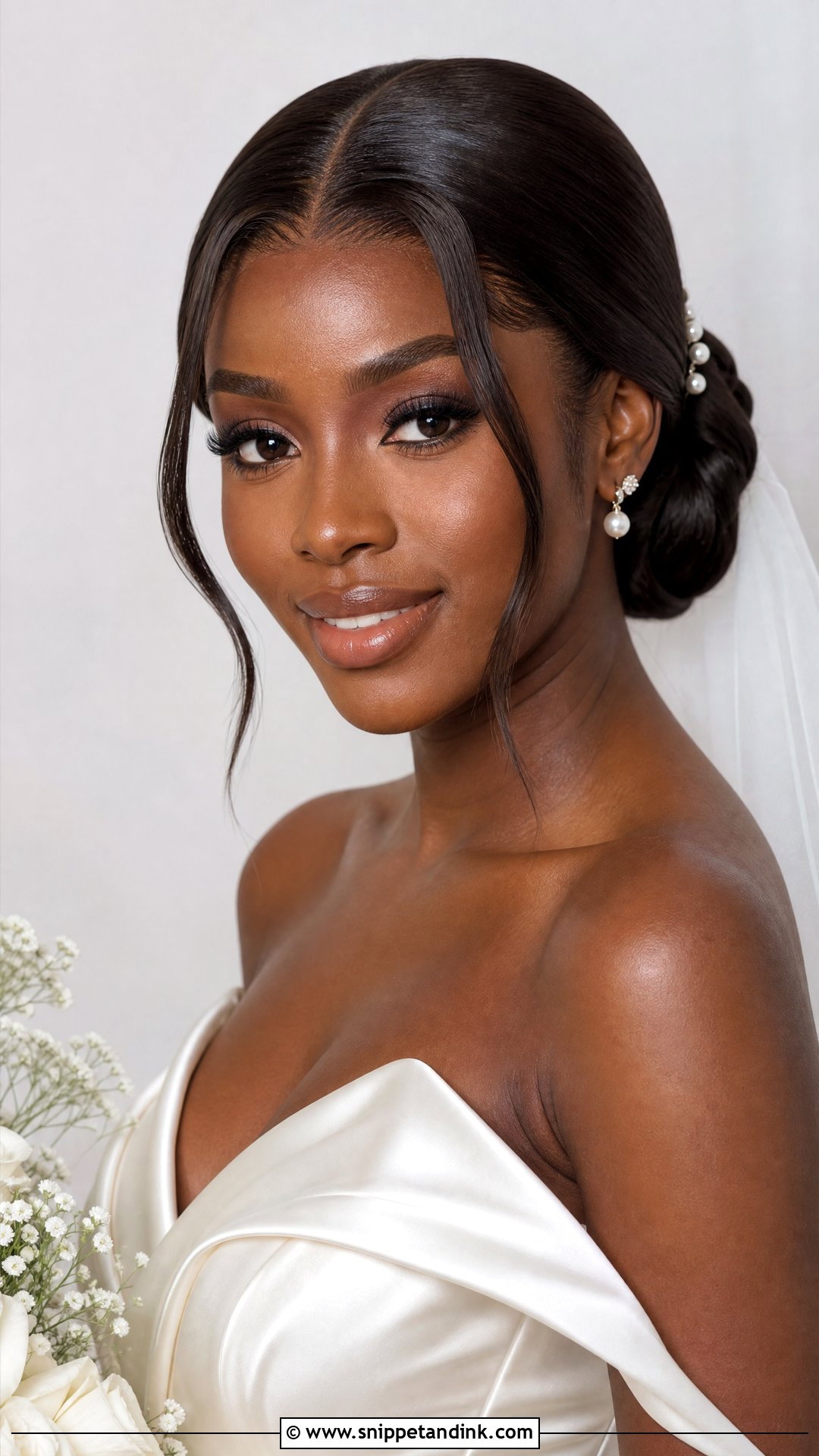
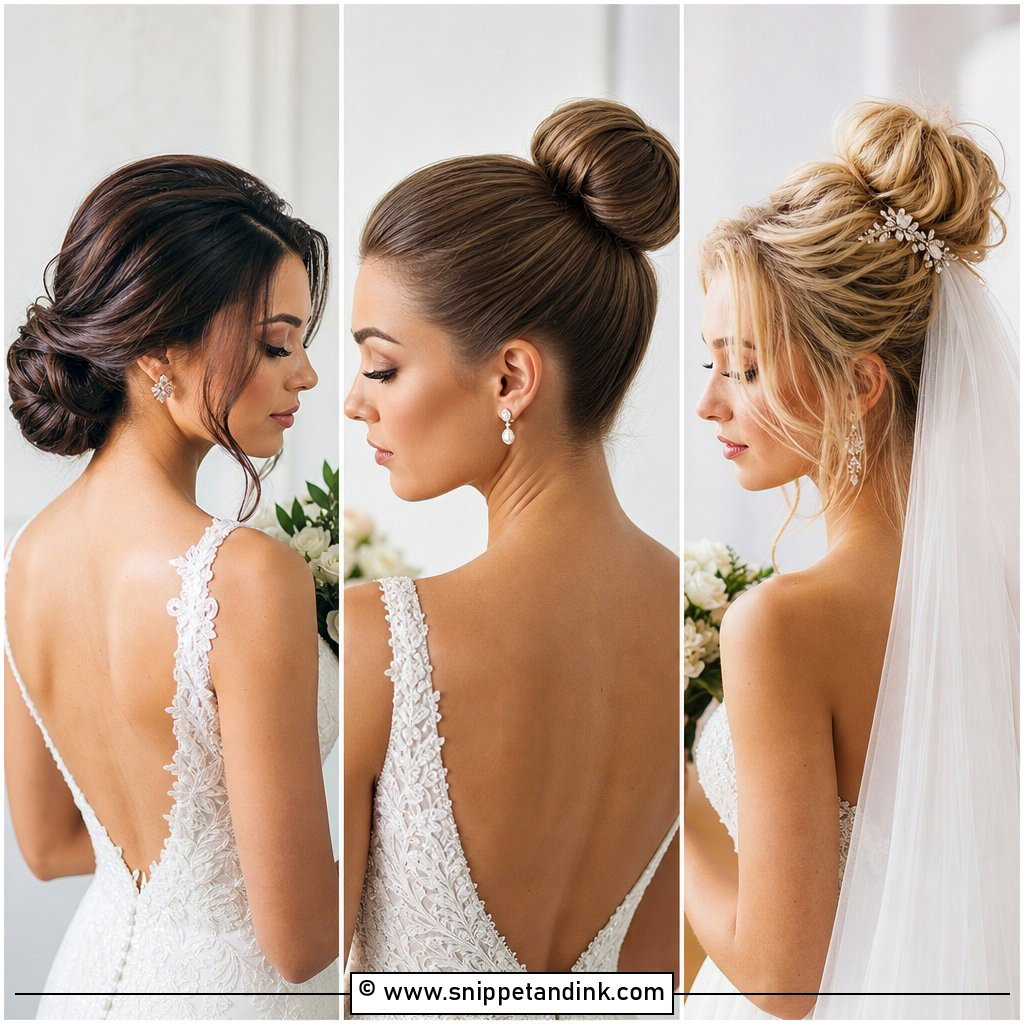
A low bun is the safest updo you can do on a standard frontal. The lace covers the front and sides, and the bun sits at the nape where the wefted back of the unit is easy to gather without showing tracks. I keep the front sleek with a middle part or pull out a few face-framing pieces, which also hides the ear tabs. It takes a veil comb, pearl pins or a crystal comb well and holds through a long day without crushing your makeup or covering your jewelry.
2. Frontal Bridal High Bun
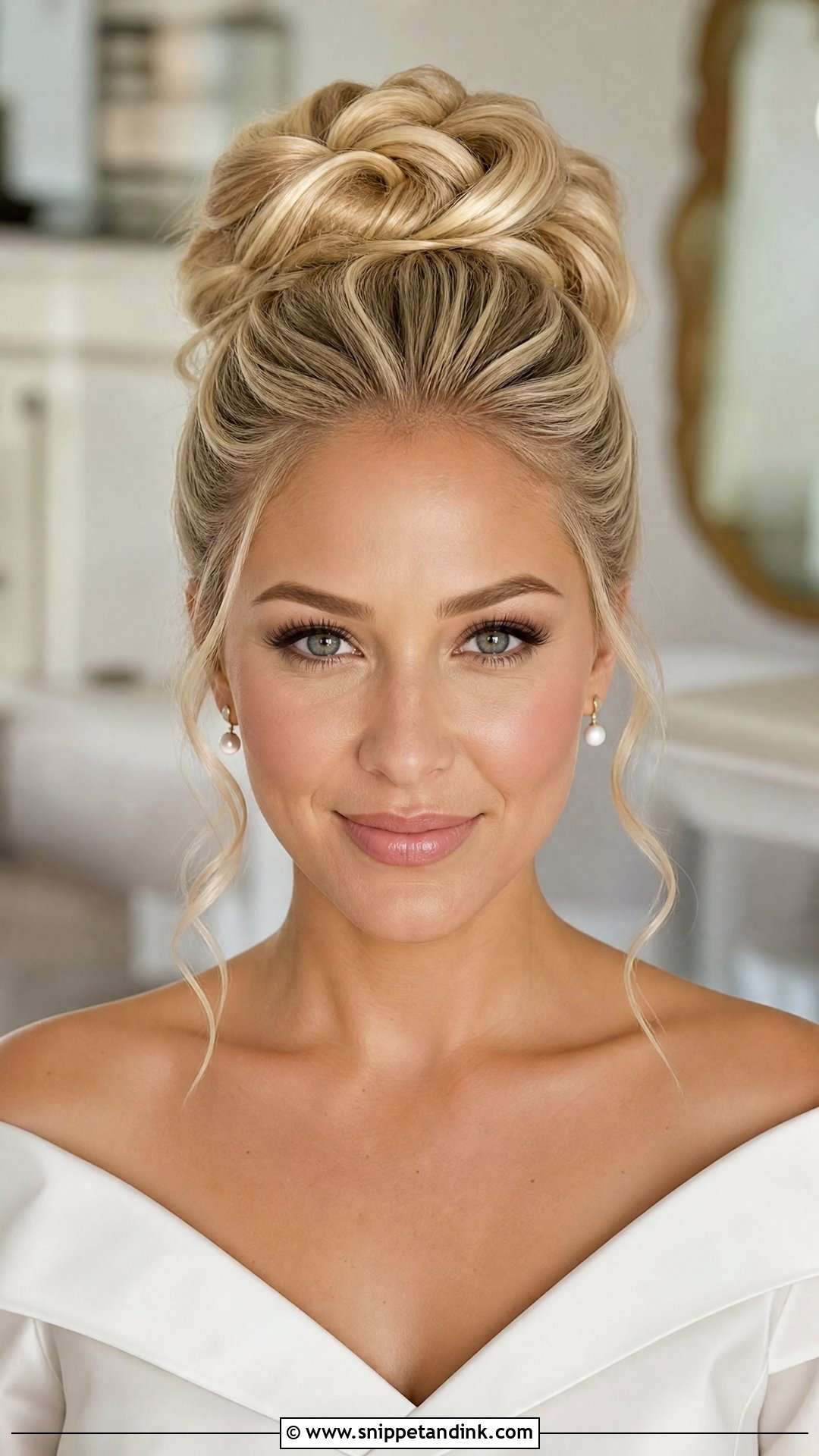
Here is the honest catch with a high bun: most frontals only have lace at the front, so pulling everything up exposes the wefts and your own hairline at the nape. For this shape I either work with a 360 lace unit or blend in your own leave-out at the back. Done right, it gives height and keeps the face, earrings and neckline in full view, and it balances a cathedral veil or a tiara. Leave curled pieces at the temples to soften it, or go fully sleek for a regal finish.
3. Frontal Bridal Side Part Waves
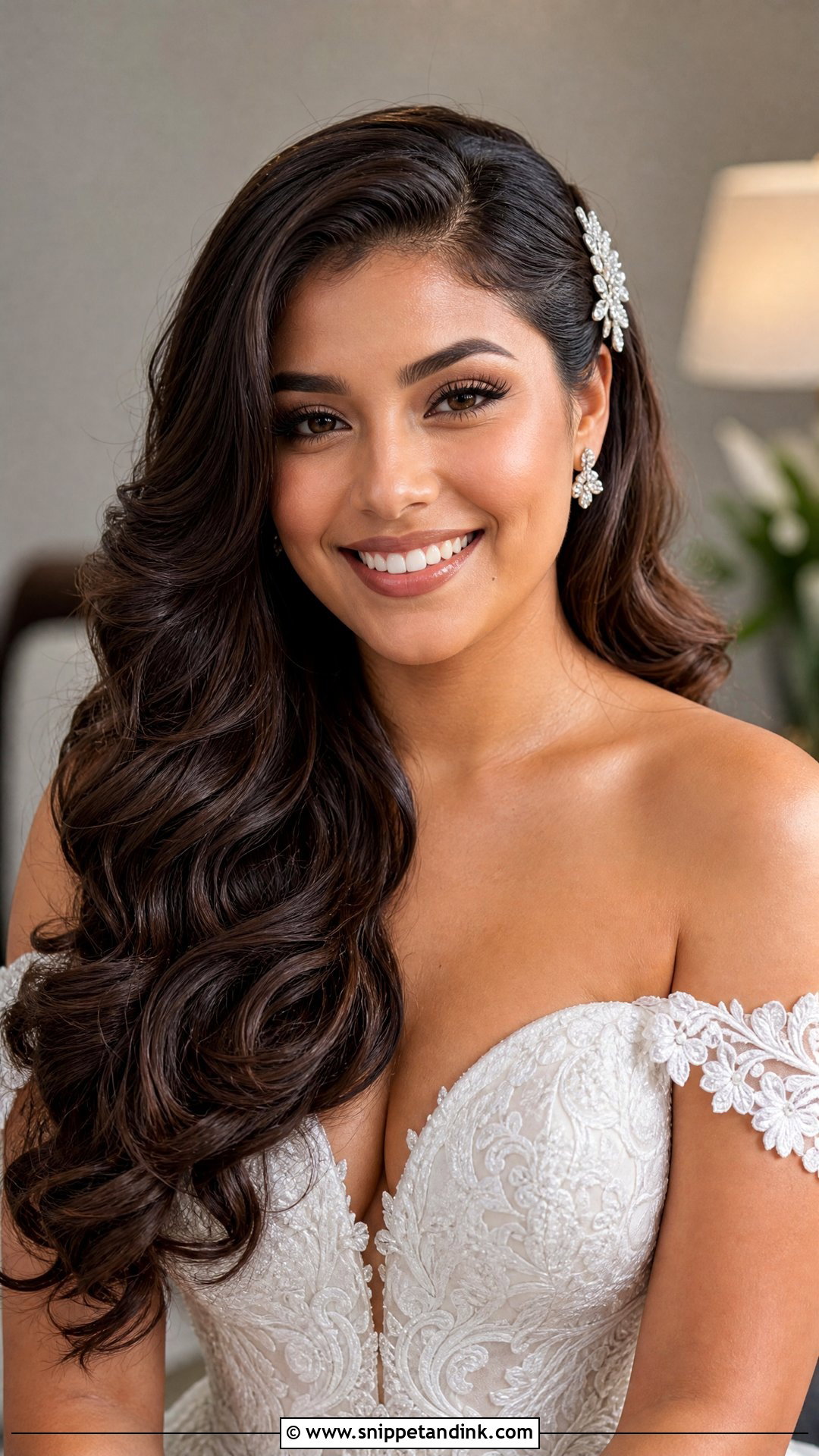
Side part waves are kind to a frontal because the hair falls across the lace on the heavy side and hides most of it. The part line itself is what close-ups show, so I pluck a slightly irregular hairline and set the part with a little foundation along the scalp so it reads as skin. I brush the waves out for a softer Old Hollywood finish or keep them defined for shape. A side part lifts the cheekbones on most faces and sits well with a one-shoulder gown.
4. Frontal Bridal Middle Part Waves
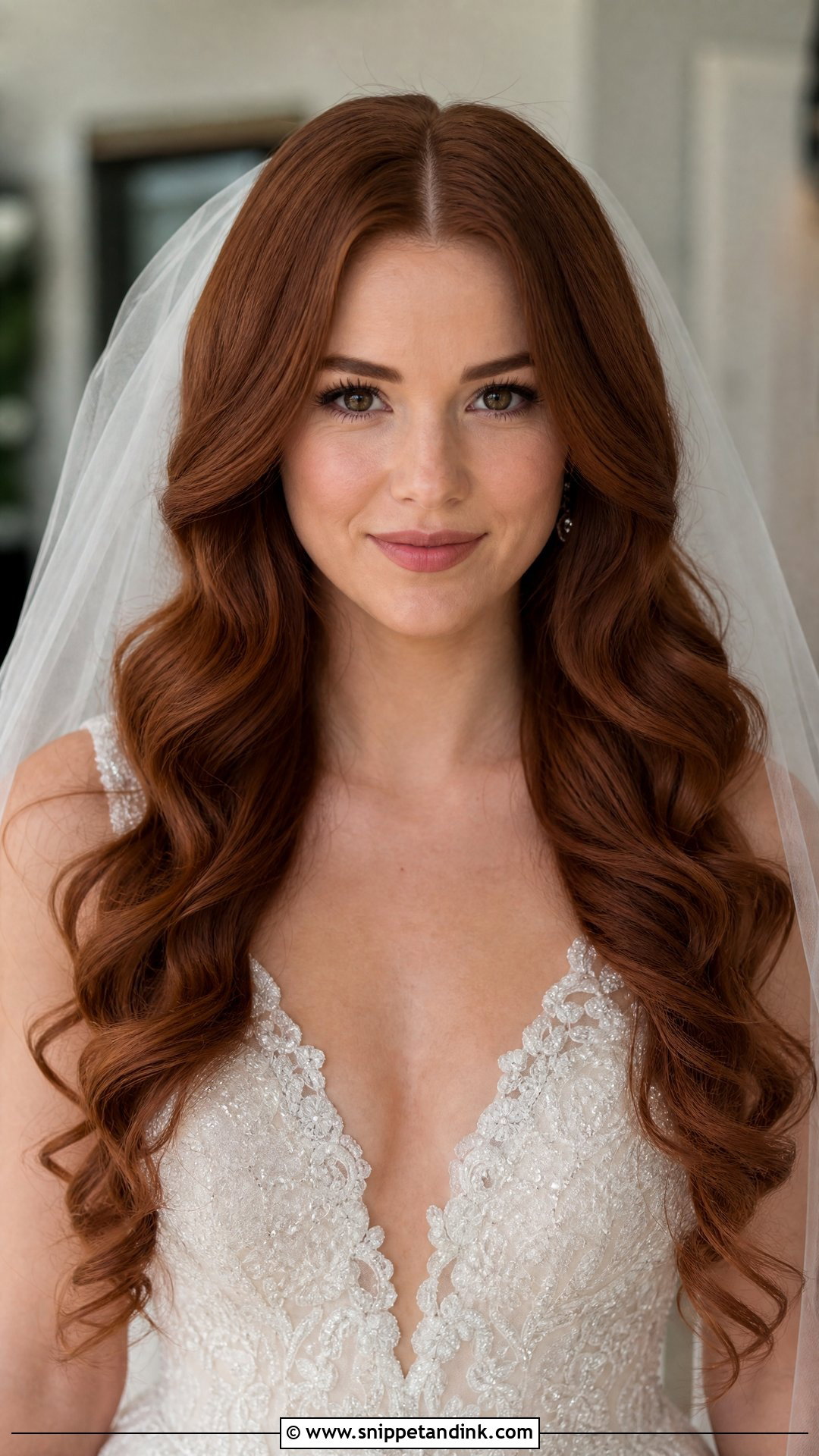
A middle part is the most exposing look you can ask of a frontal, because the whole part line faces the camera straight on. That is why I prefer a 13×6 frontal or a closure for it: the deeper lace lets the part run further back before it meets the wefts. Roots sleek, ends softly curled. It frames the face evenly and sits with almost every dress, from pearl veils to minimal crepe. If you only have a 13×4, a slight off-centre part is more forgiving.
5. Frontal Bridal Half Up Half Down
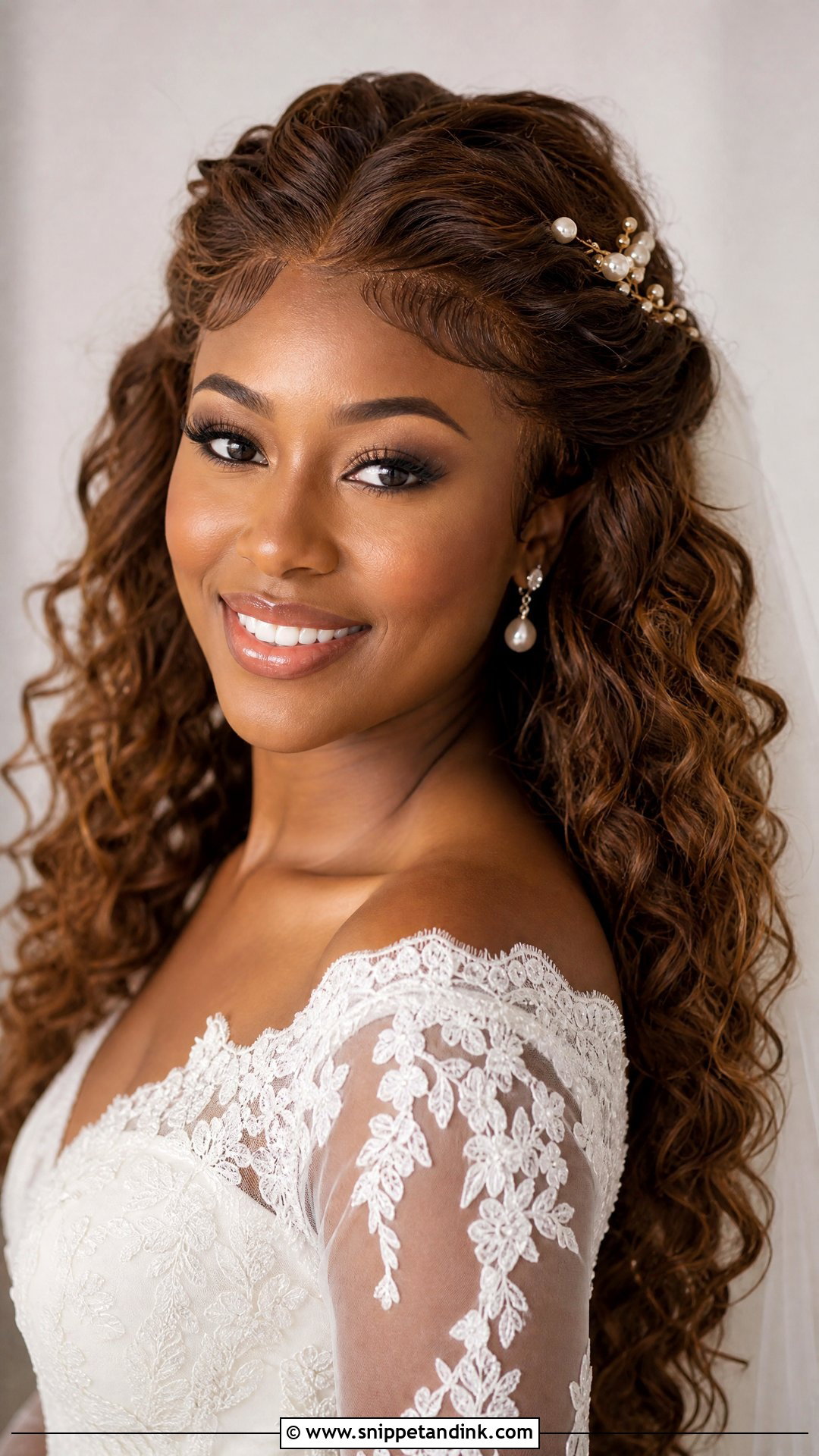
Half up gives loose hair the security of pinned sections, and on a frontal the pinned top section has another job: it gives the veil comb something solid to grip besides the lace. I lift, twist or pin the top and let the rest fall in curls. A middle or soft side part both work. Make sure the pins go into the hair of the unit and your braids beneath it, not into the lace, which tears if a pin is pulled against it.
6. Frontal Bridal Ponytail
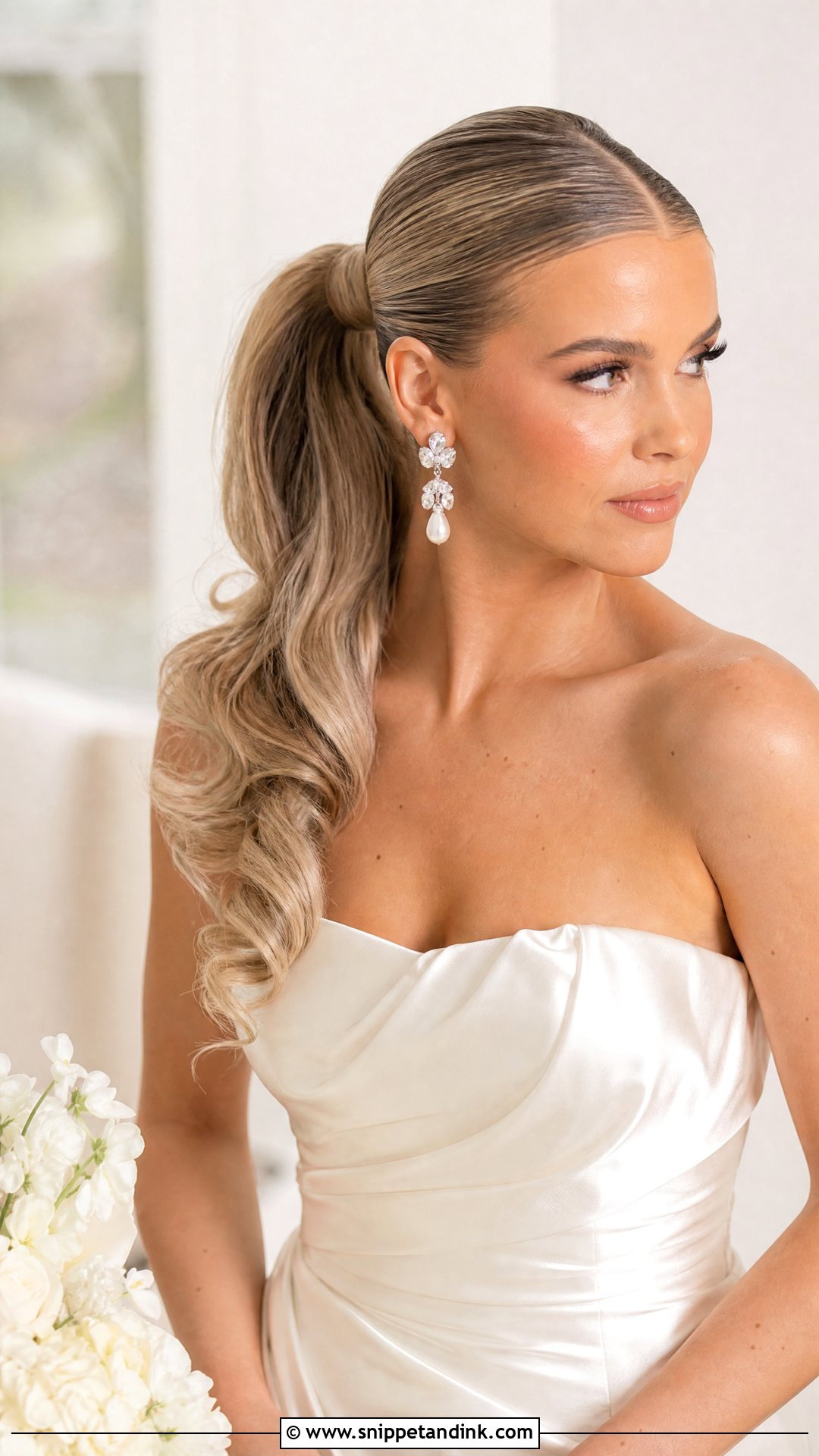
A sleek ponytail with a frontal keeps the face open and the hairline neat, with length and swing from the tail. Height decides the install. A low ponytail works on a normal frontal; a mid or high one usually needs a 360 unit or a separate ponytail piece fitted over your own gathered hair. It suits strapless gowns, halter necklines and statement earrings. I wrap a strip of hair around the base to hide the band, then either curl the length or flat-iron it sharp.
7. Frontal Bridal Hollywood Waves
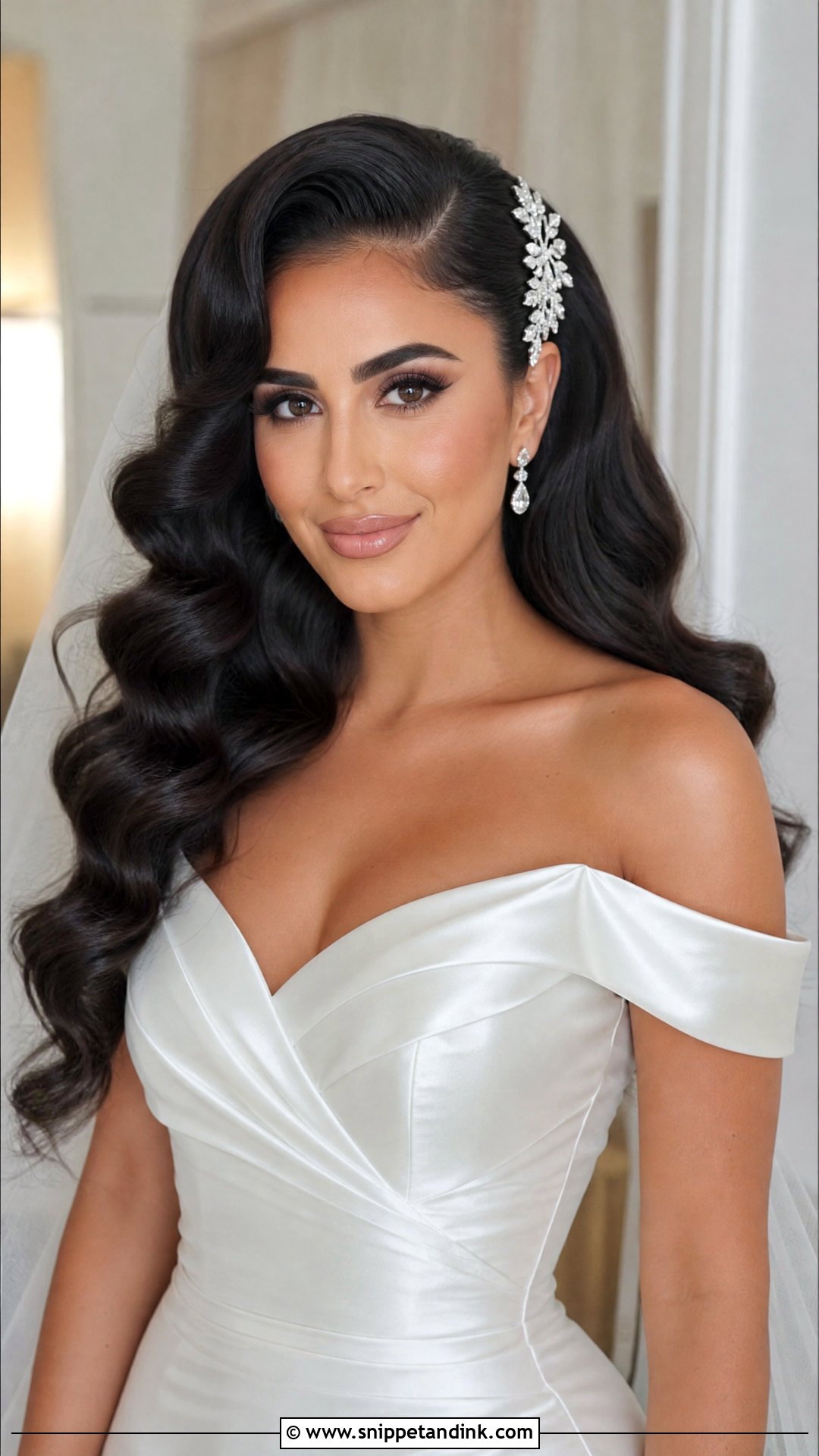
Hollywood waves need a deep side part and a smooth, glossy surface, and the lace frontal makes both easy because there is no growth pattern at the root to fight. Each wave has to sit brushed together as one shape, so I set them in pin curls, let them cool completely, then brush and press the ridges with clips. Human hair holds this; a synthetic unit melts or refuses the set under a hot iron. With a fitted satin gown and a single crystal barrette on the swept side, it is formal without trying hard.
8. Frontal Bridal Curly Updo
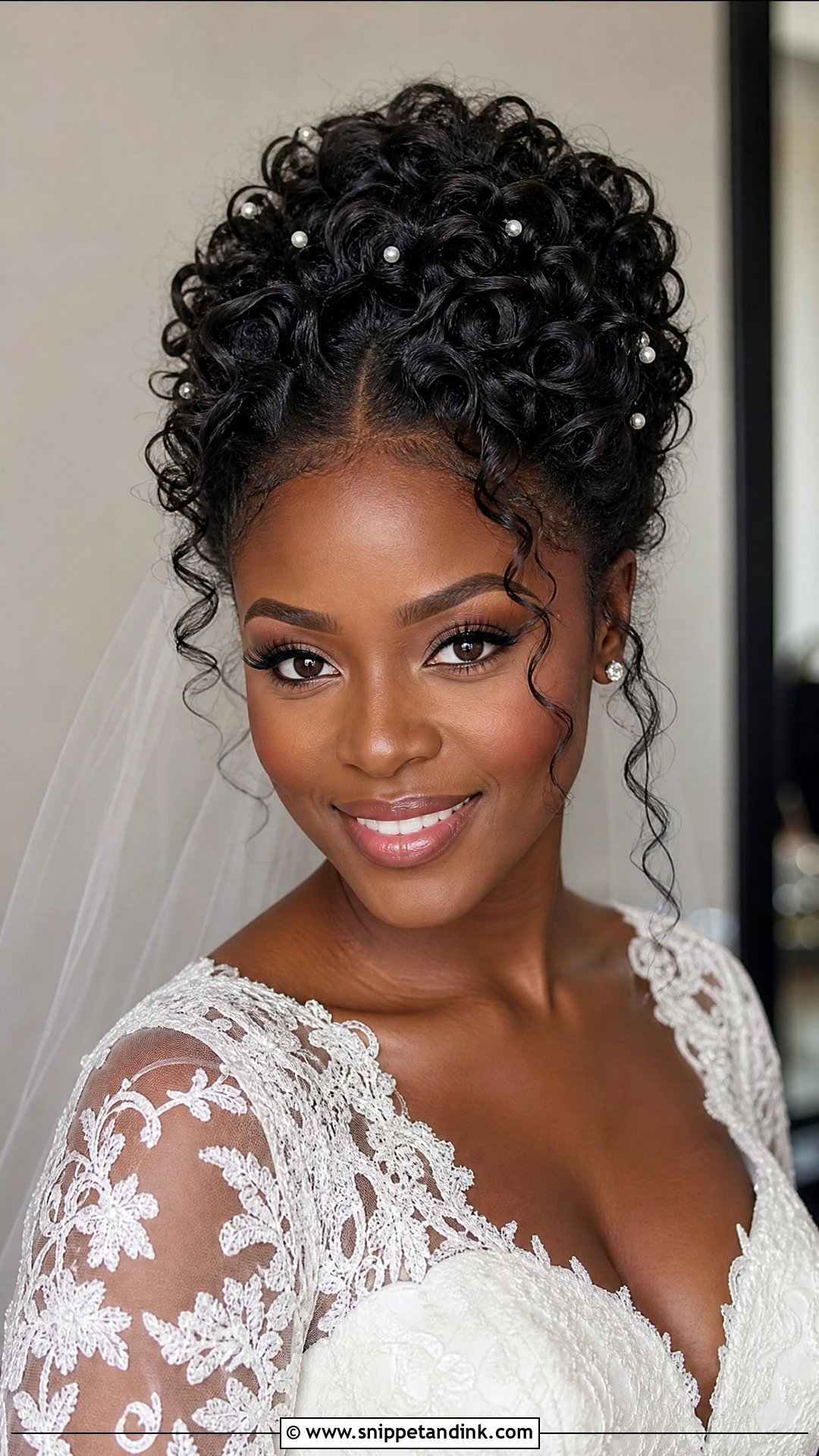
Curly updos are forgiving on a frontal because texture hides the perimeter better than any sleek finish. The curls can be pinned into a loose bun, gathered high or shaped around the head, with tendrils at the front to blur the lace edge. Lifted off the neck, it is also one of the coolest options for a warm venue. I pin pearls and small flowers into the curls rather than the base, so they sit in the hair and not on the lace.
9. Frontal Bridal Loose Curls
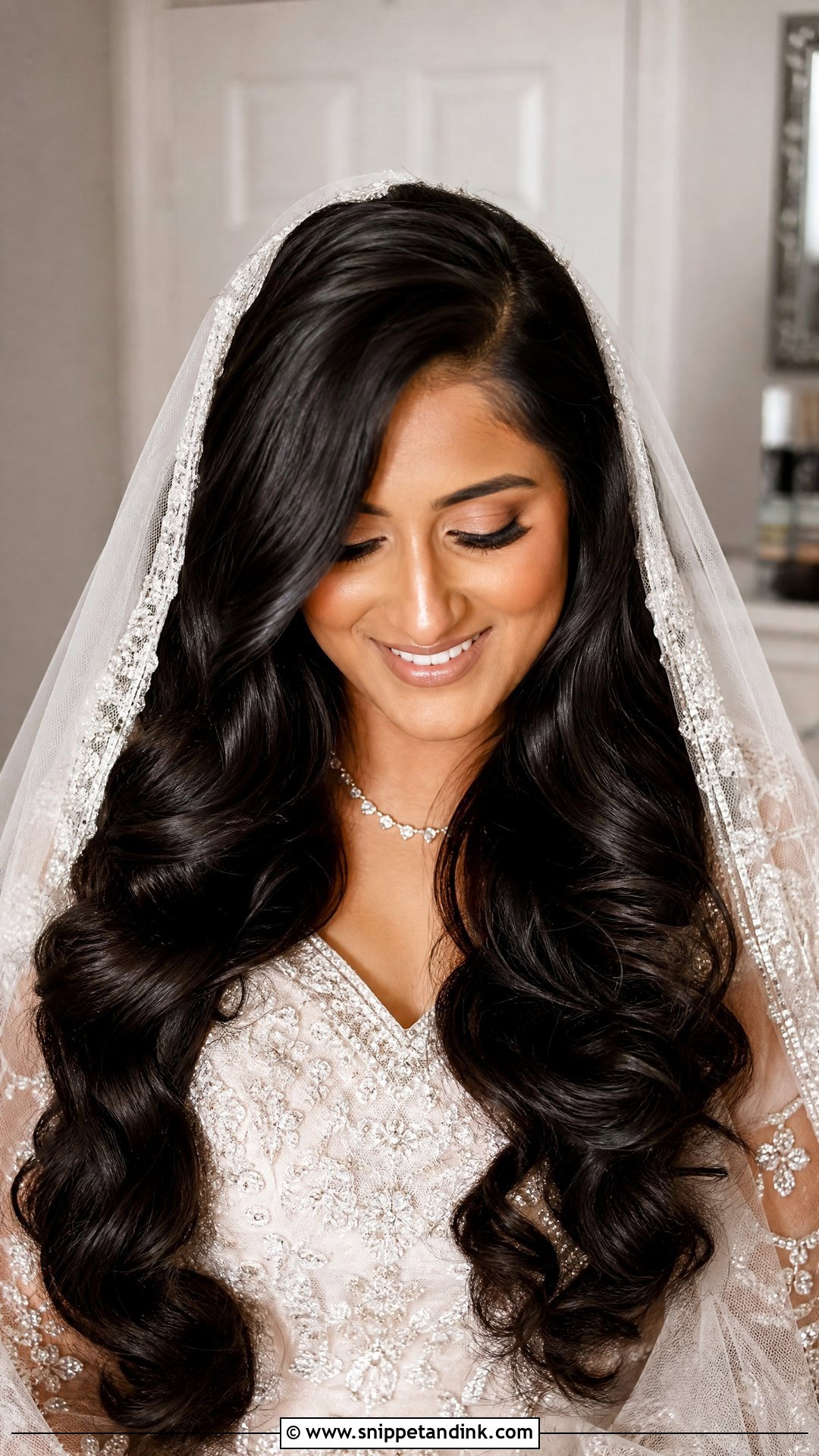
Loose curls give full, soft hair with movement, and a frontal lets you choose a side part, a middle part or no part at all. Without a part, I tease a little root volume over the front so the lace edge disappears into the curl. They pair with lace gowns, tulle veils and floral accessories. Curls on a human hair unit drop faster than people expect, so I set each one, let it cool, and only brush them out once the bride is dressed.
10. Frontal Bridal Sleek Straight Hair
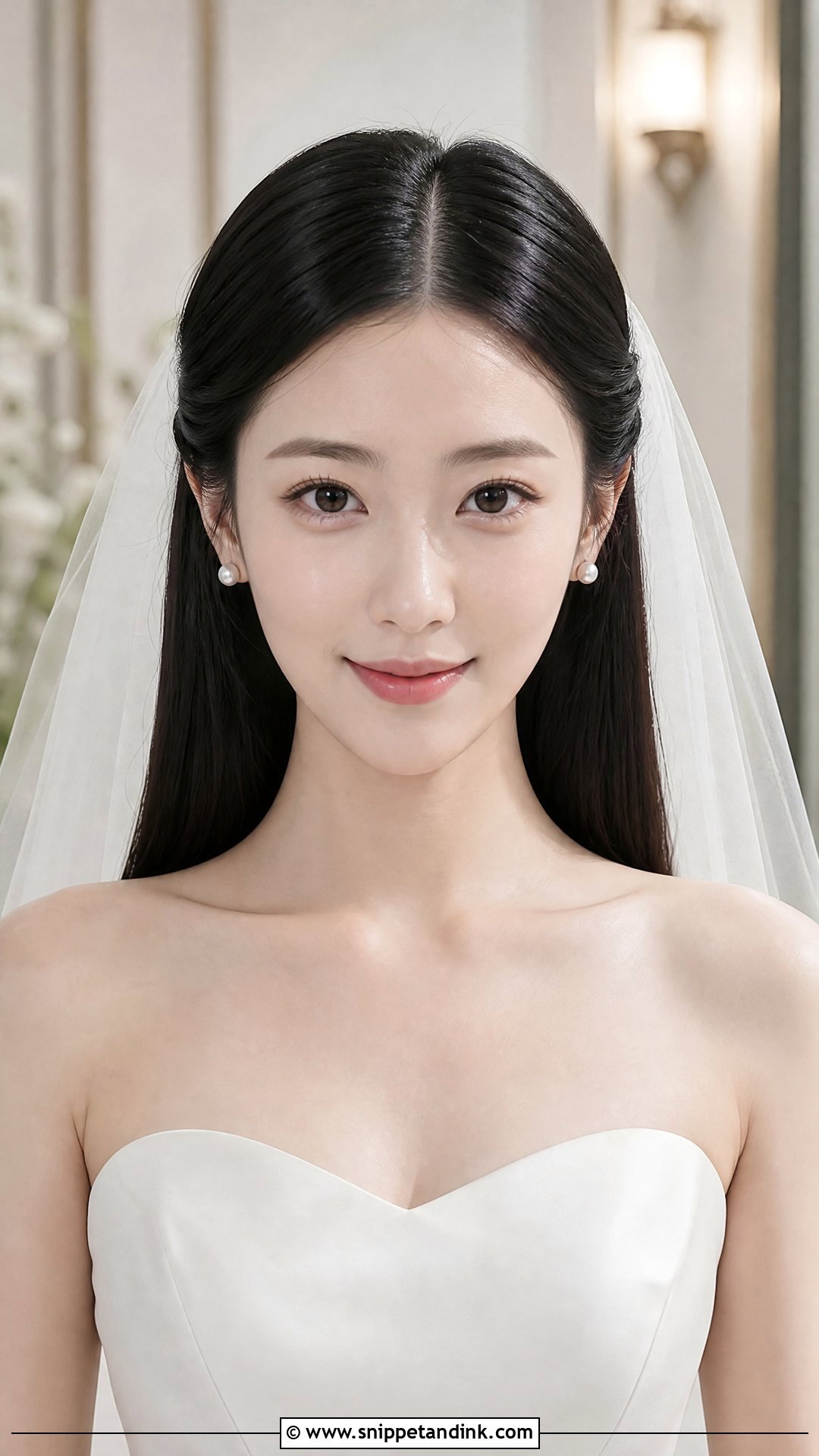
Sleek straight hair hides nothing, so the install has to be immaculate. Every knot, every lift at the edge and any shine from adhesive is on display when there are no curls to distract. I bleach the knots, pluck the part so it is not a perfect line, and press the lace flat with a warm comb before the final flat-iron pass. A middle part reads modern, a side part softer. Pair it with bold earrings or a minimal gown, where clean hair suits the outfit.
11. Frontal Bridal Braided Bun
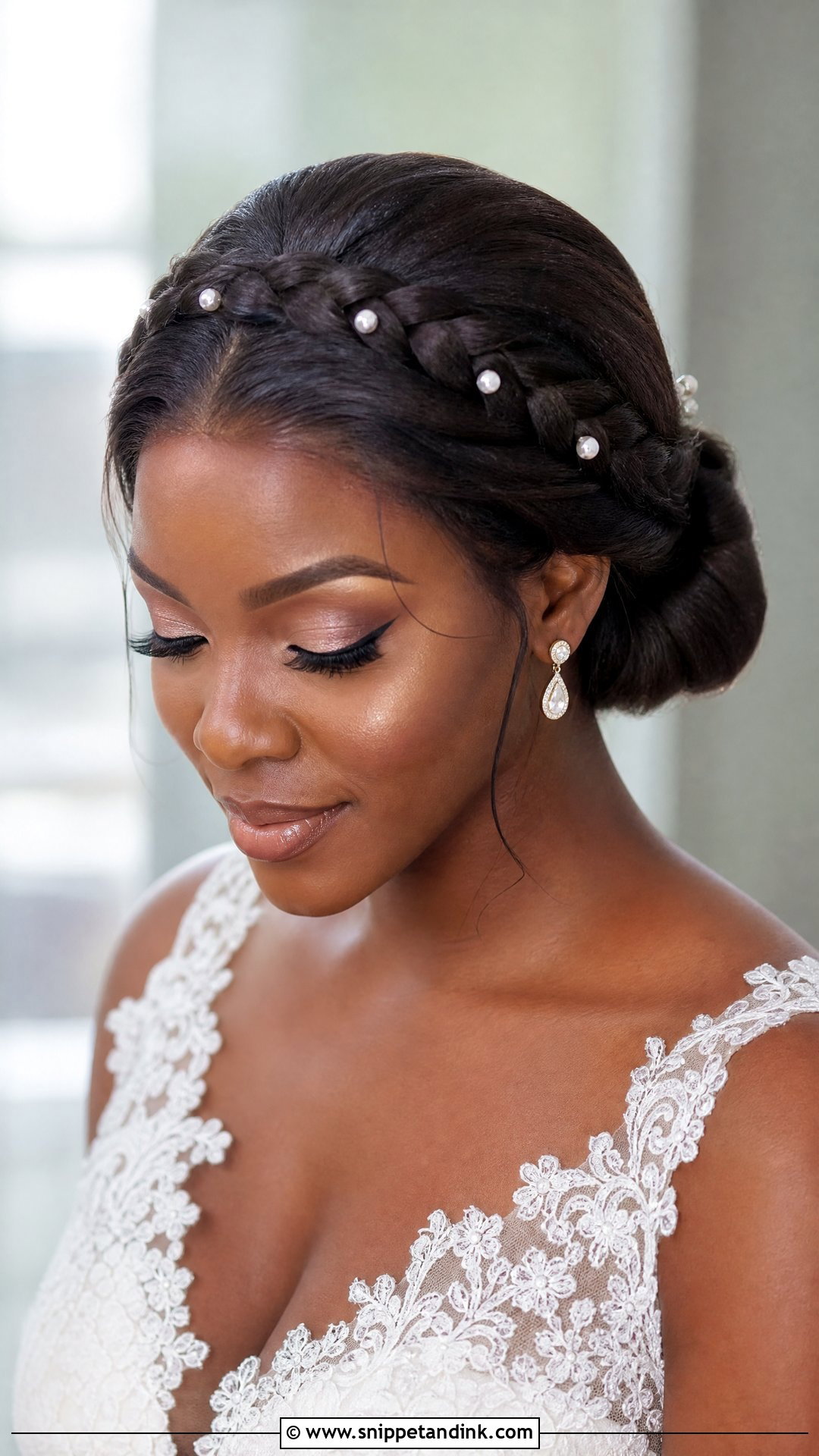
Braided buns look good from every angle, and on a frontal the braid does practical work too: it covers the transition from lace to wefts at the side. The braid can be neat and tight or pancaked loose with curls around the face. It holds pins, floral clips and a veil comb firmly. For outdoor weddings in wind, a braided bun is one of the steadiest choices on this list.
12. Frontal Bridal Side Swept Curls
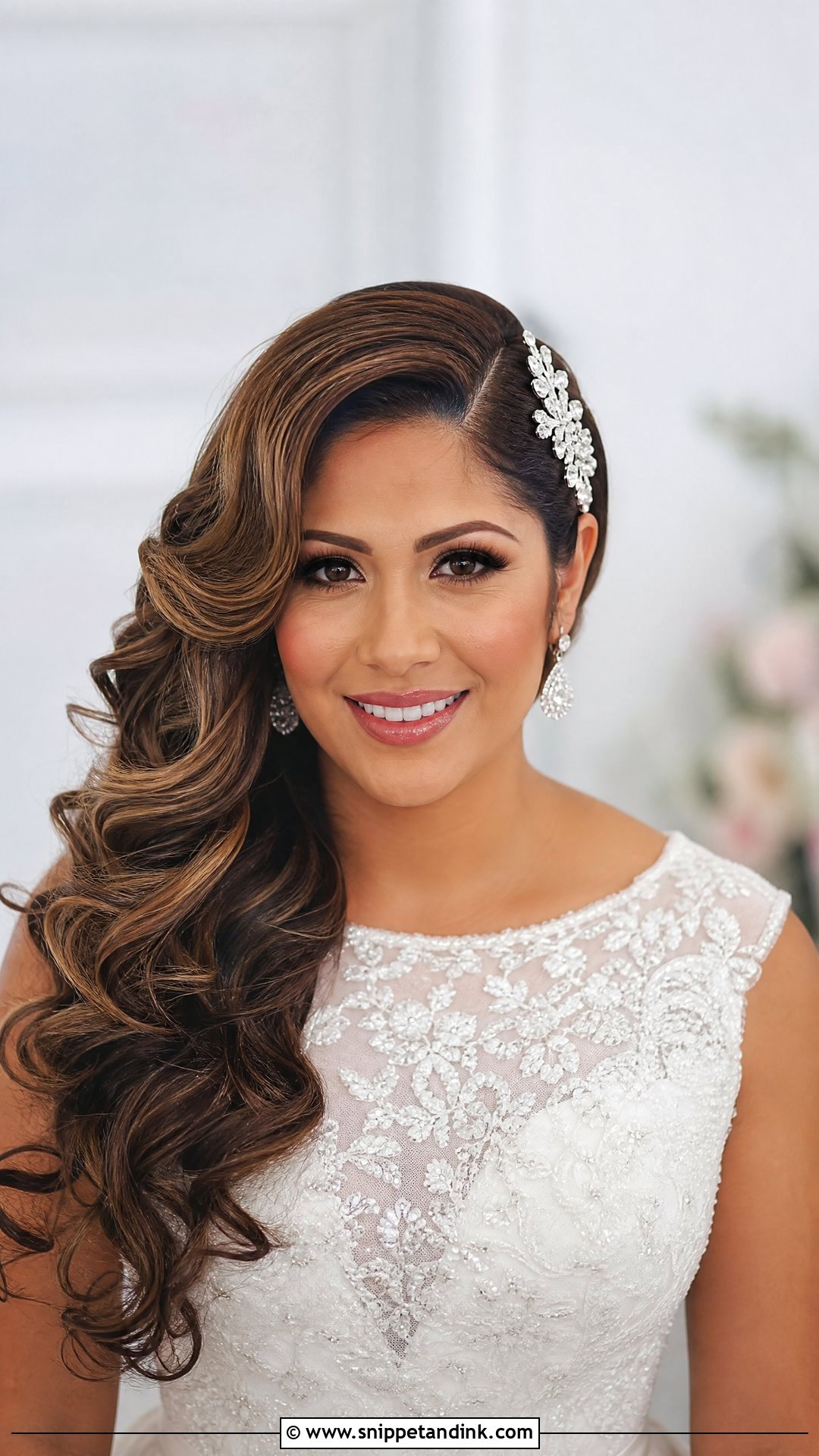
Gathering curls to one side shows the neckline on the bare side and leaves the hair over the other shoulder. On a frontal the bare side is the exposed side, so I make sure the lace behind that ear is fully melted and that the pins holding the sweep are hidden in the braids underneath. It works with one-shoulder dresses, sweetheart necklines and statement earrings. A crystal comb or pearl clip at the gathering point covers the pins neatly.
13. Frontal Bridal Top Knot
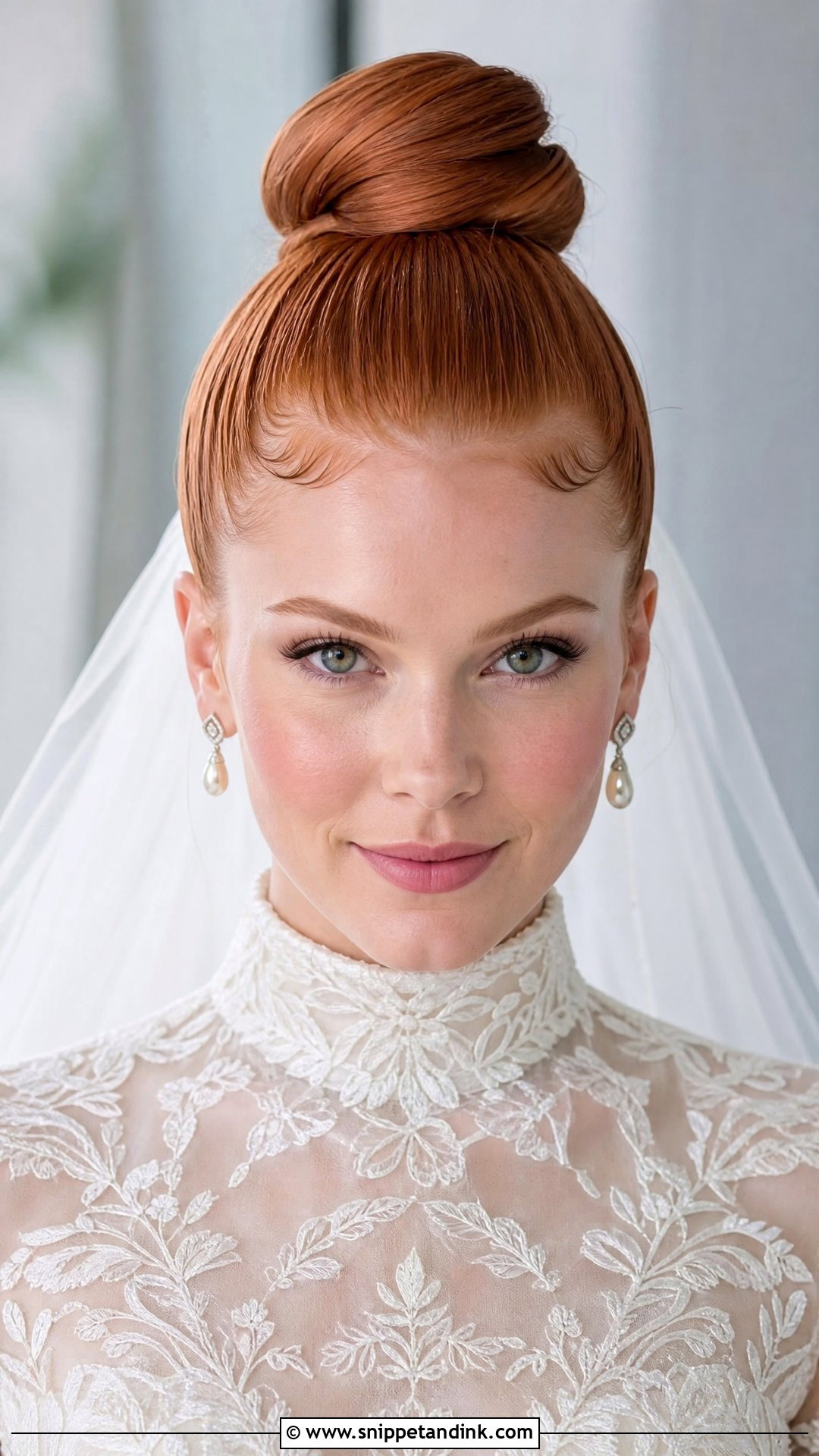
A top knot draws every eye to the front and sides, so like the high bun it needs a 360 unit or blended leave-out at the nape. Sleek, it looks sharp and fashion-led; fuller and rounded, it looks softer. Veils slot in under the knot easily, and it suits high-neck gowns and dramatic earrings. A tight top knot pulls on the lace at the temples, so I keep a little slack at the front and let the bun carry the tension.
14. Frontal Bridal Soft Glam Waves
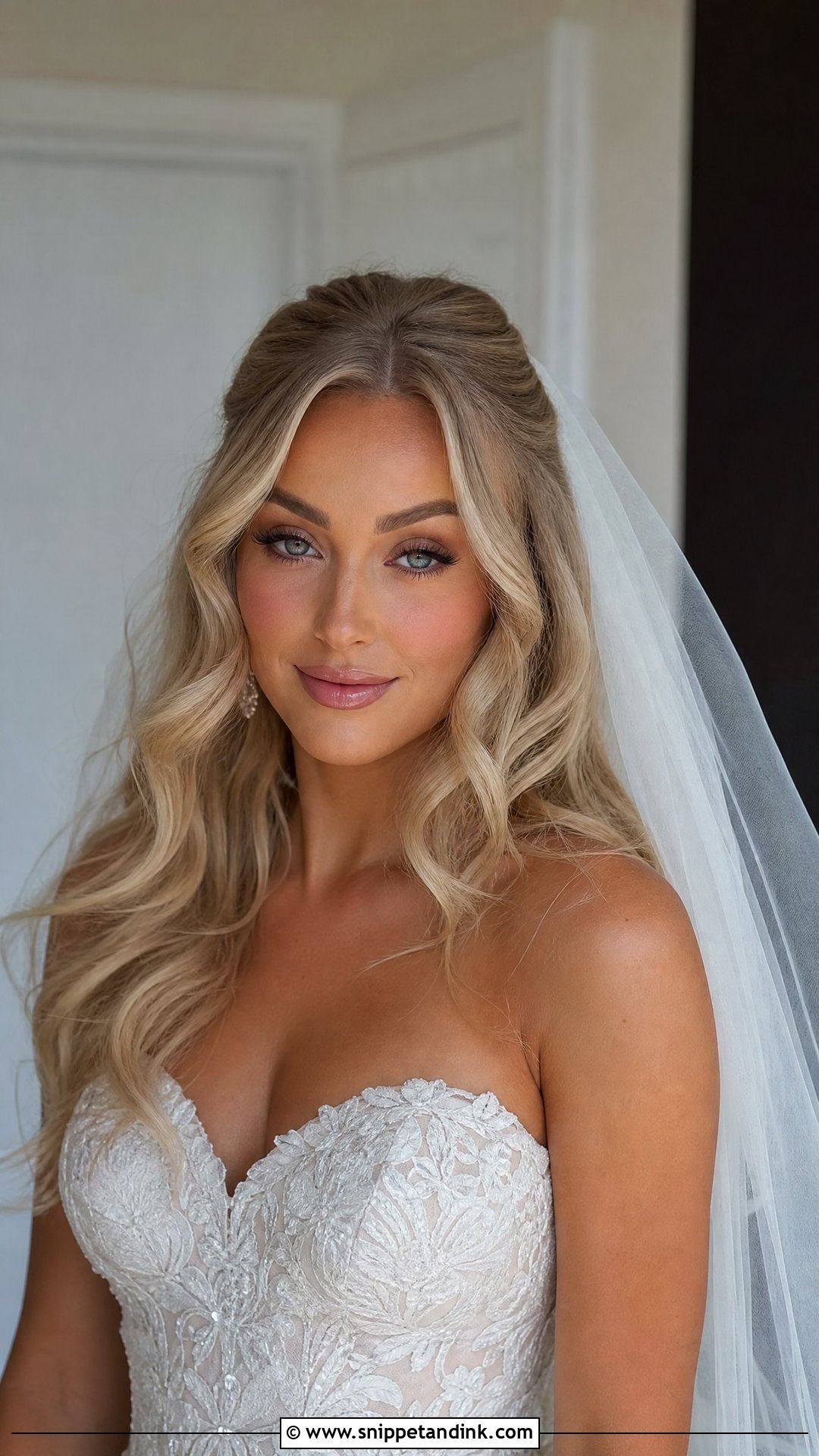
Soft glam waves sit between beach waves and Hollywood waves: smoother than the first, less structured than the second. On a frontal they are easy to wear because the bend of each wave covers the part and the lace. They suit strapless gowns, lace sleeves, simple veils and glowy makeup. I lift the crown lightly and curl the ends away from the face, and I would rather leave them slightly loose than stiff, because a lacquered wave catches the flash.
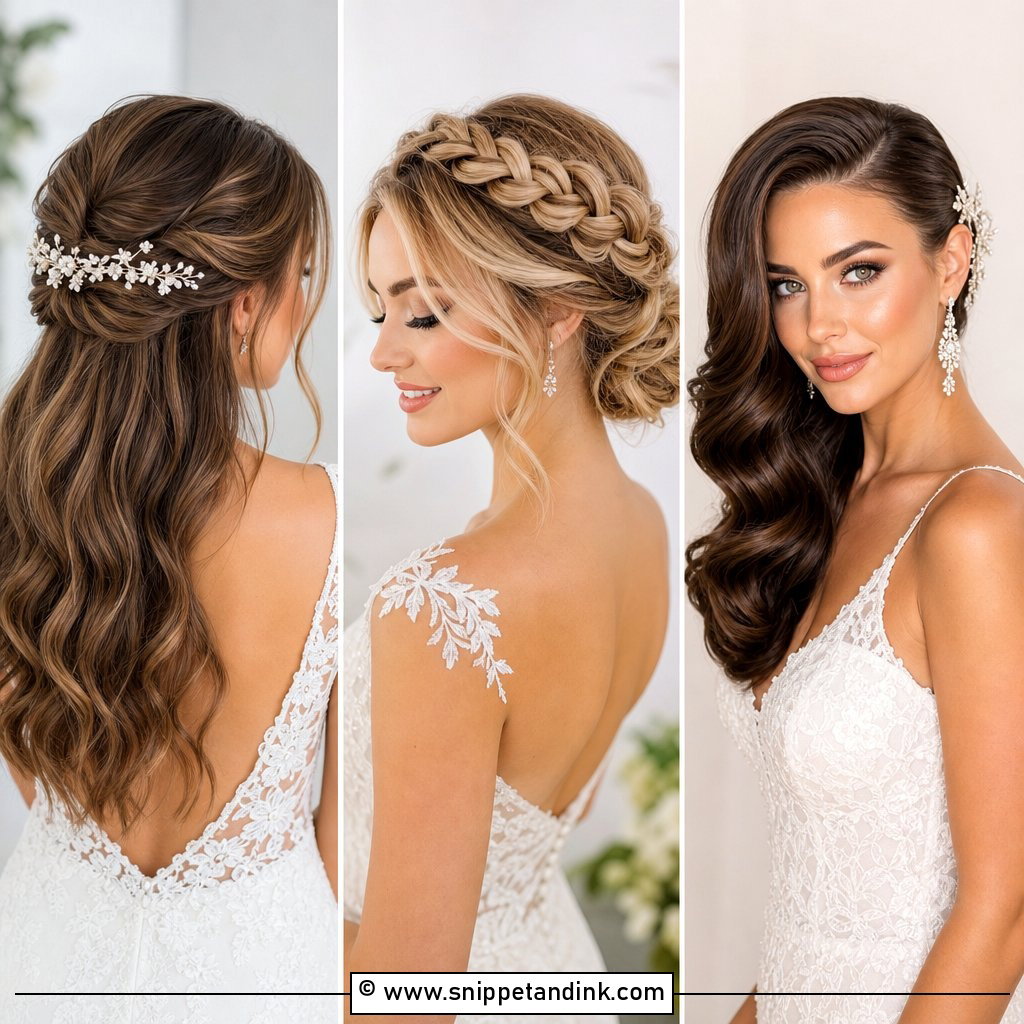
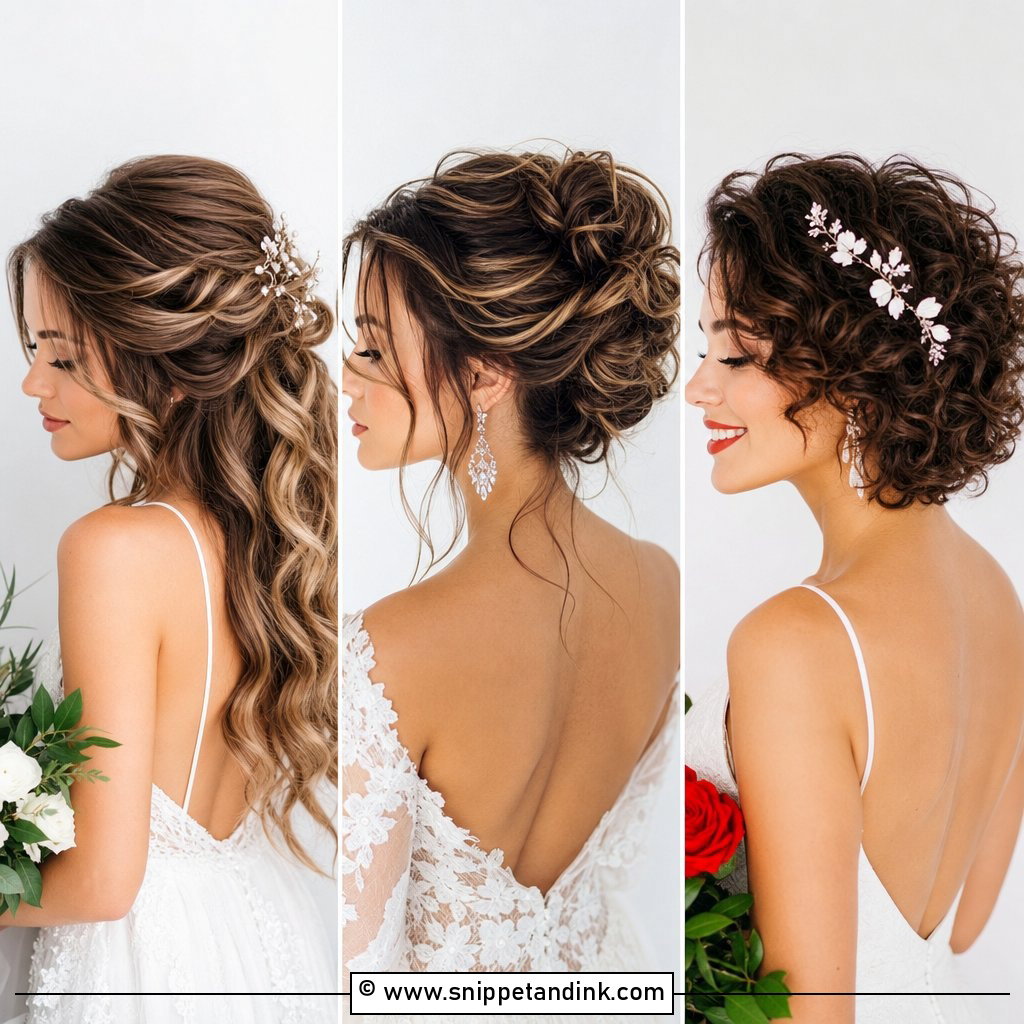
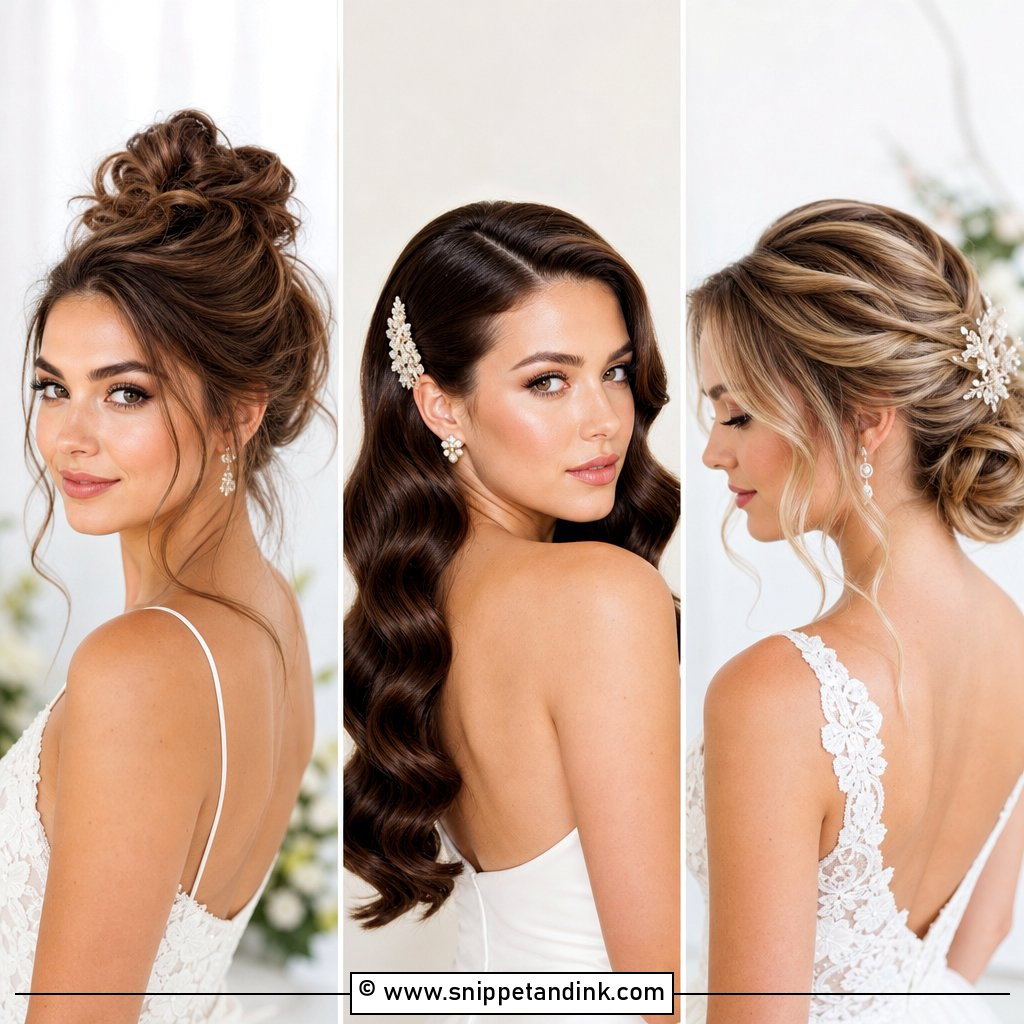
15. Frontal Bridal Messy Bun
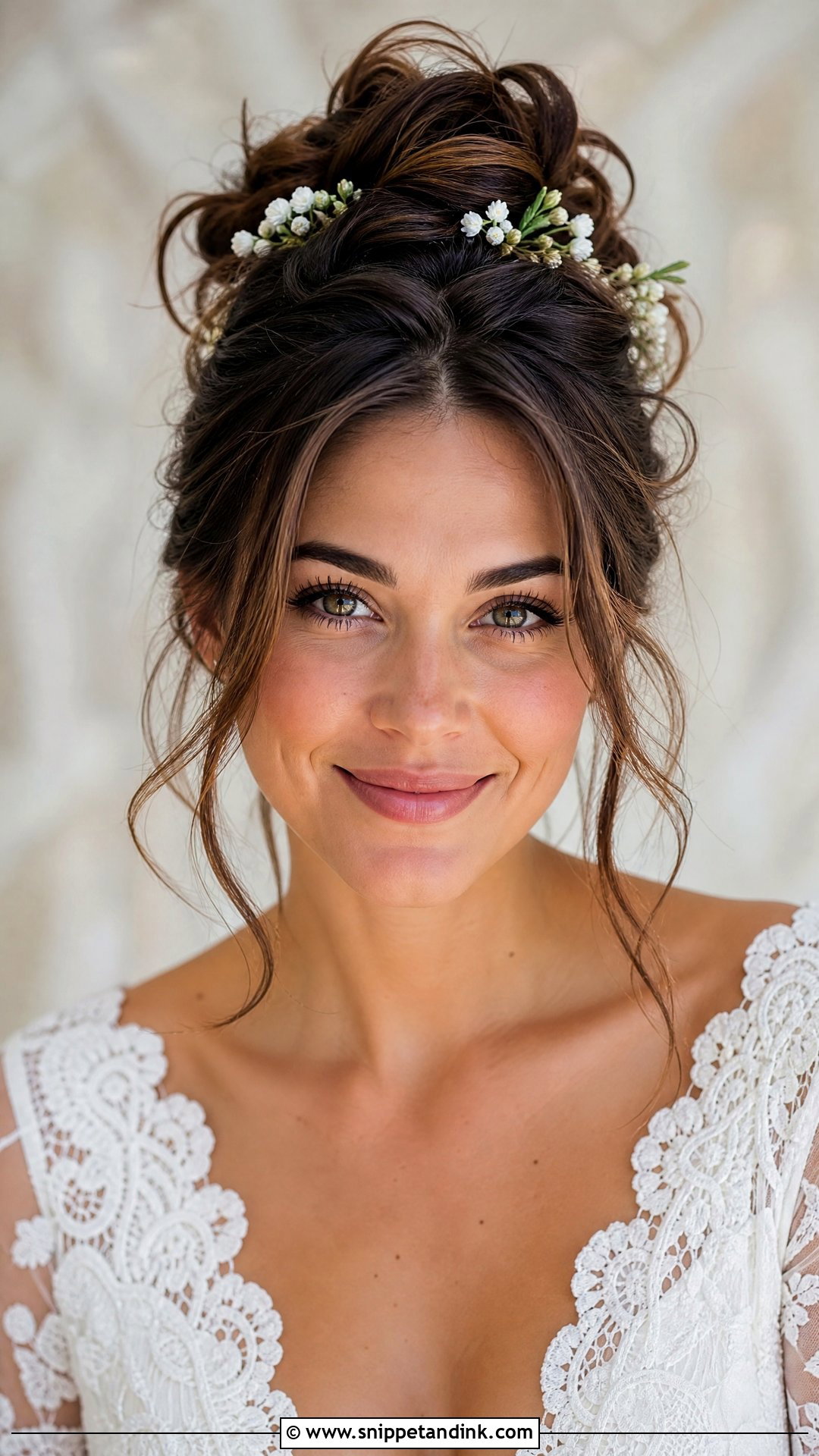
A messy bun should look relaxed and still be secure. It can sit low, mid-height, or slightly higher depending on your dress and face shape, and the lower it sits, the less install work it needs. Loose pieces around the face hide the lace edge, which makes this the most forgiving style for a first-time frontal wearer. I build the bun firm first, then pull out texture. Garden, beach and boho weddings suit it, finished with small pearls or floral pins.
What the Camera Flash Finds
A frontal that looks flawless in the bathroom mirror can show its edges in professional photos. Flash and close-up lenses are unforgiving, so the finishing work matters as much as the hairstyle.
- Lace should be tinted or matched to your skin tone along the hairline, not left beige or brown against a different complexion.
- Bleached knots and a lightly plucked hairline stop the part from looking like a perfect, dotted grid.
- Shiny adhesive at the edge catches flash. A dusting of powder or foundation over the melted lace takes the shine down.
- Baby hair should echo your natural hairline, soft and a little irregular, rather than a heavy swoop.
At the trial I have someone take close photos with a phone flash from the front and both sides. Anything that shows there will show on the day.
Veil Weight, Sweat and a Small Repair Bag
The two things that lift a frontal mid-wedding are a veil pulling backward and heat at the hairline. Have the veil comb anchored into your braids or a secured section of the unit, never just slid under the lace. A long veil is heavy, and when someone steps on the train, that pull goes straight to your edges.
Give a bridesmaid a little kit: a travel-size melt spray or adhesive, an edge brush, blotting papers, a few pins and a cotton bud. In a hot venue, blot the forehead often rather than wiping, because rubbing loosens the lace. When the night is over, use a proper adhesive remover and let it soak in before lifting the frontal. Peeling it off tired and in a hurry is how edges and hairlines get damaged.
Your Frontal Has to Last Longer Than the Reception
A frontal gives you a lot of freedom, as long as the style matches what the unit can do. A low bun, side part waves or a messy bun work on almost any frontal; a sleek middle part, a high bun, a top knot or a high ponytail ask for more lace, more prep or a 360 unit. Weigh that against your neckline, veil, the weather and your face shape. A trial is not optional with lace: it is where you test the adhesive on your skin, the hold under the veil and the hairline in flash, so the hair looks natural from the aisle to the last photo.
You'll Like These Ideas:



Leave a Reply