
The hairstyles brides bring me now are cleaner than they were a few years ago. Less backcombing, fewer stiff curls, more shine and movement. But a wedding style still has to survive a veil going in and out, hugs from every relative, and a dance floor, so what you see on a mood board isn’t always what your hair will do by nine at night. Below are twenty styles I set for weddings, from a glossy low bun to a full blowout. For each one I’ve noted how I build it, which hair it suits and where it tends to fail, so you can bring a realistic shortlist to your trial.
What Your Strands Will and Won’t Hold for Twelve Hours
When a bride shows me a photo, my first question is about her hair, not the dress. The same style behaves very differently on different textures.
- Fine, straight hair slips out of pins and drops curls quickly. Updos with a solid base and texture spray hold best; loose waves need a strong setting routine.
- Thick hair holds curl well but adds weight, so high buns and ponytails can pull. Low updos spread the load.
- Curly and coily hair often holds braided and twisted updos beautifully, with less product. Straightening it for the day can revert in humidity.
- Layered cuts leave short ends that poke out of sleek updos, so textured styles are more forgiving.
- Short hair works with styling and accessories, or with clip-in pieces for more options.
Hair extensions can change everything above, but only if they’re well blended. Order them early enough to have them colored to match at your trial.
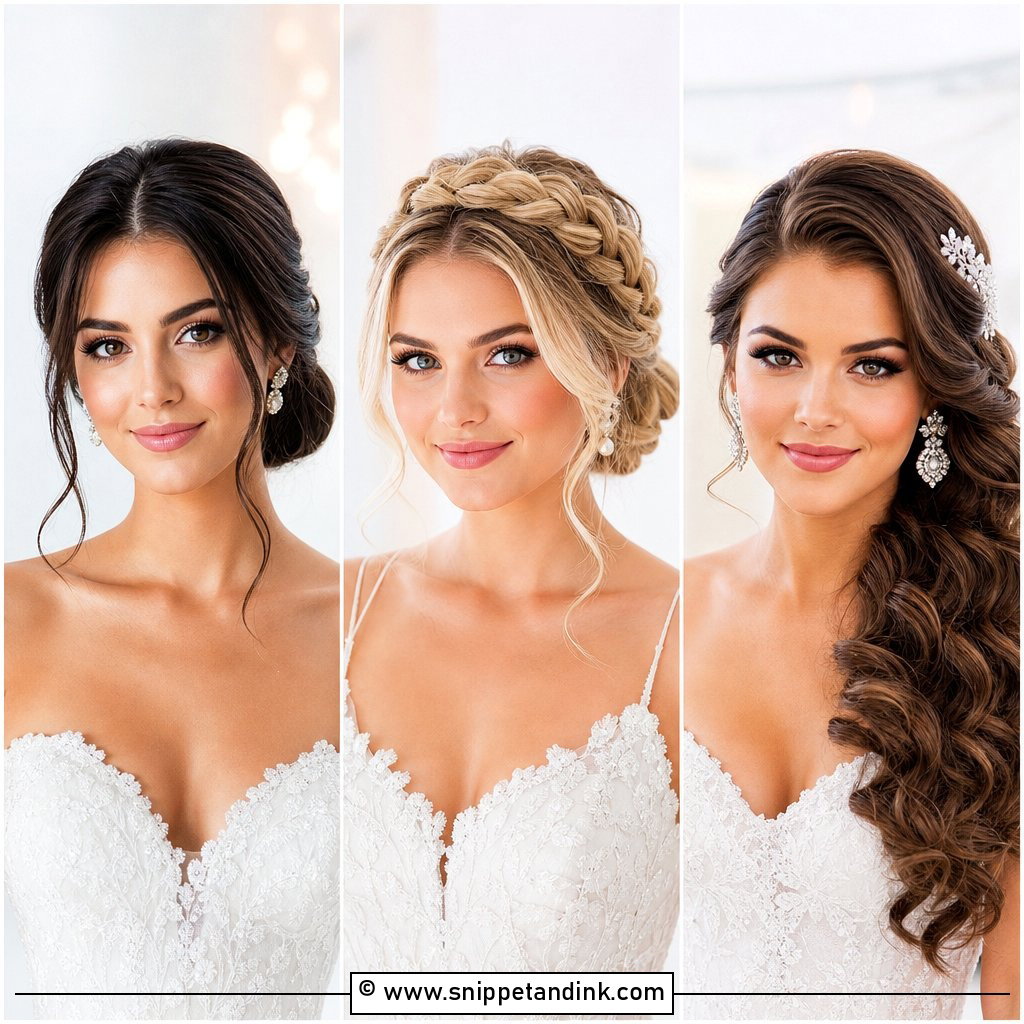
1. Sleek Low Bun Wedding Hairstyle
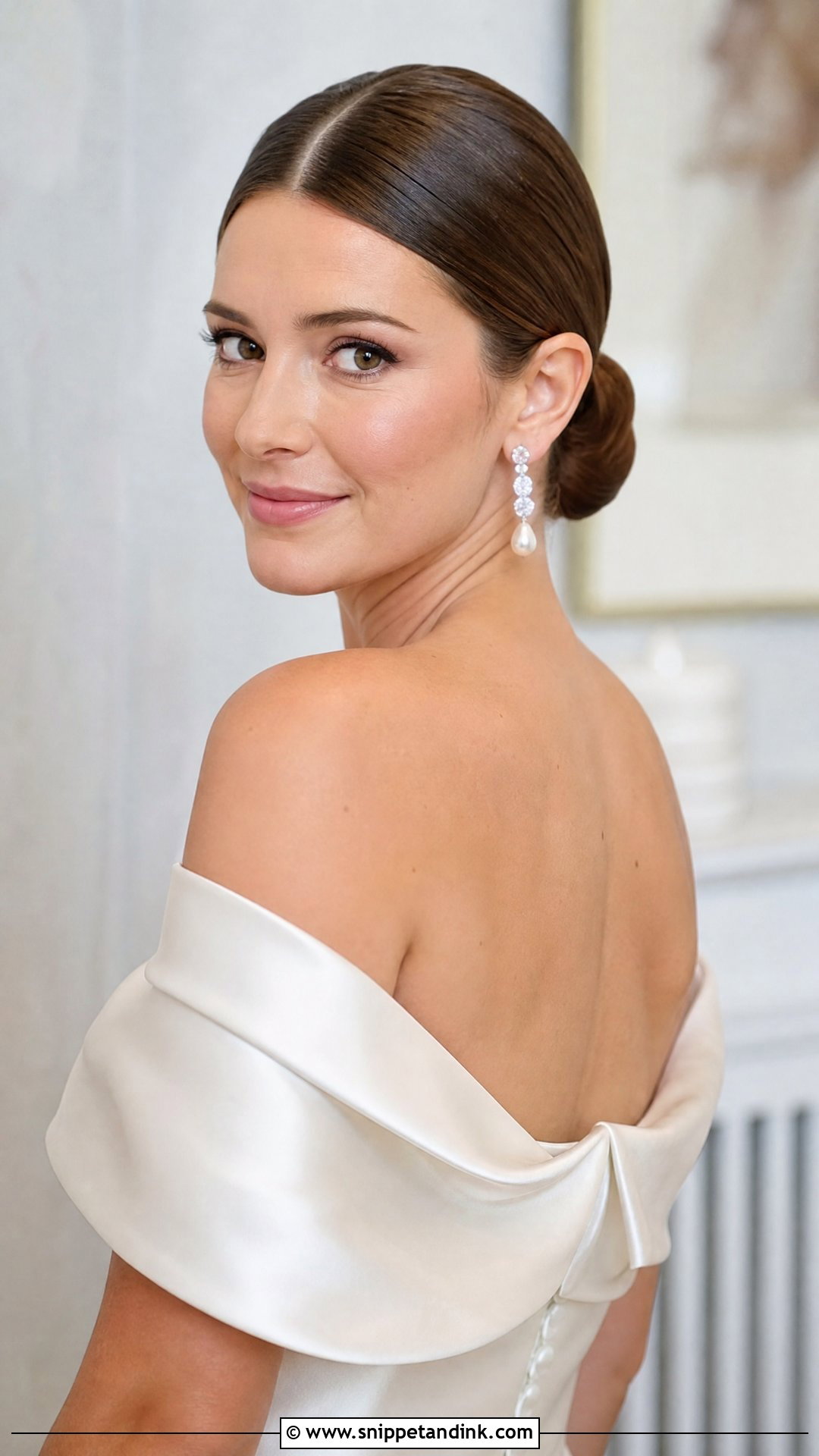
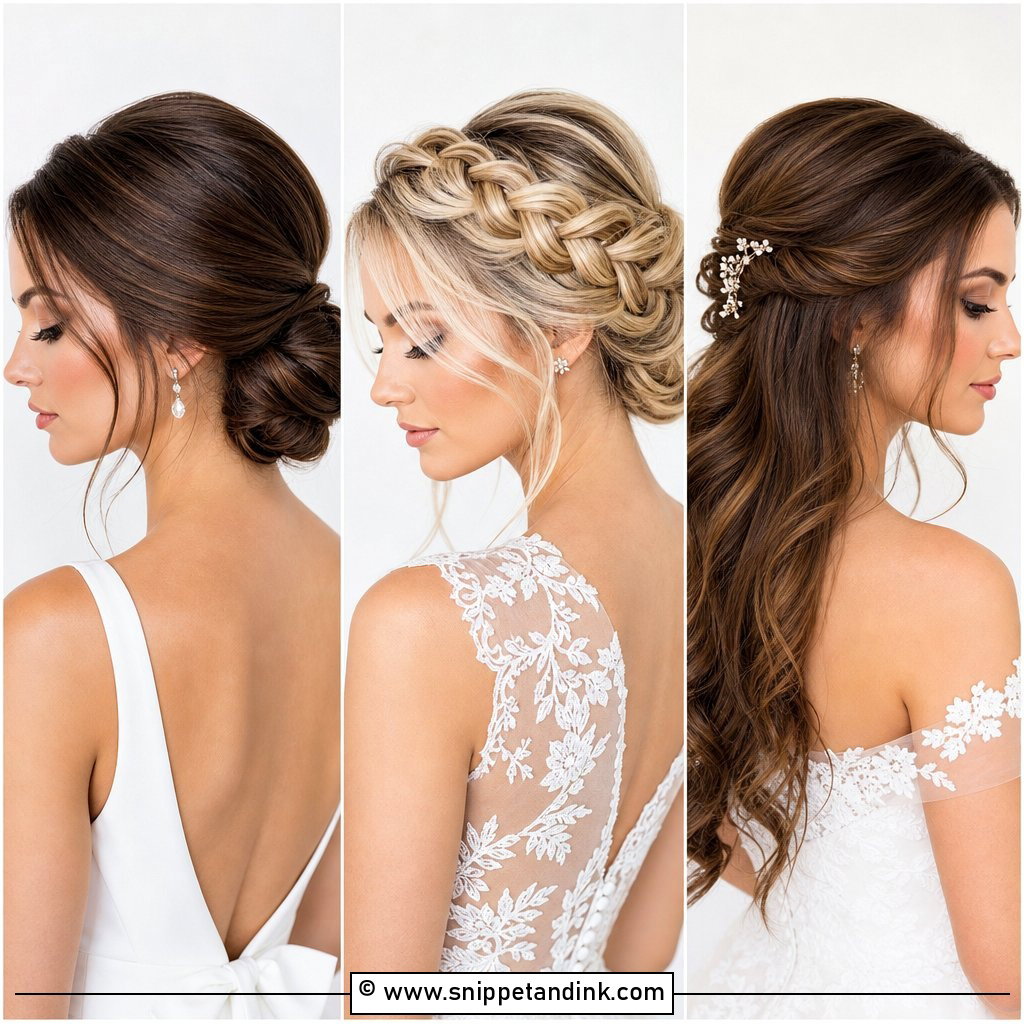
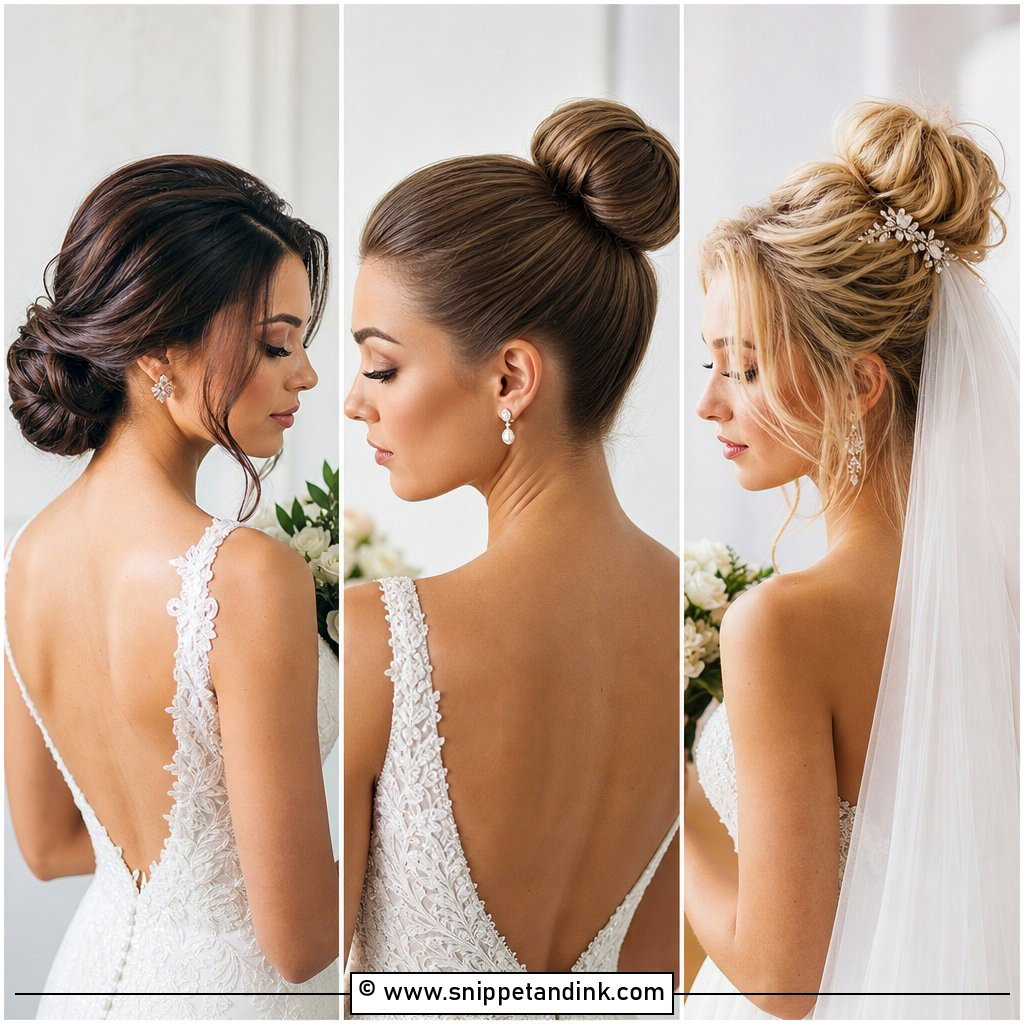
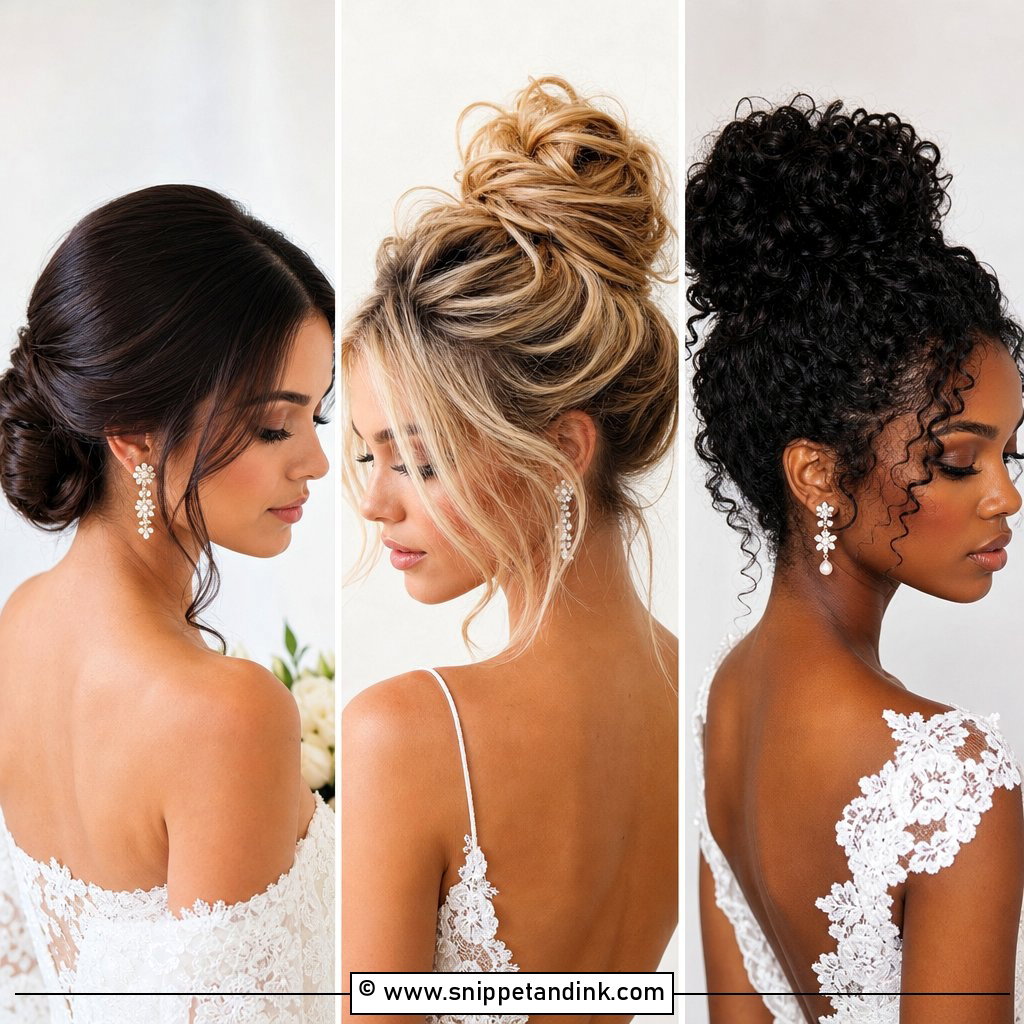
A sleek low bun lives or dies on the base. I smooth the hair back with a boar bristle brush and a light gel, secure the ponytail with a hidden elastic, then wrap and pin the bun with U-pins rather than bobby pins, which hold the shape without pressing on the scalp. It frames the face and leaves room for statement earrings or a veil set just above it. On very fine hair the bun can look small, so I’ll sometimes add a padded insert or a clip-in piece. Center part for polish, deep side part if you want softness; either way, flyaways show on a sleek style, so a little finishing cream goes on last.
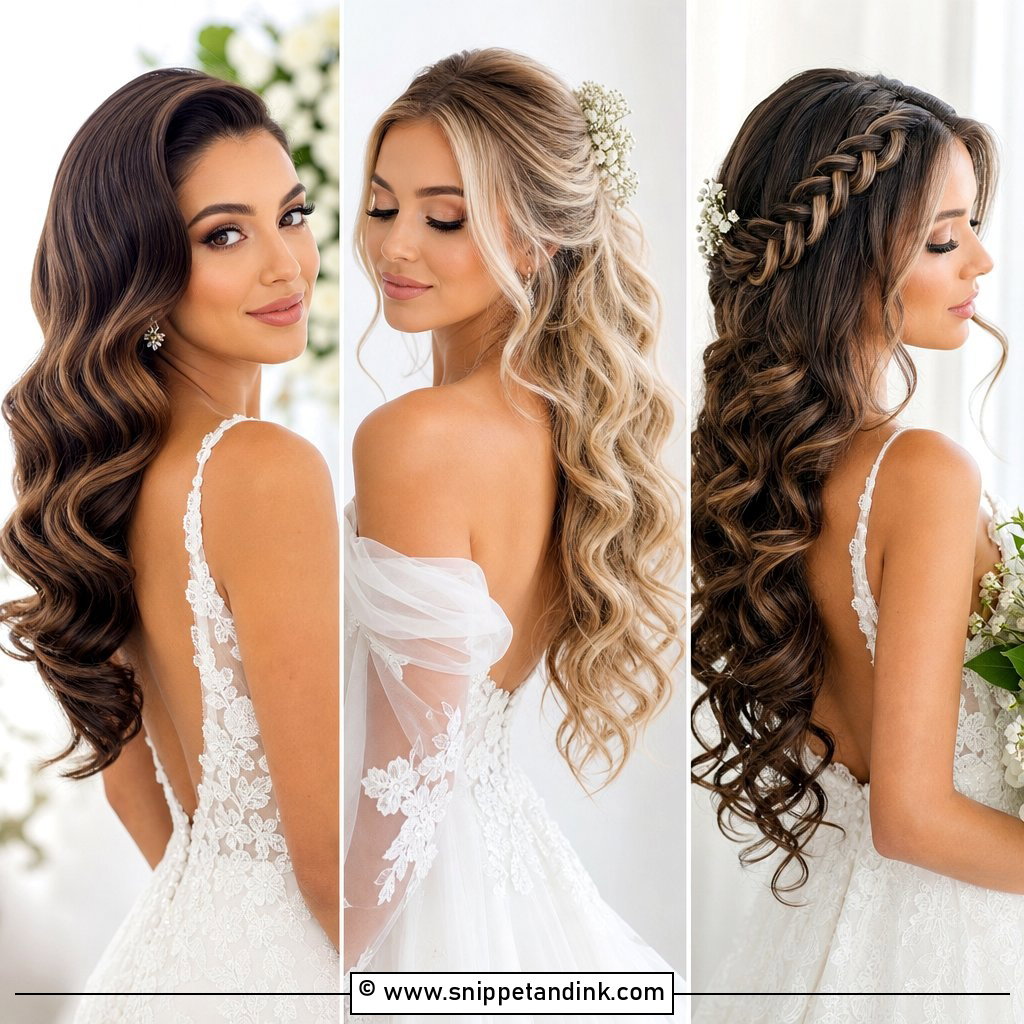
2. Romantic Loose Waves for Brides
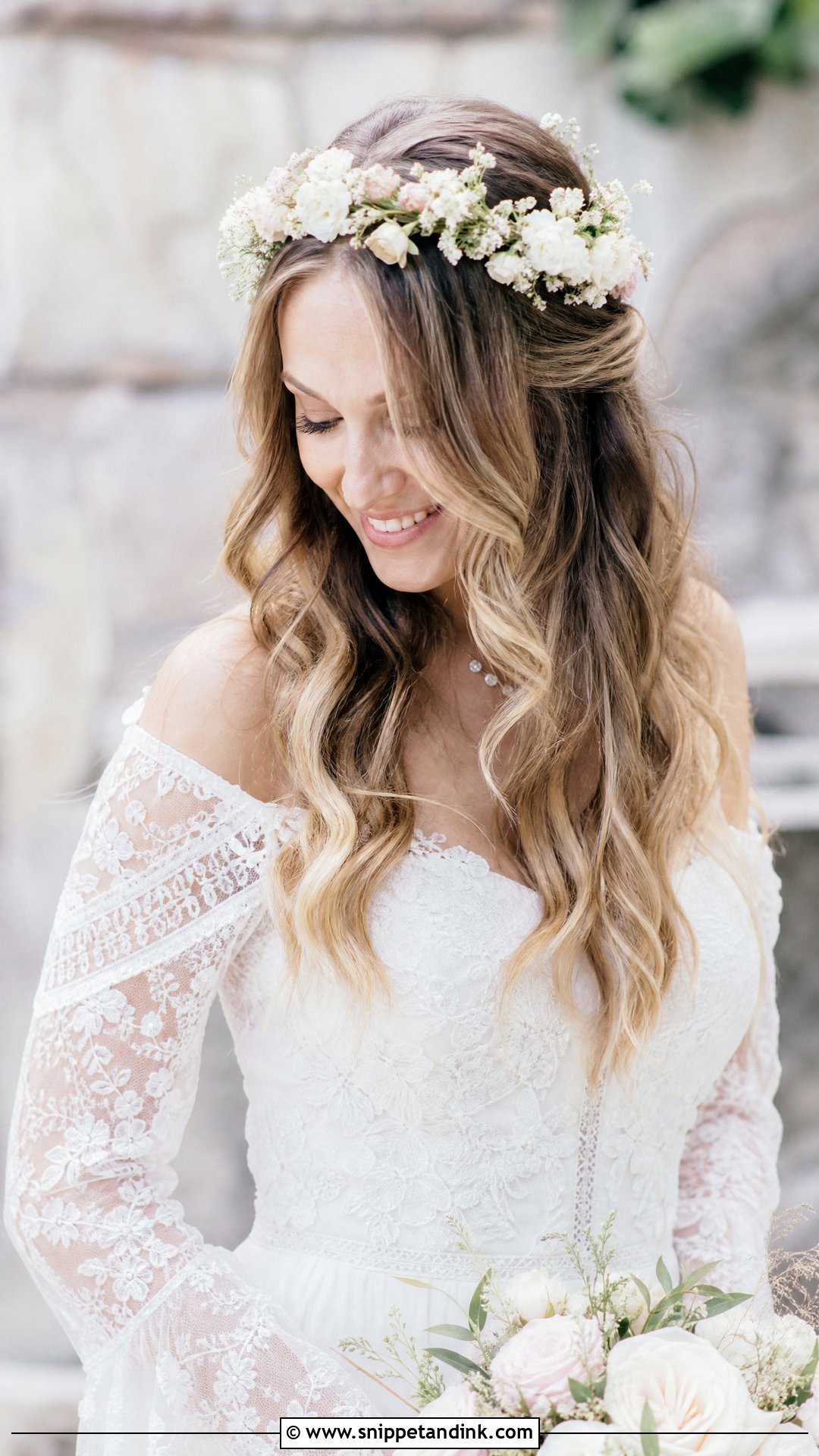
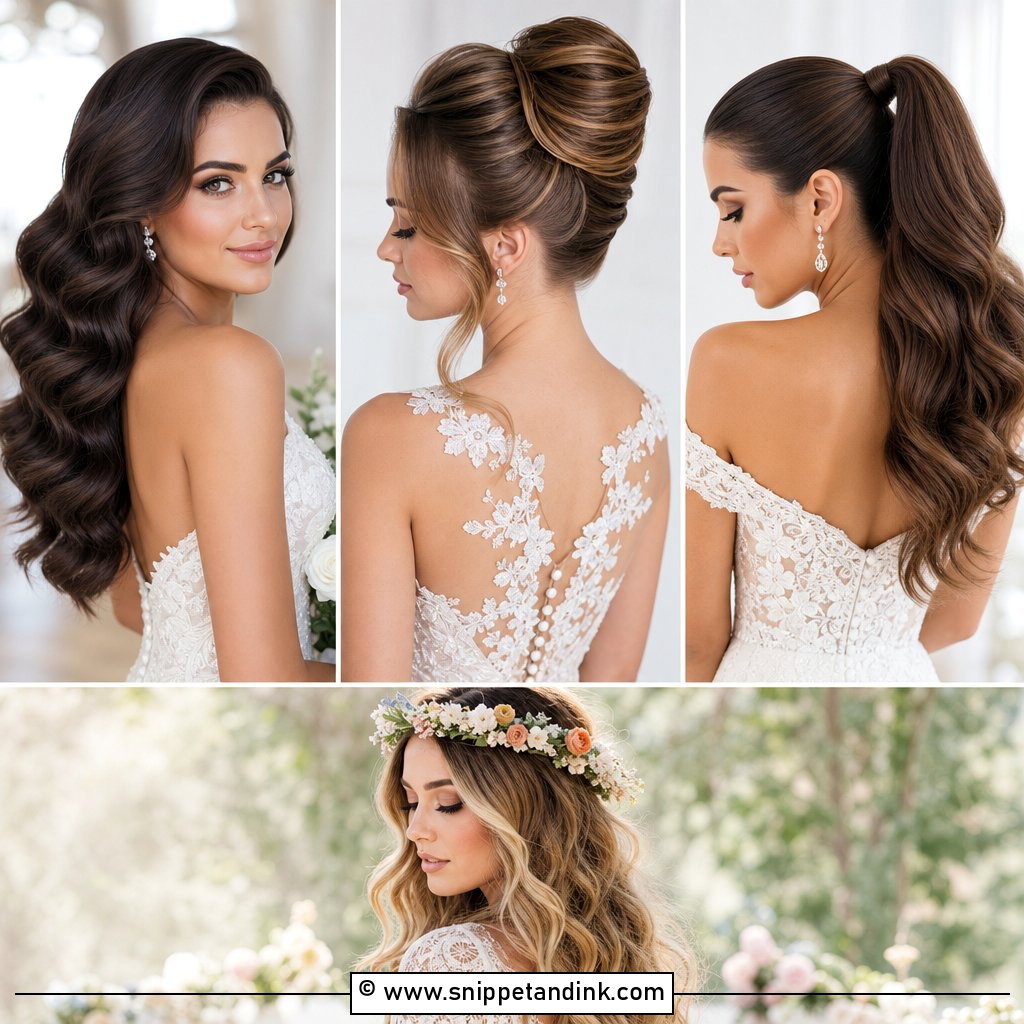
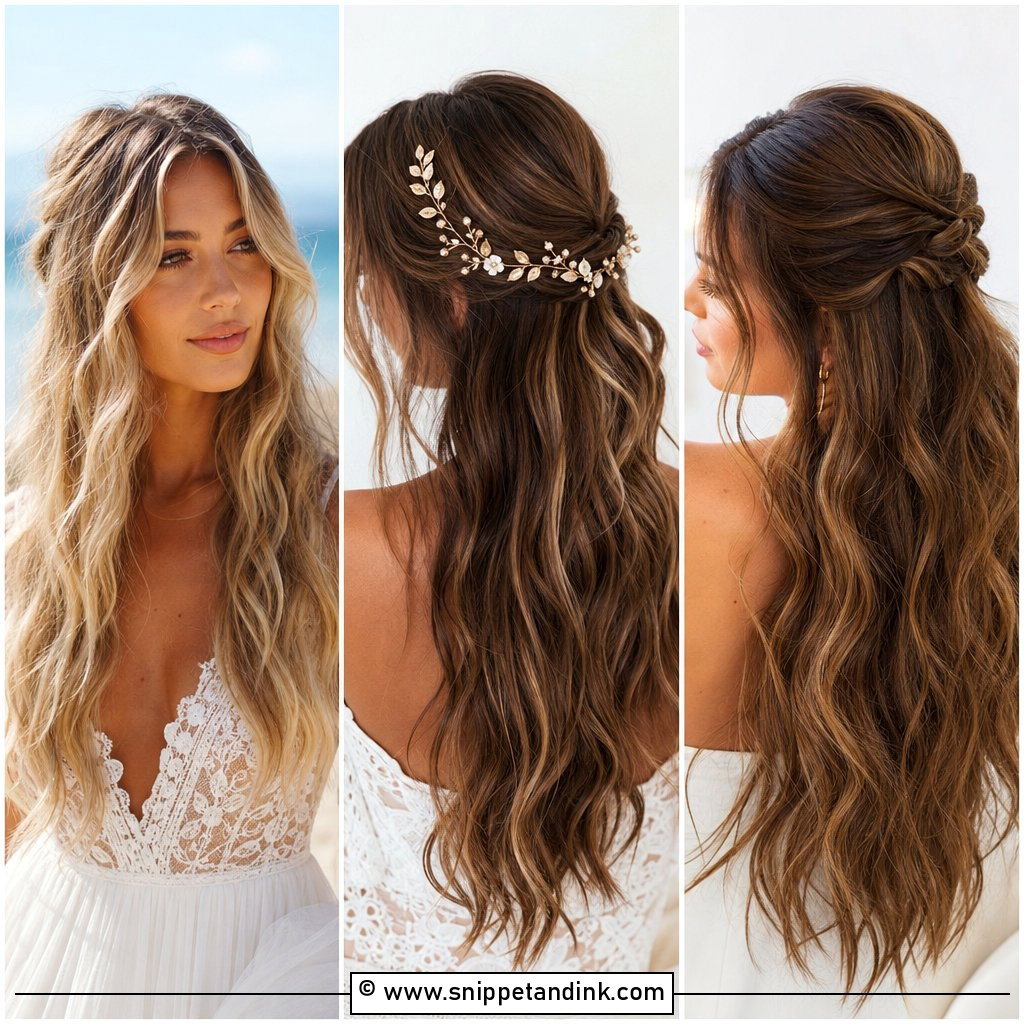
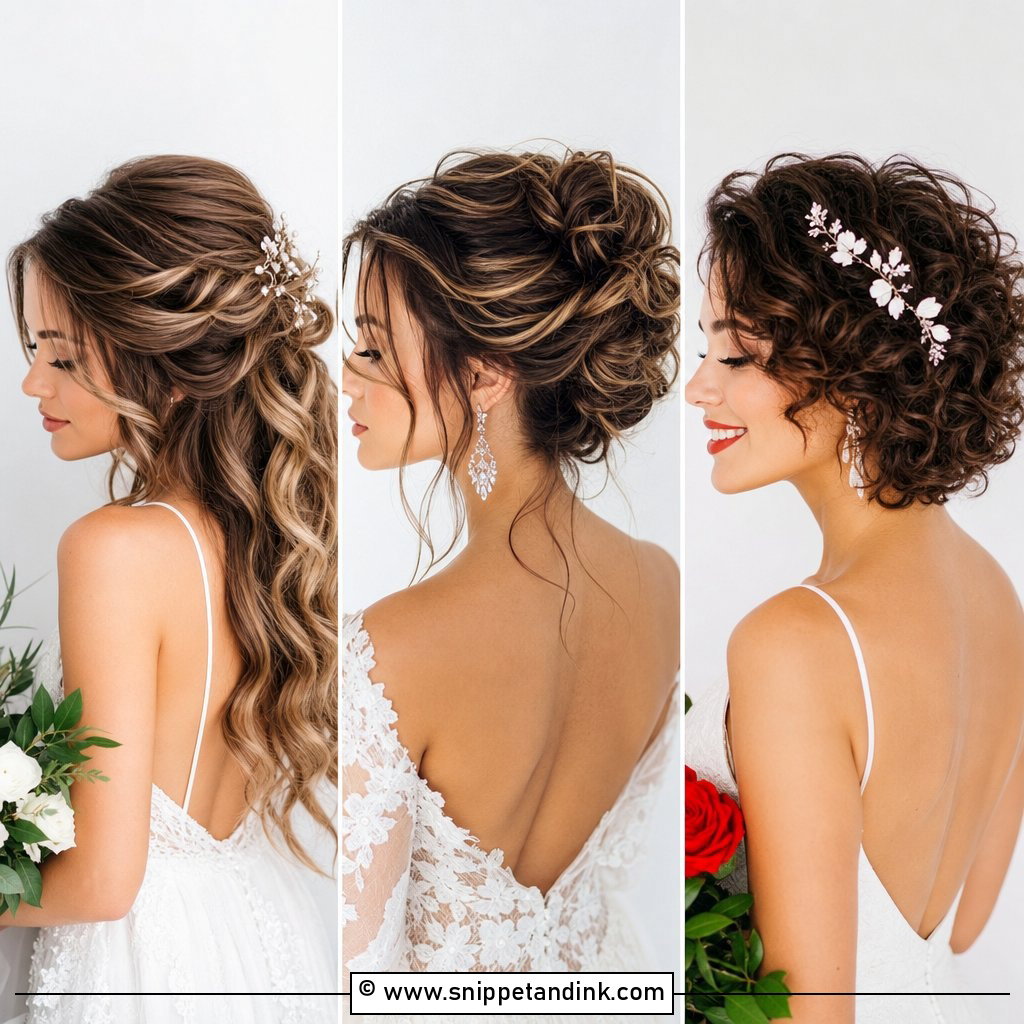
Loose waves are the style most likely to drop before the speeches. I curl in sections with a 1.25-inch iron, pin each curl to cool, then brush them out only after the hair has fully set. That cooling step is what makes waves last. Humid outdoor ceremonies are the hardest test, and very fine or freshly washed hair loses its shape fastest. Pinning one side back gives the style a bit of structure, and a flowing veil sits well over it. Expect the waves to relax by evening; they should, as long as they don’t go flat.
3. Boho Braided Crown Hairstyle
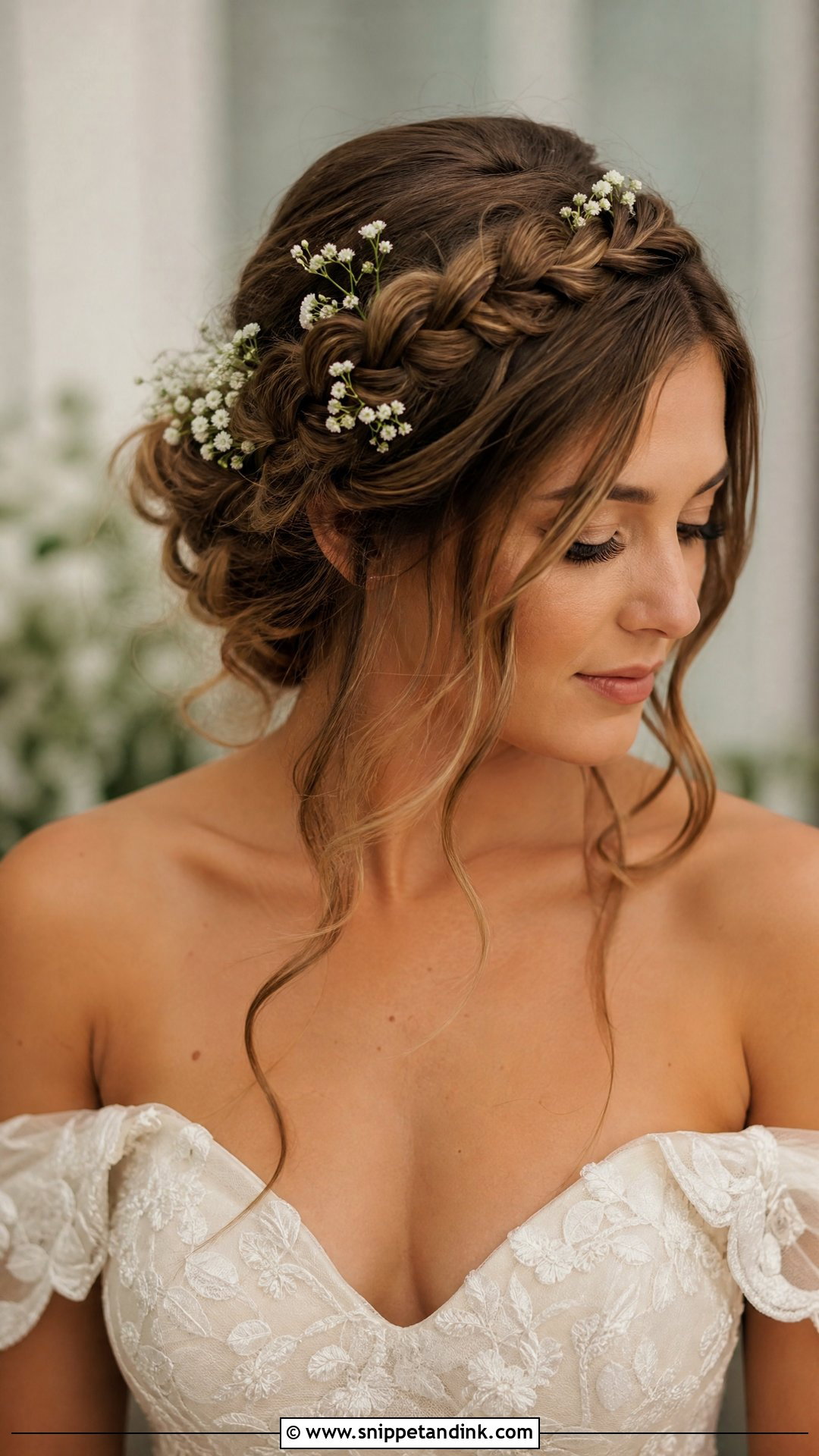
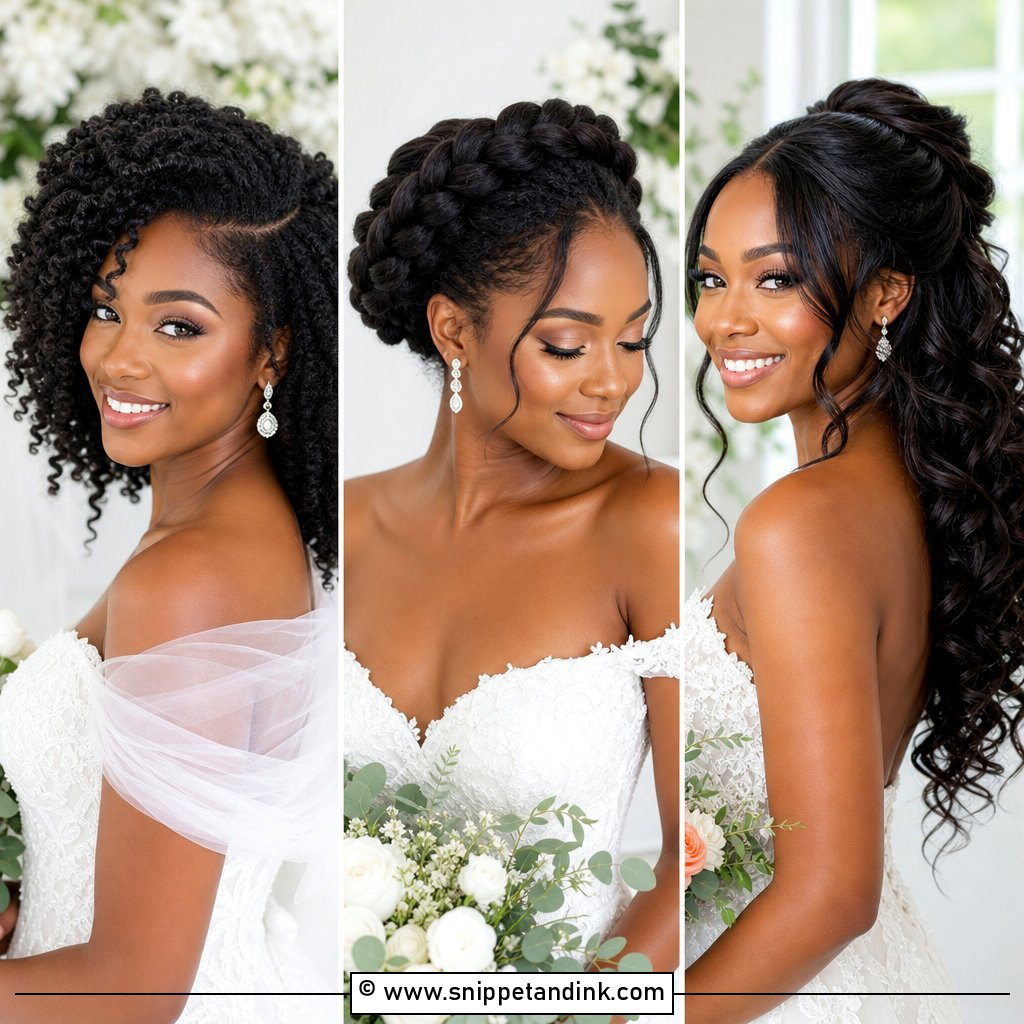
A braided crown wraps around the head like a natural halo and keeps hair completely off the face, which helps at a hot garden or beach wedding. I usually braid from behind one ear across the crown and pin the tail under the opposite side, then pull the edges out gently for width. Shoulder-length hair often can’t reach all the way round, and a hidden clip-in braid fills the gap. Tiny flowers or baby’s breath tucked into the plaits work best when wired, so they don’t slide out as you move.
4. Messy High Bun With Face-Framing Tendrils
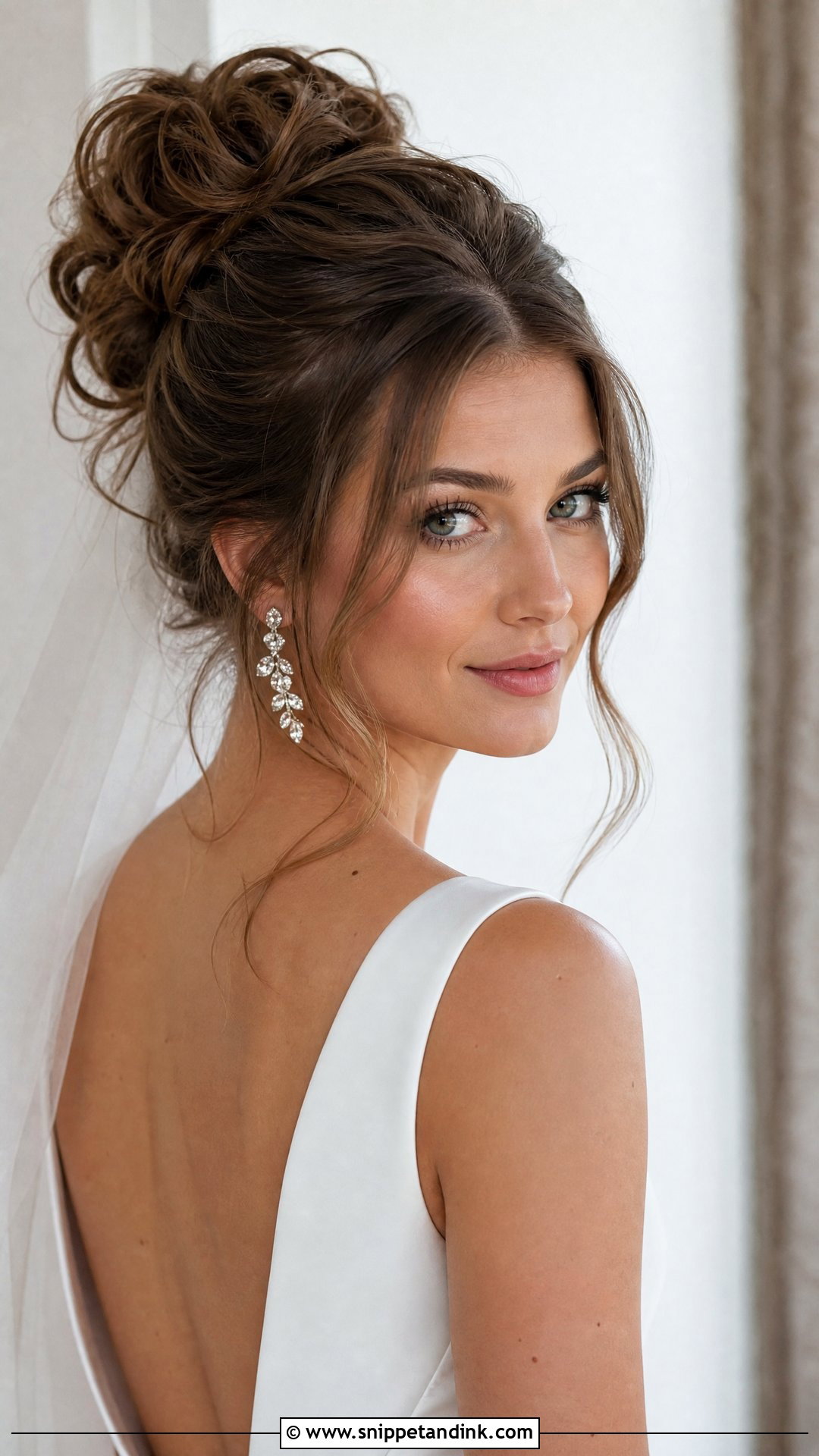
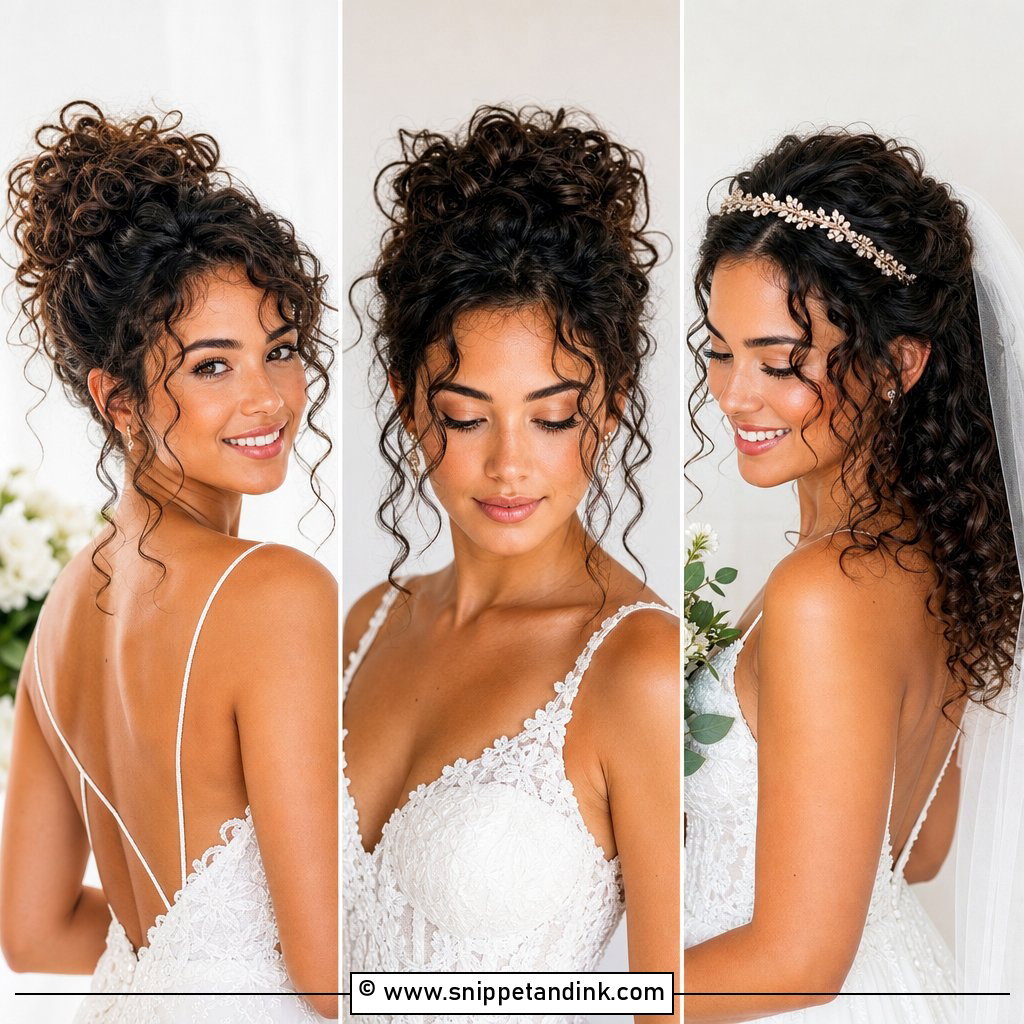
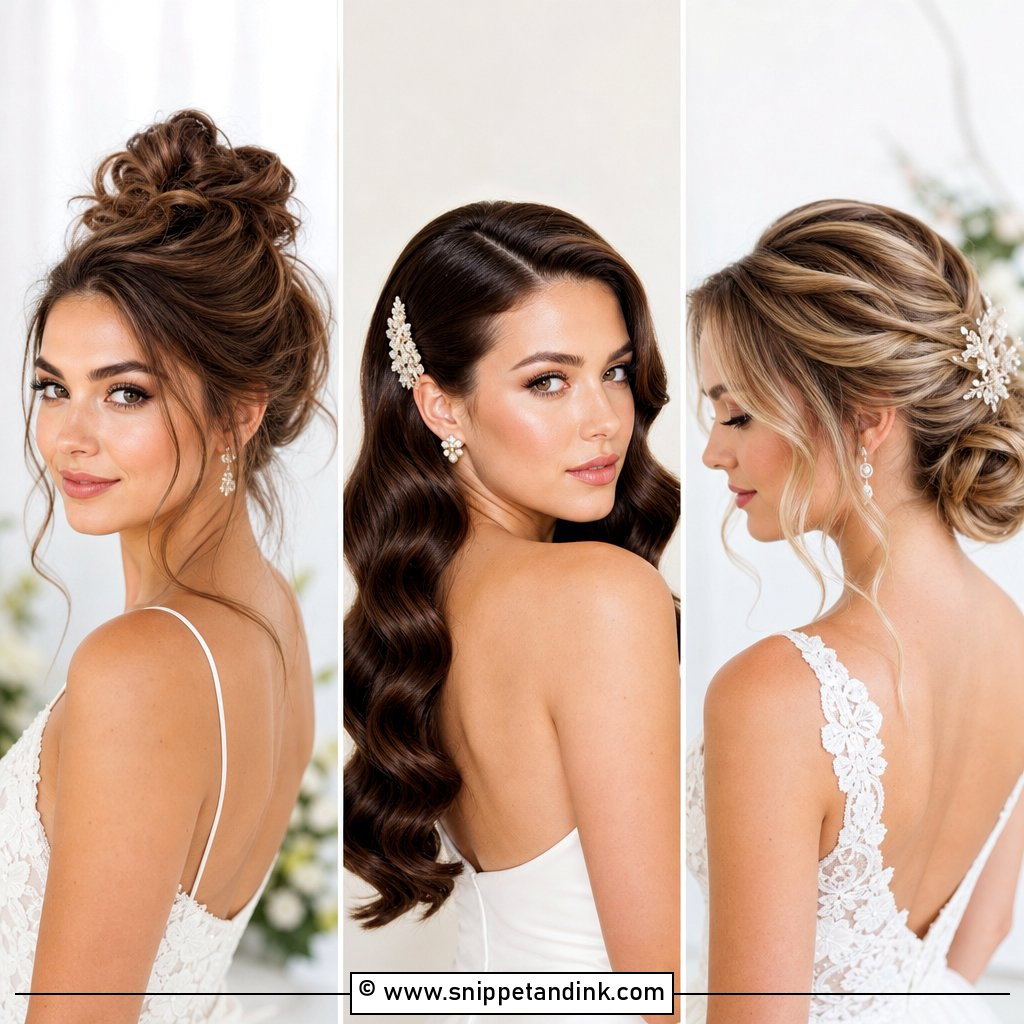
Undone looks are not unplanned ones. A messy high bun needs a firm base, because the weight sits on the crown and a loose foundation sags within an hour. I build it on a tight ponytail, texturize the lengths with dry texture spray, then pin loose loops around the elastic. The tendrils are the last thing I do, and I pull fewer than you’d expect, maybe two at each side. Too many and it starts to look like the bun fell out. It’s cool on a summer day and suits brides with strong cheekbones and statement earrings.
5. Classic French Twist Updo
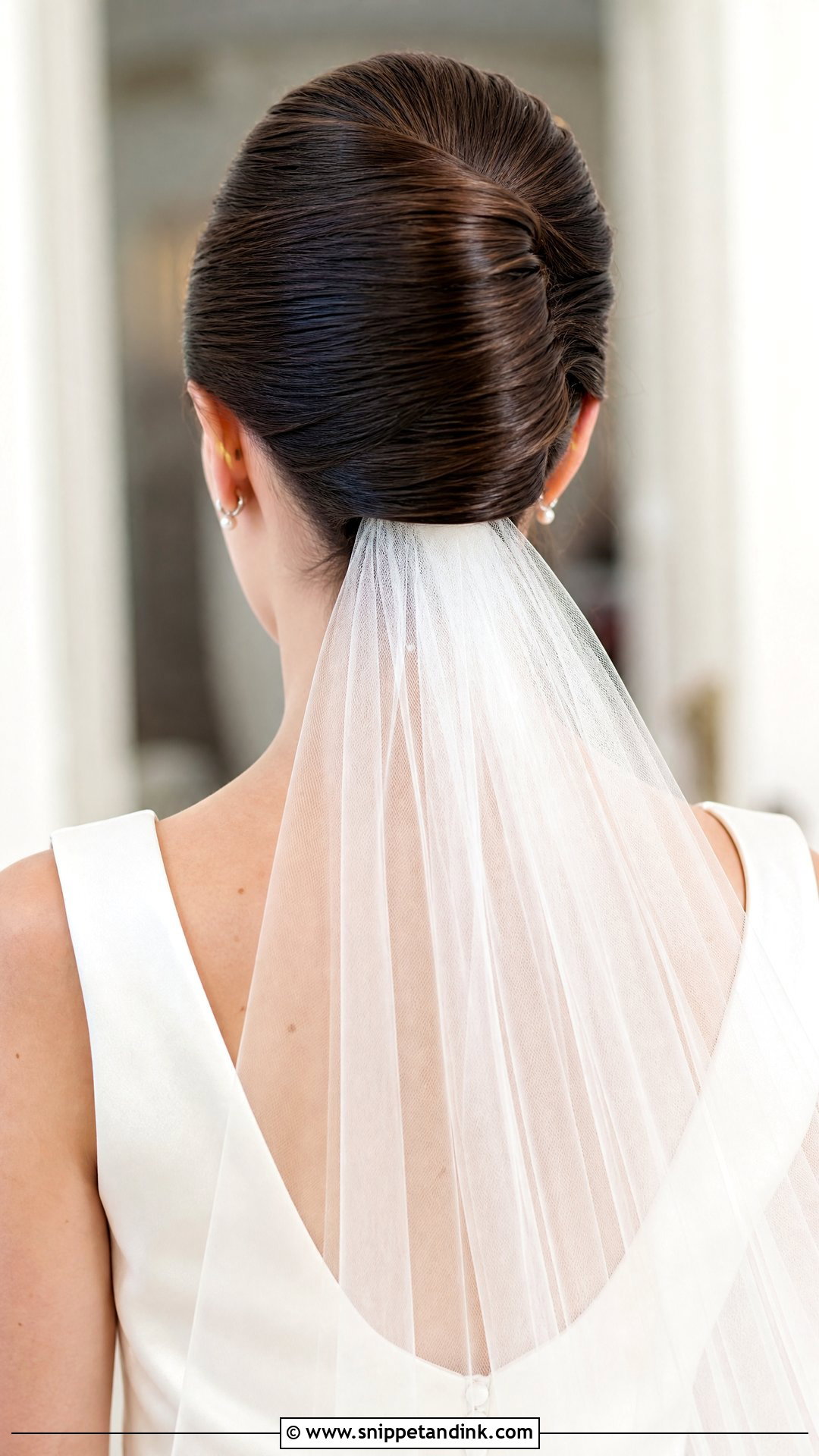
The French twist is one of the most secure updos I do, because the hair locks against itself along the vertical roll. I backcomb lightly at the roots for grip, sweep everything to one side, cross-pin a line up the back of the head, then twist the lengths over the pins and tuck the ends inside. Smooth it for an old Hollywood finish or leave a little texture for something more relaxed. A veil comb slides neatly under the top of the roll. Very short layers are the main problem; they poke out of the twist, so the cut needs to be at least shoulder length.
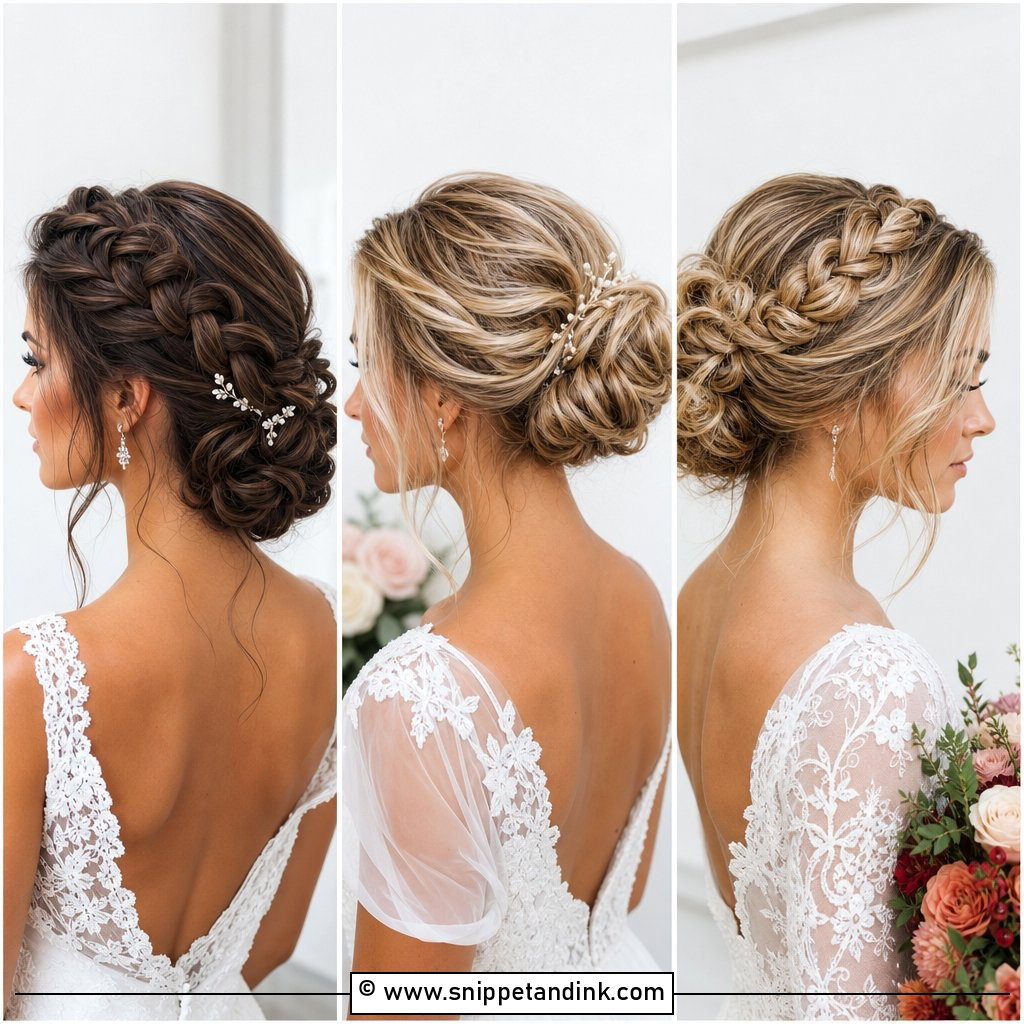
6. Low Braided Bun Bridal Updo
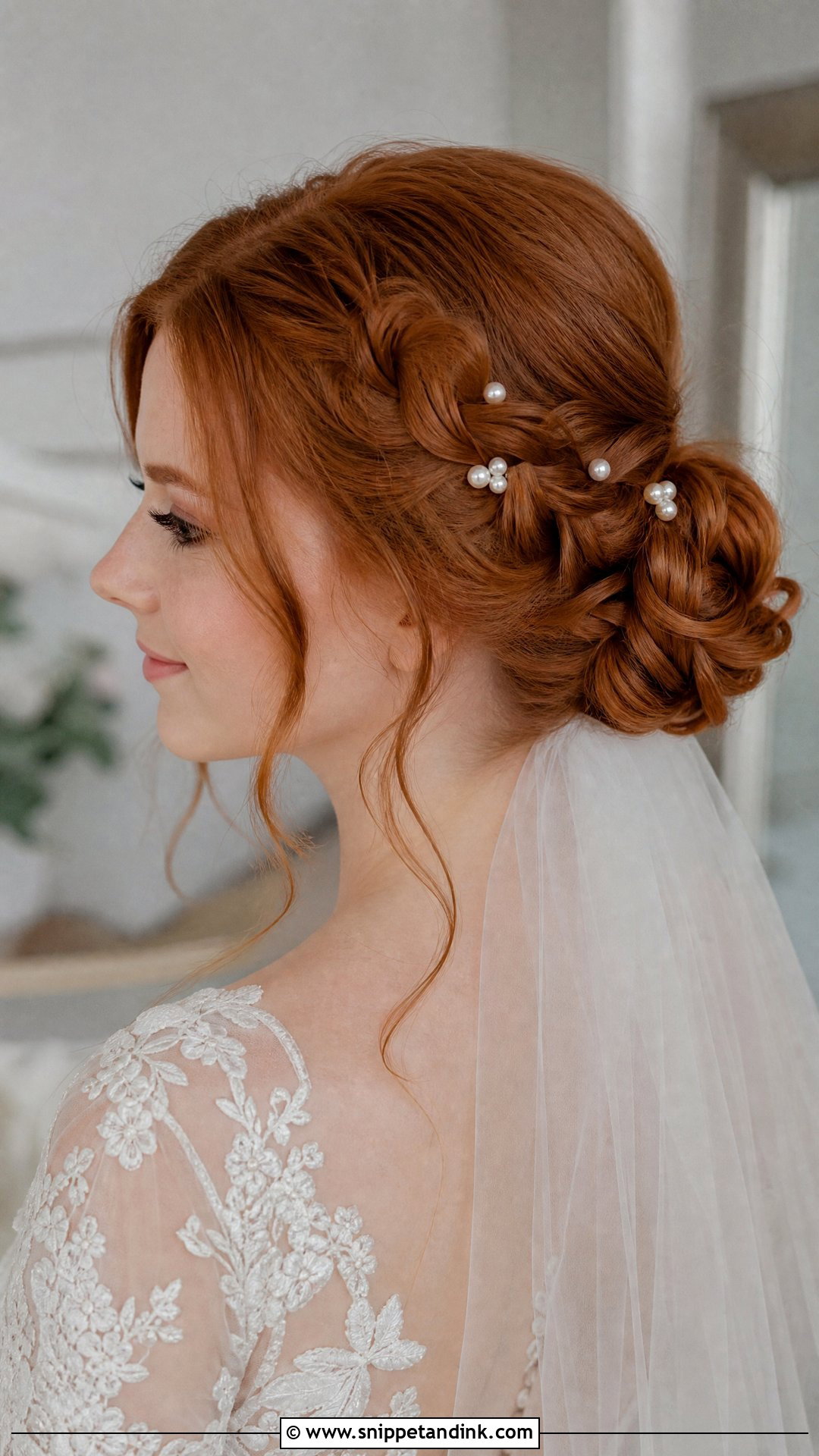
Here a soft braid feeds into a low bun, adding texture at the nape where the camera sees it in every ceremony shot from behind. I braid first, pancake the braid so it looks fuller, then coil it into the bun and pin through both layers. A loose braid reads as boho; a tight one looks more formal. Pearl pins sit nicely along the braid line. It holds up well through dancing because the weight is low and evenly spread.
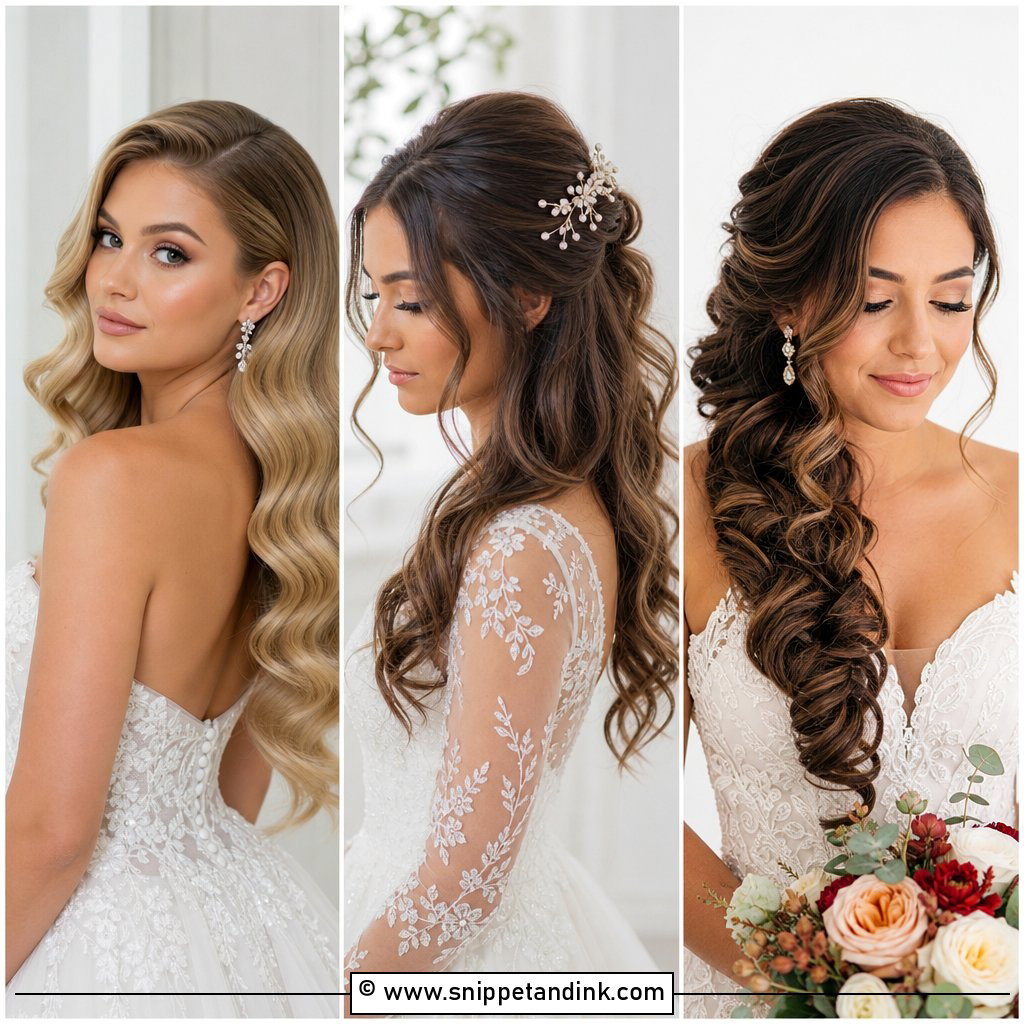
7. Half-Up Half-Down Wedding Hairstyle
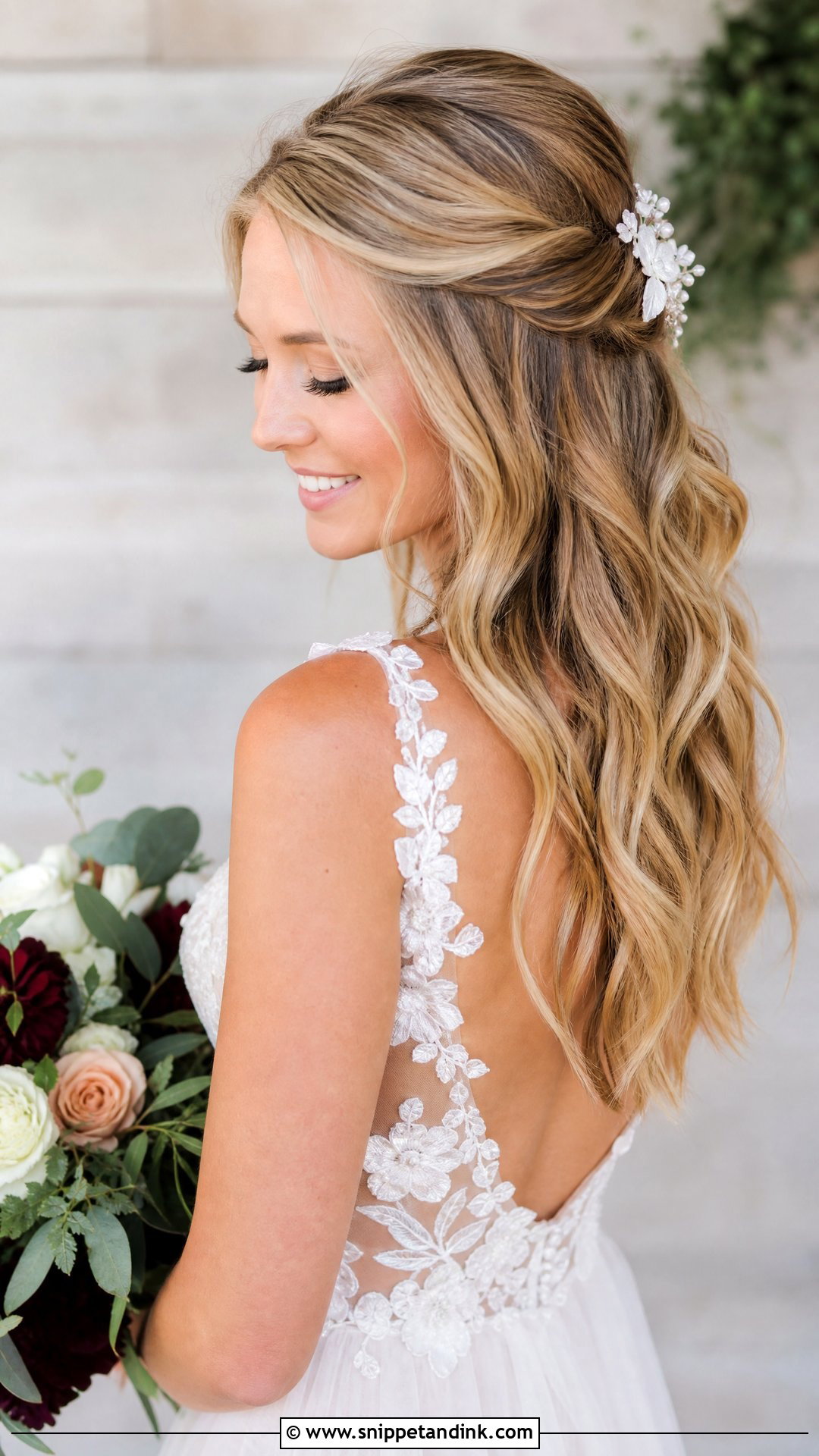
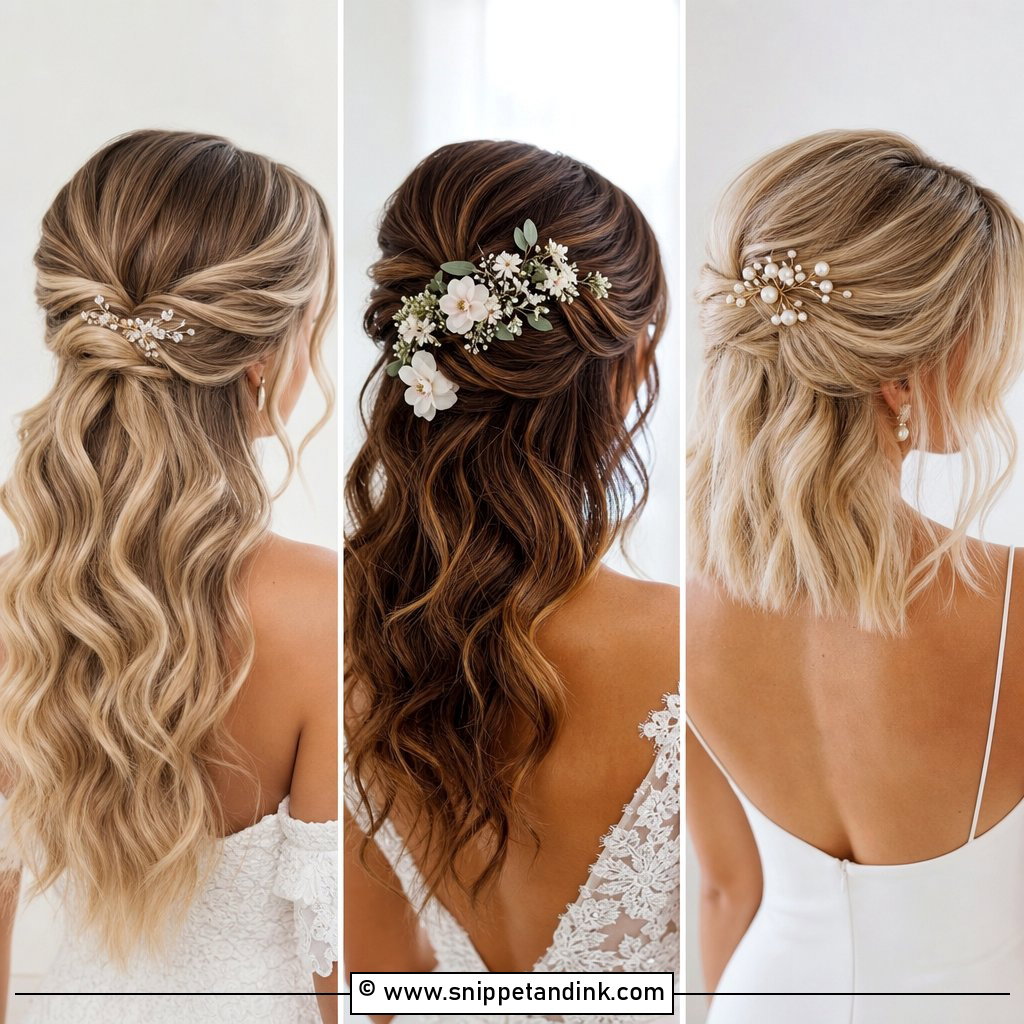
Half-up gives you a bit of structure on top and movement below, and it’s the style I talk brides through most carefully, because the down half is still vulnerable to heat and humidity. I secure the top section with crossed bobby pins rather than a single clip, since a clip slides on silky hair. How much you pull back depends on face shape and where the veil will sit. Waves or a small twist on top add interest. If your hair struggles to hold a curl, have a backup plan, like pinning the rest into a low bun after the ceremony.
8. Sleek High Bridal Ponytail
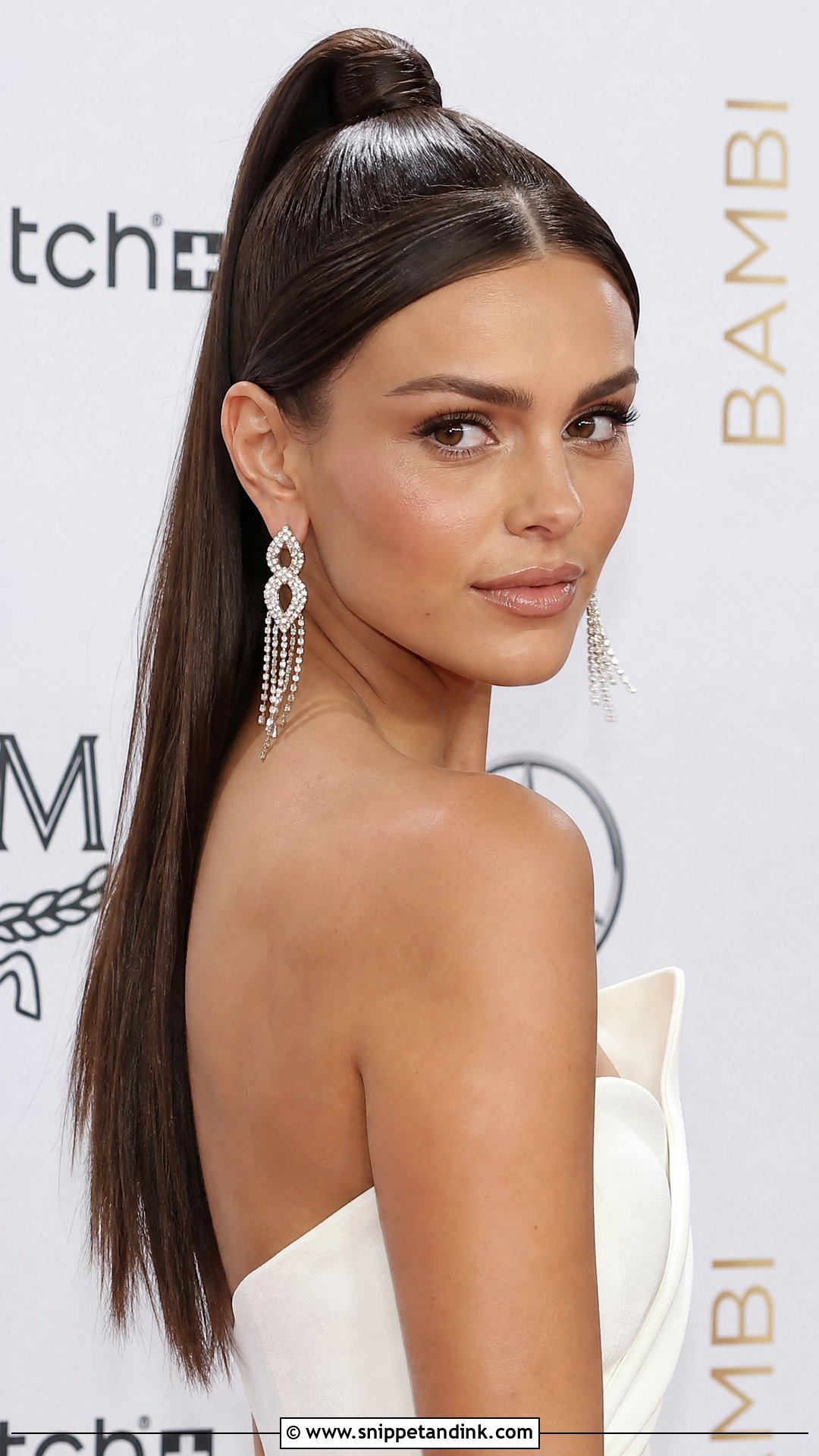
A high ponytail looks simple and is anything but. The base has to be tight enough not to droop, which also means it pulls; brides with sensitive scalps can get a headache after a few hours. I use two elastics, one on top of the other, and wrap a strand of hair around the base to hide them. A center part and a little bend in the ends keep it from looking flat. It lifts the face and frees the neck for dancing. If your hair is thin, a clip-in ponytail adds the length and fullness photographs need.
9. Old Hollywood Glamour Waves
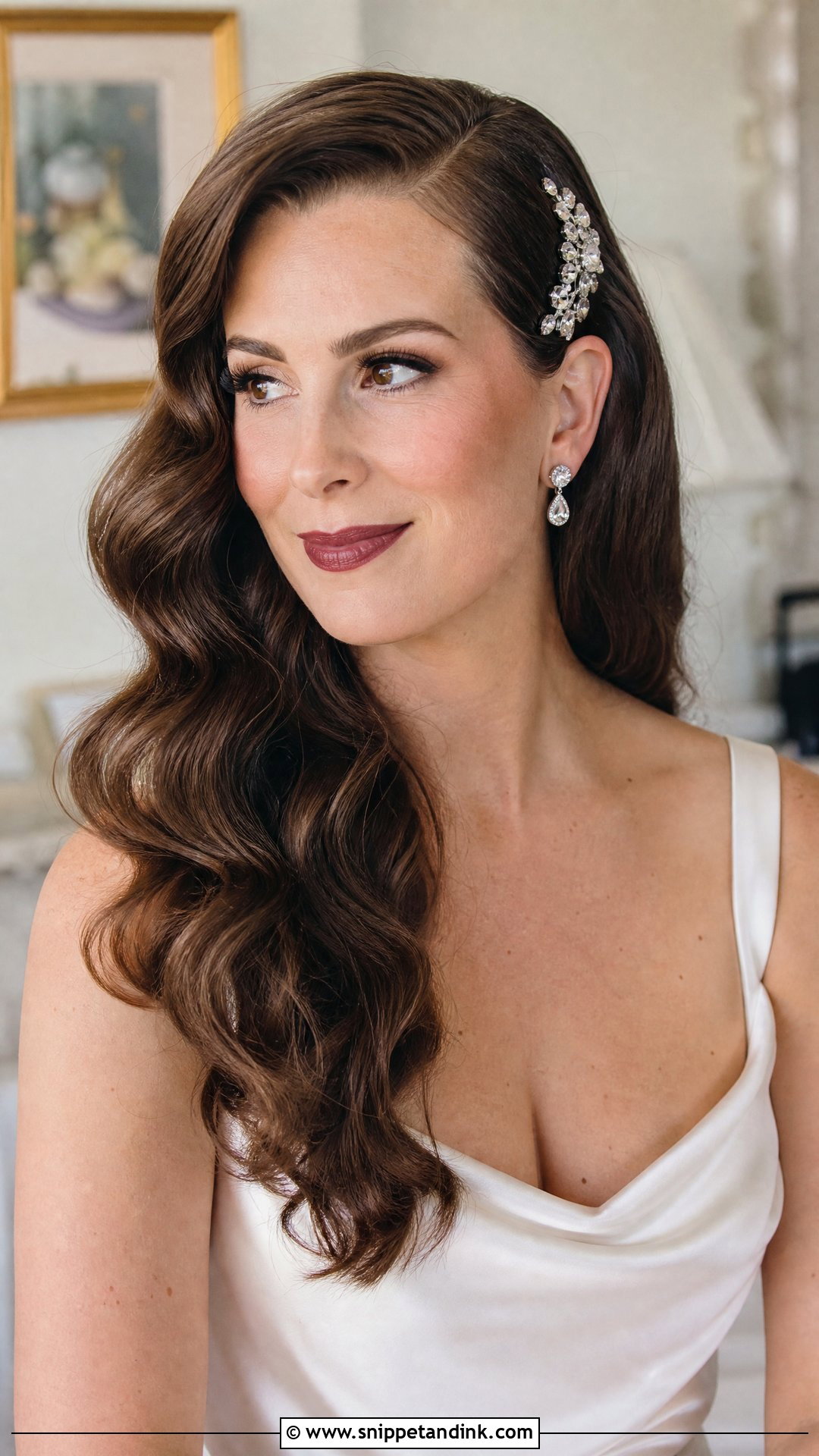
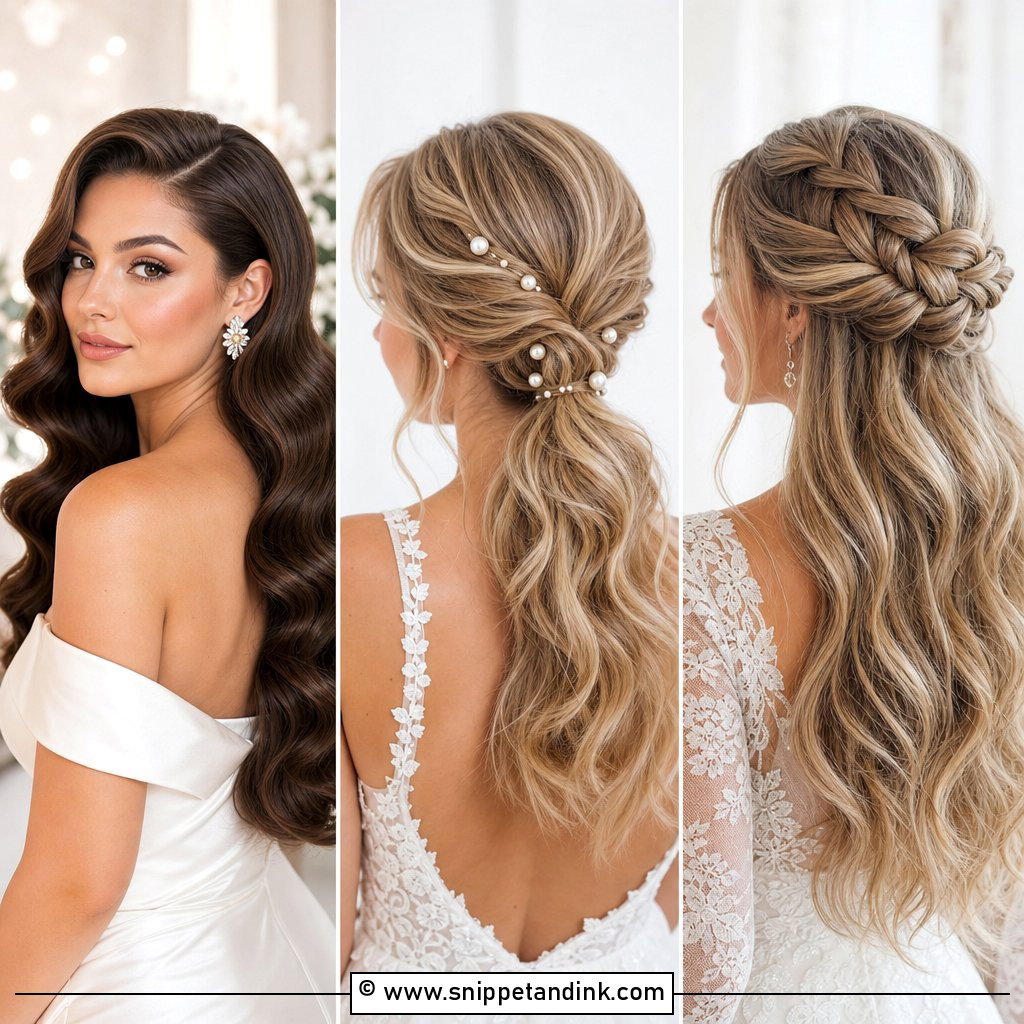
Hollywood waves are sculpted curls brushed out into one smooth S-pattern, and they take patience. I curl every section in the same direction, pin each to set, brush through with a boar bristle brush, then press the S into place with clips while a strong hairspray sets. It’s a dramatic look that pairs with satin and statement jewelry. Wear it down, or sweep it to one side with a sparkling clip. Fine hair often struggles to hold the uniform wave, while thick hair can hold it for hours.
10. Soft Chignon Bridal Updo
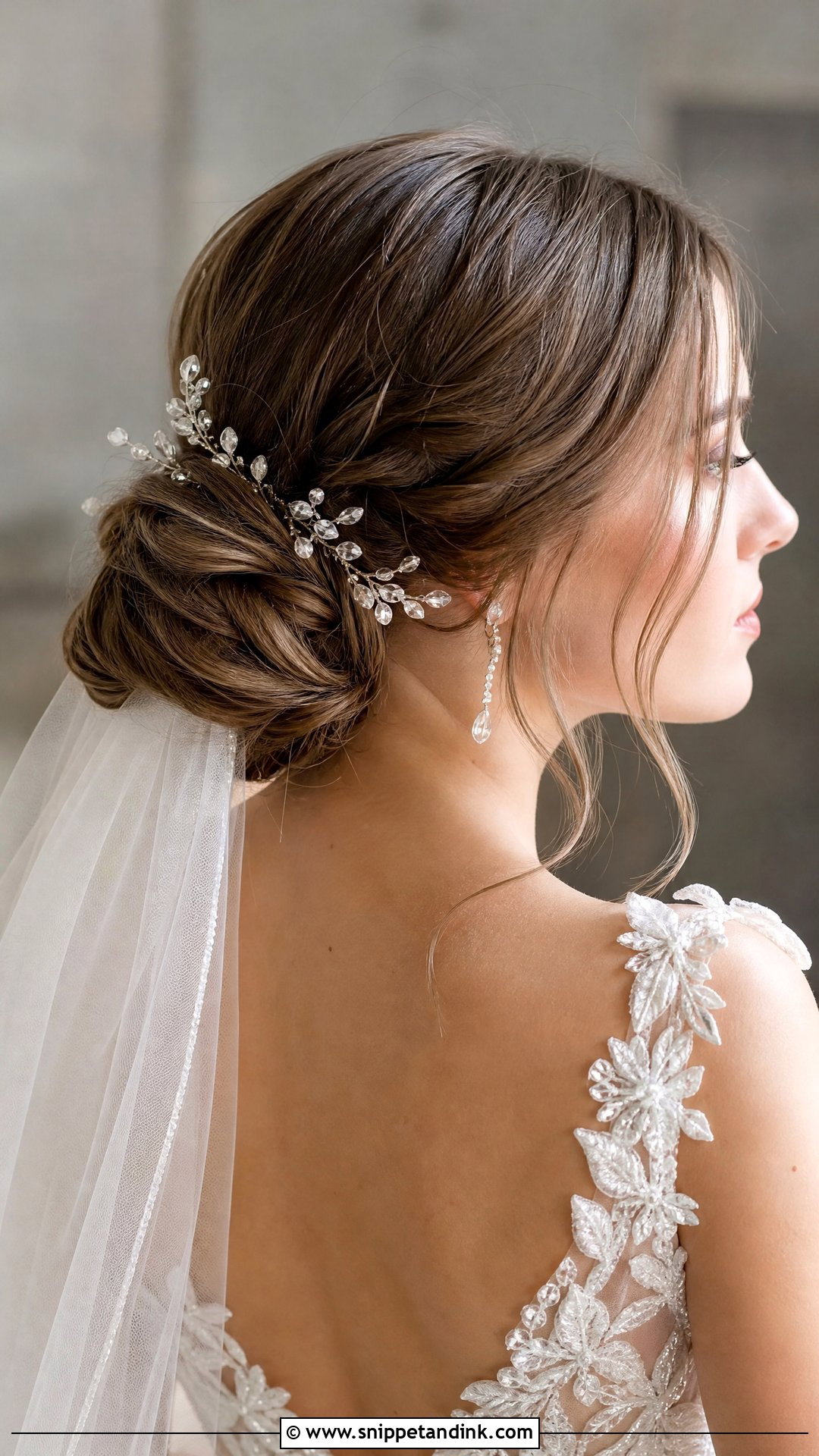
A chignon sits low at the back of the head and suits almost every neckline. This soft, knotted updo can be smooth or textured, and I usually loosen a few strands around the face so it doesn’t look severe. The knot shape is easy to build in sections, which makes it more forgiving on layered hair than a French twist. Pearls, crystals or a vine accessory sit well along the edge. It holds a veil securely, since the comb can grip the knot itself.
11. Curtain Bangs Bridal Look
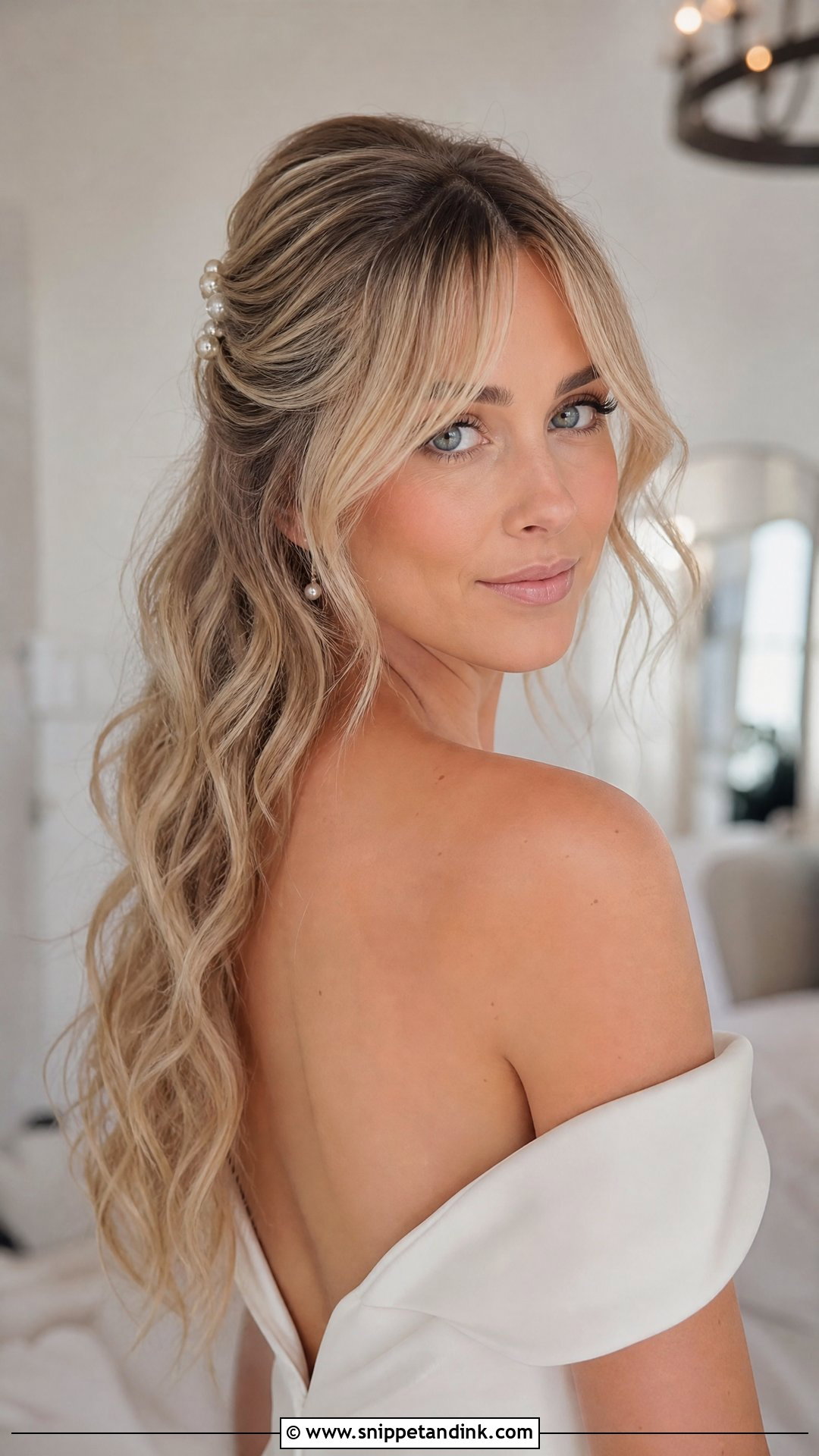
A grown-in fringe is the version I trust. Curtain bangs frame the face softly and work with updos, ponytails and loose waves. What I’d avoid is cutting them for the first time right before the wedding. Fresh bangs take a few weeks to settle and to learn how to style, so get the cut at least a month out. On the day, I blow-dry them over a round brush and set them with a velcro roller while the rest of the hair is done, so they keep their bend. Humidity can split them, so a light hold spray goes on before you leave.
12. Braided Updo With Loose Tendrils
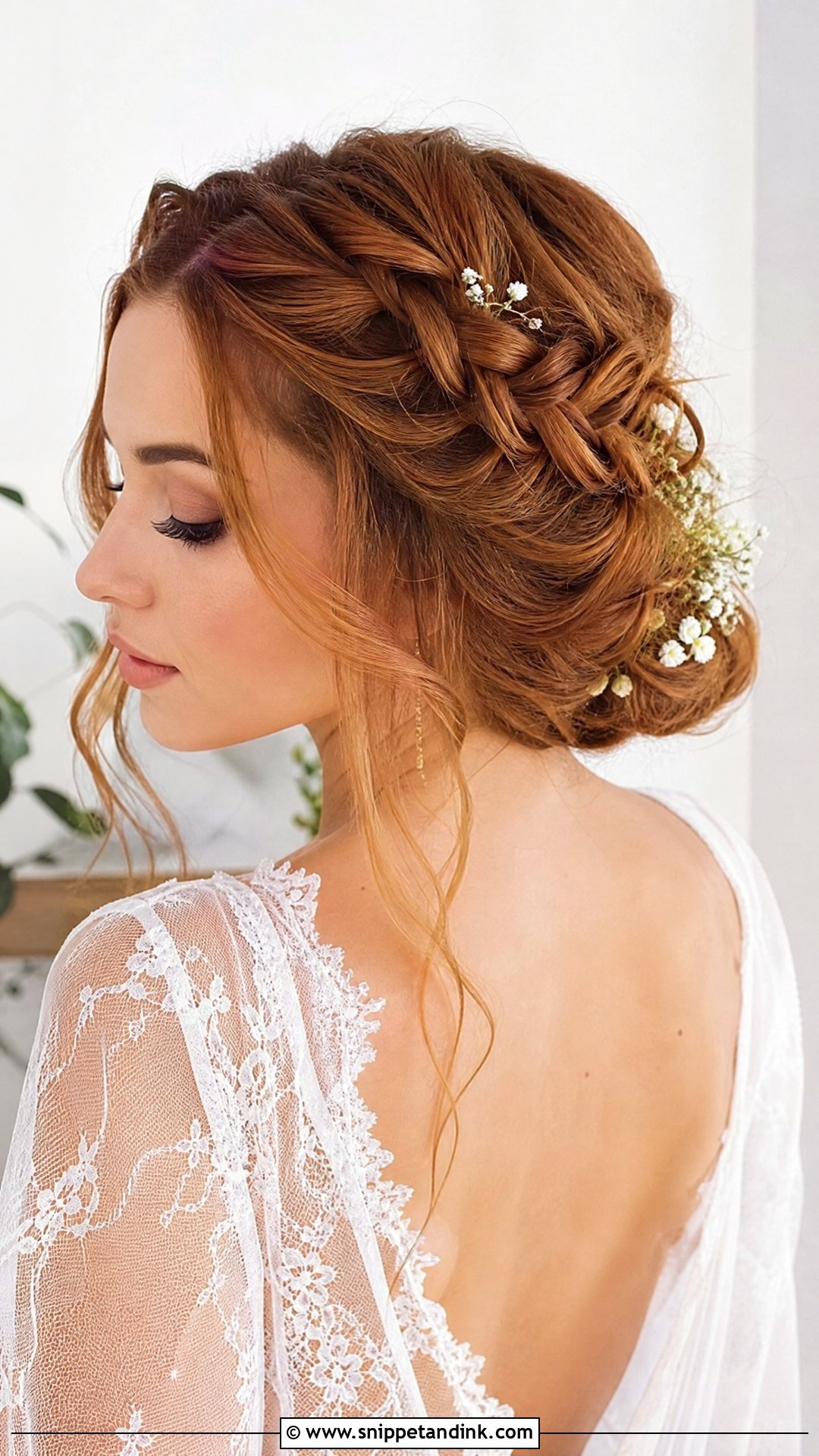
Braided updos give the most dimension of any style here. Two or three braids twisted into a low or mid-height updo, with loose tendrils around the face. The braids act like anchors, so this tends to be one of the most secure options. I’d choose it for a garden or rustic wedding, and small flowers or pearl pins tucked between the braids look natural. Curly and coily hair often braids beautifully here and holds the shape without much product.
13. Sleek Straight Bridal Hair
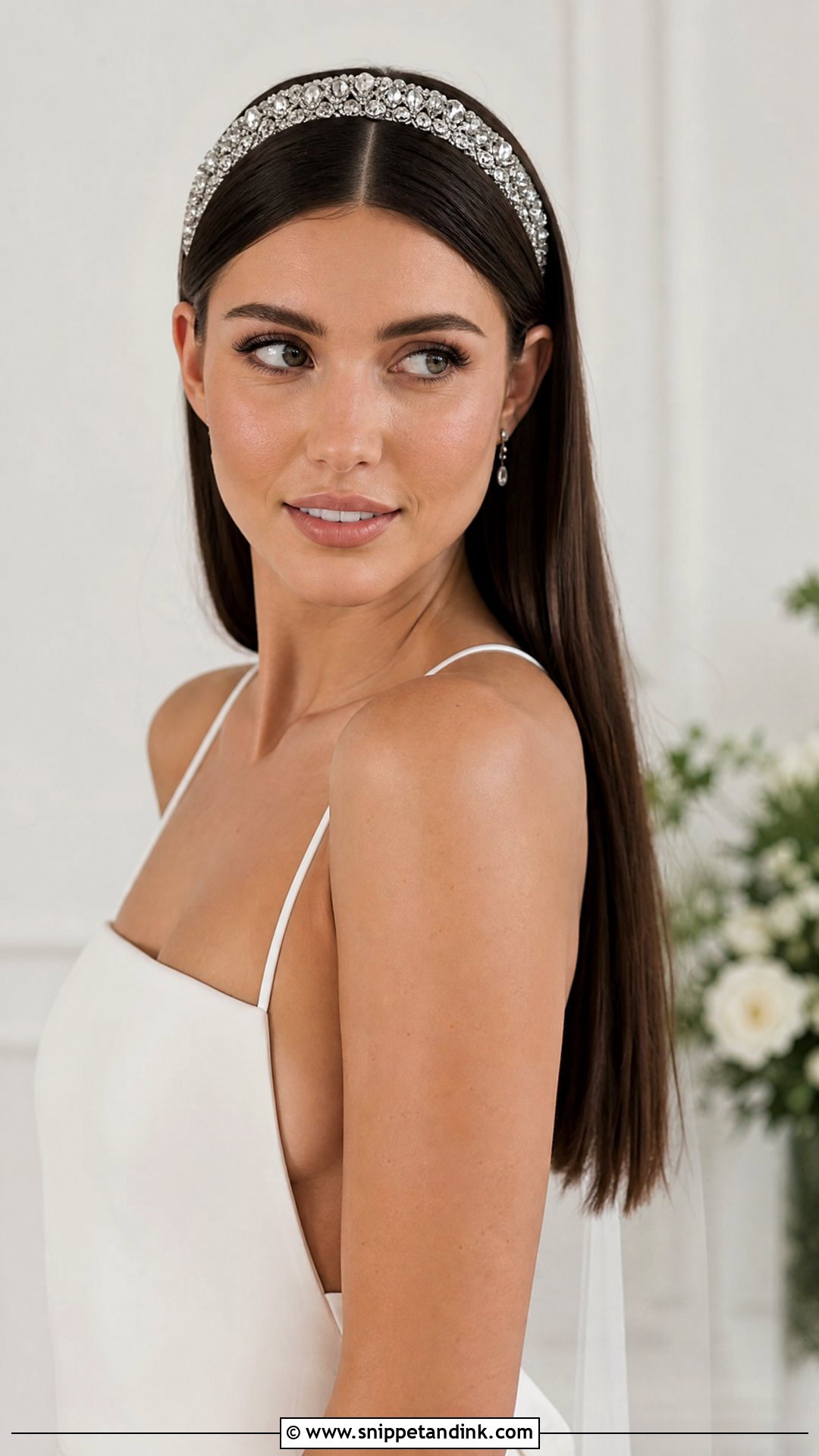
Straight hair shows everything, which is why I prep it with a smoothing cream, blow-dry with tension, then flat-iron in thin sections. A center part creates symmetry; a sparkling headband or a few pins add a small detail. It’s the quickest style to look tired by evening, since natural oils flatten the roots, so a light dusting of dry shampoo at the crown helps. It’s very much at home with minimalist gowns, and with hair that’s already naturally straight.
14. Side-Swept Bridal Waves
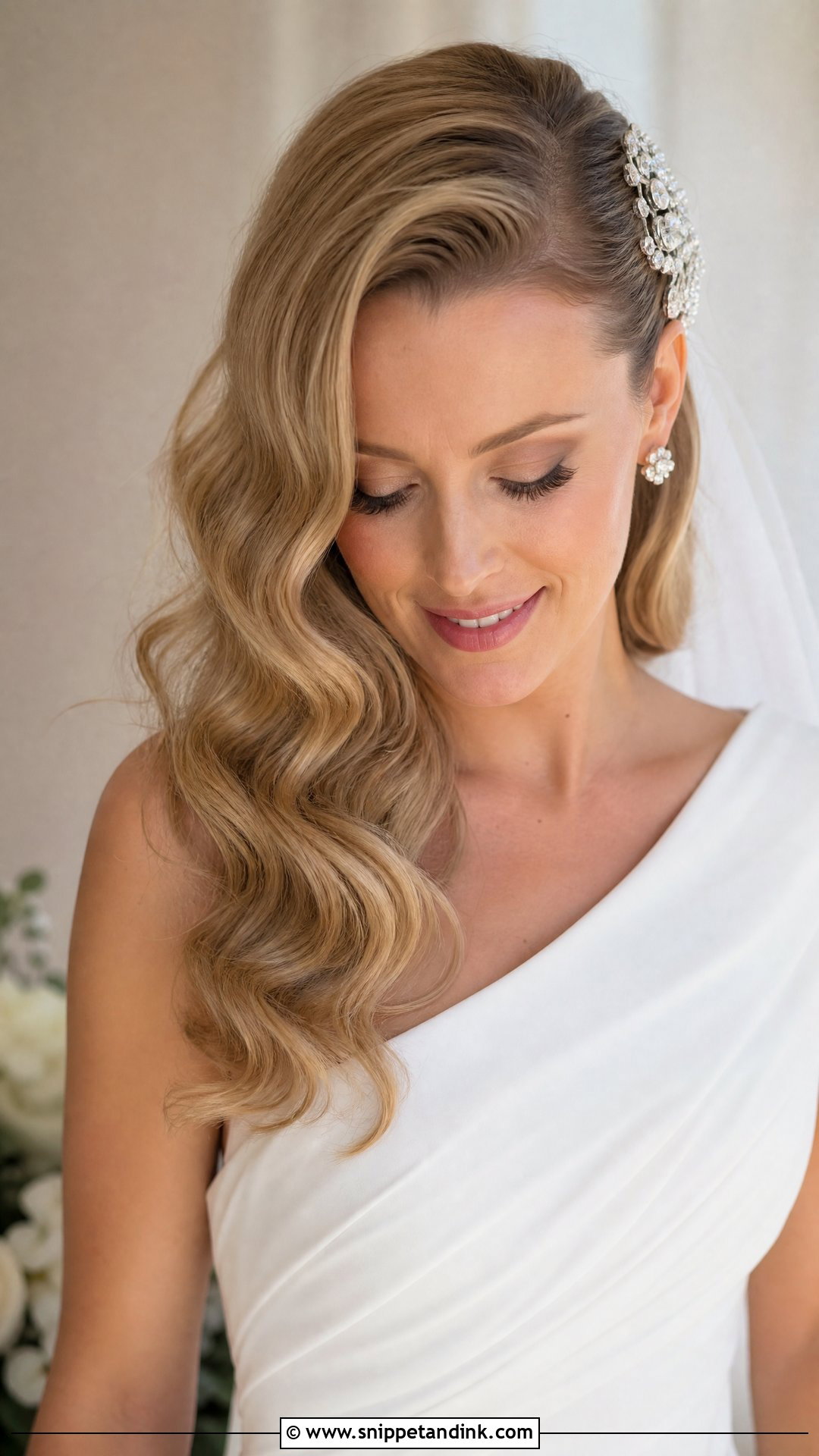
Everything sweeps over one shoulder, so this works especially well with a one-shoulder dress or a single statement earring on the open side. To keep the hair from slipping back, I hide a line of crossed bobby pins behind the ear on the bare side. Without that anchor, the hair drifts back within an hour. Soft waves give it movement and photograph well in natural light. A clip at the swept side adds sparkle. It’s flattering on most face shapes.
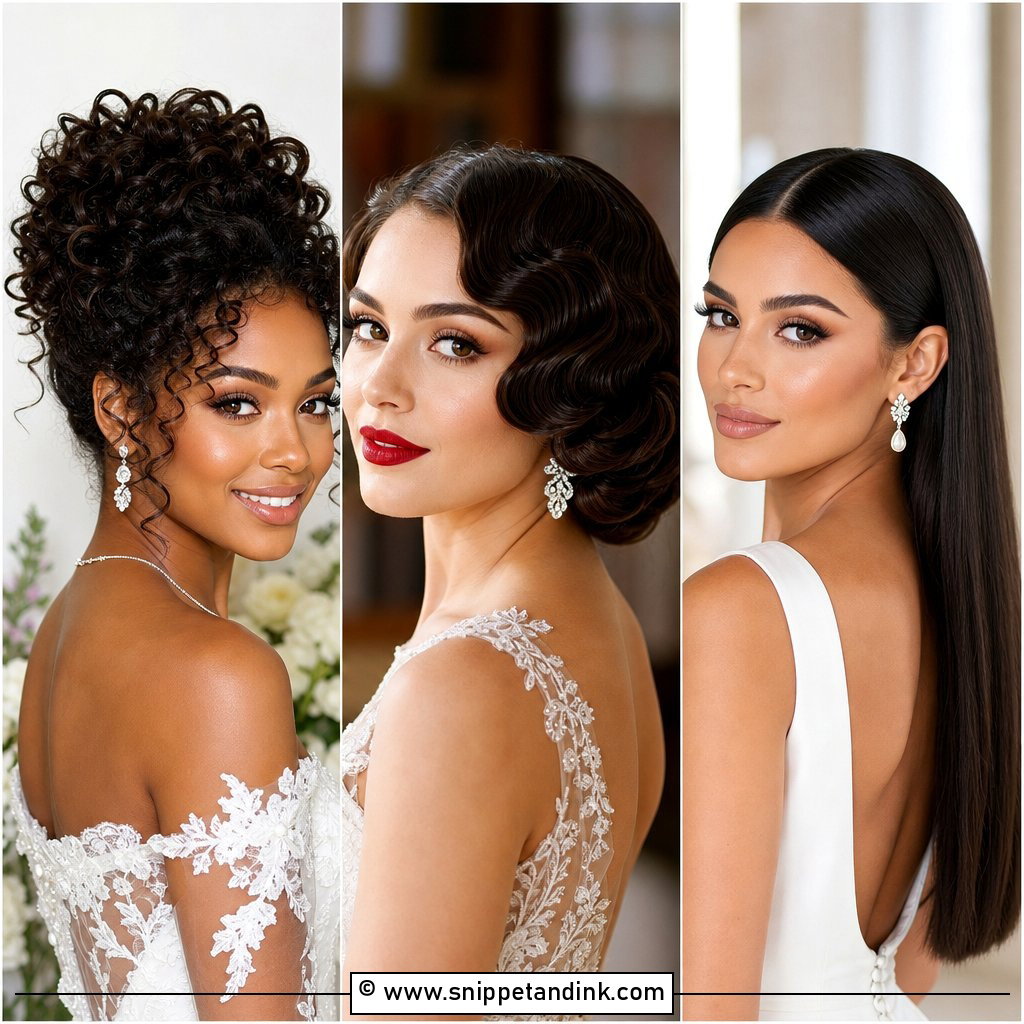
15. Textured Bridal Crown Braid
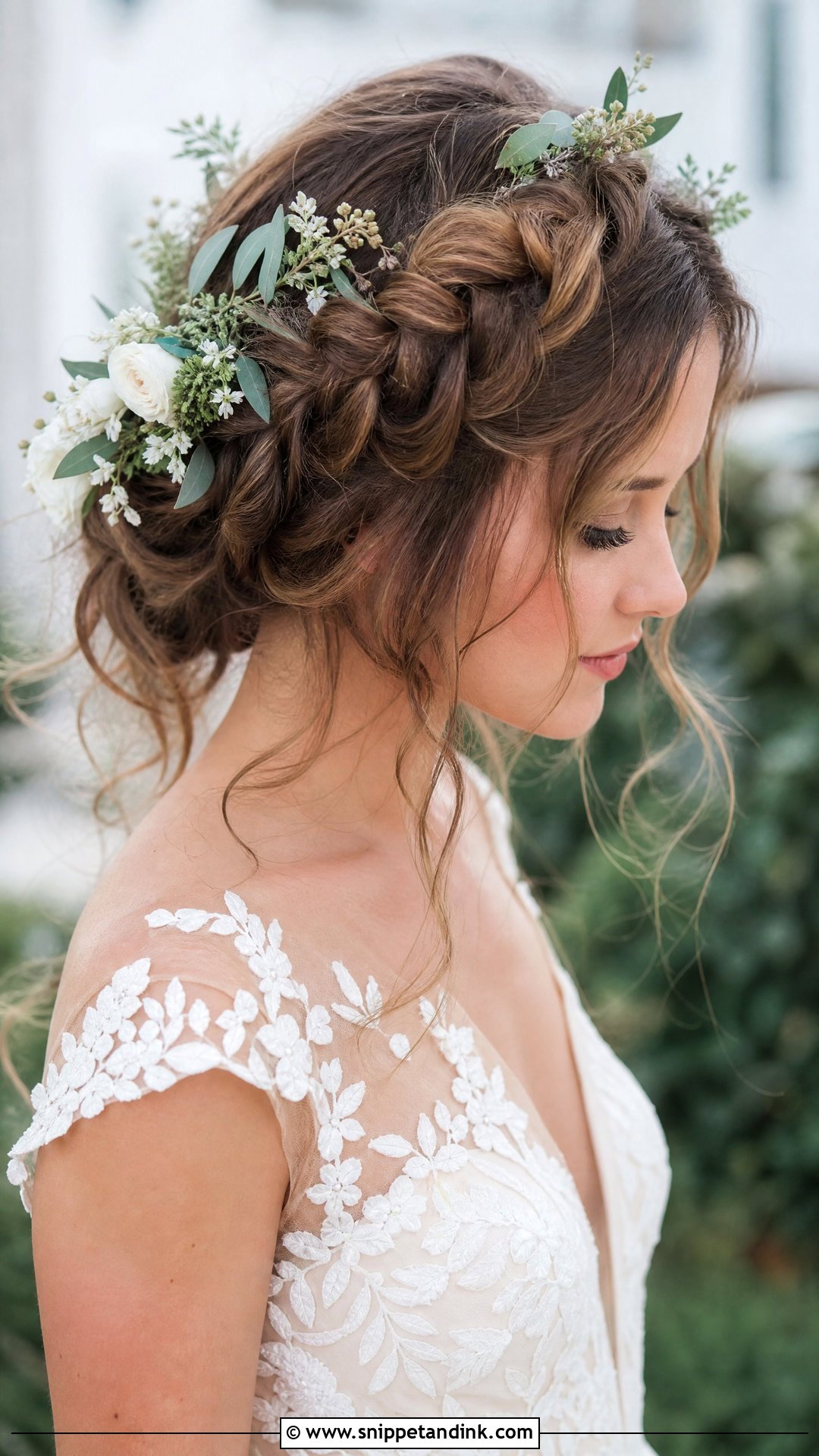
A textured crown braid is a soft, voluminous braid wrapped around the head like a tiara, with the edges pulled out for fullness. That pulled-out texture is what separates it from the neater halo braid earlier on this list. Fresh flowers or greenery look natural tucked in, but they wilt in heat, so I’d use sturdy blooms or silk ones. It keeps hair off the face and suits outdoor and festival-style weddings.
16. Low Side Bun With Soft Waves
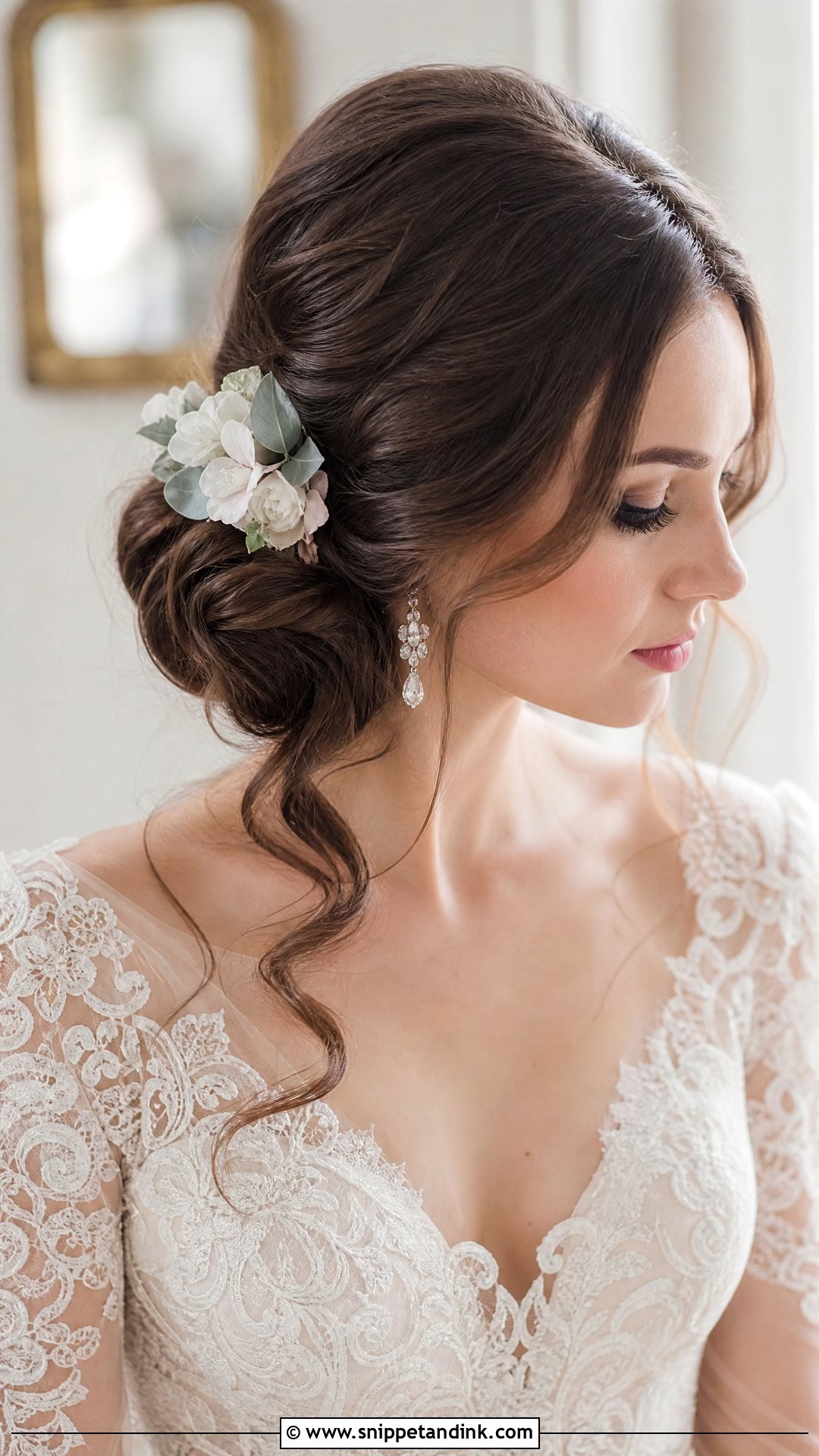
The bun sits off-center at the nape with soft waves leading into it, which makes the silhouette asymmetrical and easy to recognize in profile shots. I set the waves first, then gather them to one side and pin them into a loose knot behind the ear. On brides who’ll wear a veil, I plan which side gets the bun so the veil comb has somewhere to grip. Pearls or a small floral accent add detail, and vintage gowns pair with it especially well.
17. Pixie Cut Bridal Style
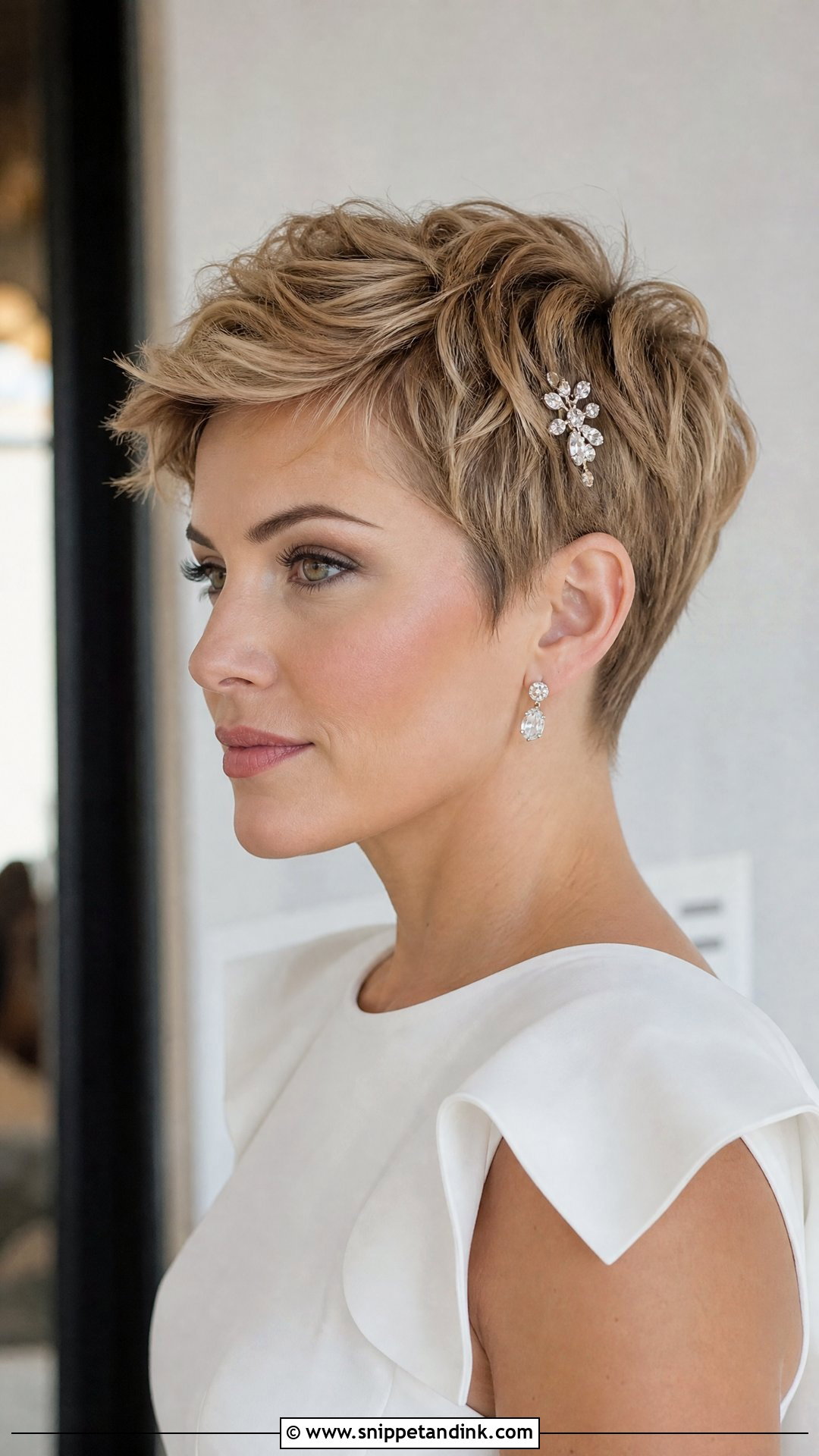
Short-haired brides often worry there’s nothing to do. A pixie cut works best styled, not changed: I add texture with a light paste, and a bit of volume at the crown, then decide whether you want sleek or tousled. Get your cut about a week before the wedding, which gives it time to soften. A sparkling clip above the ear or statement earrings bring in the bridal detail. Structured gowns and minimalist accessories suit it, and you’ll be the coolest bride in the room on a summer day.
18. Twisted Updo With Pearl Accents
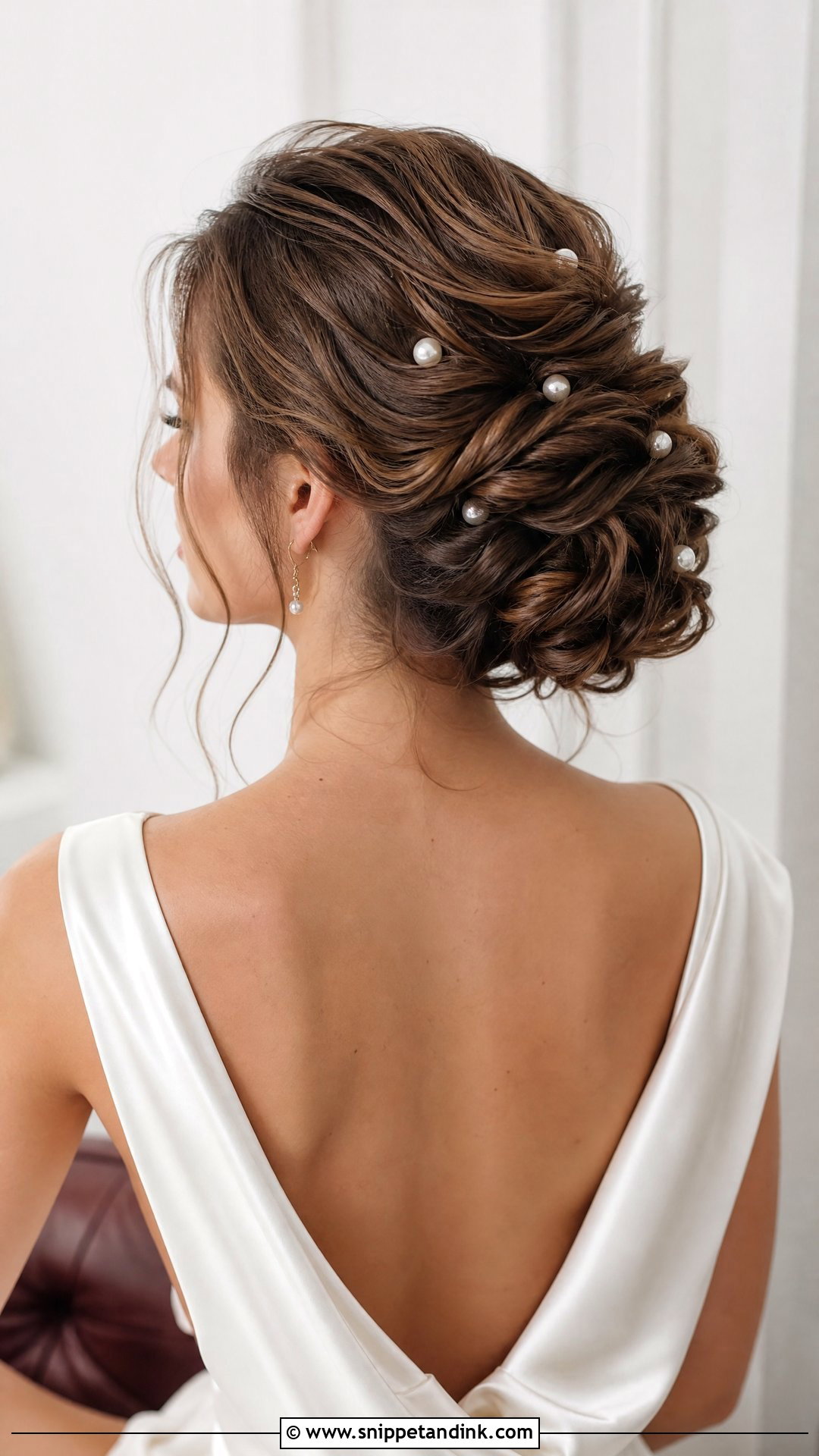
Soft twists gathered at the back of the head, scattered with pearl pins. The twists create texture without the time a braid takes, and they’re kind to medium-length hair. Pearl pins should go in at an angle into the twist so they lock in place rather than slide out. A few loose pieces around the face soften it. It holds well all day, and pearls on the hair tie in naturally with pearl jewelry.
19. Bridal Blowout With Volume
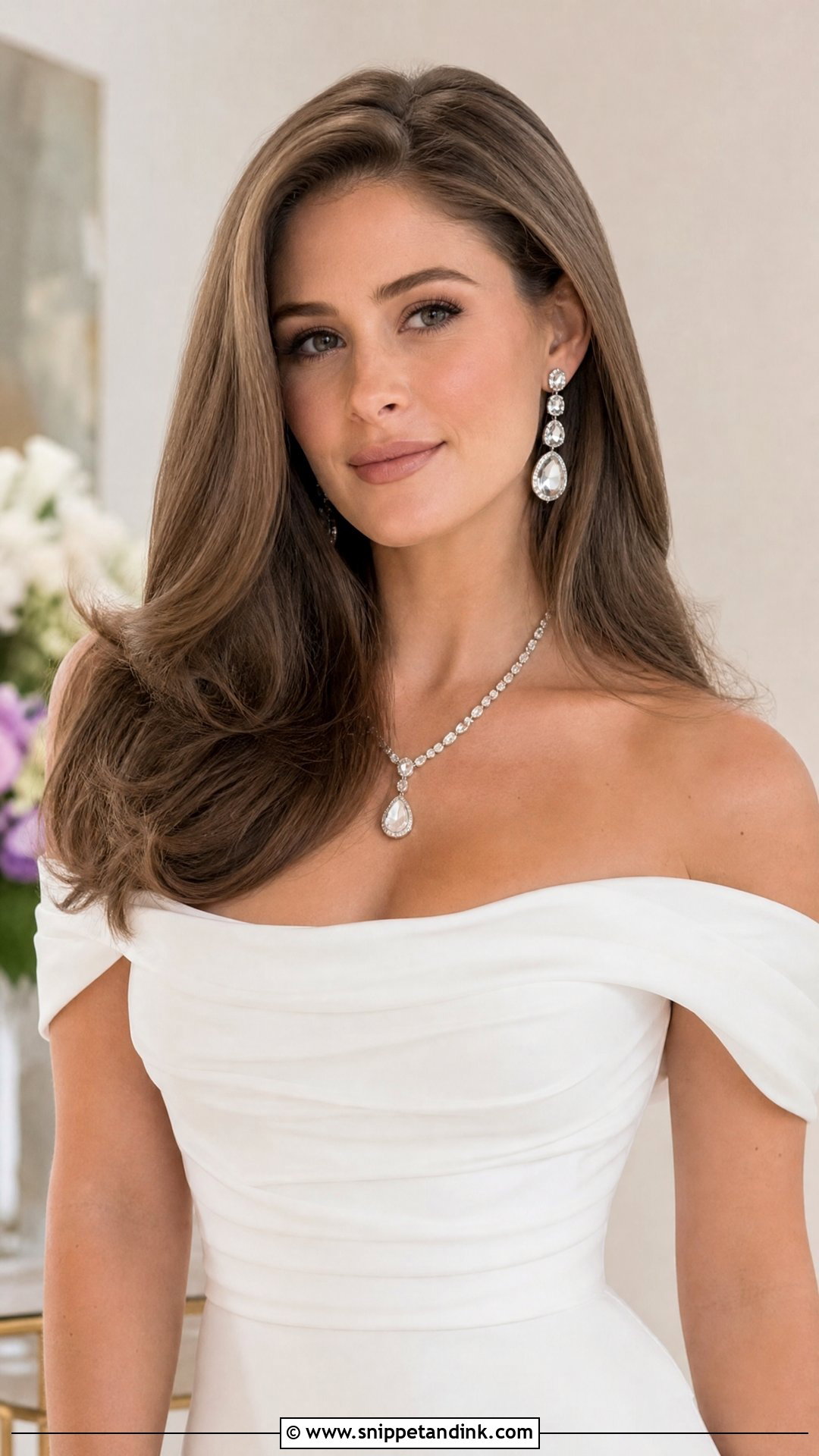
The ’90s-inspired blowout is bouncy hair with soft, flipped ends. I do it with a round brush and set each section on a large velcro roller while the rest of the hair is styled, which keeps the volume through the day. Big blowouts on thick hair hold well; fine hair needs volumizing mousse at the roots or it collapses. Wear it down or pin one side back. It frames the face and pairs with sleek gowns and statement jewelry.

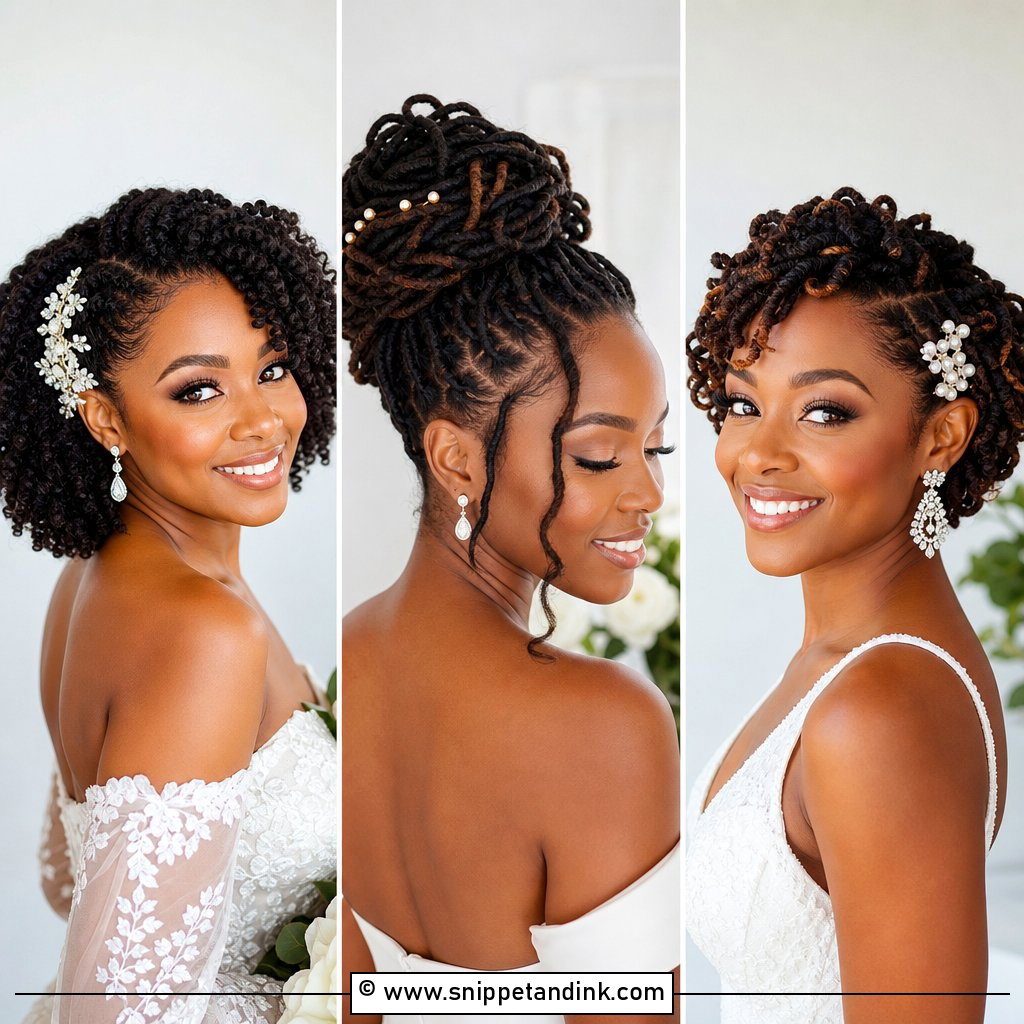
20. Low Textured Ponytail for Brides
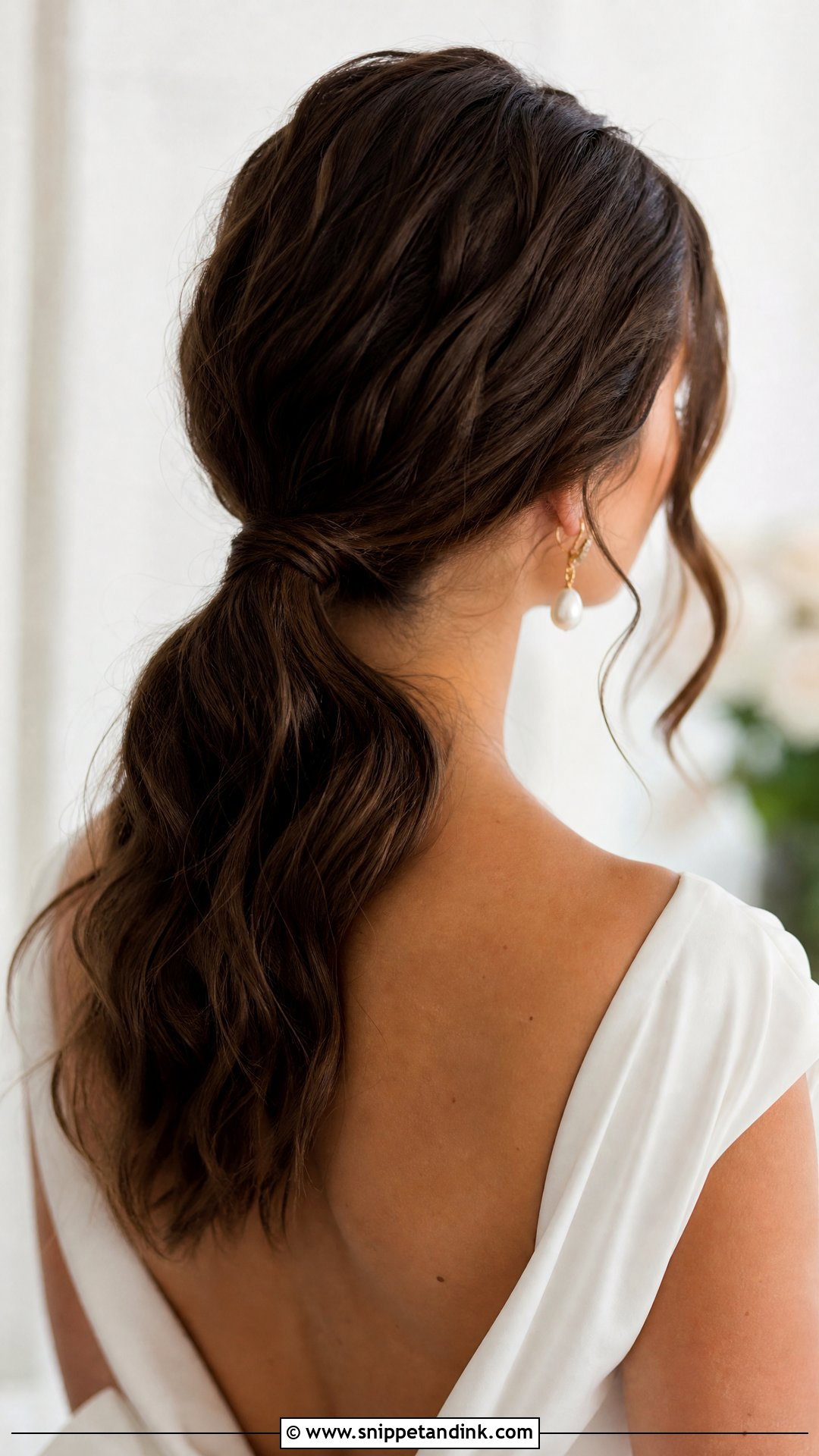
A low ponytail sits at the nape with a little texture through the lengths, so it’s relaxed and comfortable for a long day. Because the weight sits low, it rarely causes the pulling that a high pony can. I wrap a strand around the elastic to hide it and add soft waves at the ends. It suits statement earrings and minimalist gowns. If you’re not a formal updo person, this gives you polish without feeling stiff.
How I Want Your Hair to Arrive on the Morning
Most bridal stylists ask for clean, completely dry hair, but the timing of that wash depends on the style. Very silky hair that won’t hold pins usually does better washed the night before, so a little natural grip builds up. Hair that gets oily quickly is better washed that morning, as long as it’s fully dry when you sit down.
- Skip heavy conditioner on the roots and leave out oils and serums.
- Don’t do any color changes or new treatments in the last two weeks.
- Wear a button-down top so nothing has to come off over your head.
- Bring your veil and hair accessories, so I can anchor them while I style.
Ponytail Headaches and Other Comfort Trade-Offs
A style that looks perfect at 10 a.m. still has to feel bearable at 10 p.m. High ponytails and heavy buns create real tension on the scalp, and so do dozens of tightly placed pins. If you tend to get headaches, choose a low style or tell your stylist at the trial so she can balance the weight. A heavy veil adds strain too; most brides take it out after the ceremony or the first photos.
It also helps to plan the evening. Some brides switch to a lower, looser version for the reception. If you want that, ask your stylist to show someone in your party how to undo it, so you’re not pulling out pins in a bathroom mirror.
Will It Hold Until the Last Song?
A wedding hairstyle has to look right for the photos and still feel comfortable after ten hours. From sleek buns and loose waves to braided crowns and ponytails, the styles above cover a wide range, but your hair texture, your dress and your venue narrow the list quickly. Think about how the style will cope with heat or wind, where the veil will sit, and whether you’ll want to change it for the reception. Pearls, flowers or pins can make it personal. Bring a few photos you love to your trial, and ask your stylist honestly which ones your hair will hold.
You'll Like These Ideas:


Leave a Reply