
Hair down shows off what you already have: your length, your color, your texture and the pieces that frame your face. It’s also the bridal style I plan most carefully, because loose hair has nothing holding it except the set. Right now brides are asking for softer, shinier finishes, brushed curls and natural texture over tight ringlets. Before you save any of the looks below, think about four things: your neckline, whether a veil is involved, the forecast and how your hair behaves on a humid afternoon. Those answers matter more at a trial than any screenshot.
The Honest Downsides Nobody Puts on the Mood Board
Hair down is the style that asks the most of you during the day. None of these problems are reasons to give it up. They’re reasons to plan for them, and they’re what I talk through with every bride who chooses it.
- Heat on your neck. At a summer ceremony, a thick curtain of hair across the shoulders gets warm fast, and sweat at the nape relaxes curls from underneath. A light hold product at the roots and a few hidden pins lifting the underneath layer help a lot.
- Snagging. Beading, sequins, lace appliques and drop earrings all catch long strands. Run your fingers through your hair while wearing the dress at a fitting and see what grabs. Sometimes the fix is as simple as smoother earrings.
- Wind in your face. Outdoor ceremonies and clifftop portraits blow loose hair straight into lip gloss. Pinning back one side, or both, keeps the face clear without changing the overall look.
- One flat side. Hugs, a bouquet held on one side and leaning on a partner’s shoulder all crush curls more on one side than the other. A quick finger-brush and a tiny bit of spray rebalances it.
- Volume fading by evening. Fine or very straight hair can lose its shape before dinner. I set curls in rollers or pin them while they cool, and extensions add weight that helps waves hang properly.
1. Bridal Hair Down With Soft Waves
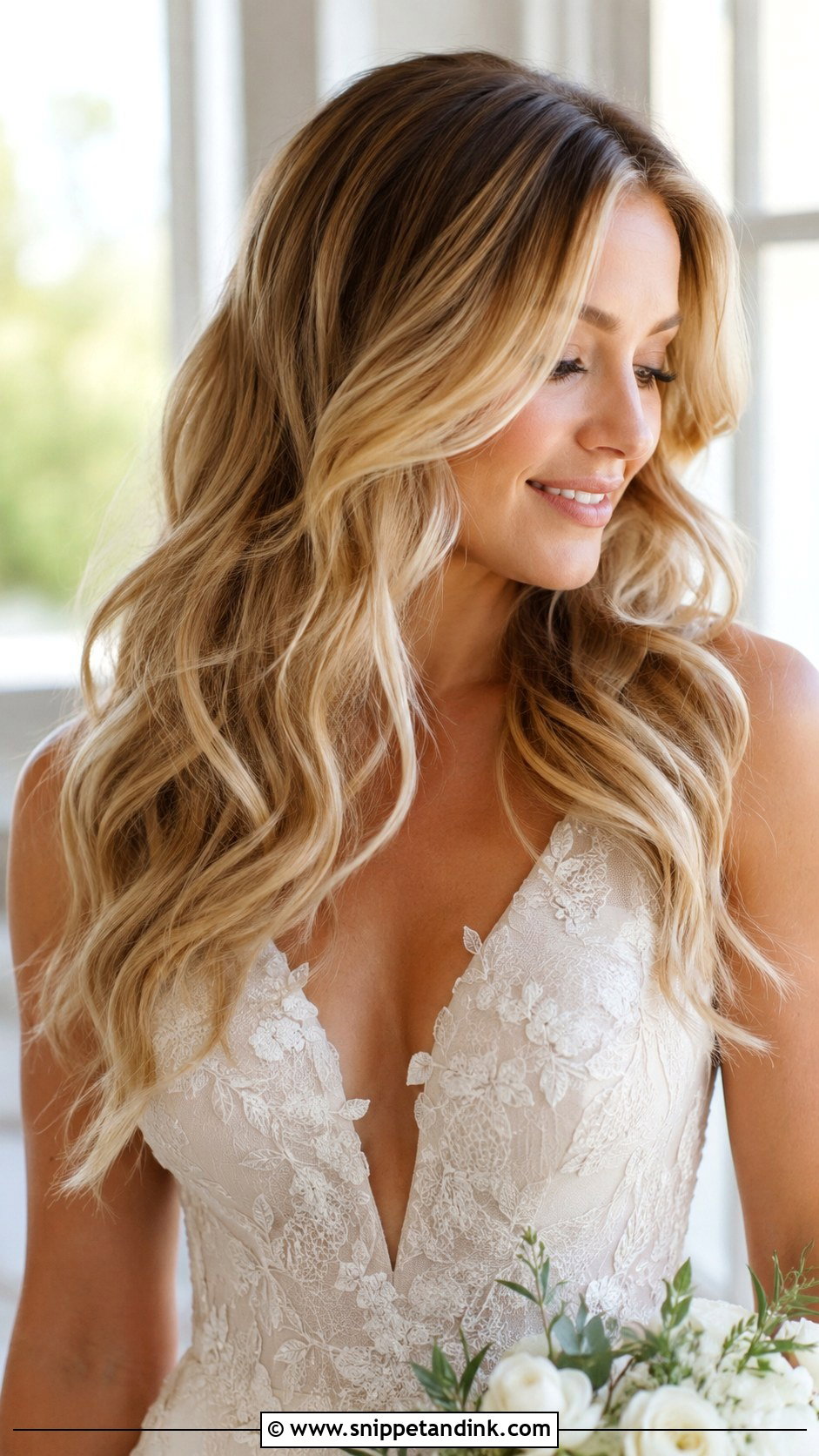
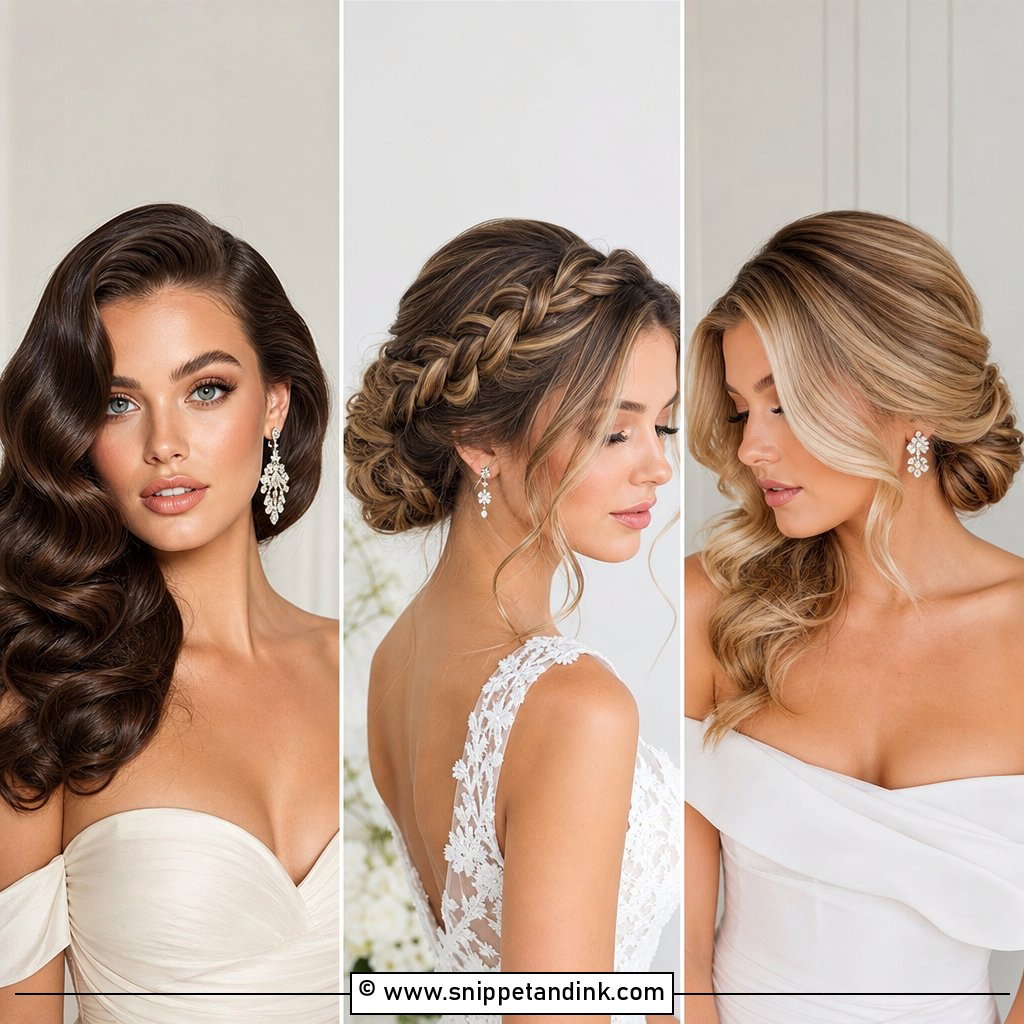
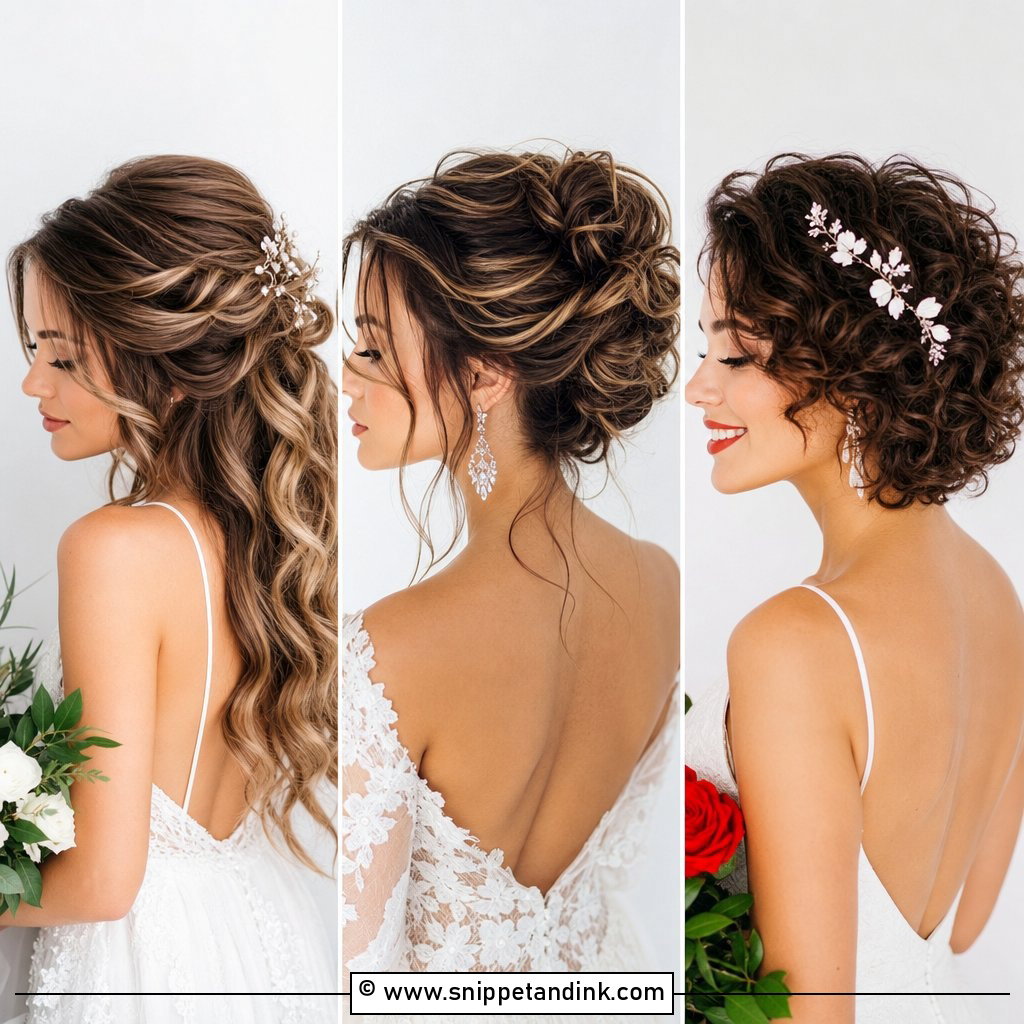
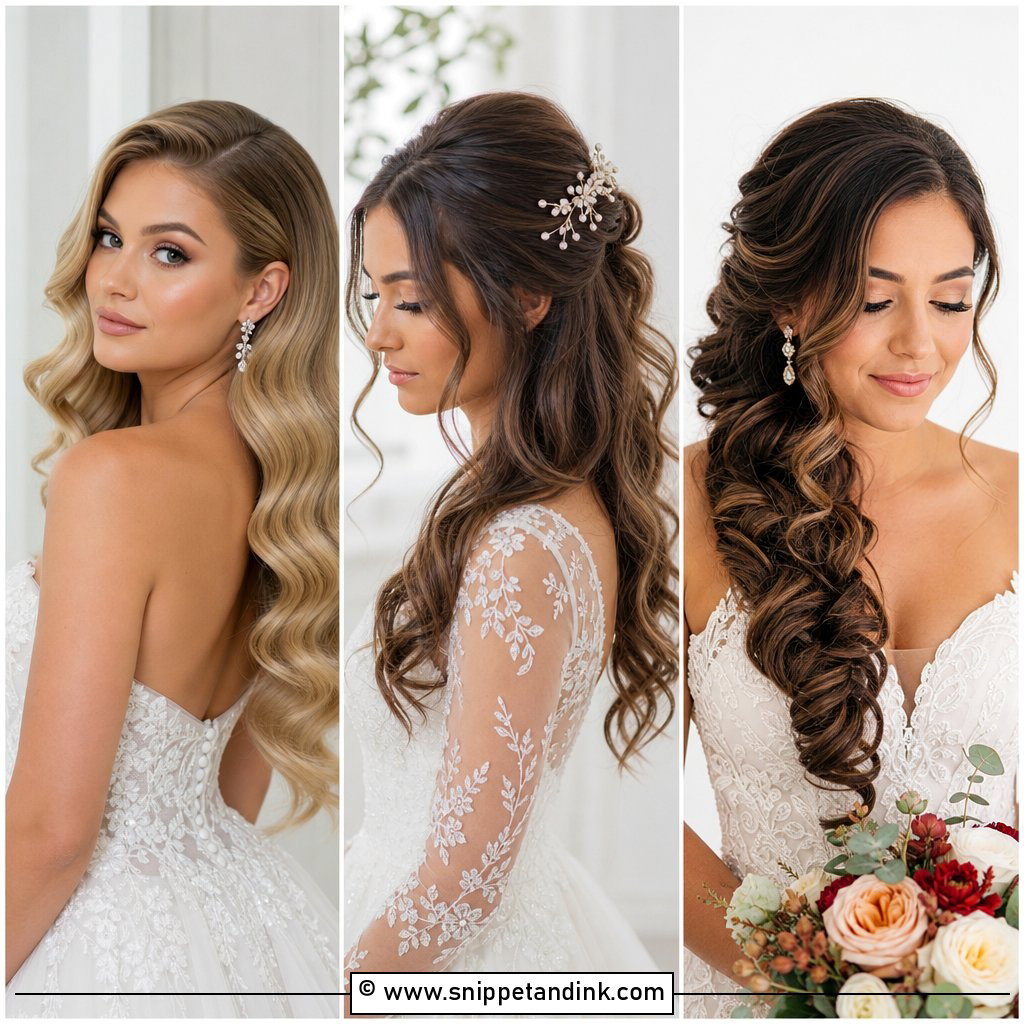
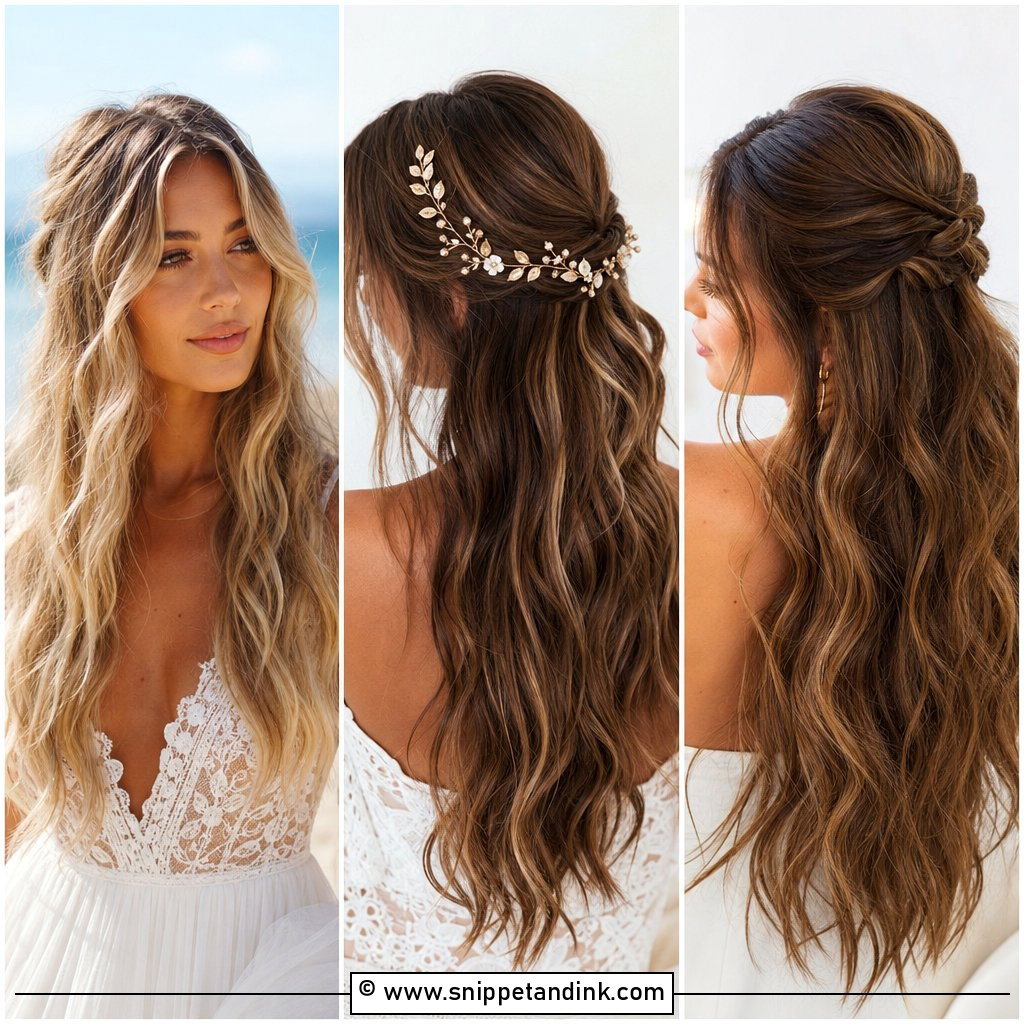
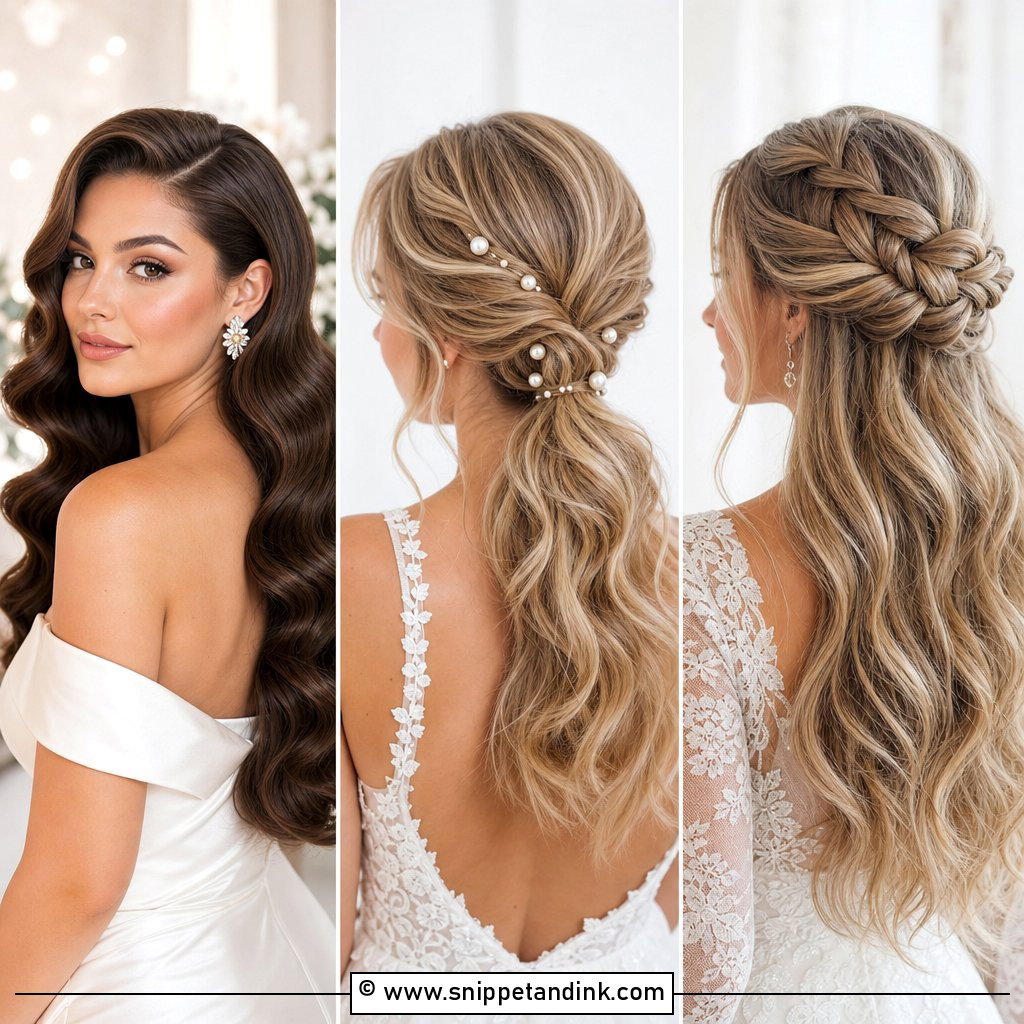
Soft waves are the hair-down look I’m asked for most, and the one that most often drops if the prep is rushed. On medium to long hair they give movement from every angle. I curl in sections no wider than about an inch, let each one cool, and brush through only once everything has set, so the waves read airy but keep their shape into the evening. A little root lift at the crown and smooth front pieces finish it. Strapless, off-the-shoulder, square-neck and lace gowns pair naturally with them, since the waves soften all that open skin.
2. Bridal Hair Down With Hollywood Waves
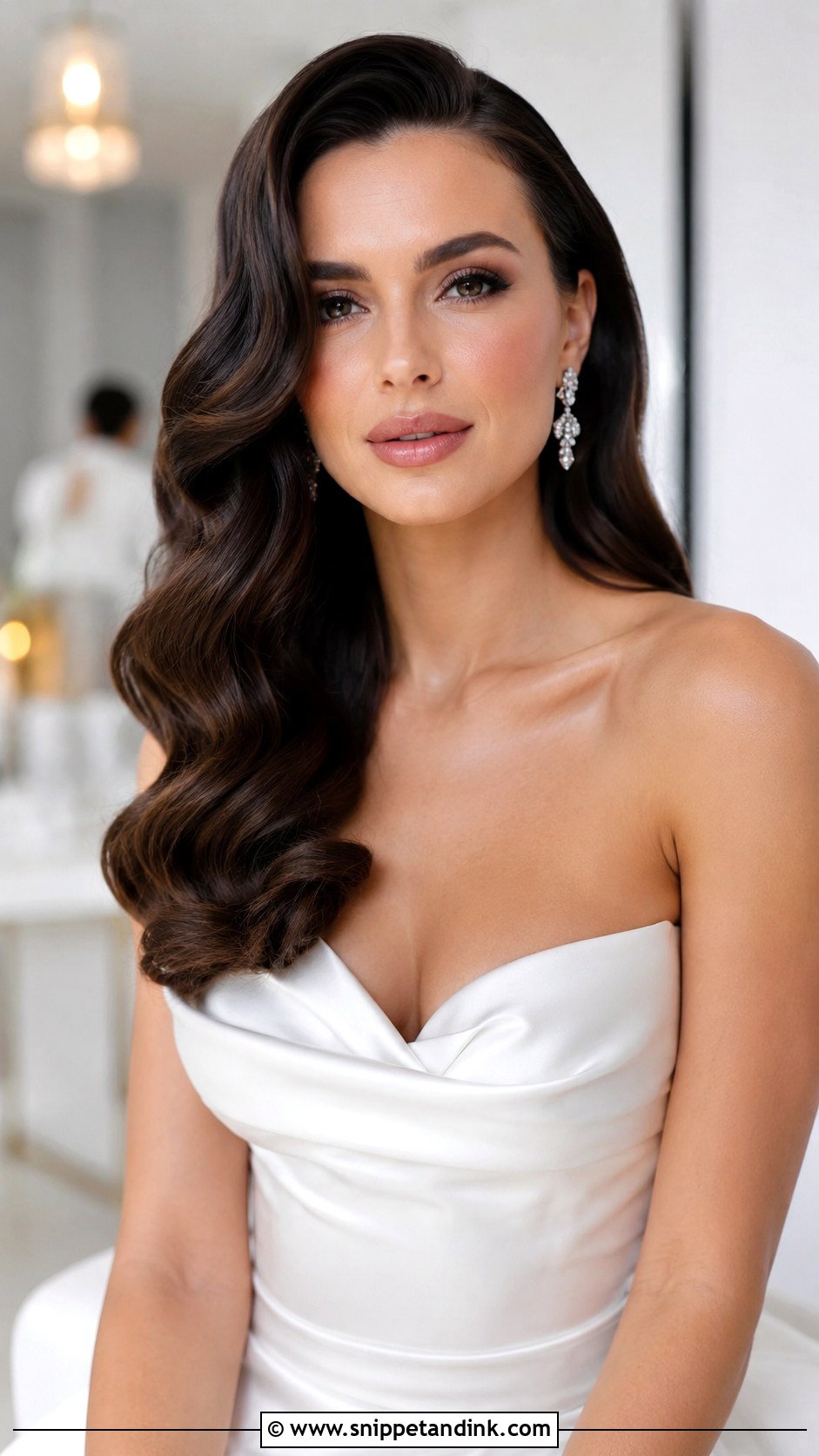
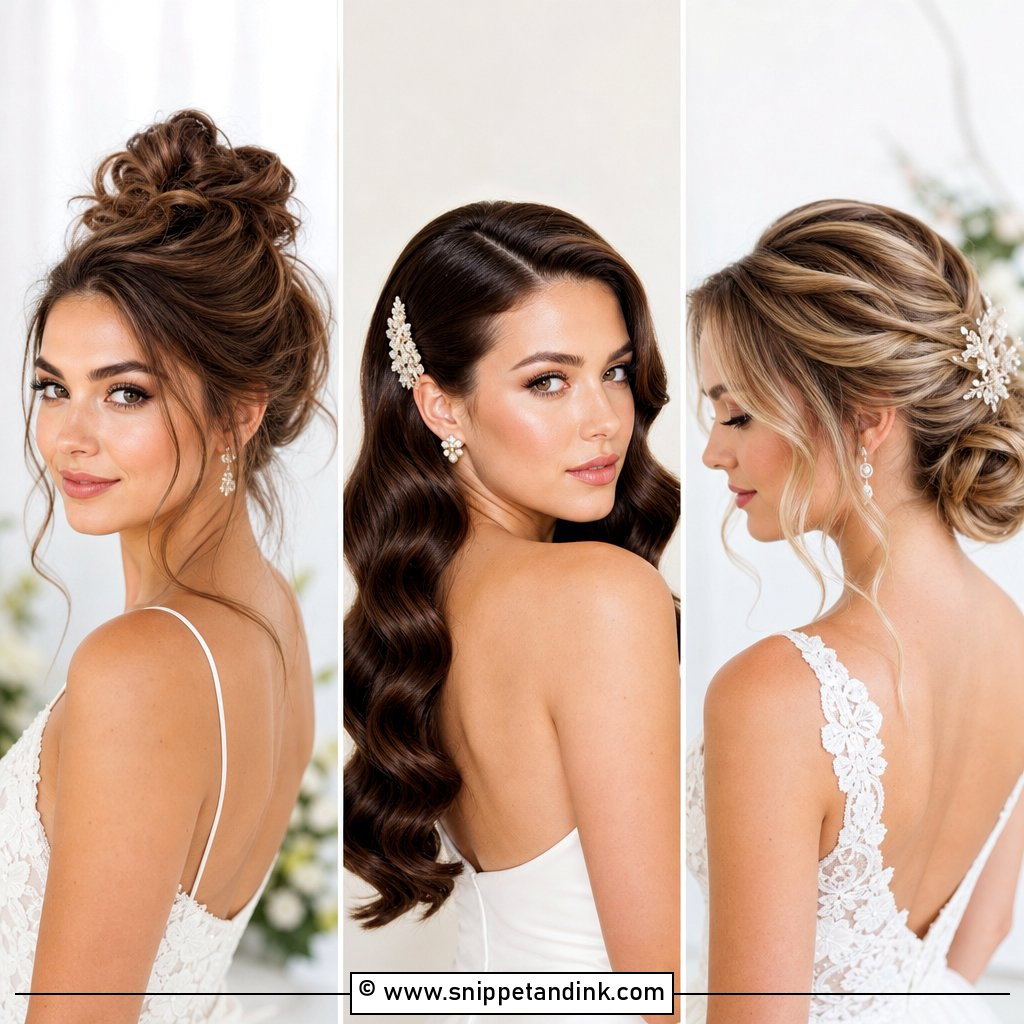
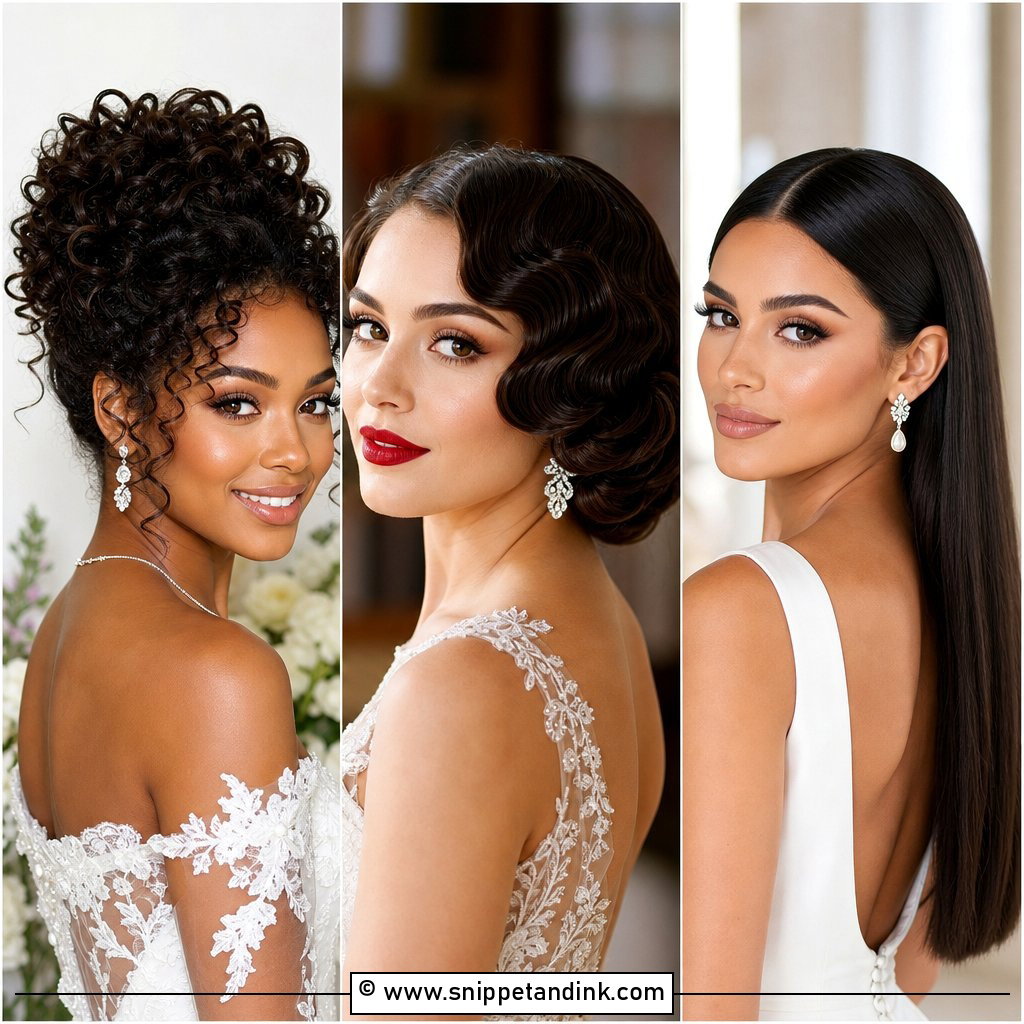
Hollywood waves are glossy, uniform and all brushed in the same direction, so they form one continuous sculpted shape. The pattern needs length to show, which is why it suits long hair, extensions or thick medium-length hair. A deep side part is the classic choice; center reads more current. Satin gowns, fitted dresses and dramatic earrings suit it. My caution is that the brush-out flattens the volume of each curl, so on fine hair I add clip-ins for weight. Finish with shine spray and a flexible hold, never a stiff lacquer.
3. Bridal Hair Down With Loose Curls
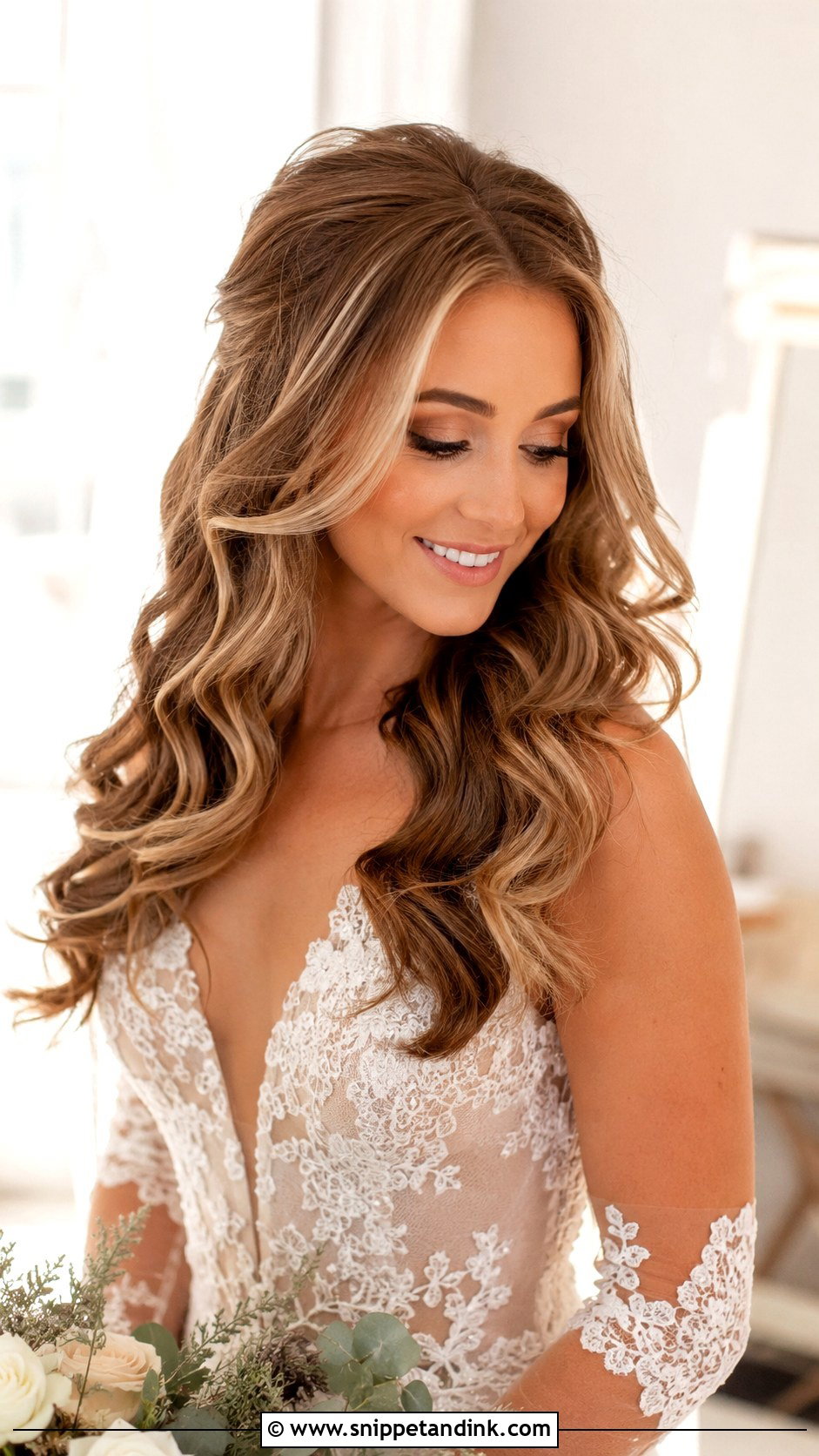
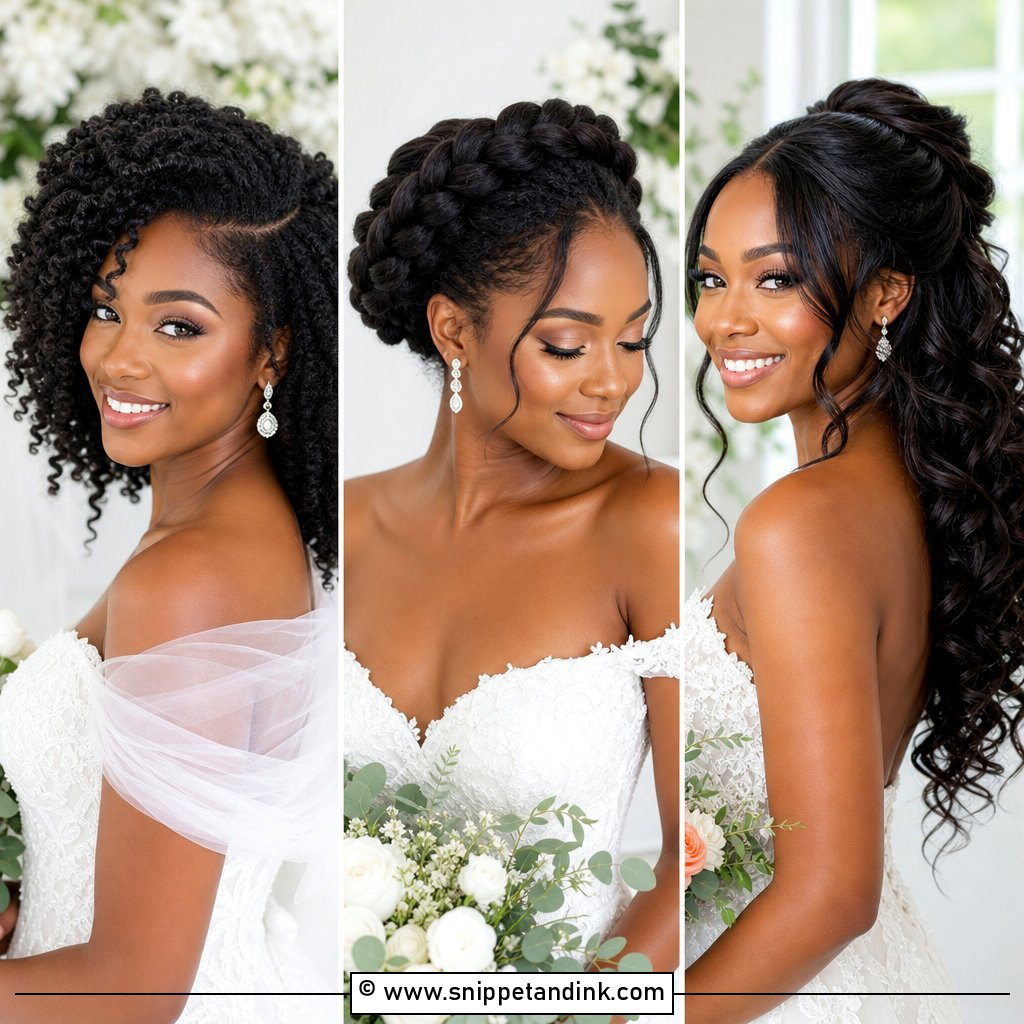
More bounce than a wave, still soft enough to wear all day: that’s where loose curls sit. Fine and layered hair benefit most, since curls add body that waves can’t. I set them with a heat protectant that has some grip, then brush them gently once cool so they blend into each other instead of hanging as separate ringlets. A few shorter pieces at the face soften the overall shape. Veils, tiaras and combs all sit comfortably in curls, and the bends catch light in a way that shows off highlights.
4. Bridal Hair Down With Side Part Waves
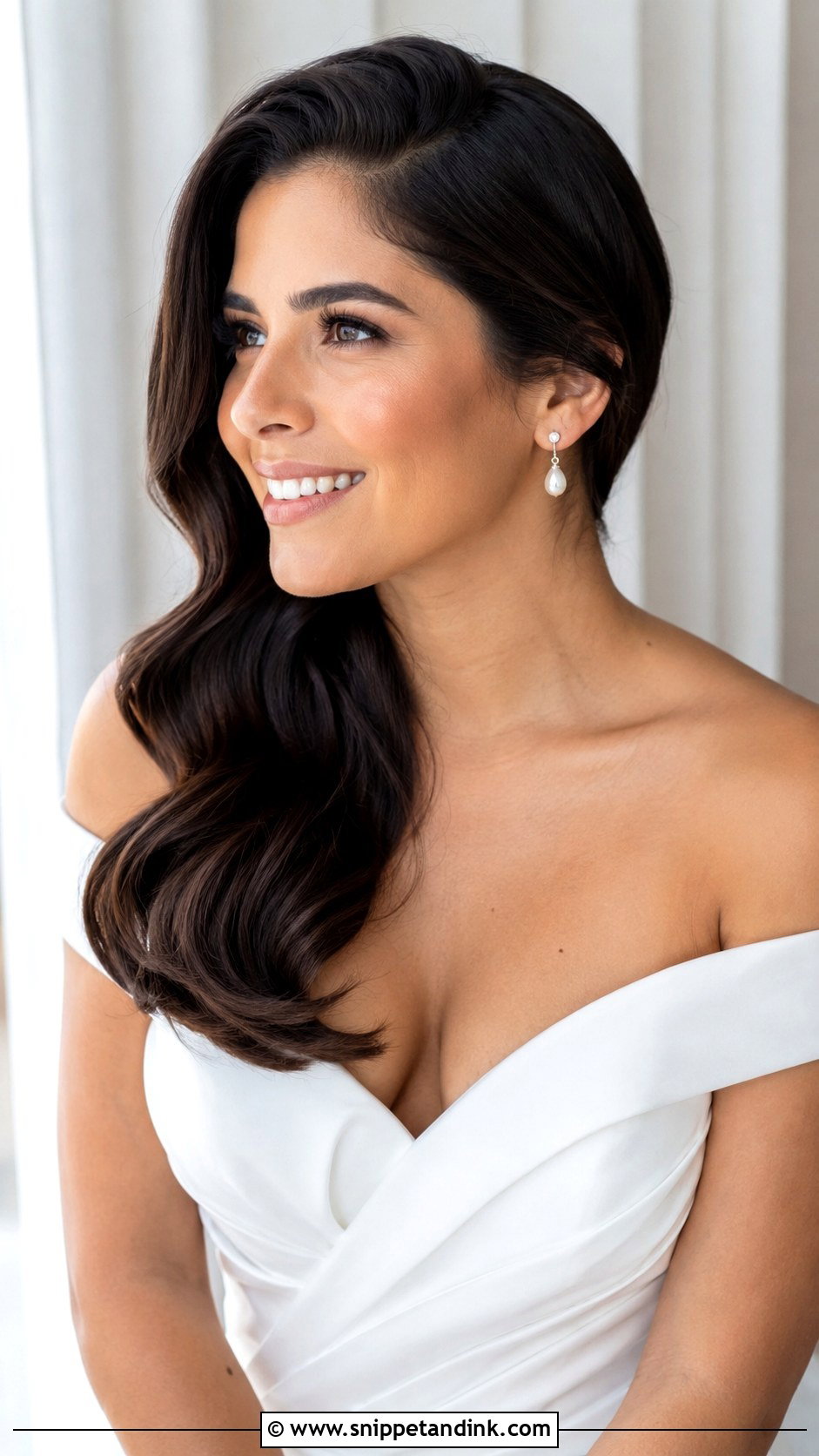
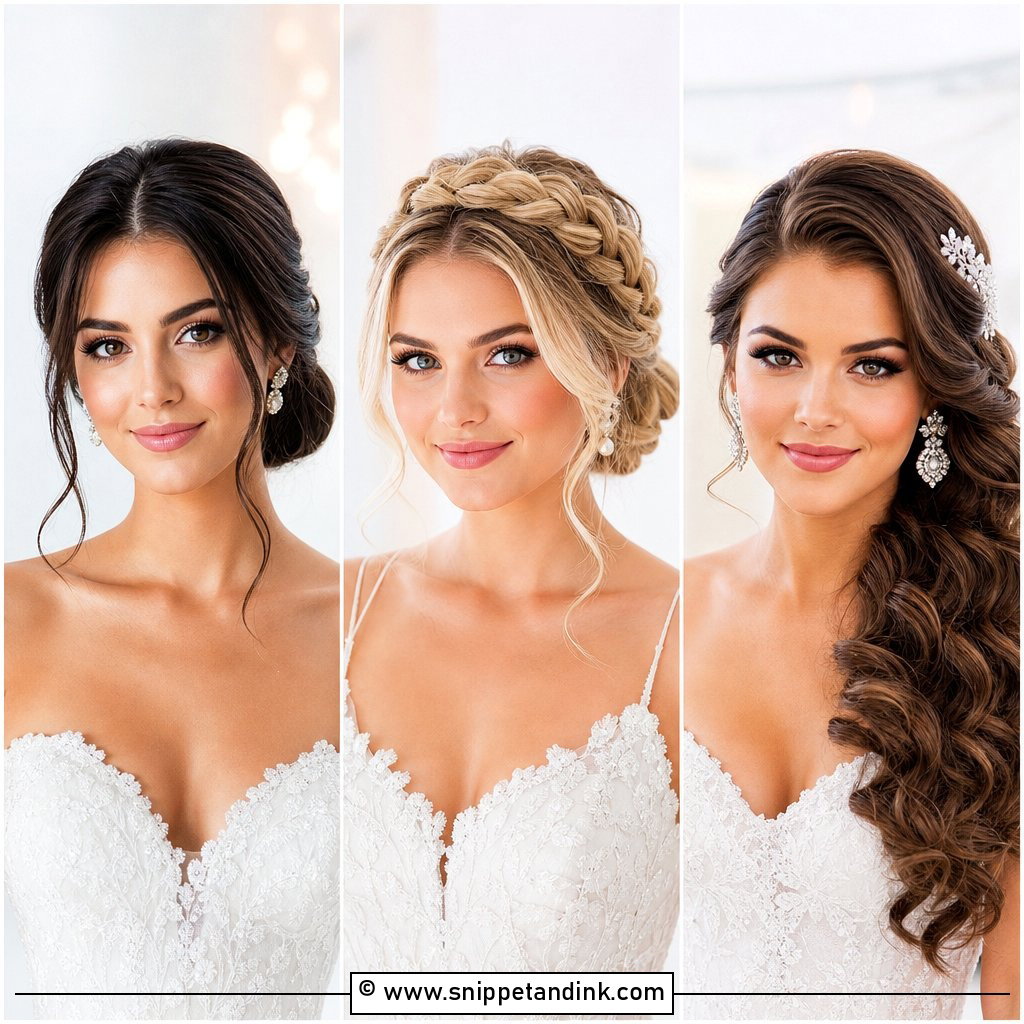
Moving the part to one side instantly lifts the whole look. The heavier side gets volume and frames the face, while the lighter side can tuck behind the ear to show an earring or a worked neckline. The waves themselves can be polished or slightly brushed out. The tucked side is the risk point, since one pin rarely holds behind an ear for a full day. I hide two crossed pins under the hair and then add a pearl clip or crystal comb on top. It sits well with classic veils too.
5. Bridal Hair Down With Middle Part Waves
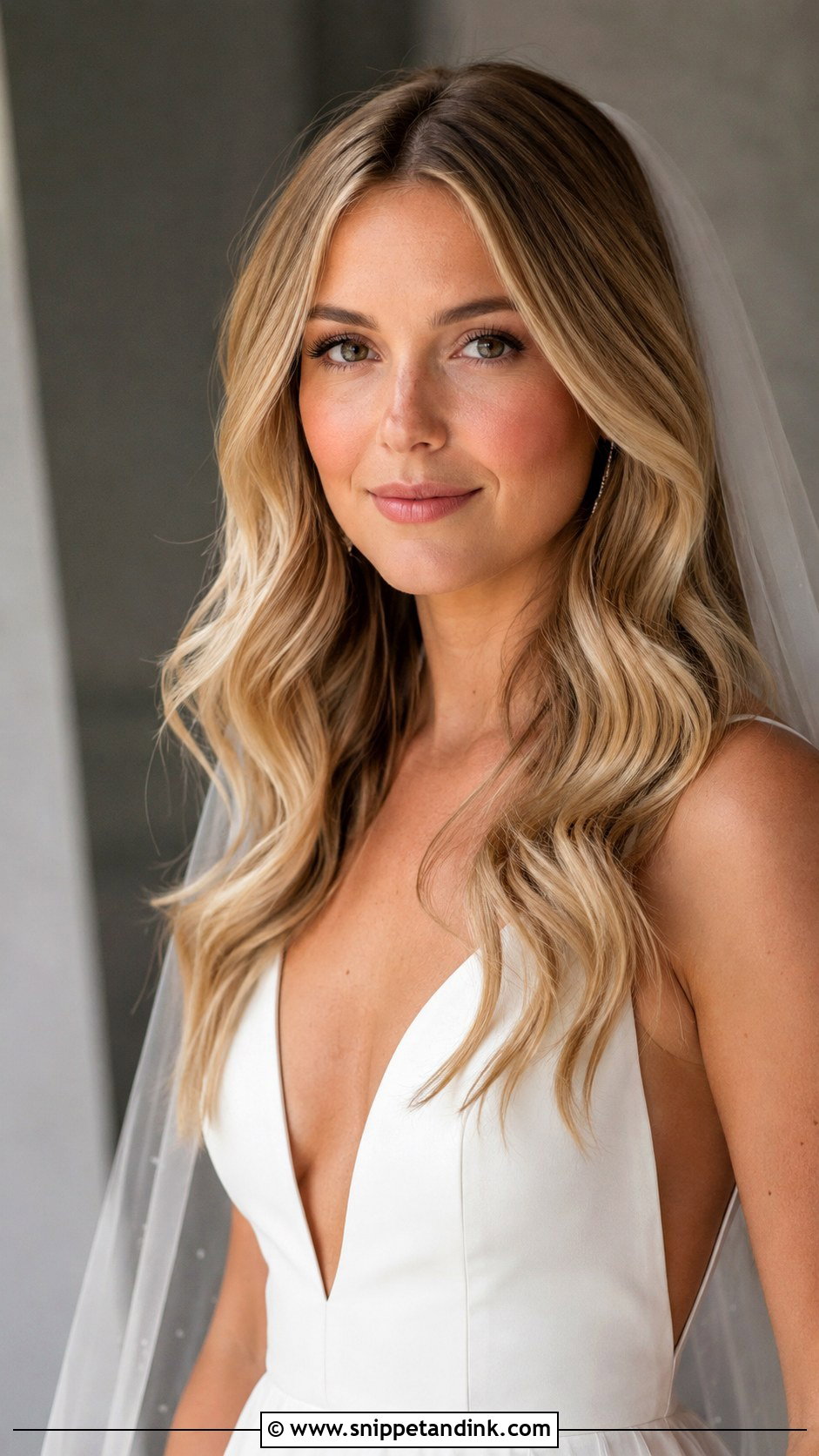
A middle part gives symmetry, and the waves stop that symmetry from looking flat or severe. It’s the most modern of the hair-down options here. Hair with long layers, curtain bangs or face-framing cuts suits it, because the front pieces can open out from the part. Minimalist gowns, modern lace, fitted silhouettes and natural makeup all suit it. I keep the roots smooth, put volume through the mid-lengths and leave loose movement at the ends. A veil placed at the crown or the back sits evenly on a center part.
6. Bridal Hair Down With Curtain Bangs
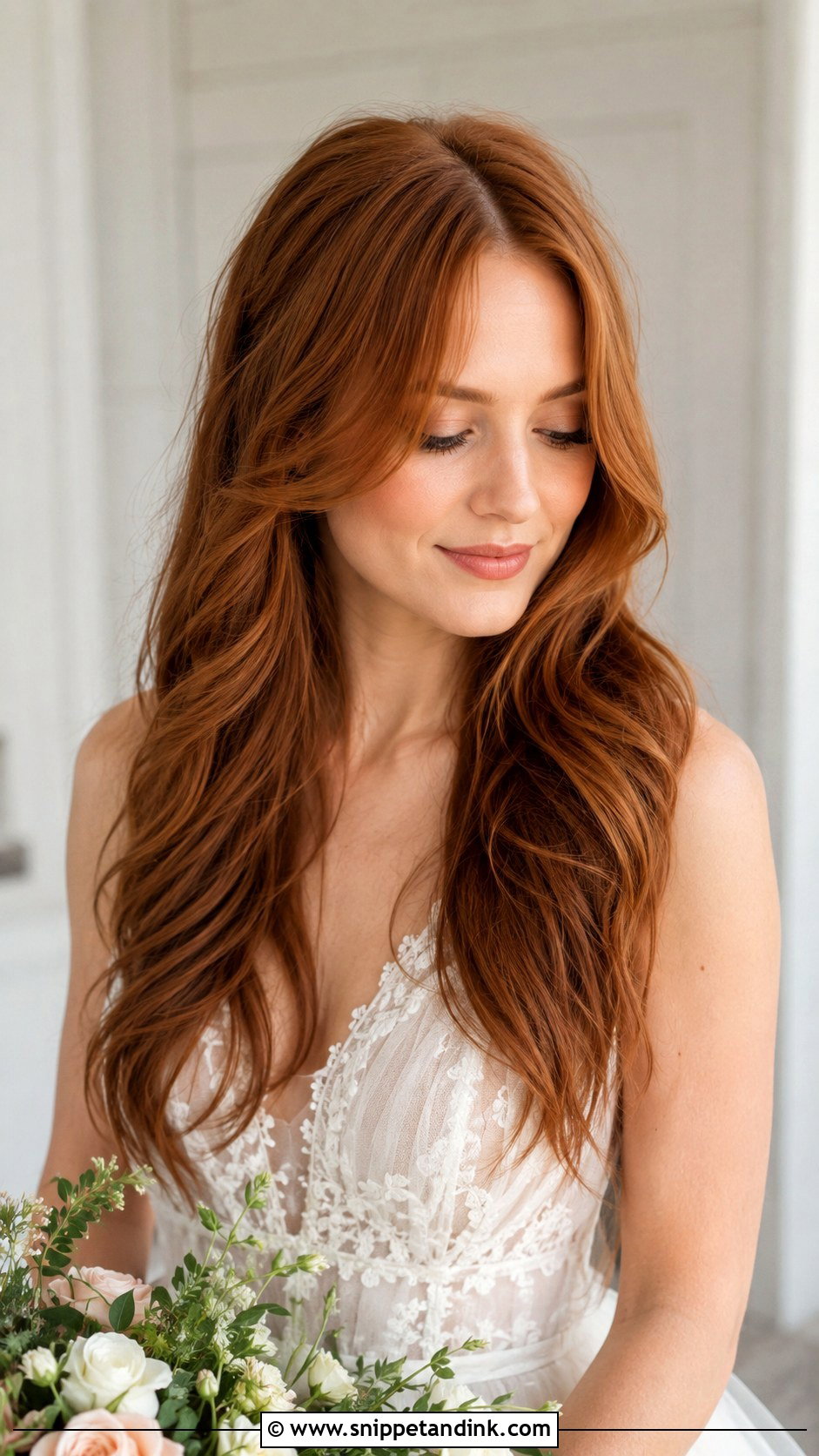
If you already wear a fringe, keep it. Curtain bangs frame the face without hiding it, which matters in close-up portraits. The rest of the hair can be waved, curled or blown smooth. Here’s the honest note: don’t cut curtain bangs for the first time in the month before your wedding. They take a few weeks to train and settle. I blow-dry them with a round brush away from the face, then blend them into the front layers with a light spray so they stay airy.
7. Bridal Hair Down With Pearl Pins
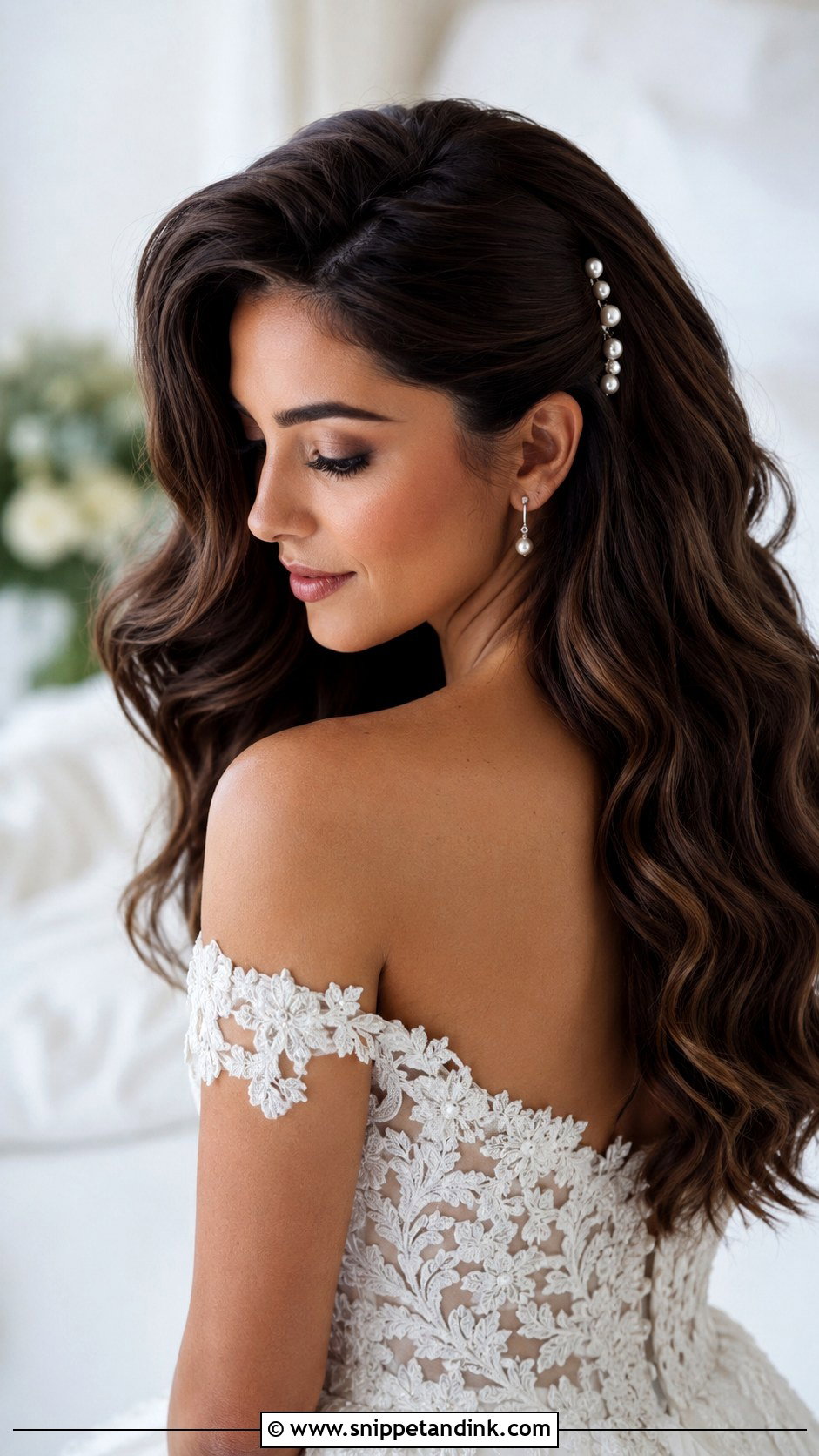
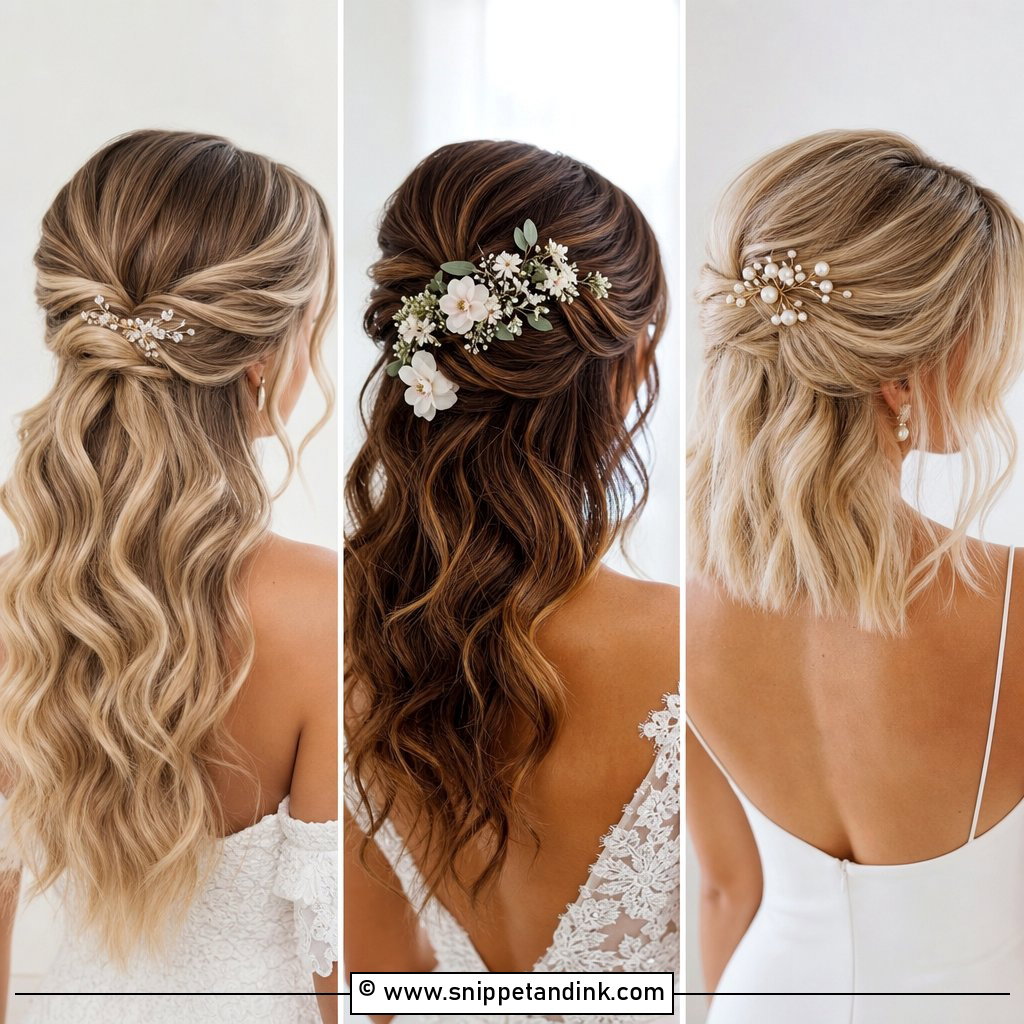
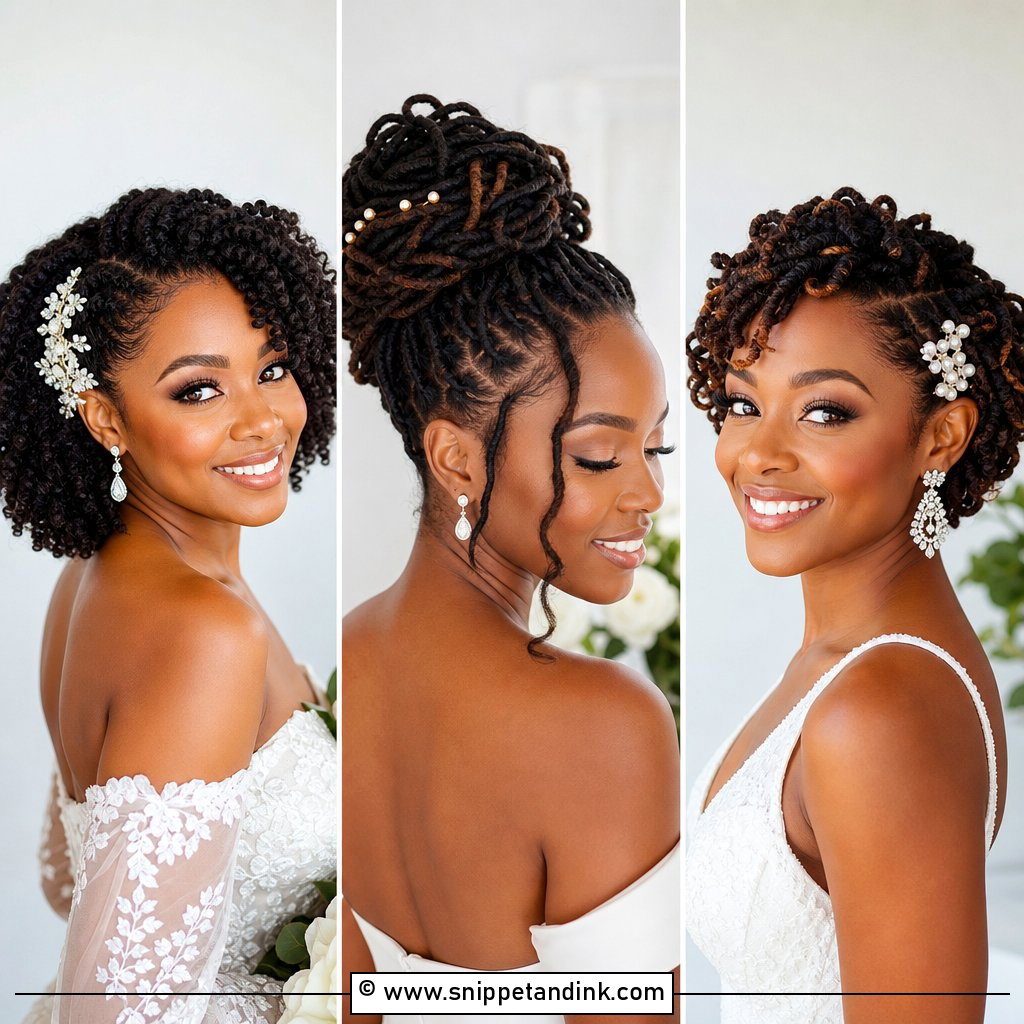
Pearl pins sit beautifully on loose hair without taking over. Scatter them through waves, place a few on one tucked side, or cluster them near the back. They make the most sense when the dress already carries pearls, beading or lace. Placement is what makes them look planned. I set each pin where the hair naturally bends, because a pin on a flat section just sits there, while one on a curve catches light. Pinned crosswise, they also hold a small section back, which is the practical bonus.
8. Bridal Hair Down With Floral Hair Comb
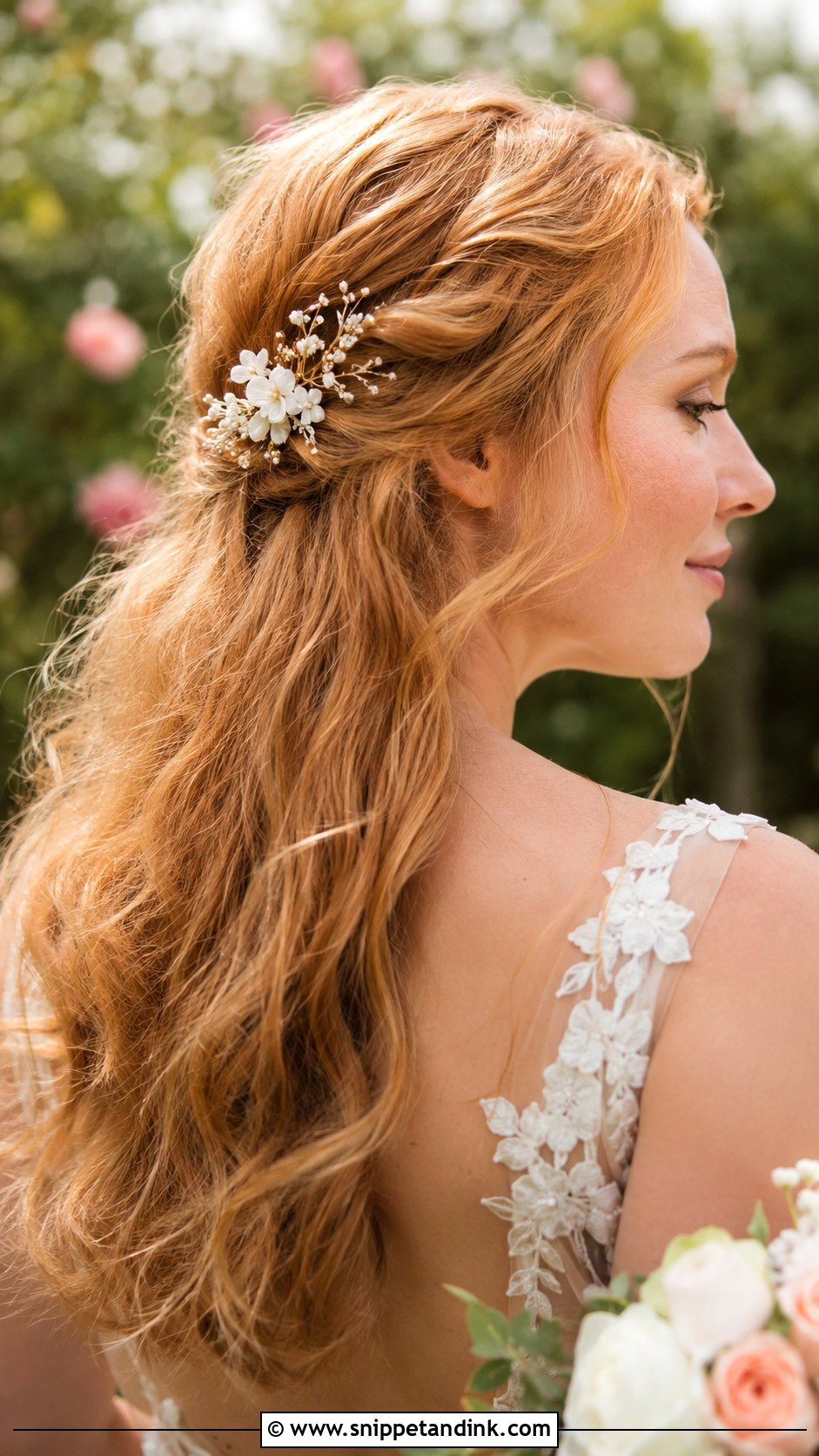
A floral comb gives hair down a garden-party feel. Size and material set the mood: tiny porcelain flowers look delicate, silk blooms look classic, fresh flowers look relaxed. Outdoor, spring and beach weddings suit it, and so do relaxed bridal looks. Keep the hair soft so the comb looks like part of it. Fresh flowers against a warm head can wilt within hours; if you want real blooms, ask your florist for hardy varieties wired for hair. I place the comb just off-center or toward the back, where it doesn’t fight the veil.
9. Bridal Hair Down With Veil
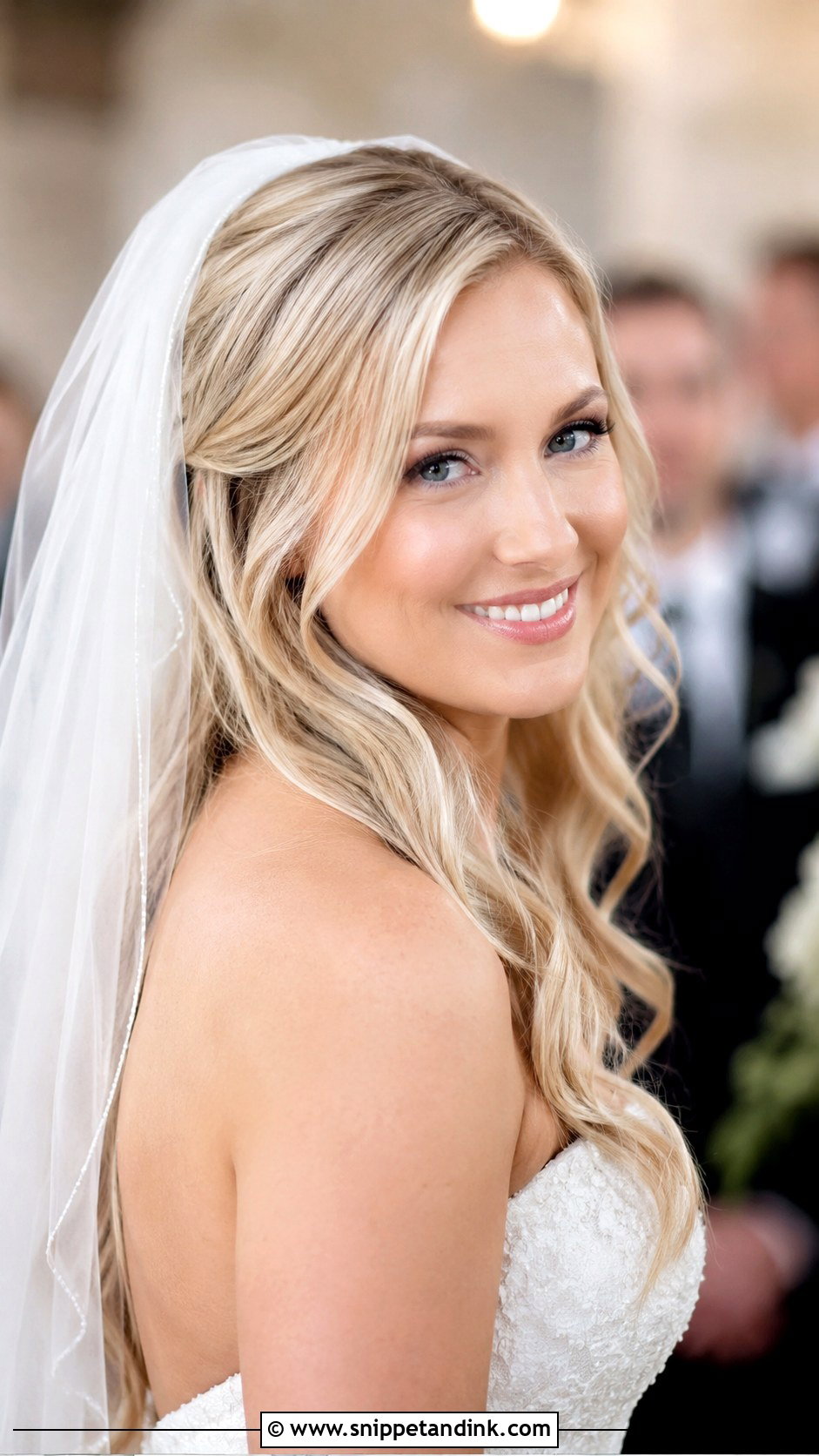
A veil doesn’t force you into an updo. It needs a base. I usually create one by teasing a small hidden section at the crown or just below it and crossing pins through it, then sliding the veil comb into that. Soft waves, polished curls or a smooth blowout all work underneath, but freshly washed silky hair gives the comb nothing to grip. Bring the actual veil to your trial. Its weight changes how the hair falls, and a long, heavy veil can slowly pull the top section flat.
10. Bridal Hair Down With Natural Curls
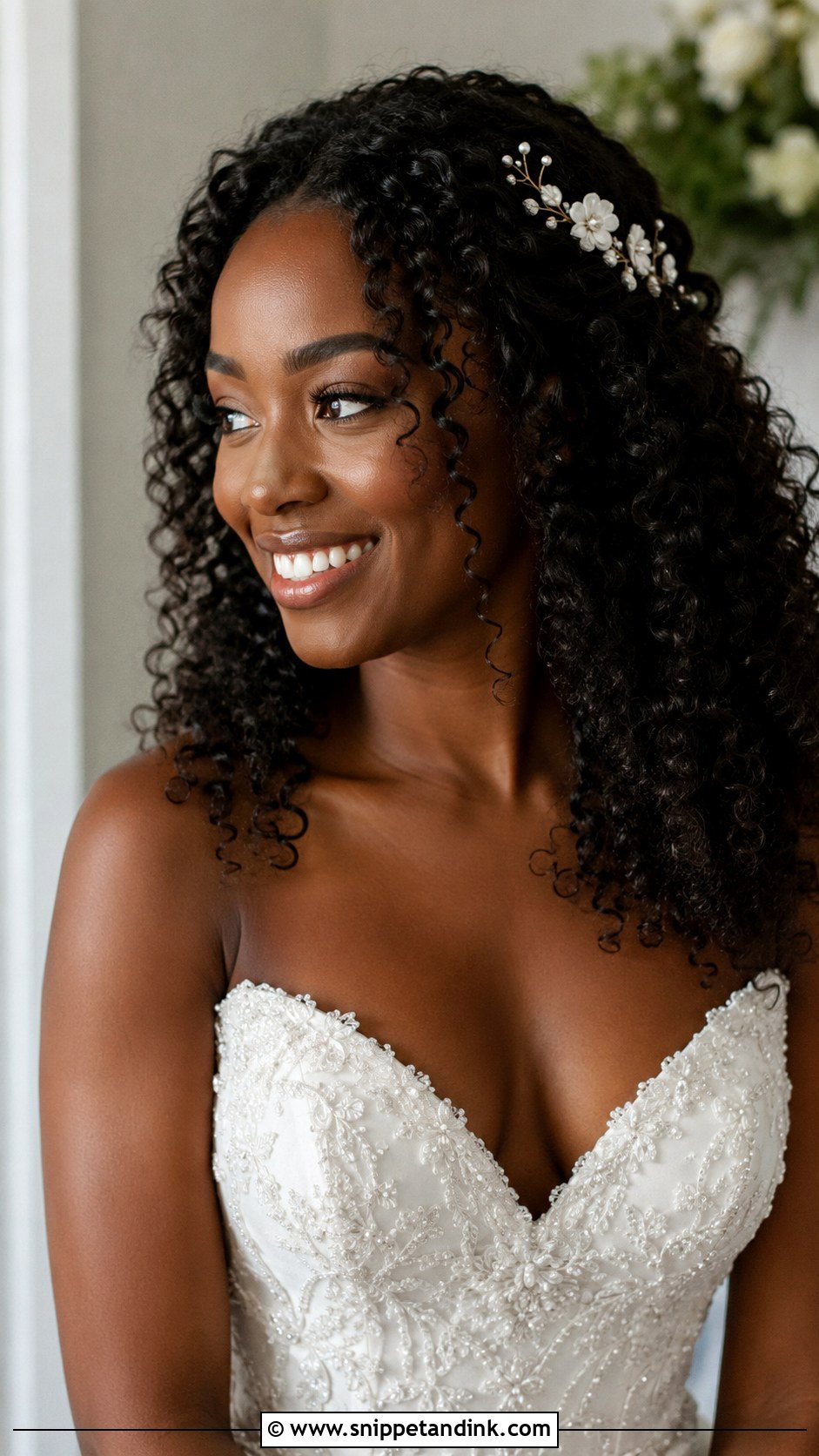
Natural curls are some of my favorite hair to style for a wedding, because the texture is already the feature. The goal is definition without frizz: curls that look full but keep their clumps. That work starts with hydration in the days before. On the day, a curl cream and gel, diffusing on low heat and reshaping a few curls with a wand where the pattern is uneven usually give a balanced silhouette. Face-framing curls can be pinned lightly or left free. Floral pieces, pearl pins, veils and statement earrings all sit easily in curly hair.
11. Bridal Hair Down With Long Layers
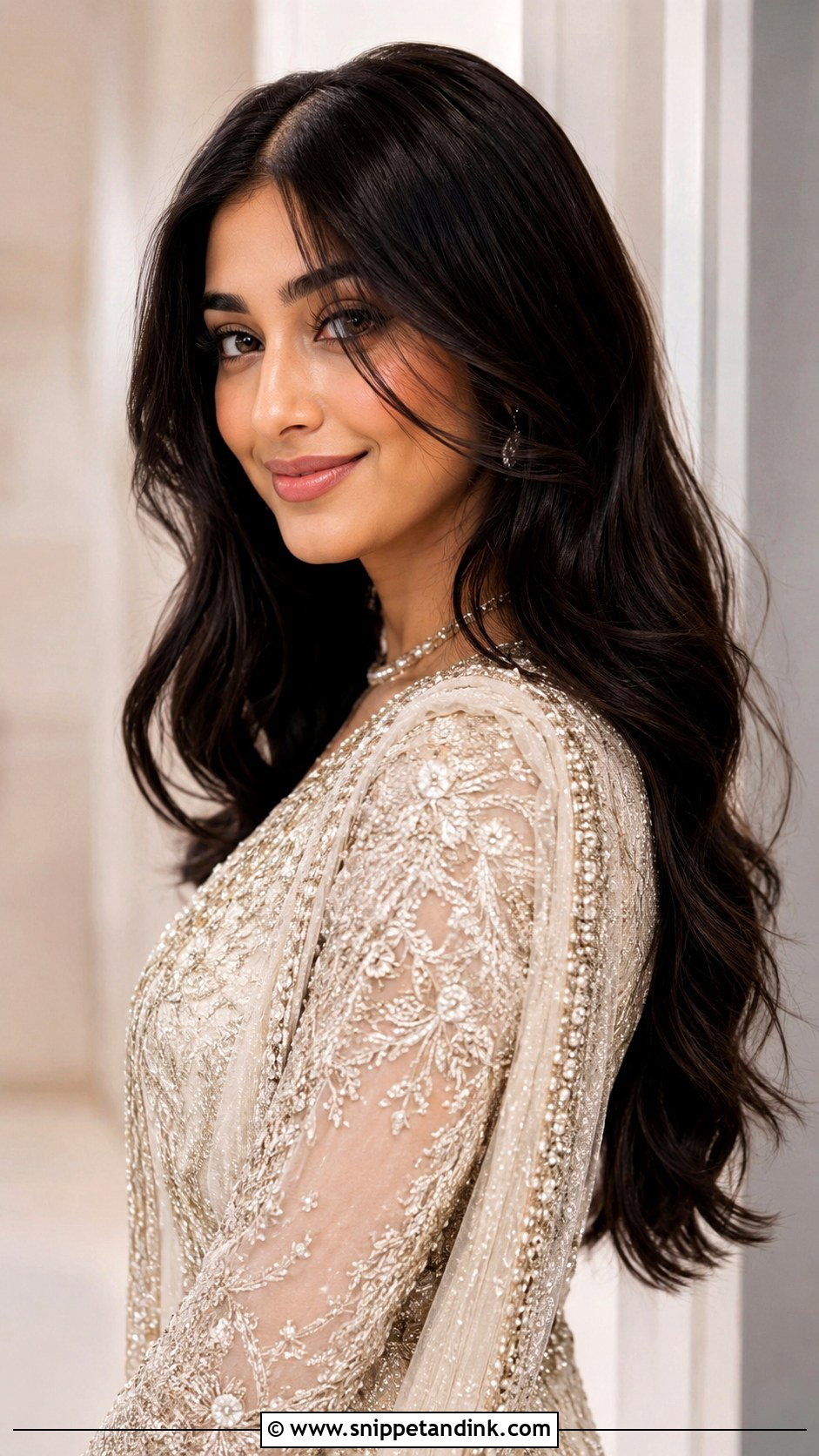
Long hair with no layers can look heavy in photos, especially once curls start to relax and the weight drags them straight. Layers let waves and curls stack, adding shape around the face and movement at the ends. Timing the cut matters. I’d get layers refreshed four to six weeks before, then only a light dusting closer to the date, so nothing looks freshly chopped. Ask for blended layers that keep your length. Layers also hide the edges of clip-in extensions.
12. Bridal Hair Down With Bouncy Blowout
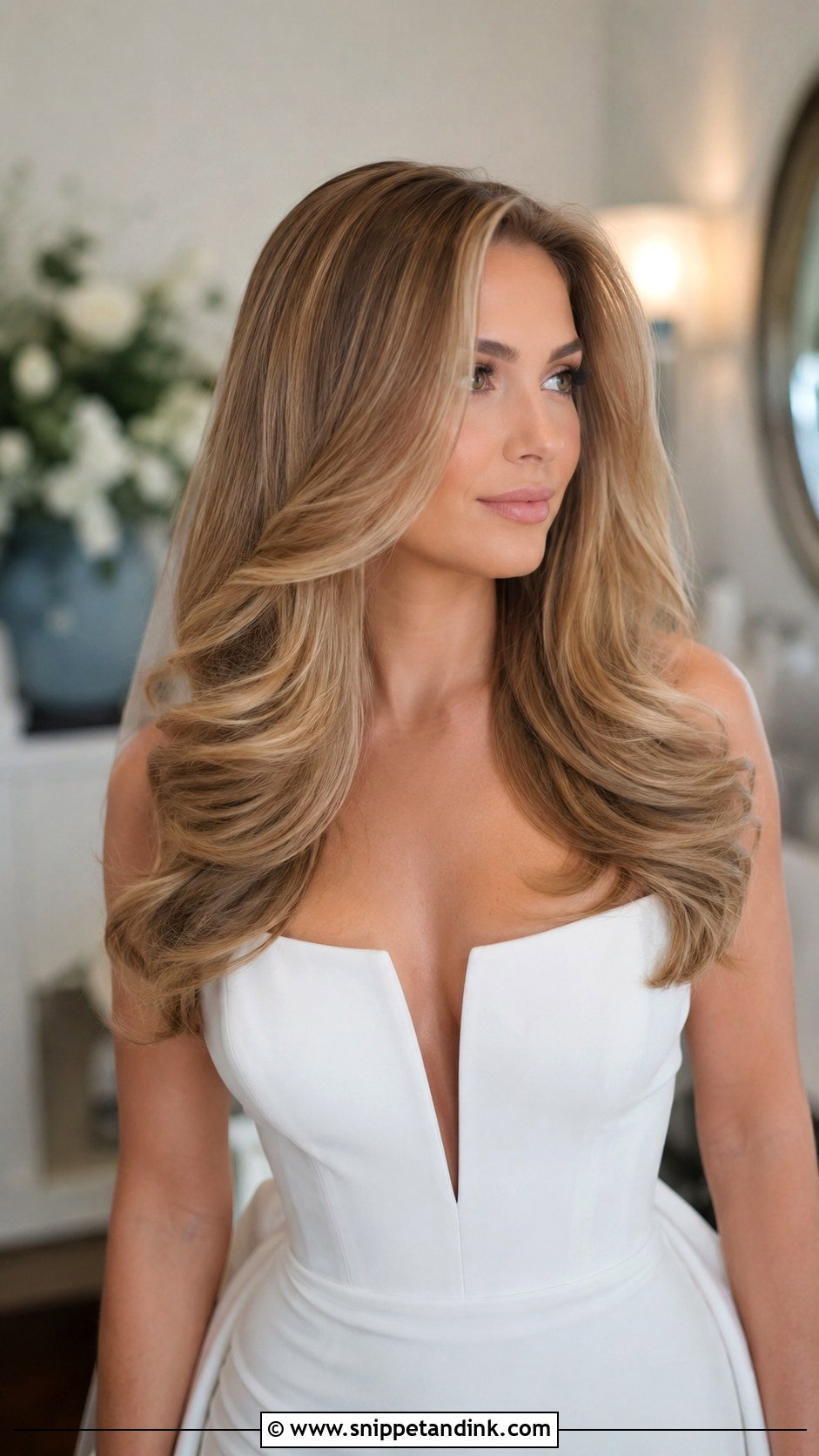
A bouncy blowout suits brides who love polished hair but find curls too formal. Smooth roots, lifted volume and rounded ends that swing when you walk. It works on medium-length hair, long layers and fine hair that needs fullness, and pairs well with modern weddings and simple gowns. Staying power is the issue with any blowout. I set the hair in large Velcro or heated rollers while it cools, then brush it out, which keeps the bounce for hours rather than minutes. Veil, headband or nothing at all.
13. Bridal Hair Down With Beach Waves
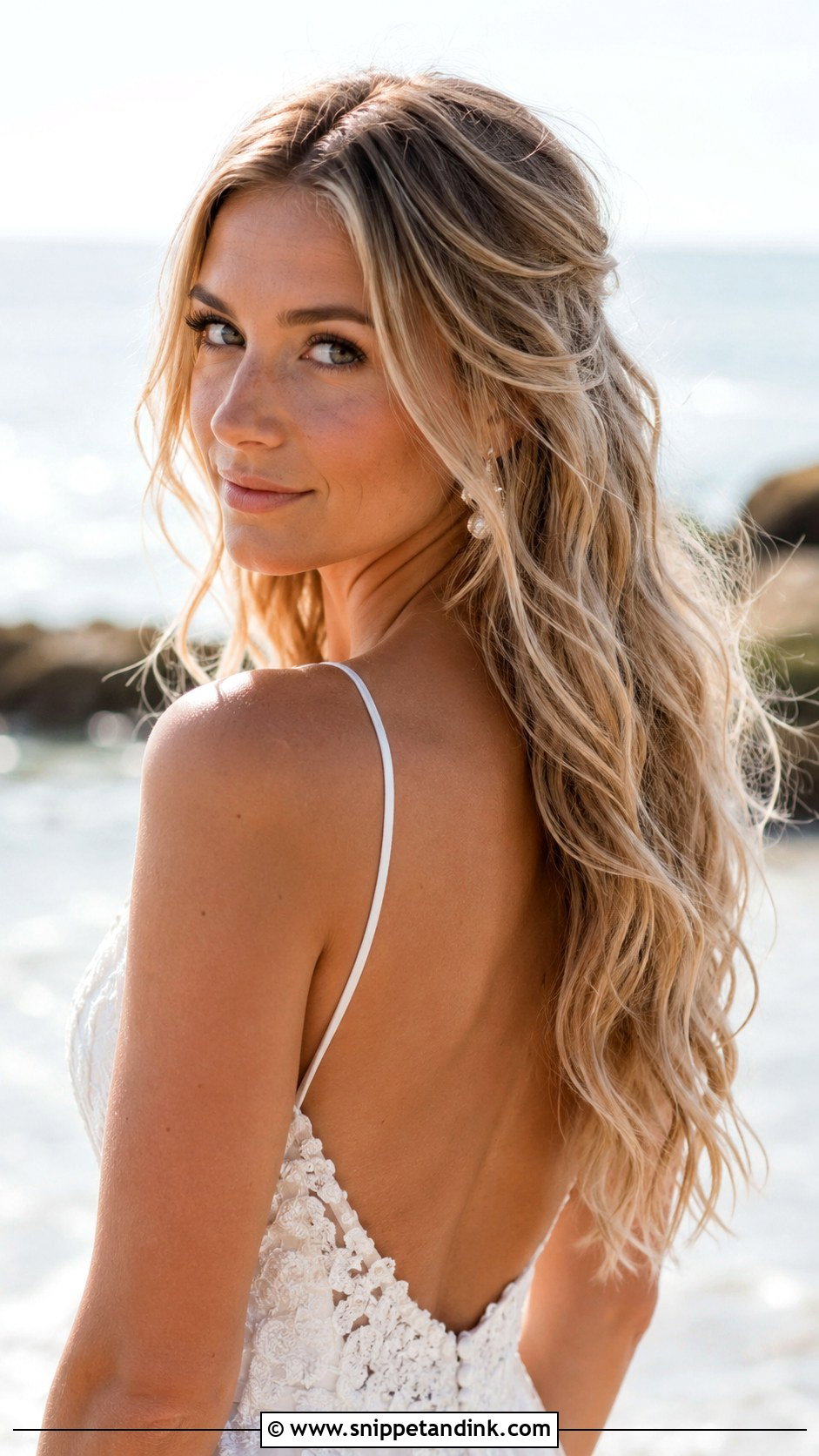
Beach waves look relaxed, but the bridal version shouldn’t look dry or messy. Destination weddings, outdoor ceremonies and boho or minimalist dresses suit them. I use a flat iron or a wand to create loose, irregular bends with smooth shine, and I skip the salt spray most people associate with the look, since salt can feel crunchy after a few hours. Balayage and highlights show off well in the pattern. A small braid or a tucked side adds a wedding detail. Near the water, use humidity-resistant products.
14. Bridal Hair Down With Old Money Waves
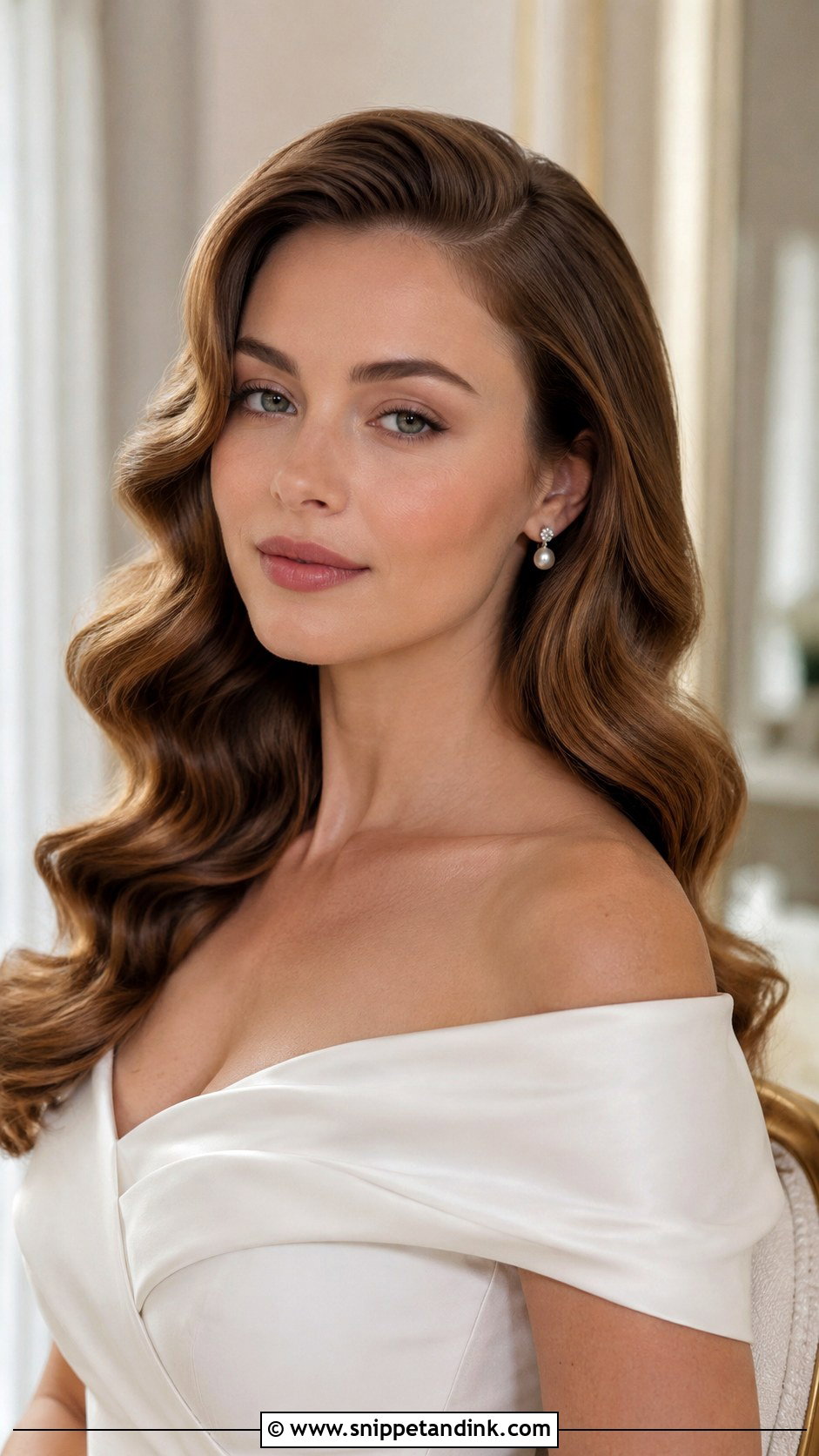
Smooth roots, high shine and gentle bends through the lengths: Old money waves are understated, less dramatic than vintage Hollywood waves but more refined than casual waves. They look expensive in the simplest way. Silk gowns, clean necklines, pearl earrings and classic makeup suit them. A center part feels modern, a soft side part feels more classic. This look depends entirely on hair condition, because there’s no volume to hide behind. A gloss treatment and a trim a few weeks before do more for it than any styling product on the day.
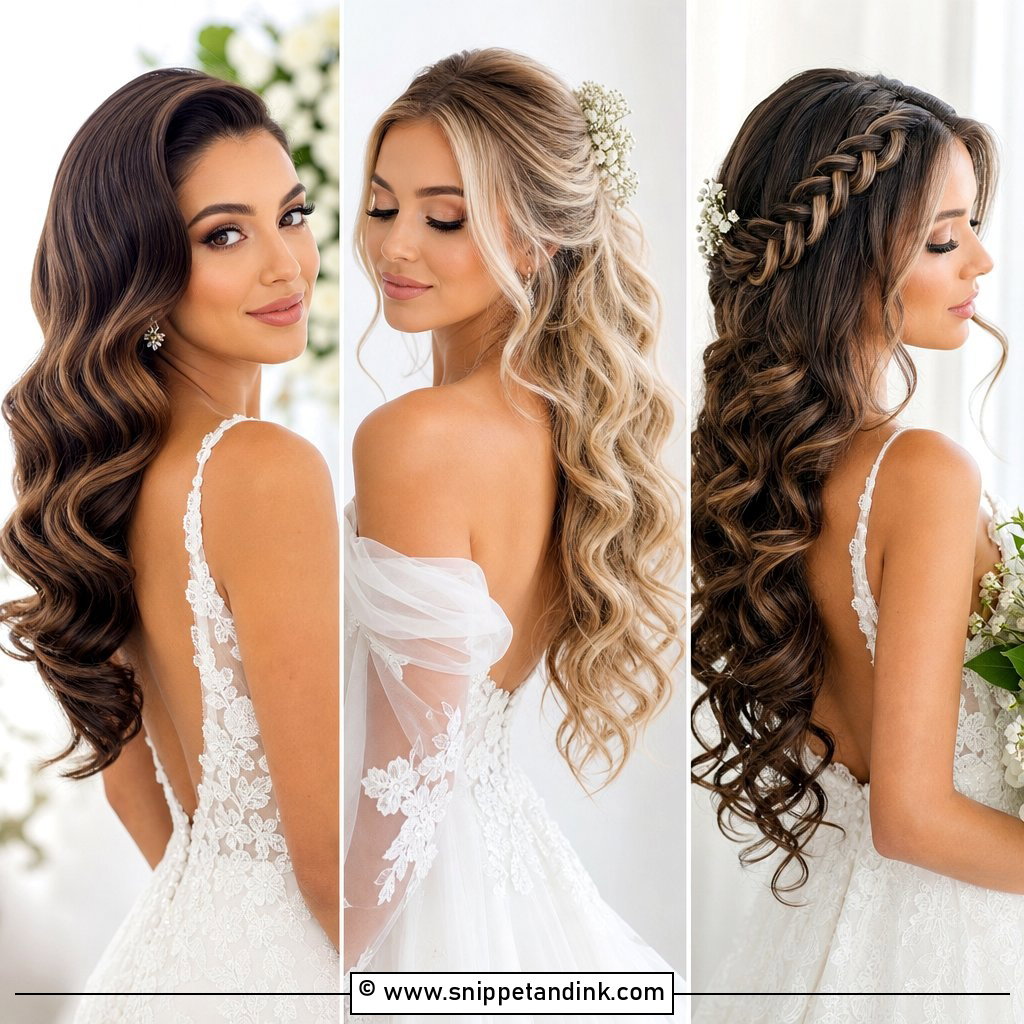
15. Bridal Hair Down With Braided Crown
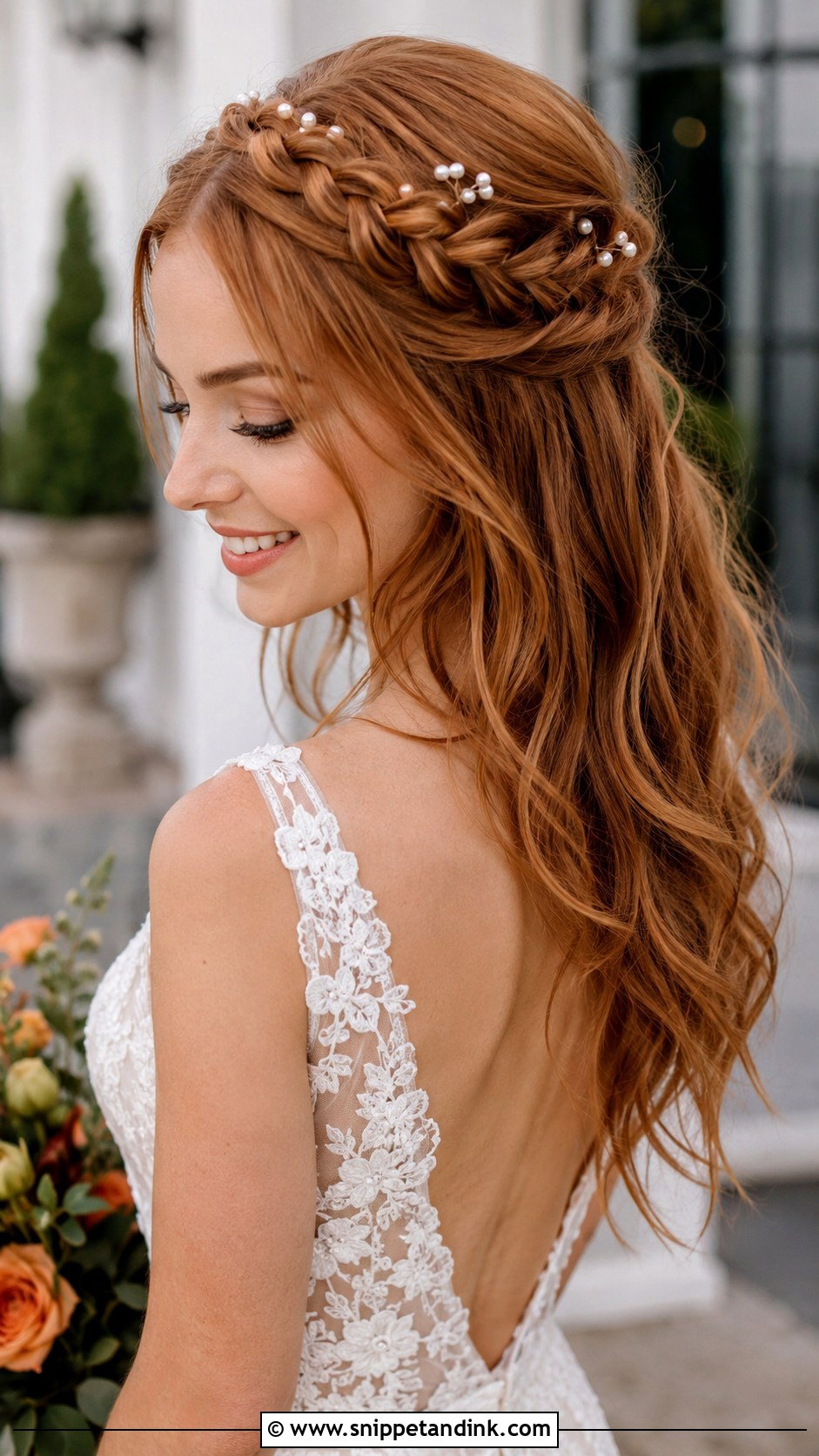
A braided crown with the rest of the hair loose gives you a half-up feeling without hiding your length. The braid can sit across the top, wrap slightly around the sides, or blend into the waves at the back. It keeps front pieces controlled through wind and hugs. Garden weddings, rustic venues and outdoor ceremonies suit it, as do soft lace and floral dresses. Loosen the braid after it’s pinned. A tight plait looks childish against loose bridal waves. Tiny pins, flowers or pearls add detail if you want it.
A Two-Minute Switch for the Dance Floor
A lot of brides who wear their hair down for the ceremony are glad of an easy change later. The trick is deciding on that change at your trial, not in a toilet cubicle at 10pm.
Which change suits which style
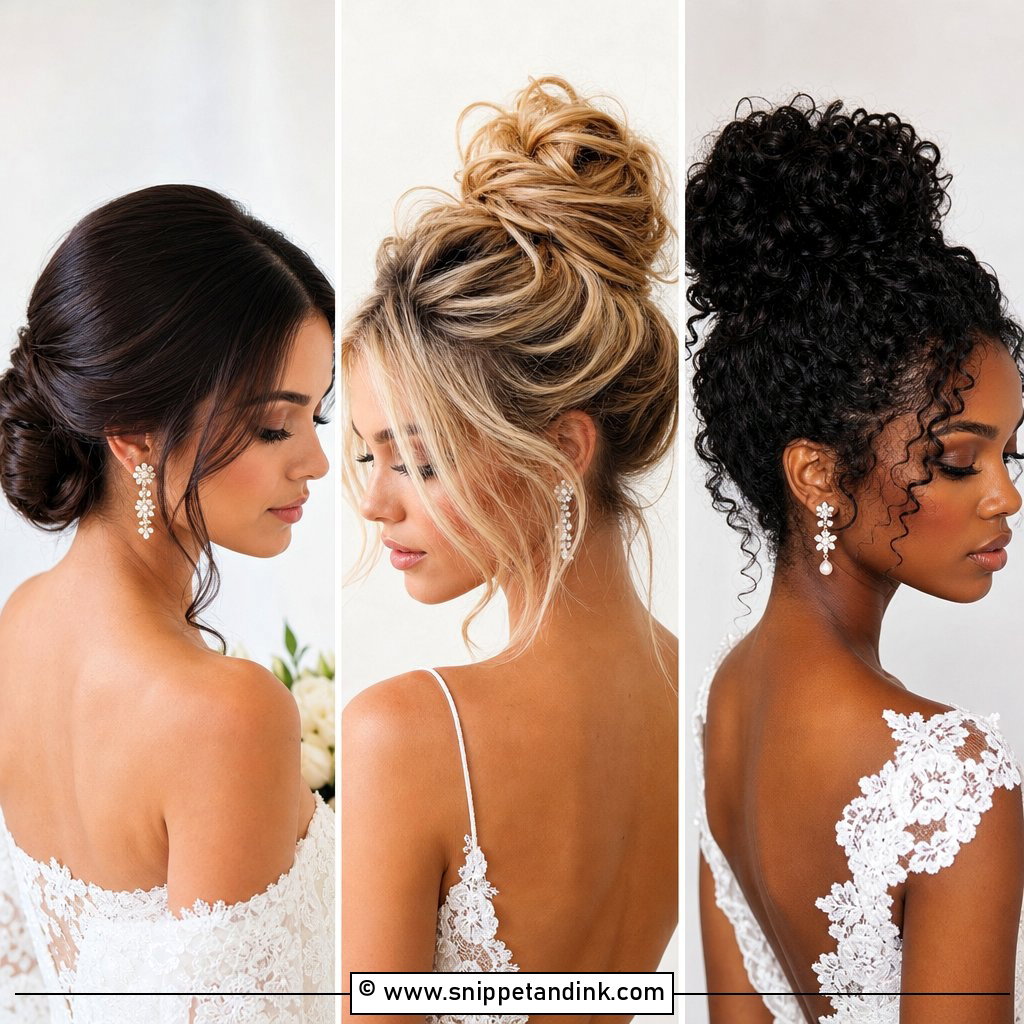
Waves and blowouts gather neatly into a low ponytail tied with a ribbon, which looks deliberate in evening photos. Loose curls and beach waves twist easily into a soft low bun held by four or five pins. Natural curls often look best lifted into a high pineapple-style puff, which also gets them off a hot neck. At the trial I show the move once, and I’d suggest you film it on your phone.
What goes in the bag
Give a bridesmaid or your partner a small pouch: a hair tie in your colour, a length of ribbon that matches the dress, a handful of pins, and a neutral claw clip if your hair is heavy. That’s genuinely all you need.
When to do it
Most people switch after the first dance and the cake, once the posed photos are done. If your photographer is staying for sunset portraits later, check with them first, or do those shots with hair down and change straight after.
Plan the Hold Before You Plan the Accessories
Hair down can be soft, polished, modern or completely natural depending on the styling. The right version is the one that looks good in photos and still feels comfortable for your hair type, venue, dress and personality at hour eight. Bring a few saved looks to your stylist and talk about hold, weather, veil placement, accessories and whether extensions are needed. At a trial, I change small things, like curl size, part placement or where a pin sits, and those small changes are often what make the difference. When the style feels secure, you stop touching it and start enjoying the day.
You'll Like These Ideas:


Leave a Reply