
An updo does a job that loose hair can’t: it keeps your face and neckline clear from the moment you start walking down the aisle until the last song, and it survives hugs, wind and a veil being pulled out. The catch is that every updo is built on a different foundation. A sleek chignon wants smooth, heavy hair; a tousled bun needs grit and some texture to hold. Below are twenty I set regularly, with what each one needs from your hair, how it wears over a long day and where it tends to struggle.
Clean Hair Slips, So Arrive With Day-Old Hair
Freshly washed, conditioned hair is silky, and silky hair lets pins slide straight out. For most updos I want hair washed the day before, with no conditioner on the roots and no heavy oil or serum through the lengths. That gives the hair a little grip without leaving it greasy.
There are exceptions. Very oily or very fine hair can look flat by the next morning, so I’ll wash it the morning of and add grip myself with texture spray or dry shampoo. Curly hair should arrive styled the way you normally wear it, not freshly brushed out. And arrive with your hair completely dry; damp roots under a bun take hours to dry and loosen everything around them.
Length, Density and What Your Hair Can Actually Hold
Many photos on bridal boards use clip-in extensions or padding, and the bun in the picture is often twice the hair the bride actually has. That is fine; you just need to know before the trial.
- Fine or thin hair: buns look small unless I add a padded donut or a weft of clip-ins. Braided styles pancake well and look fuller than they are.
- Very thick hair: the problem is weight. I split it into sections and pin each one separately, otherwise a heavy bun pulls down on the nape by the afternoon.
- Shoulder-length hair: low buns, twists and half-up styles work. High buns and big knotted shapes need clip-ins.
- Long layers: they’ll poke out of sleek styles, so softer, textured updos hide them better.
If you do want extensions, buy them in time for the trial and color-match them in daylight. I’d rather blend hair I’ve already pinned once than meet it on the wedding morning.
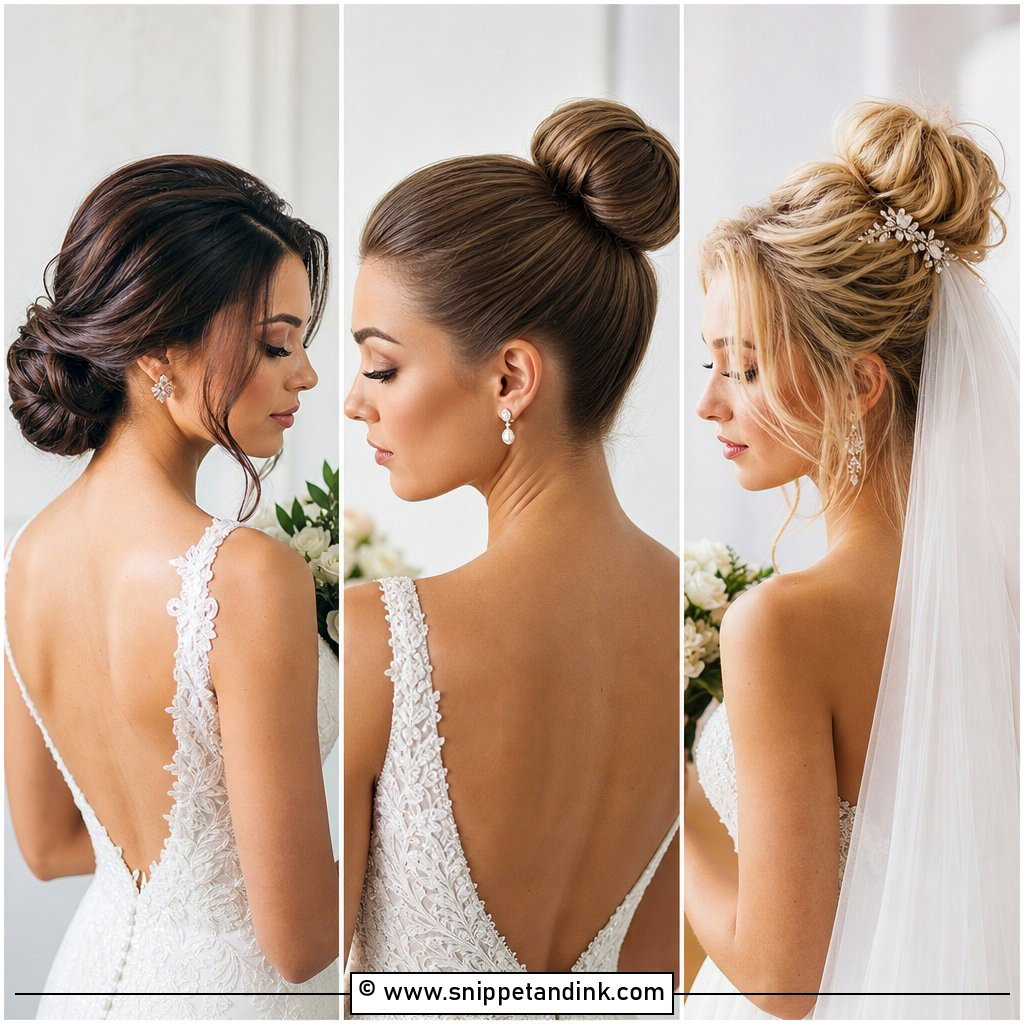
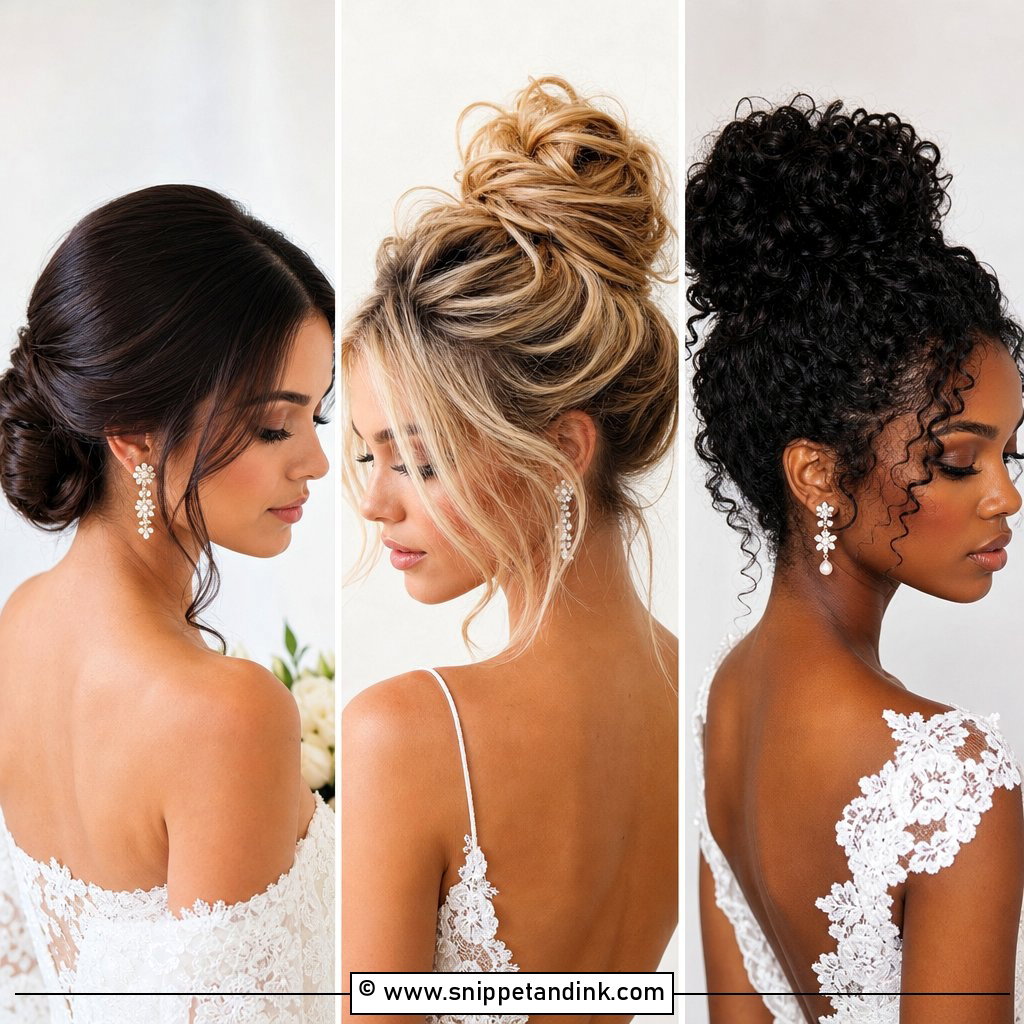
1. Classic Low Bun Wedding Updo
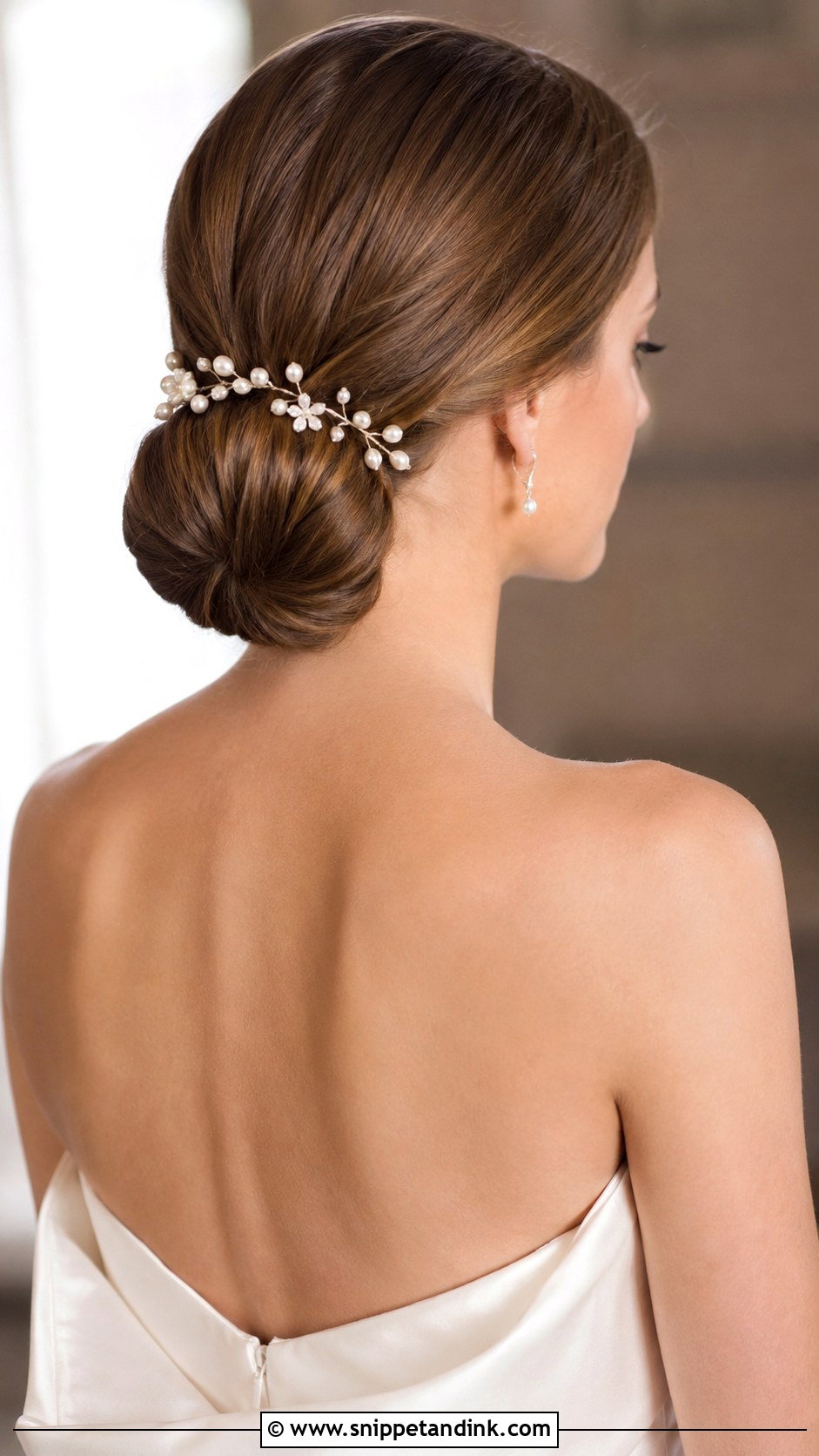
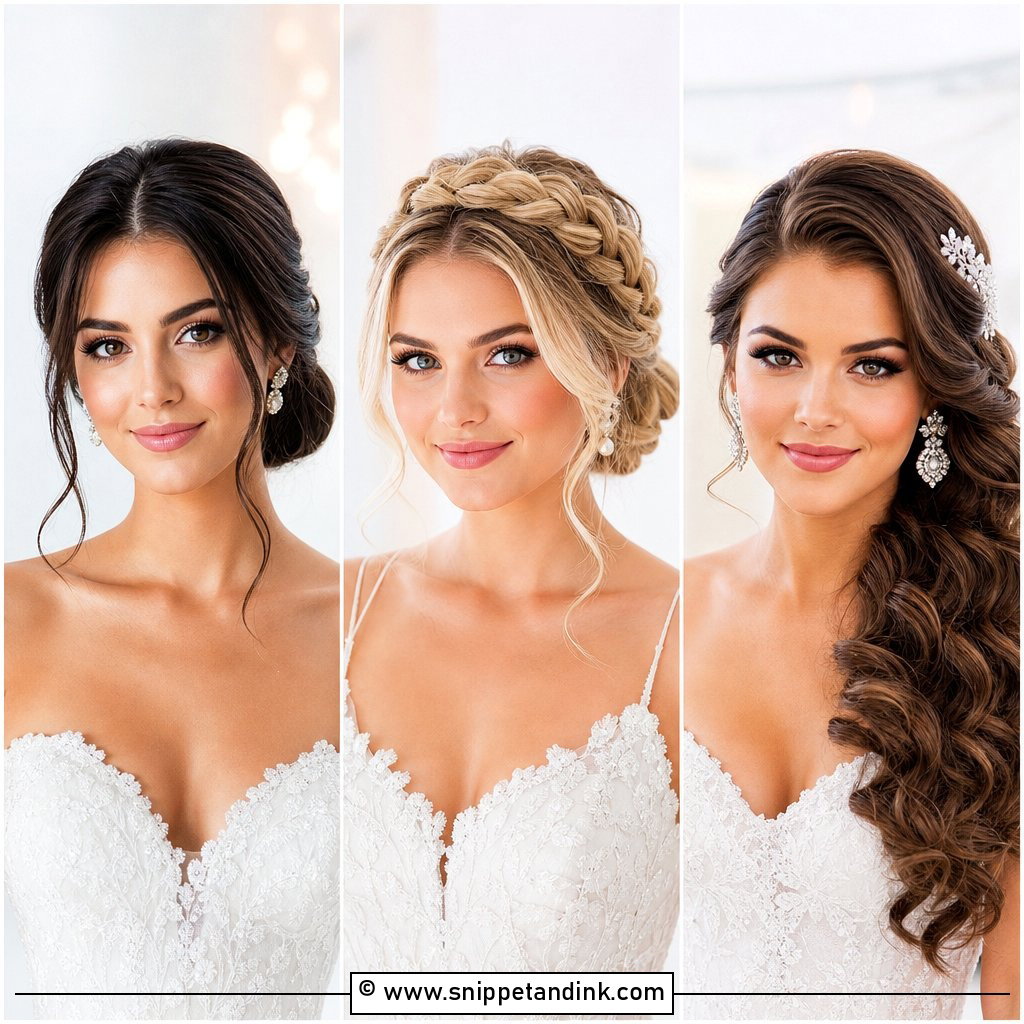
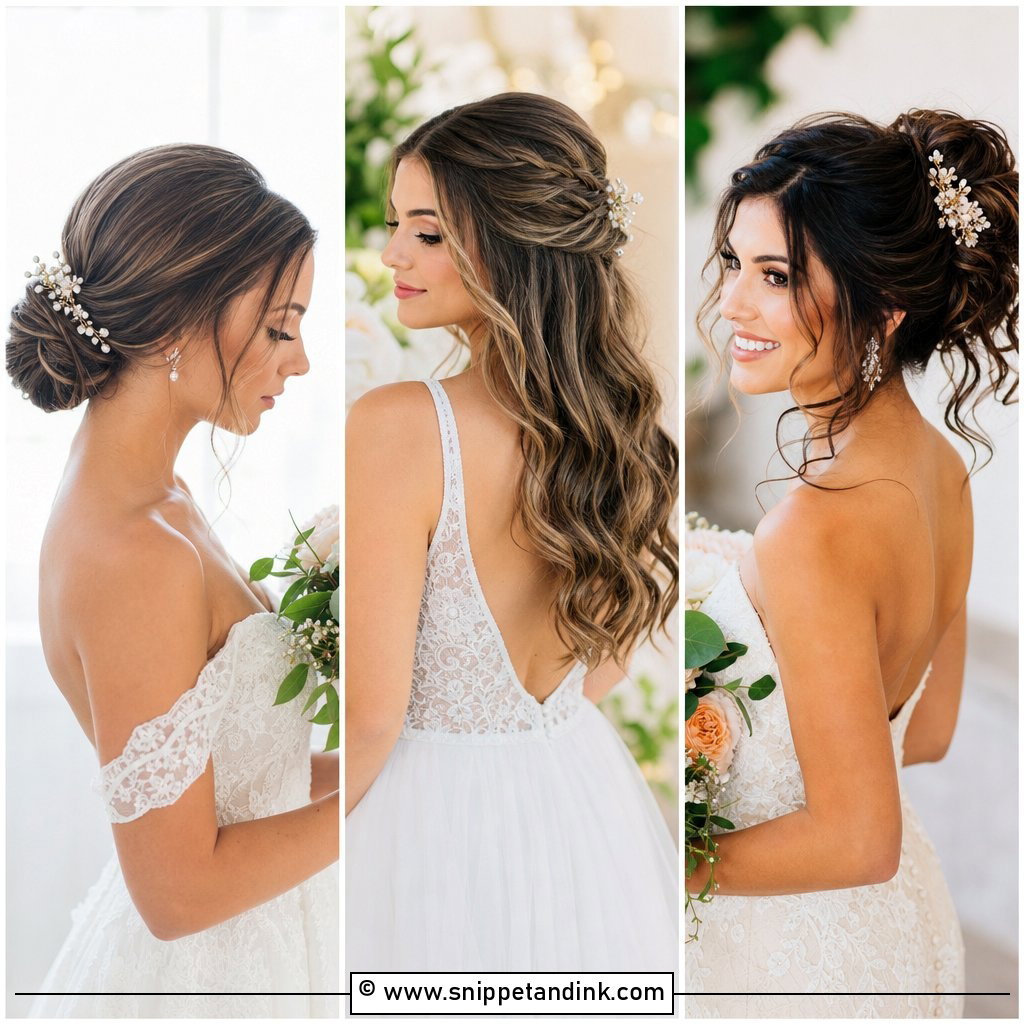
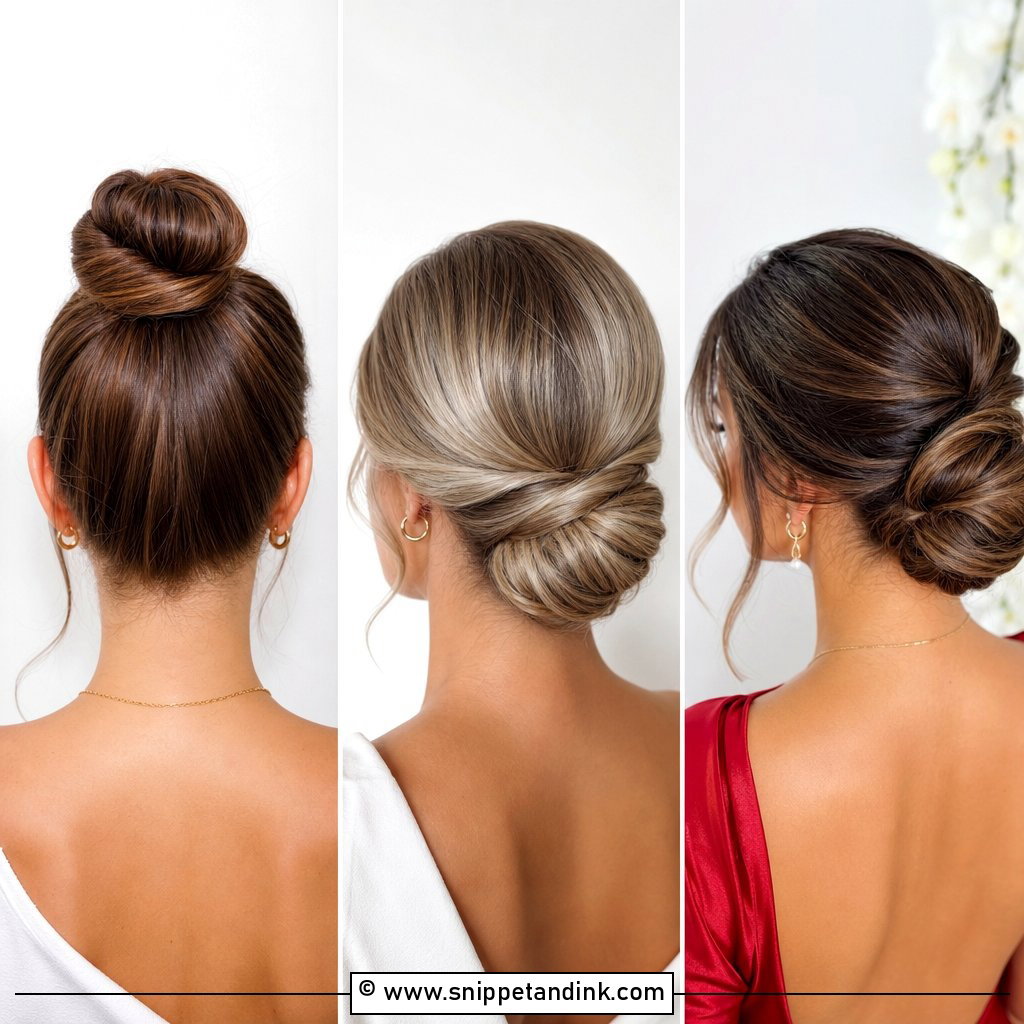
The low bun keeps coming back because it sits at the nape, where the head naturally carries weight, so it rarely drags or loosens. I anchor it on a small elastic base and pin into that, not into loose hair, which is why it still feels tight at midnight. Smooth and glossy reads formal; a few pieces pulled loose softens it. With your neck fully open, earrings carry the decoration, so a single comb or short vine is plenty. It suits strapless and high-collared necklines alike.
2. Messy Low Bun With Face-Framing Tendrils
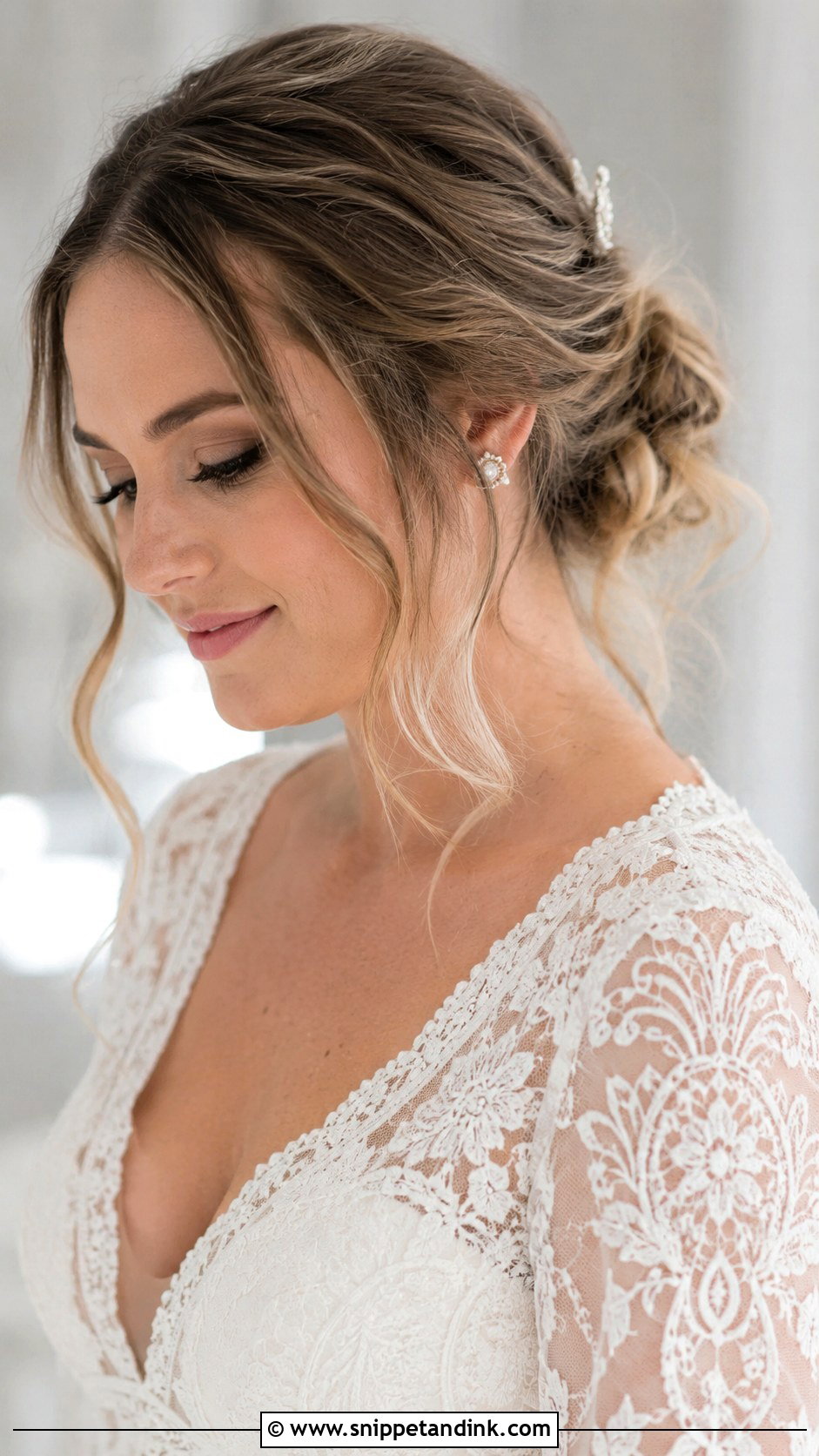
Messy buns are planned mess. Every loose piece around the face has been curled, set and left where I want it, and the bun at the back is gathered with pins hidden under soft sections so it doesn’t look bolted down. A few wavy tendrils near the cheekbones and ears frame the face, and a little lift at the crown balances the low weight. Be honest about your weather, though. In humidity those tendrils go limp or frizzy first, so for a hot outdoor wedding I leave fewer of them and set each one harder.
3. Sleek Modern Chignon
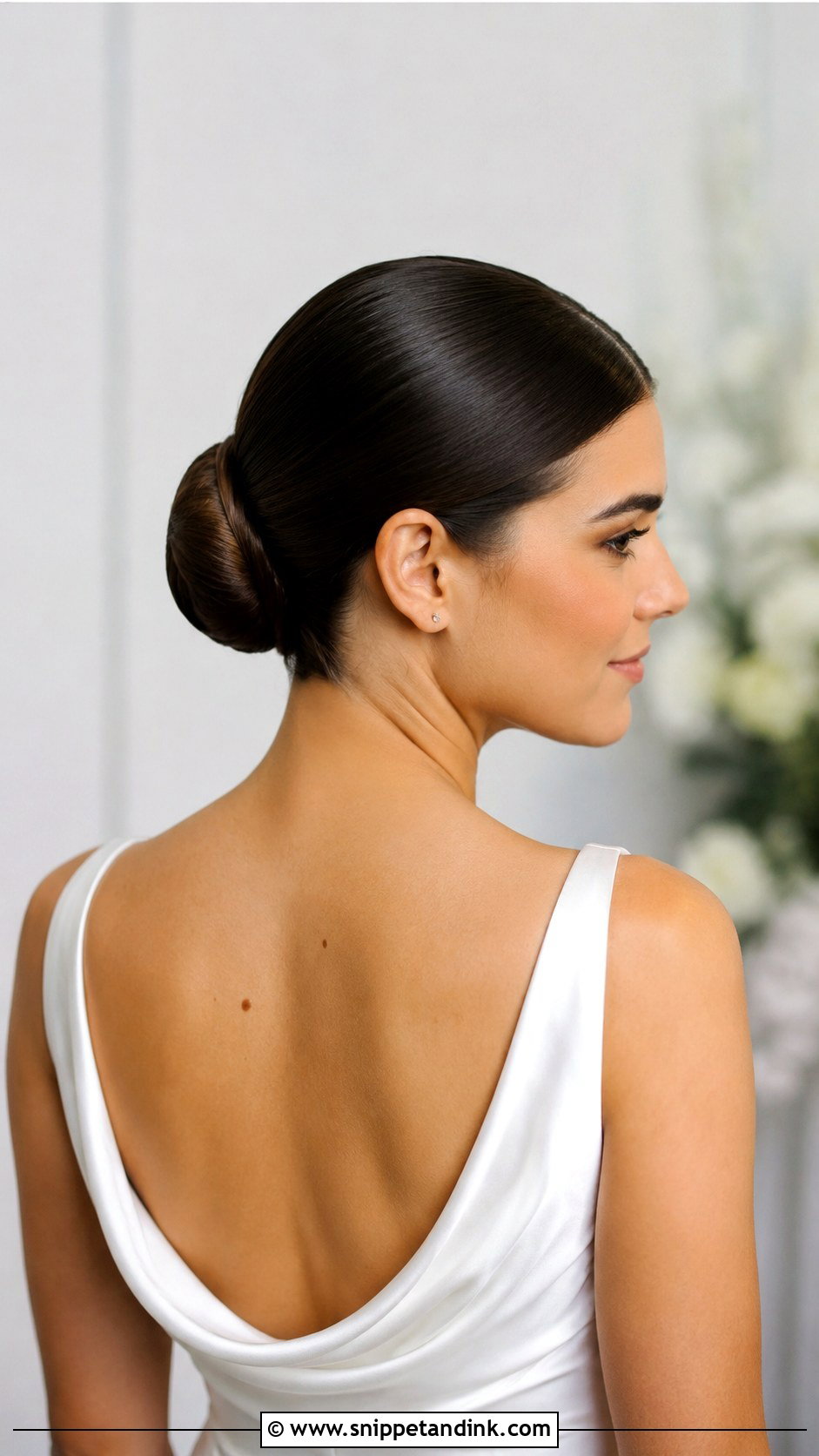
A sleek chignon has nowhere to hide, so it lives or dies on prep. Hair is blow-dried completely smooth, twisted and tucked into a sculpted knot, and finished with a shine product and a fine-tooth comb for the last flyaways. A sharp center or side part keeps it crisp. It suits satin or structured gowns and modern city venues. I’d steer you away from it if your hair is very fine and layered, because short layers poke out of the twist all day no matter how much product goes in.
4. Braided Crown Updo
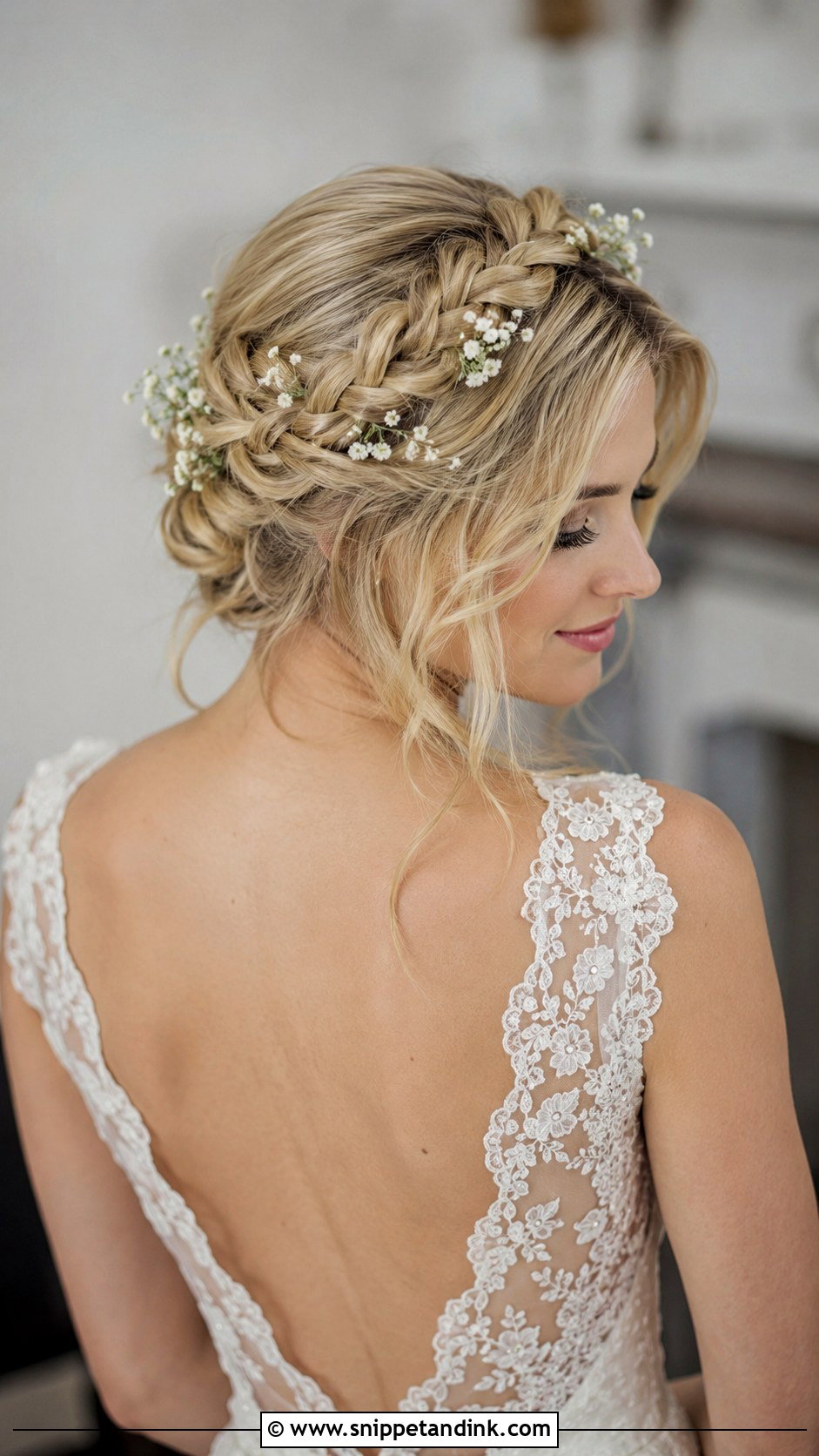
A braided crown wraps over the top of the head and creates a halo effect that suits garden and outdoor ceremonies. One thick braid gives a bold band; two or three thinner ones give more detail. Because the braid locks every strand in place, it’s one of the most secure styles I do, and small blooms or baby’s breath tuck right into the plaits. It needs at least shoulder-length hair. Short layers can be pancaked into the braid, but they’ll stick out by evening unless I pin them separately.
5. French Twist Bridal Updo
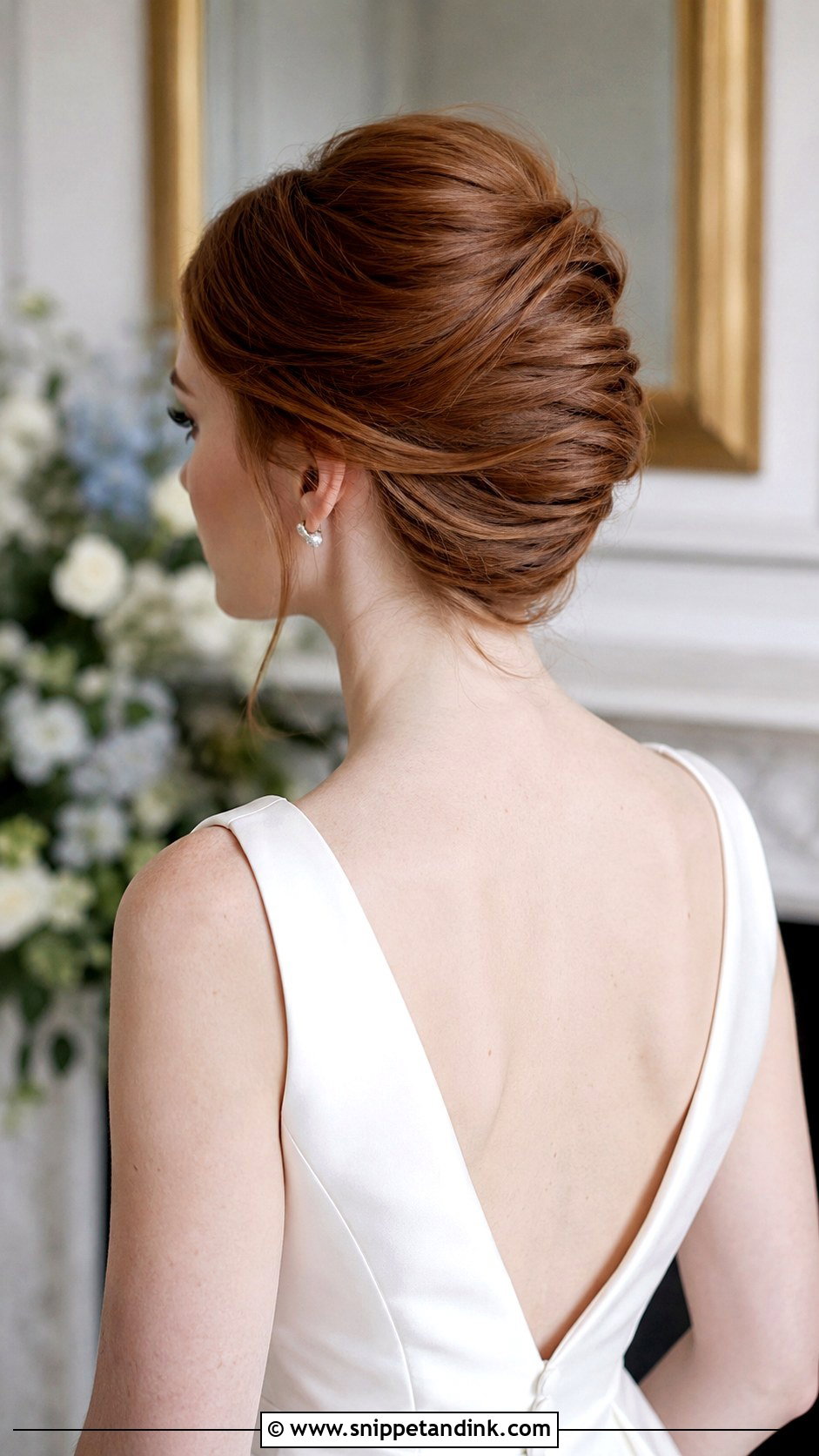
The French twist rolls hair vertically up the back of the head into that signature seam, and modern versions add some volume at the crown so it doesn’t look stiff. The seam is where I hide every pin, crossing them in pairs so the roll can’t unwind. That makes it one of the best styles for dancing hard. A veil comb slides in just under the top of the roll, and a jeweled comb works along the seam. Formal venues and classic ceremonies suit it.
6. Textured Low Bun With Loose Waves
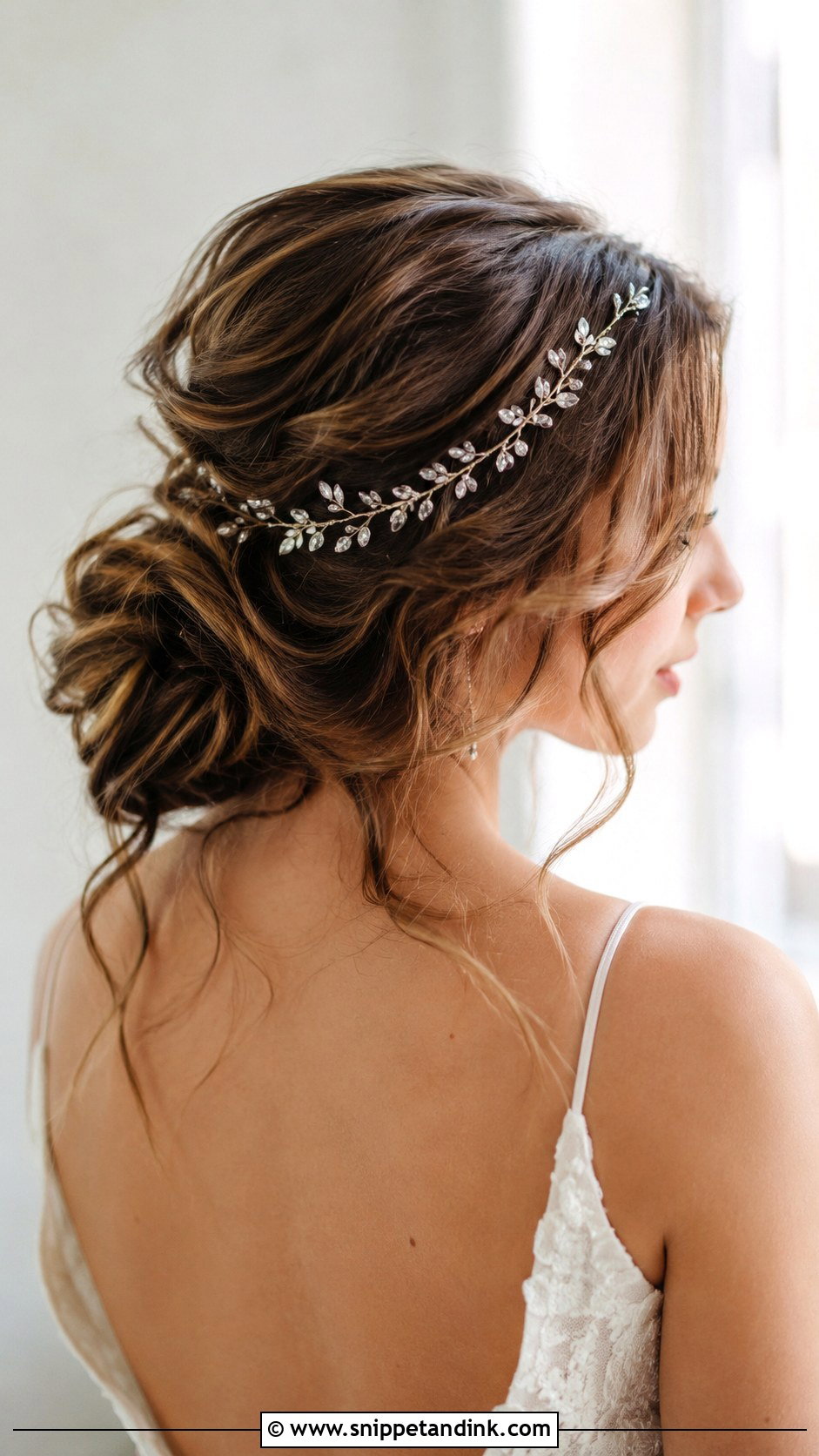
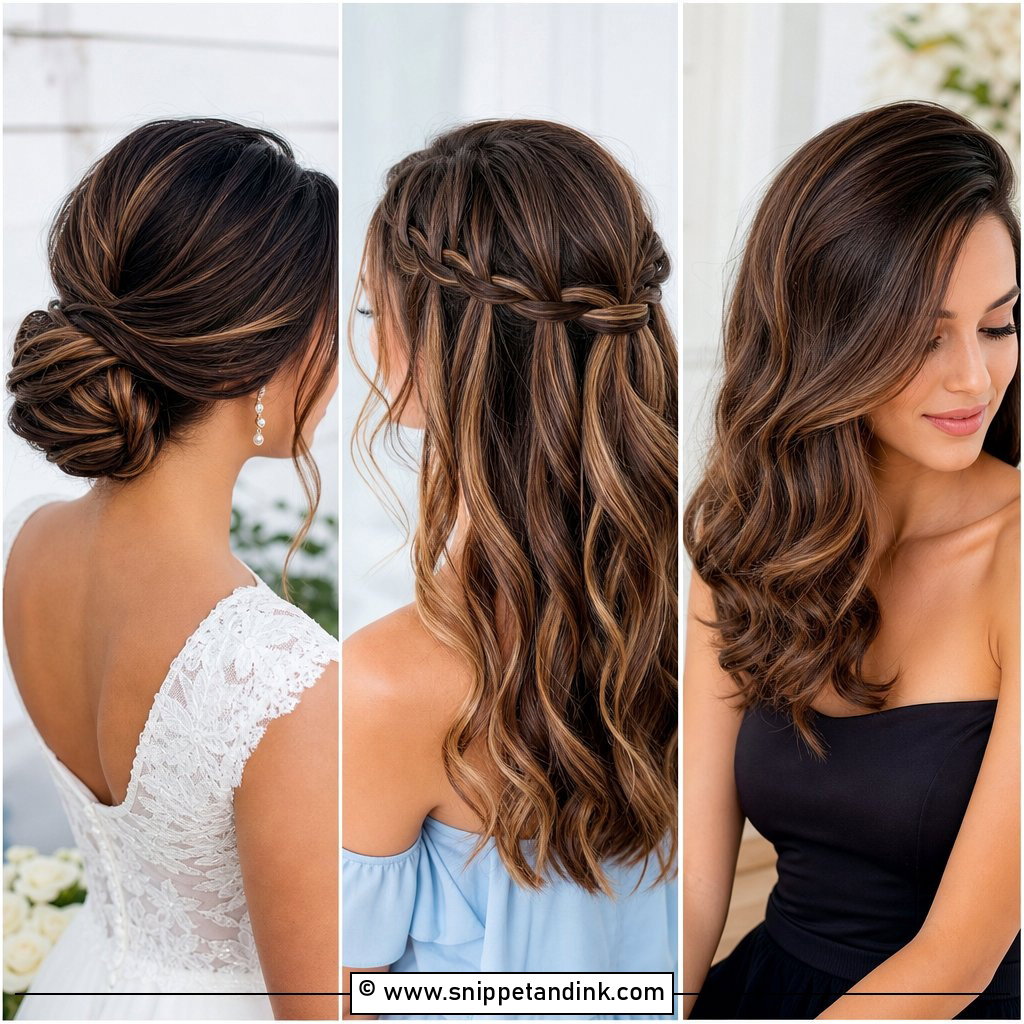
This one starts as curled hair, brushed out into loose waves, then gathered low so the bun is made of waves rather than smooth strands. That gives it dimension you can see from across the room. Hair with natural wave holds it better, because the curl doesn’t have to be faked; straight hair needs to be curled and set fully cool before I pin, or it relaxes within hours. A vine threaded through adds a little shimmer. Rustic and garden weddings are a natural fit.
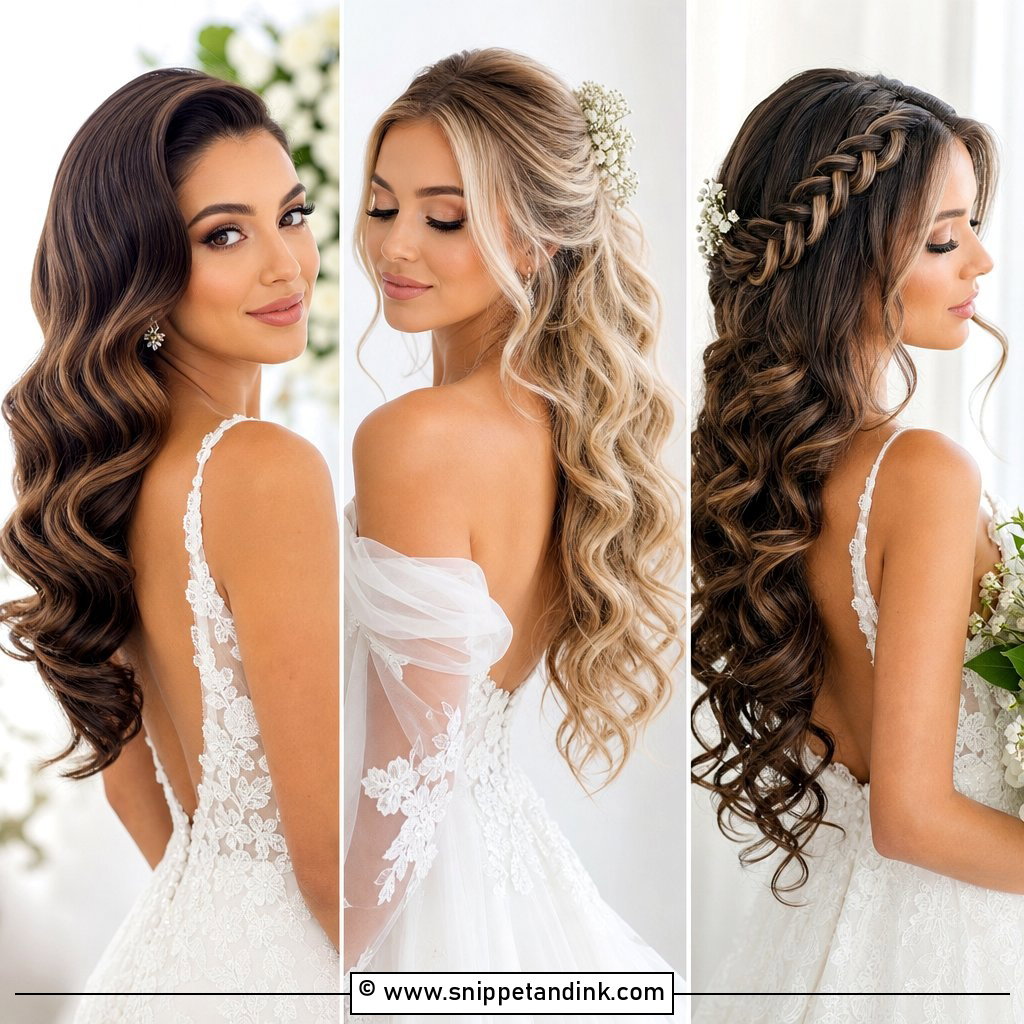
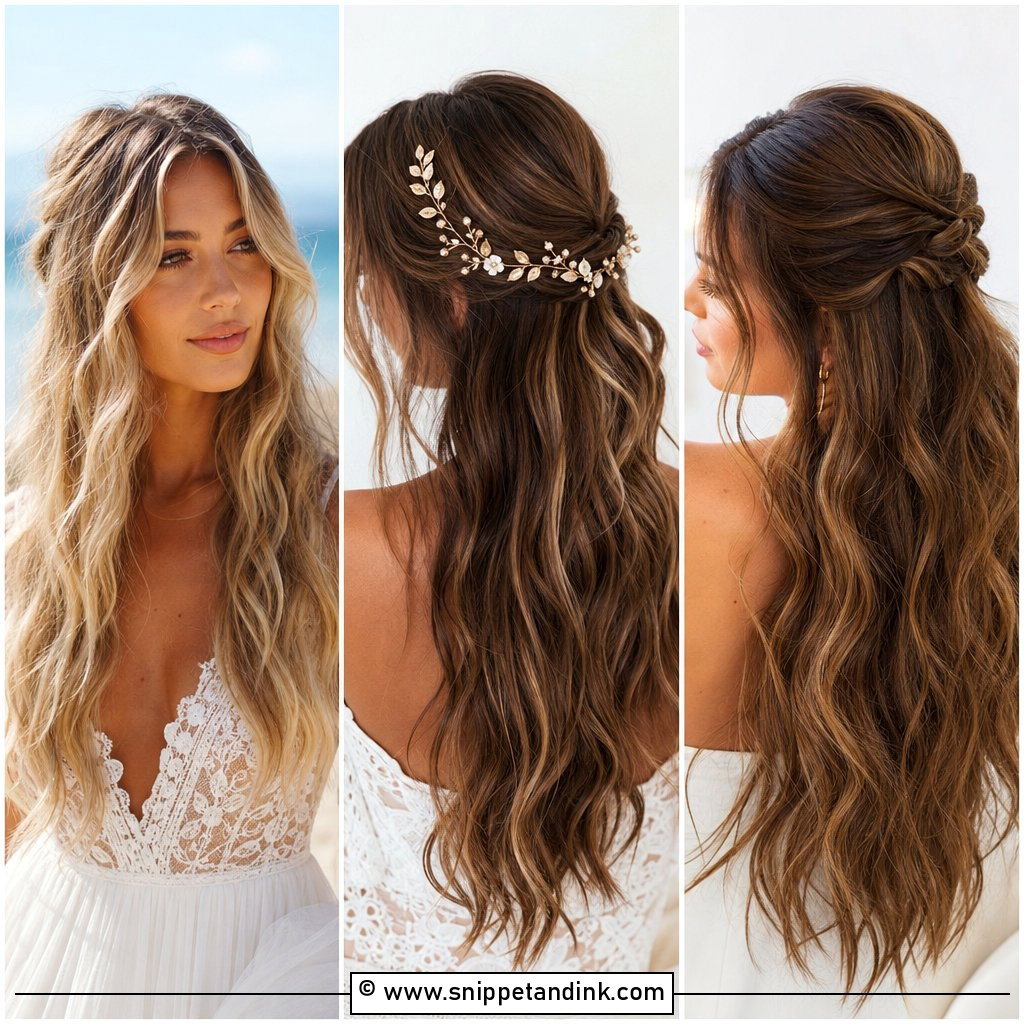
7. Half-Up Half-Down Wedding Style
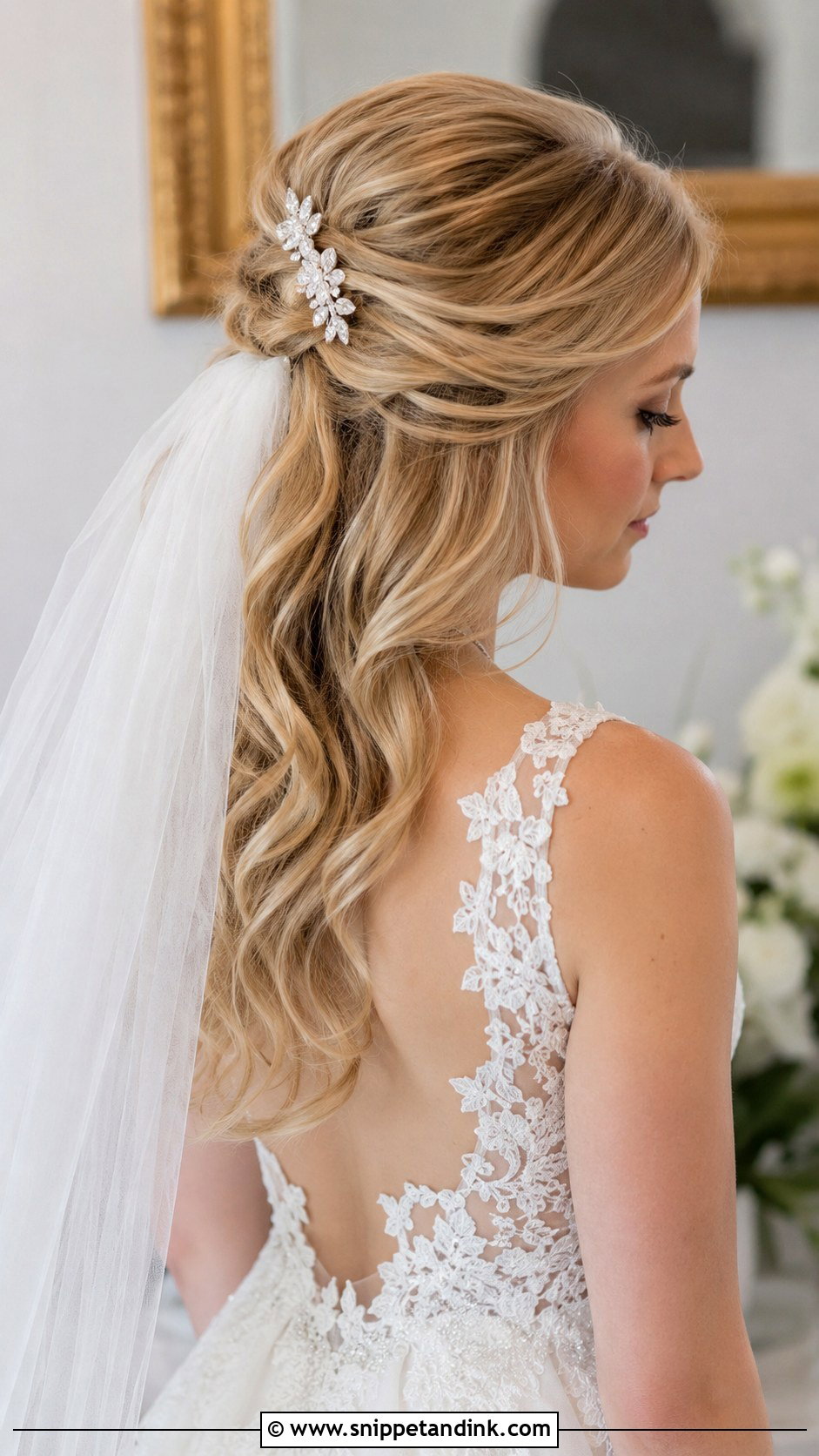
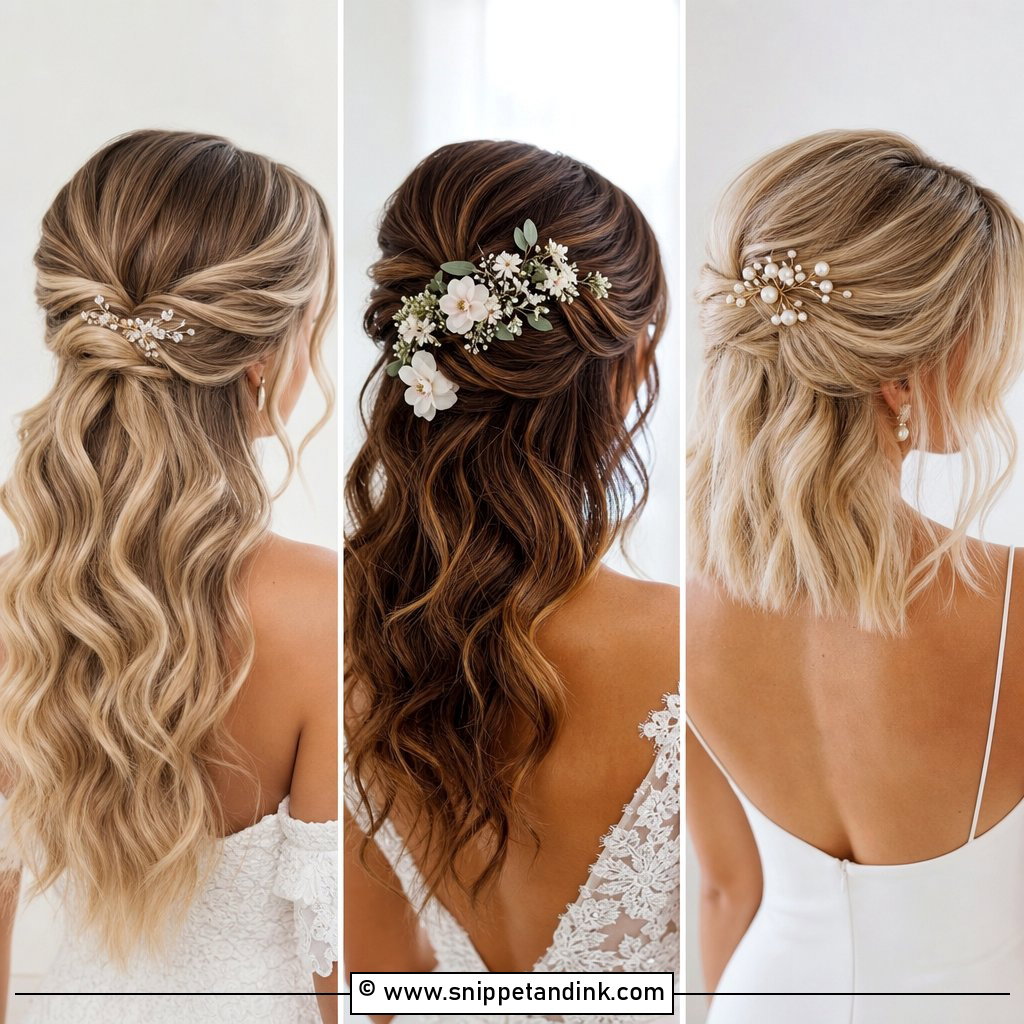
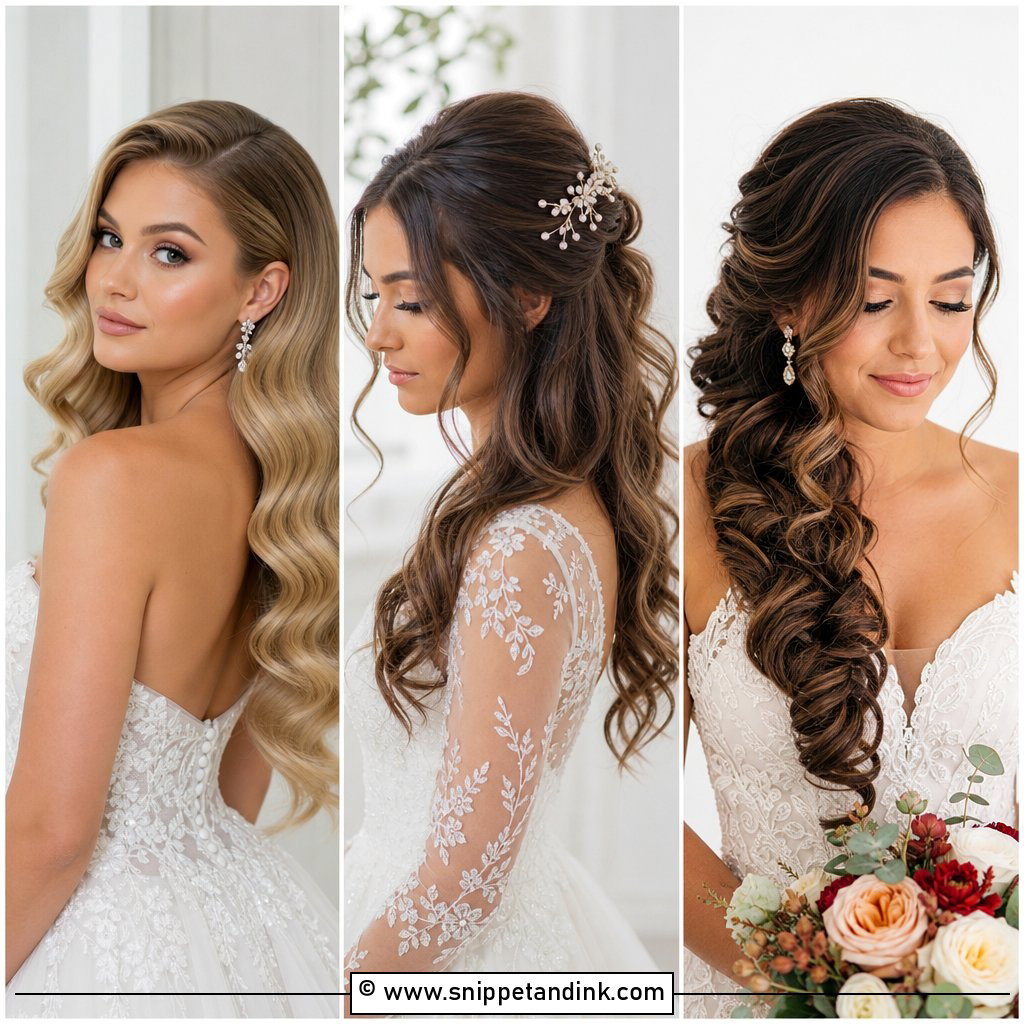
Half-up, half-down pins back the top section and leaves the rest in waves over the shoulders. It shows off length and is flattering on most face shapes. It is also the least hold-proof style on this list, and brides should know that before choosing it. The bottom half carries the curl, and in heat or humidity that curl drops first. I set it with a firm-hold spray and curl it a bit tighter than the final look so it relaxes into place, rather than out of it. A clip where the sections meet, plus a few face-framing pieces, finishes it.
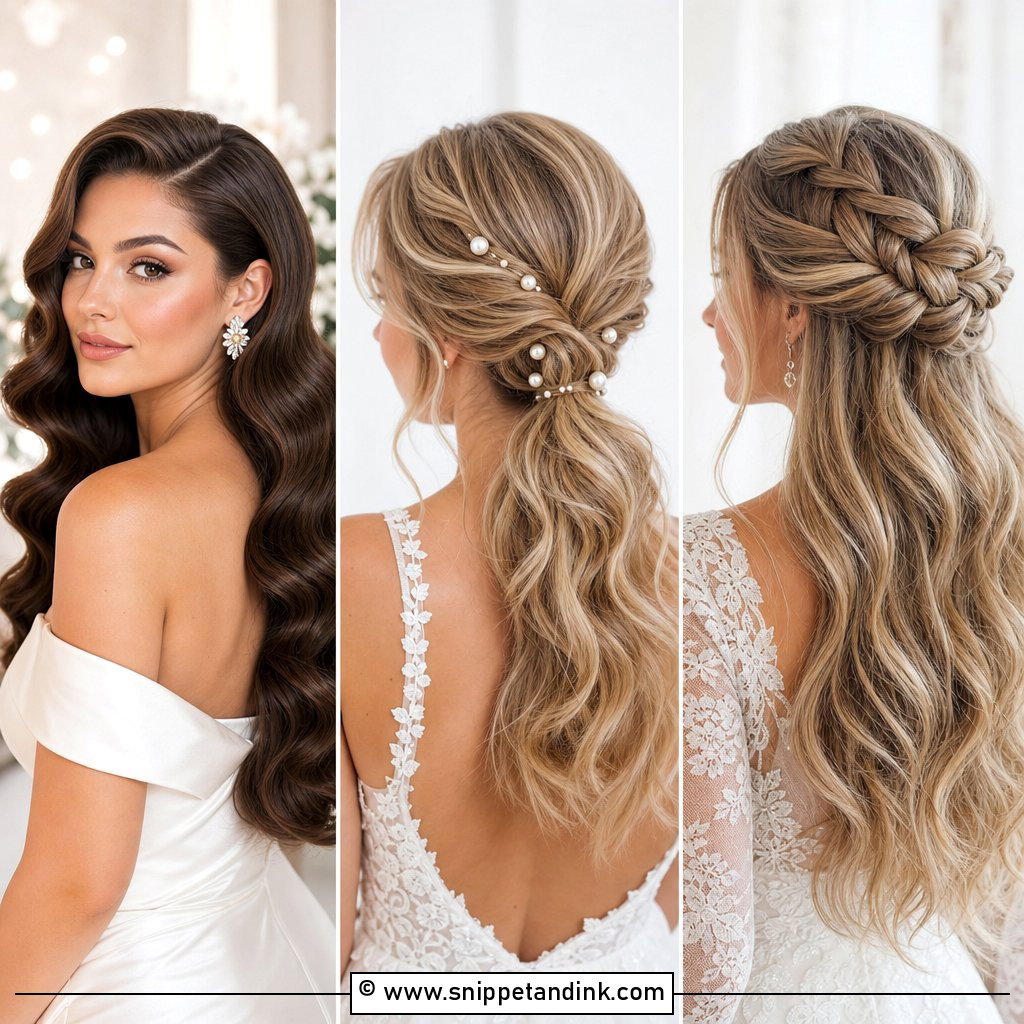
8. Twisted Low Ponytail Updo
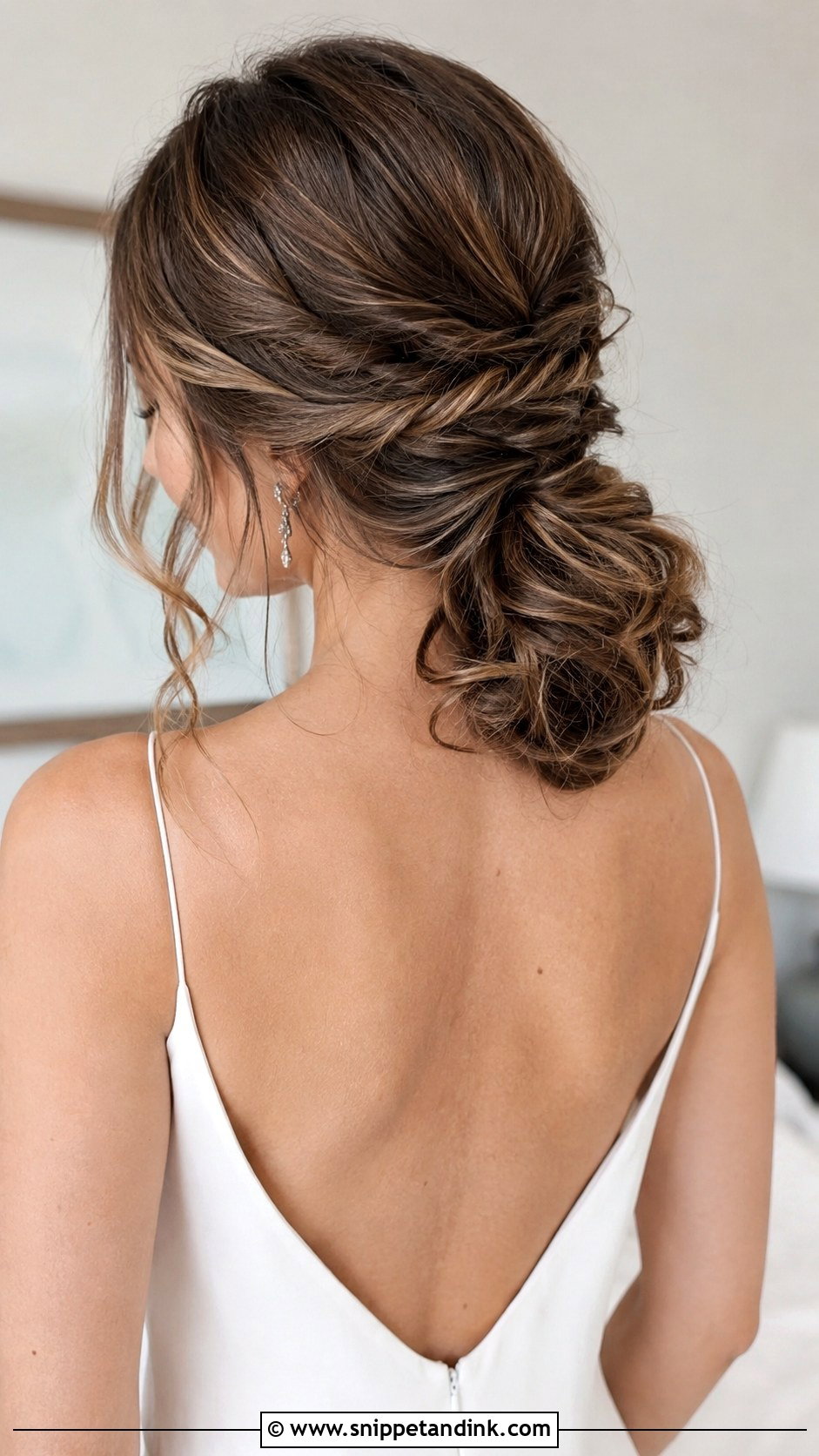
This low ponytail gets its bridal look from twisted sections across the back that lead into the elastic, with airy curls falling below. I wrap a strand of hair around the elastic and pin it underneath, so there’s no band showing. Longer hair shows it off best. The weak point is the tie: a pony carries all its weight on one elastic, so for very thick hair I use two, one stacked above the other, to stop it sagging by the reception.
9. Bridal Bun With Hair Vine
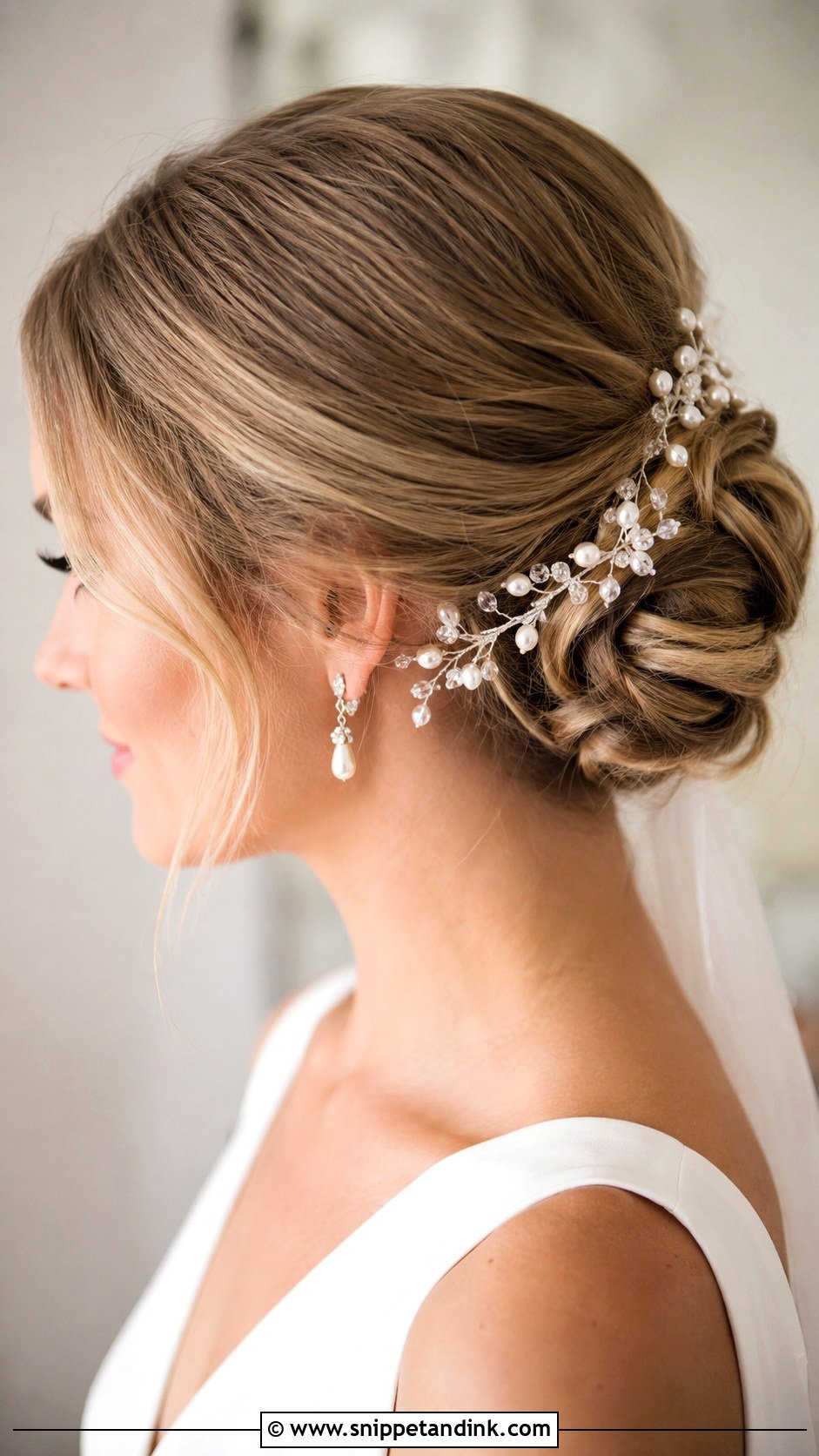
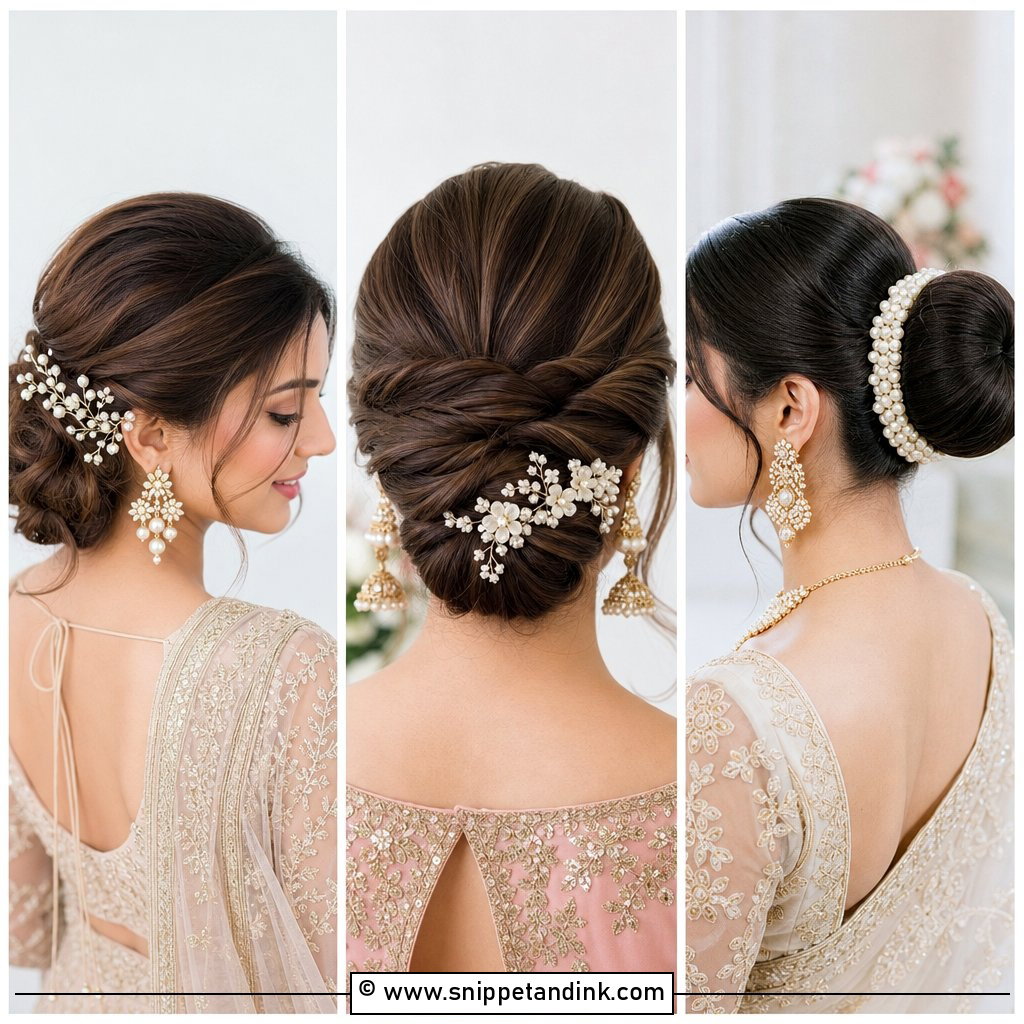
A hair vine is a thin wire strung with pearls, crystals or tiny flowers, woven into the bun so it catches light as you move. Even a plain bun looks finished with one. I bend the wire to follow the curve of the bun and pin it every few centimeters, otherwise it lifts at the ends and catches on a veil. Smooth or textured, low or slightly higher, the bun underneath can be whatever suits your hair. Place it where it frames the shape in photos taken from behind.
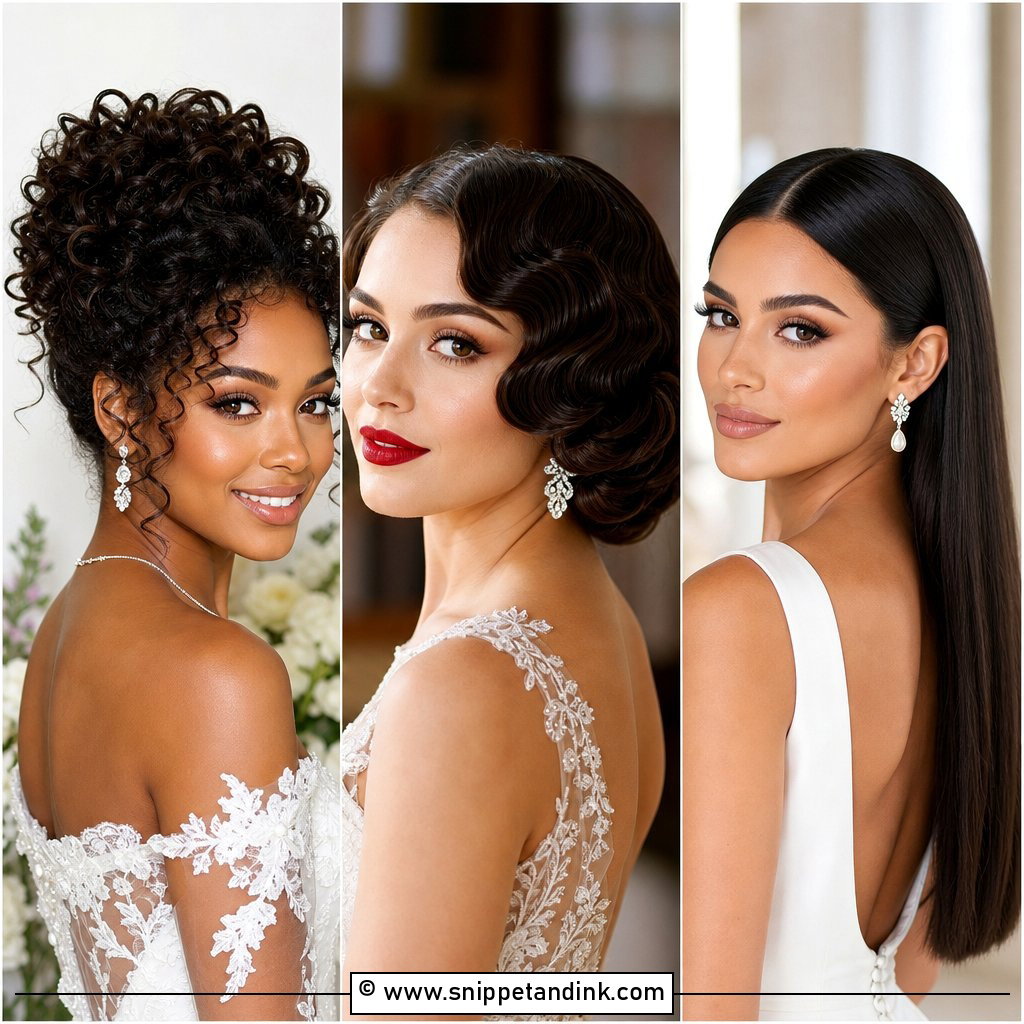
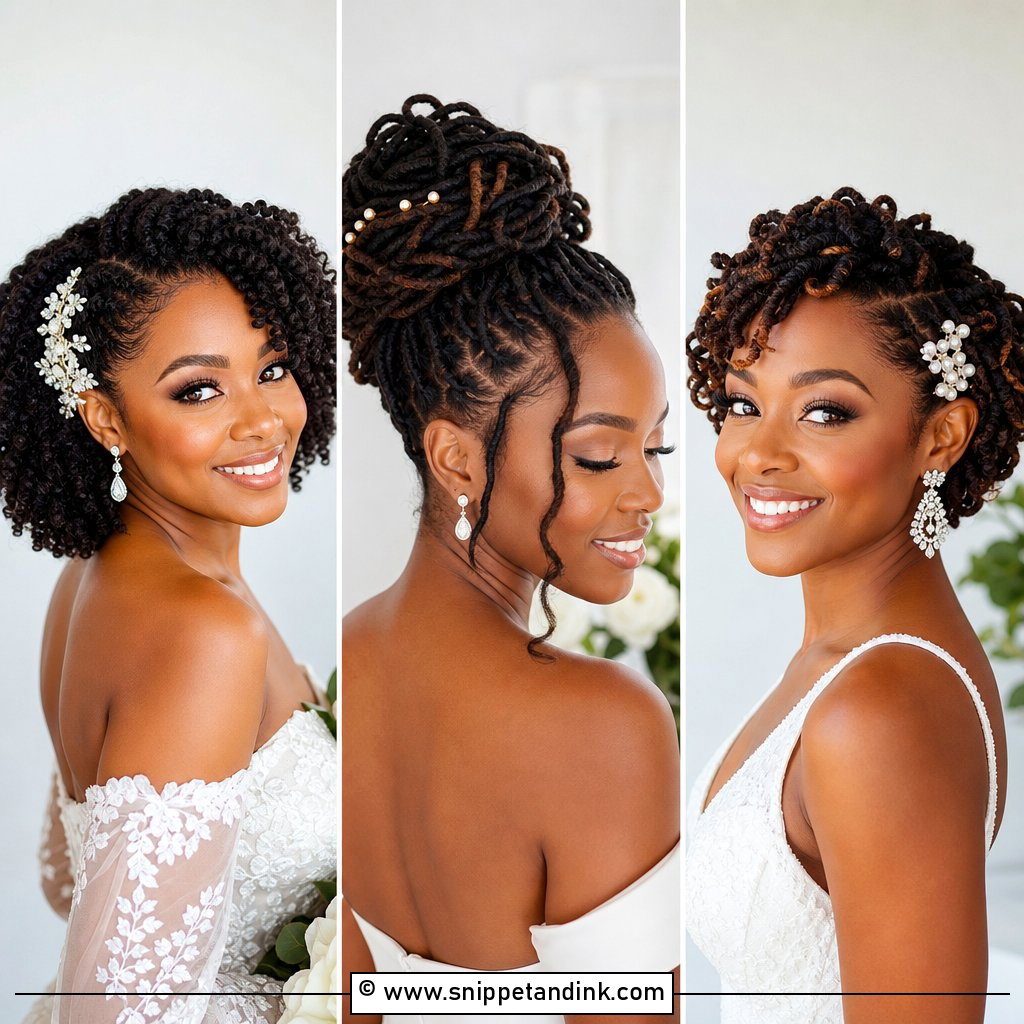
10. Loose Curly Updo
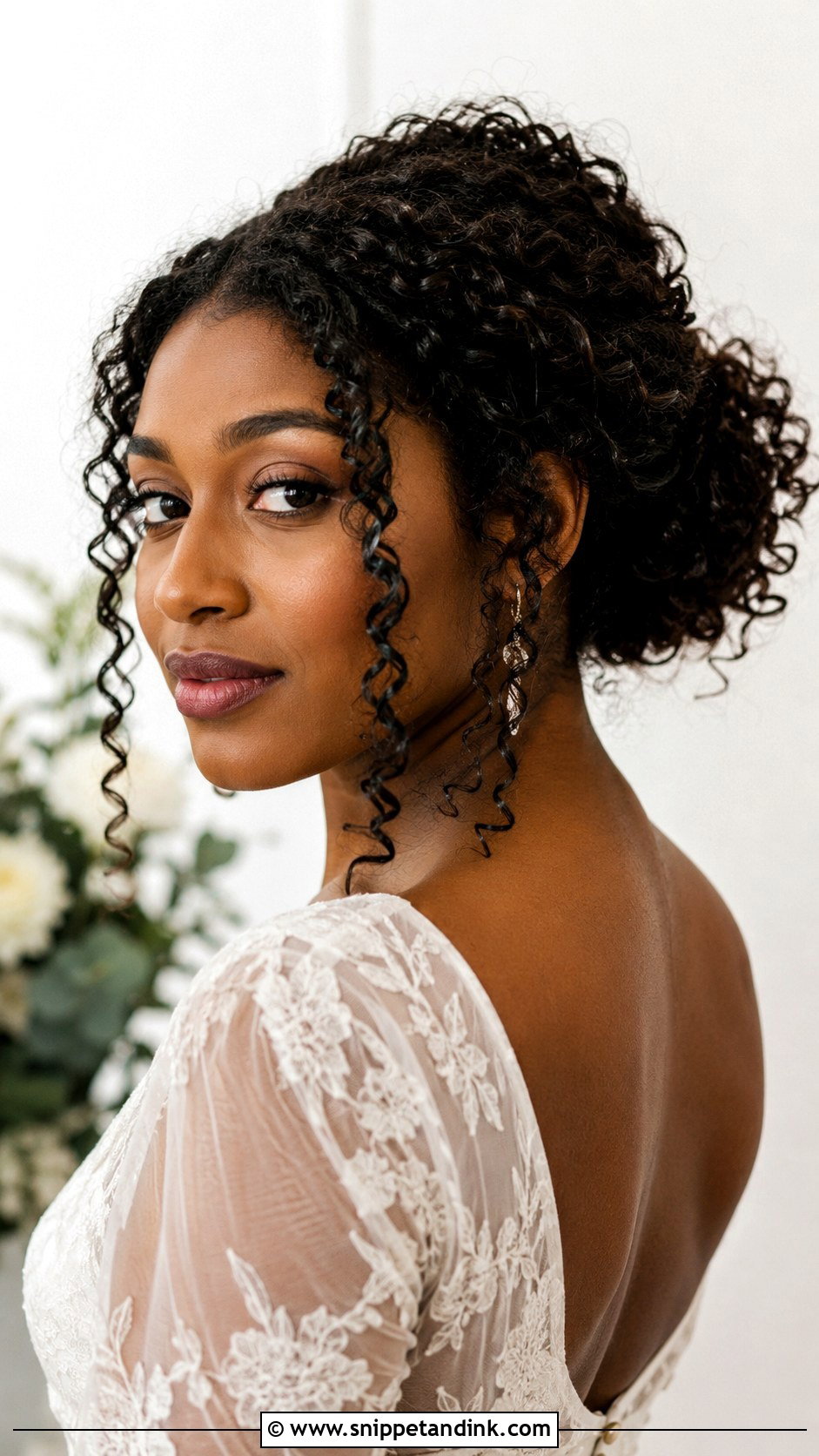
Natural curls in an updo are some of my favorite hair to work with. I never brush curly hair dry; I work with it damp or styled with a curl cream, gather it loosely and pin, letting the pattern build volume on its own. Tight pinning flattens curls and breaks the clumps into frizz, so the hold comes from fewer, well-placed pins. A few curls left free at the face keep it soft. Bold earrings suit it, and it handles humidity better than most curled-straight hair because there’s no set to lose.
11. Sleek High Bun Updo
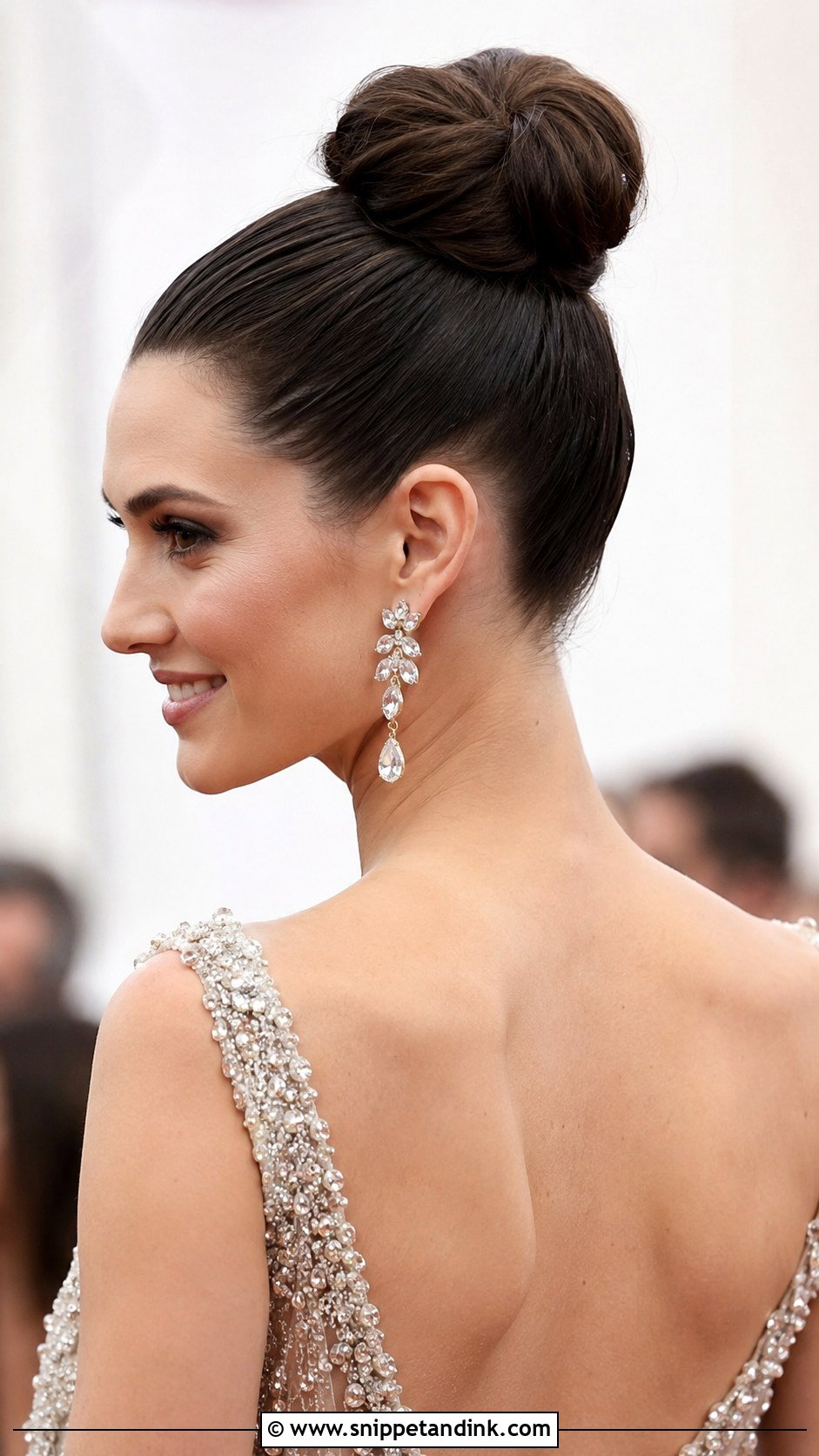
A high bun sits at the crown and lengthens the neck, which suits ballroom weddings and strong makeup. The pull is the hard part. Hair dragged tight to the crown for ten hours can give you a headache by dinner, so I smooth it with a brush rather than yanking and anchor it with a ponytail base that sits slightly lower than the bun itself. A finishing cream tames flyaways. A veil goes underneath the bun, not above it, or the whole thing looks top-heavy.
12. Romantic Updo With Flowers
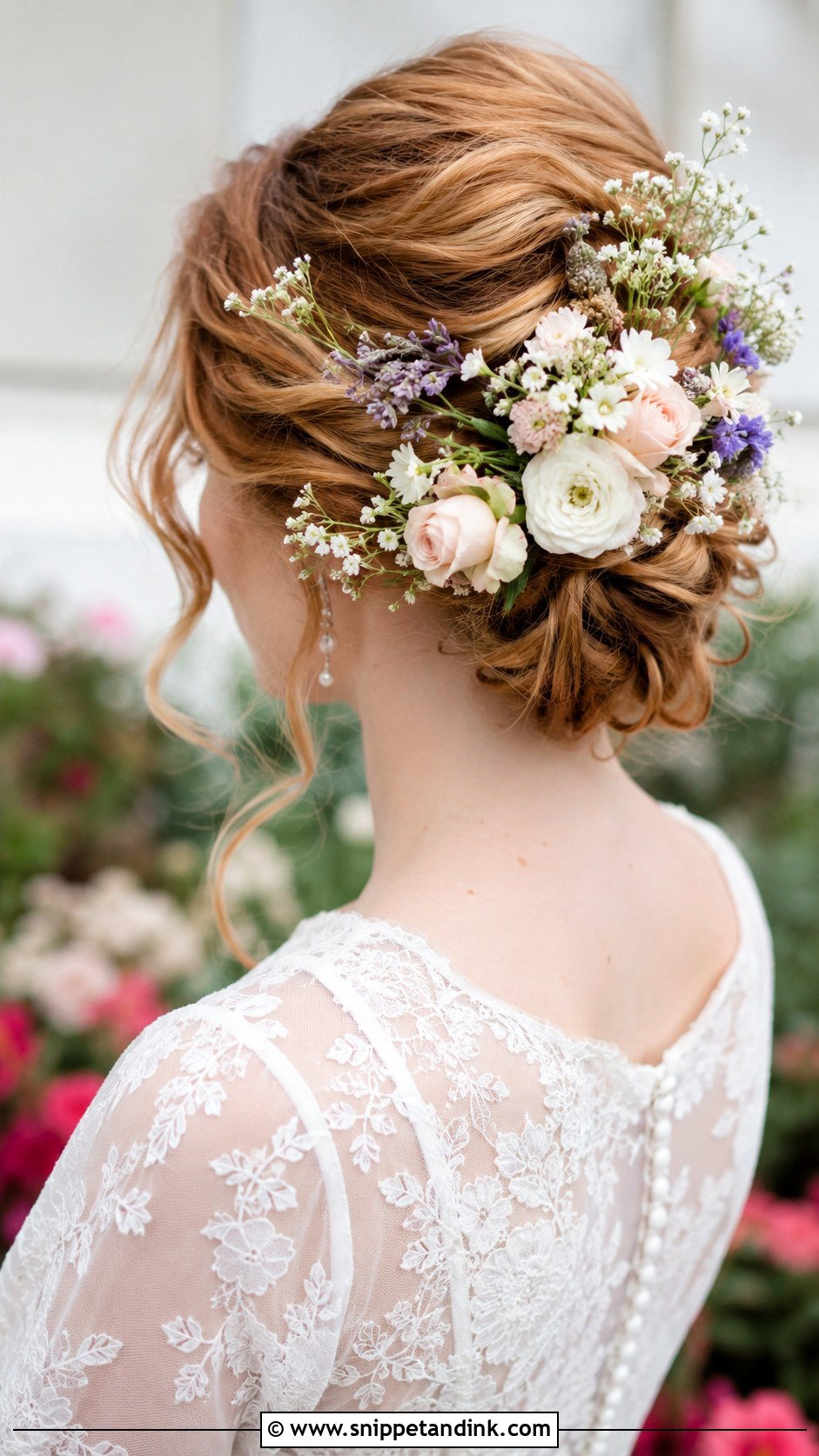
Fresh flowers tucked into an updo connect your hair to the bouquet, and roses, baby’s breath or small wildflowers all work. The base can be a bun, twist or braid. I ask your florist for stems prepared for hair: wired, taped and kept cool, because a loose bloom wilts against the warmth of your head within a couple of hours. I add them last, right before you get dressed. Soft petals like gardenias bruise brown if they’re touched, so they’re the ones I’d avoid. Done right, the flowers carry seasonal, natural charm that no metal accessory can.
13. Braided Low Bun Updo
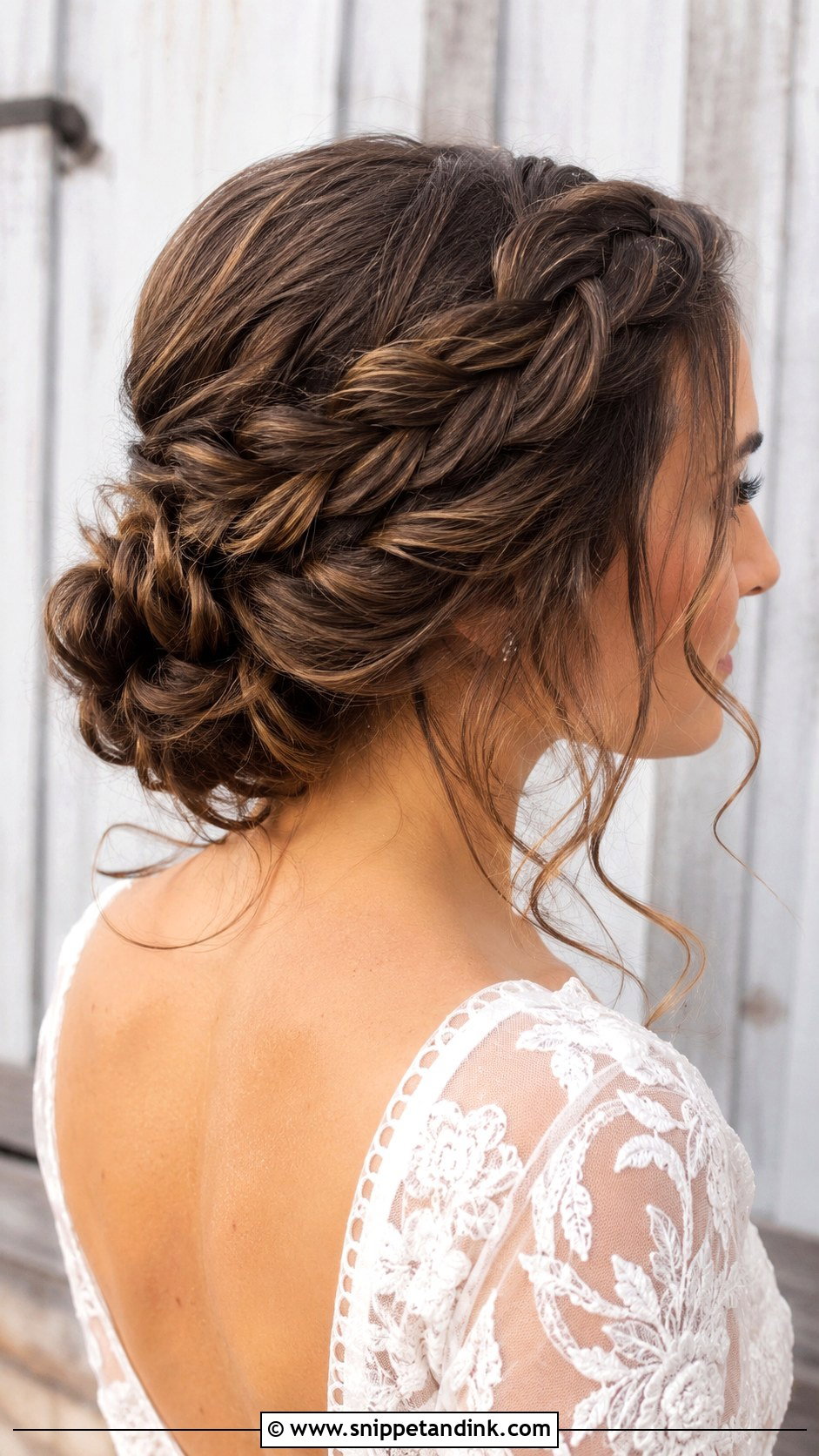
Braids into a low bun give texture and detail, and because the braids lock the hair before it’s gathered, it rarely needs touching up. One braided section or several can be woven in before everything is pinned at the nape. I pull the braids apart slightly (pancaking) so they look fuller in photos, which matters most for fine hair. A few pieces near the face keep it from looking tight. It suits boho and rustic weddings.
14. Soft Vintage Finger Wave Updo
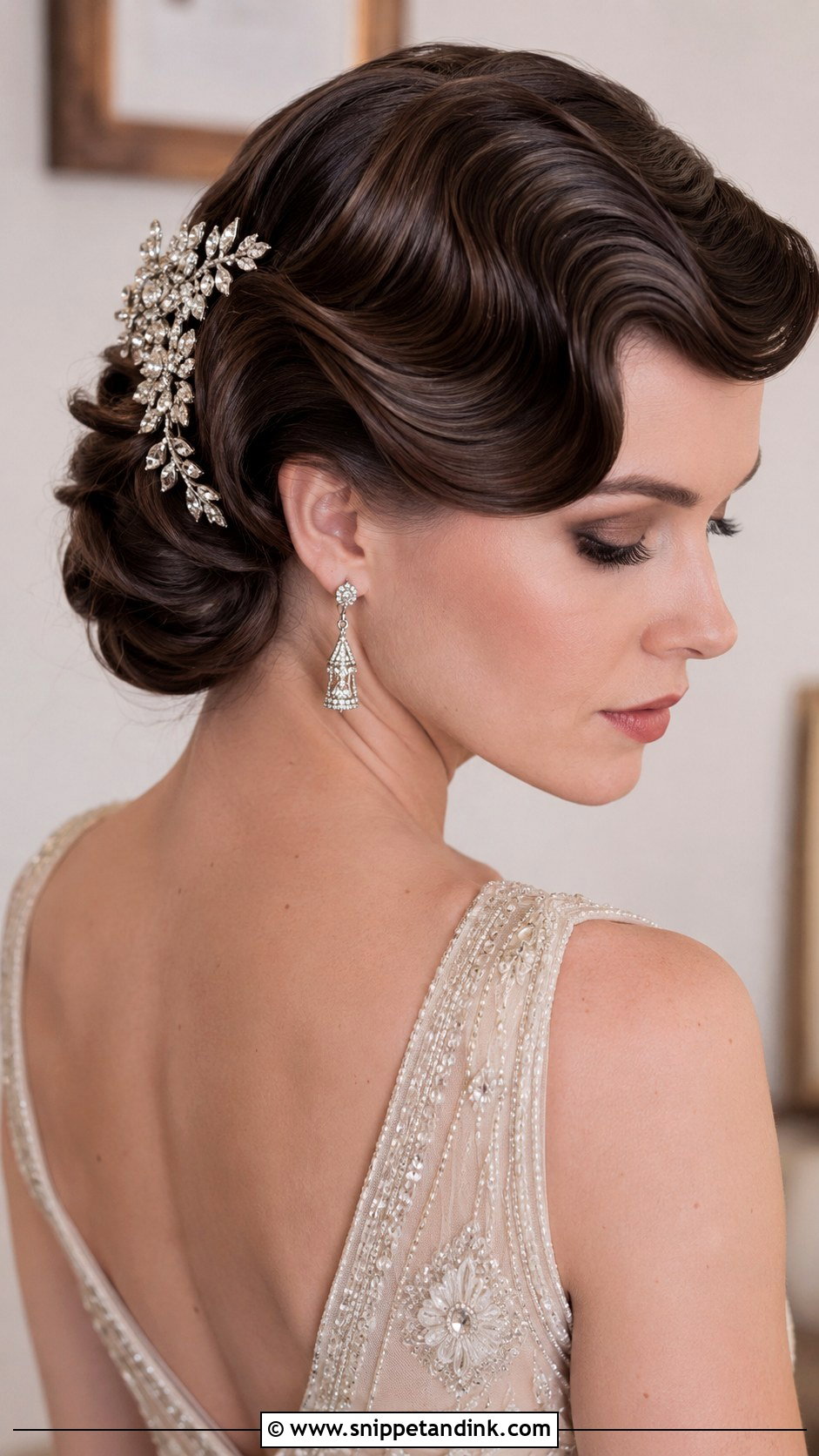
A vintage-inspired finger wave updo uses sculpted S-shaped waves at the front, swept into an arrangement at the back. The waves are set with gel or setting lotion and clips while damp, or shaped with a flat iron and brushed into ridges. Smooth hair that holds a shape works best; very curly or coarse hair fights the ridges. It suits art deco and retro themes, finished with a jeweled comb or vintage piece. Book extra trial time for it, because getting the wave depth right on your hairline usually takes a second attempt.
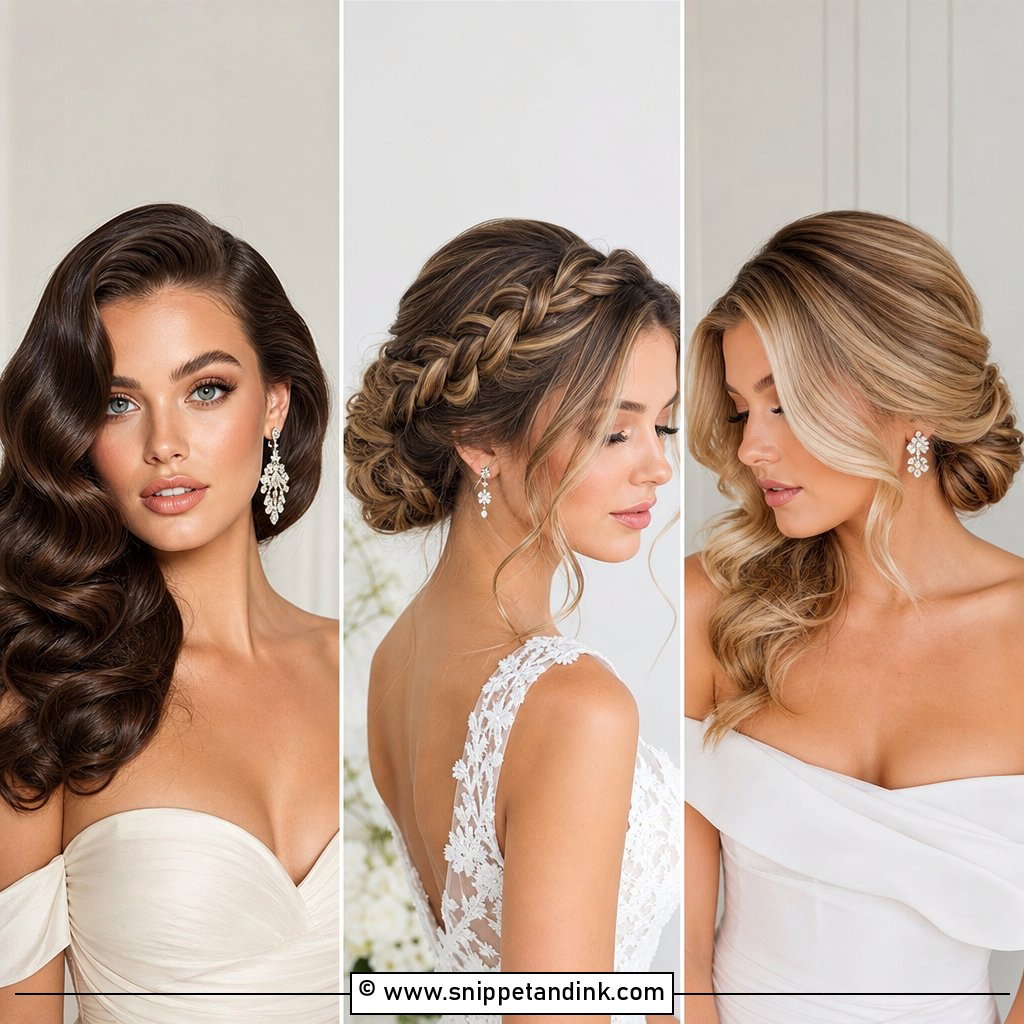
15. Tousled Updo With Volume
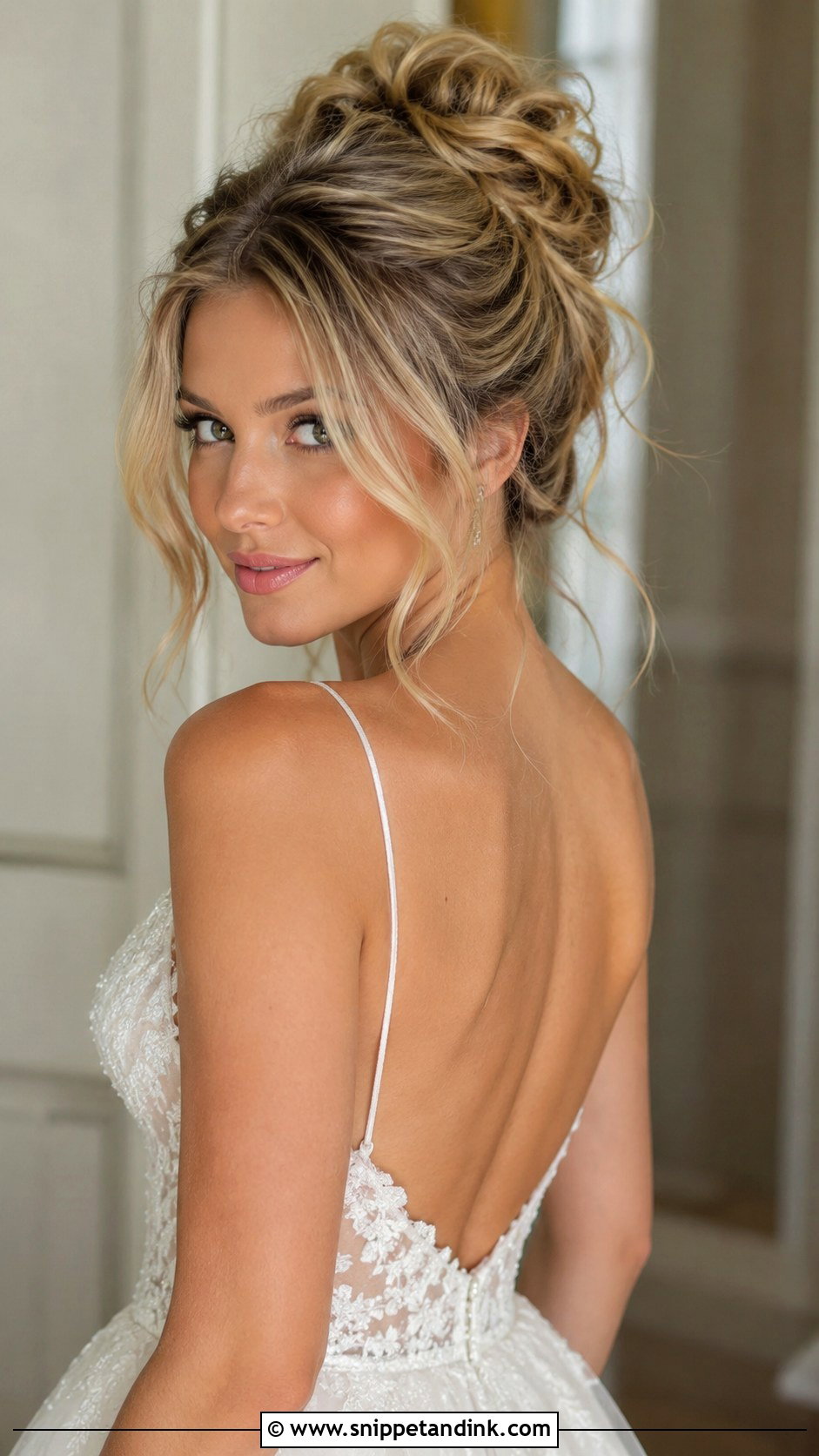
Big, soft and full: this updo is about height and air. I tease gently at the crown, then pin loosely so it looks swept up rather than set. The volume is built from backcombing at the root, not from the pins, so it needs a texture spray or dry shampoo on clean hair first, otherwise everything slides flat within an hour. Face-framing pieces finish it. It suits relaxed and boho weddings, and works on most lengths from shoulder down.
16. Elegant Updo With Veil
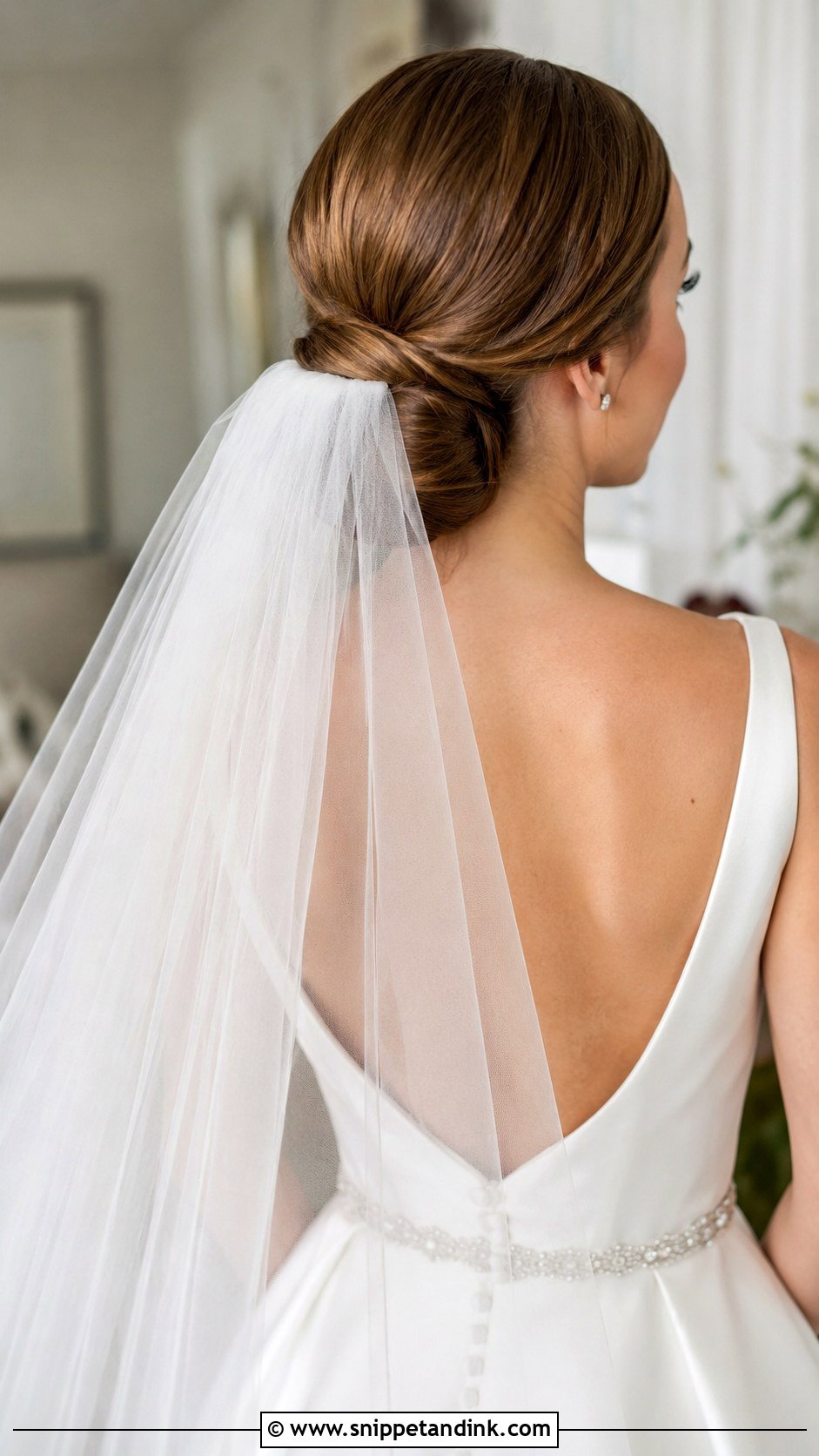
A veil changes how I build the updo, so I always want to know which veil you’ve chosen before the trial. A low bun or chignon gives the comb a solid anchor point. I slide the comb in just under the bun and fix it with two crossed bobby pins through its teeth, so it doesn’t tug when someone steps on the train. Long veils are heavier than they look and pull the bun backward over the day, which is why the base underneath needs to be tighter than for a bun worn alone. When the veil comes off for the reception, the bun should look complete on its own.
17. Knotted Bun Bridal Updo
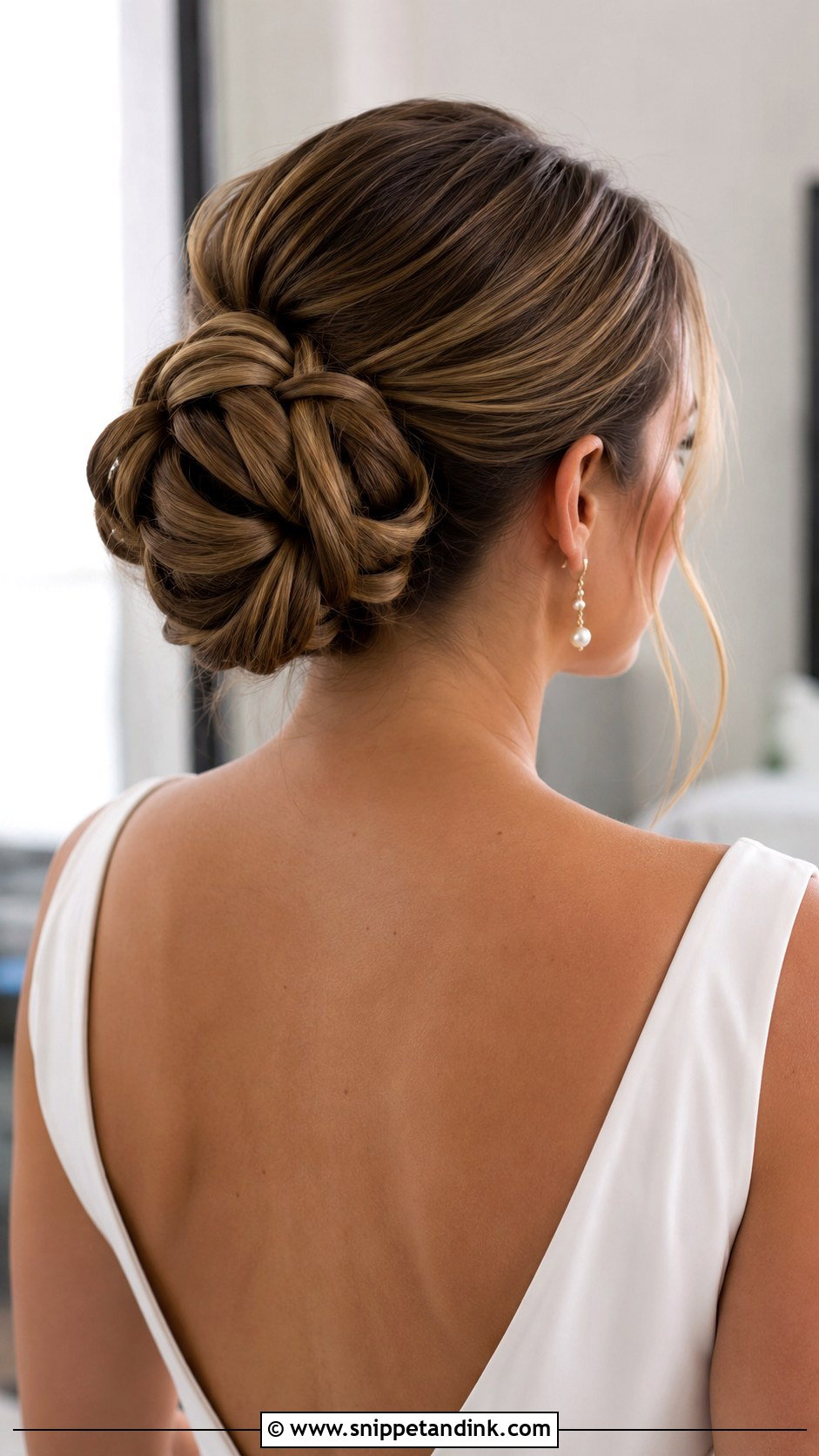
Knotted buns loop sections of hair over and through each other into a sculptural shape at the back. Clean and modern, they pair with sleek gowns and minimal jewelry. Each knot holds the one beside it, so the structure is strong once built. Hair needs real length for it, roughly mid-back or longer, because each knot uses up more hair than a twist. Keep it tight and structured, or soften it with a few loose pieces.
18. Side-Swept Updo
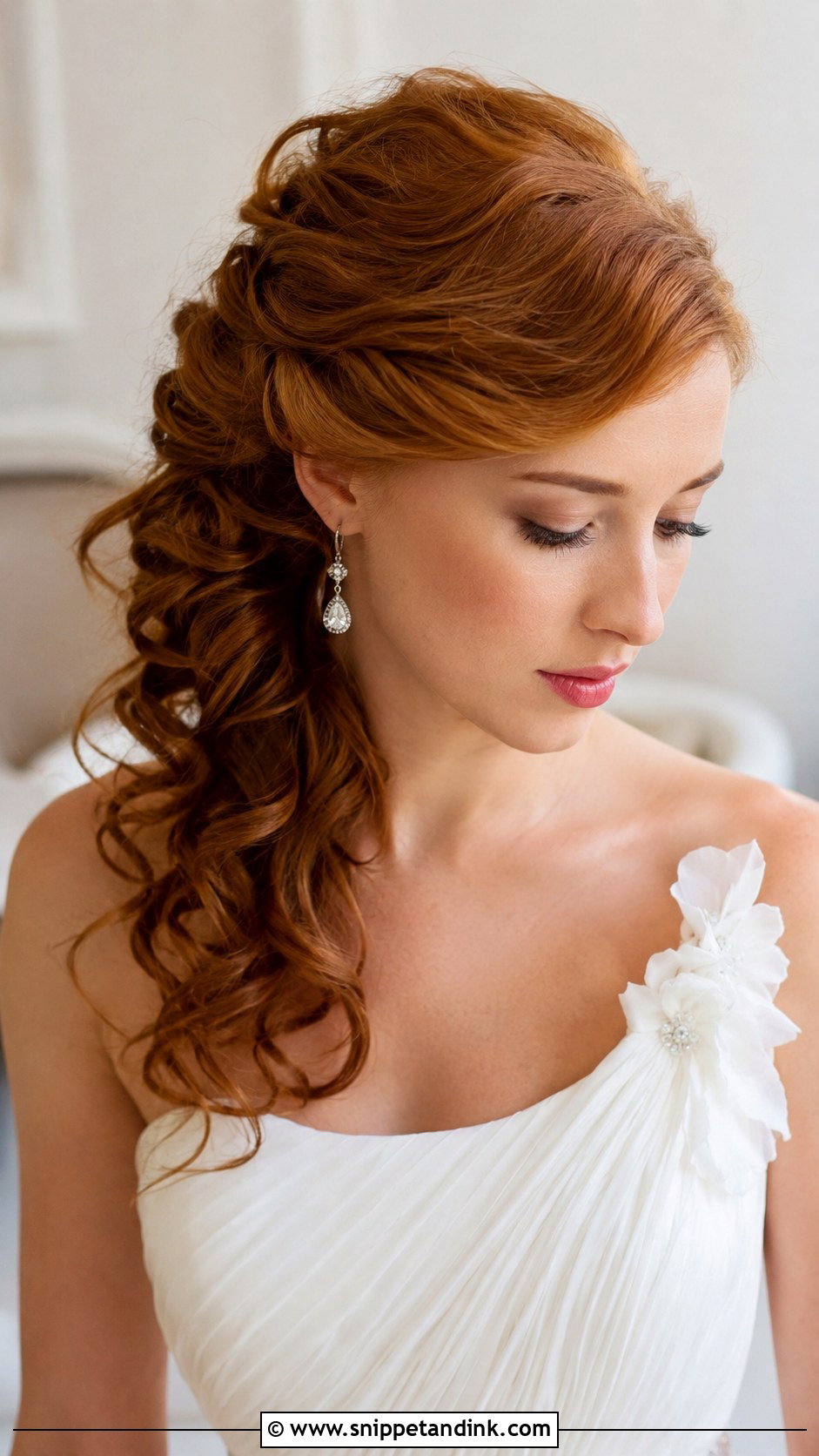
A side-swept updo gathers the hair over one shoulder, leaving the other ear and earring fully on show. It suits one-shoulder and off-shoulder gowns, especially when the bare shoulder sits on the opposite side to the hair. Profile photos favor it. I always ask which side you’ll stand on at the ceremony, because the hair should fall away from your partner, so guests and the photographer see your face. Soft curls or a braid add detail to the gathered side.
19. Pinned Curls Updo
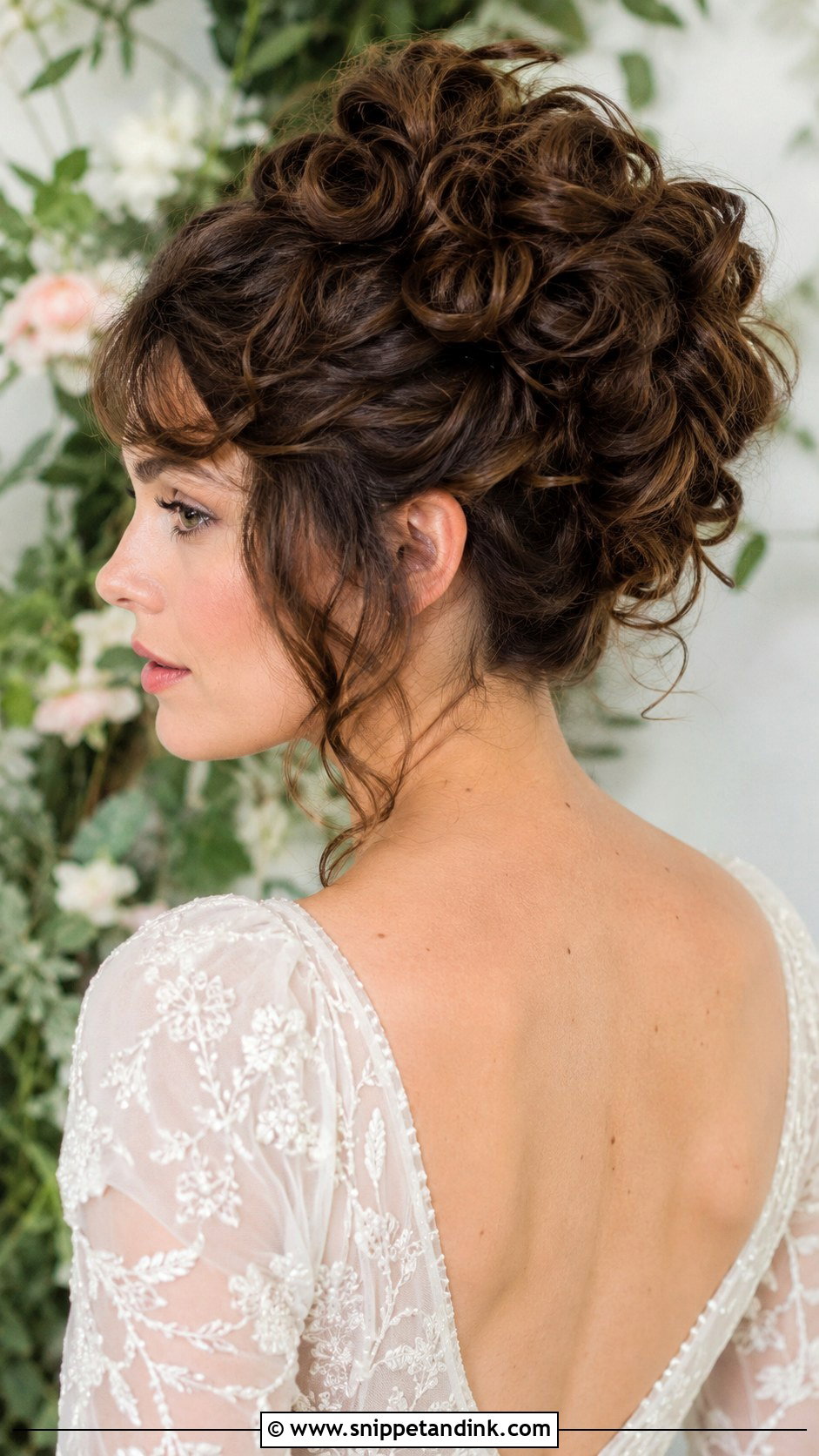
Pinned curls create a dimensional shape at the back, each curl arranged and secured individually. It takes time, often the longest appointment on this list, but it holds well because every curl is pinned on its own. Freshly curled hair must cool fully in its curl before I pin it, or the shape drops. Natural curls work too. Leave a few loose at the face if you want softness. Vintage and garden weddings suit it.
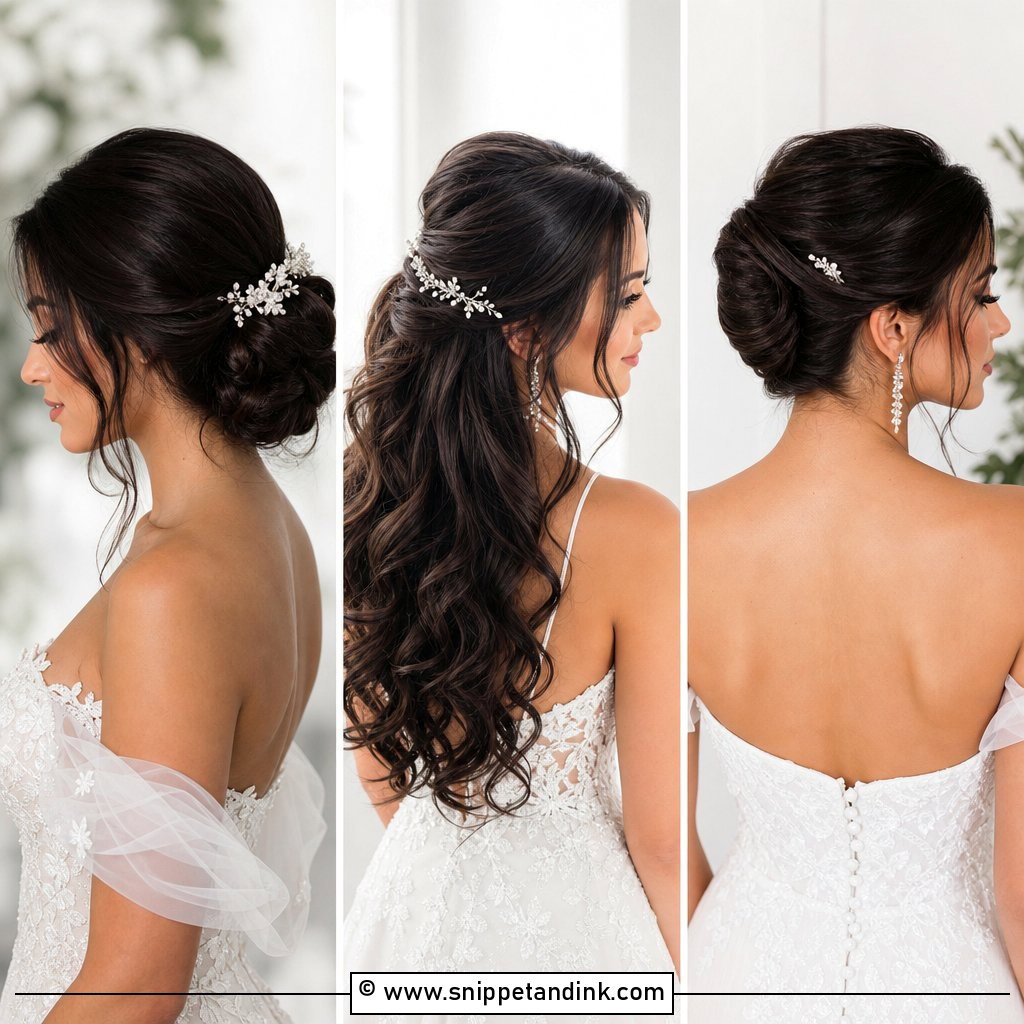
20. Low Chignon With Pearl Pins
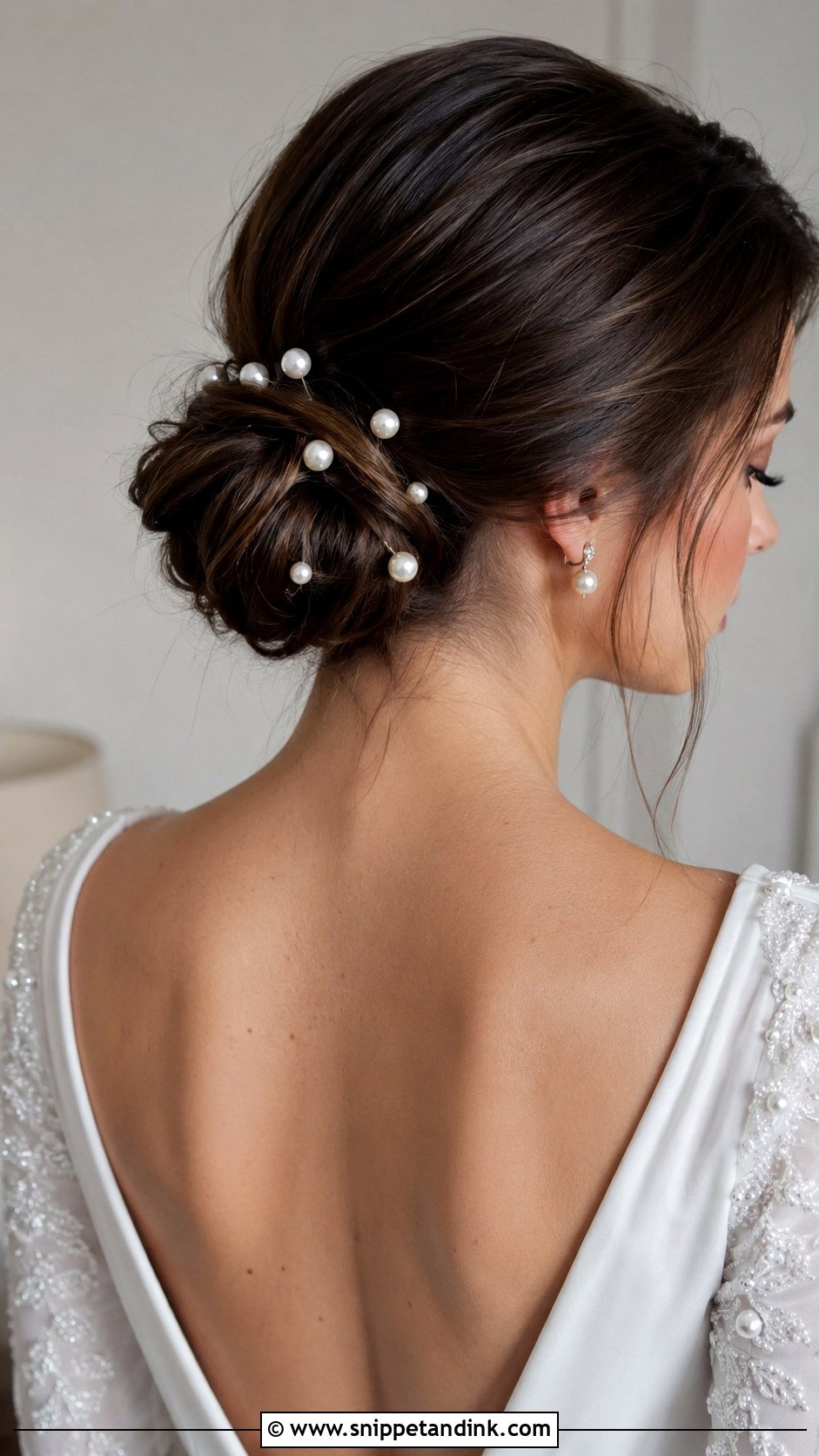
A soft low chignon makes a calm base for scattered pearl pins. The pearls add small points of light without crowding the style. I place them where the shape curves, so they catch light in photos taken from behind, and push each pin in at an angle against the hair’s direction so it grips rather than slides out. Smooth or textured, the chignon works for traditional and modern brides. Pearl earrings tie it all together.
Getting the Pins Out Without Losing Half Your Hair
A wedding updo can hold forty or more bobby pins, plus a lot of spray. Taking it down at midnight, tired, is where most hair breakage happens.
- Remove accessories and the veil comb first, then find the pins by feel and pull each one out the way it went in.
- Count roughly as you go. If the bun still feels tight, a pin is hiding somewhere.
- Don’t brush yet. Work a little conditioner or hair oil through the backcombed sections with your fingers.
- Detangle from the ends upward with a wide-tooth comb, then wash in the morning.
Ask your stylist to tell you how many pins went in, or have a bridesmaid help. Pins left in overnight leave tangles that take much longer to work out the next day.
Your Hair, Your Veil and the Trial That Ties Them Together
The updo you love in a photo is only half the decision. The other half is your hair’s texture and length, your veil and how warm the venue gets. Bring your inspiration photos to the trial, but also bring the veil, a photo of the gown’s back and the earrings, because all of them change how I build the shape. Then wear the trial style for the rest of that day and notice where it pulls or slips. That tells us more than the mirror does.
You'll Like These Ideas:



Leave a Reply