
The prettiest wedding hair I’ve worked on rarely belonged to the most complicated style in the room. It’s the one that suits the dress, the face, the hair texture and, honestly, the weather forecast. Bridal hair right now leans polished but soft: glossy buns, brushed waves, clean half-up shapes, loose braids and natural texture that still looks dressed for the occasion. Bride, bridesmaid, mother of the bride or guest, you’ll find something here that holds into the evening and won’t look dated when you flick through the album in ten years.
Effortless Hair Is Rarely Effortless
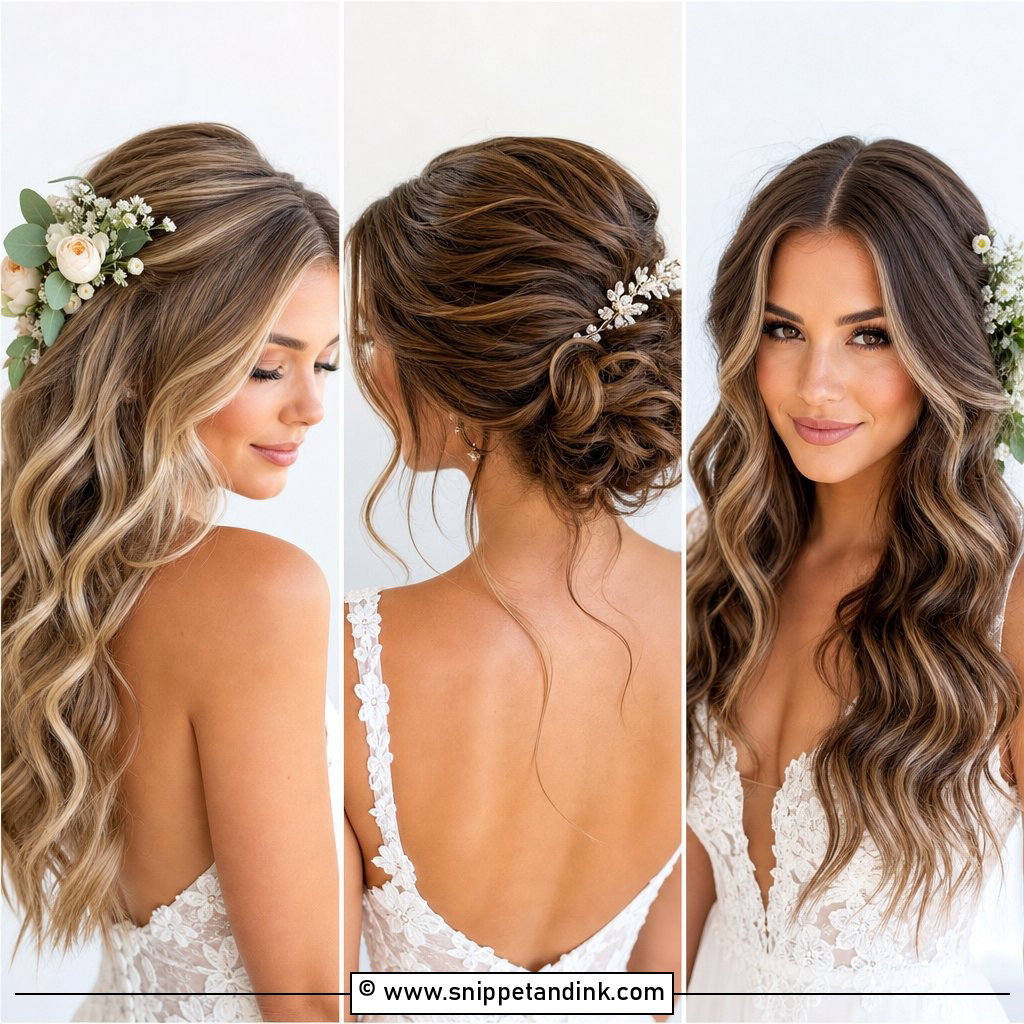
Here’s the slightly funny truth about the soft, undone look: it usually takes me longer than a sleek bun. Loose waves and a relaxed half-up style have nothing rigid holding them together, so the staying power has to be built in underneath, where nobody sees it.
That means curls set in pin clips while they cool, a texture product at the roots, hidden pins crossed under the soft sections and sometimes a few clip-in wefts so the waves don’t thin out by evening. If a stylist quotes you the same time for loose curls as for a chignon, that’s normal.
The other trap is vocabulary. “Soft,” “glam” and “natural” mean wildly different things to different people. At the trial, bring two or three photos you love and one you definitely don’t, and point at specifics: how much face-framing, how high the volume sits, whether the ends look brushed out or defined. That gets us much closer on the first attempt.
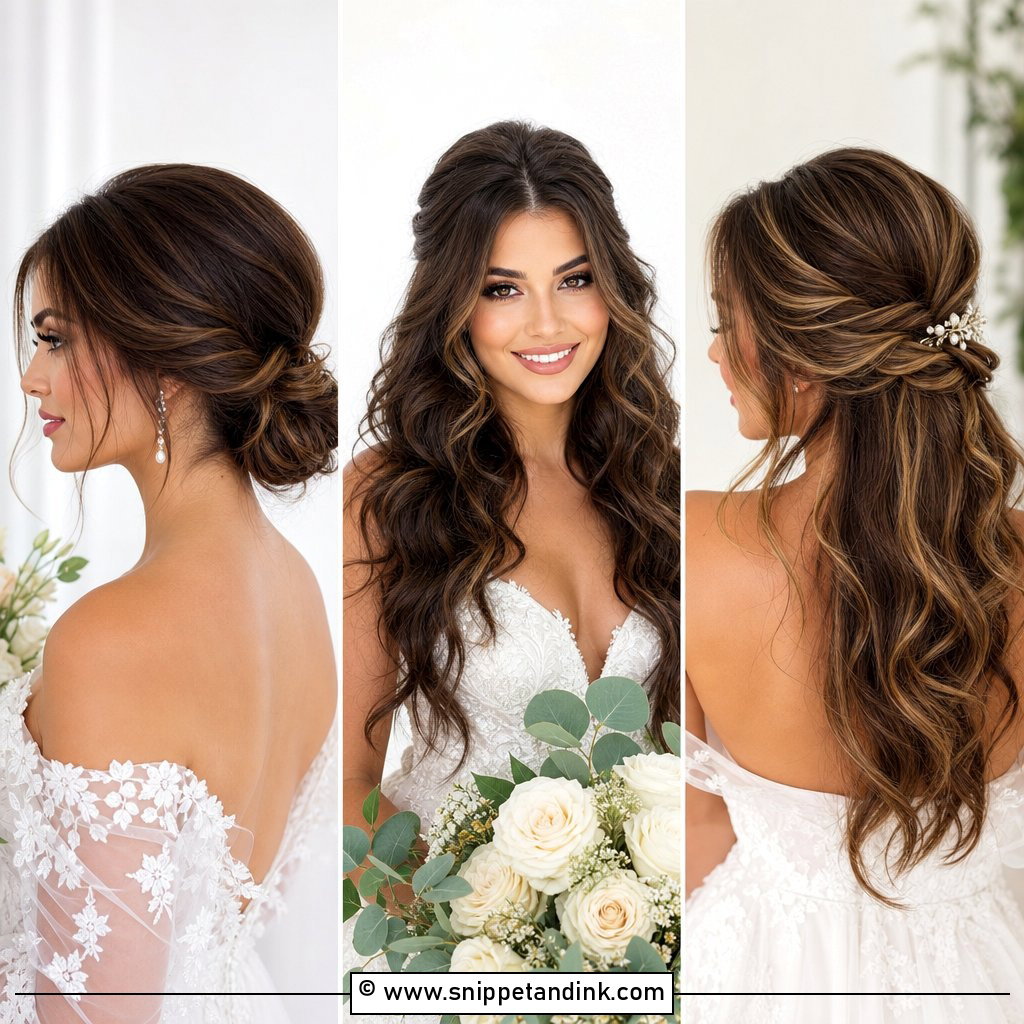
1. Low Bun Wedding Hair
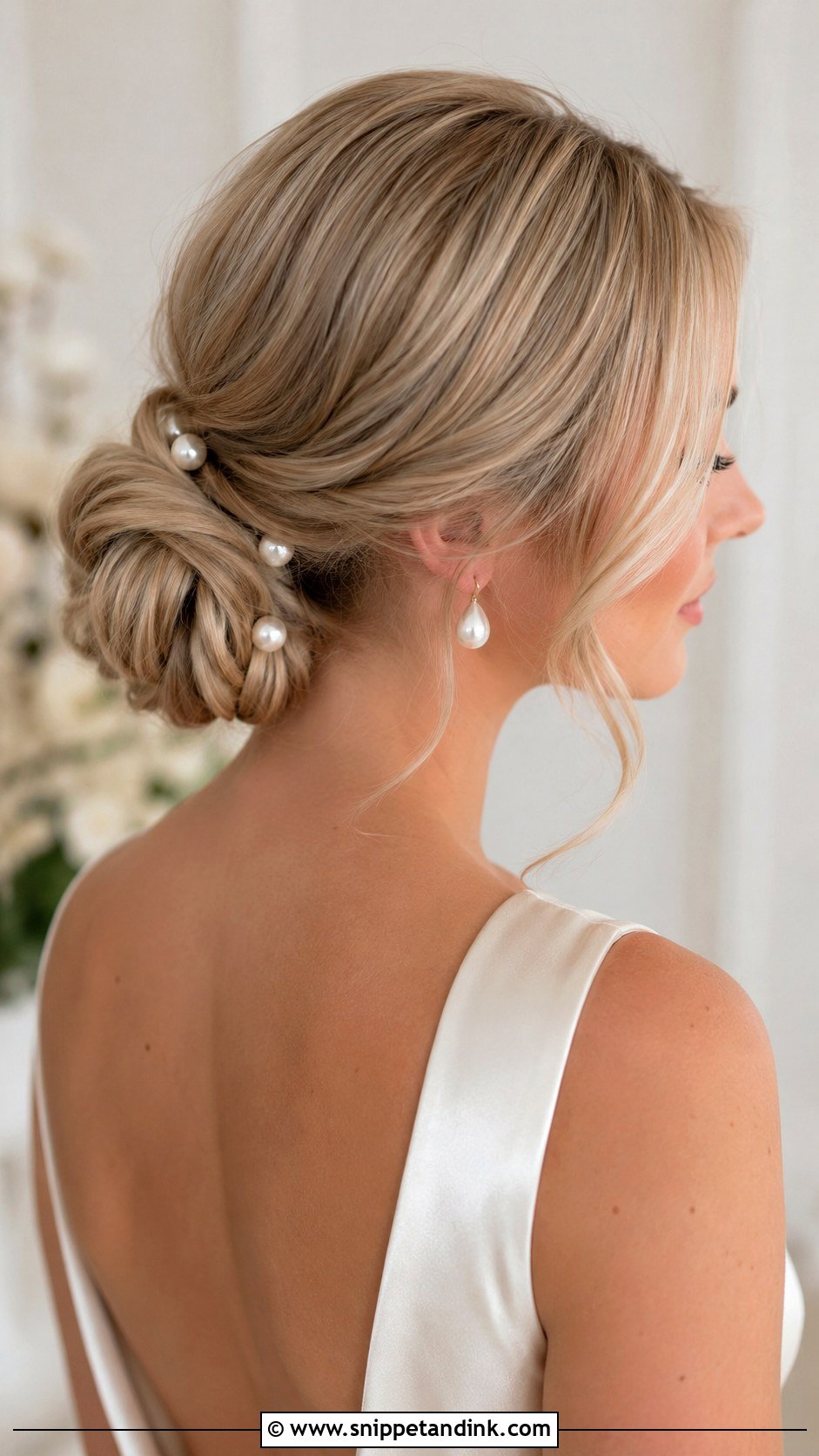
If you can’t decide, start here. A low bun sits close to the nape, so it stays out of the way of an open back, a high neckline, detailed sleeves or a long veil comb. Sleek with a center part, softened with face-framing pieces or dotted with pins, it adapts to almost any dress. I build it on a firm ponytail base and pin from underneath, so the surface stays smooth and nothing pokes through. In warm weather it keeps hair off your neck. A light shine spray at the end is enough; heavy oil makes a low bun look damp in flash photos.
2. Half Up Half Down Wedding Hair
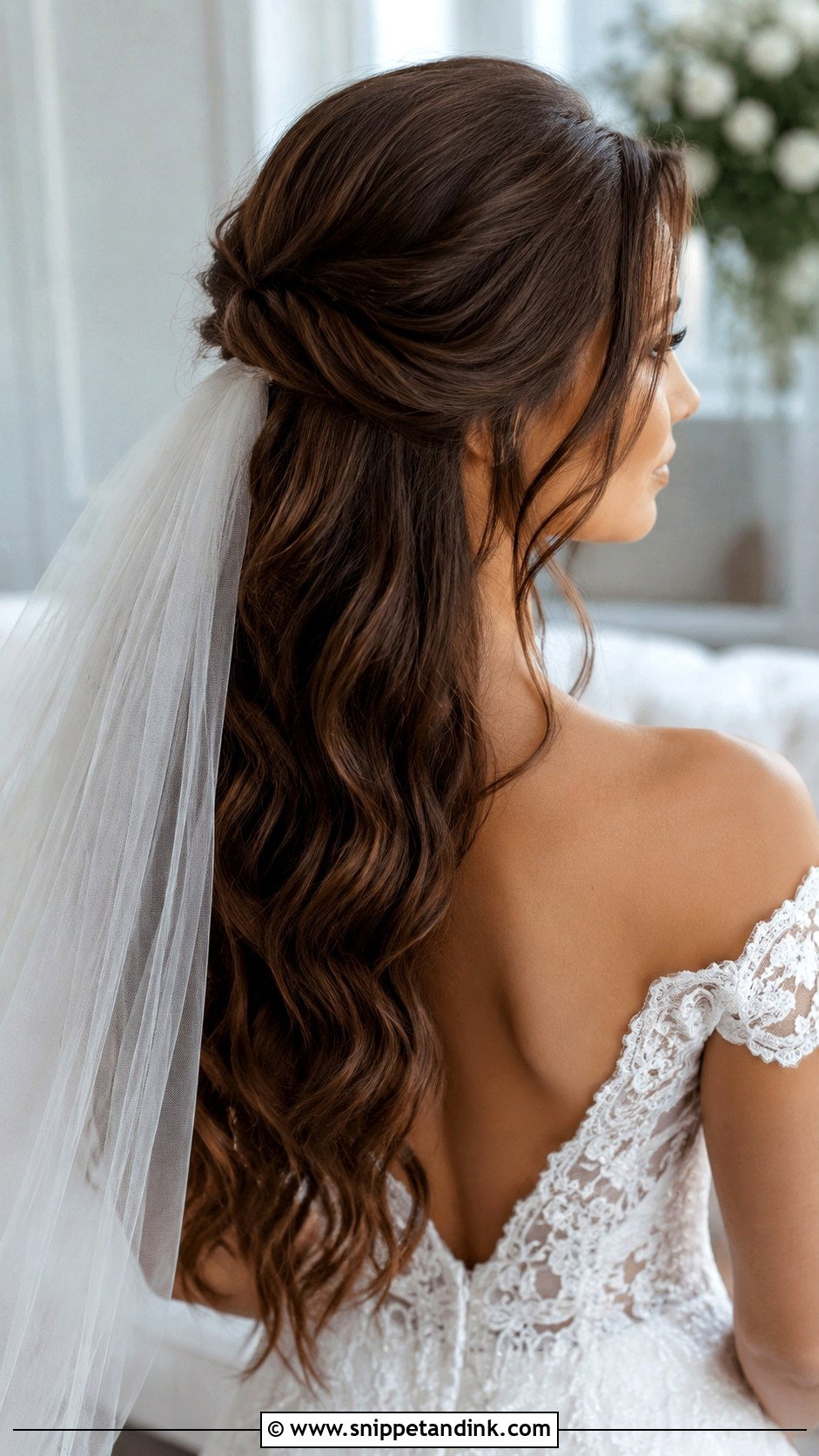
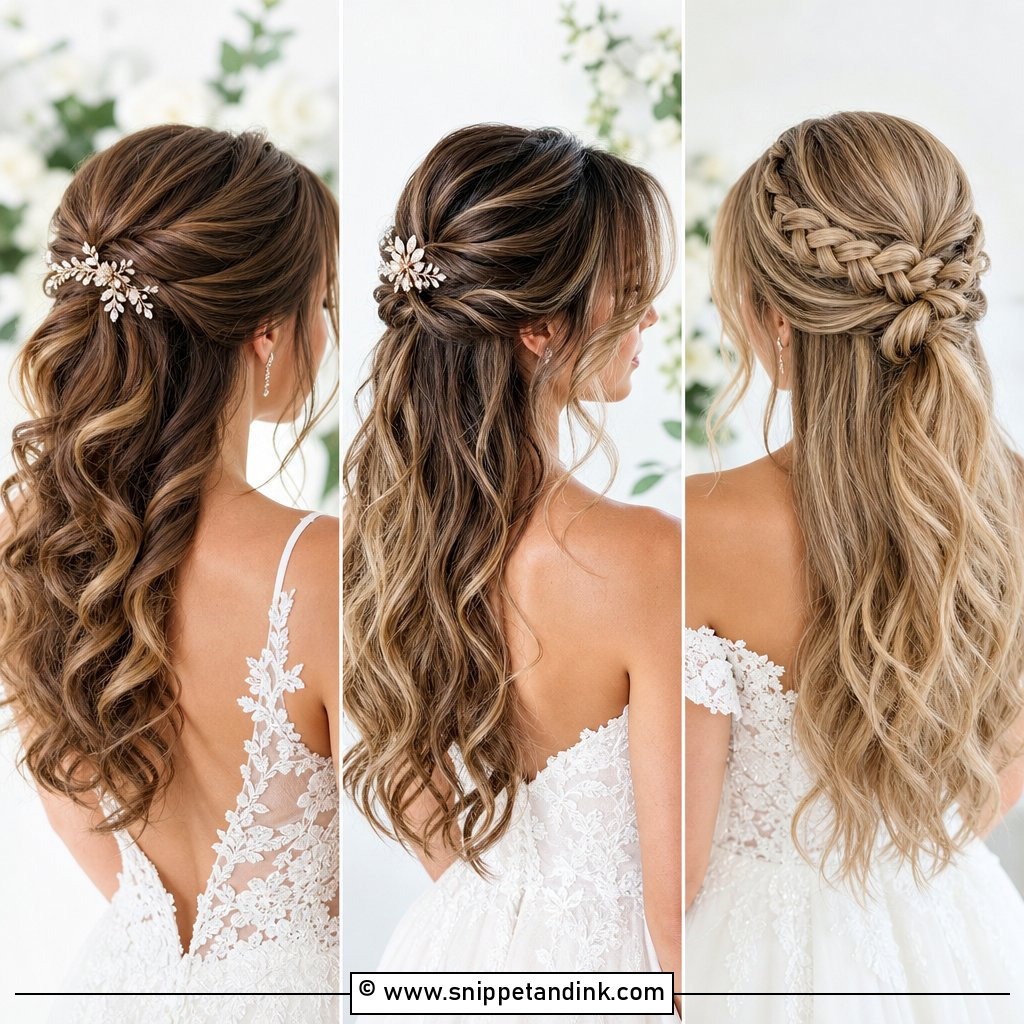
Half up, half down gives you a lifted, secure crown with loose length below. I suggest it to brides who love wearing their hair down but don’t want it in their face during the vows or every time they lean in for a hug. The top section can be twisted, braided or lightly pinned, and the length underneath is waved. Veils, pearl pins and flower combs all anchor easily into the pinned section. The one thing I’m strict about is volume at the crown: without it, the pinned part flattens under a veil and the whole shape looks deflated by the reception.
3. Hollywood Waves Wedding Hair
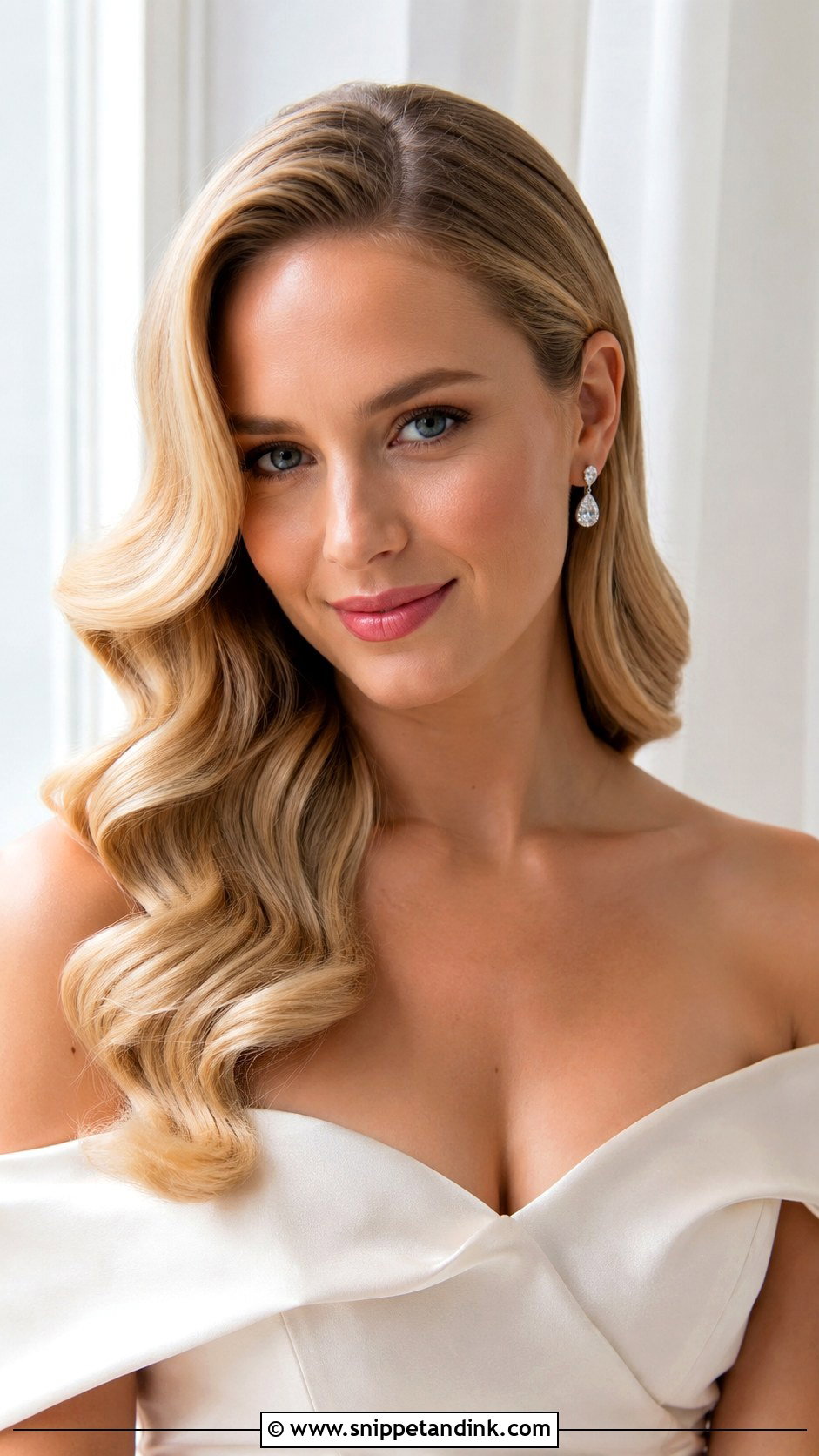
Hollywood waves are the glamorous option, and they’re more technical than they look. Every curl has to go in the same direction, so I set them in pin clips while they cool, then brush the whole head until the separate curls fuse into one smooth, sculpted pattern. Strapless gowns, off-the-shoulder dresses and simple satin silhouettes give the waves room. Medium to long hair works best; clip-in extensions fill out the shape if your hair is fine. A deep side part makes it more dramatic. I finish with shine spray and a strong but touchable hold, because a wave you can’t touch looks plastic up close.
4. Sleek Chignon Wedding Hair
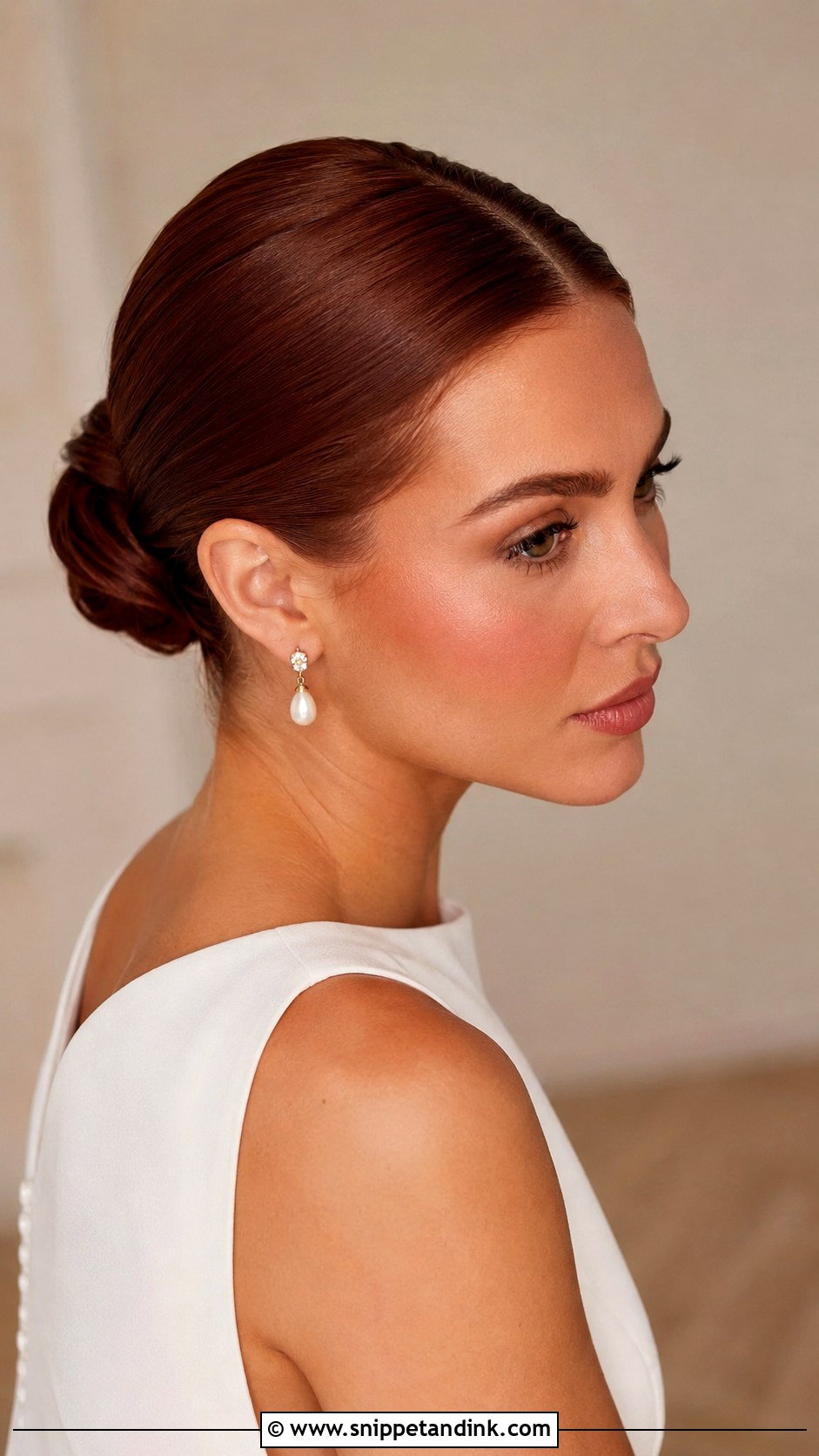
A sleek chignon is smoother, tighter and more sculpted than a soft low bun, and it’s the most minimal look on this list. Minimalist gowns, pearl earrings, cathedral veils and ballrooms all suit it. A middle part feels like a fashion editorial, a side part softer. What separates a good chignon from a bad one is shine without grease and hold without stiffness, so I use a smoothing cream and a fine-tooth comb rather than a lot of spray. It puts makeup, earrings and the neckline on full display. On layered or fine hair I’ll hide a small padding piece inside so the knot looks full but still natural.
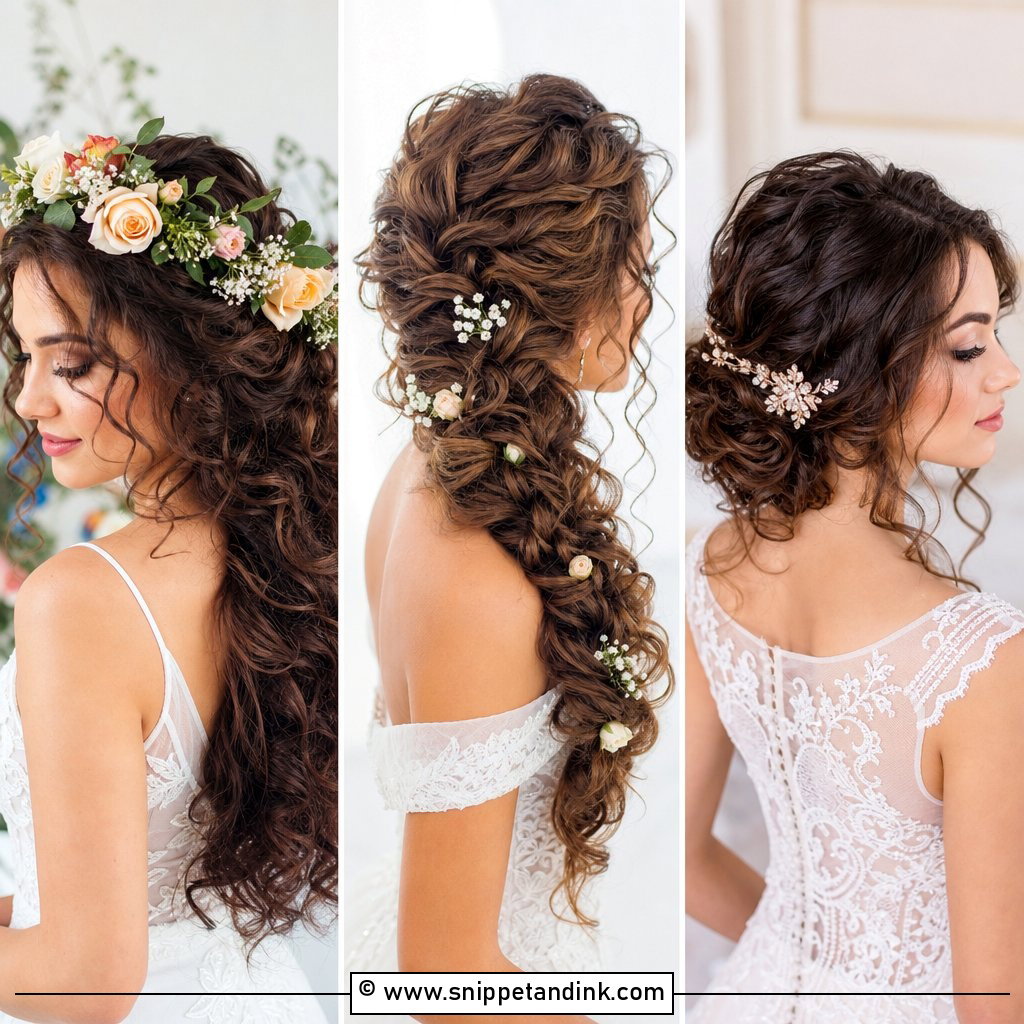
5. Loose Curls Wedding Hair
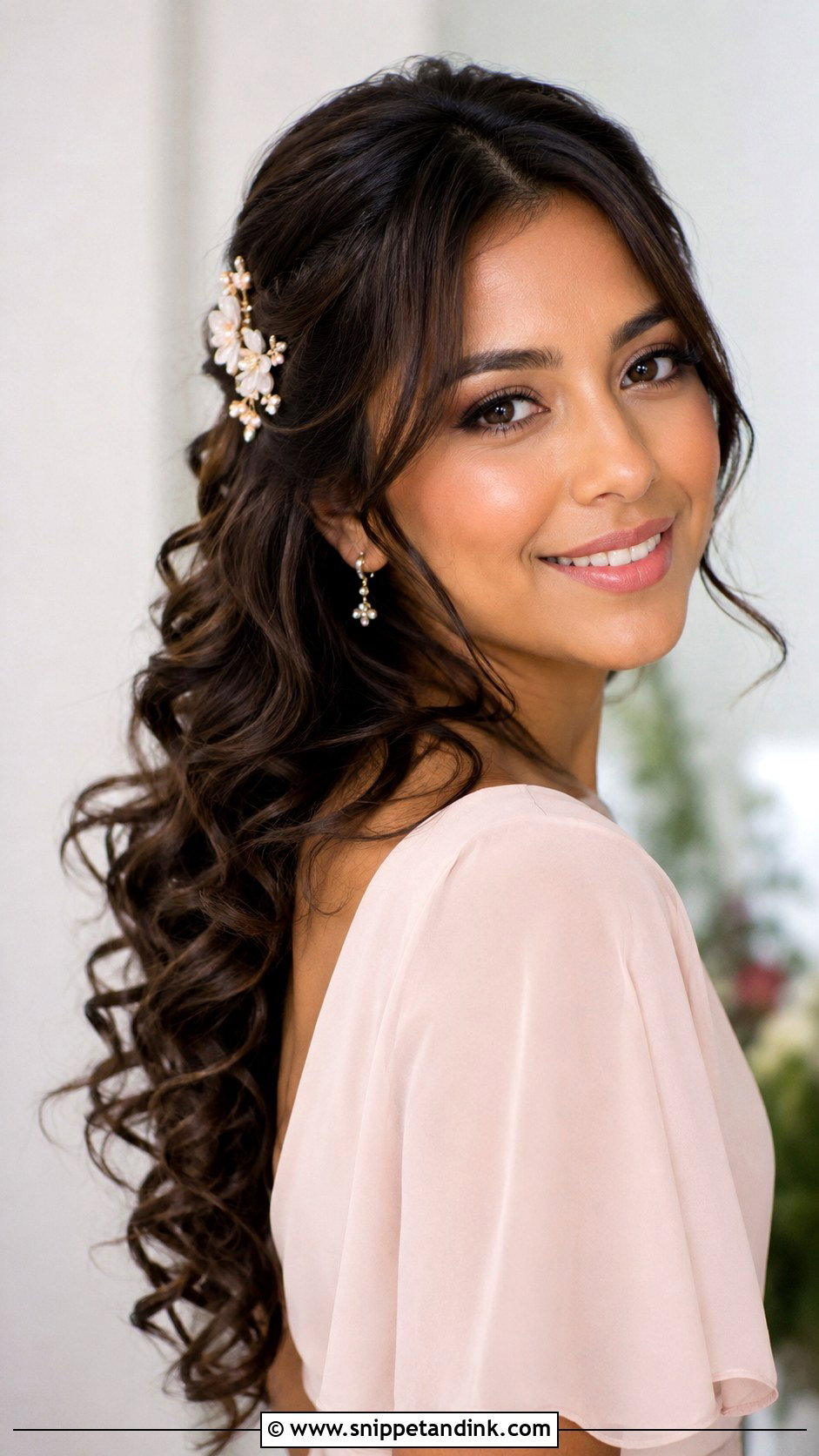
Loose curls suit an outdoor ceremony, a garden, a beach or a relaxed reception better than almost anything else. They should look shaped, not messy, with enough definition to come through hugs and movement. Long, layered and medium hair that holds a curl all work. Center part for balance, side part for a softer frame. I’d be honest with you, though: on fine, straight hair in humid weather, loose curls are the style most likely to fall flat by the speeches. Heat protectant, a curl-setting spray and letting each curl cool before brushing are what keep them going.
6. Braided Updo Wedding Hair
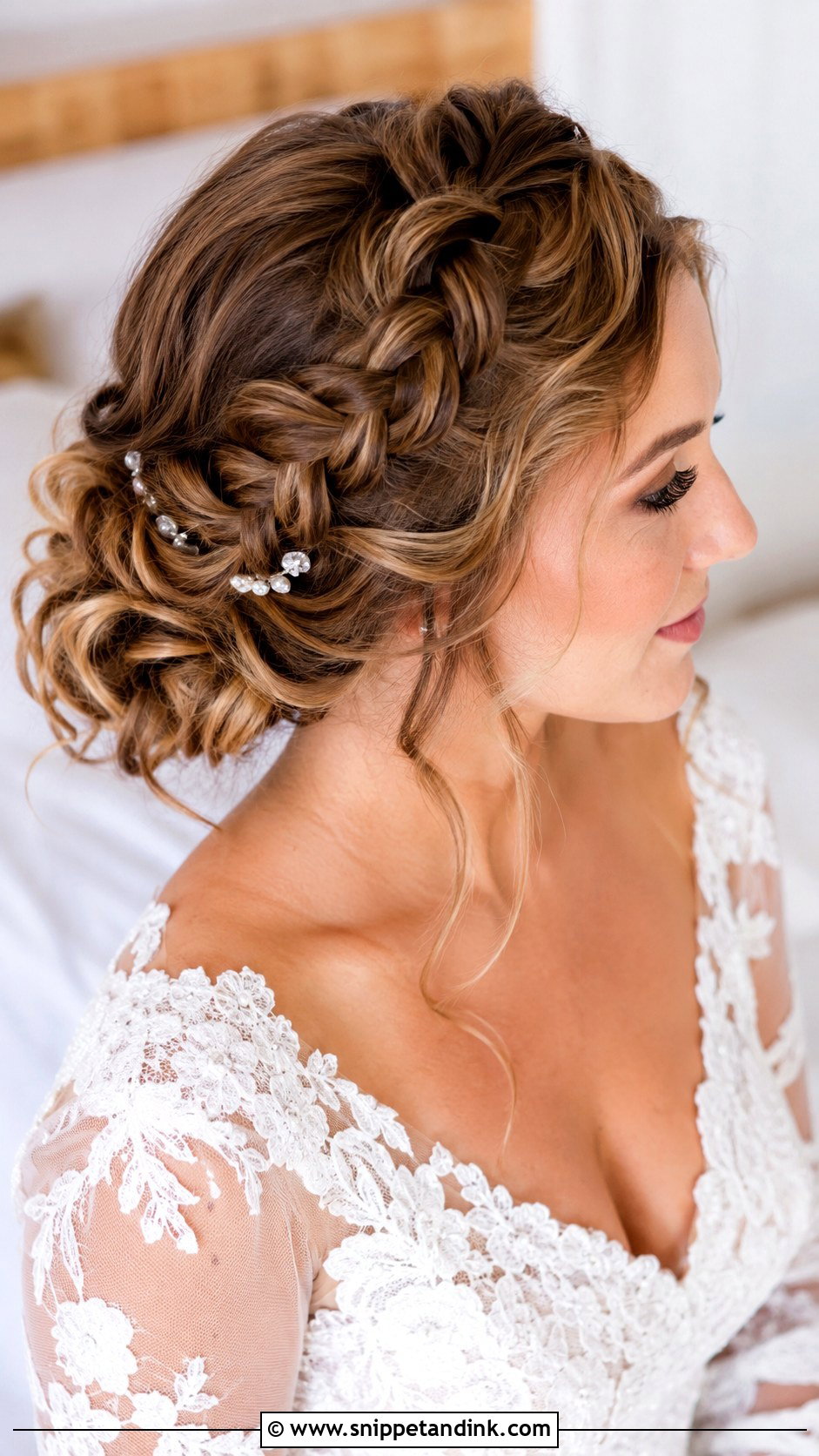
A braided updo adds texture and detail without looking busy. The braid can wrap around the bun, frame the crown or run along one side before blending in. Layers, highlights and natural dimension all show up better inside a braid, so I often recommend it for hair that’s been colored. Rustic, garden, boho and outdoor weddings suit it. The trick is the order: I pin the braid in place first, then gently pull the loops wider, so it looks full and soft instead of flat. Pulling before pinning makes the braid lose its shape.
7. High Bun Wedding Hair
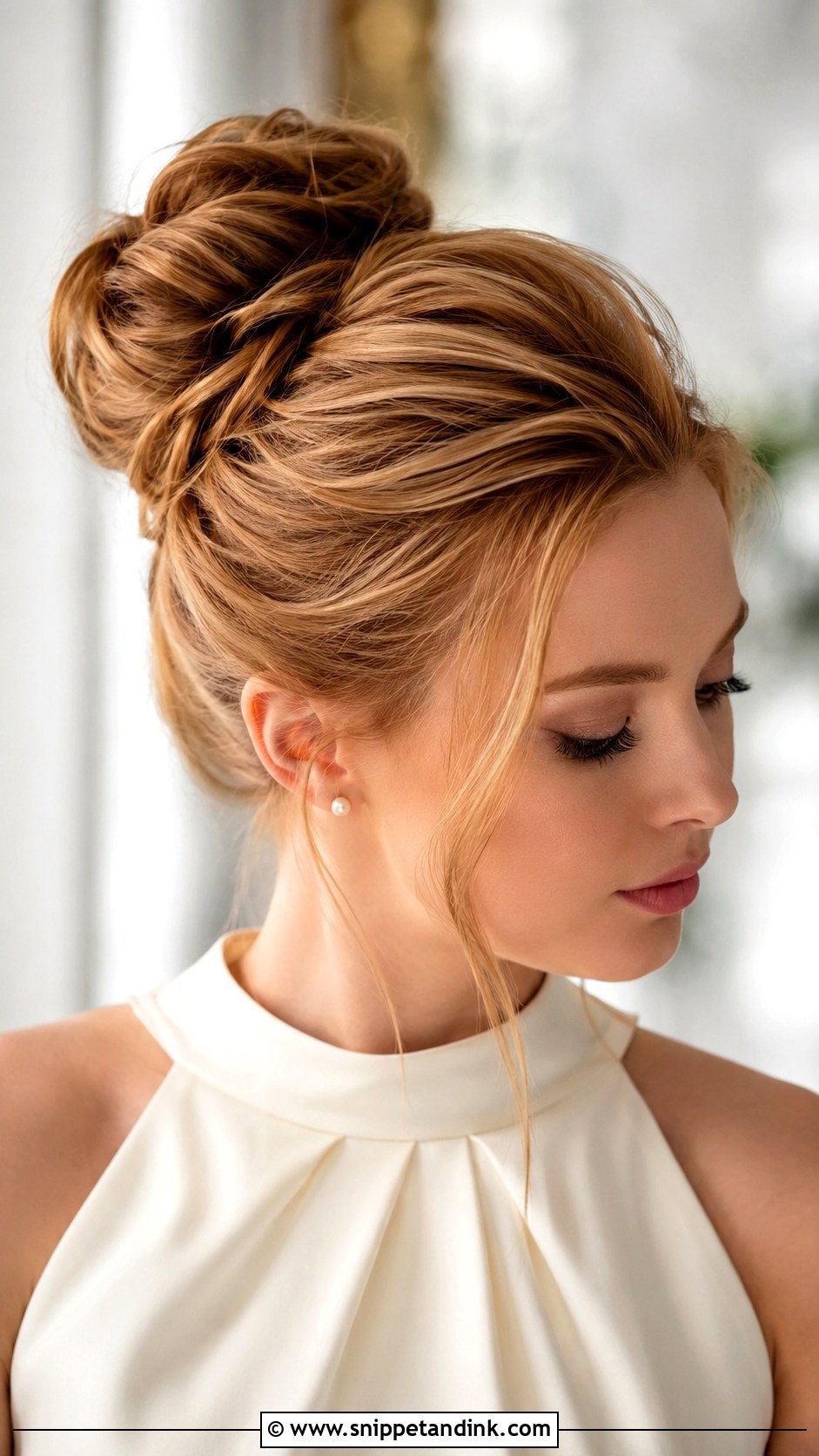
A high bun lengthens the neck and keeps everything off the shoulders, which is why I like it with high necklines, halter dresses, dramatic earrings and detailed bodices. You can go sleek, like a ballerina bun, or softer with gentle texture. Size matters more here than with any other bun: too big on a petite face looks top-heavy, too small on a strong jaw looks like an afterthought. The catch with a veil is placement, since a high bun pushes the comb lower, so I’d test the two together at the trial.
8. Side Swept Wedding Hair
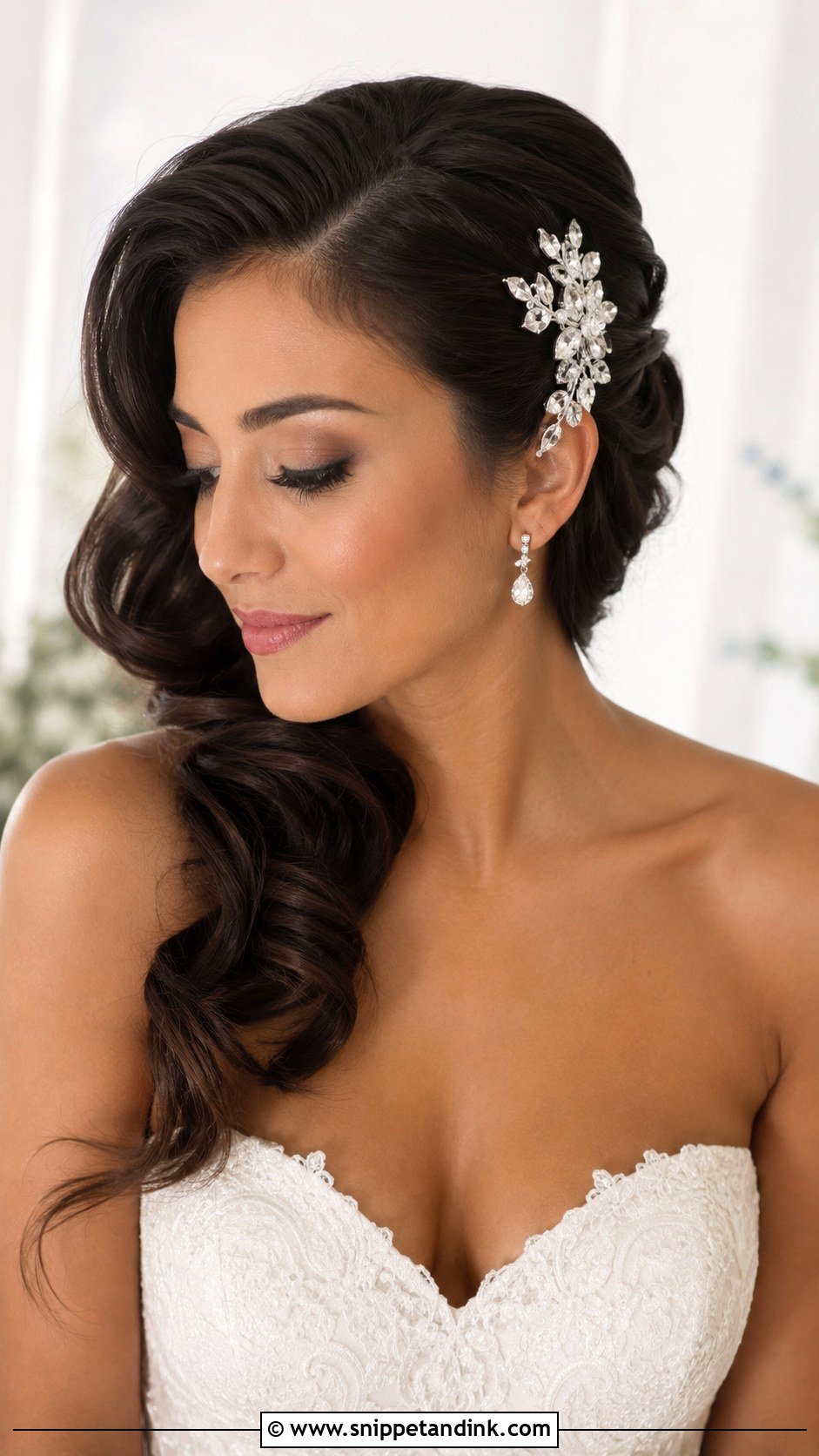
Side swept hair falls over one shoulder and frames the face, which makes it a natural partner for one-shoulder gowns, strapless dresses and soft lace. I style the length with loose curls, polished waves or a small braid anchoring the heavier side. The pinned side is where it succeeds or fails. I hide a row of crossed pins behind the ear, because without them the whole style drifts back to center by the first dance. It suits a bride who wants her hair down with some structure. Jeweled pins or a floral comb over the pinned side give close-ups a focal point.
9. Textured Ponytail Wedding Hair
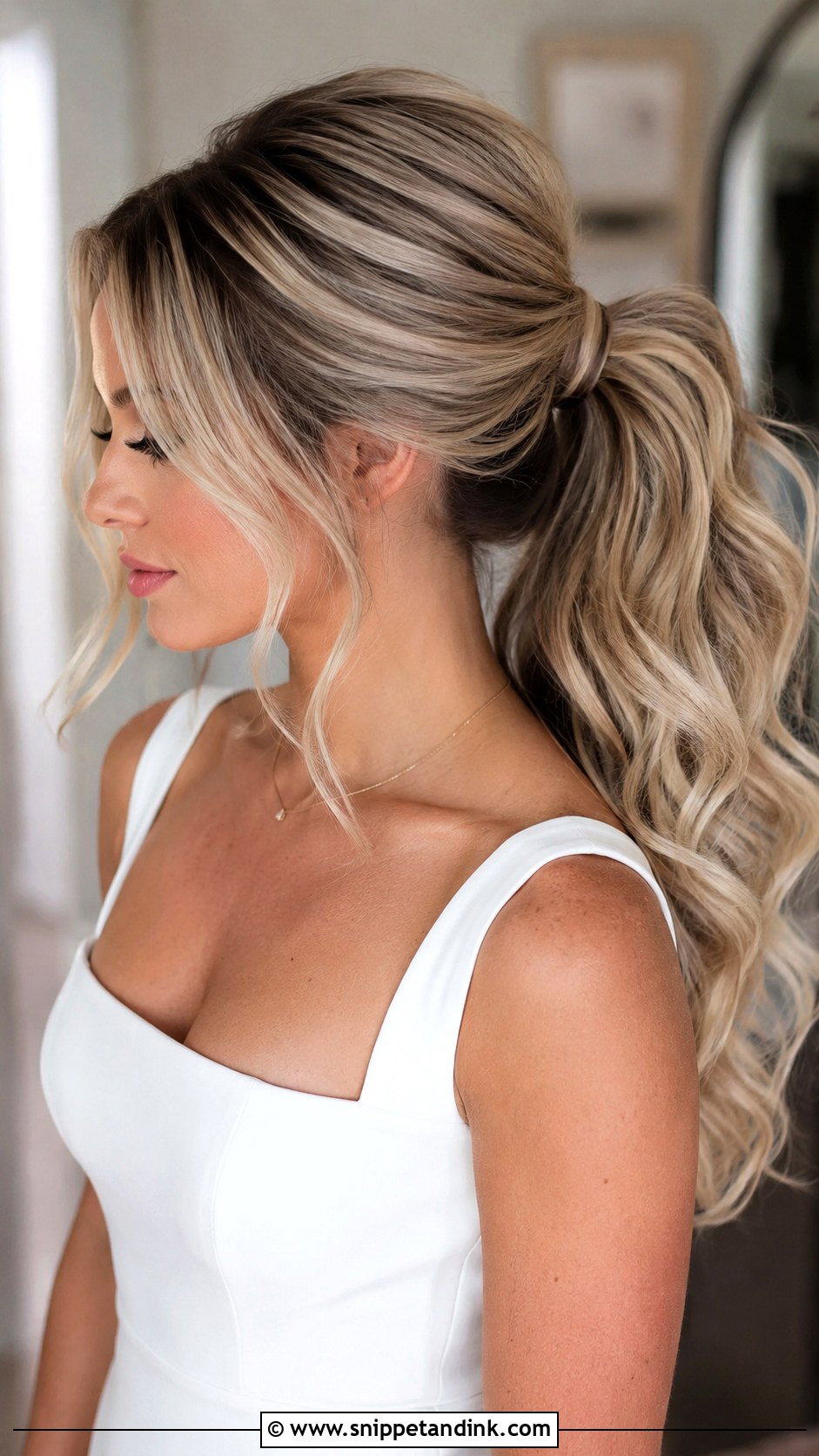
A textured ponytail is the modern alternative to a bun: hair controlled, length still moving. Low reads romantic, mid-height bouncy, high more glamorous. Waves through the length make it look fuller, and wrapped hair around the elastic gives a polished finish. I secure ponytails with two elastics, one tight and one slightly lower, which stops the tail drooping during hours of dancing. Face-framing pieces soften it. Pearls, a bow or a small comb make it feel bridal.
10. Crown Braid Wedding Hair
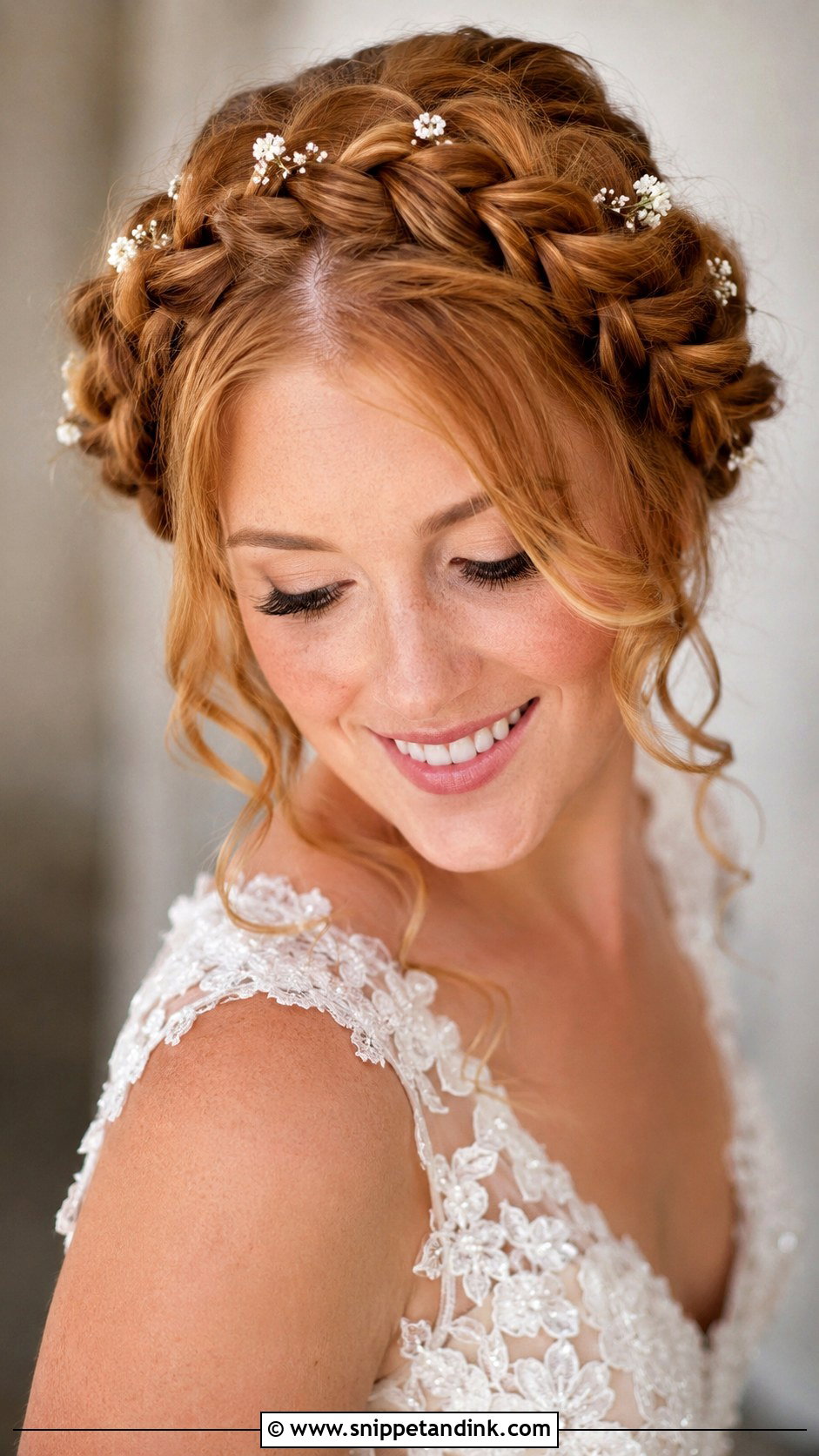
A crown braid wraps around the head like a halo, and it’s one of the most practical styles I know for a windy outdoor ceremony, since everything is neatly controlled. Lace, floral details and garden settings suit it. You can leave a few curled pieces at the face or keep it fully pinned for a cleaner finish. Fullness is what makes it look intentional, so I gently pull the braid apart after securing it. On shoulder-length hair, two braids meeting at the back are easier than one long one. Small flowers or pins finish it.
11. Natural Curly Wedding Hair
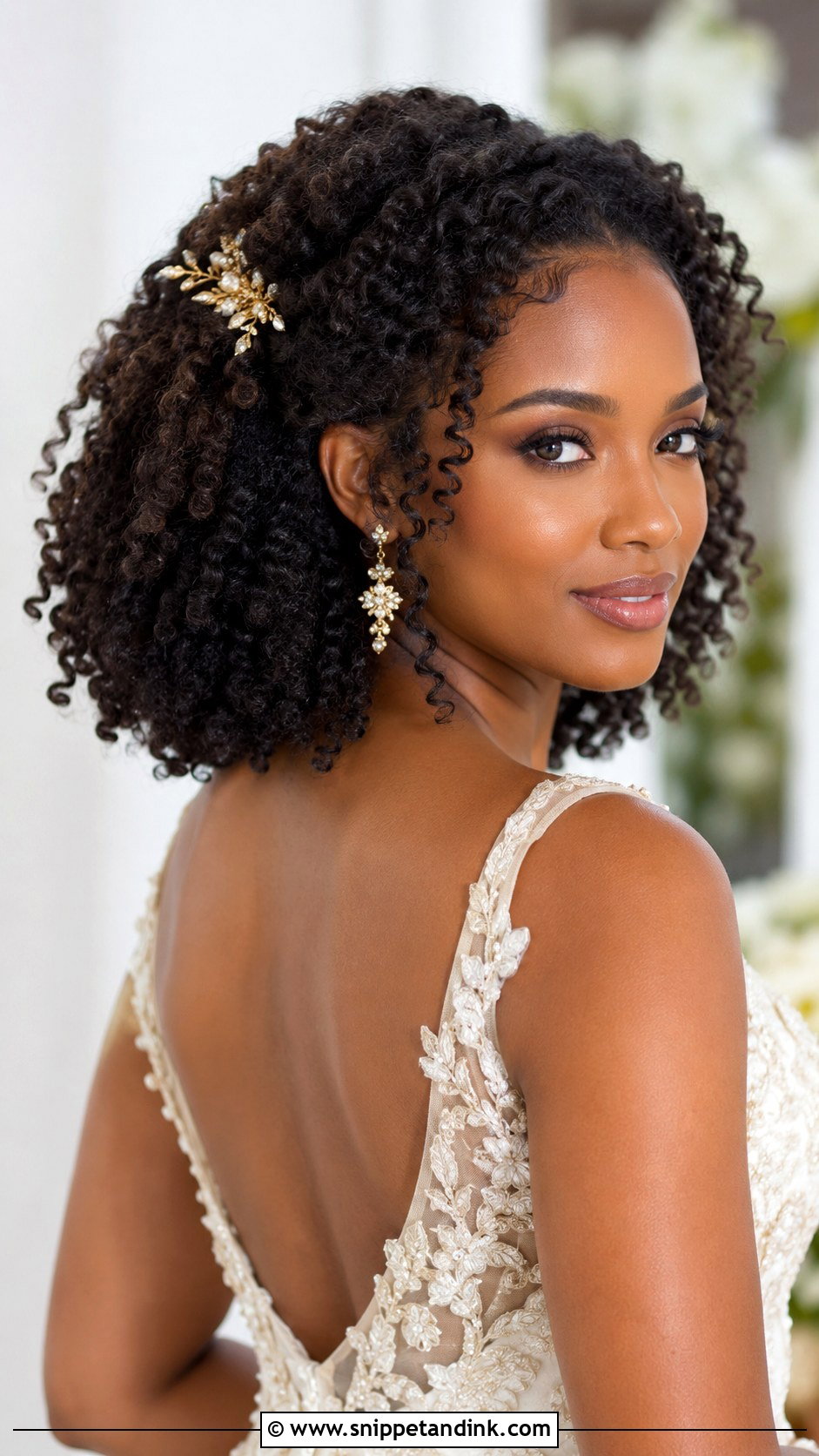
Curly hair on a wedding day needs hydration and shape, not a texture change. I keep the pattern, building volume, bounce and definition, and style it down, half up, pinned to one side or as a curly updo. Prep is the real work: moisture, curl cream, gel and diffusing build definition before a single pin goes in, and I never brush curls dry. Floral pins, gold clips, pearls or a veil set behind the crown all sit well in curls. A trial matters most for this hair type, because that’s where I find out which products hold without leaving a crunchy cast.
12. Short Bob Wedding Hair
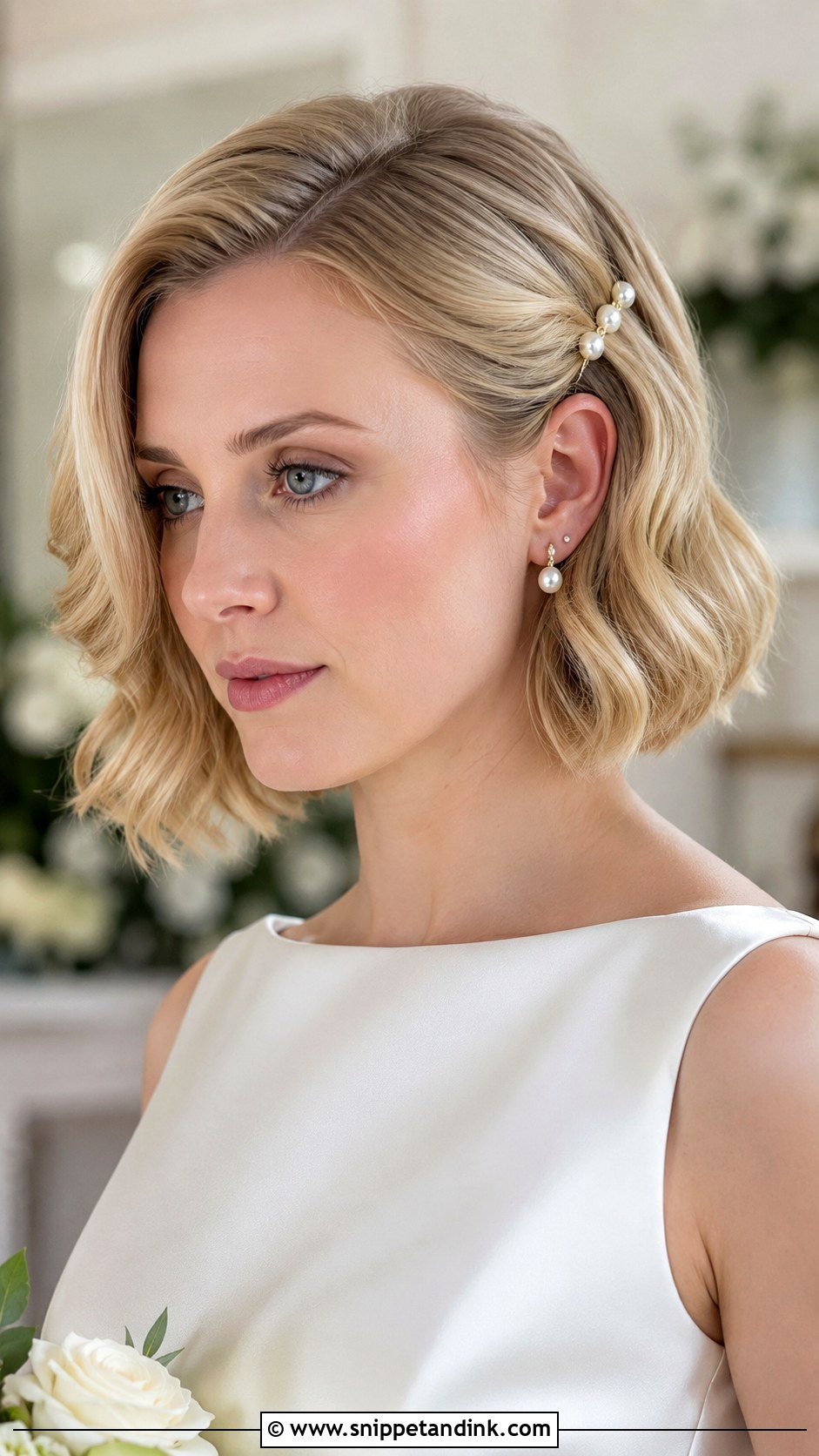
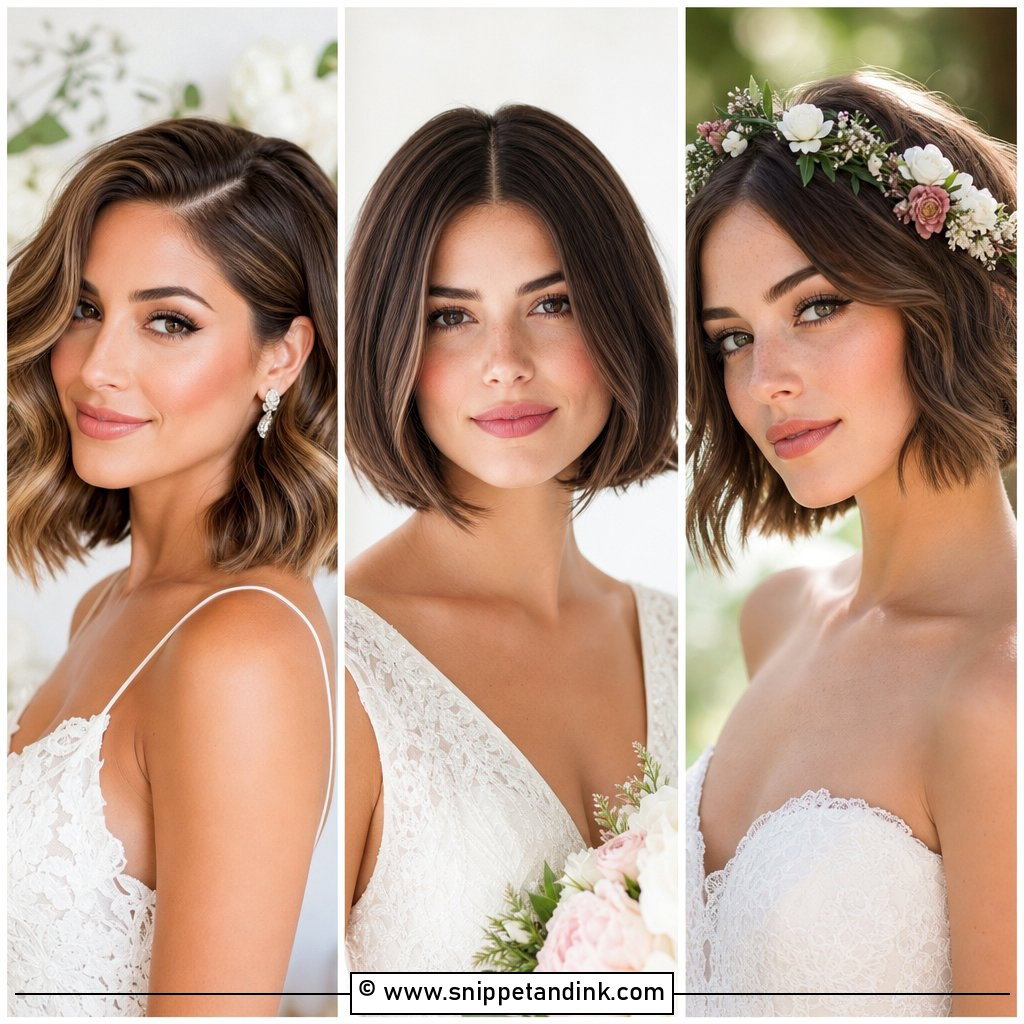
Length has nothing to do with how bridal hair looks. Short bob wedding hair can be softly waved, tucked behind one ear, worn sleek or set on a deep side part, and it looks just as finished as a long style. On a blunt bob I add smooth waves for movement; on a layered one, texture spray brings out the shape. Pearl clips, a slim headband, tiny floral pins or a short veil all suit it. I keep the finish glossy, because matte texture on a short cut can read casual in photos.
13. French Twist Wedding Hair
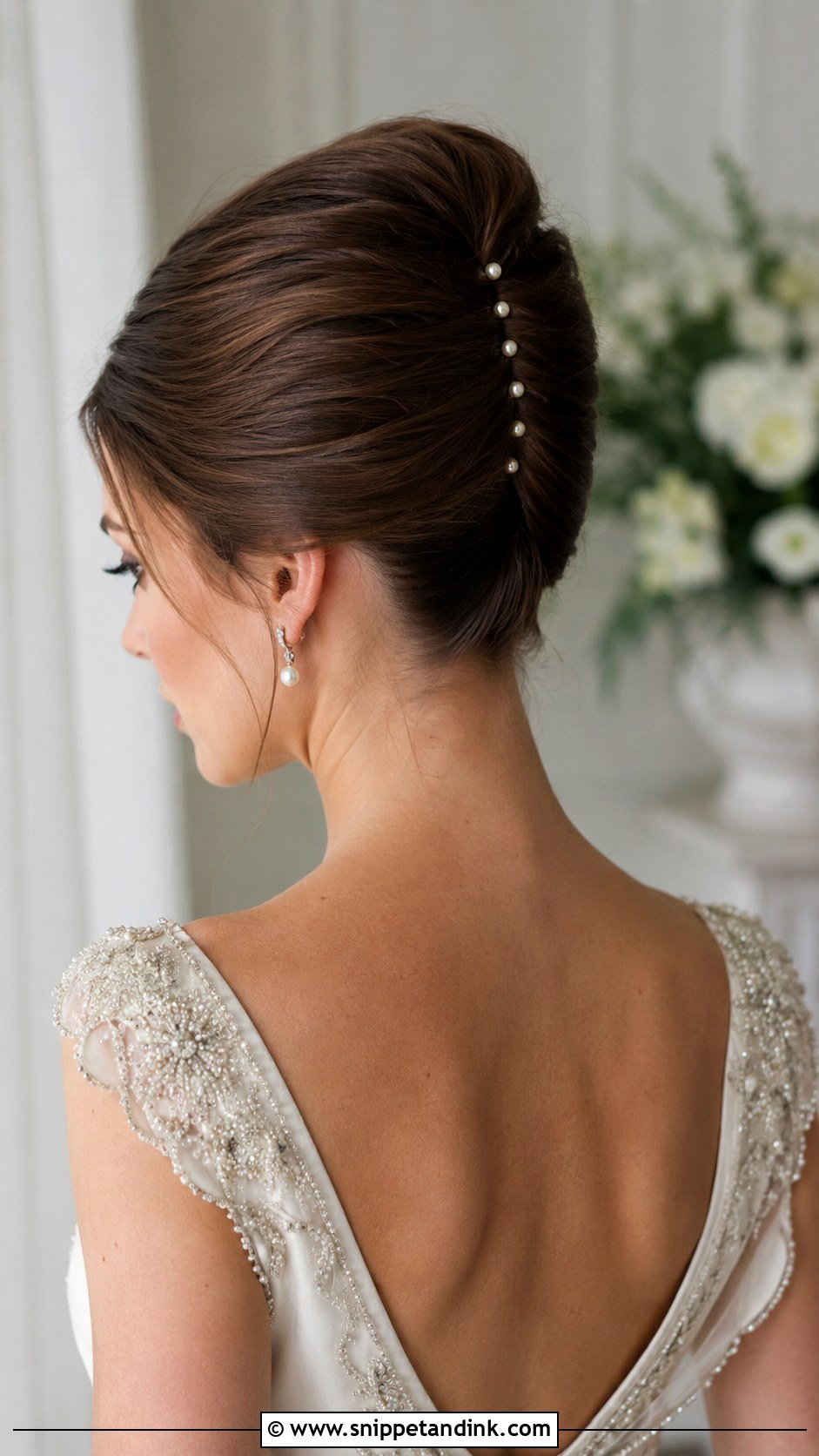
The French twist is a classic for good reason: swept up and tucked into a vertical roll, it looks clean from the front, the side and the back. Vintage dresses, formal venues, simple veils and pearl accessories suit it. Sleek or slightly softened both work. It’s also kinder to medium-length hair than people assume, because the roll needs height rather than length. I lock it with a row of interlocking pins along the seam, the part of the technique that decides whether it lasts all day or slowly unrolls.
14. Waterfall Braid Wedding Hair
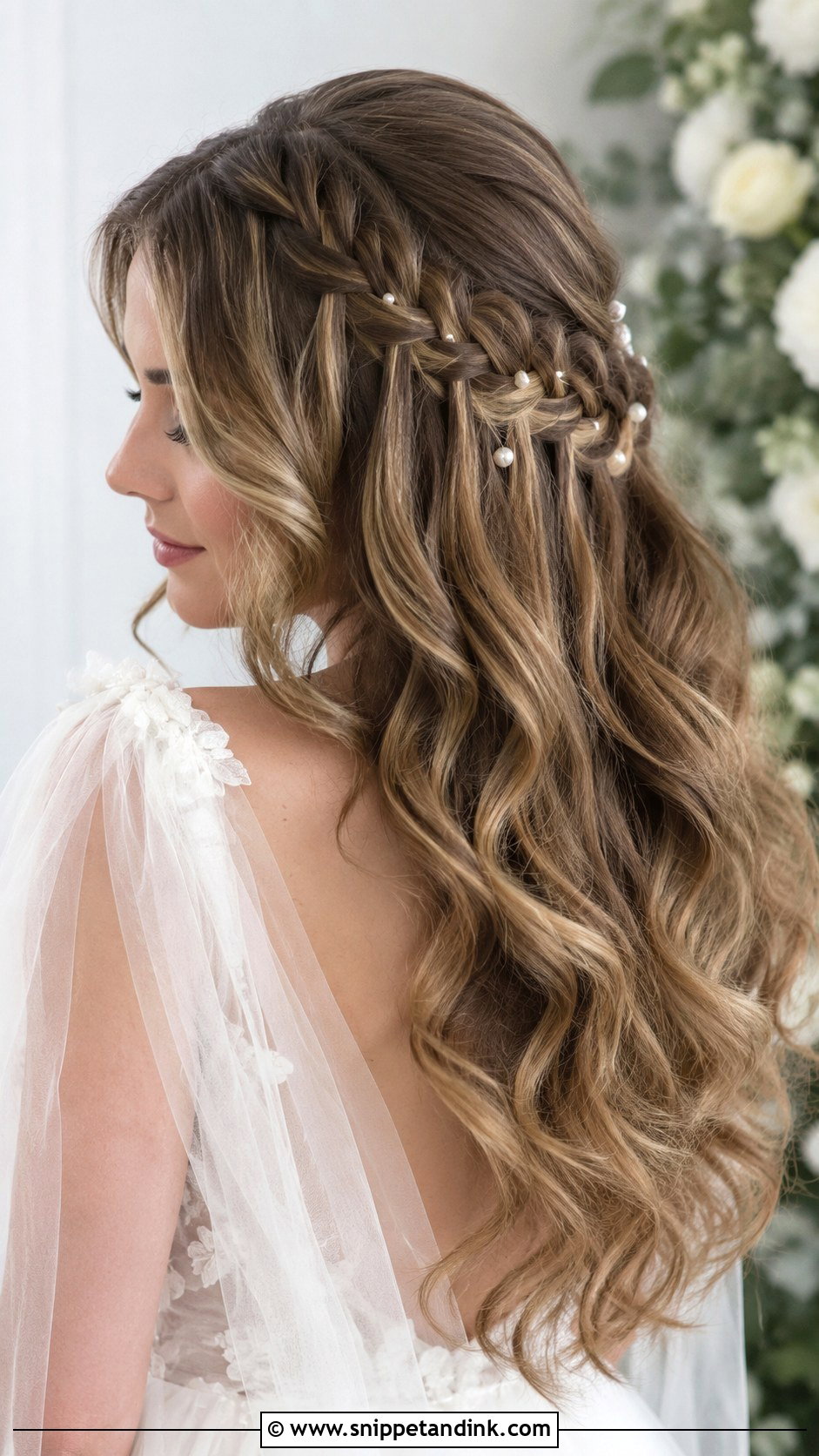
Not every bride wants a full updo. Waterfall braid wedding hair gives detail across the crown while strands drop through the braid and blend into curls or waves below. The layered effect shows best from behind, which is exactly how guests see you during the vows. Bridesmaids, flower girls and outdoor weddings suit it well. Medium to long hair makes the braid readable. I curl the dropped strands afterwards, since straight pieces falling through hide the pattern. Tiny pearl pins or small flowers help the braid stand out.
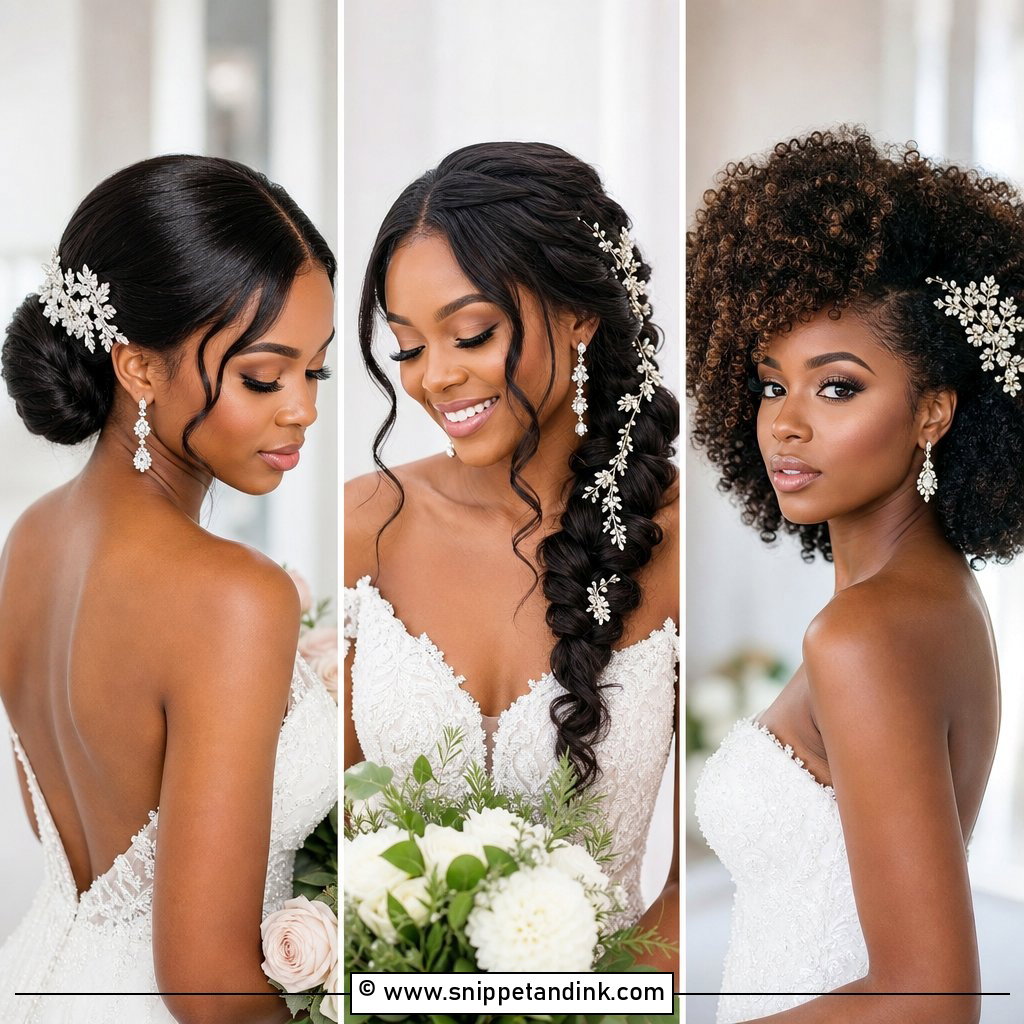
15. Low Ponytail Wedding Hair
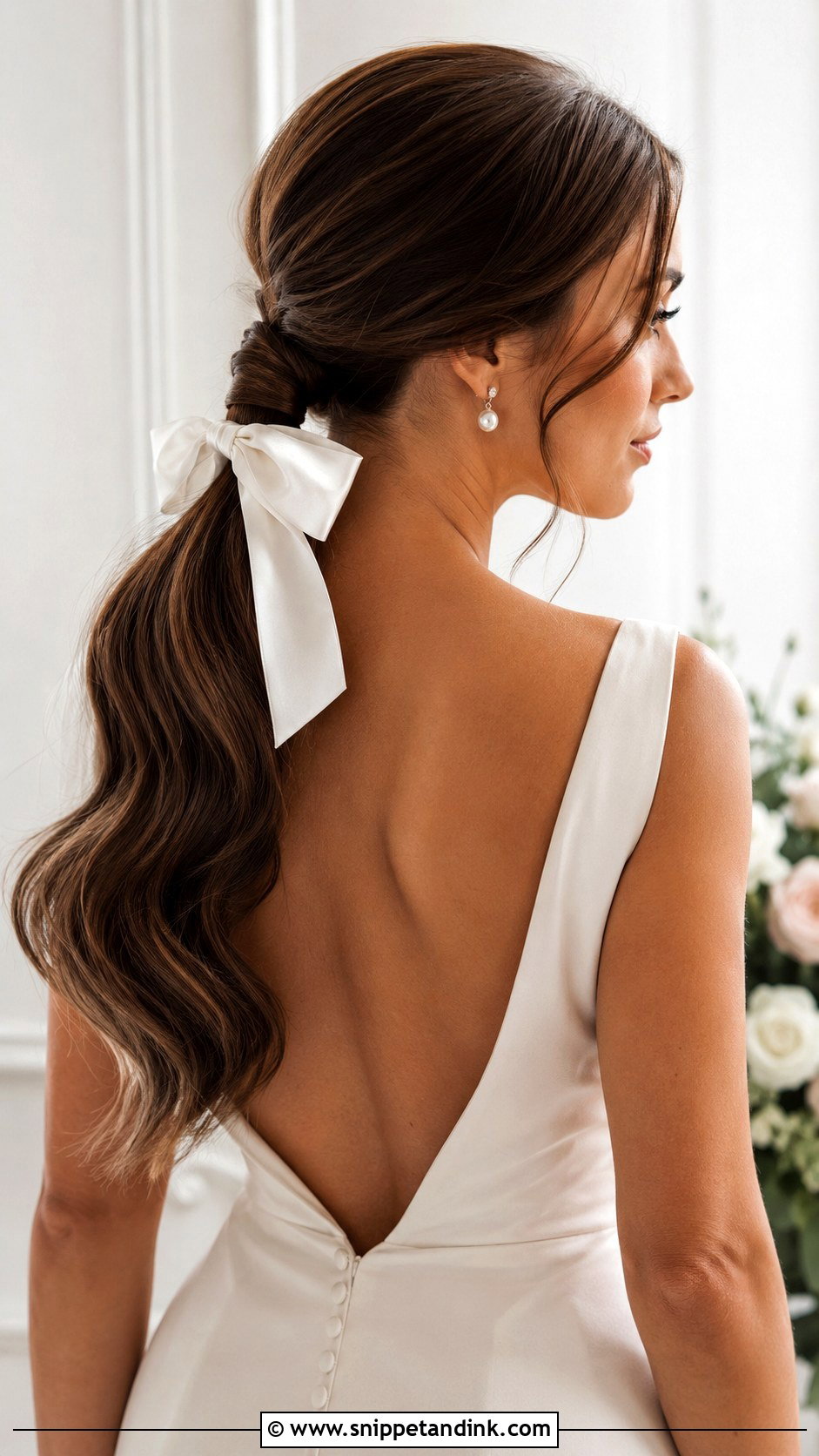
A low ponytail sits at the nape, keeps its length and movement, and is about the most wearable thing you can do for a long celebration. Sleek and glossy, softly curled or textured with volume at the crown, it suits modern gowns, clean makeup and statement earrings. It’s also a smart choice for bridesmaids because it looks polished without competing with the bride. I wrap a strand around the base, smooth the top with a little cream and wave through the ends. A bow or pearl clip finishes it.
The Morning, From First Pin to Walking Out
Most of the stress on a wedding morning comes from the hair schedule running late. This is roughly the order I work in:
- Arrive with clean, completely dry hair, washed the night before or that morning depending on what your stylist asks for. Wet hair at the appointment can add half an hour.
- Bridesmaids and family go first. Allow roughly 30 to 45 minutes per person for most of the styles above.
- The bride’s hair starts after them, with an hour to an hour and a half set aside, longer for braided updos or anything with extensions.
- Makeup and hair can overlap, but the veil goes in last, after the dress is on.
- Ask the stylist to stay, or leave you pins and spray, for a final check just before you walk out.
Wear a shirt that buttons or zips at the front so nothing goes over your head afterwards. Keep a hand mirror nearby so you see the back before the photographer arrives, not in the first portraits.
If one stylist is doing five or more heads, ask whether they bring an assistant. Otherwise the last bridesmaid gets rushed, and her hair is the one that falls first.
Comfort Is What Shows Up in the Photos
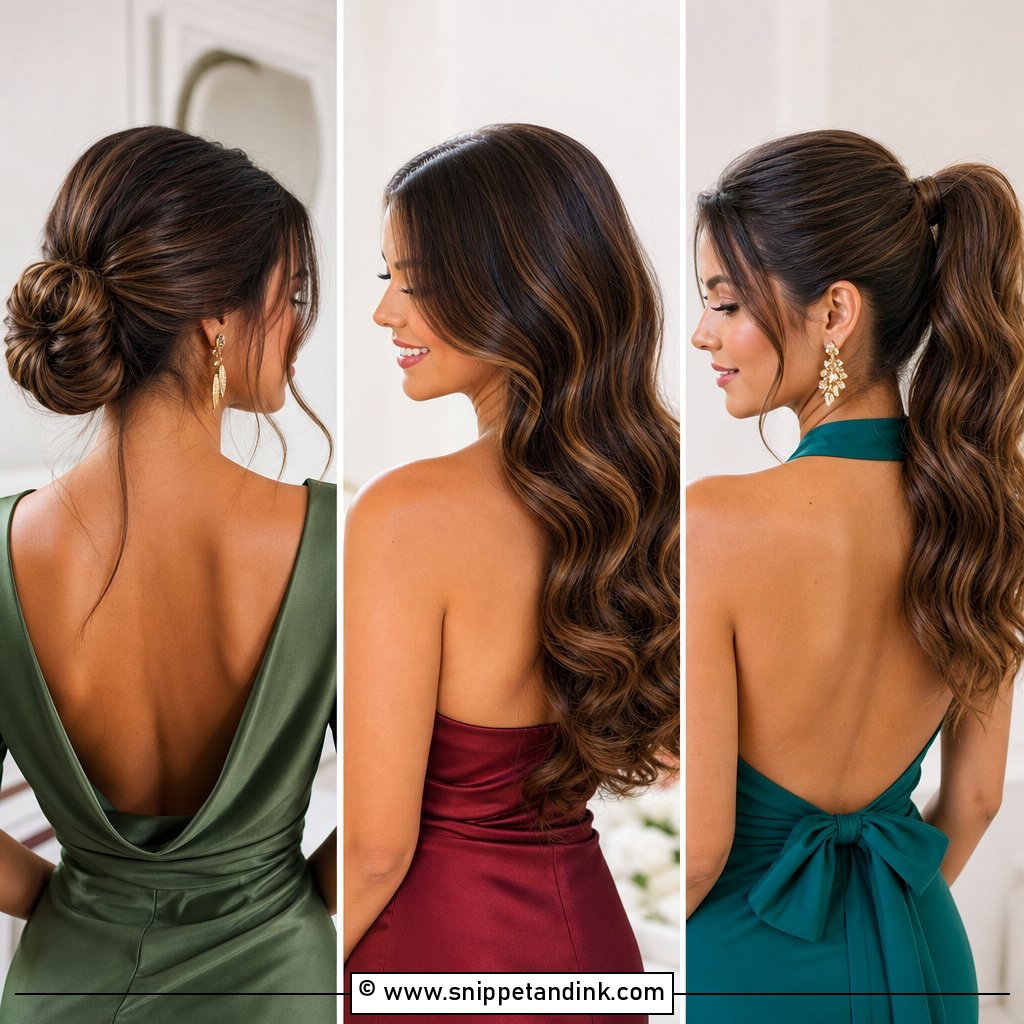
A wedding hairstyle has to look good in person and survive real life. Before you commit, think about your neckline, where the veil will sit, your texture, the venue, the weather and how much you plan to move. A sleek bun suits a formal ballroom, while loose curls or a braided half-up look feels more at home at a garden ceremony. At a trial I always photograph the back and both sides, since that’s what guests see during the vows, and I put the accessories in that day too. Hair you stop thinking about by the first dance is worth more than one more pretty detail.
You'll Like These Ideas:


Leave a Reply