
Most brides who sit in my chair now ask for the same thing in different words: hair that looks finished but still moves when someone hugs them. The heavily lacquered helmet has had its run. What I build instead are low buns with air in them, sculpted waves, clean ponytails and curls that keep their own texture. The twenty styles below are the ones I get asked for most, and for each I’ve added what I check before agreeing to it, because a style that looks right on a mood board can still be wrong for your hair, your neckline or a July garden ceremony.
Matching These Styles to Your Hair’s Density and Texture
The first thing I do at a consultation is gather a bride’s hair into a ponytail in my hand. How thick that ponytail feels tells me more than any photo she brings, and it rules out half the list before we talk about dresses.
Fine or thin hair
Low buns, chignons, twisted updos and half-up styles are your friends, because I can pad them with a hidden donut or a few backcombed sections. Sleek buns and Hollywood waves are harder: both show every gap. Most fine-haired brides benefit from washing the night before rather than the morning of, since squeaky clean hair slides out of pins.
Thick or heavy hair
Heavy hair holds curl beautifully but weighs down an updo. I thin out the bulk with sections that go into a braid or a twist, and I use more pins than usual. A high ponytail on very thick hair can become uncomfortable within a few hours, so try it at the trial for a full afternoon.
Curly and coily hair
Bring your hair to the trial in its usual state, not freshly blow-dried, so your stylist sees the true pattern. Ask whether they work with your texture regularly; defining and shaping curls is a different skill from curling straight hair.
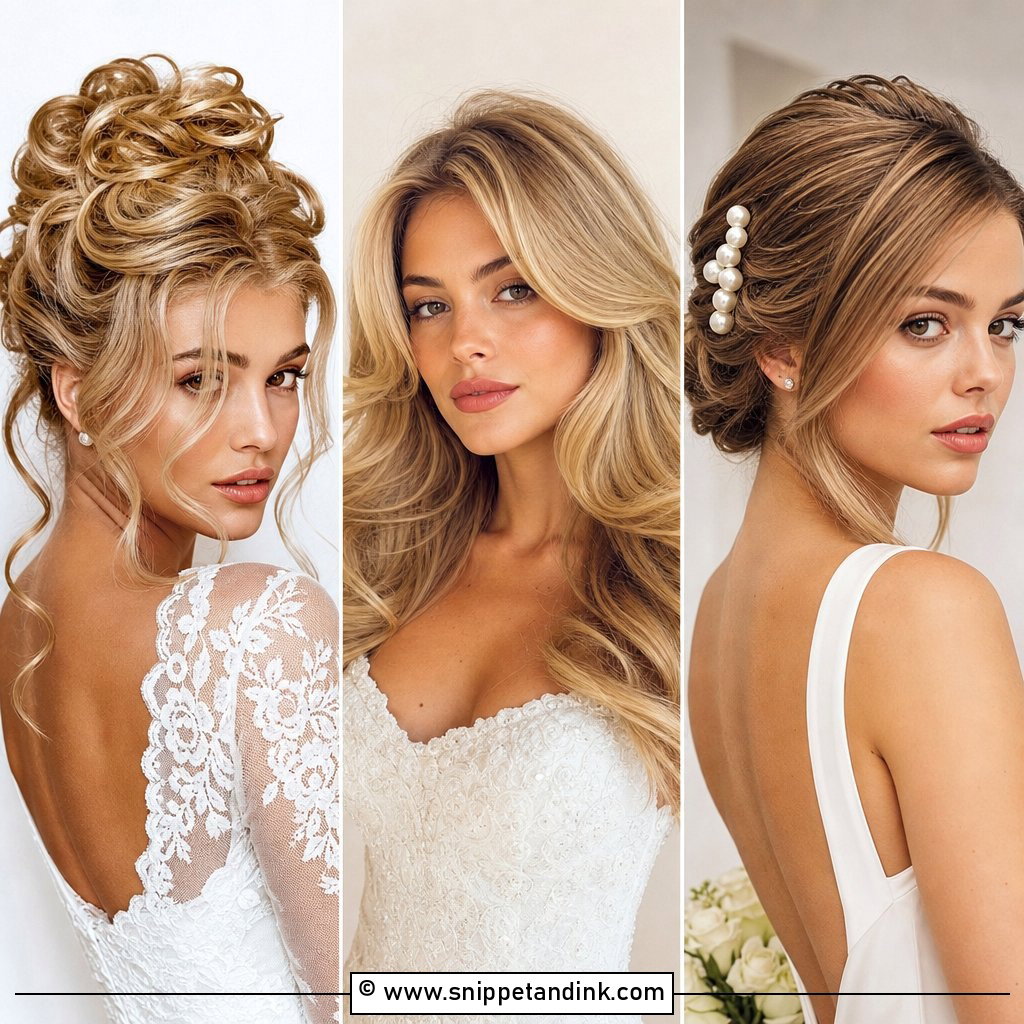
1. Bridal Low Bun
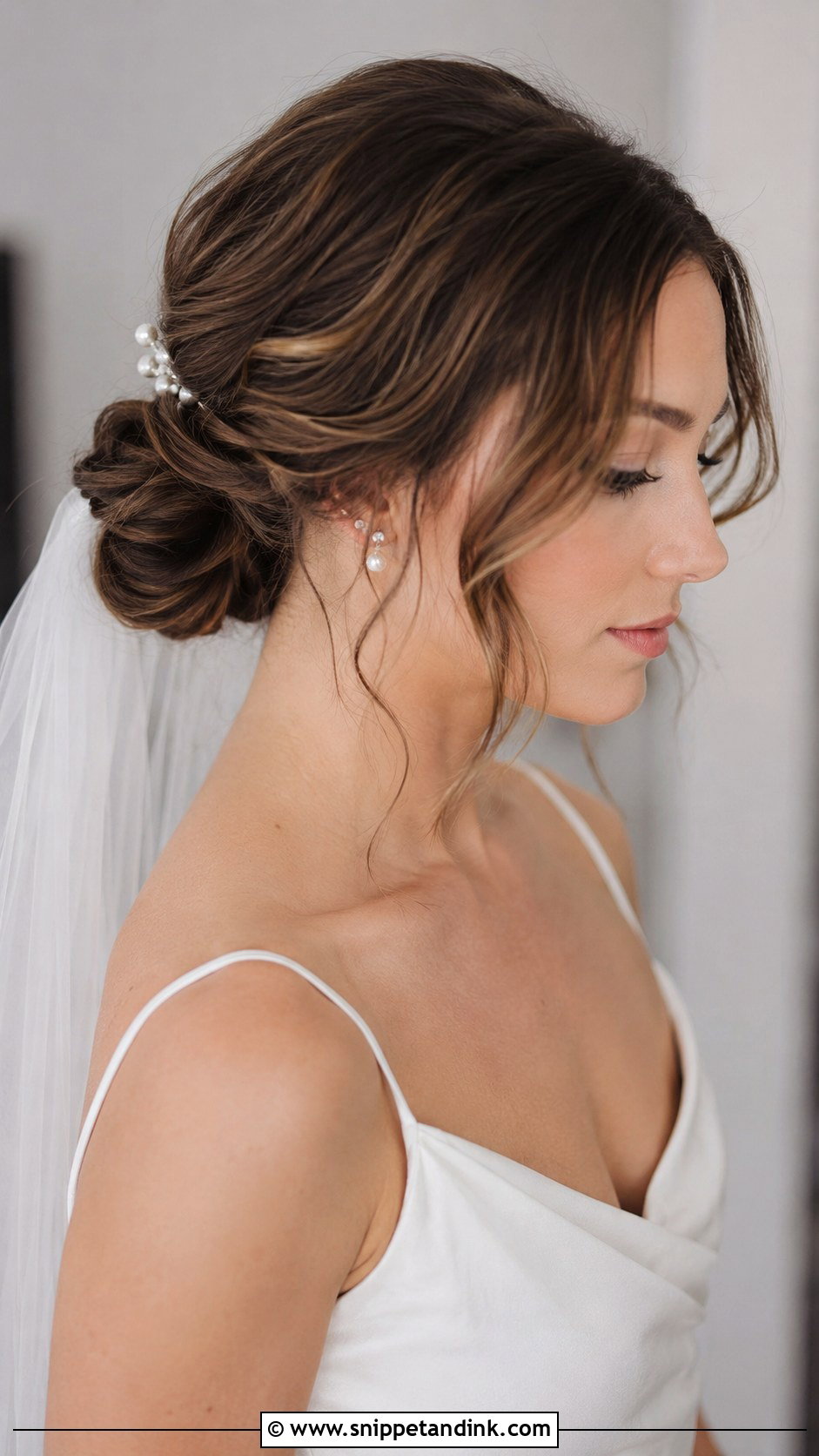
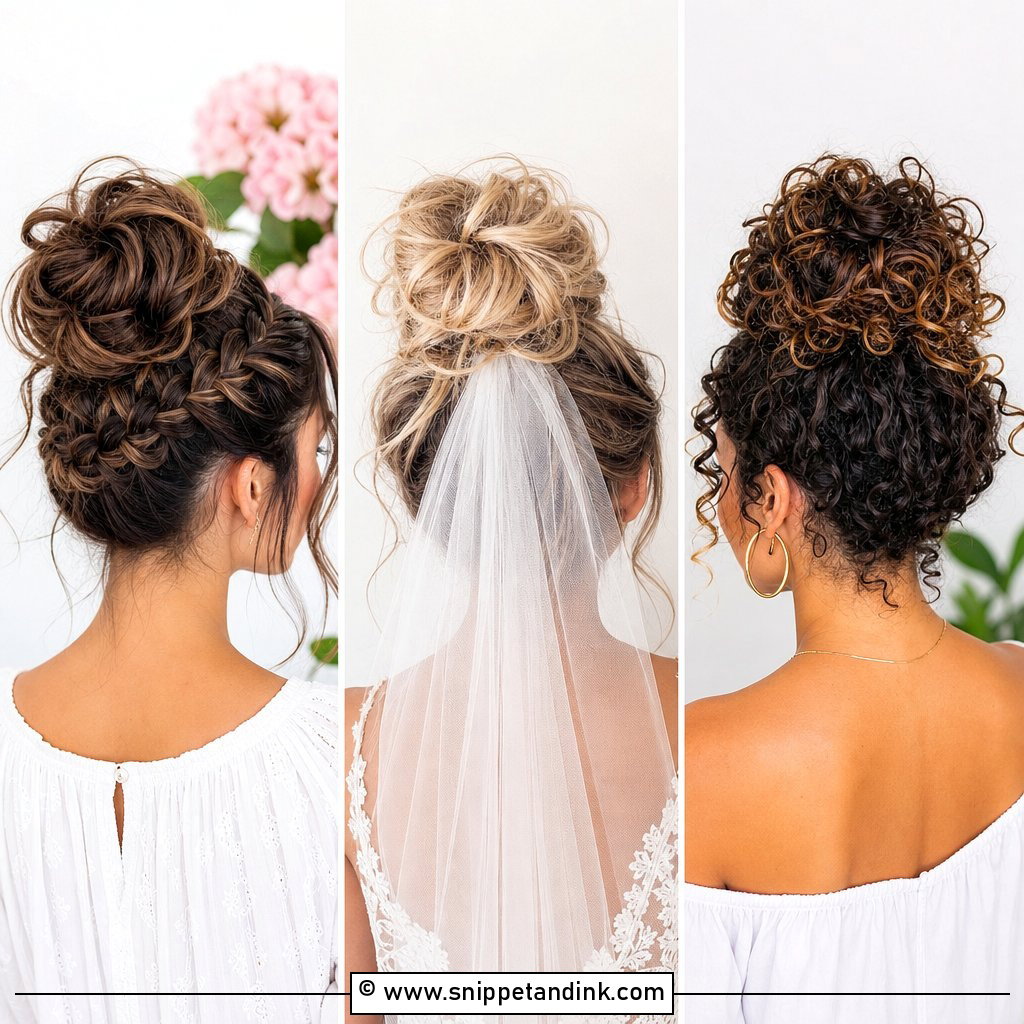
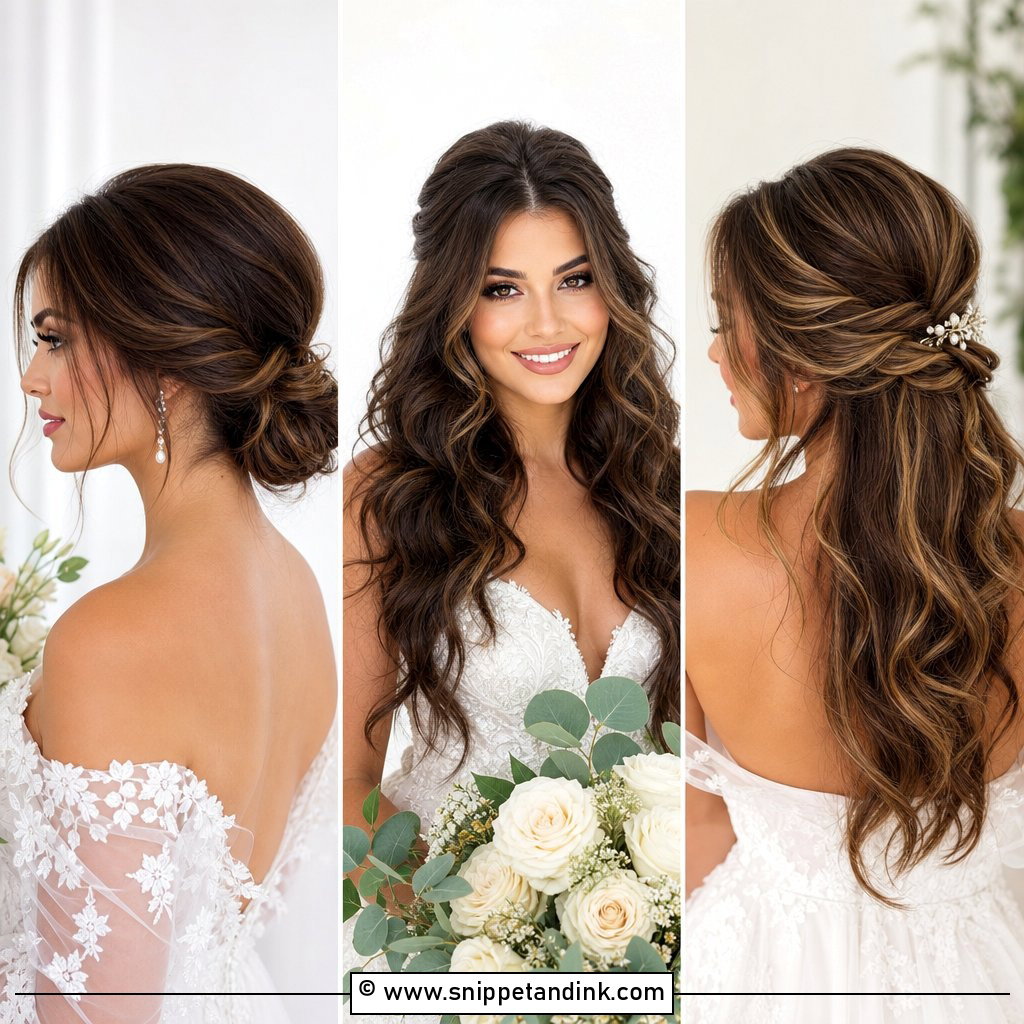
The low bun is the style I can promise will last. It sits at the nape, so a veil comb slides in above it and the weight of the tulle rests on a solid base instead of dragging the hair down. It keeps strapless, square and high necklines clear. I build it on a small hidden ponytail or a pair of crossed anchor pins, then pull the crown up a touch so the head shape doesn’t look flat from the side. Ask for face-framing pieces only if your hair holds a curl; on straight, silky hair they’re usually limp by the speeches.
2. Bridal Sleek Bun
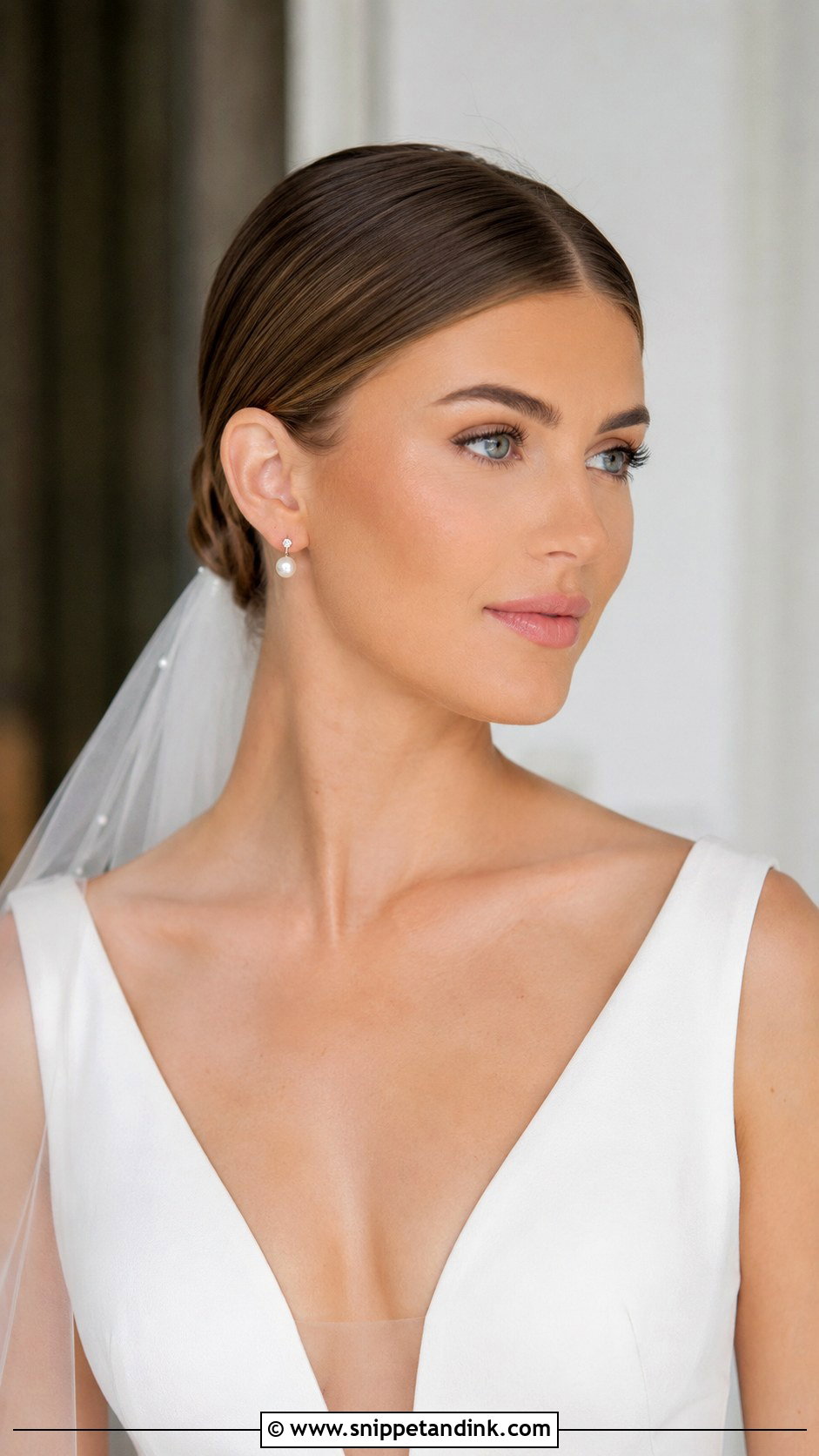
A sleek bun is honest: every bump shows. That’s why I prep it with a smoothing cream on damp hair and a full blow-dry, not a quick brush-back on day-old hair. The payoff is a clean line that puts all the attention on cheekbones, brows and earrings, and it handles a hot day better than anything worn down. If you have a strong forehead or a lot of baby hair at the hairline, try it at the trial first. Pulled-tight hair also gives some brides a headache after a few hours, so I set it firm but not tense, and a soft veil keeps it from reading as severe.
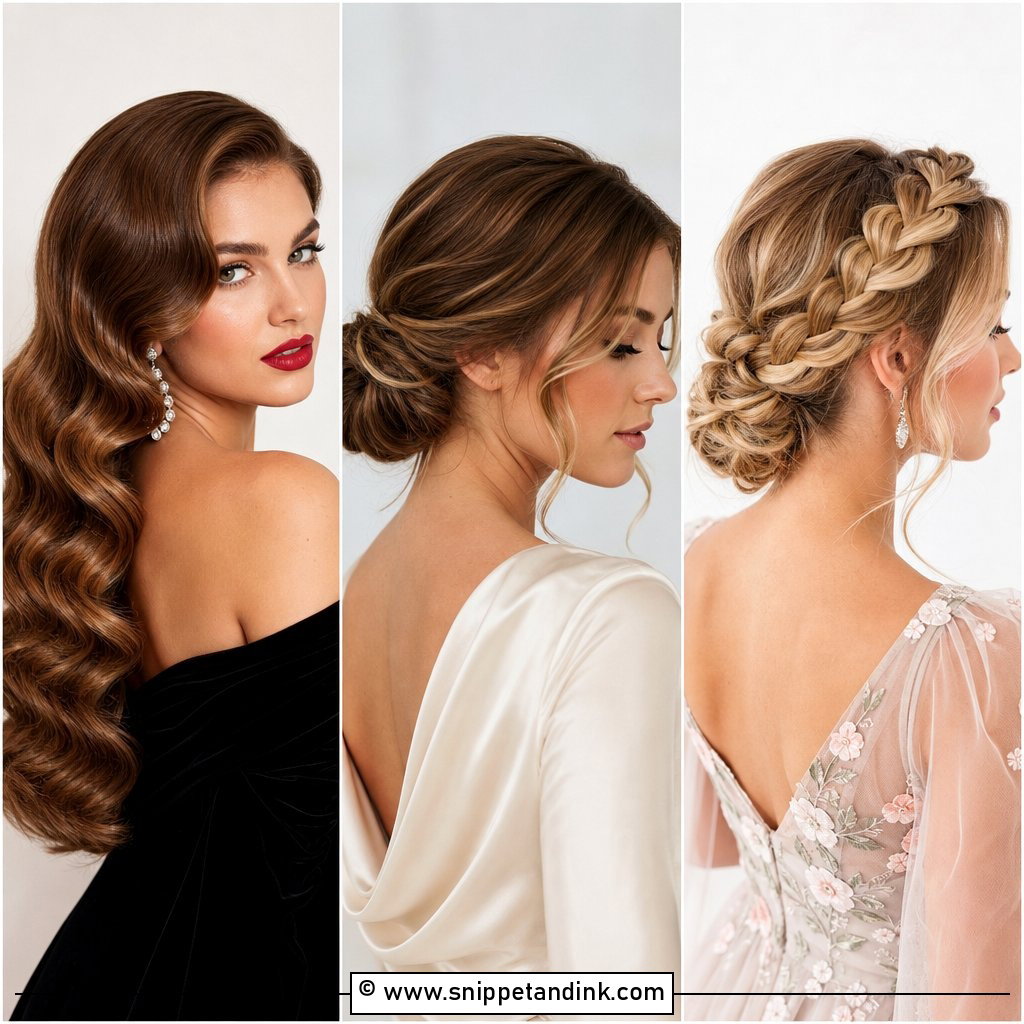
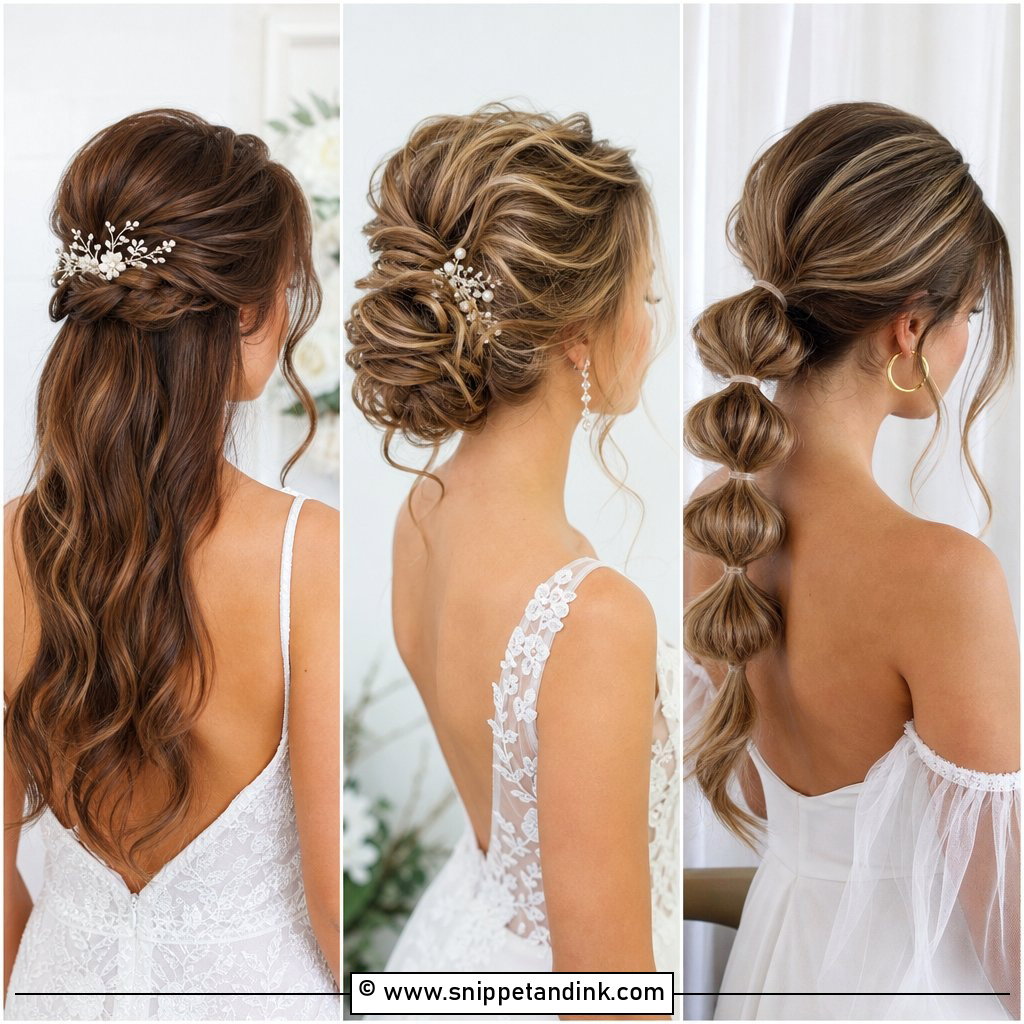
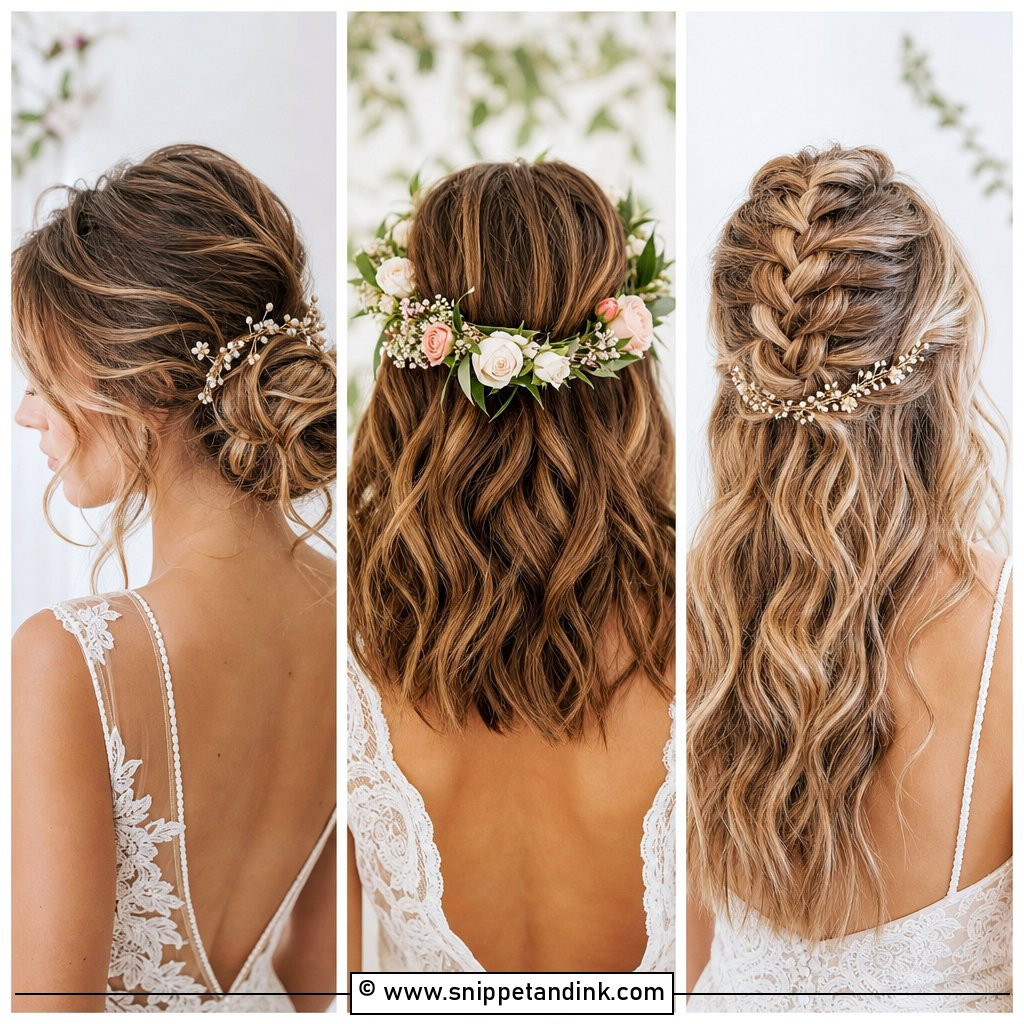
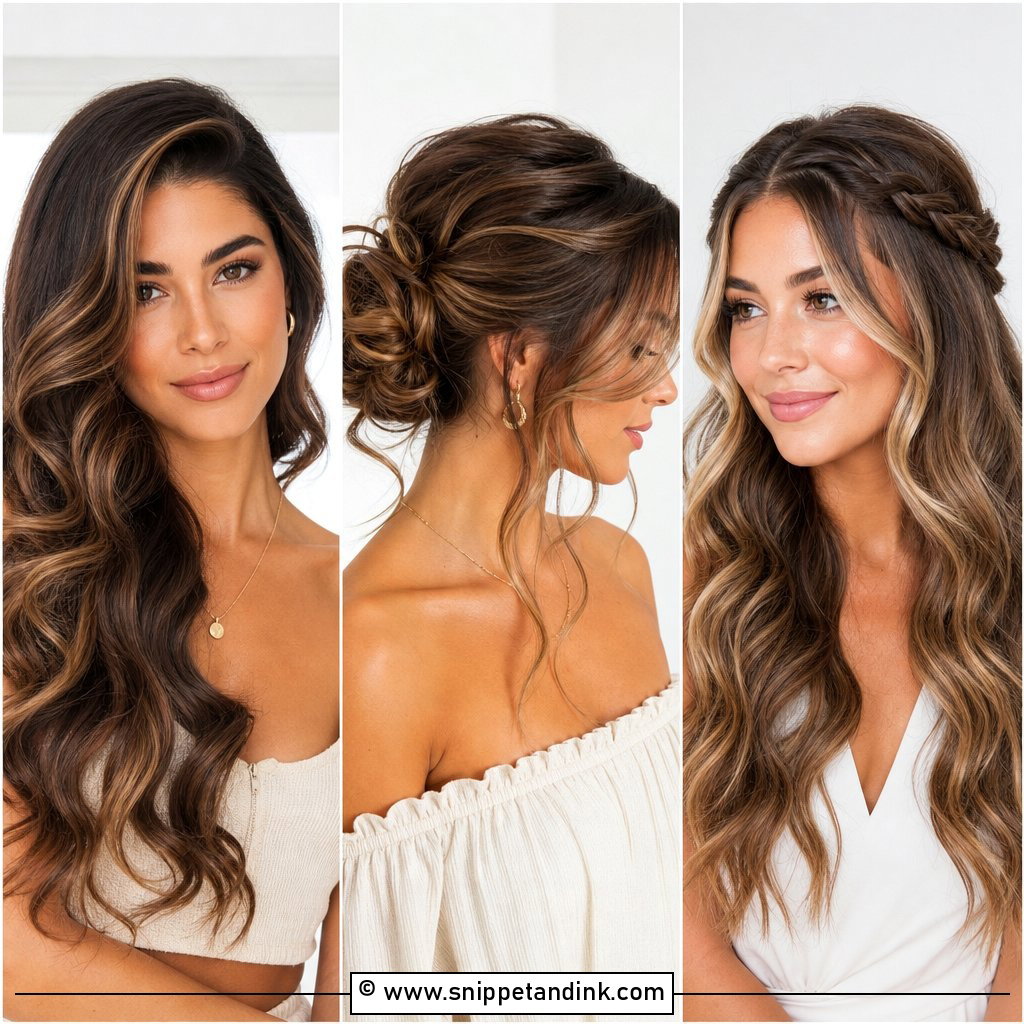
3. Bridal Textured Bun
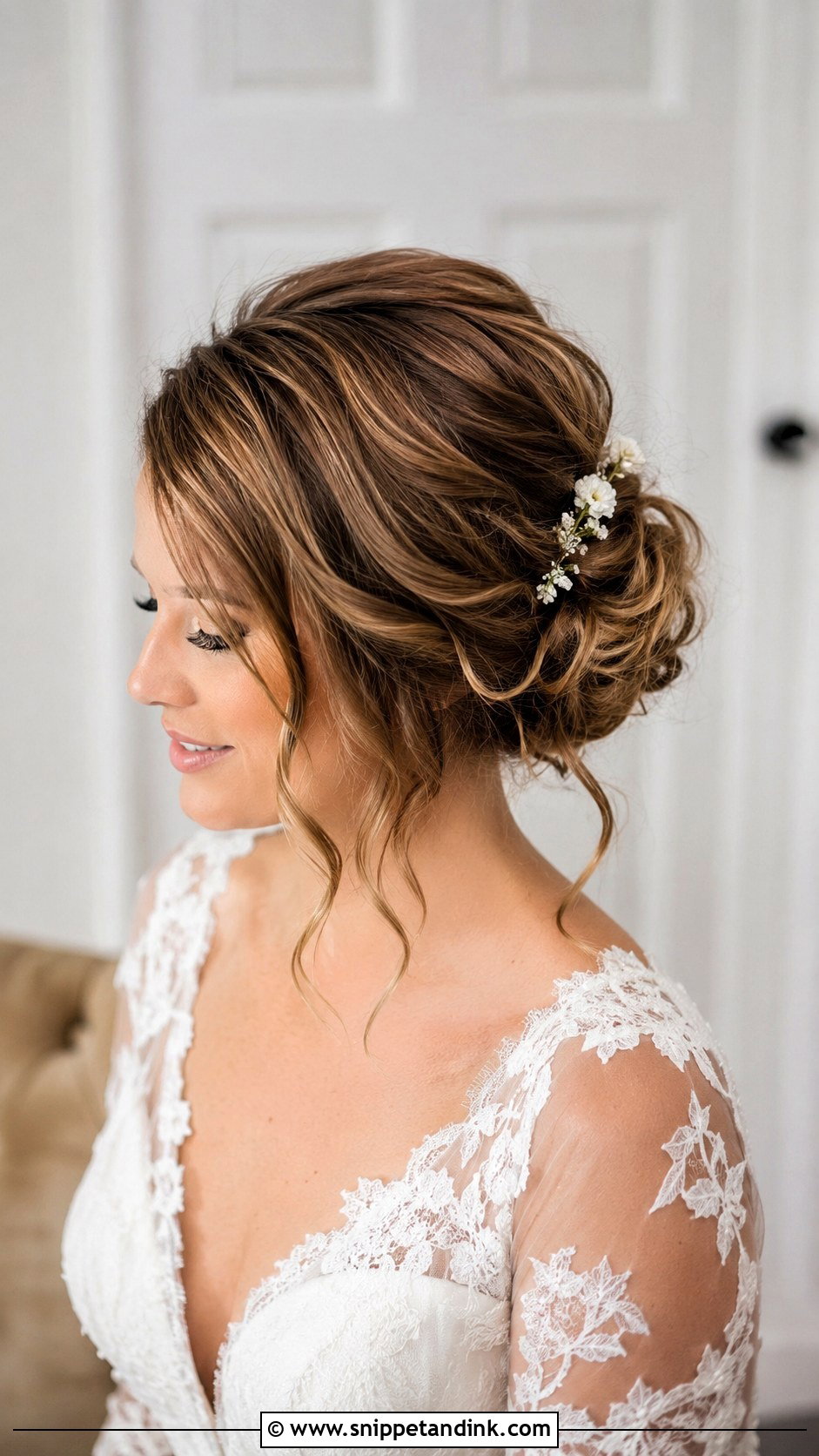
Texture is what makes this bun feel relaxed, and it has to be created on purpose. I curl the hair first, let it cool, then rake it with my fingers and pin it in loose sections so the shape has dimension. Highlights and balayage look best here because the twists show off the different tones. The risk is that relaxed tips into untidy, so I check it from the back and both sides in a hand mirror before I spray. It suits lace, garden venues and anyone who’d rather not feel every pin all evening.
4. Bridal Chignon
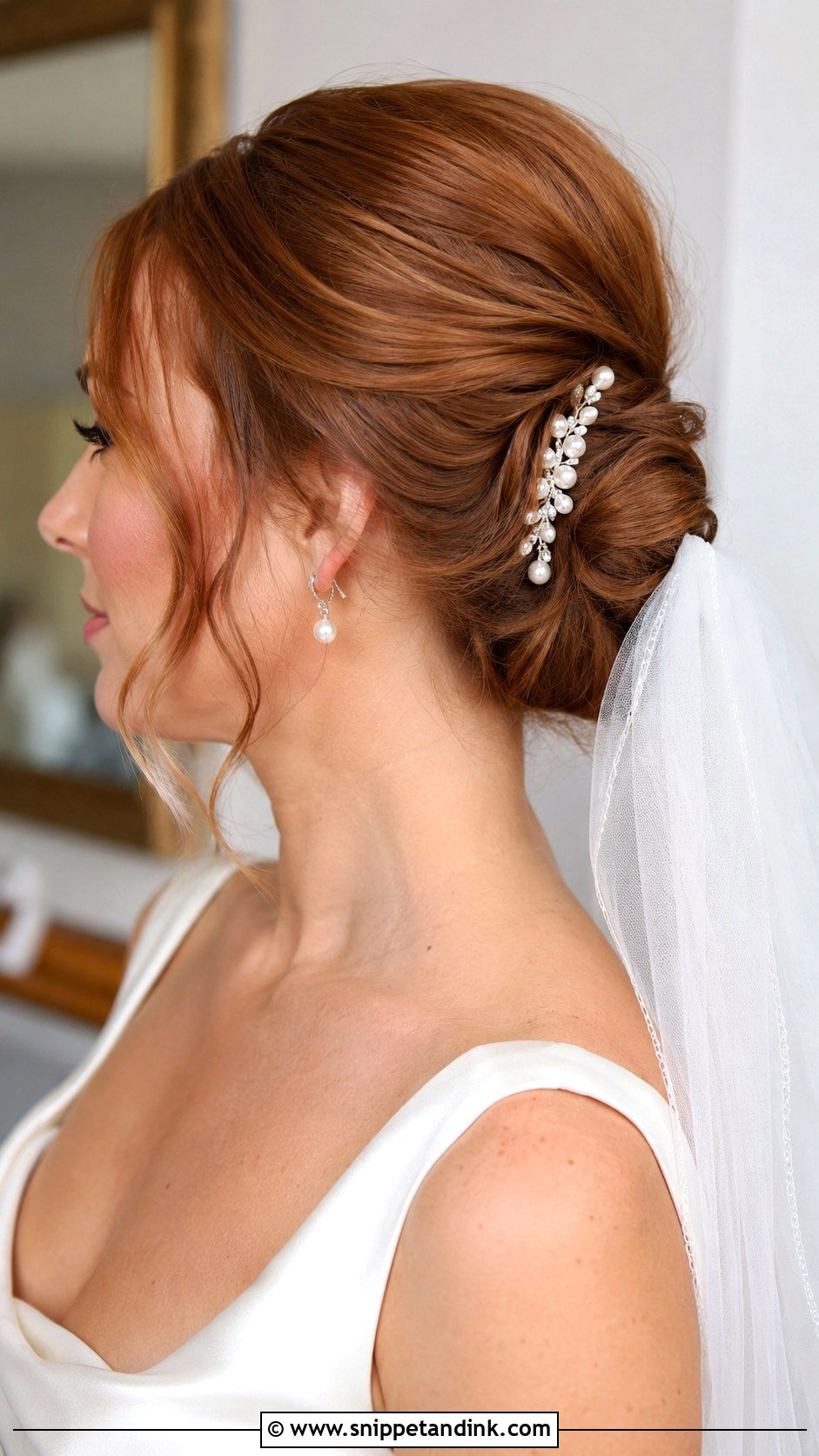
A chignon is a rolled or tucked shape set low at the back, and it’s my first suggestion when a bride is wearing cathedral veils or anything heavy with lace at the shoulders. The roll gives the veil comb something dense to grip. I keep a little lift at the crown so the profile doesn’t look flat in side shots, and I leave a few soft pieces at the temples only when the face needs softening. On very fine hair I pad the roll with a small mesh donut matched to the hair color; nobody can tell, and the chignon stays full until the end of the night.
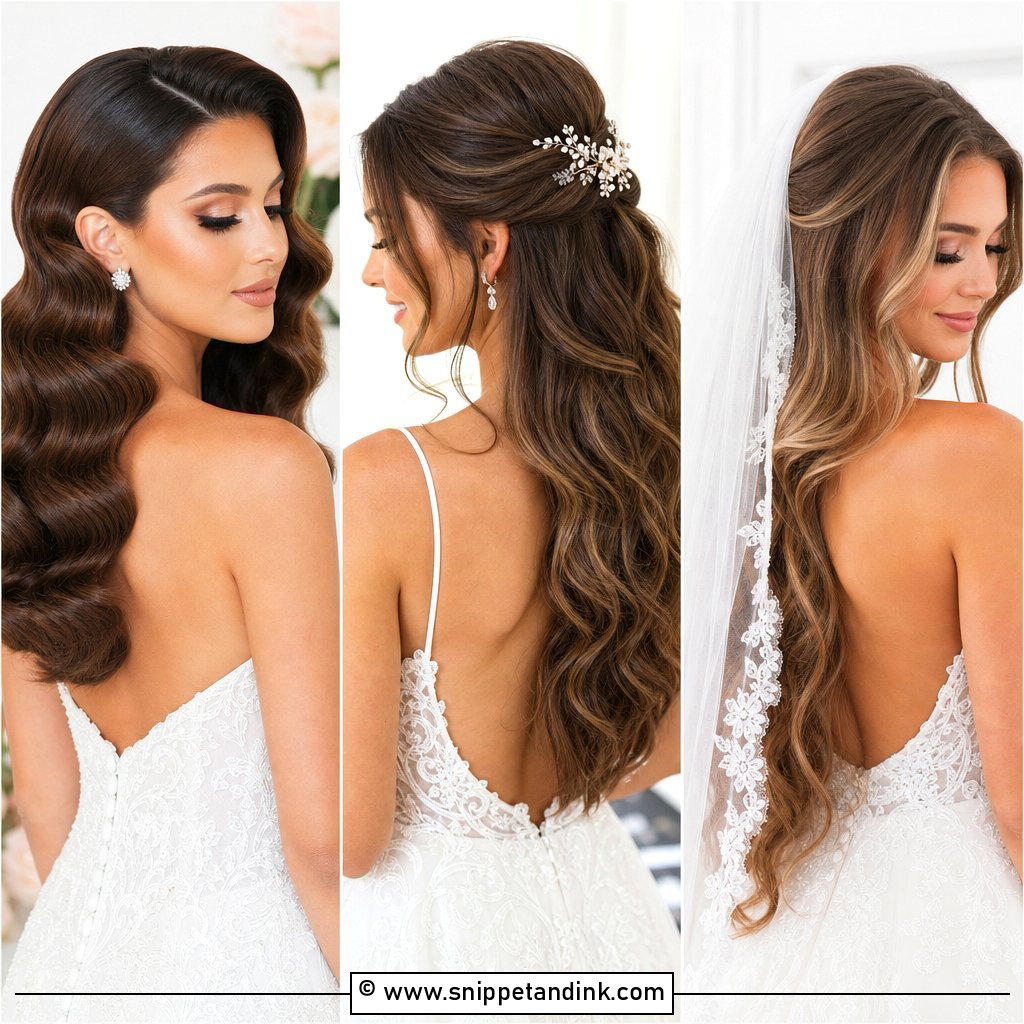
5. Bridal Hollywood Waves
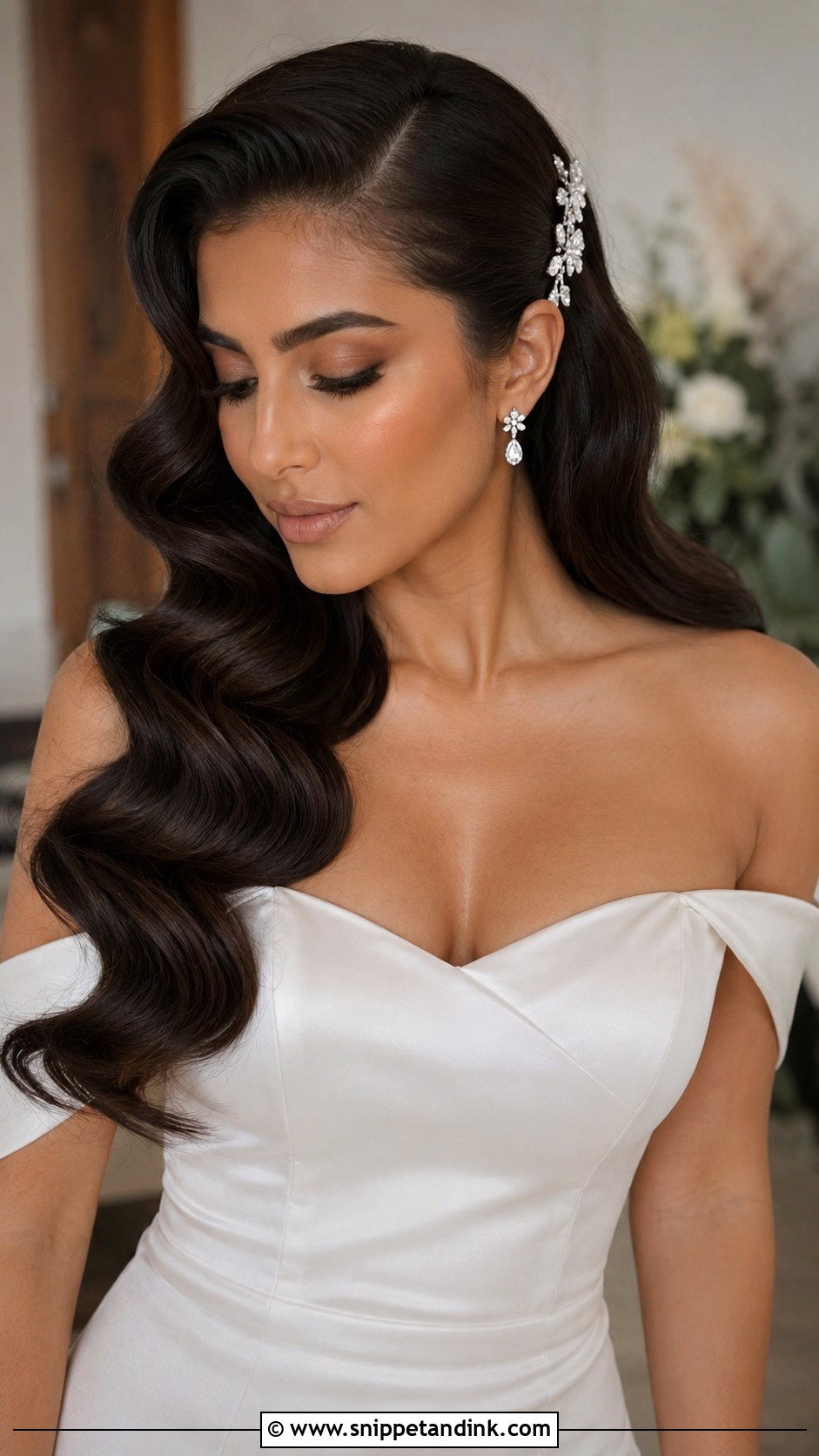
Hollywood waves are structure, not beach texture. I set them with a large iron all curled in one direction, pin each curl to cool, then brush them out into one continuous S-shape and press the ridges with clips while the spray sets. That’s how you get the polished red-carpet effect. It needs medium to long hair with healthy, even ends; split or choppy ends break the line. A deep side part makes it more dramatic but also means one side of your face is partly covered in half the photos, so decide which side you want seen.
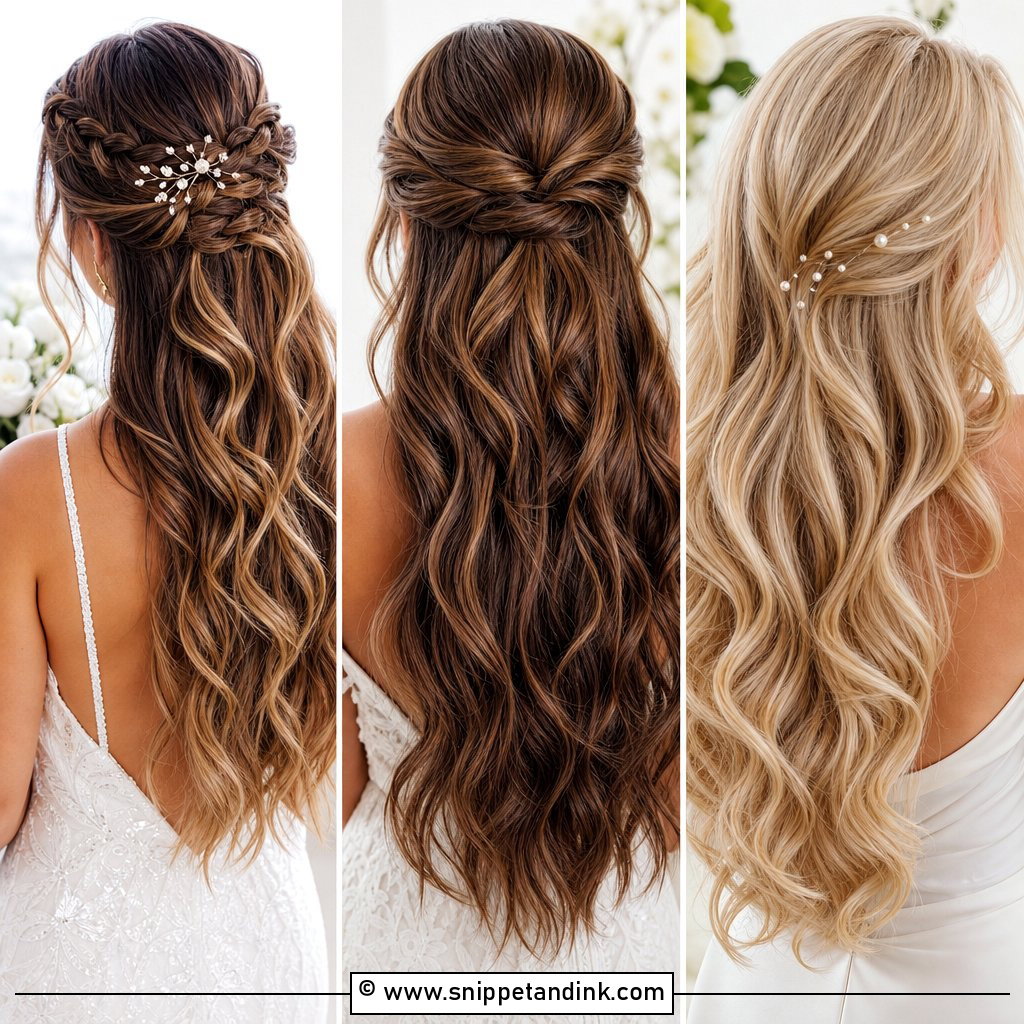
6. Bridal Soft Waves
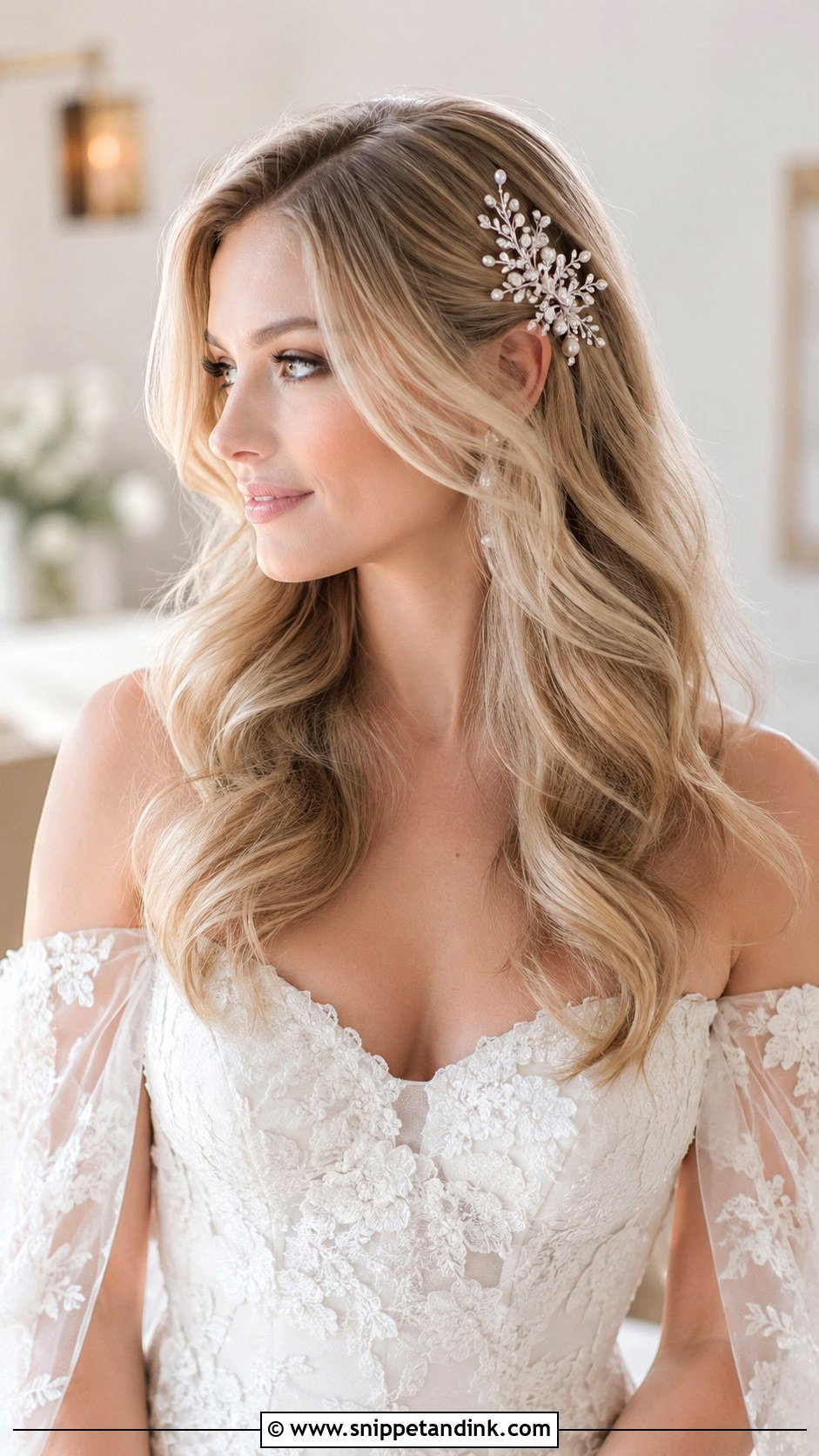
Soft waves are the down style most brides picture, and the one that drops fastest. Loose bends in straight, fine hair can flatten within two hours outdoors, so I curl tighter than the finished look and let the waves relax through the morning. A glossy finish and defined front pieces stop it from looking like everyday hair. If your wedding is on a beach or anywhere humid, I’d honestly steer you toward one of the half-up options instead and keep the waves only in the lengths.
7. Bridal Half Up Half Down Hair
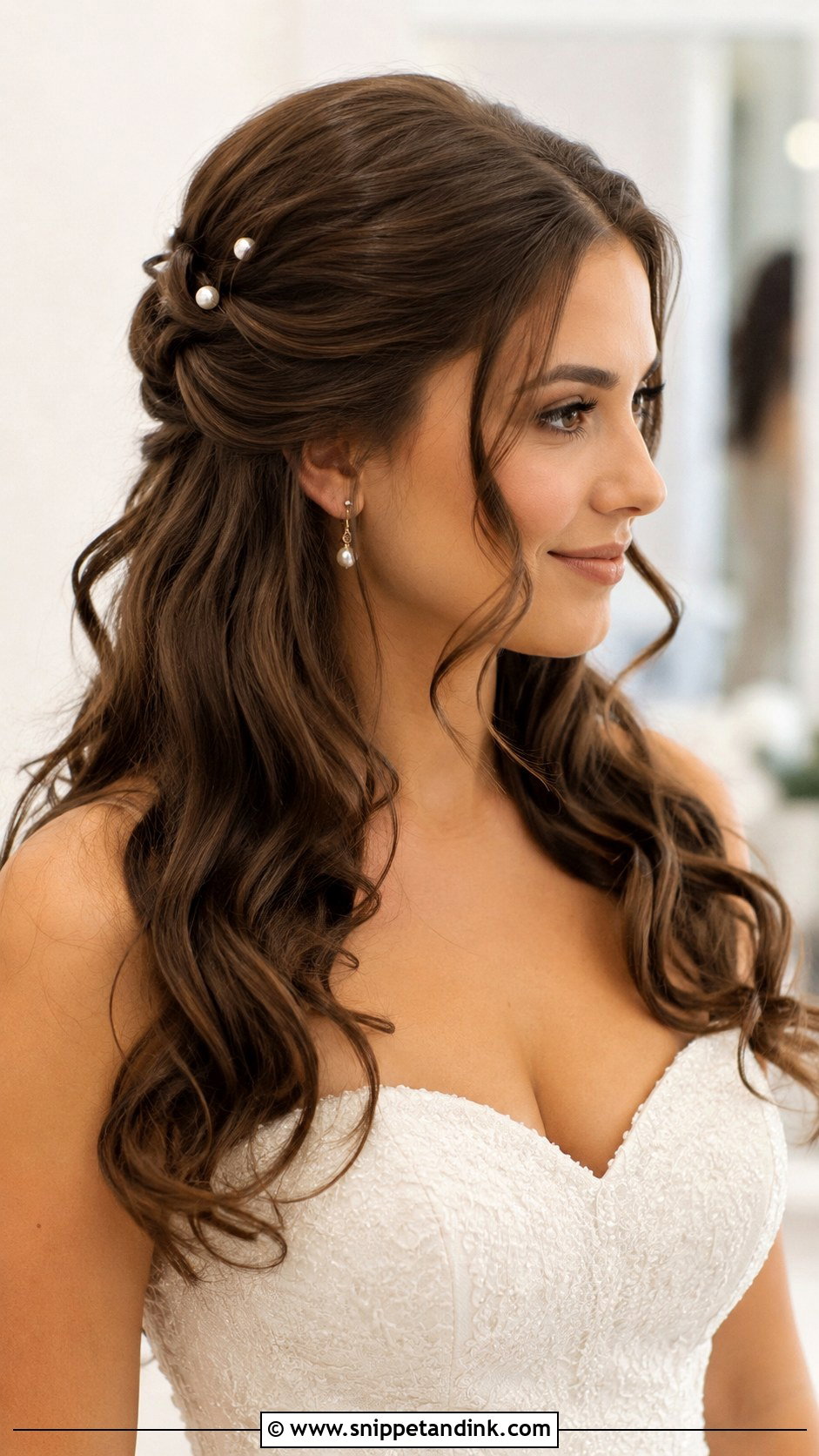
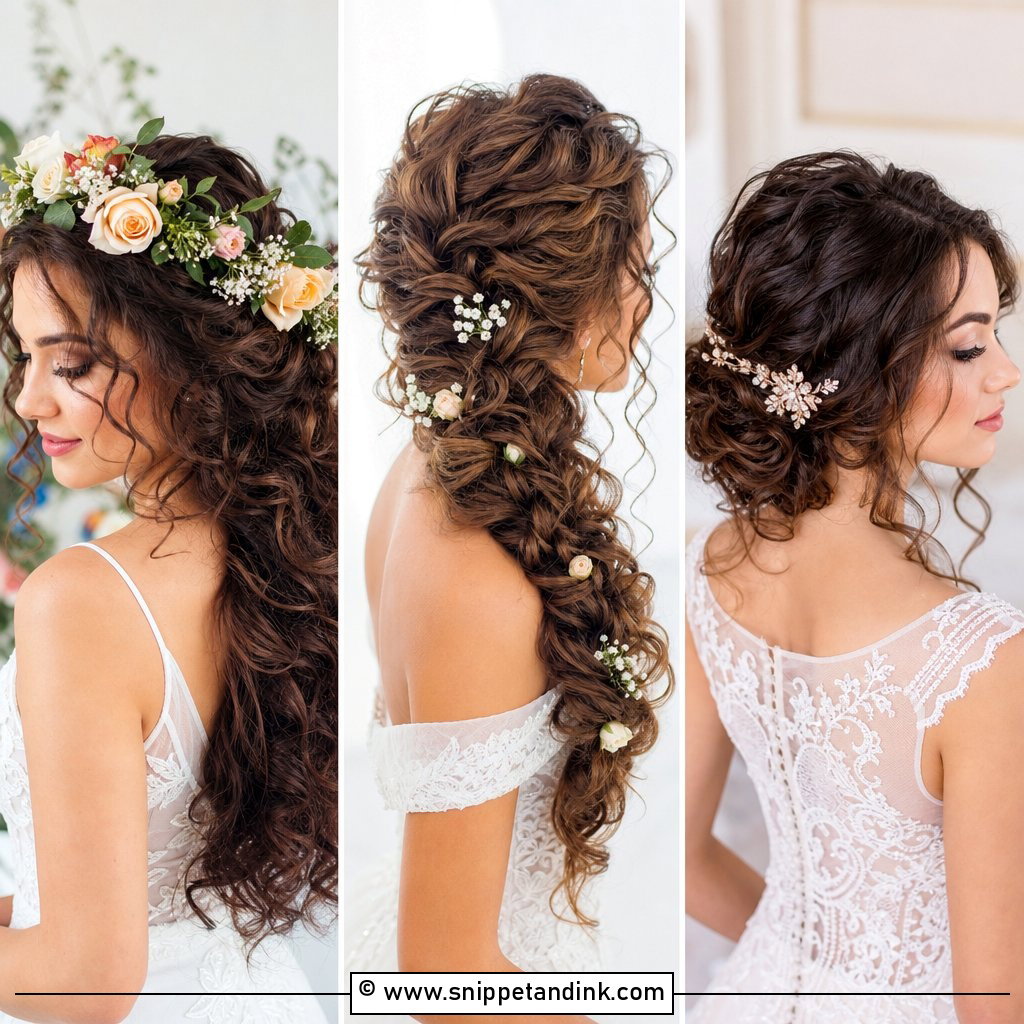
Half up, half down is the compromise I recommend most when a bride wants her hair down but can’t stand it in her face. Pinning back the front and crown means you’re not pushing strands out of your lip gloss all evening. I anchor the top section with a hidden elastic or crossed pins before adding any twist or braid, because loose decorative sections on their own slide. It sits well with sweetheart, V-neck and off-the-shoulder gowns, and a veil comb goes straight into the pinned section.
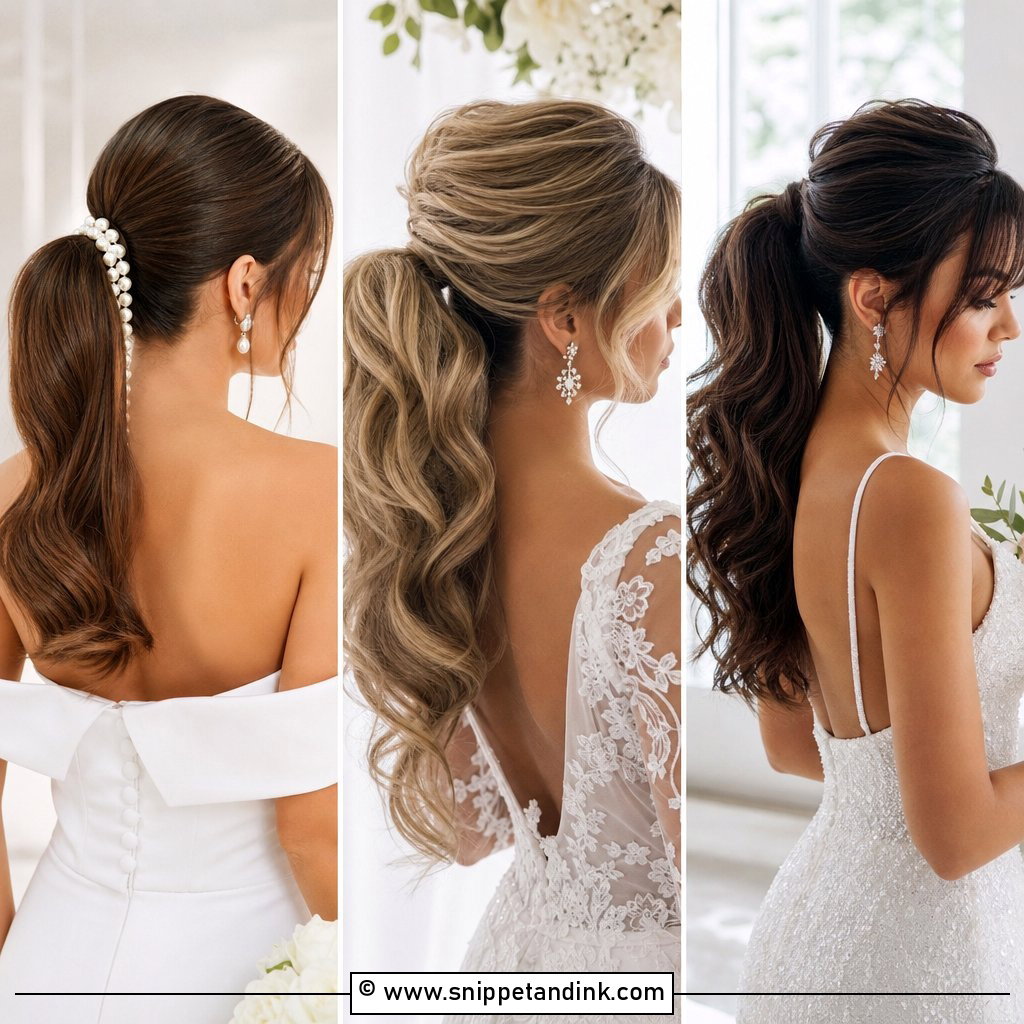
8. Bridal Half Up Ponytail
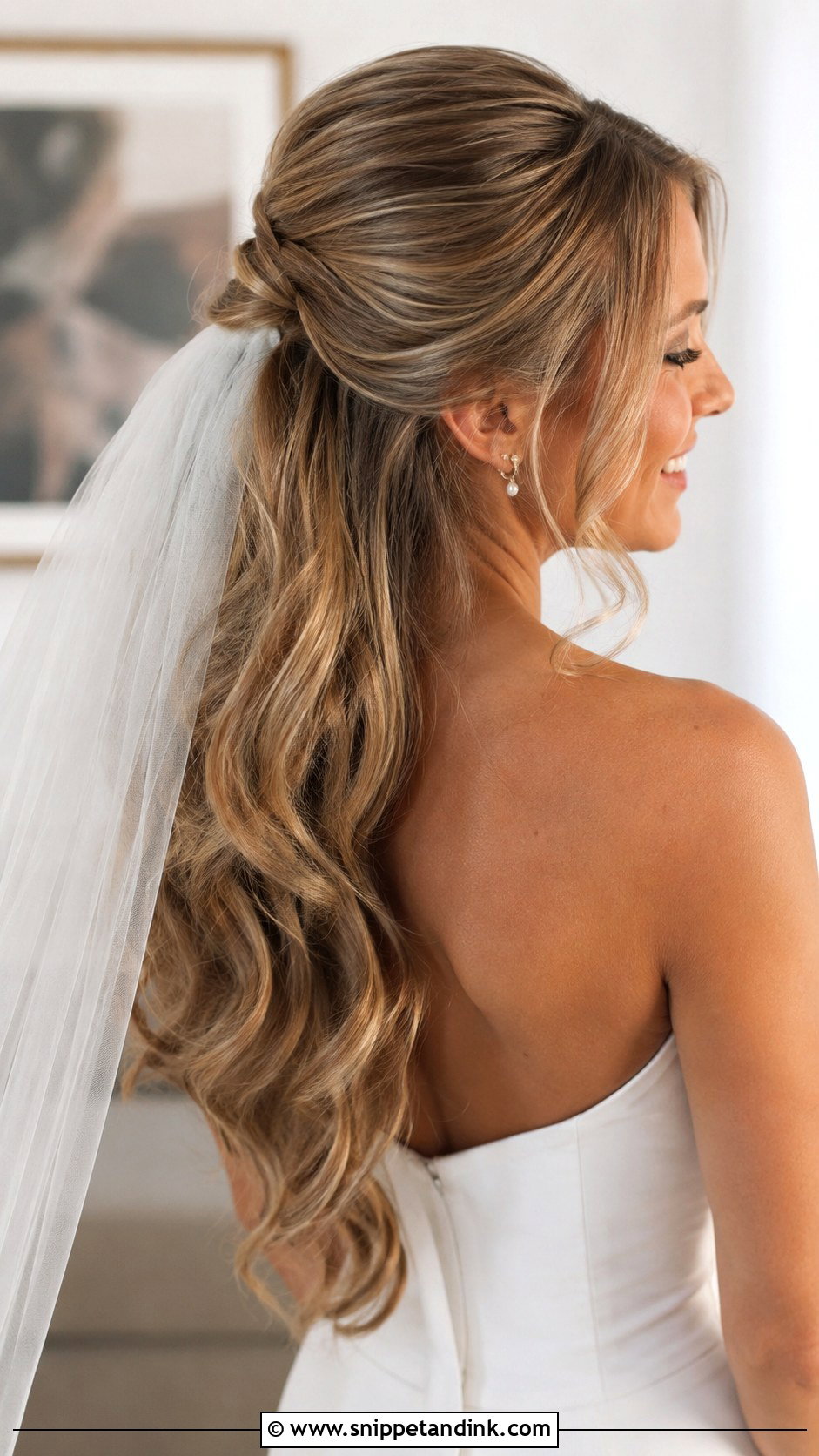
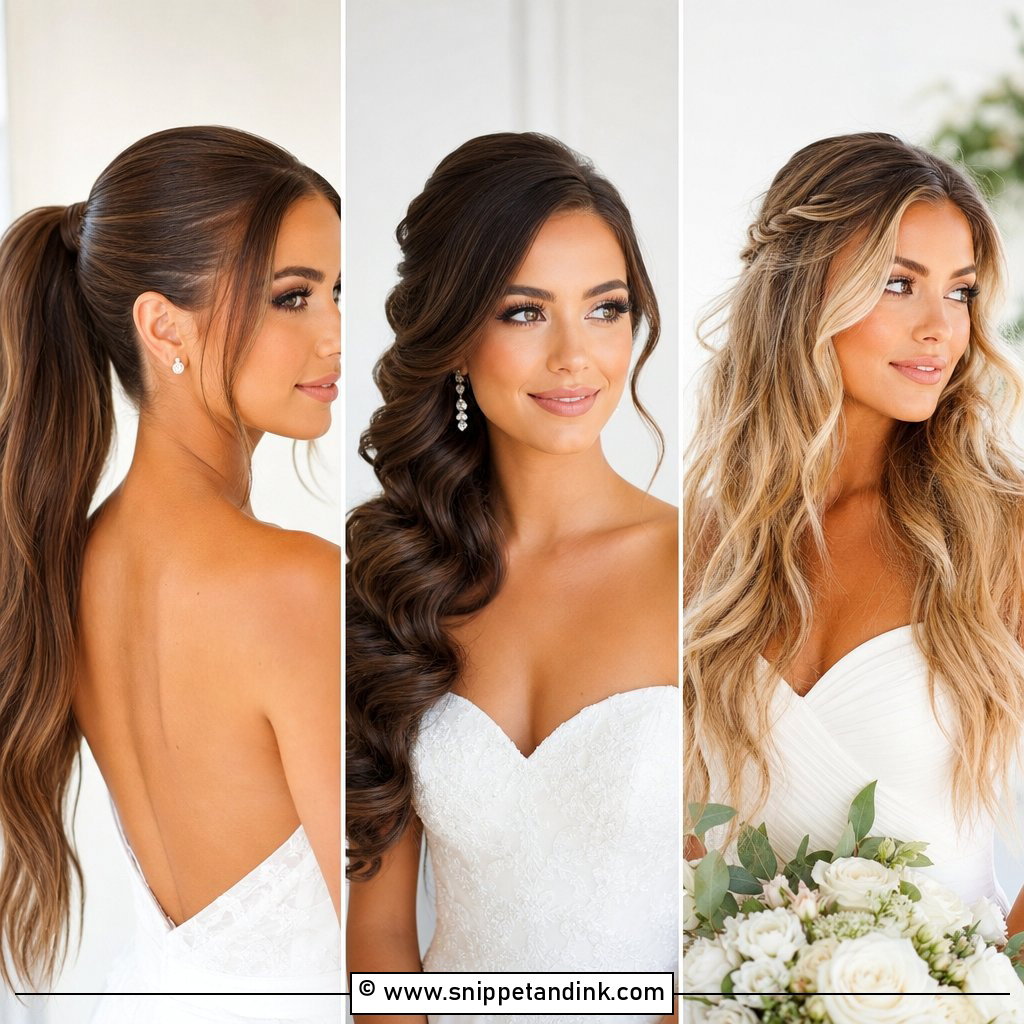
The half-up ponytail gives height at the crown without committing to a full updo. I tease the crown lightly before securing the ponytail so it doesn’t collapse once a veil goes on, then wrap a strand of hair around the elastic to hide it. The lower lengths get waves or curls. It needs density: if your hair is fine or shorter than your shoulders, the ponytail can look skimpy, and clip-in extensions solve that in minutes. A veil tucked under the ponytail base holds better than one placed above it.
9. Bridal Low Ponytail
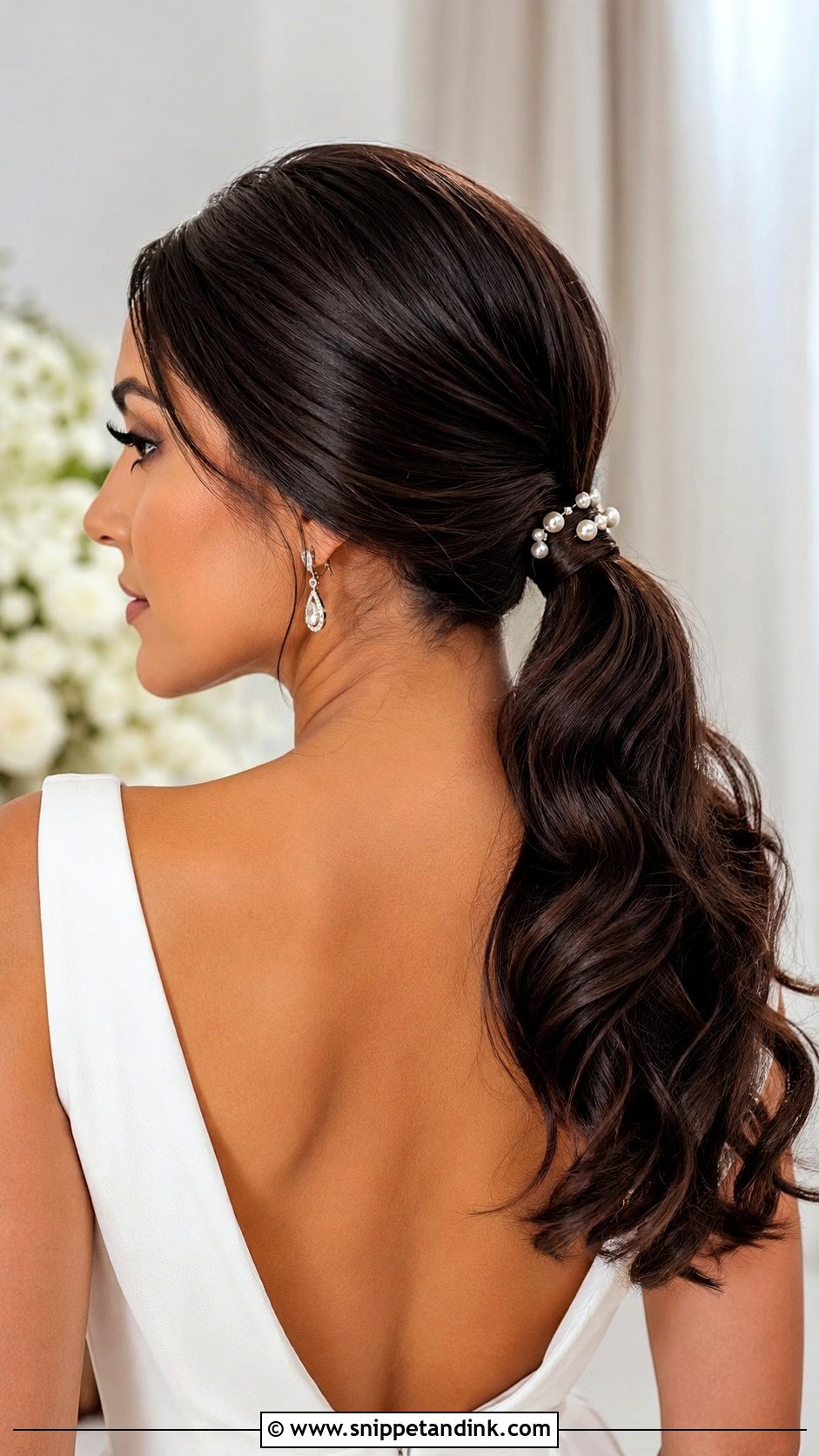
A low ponytail is the quietest style on this list, which is exactly why some brides love it. I smooth the crown, secure the ponytail at the nape with a strong elastic, and wrap the base so there’s no hair tie in sight. Then I add body through the length with a round brush or a few loose bends so it doesn’t hang flat down your back. It works for courthouse ceremonies and minimalist gowns, and with a dramatic veil it looks deliberate rather than plain. The one thing to watch is an open back: a long ponytail can hide the very detail you paid for.
10. Bridal High Ponytail
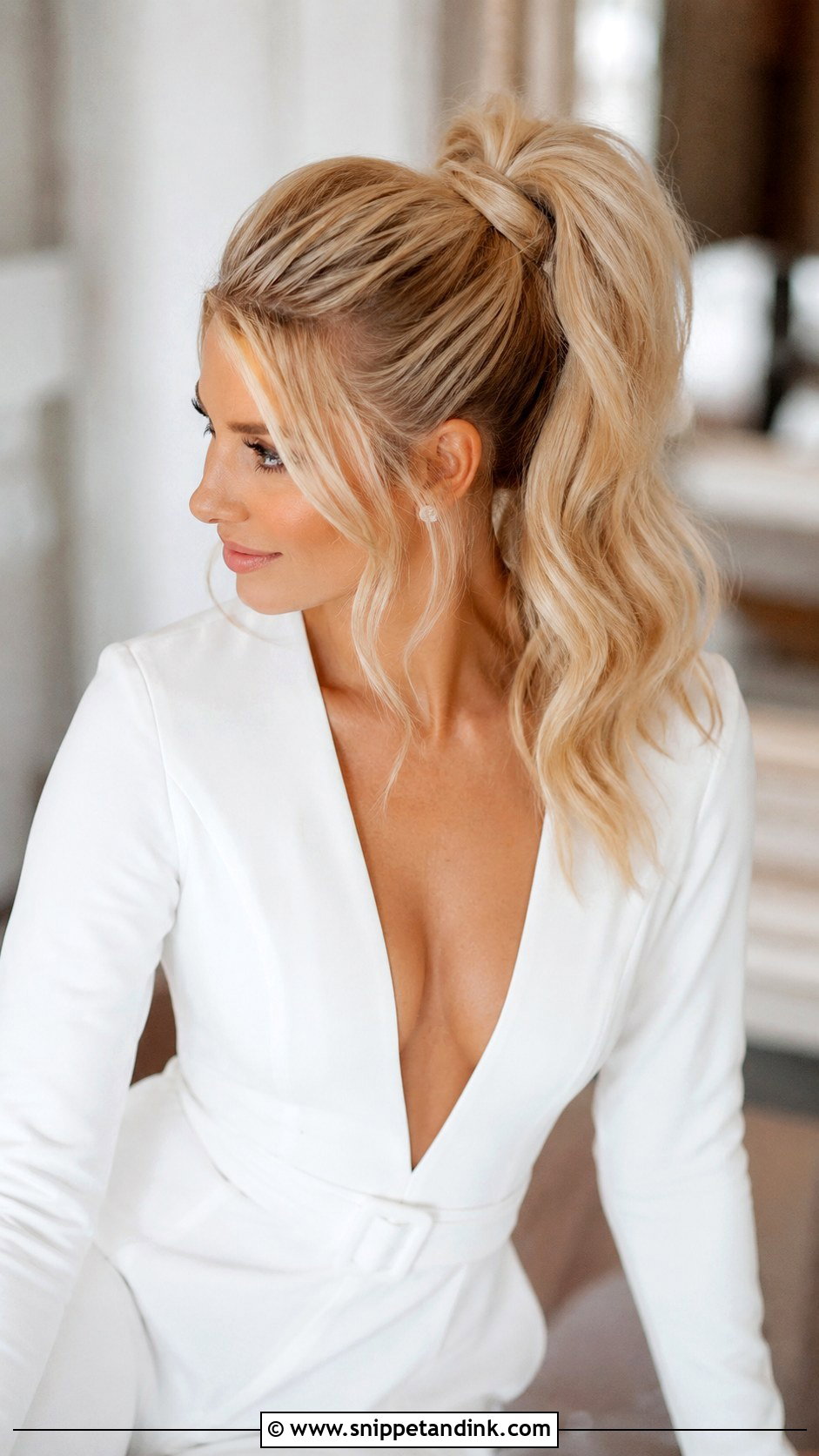
A high ponytail lifts the face and photographs with real energy, but it’s heavy, and that weight pulls on the scalp over several hours. I secure it with two elastics or a hidden bobby-pin lock under the wrap so it doesn’t droop by the first dance. It suits long hair or extensions best because the ponytail needs fullness to look bridal. Brides who get tension headaches should try it for a full afternoon before choosing it; it’s often a better reception change than a ceremony style.
11. Bridal Braided Updo
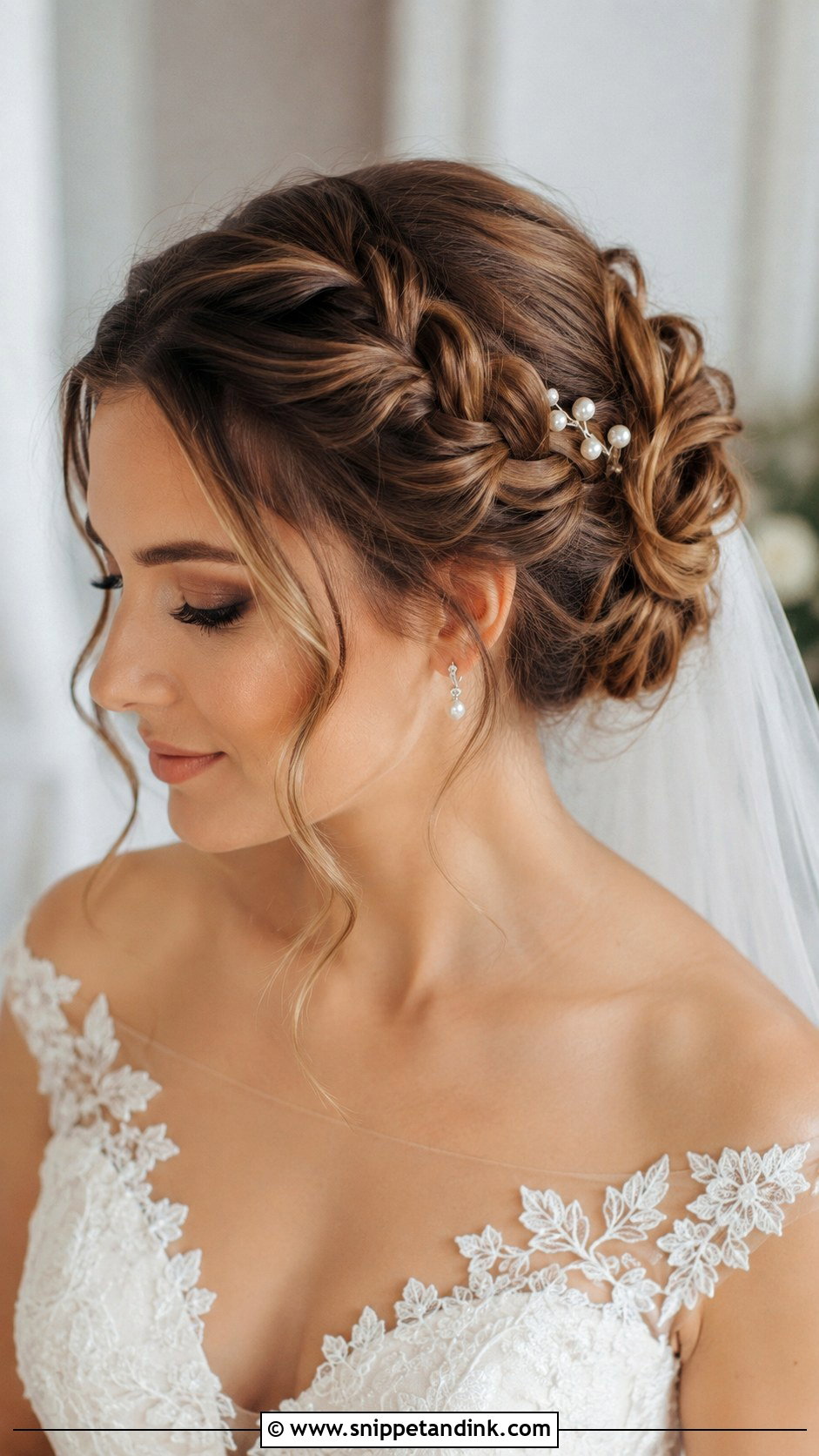
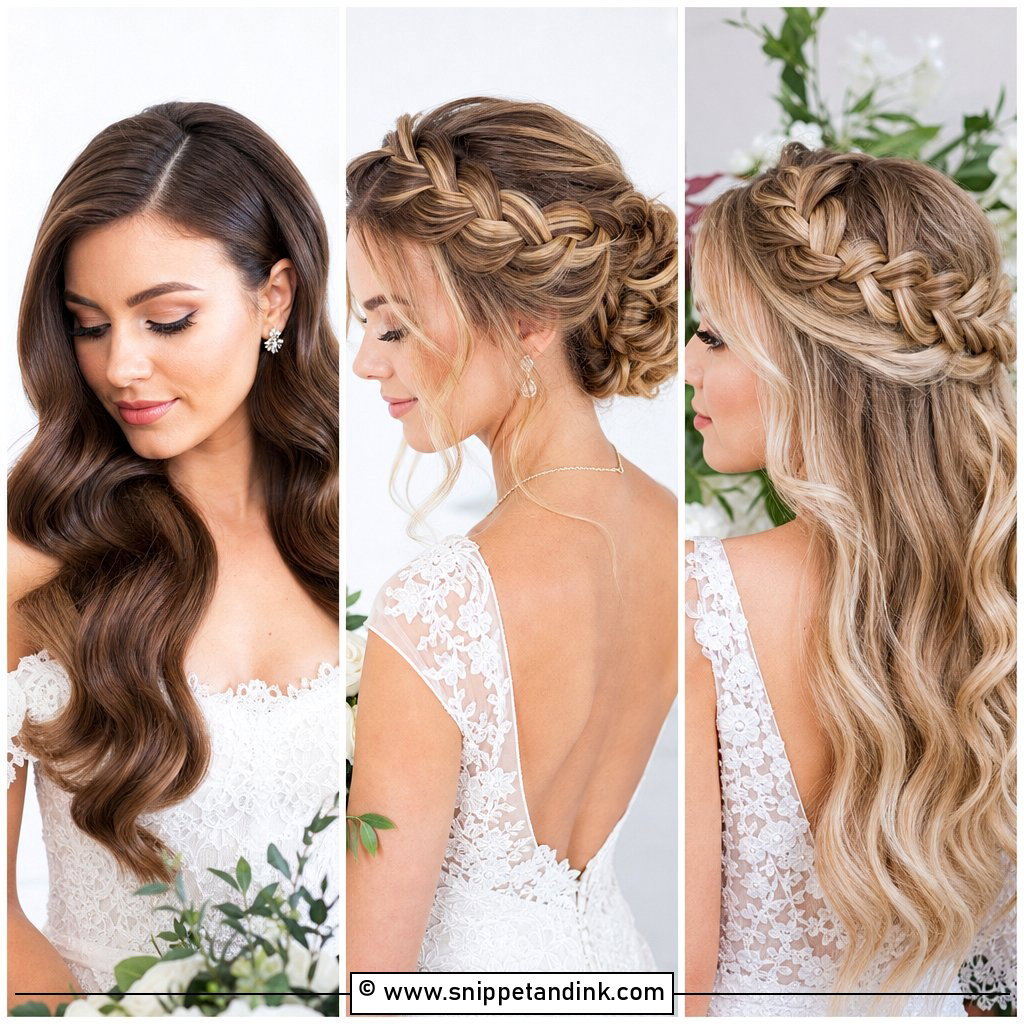
A braided updo earns its place when your hair is layered. Short layers that pop out of a plain bun get caught in the braid and stay put. I braid loosely, then pancake each loop gently with my fingertips so it looks full instead of rope-tight, and the braid can wrap the bun or blend into a low twisted shape. Small pearls or a comb tucked into the braid sit more securely than they would on smooth hair. It reads well from the back during the ceremony, which is the view your guests have for most of it.
12. Bridal Crown Braid
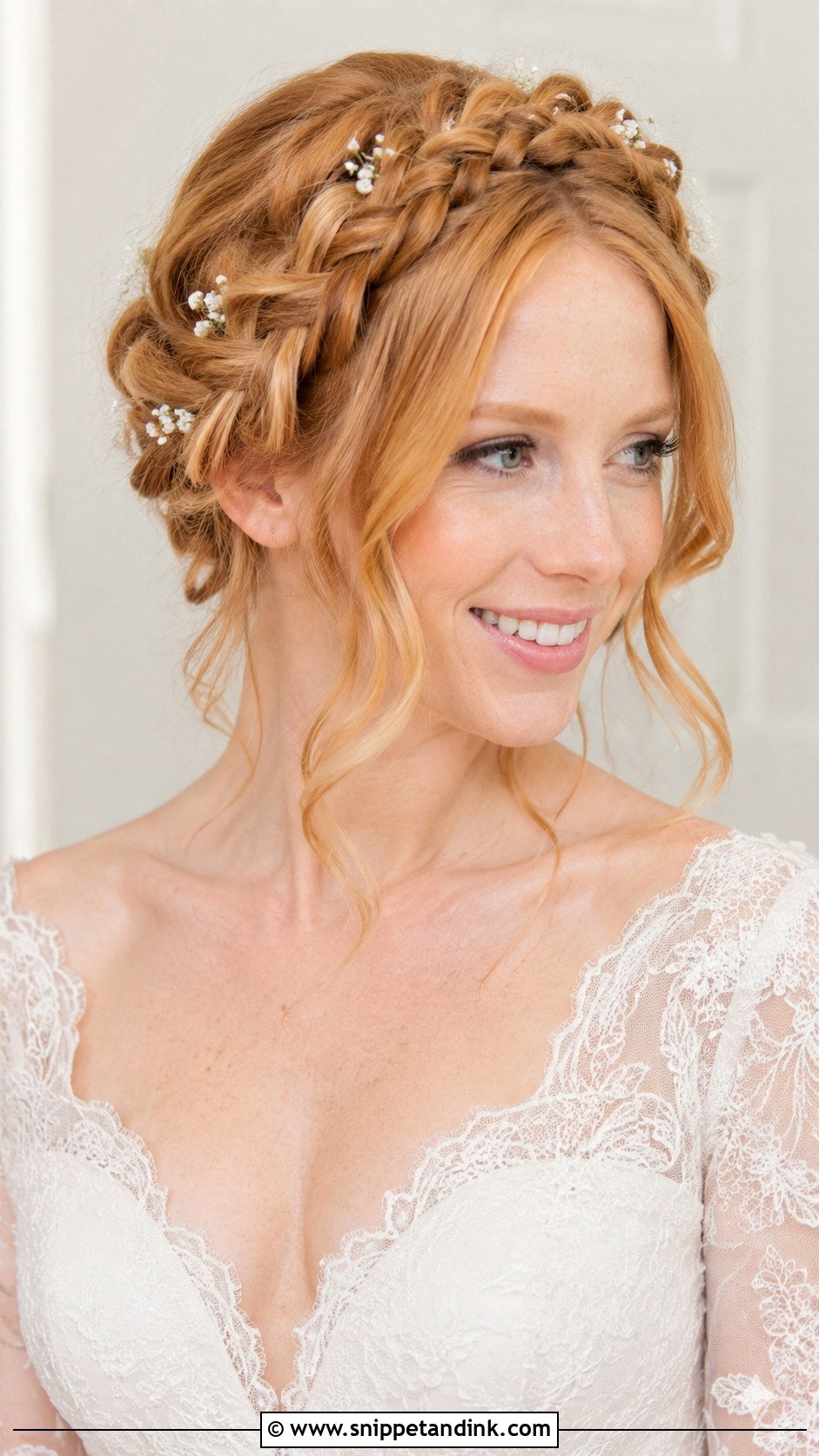
A crown braid circles the head and keeps everything up while still looking soft around the face. It can lean vintage or relaxed depending on how much I loosen it. The catch is length: you need hair past the shoulders to get all the way around, otherwise I add a small clip-in piece to finish the loop. Dimensional color shows up well in the plaits. I pin it every few centimeters along the back of the head, because a crown braid that slips even a little looks lopsided in photos.
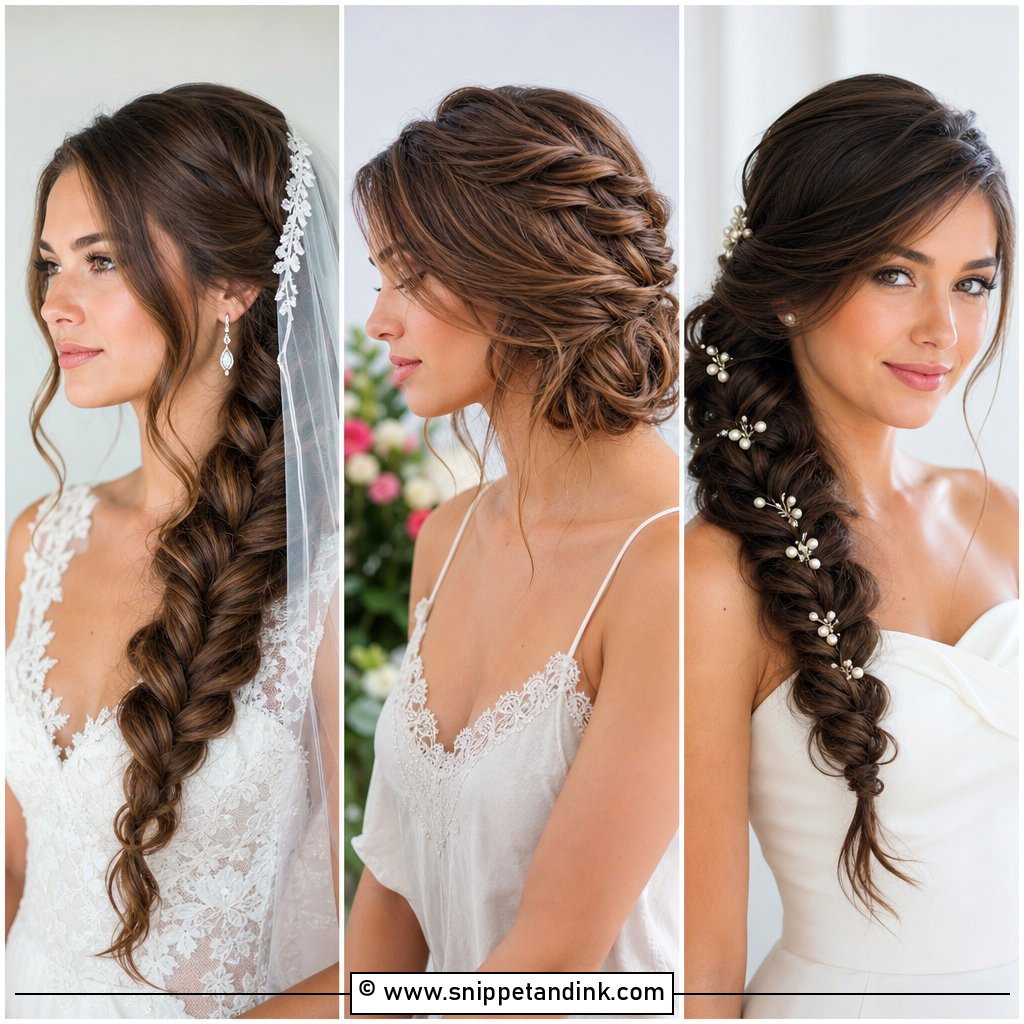
13. Bridal Side Braid
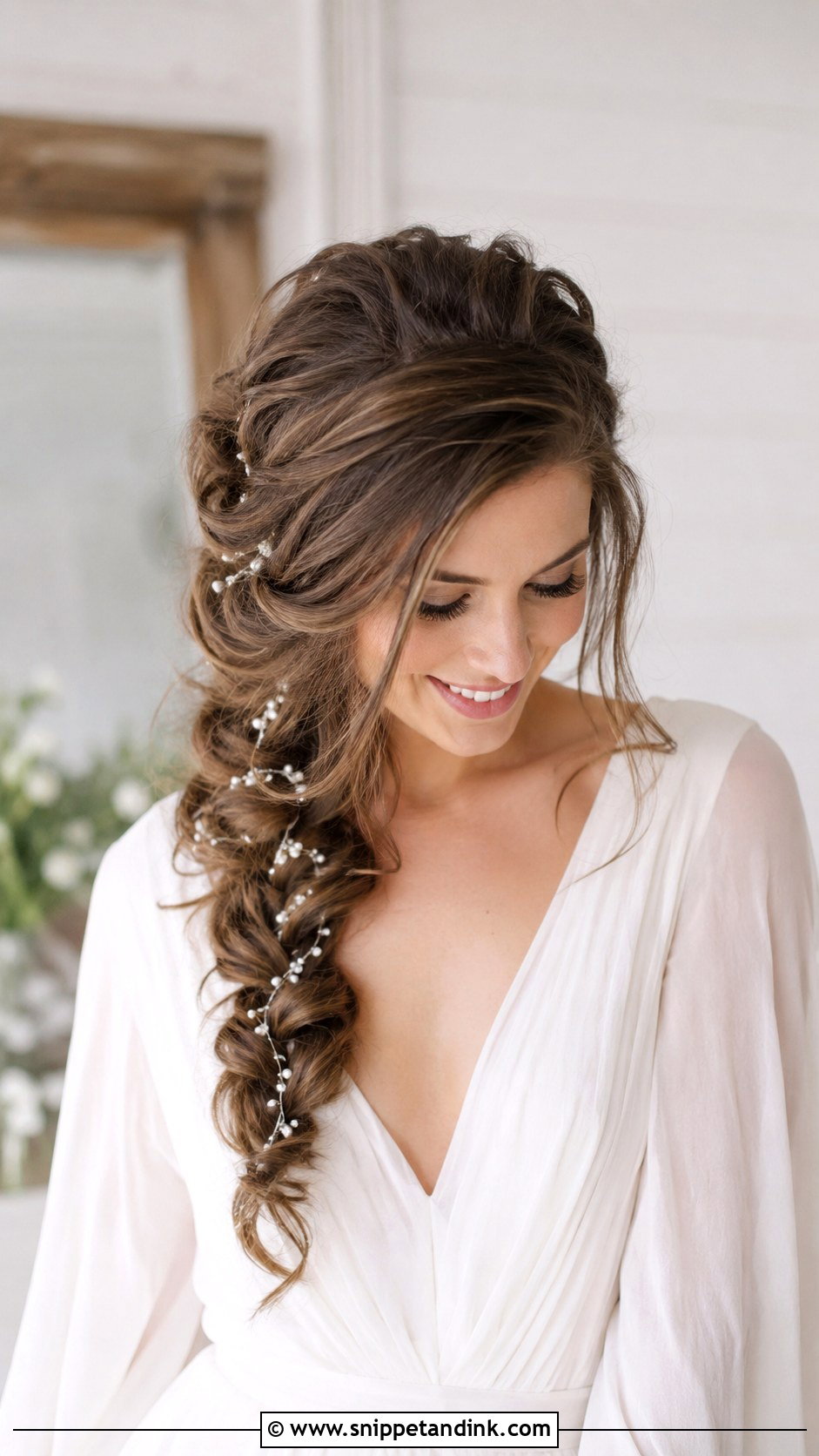
The side braid rests over one shoulder, so it’s right there in every front-facing photo and frames the neckline. I build a full braid and pull the edges out gently rather than plaiting it tight, and I secure the start of it behind the ear with pins so it doesn’t swing round to the back when you dance. It’s comfortable for a long day and suits open-back dresses because the back stays clear. Choose the shoulder that won’t be against your partner during the ceremony, or it gets crushed.
14. Bridal Curly Updo
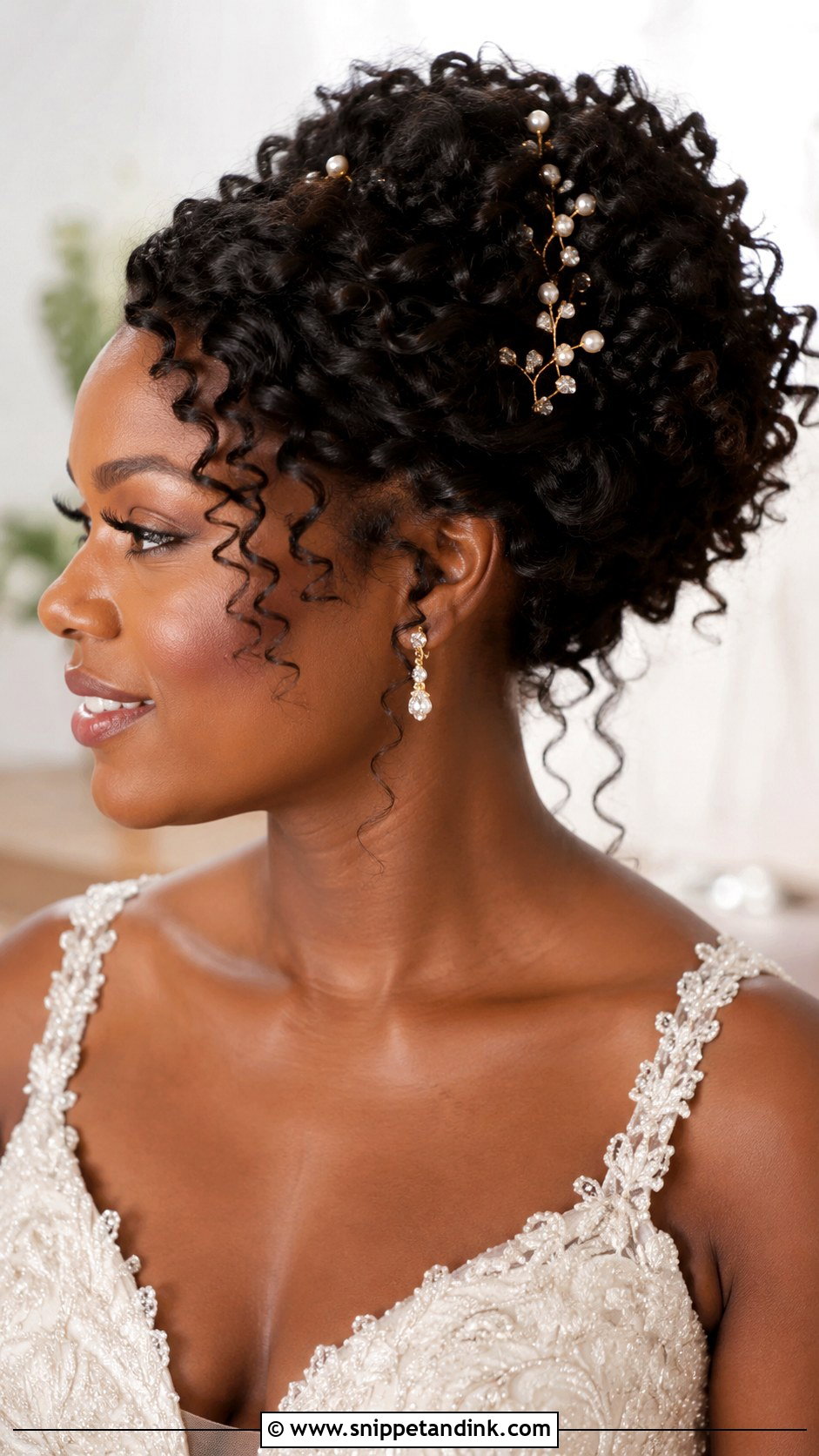
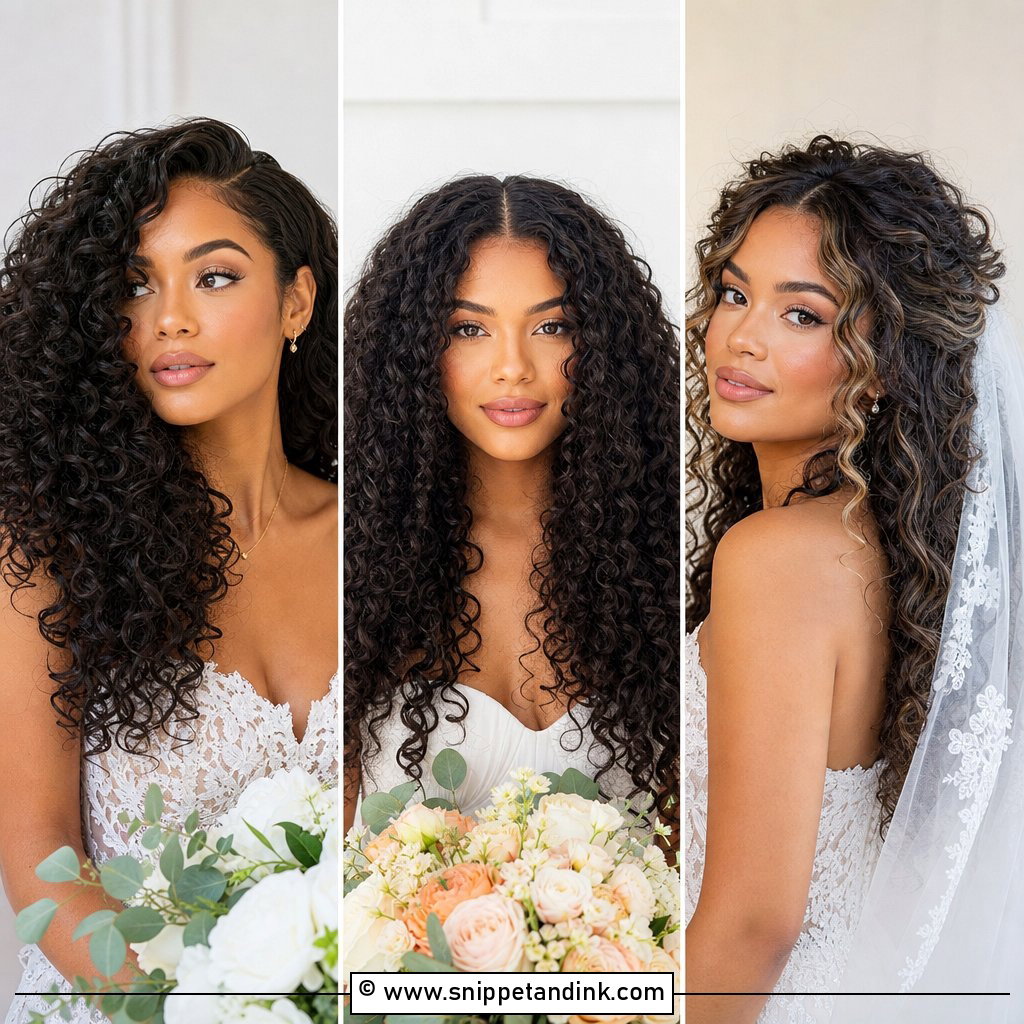
With curly and coily hair I define the curls before I pin anything, using a cream or gel on wet hair and diffusing or air-drying fully. Pinning damp curls is how updos lose their shape by evening. I then shape the curls into an updo by grouping them, not brushing them, so the natural pattern stays visible. A few curls left around the face soften the whole look. Pearl pins or a veil tucked low into the base sit securely in curly hair because the texture grips them.
15. Bridal Natural Curls
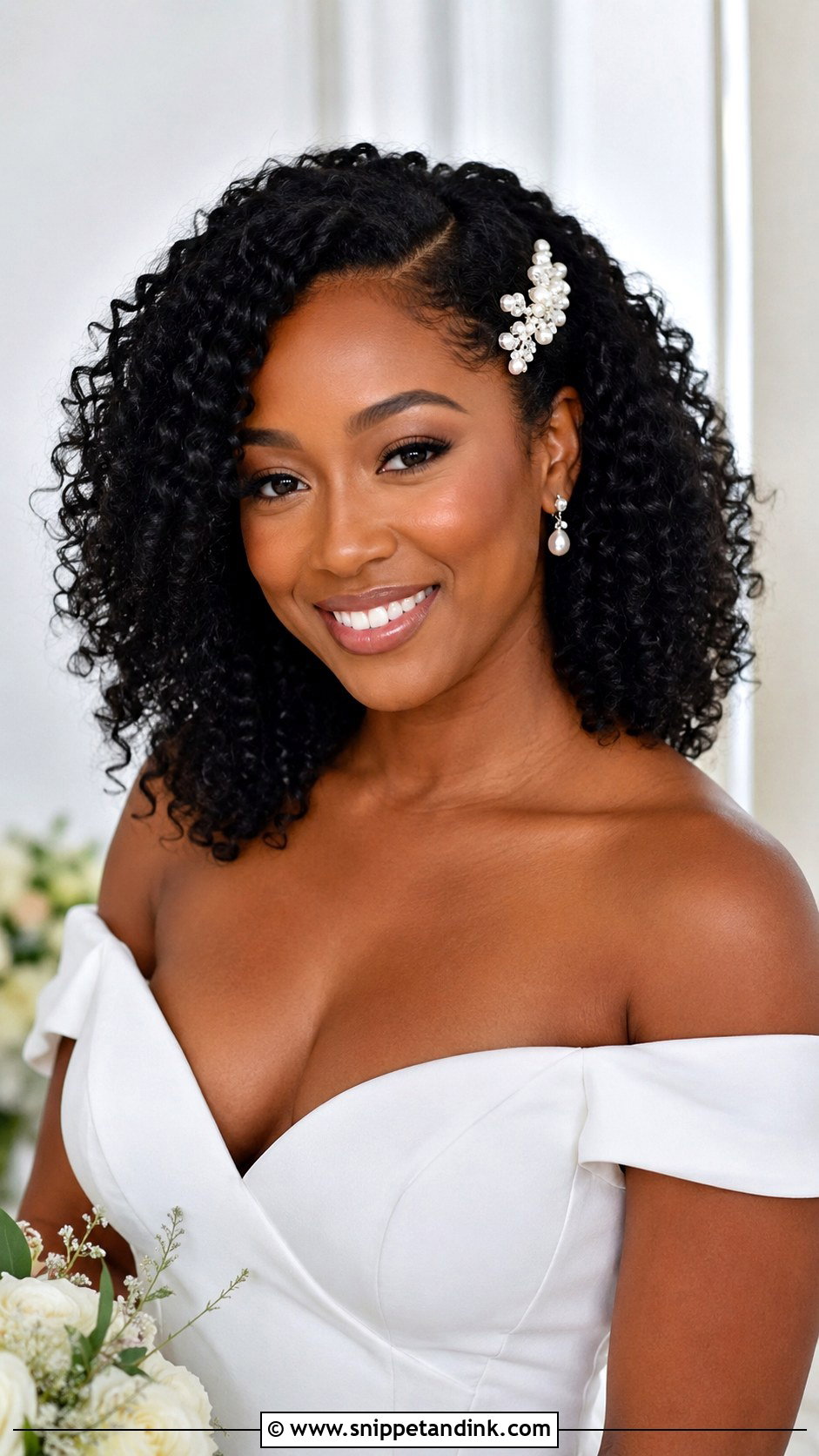
Natural curls worn as they grow need preparation more than styling. I ask brides to get a curl-specific trim three or four weeks before the wedding, so the ends have settled but still look fresh. The style can be worn down, shaped to one side or pinned softly at the crown. On the morning, it comes down to moisture and definition: refresh with water and a light leave-in, define any frizzy curls with a finger coil, and don’t touch them once they’re set. A simple gown and a floral veil let the texture lead.
16. Bridal Afro Puff
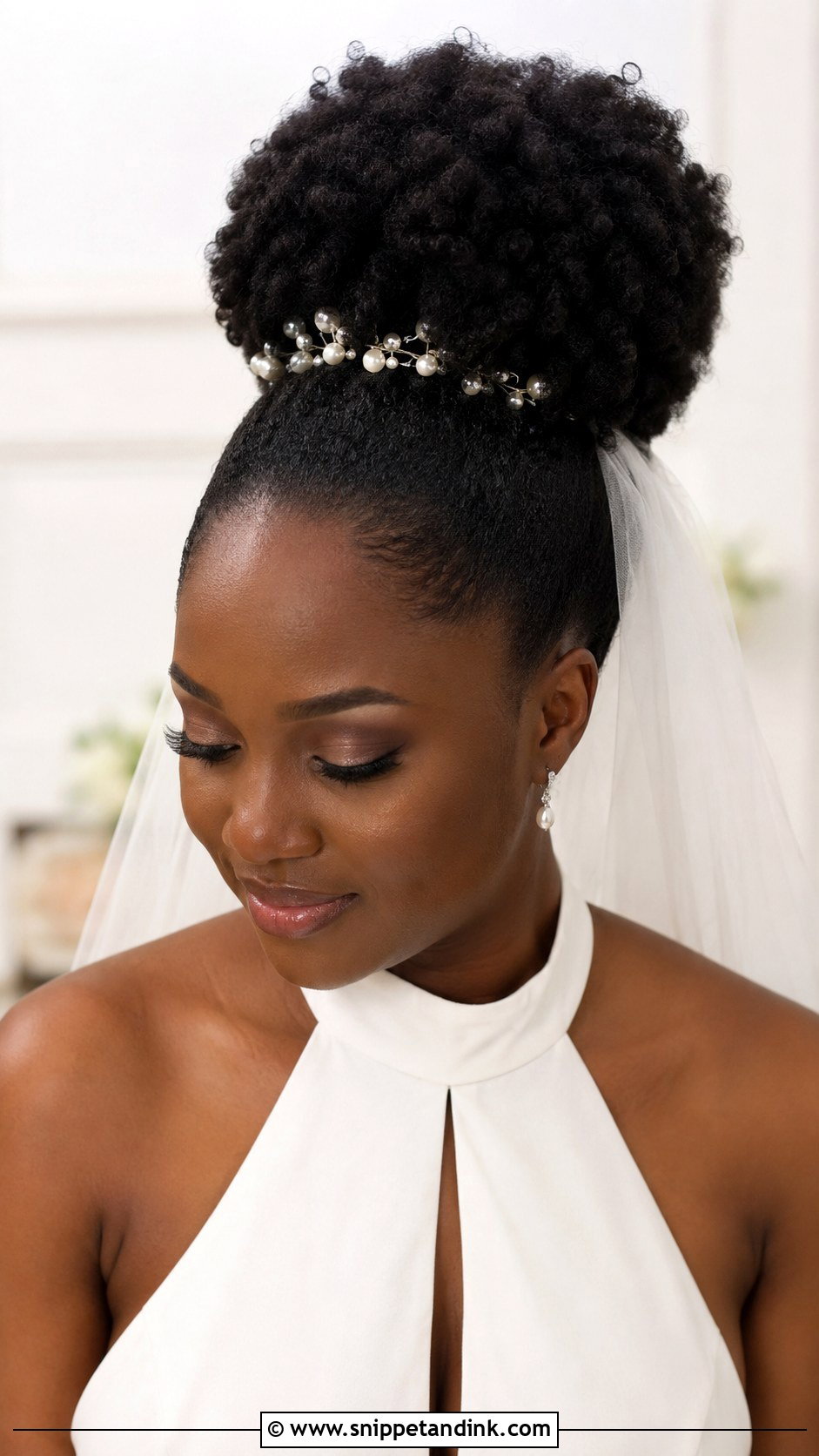
A bridal afro puff is a confident, sculptural shape, and it pairs well with statement earrings and halter or off-the-shoulder necklines. I gather the hair high or low with a wide, gentle band rather than a thin elastic, which can snap or create breakage at the gathering point, then shape the puff by hand so the outline is round and even. Edge styling should be decided at the trial; some brides want sculpted edges, others want them simple. A veil or crystal comb goes at the base, where there’s tension enough to hold it.
17. Bridal Twisted Updo
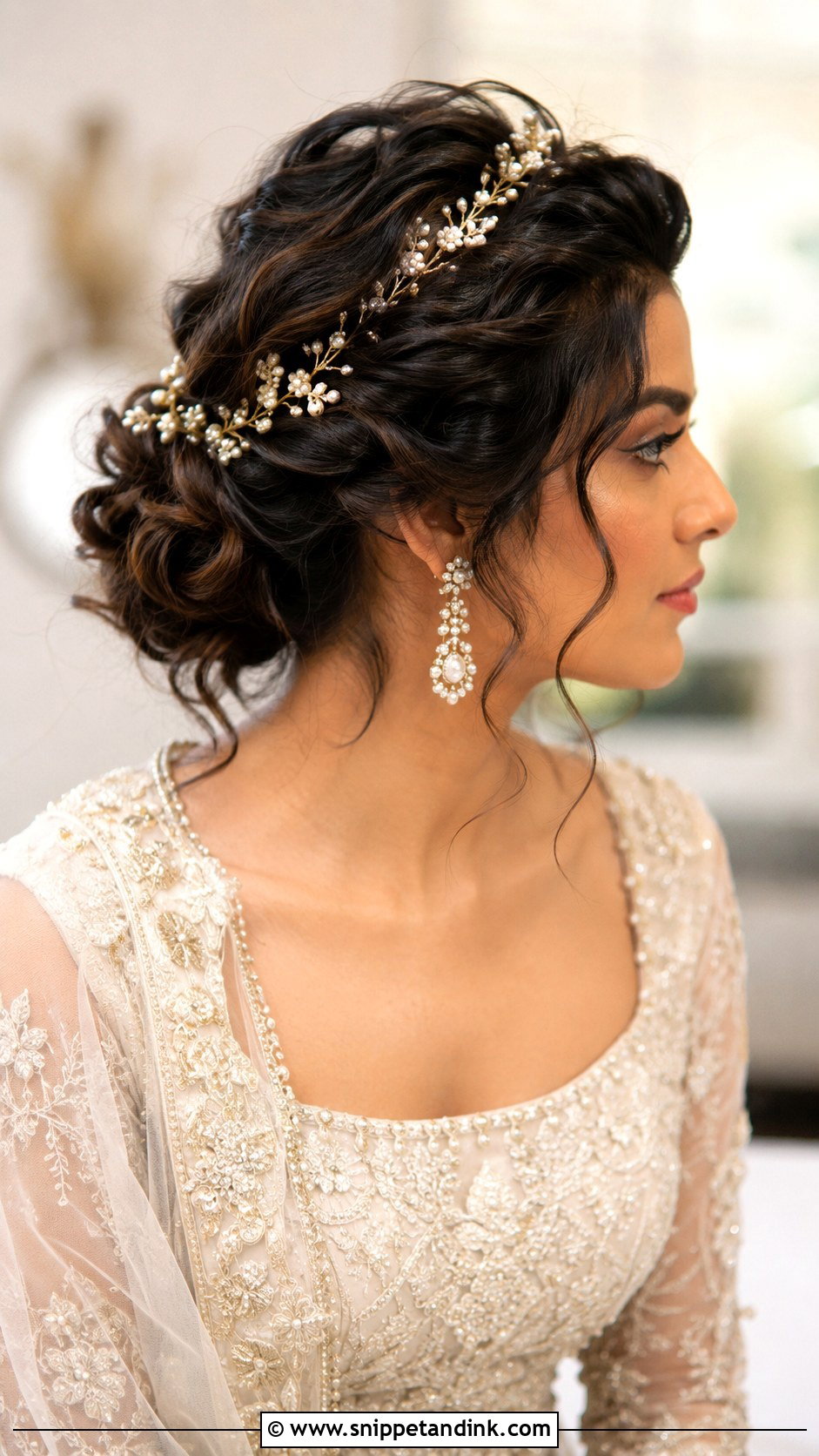
A twisted updo gives the movement of braids with less bulk. I twist sections back and pin each one into a low or mid-height shape, which makes it a good choice on fine hair because twisting adds fullness that a braid would flatten. It suits medium to long layered cuts. My usual mistake to avoid is pinning twists too close together; spacing them out keeps the shape airy. Hair vines and small pearls weave in naturally between the twists.
18. Bridal Side Swept Hair
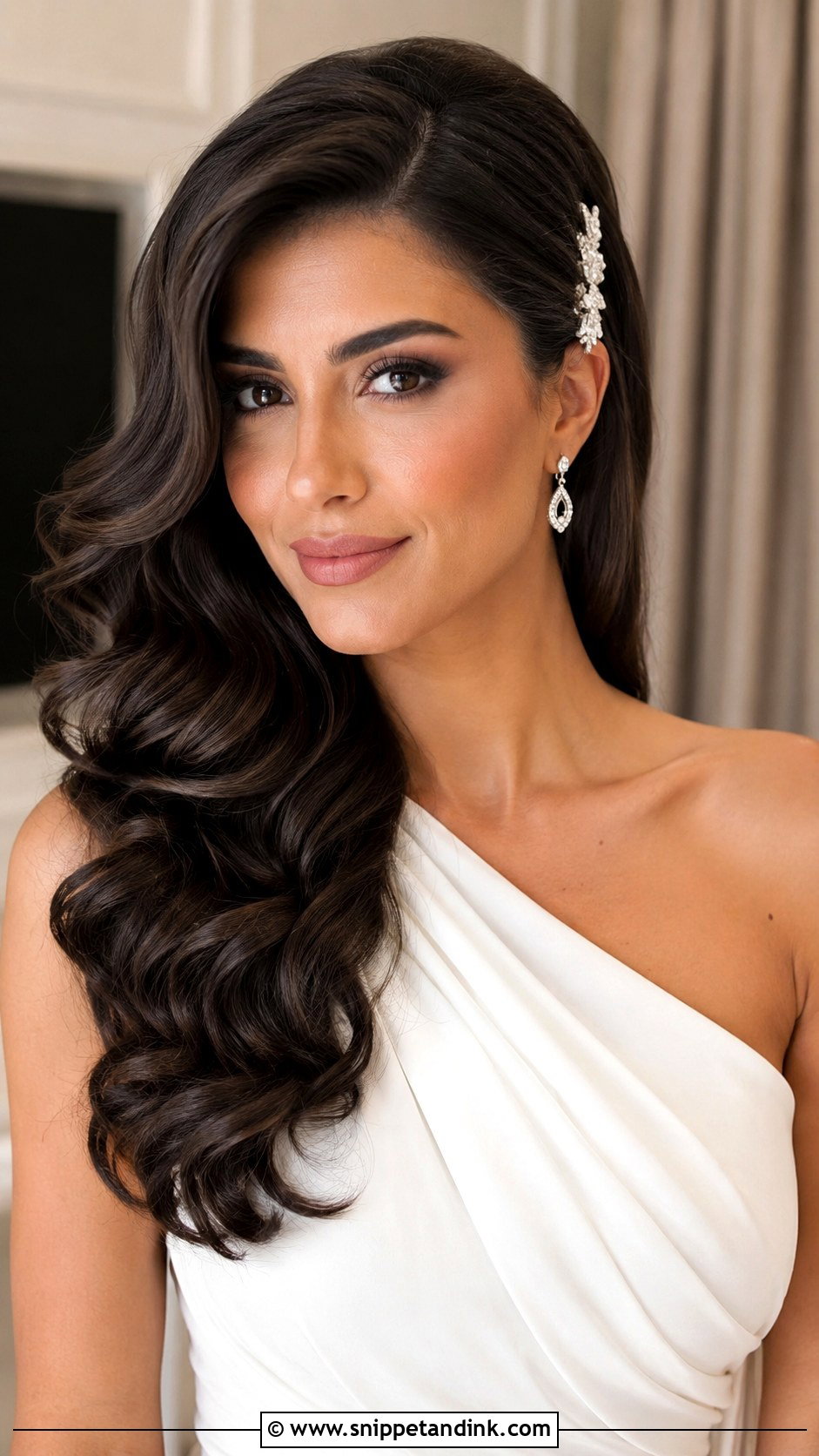
Side-swept hair looks simple, but keeping it on one shoulder takes a hidden anchor: I cross a row of bobby pins behind the ear on the opposite side, or slide in a comb, so the hair doesn’t migrate back. That clears the neckline and shows off earrings on one side. Waves or curls give it shape; straight hair tends to separate. It suits one-shoulder gowns especially well when the hair falls on the bare side, and dresses with back detail because nothing covers the back.
19. Bridal French Twist
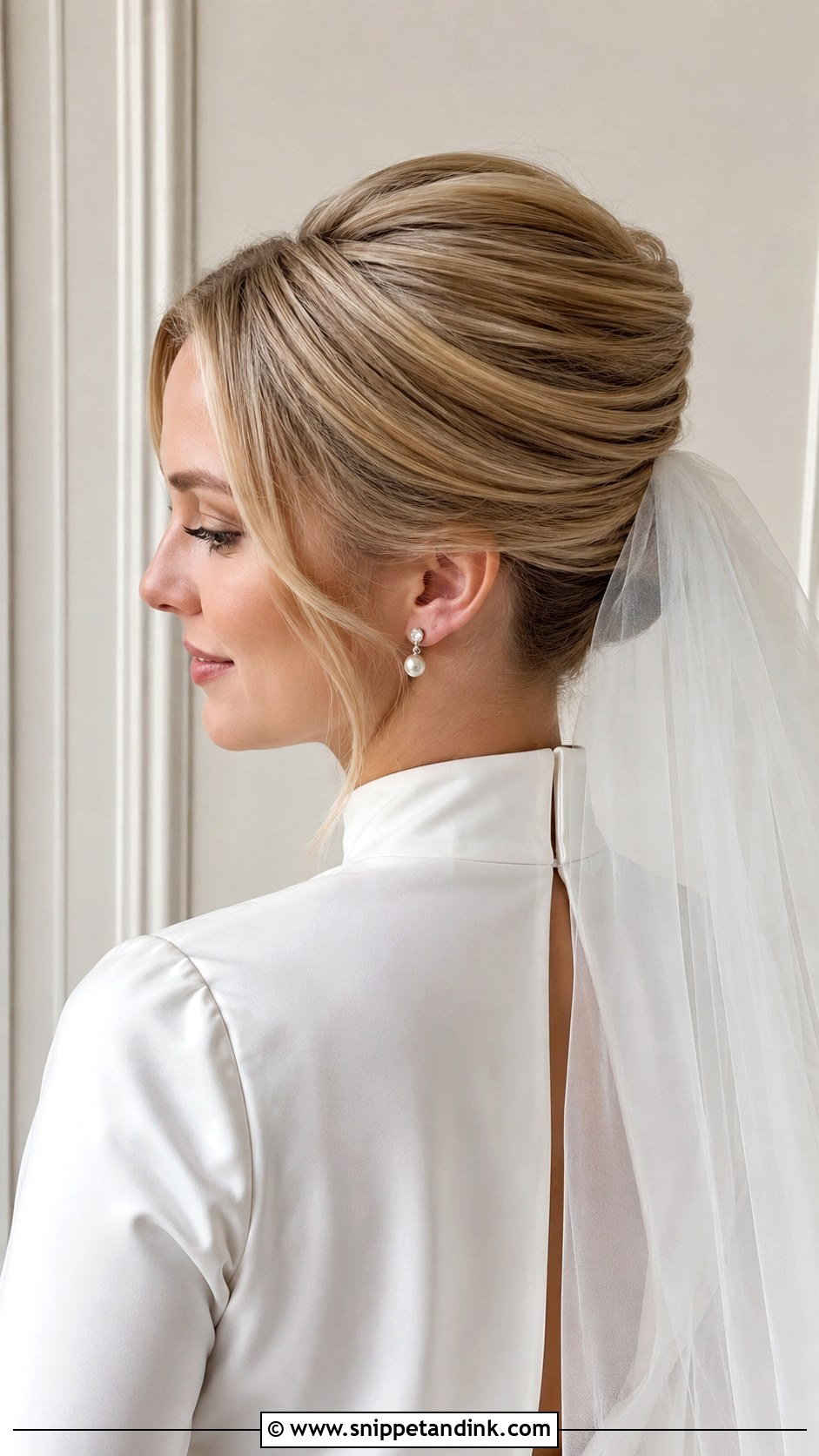
The French twist is a vertical roll up the back of the head, and it’s one of the few full updos I can do on shoulder-length hair. I backcomb the base lightly so the twist has something to lock onto, then pin it from the inside so no pins show along the seam. It looks right with high necks, satin and pearl earrings. Keep the finish glossy but brushable; a twist sprayed hard enough to crack looks dated in close-ups.
20. Bridal Bubble Ponytail
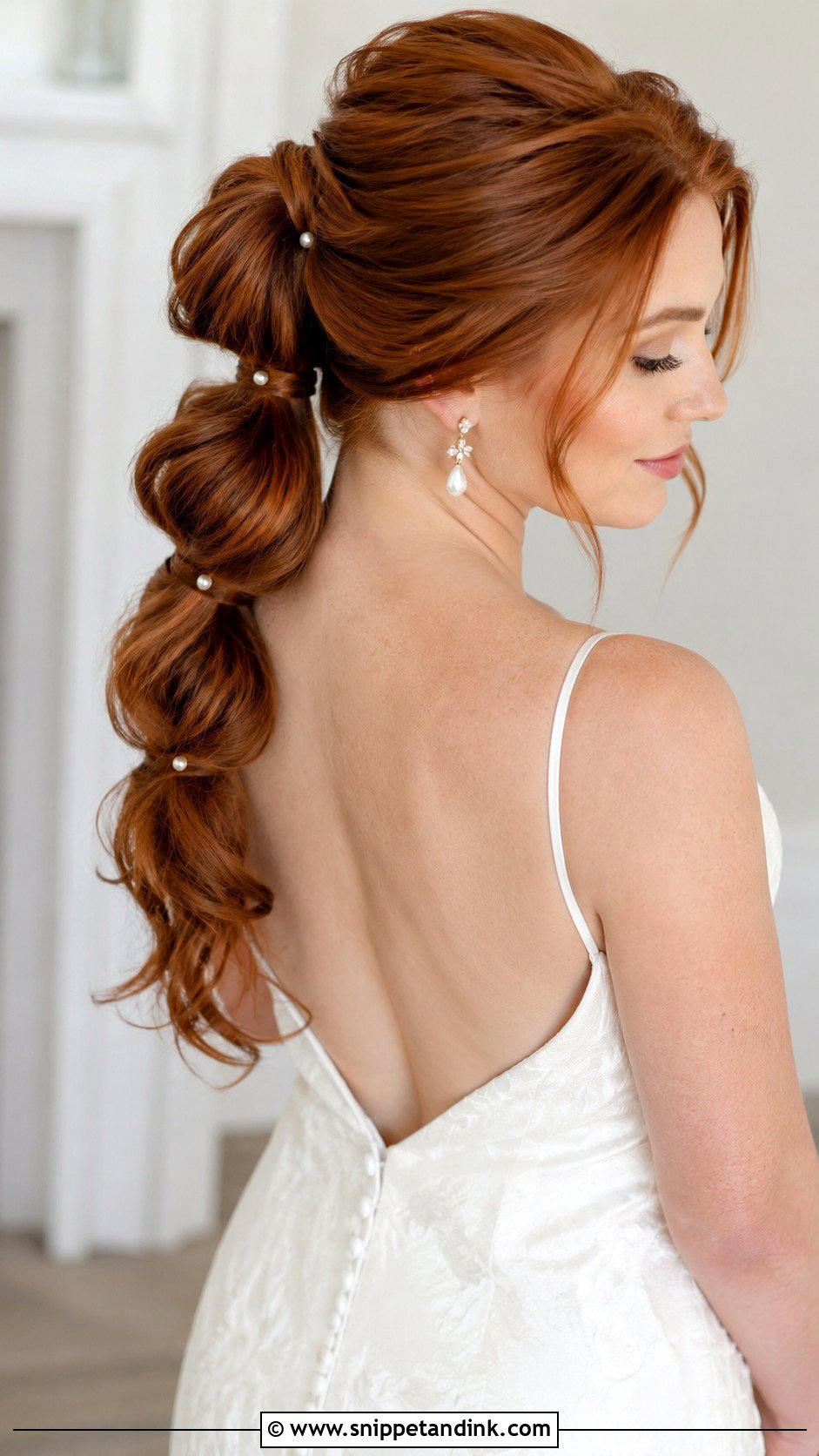
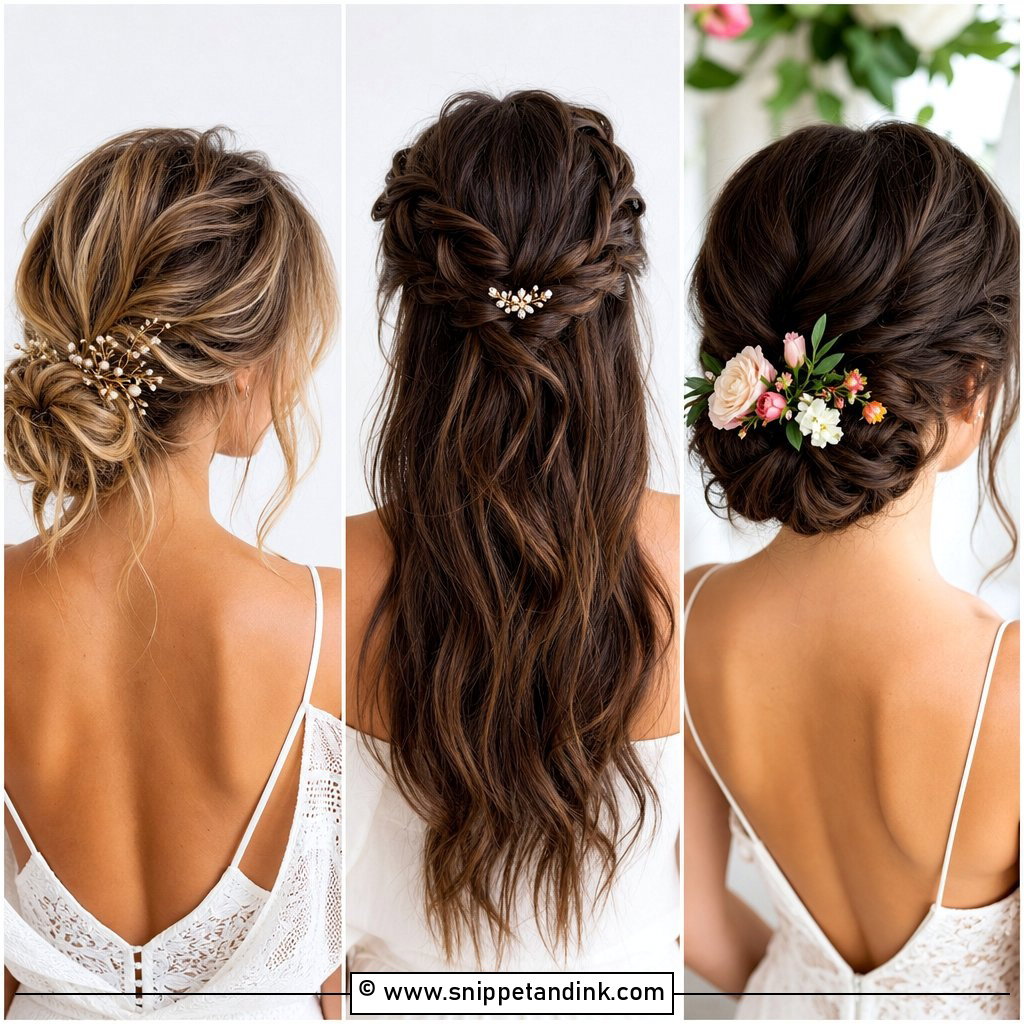
A bridal bubble ponytail is the playful one. I tie the ponytail, add clear or hair-wrapped elastics every few inches, then loosen each section with my fingers to make the bubbles round. It needs length, so extensions are common here. Keep the bubbles soft rather than tight, or they look like a gym style. It’s a strong choice for a reception change, and pearl elastics or a wrapped base make it unmistakably bridal.
How Each Style Ages Between the Ceremony and the Last Song
Every style changes over a wedding day. The question is whether it changes gracefully. Here is roughly how these twenty hold up, from my side of the chair:
- Most secure: low bun, sleek bun, chignon, French twist and braided updos. Hugs, a veil and dancing barely move them.
- Holds well with good anchoring: half up styles, side braids, ponytails and the afro puff. These need a solid base that I build before any decoration.
- Most likely to relax: soft waves, Hollywood waves and side-swept hair. Humidity and body heat loosen curls, so I curl tighter than the final look and leave you with a small touch-up kit.
That kit doesn’t need much: six bobby pins in your hair color, a travel hairspray and a small comb, handed to a bridesmaid rather than tucked into a bag nobody can find. If your venue is humid or outdoors, or the day runs past ten hours, ask your stylist about a quick touch-up before the reception entrance. Fifteen minutes there saves the evening photos.
Bringing Inspiration Photos to a Trial Without Expecting a Copy
Saved pictures are useful, but they’re often taken on hair with extensions, in ideal lighting, and sometimes edited. I ask brides to bring three or four images and tell me what they like about each one: the height of a bun, the softness at the front, the shine. That gives me something to work with on your own hair instead of trying to recreate someone else’s head.
Wear a top with a similar neckline to your dress and bring your veil or accessory if you have it. Photograph the finished trial from the front, back and both sides, and wear it for the rest of the day. How it looks at six in the evening tells you more than how it looks in the salon mirror.
Which of These Twenty Will Feel Like You at Midnight?
A good bridal style has to work in photos and still feel comfortable hours later, after the dinner, the dancing and the hugging. Start with what your hair does on its own, then look at the neckline, the veil, and how hot the venue is. Bring your saved photos to the trial, but let your stylist adjust the parting, the height or the volume so it suits your face and hair. If you leave the trial feeling relaxed and like yourself, you’ve picked the right style.
You'll Like These Ideas:


Leave a Reply