
Simple bridal hair is the request I hear most, and it’s also the one people underestimate. A plain low bun or a sleek ponytail has nowhere to hide a bump, a frizzy halo or a pin that’s showing, so the prep matters more than it does with a heavily braided style. The upside is real, though. Fewer sections means less chair time, less weight pulling on your scalp, and a face you still recognise as yours in photos years from now. Below are 25 easy looks I’d happily put on a bride, from low buns and soft waves to braids and ponytails, each with a note on what it actually takes to make it last.
Why Plain Styles Need More Prep Than Ornate Ones
In a braided updo, a pin that slips disappears into the texture. In a sleek bun, it shows as a bump at the back of the head in every photo from behind. So the prep I do for a bride asking for something simple is the same as for an elaborate style, and sometimes more.
Wash the day before, not that morning
Freshly washed hair is slippery. Most updos and ponytails grip better on hair washed the evening or morning before, with a little dry shampoo at the roots. The exception is very fine or oily hair that goes flat overnight; I’d rather you wash that morning and let me add grip with texture spray.
Every shape needs something underneath
Buns, chignons and half-up styles all sit on a base: a small ponytail, a row of crossed pins or a braid. A shape pinned straight onto loose hair will sag by the speeches. If your stylist skips the base at the trial, ask about it.
Skip the deep conditioner that week
A rich mask two days before softens hair beautifully and makes it nearly impossible to pin. Do your treatments a week out, then keep to your normal routine. Wear a button-front top on the morning so nothing is pulled over a finished style.
1. Classic Low Bun for Brides
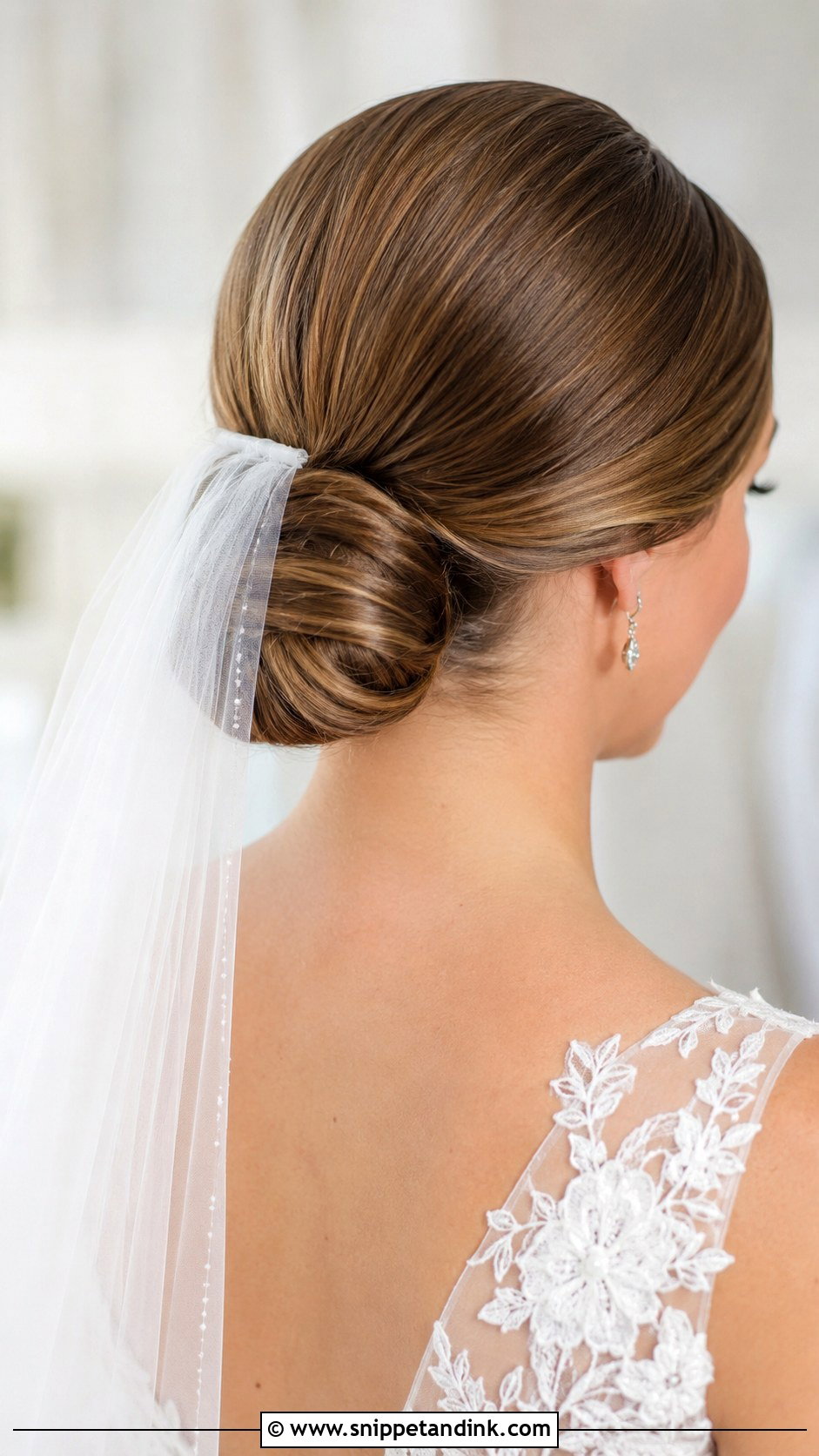
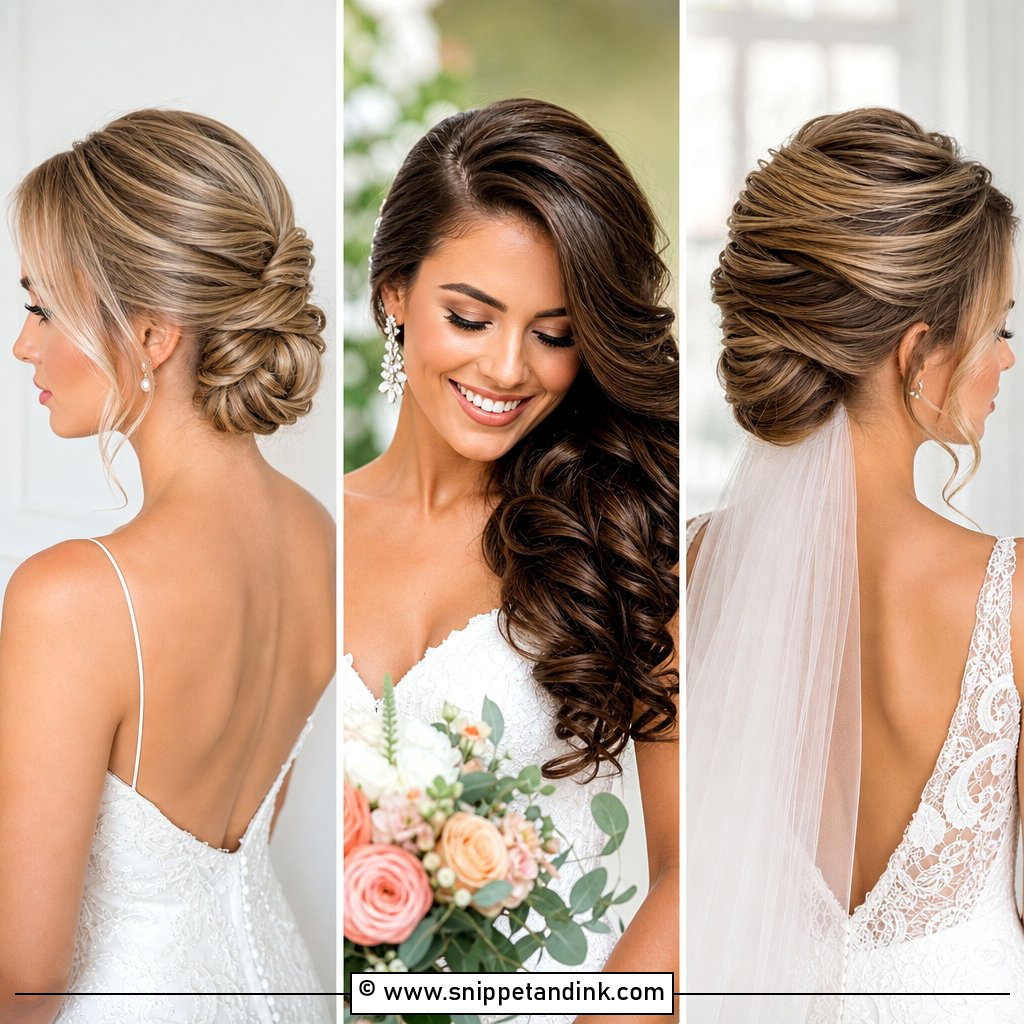
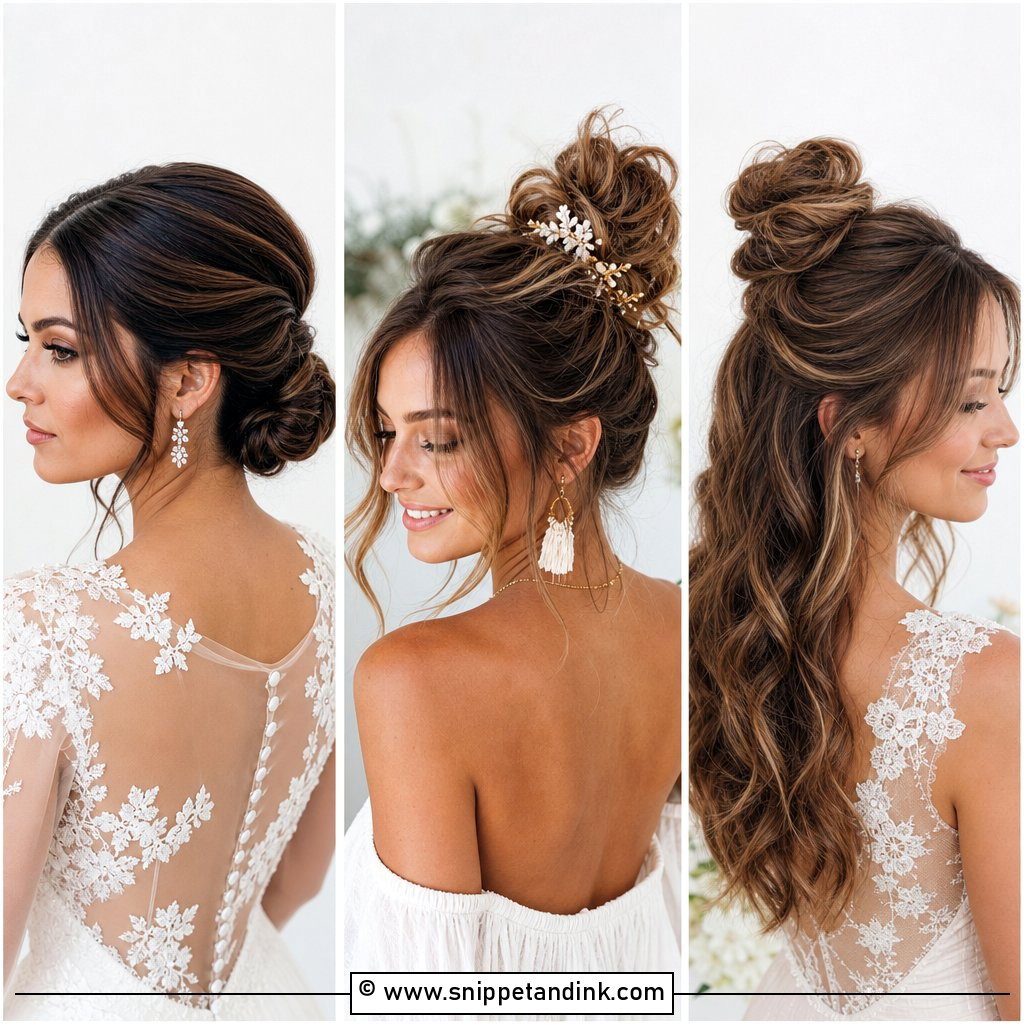
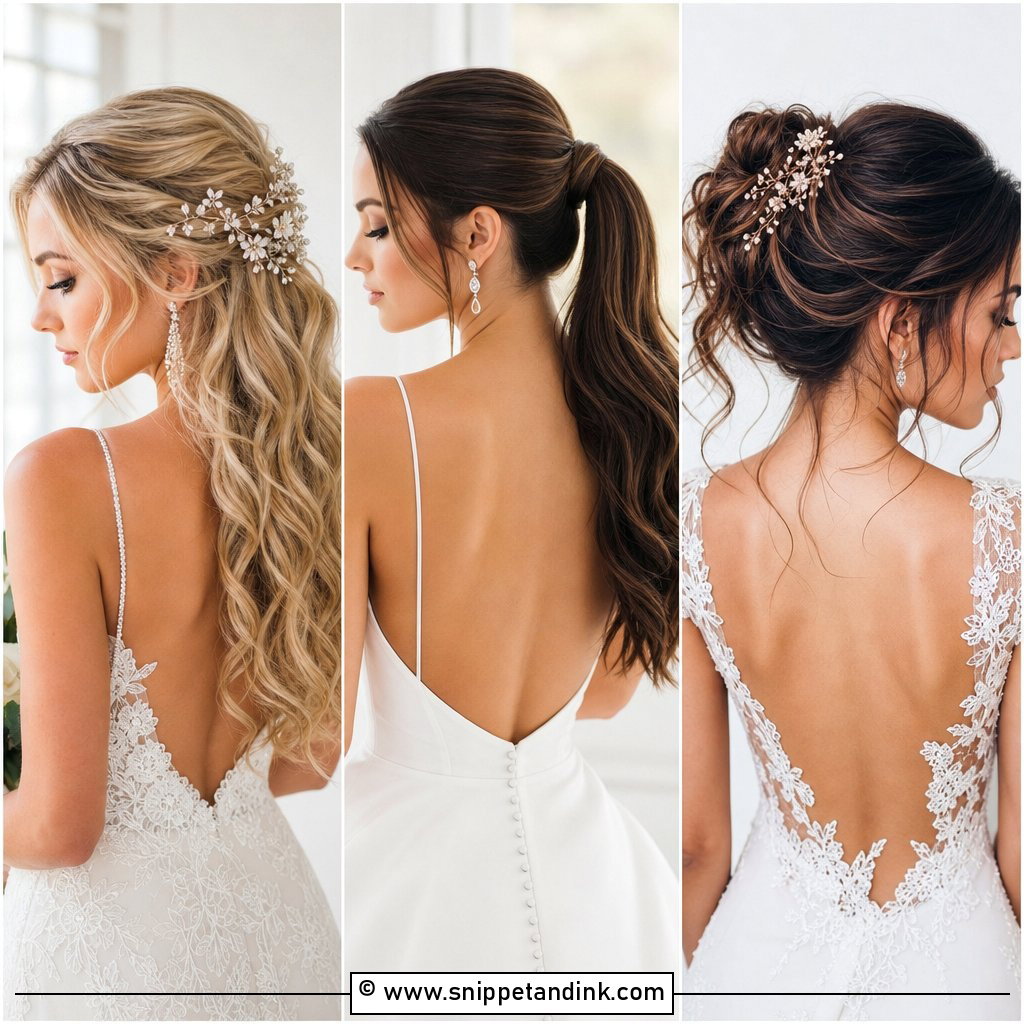
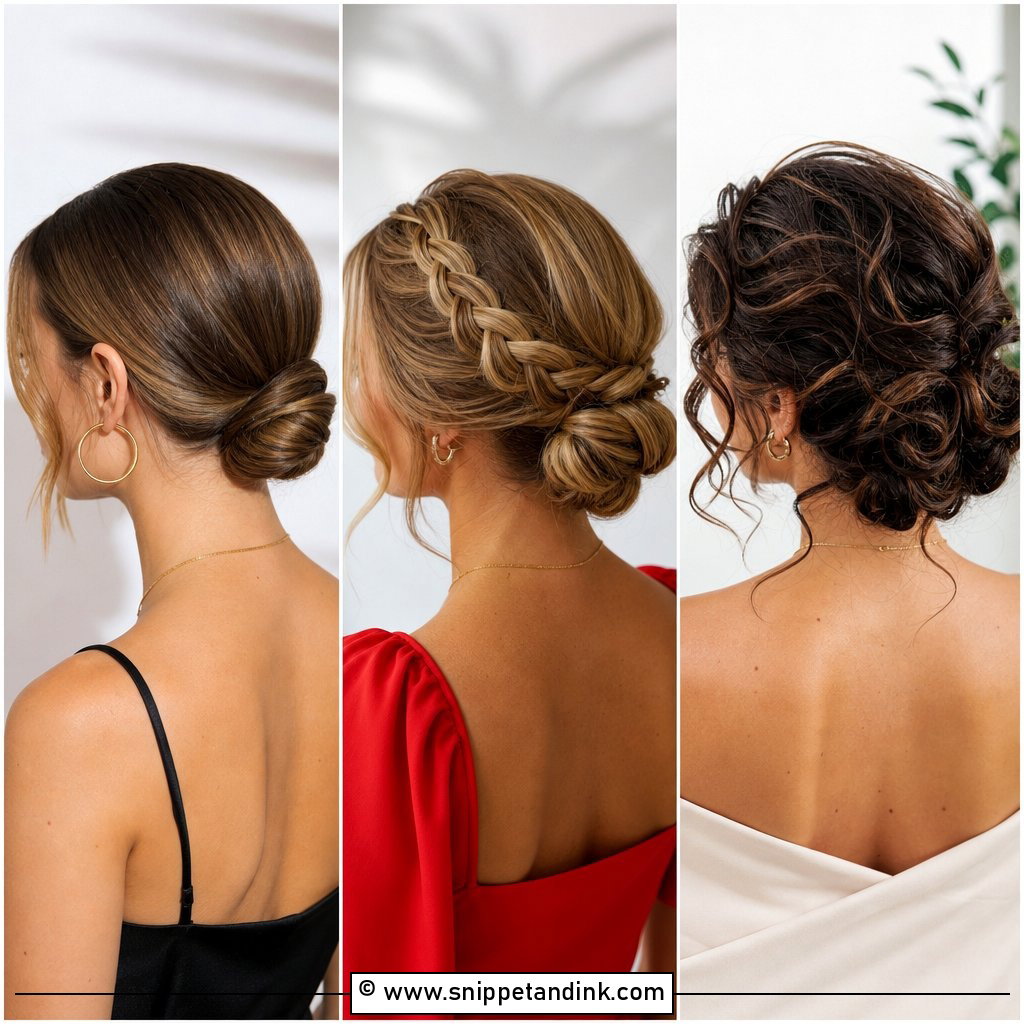
A low bun is the style I reach for when a bride hasn’t settled on her veil yet, because a comb slides in above it or below it with no restyling. I build it on a small anchor ponytail or a base of crossed pins so the weight sits on something firm rather than on loose hair. Sleek or loosened, placement is what matters. Set just above the nape, it clears a high collar; drop it too low and it gets pushed forward every time you lean back in a chair. On very thick hair I split the length into two smaller coils so the bun doesn’t drag by evening.
2. Half-Up Half-Down Wedding Hair
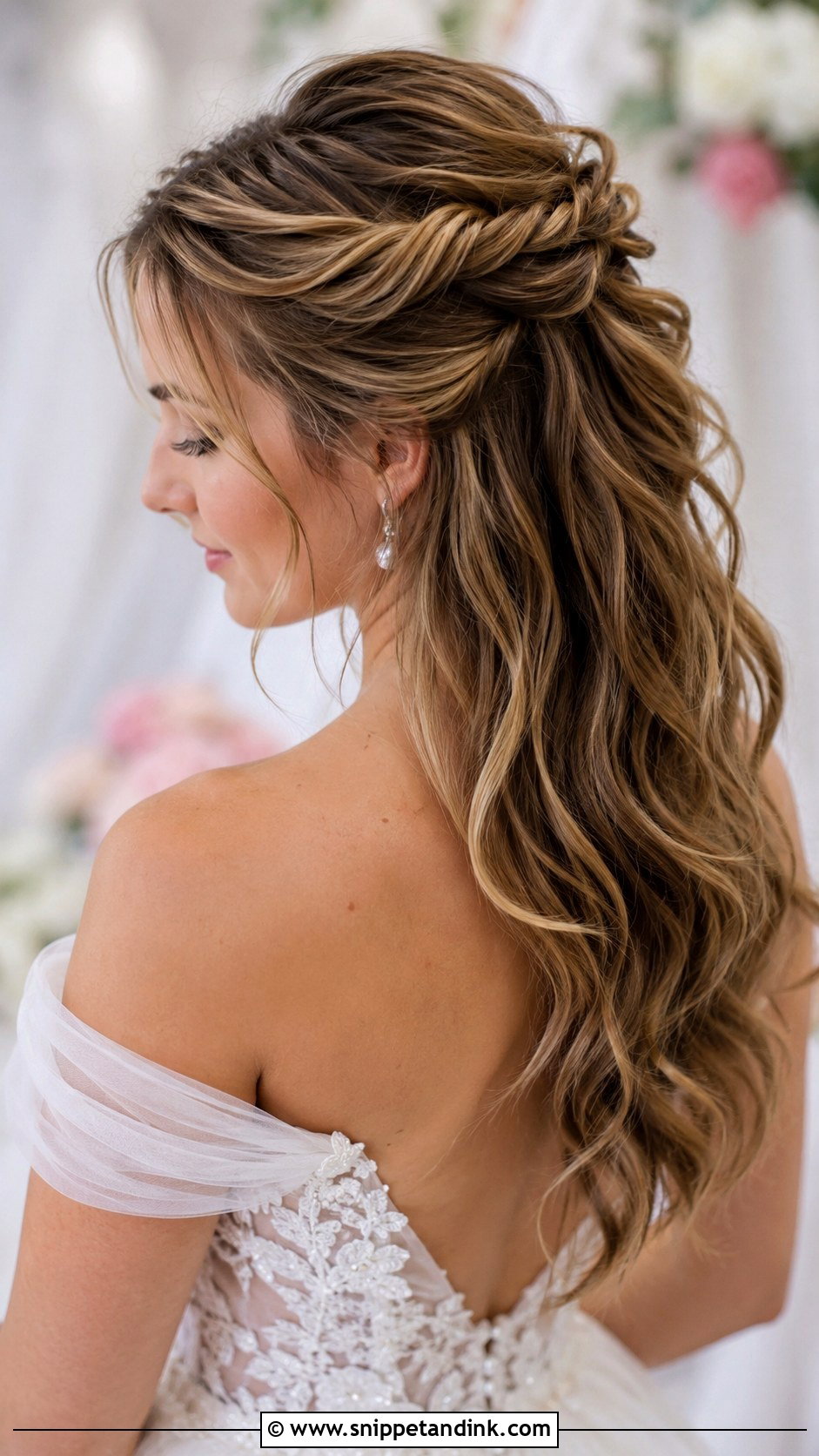
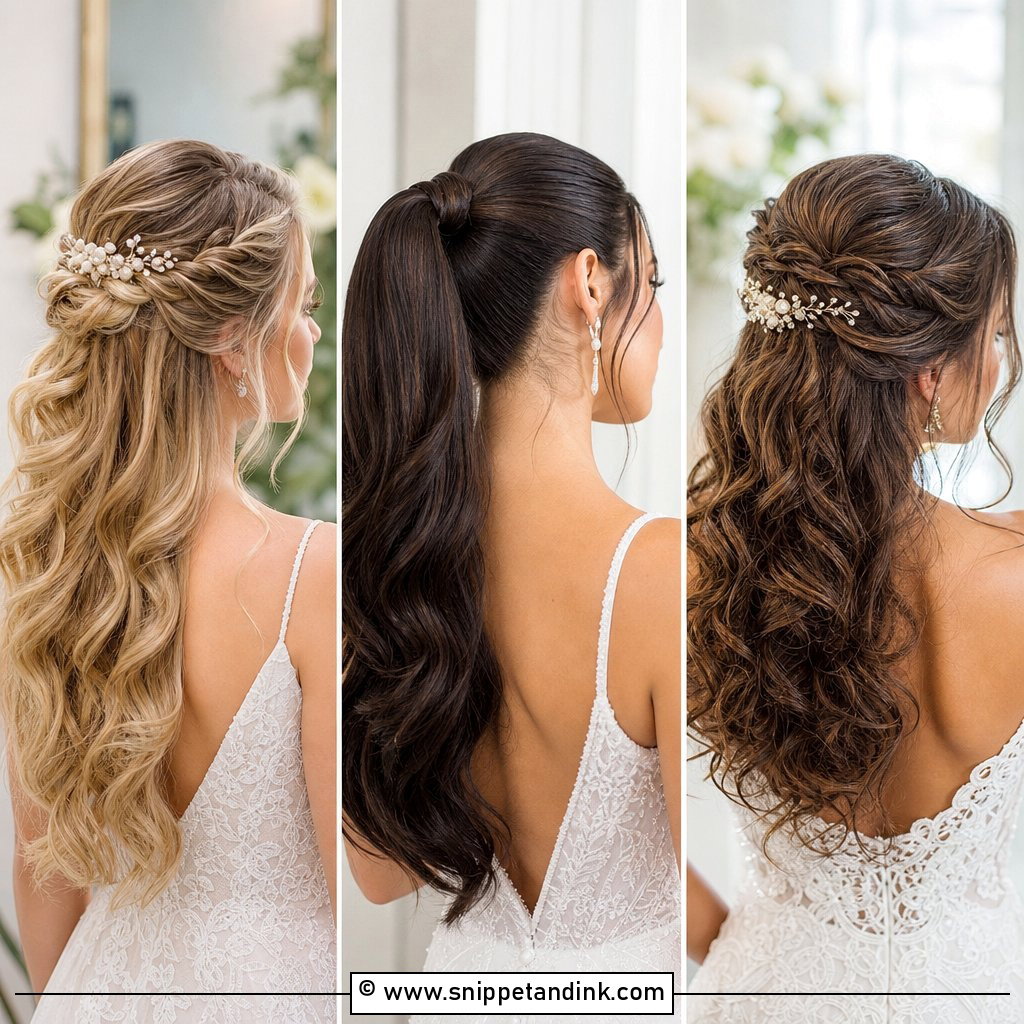
Half-up, half-down suits the bride who wants her hair to still feel like hers. The top section is secured at the crown while the length falls in waves, and a small twist or braid at the back hides the grip line. The honest trade-off is that the down part is the part that drops. I set the curls with a hot tool, let them cool completely in pin curls, and only brush them out right before you step into the dress. Medium to long hair carries it best; above the shoulders, the half-up section can look like an afterthought.
3. Soft Romantic Waves
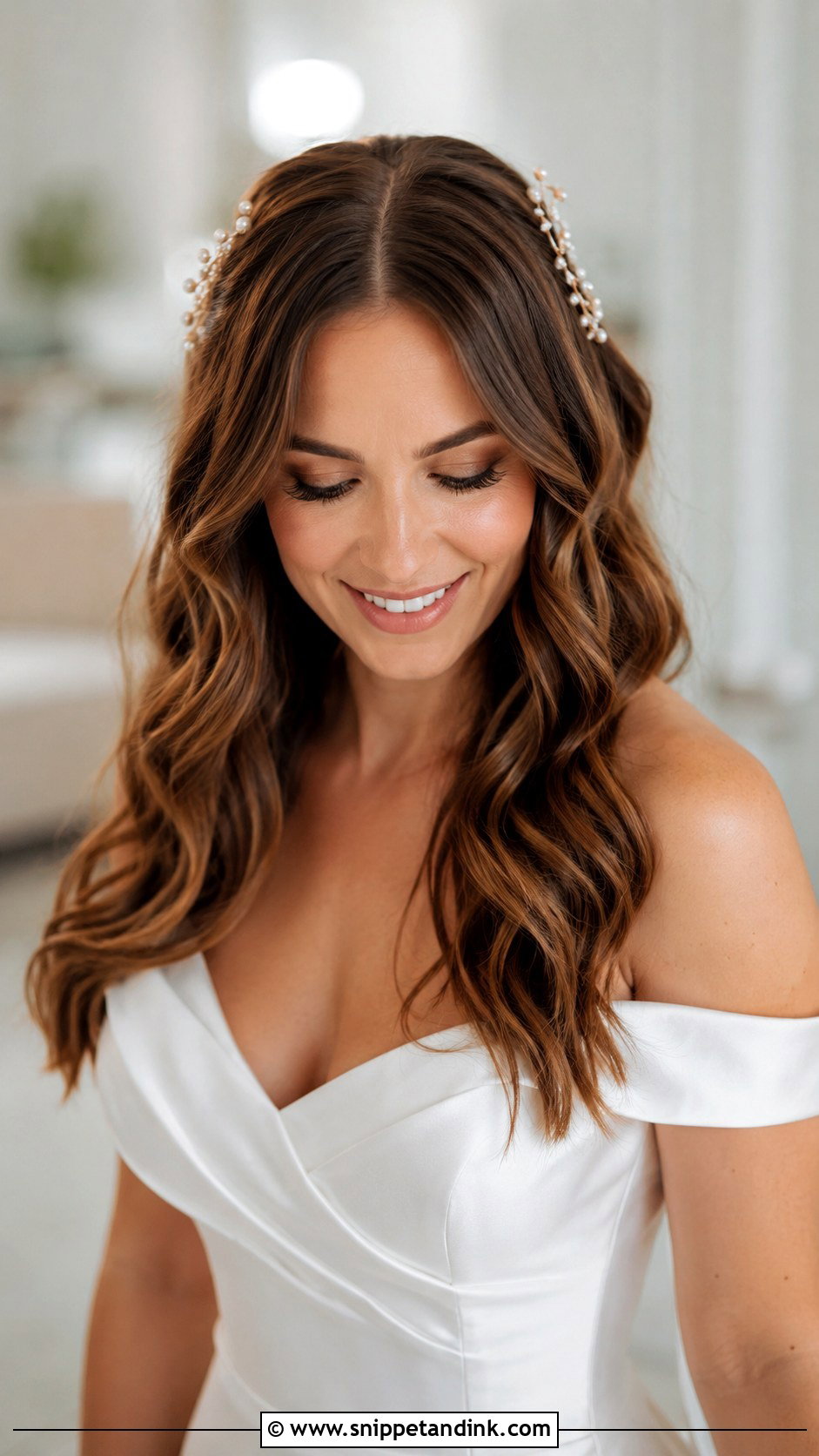
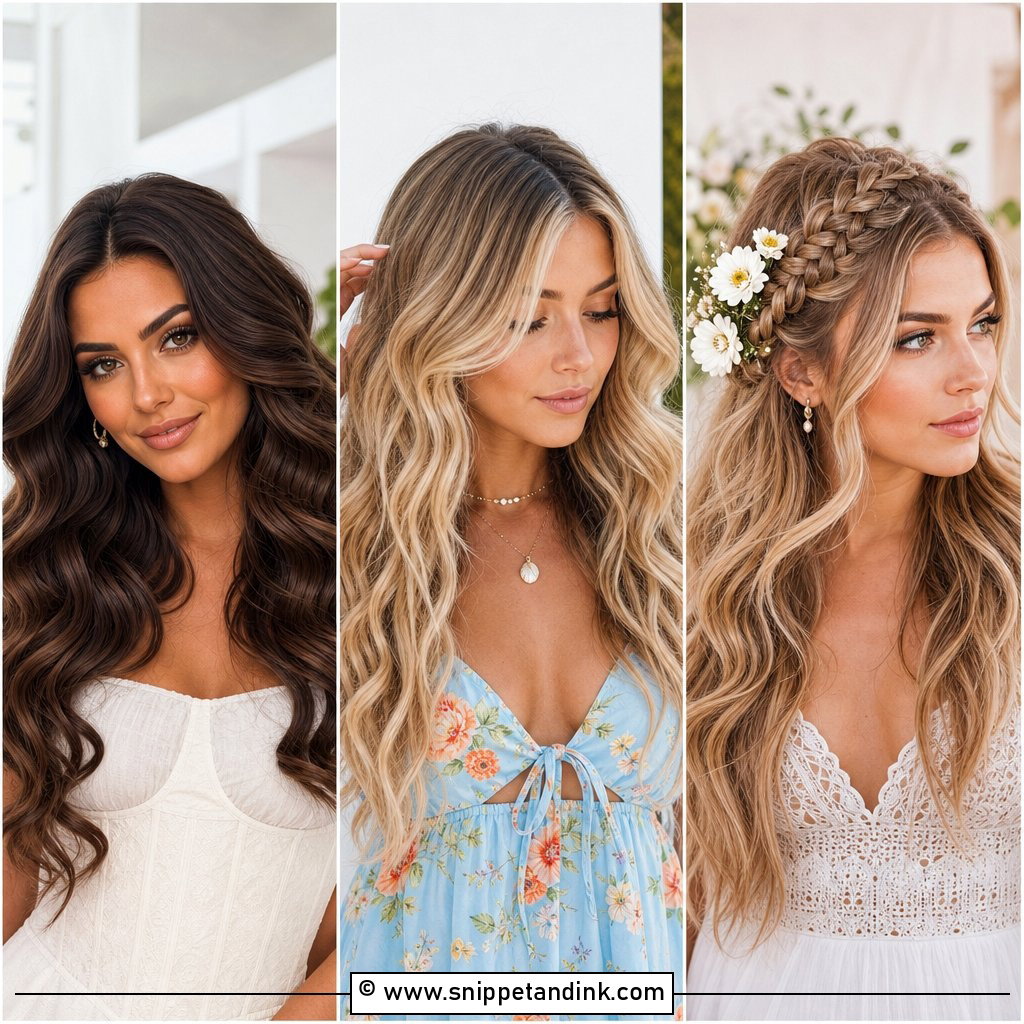
Loose waves look like the least work and are often the most. Hair worn down shows every bit of humidity, so I prep with a light mousse at the root and a heat protectant through the lengths rather than a heavy oil, which weighs a wave out within hours. A center part reads modern; a deep side part leans vintage and hides a cowlick nicely. If your hair is very fine and won’t hold a curl past lunch, I’d steer you toward a half-up version instead, because pinned sections stay waved far longer than free ones.
4. Sleek Low Ponytail
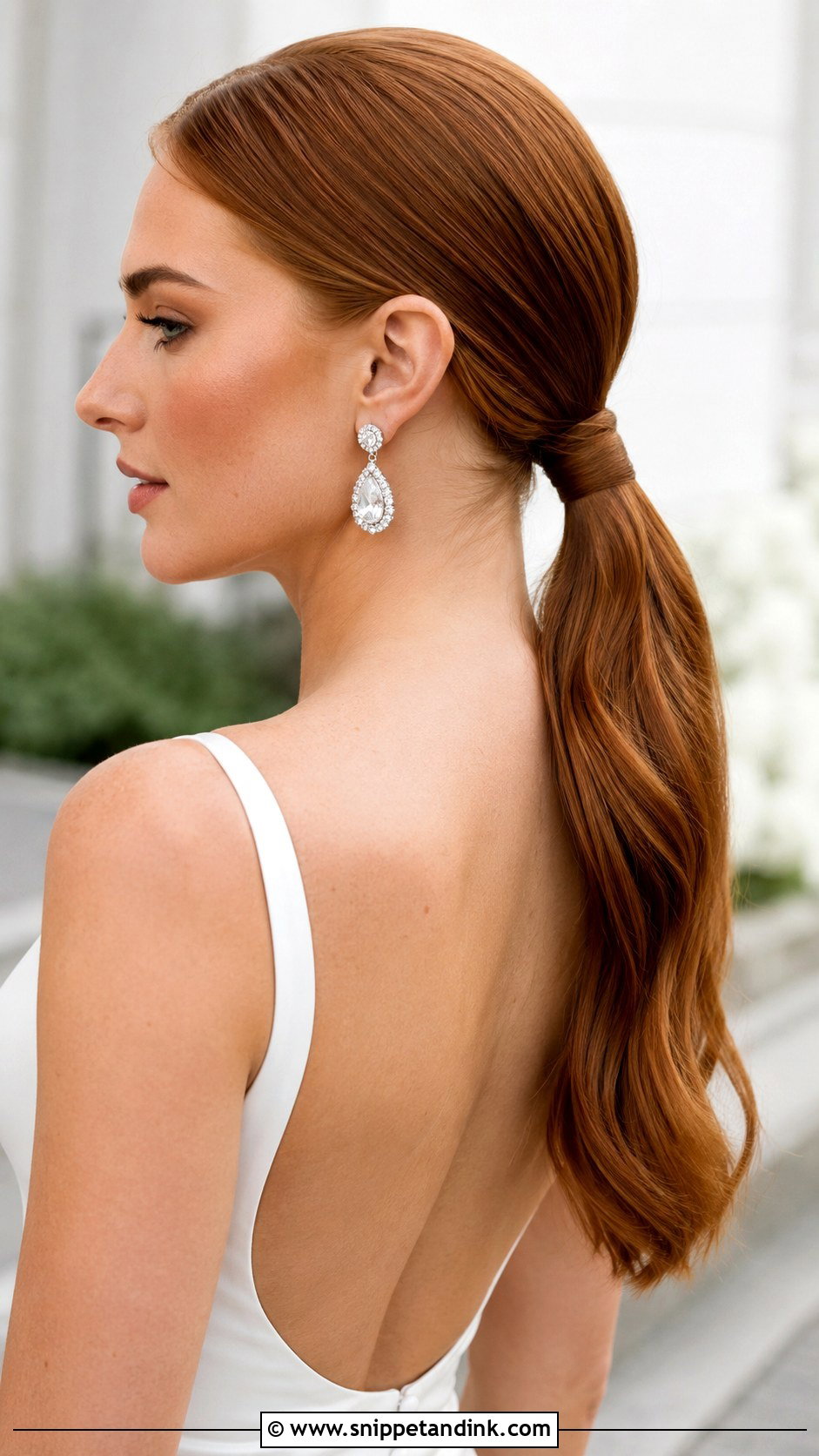
Quick to make, yes, but sleek means nothing can hide. I smooth the hair with a boar-bristle brush and a little cream before securing, then wrap a strand around the base and pin it underneath to cover the elastic. That wrap is the detail that makes a ponytail bridal instead of gym-ready. It shows off earrings and an open neckline. Set it lower than you think, right at the nape, so it never presses against a chair back or a veil comb.
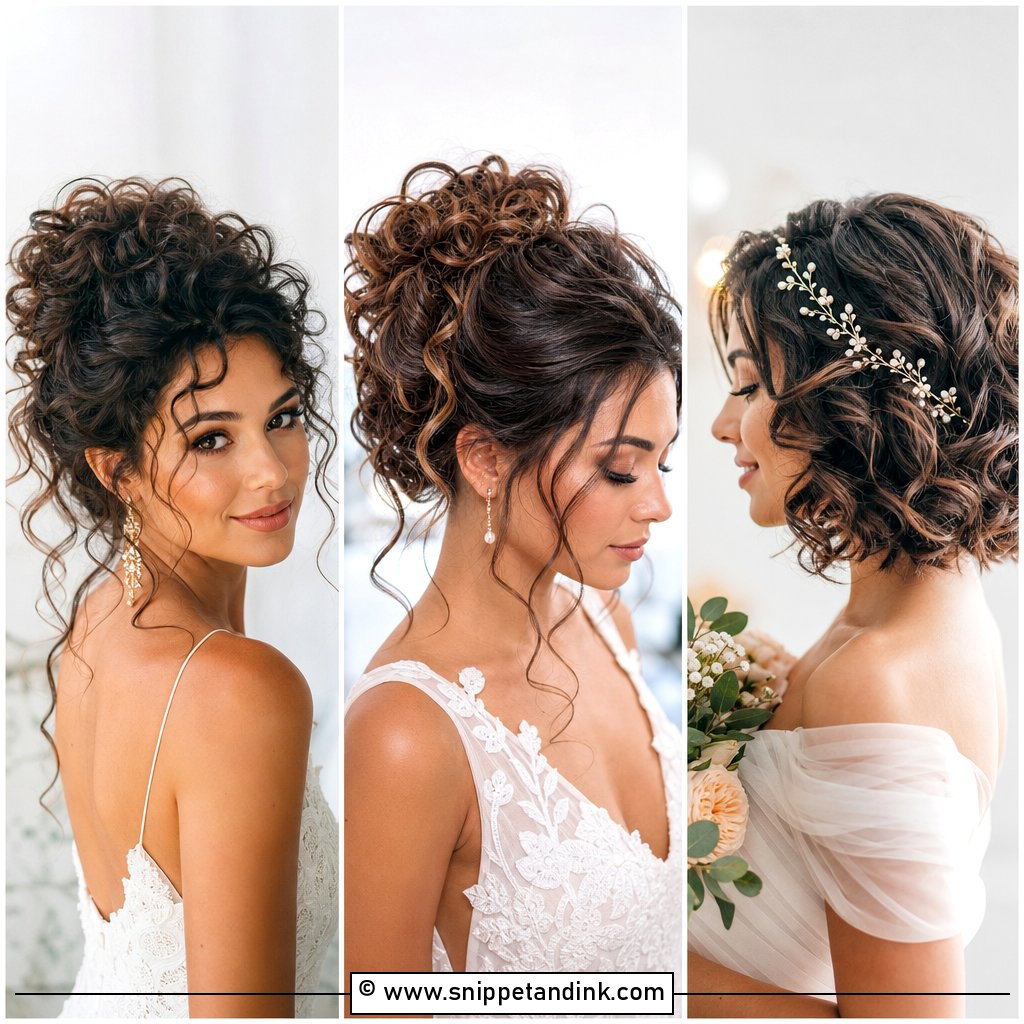
5. Messy Bun With Loose Tendrils
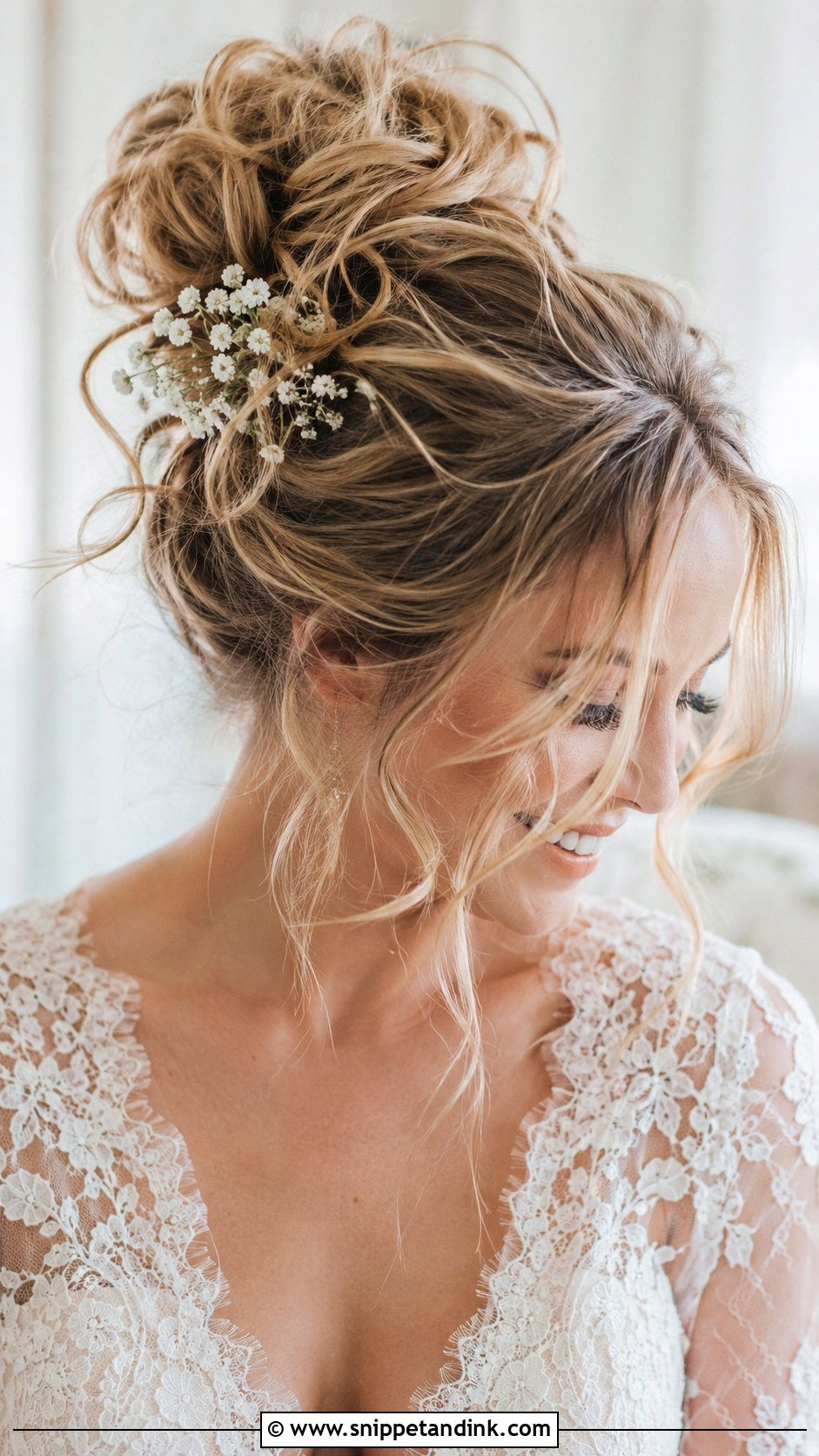
A messy bun is a planned mess, and the planning is where most home versions fall apart. I add texture spray and backcomb lightly at the base so the bun has grip, then pin it in loose loops instead of wrapping it tight. Wispy face-framing tendrils should be pulled out deliberately, two or three per side at most, or the style starts to look like it has fallen. Baby’s breath tucks in well because its stems are stiff enough to anchor. High reads playful; low sits better under a veil.
6. French Twist Updo
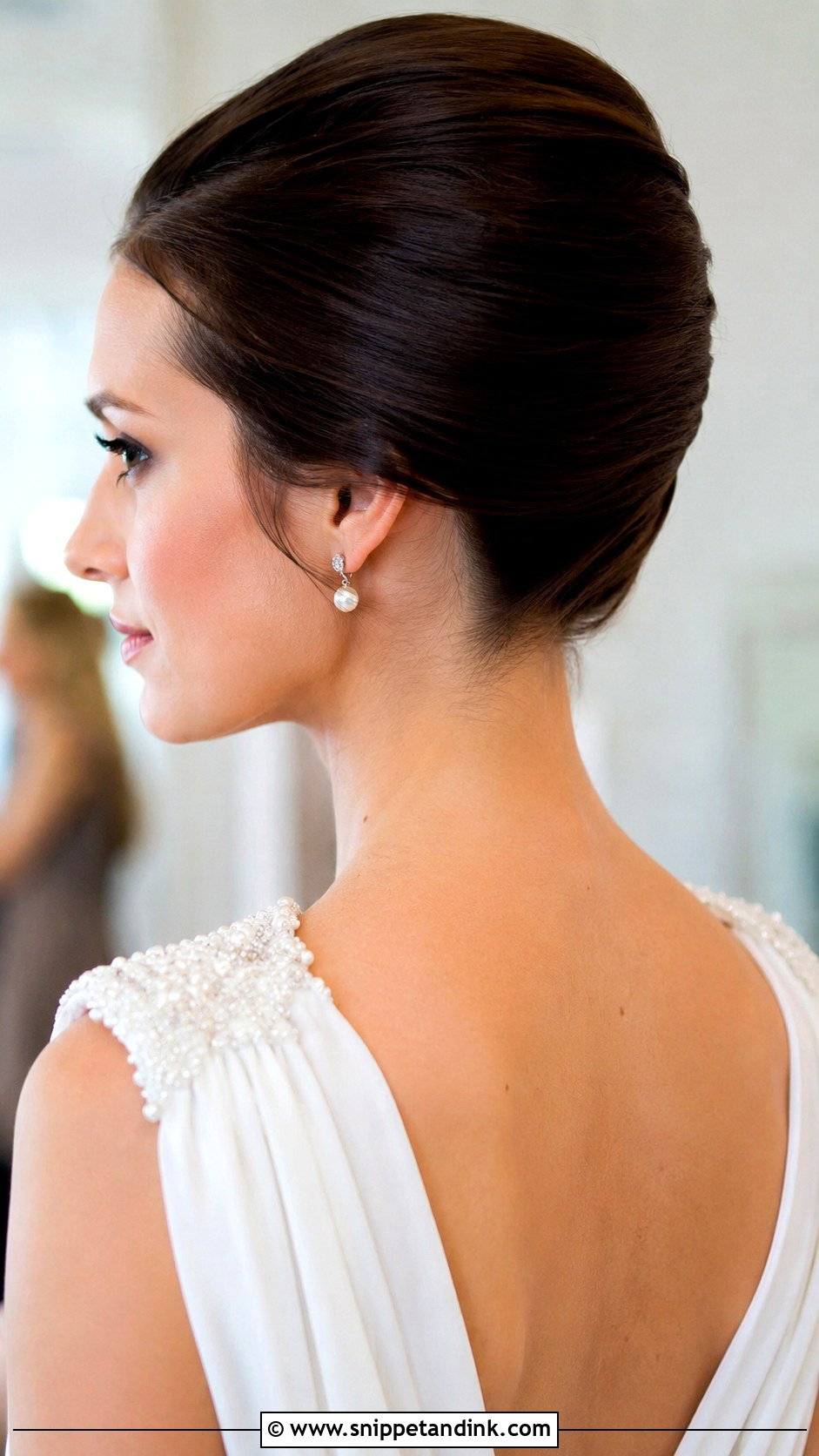
This is a sleek vertical roll at the back of the head, and it needs hair with some grip. Freshly washed, silky hair slips straight out of the fold, so I ask brides to wash the day before and I prep with a dry texture spray. The pins go in along the seam, angled into the base, never pushed straight in. A French twist lengthens the neck and suits structured gowns and drop earrings. I don’t recommend it for hair much shorter than the collarbone, because there isn’t enough length to finish the roll.
7. Braided Crown Hairstyle
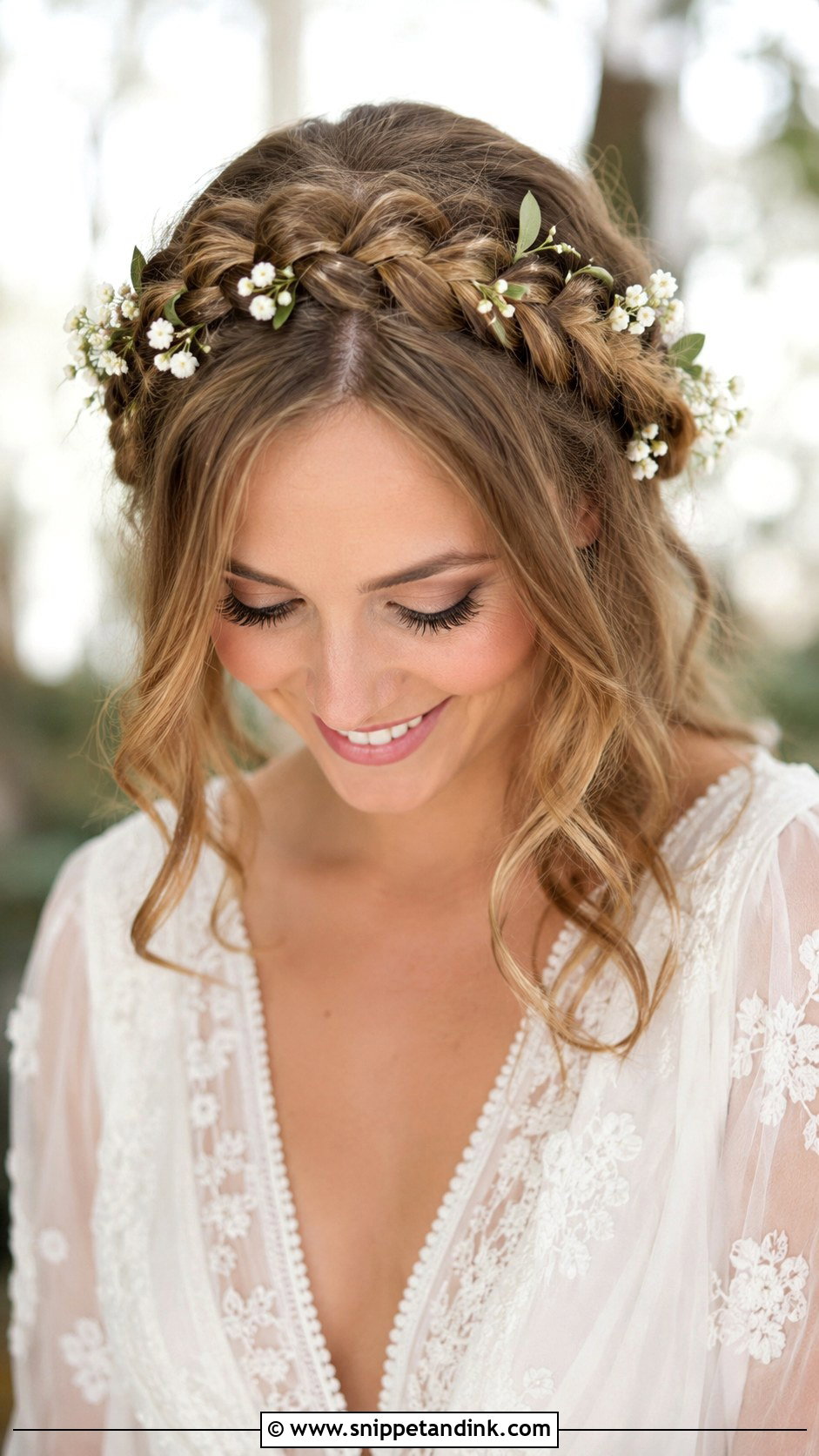
Braided crowns sit close to the head, which is why I like them for summer and outdoor weddings where hair worn down would stick to the neck. I usually work two Dutch braids starting behind the ears and pin the ends across the top, so nothing heavy pulls at the crown. Layered hair will poke out a little, and honestly that suits the look; I just widen the braid edges so shorter pieces read as texture. Flowers and pins go into the braid itself, not on top of it, so they don’t slide.
8. Side-Swept Curls
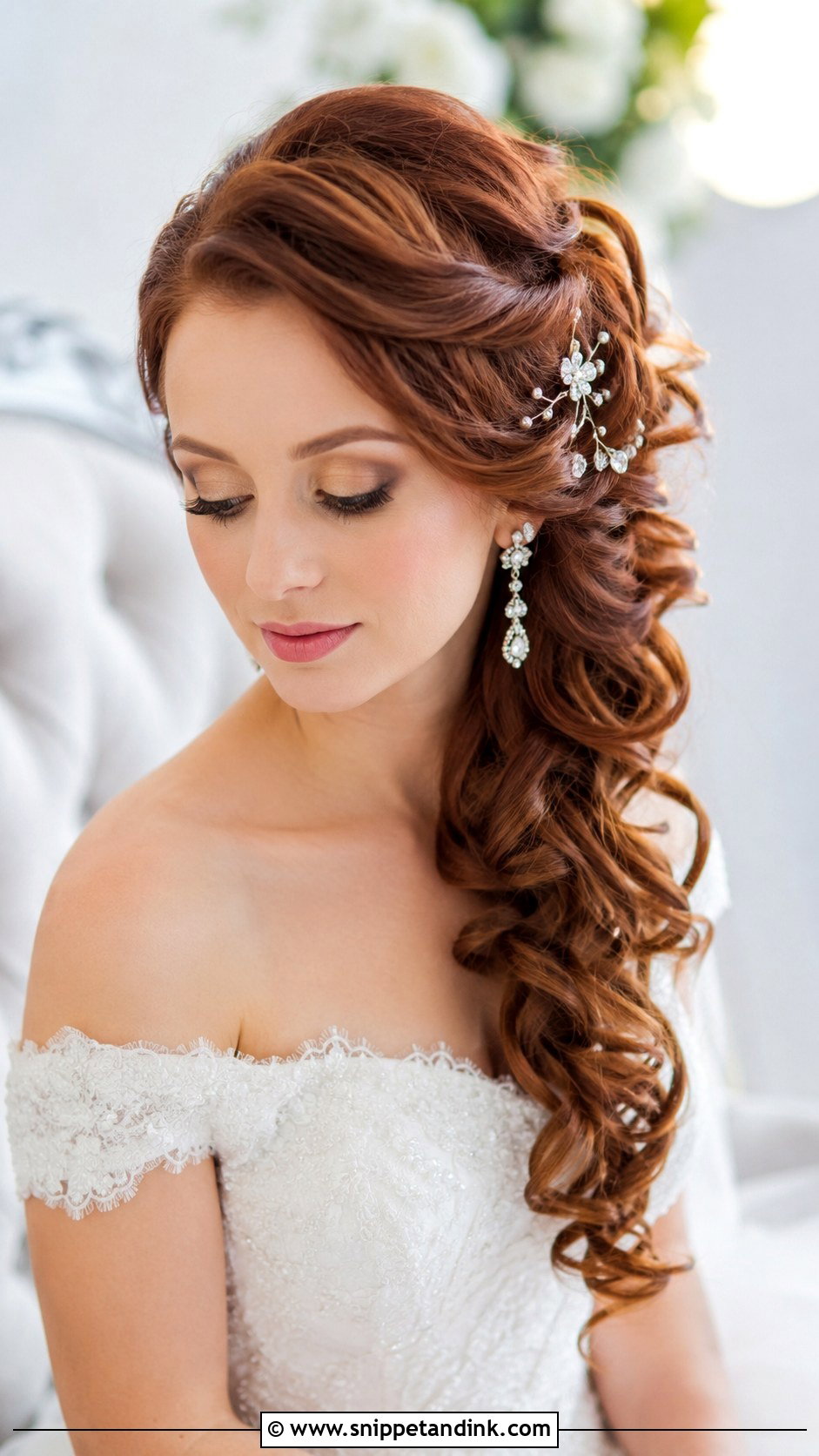
Side-swept curls lean old Hollywood and pair naturally with one-shoulder and off-shoulder necklines, because the hair fills the bare side. Everything gathers over one shoulder and is held by pins hidden behind the ear. That anchor does all the work, so I cross two bobby pins into an X there. If your curls drop fast, I set them tighter than the finished look and brush them out late. The style reads best from the front, so tell your photographer which side the hair falls on.
9. Low Side Bun
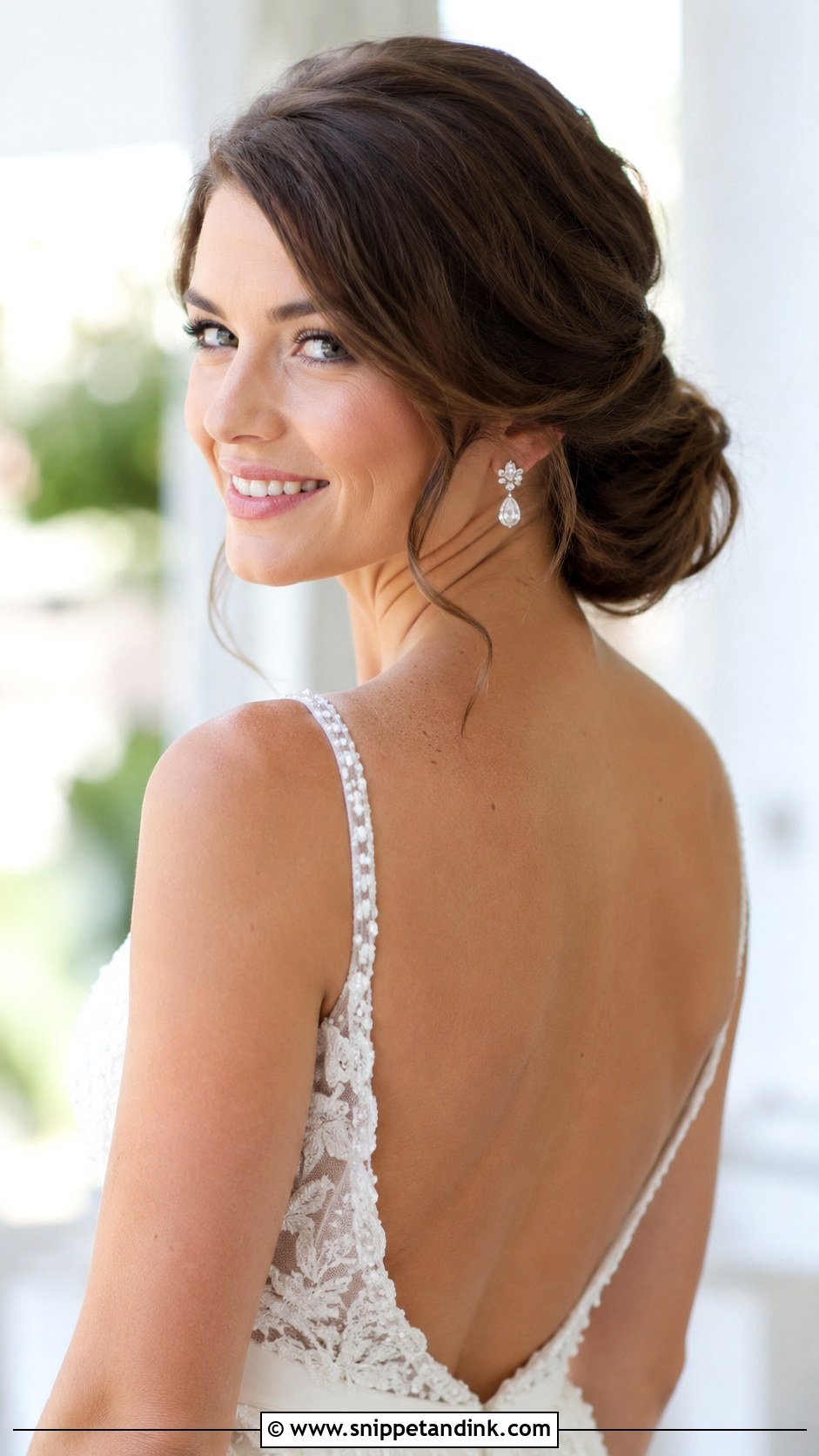
Tucked just behind one ear, a low side bun leaves the back of a low-back or backless gown completely open. I pick the side by looking at your profile and your natural part, not by guessing: whichever side you favour in photos gets the bun, so it turns toward the camera. Sleek suits crepe; a looser texture suits lace. Plan for the veil, which has to sit slightly off-center above the bun, and bring it to your trial.
10. Fishtail Braid
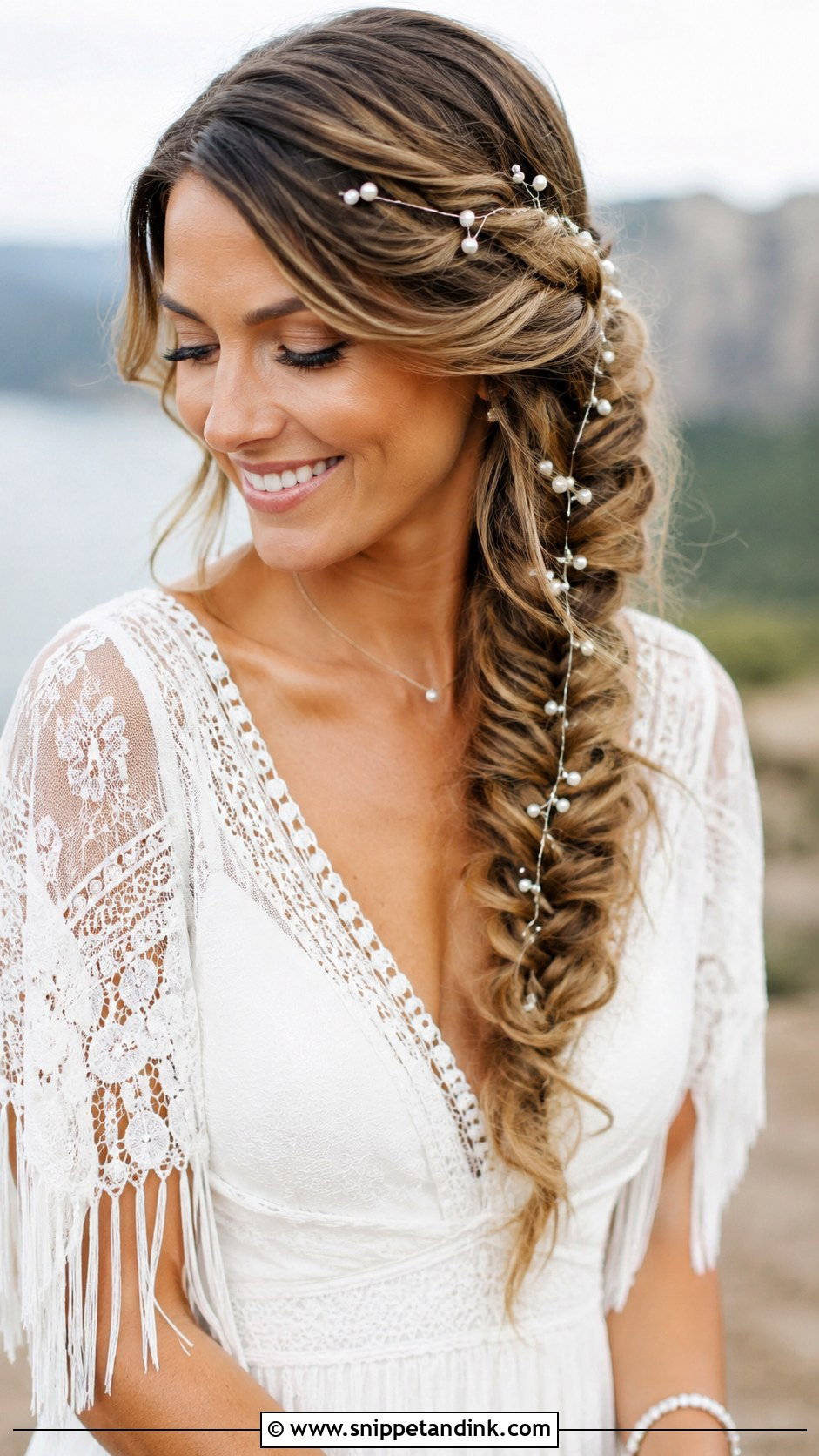
A fishtail looks complicated and isn’t, which is why so many brides try it themselves. It’s two sections crossed with tiny pieces, and the smaller the pieces, the finer the herringbone. Once it’s finished I gently pull the edges to widen it, which makes fine hair look much fuller. Worn over the shoulder, it rubs against a lace or beaded bodice all day, so I set it with a light spray and tie the end with a clear elastic that won’t catch on embellishment.
11. Sleek Straight Bridal Hair
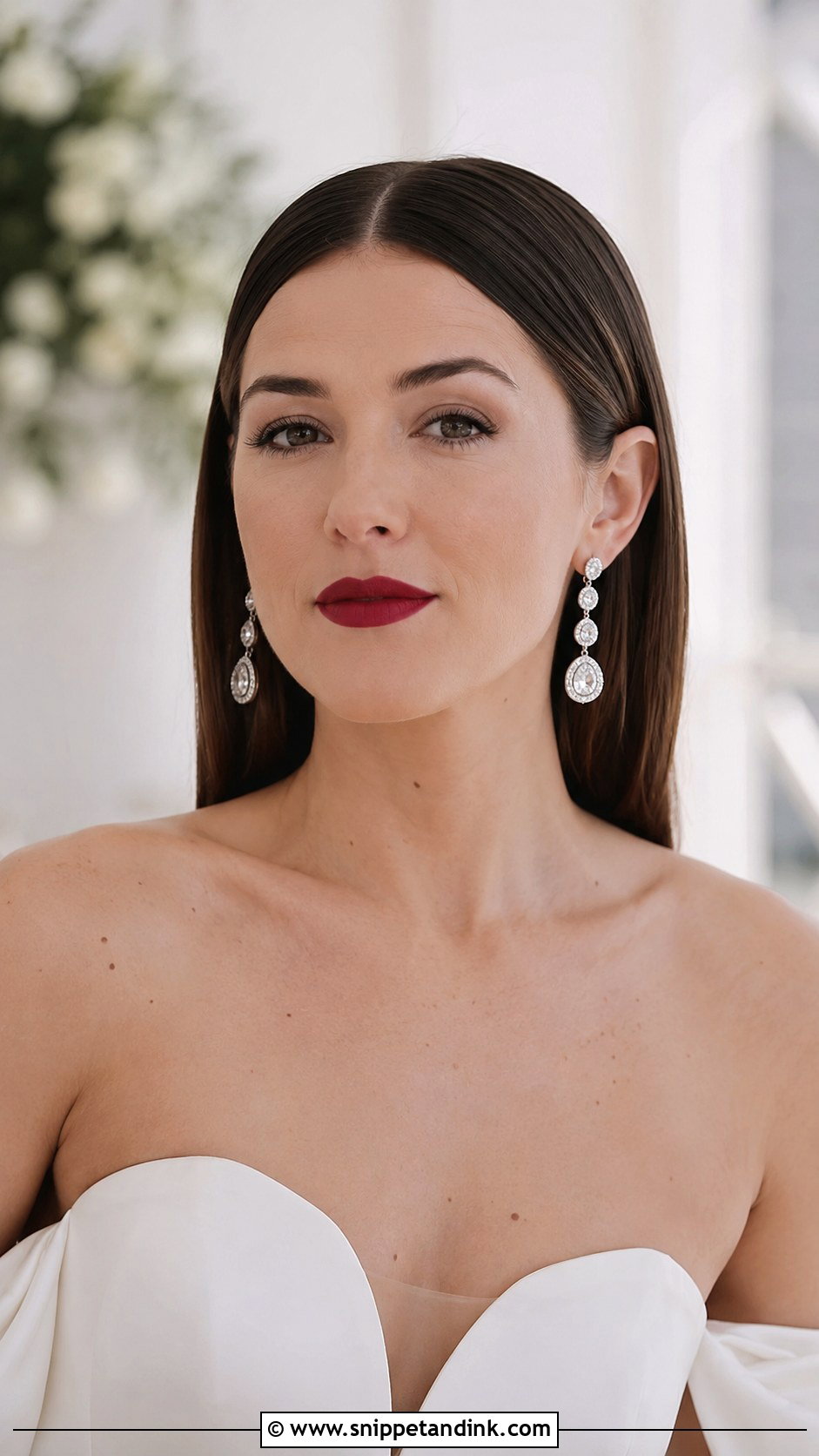
Of all the simple styles, sleek straight hair is the hardest to keep right, because one humid hour brings back the frizz you flat-ironed out. I work in small sections with a heat protectant and finish with a few drops of serum on the ends only, never at the root. A center part reads modern and suits strong earrings; a side part softens the face. I’d be cautious with this one for a summer outdoor ceremony or on naturally curly hair, since curl memory returns quickly with moisture in the air.
12. Boho Braided Half-Up
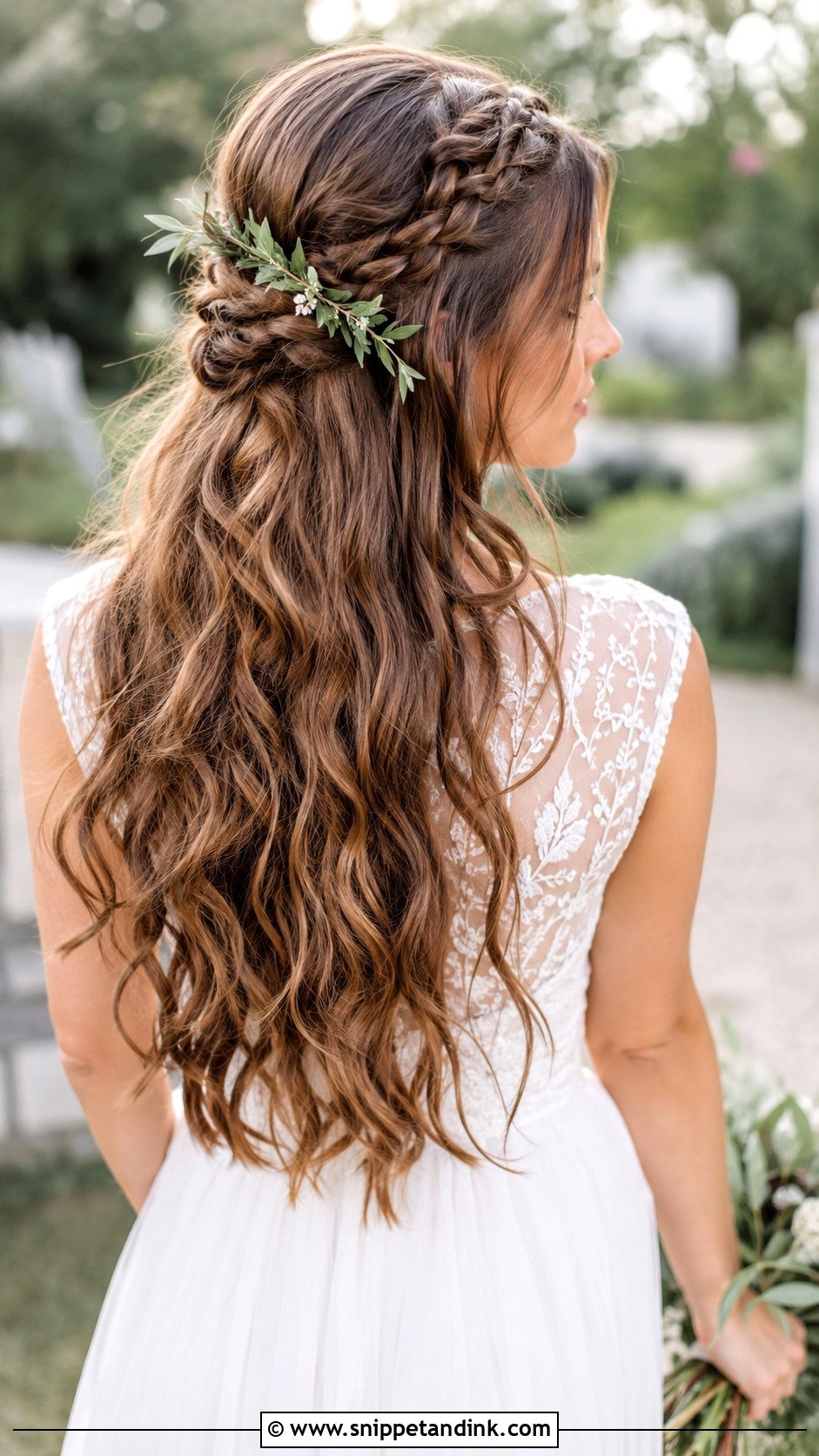
This is the half-up I suggest when a bride wants texture rather than polish. Two or three small braids from the front are drawn back and pinned together, holding the top securely while the length stays in waves. The braids keep hair out of your face in wind and on the dance floor. Greenery like eucalyptus or small flowers holds best where the braid is tight. It forgives a few loose pieces by evening, which is exactly what you want at a rustic or outdoor venue.
13. Vintage Hollywood Waves
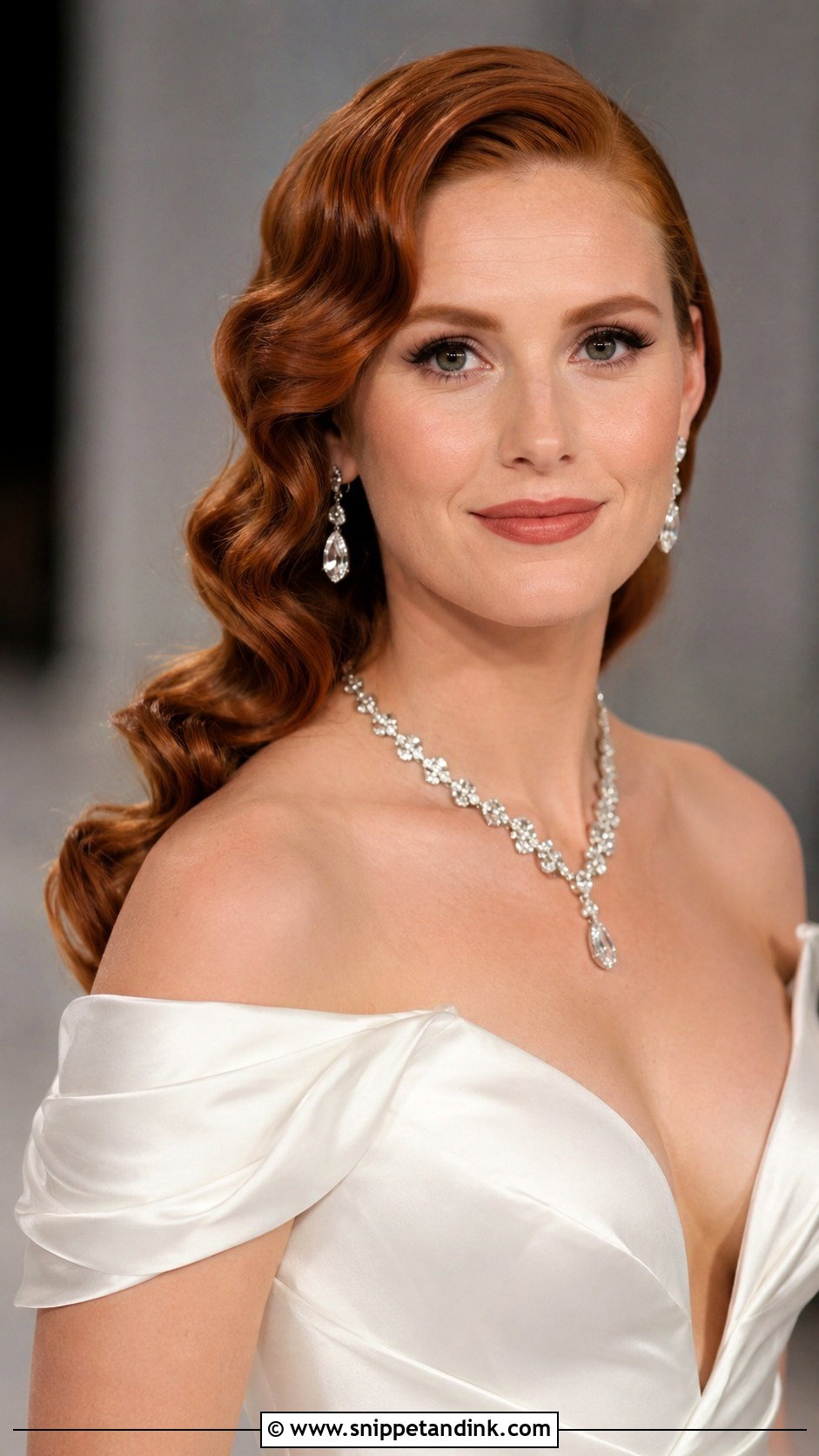
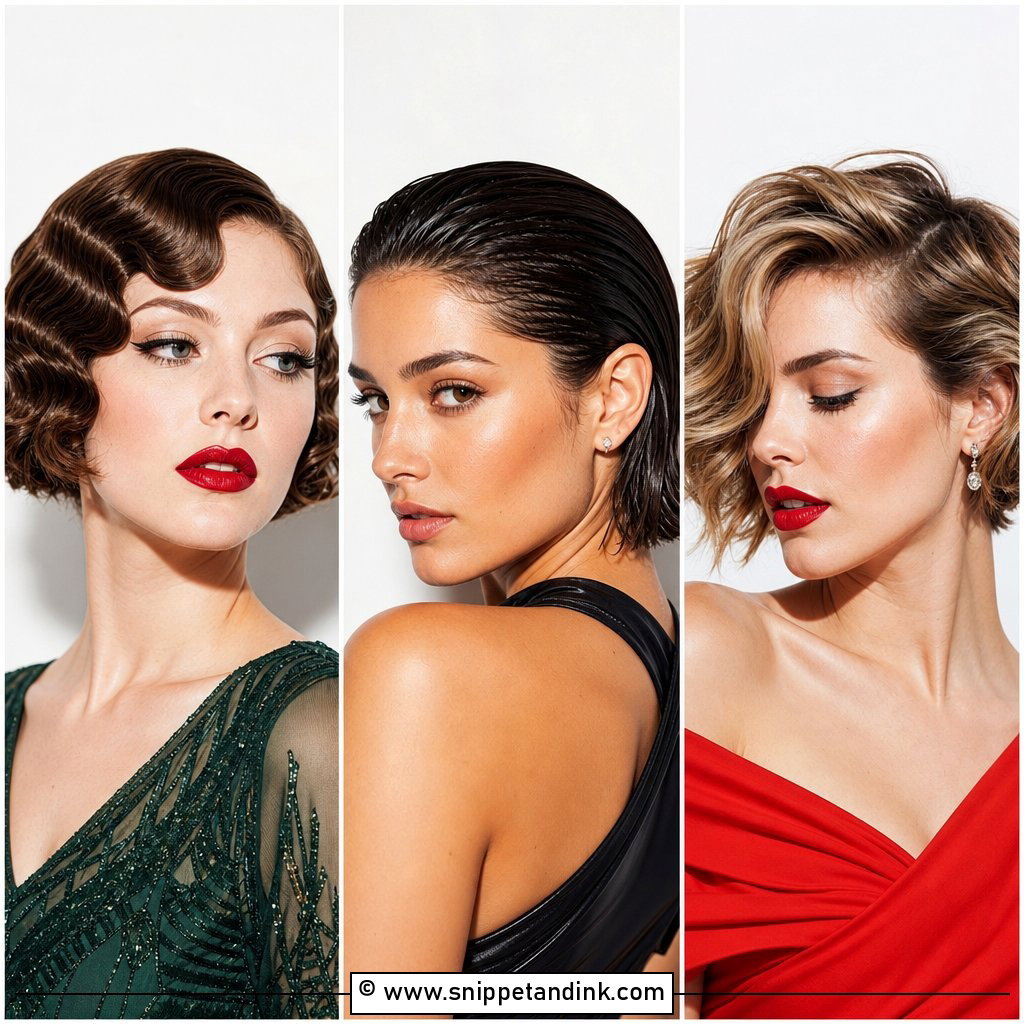
Vintage waves are sculpted S-shapes, made by setting curls in one direction, brushing them out, and pressing the ridges with clips while the hair cools. It’s skilled work and takes longer than most brides expect, so allow extra chair time on the morning. Hair with some weight holds the shape best. Very fine hair loses definition, and heavy layering breaks the line. Swept to one side, these waves suit a slip or column gown and a red lip.
14. Twisted Updo
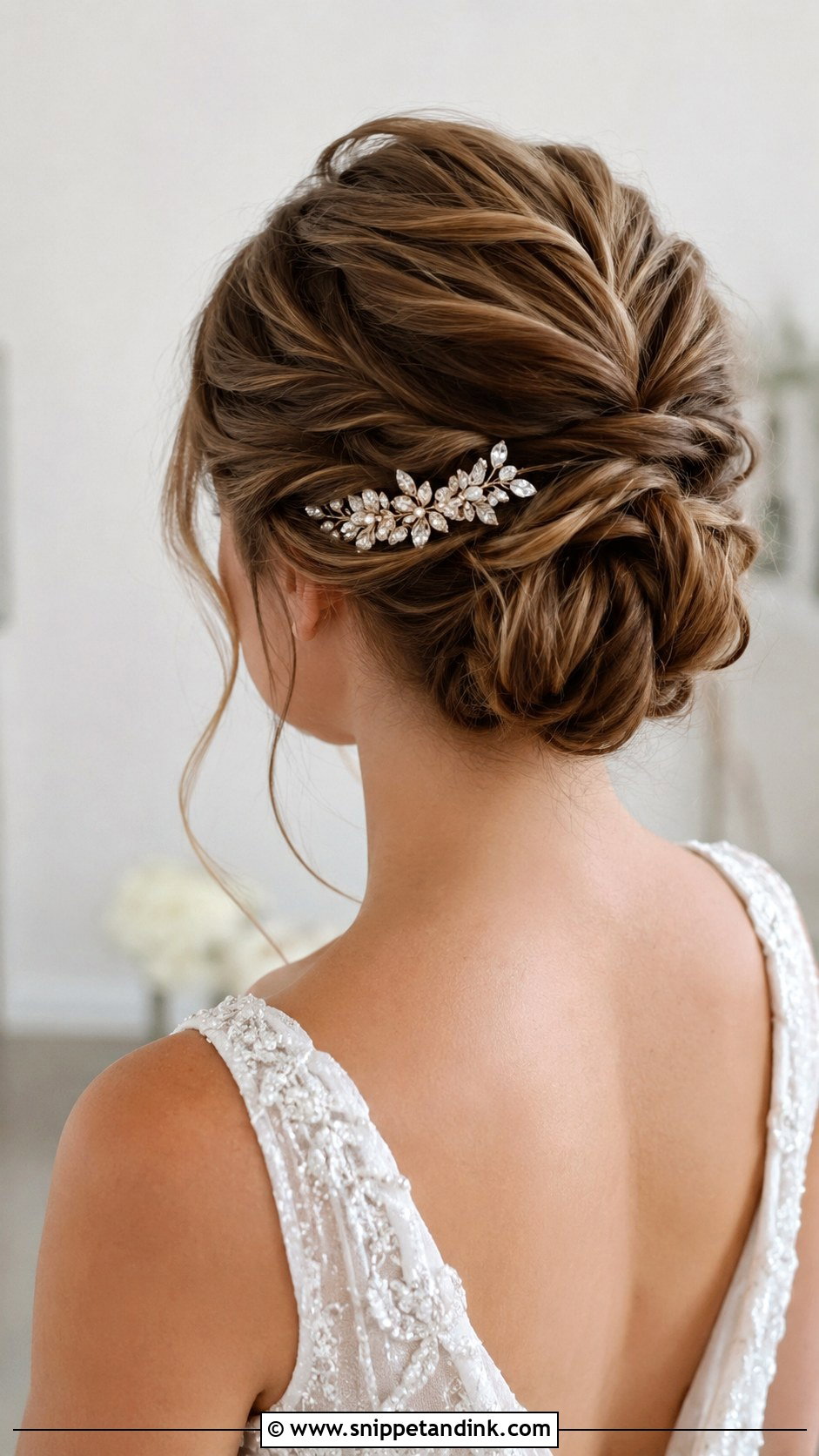
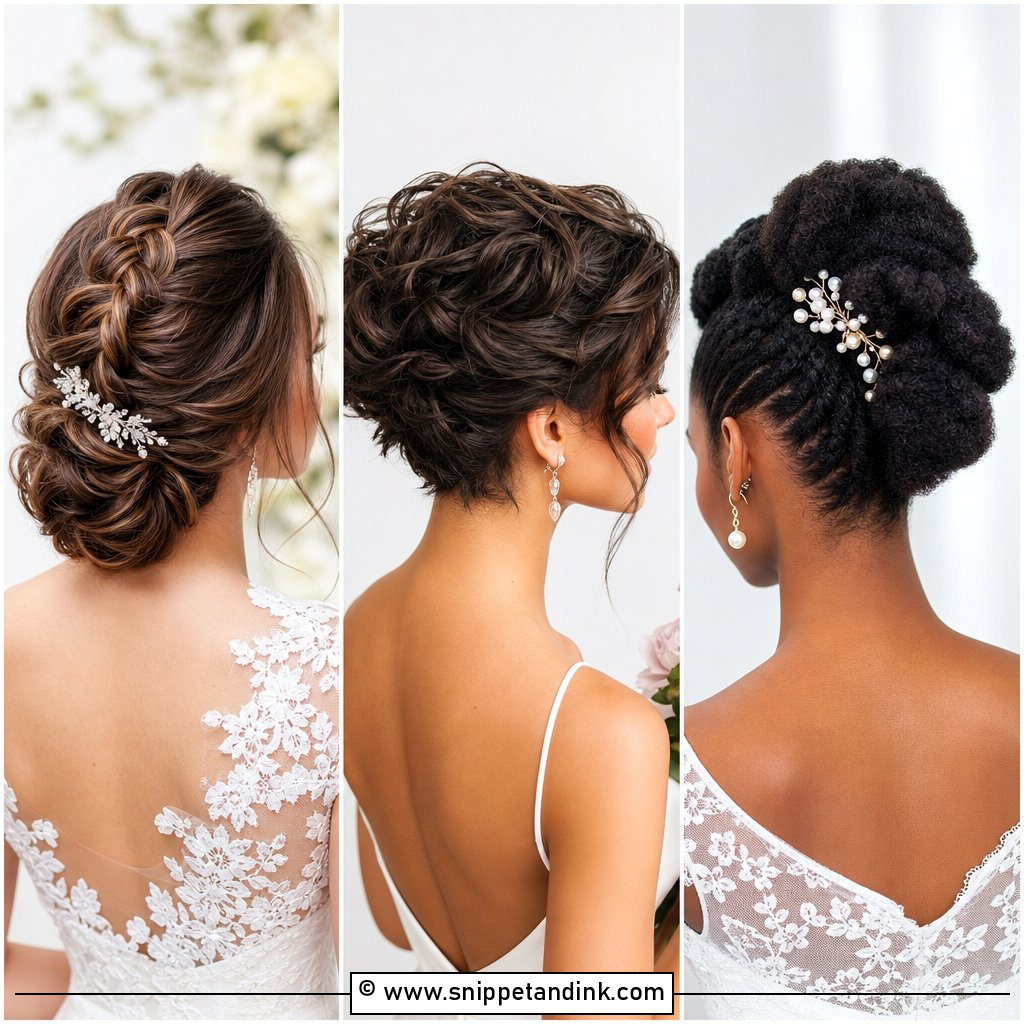
Built from sections twisted and pinned in layers, a twisted updo looks detailed from the back without a lot of fuss. Each twist gets its own pins, so the whole shape holds even if one section loosens. I like it for medium-length hair that is too short for a full bun, because overlapping twists hide shorter ends. Keep it smooth for a formal room or loosen the twists for a softer finish. Combs and floral pins slot neatly between the layers.
15. Loose Low Chignon
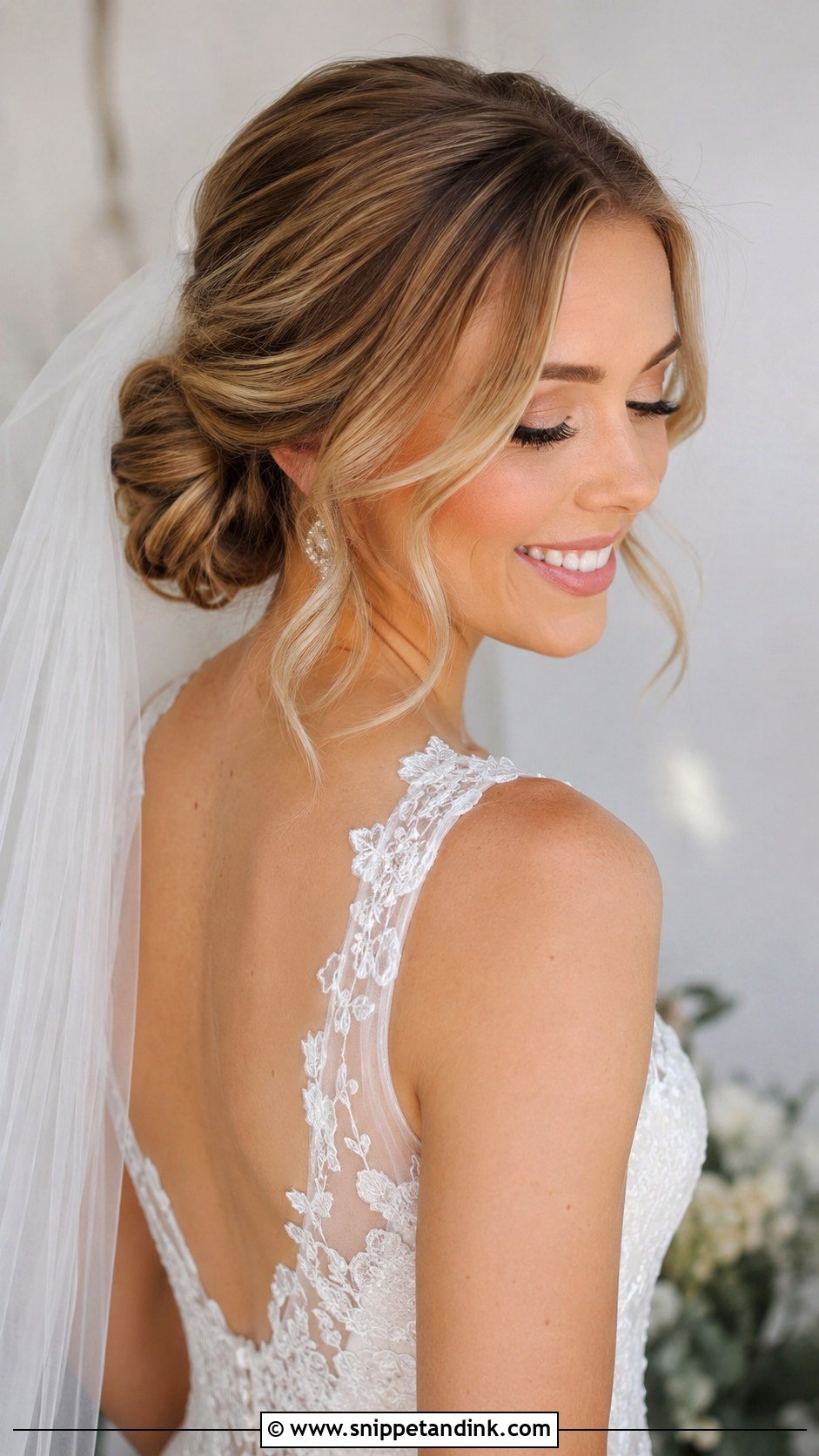
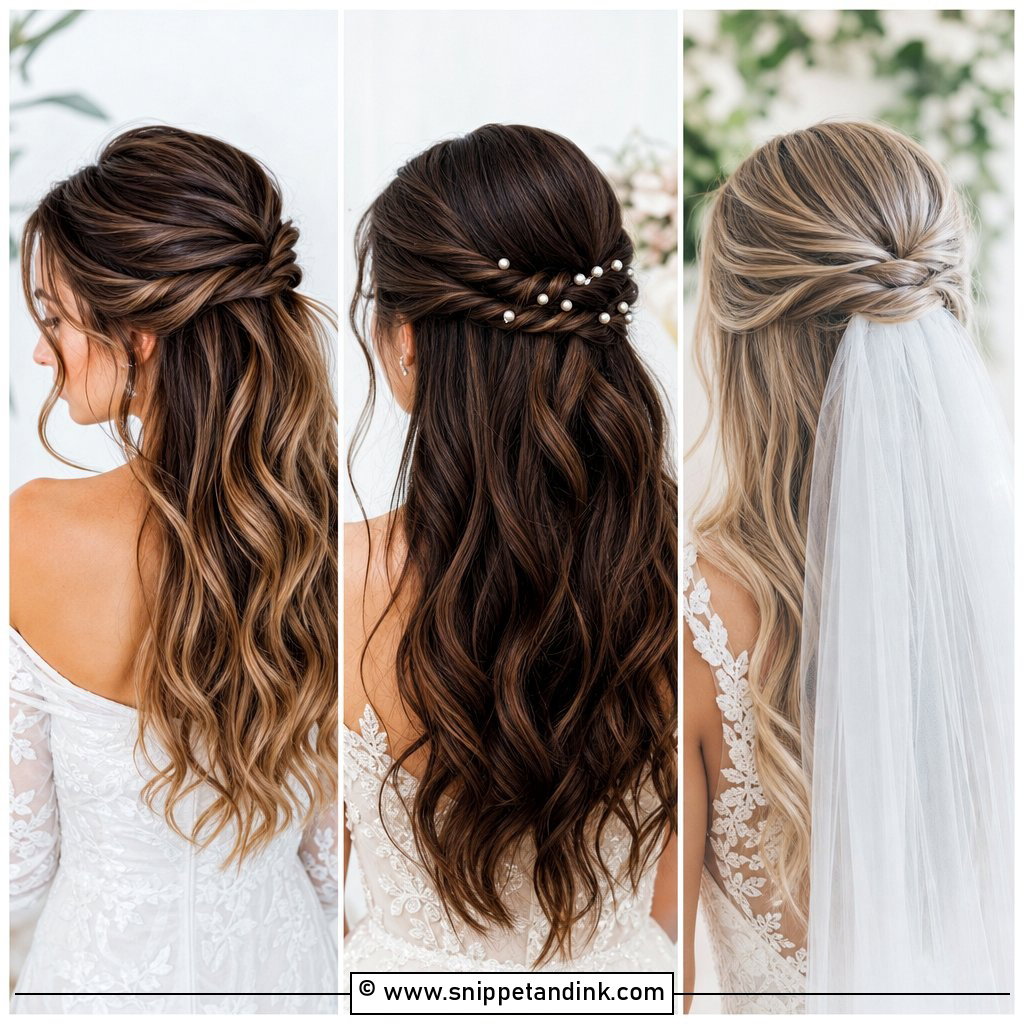
The chignon is a rolled or pinned bun with softness left in it, so it suits a bride who wants volume rather than polish. Because the shape is loose, I build height at the crown first with gentle backcombing; otherwise the head looks flat above a relaxed bun. Face-framing tendrils go well with it, though I keep them shorter than the jaw so they don’t stick to lip color. It shows off a neckline and sits comfortably under a veil comb.
16. Accessorized Bridal Bun
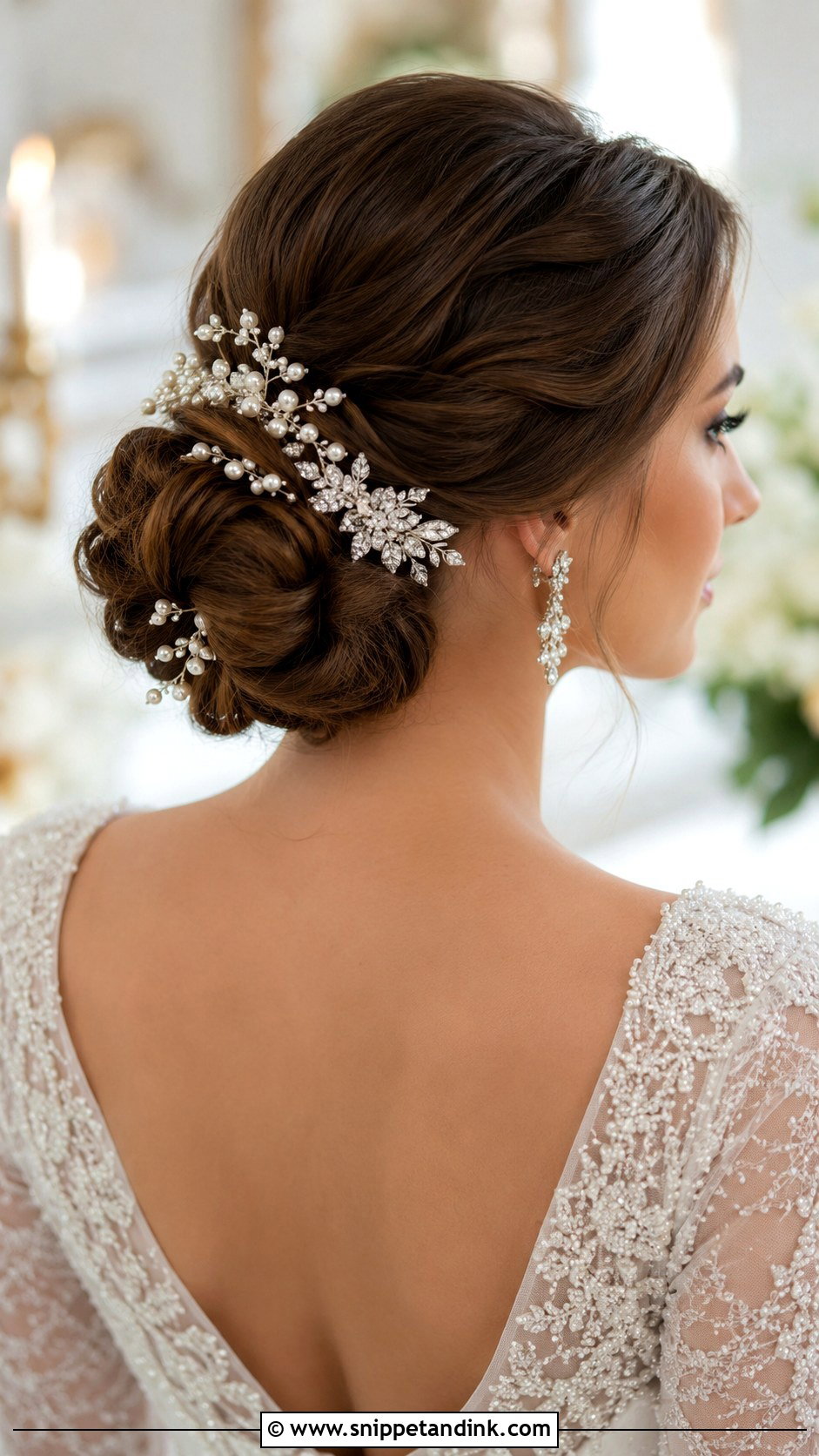
Sometimes a plain bun just needs one good piece. An accessorized bridal bun starts from a firm, simple base, and then a comb, pearl pins or a hairpiece does the decorating. The weight of the accessory matters more than people think: a heavy metal comb needs a strong pin base under it or it droops through the afternoon. I bring pieces to the trial and try them in different positions, because a comb that looks right in the hand often sits too high once the veil goes in. Match the metal to your earrings rather than to the theme.
17. Curly Updo for Natural Hair
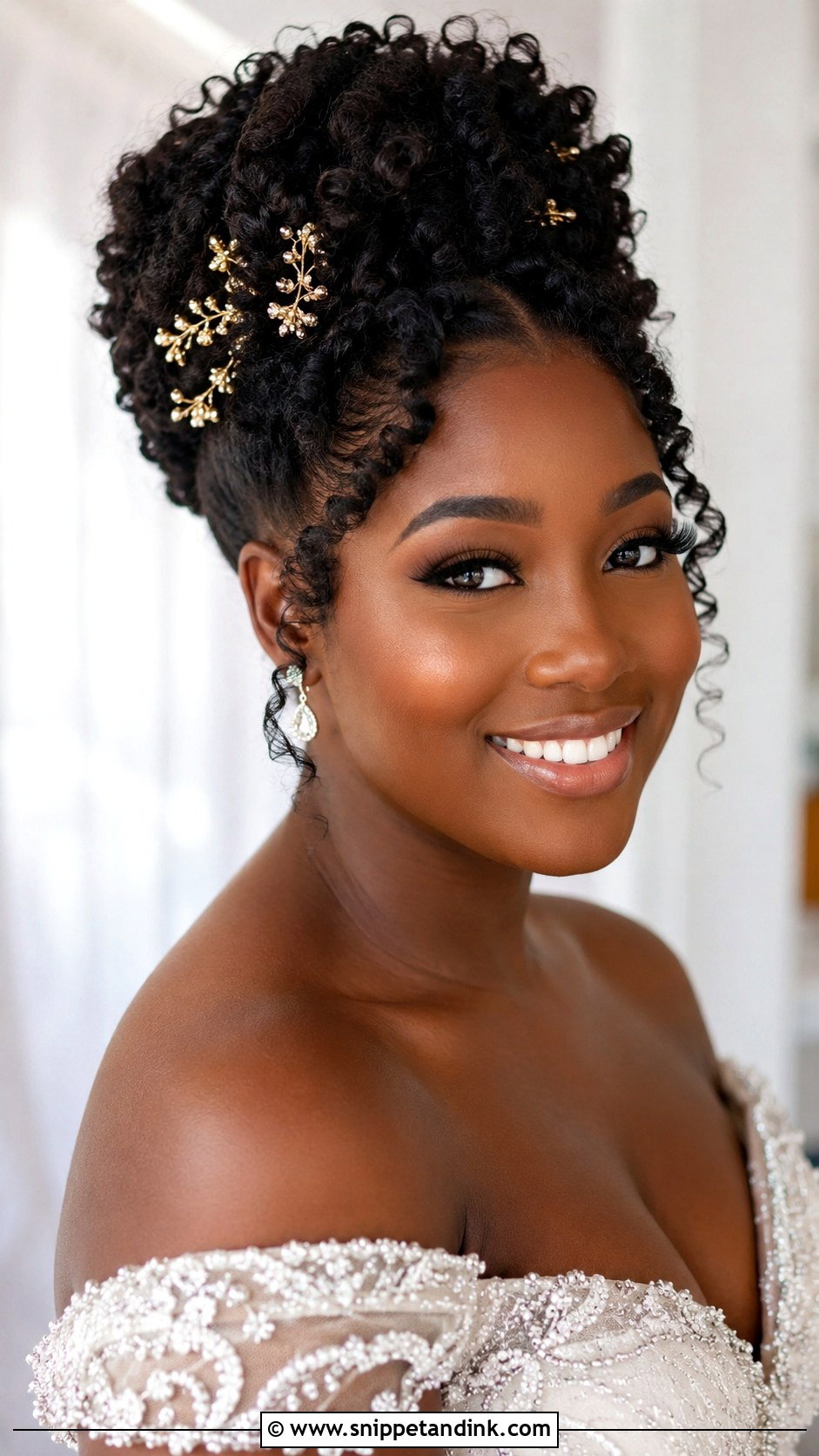
A curly updo should look like your curls, not like a set that replaced them. I gather coils into a full shape working with the hair’s own texture rather than straightening first, using larger pins and a cream or gel that keeps definition without crunch. Shrinkage matters: a curl pattern tightens with humidity, so I plan the shape a little fuller than the final look. Gold pins and fresh flowers sit well against dark curls. Bring your usual products to the trial, since they already work on your hair.
18. Pinned Back Waves
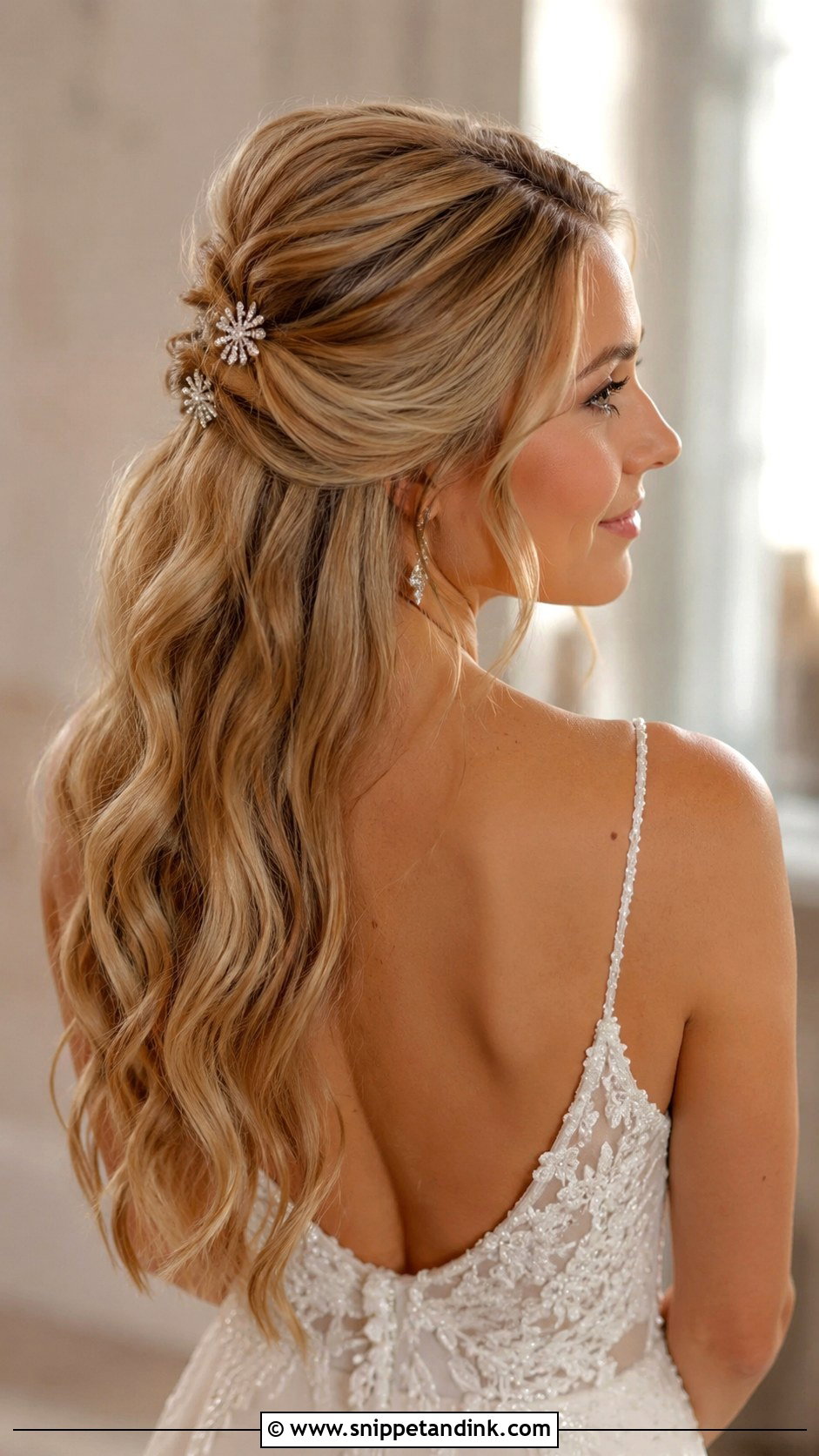
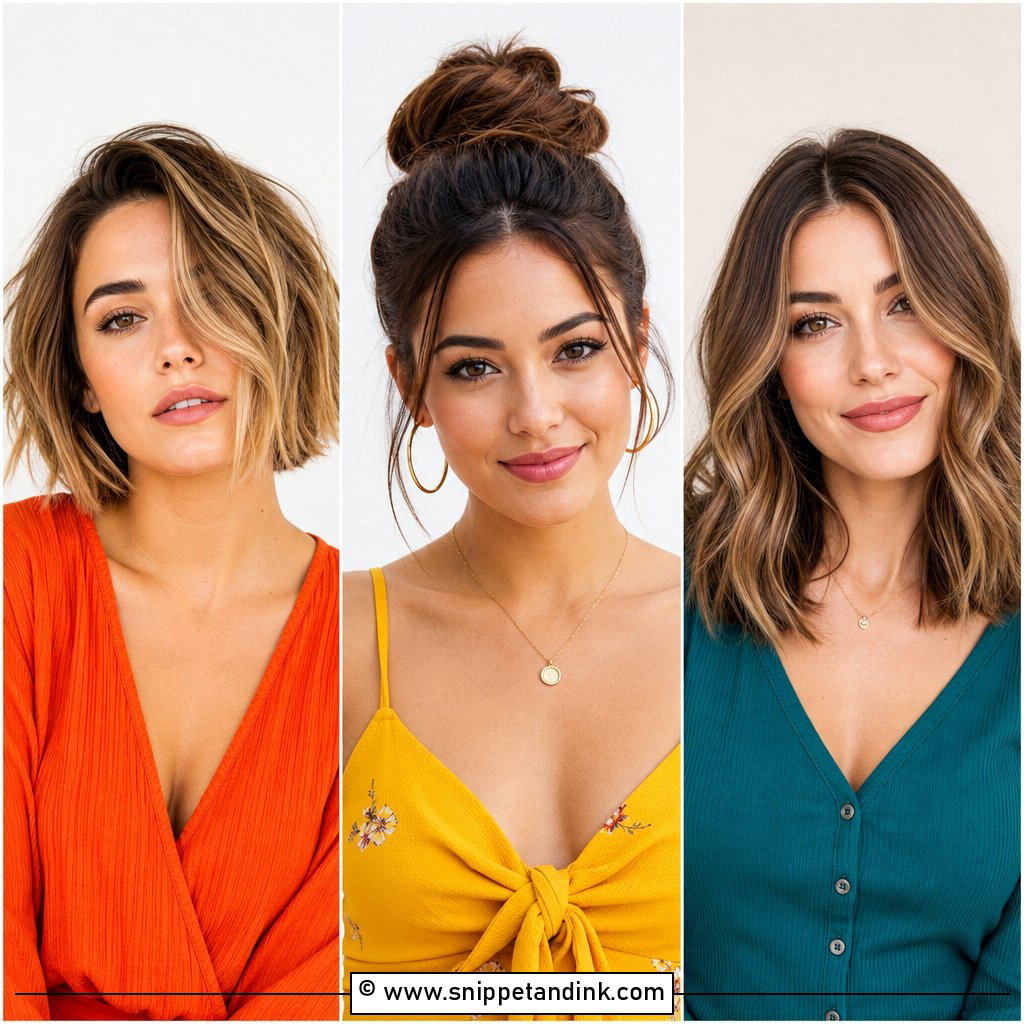
Here the hair stays mostly down, with the front swept back off the face and held behind the ears. That small amount of structure keeps waves from sliding forward during the vows. I hide the anchor points with a pair of sparkly pins or a small clip on each side. On fine hair I pin a little higher so the grips sit where the hair is thickest. It’s comfortable through a long day, at a garden, a beach or a hotel ballroom.
19. Dutch Braid Updo
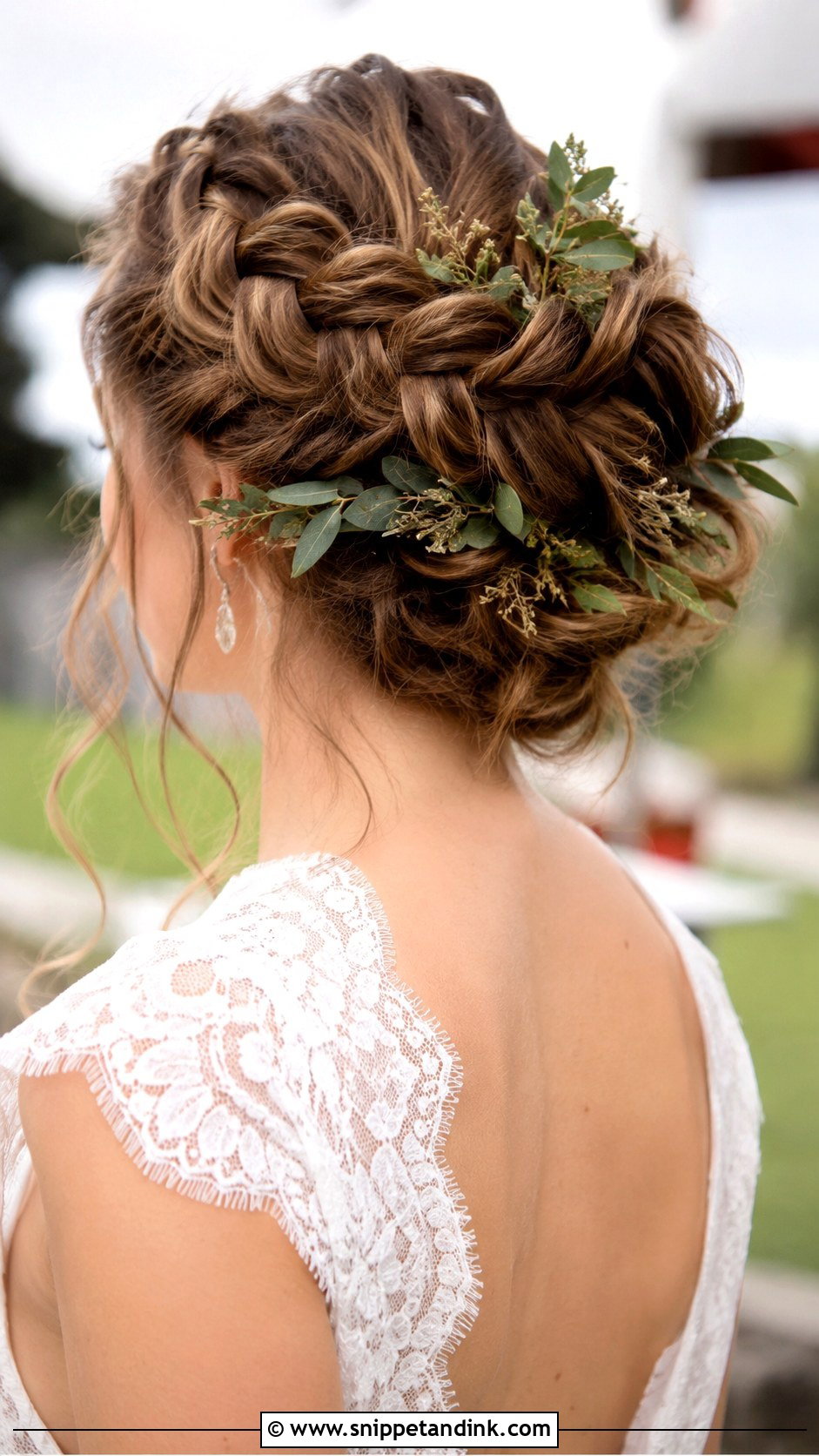
Dutch braids are worked under rather than over, so they stand out from the head instead of lying flat. I braid one or two sections and coil the ends into an updo at the back. Braids hold best on hair that isn’t freshly washed, so second-day hair is my preference. Pulling the edges out slightly adds fullness, which helps fine hair a lot. If your hair is thick, ask for a tighter braid at the nape so the weight doesn’t tip the updo forward.
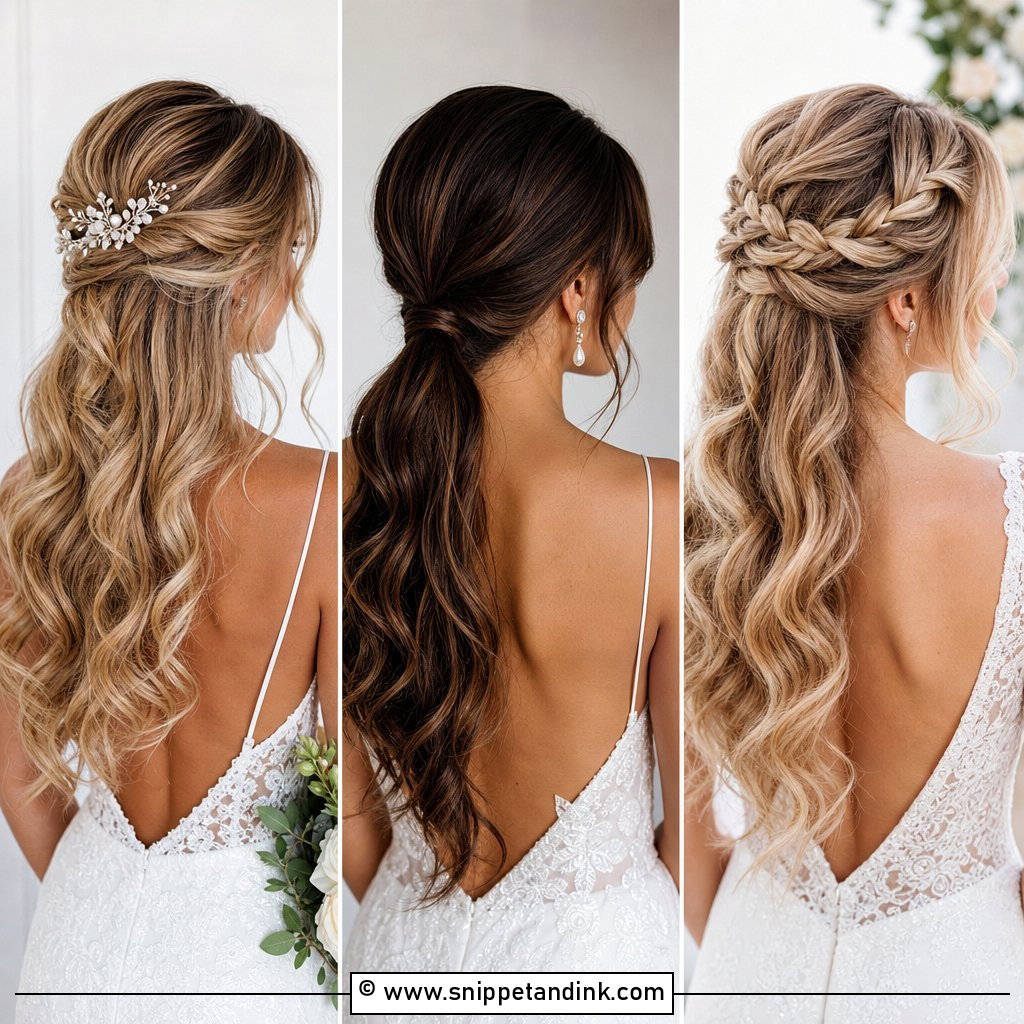

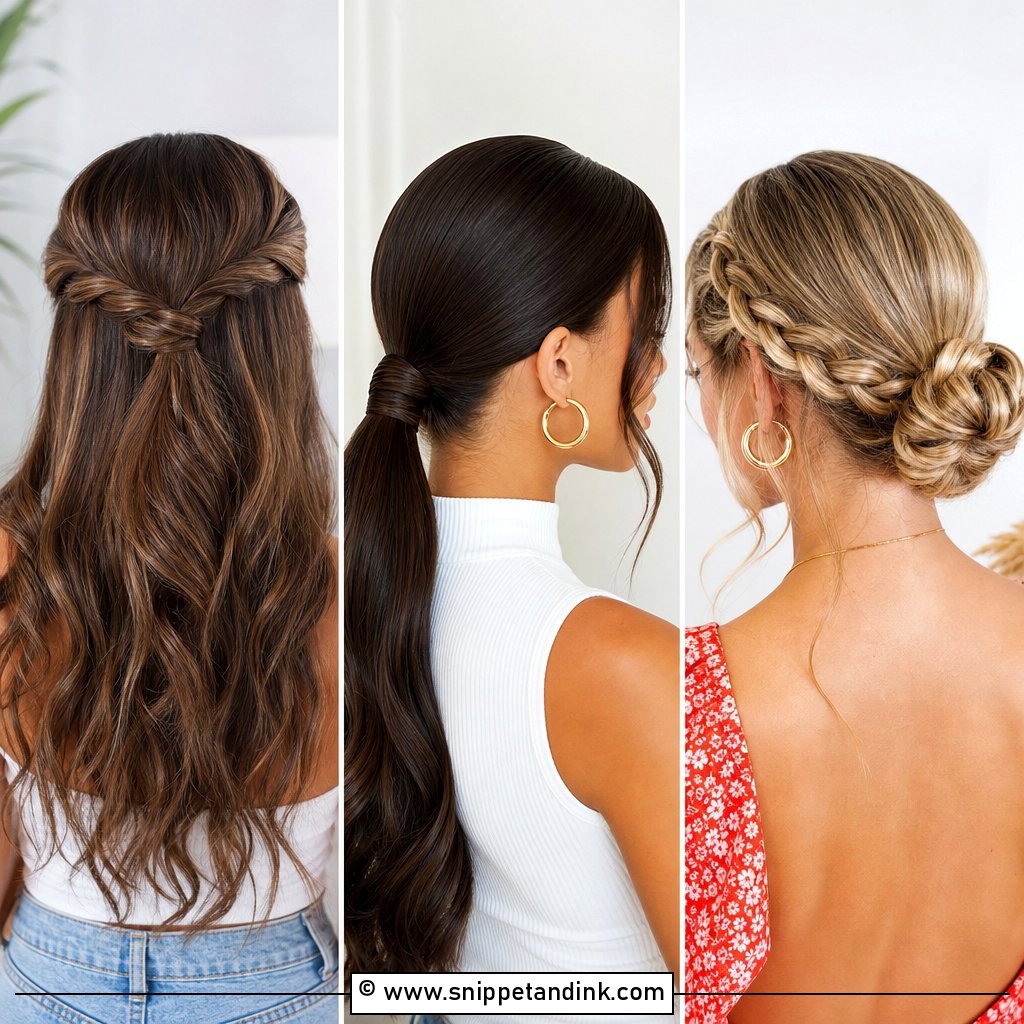
20. Tousled Half-Up Knot
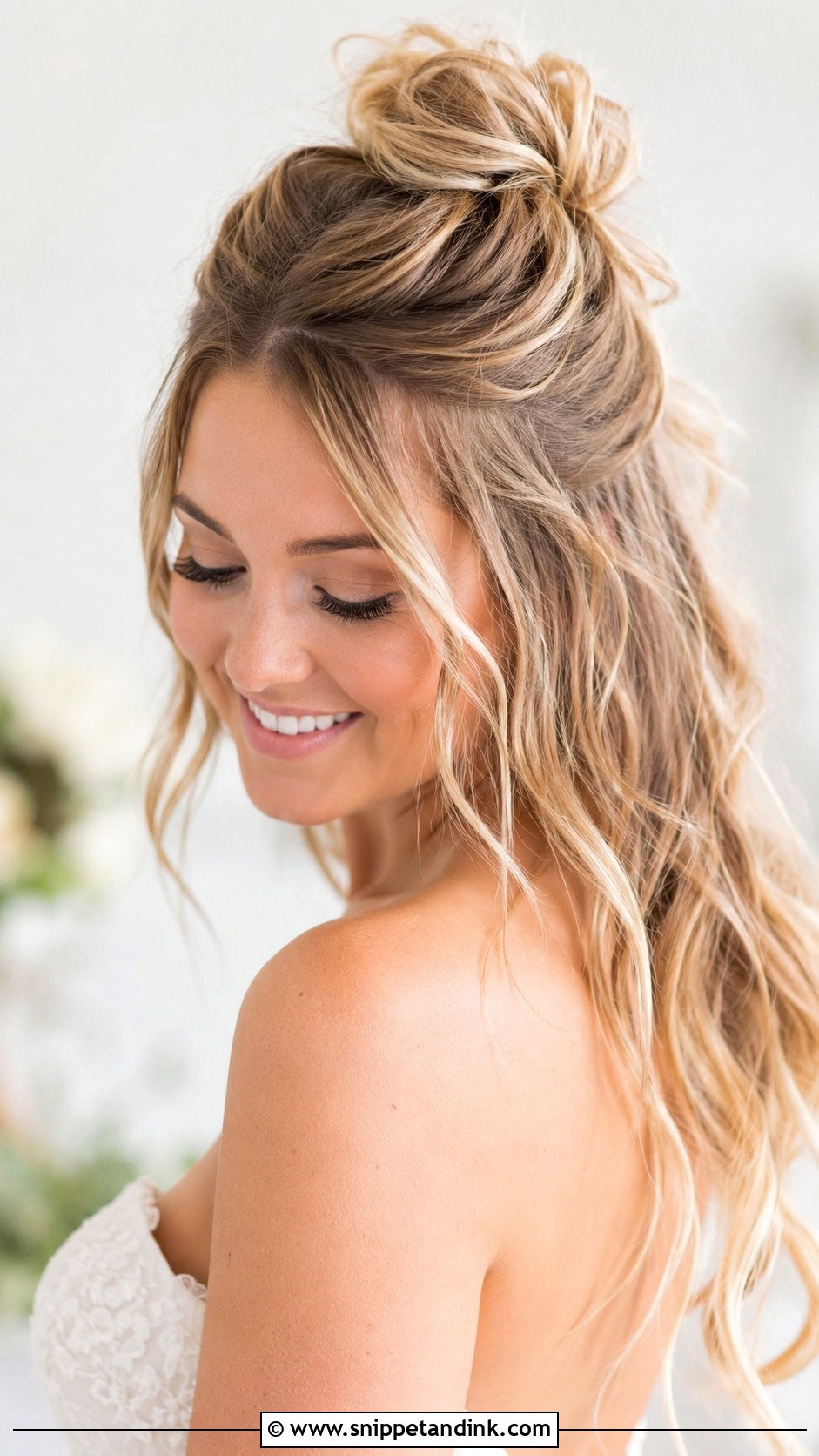
Quickest on the list. The top section becomes a soft, undone knot and the rest is left in loose waves, which helps if your schedule is tight. The knot needs grip, so I secure it with a small elastic first and then wrap and pin, rather than relying on pins in silky hair. A few face-framing pieces keep it relaxed. For a laid-back or boho wedding it’s spot on; for a black-tie evening I’d go sleeker.
21. Sleek Bun With Center Part
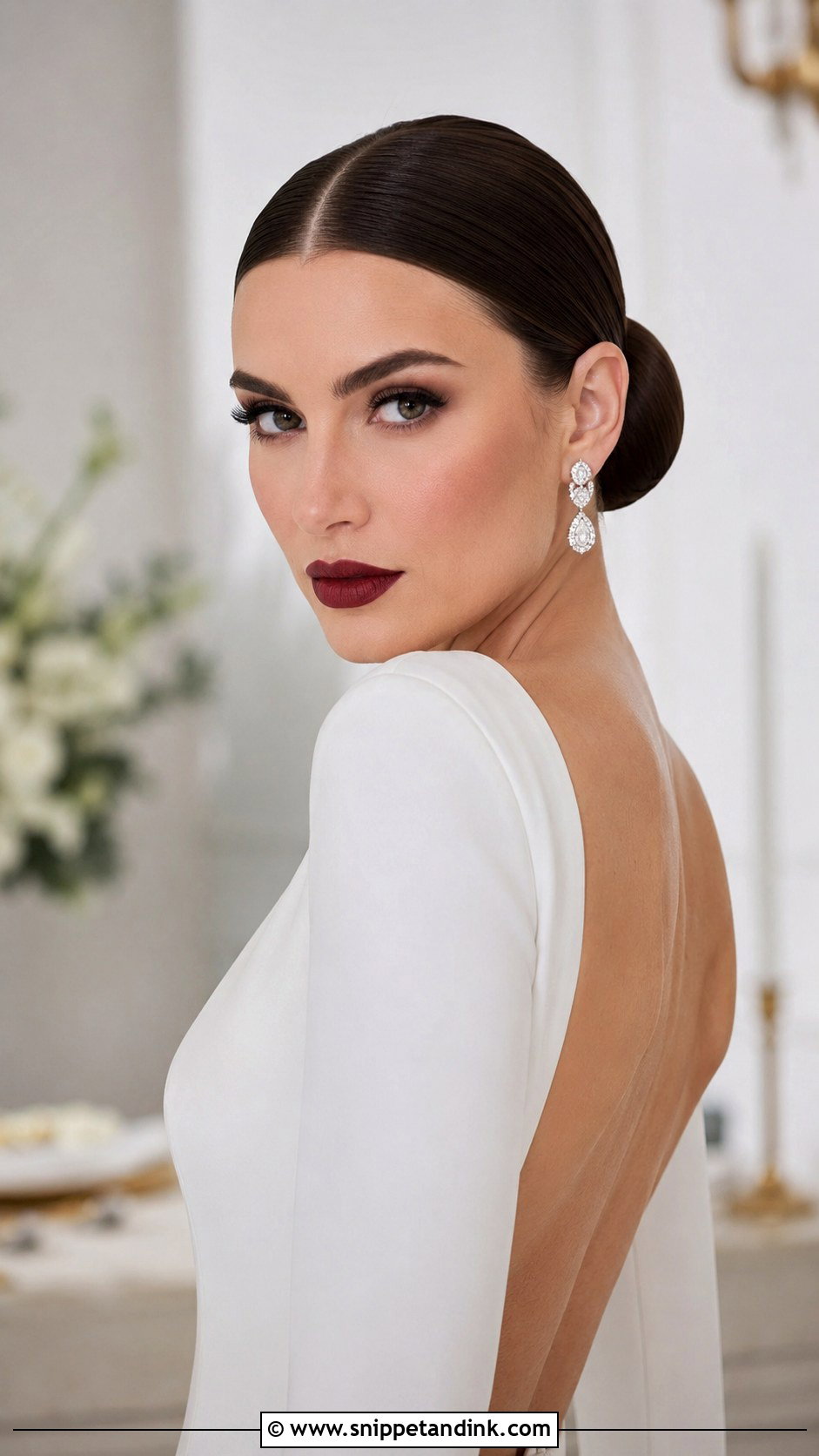
A sleek bun with a center part shows everything, including whether the part is truly centered. I find the center by following the bridge of the nose rather than the hairline, which is rarely even. Smoothing gel and a fine-tooth comb give the flat finish, and a light spray holds flyaways. It suits minimalist gowns, bold earrings and stronger makeup. If you have a high forehead or a lot of baby hairs, I’d soften the finish, since a severe center part draws attention to both.
22. Floral Crown Hairstyle
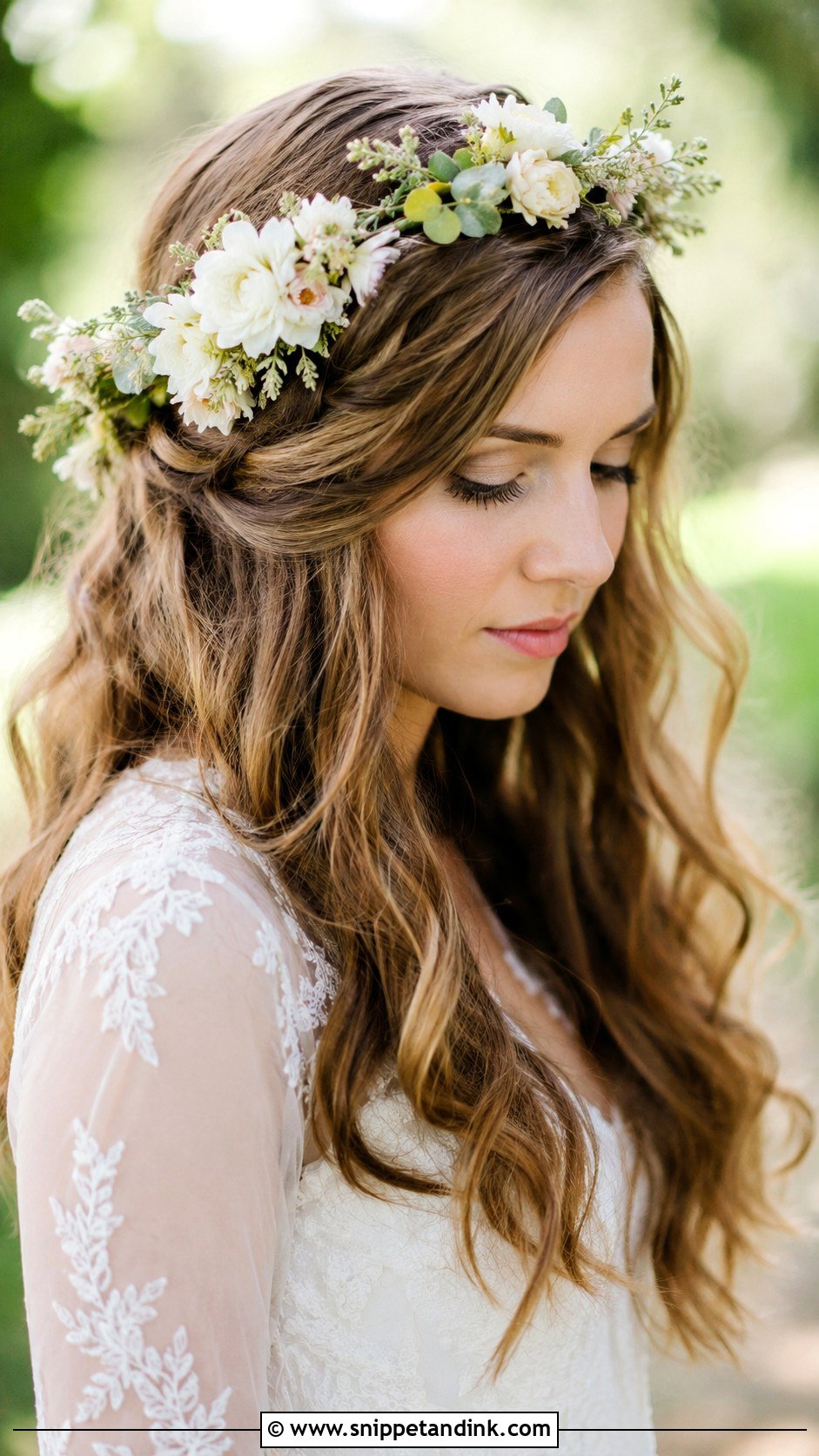
A floral crown is fresh or faux flowers wired onto a band. Fresh blooms look prettier up close but wilt in heat, so ask your florist for sturdy varieties like waxflower or spray roses rather than delicate petals. Faux flowers last all day and keep as a memento. Either way, the crown has to be pinned into the hair, not just balanced on top, so I anchor it with bobby pins on each side. It sits well over waves or a loose half-up.
23. Braided Low Bun
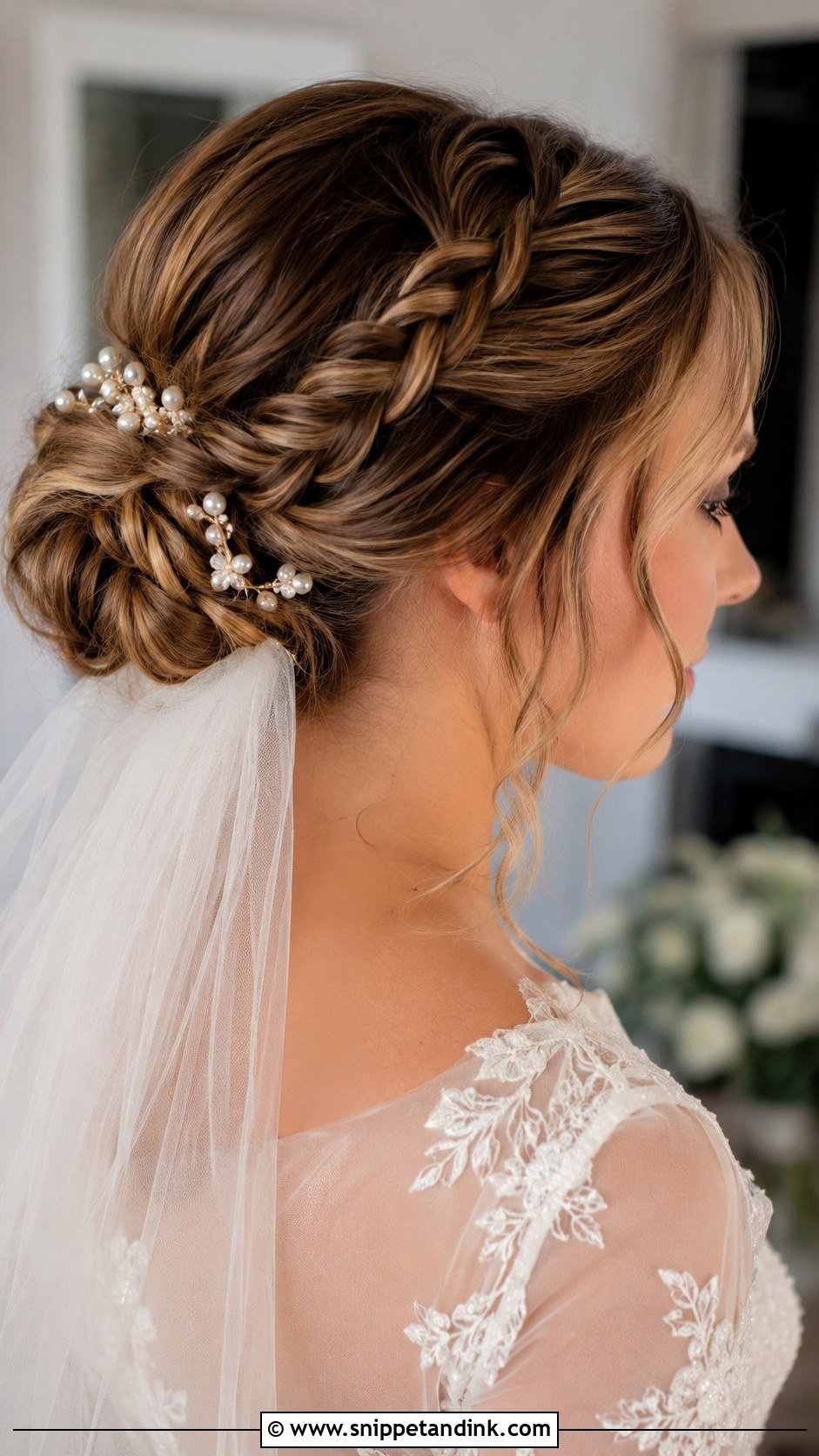
Here the texture comes from the braid pattern rather than from loose pieces. French, Dutch or fishtail braids each give a different finish, and a single fishtail coils most neatly. Braids hold pins far better than smooth hair, which makes this one of the longest-lasting styles on the list. Pearls or small pins can follow the braid lines. It lengthens the neck and works with a veil set just above the bun.
24. Wavy Lob for Brides
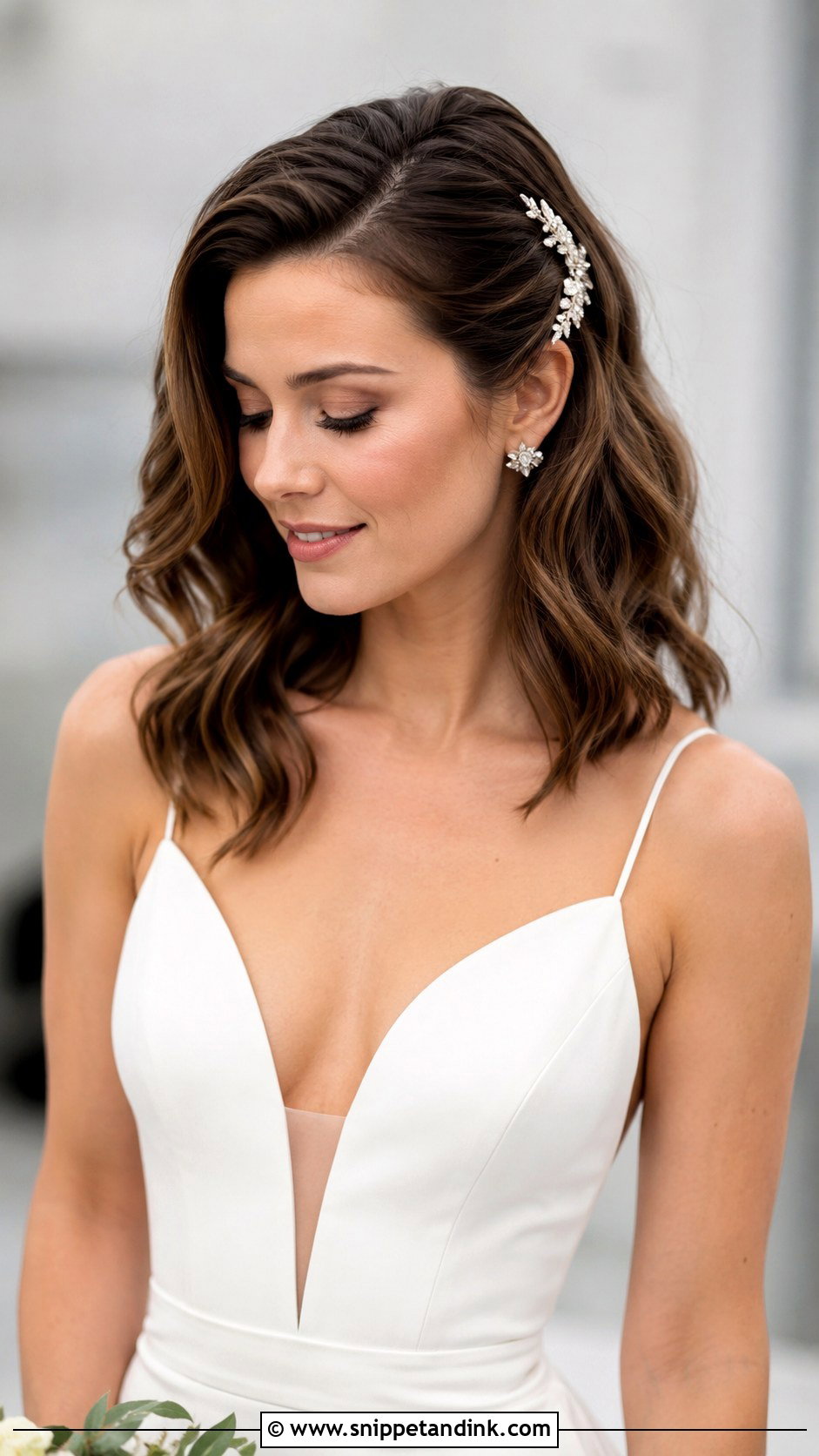
Short and medium-length hair has more options than people assume. A wavy lob, or long bob, takes waves through a shoulder-length cut. The detail I care about is curling away from the face and leaving the last inch straight, so it reads modern rather than bouncy. Pin one side back with a clip for a bridal touch. If you’re planning a cut, have it two to three weeks before the wedding so the line has softened by then.
25. Knotted Ponytail
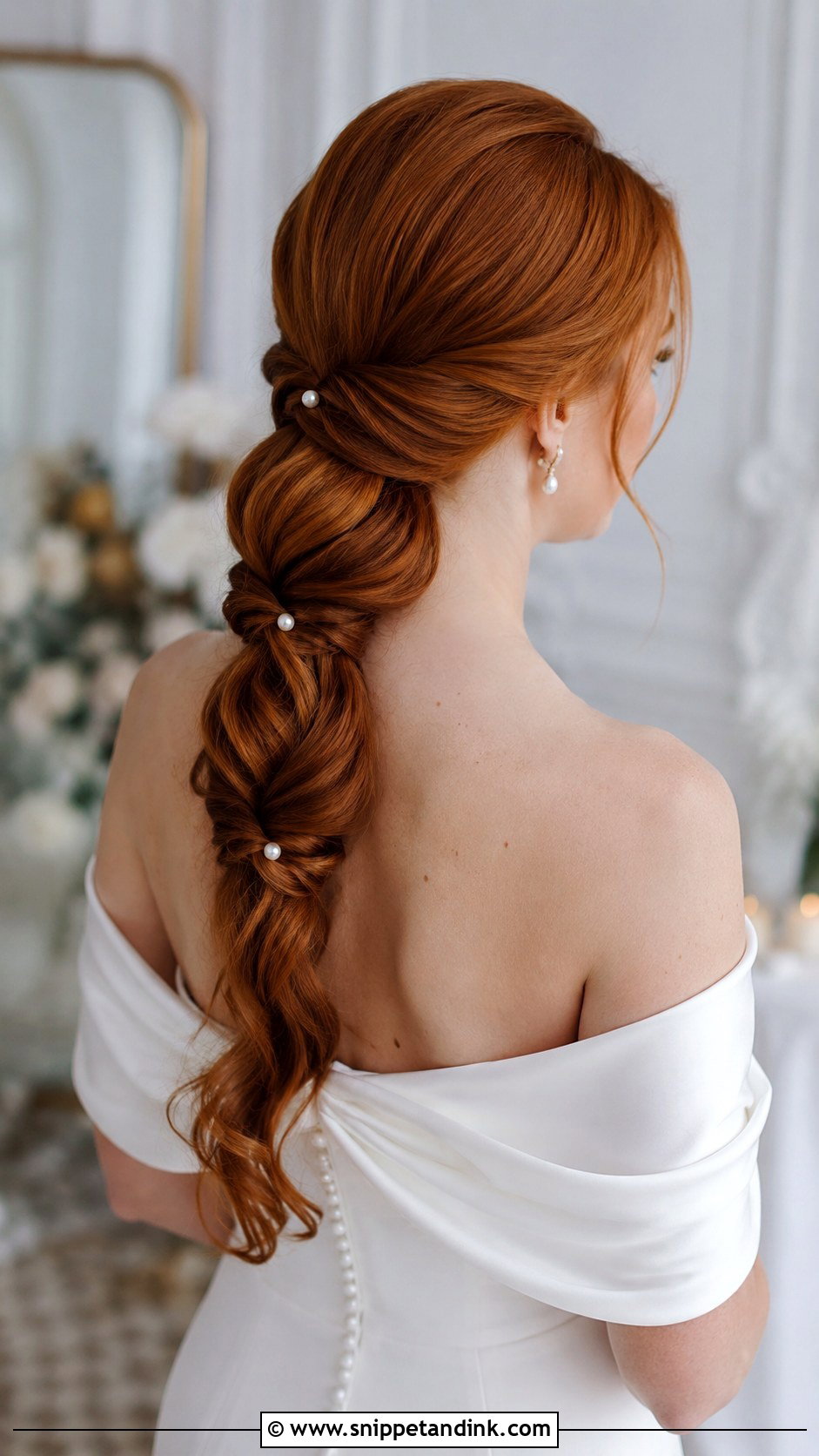
A knotted ponytail is a regular ponytail with knots or twists worked down its length. I make the knots with small elastics hidden under each twist, since real knots in hair are hard to undo without tangles at the end of the night. Low suits a quieter look; high reads playful and suits a strong jawline. Small flowers or pearls slot between the sections. It holds well through hours of dancing, which is why I suggest it to brides who plan to be on the floor until the last song.
Your Texture Narrows the List Quickly
Every style above can be done on most hair, but some will last far longer on yours than others. This is roughly how I sort them at a consultation.
- Fine or thin hair: braided styles, the Dutch braid updo and the braided low bun, because widening a braid adds visible fullness. Loose waves worn fully down tend to drop first.
- Thick or heavy hair: low buns split into two coils, the twisted updo, and side-swept curls. Avoid a single high bun, which pulls at the scalp by evening.
- Curly or coily hair: the curly updo, the braided crown and the pinned-back version worn with your own pattern. Sleek straight is possible but the most humidity-sensitive choice you can make.
- Short or layered hair: the wavy lob, pinned-back waves and the twisted updo, where shorter ends can be hidden in the layers.
Five Minutes With a Mirror After the Ceremony
Hugs, wind and a veil coming off all move hair. Before portraits, take five minutes somewhere with a mirror, ideally with whoever holds your small kit. Push back any pin that has worked loose at an angle rather than straight in, smooth flyaways with a dab of cream on your fingertips rather than more spray, and check the back with a phone camera. If your style has a down section, a few twists around a finger will revive a drooping wave. Bobby pins matched to your hair color, a mini spray and a small comb are all that kit needs.
The Simplest Style Still Has to Last Until the Last Song
Simple hair works when it suits your hair, your dress and how long the day is going to be. A low bun or a braided style will outlast loose waves, and sleek styles need dry weather. Save the photos you keep coming back to, take them to your trial with your veil and earrings, and ask your stylist which version fits your texture. The style you forget about by the first dance is the one that worked.
You'll Like These Ideas:


Leave a Reply