
Most of the brides I style end up wearing their hair up, and usually for practical reasons. An updo keeps the face open, shows the neckline, and is still in place after the vows, the portraits and the dancing. The ones that look best now are polished without being rigid: soft buns, clean knots, pinned curls, braided texture and volume that still looks like your own hair. A good updo also balances the dress, whether that’s sleek satin, lace or something floaty. Save the styles below to show your stylist, and use my notes on each one to ask the right questions at your trial.
Bun Height Starts With the Back of Your Dress
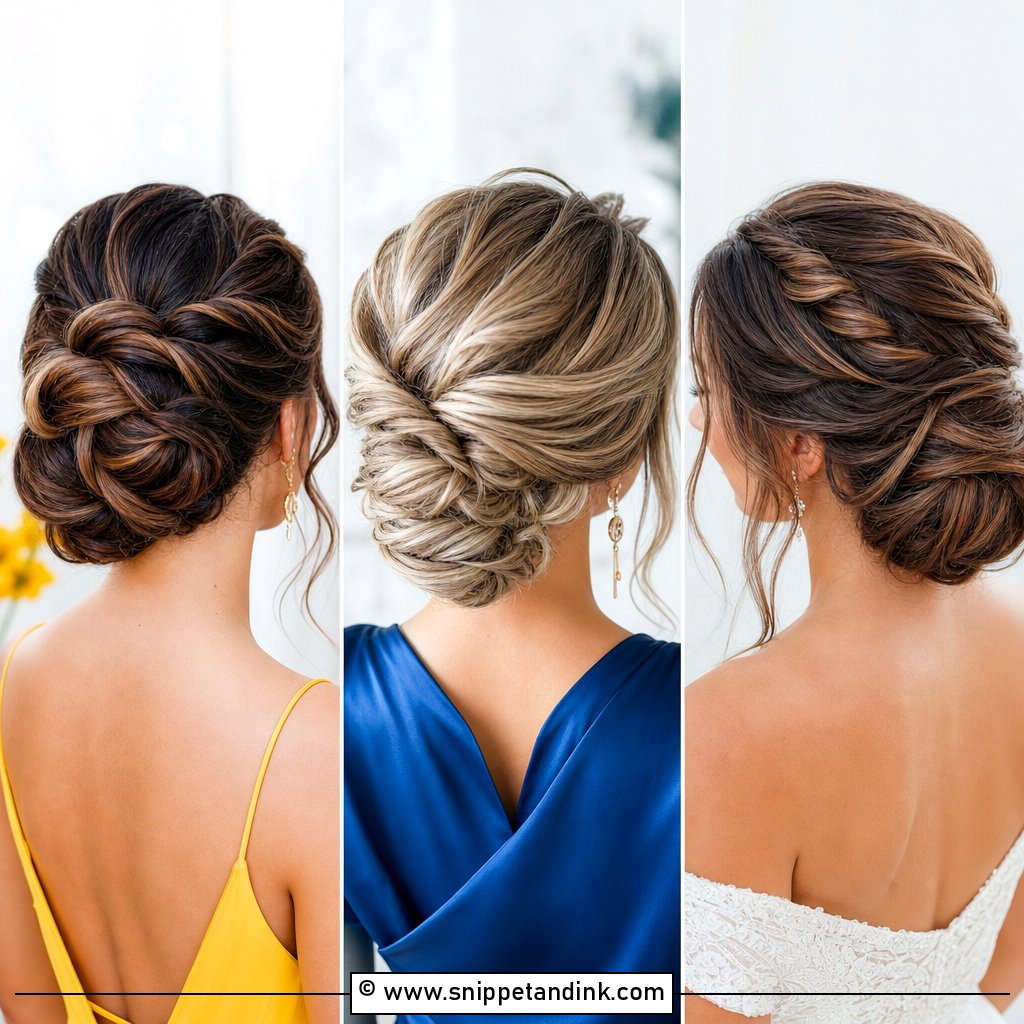
Guests spend most of the ceremony looking at the back of your head, so I plan an updo from behind first. The dress tells me where the hair should sit.
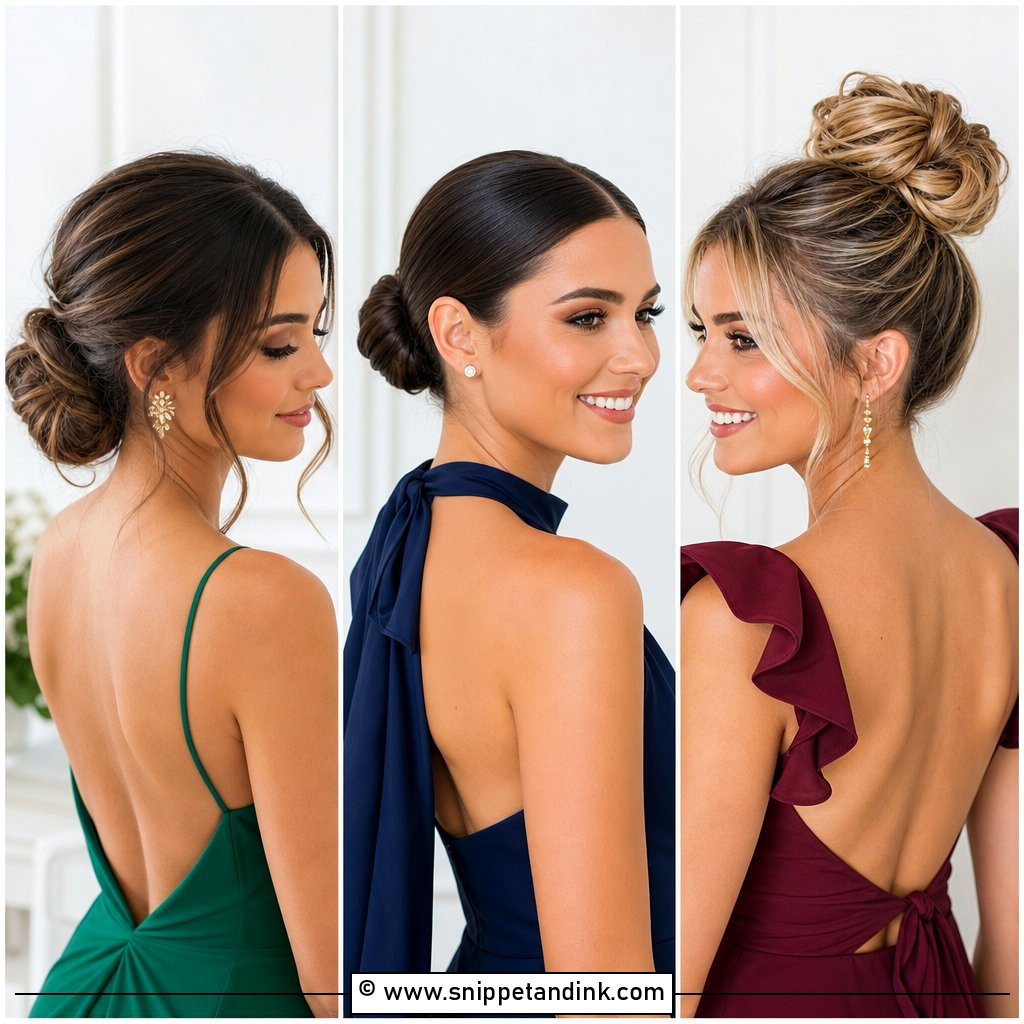
- Low or open back: keep the updo at the nape or slightly above so the line of the back stays clean. A high bun can make a low back look unfinished.
- High neck or collar: lift the hair to the crown or mid-height. A nape bun sitting on a collar gets crushed and pushed out of shape.
- Strapless or sweetheart: almost any height works; mid-height looks balanced with bare shoulders.
- Detailed buttons or lace down the back: keep the style compact so it doesn’t compete with the dress.
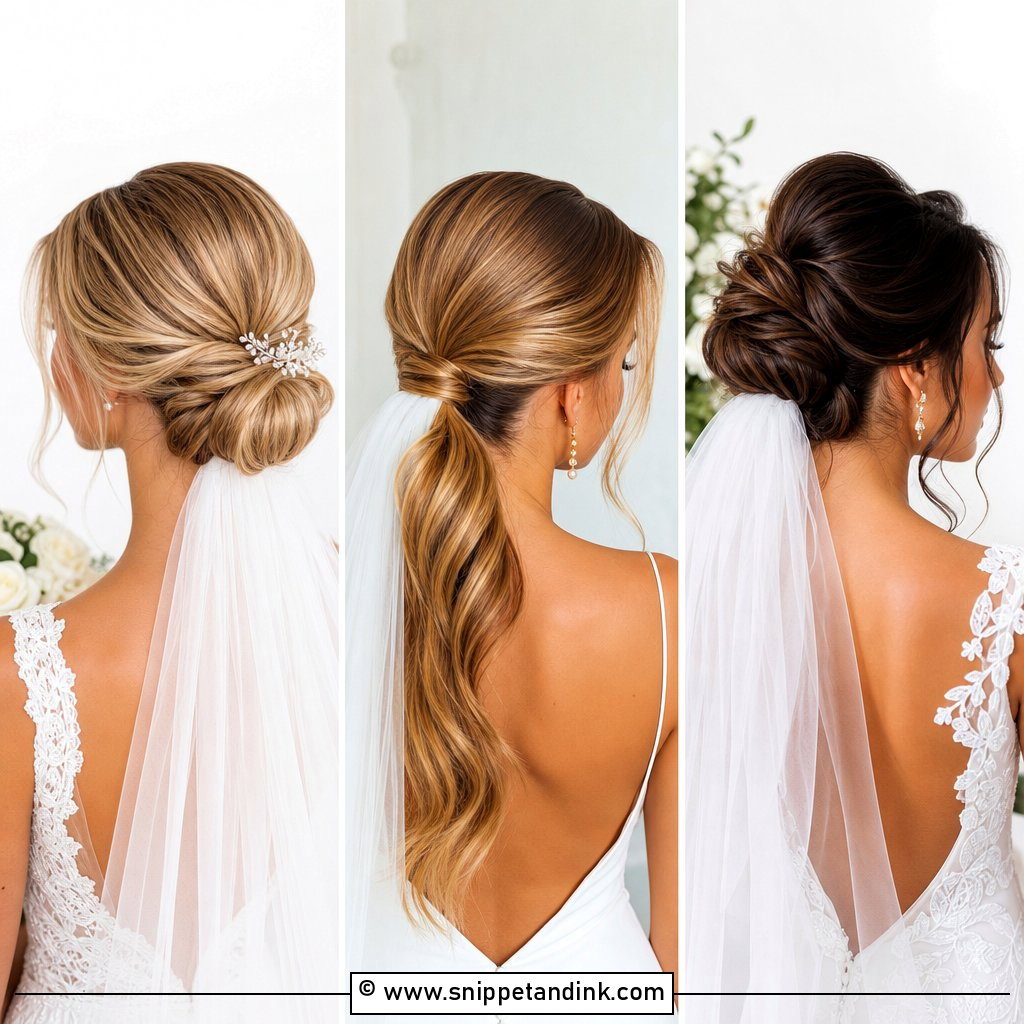
Your veil changes this too. A comb needs a firm base to grip, and a long veil adds weight that pulls a high bun backward. Tell your stylist the veil length before the trial so they can plan the anchoring.
At the trial, I ask brides to stand side-on to a mirror and hold a phone camera behind them. The back view is the one you never see on the day and the one in half the ceremony photos, so it’s worth five minutes of checking before you sign off on a shape.
1. Low Bridal Bun
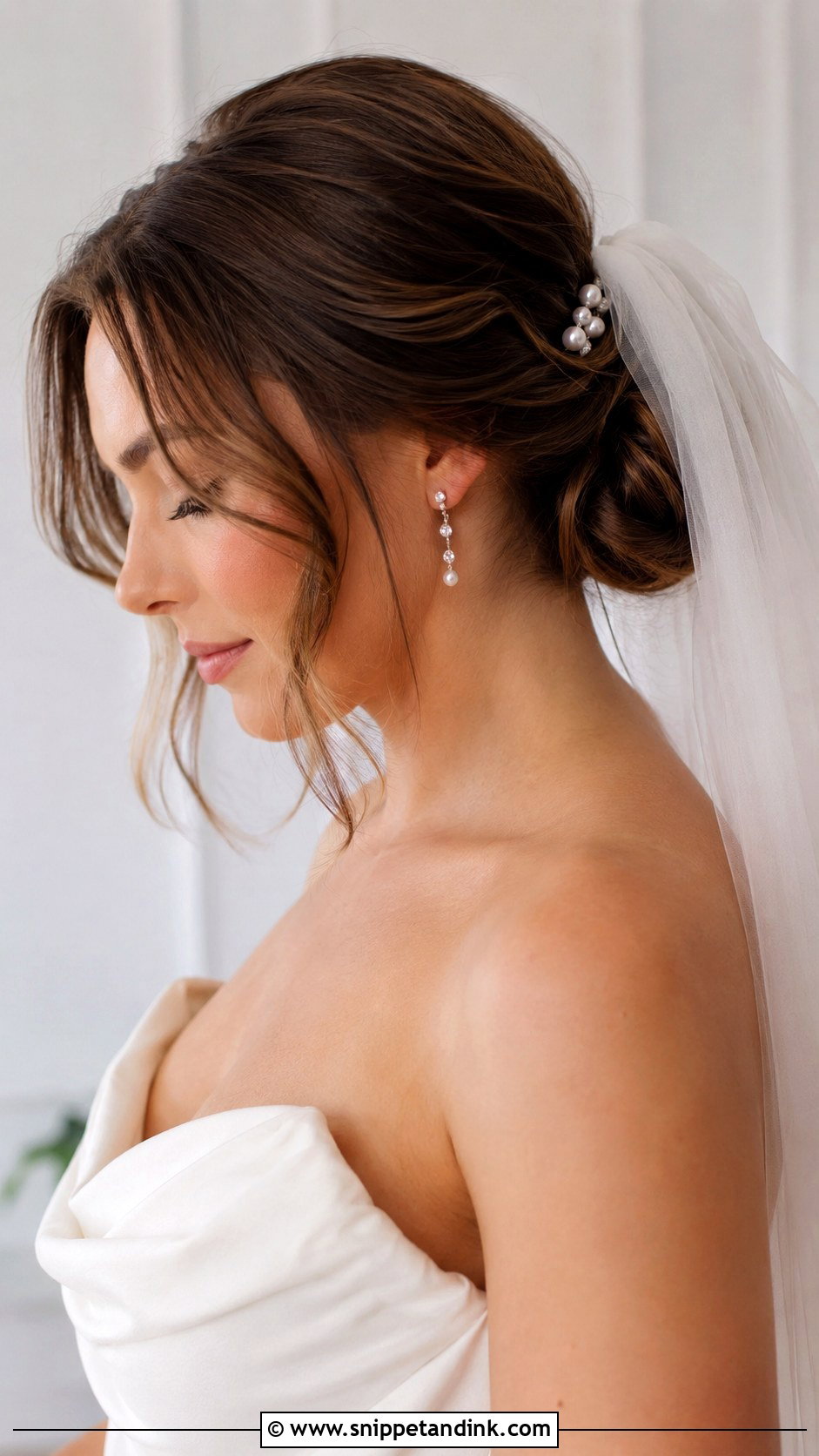
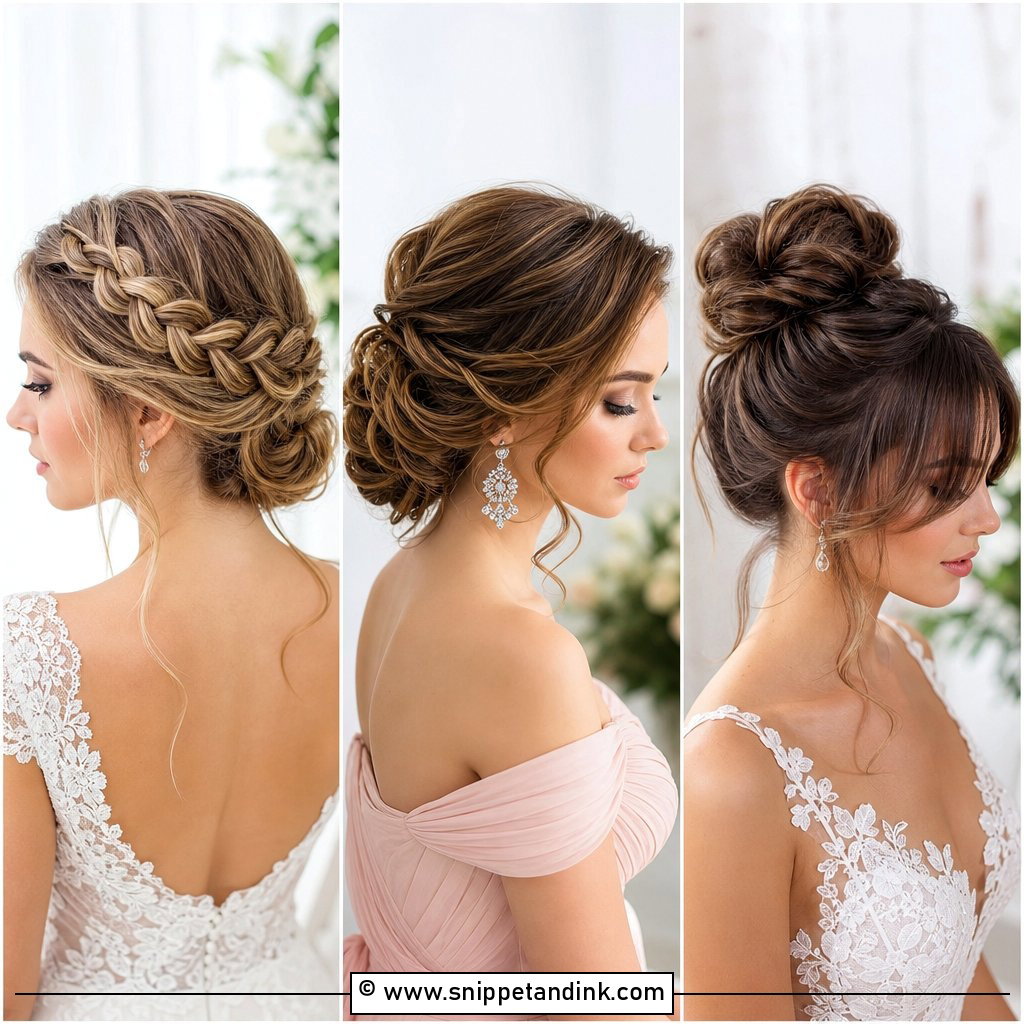
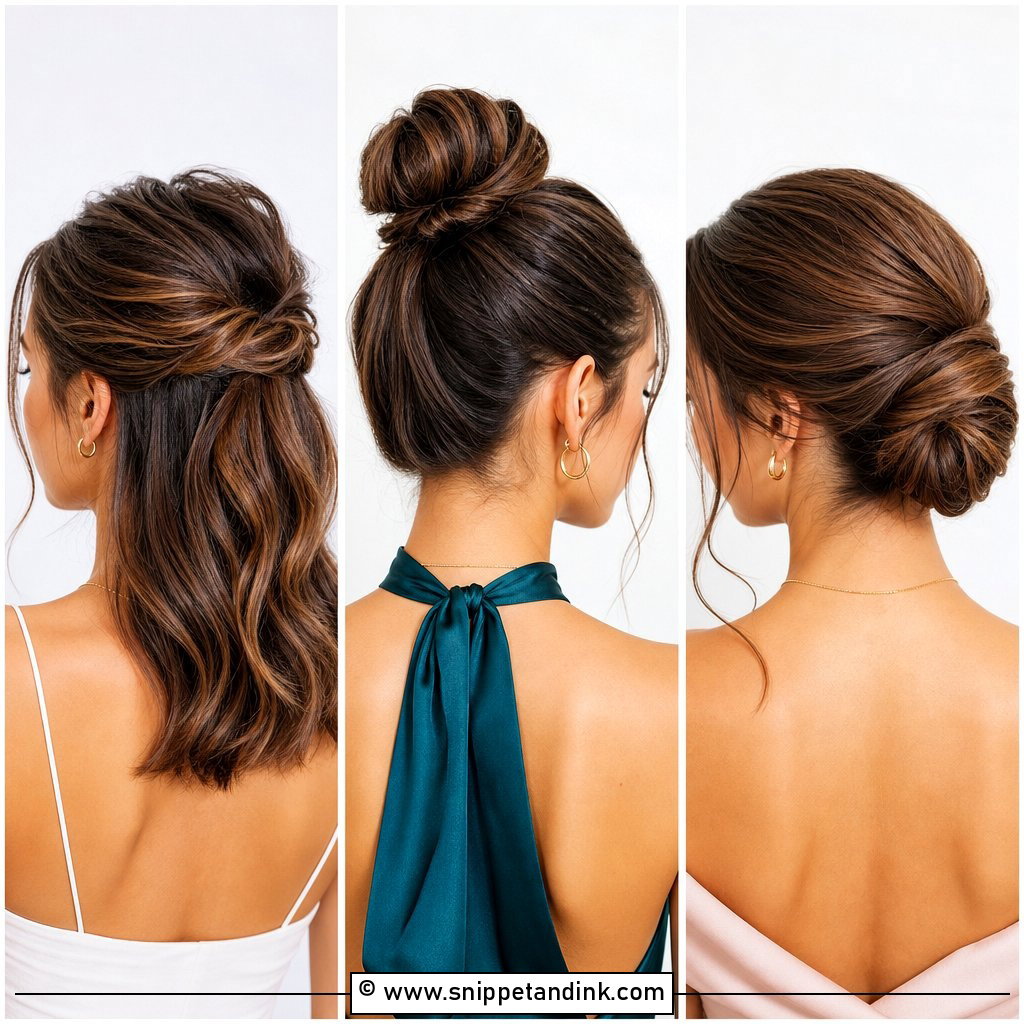
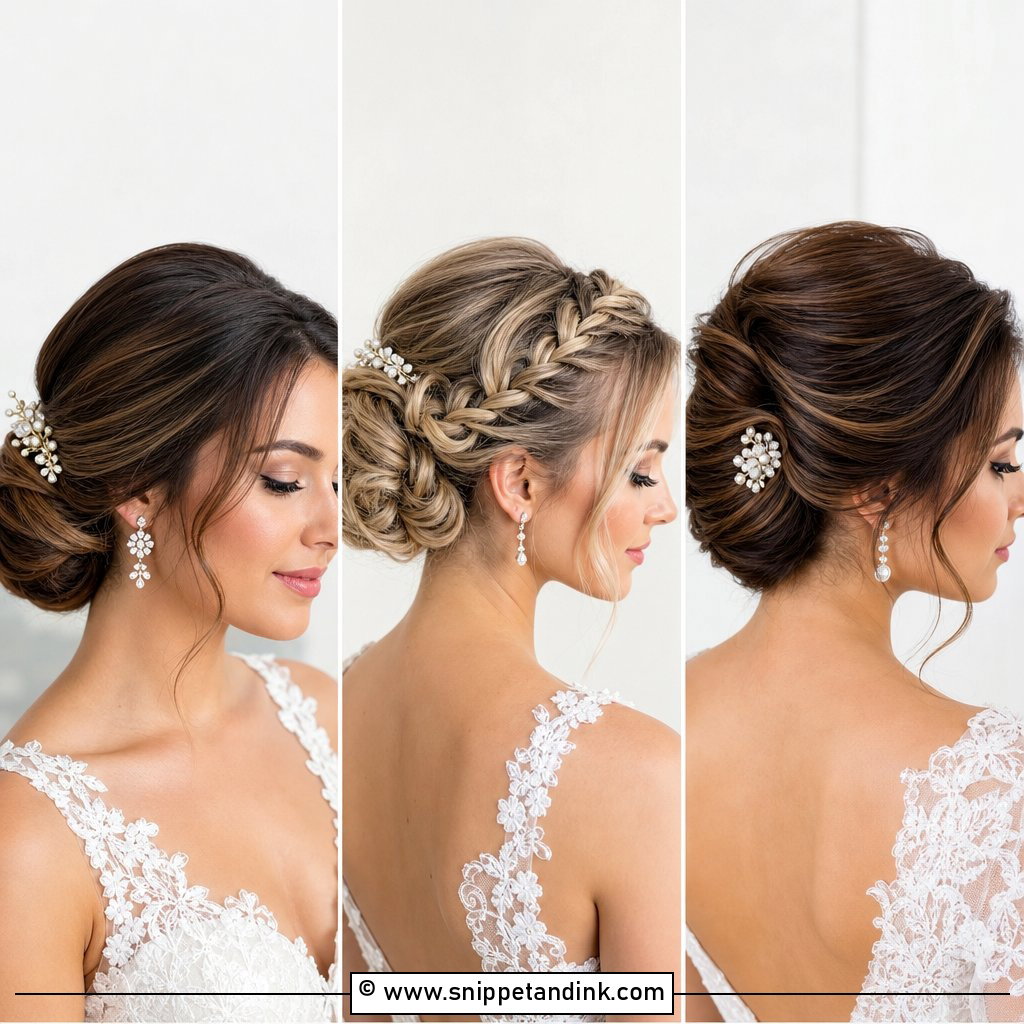
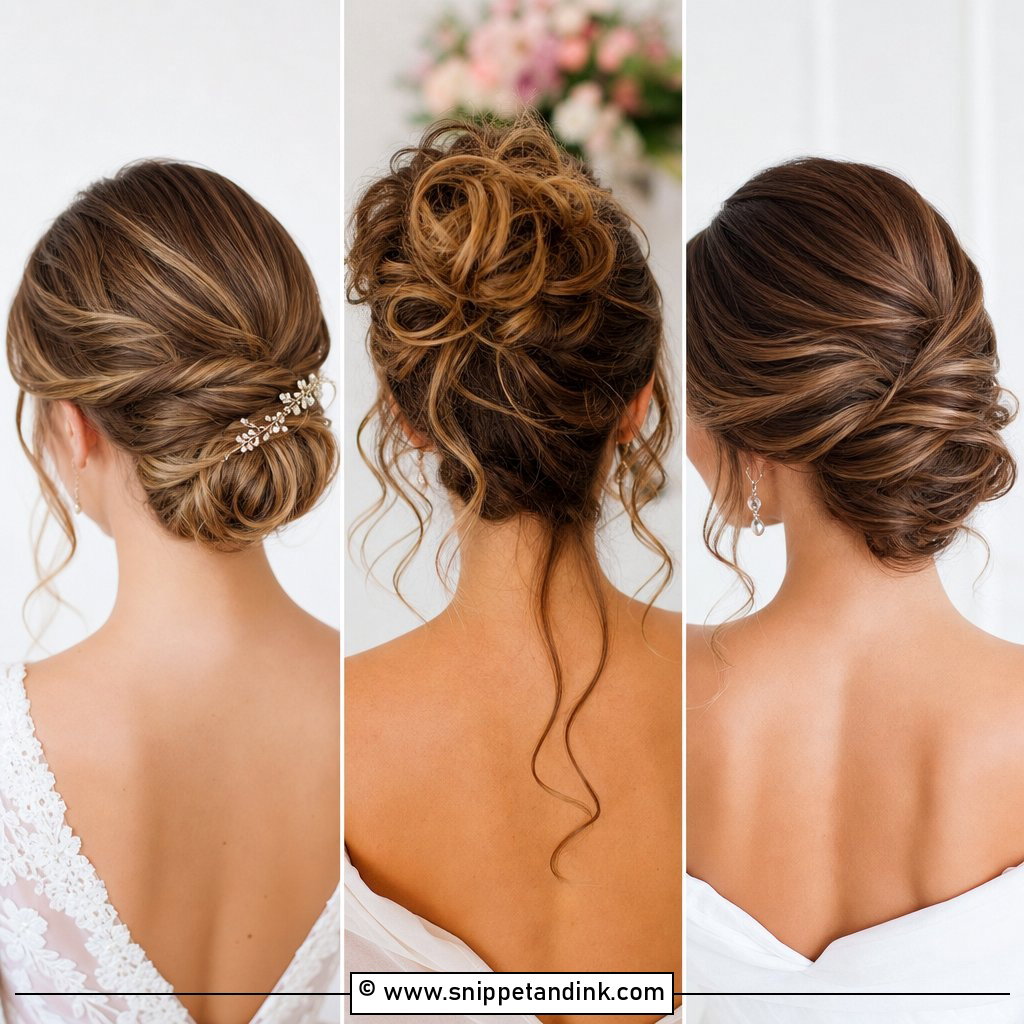
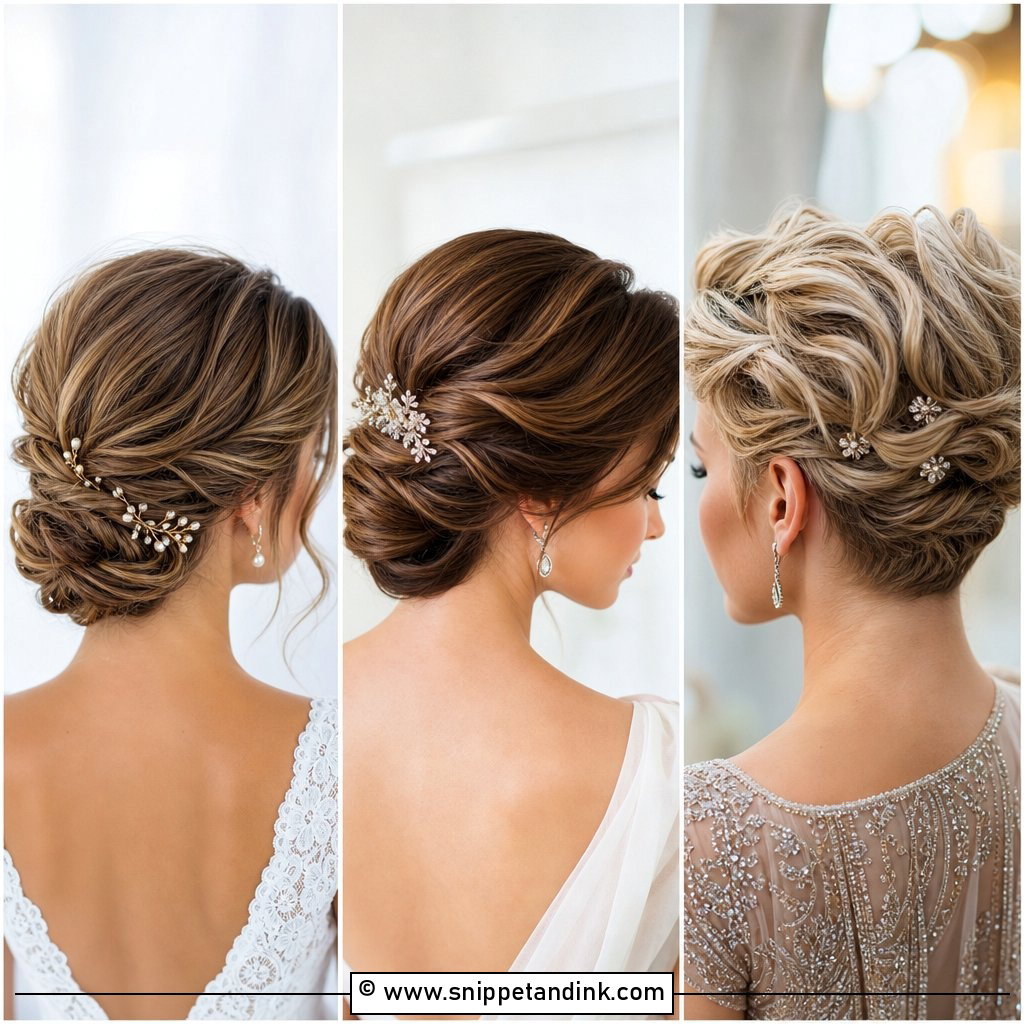
The low bun suits almost every dress, veil and face shape, which is why I suggest it to brides who can’t settle. It sits at the nape and doesn’t pull focus from your face. Centre part or side part both work, with or without a few loose pieces. Fine hair needs help: I’ll use a small padding or some backcombing inside the bun so it doesn’t look like a tiny knot in photos. Thick hair I twist into a rounder, wider shape. A cathedral veil comb sits just above it, and pearl pins can follow the curve.
2. Textured Bridal Updo
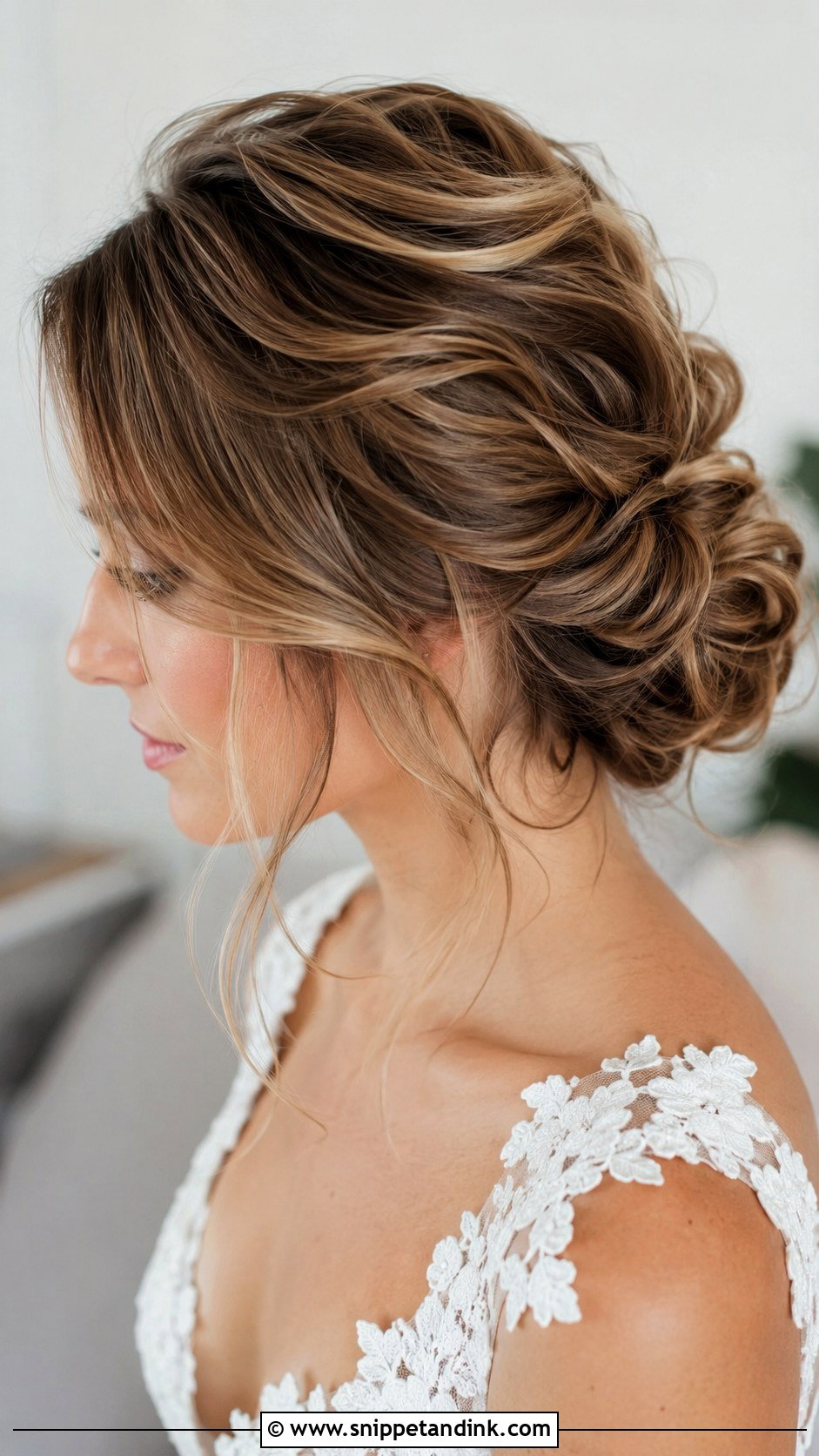
A textured updo should look relaxed and be anything but. I wave the whole head first, because the bends give each pinned section something to hold, then build the shape low or at mid-height. The movement through the crown and sides is placed deliberately, piece by piece. Two or three tendrils at the face are plenty. It suits garden and outdoor ceremonies well, though I’d keep the texture a little tighter if rain is forecast, since loose pieces are the first to frizz.
3. Sleek Bridal Chignon
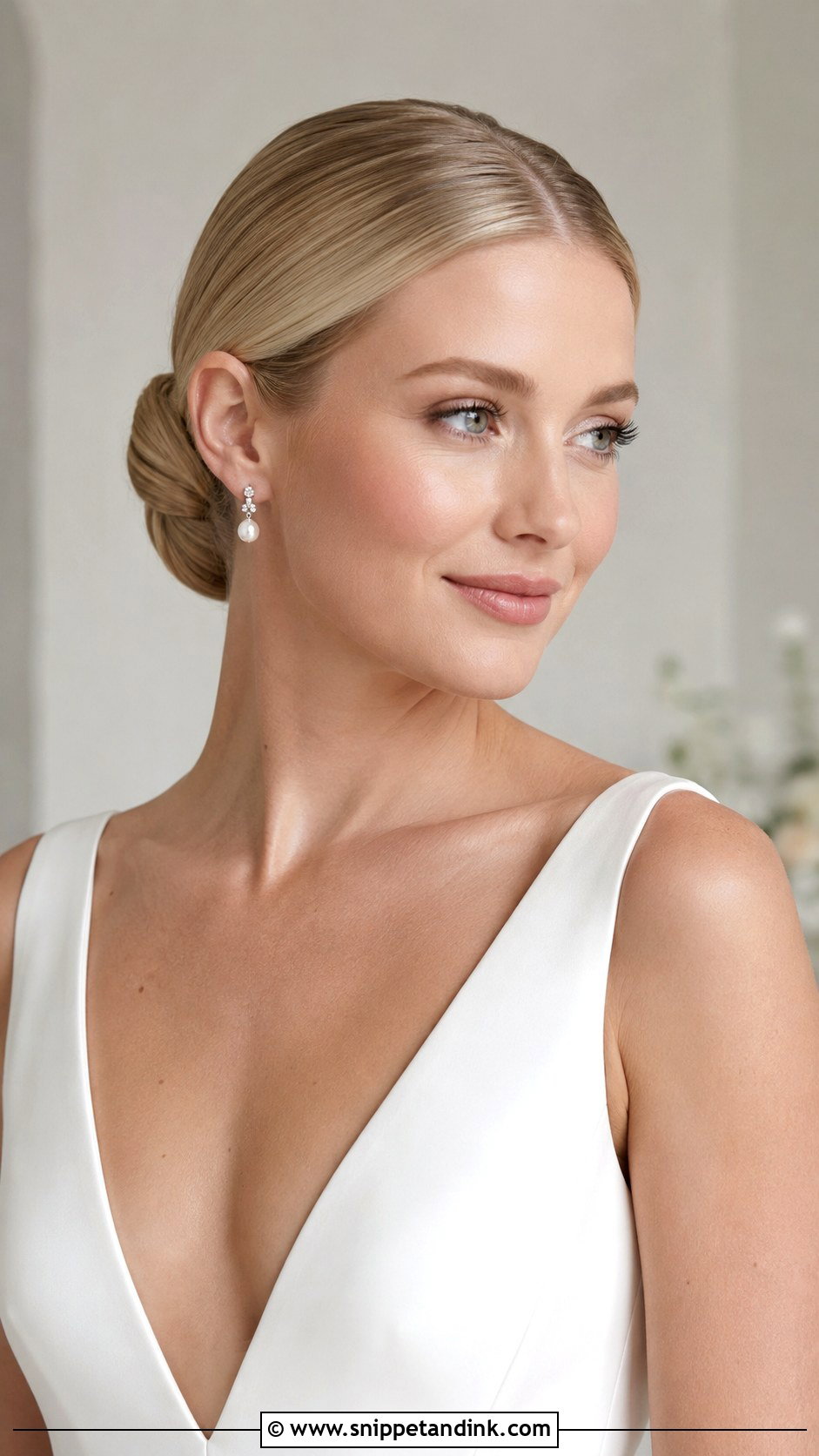
A sleek chignon shows everything, so it’s the least forgiving style on this list. The hair is smoothed close to the head and gathered into a neat knot or roll at the nape, with nowhere for a bump or a flyaway to hide. It suits a structured neckline, an open back, a high collar or a dramatic veil. I work it with a smoothing cream on damp hair, a firm but flexible spray, and a light shine mist last. Statement earrings sit well against the clean sides. If your hair has a cowlick at the crown, mention it early; it changes where I set the part.
4. Messy Bridal Bun
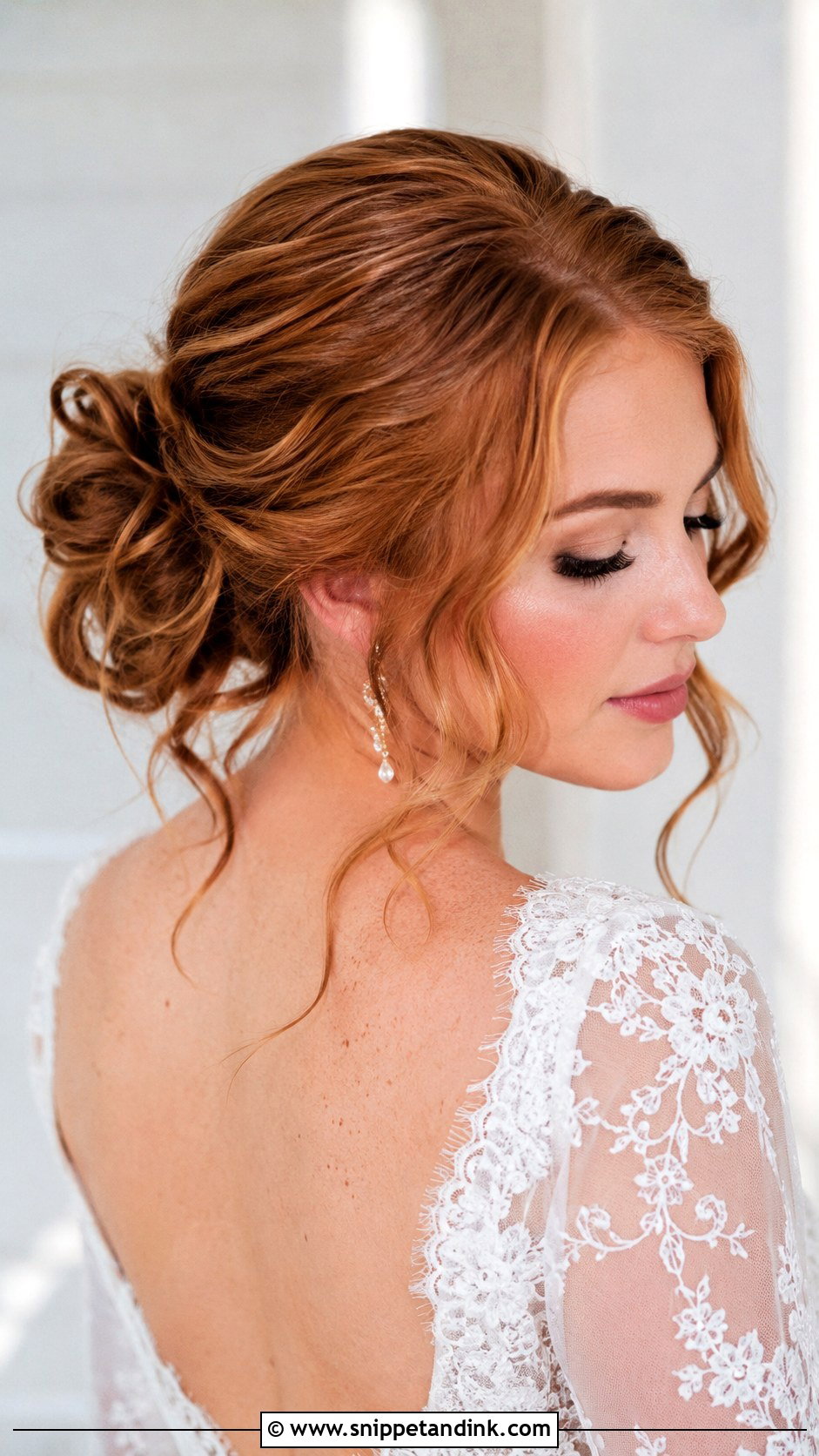
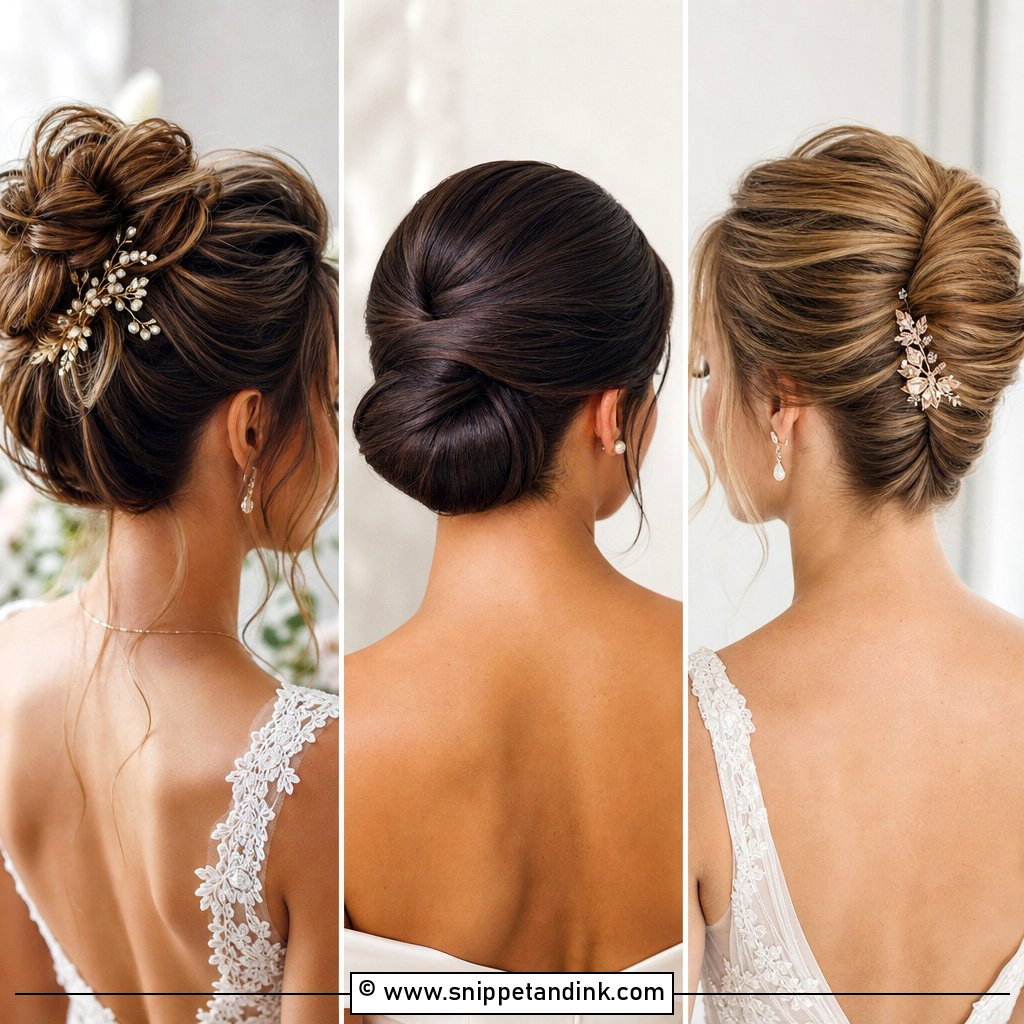
Messy buns need more pins than tidy ones. The volume comes from loose sections, and each of those has to be anchored or it drops by the evening. Naturally wavy hair is ideal here because the bends add body without much styling. I curl the face-framing pieces gently so they blend with the bun rather than hanging as separate strands. It sits well with lace, floral veils, outdoor venues and soft glam makeup. If you’re nervous about it looking undone in a formal room, ask for a slightly smoother crown.
5. Braided Bridal Updo
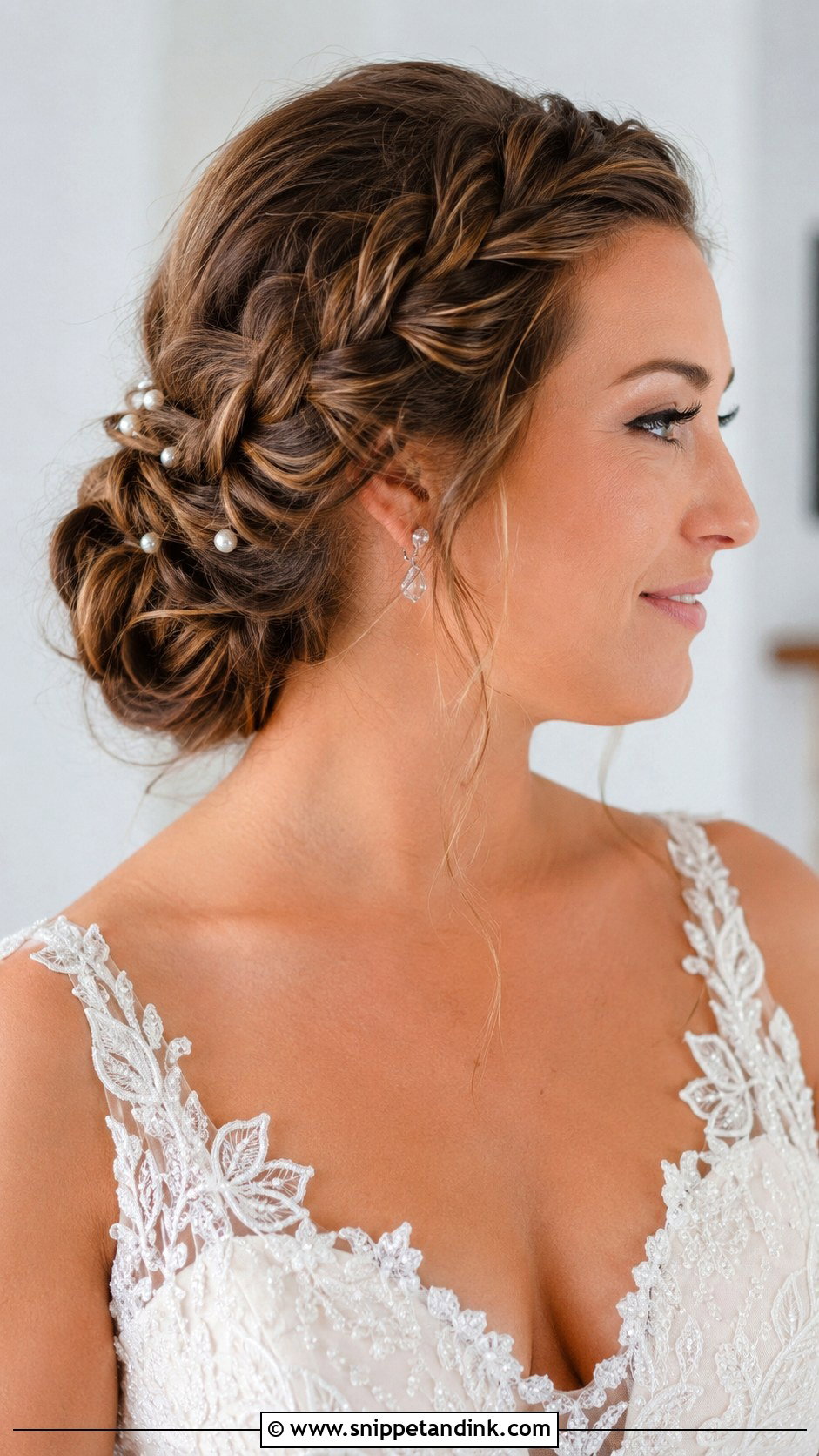
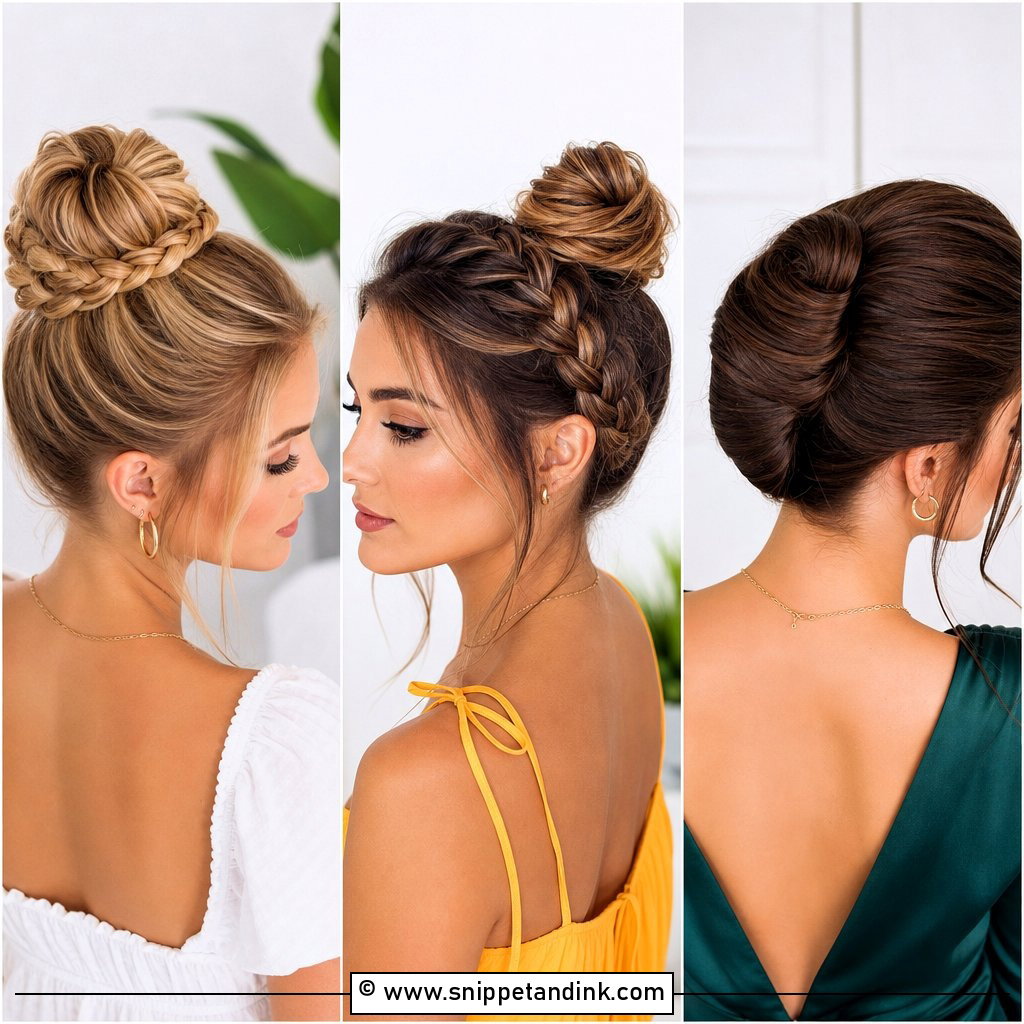
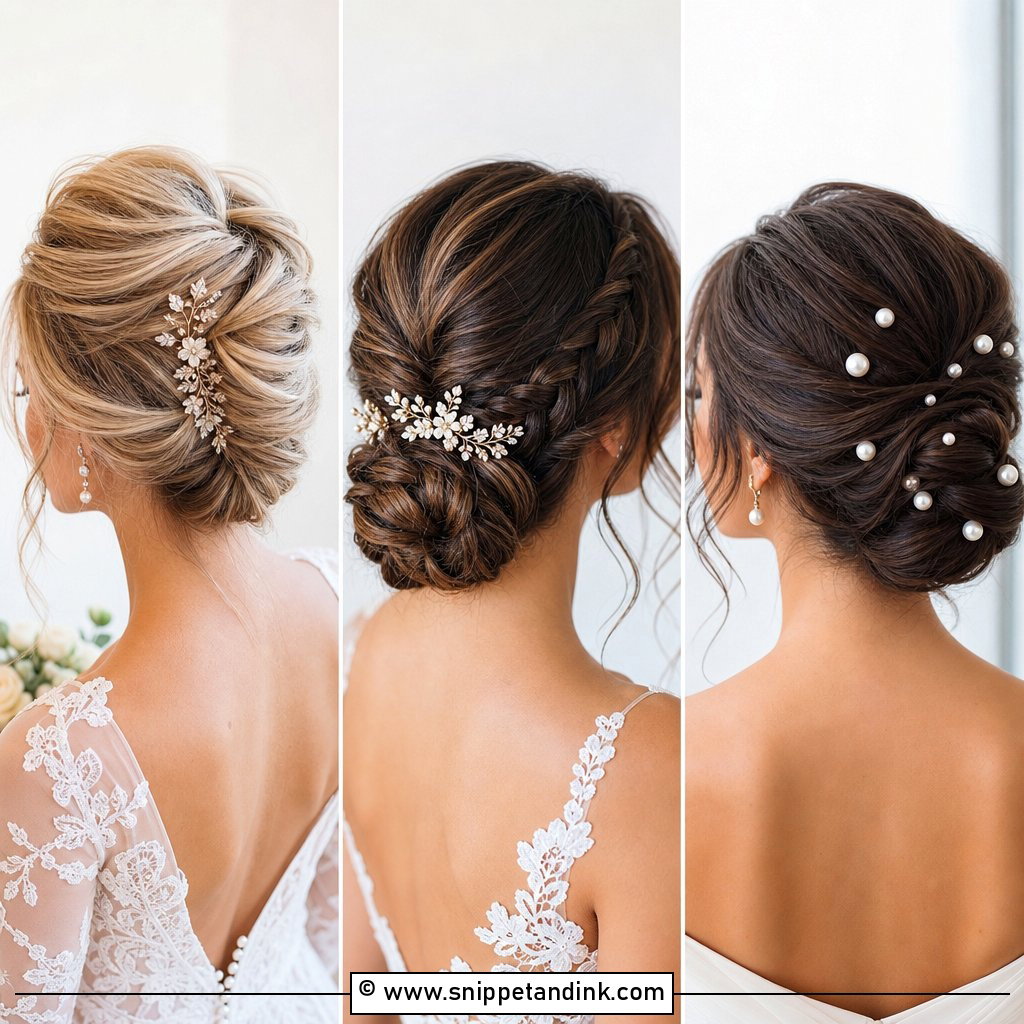
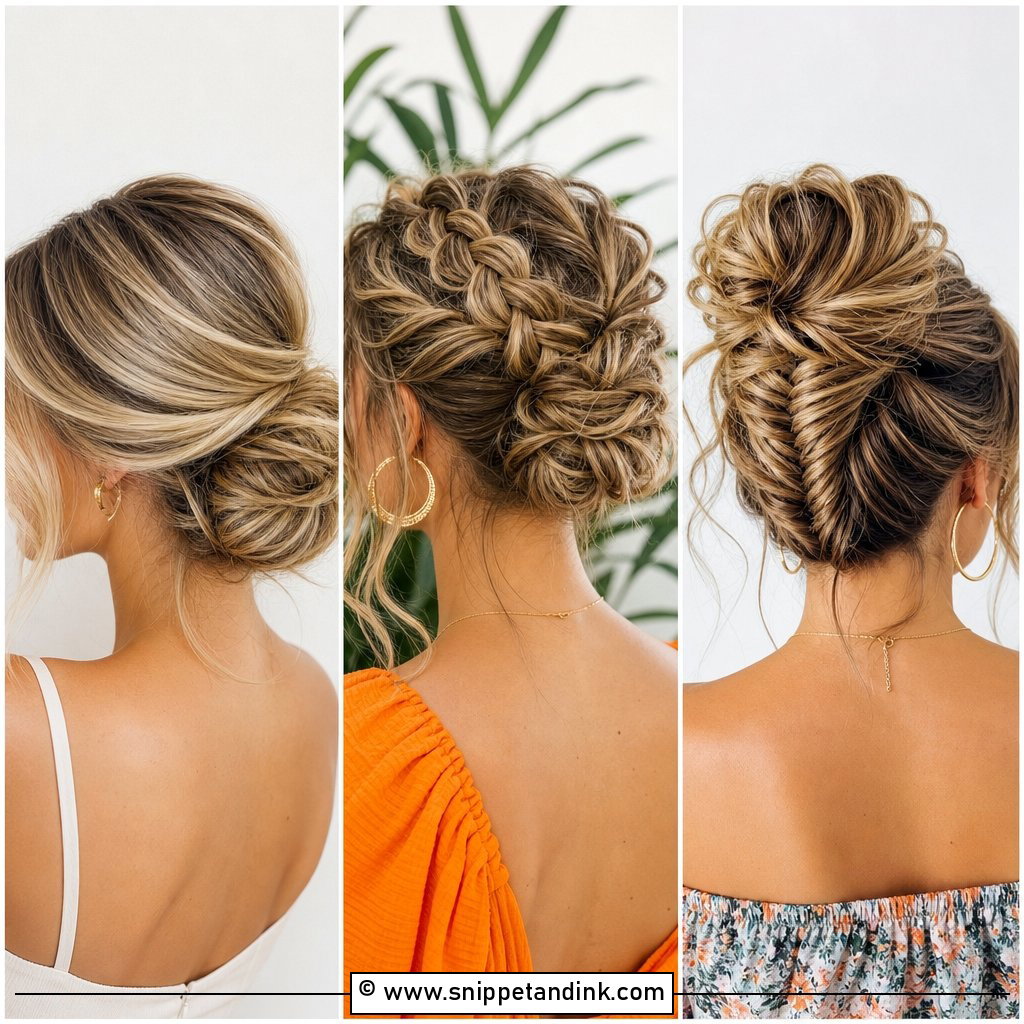
Braids do a job in an updo, not only a decorative one. A braid wrapped around the crown, fed into a low bun or run along one side holds shorter layers that would otherwise poke out of a plain bun, which is why I reach for it on medium or layered hair. Pulled gently apart, it reads softer; left tight, it looks more formal. You don’t need much on top. A few pearl pins or small flowers along the braid line is usually enough.
6. Curly Bridal Updo
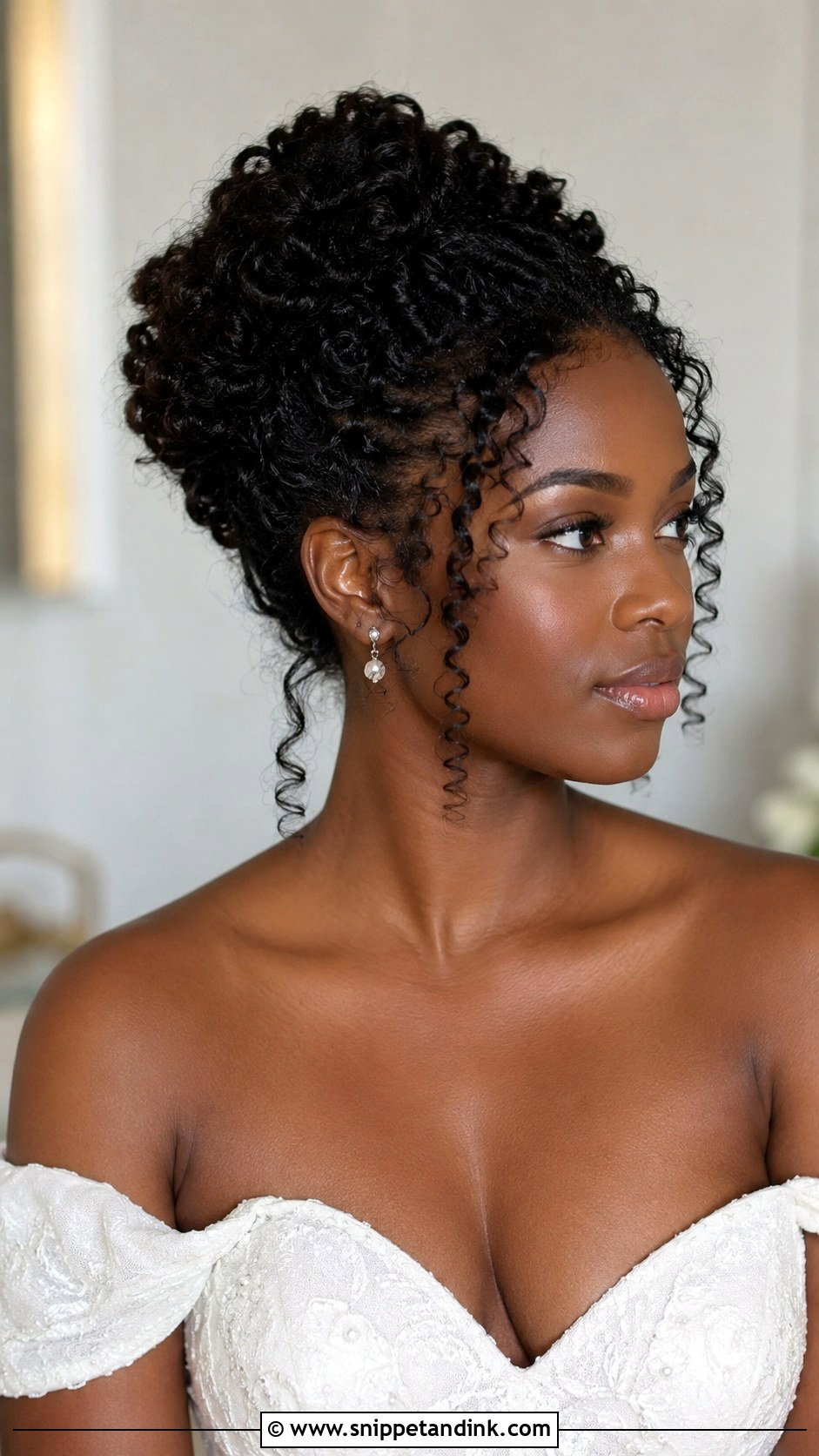
With a curly updo, the curls are the structure. Rather than smoothing them out, I define them first, then place each section by hand so the shape is balanced from the front, the sides and the back. It can sit high, low or slightly to one side depending on your face and dress. Natural curls, spirals and textured hair all suit it. One thing I always do at the trial is leave a curly updo in for a few hours, because curls often expand as the day goes on and the shape needs room for that.
7. High Bridal Bun
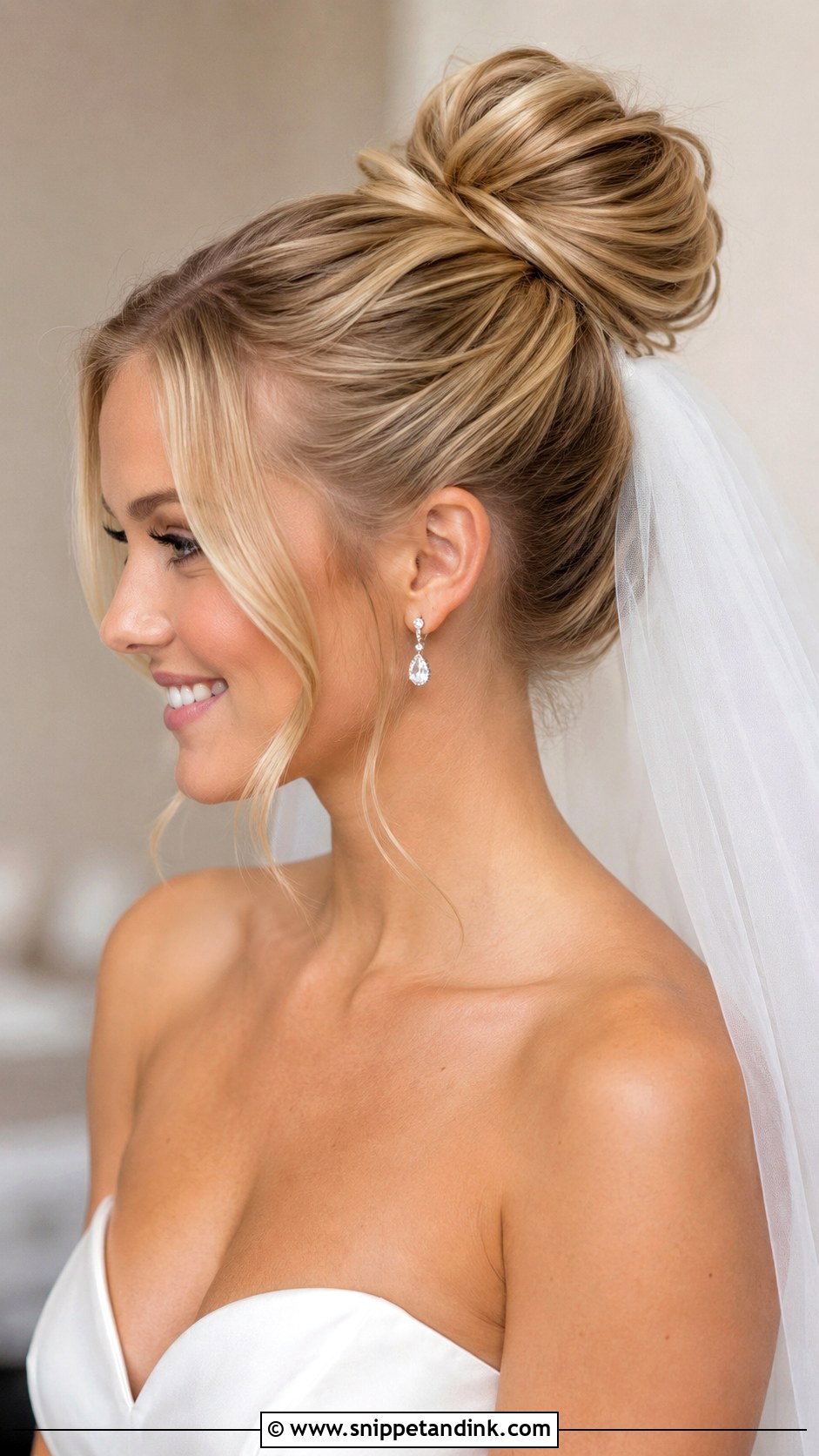
A high bun draws the eye upward and lengthens the neck, which suits strapless gowns, ballet-style dresses and clean modern shapes. The bun can be smooth and round, softly textured or a little oversized. Your veil will usually go underneath it. The base matters most: secure but not tight, because a high bun pulled hard into the scalp can bring on a headache by the speeches. If it pinches at your trial, it will pinch more at hour eight.
8. Twisted Bridal Updo
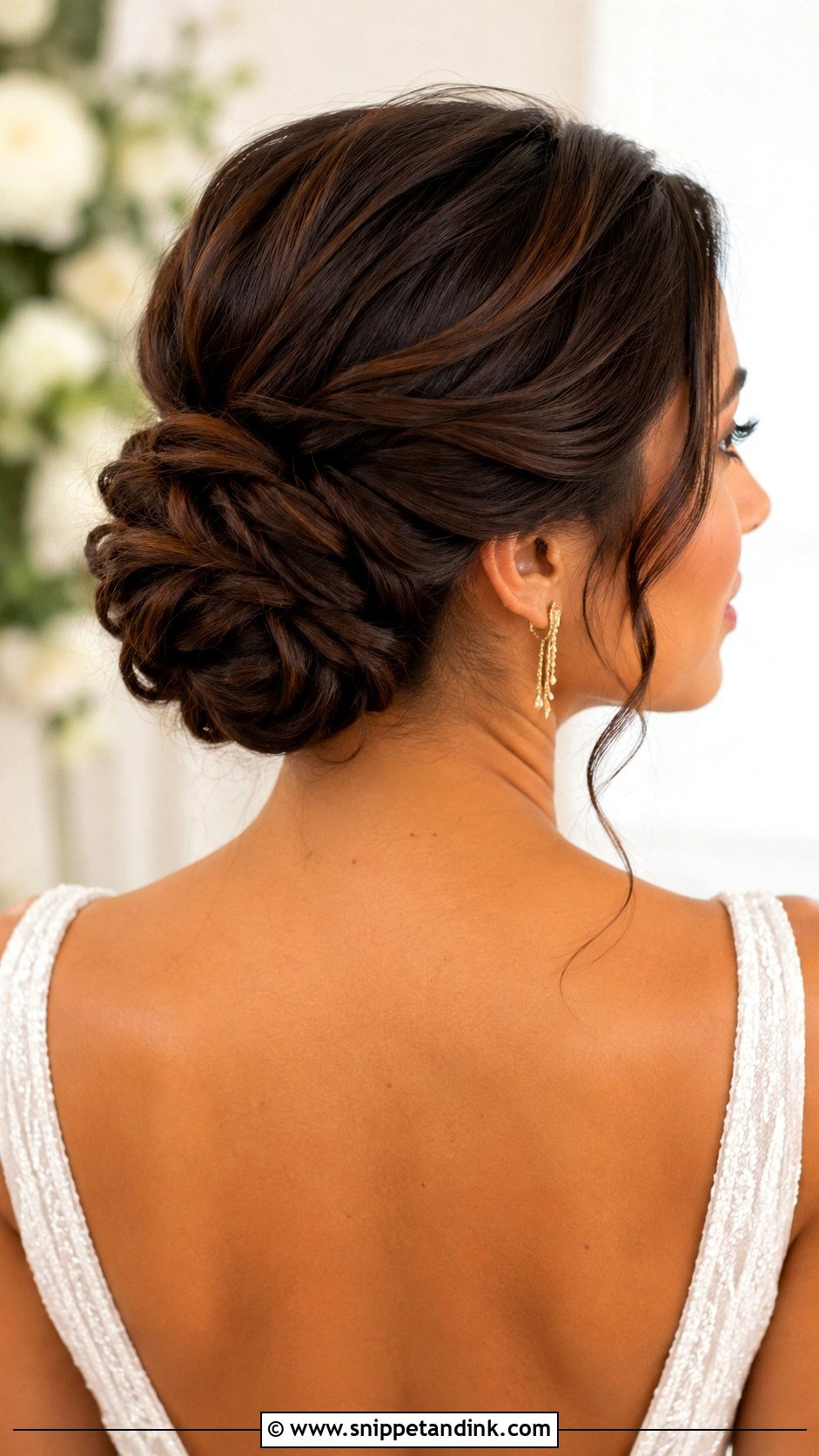
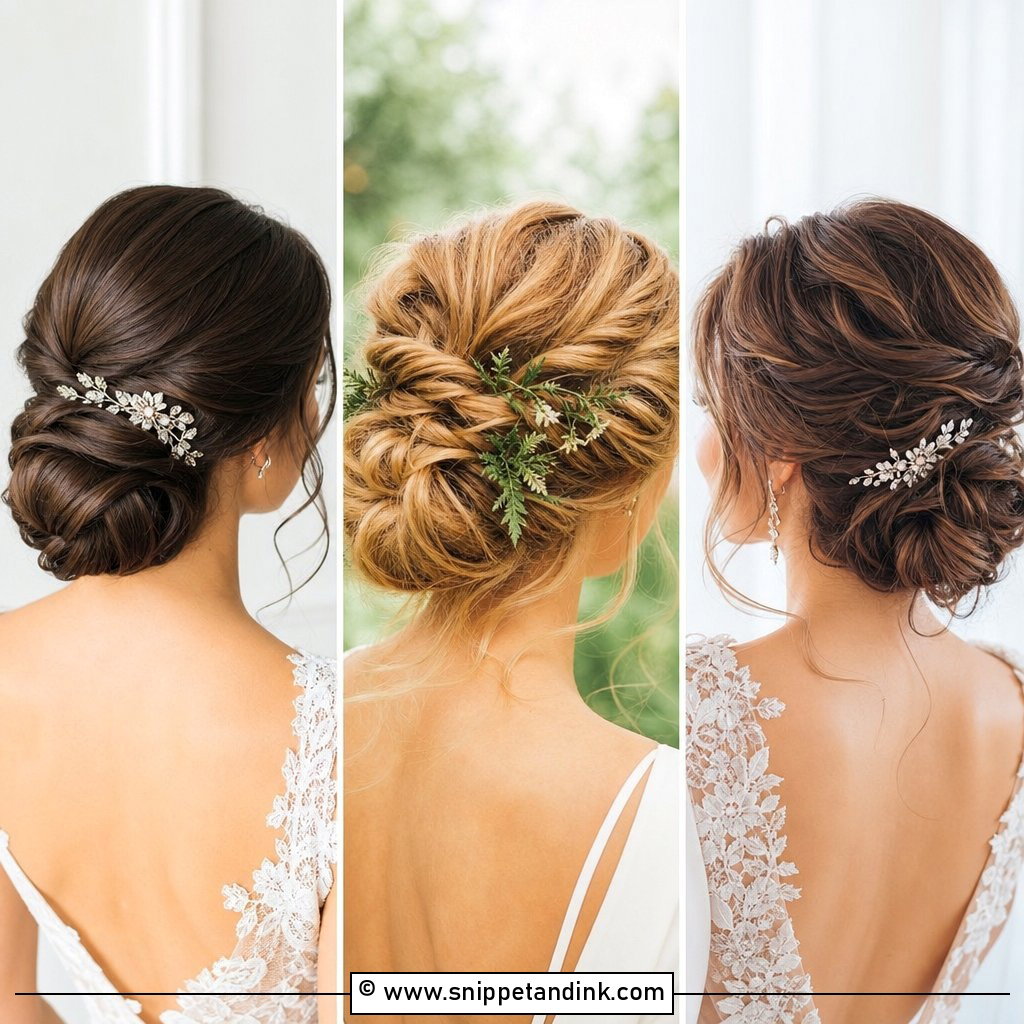
Twisted updos give you detail that’s softer than braiding. Sections are rolled, crossed, and pinned into a bun or tucked shape, so there’s movement from every angle. They’re especially good on highlighted or balayage hair, since each twist turns the colour toward the light. Layered hair works too; the shorter pieces get folded into the twists. I’d finish with a few tiny pins or a slim comb and stop there, because the twists are the decoration.
9. French Twist Bridal Updo
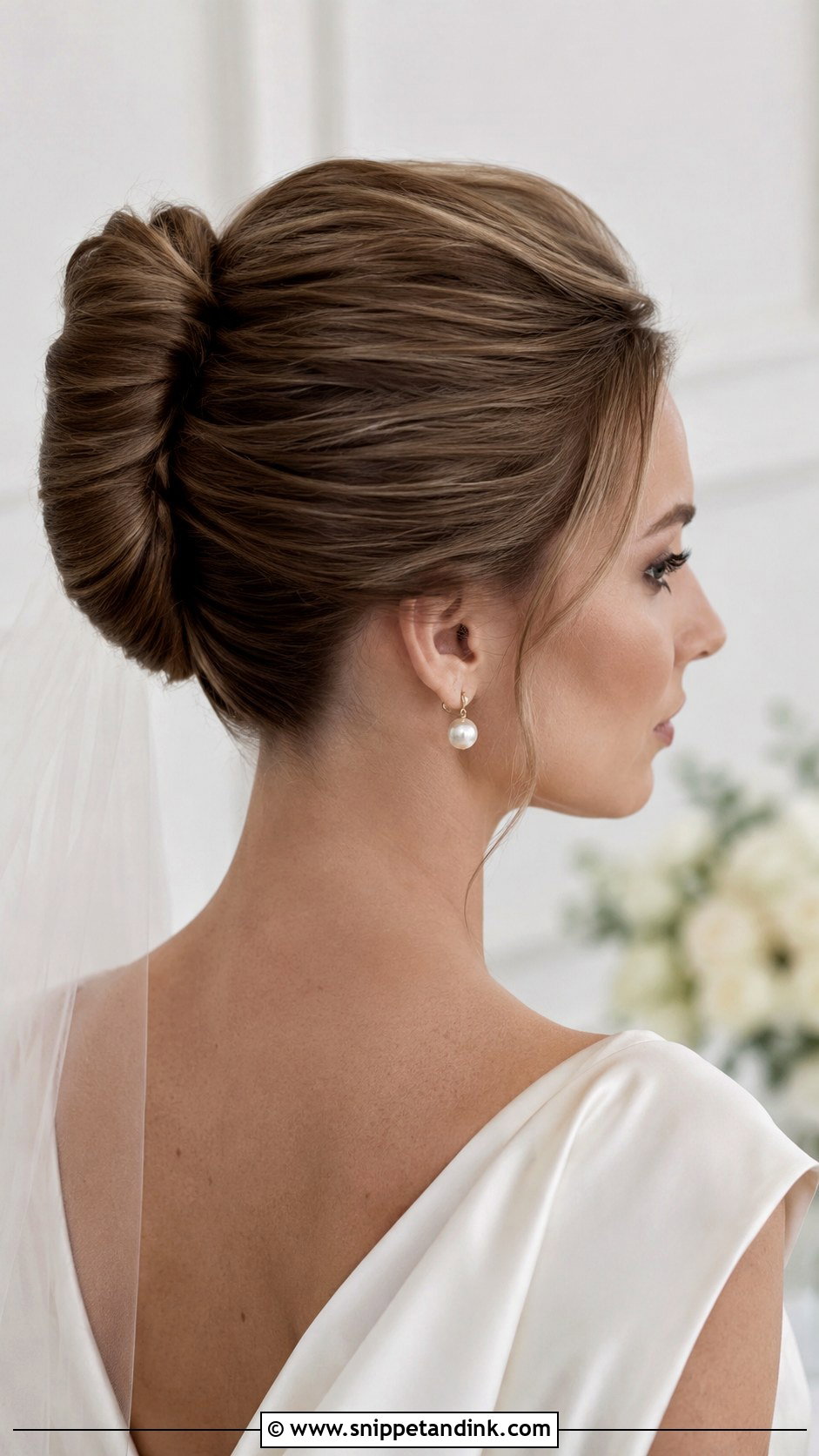
The French twist has been around for decades and still looks right with satin, pearl earrings and a classic face. Hair is swept up and tucked into a vertical roll down the back of the head, which lengthens the profile. Modern versions are softer at the crown and around the face than the lacquered ones from old photographs. It needs medium to long hair; extensions can add fullness if yours is fine. Very thick hair can be tricky to roll neatly, so I’ll sometimes thin the inside of the roll with a little backcombing and fewer sections.
10. Side Swept Bridal Updo
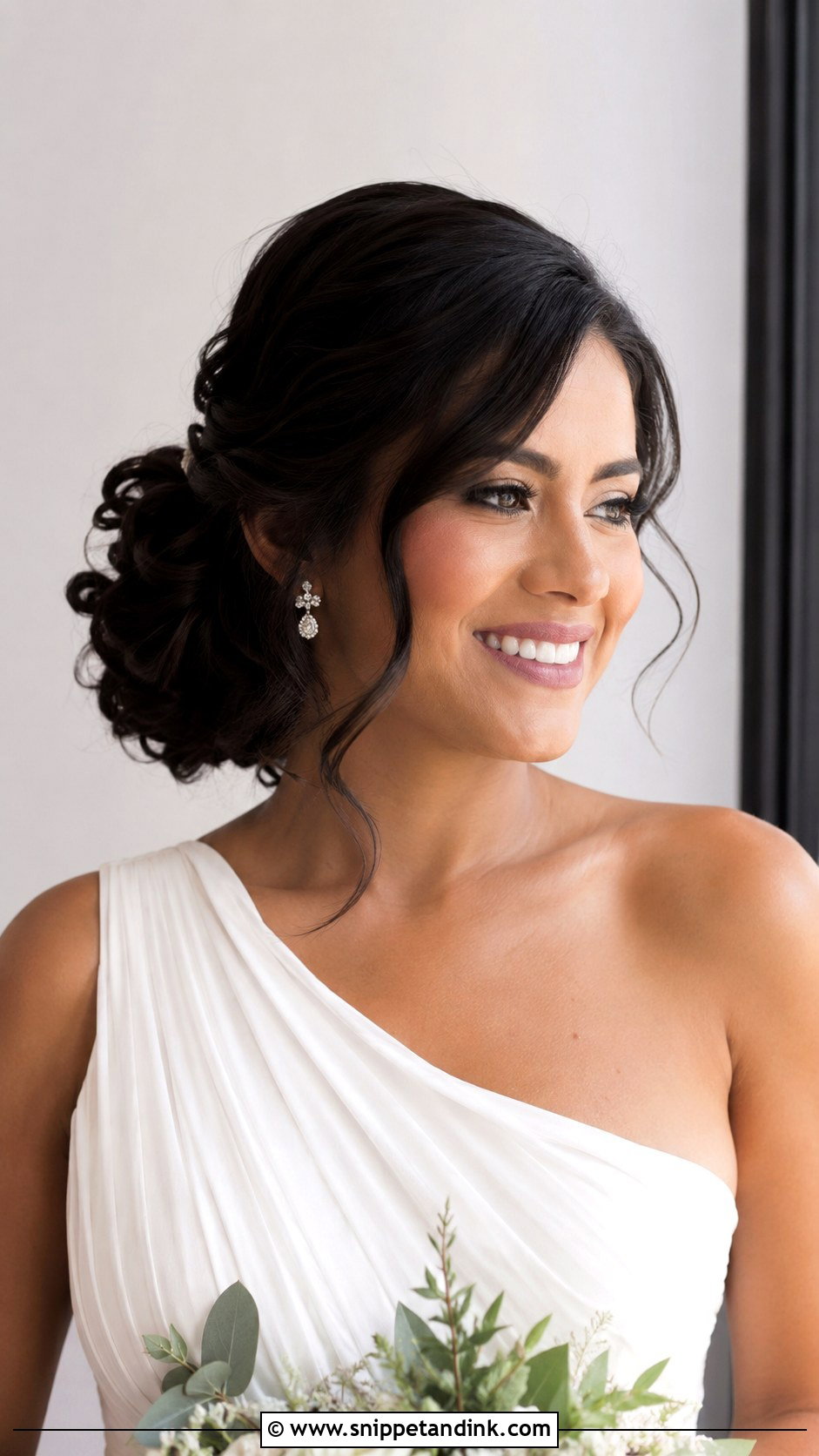
A side swept updo gathers the hair slightly off centre, which feels less formal than a bun dead in the middle. If you already part your hair to the side, it’ll feel familiar; it also shows off one shoulder. Loose curls, twists or small braids add texture. One-shoulder dresses, floral hairpieces and soft veils all work with it. I use the off-centre shape to balance the face, adding a bit more volume on the side that needs it, which is easier to do here than in a symmetrical style.
11. Bridal Updo With Curtain Bangs
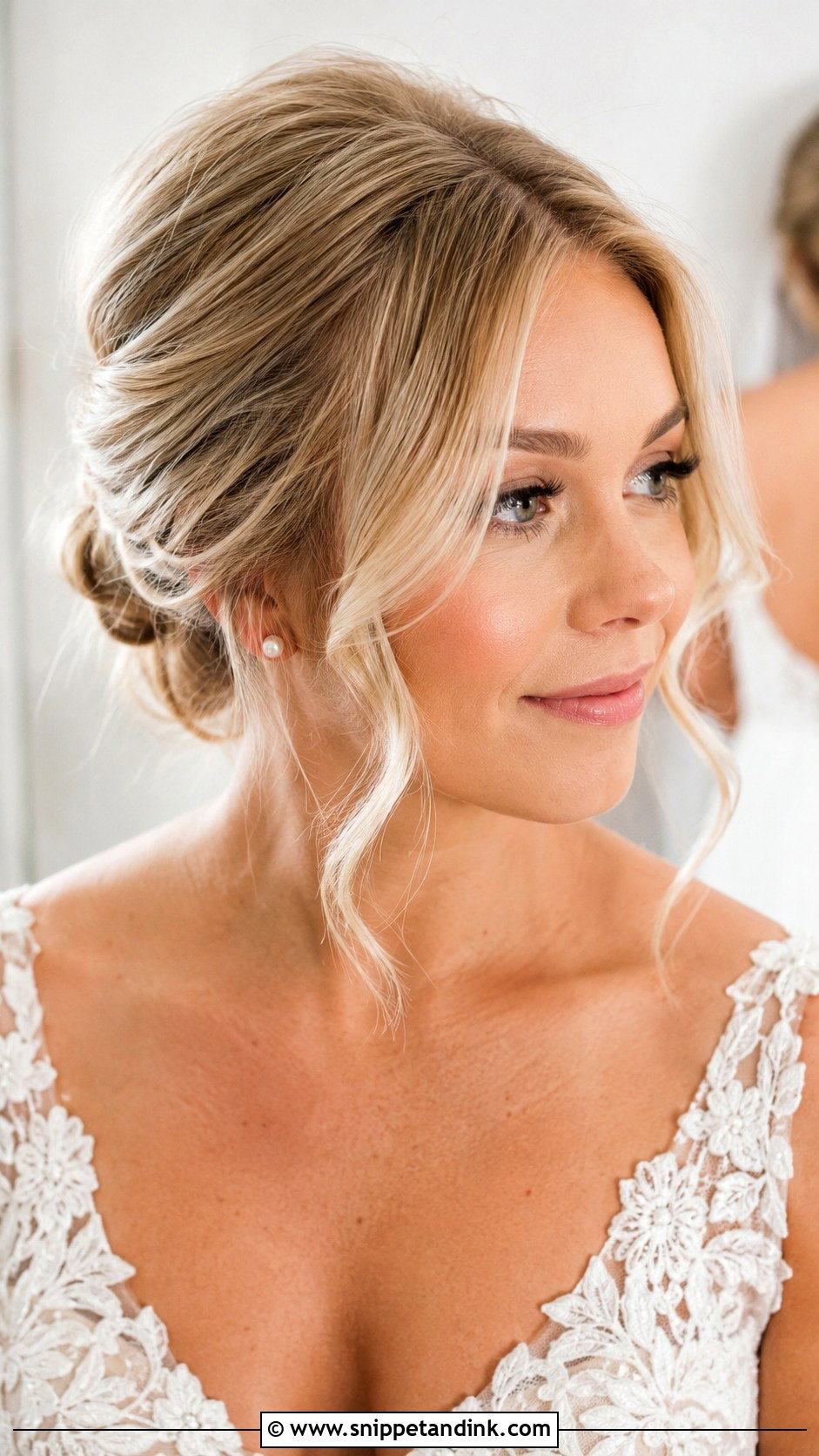
A bridal updo with curtain bangs is the one I suggest to brides who always wear face-framing layers and feel bare without them. The updo stays lifted and secure while the bangs sit at the cheekbones. Style the bangs with a soft bend from a round brush or large barrel, never a tight curl, or they’ll look separate from the rest of the hair. A low bun, twisted bun or textured chignon all sit well behind them. Get your fringe trimmed about a week before, not the day before.
12. Bridal Updo With Veil
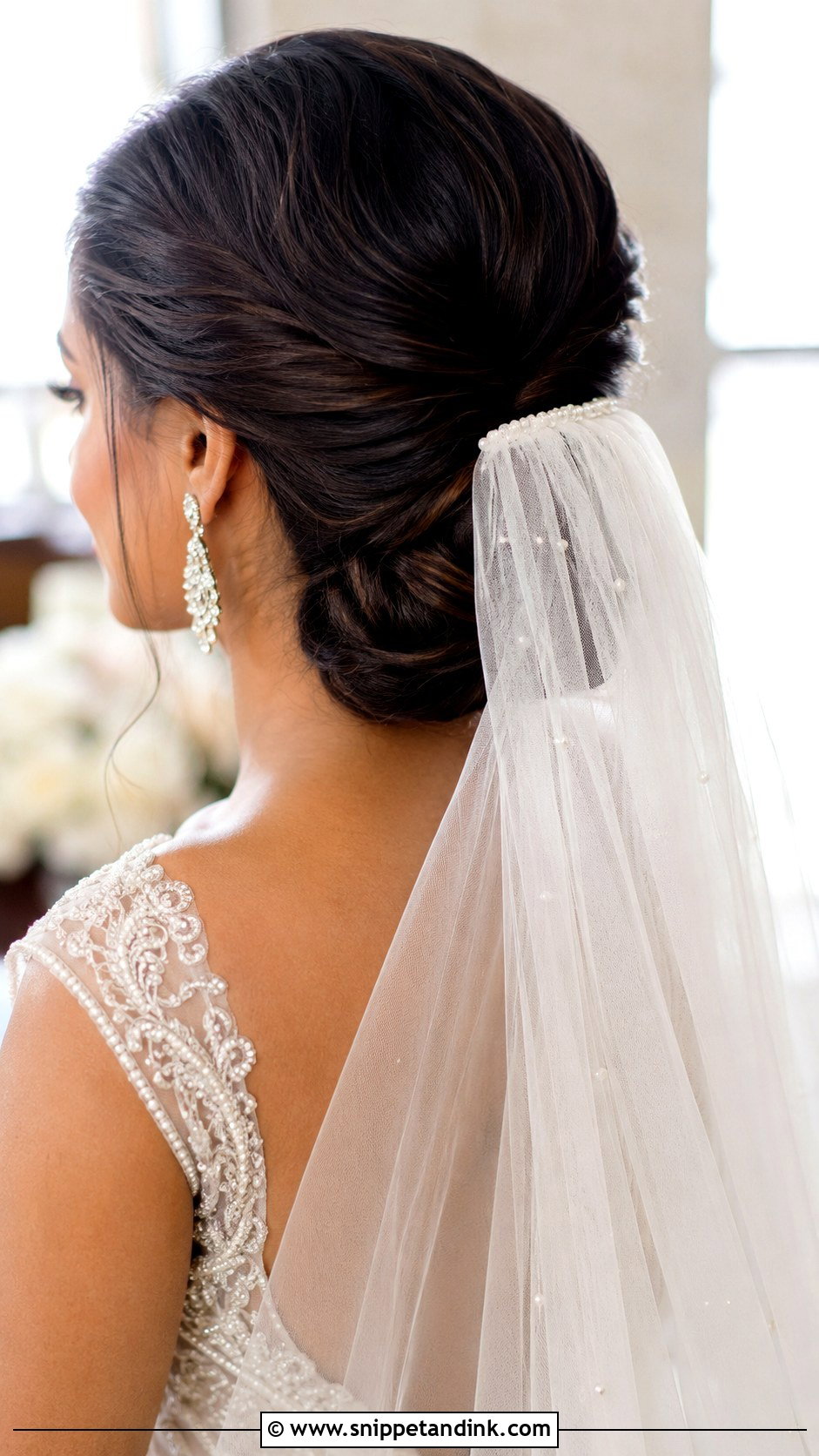
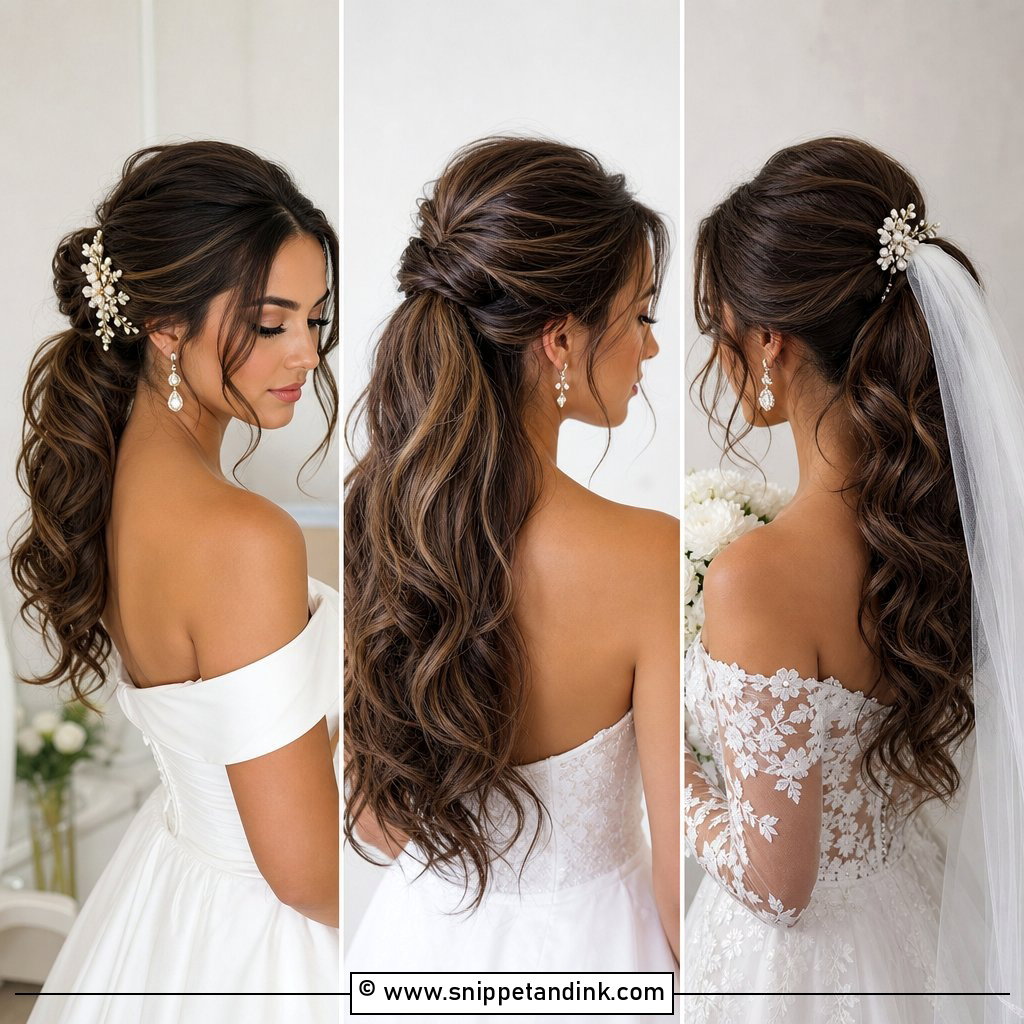
An updo for a veil has to look right three times: before the veil goes on, while it’s in, and after it comes off for the reception. A low bun or chignon is the easiest, because the comb sits securely above the bun. With a high bun, the veil usually tucks underneath. The trick is anchoring. I build a small criss-cross of pins exactly where the comb will go, so its weight pulls on that base rather than on the style. Always bring the actual veil to your trial, not a description of it.
13. Bridal Updo With Hair Pins
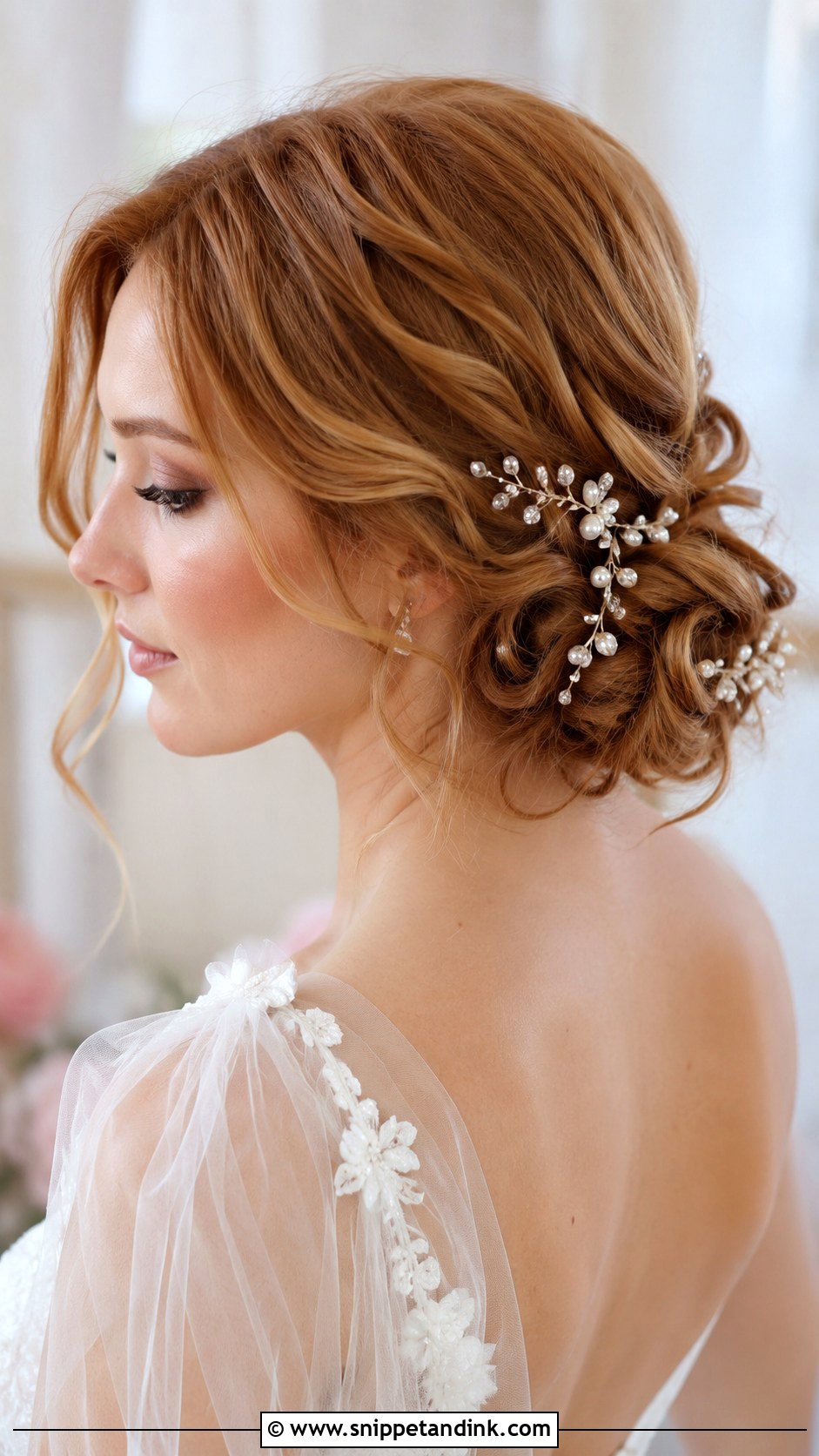
Decorative pins let the hairstyle stay simple while the detail comes from the accessories. Pearl, crystal, floral or gold pins can be clustered through a bun or run along one side. Low buns, textured updos and twisted styles are the easiest bases. I place pins so they follow the curve of the hair, never dotted randomly, and I tie them back to something you’re already wearing, such as your earrings, the beading on the dress or the veil trim. Odd numbers tend to look more natural than even ones.
14. Boho Bridal Updo
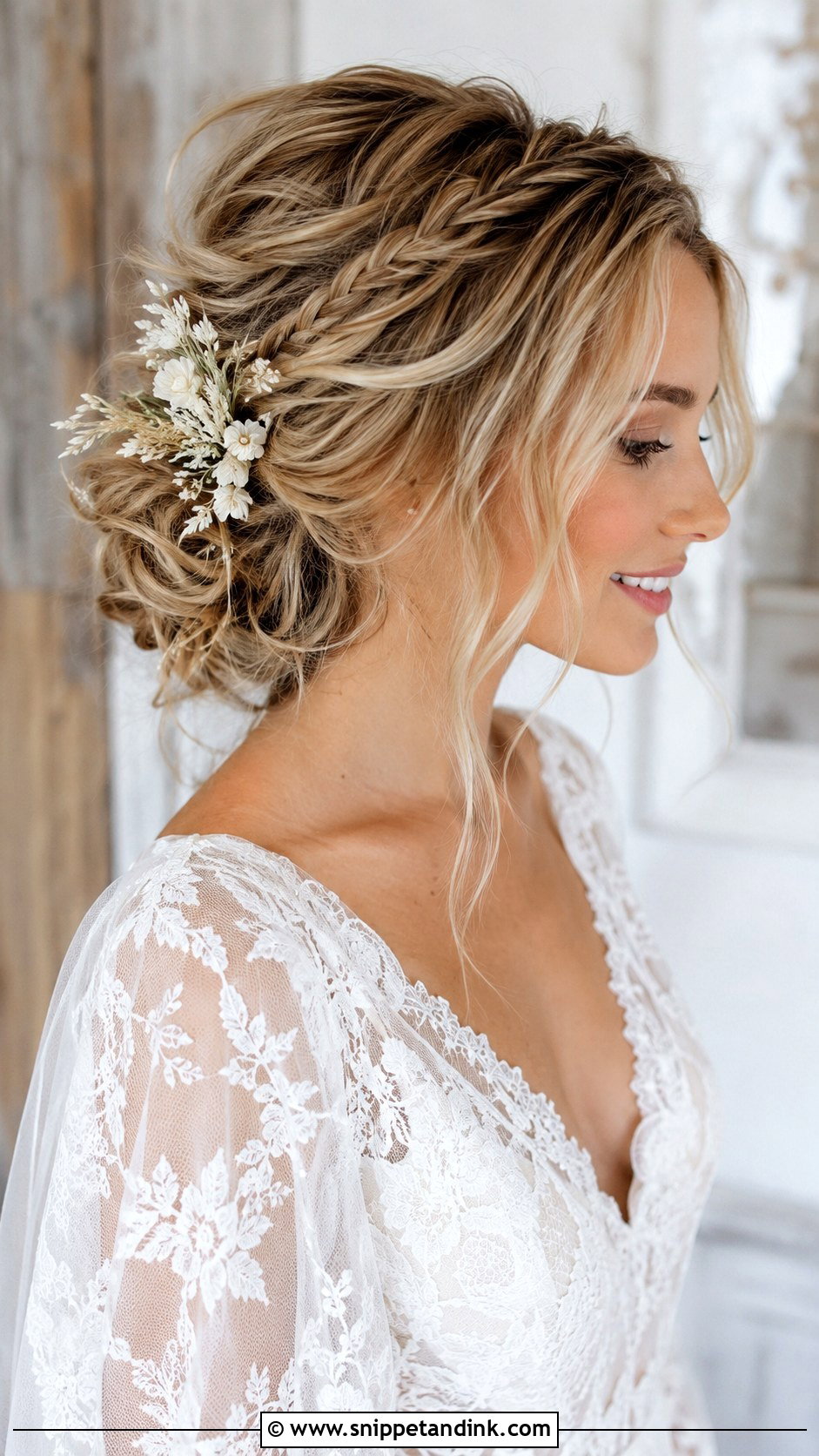
A boho updo is loose waves, small braids, undone twists and face-framing tendrils, usually set low or a little off centre. It belongs at outdoor, beach and rustic weddings, and with lace or flowing fabric. Fresh flowers can go in, though I’d ask your florist for blooms that won’t wilt without water for hours. The finish should still feel touchable. It isn’t meant to be perfect, but every loose-looking piece is pinned underneath so it’s still there at midnight.
15. Classic Bridal Updo
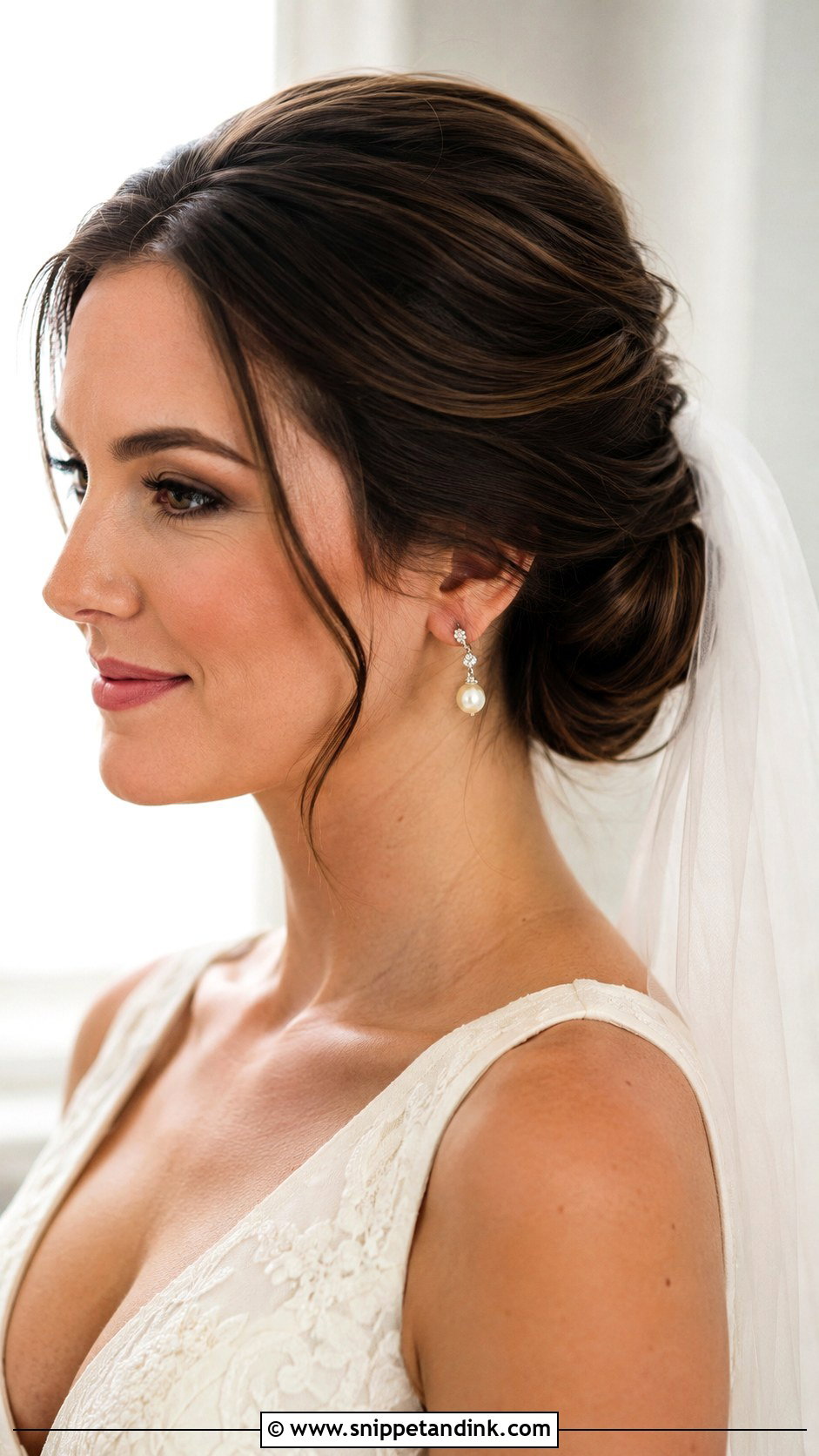
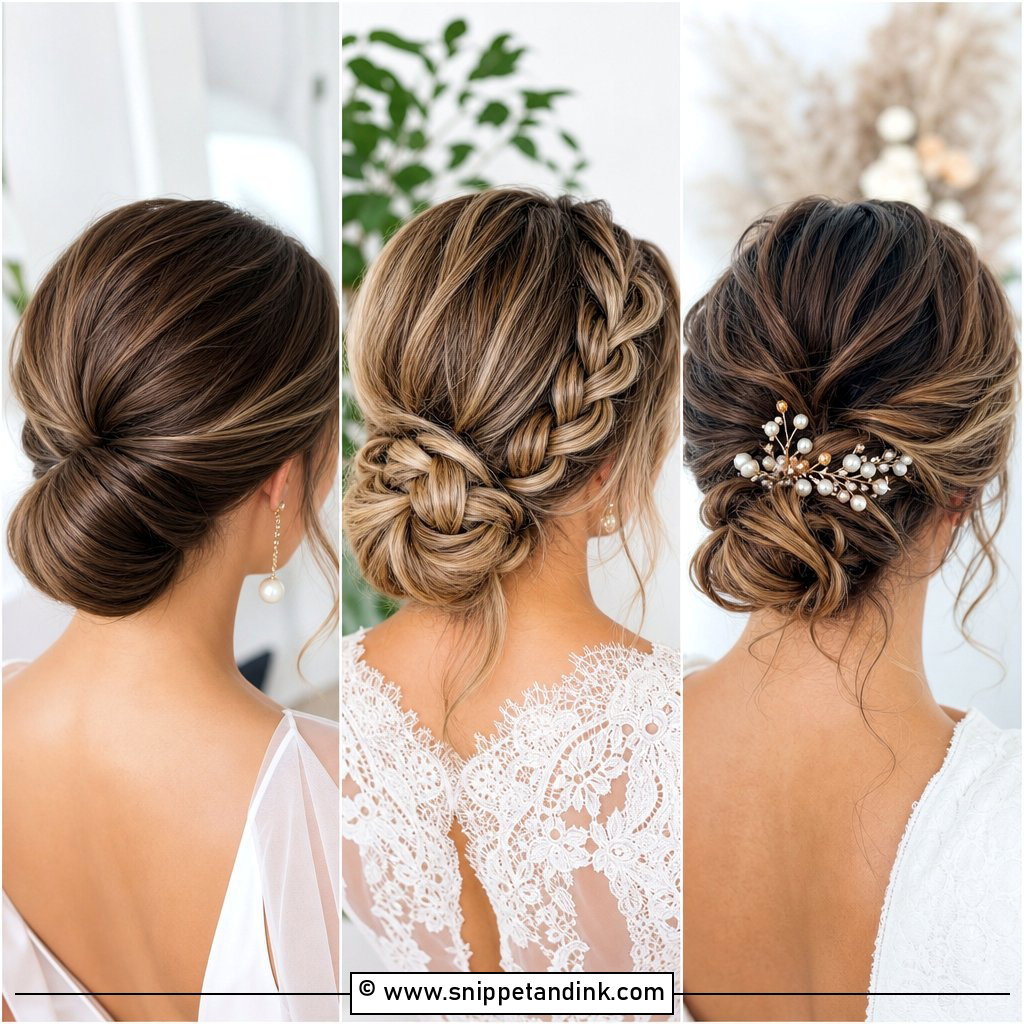
The classic updo has smooth volume at the crown, softly tucked sides and a secure bun or roll at the back. It’s the style least likely to date your photos. Almost any veil, neckline or accessory works with it. The finish can be soft matte or glossy, and I’d match that to your makeup: a dewy skin finish next to very matte hair can look mismatched up close. If you truly can’t choose, start your trial here and adjust from it.
Taking It All Down at Two in the Morning
An updo with forty pins and a day of spray in it doesn’t come out with one brush. Pulling at it while you’re tired is how brides end up with snapped ends and a sore scalp.
- Find and remove every pin first, working from the outside of the shape in. Run your fingers through slowly and feel for the ones hidden inside the bun.
- Cut out clear elastics with small scissors rather than tugging them.
- Work a little conditioner or hair oil through the backcombed areas before you brush. Hairspray softens with moisture.
- Detangle from the ends upward with a wide-tooth comb. Leave a full wash until the morning if you’re exhausted; nothing is lost.
If you have a day-after brunch, a low ponytail over the leftover texture often looks better than freshly washed hair. I’d leave a few spare pins and a comb in the bridal suite for exactly this.
Your Trial Is Where the Updo Gets Decided
Some brides feel most like themselves in a sleek chignon; others want a soft bun with a few loose tendrils. Either is right if it suits your hair type, your dress and veil, the weather and the length of your day. Bring saved photos to your trial, and be open when your stylist suggests a small change, like a lower placement or one less tendril, because those tweaks are usually about how the style will hold. With good prep, well-placed pins and the right spray, an updo will still look finished at the last dance.
You'll Like These Ideas:


Leave a Reply