
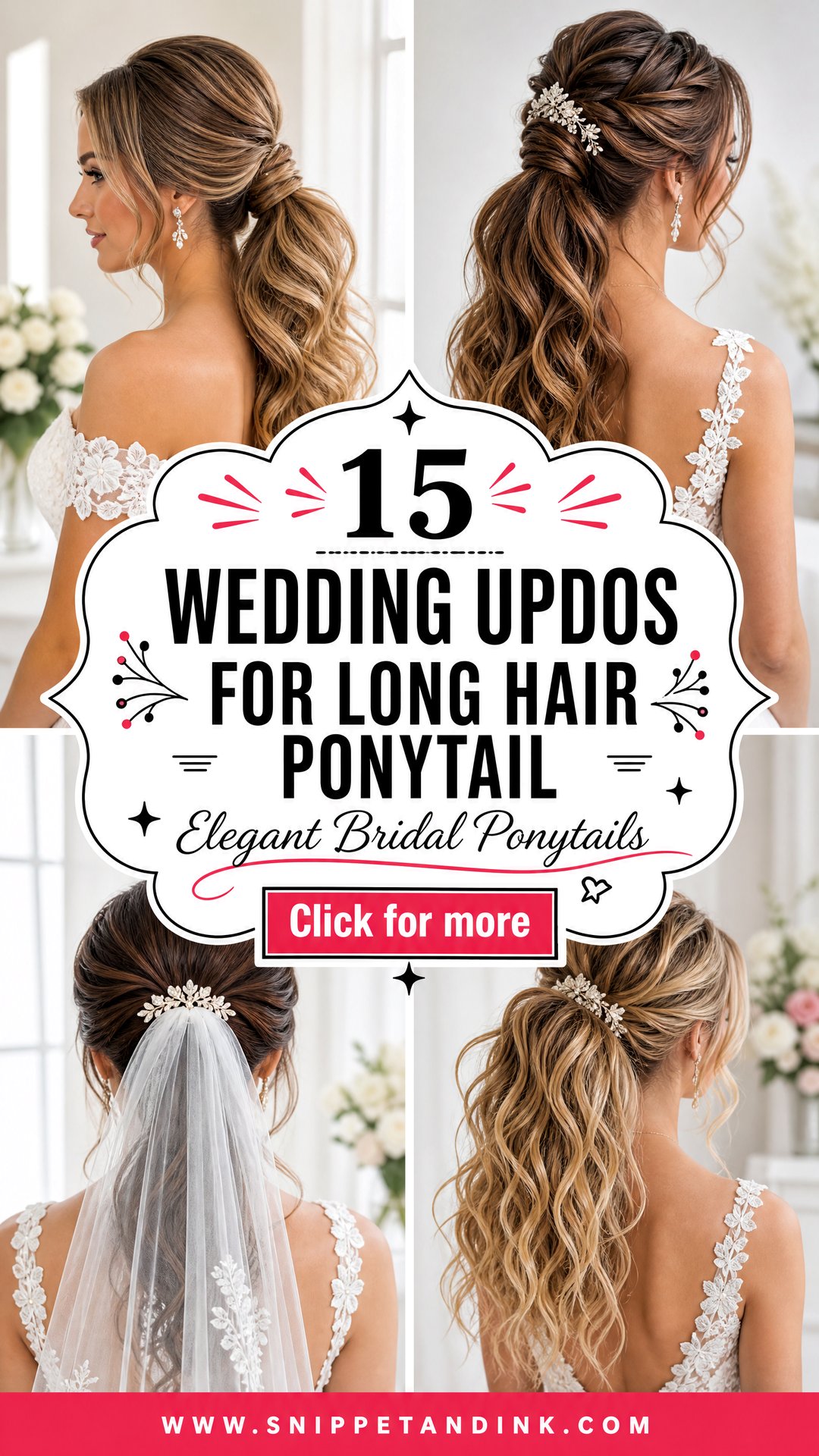
A ponytail is what I suggest most often to long-haired brides who don’t want an updo but are nervous about wearing their hair down. It keeps the length moving down the back, holds the front off the face and leaves the neckline readable. What makes it bridal rather than gym-ready is the base: its height, the hidden elastic and how the crown is shaped. Below are fifteen versions, with notes on which hair, dress and venue each one actually suits.
Why Long Ponytails Sink Before the Reception
The complaint I hear most about ponytails isn’t the look. It’s that the ponytail sank or loosened halfway through the night. Long hair is heavy, and an elastic alone can’t carry that weight for hours. These habits keep mine where I put them.
- Prep for grip. Silky, freshly conditioned hair slides out of an elastic, so a texture spray or dry shampoo at the root gives it something to hold.
- Use a hook elastic. It wraps tighter than a standard band and never has to be pulled through the tail, so it doesn’t drag the hair as you tighten it.
- Pin the base. Two bobby pins crossed into the elastic and pushed toward the scalp stop the ponytail rotating or sliding down.
- Cushion high ponytails. A small backcombed pad under the base props the tail up, leaving gravity less to work with.
- Hide the elastic last, with a wrapped strand pinned underneath, once the waves are set.
If your hair is thick and past mid-back, ask your stylist about two stacked ponytails, one directly above the other. It looks like one fuller tail and spreads the weight across more of the scalp.
1. Low Wedding Ponytail Updo
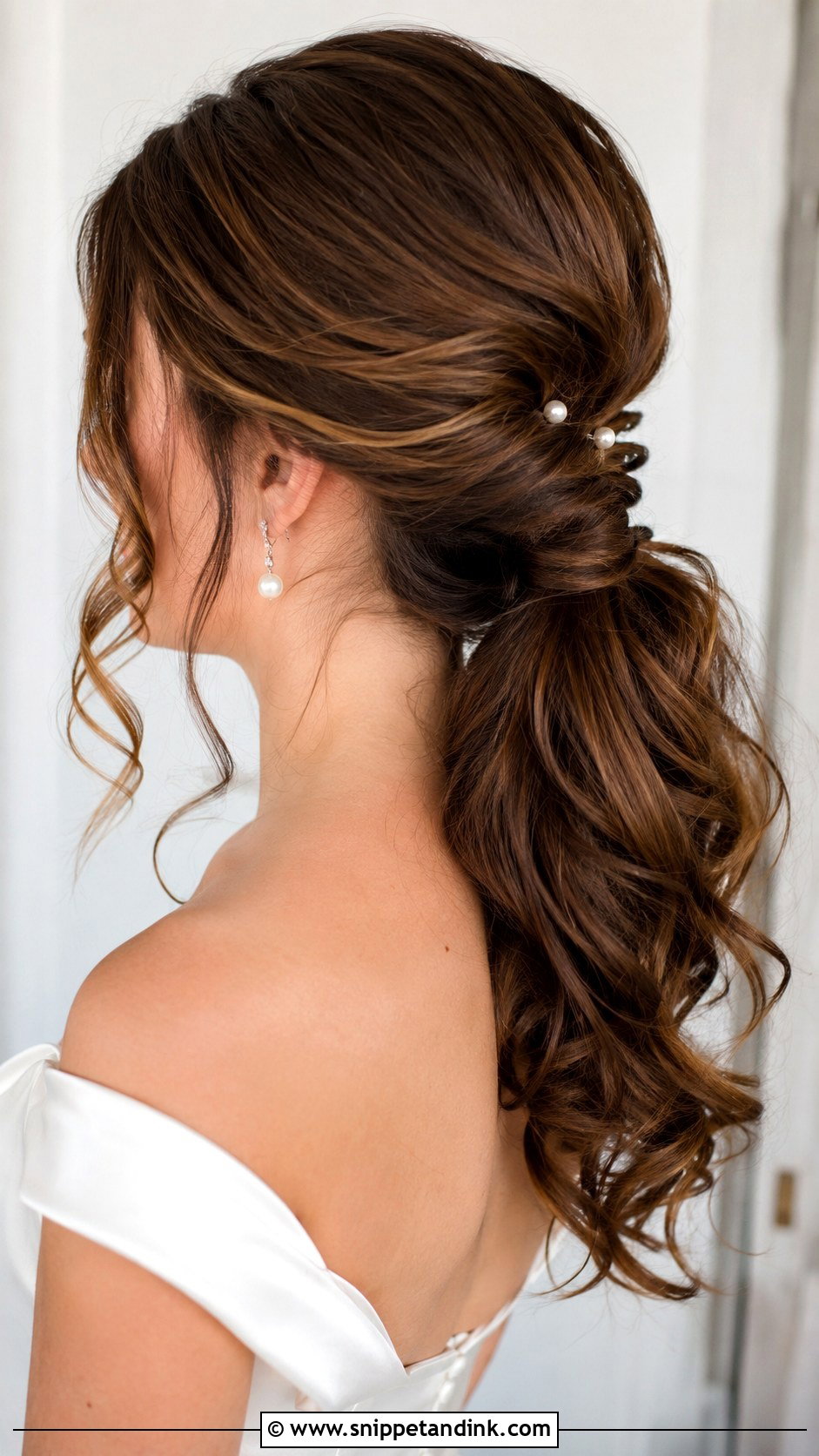
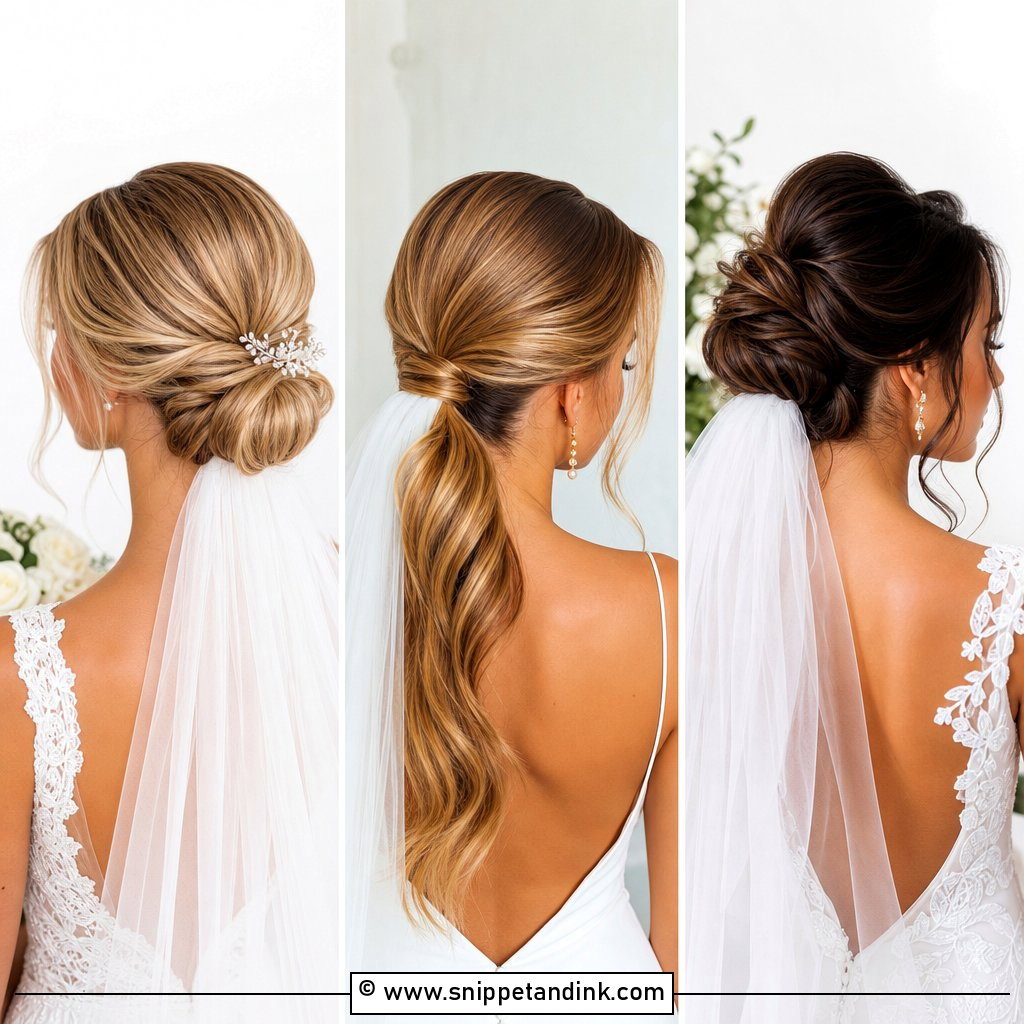
Low ponytails are kind to almost every neckline, and to your scalp, since the weight sits at the nape instead of hanging off the crown. For long hair I set loose waves through the length first, then gather it, and a small section of wrapped hair hides the elastic as the final step. A middle part keeps it modern; a soft side part with one curled piece near the cheek feels a little more old-fashioned, in a good way. A veil sits easily just above the base. I smooth the crown with cream rather than lots of spray, which can turn stiff and shiny under flash.
2. High Wedding Ponytail Updo
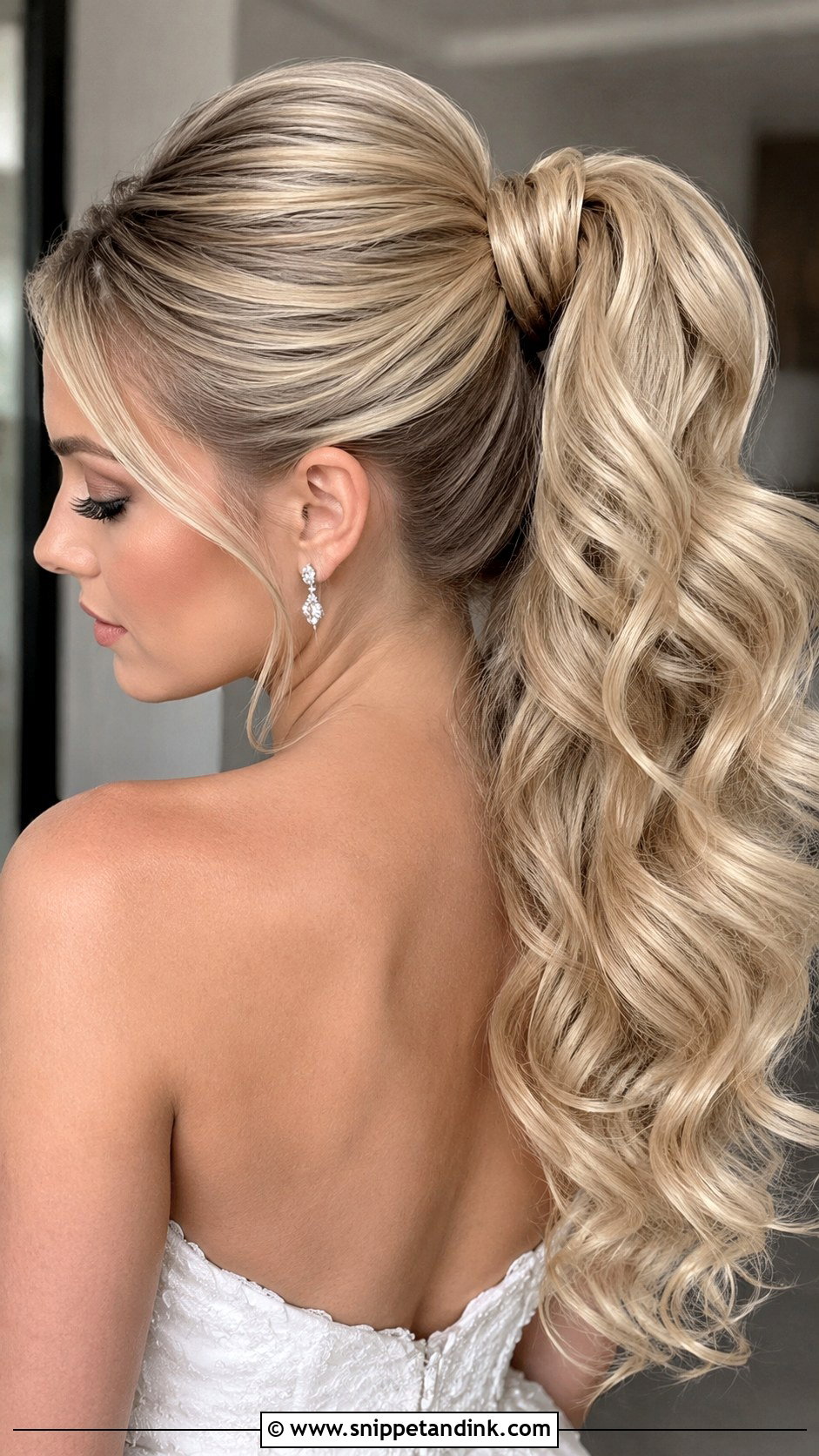
Height is the whole point here, and height is also the weakness. A long tail hanging from the crown wants to slide down within a few hours, so I build the base on a small cushion of backcombed hair and cross two bobby pins through the elastic toward the scalp. Volume belongs just above the base, not on top of the head, or the profile gets top-heavy. Soft curls through the length keep it bridal, and a wrapped section covers the elastic. Strapless and high-neck gowns both suit the lift. I’d think twice if your hair is past your waist and very thick, because that much weight from one point gets uncomfortable by evening.
3. Sleek Wedding Ponytail Updo
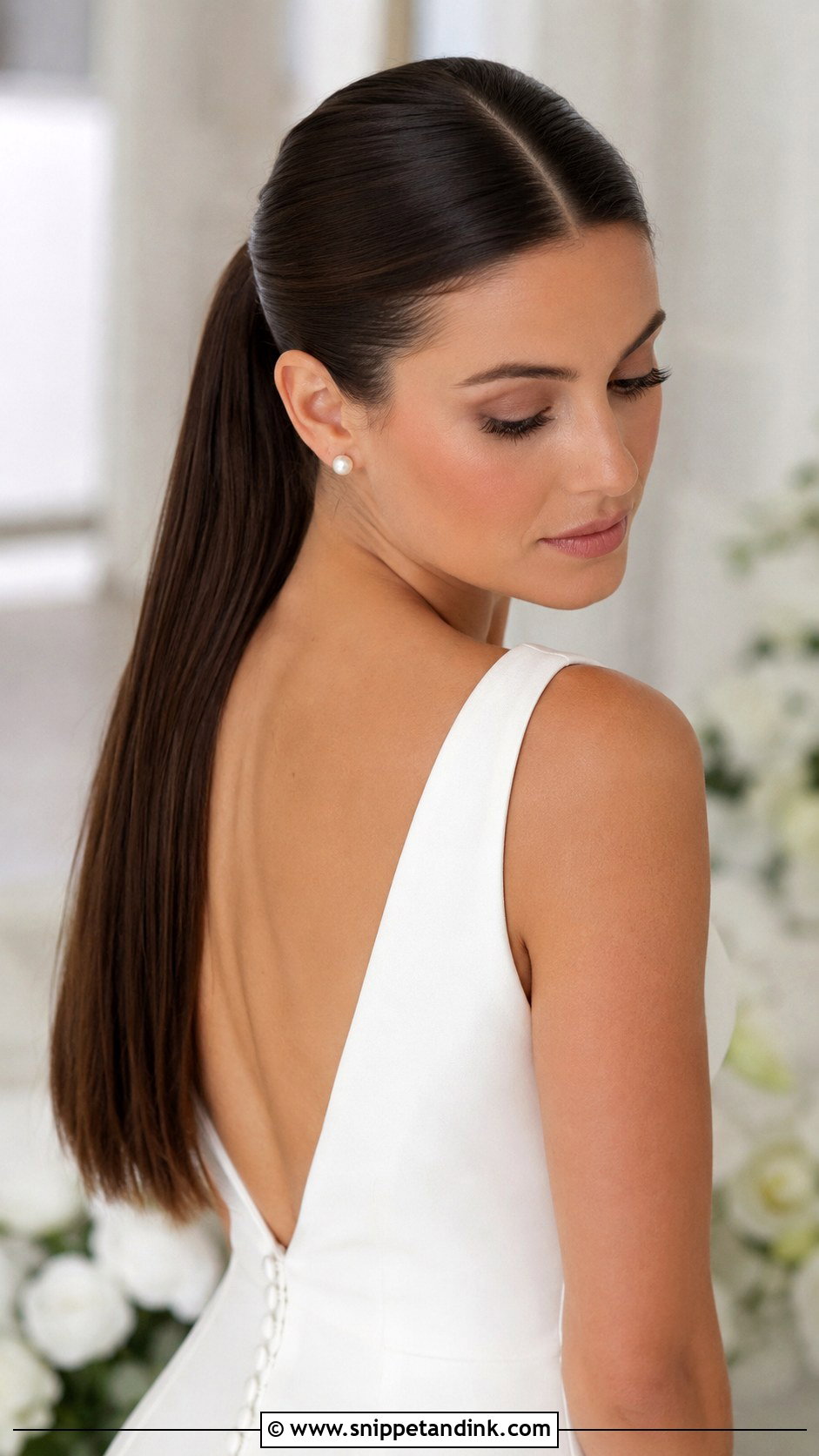
Sleek is unforgiving, which is exactly why I like it with strong dress details and clean, sculpted makeup. Every flyaway shows. I flat-iron the length first, then gather the ponytail at whatever height the dress calls for, using a fine-tooth comb and a touch of gel at the hairline before a light spray. A center part looks sharp; a deep side part feels more classic. The tail can stay straight or take one smooth bend at the ends so it swings when you turn. If your hair frizzes in humidity, an outdoor summer ceremony will test this look harder than any other here.
4. Curly Wedding Ponytail Updo
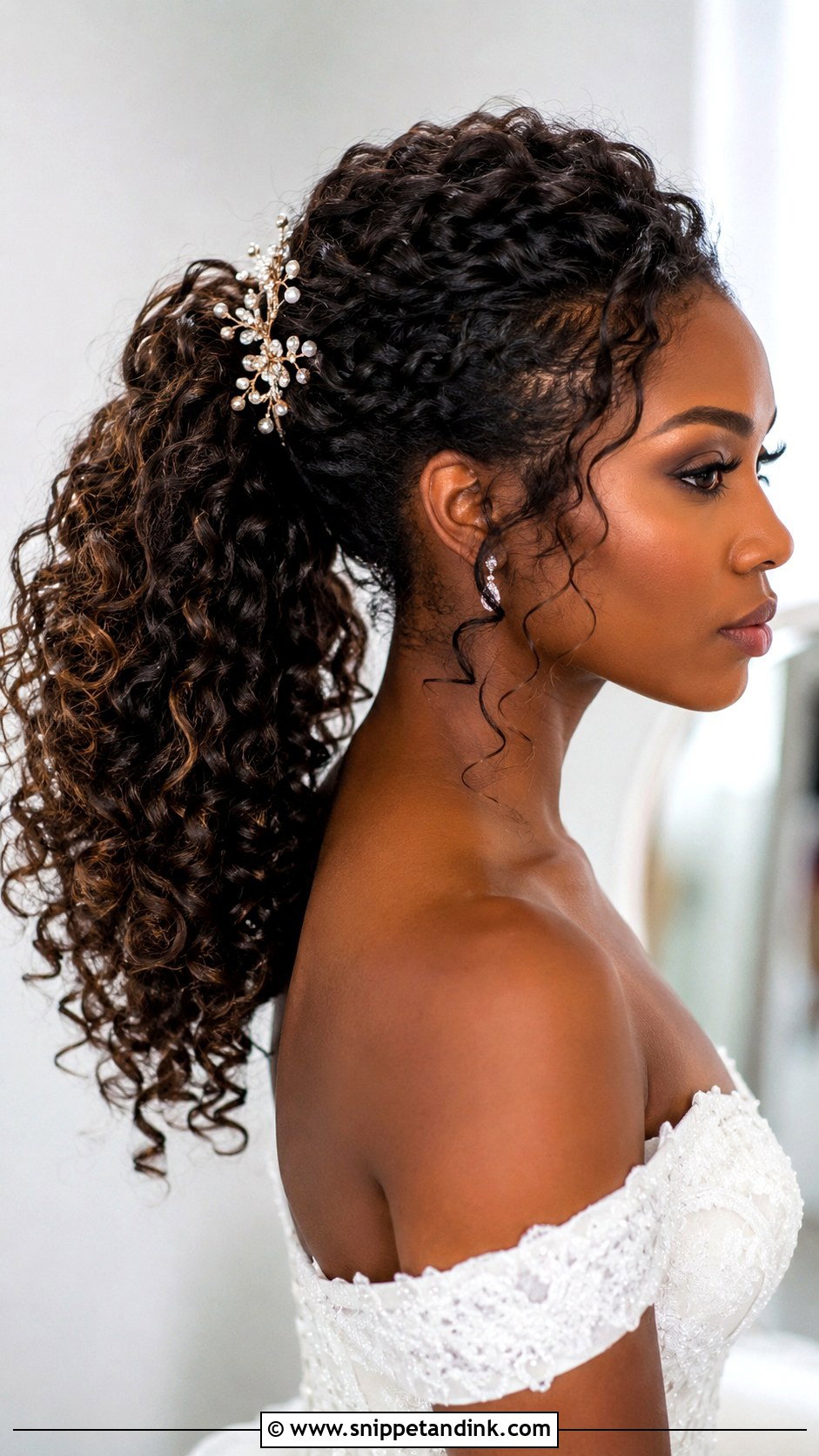
Curly ponytails show off texture a bun would hide. The crown stays lifted and pinned while the curls spill from the base, on natural curls or on set curls over straight hair. Natural curls should be defined the day before, never brushed out. Set curls need a larger iron and time to cool in pin curls before they’re released, or they drop by the cake cutting. A few tendrils around the face soften it beside off-the-shoulder or sweetheart necklines. Finish with a humidity-resistant spray and skip anything heavy enough to make the curls crunchy.
5. Braided Wedding Ponytail Updo
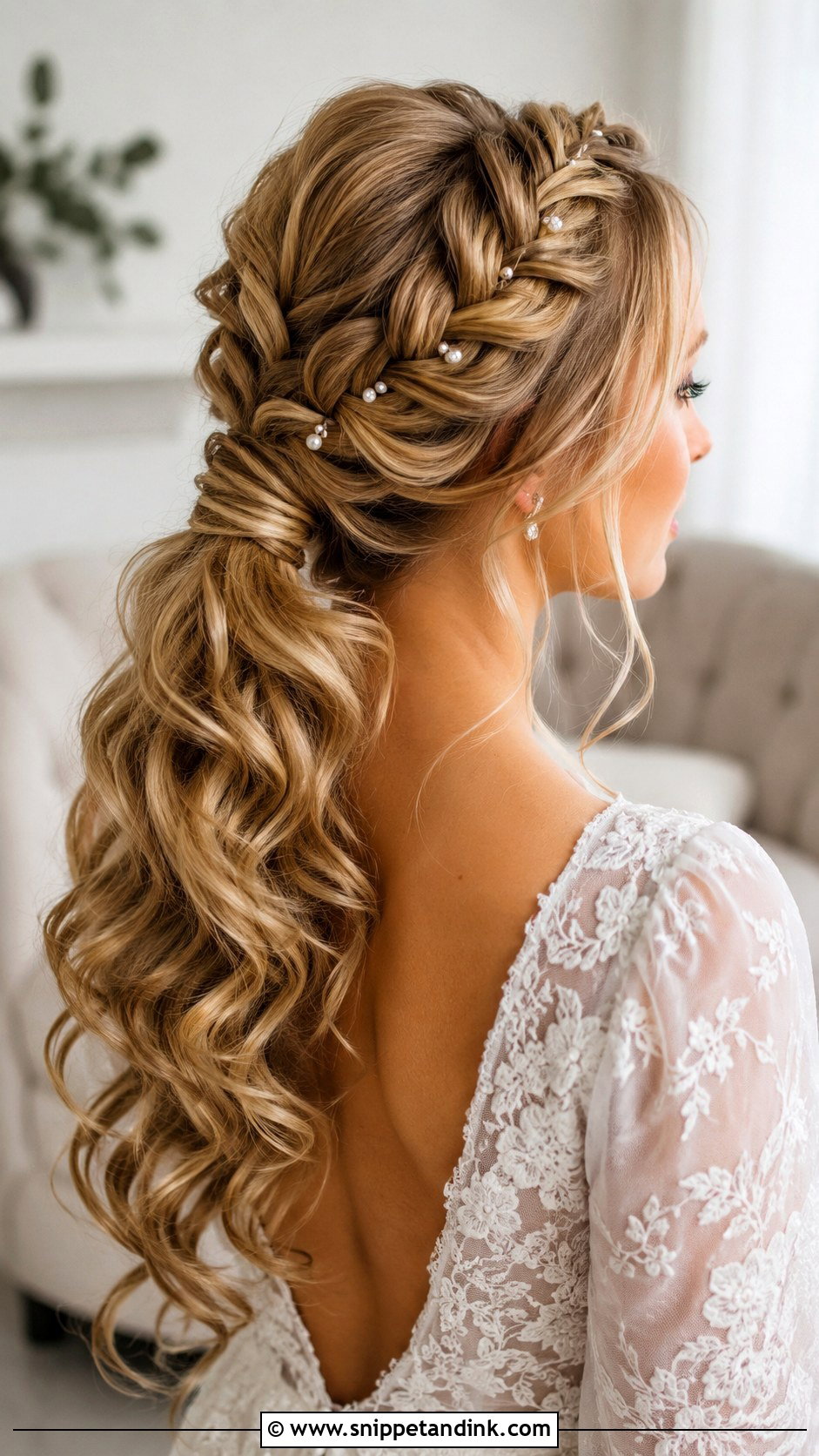
A braid at the crown does two jobs: it adds detail, and it locks the top section so the wind can’t lift it. That’s why I lean toward braided ponytails for outdoor weddings. The braid can start at the hairline, sweep across one side or wrap the base like a built-in tie. A fishtail is finer and more delicate, while a Dutch braid sits raised and reads from the back rows of the ceremony. After securing it I loosen only the outer loops, never the root, so it looks full without unravelling.
6. Twisted Wedding Ponytail Updo
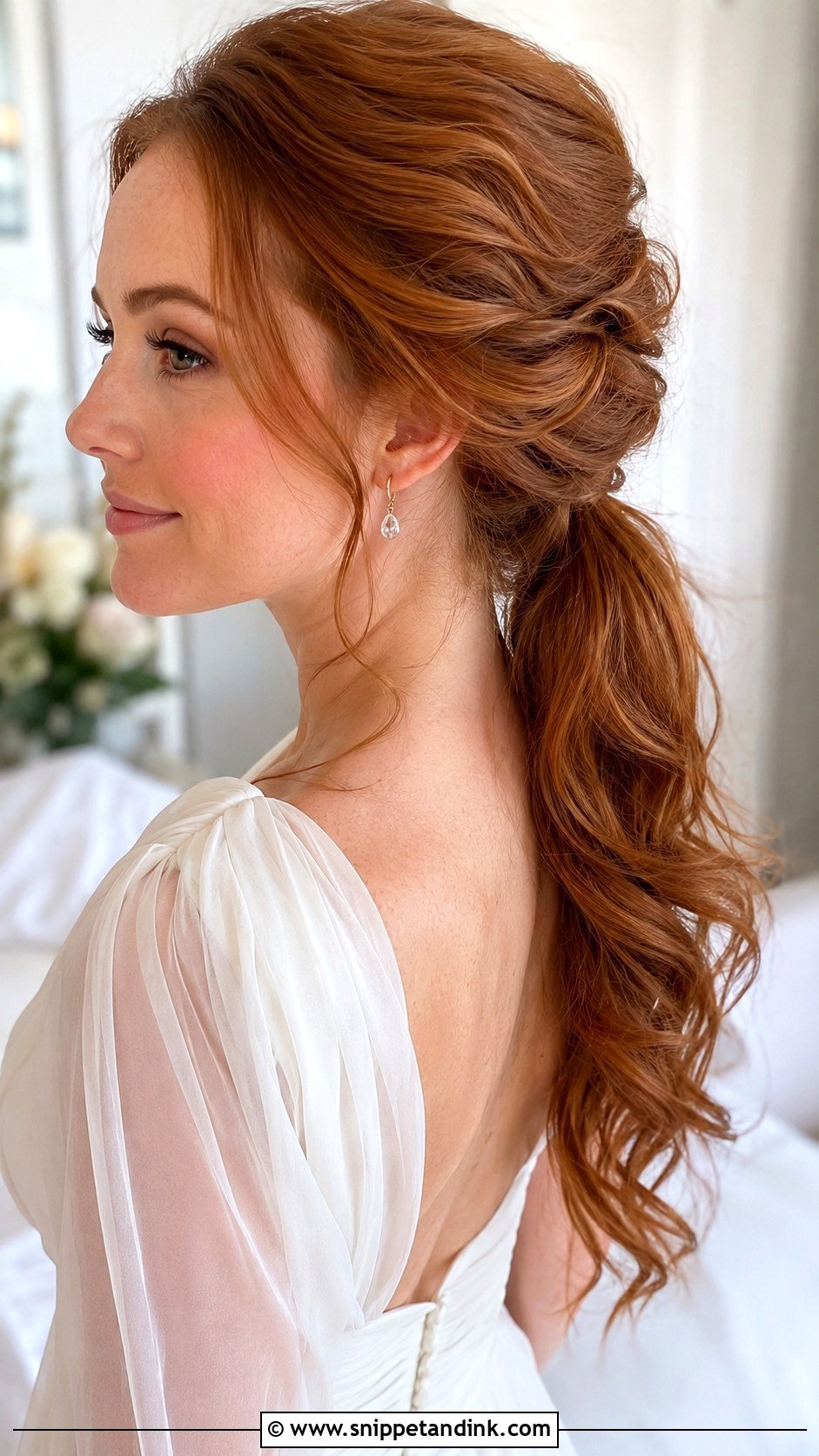
Twists are my answer when a bride wants detail but finds braids too busy. I take a section from each side, twist it back loosely and pin it into the ponytail base, which also traps the shorter face-framing layers. Those layers are the main reason a plain long ponytail falls apart early, so this is as practical as it is pretty. Keep the tail waved for a garden or boho wedding, or smooth for something cleaner. A light mist at the end keeps the twists soft enough to touch.
7. Voluminous Wedding Ponytail Updo
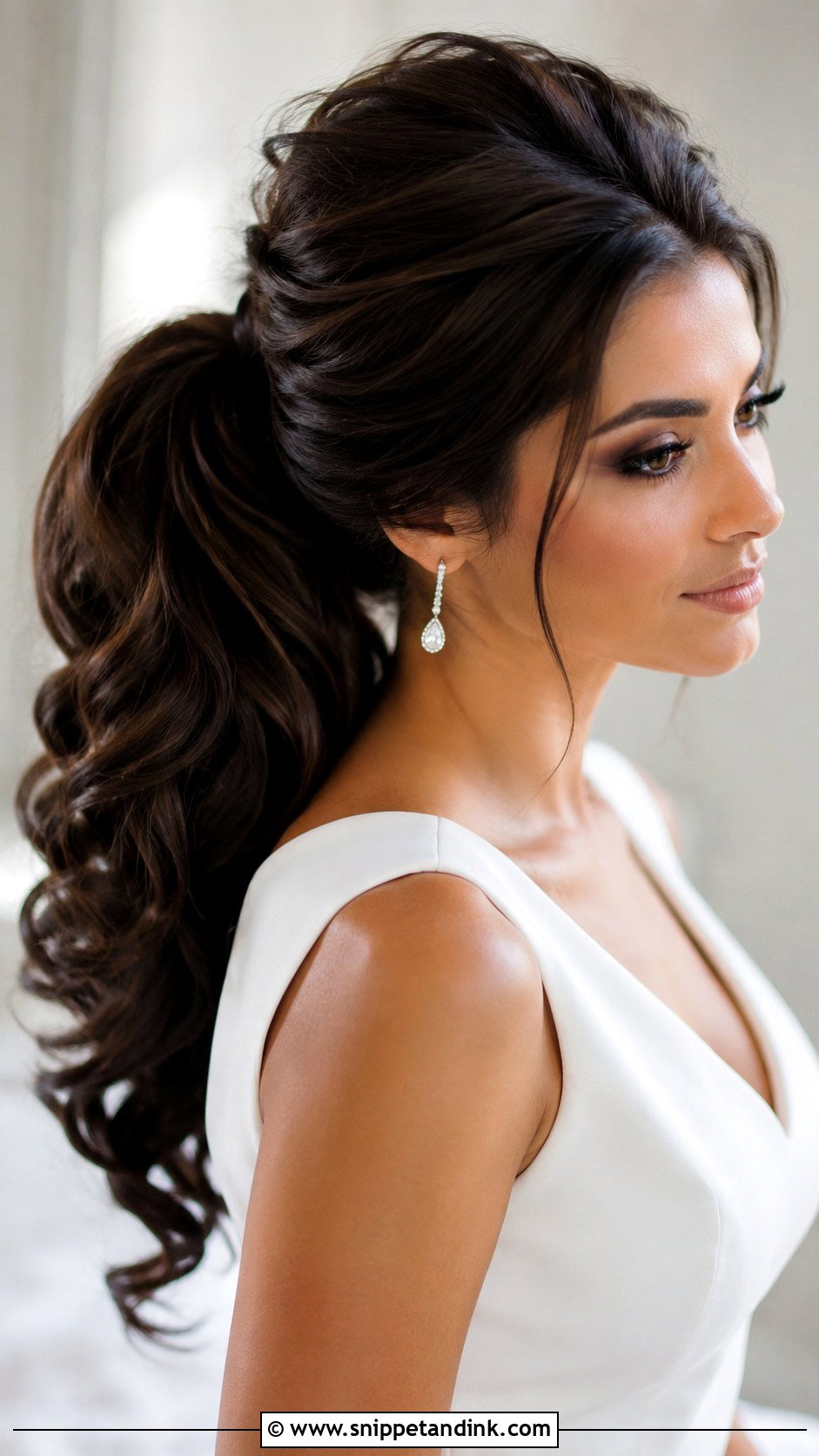
The voluminous wedding ponytail updo depends on hidden backcombing. I tease the crown at the root, smooth the top layer over it and secure everything into a ponytail that looks thick from the side. Large curls or brushed-out waves give the tail its fullness. Fine hair, even when it’s long, often needs a clip-in ponytail piece or a few wefts underneath; the skill is matching color and curl so nobody can see where your own hair ends. Texture spray goes in before styling, a strong but flexible spray after.
8. Side Wedding Ponytail Updo
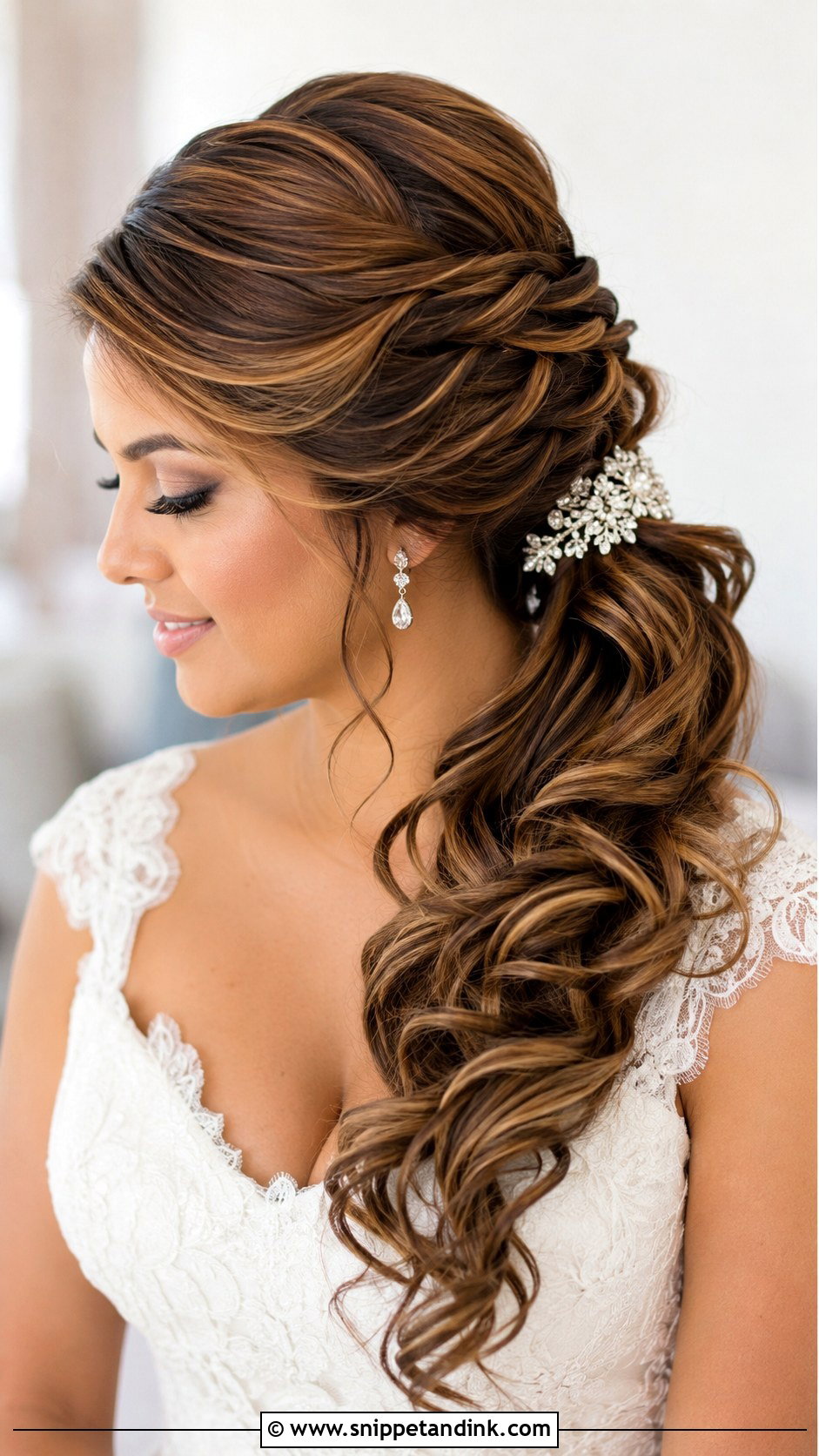
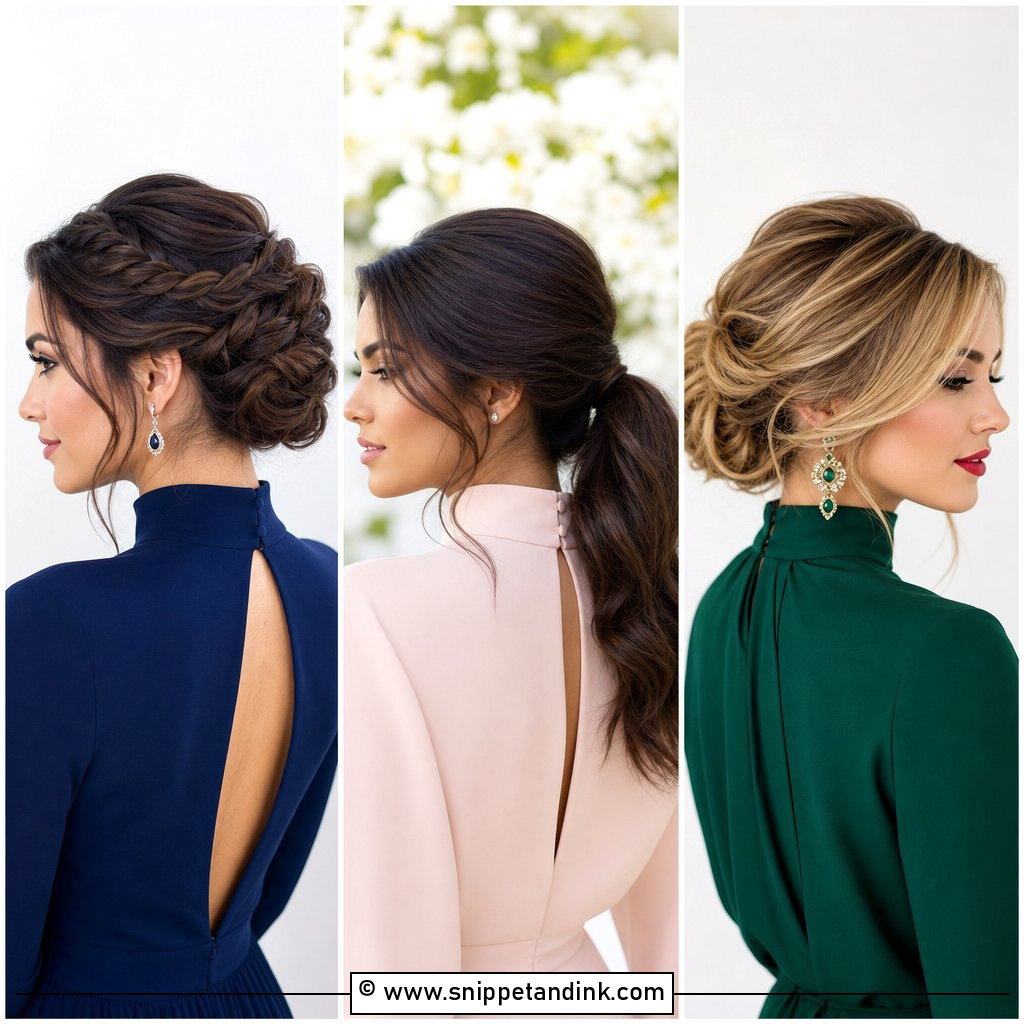
Over-the-shoulder ponytails are made for portraits, because the curls land in the frame right beside your face. I also suggest them when the back of the dress has lace, a row of buttons or an open cut you’d rather not cover. Pick the shoulder at your trial by checking which side faces the guests at the altar; most brides keep the hair off that side so their profile stays visible. The crown can be smooth or softly braided. Pin the opposite side flat and neat, otherwise it looks as though the ponytail slipped rather than being placed.
9. Half Up Wedding Ponytail Updo
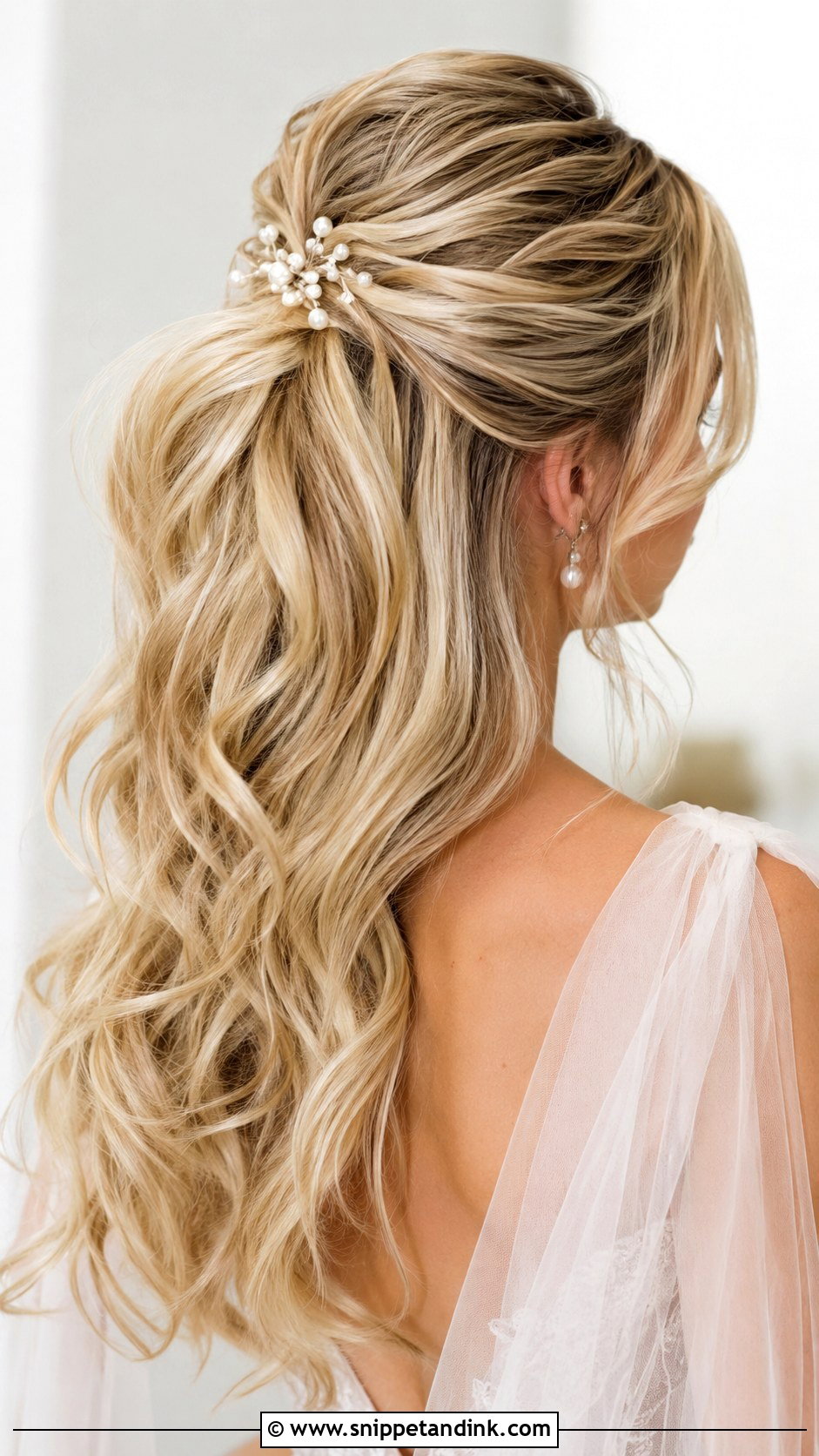
Half up gives you the feeling of hair down with a lot less risk. Only the top section goes into the ponytail, so the front stays clear of your face and the crown gets lift while the rest of the length falls in waves. Loose long hair can tangle against lace or beading by evening, so I set the waves with a little more hold than usual and check the back of the dress for anything that snags. Twists, a small braid or pearl pins can finish the base. Veils and hair vines both fit around it easily.
10. Messy Wedding Ponytail Updo
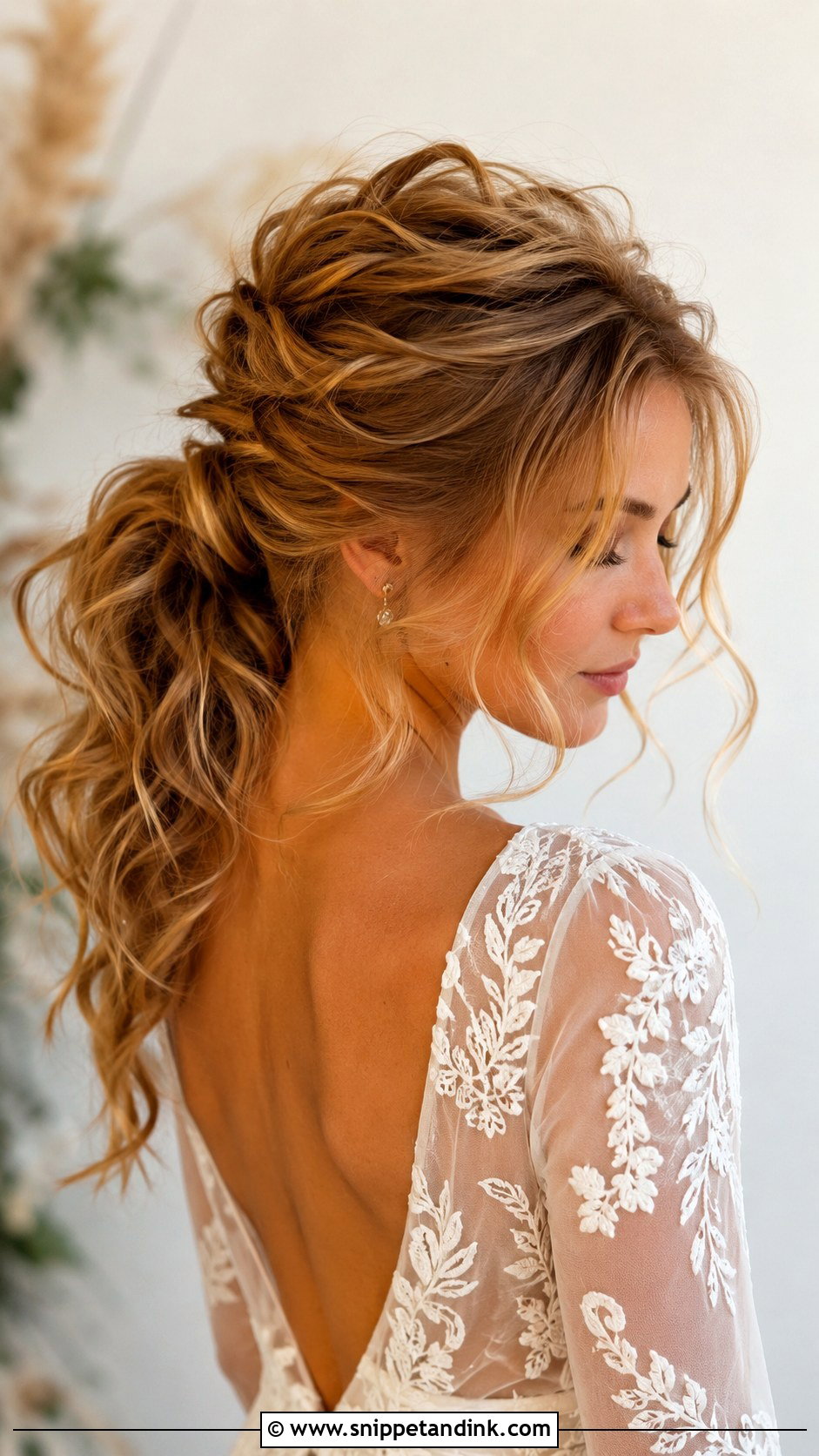
Messy ponytails take more pinning than sleek ones, not less. The crown has loose volume, the tail has undone waves and the front pieces curl away from the face, but each of those effects is placed by hand. I use a dry texture spray first so the hair has grip, then hide pins near the base to hold the slack sections where I want them. Long length lets the waves fall naturally, which suits outdoor venues and boho dresses. In a formal ballroom it usually just reads unfinished.
11. Pearl Wedding Ponytail Updo
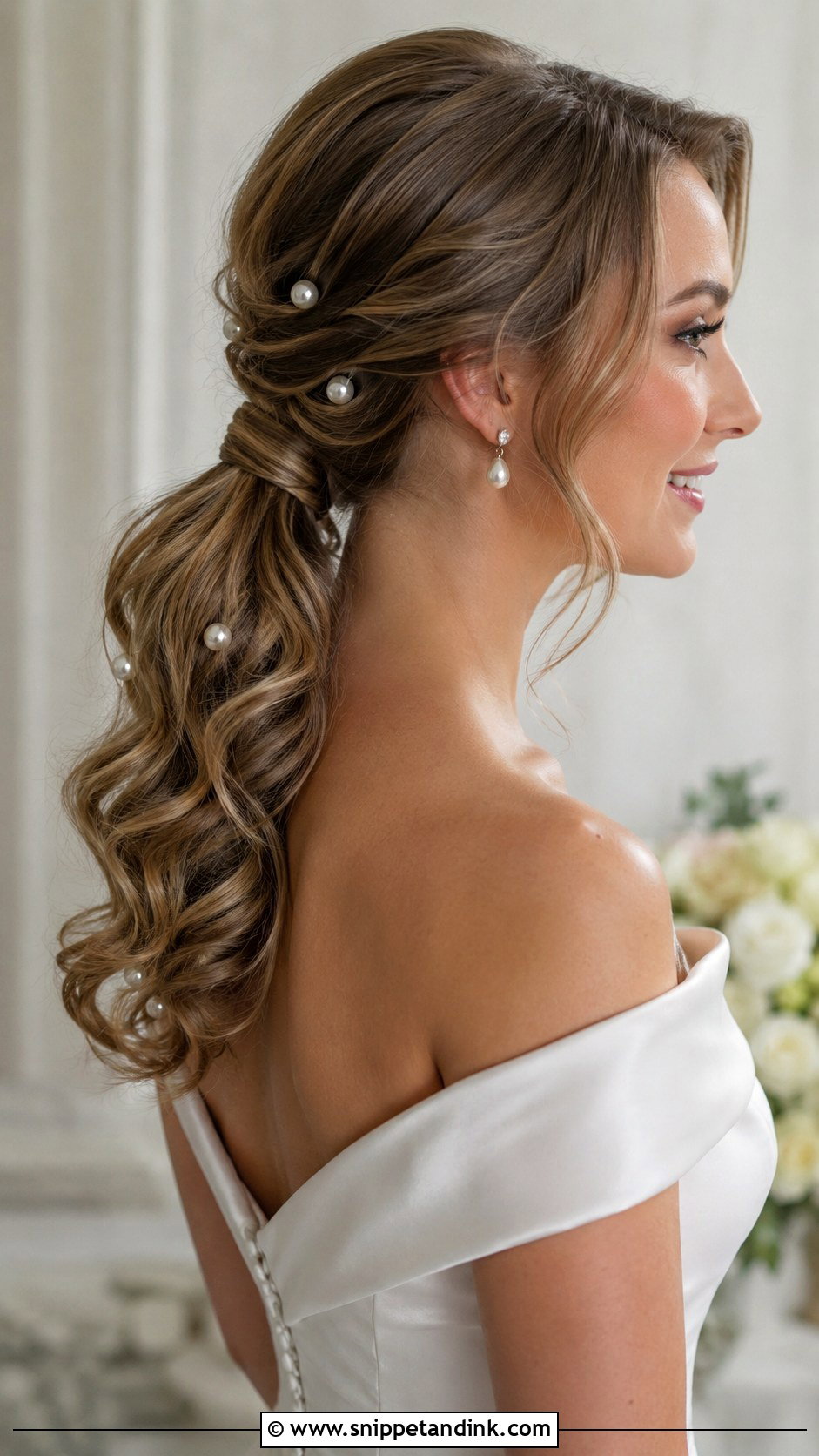
Pearls add detail without dragging on a long tail. I place them around the base, through the waves or along a braid or twist, always where the hair is already secured, because a pearl pin sitting in loose hair works its way out by the first dance. They work on any ponytail in this list, though soft movement shows them best, and simple gowns gain the most from them. Keep frizz down around them; a pearl resting on fluffy hair loses its clean outline in photos.
12. Veil Wedding Ponytail Updo
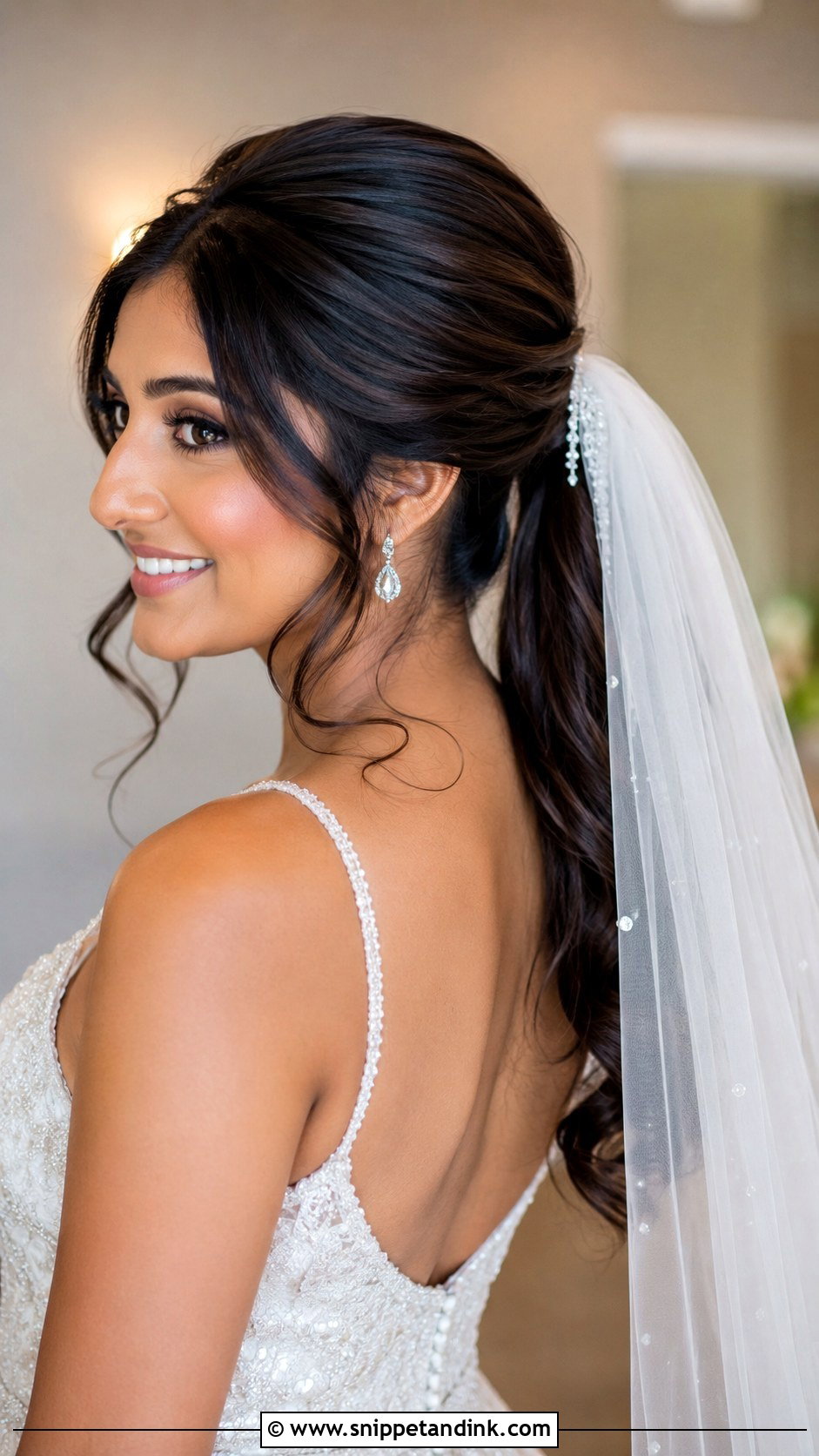
A veil changes where a ponytail can sit. With a low pony, the comb goes just above the base and frames it. With a high one, I place the veil underneath or behind the crown, since a comb pushed into the top of a high ponytail tips the whole thing backward. Curl or smooth the length before the veil goes in, so it looks finished from behind, which is the view most ceremony guests get. And practice removing the veil during your trial: a comb tangled in long hair is a slow fix in the middle of a reception.
13. Floral Wedding Ponytail Updo
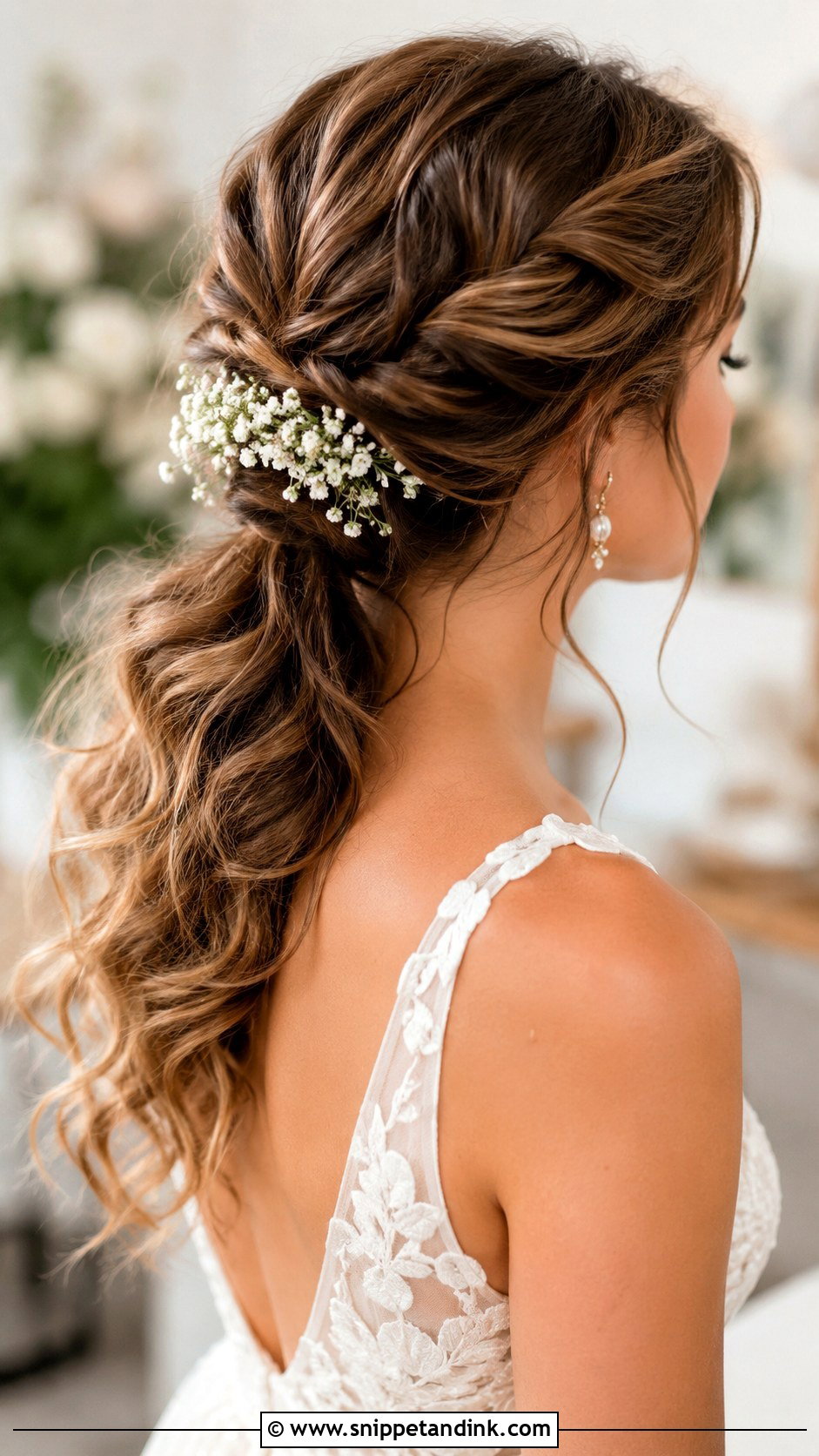
Flowers on a ponytail have to be small and light, or they slide down the length. I tuck them around the base, weave them into a braid or line them along one side of the crown. Long hair spaces them out so they look placed rather than crowded, and loose waves echo their softness. Match the bouquet in color, not in size. Baby’s breath, small roses and tiny orchids hold up reasonably well, while big soft petals bruise against the hair. Every piece gets its own pin, and wired stems if your florist offers them.
14. Bubble Wedding Ponytail Updo
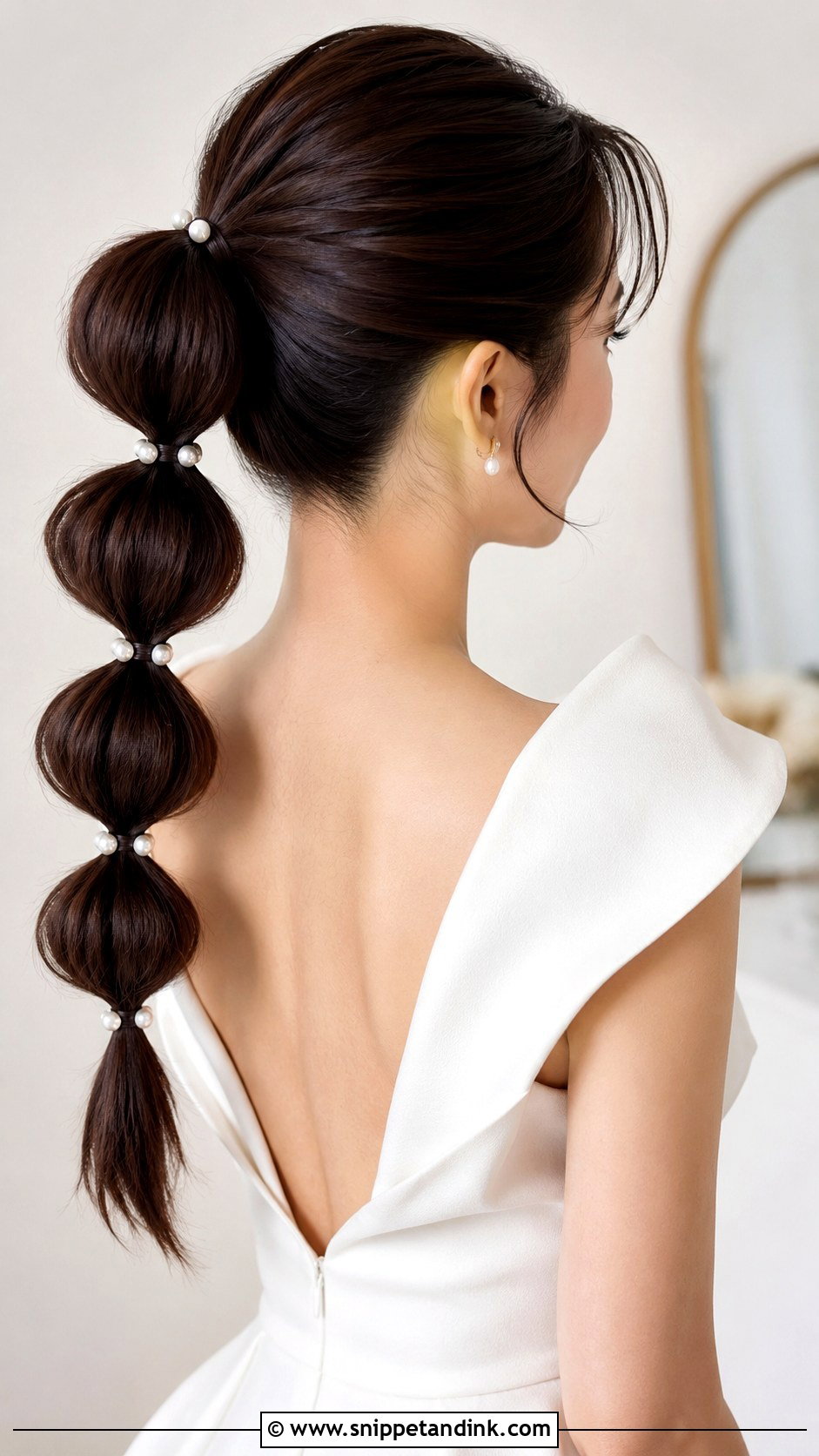
A bubble wedding ponytail updo turns length into structure. I gather the ponytail, add clear elastics every few inches and pull each section outward into a soft round. Smooth hair separates cleanly into bubbles; very curly hair blurs the outline, so I mostly suggest it to straight-haired brides. It’s playful enough for a reception change or a contemporary venue. Small bows or pearl pins at each elastic soften the shape, and a shine spray keeps the rounds smooth.
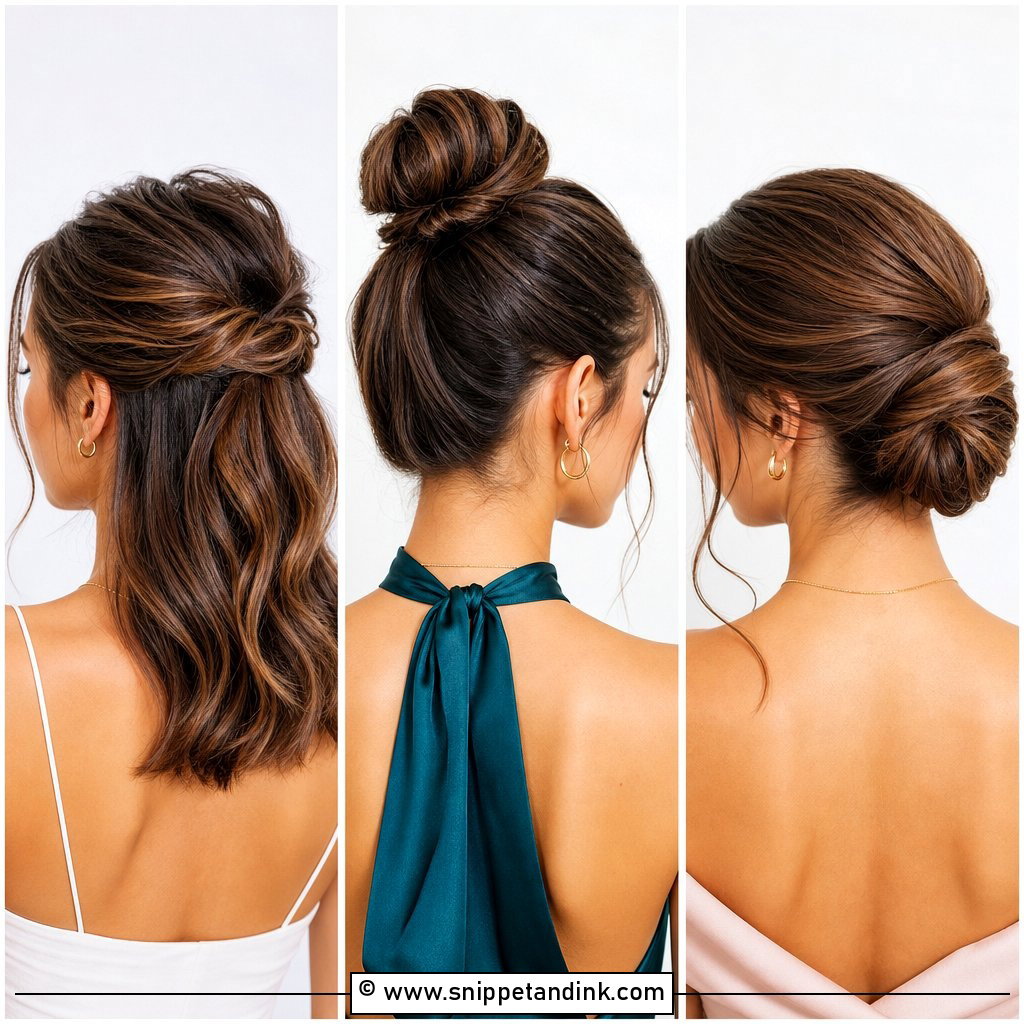
15. Wavy Wedding Ponytail Updo
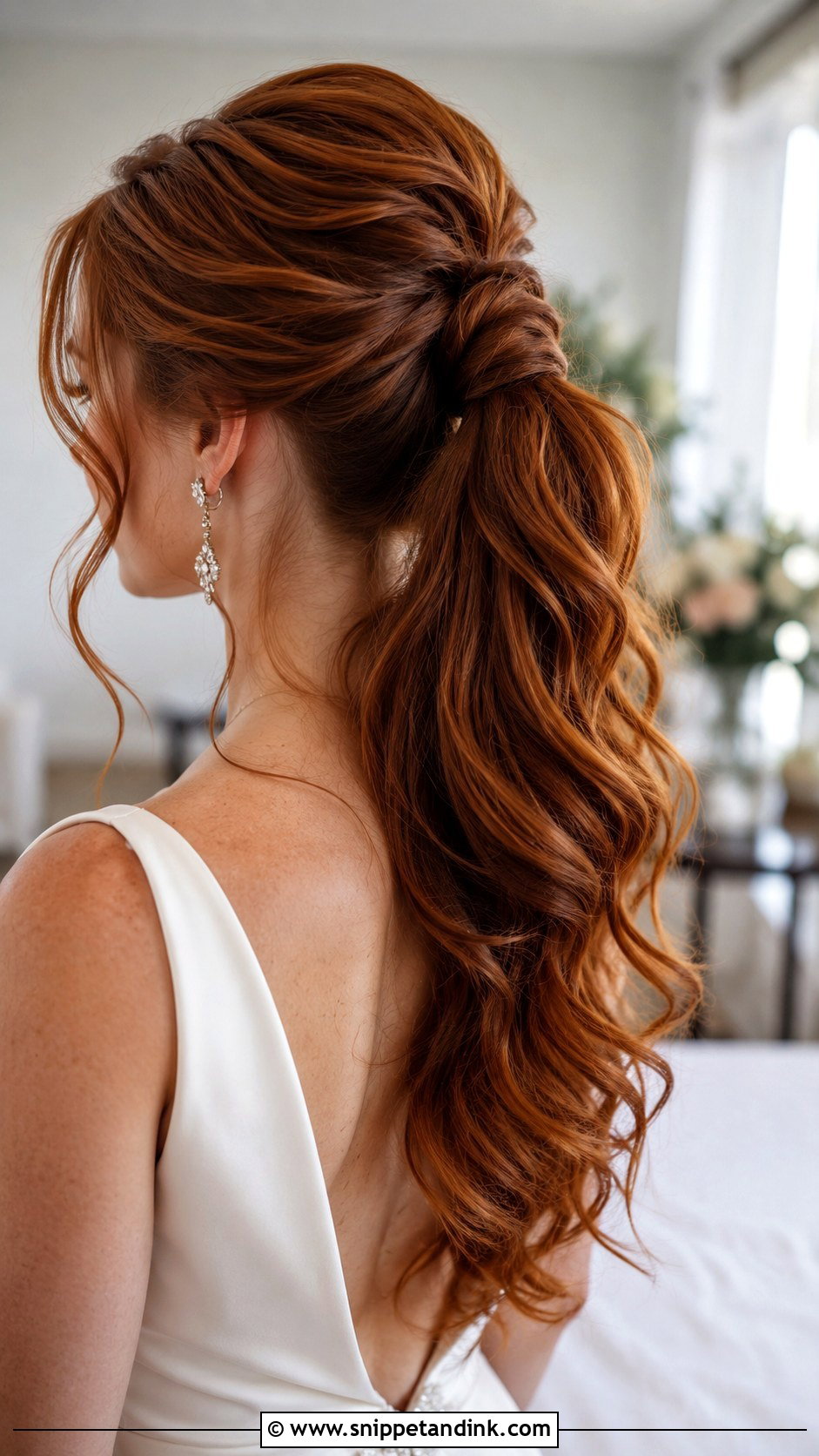
Waves are the most forgiving ponytail finish I know. They hide uneven layers, don’t show every flyaway the way sleek hair does, and they move when you walk. I curl the length with a large barrel, let it cool, then brush it out gently so the waves join into one loose pattern. The crown can be lightly lifted or smoothed back. Bridesmaids and guests can wear it with very little risk, which is why it so often becomes the bridal party look. Curl a couple of front pieces toward the jaw and finish with a flexible spray.
When the Ponytail Starts to Pull
A long ponytail hangs all its weight from one band of scalp, and some brides feel it after a few hours. That ache is common and doesn’t mean anything was done wrong, but it’s worth planning around.
Give the trial a full afternoon
Wear your trial ponytail for at least four or five hours. If you feel tension at the crown by then, ask for a lower base, a gentler elastic or the stacked method before the wedding morning, not on it.
Plan an exit for the dancing
Decide ahead of time how you’d change the hair if it starts to hurt. Dropping a high ponytail to the nape takes a few minutes with a fresh elastic, and twisting it into a low bun is quicker still. A spare elastic, a few pins and a small brush fit in any clutch.
When you finally take it down, pull the pins out first, then snip the elastic with nail scissors instead of tugging it free. Long hair knots around a hook elastic easily, and cutting it saves a lot of breakage at the end of a long night.
Height, Texture and the Back of Your Dress
A ponytail earns its place at a wedding by balancing comfort and polish: hair controlled at the base, length free to move. Work out the height from your dress back and veil, the finish from your hair texture, then test it at a trial with the accessories you’ll actually wear. Keep it in for several hours afterward and notice whether it pulls or drops. That’s the information trial photos never show.
You'll Like These Ideas:


Leave a Reply