
Long hair can go into almost any updo, and that freedom is half the problem when you’re trying to decide. Length also brings weight, and weight is what pulls an updo loose by the evening. So when I plan a long-hair bride, I’m thinking about structure first and prettiness second: where the anchor sits, how much hair goes into the visible shape, and how it looks from the back during the vows. Brides are currently asking me for soft structure, clean shapes, a little texture and personal details such as pearls, a veil or a couple of face pieces. Use the ideas below for your trial, then adjust volume and finish until they feel like yours.
Will Your Scalp Forgive a Full Day of Pins?
This never makes it onto a mood board. Waist-length or very thick hair weighs more than people expect once it’s coiled into a bun, and all of that hangs off a handful of anchor points. I hear from long-haired brides who ended the night with a sore scalp, and most of the time it could have been avoided.
- Ask where the weight will sit. A chignon resting near the nape is far kinder than a heavy bun hanging off the crown.
- Tell your stylist if your scalp is sensitive. I’ll build a wider base with more pins each doing less work, instead of a few tight ones.
- With very thick hair I tuck some length into the hidden base instead of piling everything into the visible shape.
- Wear the trial version for four or five hours. If it aches by lunchtime, it will ache through the speeches.
Veils add weight too, particularly long ones with heavy lace edging. If yours is substantial, mention it before any pinning starts.
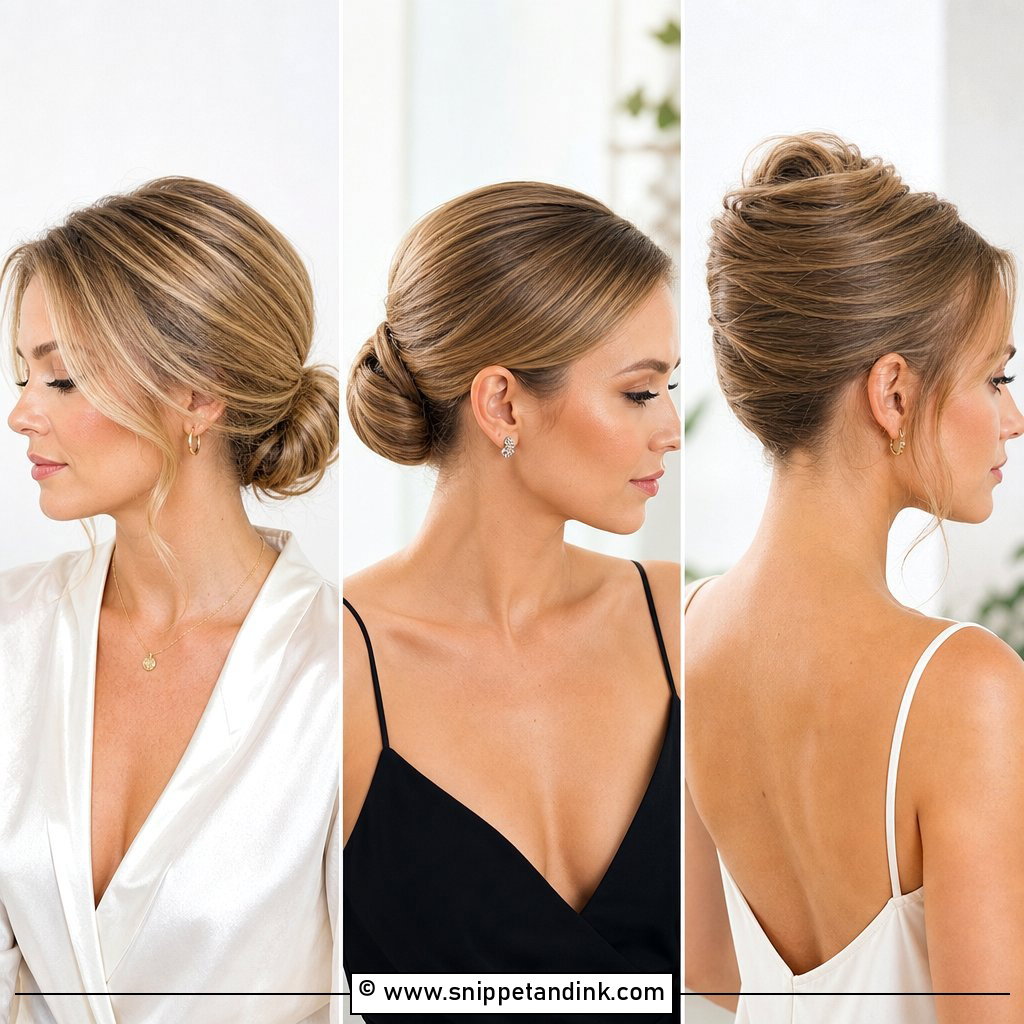
1. Low Chignon Bridal Updo
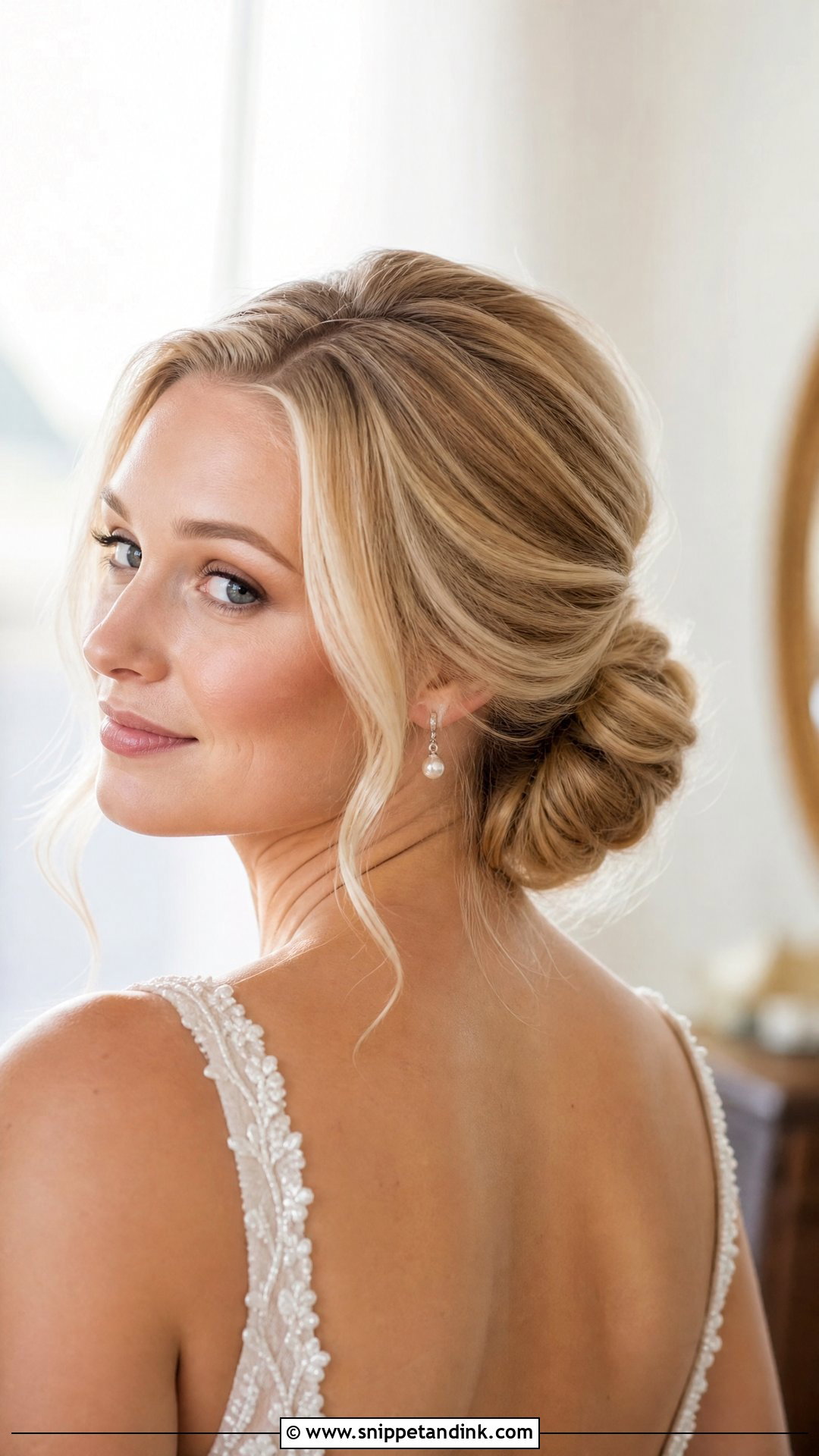
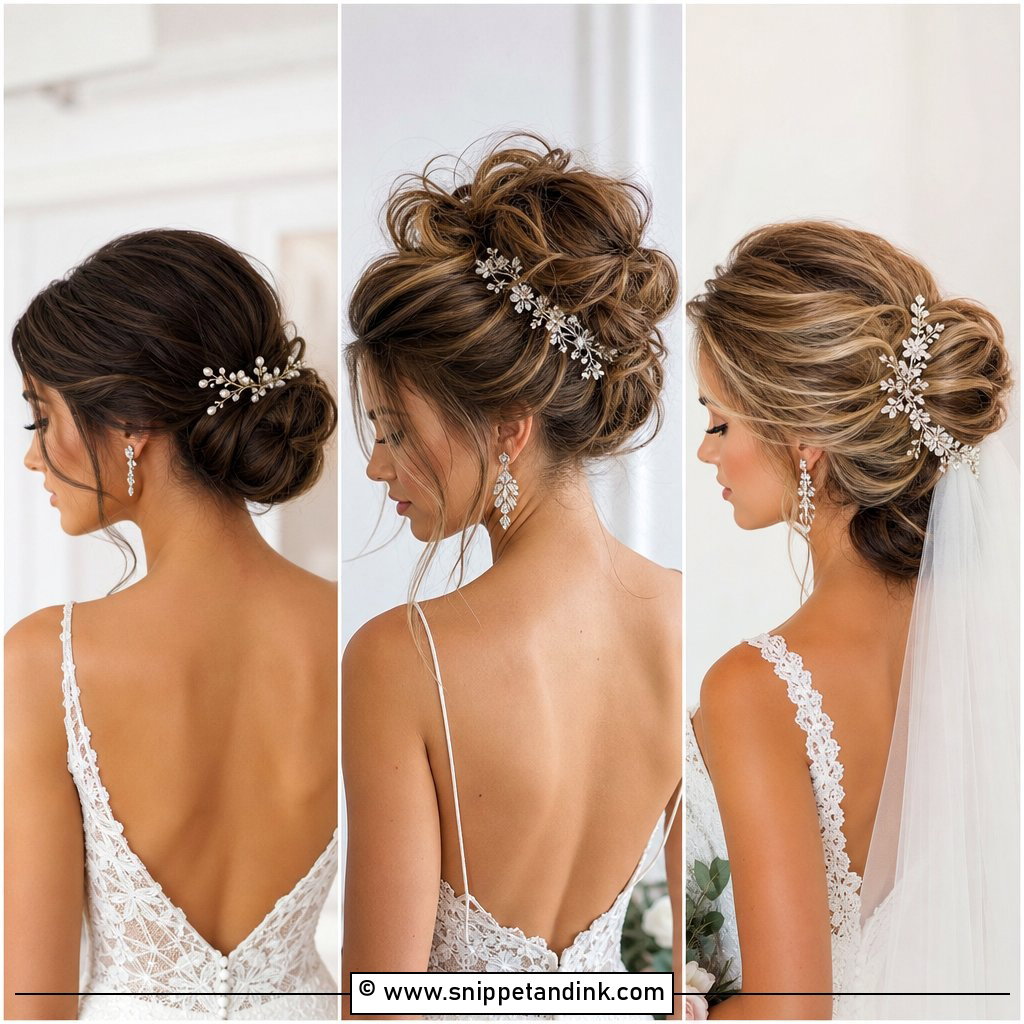
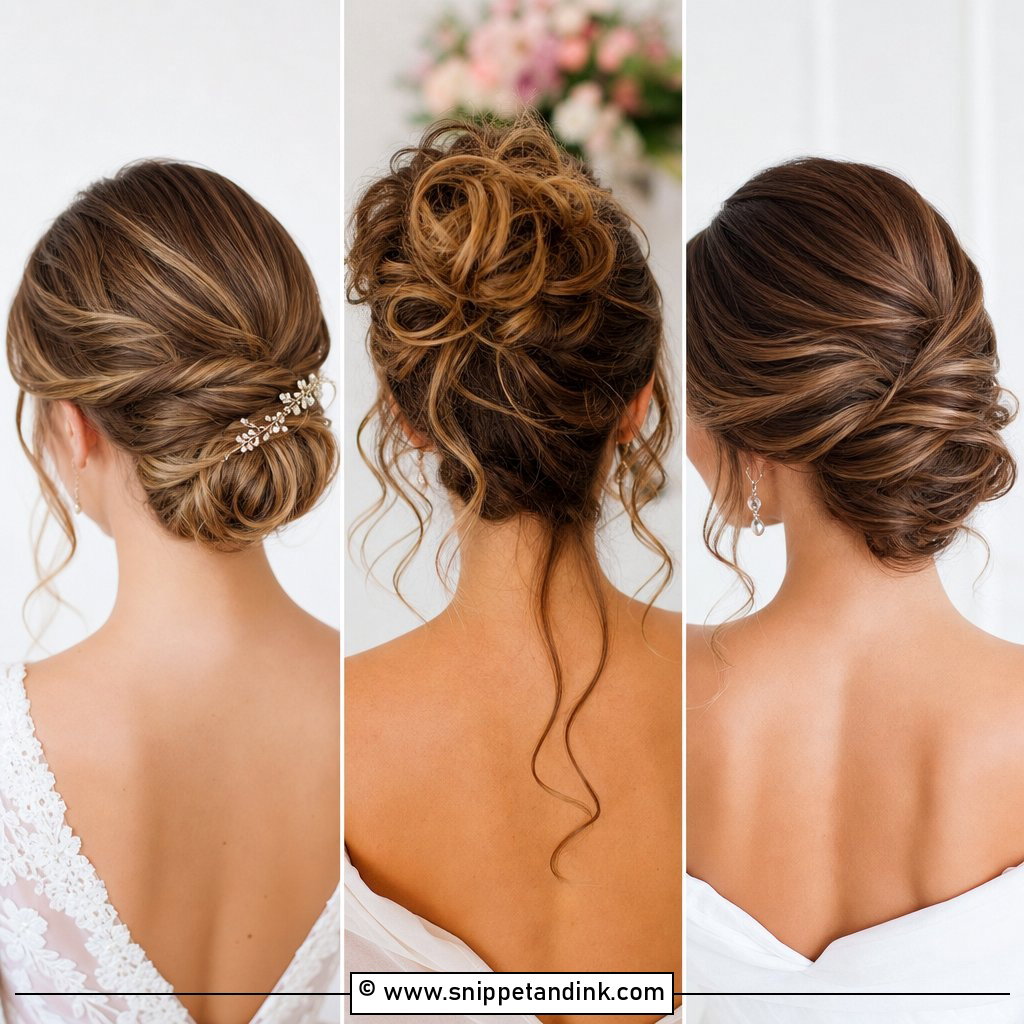
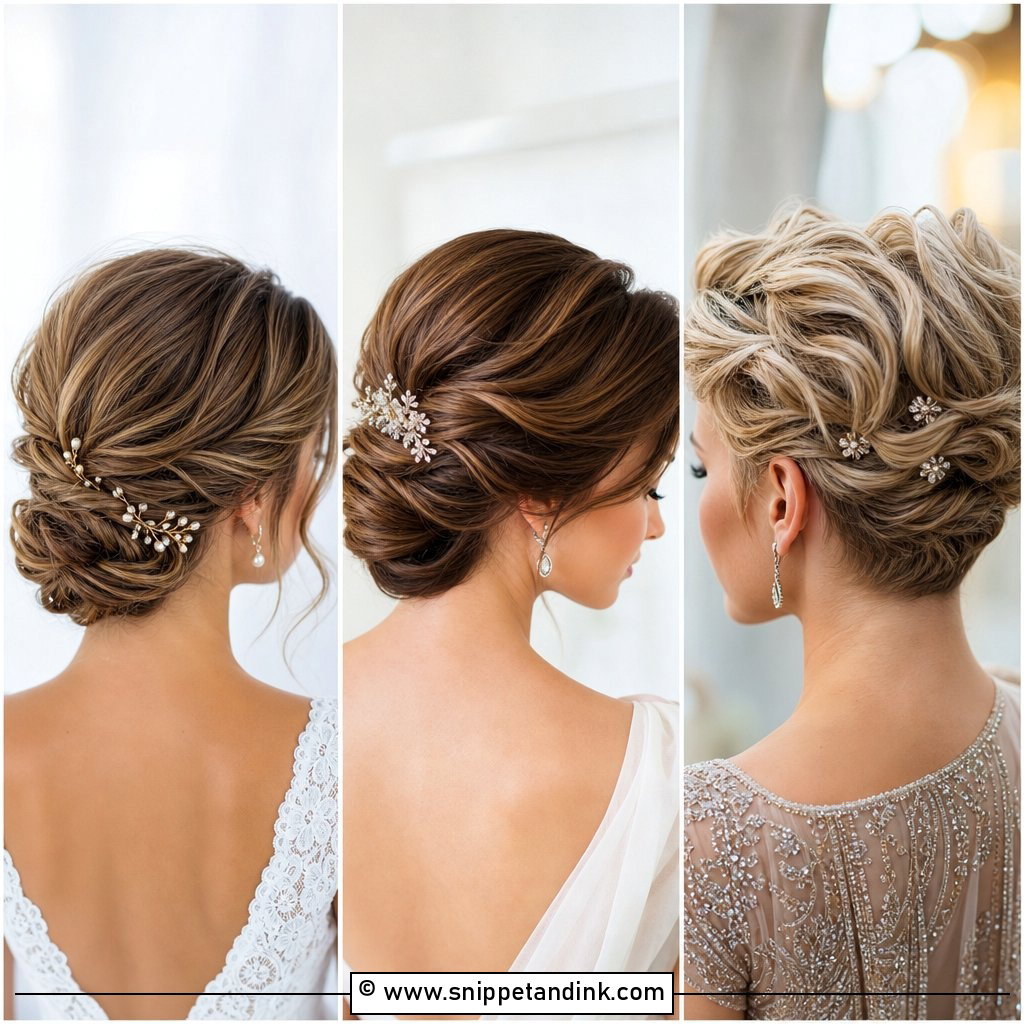
Of all fifteen, the low chignon is the one I’d call the safest bet for long hair. The weight rests at the nape, close to the neck, so it pulls on the scalp far less than anything higher. I gather the hair into a low ponytail, wrap the length into a soft knot and pin it flat to the head. It leaves a lace or buttoned back fully visible, and a veil comb slots straight above it. I add gentle crown volume and, if you’d like softness, a few curved tendrils near the cheekbones.
2. Sleek Bridal Bun
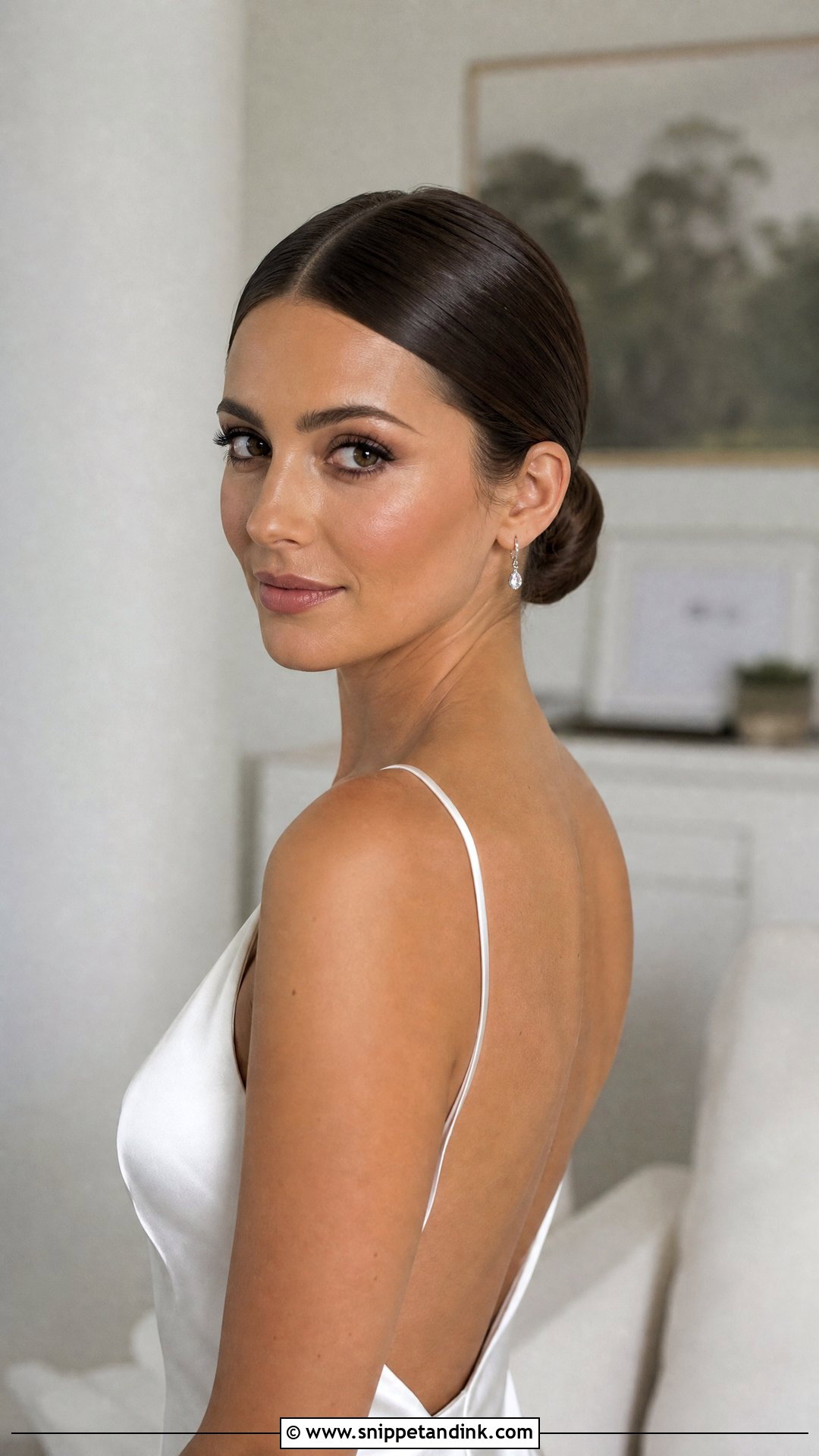
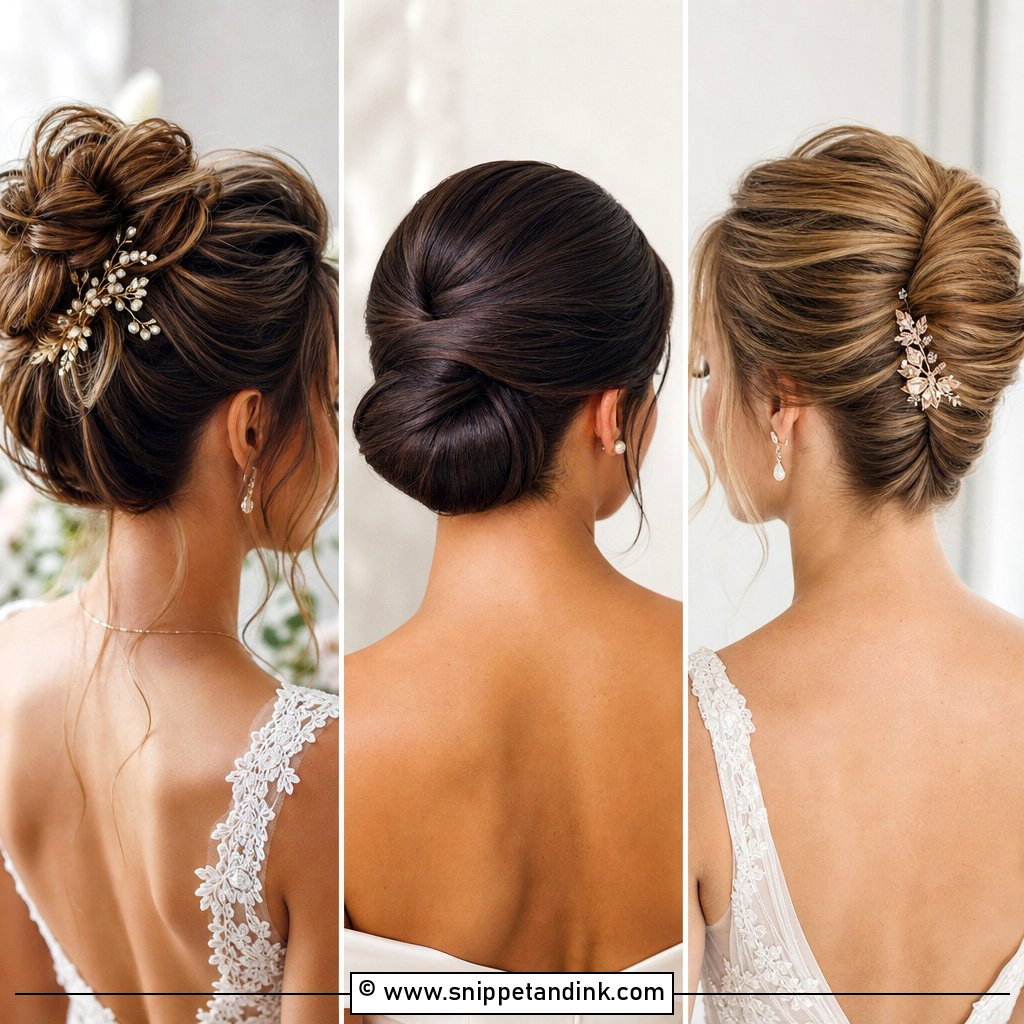
On very long hair a sleek bun is mostly an engineering problem. All that length has to disappear into a neat shape, so I often split the ponytail in two and wrap each half separately, which keeps the bun smaller and better balanced. Strong-hold gel at the base and a shine spray on top give the glassy finish. It suits structured gowns, high necks and statement earrings. I keep the front smooth but not pasted flat, because a completely flat crown can look severe in photos.
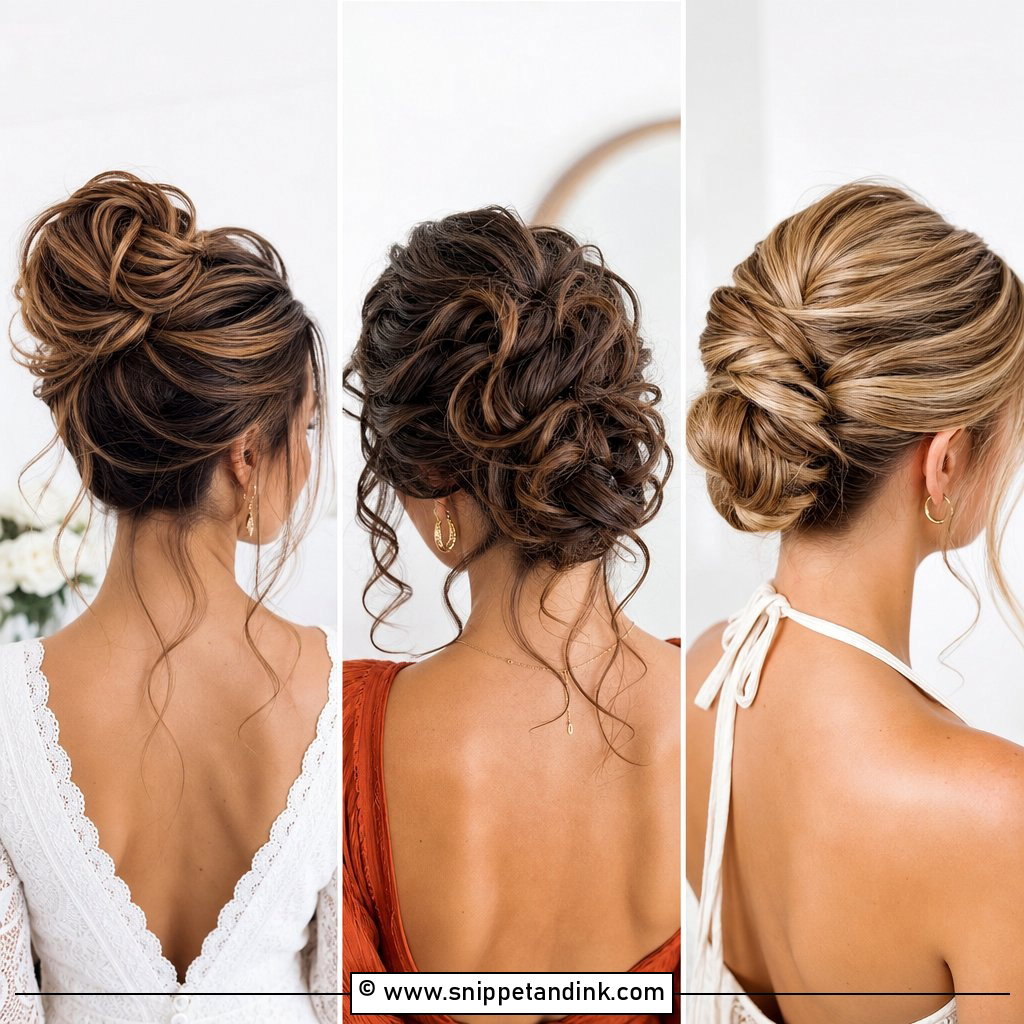
3. Romantic Messy Bridal Updo
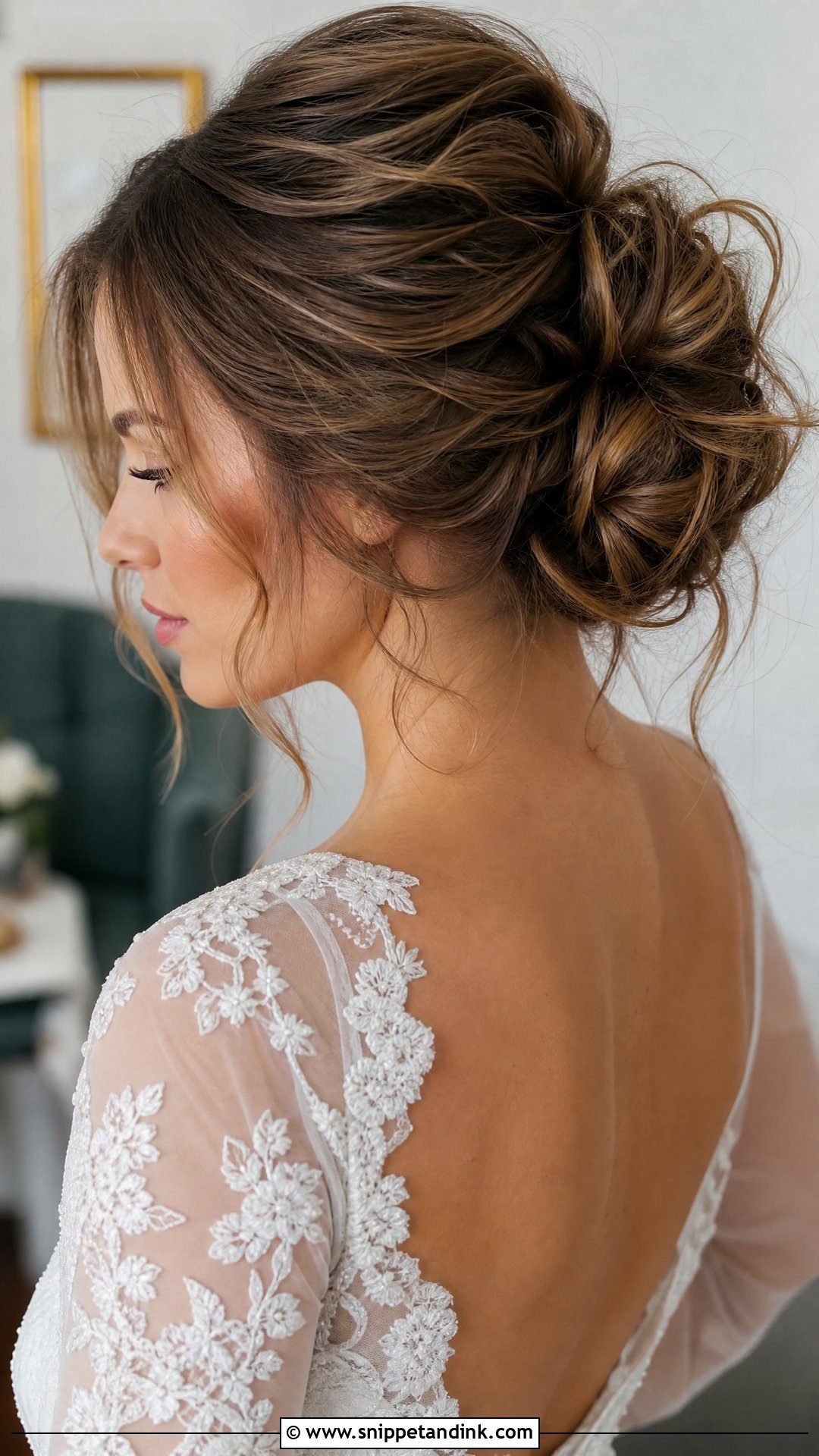
Nothing about a messy updo is actually messy. I build it from loose twists and pinned curls, each one placed, and only then pull pieces out to soften it. Long hair supplies the fullness, but it also means more weight hanging off loosely pinned sections, so I hide a firm base underneath before any of the loosening starts. Garden weddings and lace dresses suit it. Keep the face pieces few; a cloud of loose strands looks undone once the camera flash hits them.
4. French Twist Bridal Updo
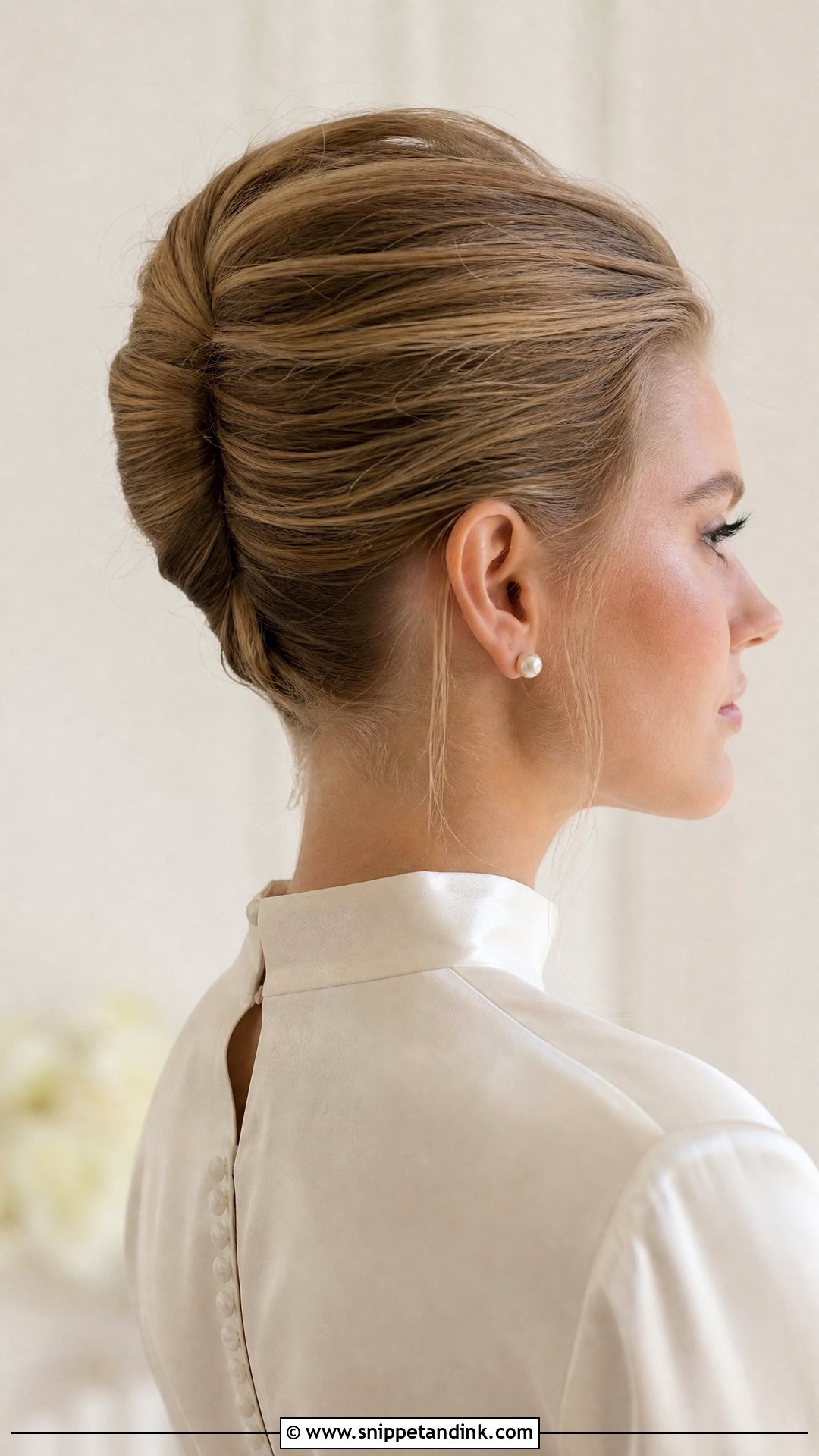
A French twist sweeps the hair upward into a vertical roll, and the long clean line elongates the neck. With long hair the challenge is the leftover length. I fold the ends back inside the roll rather than tucking them in a lump at the top, which keeps the twist slim instead of bulky. Satin gowns, cathedral veils and pearl earrings pair naturally with it. Polished reads classic; a slightly loosened twist with a few soft pieces at the temples feels younger and less formal.
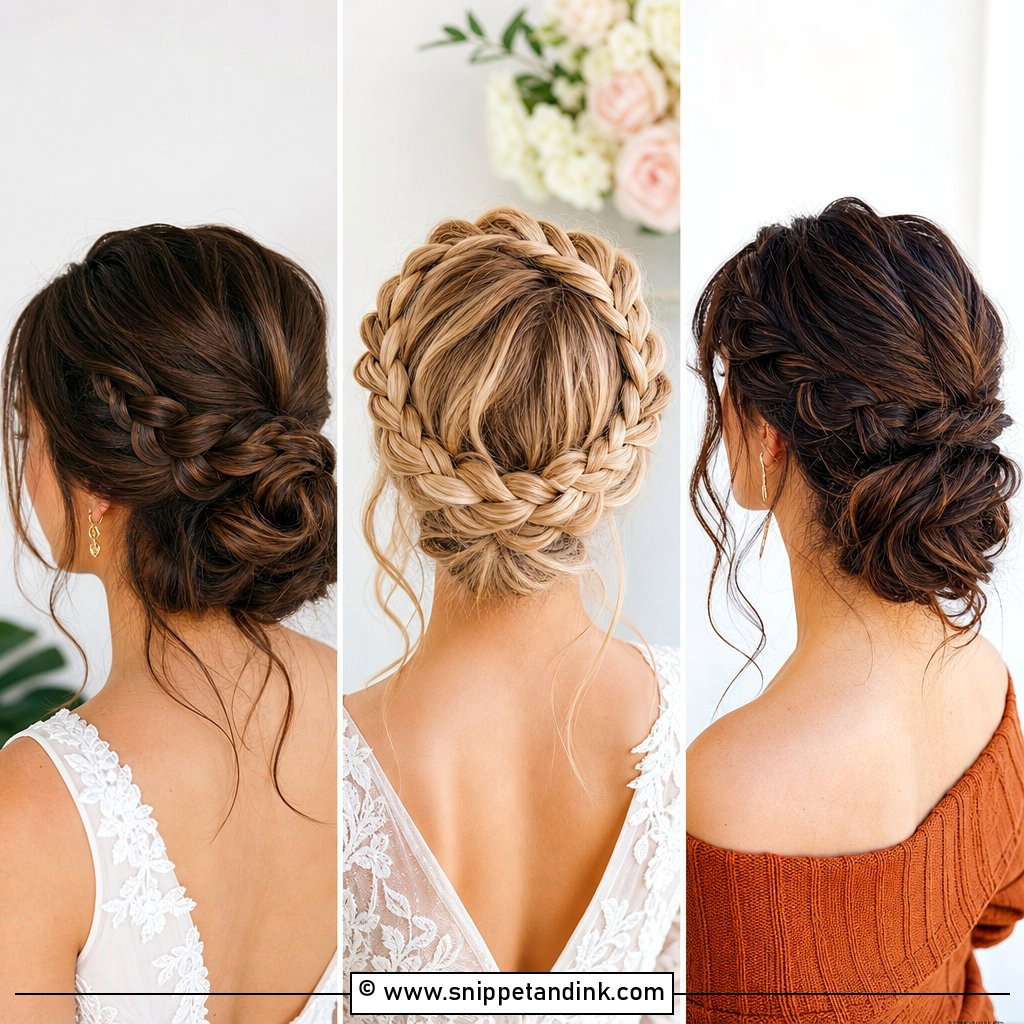
5. Braided Low Bun Bridal Updo
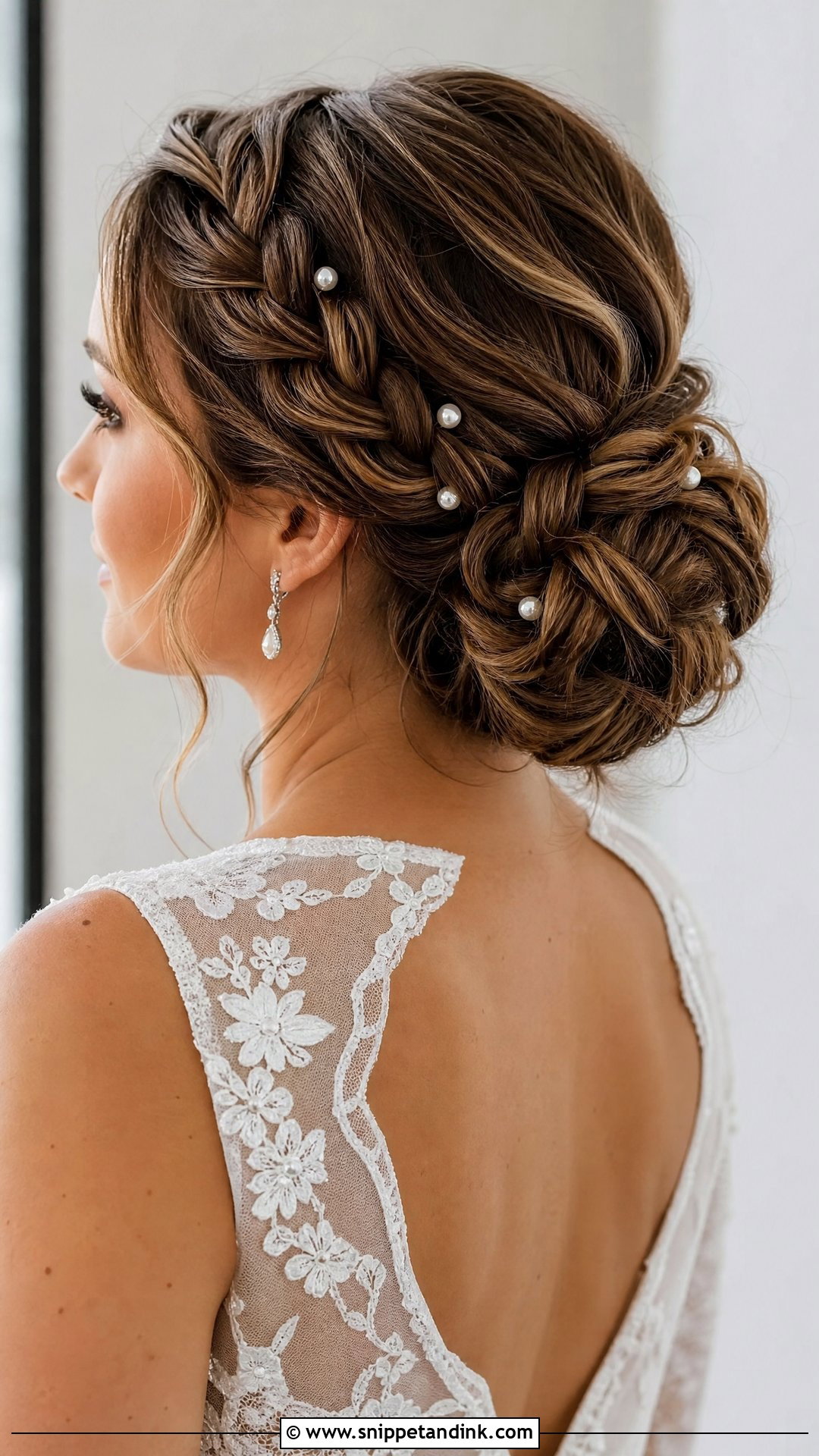
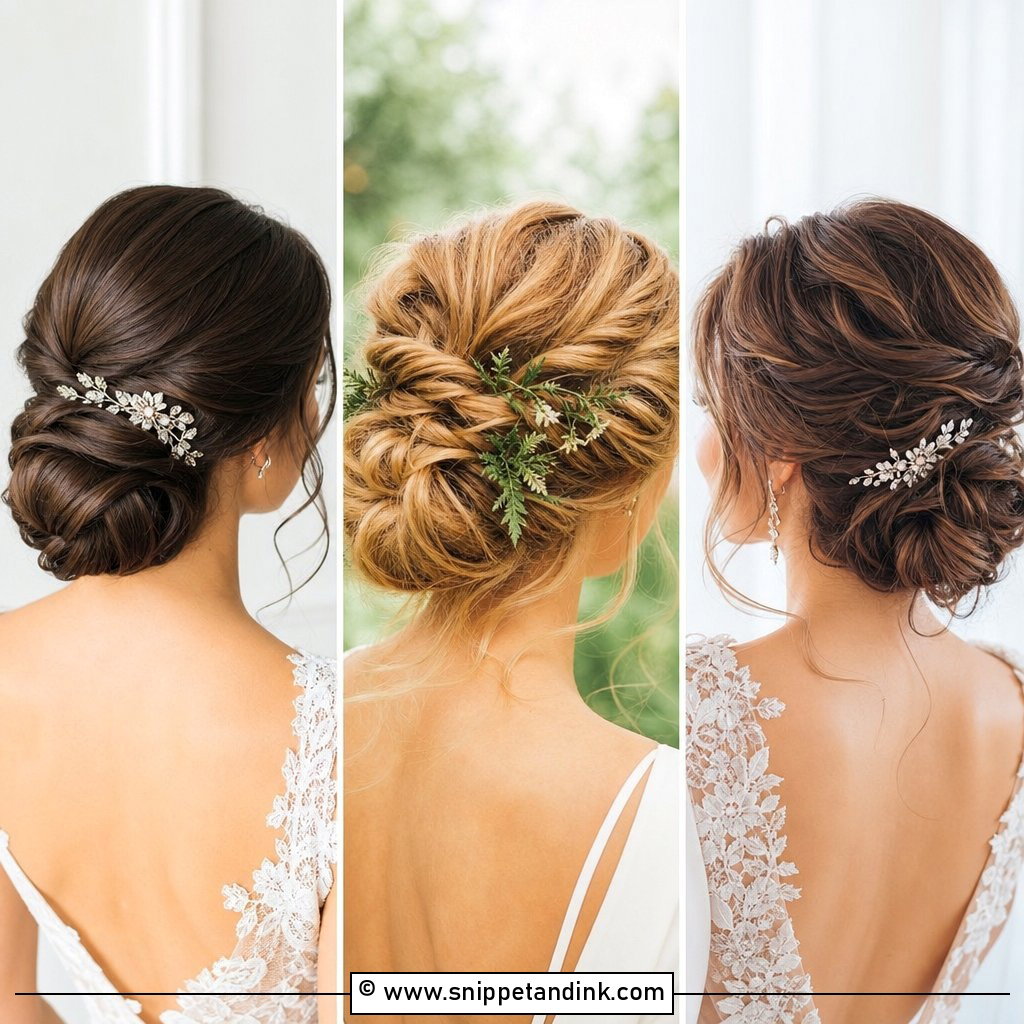
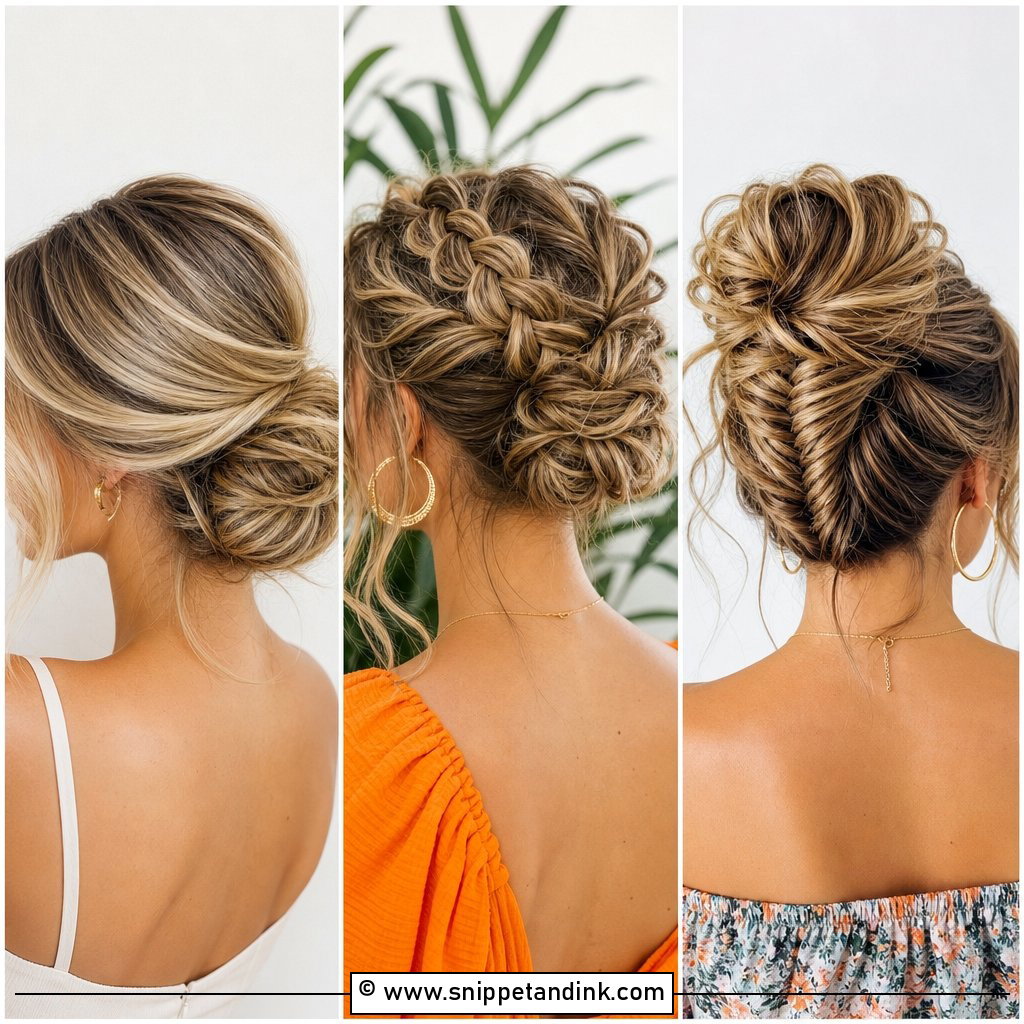
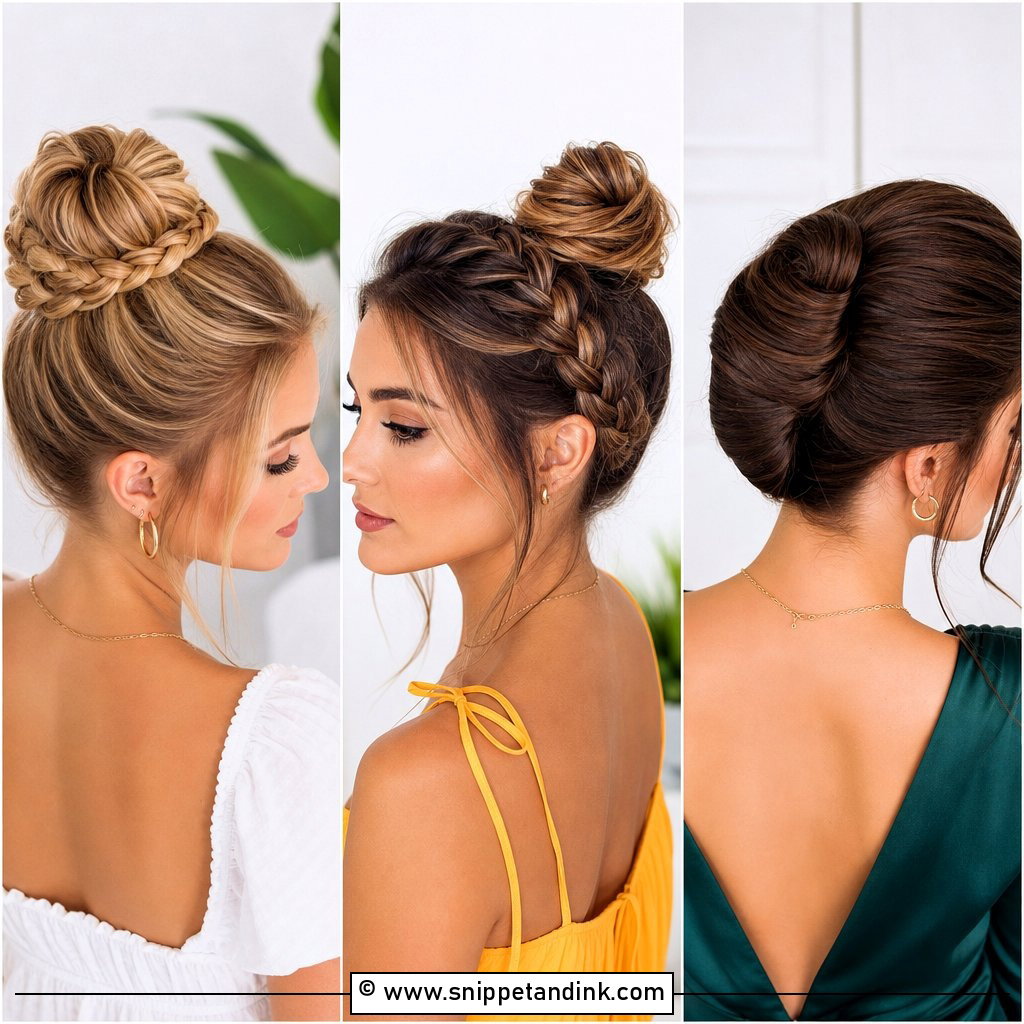
I like a braided low bun for brides with layers. A braid catches short pieces that would otherwise spring out of a plain bun, and long hair gives enough length to wrap the braid around the bun like a frame or lay it across the back. I braid each section firmly first, then loosen the edges once it’s pinned, never before, or the braid loses its grip. Romantic gowns and outdoor venues suit it. Small pearl pins or a few florals are all it needs.
6. High Bun Bridal Updo
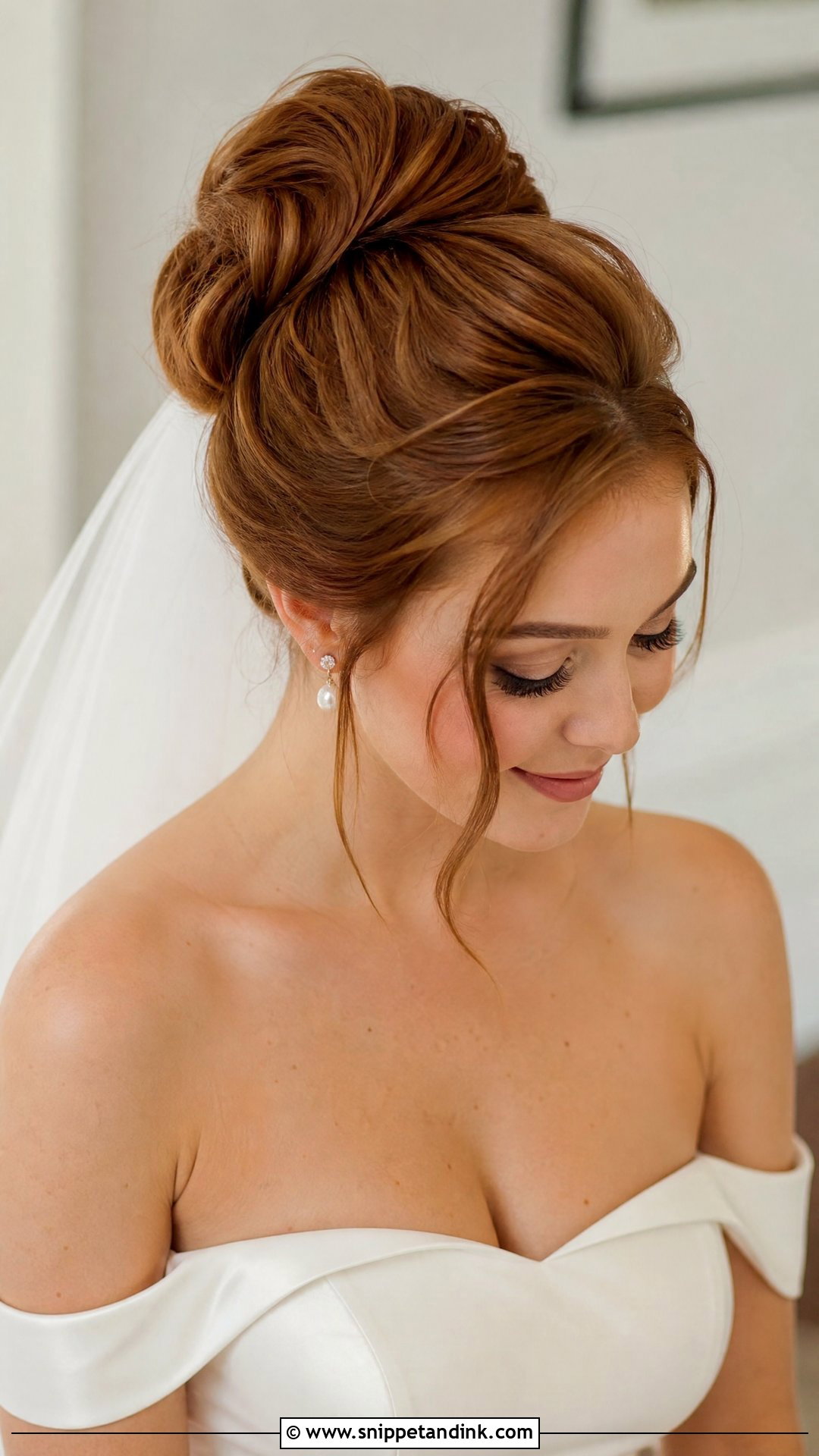
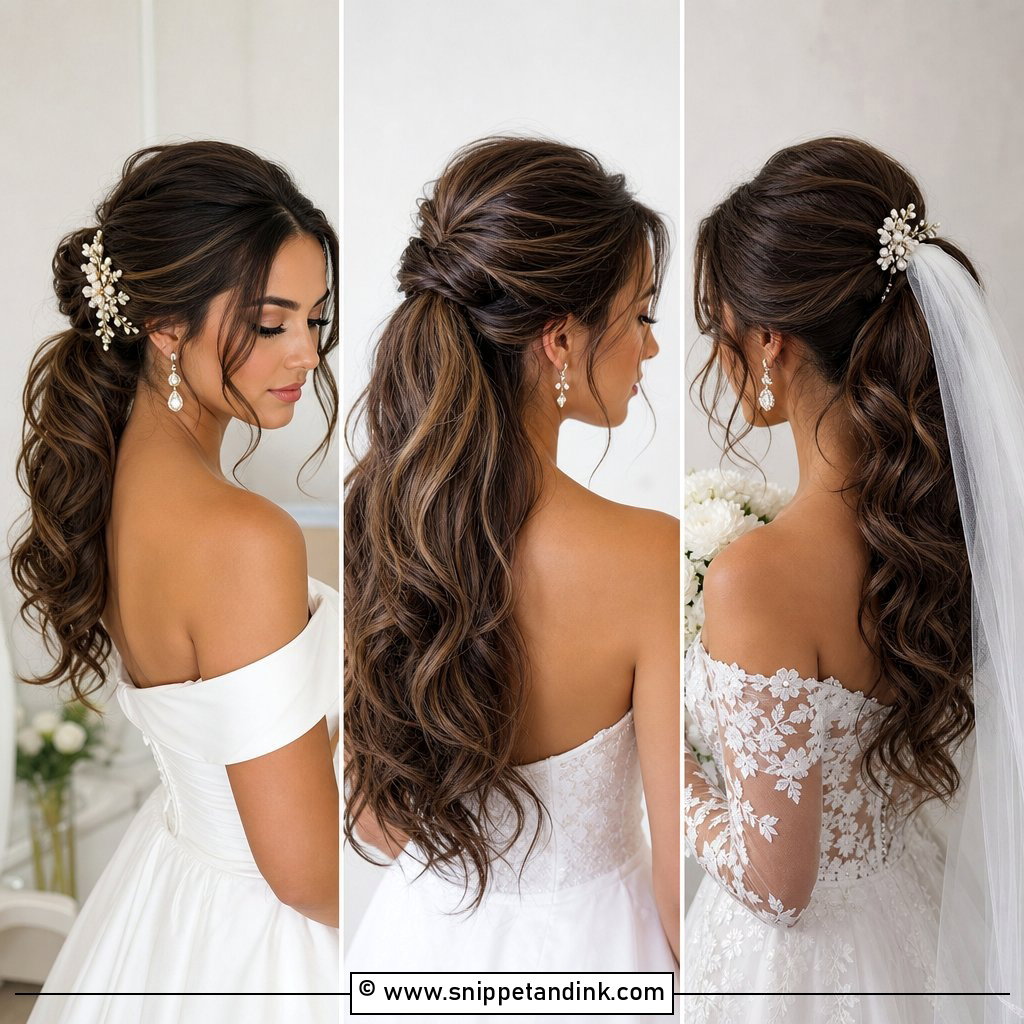
A high bun lifts the eye and opens the face, and a veil can sit underneath or behind it. My honest caution with long, thick hair: a high bun carries all its weight on the crown, and some brides feel it after three or four hours. I build it on a doubled elastic and spread the anchor pins wide to share the load. Ball gowns, off-the-shoulder dresses and square necklines suit the height. Too tall and it looks top-heavy; too modest and it vanishes in front-on photos, so I check it in the mirror from the side before I finish.
7. Twisted Bridal Updo
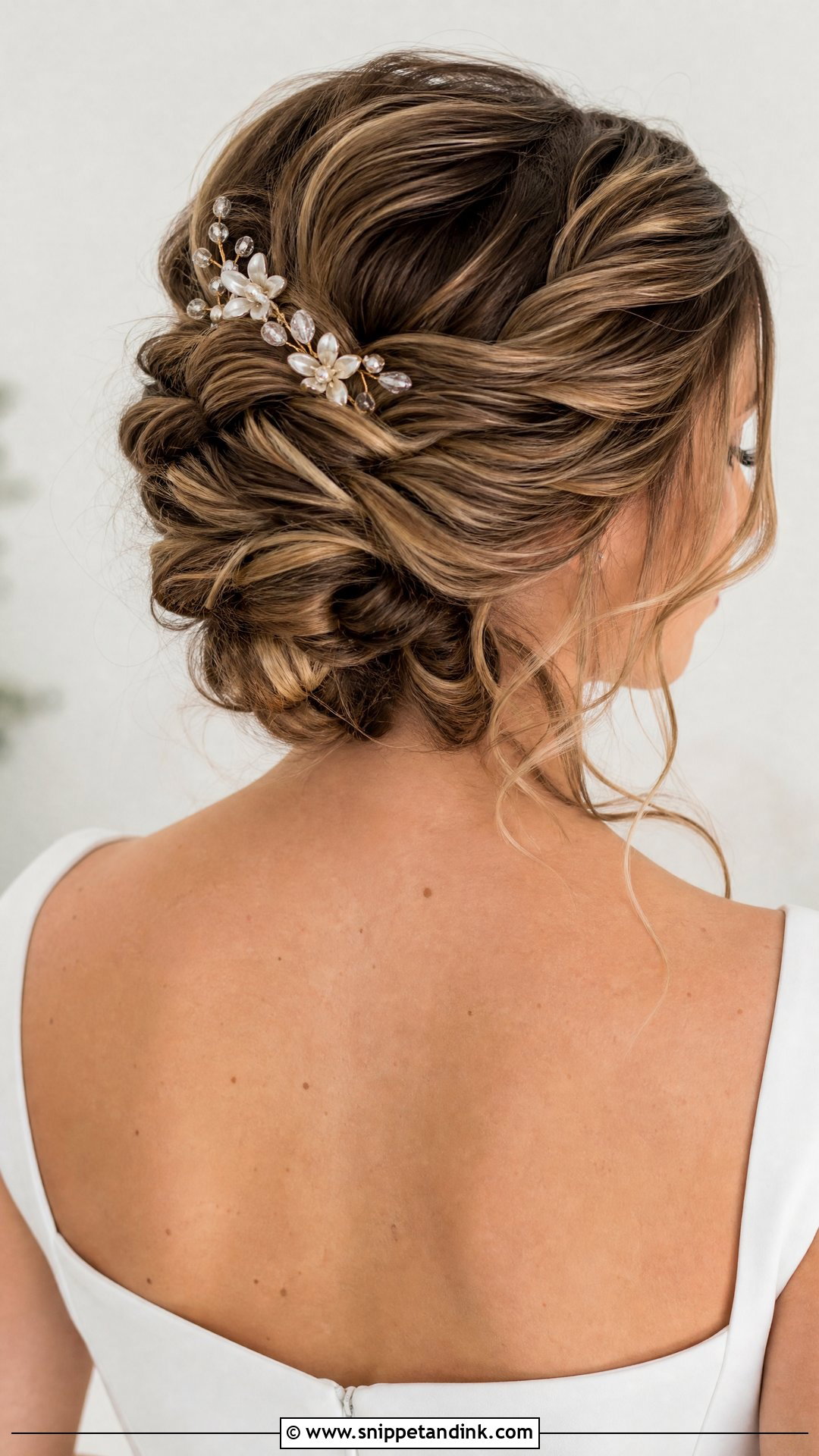
Twisted updos give detail without a braid. I take sections, twist them loosely and pin each into a low or mid-height shape, so the result has dimension and some movement. Balayage and highlighted hair look especially good like this, because each twist turns a different tone toward the light. Fine long hair needs a texturizing spray first or the twists slide flat. Thick hair is the opposite challenge, and I’ll hide some of the length in the base so the visible shape stays light.
8. Pearl Bridal Updo
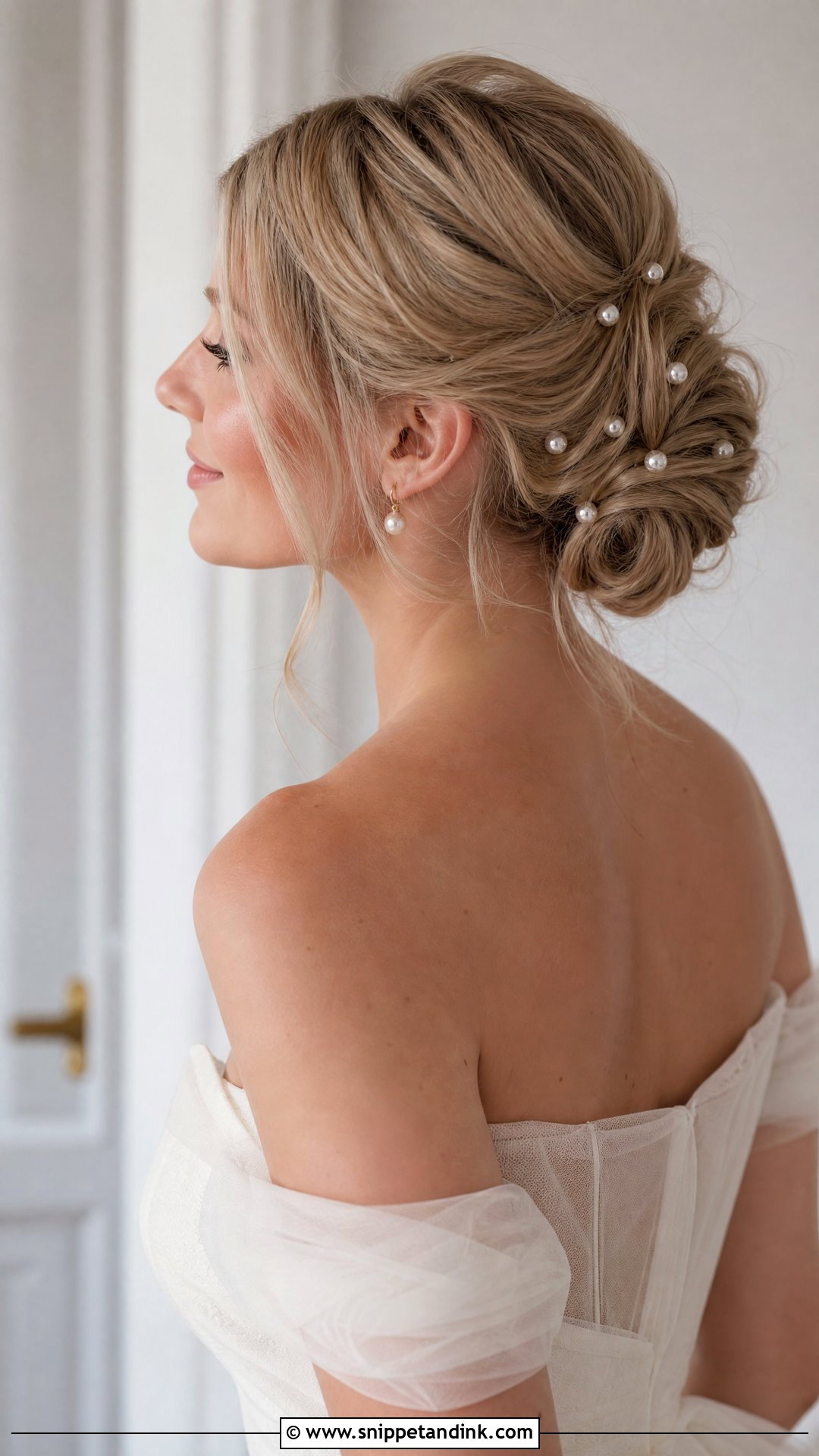
Pearls need somewhere to sit. A low bun, a twisted chignon, a French twist or a soft updo all work as the base, and long hair helps because a fuller shape gives more surface for placement. I put pearls in where there’s a natural groove between sections, so they look grown into the hair rather than stuck on top. Satin, lace and tulle all take them well. Small scattered pearls stay soft; a few large pins act more like jewelry, so I’d scale them to your earrings.
9. Side Swept Bridal Updo
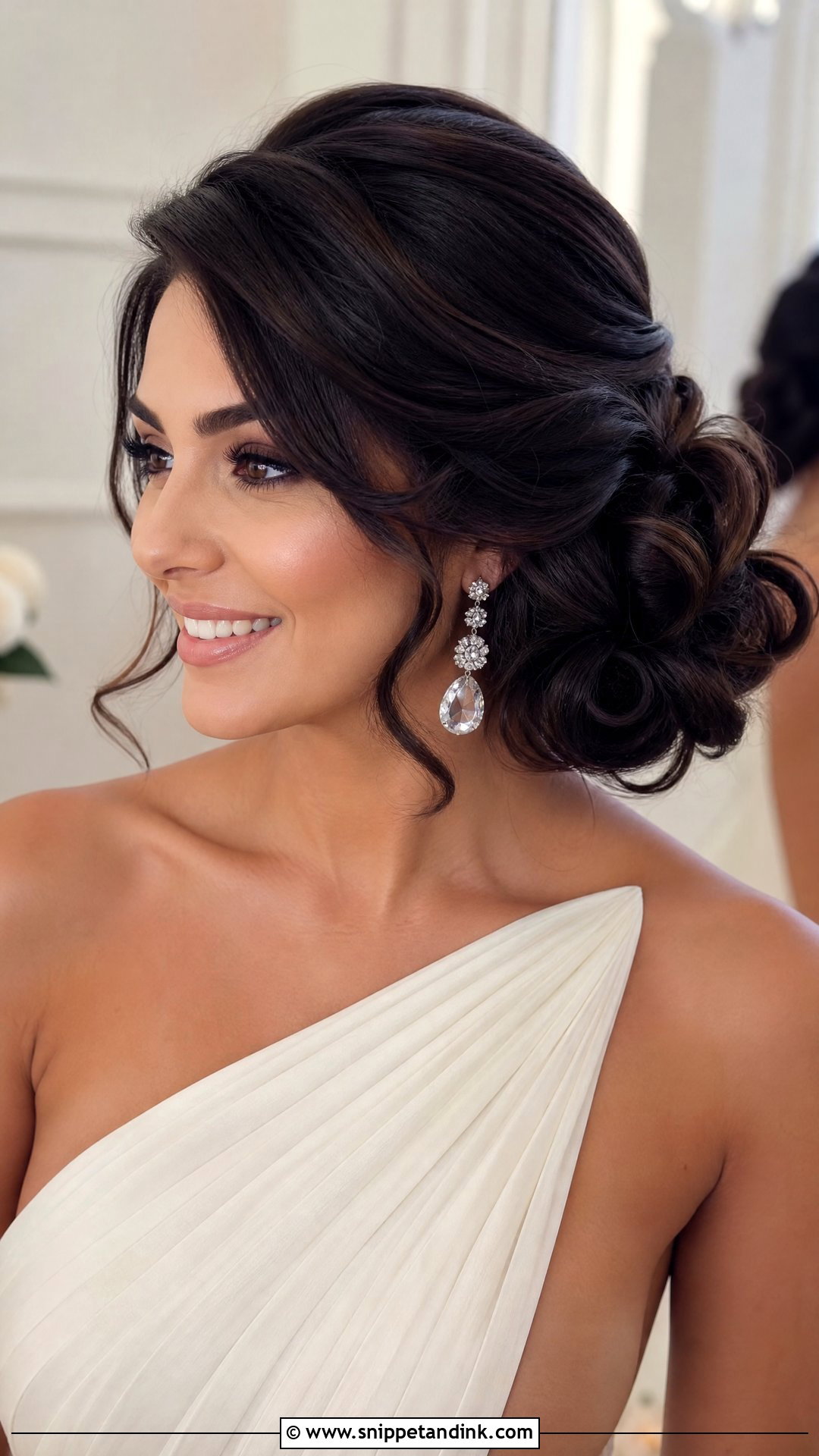
A side-swept updo gathers the hair slightly to one side into an asymmetrical shape. With long hair that shape carries real weight on one side of the head, so the pinning has to be heavier on the anchor side than it looks. I always walk round the chair before I’m done, because an off-center style can look graceful from the front and lopsided from behind. One-shoulder gowns and side details pair best. Curls, twists or a low side bun can all form the shape.
10. Curly Bridal Updo
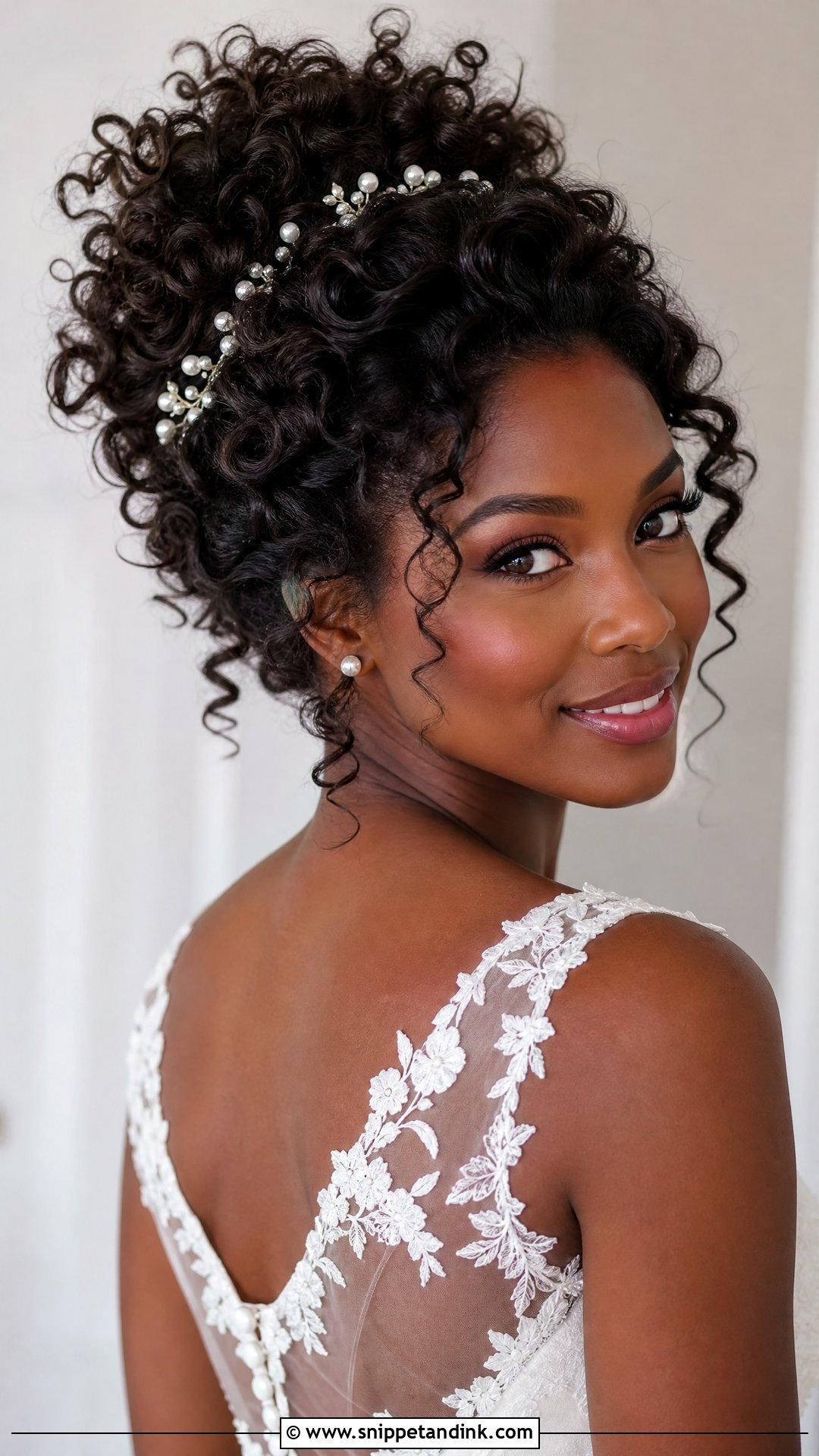
With a curly updo I pin curls into a soft bun, gather them at the crown or shape them low, keeping the natural pattern on show rather than brushing it flat. It’s the obvious choice for naturally curly, wavy or textured hair. Moisture and definition need to be done before I arrive, not on the morning. The common mistake is too much leave-in or gel, which makes long curls heavy enough to drag the whole updo down. A couple of defined curls at the face soften it; the hidden pins stay inside the curl clusters.
11. Vintage Bridal Updo
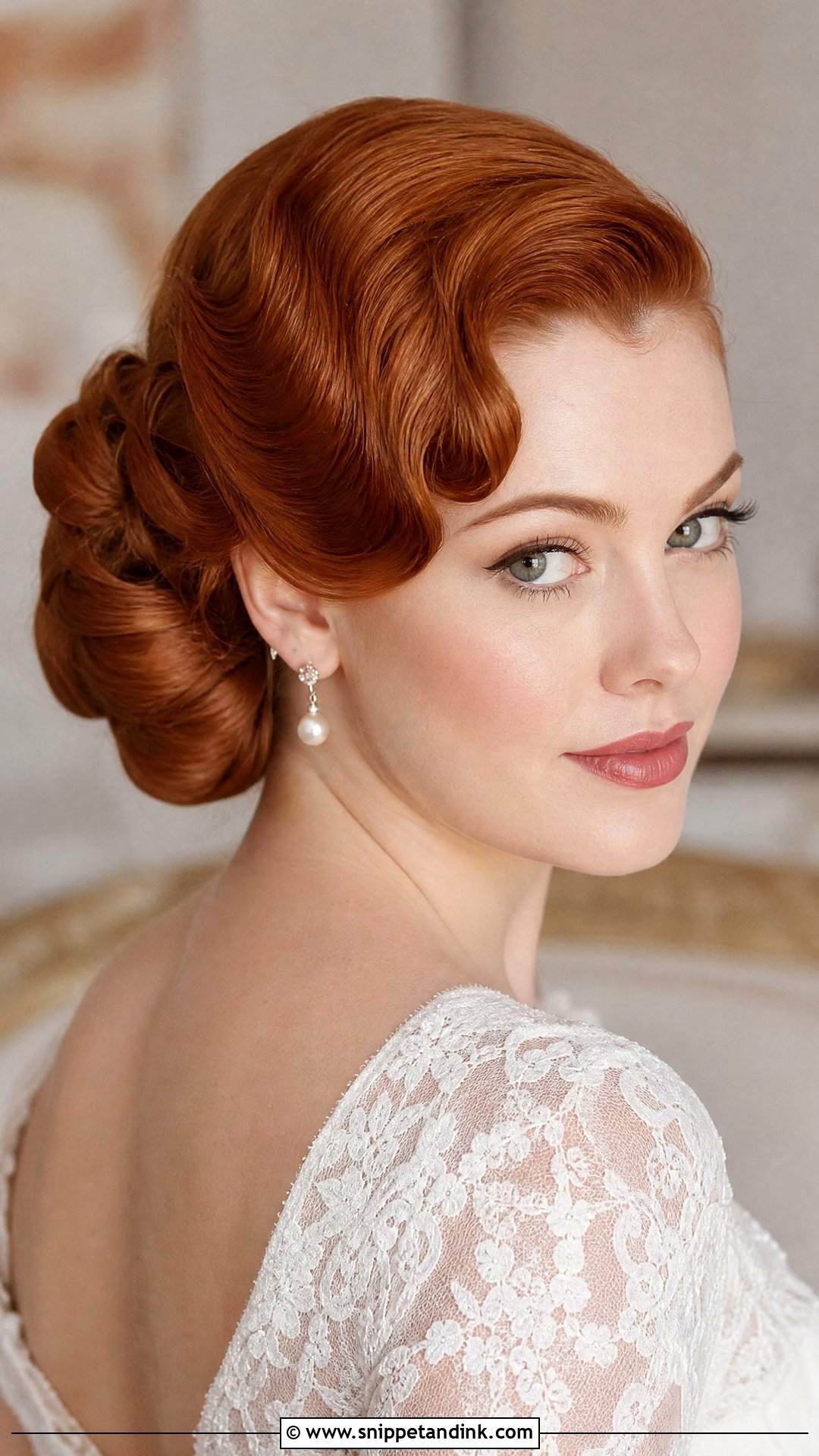
A vintage updo leans on sculpted waves, rolled sections or a smooth low bun. Long hair has the length for rolls, but rolls only hold if the hair is set first, so I curl and pin each section to cool completely before shaping anything. It suits lace gowns, a red lip, birdcage veils and pearls, and it only really works when the makeup and dress share the era. Keep accessories minimal when a big roll or wave is already the focus.
12. Boho Bridal Updo
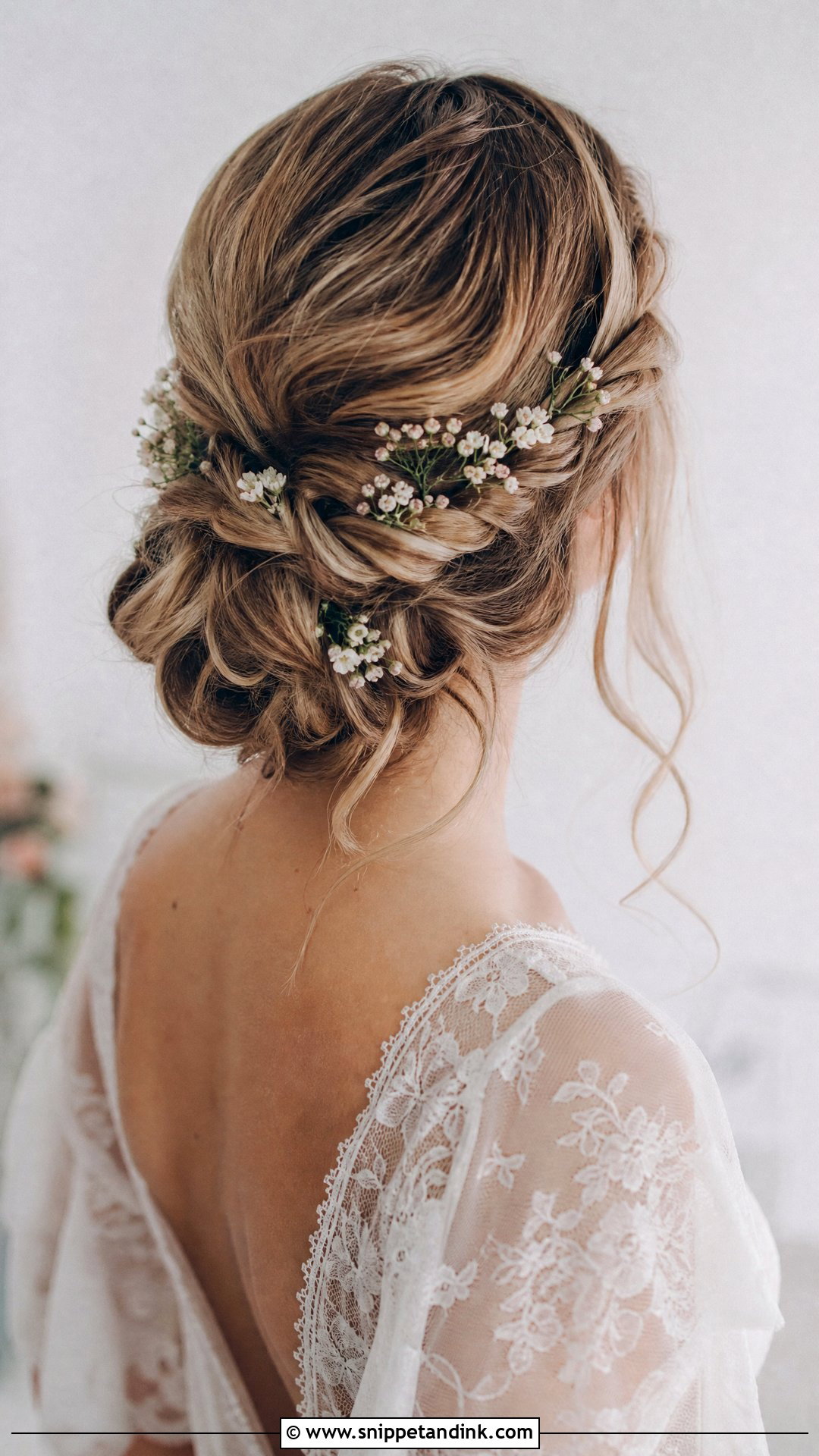
Boho updos look relaxed, with loose twists, soft braids and a low bun, but long hair is heavy and relaxed pinning doesn’t hold heavy hair. I set a firm base first, then loosen the outer layer once everything underneath is secured. Outdoor weddings, beaches and floaty lace dresses suit it. Floral pins or small vines finish the look. Keep the front pieces deliberate, maybe two or three, otherwise romantic slides into windswept by the time you reach the reception.
13. Crown Braid Bridal Updo
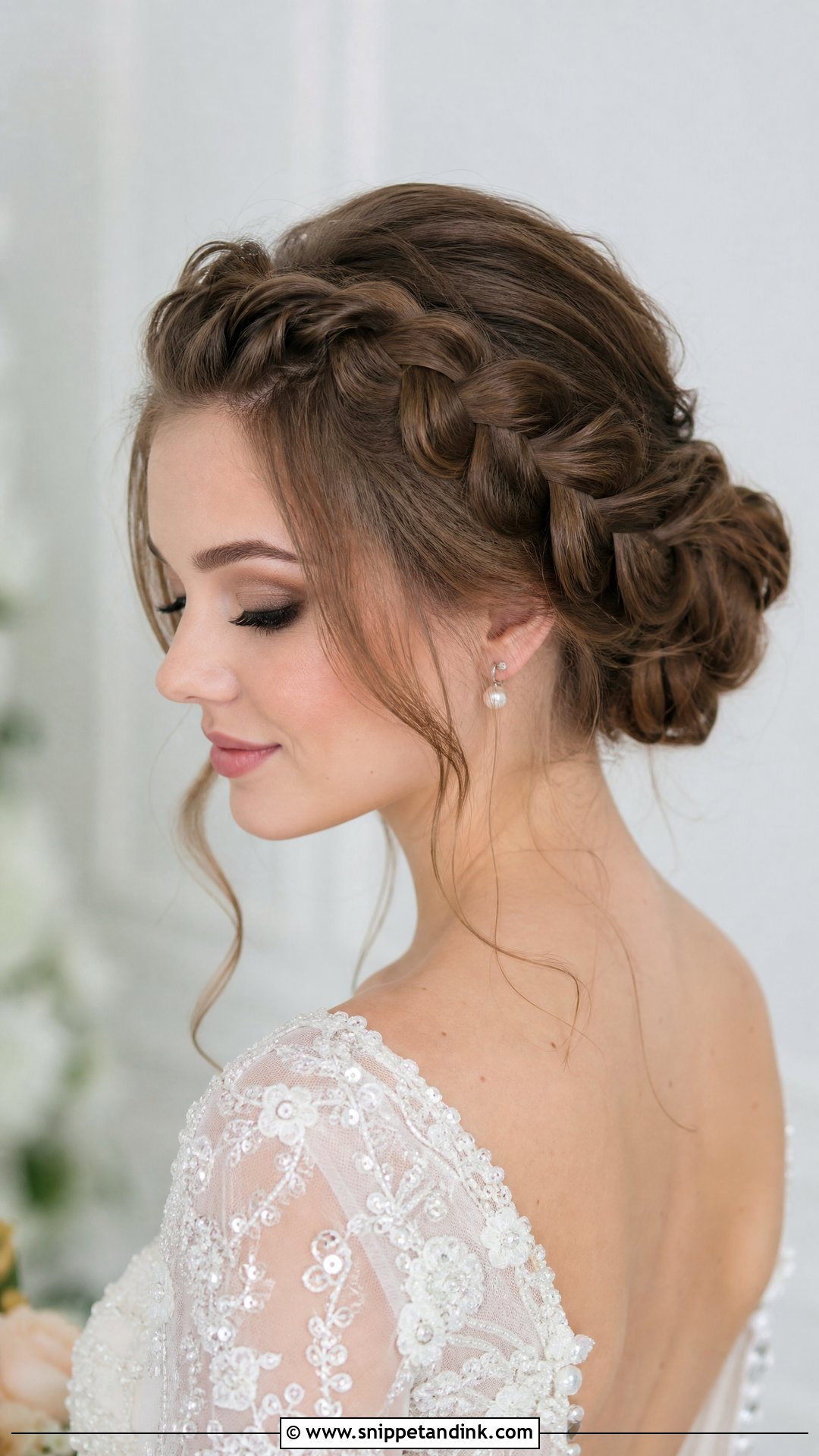
A crown braid wraps around the head, or runs halfway round and blends into a low bun at the back. It’s one of the most secure styles on this list, since the braid itself does most of the holding, which makes it a sensible pick for long receptions and outdoor dancing. Long hair makes the braid full. I loosen each loop carefully for volume once it’s pinned. Rustic venues and delicate accessories suit it, and any florals should sit beside the braid, not over it.
14. Voluminous Bridal Updo
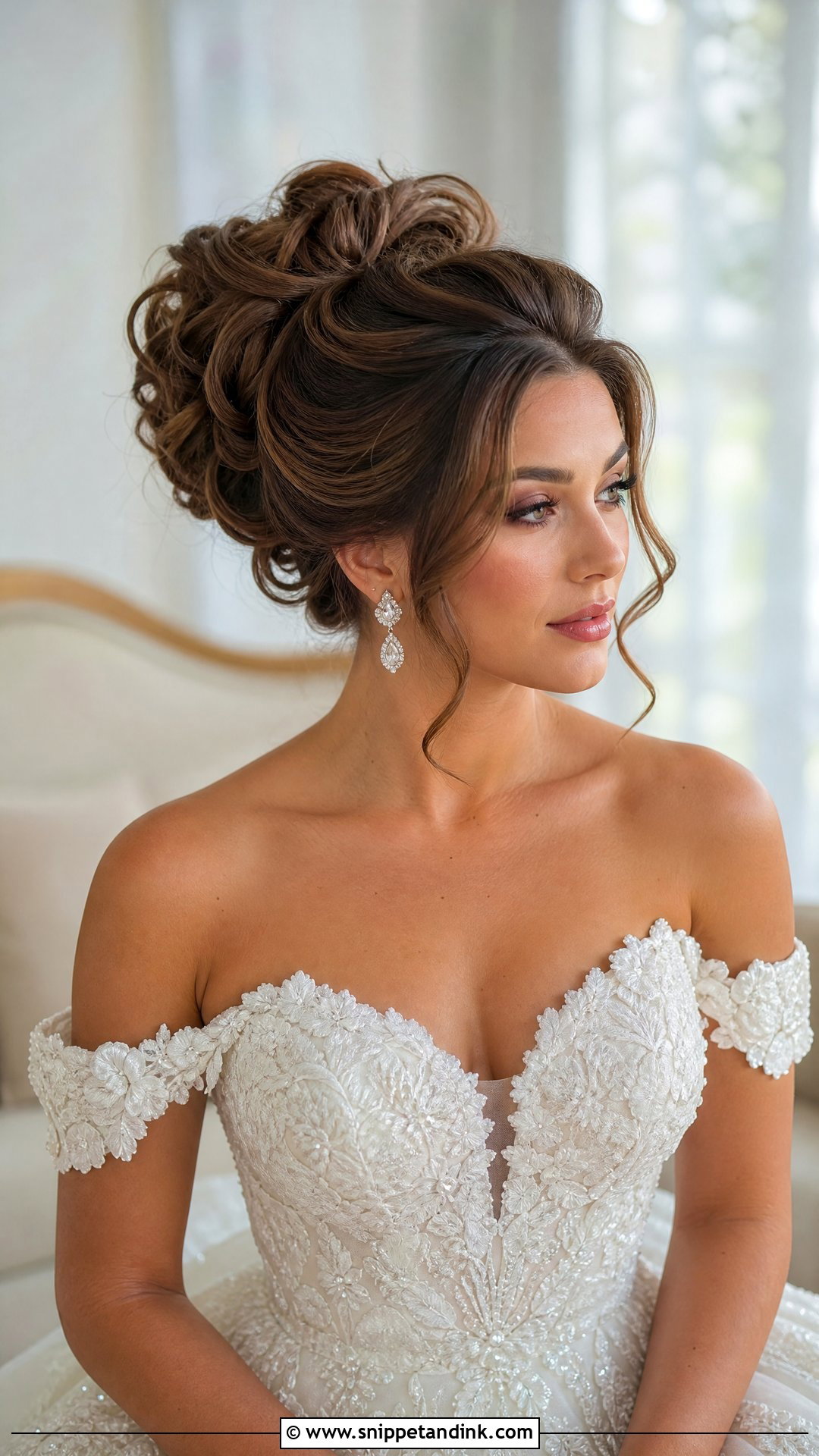
For real volume, I lift the crown with backcombing hidden under a smooth top layer, then pin the back into a full bun or curled shape. The volume has to look airy. If you can see the teasing, it’s gone wrong. Dramatic gowns, cathedral veils and formal venues carry the size. Very heavy hair is where I distribute the weight across several anchor points rather than one, so the shape doesn’t drop backward by late evening.
15. Bridal Updo With Face Framing Pieces
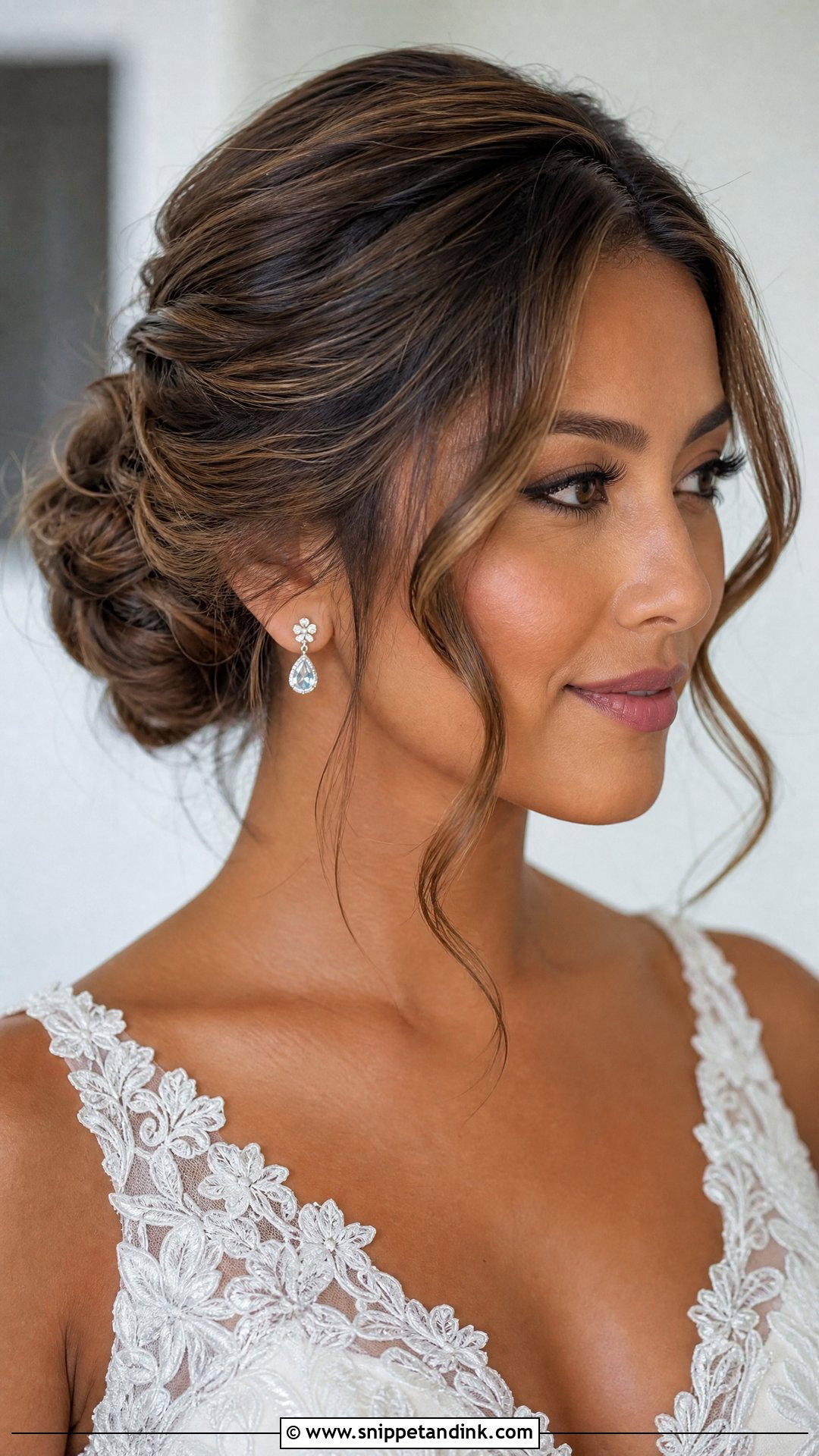
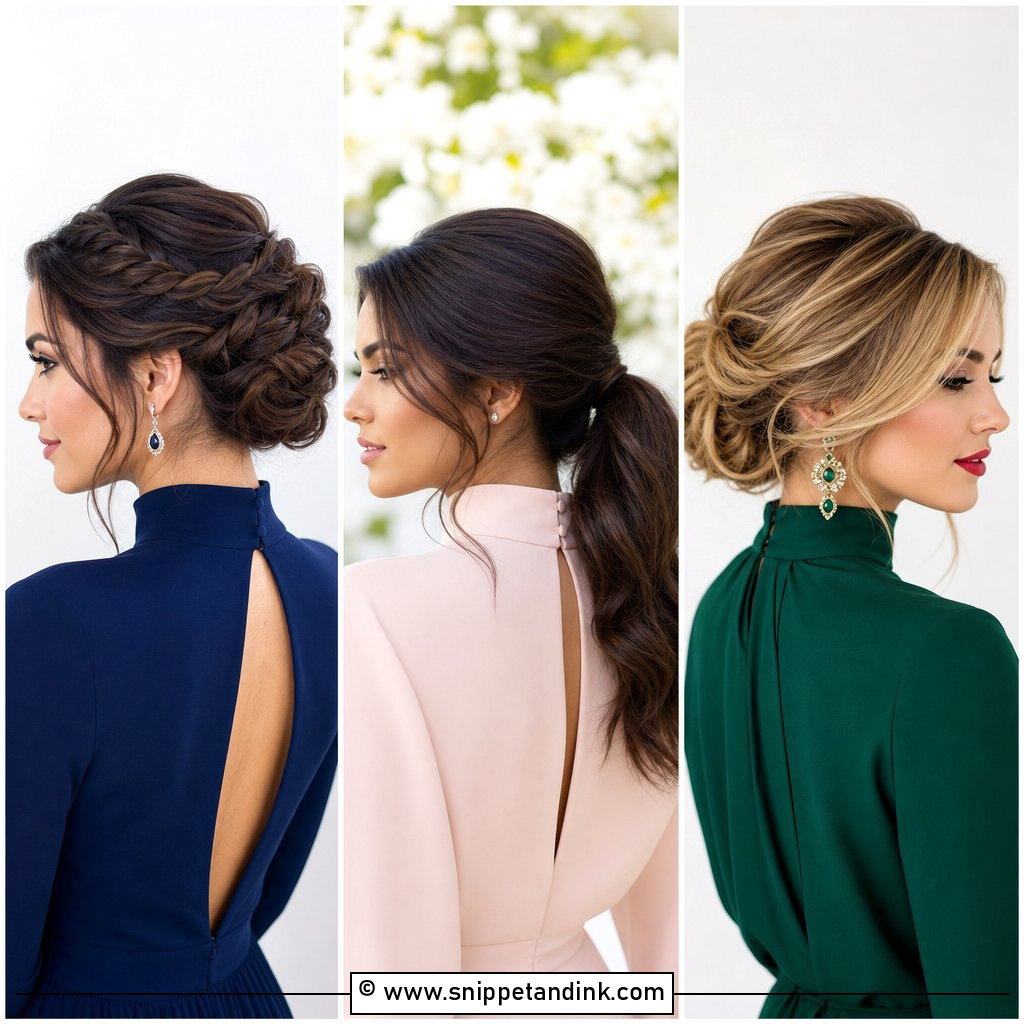
Face-framing pieces are a small detail with a big effect. The main updo can be a bun, chignon, twist or braid; a few front sections are then bent to sit along the cheekbones. Long hair helps because the back still looks full. I’d keep them to two pieces, one each side, and use soft bends rather than tight ringlets, which look dated now. More than that and they start fighting your earrings and getting caught in lip gloss.
Prep Long Lengths a Month Out, Not the Night Before
Long hair holds an updo better when the ends are healthy and the roots have a little grit. This is roughly the countdown I give brides, though your own stylist may shift it for your texture.
- Four to six weeks before: a light dusting of the ends, with no big change in length so the trial still matches.
- One to two weeks before: colour or gloss, so it has time to settle and lose that freshly coloured slip.
- The week of: keep conditioning, but skip heavy masks and silicone serums in the last couple of days. Slippery hair lets pins slide.
- The day before: wash and dry thoroughly, unless you’ve been asked to arrive with second-day hair.
Unpinning at Midnight Without Tears
Taking down a long updo takes longer than you’d think, and tugging at it while you’re exhausted is how knots and breakage happen. Ask roughly how many pins went in, then remove them slowly by feel, working from the outside of the bun inward.
Don’t brush out stiff, sprayed hair while it’s dry. Soak it in the shower, work plenty of conditioner through the lengths, detangle with your fingers, then use a wide-tooth comb. It’s a good job to hand to whoever you’re going home with.
Strong Pins, Soft Finish
Every updo here can work on long hair. The question is which one suits your dress, your venue, your texture and how it will feel at hour eight. Sleek buns read modern, a chignon leans romantic, braids hold best, pearls add detail and face pieces soften anything strict. Long hair simply asks for more prep, more pins and more honest testing. Bring your veil to the trial, wear the style for the rest of that day, and ask your stylist directly how it will hold by the last song.
You'll Like These Ideas:


Leave a Reply