
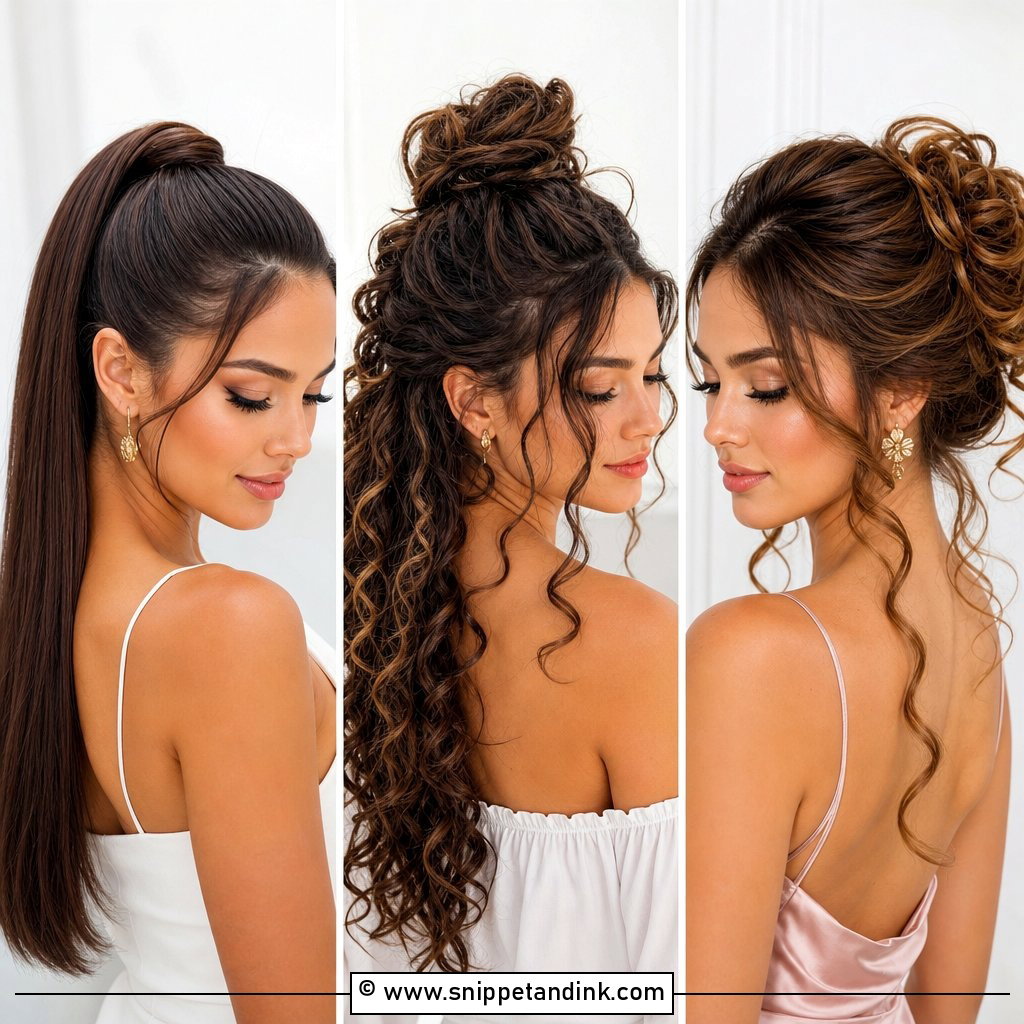
Brides usually come to me with a photo of the front of an updo, and almost every time the conversation ends up being about the back. That is the view guests see during the ceremony, and it is where a veil, a dress back and a long day all meet. An updo takes hair off the face and shoulders so the neckline and earrings can do their work, and a good one is built to last through tears, hugs and a reception. Right now most of my brides ask for soft texture and a few loose pieces around the face rather than a lacquered shape. Below are the updos I build most often, from a classic chignon to braided and curly buns, with notes on which hair each one suits and where each one tends to struggle.
What Your Updo Trial Should Actually Test
A trial is not just a chance to see the style. It is where I find out how your hair behaves and whether the updo works with everything else you are wearing. Bring the things that change the result.
- Your veil or headpiece. Weight changes where the bun needs to sit.
- A top with a similar neckline to your dress, so we can judge the height against your shoulders.
- Any earrings you plan to wear; long drops change how much hair should fall near the face.
- Hair washed the day before, not that morning. Clean, silky hair holds pins far less well.
Before you leave, have someone take photos from behind and from both sides, then wear the style for the rest of the day. If it aches by mid-afternoon or a section starts slipping, that is useful information. I would rather adjust the pinning at the trial than discover it at the reception.
How Much of the Morning a Bridal Updo Takes
Plan for about an hour and a half in the chair for most bridal updos, and closer to two hours for very long or very thick hair, sculpted finger waves or anything with several braids. Curling alone can take half of that, because each section has to cool before it is pinned or the set falls out.
I like the bride to finish hair before makeup is completed, or at least before lipstick, so nothing gets smudged when I work around the face. Leave a buffer of twenty minutes before you need to dress. Wear a button-up shirt or robe while I work, so nothing has to come off over your head afterward, and step into the gown rather than lowering it over the updo.
1. Classic Low Chignon Wedding Updo
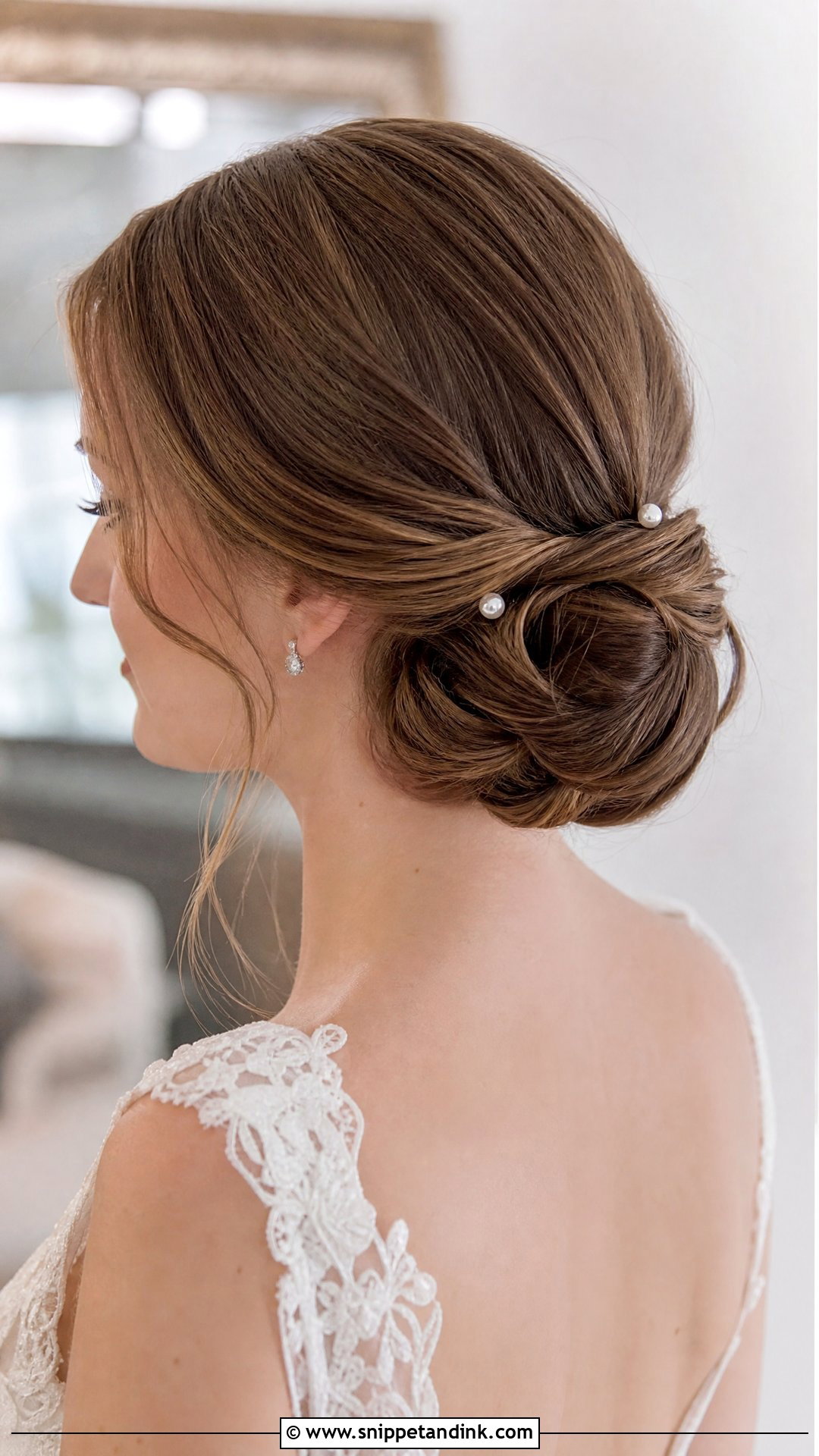
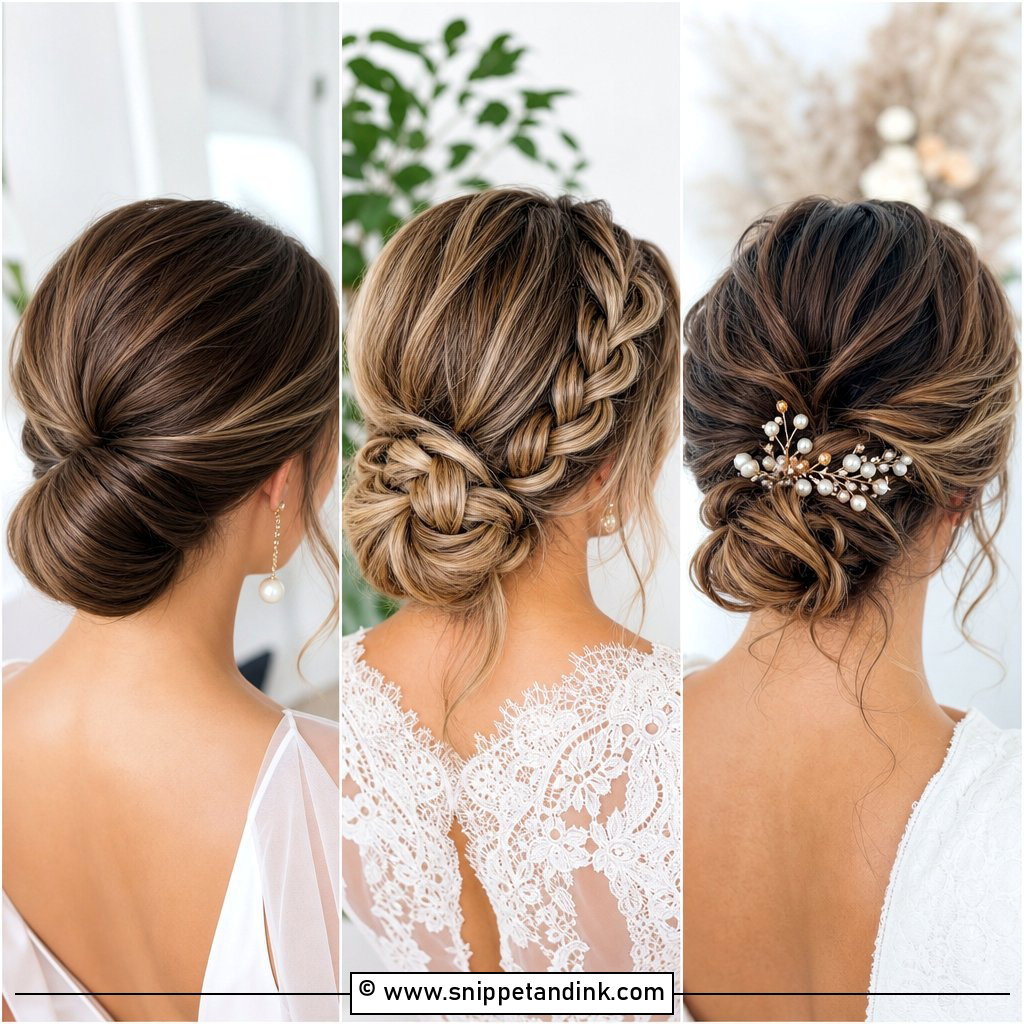
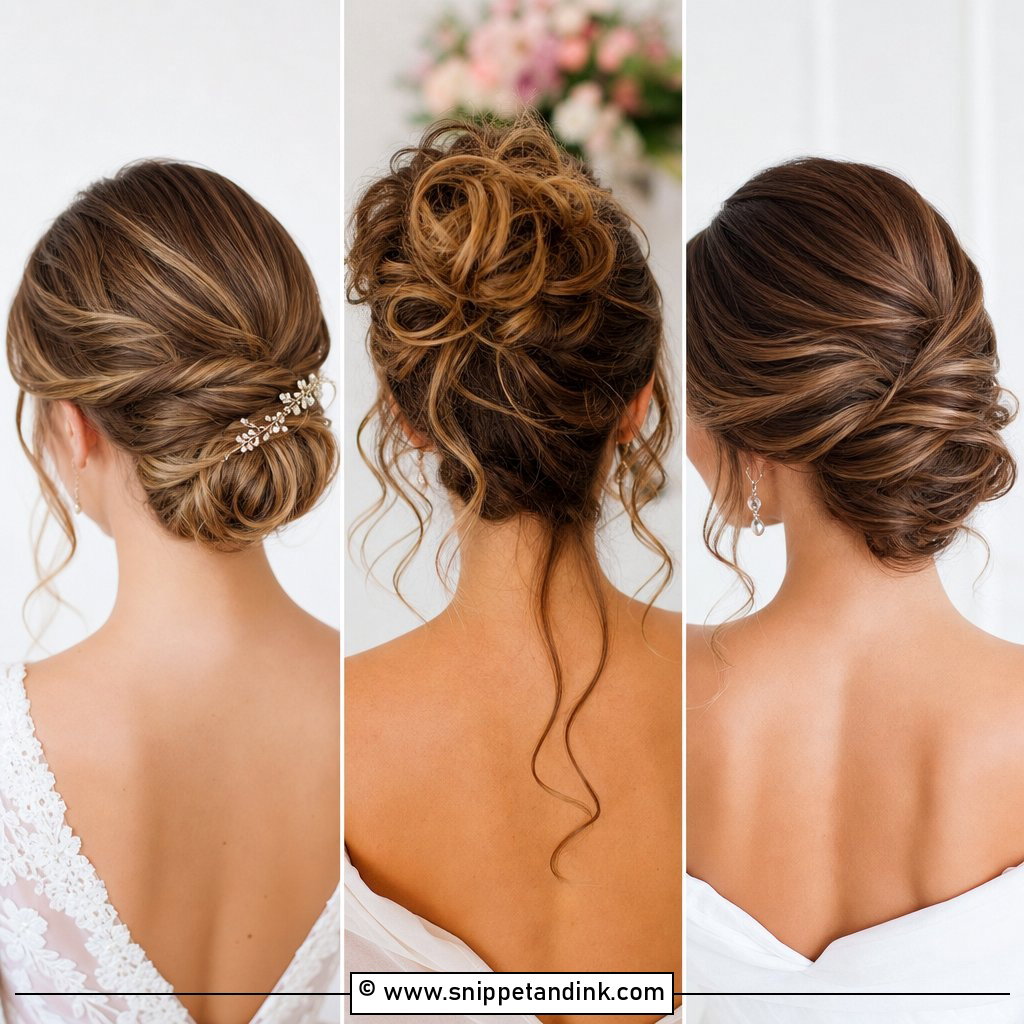
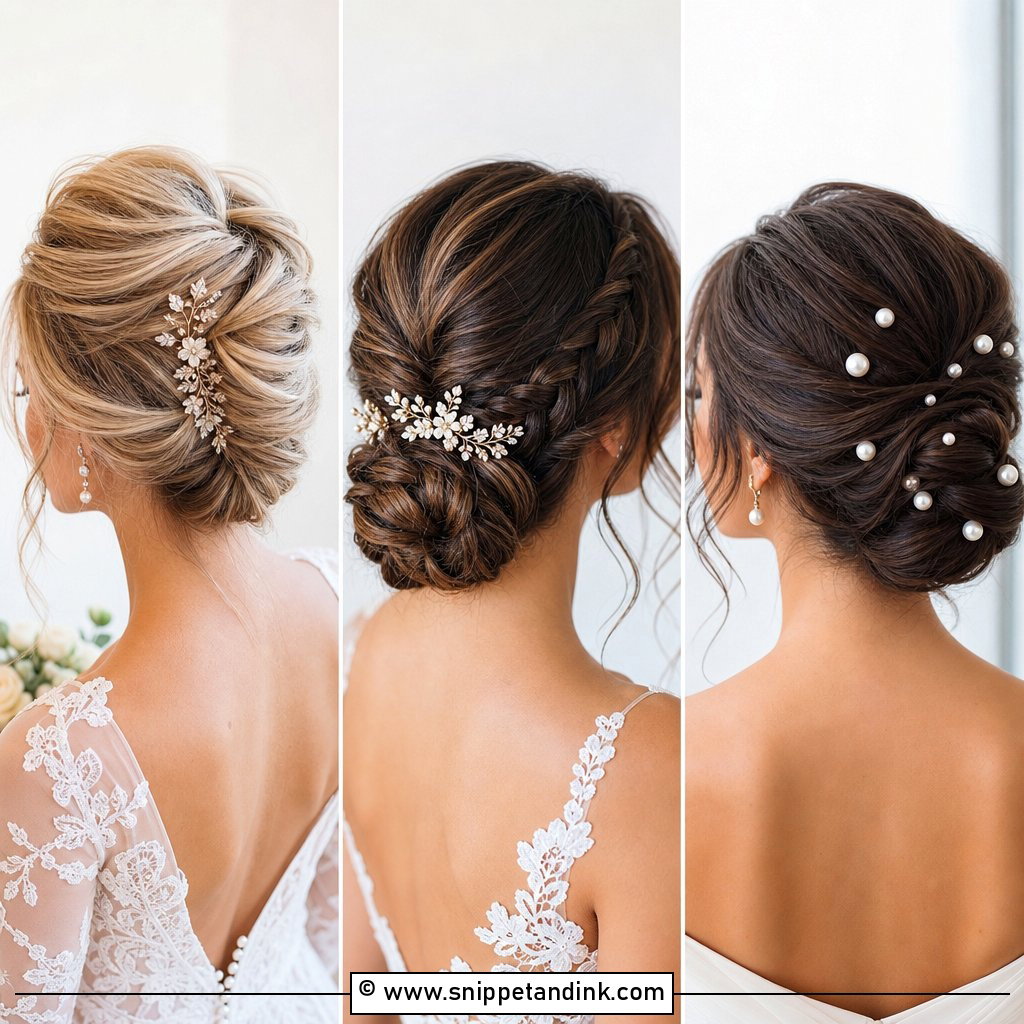
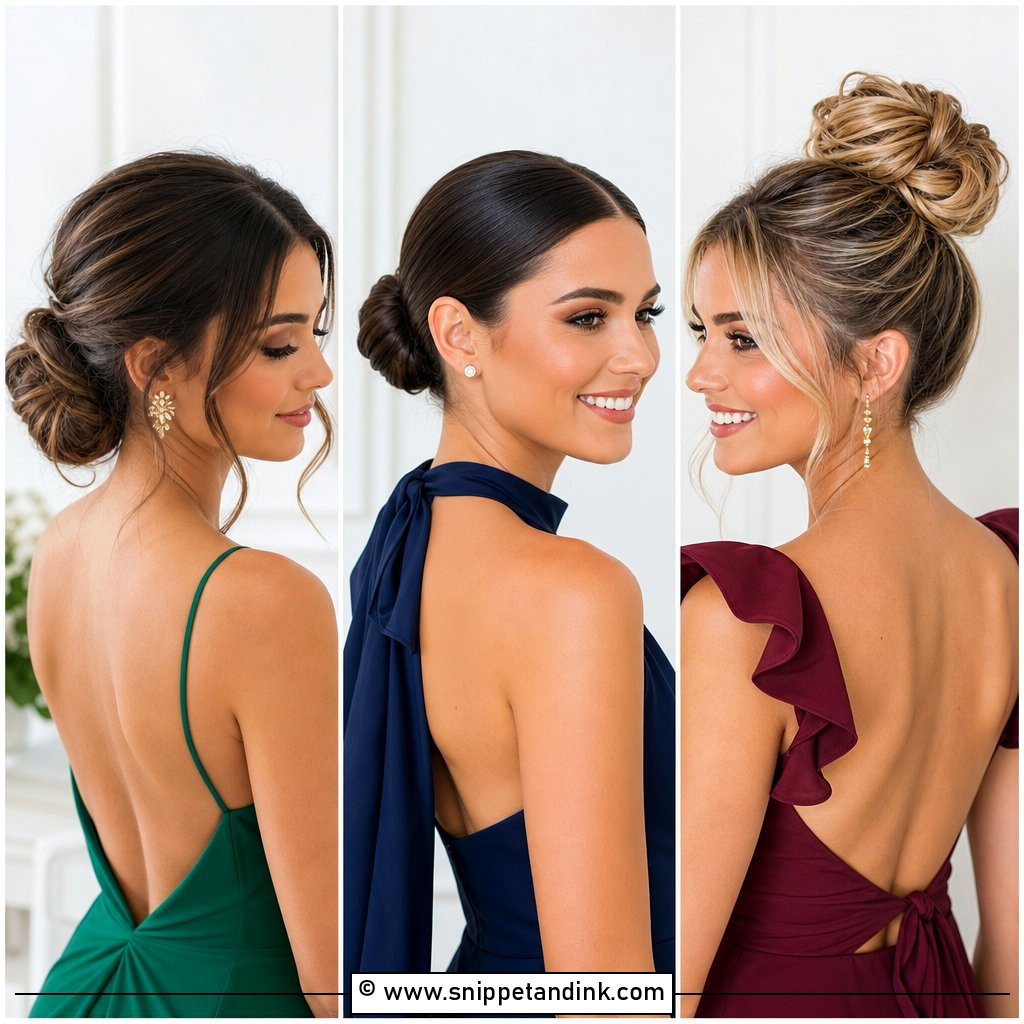
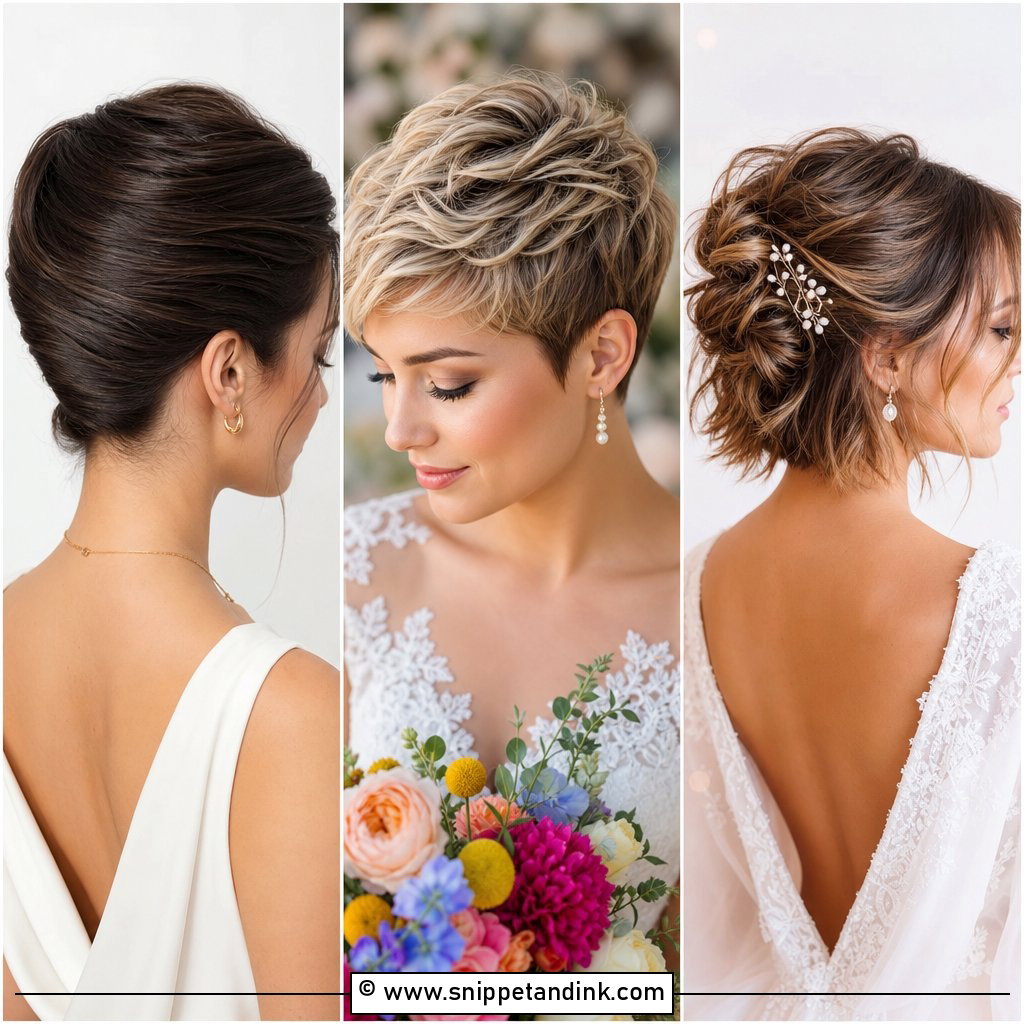
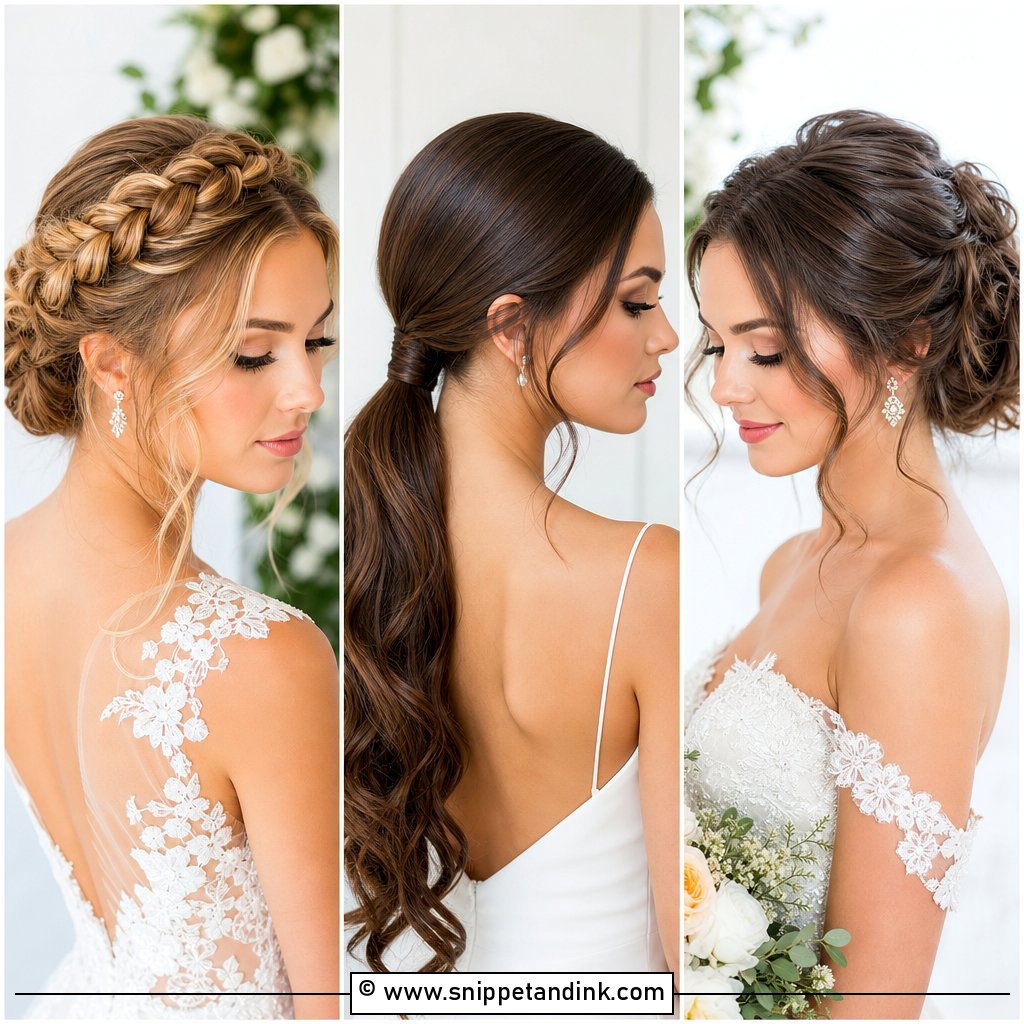
I trust the low chignon more than any other style on a long wedding day. The hair is smoothed back to the nape, then twisted and rolled into a neat, polished knot. Its real strength is as a veil anchor: the base is tight and flat, so a comb has something solid to grip and the weight of the tulle pulls against pins, not loose hair. It flatters most faces and suits both modern and traditional gowns. A few pearl pins or a small comb are enough decoration. On very fine hair I put a slim filler inside the roll so it does not look sparse from behind.
2. Messy Bun Bridal Updo
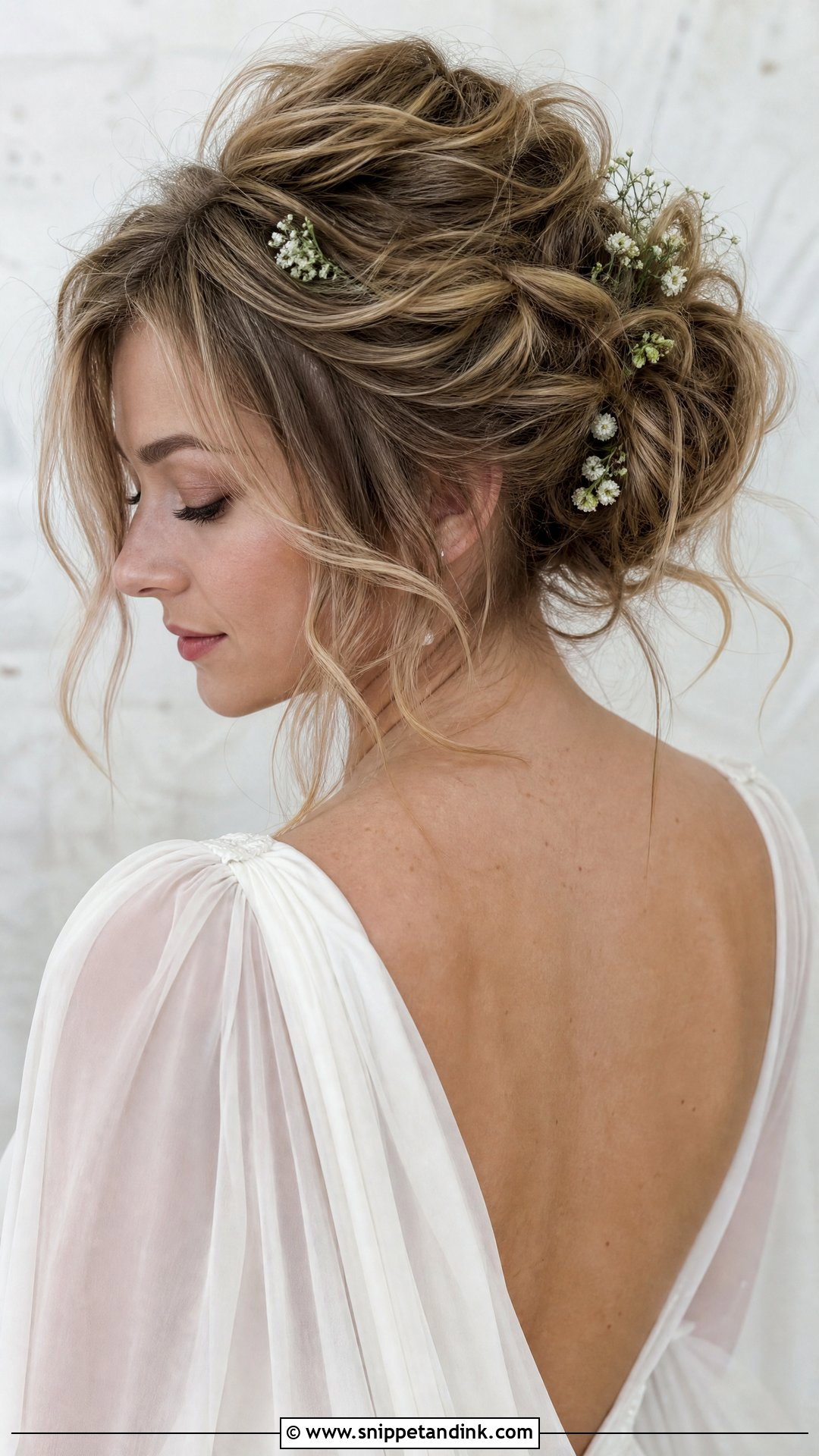
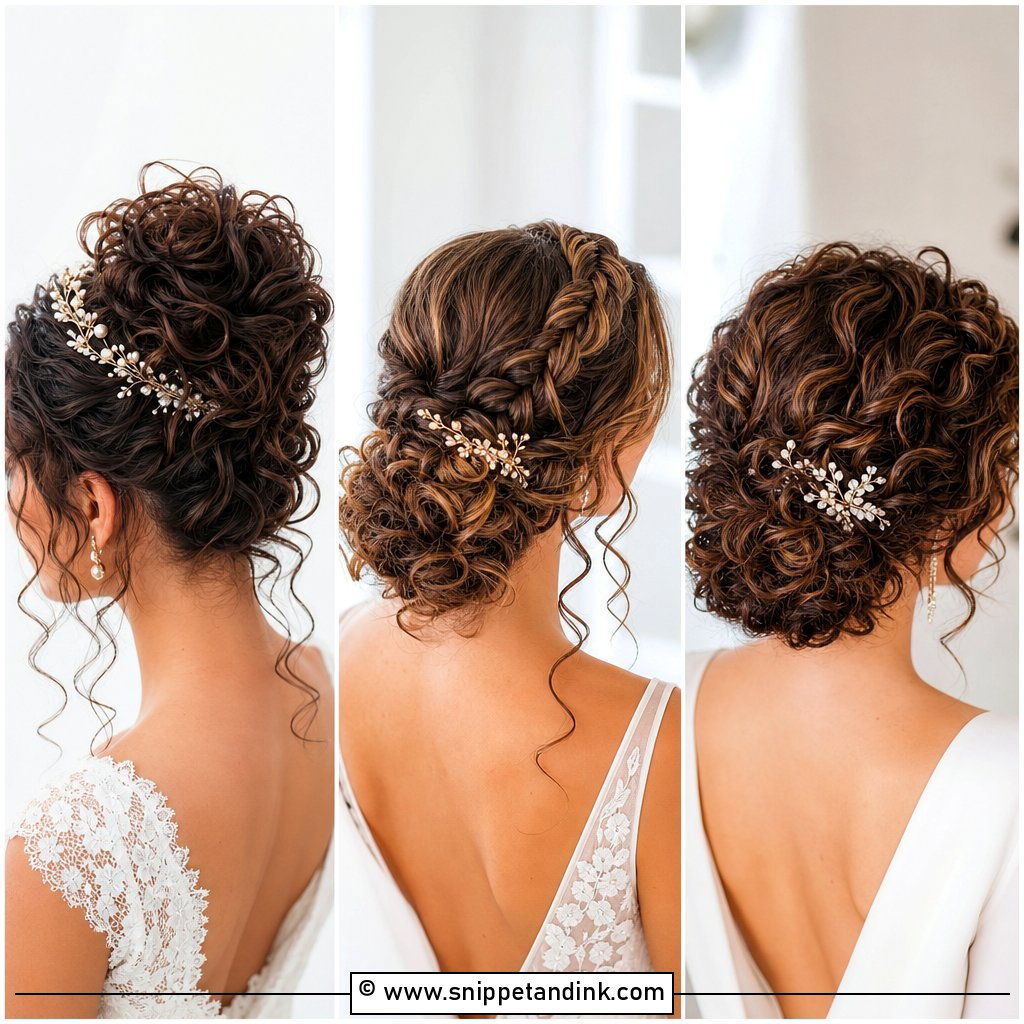
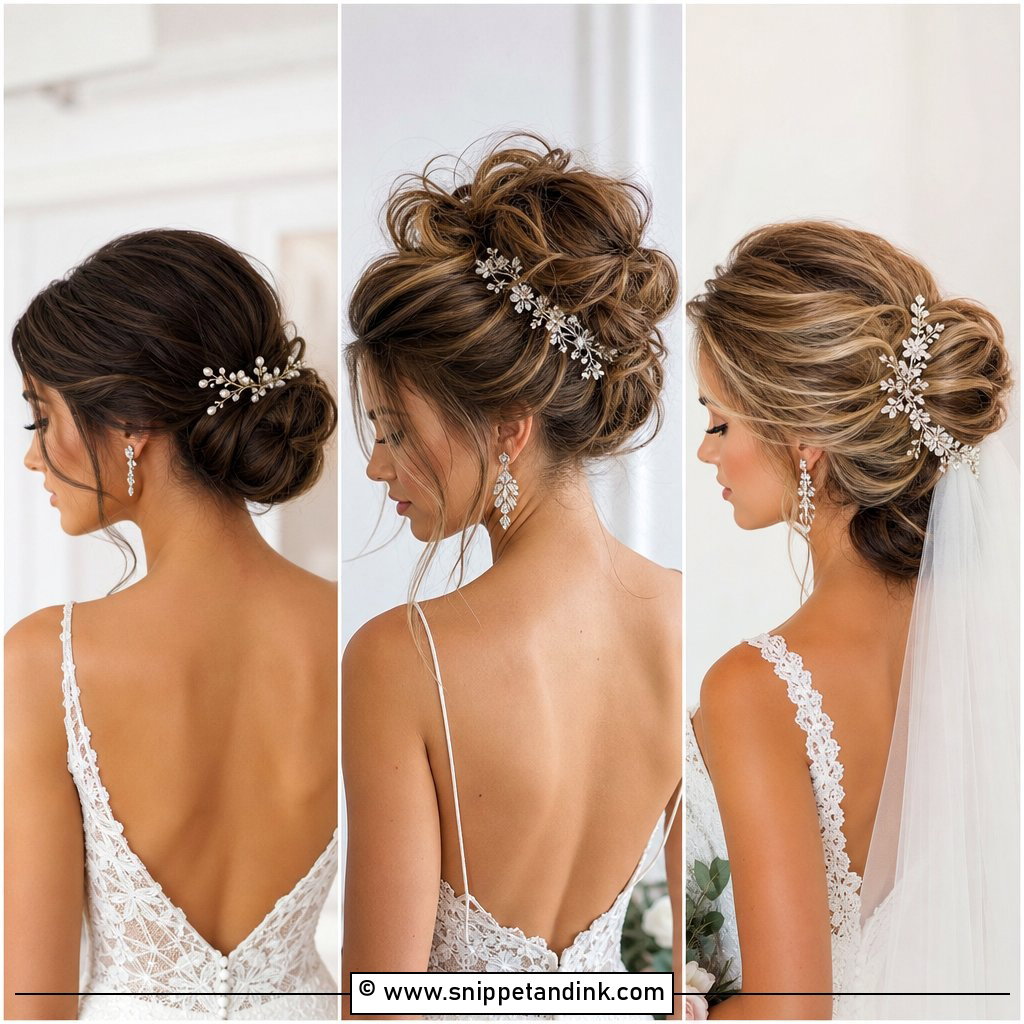
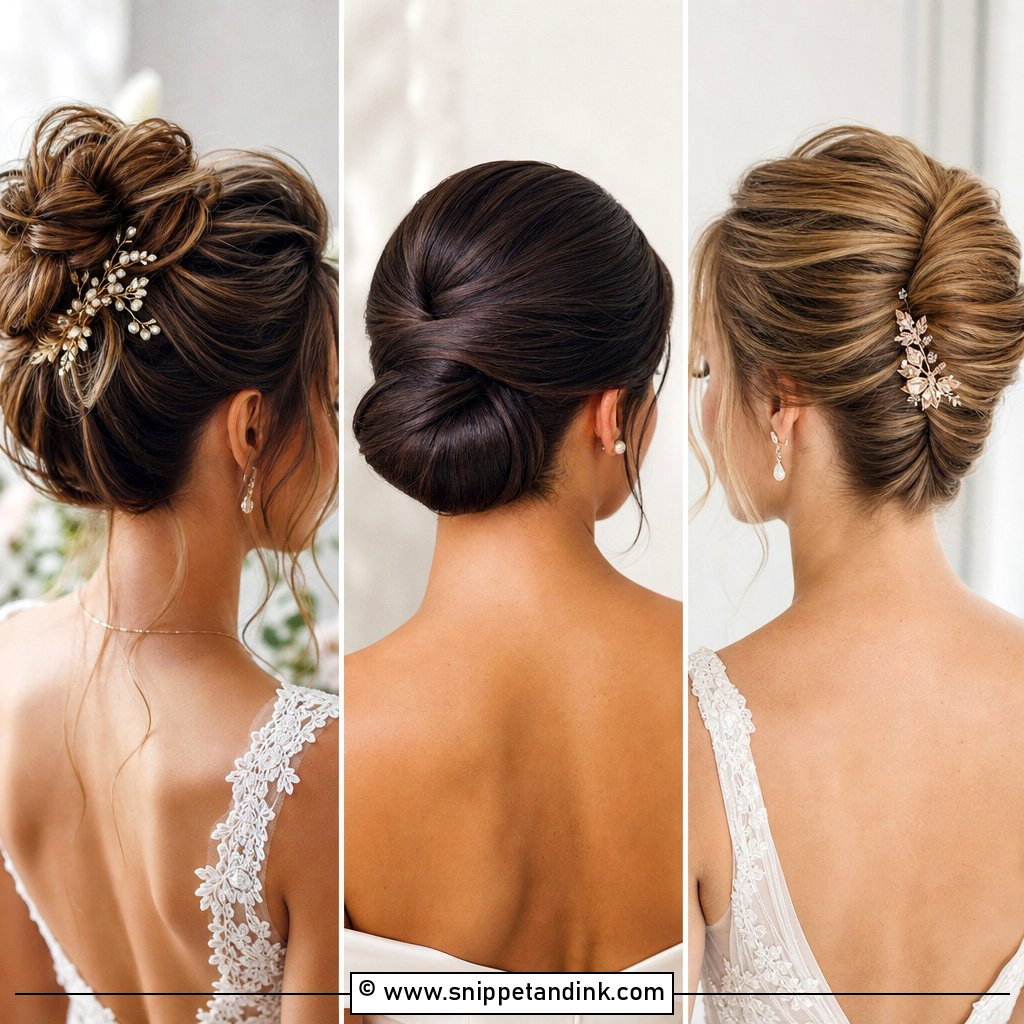
A bridal messy bun is a contradiction I take seriously: it has to look undone and still be pinned like a fortress. I curl the hair into loose waves first, tease the crown gently for height, and then pin the bun in loose sections so it looks gathered rather than wrapped. A few face-framing pieces stay out at the cheeks. It sits well at outdoor and garden weddings, where a perfectly smooth shape can look out of place. Floral accents or pearl pins tuck straight into the loops. The risk is overdoing the loose pieces; past a handful, it starts to look like it fell down.
3. Braided Crown Updo for Brides
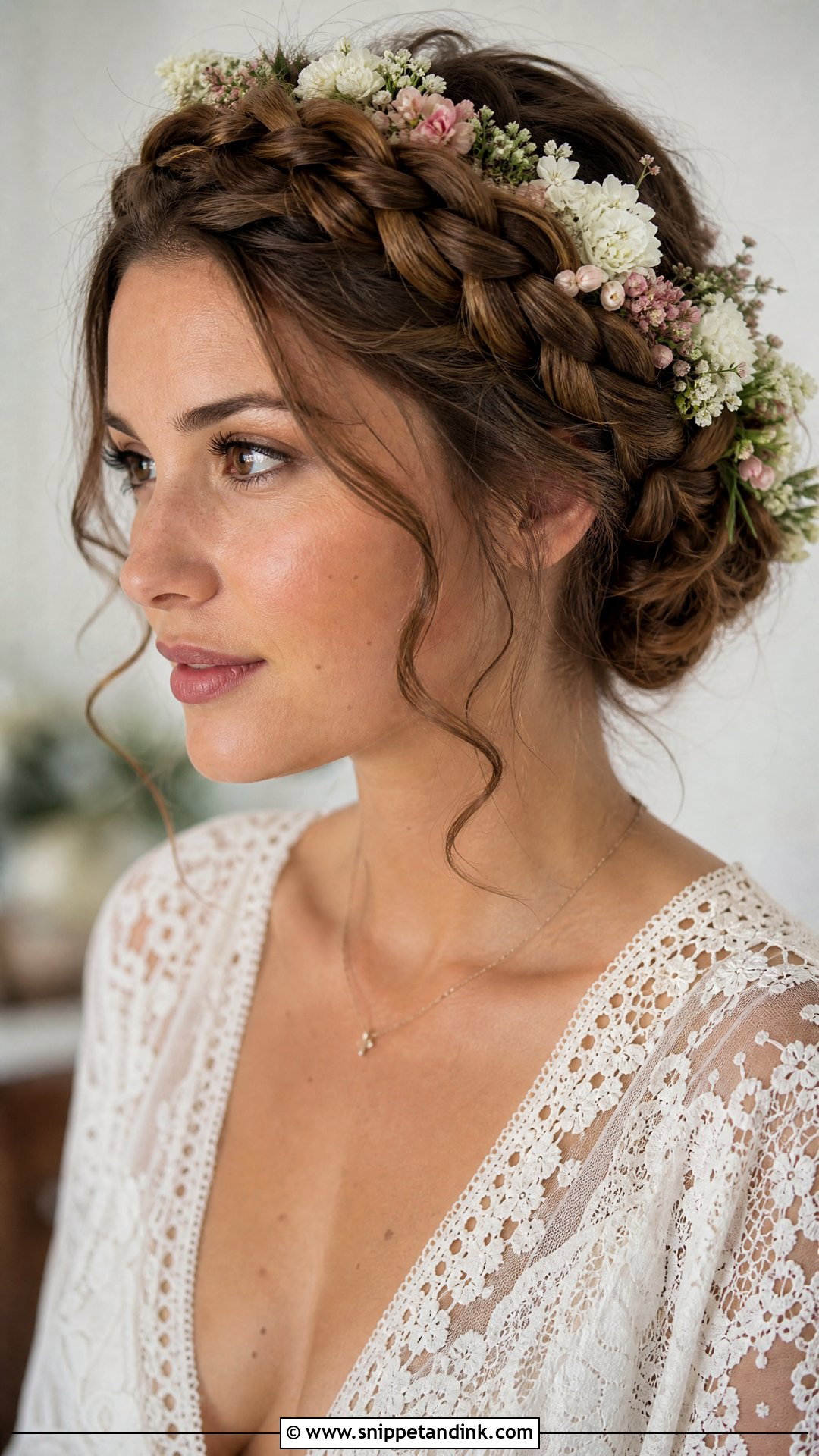
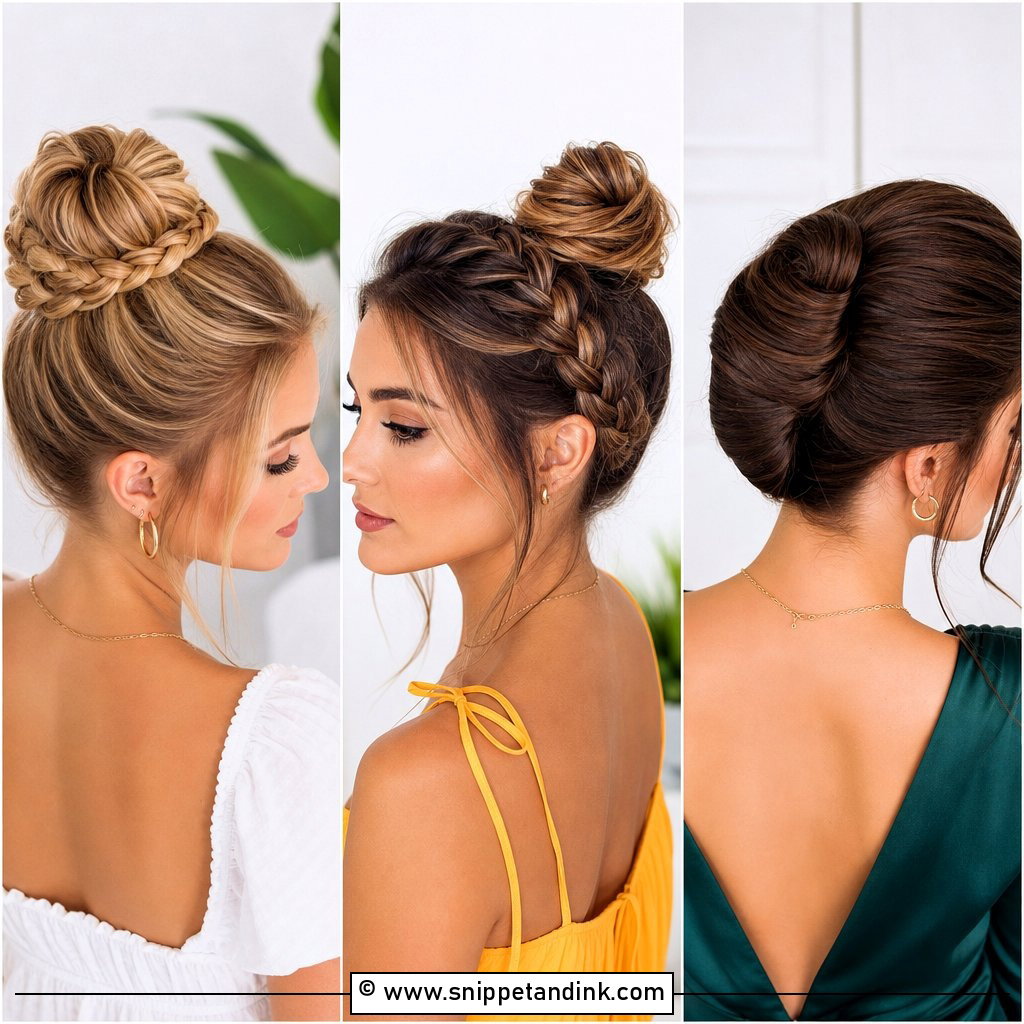
A braided crown wraps the head like a natural halo, and it shows off natural texture better than most styles. I make the braid chunky on thick hair and finer on thinner hair, because a heavy braid on thin hair shows scalp between the sections. Fresh flowers can be tucked into it, though I place them at the sides rather than the top so they survive a veil or hug. Longer hair gives more to work with; shoulder-length hair usually needs clip-ins to make it all the way around. It keeps every strand off the face, which brides at hot summer ceremonies are glad of.
4. French Twist Wedding Updo
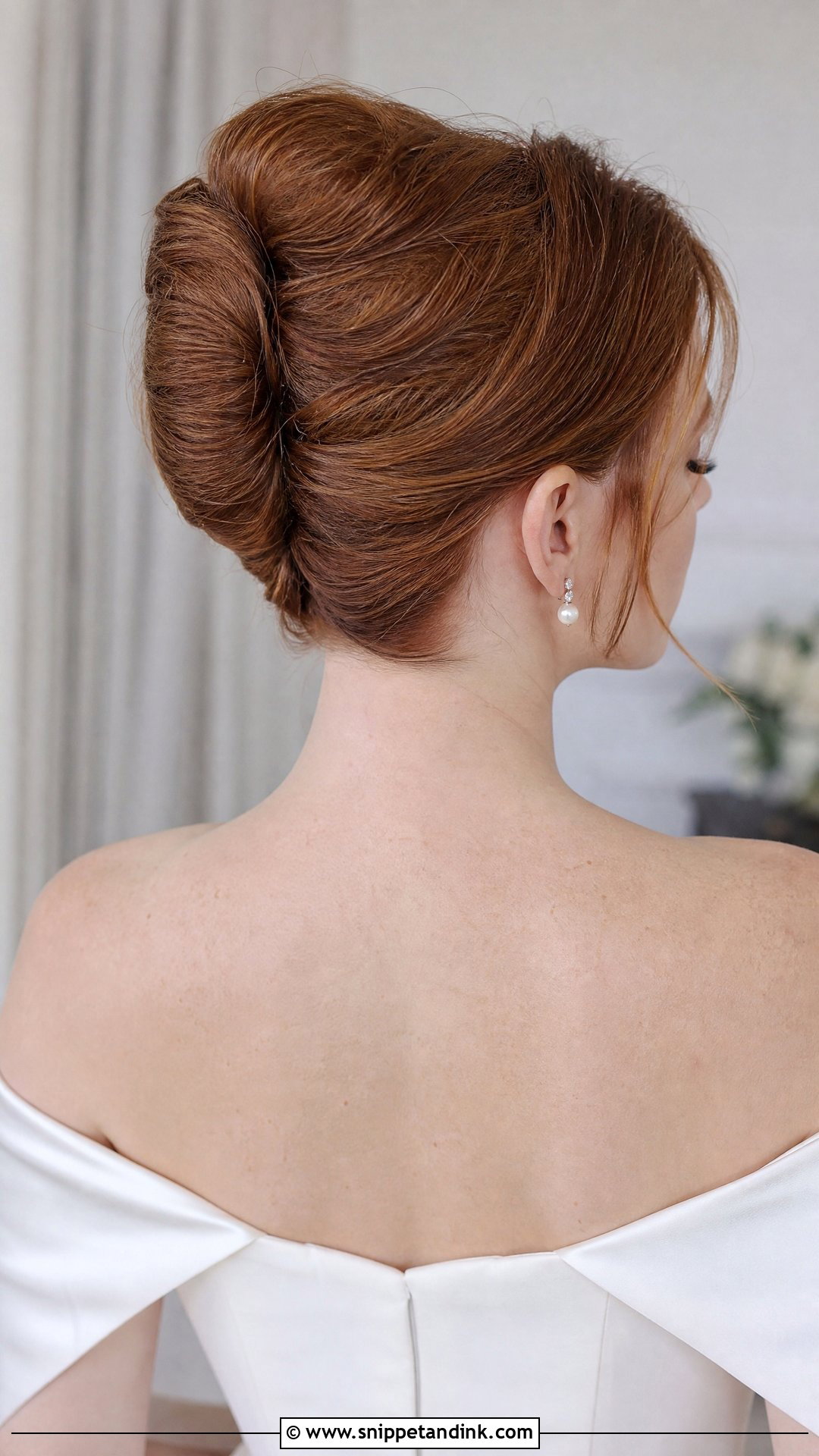
The French twist is back on my mood boards, mostly in a softer form than the stiff version of decades ago. Hair is swept to one side, rolled vertically and tucked under to form a column at the back, then locked with interlocking pins along the seam. A looser twist gives some volume without feeling tight. It suits black-tie and ballroom weddings, and because it sits flat and high, it leaves an open back on a gown completely visible during the ceremony. I don’t recommend it for heavily layered hair; short ends tend to poke out of the fold by evening.
5. Curly Updo for Natural Hair Brides
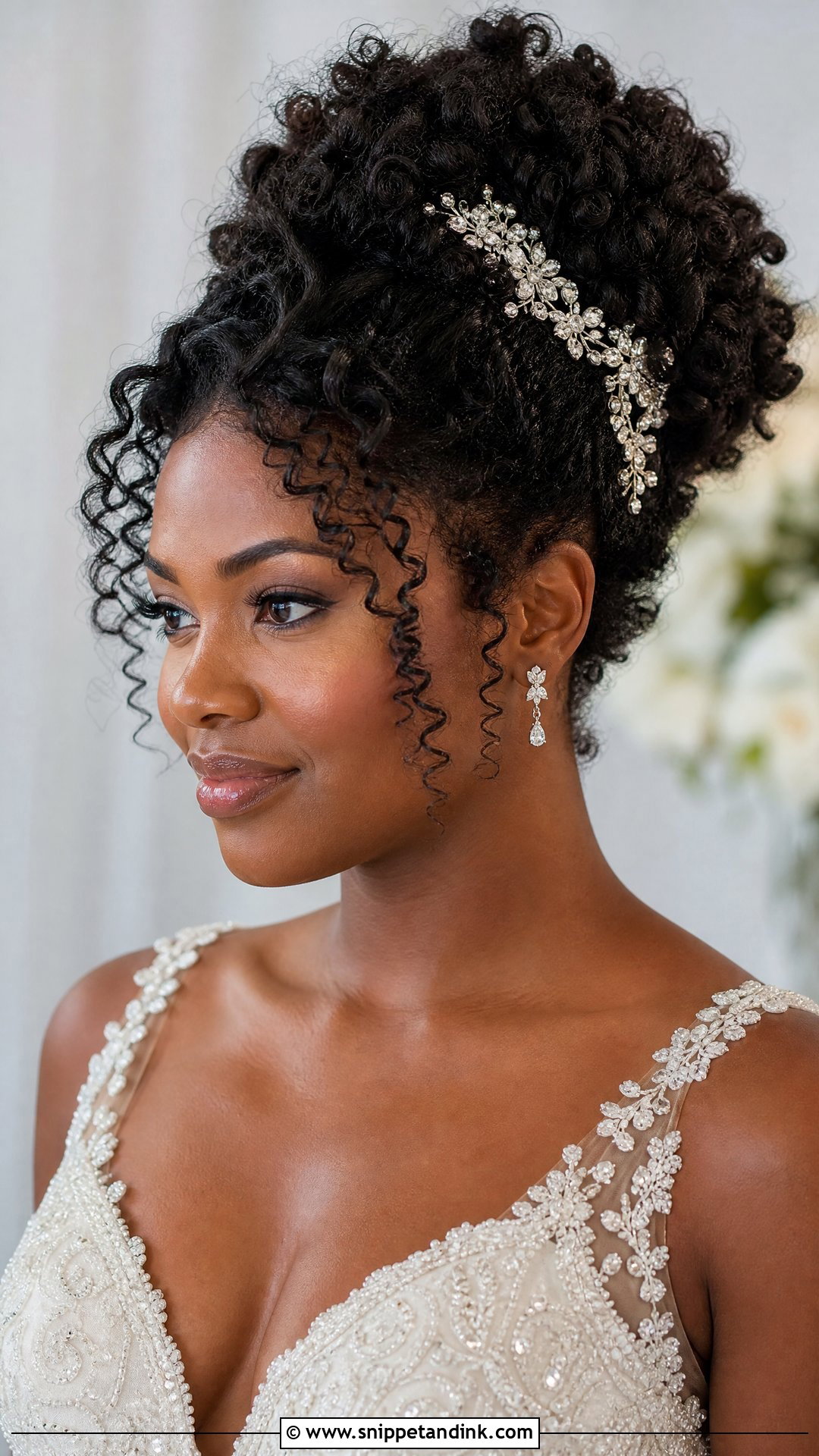
Natural curls deserve an updo that works with them, not against them. I gather the curls into a soft, full bun, sometimes inverting the head to lift the root, then twist sections into place and leave a few coils loose at the face. I do not brush curls out unless that is the look the bride wants, because brushing turns them into frizz the moment the room warms up. Moisture is the priority: a curl cream before styling, and pins designed to grip textured hair. A jeweled comb or fresh blooms sit well in the curls. Tight coils and loose spirals both work; tight coils just need fewer pins, since they hold onto each other.
6. Twisted Low Updo Wedding Hairstyle
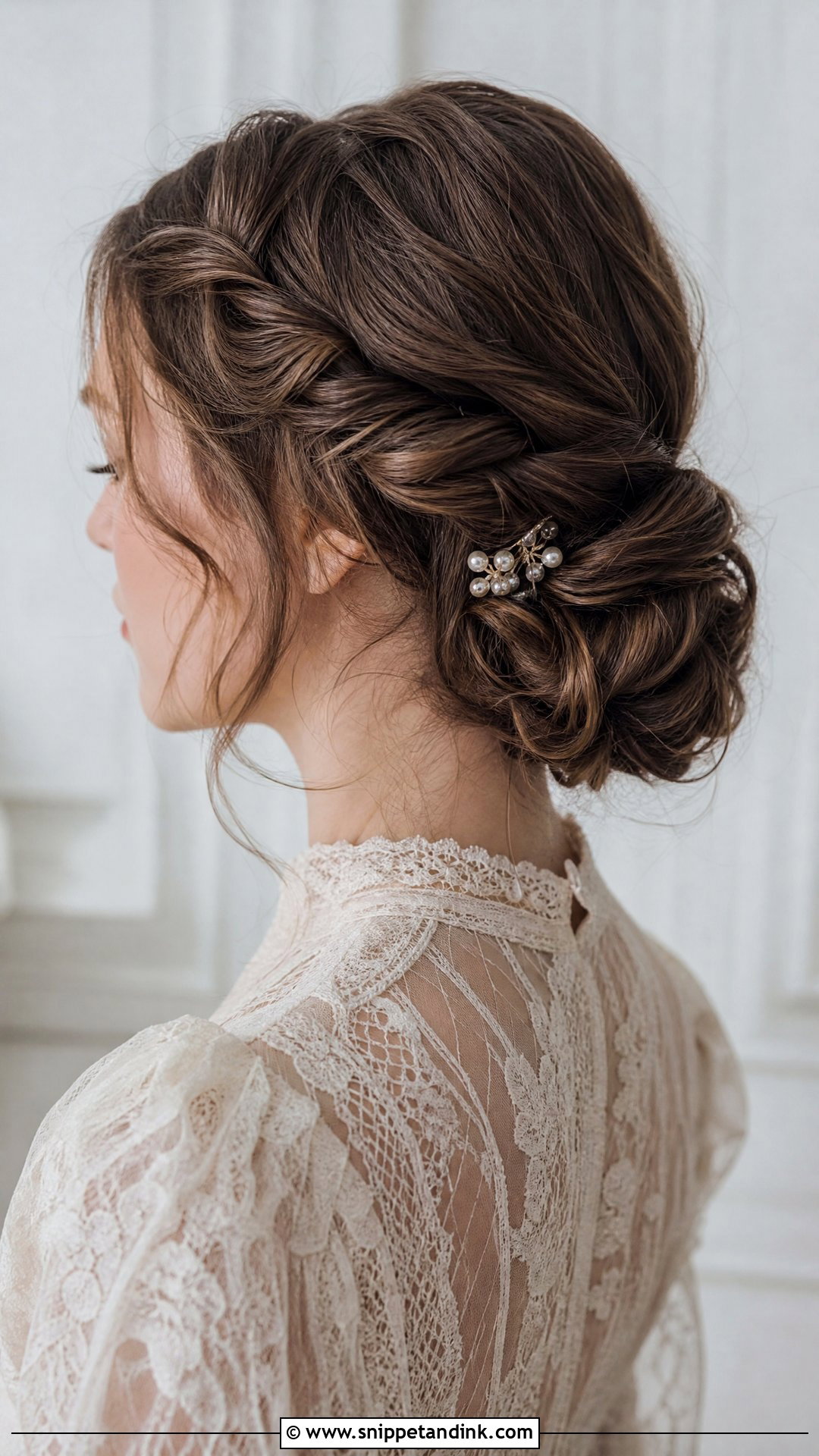
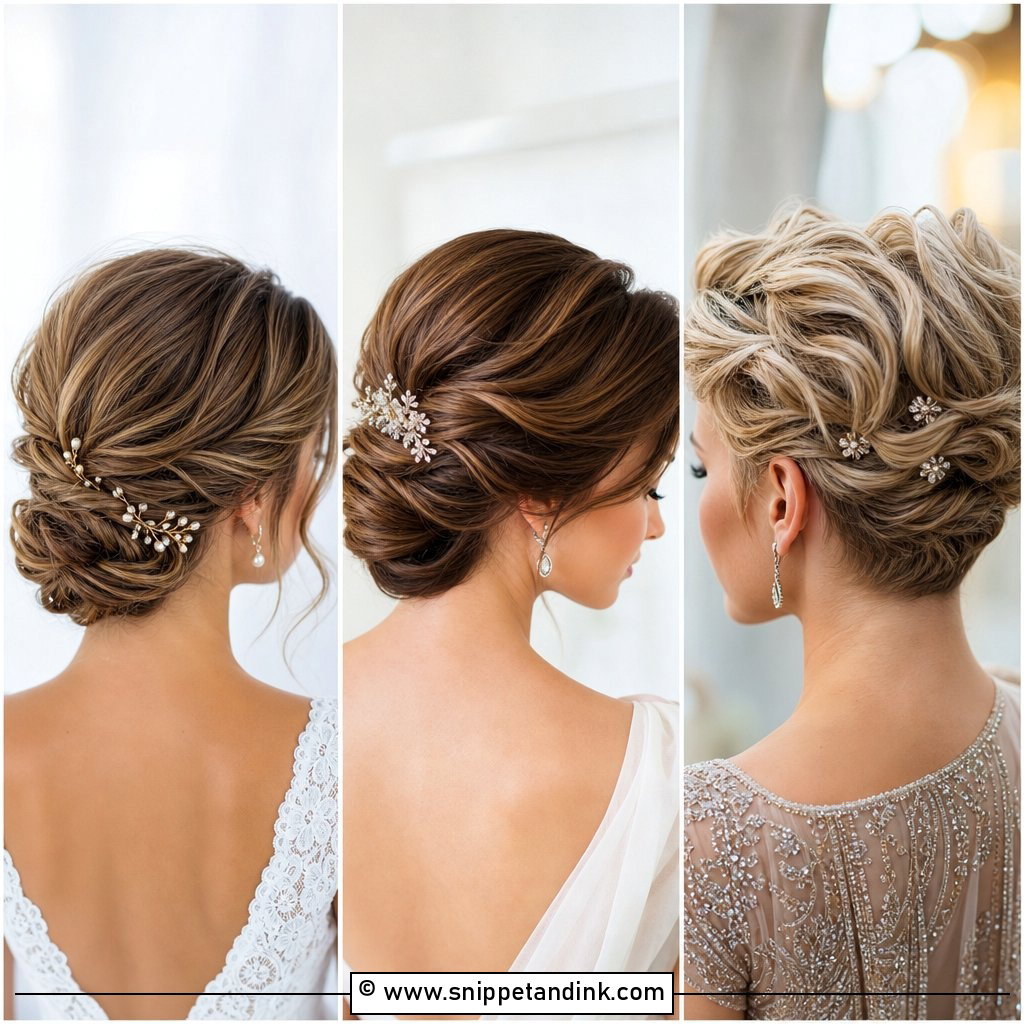
Loose twists gathered and pinned at the nape give a low updo texture without the time a braid takes. The twists spread the weight across the back of the head, so this is one of the more comfortable styles for a long day, and it holds well through dancing. A few tendrils out at the face keep it from looking severe. It pairs nicely with lace and vintage-inspired dresses. If you want pearl pins or tiny flowers, ask for them between the twists, where the pins can hide in the gaps.
7. Textured Bun With Face-Framing Tendrils
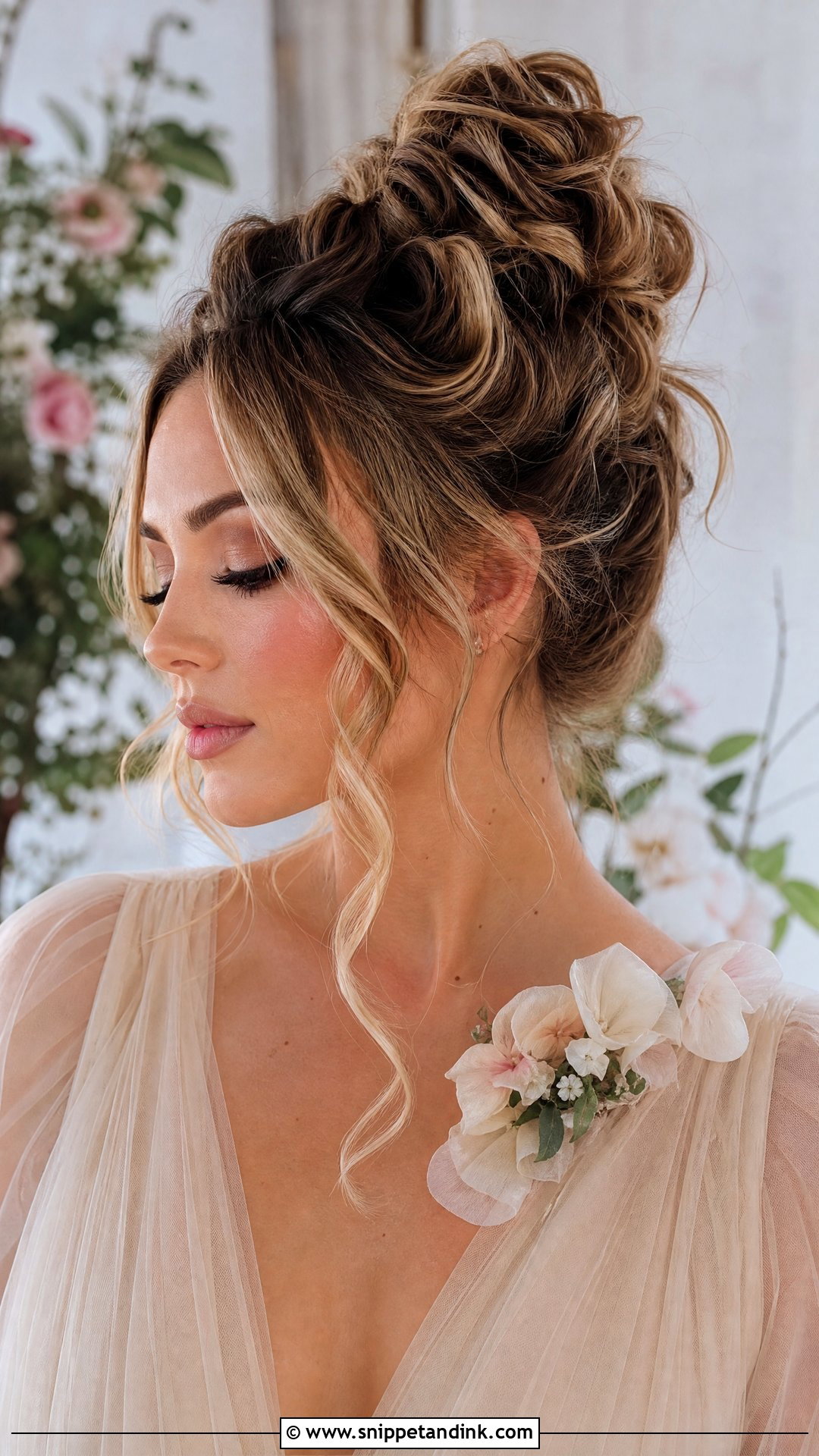
Most of the work in this one is in the tendrils, not the bun. The bun keeps the bulk of the hair at the back with an undone, full texture, while a few wisps fall around the face. I curl those pieces with a small wand, pin them in a coil while they cool, and release them last, so they hold a wave instead of going limp before the ceremony. It softens most face shapes. A sparkling pin or small floral accent near the bun is plenty. On very straight, silky hair, expect the tendrils to relax by evening; that is the hair, not the stylist.
8. Sleek Ballerina Bun for Weddings
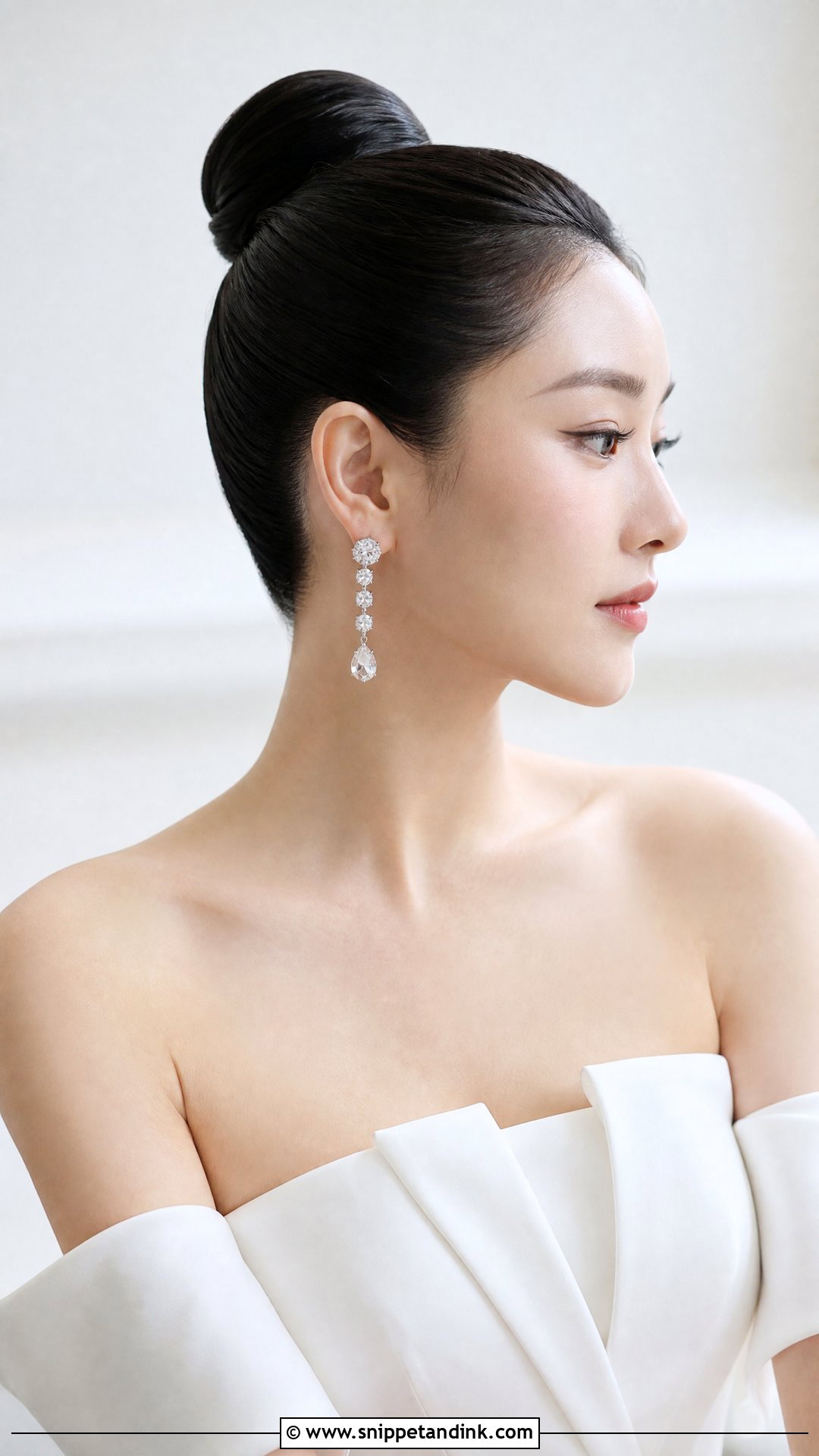
The sleek ballerina bun is the most minimal style here and the least forgiving. Hair is pulled back high and smooth with no flyaways, so any bump or uneven part shows instantly. I set it with a smoothing gel on slightly damp hair and brush it in sections before tying it. It lets statement earrings and stronger makeup take over, and it suits a structured gown at a modern venue. I would steer brides with a lot of short baby hair or a sensitive scalp away from it: a tight high bun pulls, and by hour eight that is all you can feel.
9. Braided Low Bun Wedding Updo
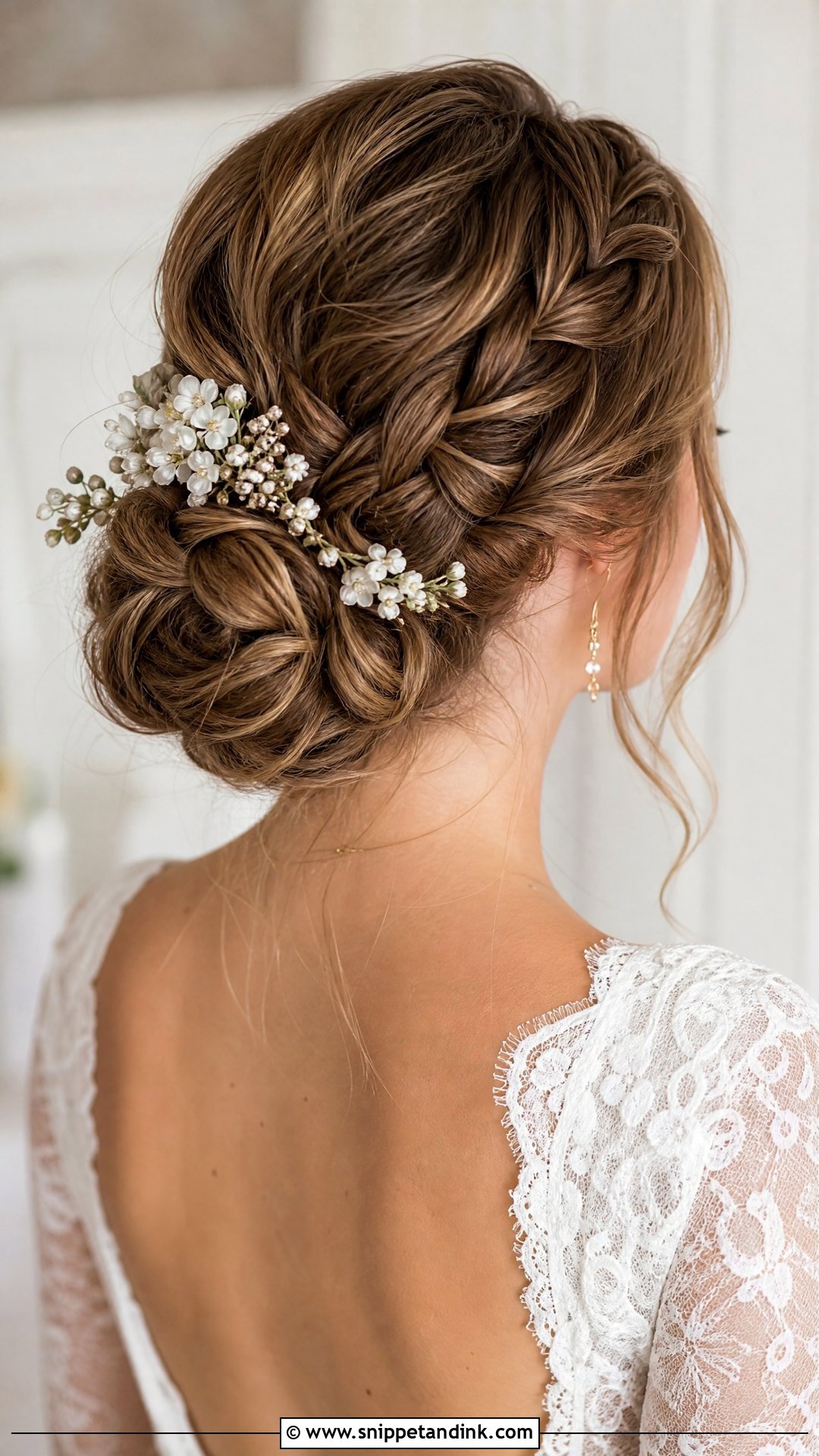
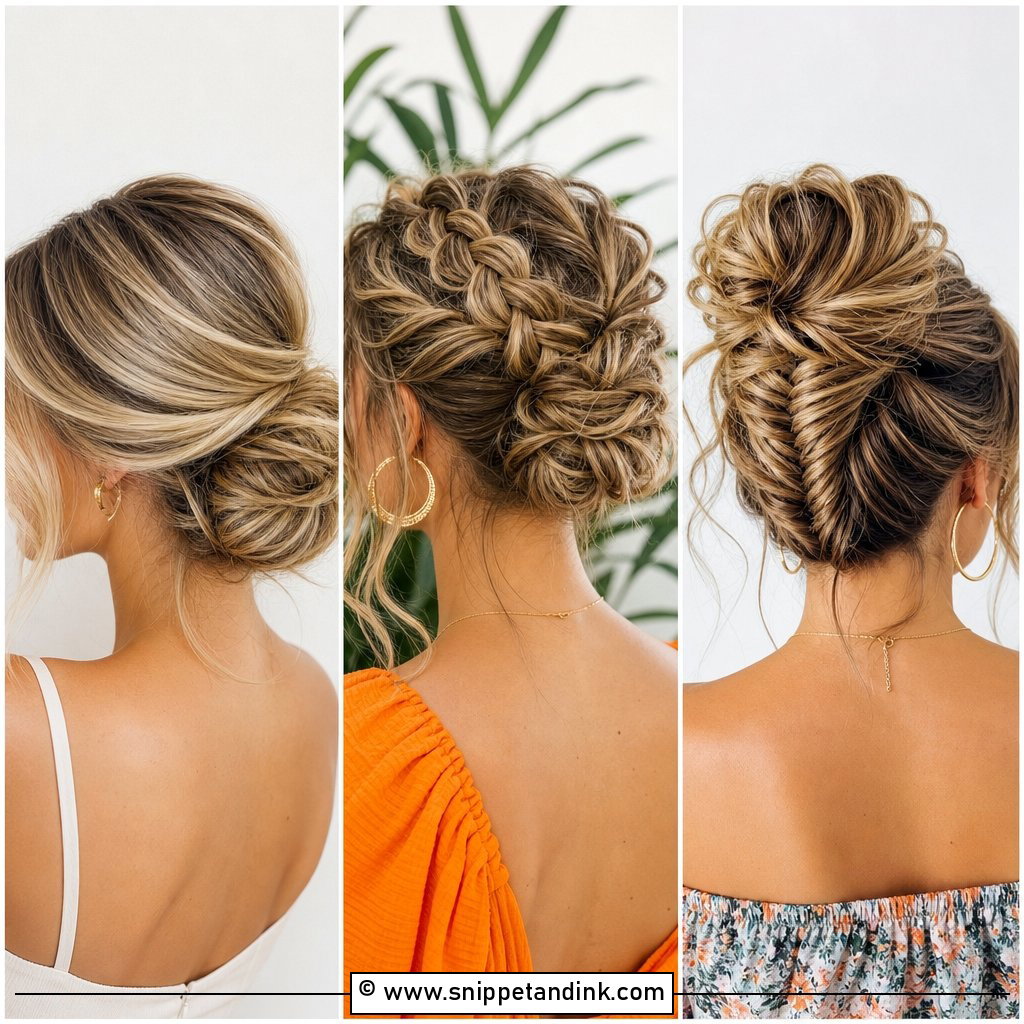
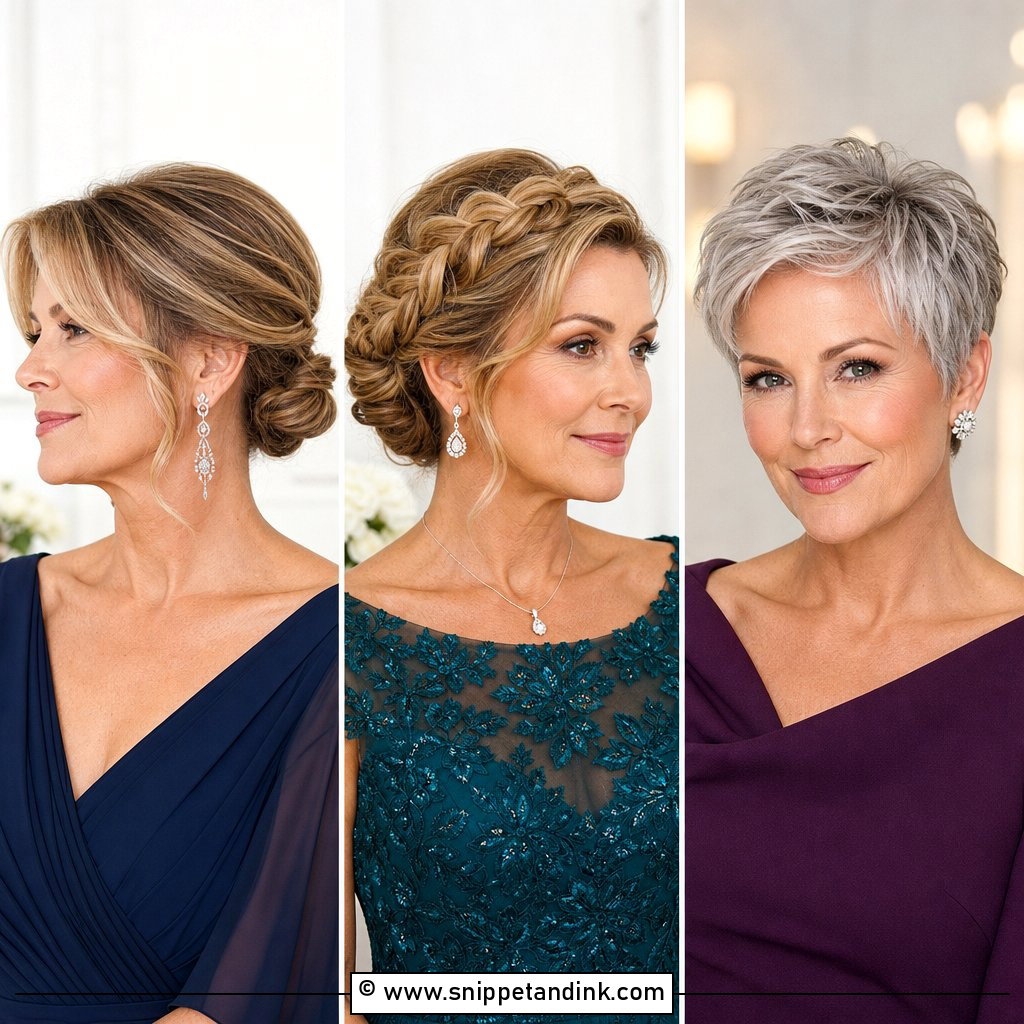
A braided low bun mixes texture and polish in one shape. One or more braids wrap into a soft bun at the nape, and the low placement keeps it calm and romantic. I tend to suggest it when a bride’s bridesmaids are wearing braids too, because it ties the group together without making everyone identical. It looks good with flowers, pearl pins or a fine vine. On highlighted hair the braid catches light well, since each crossover shows a slightly different tone.
10. Vintage Inspired Updo With Finger Waves
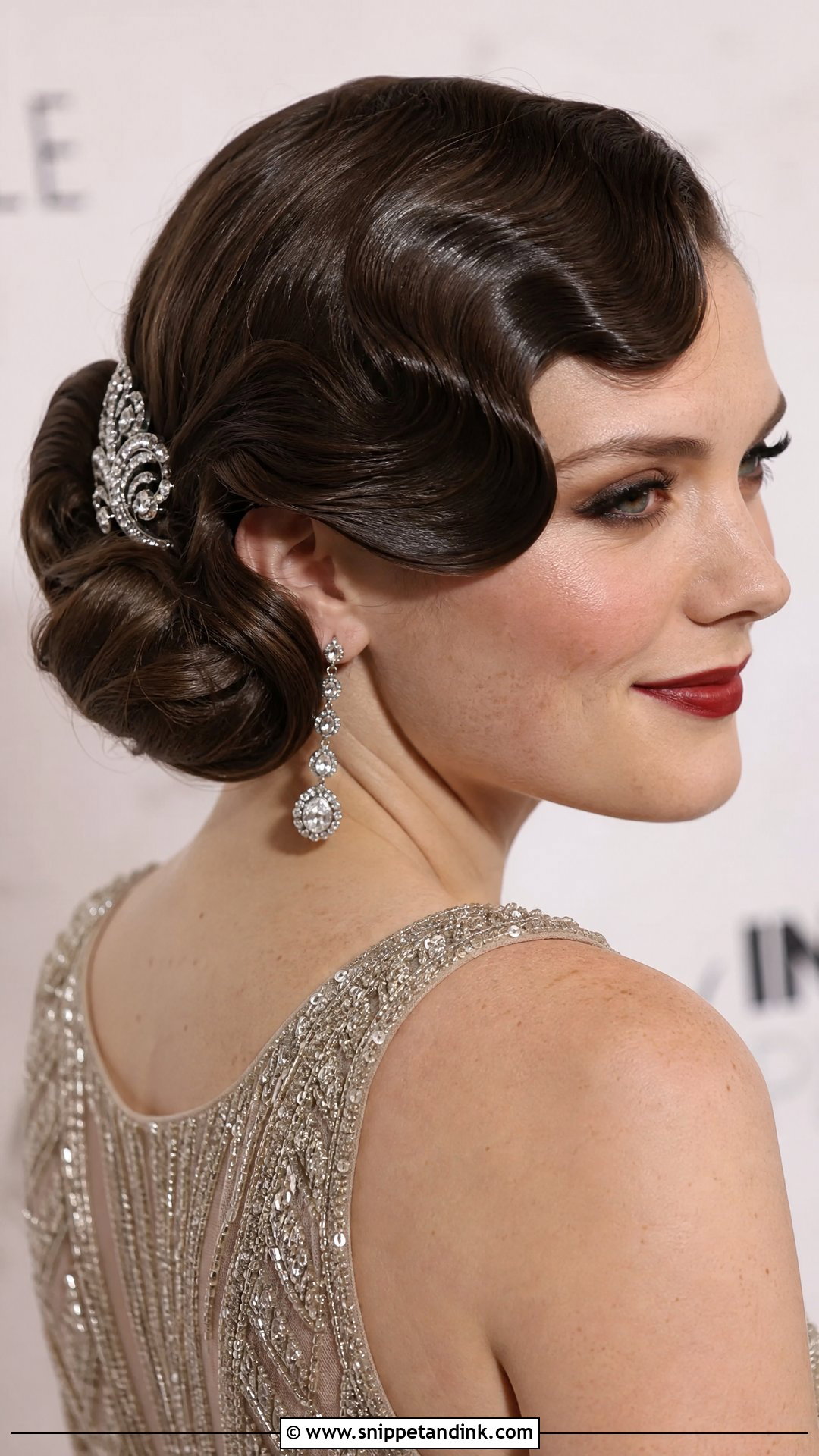
Finger waves are a technique, not just a look, and they take practice to set. I sculpt the waves at the front with gel and clips, let them set fully, then gather the rest into a low knot or roll. It is old Hollywood through and through. Pair it with a Juliet cap veil or a jeweled comb for a true period feel; Art Deco themes and ballroom weddings suit it best. Be honest with yourself at the trial, though. If you never wear sculpted hair, it can feel like a costume, and a softer vintage wave may be a better match.
11. Boho Braided Updo With Flowers
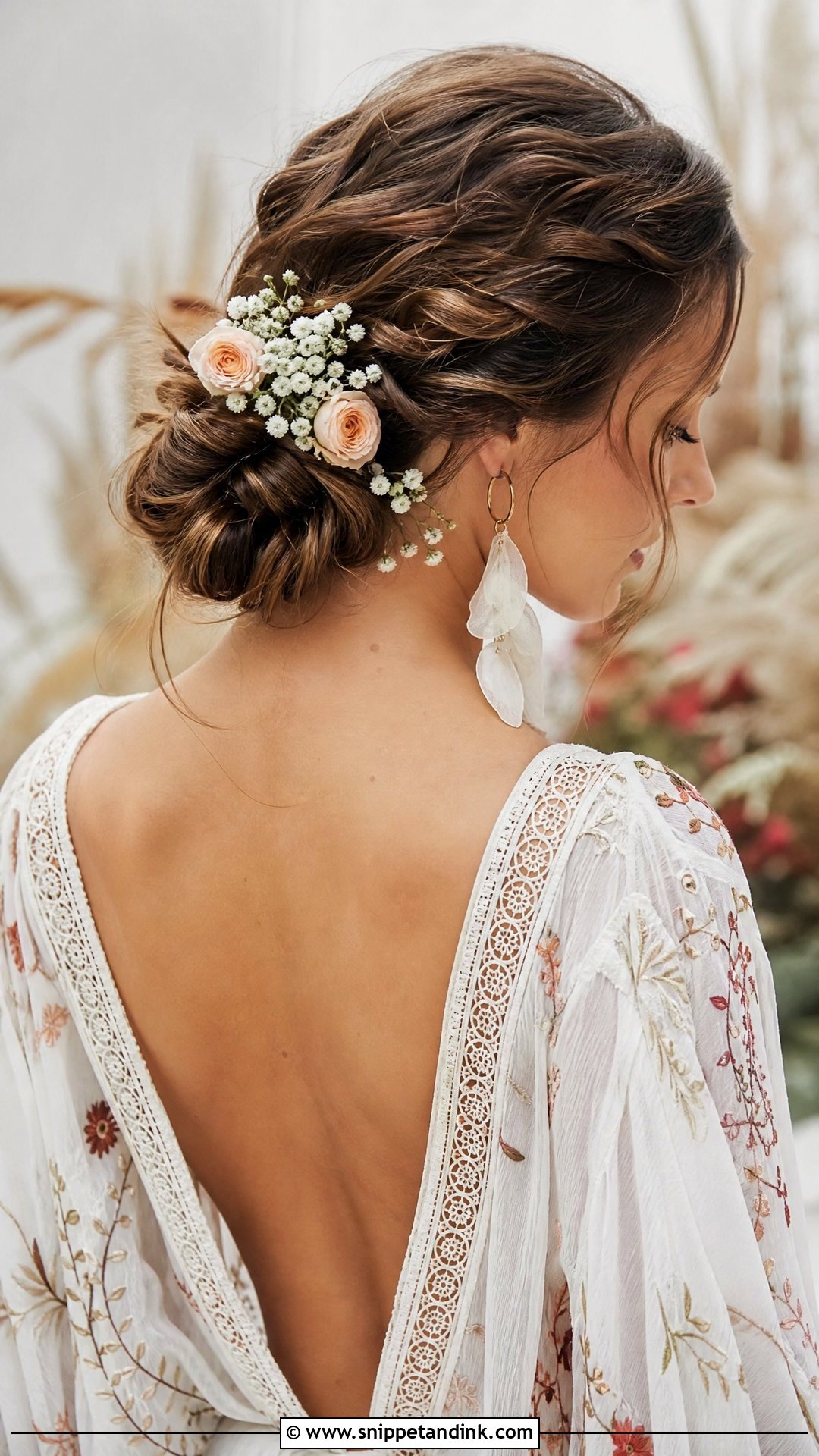
This is the style I plan with the florist rather than around her. Soft braids and loose twists are gathered into a relaxed low shape, then dotted with blooms such as baby’s breath, roses or wildflowers. Baby’s breath and other small, sturdy stems last far better against warm hair than delicate petals, which brown at the edges by the reception. I ask for the hair flowers to be prepped and kept cool until I’m ready to place them. It suits outdoor and barn weddings and ties the hair to the bouquet. Leave a few soft tendrils loose so it doesn’t look tight.
12. Half Up Half Down Updo for Brides
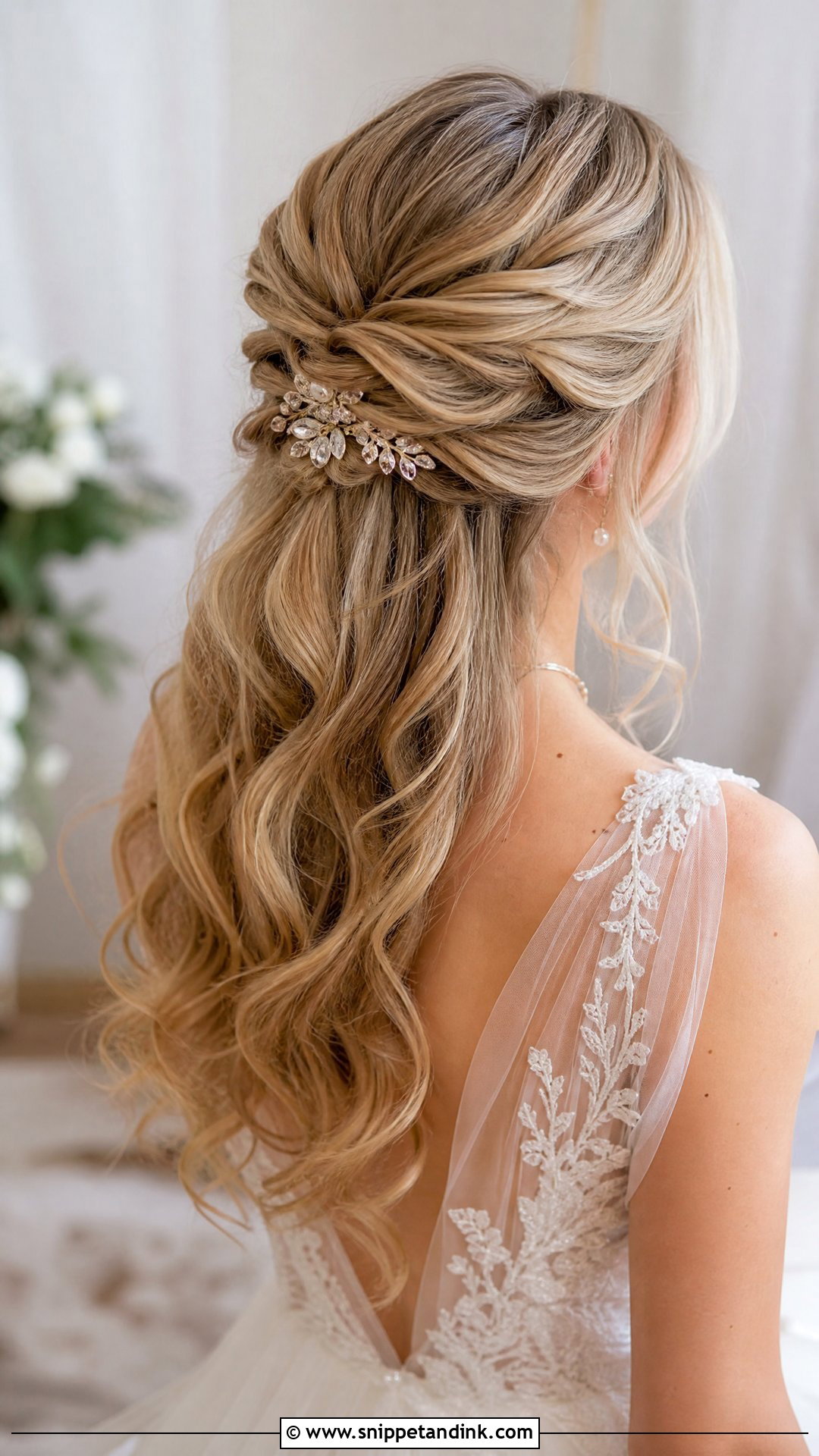
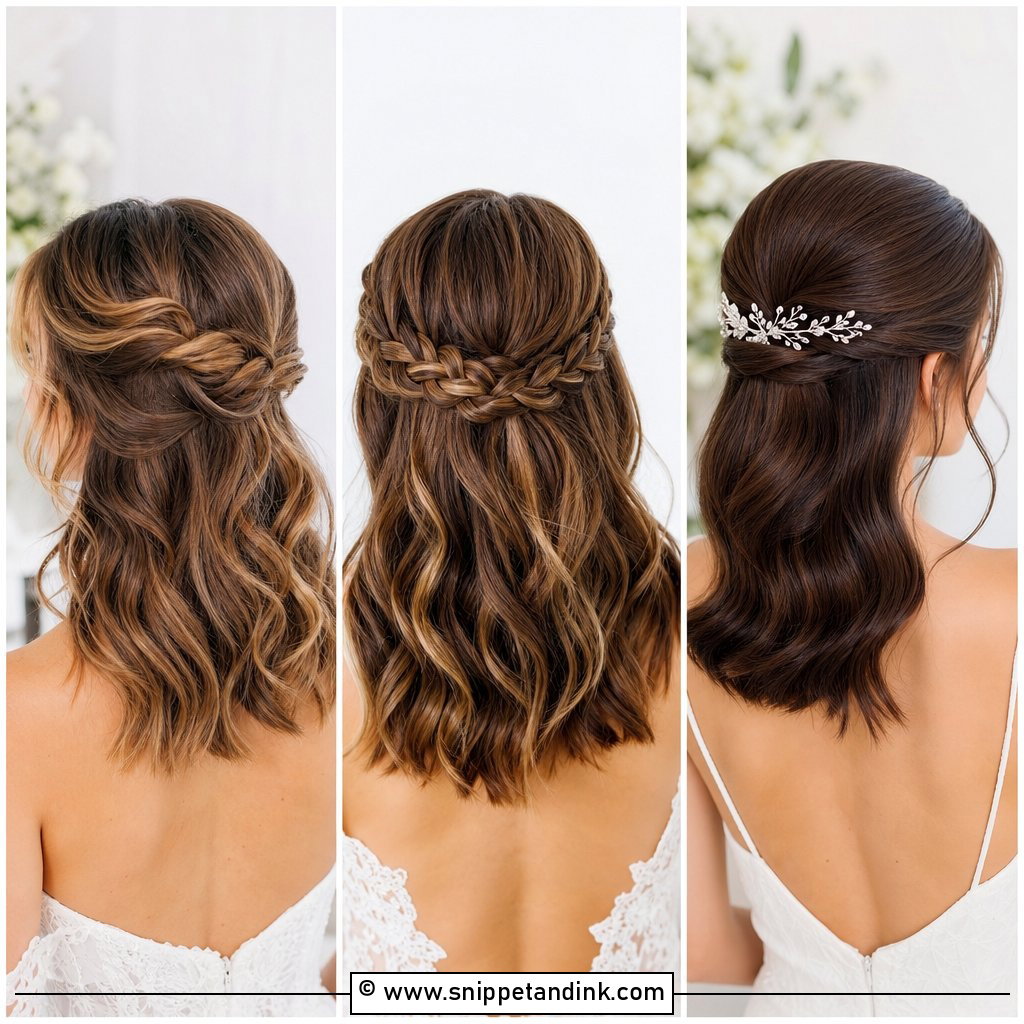
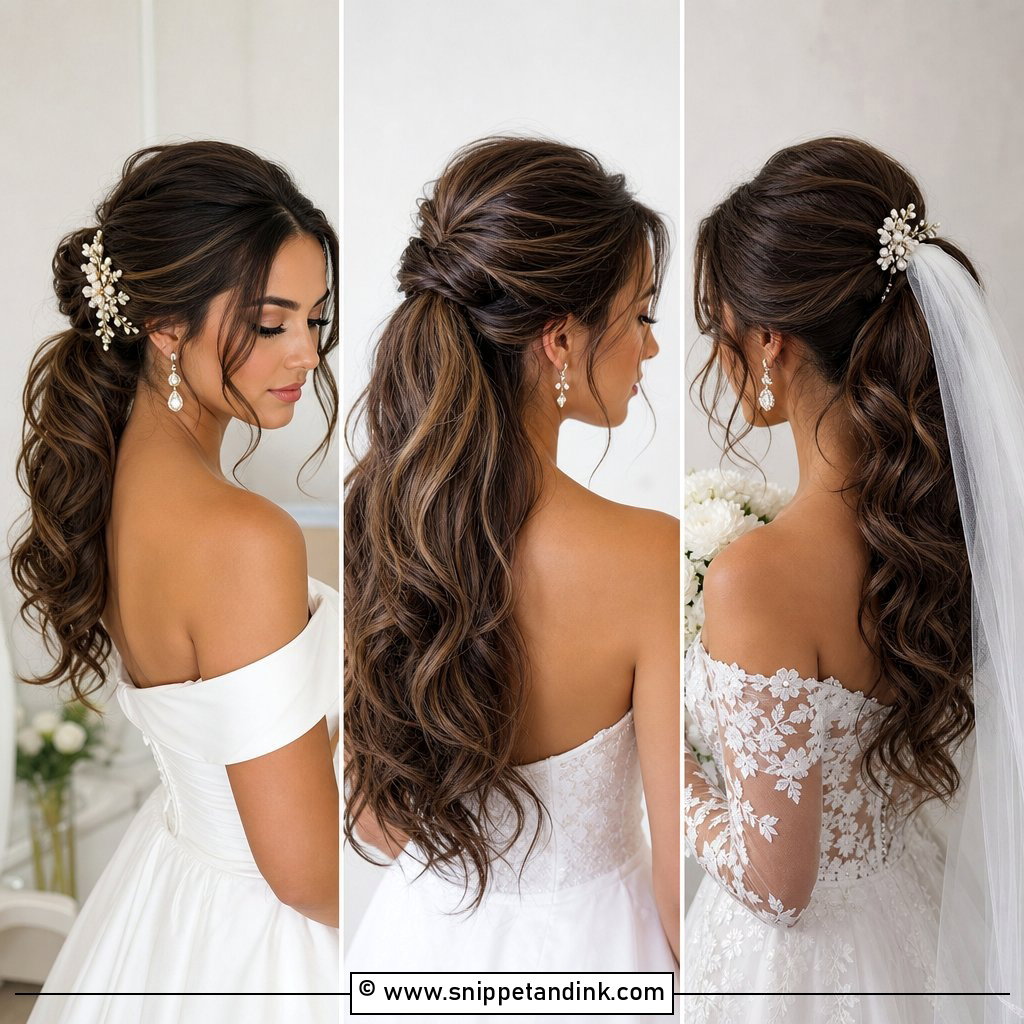
Half up, half down is the answer for brides who can’t commit. The top section is secured with a twist, braid or small bun while the rest falls in waves or curls. It shows off length and keeps the hair out of the face. The honest downside: the loose lengths are exposed to humidity and hugs all day, so curls need a proper set and a flexible spray if they are going to last. A veil sits neatly underneath the gathered section. A decorative clip or flowers at the join finish it.
13. Low Twisted Chignon With Pearls
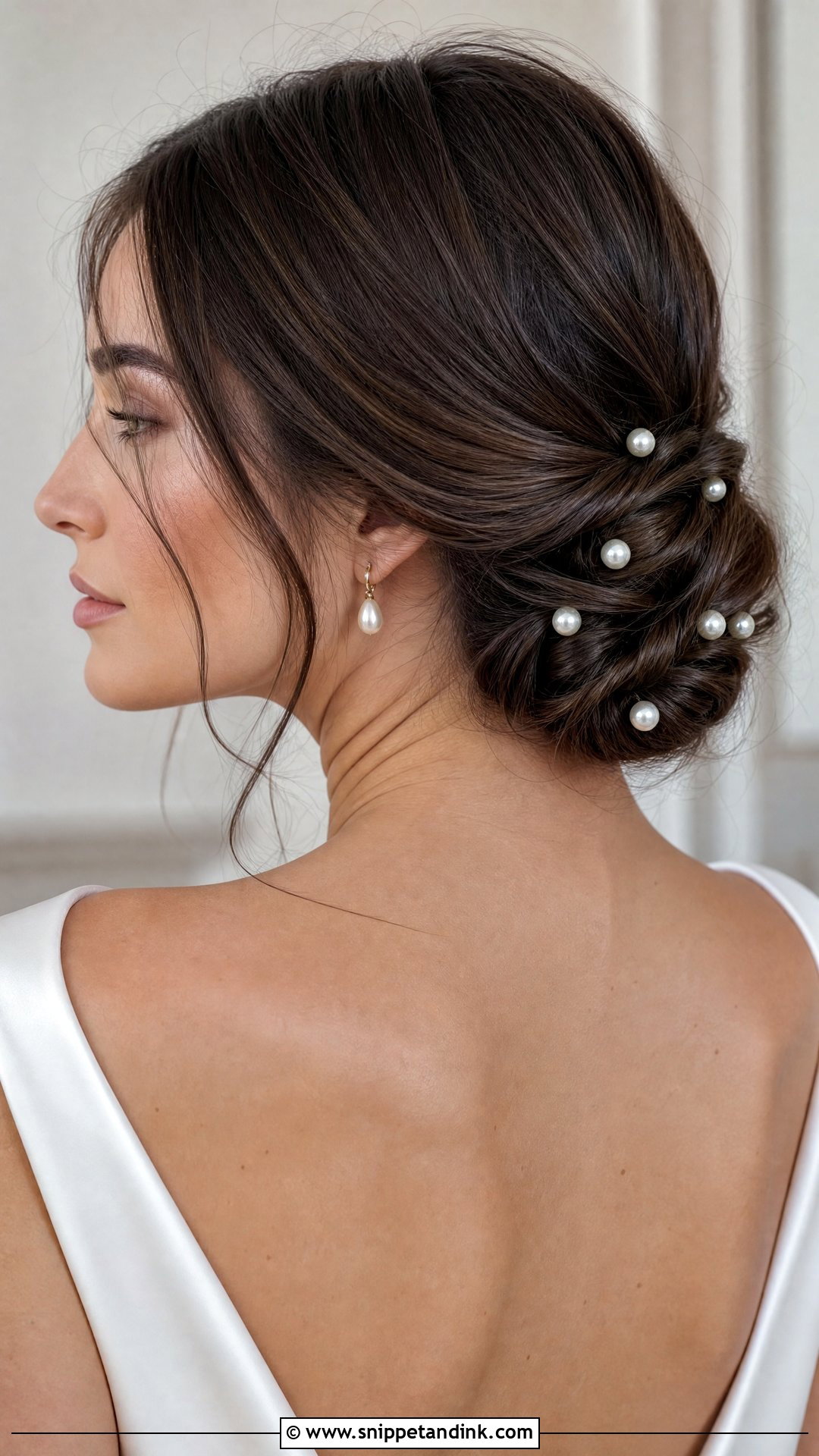
Pearls and a low chignon are one of my favourite pairings. The hair is gathered, twisted and rolled into a soft knot at the nape, then finished with pearl pins placed in a loose cluster rather than scattered evenly, which looks more natural. The low placement is the right base for a cathedral veil or a fine hairpiece, since the comb can slide just above the knot. A few wispy pieces near the face keep it soft. It works for classic and traditional weddings and stays neat well into the evening.
14. Voluminous Updo for Long Hair
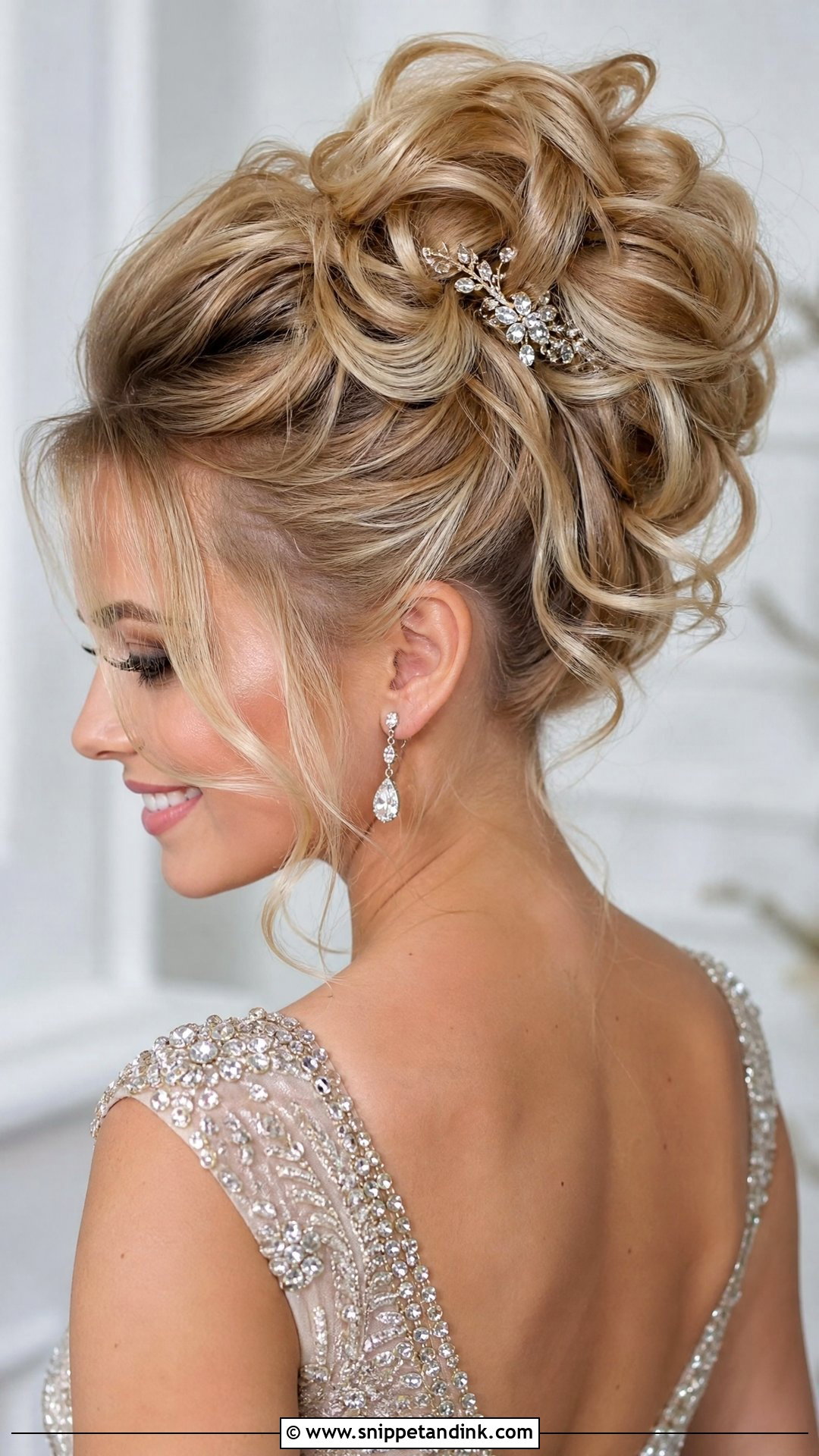
Long, thick hair can carry a big updo, but height and fullness add weight that has to be supported. I gather the length into a full bun or twisted shape with lift at the crown, created by teasing in sections and setting with curls for dimension. Every section gets its own pins so nothing hangs off a single point. It is a dramatic look for formal weddings and grand venues, and it holds heavier accessories like large combs well. If your hair tends to give you headaches in a ponytail, tell your stylist; we can lower the shape a little and spread the weight.
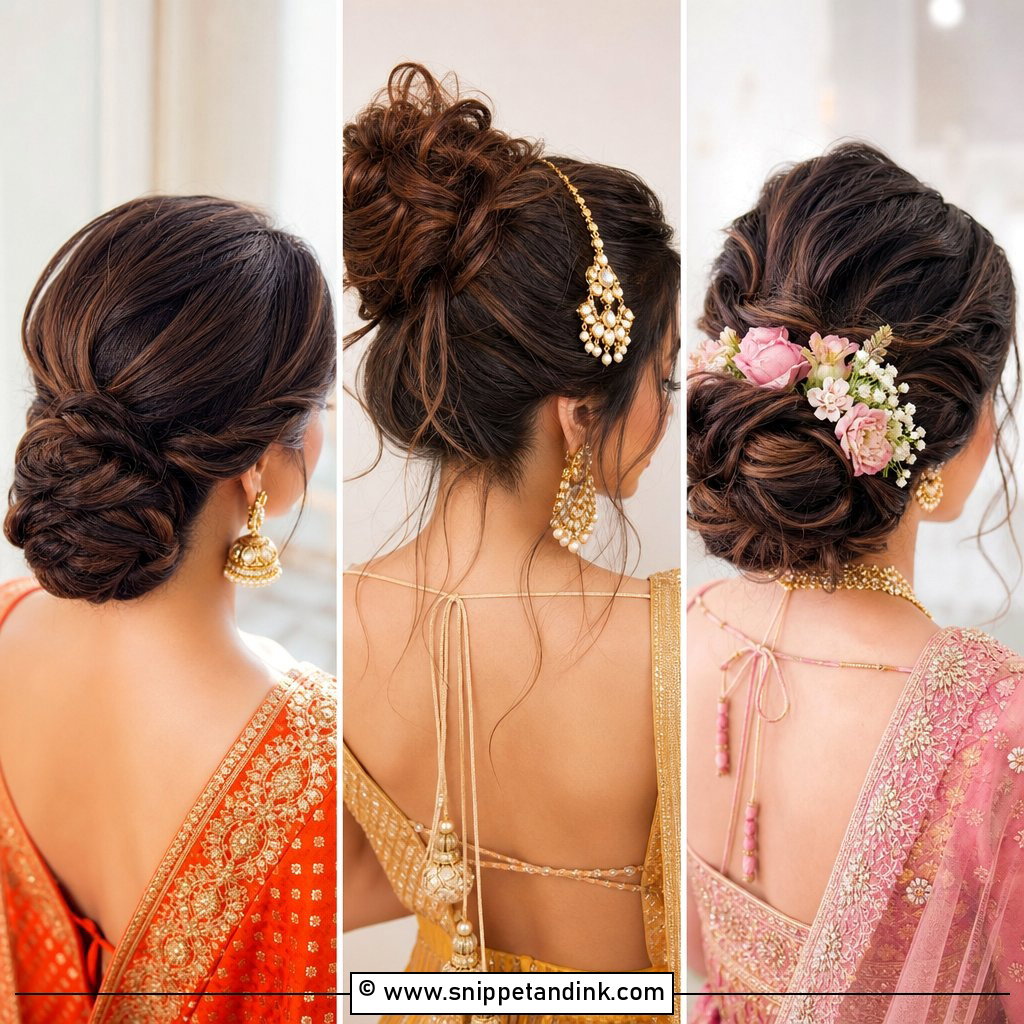
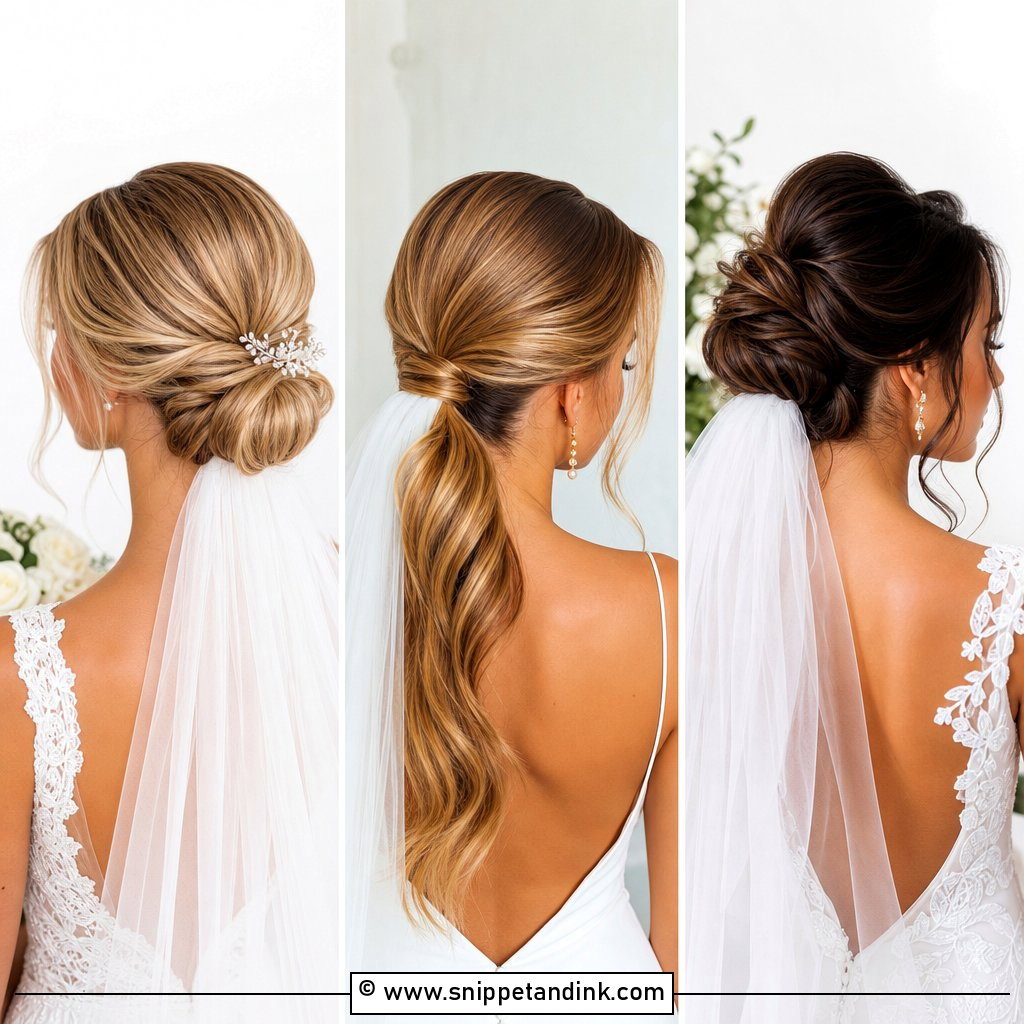
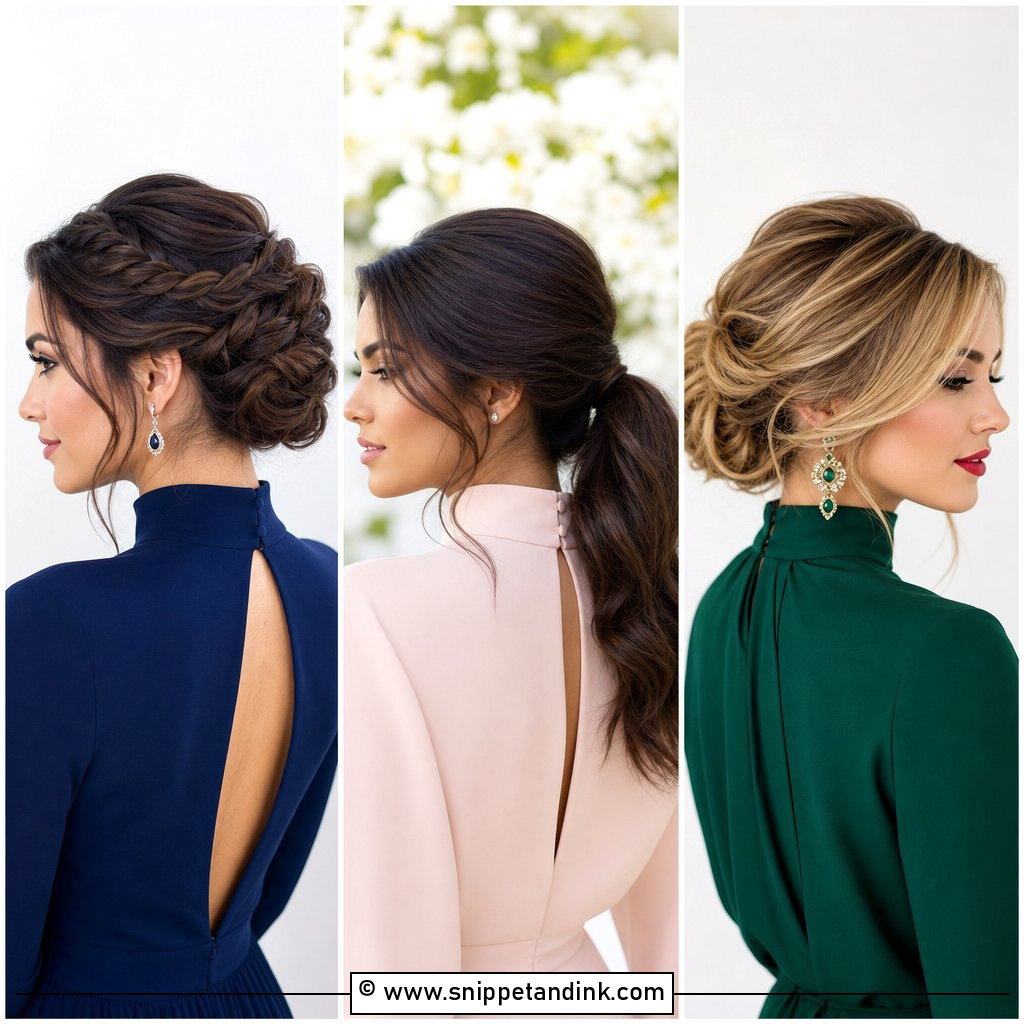
15. Elegant Side Swept Updo
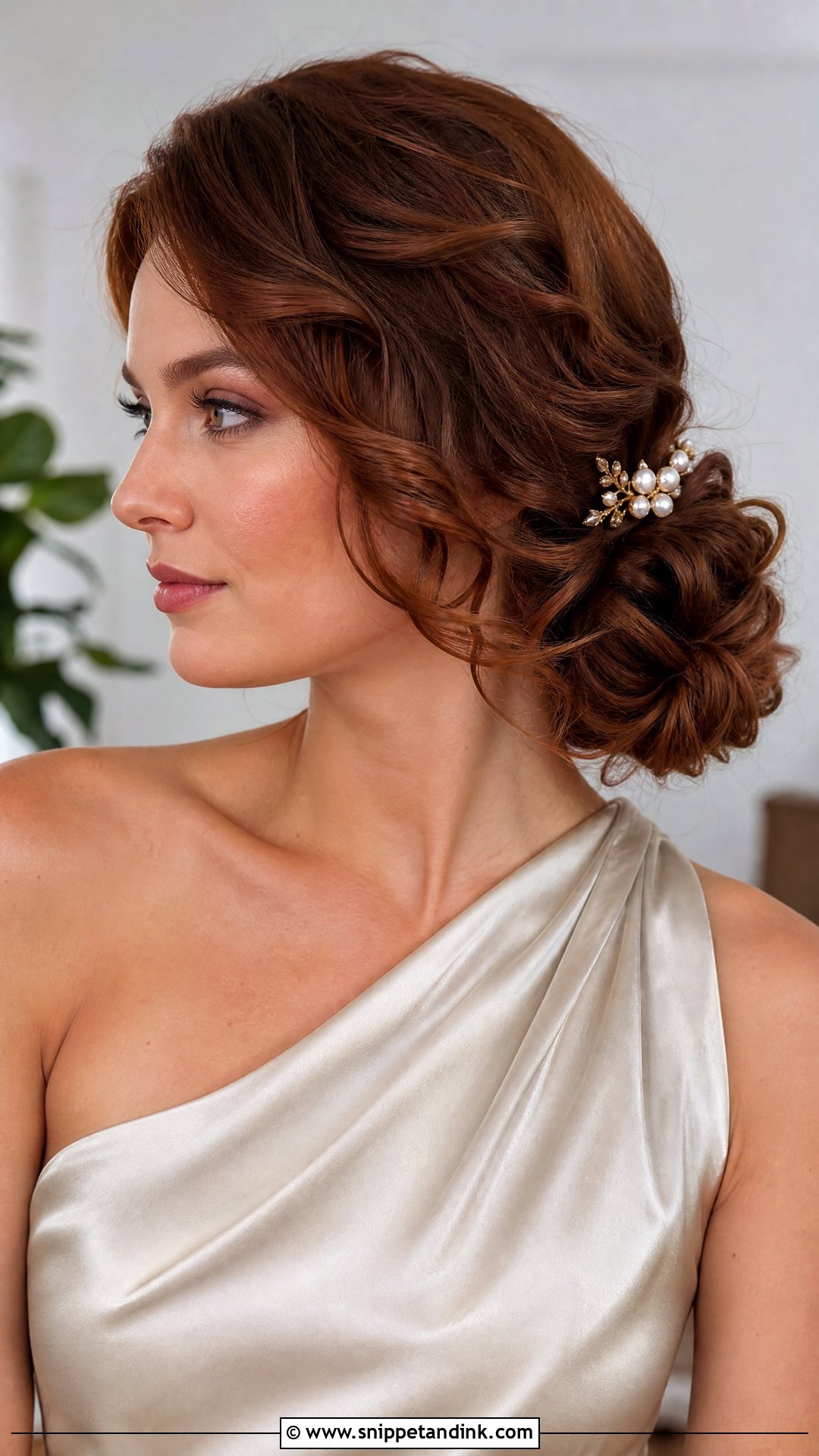
A side swept updo gathers the hair to one side, often with waves or twists falling over one shoulder before tucking into a low bun or knot. It opens up one side of the neck, which is a gift for earrings and one-shoulder or off-shoulder gowns. The question I always ask is which side faces the guests during the ceremony, because that is the side that ends up in most photos. It has a touch of old Hollywood about it. A few flowers or a jeweled pin at the gathering point finish it.
16. Bun Updo With Bridal Veil
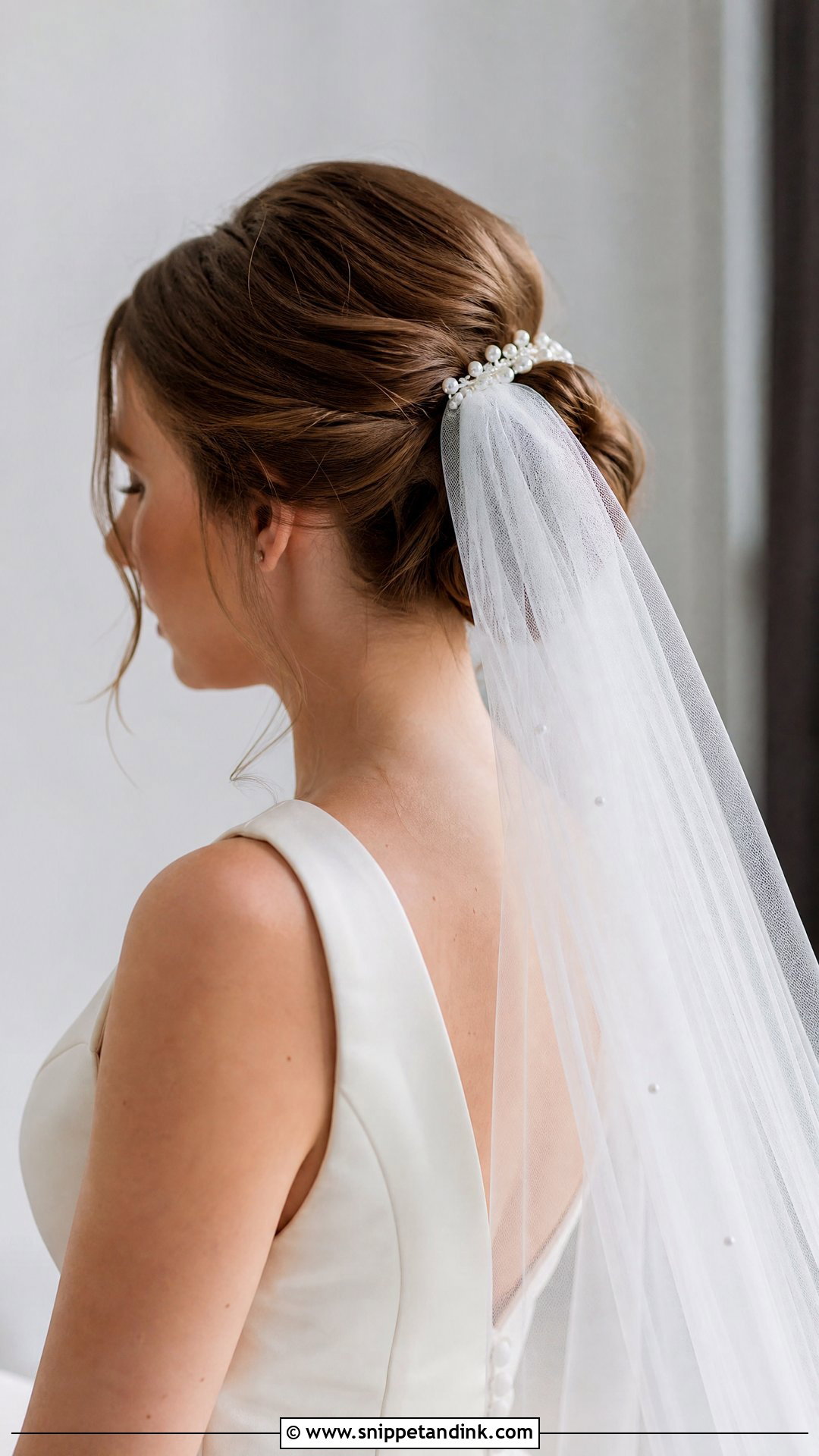
A bun is the most practical base for a veil, high or low. The comb goes just above or below it depending on the effect: above lets the veil fall over the bun like a frame, below shows the whole bun with the veil trailing from underneath. I pin the comb into the base, not just into the bun, so the weight doesn’t drag it backward. Once the veil comes off for the reception, the bun is still intact. It is a sensible, traditional choice, and the one I find holds up best for brides with longer veils.
17. Rustic Twisted Updo for Outdoor Weddings
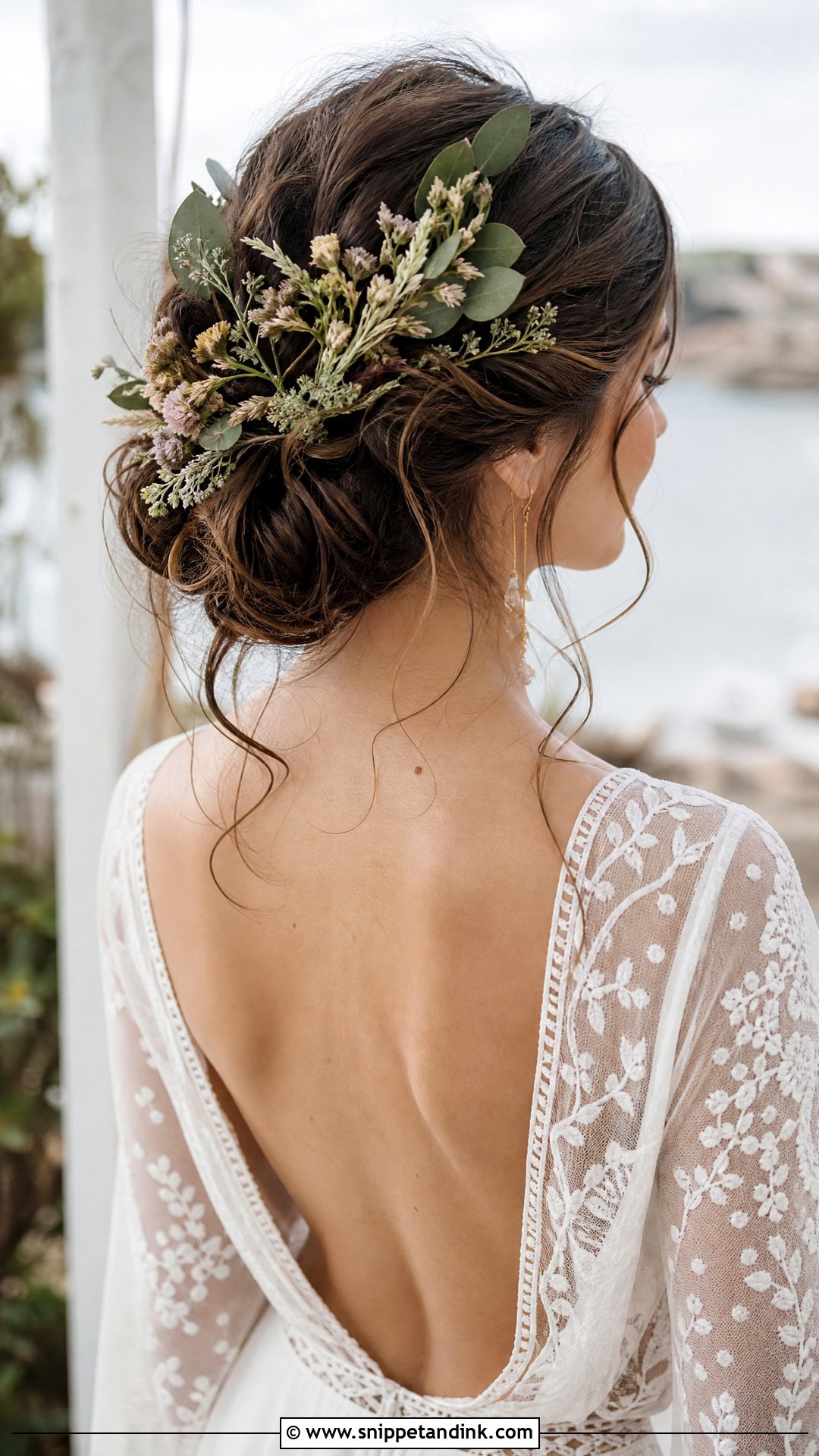
For outdoor weddings, the rustic twisted updo is built for wind. Soft twists and gathered sections are pinned into a loose shape, and because it is meant to look textured, a breeze adds to it instead of ruining it. It suits barn venues, vineyards and countryside settings. Wispy tendrils frame the face. I’d use greenery, dried flowers or simple pins rather than fresh petals for a long outdoor day, since dried stems don’t wilt in the sun. You can stop thinking about your hair after the first hour, which is the point.
18. Knotted Bun Wedding Updo
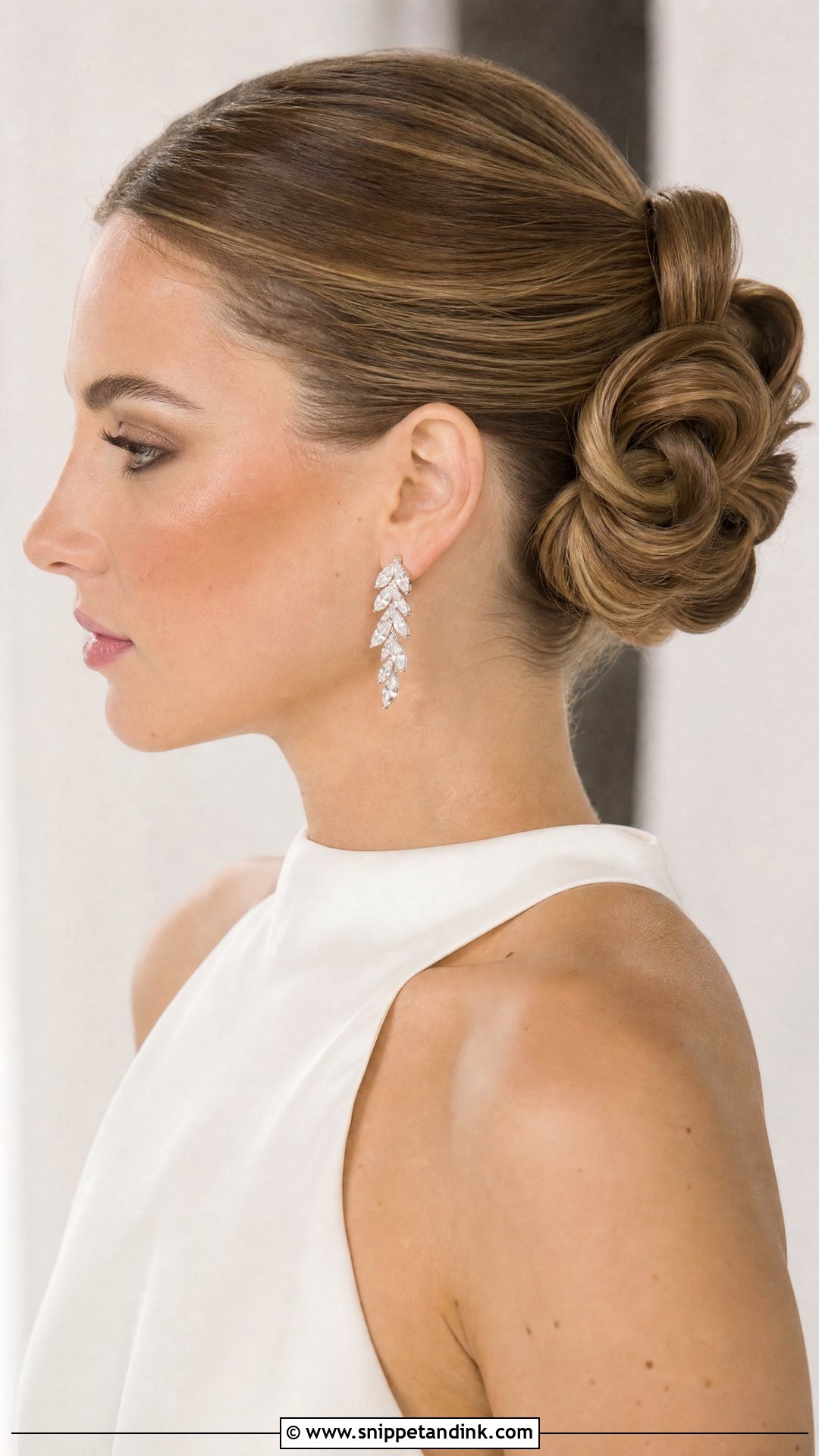
The knotted bun is made of sections looped into knots that build into a sculptural shape. It is one of the more unusual styles here and still easy to wear. Finish it smooth for a contemporary wedding or pull some pieces loose for a softer one. Because the detail lives at the back, I keep the front simple and let earrings carry the front view. It needs medium to long hair with a little grip; very slippery hair benefits from a texture spray before I start knotting.
19. Romantic Loose Updo With Curls
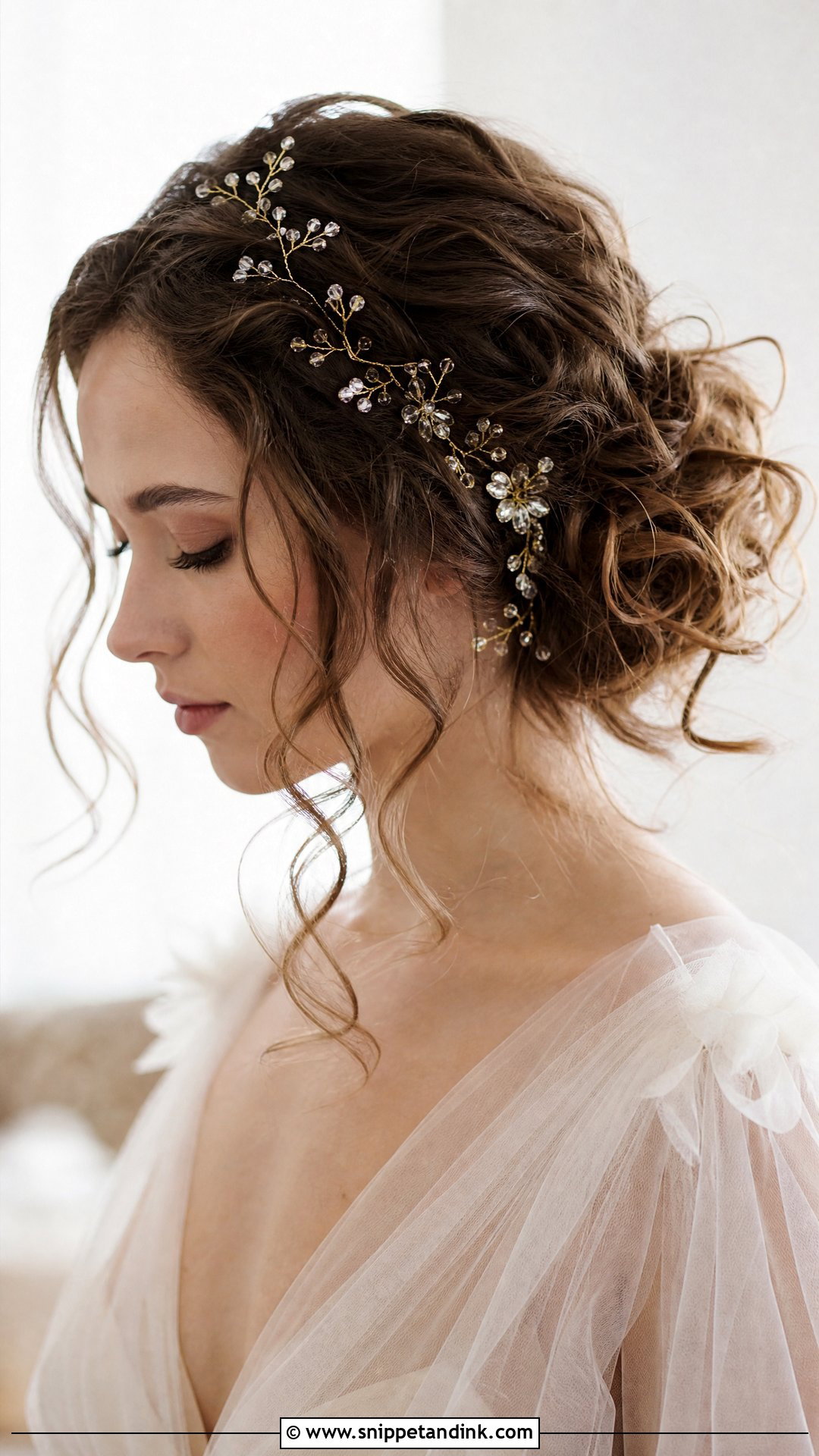
Loose curls pinned into a low, airy shape make the softest updo on this list. Curls are pinned gently, with plenty left out around the face for movement. It suits garden weddings, vineyards and small ceremonies, and it looks especially good in soft natural-light photography. The trade-off is longevity. Loose curls are the first to drop in humidity, so I set them on heat, let them cool completely and use a flexible hold rather than a heavy spray. Fresh flowers or a fine vine sit well in the curls.
20. Crown Braid Bun Updo
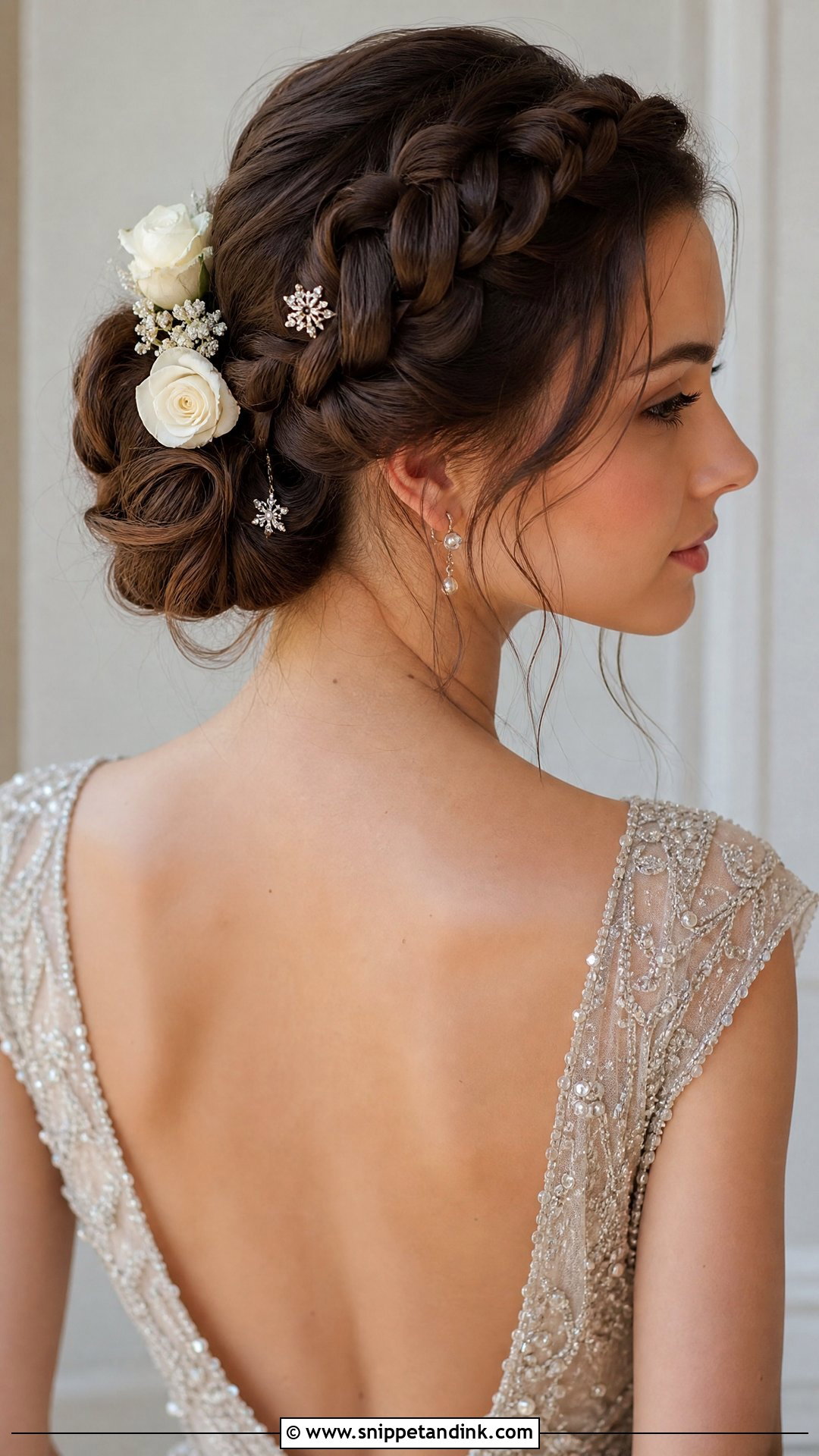
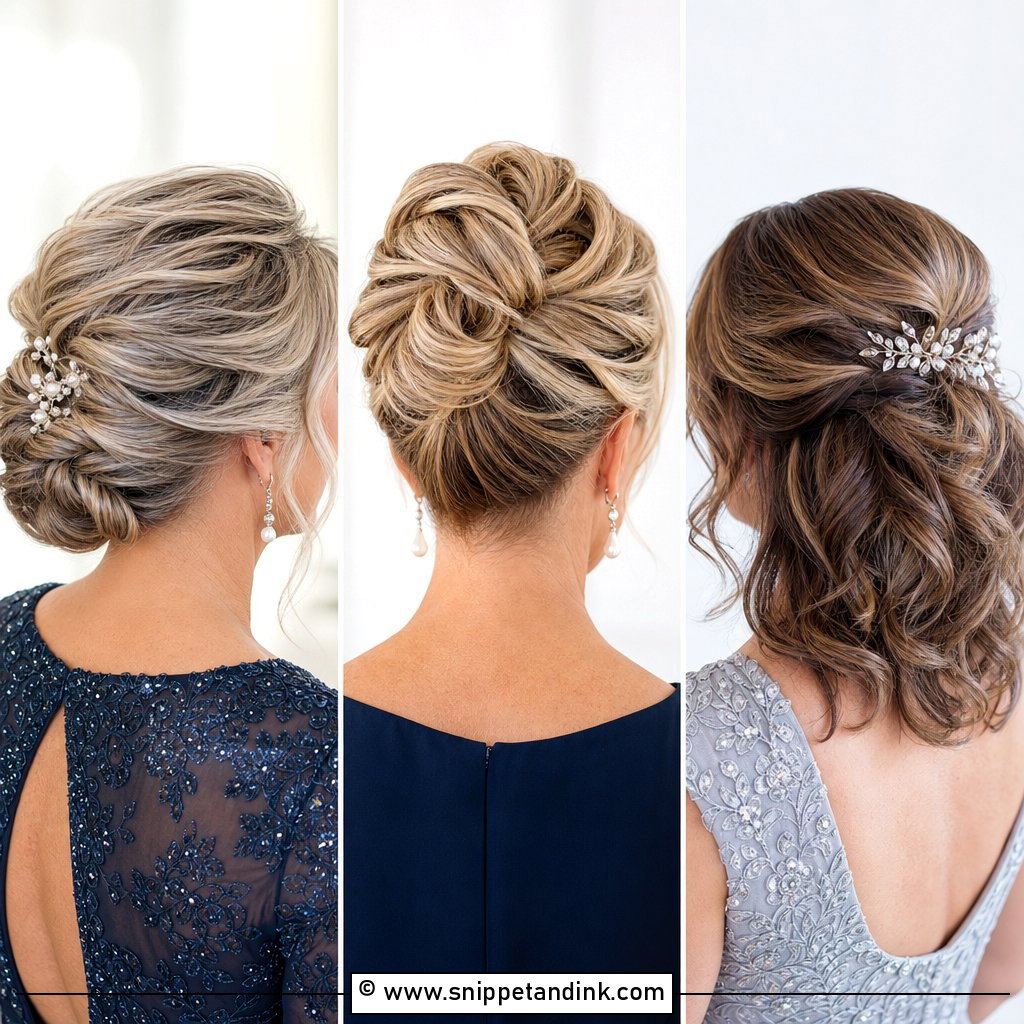
A crown braid bun pairs a braid around the top of the head with a twisted or gathered bun at the back. The silhouette is dramatic, which is why I suggest it for evening and formal weddings. The braid holds shorter layers in place all day, and the bun keeps the back neat and secure. Jeweled pins or fresh blooms can sit along the braid. It reads as both bohemian and polished, which makes it an easy match for a bride whose dress sits between the two.
Taking the Veil Out Without Wrecking the Updo
The veil usually comes out after photos, and that is when most updos get damaged. A comb pulled straight out drags pins and hair with it. Have your stylist, a bridesmaid or your planner remove it, and show them how at the end of your trial: lift the comb slightly, slide it back the way it went in, and check for any pins that came loose underneath.
A small touch-up bag for the reception
- Six or eight bobby pins in your hair colour.
- A travel-size flexible hairspray.
- A small tail comb for tucking pieces back.
- Two clear elastics, in case a braid end works loose.
Give it to someone who will stay near you. Most fixes take thirty seconds in the bathroom mirror, as long as the pins are close at hand.
Start With the Back of Your Dress
The right updo is the one that suits your dress, venue and the way you like to feel in your own hair. Chignons and French twists, boho braids and full curly buns all have a place, and the current mood leans toward natural texture and a few loose pieces rather than stiff perfection. Flowers, pearl pins or a veil can make any of them your own. Book a trial with your stylist, wear a top with a similar neckline, and bring your veil. It is the only way to see the back view before the wedding morning.
You'll Like These Ideas:


Leave a Reply