
A veil changes an updo more than any other accessory, partly because of how it looks and partly because of how it pulls. Even a light tulle veil drags backward on its comb for hours, so the hair has to be built to carry it. That’s why I plan the two together from the first trial. A low bun can hold a veil tucked beneath it; a high bun lifts a sheer veil and lets it fall straight down the back. Braids, twists, curls and sleek shapes each grip a comb differently. Below are fifteen pairings, with notes on where the comb goes and what tends to slip.
Above the Bun or Below It?
There are really three places a veil can attach, and each one changes how the hair reads in photos.
- At the crown: the veil falls over the whole updo. It looks traditional and frames the face well, but it hides most of the hairstyle during the ceremony.
- Just above the bun: the comb sits on top of the shape and the veil drapes over it. This gives a fuller, rounded fall and suits most low buns and chignons.
- Under the bun: the comb tucks beneath, so the updo is fully visible and the veil flows from behind it. This is the modern choice, and the one I’m asked for most.
How a comb actually stays in
A veil comb won’t hold in smooth, freshly washed hair on its own. I make an anchor first, either a small hidden braid, a tight twist or a lightly backcombed patch, then slide the comb in with the teeth angled against the direction the hair was brushed. Two bobby pins through the comb’s teeth, crossed, lock it in place.
Length changes the load
A fingertip veil weighs very little. A cathedral veil, especially with lace edging or beading, pulls backward the whole time you stand, and a strong outdoor breeze can catch it like a sail. For long veils I build the anchor lower and firmer and add extra pins. If you’re marrying outside, ask whether your veil can have small weights sewn into the hem.
1. Low Bun Updo With Veil
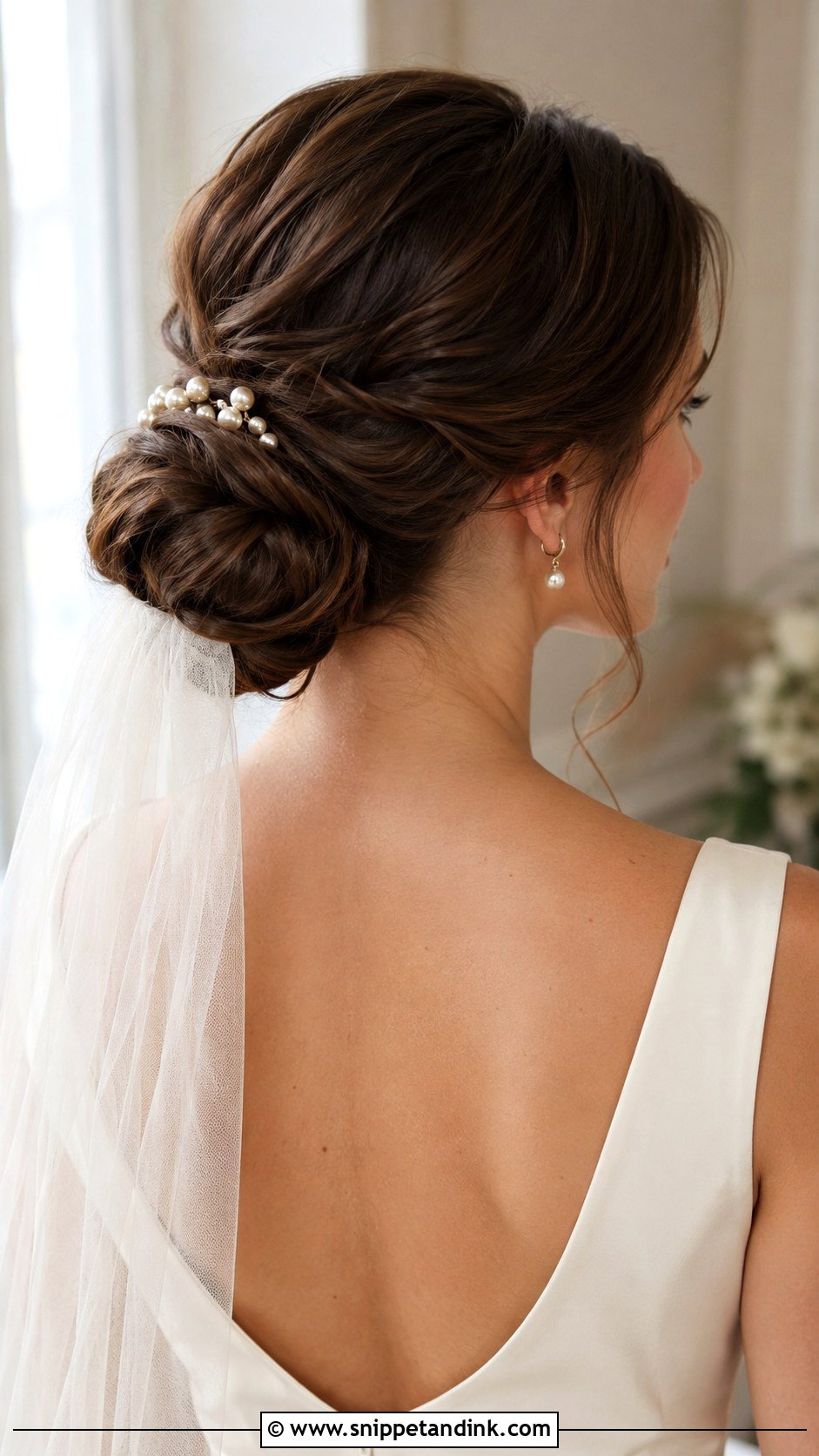
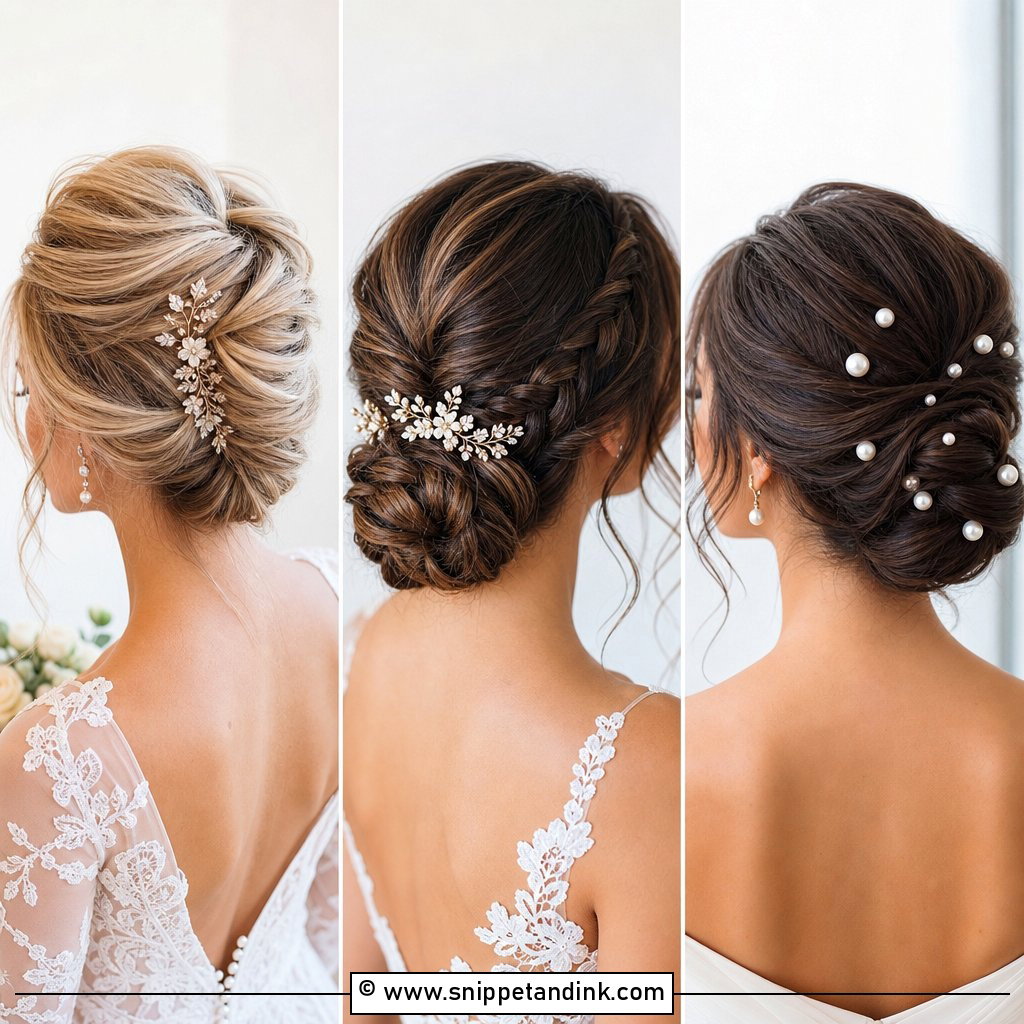
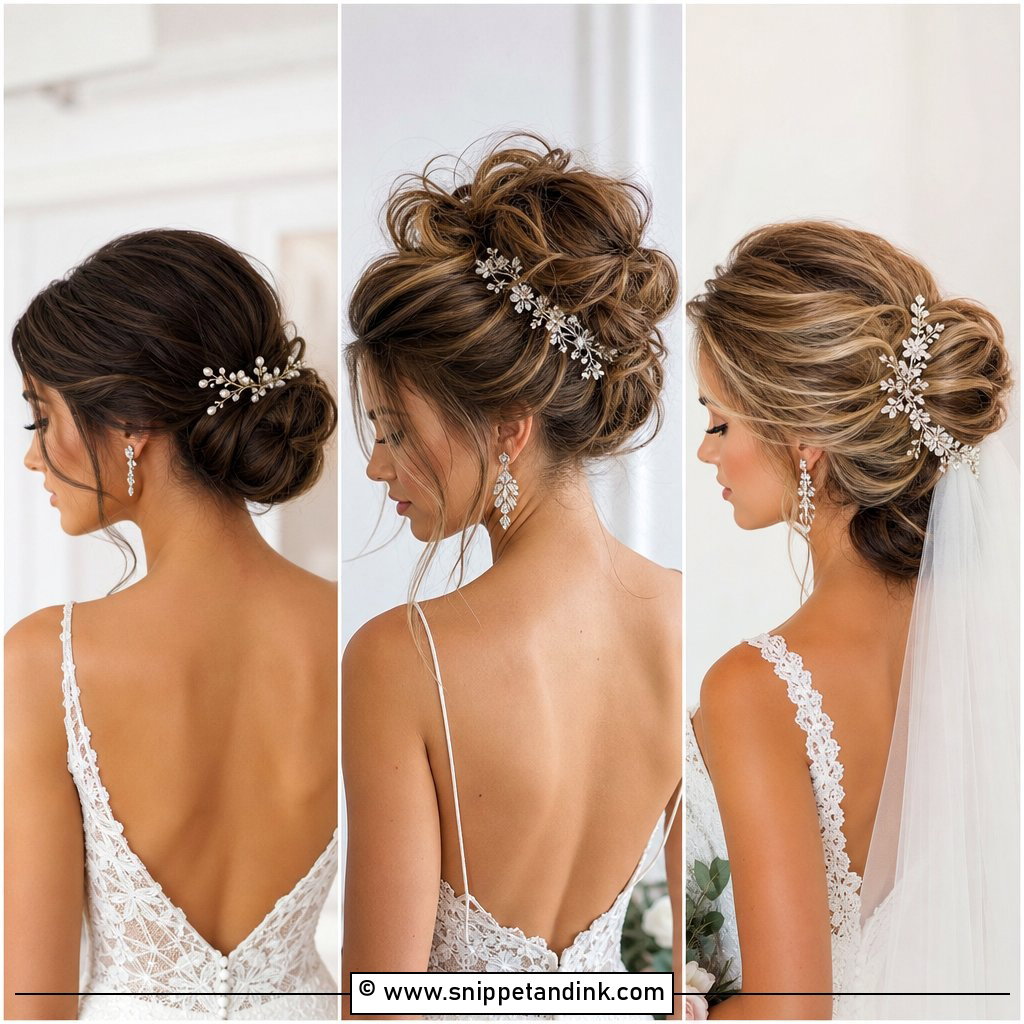
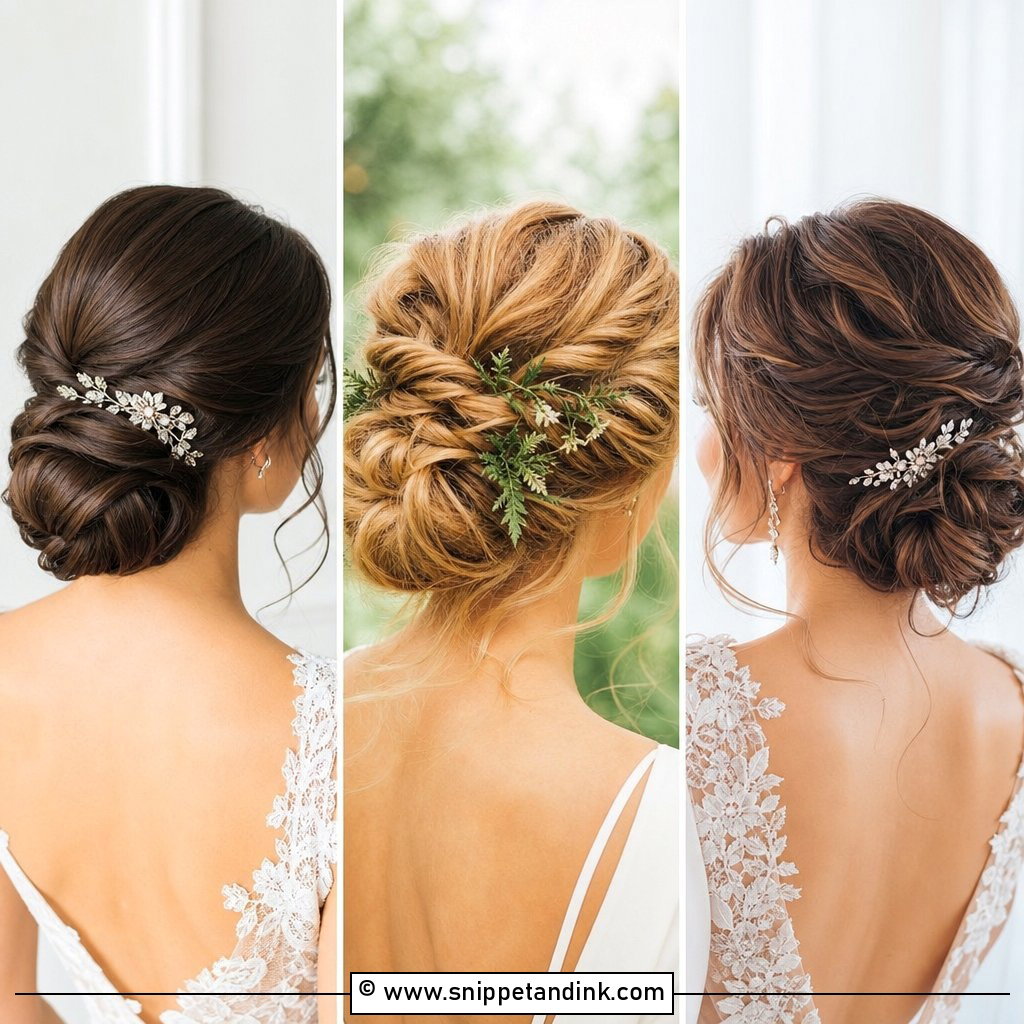
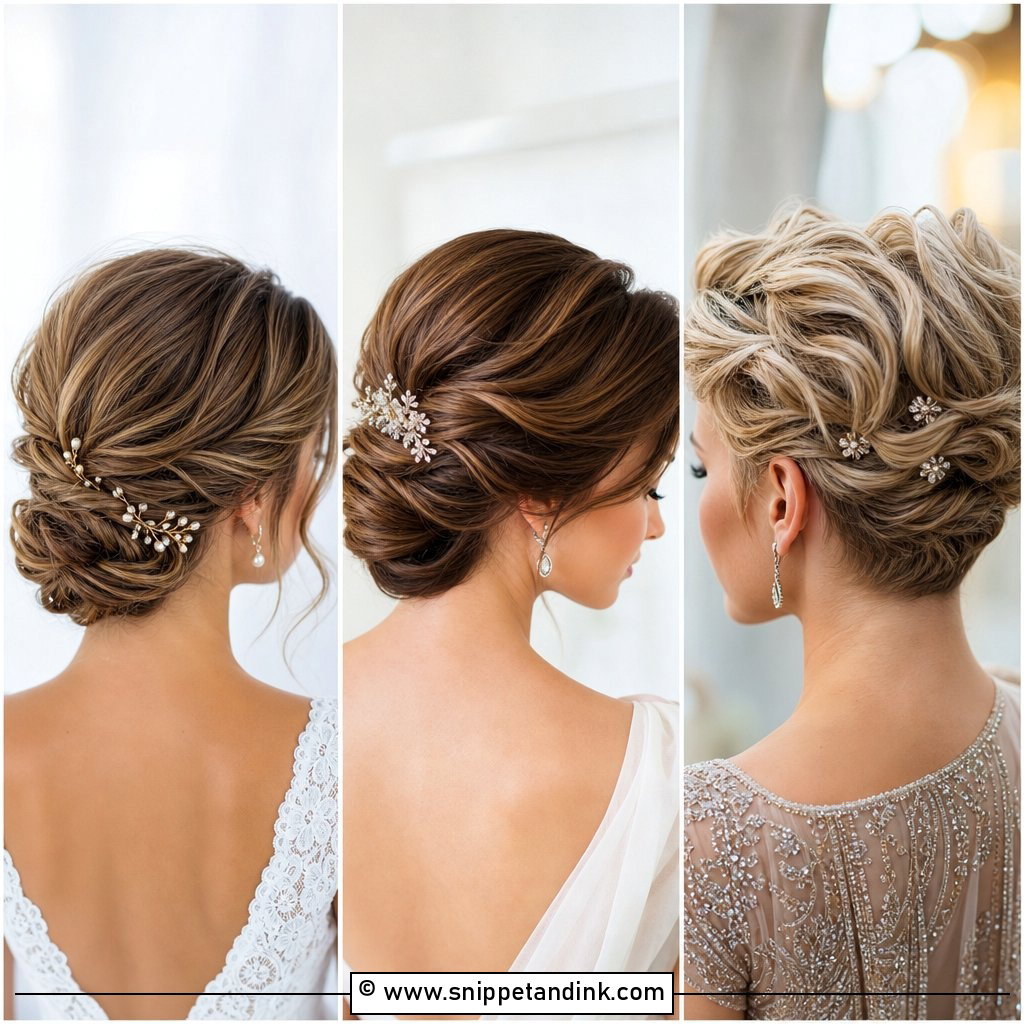
A bun at the nape gives a veil two good homes: pinned above it for a fuller, traditional fall, or tucked underneath for a softer, modern drape. I place the comb above when the dress has a dramatic back that the veil should frame, and below when the bride wants the bun itself visible. Pearl pins, lace veils, satin gowns and open backs all suit it. Gentle crown volume and smooth sides keep it polished. Over a long day this is the most stable pairing I know, since a low bun barely shifts under the weight.
2. High Bun Updo With Veil
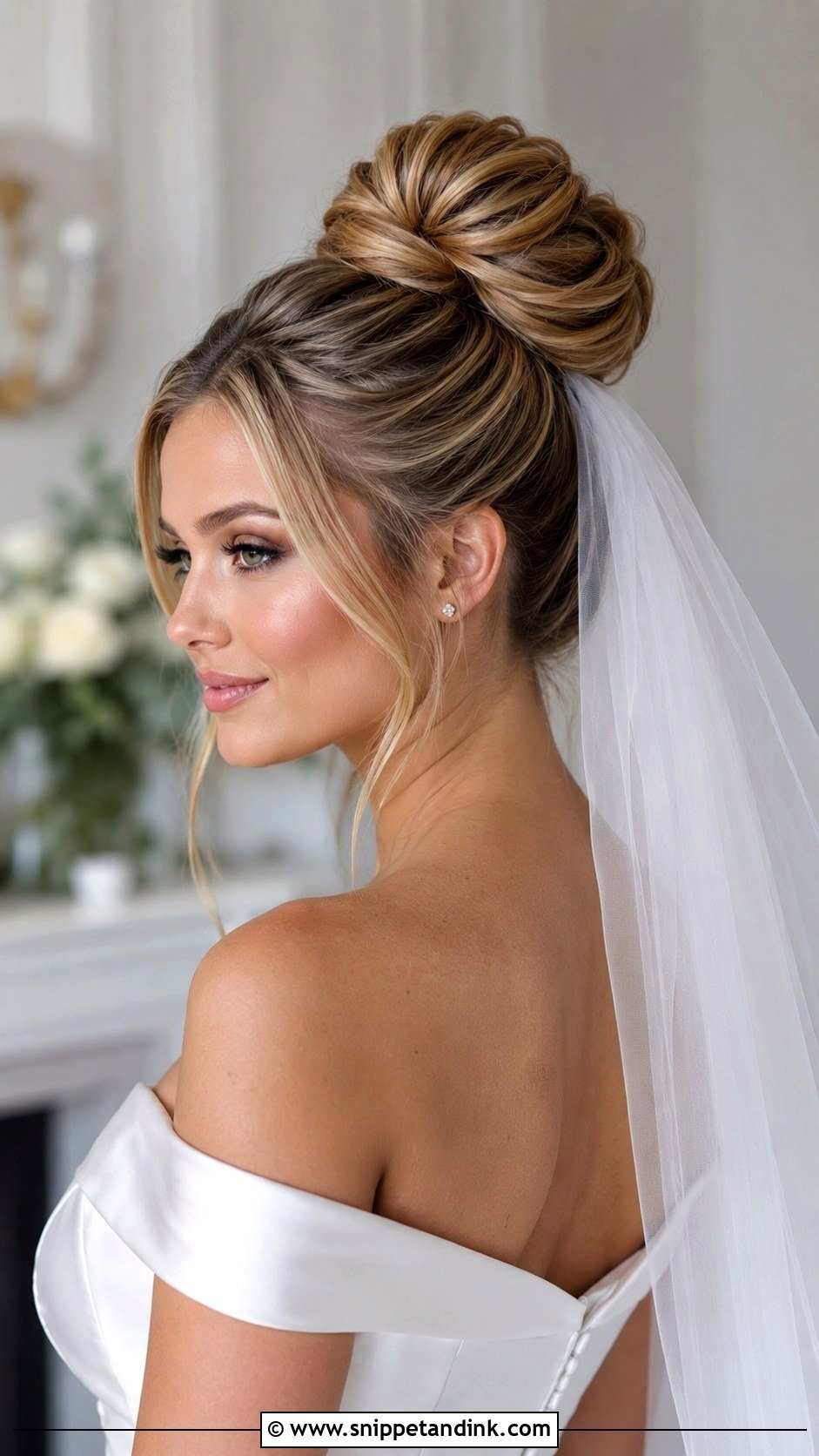
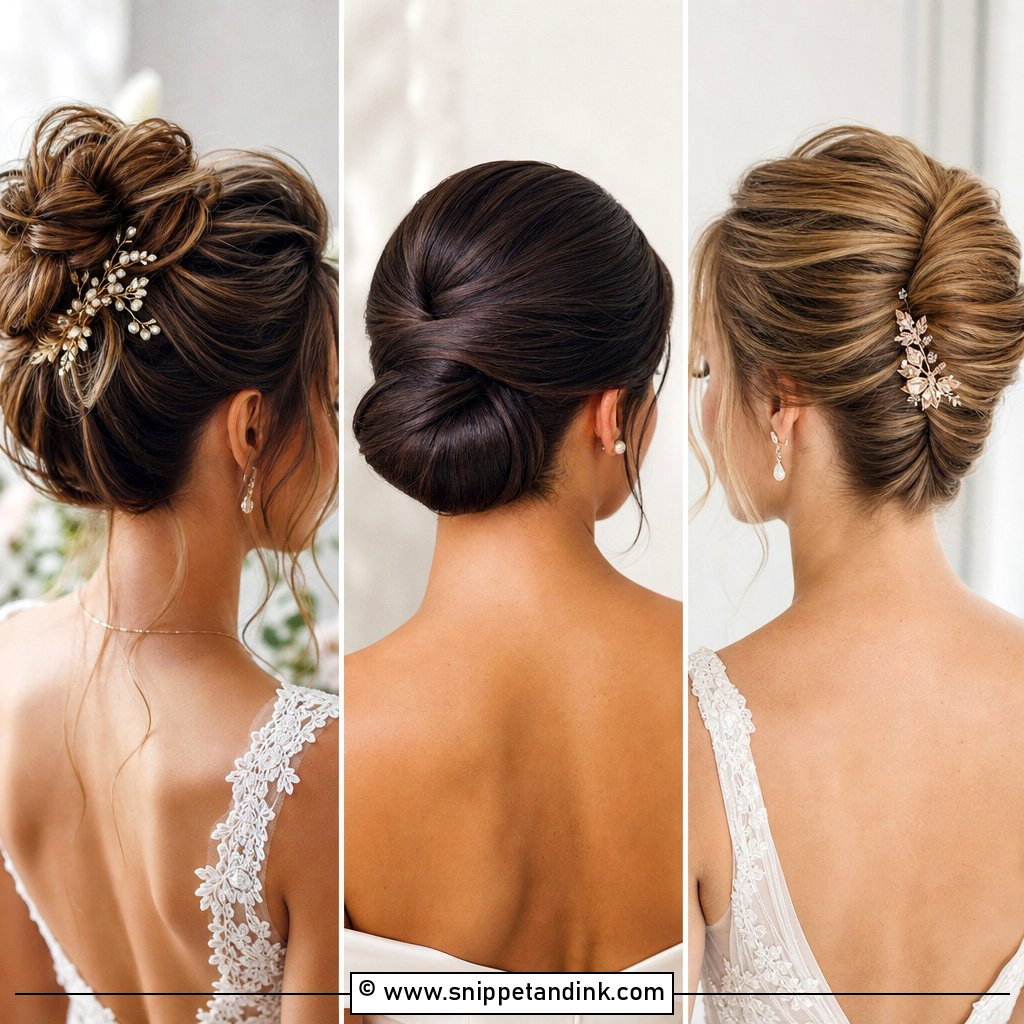
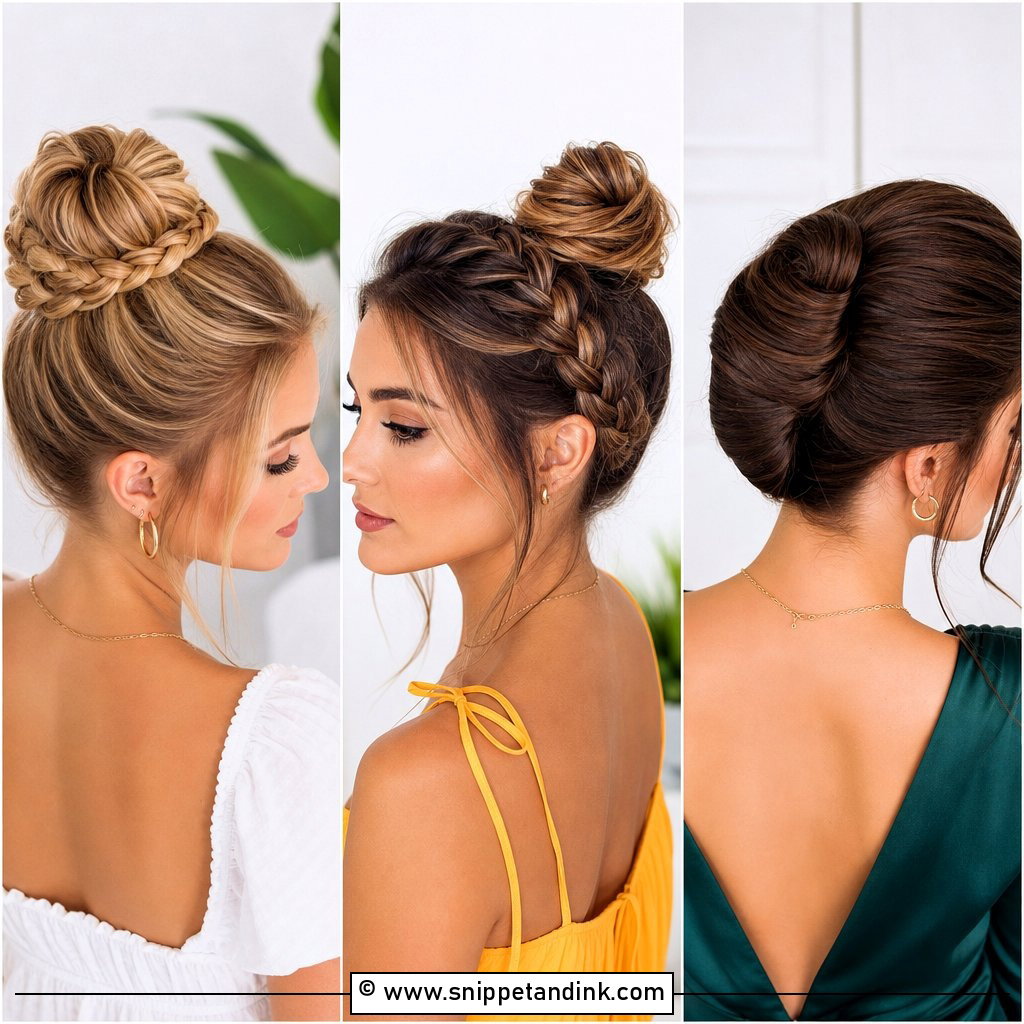
Height plus a veil makes for a strong, lifted silhouette, which is why a high bun looks so right with ball gowns, off-the-shoulder necklines and cathedral veils. The veil usually goes just under or behind the bun so it falls clean without covering the shape. The base has to be solid. I build a tight ponytail foundation first, then wrap the bun, because a comb pushed into a soft, loose bun will drag it backward within an hour. A sleek front looks classic; a few soft face-framing pieces make it gentler.
3. Messy Bun Updo With Veil
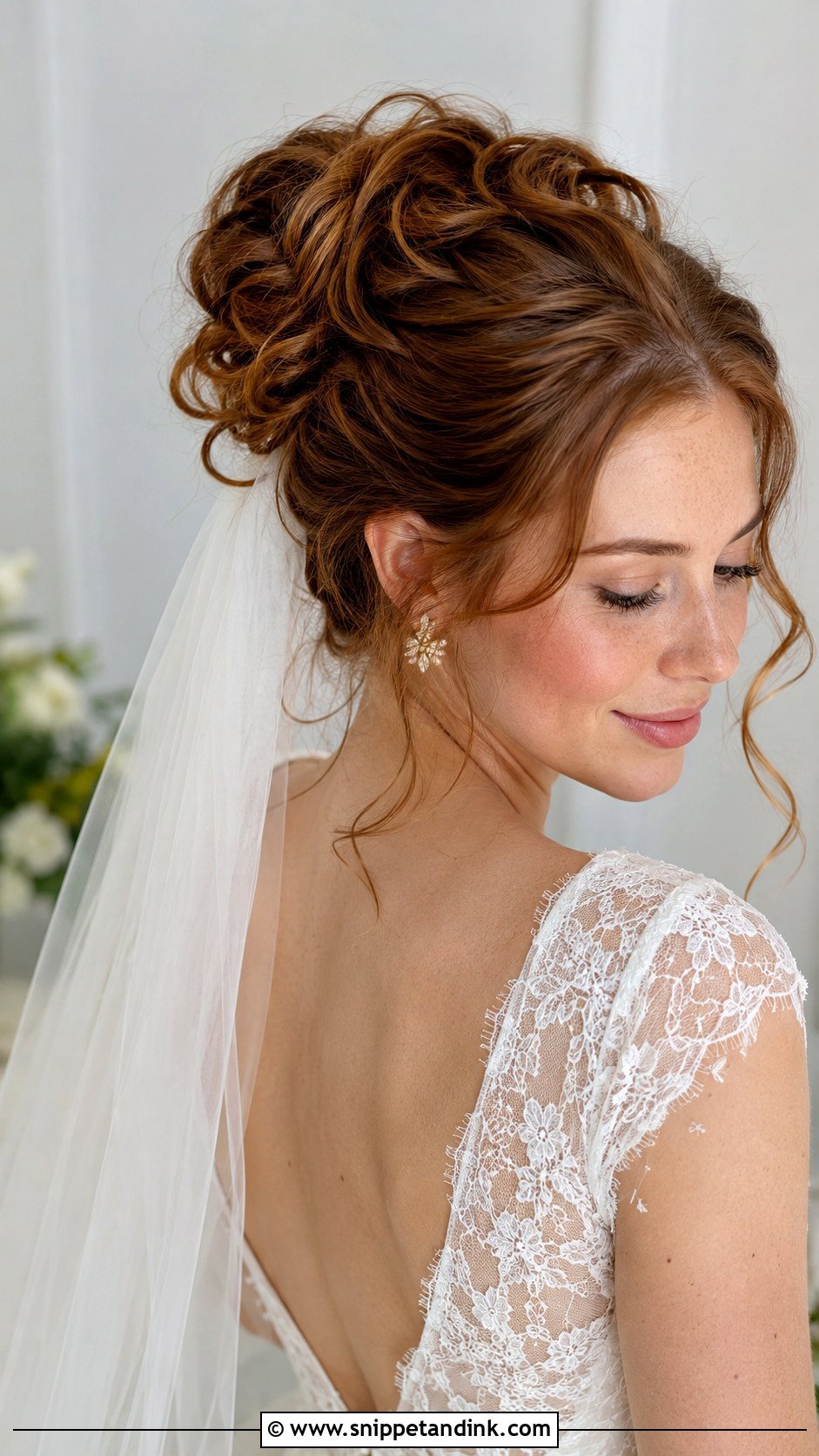
There’s nothing careless about this kind of bun. I curl, texturize and pin it piece by piece to get the airy volume and loose bends that make it look picture-friendly from every angle. The tricky part is the veil comb, since loose texture gives its teeth little to bite. So I hide a small tight section at the anchor point and slide the comb into that, under the bun if you want the texture seen or above it for a traditional look. Garden weddings and lace dresses are its natural setting.
4. Chignon Updo With Veil
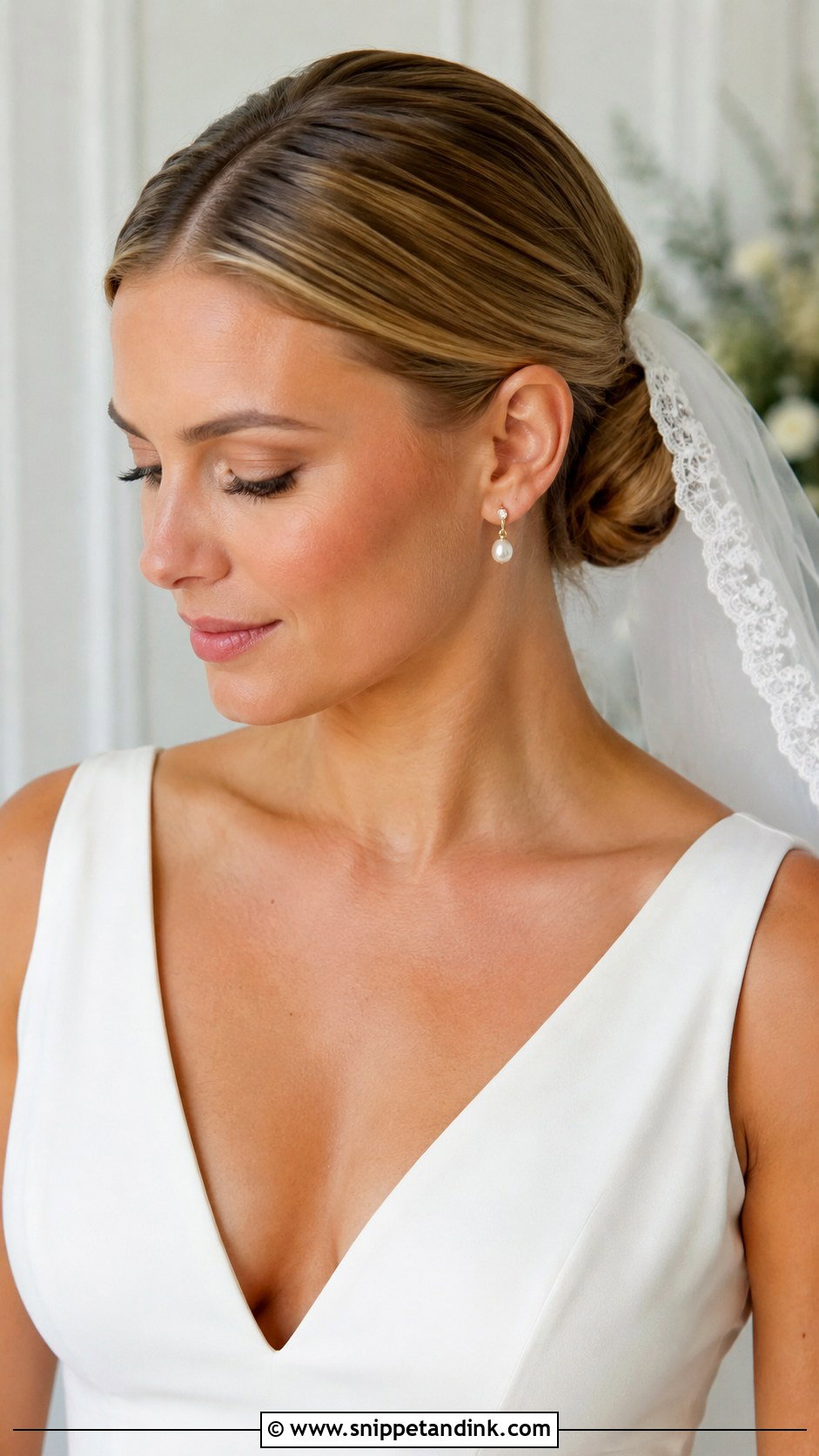
Chignons are probably the easiest base for a veil comb, because the hair is gathered low and packed into a smooth, tucked or softly twisted knot that the teeth can grip evenly. Simple tulle and heavier lace-edged veils both sit well. A centre part reads modern, a side part softer. I often suggest it to brides wearing statement earrings, a high neckline or a detailed back, since the compact shape doesn’t compete with any of them.
5. Braided Updo With Veil
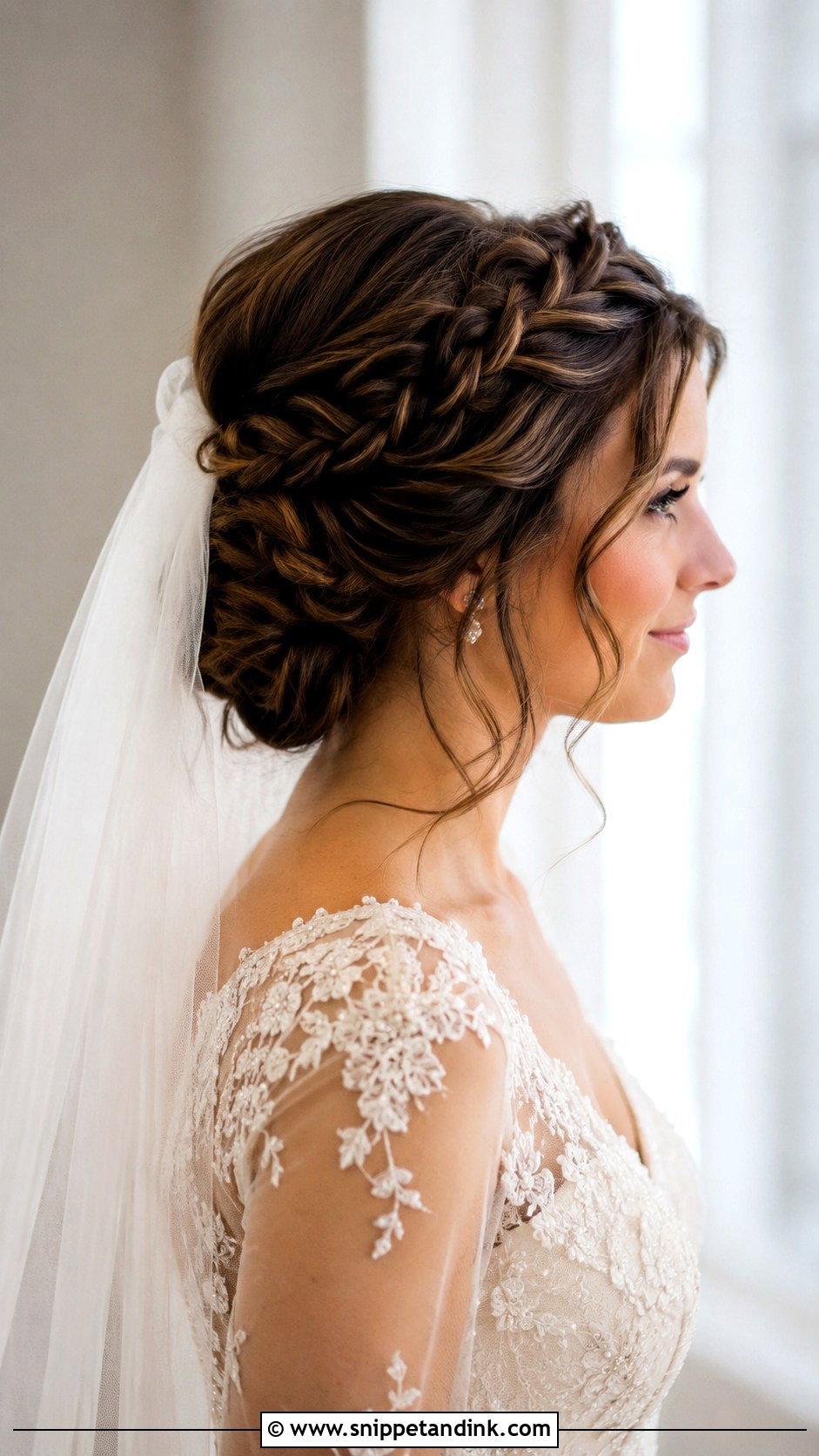
I place the veil where it won’t cover the braid, which usually means under the bun or just below the main braided section. Otherwise all that detail disappears for the ceremony, which is when most of the photos are taken. Braids can wrap into a low bun, cross the crown or blend into a twist at the back. They’re also an excellent anchor: a comb slid along the edge of a braid stays put even in an outdoor breeze. Thick hair especially benefits, because braiding packs down volume. A few loose pieces at the face soften it.
6. Curly Updo With Veil
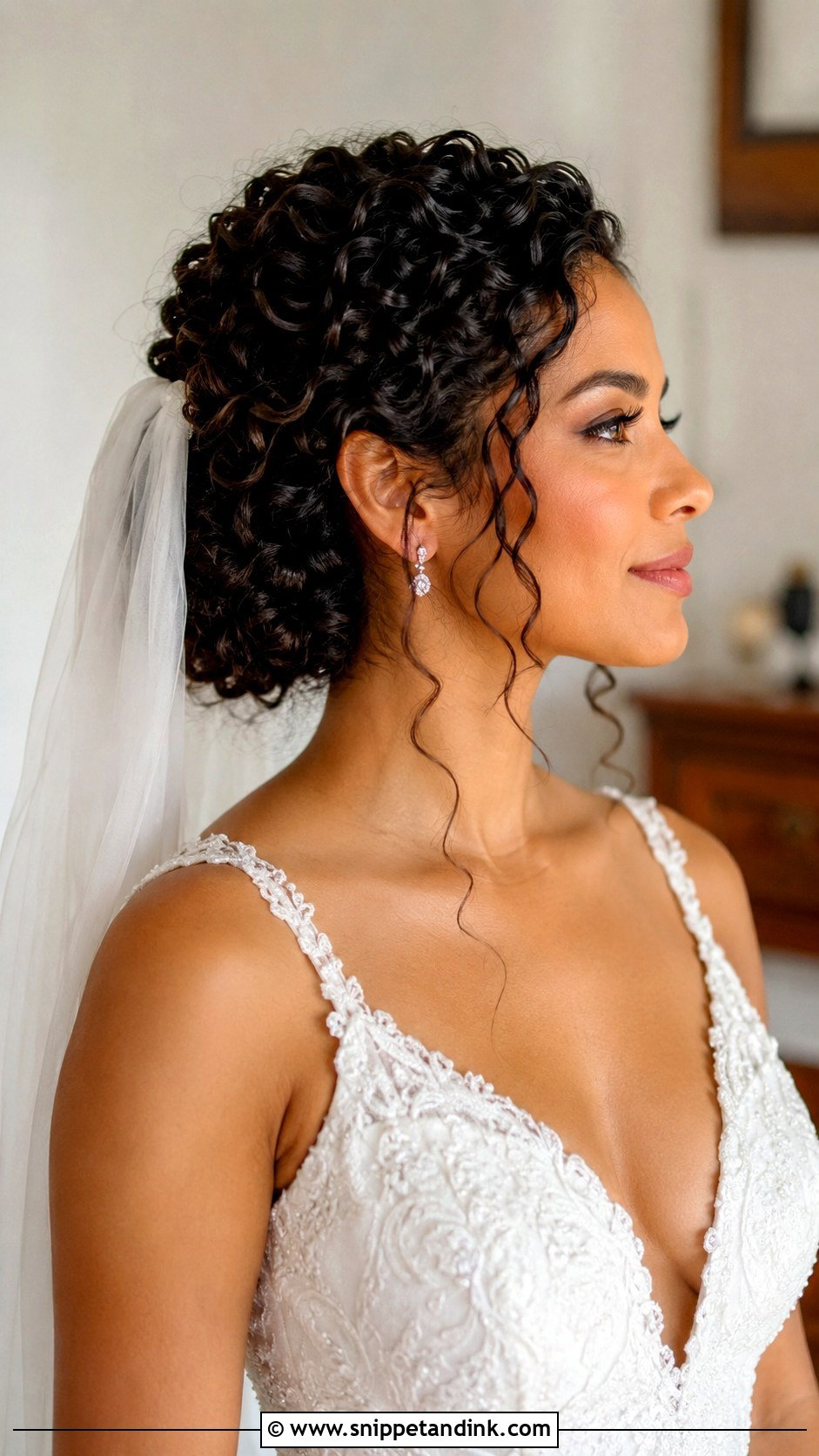
Curls give a veil a lot of texture to grip, which helps, but they also compress where the comb sits. I tuck the veil under the main shape so the curl pattern stays visible and the flattened spot is hidden. Natural curls and set curls both work. Moisture and definition come first in the prep, then secure pinning. Once the curls are placed, nobody should brush them, including me; I separate and adjust with fingers only. Leave a few curls at the face and nape and the veil will look like it belongs there.
7. Sleek Updo With Veil
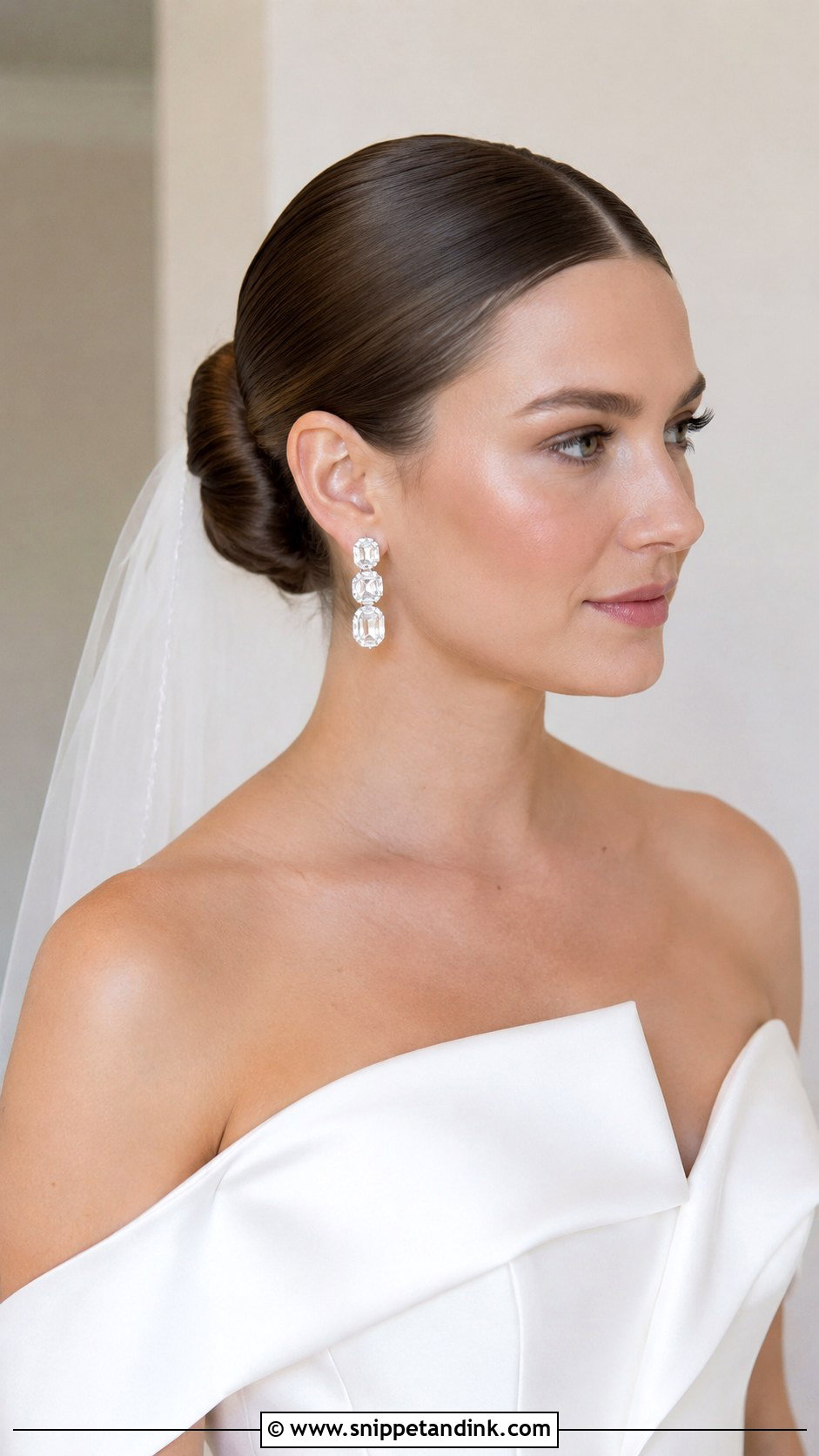
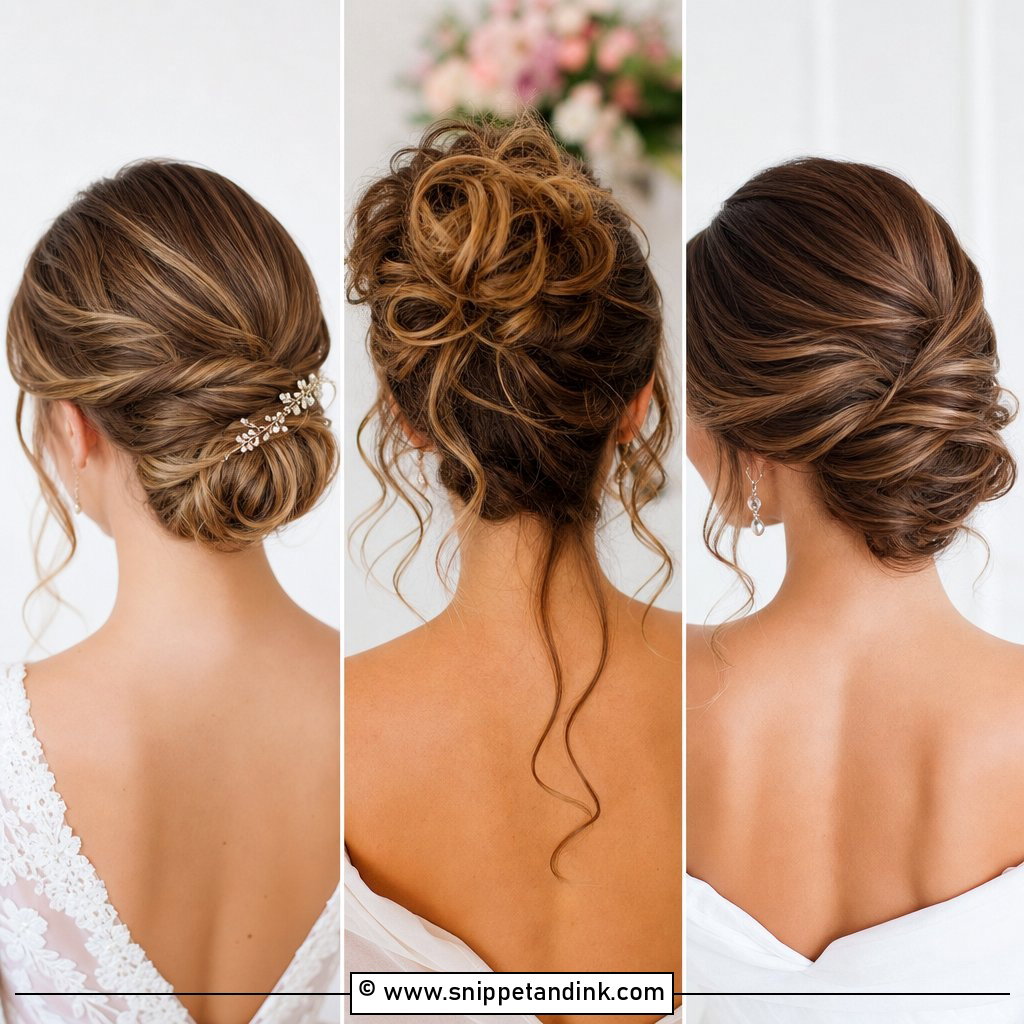
Sleek styles suit clean gowns, structured dresses, high necklines and statement earrings. The hair is smoothed into a bun, knot or twist with controlled shine and almost no loose texture. The veil can go high for formality or low for a more fashion-led feel. Here’s the catch with veils and sleek hair: every bump shows, including the one a comb makes when it’s pushed in at the wrong angle. I slide the comb in flat against the head and pin through its teeth so it can’t lift. Anti-frizz prep and a light finishing spray keep the shine without hardness.
8. French Twist Updo With Veil
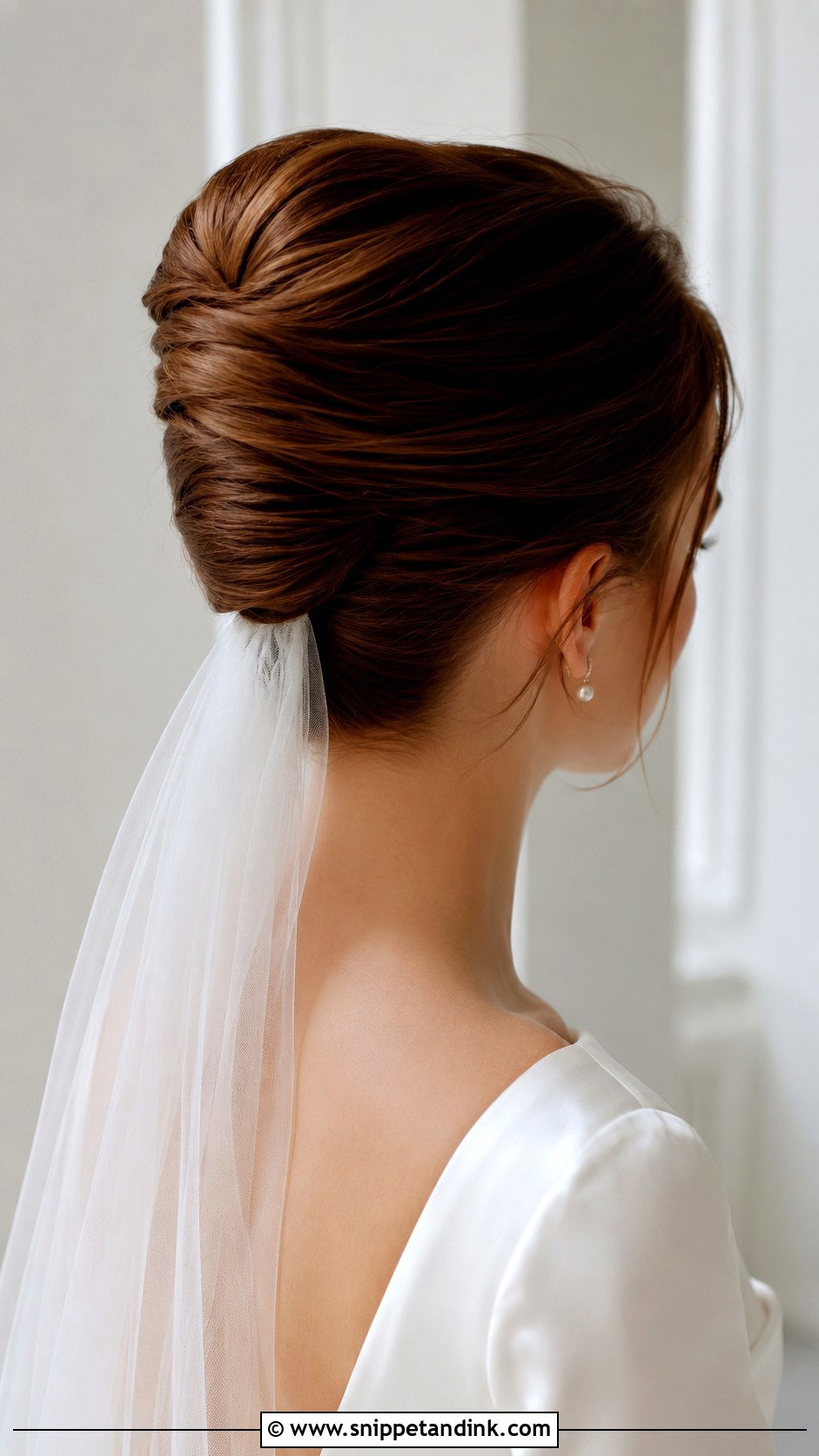
A French twist brings an old-Hollywood line to the back of the head. The hair is swept up and tucked into a vertical roll, and the veil is pinned just below it for a clean fall or above it for a formal ceremony look. I pin along the seam of the roll first so the twist can’t loosen when the comb pulls on it. Bateau necklines, satin gowns and classic makeup suit it. It needs medium to long hair, and it can be smooth, softly textured or slightly loose.
9. Side Bun Updo With Veil
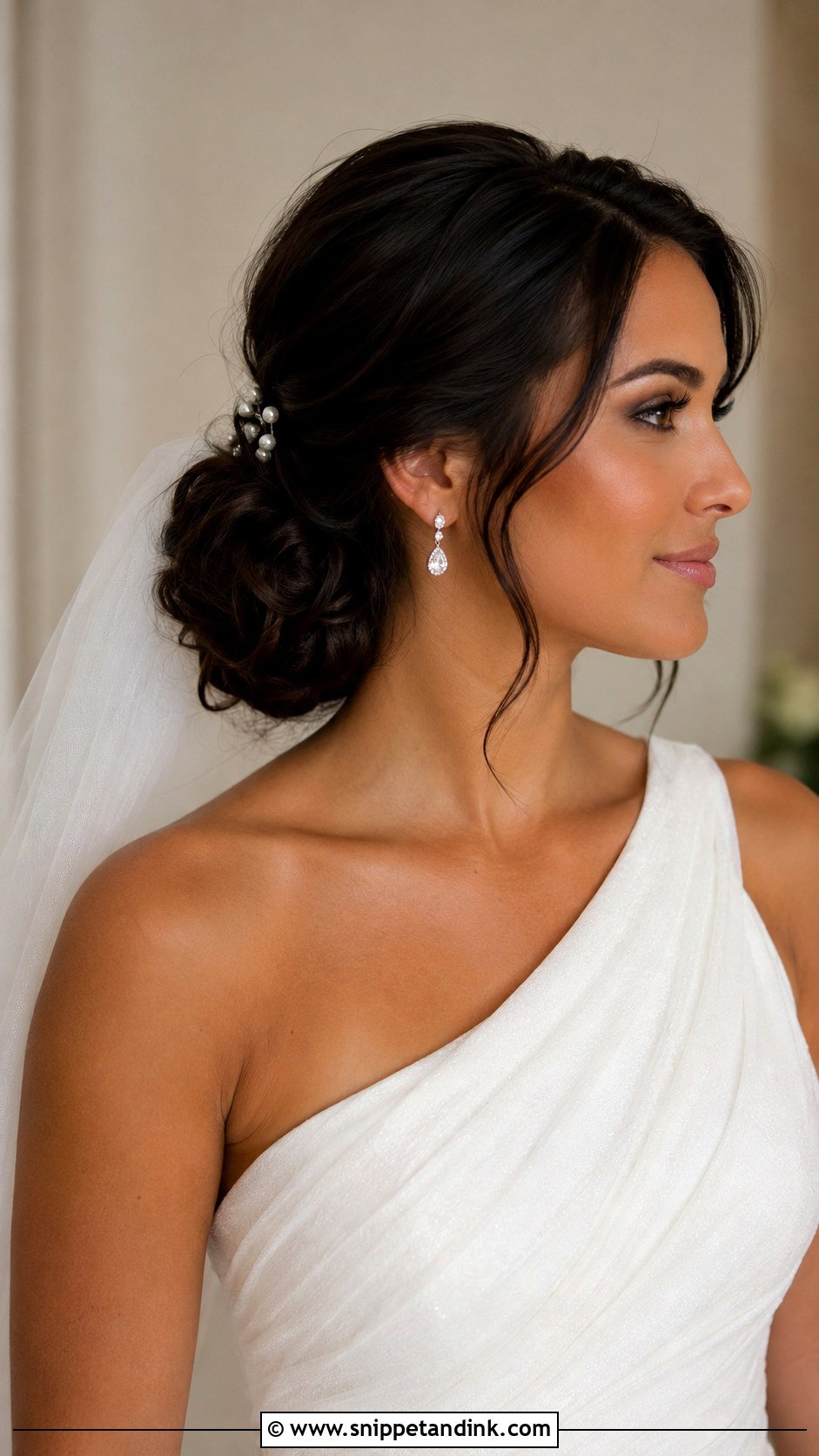
A side bun lets the hair show from the front as well as the back, which is useful when a veil otherwise hides most of the style. The bun sits low and slightly off centre. One-shoulder dresses, side parts and soft curls at the face pair naturally. The veil still attaches at the centre back, not on the bun, so the weight pulls straight rather than tugging the bun sideways. Balance the shape so it doesn’t feel heavy on one side, and add a few pearl pins or small flowers if you like.
10. Textured Updo With Veil
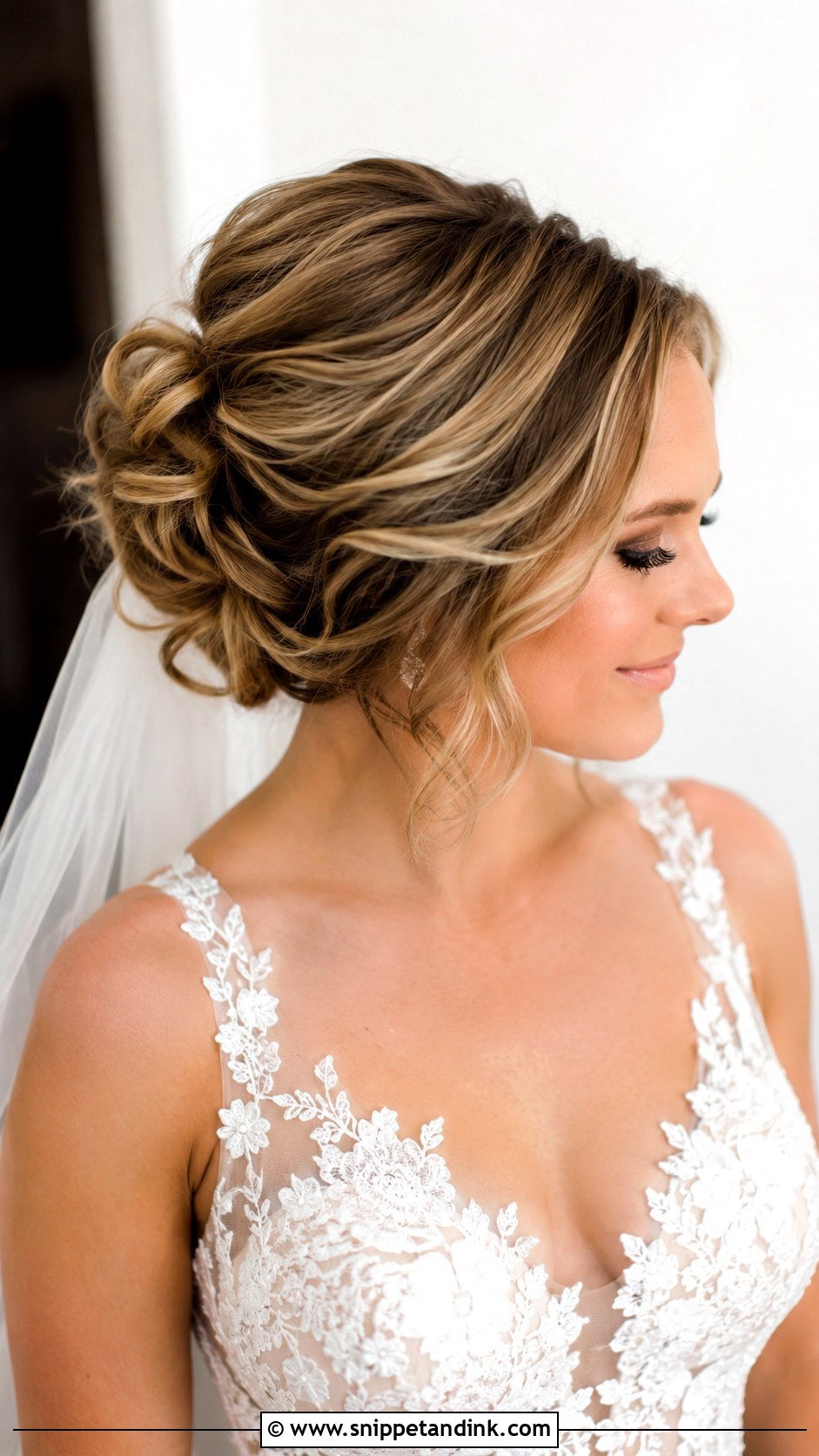
Waves pinned into a bun, twist or loose gathered shape give depth that shows up clearly on camera, particularly with highlights, balayage or other dimensional colour. The veil sits beneath the textured shape so the detail stays visible. It’s adaptable, leaning casual, romantic or formal depending on the finish. For a veil, I ask for hidden pins and a flexible hold spray rather than a stiff one, because stiff-sprayed texture cracks and separates where the comb goes in.
11. Low Ponytail Updo With Veil
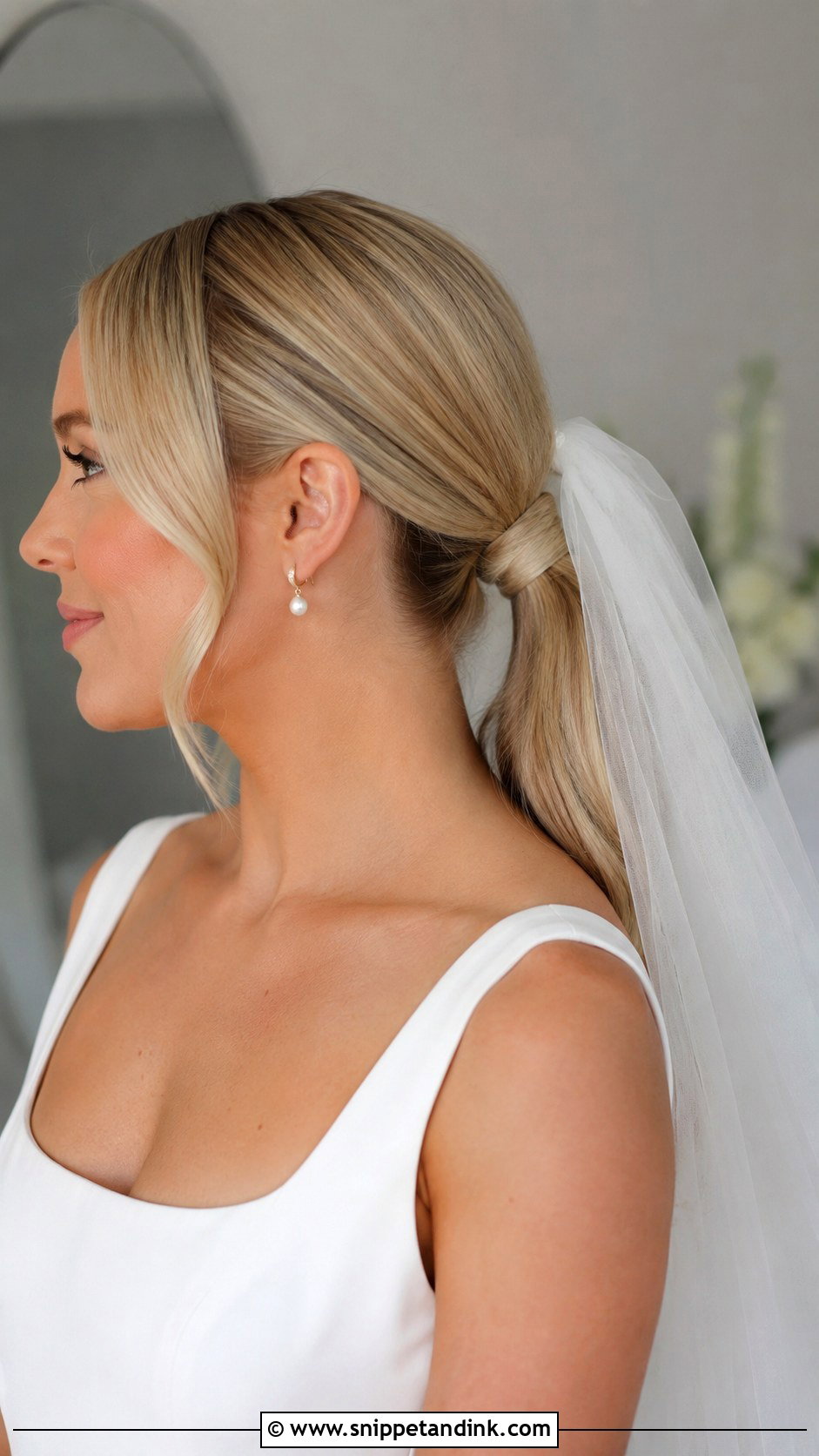
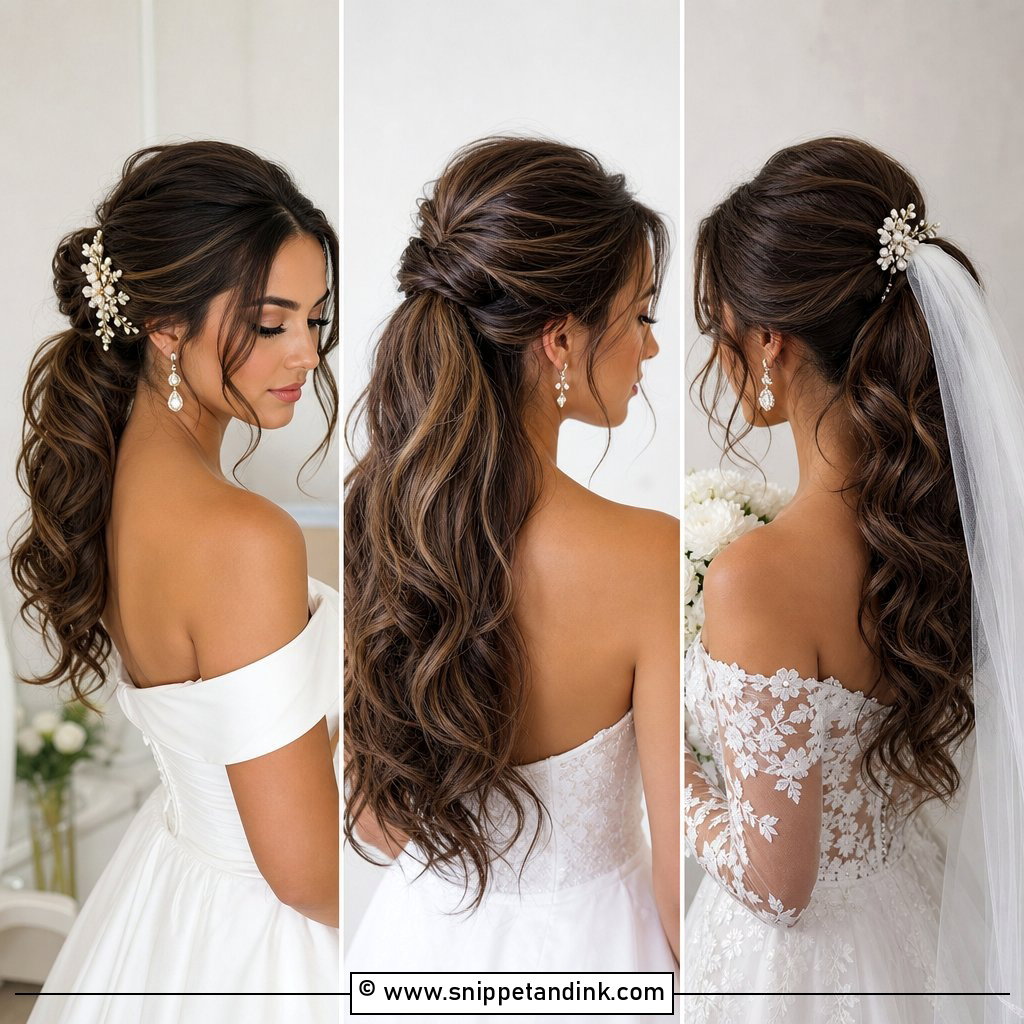
A low ponytail feels less traditional while still keeping the hair controlled and off the face. I set it at the nape with smooth sides, add soft waves through the length and wrap a strand of hair around the base to hide the elastic. The veil can be pinned above the ponytail or tucked under the base. It’s best on long hair, since it shows the length. One thing I warn about: veils catch on long loose lengths, so I give the ponytail a light shine spray to help the tulle glide over it rather than snag.
12. Twisted Updo With Veil
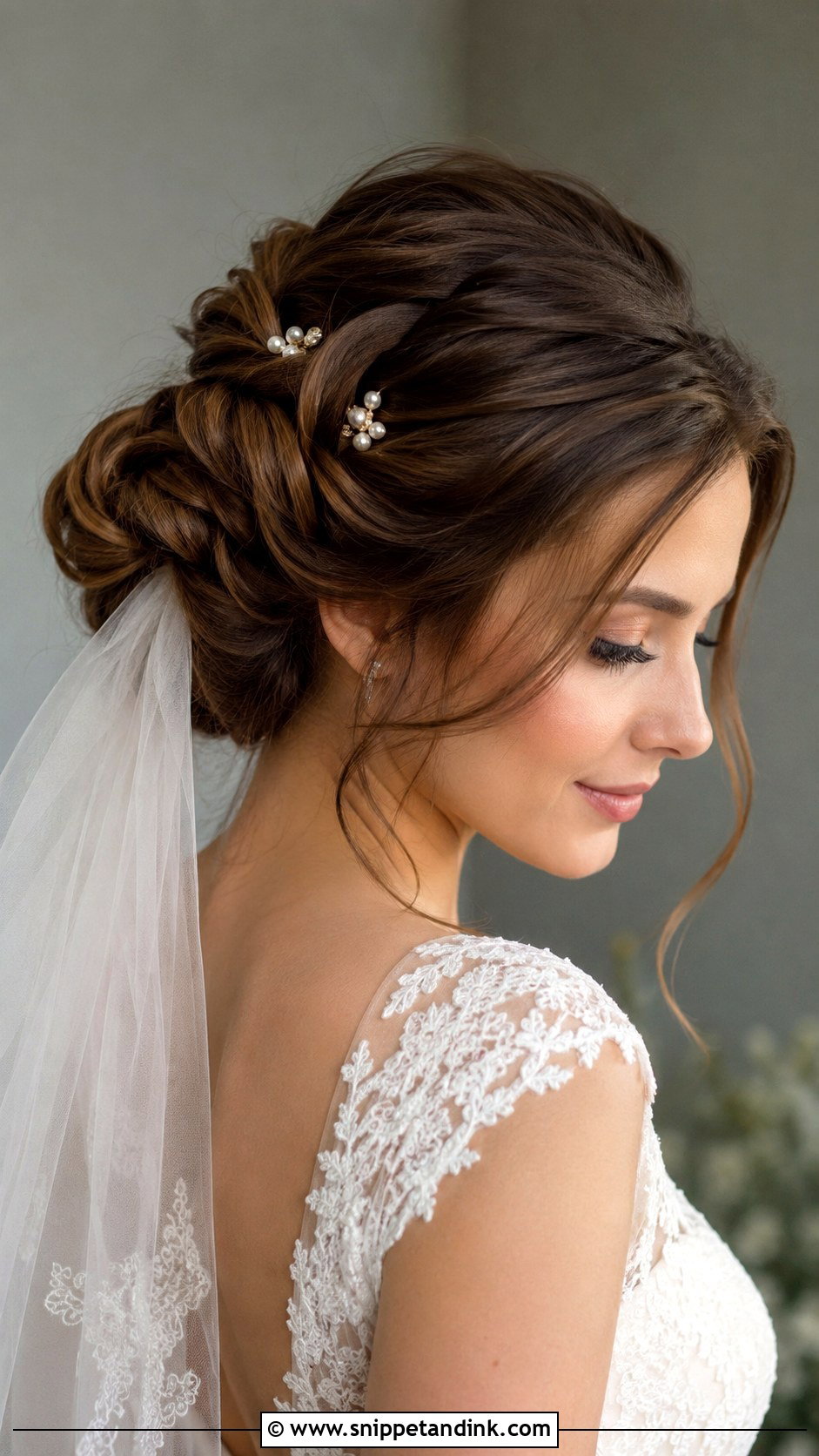
Twisted updos give structure without the detail of braids. Sections are rolled, crossed and pinned into a low or mid-height shape, and the twists make medium and long hair look fuller than it is. The veil usually sits under the main twist or at the base of the crown. Twists can untwist slowly if the hair is very silky, so I prep with a texture spray first to give them grip. A soft front part and a few pieces at the cheekbones finish it.
13. Natural Hair Updo With Veil
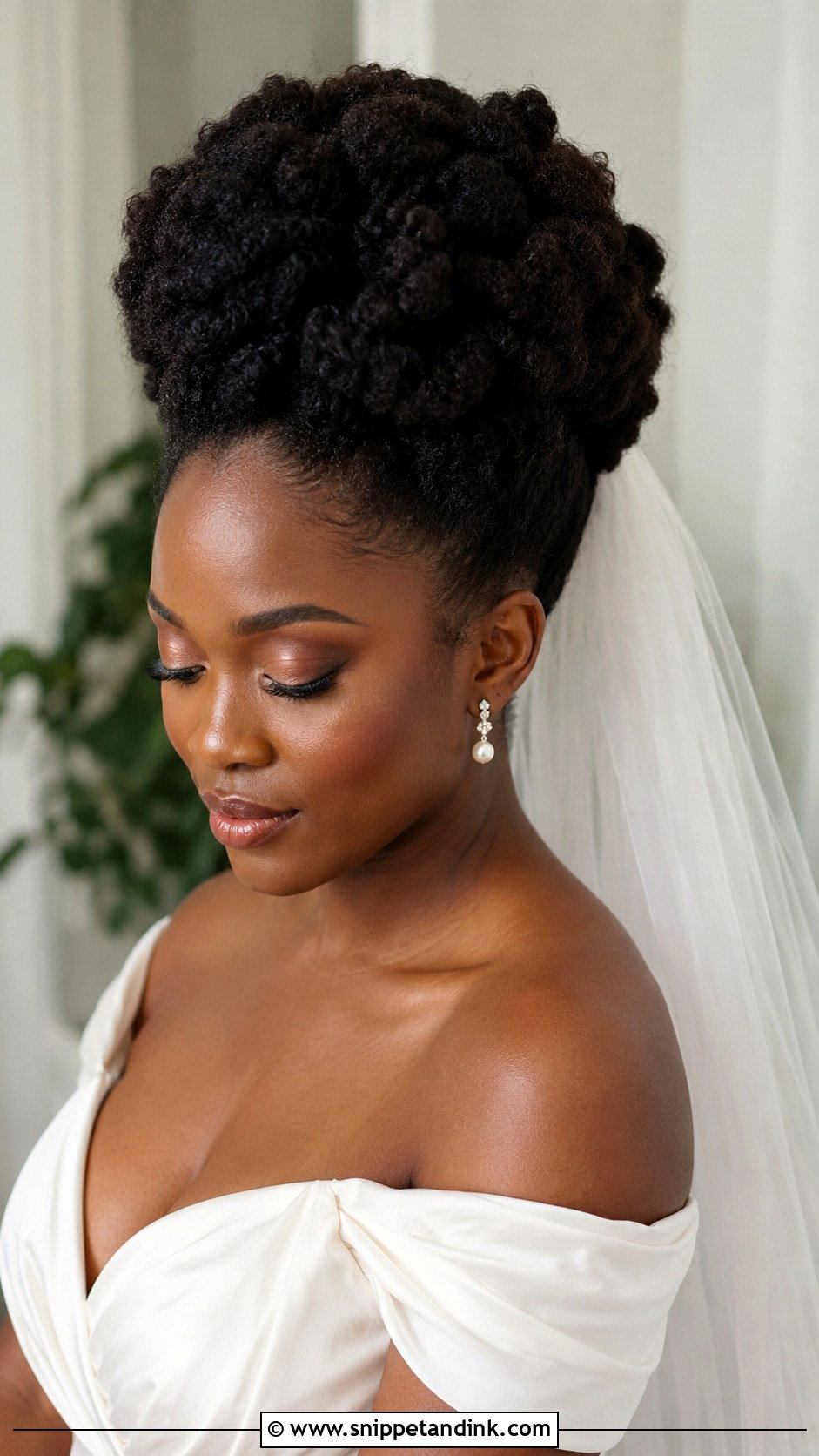
Natural hair can carry a veil beautifully once it has a proper anchor. Coils, curls, twists or gathered volume can be shaped into a high puff, low bun, sculpted roll or pinned crown. A veil comb won’t hold in loose coils alone, so I give it a small braided base or a cluster of crossed pins to bite into. Placing the veil behind the updo keeps the shape visible. Keep accessories minimal; the texture and the veil are already doing plenty.
14. Loose Updo With Veil
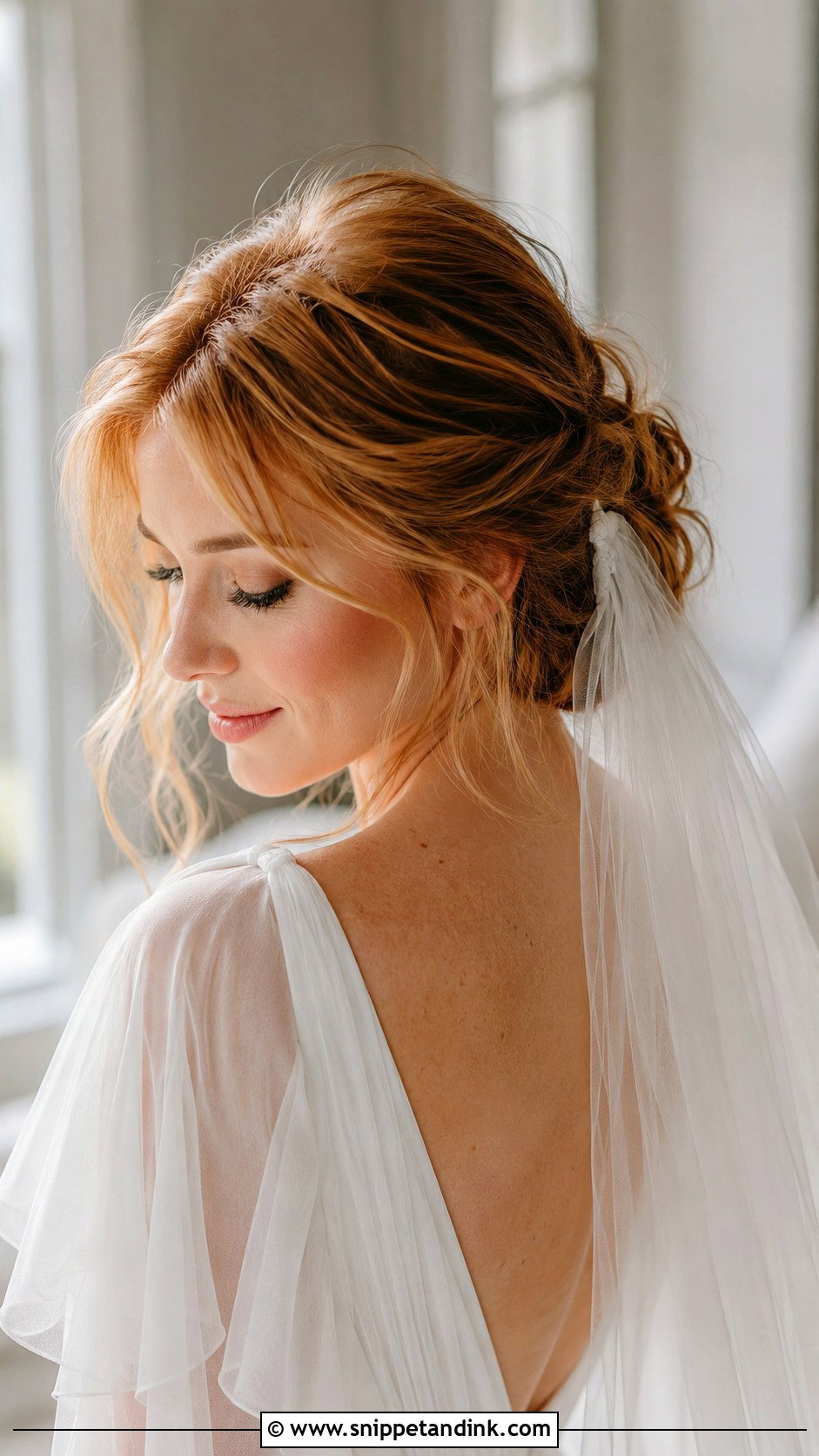
A loose updo is pinned up with gentle bends, airy pieces and relaxed crown volume, and the veil sits low so the hairstyle stays in view. Outdoor ceremonies and soft dresses suit it. Relaxed on the surface, it’s the opposite underneath. I tease the base, hide a small elastic or two and cross-pin everything, because a loose updo without a hidden foundation will collapse under a veil’s weight. Done properly, it looks natural and still holds until the veil comes off.
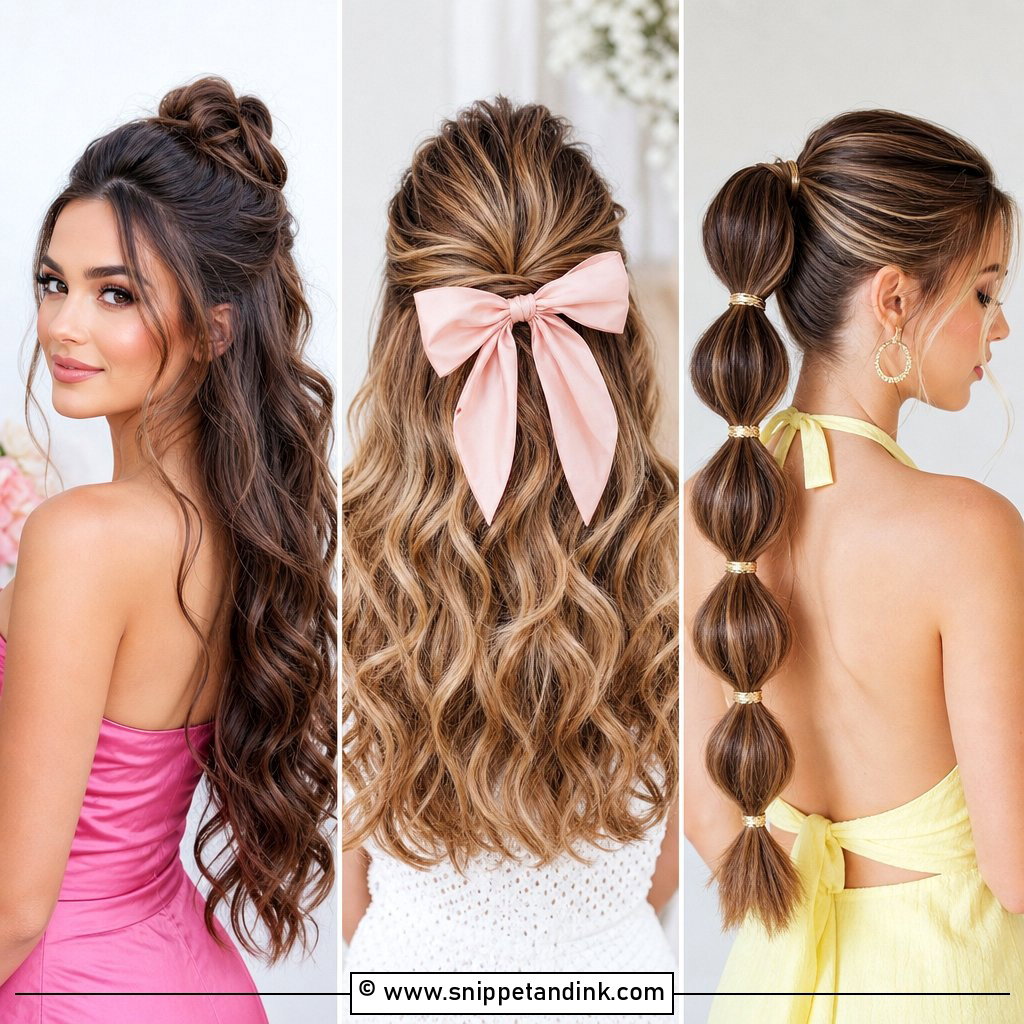
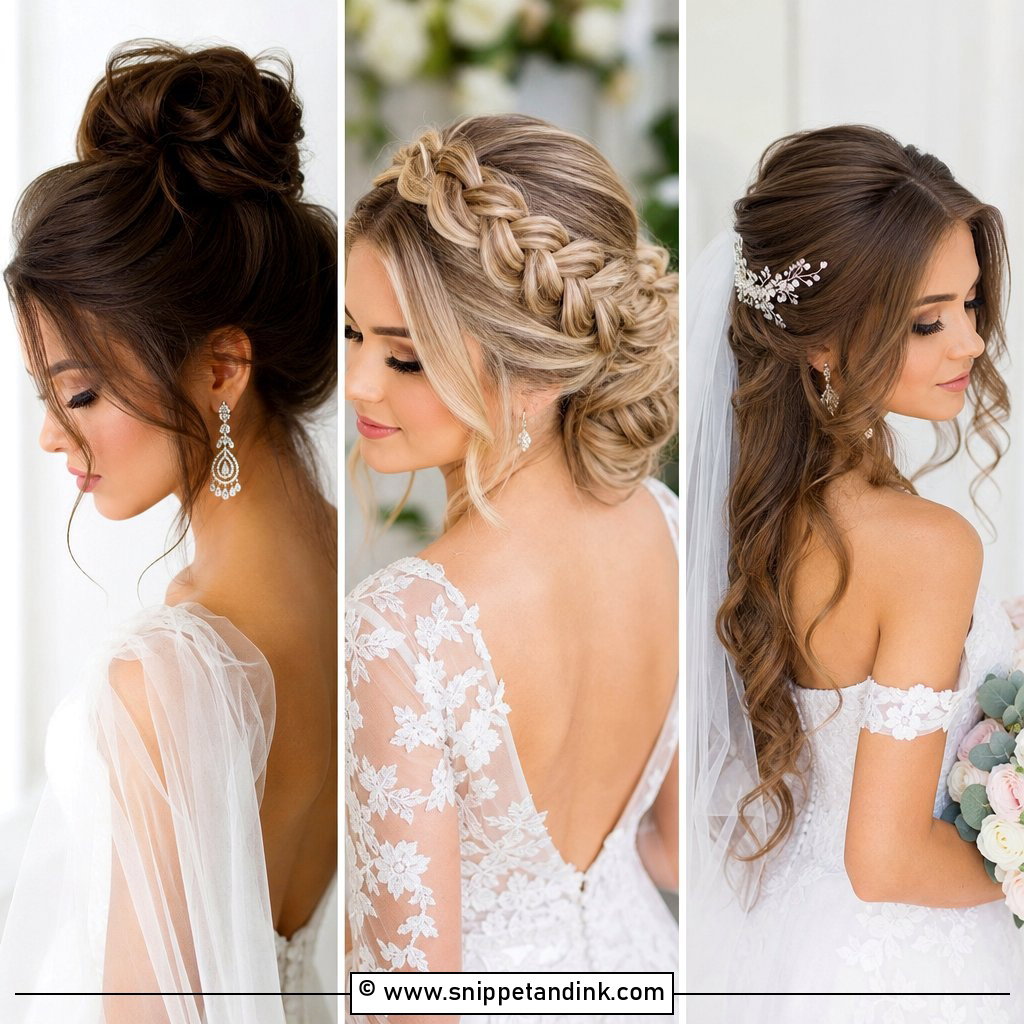
15. Updo With Veil And Tiara
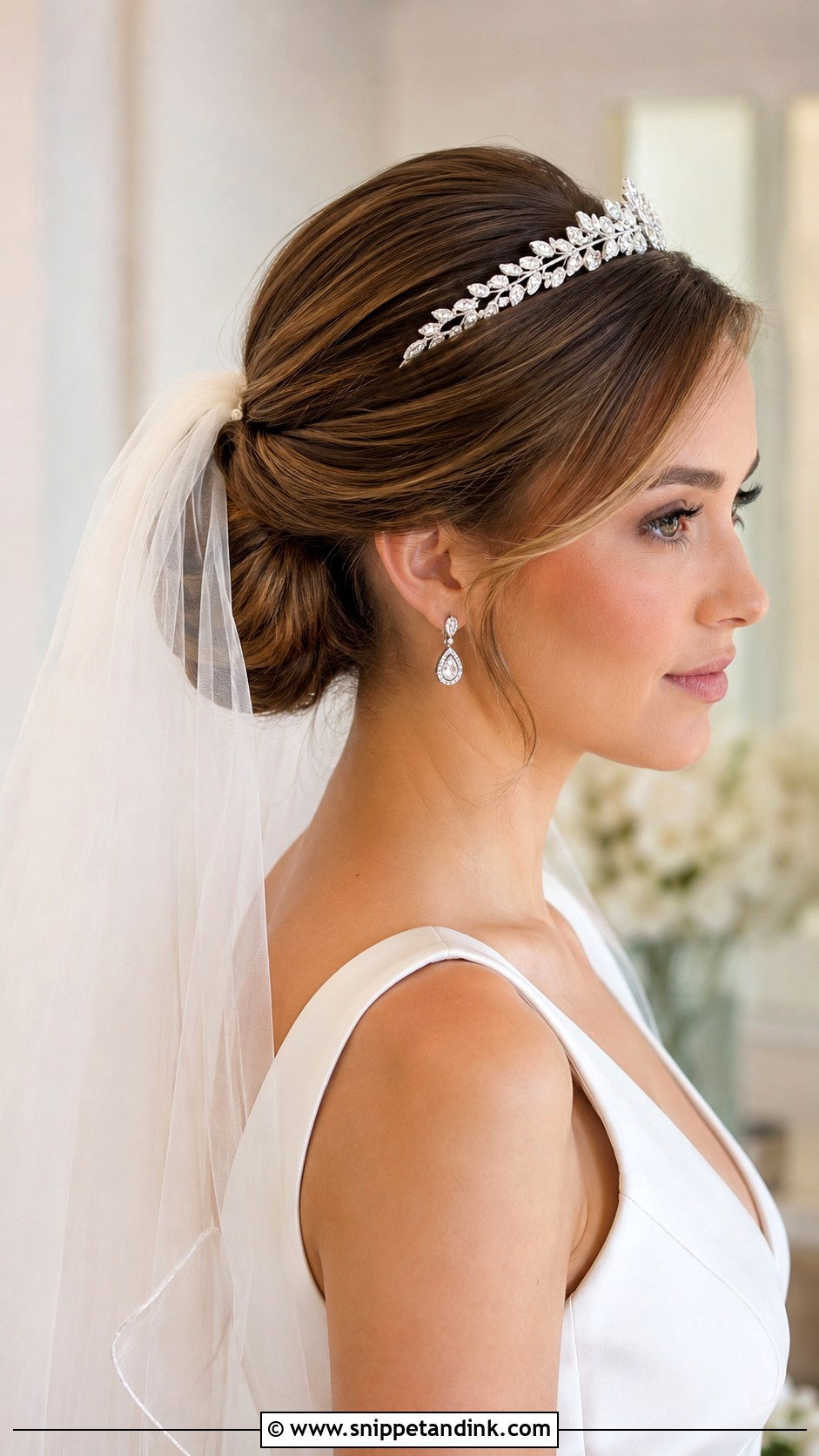
Wearing a veil and tiara together is mostly about order. The tiara goes on first and sits securely near the crown, then the veil is placed behind and below it so the comb never pushes the tiara forward. A low bun, chignon or smooth high bun works best. I pin the tiara through its side loops or combs with bobby pins crossed in an X, since its weight sits higher than a veil’s. Keep the hair simple enough that the two accessories don’t crowd each other. Formal ceremonies and grand dresses suit this pairing.
When the Veil Comes Off After the Ceremony
Most brides take the veil off after the portraits or before the first dance. That moment is where I see the most accidental damage, usually from a rushed bridesmaid pulling the comb straight out and dragging half the bun with it.
- Remove the crossed bobby pins holding the comb first. Count them at the trial so someone knows how many to look for.
- Slide the comb out in the same direction it went in, gently, while holding the bun with your other hand.
- Check for the small dent the comb leaves. A light mist of hairspray and a fingertip press usually smooths it.
- Keep the pins. A couple of them can go straight back into any section that loosened.
If you’re unsure, ask your stylist to show your maid of honour the removal at the trial. It takes two minutes to learn and saves a lot of pinning in a restroom later.
Test the Veil, Then Walk Around in It
Updos with veils can be classic, romantic, sleek, textured or bold. What decides which one is right is your veil length, your neckline, your hair texture and how much of the hairstyle you want seen in the ceremony photos. Low buns and chignons are the steadiest base. High buns add drama. Braids, twists, curls and natural hair updos bring texture and personality. At your trial, wear the actual veil, walk around, sit down, turn your head and have someone take photos from the front, side and back. If nothing pulls after half an hour, it will hold on the day.
You'll Like These Ideas:


Leave a Reply