
A hairband is one of the most useful accessories I put on brides. It can soften an updo, add a bit of light to loose waves, give a veil something to sit against, or make a short cut look bridal straight away. It also does a quiet practical job by holding the hairline in place. Pearl bands read classic, crystal ones catch candlelight, satin looks modern and floral bands suit a garden. Right now brides are pairing them with natural movement and soft texture rather than set curls. The fifteen looks below work for ceremonies, receptions, elopements and bridesmaids, and I’ve noted how I’d place and secure the band for each.
Placing a Band So It Stays Put Without Pinching
Almost every hairband problem I fix on wedding mornings is about placement or fit, not the band itself. A band that slides back during the ceremony or gives you a headache by dinner has usually been put on like an everyday headband.
- Distance from the hairline: one to three finger-widths back looks bridal. Right at the hairline looks casual; too far back and it disappears in front-facing photos.
- Width against your face: a wide band shortens the forehead visually, which suits a high forehead and can crowd a smaller one. Slim bands suit almost everyone.
- Grip: I tease a small section under where the band will sit, then slide a bobby pin through each end of the band and cross a second pin over it behind the ear.
- Pressure: a rigid metal band that squeezes behind the ears will hurt after a few hours. Many can be gently bent wider by hand before the day.
Put the band on after the hair is styled but before the final spray, so the spray helps set it in place.
1. Pearl Hairband Wedding Updo
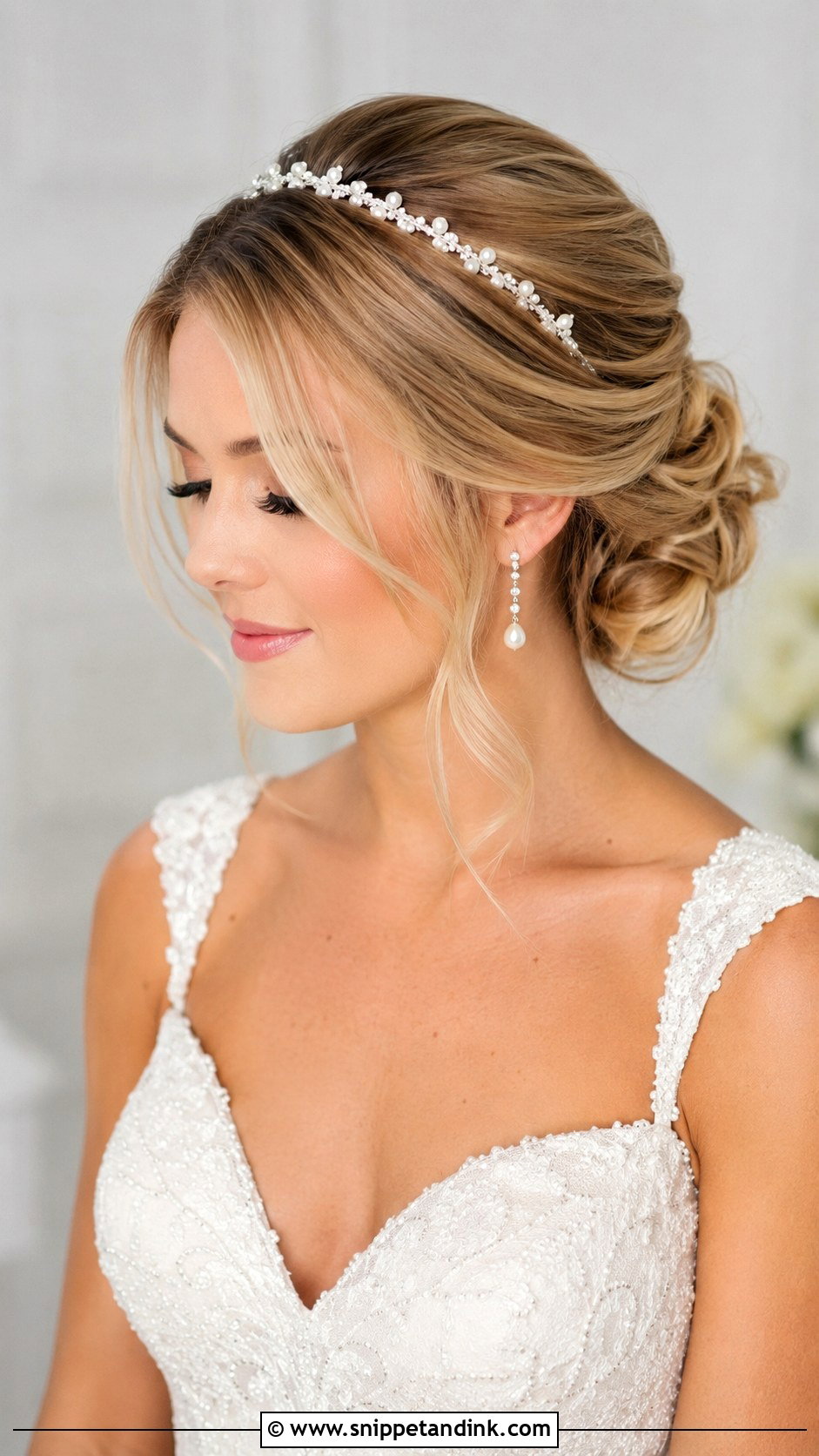
Pearls are the gentlest way to add detail. I gather the hair into a low bun, twisted chignon or loose pinned updo, then set the band slightly behind the hairline, about two finger-widths back, so it doesn’t sit like a school headband. From the front it’s subtle; from the side, which is where most ceremony photos are taken, you see the full curve of pearls. Simple gowns, lace and classic veils all suit it. A light, brushable spray keeps the hair soft while stopping the band from creeping forward.
2. Crystal Hairband Wedding Curls
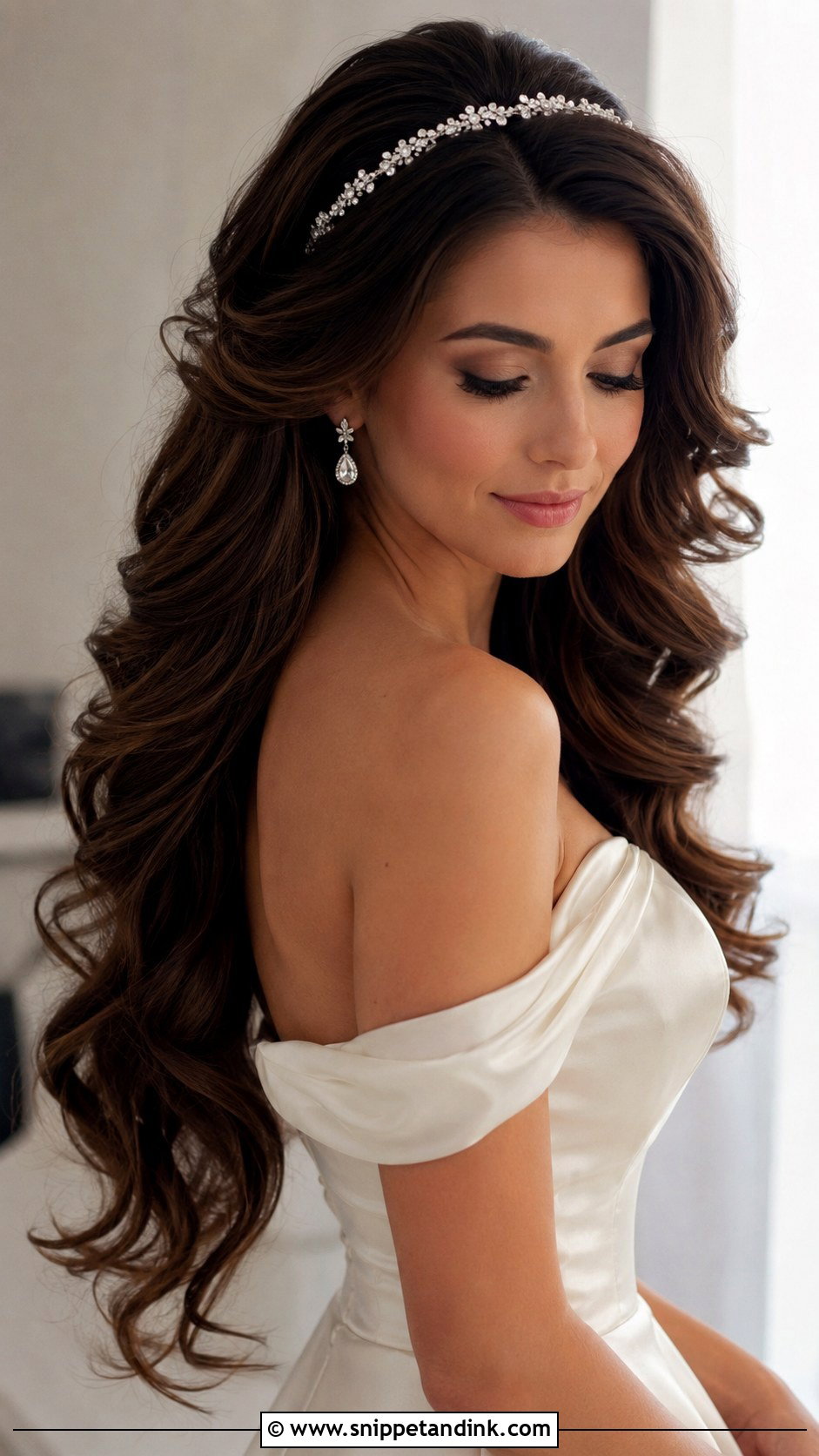
Crystal hairband wedding curls give you shine with your hair down. I curl or wave first, brush the curls out smooth, then lay a slim crystal band across the crown. Smooth matters here: tight ringlets plus crystals tends to look crowded, while brushed waves let the band be the one bright thing. Strapless, off-shoulder and satin dresses suit it because the hair moves around bare shoulders. It’s a good middle ground for an evening ballroom if a full tiara feels like too much.
3. Satin Hairband Wedding Bun
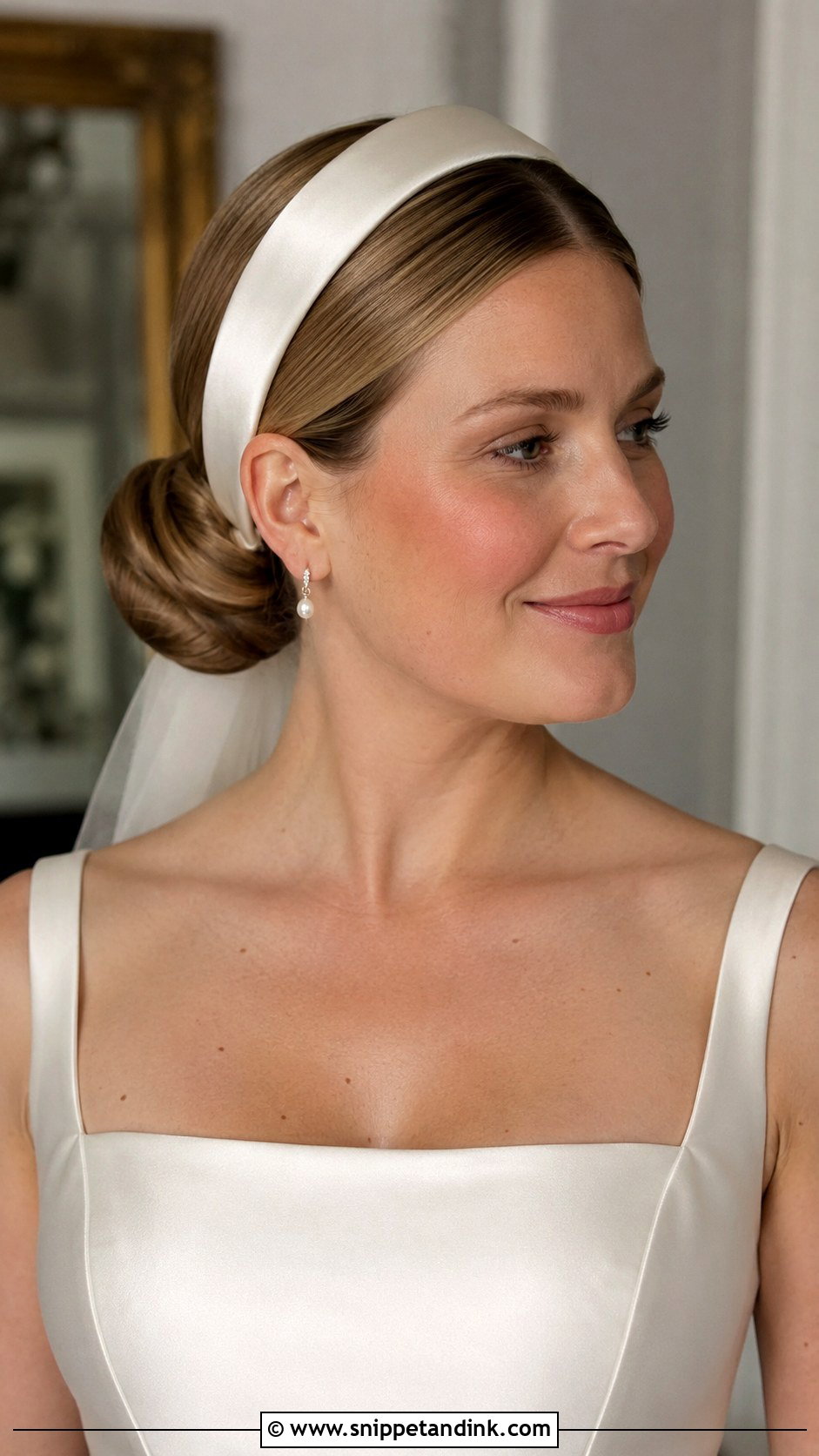
A wide satin band over a bun is the most modern look in this post. There’s no sparkle at all; the interest comes from the sheen of the fabric against smooth hair. The bun can sit low, at mid-height or tucked at the nape. It sits well with minimalist gowns, square necklines and plain veils. Satin also has a practical advantage: it grips better than metal and flattens flyaways at the hairline. I’d match the satin to the shade of your dress in daylight, since bright white next to ivory looks grey in photos.
4. Floral Hairband Wedding Waves
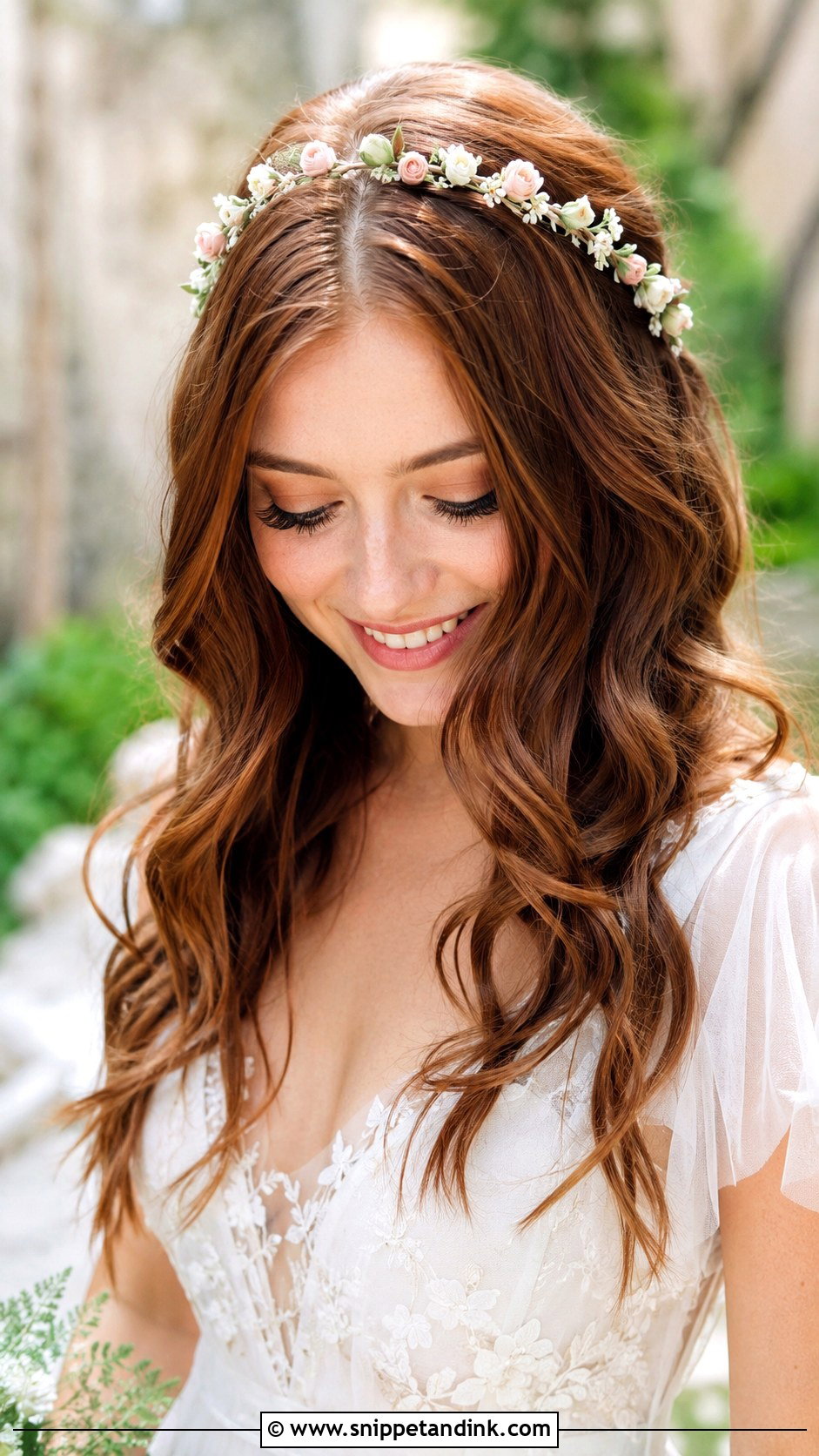
For outdoor and spring or summer weddings, a floral band over loose waves is hard to beat. Small flowers, leaves or botanical details sit on top of waves that have enough texture to hold the band, so I always add texture spray before placing it. Flowing dresses, tulle and natural makeup suit the look. Keep the colours close to your bouquet rather than adding new shades. If the flowers are fresh, talk to your florist, because some blooms wilt within hours out of water while others, like waxflower or spray roses, hold up much longer.
5. Gold Hairband Wedding Half Up Hair
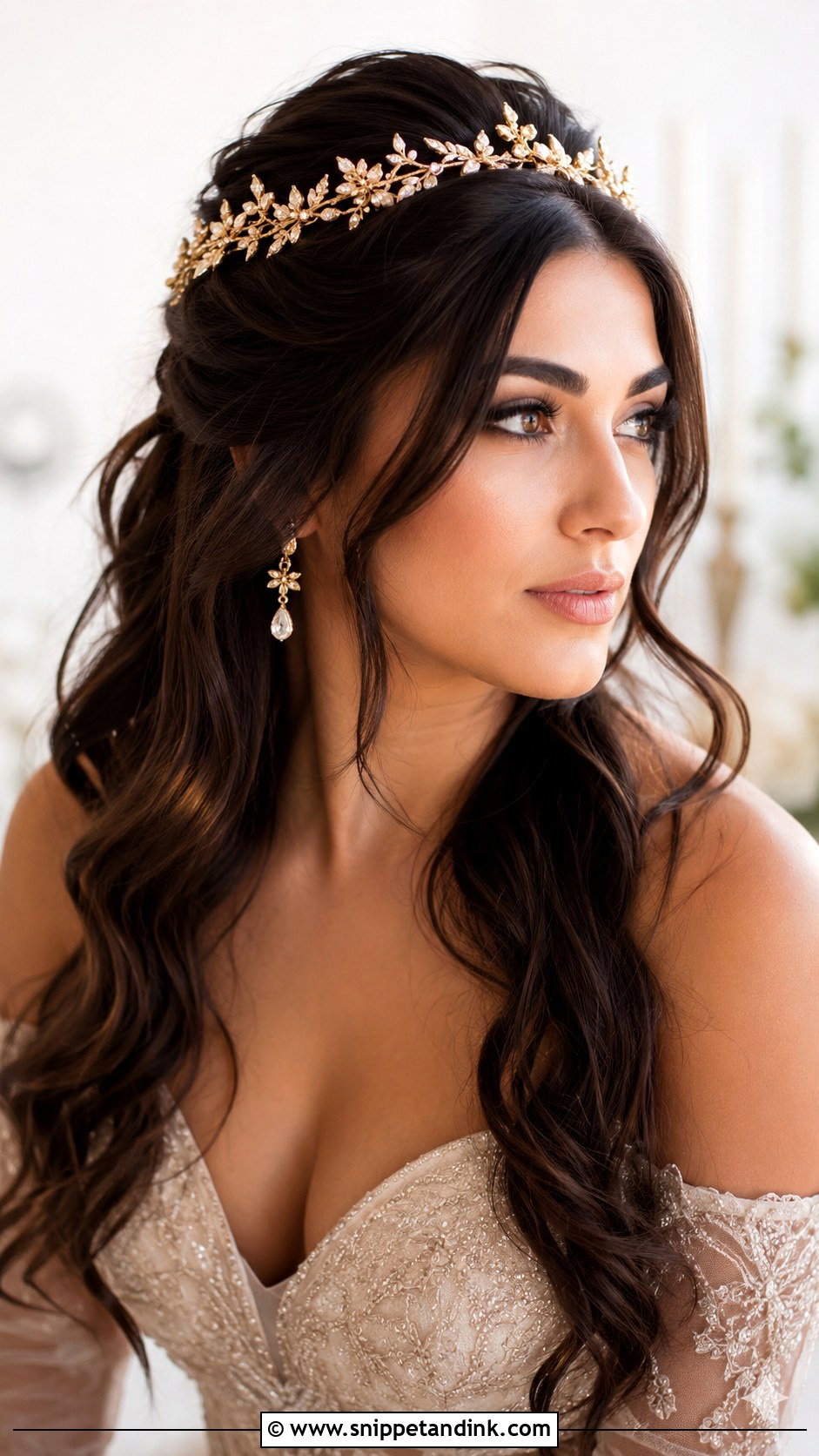
A gold band on half-up hair lifts the top section off the face while the length stays loose in waves or curls. Gold warms up ivory, champagne, cream and soft beige dresses; against bright white it can look a little brassy, so hold it up to your fabric first. This is the style I suggest when someone wants a veil for the ceremony and nothing heavy afterwards, since the band carries the look once the veil is off. Keep the pinned section soft, and set the band just in front of where the half-up section is secured.
6. Silver Hairband Wedding Chignon
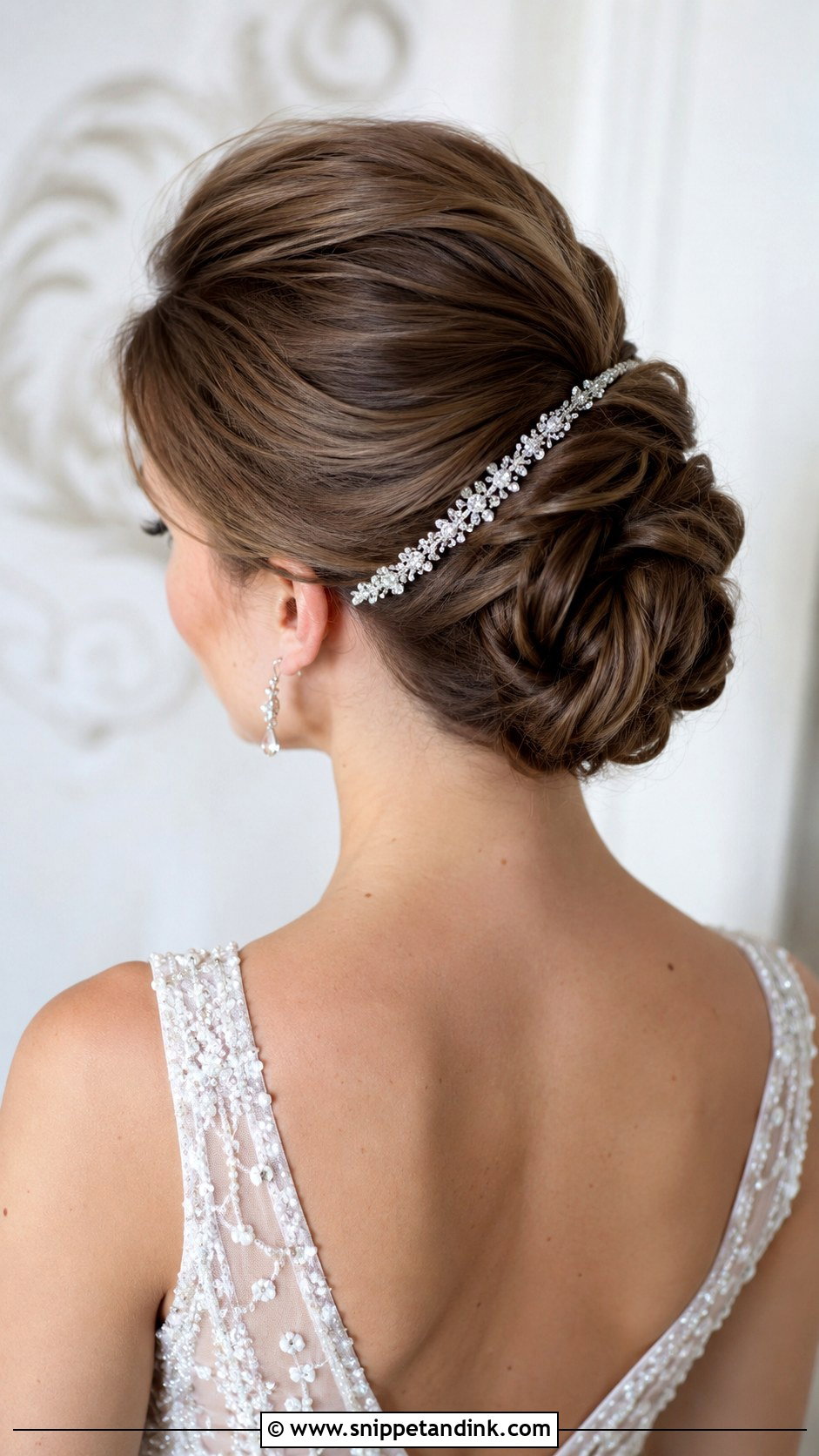
A silver band suits cool-toned details: white gowns, platinum jewellery, beaded dresses and winter weddings. Underneath, the chignon sits low at the nape and looks graceful from the back and side. It’s one of the most secure combinations here, because the band locks the front while the chignon is anchored low, so it holds through ceremony, portraits and reception without much touching up. You can ask for a soft lift at the crown or keep it completely sleek.
7. Braided Hairband Wedding Hairstyle
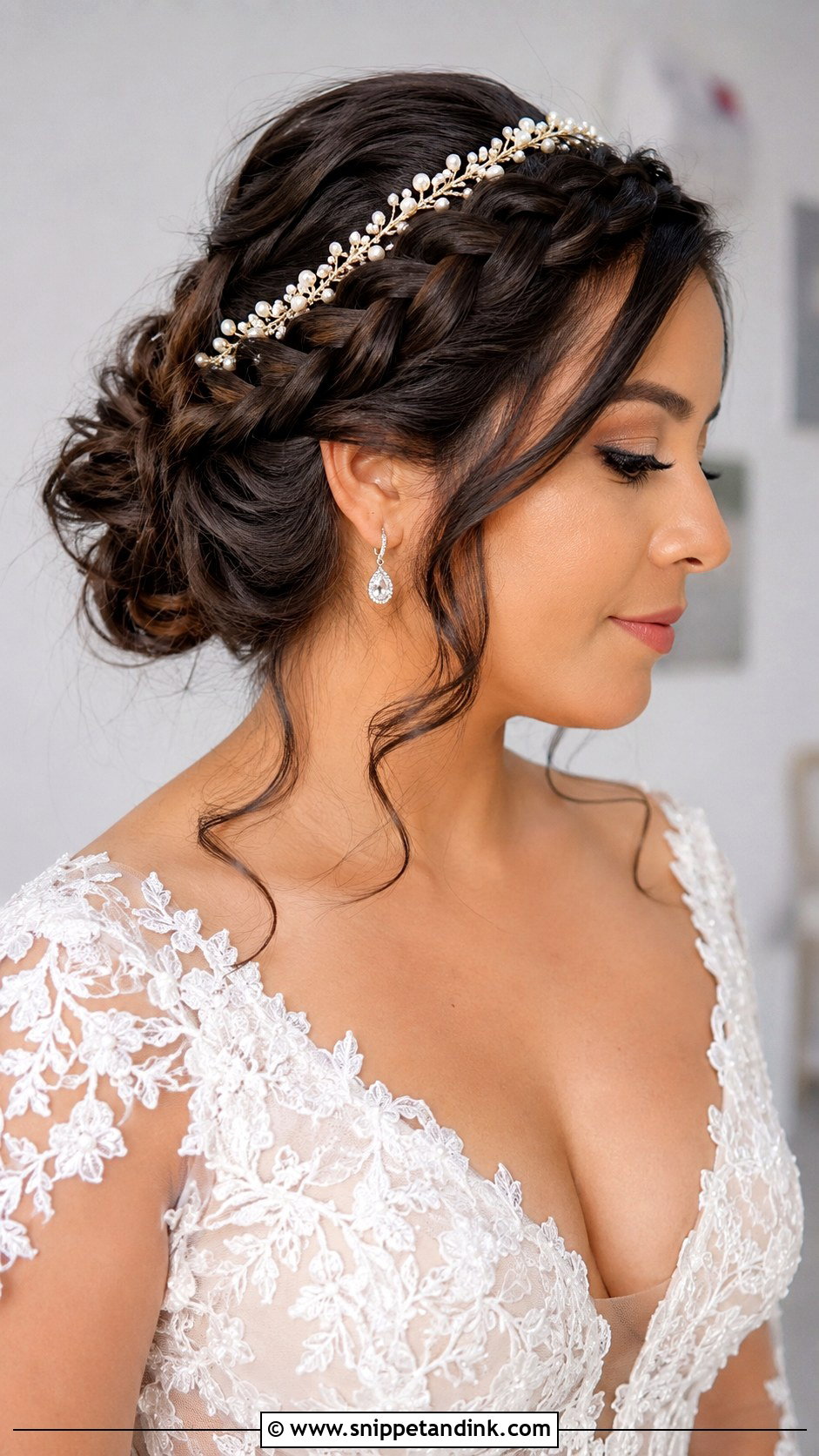
Thick hair and hairbands can fight each other, since the volume pushes the band up and back. A braid solves that. I’ll do a low braided bun, a loose side braid or a half-up braid, then place the band across the crown, where the braiding has already taken up the bulk. Pull the braid apart slightly for a softer feel. A few small pins near the band can add sparkle, though I’d keep them to one side so the braid stays the main detail.
8. Vintage Hairband Wedding Finger Waves
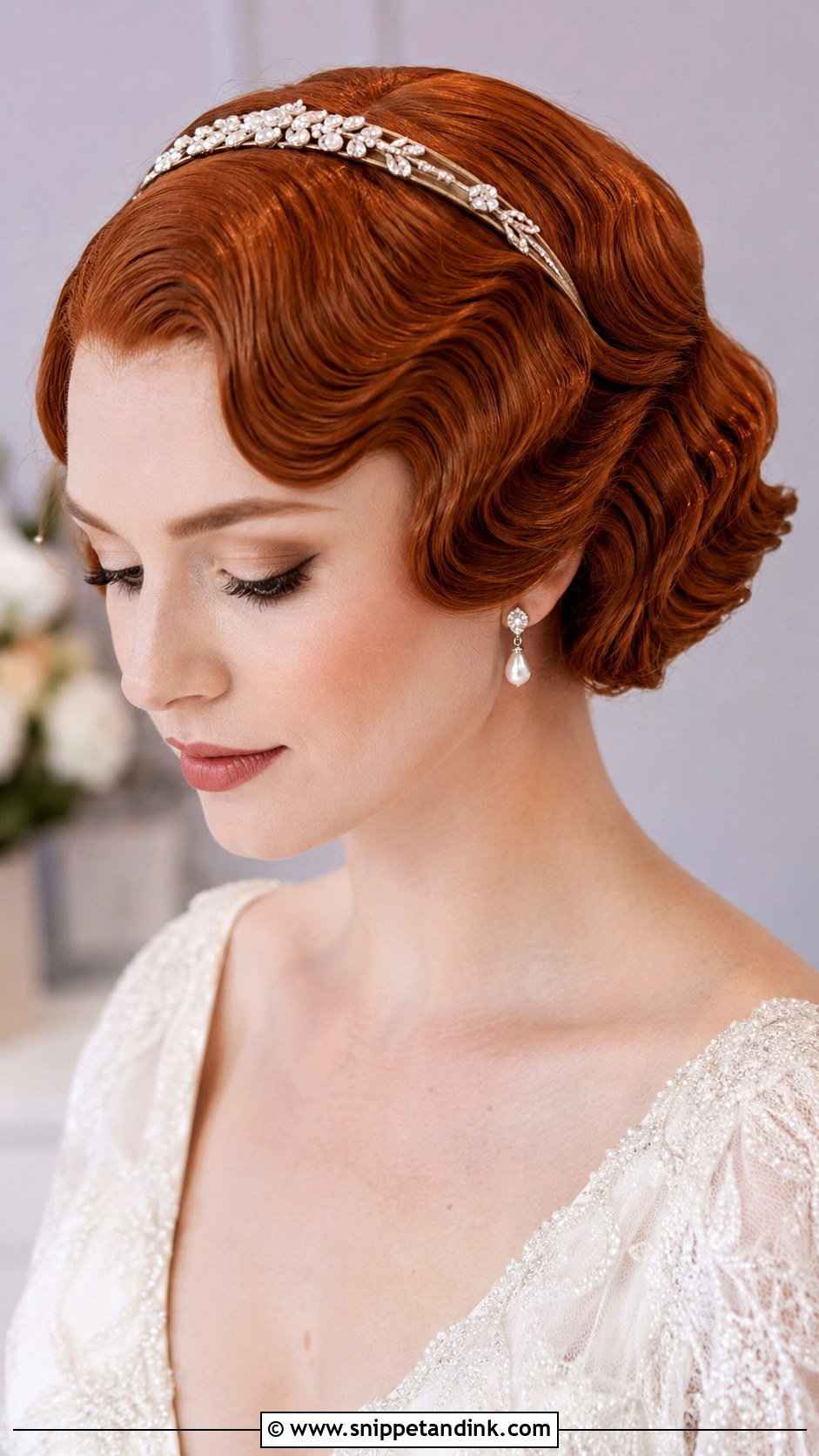
Vintage hairband wedding finger waves are a sculpted style, and they take skill. The hair is set into smooth S-waves close to the head, then finished with a slim jewelled or satin band. Bobs and shoulder-length hair suit it naturally; longer hair can be pinned under into a faux bob. Red lips, fitted gowns and pearls go with it. Book a trial for this one without exception, because a band placed carelessly flattens the top wave, and your stylist needs to plan the wave positions around where the band will sit.
9. Boho Hairband Wedding Loose Waves
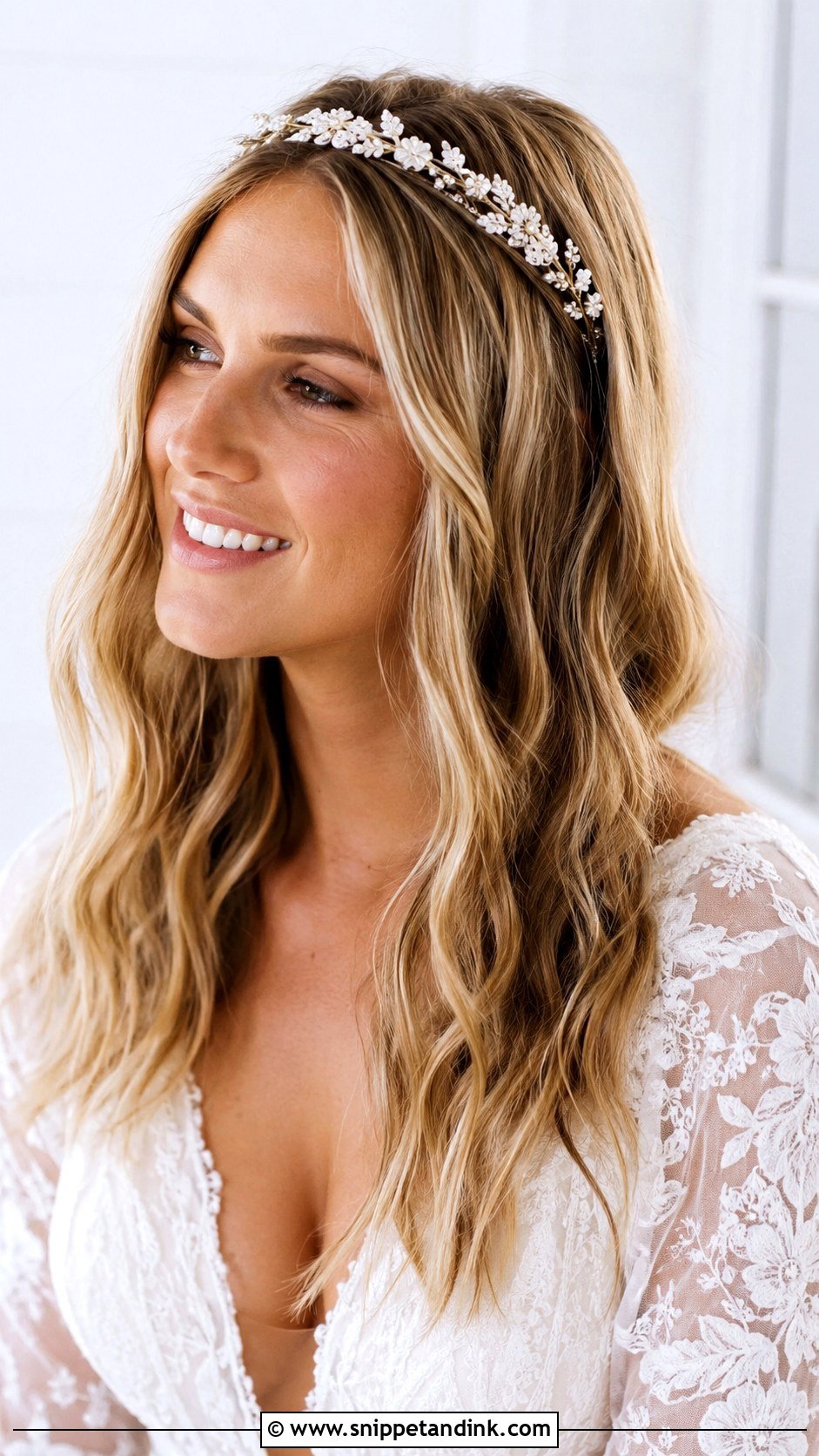
Boho waves are soft bends rather than curls, finished with a simple beaded, floral, or woven hairband. The band can sit lower on the crown for a relaxed look or higher for something more traditional. Beaches, outdoor venues and mountain elopements suit it. Go easy on product. A light texture spray keeps the waves airy, while heavy hold makes them clump and look dated. In wind, I’d pin the band at both ends behind the ears, or it will lift.
10. Short Hairband Wedding Bob
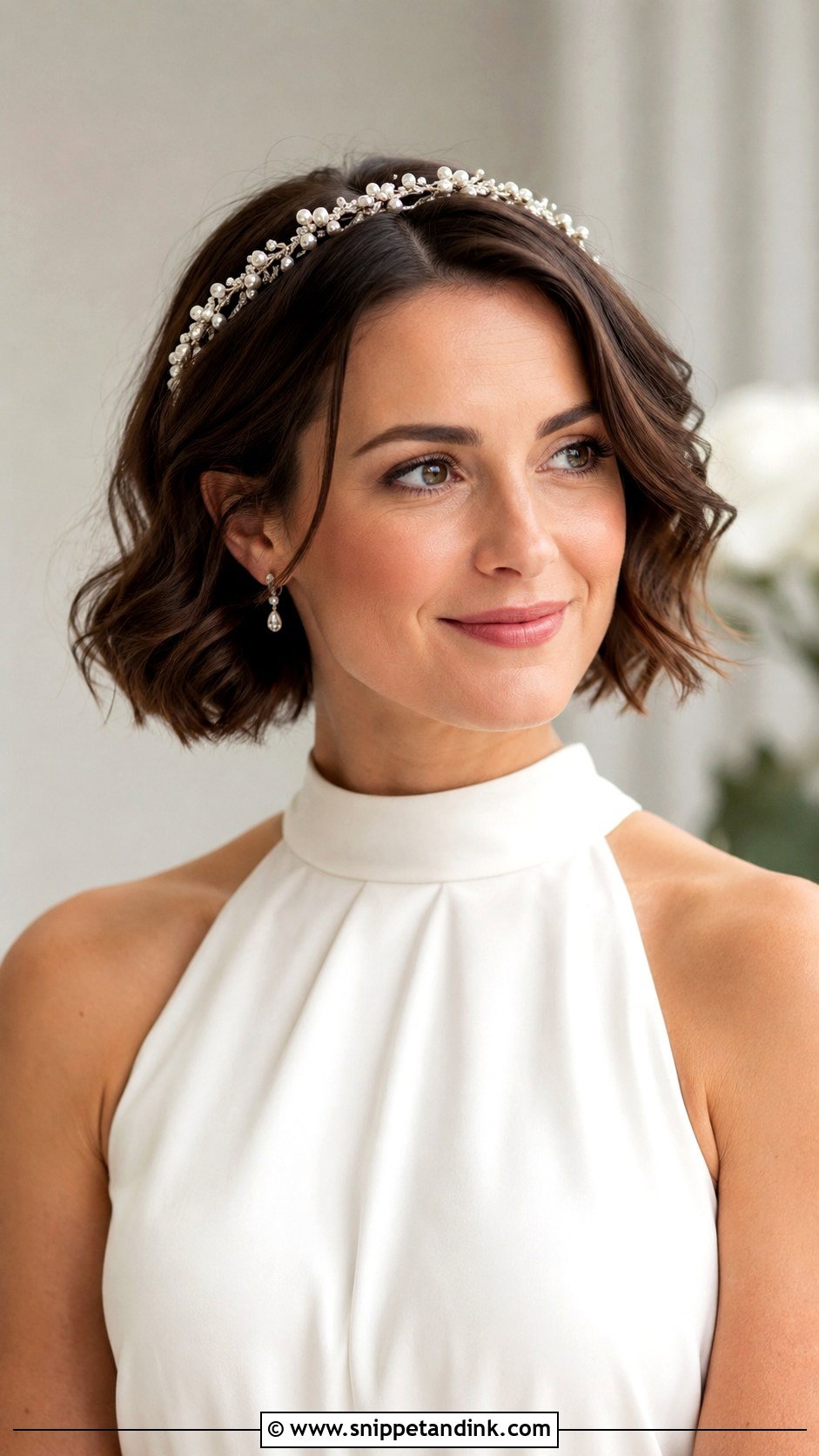
A short hairband wedding bob is a good answer for anyone who’s been told bridal hair has to be long. Sleek, wavy or softly curled, a bob changes completely with a pearl, crystal, satin or floral band, because the accessory frames the face and gives the cut an obvious bridal focus. It suits statement earrings, high necklines and simple veils. On fine hair I build a little volume at the crown first so the band doesn’t press it flat. On thick hair I smooth the ends and keep the shape tight.
11. Curly Hairband Wedding Updo
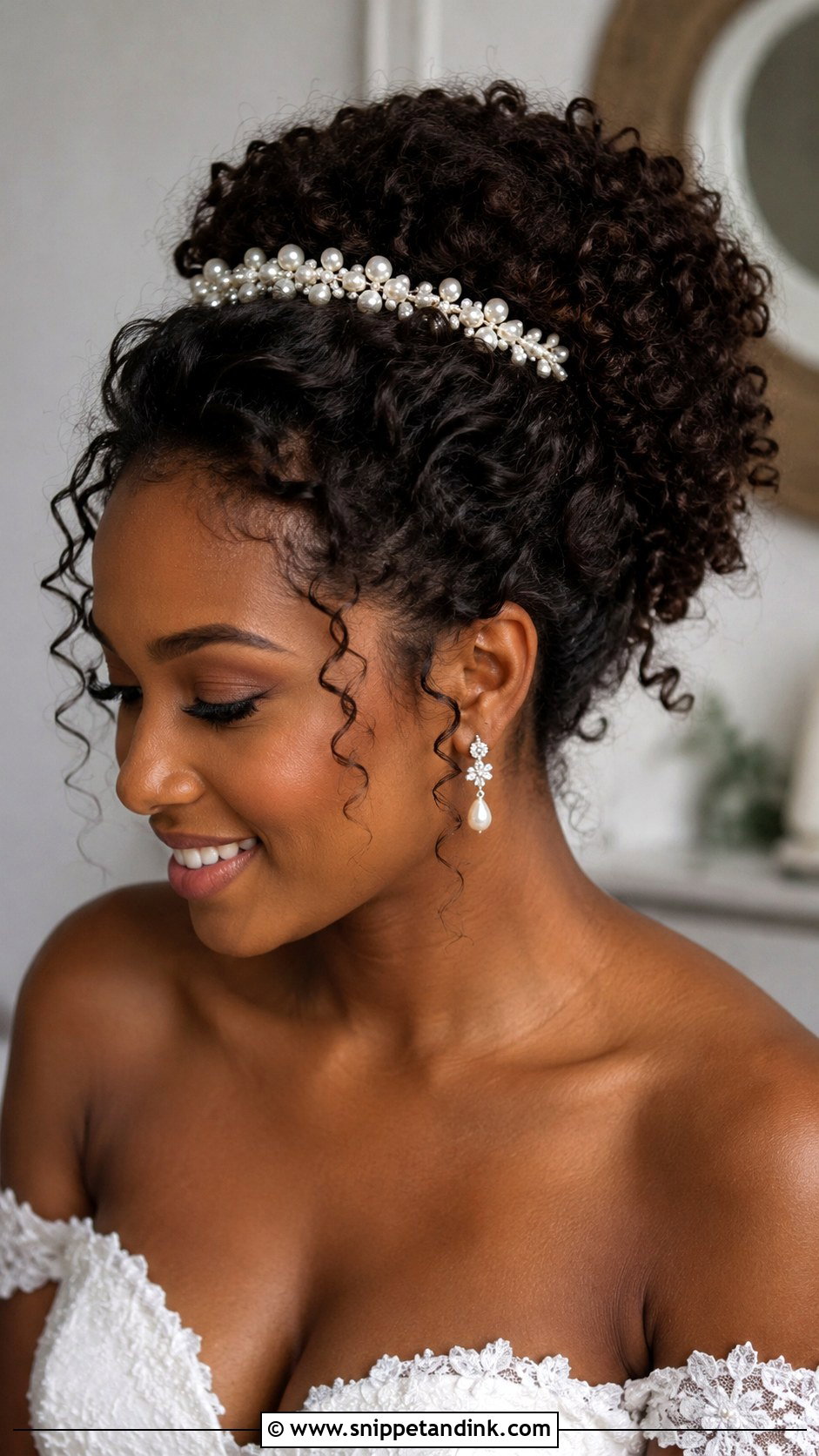
Curls can be pinned into a soft bun, a gathered puff or a loose updo with the band in front. The point is to keep the curl pattern on show. I define the curls with your usual curl products before styling, and pick a band with a gentle, flexible grip; a stiff metal band pressing down can flatten the curls along the crown. It’s comfortable in warm weather since the hair is off the neck. A padded or fabric-covered band is often the kindest choice here.
12. Sleek Hairband Wedding Ponytail
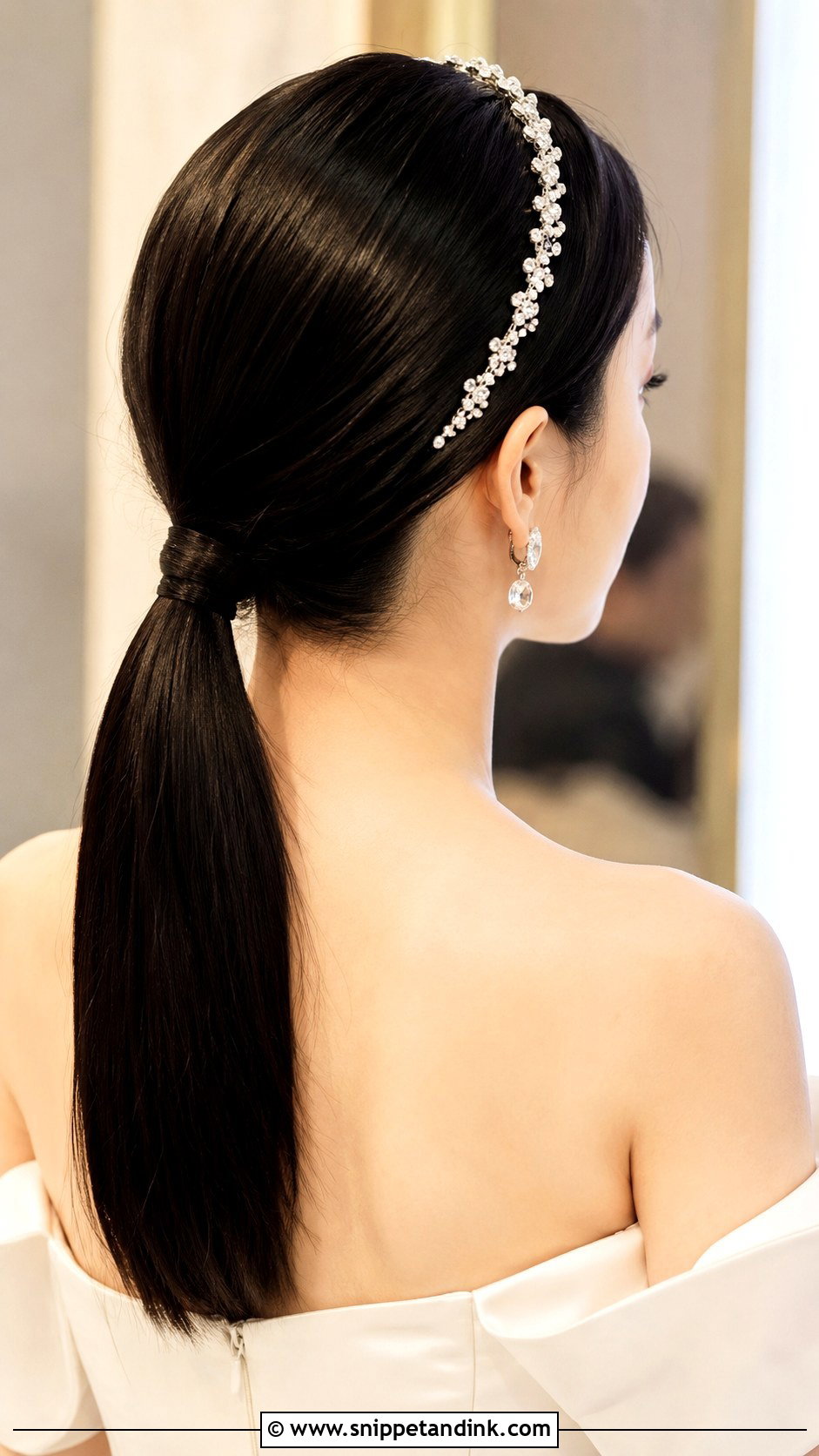
A sleek ponytail with a band is clean and very modern. The hair is smoothed back into a mid or low ponytail with a polished band near the crown, leaving the face and neckline clear for open backs, structured gowns and big earrings. The ponytail can be straight, softly waved or curled at the ends. I wrap a small strand around the base for a finished look and use a little shine serum on the lengths. The band also stops the smoothed section from bubbling as you move, which is a real help with slippery hair.
13. Low Hairband Wedding Bun
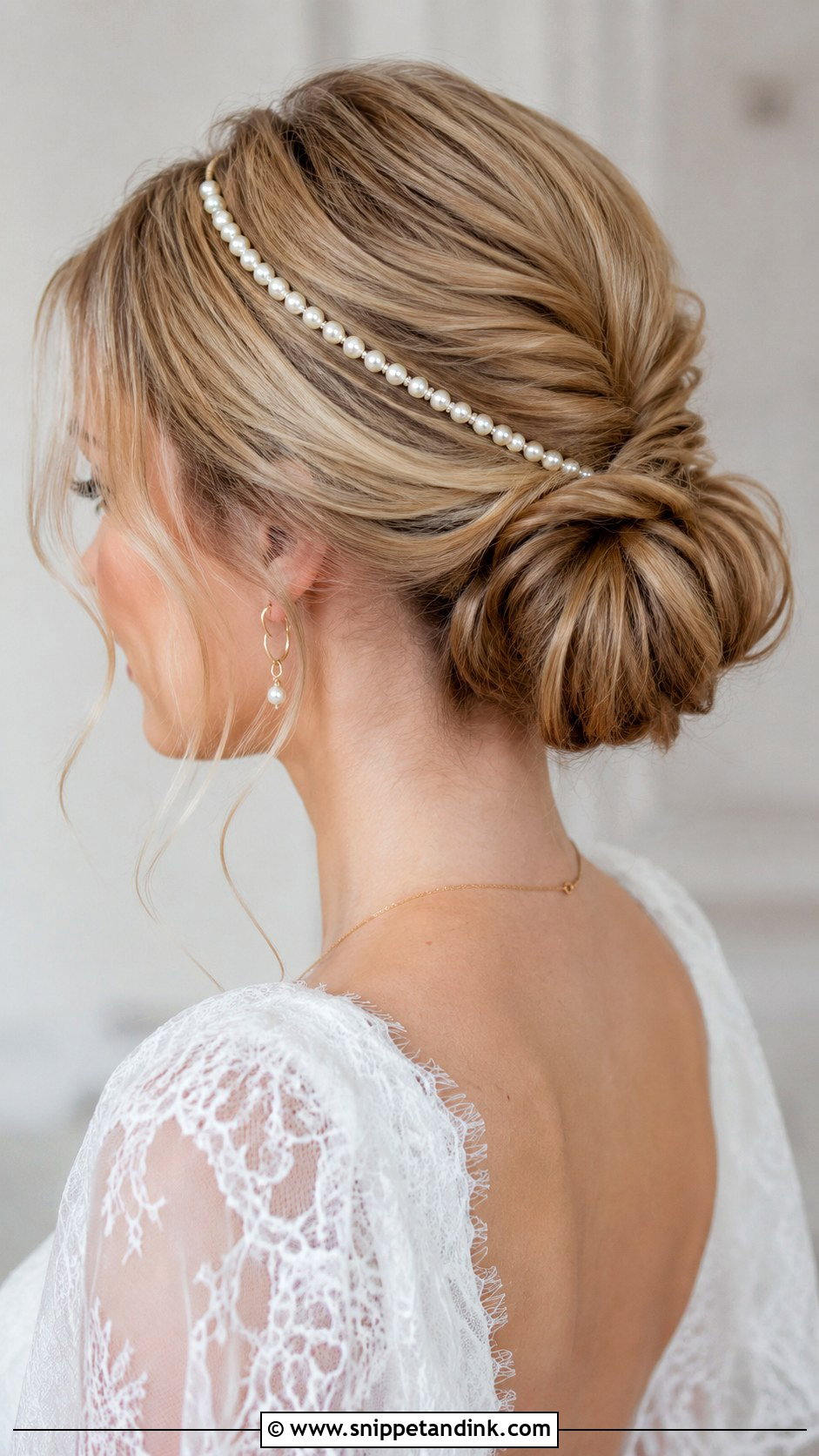
A low bun at the nape, with a band across the top or just behind the hairline, works with nearly every dress, from lace to satin. Veils are easy, because the comb can sit above or below the bun. On fine hair I use a bun padding or extensions to give the bun some size; on thick hair I twist and pin it in sections so it doesn’t pull downward. Leave a couple of soft pieces at the front, and set them after the band is in place, or the band will catch them.
14. Hairband Wedding Hairstyle With Veil
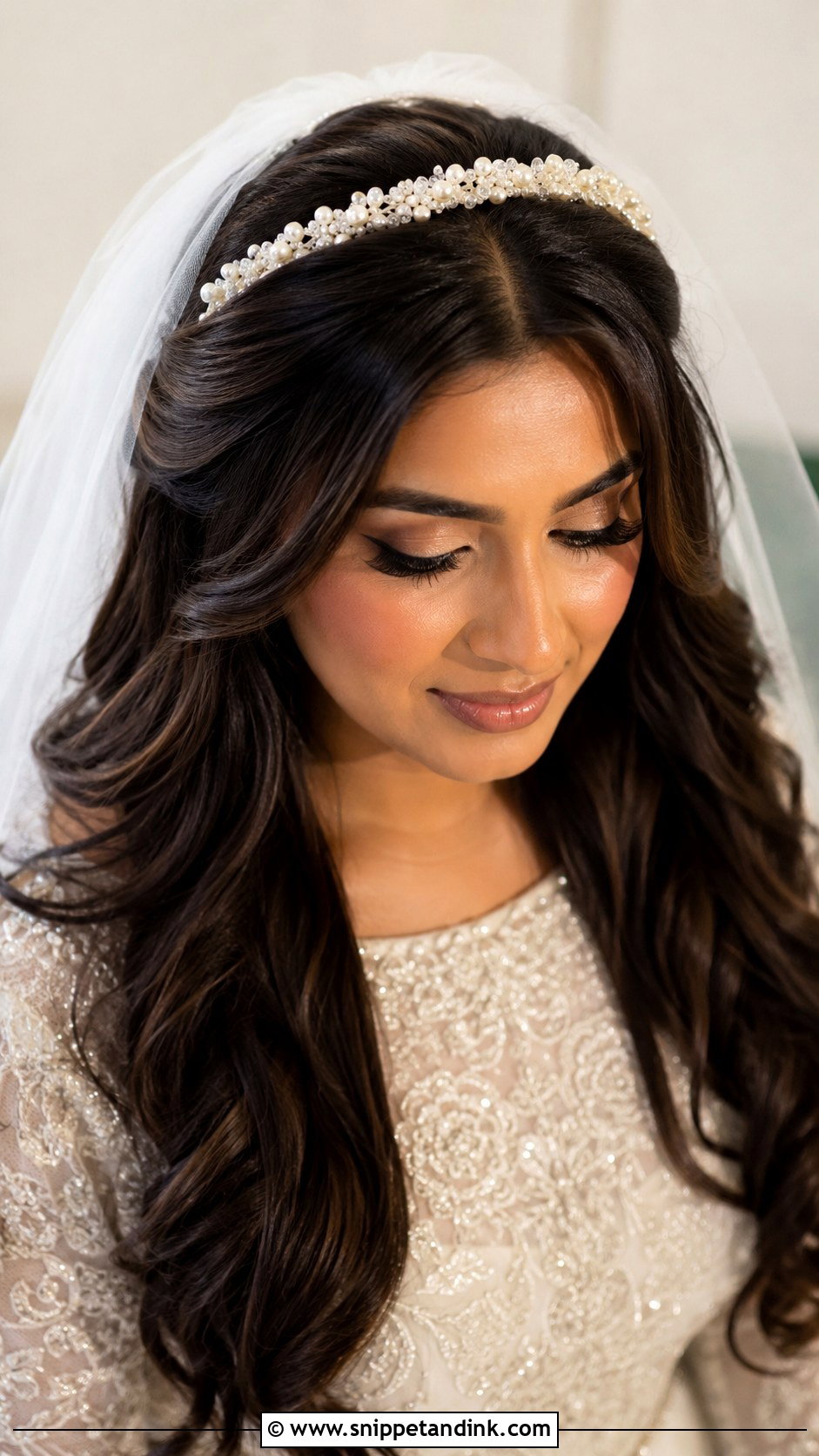
With a veil, the band goes in front and the comb sits just behind it, so you see two layers from the front and side. Balance them. If the veil has lace or beading, wear a plain band; if the veil is plain, the band can carry more detail. Hair can be down, half up or in a low bun. At the trial, I always do the reception version too: take the veil out and check the band still looks finished on its own, and that removing the comb hasn’t loosened anything around it.
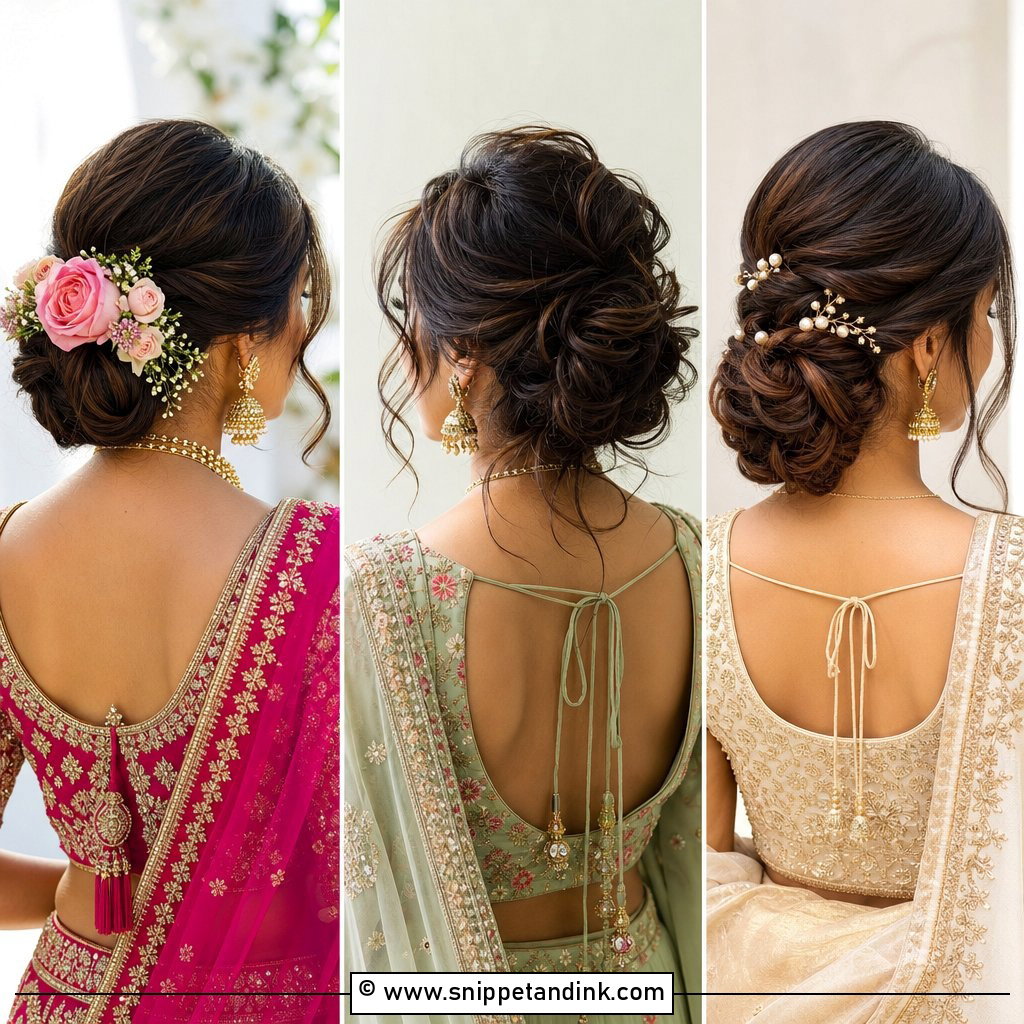
15. Textured Hairband Wedding Bun
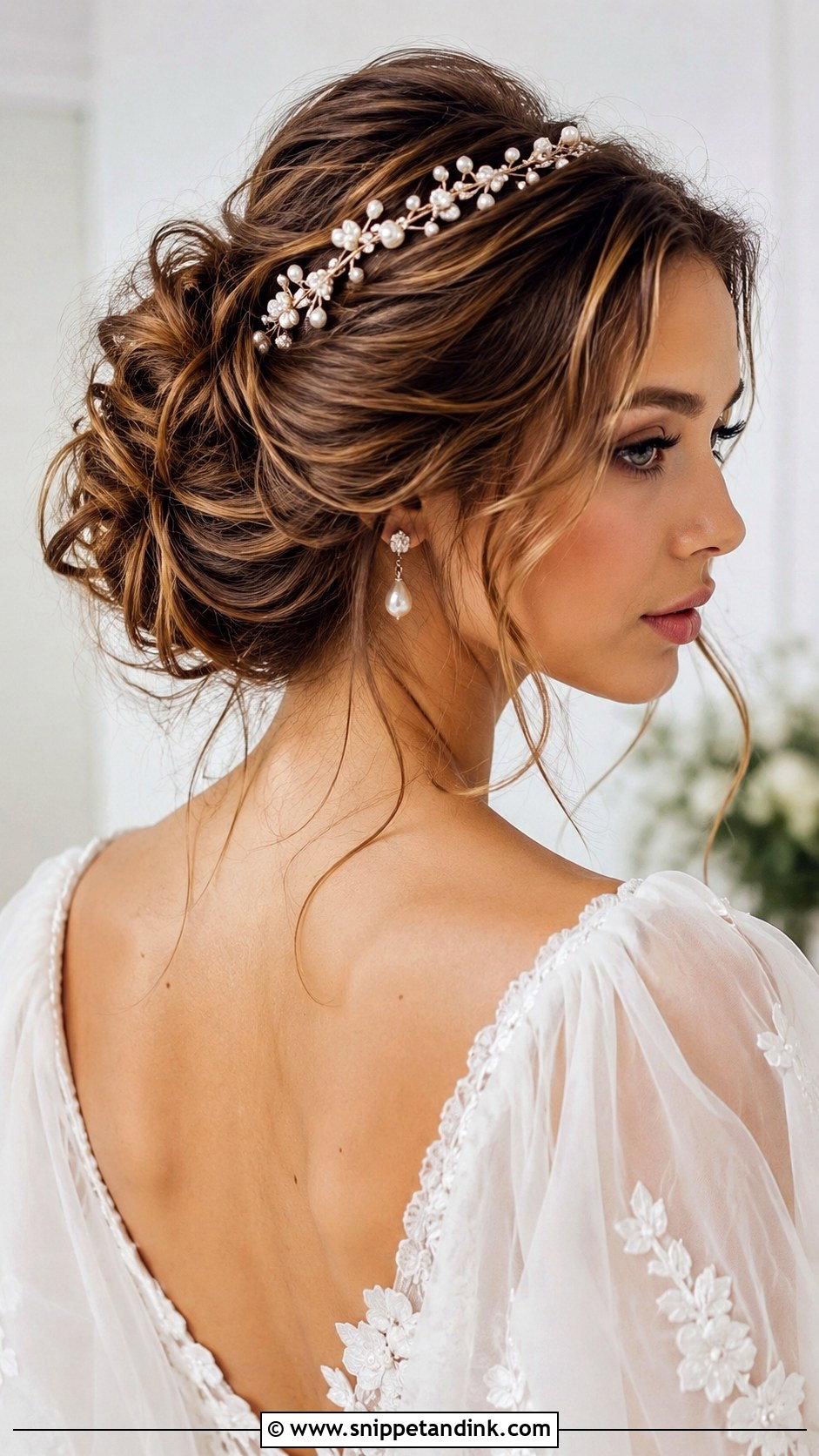
A textured bun gives a soft, lived-in finish rather than a formal one. I curl or wave the hair, then pin it loosely with visible movement through the crown and sides, and a pearl, crystal or metallic band brings back some structure so it still reads bridal. Medium to long hair suits it. It goes well with romantic gowns, soft sleeves and natural makeup. The risk is texture tipping into fuzz by the evening, so I keep the texture controlled and avoid backcombing right under the band, where it gets pressed and frizzes.
Metal, Padded or Fabric: How Each Band Behaves
Two bands can look almost identical in a photo and feel completely different on the head. The base matters as much as the decoration.
Thin metal and wire bands
They’re light and can be shaped to your head, which makes them comfortable over a long day. They’re also the slipperiest, so they need pins. Check the ends: an unfinished wire tip will scratch behind the ear.
Padded and fabric-covered bands
Satin, velvet and padded pearl bands grip the hair on their own and sit beautifully over a smooth updo. They’re heavier, and a very thick padded band can push a high bun backward. Pale satin also marks easily from makeup and fingertips, so handle it with clean hands.
After the wedding
Store the band flat or on a soft form in a box, not loose in a drawer where pearls rub against crystals. Wipe metal with a dry cloth, keep perfume and hairspray off pearls as much as you can, and wrap fabric bands in acid-free tissue if you’re keeping them long term.
Wear the Band for an Afternoon Before You Commit
A band finishes bridal hair without changing who you are. Pearl updo, sleek ponytail, waves, curls or a bob: each one works when the band suits your dress, veil, hair texture and venue. Try the whole look before the day, with earrings and veil, so you can see the balance. Most importantly, wear the band for a few hours at your trial. Some bands feel fine for ten minutes and start pressing behind the ears by the first hour, and that’s far better found out in a salon chair than during the vows.
You'll Like These Ideas:


Leave a Reply