
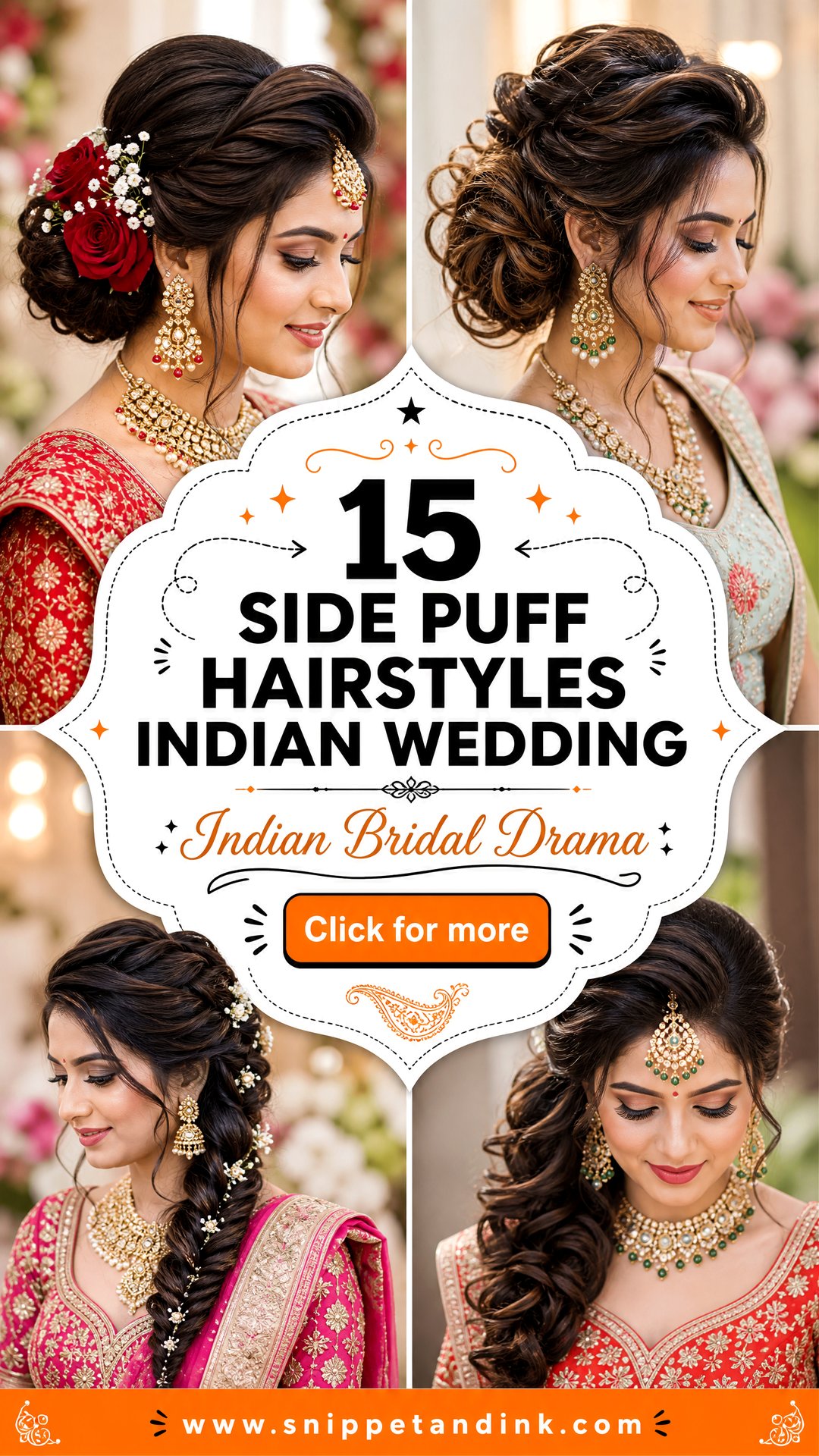
Indian bridal hair is judged from the front. Most of the photos face you, the jewelry sits across the forehead, and a dupatta often covers the back of the head completely. That’s why the puff matters so much: it’s the part of the hairstyle that stays visible. Pushing it slightly to one side softens the face and leaves room for a tikka or passa. Below are fifteen styles built on a side puff, for brides and for sisters, bridesmaids and guests, with notes on what holds and what collapses.
Teasing, Inserts and How Much Height Your Face Can Take
A puff is backcombing with a smooth layer laid on top. I take a triangular section at the front, set it slightly toward your side part, and tease each slice close to the roots only. Then I lay the top layer over it, smooth it with a soft brush and pin it behind with crossed pins. The surface should never show any teasing.
Some stylists use a plastic puff insert underneath. It saves time and holds height well on thick hair. On fine hair I avoid them; the edge of the insert shows through as a ridge, and you’ll feel it pressing under a heavy dupatta all day.
Sizing the puff to the face
- Round faces: a bit more height lengthens the face. Keep the sides close to the head.
- Long or oval faces: a low, soft puff. Too much height makes a long face look longer.
- High forehead: a puff swept further to one side with a few strands softening the hairline.
- Under a head-covering dupatta: a smaller puff than you’d choose otherwise, so the fabric drapes neatly instead of tenting.
1. Side Puff Bridal Bun
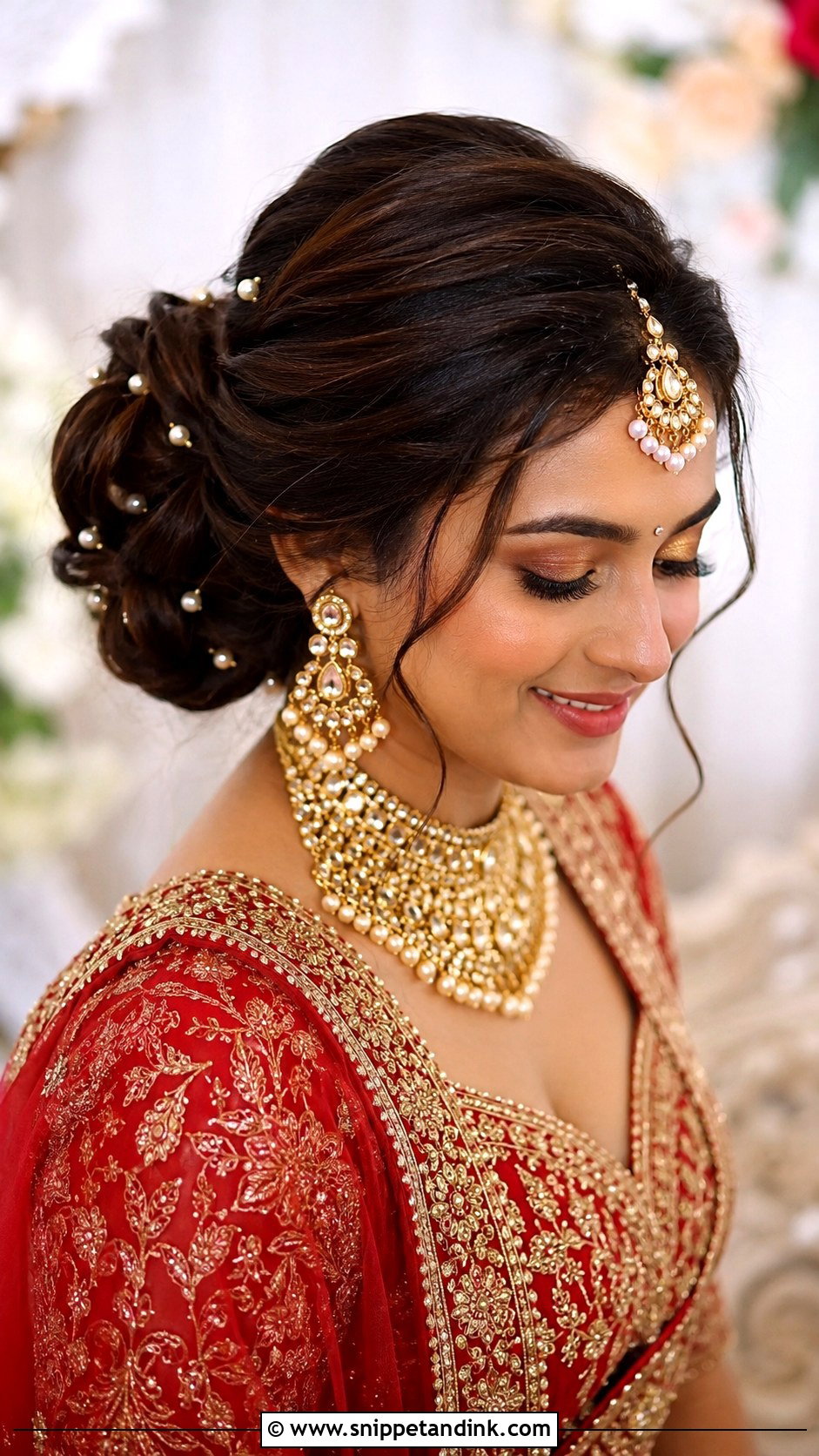
Most brides I style for the main ceremony end up in some version of this. The puff lifts the forehead area, the bun sits low or mid, and the whole thing stays firm under a heavy dupatta. It frames a maang tikka, passa or matha patti without crowding it. I tease the front section only at the roots and smooth the top layer over, so the surface stays glossy rather than fluffy. Finish the bun with fresh flowers or gold pins.
2. Side Puff Low Bun
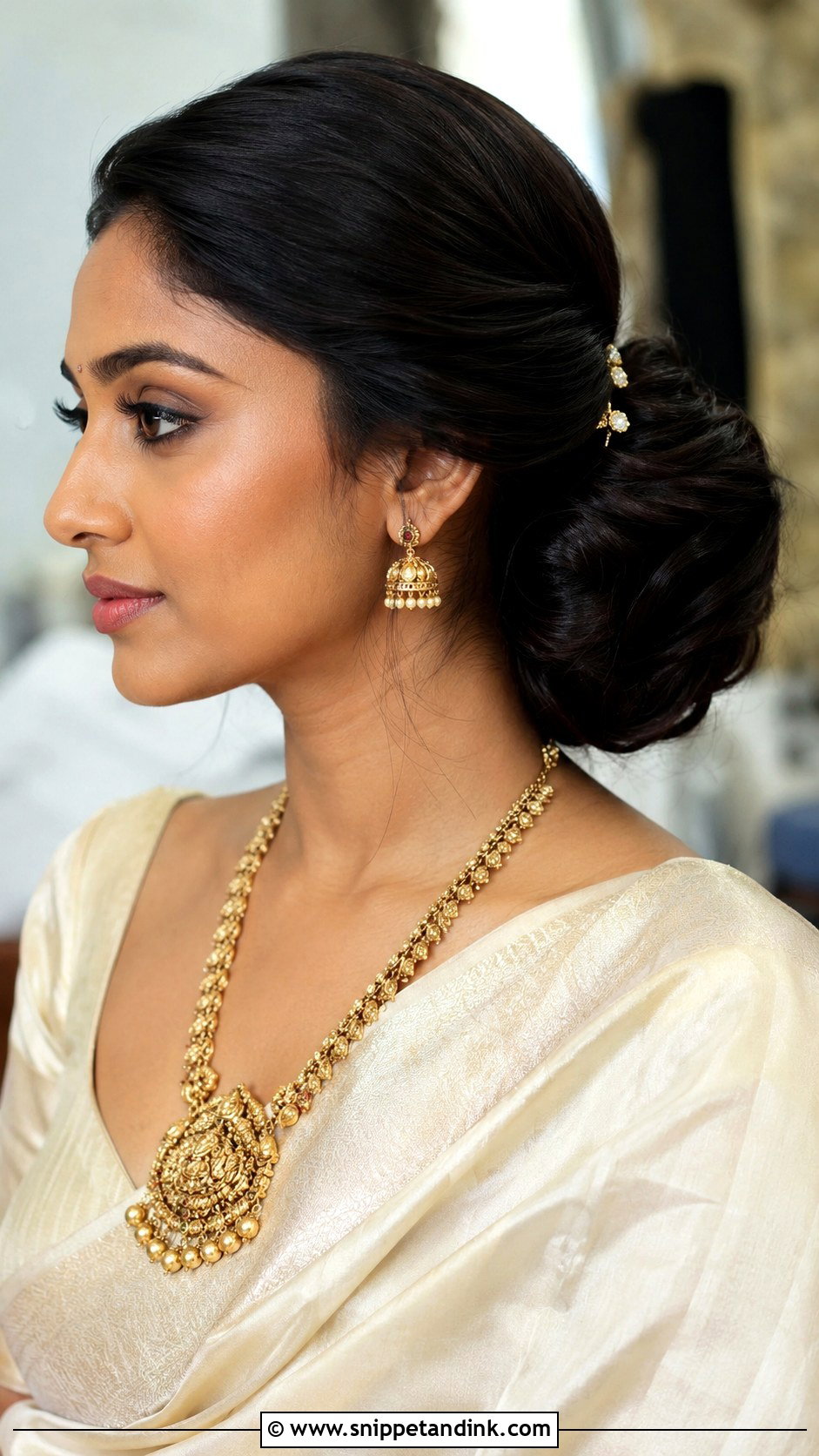
Moving the bun down to the nape makes this the most comfortable puff style for long functions; there’s nothing pressing on the back of your head when you lean back in a chair. The puff gives just enough height. Mothers, sisters and guests often choose it, since it’s polished without being bridal. Keep the roots under the puff smooth and add a little texture to the bun with your fingers so it doesn’t look like a flat disc in photos.
3. Side Puff Messy Bun
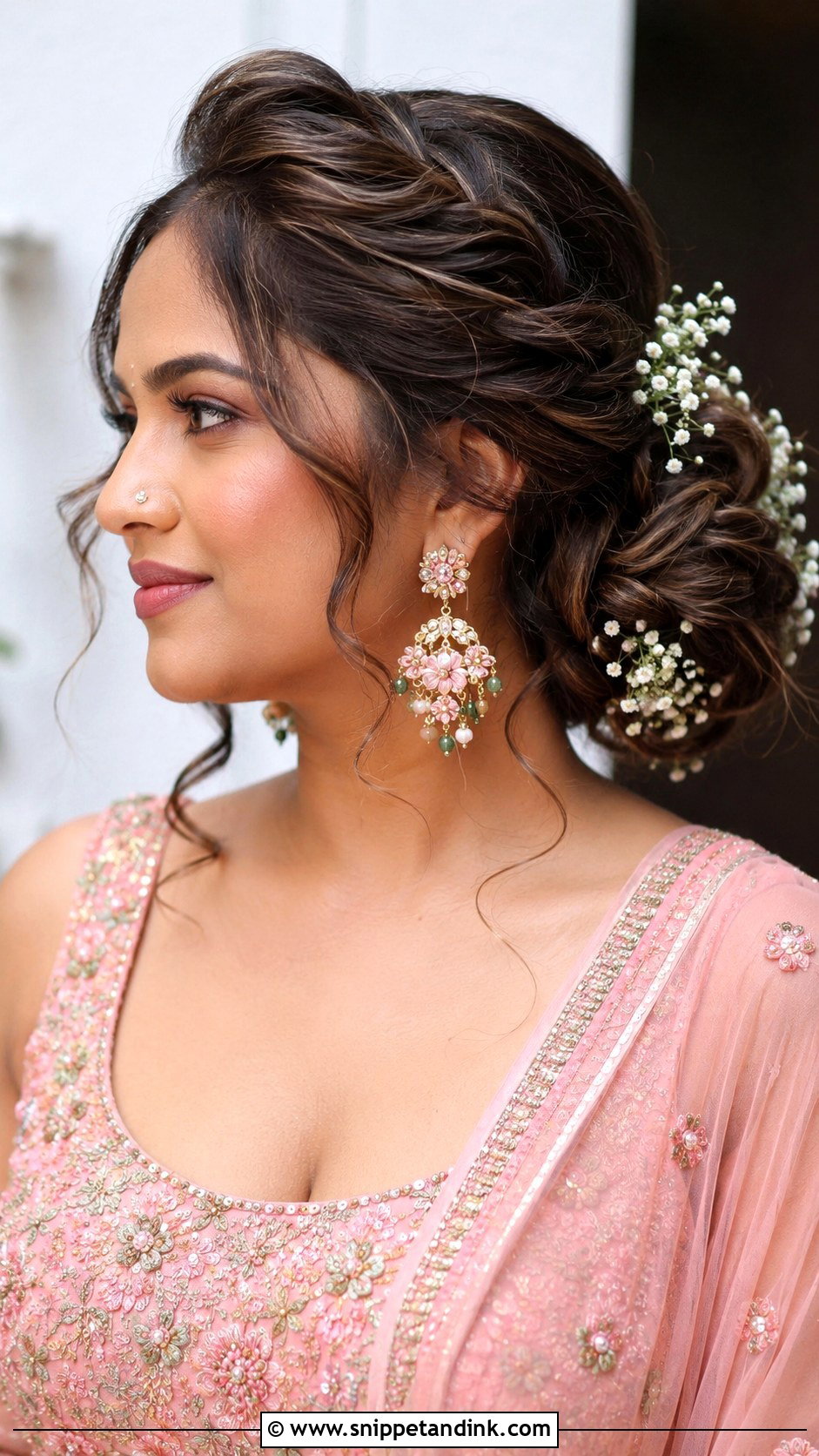
Neat puff, loose bun: the contrast is what makes this work. If both are messy, it simply looks unfinished. I keep the puff controlled and pull a few soft curls out of the bun so it reads relaxed. It suits floral jewelry, pastel lehengas, organza sarees and daytime ceremonies. Even a messy bun needs a tight elastic at its core; the looseness is only on the surface. Small flowers, pearl pins or a light passa are enough decoration.
4. Side Puff Juda Hairstyle
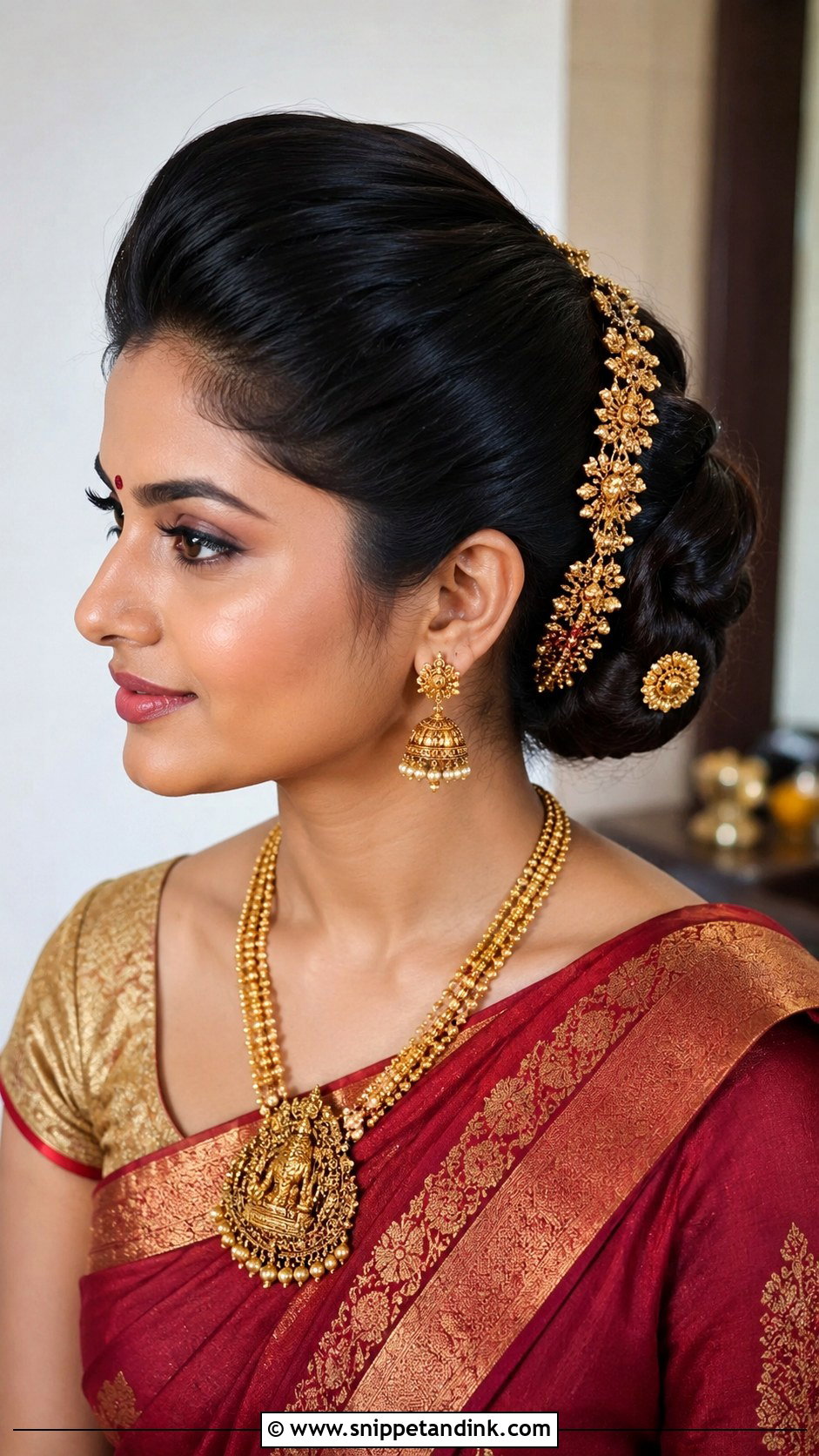
A juda is rounder and more structured than a casual bun, and a side puff juda hairstyle pairs that solid back shape with lift at the front. The juda takes gajra, roses or ornate pins easily because it’s firm enough to push pins into. Sarees, lehengas and heavy dupattas all sit well over it. Fine or shorter hair usually needs a filler or extensions inside the juda to make it full. I smooth the puff with a light shine spray rather than a heavy serum, which can make it collapse.
5. Side Puff Bun With Gajra
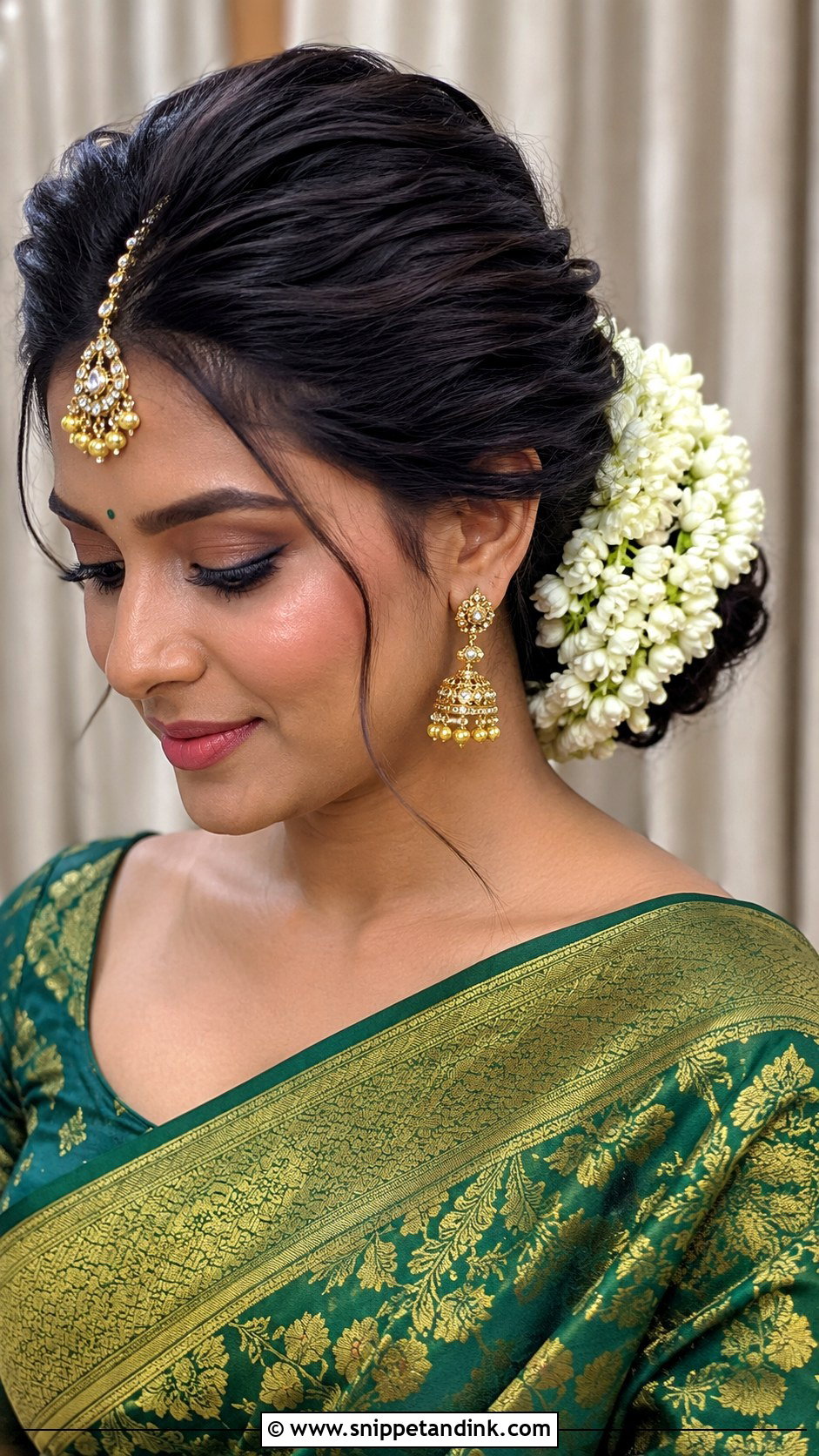
Jasmine wrapped around the bun brings scent as well as color, and it’s traditional for South Indian, Maharashtrian and classic saree looks. A side puff bun with gajra also suits a lehenga. Pin the gajra at several points around the bun, not just the ends, so it doesn’t slide down as you move. Keep the puff sleek and softly rounded; a center maang tikka or a side passa finishes it.
6. Side Puff Open Curls
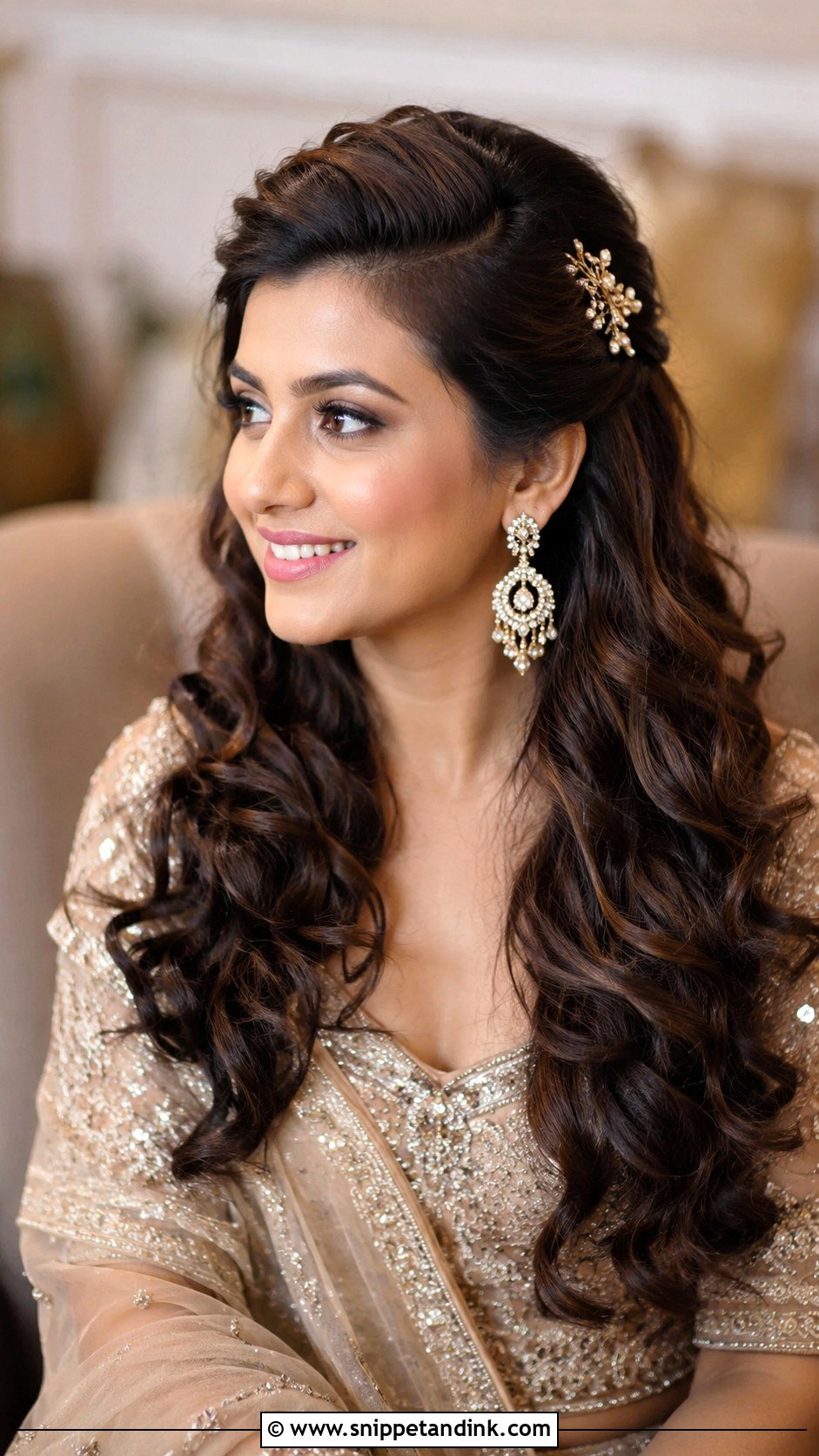
Open curls under a puff are a reception, sangeet or engagement style, and many bridesmaids pick it. Defined, touchable curls look best; overly stiff ones look dated. The puff draws the eye upward, which flatters round, oval and heart-shaped faces. Statement earrings and a light dupatta suit it. The puff needs strong pins underneath, crossed in an X, because the weight of all that open hair pulls backward on it during dancing.
7. Side Puff Half Up Hairstyle
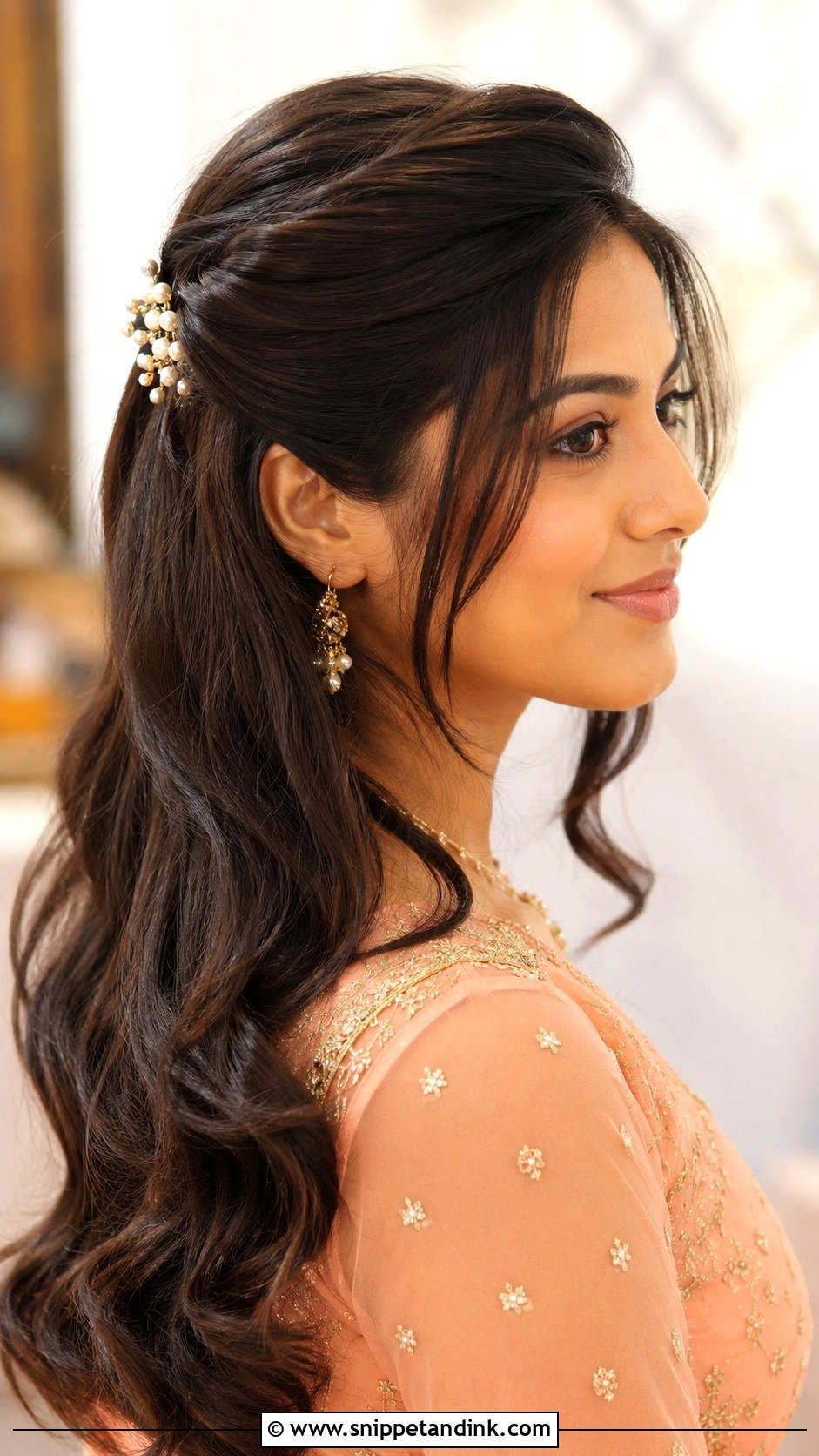
Pinning back a half-up section behind the puff keeps hair off your face during busy rituals, while the rest stays loose in curls, waves or soft bends. Mehndi, haldi and engagement functions are a good fit, as are guest looks. One caution for haldi: turmeric paste stains light or highlighted hair, so tie the loose lengths up or cover them during that part. A few floral pins or a small clip at the back of the half-up section finish it without competing with the puff.
8. Side Puff Ponytail
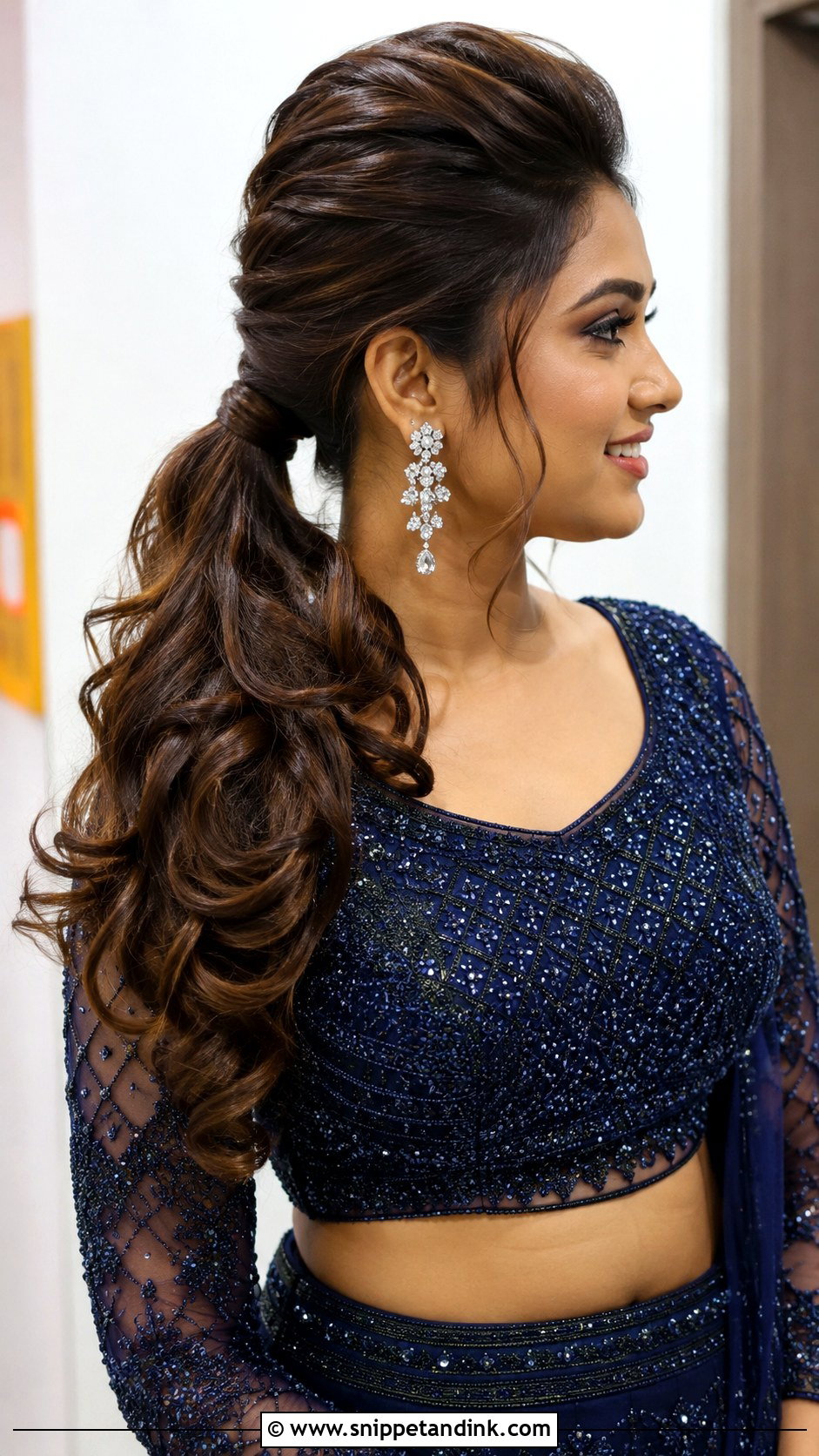
Ponytails are the easiest of these to wear for a whole evening of sangeet, cocktail and reception dancing. The puff gives the front volume; the tail stays sleek or curled. Low feels softer, mid-height looks livelier. I wrap a strand of hair around the elastic and pin it underneath, then add waves, shine spray and a few face-framing strands. Heavy hair needs a second elastic lower down, or the tail droops by the end of the night.
9. Side Puff Side Braid
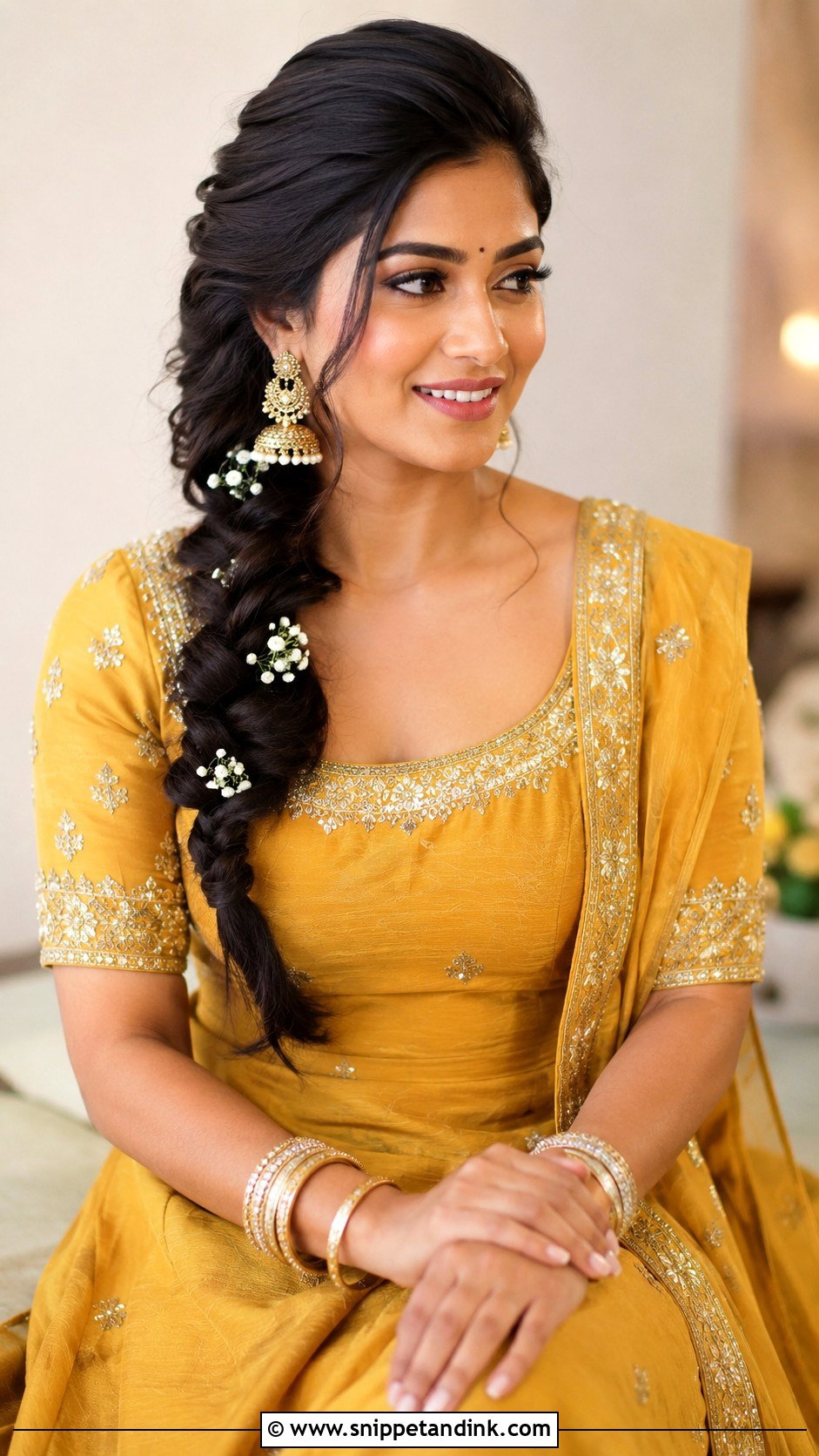
Bringing a braid forward over one shoulder shows the hairstyle clearly in front-facing photos. Lehengas, anarkalis and sarees all suit it, and flowers, pearls or small gold accessories can be pinned along the plait. A loose fishtail looks modern; a full three-strand braid looks traditional. I braid firmly, then gently widen each section so it looks rich rather than thin. The puff should be smooth and pinned securely, since the braid pulls the hair toward one side.
10. Side Puff Fishtail Braid
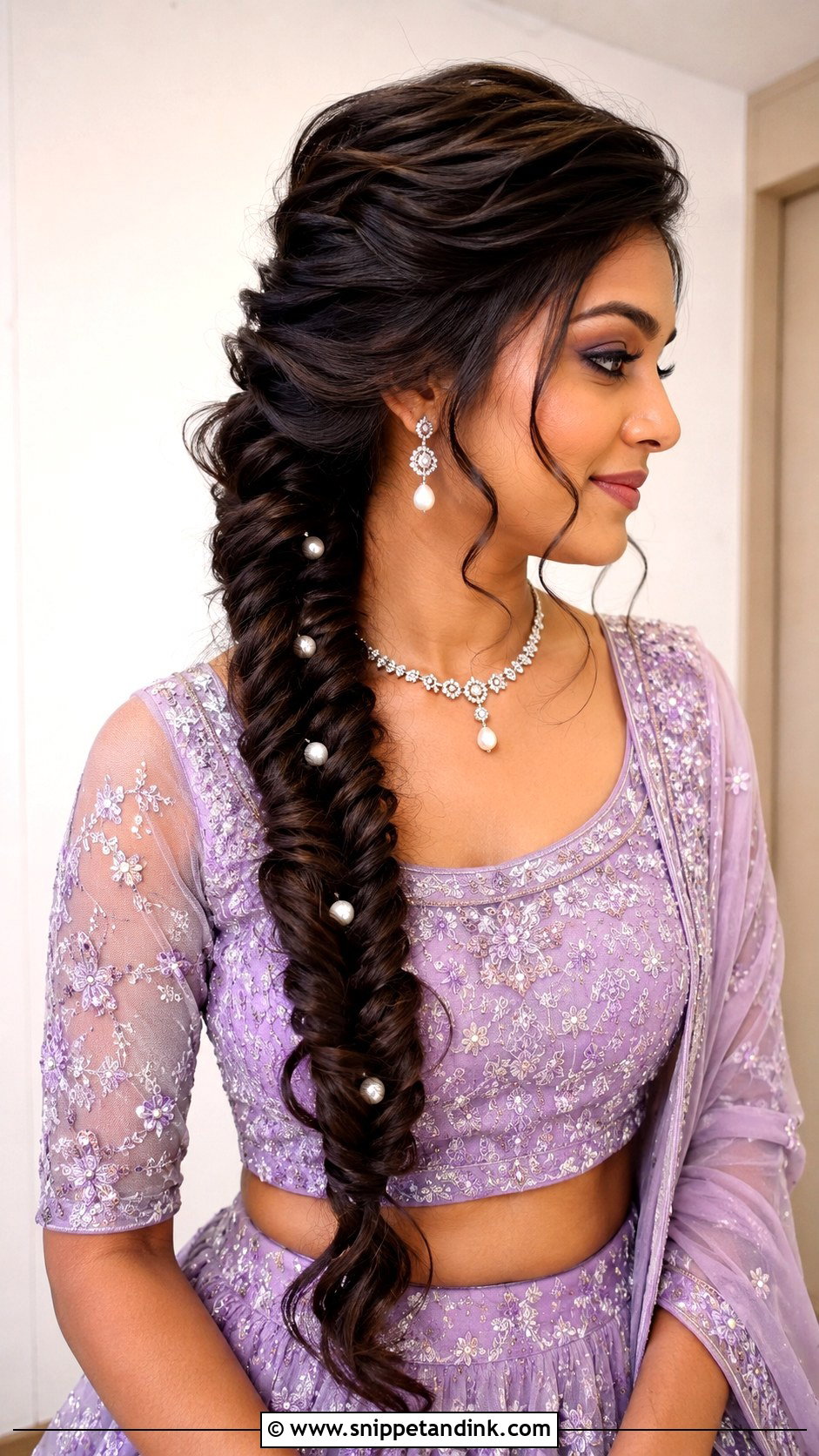
Fishtails need length to show their fine pattern, so long hair or extensions are a must here. With a lifted puff, this works for bridesmaids, sisters and brides who’d rather not wear a bun. I braid it tight and pull the edges after, which keeps the core secure. You can push fresh baby’s breath, jasmine buds or tiny pearl pins into the weave. Keep the puff soft and let two curled pieces frame the cheeks.
11. Side Puff South Indian Braid
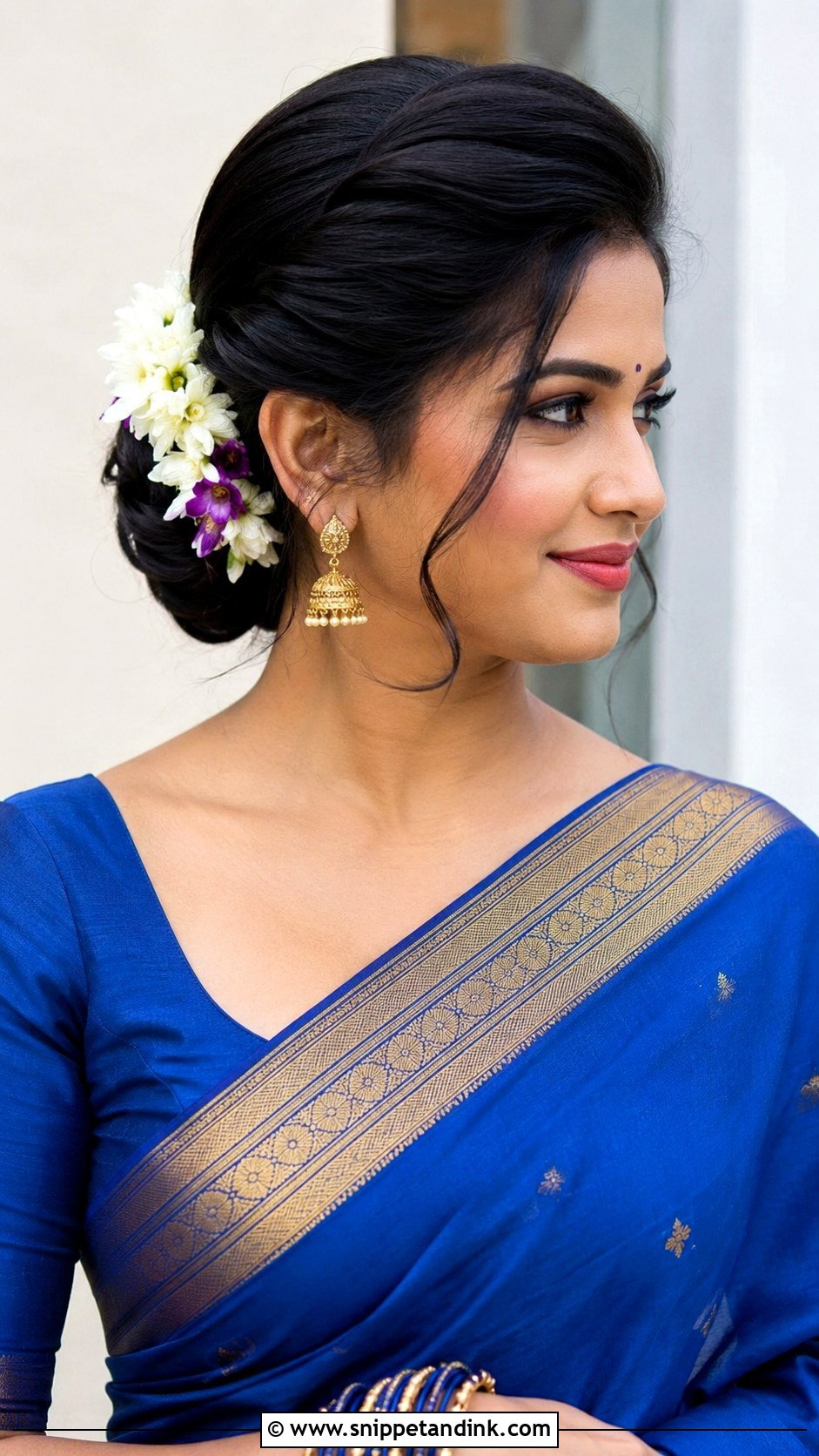
A long braid dressed with temple jewelry or a poola jada is a centerpiece of many South Indian bridal looks, and a side puff South Indian braid adds height above it. Silk sarees and gold jewelry belong with it. That jewelry is heavy, so the braid has to be tight and well anchored at the top; I add an extension braid if your hair isn’t long enough to carry the full ornament. Place the puff so it balances where the jewelry sits.
12. Side Puff Reception Hairstyle
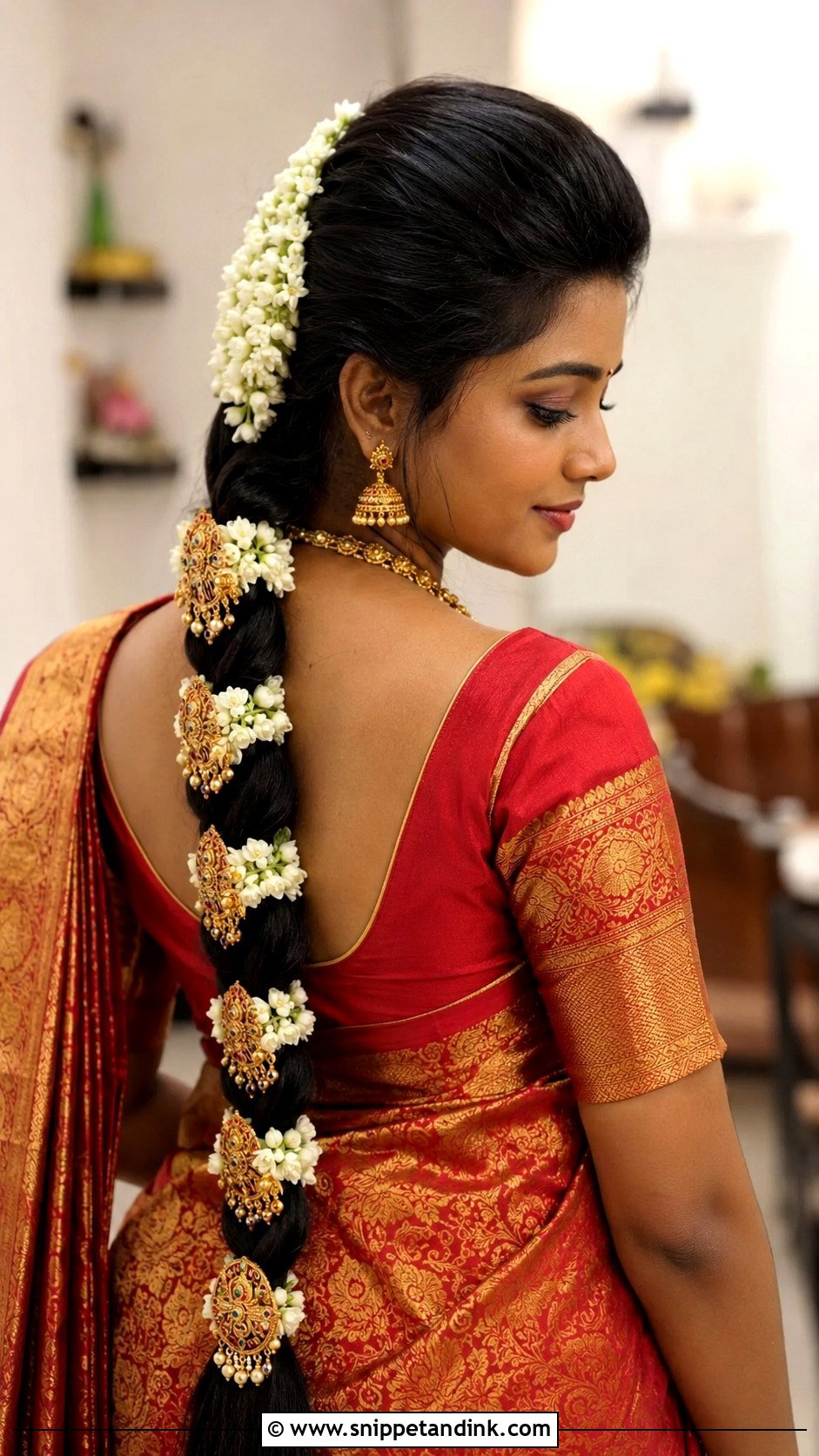
Reception hair can be a little more modern than the ceremony look: open waves, soft curls or a full half-up finish, with the puff giving lift. It works with gowns, lehengas and sarees with lighter dupattas. Under bright stage lighting, frizz on top of the puff shows clearly, so I smooth the top layer and add shine. A jeweled clip on the puff side adds sparkle without fighting the earrings or a statement necklace.
13. Side Puff Lehenga Hairstyle
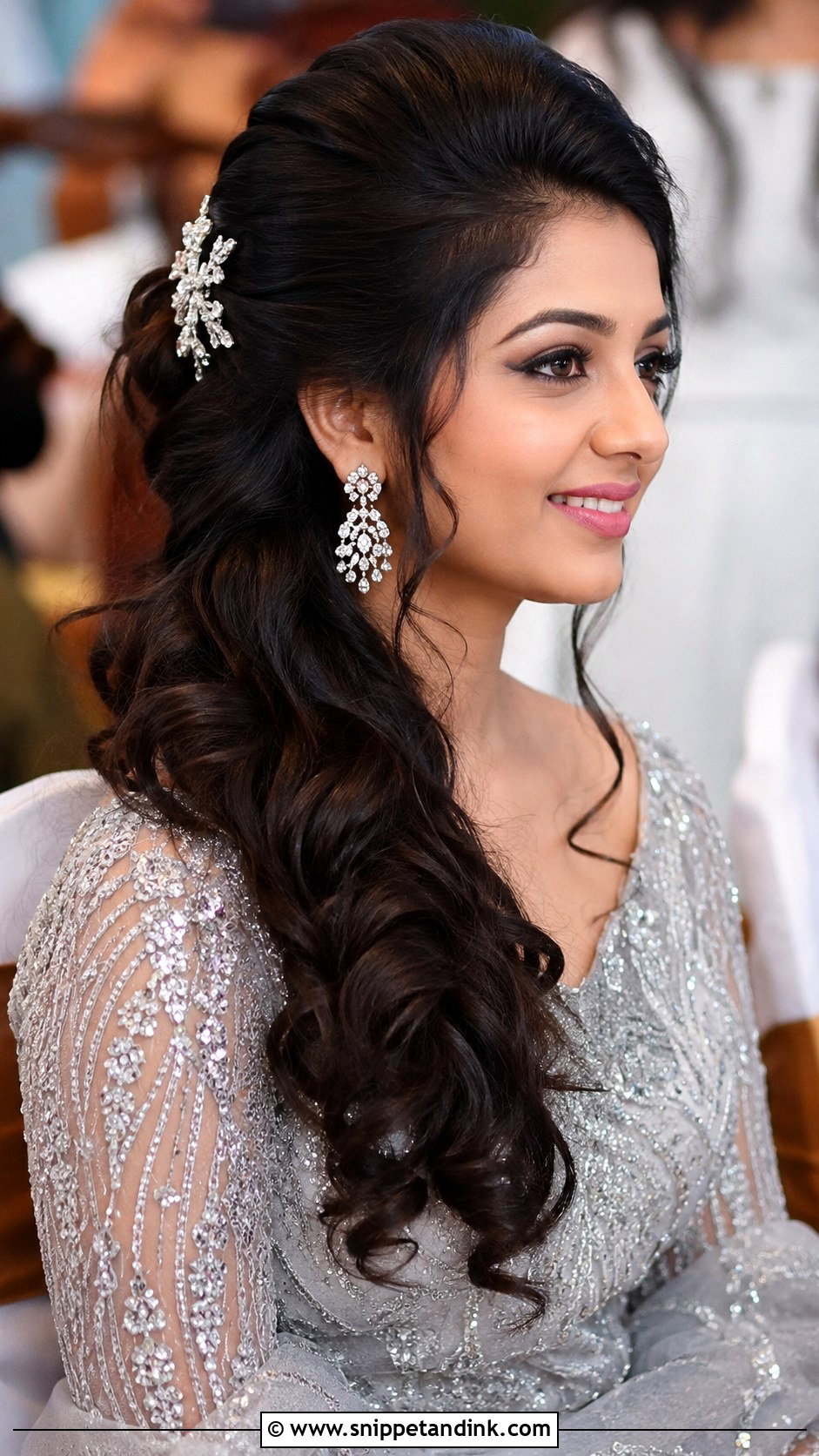
Match the hair to the weight of the lehenga. A heavy bridal lehenga needs a side puff bun or a low juda, which stays neat and supports the dupatta. A lighter sangeet lehenga can take curls or a ponytail. The puff keeps the front from looking flat under a dupatta or headpiece. Texture matters too: smooth silks look right with a sleek puff, while heavy embroidery and florals look better with soft curls.
14. Side Puff Saree Hairstyle
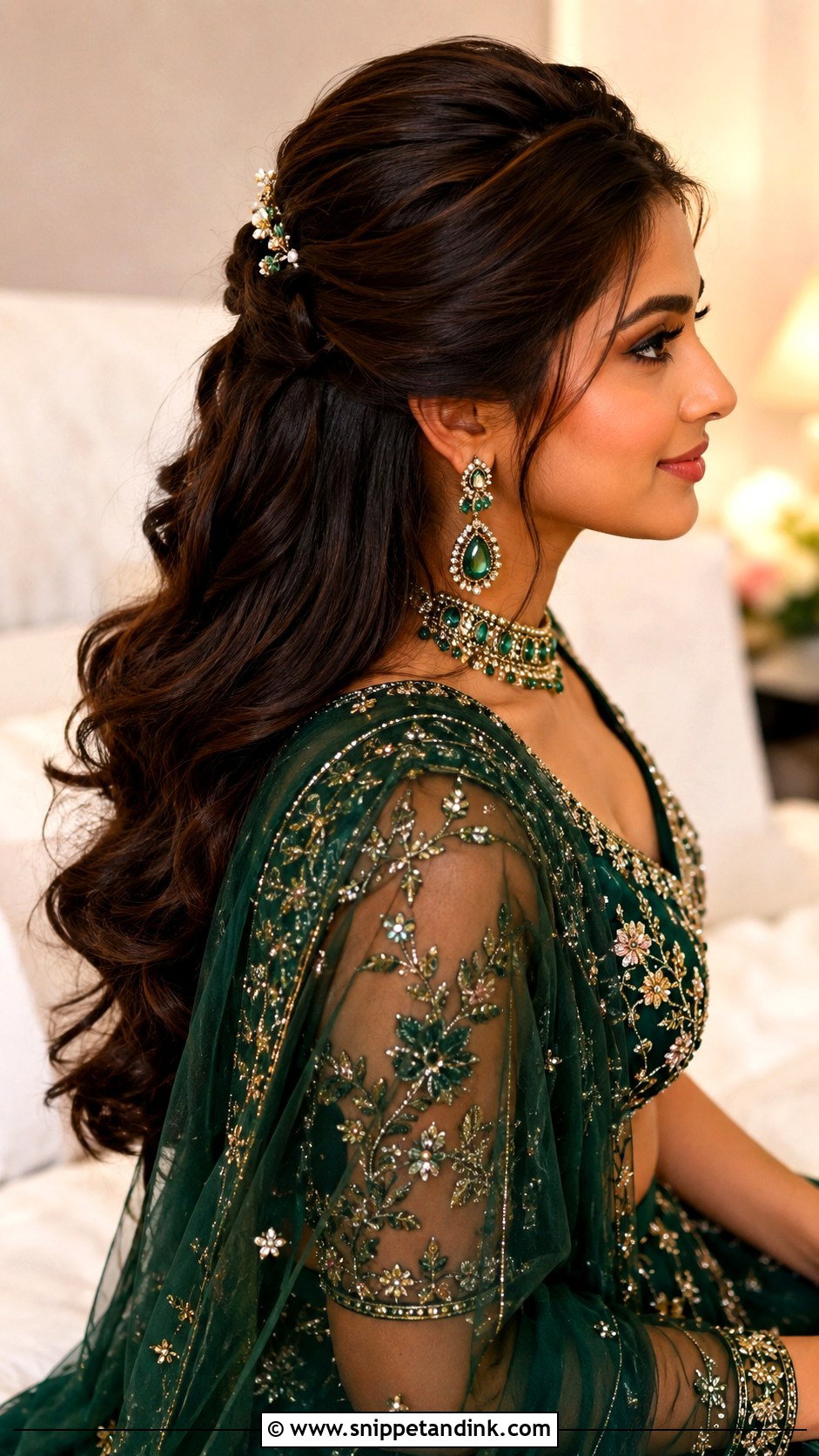
Classic saree drapes call for a puff with a bun, juda or gajra. Reception sarees and designer drapes suit waves or a sleek ponytail. Either way, the puff keeps your face framed and the hairstyle visible from the front, which helps with big earrings and statement blouses. Size the puff to your face. A medium puff almost always looks more graceful than a very high one, which can look dated and make the face look longer.
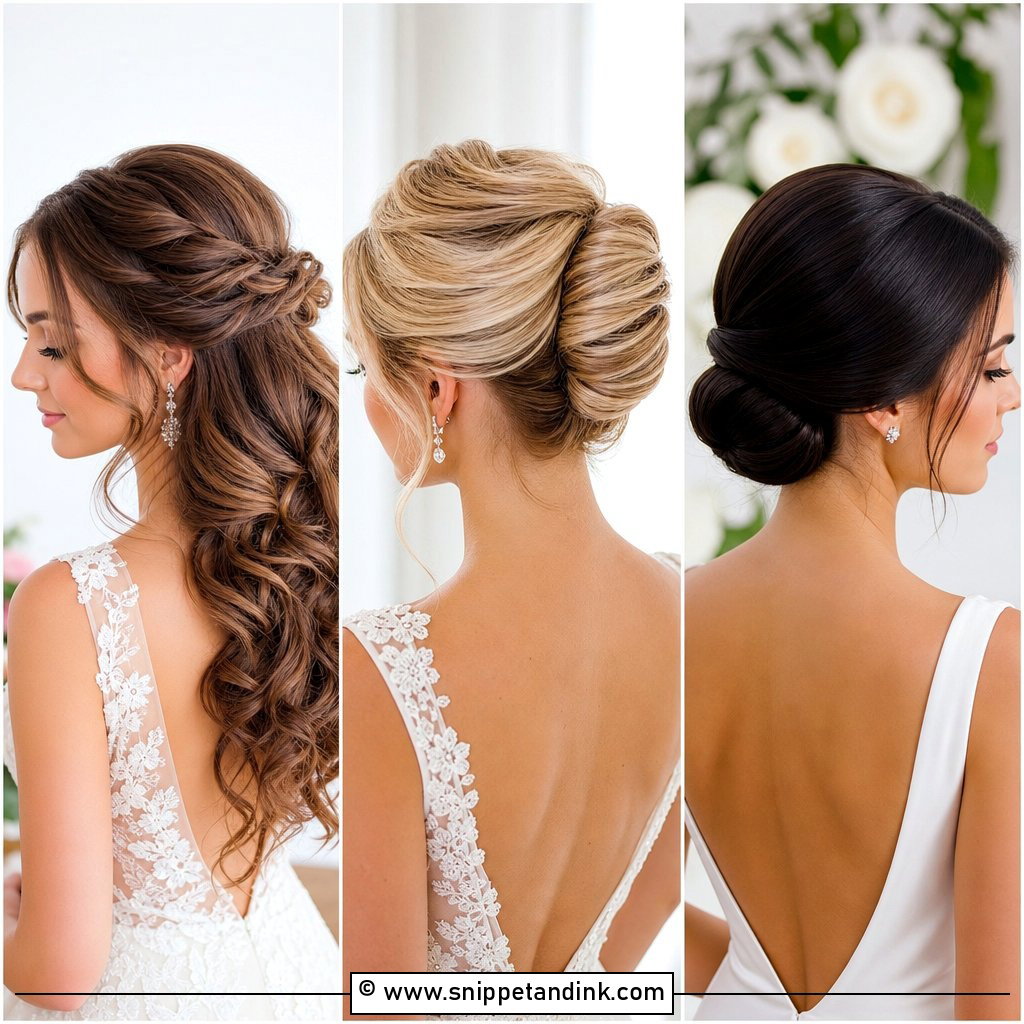
15. Side Puff Hairstyle With Maang Tikka
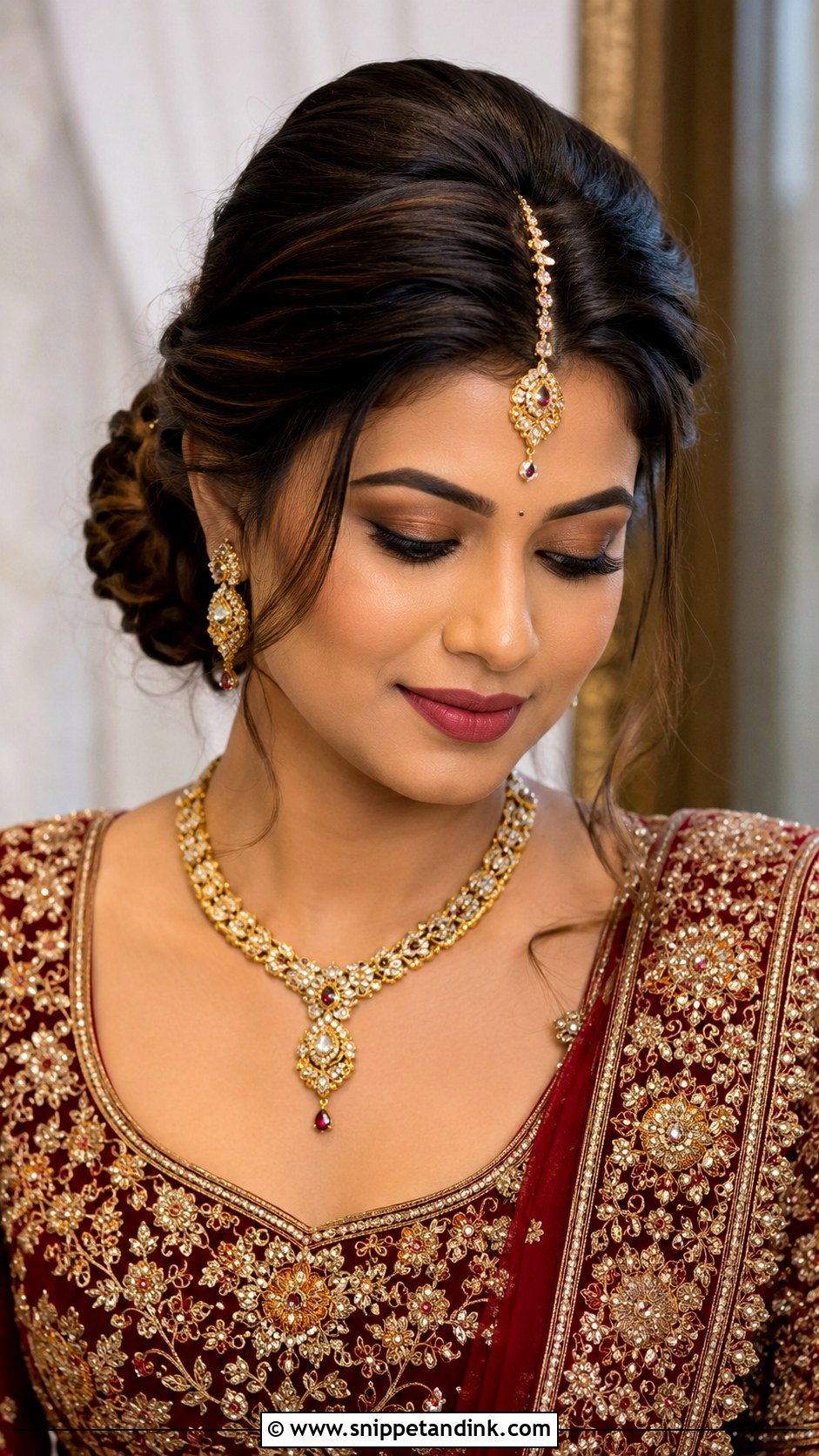
The tikka chain has to lie flat along the part, which means the puff can’t sit right on top of it. In a side puff hairstyle with maang tikka, I set the puff slightly to one side and leave a clean parting for the chain. Too bulky near the tikka and the ornament lifts away from the forehead. I pin the tikka’s hook into a small hidden section behind the puff and smooth the hair along the part with a little spray. It works with buns, half-up curls, braids and open waves.
A Flat Puff by Evening and How to Lift It Back
Puffs collapse for predictable reasons. Freshly washed, silky hair can’t hold backcombing. Oily roots weigh it down over the hours. A dupatta pinned directly on the puff presses it flat. And humid evenings slowly soften the teasing.
To prevent most of that, wash your hair the day before, not the morning of. I spray dry shampoo or texture spray at the roots before teasing, so each strand has grip. The dupatta gets pinned behind the puff, never on top of it.
If it does drop, don’t brush it. Slide the tail of a comb under the smooth top layer, lift gently from the roots, and mist hairspray into the gap rather than over the surface. Then pat the top layer back down. This takes a minute and doesn’t disturb the jewelry.
At the end of the night, work out the pins first, then the backcombing. Apply conditioner to the teased section and comb it through from the ends upward. Dragging a brush straight through a teased puff snaps hair you’ll be growing out for months.
Smooth on Top, Firm Underneath, Sized to Your Face
A side puff suits nearly every outfit, face shape and hair length, and it keeps the hairstyle visible from the front, where most wedding photos are taken. It looks traditional with a gajra bun, modern with a ponytail, soft with open curls and grand with a South Indian braid. Choose for the event, the outfit weight, the jewelry and how comfortable you need to be. Always do a trial with the jewelry pinned in, and ask for strong pins that stay hidden.
You'll Like These Ideas:



Leave a Reply