
Twenties bridal hair is really a handful of techniques: the wet-set finger wave, the hot-iron Marcel wave, the faux bob and the low knot, dressed up with pearls, beading and feathers. Once you know which technique sits under a photo, you can tell straight away whether it will suit your hair and your day. I’ve grouped these ideas so the hair side of a Gatsby wedding makes sense alongside Art Deco details in the dress. Short, shoulder-length and long hair all get options here, and I’ll be honest about which ones ask the most of your hairstylist and your hair.
Wet Set or Hot Iron? How Period Waves Are Built
Most of the looks below come from two methods, and they behave very differently on the day. A wet set is done on damp hair with setting lotion or gel: I comb each section into an S-curve, press the ridge with my fingers, clip it, and let it dry completely before the clips come out. A Marcel wave or its modern stand-in is done on dry hair with heat, then brushed into shape once it cools.
- Wet sets hold the crispest ridges and last longest, but they take time. Allow well over an hour for a full head, plus drying.
- Heat-set waves are quicker and softer, which suits medium and long hair that would drag a wet set flat.
- Very curly or coily hair can wear either, but it needs smoothing first, and I’d always test it at a trial rather than on the morning.
- Freshly washed, silky hair is the hardest to set. Wash it the day before and the waves grip better.
What to bring to your trial
Bring the actual headband, veil or clip, a photo of your dress neckline and your earrings. A twenties look depends on where the accessory sits on the wave, and I can’t place it properly from a description. Wear the finished hair home and see how it looks after four or five hours. That tells you more than the mirror at the salon.
1. Classic Finger Waves Wedding Hair
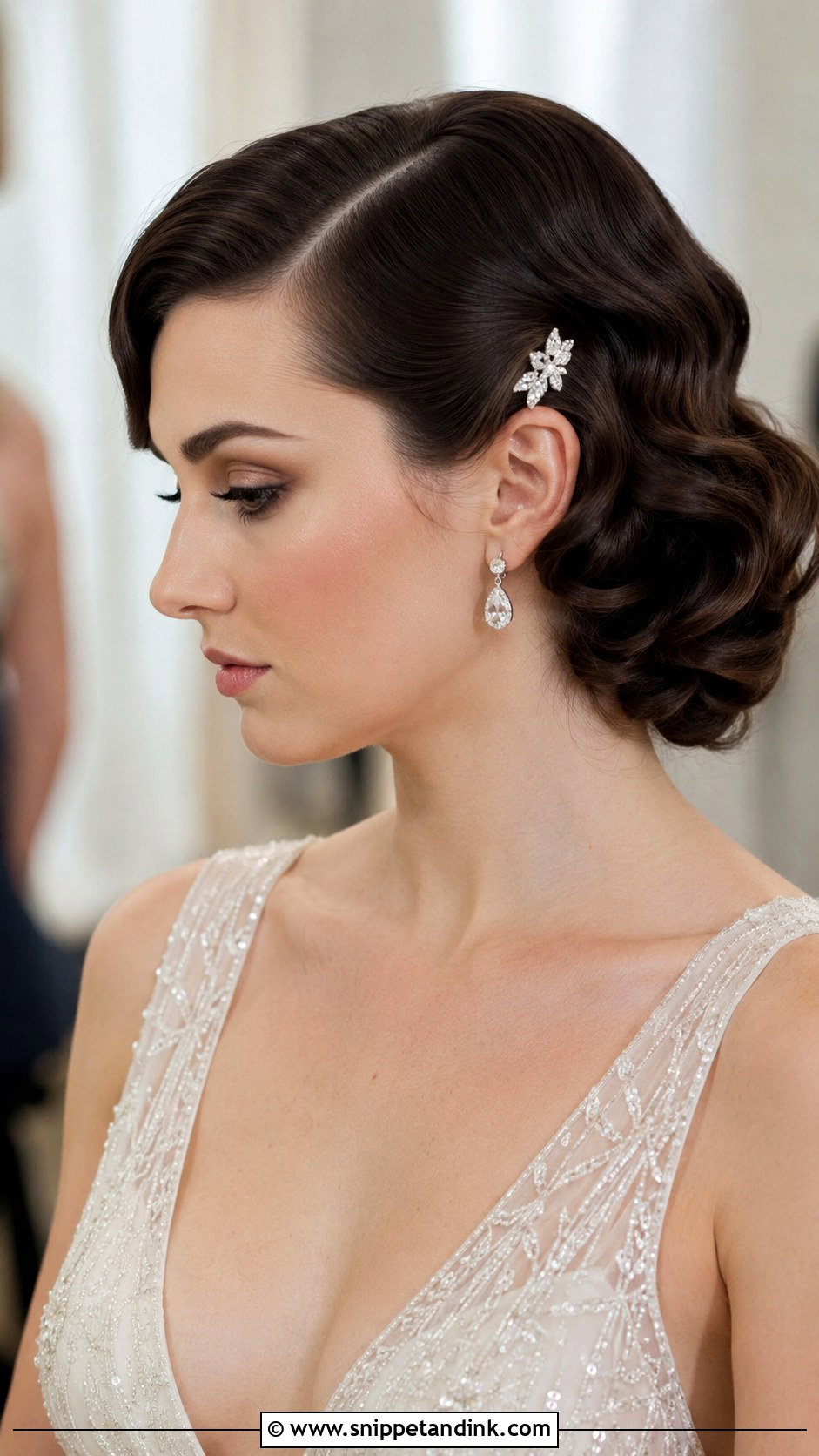
Finger waves are the purest version of the era, and the most technical. I build them on damp hair with a firm setting lotion, pushing each ridge into place with my fingers and a fine comb, then clipping it until it’s fully dry. Short and chin-length hair holds the S-shape best; anything past the shoulders gets heavy and pulls the ridges flat. A deep side part and one rhinestone clip by the ear is all the decoration they need, and a red lip with Art Deco earrings finishes the picture.
2. Pearl Embellished Low Bun
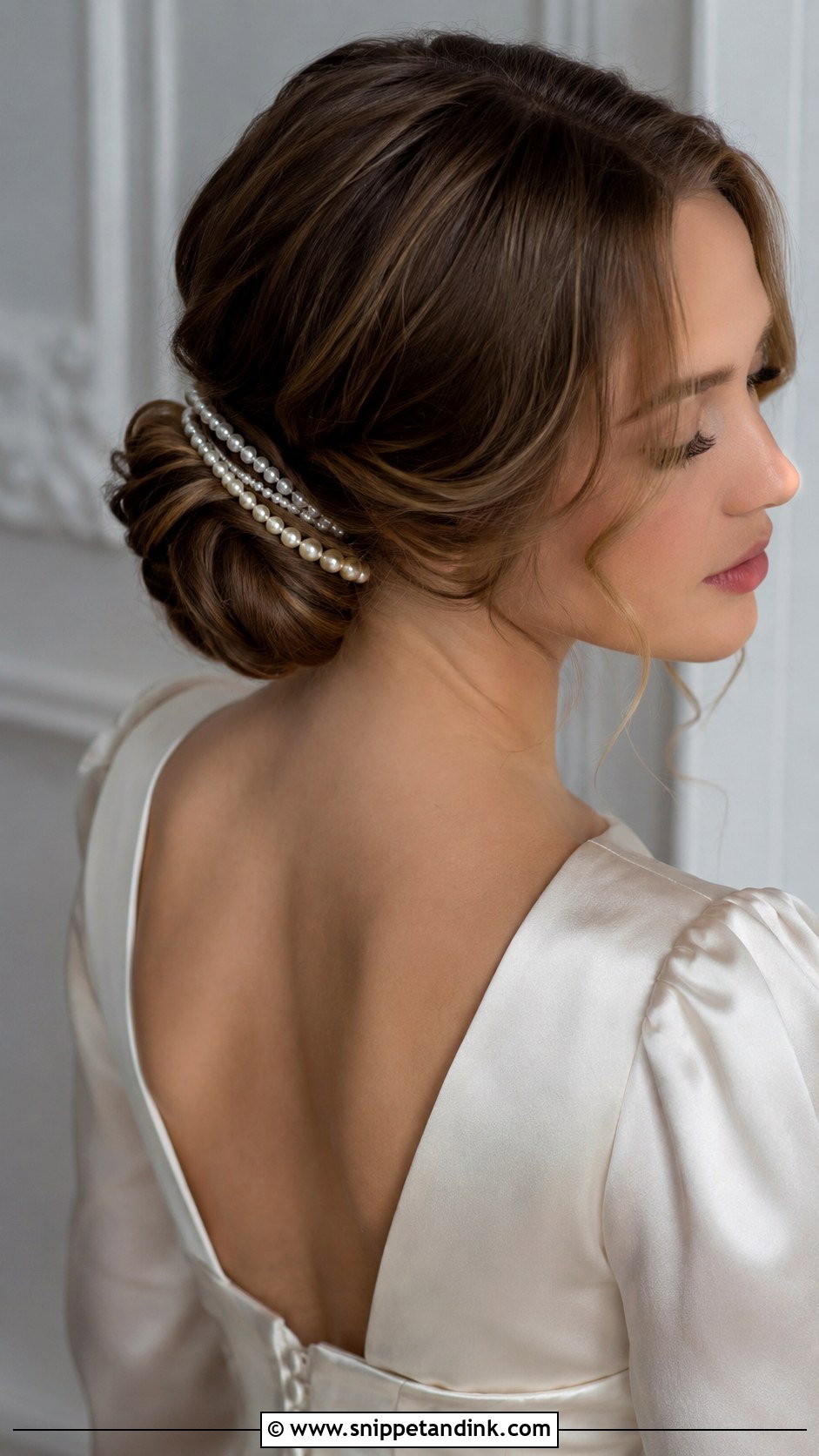
A smooth chignon at the nape gives pearl strands something solid to wrap around. I pin the strands underneath the knot with matching bobby pins every few centimetres, because pearls are heavier than they look and will slide down a slippery bun by the speeches. Medium and long hair suit it, and it keeps the face open. If your veil is attaching at the same spot, tell your stylist early so the comb and the pearls aren’t fighting for room. A couple of loose tendrils at the temples stops it reading too stiff.
3. Finger Waves With Birdcage Veil
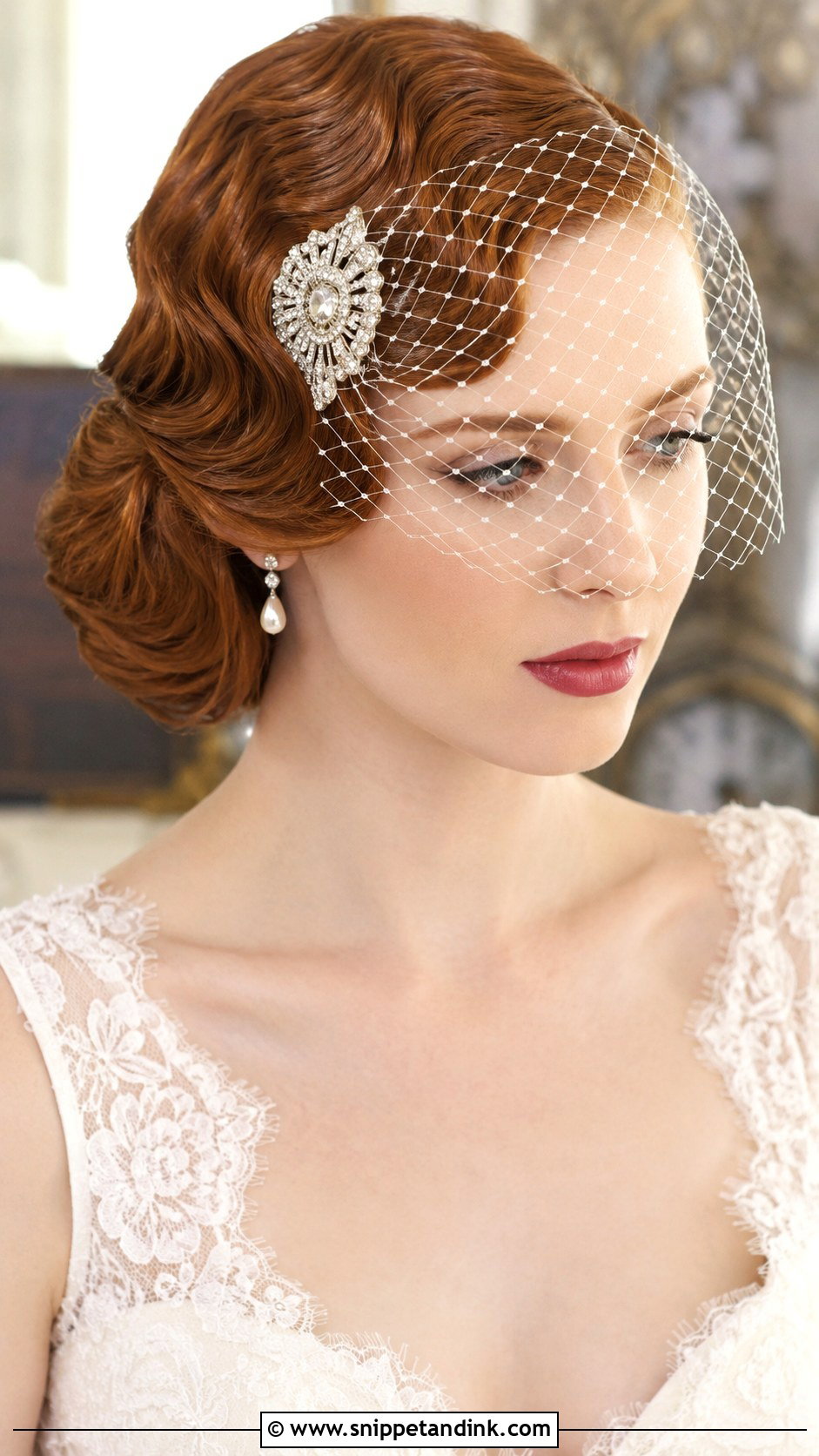
A birdcage veil and finger waves were made for each other, since both sit on one side of the head. I sweep the waves to the heavier side and anchor the veil’s comb just above the brow, tucked into a ridge so the netting follows the wave line instead of flattening it. Short bobs and medium lengths carry it best. A small jeweled brooch where the veil attaches hides the comb neatly. The netting should skim the eyes, not cover the whole face, so it doesn’t fight with lash glue or block your view on the aisle.
4. Beaded Headband Updo
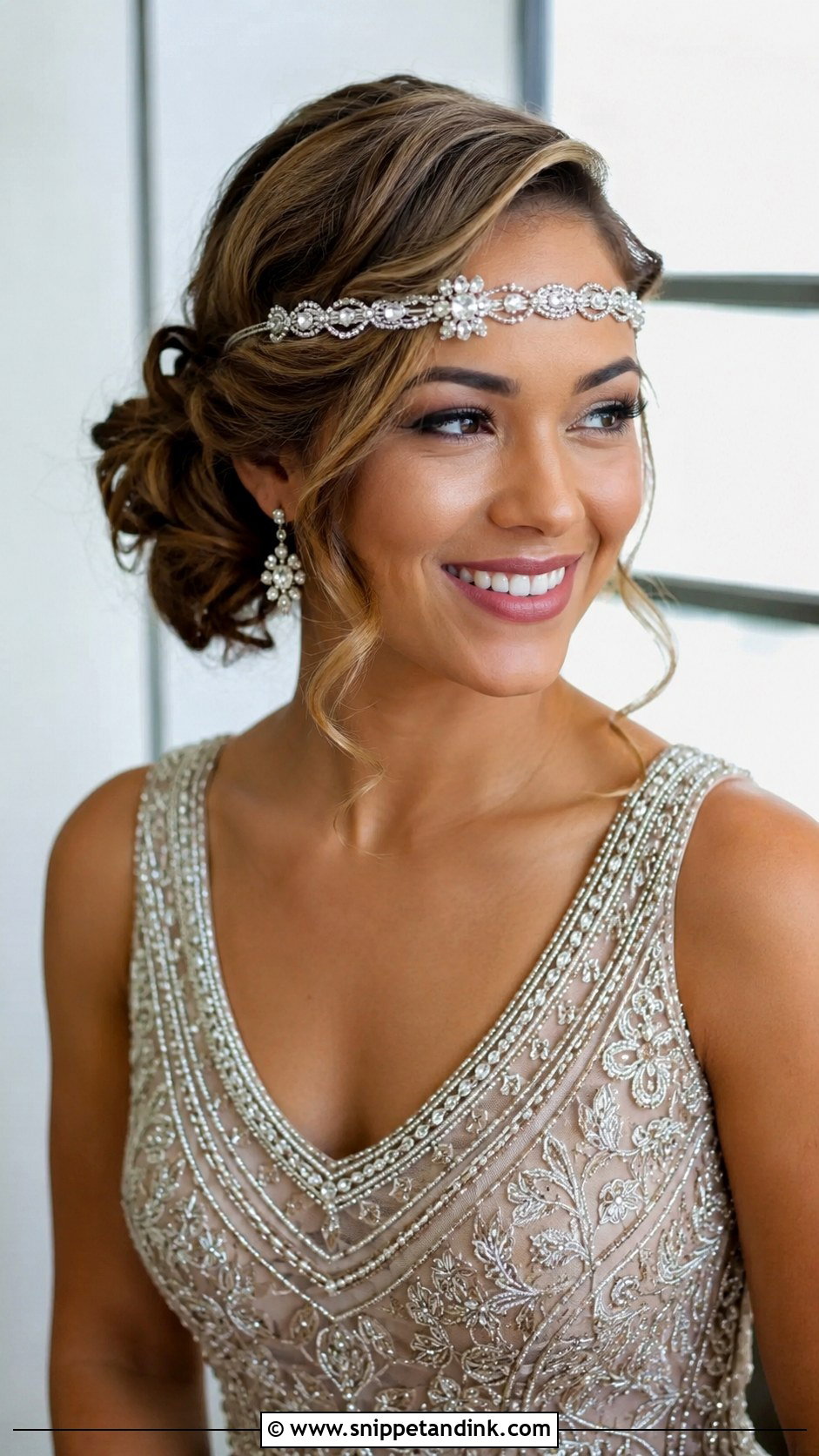
The beaded headband worn low across the forehead is pure flapper. What nobody warns you about is pressure: a rigid band sitting on the brow bone for eight or nine hours can give you a headache. I prefer bands with an elastic back hidden under the hair, sat just above the brow, with a soft low updo behind them to hold the elastic in place. Silver, gold and pearl versions are easy to find, so match the metal to your earrings rather than to the dress.
5. Short Bob With Finger Waves
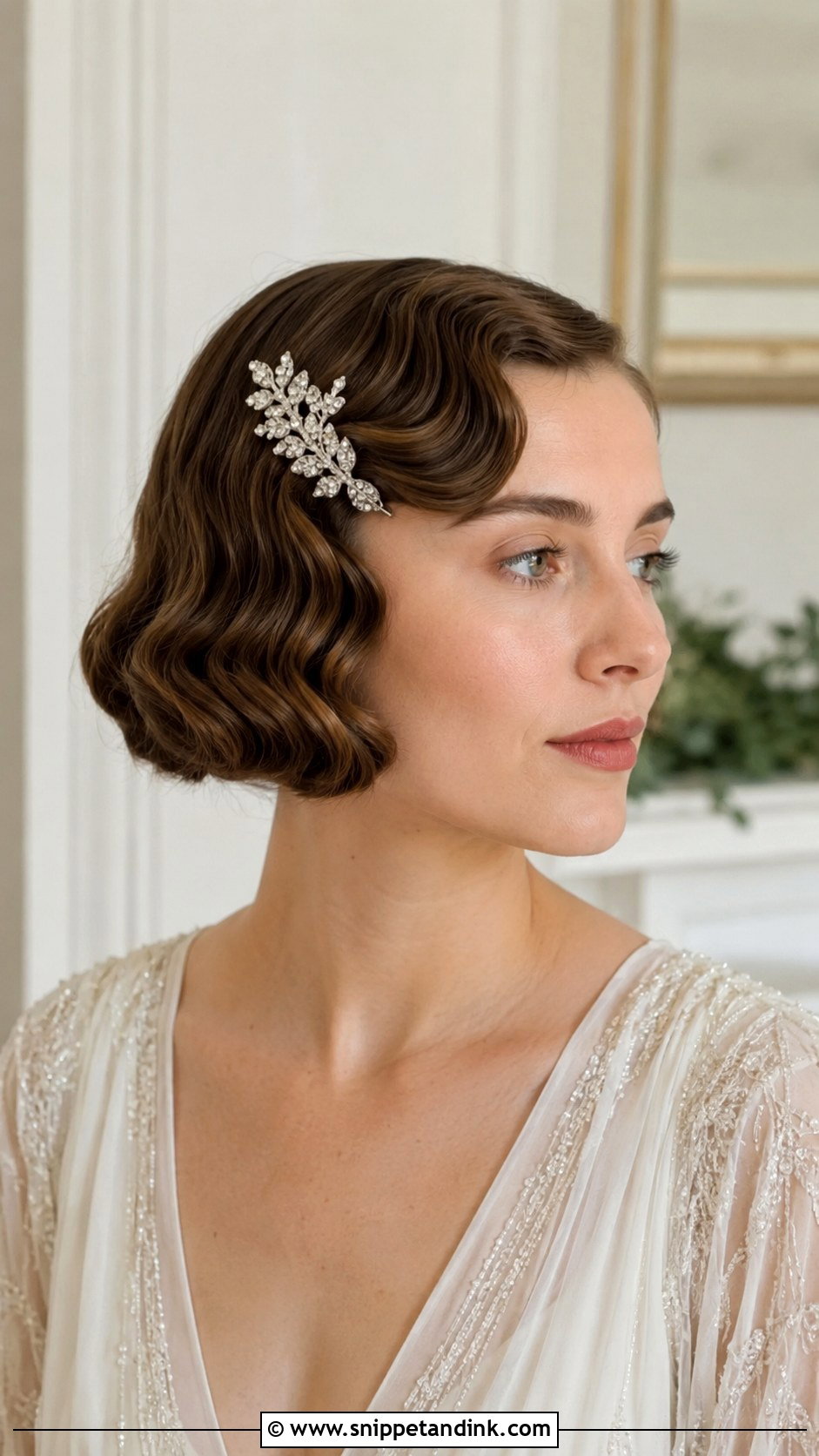
The bob was the cut that shocked the twenties, and it still makes a sharp bridal choice. Set into crisp finger waves, it reads clean and confident. The catch is timing: get the cut about two weeks before the wedding so the line has softened but hasn’t grown out of shape. A small sparkling comb or a floral pin at the temple is enough bridal detail, and short hair stays comfortable through a long day of hugging and dancing.
6. Pearl Hair Comb With Soft Waves
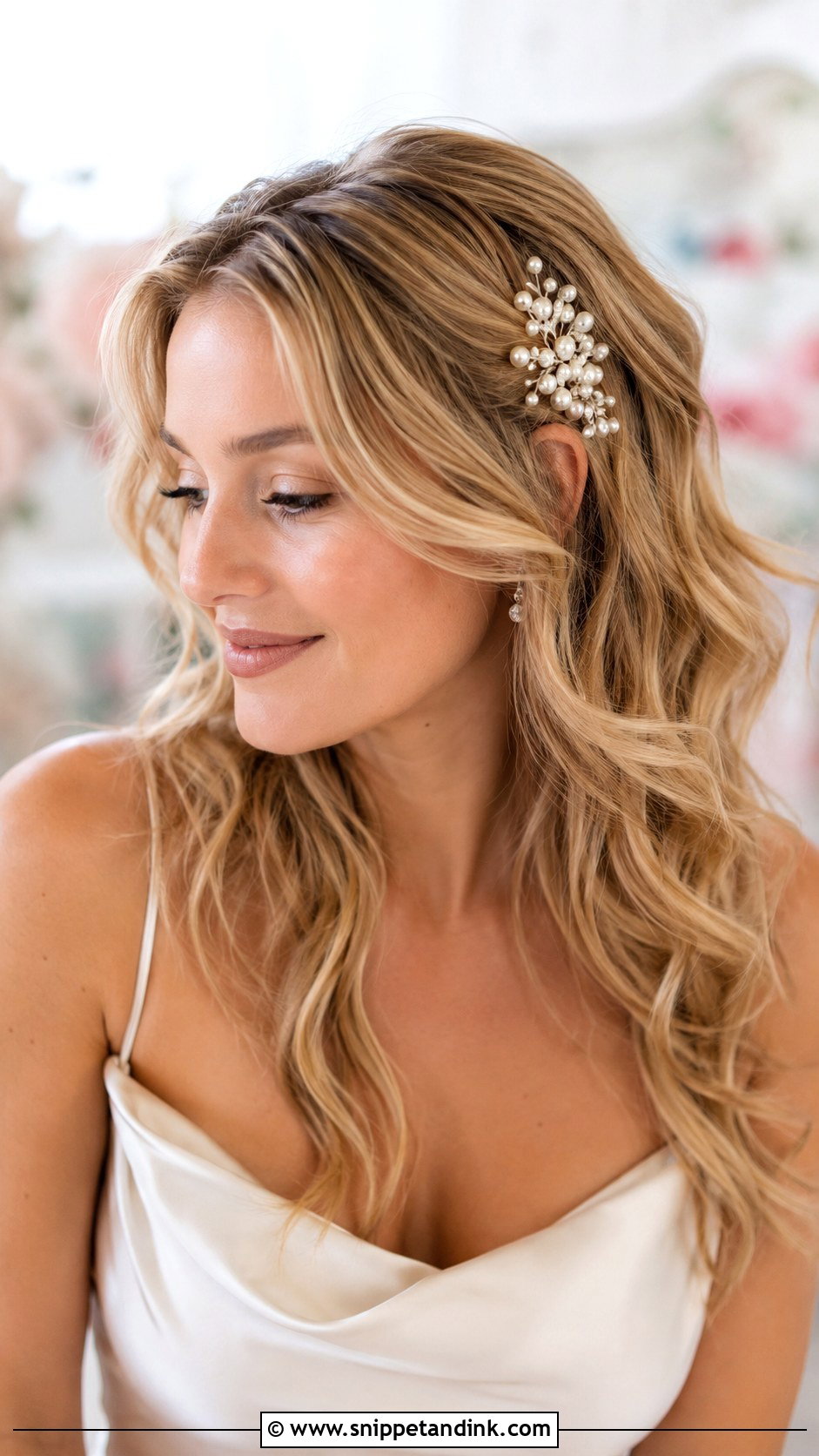
This is the softer cousin of the finger wave. I curl the hair in one direction, brush it out once it has cooled, and let it fall into loose ridges around the shoulders. A pearl comb slides in on one side to hold the sweep back. It suits medium and long hair that doesn’t want the stiffness of a full wet set. Pearls tend to look warmer against ivory than against bright white, so hold the comb up to your dress fabric before you commit.
7. Deep Side Part With Sleek Waves
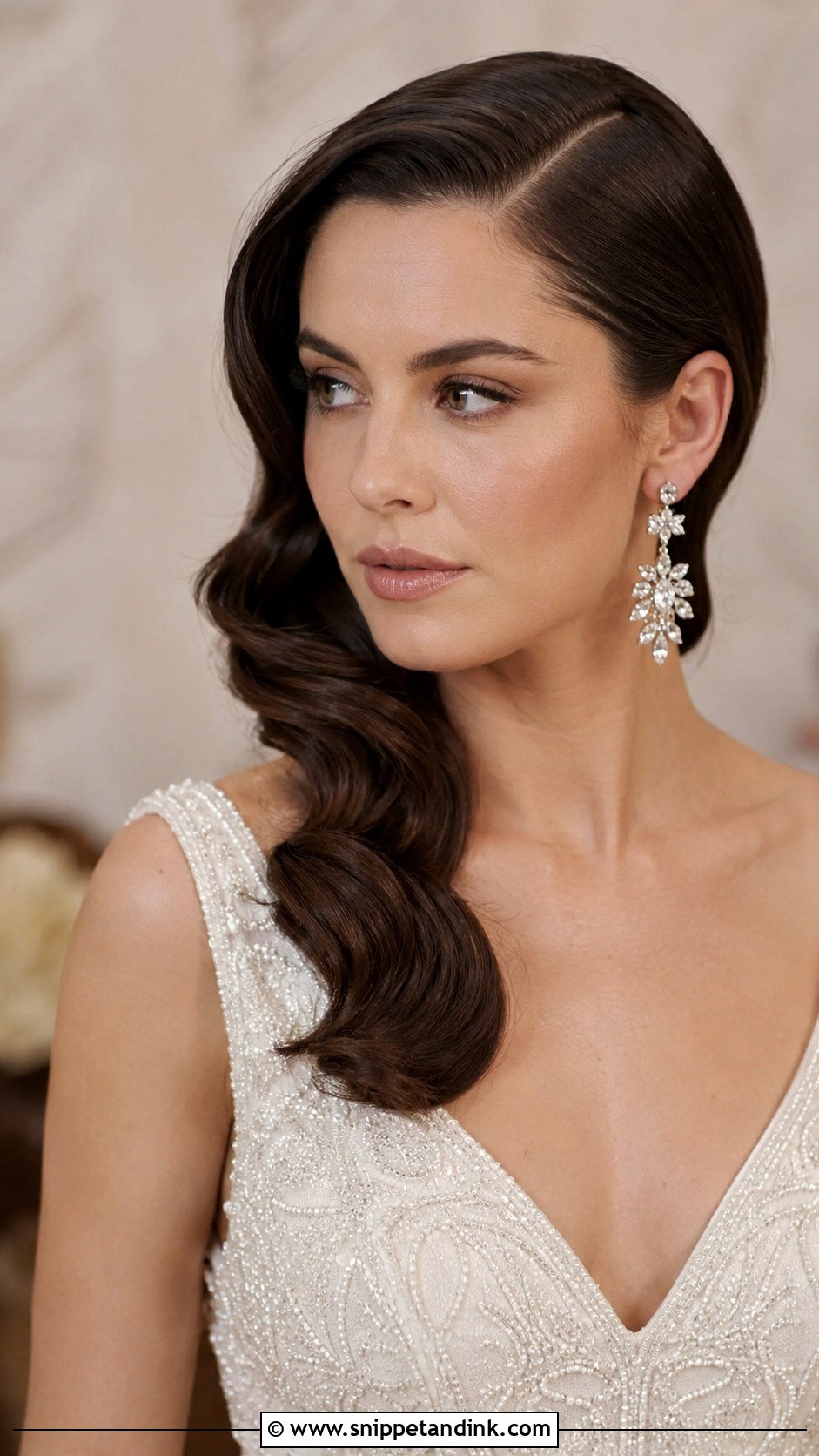
A deep side part changes the whole face. Moving the part far over gives the front its sweep and lets the waves sculpt across the head in one direction. I always find a client’s natural cowlick first, because forcing the part against it means the front pops up by the afternoon. Short and medium hair hold this shape best. A little shine serum gives the era’s glossy finish. Statement earrings and a bold lip carry the rest.
8. Feathered Fascinator Hairstyle
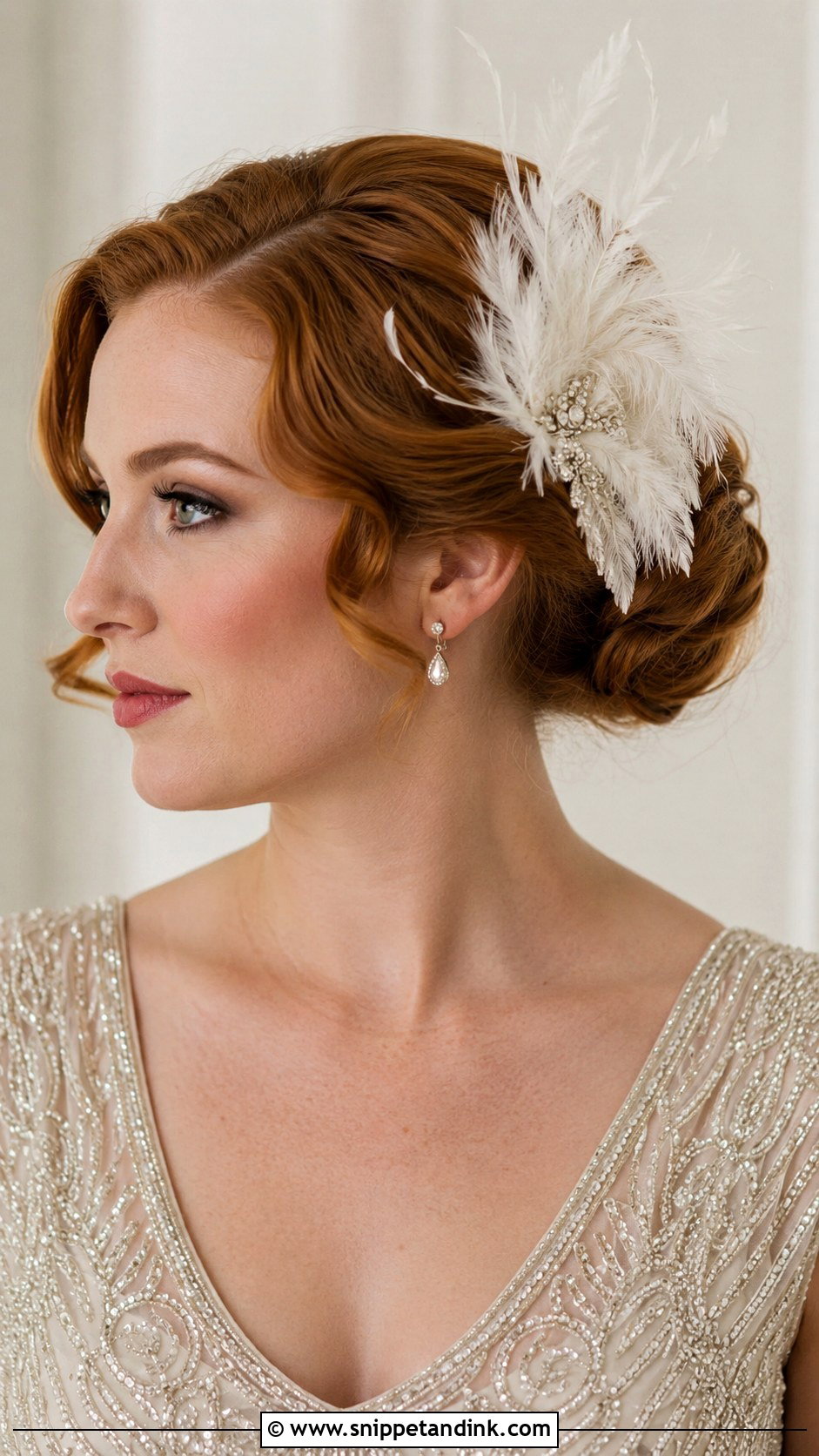
Feathers move, and that’s both the charm and the problem. A small fascinator pinned above a low bun or beside soft waves gives height and a bit of theatre, very Gatsby party. I only use feather pieces mounted on a comb or a sturdy clip, then cross two bobby pins over the base, because a breeze at an outdoor ceremony will lift a loosely pinned feather straight out. Ivory, blush and champagne sit quietly next to most gowns. Pair it with sleek waves so the feathers are the only fuss in the look.
9. Faux Bob Wedding Updo
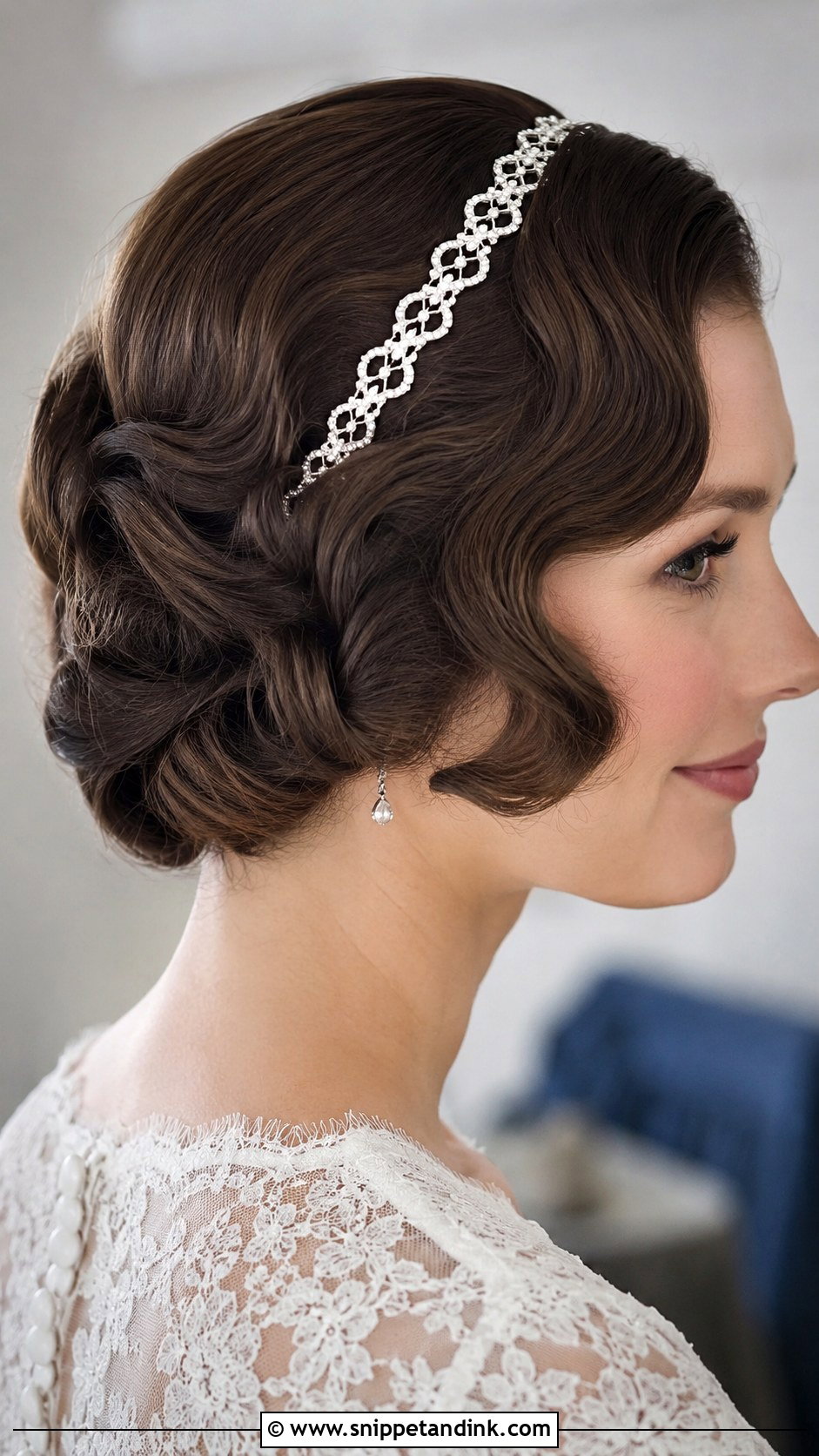
Love long hair but want the iconic 1920s bob? A faux bob gives you the shape without the scissors. I curl the ends under, roll the length up toward the nape and pin it so the bottom edge sits around the jaw, while the top gets finger waves or soft curls. Very thick, waist-length hair is the hard case: there’s a lot to hide, and the roll can get bulky. Fine to medium hair folds away neatly and feels secure all day. A beaded headband hides any pins at the crown.
10. Gatsby Glam Curls With Jewels
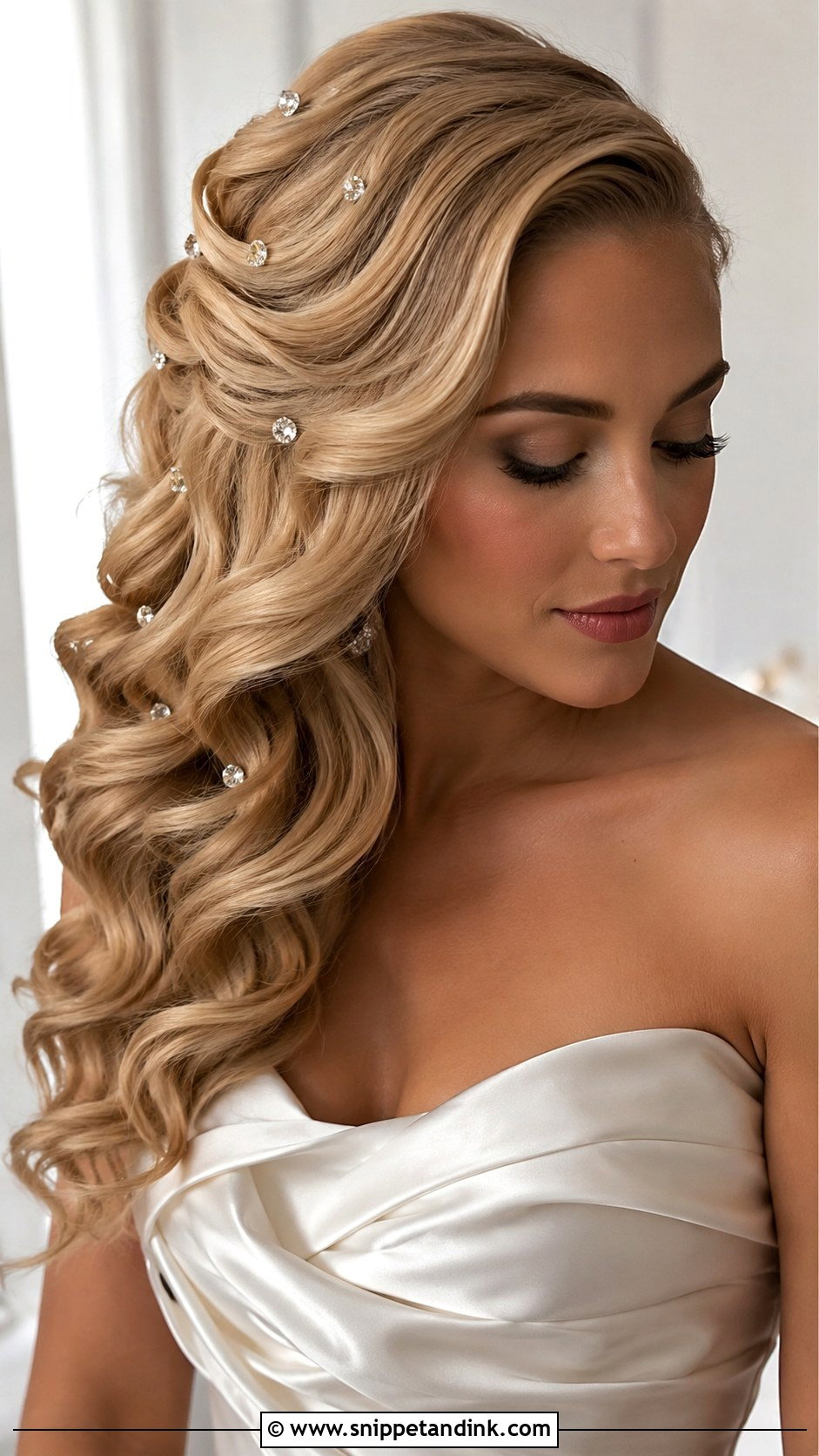
Big glossy curls swept to one side, with crystal pins scattered through, are the evening version of the decade. I set the curls the night before or early on the day and leave them pinned while they cool, because brushing hot curls loosens them by dinner. Medium and long hair give the movement this needs. Keep the pins to five or six; past that the sparkle just looks busy in photos. A satin gown and Art Deco earrings finish the look.
11. Low Chignon With Side Sweep
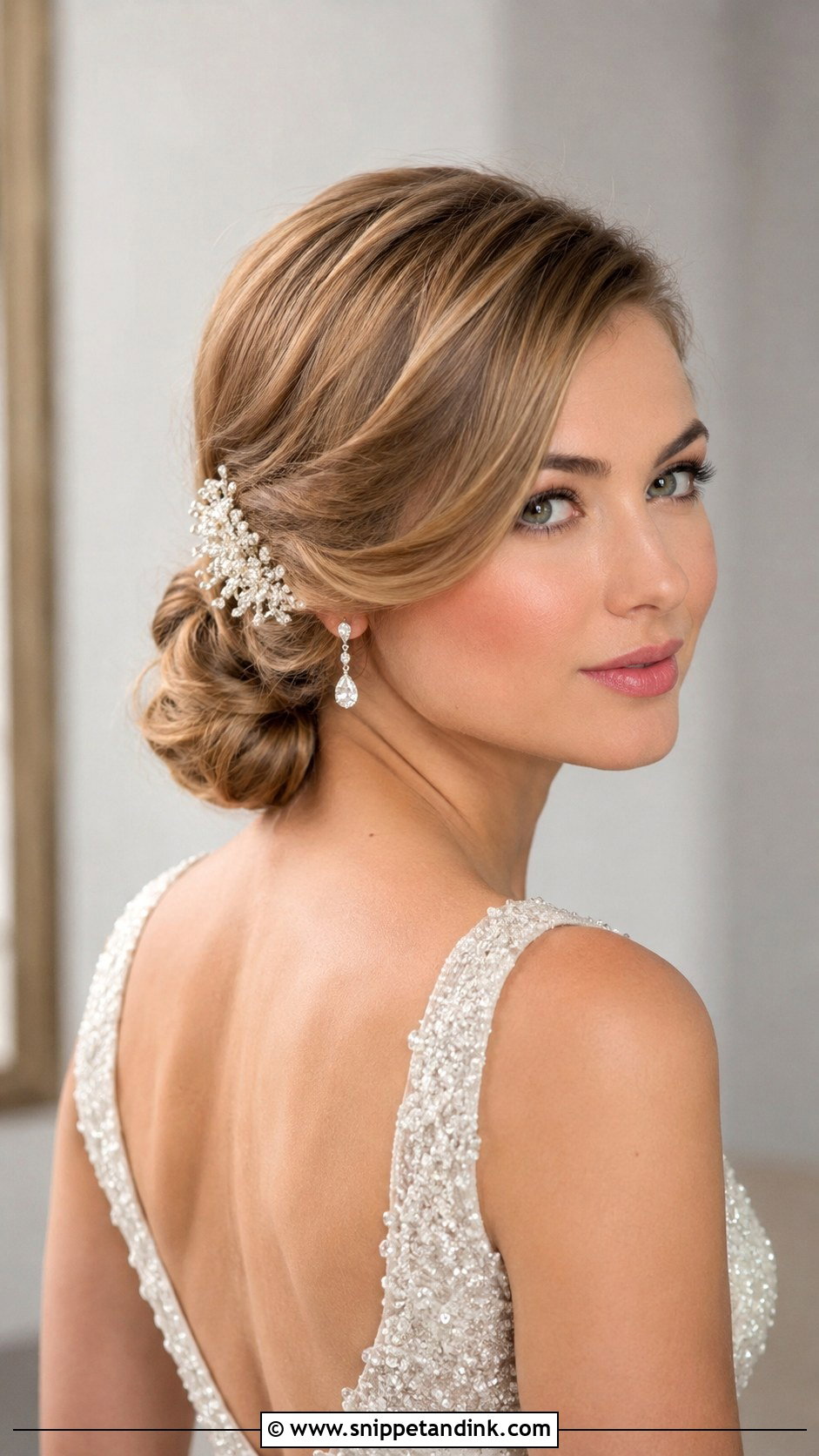
A low chignon with the front swept to one side is the quietest look on this list, and the one I’d recommend to anyone nervous about going full costume. The bun sits at the nape, the front section sweeps across the forehead and tucks in behind the ear. Almost any length can do it; shorter hair just needs a small padding piece. It leaves the neckline clear for jewellery, and a jeweled clip where the sweep meets the bun covers the join.
12. Finger Waves With Floral Crown
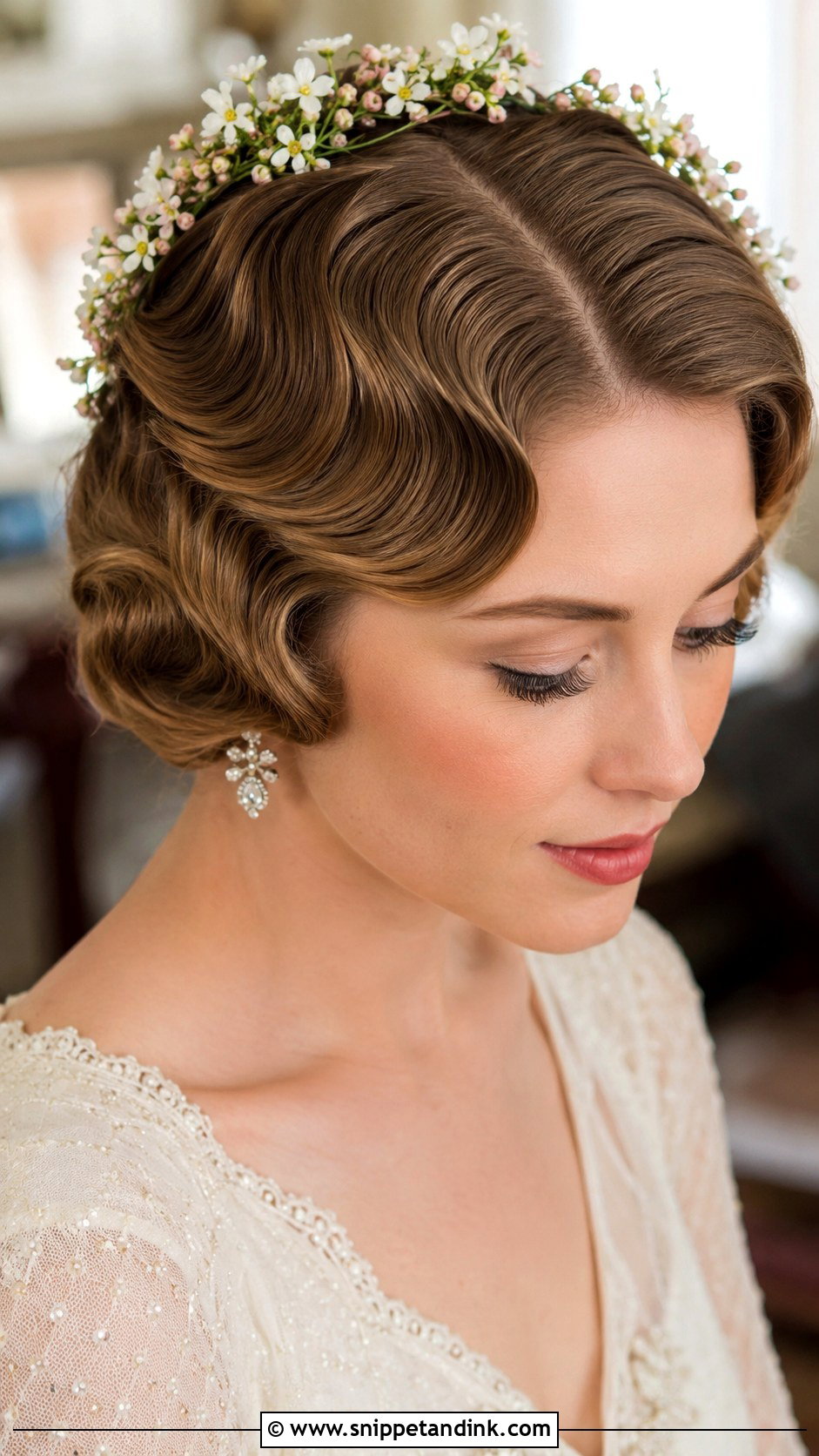
Wax orange blossoms were a real fixture of twenties bridal headpieces, so a floral crown over finger waves is closer to history than it looks. I use wax or silk flowers here rather than fresh, because fresh stems are wet and heavy and will press dents into a finished wave. Keep the blooms small and white or blush. Short and medium hair suit it best, with the crown sitting just behind the hairline so the ridges still show at the front.
13. Sleek Wet Look Waves
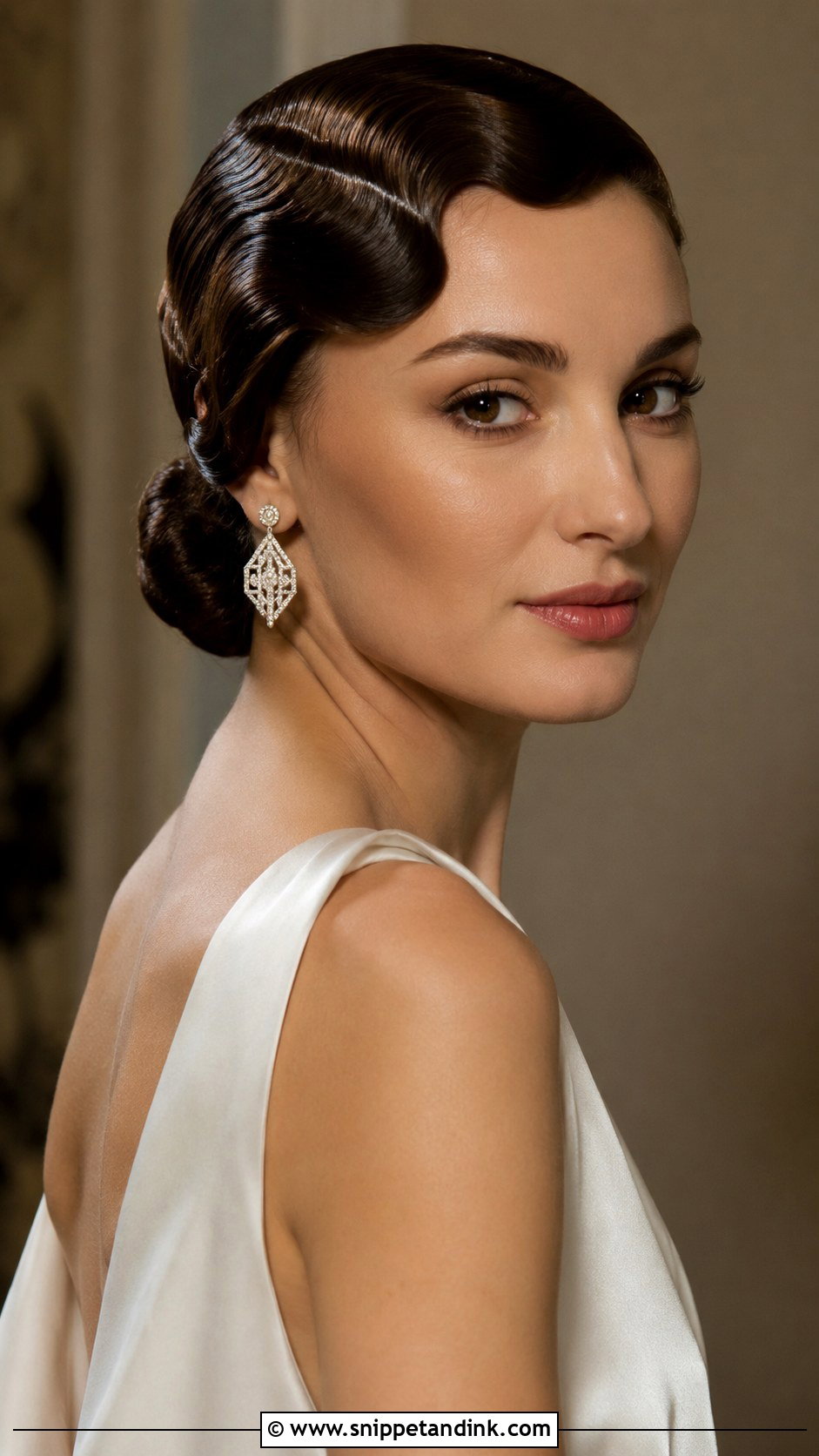
The wet look is gel sculpted into high-shine waves lying flat to the head. It’s bold, and it’s not for everyone. The finish has to be set and then left alone; if anyone brushes or touches it once it’s dry, the gel can flake and go dull. Short and medium hair hold it best. Under reception lighting the shine reads glamorous, and a deep side part with Art Deco earrings keeps the drama where it belongs. I’d skip it for an outdoor summer wedding, where heat softens the gel.
14. Pearl Headband With Loose Waves
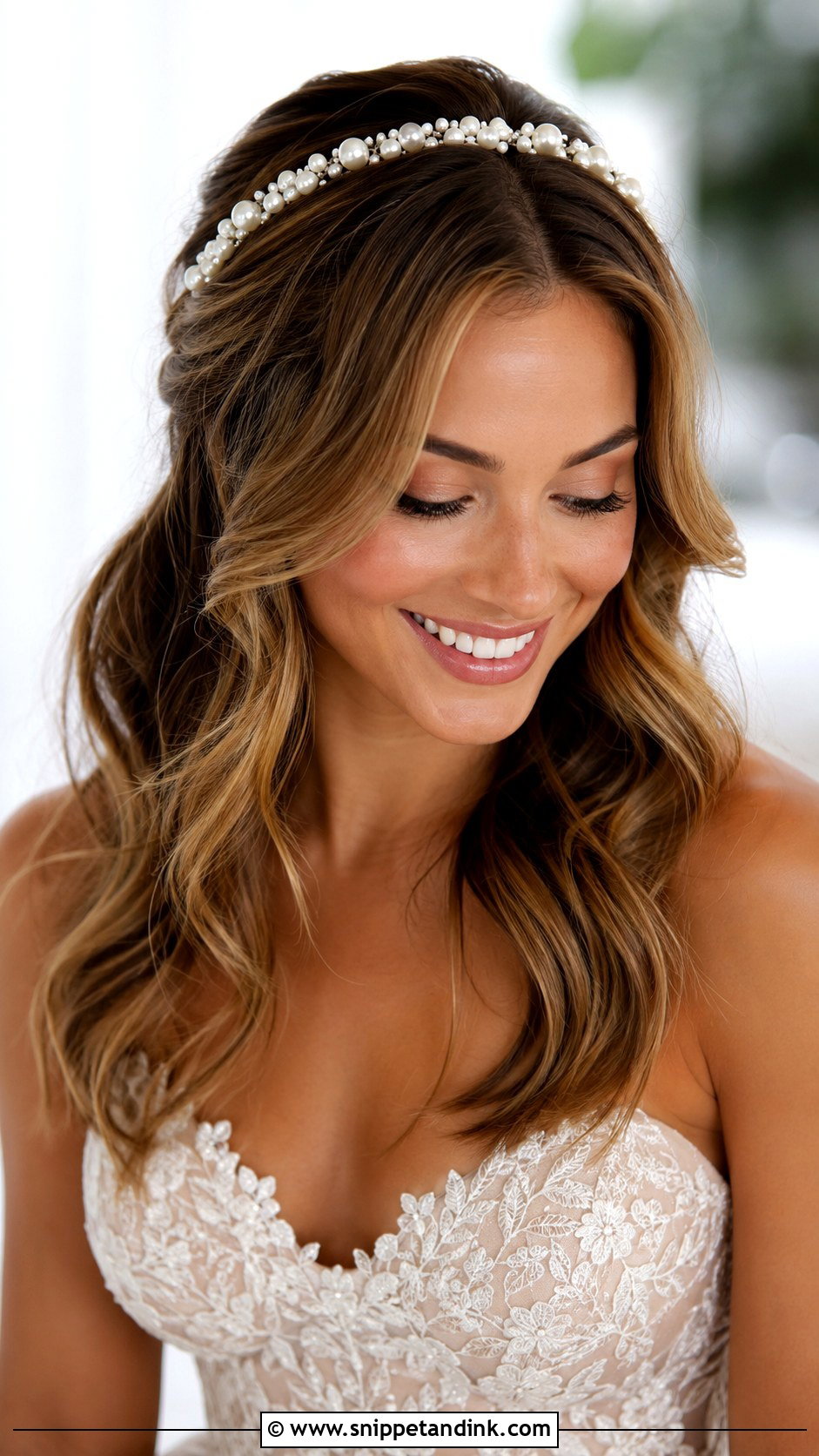
A pearl headband over loose waves is the easiest twenties look to wear. The band can sit across the crown or nearer the brow, and the waves fall to the shoulders with no wet set at all. That makes it a good fit if you love the era but don’t want sculpted hair. Medium and long hair suit it. Pearls vary in tone, so check the band against your dress in daylight. A few tendrils at the face soften the band’s straight line.
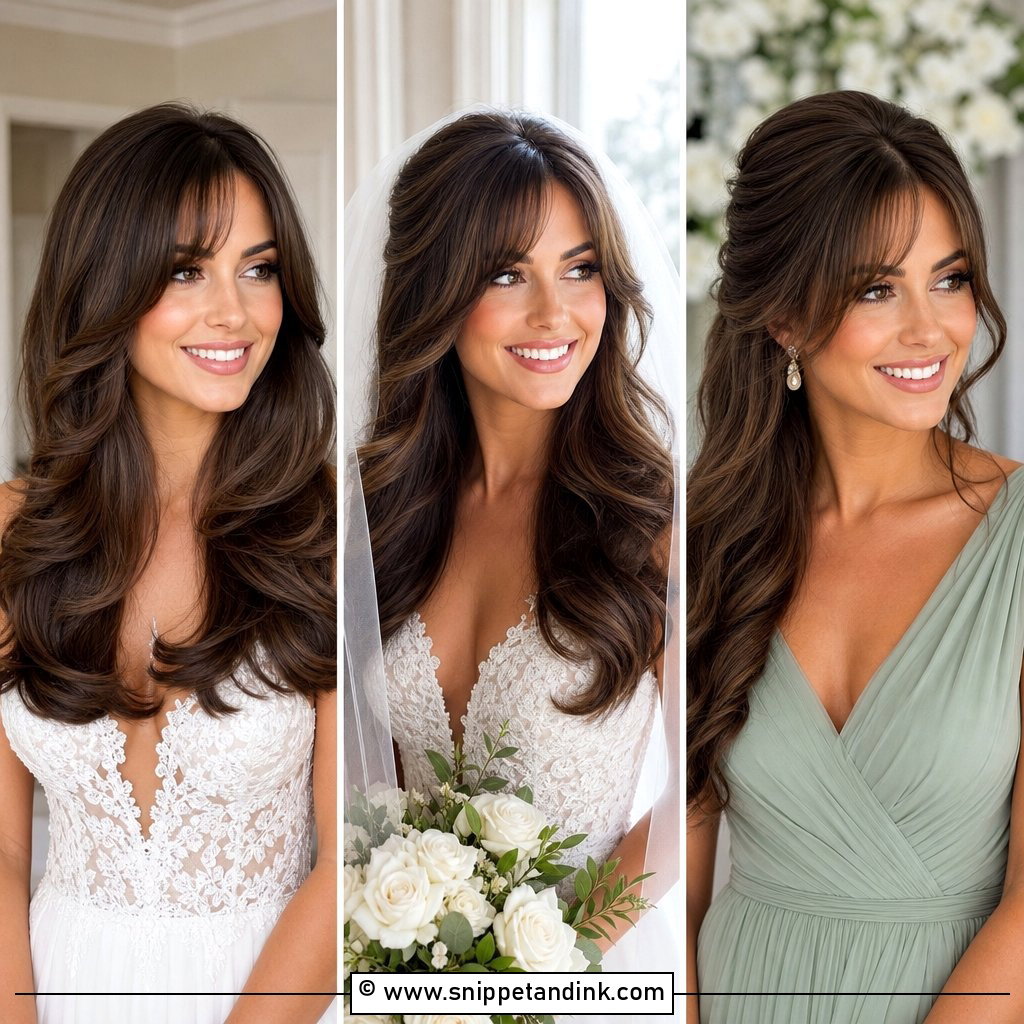
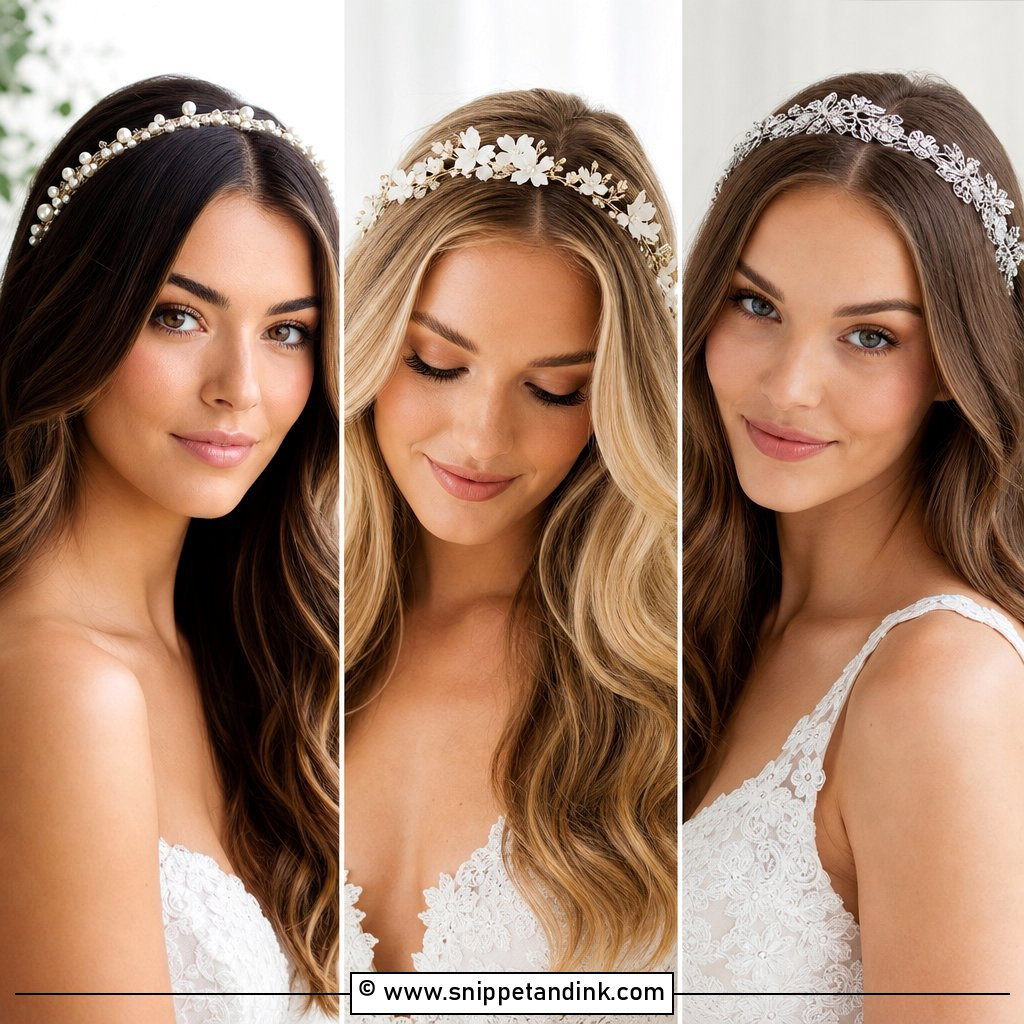

15. Marcel Wave Bridal Hair
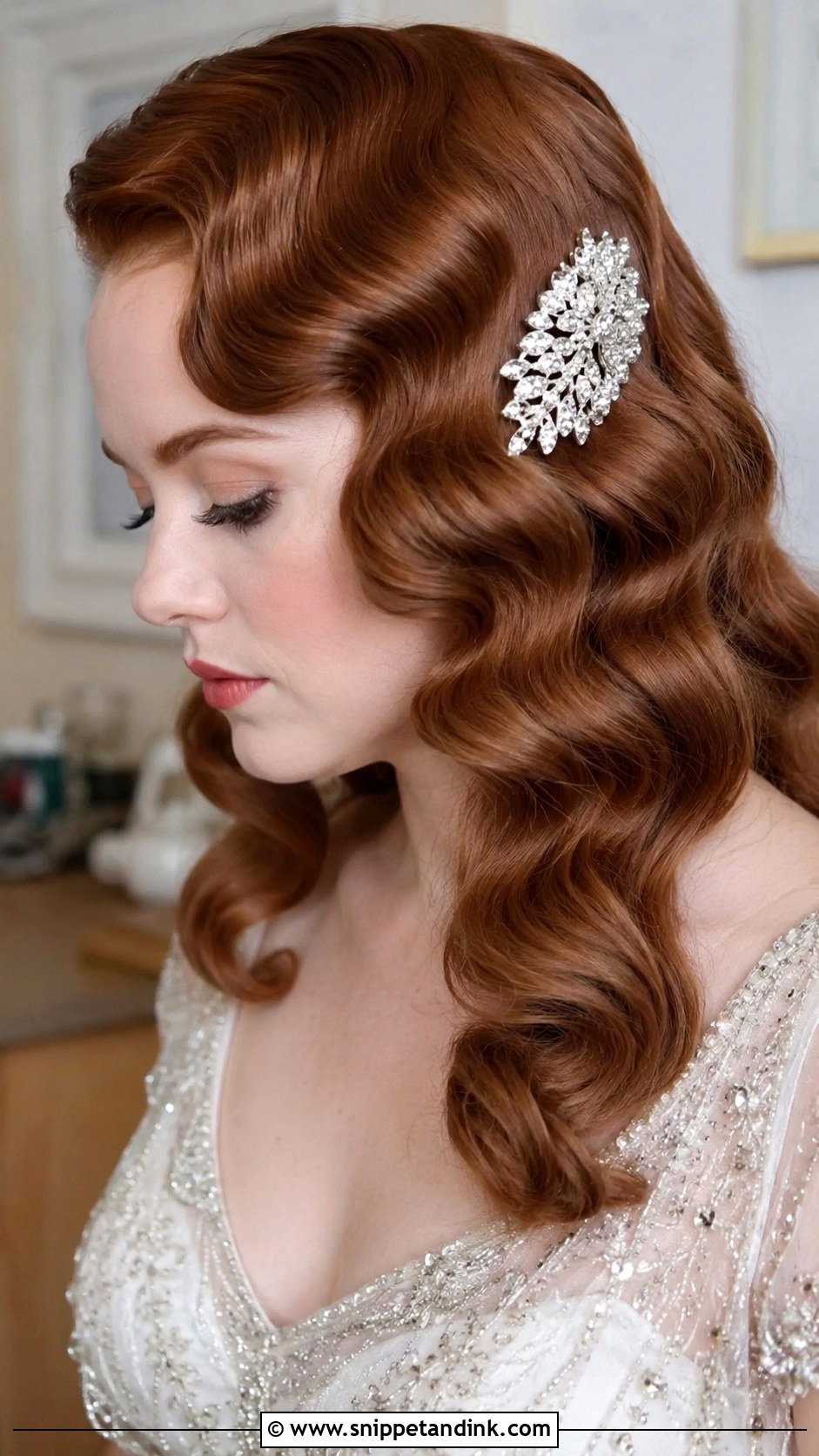
The Marcel wave came before finger waves and was made with a heated iron on dry hair, which gives deeper, more regular ridges than a wet set. Marcel waves suit short and medium hair. Fewer stylists are trained with a true Marcel iron today, so ask whoever you book whether they’ll use one or recreate the effect with a curling iron and pin curls; both can look right, but you should know which you’re paying for. A jeweled clip or a small veil adds the bridal note.
16. Side Bun With Beaded Accent
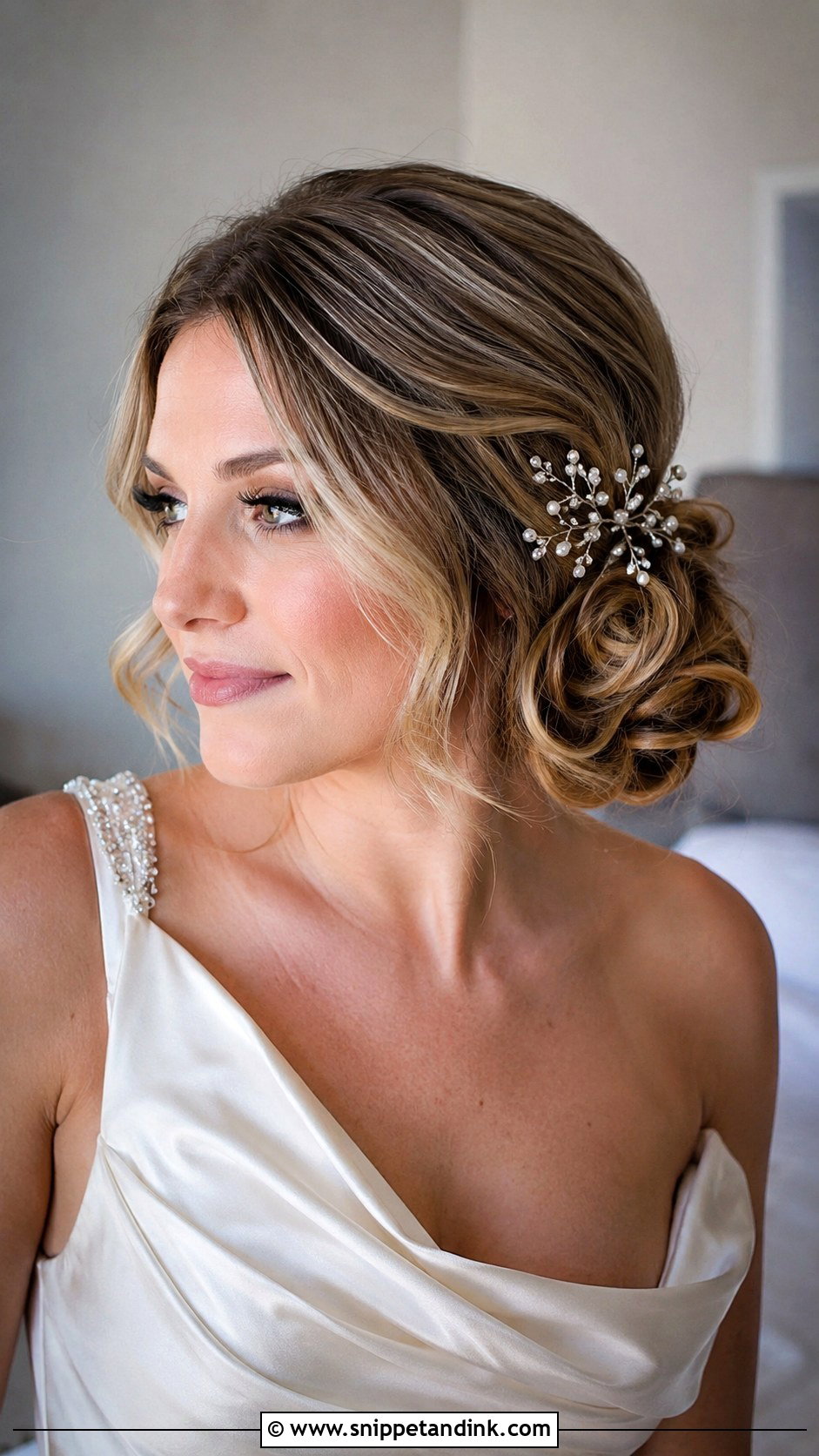
Placing the bun just behind one ear rather than in the middle gives the asymmetry the decade loved. I build it on the side opposite your part, so the sweep of the front leads the eye down to the knot. Beaded pins go in around its edge. Medium and long hair hold the shape best. Think about where your partner stands at the altar: put the bun on the side the guests will see during your vows.
17. Bobbed Hair With Jeweled Clip
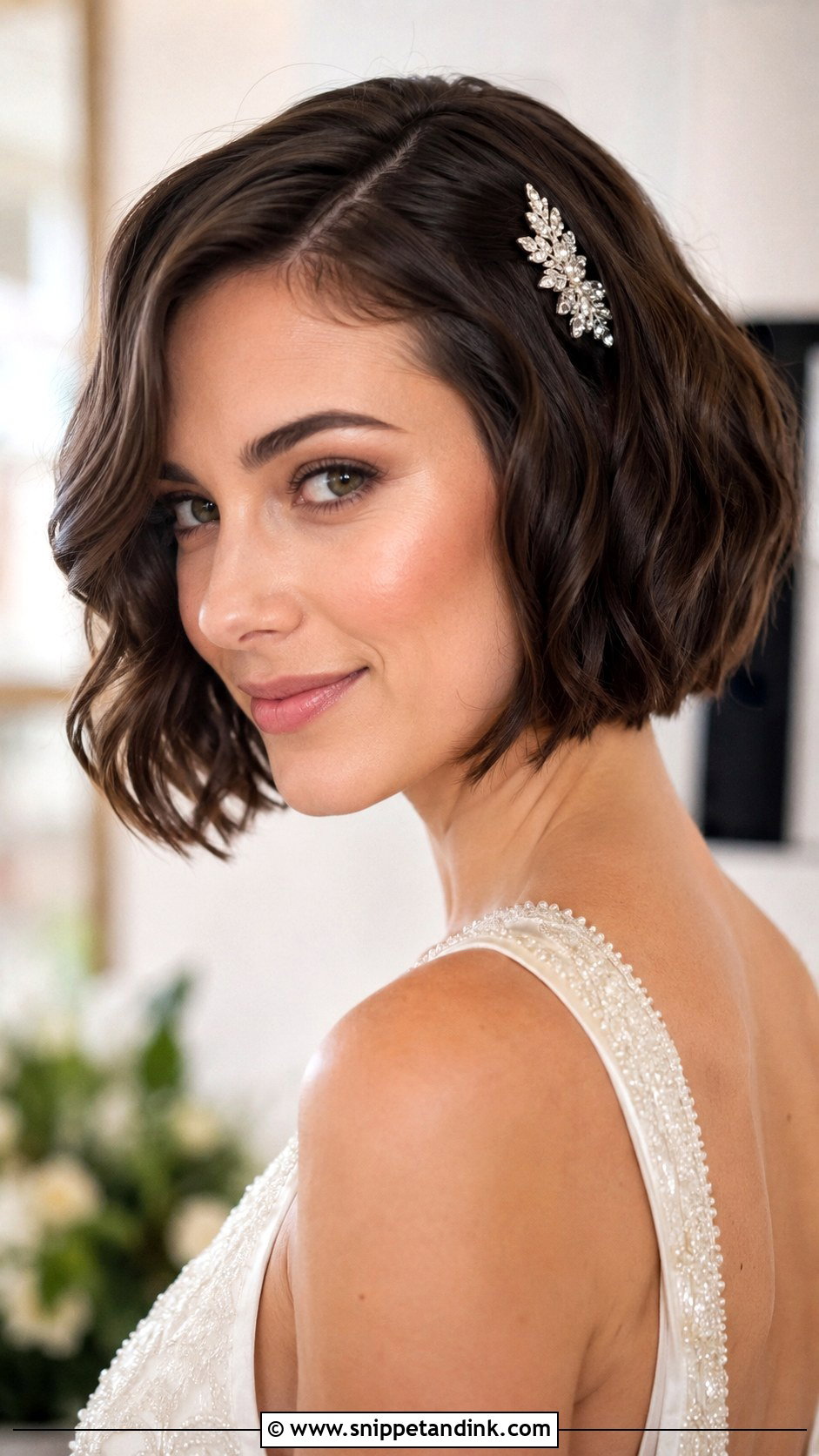
A real chin-length bob with one jeweled clip is the simplest route to the era. I style the bob with a gentle curl or soft wave, then pin the clip at the temple or tucked behind the ear where it catches light when you turn. It takes little upkeep on the day. The clip is the personal part, so it’s a good place for a family piece or a stone you love.
18. Vintage Waves With Long Veil
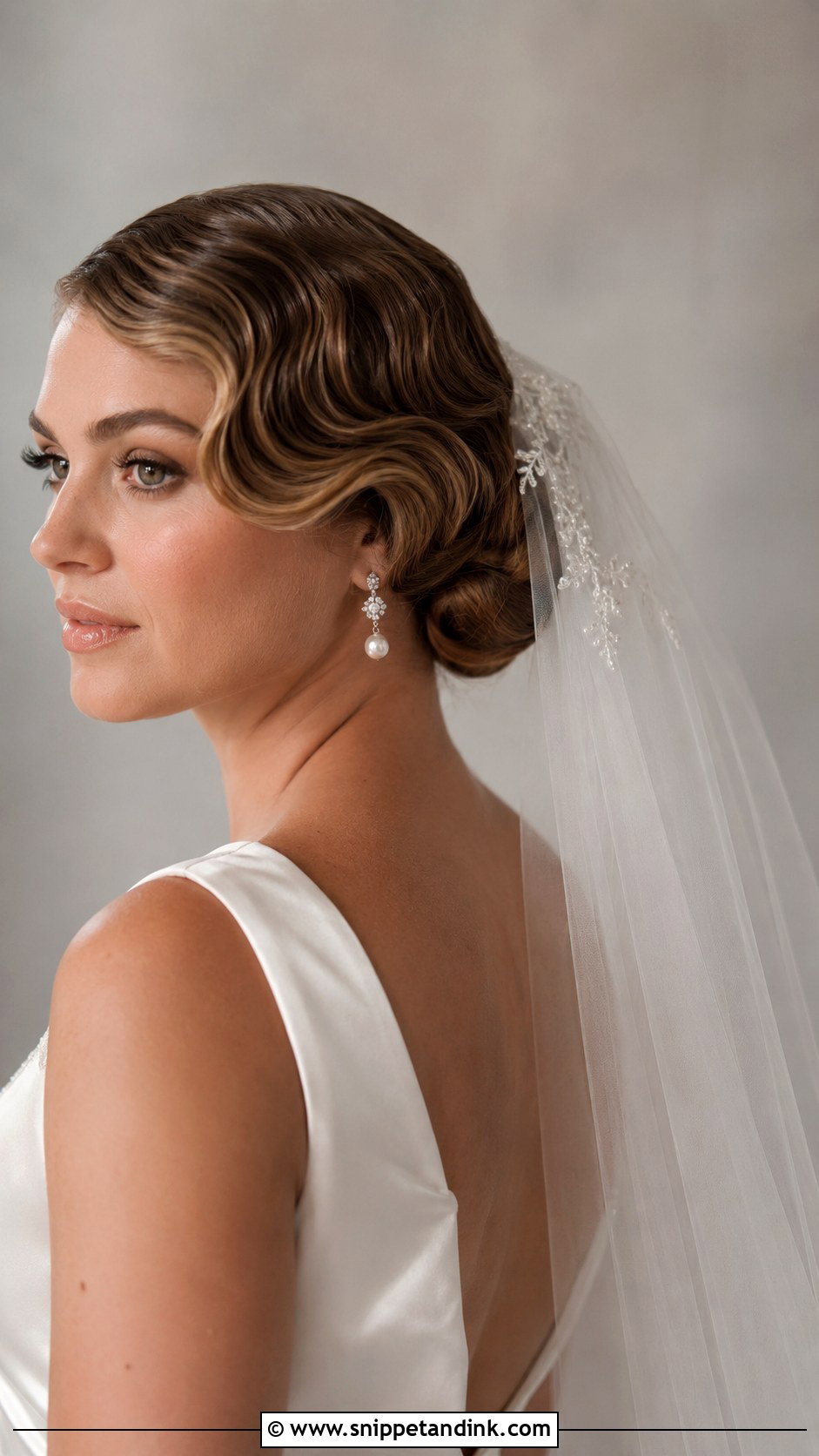
Sculpted waves at the front with a chapel or cathedral veil behind is how many twenties brides actually wore it: the hair was close to the head and the veil carried the length. Medium and long hair suit it best because there’s enough at the back to anchor the comb into. I position the veil behind a soft wave or a low bun so the front stays polished. A long veil is heavy, so the comb needs a firm base of crossed pins under it or it will drag by the first dance.
19. Twisted Updo With Art Deco Pin
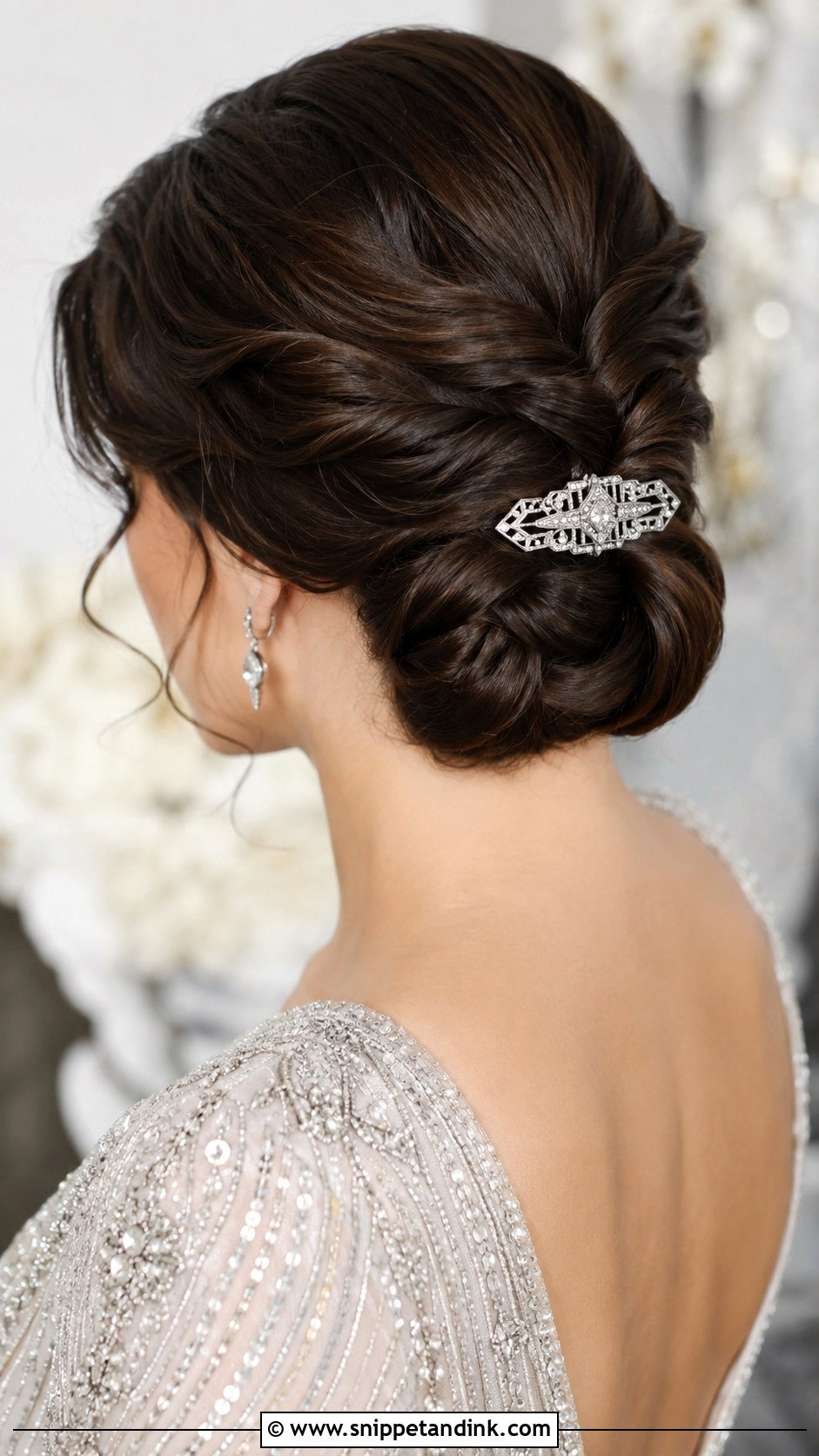
Twisted sections rolled into a low knot and fixed with one geometric Art Deco pin echo the architecture and jewellery of the era. The twists give texture, so the pin stands out as the focal point. Medium and long hair work best. I’d keep earrings smaller here than with the other looks, since a big pin plus big earrings starts to compete.
20. Soft Curls With Rhinestone Headpiece
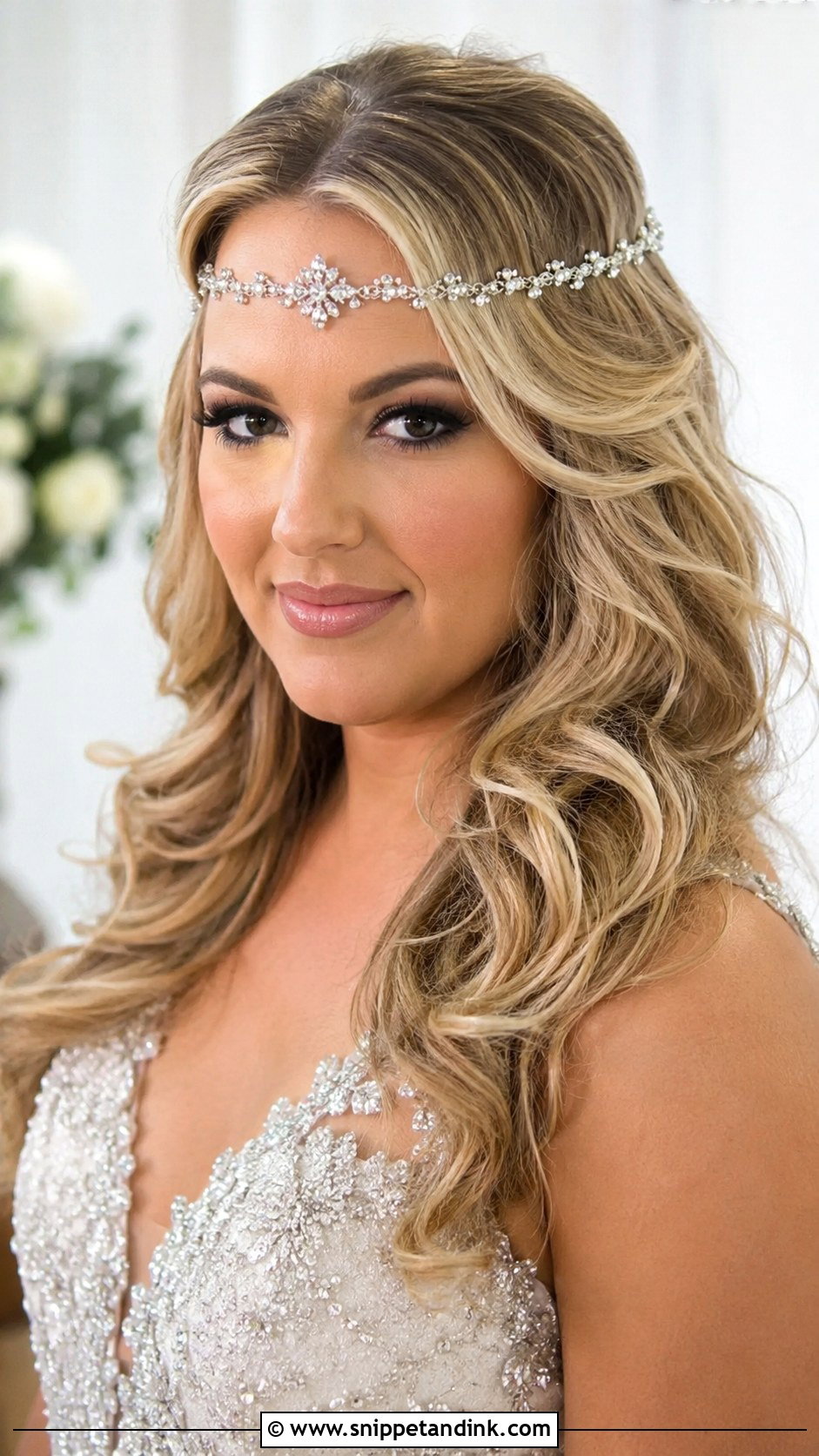
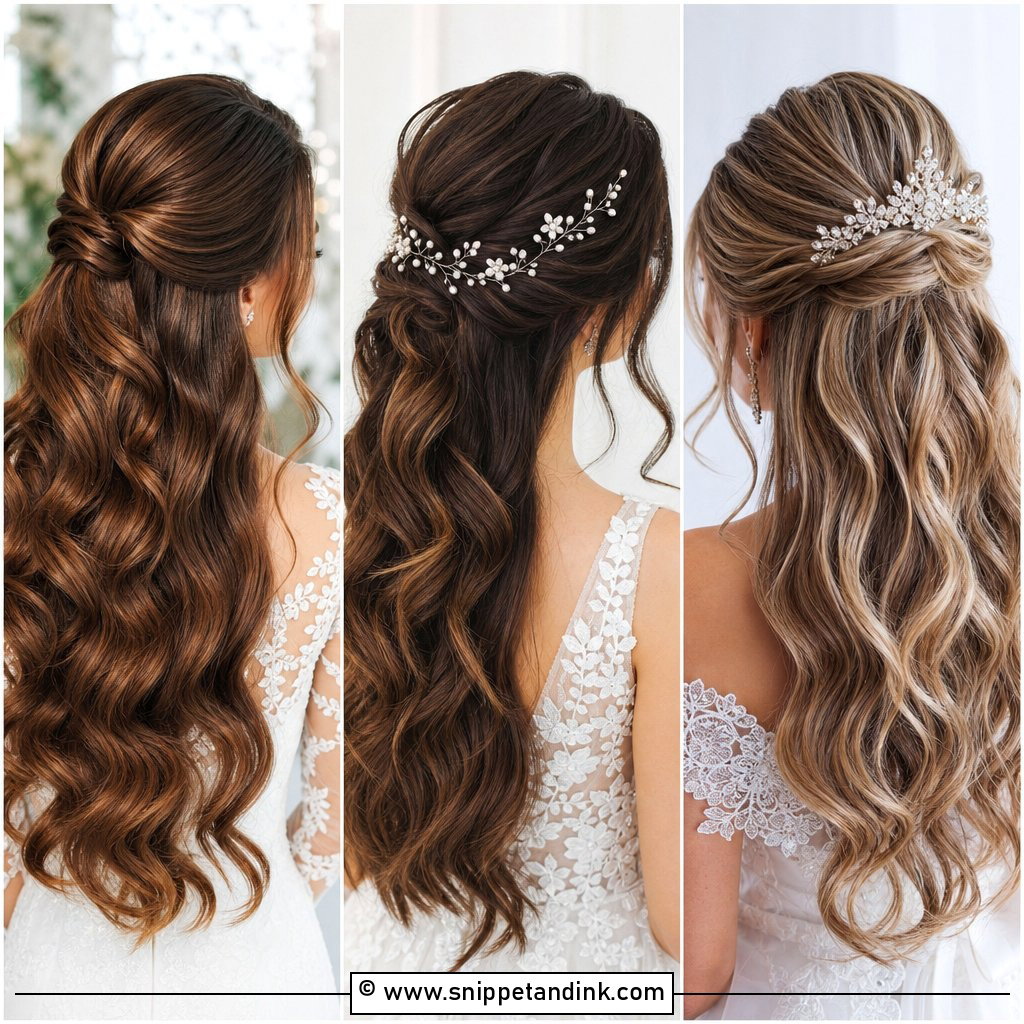
Soft curls under a rhinestone headpiece is maximum sparkle, and it suits an evening reception best. The band sits across the brow or crown; the curls give volume underneath. Medium and long hair carry it. Rhinestones reflect flash strongly, so a light-catching band can blow out a little in close-up portraits. Pair it with a beaded gown and let the headpiece be the only jewellery near your face.
Headbands, Feathers and Birdcages Need Different Anchors
Vintage accessories are where I see most problems on the day, and nearly all of them come down to how they’re fixed. Each type needs its own approach.
- Bandeau headbands: an elastic back under the hair is kinder than a rigid band, and it shouldn’t press on the brow bone. If it leaves a red mark after ten minutes at the trial, it will hurt by the reception.
- Feathers: only on a comb or clip, with two bobby pins crossed over the base. Outdoors, place them on the side away from the prevailing wind.
- Birdcage veils: the comb goes into a ridge of the wave, not on top of it, so the netting follows the hair line.
- Pearl strands: pin them underneath the bun every few centimetres. Pinning only at the ends lets them slide.
- Vintage pieces bought online: check the weight. Old metal combs and heavy brooches can be far heavier than modern ones and may need a hidden padding base.
When Sculpted Waves Go Soft by Evening
Humidity is the enemy of finger waves. Damp air swells the hair and the ridges blur into fuzz, especially near the hairline. If your venue is coastal or the forecast is muggy, I’d lean toward a low chignon or a side sweep, which tolerate moisture far better than a full set.
For touch-ups, give your bridesmaid a small kit: a fine-tooth comb, a few duckbill clips, a travel hairspray and a dab of gel or pomade. Re-pressing a ridge with the comb, clipping it for a few minutes while photos are taken elsewhere, and misting lightly will bring a wave back much better than fiddling with it by hand.
Matching the Wave to Your Hair Before the Accessories
Start from the hair you have. Short and chin-length hair takes real finger waves and Marcel waves; longer hair gets the same look through a faux bob, a sweep or a low knot. Then add one accessory, whether that’s pearls, beading, a feather or a birdcage veil, and let it carry the Gatsby feel. Book a trial with your headpiece in hand, wear it for a few hours, and you’ll know before the day whether the look holds.
You'll Like These Ideas:


Leave a Reply