
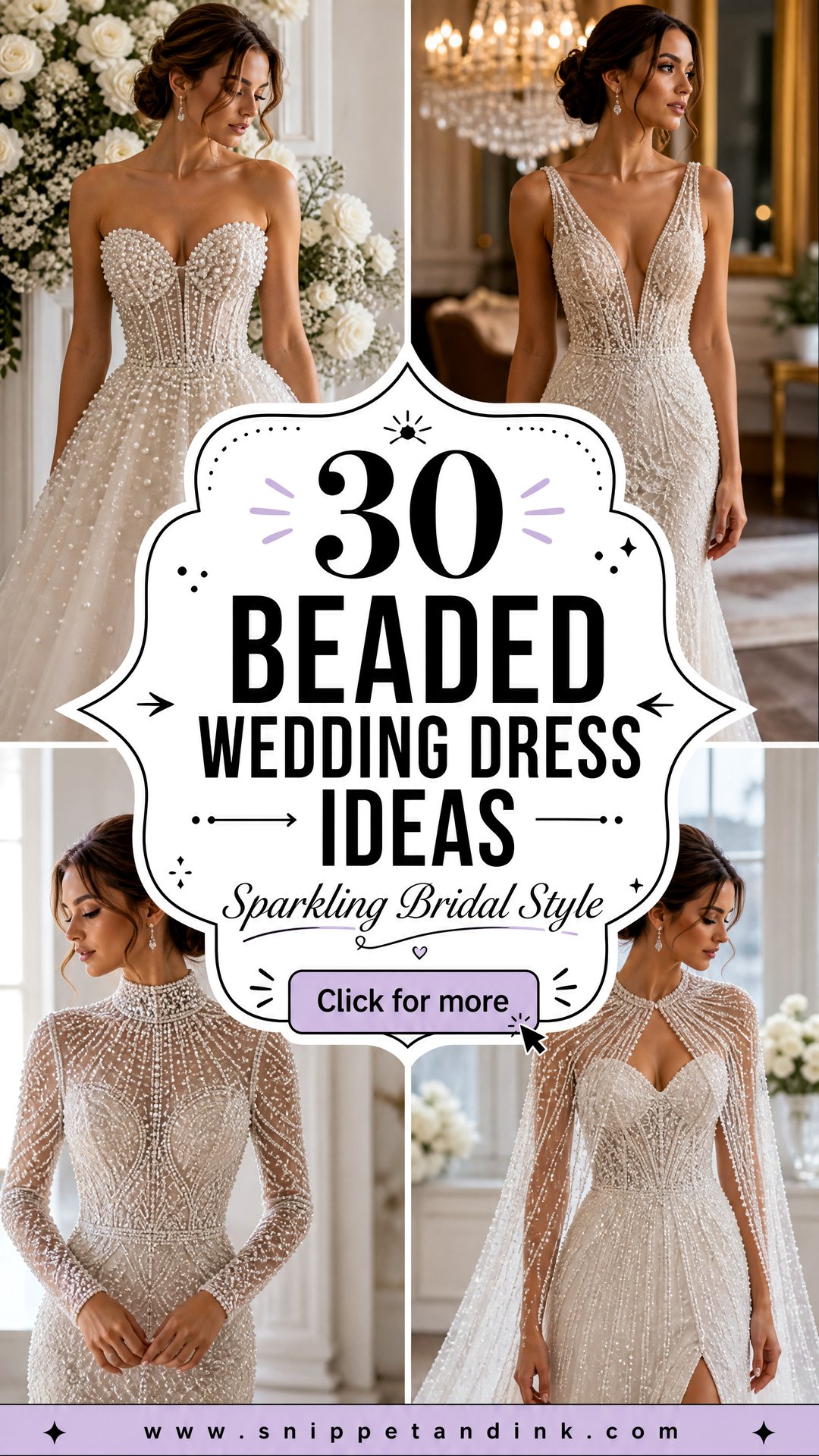
Beading does something lace and plain fabric can’t: it moves light around as you move. Pearls give a soft glow, crystals throw sharp sparkle, and bugle beads laid in lines can make a dress look longer. What brides rarely hear until the fitting is that beadwork also adds weight, changes how fabric drapes, and catches on veils and sleeves. I help clients judge three things together: how much shine they want in photos, where the beading sits on their body, and how the dress feels after hours of wear. The thirty gowns below cover pearl, crystal, Art Deco, floral and scattered beadwork, with the details I’d look at in each.
Checking How the Beadwork Is Made Before You Fall for It
Two beaded dresses can look identical on a hanger and behave very differently on the day. The difference is usually in how the beads are attached. When I look at a gown with a client, I turn the bodice inside out where I can and check a few things:
- Hand-sewn or machine-sewn beading with secure knots is what you want. Glued crystals and pearls can loosen with body heat and movement.
- Look for long loose threads on the inside. Beads strung on one long thread can unravel in a whole line if a single stitch breaks.
- Lift the dress. A heavily beaded gown can weigh several kilos, and that weight sits on your shoulders or waist all day.
- Run your hand along the inner arm and side seams. Sharp crystal settings and sequin edges scratch bare skin.
Ask the shop for a small bag of spare beads matching your dress. Most gowns come with them, and they make on-the-day repairs simple.
1. Pearl Beaded Wedding Dress
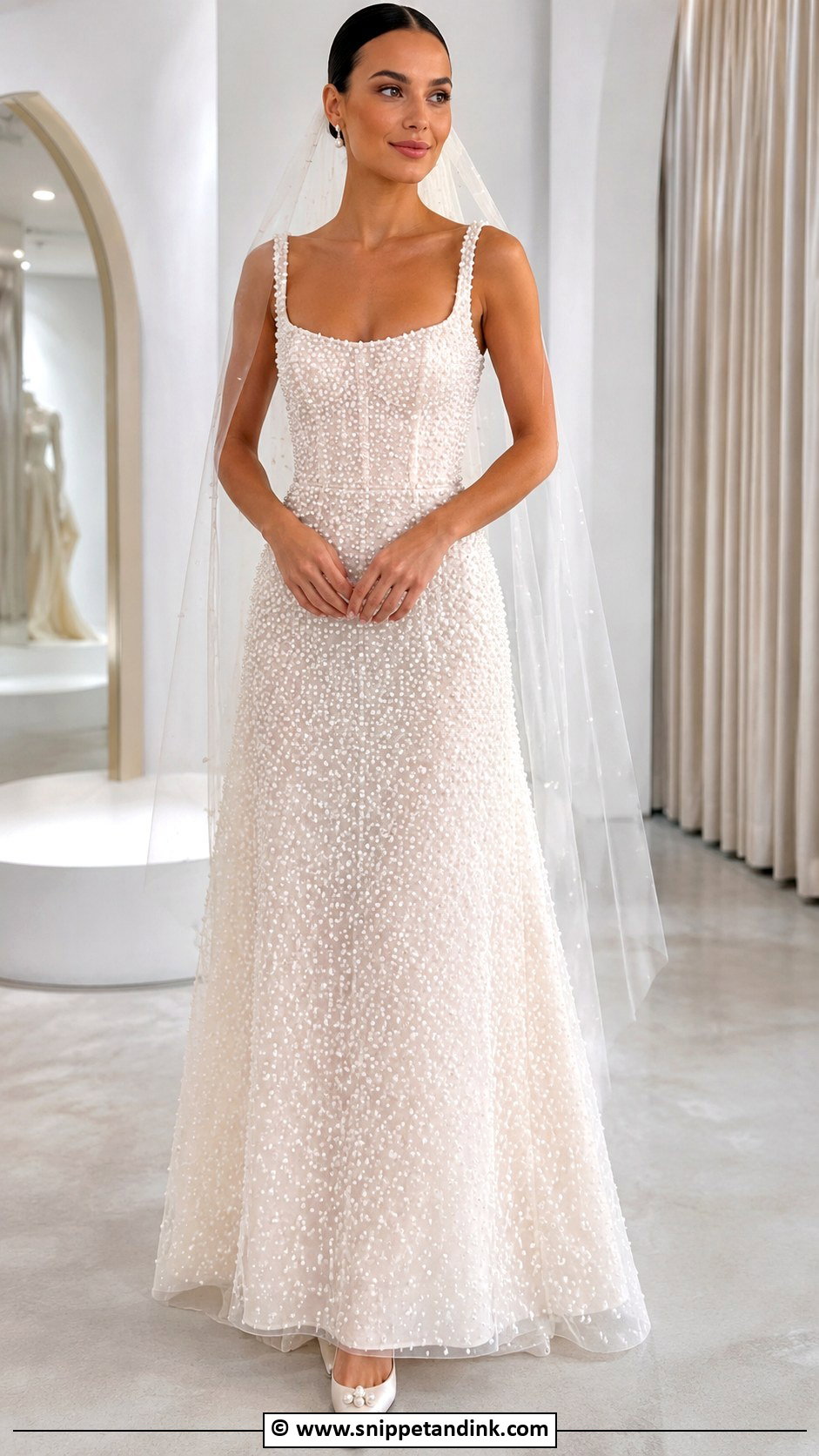
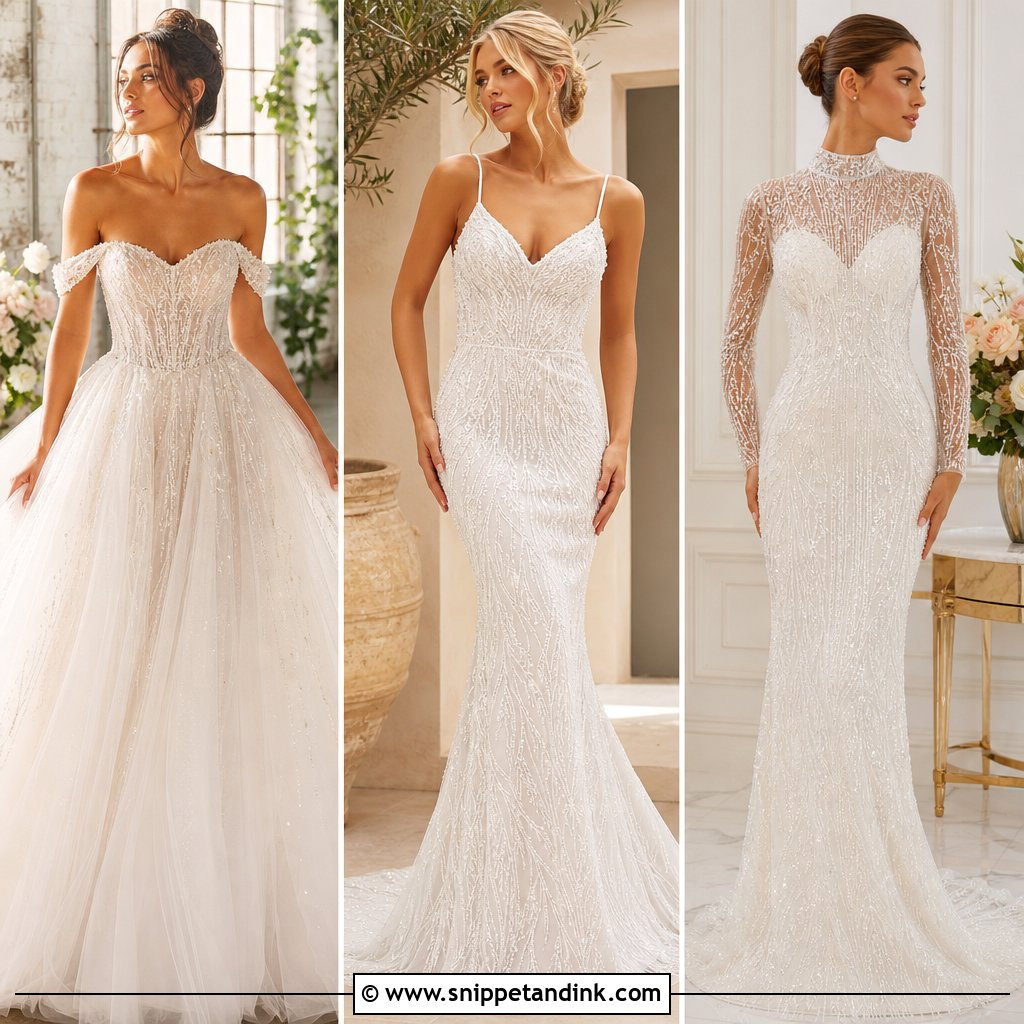
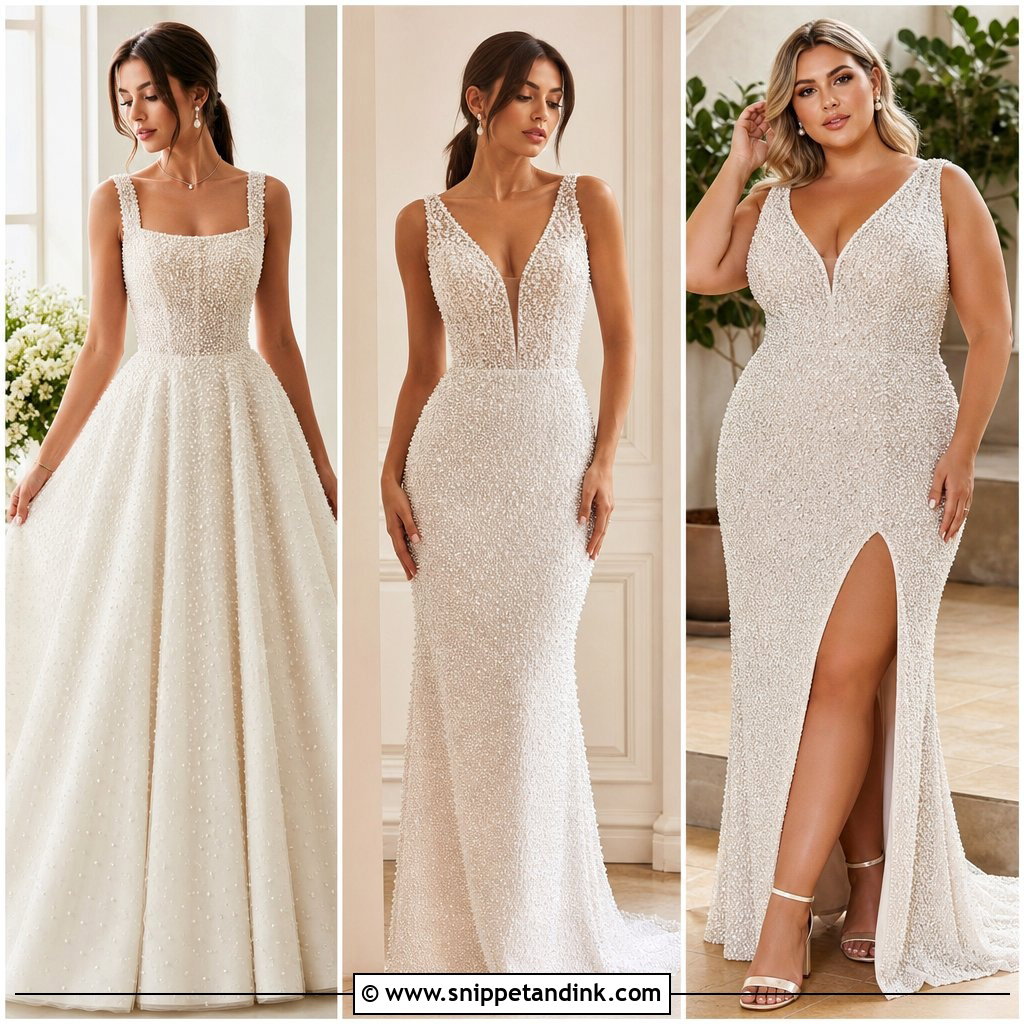
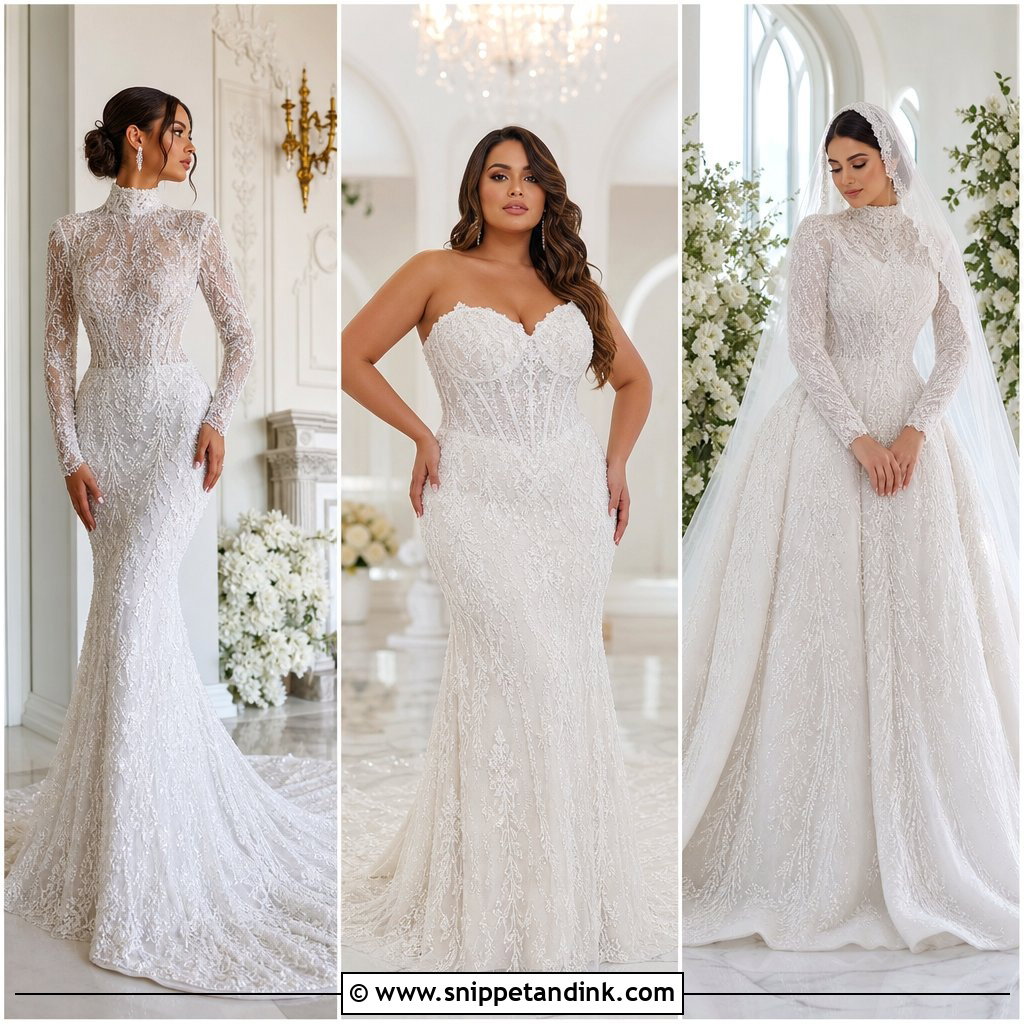
Pearls glow rather than sparkle, so they read softer in photos than crystals do. On tulle, crepe, satin or sheer sleeves they look classic; allover pearl embroidery leans more fashion-forward. The thing I check on a pearl bodice is how the pearls are attached: each one should be stitched through rather than glued, because glued pearls pop off when the bodice flexes. Pearl drops, pointed ivory heels and a smooth low bun are enough, and heavy pearlwork calls for a plain veil.
2. Crystal Beaded Wedding Dress
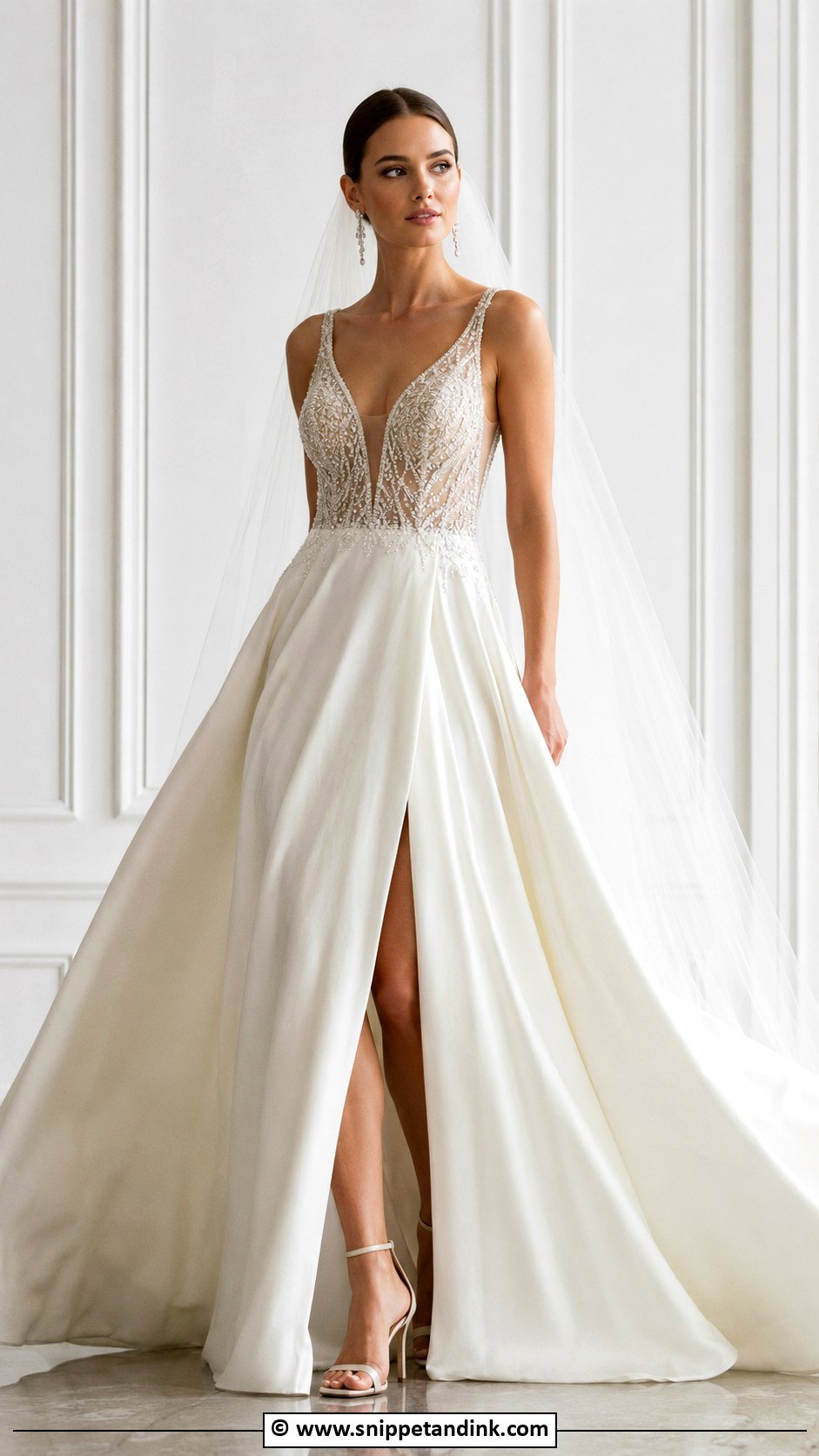
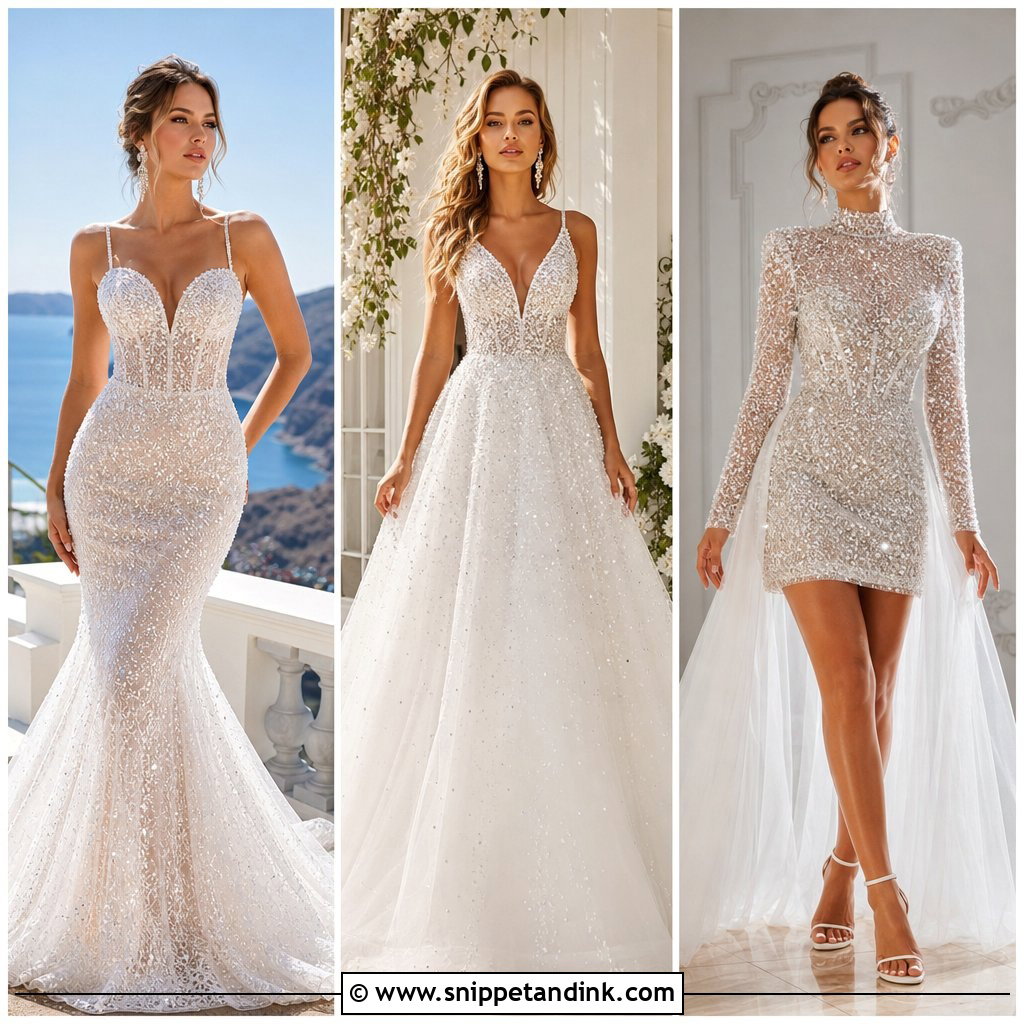
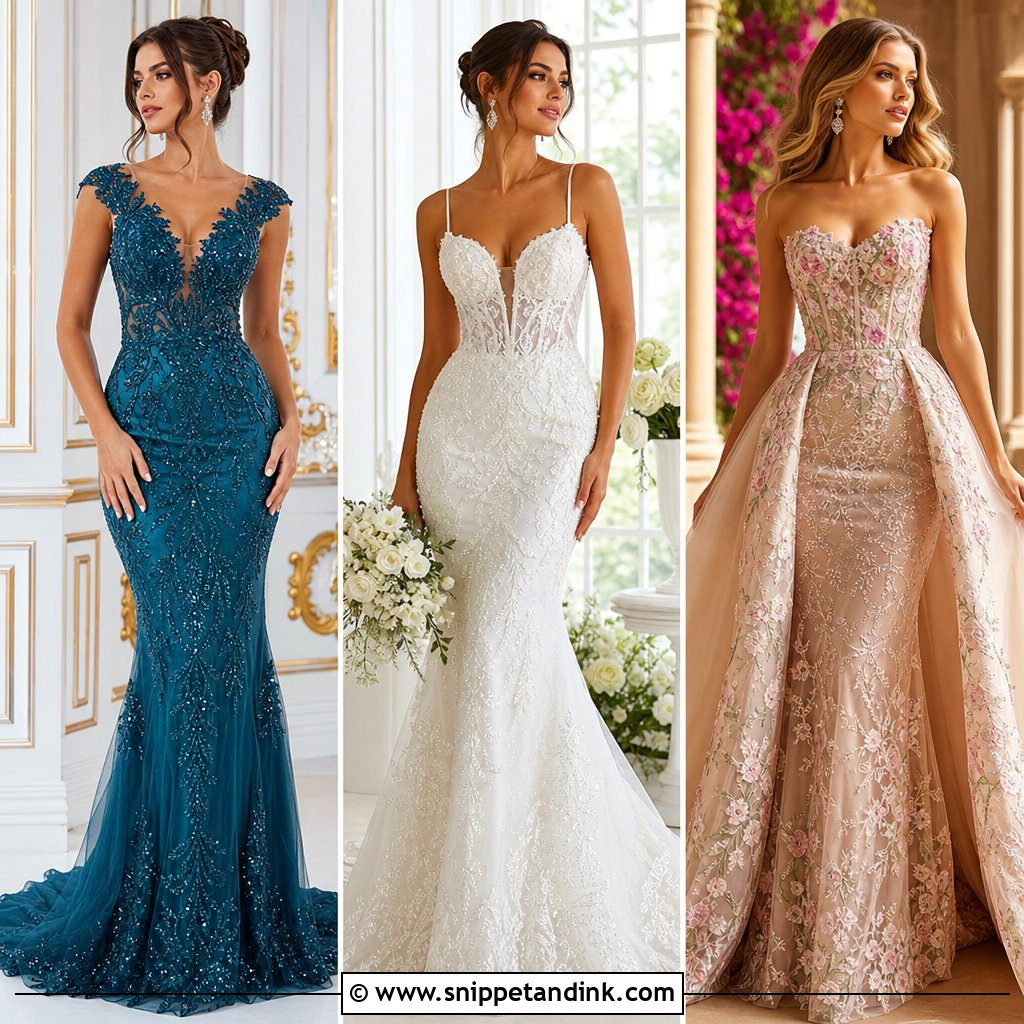
Crystals catch every light source, which makes them shine in evening photos and under ceremony spotlights. Placement is everything. A crystal bodice with a softer skirt is easier to wear and to sit in than a fully embellished gown, which can be heavy and stiff. Ask the shop to dim the lights at the fitting and have someone photograph you with flash; that’s how the dress will look at the reception. Keep earrings delicate and the updo neat.
3. Beaded Lace Wedding Dress
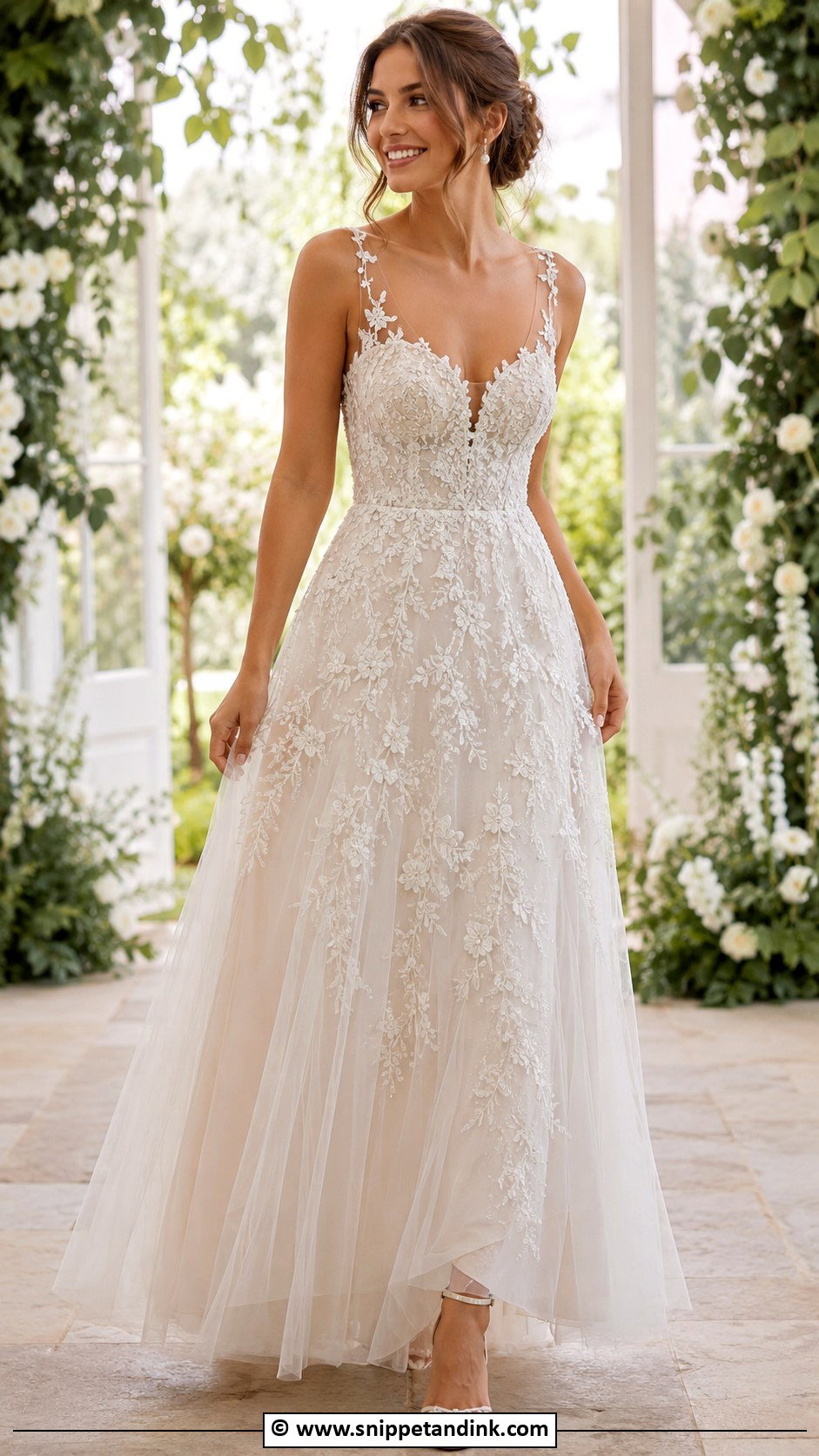
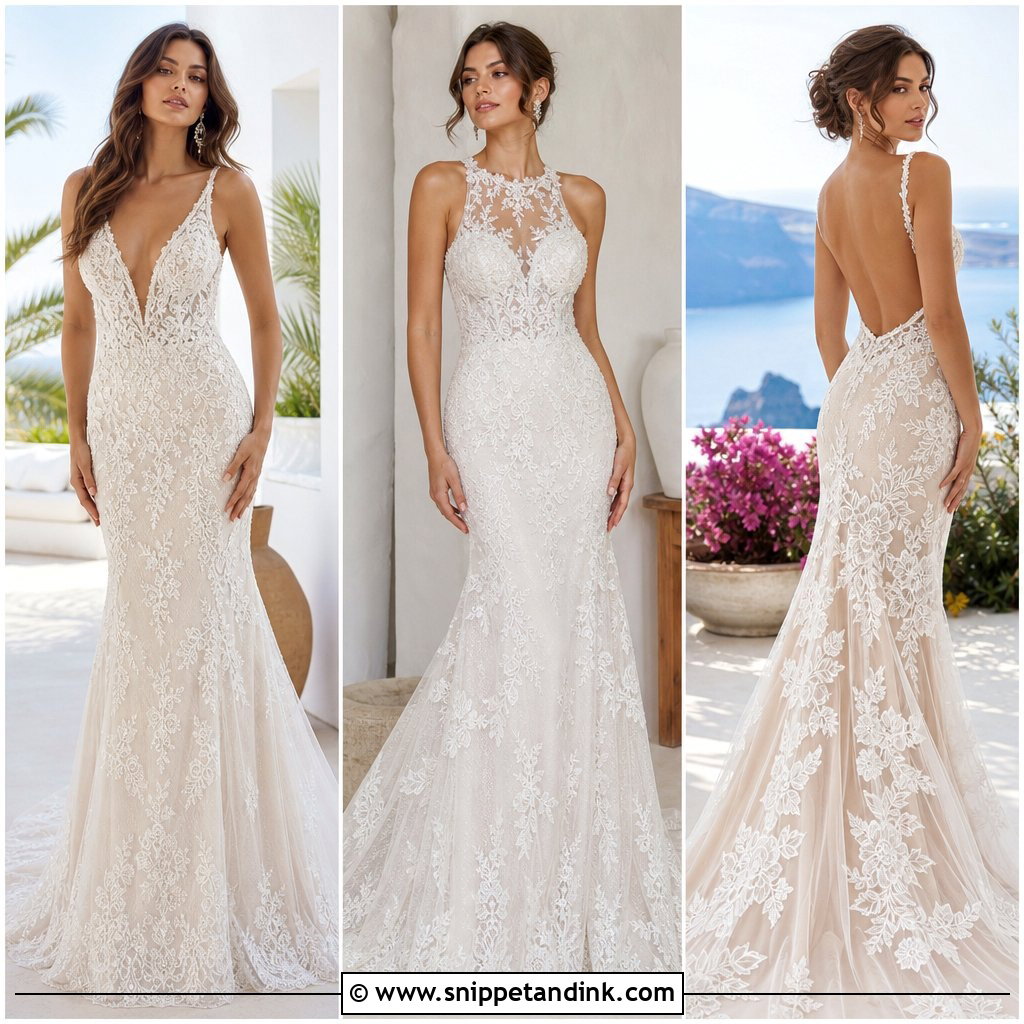
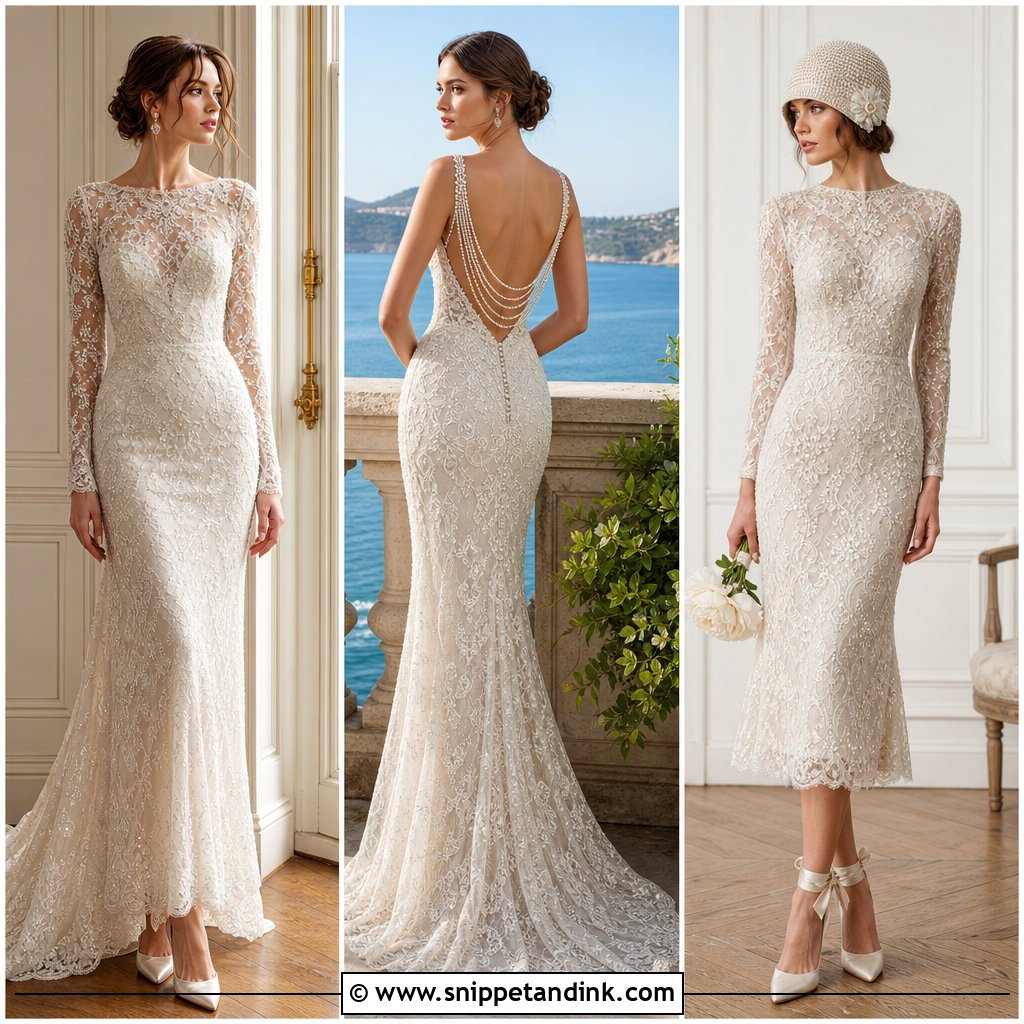
Lace with beadwork is the most forgiving combination I know. Lace hides the stitching that holds each bead, and small beads add depth to the floral pattern without shouting. Fitted bodices, long sleeves and illusion backs all work well. If the lace motif is large, I keep accessories small and the veil plain. It suits most seasons, since the same gown feels light in summer and rich in winter.
4. Beaded Mermaid Wedding Dress
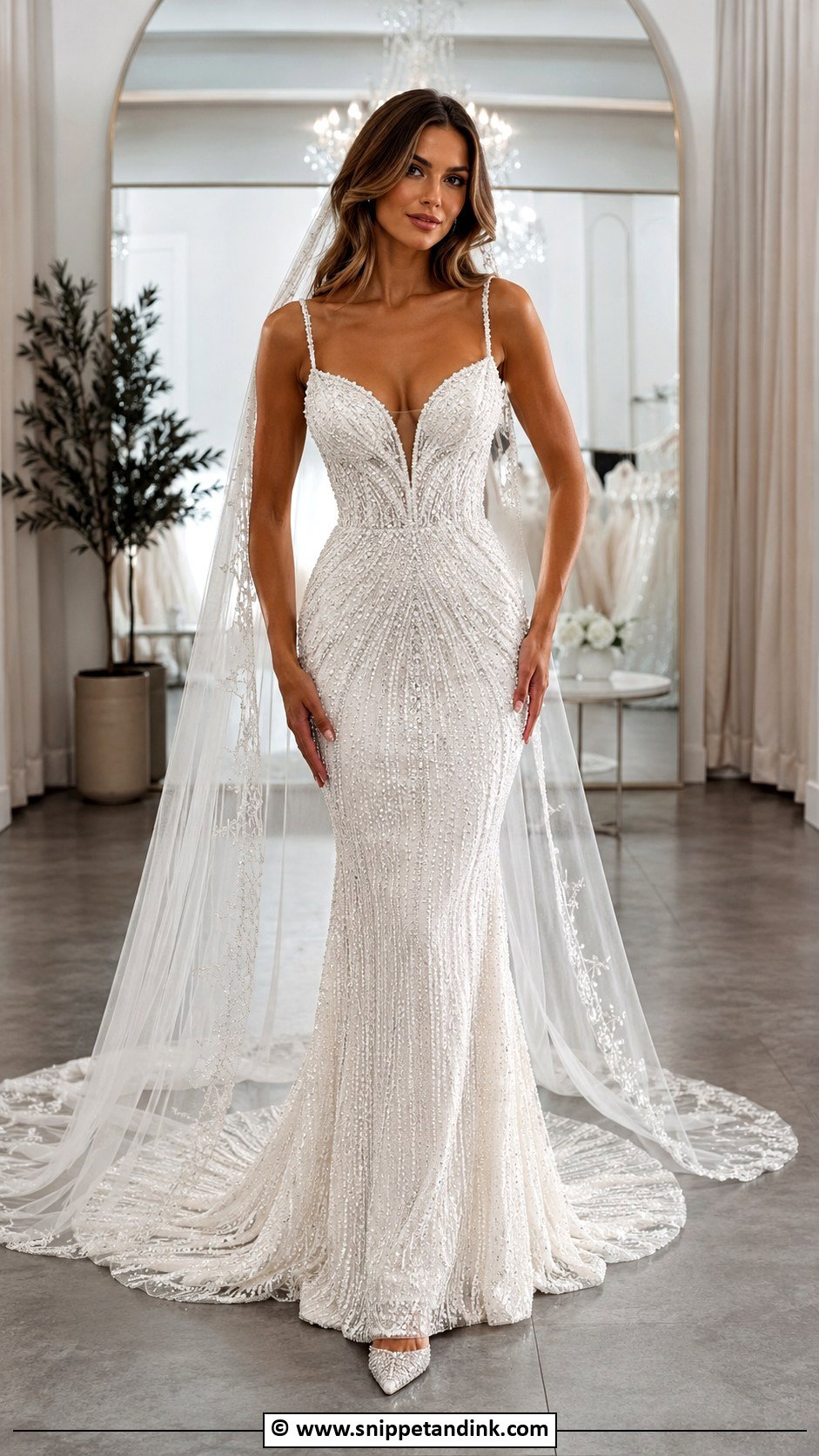
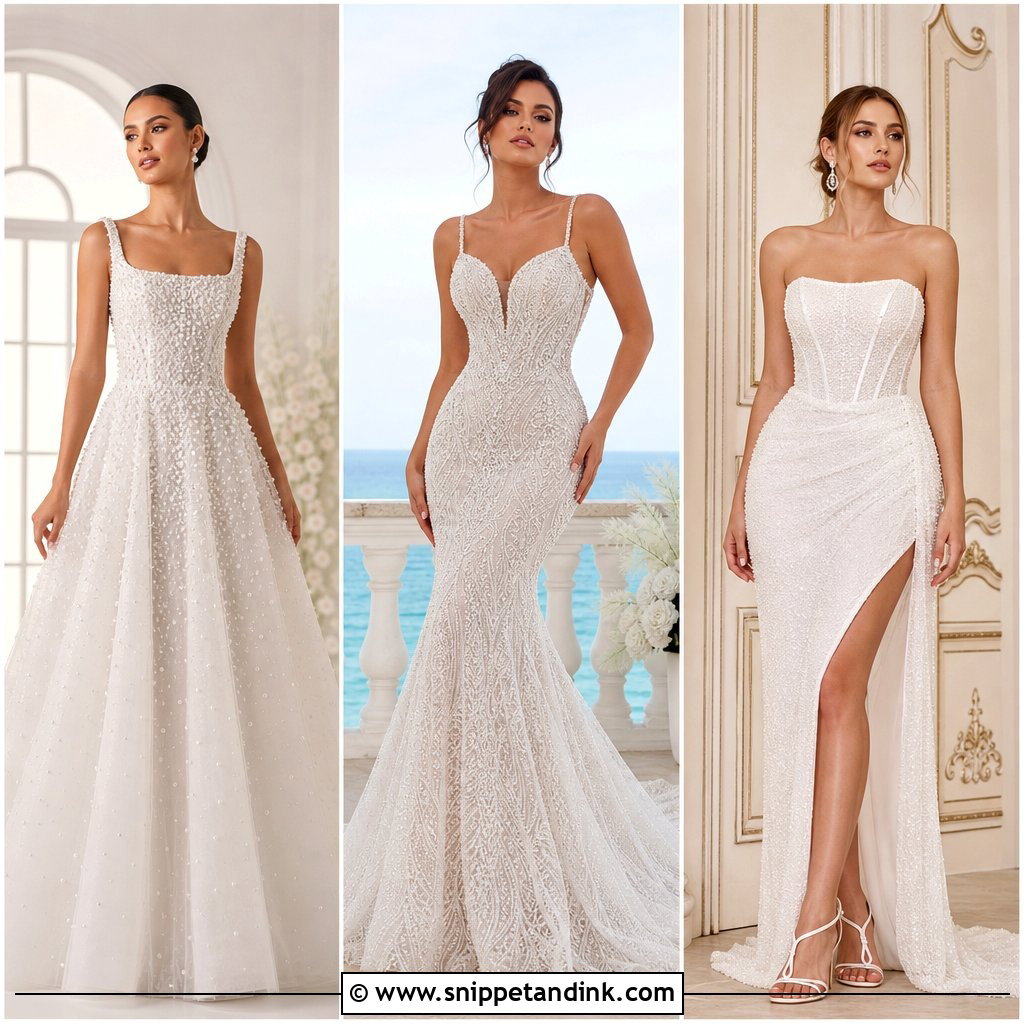
On a mermaid, beading that follows the curve of the waist and hip makes the shape look even more sculpted. The catch is that beadwork stiffens fabric, and a fitted skirt that’s stiff is hard to walk in. Before you commit, sit down in it and walk up a couple of steps. If it passes, sleek heels and a chapel veil keep it clean, and softer hair and makeup stop the look from becoming too much.
5. Beaded A Line Wedding Dress
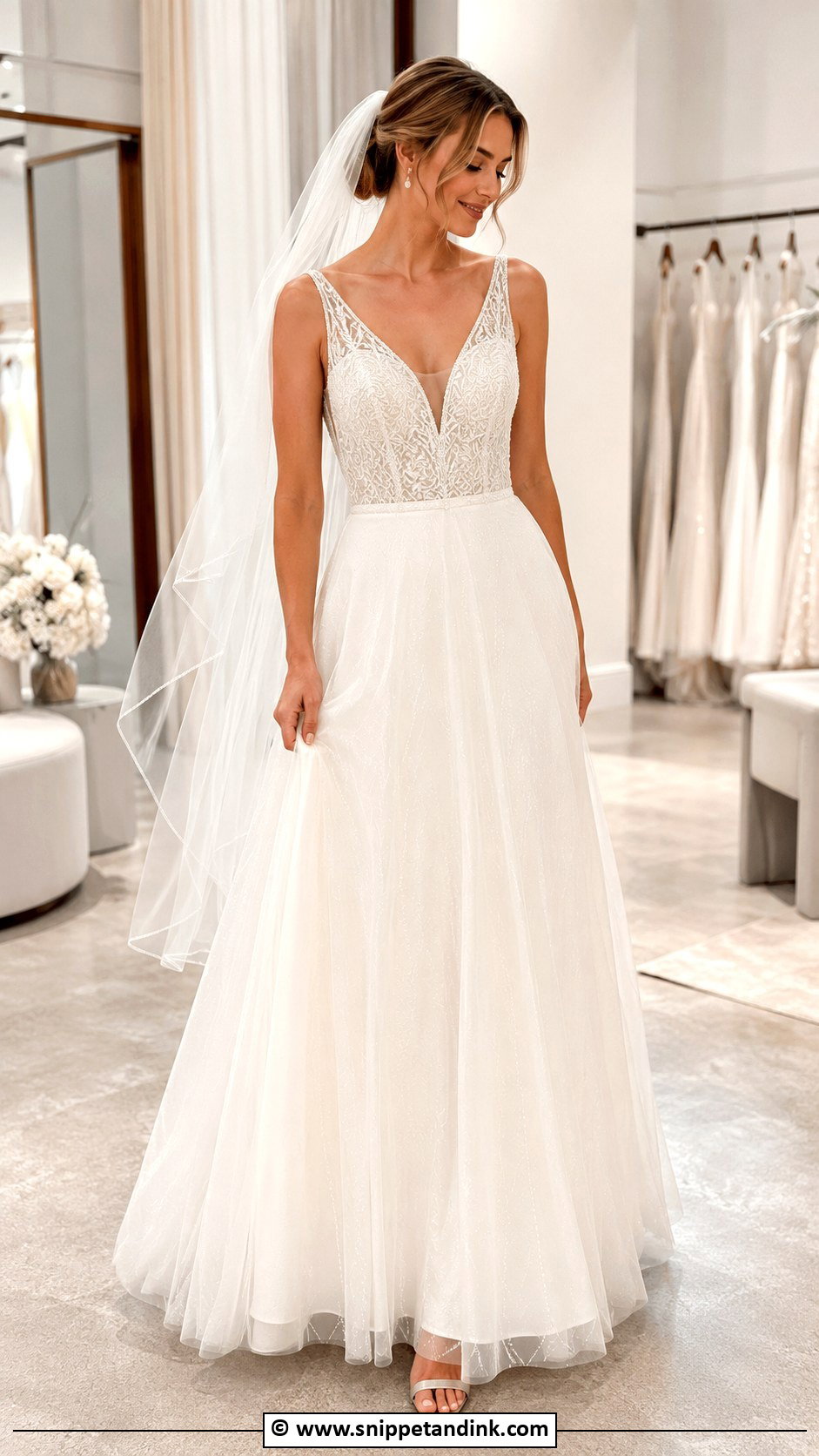
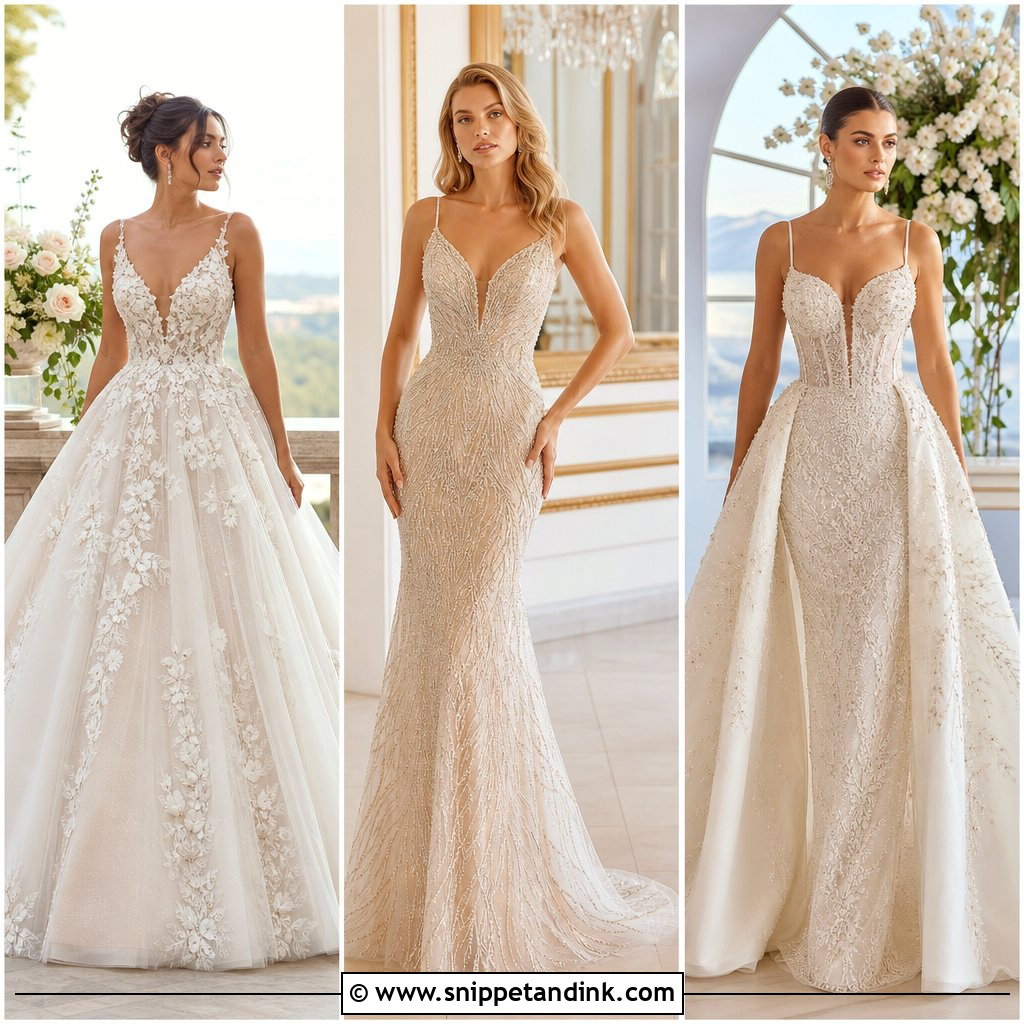
The A-line is the shape I suggest when a bride wants beading but also wants to move freely. Concentrating the beadwork on the bodice keeps the skirt light, so the whole gown doesn’t drag. It can lean romantic with lace, modern with clean tulle or classic with satin. Mid-height heels, a soft veil and small earrings finish it, and it flatters most body types.
6. Beaded Ball Gown Wedding Dress
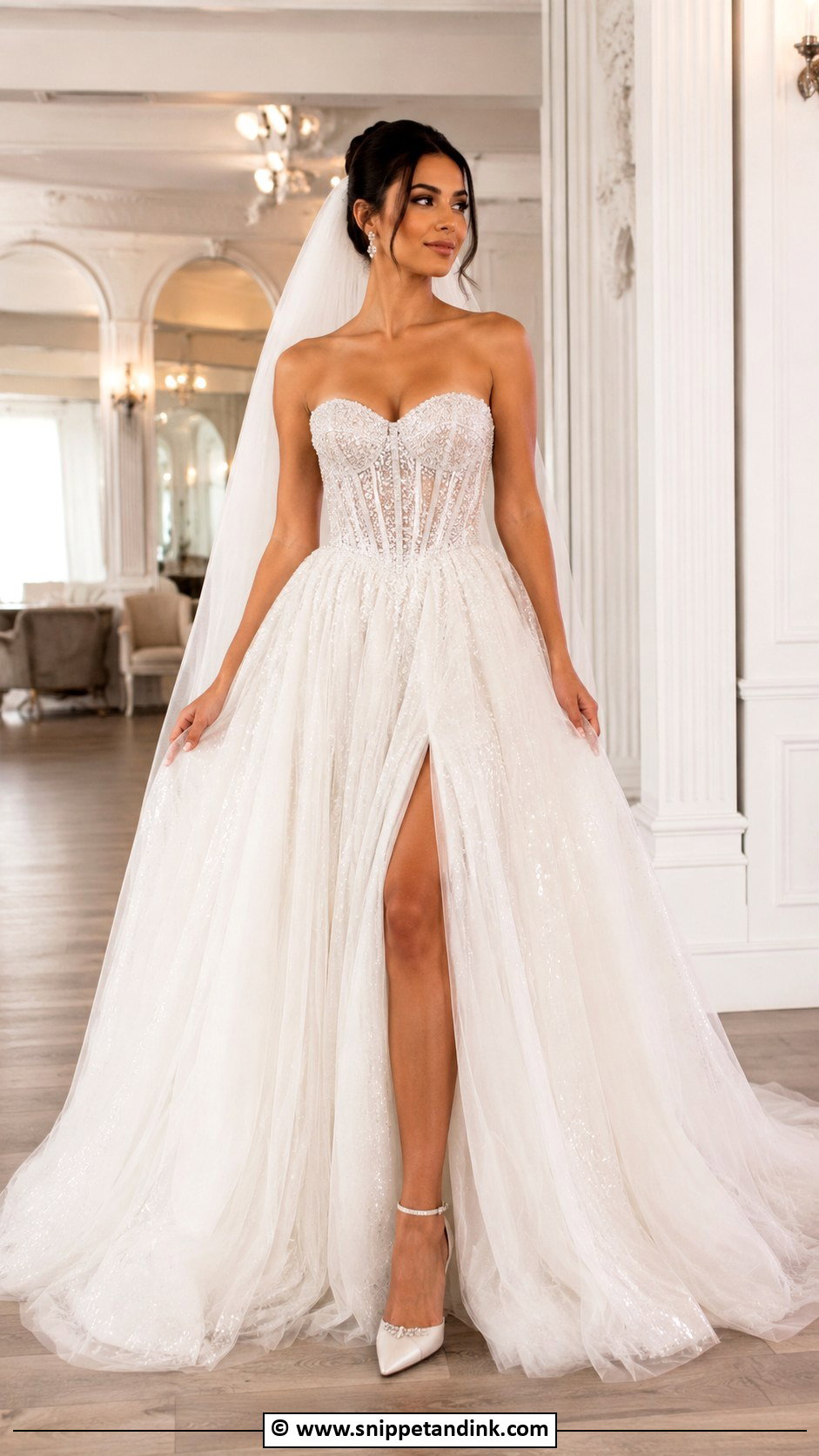
A full skirt plus a beaded bodice gives a grand, formal look from the very first fitting. Beading can sit on a corset bodice, at the waistline or scattered over tulle layers. A fitted top balances all that volume. If the neckline is already beaded, skip the necklace altogether. I’d warn brides that a big beaded ball gown is the heaviest option here, so plan for a bustle and comfortable shoes.
7. Beaded Corset Wedding Dress
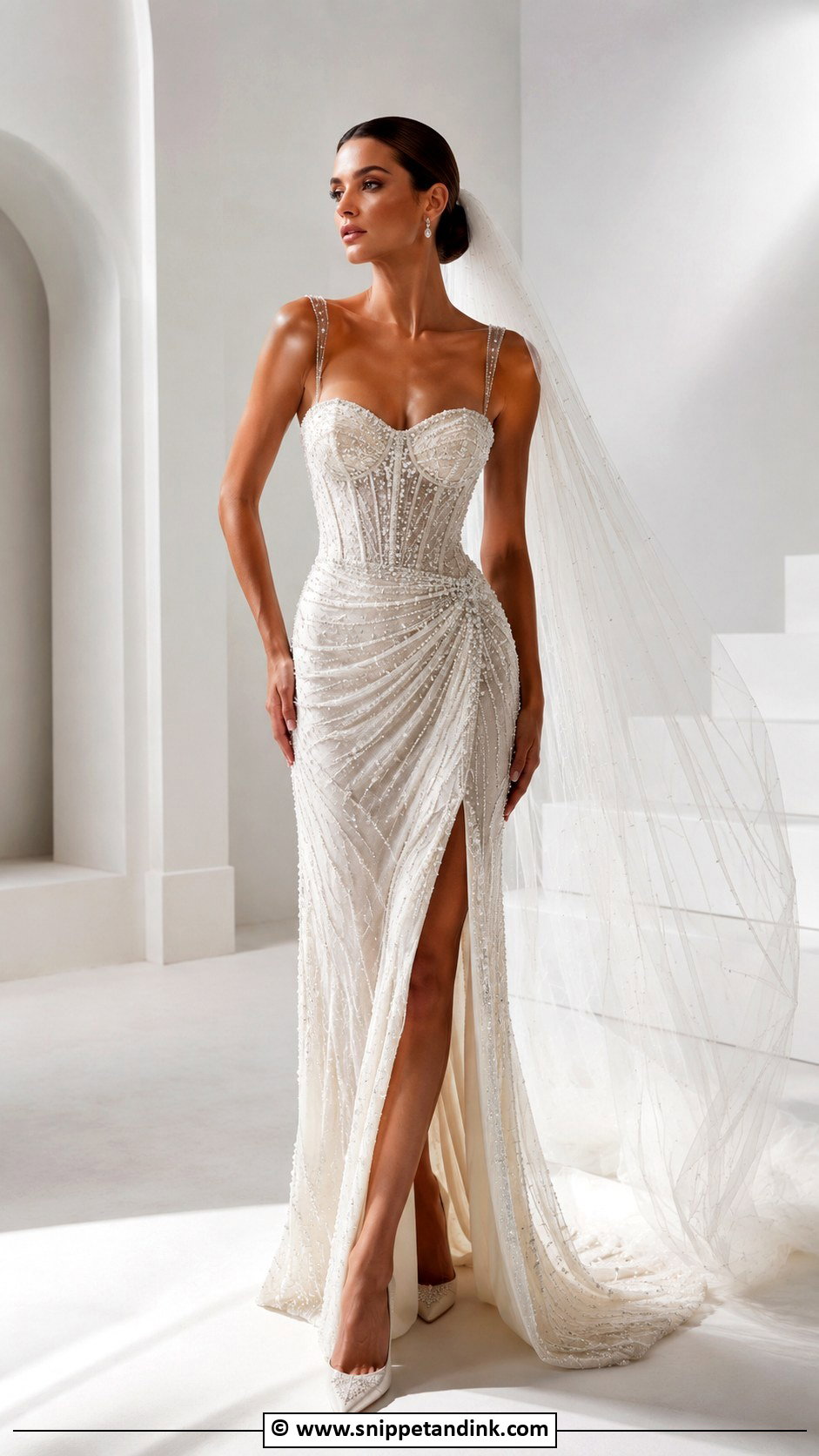
Corset bodices hold beadwork well because the boning keeps the fabric flat and taut, so the beads sit evenly. A beaded corset wedding dress can go with a full skirt, a fitted skirt or a sleek column. Exposed boning with delicate pearls or crystals is a popular detail. Do check that the boning channels aren’t sewn so tightly over beads that they press into your ribs when you sit. Sheer straps or detachable sleeves add coverage.
8. Beaded Long Sleeve Wedding Dress
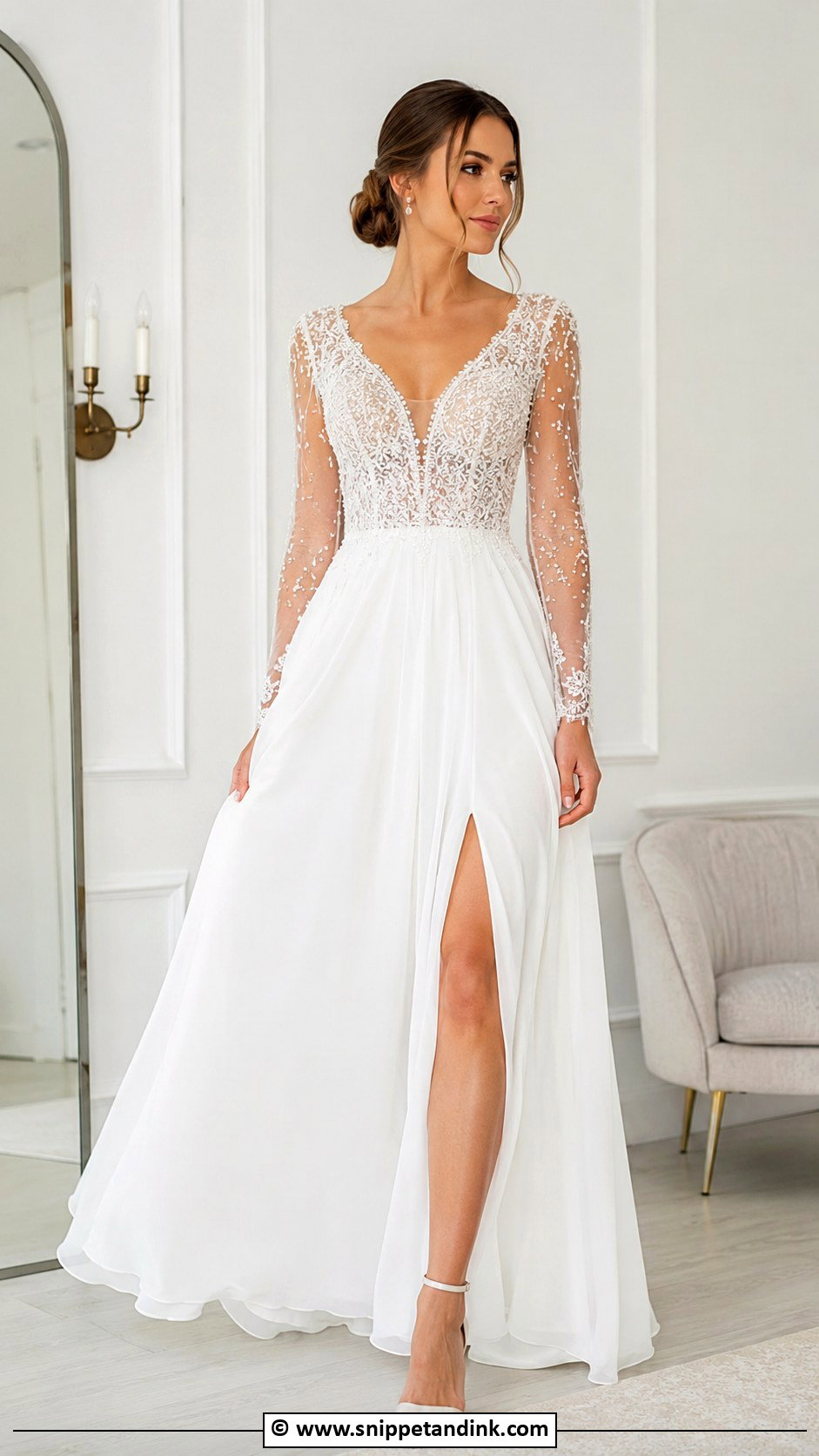
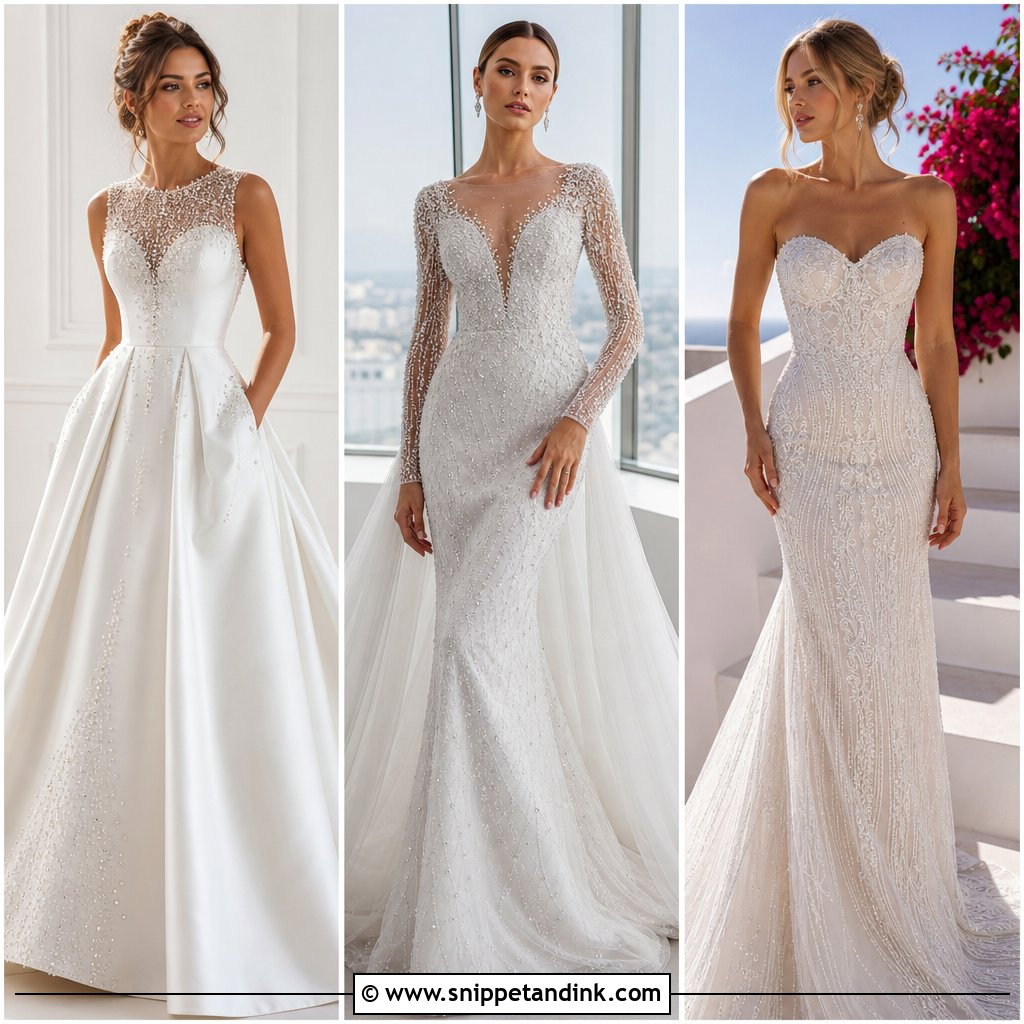
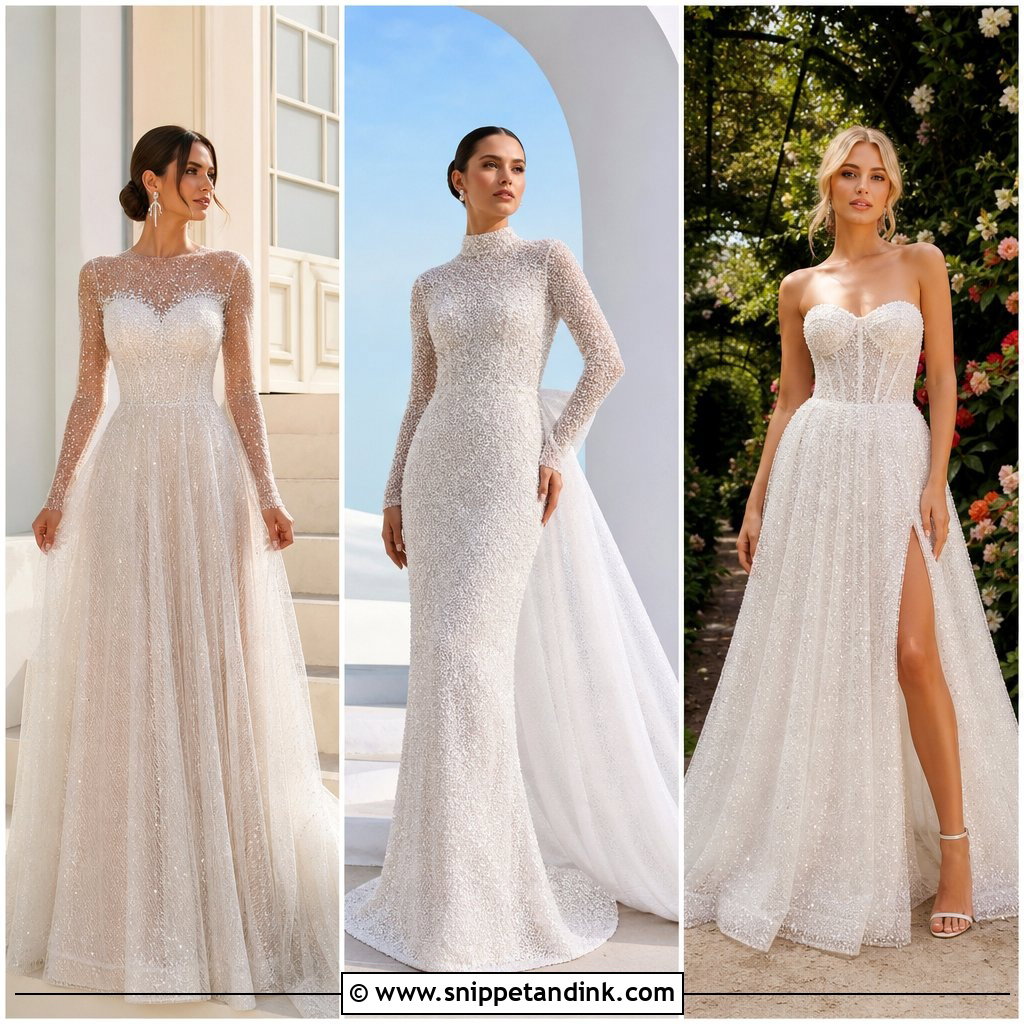
Beaded sleeves look delicate when the beads are tiny and scattered over sheer fabric, and much more glamorous when fully beaded. Comfort is the deciding factor. Beads at the inner elbow and under the arm rub with every movement, so I ask brides to bend their arms and hug someone at the fitting. Cooler weather and formal venues suit this style. A low bun, pearl studs and a light veil finish it.
9. Beaded Off Shoulder Wedding Dress
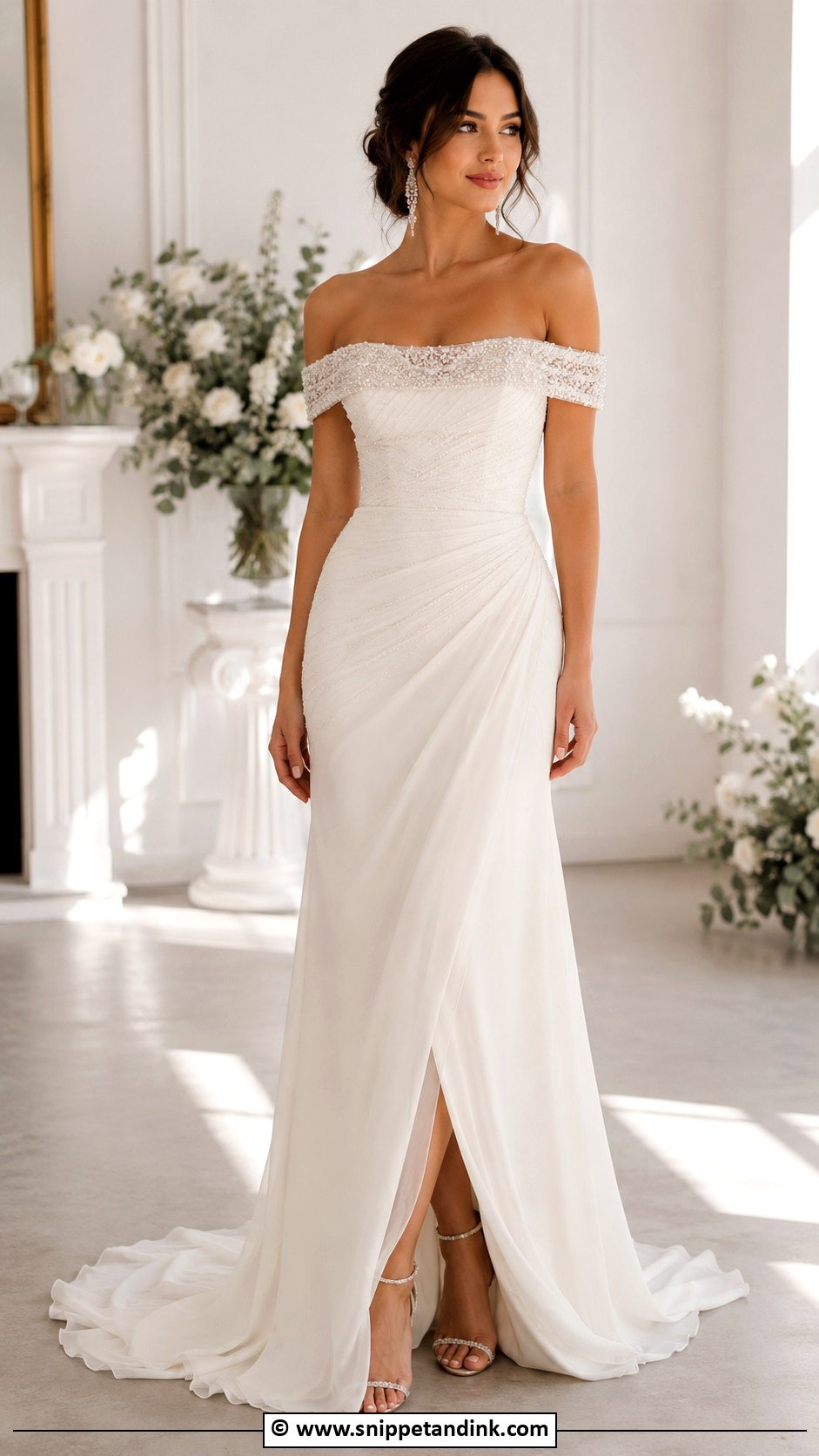
Off-shoulder necklines put the beading right at eye level, framing the collarbone. A structured bodice keeps the dress secure, which matters because beaded fabric is heavier and wants to slide down. Drop earrings work better than a necklace with this shape. Soft waves or a low updo both suit it, and the shoe height depends on the gown’s length.
10. Beaded Strapless Wedding Dress
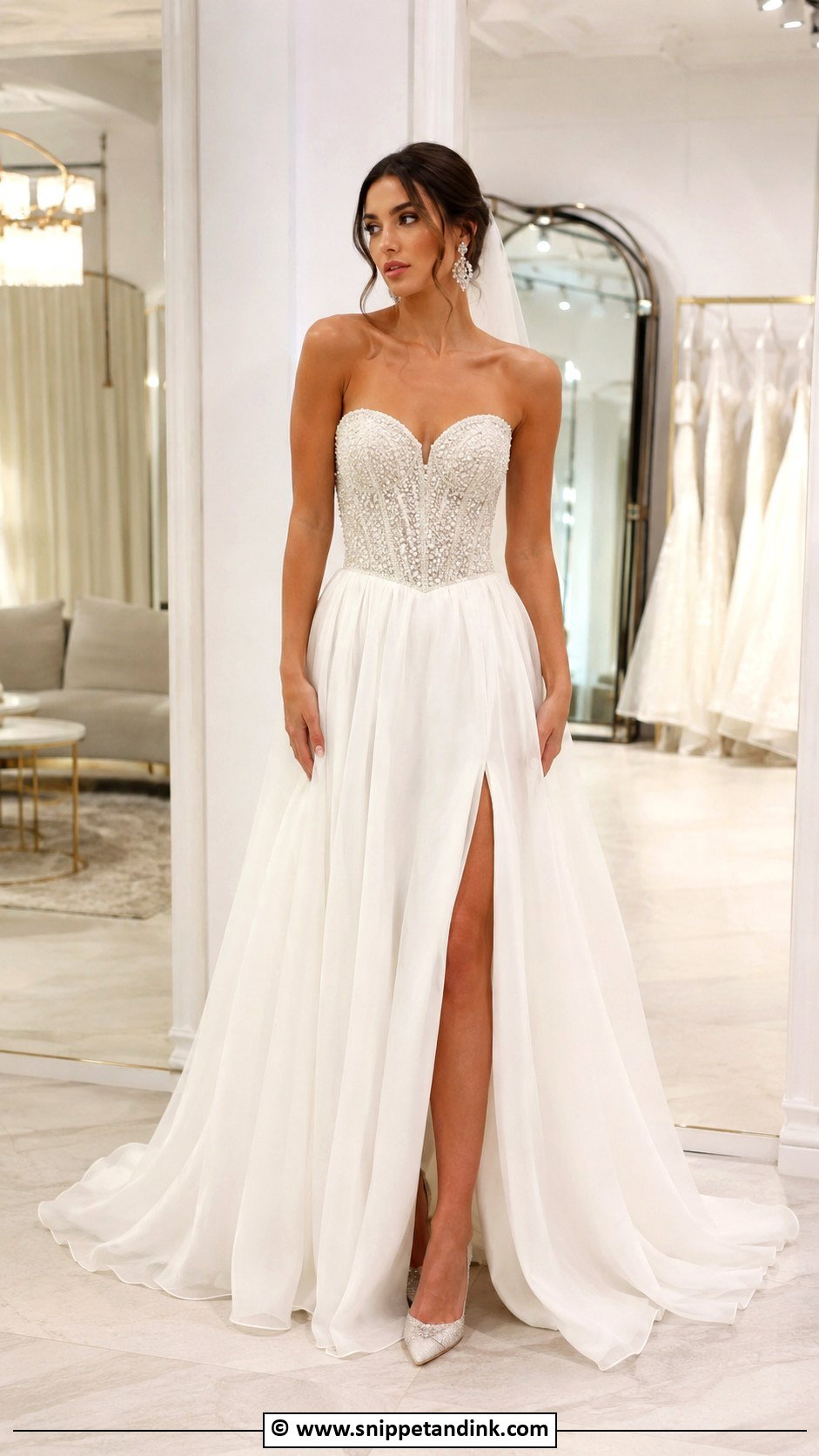
A strapless neckline lets the beadwork across the bodice and waist take centre stage. Simple bead patterns on smooth fabric look modern; allover crystals, pearls or floral beading add drama. You can pair it with a statement veil, gloves or bold earrings, but I’d choose just one. Let the dress carry the rest.
11. Beaded V Neck Wedding Dress
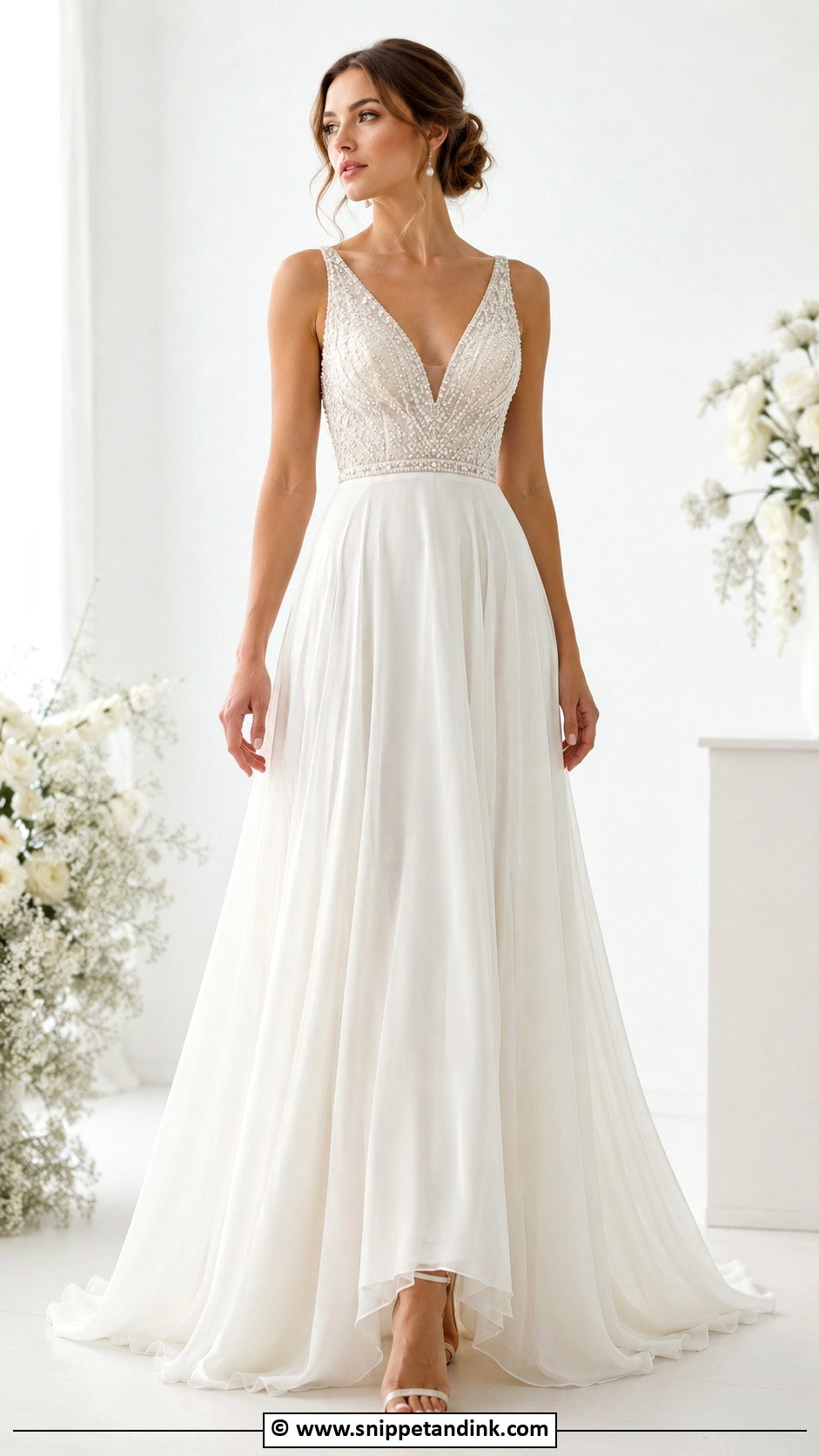
A V neckline draws the eye down and makes the neck look longer, and beading along its edge strengthens that line. The V can be modest or deep, depending on your comfort. Ask about a hidden mesh panel if you want a deeper V without worrying about it shifting. Beading at the waist defines the figure, and with a detailed neckline, earrings are better than a necklace. A fingertip veil and clean heels keep it fresh.
12. Beaded High Neck Wedding Dress
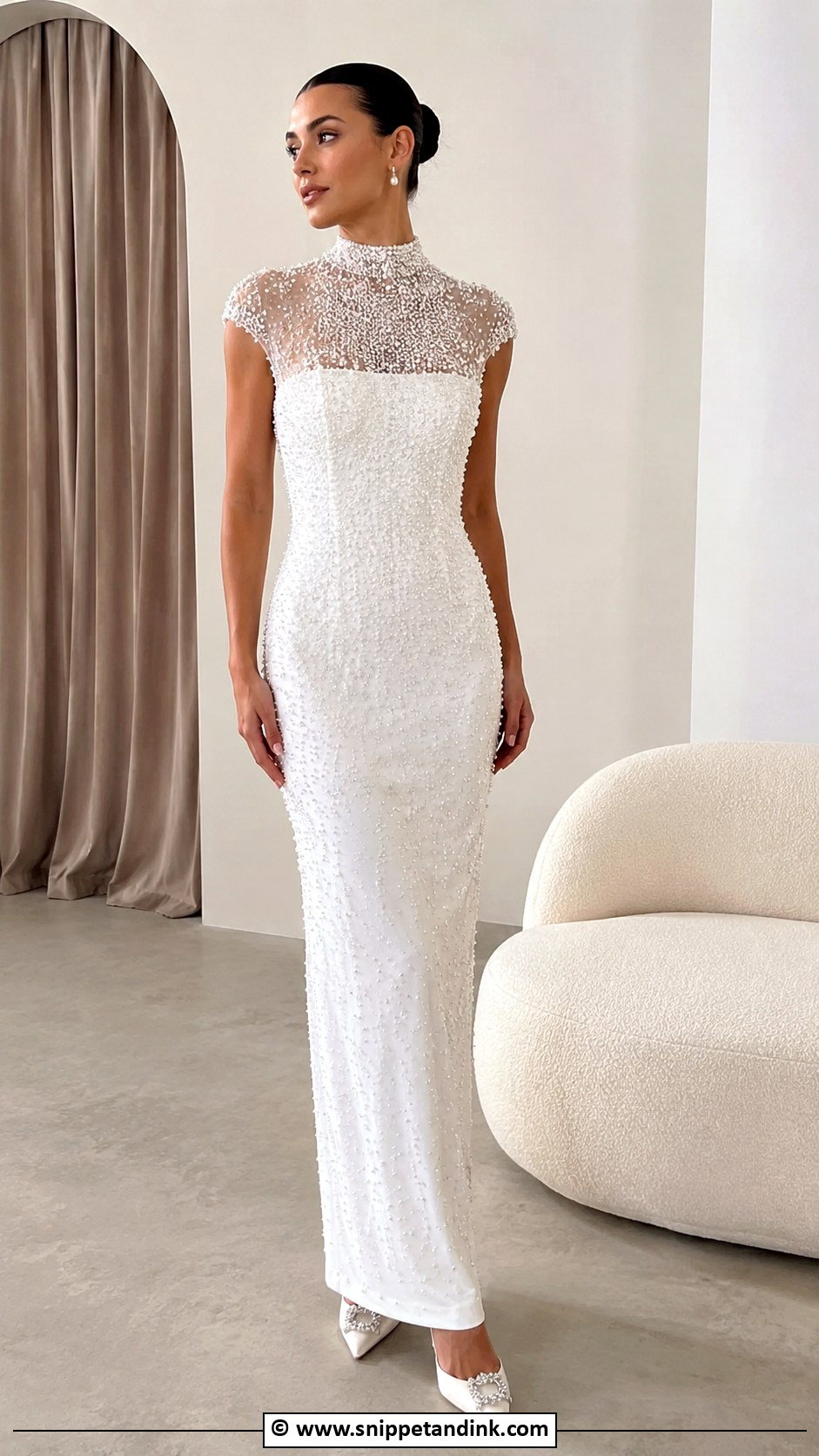
High necklines give coverage and leave a whole collar and shoulder area for beadwork. They look refined with sheer fabric, lace or a sleek column skirt. Because the neckline is so strong, I almost always put the hair up so the beading isn’t hidden. Pearl studs and simple heels are enough; a heavy necklace would just fight the design.
13. Beaded Sheath Wedding Dress
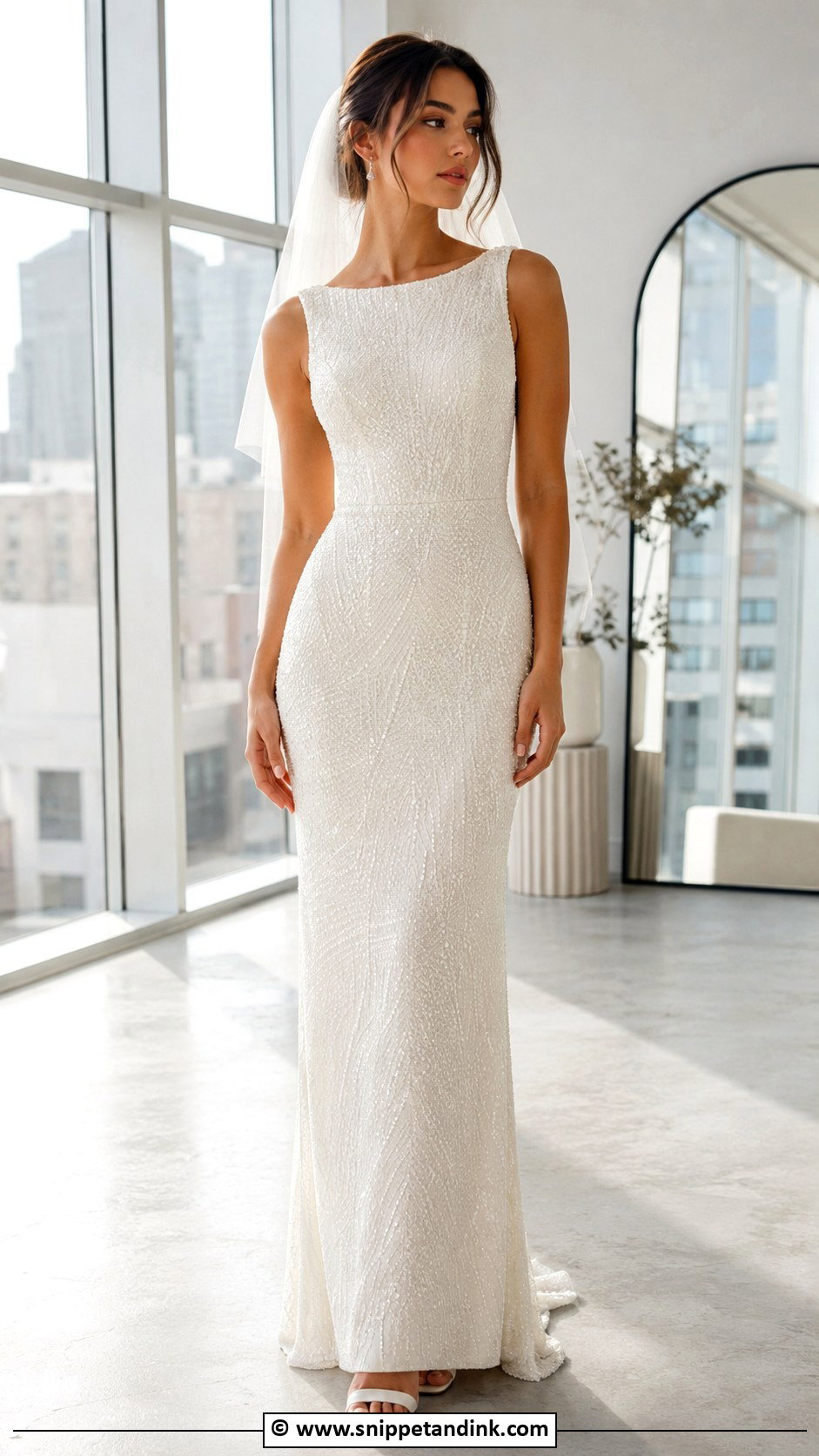
A sheath sits close to the body, so beadwork across it moves with you and catches light as you walk. It suits city weddings, smaller celebrations and receptions, and it’s much lighter than a ball gown. Because the hem falls close to the legs, check your stride and choose comfortable heels. A short veil and delicate earrings polish it, and it doubles as a dancing dress.
14. Beaded Column Wedding Dress
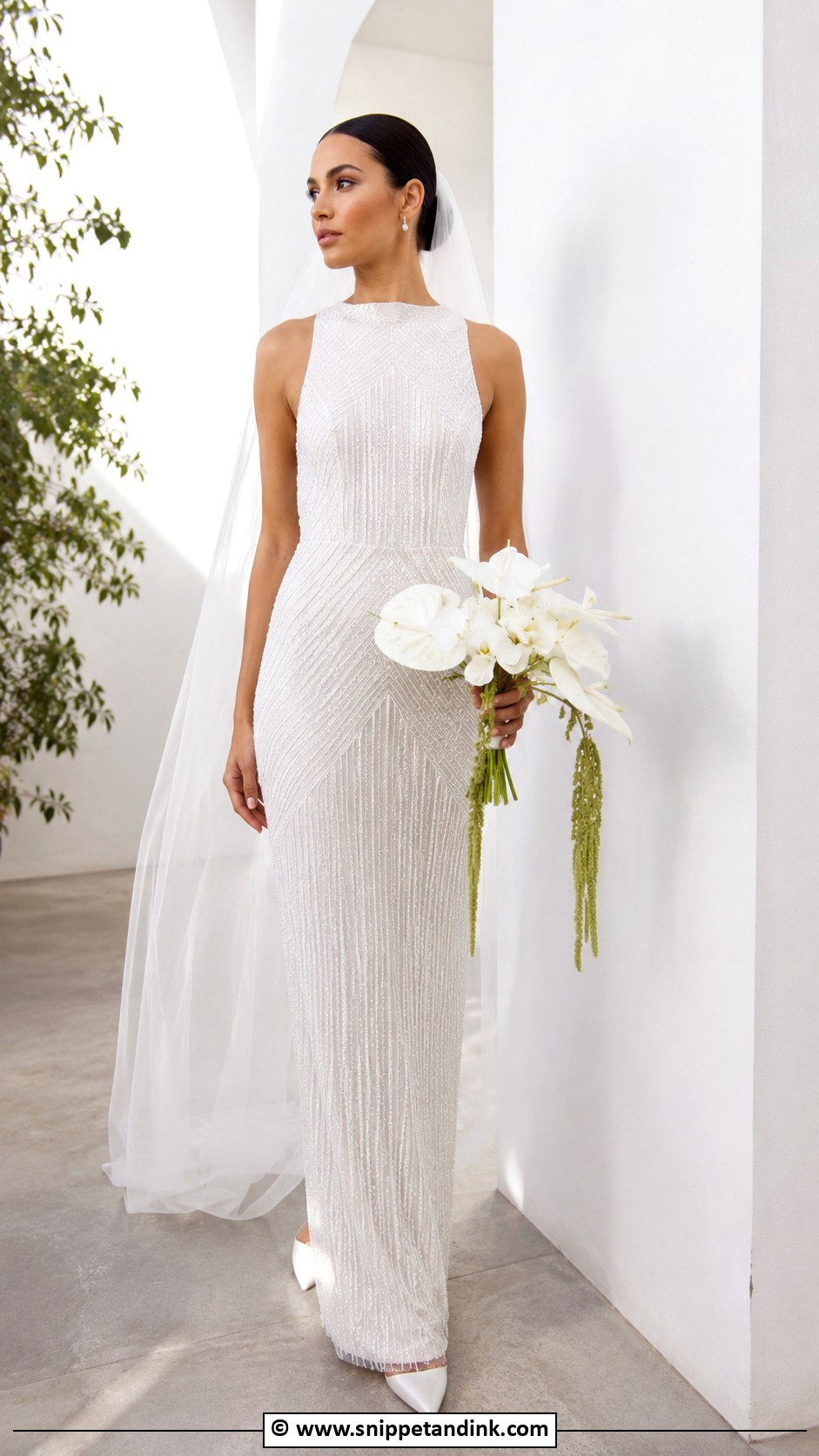
A column is simple in shape, which means the beading does all the talking. Allover tiny beads look elegant, while geometric patterns feel modern. Tailoring is critical: a column that’s even slightly loose loses its line, and beaded fabric is harder to alter, so leave time. Pointed heels, a sleek veil and a structured bouquet suit it, and a slit or open back calls for calm styling elsewhere.
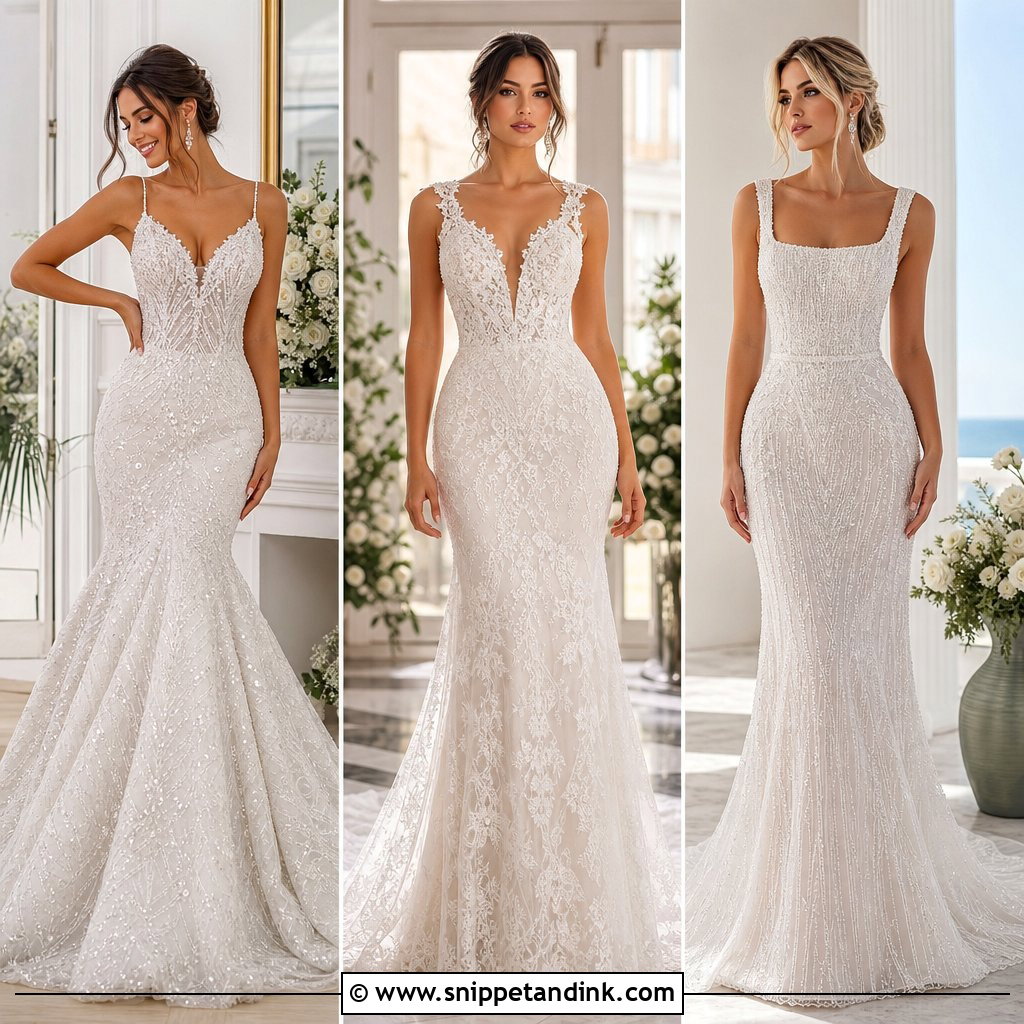


15. Beaded Boho Wedding Dress
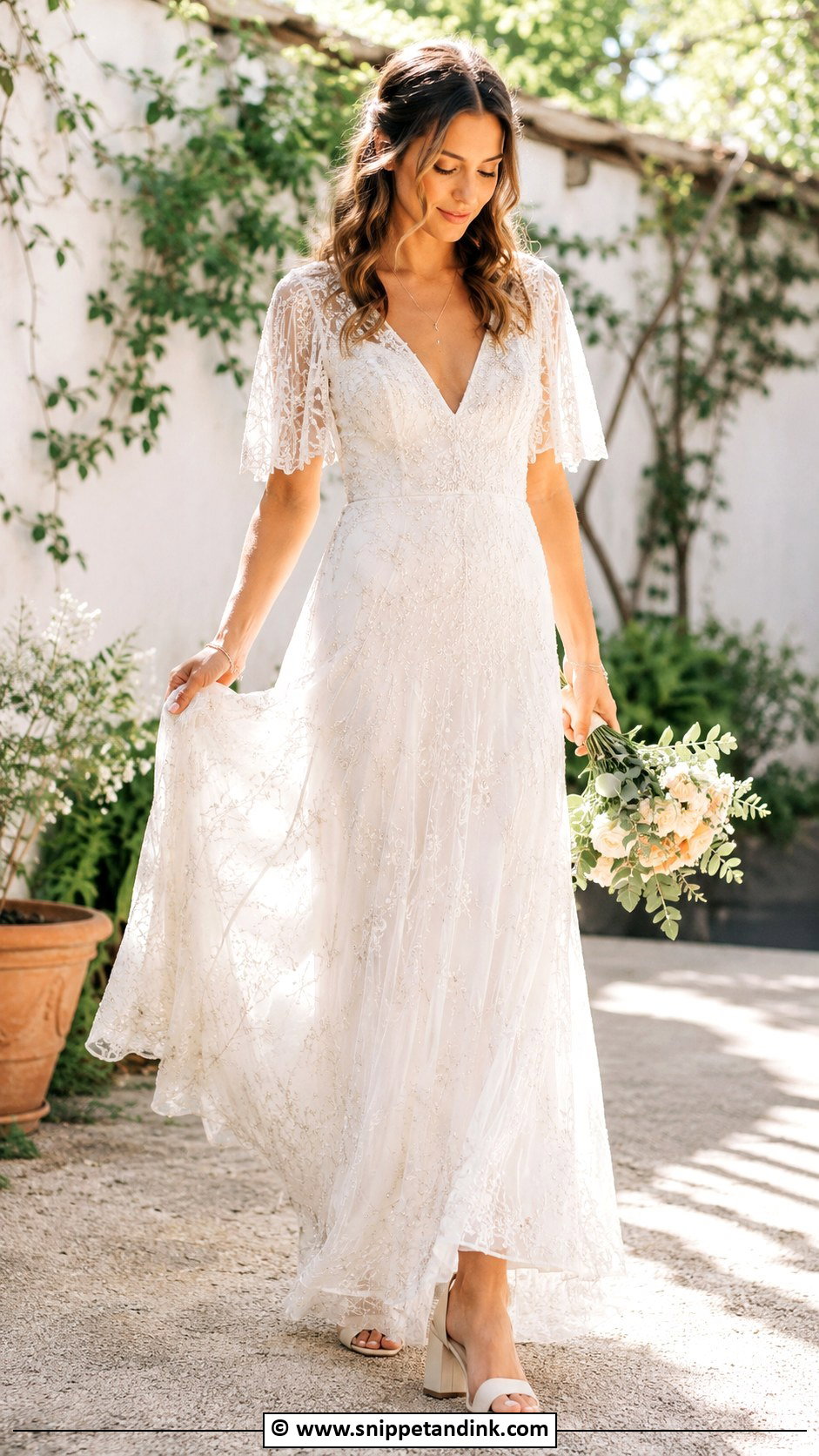
Boho beadwork should look handmade and organic, never formal. A beaded boho wedding dress might use soft tulle, crochet-inspired lace, fringe-like beading, flutter sleeves or botanical embroidery. It belongs outdoors, in gardens and relaxed settings. Loose waves, soft makeup, block heels and a lightly textured veil or comb suit it. Fringe beading swings and tangles, so keep jewelry minimal.
16. Beaded Vintage Wedding Dress
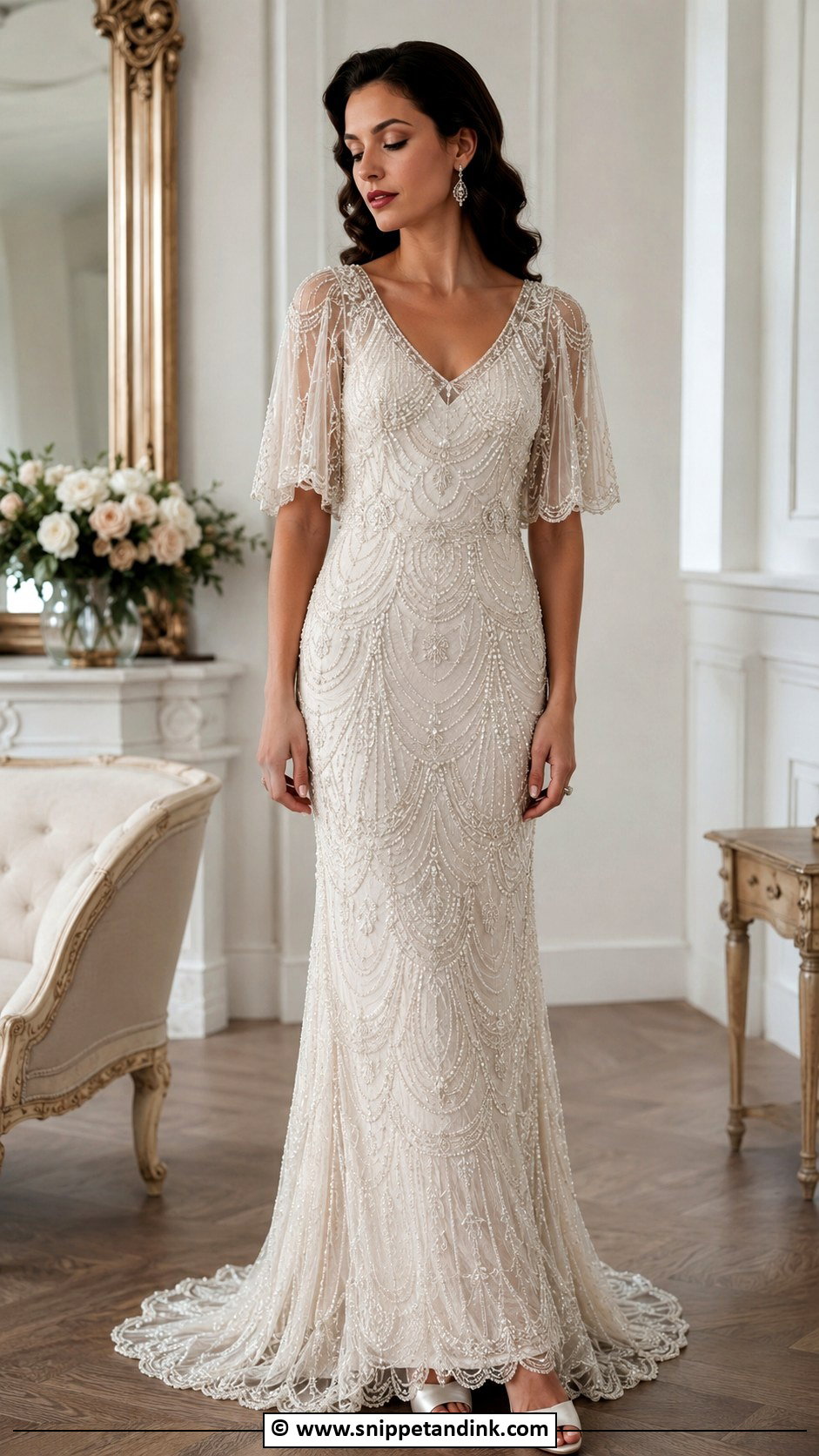
Vintage beading has a softer, warmer feel: ivory tones, scalloped edges, Art Deco lines or antique-inspired pearlwork. If you’re wearing a genuine older gown, have the beadwork checked before any alteration, since old threads can be brittle and a whole row can unravel. Satin heels, a small beaded clutch, soft waves and vintage-style earrings suit it. A fresh fit keeps it from looking dated.
17. Beaded Art Deco Wedding Dress
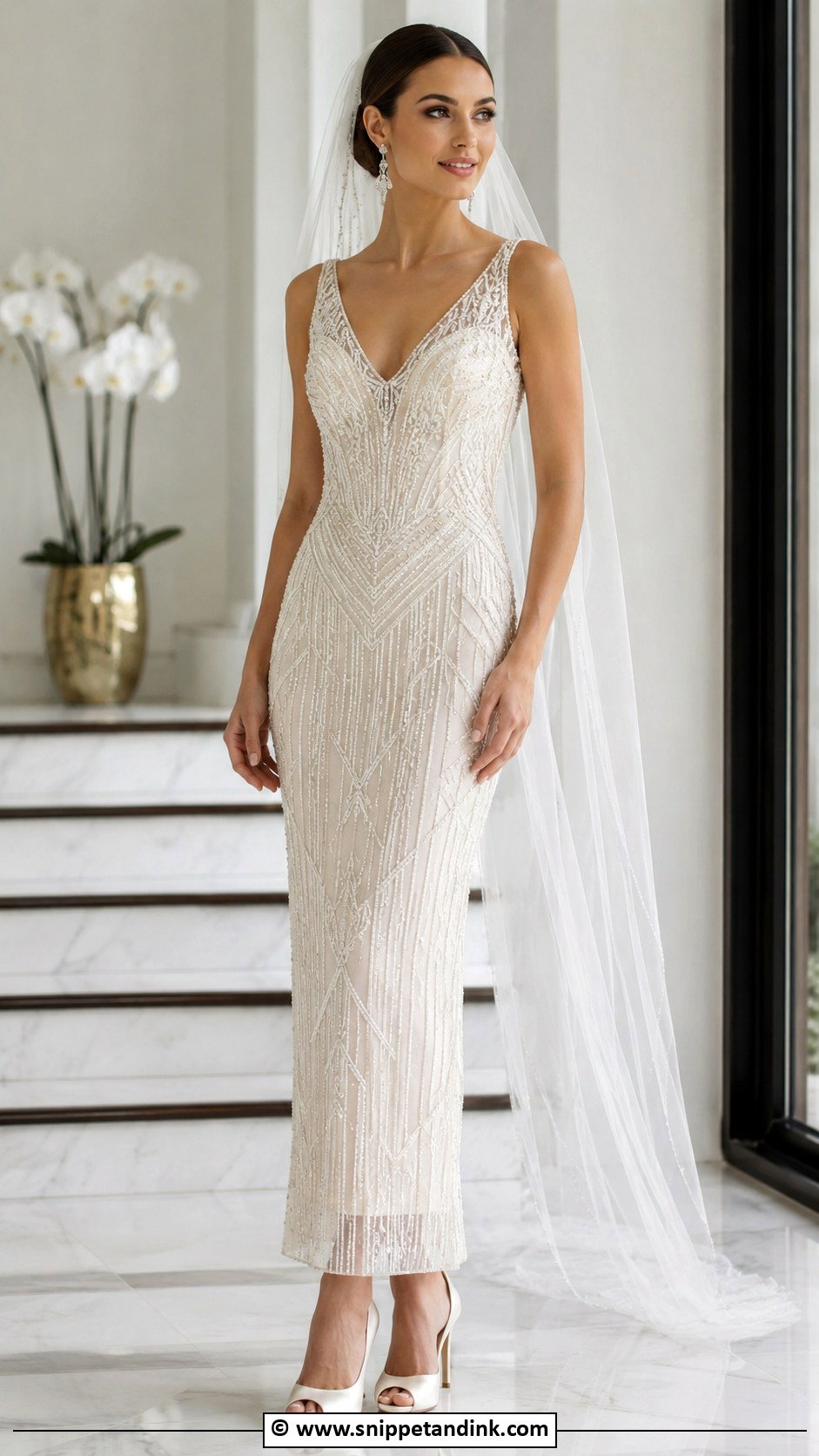
Art Deco beadwork relies on geometry: vertical lines, fans, chevrons and symmetry. On a sheath or column, those vertical lines add length. Bugle beads and sequins laid in patterns are heavy, so expect the dress to weigh more than it looks. Metallic or ivory heels, drop earrings and a sleek hairstyle suit it. Avoid a lace veil if the pattern is already bold.
18. Beaded Floral Wedding Dress
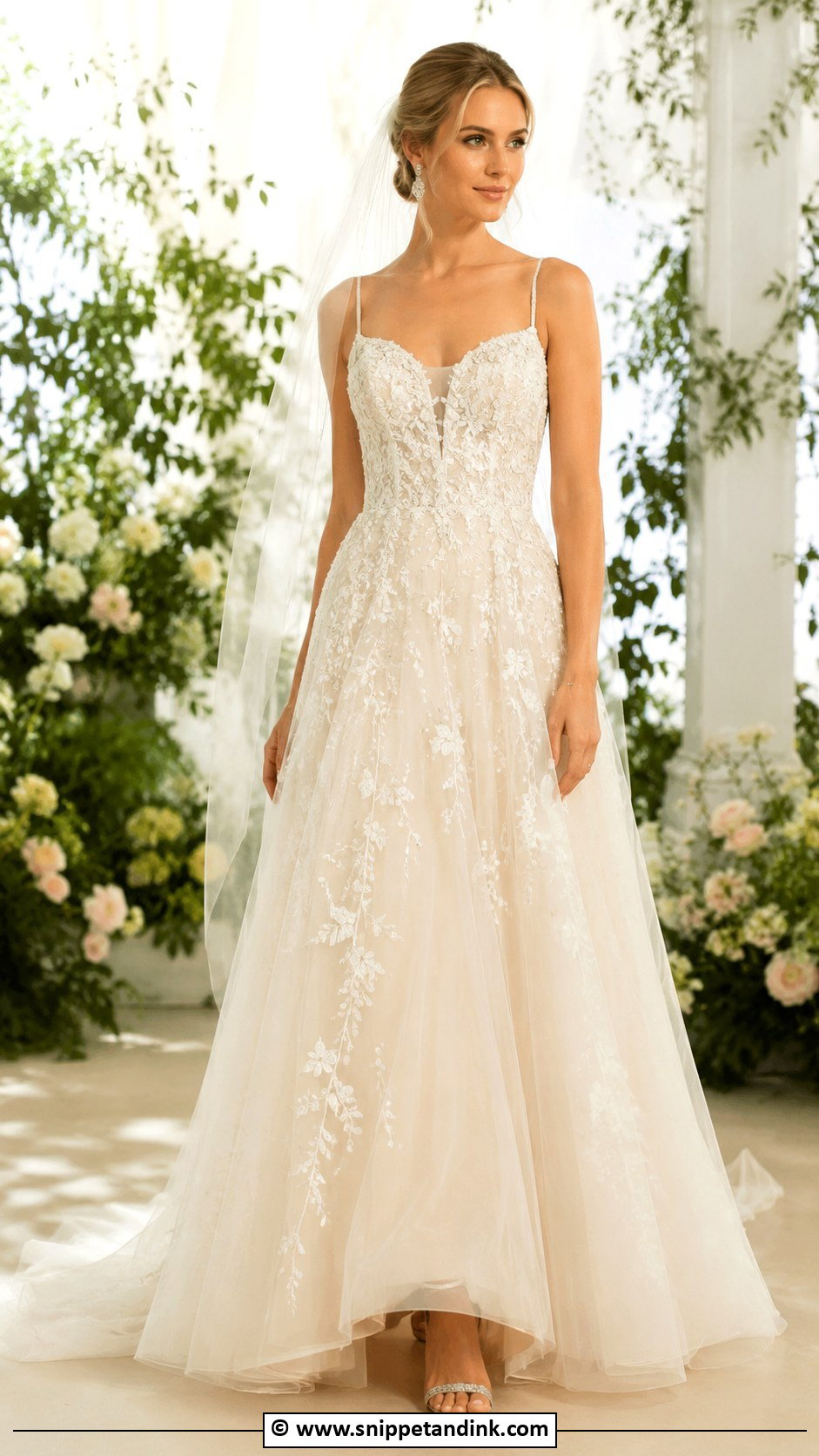
Floral beading can be subtle, with tiny pearl petals, or bold, with crystal vines across the bodice and skirt. I suggest it when plain lace feels too flat and you want romance with more texture. It works on fitted mermaids as well as flowing A-lines. When the floral pattern is large, a smaller bouquet stops the whole look from getting busy.
19. Beaded Tulle Wedding Dress
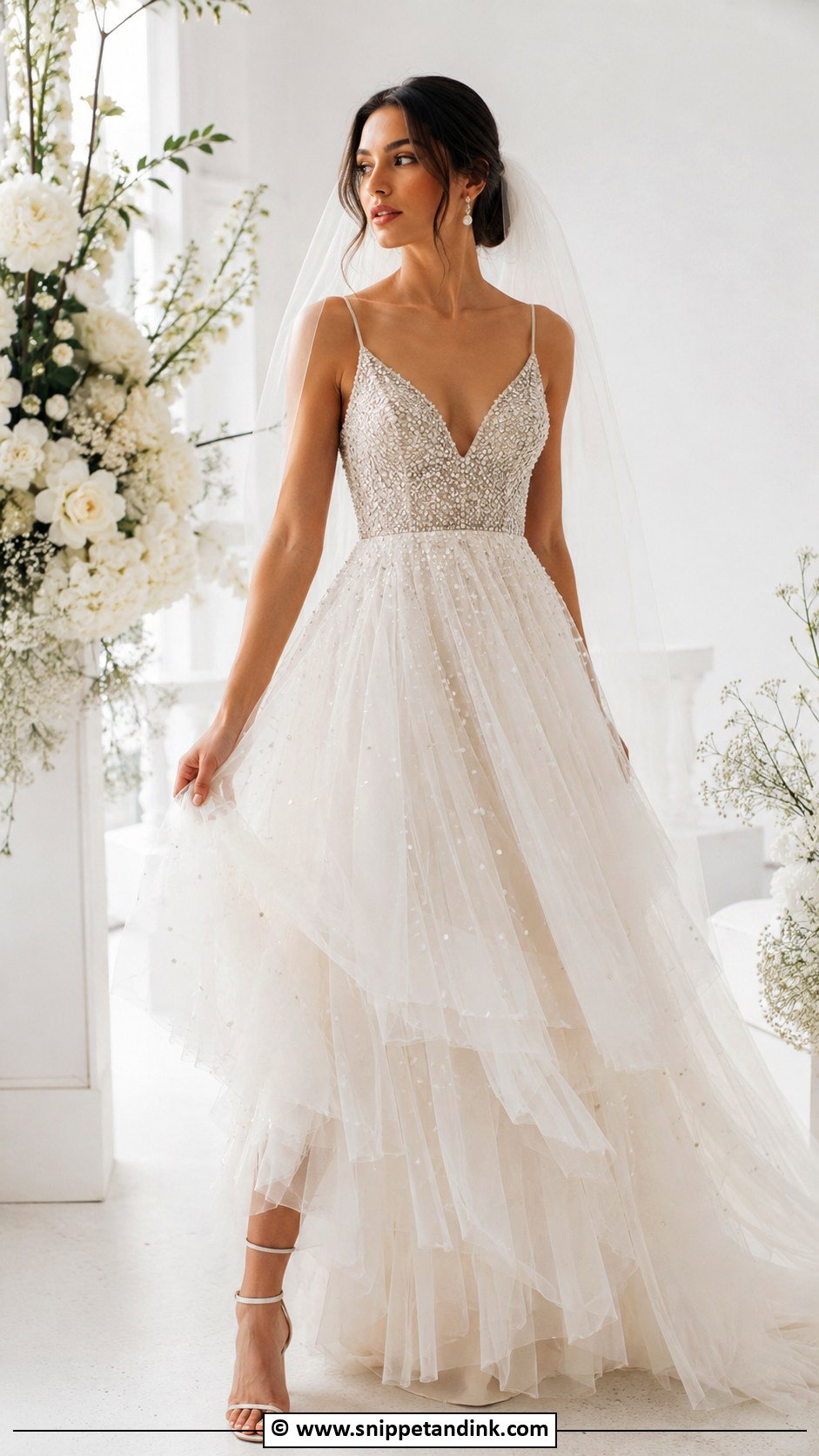
Tulle softens sparkle, so beads on tulle look airy rather than heavy. Beads can be scattered across the skirt, gathered on the bodice or placed along the hem. Be aware that tulle snags easily on beading from a bracelet or a partner’s cufflinks. Lightweight shoes and delicate jewelry suit it, and a soft veil blends with the skirt.
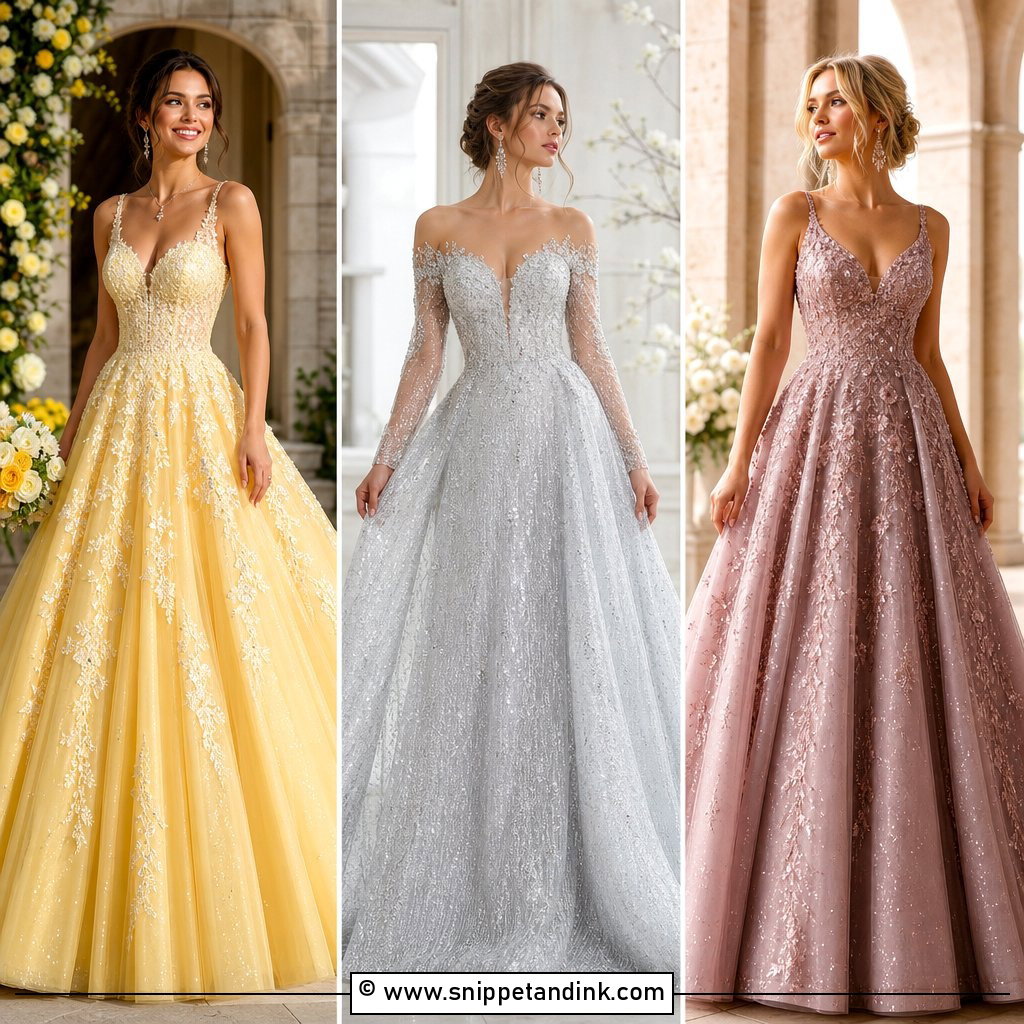

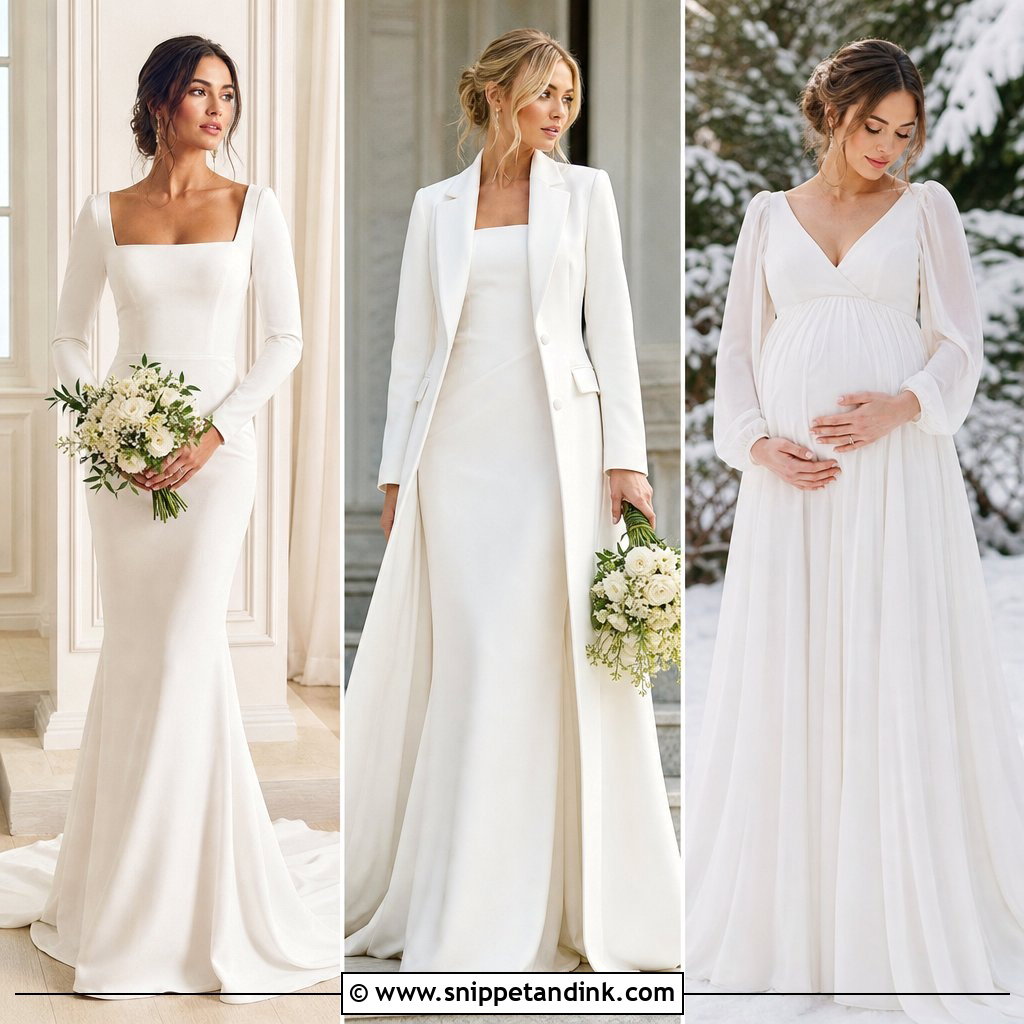

20. Beaded Satin Wedding Dress
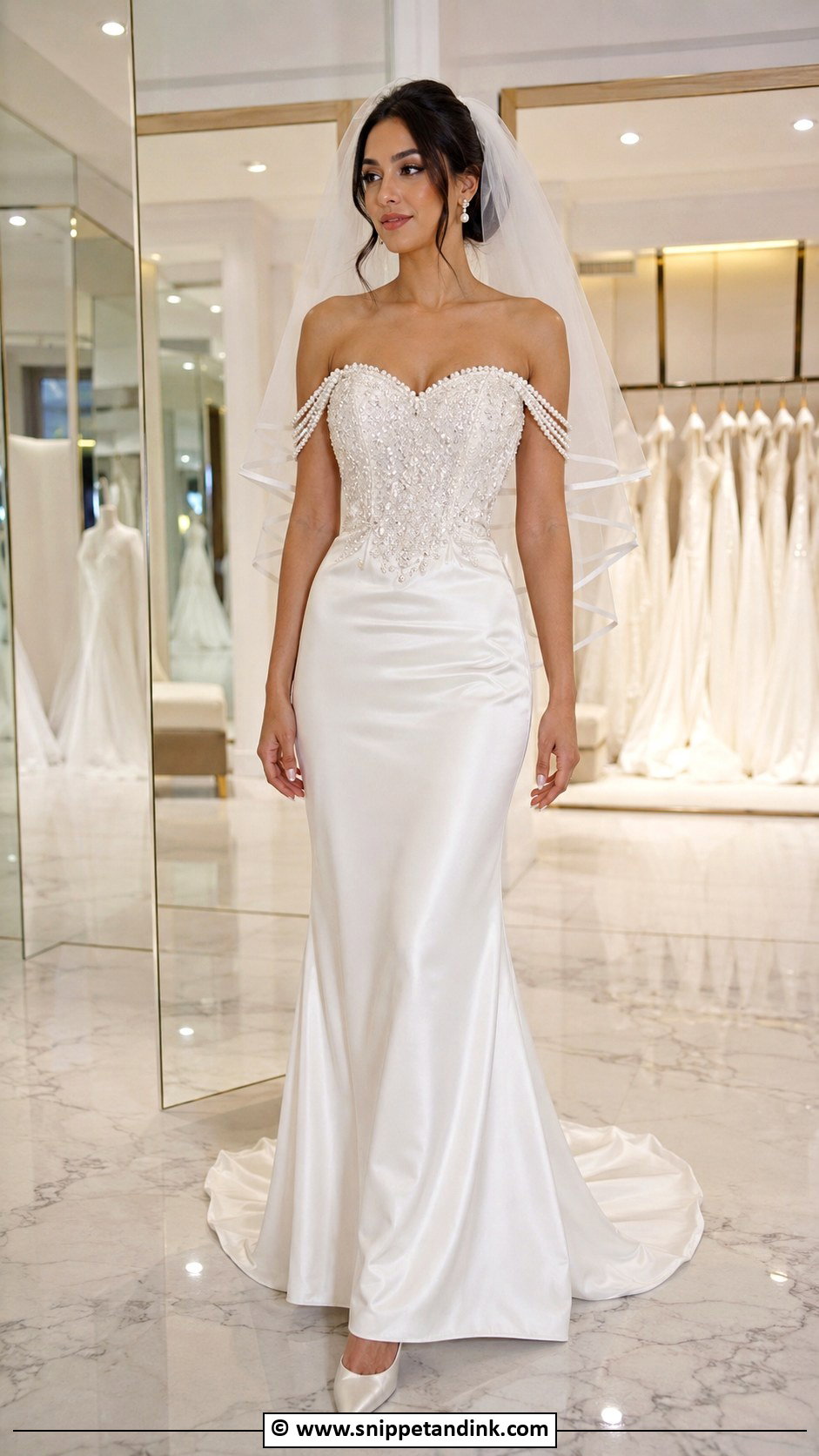
Satin has its own sheen, so the beading on it needs to be intentional: a beaded bodice, jeweled straps or a pearl-trimmed neckline rather than allover sparkle. Satin shows fit clearly, and any pulling around a beaded seam is obvious, so tailoring matters. Satin heels, pearl earrings and a structured veil suit it, and it looks clean and classic in photos.
21. Beaded Crepe Wedding Dress
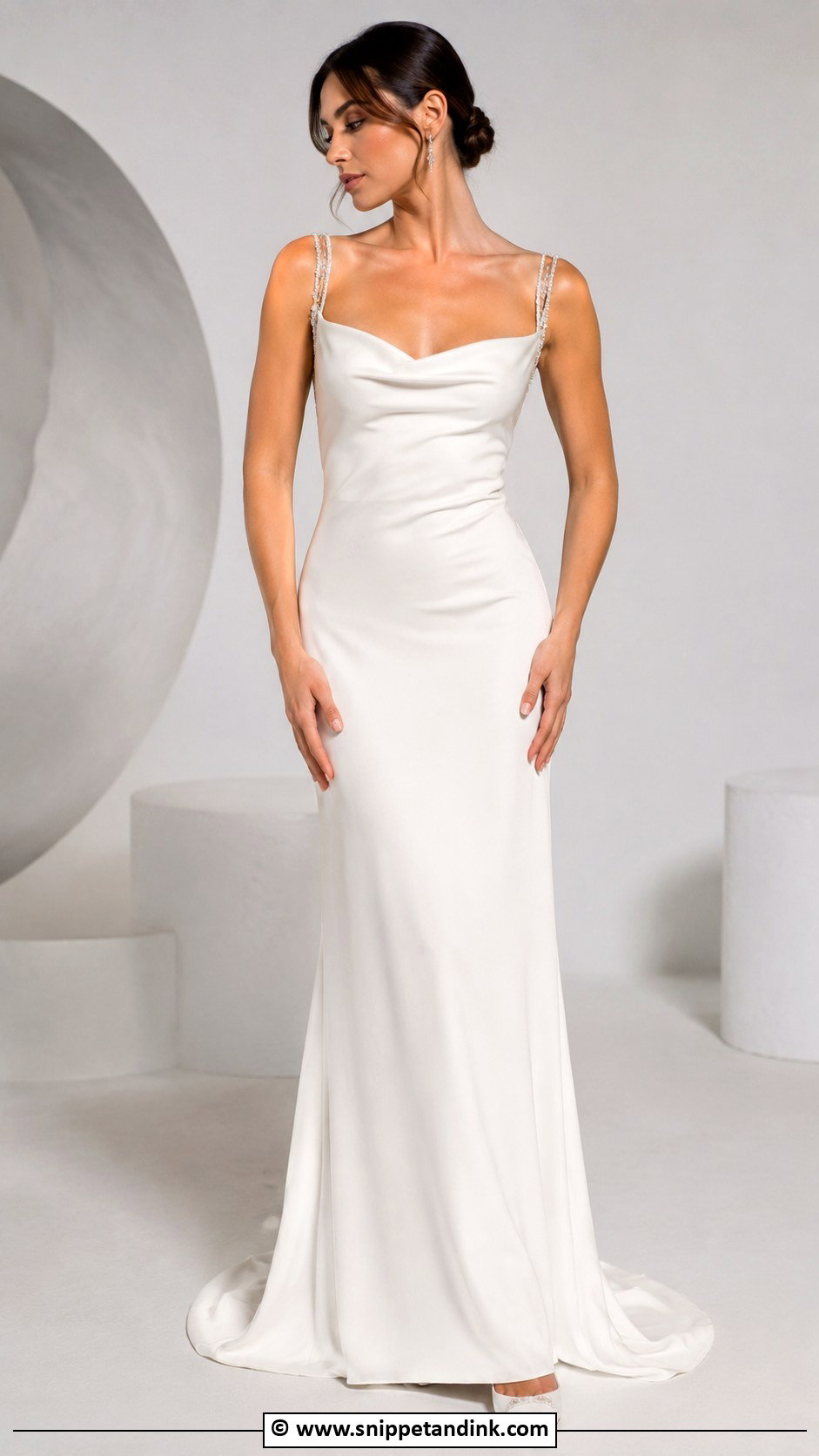
Matte crepe makes beading stand out more than shiny fabric does, because there’s no competing sheen. It works on fitted gowns, columns and long-sleeve shapes. Beaded straps, waist details or back embellishment add interest without crowding the line. Pair it with a smooth bun, delicate earrings and pointed heels, and choose a removable veil if the back is the feature.
22. Beaded Illusion Wedding Dress
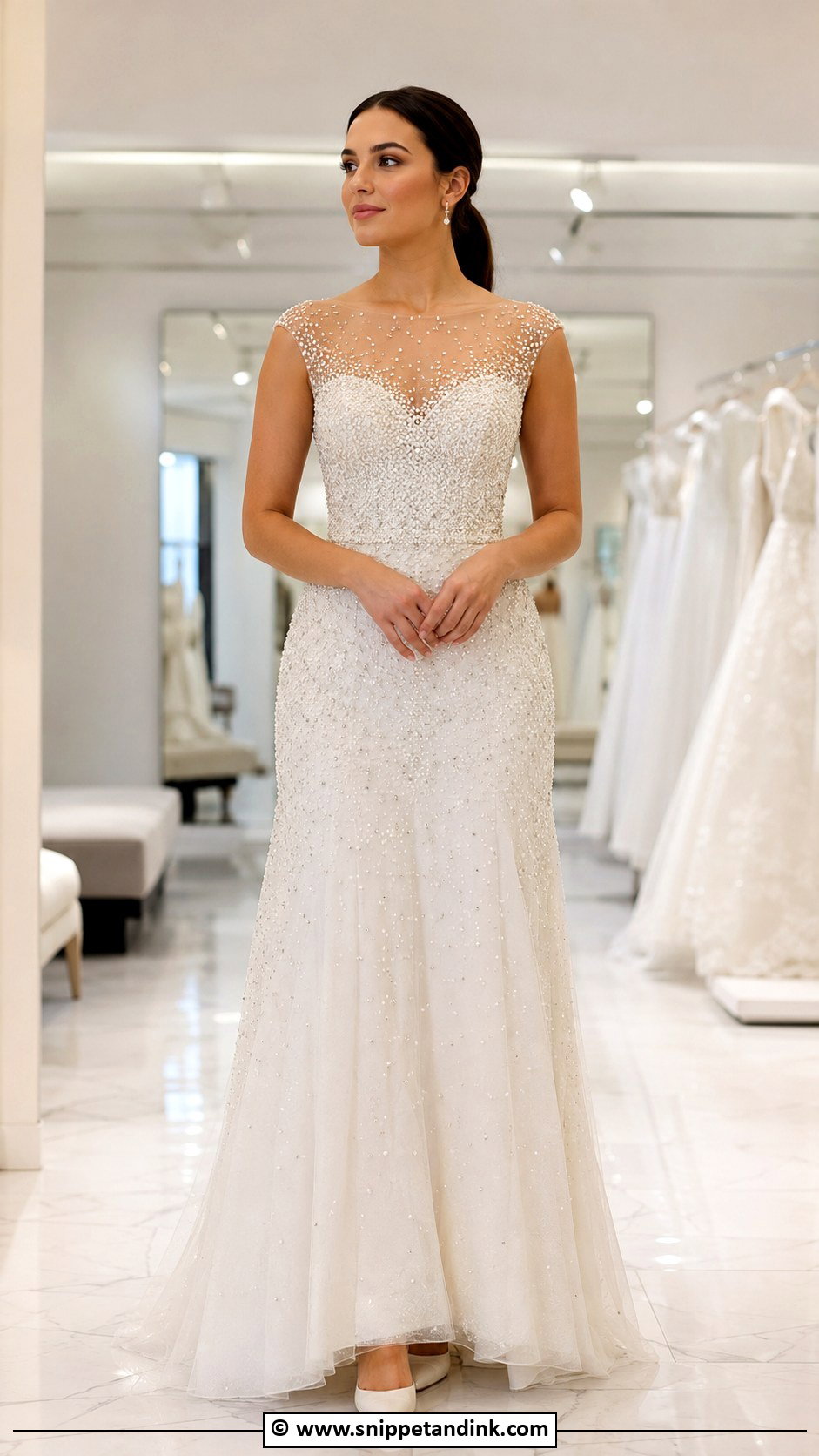
Illusion fabric lets beadwork appear to float on the skin, on sleeves, necklines, backs, sides or bodices. It only works when the mesh matches your skin tone and the fit is precise. I always check the bead weight on an illusion panel, because heavy beads on sheer mesh can make it sag. Pearls, tiny crystals and lace appliques suit it best. Simple jewelry and soft heels keep the focus on the detail.
23. Beaded Back Wedding Dress
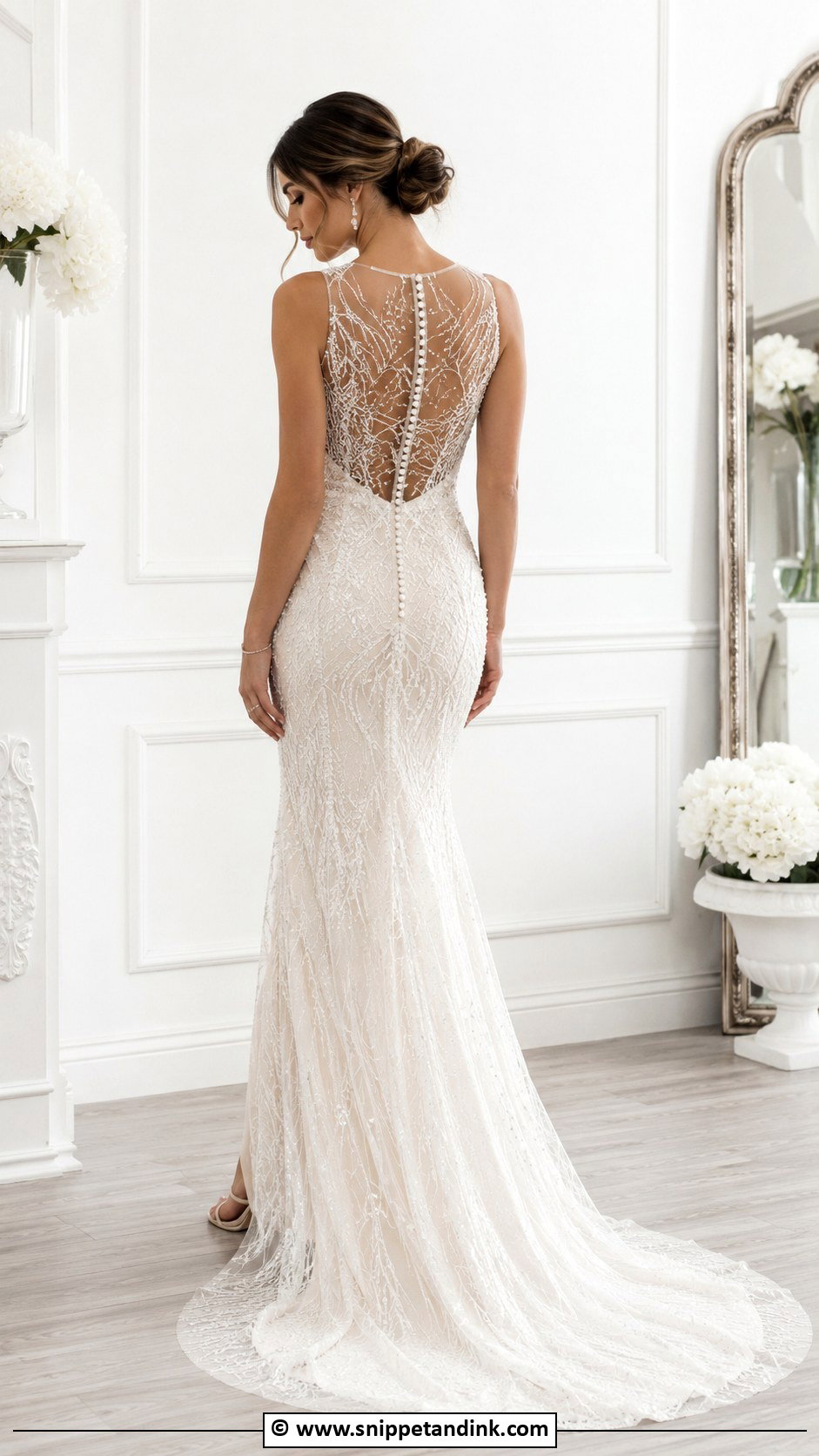
Guests see the back of the dress for most of the ceremony, so beading there makes sense. It can frame an open back, cover illusion fabric or trail down the buttons. Keep the front simpler, wear your hair up or to one side, and choose a veil that won’t hide the design for too long. Earrings are better than a necklace here.
24. Beaded Open Back Wedding Dress
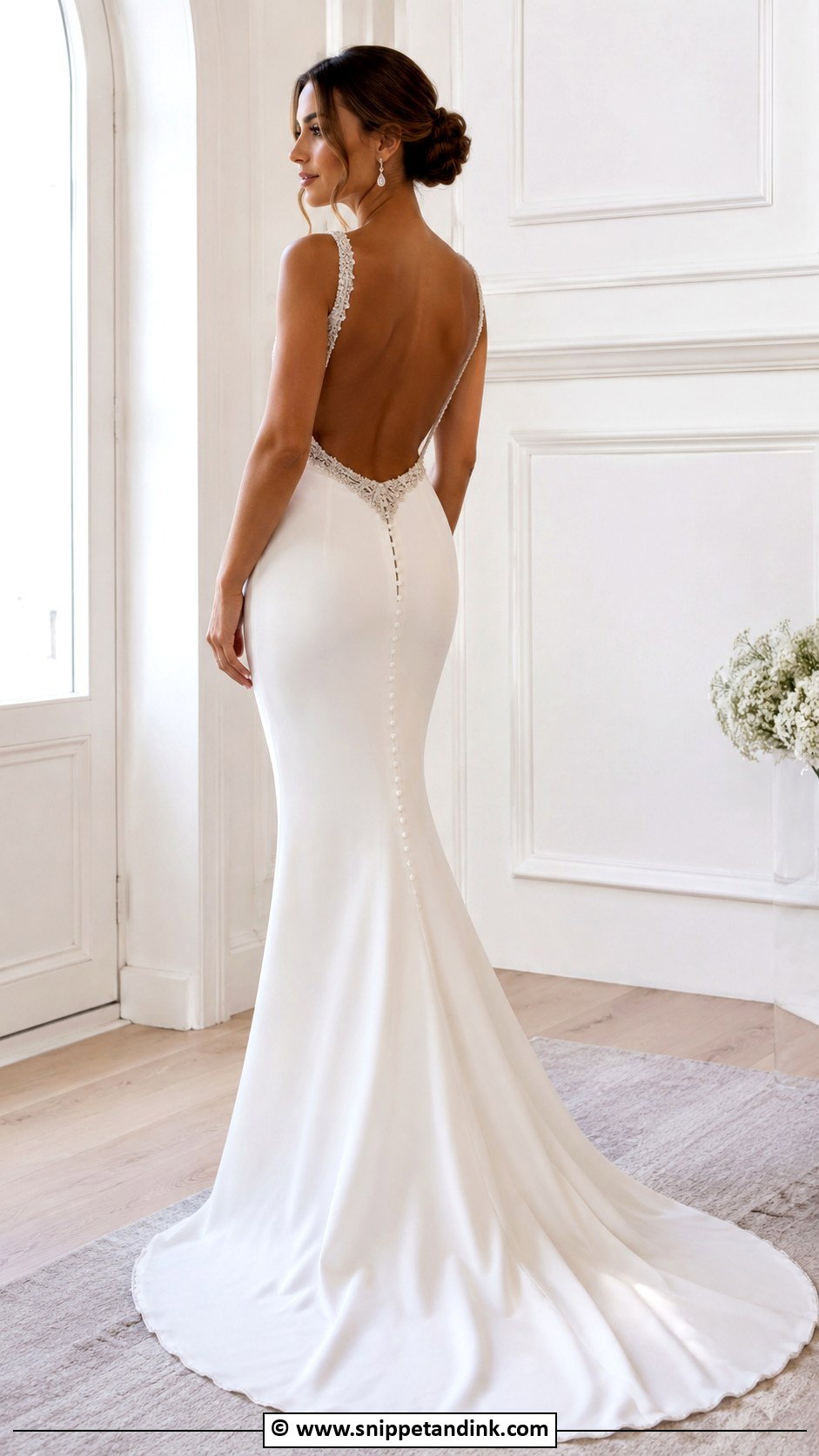
An open back needs support built into the dress, since you can’t rely on a normal bra. A good seamstress can sew in cups or use a low-back solution. Beading around the edge softens the opening and adds sparkle as you walk away. It works on fitted crepe, lace, satin or tulle. A detachable veil lets you show the back after the ceremony.

25. Beaded Train Wedding Dress
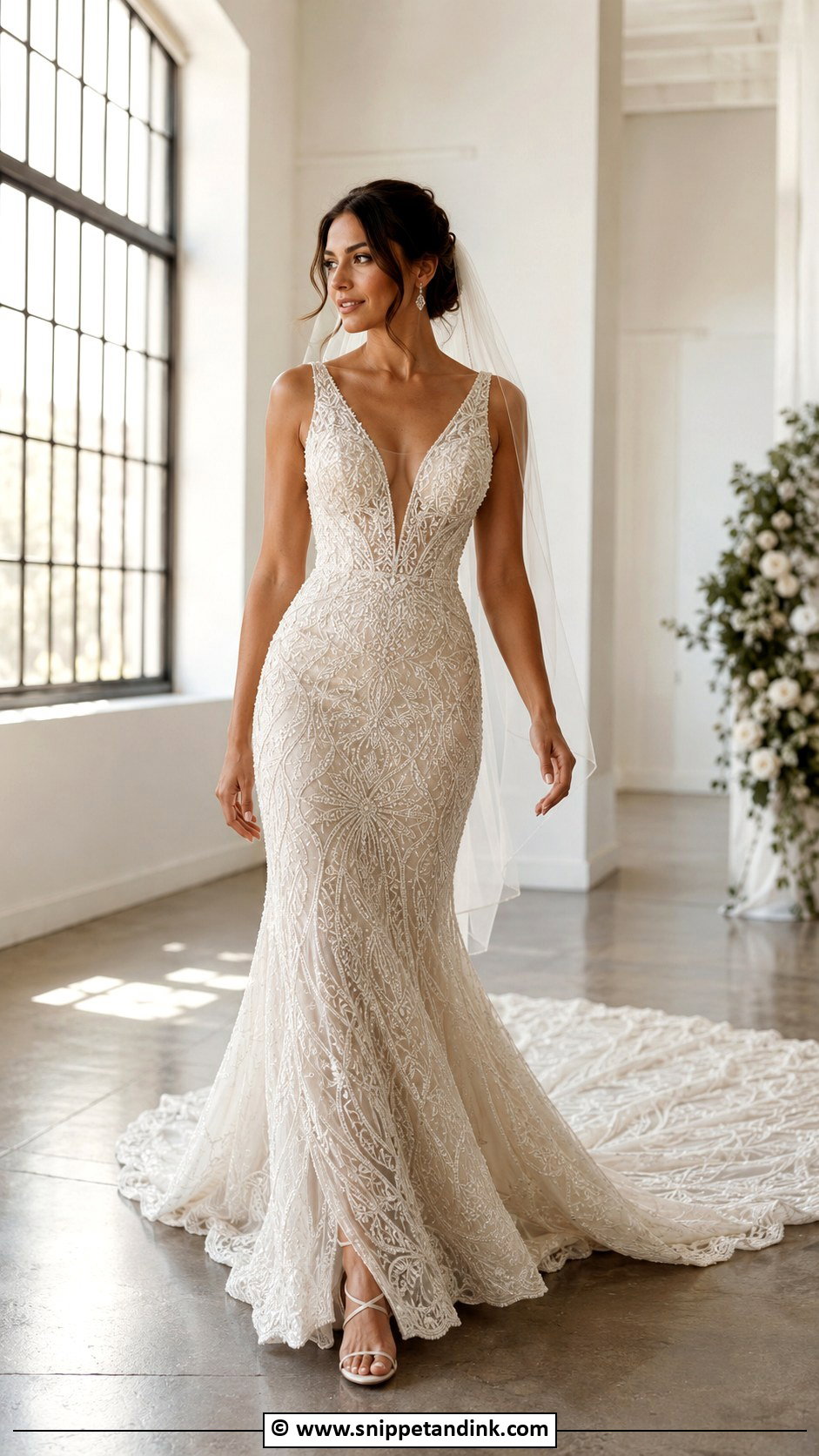
Beads along a train catch the light as you walk, and the train photographs well from behind. Lightly scattered beading or a detailed border along the hem both work. Before choosing a heavily beaded train, think about weight and the bustle: a beaded train needs strong bustle points, or the hooks pull and tear. Choose a veil that complements the train, and keep shoes and earrings simple.
26. Beaded Cape Wedding Dress
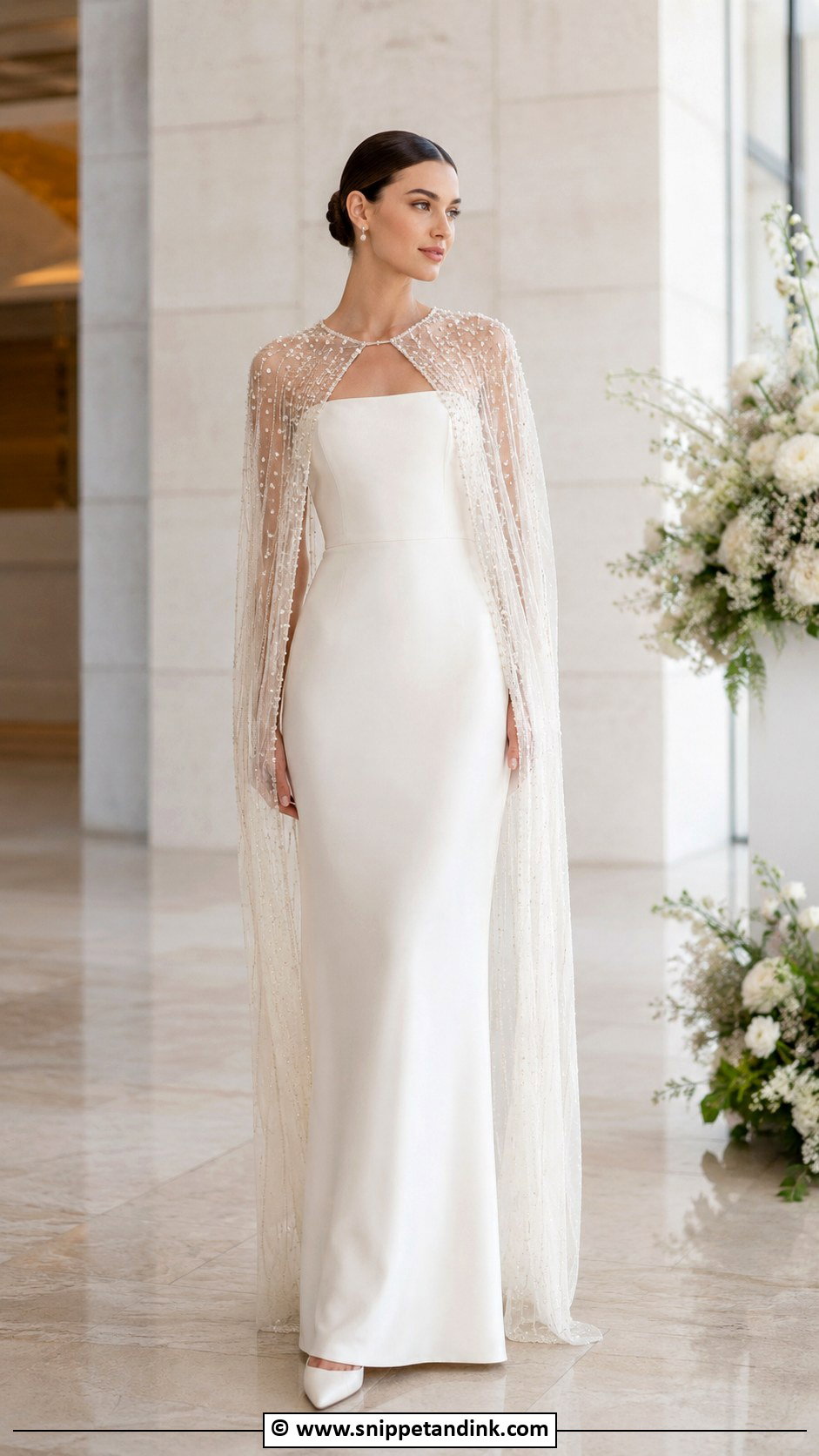
A cape is an alternative to a veil, and it adds movement to a plain gown. It can be sheer, pearl-trimmed or crystal-dotted, attached at the shoulders or worn separately. Choose a gown with clean lines underneath. A removable cape gives you two looks, a dramatic ceremony outfit and a lighter reception one. Minimal jewelry and a smooth hairstyle balance it.
27. Beaded Wedding Dress With Sleeves
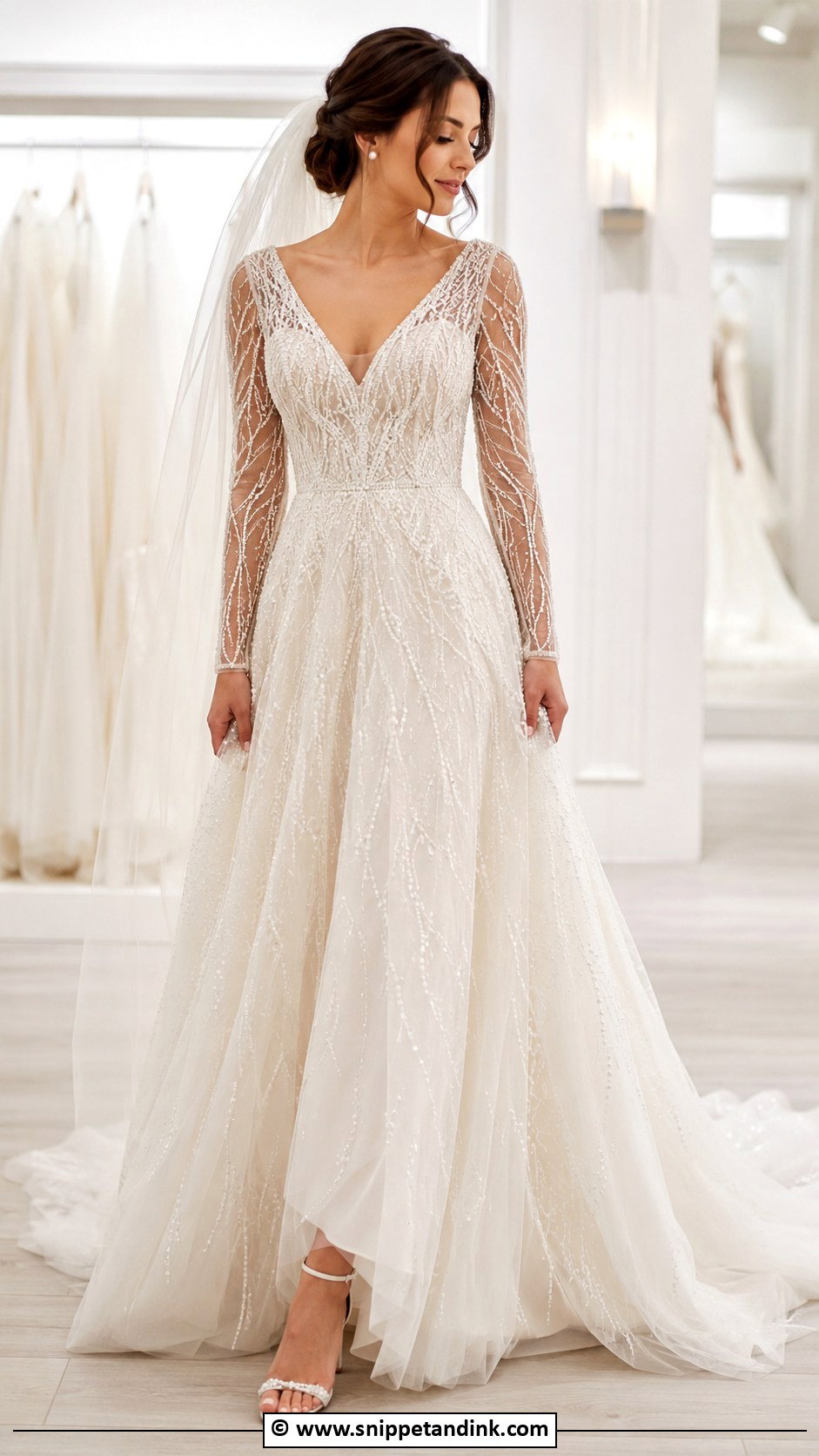
Sleeves change the mood of a beaded gown: short pearl sleeves feel sweet, sheer long sleeves with crystals feel formal, cap sleeves balance the shoulders, and detachable sleeves give flexibility. The beading on the inside of the arm should feel smooth against your side; scratchy sleeves become irritating within an hour. Simple earrings and a clean veil or hair comb are enough.
28. Beaded Wedding Dress With Slit
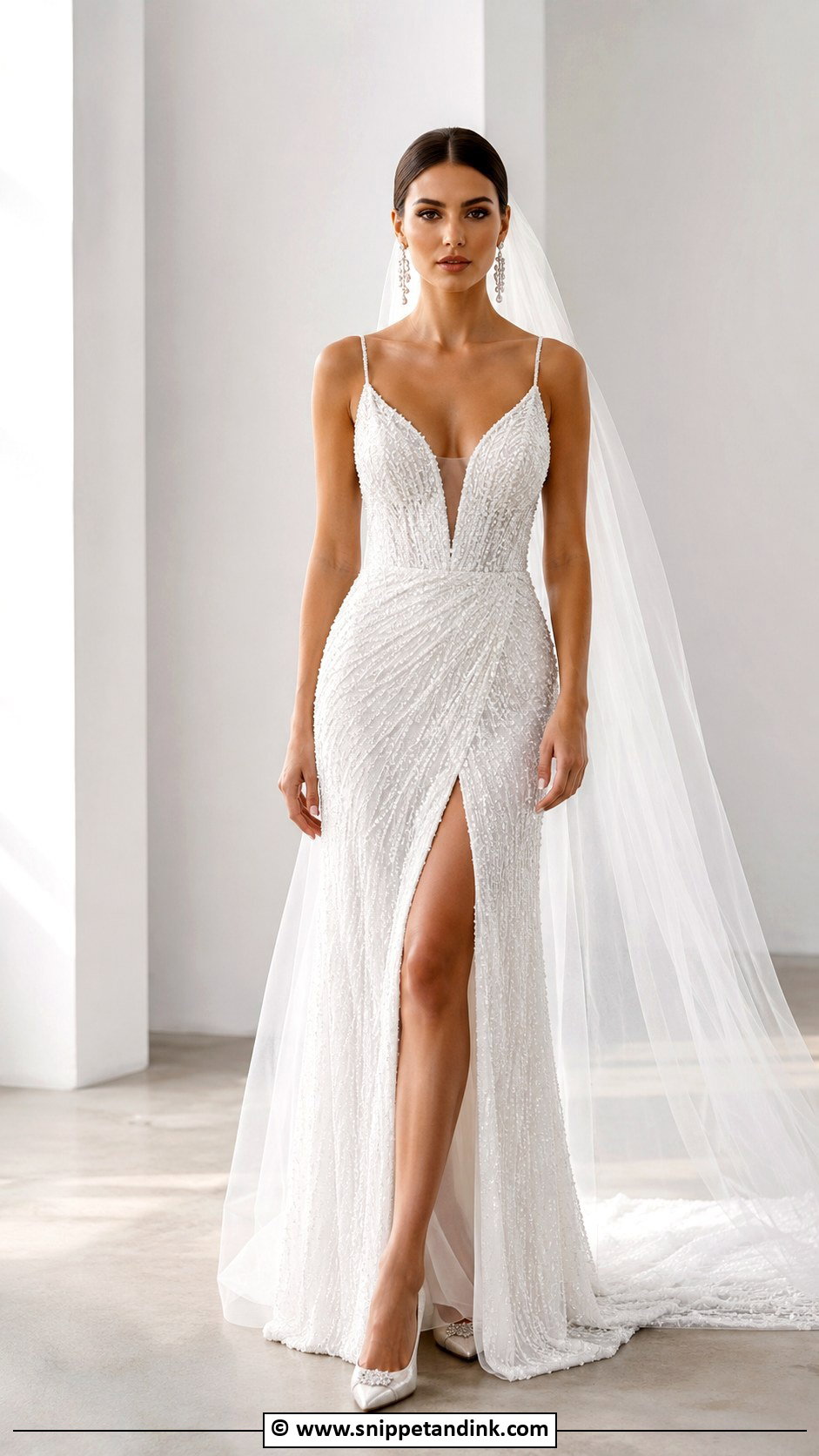
A slit makes walking easier and shows off your shoes, so choose shoes that photograph well. It works on sheath, A-line and soft column silhouettes. Balance the slit with refined beadwork and a supportive bodice. Ask your seamstress to reinforce the top of the slit, since beaded fabric under strain tends to tear there when you sit or dance.
29. Beaded Reception Wedding Dress
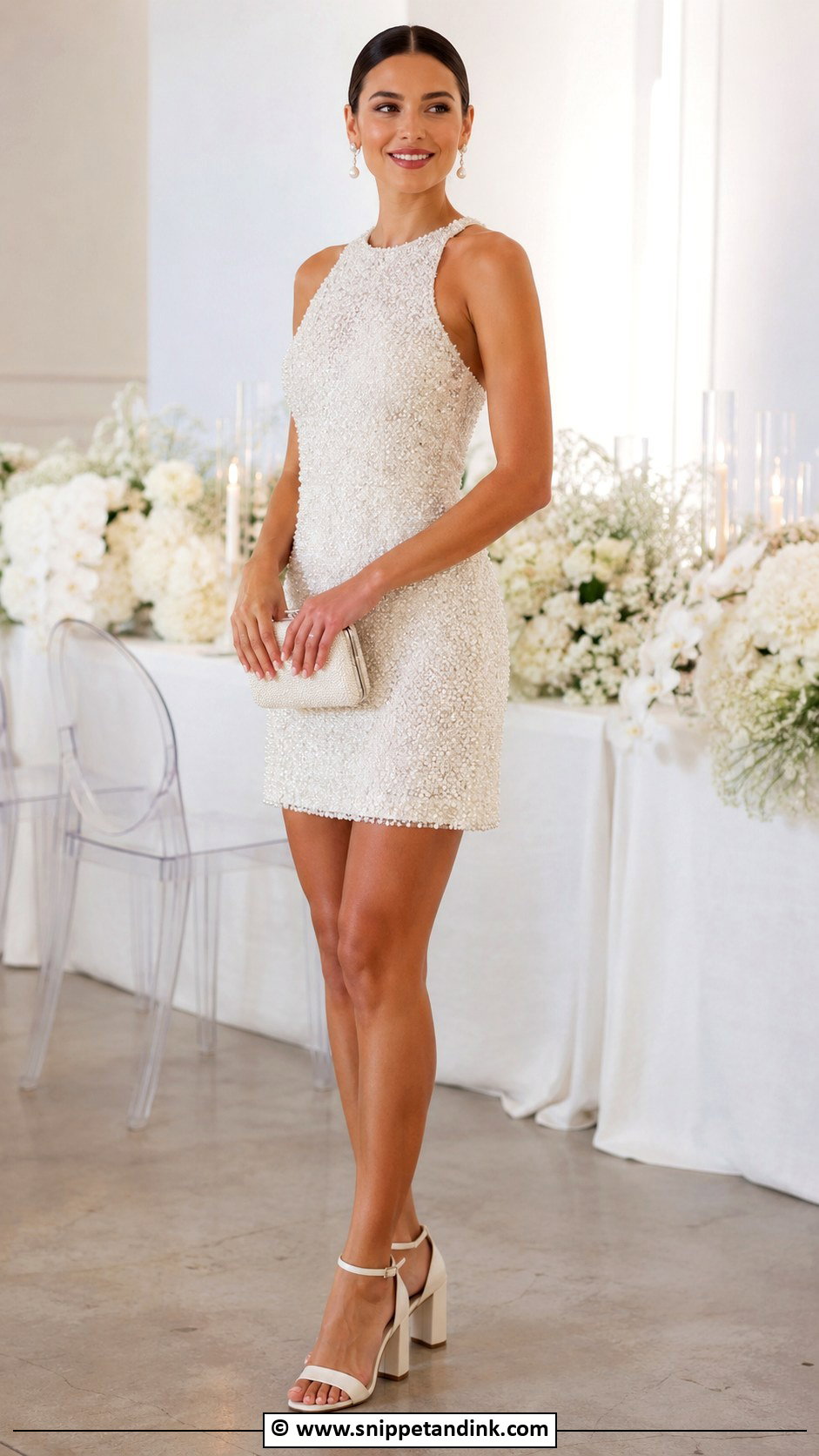
A reception dress should be lighter and easier to move in. Many brides go for a beaded mini, midi, sheath or a simple slip for the party. Sequins, pearls and crystals make a short or simple shape feel bridal. Check that the beads don’t rub under the arms or weigh the dress down, and pair it with block heels, slingbacks or polished flats for dancing.
30. Simple Beaded Wedding Dress
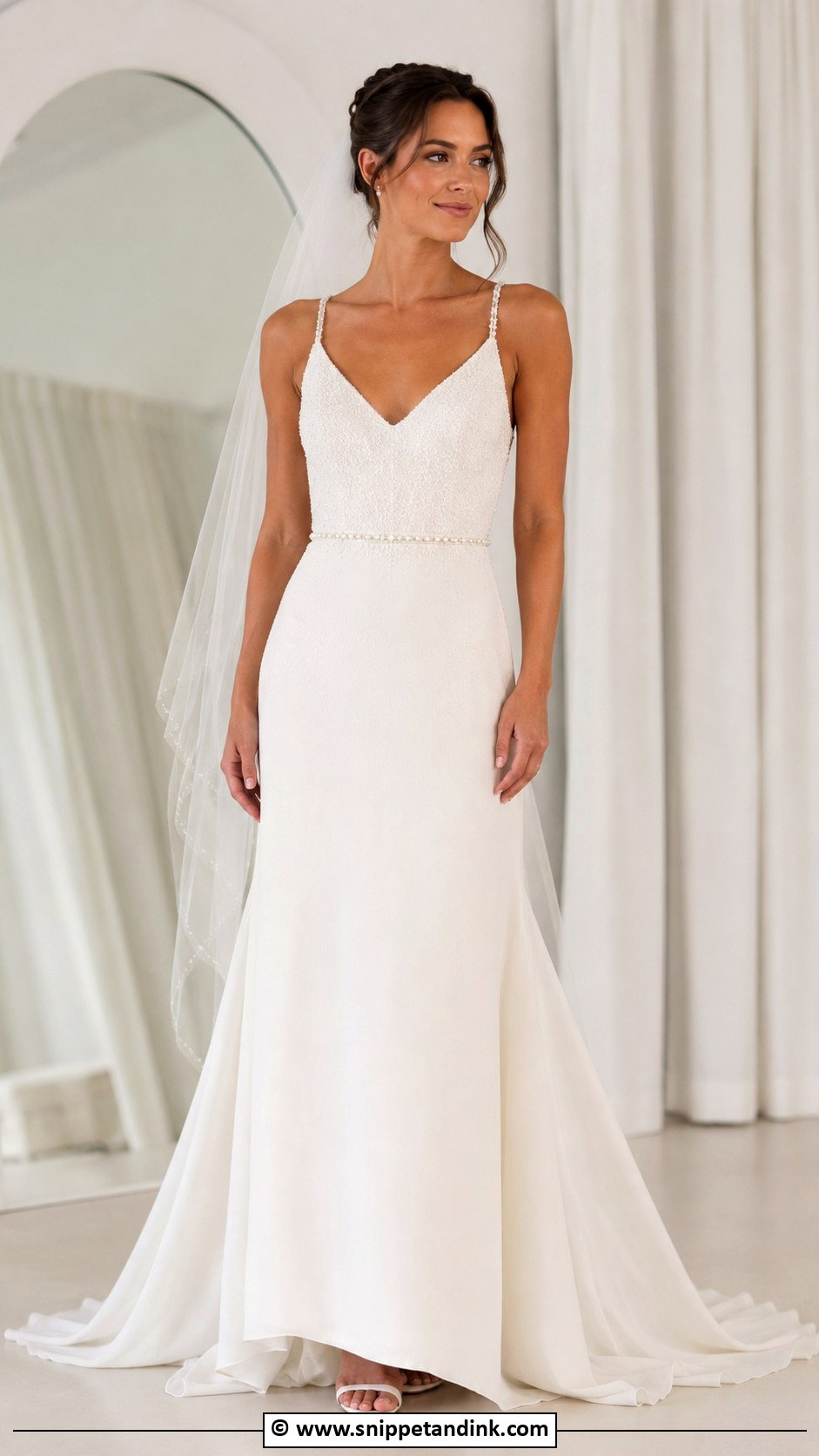
Restraint is the point here: beaded straps, a pearl waistline, a crystal neckline or light sparkle scattered over the bodice. A simply beaded dress works at almost any venue and is easy to accessorize with classic heels, a soft veil and understated earrings. It’s also the lightest and easiest beaded gown to alter and clean.
Why Alterations on a Beaded Gown Take Longer
A seamstress can’t sew through a line of beads. To take in a beaded seam, she has to remove the beads near it, alter the fabric, then sew the beads back by hand so the pattern meets again. That’s slow, careful work, so book your first alterations appointment earlier than you would for a plain gown and expect it to cost more.
Never press a beaded gown with a hot iron. Heat can melt plastic sequins and dull the coating on glass pearls. Steam from the inside, keep the steamer moving and leave any heavily beaded areas to a professional.
Veils, Hair and Hugs: What Snags on Beading
Beading catches things, and the most common victim is the veil. Fine tulle drapes over a crystal-covered back and catches on the settings, so when you lift it or turn it can pull. A veil with a finished edge or a slightly heavier tulle is less likely to snag. Loose hair and long earrings can catch on beaded shoulders too, which is another reason I often suggest an updo with heavy beadwork.
During the day, warn whoever helps you dress to lift the gown over your head by the waist rather than pulling at beaded areas. And keep a needle, matching thread and those spare beads in your emergency kit, because a loose bead caught early is a two-minute fix.
How Much Sparkle Is Right for You?
Beading suits almost every bridal style, from soft pearl gowns and crystal mermaids to lace, crepe and reception dresses. More beading isn’t always better. Look at where the beads sit, how much they weigh, how the fabric moves and how the dress looks under flash. Then sit, walk and turn in it at the fitting. The one that still feels good after all that is the right one for you.
You'll Like These Ideas:



Leave a Reply