
Pinning back just the top section is the most forgiving thing you can do with wedding hair. Your face stays clear for the vows and the kiss, the crown gives a veil something solid to sit in, and the rest of your hair moves the way it does on a normal good day. A half-up wedding hairstyle also changes character easily: a center part with glossy curls reads classic, a loose braid reads boho, a satin bow reads a little playful. Below are fifteen versions, from pearl pins and hair vines to options for short and curly hair. When you save your favorites, look hard at the back of each one, because that’s the view your guests get for the whole ceremony.
Clips, Bows and Vines Need Something Solid to Hold
Most of the looks below lean on an accessory, and that’s where half-up styles most often go wrong on the day. The pinned section is smaller than a full updo, so there’s less hair for a comb or clip to bite into. Heavy pieces slowly slide, tilt or drag the top section loose.
This is what I do at every trial to stop that happening:
- Bring the actual accessory, not a photo of it. Weight matters more than looks here.
- I build a tiny hidden braid or a crossed pair of bobby pins under the spot where the clip will sit, so it grips that instead of loose hair.
- Thread hair vines through with their own pins every few inches. A vine that only hooks at the ends will sag by evening.
- Satin bows are slippery. The knot of the bow needs its own pin, not just the clip behind it.
- Pick one hero piece. A vine plus a bow plus pearl pins competes with itself and adds weight in the one place that can’t take much.
1. Half Up Wedding Hair With Loose Curls
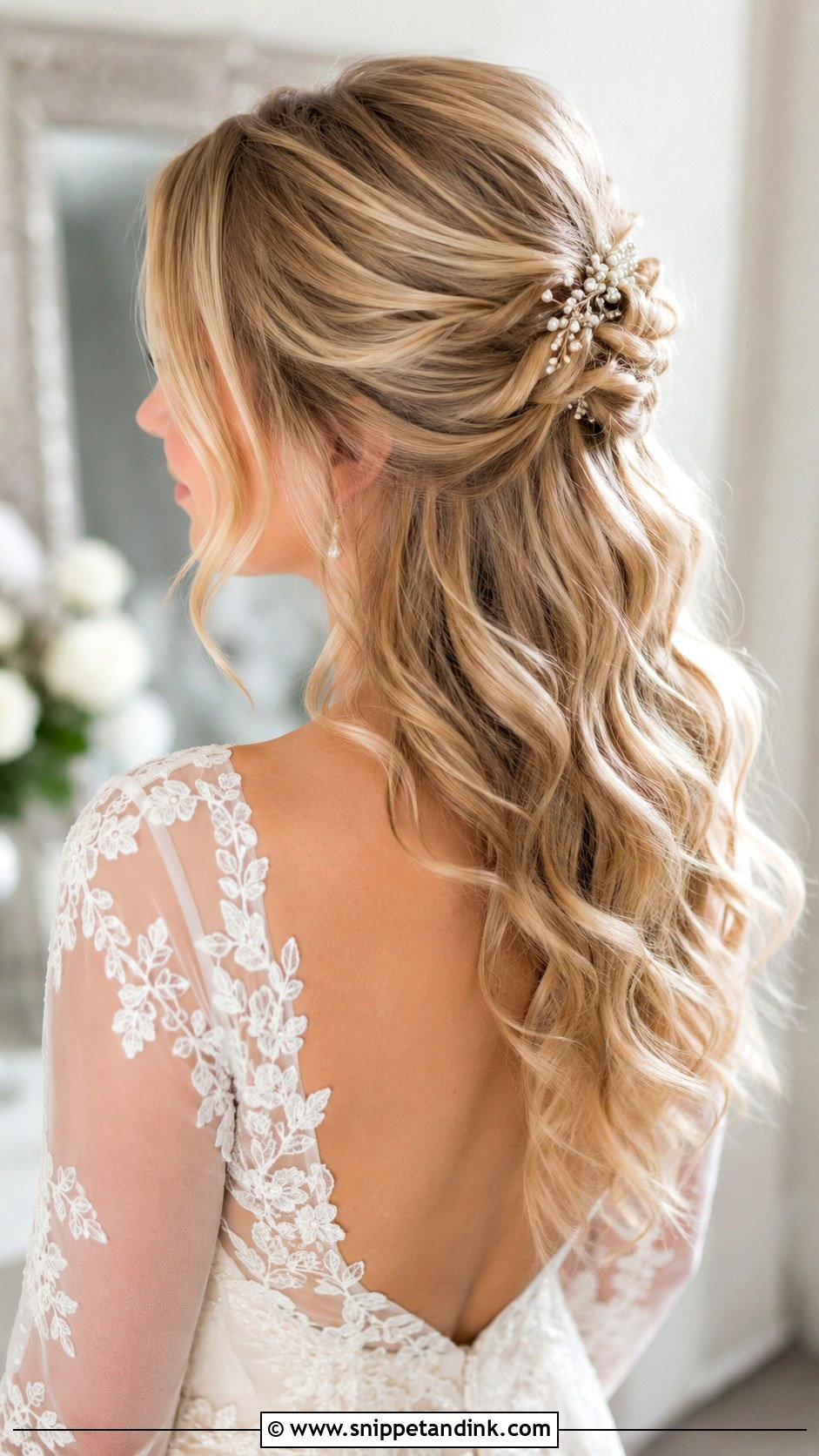
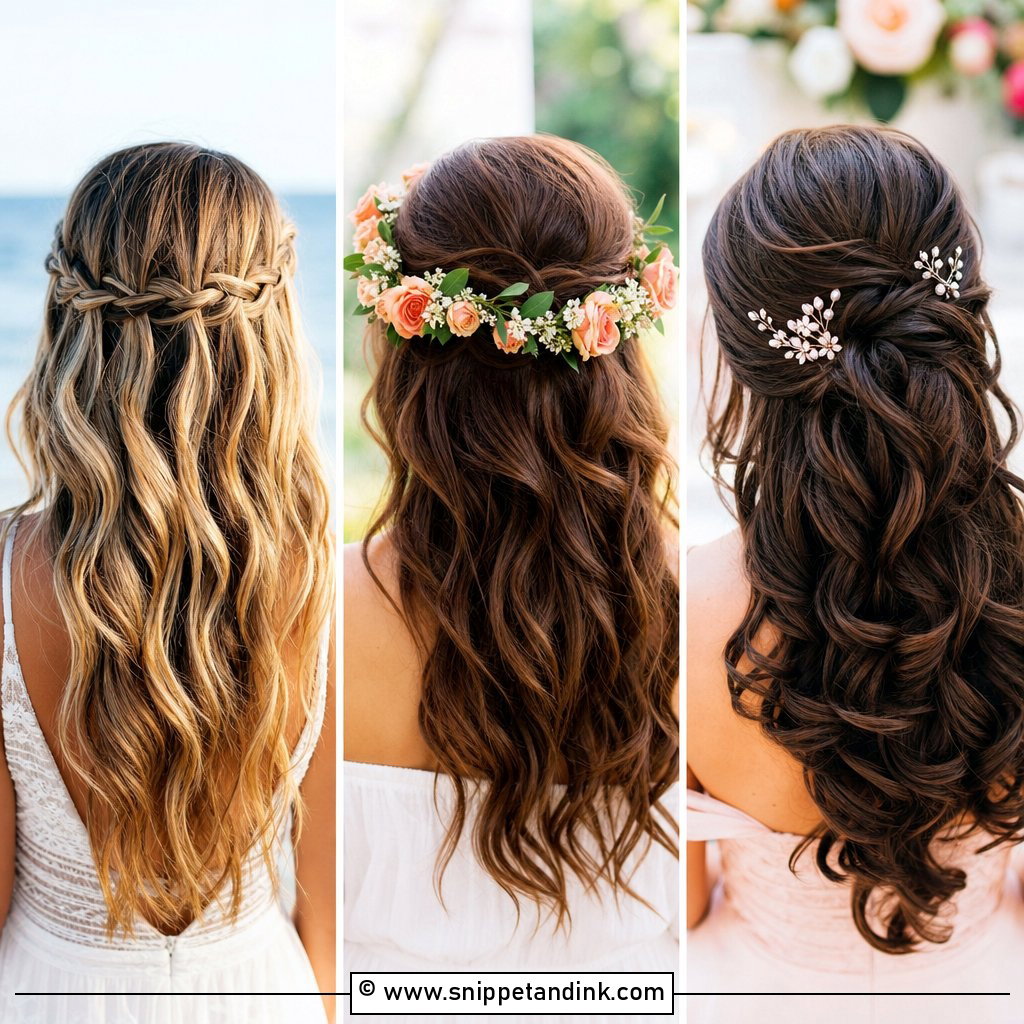
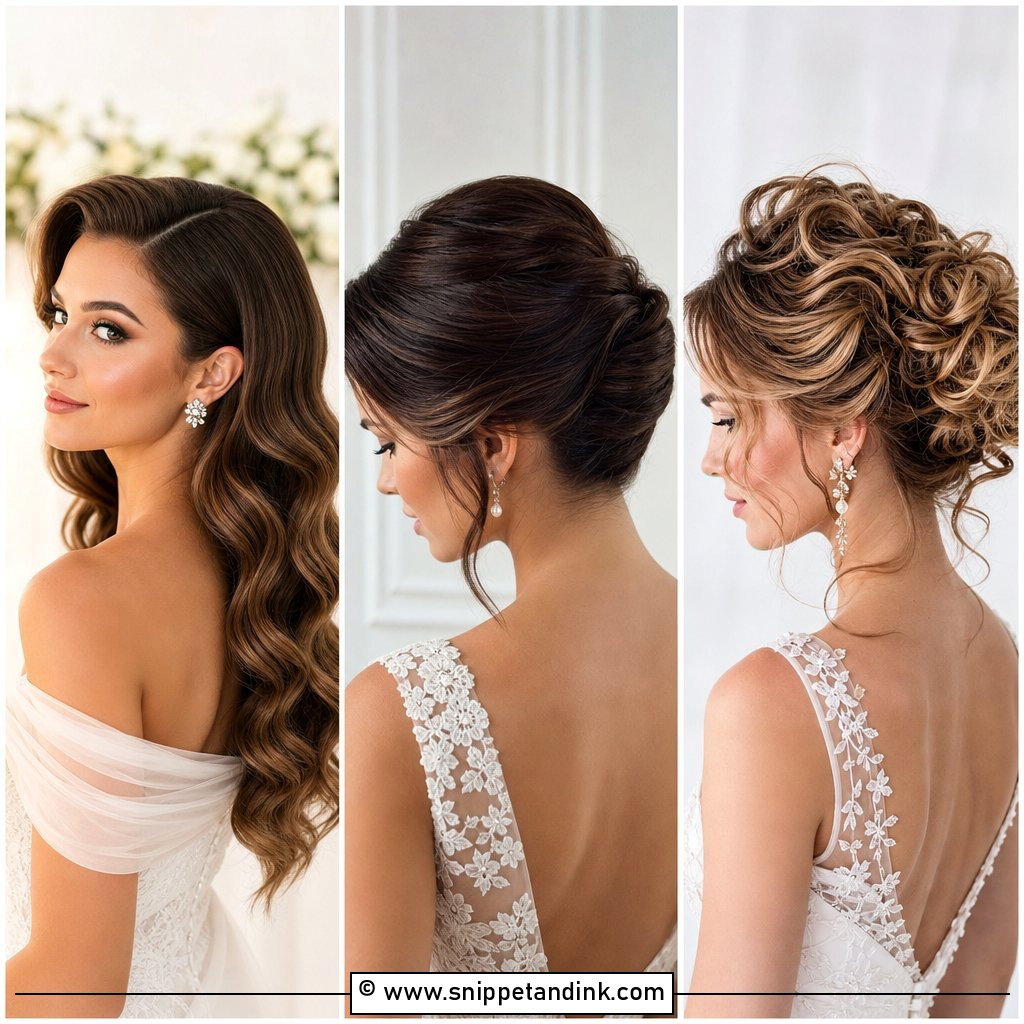
Start here if you’re unsure. I pull the crown back from a center or soft side part, pin it so the pins hide under the lifted section, and let the rest fall in curls. The trick is the brush-out: I set the curls, let them cool completely, then brush only the outer layer so they turn airy without losing their spring. Brush them while warm and they drop flat in an hour. Pearl pins, a small comb or a plain veil is all the decoration this needs.
2. Half Up Wedding Hair With Braids
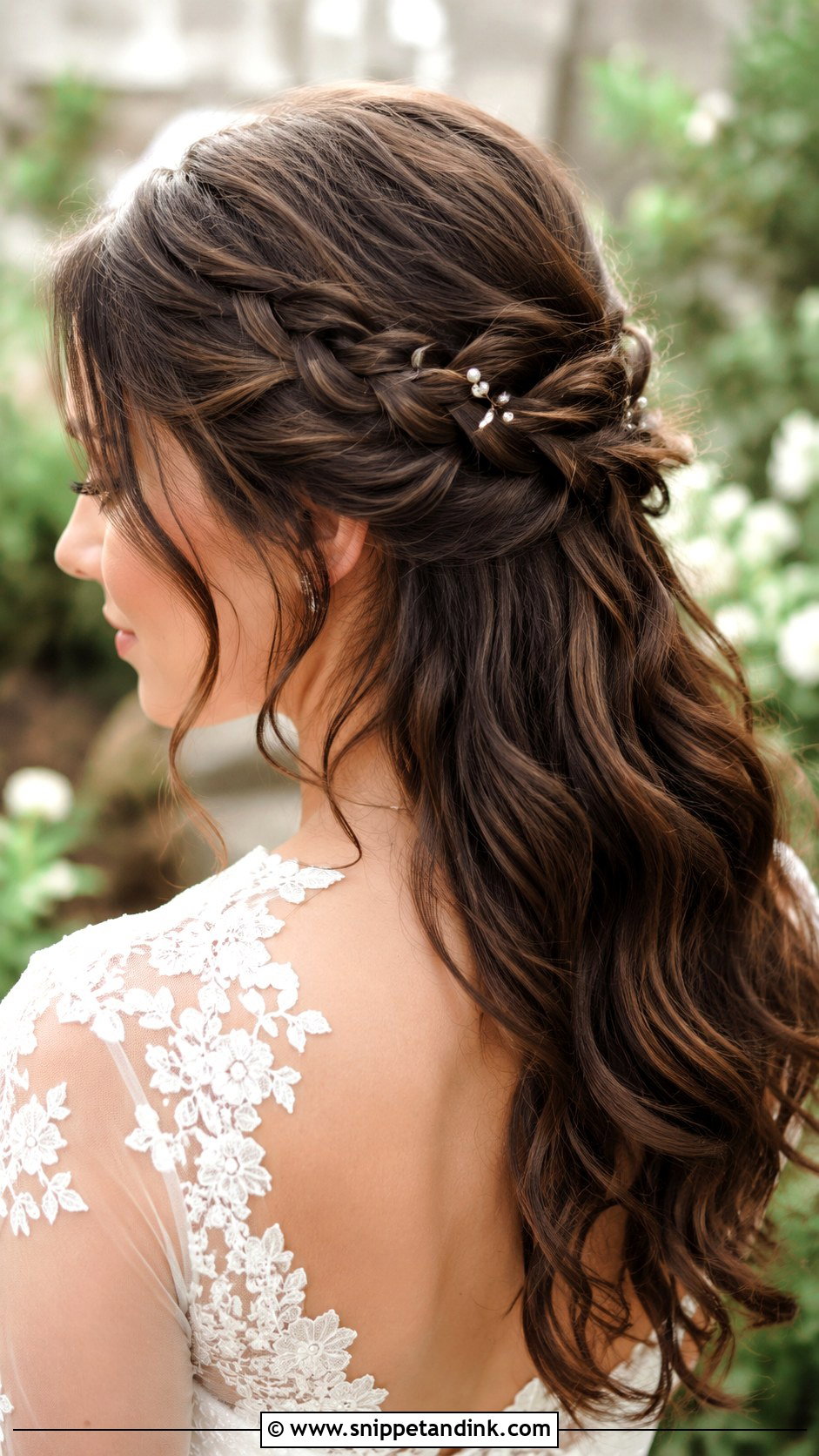
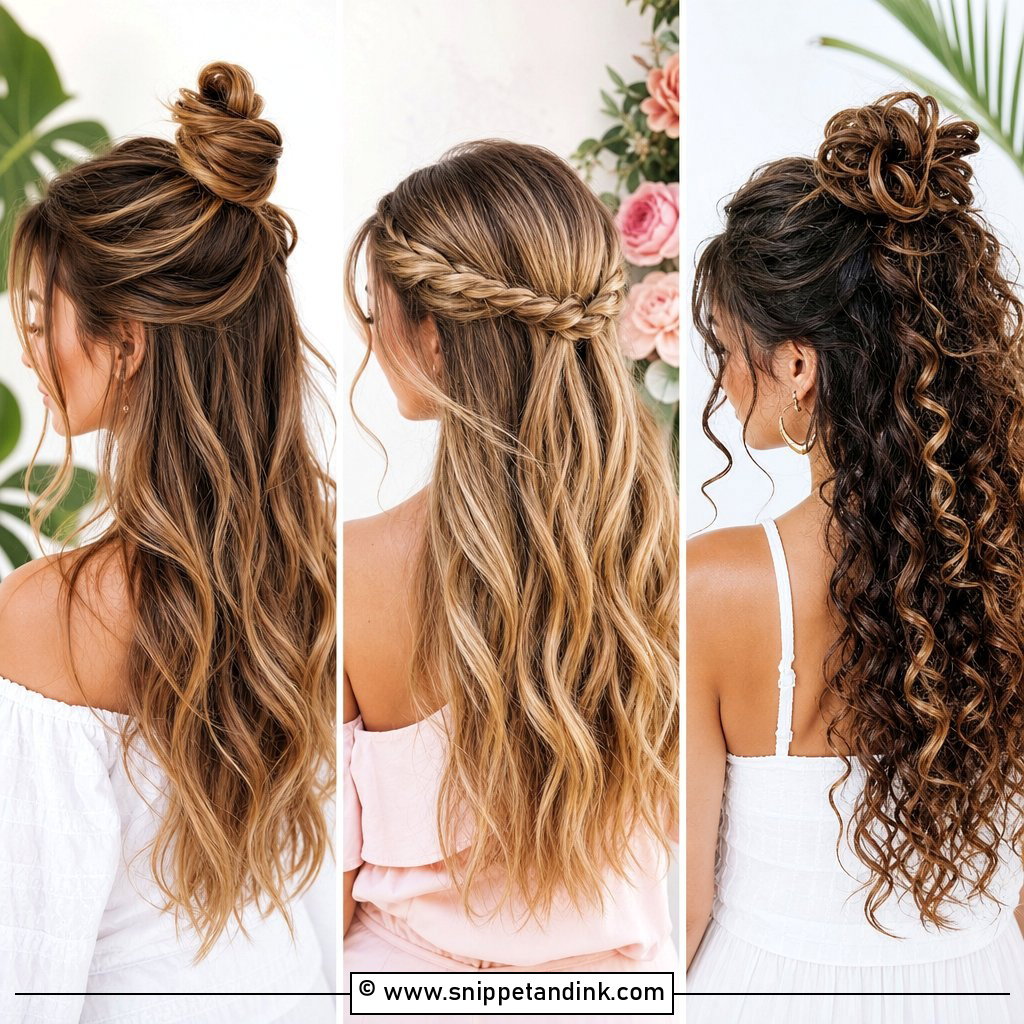
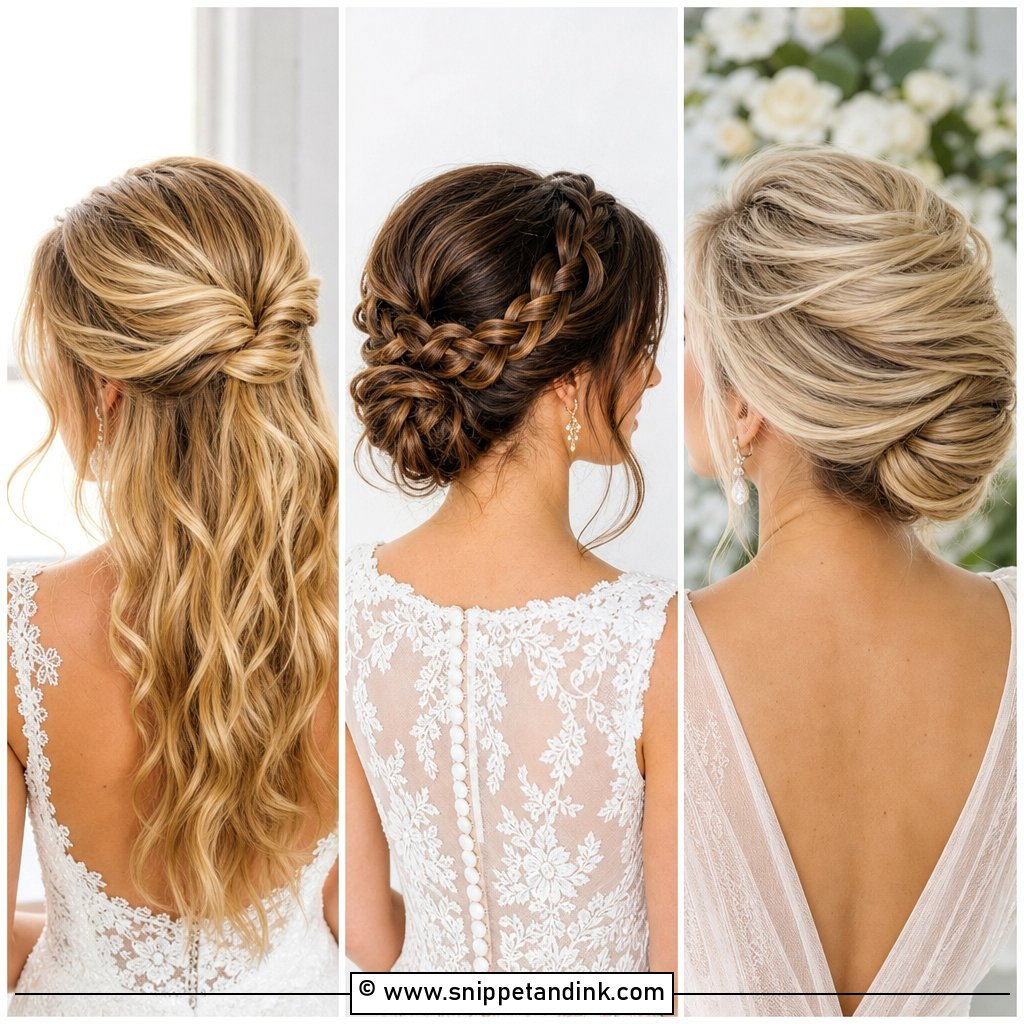
Braids give the top section real hold, which is why I reach for them at outdoor weddings. The braid can run down one side, wrap across the crown, or come from both temples to meet at the back over loose waves. Once it’s pinned, I gently pull at the edges so it widens and softens; a tight braid looks like a school photo. Flowers, tiny pearls or a delicate hair vine weave neatly into the braid itself. You’ll want medium to long hair for this, since short layers escape from braids within a couple of hours.
3. Half Up Wedding Hair With Twists
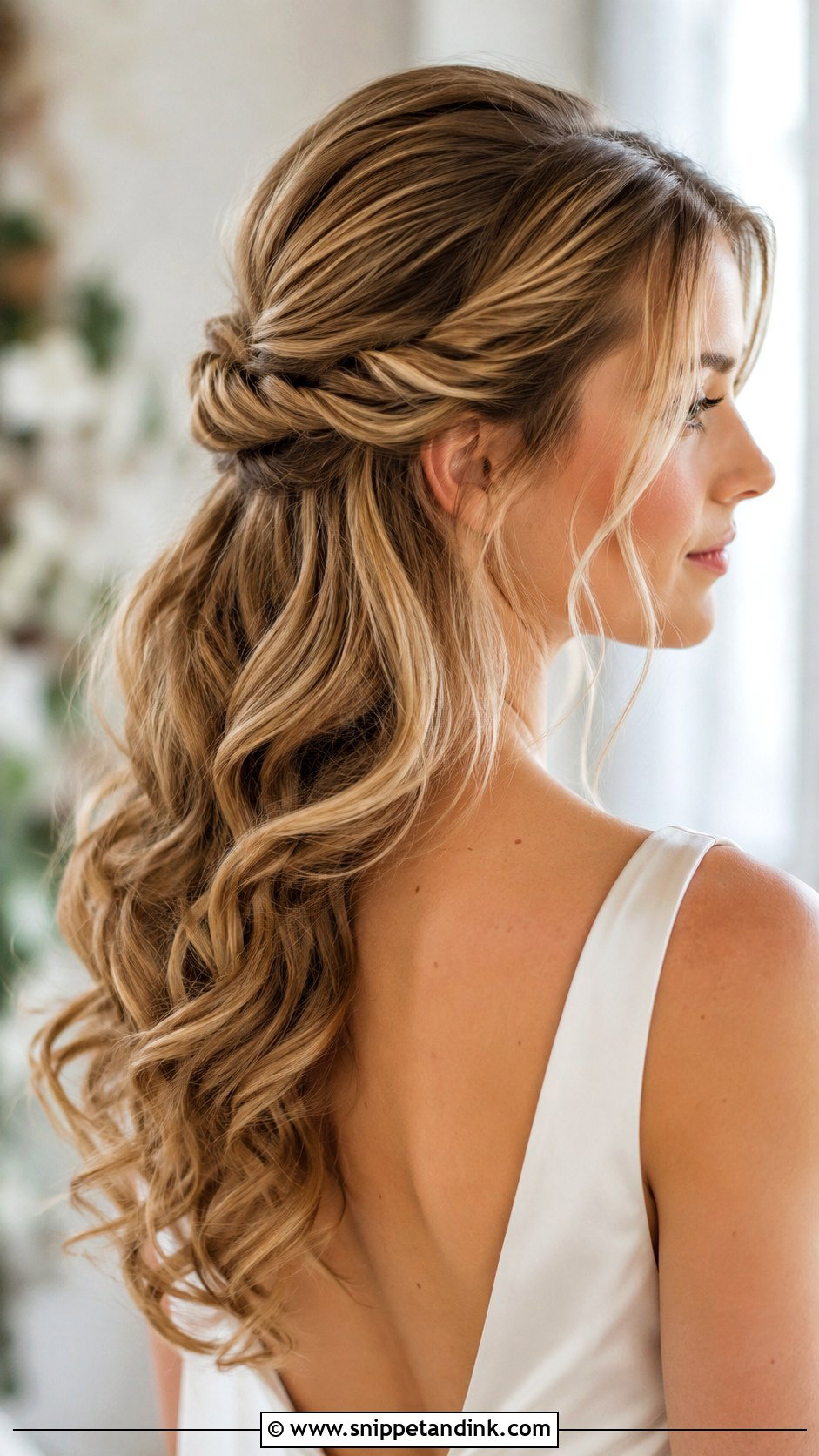
Twists are the quieter cousin of braids. I take the front sections, twist them back loosely and pin them at the crown or lower at the back of the head, which shows off curls and natural texture underneath without a busy pattern on top. They’re quicker than braids, and if one loosens it’s easy for a bridesmaid to re-twist and re-pin. Each twist also gives a veil comb a firm ridge to grip. Leave a couple of soft pieces at the face and keep the back full rather than flattened.
4. Half Up Wedding Hair With Veil
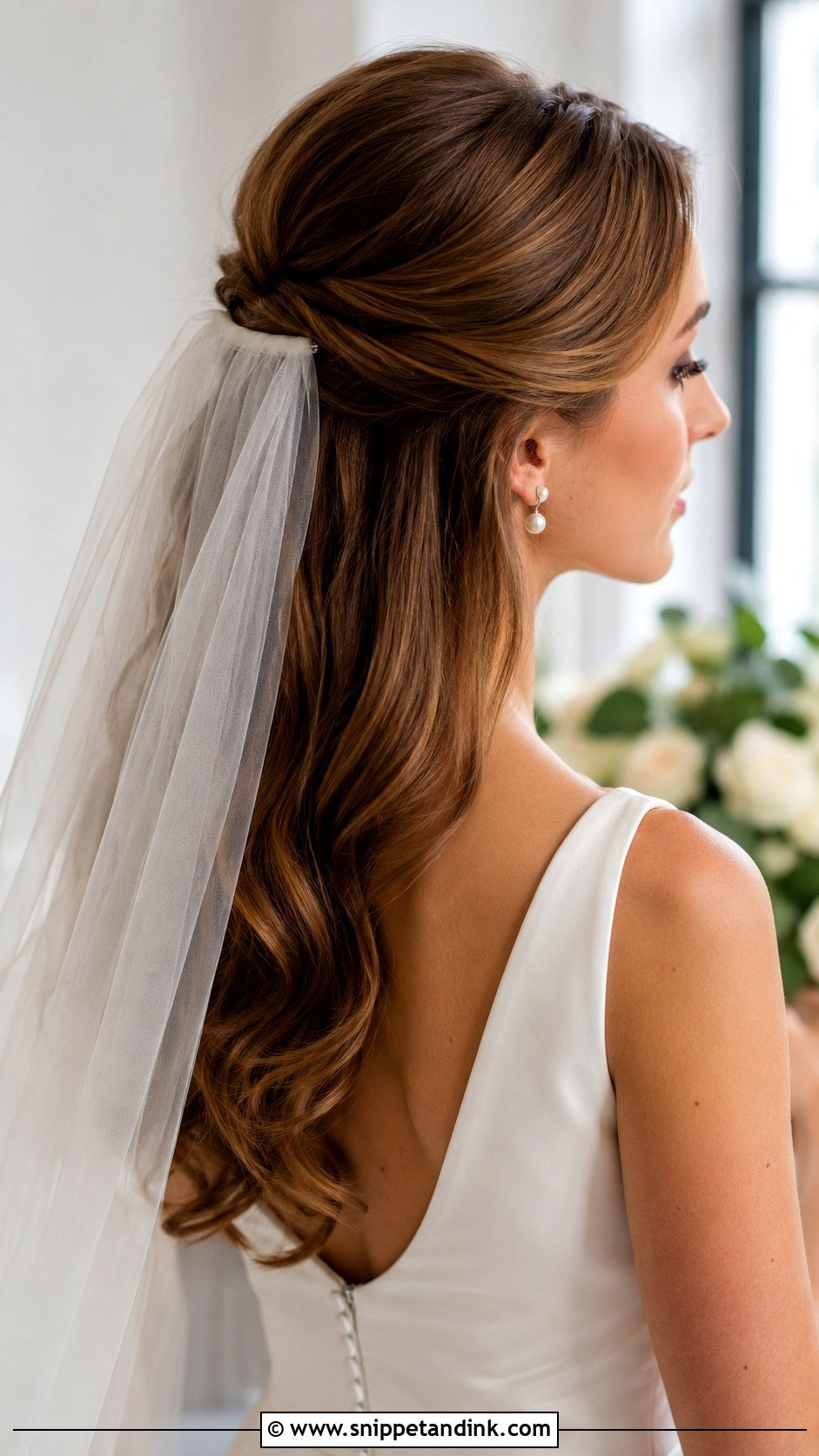
Wearing a veil is one of the best reasons to choose half-up at all. The pinned crown gives the comb a solid place to sit, so it doesn’t drag backward when you turn your head. Above the pinned section looks more dramatic; tucked underneath flows more softly. Cathedral, fingertip and simple single-tier tulle all work, but a long veil is heavier than people expect, and I build a firmer base for it. Bring the real veil to your trial so we can check where the comb lands and whether the pins dig in.
5. Half Up Wedding Hair With Pearl Pins
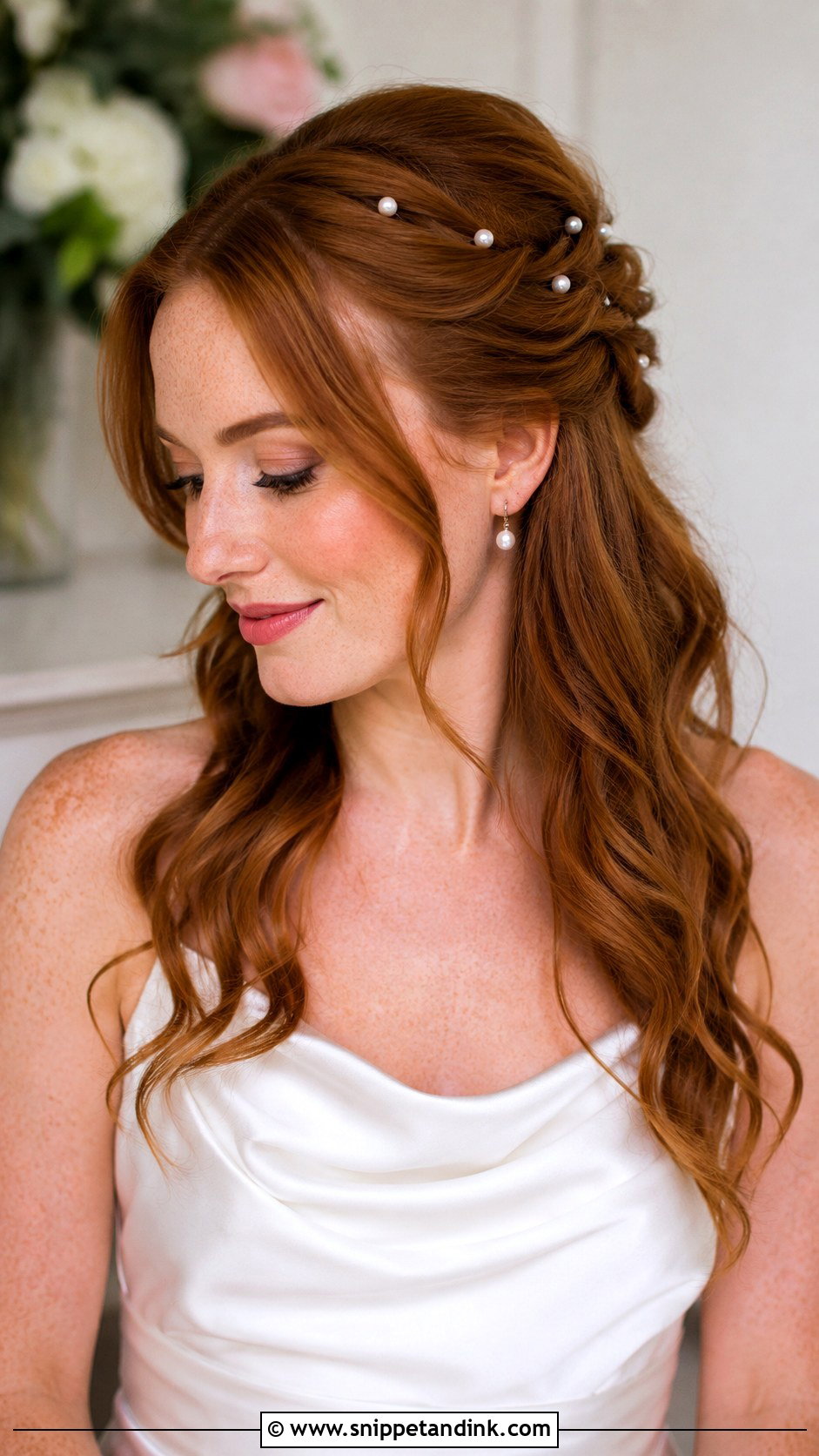
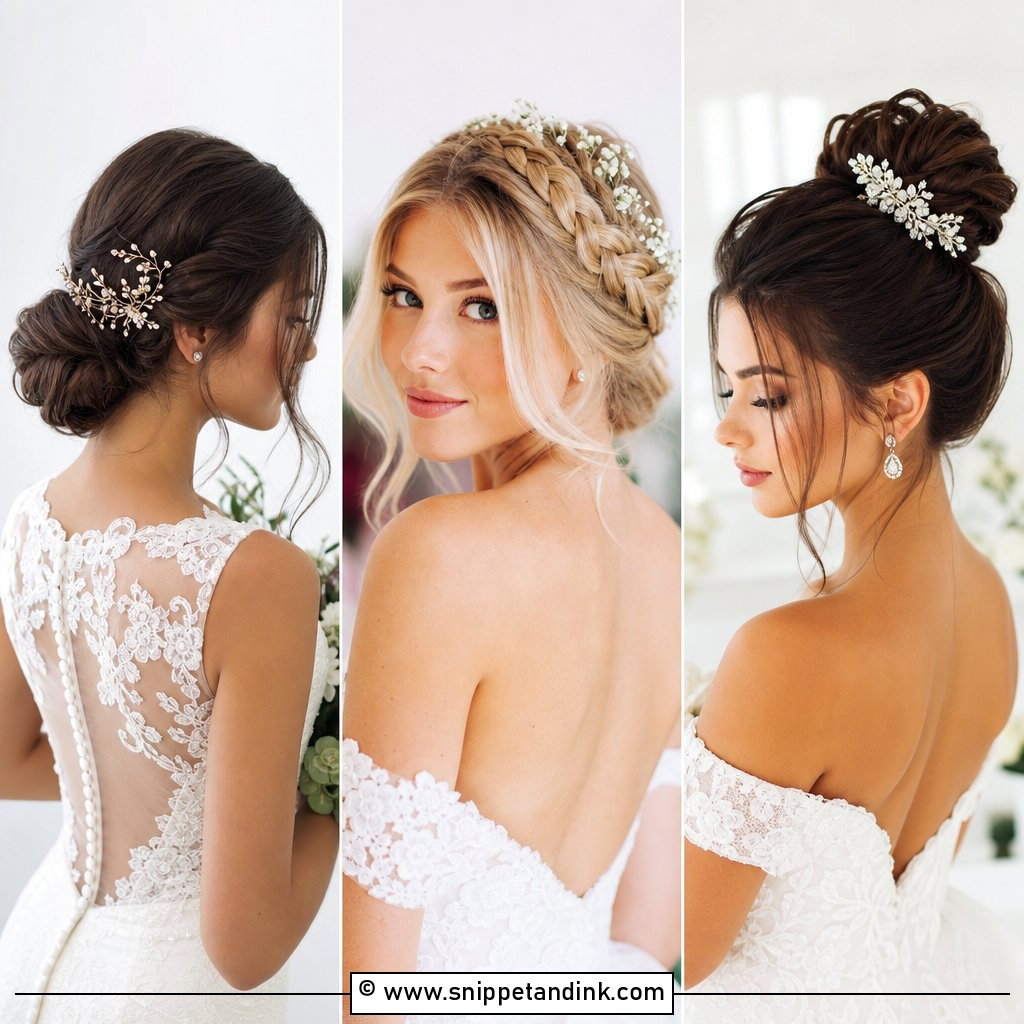
Pearls add soft shine without shouting. I scatter them through twists, slip a few into a braid, or ring them around a small knot at the back, and I keep them off the very top of the head where they’d look like a tiara that went wrong. On curls, the pearls catch light between the waves. Fewer is better: five to seven placed thoughtfully look intentional, while twenty look like confetti. They sit naturally next to satin dresses and fresh, simple makeup.
6. Half Up Wedding Hair With Flowers
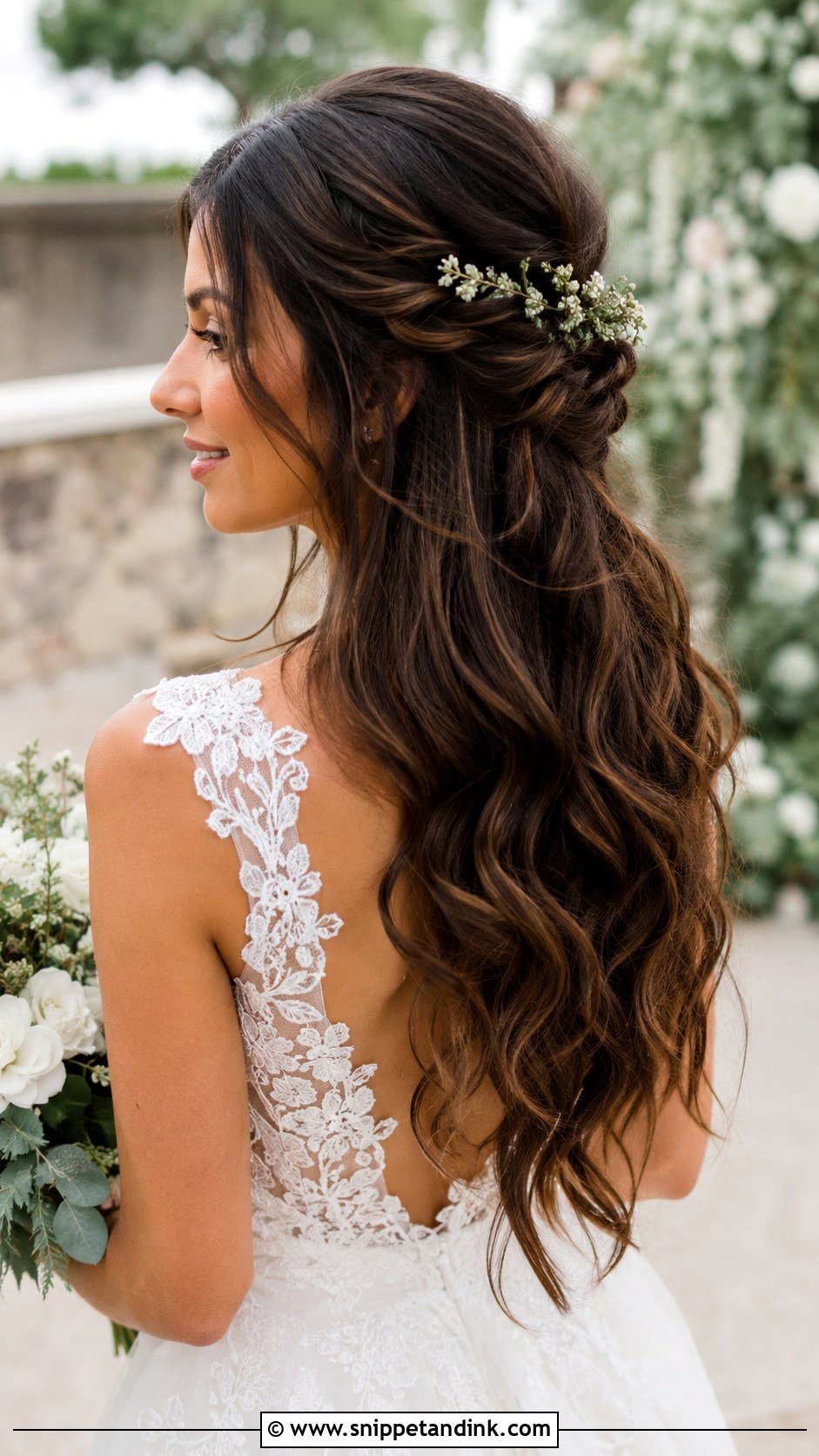
Real flowers look wonderful at 10am. By late afternoon in the sun, delicate blooms can wilt and brown at the edges, so I ask florists for sturdy varieties, wired and taped, or I use well-made silk flowers. Tuck small blooms into a braid, along a twisted crown, or in a cluster beside the pinned section at the back. Tiny white flowers keep it classic, while flowers pulled from your bouquet tie the look together. Garden, beach and spring weddings suit this best, with the curls kept loose so the stems disappear into the hair.
7. Half Up Wedding Hair With Hair Vine
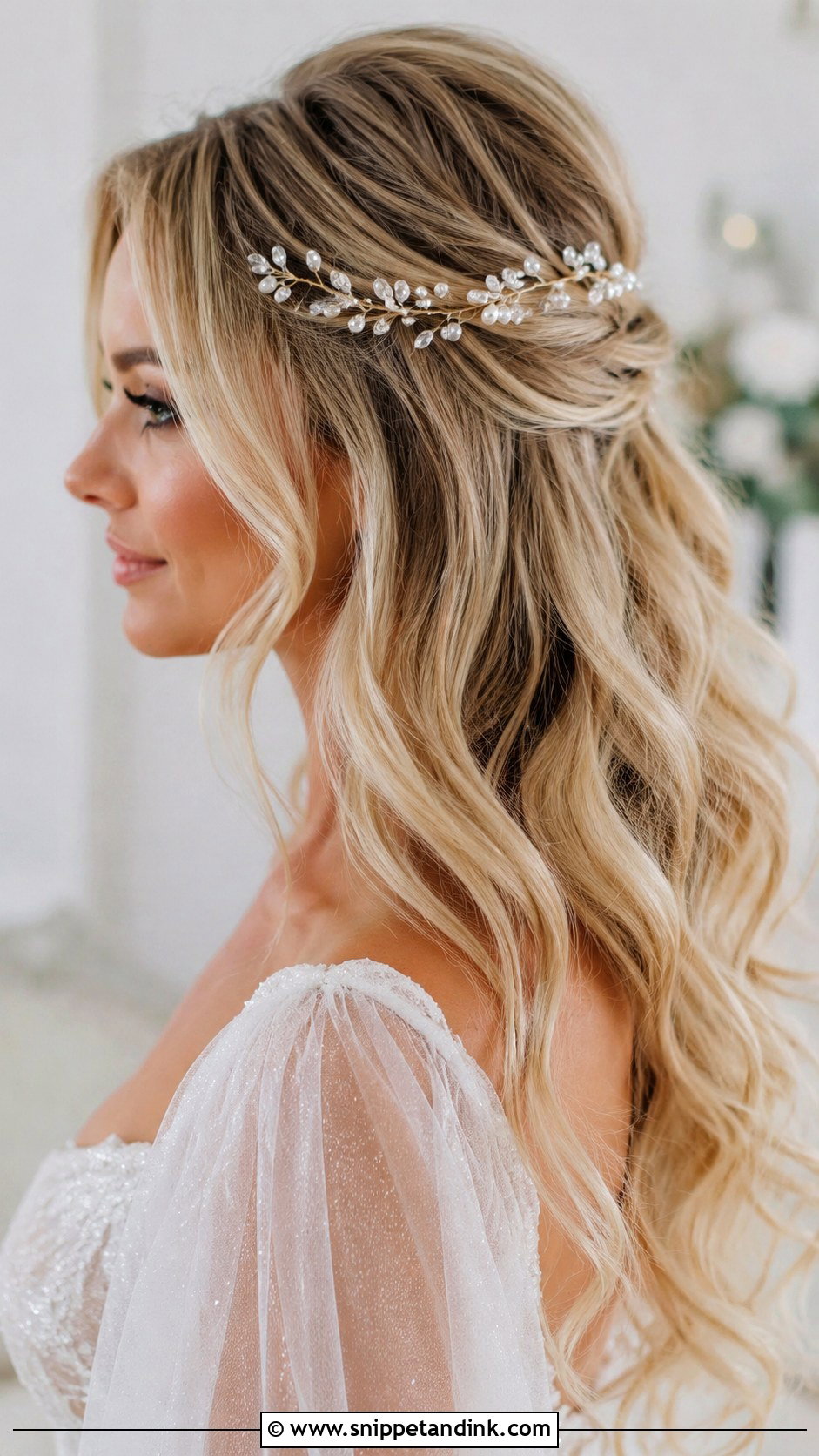
A hair vine gives you a delicate, fairytale finish without committing to a tiara. It can curve around the pinned crown, trace a braid, or rest across the back like a halo. I bend the wire to the shape of the head first, then pin it every few inches; a vine hooked only at its ends sags in the middle. Pearls, crystals or tiny leaves should echo something on your dress. Let it frame the shape you’ve built rather than cover it, and the back-view photos will show it off.
8. Half Up Wedding Hair With Clip
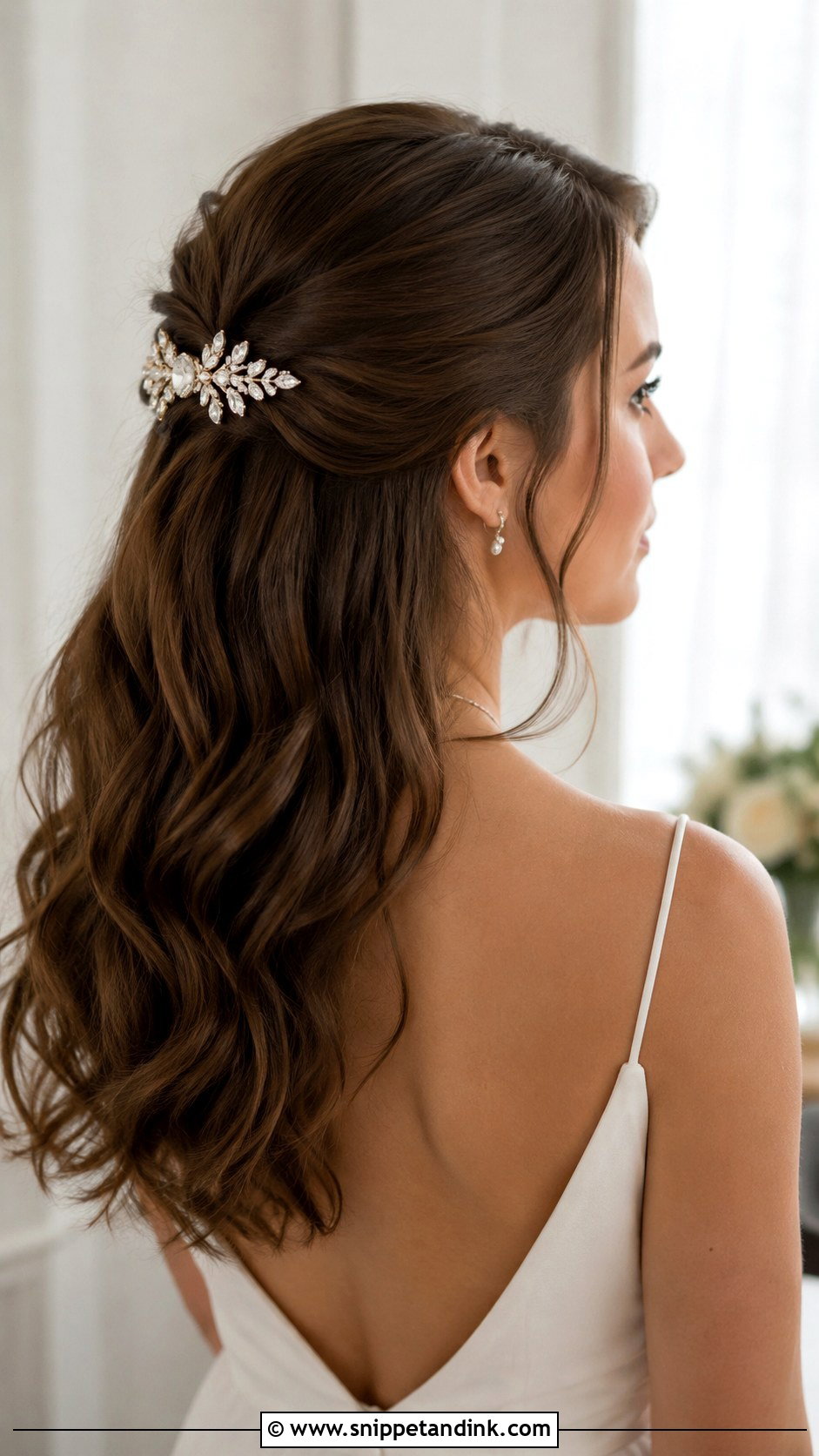
The simplest of the lot: a single clip over the pinned section at the back. It covers the bobby pins and adds the finishing detail, whether crystal, pearl or brushed metal. I check one thing before the wedding morning, which is weight against hair density. A heavy crystal clip on a small, fine section will slip, so I braid a tiny anchor underneath or cross two pins where the clip will sit. Loose waves underneath keep it soft.
9. Half Up Wedding Hair With Bow
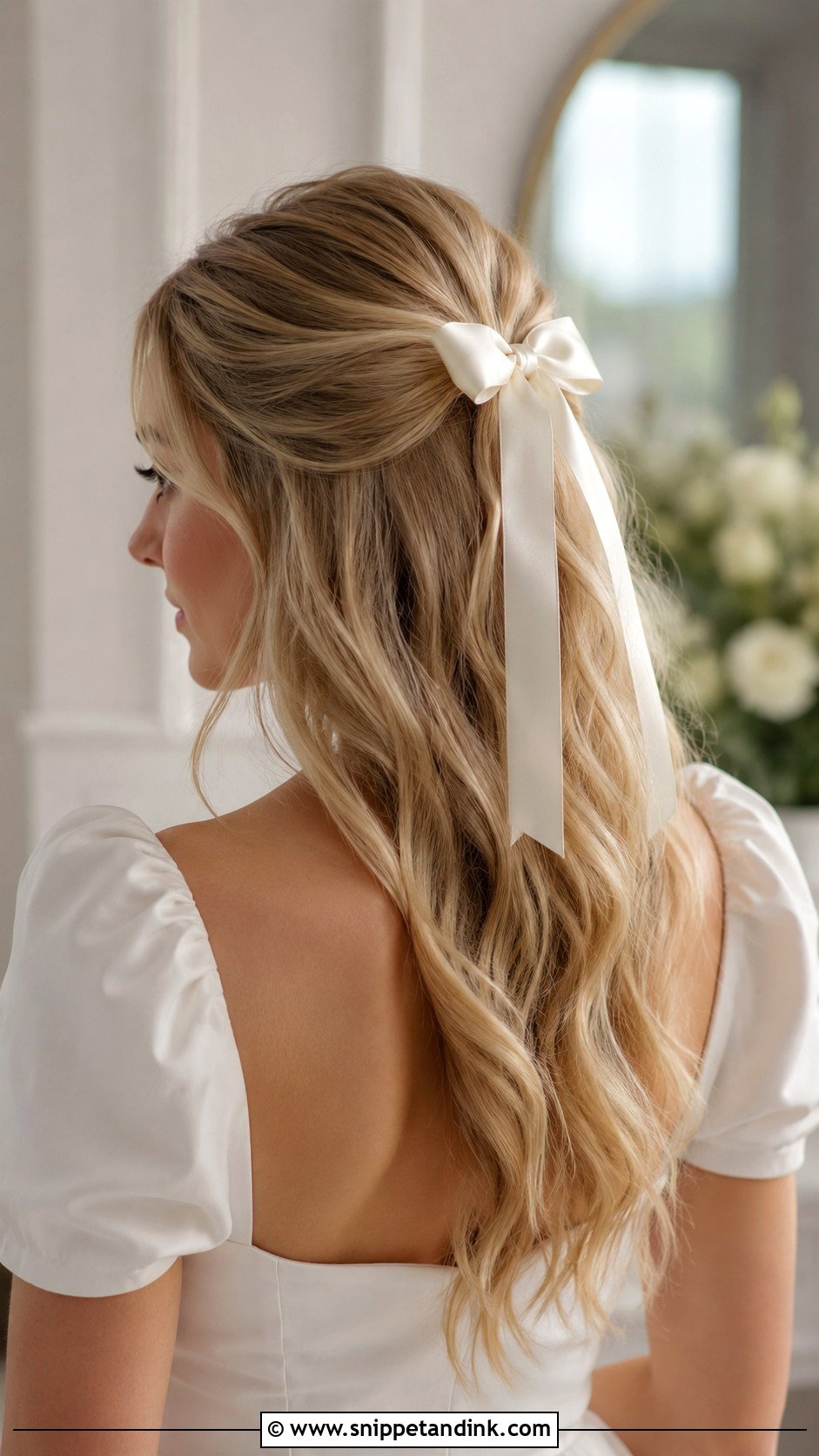
Bows can tip into childish fast, and the fix is fabric and scale. A satin, silk or organza bow tied over the pinned section looks grown-up with soft waves and a clean dress. Small bows feel refined, long tails add movement as you walk away from the camera. Satin is slippery, so I pin through the knot itself, not just the clip behind it. Ivory, champagne, blush or pale blue can all work, depending on your palette. Courthouse ceremonies, showers and rehearsal dinners suit a bow especially well.
10. Half Up Wedding Hair With Crown Braid
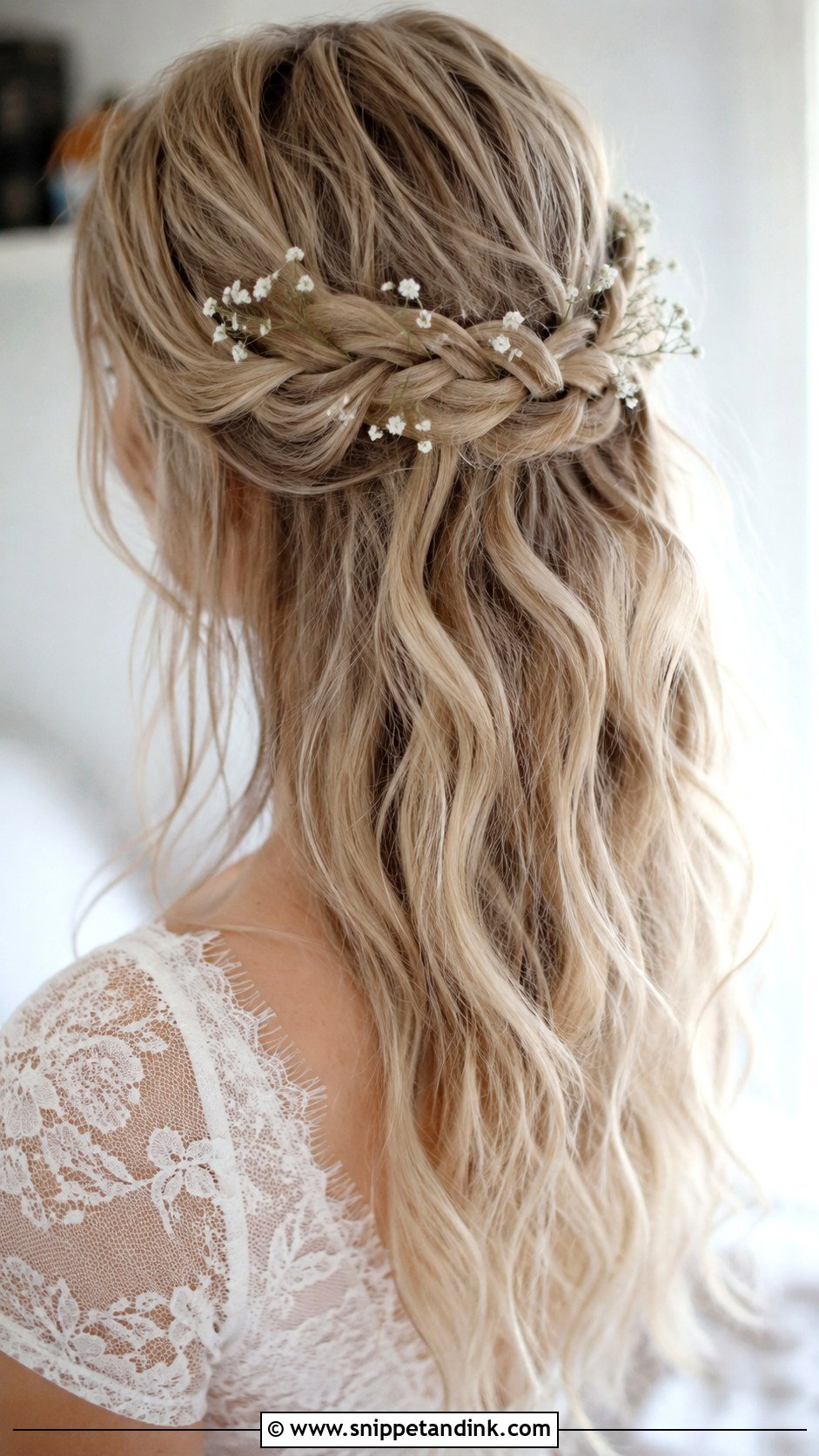
A crown braid creates a soft halo effect while the length stays down. I either wrap one braid from ear to ear or work two braids that join at the back, and I always loosen them afterward so the halo isn’t severe. It controls the front hair better than almost anything else, which matters on a windy hillside or a beach. Rustic and garden settings suit it. Small flowers, pearl pins or a fine vine can be woven through, but the braid alone often carries enough detail.
11. Half Up Wedding Hair With Side Part
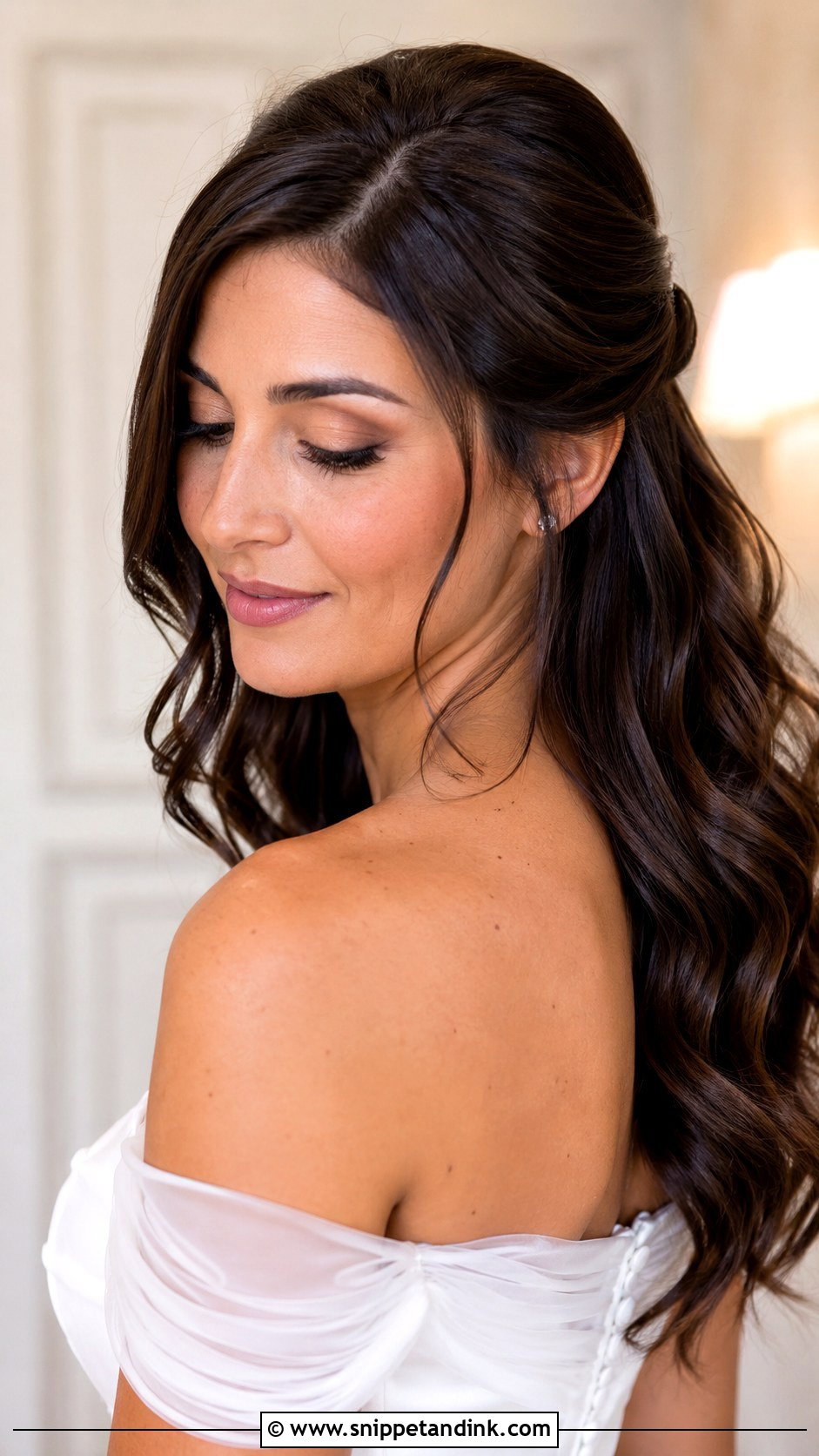
Shifting to a deep side part adds glamour and a hint of old Hollywood. One side sweeps back and pins, the other keeps more volume near the face. I set the roots in the direction of the part the night before or at least an hour ahead, because a side part fights back against a natural cowlick. Statement earrings get the stage on the open side. Ask for smooth roots and soft lift with flexible hold, rather than lacquered waves that crack when touched.
12. Half Up Wedding Hair With Middle Part
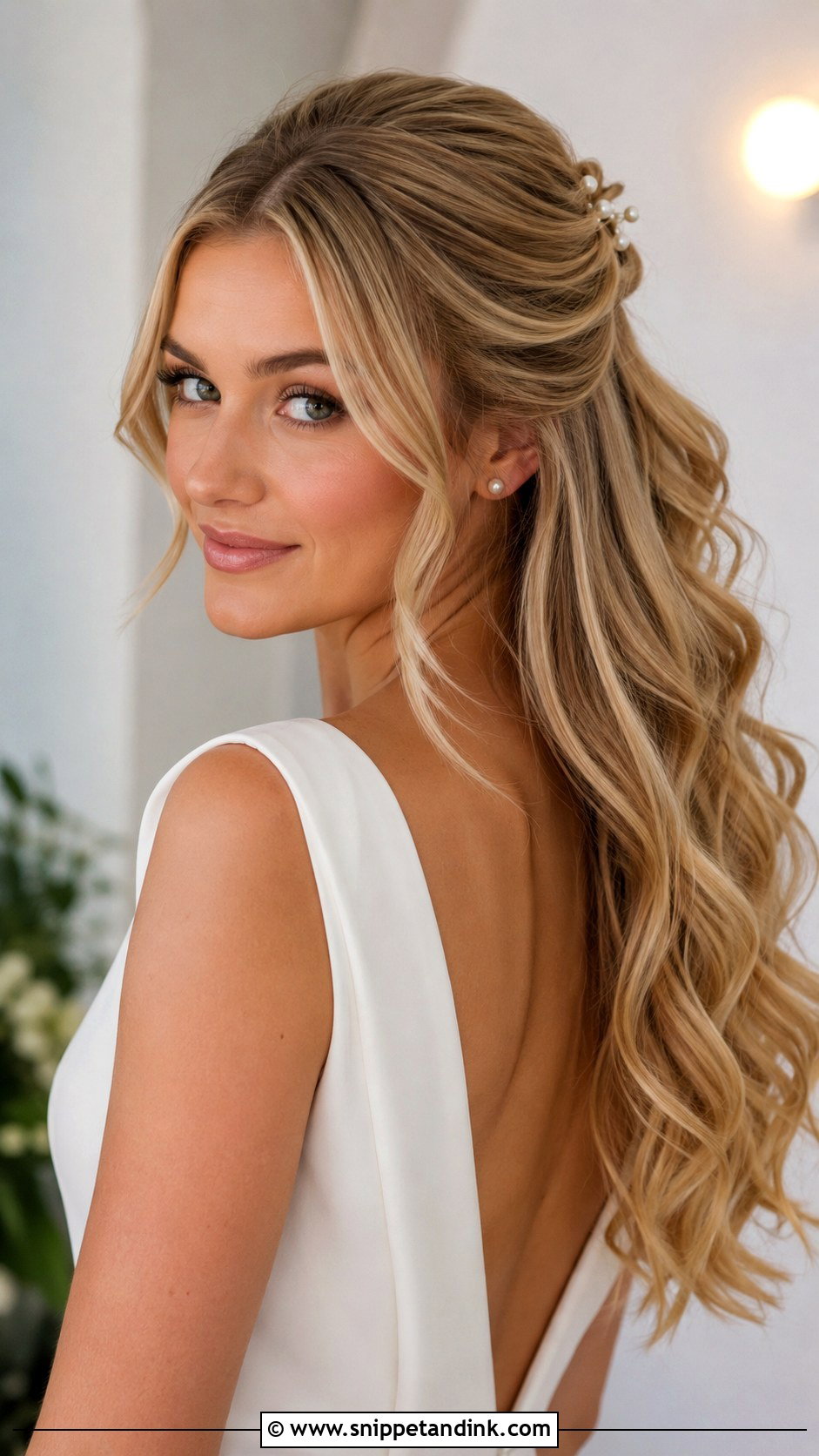
A center part is the most modern option here, and also the least forgiving. Any asymmetry shows, so I check it head-on in the mirror and again from a camera at eye level. The front pieces can be pulled back, left as curtain pieces, or tucked behind the ears before meeting at the crown. Polished waves suit the symmetry in portraits. Keep a little lift at the crown, or the whole shape can look flat on top, especially on fine hair.
13. Half Up Wedding Hair For Short Hair
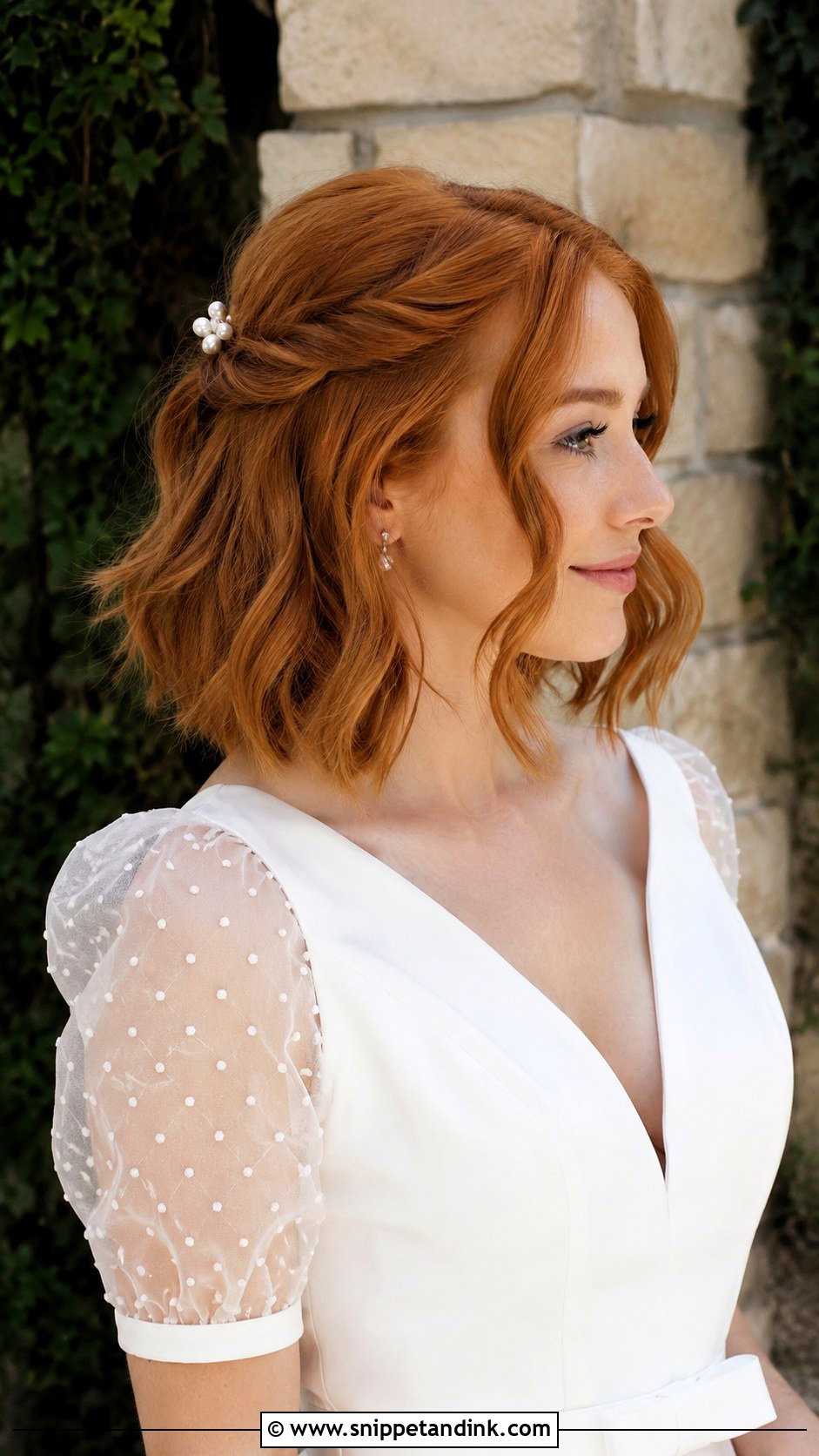
Short hair takes a half-up shape better than most people think. On a bob or shoulder-length cut, I twist or braid just the top section back and wave the ends. The short pieces at the nape and sides are what try to escape, so I use more pins than usual and a dry texture spray at the root for grip. A small comb, pearl clip or a few delicate pins is plenty of decoration. Face-framing pieces soften the cheeks and jawline.
14. Half Up Wedding Hair For Long Hair
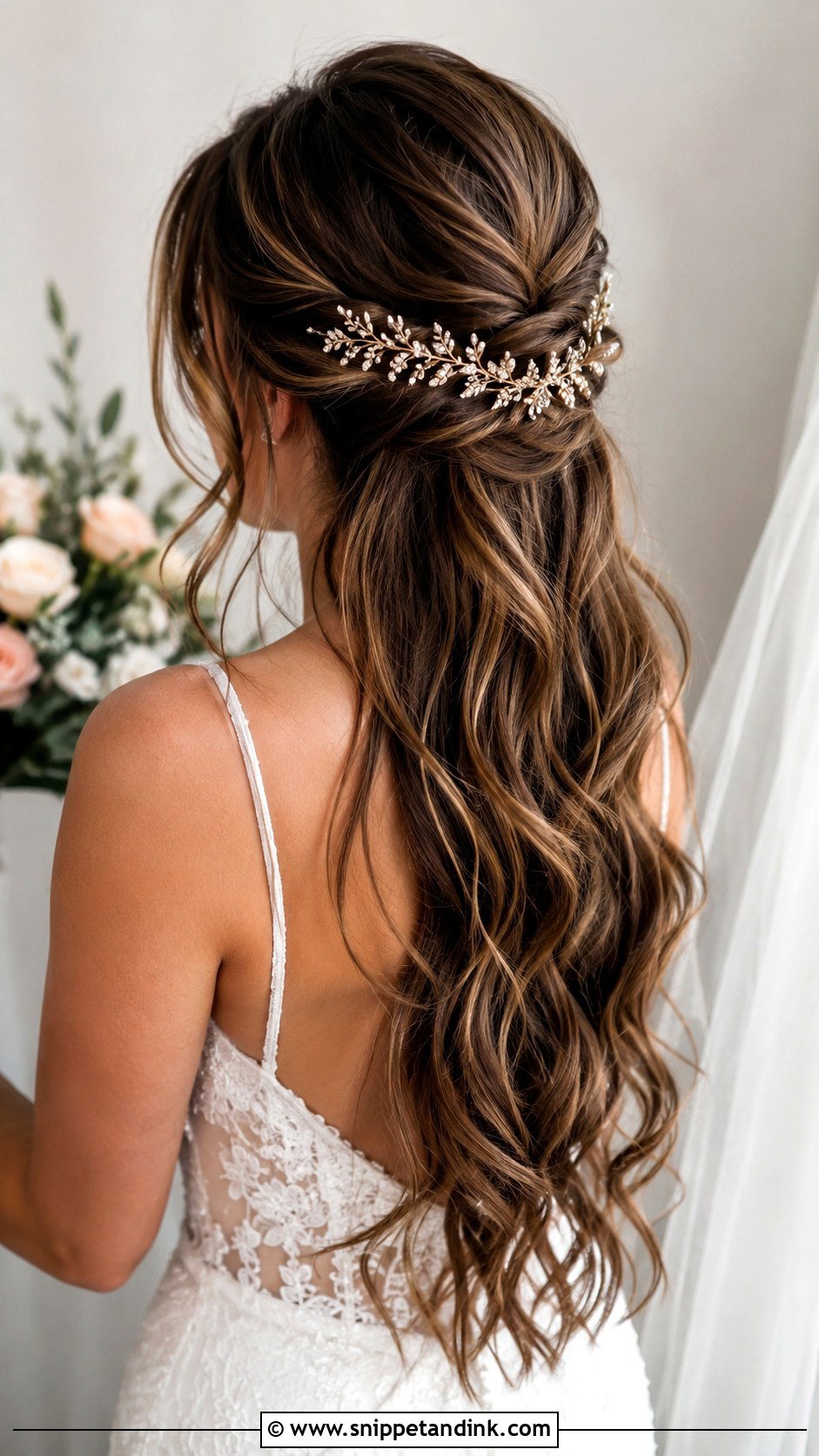
Long hair gives you room for volume, big curls and a dramatic back view. The pinned section can hold twists, a braid, a small knot or an accessory, while the length falls in large waves. The challenge is gravity. Long curls drop faster than short ones under their own weight, so I prep with a light mousse, pin-curl each section while it cools, and finish with a flexible spray. Extensions and dimensional color show off well here. Layers near the face keep all that length from looking heavy.
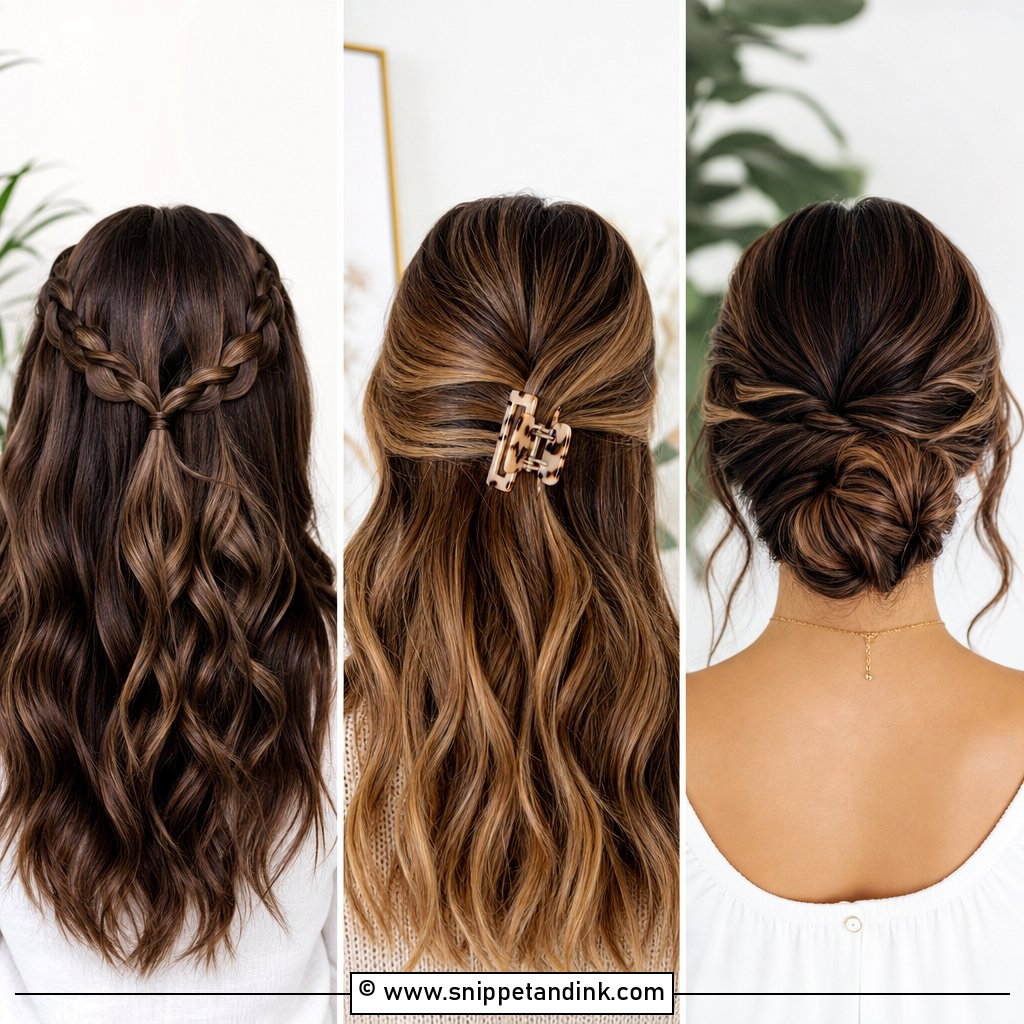
15. Half Up Wedding Hair For Curly Hair
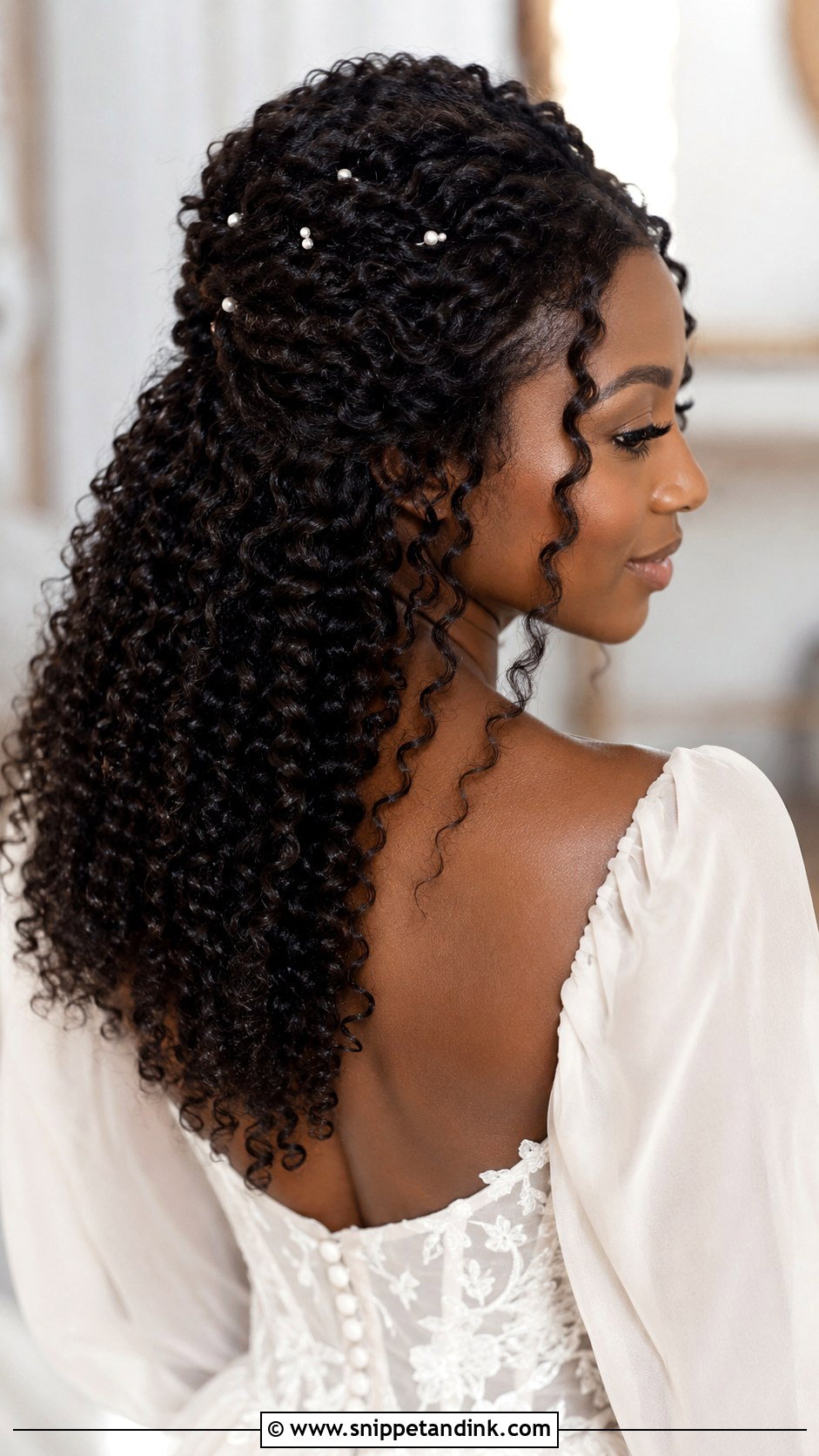
With curly hair, I work with the pattern rather than against it. The top section is gathered, twisted or braided at the crown with the least handling possible, because every pass of a brush or comb breaks curl clumps into frizz. Hydration and definition happen on wash day, ideally with the products you already trust, so plan that routine weeks ahead rather than trying something new the night before. I shape the curls around the face with my fingers and then pin the top. Pearl pins, a few blooms or a small comb finish it.
Rain, Wind and a Plan B for the Loose Lengths
Half-up styles are more exposed to weather than an updo, simply because half your hair is out in it. Humidity relaxes curls, a sea breeze tangles them, and drizzle can flatten the crown in minutes. None of that should put you off, but it’s worth having a backup that takes two minutes rather than a full restyle.
What to agree with your stylist in advance
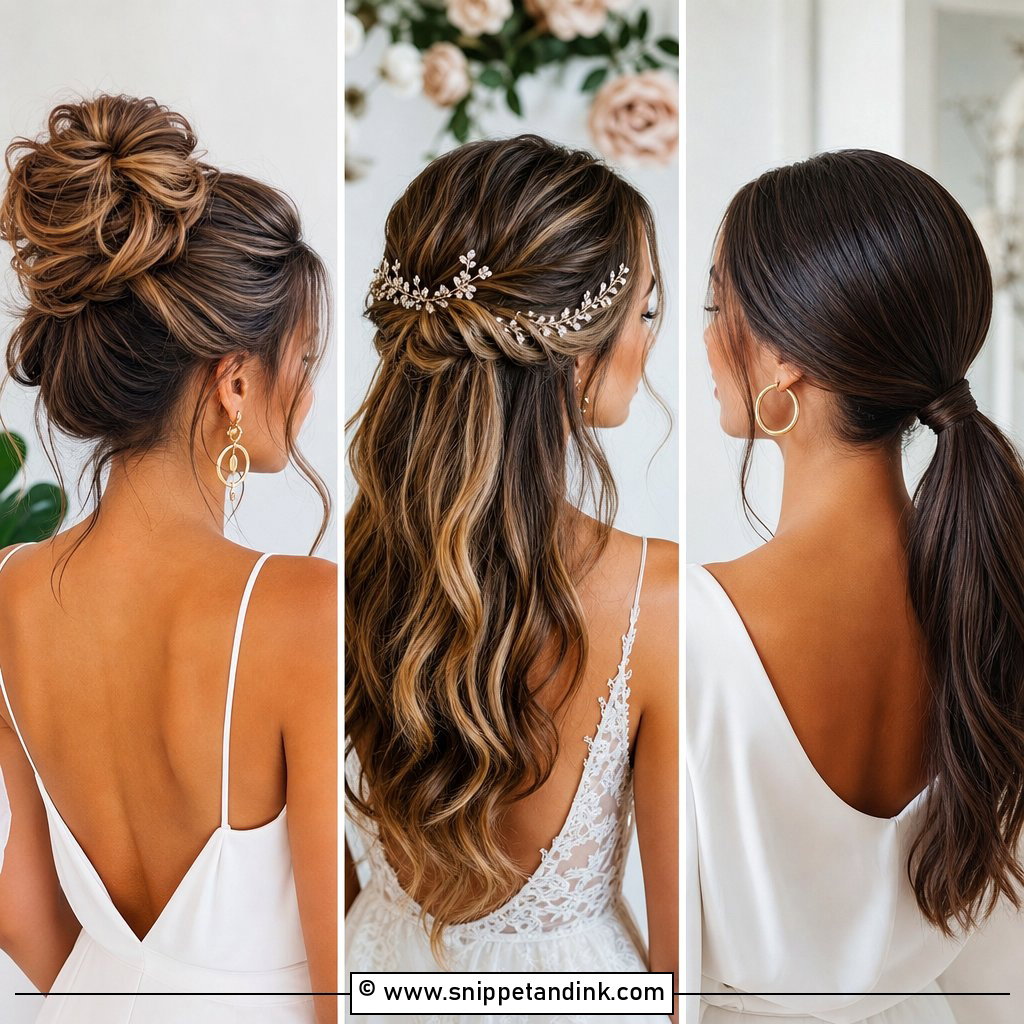
Ask how she’d convert your style if the curls give out. My usual answer is to sweep the loose hair into a low ponytail or low bun beneath the existing pinned section, which keeps the crown and accessory exactly where they were. Have her show you once at the trial. Then put a few bobby pins, a clear elastic and a small travel hairspray in a bridesmaid’s bag. If the forecast looks humid, a tighter curl in the morning with a lighter brush-out is the safer bet, since it softens on its own as the day goes on.
Photograph the Back Before You Leave the Trial
So much of the appeal here is flexibility. Curls, braids, twists, a bow or a plain clip can all sit on the same pinned base, and you can tune the whole thing to your dress, the venue and the forecast. The step people skip is checking the angle that matters most. At your trial, ask someone to photograph the back and both sides in daylight, with the veil in and then out. Look at those pictures that night rather than in the salon mirror. If you still love it from behind, you’re done.
You'll Like These Ideas:


Leave a Reply