
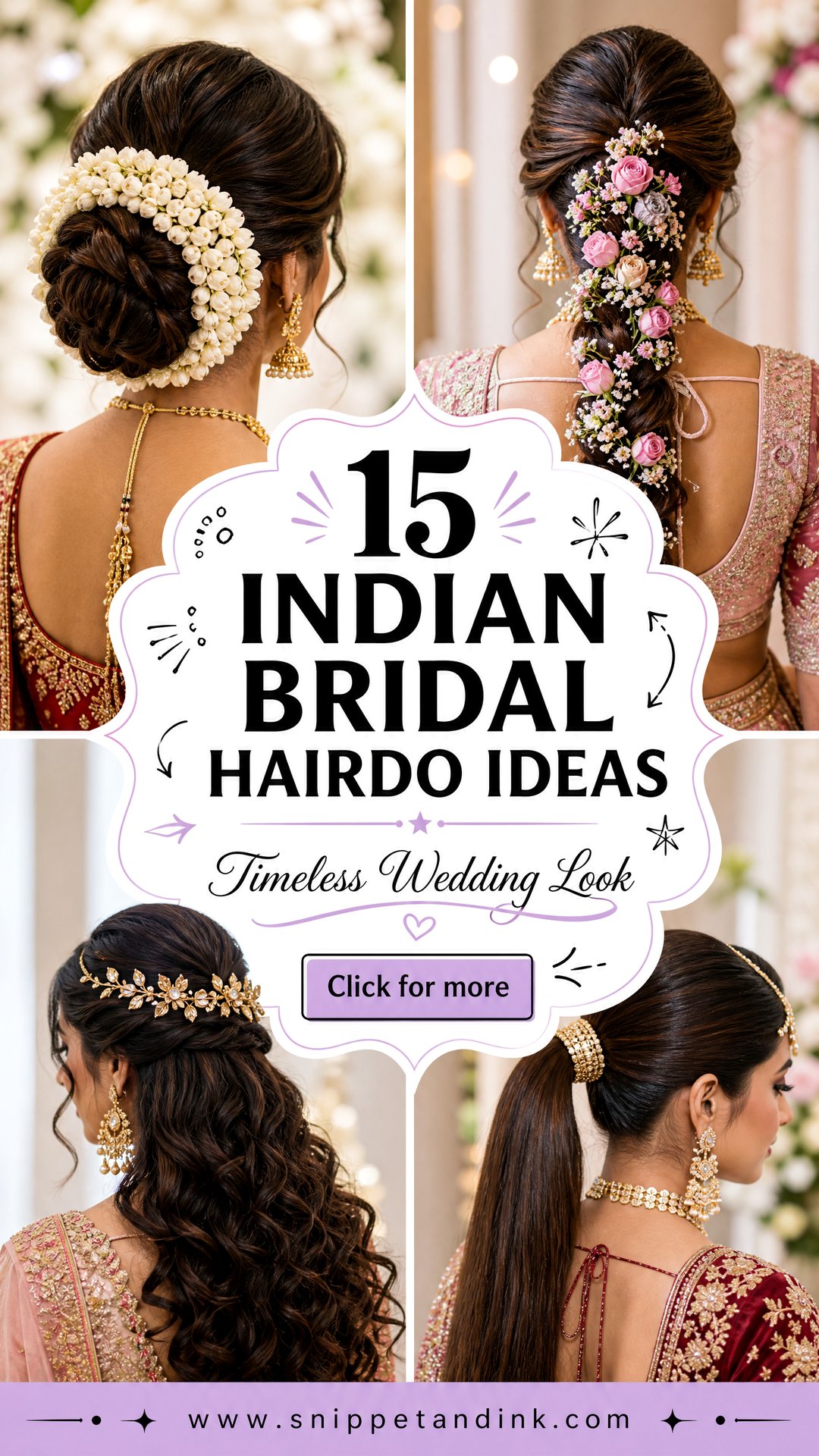
Pinning hair in place is the easy part. An Indian bridal hairdo also has to cope with a lehenga, saree, dupatta, heavy jewelry, flowers, rituals that run for hours, dancing and a photographer circling you. It needs to stay put without feeling like a helmet. Some brides arrive certain they want a low bun and maang tikka; others want a jasmine braid, reception curls or a ponytail for the sangeet. I’ve grouped fifteen hairdos I do often, and with each one I’ve said who it suits, what it needs from your hair and where it tends to struggle.
Reading Your Face, Neck and Hairline Before Deciding Height
When a bride sits in my chair for a trial, I look at three things before I touch a brush: the shape of her face, the length of her neck, and her hairline. Those decide how high the hairdo should sit far more than the photos she’s saved.
- Round or wide face: some lift at the crown, like a puff or a mid bun, adds length. Very flat, slicked styles make the face look wider.
- Long face: keep height low and add width at the sides with soft waves or a side bun.
- Short neck: a low bun can crowd the neck under a heavy necklace; a mid bun or a braid shows more neck.
- High forehead or thinning at the temples: a matha patti or a soft side-swept front covers it naturally, and a center-part sleek style shows it most.
- Strong cowlick or baby hairs at the front: tell your stylist early, because they decide which way the part can go.
None of these are strict rules. They’re where I start before adjusting to your outfit and your own taste.
1. Indian Bridal Low Bun
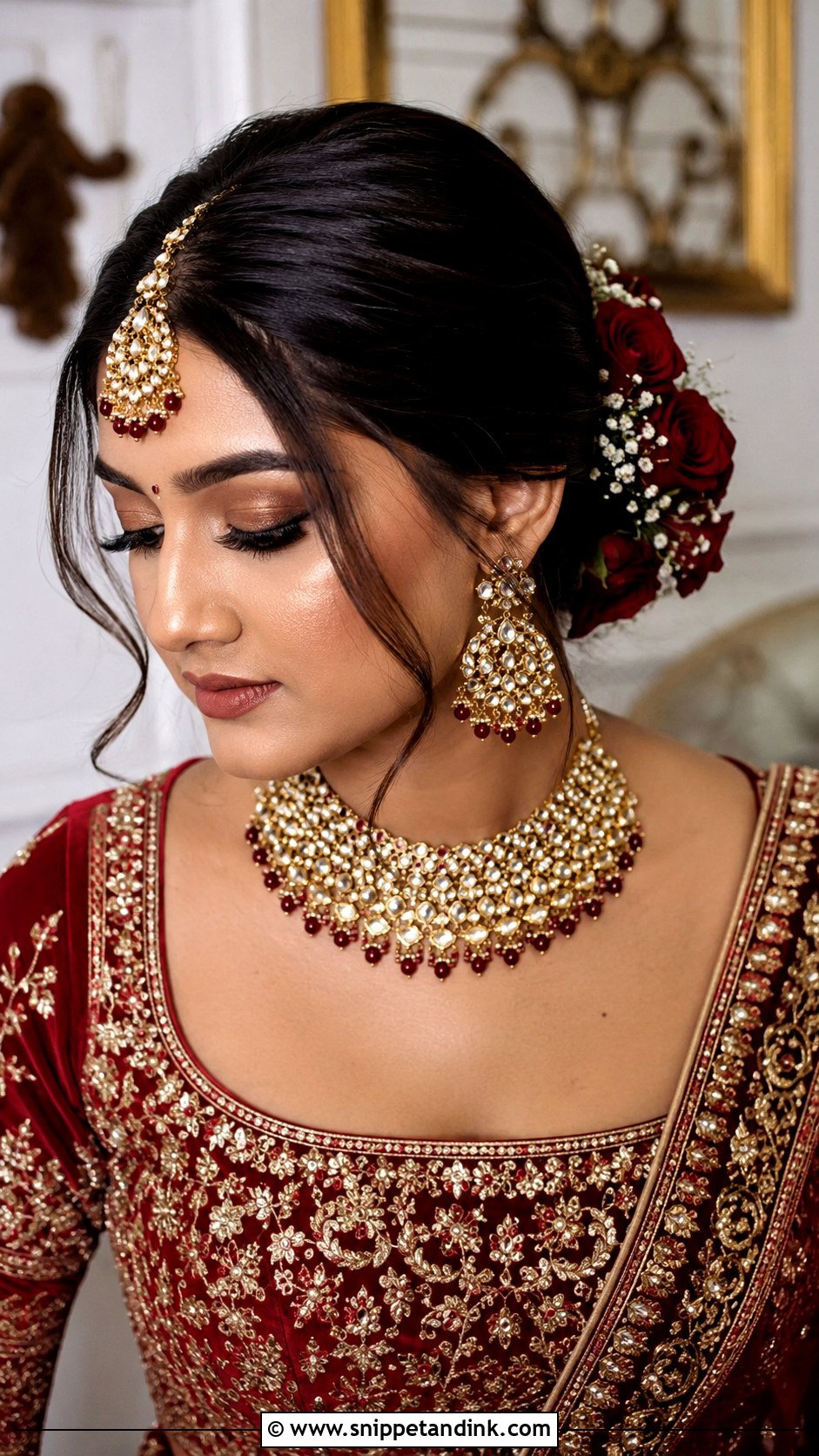
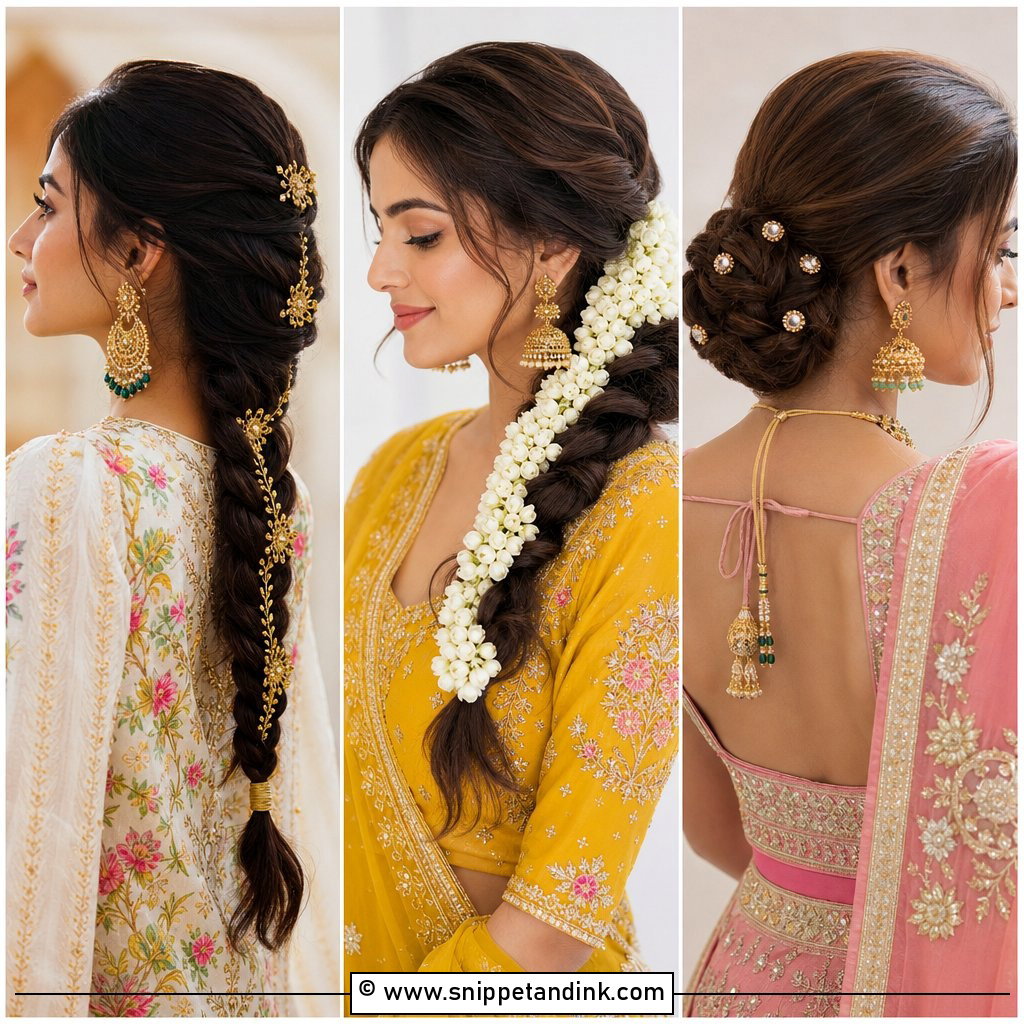
Nine times out of ten, a dupatta worn over the head sits best on a low bun. Sitting at the nape, it leaves the crown free for a center part with a maang tikka, matha patti or passa, and nothing looks crowded. Heavy lehengas, silk sarees and red bridal outfits all sit well with it. I keep the base smooth when the outfit is ornate and softly textured when it’s plain. Fresh roses, pearl pins or a short gajra finish it, and the profile reads cleanly in side-angle ritual photos.
2. Indian Bridal Gajra Bun
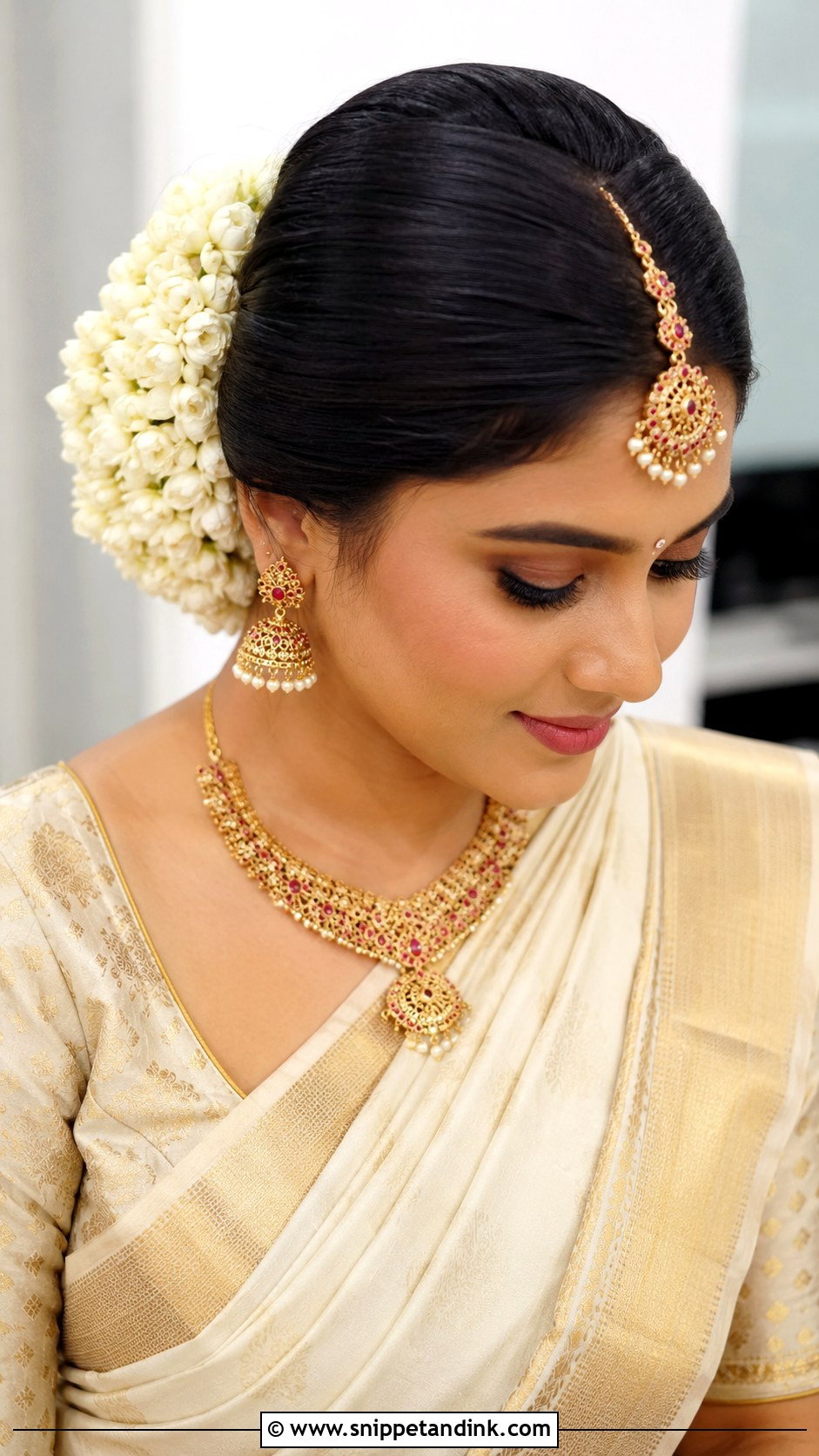
Fresh jasmine makes a look feel ceremonial the moment the scent reaches you. An Indian bridal gajra bun belongs at pheras, temple weddings and South Indian ceremonies. The bun can be sleek, braided or softly twisted, with the jasmine wrapped around its outer edge. I size the gajra to the bun, not the other way round: three coils on a small bun swallow it and pull attention from your jewelry. It suits gold temple pieces, Kanjeevaram silk, red lehengas and ivory alike.
3. Indian Bridal Braided Bun
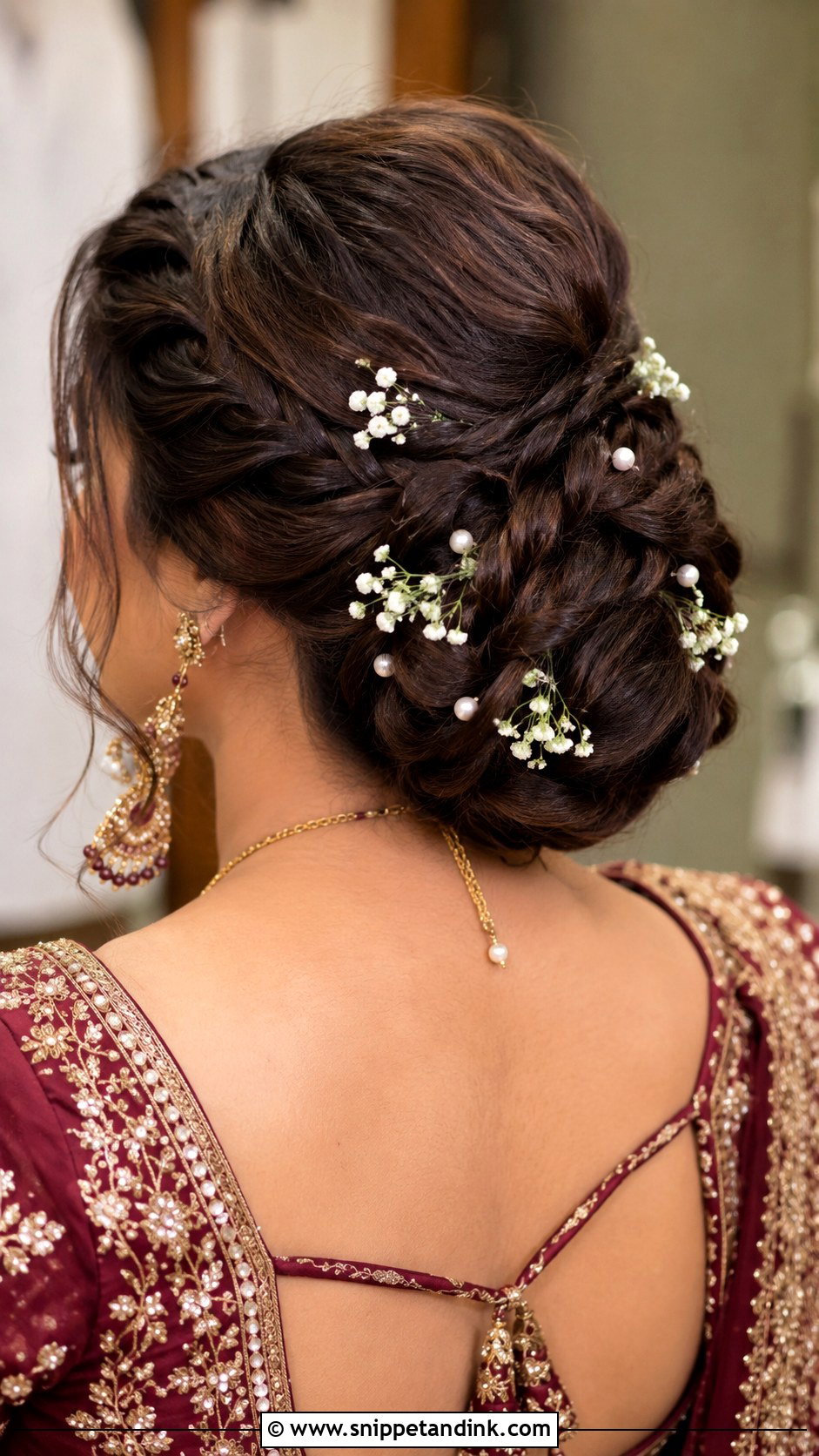
Braiding the sections before wrapping them gives the bun texture in close-ups and a lot more holding power. Small pearls, gold pins or flowers can be tucked between the braids. Thick hair does this naturally; for fine hair I add a few clip-in wefts so the braids aren’t skinny. It’s one of my preferred ceremony hairdos because each braid locks its section in place, so the bun keeps its shape for hours and takes the weight of a veil or dupatta without shifting.
4. Indian Bridal Center Part Bun
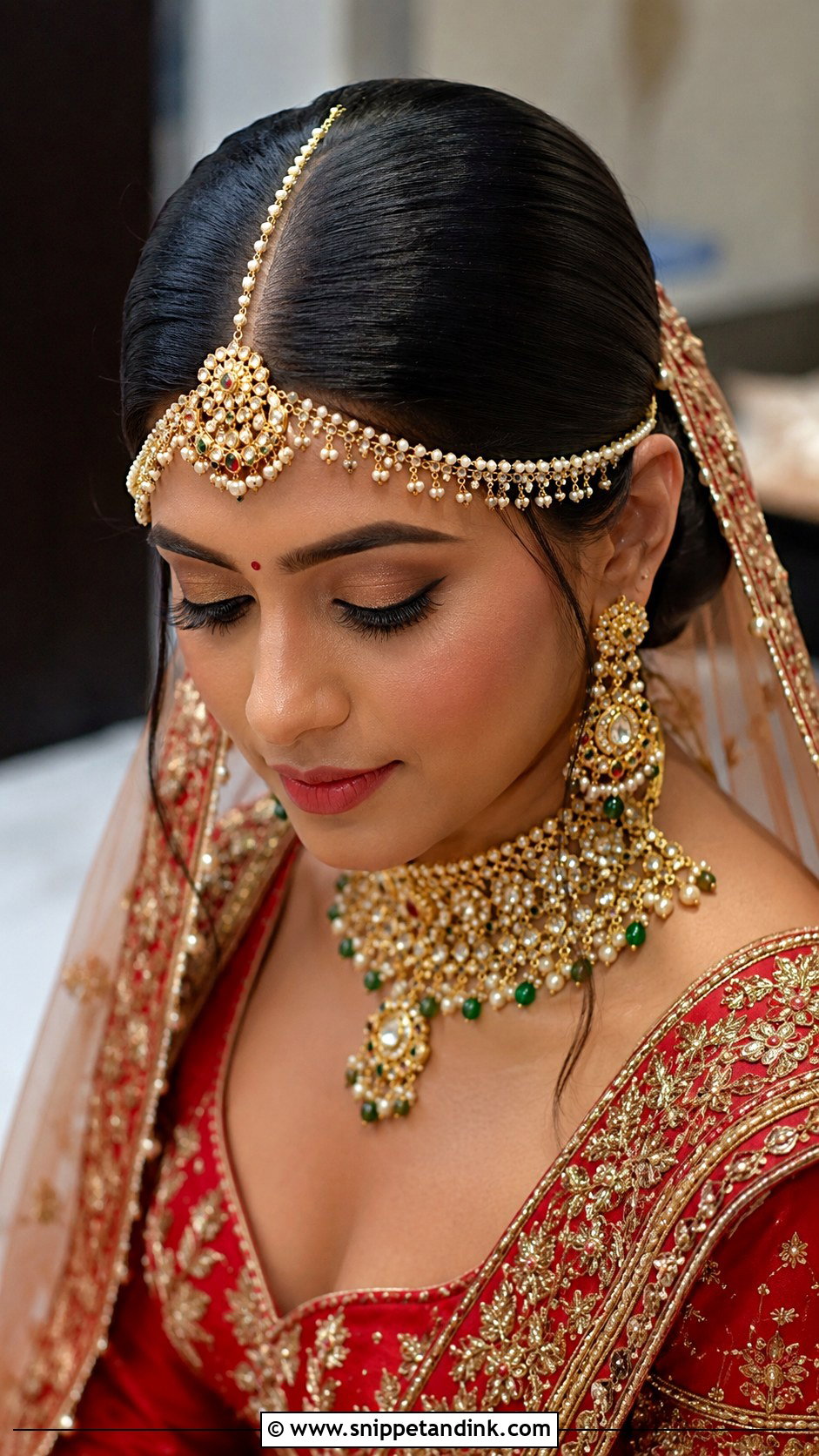
The middle part is the whole point of this bun. It gives a maang tikka or matha patti a straight line to hang from and keeps everything symmetrical around heavy jewelry. Sleek at the front reads regal; a couple of soft face-framing strands look gentler. It works with sarees, lehengas and shararas. I set the part with a fine-tooth comb and a light mist of spray before anything else, and recheck it after the tikka goes on, because the weight of the pendant can drag a soft part off line.
5. Indian Bridal Puff Bun
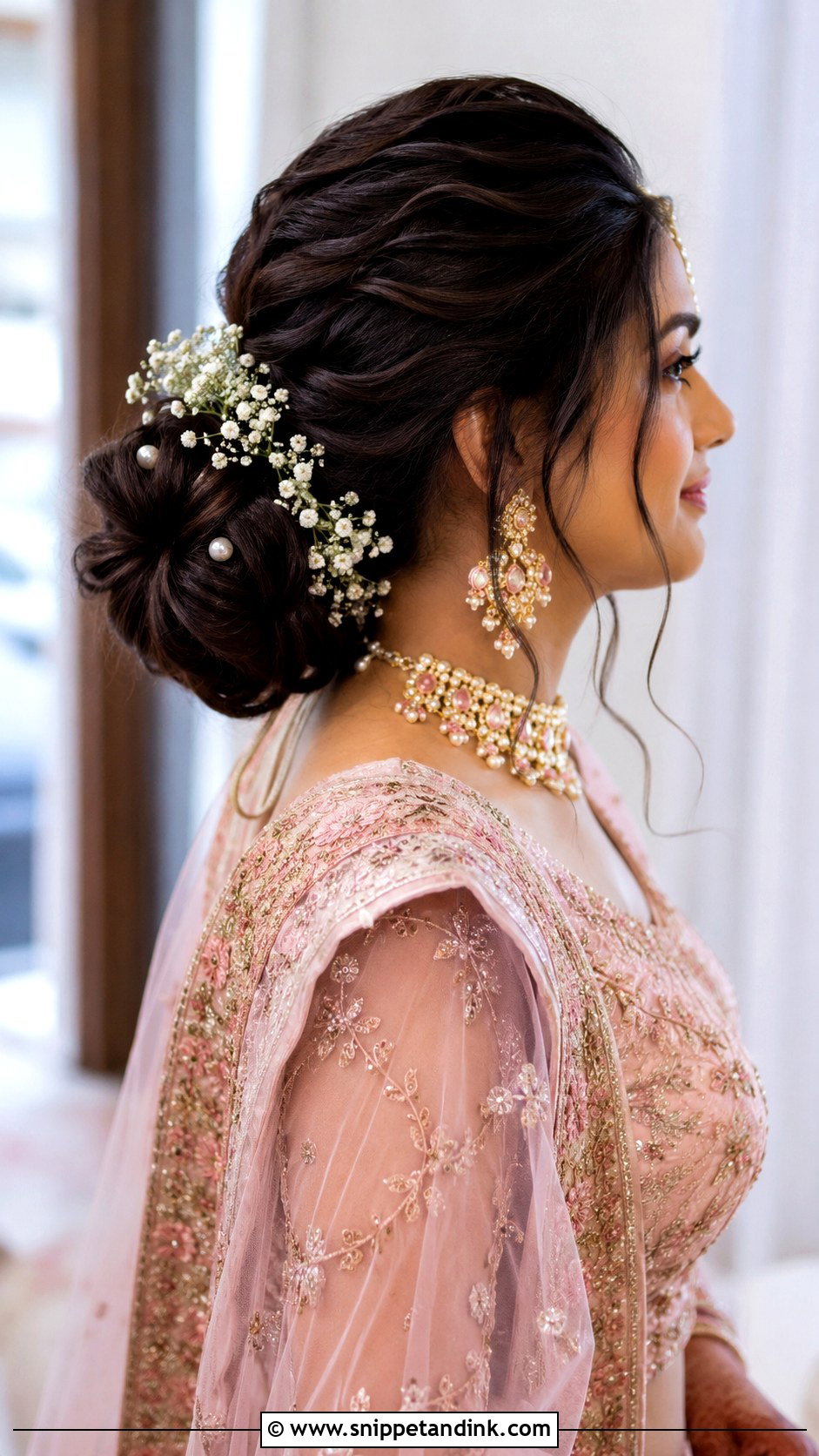
A soft puff at the crown adds height without the drama of a full high bun, and it gives a dupatta something to rest on so it doesn’t flatten your head in photos. On round faces and petite brides, that bit of lift lengthens the face nicely. I backcomb only the underside of the crown section and smooth the top over it, which keeps the puff soft rather than stiff. Roses, baby’s breath, pearls or hair jewelry finish the bun. Skip it if you have a very long face; the height exaggerates it.
6. Indian Bridal Side Bun
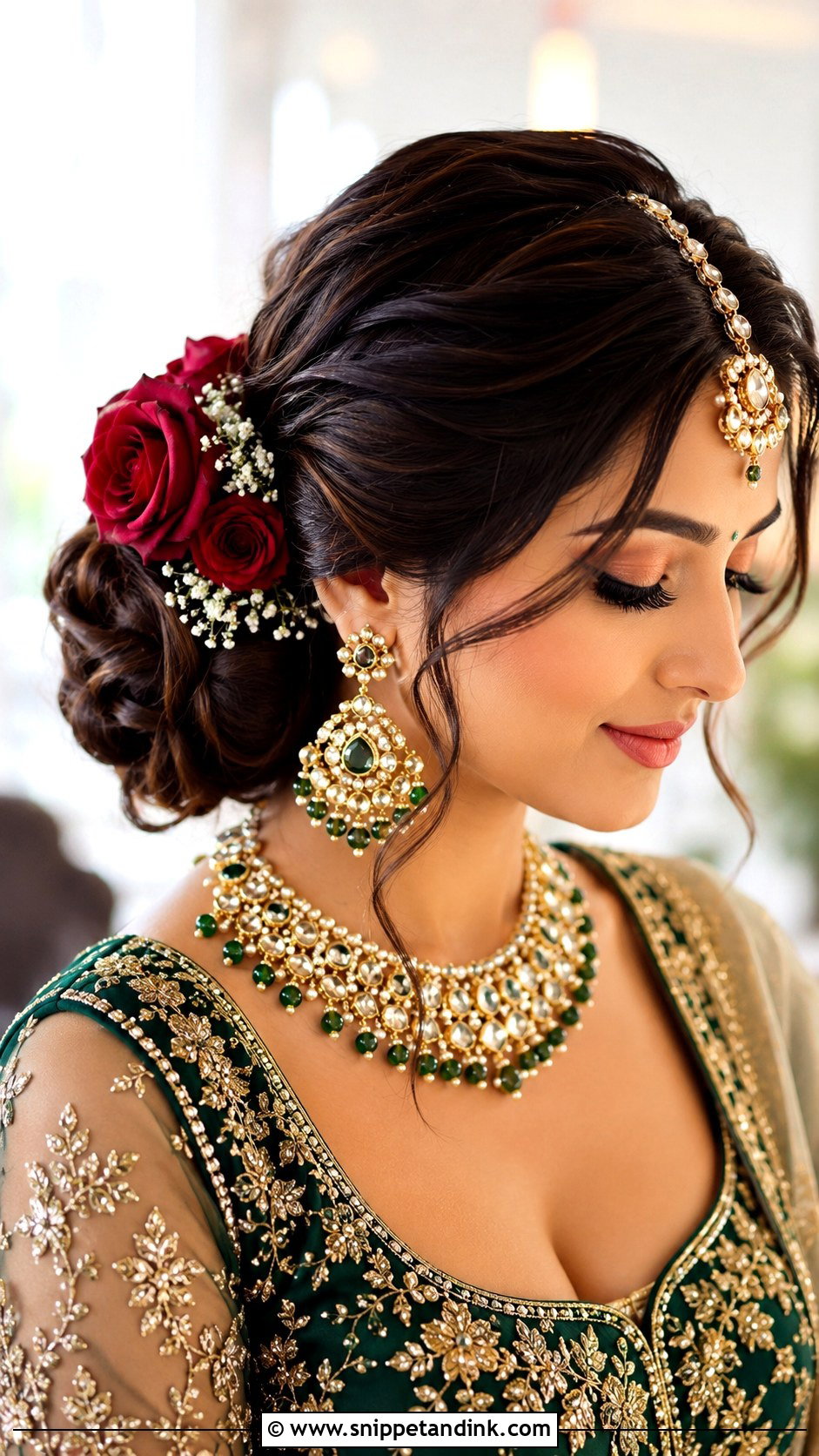
A side bun sits low near one side of the nape, so it shows up in front-facing photos as well as profiles. I suggest it when the blouse, dupatta drape or jewelry already has a statement side, so the hair can balance it. A side passa or an asymmetric flower placement fits it well. The front can take a sleek side part or gentle waves. It suits receptions and engagements best. Under a full ceremonial dupatta, though, it can push the fabric off to one side, so I’d test the drape at your trial.
7. Indian Bridal Long Braid
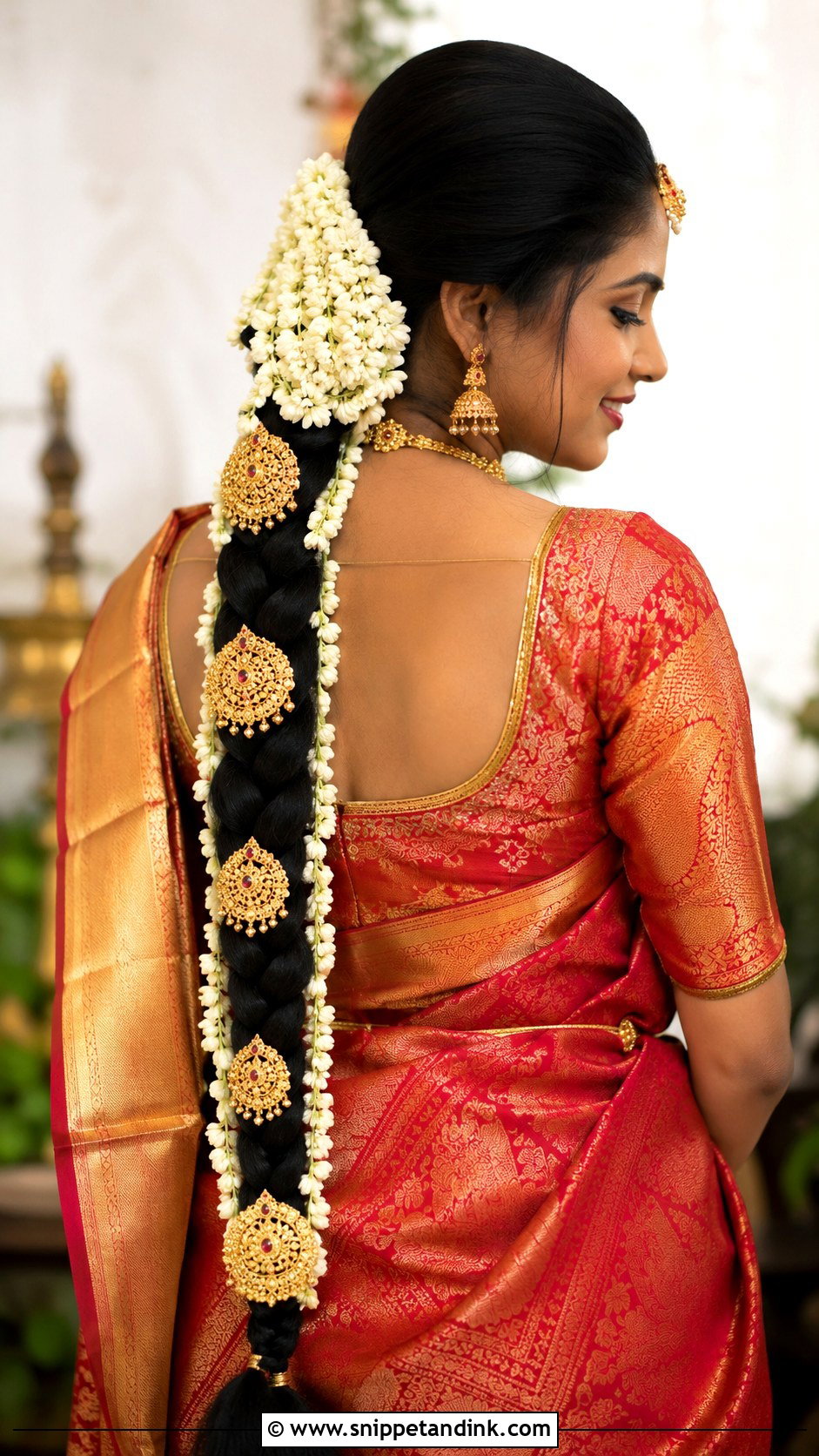
Of all the hairdos here, the long braid has the deepest roots in Indian bridal tradition, and it’s often the most comfortable for long rituals, because the weight hangs down the back instead of sitting on one spot of the scalp. It can be simple, thick, fishtail-style or extended for length and volume, then dressed with jasmine, gold pieces, jada billai, pearls or floral strings. South Indian weddings use it most, though it adapts well to lehengas too. It keeps hair off the face and gives a strong back view. On thinner hair, extensions make the difference between a braid that carries jewelry and one that looks overloaded.
8. Indian Bridal Fishtail Braid
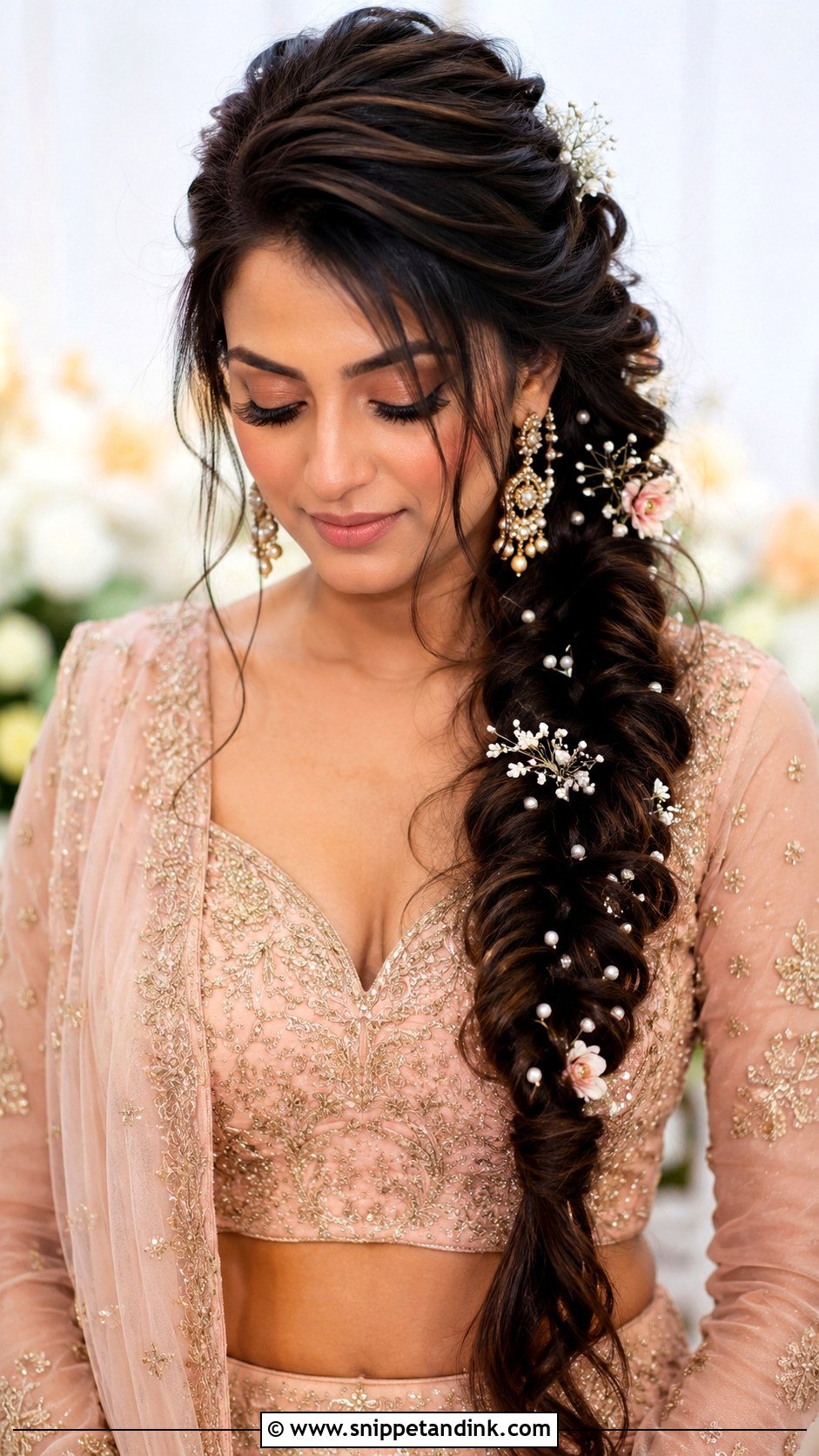
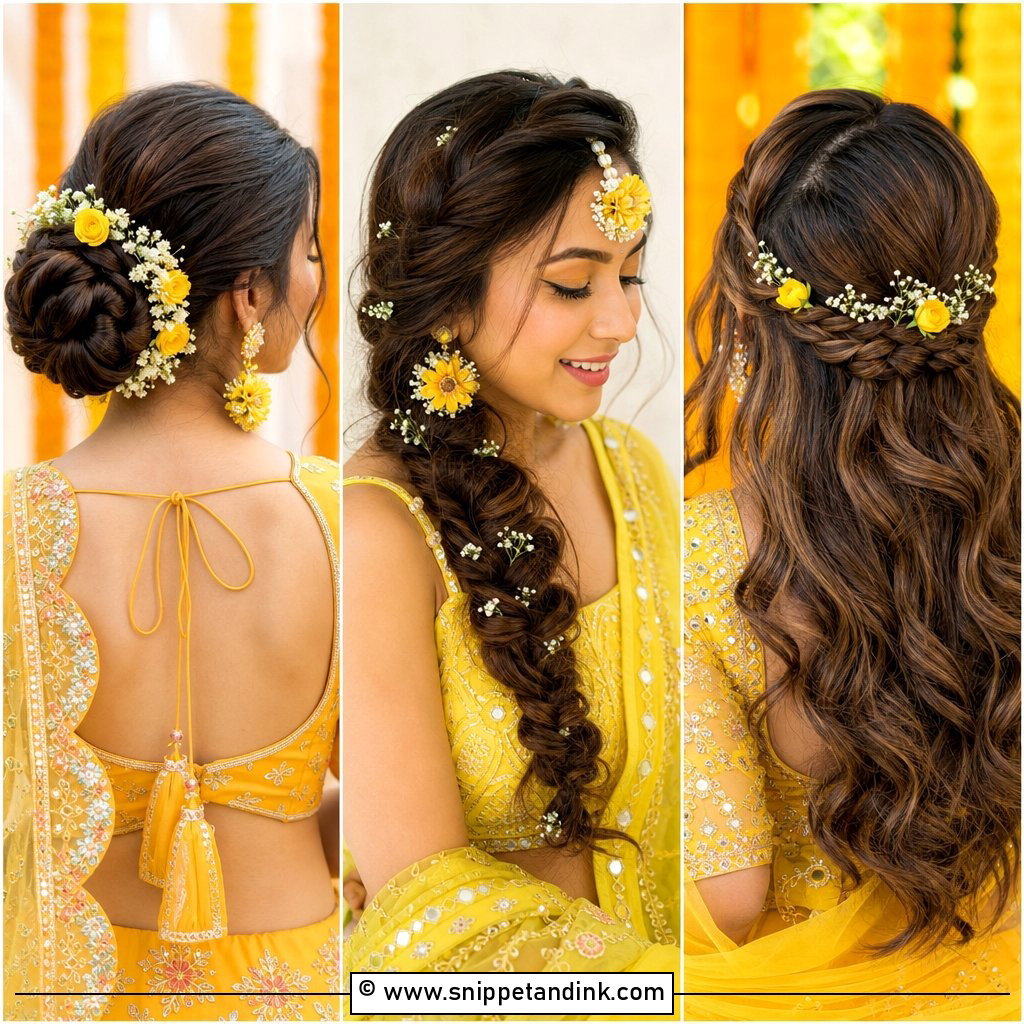
A fishtail looks detailed but weighs very little, which is why I like it for mehendi, haldi, sangeet or a relaxed ceremony. It can start from a soft twist at the crown and run down the back, or come over one shoulder for front photos. Tiny flowers, pearls or gold pins tucked in make it bridal. The woven pattern catches light, so it shows especially well on highlighted or dark brown hair. I loosen it gently once finished. Pull too hard and the edges look thin rather than full.
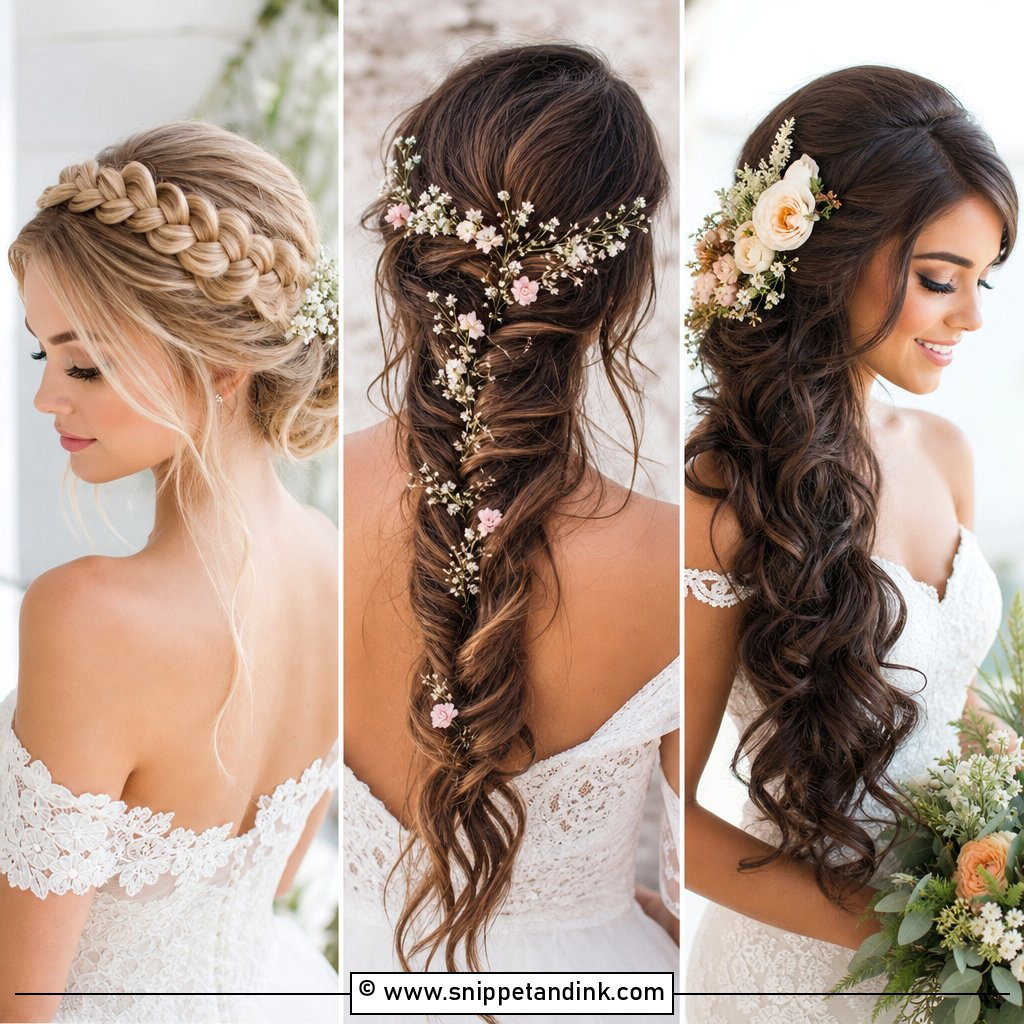
9. Indian Bridal Floral Braid
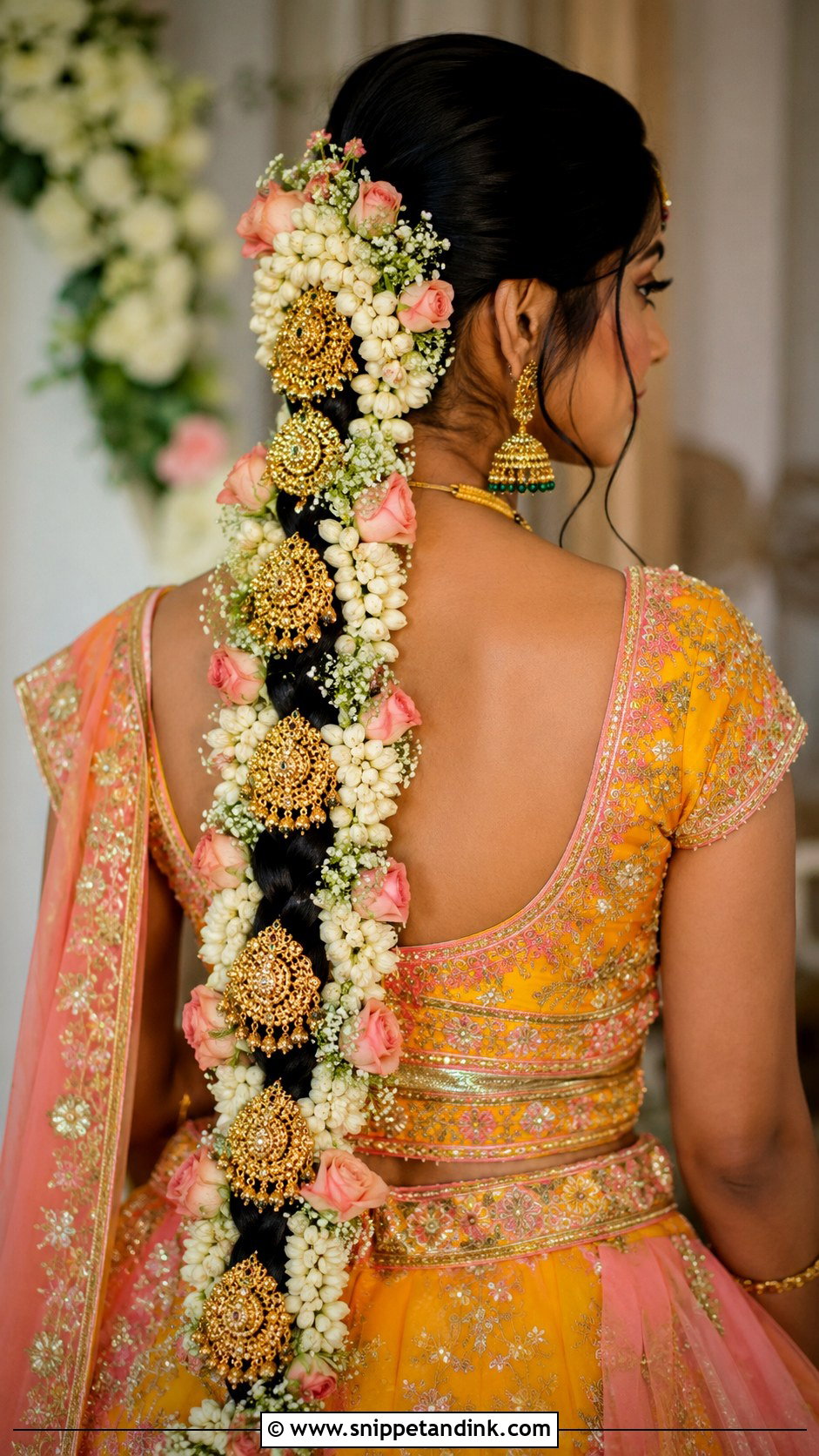
Weaving flowers down the full length of a braid takes longer than ringing a bun, and it needs blooms that are wired or strung, not loose. Jasmine reads traditional; roses, orchids, baby’s breath or a few marigolds can be matched to the outfit. The braid can be thick and classic or soft and loose. It suits outdoor ceremonies, mehendi and South Indian looks. I pin each cluster into the braid rather than just tucking it, otherwise the flowers work loose as you sit and stand through the day.
10. Indian Bridal Half Up Curls
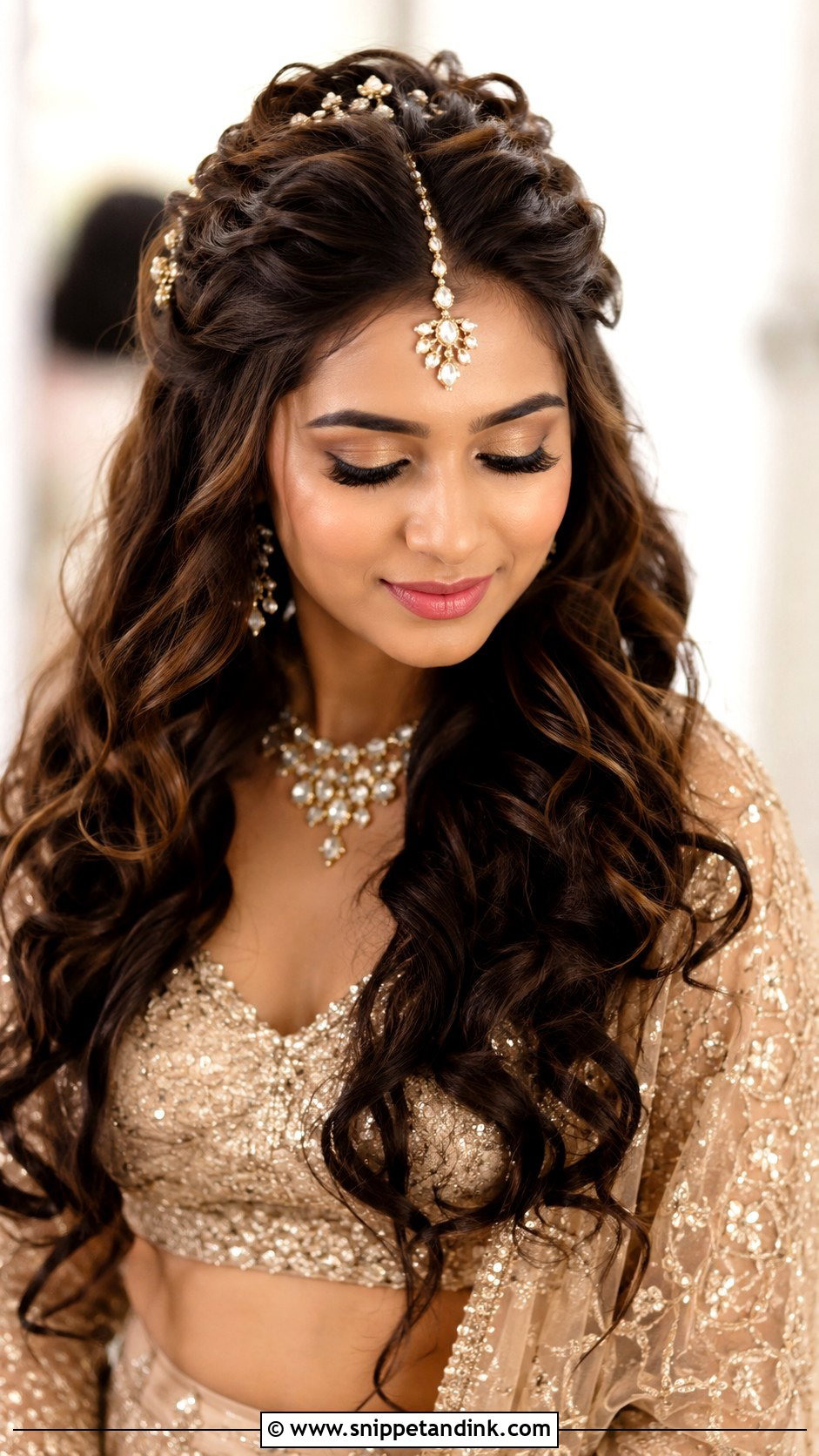
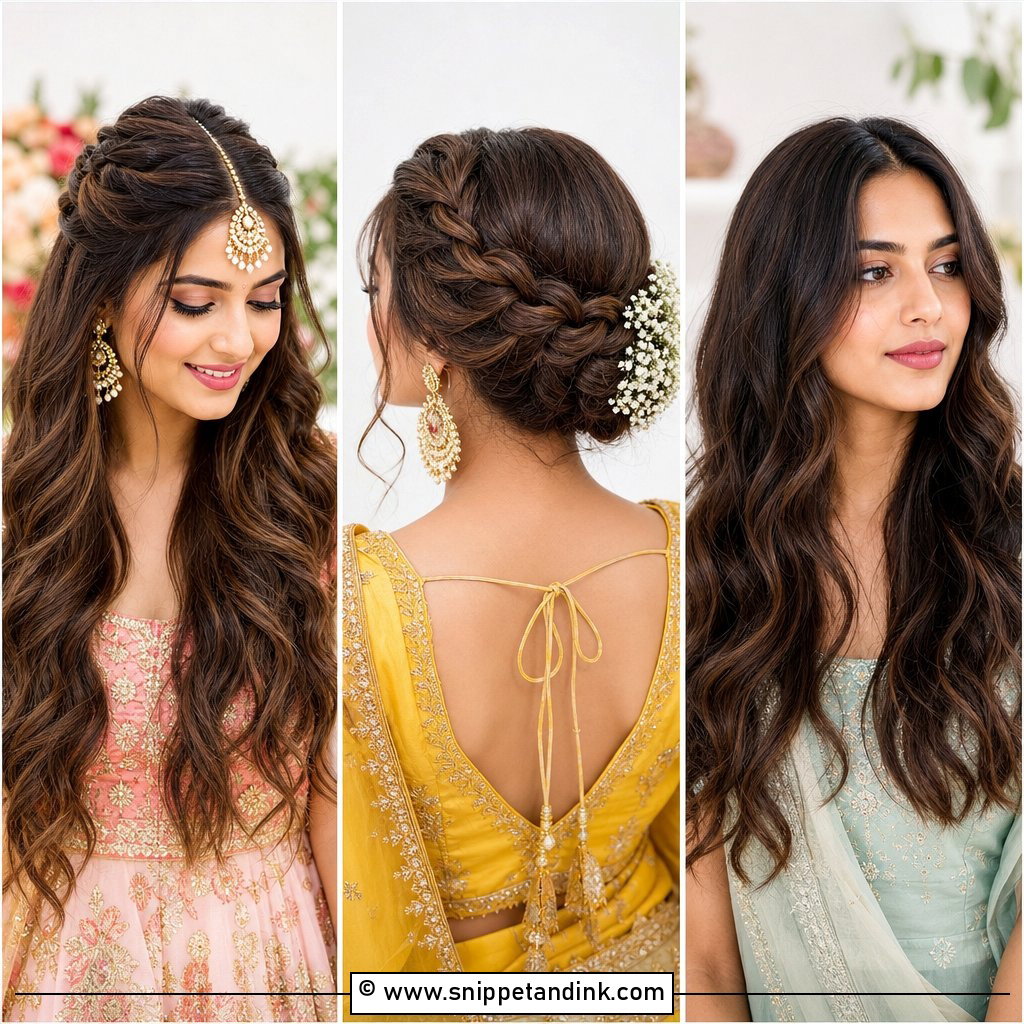
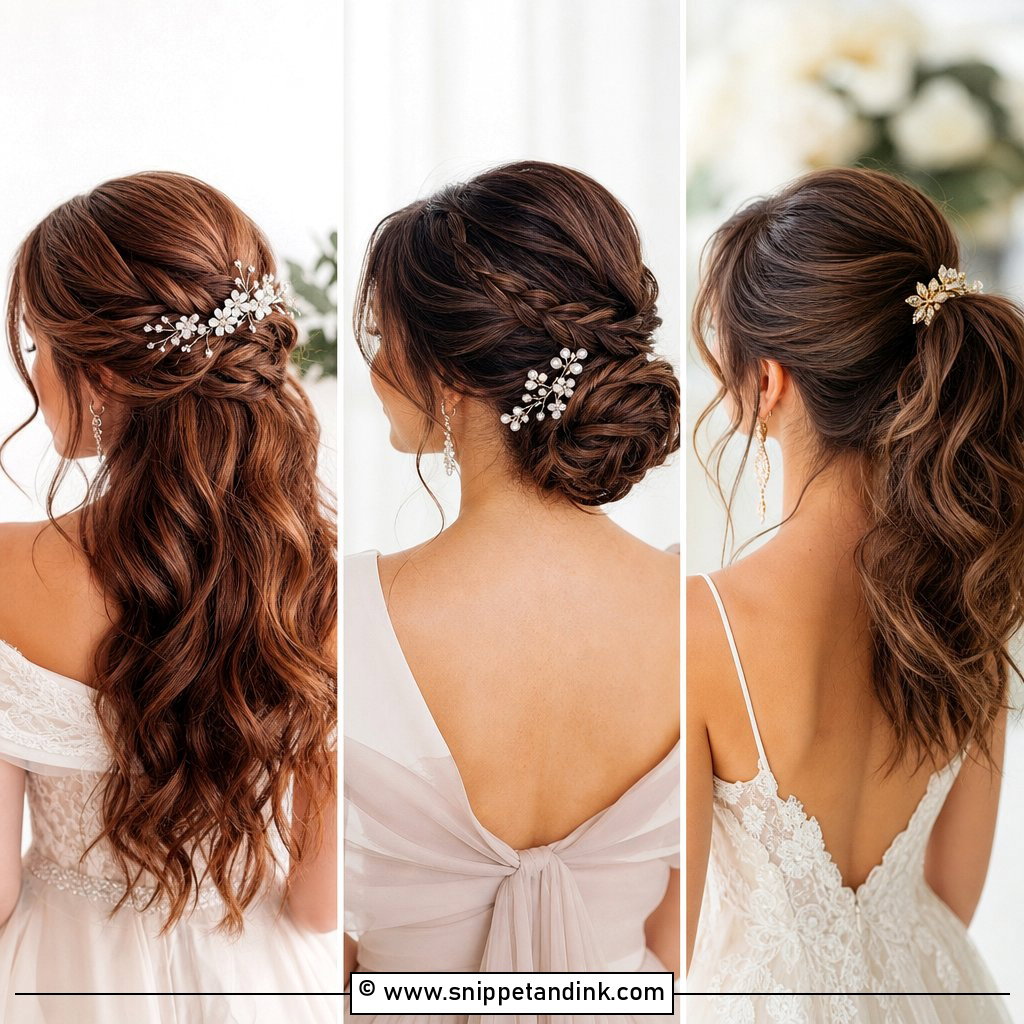
Half-up curls give you open hair with a secure front. The top is pinned back with some volume, twists, braids or jeweled pins, and the lengths fall in curls. It works for receptions, engagement ceremonies and any function without a heavy dupatta over the head. I anchor the top to a small hidden elastic so a maang tikka has a firm place to hook into. Long-lasting curls need to be set and fully cooled before they’re touched.
11. Indian Bridal Open Curls
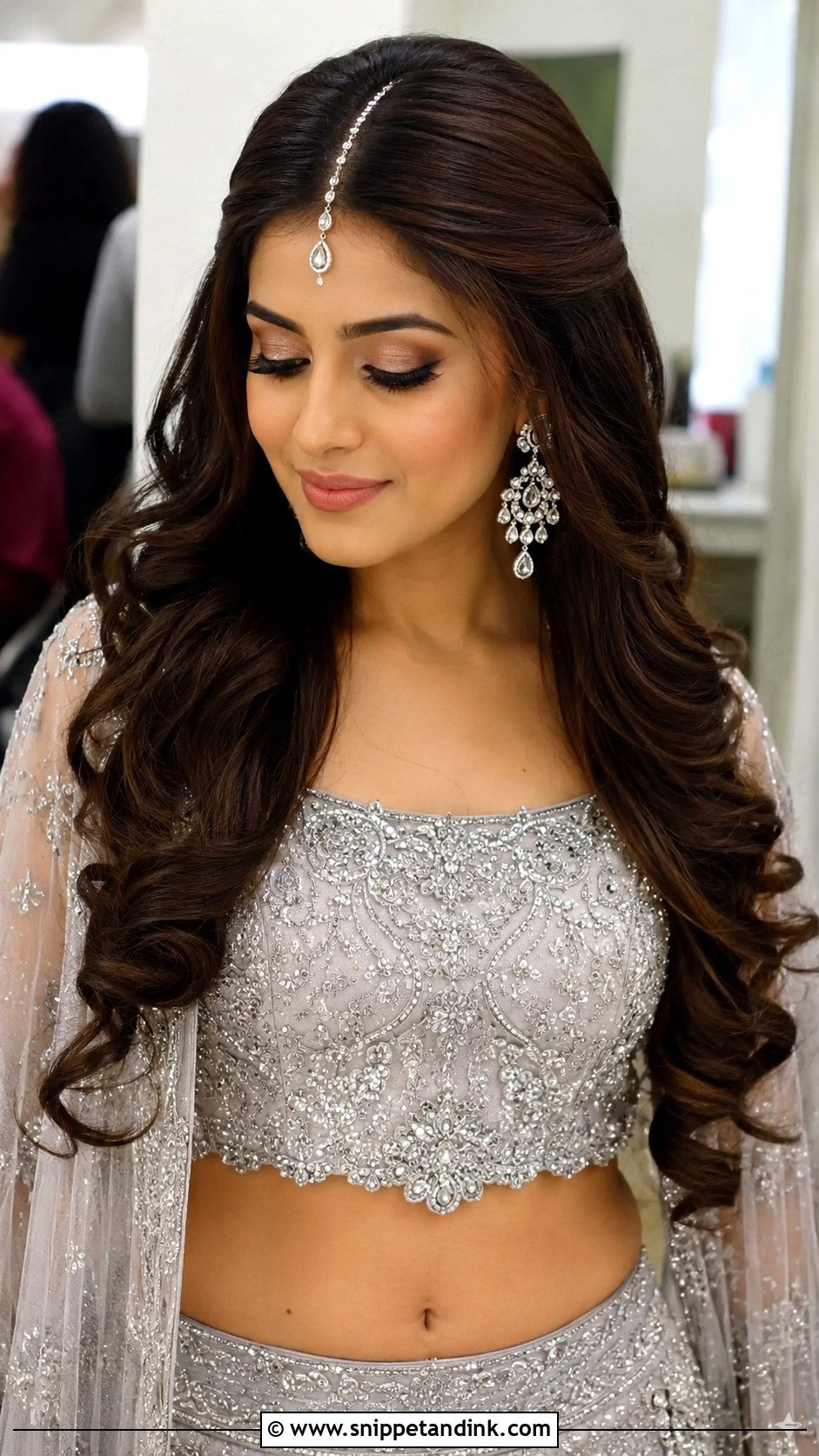
Fully open curls are the lightest hairdo here and the least forgiving in heat. They suit reception gowns, cocktail lehengas, engagement sarees and pre-wedding shoots. Brushed out, they become soft waves; left defined, they hold a fuller shape longer. A center part with a maang tikka makes them bridal, and a side part with clips feels more current. I start the curls below the crown so the top stays smooth, and I use a flexible setting spray. In real humidity, I’d steer you toward half-up instead.
12. Indian Bridal Sleek Ponytail
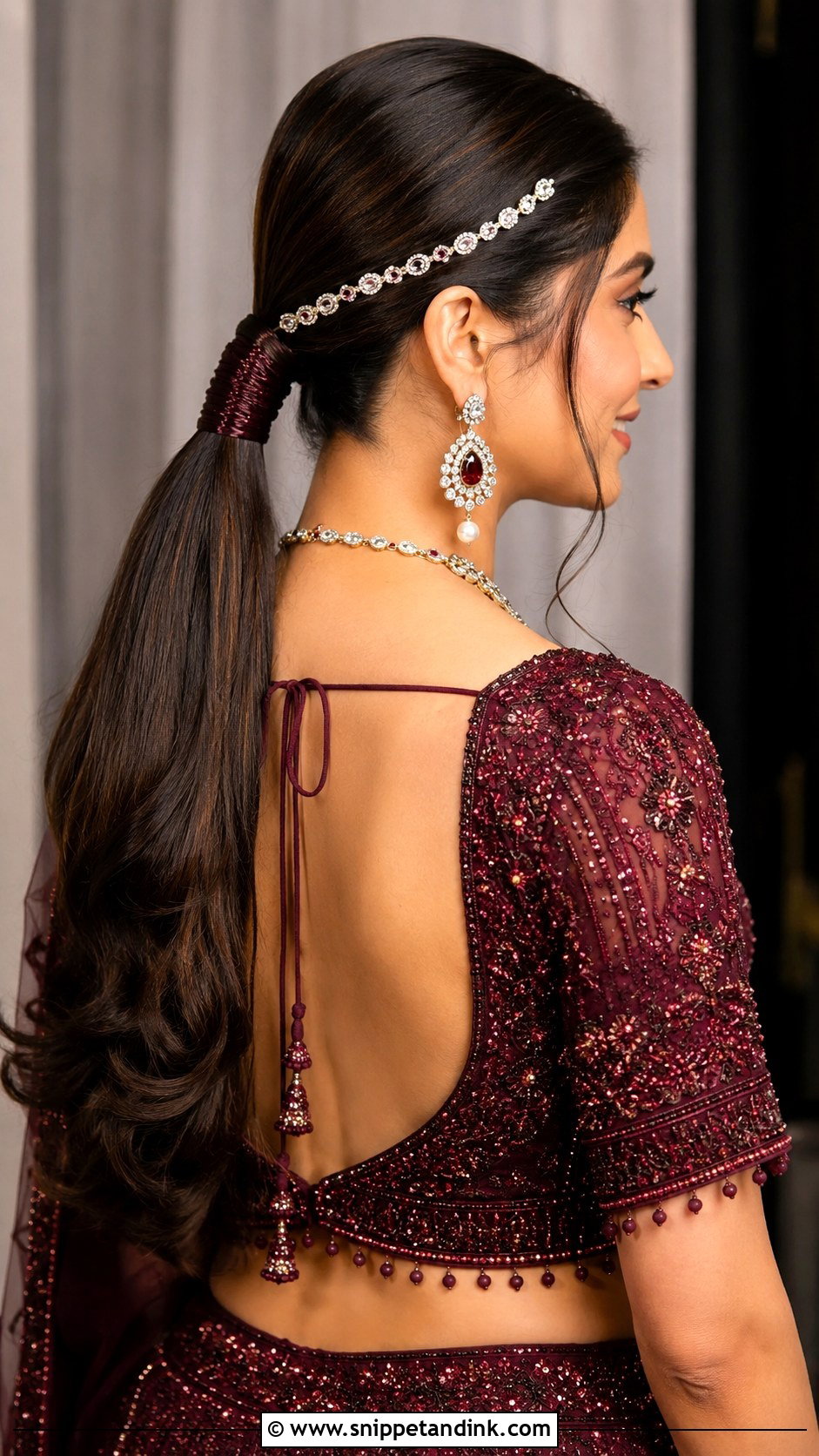
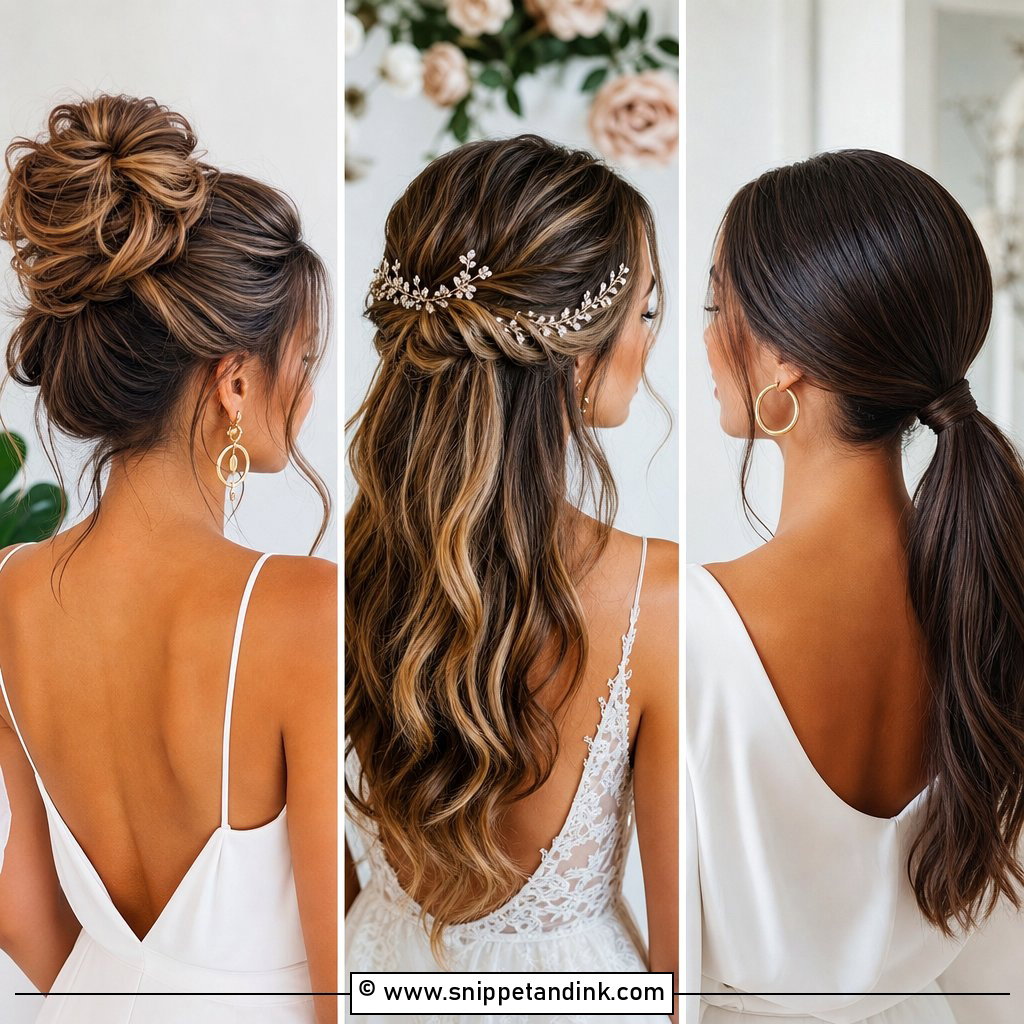
For a sangeet, reception, cocktail or engagement, a sleek ponytail gives drama without the weight of a bun. The hair is smoothed into a mid or low ponytail, then curled, waved or filled out with extensions. A jeweled cuff, hair chain or wrapped base makes it bridal, and it leaves statement earrings and the neckline fully visible. The front has to be polished and frizz-free, especially with a structured lehenga, pre-draped saree or gown. I wrap the base with a strand of hair pinned underneath, which hides the elastic and stops it slipping.
13. Indian Bridal Messy Bun
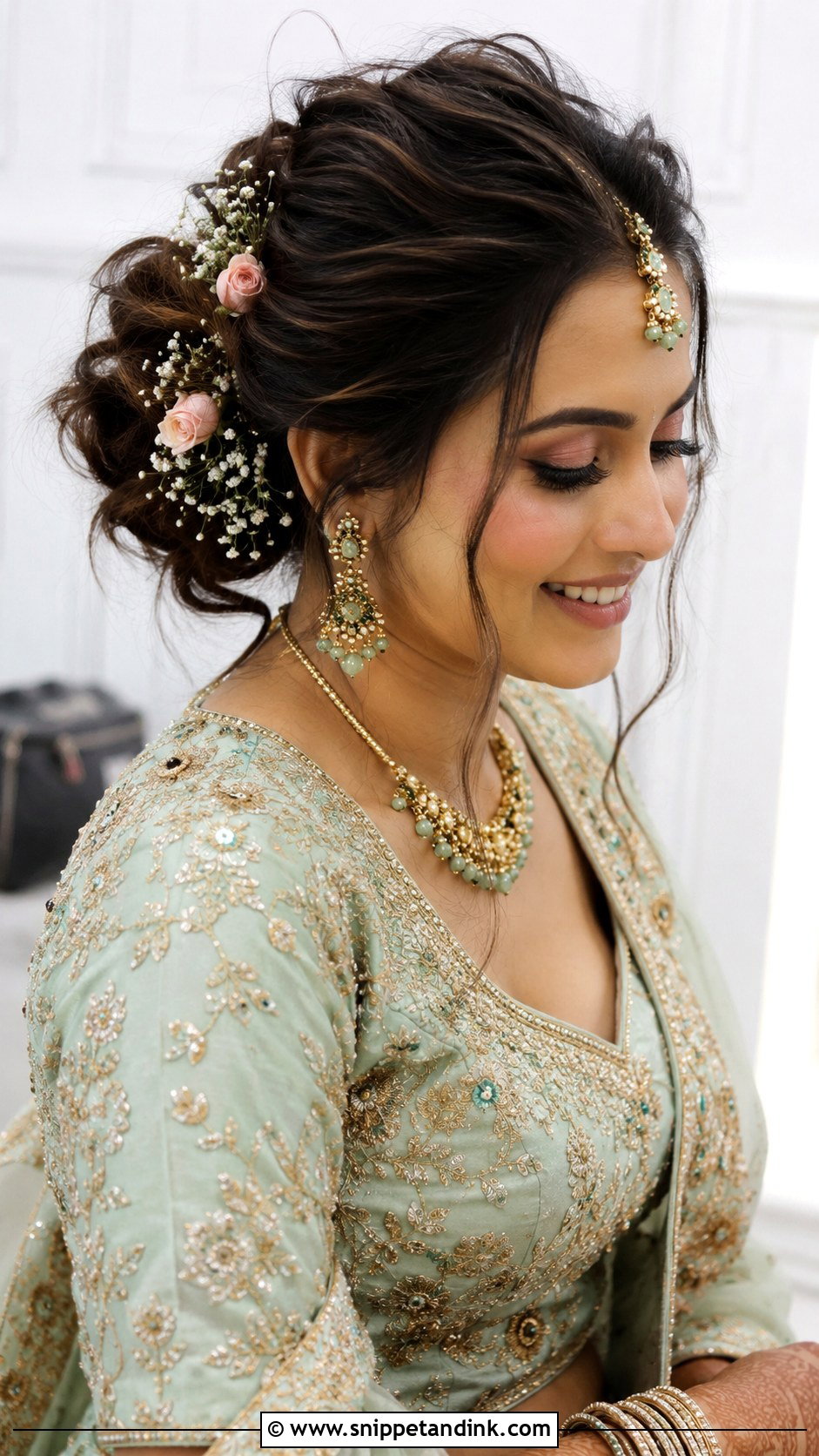
Messy shouldn’t mean careless. For a bride it means soft texture and a romantic shape that is still pinned firmly underneath. Face-framing pieces, loose twists and small flowers make it right for mehendi, haldi, an engagement or a ceremony with a lighter dupatta. The balance is fiddly: too loose and it collapses, too much spray and it looks stiff. Ask for a soft structured bun with hidden support pins, then let pearls, small roses or baby’s breath finish it.
14. Indian Bridal French Twist
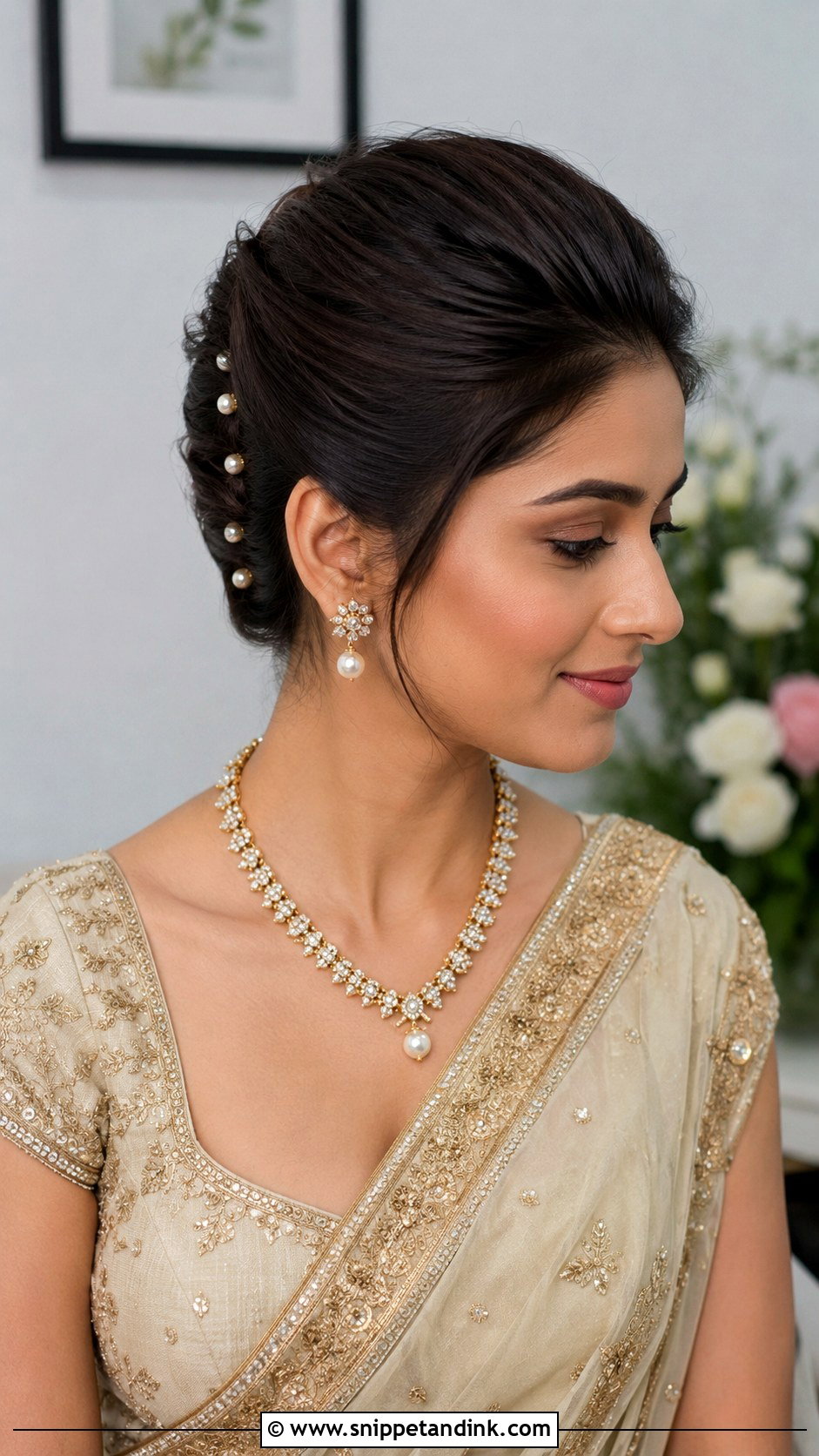
A French twist is rare at Indian weddings, which is exactly what makes it memorable at a reception or engagement. The hair is swept up and tucked into a vertical roll, leaving a long clean line at the back. It works with sarees, gowns and modern lehengas, and takes pearl pins, metallic accessories or a fine vine well. I keep a little lift at the front and leave the ears clear for statement earrings. Very thick hair can make the roll bulky; I thin it out by pinning part of the length inside the twist.
15. Indian Bridal Wavy Bun
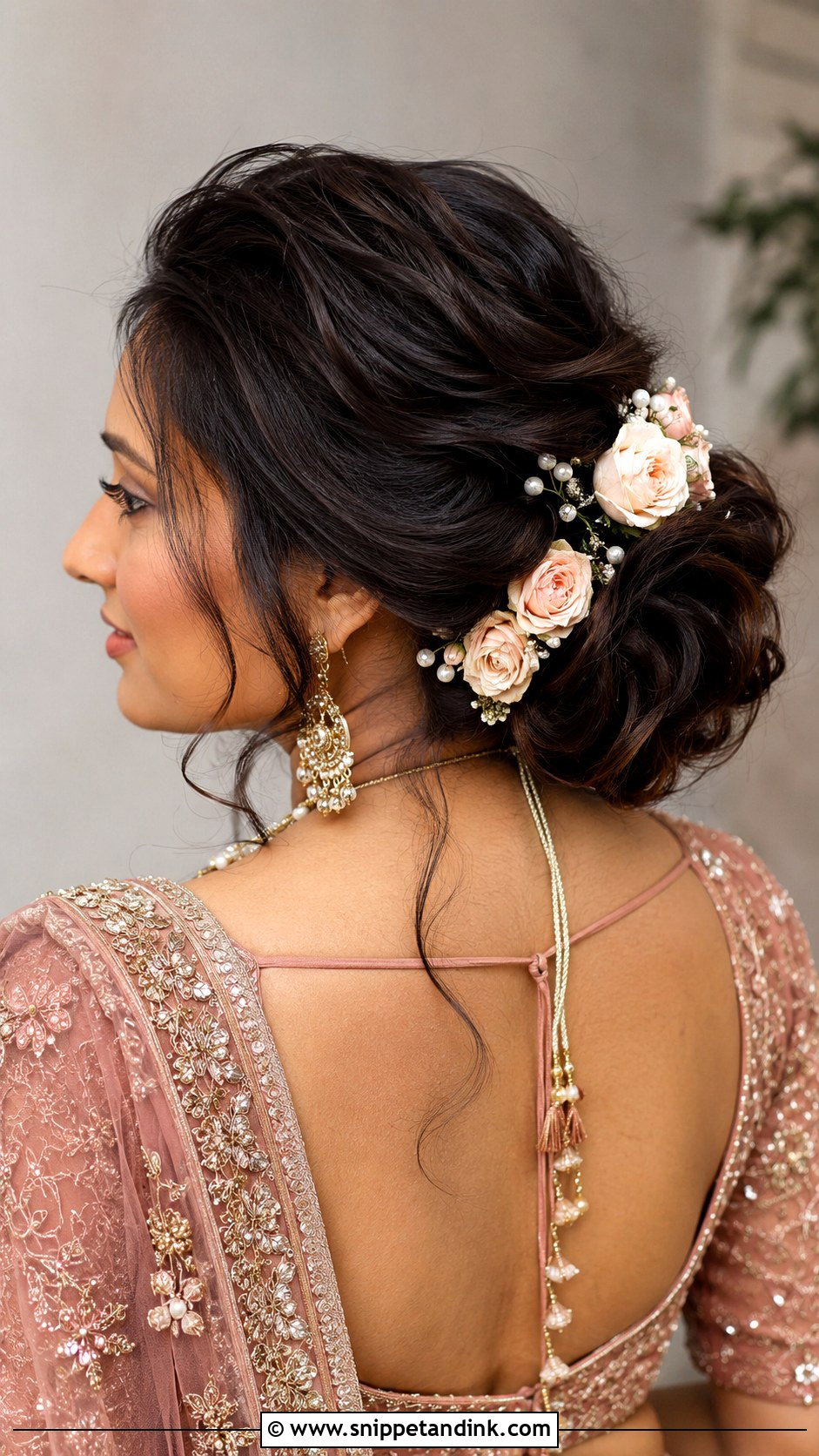
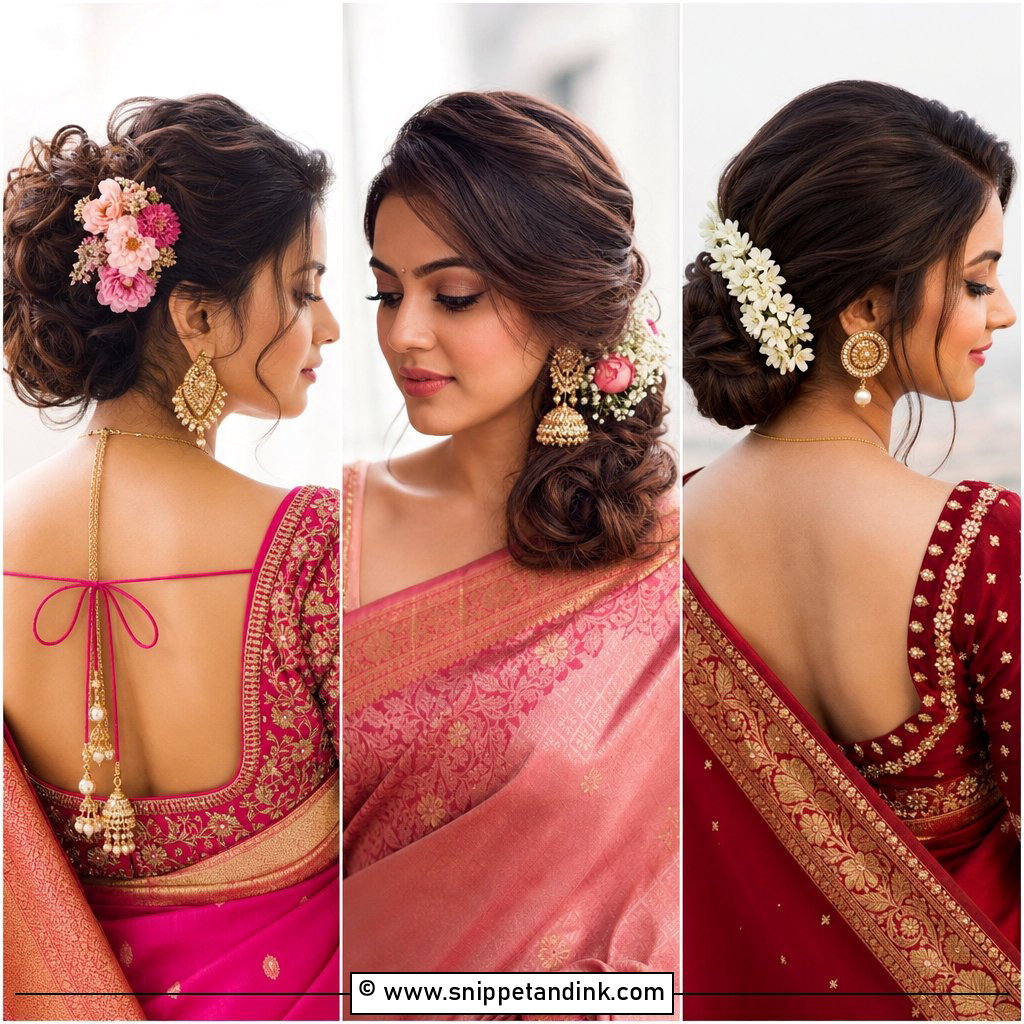
Waving the hair before gathering it gives a bun that’s fuller and softer than a sleek one but still formal enough for pheras or an evening reception. It suits brides who find a sleek bun too severe. The front can carry a center part, side part or loose face-framing pieces, and fresh flowers, pearl pins or a jeweled comb complete it. The texture photographs well up close and from behind. I set the waves first and let them cool, then pin them loosely so the bends still show in the bun.
Dupatta Pins, Humidity and the Hairdos That Struggle
Two things undo bridal hair more than anything else: a dupatta pinned into the wrong place and damp air. Both can be planned for.
Where the dupatta should anchor
I pin a head dupatta to the bun or braid base, never to the loose surface hair, and I use separate pins from the ones holding the hairdo. If the same pins hold both, one tug from a relative stepping on the fabric pulls the hair down too. Bring the actual dupatta to your trial, along with the person who’ll drape it.
If the wedding is humid
- Updos and braids hold best. Open curls and loose waves drop fastest.
- Curl tighter than you want the final shape to be; humidity loosens it by evening.
- Ask for an anti-humidity spray on dry hair before styling, not only on top at the end.
- Naturally curly or wavy hair often looks better worked with than fought against in humid weather.
Plan Around Your Longest Function
A good bridal hairdo supports the whole look, not just the hair. Think about how heavy your outfit is, where the dupatta will sit, what jewelry you’re wearing, your face shape, hair length and which function it’s for. A low bun or gajra bun suits a traditional ceremony; a floral braid carries cultural detail; half-up curls, open curls and sleek ponytails suit modern events; a wavy or messy bun softens things. Do a trial if you possibly can, and bring every accessory to it so nothing surprises you on the morning.
You'll Like These Ideas:


Leave a Reply