
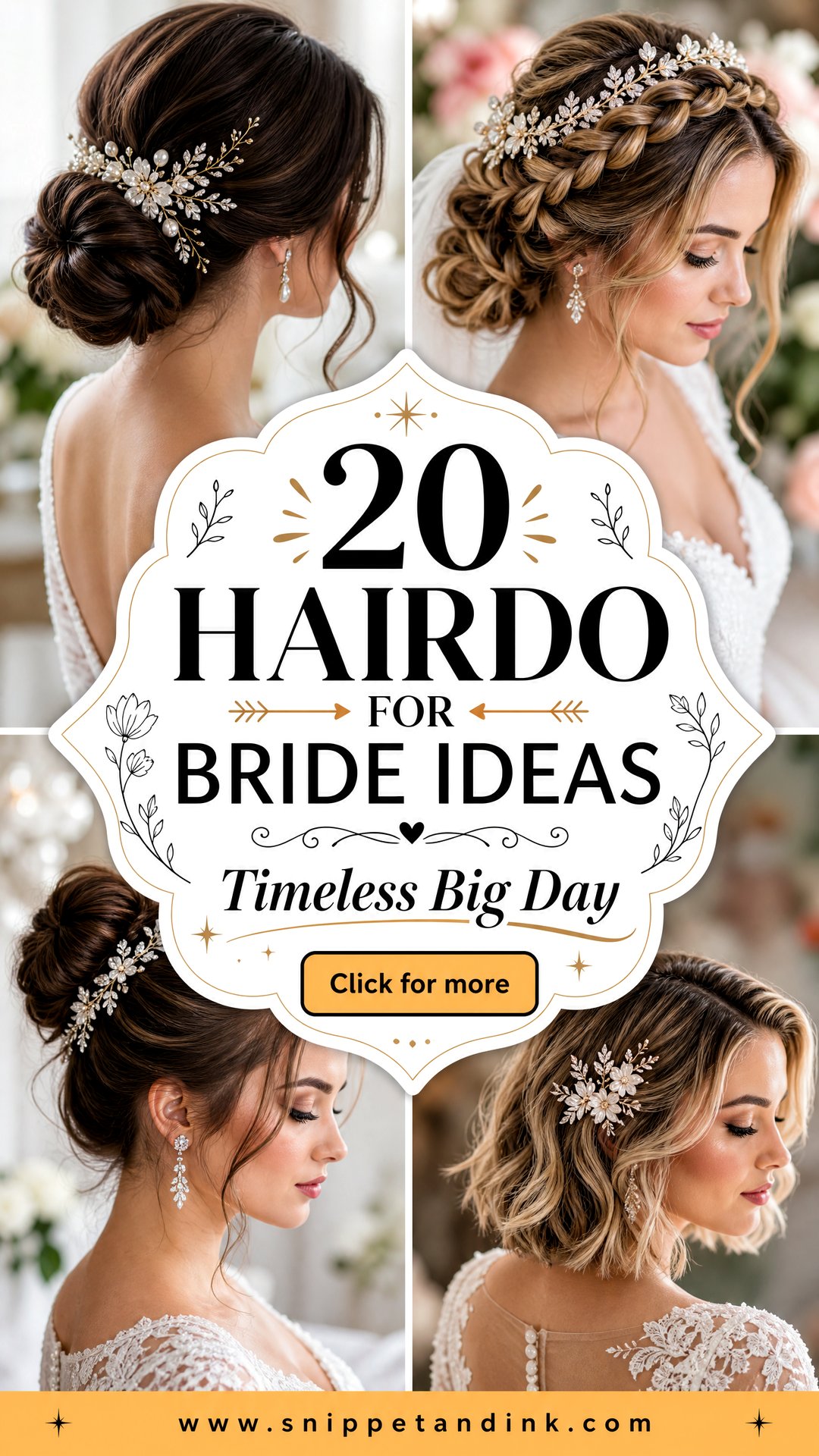
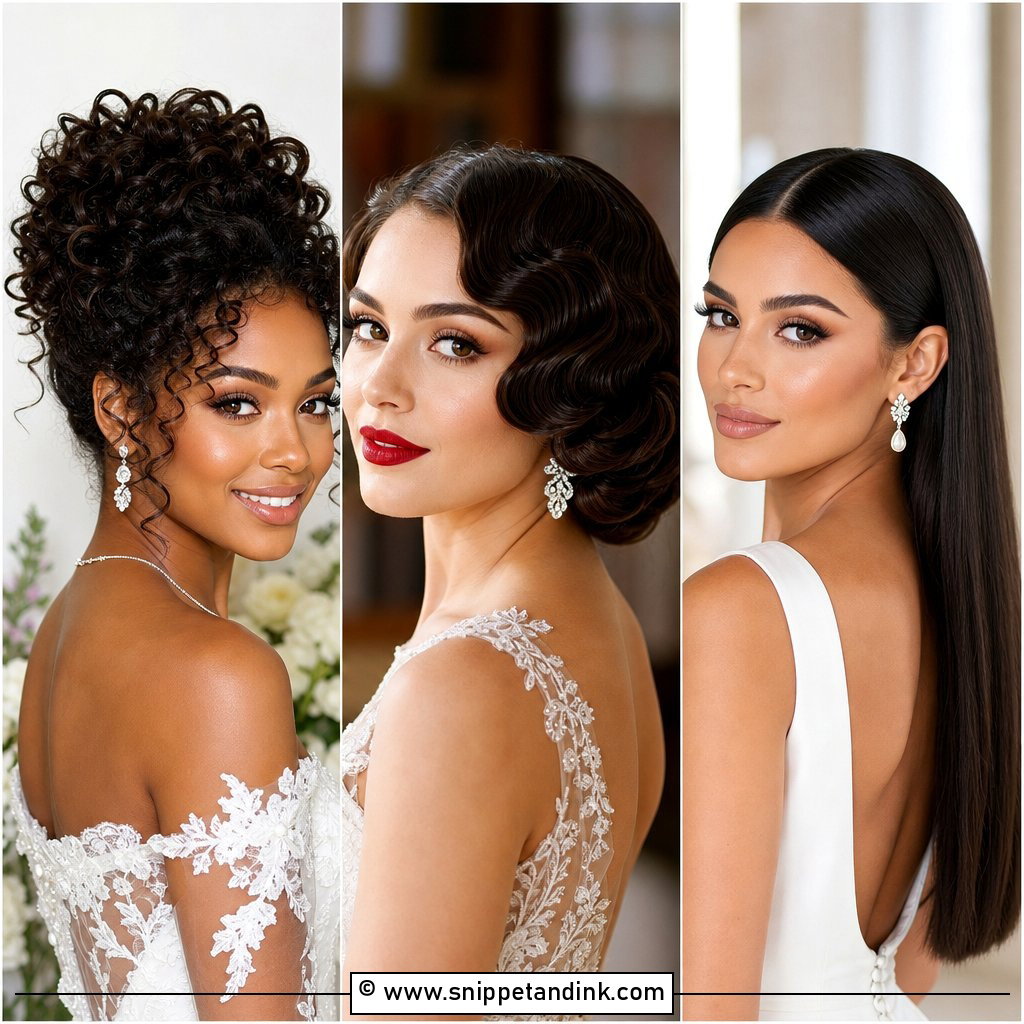
A wedding hairstyle has to do more work than anything else you’ll wear on your head: it holds a veil, survives hugs and a dance floor, and still has to look right in photos taken nine hours after I put the last pin in. That’s why I start with your neckline, your venue and the hair you actually have, not a single saved photo. The looks below run from glossy low buns and set Hollywood waves to braided updos, ponytails, natural curl shapes and short cuts. Pick two or three directions you like and bring them to your trial, so we can test what your hair will really hold.
Read Your Neckline Before You Fall for a Hairstyle
Most brides pick hair from a photo and only later notice it fights the dress. I look at the neckline first, because it decides how much neck and shoulder should show and where the hair can sit without bunching.
- High necks and halters: hair up and off the neck, so a sleek bun, high bun or ponytail. Hair worn down tends to bunch against a collar.
- Strapless and sweetheart: nearly anything works, though a low bun or side-swept curls stop the shoulders looking bare in close-ups.
- One-shoulder: sweep the hair toward the open side, or go fully up so the asymmetry stays the focus.
- V-necks and plunges: loose waves or half-up follow the line of the neckline downward.
- Open or detailed backs: an updo or ponytail, because hair worn down hides the part of the dress you chose it for.
Your texture shortens the list
Fine hair needs more prep and often hidden padding or a few clip-ins before buns and braids look full. Very thick hair holds curl well but makes updos heavy, so I pin it in smaller sections to keep the weight off the scalp. Curly and coily hair do best in styles that use the texture rather than straightening it for one day and hoping the weather cooperates.
1. Bridal Low Bun
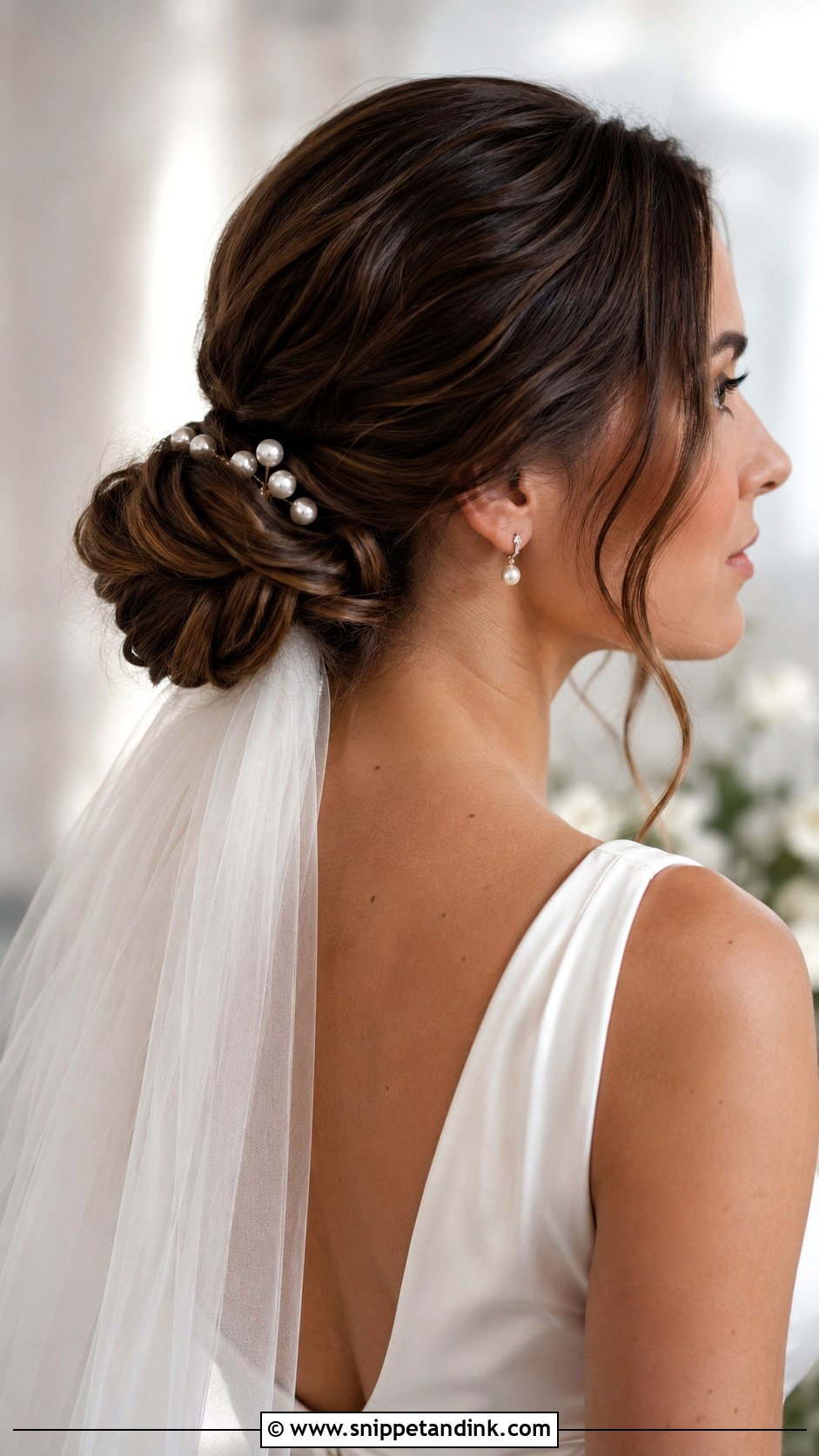
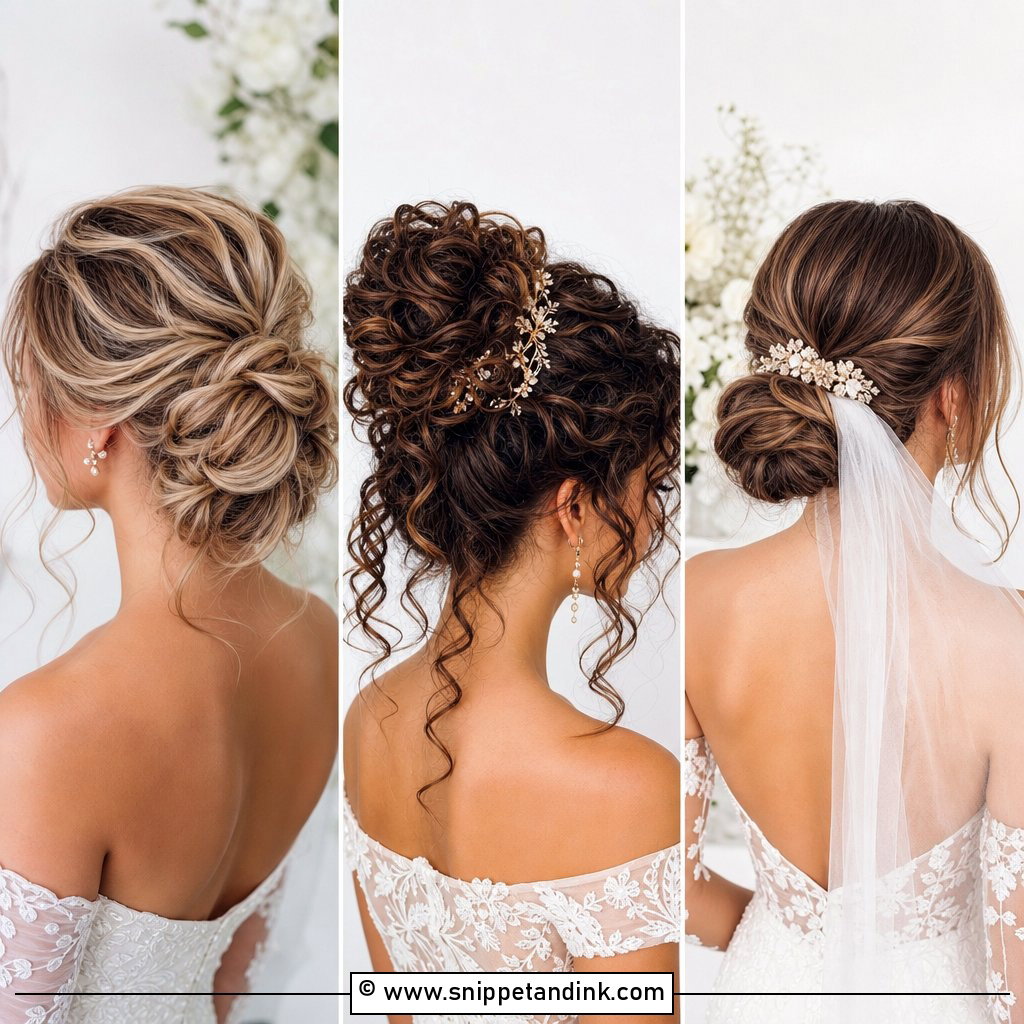
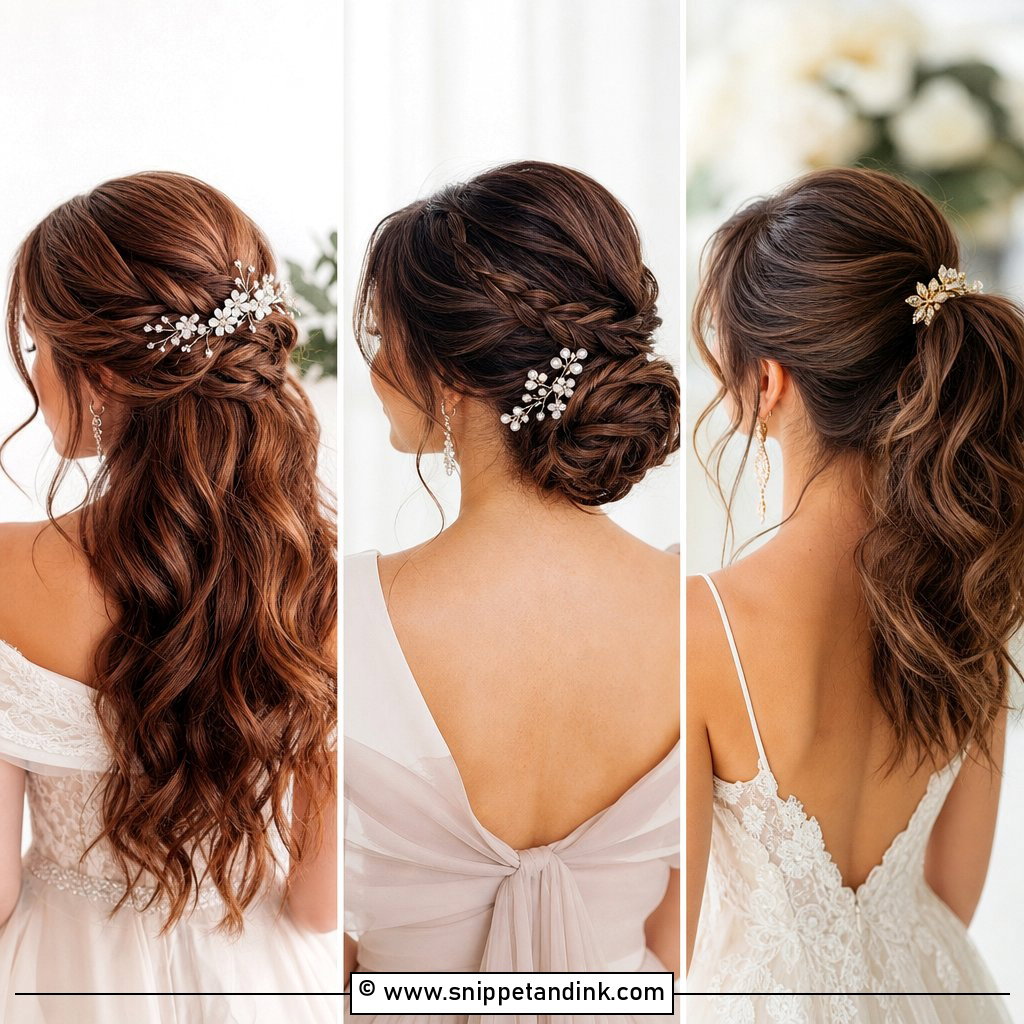
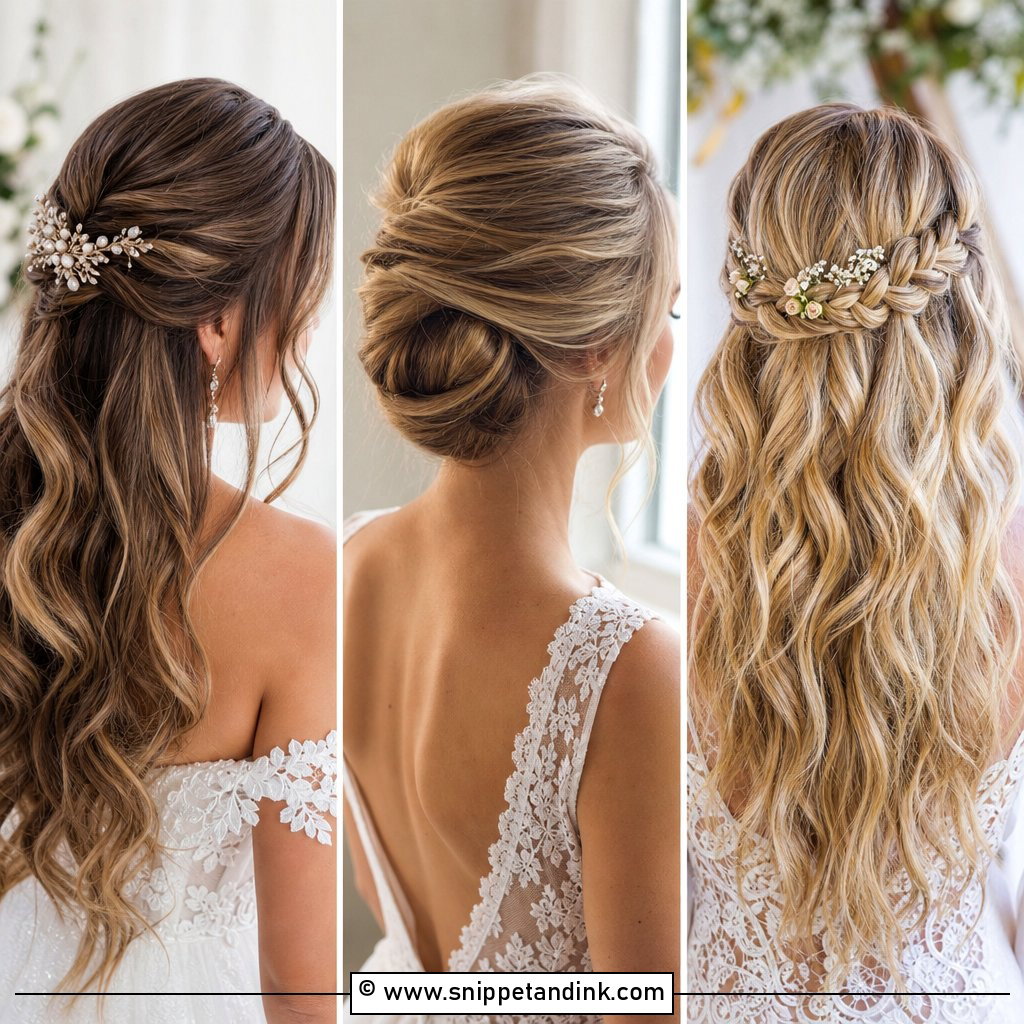
A low bun is the style I reach for most often, because it sits at the nape and stays out of the way of almost every neckline. It gives a veil comb something solid to grip, which matters more than people expect once the veil starts catching wind. Strapless, square and off-shoulder gowns suit it, and so do heavy beaded bodices that need a calm shape above them. I build it on a small elastic base so the pins have an anchor, then we decide on a smooth or textured crown at the trial. If you want face-framing pieces, ask for two at most and have them curled back away from the face, or they’ll hang limp by the speeches.
2. Bridal Chignon
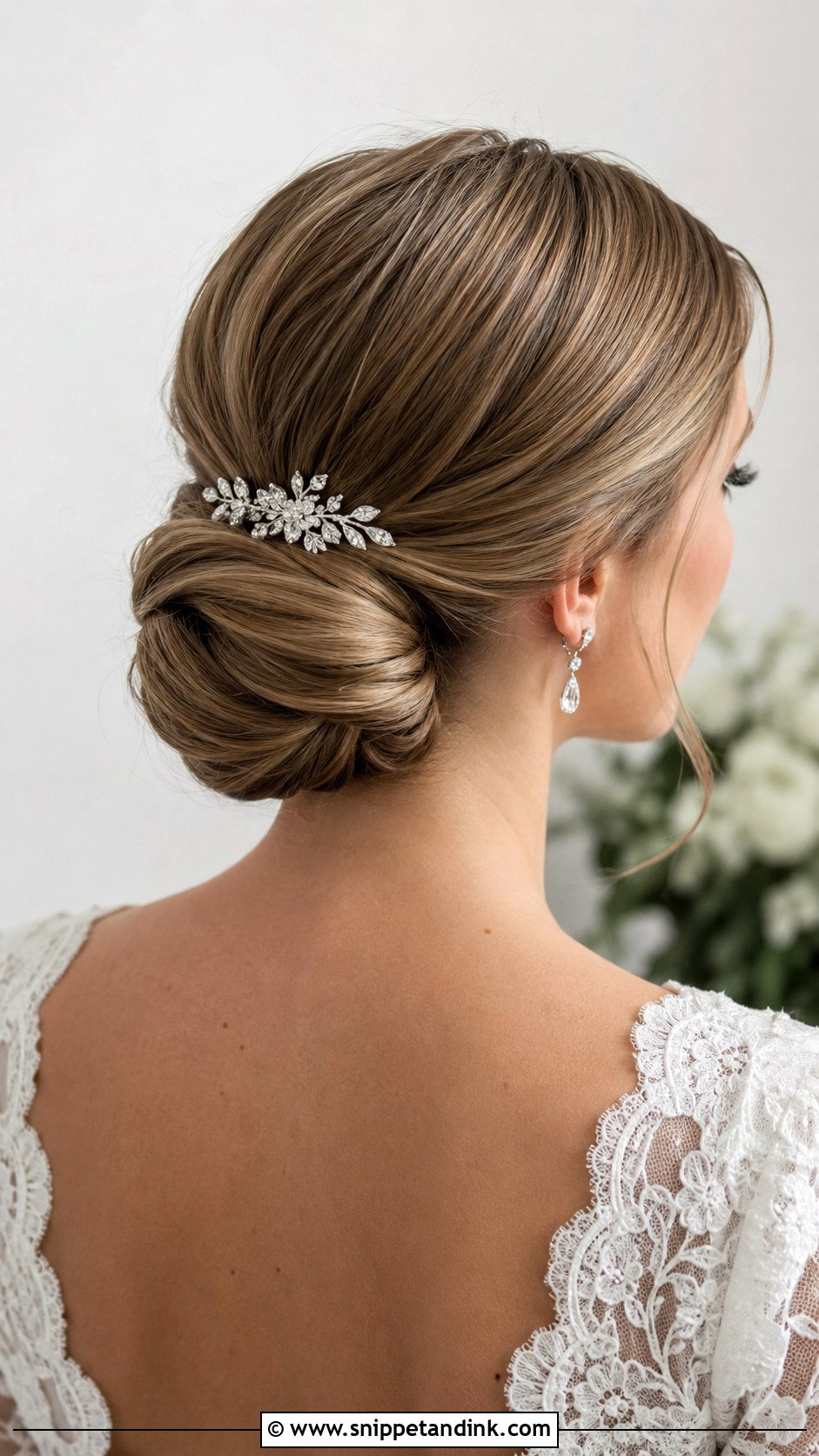
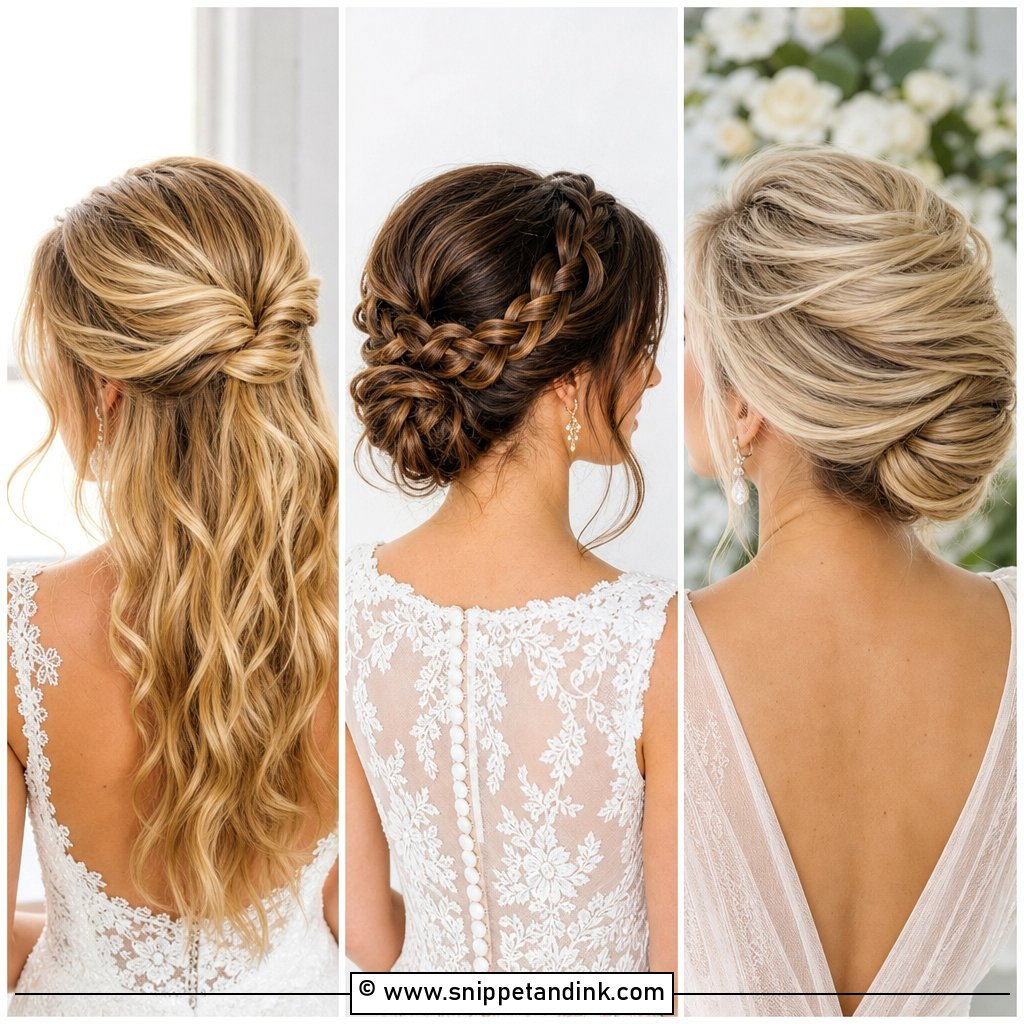
A chignon is more structured than a plain bun, and that structure is why it holds up in a ballroom or church where the photos are formal and close. The shape can be twisted, rolled, tucked, or knotted, and which one I use depends on length and density more than taste. Fine hair usually needs a hidden padding roll or a few clip-in wefts, otherwise the chignon looks like a small knot from the back. Thick hair is the opposite problem, so I pin some sections flat underneath to take out bulk before shaping. Decide early whether the veil sits above or below it, because that changes where I place the base.
3. Bridal Hollywood Waves
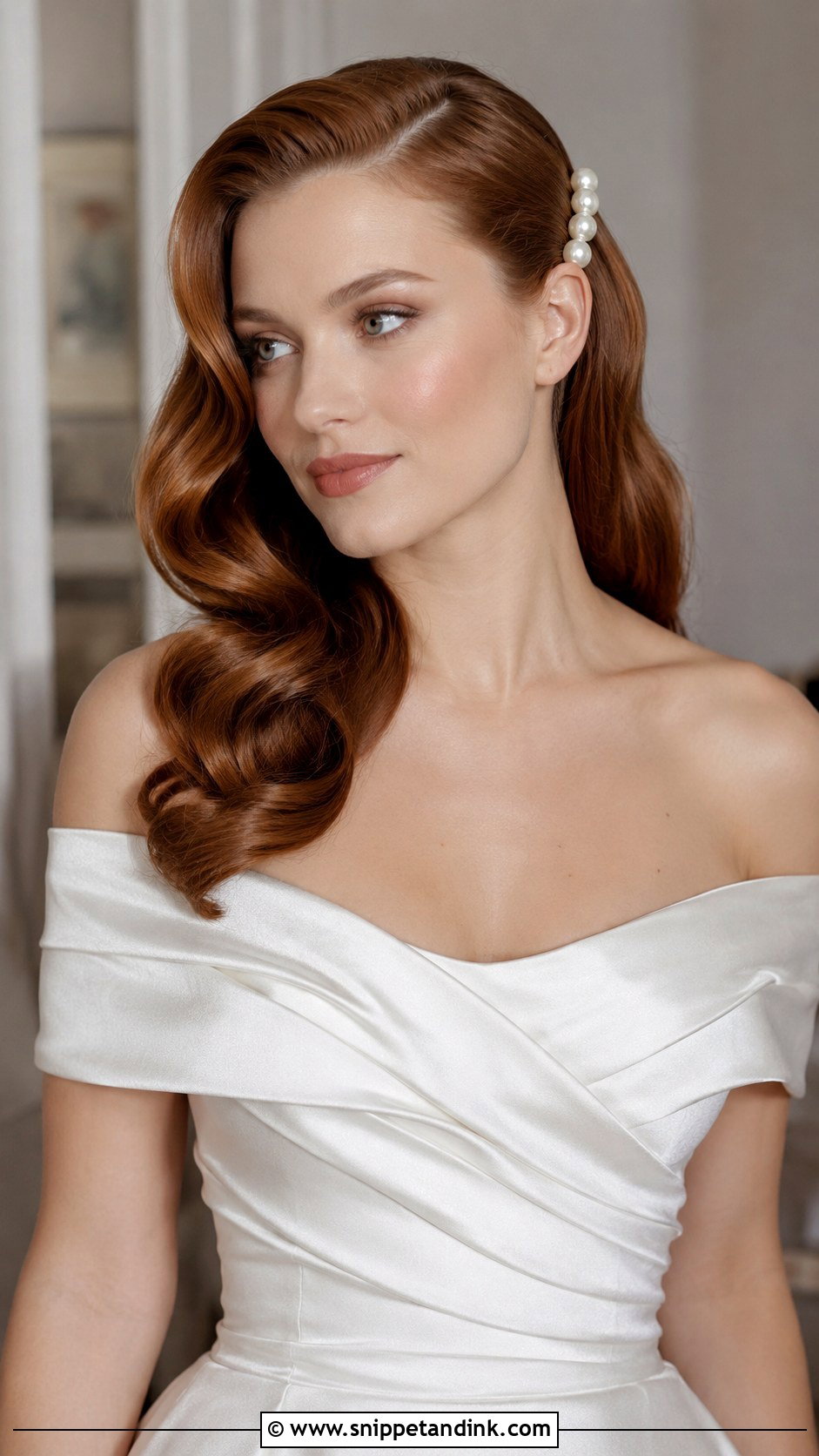
Hollywood waves are a set, not a curl. I curl every section in the same direction, pin each one flat while it cools, then brush the whole head out into one continuous S-pattern. Skip the cooling and the waves fall within the hour. They need medium to long hair that already takes a curl, and they look their best with a deep side part and a satin or fitted gown. Heavily layered hair fights this style, since the short ends poke out of the pattern. A single pearl clip at the part is plenty.
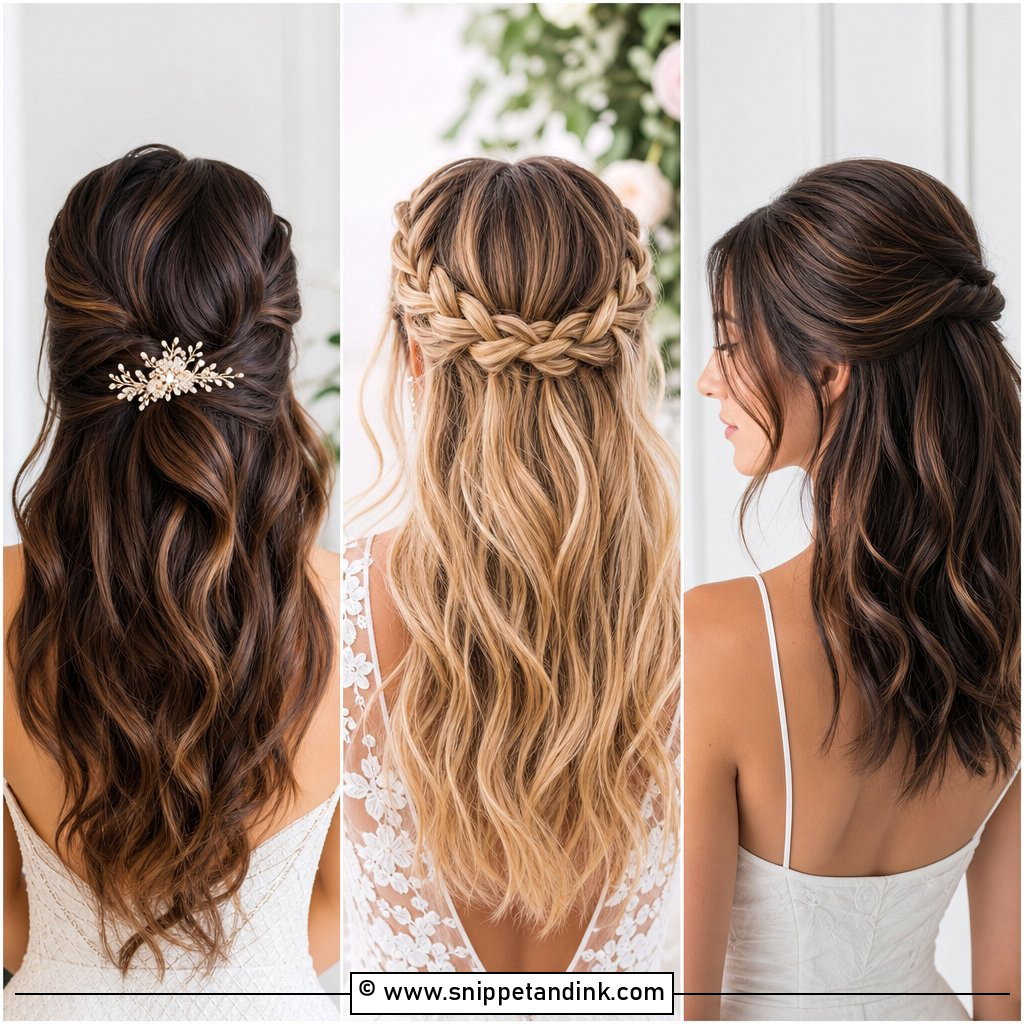
4. Bridal Half Up Half Down Hair
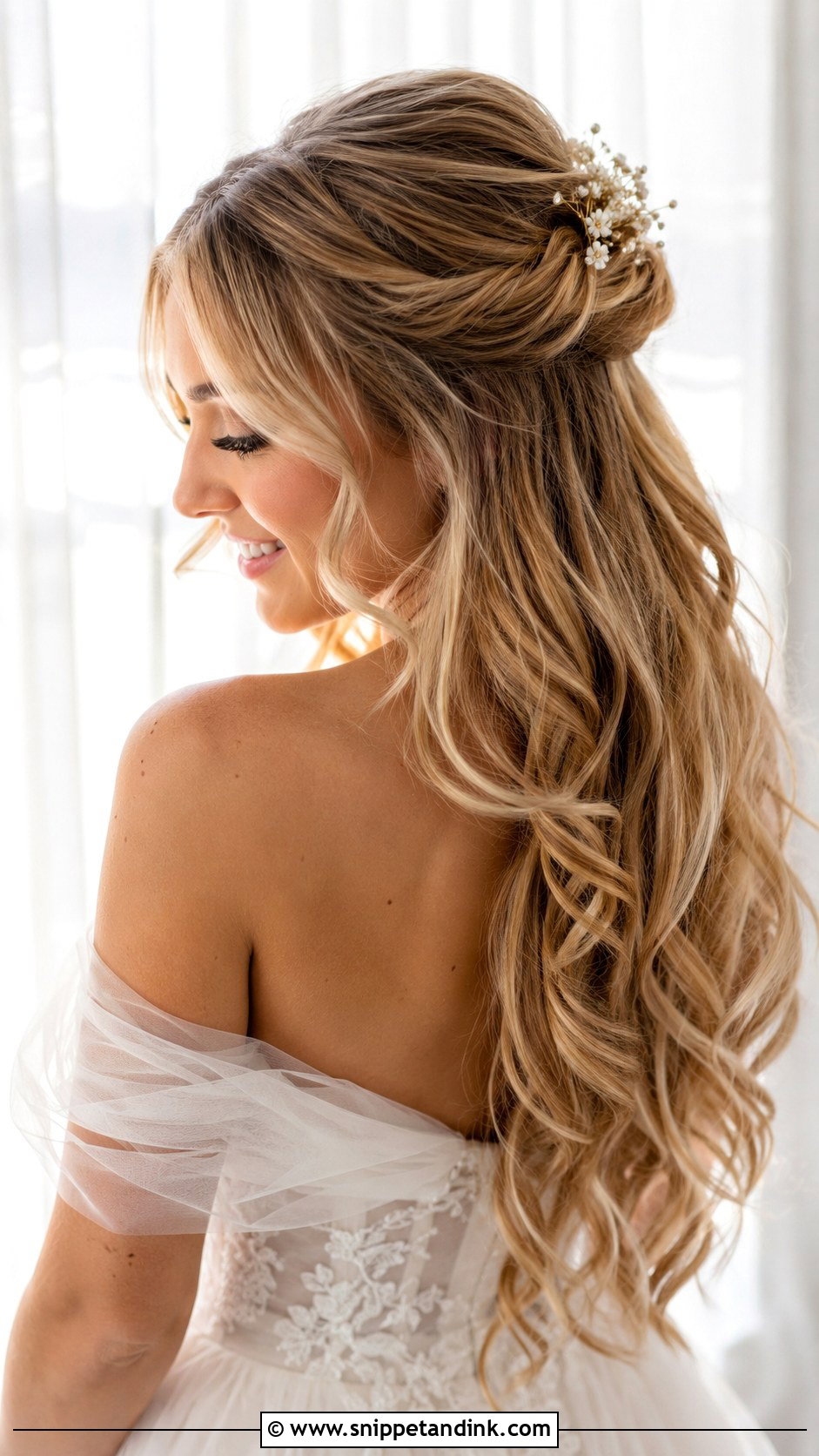
Half-up is the look I suggest to brides who never wear their hair up and feel exposed in a full updo. The top section can be twisted, braided or pinned for lift while the length stays loose. The weak point is always the loose part. In humid weather the curls on the lengths drop first, so I prep with mousse or a setting spray before curling and keep the firm spray for the very end. Hair vines and floral pins slot easily into the pinned section. On very fine hair, plan for a quick top-up curl before the reception.
5. Bridal Sleek Bun
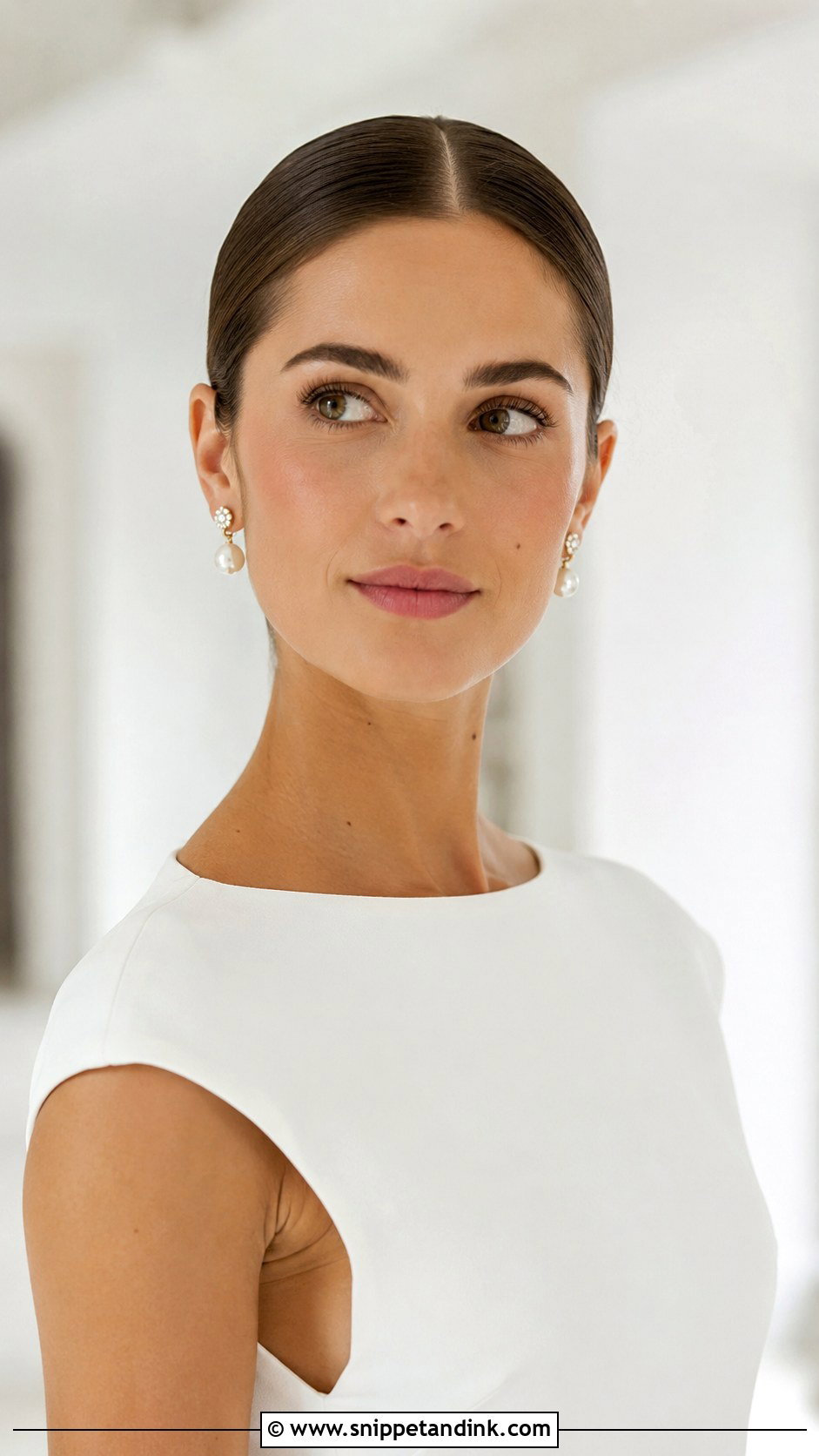
A sleek bun puts every bit of attention on your face, earrings and dress structure, which is exactly why some brides love it and others feel too exposed in it. I part it in the middle or brush it straight back, then secure it at the nape or mid-back of the head. The prep is the real work: smoothing cream, a firm brush and a wax stick along the hairline, applied before the hair is fully dry so flyaways lie flat. Flash photography shows every bump, so I check it with a phone flash at the trial. It suits minimal gowns and high necklines, and if a veil goes on, keep the bun compact so the comb sits flush.
6. Bridal Textured Bun
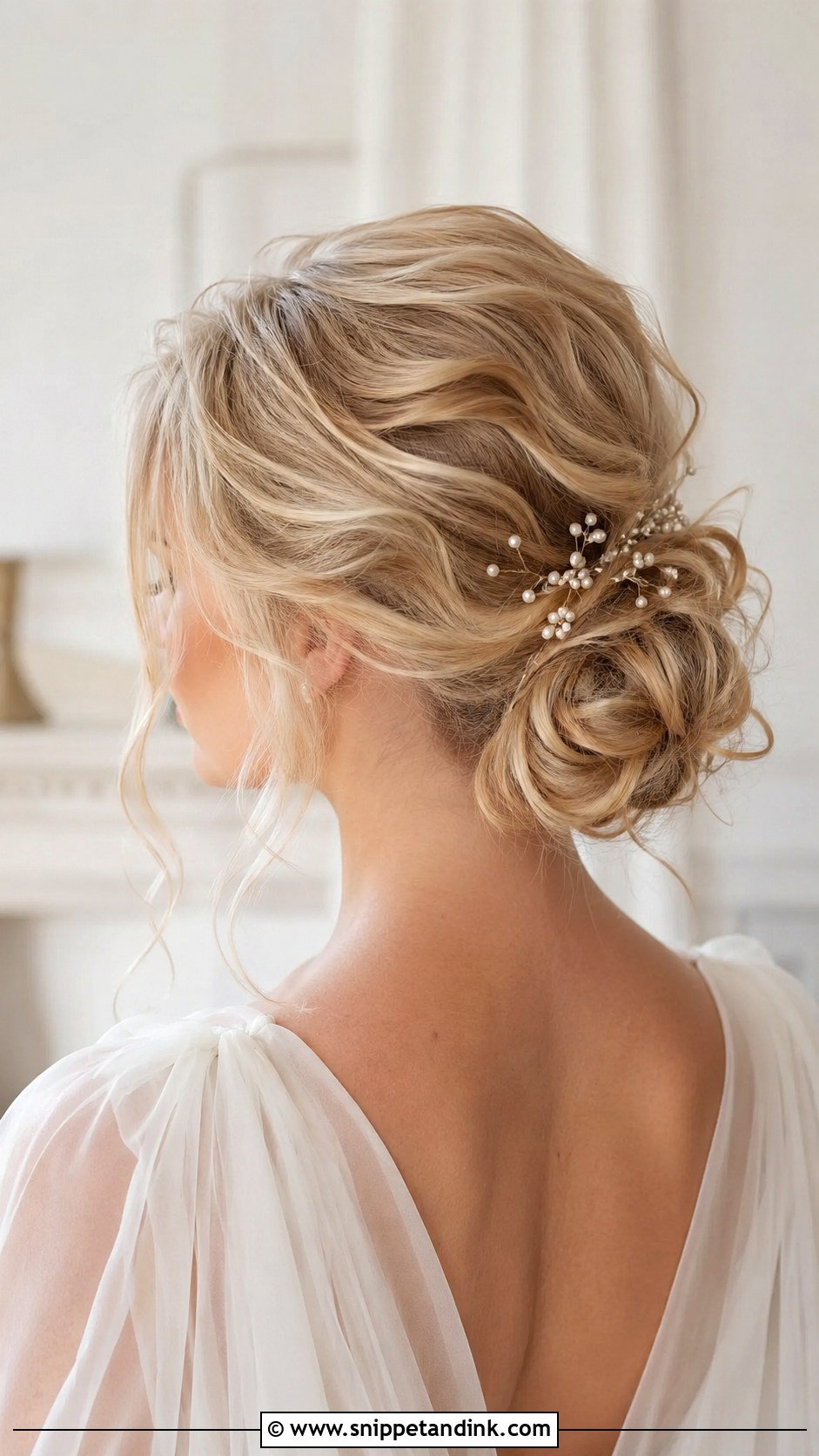
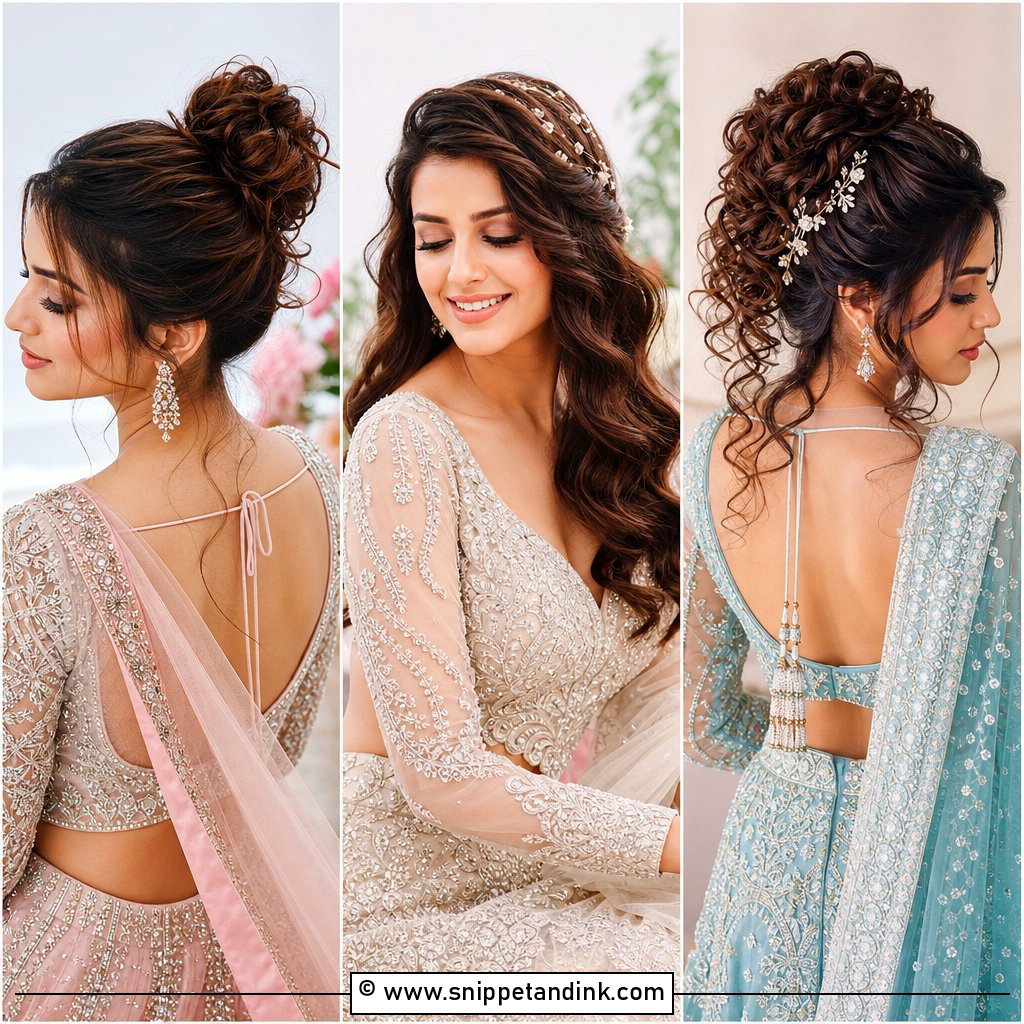
Textured buns forgive. Layers, growing-out pieces and hair that refuses a sleek finish all blend into the shape instead of sticking out. I curl the hair first, loosen the curls, then pin them into the bun in sections so the texture is built in rather than pulled out at the end. The risk is frizz at outdoor and barn venues, so I keep the surface near the hairline smooth and only loosen pieces around the bun itself. Garden and coastal weddings are where this shape feels most at home.
7. Bridal Braided Updo
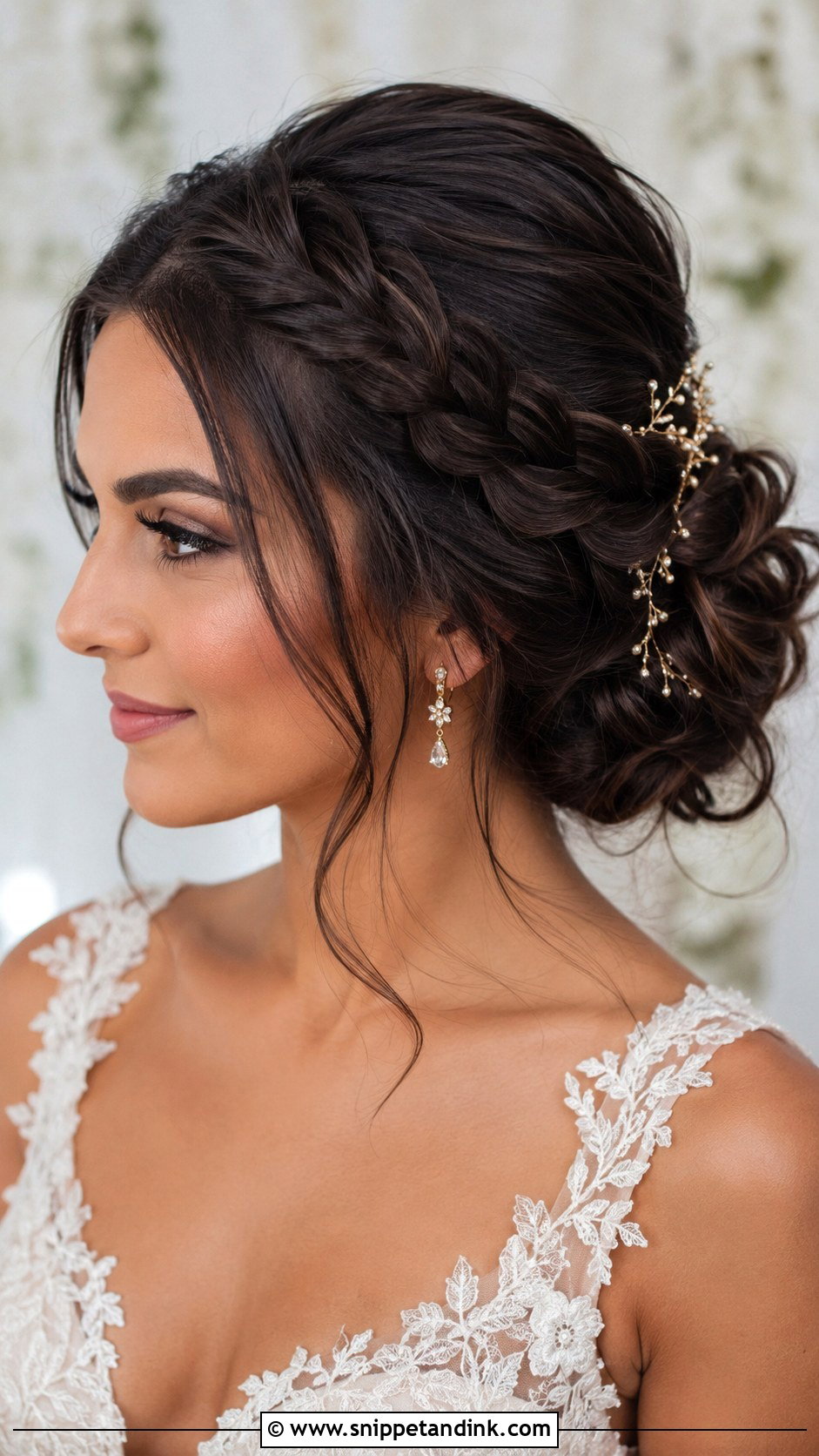
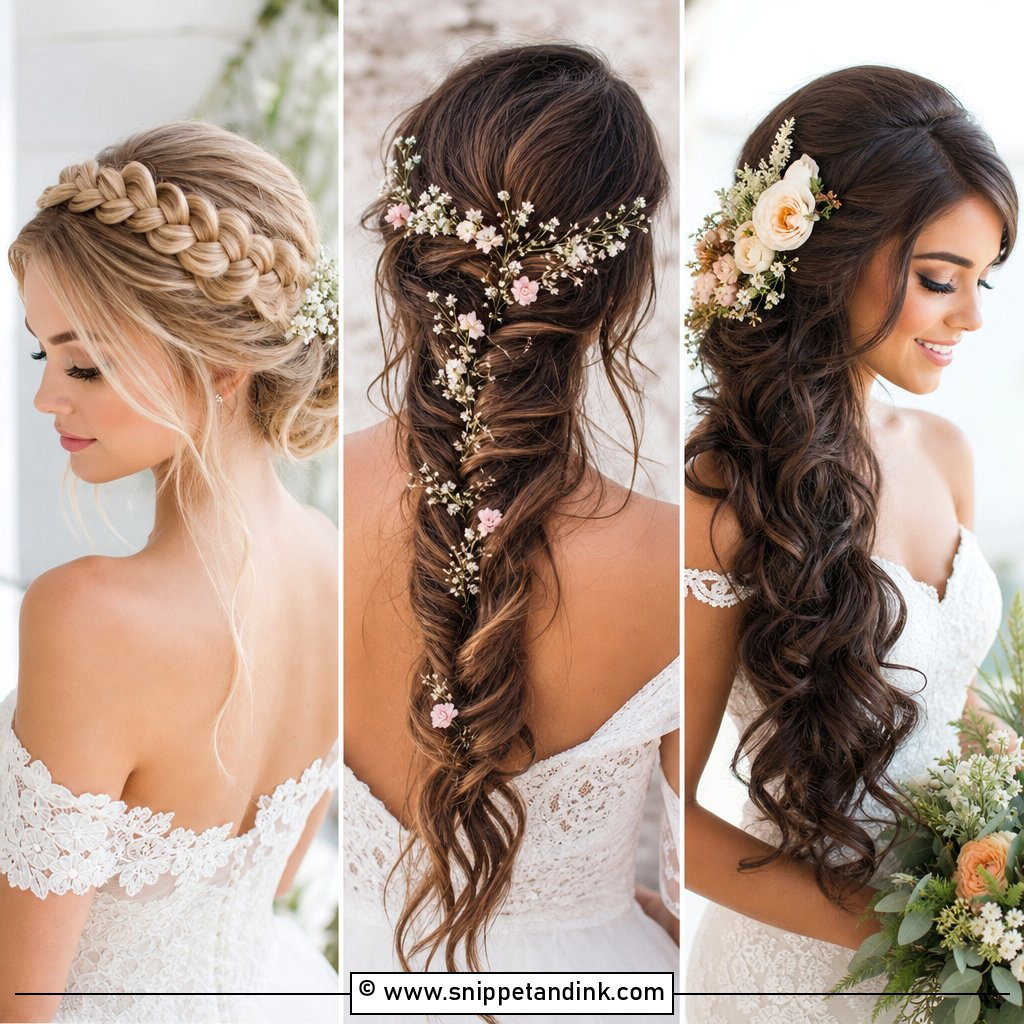
Braids give an updo grip. A braid wrapped into the bun or woven across the sides holds pins far better than loose hair, which is why I often suggest one for thick, heavy hair that tends to drag a bun down. Fine hair can work too: I add texture spray first so the braid doesn’t slip, then gently pull the edges of each loop out so it looks fuller. Lace gowns and floral accessories sit naturally with it. Keep the braid to one clear area, or the eye won’t know where to land.
8. Bridal Crown Braid
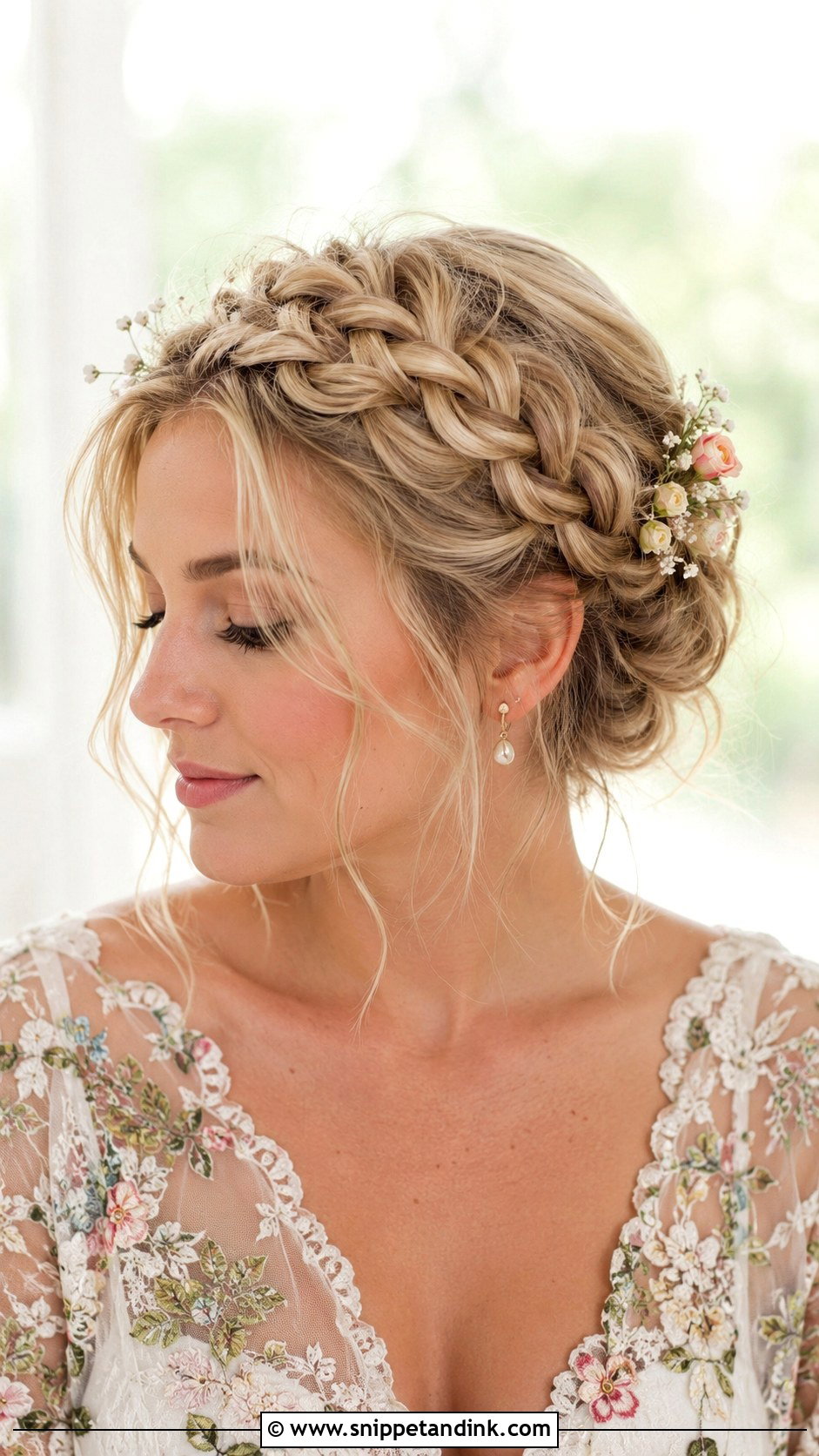
A crown braid needs enough length to travel most of the way around the head, or it ends in an awkward gap behind one ear. When hair is fine or layered, I usually add a couple of clip-in wefts so the braid keeps an even thickness from start to finish. It can circle the whole head or form a partial crown with curls pinned below. Garden and outdoor weddings suit it, where a structured updo might feel too formal. If you’re wearing a veil, the comb goes underneath the braid at the back, not on top, so it doesn’t crush the pattern.
9. Bridal Fishtail Braid
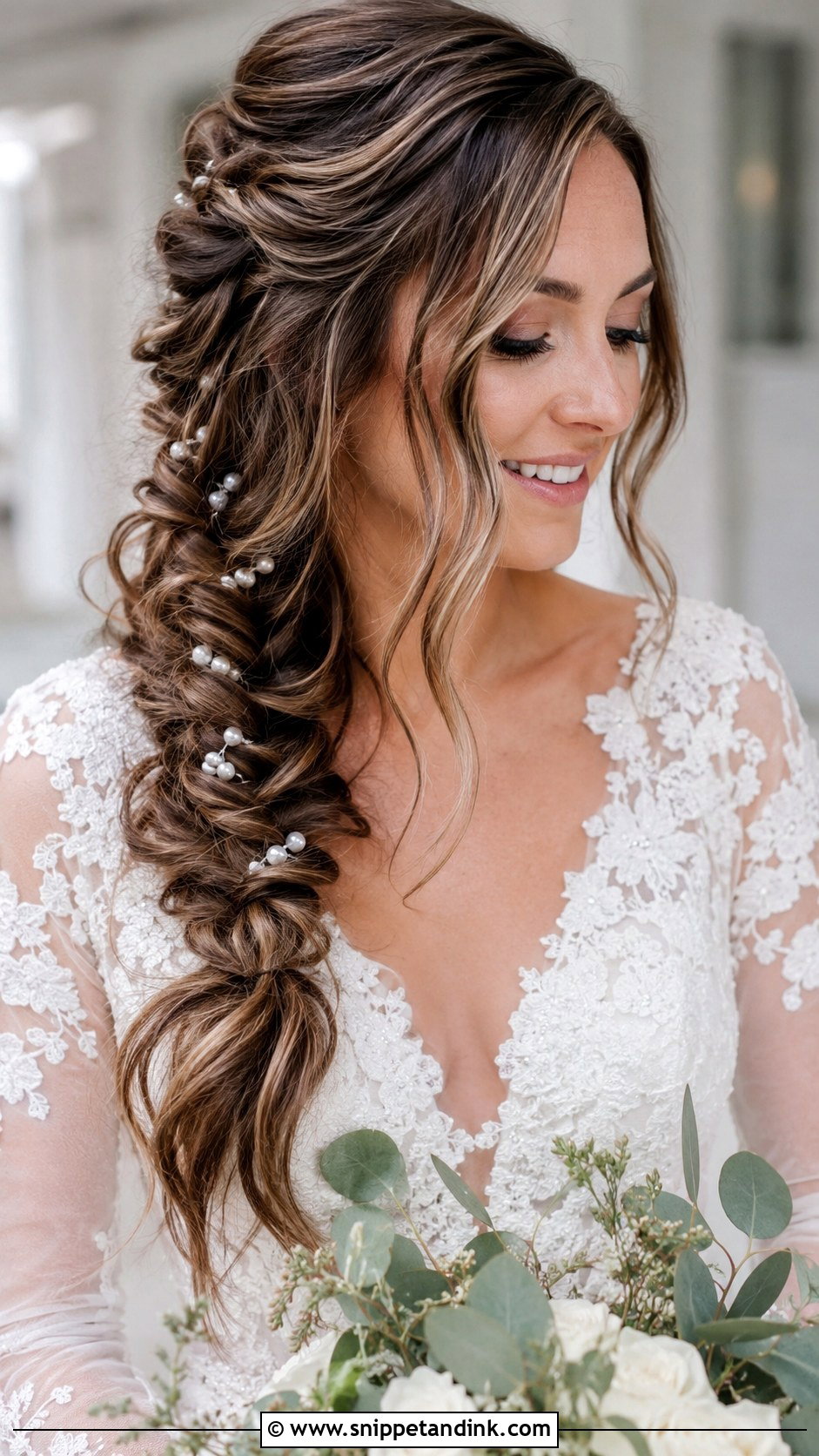
A fishtail looks complicated but is simply two sections with small pieces crossed over, which makes it finer and more detailed than a three-strand braid. It needs long hair, and it shows dimensional color or balayage well because each crossed piece catches a different tone. I lift and smooth the crown before I start so it reads as bridal rather than a weekend braid. Worn to the side it suits one-shoulder dresses; down the back it works with open-back gowns. The tail is where it unravels, so I secure it with a clear elastic and wrap a small piece of hair over the top.
10. Bridal Side Swept Curls
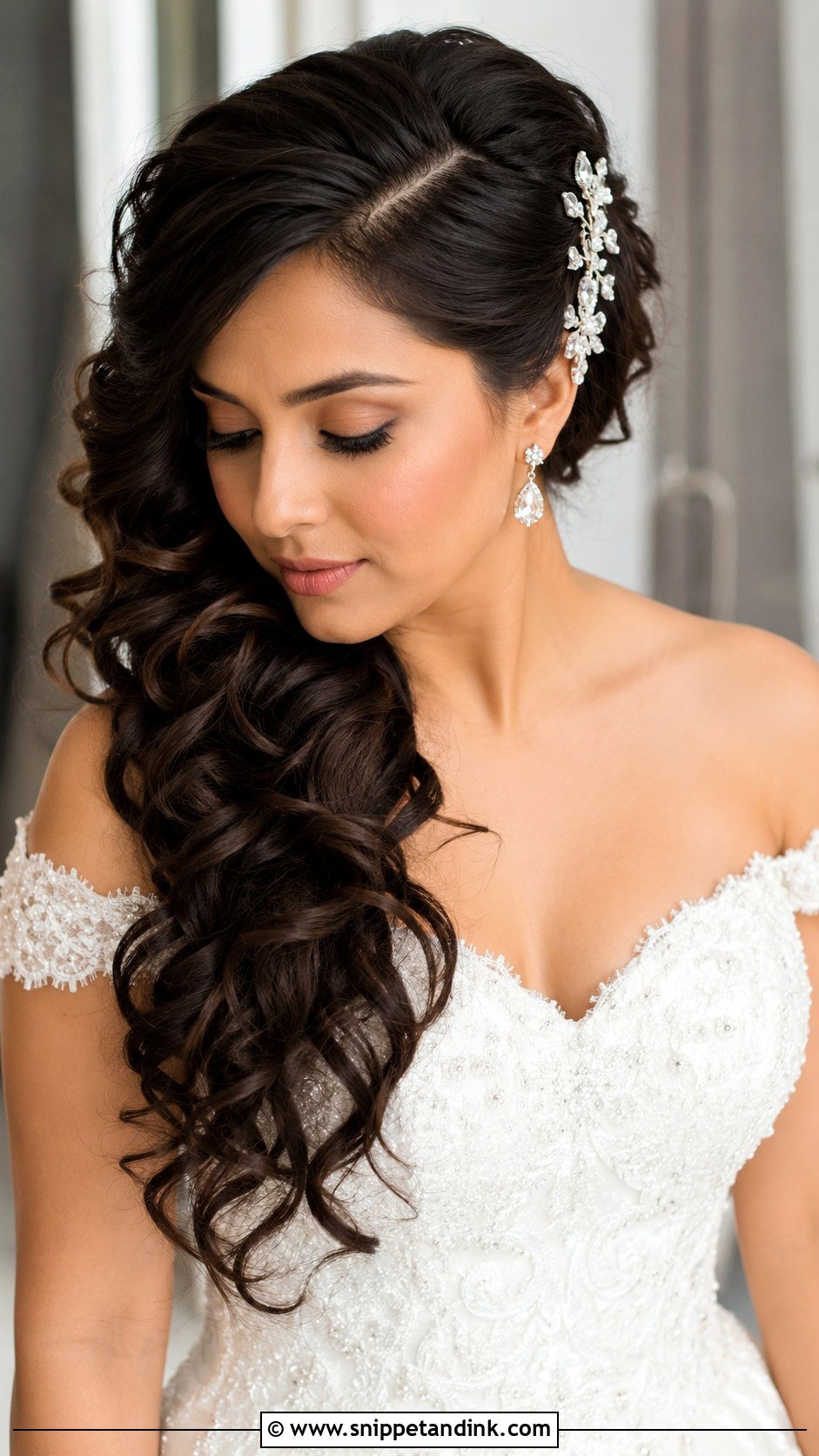
Side-swept curls give you the feeling of wearing your hair down while keeping one side of your neck and shoulder clear, which suits one-shoulder gowns, strapless dresses and big earrings. What holds them is a hidden row of crossed pins along the back of the head, set before the curls go over. Without that anchor, the curls slide back to center within an hour of hugging guests. A deep side part helps the shape stay put. Choose the side at the trial, based on which side you prefer in photos and where your partner will stand at the ceremony.
11. Bridal Loose Waves
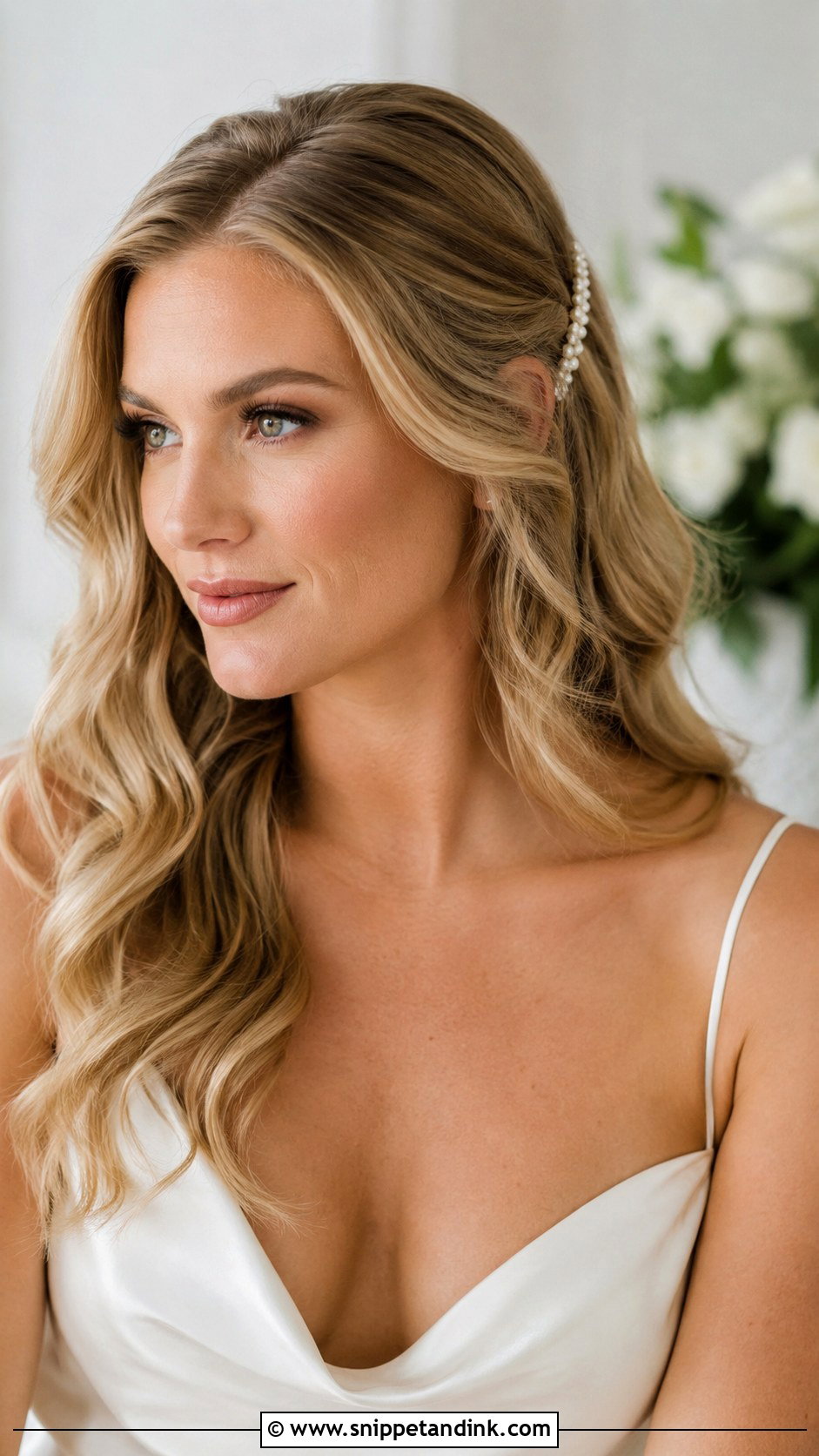
Loose waves look simple, which is why they’re underestimated. What separates bridal waves from beach waves is polish: shaped, glossy bends and smooth ends. If your hair drops a curl quickly, I curl smaller sections with a smaller barrel, pin them to set and brush them out shortly before you leave, so they relax through the day into the size you actually wanted. Long, medium and layered cuts all take this well, and it fits courthouse, outdoor and relaxed venues naturally.
12. Bridal Ponytail
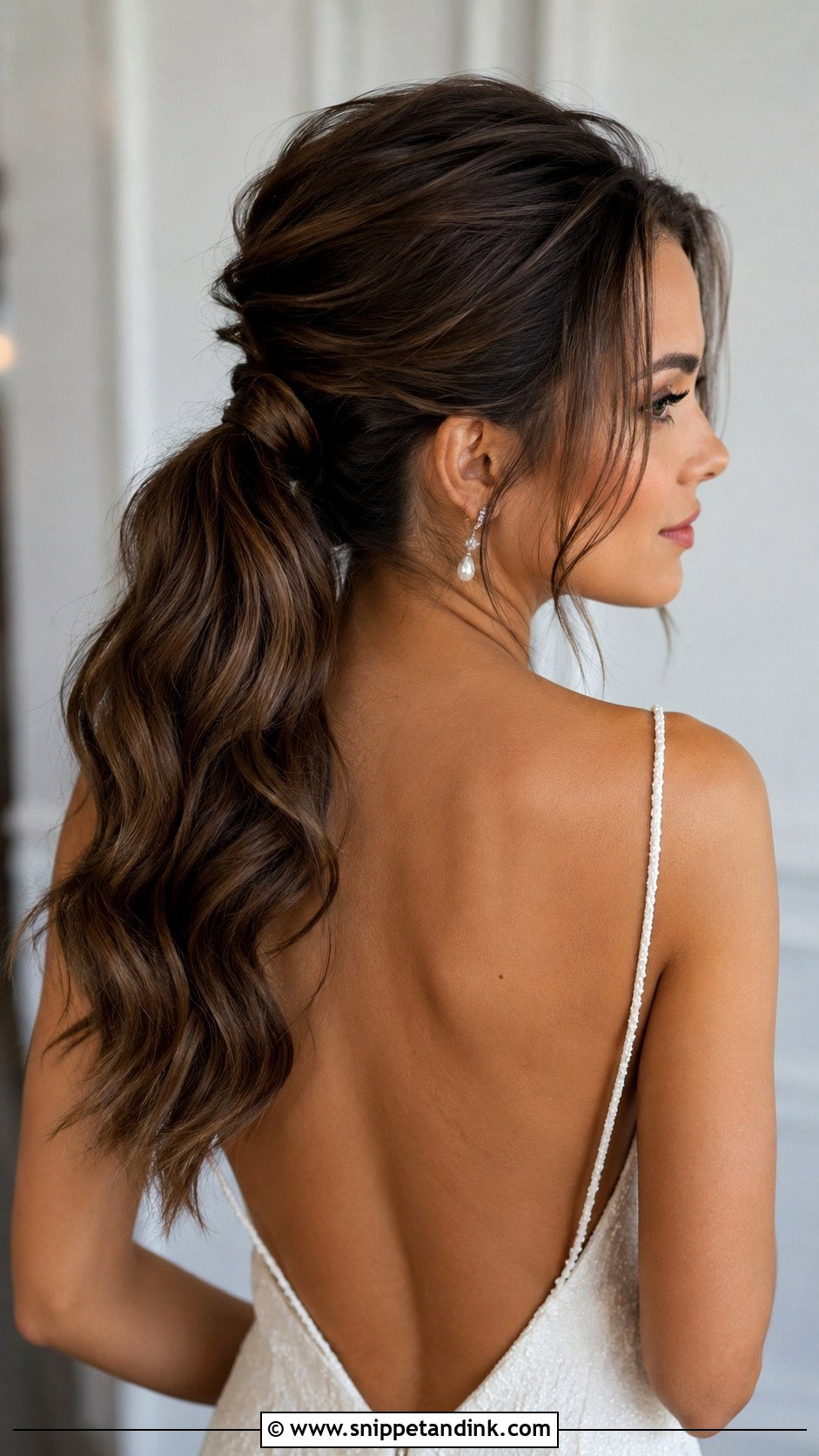
A ponytail keeps hair off the face without the weight of a bun, and it’s one of the most secure styles I do because everything hangs from a single strong base. Low reads classic, mid-height reads balanced, high reads glamorous. I wrap a small piece of hair around the elastic and pin it underneath to hide it, then add volume at the crown so the top doesn’t look flat in profile shots. For long or heavy hair I use two elastics, one just above the other, so it doesn’t sag by evening. Open backs and halter necklines show it off well.
13. Bridal High Bun
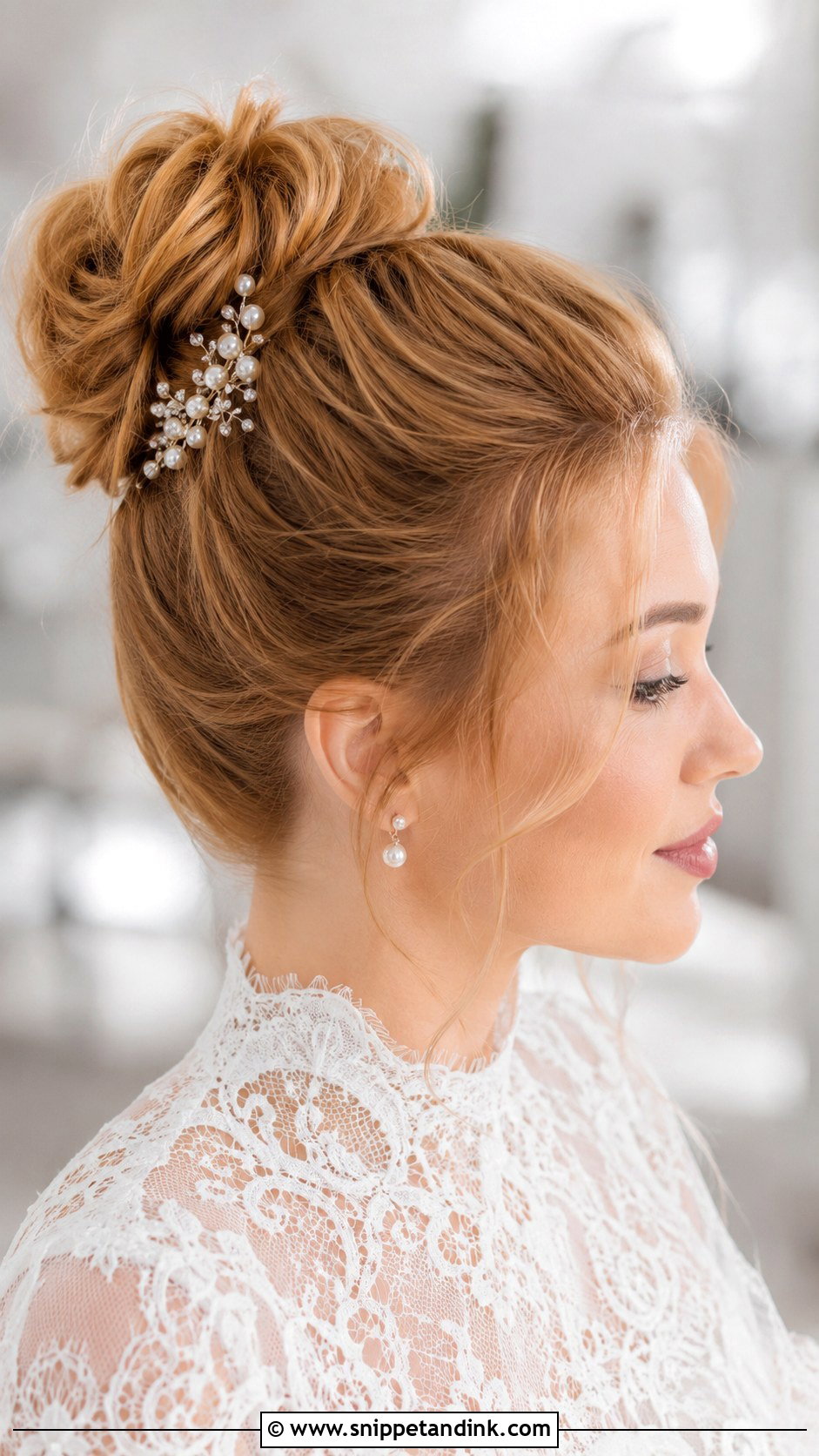
A high bun lengthens the neck and clears the shoulders, so it pairs naturally with halter necklines, high collars and gowns with a detailed back. Placement is everything. Too high and it reads like a gym bun; too tight and it pulls at the face and can give you a headache before dinner. I usually set it around the crown line with the hair softly smoothed rather than scraped back. Petite brides often like the added height, and it keeps hair off the neck in summer heat. A heavy veil is hard to anchor on a high bun, so a light veil or a hairpiece works better here.
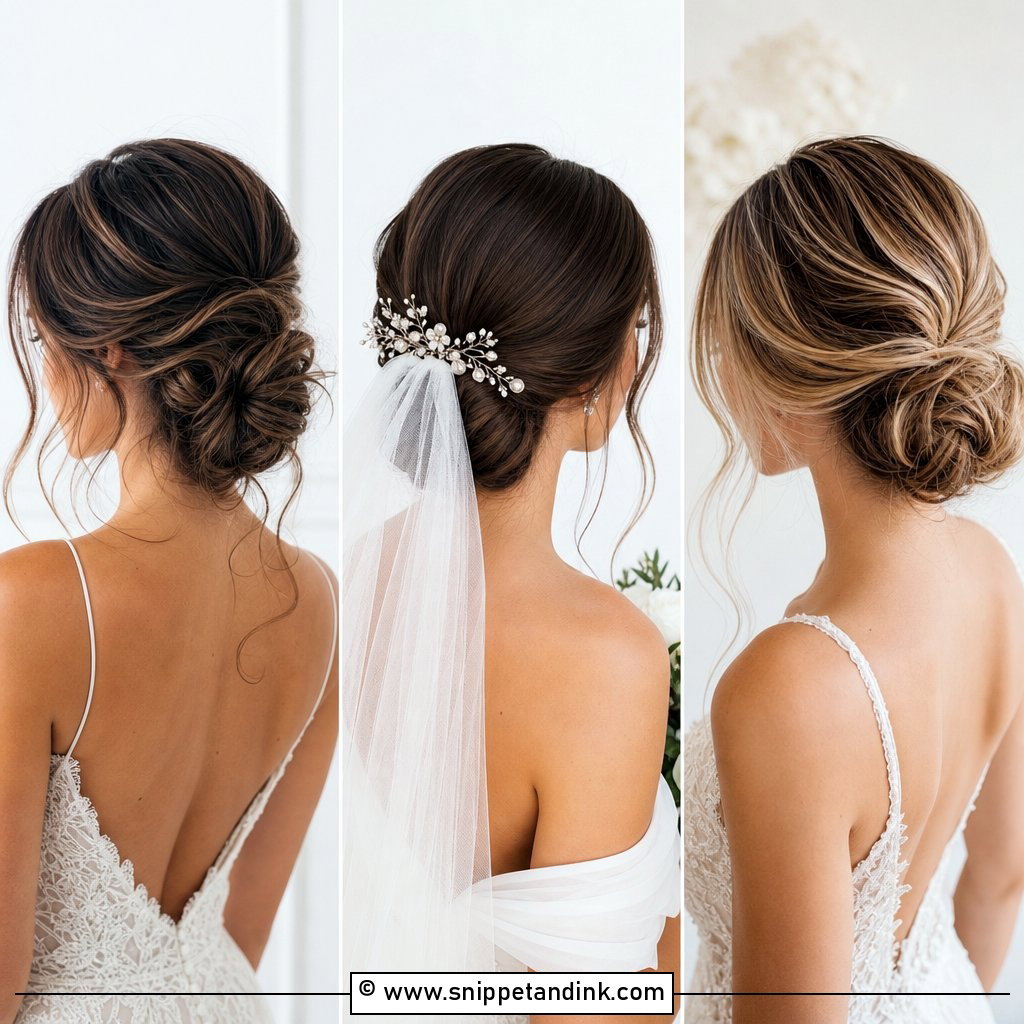
14. Bridal Messy Bun
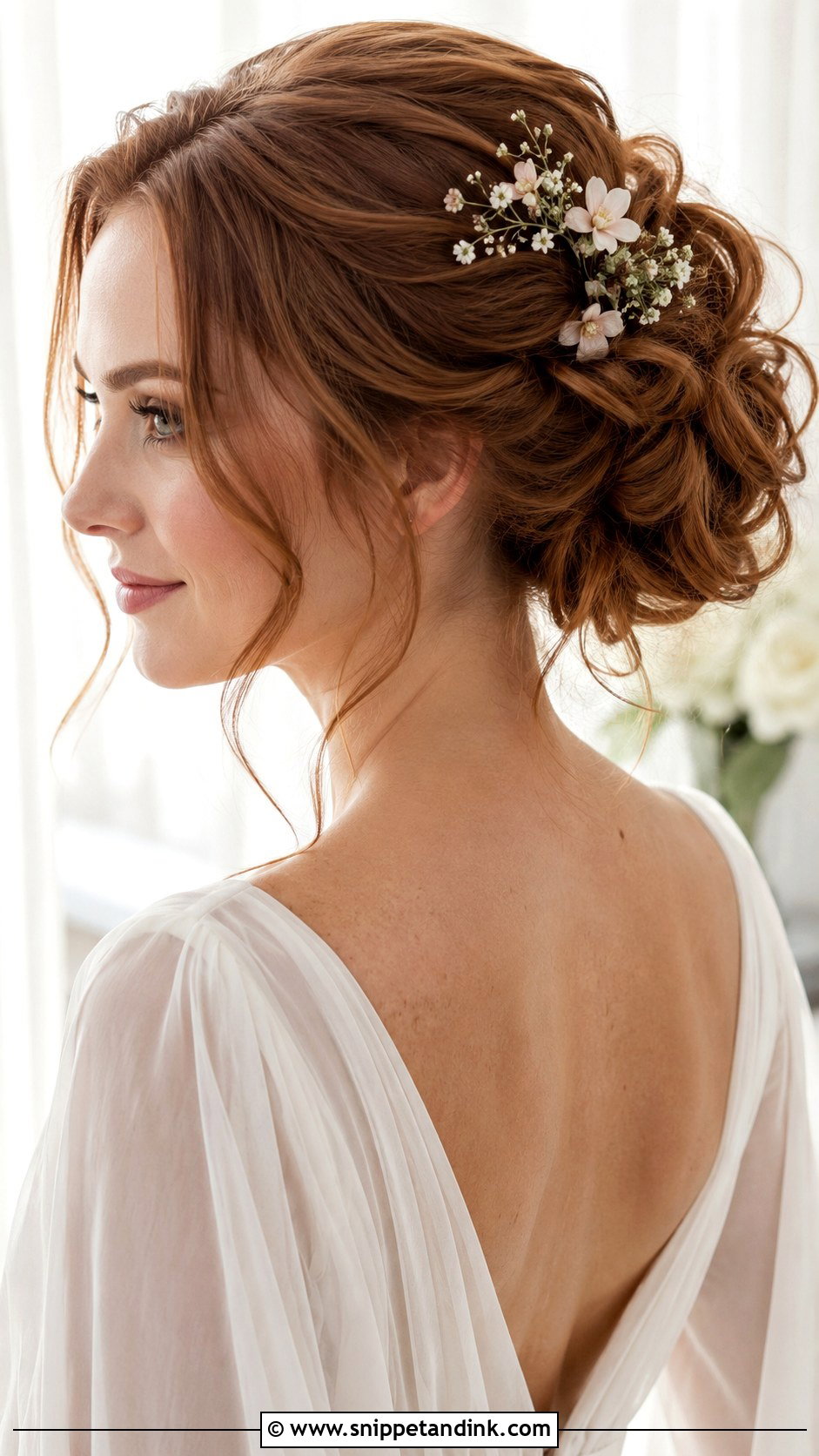
A messy bun is the style most likely to look unfinished if it’s rushed. I build it from curled hair, pin it loosely in sections and then shape the volume by hand, so the softness comes from the shape, not from hair falling out. Layered hair blends into it easily, which is one reason it’s popular for outdoor and mountain venues. The face-framing pieces matter more than people think: they should be carefully placed tendrils curled away from the face, not random strands. I use more pins than it looks like I need, plus a flexible hold spray, because a soft bun has nothing structural holding it together.
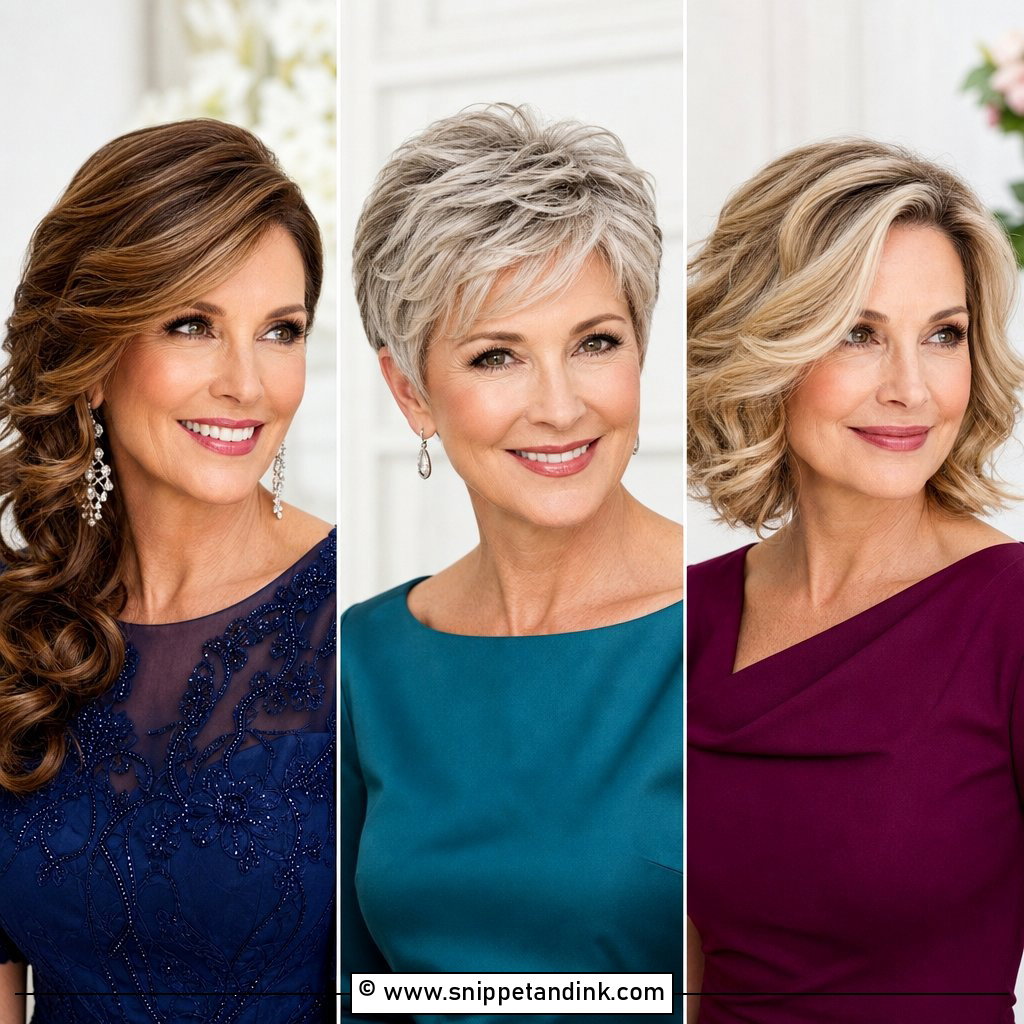
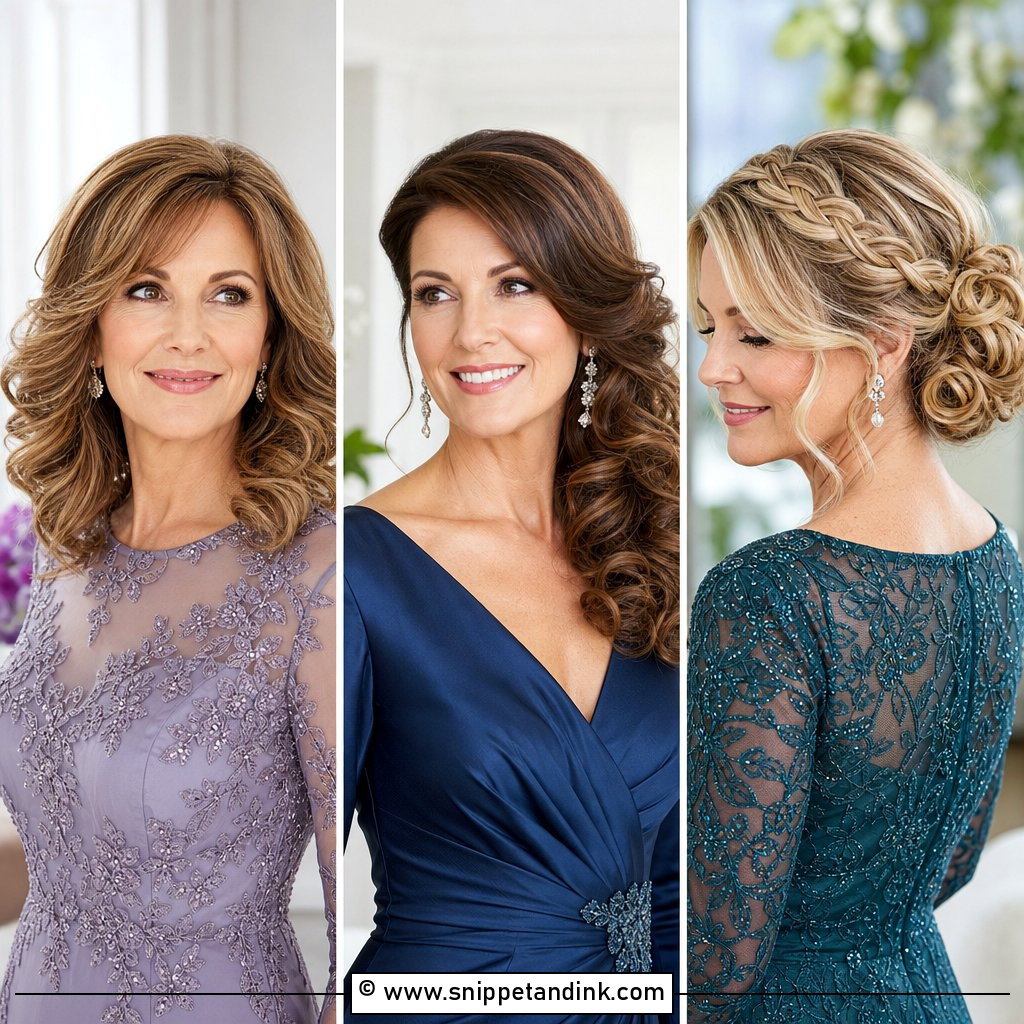
15. Bridal Curly Updo
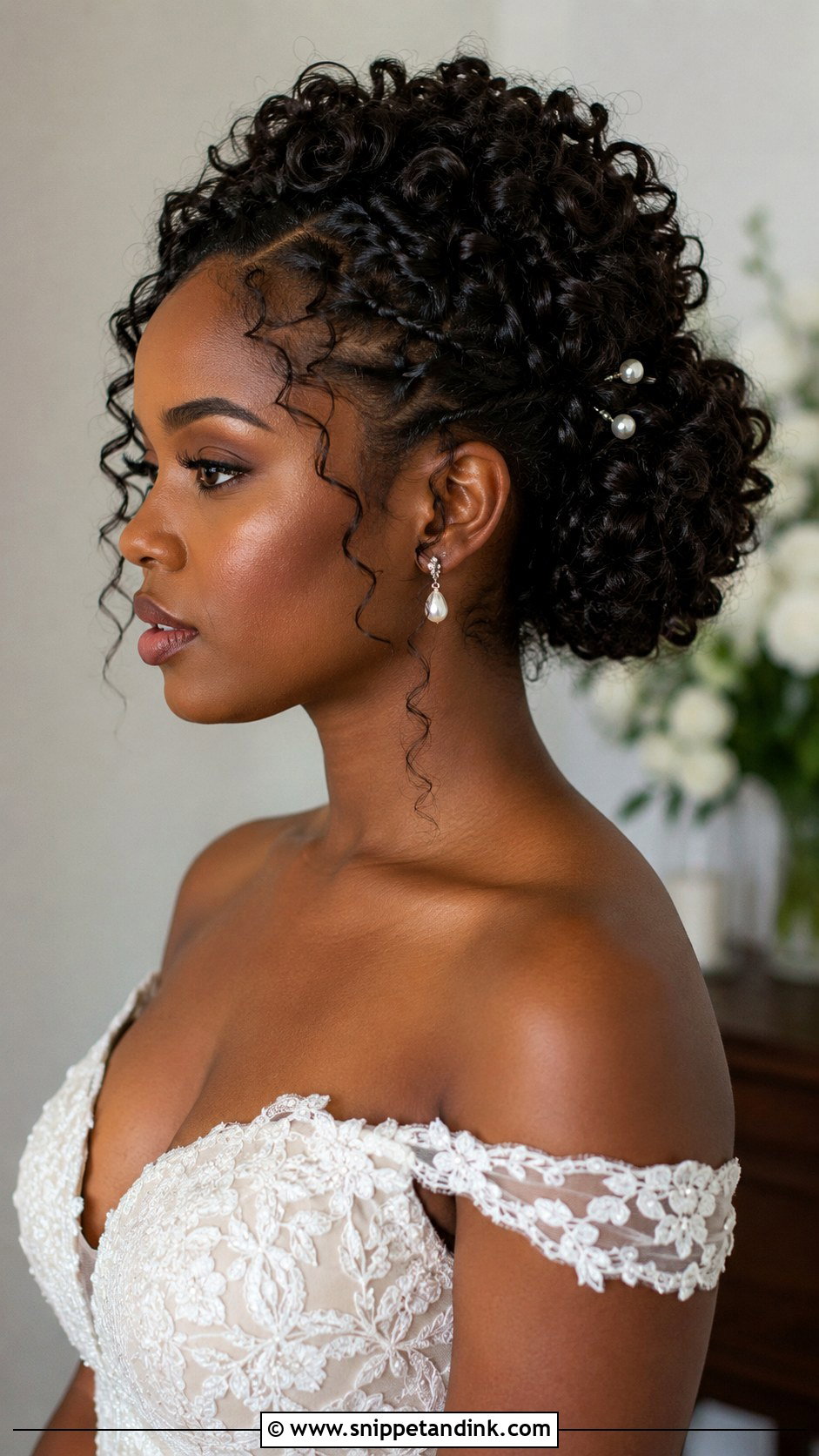
A curly updo uses the curl pattern for volume instead of smoothing it away. It can be pinned low, gathered high or shaped into a crown. I always do this trial on hair styled exactly the way you plan to style it on the morning, because shrinkage and humidity change the final shape more than anything I do with pins. In curls I use U-pins rather than bobby pins, since they hold without flattening the texture around them. Bring the products you already trust; switching to something new in the wedding week is how curls end up frizzy or limp.
16. Bridal Natural Hair Updo
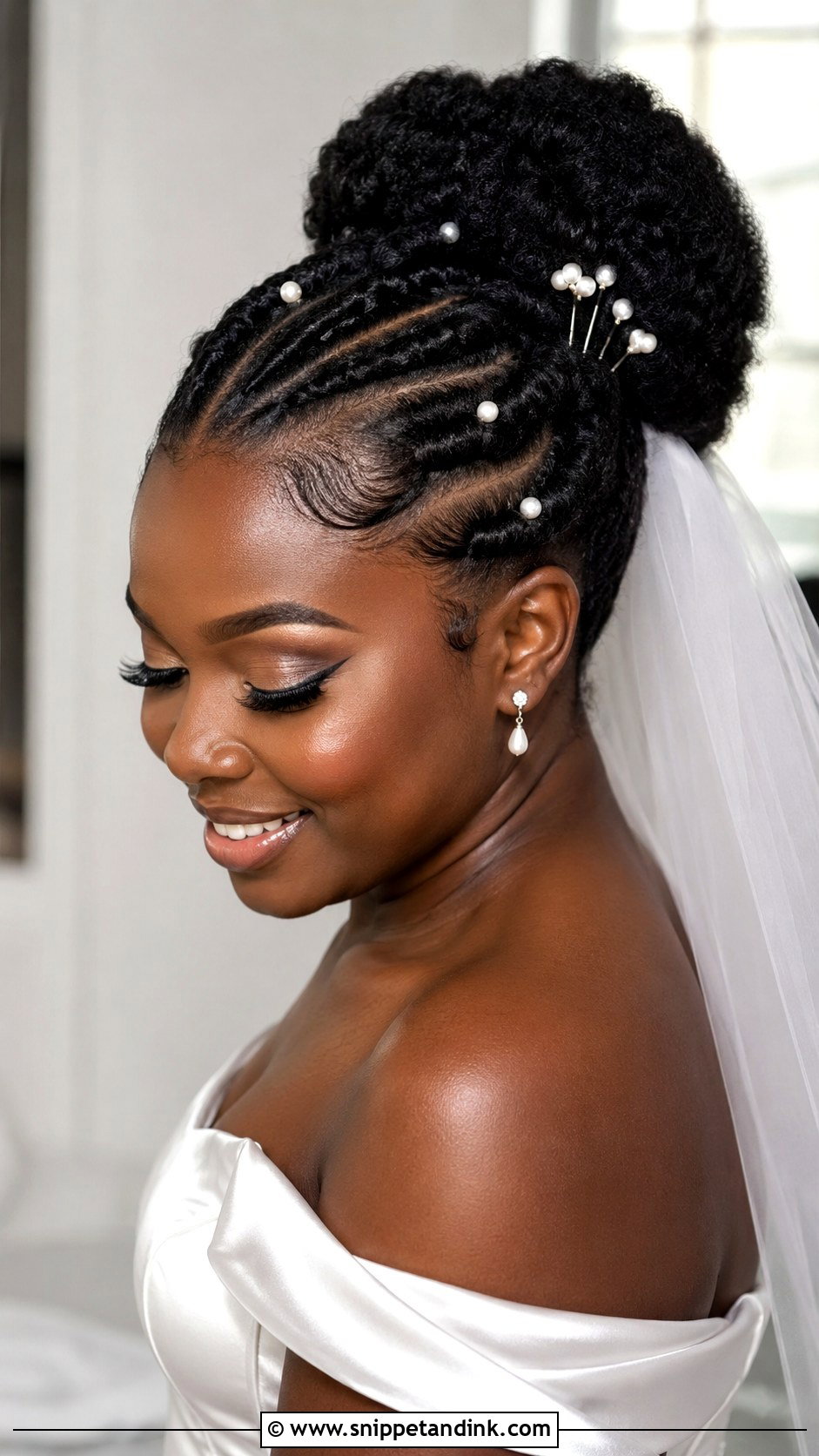
A natural hair updo can be a sculpted puff, a twisted bun, flat twists or pinned coils, and done well it protects the hair as much as it dresses it up. For brides with coily or kinky textures, I shape the style around the hair’s own structure so it isn’t fighting to revert all day. Moisture prep is the step brides skip: a deep condition in the week before and a stretched, well-moisturized base on the morning make the shape last far longer. I avoid styles that put tension on the edges, especially for a long day. Pearl pins, gold cuffs or a veil sit well on coils without hiding the texture.
17. Bridal Bob Hair
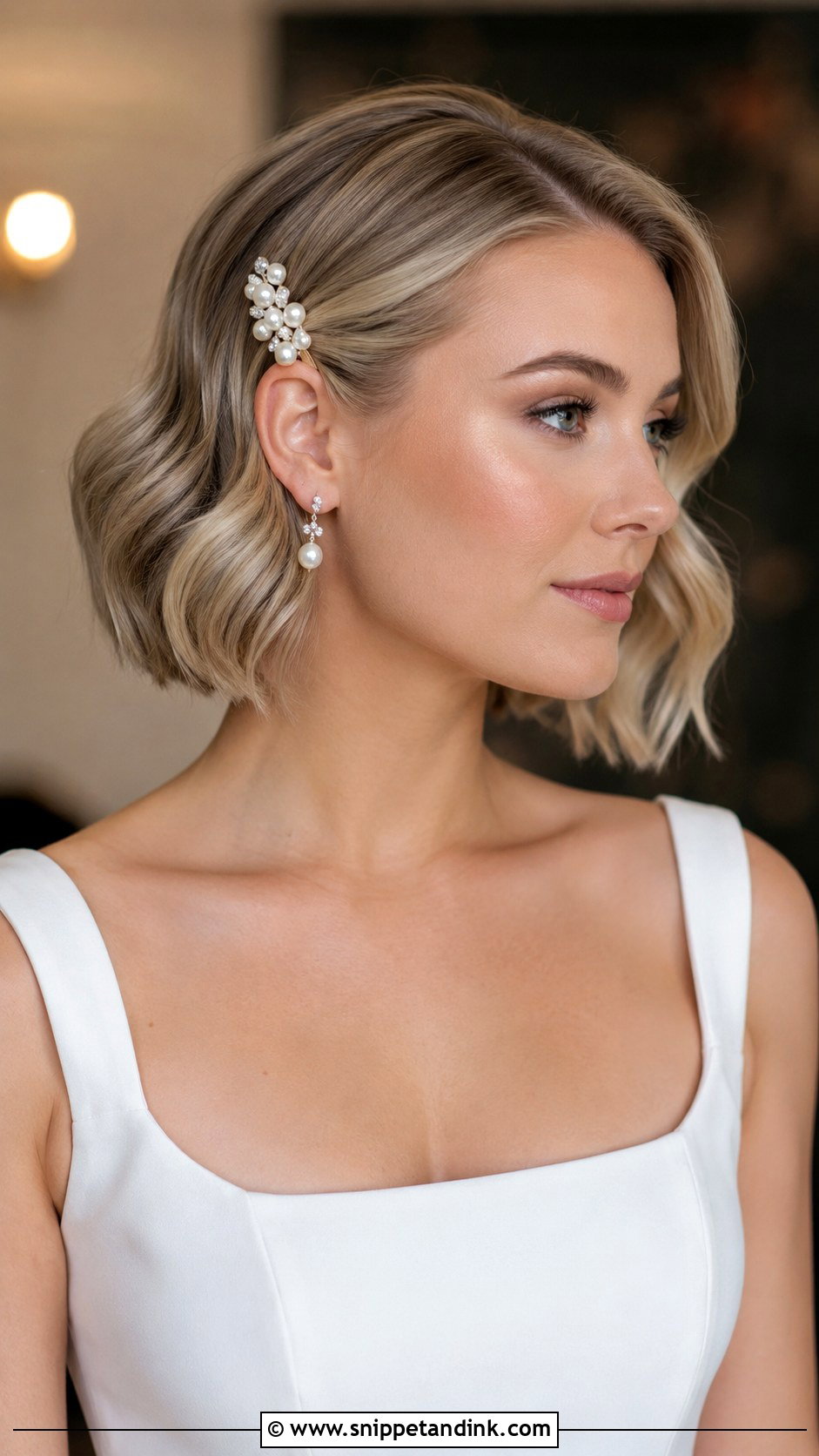
Bridal bob hair doesn’t need extensions to feel finished. What it needs is intention: a clean part, controlled bends and real shine. I usually make soft waves with a flat iron so the ends stay smooth, or tuck one side behind the ear with a hidden pin. Book your trim one to two weeks out, so the line is crisp but has had time to settle. A bob looks sharp with a modern gown and statement earrings, and a pearl clip or small comb supplies the bridal detail.
18. Bridal Short Hair
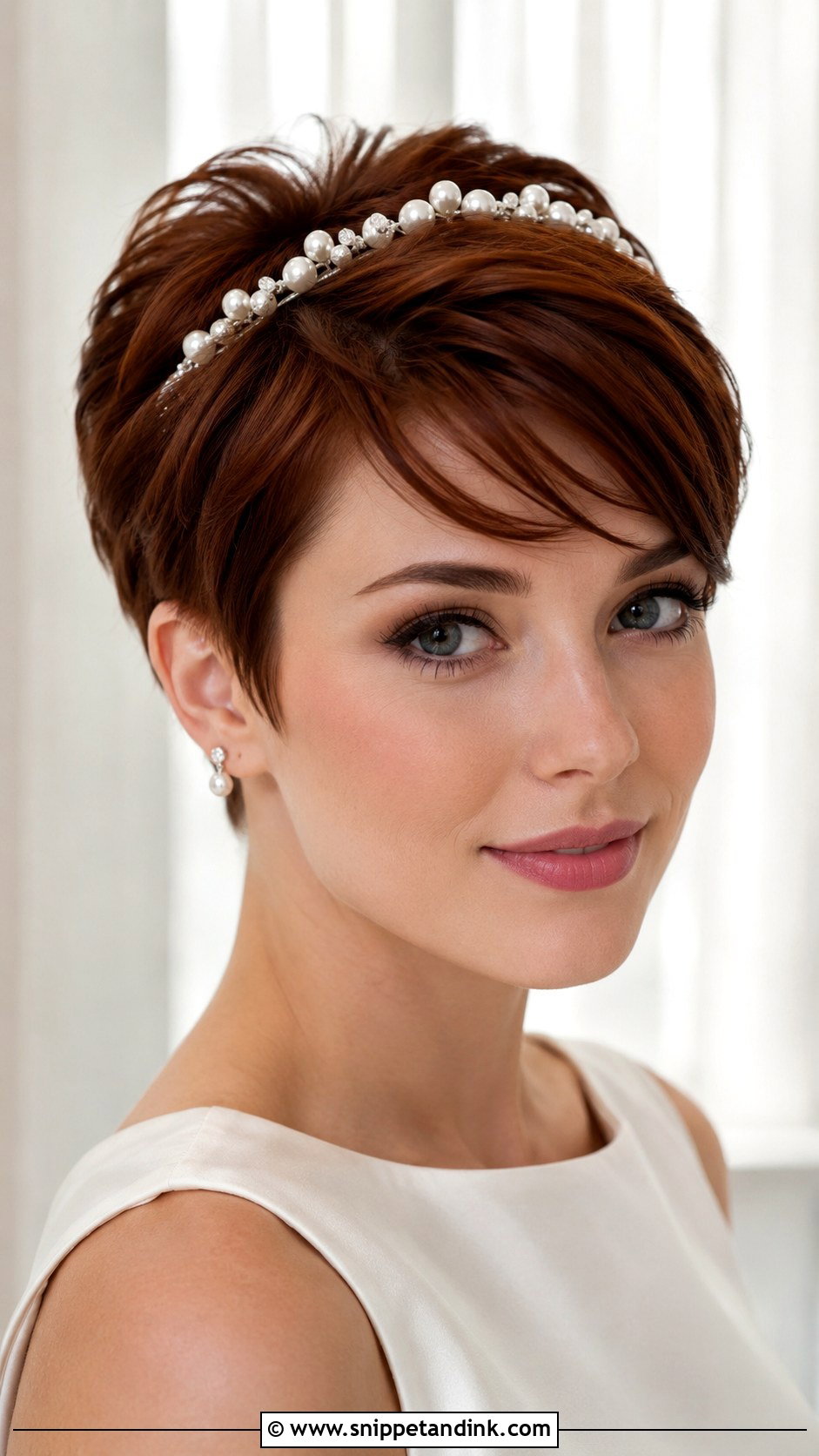
Pixie cuts, cropped waves and chin-length shags all photograph well when they look deliberate. I don’t try to make short hair pretend to be long. I work with shine, a little lift at the root and texture around the face, then let the accessory carry the bridal part: a pearl headband, a small comb or a birdcage veil. Short hair is also the most comfortable option in heat and through a long reception.
19. Bridal Veil Hair
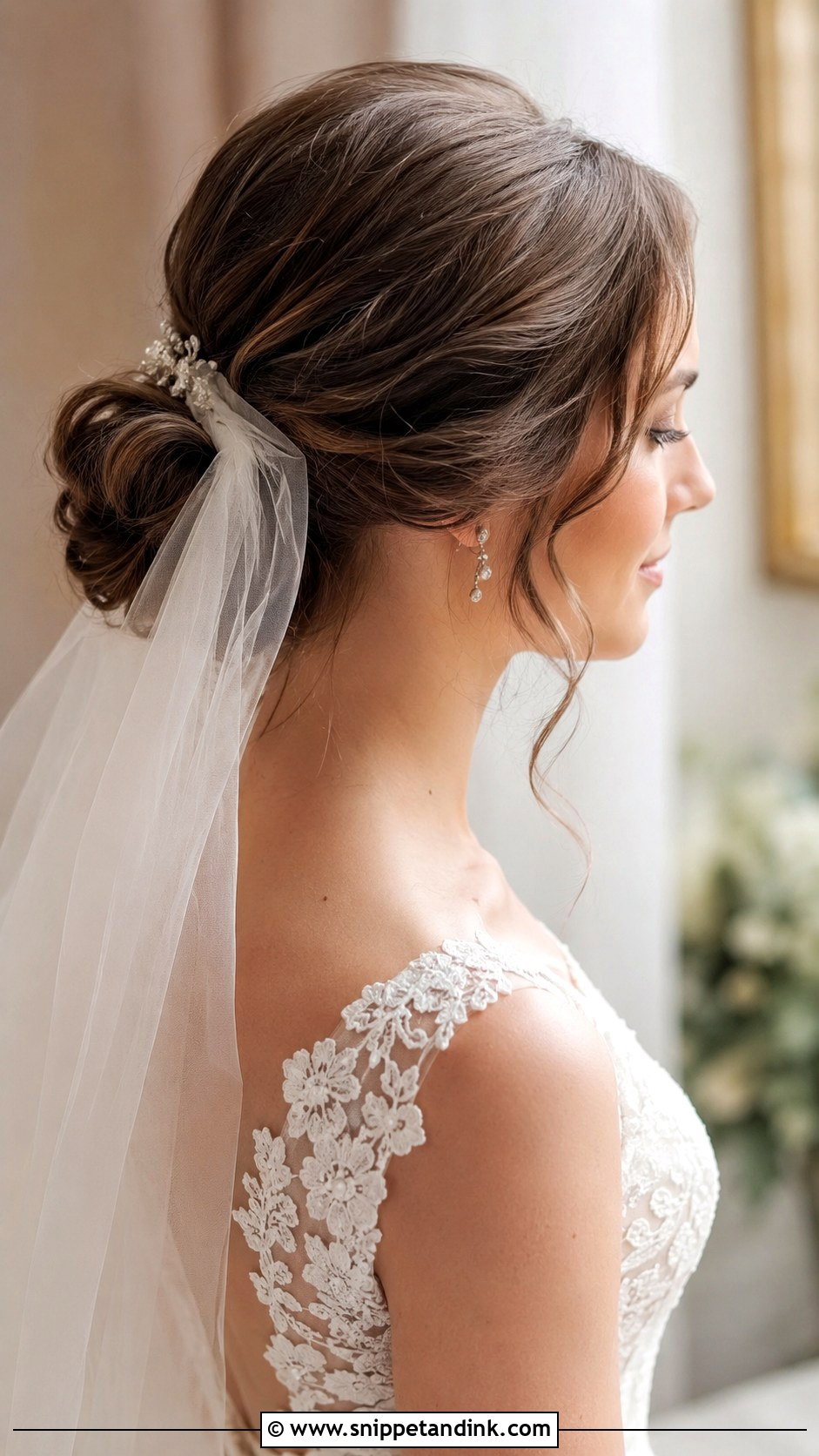
I plan the hairstyle around the veil, never the other way round. A veil above the bun reads formal and traditional, while tucked under the bun it reads softer and more modern, and each needs a different base. Low buns, chignons, half-up styles and waves can all carry one, but I build a hidden anchor first, usually a small braid or crossed pins, so the comb has something to grip. If the veil comes off after the ceremony, the style underneath has to look complete without it, so we practice taking it off at the trial. Bring the real veil, not a photo of it.
20. Bridal Hair With Pearls
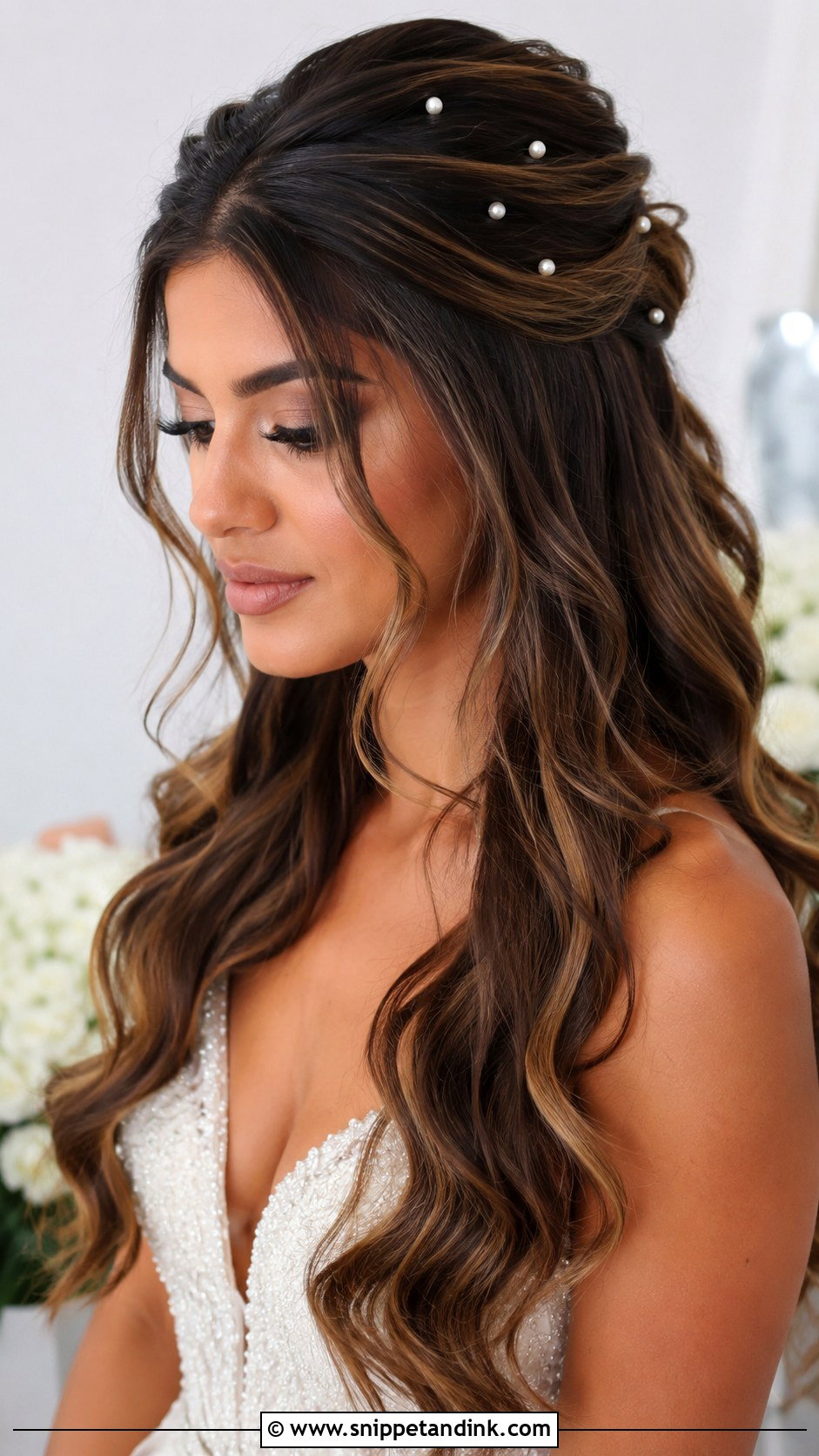
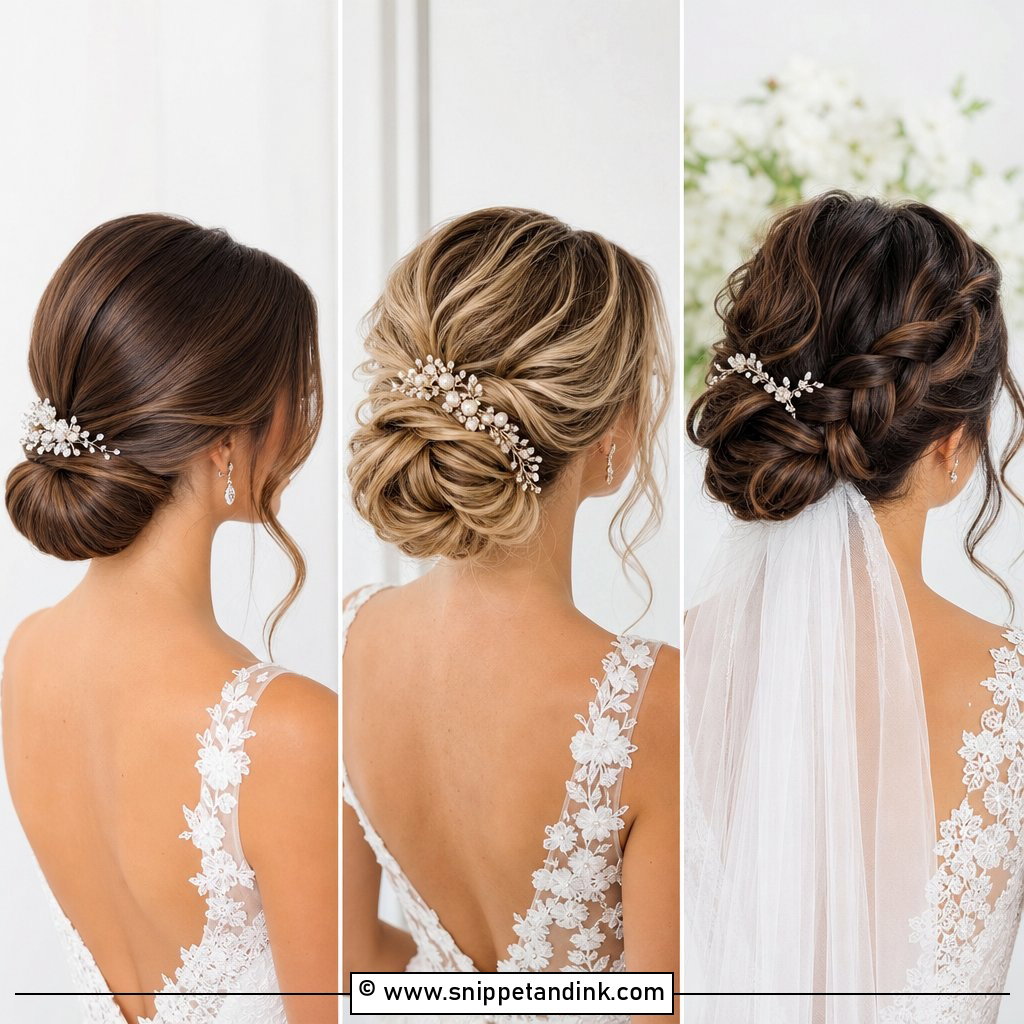
Pearls work best when there are fewer of them than you’d think. Scatter a few through a low bun, tuck some into waves, run them along a braid or use them as a soft headband detail. Tiny pearls almost vanish in pale blonde hair and stand out strongly on dark hair, so I size them to your color as much as to the dress. If the gown is already beaded, I’d keep the pearls to one area of the head. On very sleek hair they slide, so I set each pin into a small dab of strong-hold spray.
How I Build a Style to Last Past the First Dance
A style that looks right at ten in the morning still has to get through hugs, a veil, warm lights and dancing. Most of that staying power comes from a foundation you never see.
Day-old hair grips better
Freshly washed, very silky hair slides out of pins. I ask most brides to wash the night before, or the morning before, and keep heavy conditioner off the roots. Very fine or oily hair can be the exception, and that is something we settle at the trial.
Anchors and crossed pins
Every updo I do sits on a base: a small elastic, a braid or a pair of bobby pins crossed in an X. Bobby pins are for grip, U-pins are for shaping. A heavy veil gets its own firm anchor exactly where the comb will sit.
Spray in thin layers
I use a light, brushable spray while curling and a firmer one only at the end. One heavy coat at the finish makes hair crunchy on the outside while the curls underneath still drop.
When Something Slips at the Reception
Hair moves on a long day, and that’s normal. A curl drops, a pin works loose, the veil drags the bun a little off center. Give a bridesmaid a small kit to carry:
- A dozen bobby pins in your hair color
- A travel-size hold spray and a small comb
- A few clear elastics for a braid end or ponytail
A dropped curl can be wound around a finger and pinned flat for ten minutes to reset. If a bun loosens, slide one or two pins in at an angle across the base instead of piling more on top. And if the veil is coming off before dancing, I show one person how to remove it without pulling the pins out underneath.
Bring Three Favorites and Your Real Veil to the Trial
Copying one photo rarely works, because that photo was taken on someone else’s hair, in someone else’s weather. Pick two or three styles from this list that suit your neckline and veil, think about the season you’re marrying in, then book a trial and bring the dress photo, the veil and pictures of each style from the front and back. I’ll tell you honestly which one your hair will hold until the last song. The right choice stays secure, photographs well from every side and still looks like you.
You'll Like These Ideas:


Leave a Reply