
Your haldi hair has to cope with turmeric, flowers, a lot of hugging and usually a hot morning outdoors. I treat it as the most practical hairdo of the whole wedding: face open, neck clear, nothing that needs fixing mid-ritual. Buns, braids, half up shapes, ponytails and flower details fit that brief. What decides between them is your neckline, how the dupatta will be draped, your hair length and how much you mind hair on your shoulders. All fifteen below look bridal without weighing you down.
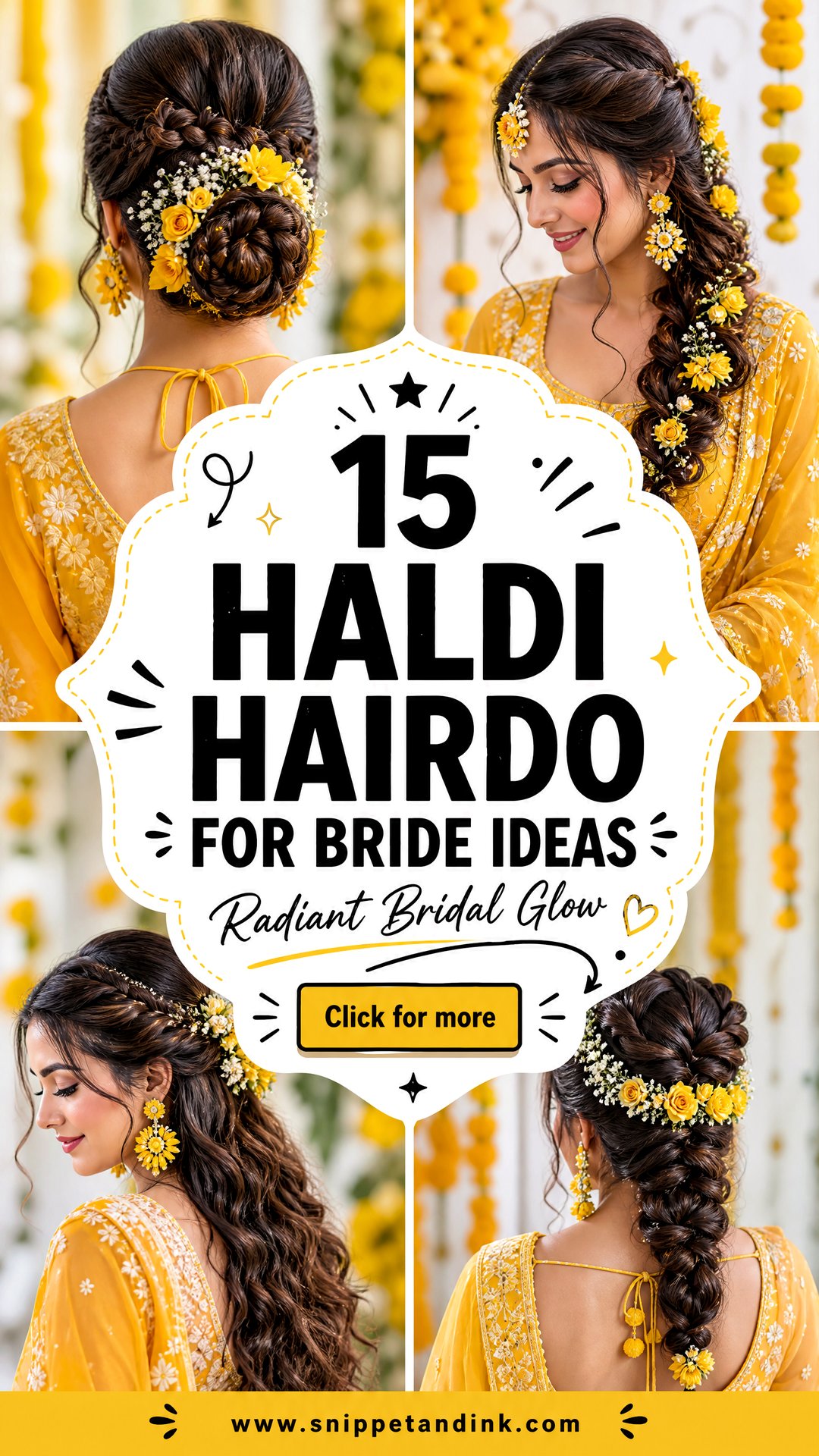
Stylist or Cousin? Who Should Do Your Haldi Hair
Plenty of brides save the professional booking for the wedding day and let a sister or cousin handle haldi. That’s a sensible choice, as long as the style matches the skill in the room.
Easy for a family member
Low and mid ponytails, side braids, a simple low bun with flowers, and a twisted half up. These need a brush, elastics, bobby pins and maybe a curling iron. Have whoever is doing it practise once on you a few days ahead.
Worth booking a stylist
Gajra buns wrapped neatly, fishtail and crown braids, bubble braids on long hair and anything with a parandi or matha patti. These depend on even tension and secure anchoring, and they’re hard to correct once the paste starts. Many stylists offer a shorter, cheaper slot for pre-wedding functions, so ask when you book the main day.
Either way, buy the flowers, pins and elastics yourself the day before. Not having enough bobby pins is the most common reason a home-done haldi style comes apart.
1. Haldi Floral Bun For Bride
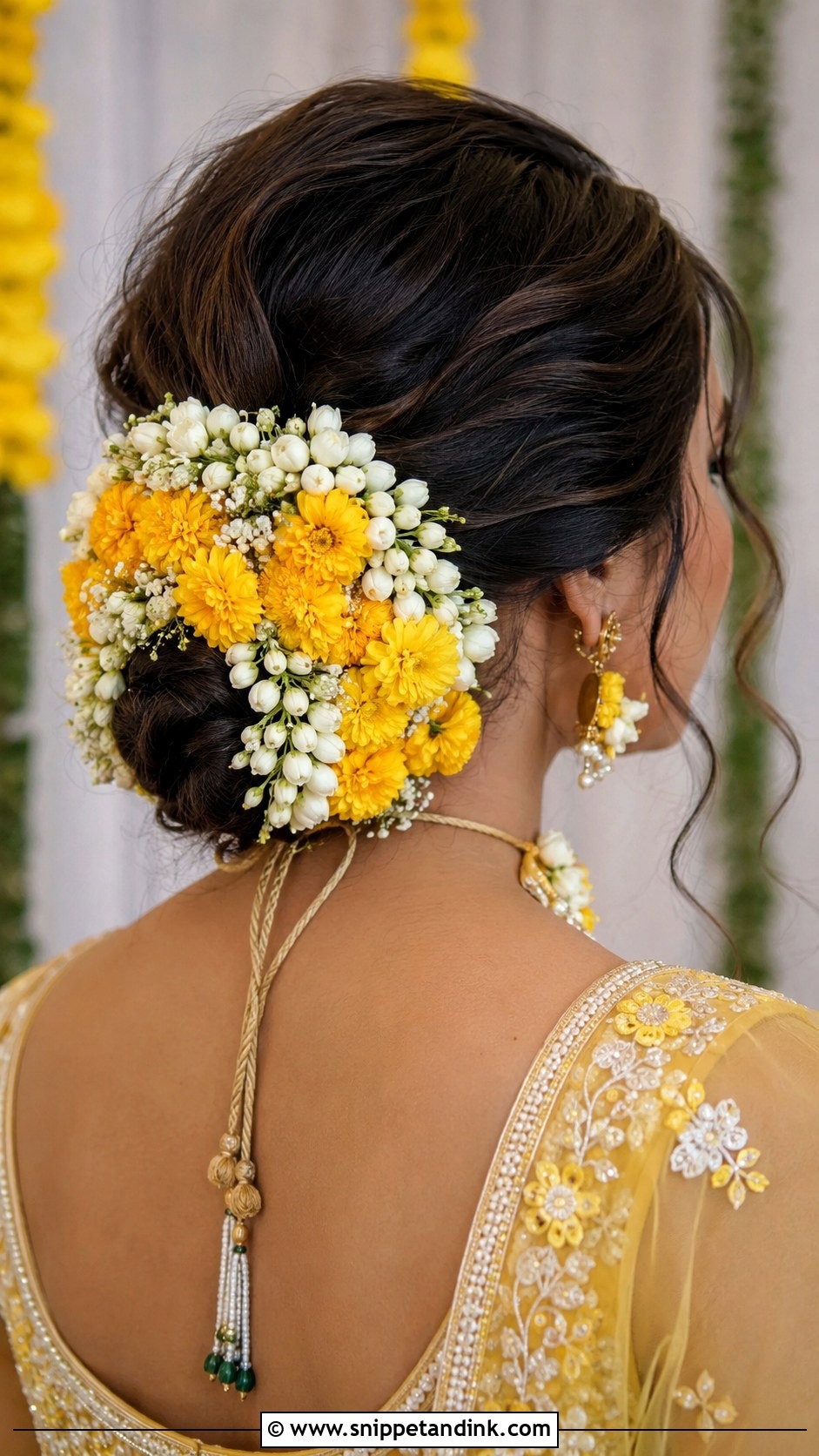
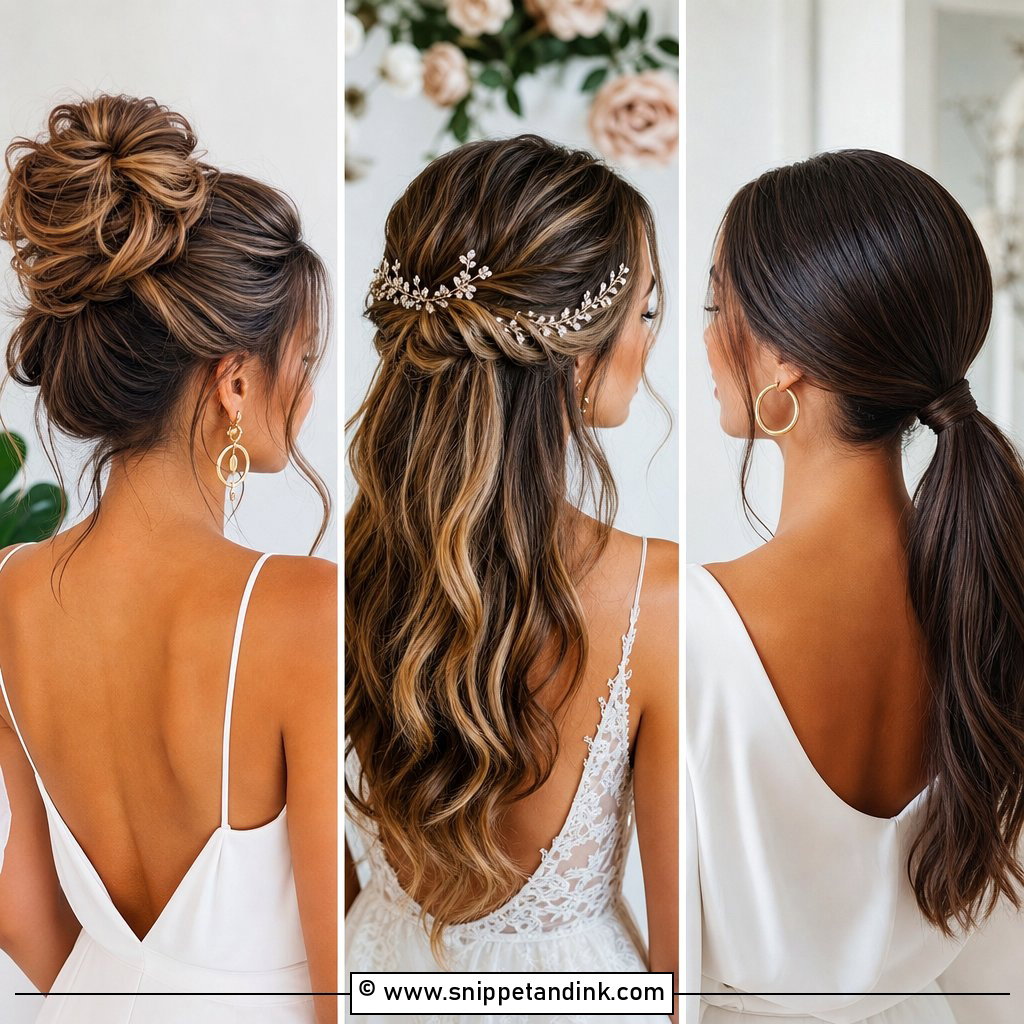
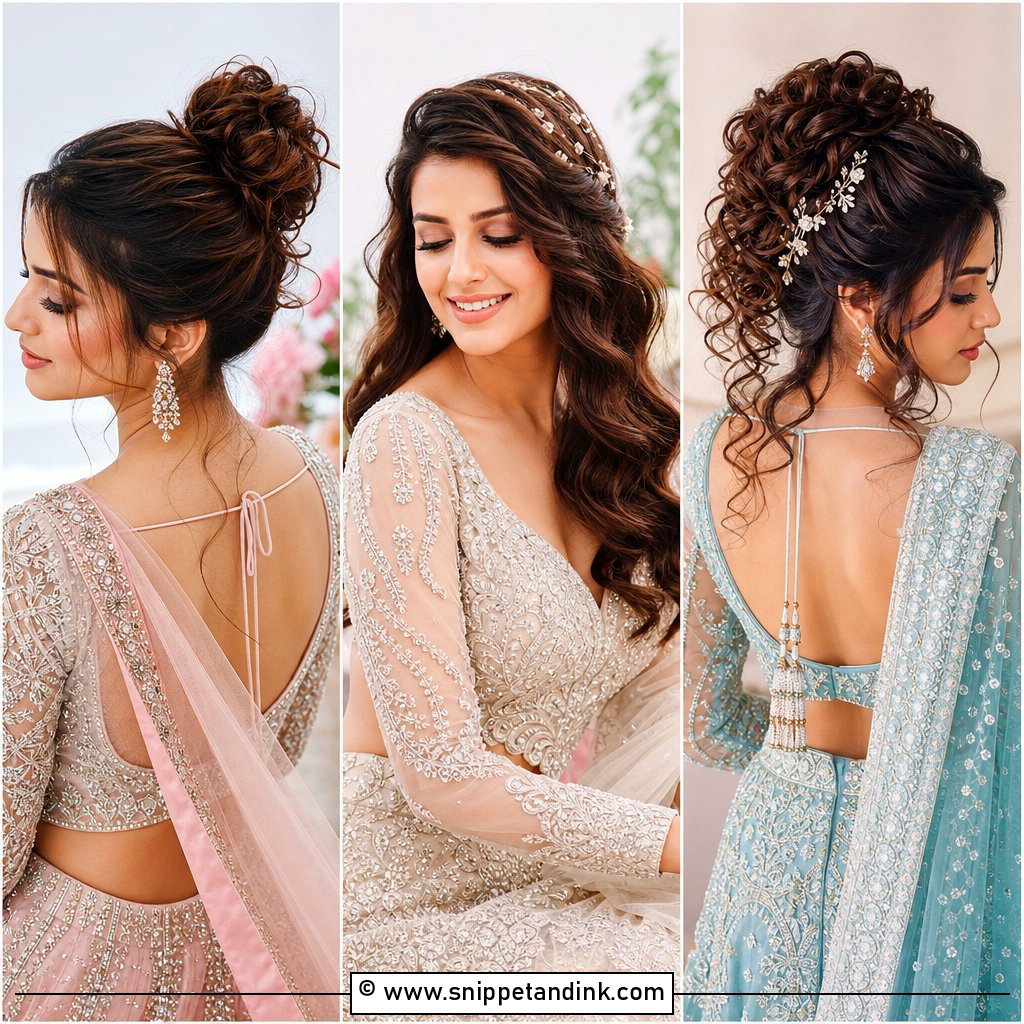
Most haldi brides I style end up in some version of the floral bun, and for good reason: the paste goes on the face, neck and arms, and this keeps every strand out of its way. A low bun with fresh marigolds, jasmine or baby’s breath works against yellow, white, orange or pastel. Sleek is polished; textured is relaxed. I build the bun on a firm ponytail base so the flowers have something solid to pin into. A maang tikka, floral earrings and a light dupatta all sit comfortably with it.
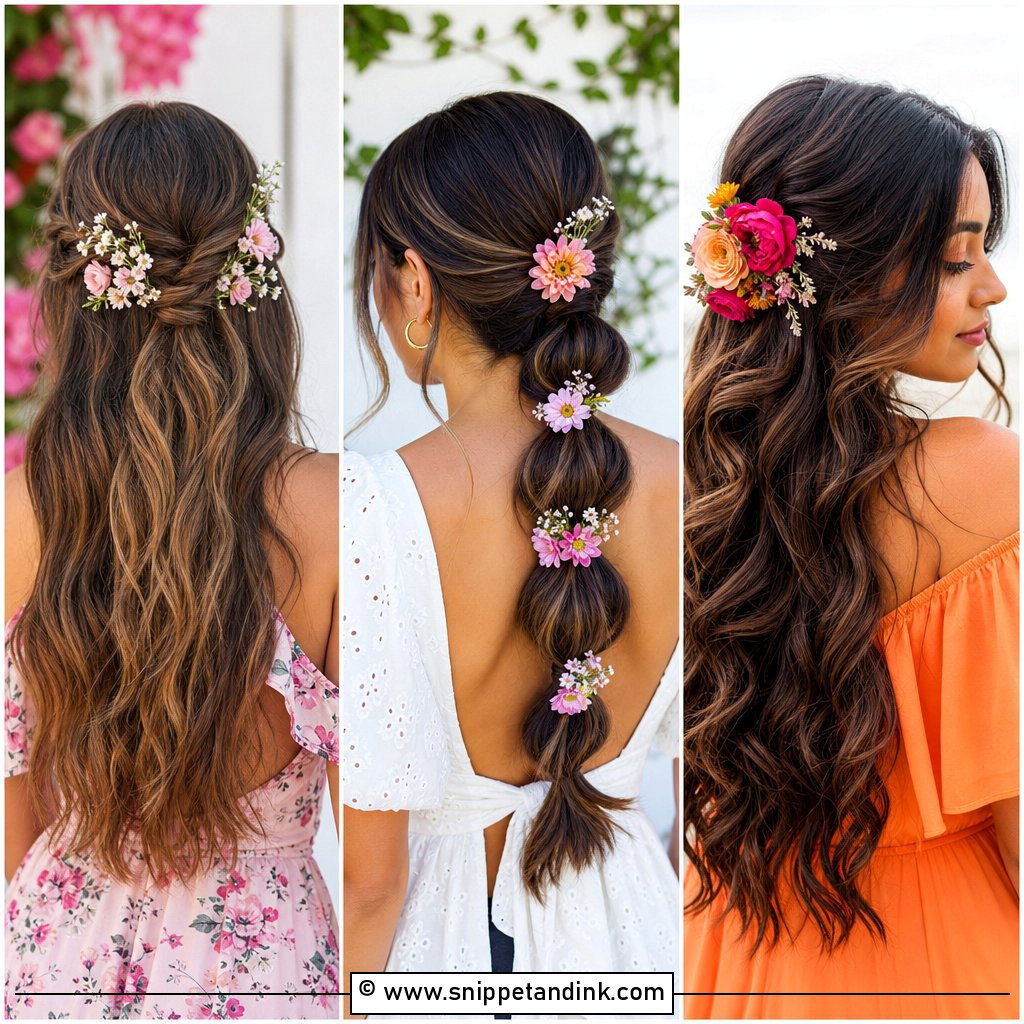
2. Haldi Open Curls With Flowers
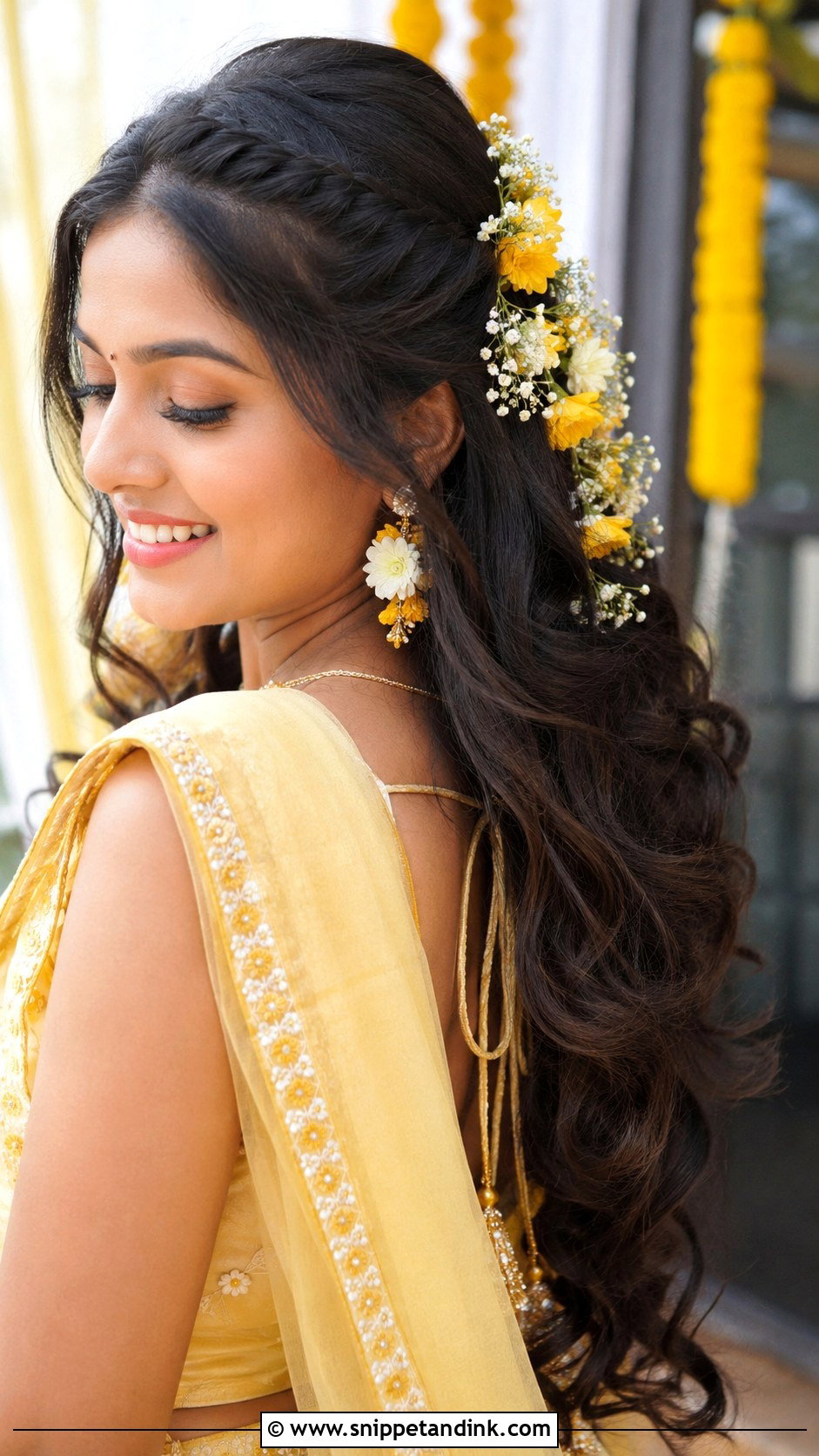
Open curls let you leave your hair down and still look dressed. Small fresh flowers go along one side, behind an ear or scattered through the curls. Lehengas, shararas and flowing sarees suit it. Two cautions from experience: the curls drop in the heat, so I set them tighter and looser products are a must, and loose hair collects haldi paste, which will tint light or coloured hair. If you go this way, run a few drops of oil through the ends first.
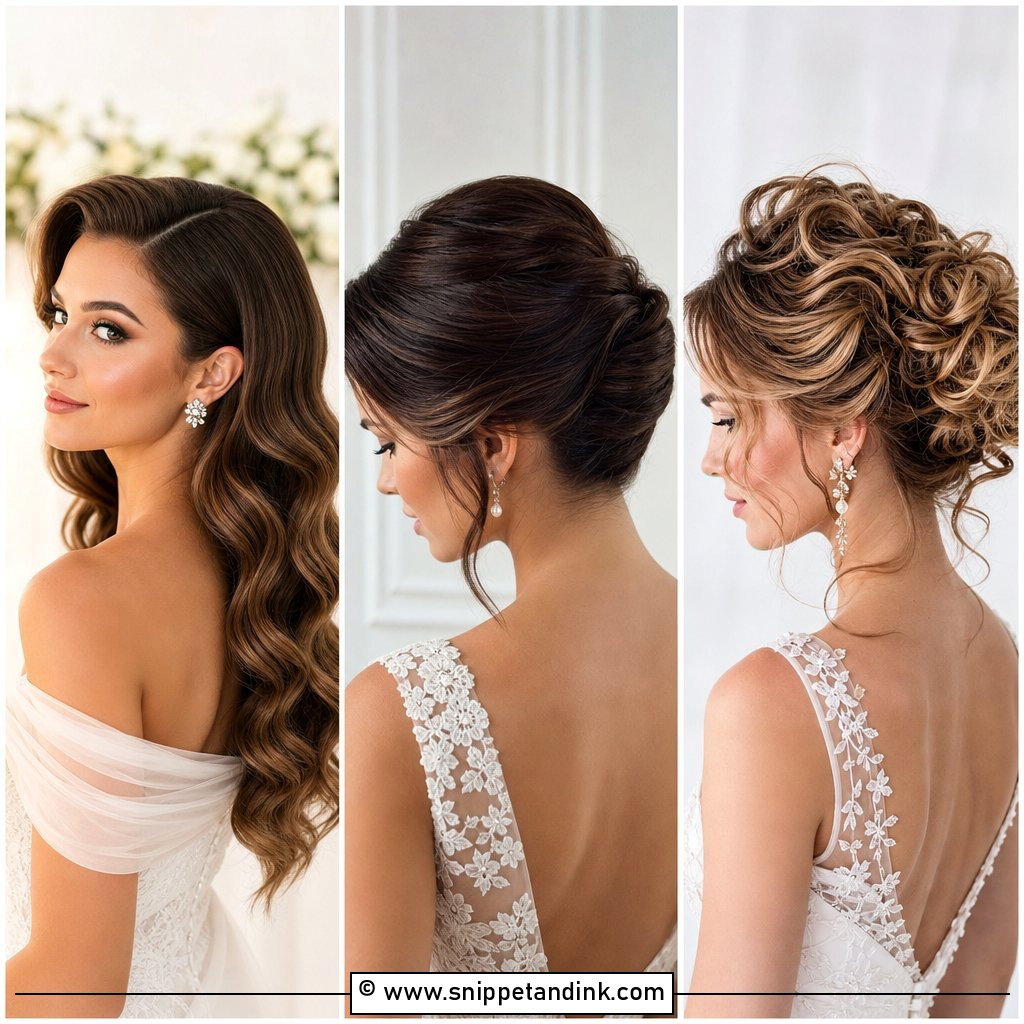
3. Haldi Half Up Half Down Hairdo
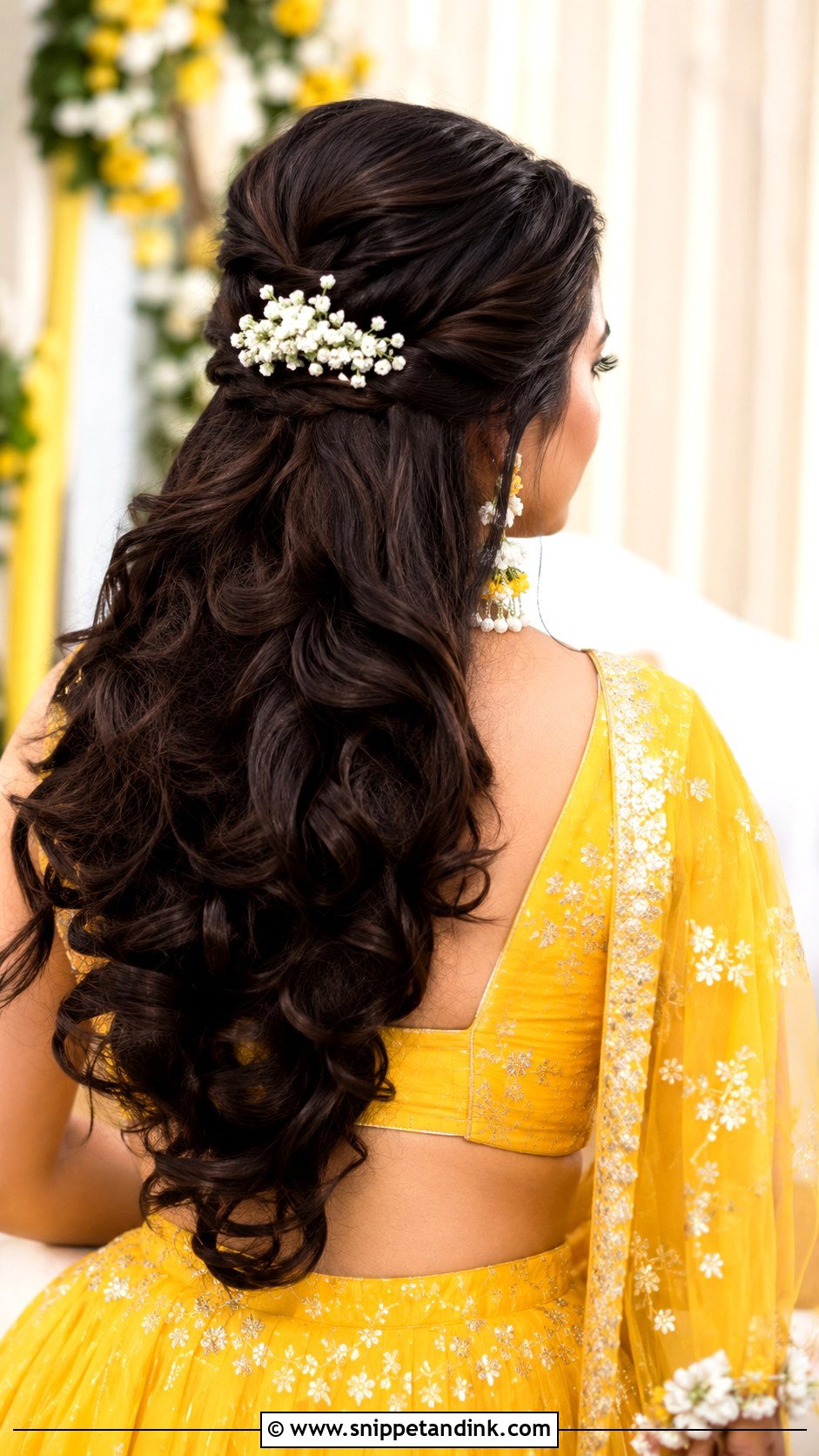
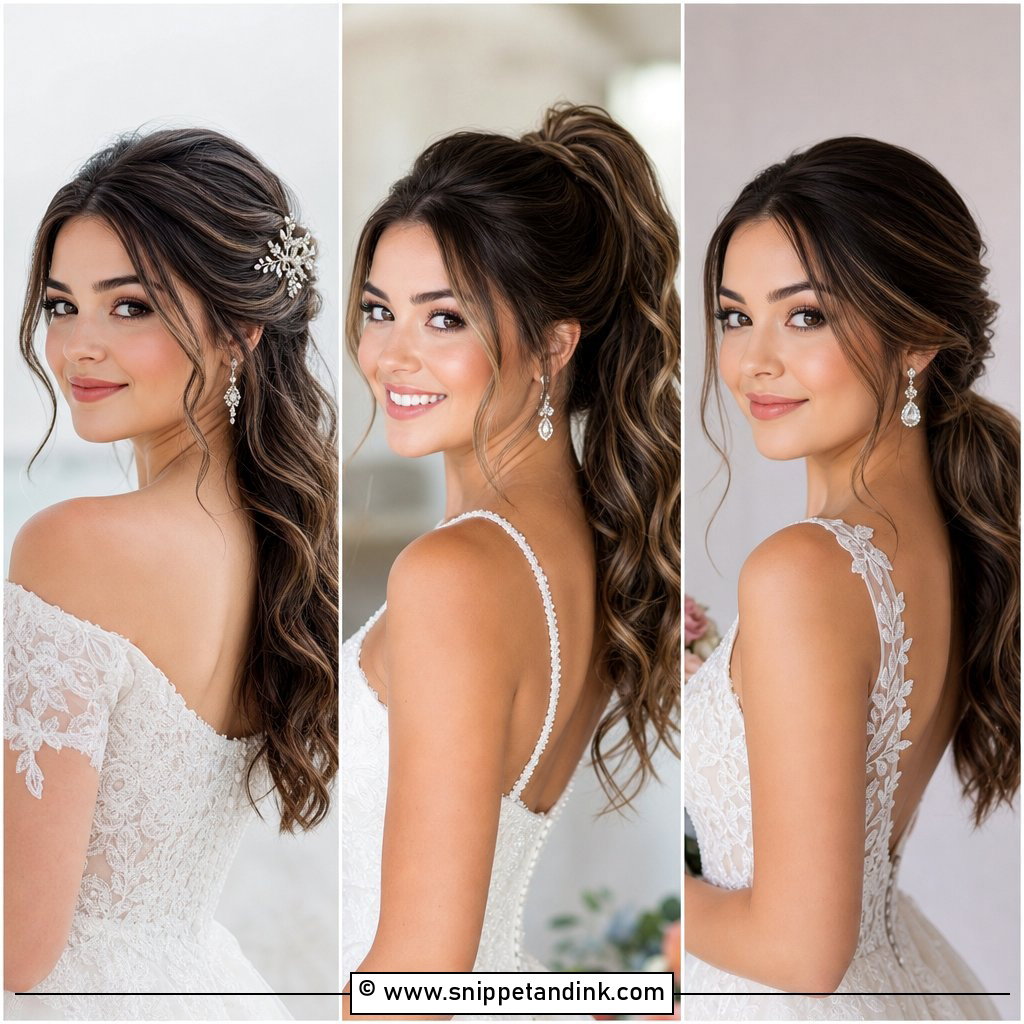
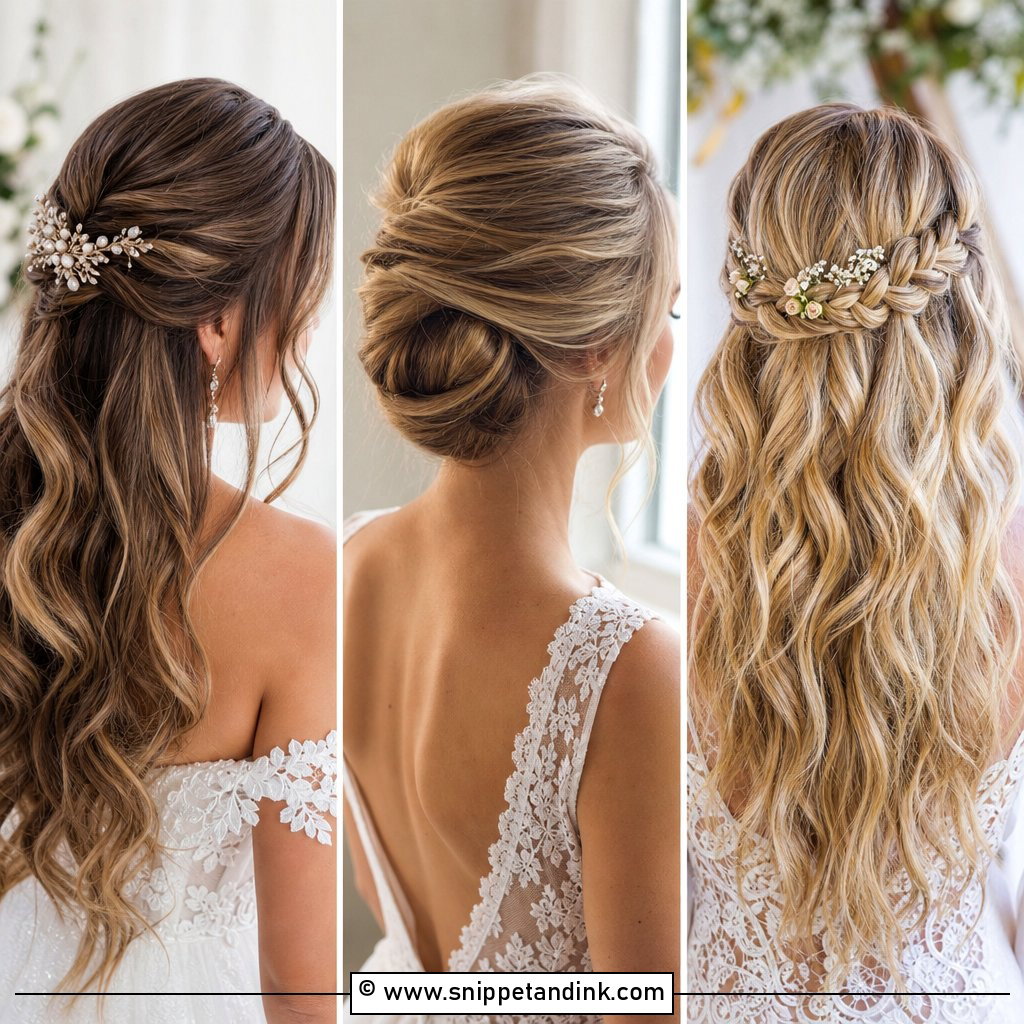
With the top section pinned, your face stays clear for rituals and photos, while the lengths stay soft. The lower hair can be waved, curled or given smooth bends. Flowers, pearl pins or floral jewellery go at the join at the back, which is also where I cross two pins to stop the section sliding. Medium to long hair suits it, with a center or side part. It sits between casual and formal, which is about right for haldi.
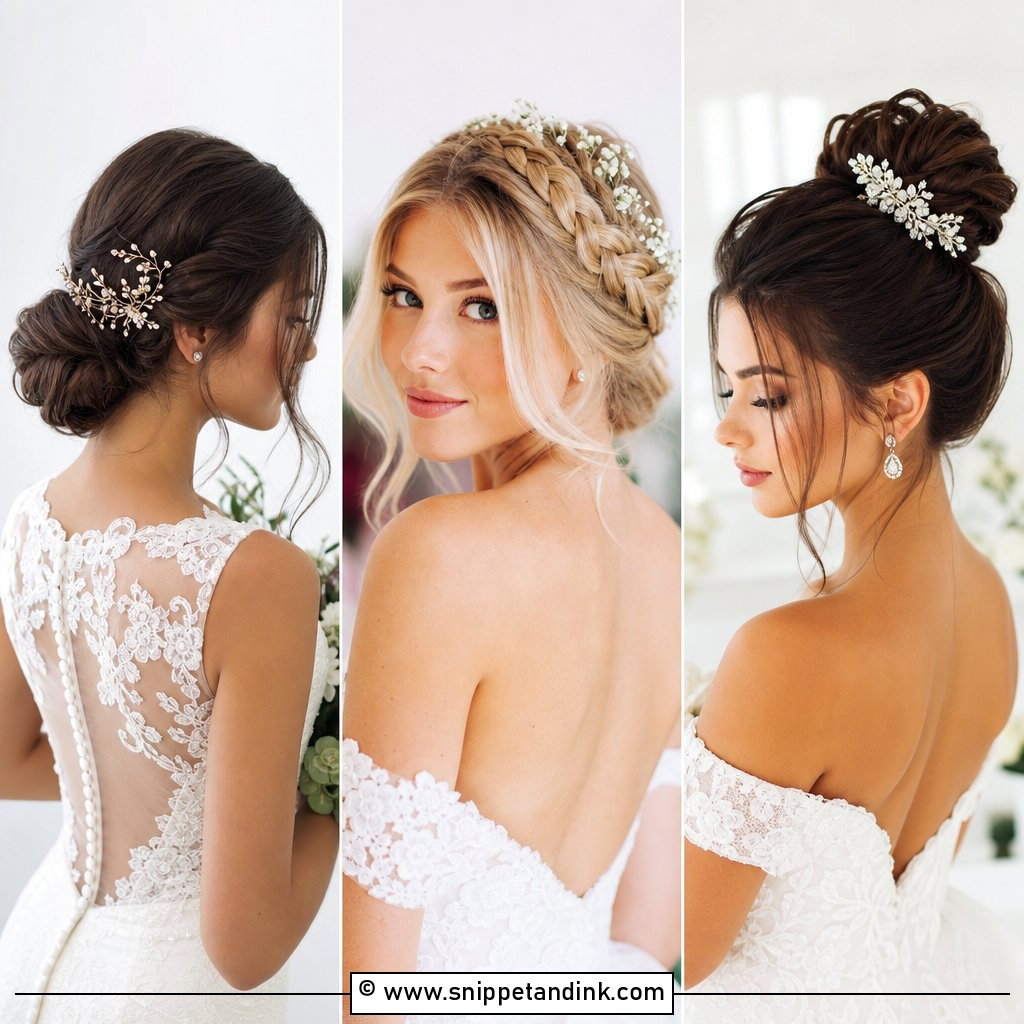
4. Haldi Braided Bun For Bride
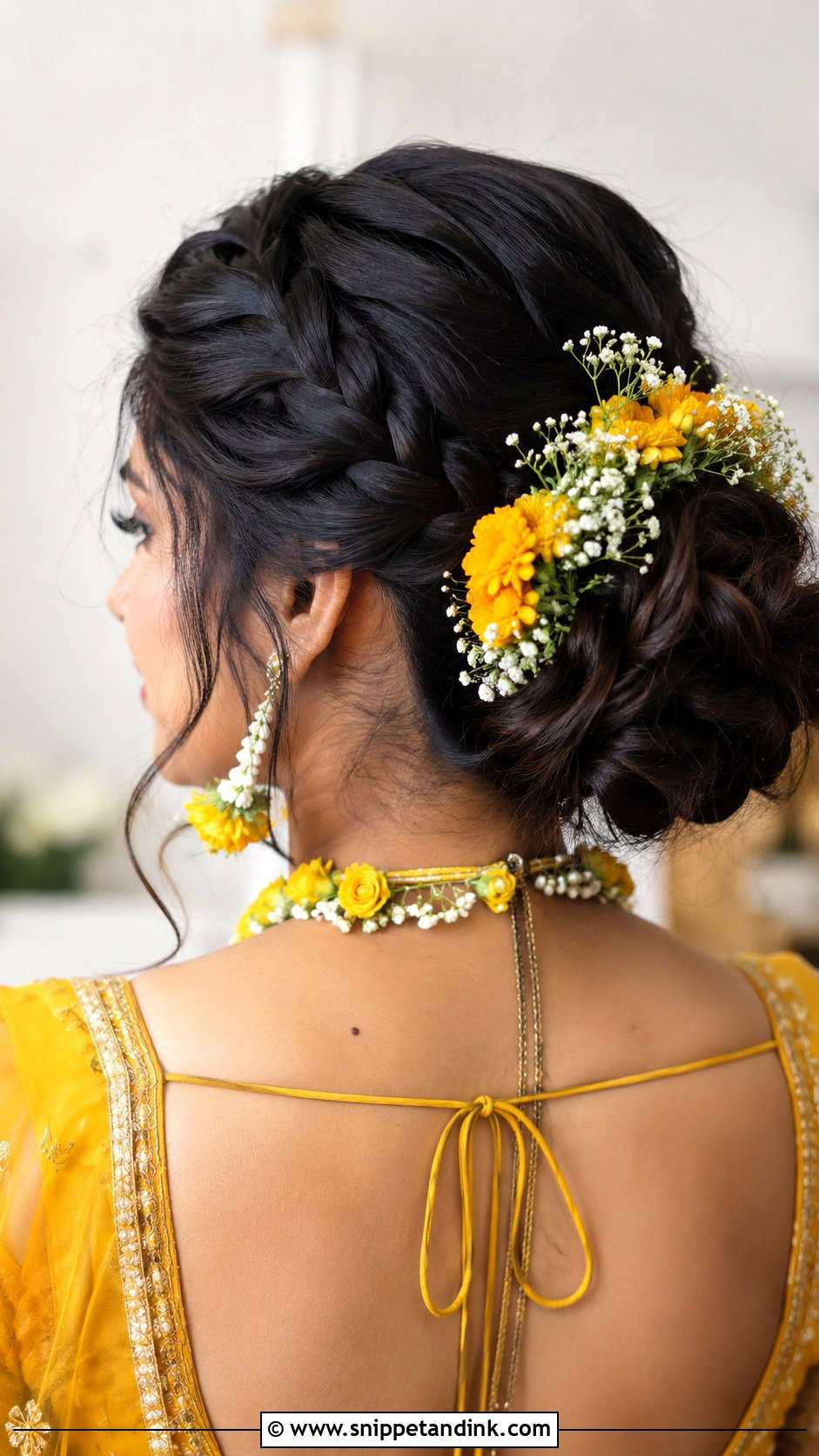
If you expect a long ceremony followed by dancing, the braided bun is what I’d steer you to. The braid around the crown or along the side gives texture and grip, and the bun locks everything in. Yellow flowers, a white gajra or small floral pins dress it. Backless blouses, high necks and looks without a dupatta all suit it, since the hair stays tight to the head. Thick hair does especially well, because braiding part of it shrinks the bun to a comfortable size.
5. Haldi Side Braid For Bride
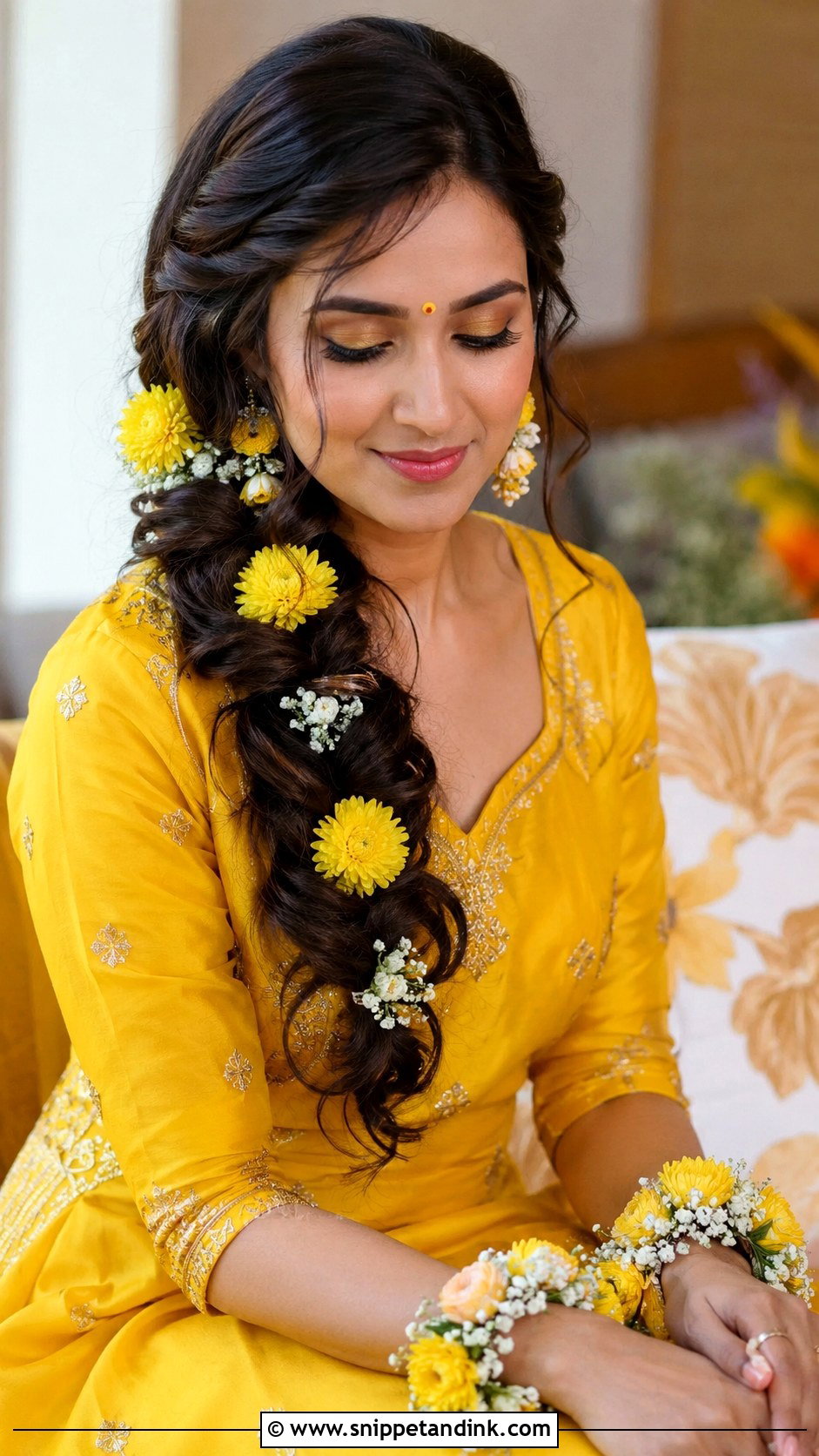
A side braid keeps long hair controlled while still showing every inch of it. Make it loose and full, with soft pieces at the front. Thread marigolds, jasmine strings, a parandi or tiny floral pins through it. A parandi adds weight at the end, so I tie the braid off with a strong elastic first and attach the parandi over it. Kurta sets, lehengas and sarees all work, and outdoors it handles wind far better than open hair.
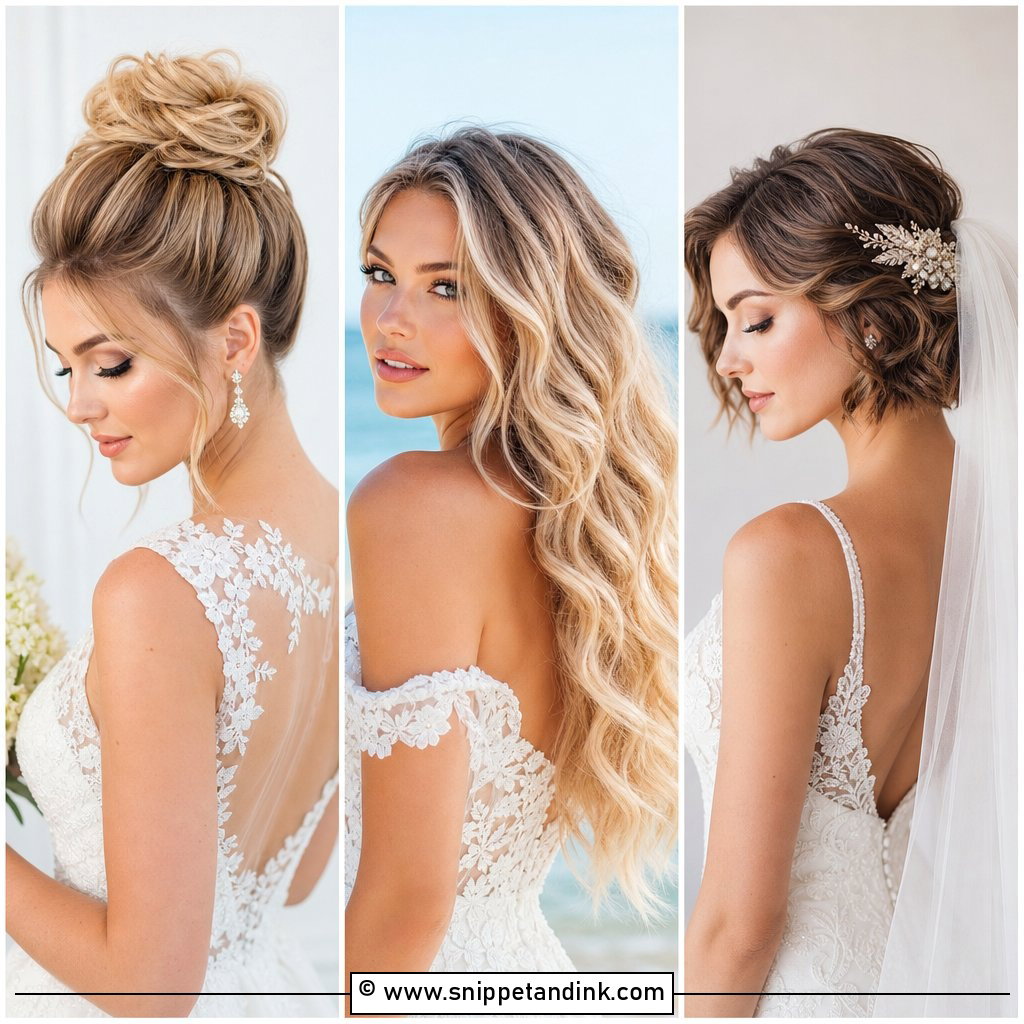
6. Haldi Messy Bun For Bride
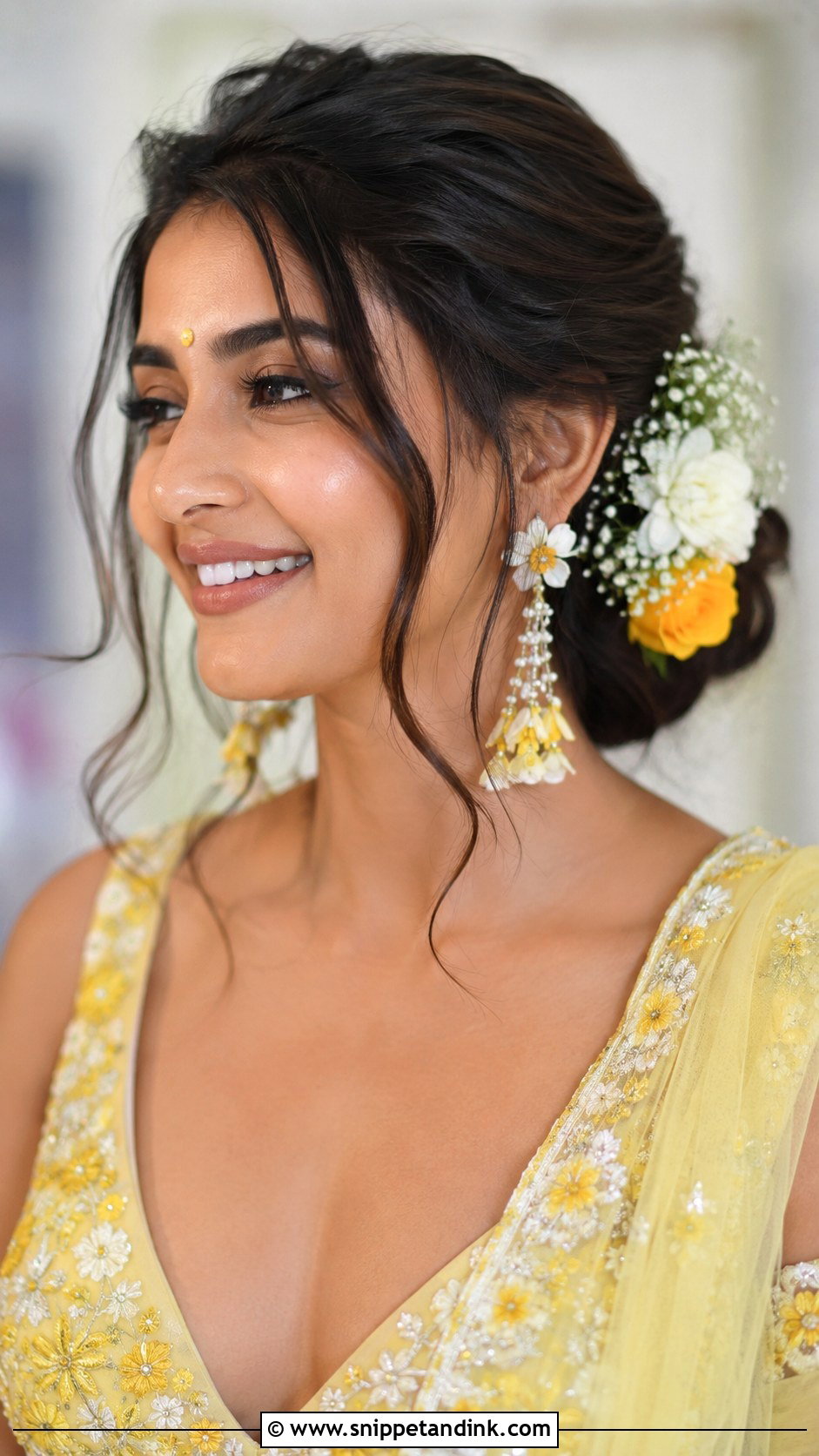
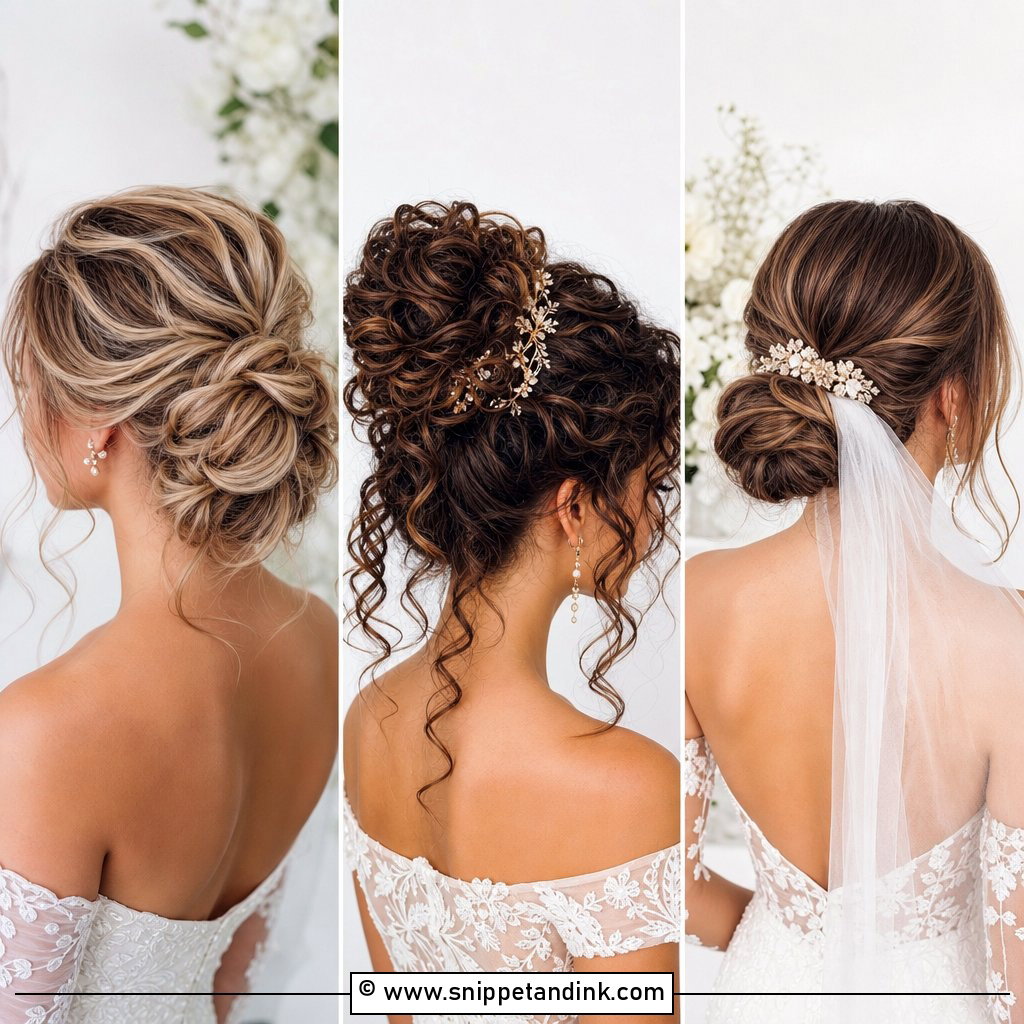
Messy is the wrong word, really. A good haldi messy bun has soft volume, controlled texture and a few gentle pieces at the face; it just doesn’t look polished to the last strand. I curl the hair loosely, gather it without brushing, then pin in sections. It’s secure enough for rituals and less formal than a sleek bridal bun. Fresh flowers around it or on one side keep it natural. Floral jewellery, minimal makeup and lightweight outfits match its mood.
7. Haldi Gajra Bun For Bride
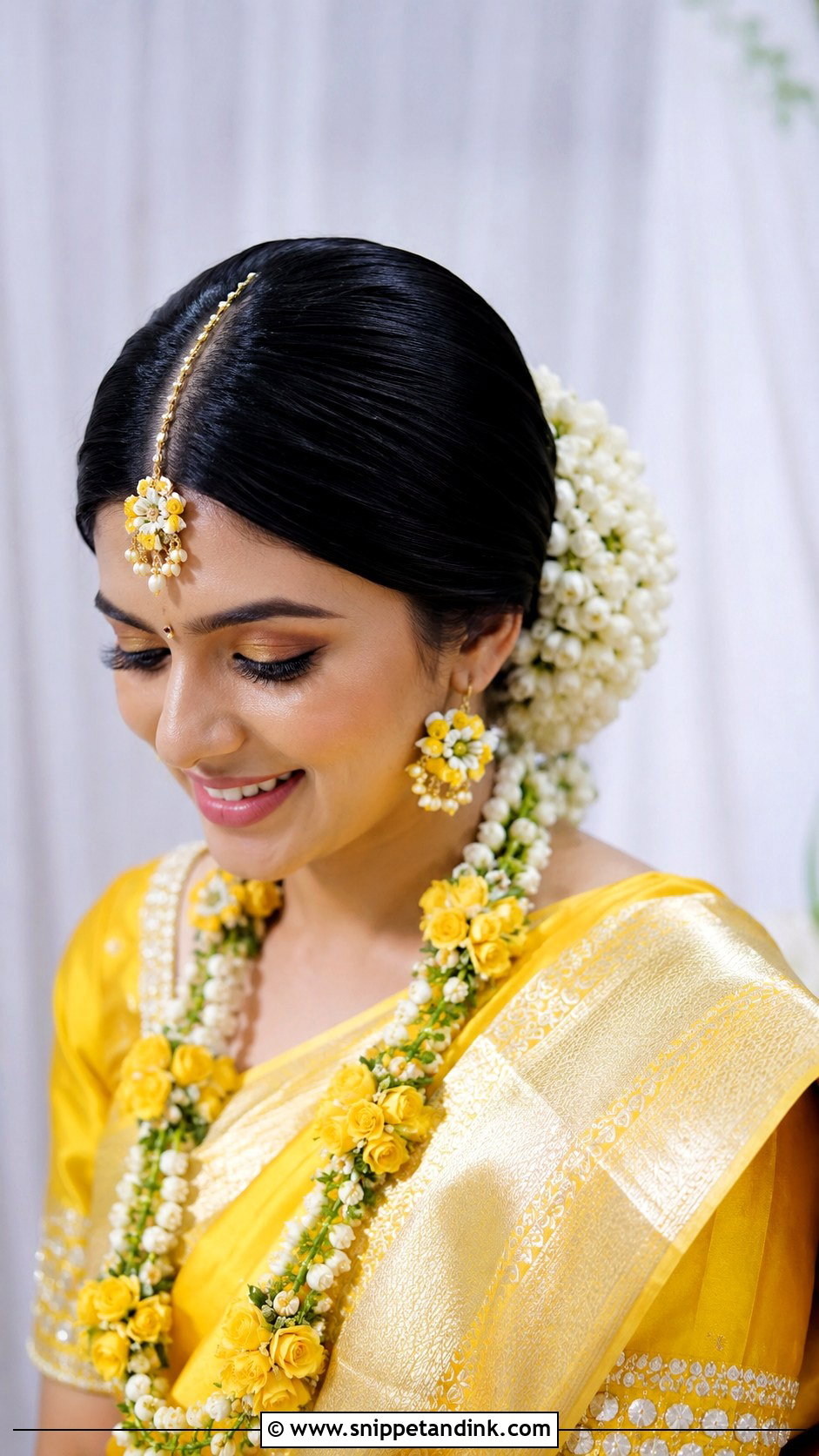
White jasmine against a yellow outfit is about as classic as Indian bridal hair gets. Wrap a full gajra around a low bun, or use a smaller crescent on one side for something softer. Sarees, lehengas and silk suits all suit it, and the open front leaves room for a maang tikka, passa or a floral matha patti. I pin the gajra into the bun’s base with U-pins every few inches. The bun underneath can be sleek or softly textured.
8. Haldi Ponytail For Bride
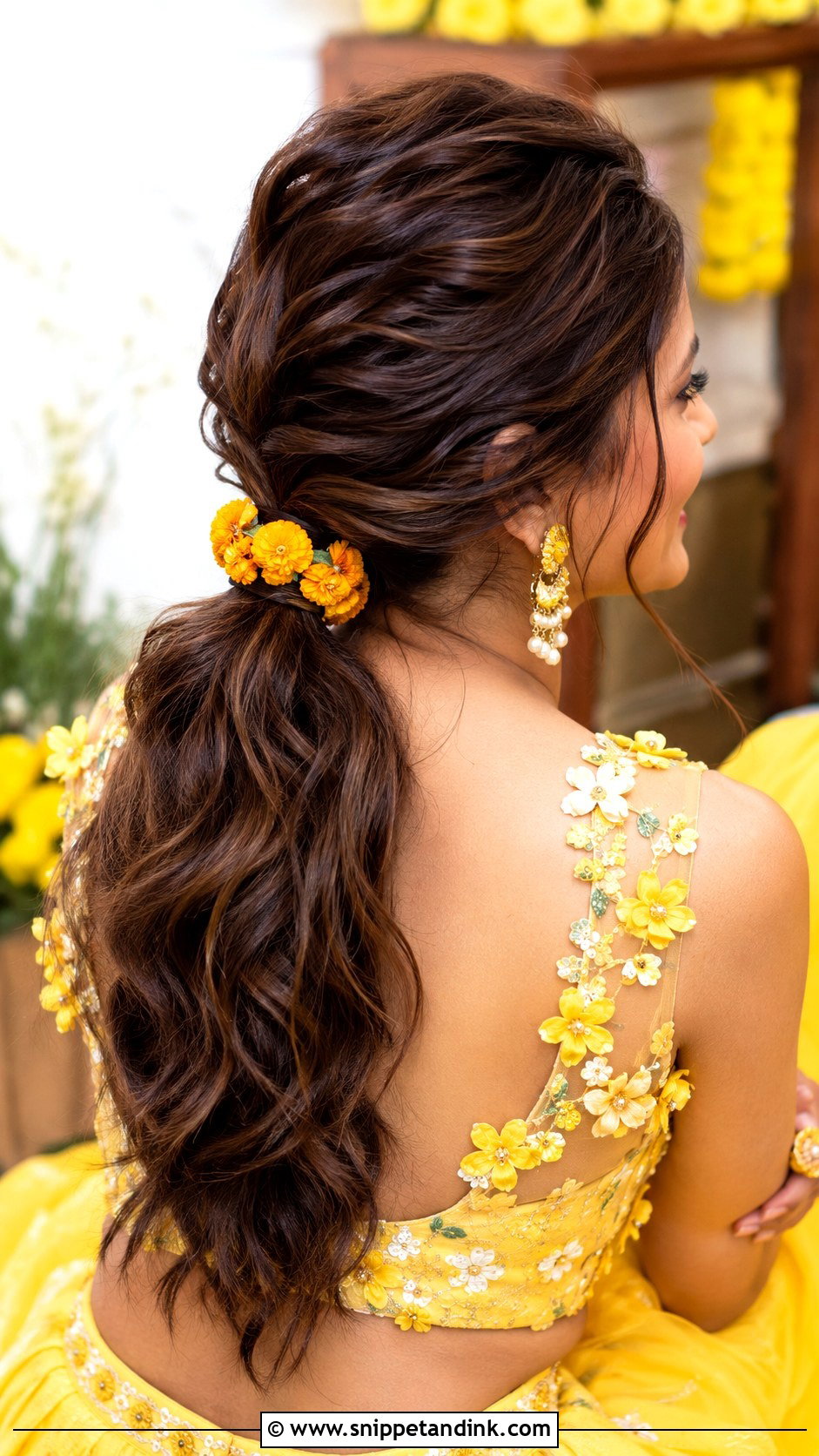
For haldi, a ponytail at mid-height or low on the head is easier to live with than a high one, since you’ll be seated on a low stool and leaning back against cushions. The crown can be softly puffed, braided, twisted or smoothed. Fresh flowers around the base or a floral tie add the festive part. Thick hair benefits most, because the ponytail controls volume while showing length. Wrap a section around the elastic before adding flowers so the band doesn’t peek through.
9. Haldi Twisted Half Up Hairdo
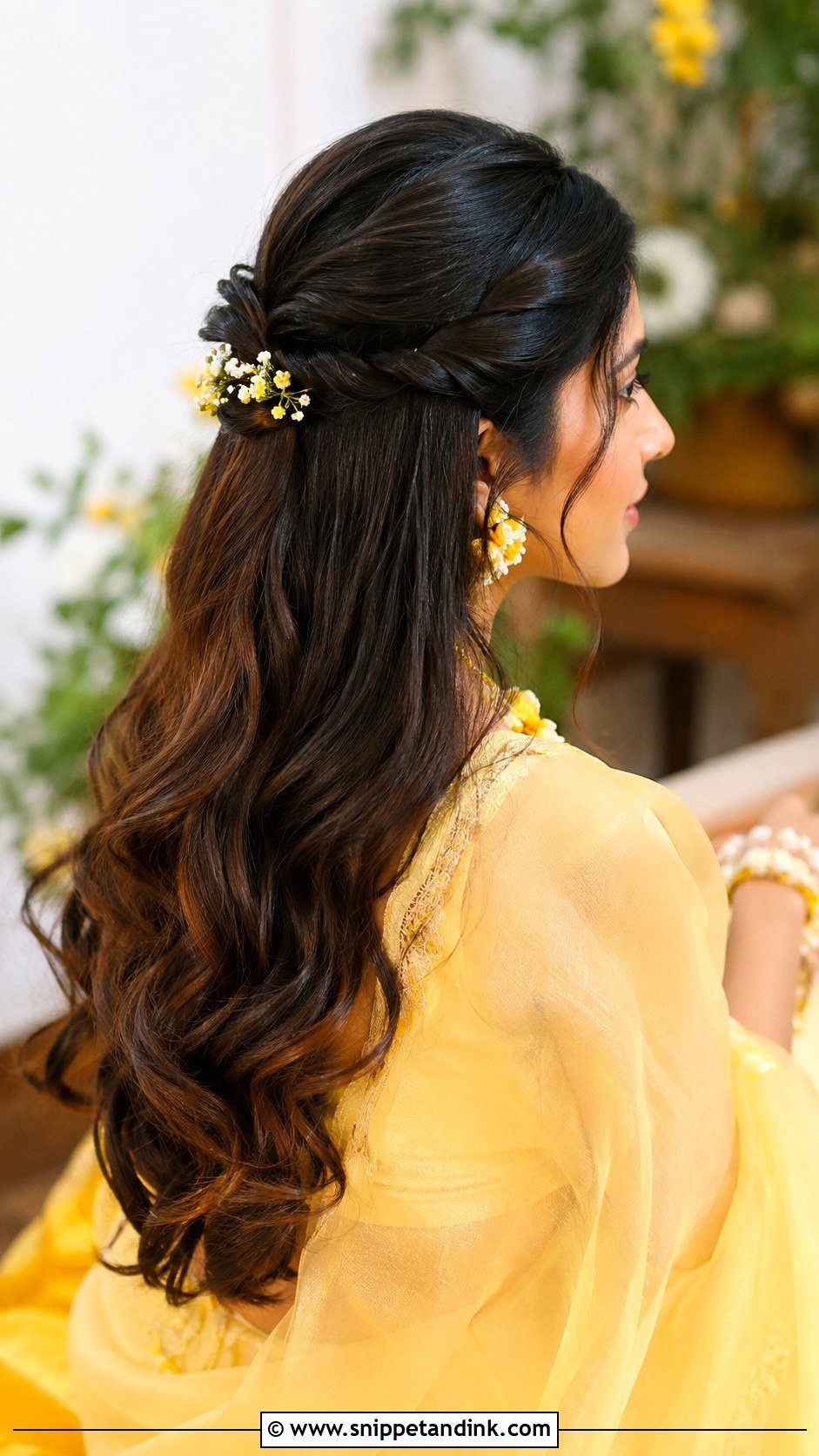
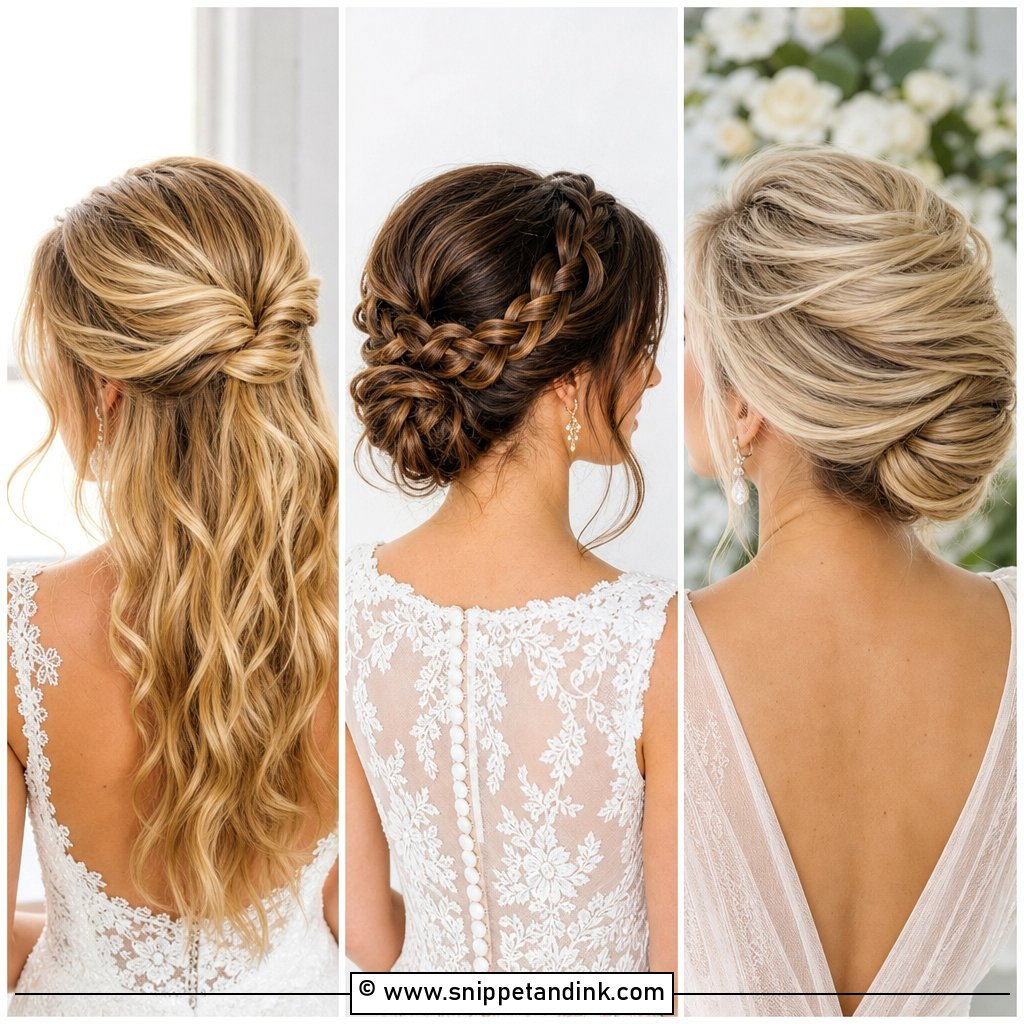
Rather than pulling the front straight back, I twist each side section away from the face and pin the two twists together at the back. That small change adds detail without weight. Loose waves or curls through the lengths give it movement. Small yellow or white flowers can sit along the twists. Keep the jewellery and flowers light with this one, since anything heavy drags the twists down.
10. Haldi Fishtail Braid For Bride
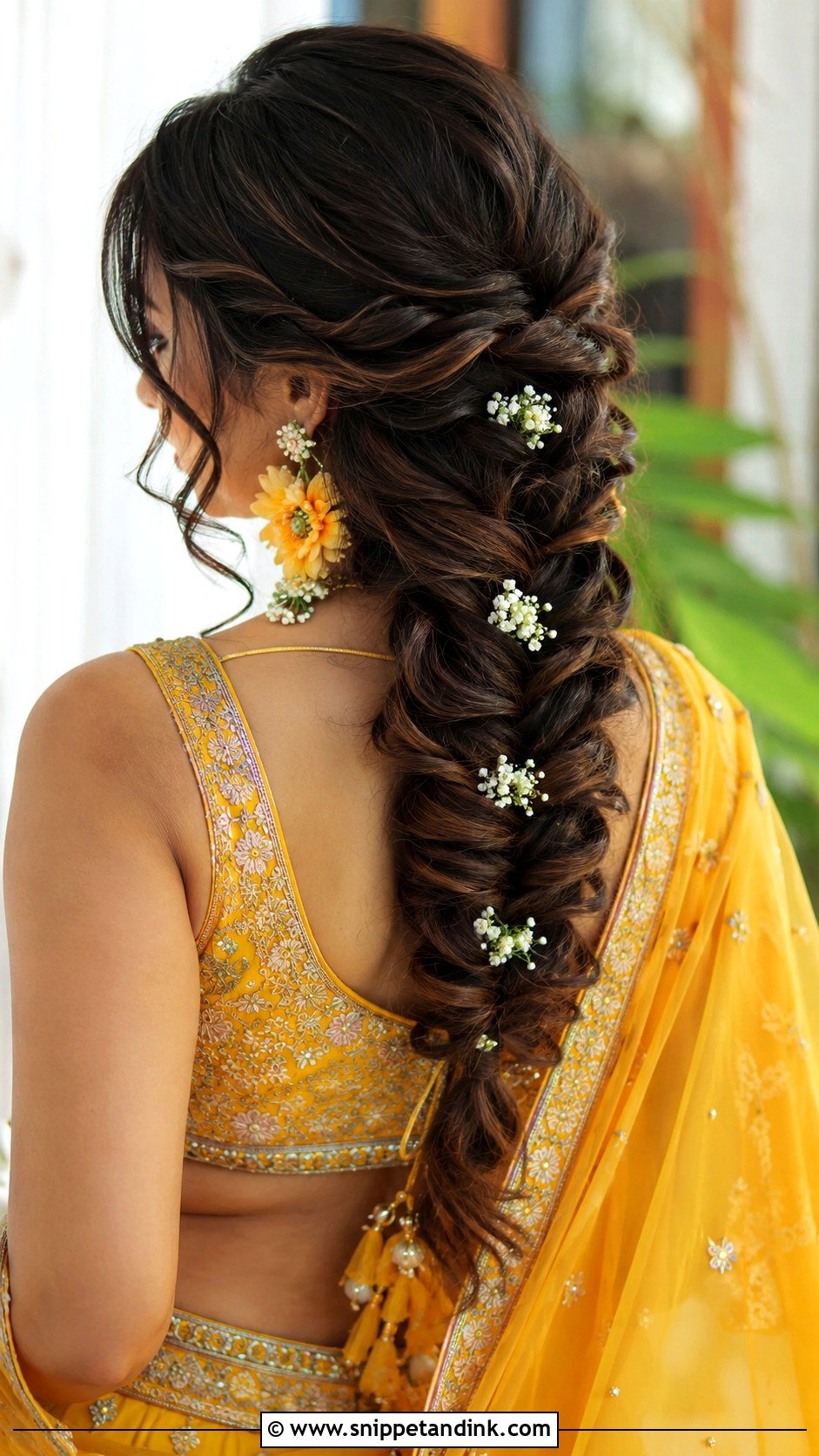
Fishtail braids give you fine, woven detail without needing an updo. Pulling the edges gently after it’s tied makes it fuller. Long hair, or extensions for extra length, show the pattern best. Fresh flowers, pearl pins or coloured thread can be woven through to match the outfit. A few soft strands at the face keep it from looking severe. The weak point is the elastic at the end; on silky hair I add a small pin through it so it can’t slide off.
11. Haldi Loose Waves With Maang Tikka
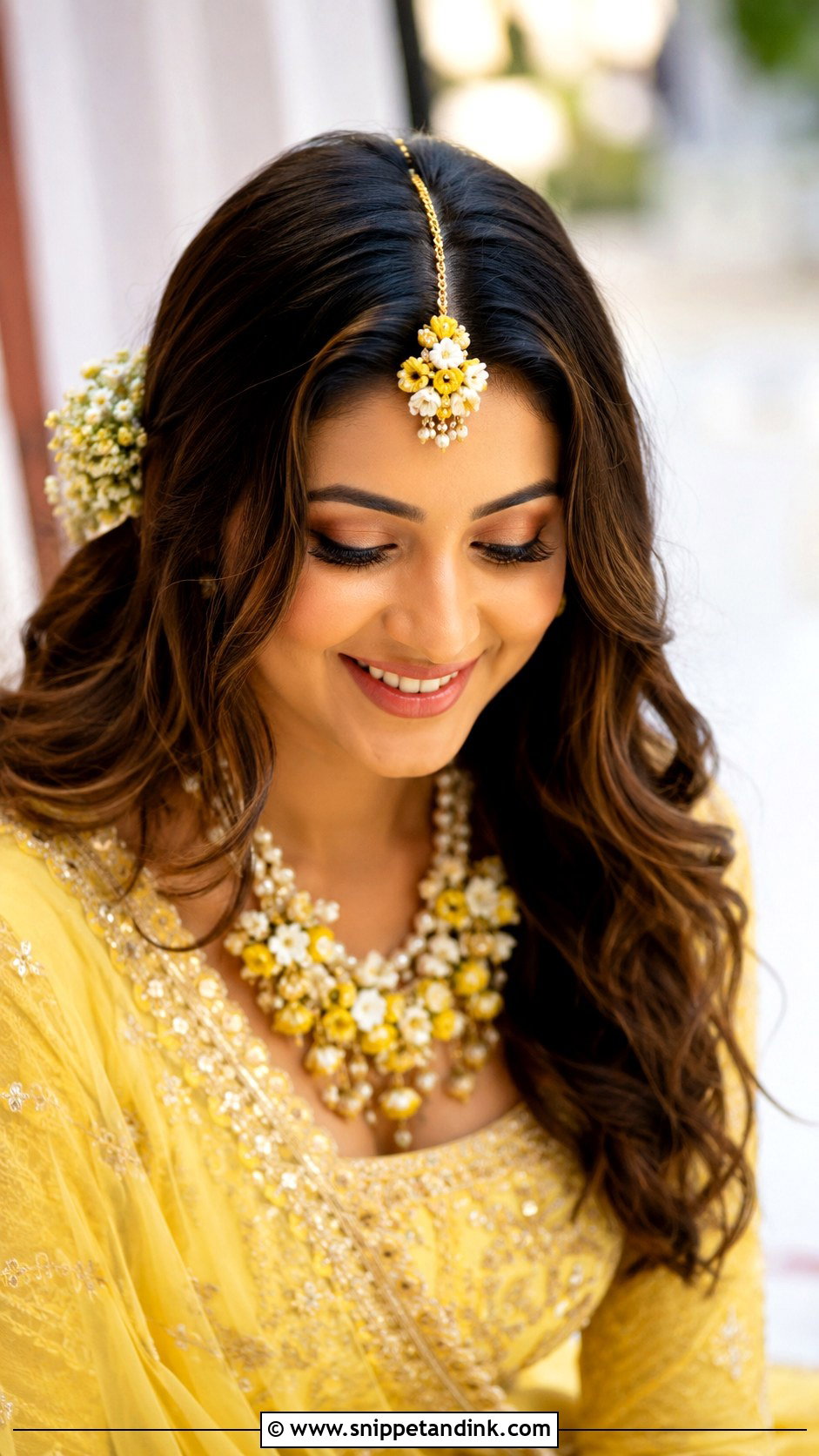
Loose waves keep the hair soft, and the maang tikka supplies the bridal detail. A center part lets the tikka sit straight and frame the face, which is why I always set the part with a comb before curling. The chain hooks into a small teased section just behind the hairline, hidden under the top layer. Add flowers behind the ears, or keep the waves plain. Floral jewellery, light lehengas and breezy sarees suit it, and the waves hold their polish for portraits.
12. Haldi Crown Braid For Bride
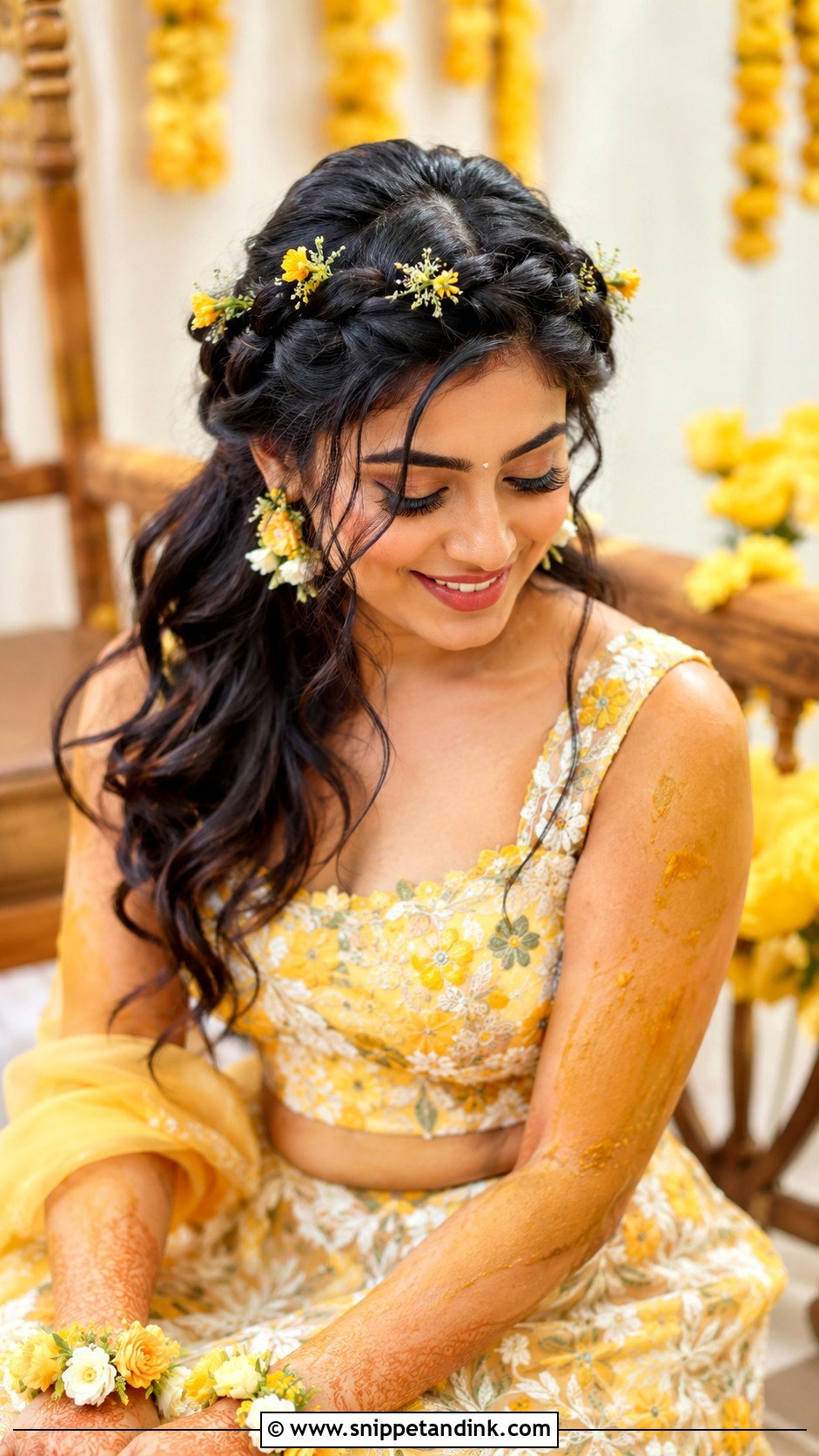
Worn like a soft hairband across the front, or wrapped all the way around, a crown braid keeps the face open and catches flyaways. The rest of the hair can go into a bun, a braid or loose waves depending on length. Tuck fresh flowers into the braid for colour. On long ceremonies it holds its shape better than most styles here. Layered hair can spike out of a crown braid, so I braid it a little tighter and pin short ends underneath.
13. Haldi Low Bun With Dupatta
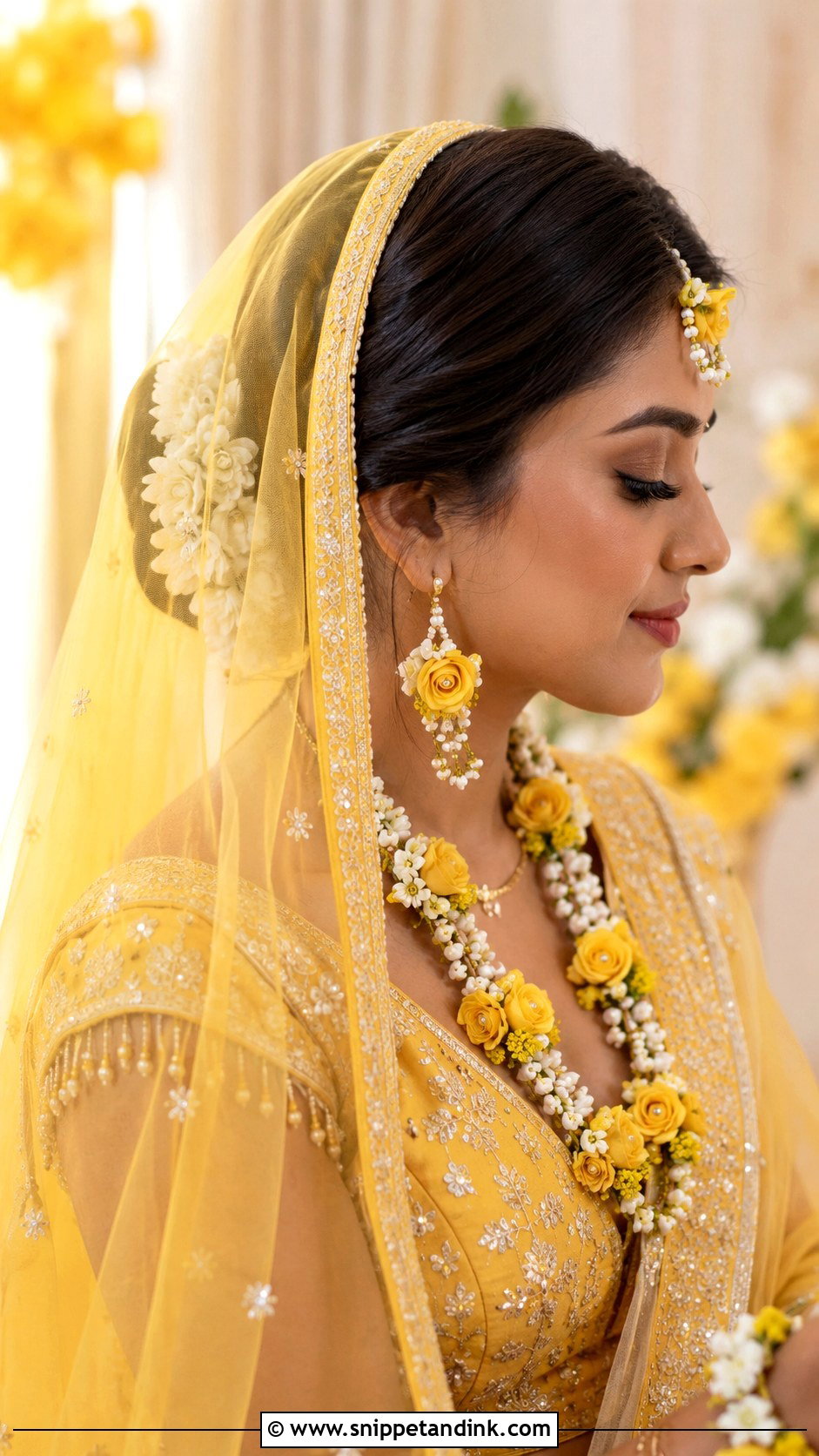
A dupatta pinned over the head pulls on the hair all ceremony, and a low bun is the shape that takes that pull best. It sits at the nape, leaving room to pin the dupatta to the bun rather than to loose strands. A heavy neckline, a detailed blouse or big earrings all stay visible. Flowers around the bun keep the hair on show from the back and side. A middle part looks classic, a soft side part gentler, and both suit family photos where the dupatta is up.
14. Haldi Bubble Braid For Bride
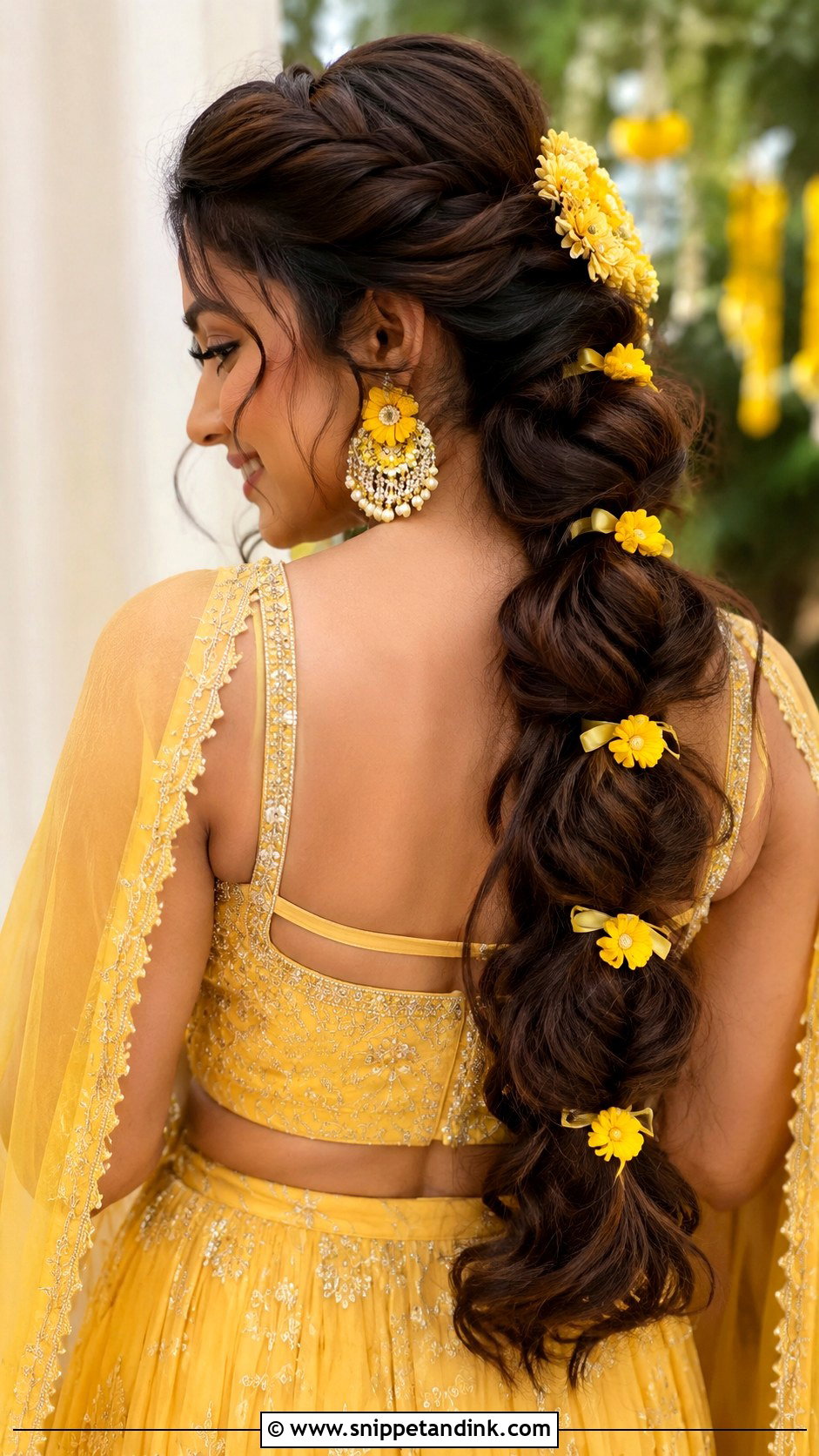
A bubble braid is the youthful, playful choice: hair tied in sections down the length, each gently puffed into a round bubble. Tiny flowers, ribbons or gold thread can sit between the bubbles. Long hair suits it, and it’s practical, since nothing comes loose during rituals. I space the elastics with my fingers before tightening so the bubbles come out even. Modern lehengas, shararas and floral jewellery all look right with it.
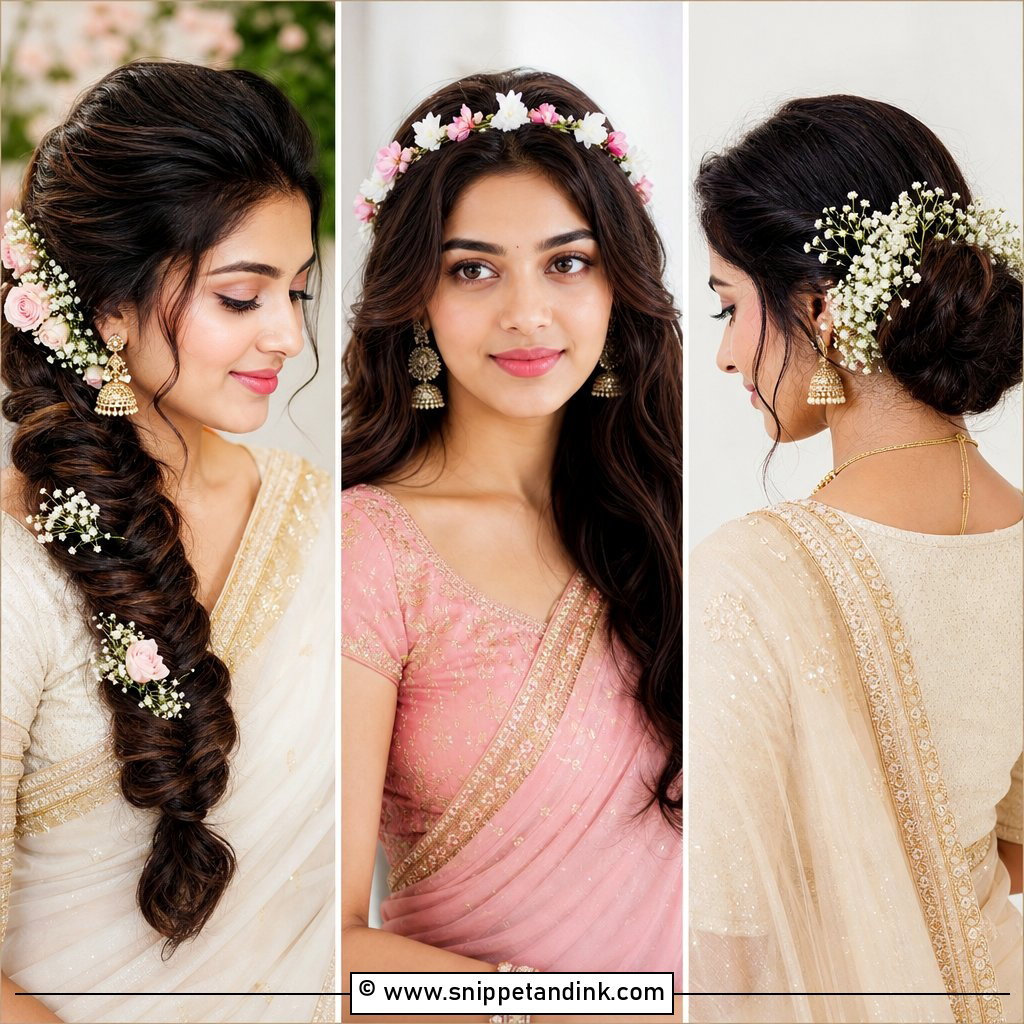
15. Haldi Sleek Bun For Bride
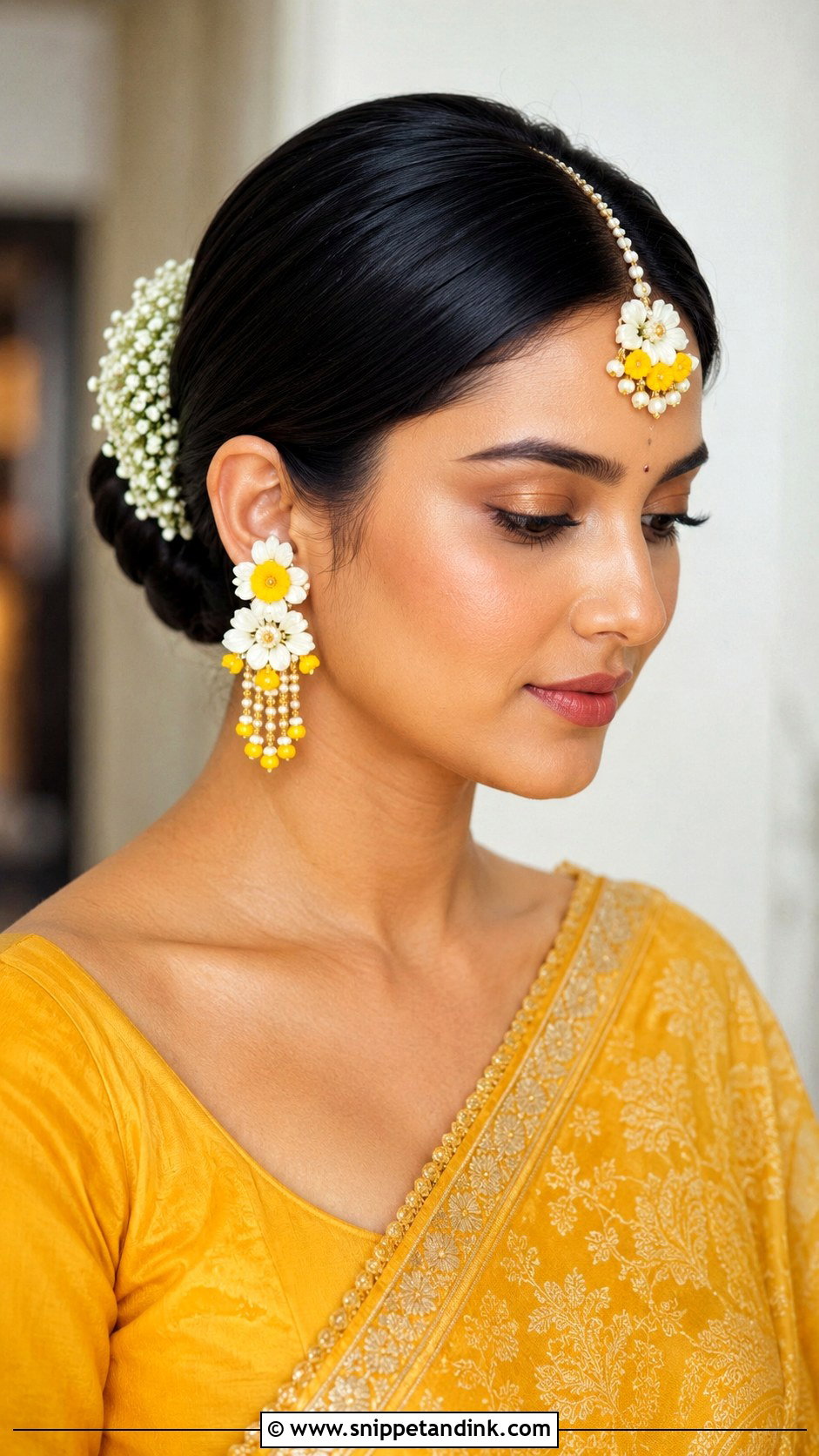
A sleek bun is the cleanest option here. The smooth finish puts all the focus on the face, the jewellery and the outfit, so bold earrings, a floral maang tikka and statement necklines look sharper with it. Place it low or at mid-height to suit your face and your dupatta plan. Add a small gajra, fresh marigolds or a few pearl pins for detail. In humidity, it’s the style least likely to frizz. Turmeric shows on slicked hair, so keep a damp cloth handy for the hairline.
Haldi in the Morning, Sangeet at Night
Haldi is often scheduled on the same day as the mehendi or sangeet, which means your hair goes through two styles, a wash and a lot of heat in about twelve hours. Planning for that protects both looks.
- Choose a haldi style with few pins and no heavy backcombing, so it comes out quickly without tangling.
- Rinse the turmeric out properly after the ceremony. Paste left in the hair dries stiff and can tint the next look.
- Dry your hair fully before the evening stylist arrives. Damp roots are the main reason a sangeet curl drops early.
- Skip heat for the haldi look if you can, and save the curling iron for the evening. Hair that has been curled twice in a day frizzes faster.
- Tell your evening stylist what happened that morning. Hair that’s just been washed twice may need texture spray before it will hold an updo.
If the two events are only a couple of hours apart, a braid for haldi is the easiest to switch from. Undone, it leaves soft waves that an evening stylist can build on without starting from scratch.
Your Outfit Sets How Much the Hair Should Do
Haldi means turmeric, hugs, dancing and outdoor photos, so comfort carries as much weight as looks. Floral and gajra buns, braids, ponytails, half up styles and loose waves all suit it when they work with the outfit and jewellery. A heavy outfit wants cleaner hair; a simple one leaves room for flowers and texture. Save the looks you like early, try your favourite once with the dupatta draped, and keep the hairdo simple enough that you never think about it during the ceremony.
You'll Like These Ideas:


Leave a Reply