
A trial isn’t finished for me until I’ve stood directly in front of the bride and looked at her the way the camera will at the altar. That straight-on view is where a hairstyle either frames the face or fights it. It decides how the veil sits, how much of your makeup shows, and whether the whole look reads as finished. A lot of wedding styles are designed for the back and fall apart from the front, so the ones below were chosen because they hold up from the front, the side and in candid shots. Soft curls, sleek parts, braids and half-up twists are all here, with notes on which dresses, faces and hair textures each one suits.
Planning the Front Around Your Headpiece
The front of your hair and whatever you wear on your head are really one decision. Settle the headpiece first and the hairdo gets much easier, because each accessory needs a particular kind of base to sit properly.
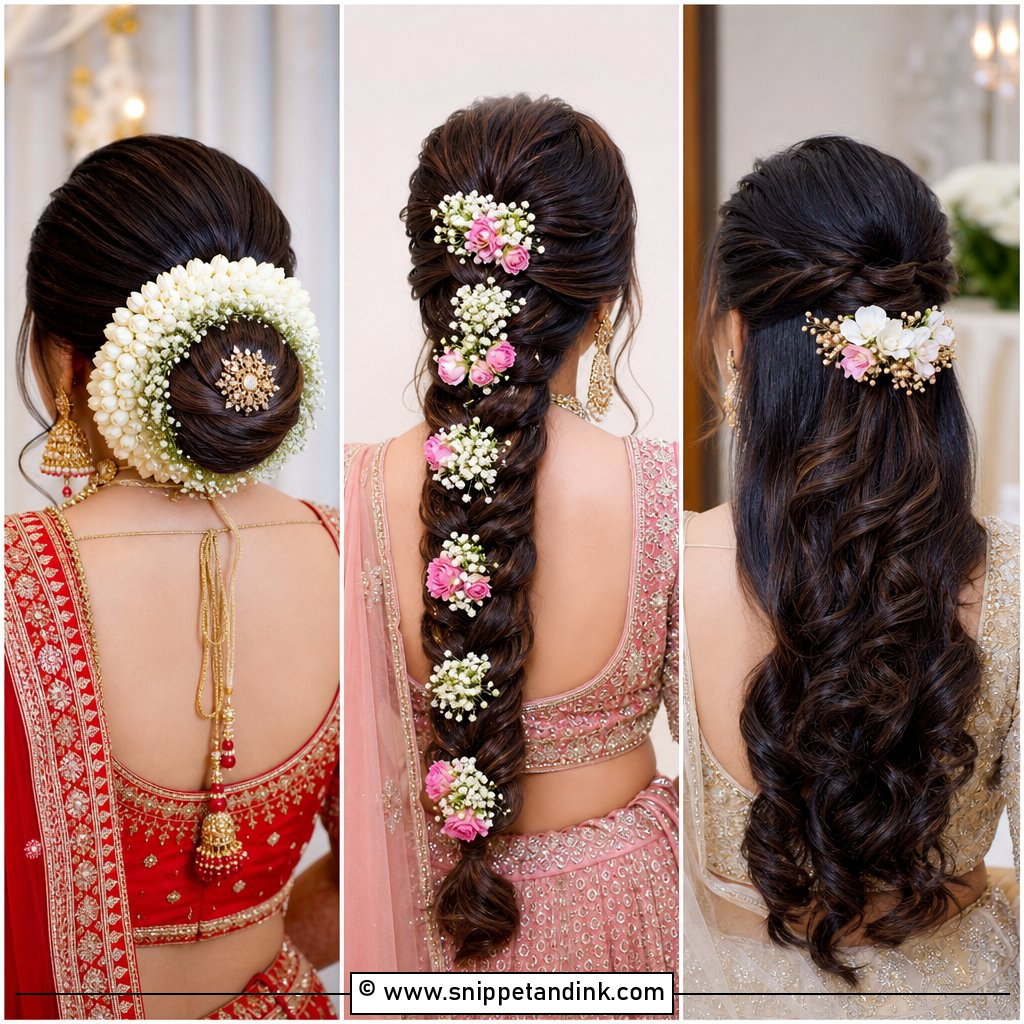
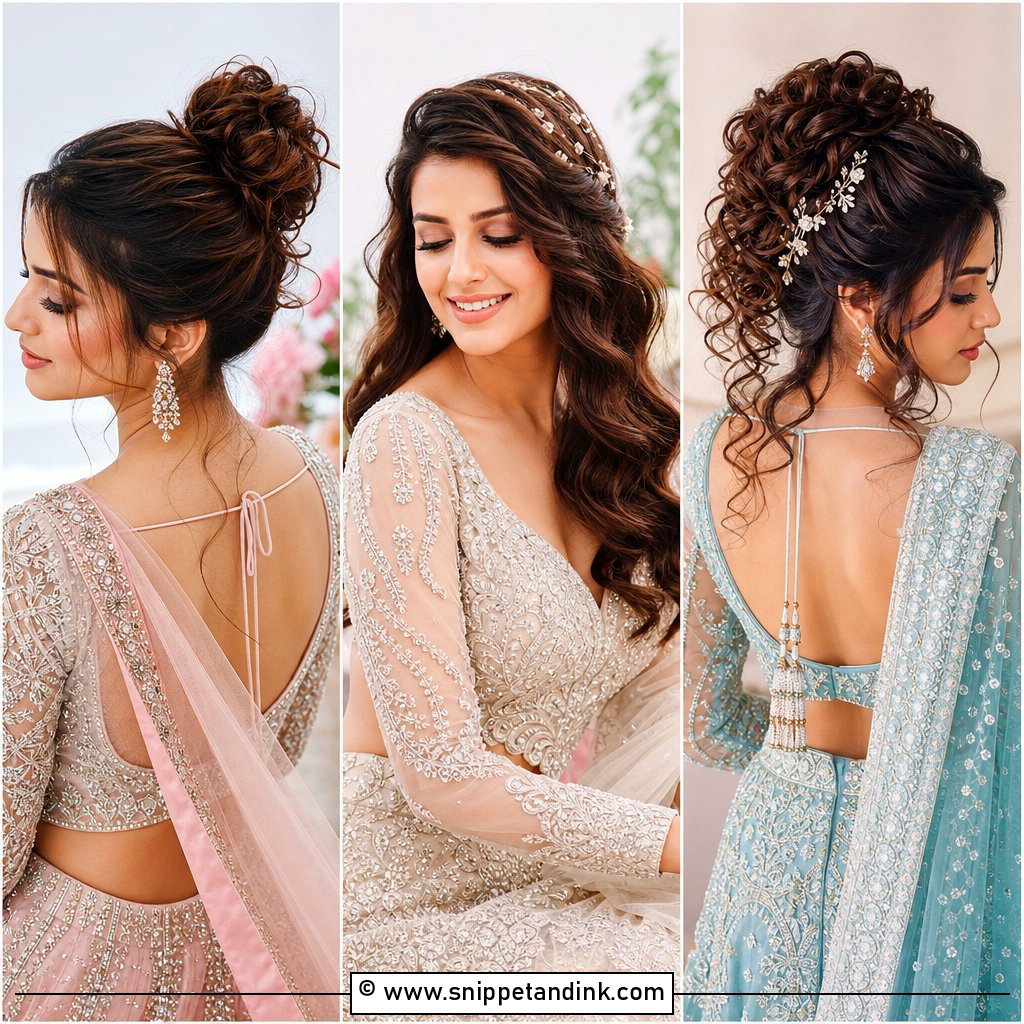
- Maang tikka or matha patti: needs a clean centre part so the chain lies flat and the pendant sits mid-forehead. A front puff can still work, but it has to be split at the parting rather than swept across.
- Tiara: sits best just behind a little lift at the crown. Flat hair lets it slide forward; too much volume pushes it up like a hairband.
- Headband: looks most natural with waves or curtain bangs in front of it, and it flattens anything teased behind it, so I build volume further back.
- Veil comb only: gives you the most freedom at the front, which is why sleek styles and loose waves often pair with it.
Heavier pieces like a full matha patti or a crystal tiara need anchoring to something solid, usually a hidden braid or a row of crossed pins behind the hairline. Wear yours to the trial for at least half an hour and notice whether it pulls at your temples. A headache by mid-afternoon tells me it needs a sturdier base, not more pins.
1. Front Twist Half Up Wedding Hairstyle
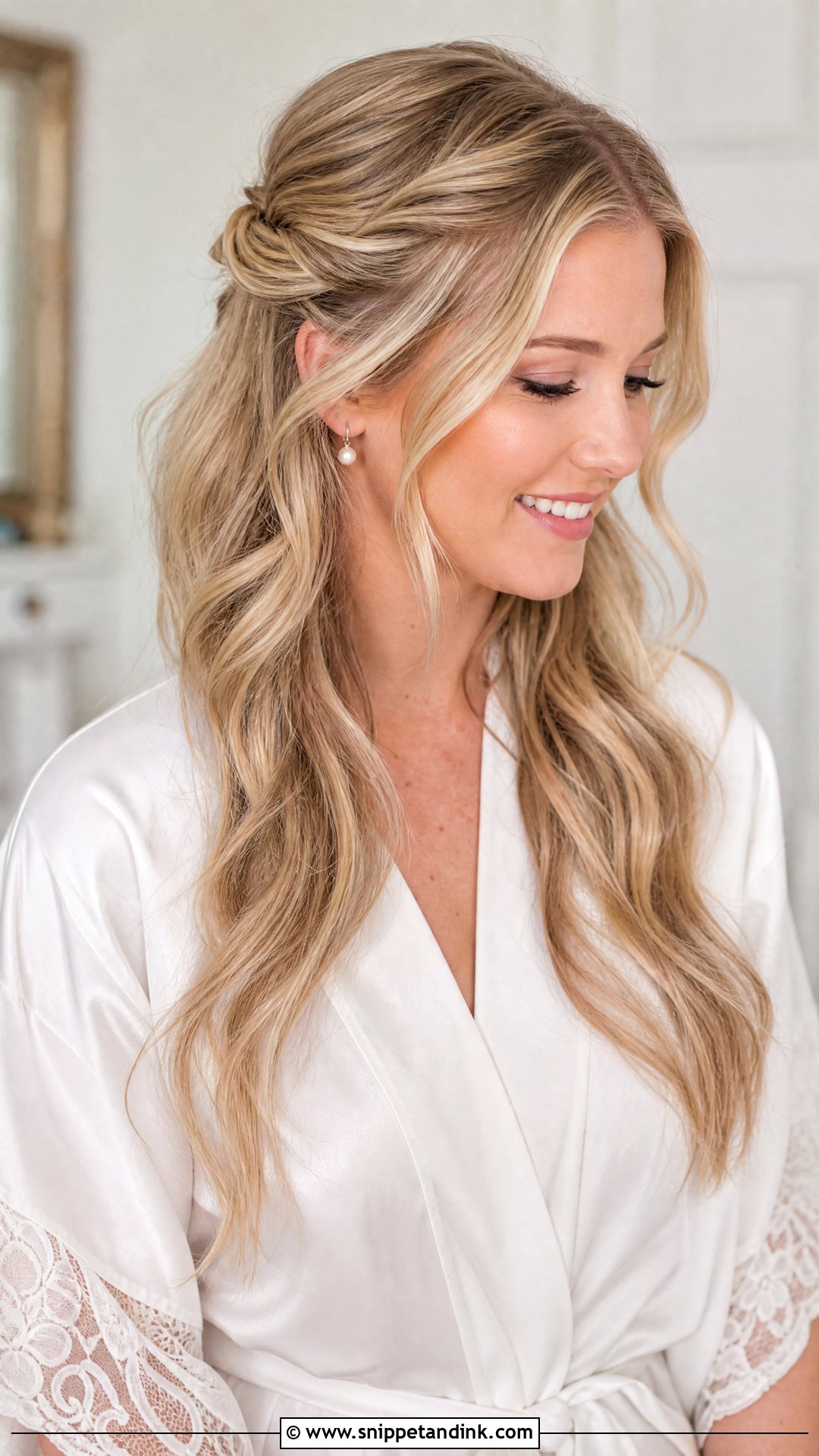
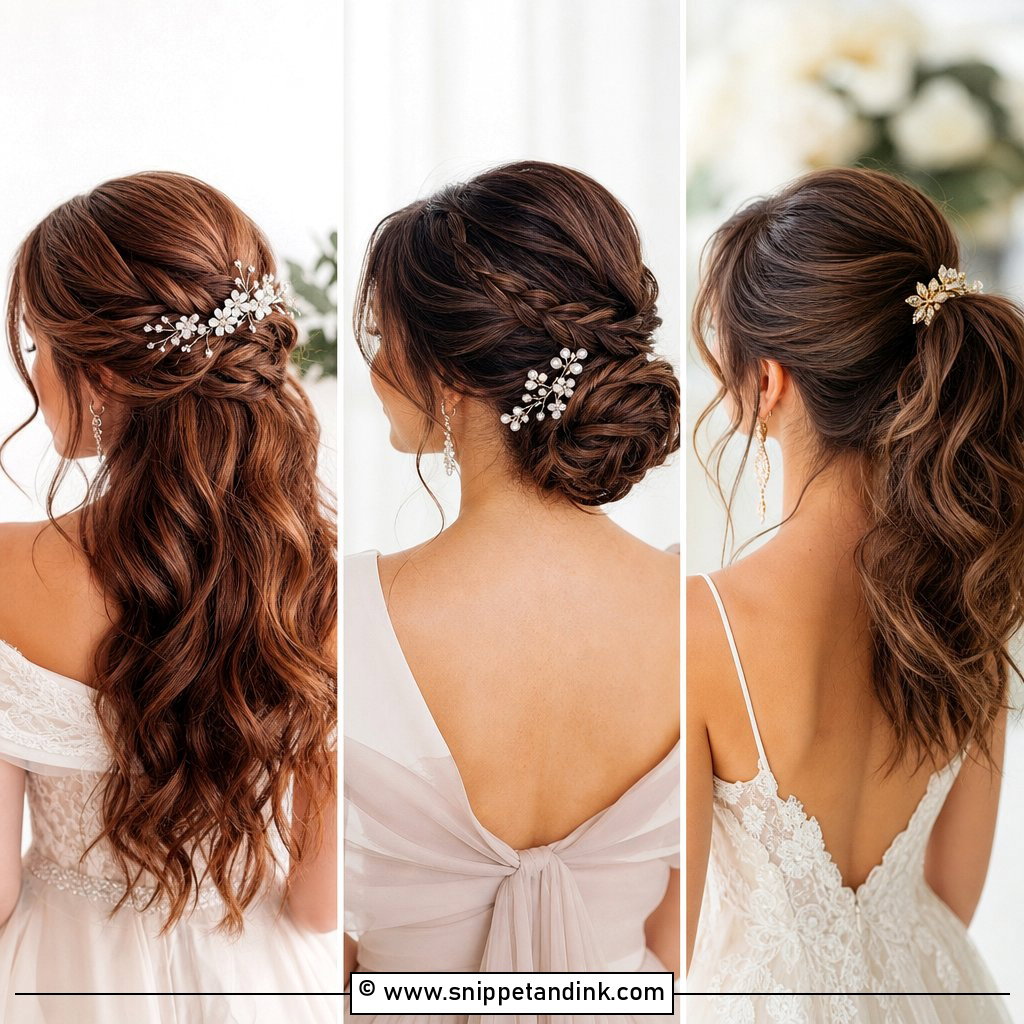
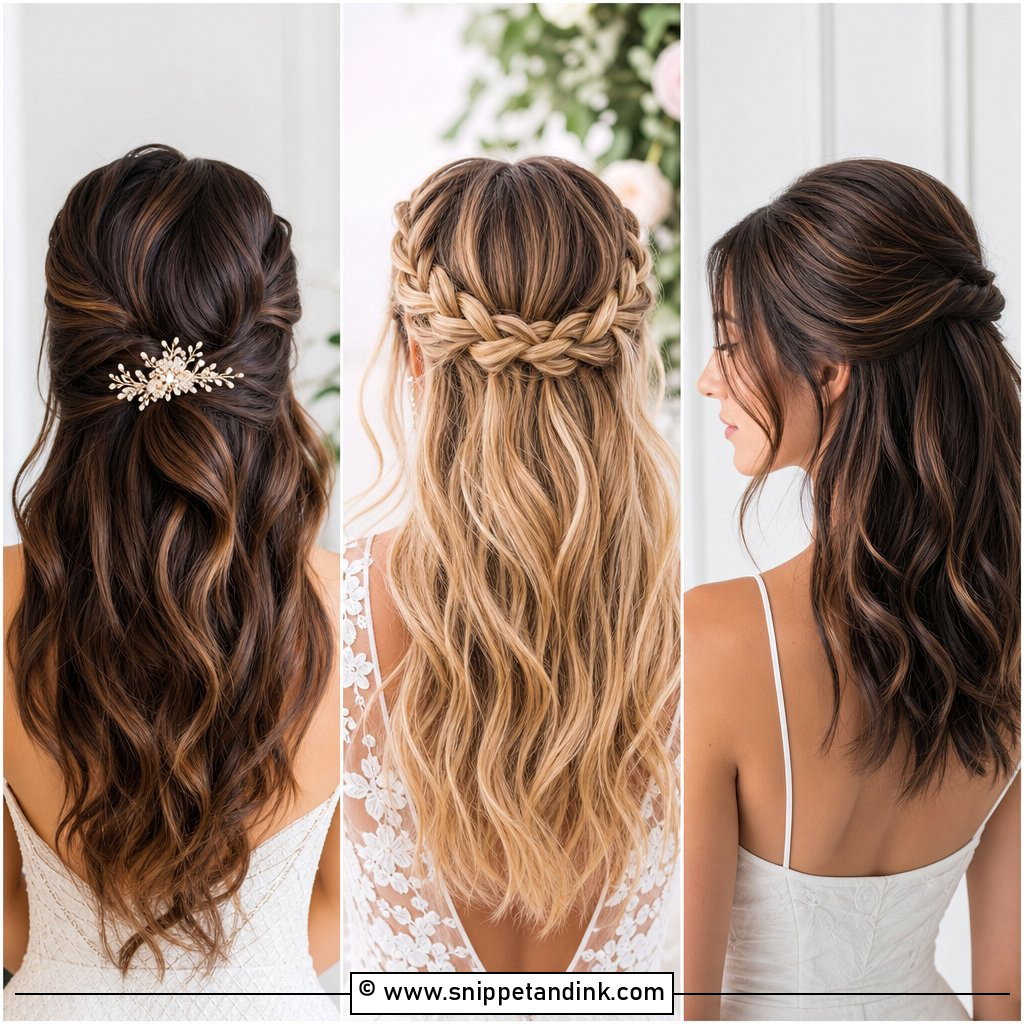
Twisting the front pieces back is my favourite fix for brides who hate hair in their face but still want it down. Each side is rolled gently away from the face and pinned at the crown, and the rest falls in waves or curls. Because the twist is tighter than a loose section, it survives hugs and dancing far better. A veil, pearl pins or a small floral clip sits right over the join. I keep the twists a little loose at the temples, since pulling them tight shows as tension in close-ups, and I leave a few soft face-framing pieces in front.
2. Side Swept Curls Wedding Hairstyle
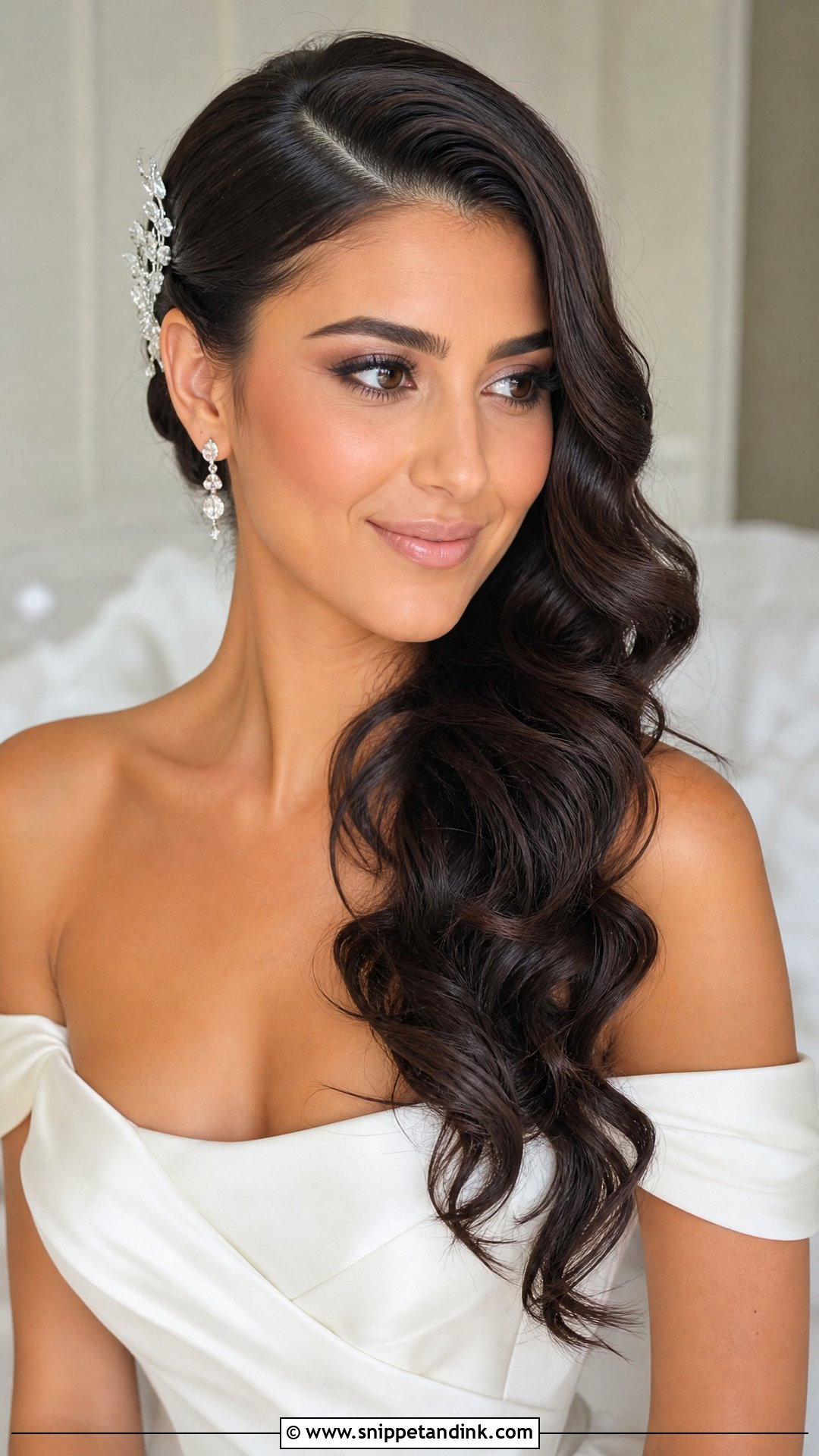
Side swept curls give a glamorous front: one side smoothed or pinned back, the other falling in curls over the shoulder. Earrings and neckline show on the pinned side, which is why strapless, off-shoulder and one-shoulder dresses suit it. Balance is the whole job. The pinned side has to be secure enough to hold all day, so I anchor it with crossed grips behind the ear, close to the scalp, before any curling happens. A deep side part adds drama, and a jeweled comb or small floral pin can cover the anchor point neatly.
3. Curtain Bangs Low Bun Wedding Hairstyle
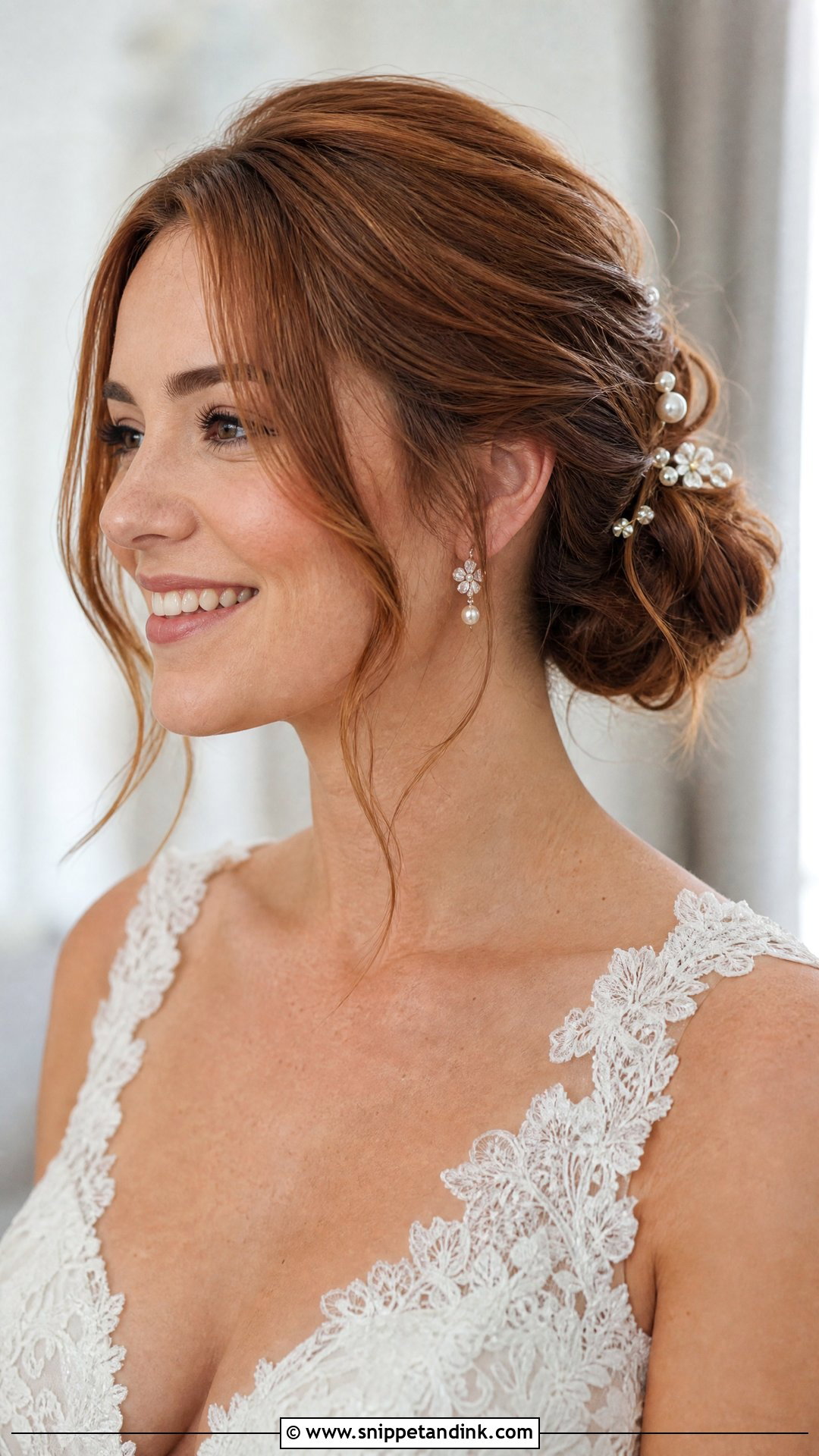
Curtain bangs with a low bun make a soft, modern front. The bun sits at the nape and the bangs open around the cheekbones and jaw, which tends to flatter oval, round and heart-shaped faces. I style the bangs with one soft bend from a round brush rather than a curling iron, because a tight curl in curtain bangs flips the ends outward and looks dated. Smooth or slightly undone both work. The veil can go above or below the bun.
4. Middle Part Sleek Low Bun Wedding Hairstyle
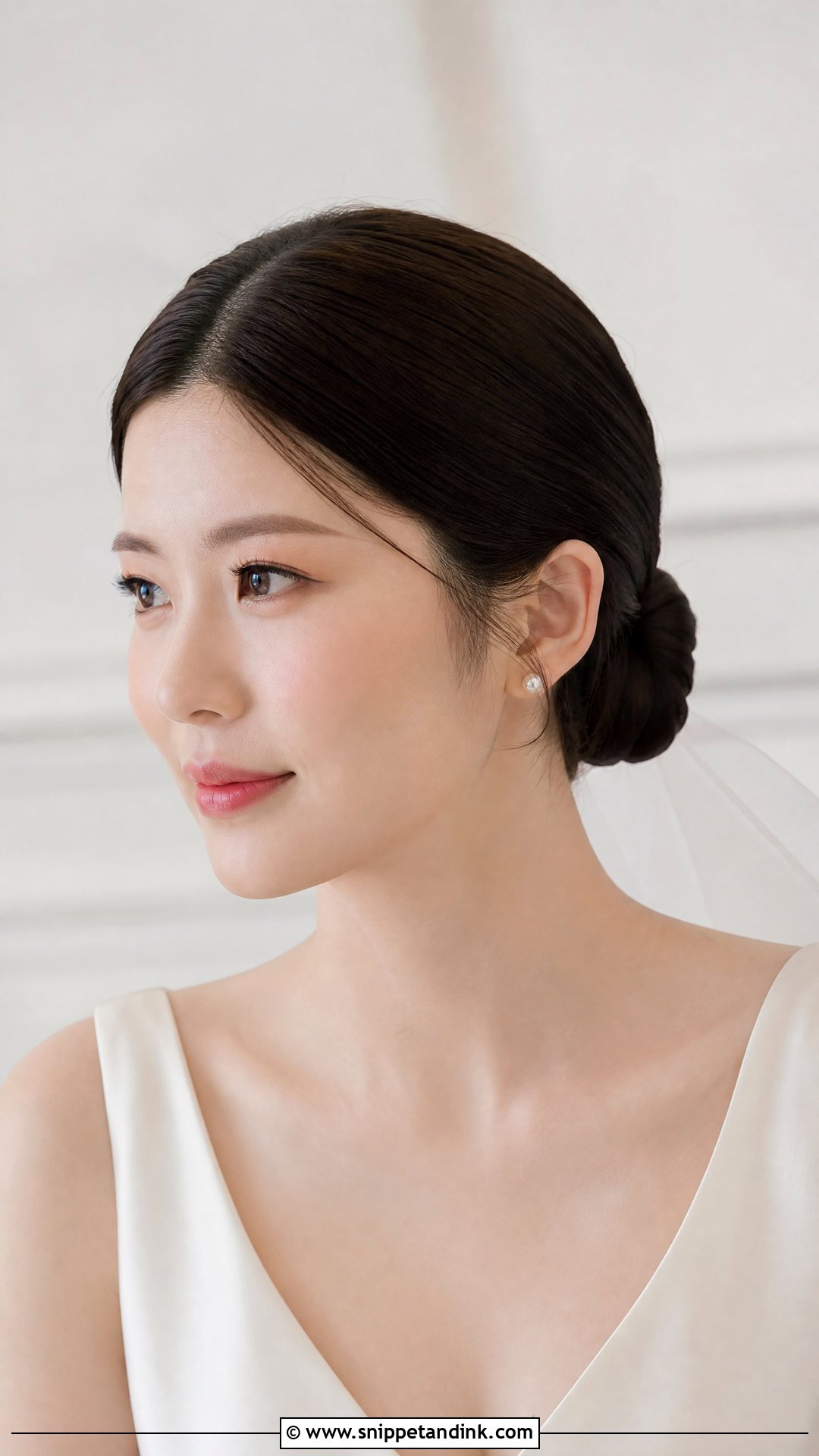
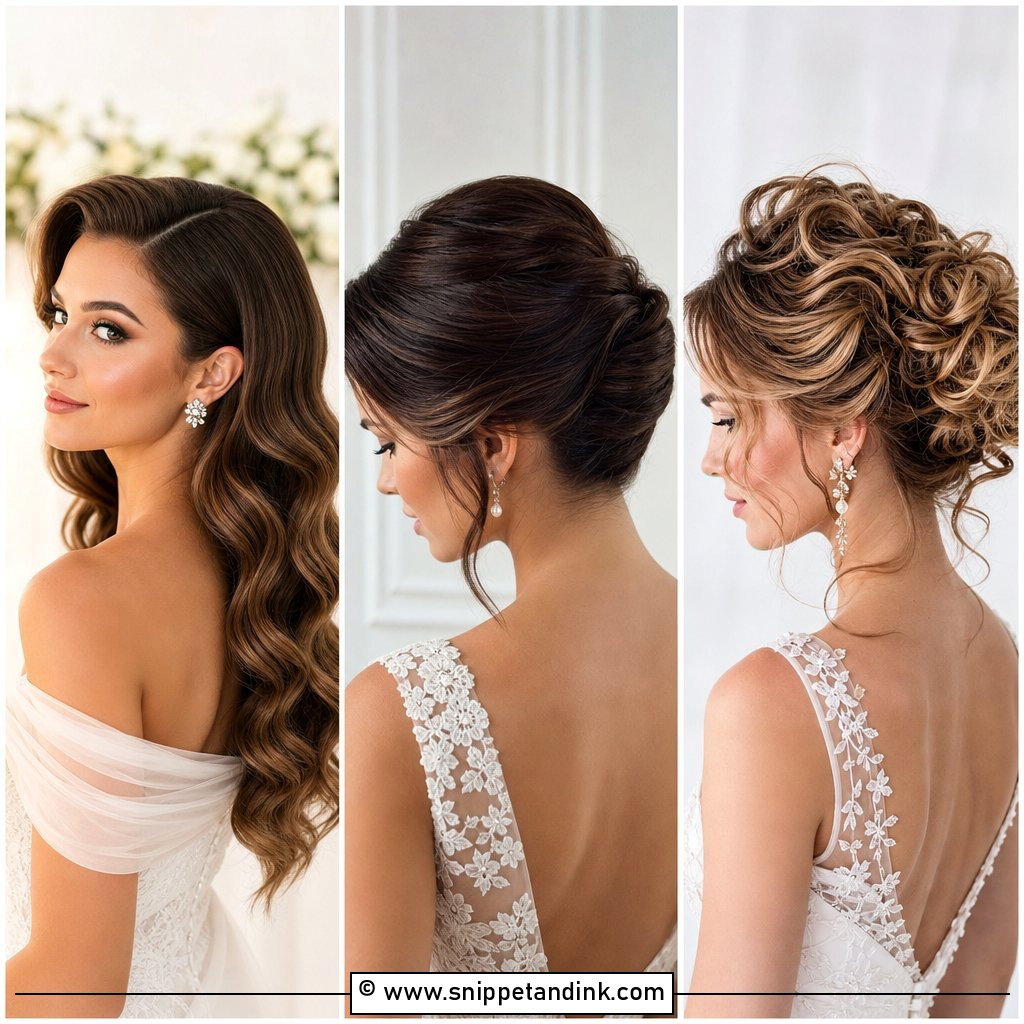
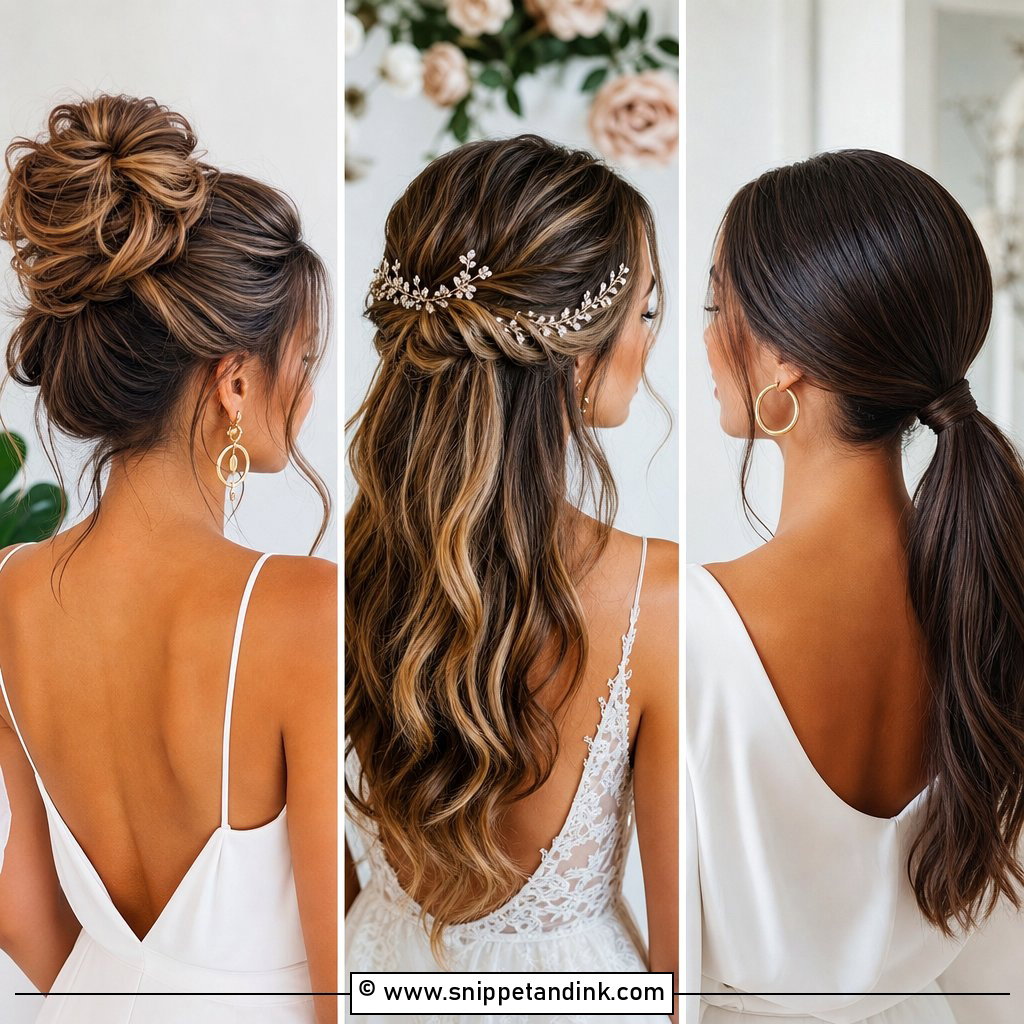
Parted dead centre and smoothed close to the head, the sleek low bun is the most graphic option here. It suits minimalist gowns, high necks and statement earrings, and it copes with warm weather because nothing is loose. My caution is the finish. Too much gel or shine product looks wet in flash, so I use a light cream and a soft shine spray instead. Two very fine wisps at the temples can soften it without losing that refined front view.
5. Front Braid Bun Wedding Hairstyle
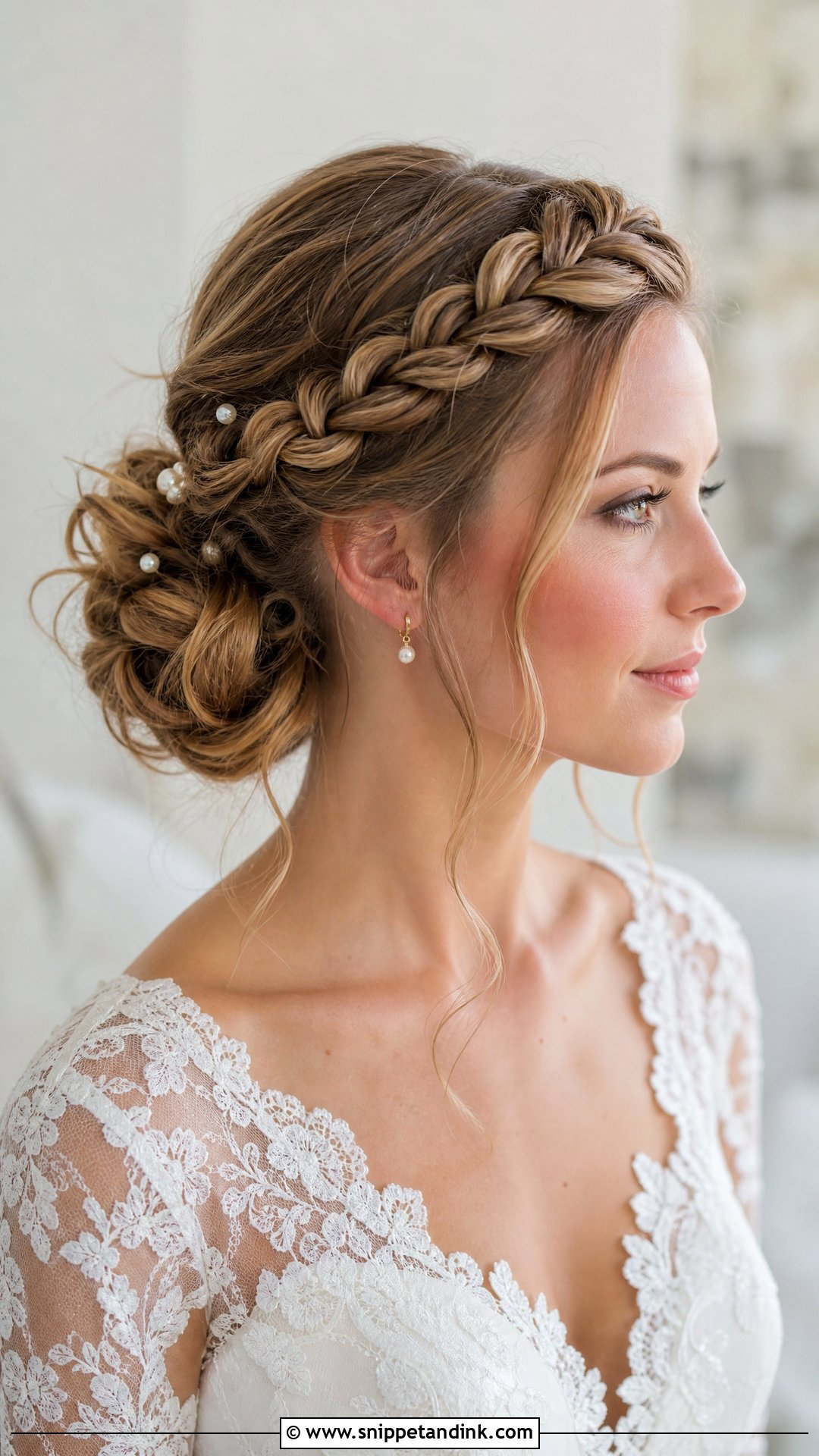
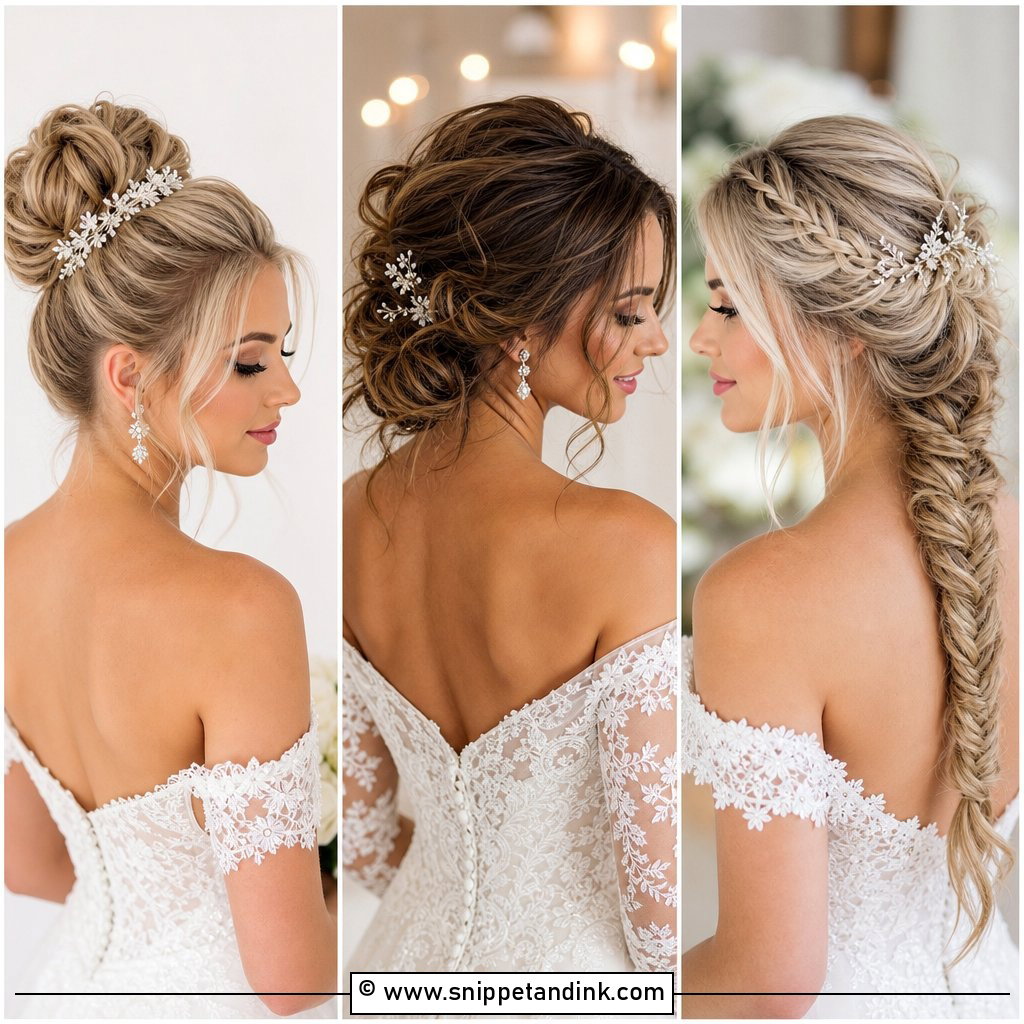
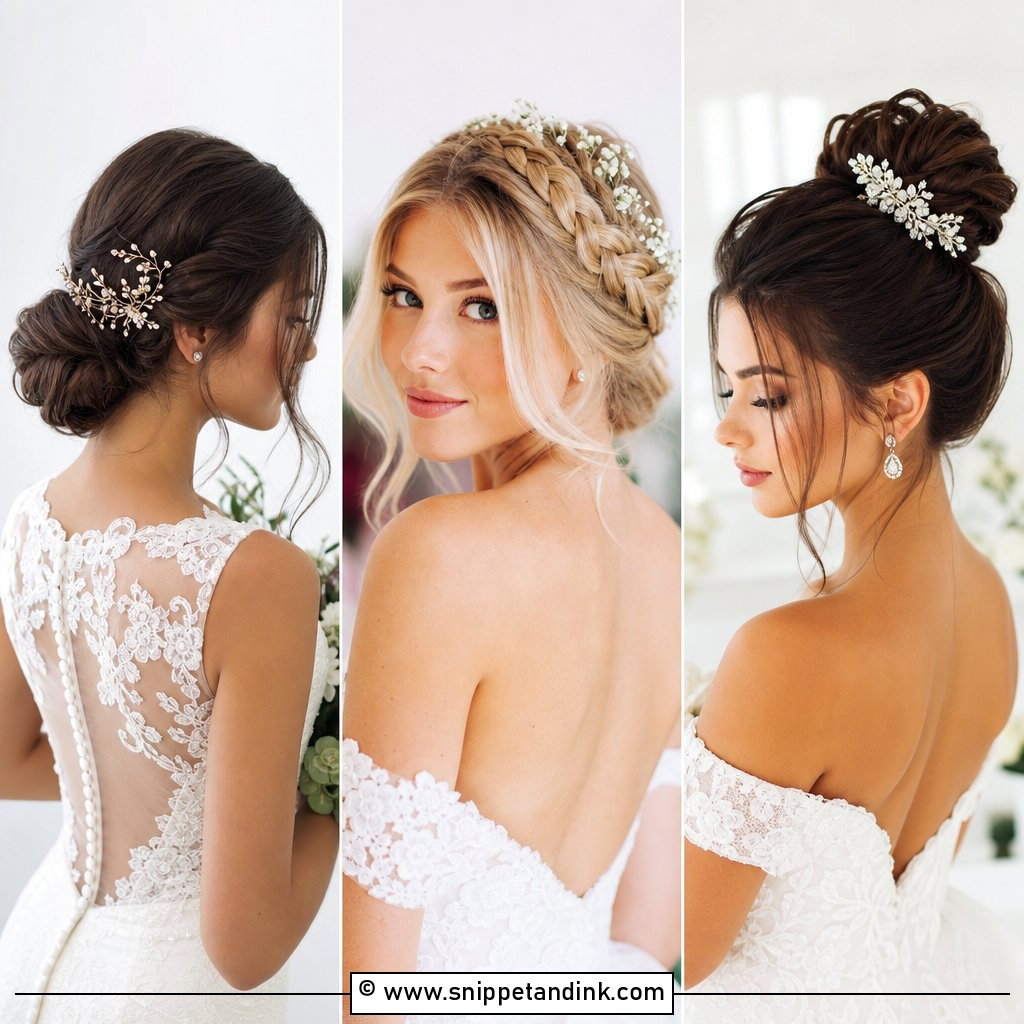
Putting the braid at the front puts the detail where it shows in photos. It can start near the hairline, cross the top, or frame one side before joining a bun at the back. Outdoor weddings are where I recommend it most, since a braid stays put in wind that would undo a loose front. The bun behind can be low, soft or slightly messy. On layered hair, short ends tend to poke out of a front braid; I tuck them with tiny pins or a touch of wax rather than braiding tighter. Pearls or small flowers along the braid finish it.
6. Face Framing Curls Updo Wedding Hairstyle
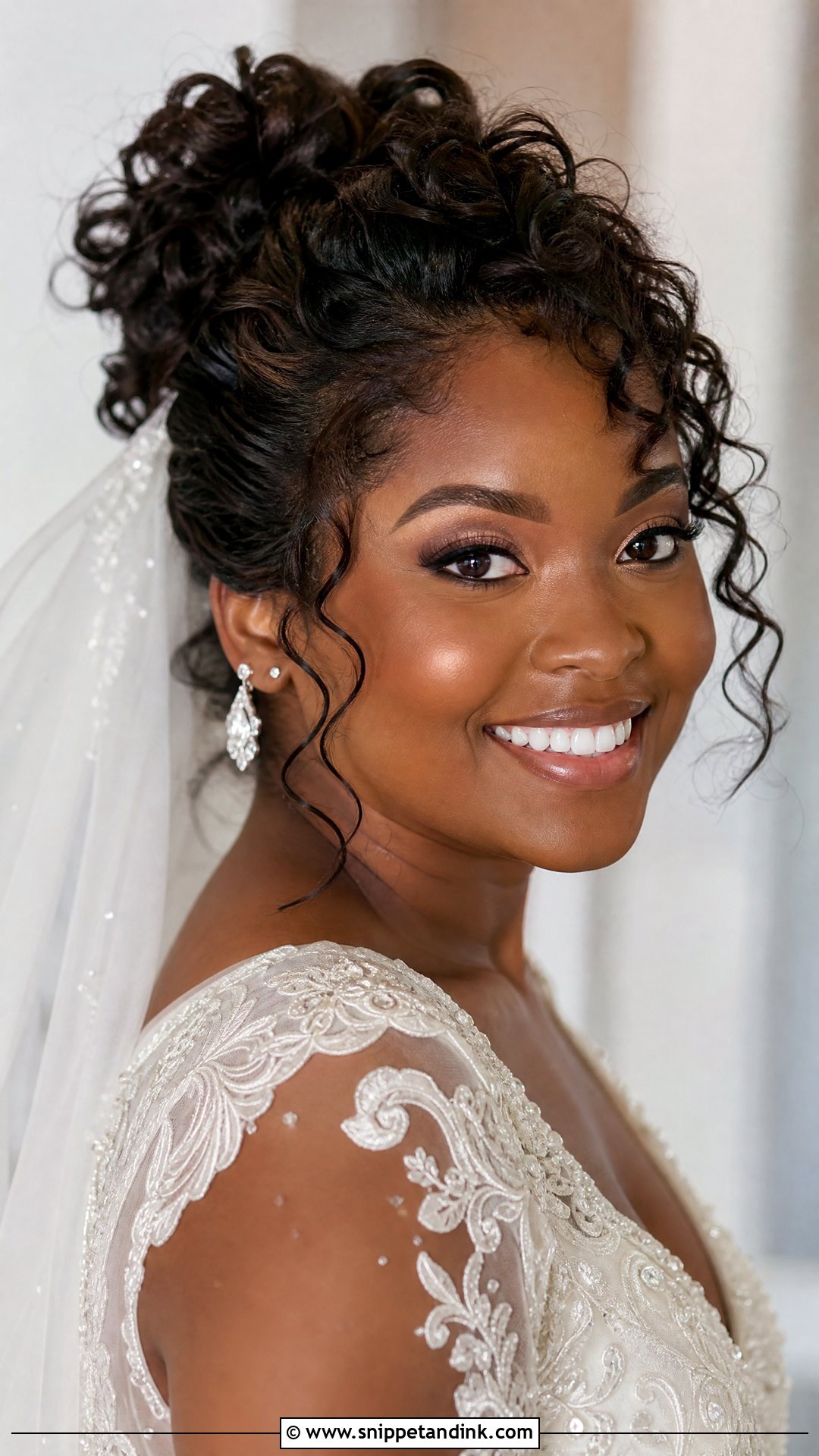
Face framing curls let you wear an updo without feeling scraped back. The main length goes into a low bun, a twisted bun or a loose chignon, and the curls at the front soften the forehead, cheekbones and jaw. The curls need to be light. I curl them in thin sections and pin each one to cool, then break them apart with my fingers at the end. Thick, heavy front curls collapse by the reception and hang like ribbons rather than curls.
7. Front Puff Bridal Bun Wedding Hairstyle
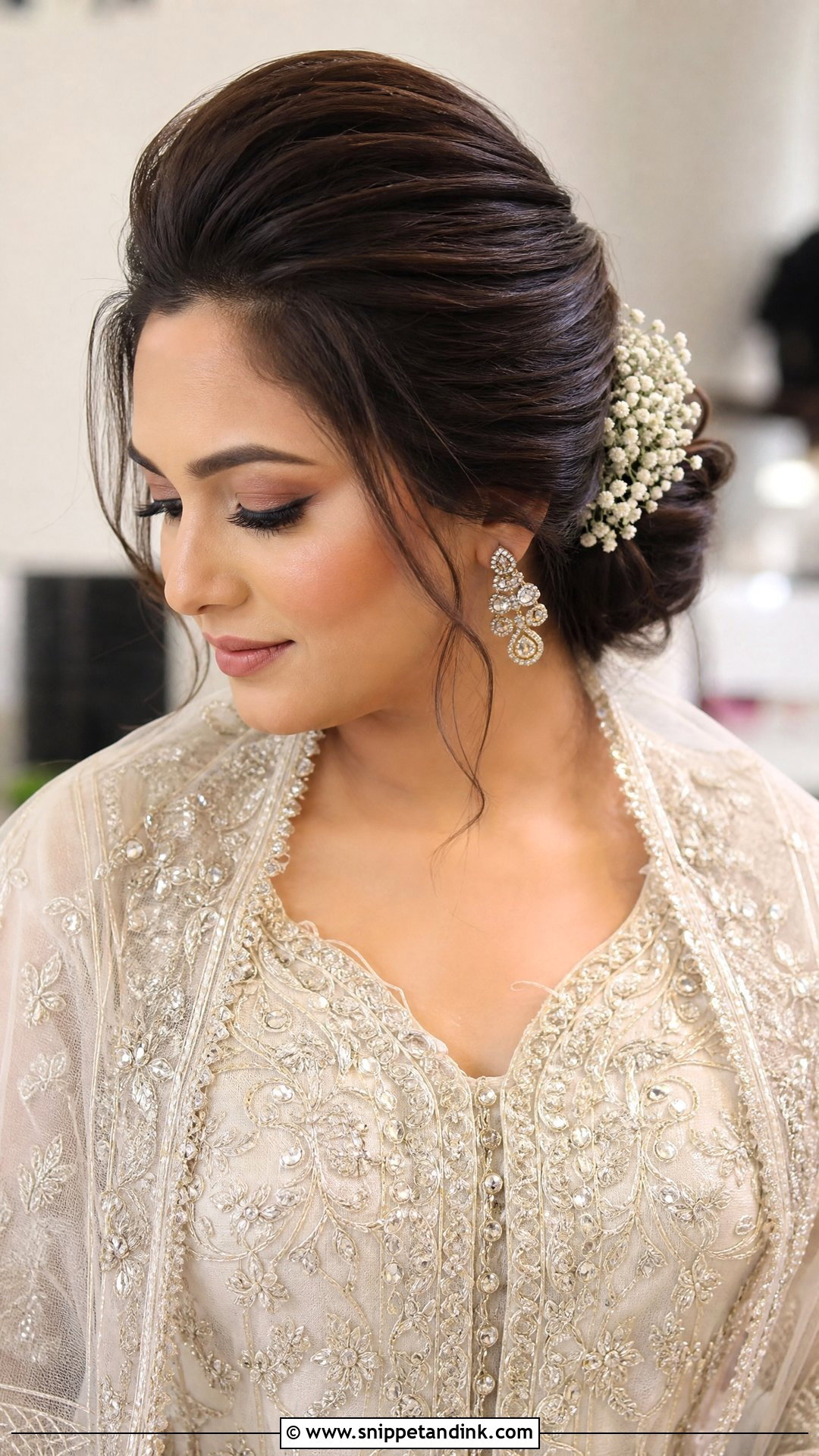
A front puff lifts the hair at the hairline before the rest is shaped into a bun, giving height and a regal outline. It’s common with traditional bridal outfits and heavier accessories because the volume gives them something to sit against. Done well, the puff is smooth on the surface and the backcombing is hidden underneath. Over-teased, it looks like a bump. It also makes fine hair look fuller from the front. For a modern take, I pair a smaller puff with a low textured bun and a few loose pieces near the ears.
8. Braided Crown Wedding Hairstyle
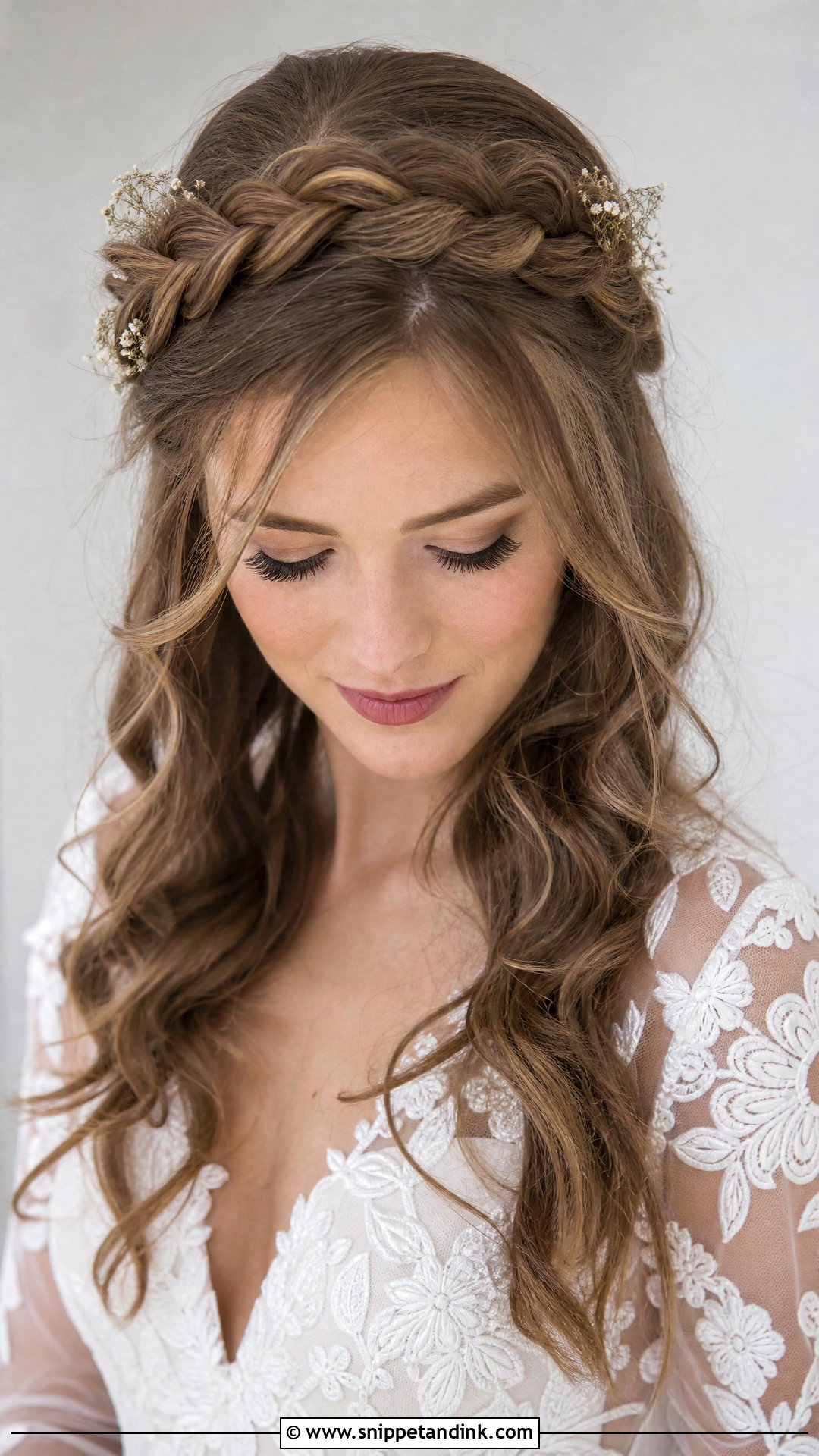
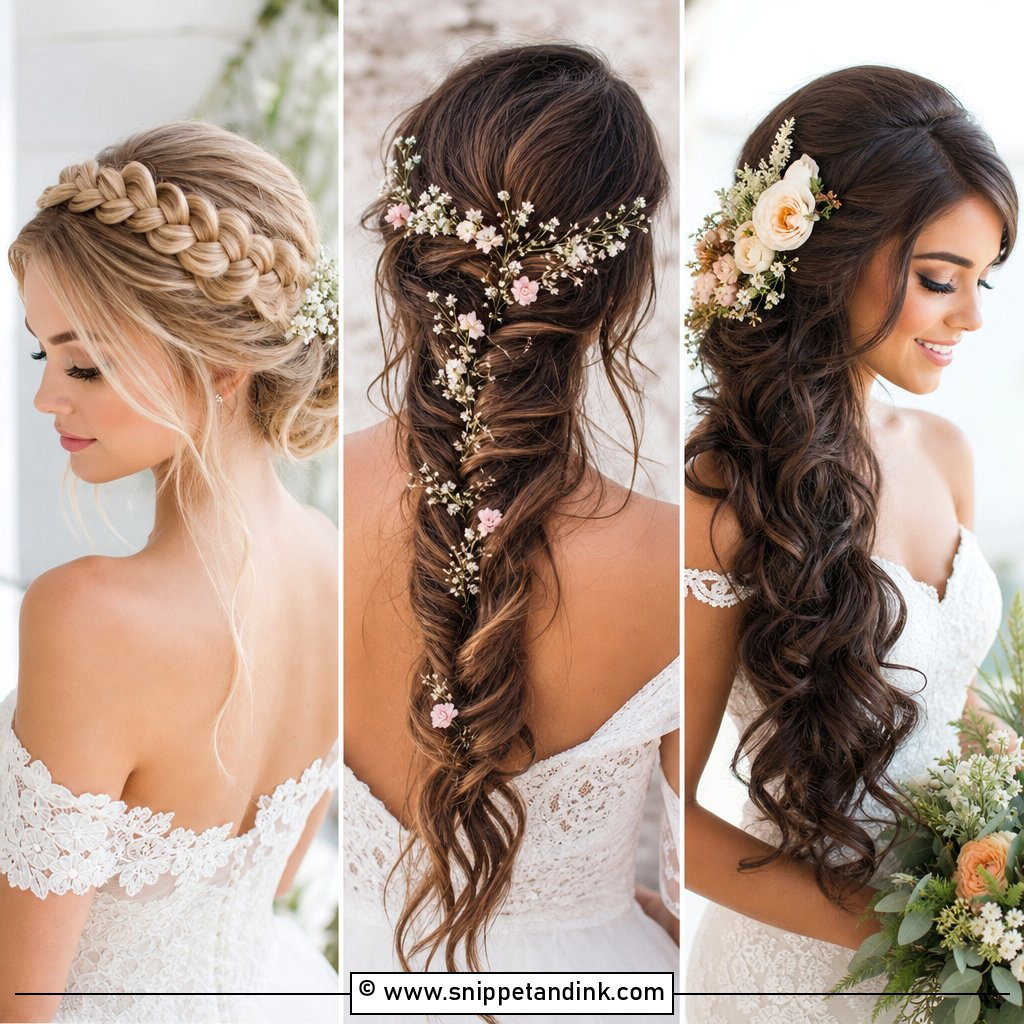
A braided crown sits like a halo across the front or top of the head, then blends into waves, a bun or a tucked updo. Garden weddings, boho dresses and lace or floral details go naturally with it. Your hair density decides the braid: thick hair makes a full, textured crown on its own, while fine hair gives a smaller, neater one unless I add a little padding. The crown is firm by nature, so it never looks severe from the front. Tiny flowers or pearls can be added if you want more.
9. Front Open Waves Wedding Hairstyle
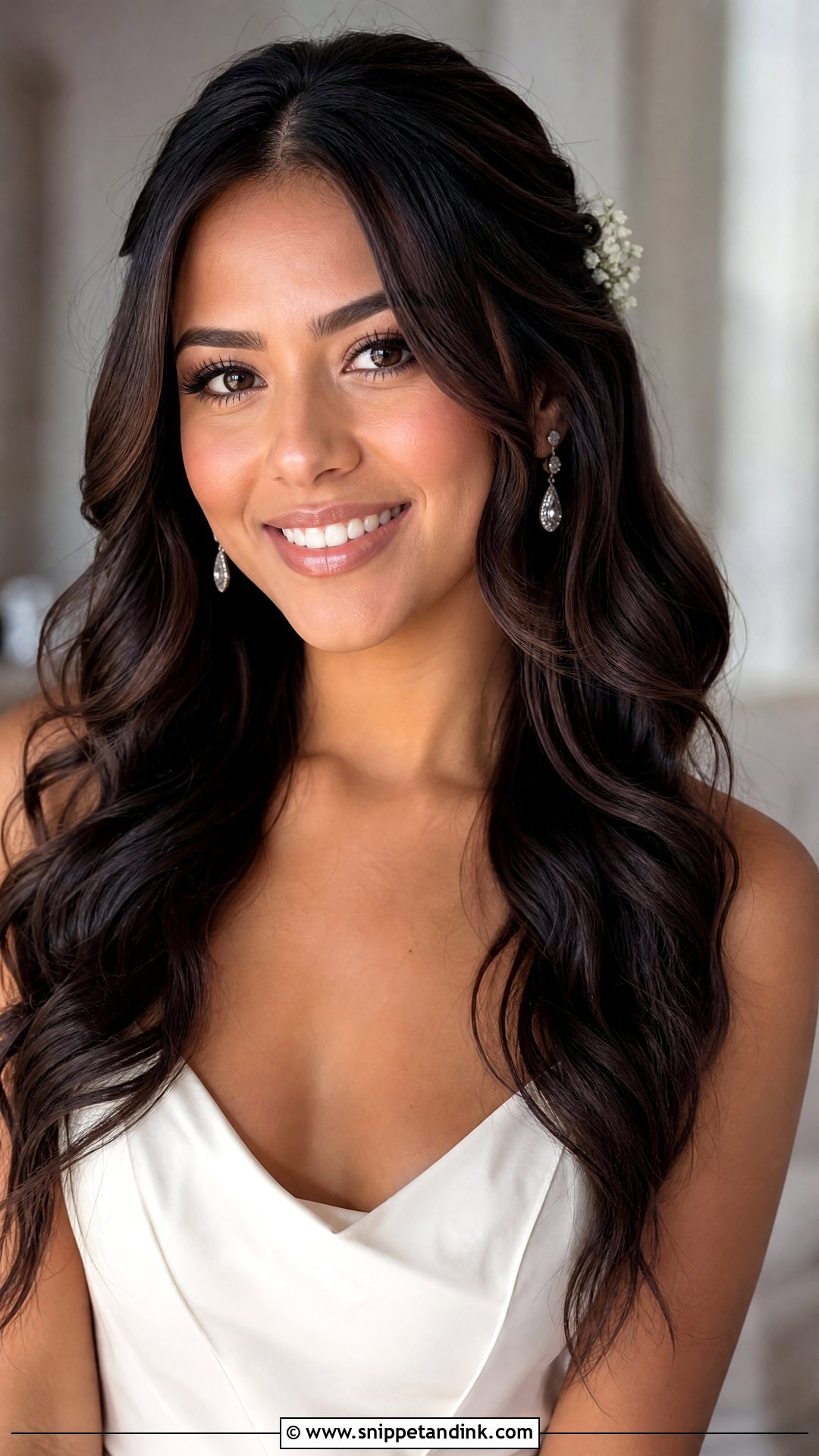
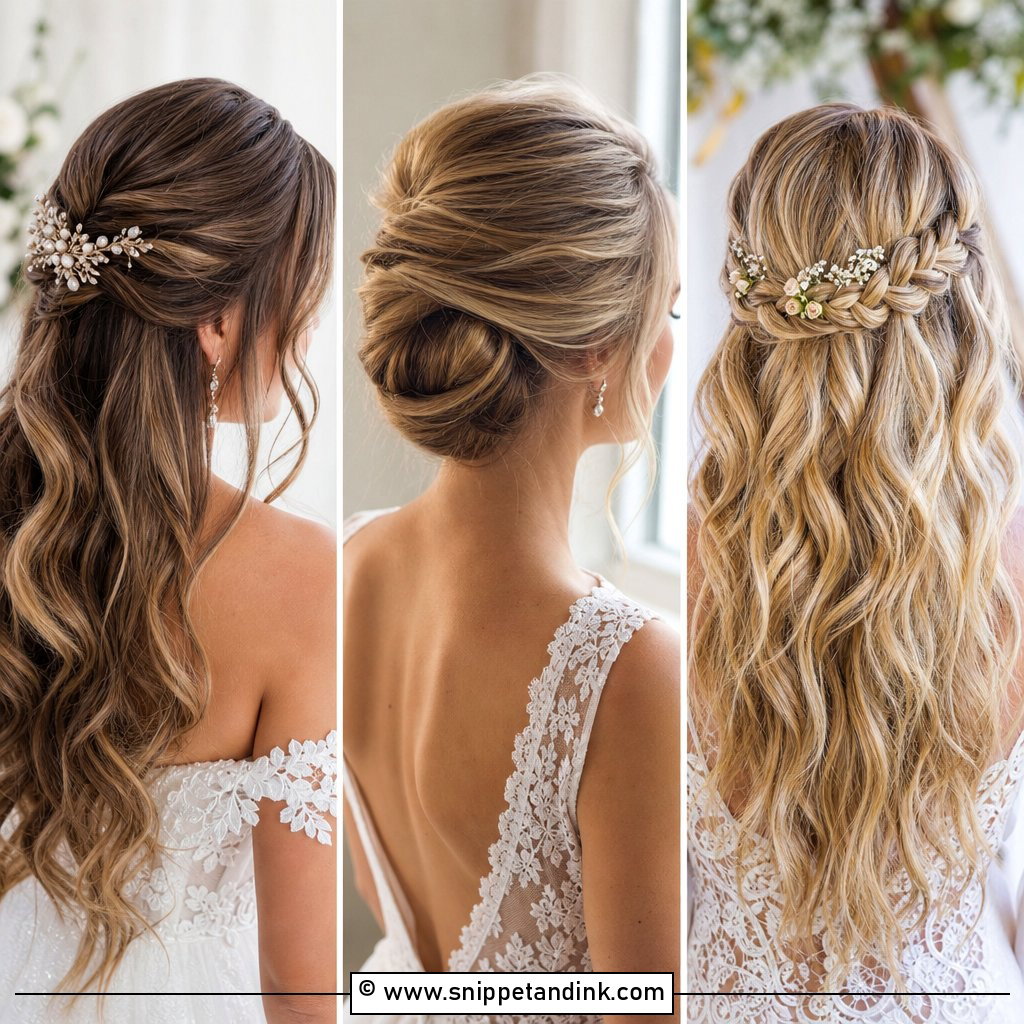
Open waves suit the bride who wants her hair down but styled. Middle or slight side part, with the waves starting around the cheekbones so the face stays open. Long hair, layers and soft balayage show the movement best. My concern with loose hair is always the roots, which go flat first, so I set them with a little volume spray before waving the lengths. Ask for smooth roots, defined waves and a light hold. A veil, a tiara or a pearl headband turns it into wedding hair straight away.
10. Side Part Low Chignon Wedding Hairstyle
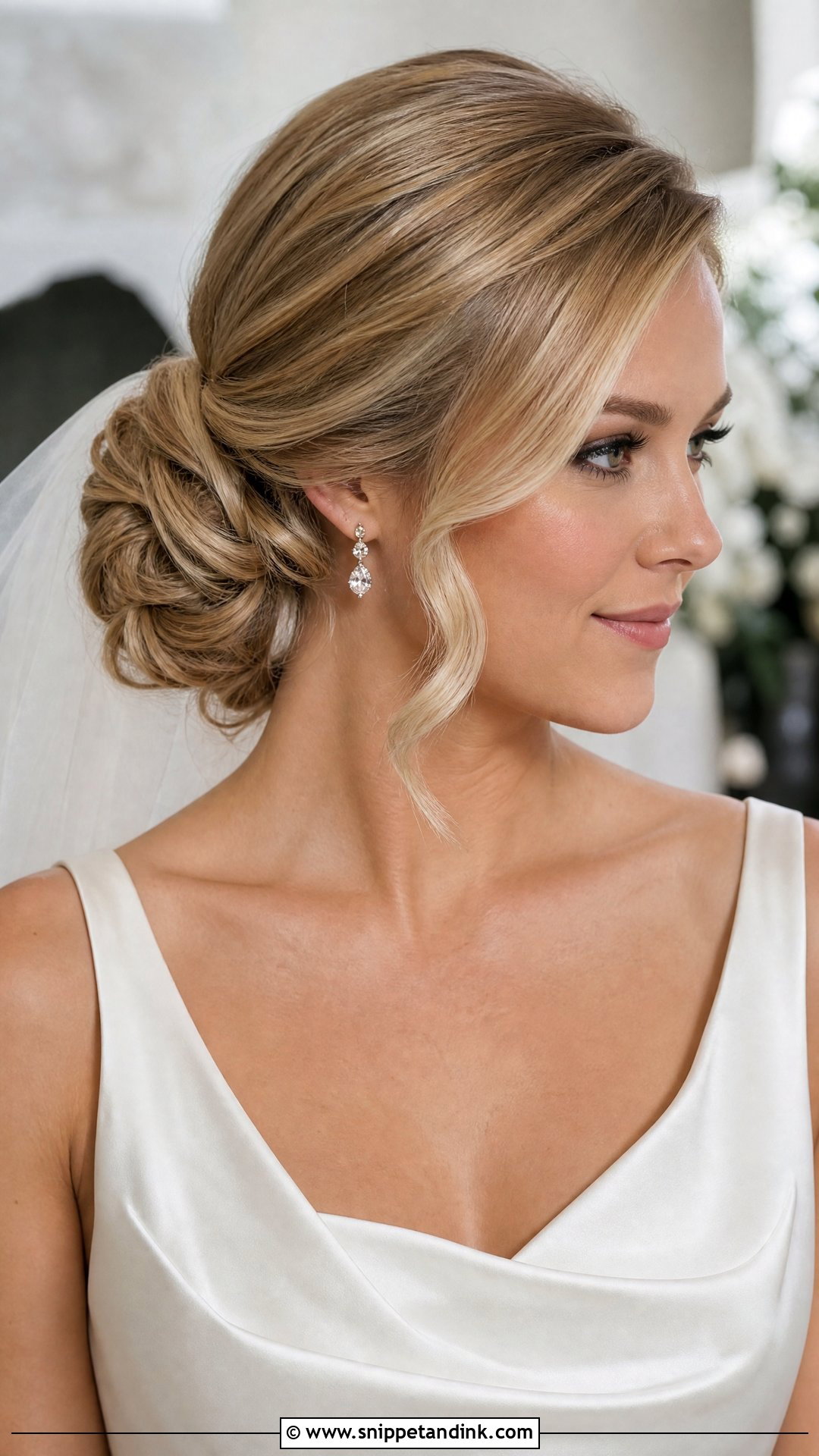
Few styles are as reliable as a low chignon with a side part. The part gives direction and softness at the front; the chignon keeps the rest gathered at the nape. Classic gowns, satin, lace sleeves and vintage accessories suit it, and it leaves earrings and a detailed neckline in view. I usually leave one curved piece on the heavier side of the part. Only one, though. Two loose pieces make it look like it’s coming down.
11. Front French Twist Wedding Hairstyle
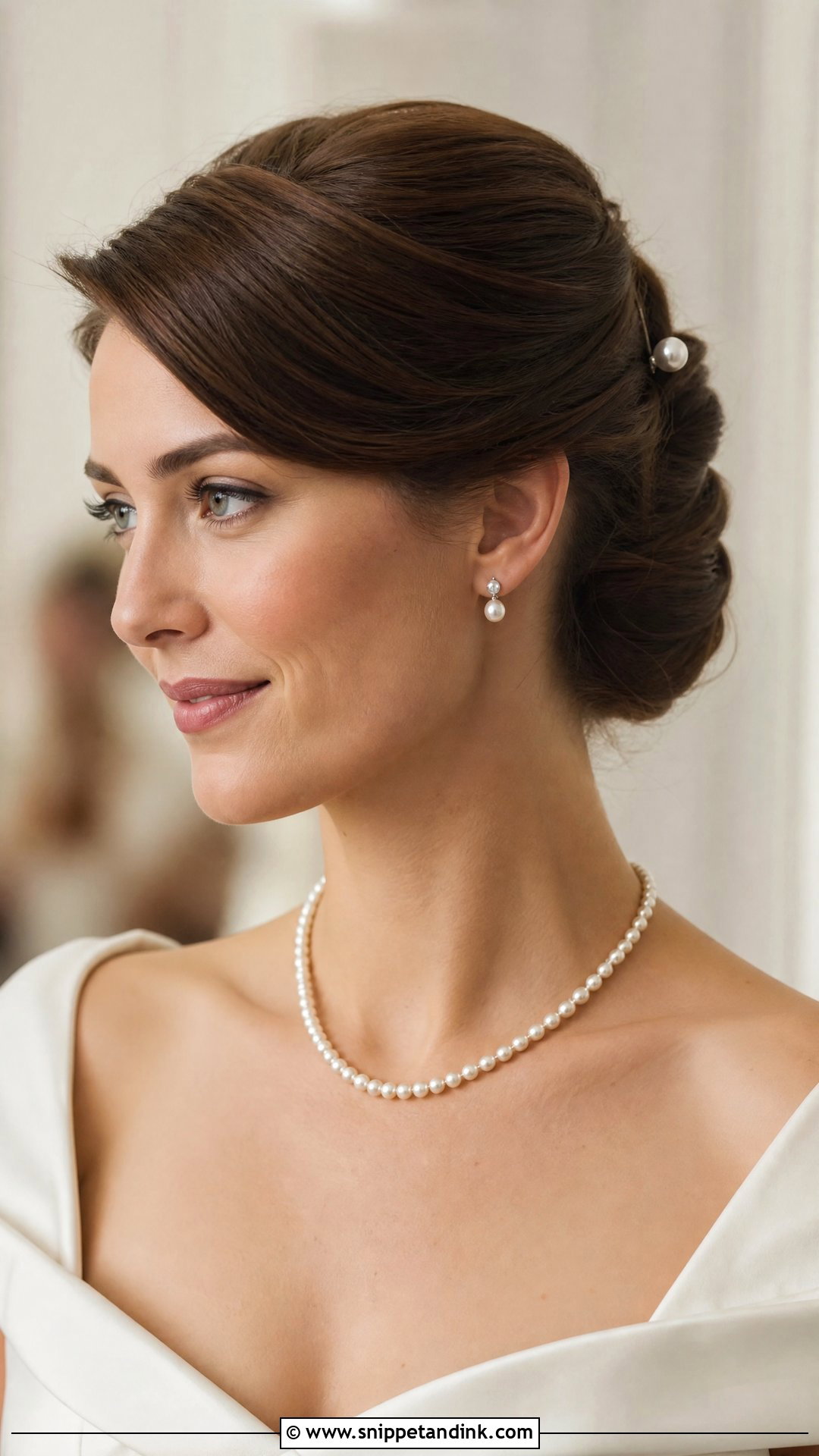
From the front, a French twist mostly shows a smooth side part or soft lift, with the classic roll hidden behind. It feels grown-up and works with structured gowns, clean makeup and pearl or crystal accessories. Keep it sleek for a formal room or let a few pieces loose at the face for something softer. The twist is also one of the best bases for a veil. I set the comb low, just behind the roll, so it anchors into the crossed pins inside the twist and doesn’t tilt the front forward.
12. Soft Bangs Wedding Updo
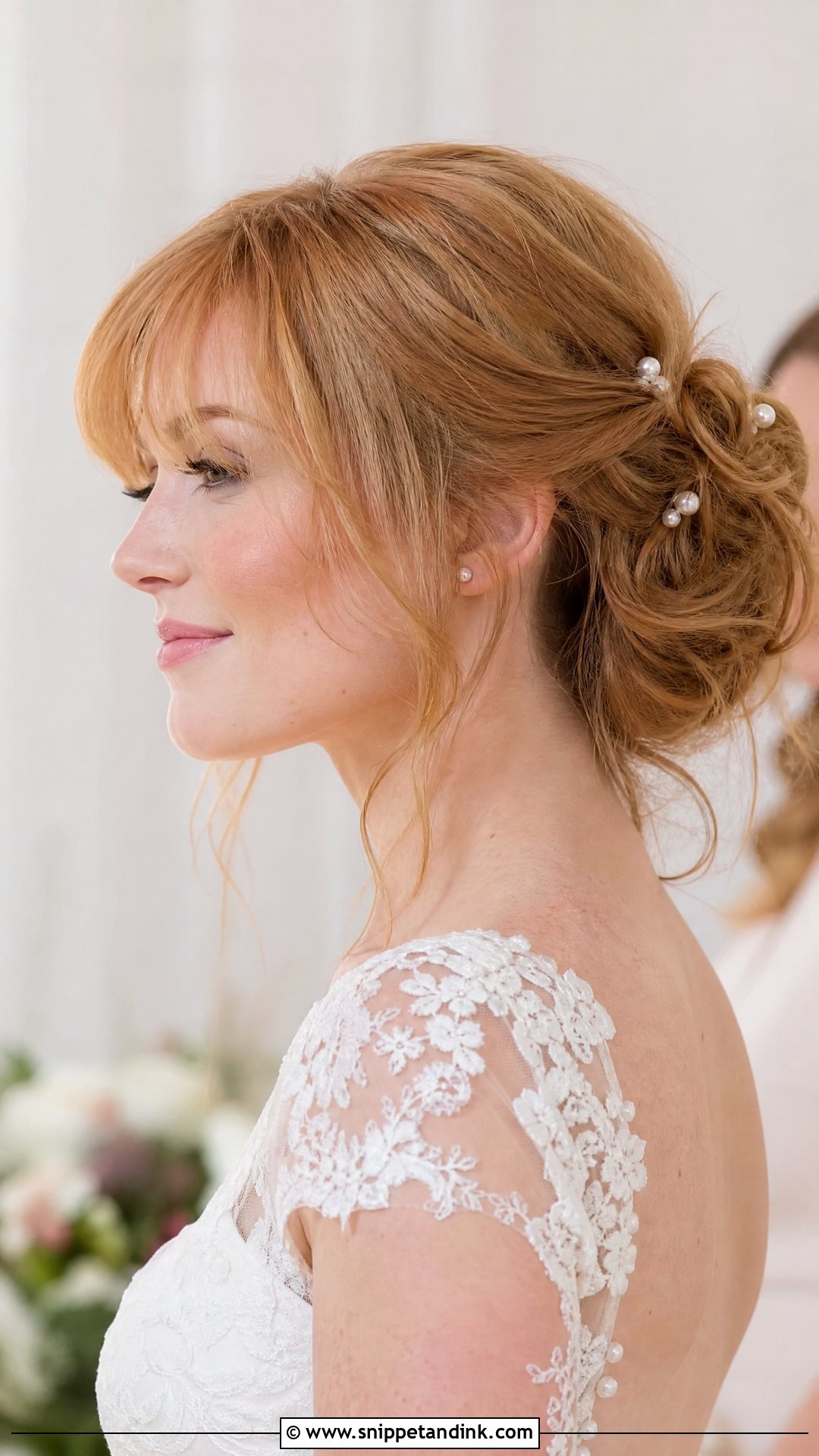
Soft bangs with a wedding updo give a younger, softer front. The bangs can be wispy, curtain-shaped or swept slightly to the side, while everything else is pinned into a bun or textured updo. If you already wear bangs, keep them; you’ll recognise yourself in the photos. The challenge is keeping them light. Bangs pick up forehead oil and makeup quickly and split into strands, so I work in a little dry shampoo before styling and give them one soft curl at the ends.
13. Front Waterfall Braid Wedding Hairstyle
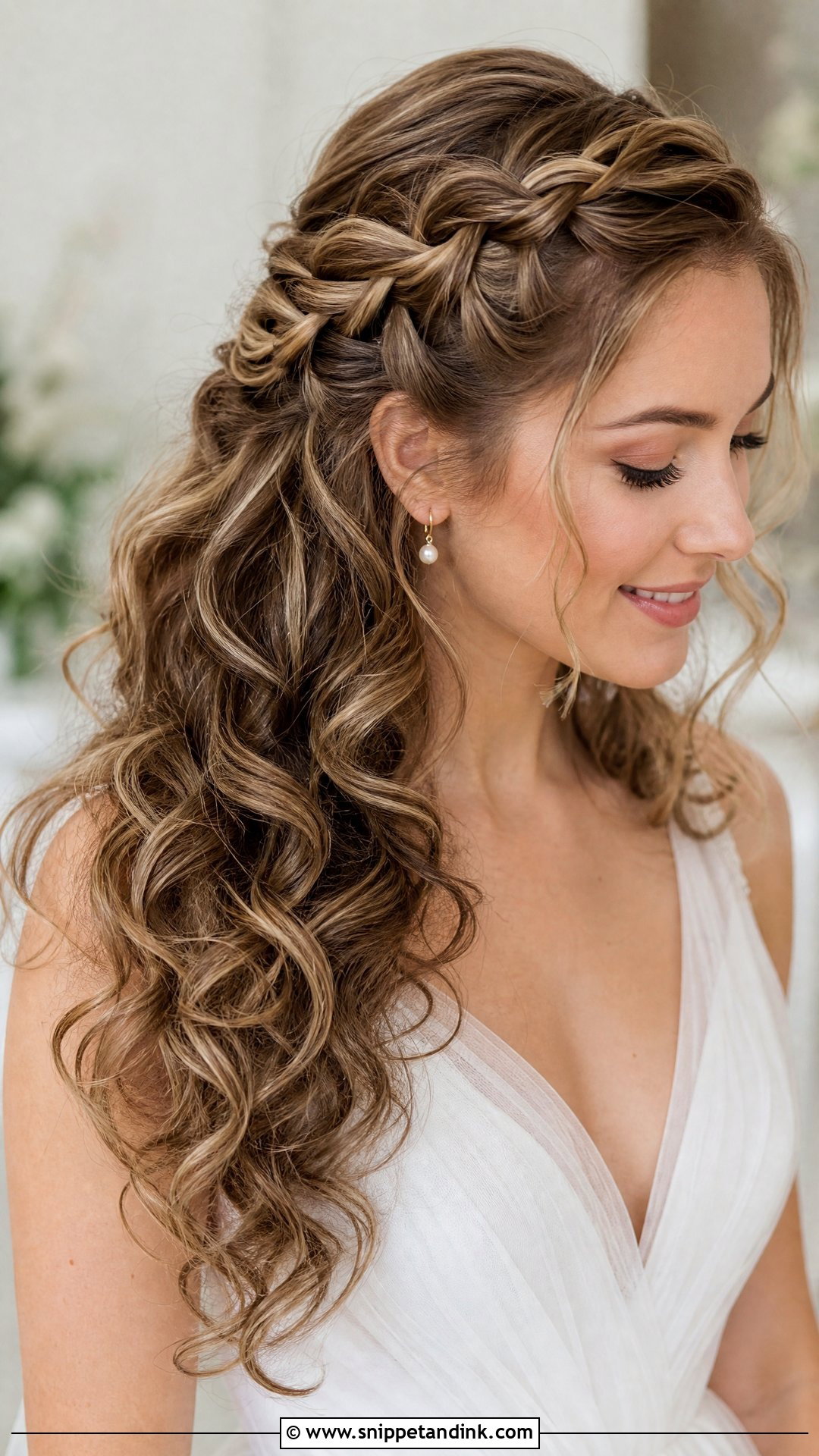
A waterfall braid starts near the front hairline and travels across one side, letting strands drop through as it goes. It needs curled or wavy hair to look finished, because the dropped sections should blend into the texture. On very straight, silky hair the braid tends to slip, so I prep with texture spray and secure the end under the top layer with a hidden pin. It suits beach and garden ceremonies, bridesmaids, and anyone wanting hair down with a little structure. Keep the braid slightly loose and the curls polished.
14. Tucked Front Hair Wedding Hairstyle
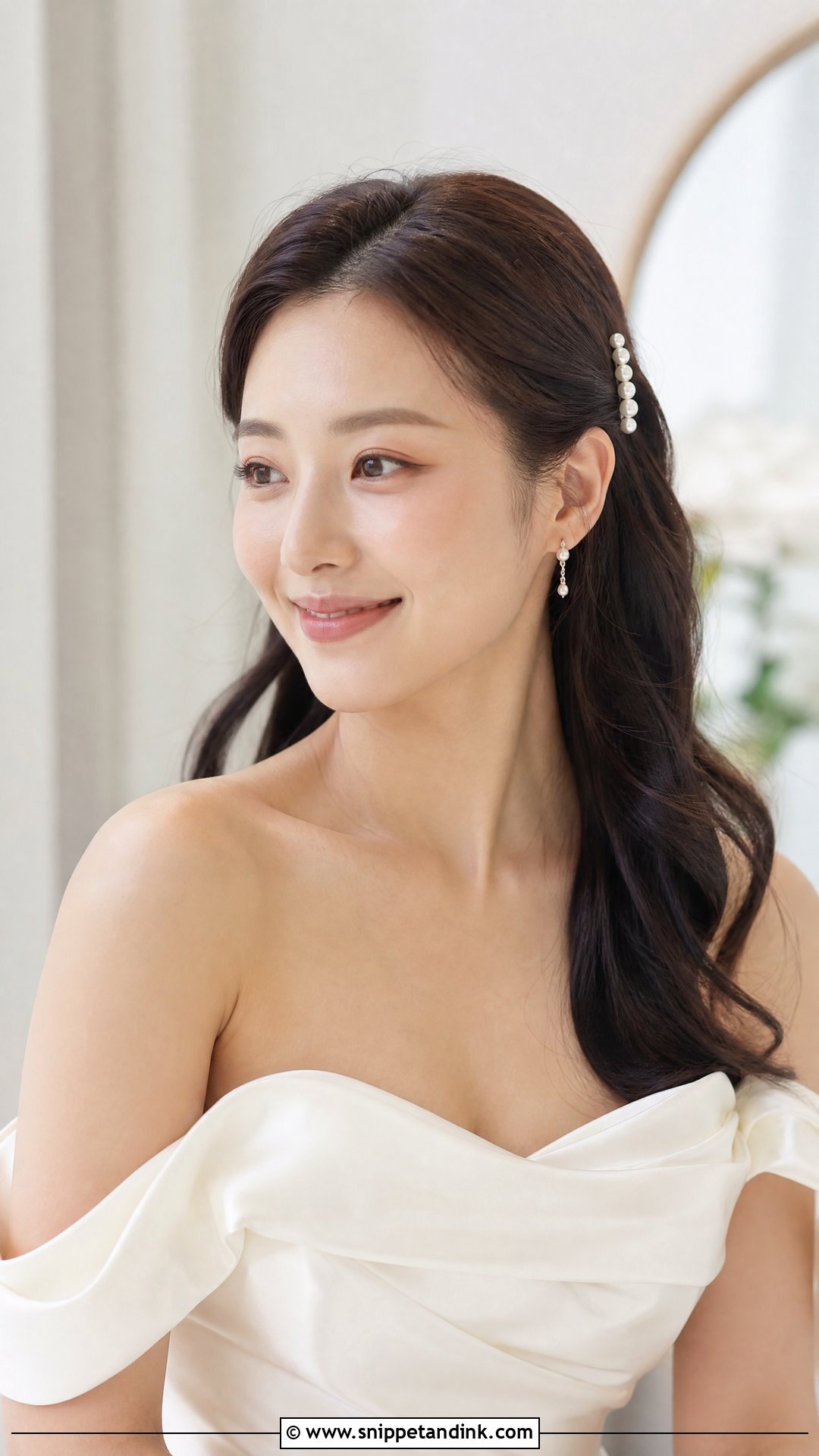
Tucking the front back is the simplest idea here and one of the most practical. The front sections are smoothed and pinned behind the ears or into the sides, and the rest stays down in waves, curls or a smooth blowout. You get a clean front without committing to a full updo. I cross two grips behind each ear so the pins hold flat against the head, and cover them with a pearl clip if you like. A centre part and soft waves are the most natural pairing.
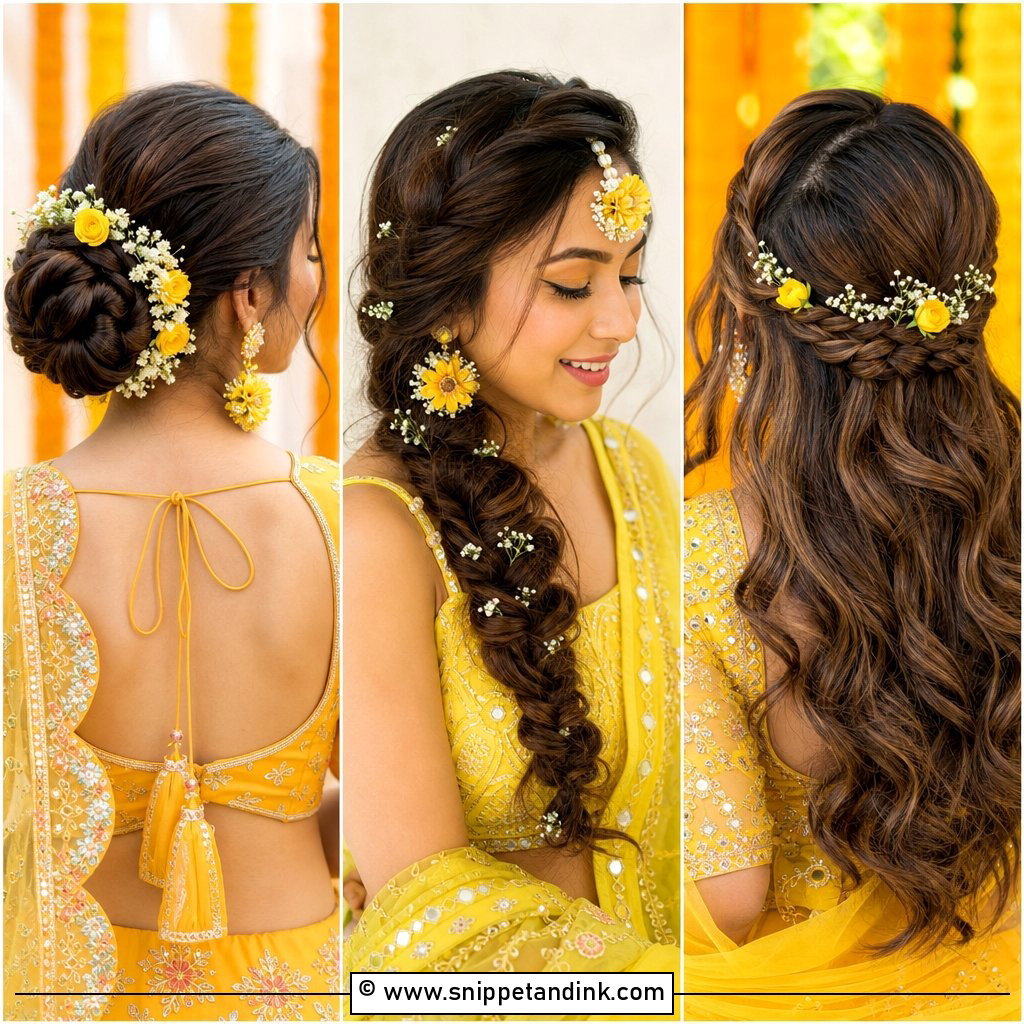
15. Front Loose Curls Low Bun Wedding Hairstyle
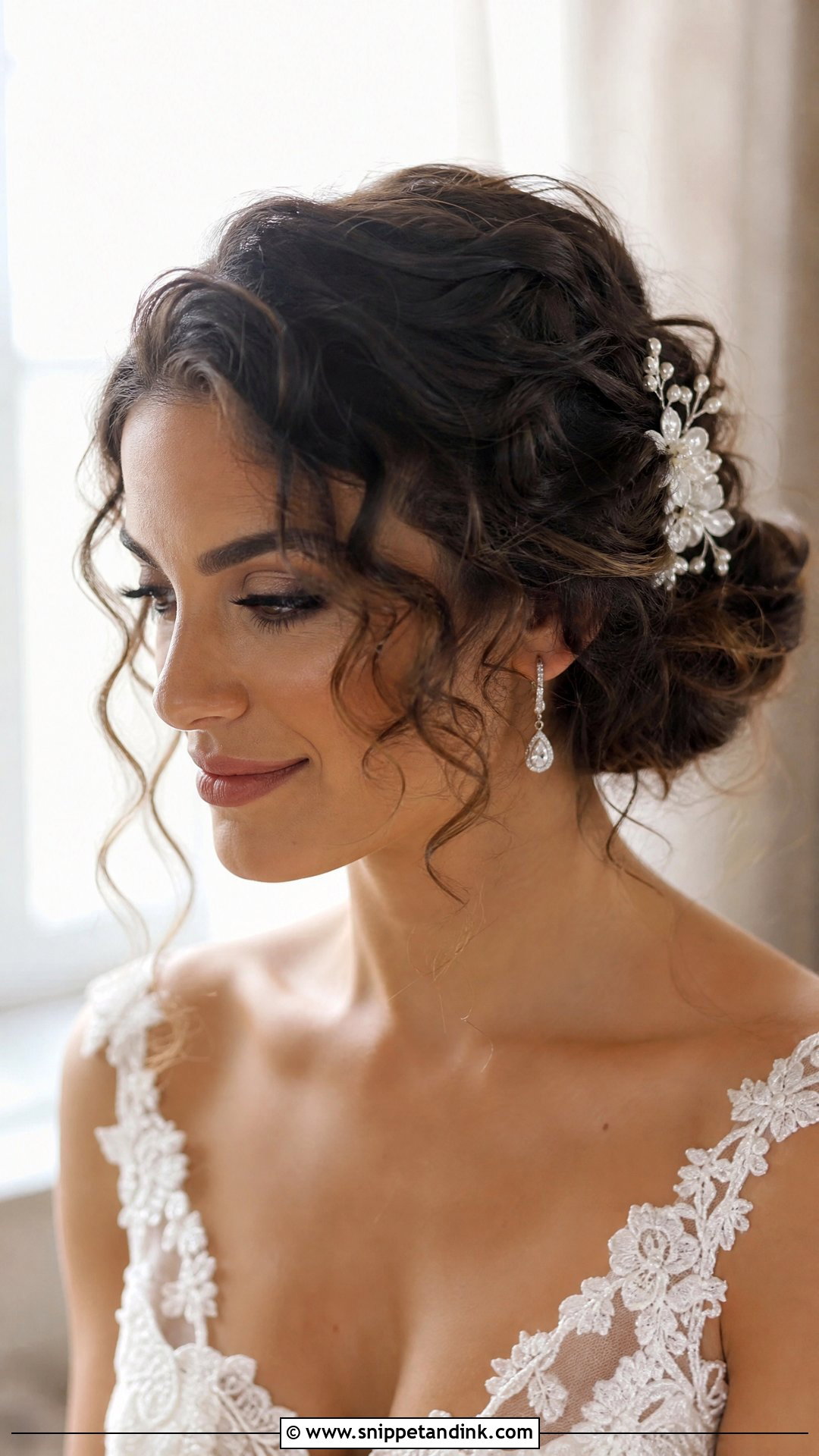
Loose curls around a low bun keep an updo from feeling strict. The bun sits low and relaxed, while the front curls fall around the face. Veils, hair vines, floral combs and small pins all suit it. Placement is what makes or breaks it. If the curls fall over the cheekbones they hide your face, so I shape them to sit just in front of the ears and curve back. The bun should be secure but airy, with enough texture that it reads well from the front, side and back.
From Most Secure to Most Delicate
Every style here looks good in a photo taken an hour after it was finished. They don’t all age the same way across a twelve-hour day, so here’s how I’d group them by hold, from the toughest to the most fragile.
Built for dancing and wind
The sleek middle-part bun, the front braid bun, the braided crown and the side-part low chignon. Everything is anchored, little hangs loose, and a summer breeze or a long receiving line barely touches them. They’re also my pick for hot climates and for anyone who hates feeling hair on their face.
Steady, with a little upkeep
The twisted half-up, the tucked front, the front puff, the French twist and the curtain-bang low bun. The structure holds, but the loose front pieces will drop and soften. Plan a quick check of the hairline before portraits and again before the reception, and keep a few grips in someone’s bag.
Gorgeous early, softer by evening
Open waves, side swept curls, the waterfall braid and anything relying on loose curls around the face. These depend on curl holding, and humidity, heat and body warmth all work against that. They’re still worth wearing if you love them. Schedule the most important photos earlier in the day, and if your hair drops curl easily, I’d pin the front back for the party.
Comfort Up Front Outlasts Any Trend
A pretty back view is nice, but the front is what fills the portraits, the vows, the first look and most of the close-ups. Whether you lean toward sleek buns, soft curls, front braids, half-up twists or loose face-framing pieces, the deciding factors are your dress, your hair texture, the setting and how comfortable you’ll feel after ten hours. Bring front-view photos to the trial so your stylist builds the shape around your face. A front that you forget you’re wearing by the evening is the one worth choosing.
You'll Like These Ideas:


Leave a Reply