
When I ask brides what they want most from their wedding hair, a lot of them say some version of “I don’t want to think about it.” That’s the real case for a bun. Once it’s pinned, it stays out of your face during the vows, off your neck in the heat, and out of the way when someone pulls you into a hug. It’s also more varied than people assume: glassy and minimal for a crepe gown, curled or braided or tucked with flowers for a garden ceremony. These bun hairdo wedding ideas cover classic, beach, formal and courthouse weddings, with what each one asks of your hair.
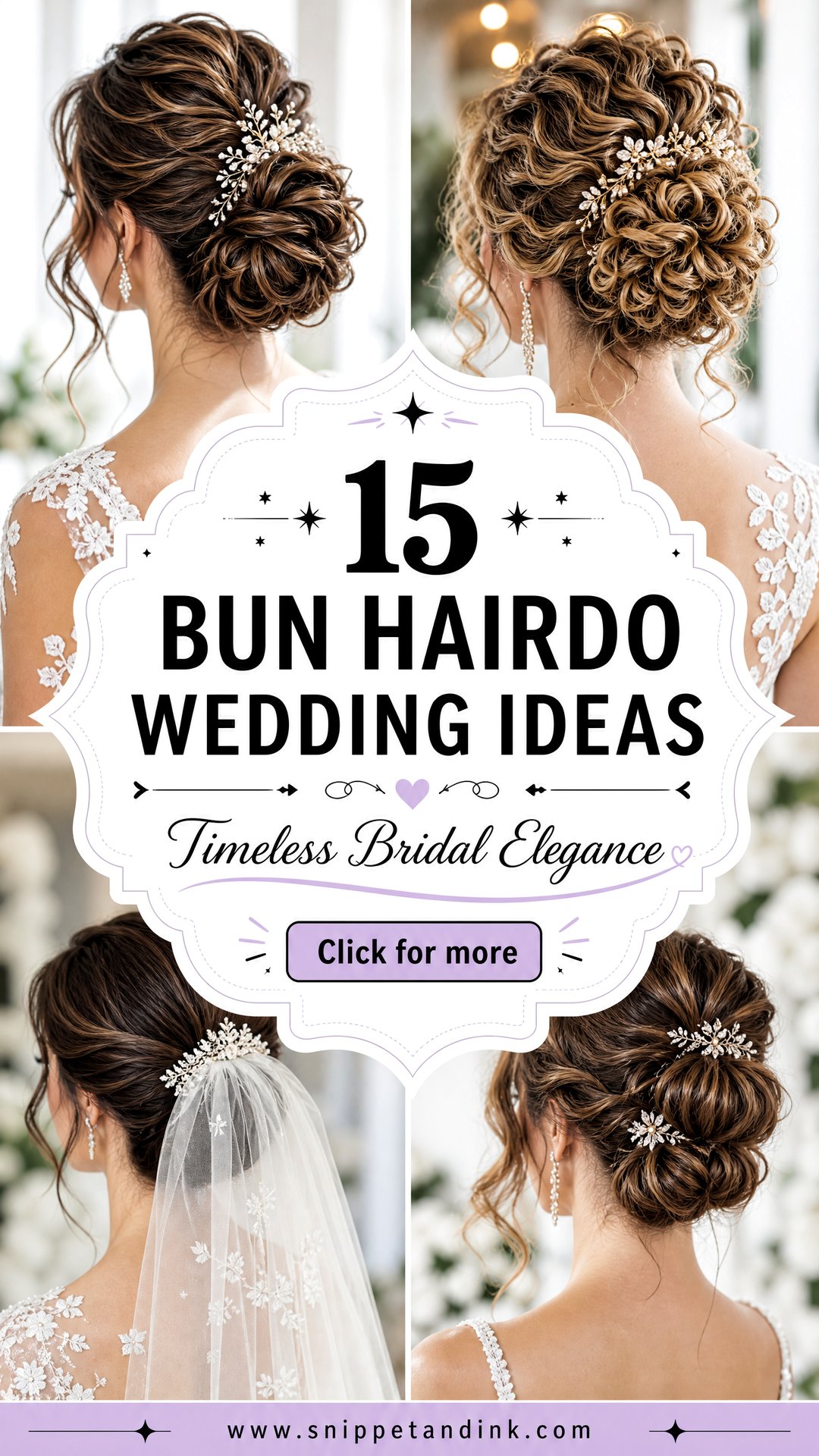
Your Guests Spend the Ceremony Looking at the Back of Your Head
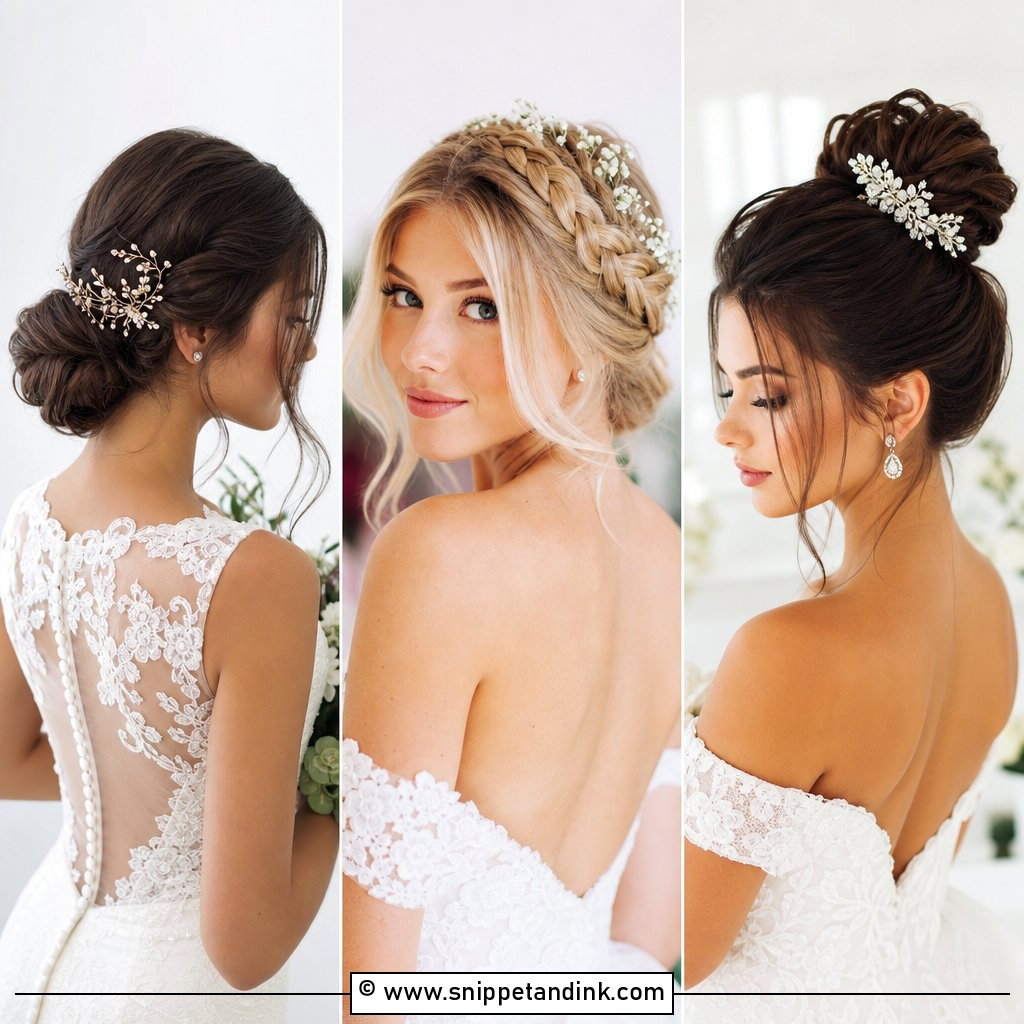
It’s easy to judge a bun from the front, in a salon mirror. During the ceremony, though, most of the room sees it from behind, and the photographer takes plenty of profile shots. So I let the dress back and the side view guide the height more than anything else.
- Open or low back: a low bun or chignon sits just above the skin and frames it. A high bun leaves a long gap that can look unfinished.
- High neck or lace collar: lift the bun to mid or high so it doesn’t crush against the fabric or catch on buttons.
- Long veil: a low or mid bun gives the comb a clean anchor, and the tulle falls straight instead of tenting over a high knot.
- Strapless or sweetheart: almost anything works, so your face shape and comfort can decide.
At your trial, wear a top with a similar neckline or back to the dress and take a phone video while you turn slowly in a circle. Ten seconds of that tells you more than twenty inspiration photos.
1. Low Bridal Bun
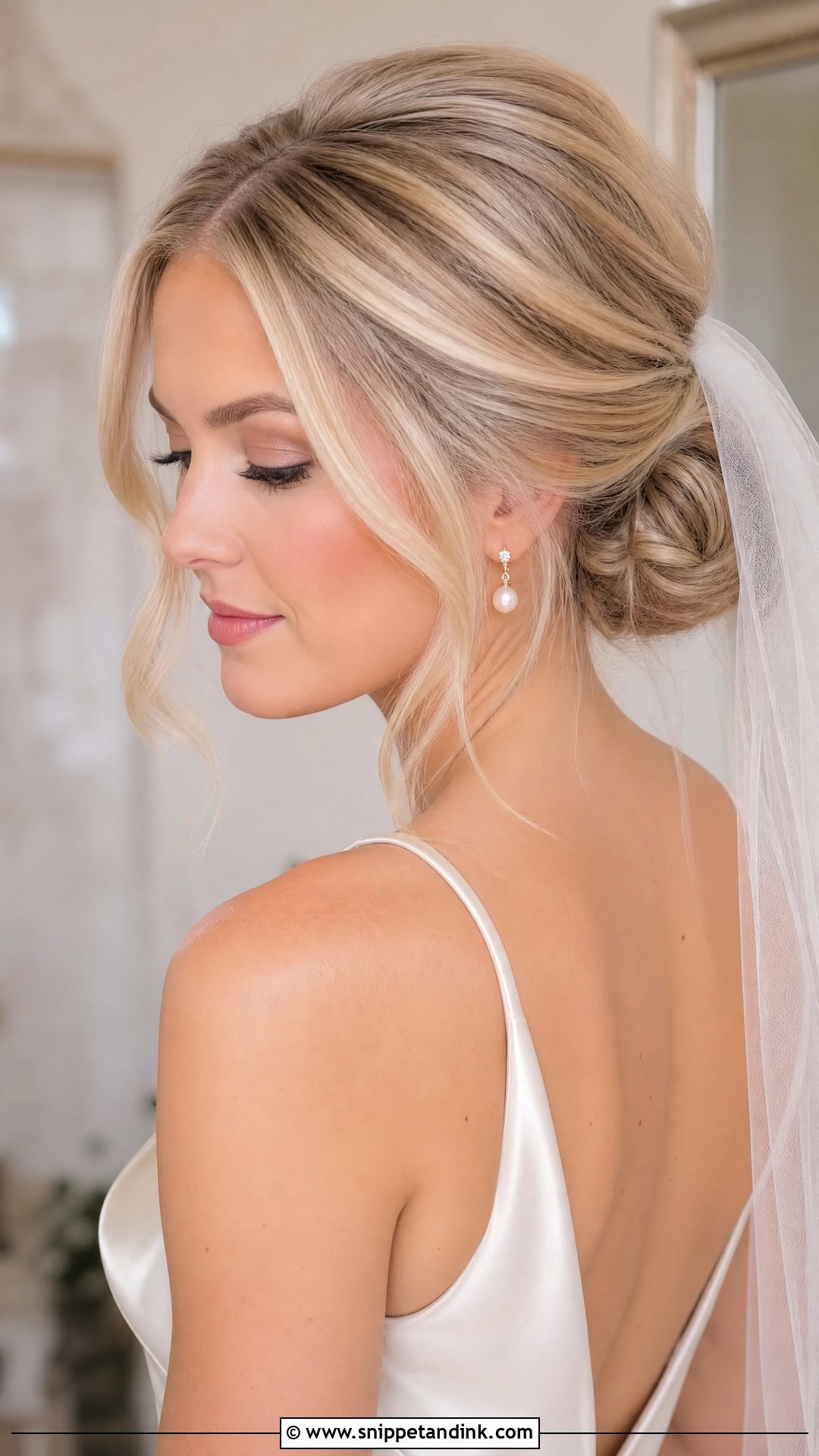
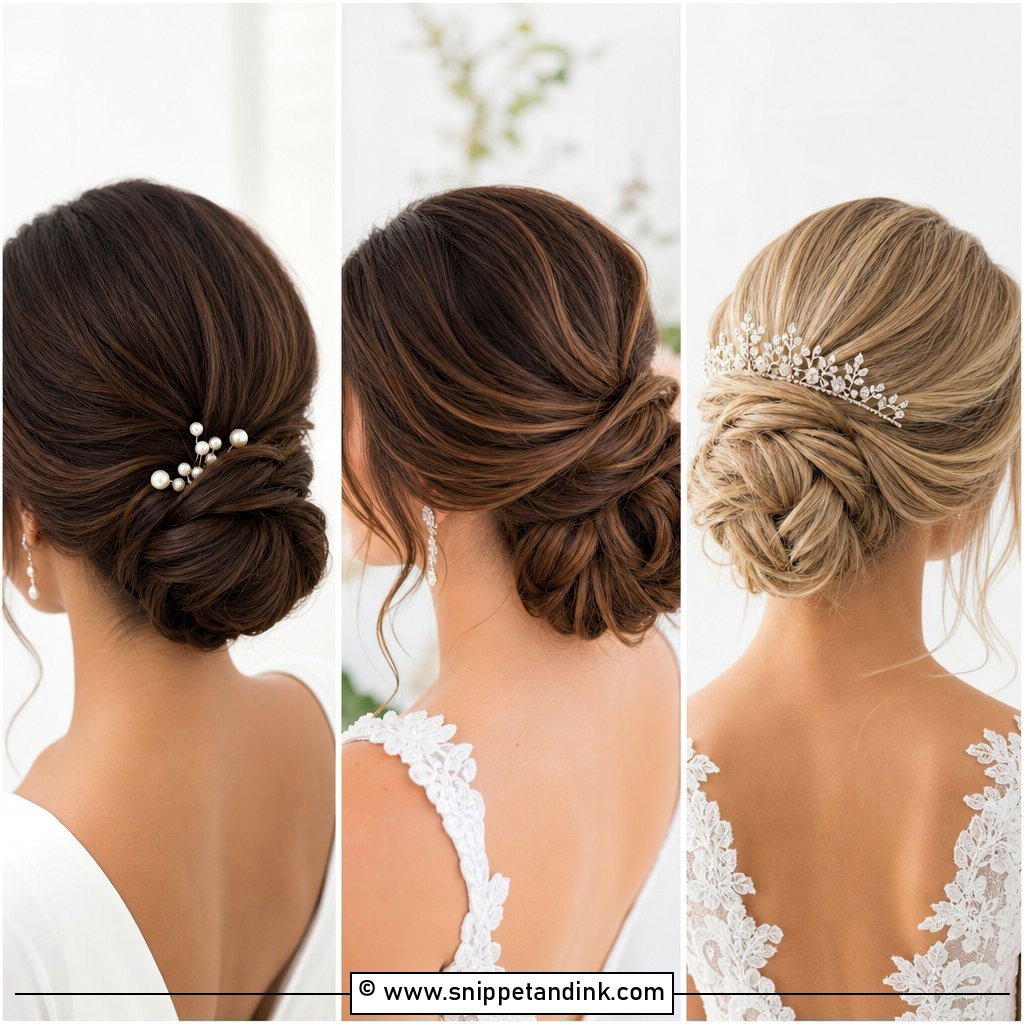
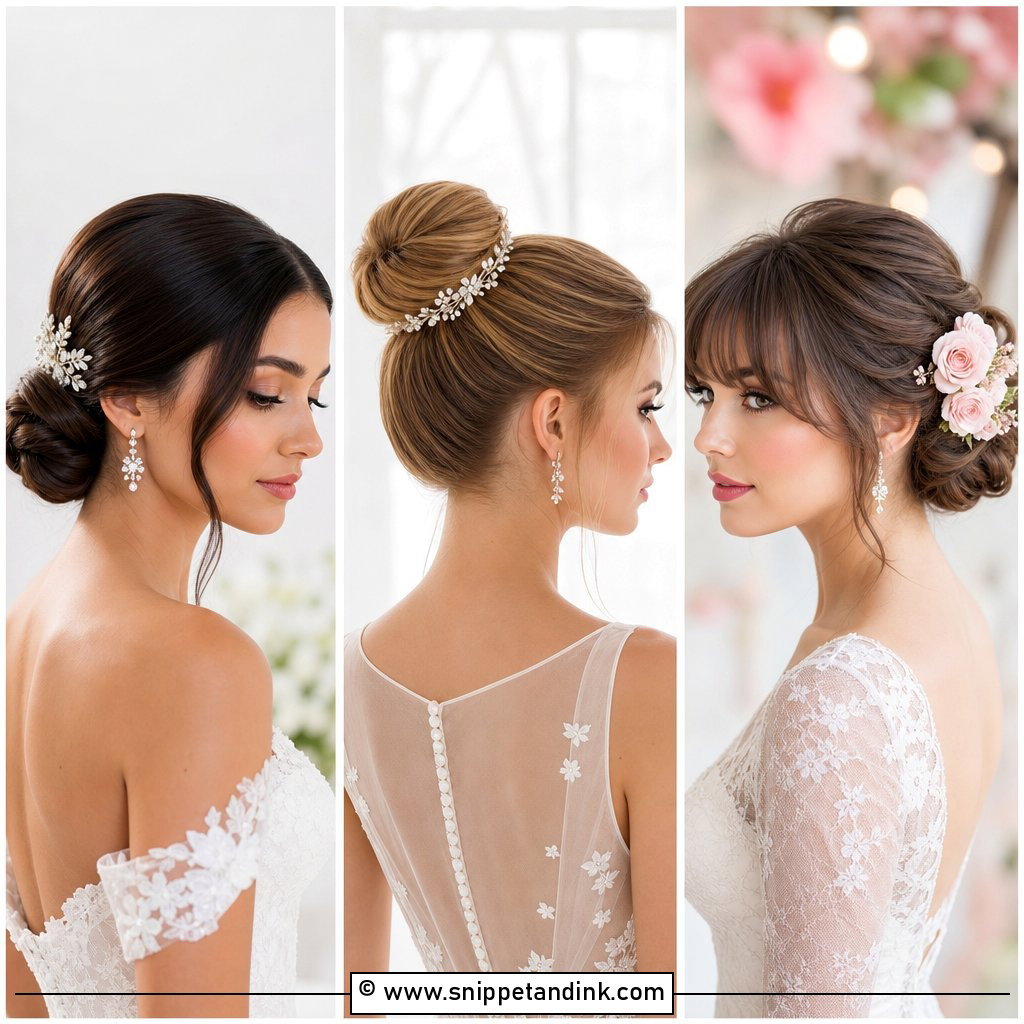
If I had to put one bun on every bride, this would be it. Sitting at the nape, it carries a veil easily, leaves a backless gown on show and doesn’t compete with pearl earrings. Because the weight sits low, it doesn’t drag at the crown the way a high knot can, which is why people who get headaches from updos usually tolerate it fine. Smooth it for a structured dress or pull a few curled pieces around the face for something softer. Ask for a little root lift at the crown so the profile doesn’t look flat in side shots.
2. Sleek Wedding Bun
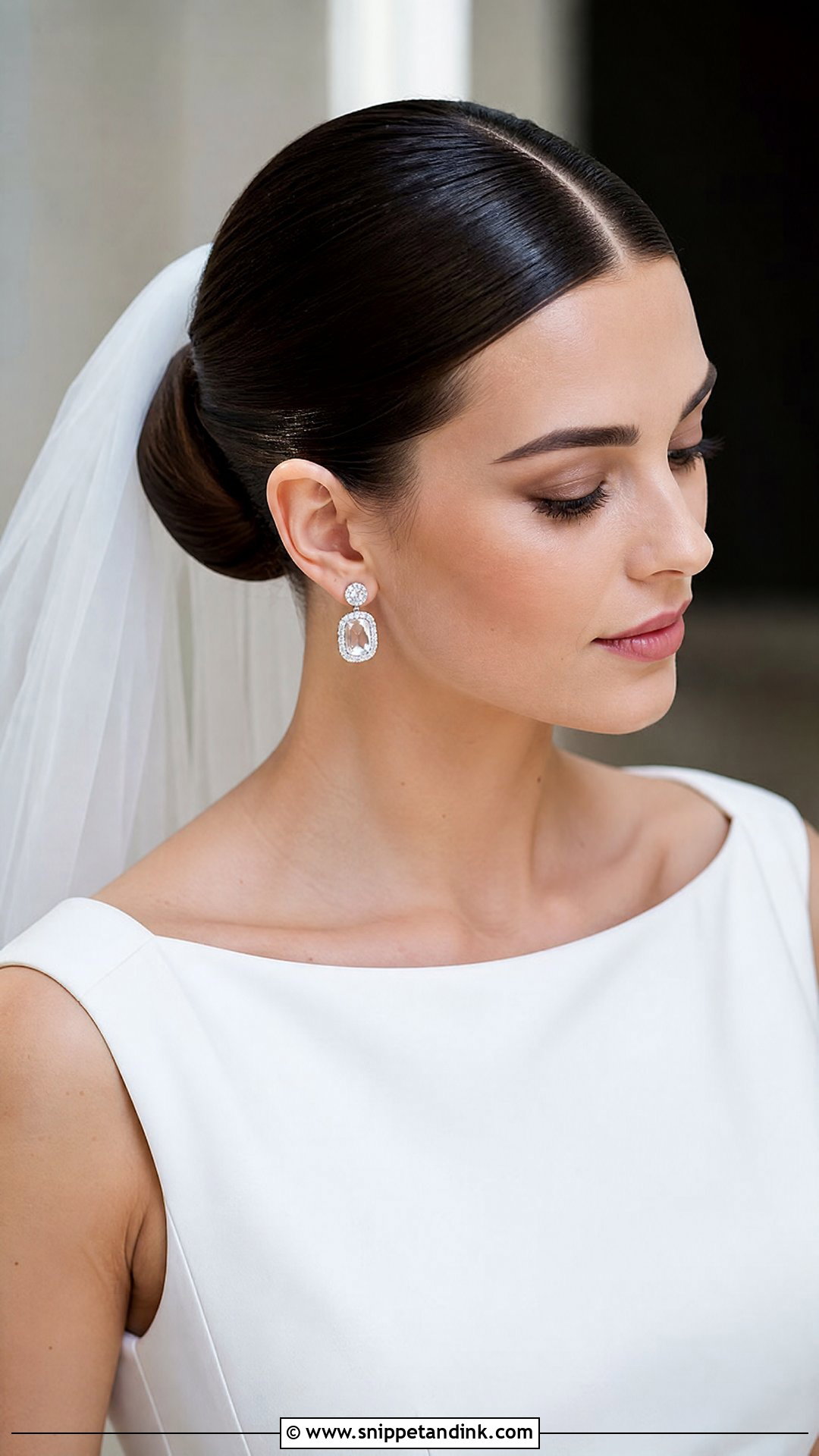
Minimalist gowns, satin and structured silhouettes all suit a sleek bun, because there’s nothing in the hair pulling focus from the fabric. The work is in the edges. I smooth with a cream, brush the hair back with a boar bristle brush and set the hairline with a light gel or wax stick, so it shines without looking wet in flash. A center part looks fashion-forward; a deep side part is softer. On humid days it’s one of the safest choices, since there’s no curl to drop. Pearl studs or a sculptural comb are plenty.
3. Messy Bridal Bun
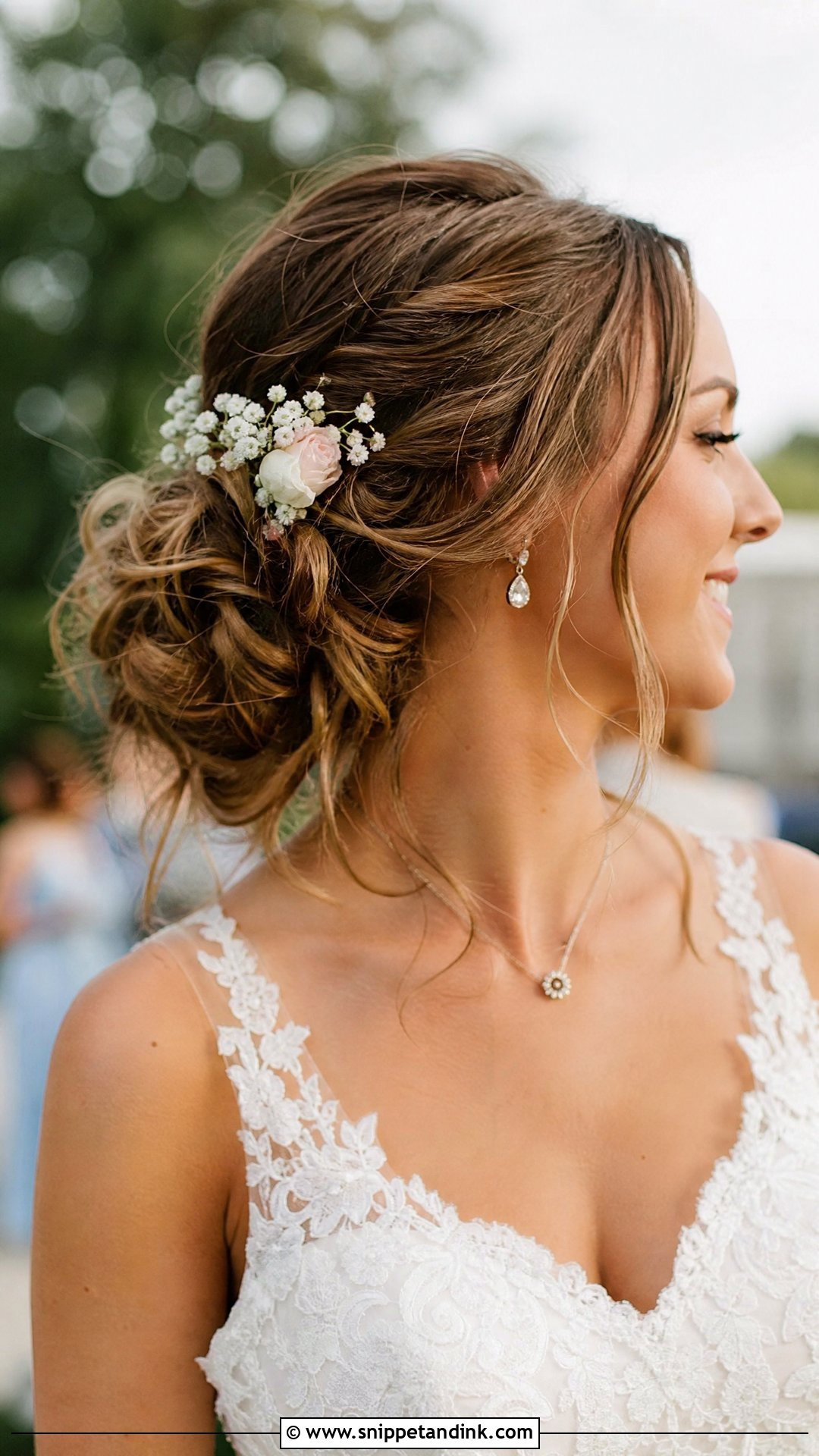
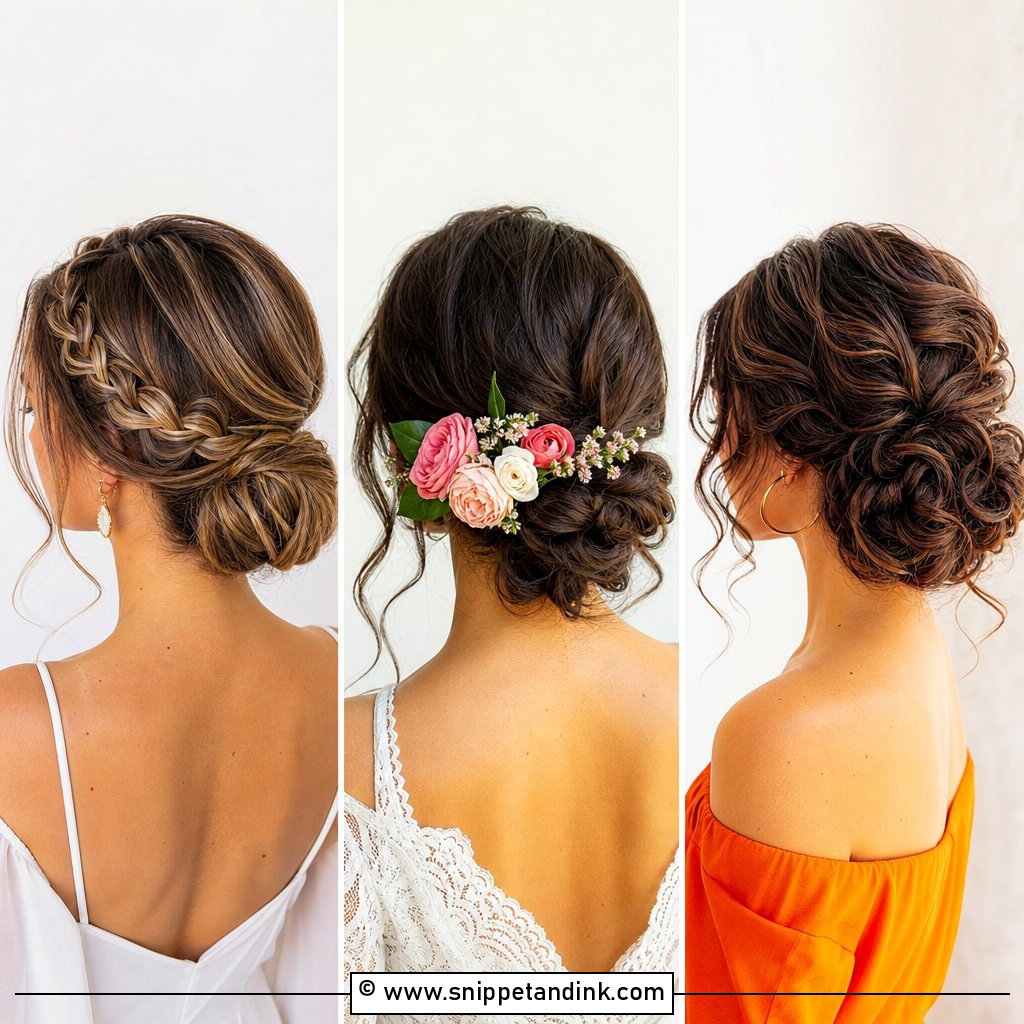
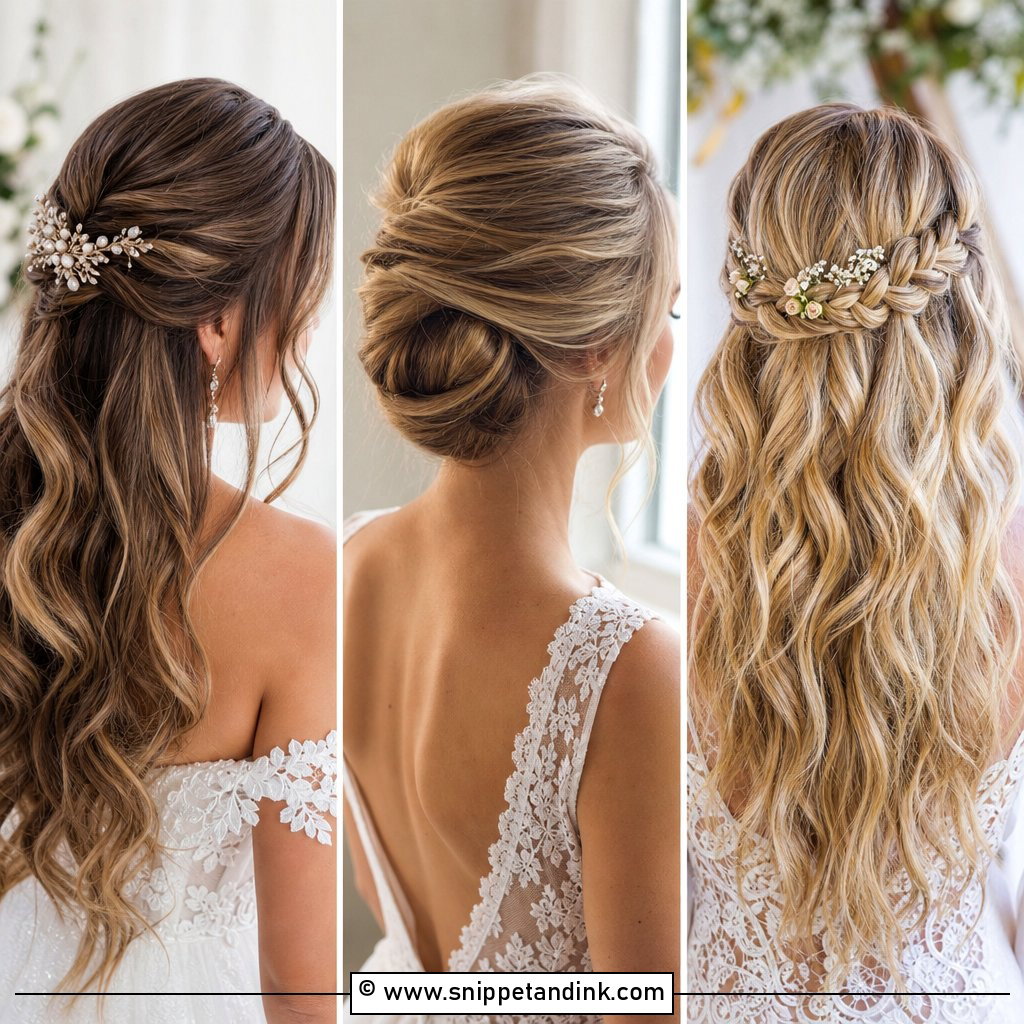
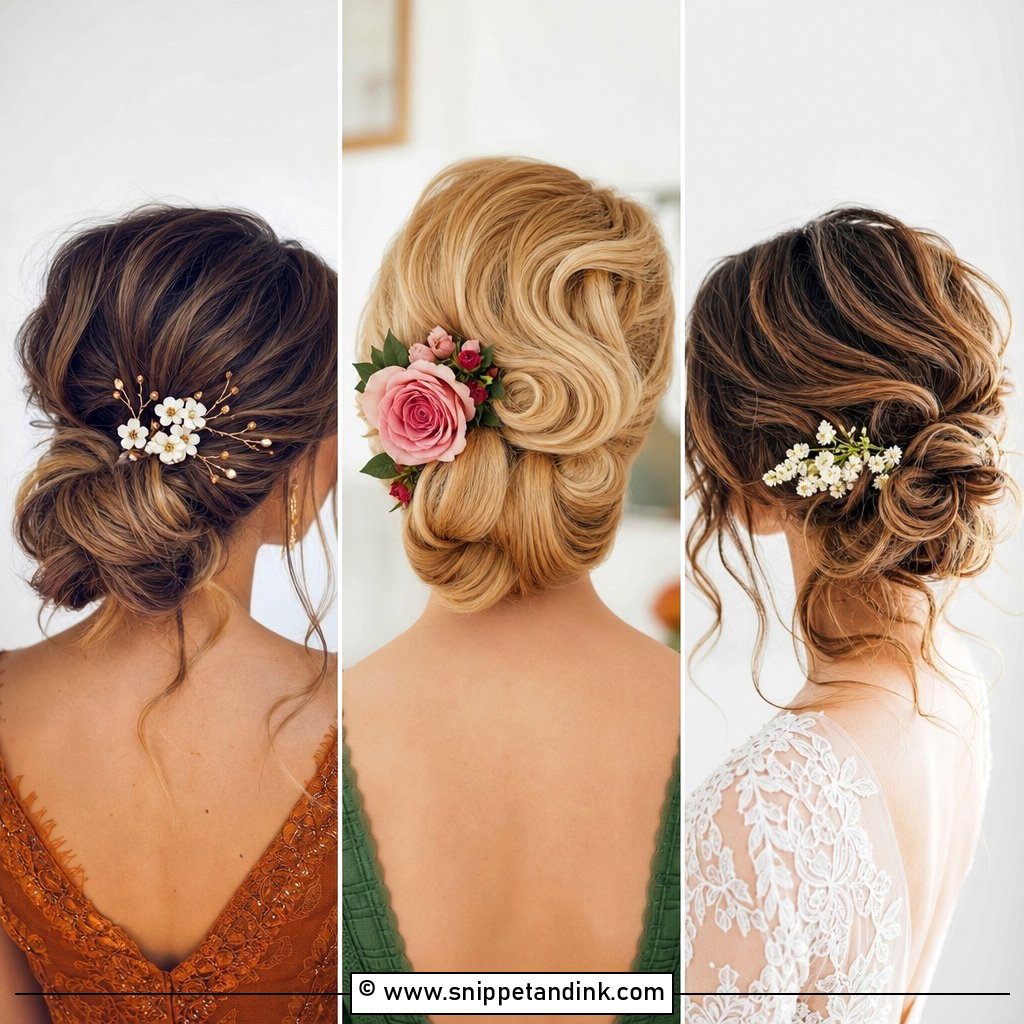
The messy bun that photographs well is actually built tidy and then loosened. I pin each section firmly first, then gently pull pieces apart with my fingertips, so it looks undone while the structure underneath stays locked. It’s soft at the crown, with loose twists and a few strands around the face, and suits garden venues and flowing dresses. Where it goes wrong is fine, freshly washed hair: the loosened pieces collapse into flatness within an hour. Second-day hair and a dry texture spray fix most of that.
4. Textured Wedding Bun
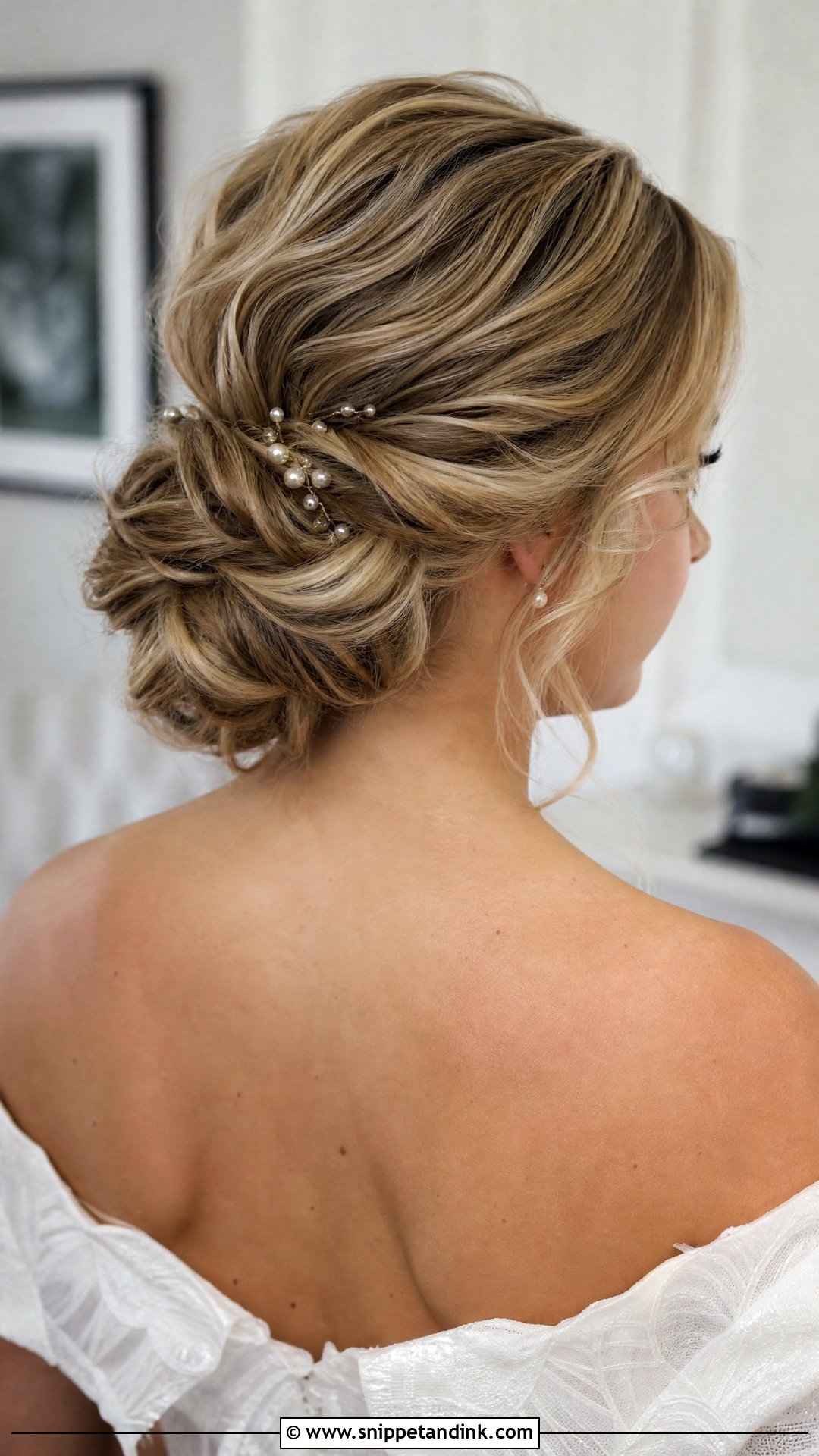
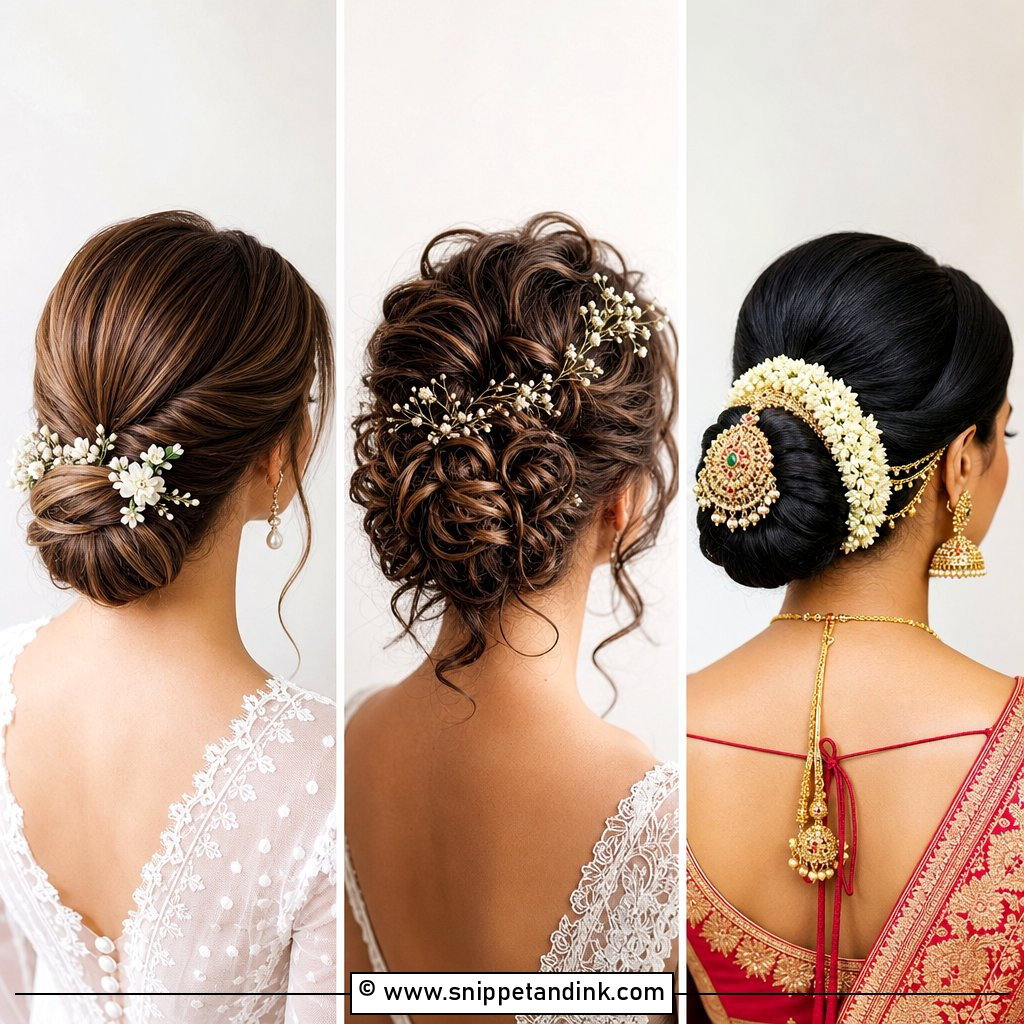
Highlighted, balayage, curly or layered hair shows its depth best in a textured bun, because the bends and twists turn every tone into visible detail. Instead of smoothing everything, I use waves and soft separation, so the back and sides both have something to look at. That makes it a good partner for a very plain dress. Pins, flowers or a veil tucked just above the knot all work. Keep the front softer than the back, or the shape looks heavy at the top.
5. High Bridal Bun
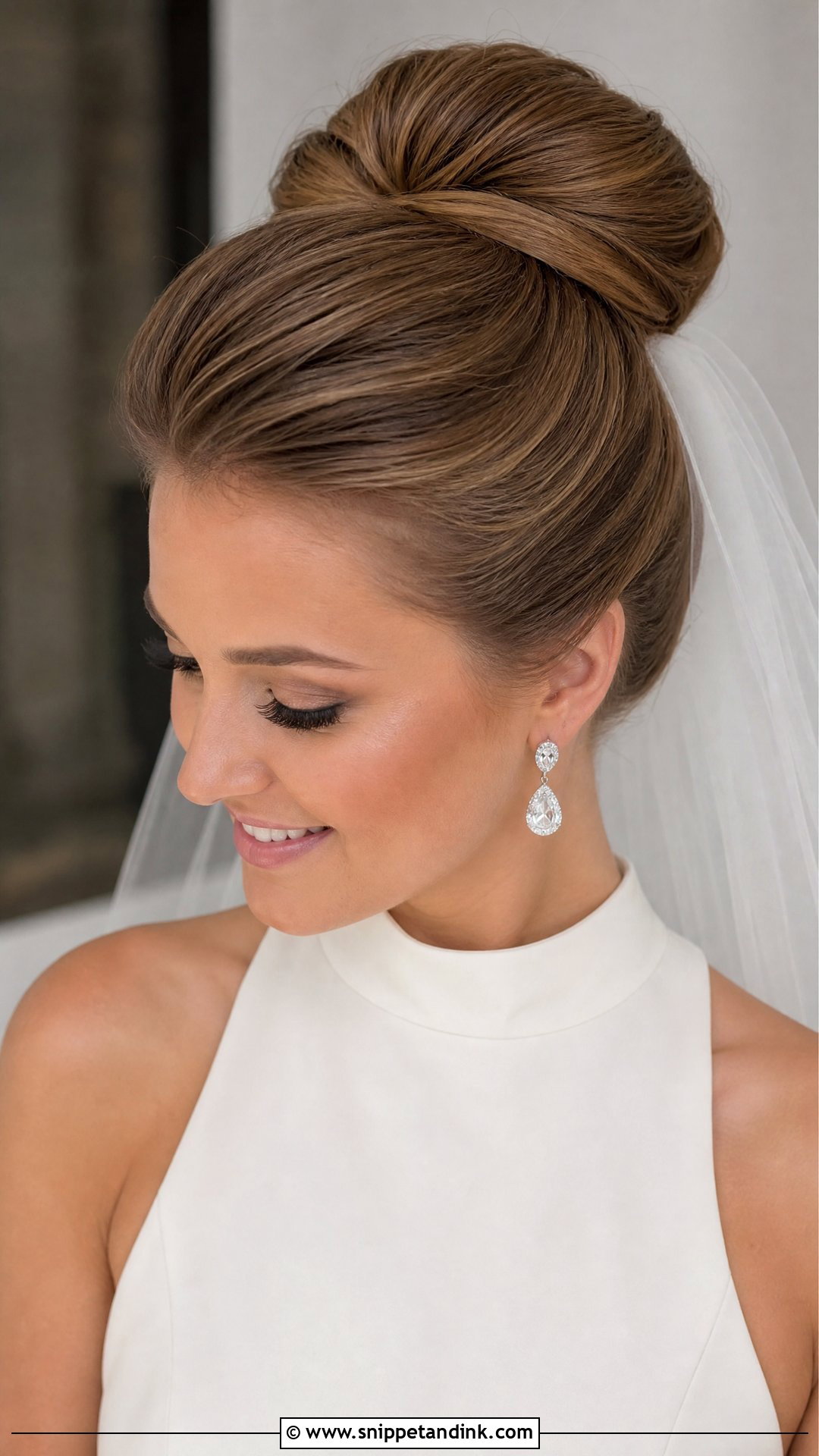
High necklines, dramatic sleeves and detailed bodices often need the hair lifted out of their way, and that’s where a high bun earns its place. It lengthens the neck in profile and keeps every strand off the shoulders, which is a relief in summer. Thick or long hair has the volume built in. Finer hair can still wear it with a padded base or clip-in extensions, though I’d test the weight at the trial. Sleek suits a ballroom, curled suits a softer ceremony. One honest caution: a high bun makes a long veil tent outward, so pair it with a shorter one or set the comb below the knot.
6. Chignon Wedding Bun
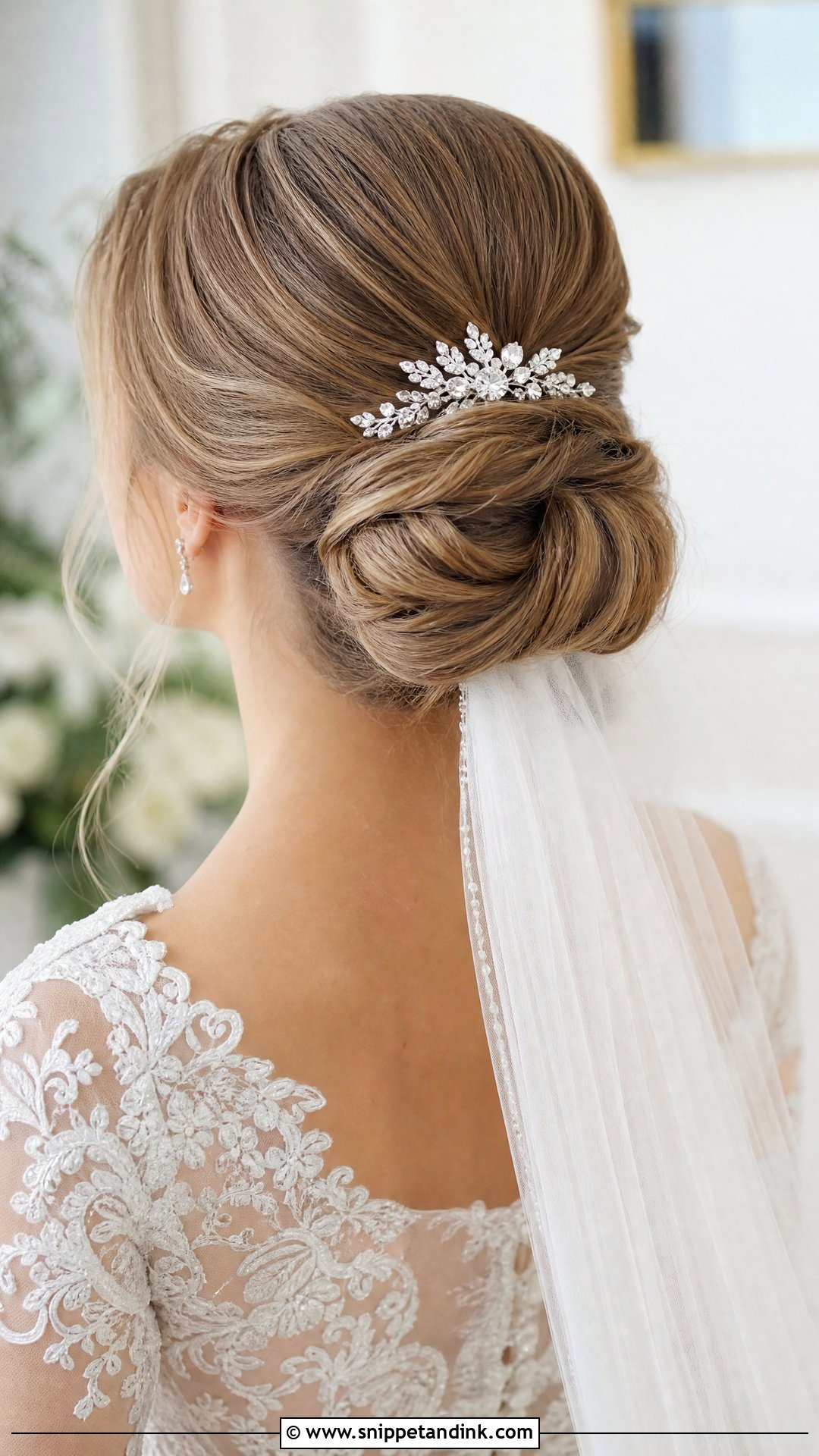
Of all the classic bridal hairdos, the chignon is the one I’d call hard to date. The hair is folded and tucked into a smooth shape low at the nape, without height or drama. Lace gowns, cathedral veils and pearl combs all sit comfortably with it. I build it around a twisted base and tuck the ends under with U-pins, which hold the fold without the bumps bobby pins can leave. Part it in the middle, sweep it to one side, or give it a little lift at the crown.
7. Braided Bridal Bun
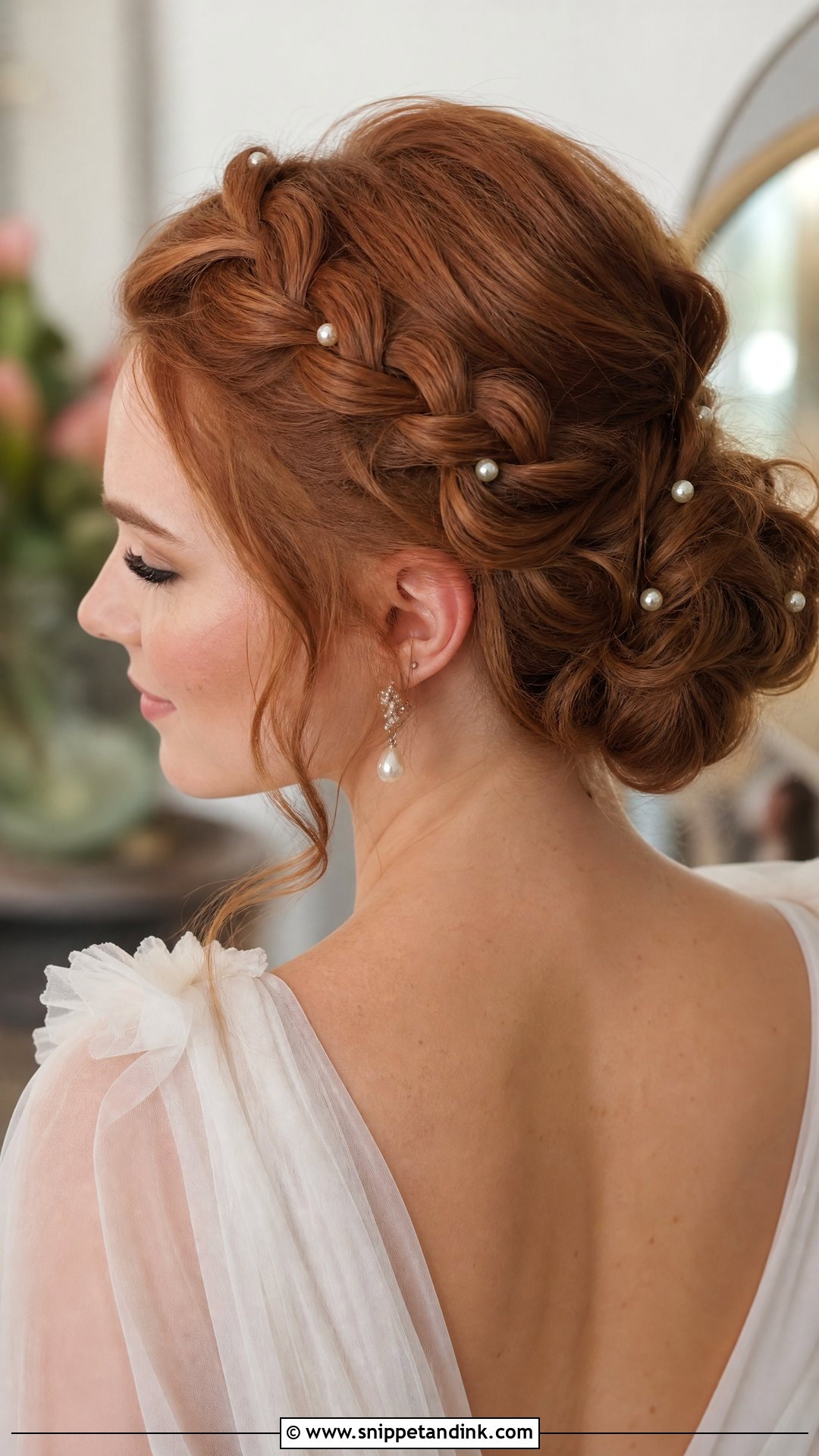
Layered hair is where a braided bridal bun really pays off, because the braid catches shorter pieces that would otherwise slip out of a plain knot. The braid can wrap the bun, feed into it, or frame the crown before everything is pinned. I pull the loops wider by hand once it’s secured, since a tight braid looks thin and loses detail in photos. Floral pins or tiny pearls slot into the gaps. It adds interest without the fuss of a full braided updo.
8. Curly Wedding Bun
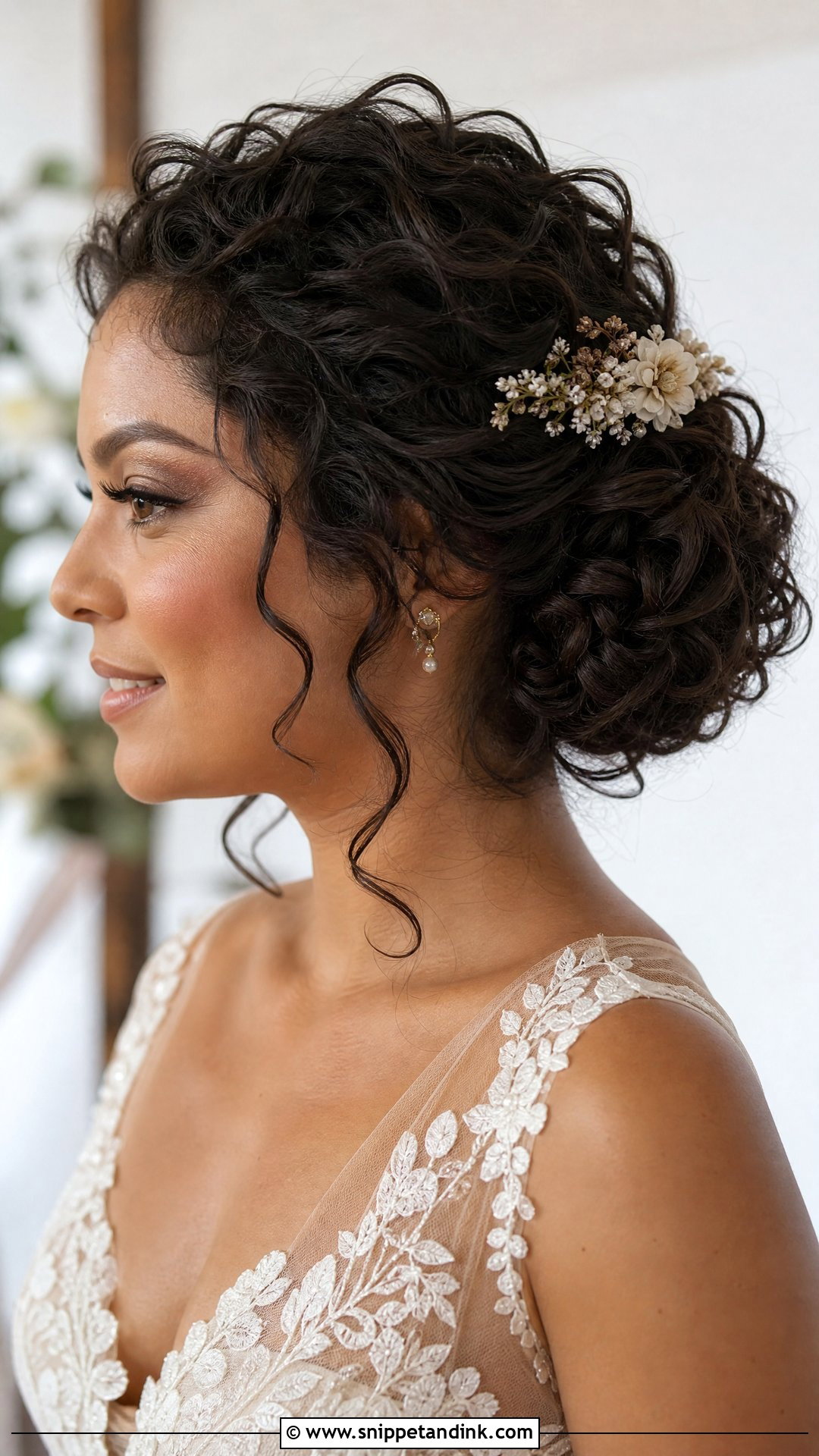
Curls, coils and waves keep their character in this bun instead of being forced flat. It can sit low, mid-height or high, depending on the dress. I define the hairline curls first and pin the rest into the bun in small sections so they stack into fullness. A lightweight curl cream and a flexible spray keep it fresh without crunch. Avoid brushing curls once they’re set; that’s what turns definition into frizz. It holds through a long day well, since curls pinned into each other support one another.
9. Side Bridal Bun
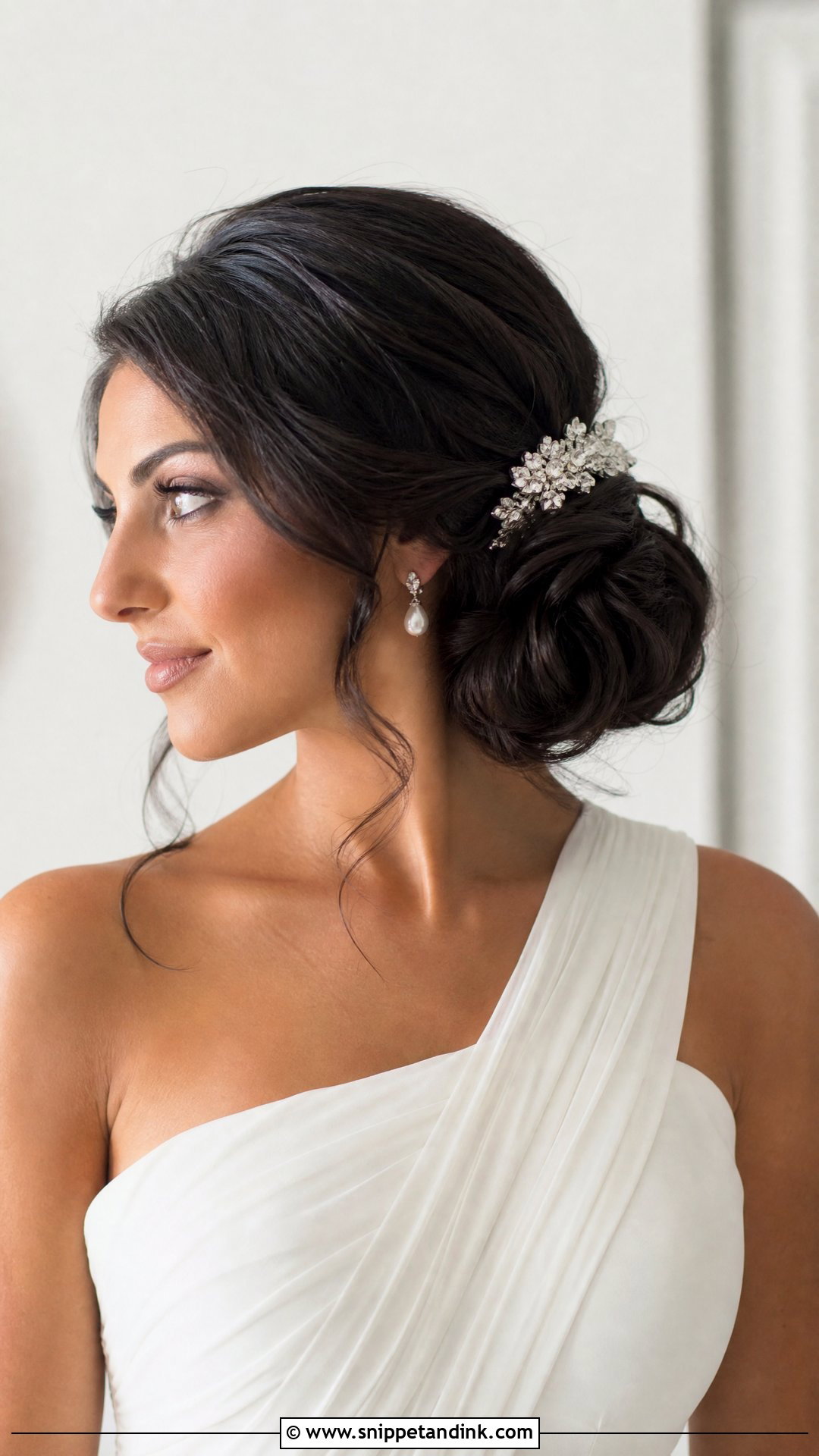
Put the bun to one side and it shows clearly in front-facing photos. It also adds shape along the jaw and neckline. One-shoulder and off-the-shoulder gowns pair naturally with it, as do side-swept bangs. I set the knot on the opposite side to a one-shoulder strap, so hair and fabric each get their own shoulder. A decorative comb near the bun finishes it. Keep the other side clean and lightly lifted, or the whole look tips.
10. Bun With Veil
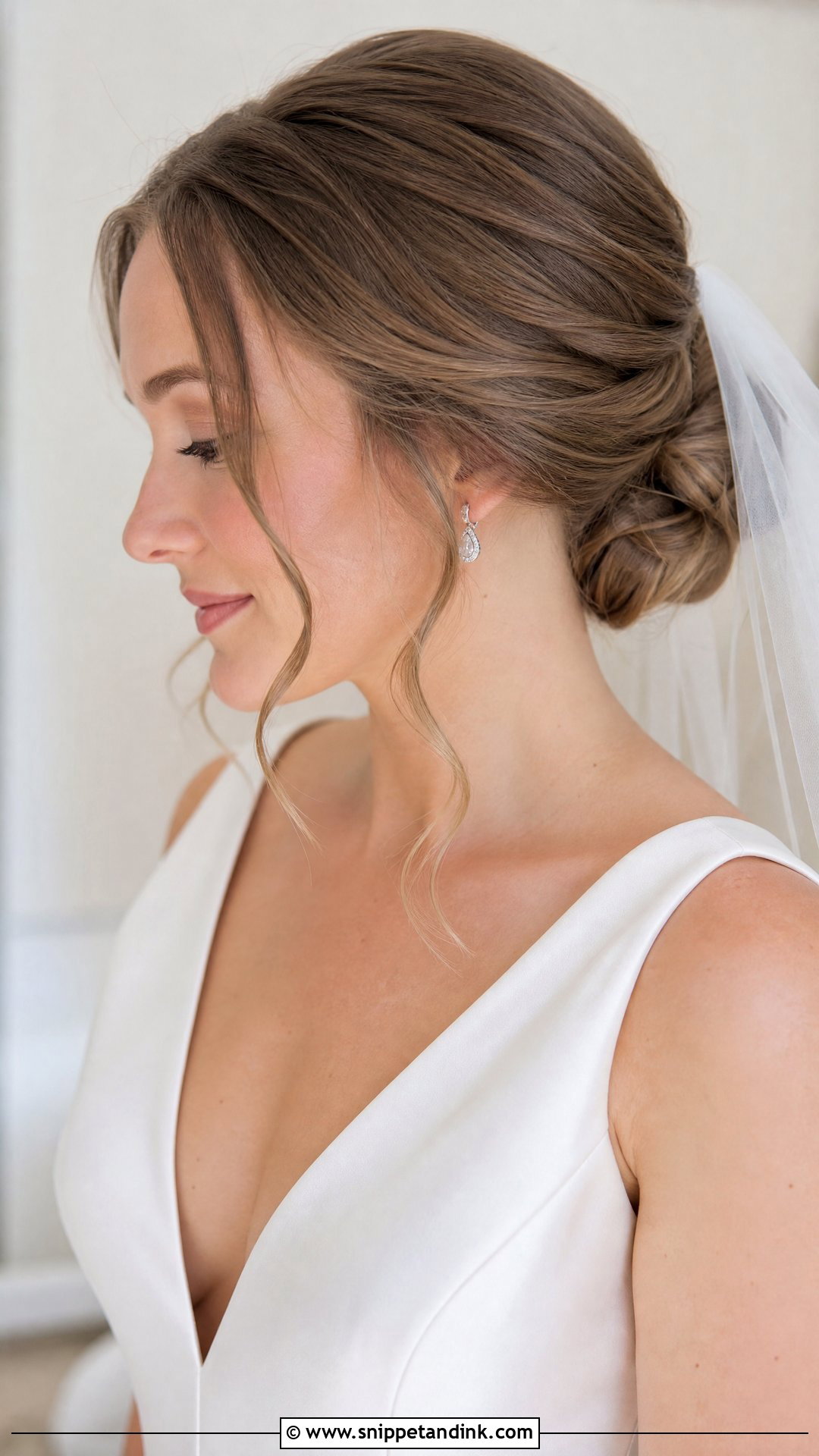
Pairing a bun with a veil works because the bun gives the comb a firm anchor and makes a clean shape under the tulle. A low bun suits a veil set above or just beneath it; a mid or high bun can carry more dramatic placement. Underneath, I cross-pin a base for the comb so it locks in rather than sliding through loose hair. Soft pieces around the face keep a formal veil from feeling stern. Bring the veil to the trial and practice taking it off, since that usually happens in a hurry before the reception.
11. Bun With Pearl Pins
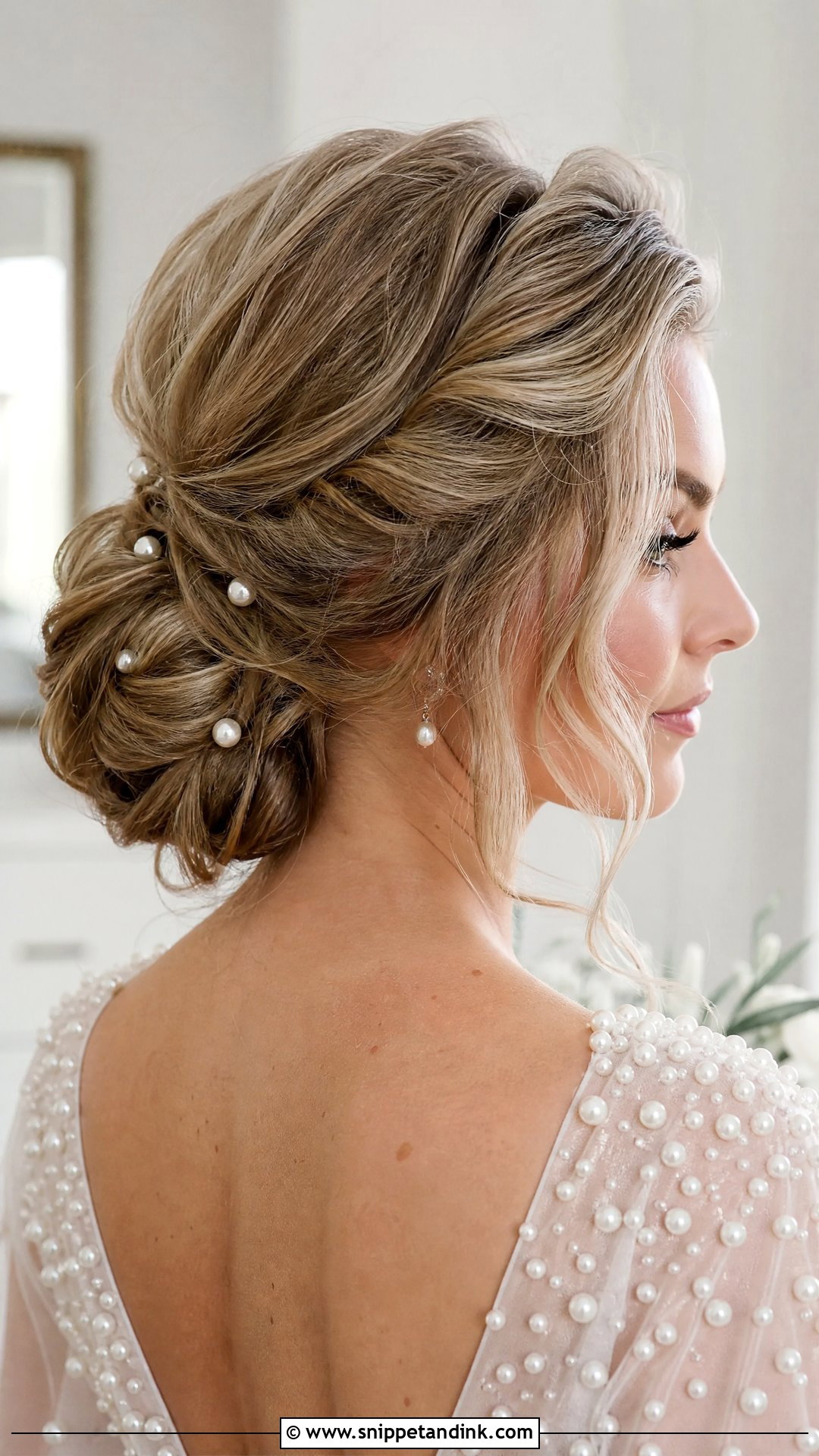
Pearl pins are the easiest way to make a plain bun look bridal, and the most common mistake is using too many. Three to seven well-spaced pins look intentional; twenty start to look like a craft project in close-ups. They suit a smooth chignon, a textured bun or one side of a low updo, and echo pearl beading, satin or lace on a dress. I place them where they’ll catch the ceremony shots from behind and the side, and slide each one against the direction of the hair so it grips.
12. Bun With Flowers
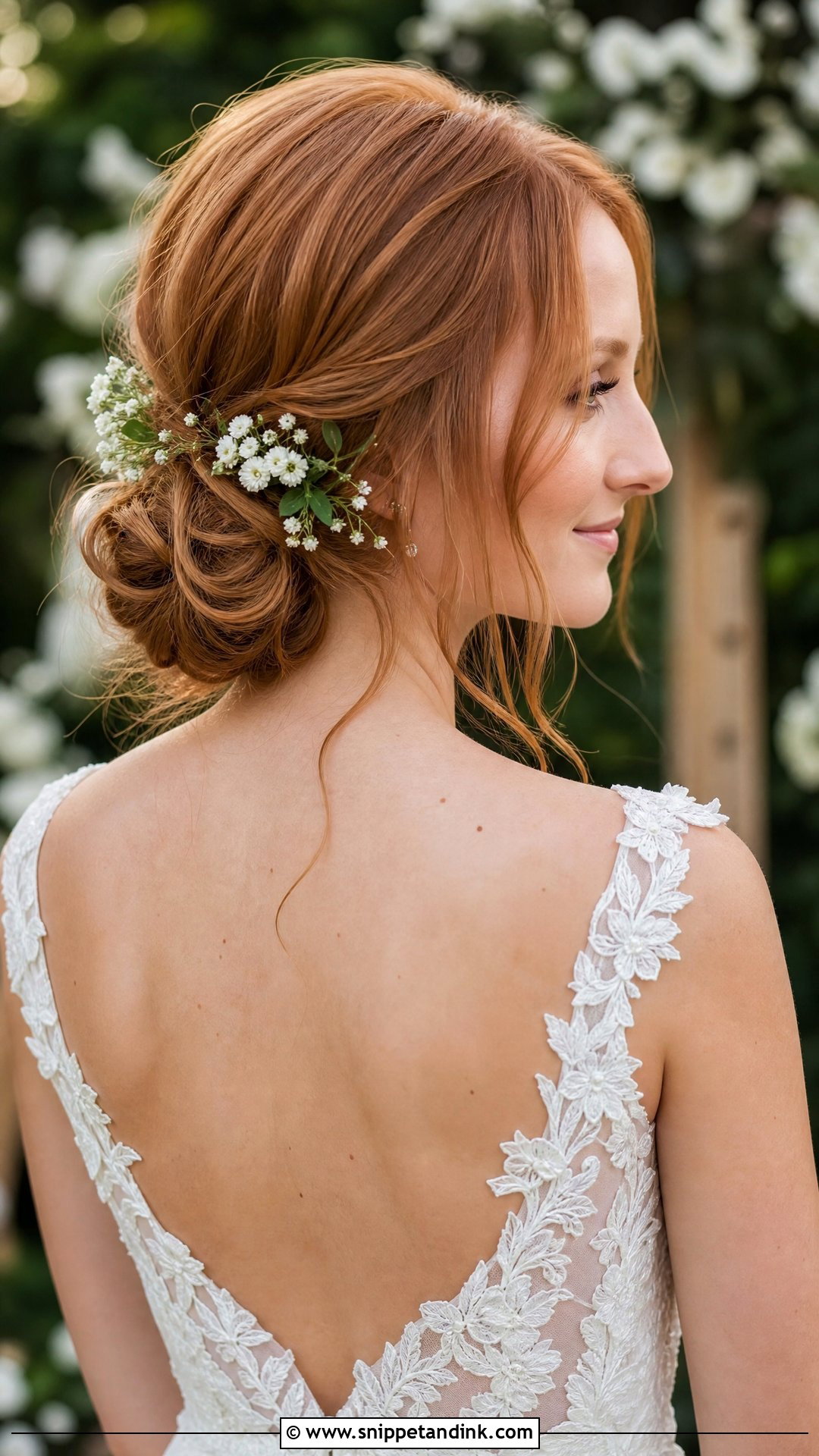
Flowers in a bun need planning between two vendors. Small blooms can circle a low bun, weave into a braid or cluster on one side; ideally they echo the bouquet. They have to survive heat, hugs and dancing, so I ask the florist to wire and tape stems and to choose sturdier flowers for hair. Baby’s breath, mini roses, orchids, and small dried flowers are common picks; dried flowers are the safest in summer because there’s nothing left to wilt. Keep the bun soft so the flowers sit naturally.
13. Vintage Bridal Bun
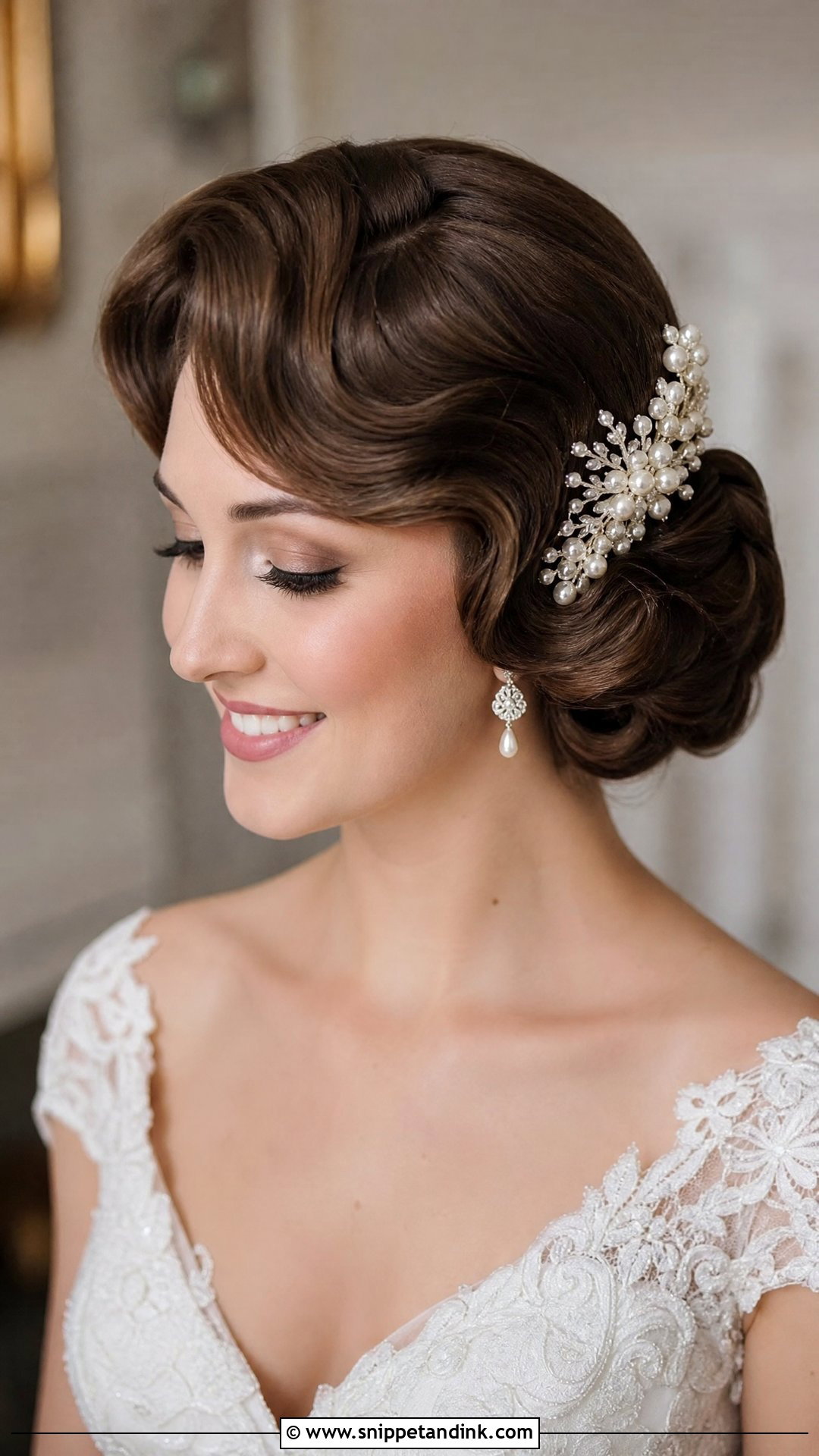
With a vintage bun, the front matters as much as the back. A side part and smooth sculpted waves frame the face, and a structured low bun sits behind. I set the front in pin curls or clips and let them cool fully before brushing, because waves brushed out warm lose their shape before the ceremony. Pearl earrings, a lace veil or a jeweled comb suit it. A shine spray and a strong but brushable hold keep the finish polished. Very layered cuts struggle with the smooth front, so it’s worth testing.
14. Double Bun Wedding Hair
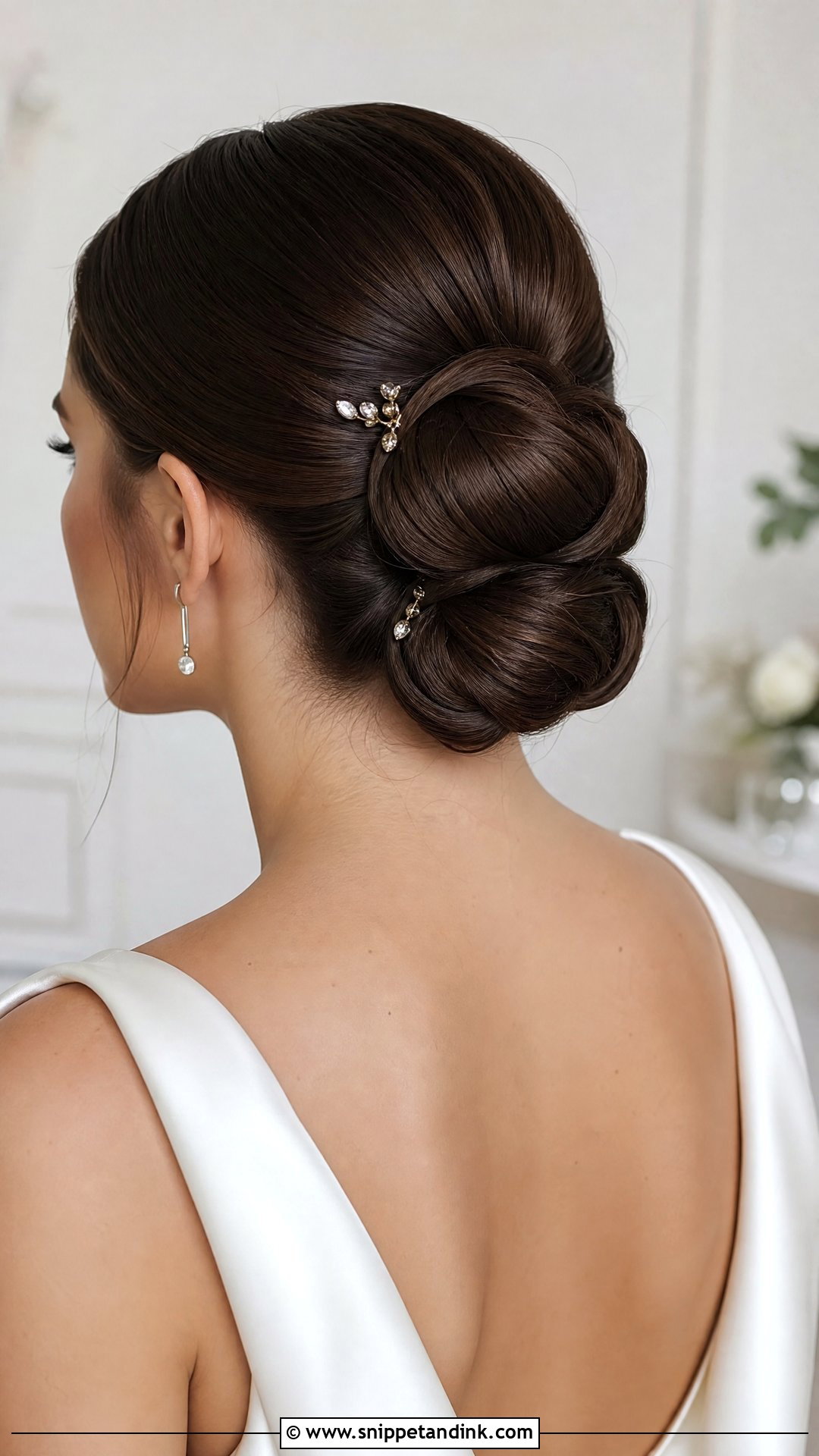
Two connected buns instead of one make a deliberately modern statement. They can be sleek and architectural or softly twisted. City weddings and very simple dresses give the shape room to stand out. The challenge is symmetry: I part the back precisely and measure each half so the buns match, because even small differences show from behind. Keep the front clean and refined, or it can slide into casual. Tiny pins or a subtle veil set between the two balance it.
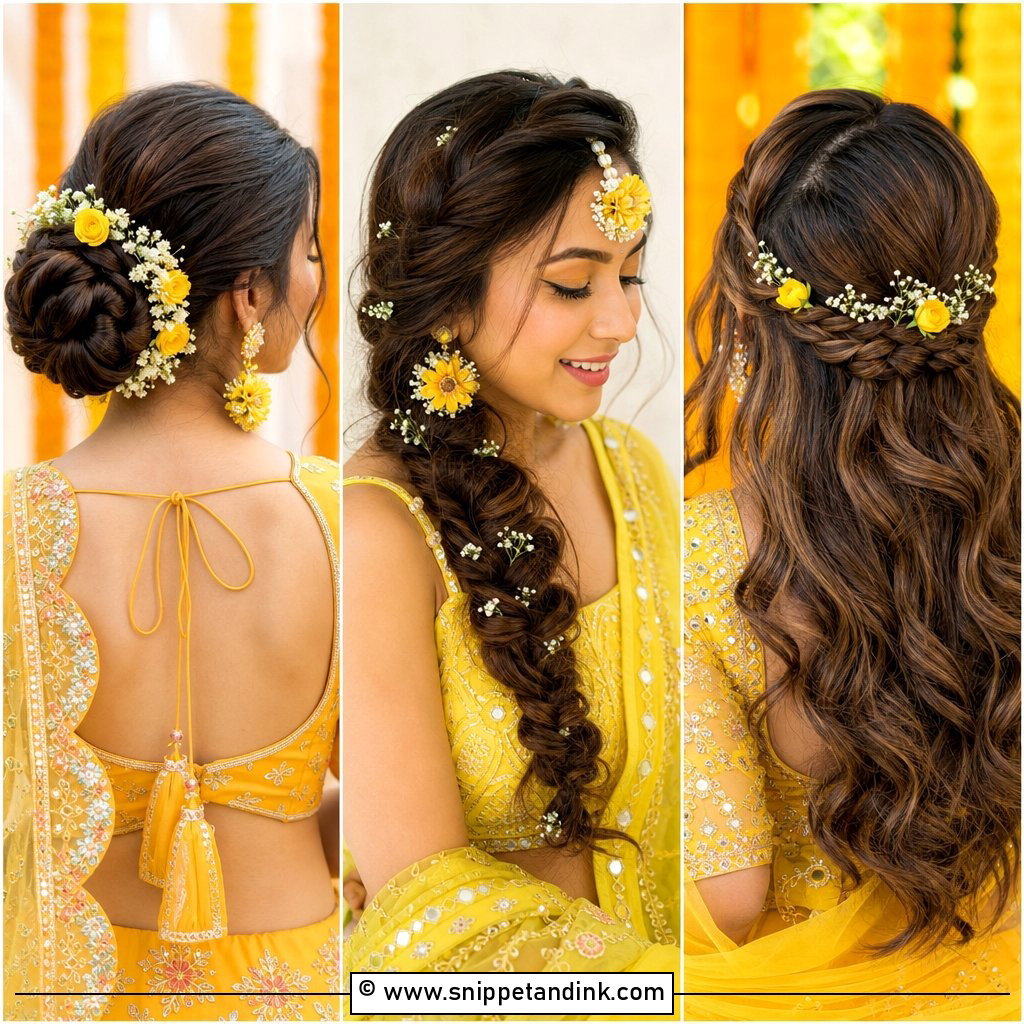
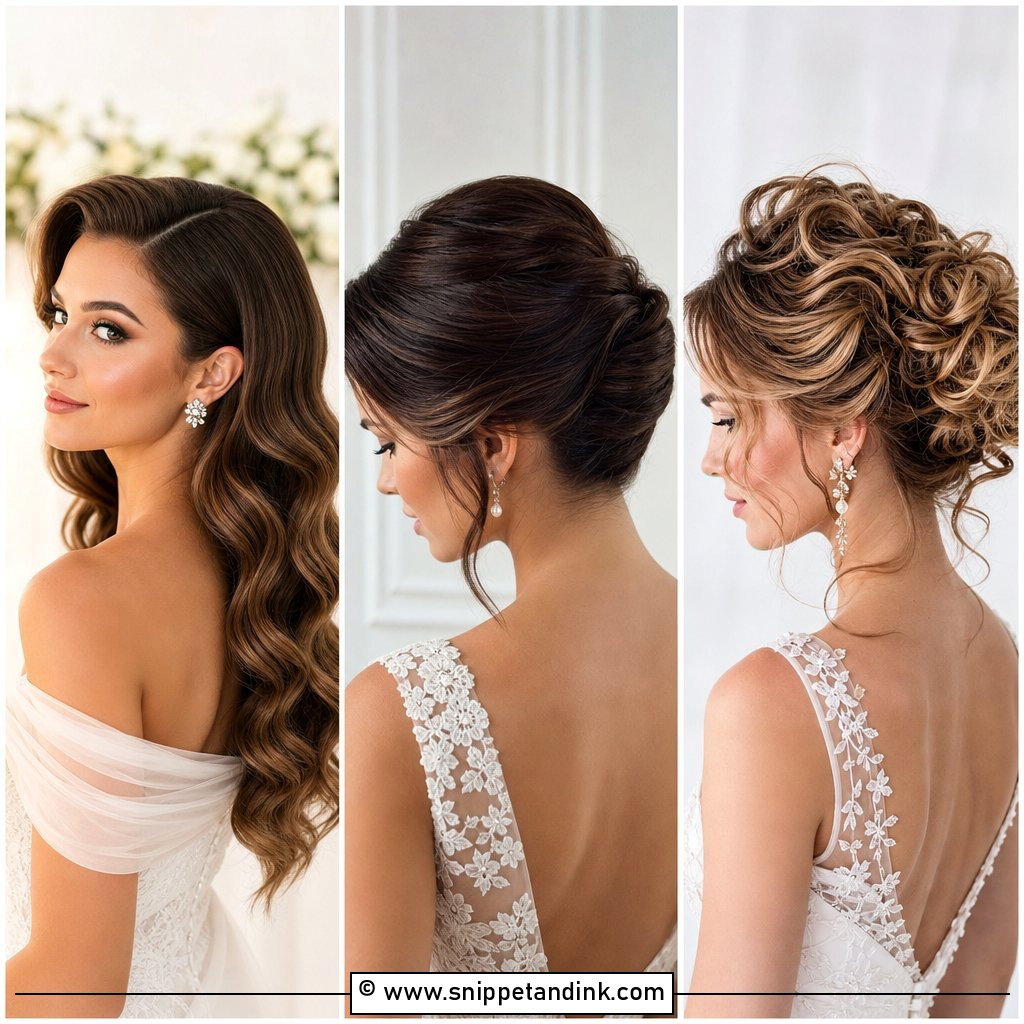
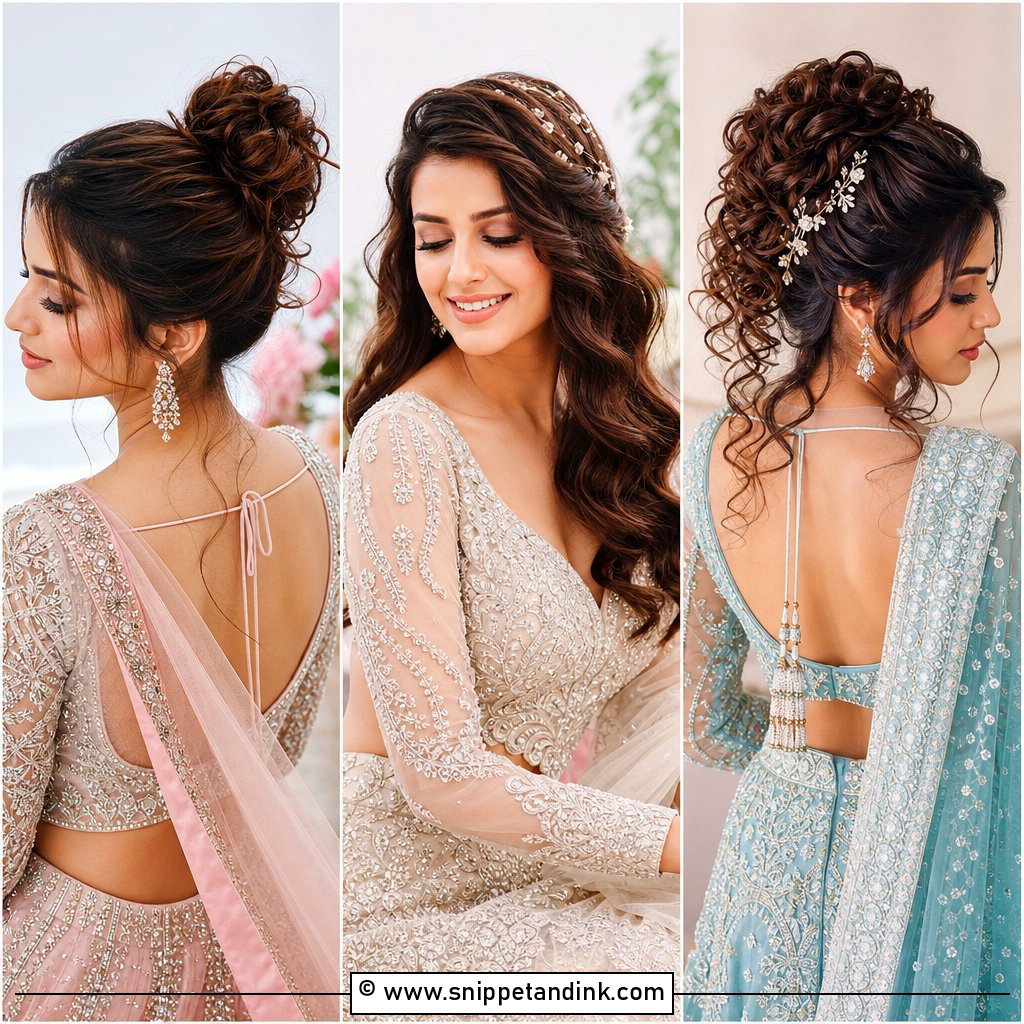
15. Natural Hair Bridal Bun
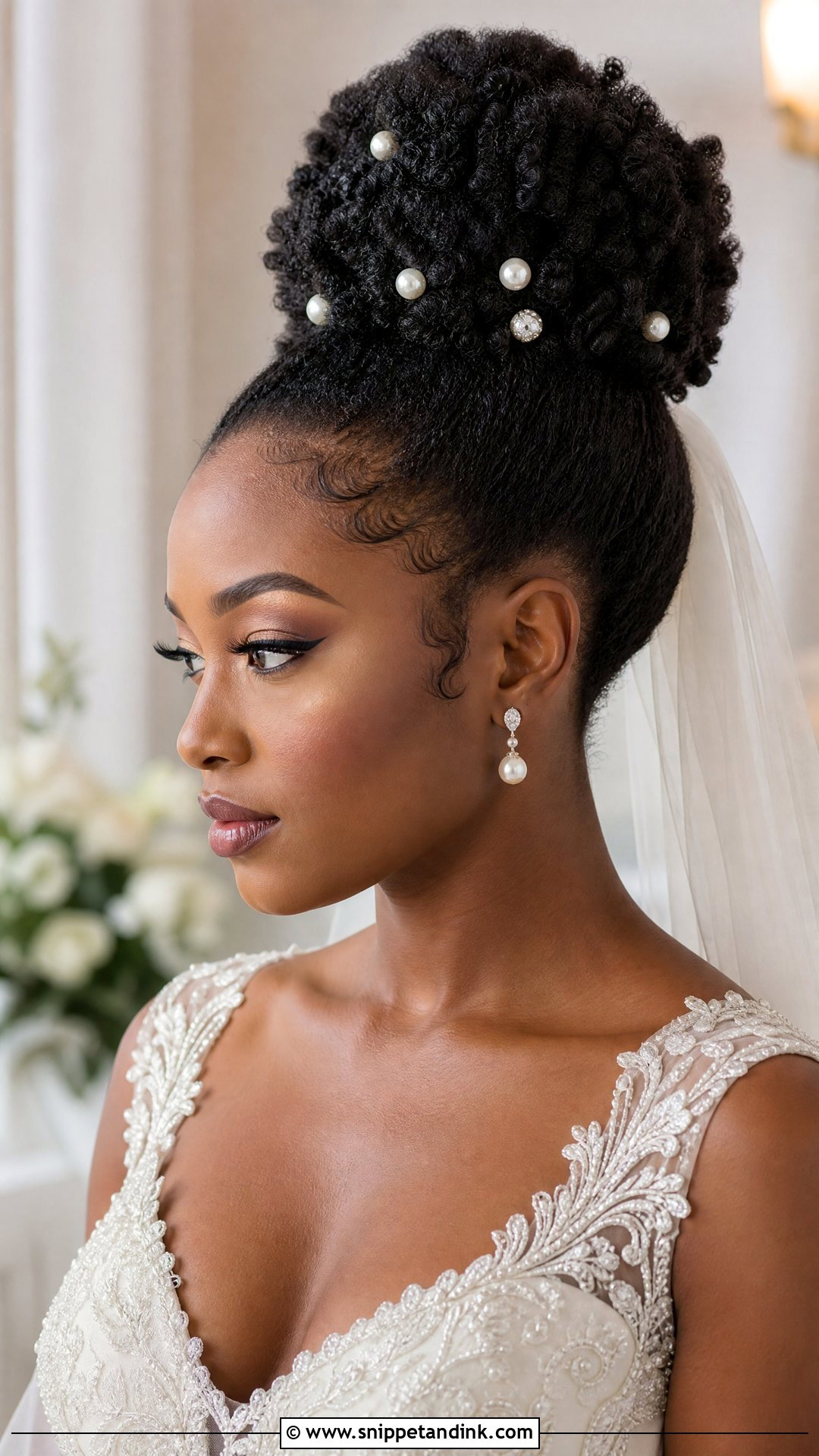
Natural hair has volume and texture that a bun can show off rather than hide, and it stays secure through a full wedding day. It can be a high puff bun, a low coiled bun, a twisted bun or a sleek crown with fullness at the back. Gold pins, pearl accents, flowers or a veil set under the bun all suit it. Moisture and definition decide how it looks by evening, so prep starts days before with washing, deep conditioning and stretching, not on the morning. Use the trial to check how the edges and scalp feel after several hours.
How Long Each Style Spends in the Chair
Hair timing is where wedding mornings tend to fall apart, and buns vary more than people expect. Every stylist works at their own pace, but a sleek low bun on prepped hair is one of the quicker bridal styles. Anything with curling, braiding or detailed pinning, like a textured, braided or vintage bun, needs noticeably longer. Fresh flowers and a veil add a few more minutes at the end.
Ask how long your exact style took at the trial, then add a buffer for the day itself. Nerves, a photographer wandering in and a mother of the bride who wants one small change all eat time. Natural and textured hair often benefits from washing, conditioning and stretching the day before, so the morning is about shaping rather than starting from scratch.
A bun shouldn’t hurt
A dull ache at the crown by dinner usually means the base is too tight or the pins are pressing straight into the scalp. Tell me at the trial instead of being polite about it. A slightly looser base with more pins spread across a wider area holds just as well and feels far better by the tenth hour.
Torn Between Sleek and Soft?
One shape can go sleek, soft, vintage, textured, floral, braided or bold, and still hold, which is why buns never really leave. Look at the neckline and back of your dress, where the veil sits, your hair texture and the venue. A detailed gown usually wants a clean bun for balance; a plain one can carry texture or accessories. Book a trial, bring the veil and any pins, and have someone photograph you from behind and both sides. If it feels secure and still looks like you from every angle, you’ve found it.
You'll Like These Ideas:


Leave a Reply