
Half-up is the style I’m asked for most by brides with long hair, and the reason is practical as much as pretty. You keep the length that moves in photos, and the pinned top gives a veil comb, pearls or flowers a firm base to grip. What decides whether it lasts is less the design than the prep underneath it: how the crown is set, where the pins cross, and how heavy your lengths are. I’ve written each idea below the way I’d talk it through at a trial, including who it suits and where it tends to fail.
Weight, Not Length, Pulls a Half-Up Down
The first thing I do at a trial is lift a bride’s lengths in my hand. Very long, thick hair is heavy, and that weight hangs straight off the pinned section all day. If the base isn’t built for it, the top slides down the back of the head by the first dance, and that’s the most common complaint I hear about half-up styles.
- Don’t wash your hair the morning of the wedding unless it gets oily fast. Hair washed the evening before takes curl and pins better than freshly clean hair.
- For heavy hair, I hide a small elastic or a tiny anchor braid under the top section and pin into that instead of loose hair.
- For fine or slippery hair, I use a dry texture spray at the roots before sectioning so the pins have something to grip.
- Skip shine serums and heavy conditioner the day before. They make hair silky, and silky hair lets curls drop.
In a humid venue I’d set the curls more firmly and accept that they’ll relax into waves by evening. Curls that start loose in humidity end up straight.
Extensions Hidden Under the Pinned Section
Many of the fullest half-up photos online include extensions, and the half-up shape is ideal for hiding them. Compare those pictures to your own density honestly.
- Clip-ins are easiest for one day. I place the wefts just under where the top section will sit, so the pinned hair covers every clip.
- Choose human hair if you want curls. Most synthetic hair can’t take heat and shines in flash photos.
- Order early enough to swap a shade that doesn’t match, and bring them to your trial so I can cut and blend them into your ends.
If your hair is already thick and past your shoulder blades, you probably don’t need any. Ask at the trial before buying.
1. Half Up Wedding Hair With Loose Curls
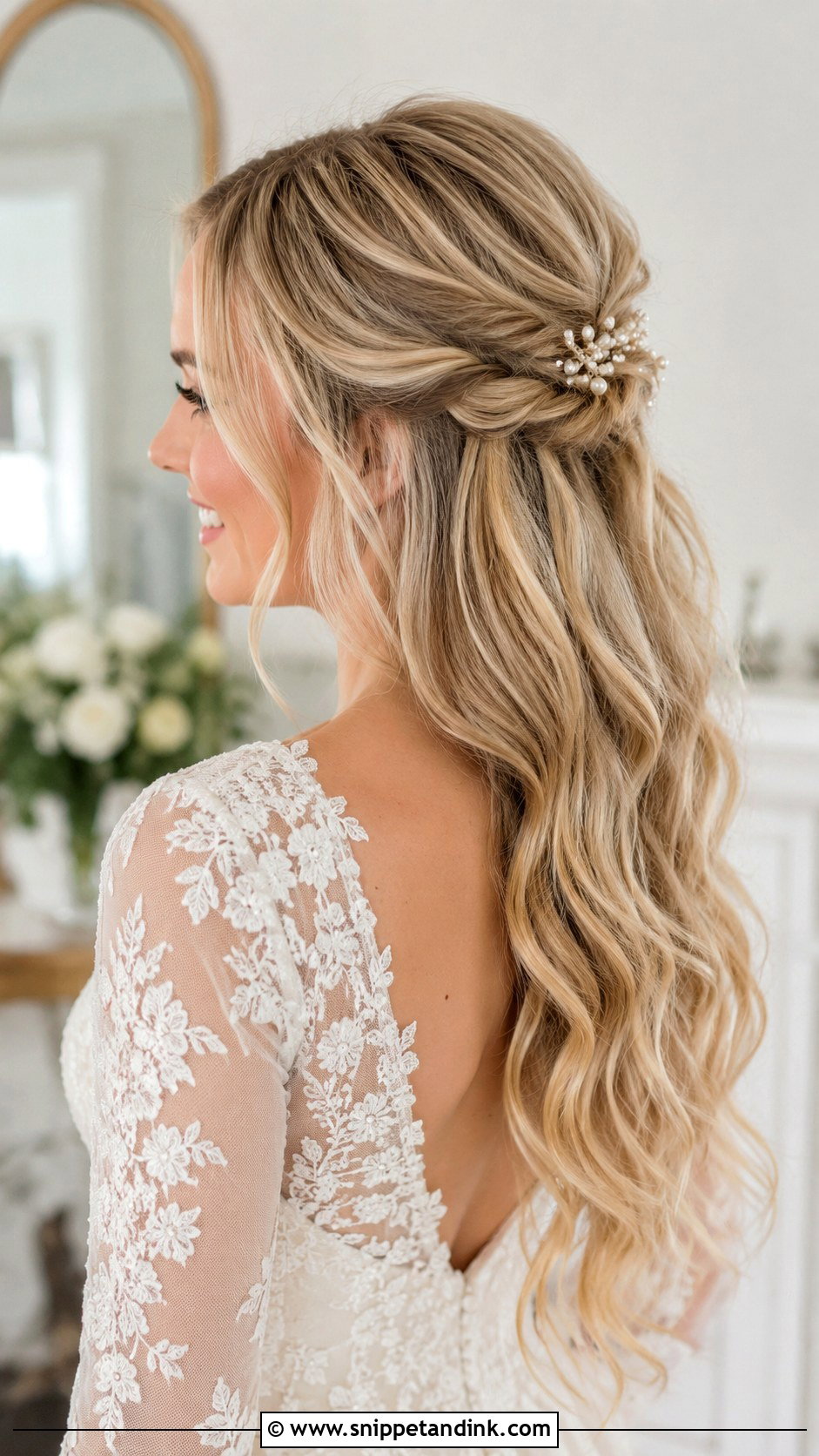
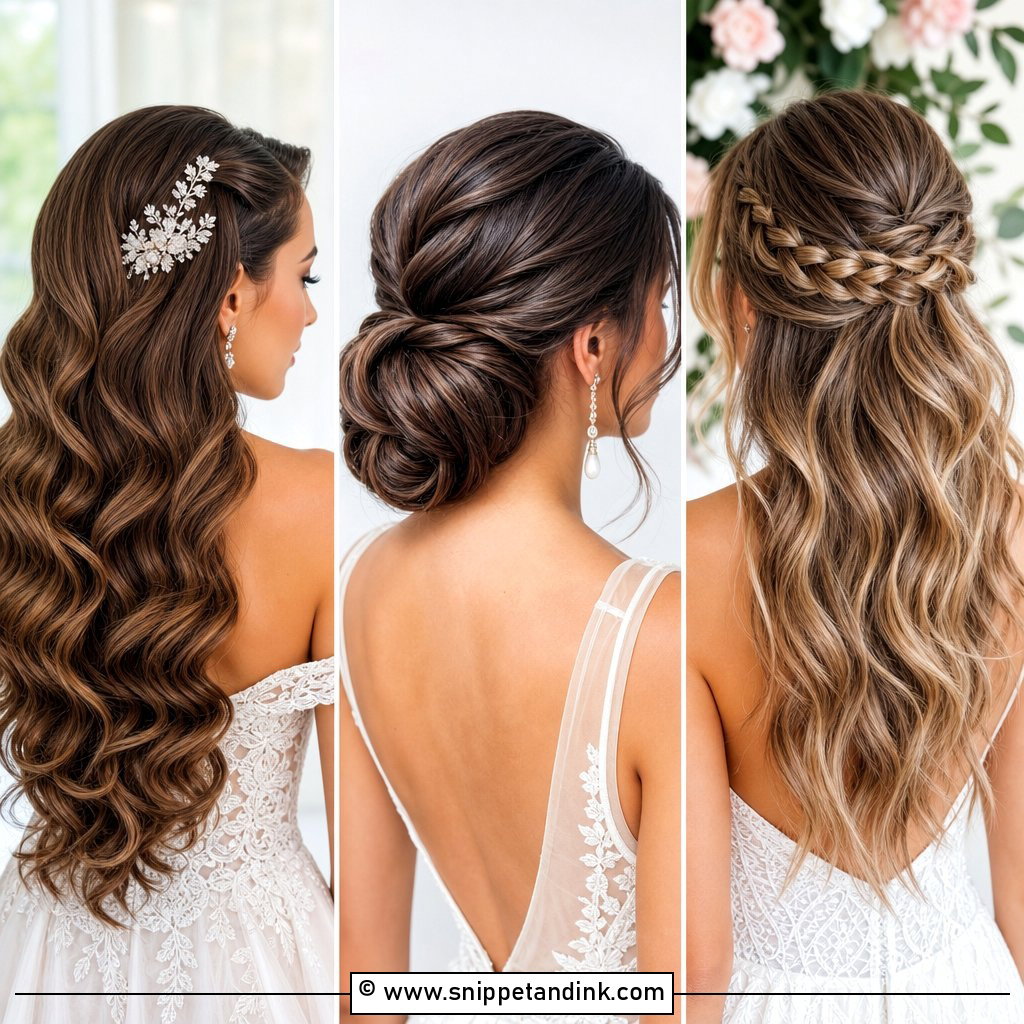
Loose curls are the half-up most people picture, and they’re the easiest to keep soft for a whole day. I curl the lengths with a larger barrel, let every curl cool in the palm before it drops, then brush them into one another so they read as movement rather than ringlets. Tight curls relax by evening anyway, so I’d rather start loose and controlled than tight and stiff. It sits well against strapless gowns and plain satin, where the hair becomes the texture. One or two pearl pins at the join is plenty.
2. Half Up Wedding Hair With Soft Waves
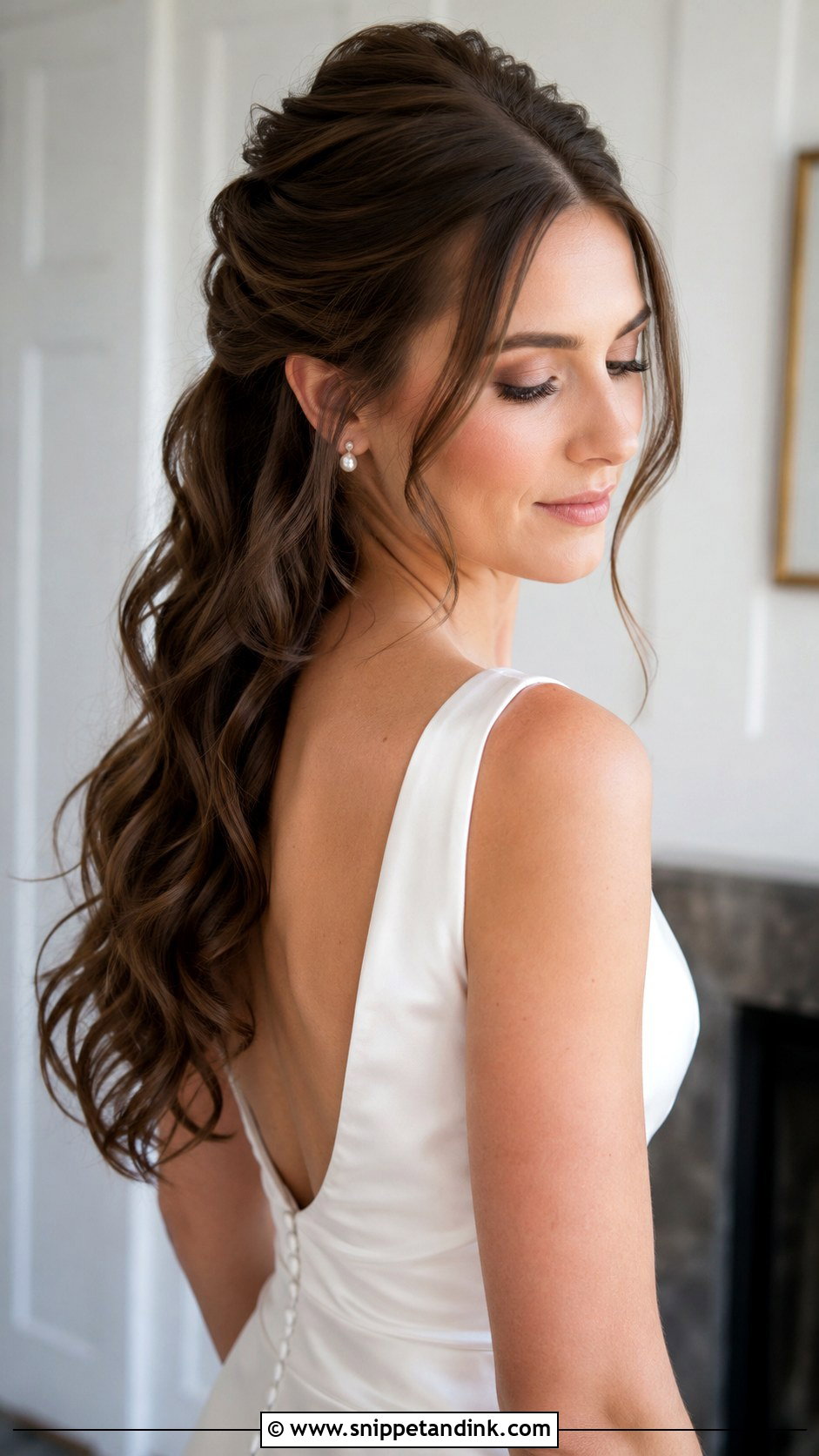
Soft waves need layers to look like anything. On one-length hair the bends tend to merge into a single flat sheet by the time you reach the aisle, so I check the haircut before agreeing to this one. With layers, balayage or highlights, the waves catch the light at different depths and the colour does half the work. I pin the top either at the crown or a little lower for a quieter shape, and I bend the front pieces back off the cheek so they don’t stick to lip gloss.
3. Half Up Wedding Hair With Braid
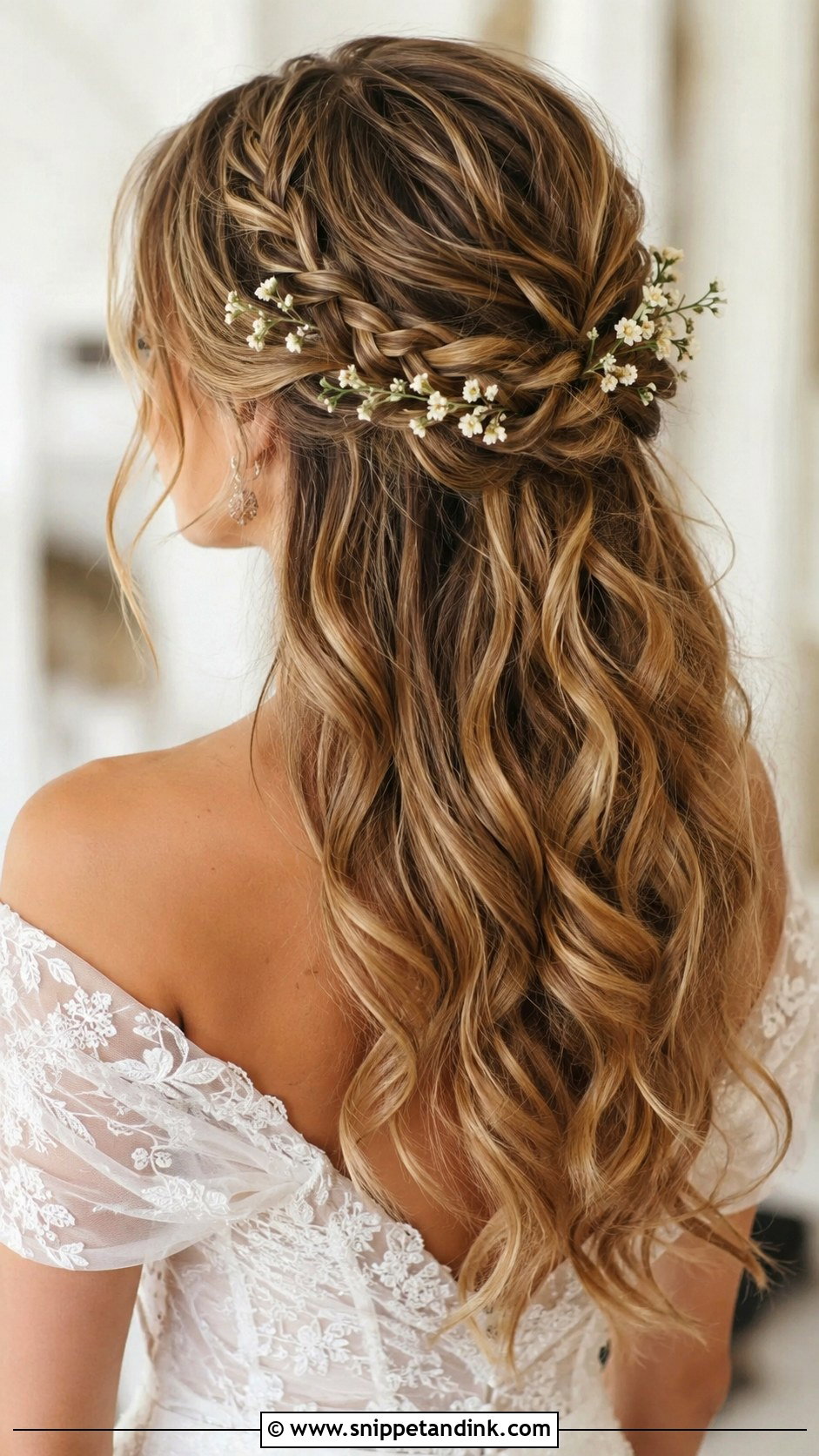
A braid is the most secure half-up base I can build, which is why I lean on it for outdoor and garden ceremonies. It can cross the crown, come from one side, or meet in the middle above the curls. Braided and then gently pulled apart, it looks twice its size in close-ups, and the woven strands give pins, flowers or a veil comb something to bite into. The one thing I avoid is braiding too tight at the hairline; it pulls, and by the speeches it’s giving you a headache.
4. Half Up Wedding Hair With Twists
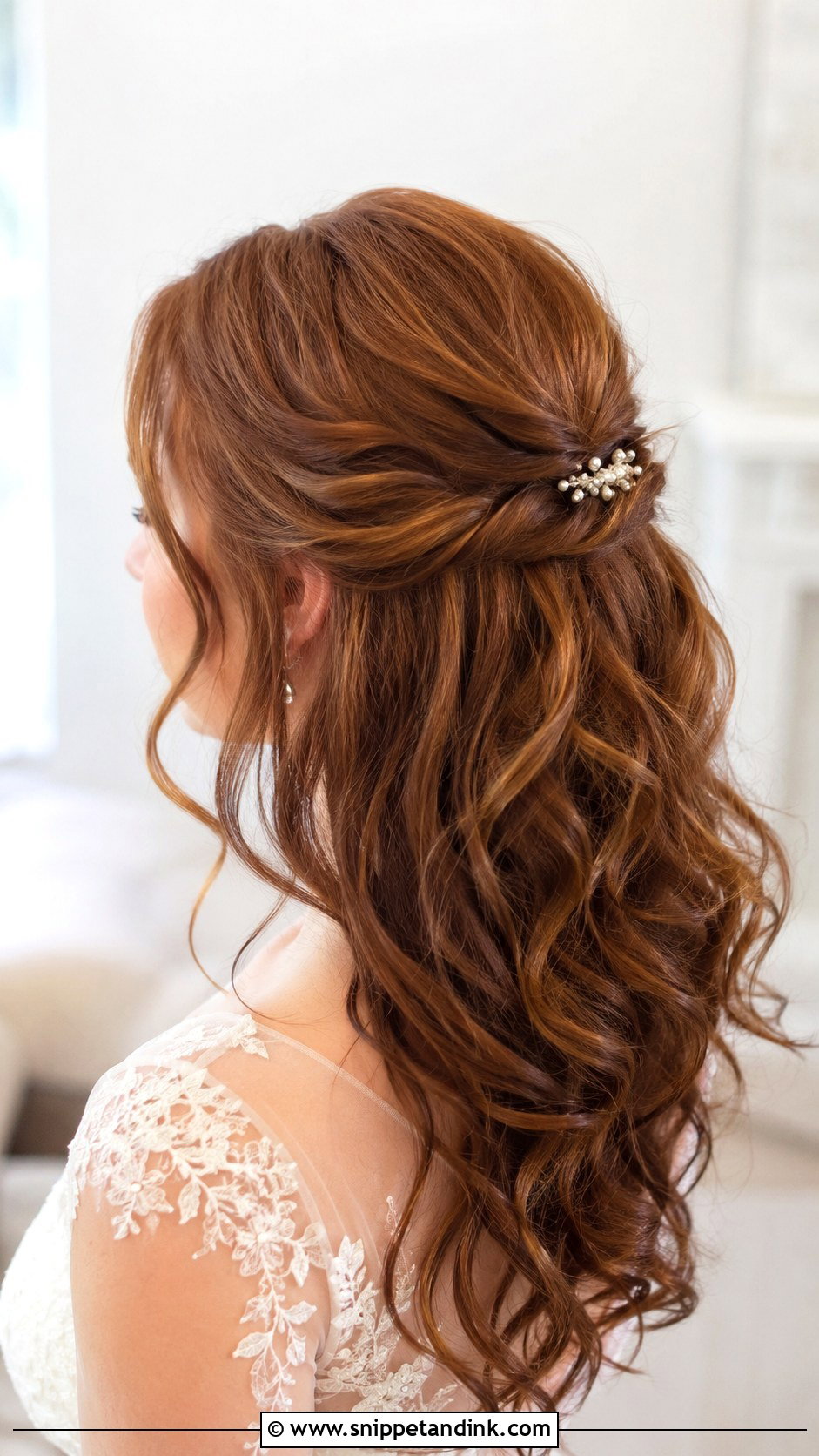
Twists are my quiet fix for fine hair. Two sections are rolled back from the sides and pinned at the back of the head, and the rolling itself adds bulk where fine hair usually looks thin. I cross two bobby pins in an X over each twist so the weight of the lengths can’t drag it down. The look stays simple, so a slim hair vine or three small flowers at the join gives the back view enough interest without hiding the length you’re keeping down.
5. Half Up Wedding Hair With Veil
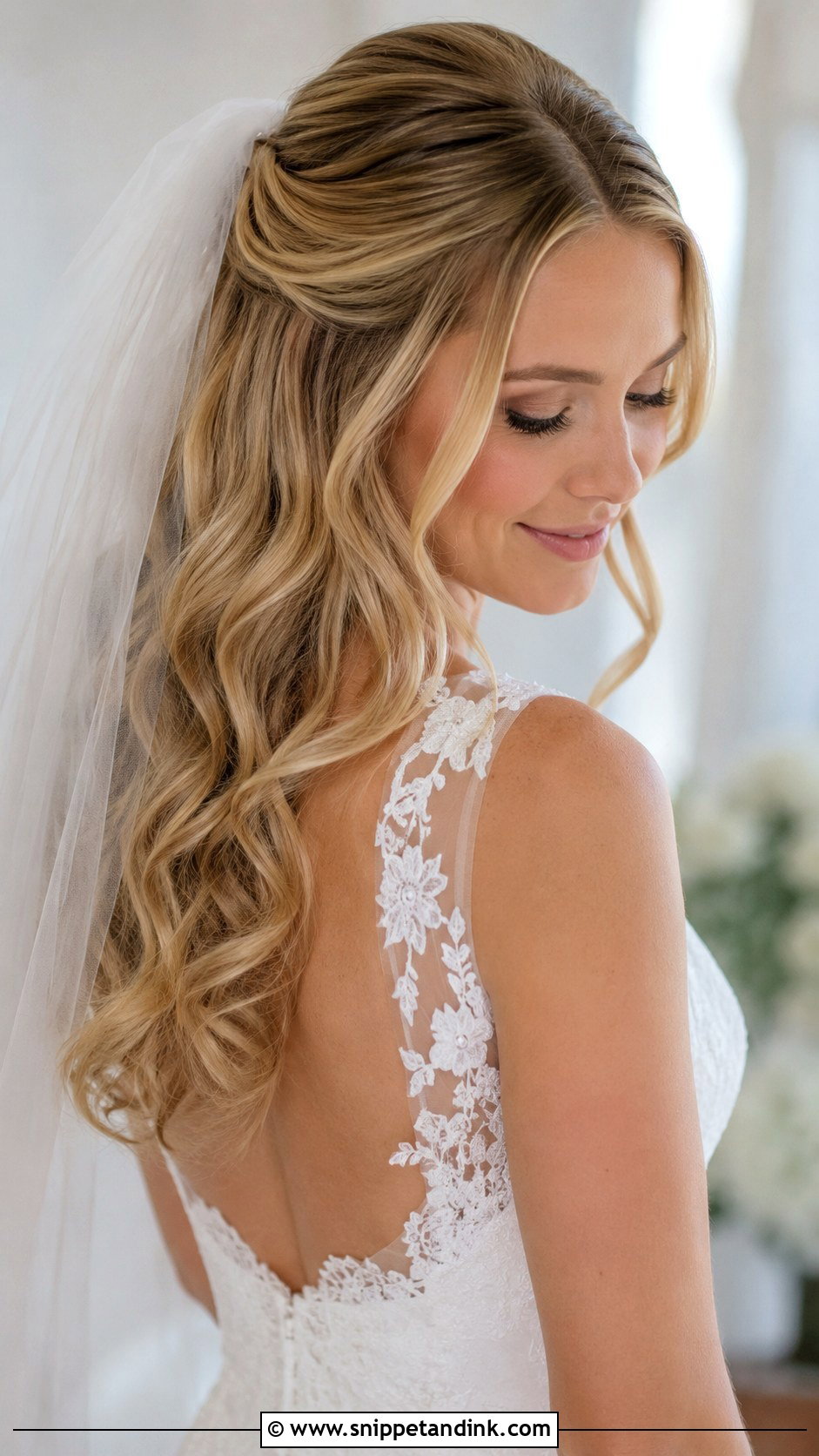
The pinned section is the reason half-up and a veil get along so well: I can slide the comb into it and lock it with crossed pins underneath. Placed above the gathered hair, the veil frames the back more traditionally; tucked beneath, it lets the twist or braid show. Long curls under sheer tulle are one of the prettiest things in ceremony photos. The style suits fingertip, chapel, and cathedral veils, but longer veils pull harder, so bring the actual veil to your trial. If the comb tips backwards when you turn your head, I’ll add a hidden anchor braid.
6. Half Up Wedding Hair With Pearl Pins
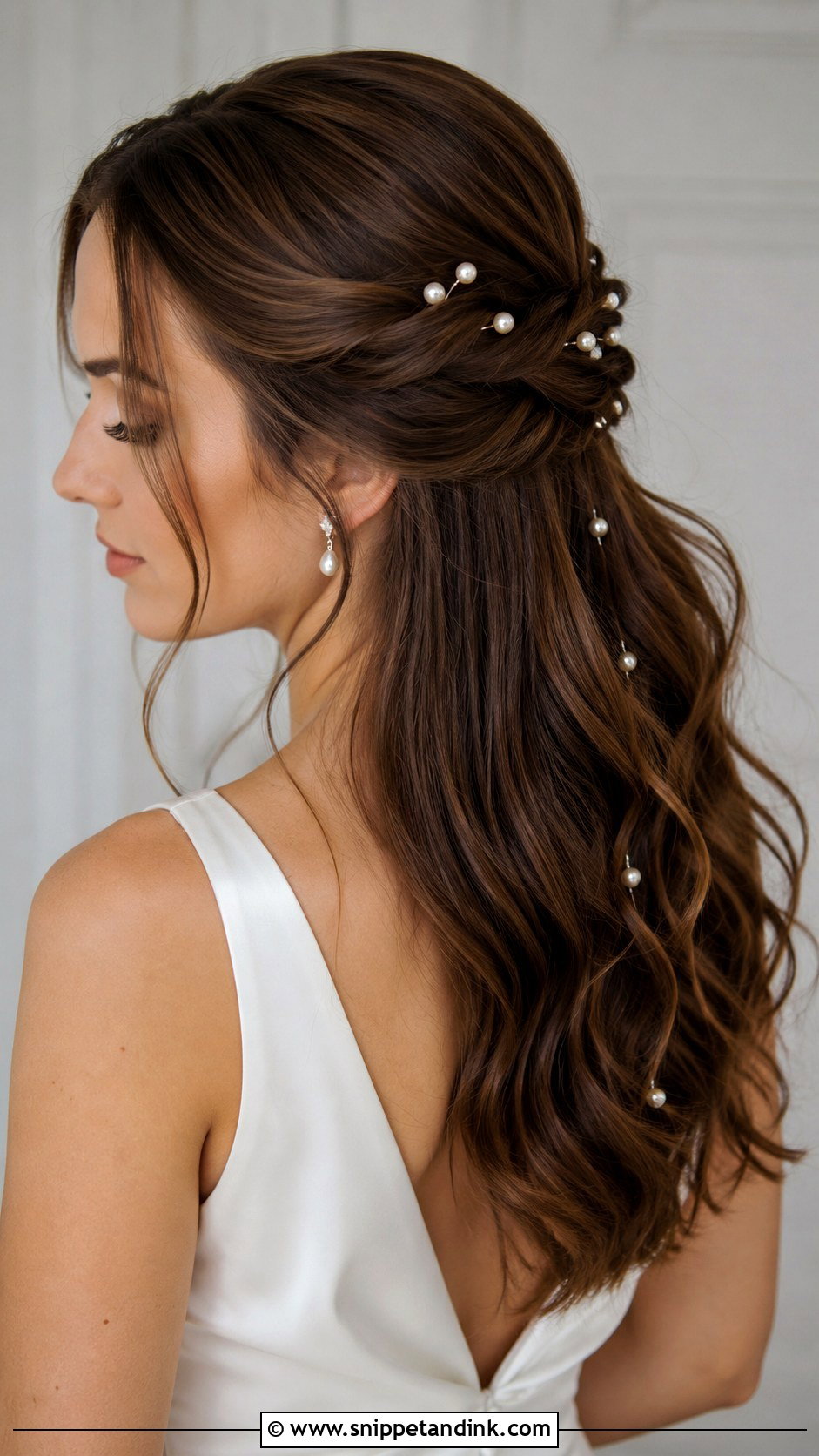
Pearl pins are small, but they change how bridal a half-up reads. I scatter them through the pinned section, run them along a twist or dot them around a braid, and I always push them in at an angle against the direction the hair falls so they don’t slide out by dinner. They suit clean gowns and lace equally. If your dress already has pearl buttons or beading, matching the size of pearl is what ties it together; mismatched sizes look like an afterthought.
7. Half Up Wedding Hair With Flowers
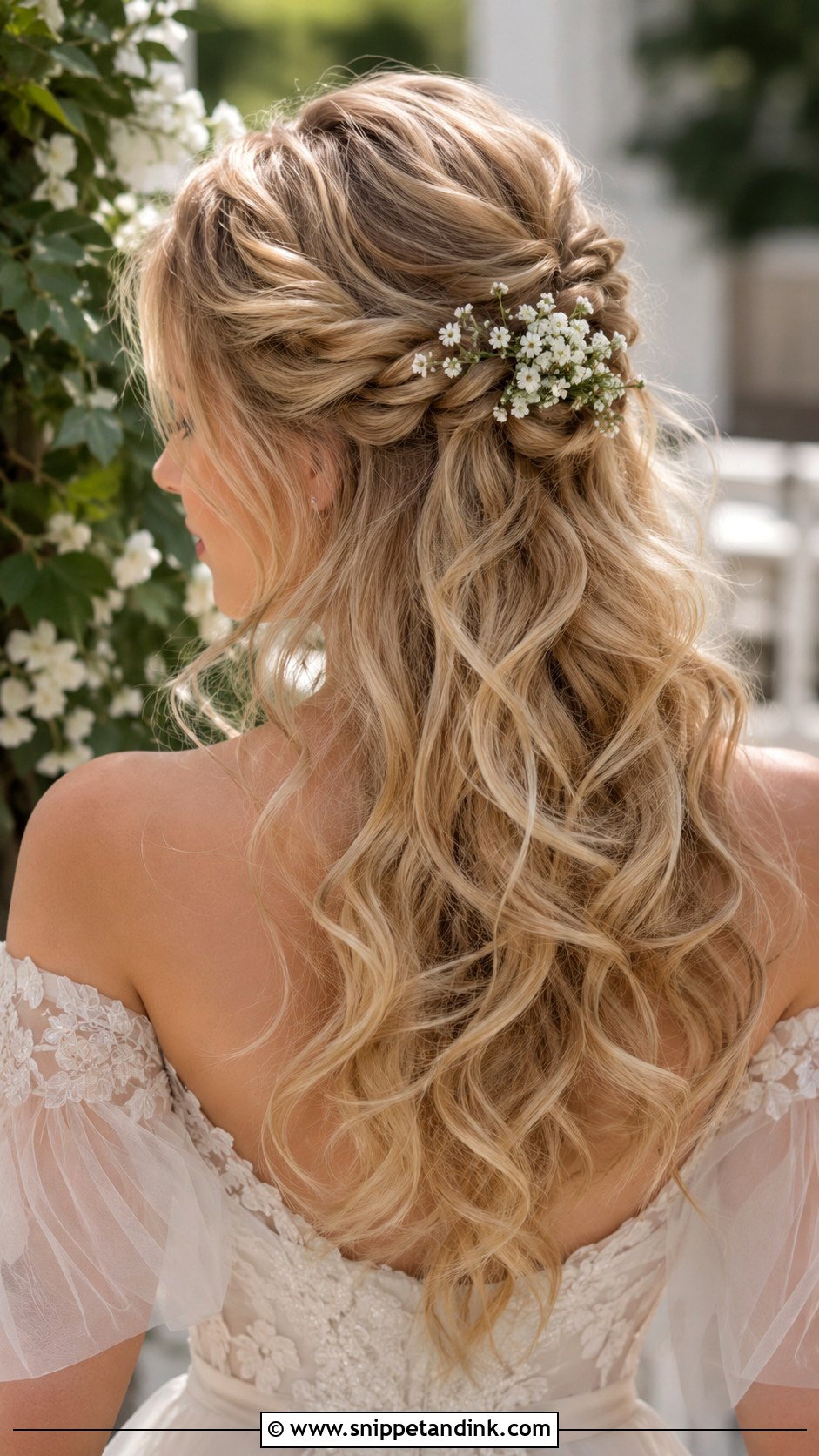
Half up wedding hair with flowers depends on choosing blooms that can survive out of water. Baby’s breath, spray roses, waxflower and dried stems hold for hours; gardenias and fresh orchids bruise and brown where they touch the scalp. I ask the florist for small wired stems from the bouquet and tuck them into the braid or around the pinned section at the very end. For a hot outdoor ceremony I’d honestly go dried or silk. Long hair gives the flowers room, so a few well-placed stems beat a crowded crown.
8. Half Up Wedding Hair With Crown Braid
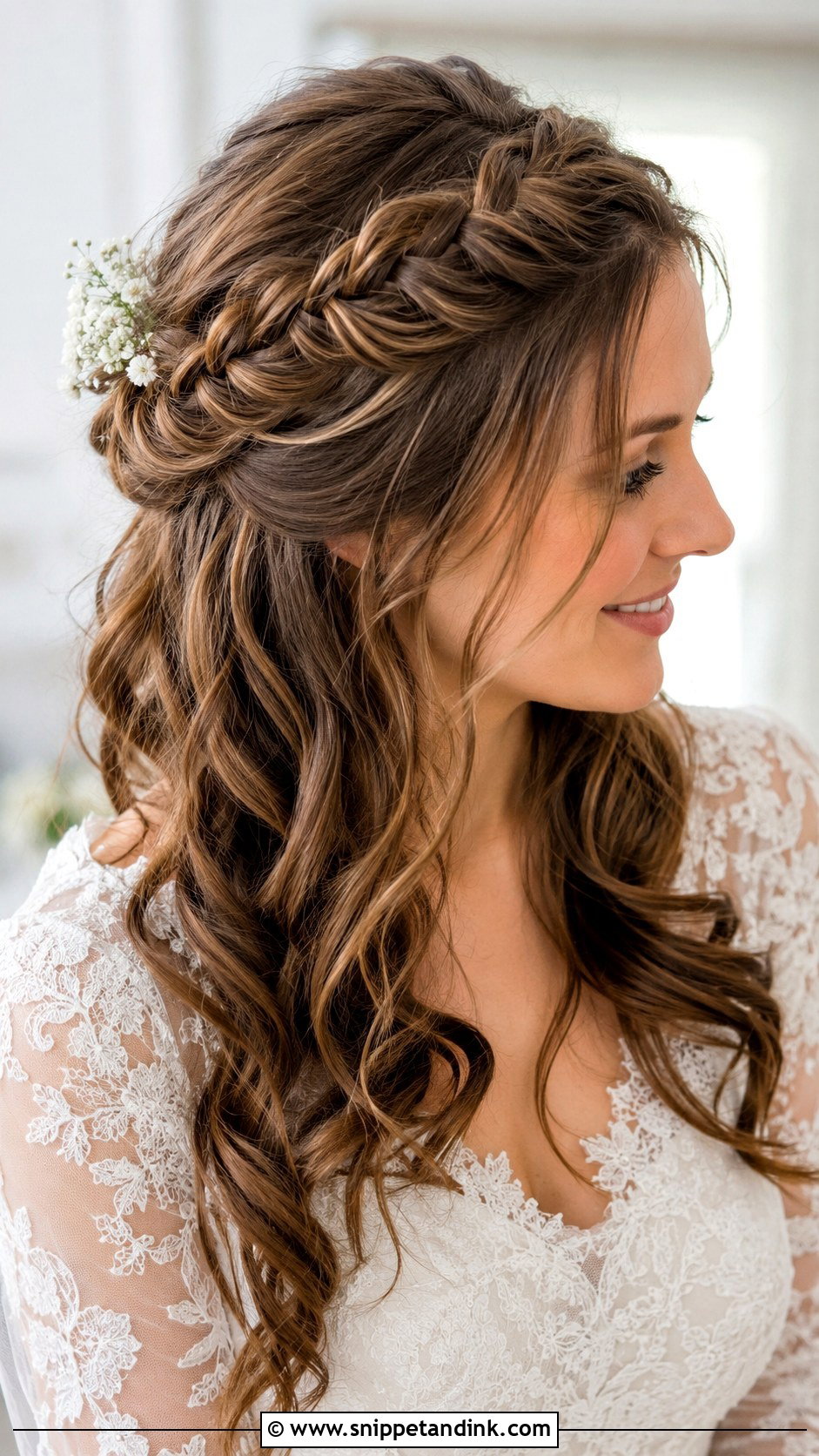
A crown braid wraps over the top or around the sides and then dissolves into curls at the back, which gives long hair a rounded, storybook outline. I like it most on thick hair, because the braid takes up bulk that would otherwise push the curls out sideways. It also keeps short front layers locked away on a windy day. After pinning, I loosen the braid a little with my fingertips; skip that step and it can look tight and flat from the front.
9. Half Up Wedding Hair With Fishtail Braid
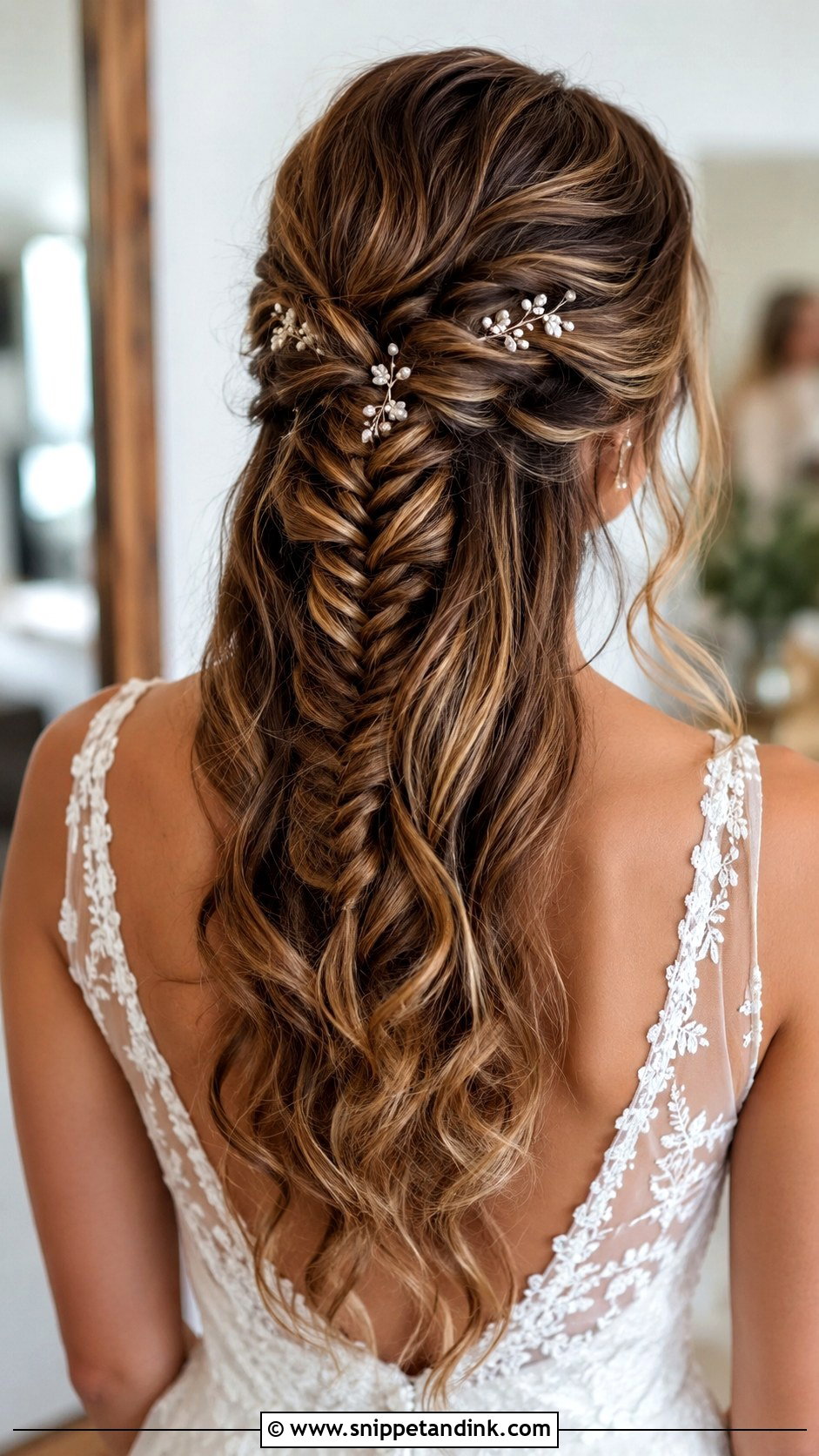
Fishtail plaits use many tiny crossovers, so they show off dimensional colour better than any other braid. I run one down the centre of the half-up section or start a fishtail on each side and join them at the back. It’s slower to do and harder to fix if a section slips, so I build it on hair that’s been prepped with a light texture spray for grip. Keep the lengths below in loose waves so the detail on top doesn’t look busy.
10. Half Up Wedding Hair With Side Part
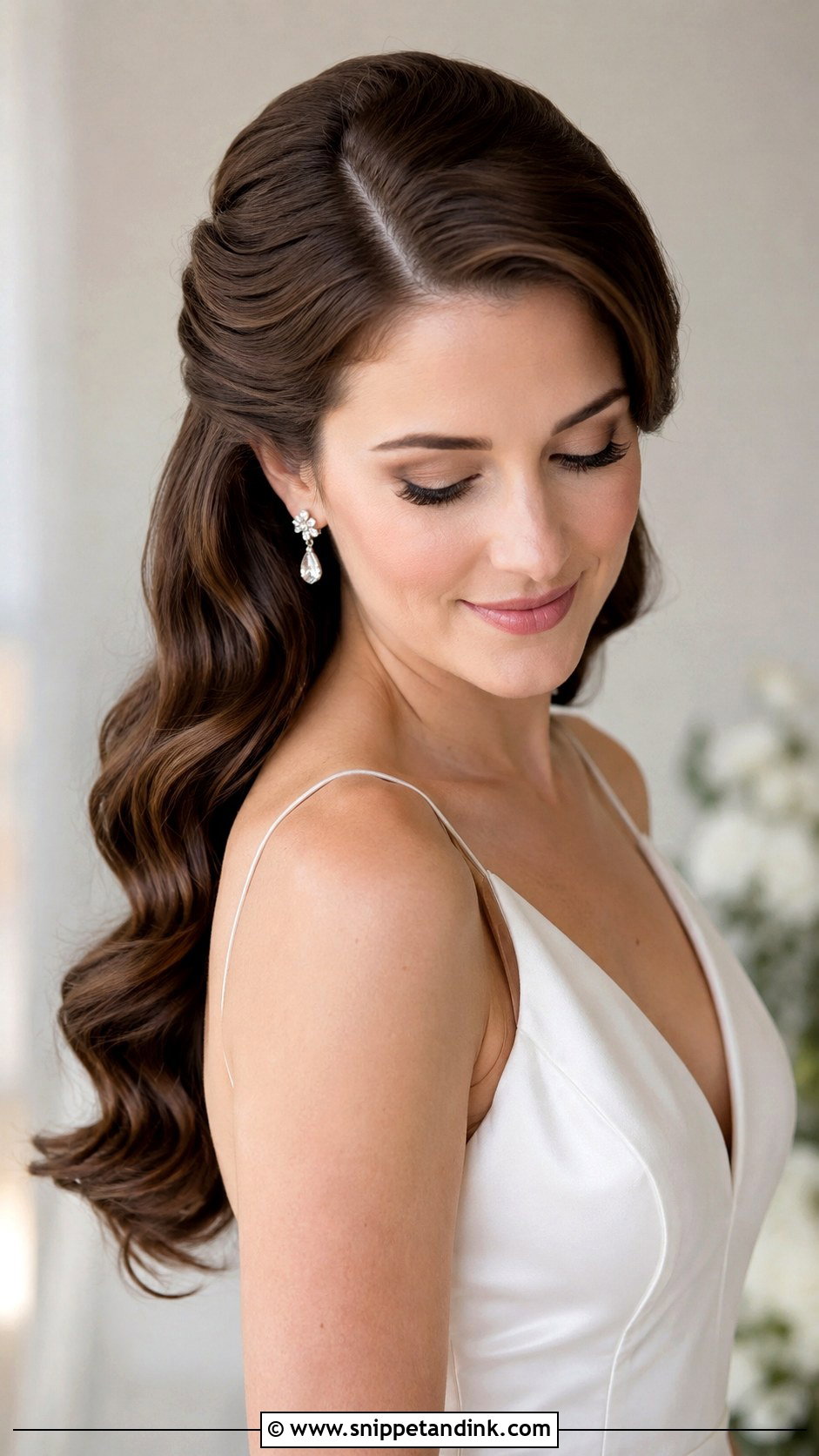
A deep side part puts volume on one side and a soft sweep across the forehead, and it shows off an earring or an asymmetric neckline on the open side. Smooth waves make it look more polished; looser curls make it more relaxed. The weak point is the heavy side drooping by evening, so I set the crown with a little backcombing and pin the sweep from underneath. Check your part in the mirror before the trial; flipping a natural part to the other side rarely stays put.
11. Half Up Wedding Hair With Middle Part
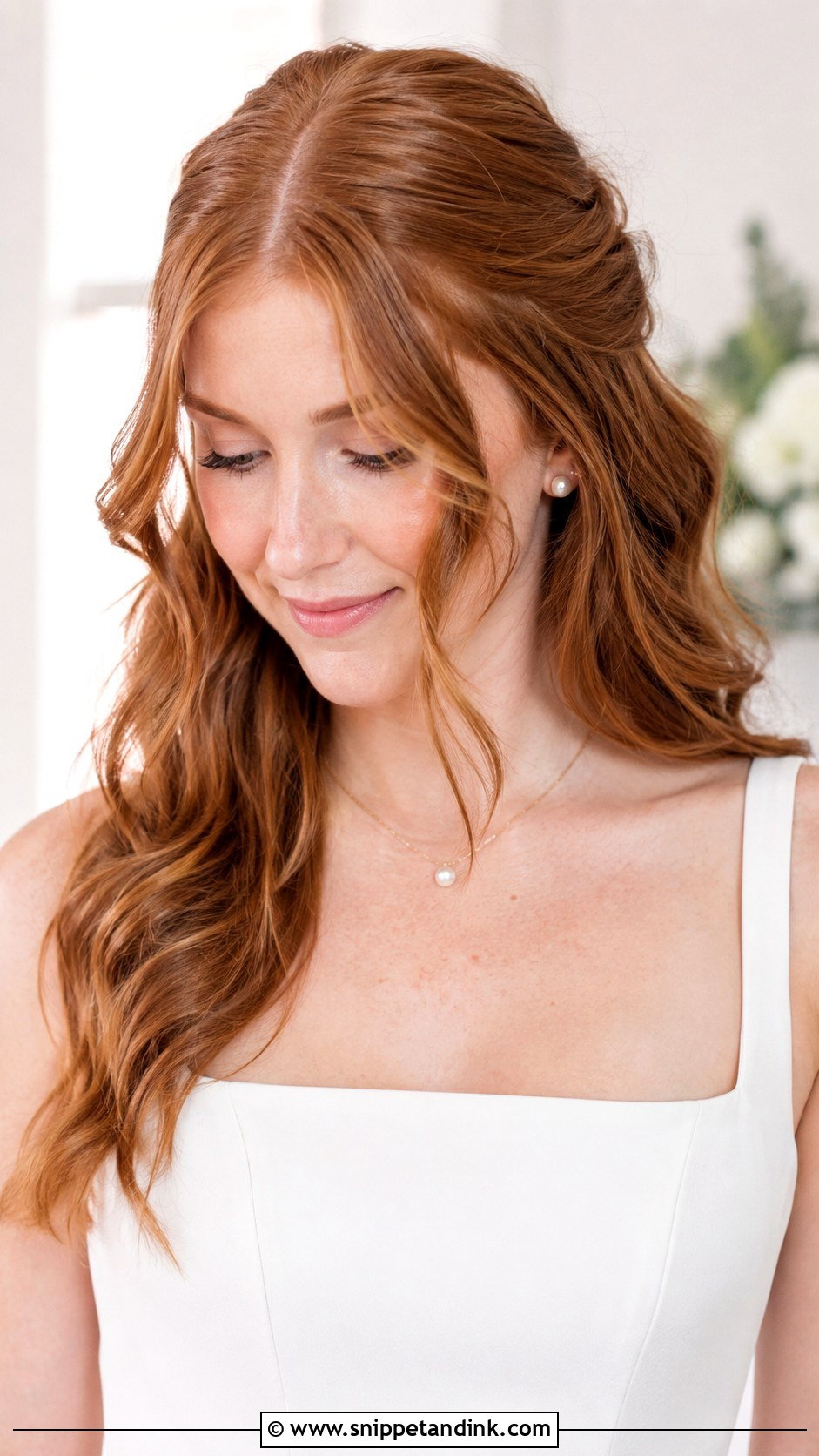
A middle part feels clean and current with minimalist gowns and square necklines, but it is unforgiving. It shows any flatness at the crown and any difference between the two sides of your face. I lift the crown slightly before pinning the back, add soft bends through the lengths, and curve the front pieces away from the cheeks so the face doesn’t look boxed in. If your hair splits naturally off-centre, I’d test this one before committing.
12. Half Up Wedding Hair With Volume
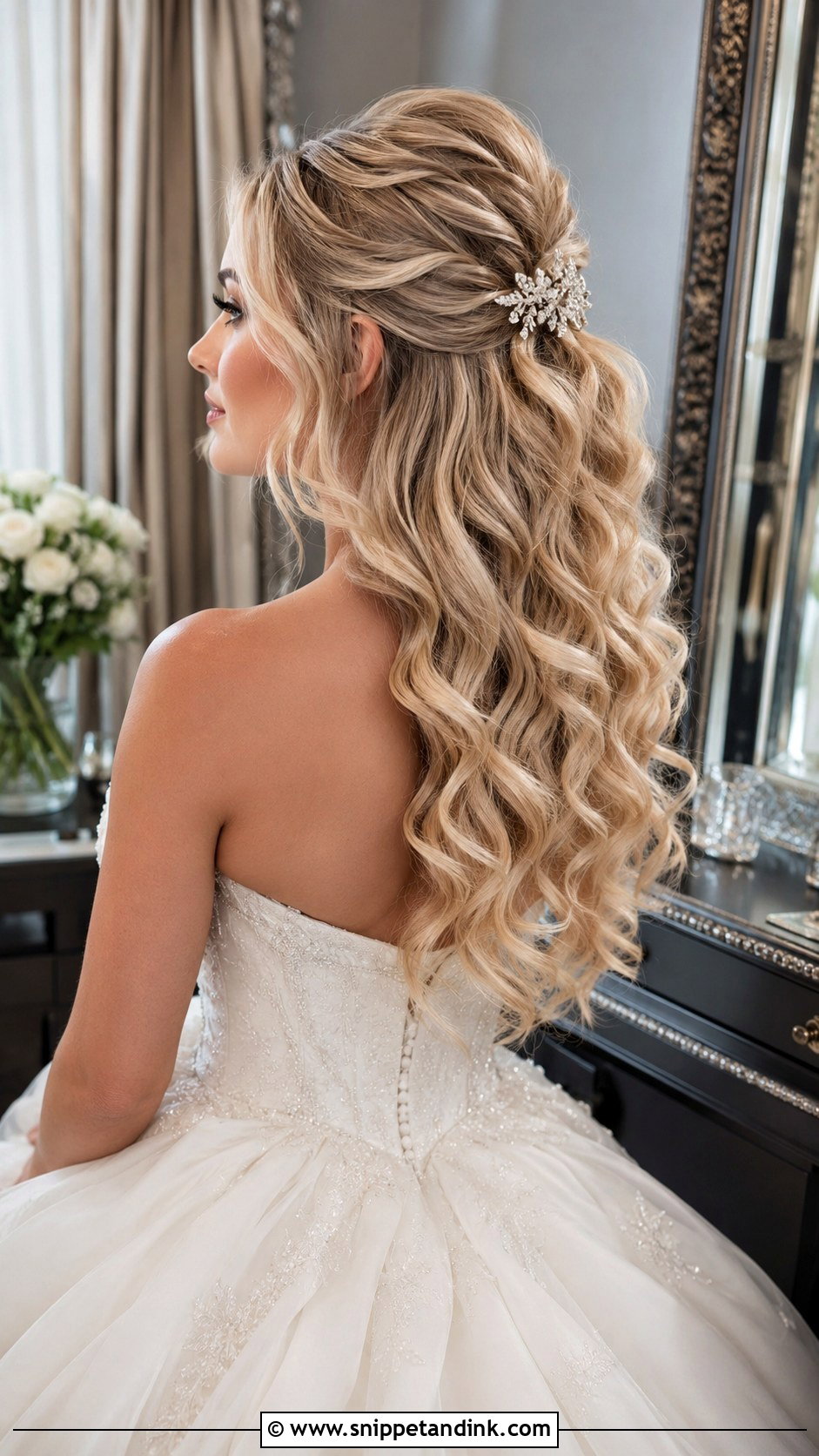
Height at the crown is what makes a half-up read as formal, so this is the one I steer toward for ballrooms and big silhouettes. I backcomb only the underside of the top section, smooth the surface over it, then pin. Heavy teasing looks dated and is miserable to brush out the next day. The lifted section is also a good hiding place for a comb, a veil or a sparkling clip. Brides with very fine hair may need a small padded insert to hold this shape past the first few hours.
13. Half Up Wedding Hair With Face Framing Pieces
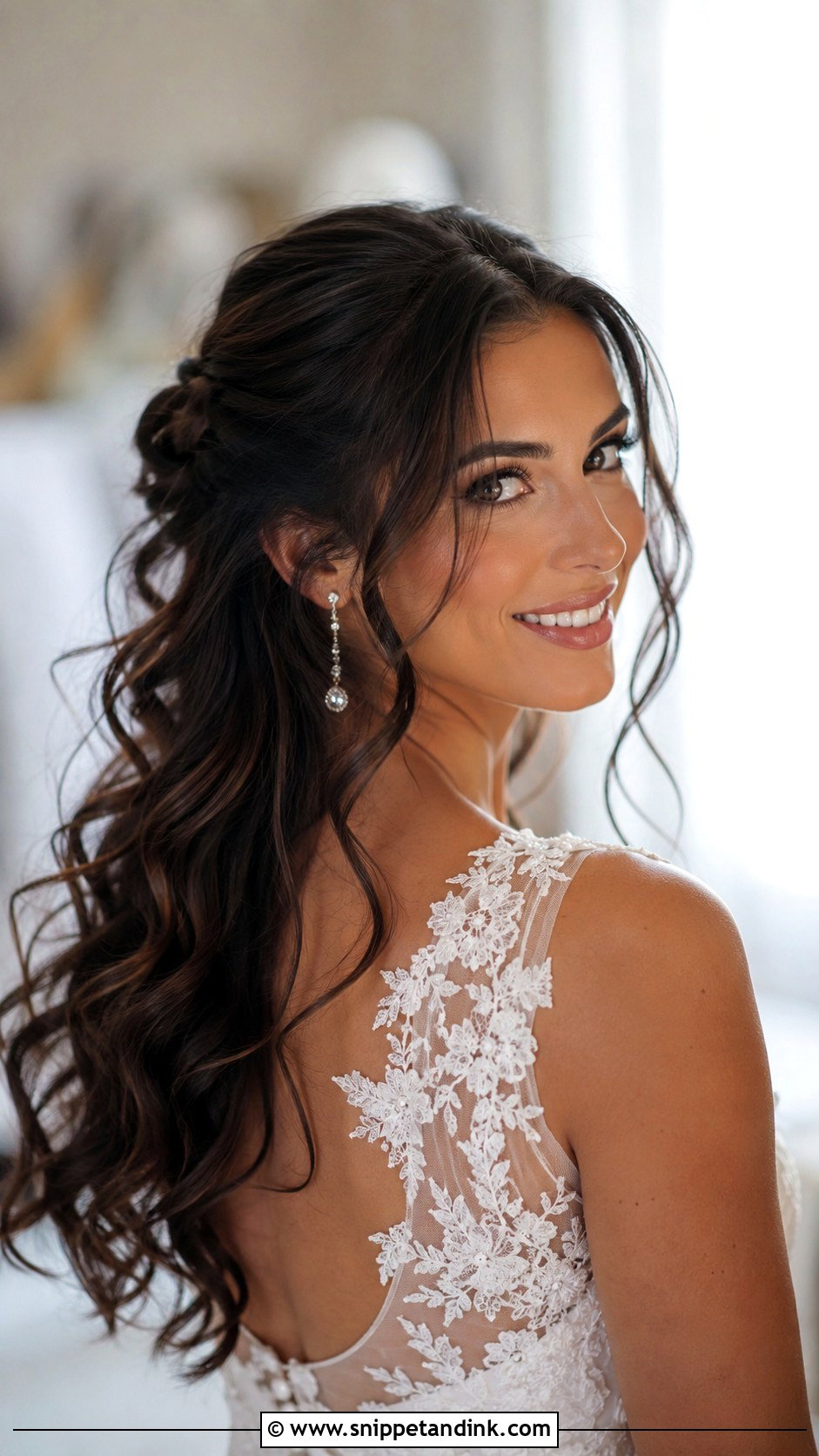
Leaving a few pieces out around the face softens the whole look, especially if you feel exposed with everything pulled back. The trouble is that face-framing hair is the first thing to collapse: it’s touched, it meets warm skin and makeup, and it goes limp. I cut these pieces in at the trial if needed, curl them away from the face, and set them with a light spray rather than heavy product. Keep them thin. Thick sections left out look messy by evening, while two slim pieces still look deliberate.
14. Half Up Wedding Hair With Hair Vine
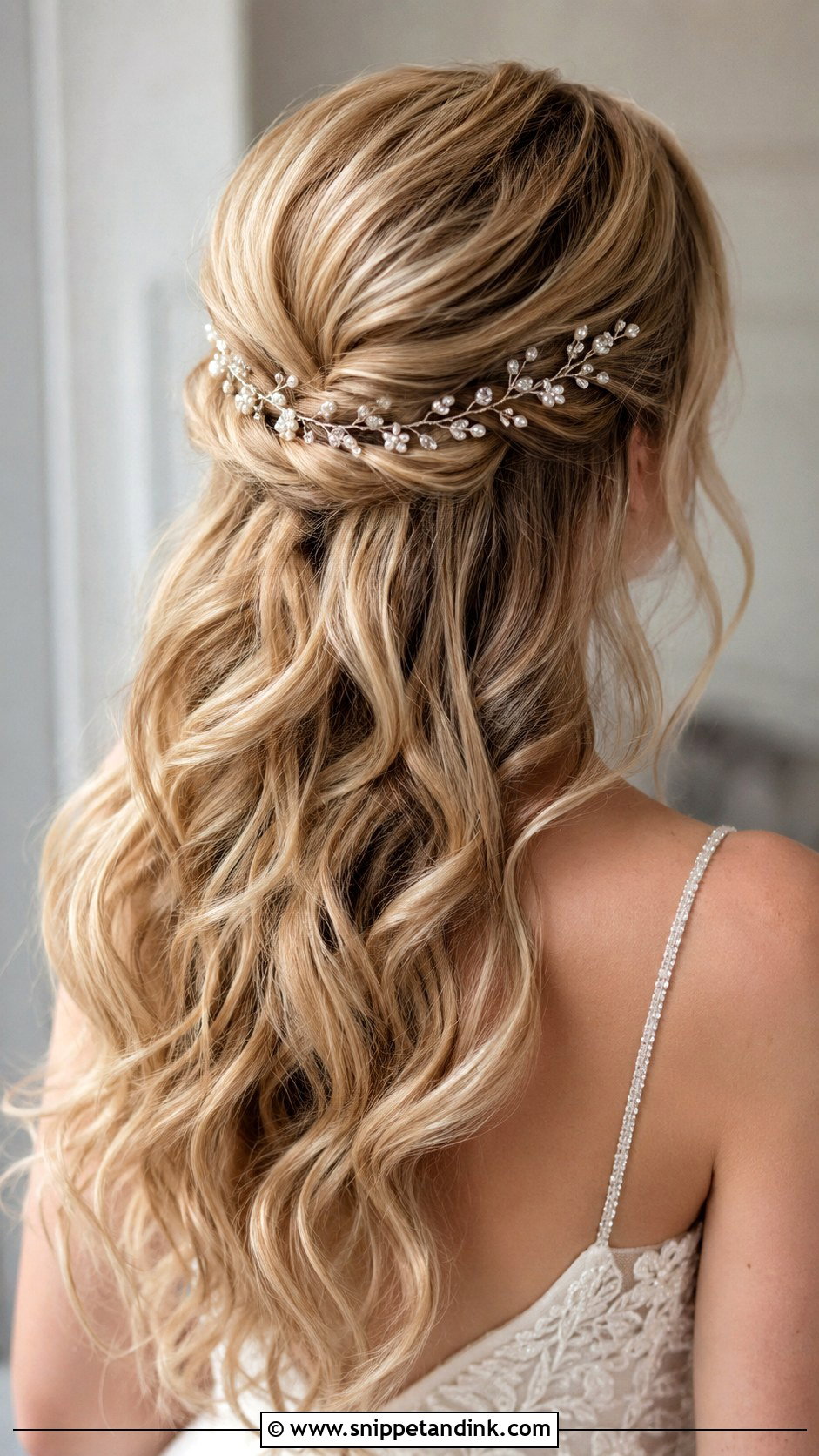
A vine gives long hair detail without the height of a tiara, which suits brides who don’t want anything sitting on top of their head. It can follow a braid, run across the pinned section, or trail down into the curls. Hair vines come in pearls, crystals, leaves or florals, and the flexible wire ones are easiest to shape. I thread the vine through the hair and stitch it in with small pins every few centimetres, because hugs and dancing will pull at any loose loop.
15. Half Up Wedding Hair With Bow
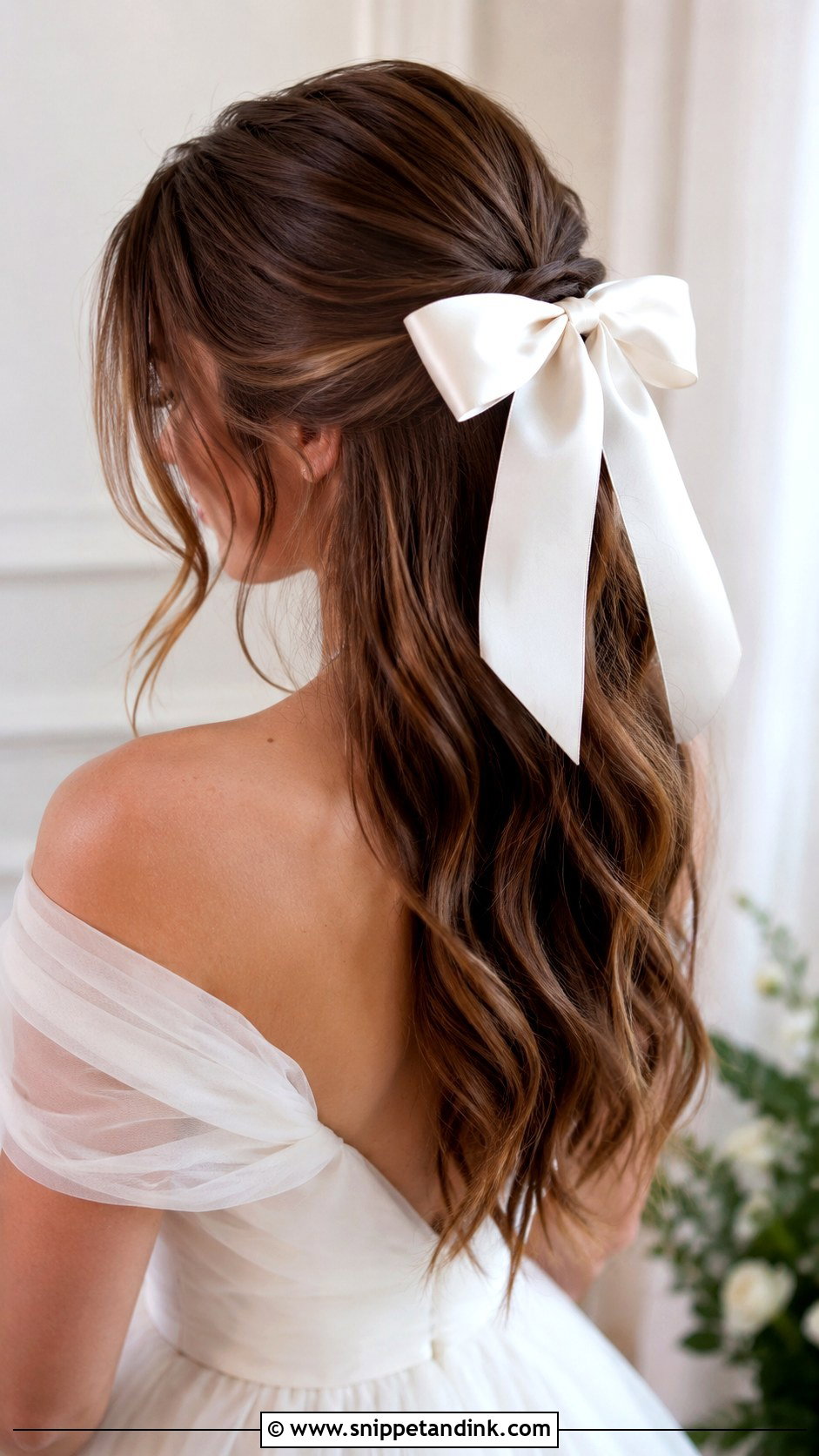
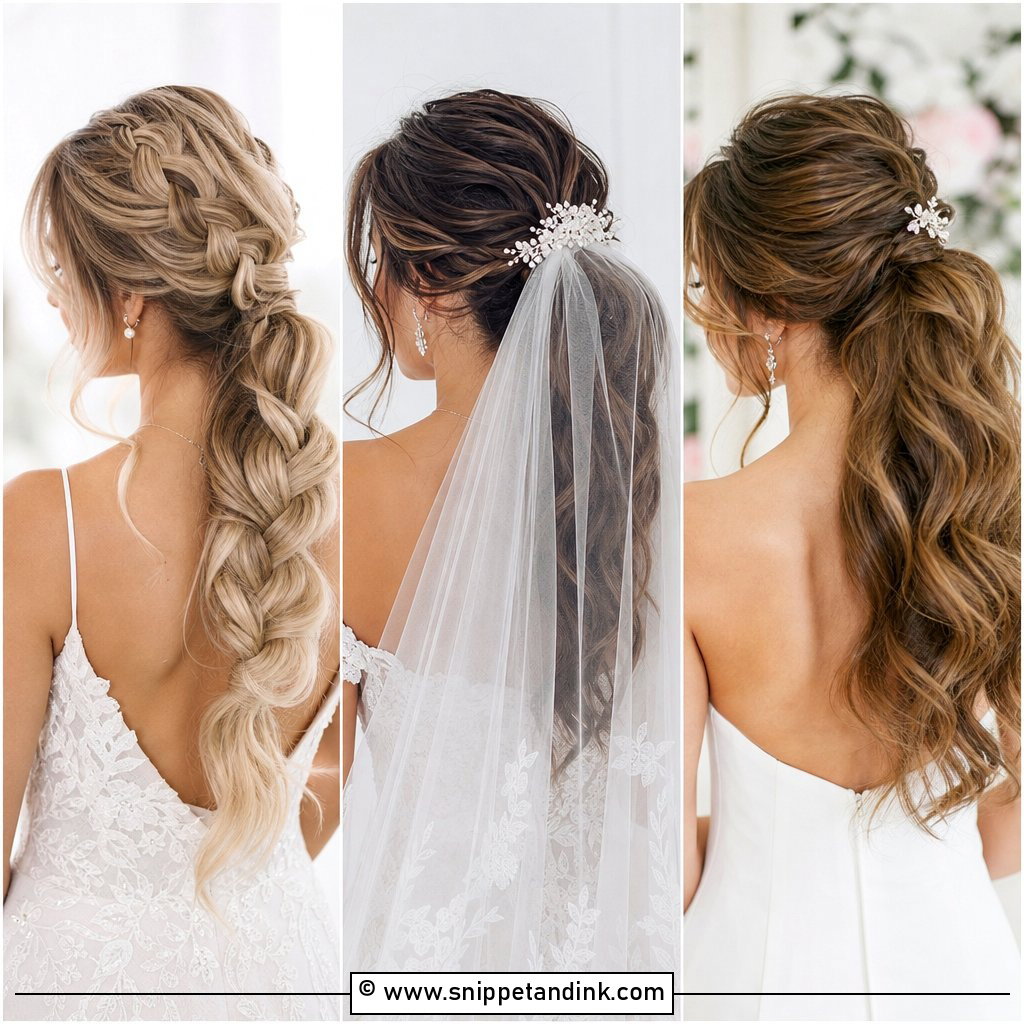
A bow sounds sweet, but it can go wrong in proportion. I tie it over the pinned section and judge the size from behind, against your shoulders, not from the front in the mirror. Satin and silk hold a crisp shape; organza looks lighter but crushes once you lean back in a chair. Matching the bow to your dress fabric keeps it from looking like a party accessory. A small bow stays subtle, while a longer ribbon adds movement down your back. I keep the crown smooth underneath so the bow looks placed rather than tied on in a hurry.
Taking It Up Once the Dancing Starts
Plenty of brides love their hair down for the ceremony and want it off their neck by the third song. Half-up is the easiest base to change, because the top is already gathered and set.
- High ponytail: gather the loose lengths up into the existing section, secure with an elastic and wrap a strand around it. The morning’s curls do the rest.
- Low twisted bun: twist the lengths, coil them under the pinned section and fix them with U-pins. It takes a few minutes and copes with heat.
- Swap the accessory: remove the veil and clip a bow or a single flower at the join, which reads as a second look in photos.
If you think you’ll want a change, I’ll show you or a bridesmaid how to do it at the end of the trial, and I pack a small kit with an elastic, a few pins and the accessory.
Guests See the Back of Your Hair During the Vows
A half-up style gives you the softness of hair down and the hold of something pinned, which matters on a day full of hugs, wind and dancing. Of all these ideas, the right one for you is the style you stop thinking about after the first hour. Take your accessories and two or three photos to your trial, and have someone photograph you from behind, because that is the view your guests have for the whole ceremony.
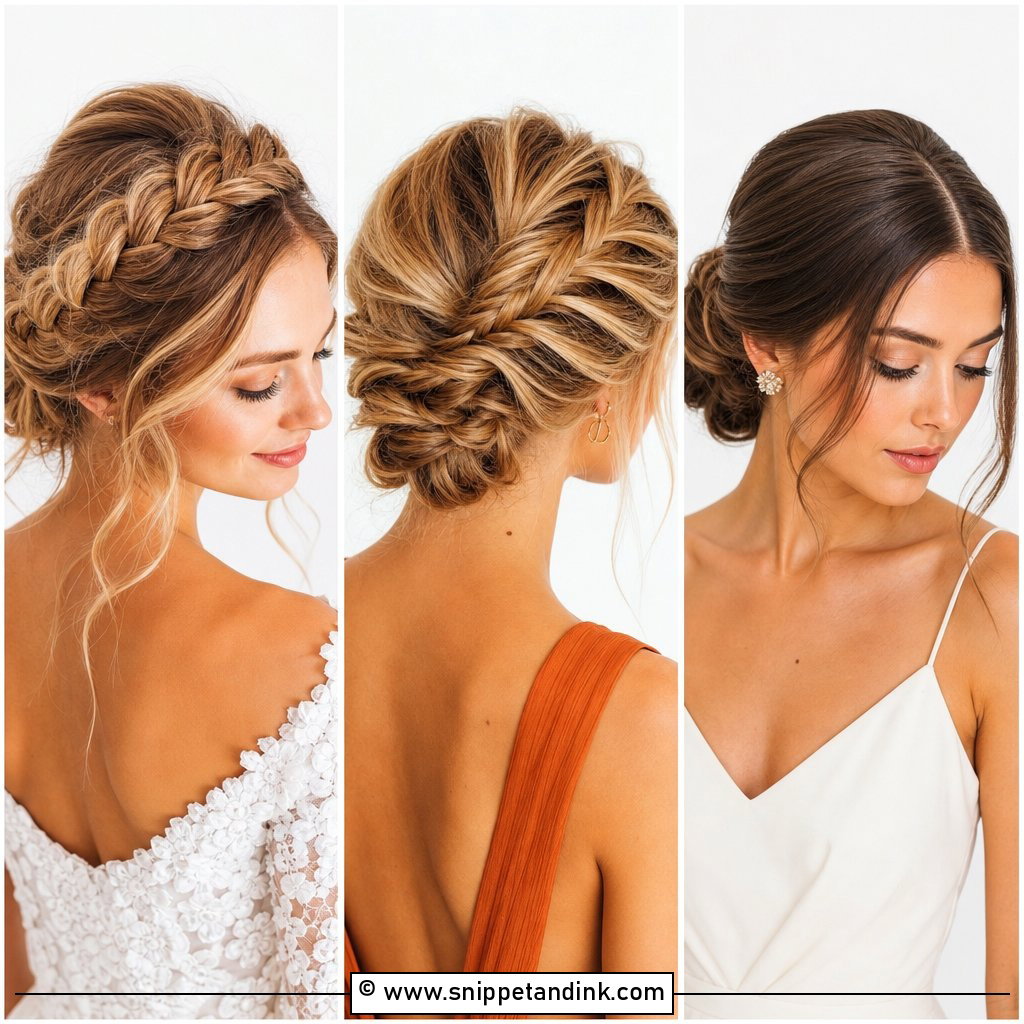
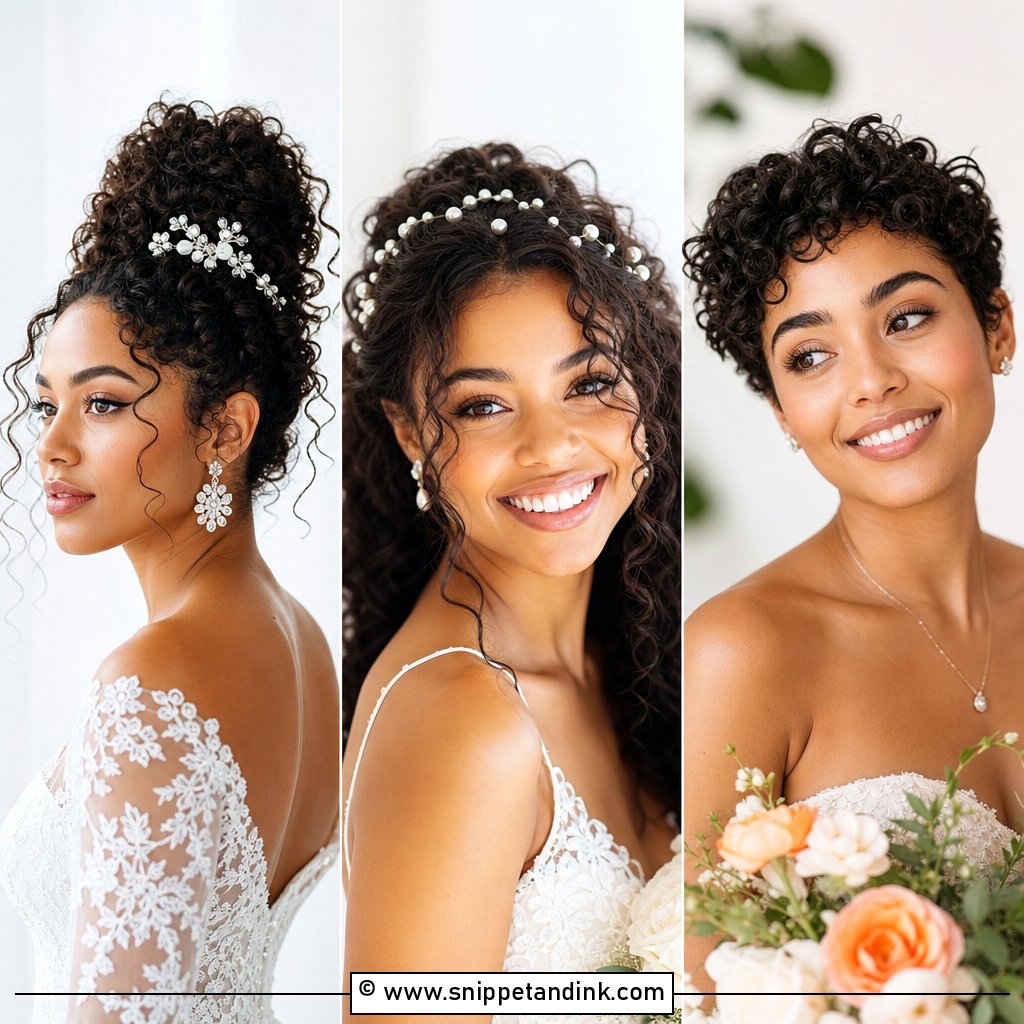
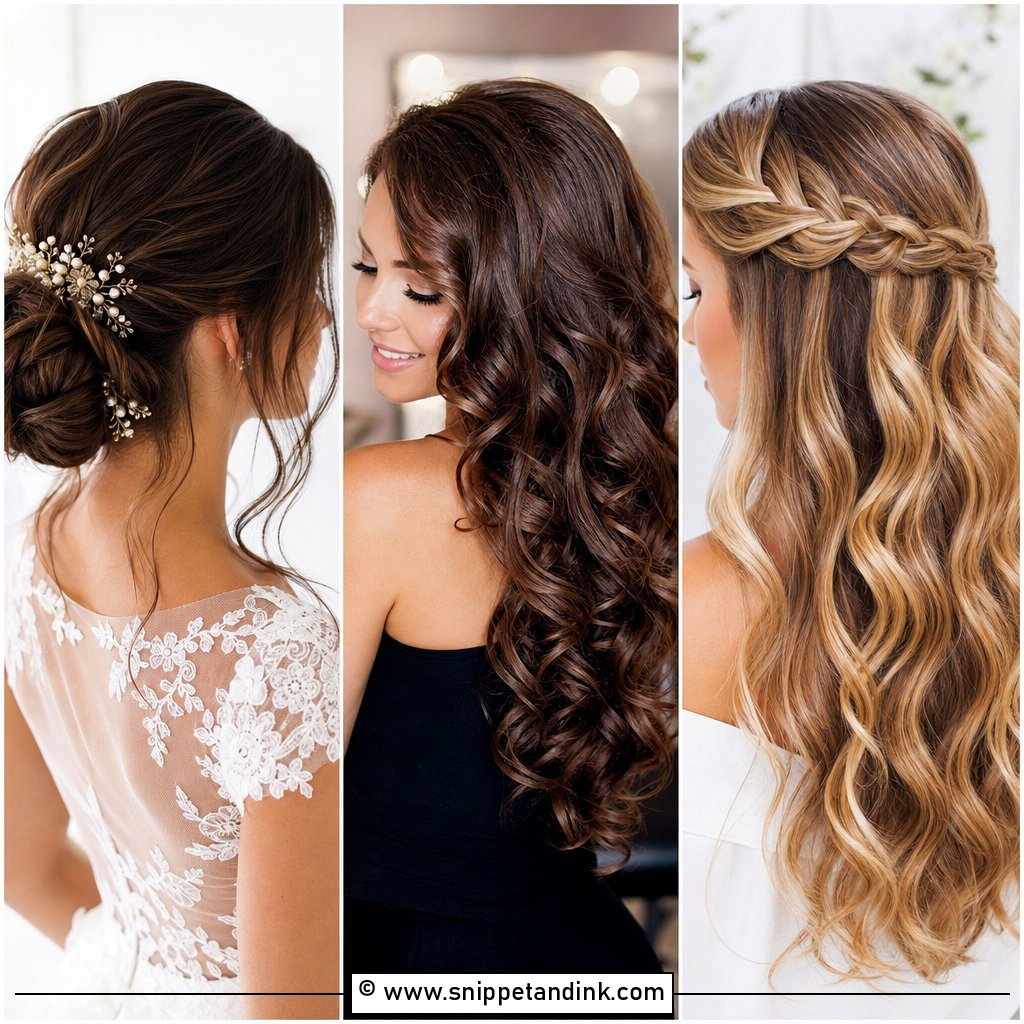
You'll Like These Ideas:


Leave a Reply