
If you’ve spent years growing your hair, it’s natural to want to show it off on your wedding day. The down styles I’m doing most now are polished waves, brushed-out curls, half-up details, pearl accents and loose braids, all with soft, touchable texture rather than stiff, heavily sprayed shapes. The style itself is rarely the hard part. Getting it to work with your neckline, veil, jewelry, weather and natural texture is. Below are 20 ways to wear your hair open, classic, glam and cultural, with what I’d check before recommending each one.
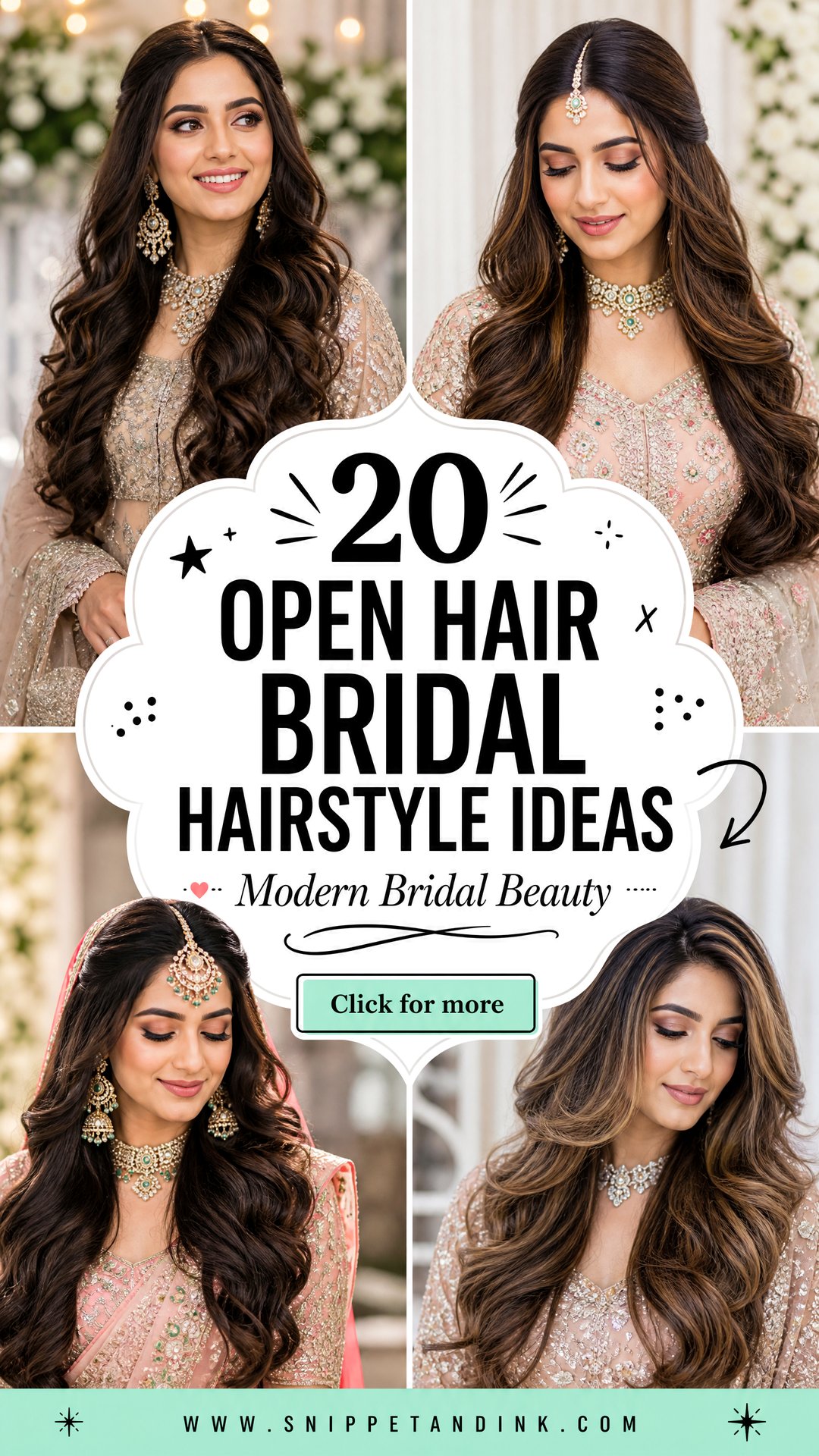
Reading Your Neckline Before You Commit to Hair Down
When a bride tells me she wants her hair open, the next thing I ask to see is the dress. Down hair covers the shoulders, the upper back and the sides of the neck, so it can either frame a neckline or hide the detail you paid for.
- Strapless and sweetheart: the easiest match. Waves over the shoulders soften a bare neckline.
- Off-the-shoulder: works well, but I keep the hair behind one shoulder so the line of the dress still shows.
- High neck or halter: fully down hair crowds the neck. A half-up or all swept to one side is usually better.
- Open or illusion back: loose hair hides it entirely. I’d steer you toward half-up or a side sweep so the back is visible as you walk away.
- Heavy embroidery on the shoulders or blouse: hair snags and frizzes on beading. Keep it to one side or partly up.
If you haven’t chosen the dress yet, take a photo of yourself with your hair down in every fitting. It tells you more than any inspiration board.
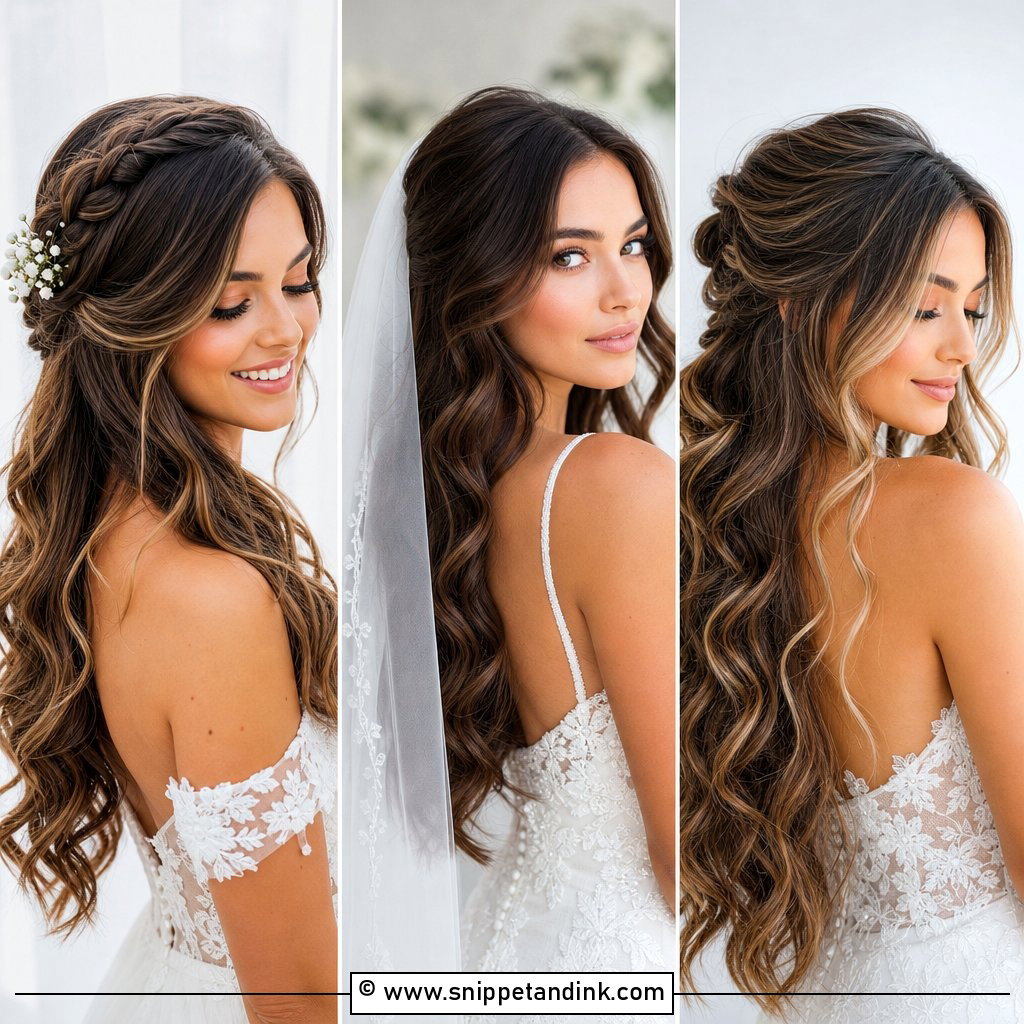
1. Open Hair Bridal Waves
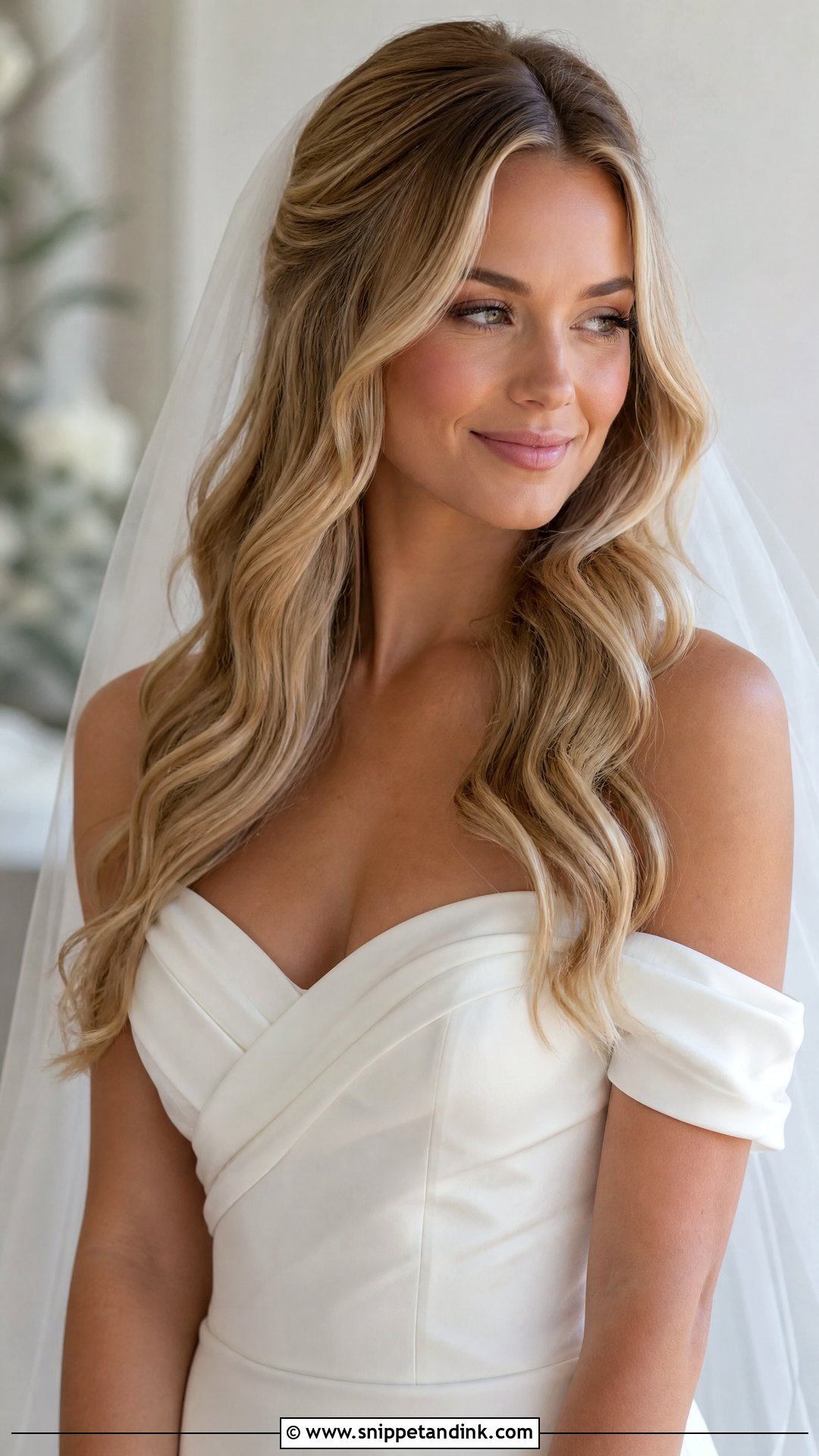
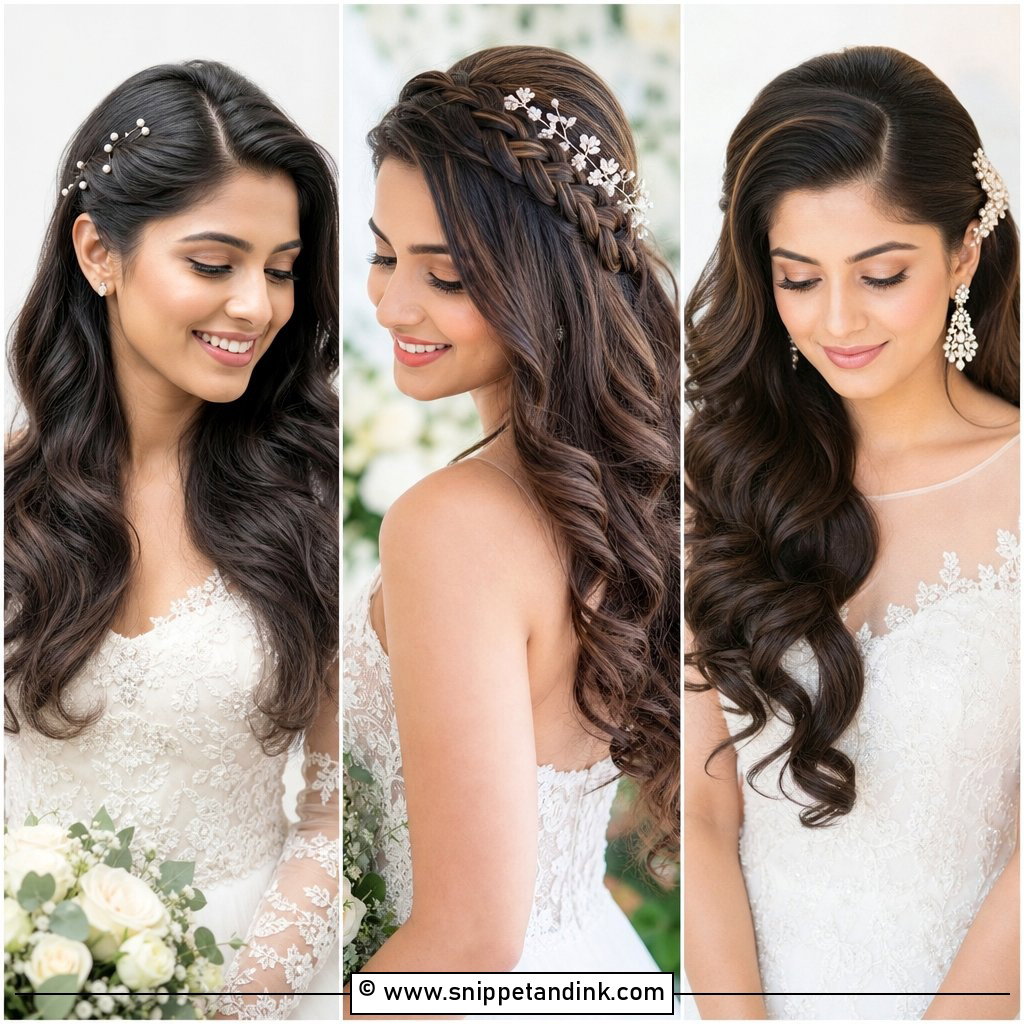
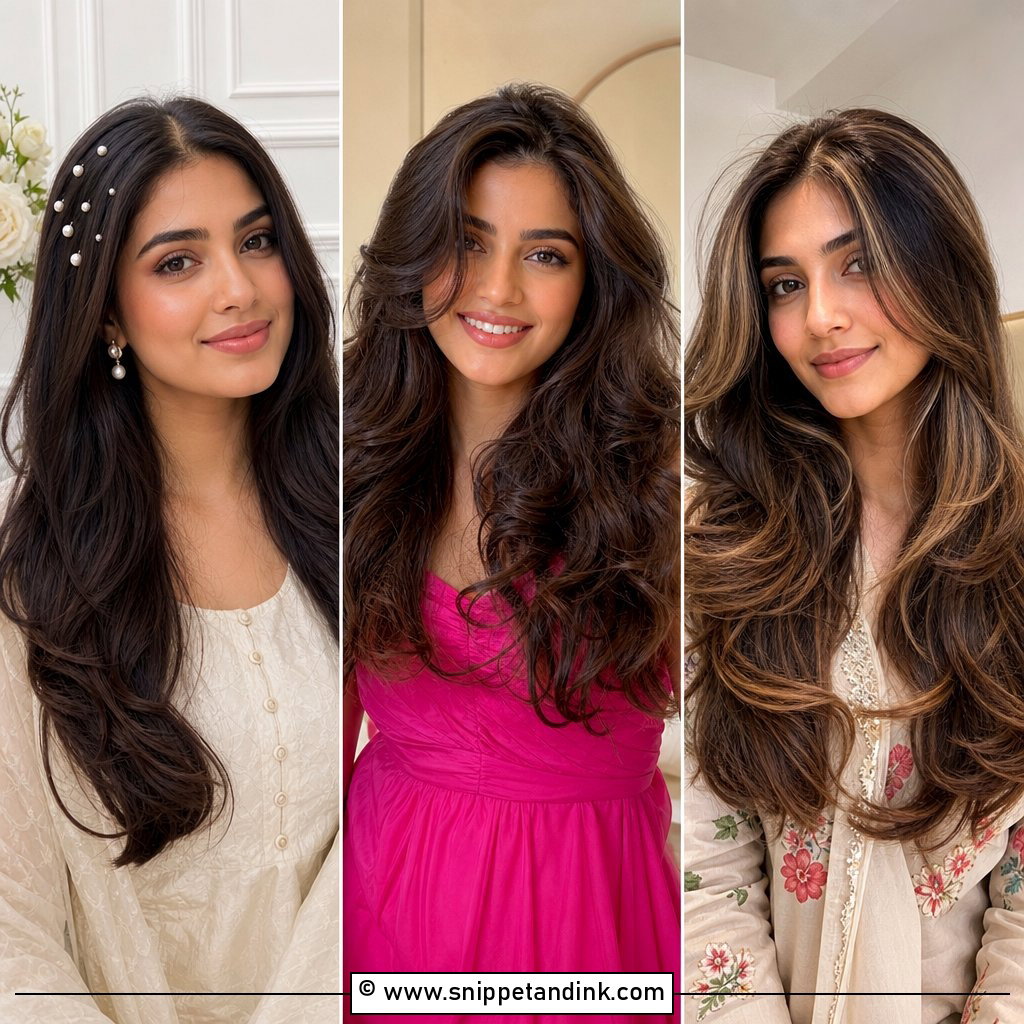
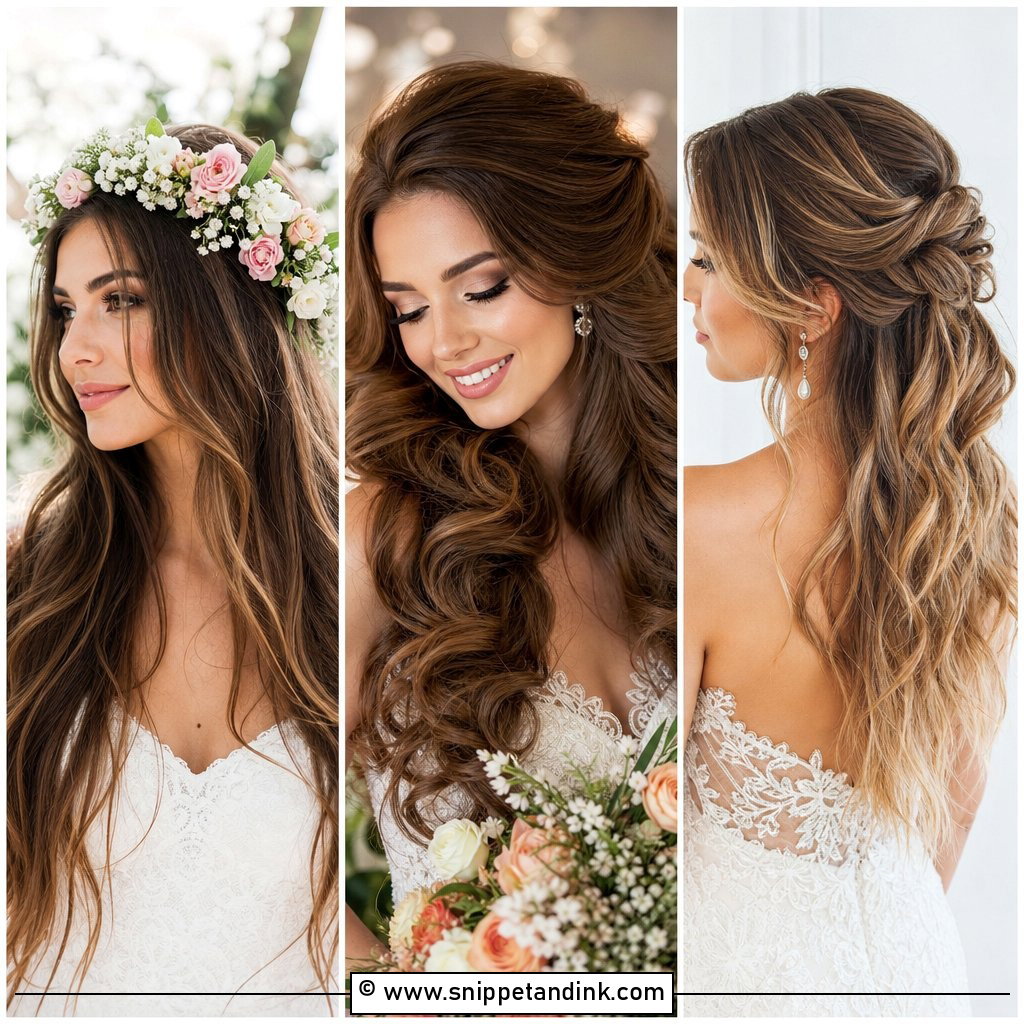
Waves are the default for a reason: they look finished without feeling formal. I can keep them soft and brushed out or fuller for more glamour, and they show off layers and highlights because every bend catches light. They sit naturally against strapless gowns, sweetheart and off-shoulder necklines. The step people skip is the cool-down. I pin each wave while it’s still warm and only brush out once it’s cold, which is the difference between waves that last to the reception and waves that relax before the vows.
2. Open Hair Bridal Curls
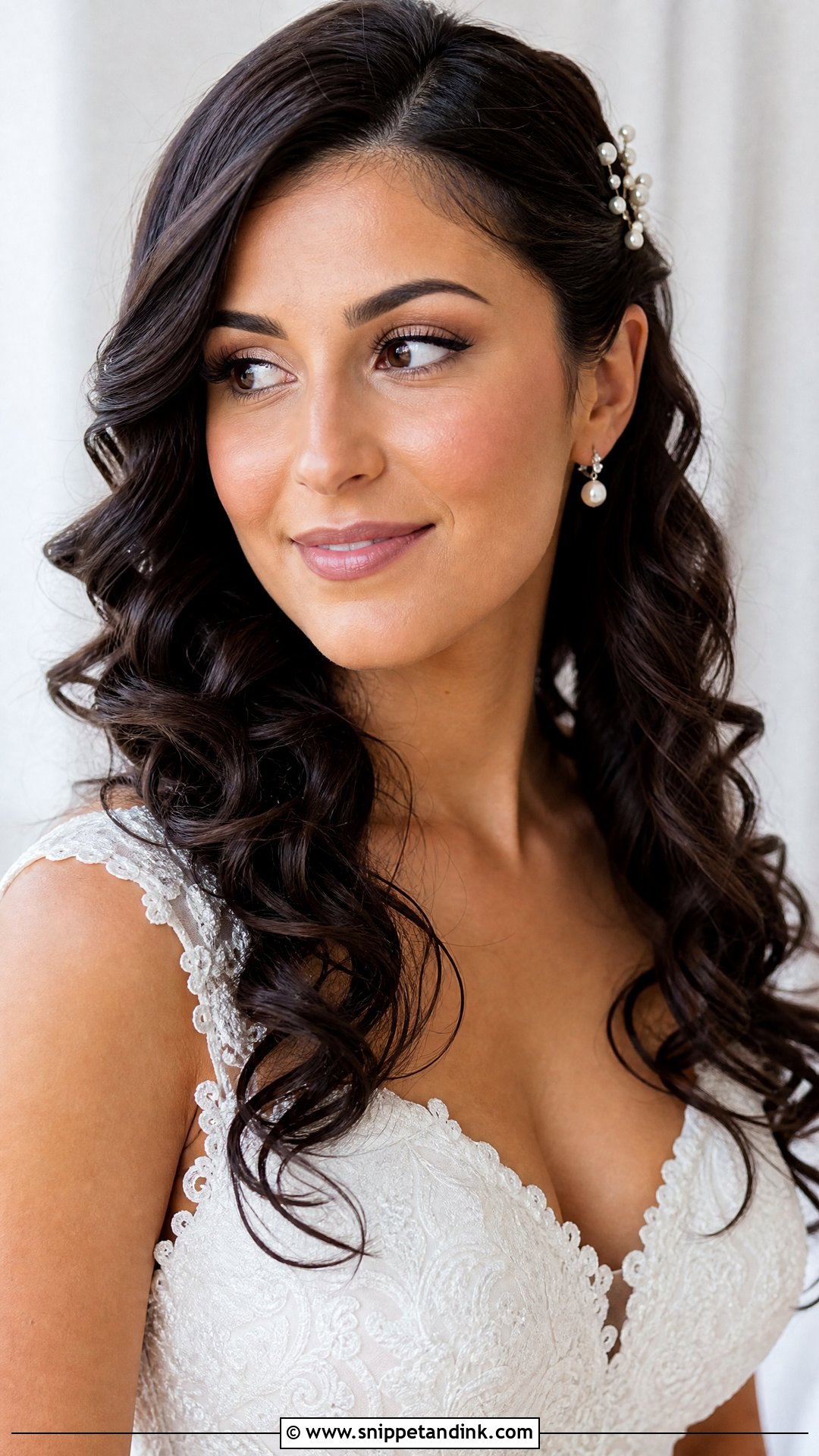
Curls give the most volume of any down style, and they need two different approaches depending on your hair. On natural curls, I work with what’s there: curl cream, a light gel and careful diffusing to define the pattern without frizz. On straight or wavy hair, I curl with an iron and pin each curl until it cools. Either way, the aim is definition that still moves. A few pearl pins, a side comb or a sheer veil finish it.
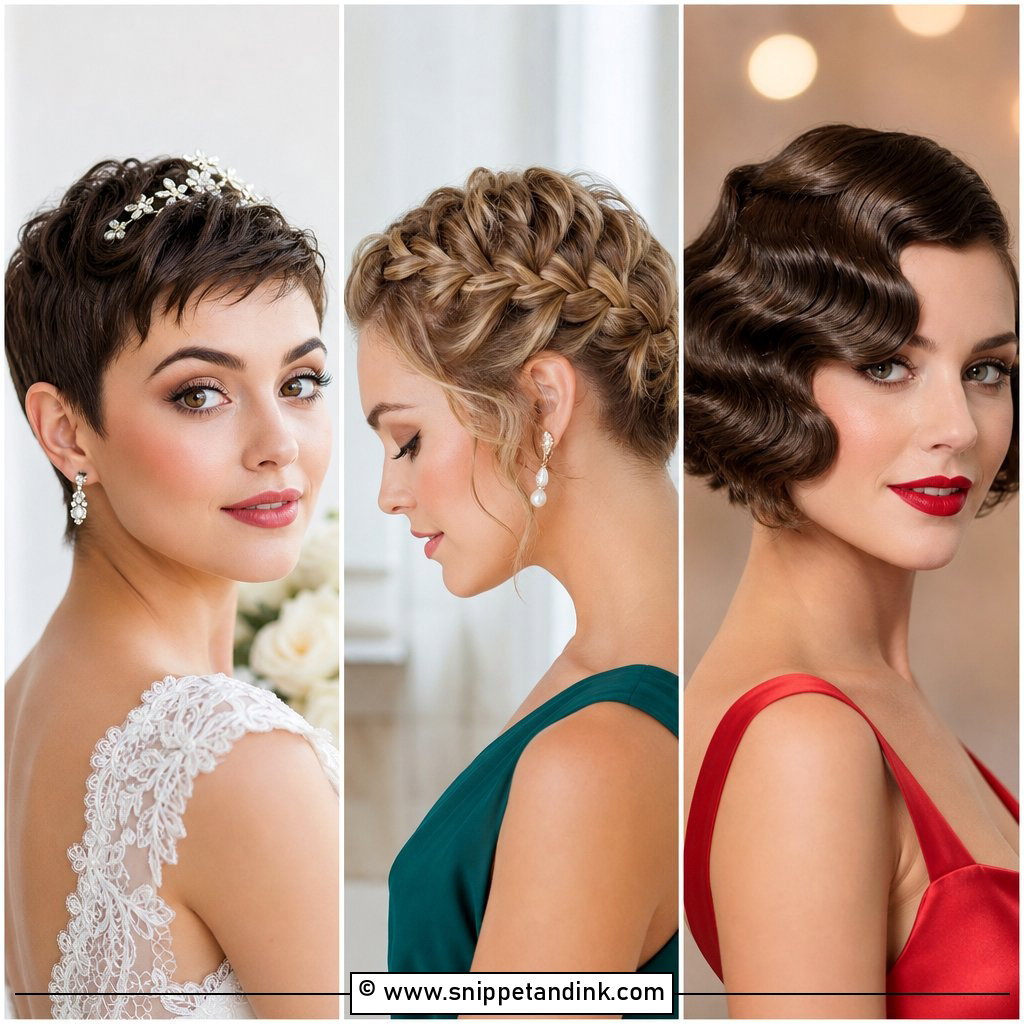
3. Open Hair Bridal Hollywood Waves
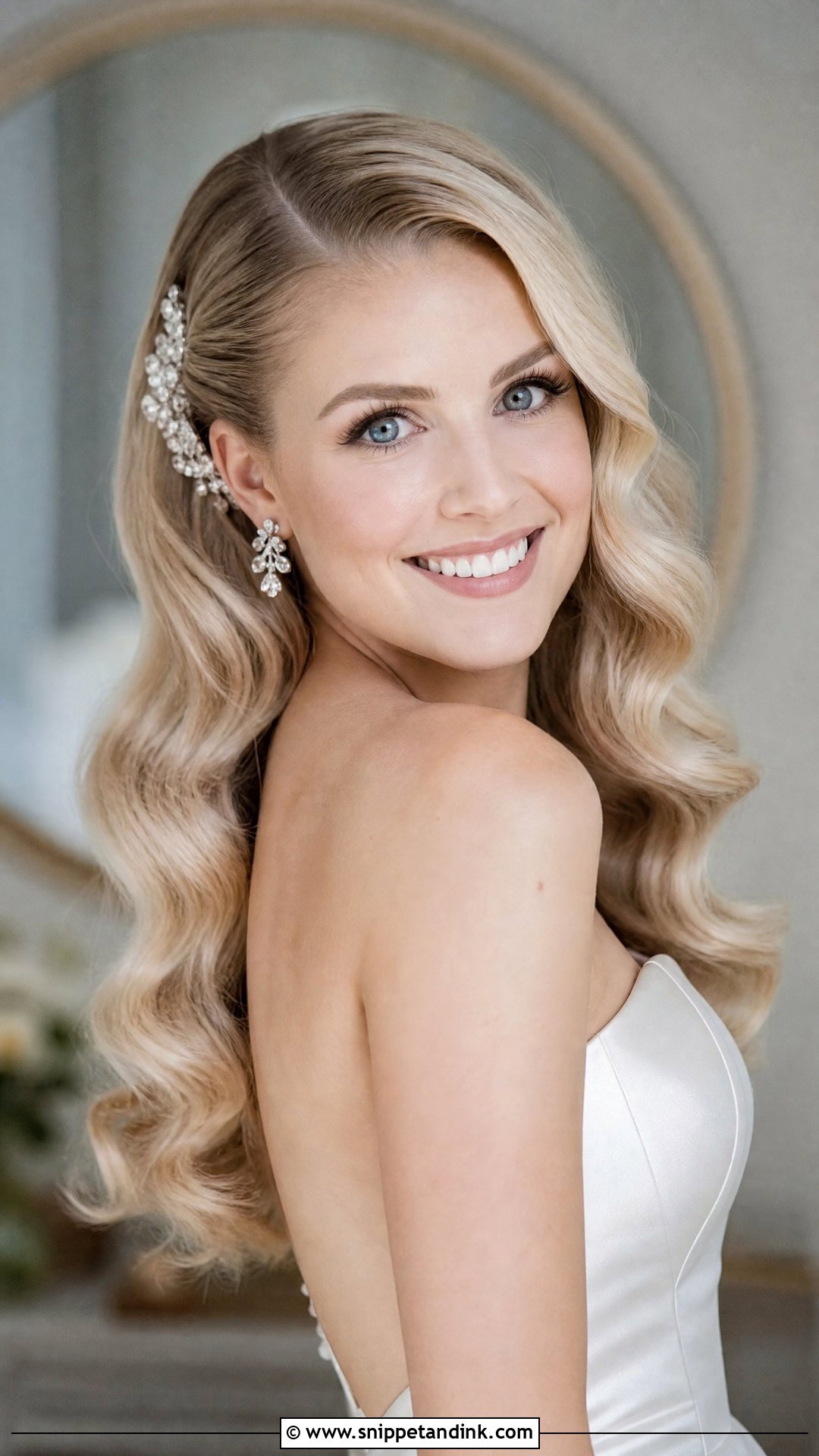
Hollywood waves are the most structured down style here. The waves are deep, smooth and brushed into one continuous ripple, usually with a side part, and they suit satin, fitted or vintage-inspired dresses. Healthy, recently trimmed ends make or break this look, because split ends fuzz the edge of each wave. I use a strong but flexible spray and a light shine mist rather than oil, which can make the waves separate. Medium and long hair both work.
4. Open Hair Bridal Soft Waves
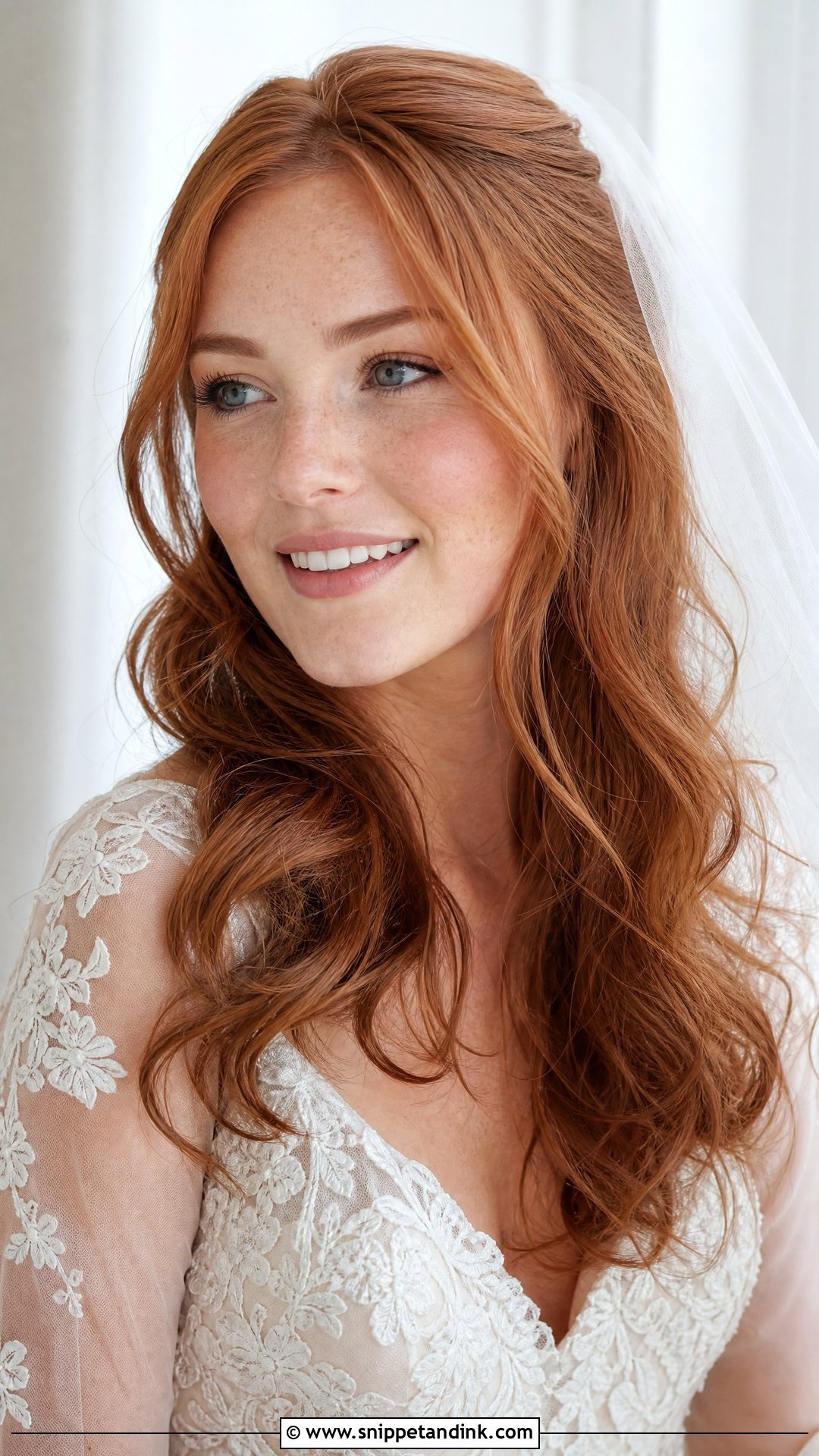
Soft waves are the relaxed version, loose and airy enough to touch. They sit well in a garden, on a beach or at an outdoor ceremony, with a lace gown and natural makeup. Two details stop them falling flat: a little lift at the roots and curling the front pieces away from the face, which opens up the cheekbones in photos. In wind, soft waves get tangled quickly, so for a breezy coastal ceremony I’d add a hidden pin or two behind each ear.
5. Open Hair Bridal Side Part
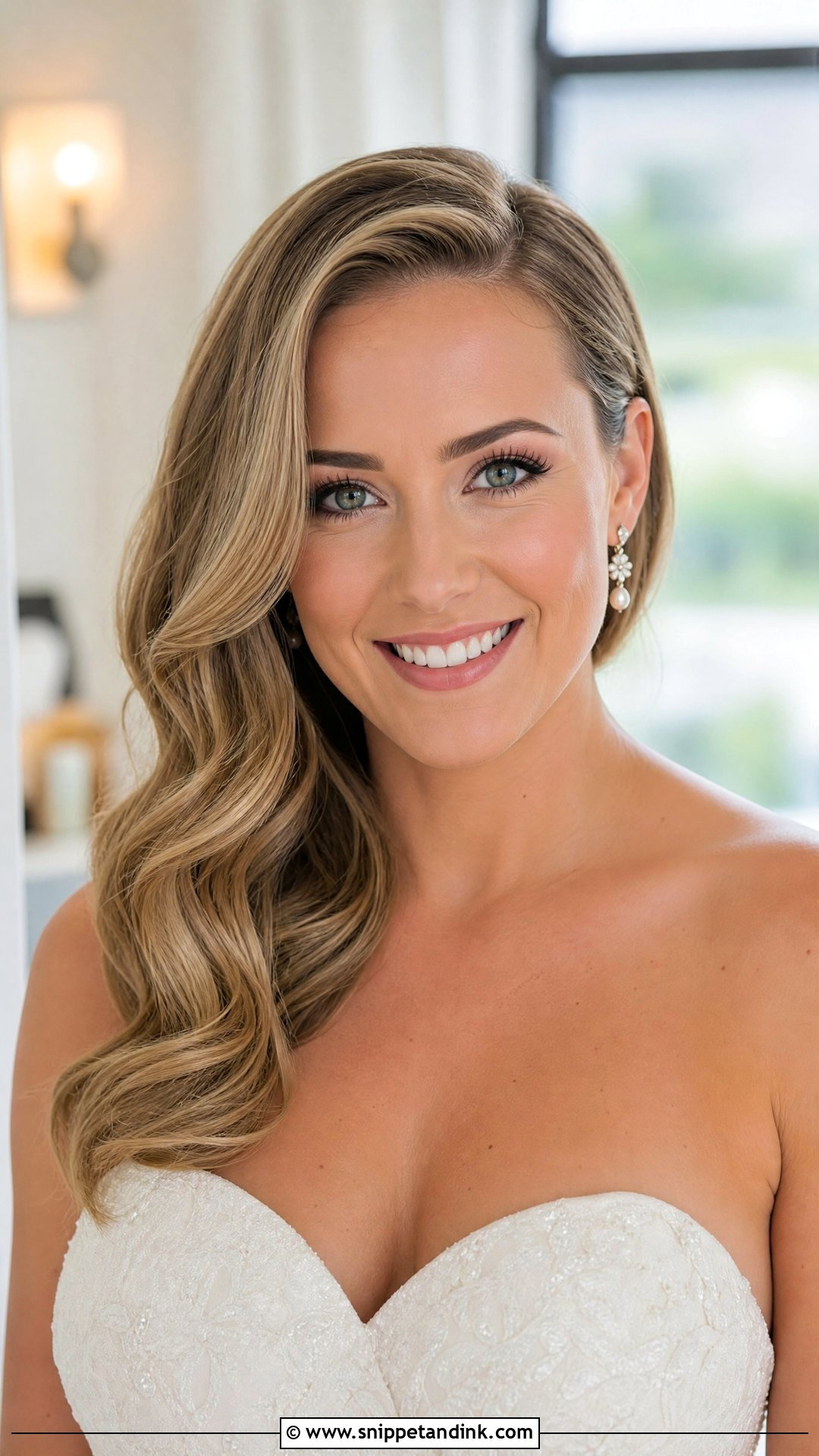
A deep side part shapes the face by putting volume on one side. It works with waves, curls or sleek lengths and gives the hair a clear direction, which reads well in photos. It’s also the natural choice for showing off one statement earring or placing a veil comb. I tuck the lighter side behind the ear and hold it with pins hidden under the top layer. If your natural part sits on the other side, tell your stylist at the trial; switching it takes more heat and product to hold.
6. Open Hair Bridal Middle Part
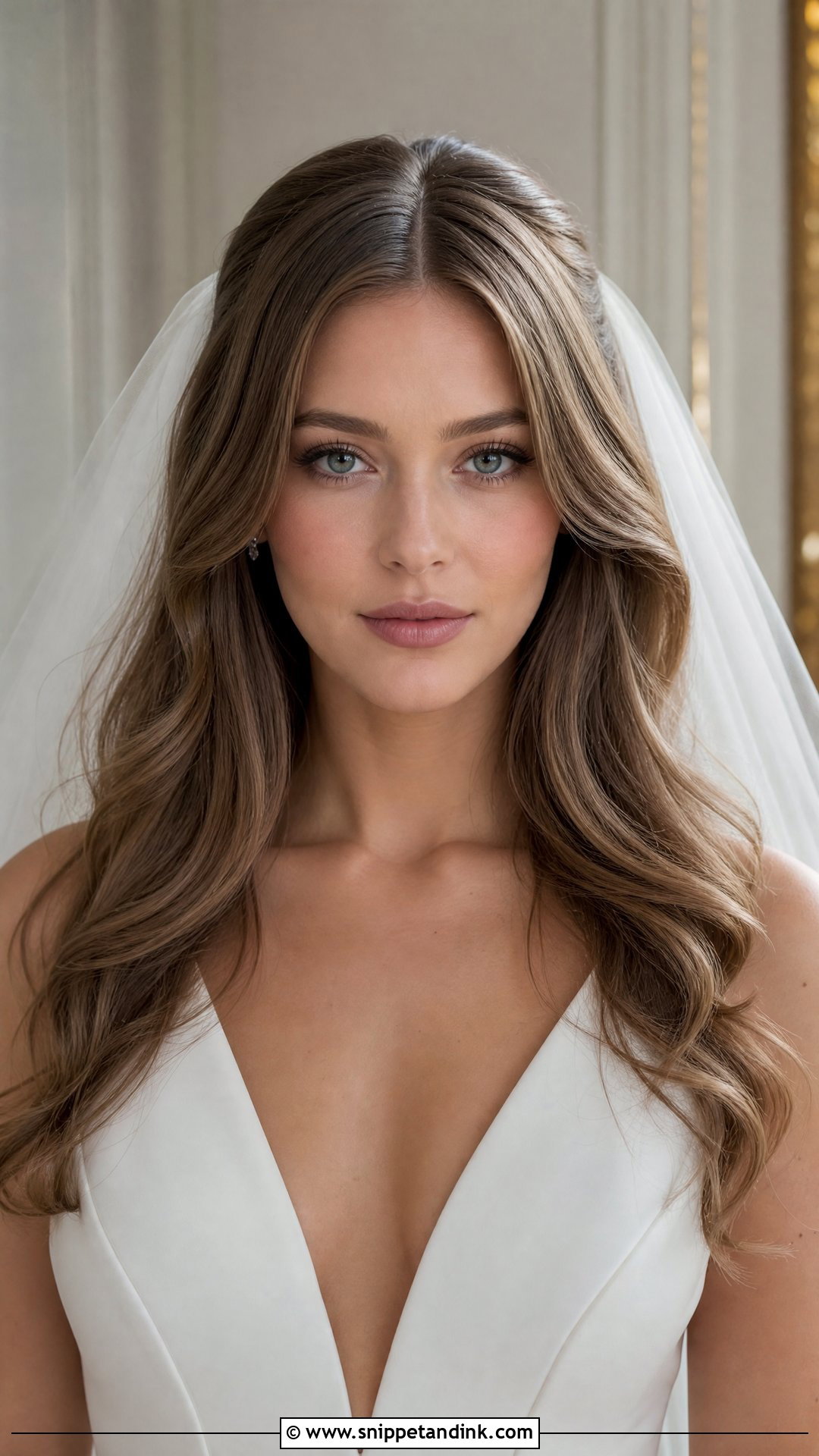
A middle part looks clean and modern, and it frames both sides of the face evenly. It pairs well with a minimalist gown, a long veil or pearl jewelry, and because the hair falls evenly over both shoulders, it can look longer than it is. The weak point is the front. Without shape, the hair sits flat against the cheeks, so I curve the front pieces softly away from the face. A middle part shows any unevenness in the hairline, so I check it from straight on before I finish.
7. Open Hair Bridal Half Up
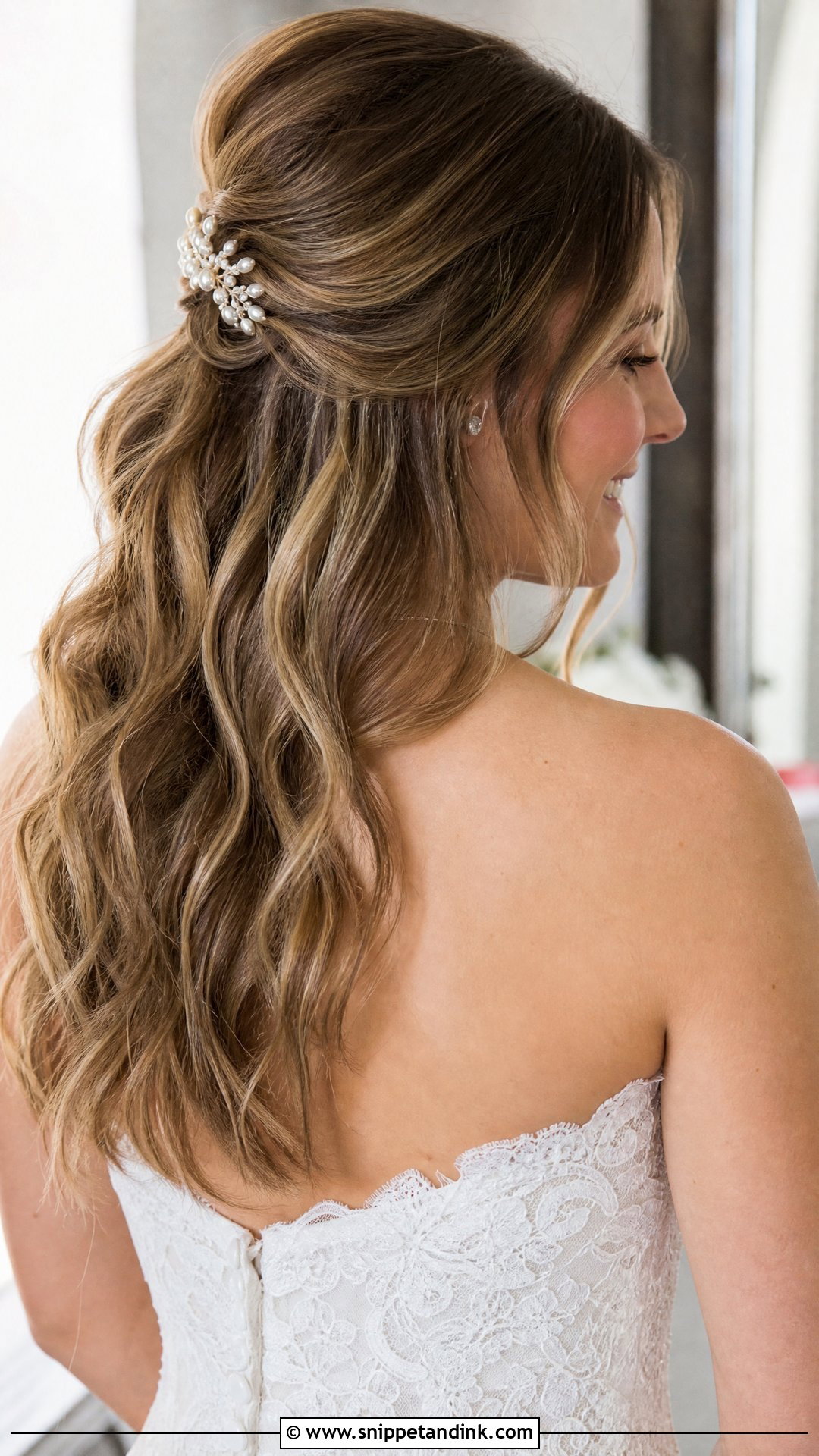
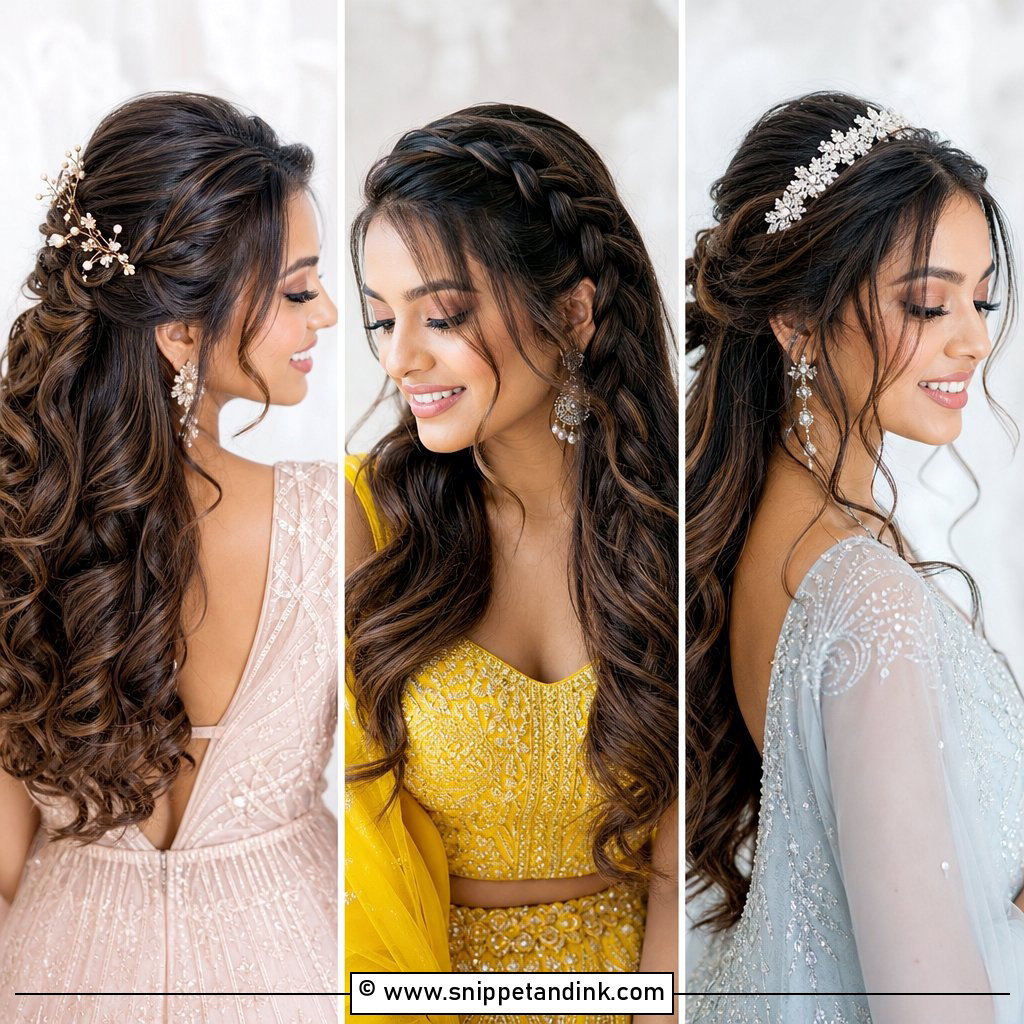
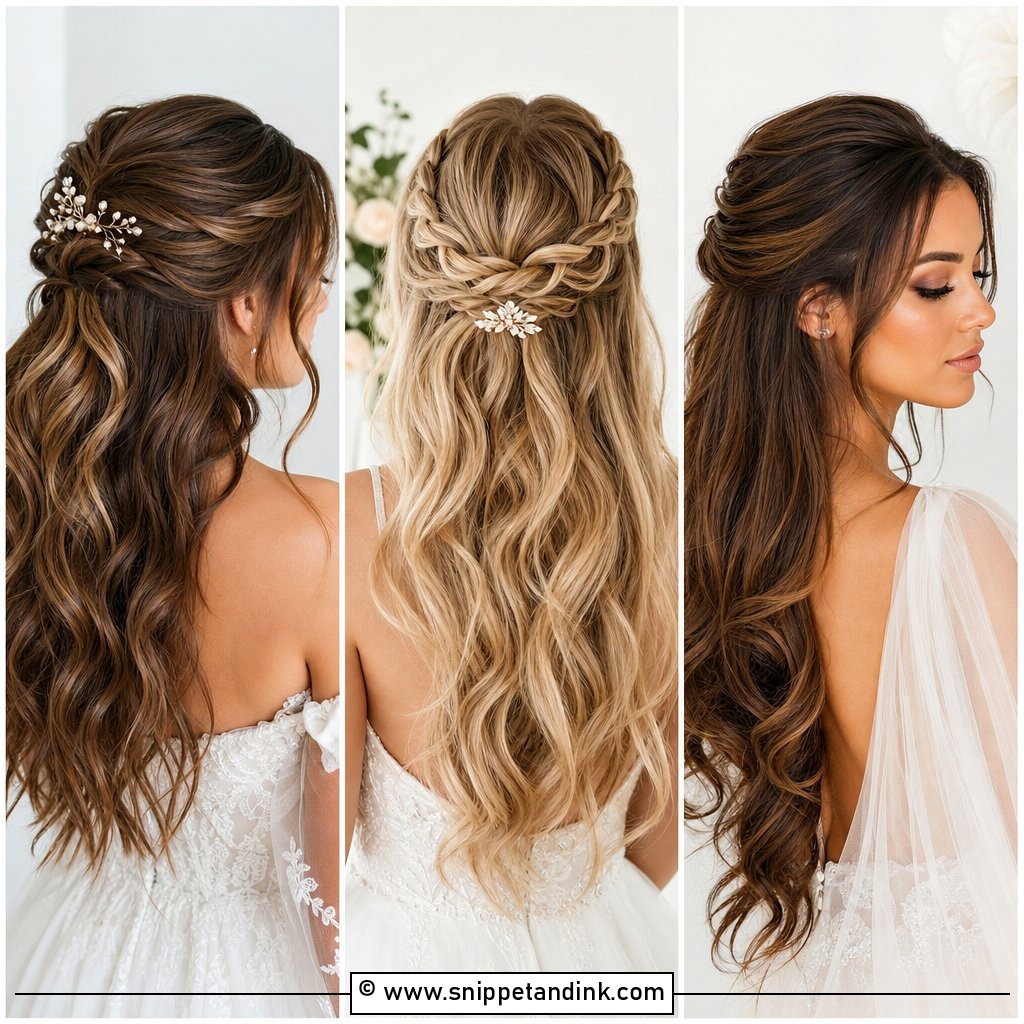
Half-up is the down style I recommend most to brides who are nervous about hair falling forward during the ceremony. The top section is pulled back softly and secured, while the lengths fall in waves, curls or smooth lengths. That pinned section is also the best anchor for a veil, comb or hairpiece. I can twist, braid or simply lift it at the crown, depending on the dress. It shows off length and texture without the risk of curtains of hair in every photo.
8. Open Hair Bridal With Veil
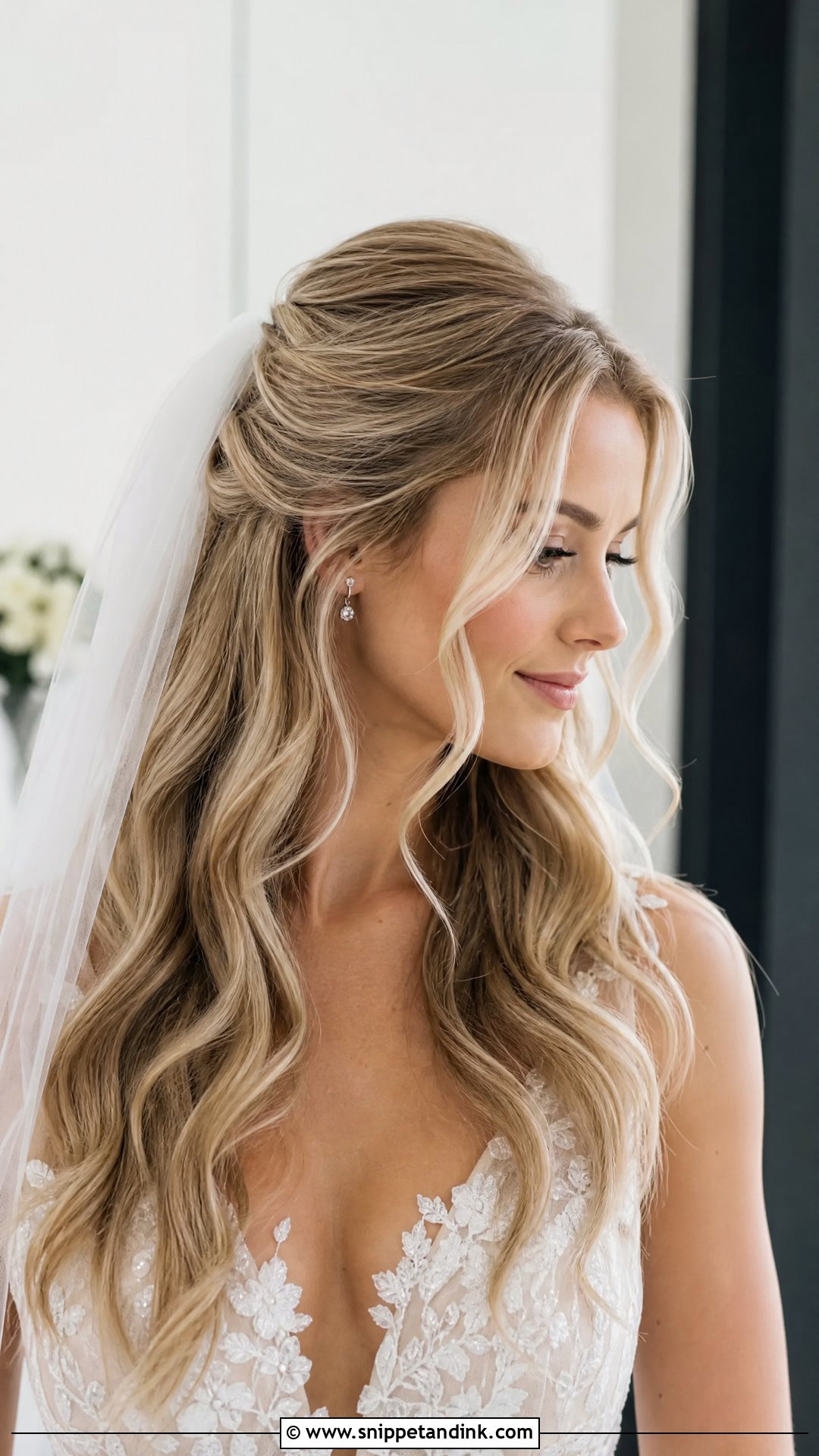
Veil placement is everything with open hair. I set the comb at the crown, under a half-up section or lower at the back of the head, and always over a small backcombed base with crossed pins so it has something to grip. Waves or curls hold a veil much better than slippery straight hair. Cathedral, fingertip, embroidered and plain sheer veils all work. Outdoors, I add extra anchor points, because a gust catching a long veil pulls the comb straight out.
9. Open Hair Bridal With Tiara
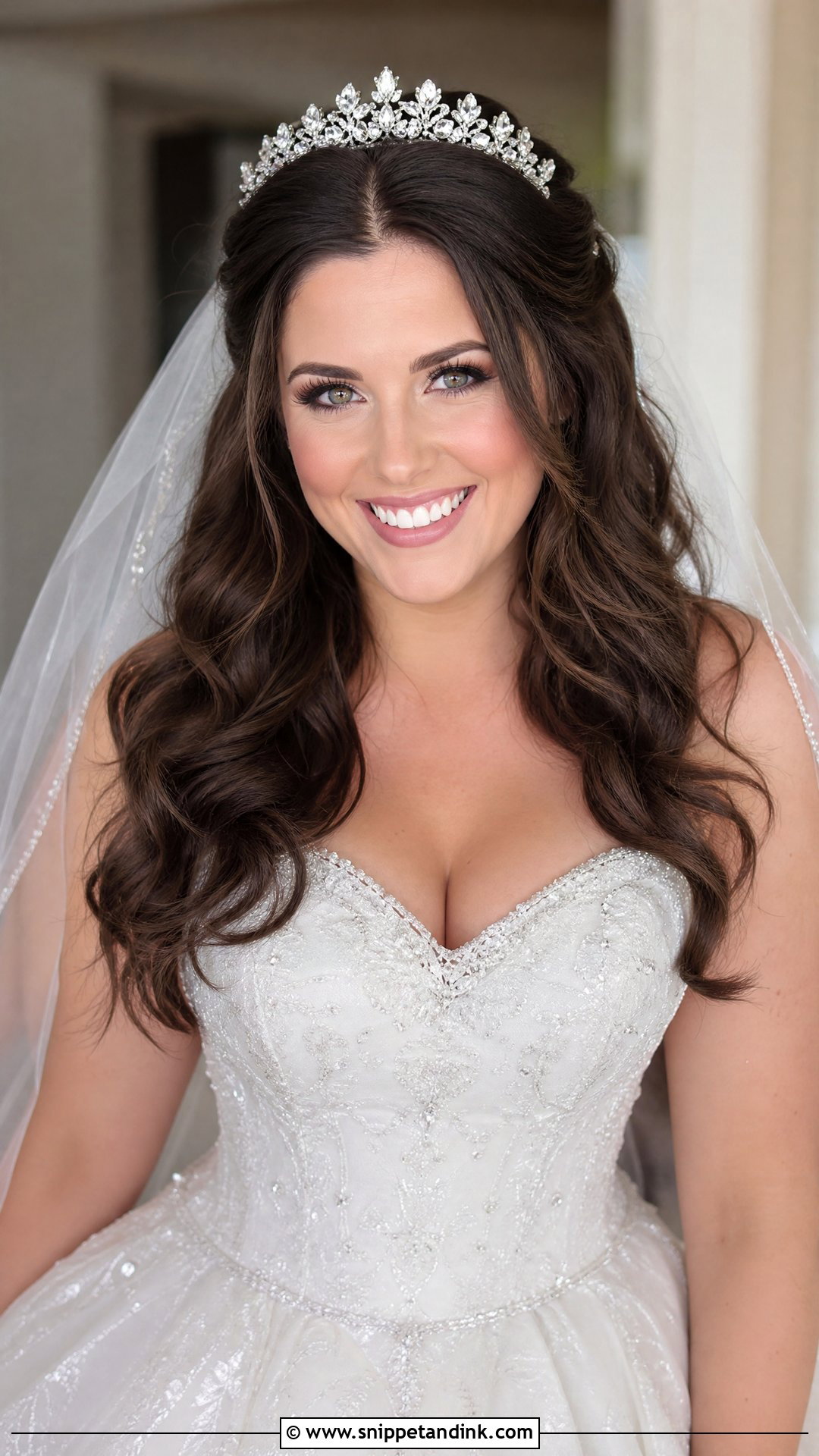
A tiara on open hair gives you the fairytale feel without the formality of an updo. It needs some root volume to sit on, otherwise it looks flat and slides back. I backcomb a small base, place the tiara just behind the hairline and pin through the frame. It pairs well with ball gowns, embellished bodices and long veils. Keeping the rest of the styling soft and leaving a few face-framing pieces stops it from looking costume-like.
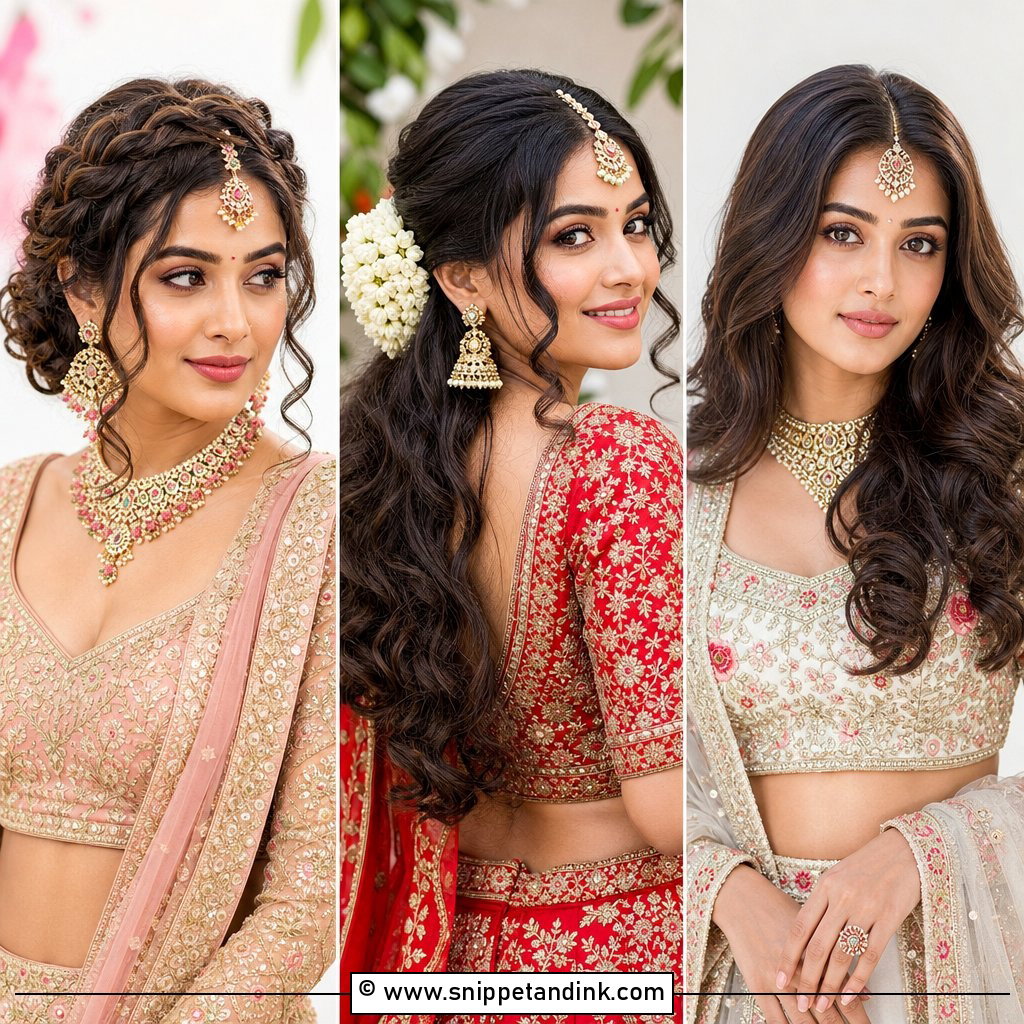
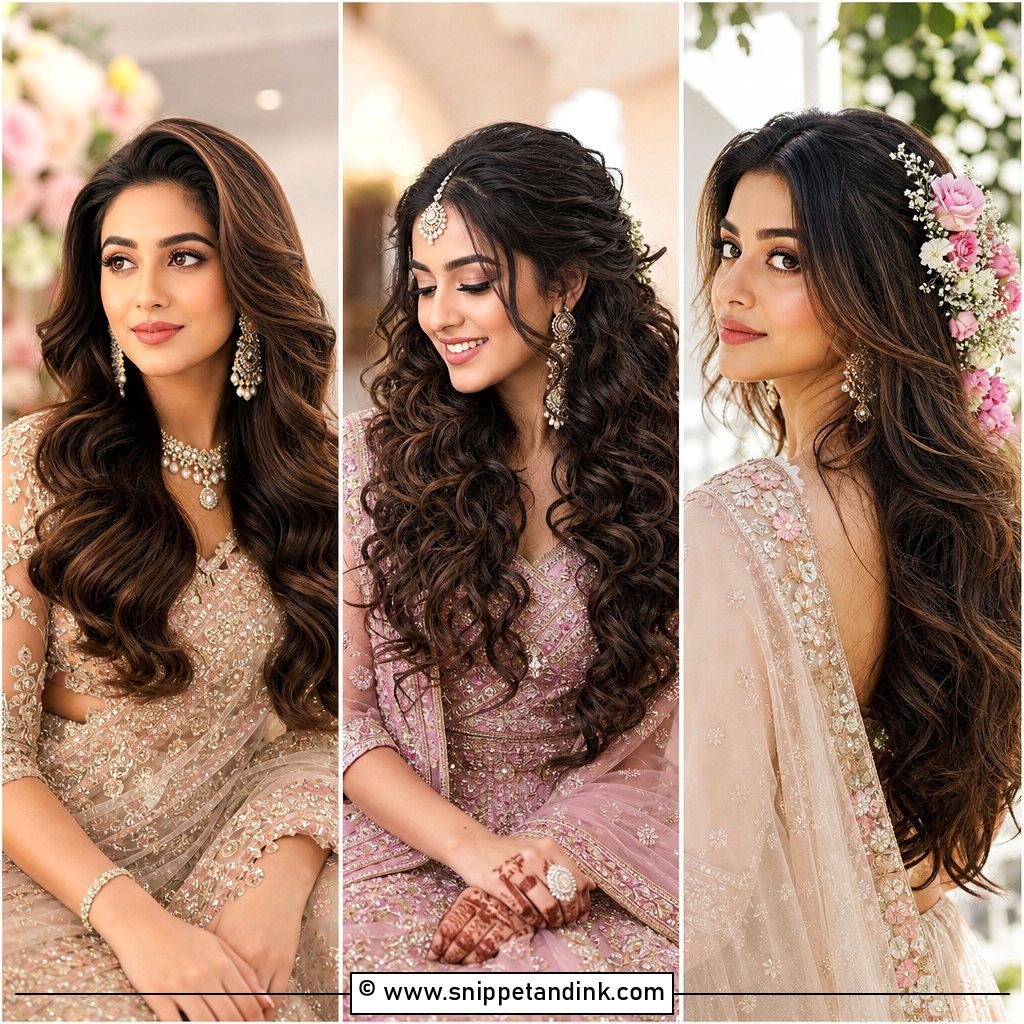
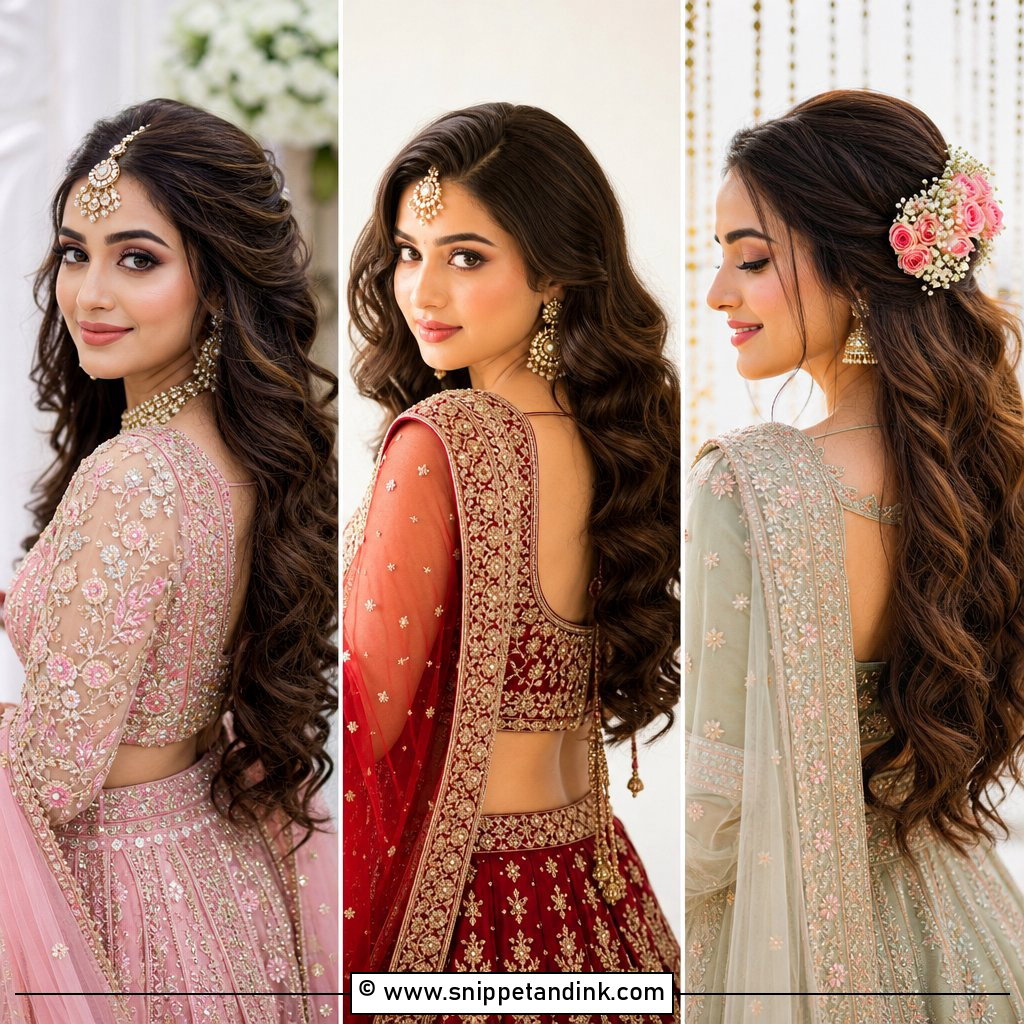
10. Open Hair Bridal With Maang Tikka
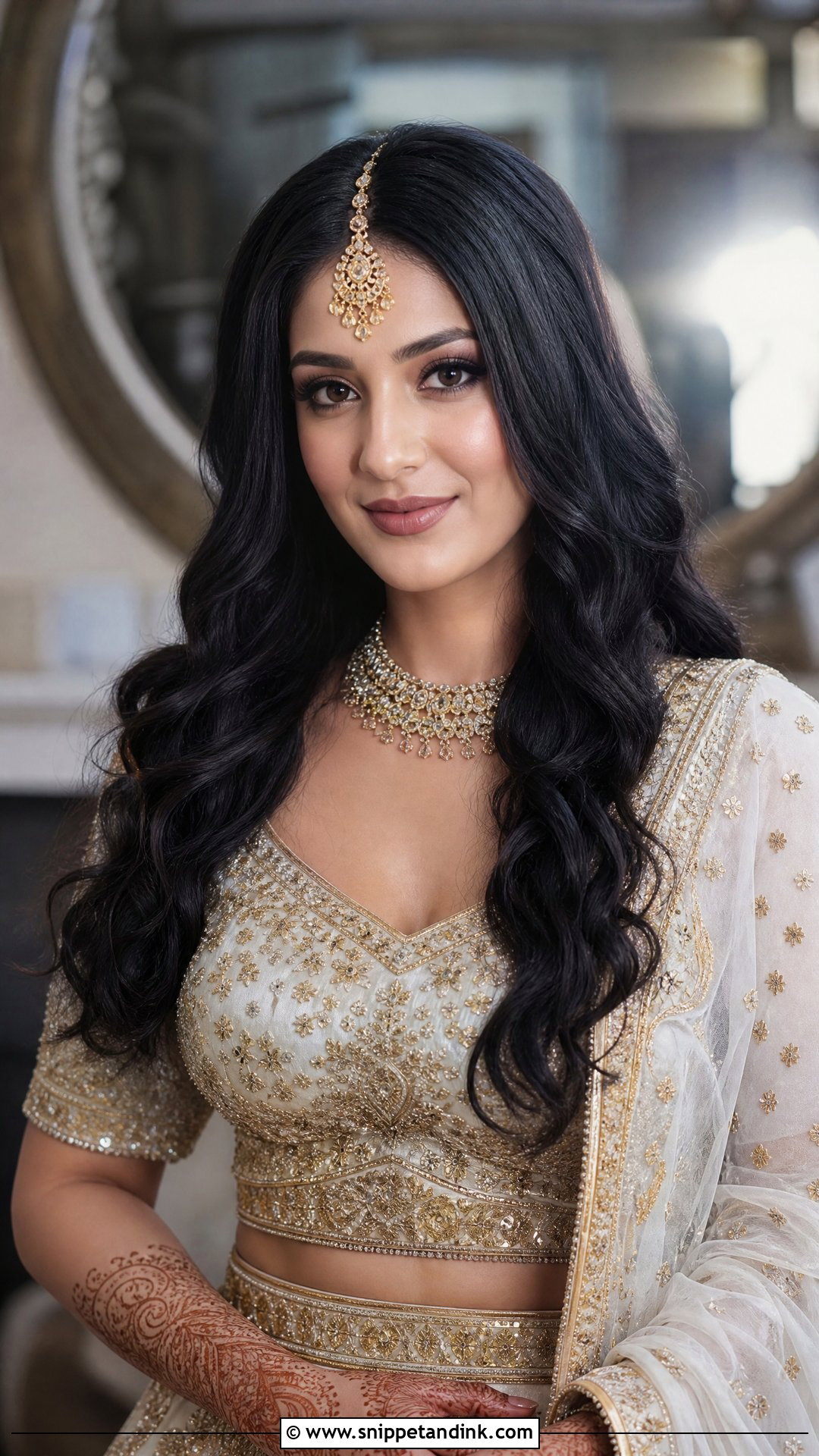
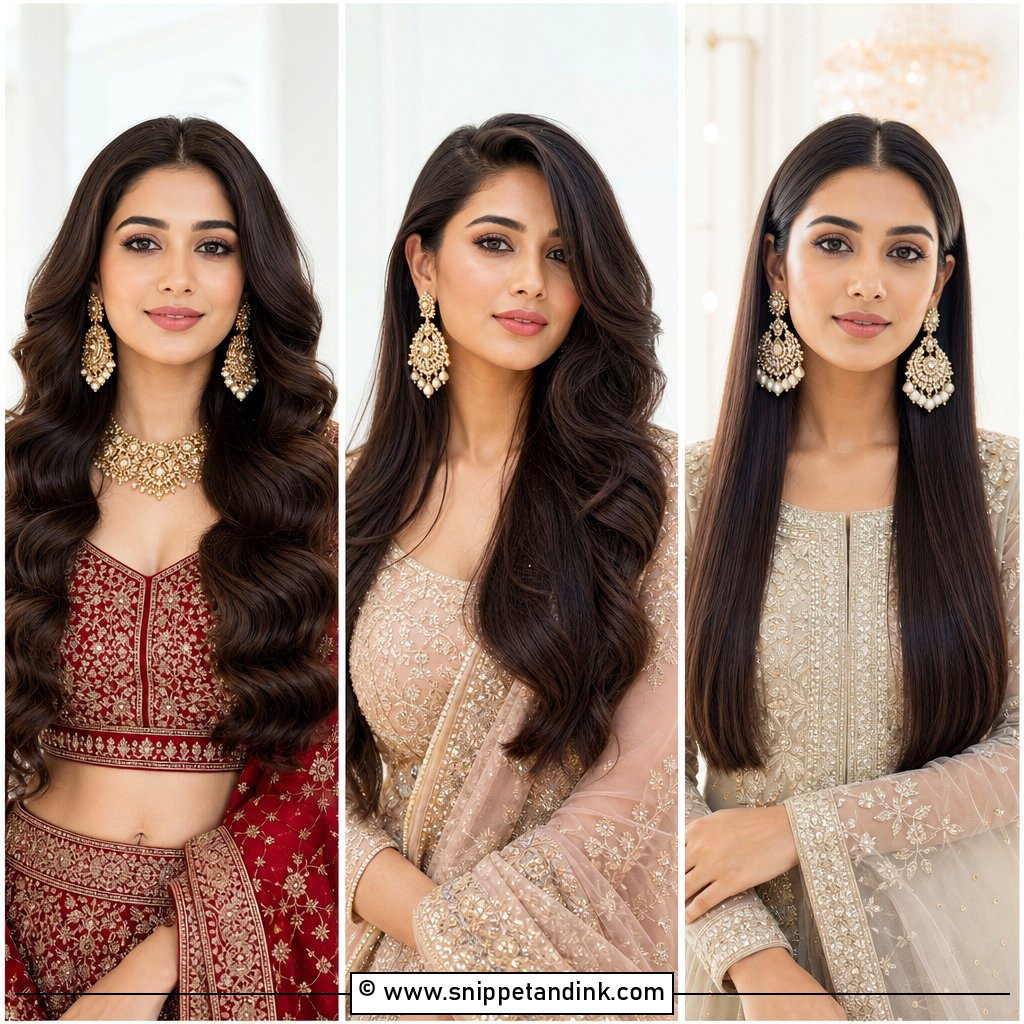
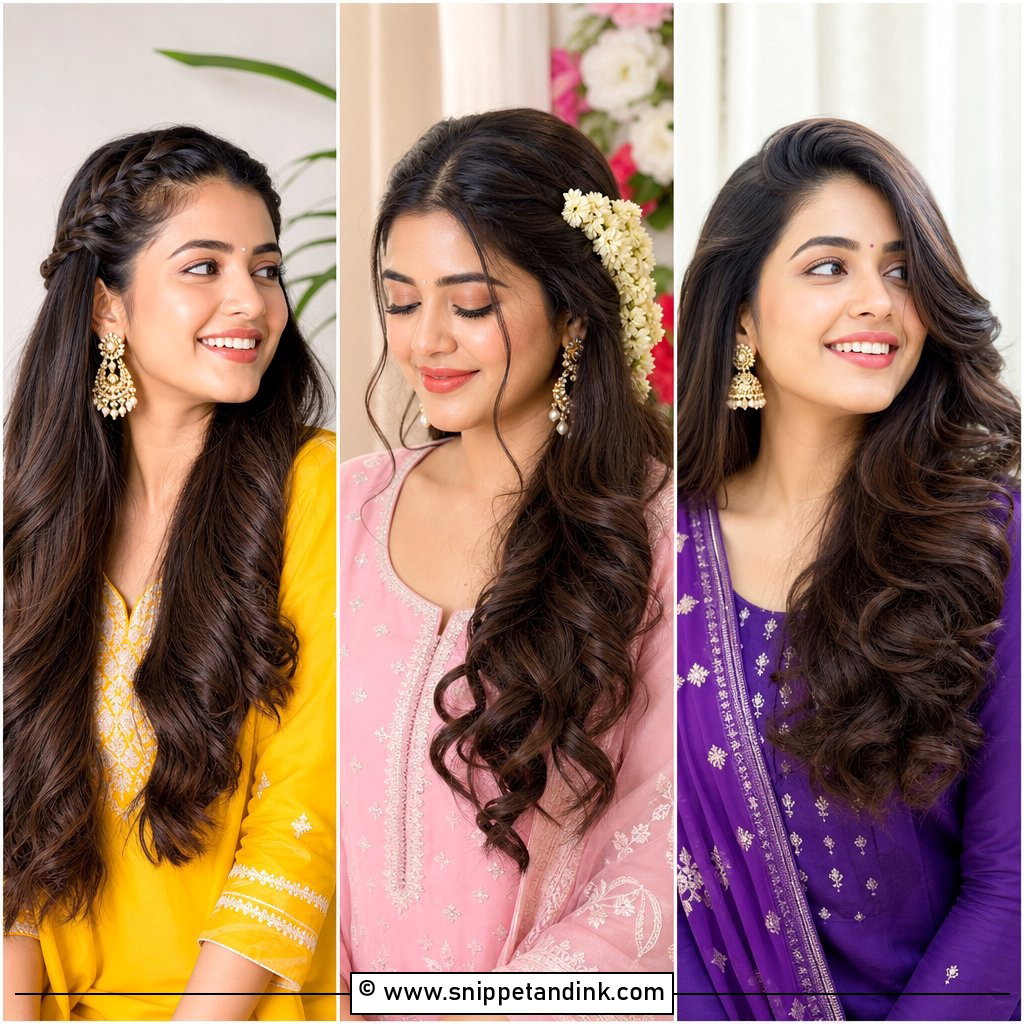
For South Asian brides who want traditional jewelry with flowing hair, the maang tikka sets the part: it has to be center, and it has to be exact. The lengths can be curled, waved or left in smooth layers. I find this style easiest for engagements, receptions and mehndi events, where the jewelry is lighter. For the main ceremony, a heavy tikka needs a secure anchor, so I backcomb lightly near the part and pin the chain into a small hidden section underneath. Waves around the shoulders balance a heavy outfit.
11. Open Hair Bridal With Dupatta
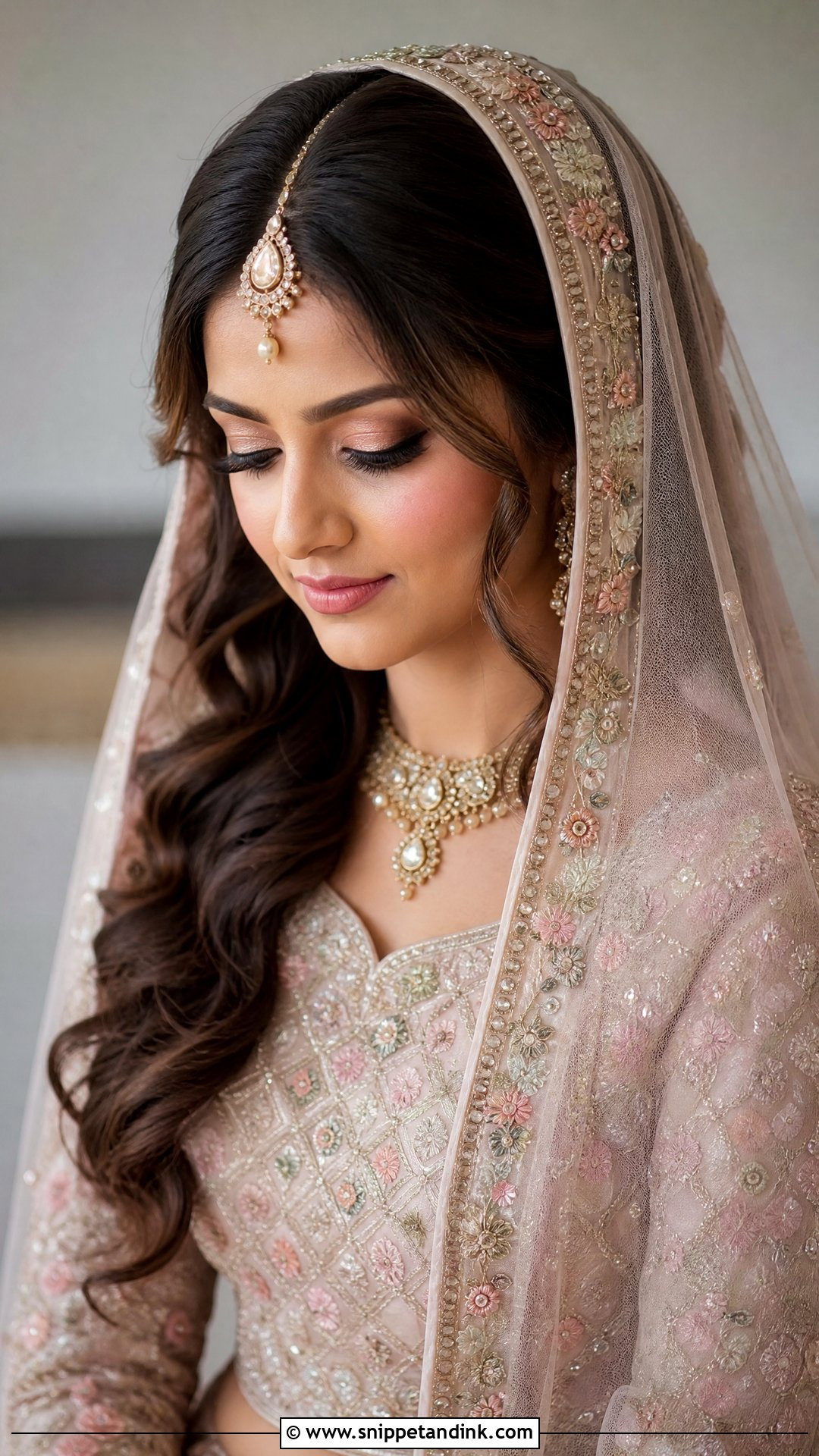
Wearing a dupatta over open hair is about engineering more than style. I build a hidden pinned base near the crown, sometimes a small twist, sometimes a flat braid, so the dupatta has something to hold without the hair going into a bun. Soft curls or waves suit lehengas, sarees and shararas. I keep the front pieces smooth so they don’t tangle with earrings or a nath chain. A light hair accessory or tikka completes it. Practice draping the dupatta at the trial, as the angle changes how the hair falls.
12. Open Hair Bridal With Flowers
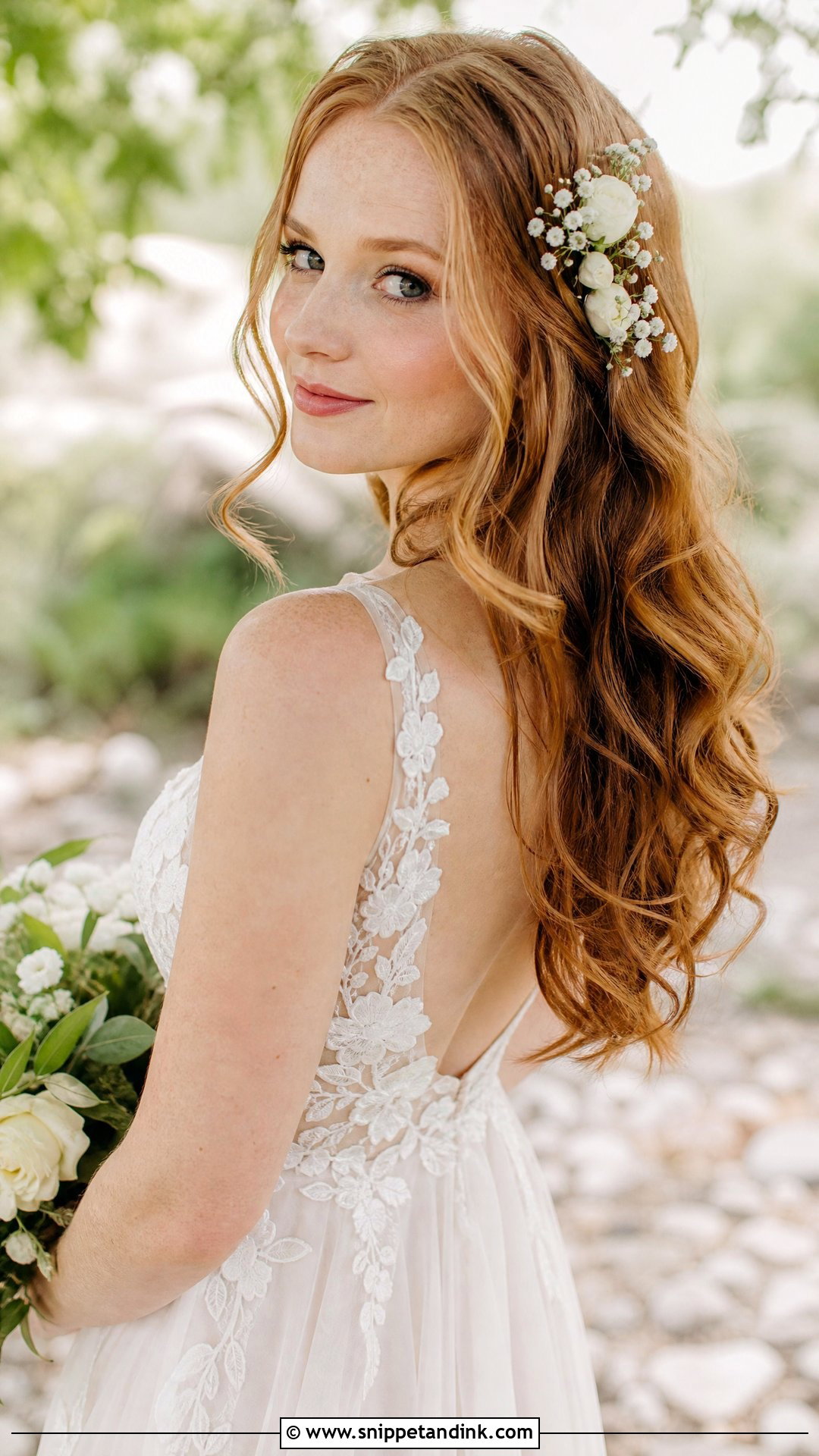
Flowers in open hair suit an outdoor or spring wedding, tucked along one side, set into a half-up twist or scattered through waves. Fresh blooms start wilting once they’re out of water, so I ask florists for sturdy varieties and wire them, or use good faux flowers for a hot day. Waves or natural curls hold floral pins better than straight hair. Place the flowers where they’ll appear in photos, ideally above the ear on the side facing guests.
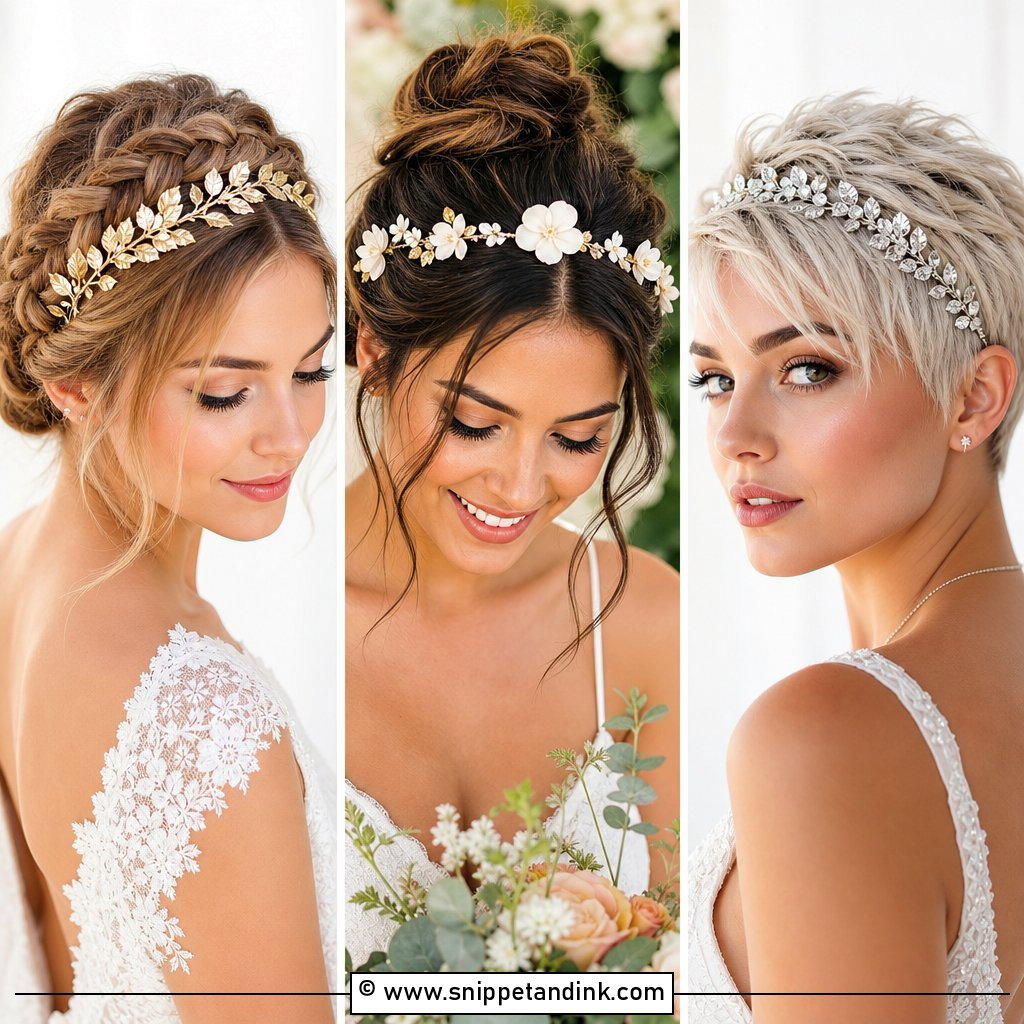
13. Open Hair Bridal With Pearls
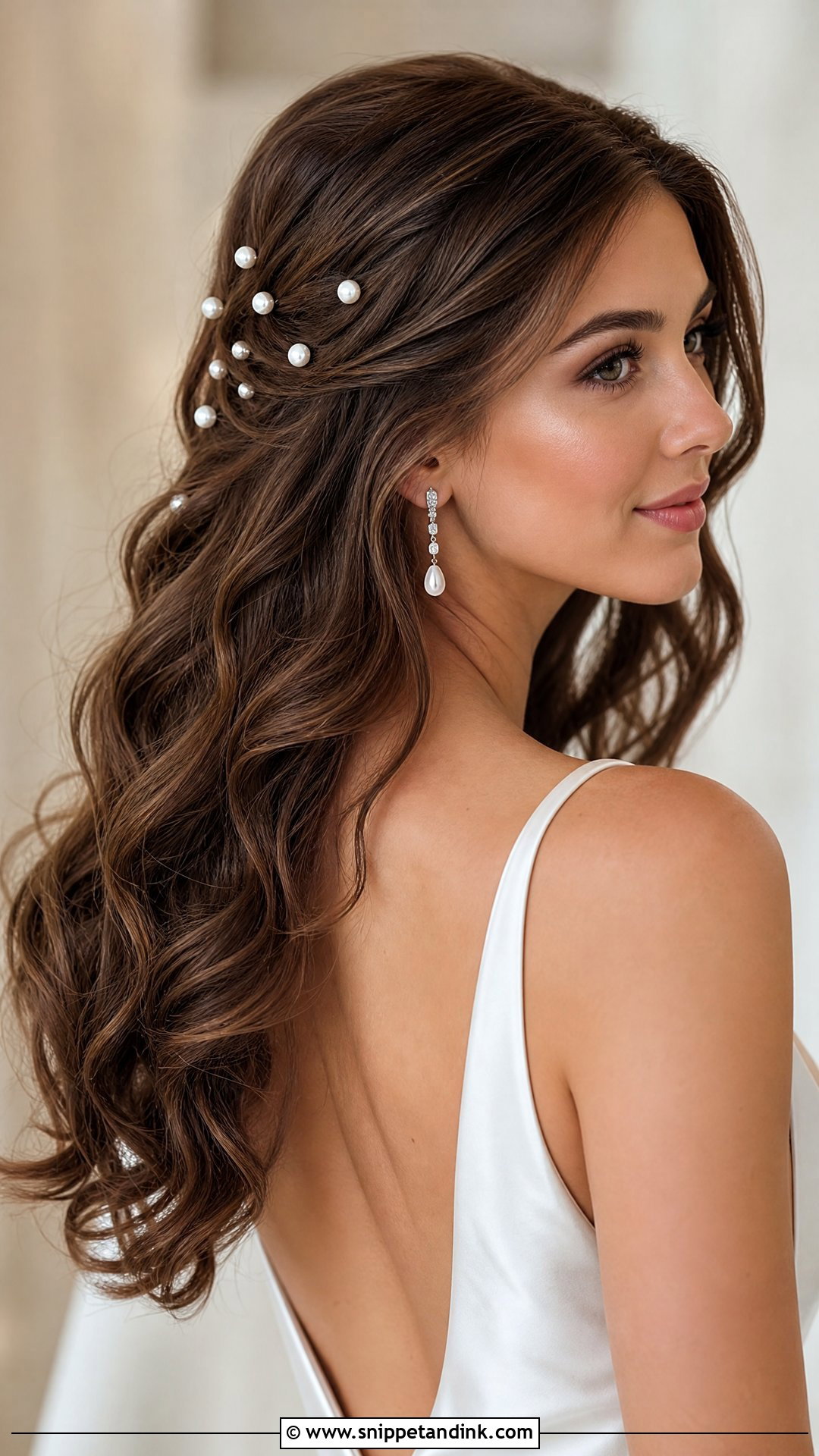
Pearls make loose hair feel more deliberate. Pins, a scatter of small accents, a delicate headband or a single comb all work with soft or Hollywood waves, half-up styles and glossy curls. They sit naturally with satin, lace and pearl earrings. On fine hair, small pearl pins hold better than a heavy comb, which drags down and slides. Space them out; a crowded cluster looks busy when the hair moves.
14. Open Hair Bridal With Braids
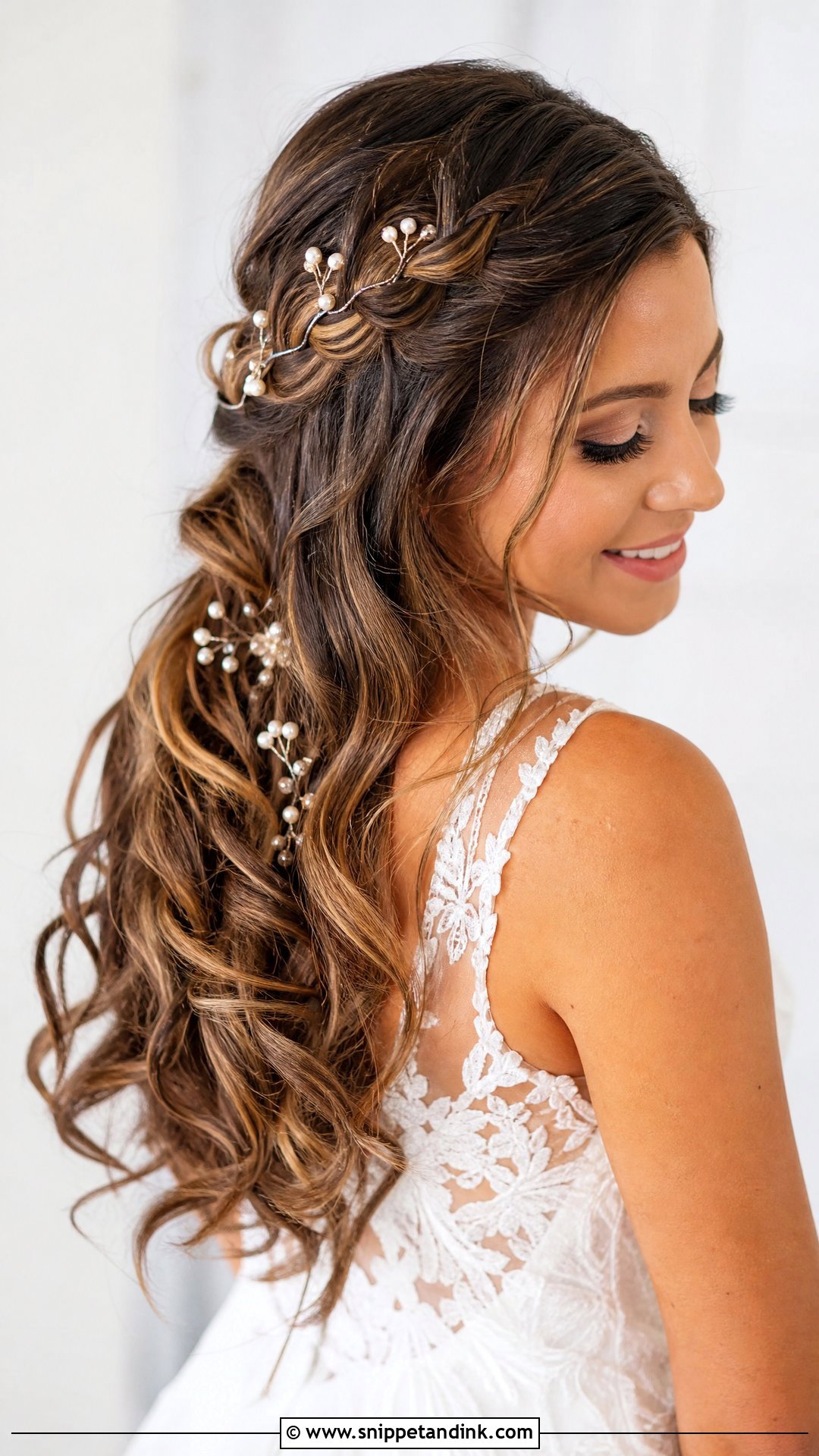
Braids add detail while keeping most of the hair down: a small crown braid, a side braid, a waterfall or a braided half-up section. The rest falls in curls or waves. I like braids because they double as anchors: a pin, flower or veil comb slides into a braid and stays there. Keep them slightly loose so they look relaxed. They’re a practical choice for a rustic or beach wedding where wind is a factor.
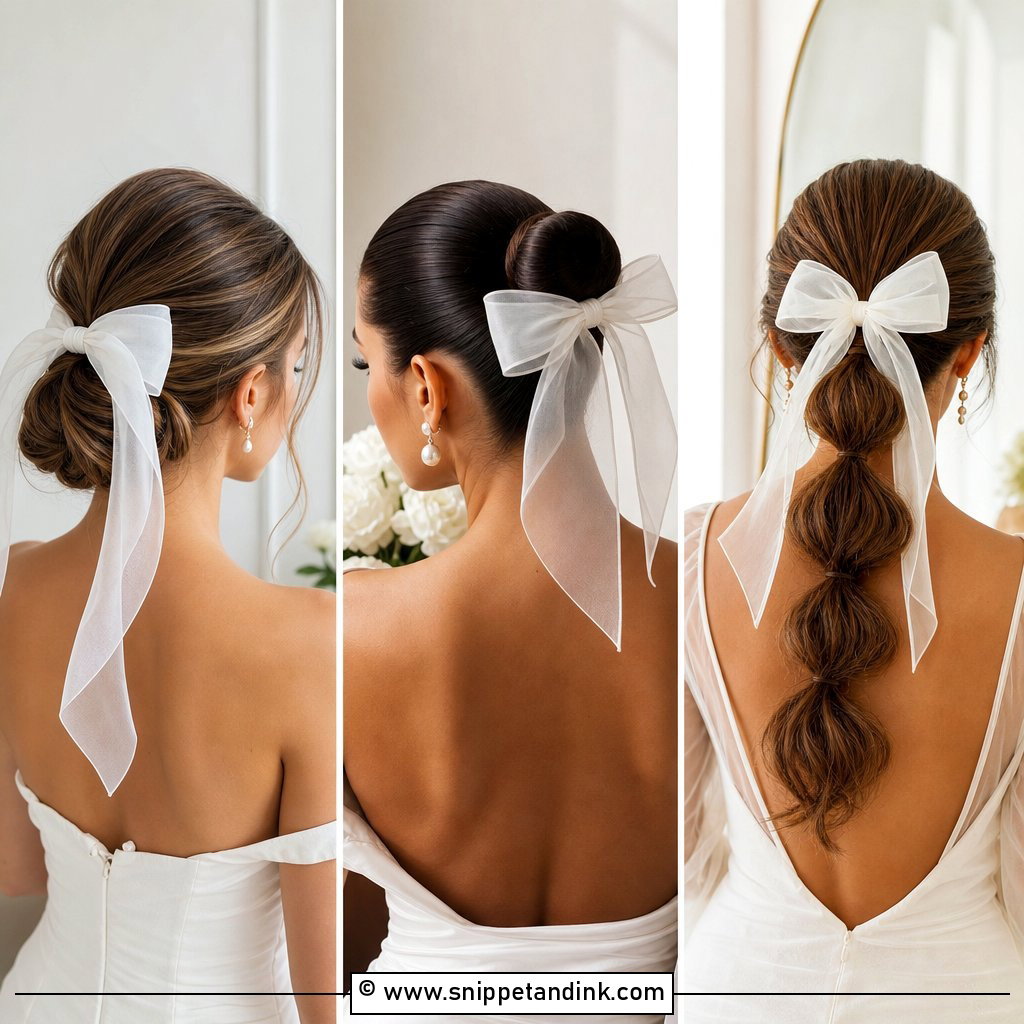
15. Open Hair Bridal Waterfall Braid
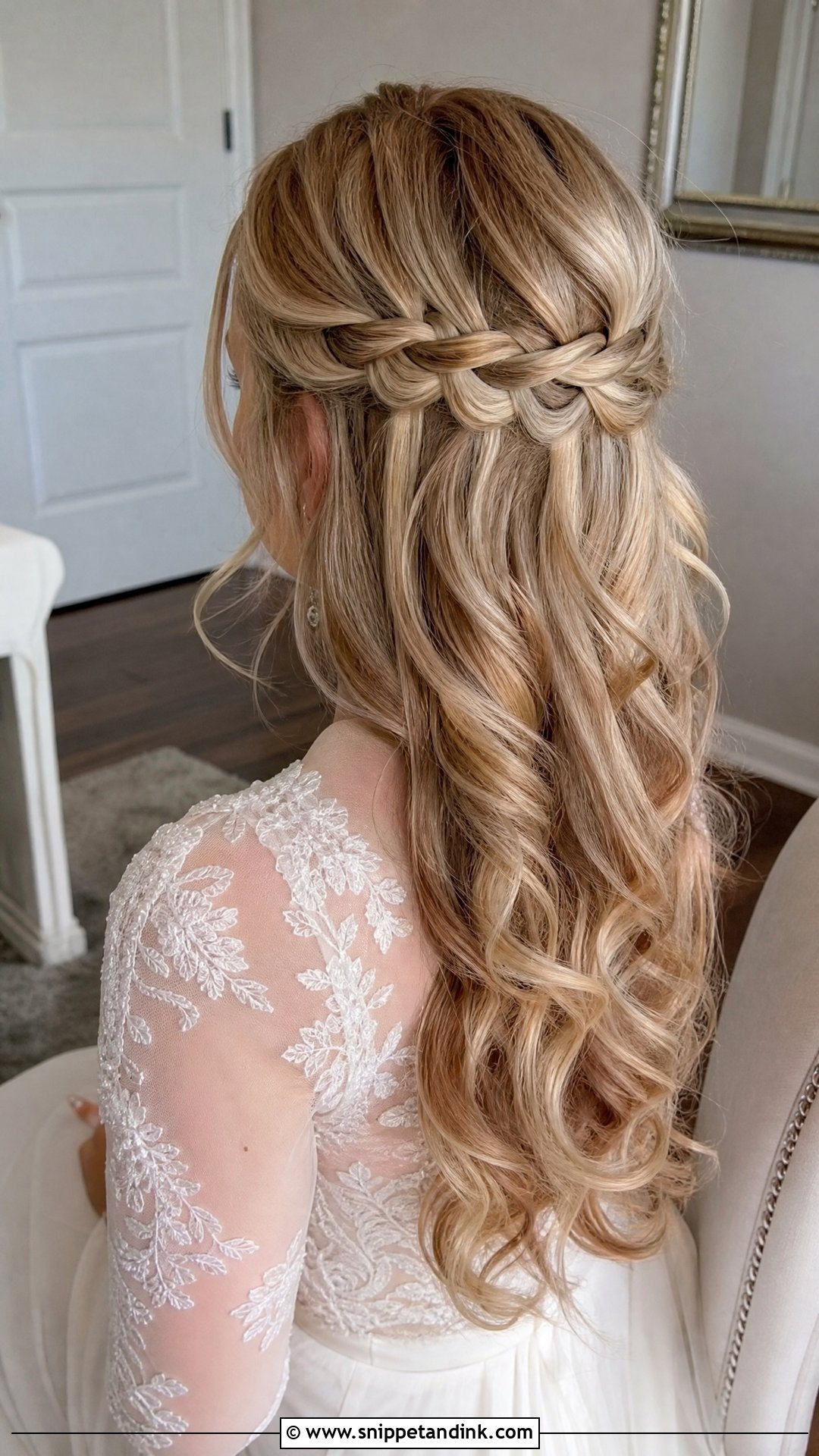
A waterfall braid runs across the back of the head, dropping strands as it goes so they blend into the curls below. It’s more detailed than simple curls and less formal than an updo. Highlighted hair shows it off best, because the braid picks up the dimension. I start it at one side for an asymmetric look or run it straight across. Fine hair can make the dropped strands look thin, so I curl them before braiding. Tiny pearls or baby’s breath add detail.
16. Open Hair Bridal Sleek Straight
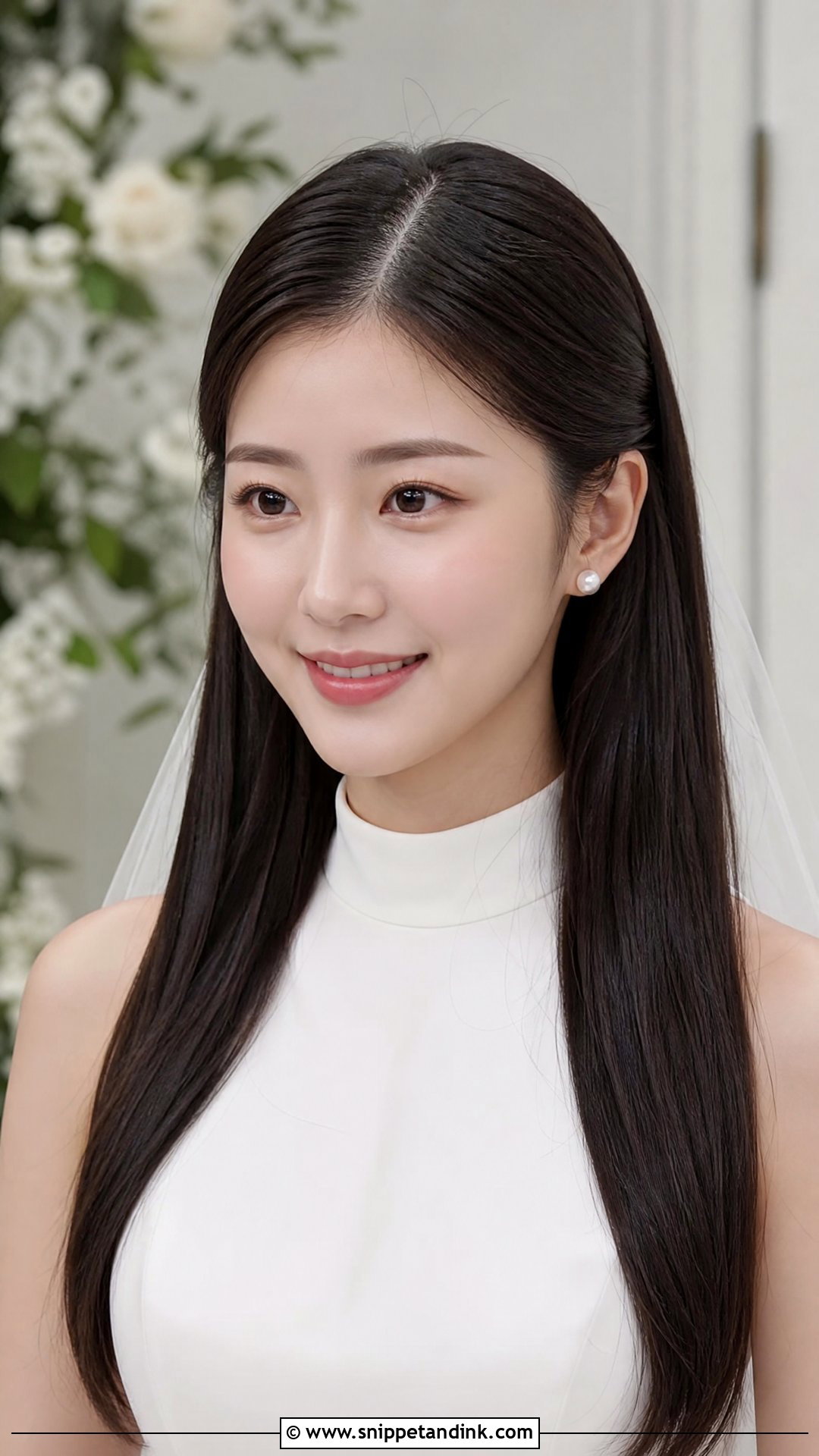
Sleek, straight hair has to look intentional, not just unstyled. I blow it out smooth, flat-iron the lengths, add a little shine serum and tuck the front pieces behind the ears. A sharp middle part or a soft side part both suit it. It looks right with a minimalist or sculptural gown, a high neckline or statement earrings. Fine hair needs a little root lift so it doesn’t cling to the scalp, and humid weather is the real risk, so plan accordingly.
17. Open Hair Bridal Blowout
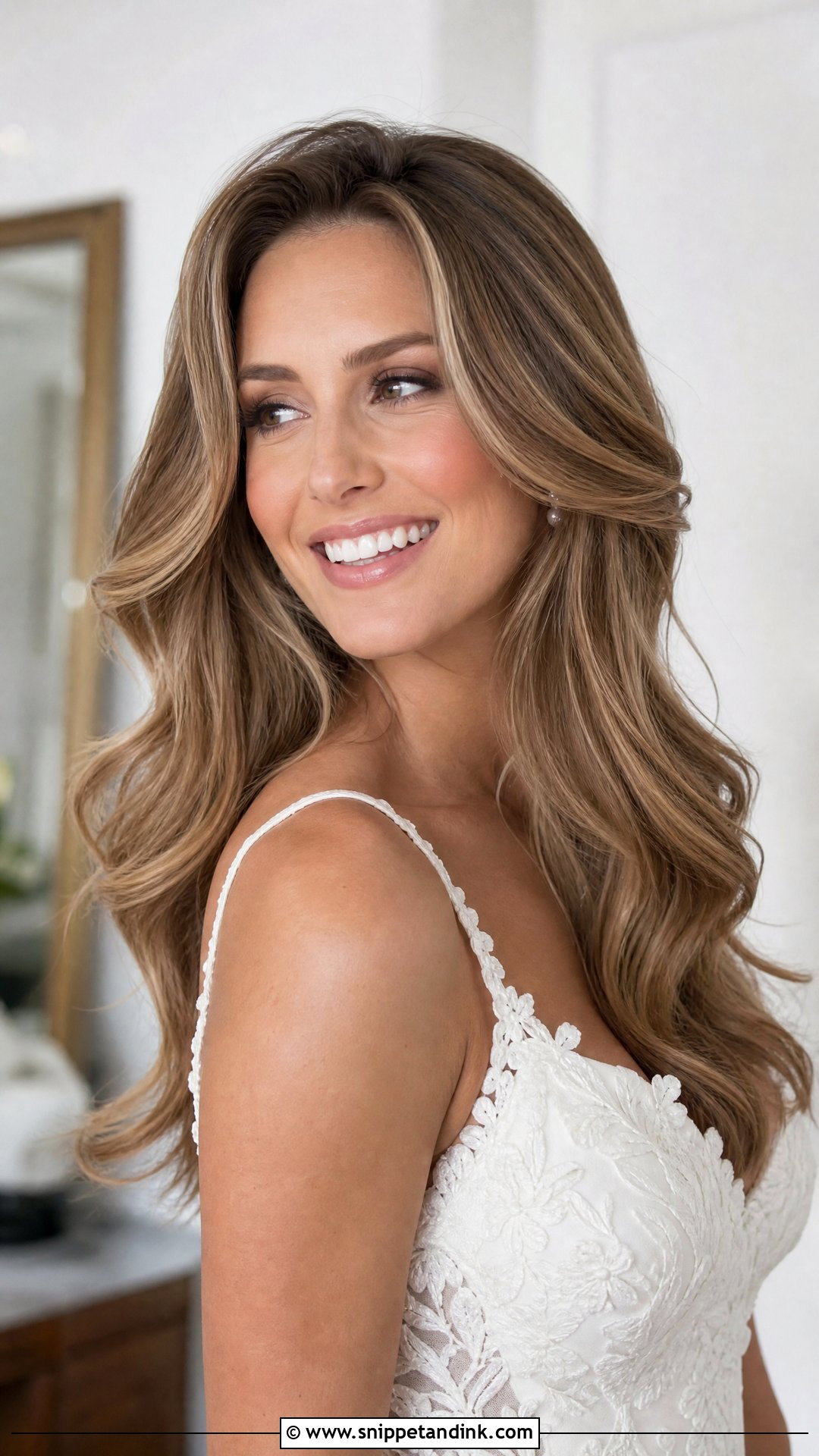
A bouncy blowout suits brides who wear their hair down every day and want to look like a polished version of themselves. The shape is smooth at the roots, full through the lengths and softly curved at the ends, and layered cuts show it best. It also works for a rehearsal dinner or civil ceremony. To make it last, I use a volumizing base product and set the front in large rollers while I do the rest. Those rollers come out last, just before you dress.
18. Open Hair Bridal For Short Hair
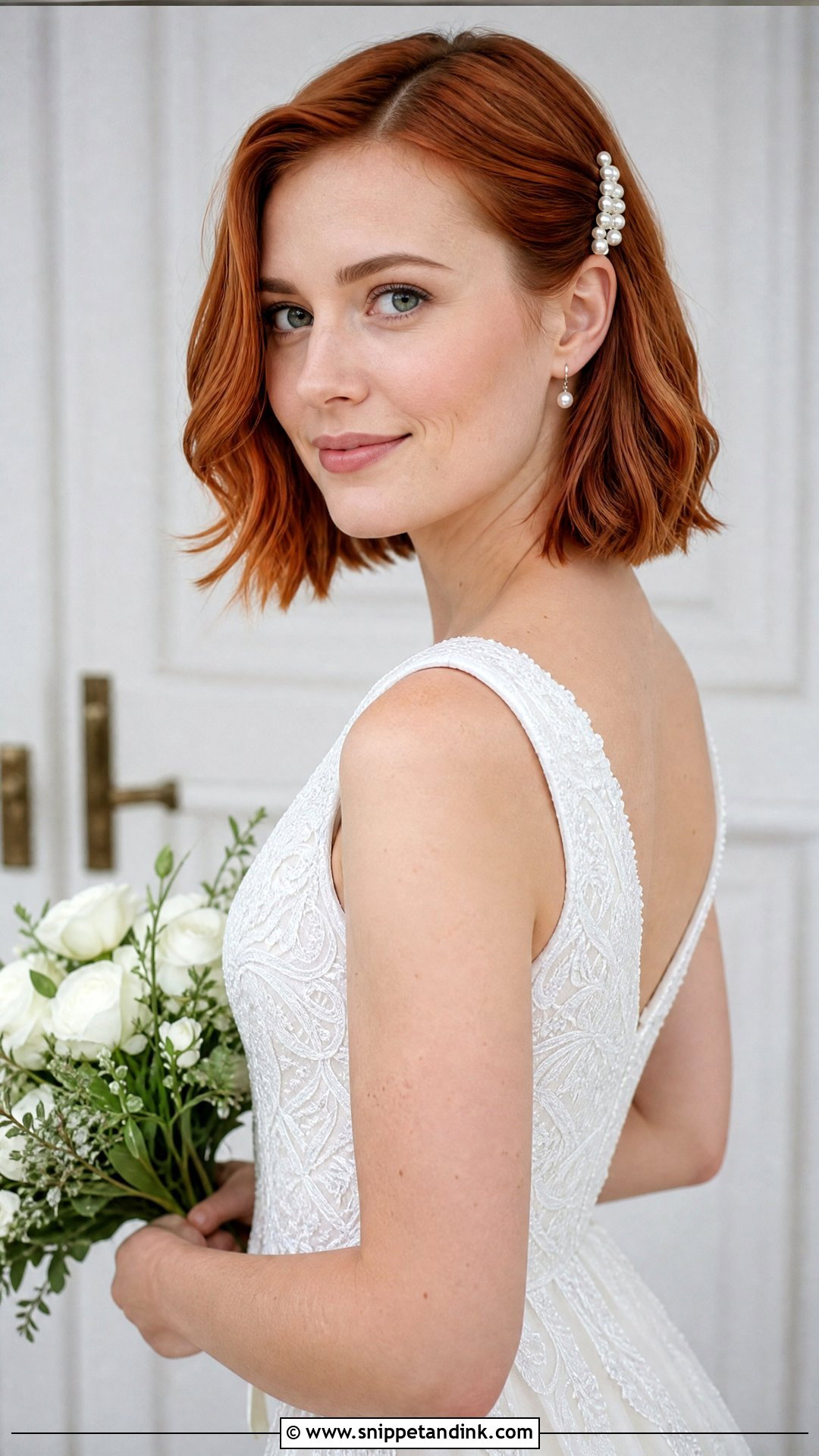
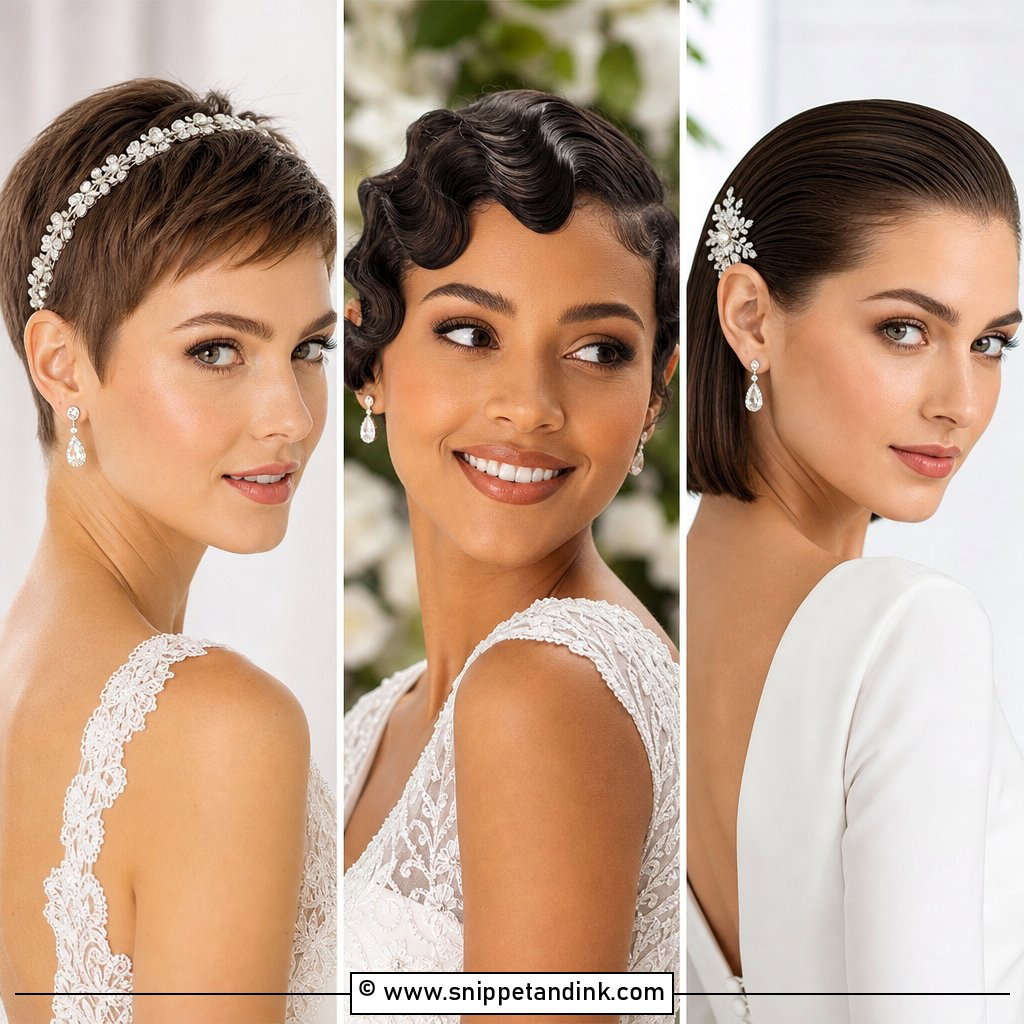
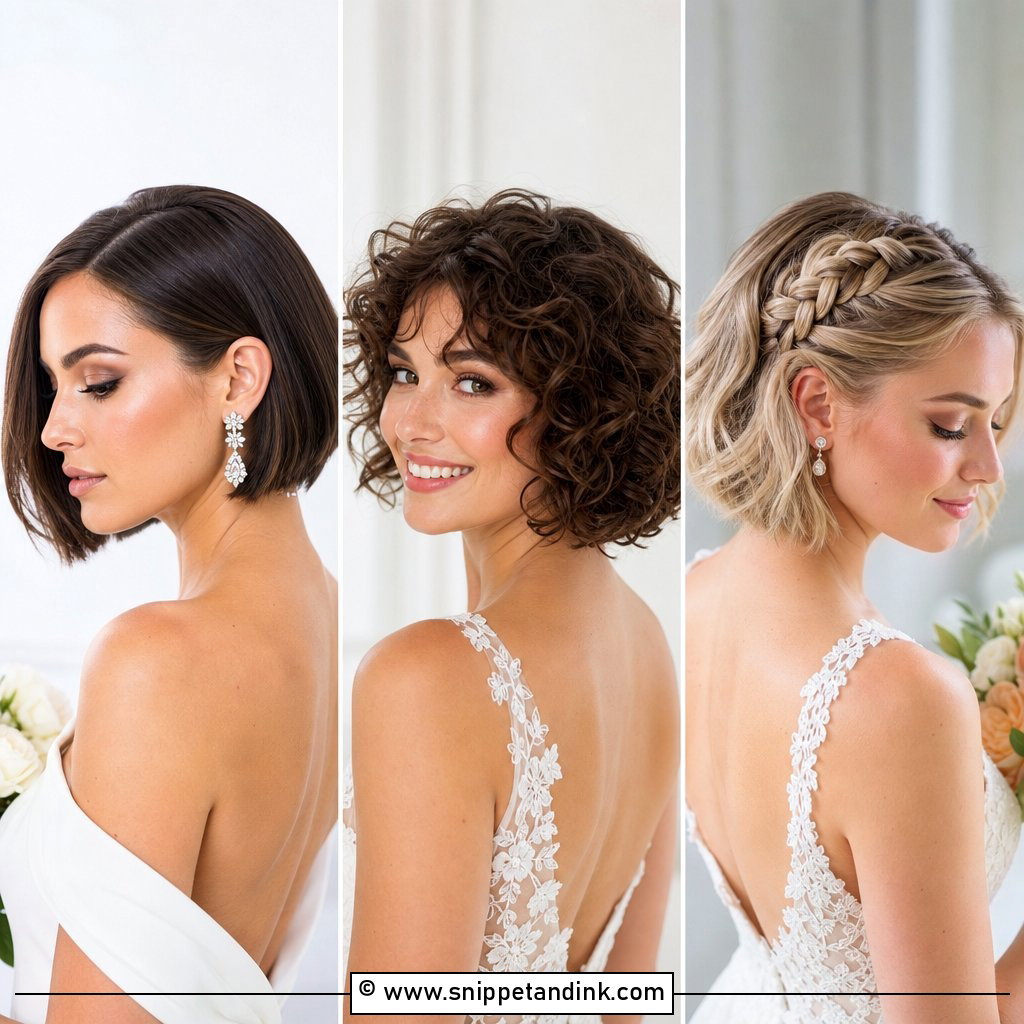
Short hair can absolutely be worn down for a wedding. A chin-length bob, shoulder-length cut or short layers can take soft bends, polished waves or a sleek finish. A pearl clip, mini veil, headband or side comb makes it bridal. Shine and a clean shape matter more than volume on short hair, so I spend more time on smoothing than curling. Book a trim a week or two out so the ends are crisp but not freshly chopped. It’s also the style that shows statement earrings and detailed necklines most clearly.
19. Open Hair Bridal For Curly Hair
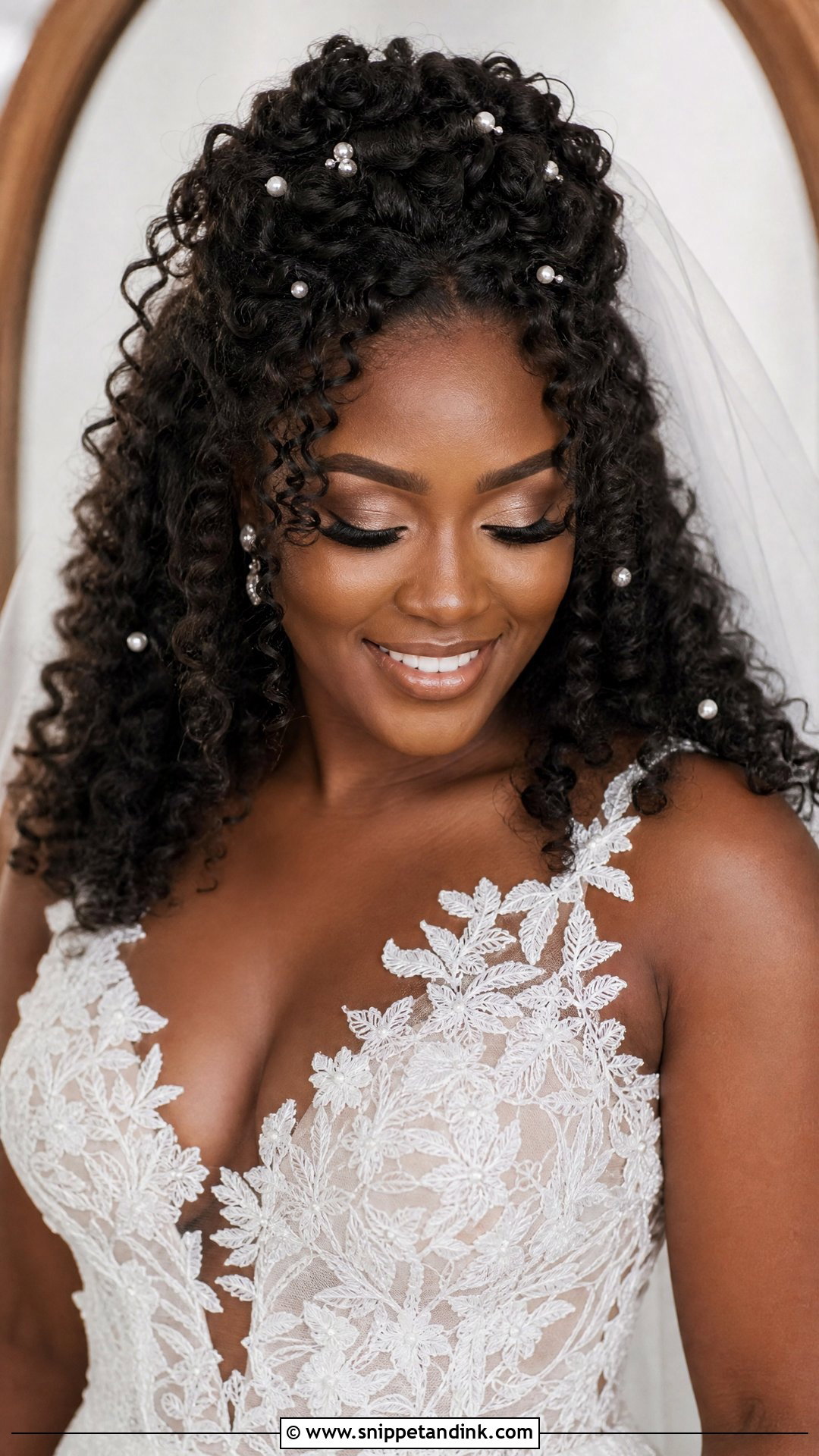
Curly hair down is about defining texture, not changing it. I shape the curls with layers, define them with curl products and arrange them so the volume frames the face. Floral pins, pearls, a veil or a half-up curly crown all sit well in curls. I often go curl by curl, wrapping individual pieces around a finger to tidy the pattern. A trial is especially important here: shrinkage, humidity and product choices all change the result. Done well, it looks like you on your best hair day.
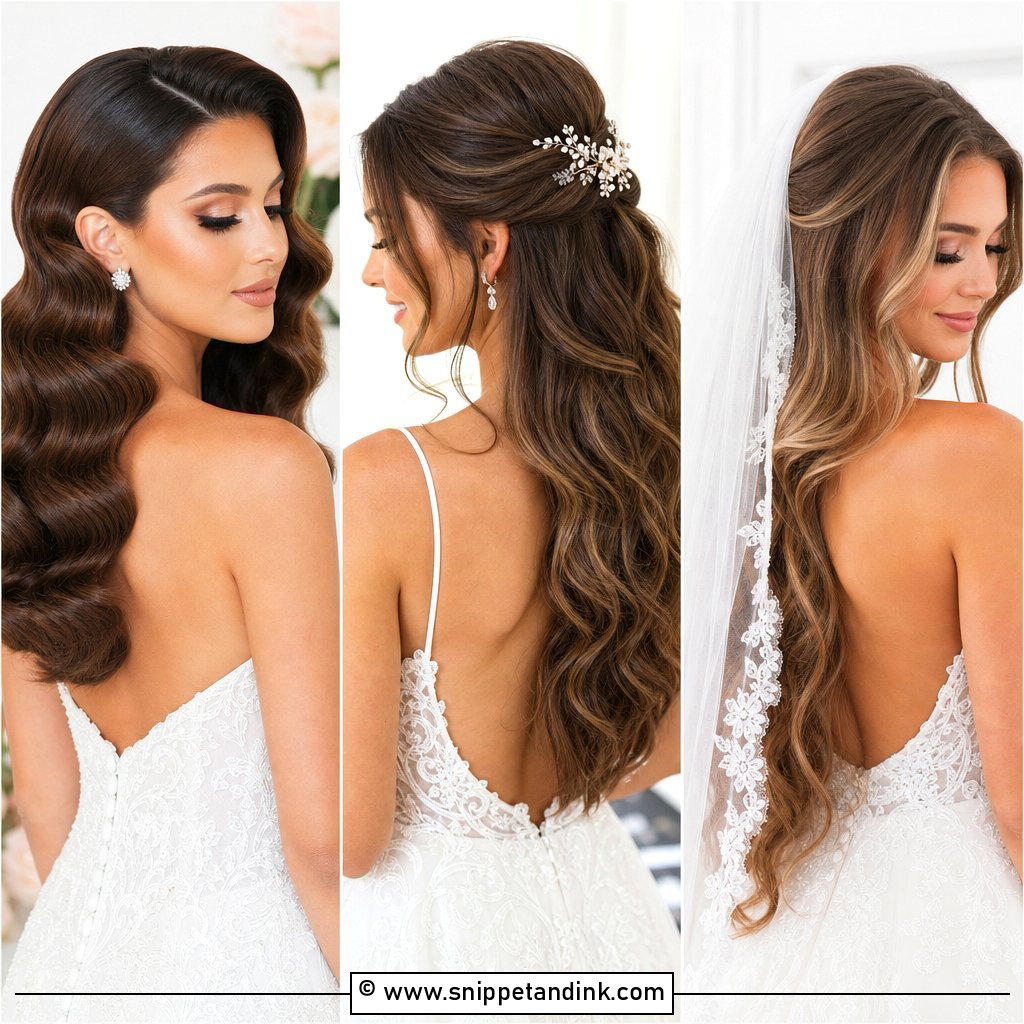

20. Open Hair Bridal For Long Hair
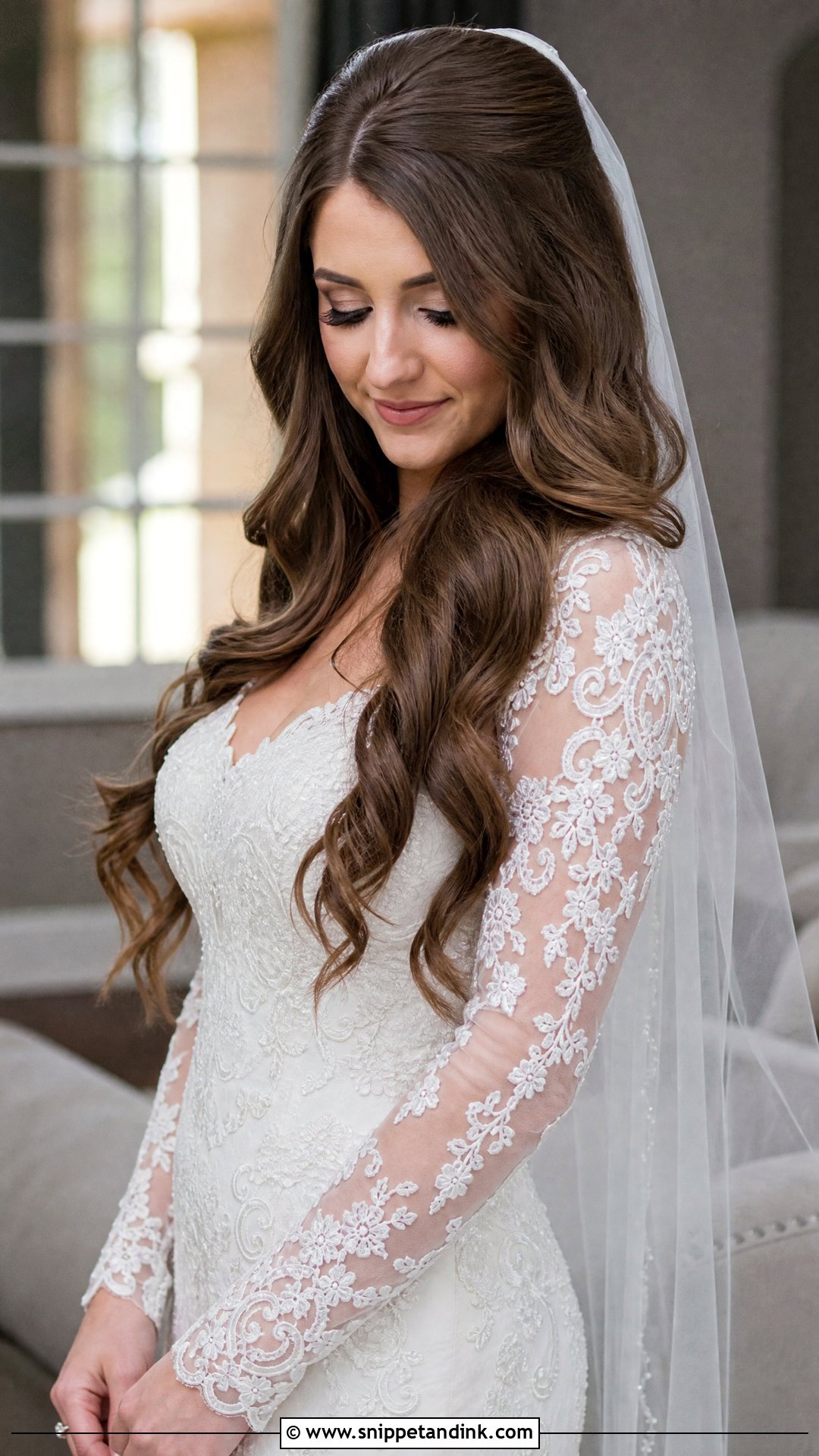
Long hair is the most dramatic way to wear it down, and the heaviest. Brushed waves, soft curls, Hollywood waves and flowing half-up looks all show length and shine, and they pair with long veils and fitted gowns. Weight is the problem: very long hair pulls curls straight within hours. Root lift, setting clips and, if needed, extensions for fullness help the shape last. Trim the ends a couple of weeks ahead so they look healthy rather than dry.
Turning Ceremony Waves Into a Reception Look
Plenty of brides wear their hair down for the ceremony and then want it off their neck for dancing. That’s easy if it’s planned in the morning and hard if it isn’t, because curled, sprayed hair doesn’t sweep up neatly without an anchor.
How I Set It Up
- I hide a small flat braid or twist at the back of the head, under the top layer, before I curl.
- I give a bridesmaid four to six pins, a small elastic and a clip or comb that matches your jewelry.
- At the reception, the lengths twist into a low knot pinned onto that hidden braid, which takes a few minutes and needs no mirror skills.
- The front pieces stay out, so the look still matches your morning photos.
If you’re wearing your hair open across several events, such as a mehndi, ceremony and reception, the same trick works in reverse: curl once, wear it up for the heaviest jewelry and dupatta, then release it later in the evening.
Your Texture, Venue and Veil Settle the Rest
Wearing your hair down gives you softness and movement, whether you lean toward waves, curls, sleek hair, flowers, pearls, braids or cultural bridal accessories. What makes it work is matching the style to your natural texture, venue, weather and veil, and then testing it. Book a trial in something with the same neckline as your dress and wear the look for a few hours afterward. If it still looks right at dinner time, you’ve found your style.
You'll Like These Ideas:



Leave a Reply