
Your hair frames your face in every photograph, holds the veil and decides how the neckline reads, so I treat it as part of the dress, not an extra. The styles that work best on a wedding day aren’t stiff. They’re built to move through hugs, a car ride and a dance floor, and still look deliberate afterwards. Below are twenty I do often: low buns and chignons, half-up waves, Hollywood waves, braids, ponytails, natural textures and short cuts. With each one I’ve noted the hair it suits, the dress it pairs with, and what tends to go wrong.
Three Questions I Ask Before Suggesting Up, Down or Half
Pictures tell me what a bride likes. These questions tell me what will actually work on her day.
How long will you be wearing it?
A two-hour courthouse ceremony and lunch can carry loose waves easily. A twelve-hour day with a first look, a ceremony, portraits and dancing is a different story. The longer the day, the more I lean toward pinned or braided styles.
What will the air be like?
Humidity relaxes curls and makes smooth hair frizz. Sea air does both. Dry heat is kinder to curls but leaves sleek styles flat by evening. An outdoor summer wedding is the strongest case for an updo.
How do you normally wear your hair?
If you always wear it down, a slicked-back bun can make you feel like someone else in the mirror. I’d rather move you one step from your everyday hair than three.
Once those three answers are clear, the photo folder usually narrows itself. A bride who wears her hair down daily, marrying outdoors in August, often ends up happiest in a soft half-up style with a braid holding the top section, which keeps her recognisable while giving the humidity less to undo. I’d still test the full updo version at the trial, so the decision is made by looking in the mirror rather than by guessing.
1. Bridal Low Bun
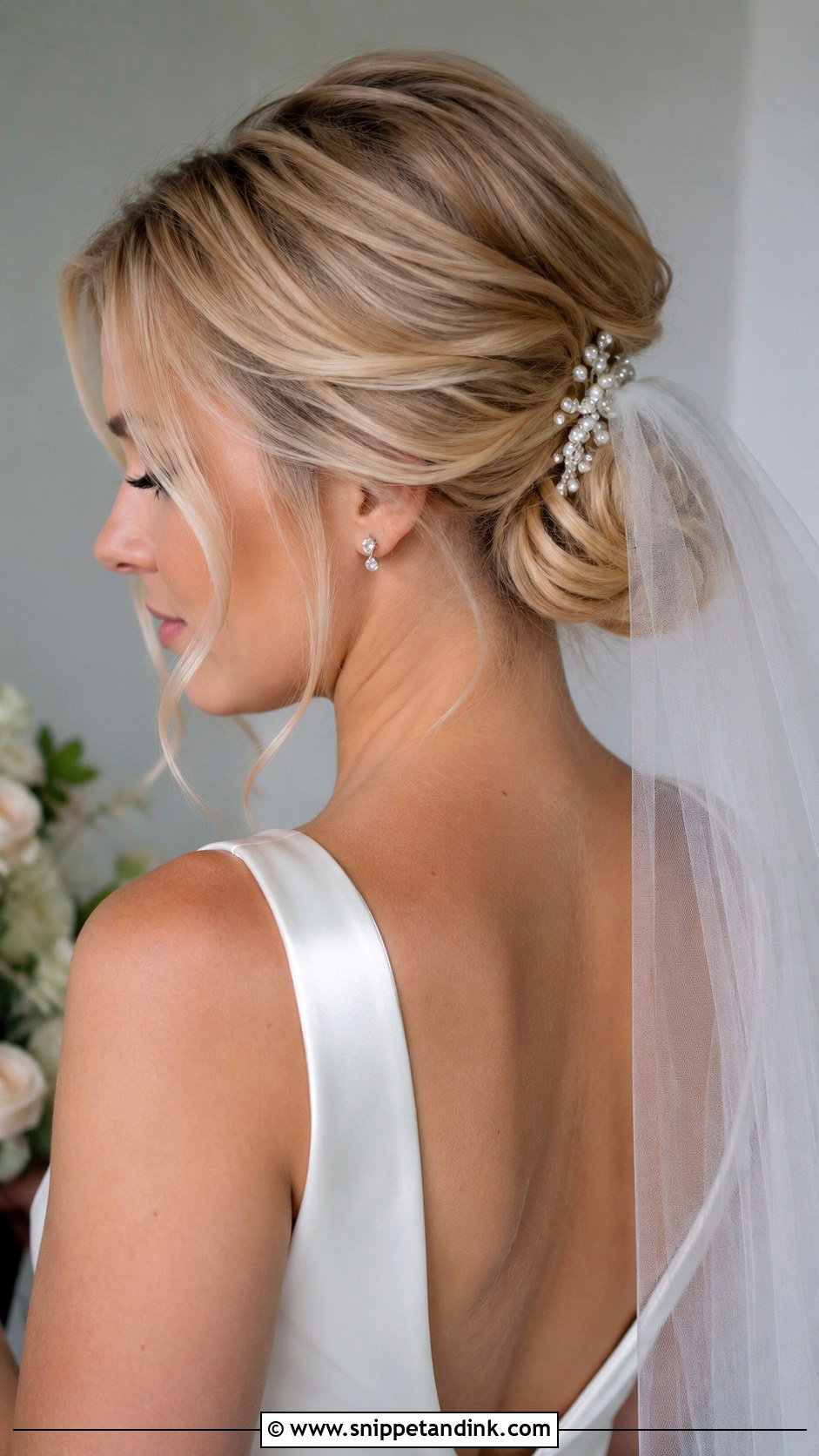
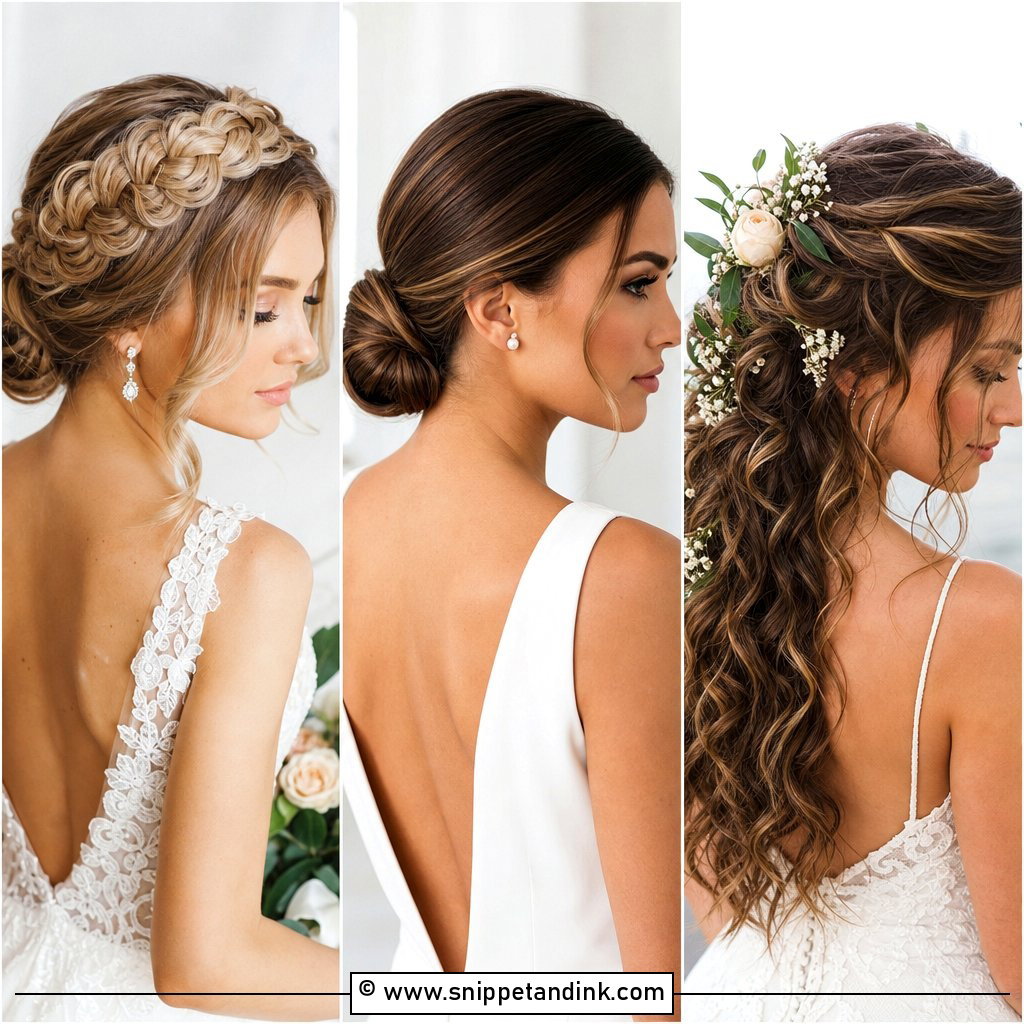
If a bride can’t decide, I usually start here. A low bun sits close to the nape, so it’s comfortable under a veil, with combs or pearl pins, and it leaves an open back visible. It suits a ballroom, a church or a garden. At the beach it needs firm anchoring, because sea wind finds every loose pin. A little volume at the crown softens it; a smooth finish suits a sleek dress. A sharp center part looks modern, while a few loose pieces at the face make it gentler.
2. Bridal Chignon
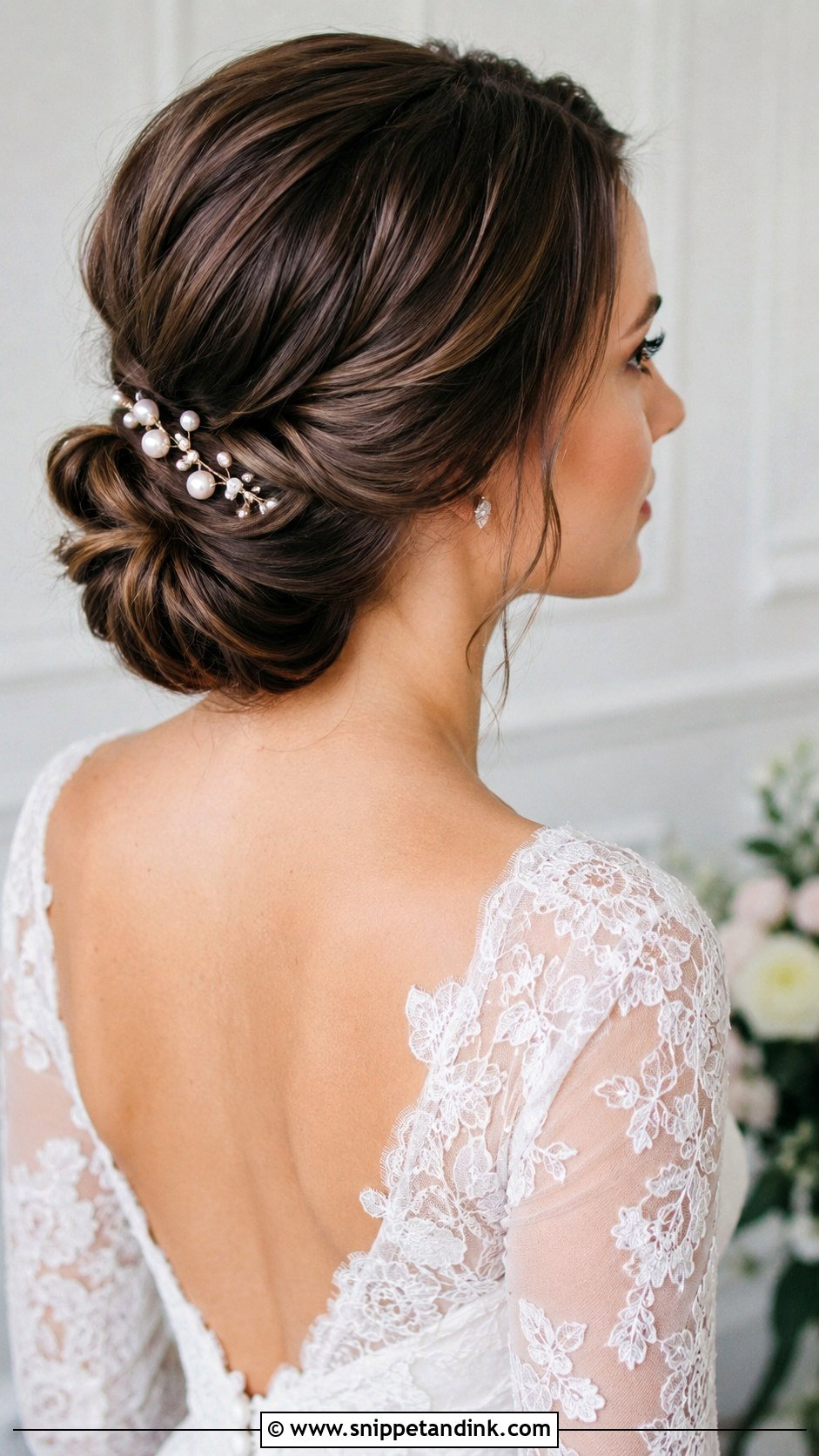
A chignon has more shape than a plain bun: rolled, twisted or knotted sections that make it look more styled. It suits satin, lace, long veils and pearls. In warm weather it keeps hair off your neck, which brides appreciate by the time the speeches start. I build it on a hidden ponytail so the pins have a firm base, then shape the rolls around it. Smooth reads classic; textured reads softer. Add light tendrils around the face for a less formal feel.
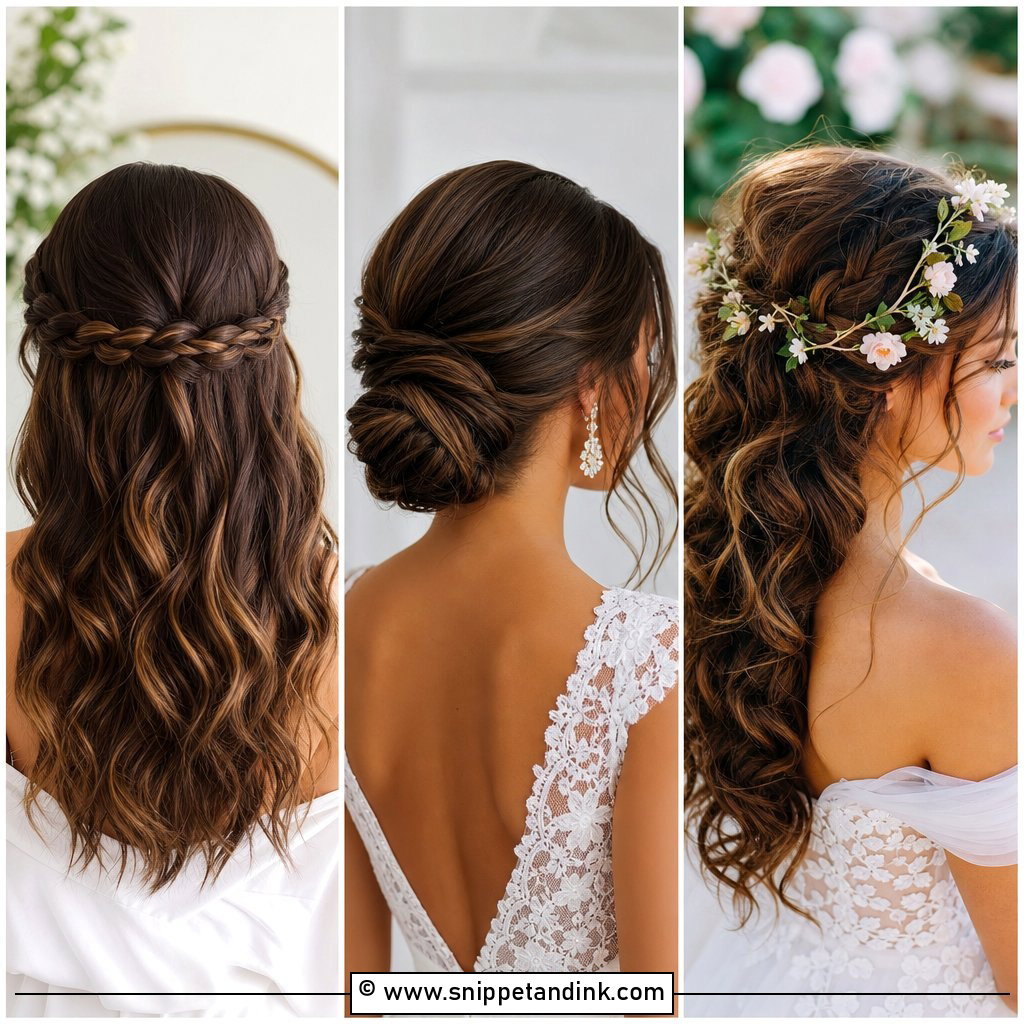
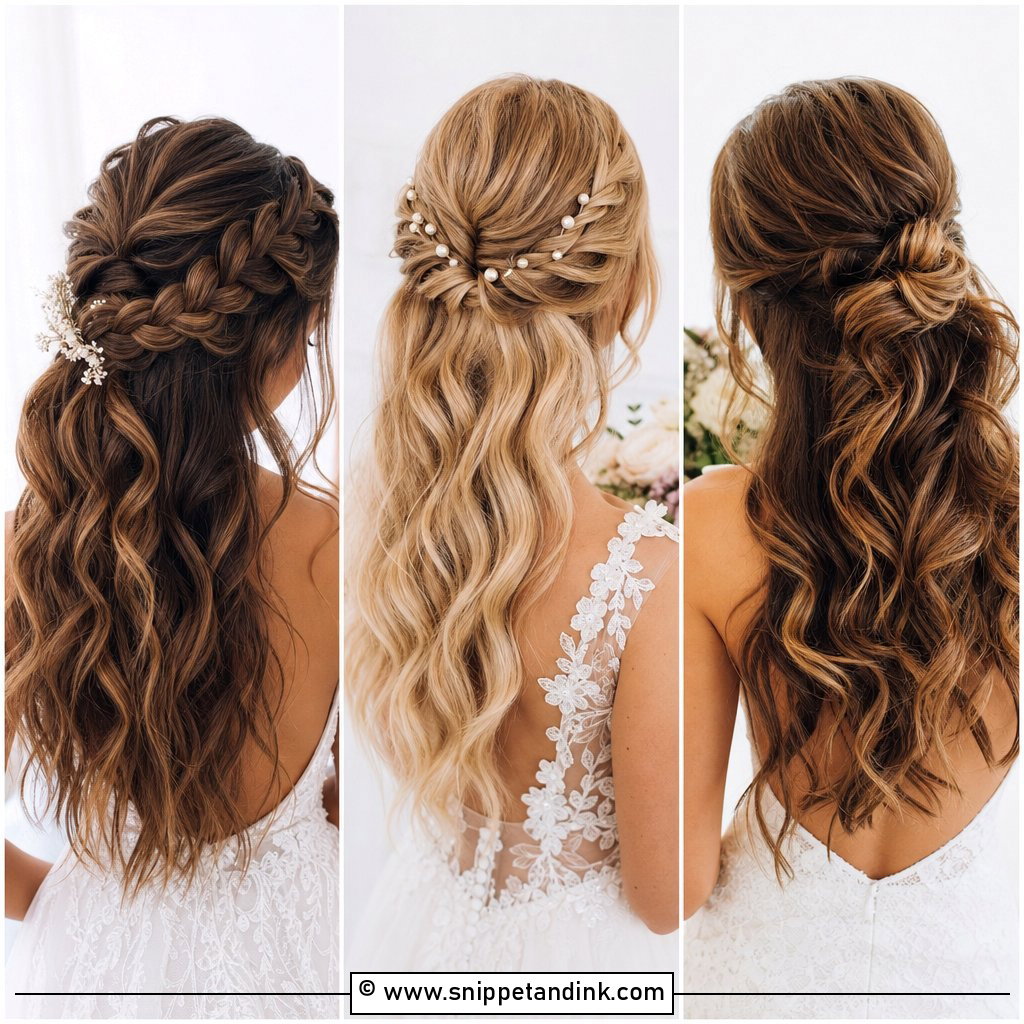
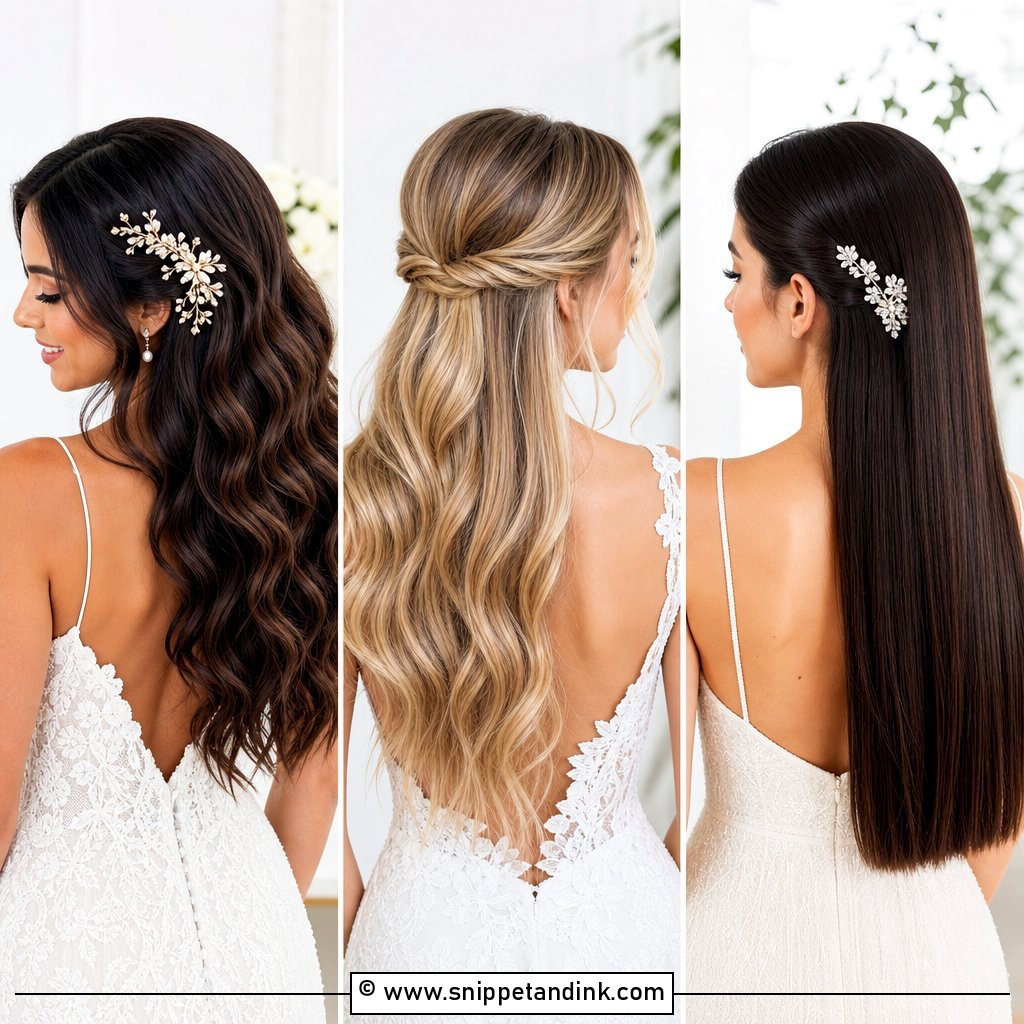
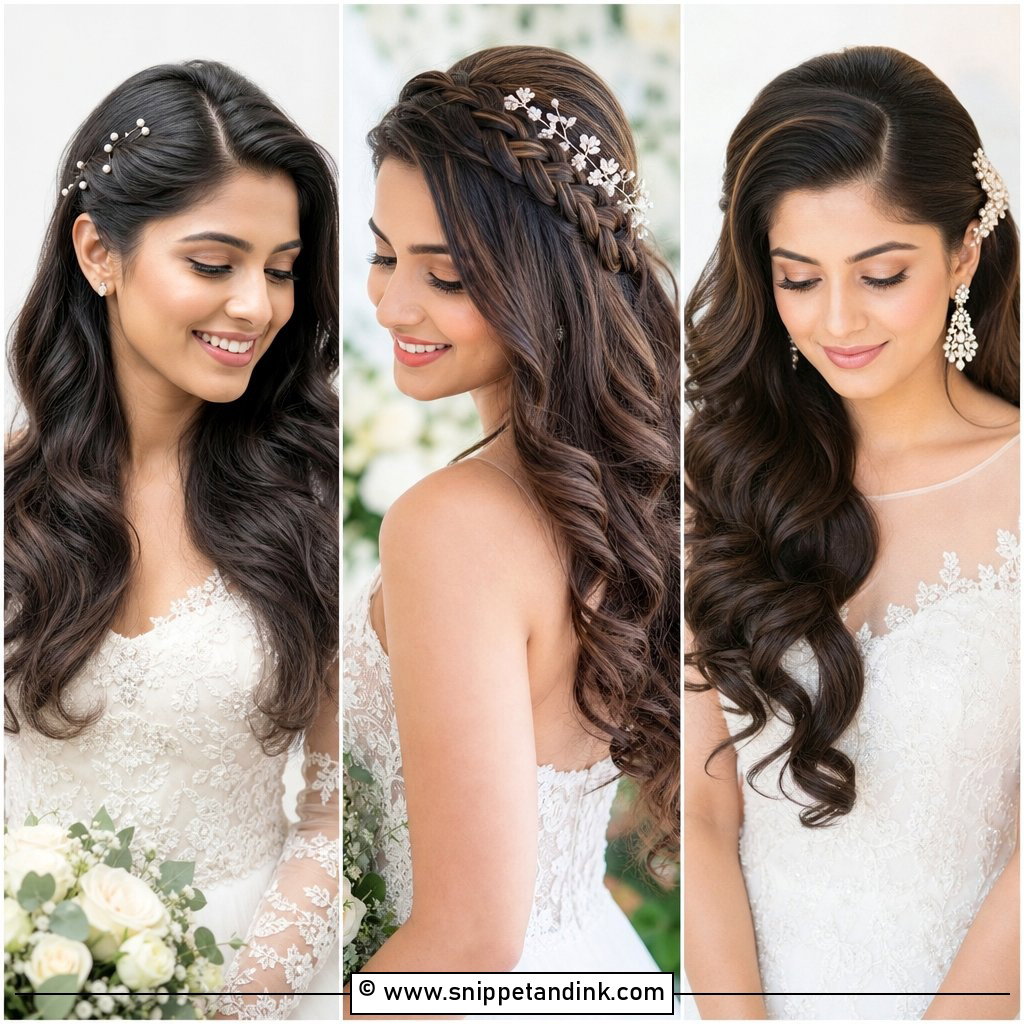
3. Bridal Half Up Half Down Hair
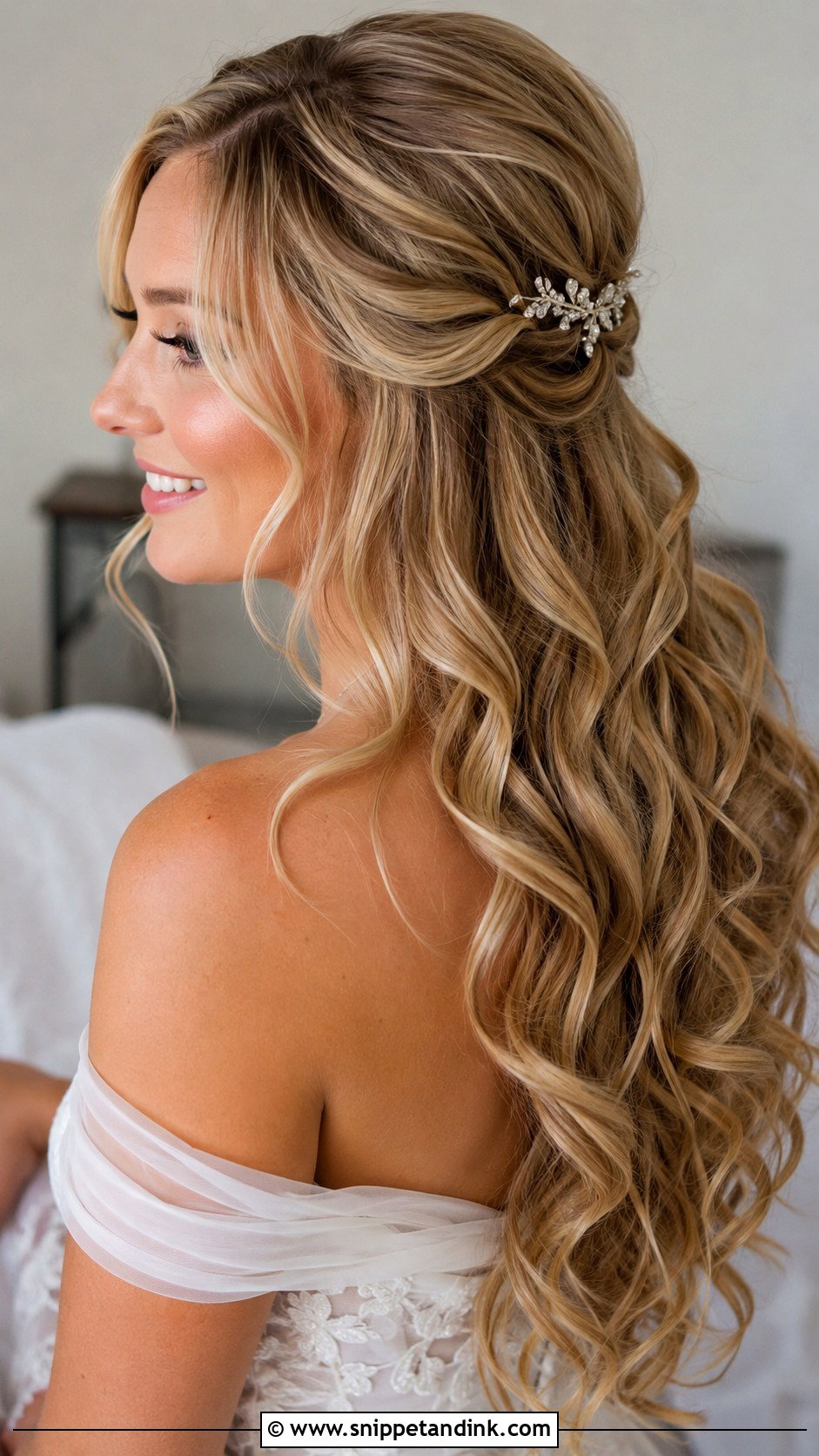
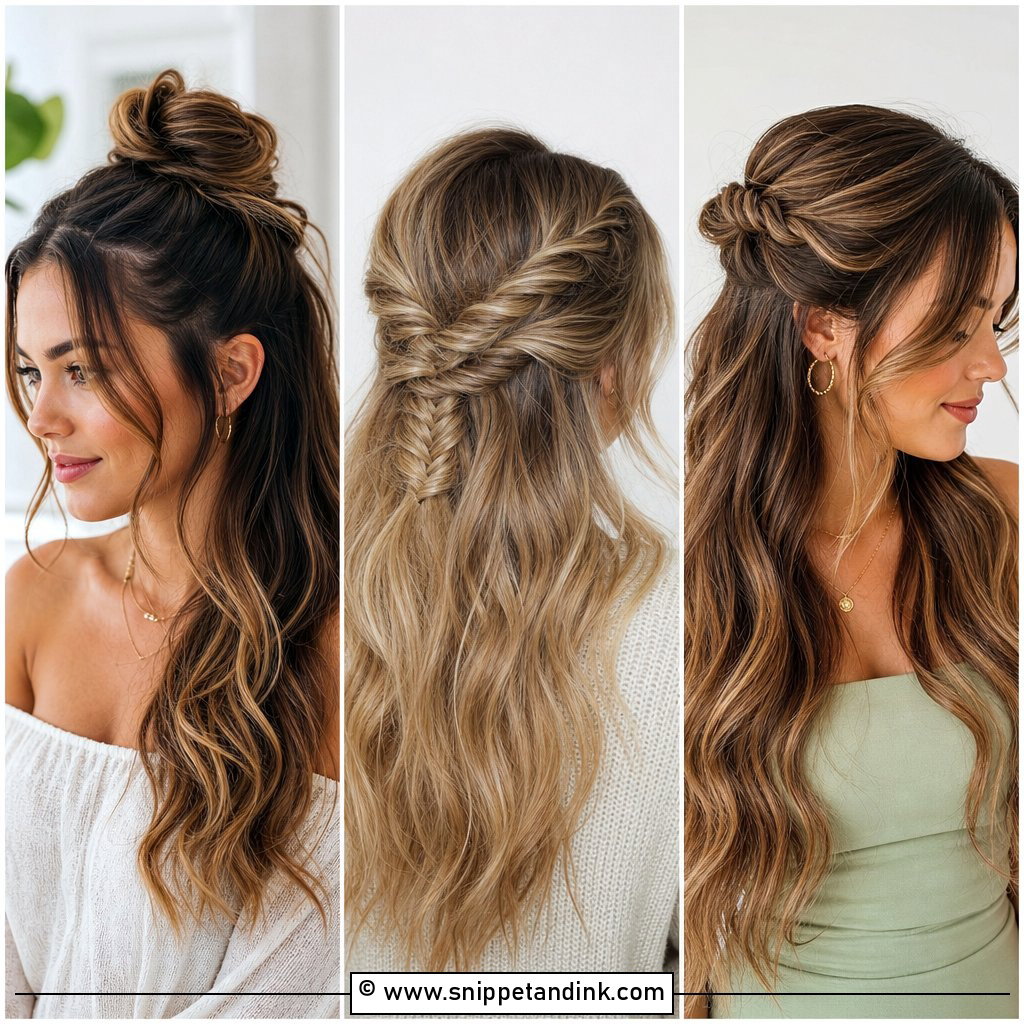
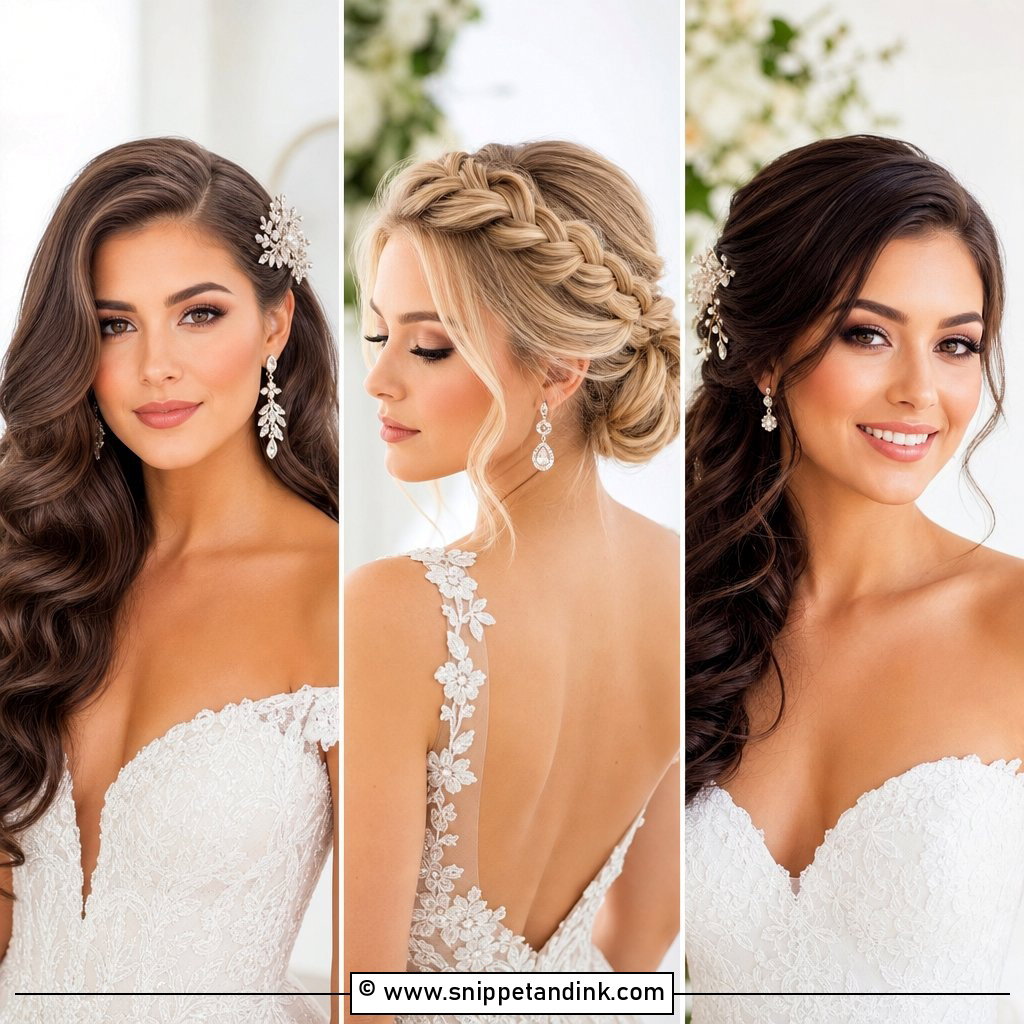
The pinned top keeps hair out of your face during the vows, and the length gives movement in photos. It suits medium to long hair, and soft extensions can add fullness. A veil slides in under the pinned section, and small florals, a crystal comb or a bow all work there. I keep the crown slightly lifted; pulling the sides tight flattens the face. The down part will lose curl first, so I set those sections with the most care.
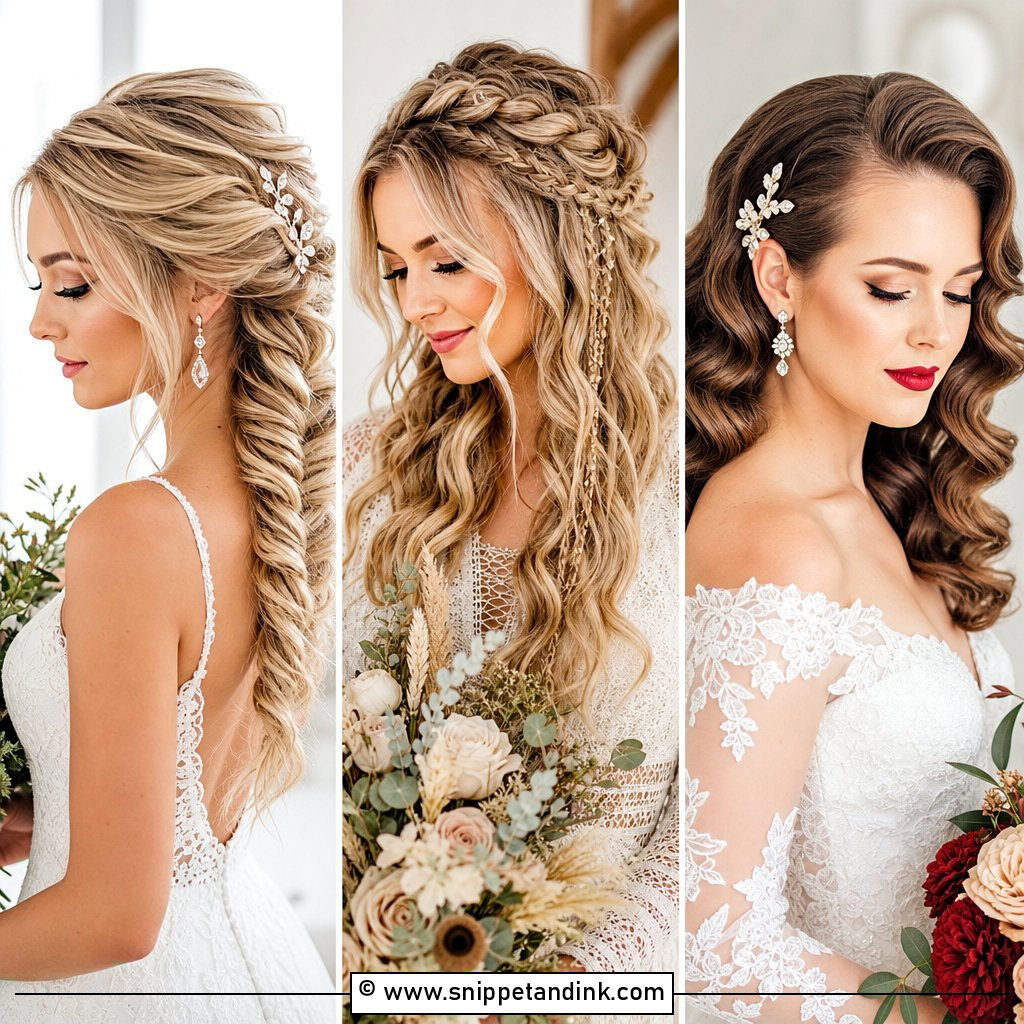
4. Bridal Hollywood Waves
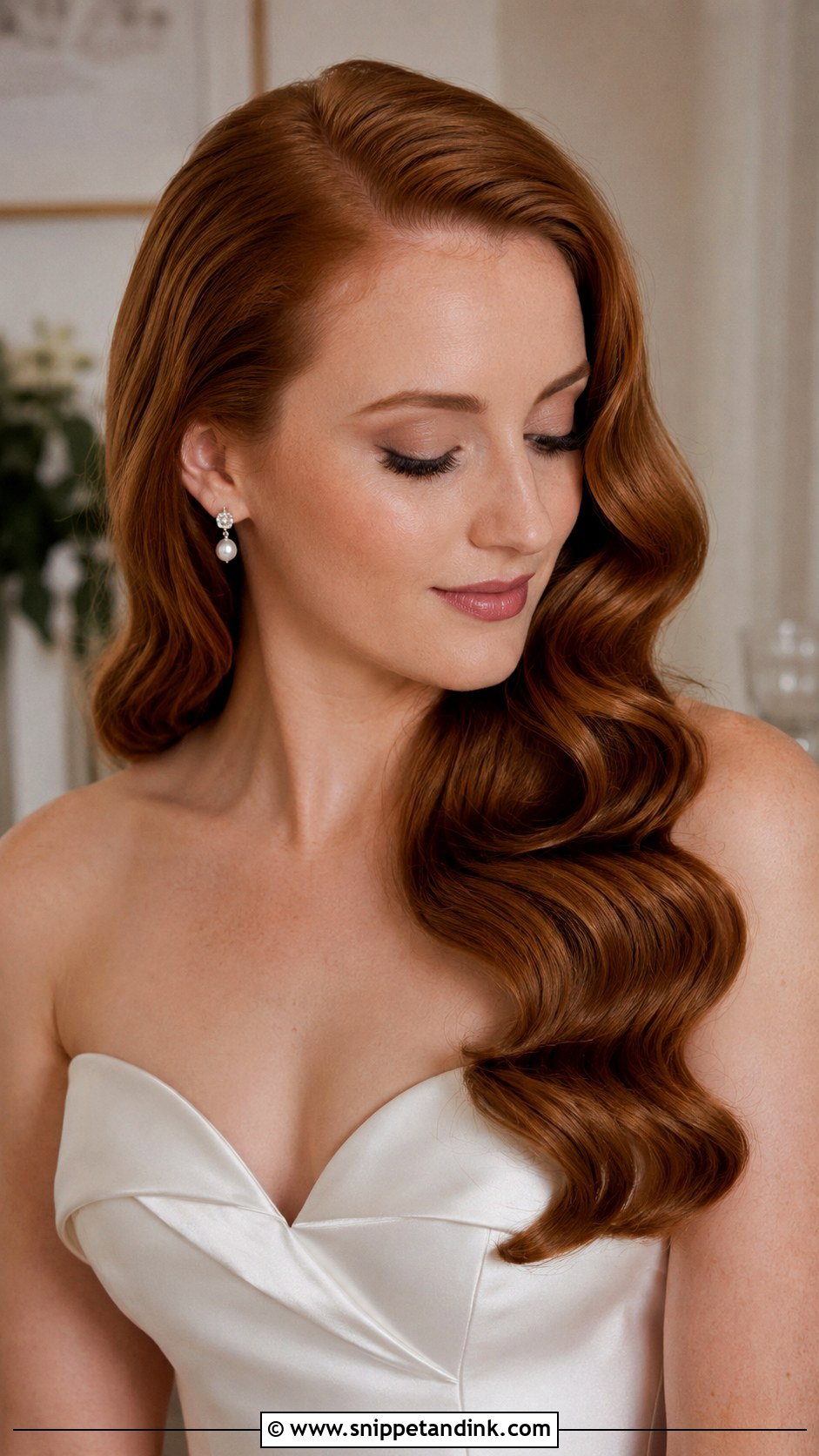
Hollywood waves are sculpted waves that all fall the same way, which is what gives that ribbon of shine. They suit strapless gowns, off-the-shoulder necklines, vintage silhouettes and dramatic earrings. I curl every section in the same direction, pin each curl to cool, then brush through with a boar-bristle brush and shape the waves with clips. A deep side part is the classic version; a center part looks newer. Strong but flexible hold keeps the shape without crunch.
5. Bridal Loose Waves
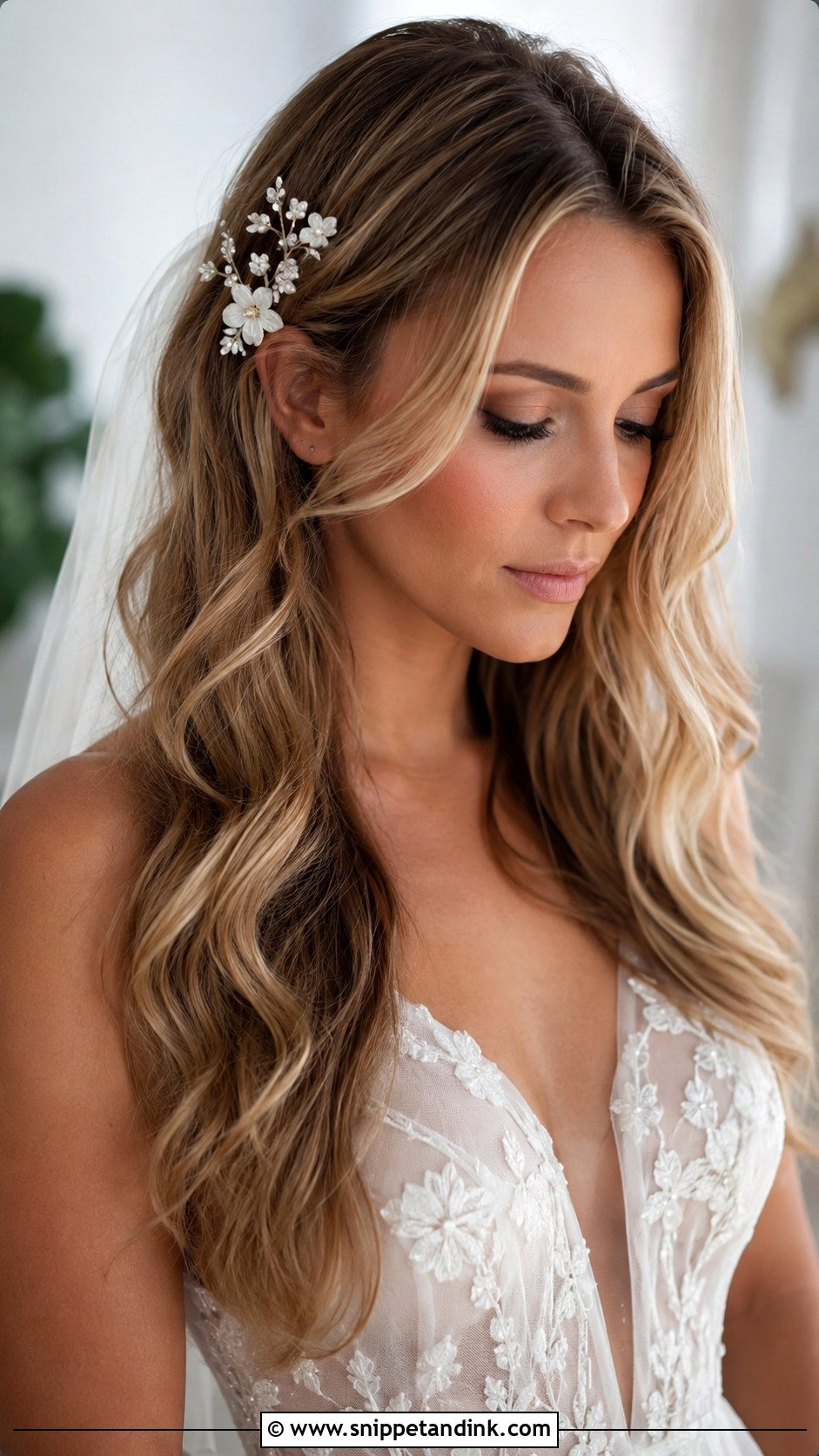
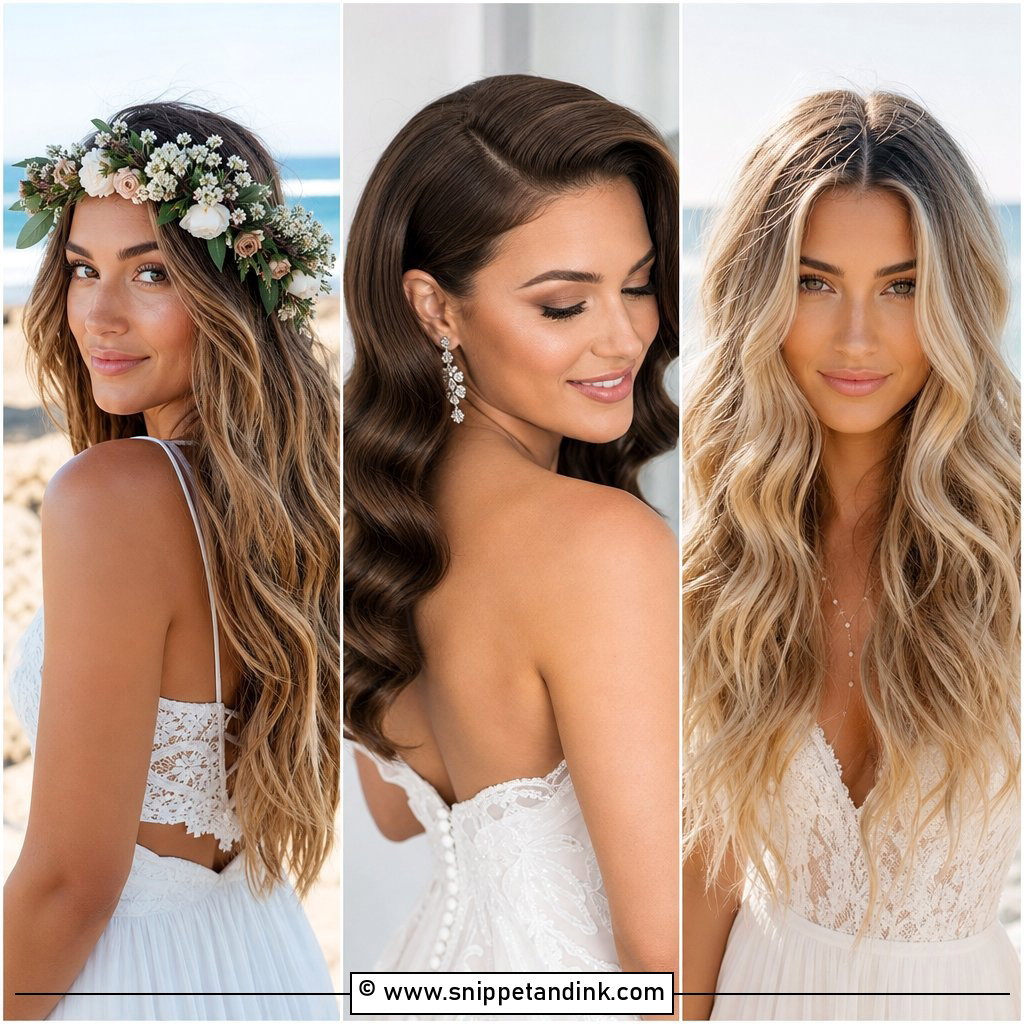
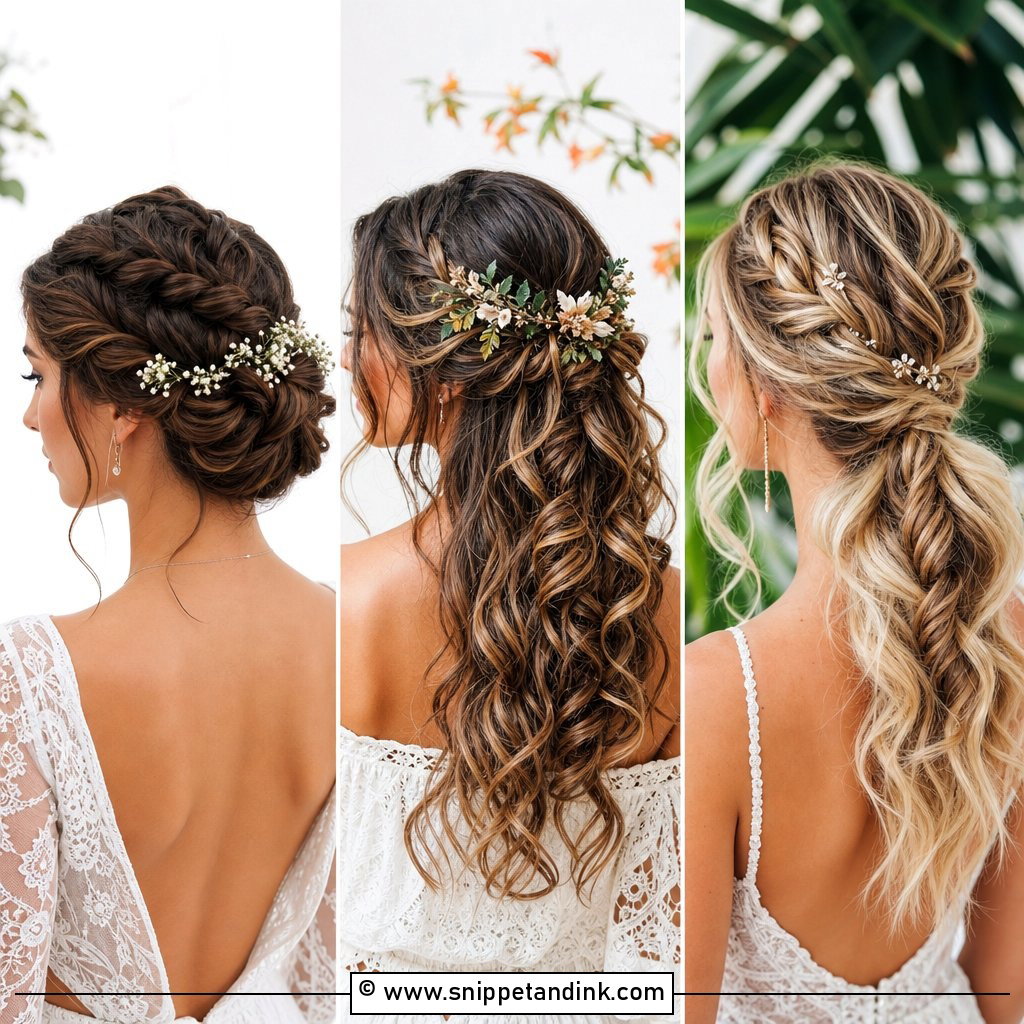
Loose waves have bend rather than curl, so they look natural with simple gowns, lace and outdoor settings. They suit long, medium and layered hair, adding fullness without hiding the cut. The difference between bridal waves and everyday waves is the finish: smooth roots, defined ends, a little polish. On very straight, fine hair, waves fall out fast, so I’d prep with a volumising mousse and set each section before brushing. A veil, a pearl clip or one flower adds the ceremony detail.
6. Bridal Braided Updo
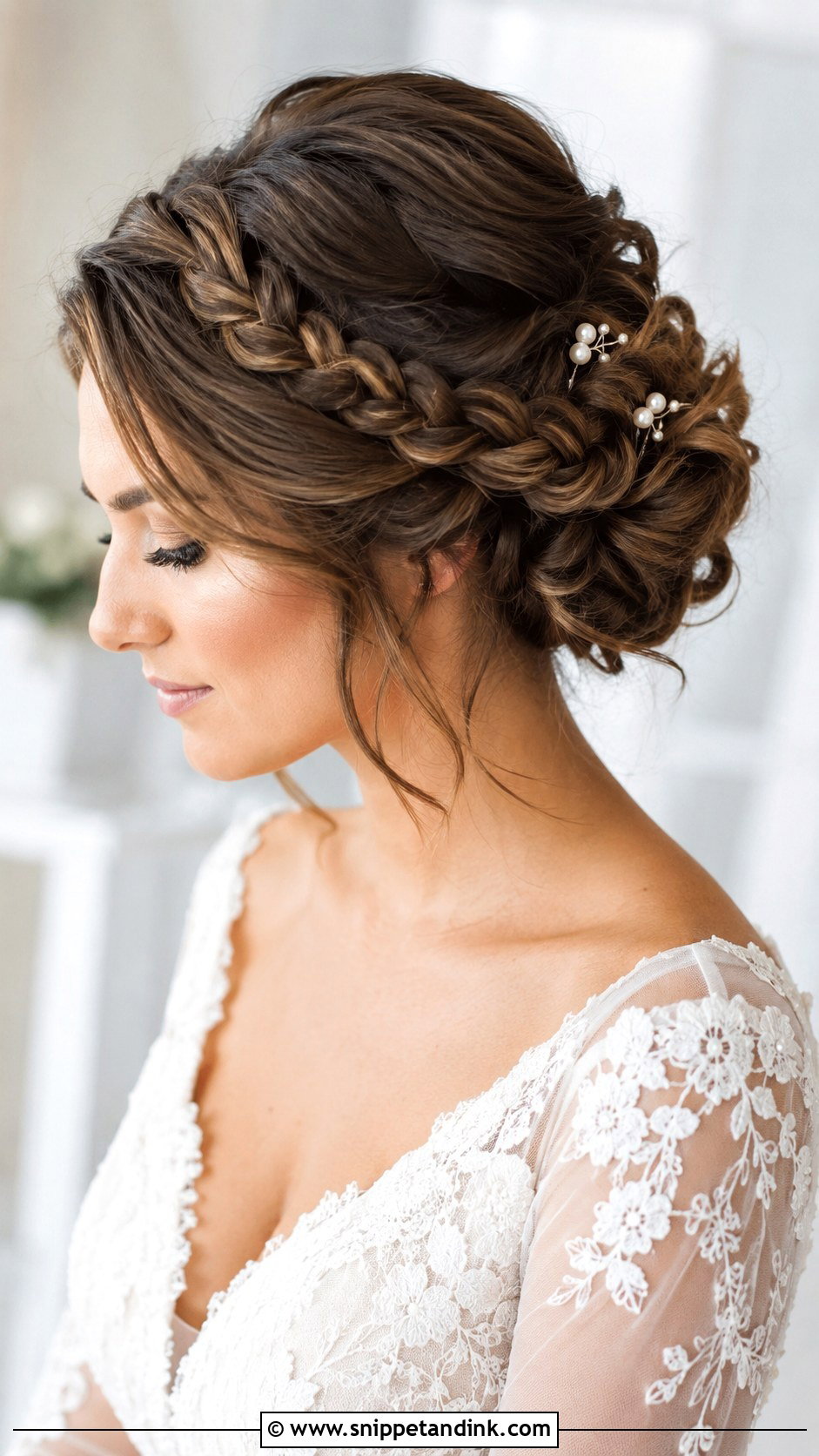
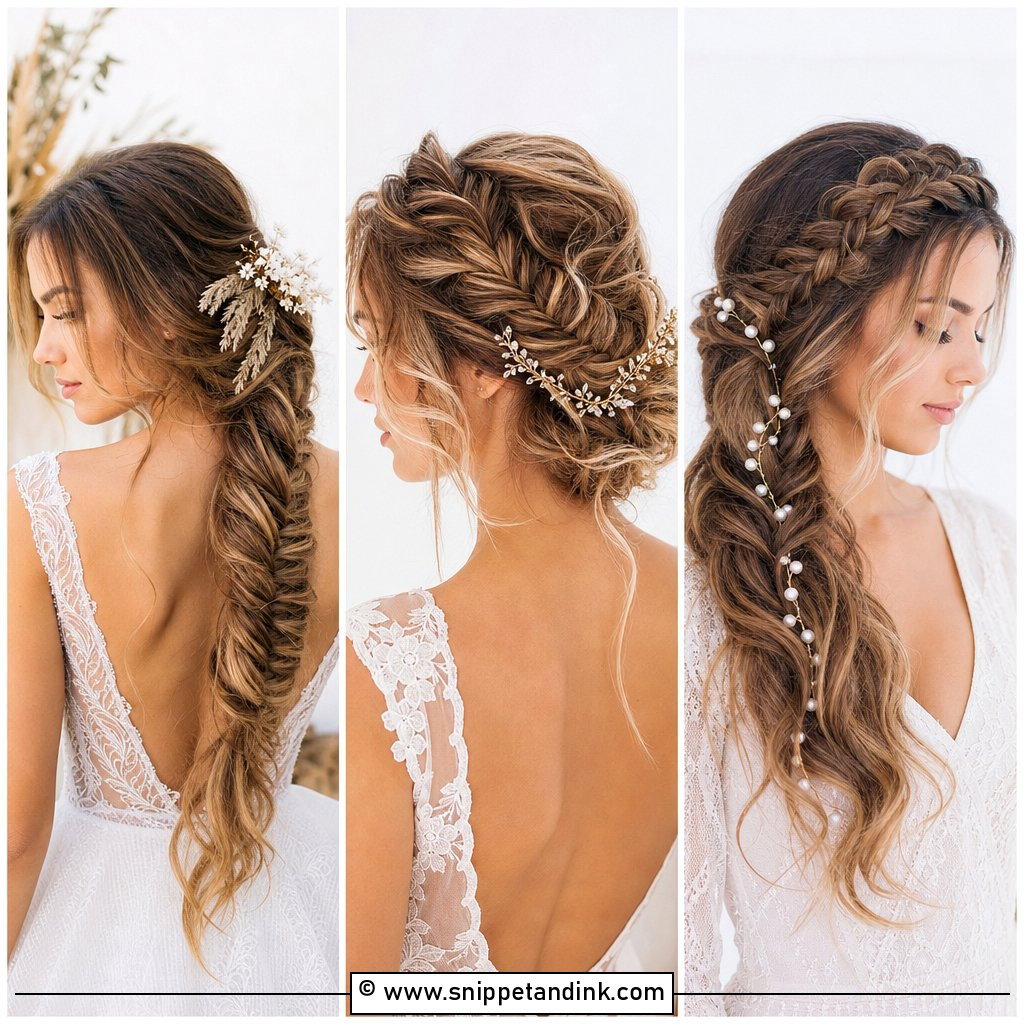
Braids give texture and the strongest hold of any style here. They can wrap into a bun, cross the crown or tuck into a low updo. That security matters outdoors, at rustic venues and anywhere with wind. Braids also tame short layers, which is a real advantage on layered cuts. I keep the plait slightly full so it reads bridal rather than gym-ready. Pearl pins, florals or a veil tucked underneath complete it.
7. Bridal Sleek Bun
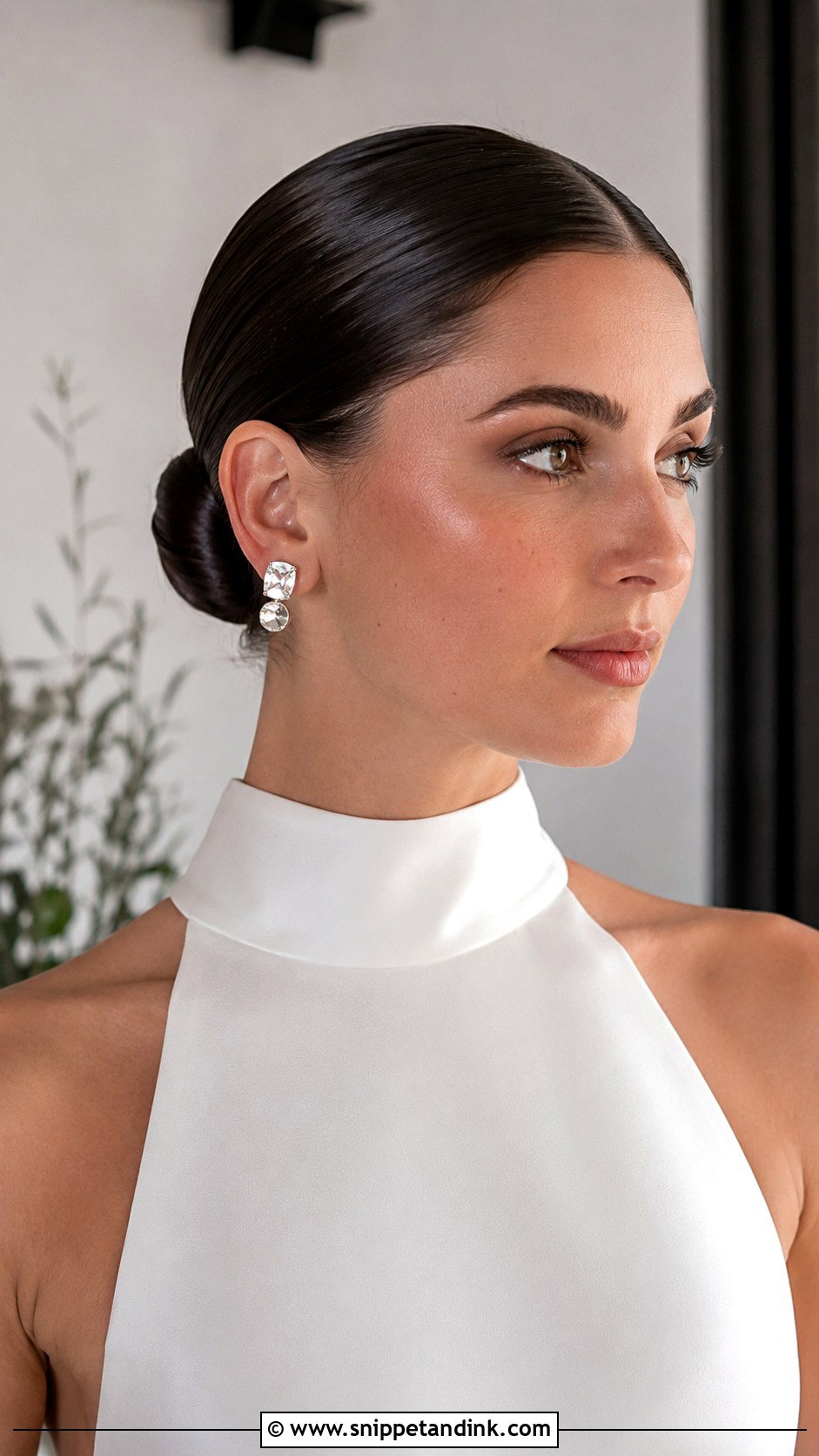
A sleek bun is minimal: hair smoothed close to the head and gathered at the nape or a little higher. It lets the dress, jewelry and makeup lead. It suits high necks, square necklines, sculpted dresses and statement earrings. A middle part looks sharp; a side part softer. Shine spray needs a light hand, as too much reads greasy under flash. The smoothness comes from the blow-dry, not the products, so I spend most of the time there.
8. Bridal Messy Bun
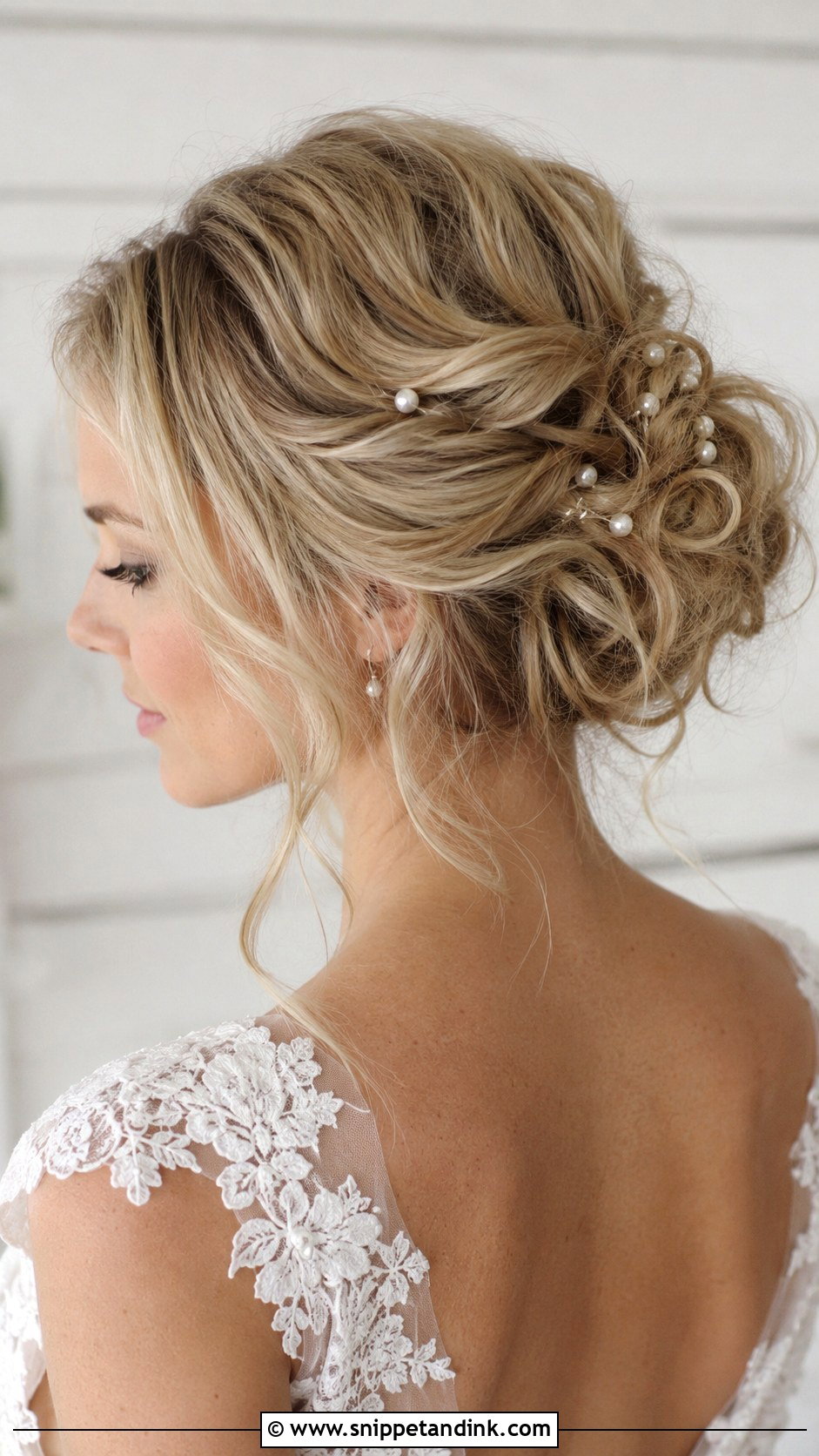
A bridal messy bun should look relaxed but never accidental. Airy texture, pinned curls and soft face pieces, with enough structure to last from ceremony to reception. It suits lace, tulle and outdoor venues. The usual mistake is too much loose hair around the bun; it starts to look unfinished in close-ups. I pull pieces free one at a time and stop sooner than you’d think. A few pearl pins or tiny flowers finish it.
9. Bridal Ponytail
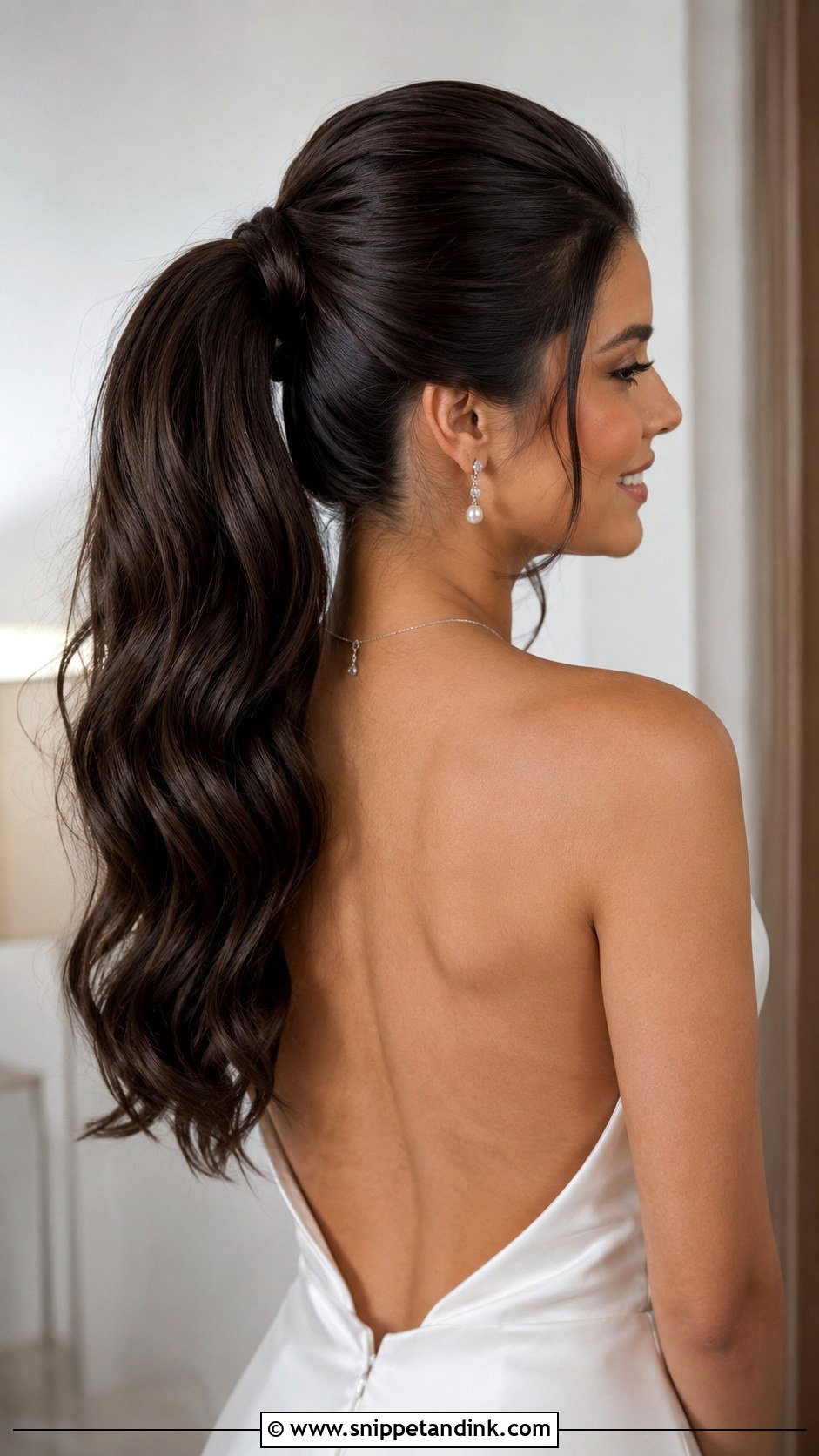
A ponytail is comfortable and modern. High adds lift and drama; mid-height is balanced; low is quiet and minimal. Waves through the length look softer; sleek and straight looks bold. It suits backless gowns because the back stays visible while the length moves. I wrap a strand around the elastic and pin it underneath. For a high ponytail, I’d use two elastics, one on top of the other, so it doesn’t sag after a few hours.
10. Bridal Low Ponytail
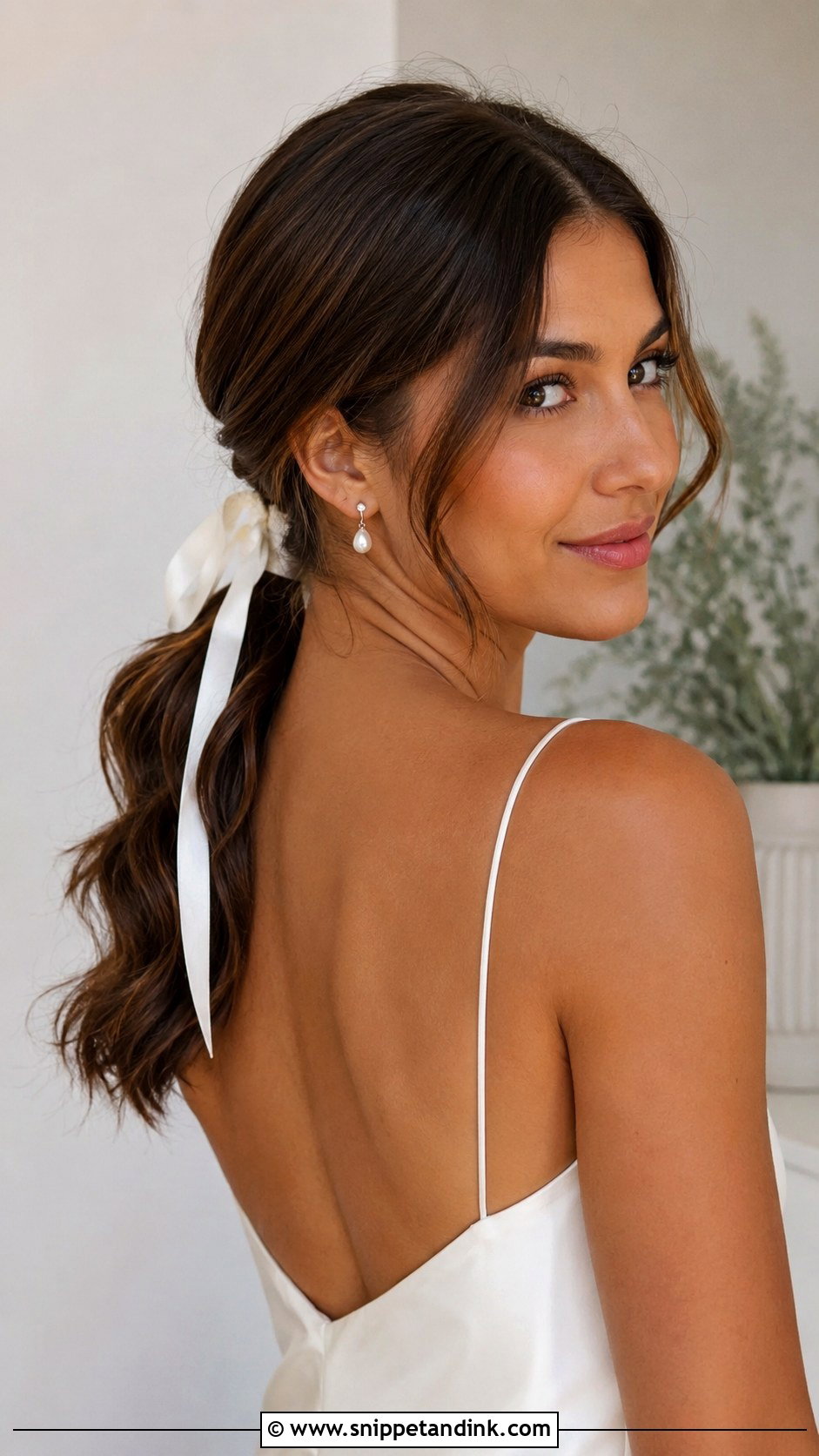
Gathered at the nape, then waved, curled or left sleek. It works with veils, bows, pearl clips and combs. It’s one of the most comfortable options for a long day, because nothing pulls at the scalp. Leave a few face-framing pieces for softness, or keep the part sharp and the sides smooth for a cleaner line. It suits modern gowns, slip dresses and minimal styling.
11. Bridal Curly Updo
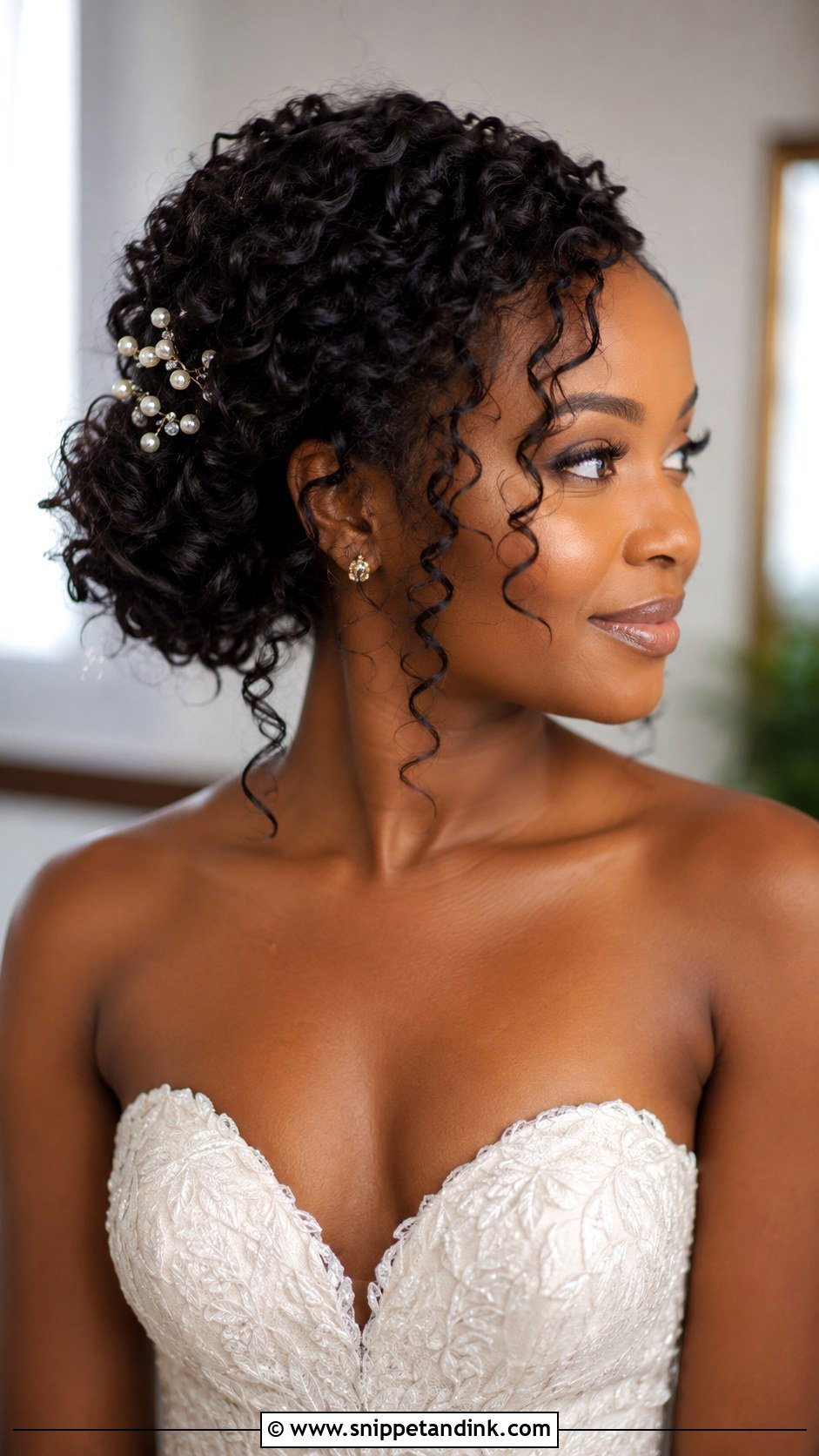
A curly updo works with your curl pattern instead of brushing it out. Definition, volume and pinned sections build the shape. Hydrated, defined curls before styling are what make the finished look polished in photos. I usually do a wash and define the day before and refresh with water and cream on the morning. A low curly bun, curls pinned at the crown or soft tendrils all work. Pearl pins or florals add detail without hiding the curl.
12. Bridal Natural Hair Updo
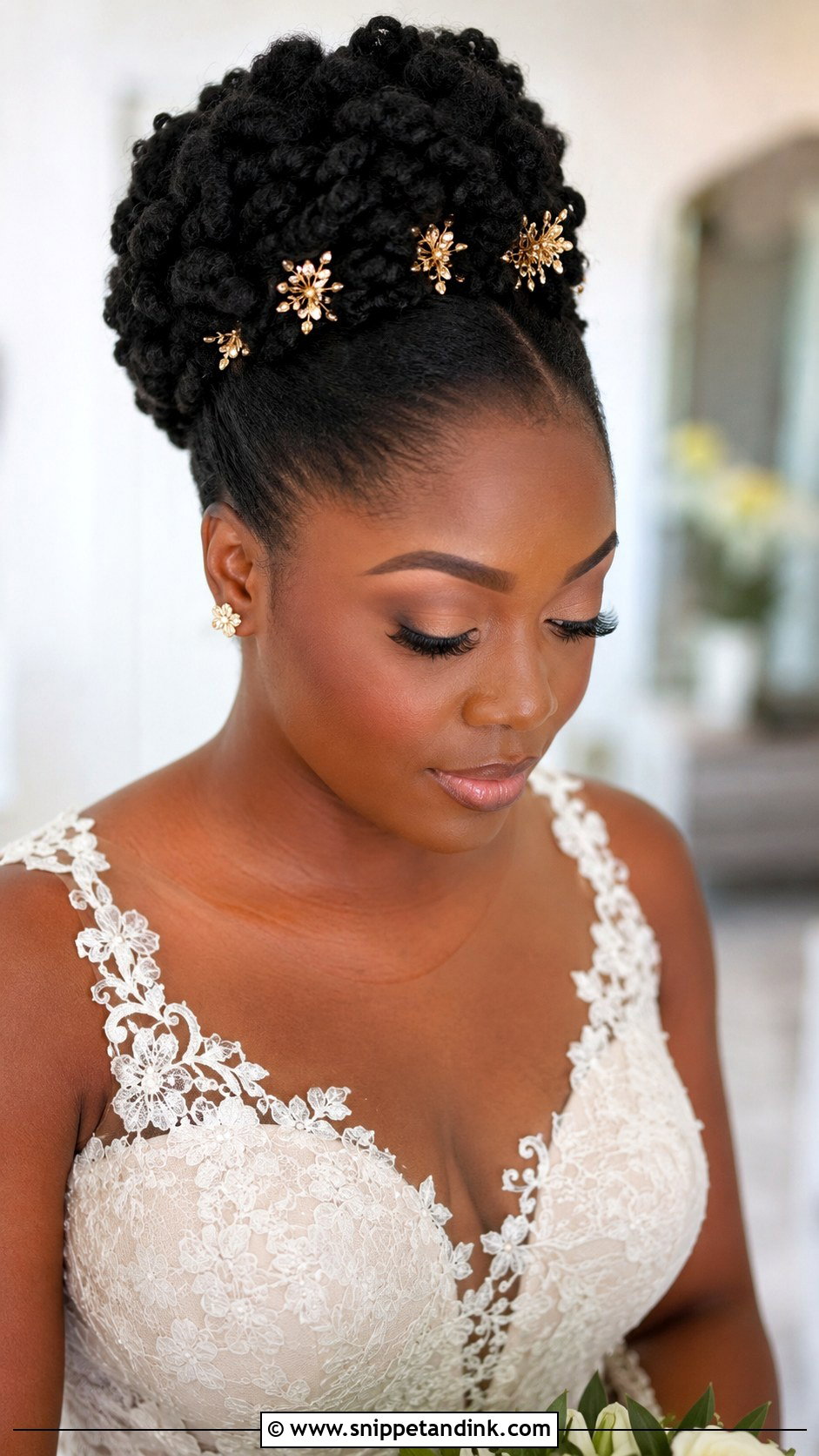
Natural hair updos can be a sculpted puff, pinned coils, flat twists, a textured bun or a soft crown shape. They work with veils, gold cuffs, pearl pins and flowers. The preparation starts weeks before: regular moisture and protective styling so the hair is healthy and defined on the day. Flat twists are especially good for long ceremonies and hot weather, because they stay secure. Tell your stylist which products your hair likes, since what suits one texture can weigh another down.
13. Bridal Twisted Updo
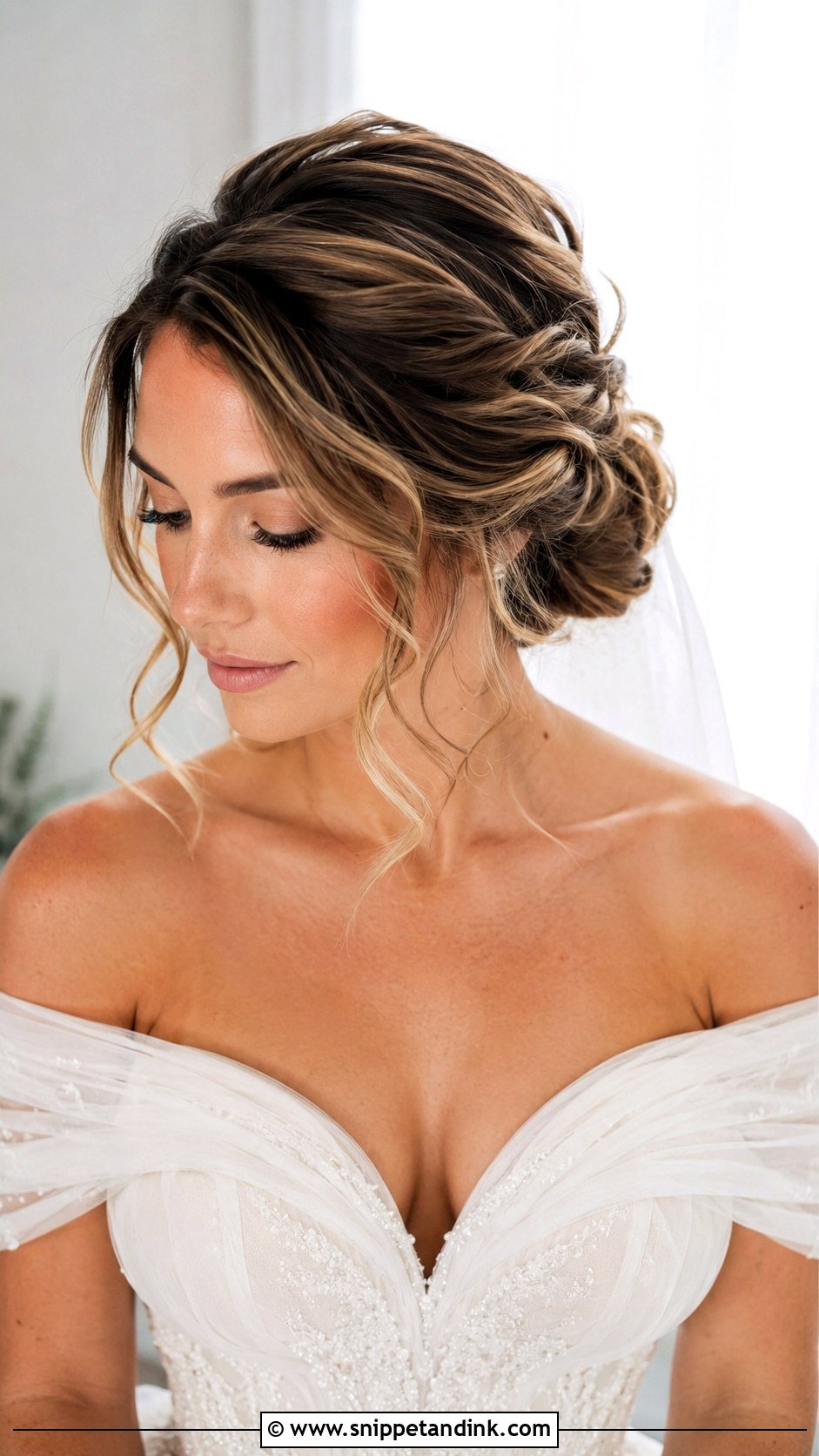
Twists are softer than braids and show highlights well, because the color catches along each turn. They can run along the sides, gather into a low bun or wrap around the back. They suit medium and long hair, especially with some wave. A twist loose enough to look soft can also unwind, so I pin both ends of each before building the shape. A small comb, pearl pins or a tucked veil finishes it.
14. Bridal Side Swept Curls
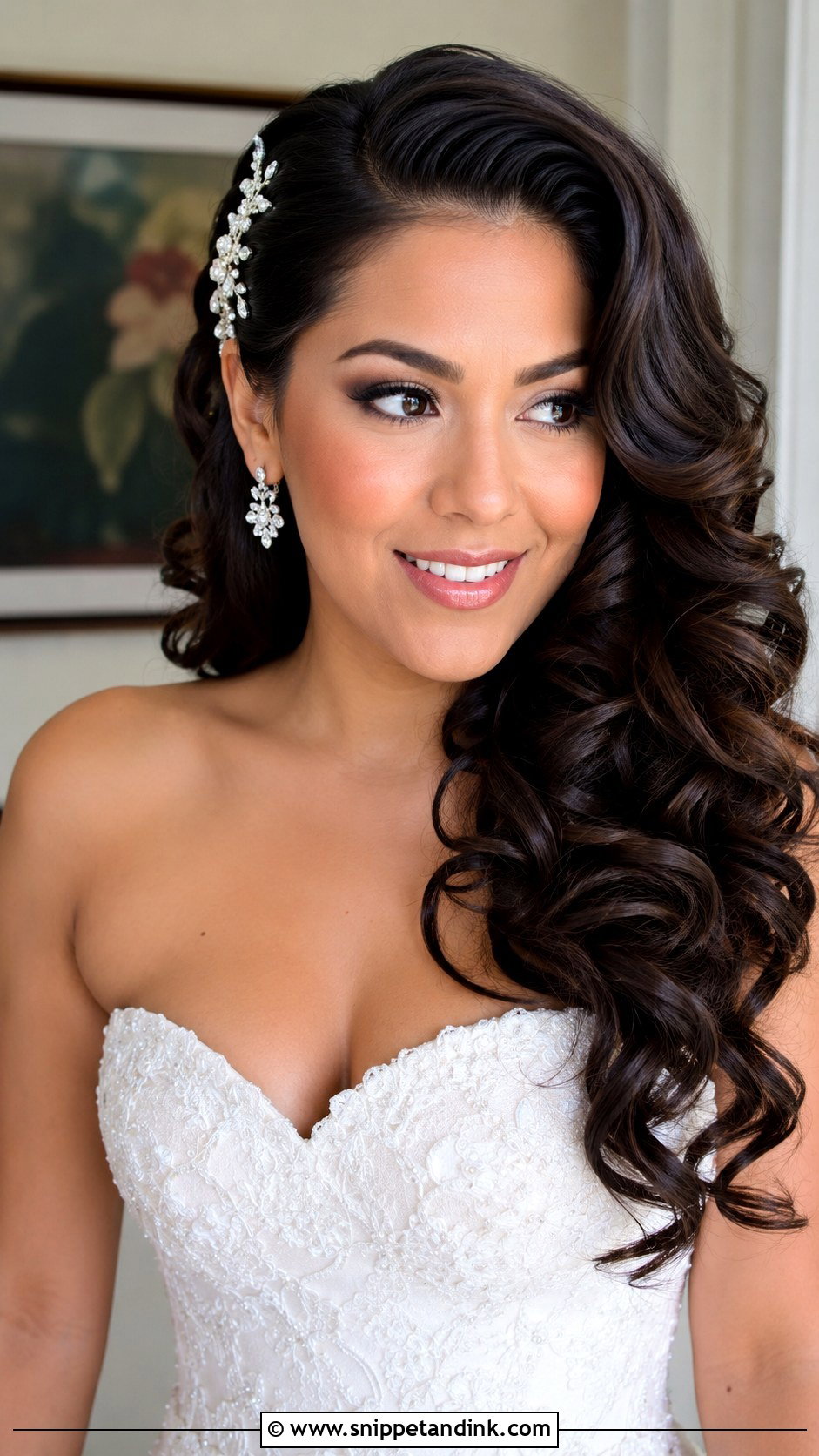
Curls brushed softly and gathered over one shoulder give you the look of hair down with more structure. They suit one-shoulder dresses, strapless gowns and detailed backs. Medium to long hair works best, and extensions can add fullness. The pinned side is the anchor: I secure it behind the ear with crossed pins before curling anything else. A crystal clip, pearl comb or flower adds the finishing piece.
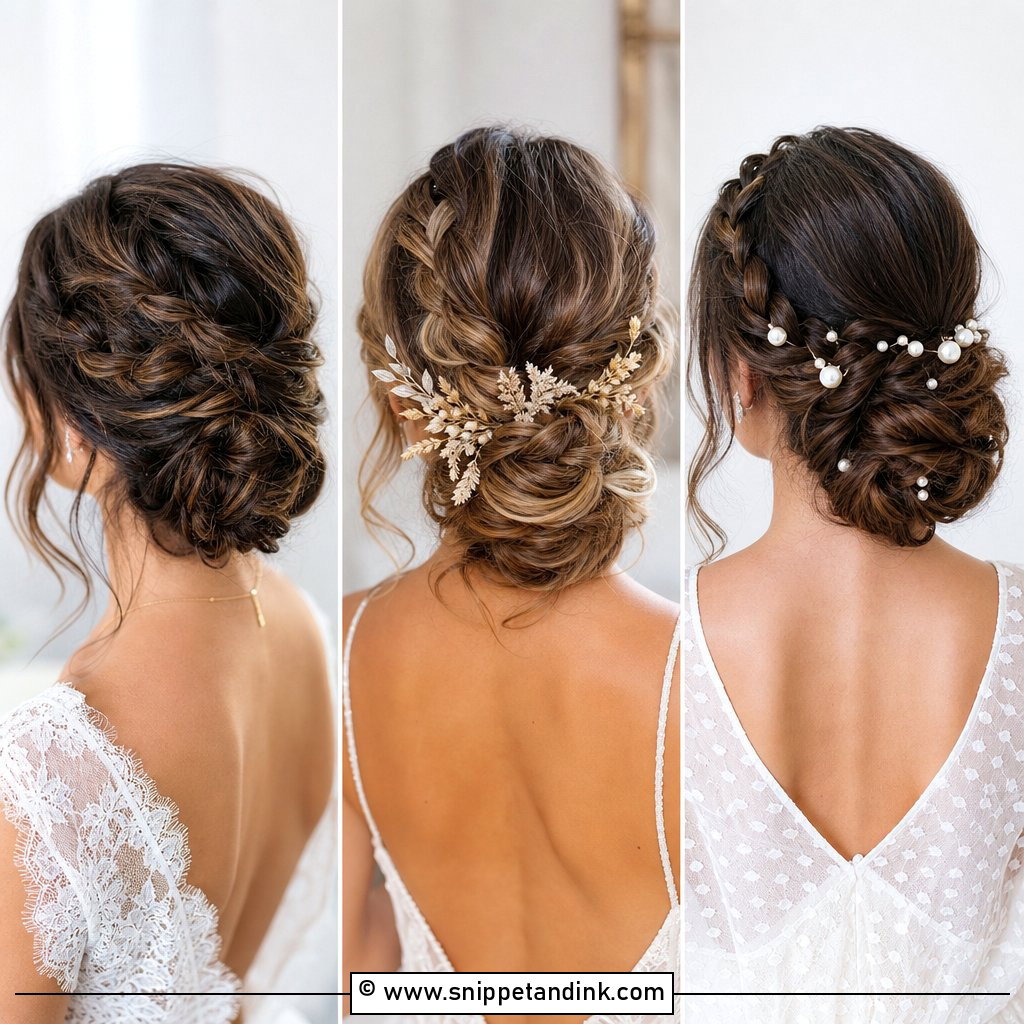
15. Bridal Vintage Waves
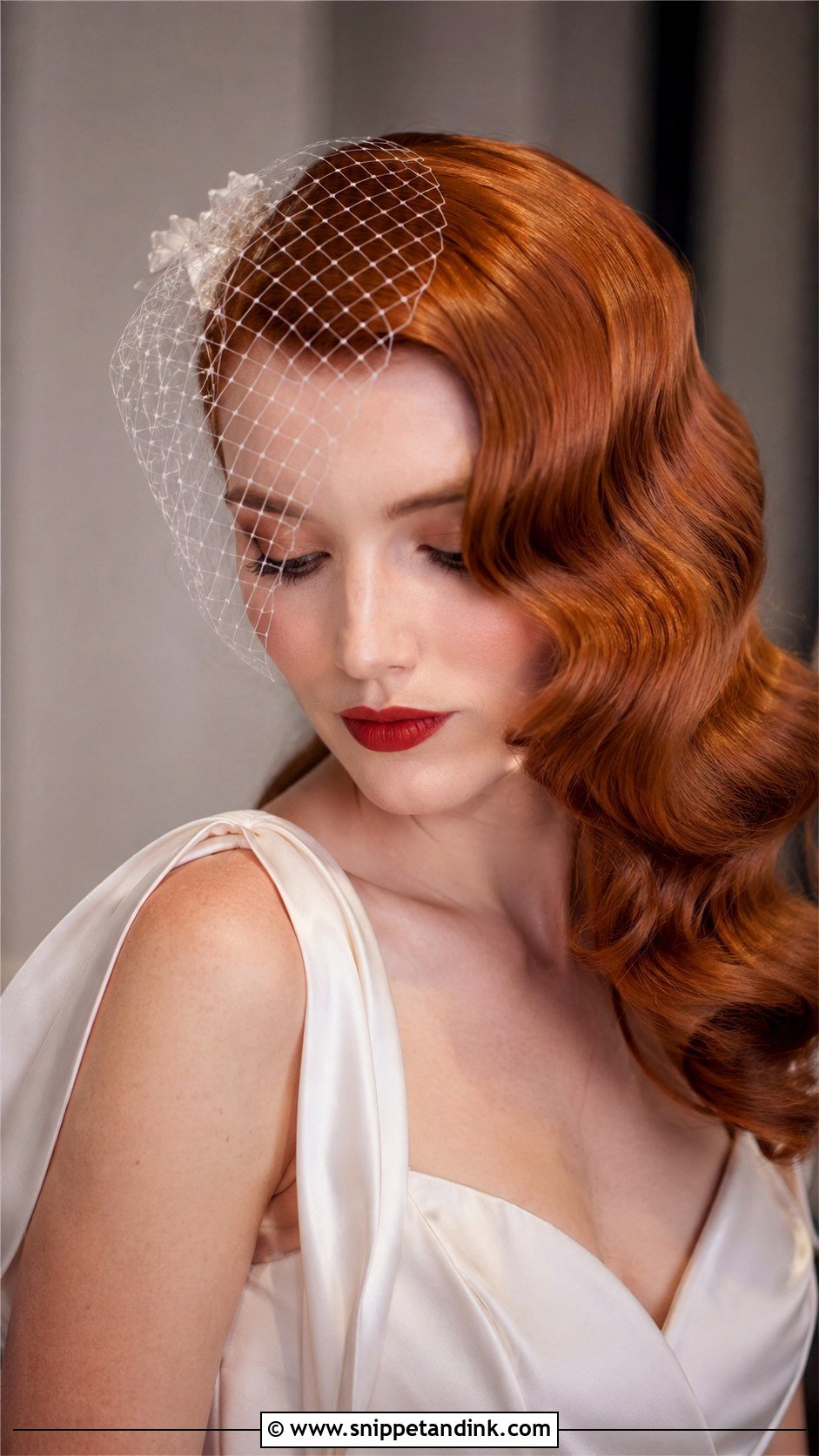
Vintage waves sit close to the head and curve in a pattern, which is what separates them from Hollywood waves. They suit lovers of old film glamour and retro beauty, with satin gowns, birdcage veils, red lips and pearl earrings. They work on bobs as well as long hair. A deep side part gives the most authentic effect. Flyaways are the enemy here; any fluff makes it look costume-like rather than glamorous.
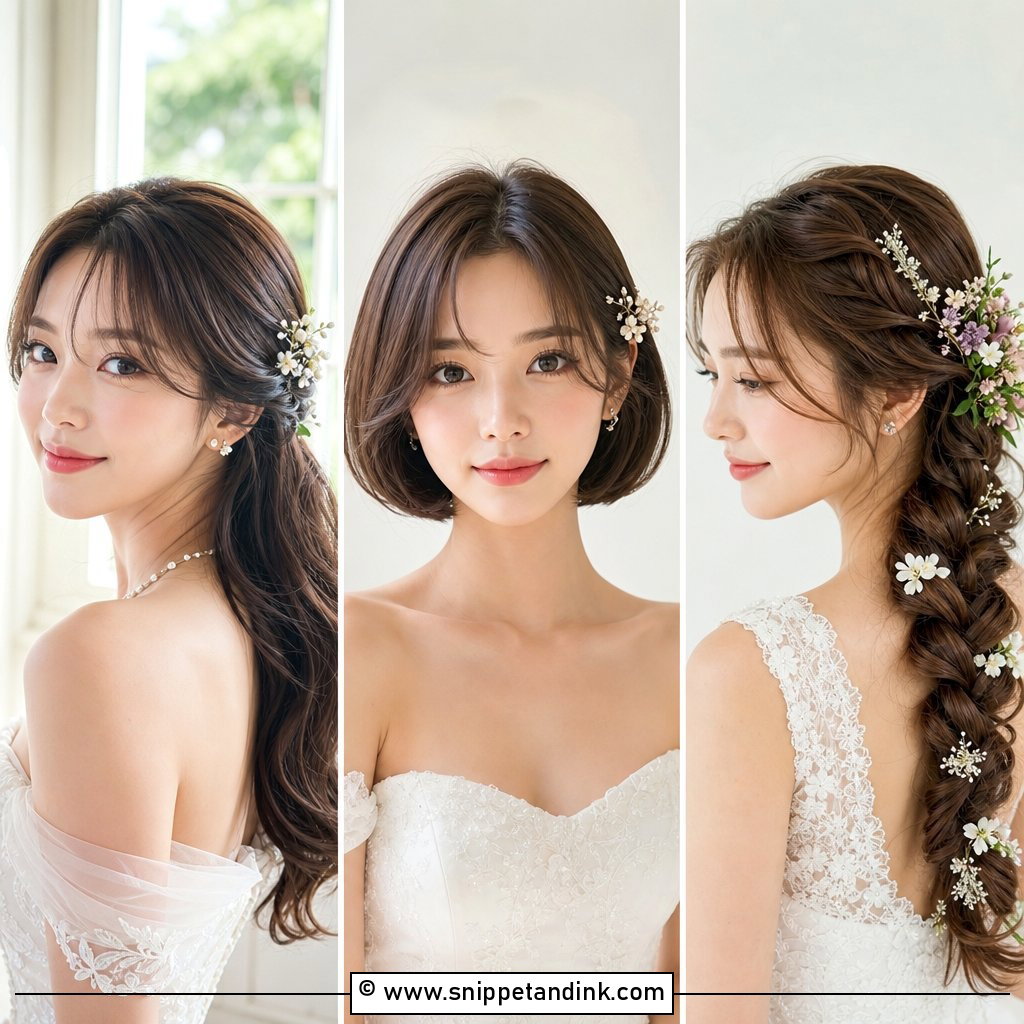
16. Bridal Short Hair Waves
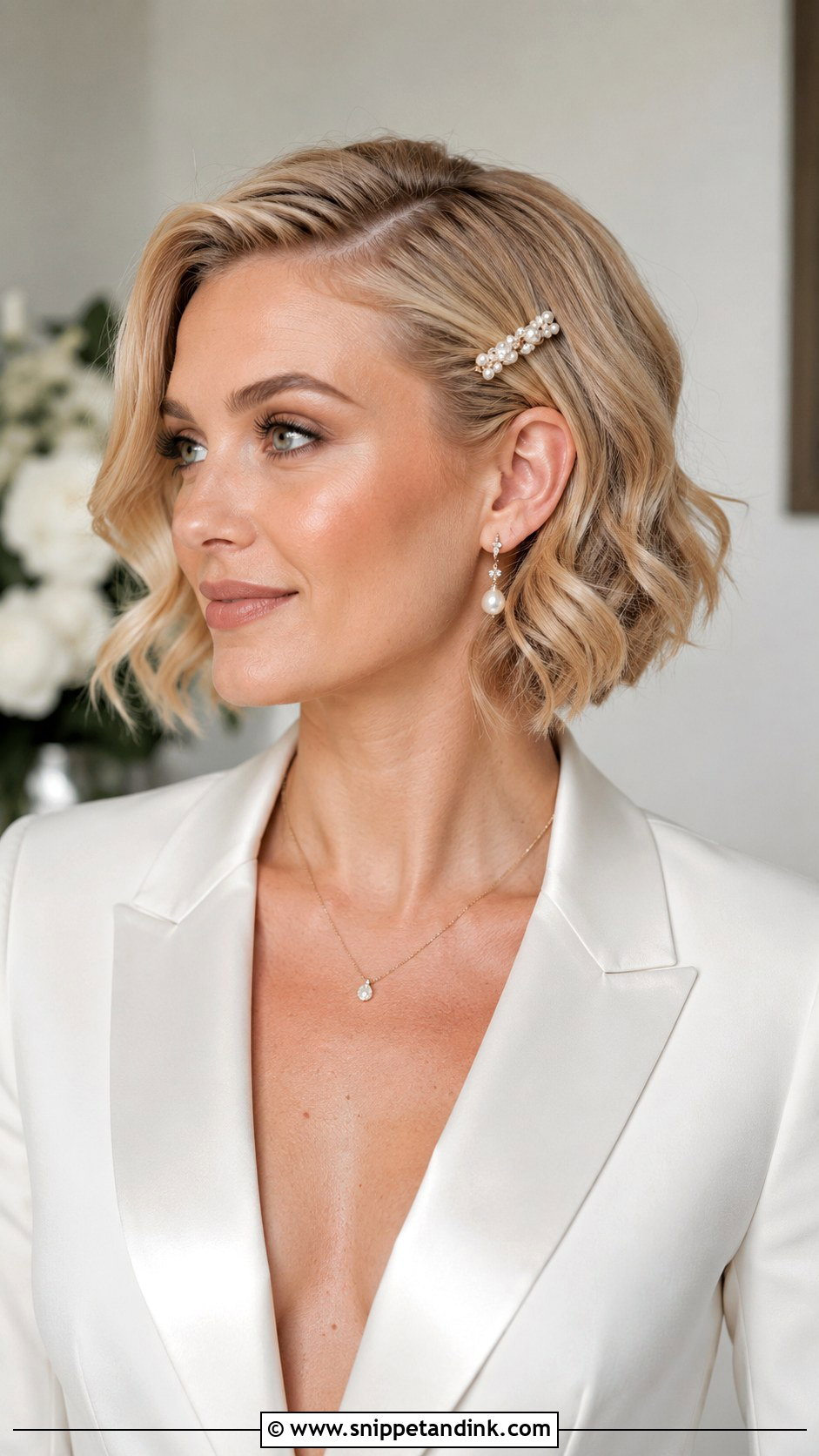
Short hair can look every bit as bridal as long hair. A wavy bob, a textured lob or a curled pixie all count, and the guide to Bridal short hair waves has more ideas. Short hair pairs well with statement earrings, veils, headbands and combs. I keep volume controlled around the sides; too much width makes a bob look puffy in photos. A deep side part adds drama, a center part freshness. Shine and defined ends do most of the work.
17. Bridal Bob Hairstyle
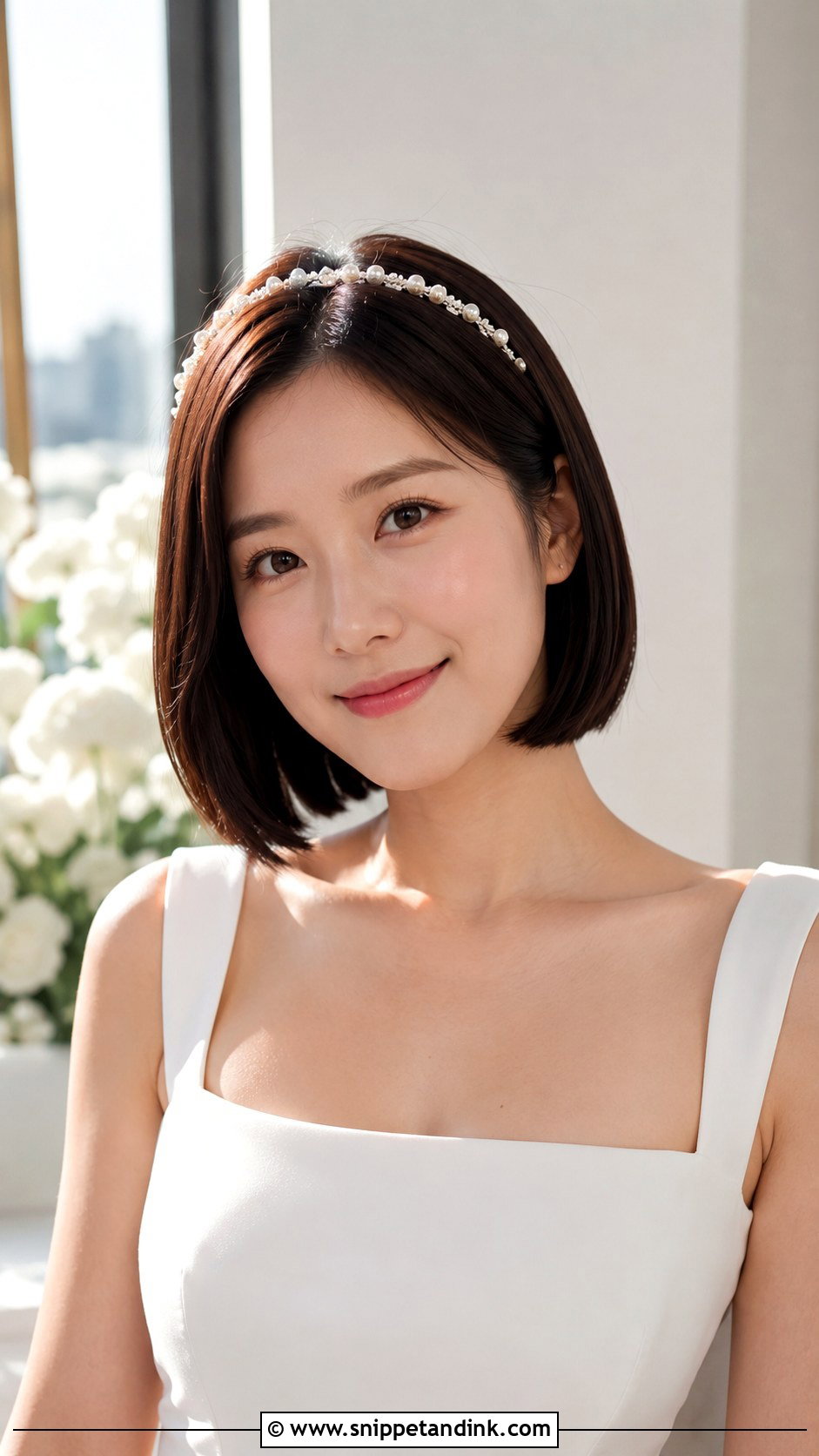
A bridal bob hairstyle is easy to make personal: sleek and straight, softly waved, tucked behind one ear or swept to a deep side part. You look like yourself, with no heavy extensions or long styling session. It suits modern gowns, courthouse ceremonies and city venues. Precision is everything; get the bob trimmed about a week or two before so the line is crisp but not freshly chopped. A pearl headband or crystal barrette adds the bridal detail.
18. Bridal Hair With Veil
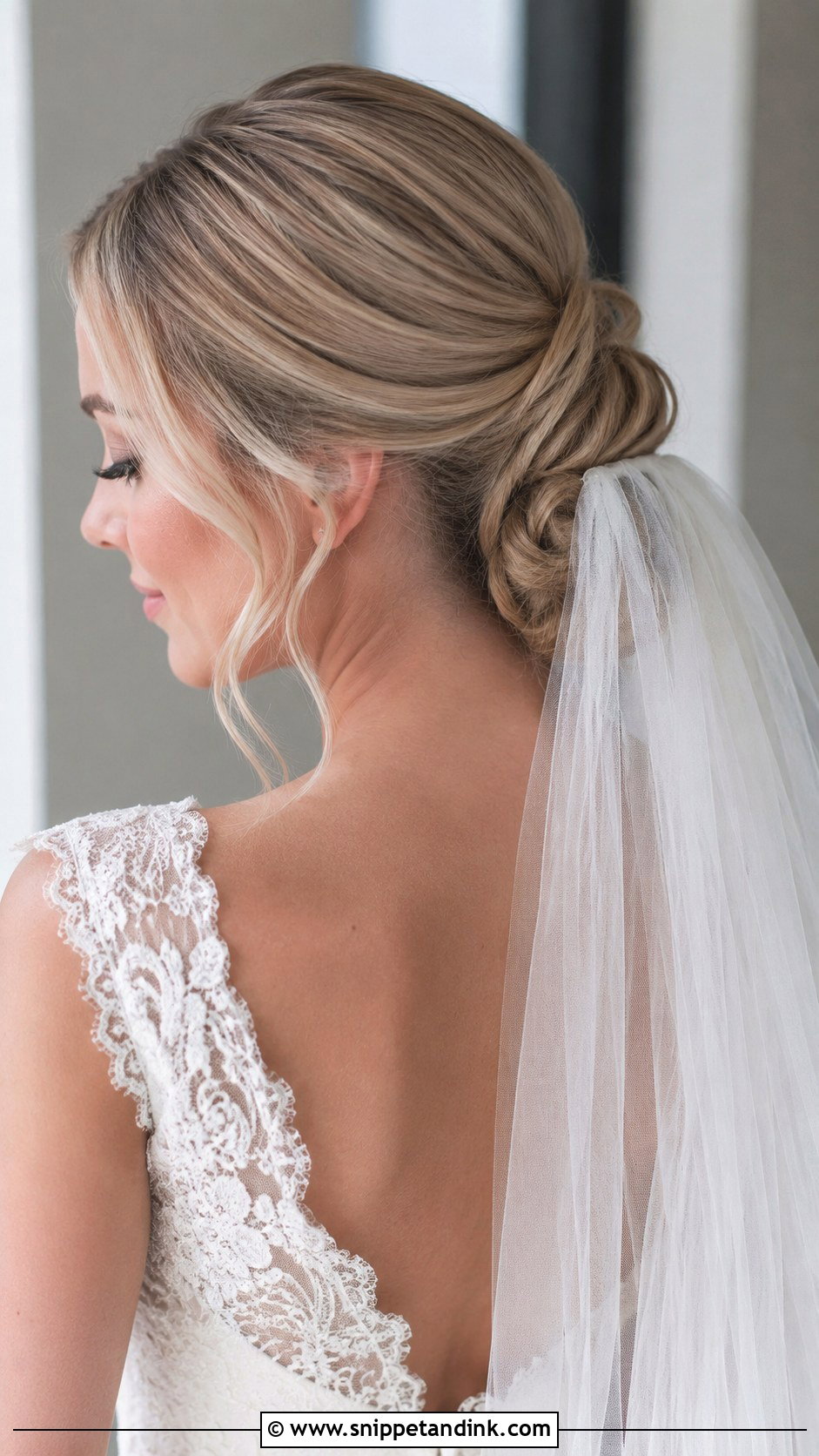
Veil placement should be planned with the hair, not after it. Low buns and chignons hold a comb above or below the bun; half-up styles grip a comb at the crown. Loose waves can hold a veil too, but need hidden pins underneath, crossed in an X, for the comb to grip. Bring the actual veil to the trial so we can test placement, balance and removal. It should feel secure without flattening the style, and the hair should still look right after it comes off.
19. Bridal Hair With Flowers
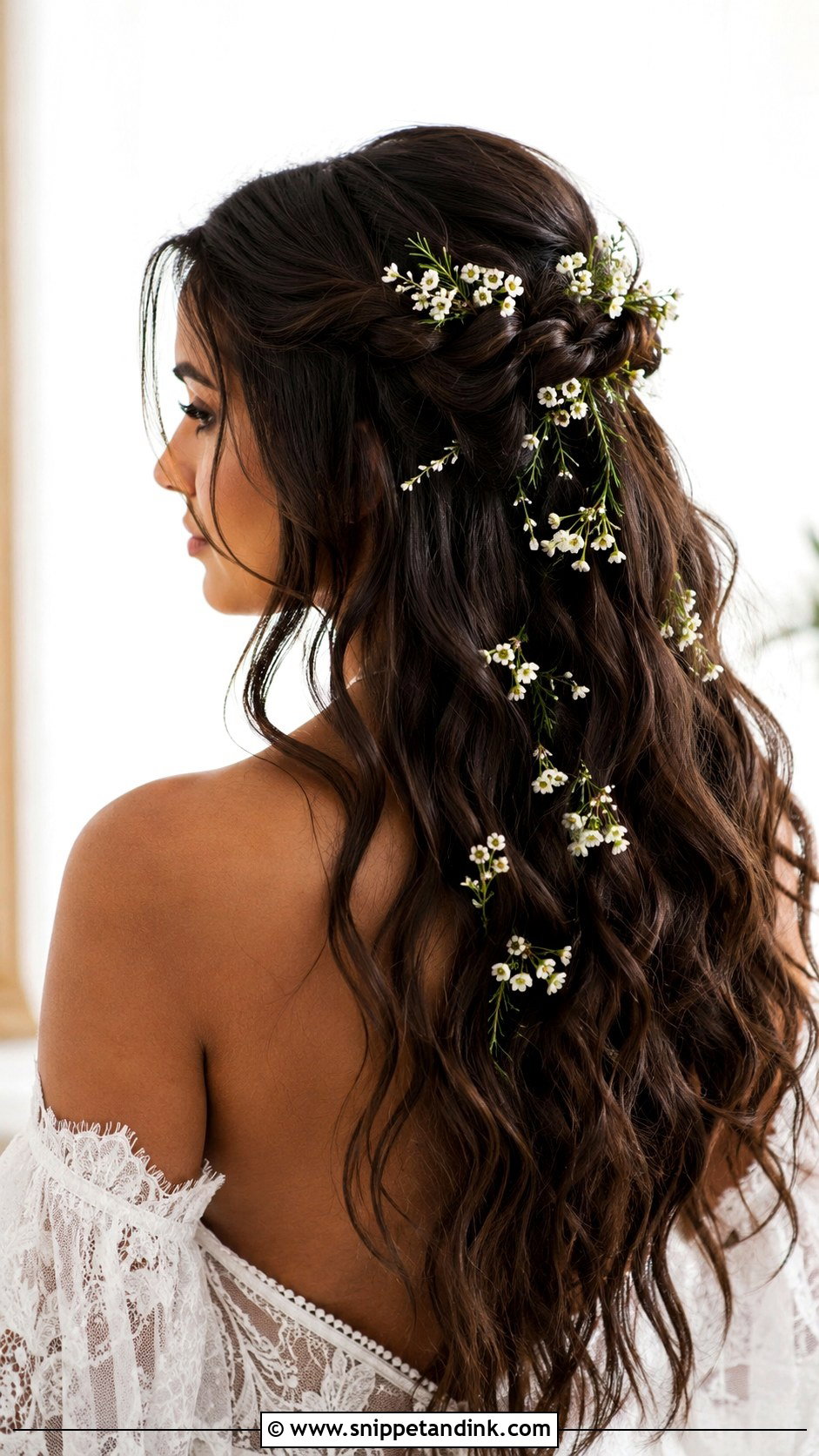
Flowers can go into a low bun, through a braid, around a half-up section or into loose waves. They suit garden, beach, rustic and outdoor weddings. The bloom choice matters more than people think: spray roses and waxflower survive hours out of water, while hydrangea and gardenia wilt quickly against warm skin. Small white flowers look delicate; larger blooms bolder; greenery softens. Ask the florist and stylist to agree on size and placement so the flowers don’t fight the dress.
20. Bridal Hair With Pearls
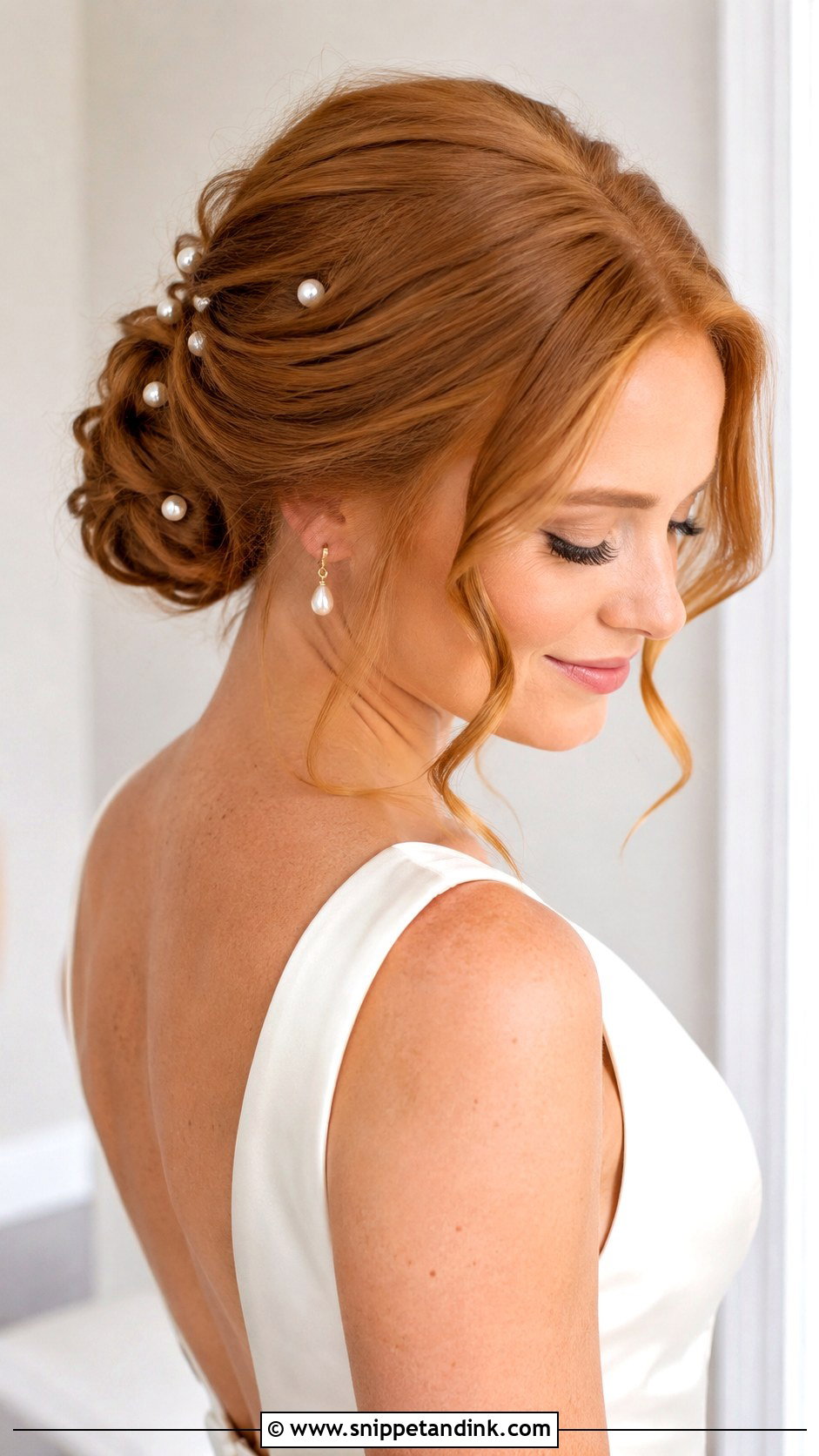
Pearls work with buns, chignons, half-up waves, ponytails, braids and short hair, adding detail without weight. Scattered pins are delicate; a pearl headband is more noticeable. They suit satin, lace, simple veils and classic makeup. Keep the hairstyle polished so the pearls look placed, not random. If your dress has pearls already, match the tone: ivory with ivory, white with white.
Writing a Hair Brief Your Stylist Can Actually Work From
Inspiration photos are useful, but on their own they leave a lot to guess. A good brief takes five minutes to put together and saves most of a trial.
- Two or three photos you love, showing the front and back if you can find them.
- One or two photos you don’t like. They often tell me more than the favorites.
- A photo of the dress from behind and a close-up of the neckline.
- The veil, headpiece or flowers you plan to wear, or a photo of them.
- Your normal hair routine, any product sensitivities, and whether you’ll have colour or a trim before the day.
Also tell me what makes you uncomfortable, whether that’s hair touching your neck, tight pulling at the temples or anything near your ears. Comfort is easier to plan for than to fix halfway through the reception.
Your Dress, Your Venue and the Hair You Wear Every Day
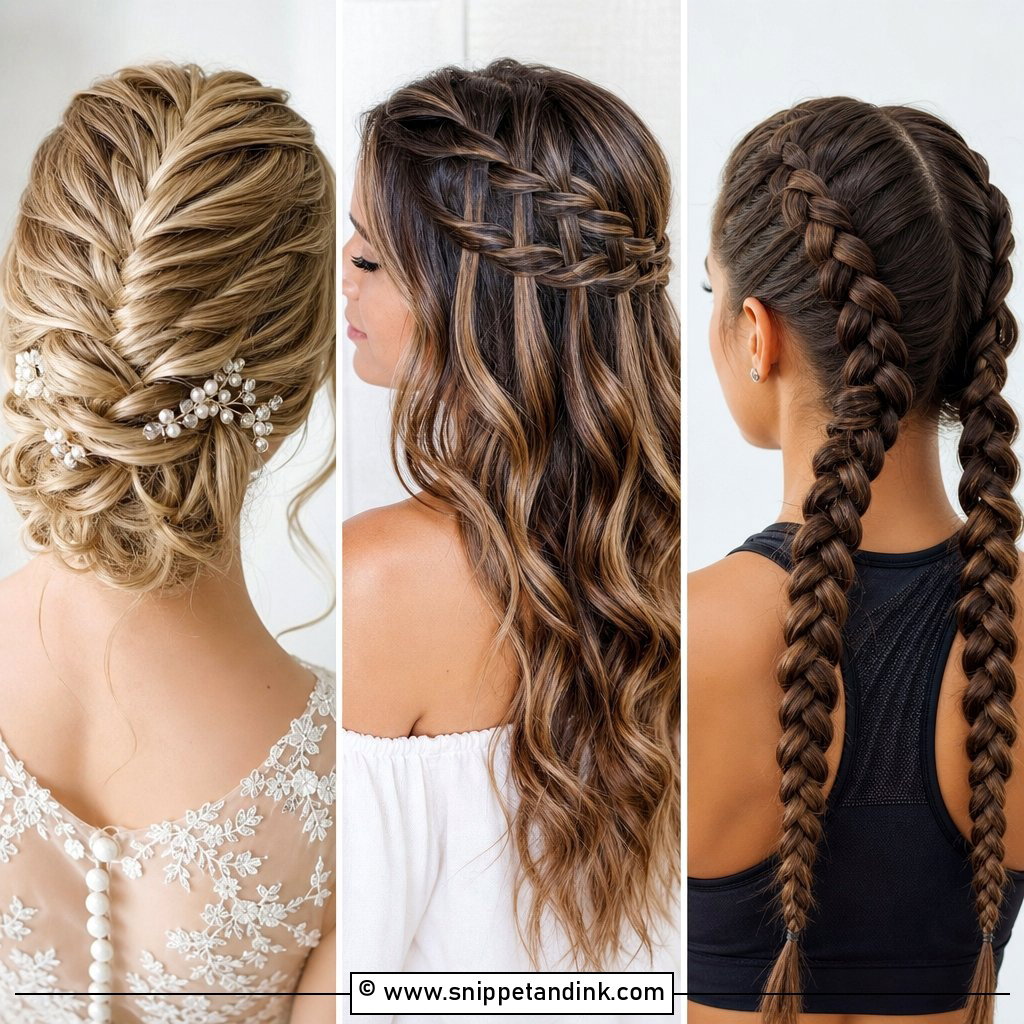
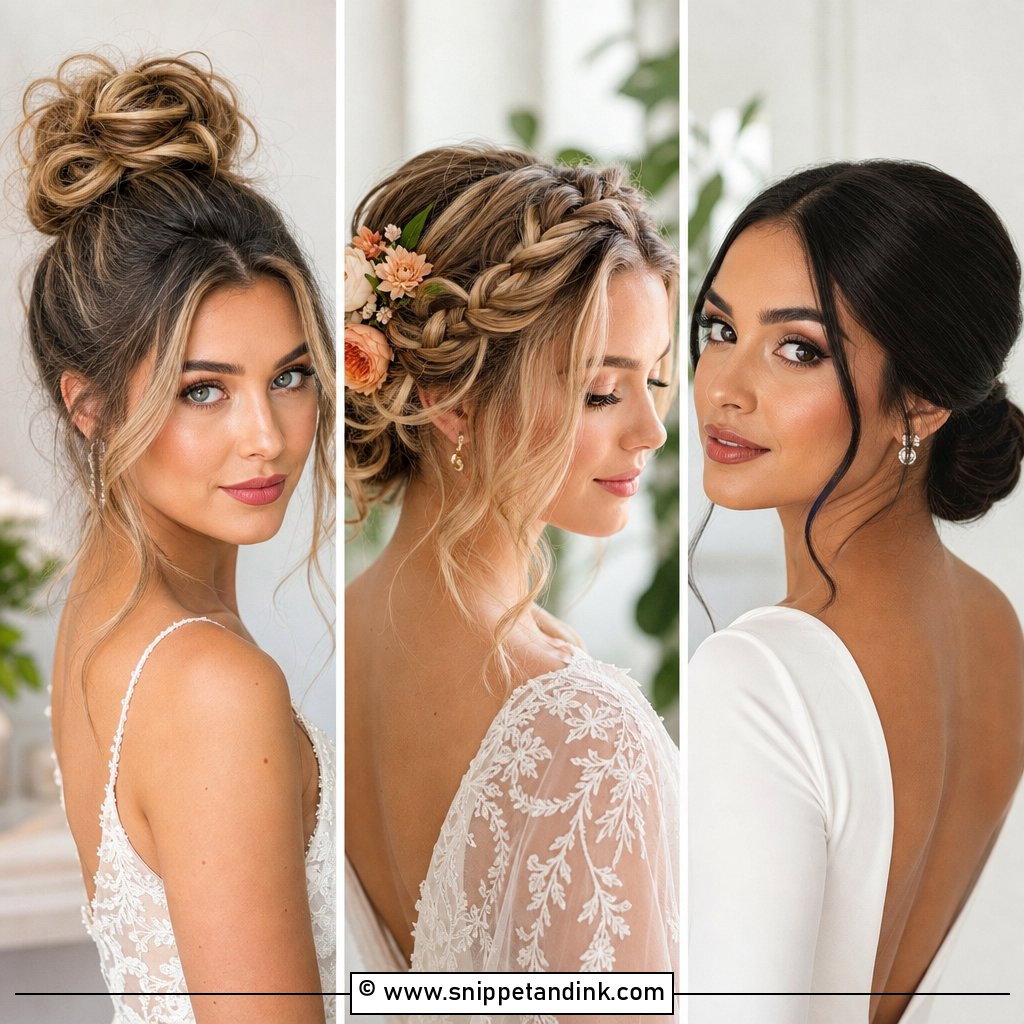
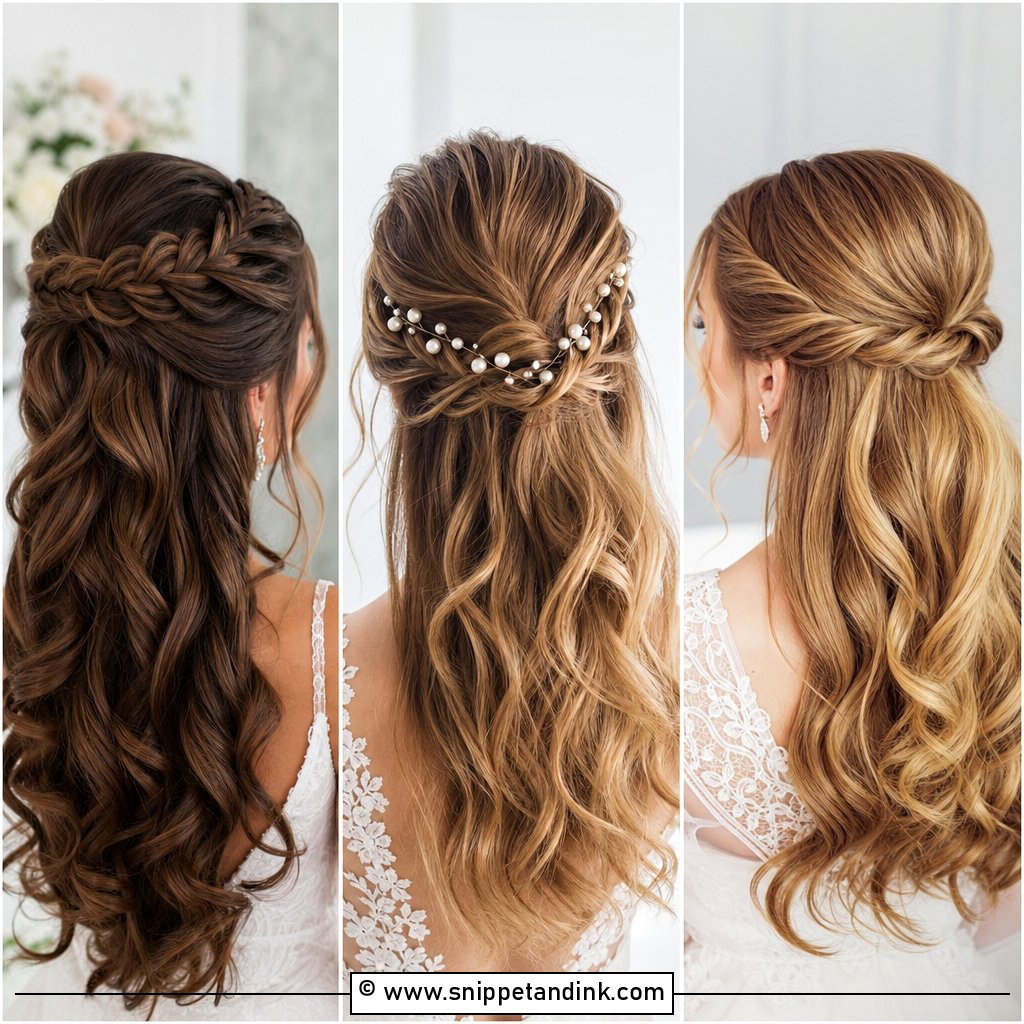
The right hairstyle balances four things: your dress, your venue, your hair texture and how comfortable you’ll be for the whole day. Low buns and chignons are classic; half-up waves feel romantic; Hollywood waves add glamour; braids give texture; sleek buns and ponytails look modern. Short hair, natural curls, flowers, pearls and veils all work when the shape is planned. Save your favorites, bring them to a trial with photos of the dress and accessories, and you’ll know quickly which one belongs to you.
You'll Like These Ideas:


Leave a Reply