
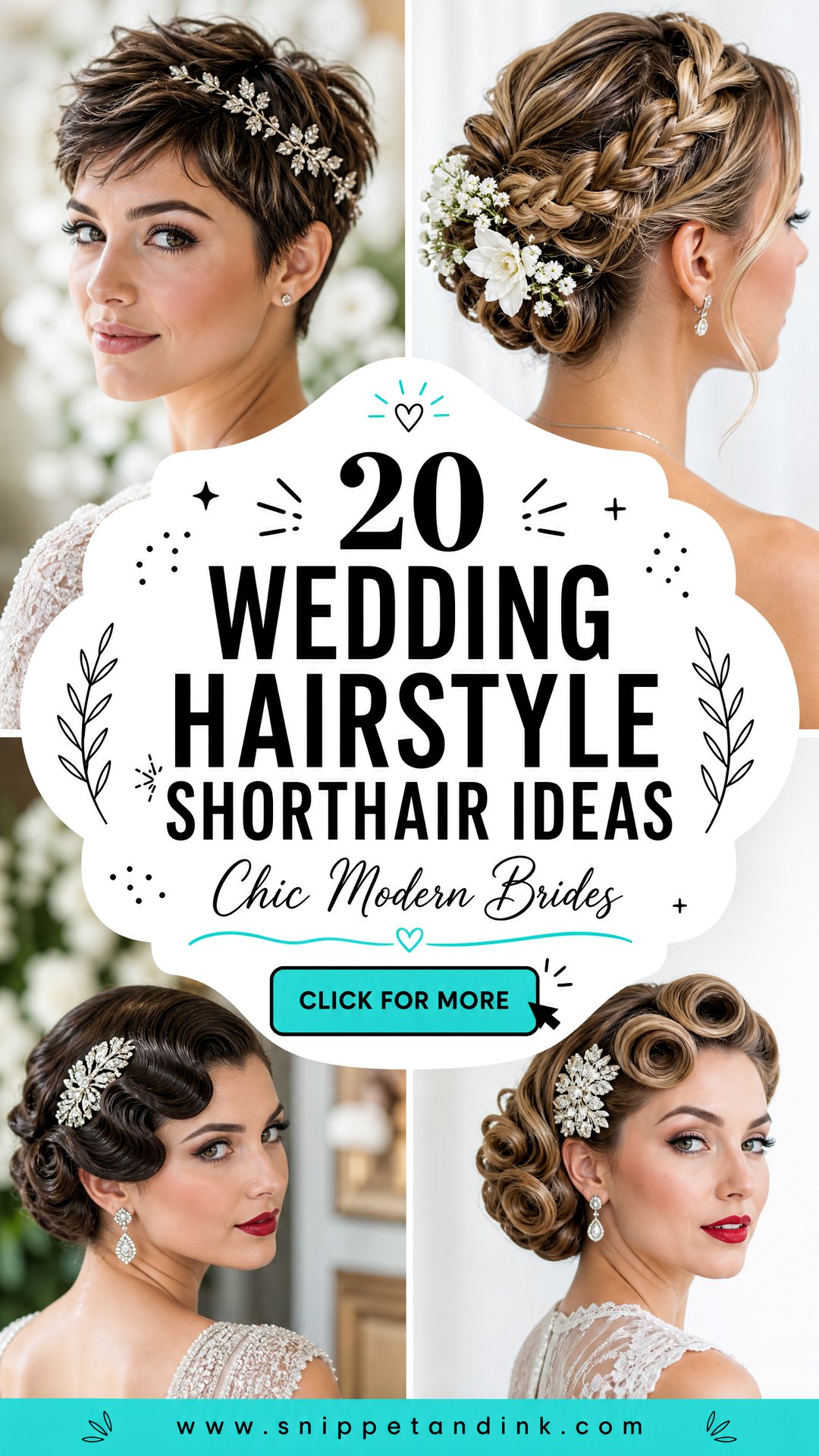
Short hair gives me less to hide pins in, so every bridal style on a pixie or bob is built on placement rather than bulk. That’s the honest difference from long hair, and it’s also why short styles usually last better: there’s no heavy length pulling the curl out before the speeches. Below are twenty looks I’d happily put on a short-haired bride, from sleek pixie cuts to soft bobs and pinned twists, with notes on what each one needs from your hair and where it tends to go wrong.
How Much Length Each Style Needs at the Nape
Most of the frustration I see with short bridal hair comes from a photo of a style that needed two more inches than the bride has. The length that counts is at the back, not the front, because that’s where updos are anchored. Roughly, this is what each length can carry:
- Pixie, a few inches on top: finishing work, side sweeps, pinned-back sides, headbands and small wired flowers. No buns.
- Ear to chin bob: waves, sleek straight styles, finger waves, deep side parts and small half-up twists if the crown reaches the back.
- Jaw to collarbone: small low buns, twisted knots, chignons and French twists, all built with plenty of crossed pins.
- Less length than the style needs: clip-in wefts matched to your colour, tried at the trial so you can see how they blend.
Layers change the picture. Heavily layered short hair has pieces that stop well short of the rest, and those are the first to escape an updo. I’d much rather spot that at a trial than at four in the afternoon on the wedding day.
Timing Your Last Trim and Colour
Short hair shows growth fast, because a quarter inch changes the outline of a pixie or the line of a bob. I usually suggest the final cut about a week to ten days out for a pixie and around two weeks out for a bob. That softens any blunt line and leaves time to fix a cut you’re unhappy with.
Colour goes before the final cut, at least a week ahead, so the tone settles and your scalp isn’t sensitive on the morning. Don’t change the shape much after your trial either. The style we planned was designed around the length you had then, and a surprise inch off the back can make a chignon impossible.
1. Wavy Bob Wedding Hairstyle
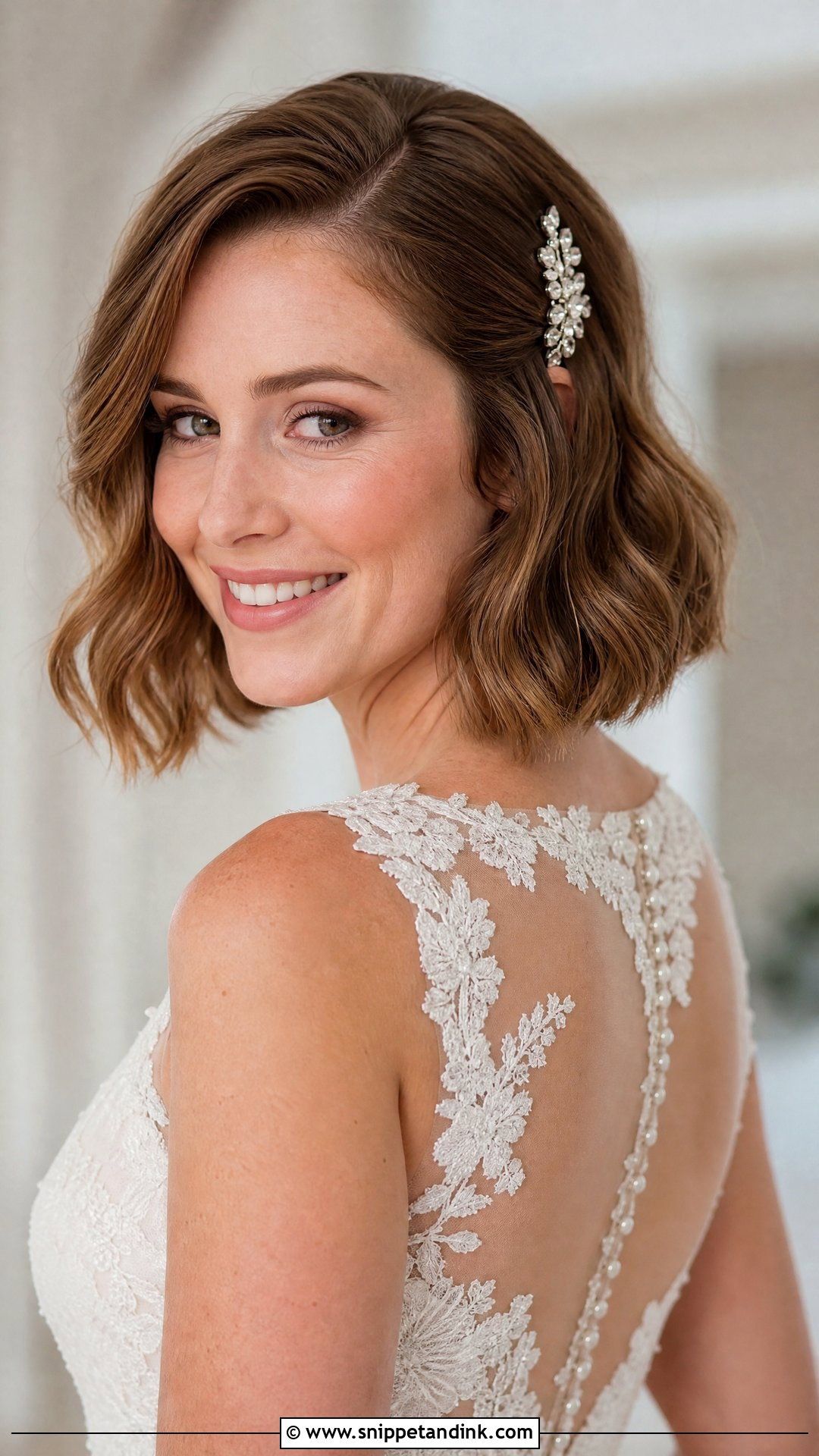
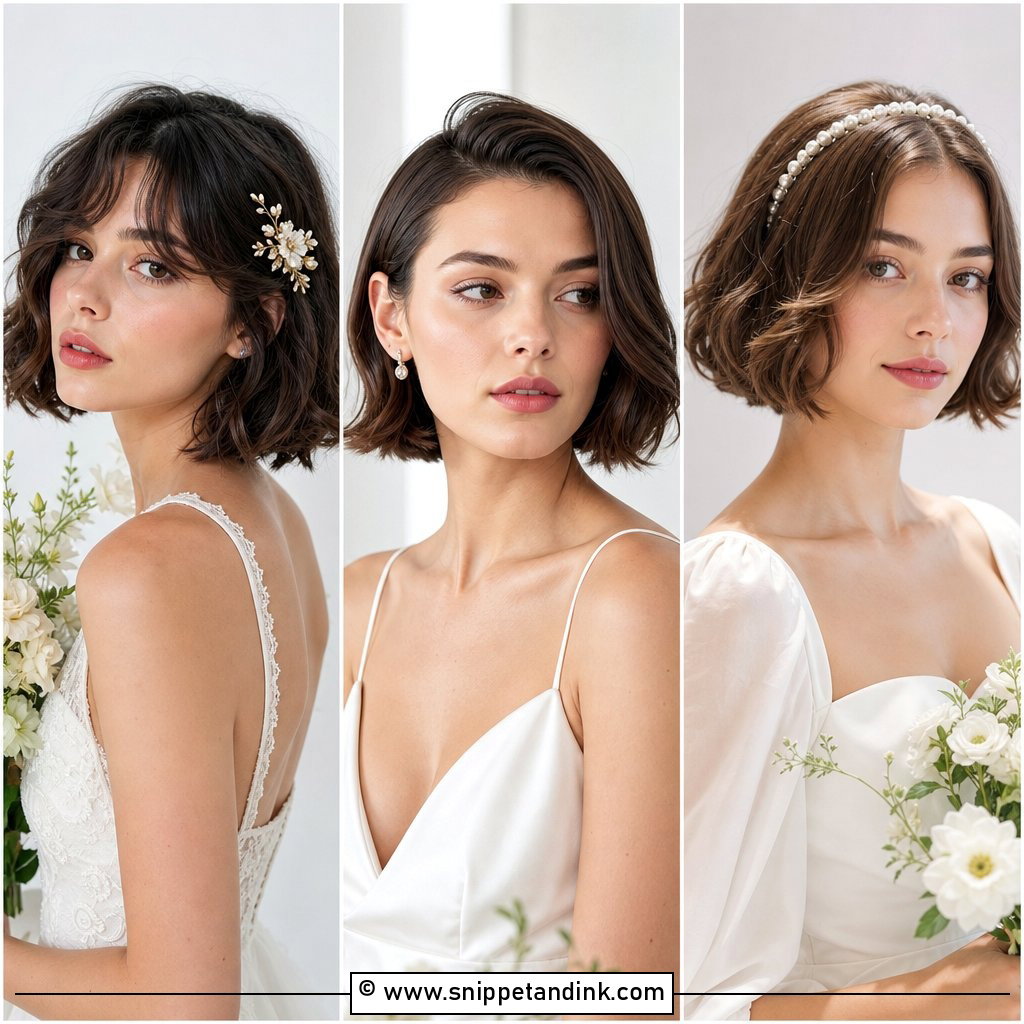
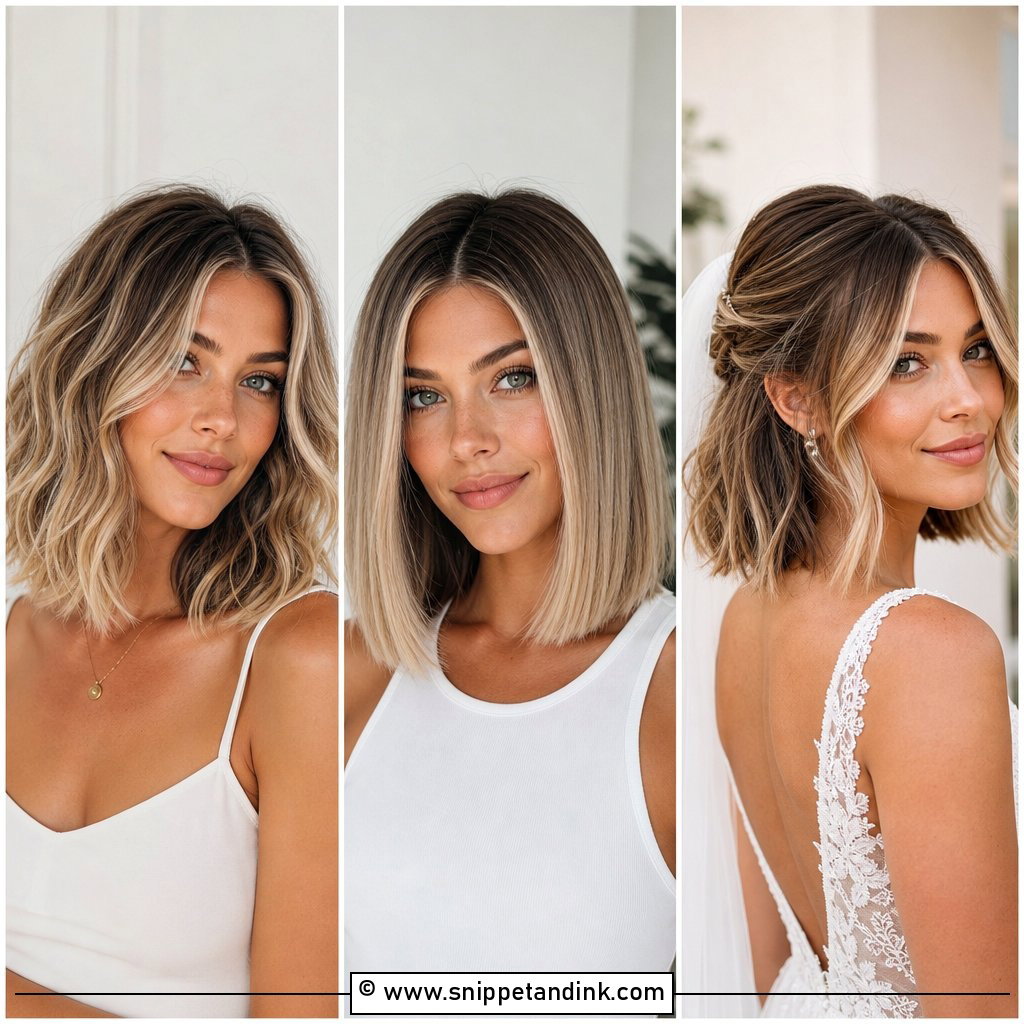
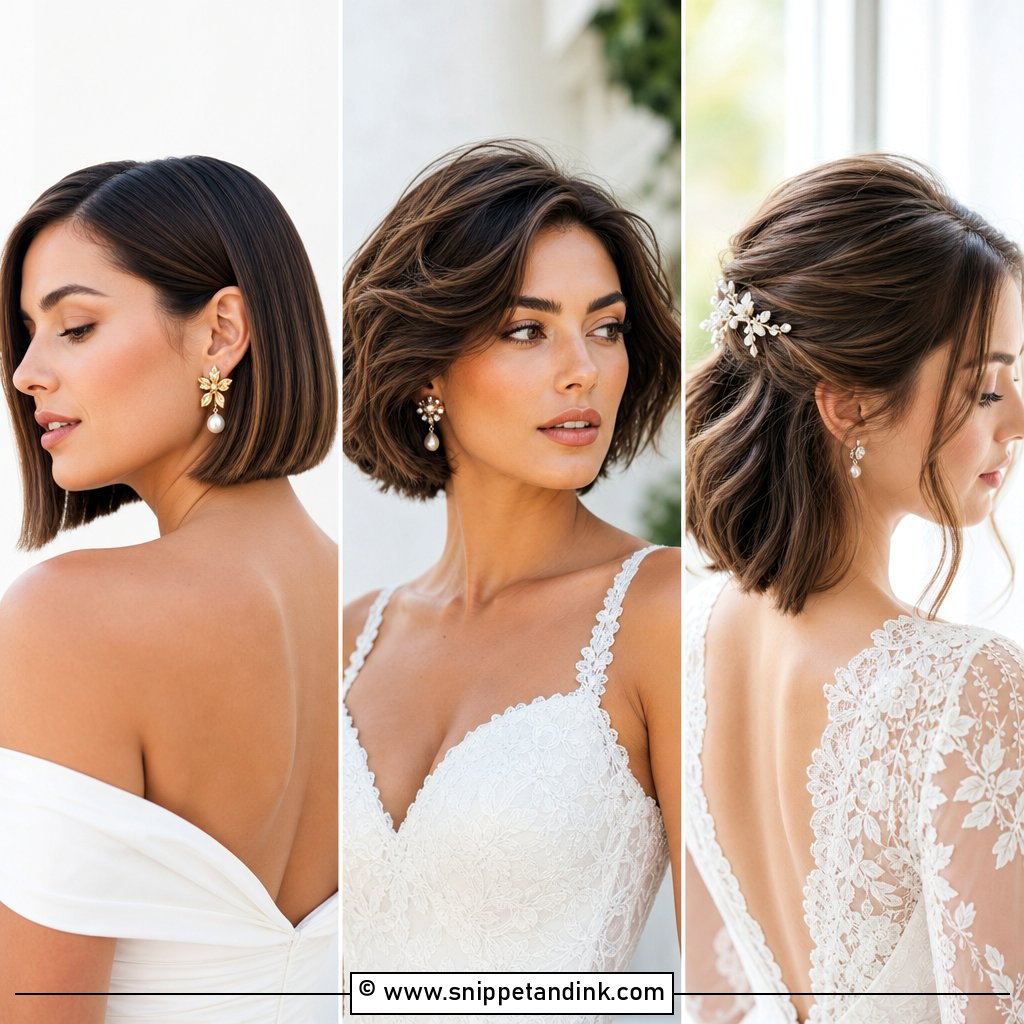
A wavy bob is the style short-haired brides ask me for most, and it rewards restraint. I set the waves with a medium barrel iron, let every section cool completely, then brush them out so they read as movement rather than ringlets. On a chin-length cut, a tight curl springs up and shortens the bob by an inch or more, which surprises people at the trial. A clip near the temple is the easiest accent, and it doubles as a grip point if the waves start sliding forward.
2. Sleek Chignon for Short Hair
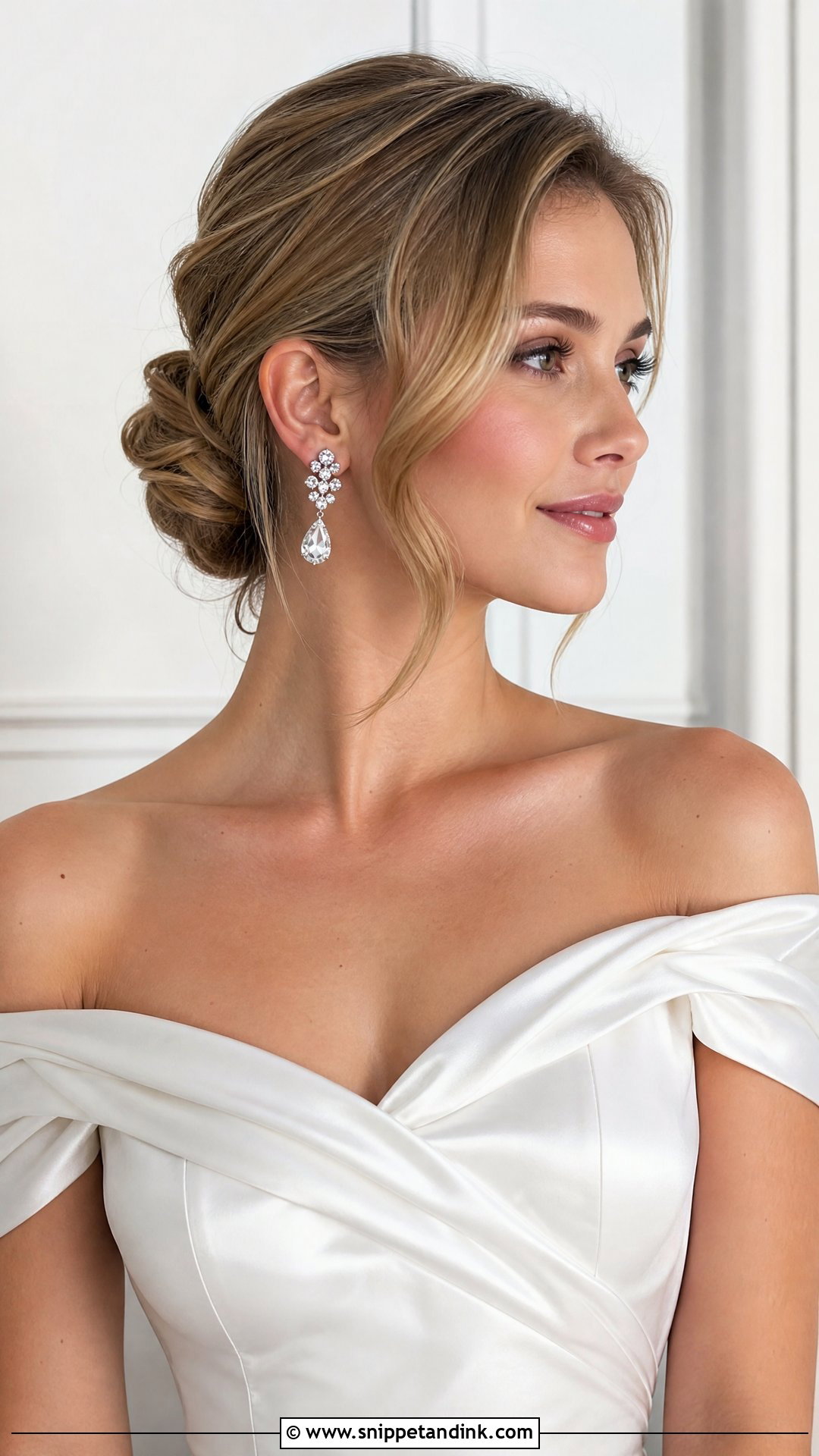
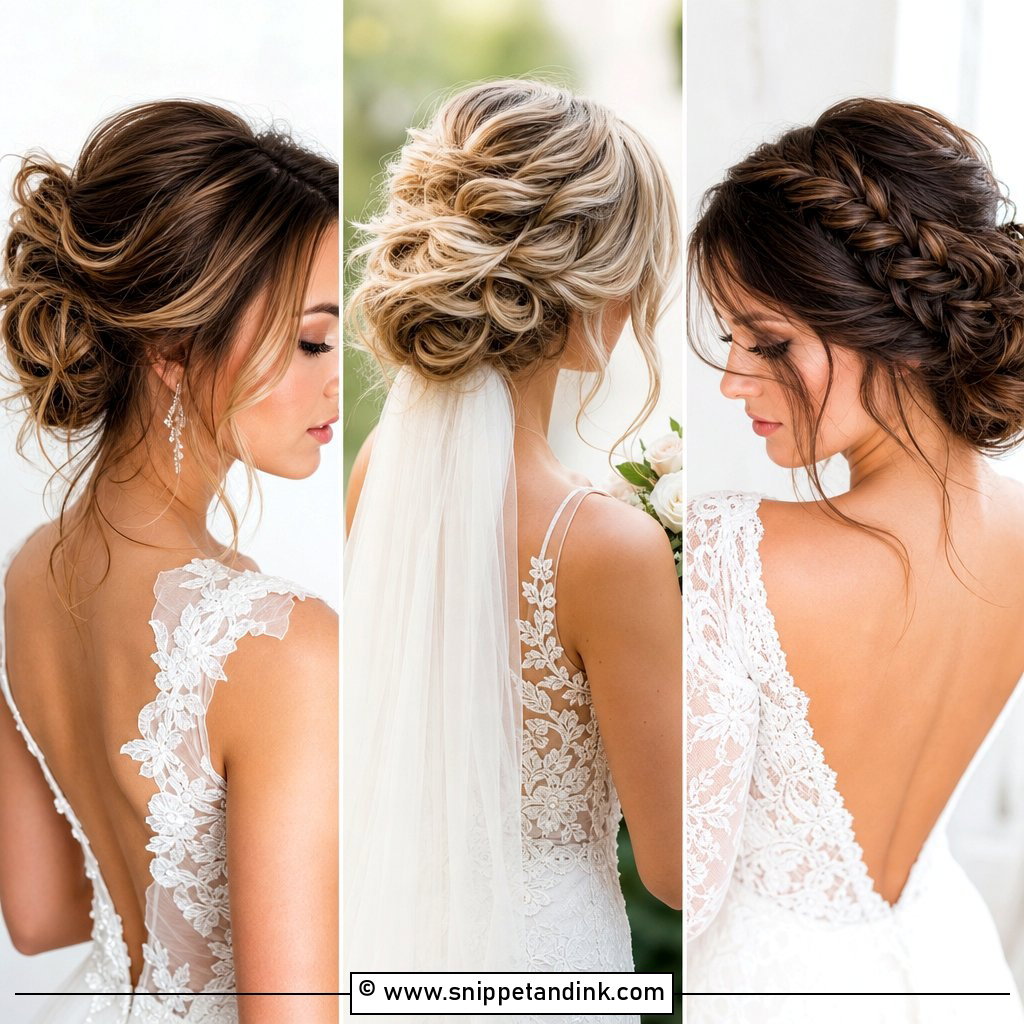
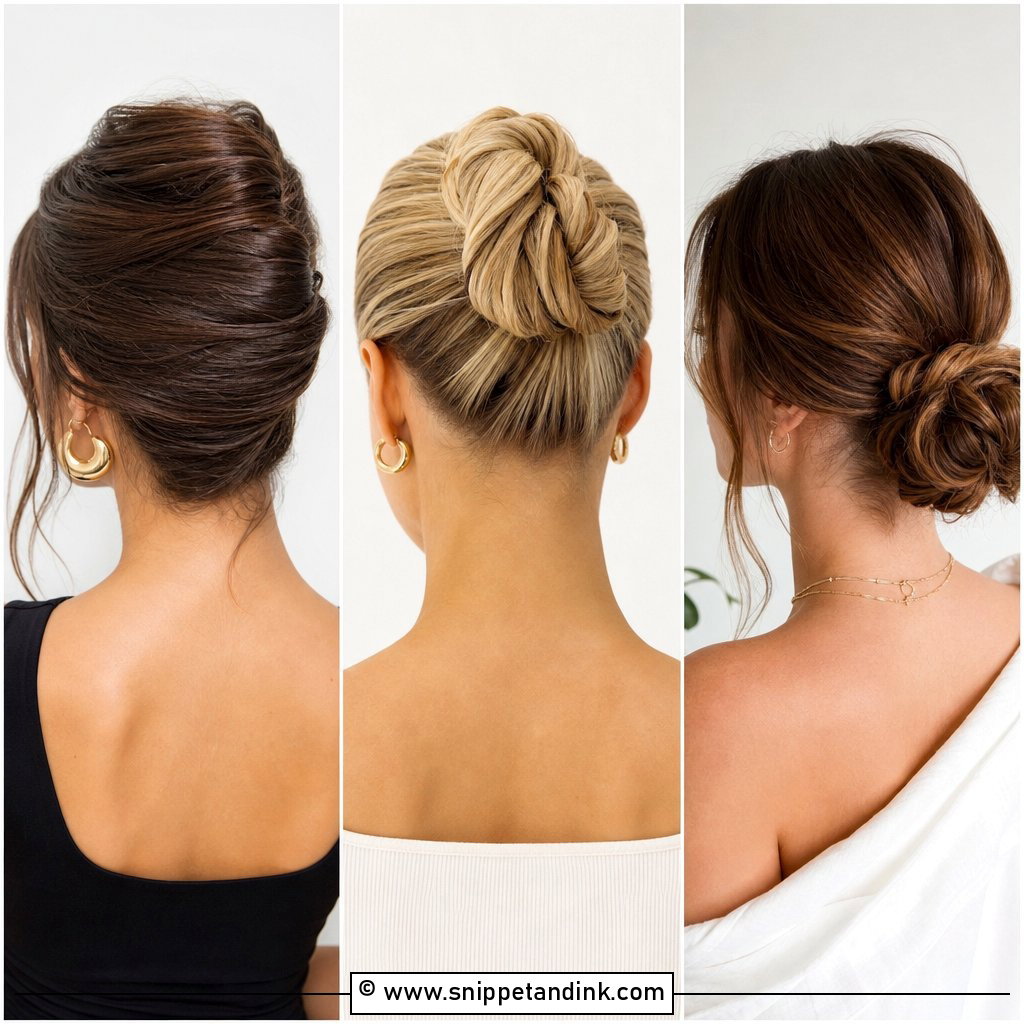
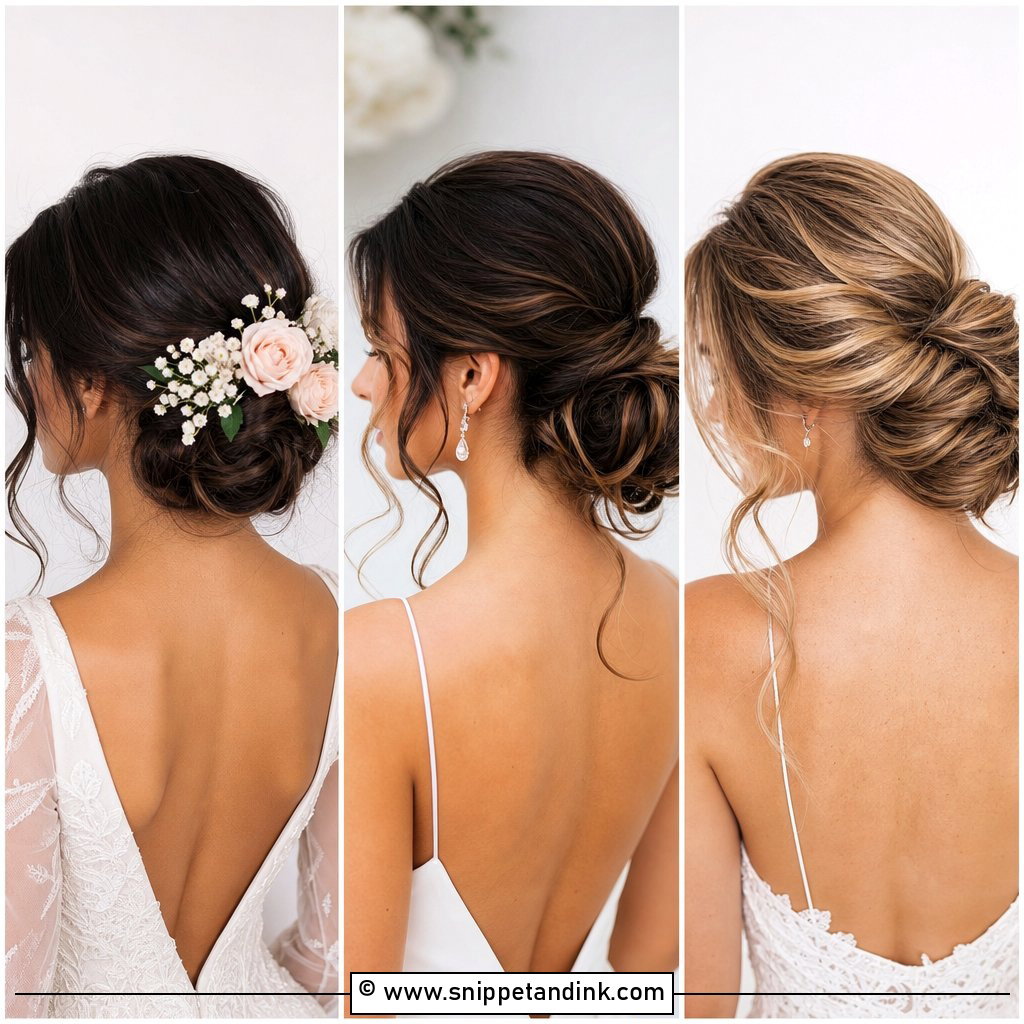
On short hair, a low chignon is really a construction job. If the back reaches just past the nape, I roll it under in sections and pin them in overlapping layers, so the shortest pieces at the bottom are trapped by the ones above. Hair that stops well above the collarbone at the back usually needs a small padding piece or a couple of clip-in wefts to give the knot any size at all. I leave two fine tendrils by the ears, because a perfectly slick shape on short hair can look severe from the front, and statement earrings fill that space well.
3. Pixie Cut Wedding Look
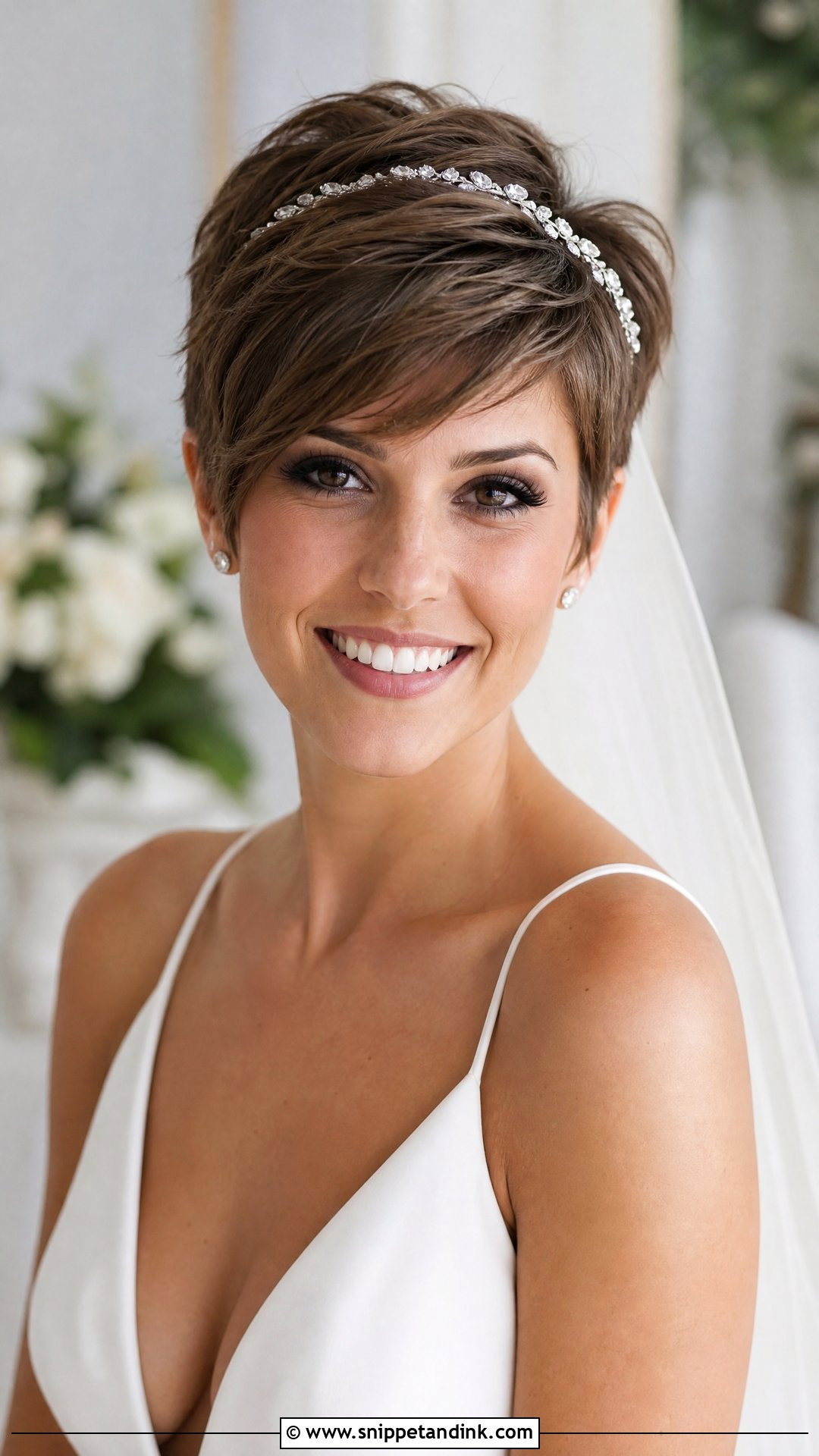
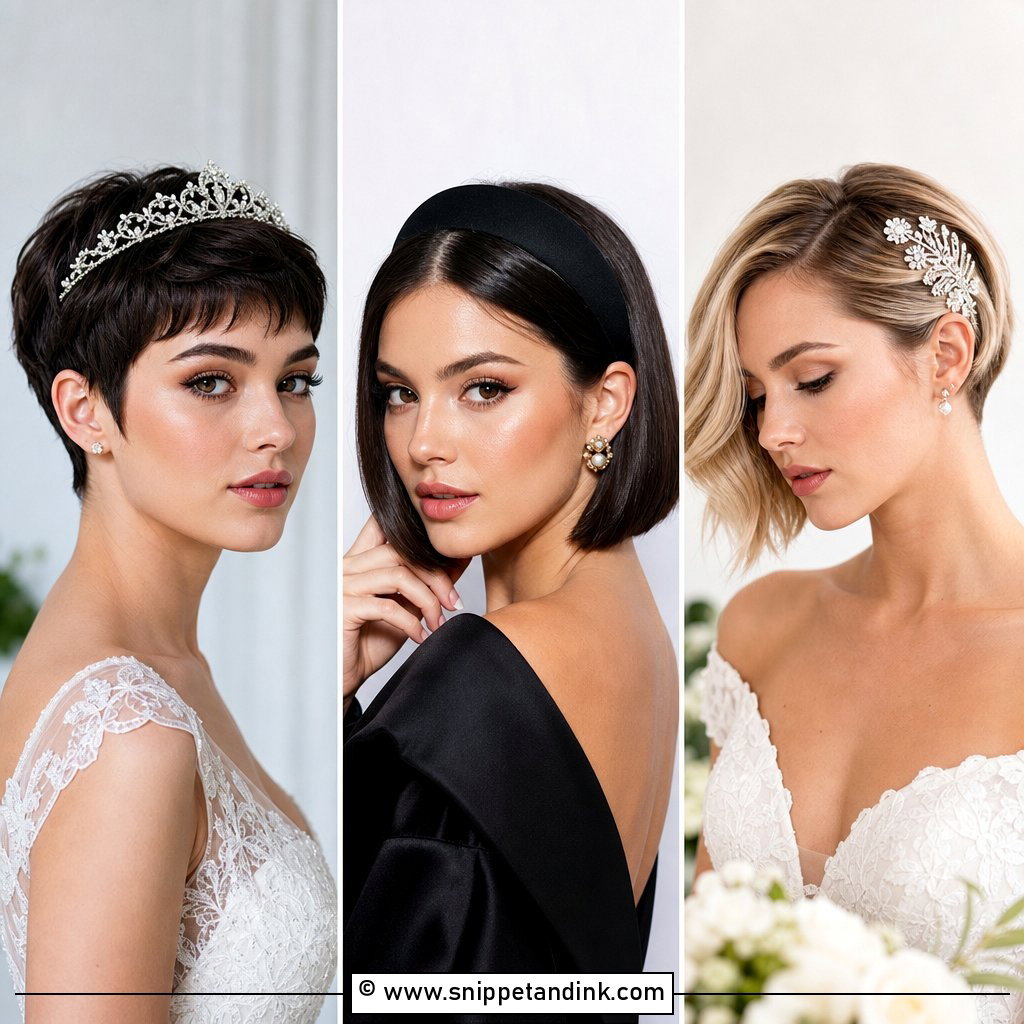
With a pixie there’s no structure to collapse, so my work is mostly finish: a little paste worked into dry hair, a clear direction at the fringe, and enough shine that it reads polished under flash. A delicate jeweled headband or a single bloom behind the ear does the job a veil does on longer hair. The thing to plan around is the cut itself. A pixie grows out of shape quickly, so the timing of your last trim matters more here than for any other look in this list.
4. Half Up Half Down Short Hair
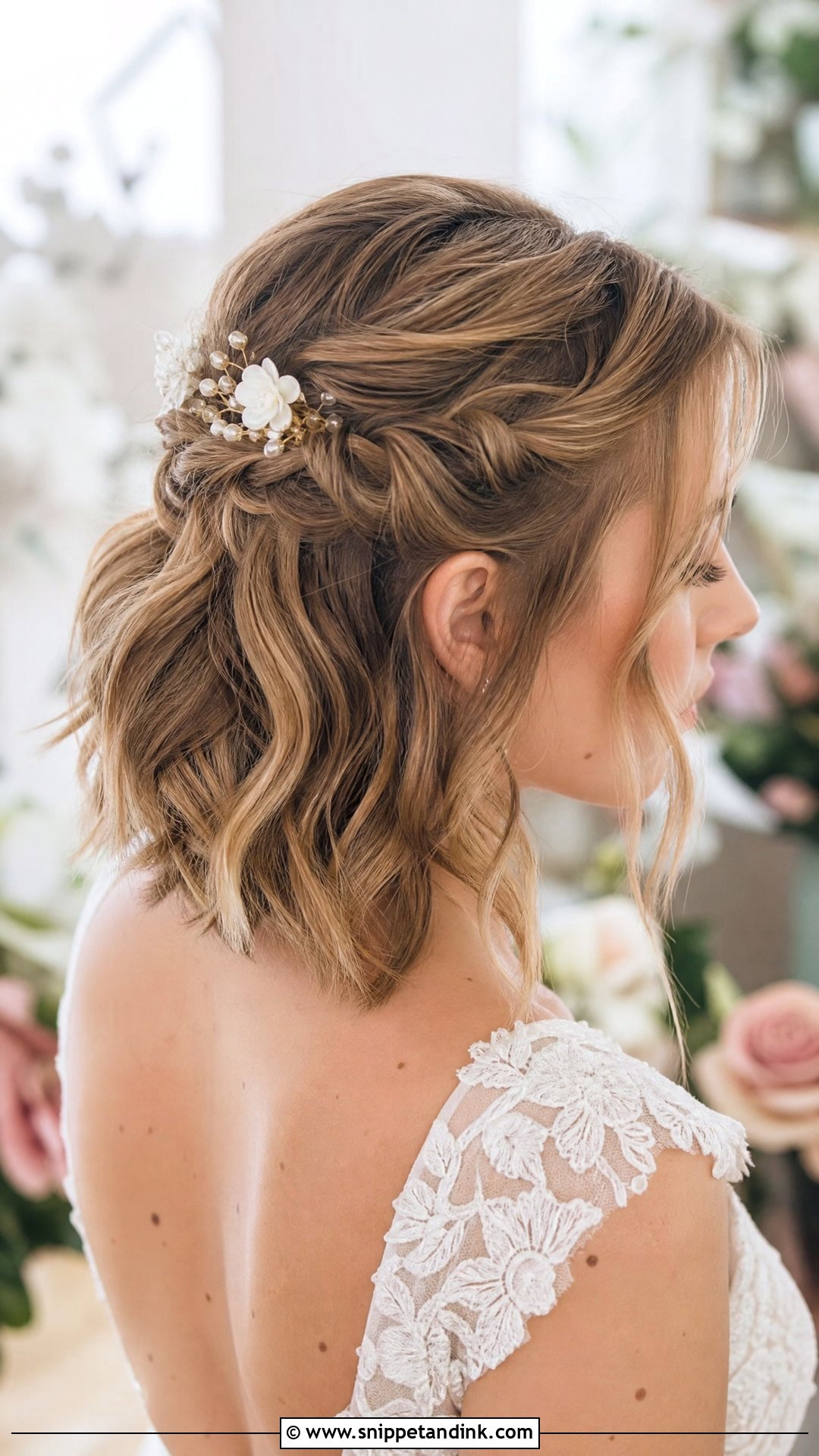
Half-up works on short hair when the crown is long enough to twist and meet at the back, roughly chin length or more. I twist one small section from above each ear toward the back and cross the pins so they lock against each other. Very choppy layers will pop out of the twist within an hour. When I see that at a trial, I either braid those sections tighter or leave them loose on purpose so the escape looks planned. The twist also gives a veil comb something firm to bite into, which most short styles lack.
5. Braided Updo for Short Hair
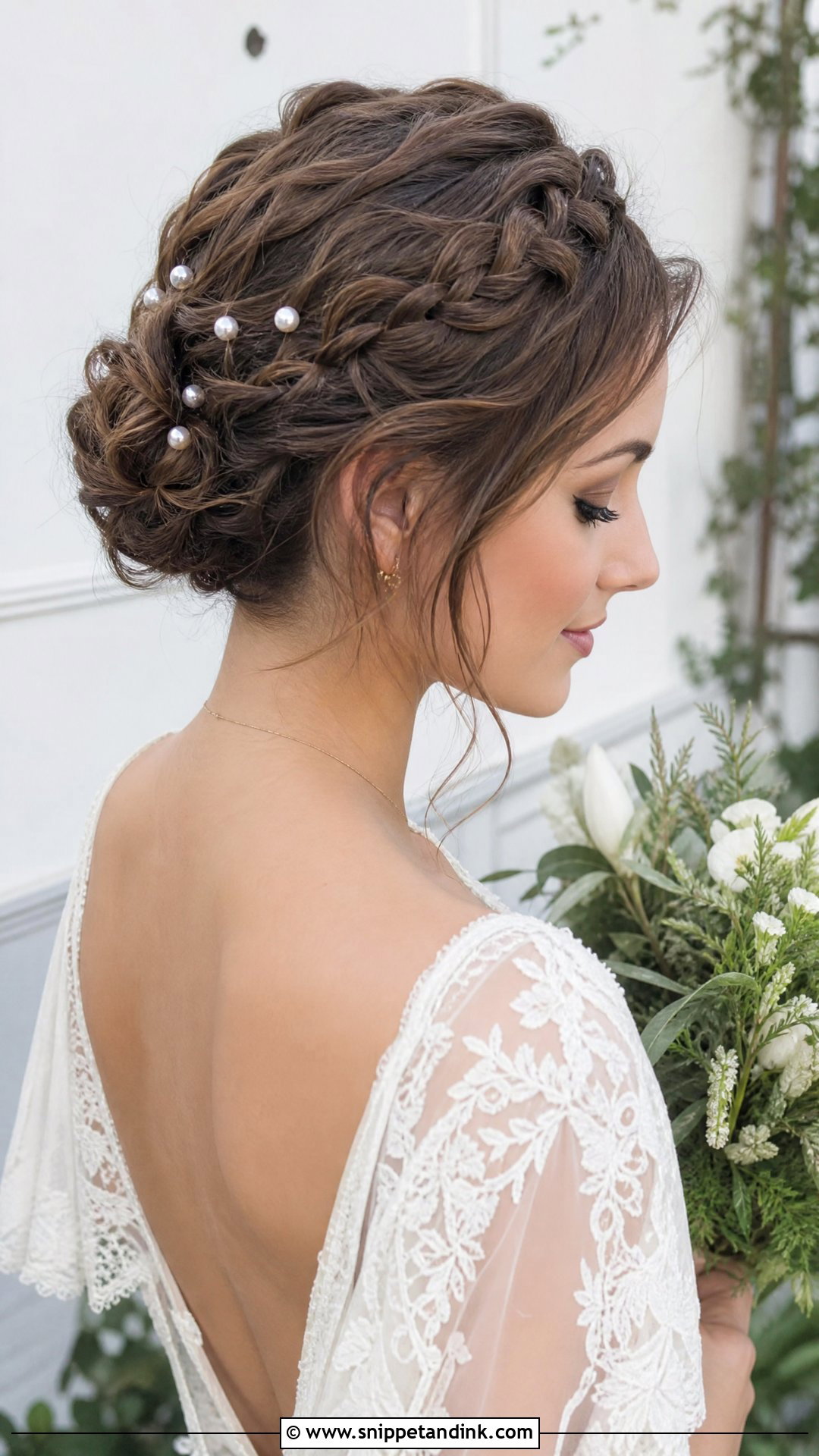
I’m honest at consultations that braiding short hair is fiddly. Bob-length hair can be plaited along the hairline or around the crown, but each braid runs out quickly, so the ends get tucked and pinned rather than gathered into one bun. A texture spray or dry shampoo beforehand gives slippery strands enough grip to stay woven. Pearl pins and tiny flowers slot into the gaps between braids, and at a garden wedding that woven detail is what guests notice up close.
6. French Twist for Short Hair
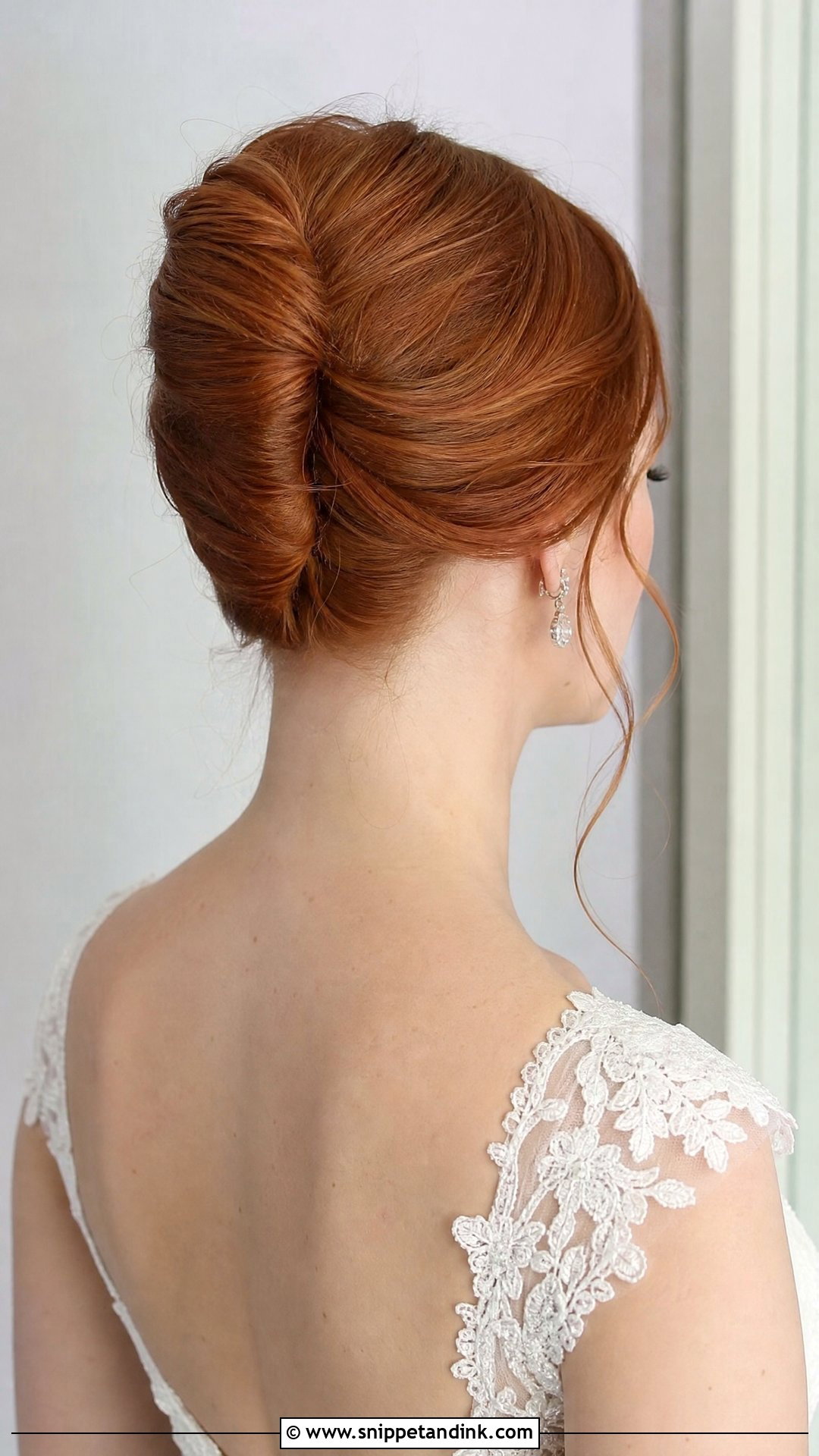
A French twist needs hair that can fold over itself vertically. On a short cut I build it from the nape up: a row of crossed pins as the base, then the top section smoothed over that anchor and pinned into the seam. It holds best on bobs that reach the jaw or below. I keep a little lift at the crown and a softer edge on the roll, since a very tight twist on short hair tends to show its pins. Ask to see the back in a hand mirror at your trial. That’s where short twists either hold or fray.
7. Curly Short Hair Wedding Style
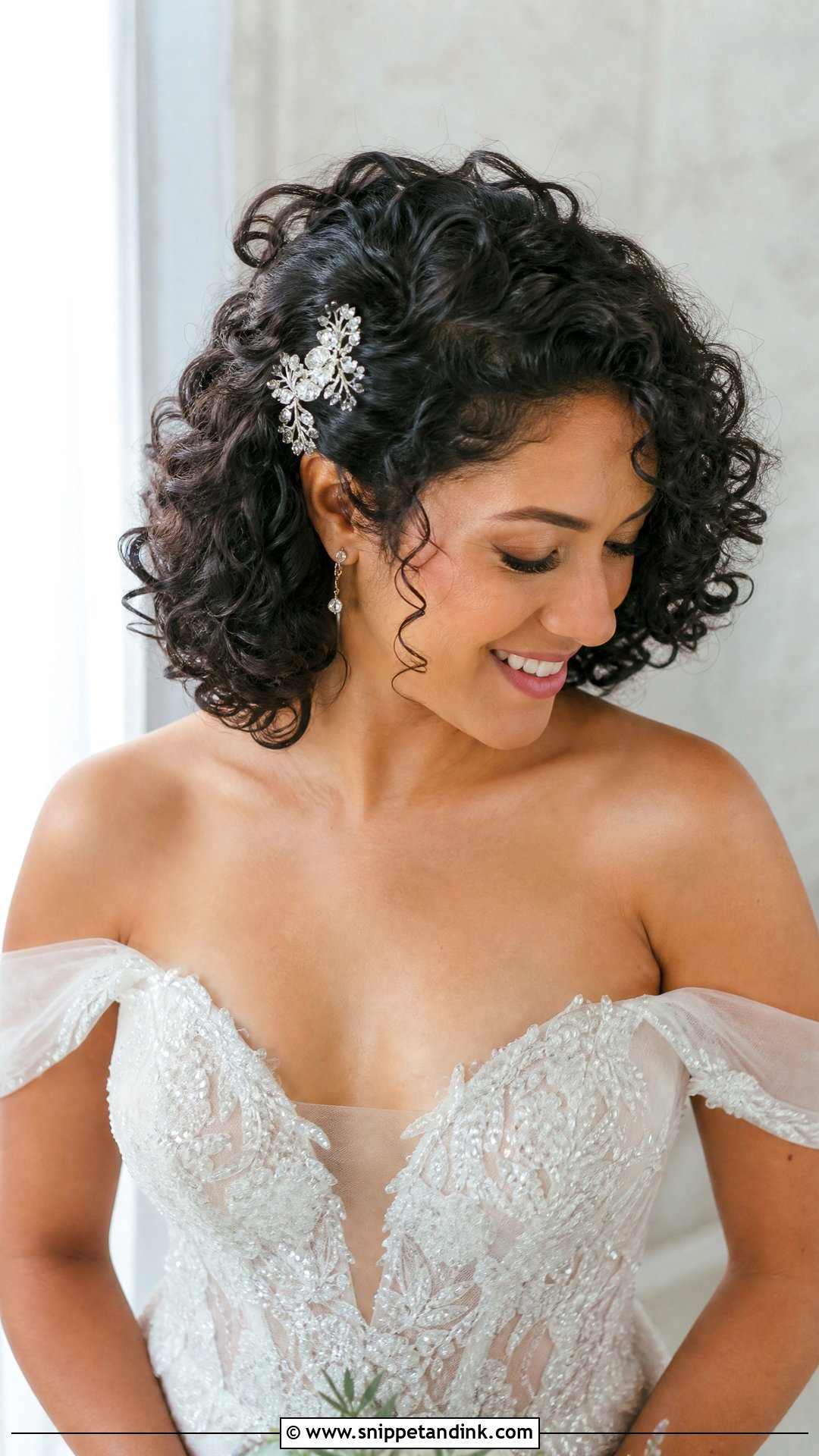
Natural curls are the least work for me on the morning and the most work for you in the weeks before. I don’t reset them. I define the pattern you already have with a curl cream or gel, then leave it to dry untouched so the cast doesn’t break into frizz. Any clip has to sit inside a curl cluster, never on top, or it slides off. In humid weather short curls grow through the day, so I shape them slightly smaller in the morning than you’d want for the evening photos.
8. Vintage Finger Waves Bob
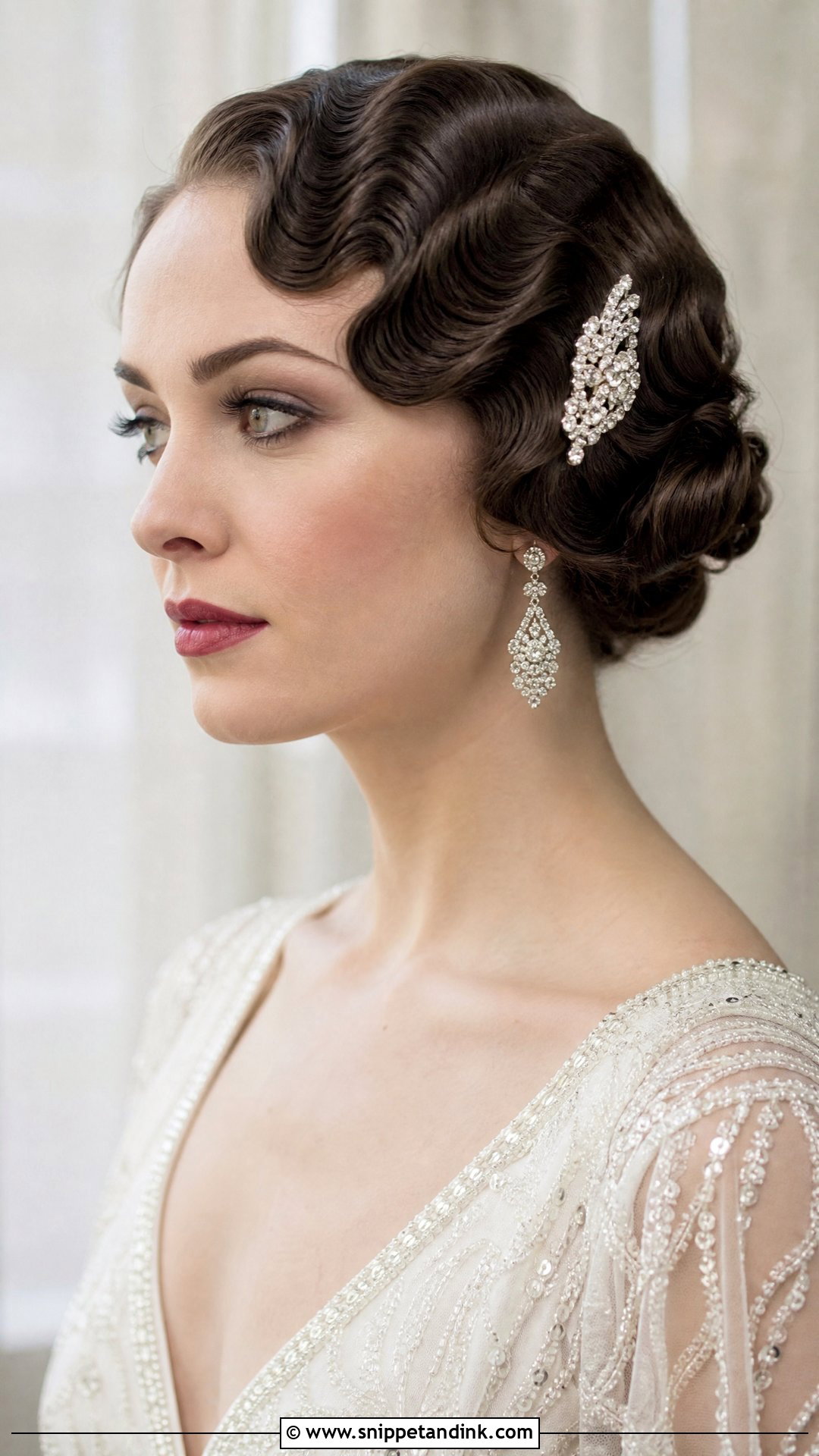
Short bobs are where sculpted finger waves really shine. They’re one of the few styles that look better on a short bob than on long hair, because the S shape lies flat against the head instead of disappearing into length. They’re set wet with a firm gel, pressed into ridges with fingers and clips, and left to dry completely before the clips come out. That drying time is real, so this is not one to squeeze into a rushed morning. Fine and medium hair takes the shape crisply. Very coarse or tightly curly hair resists lying flat and may need a heat set instead. A bold lip and a jeweled comb suit an art deco wedding.
9. Tousled Pixie With Flowers
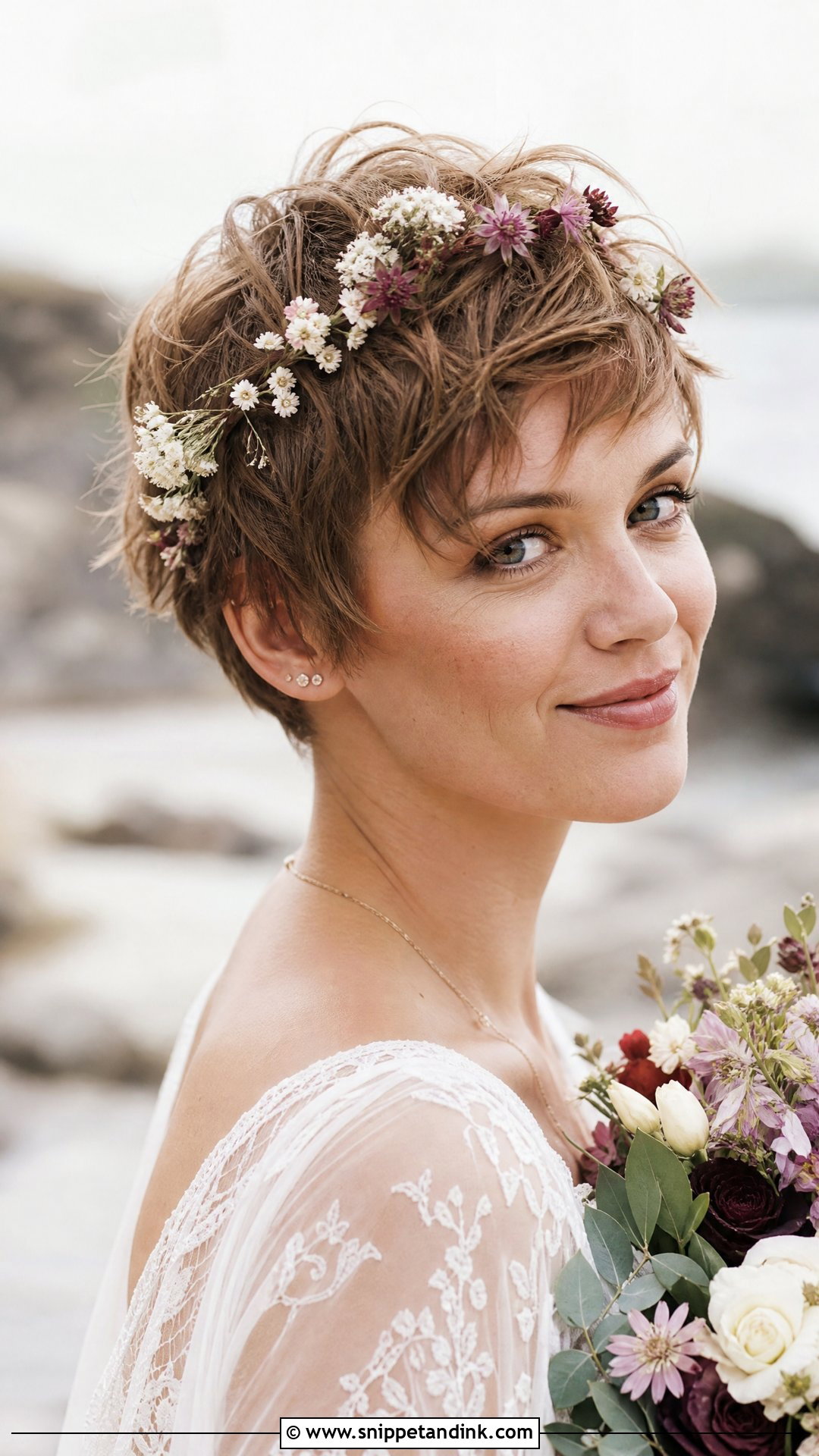
Flowers in a pixie have to be small and wired, because there’s no bulk to bury stems in. I ask the florist for a handful of single blooms on short wire, bend each wire into a U and slide it under a section like a pin. Anything heavy droops and drags the hair flat. Underneath, it’s just paste and a dry texture spray, roughed up with fingers. For an outdoor ceremony, pick flowers that cope without water for a few hours; spray roses and wax flower outlast delicate garden roses.
10. Sleek Straight Bob Bridal Look
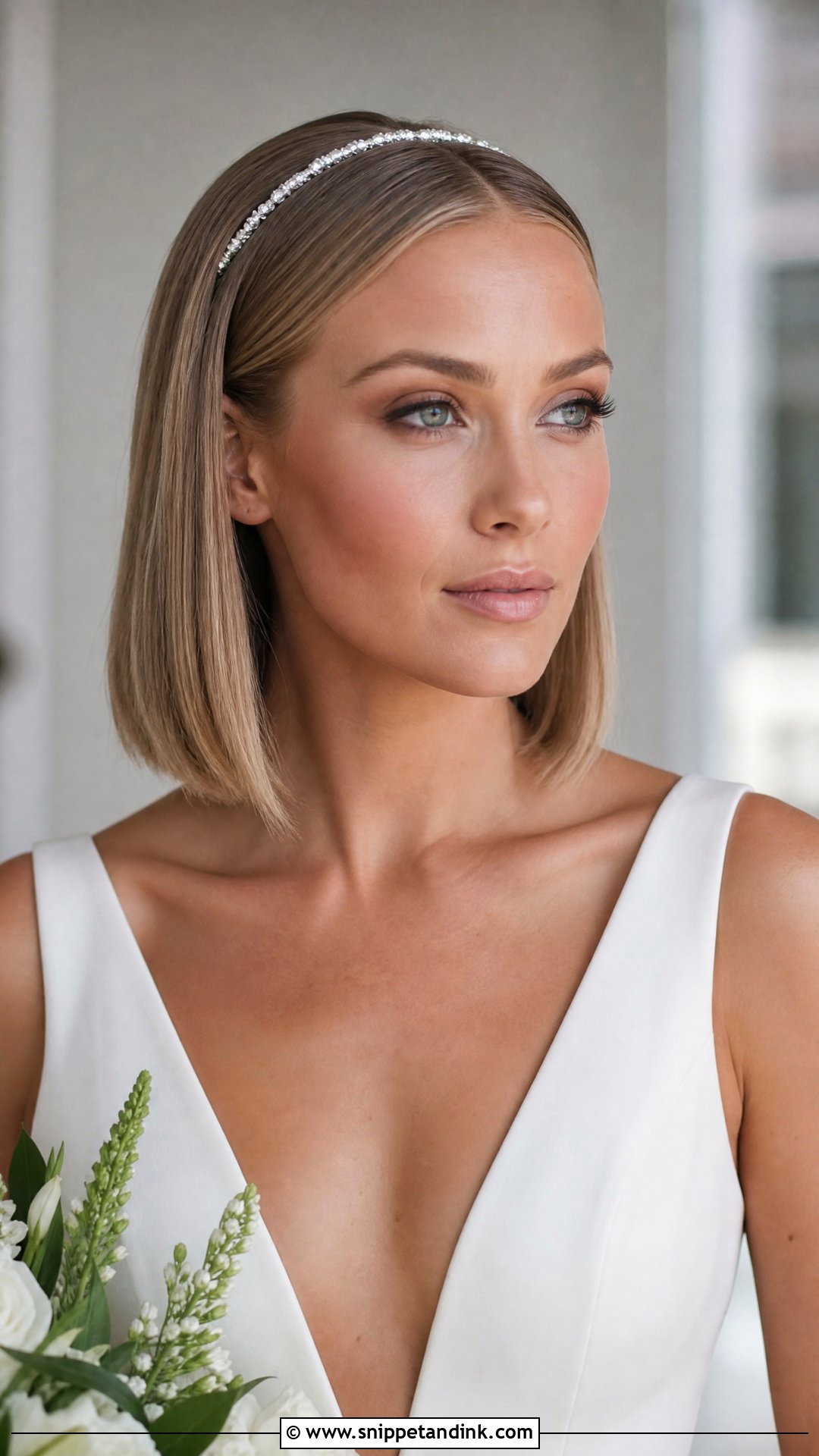
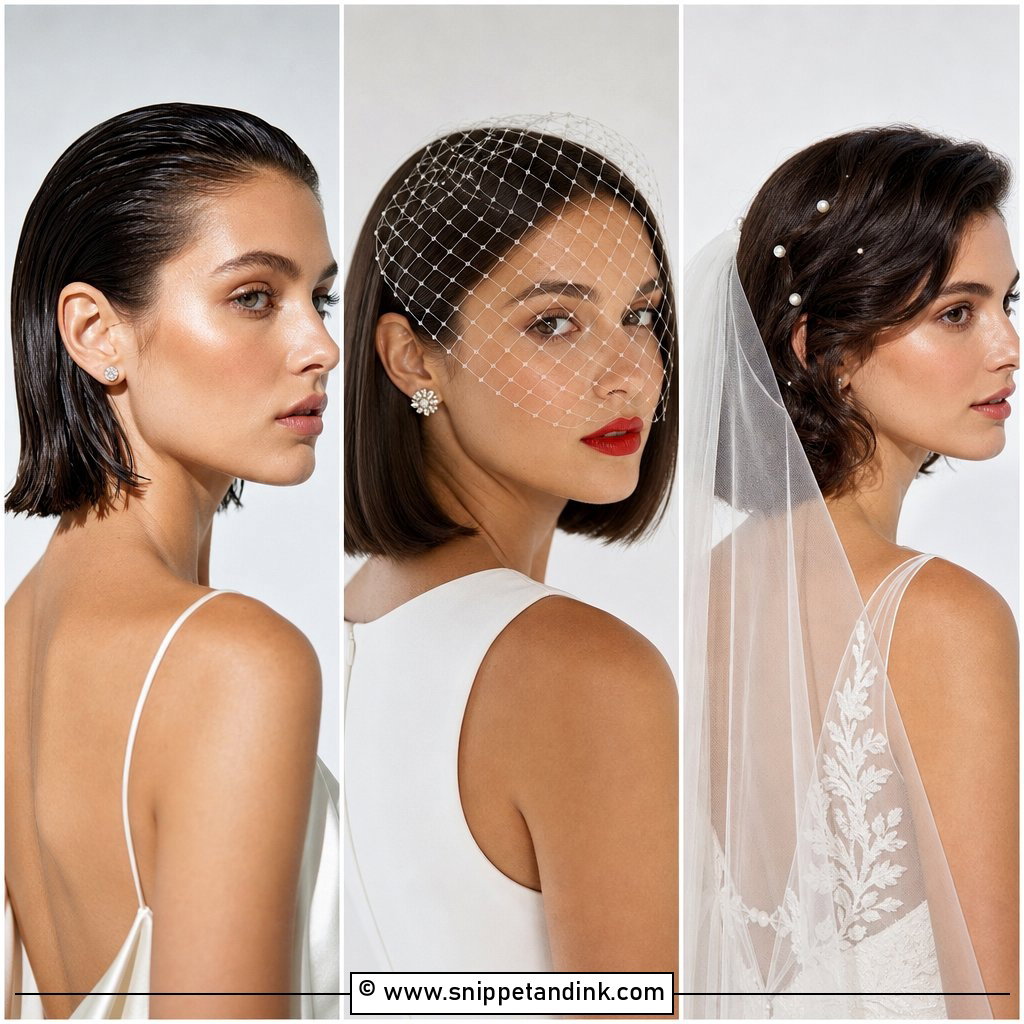
A sleek straight bob has nowhere to hide, which is why I like it most on brides with a precise cut. I blow it dry over a round brush, take a flat iron through once at moderate heat, and finish with a light shine spray rather than an oil that separates the ends. Humidity is the risk: a frizzy halo shows instantly on straight hair. A thin headband adds a bridal note without breaking the line.
11. Twisted Bun Short Hairstyle
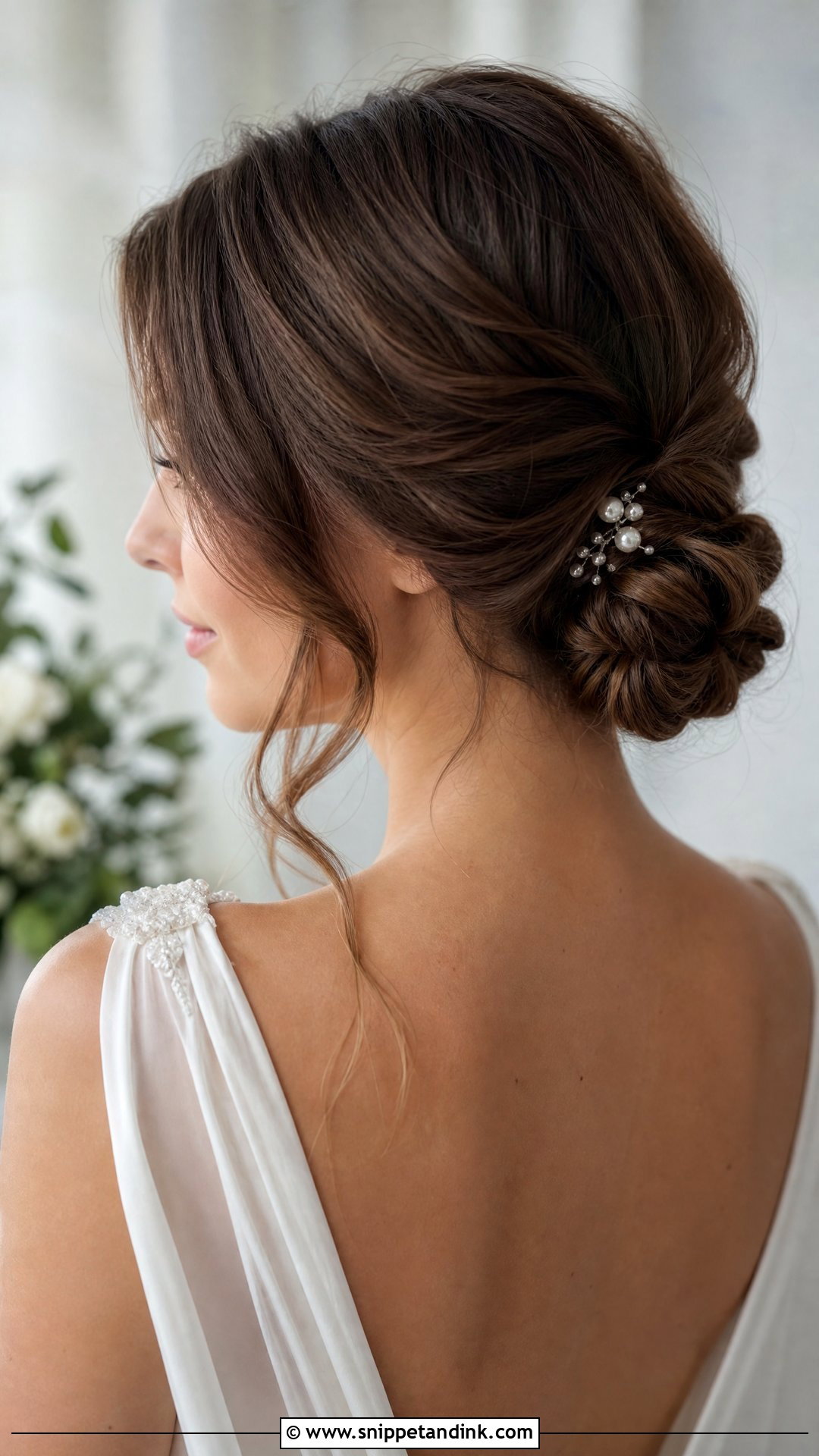
This one suits hair that just reaches the nape but is too short to wrap into a single coil. I twist each section separately and pin them into a cluster, so it reads as one textured knot even though it’s six or eight small pieces. It’s more forgiving than a smooth bun. If a short piece works loose by the first dance, it looks intended. Pearl pins sit neatly in the twists, and a quick check before the ceremony is usually all it needs.
12. Short Hair With Bridal Headband
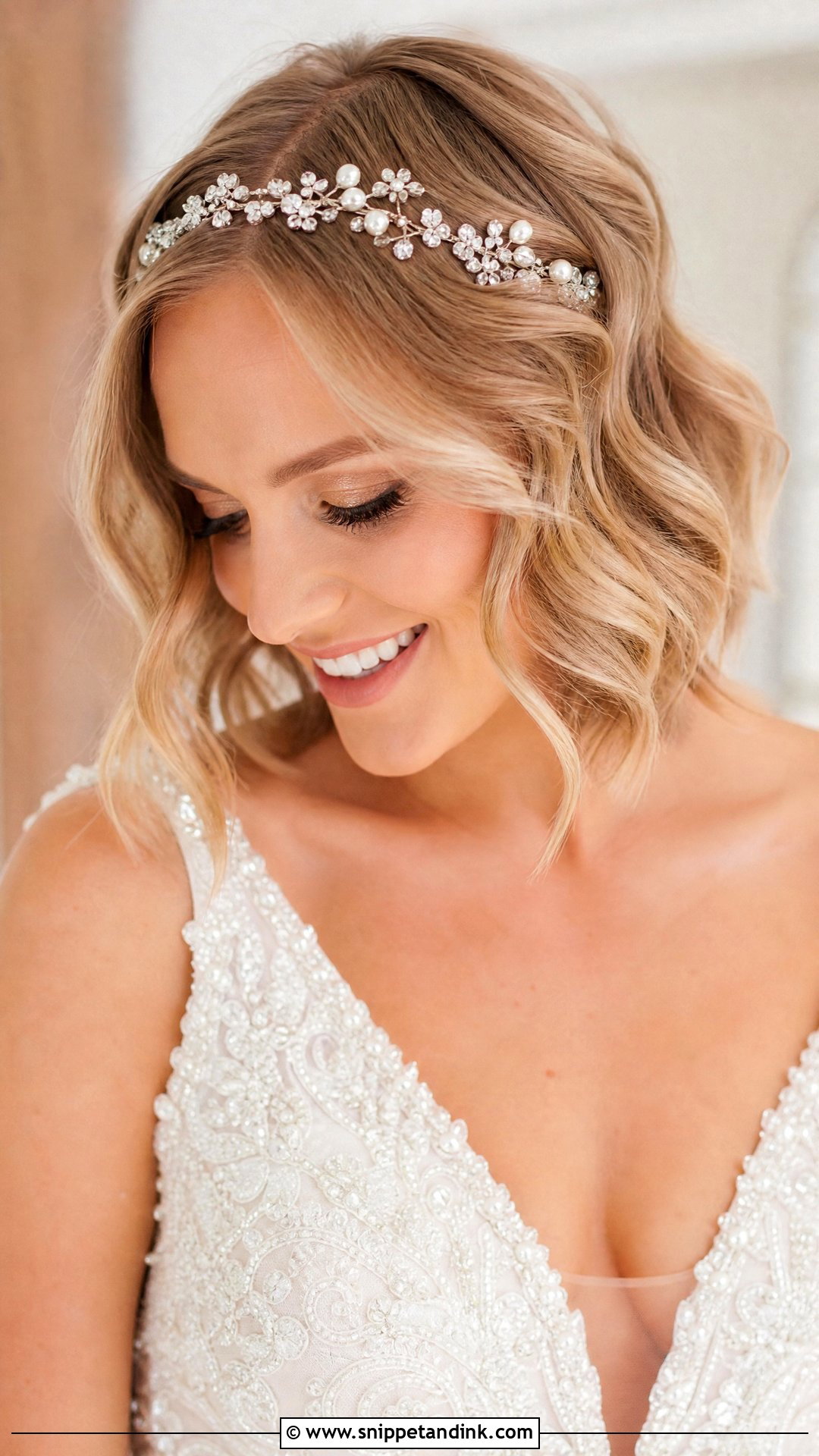
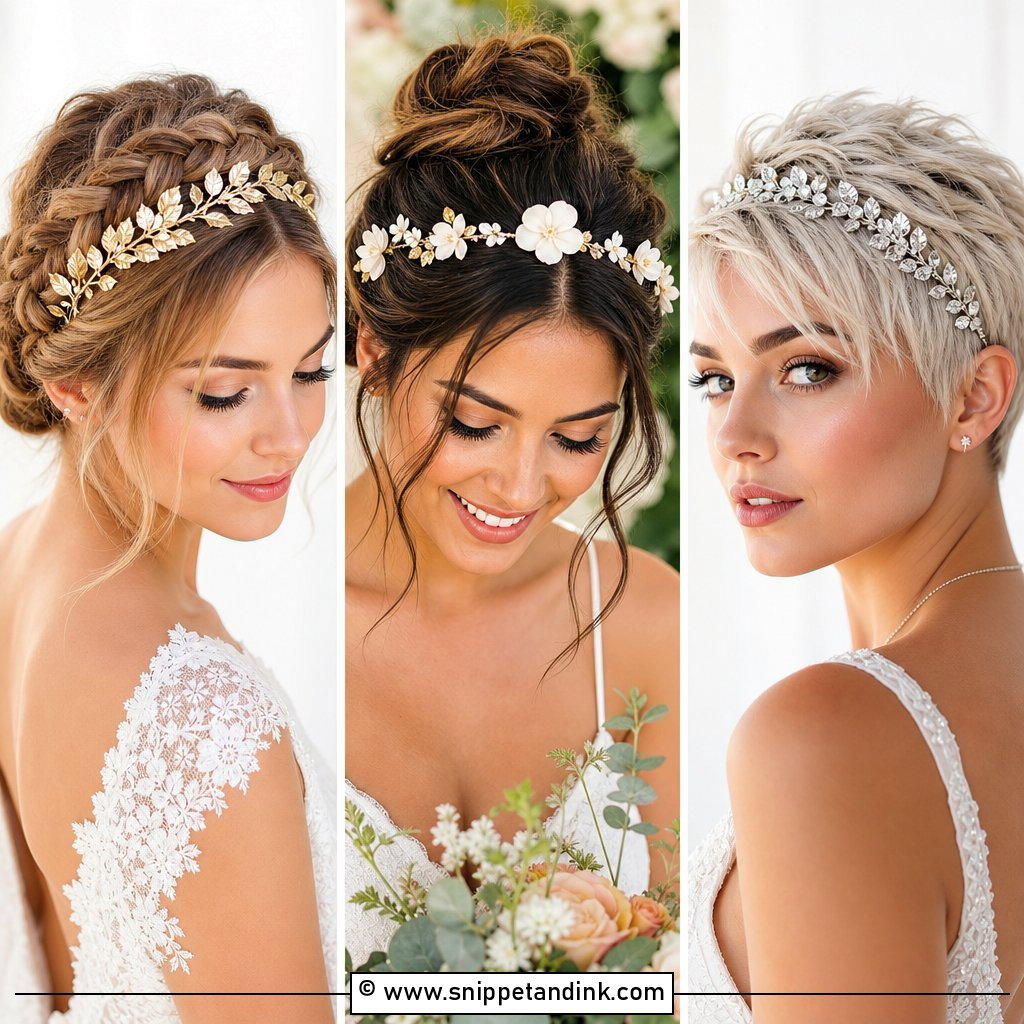
A jeweled headband is often the smartest accessory for short hair, because it holds itself on and doesn’t need a bun to grip. I slide it in after styling and lock it behind each ear with two crossed grips, so it can’t creep forward when people hug you. Wear the actual band for an hour at your trial. Some metal headbands press behind the ears and give you a headache by the reception, and you want to find that out early. Pick pearls, crystals or florals by your dress detailing, and it can replace a veil entirely.
13. Boho Braided Short Hair
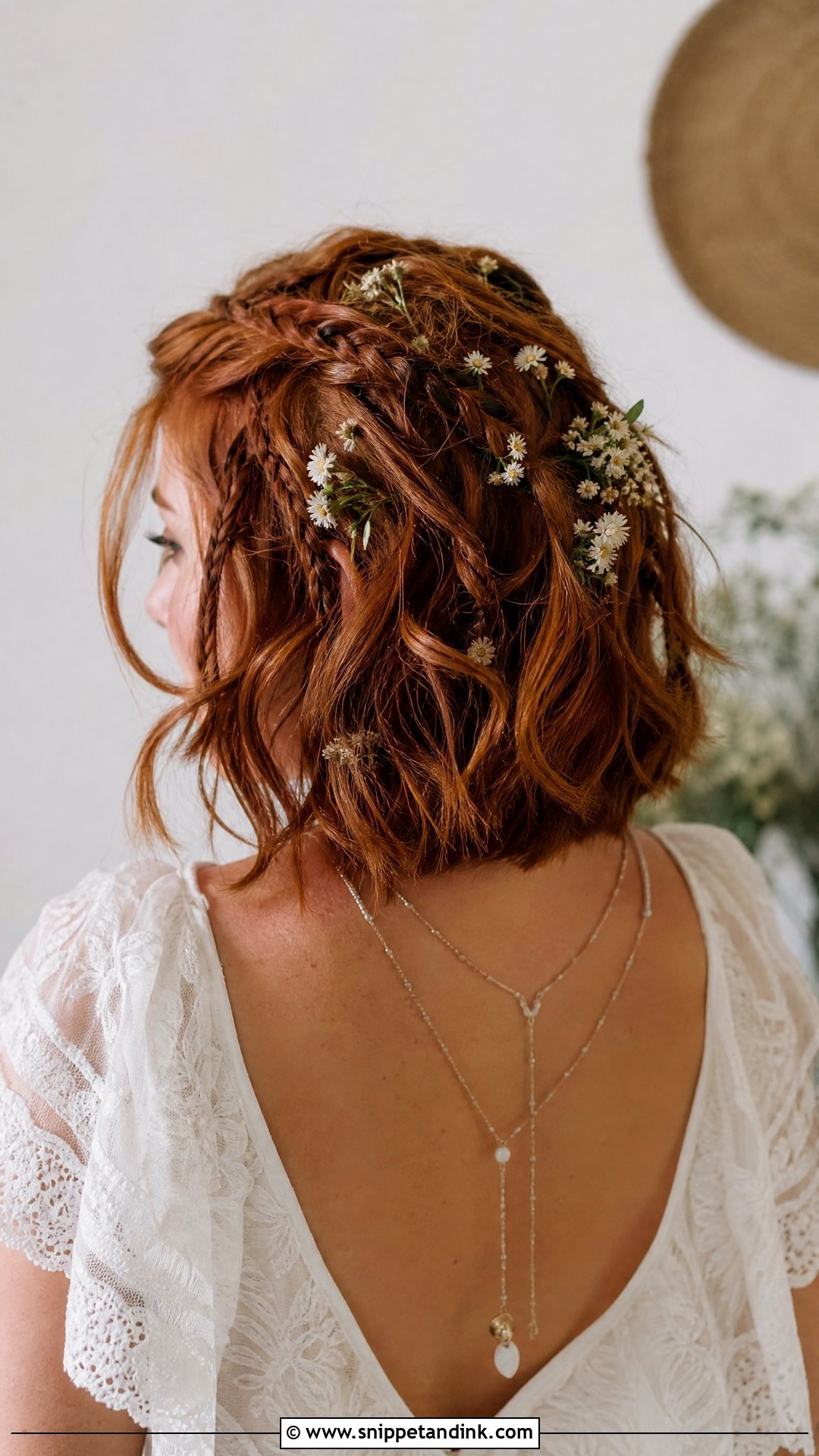
Boho braids on short hair are small plaits along the hairline or above one ear, with the rest left textured and loose. Each braid is short, so I tie off the end with a tiny clear elastic and hide it under the next section instead of forcing it into a bun. A hair chain or a few wildflowers finish it, though a chain needs an anchor pin on each side or it slides backward on fine hair. Save this for outdoor and garden weddings, where a bit of undone texture is welcome.
14. Side Swept Wavy Bob
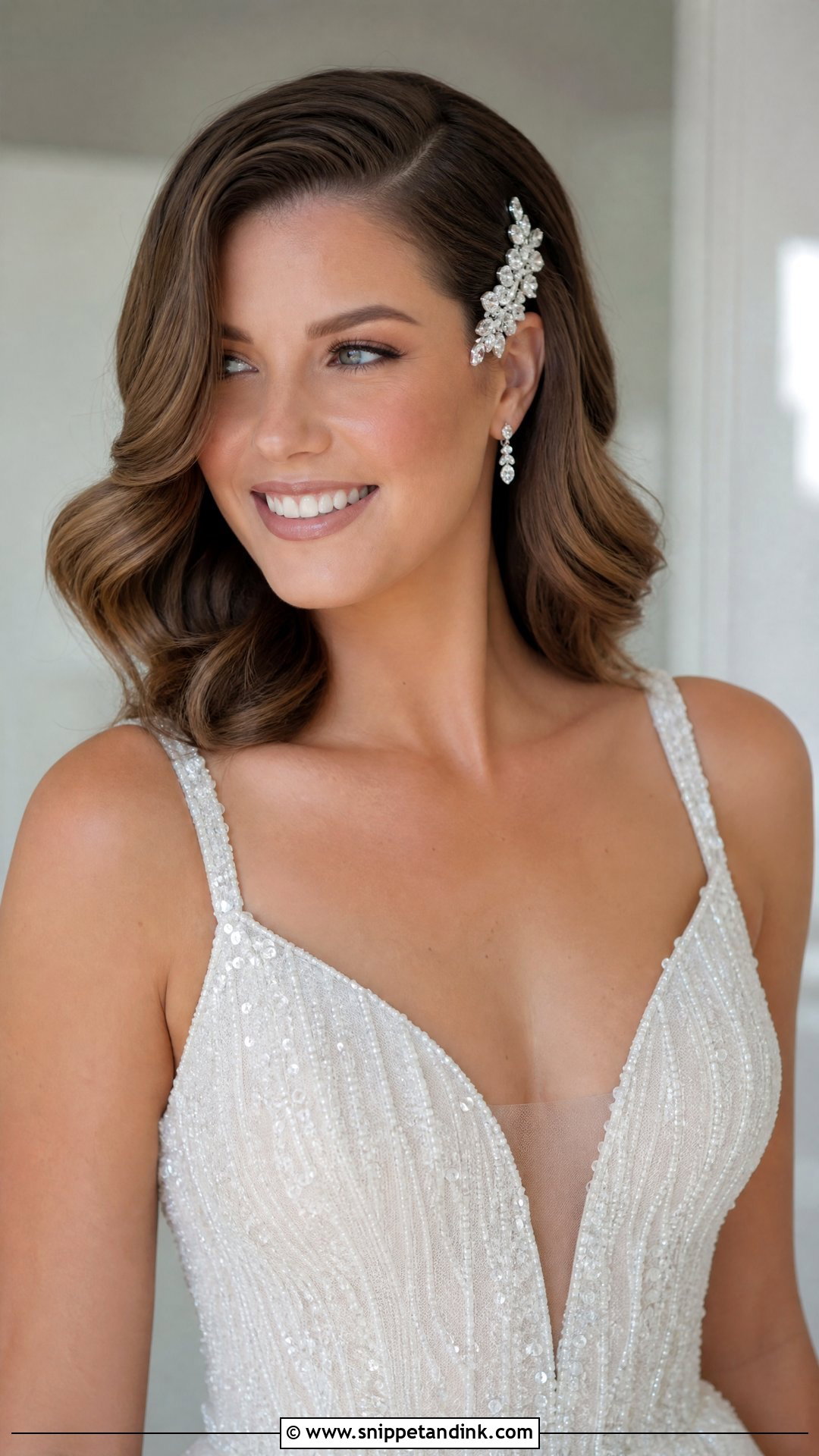
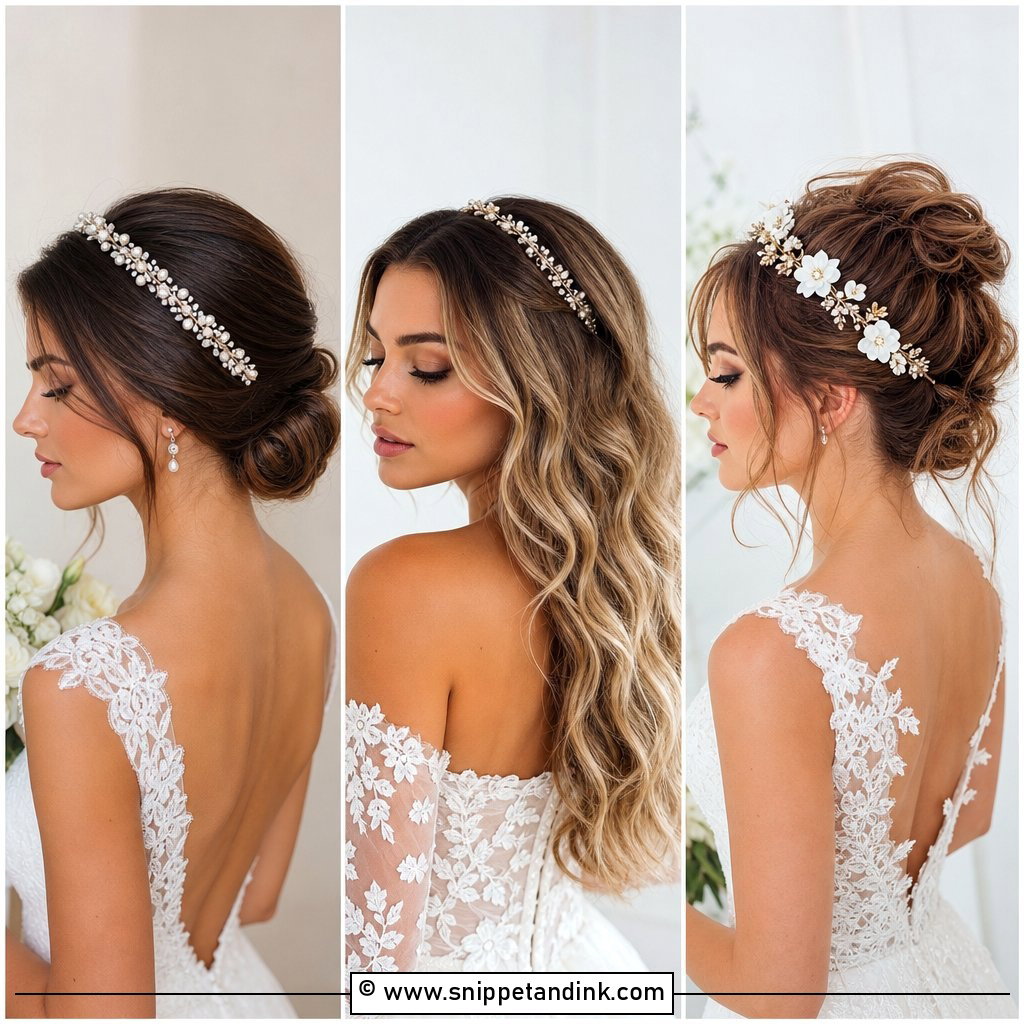
The side sweep depends on a deep part, so I check where your hair naturally falls before choosing a side. Fighting a cowlick for ten hours never works. I curl everything away from the face, brush it over, and pin the lighter side behind the ear with a clip that takes the weight. You get that old Hollywood asymmetry, and it hides a fringe that’s mid-grow-out, which makes it practical if your cut is between trims.
15. Pinned Back Pixie Cut
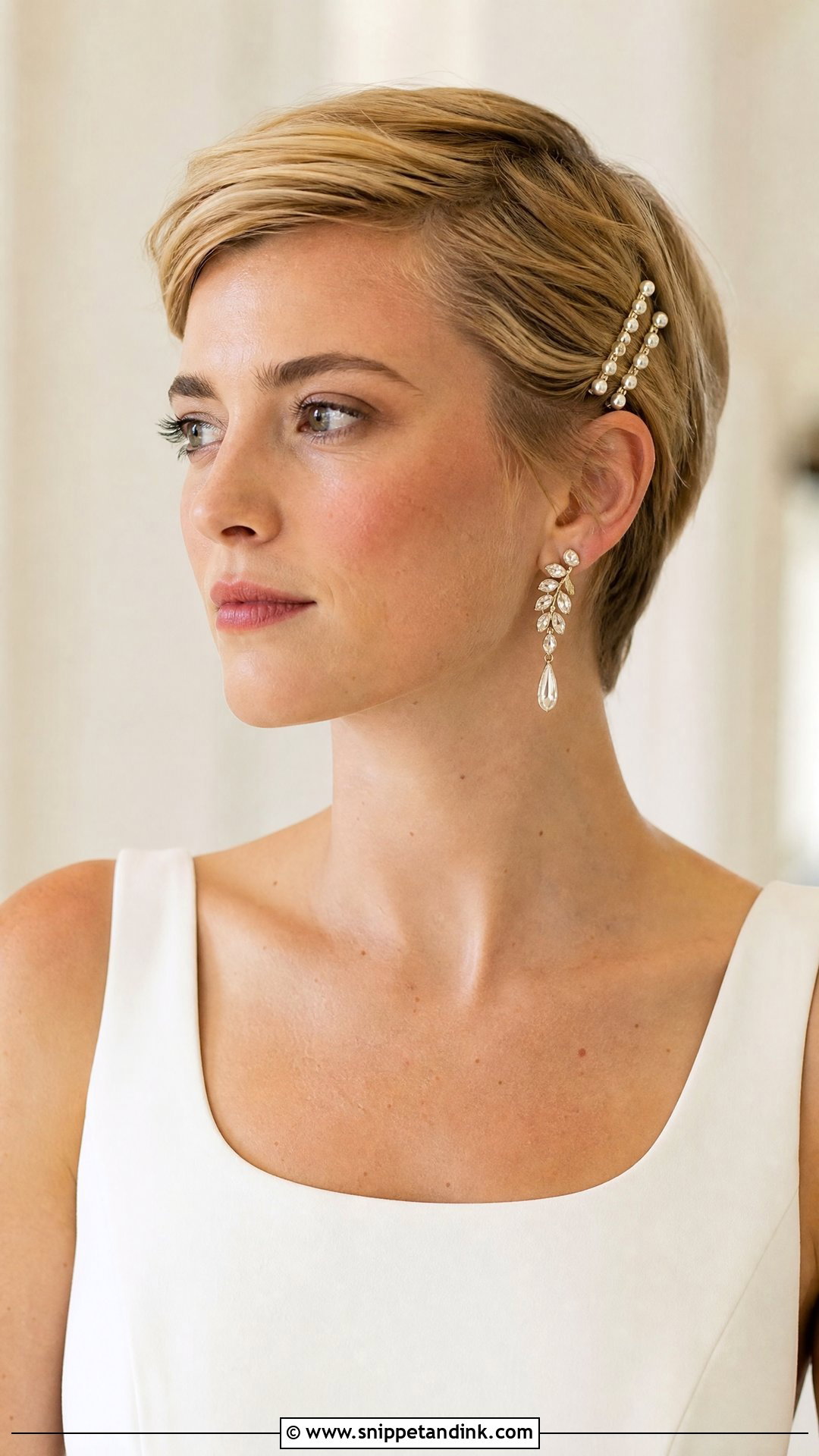
The pieces that stick out by evening on a pixie are almost always the sides above the ears. I smooth them back with a little pomade and anchor them with crossed grips first, then layer the decorative pins on top, so the pretty ones aren’t doing the structural work. Jeweled and pearl pins sit flat on short hair and catch light near the face, which suits minimalist gowns and bigger earrings. On a very short pixie there may not be enough length for a pin to grip, and a headband is the easier route.
16. Textured Crop With Veil
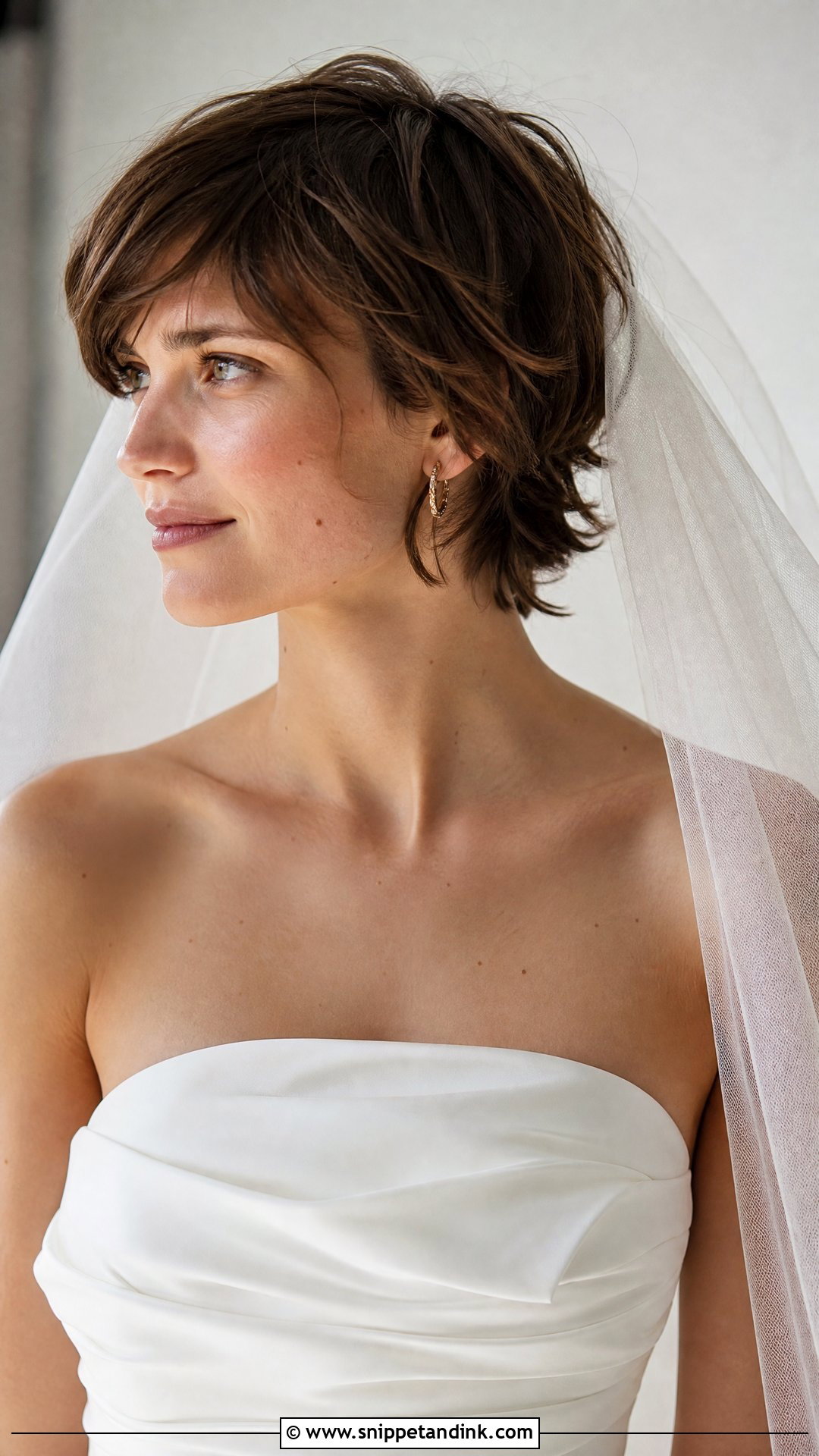
A veil on a textured crop is very doable, but the comb needs help. I build a small anchor at the crown with two or three pins crossed into an X, then slide the comb into that, so it’s gripping metal as well as hair. The tousled texture actually helps here, since product-roughed hair holds a comb better than sleek hair. A light single-tier veil pairs best. Heavy, long veils drag on short hair and lever the comb loose, so I’d plan to take it off after the ceremony anyway.
17. Low Bun for Short Hair
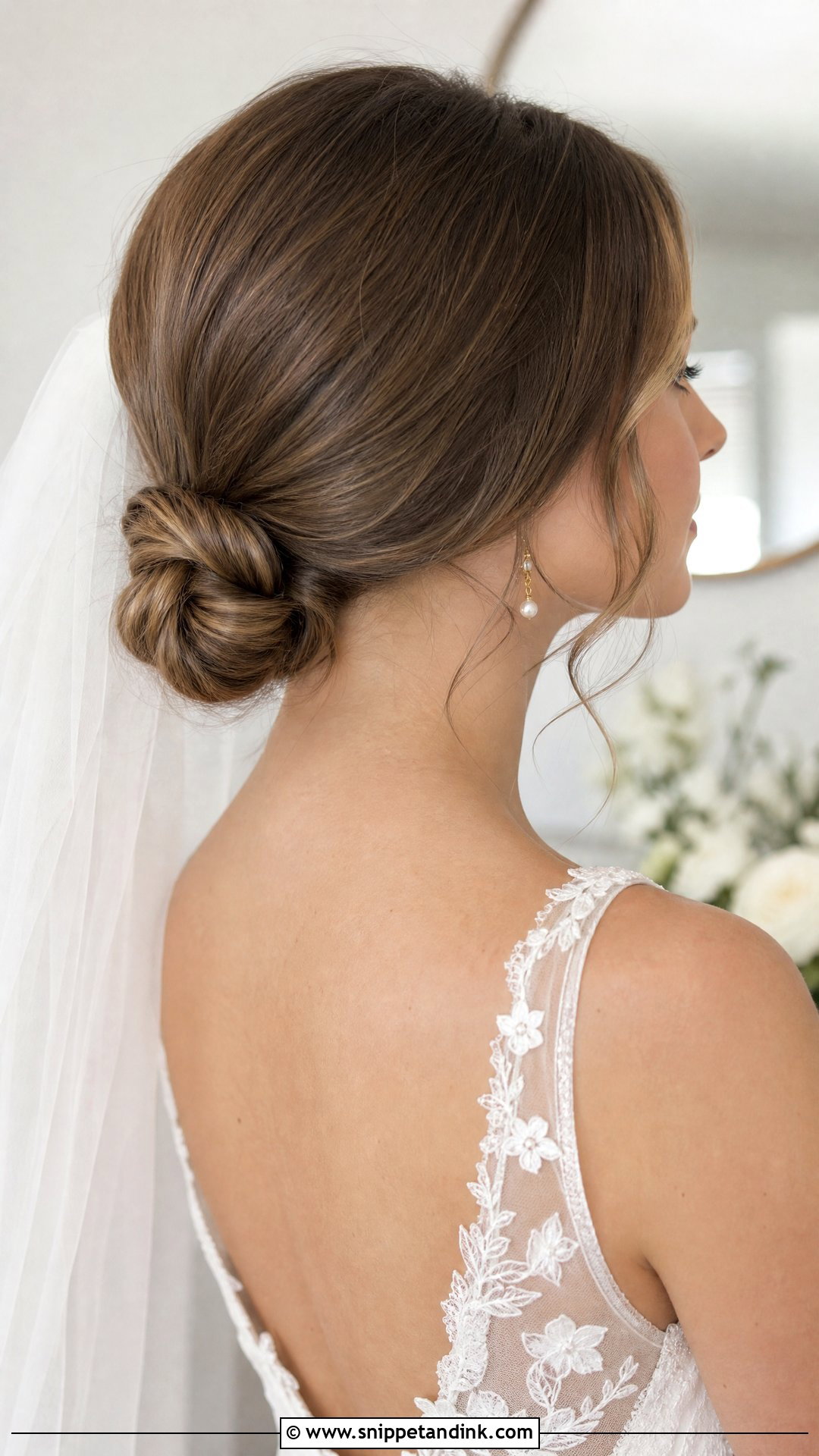
Low buns are possible on hair that only just reaches the nape, but they come out small, and that’s fine. I gather what reaches into a low ponytail, wrap and pin the ends, then pin the shorter pieces that won’t make it into the base. Loose strands at the face soften the shape. If you want a fuller bun, clip-in hair matched to your colour is the honest way to get it. Teasing short hair into size makes it look fluffy and hollow in photos.
18. Retro Pin Curls Bob
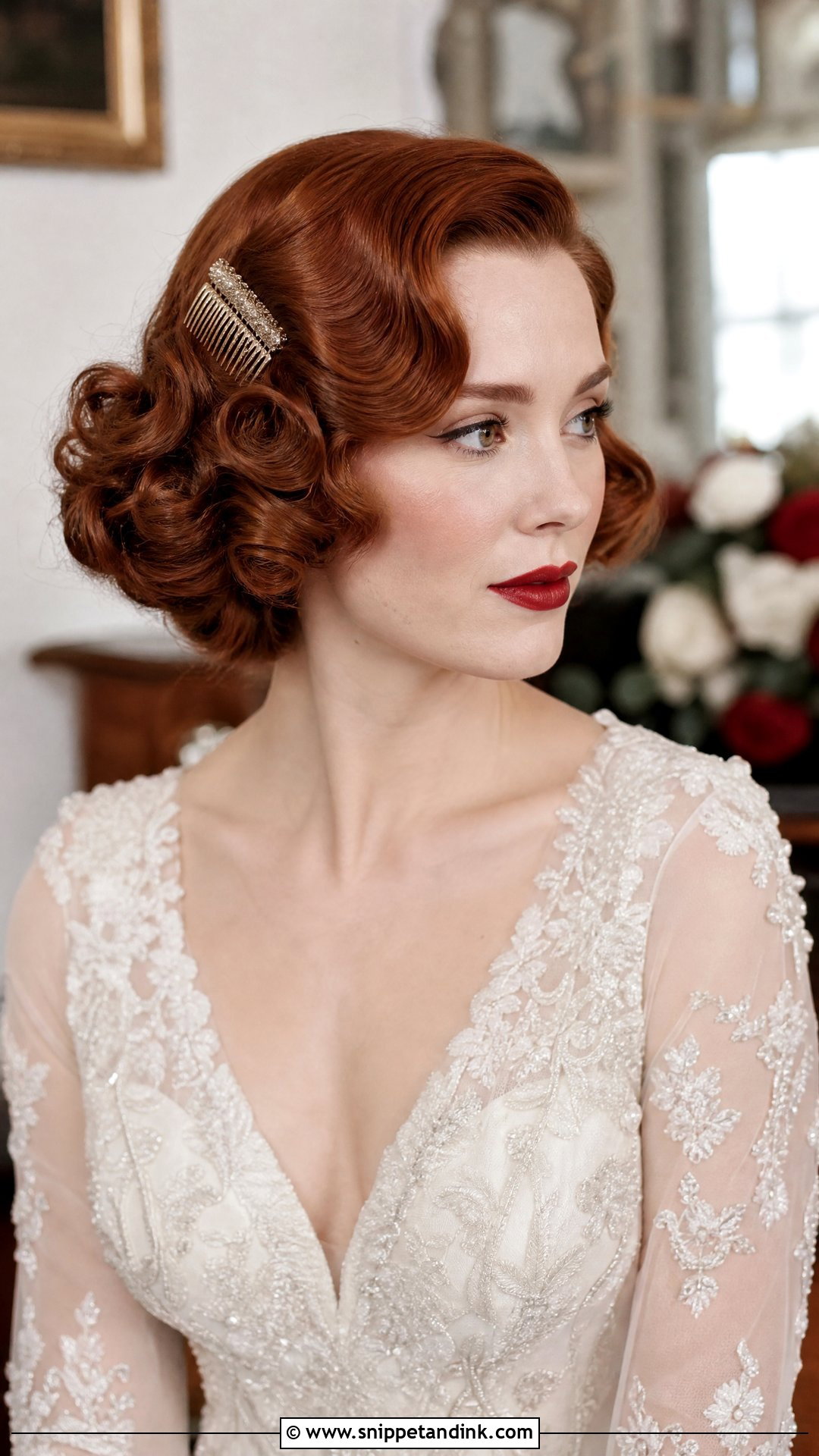
Pin curls are a slow set: small sections wound flat into coils, pinned, and left to cool or dry before brushing out. On a bob, that brush-out gives a fuller, bouncier retro shape than a curling iron alone. I start them early, while makeup is happening, because a rushed set drops by mid-afternoon. A vintage comb on one side suits the shape. Do the full brush-out at your trial so you can see how big the hair gets once the coils open.
19. Flower Crown Short Hair
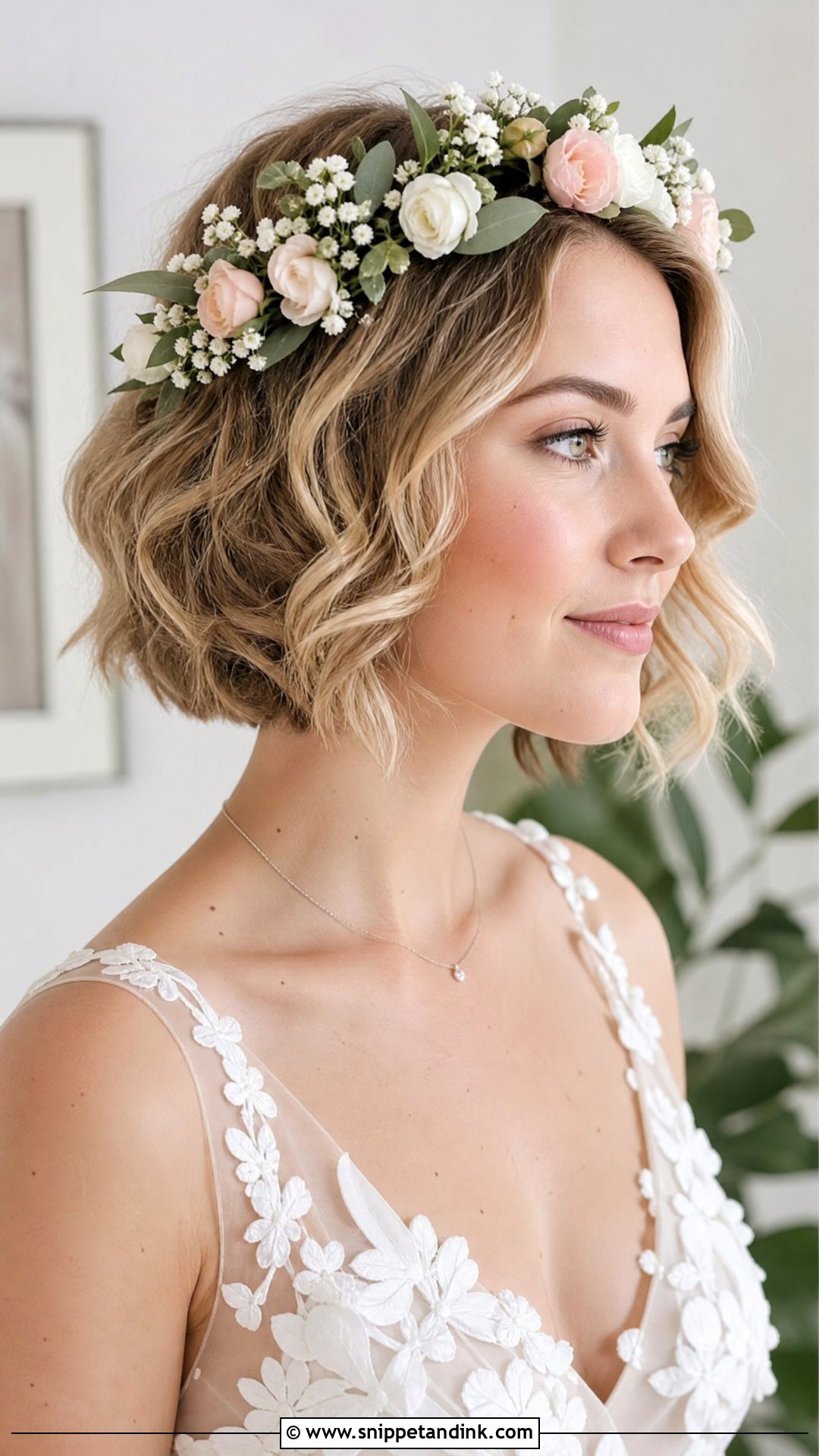
On short hair a flower crown sits lower, closer to the hairline, so its scale matters more than on long hair. I ask florists for a slim crown built on light wire with small blooms, then pin it through the hair at the sides and back so it doesn’t ride up. Fresh crowns tire in direct sun over a long day, and dried or silk flowers are worth considering for a summer outdoor wedding. Echo your bouquet loosely; an exact copy can look fussy that close to the face.
20. Elegant Faux Bob Updo
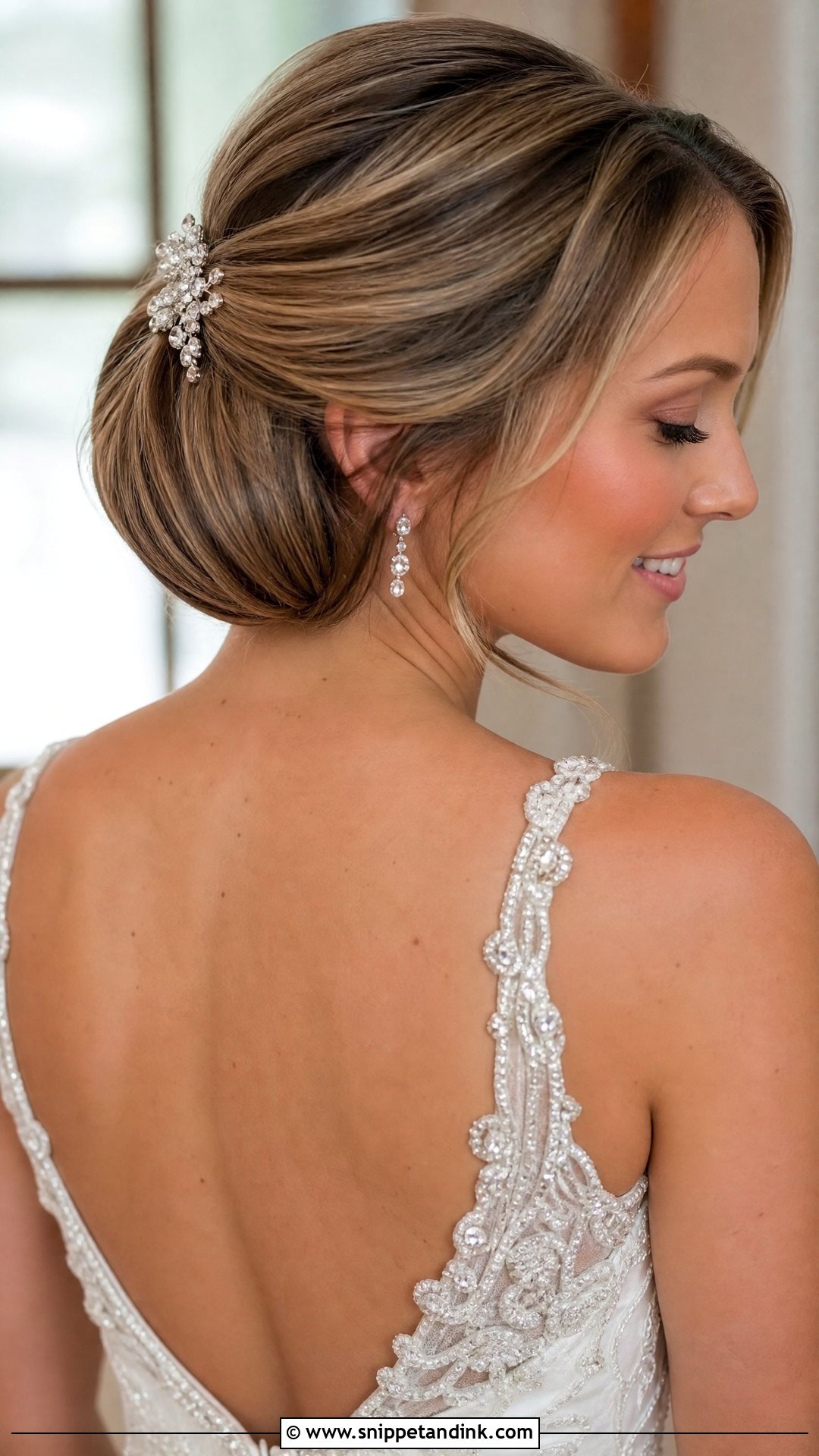
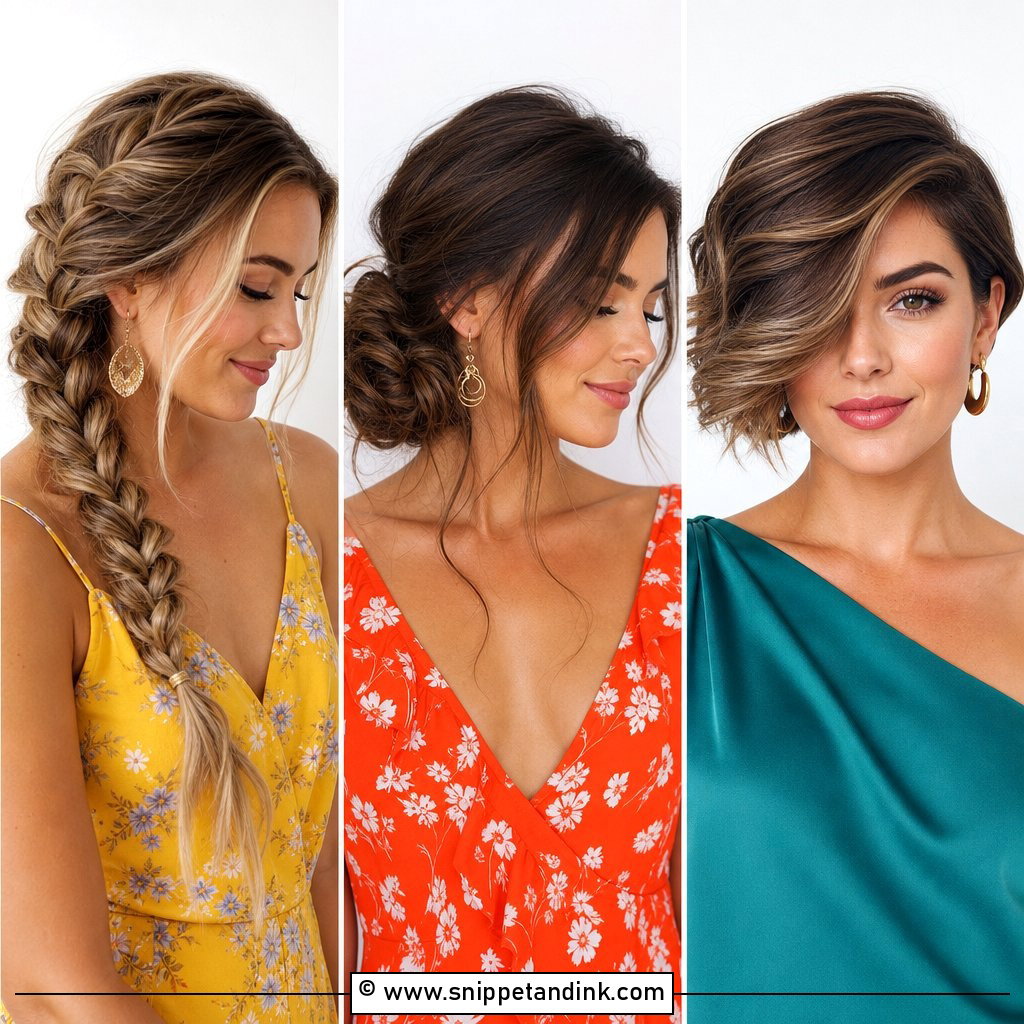
The faux bob starts with longer hair tucked under and pinned at the nape to mimic a short cut, so it gives you a bob for one day without any cutting. On naturally short hair I use the same tuck to tidy a shape that’s growing out. It needs a smooth wave set first, then the length is folded under in sections and pinned close to the head. Very thick long hair turns bulky at the back once it’s folded, which looks odd from the side, so I’d test this one before committing.
Why a Bob Looks Different by Hour Eight
Short styles rarely fall down, but they do change. Waves loosen and widen as the day warms up. The crown flattens wherever a veil comb or headband has been sitting. The nape gets damp on the dance floor, and the fine hairs there curl or frizz first. None of this is a disaster if you plan for it.
I give short-haired brides a tiny kit for a bridesmaid’s bag: a pea of the same paste or cream I used, four or five grips in your hair colour, a small tail comb and a travel hairspray. Two minutes before the reception entrance, lift the crown with fingertips and a little paste, re-pin anything above the ears, and you’re back to the morning shape.
If you sweat easily or the venue is humid, tell your stylist at the trial. I’ll lean on stronger hold at the nape and keep the waves a touch tighter, knowing they’ll relax into the shape you actually wanted by the evening.
A Pixie or Bob Will Outlast the Dancing
Short hair gives you a wedding style that mostly holds itself, from a sleek chignon to a slim flower crown. What you pick should come down to practical things: how long your hair really is at the nape, whether a veil is involved, and how your cut will look on the day rather than the day you booked. Bring photos of your hair as it is now to the trial, and go with the style that works with your cut instead of one that needs you to grow it out.
You'll Like These Ideas:


Leave a Reply