
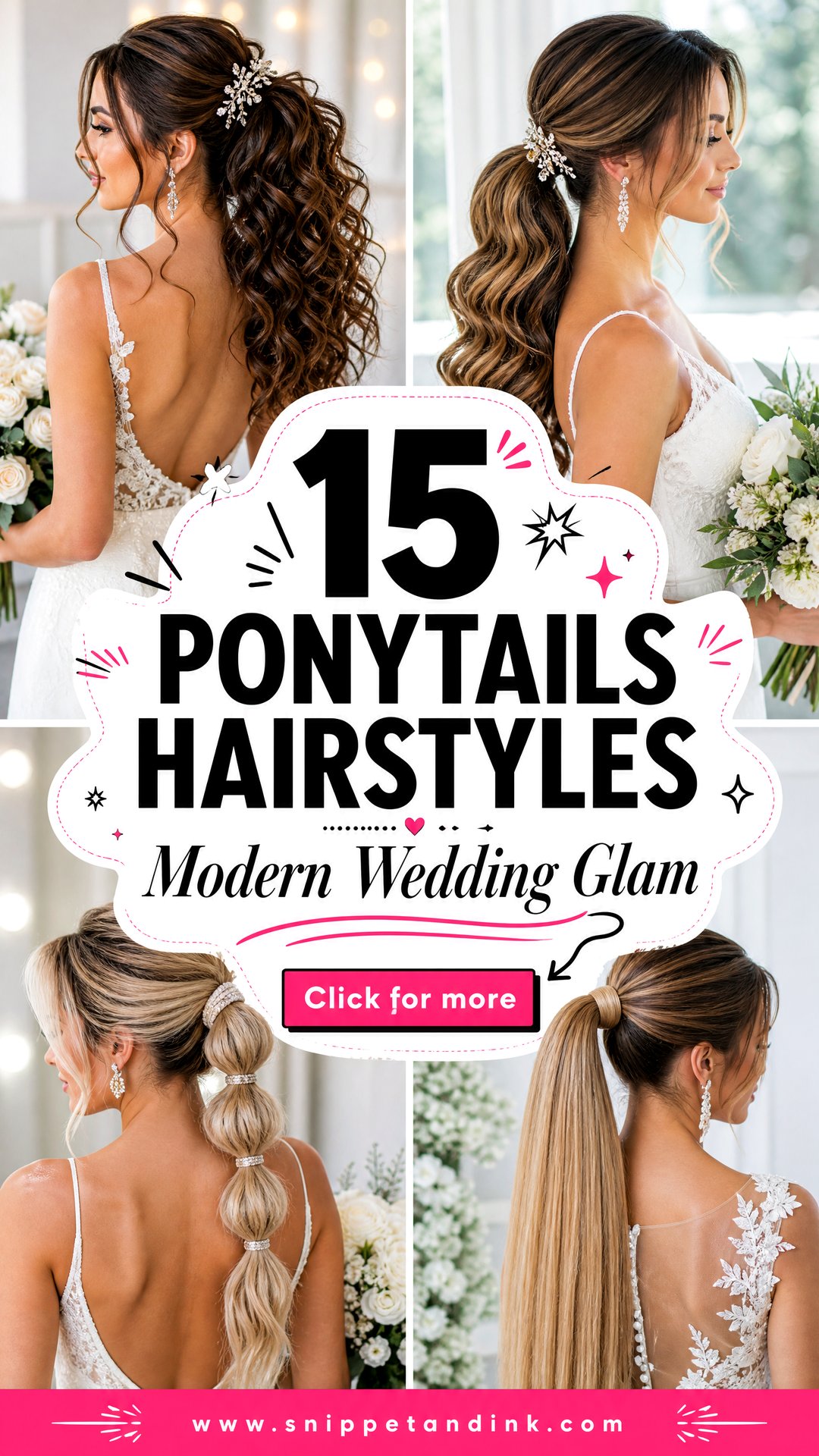
A ponytail is the style I suggest most often to brides who tell me they hate the feeling of a full updo. Everything is anchored at one point, so it holds through photos, hugs, a warm dance floor and a veil going in and out, while the length still gets to move. Height does most of the talking: a low pony at the nape reads quiet and classic, a high one at the crown reads confident and a little glamorous. Below are fifteen versions I’d happily put on a bride, a bridesmaid or a guest, with notes on which necklines, venues and hair textures each one copes with.
Start With the Back of the Dress, Then Set the Height
Most brides choose a ponytail from the front. I choose it from the back of the dress, because that’s the view your guests have for the entire ceremony.
- Open or low backs: a low or mid-height pony with the length resting between the shoulder blades frames the bare skin. A high one can leave the back looking empty.
- High necks and halters: go high. A low tail bunches against the collar and catches on lace or buttons.
- Strapless and sweetheart: almost any height works, so let your face shape decide. Height lifts a round face, a low base softens a long one.
- Heavy beading at the back: keep the tail shorter or bring it over one shoulder, since beads snag loose hair every time you turn.
How much length a ponytail eats
Gathering hair into a pony uses up length, and the higher the base, the more it takes. Hair that reaches the collarbone when loose gives a short tail at the crown and a much fuller one at the nape. If you’re picturing a tail swinging past your shoulder blades from a high base, plan on clip-ins, and order them early enough to bring to the trial.
1. Low Wedding Ponytail
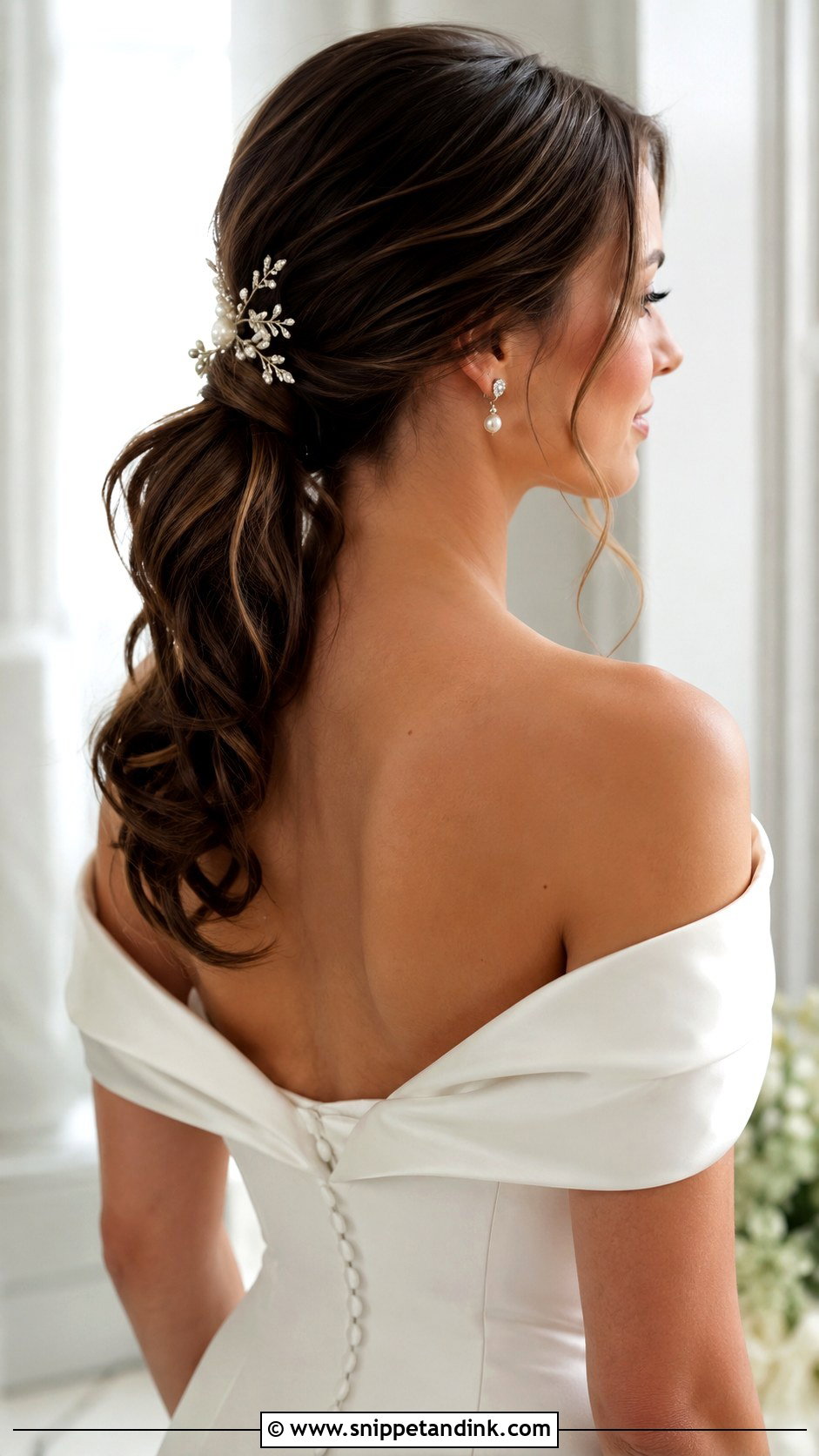
Sitting at the nape, this is the ponytail I trust for a long ceremony, because there’s no weight dragging at the crown and nothing pressing against a chair back. A veil comb or a few pearl pins slot in easily above the elastic. I wrap a strip of hair around the band and pin it from underneath with two grips crossed in an X, which stops the wrap unwinding by evening. Loose waves through the length suit open backs and off-the-shoulder gowns. Keep smoothing cream on the crown only; on the tail it flattens the waves you just set.
2. High Wedding Ponytail
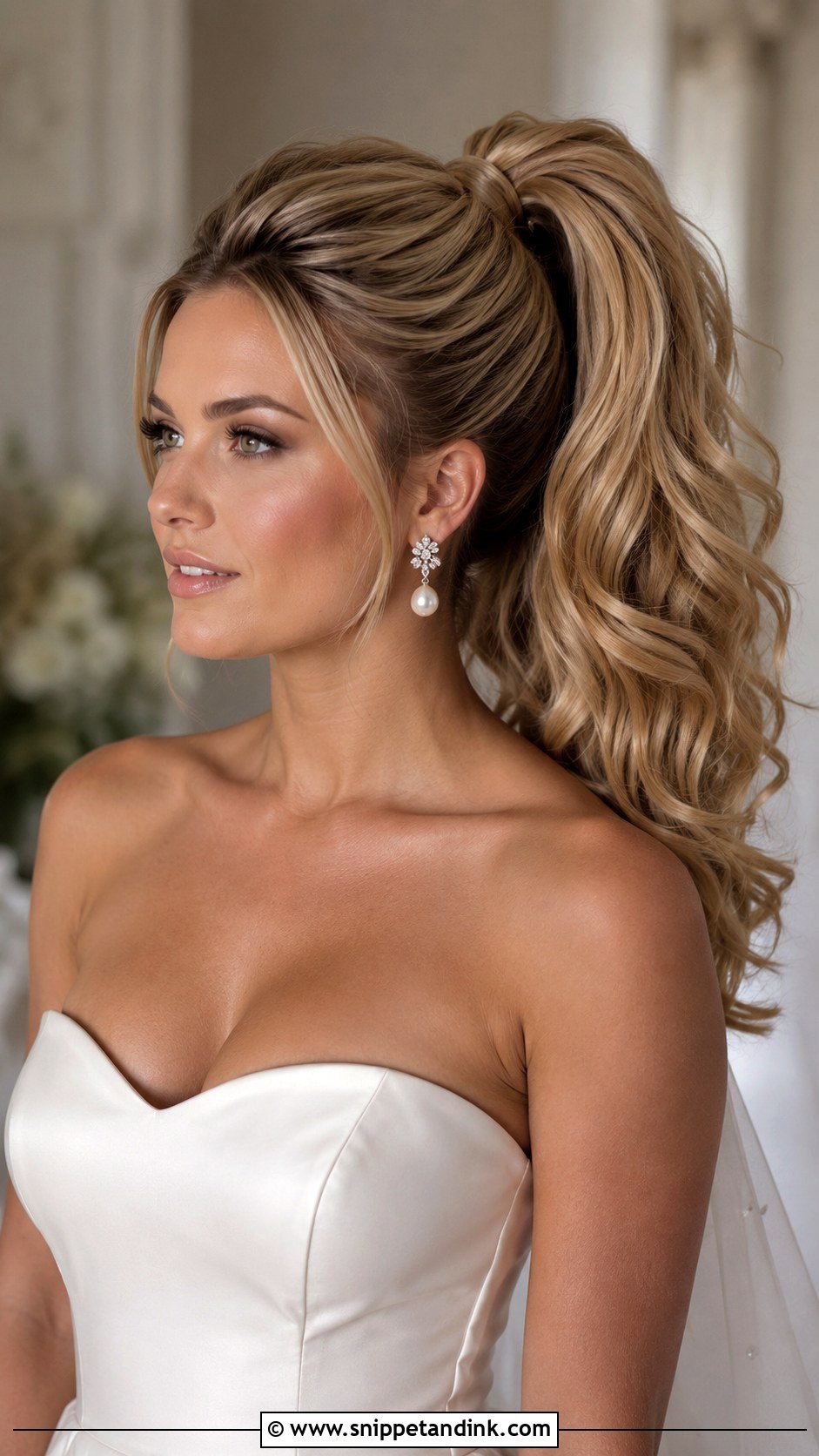
Height lifts the face and shows off the neck straight away, which is why strapless and halter brides with big earrings tend to love it. The catch is weight. A high tail on thick, long hair slides down within a few hours unless I build it on an anchor: a small, tight base ponytail with the main tail tied on top of it. Clip-ins add fullness to medium hair, but they add weight too, so I always test them at the trial. Tight at the base is fine. Tight at the hairline gives you a headache by the speeches.
3. Sleek Wedding Ponytail
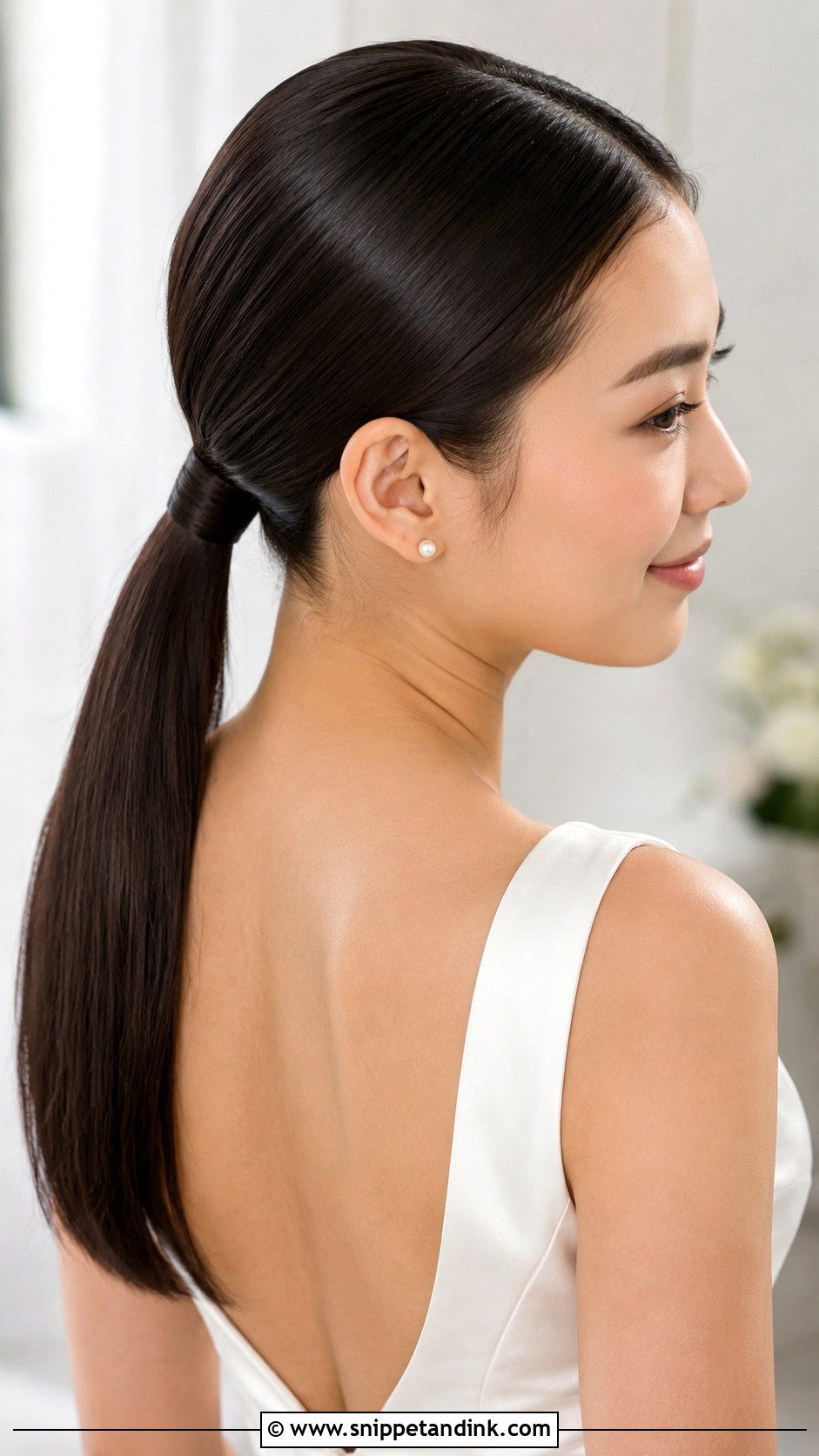
Glass-finish ponytails are mostly prep. I blow-dry with a boar bristle brush until the hair is completely dry at the root, flat iron it in thin sections, then set the crown with a strong gel or wax stick while it’s still warm. Damp roots are what make sleek hair go fuzzy in humid air, more than the weather itself. Wear it at whatever height suits the dress, but always wrap the elastic, or it looks like you tied it back for the gym. Against satin and sculpted bodices it looks sharp and deliberate, and a slick crown shows very few flyaways in photos.
4. Curly Wedding Ponytail
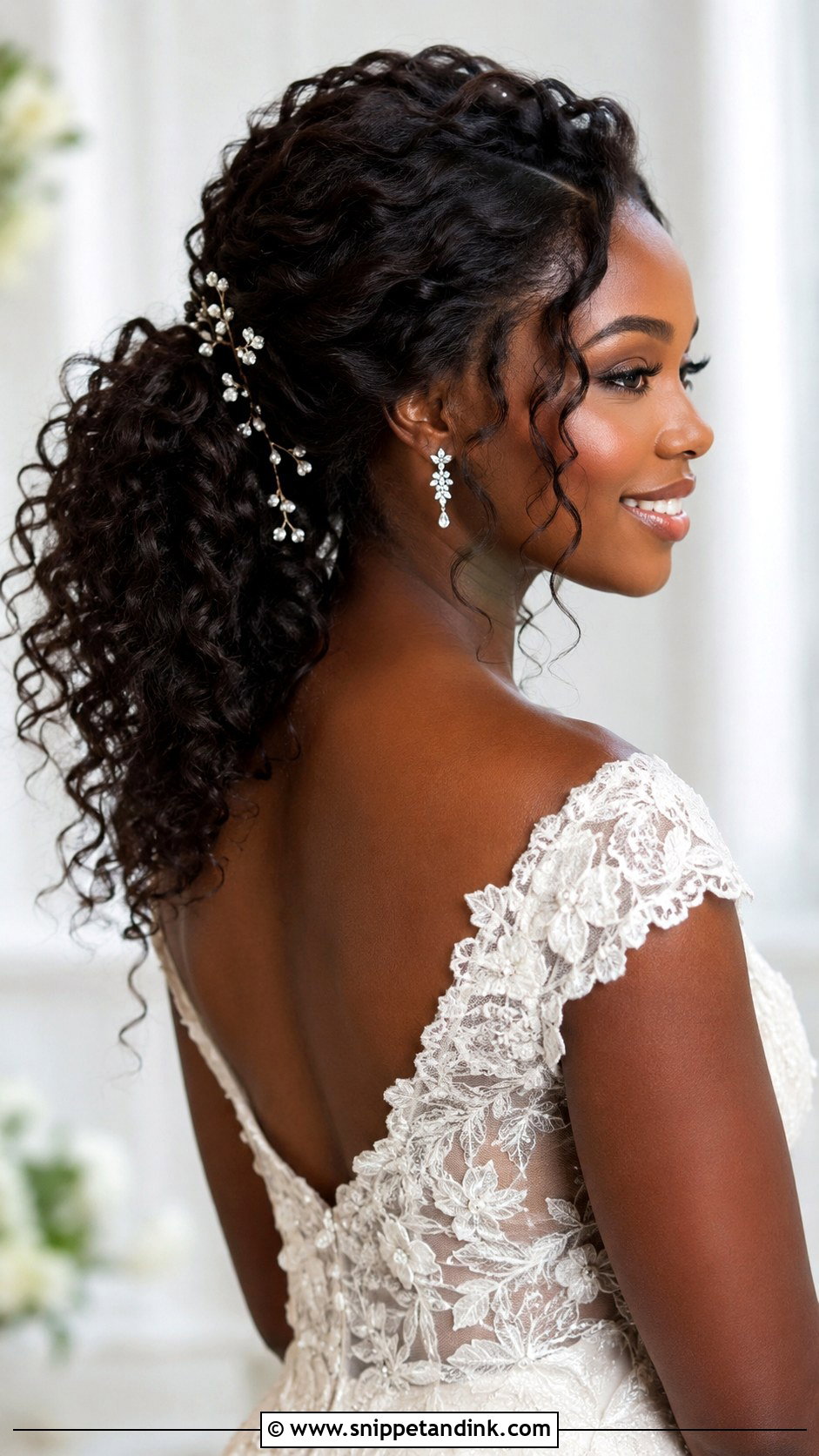
Natural curls, wand curls or a mix of both can all work. What matters is that the base stays smooth enough to look formal while the curls carry the volume. With natural texture I set the base on damp hair with curl cream and gel, so I’m never brushing through dry ringlets and turning them to frizz. Wand curls on straight hair have to cool completely before I touch them, or they drop within the hour. A few curled tendrils around the face soften the front, and small pins or flowers tucked at the base make the whole thing read bridal for a garden or ballroom.
5. Wavy Wedding Ponytail
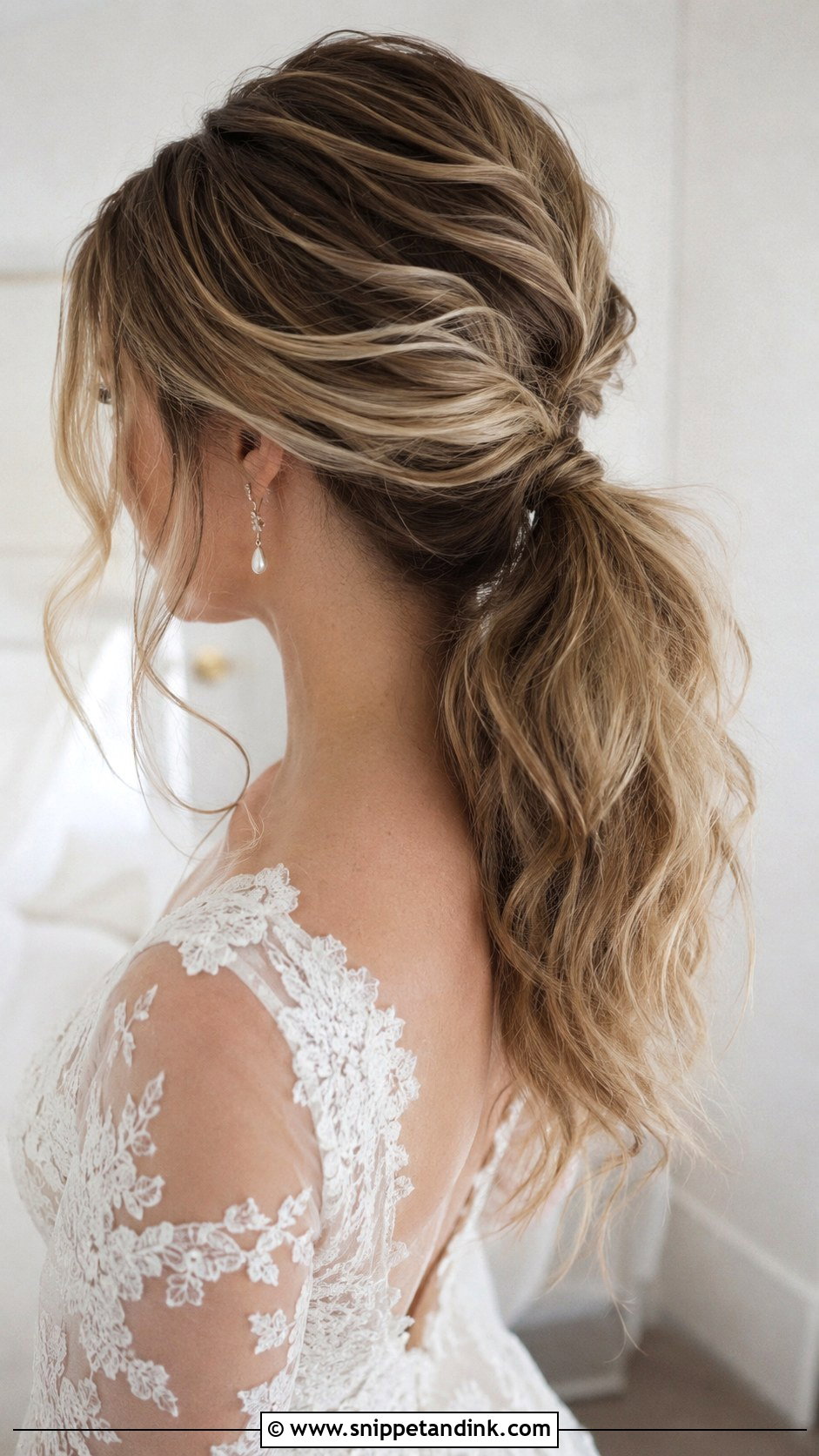
A wavy wedding ponytail is my answer when someone wants texture without committing to a full updo. I curl the length in alternating directions, let it cool, brush it out gently and then spray in light passes rather than one heavy mist that stiffens it. Balayage and highlights show best here because each bend catches the light at a different point. Waves always relax over a long day, so I set them a little tighter than the look we’re aiming for. Lace dresses and beach or rustic venues suit it well.
6. Braided Wedding Ponytail
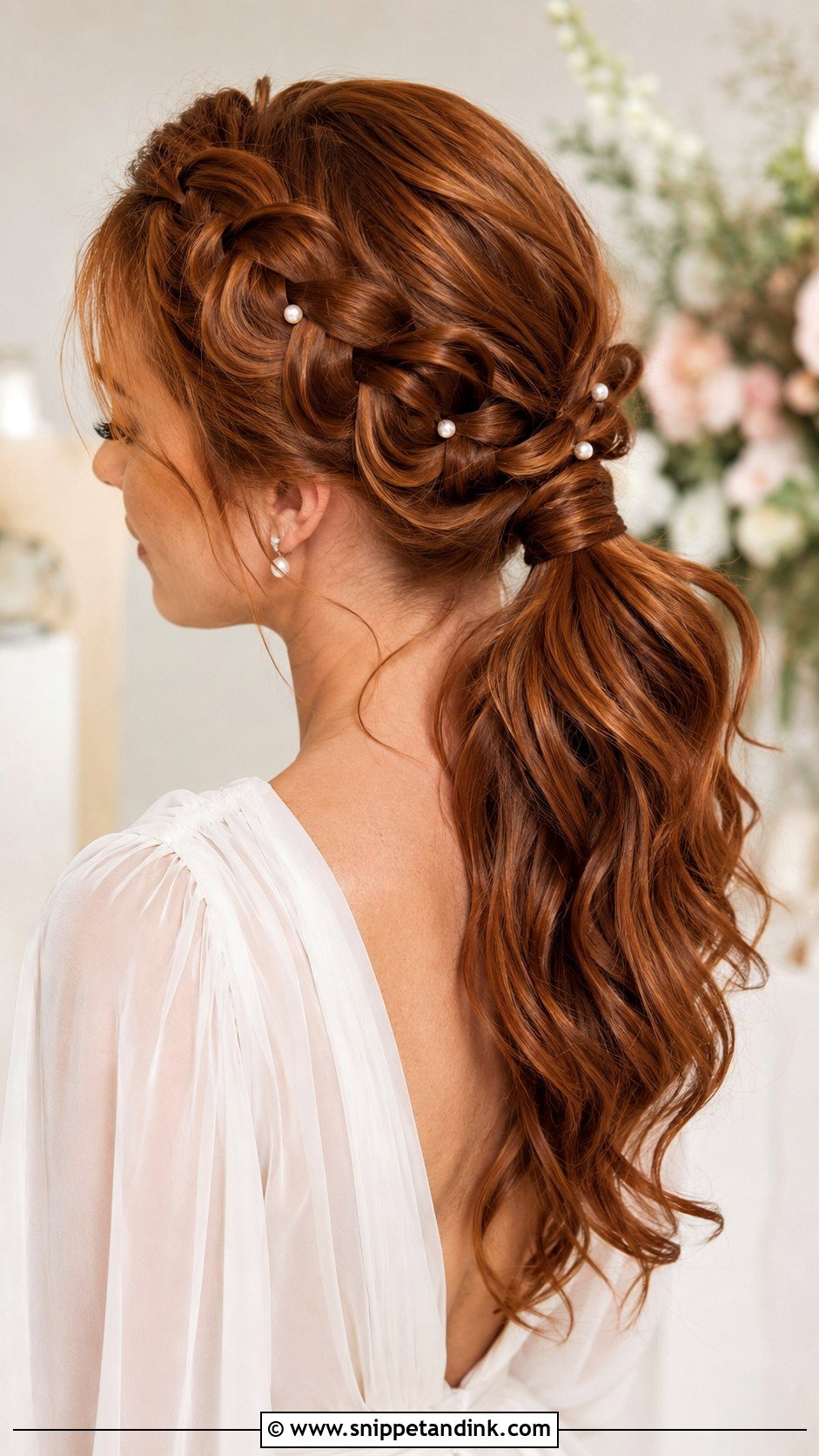
A braid adds detail and structure in one go, and structure is what keeps a ponytail intact for twelve hours. It can run along the crown, wrap the base or travel down the tail. On slippery hair I prefer a Dutch braid at the crown, since the raised plait grips pins far better than a flat French one. Pull it loose and pancaked for a boho feel; keep it tight for something polished. Backless dresses are where this one earns its place, because so many ceremony photos are taken from behind.
7. Side Wedding Ponytail
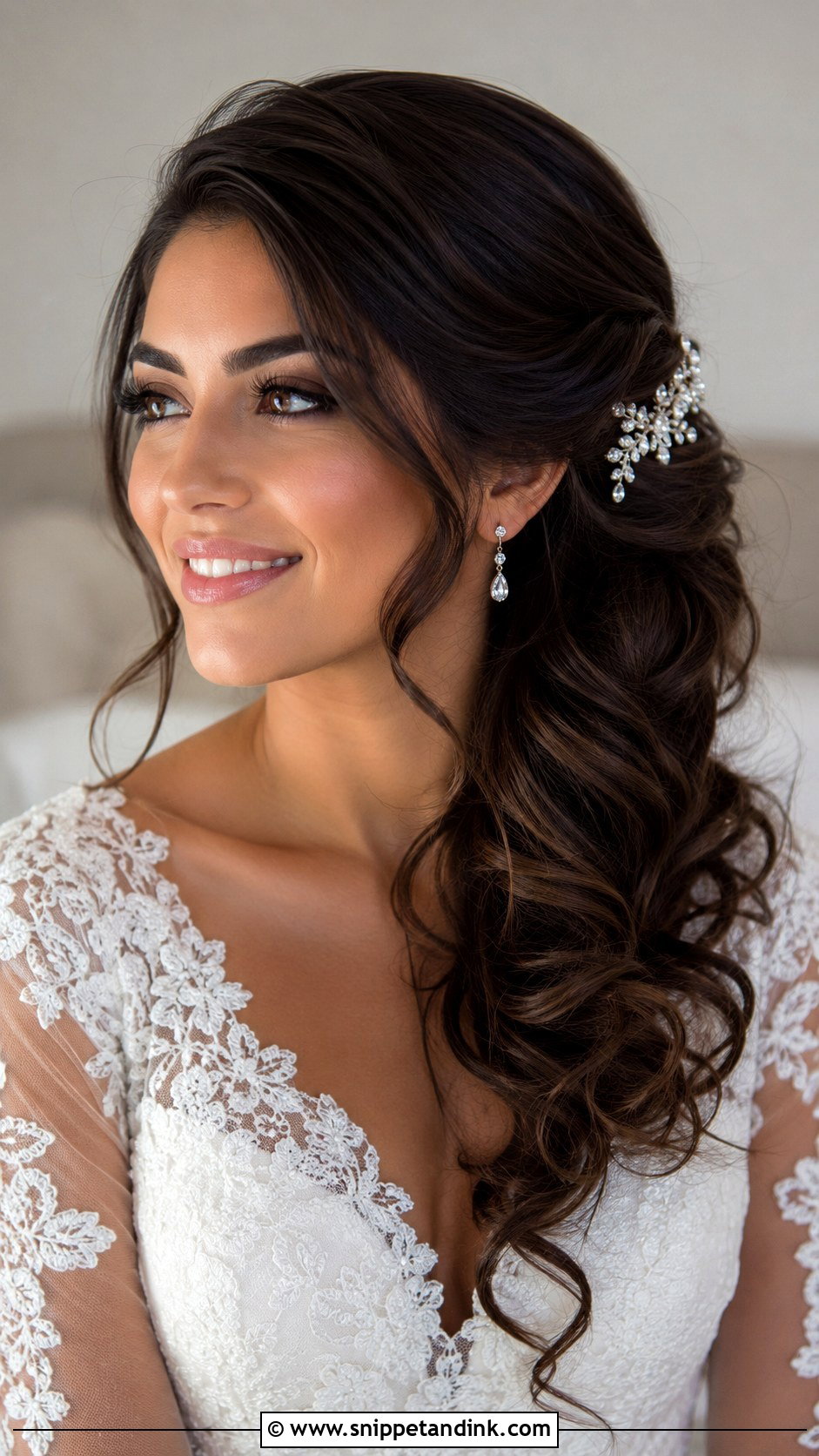
Draped over one shoulder, a side ponytail puts the neckline, the earrings and the makeup on show. Its weak point is the anchor. A tail tied behind the ear with nothing else holding it swings round to the back after an hour of hugging, so I pin a small hidden base just behind the ear with crossed grips and attach the tail to that. A side part sits most naturally; a centre part only works if the pony is low and smooth. Curls or brushed-out waves fall nicely over the collarbone, and vintage gowns and lace sleeves are its natural partners.
8. Half Up Wedding Ponytail
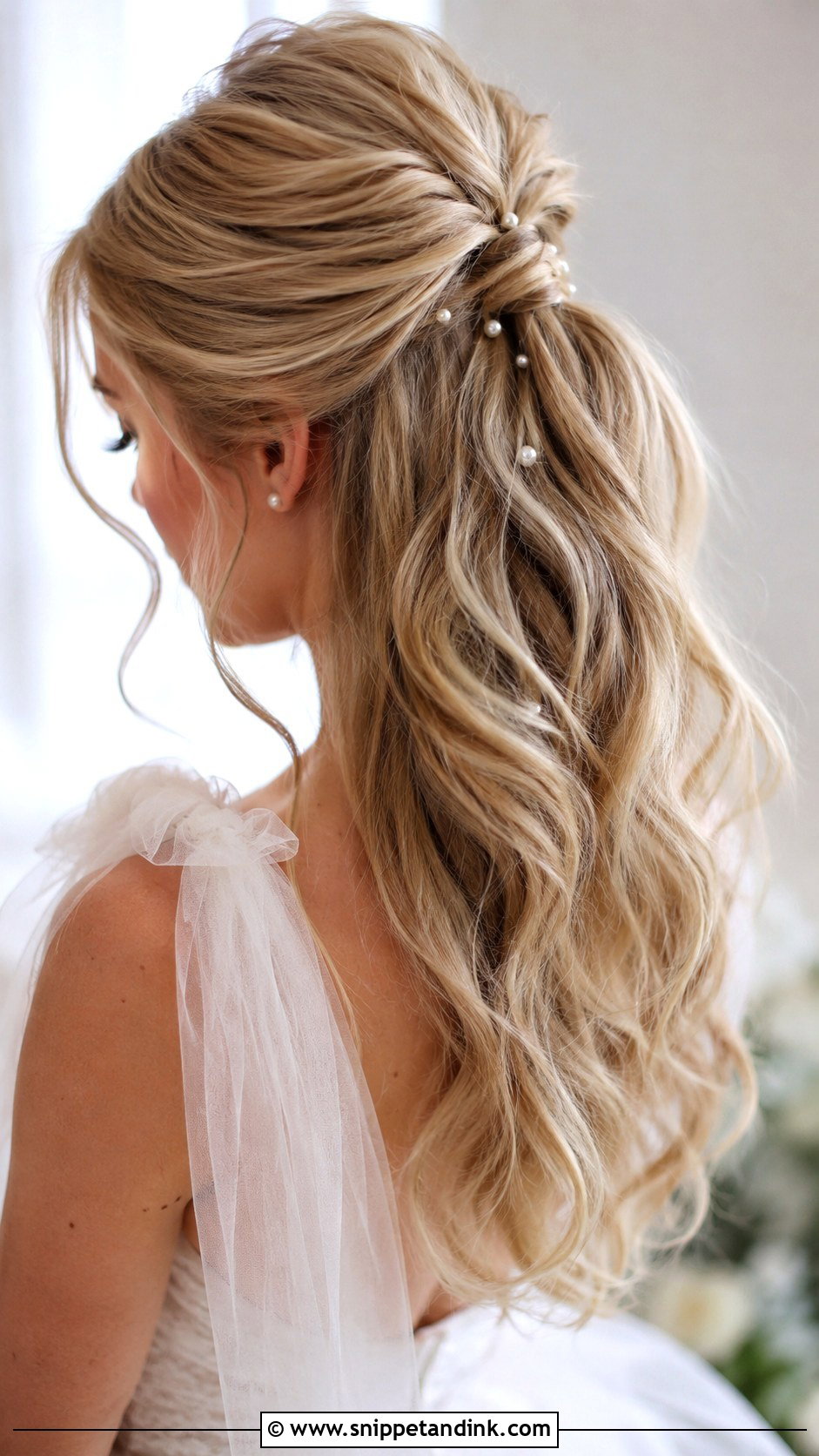
When a bride wants lift at the crown but her hair loose on her shoulders, this is where I start. I take the top section from temple to temple, tease the underside for height and tie it off, which keeps the front off the face during the vows. Long, layered and highlighted hair all show well because the lengths stay visible. Finish the tie with a wrap of hair, a ribbon or pearl pins. One honest drawback: loose lengths go flat in heat faster than any updo, so tuck a small brush and a mini spray into someone’s bag.
9. Bubble Wedding Ponytail
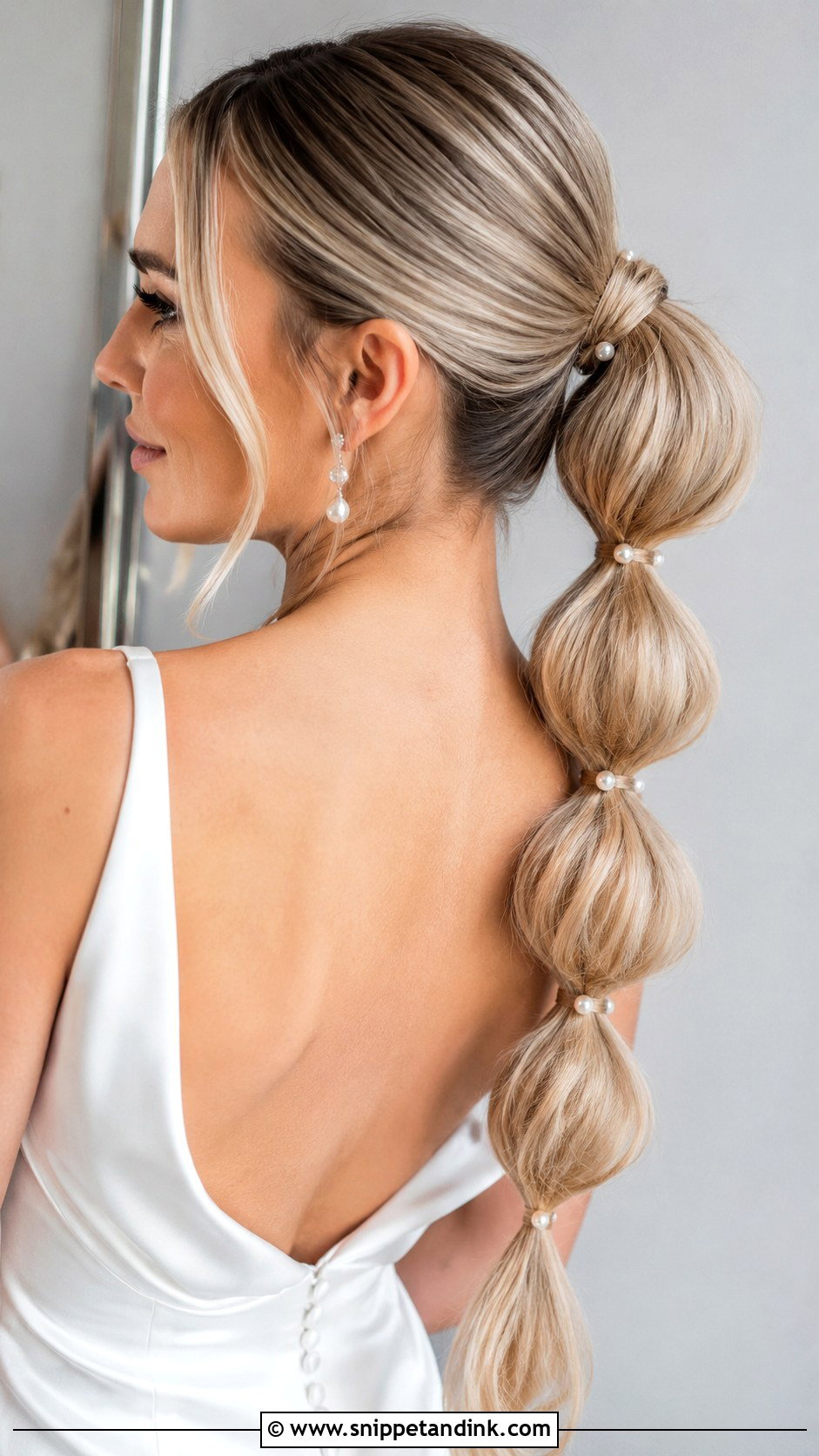
A bubble wedding ponytail sounds playful, yet with a sleek crown and evenly sized sections it looks surprisingly formal. I space clear elastics about a hand’s width apart, then ease each section out with my fingertips, working from the bottom up so every bubble matches its neighbour. Rushed, uneven bubbles are what make it look messy. It needs length, so I wouldn’t attempt it on hair above the shoulder blades without extensions. Pearls between the bubbles make it bridal, and it’s a good option for bridesmaids who want something different from the bride.
10. Textured Wedding Ponytail
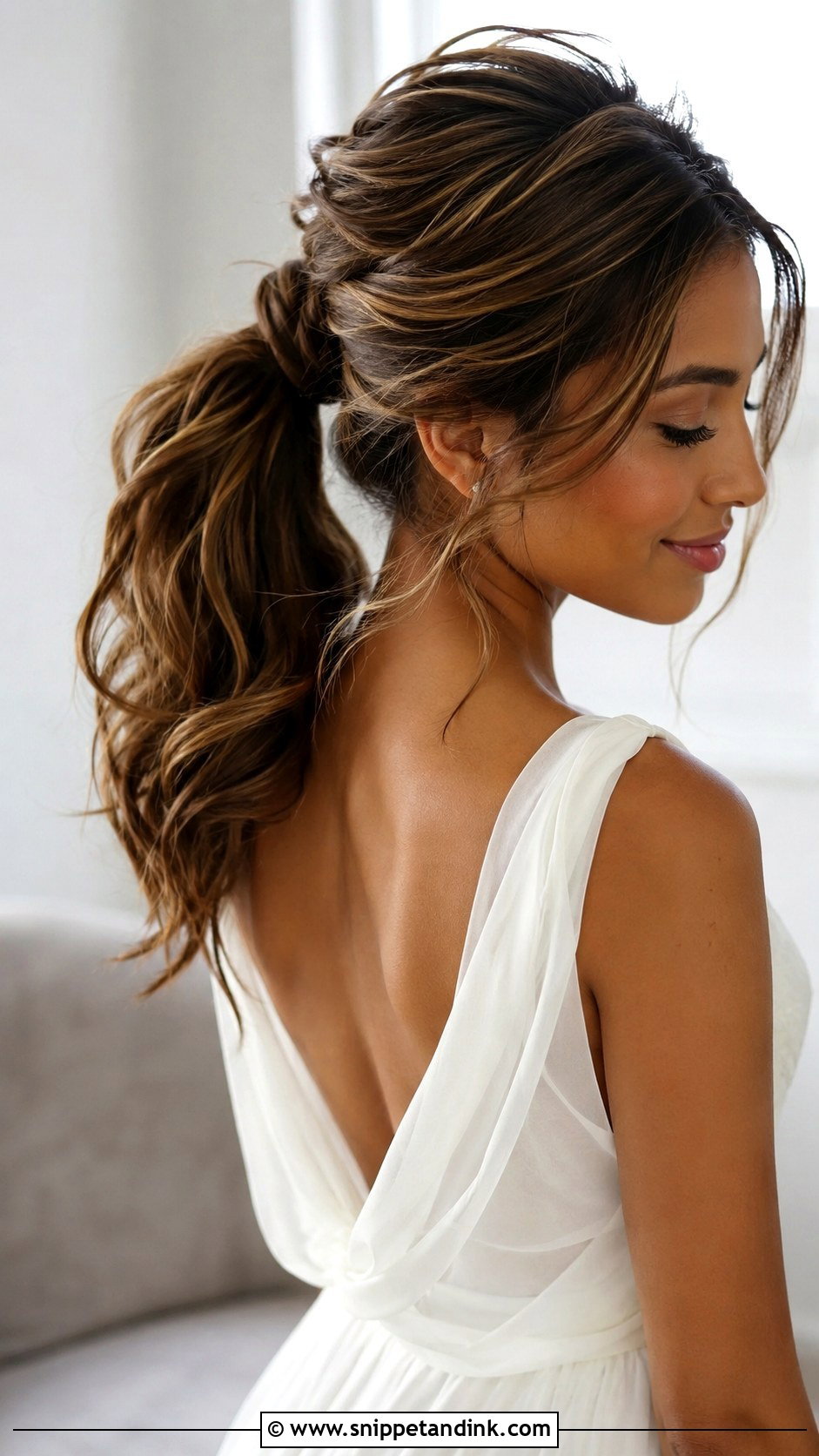
Teased roots, loose waves, soft pieces around the face and a fuller tail give a lived-in finish that suits barns, gardens and floaty fabrics. The difference between textured and messy is the base. I backcomb at the crown, smooth a clean top layer over it, and only then use dry texture spray on the lengths, so the movement looks controlled rather than frizzy. On fine hair I usually add one or two wefts, because texture spray can’t create volume that isn’t there.
11. Low Ponytail With Veil
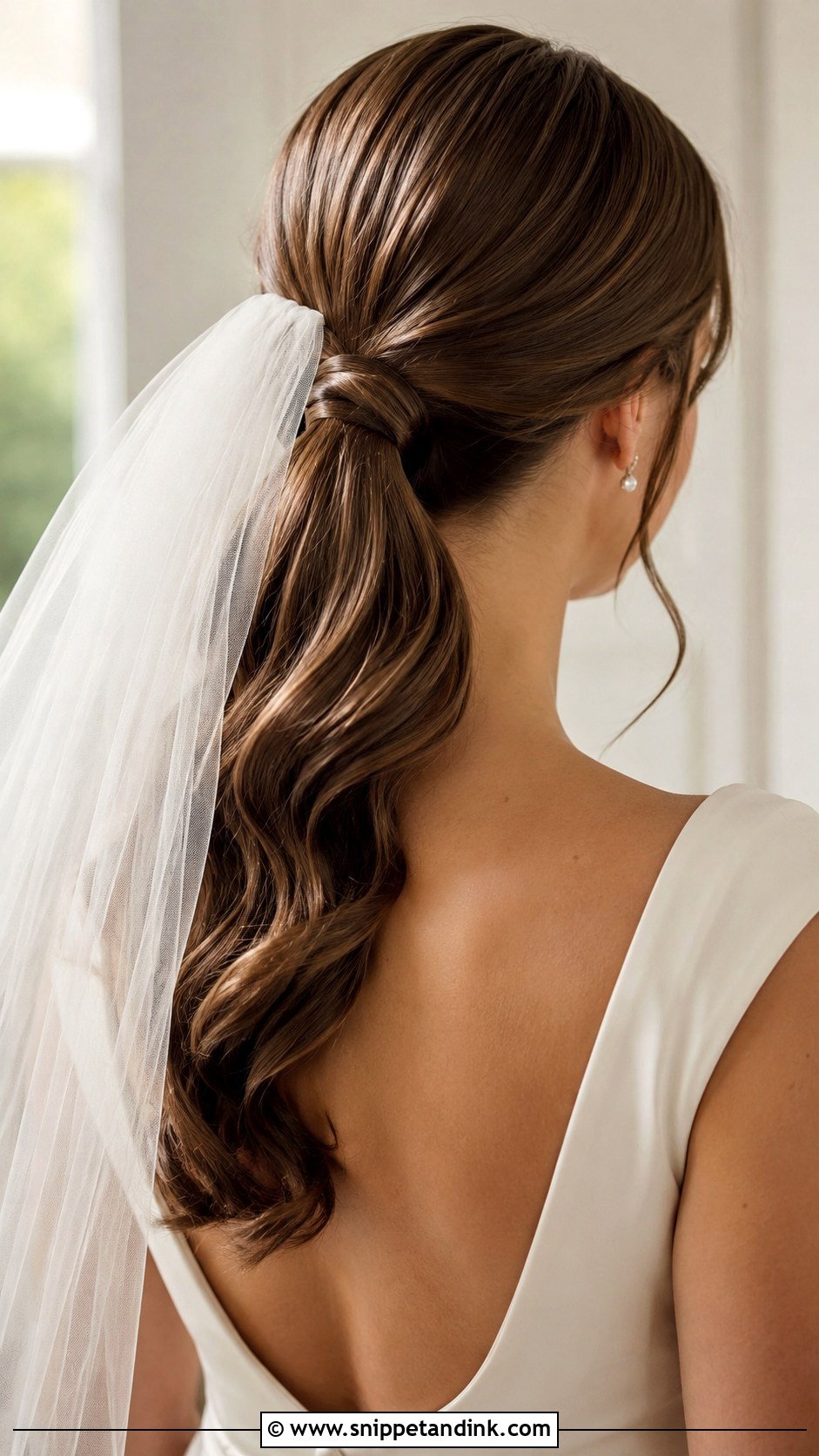
Pairing a low pony with a veil gives you tradition without a tight updo. I place the veil comb just above the elastic, angled down into the gathered hair, so the teeth bite into the bulk instead of sliding out of a smooth crown. Cathedral and fingertip lengths both fall cleanly from there. The real reason I suggest it: once the veil comes off for the reception, the waves underneath are still intact. A wrapped base keeps close-ups tidy, and it sits comfortably with lace veils and classic gowns.
12. Wedding Ponytail With Bangs
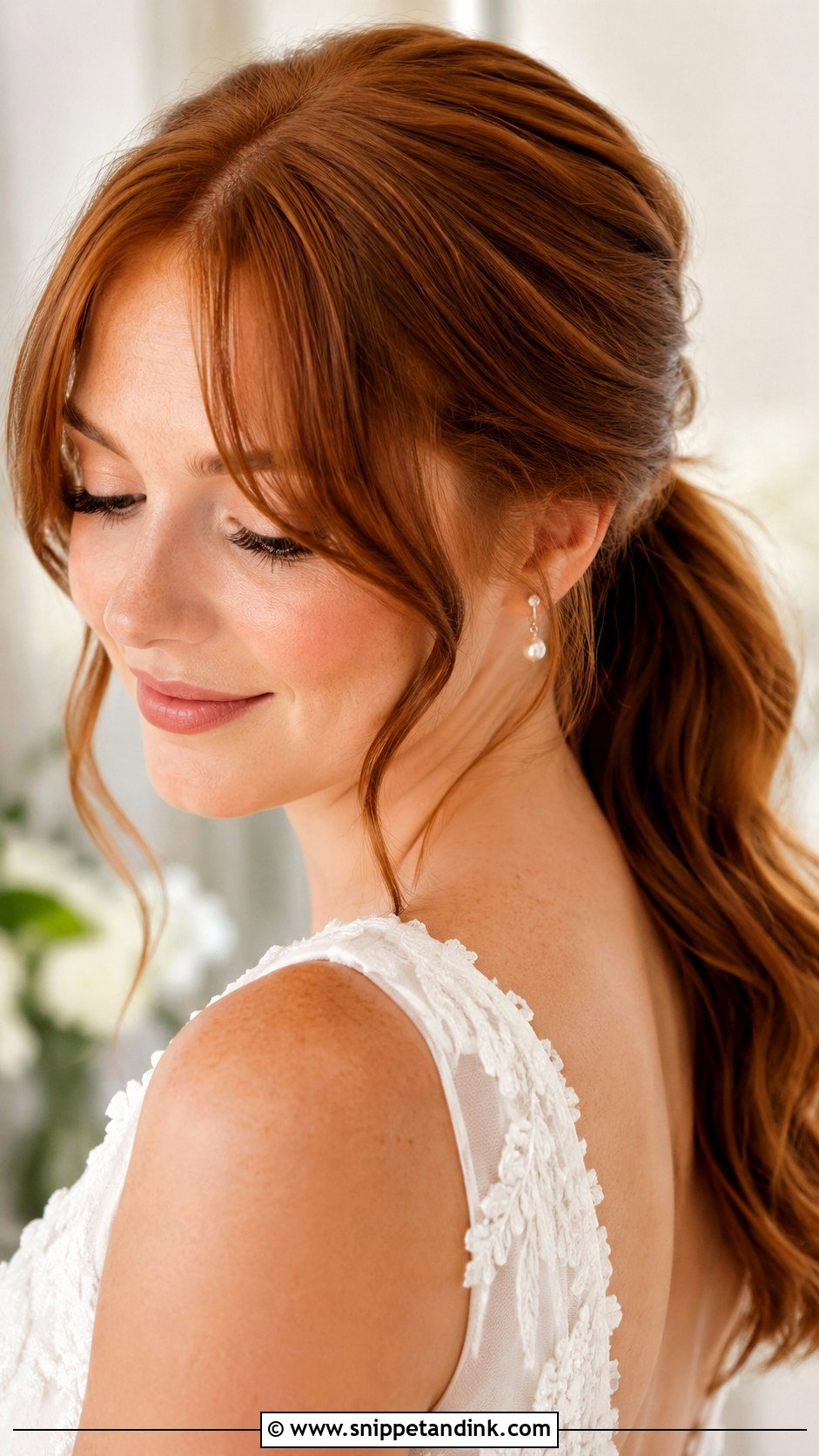
Fringe gives a ponytail personality, but only if it matches the finish of the tail. Curtain bangs, wispy pieces and side-swept fringe can all work. I blow-dry the fringe last with a round brush and set it with a light spray, never gel, because a stiff fringe separates and looks detached from the rest of the hair. A sleek pony wants a smooth, shaped fringe; a wavy one wants a softer bend. If you’re cutting a new fringe, have it done a couple of weeks before the wedding rather than the week of, so it has time to settle.
13. Wedding Ponytail With Extensions
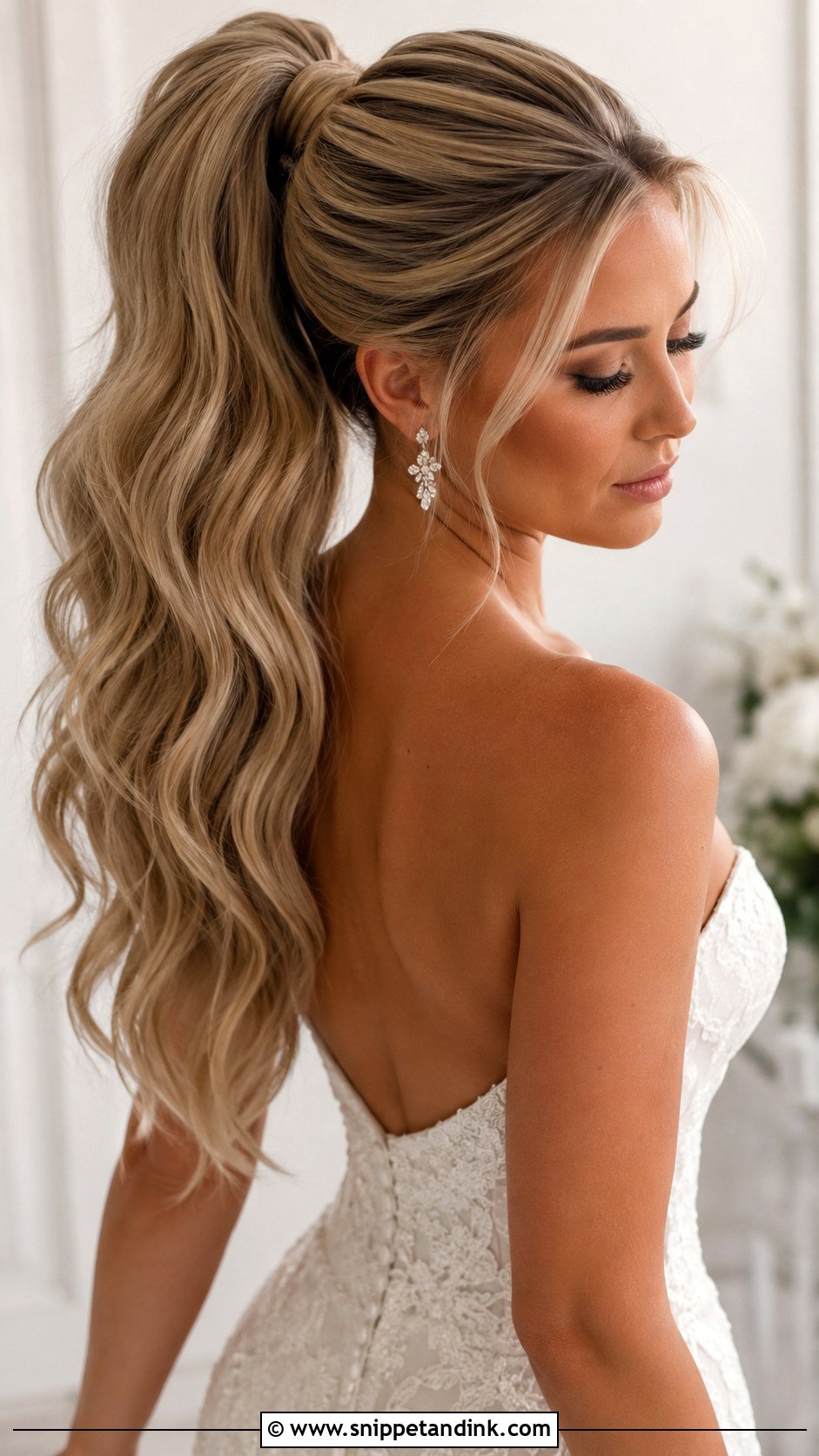
A wedding ponytail with extensions makes sense when you want length or fullness your own hair can’t hold. Fine hair also keeps its curl longer with wefts in, since the extra hair supports the shape. I clip wefts in horizontal rows just below where the ponytail gathers, so every clip hides inside it. A wrap-around ponytail piece is quicker, but it needs a near-perfect colour match at the base because that’s the first place people look. Bring the extensions to your trial so the match can be checked in daylight and the weight tested before the morning itself.
14. Wedding Ponytail With Pearls
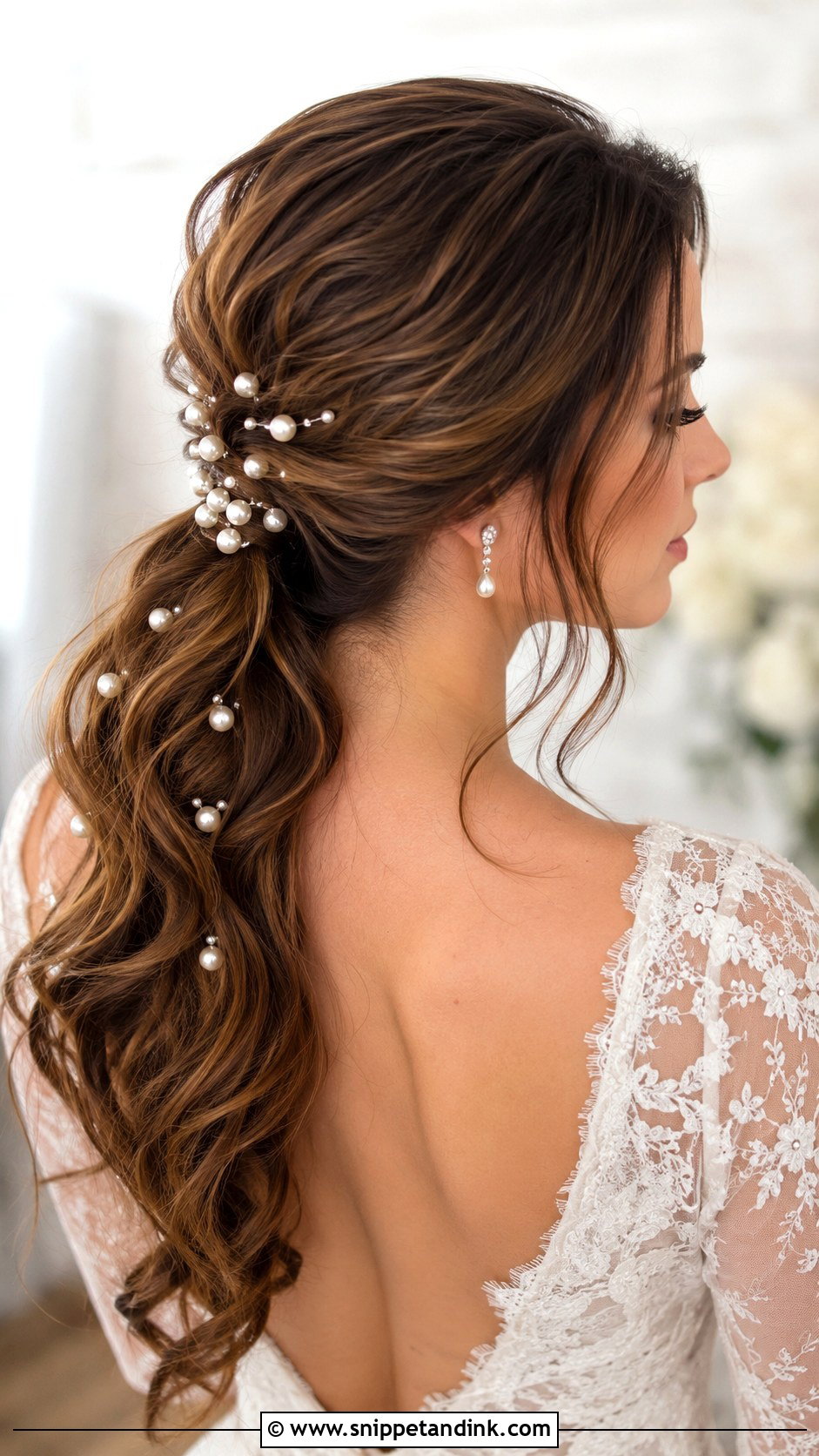
Pearls can sit as pins around the base, scatter through waves, follow a braid or line a comb above the tail. Restraint matters more than placement: a handful of well-spaced pearls looks expensive, a whole scatter starts to look like a craft kit. I push pearl pins in at an angle against the direction the hair was brushed, so they lock in place instead of sliding down the tail. They show up best against a smooth surface, so I keep the hair around them polished. Lace gowns and pearl earrings tie in naturally.
15. Wedding Ponytail With Ribbon
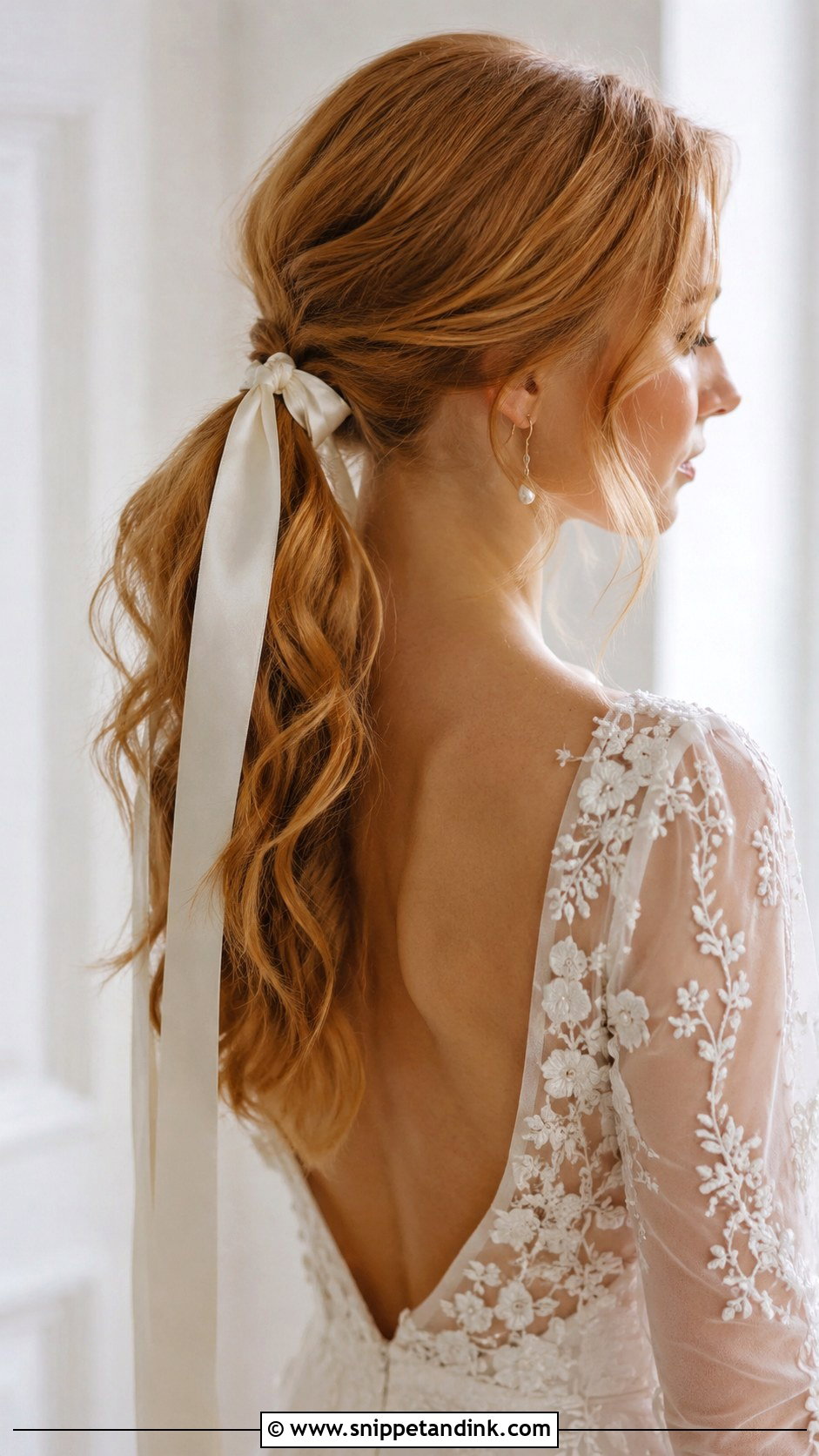
A wedding ponytail with ribbon is the simplest accessory I know, and one of the most personal. Tie it at the base, weave it through a braid or leave long tails to move as you walk. Fabric sets the mood: satin looks formal, velvet suits an autumn or winter date, organza is sheer and light. I match the ribbon to the dress fabric rather than chasing its exact shade, since two whites almost never match. Ivory stays classic, while champagne or pale blue adds a quiet hint of colour. I tie it over the wrapped elastic and pin the knot with a grip so it can’t slip down the tail.
Ponytail Sag, Headaches and Flat Ends by Evening
A wedding ponytail fails in three predictable ways. All of them can be sorted out before the day if you know to look for them.
The base creeps down
Heavy hair pulls a high pony lower as the hours pass. After the elastic is on, I slide two bobby pins into the band from opposite sides and lock them into the hair underneath; that pair carries most of the weight. Freshly washed hair is slippery, so I’d rather you wash it the night before than the morning of.
Your head starts to ache
The usual culprit is a hairline brushed back too tightly, not the height of the ponytail. Ask for the front to be smoothed into the base without strain, then keep the trial style in for at least four hours. If it pinches by then, it will pinch far more by the speeches, and that’s the moment to adjust it.
Curls drop in the tail
Heat and humidity loosen waves in the length first. A bridesmaid carrying a travel-size spray and a few grips can rescue most of it in two minutes. Taking the pony down completely for the evening rarely goes well, because the elastic leaves a dent. A better plan for a second look is to twist the tail around its base into a low bun, which hides the dent and takes the weight off your neck for dancing.
Which Ponytail Height Suits Your Neckline?
Low feels classic, high feels glamorous, a braid adds detail and waves keep everything soft, but the right version comes down to your neckline, where the veil sits, how long your hair is and how many hours it has to last. Pearls, ribbon or a single comb can lift even the plainest pony. Book a trial, keep the style in for the rest of that afternoon, and bring photos of the front, side and back views you like. I’d always rather see how a ponytail looks at hour four than at minute one.
You'll Like These Ideas:


Leave a Reply