
Braids are the styles I get asked about most by brides who don’t want a stiff, sprayed updo. They hold better than loose curls, they hide a lot of pins, and they can be pulled apart for softness or kept tight for a polished finish. The catch is that not every braid suits every head of hair, and some look completely different in person than in a styled photo. Below are 25 braided looks for brides, bridesmaids and guests, with my notes on how each one is built, what hair it needs and where it tends to struggle.
Second-Day Hair Grips a Braid Better Than Freshly Washed Hair
The most common thing that ruins a braid is hair that is too clean. Freshly washed hair is slippery, so the crossovers slide apart and the braid looks thin by the time you reach the reception. I ask my brides to wash the day before the wedding, skip heavy conditioner on the lengths, and arrive with dry, product-free hair.
At the chair I add a texture spray or dry shampoo to every section before I braid it. That gives the hair grip, which means fewer pins and a braid that holds its shape when it’s pulled apart for softness.
- Fine hair: a volumizing mousse at the roots and a texture spray through the lengths, and pancake the braid so it looks twice as thick.
- Thick or coarse hair: smooth it with a light cream first, then braid in smaller sections so the braid doesn’t look bulky.
- Curly or coily hair: braid on stretched hair, or on hair that has been set in twists, so the pattern doesn’t shrink up during the day.
- Layered hair: pomade along the edges keeps short ends tucked into the weave.
If you’re doing a trial, wear a top that buttons up the front so you don’t have to pull anything over your new braids afterward.
1. Crown Braid for Wedding
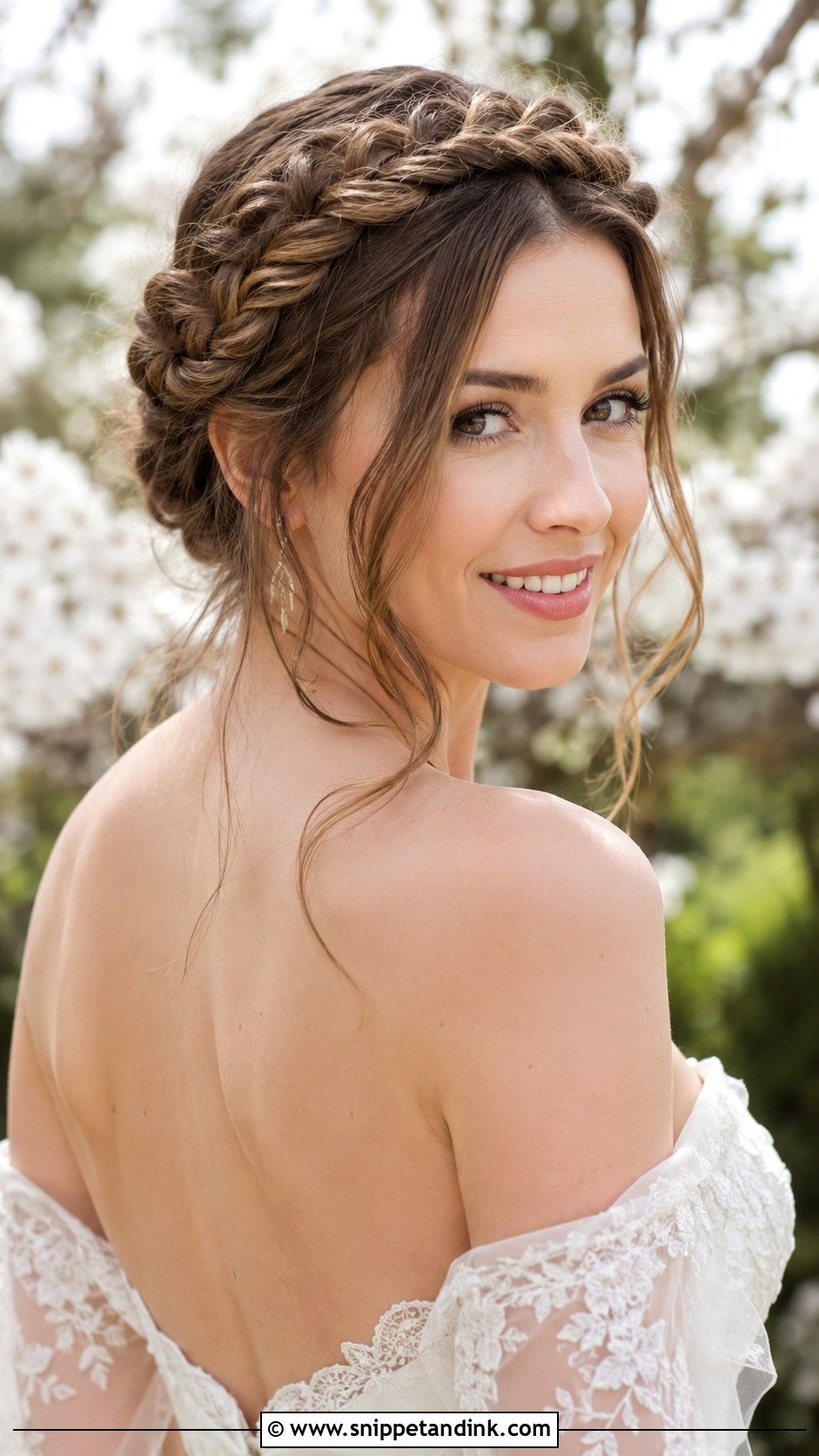
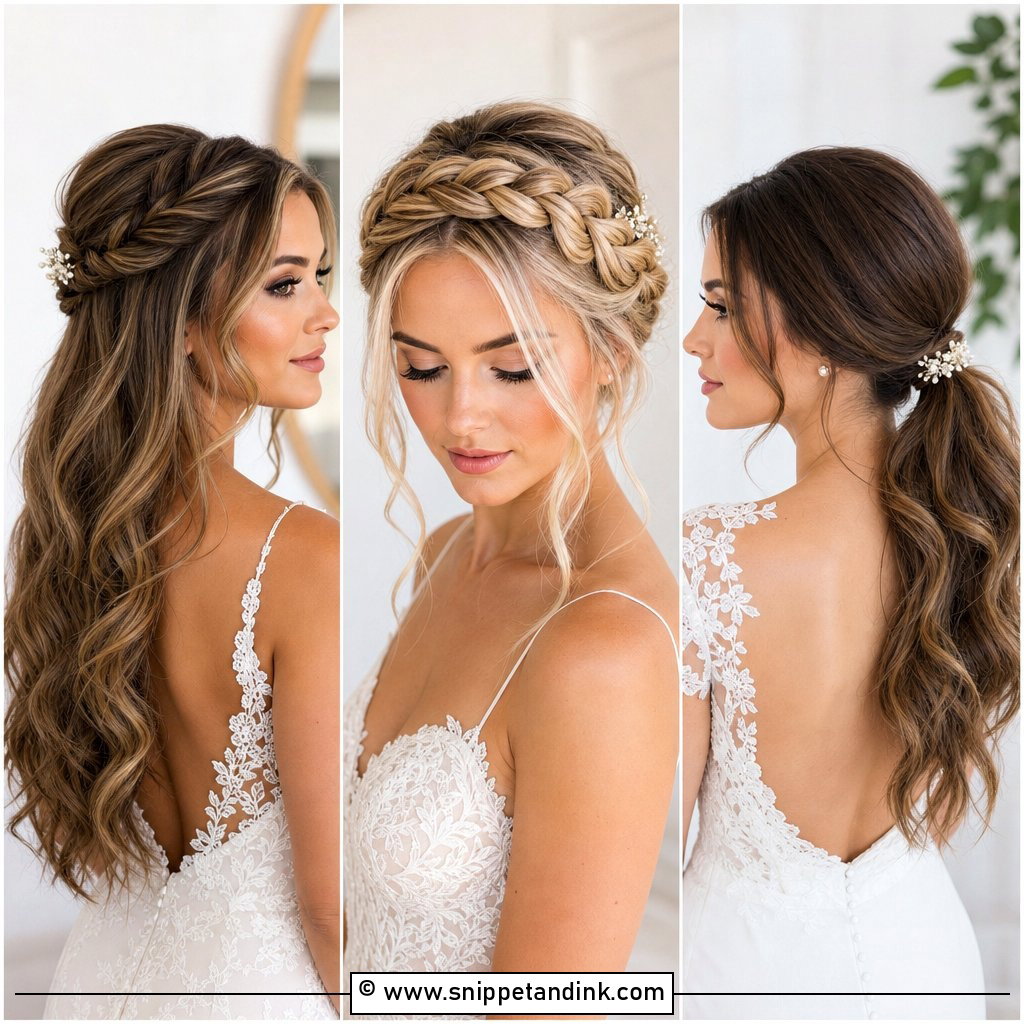
A crown braid wraps around the head and pins flat, so nothing touches the neck or shoulders, which is a relief at a summer ceremony. I usually build it from two braids that meet at the back rather than one long braid, because a single braid rarely has enough length to travel all the way around without thinning at the end. You need roughly shoulder length or longer for that. A veil comb slides in neatly underneath the braid at the crown, and a few flowers tucked into the weave read clearly on camera. For a fairytale moment with very little risk of falling, this is the one I trust.
2. Fishtail Braid for Wedding
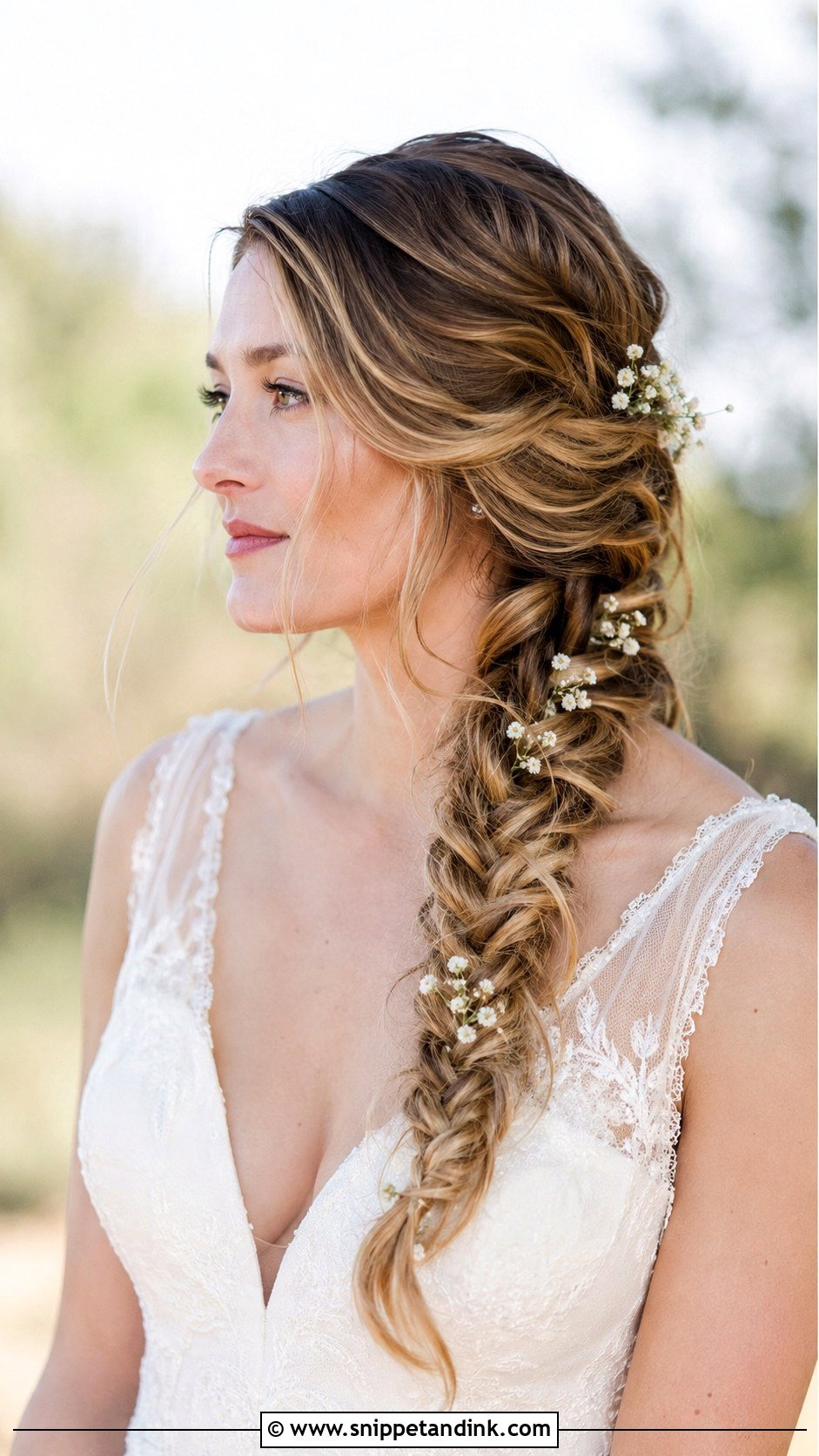
A fishtail looks complicated but is just two sections crossing thin pieces back and forth, and the thinner the pieces, the more detailed the pattern. It’s the braid I’d pick for a beach or boho wedding because it still looks right when it loosens. I pancake it gently once it’s tied off so it reads wider in photos. On layered hair, short pieces poke out along the edges, so I brush a little pomade through each section first. Pearls or a metallic thread woven down the length catch light as you move.
3. French Braid for Wedding
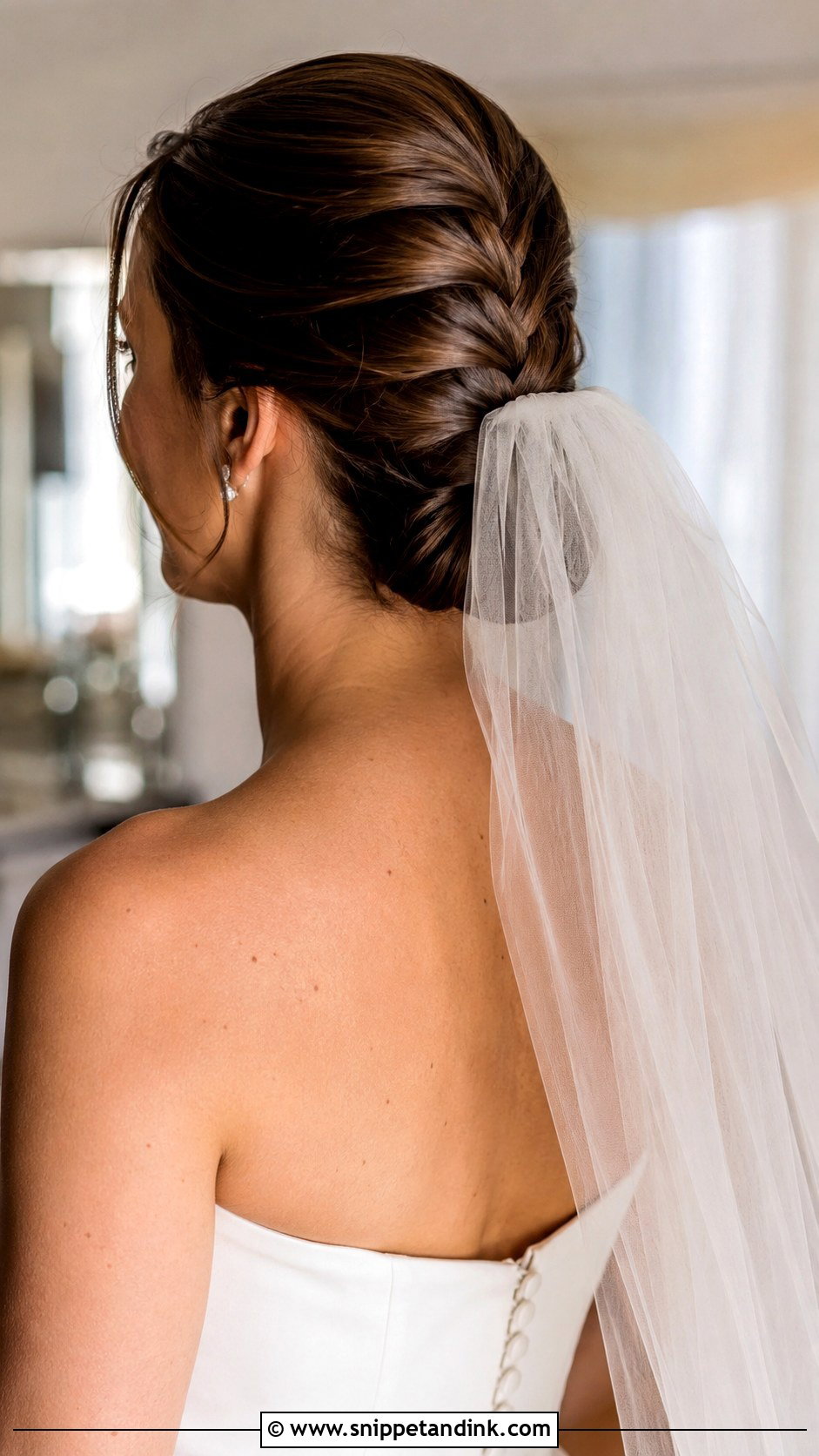
A French braid picks up hair from the hairline as it travels, so every section is locked in from the start. That makes it the cleanest option under a headpiece or veil. Most of my brides wear it slightly off-center or swept to one side, since a dead-center braid can look severe on a long face. It works on fine hair as long as I add texture spray first; slippery clean hair slides out of the cross-overs within an hour.
4. Dutch Braid for Wedding
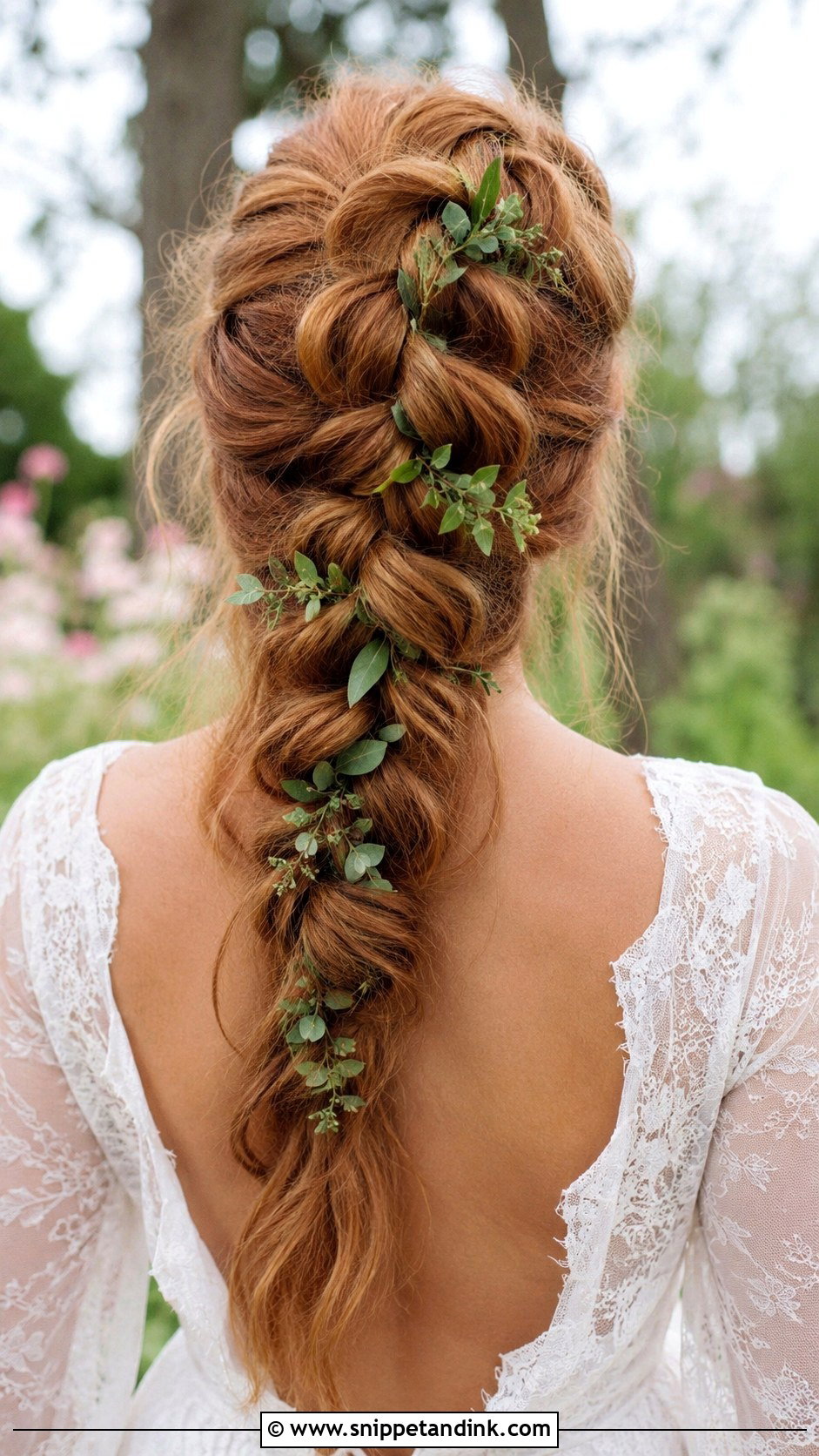
The Dutch braid is the French braid inside out: each section crosses under instead of over, so the braid sits on top of the hair instead of lying flat into it. That raised ridge is why it shows up so well in photos. I’d steer anyone with very fine or thin hair toward pancaking it afterward, otherwise the scalp can show between the stitches. Single, double or wrapped into a bun, it suits rustic and outdoor weddings, and small sprigs of greenery hold firmly in the raised loops.
5. Waterfall Braid for Wedding
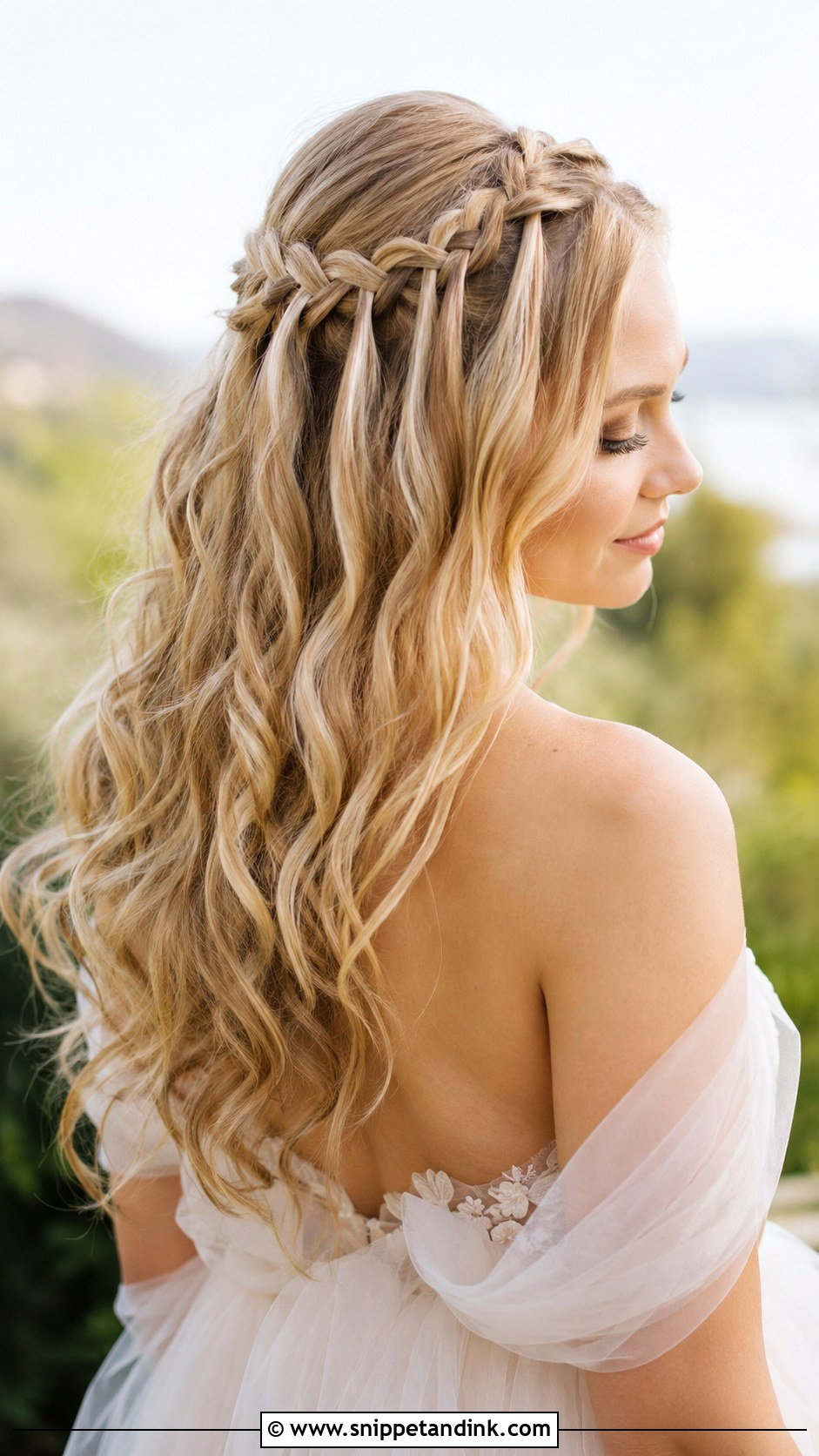
A waterfall braid drops one strand out of the weave at every pass, so the hair falls through it like a curtain. It’s a half-up style by nature, which means the curls underneath do half the work. I set those curls with a firm spray and let them cool fully before braiding, because loose waves below a waterfall braid are the first thing to fall flat in humidity. On straight hair that won’t hold a curl, I’d choose a different style rather than fight it all day.
6. Braided Low Bun for Wedding
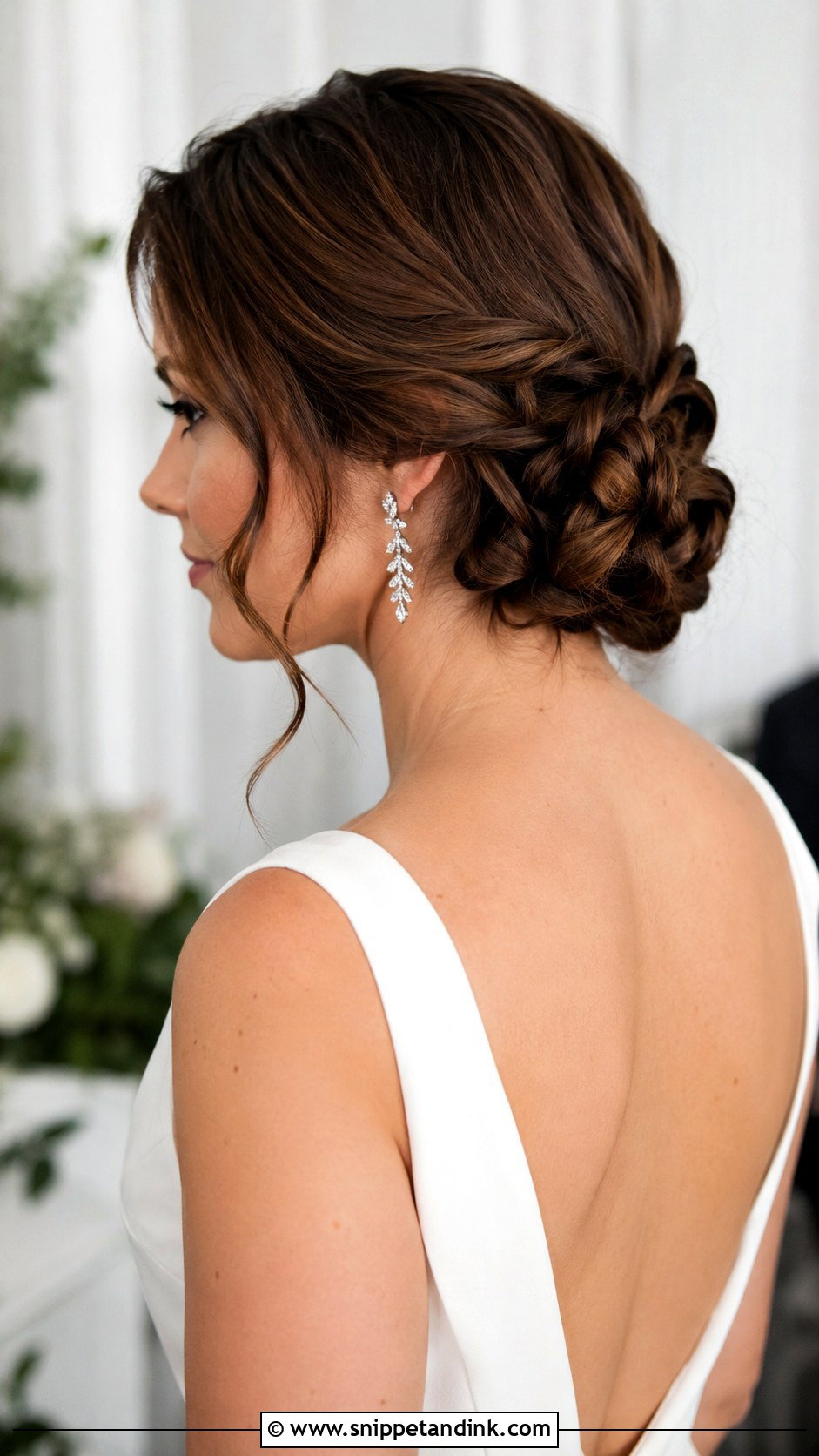
The braided low bun is my default suggestion when a bride is wearing a long cathedral veil. The bun sits at the nape, the veil comb anchors just above it, and the weight pulls down evenly instead of tugging the crown. I braid two or three sections, coil them, and pin each coil separately so the bun can’t collapse into one lump. Leave out a few face-framing pieces, but curl them, or they’ll look like hair that escaped.
7. Half-Up Braided Hairstyle for Wedding
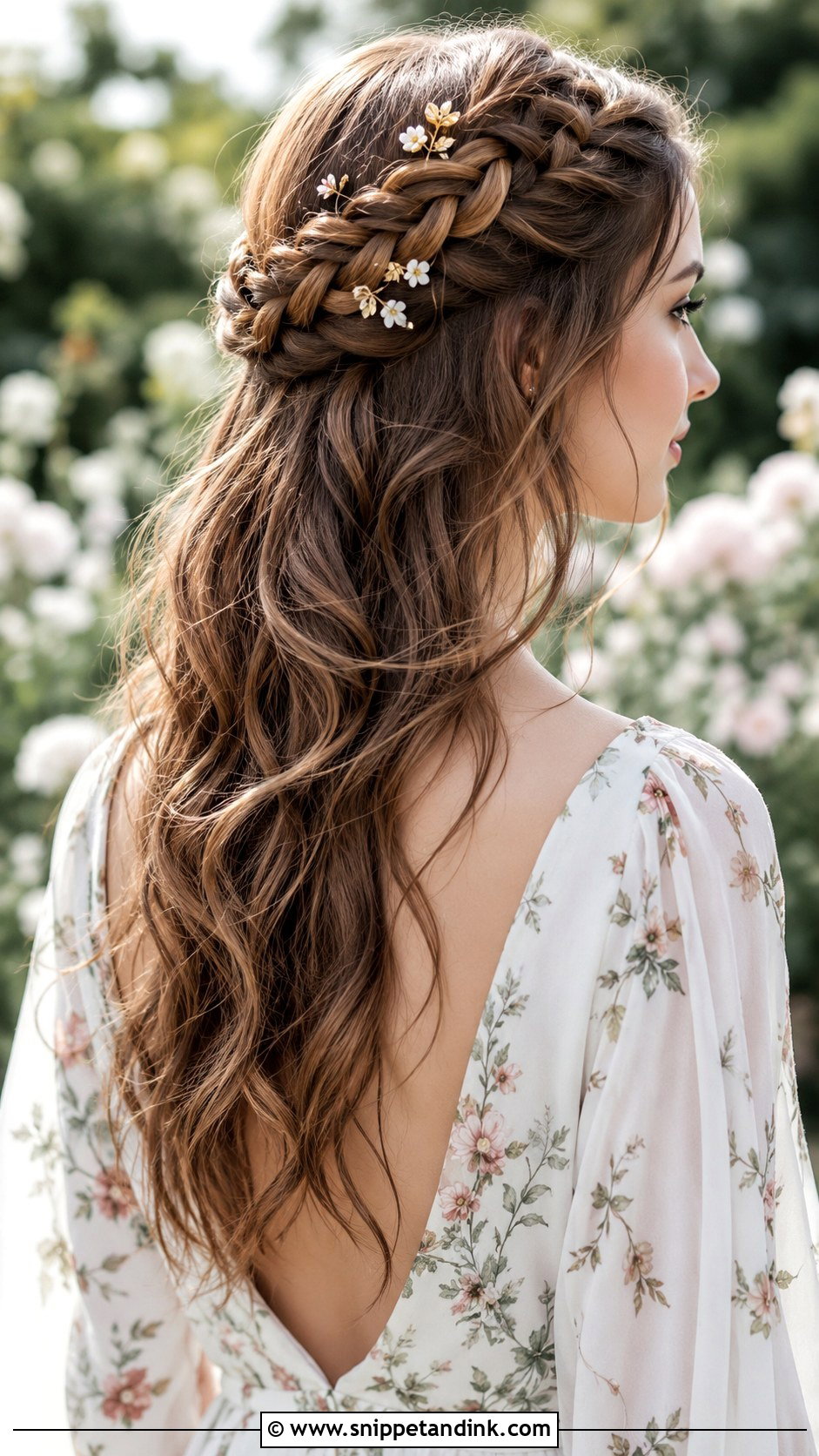
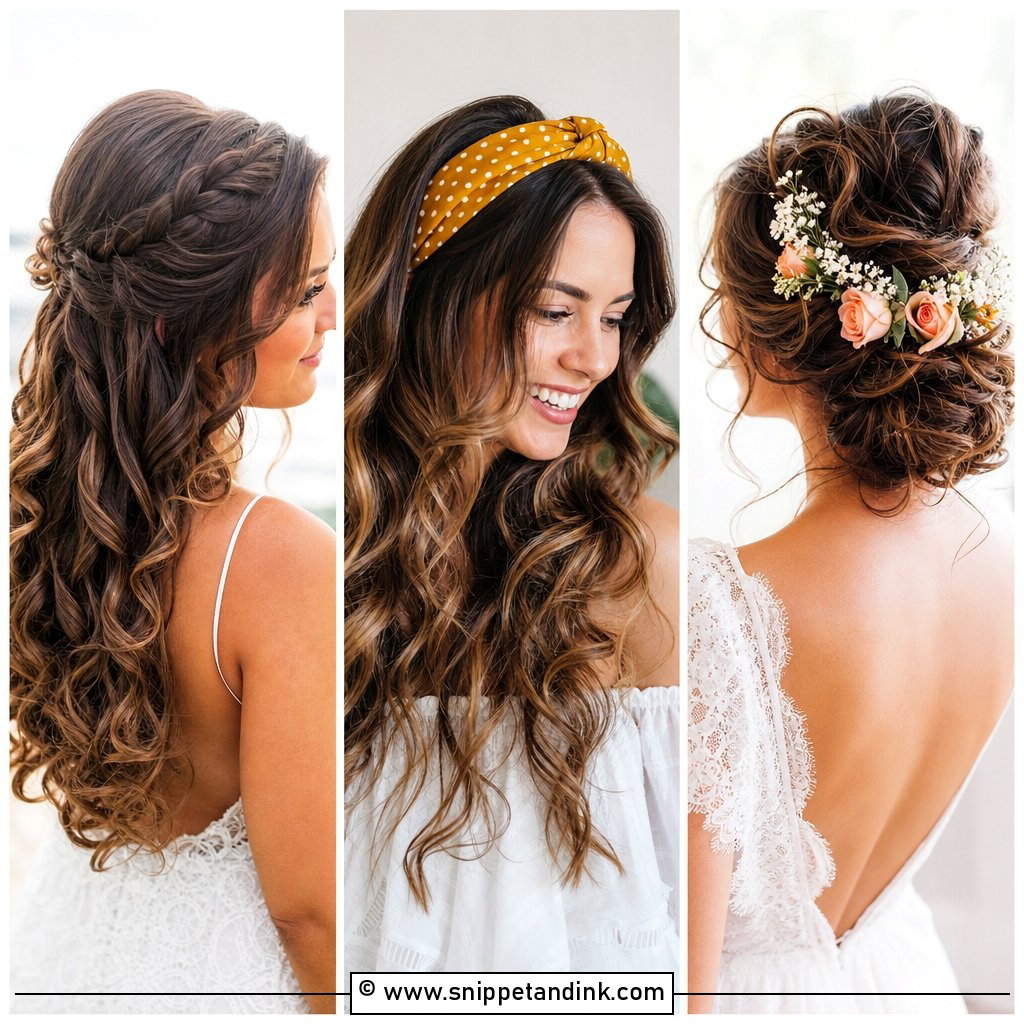
Half-up braids are the compromise for brides torn between showing their length and keeping hair off the face. The top section is braided back and secured, and the rest is curled. It suits almost everyone, but I always warn brides with heavy, thick hair that the curls below will drop faster because of their own weight, so I set them tighter than they want and let them relax. A crown braid or fishtail across the top gives you a place to anchor a floral crown or sparkly pins.
8. Boho Braided Hairstyle for Wedding
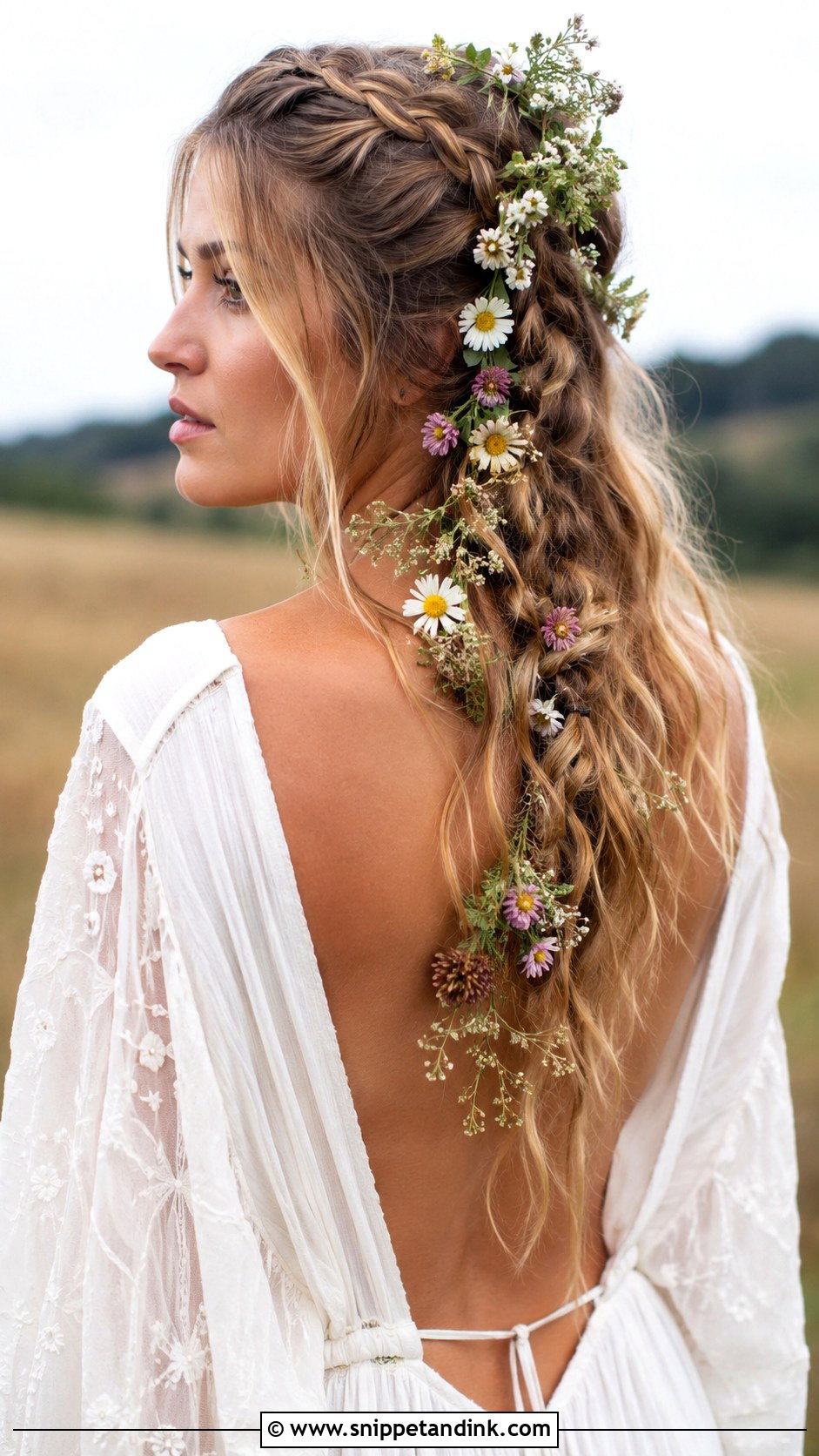
Boho braids are meant to look a little undone, which makes them forgiving if your wedding involves wind, dancing on grass or a long outdoor day. I mix two or three braid types, often a waterfall and a loose fishtail, and pull everything apart with my fingertips so it looks soft rather than neat. That mix gives a dreamy, bohemian effect that looks natural against fields and trees. Real greenery wilts by evening, so I pin it last, just before you leave for the ceremony.
9. Braided Updo for Wedding
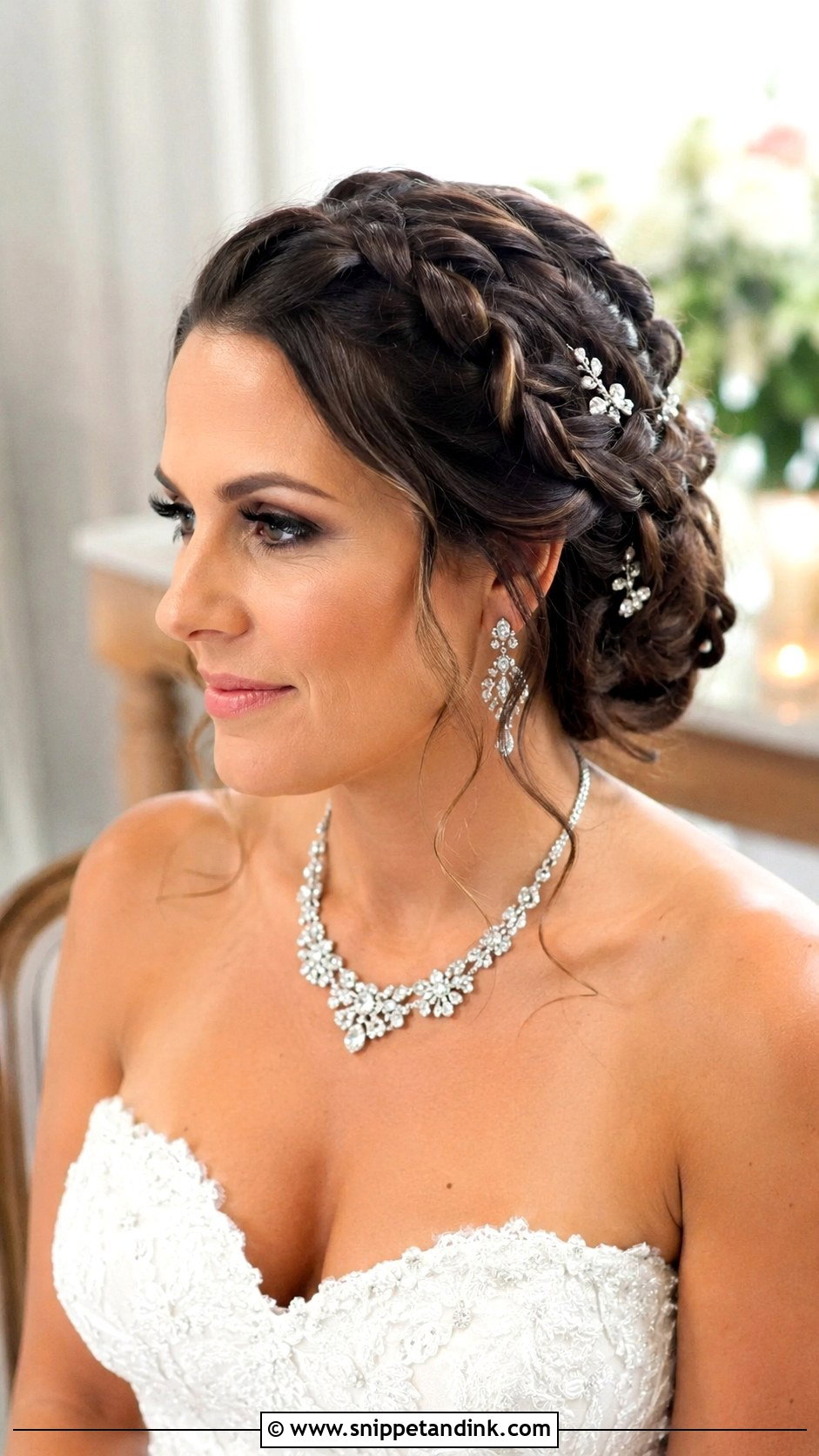
A braided updo gathers several braids and pins them close to the head, and it is the most secure style on this list for a long day. Because each braid is already locked, the pins grip braid rather than loose hair, and that is why these last from the first photo through the last song. It shows off a neckline and statement earrings well. On short layered hair I sometimes need small extensions to give the braids enough length to pin, which is worth knowing before your trial.
10. Side Braid for Wedding
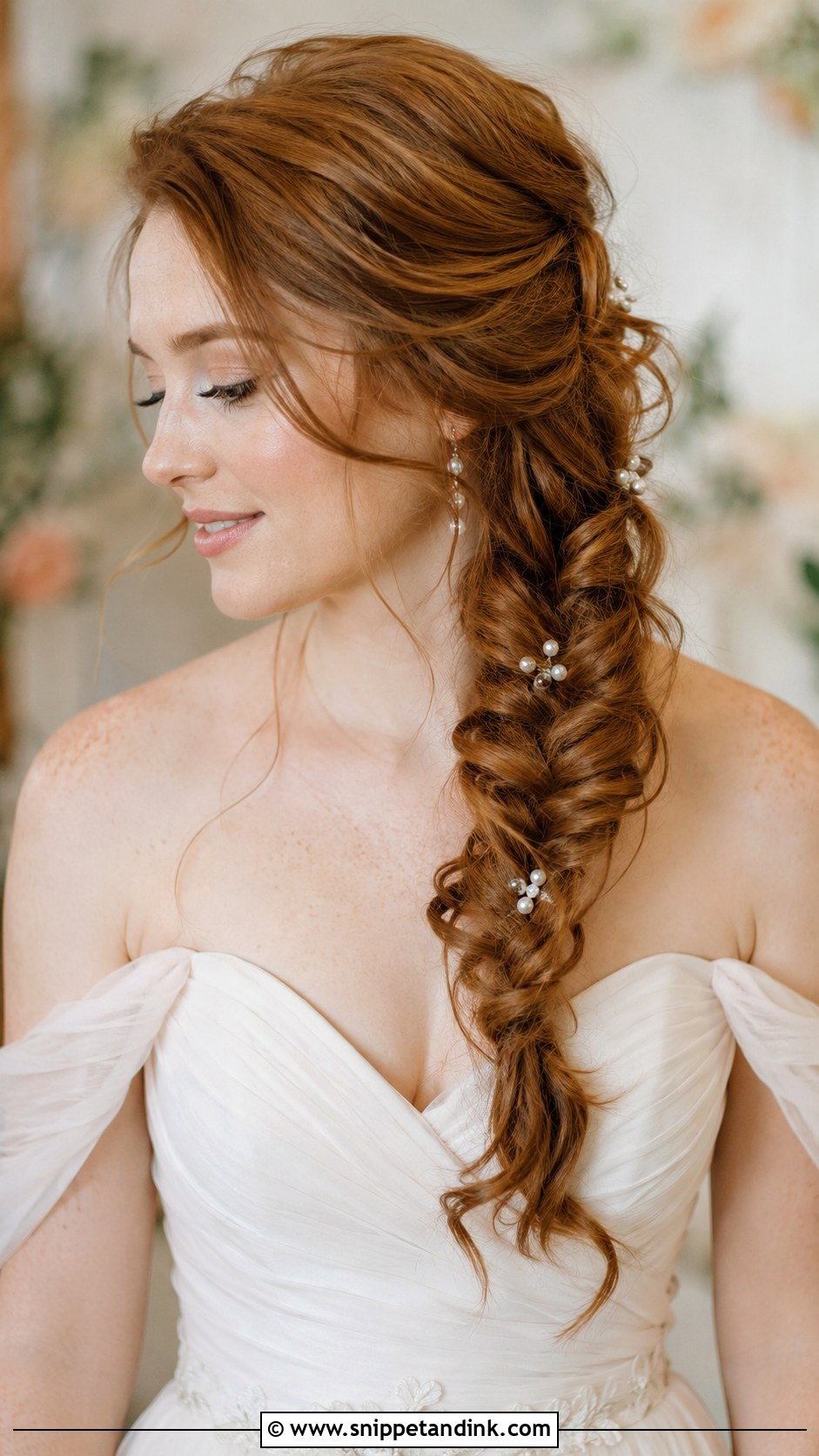
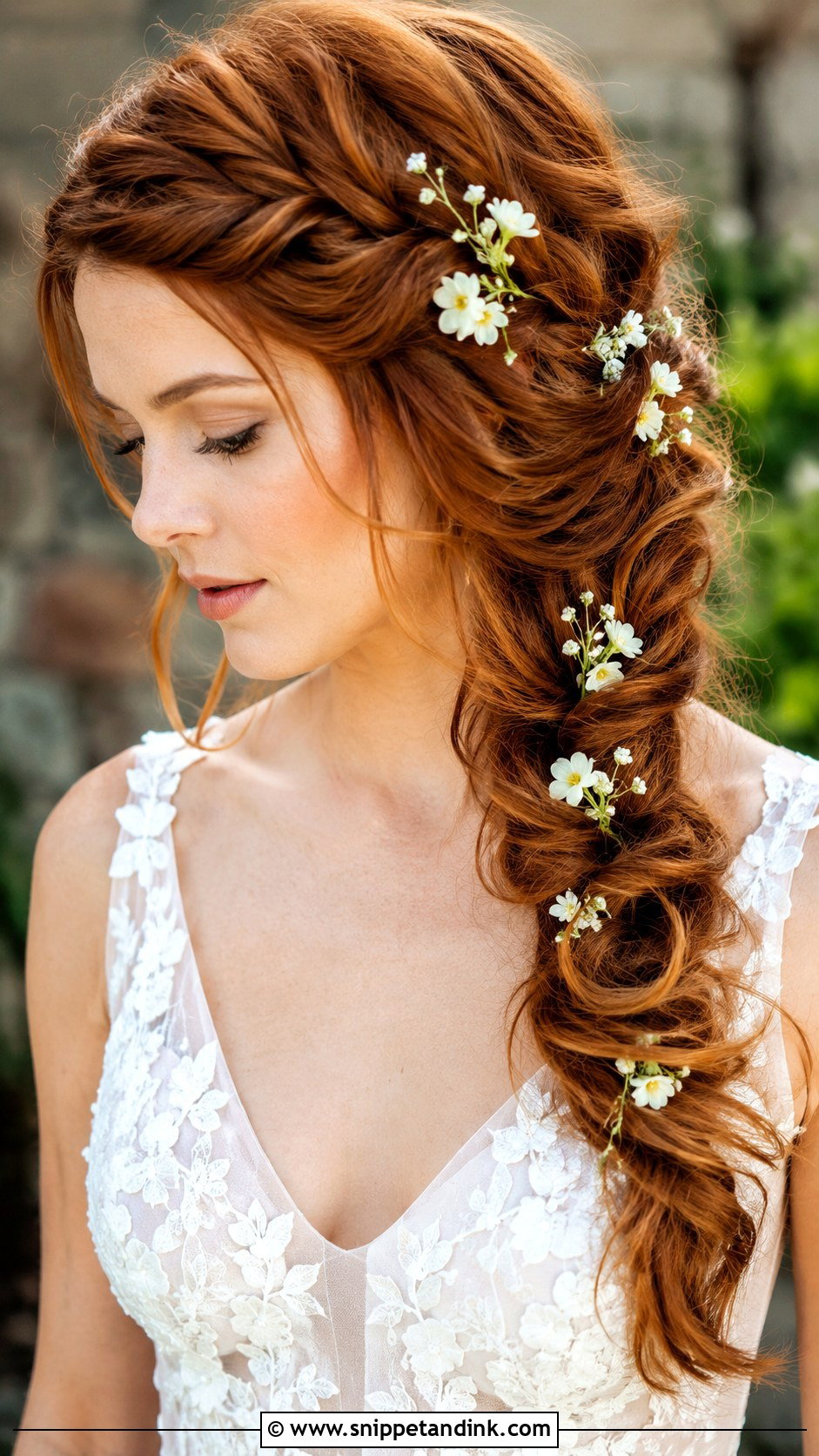
Sometimes one braid over the shoulder is all a dress needs. A side braid suits off-the-shoulder and strapless gowns because it fills the bare space on one side without crowding the neckline. Fishtail gives the most texture, a rope braid the cleanest line. I anchor the start of the braid behind the ear with two crossed pins, because a side braid hanging on its own weight drags toward the back by the reception.
11. Braided Ponytail for Wedding
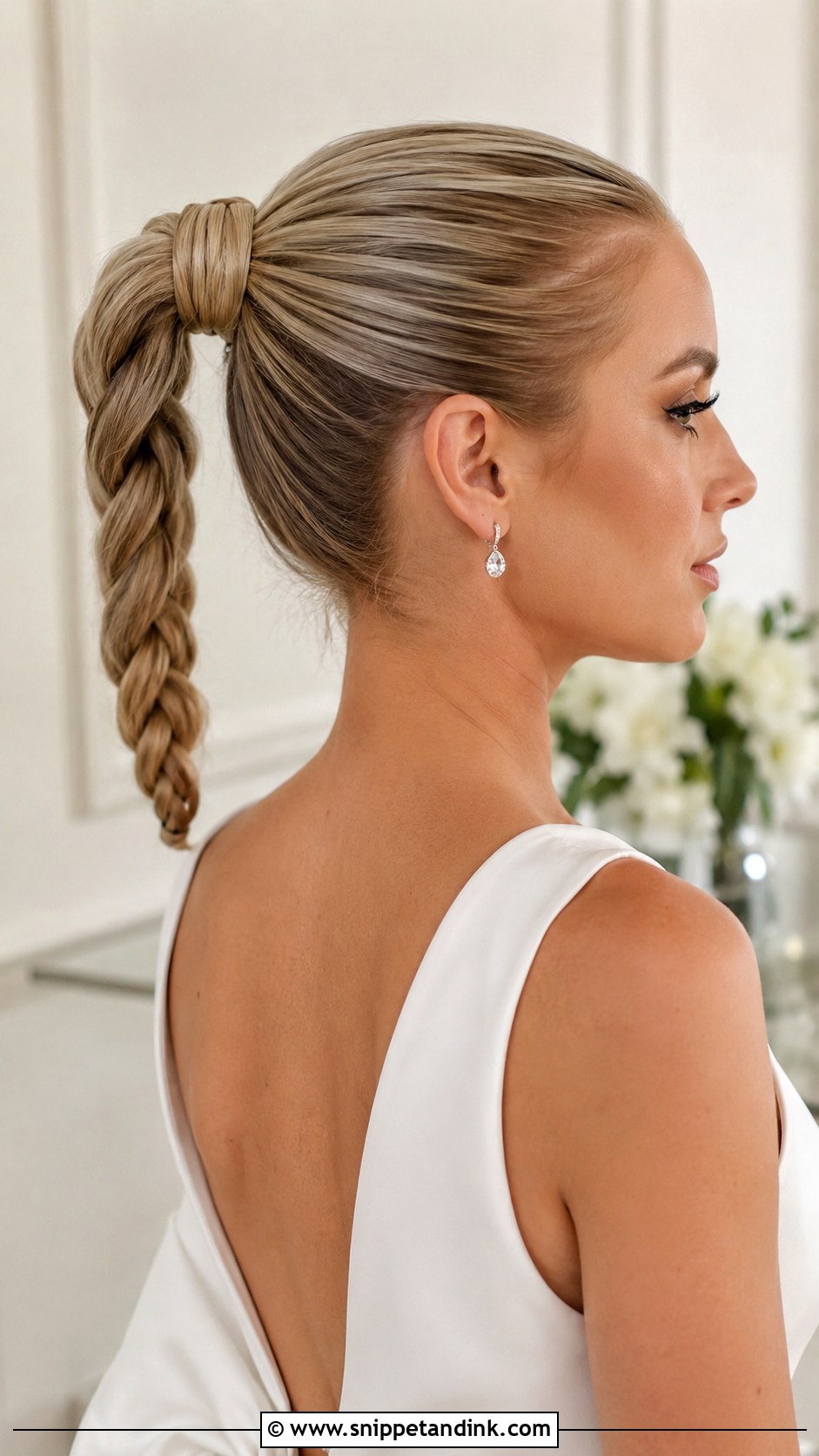
A braided ponytail is the modern option, and it feels light compared with an updo. I braid either the ponytail itself or a couple of small braids leading back into it, then wrap a strand of hair around the base to hide the elastic. The tricky part is placement: a high pony looks fresh in photos but can clash with a veil, so I’d test the veil position at the trial before committing.
12. Milkmaid Braid for Wedding
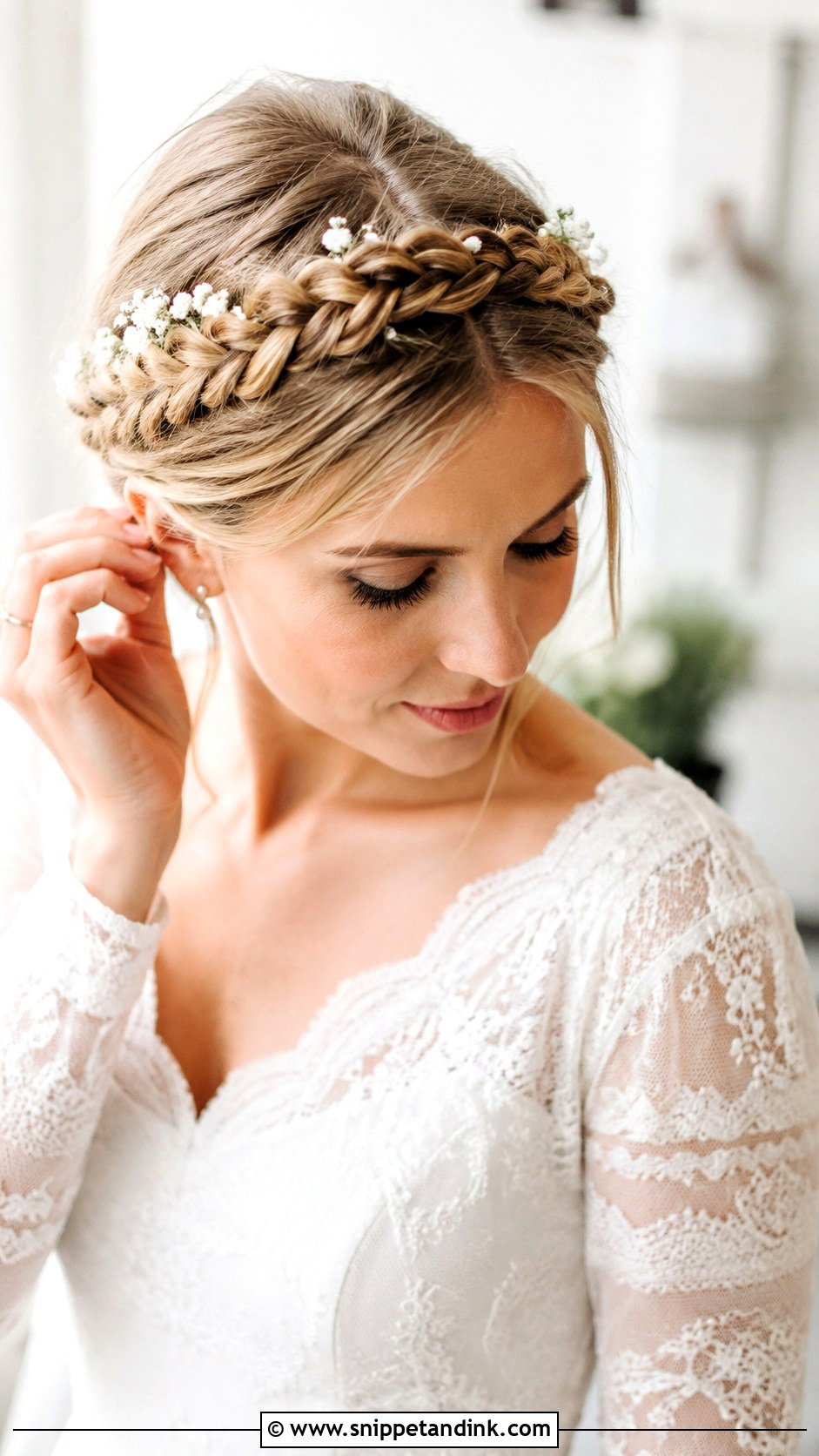
The milkmaid braid takes two braids from behind the ears and crosses them over the top of the head, pinned where they overlap. It reads instantly vintage, with real cottagecore charm, and keeps every strand off the face. It needs real length, at least past the shoulders, or the braids won’t meet. It flatters round and oval faces because of the height it adds at the top, and a light single-tier veil sits behind it nicely; heavy veils tend to pull it backward.
13. Braided Chignon for Wedding
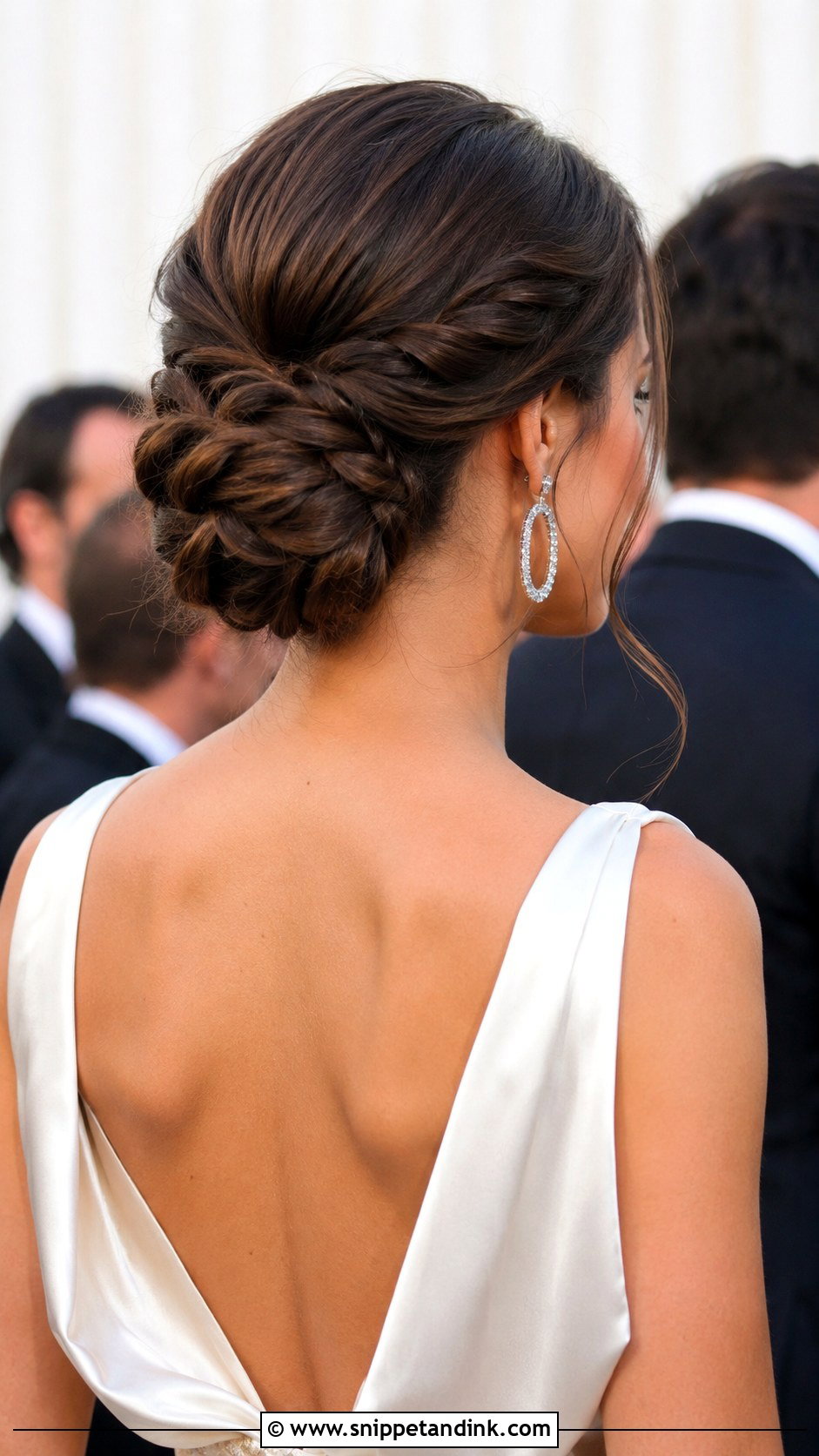
A braided chignon coils braids into a smooth knot low at the back. It’s the quiet, polished choice, and it’s one of the few styles that looks right with both a traditional cathedral veil and a modern sheath dress. I work fishtail or French braids into the knot so the texture shows up close without making the shape busy. Tendrils loose around the face soften it, but keep them short; long ones stick to lipstick all evening.
14. Fishtail Braid Updo for Wedding
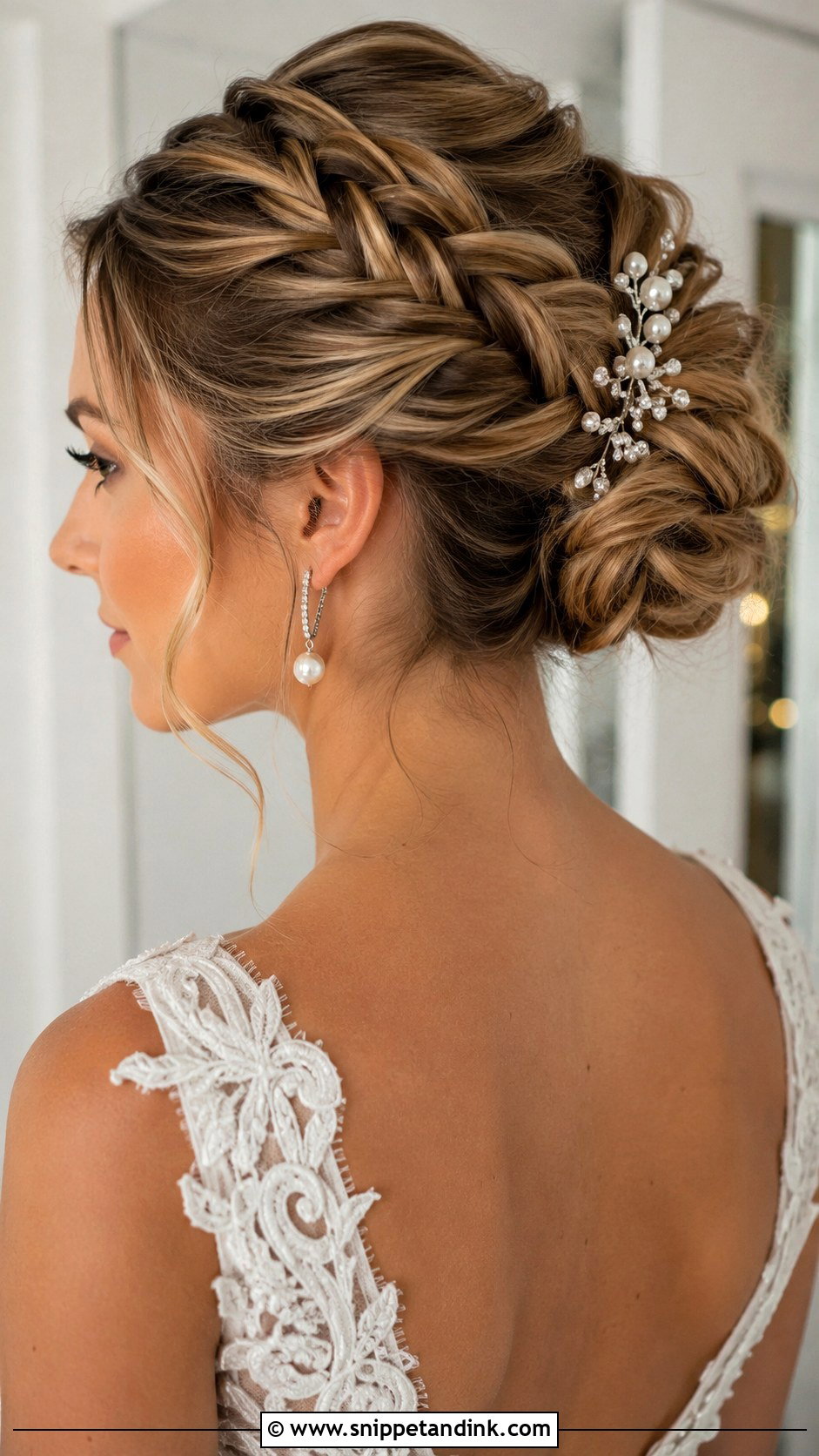
A fishtail braid updo takes all the detail of a fishtail and pins it up into a structured shape, so you get pattern from every side. Fishtails pinned up need more pins than three-strand braids because the narrow pieces slip, so I use matte pins in your hair color and cross them in pairs. You can keep it sleek or tug a few pieces loose. Pearls along the weave work better here than flowers, which can hide the pattern you paid for.
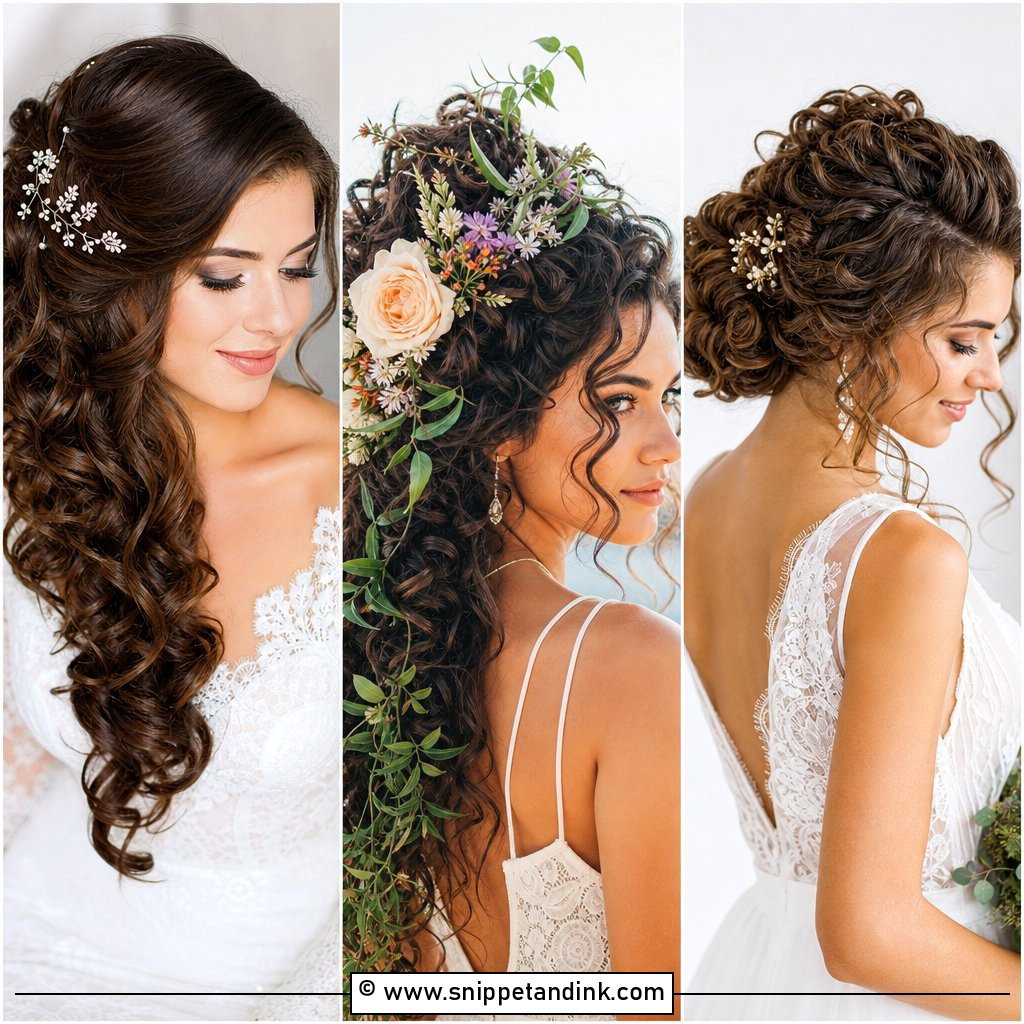
15. Braided Bun With Flowers for Wedding
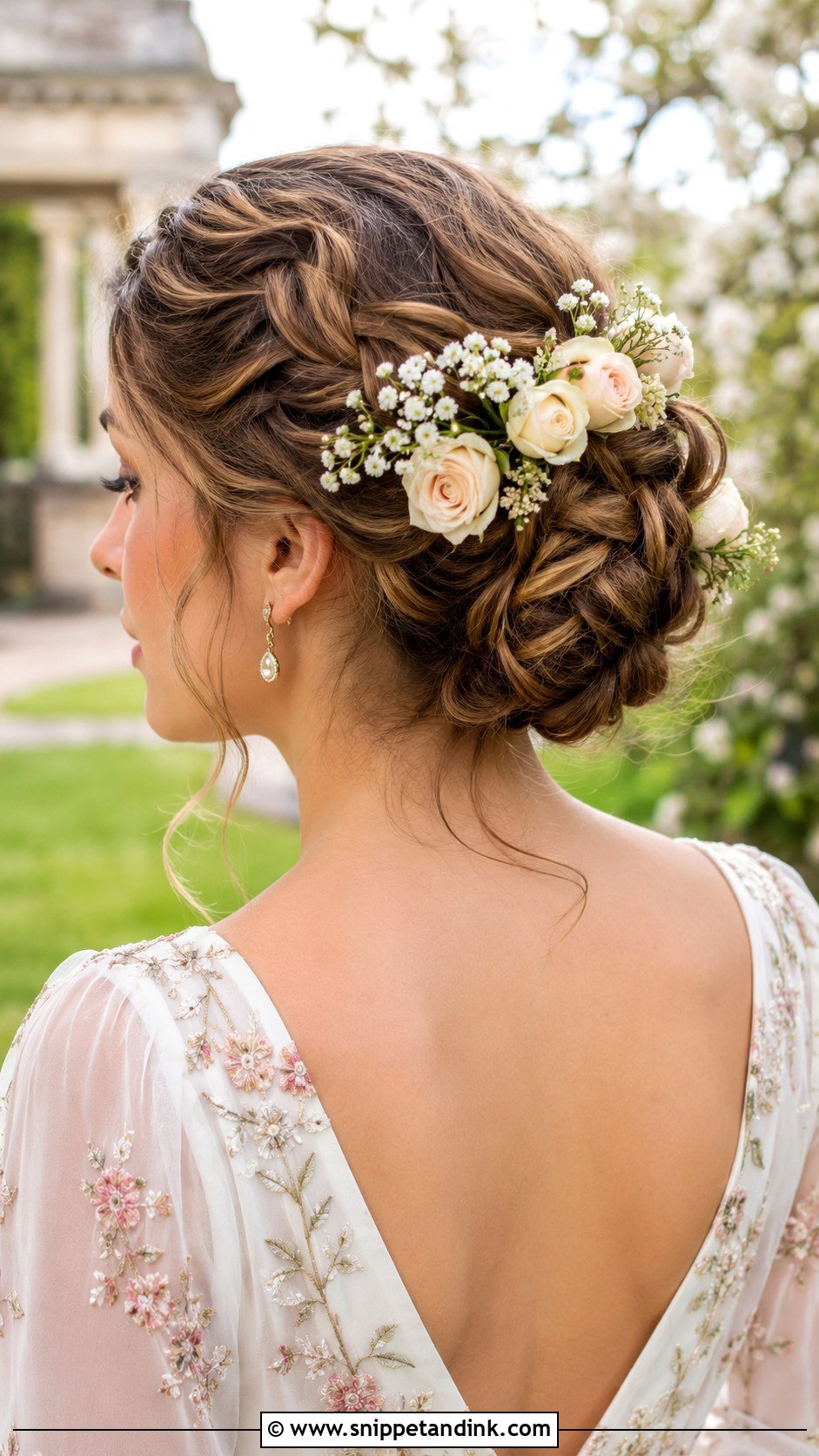
A braided bun with flowers is where my job overlaps with the florist’s. I build the bun first, then tuck real or silk flowers into the braids, choosing hardy stems like spray roses, waxflower or baby’s breath that won’t wilt under a warm sun. Ask your florist for a small hair spray of the bouquet blooms, wired and ready, so the colors match. Delicate flowers like garden roses bruise when pinned, so silk is safer for a hot outdoor afternoon.
16. Double Dutch Braid for Wedding
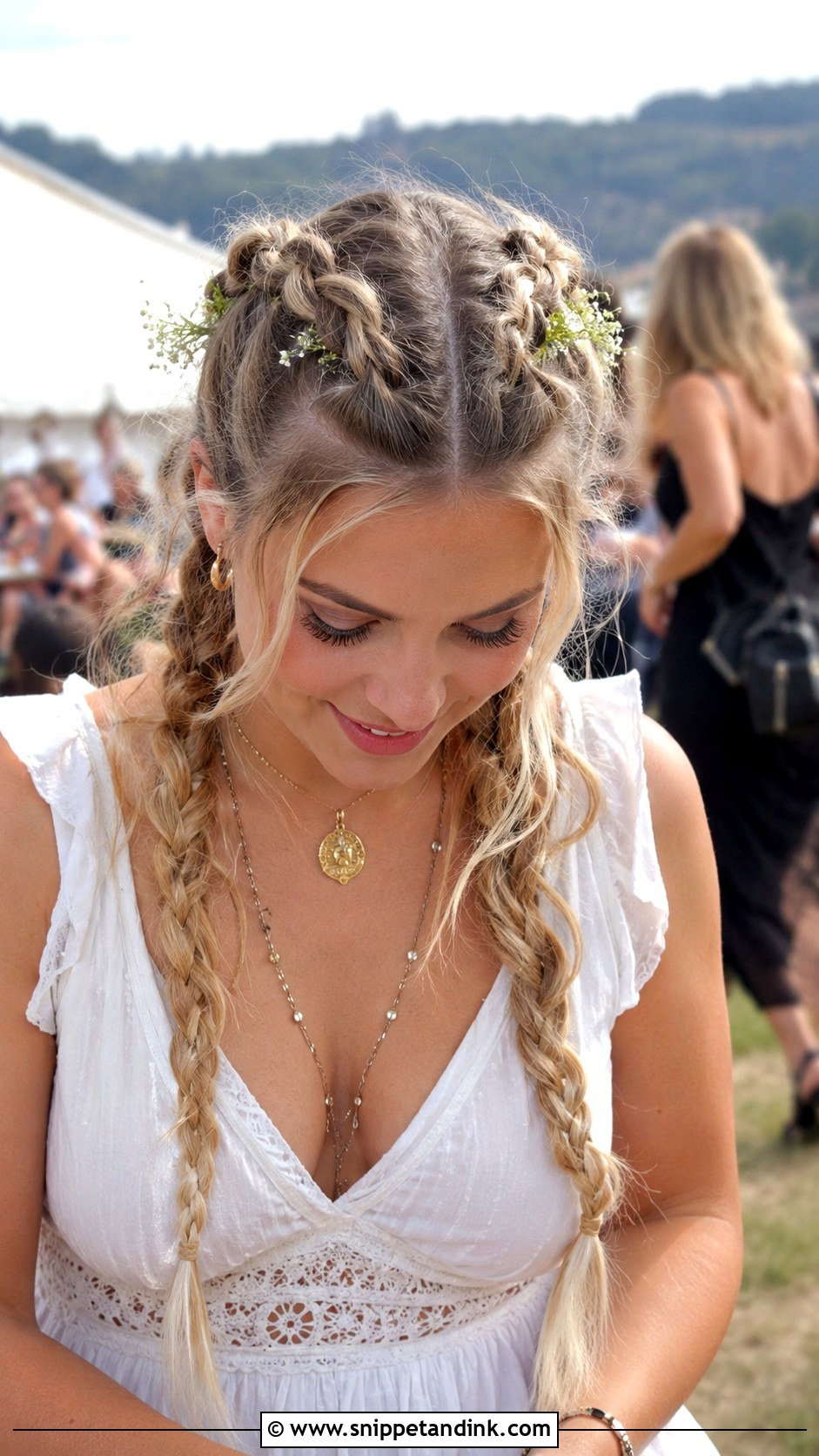
With double Dutch braids, two raised braids run back from the hairline in parallel. They look sporty and young, and they’re easy to wear down or pin into a bun later for the reception. Symmetry is the hard part: if the part isn’t dead straight, every photo will show it, so I section with a tail comb and check from the front in a mirror. Small flowers in the raised loops give a garden touch.
17. Braided Halo for Wedding
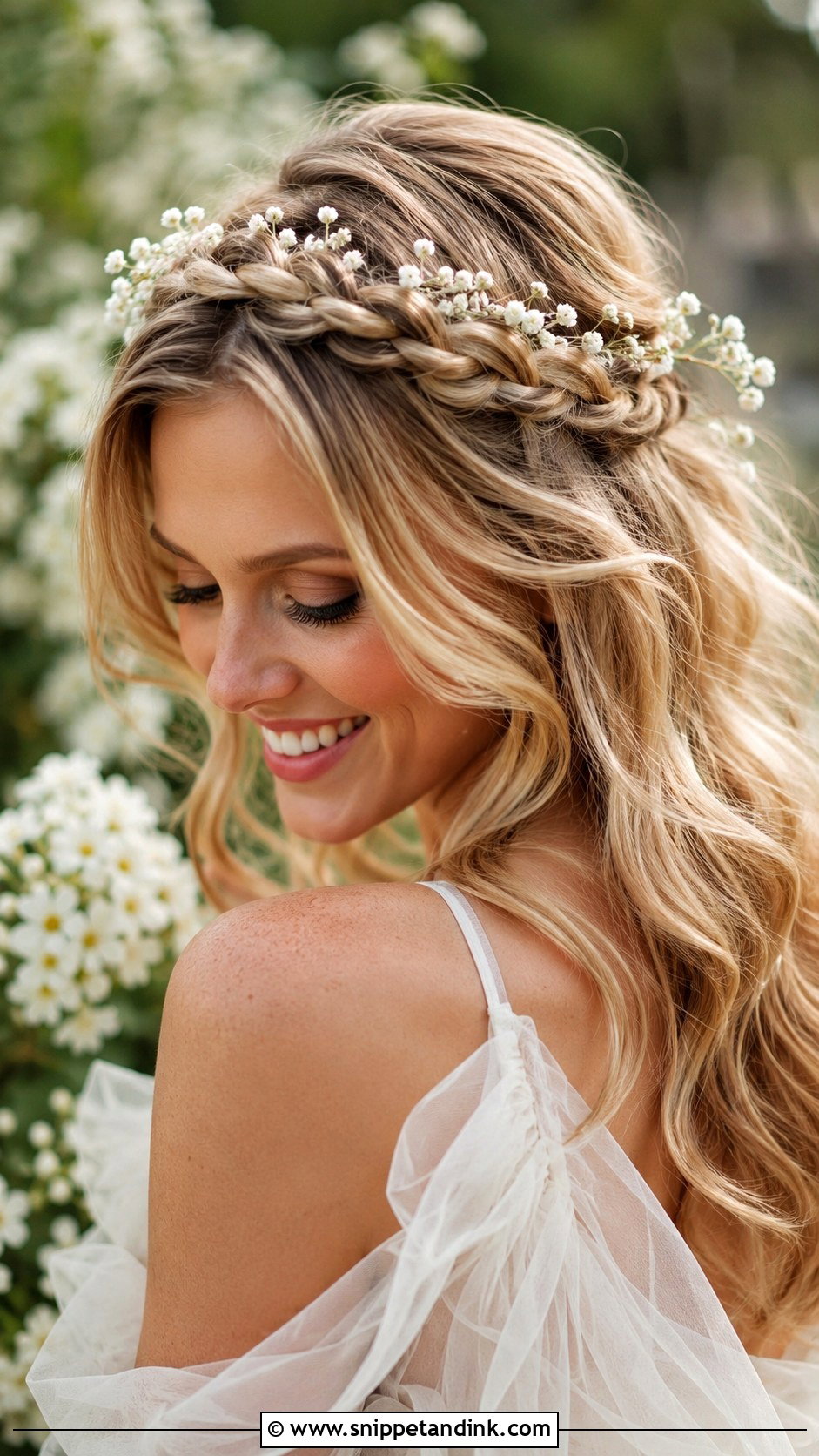
A braided halo circles the whole head like a soft ring. Unlike a crown braid, I keep it looser and higher, closer to the hairline, so it frames the face. You can wear it tight for a formal look or pulled apart for boho. Because it covers the crown, it pairs well with a flower crown sitting right on top of the braid, which hides any pins. It suits most face shapes, though very long faces can look longer with height at the top.
18. Loose Braided Hairstyle for Wedding
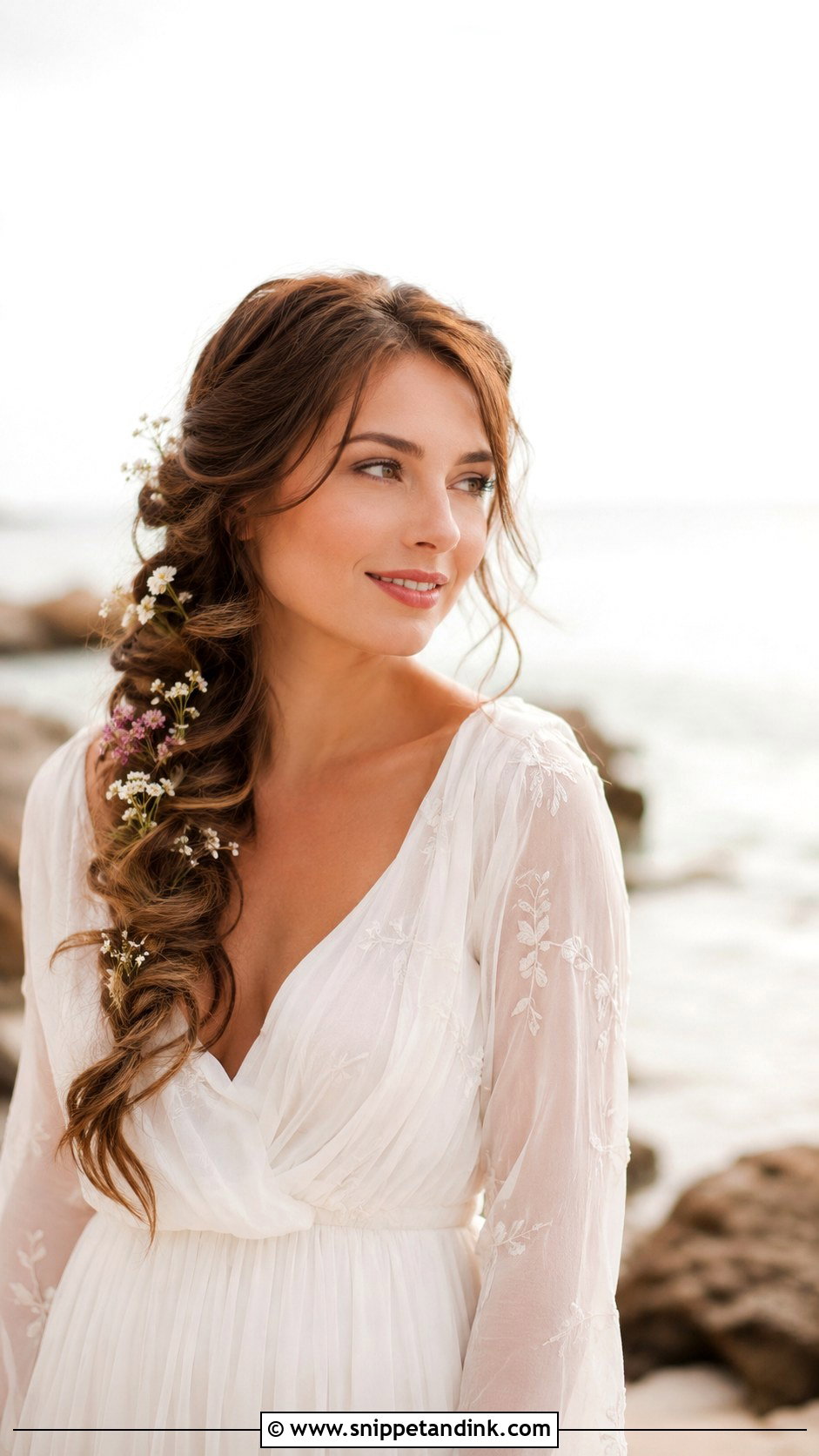
The loose braided style is braided and then pulled apart until it looks airy. It’s comfortable, and on curly or wavy hair it almost styles itself. The risk is that a braid this loose can unravel if you hug a lot, so I secure the end with a tiny clear elastic and then hide it under a section of hair. Wildflowers or greenery tucked in finish it, and it suits beach and outdoor weddings where you’ll be moving around.
19. Braided Top Knot for Wedding
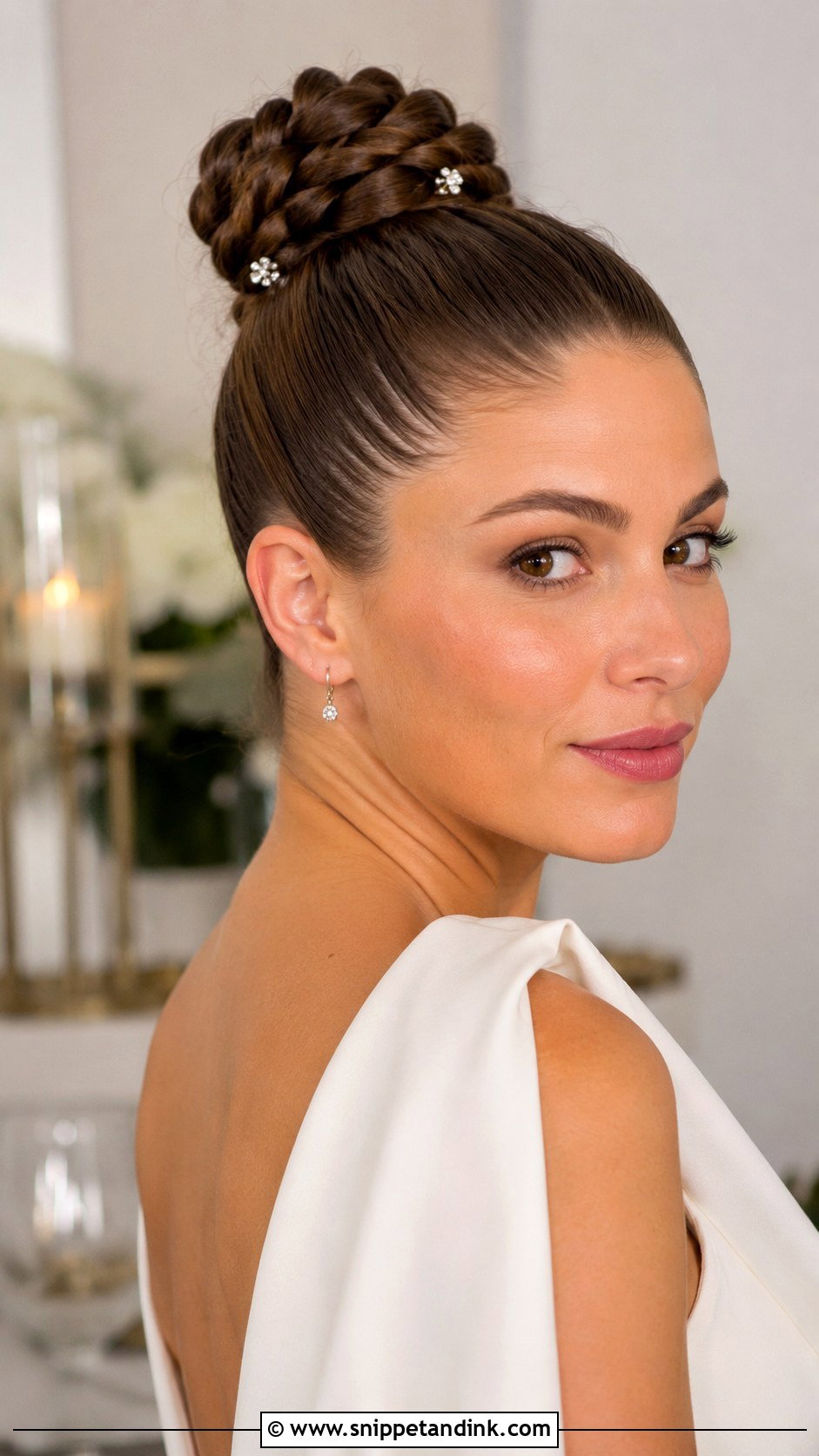
A braided top knot gathers braids into a high knot at the crown. It’s fashion-led, it shows off the neck and earrings, and it suits a structured gown. I’d only recommend it if you are confident with height; it adds several inches and changes your proportions in full-length photos. A veil has to sit under the knot, not over it, so plan that early.
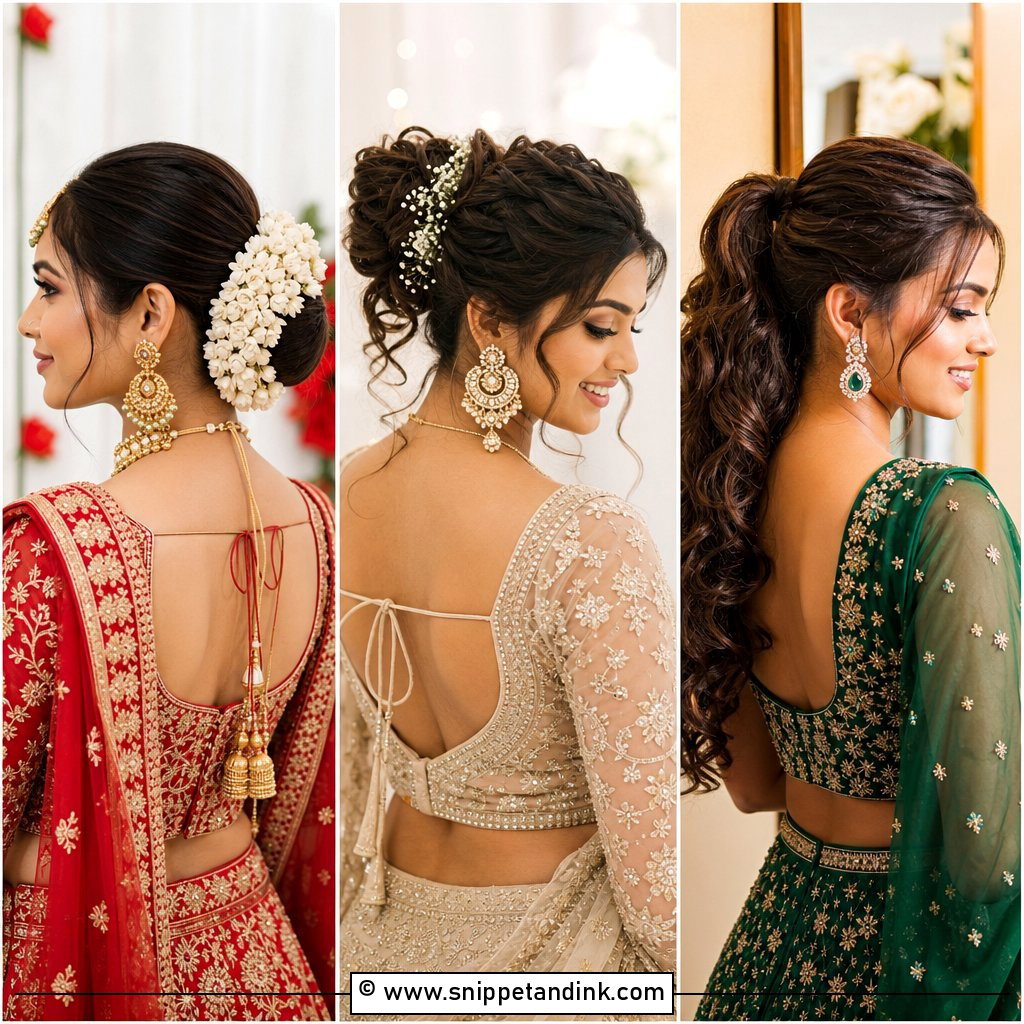
20. Rope Braid for Wedding
A rope braid is simply two sections twisted around each other, which makes it easy to wear and quick to redo if it loosens. It is one of the few braids that works well on shorter layered hair, because there are only two strands to control. Twist each strand in the same direction before wrapping them the other way, or the rope unwinds. Use it as a side braid, in an updo or for a half-up look.
21. Braided Headband for Wedding
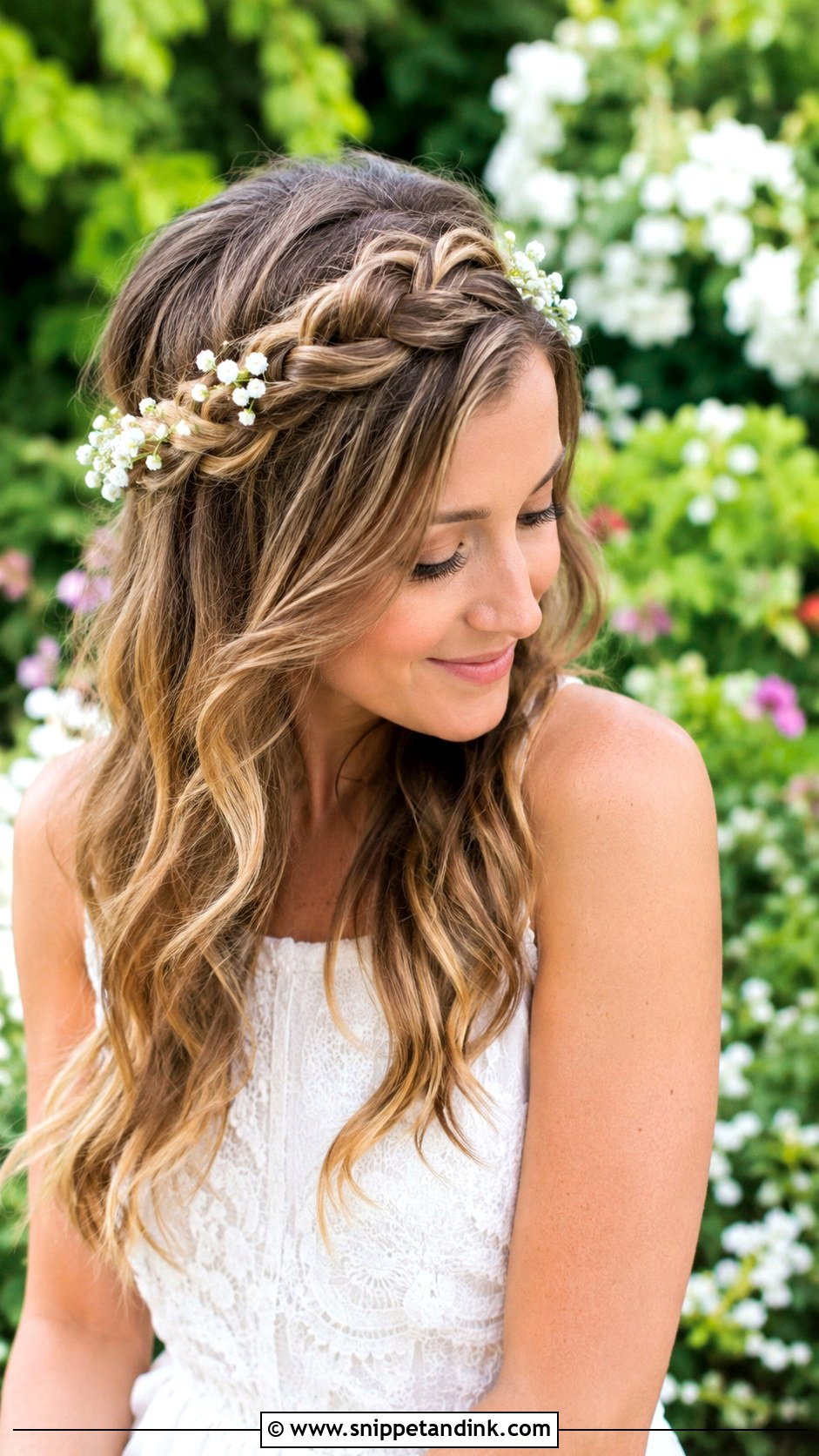
A braided headband is a thin braid across the top of the head, working like a built-in accessory that keeps hair off your face. I start it behind one ear and finish behind the other, pinning both ends under the hair so they don’t show. It suits boho and garden weddings, worn with the rest of the hair down in waves or in a soft updo. Small flowers along the braid look sweet, and it’s a smart choice for bridesmaids with very different hair lengths.
22. Twisted Braid Updo for Wedding
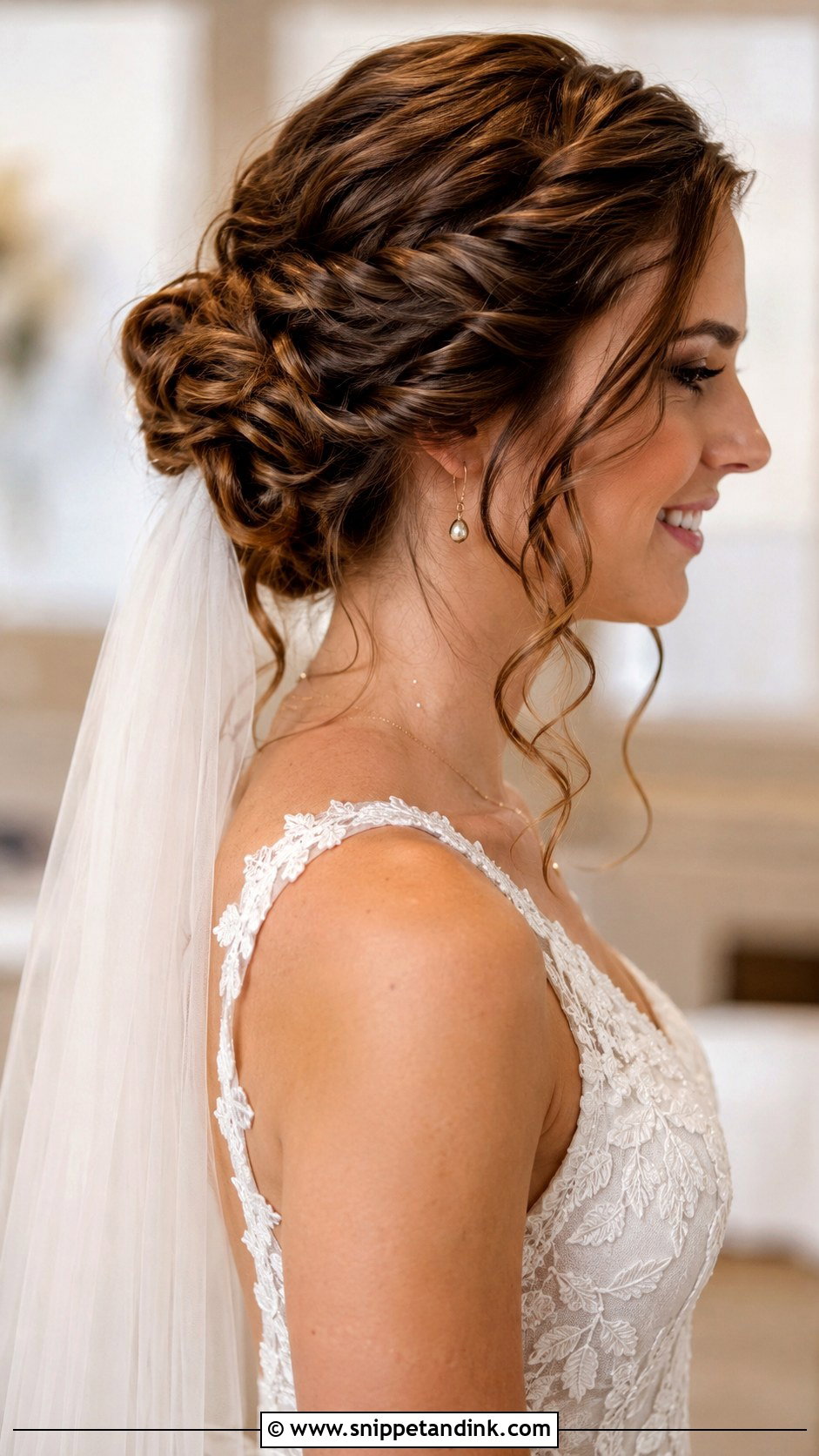
A twisted braid updo mixes twists and braids into one pinned shape, so the texture changes depending on where you look. It’s my favorite for a formal ballroom wedding because the detail shows up even in candlelight. Twists are the weak point: they loosen faster than braids, so I set each twist with a quick burst of spray before pinning. Pair it with formal jewelry and keep a few tendrils loose around the face.
23. Braided Low Ponytail for Wedding
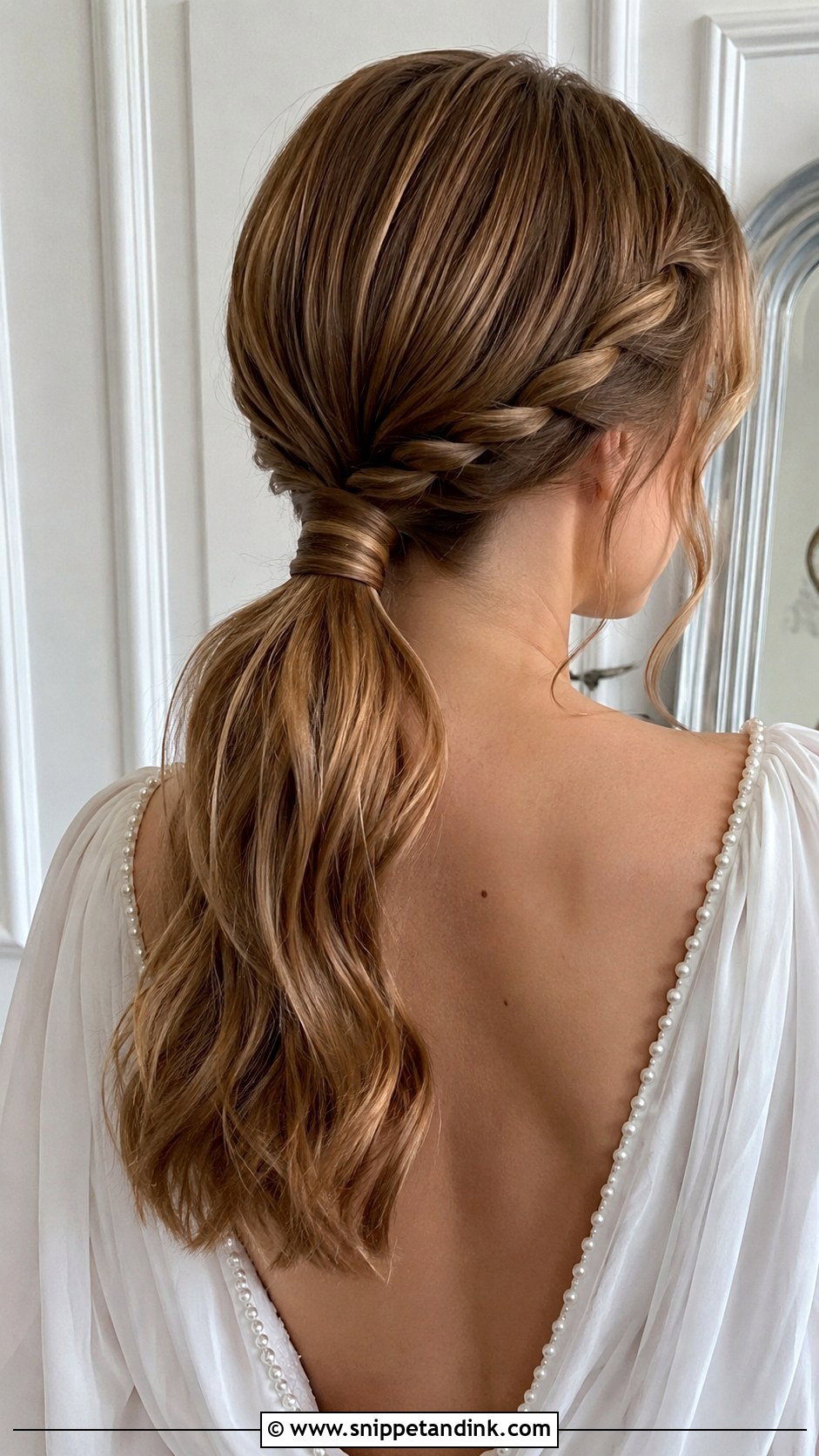
A braided low ponytail is calmer than the high version and much easier to wear with a veil. It gathers hair at the nape, with a braid inside the ponytail or braids leading into it. I wrap a strand around the base to hide the band and pin it underneath. Flowers or pearls along the braid work with modern and classic gowns, and it’s comfortable enough that you won’t want to take it down halfway through the evening.
24. Goddess Braid for Wedding
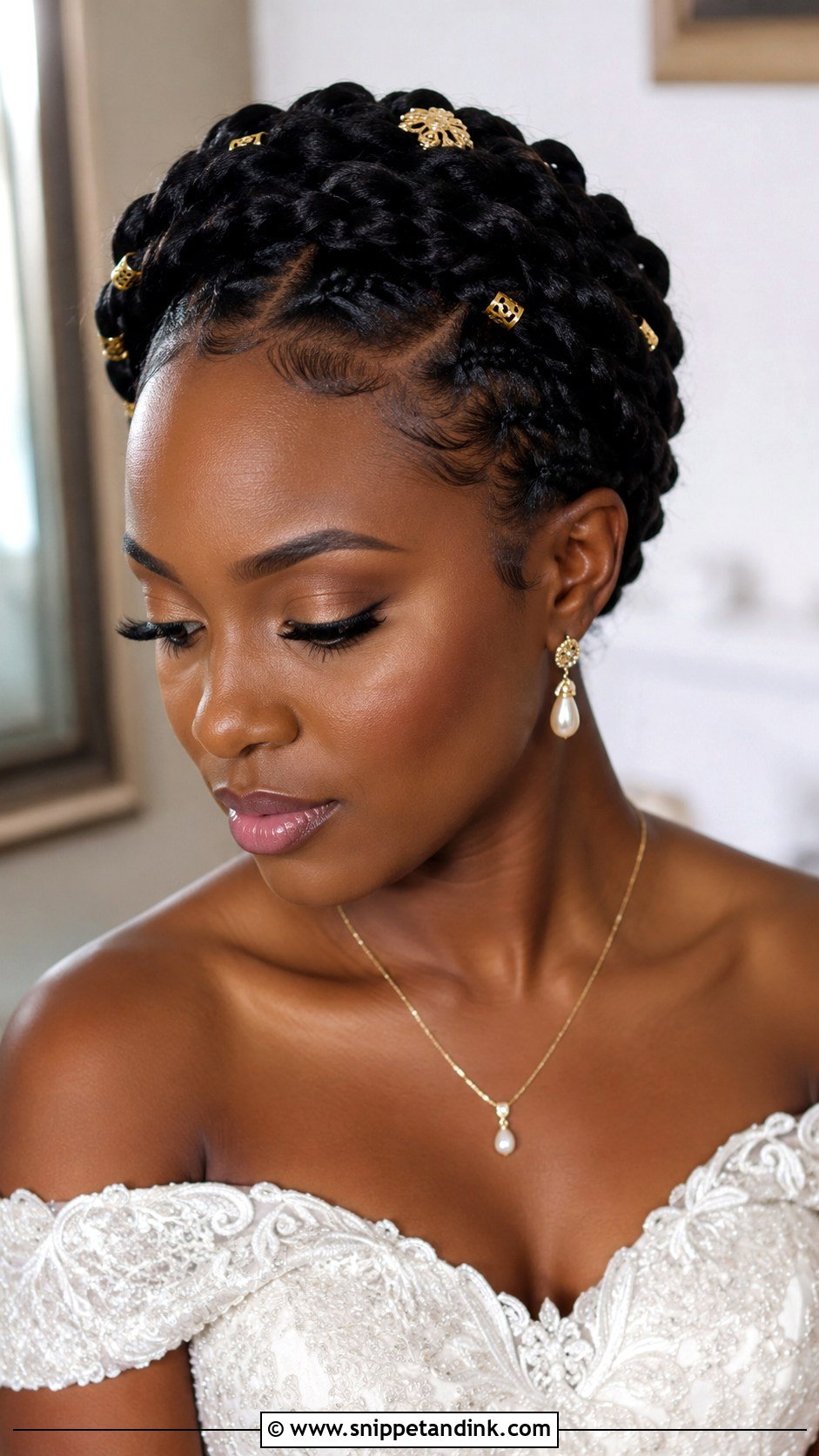
Goddess braids are thicker, defined braids, often with added hair for fullness, and they make a confident, dramatic look. They can be worn up, as a crown or down your back. They work with accessories like gold cuffs, beads or fresh flowers. On natural and coily hair, I recommend getting them installed two or three days before the wedding so any tension around the hairline settles and the scalp isn’t tender during photos.
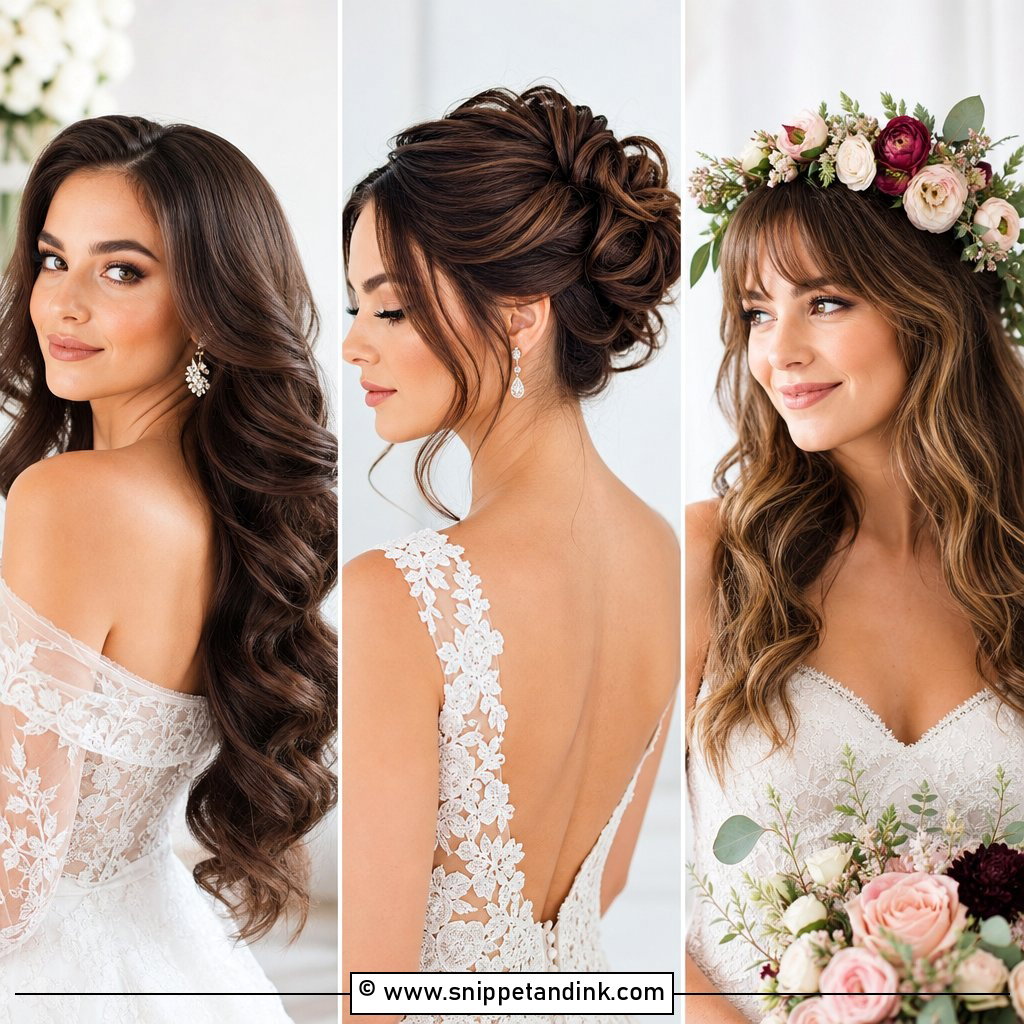
25. Braided Half Crown for Wedding
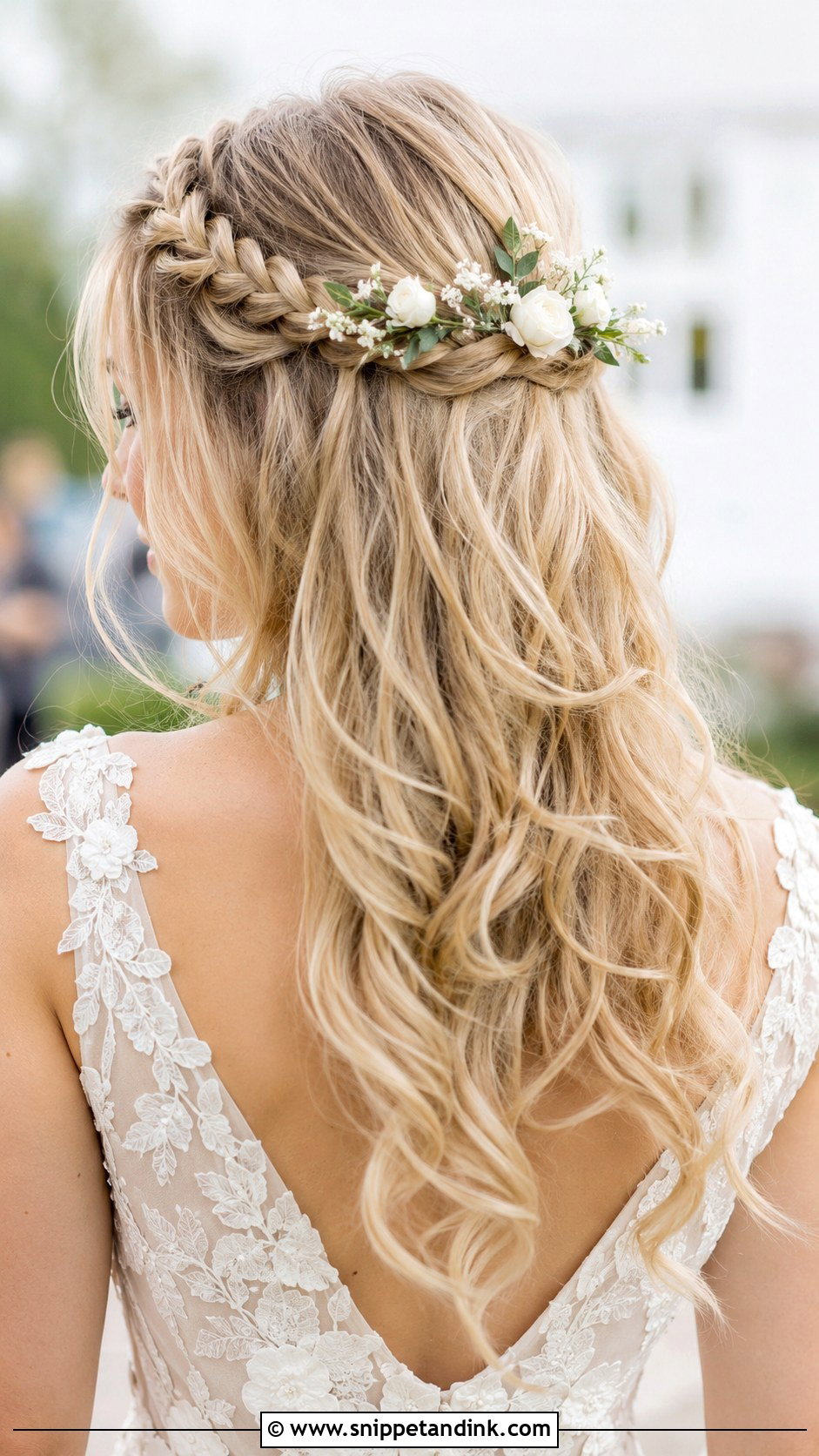
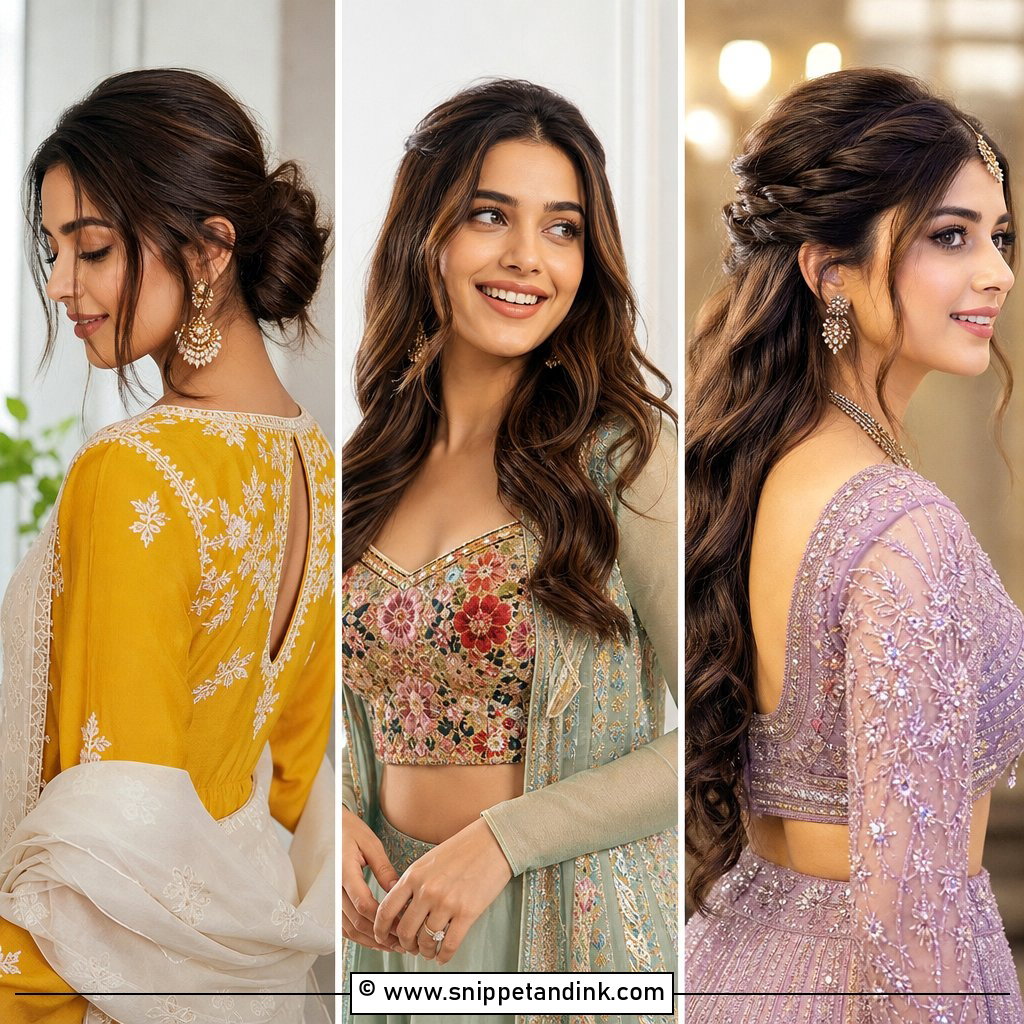
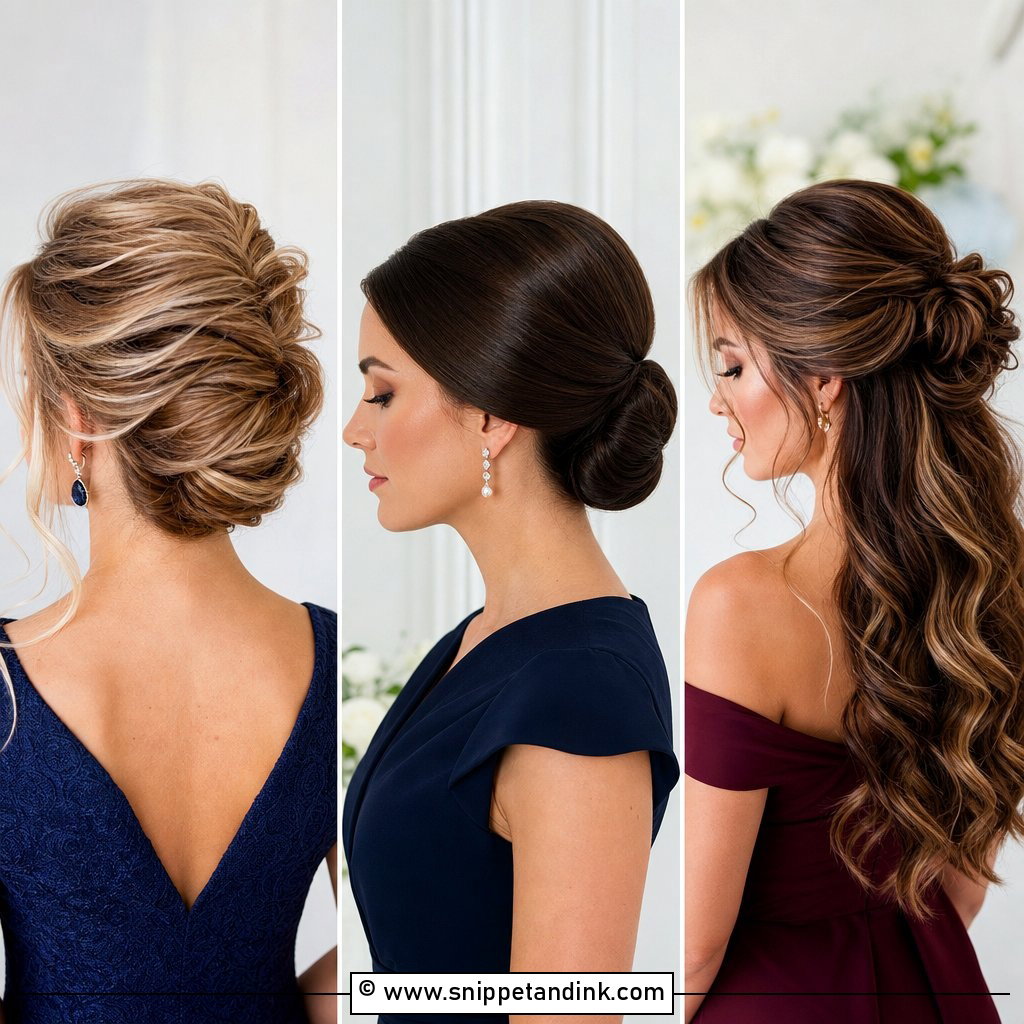
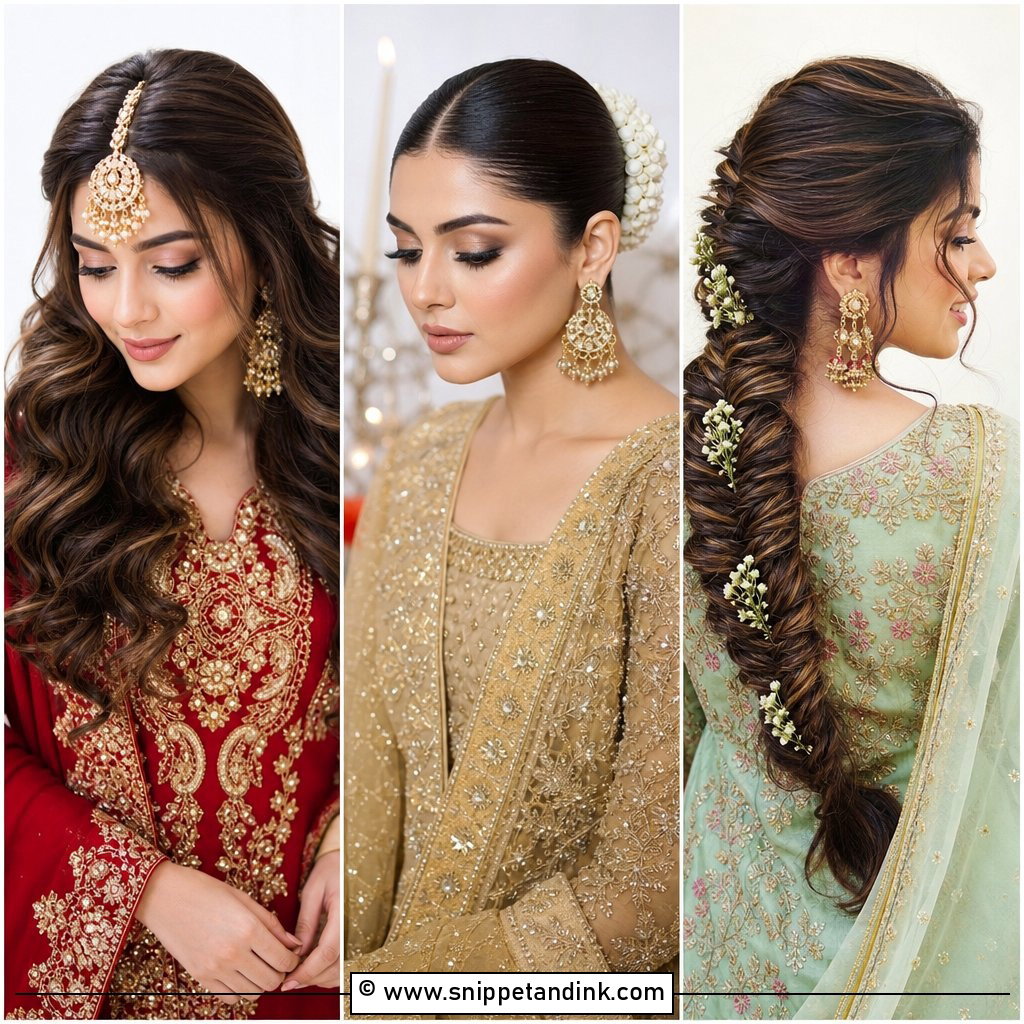
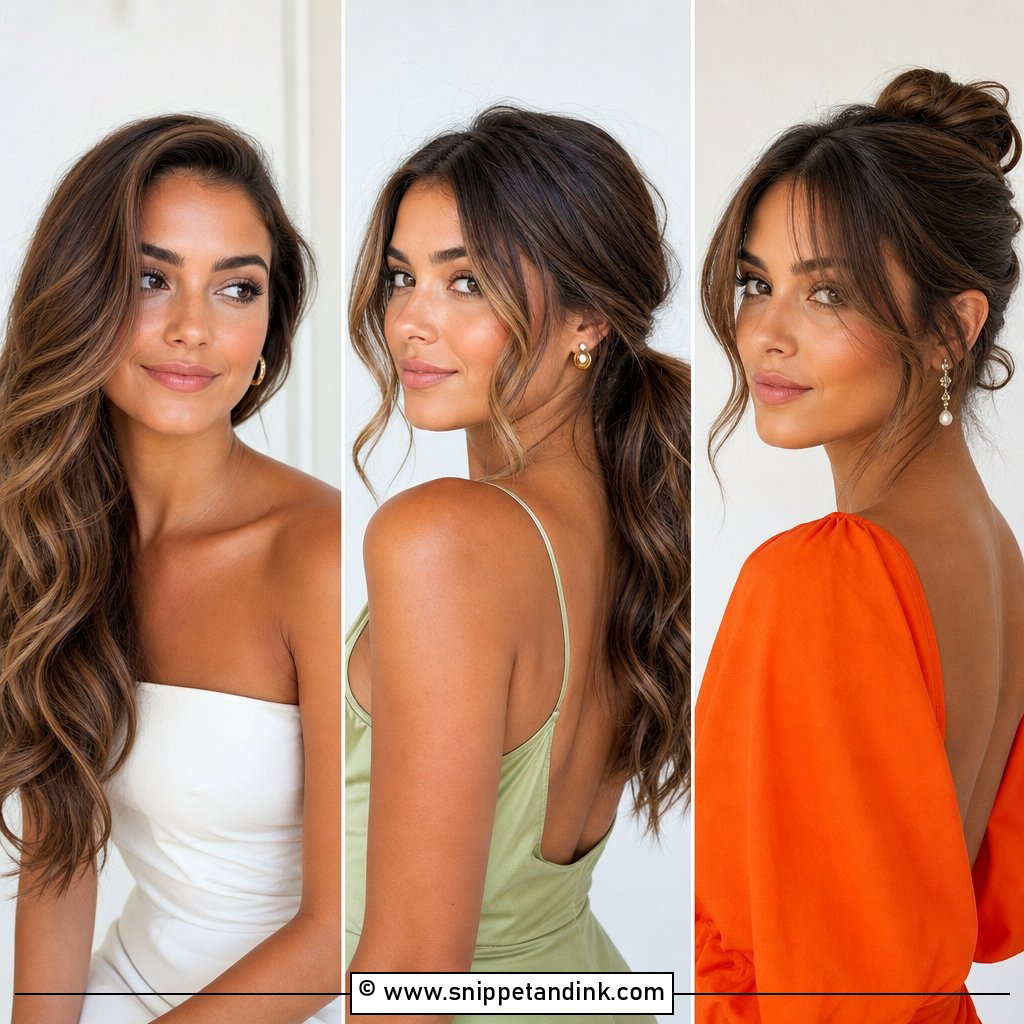
A braided half crown braids both sides and joins them at the back, leaving the rest of the hair loose. It’s the softer cousin of the crown braid and suits garden and classic weddings. I connect the two braids with a small elastic and hide it under a flower or a decorative pin, which also gives the photographer a nice detail shot. It flatters most face shapes, and the curls underneath hold better if they’re set the night before.
Giving Bridesmaids and Guests Braids That Look Related, Not Identical
A bridal party rarely has matching hair, so asking six women to wear the same crown braid usually ends with two who can’t. I pick one shared detail instead, like a braid running along the left side or a fishtail at some point in every style, and let each person wear it in a way her hair allows.
Shorter cuts can do a braided headband or a small rope braid behind one ear. Long hair can carry a full side braid or a braided low bun. The bride’s style should still be the most detailed one, so I keep bridesmaid braids slightly simpler and save flowers for the bride.
For guests, I’d avoid anything that copies the bride closely, and especially anything with a lot of white flowers. A loose side braid or a braided low ponytail takes very little time to do yourself, and it still looks neat after a full day.
When a Braid Starts Slipping Halfway Through the Reception
Braids rarely fall apart completely; what happens is a loose section or a dropping pin. I give every bride a small kit with a few bobby pins in her hair color, a travel hairspray and a clear elastic, and I show a bridesmaid how to slide a pin back in against the direction of the braid so it grips.
- If the end of a braid loosens, wrap a strand of hair around the elastic again and pin it underneath.
- If pieces around the face frizz, smooth them with a little hand cream or balm rather than more spray.
- If your scalp aches, take out one or two pins near the pain point; a well-built braid holds without them.
- If you’re switching to a party look, a braided updo can come down into soft waves in minutes.
Your Hair Length Narrows This List Fast
Start with your length and texture, then the dress, then the venue. Short or layered hair will be happiest with a rope braid, a braided headband or a half crown; long thick hair can carry a crown braid, milkmaid or fishtail updo. Check how your veil anchors before you fall for a style, and do a full trial in daylight. If a braid feels heavy or pulls at the trial, it will feel worse by hour eight, so say so then rather than on the morning.
You'll Like These Ideas:


Leave a Reply