
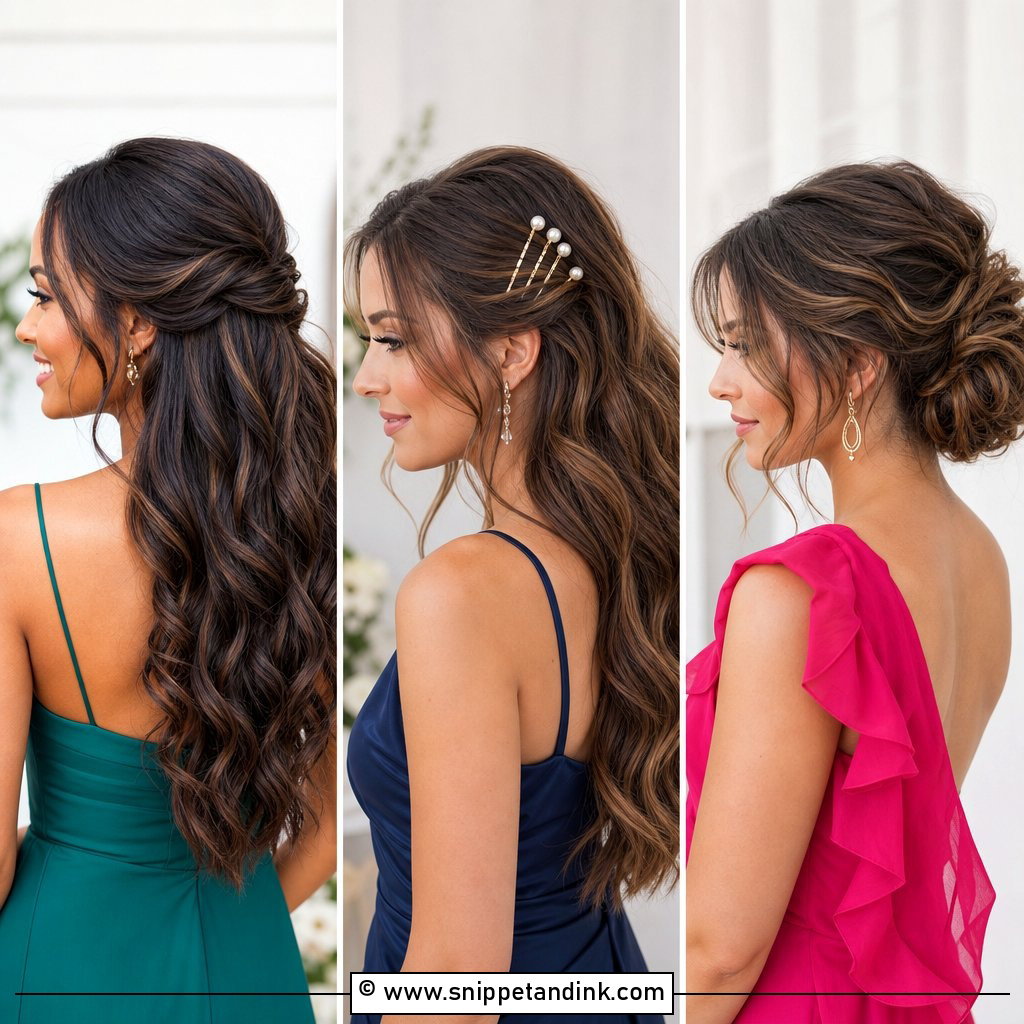
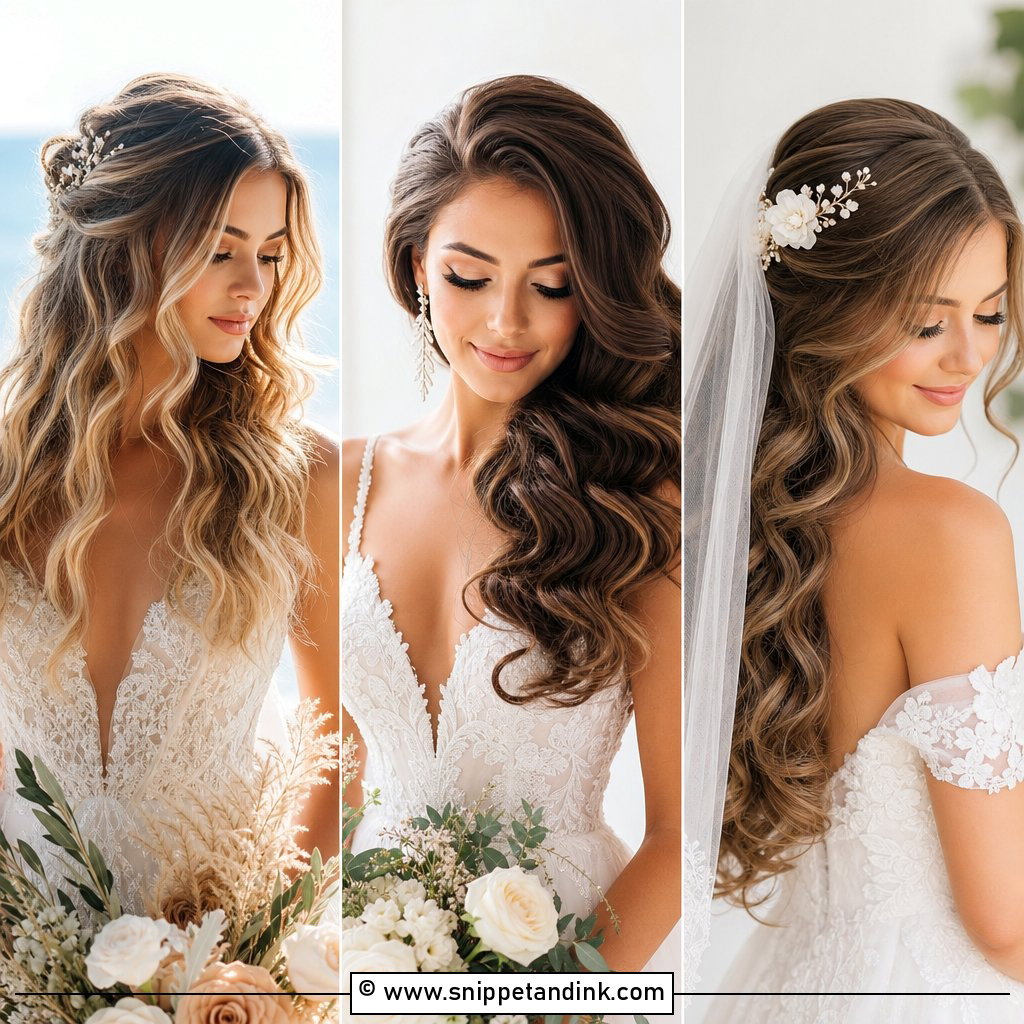
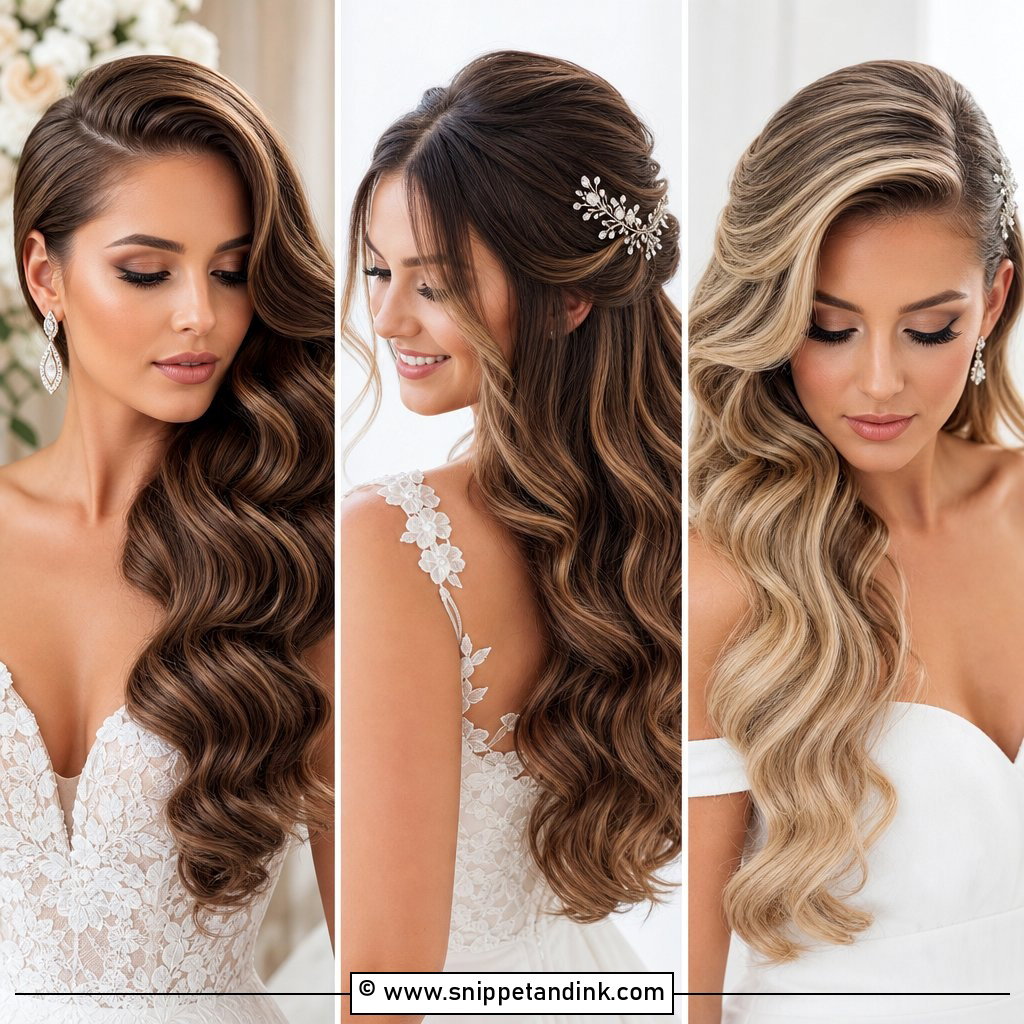
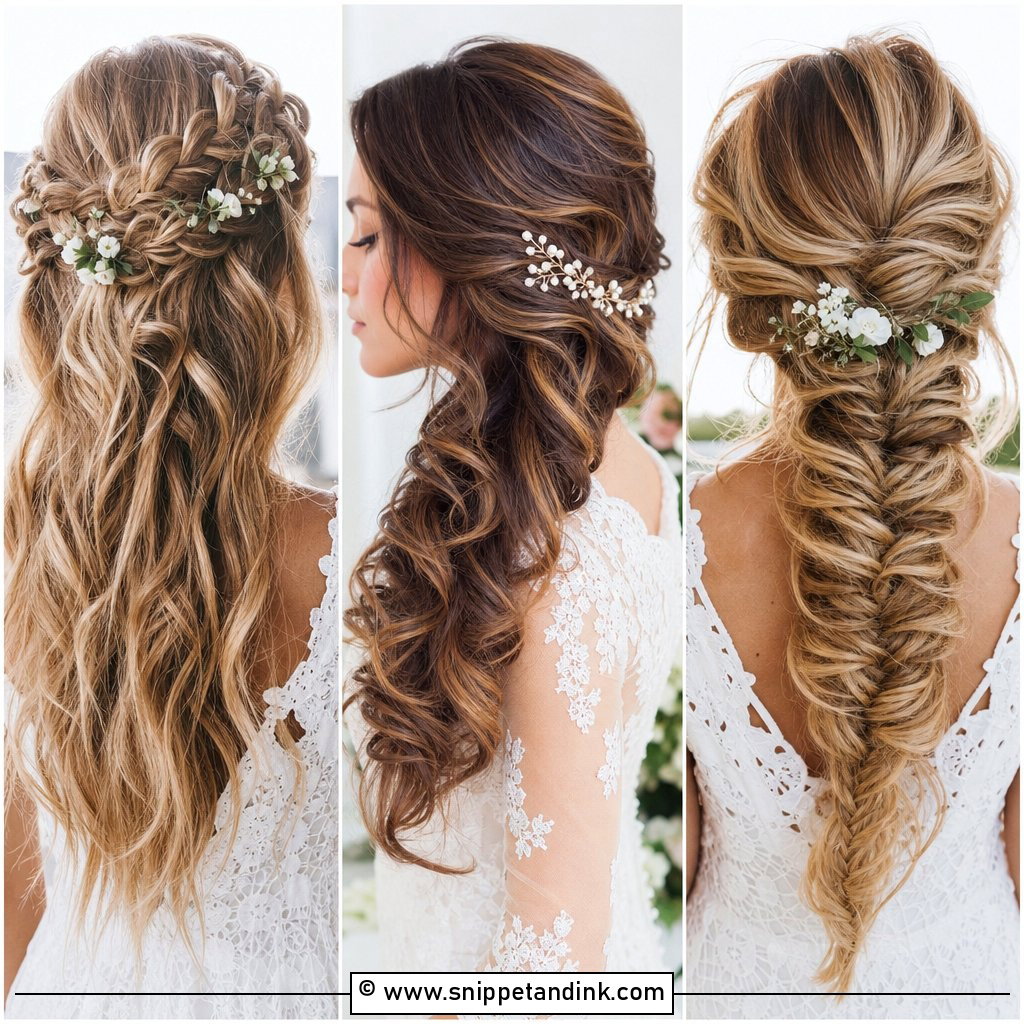
Most brides who sit in my chair say the same thing: they want their hair to move, not sit there sprayed into place. Loose waves answer that better than tight curls, and they forgive a lot, from a windy courtyard to a long night of hugging relatives. What changes from bride to bride is the size of the wave, where it’s pinned and how your own texture takes heat. The 25 ideas below run from polished Hollywood bends to braided boho texture, and for each one I’ve noted what it asks of your hair and what tends to trip it up.
Wave Size Is the Decision Most Brides Skip
When a bride shows me a reference photo, the first thing I look at isn’t the part or the accessory. It’s the width of each bend. A tight wave from a small barrel reads polished and vintage; a wide, loose one from a large barrel reads relaxed. Both photograph well, but they suit different dresses.
- Structured gowns, satin and crepe: tighter, defined waves that echo the clean lines.
- Lace, chiffon and flowing fabrics: wider, softer bends that move with the dress.
- Short hair: a smaller barrel than you’d guess, because curls spring up on short lengths.
- Very long hair: tighter than the finish you want, since the weight will stretch them out.
If you can’t decide, try half your head each way at the trial and take photos in daylight. The difference is usually obvious within a minute.
1. Hollywood Waves for Brides
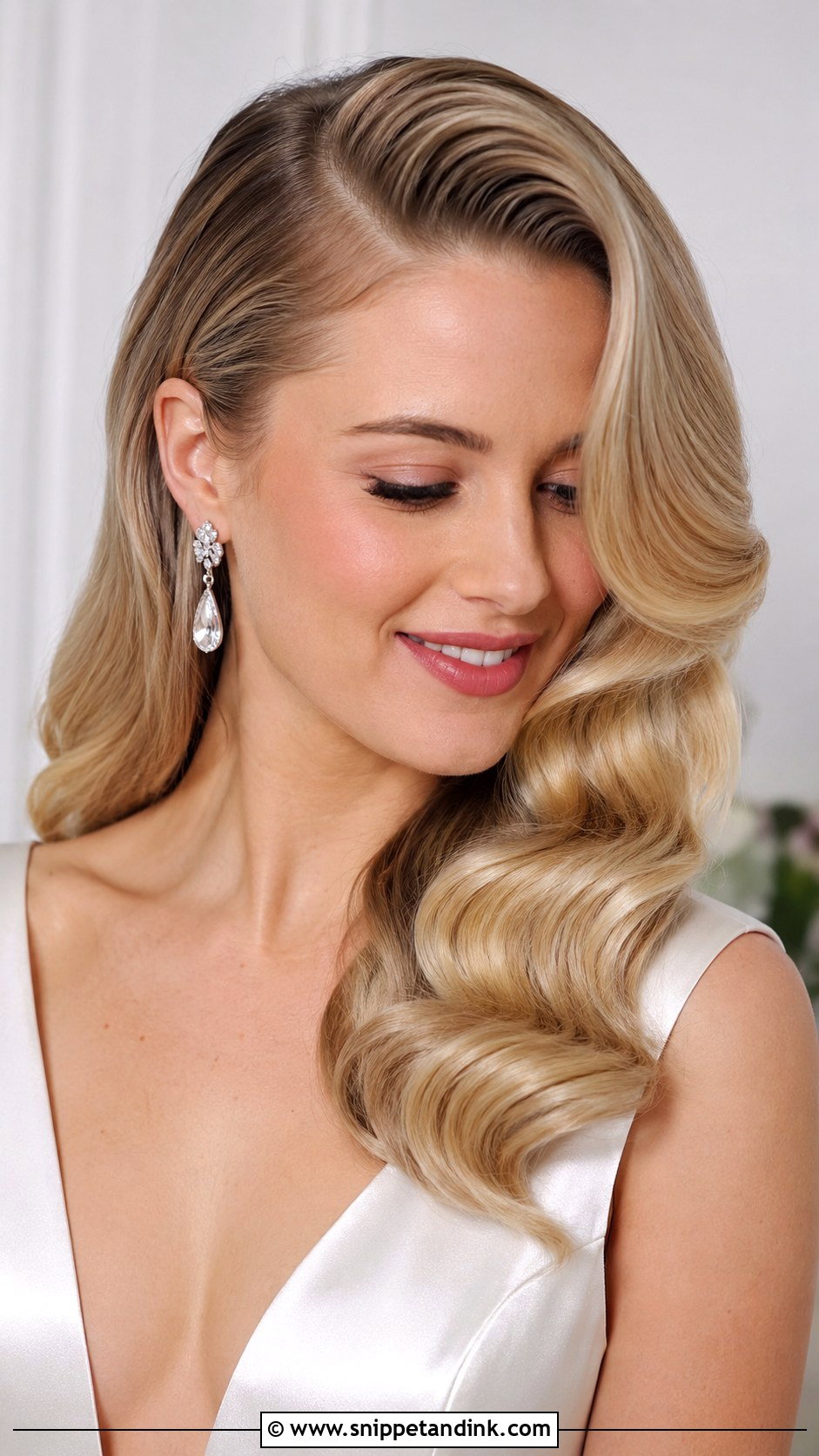
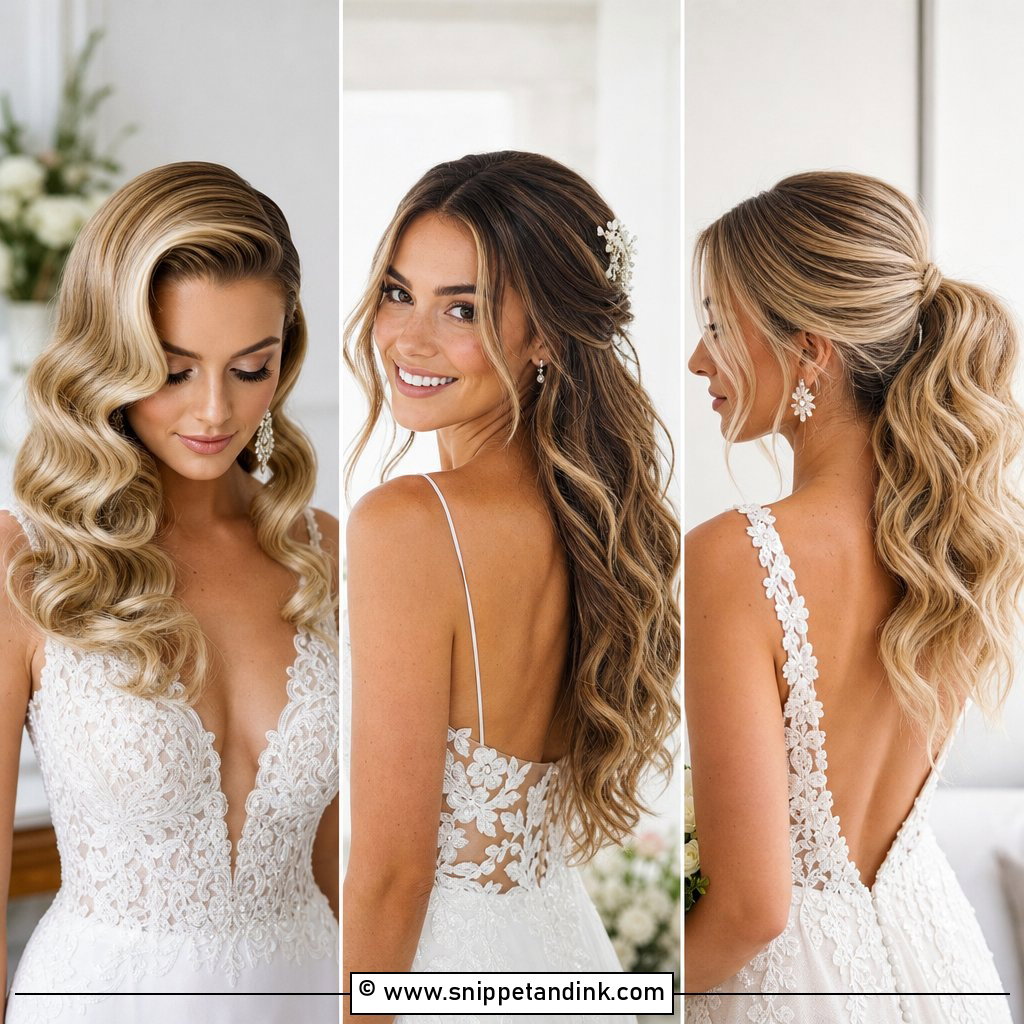
Hollywood waves are a set, not a curl. I curl every section the same direction, clip each coil flat while it cools, then brush everything together and press the ridges in with a comb and duckbill clips for a few minutes before a light-hold spray. The deep side part is what gives it drama. It wants shoulder-length hair or longer, a sleek satin gown and probably a bold lip. On layered hair the ends can break the line, so I’ll sometimes pin the shortest layers under.
2. Half-Up Half-Down Wavy Wedding Hair
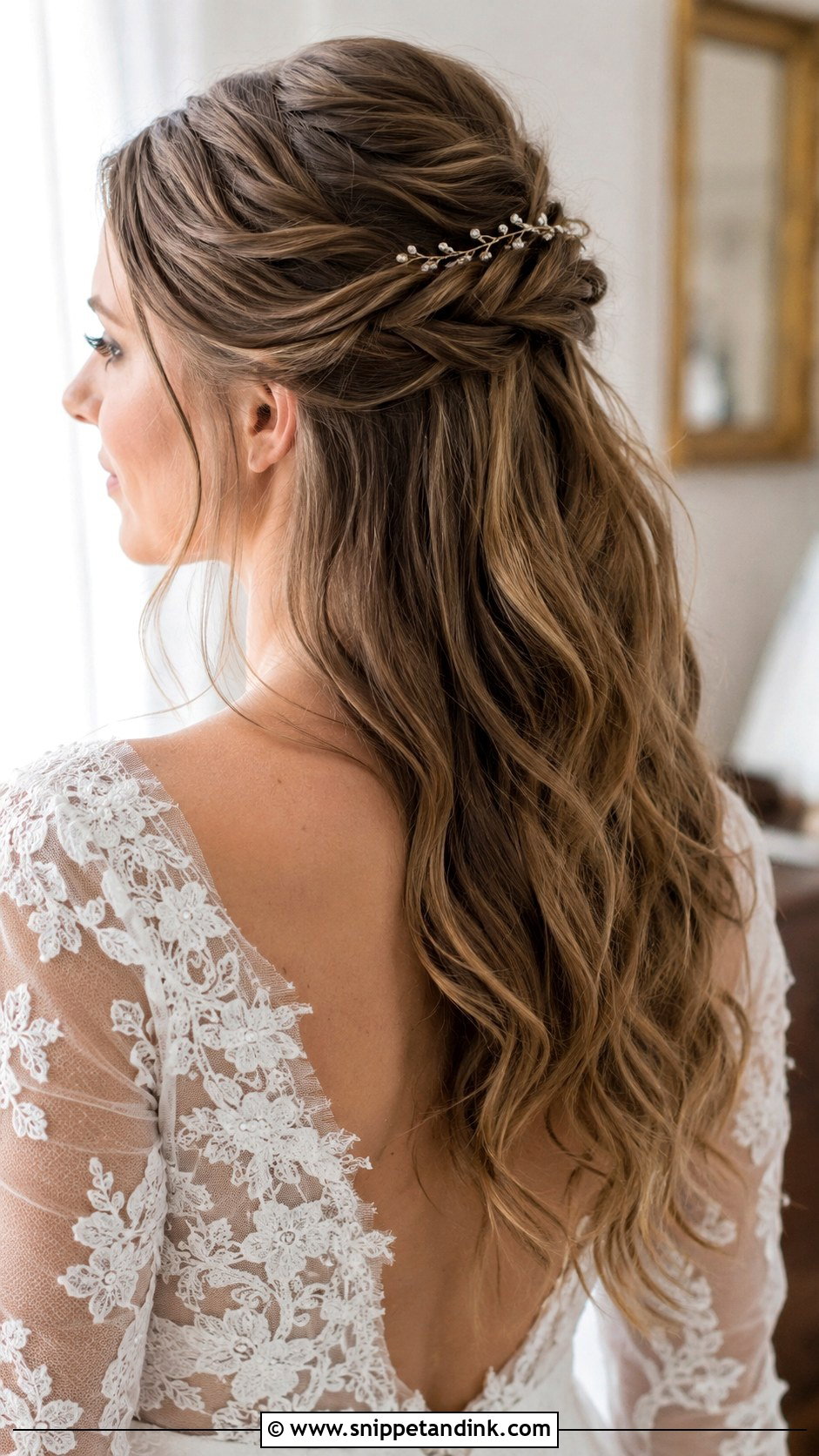
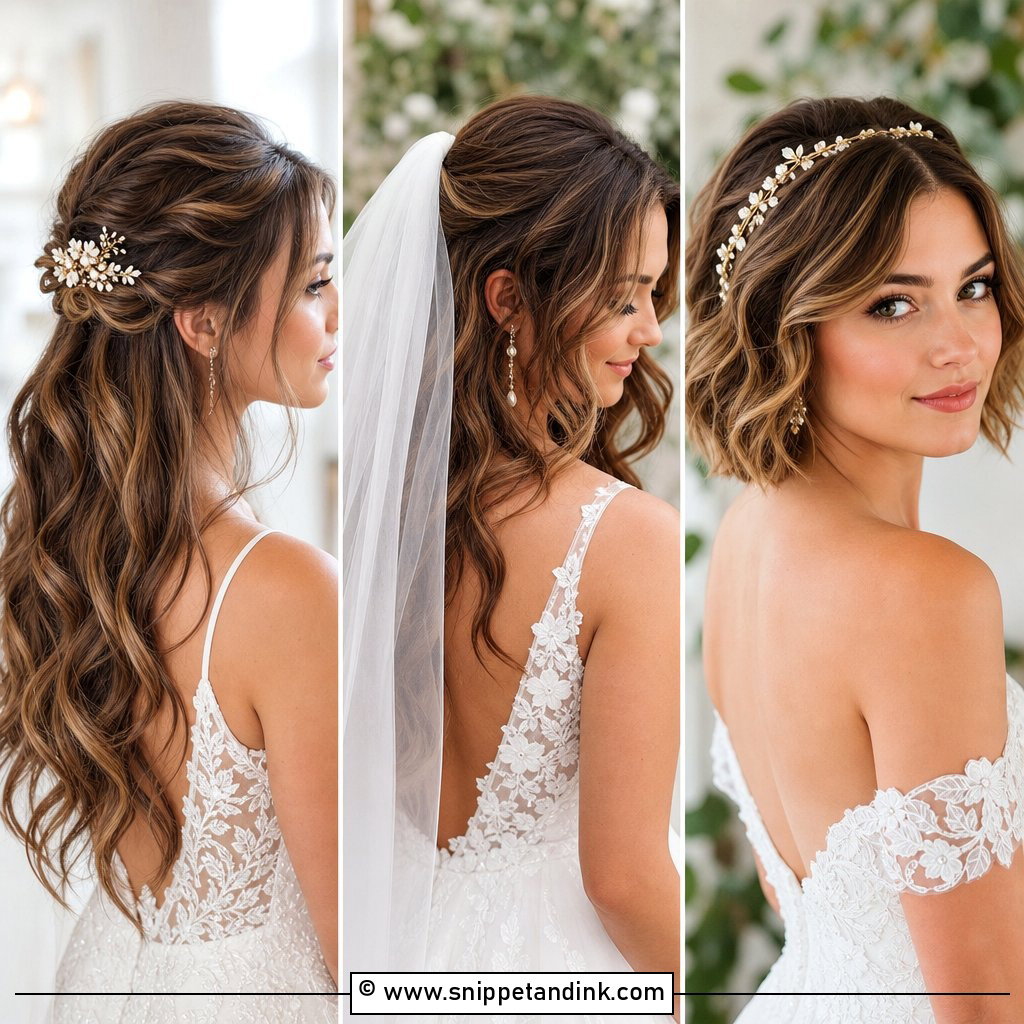
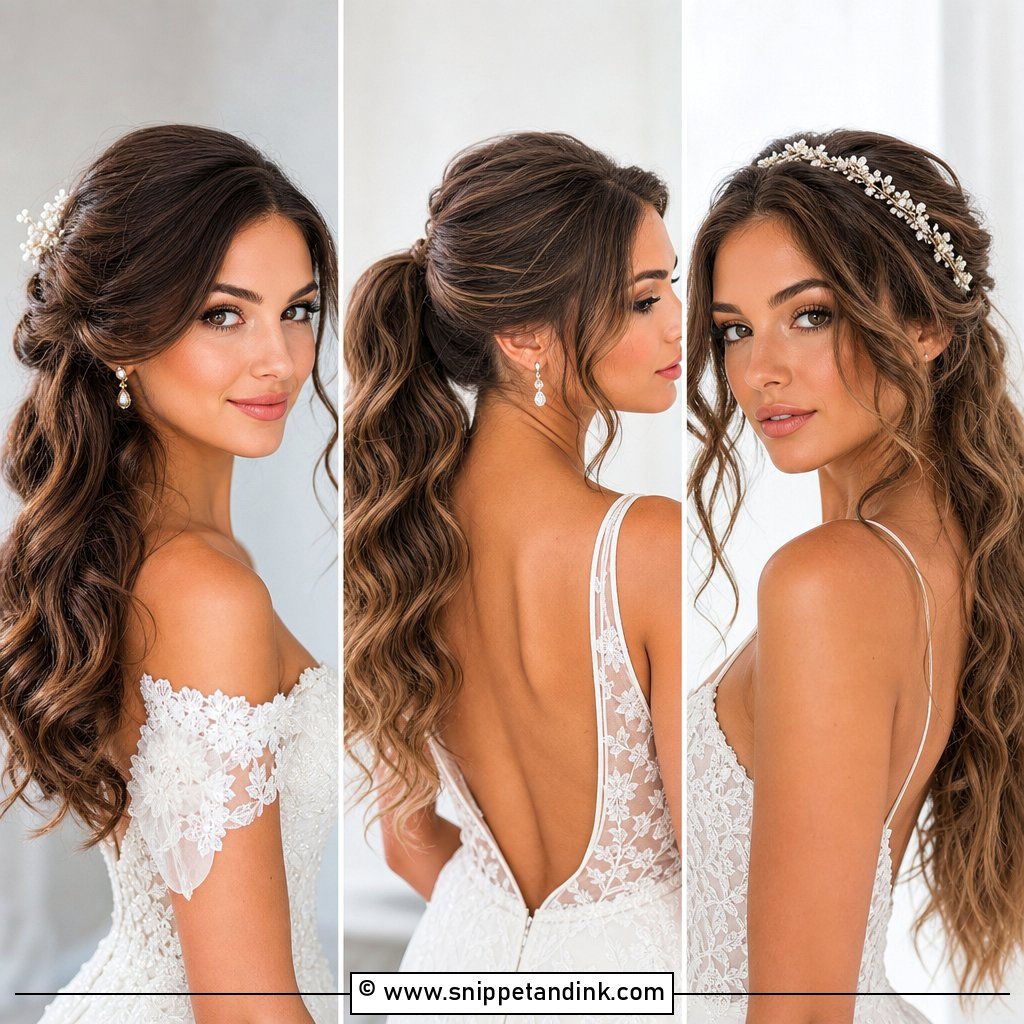
Half up, half down is the style I steer undecided brides toward, because it holds a veil comb and still lets the length show. Secure the crown section on a little twist or a small braid at the back; that gives a veil or hair vine something real to grip. Waves below sit past the shoulders and frame the face. Its weak point is the pinned section loosening as you dance, so I cross two pins in an X under it rather than relying on one clip.
3. Loose Beach Waves Wedding Hair
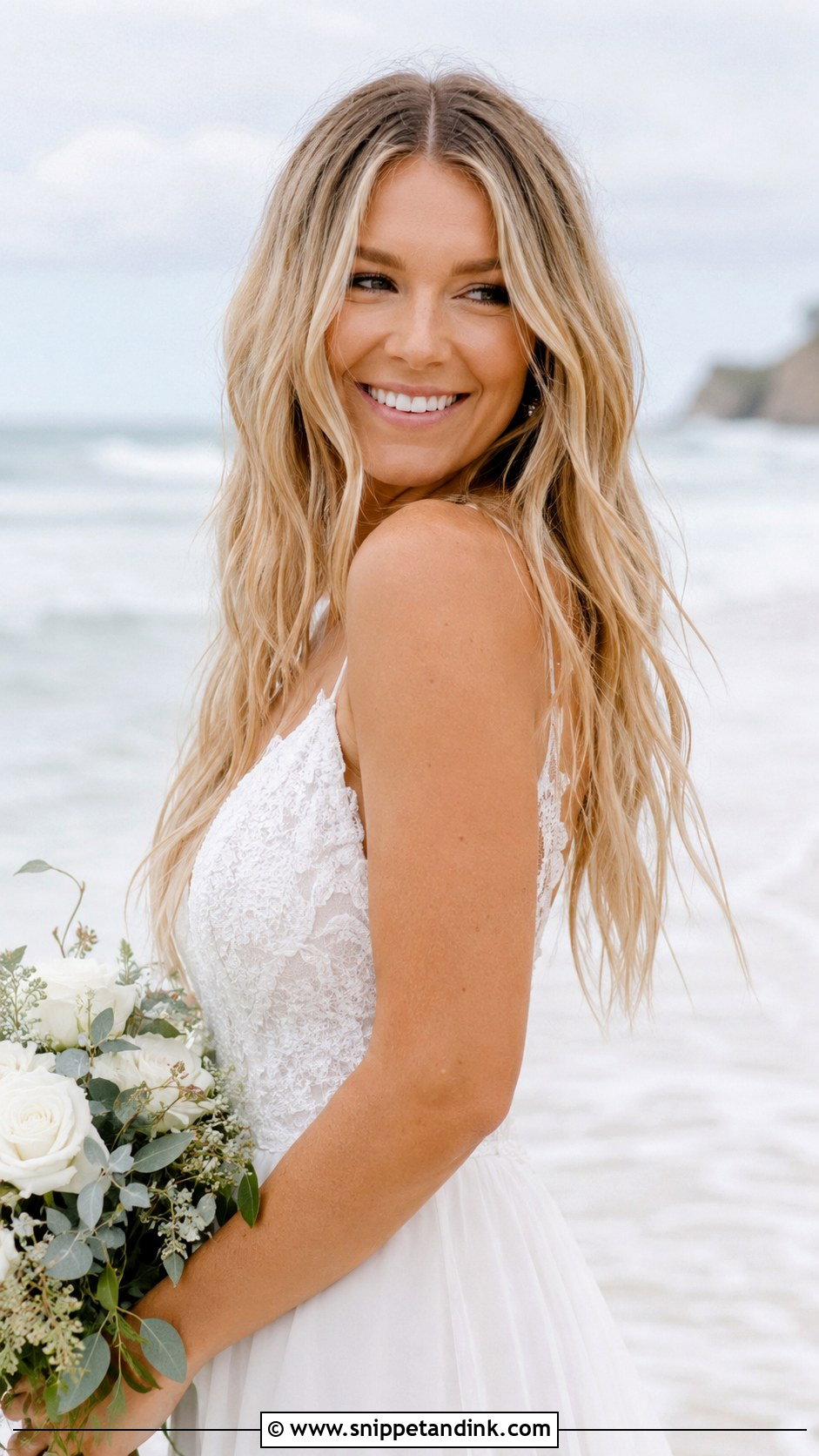
Beach waves look carefree and need more planning than people think. Set them with a flat iron twist or a wand, leave the last inch straight, then mist with a light texturizing spray for grip without crunch. Humidity will loosen them, so I curl a little tighter than the photo for a coastal ceremony and let the sea air relax them into place. A center or slightly off part keeps the mood casual. Barefoot sand ceremonies and flowing bohemian gowns are where they belong.
4. Boho Wavy Wedding Hair With Braids
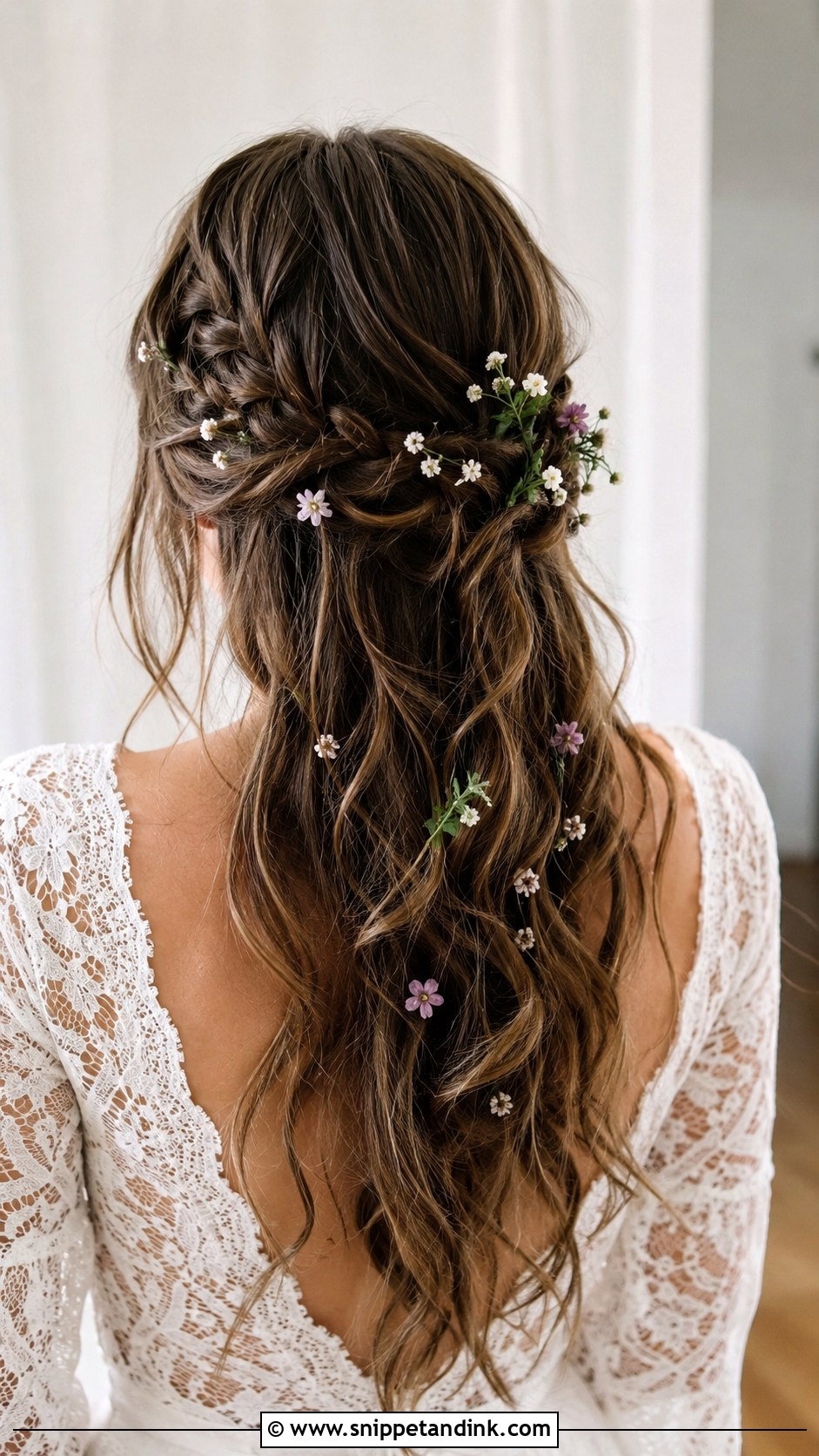
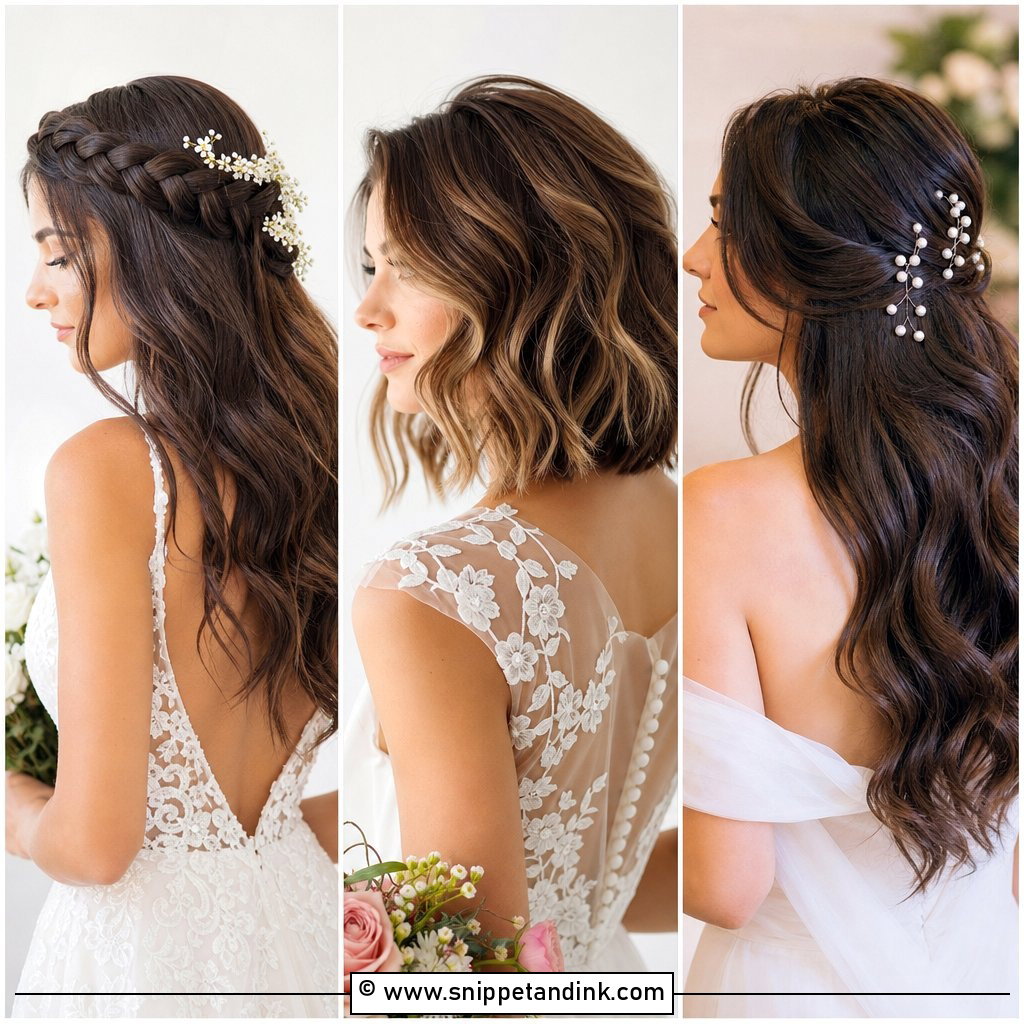
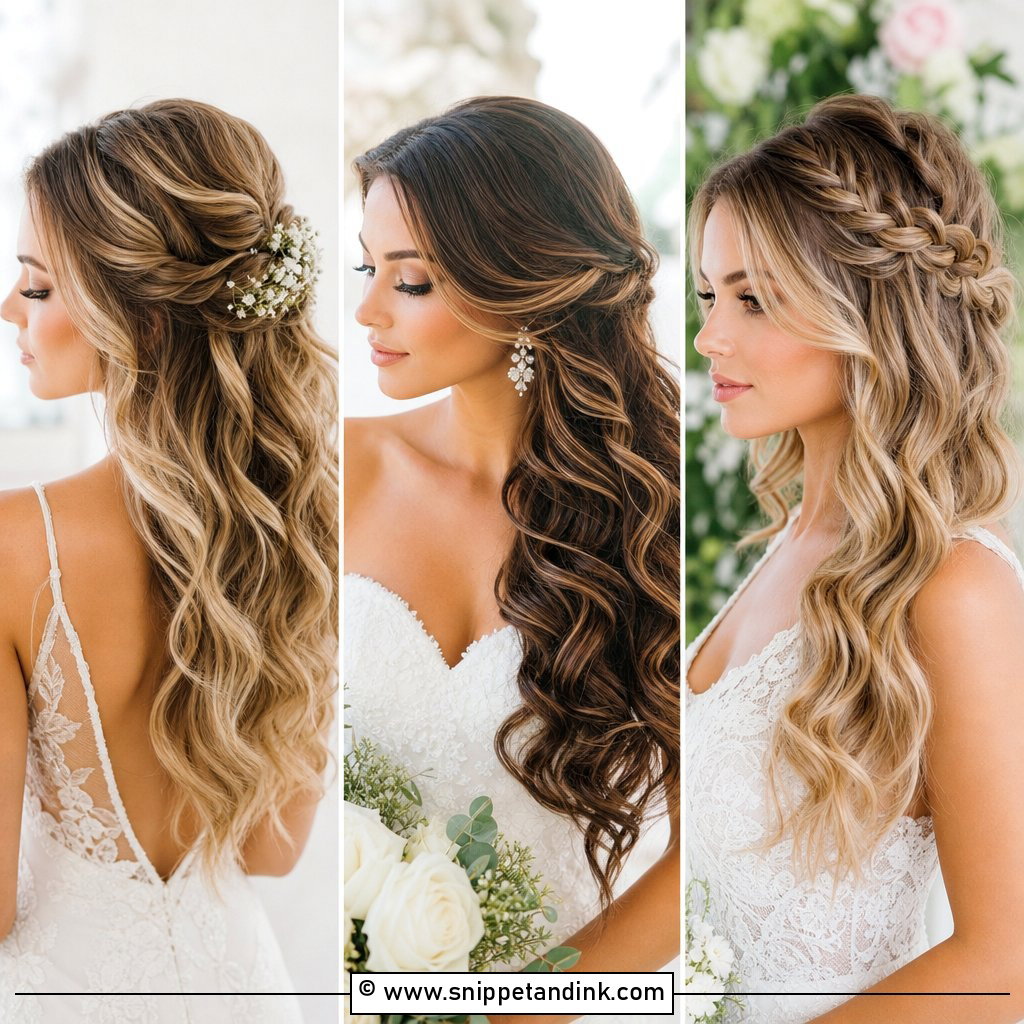
Tiny plaits woven through loose waves add detail you see up close. I braid before I curl, using small three-strand plaits at the temples or wrapped toward the back like a halo, so the curling iron doesn’t flatten them afterward. Fresh flowers tucked into the braids suit a garden or forest wedding, and a lace gown sits well with it. On very slippery hair, a texture spray before braiding stops the plaits sliding loose by evening.
5. Wavy Wedding Updo With Face-Framing Pieces
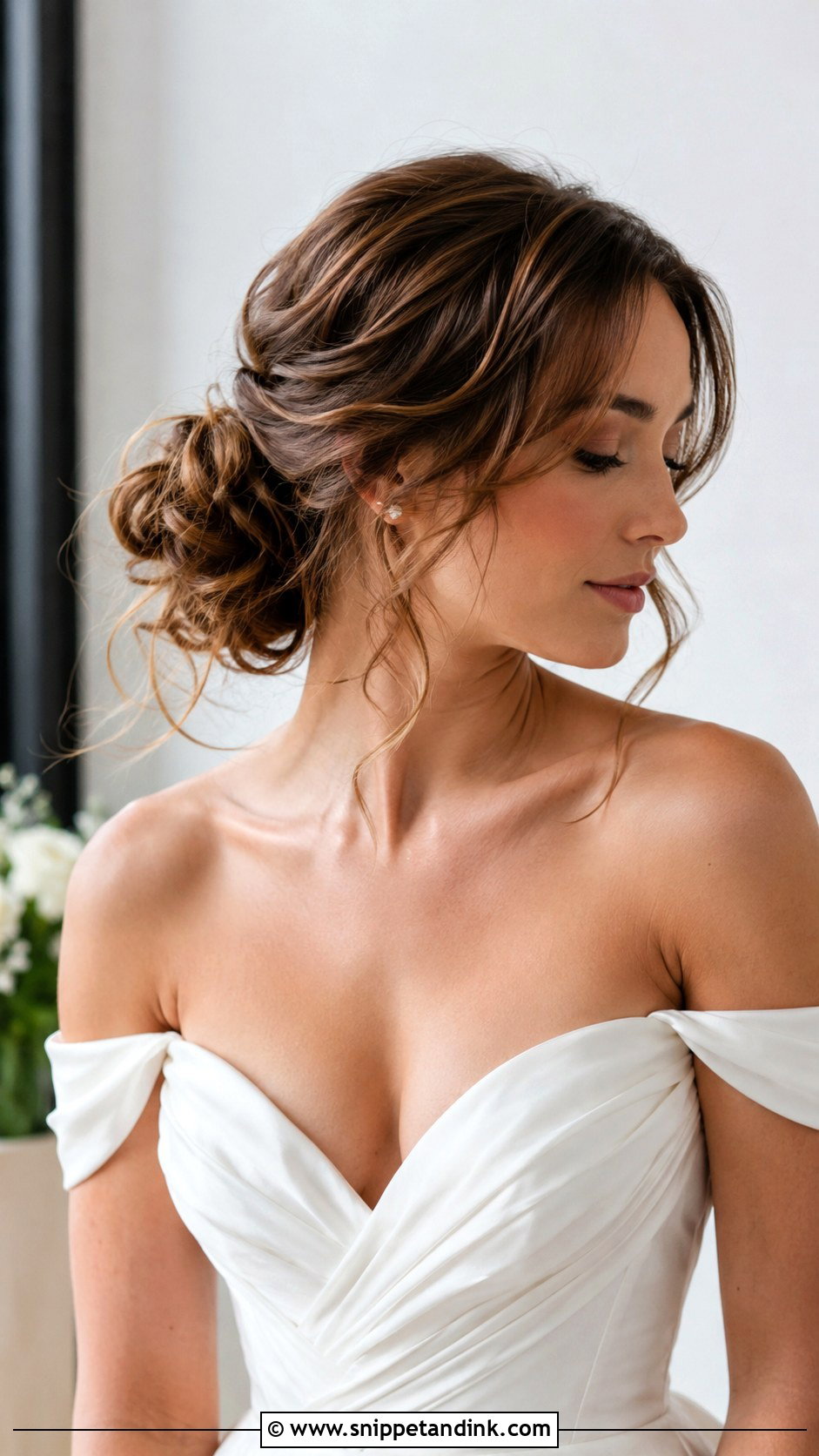
An updo doesn’t have to be stiff. I gather already-waved hair into a loose bun or chignon so the texture shows on the surface, then pull out a few face-framing tendrils at the end, not the start, so they aren’t crushed by the pins. Getting the hair off your neck is a relief at a warm-weather wedding. It also shows statement earrings and an open neckline. Small flowers or sparkling accents are easy to pin into the folds.
6. Wavy Wedding Hair With Veil
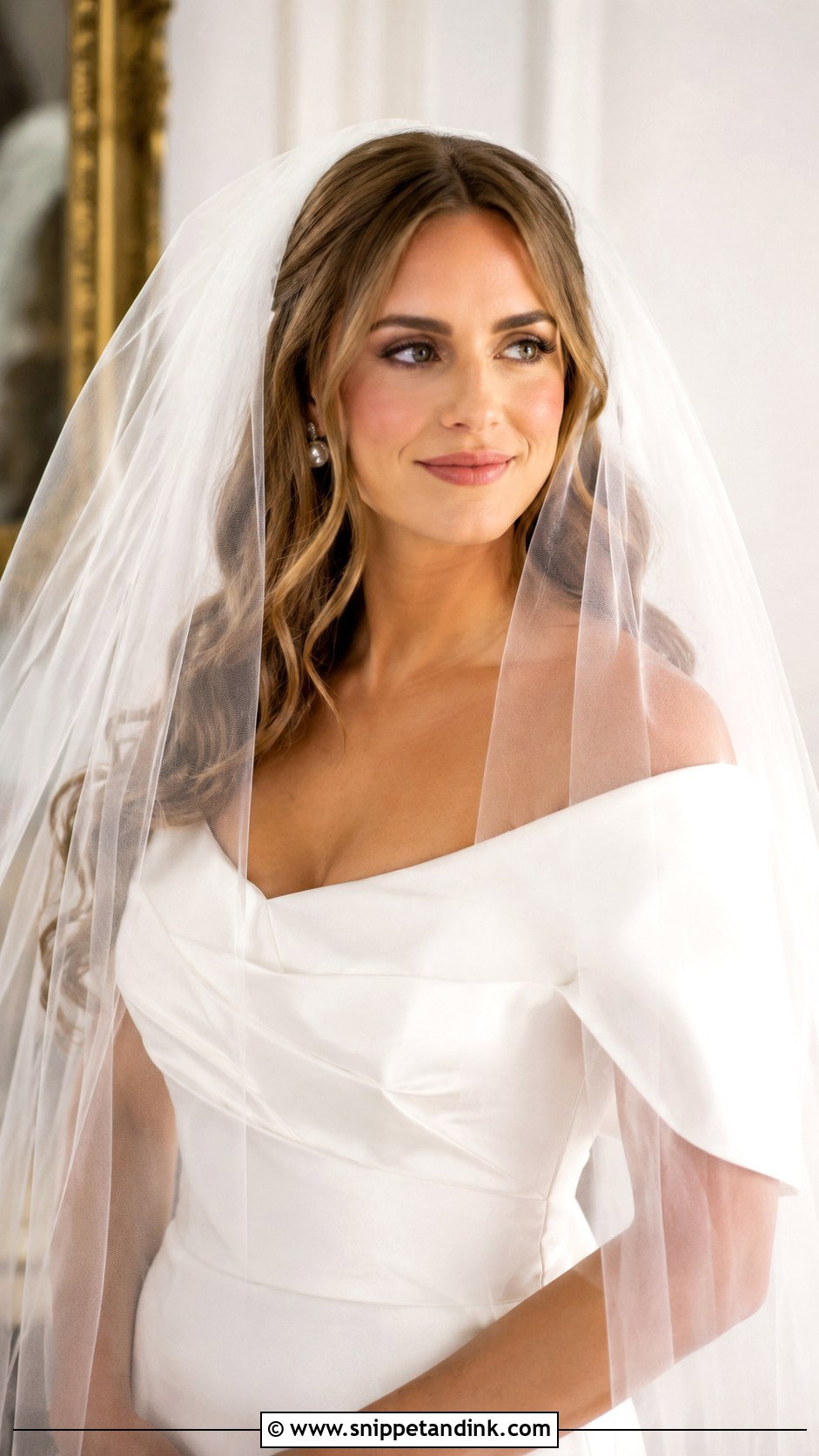
Waves give a veil something to fall over, so it doesn’t cling flat to the back of your head. With hair worn down, I place the comb low, just above the nape, and the tulle lies over the waves instead of crushing them at the crown. A cathedral veil brings drama for a classic or formal ceremony; a fingertip length is subtler and easier to manage. Once photos are done, the veil comes out and the waves carry on alone.
7. Wavy Side-Swept Wedding Hair
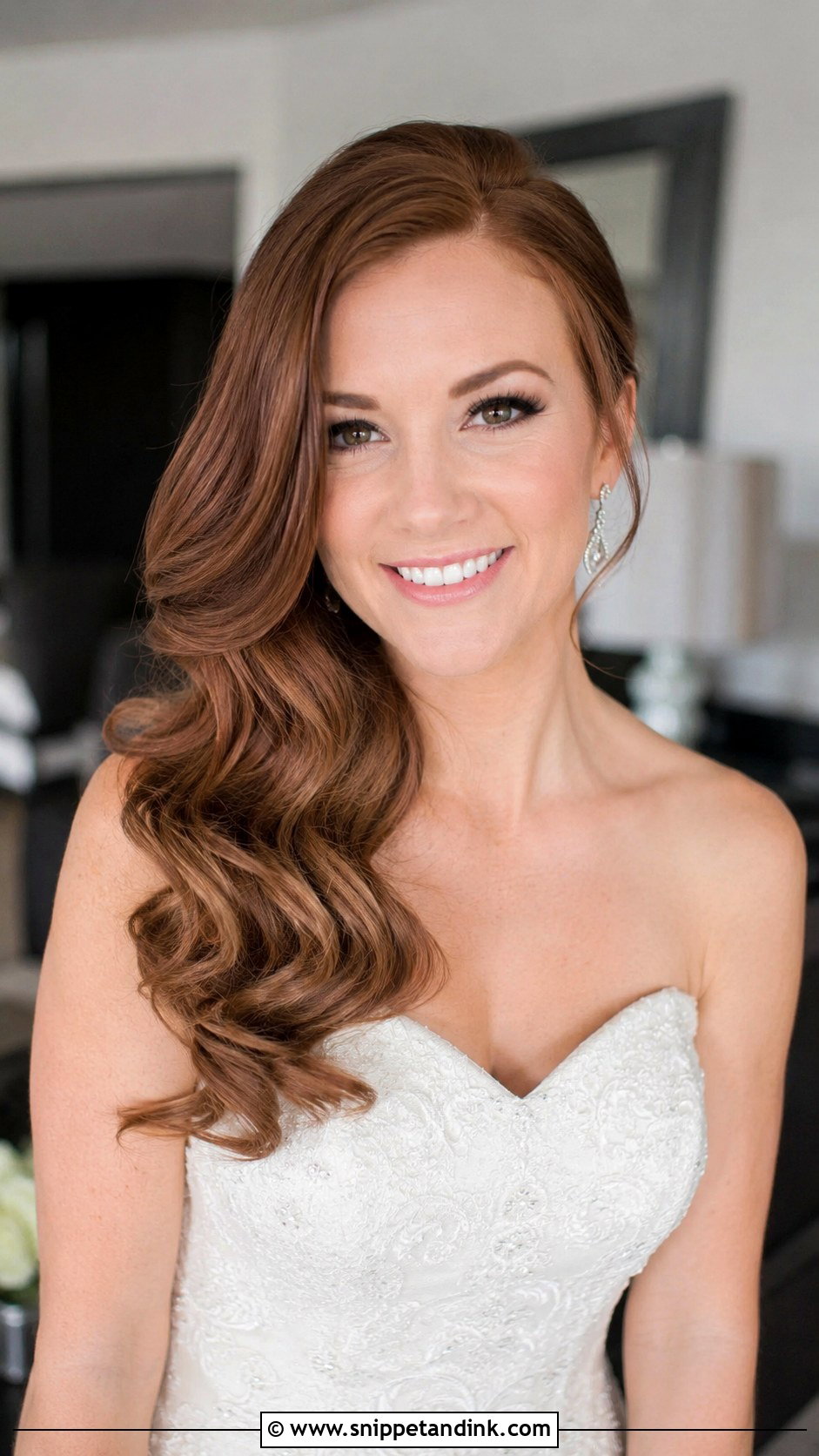
All your waves drape over one shoulder, so the earring and neckline on the other side get the attention. It’s a natural partner for a strapless or one-shoulder gown. What holds it is invisible: a line of crossed pins behind the bare-side ear and along the nape, keeping the hair from creeping back. Styled glossy it looks vintage; styled tousled it looks modern.
8. Wavy Low Bun Wedding Hair
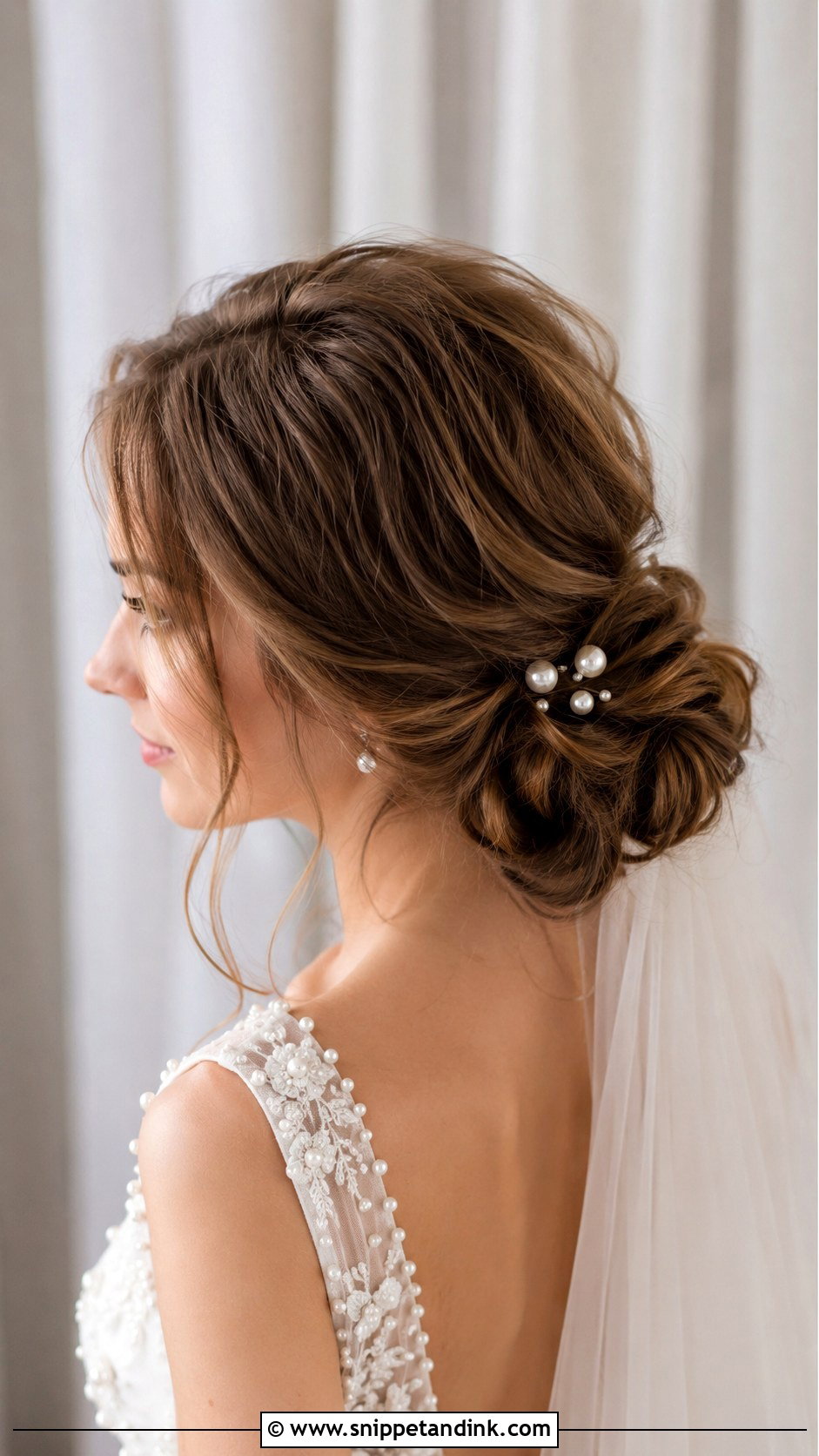
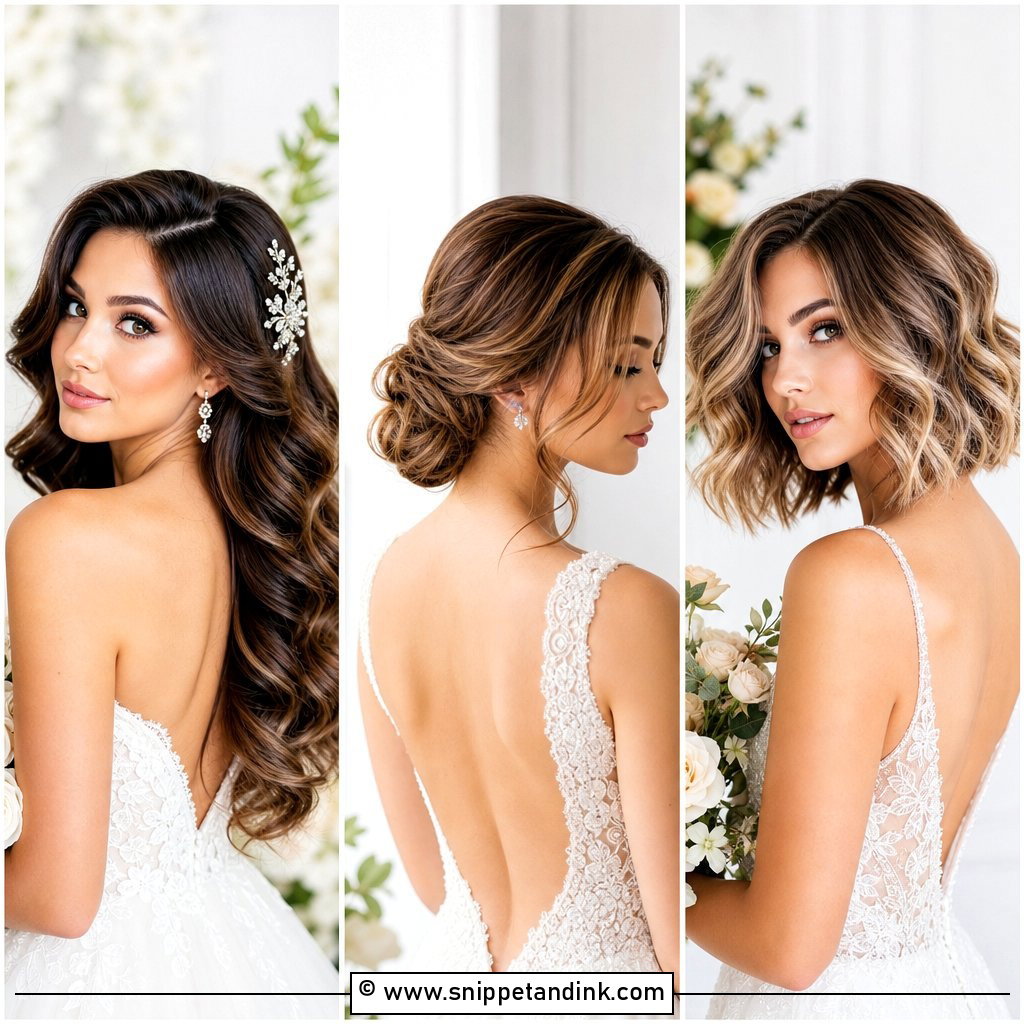
This bun is about texture. I gather the waves low at the nape without smoothing them, leave volume through the top and let a couple of strands escape at the temples. Low placement works with almost any face shape and neckline, and it’s the most reliable anchor I know for a veil, hairpins or a delicate comb. Pinned properly, it can last a full day of hugs and dancing and look the same at the end.
9. Long Wavy Wedding Hair Down
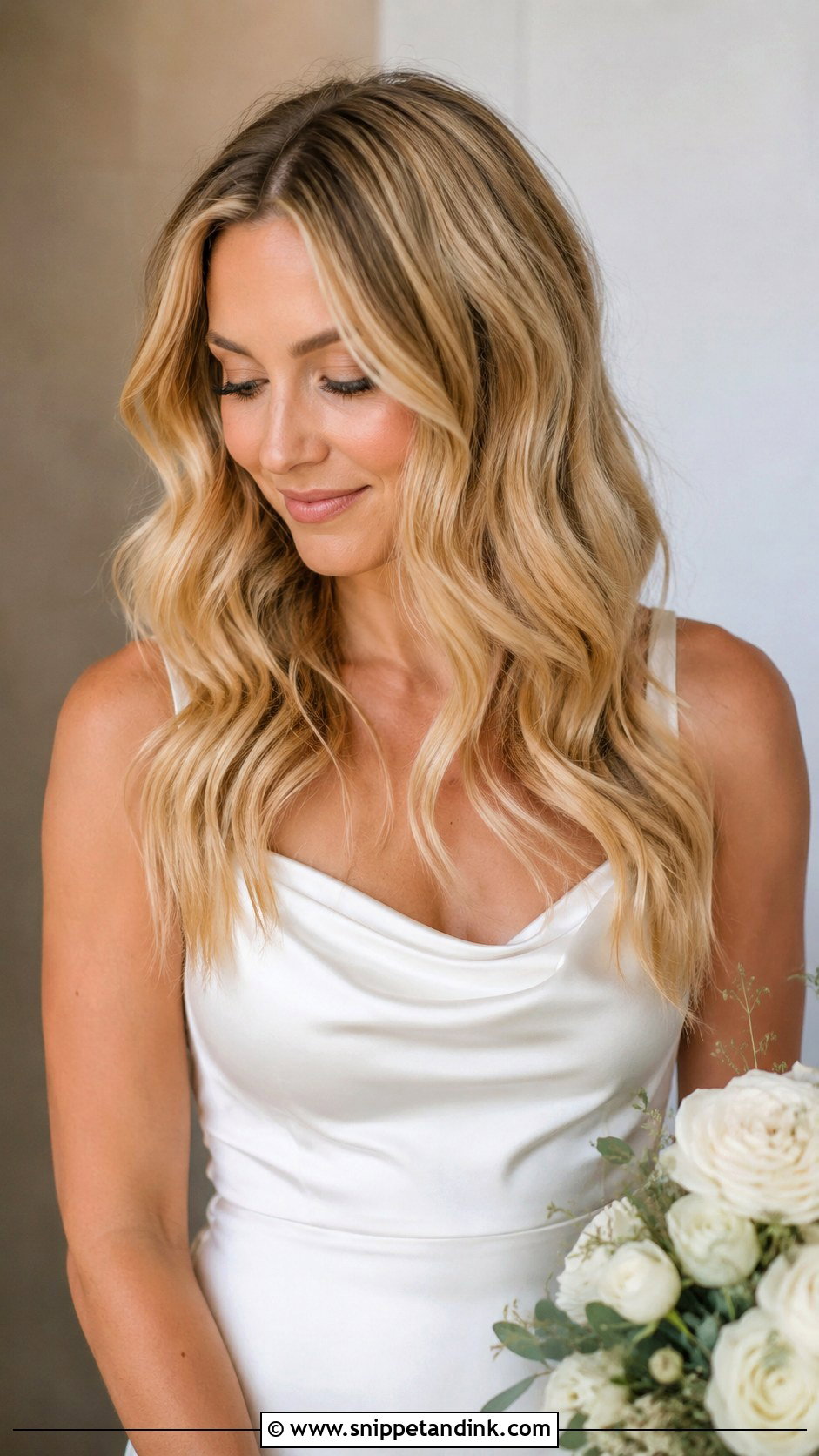
Wearing everything down is simple to look at and needs real structure underneath. Long hair is heavy and slowly pulls curls straight, so I prep with a volumizing product at the root and set the waves tighter than the finish I want. A center or side part changes the mood. Add a delicate hair vine or nothing at all. For long lengths you want to show off, flowing wavy hair down works with boho, beach or classic gowns.
10. Wavy Wedding Hair With Flowers
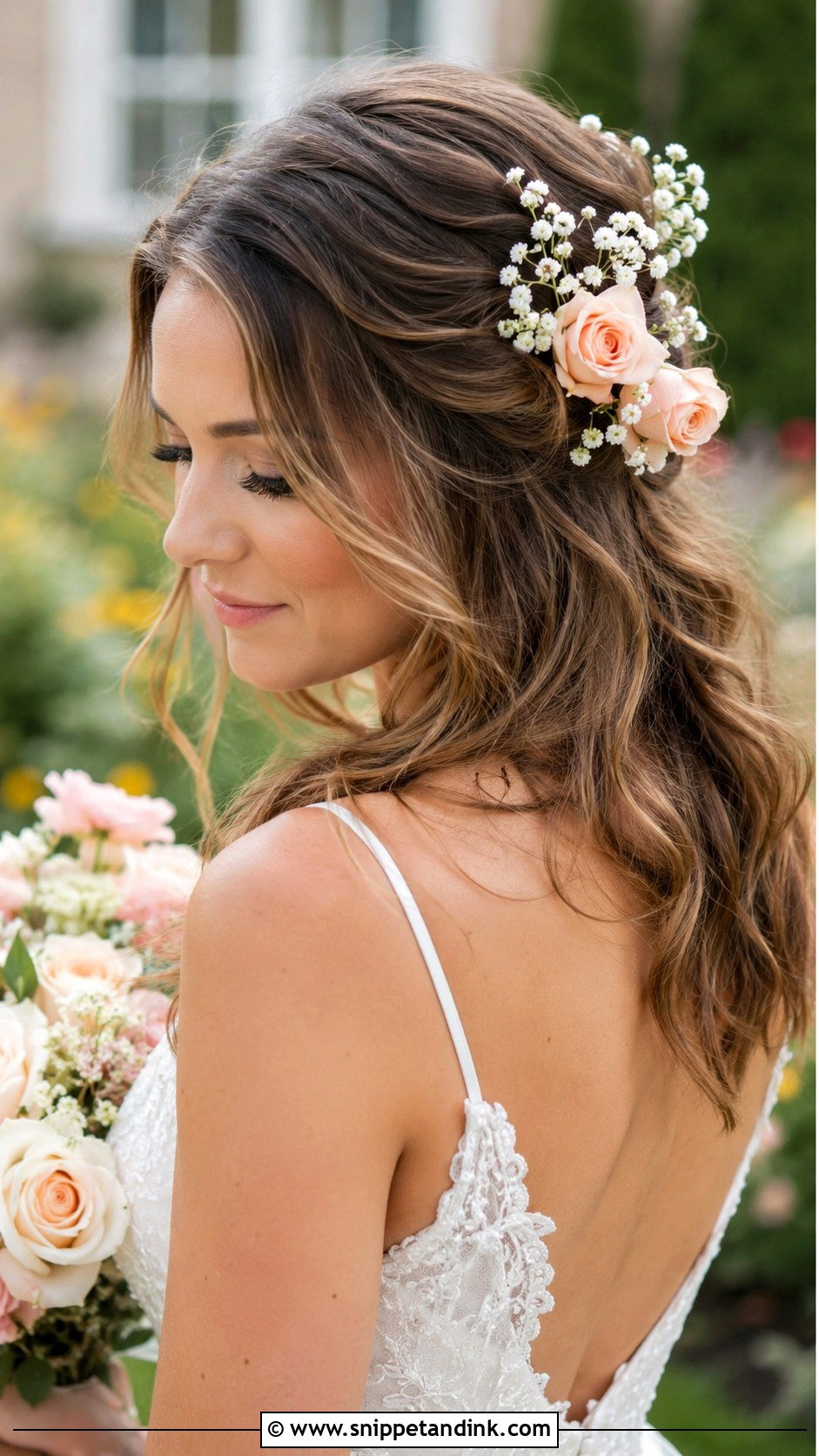
Flowers are the accessory most likely to droop, so the choice of bloom matters more than placement. Spray roses, waxflower and baby’s breath stand up to hours out of water; gardenias and peonies brown at the edges quickly. Silk flowers avoid the problem entirely. I tuck them at the crown, along a braid or behind one ear, and I match them to the bouquet. Spring and outdoor weddings suit it best.
11. Wavy Wedding Hair With Hair Vine
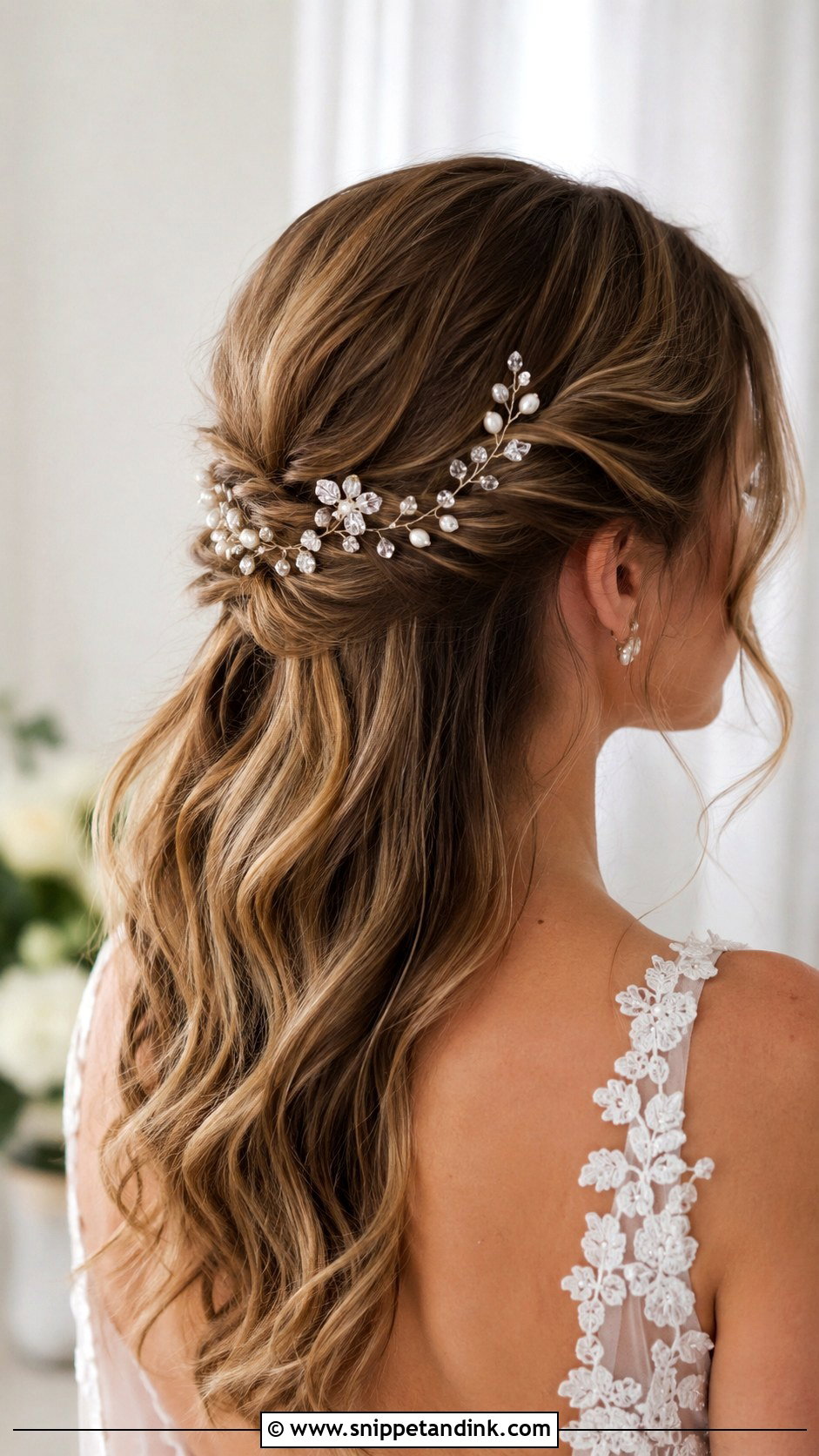
Weave a sparkling hair vine through the waves rather than laying it on top, and it looks as if it grew there. I pin along the wire every few inches so it sits flat and catches the light without shifting. It can frame a half-up section or wrap around an updo, and it brings sparkle without the weight of a tiara. Choose pearls or crystals that match your earrings.
12. Wavy Wedding Hair for Black Brides
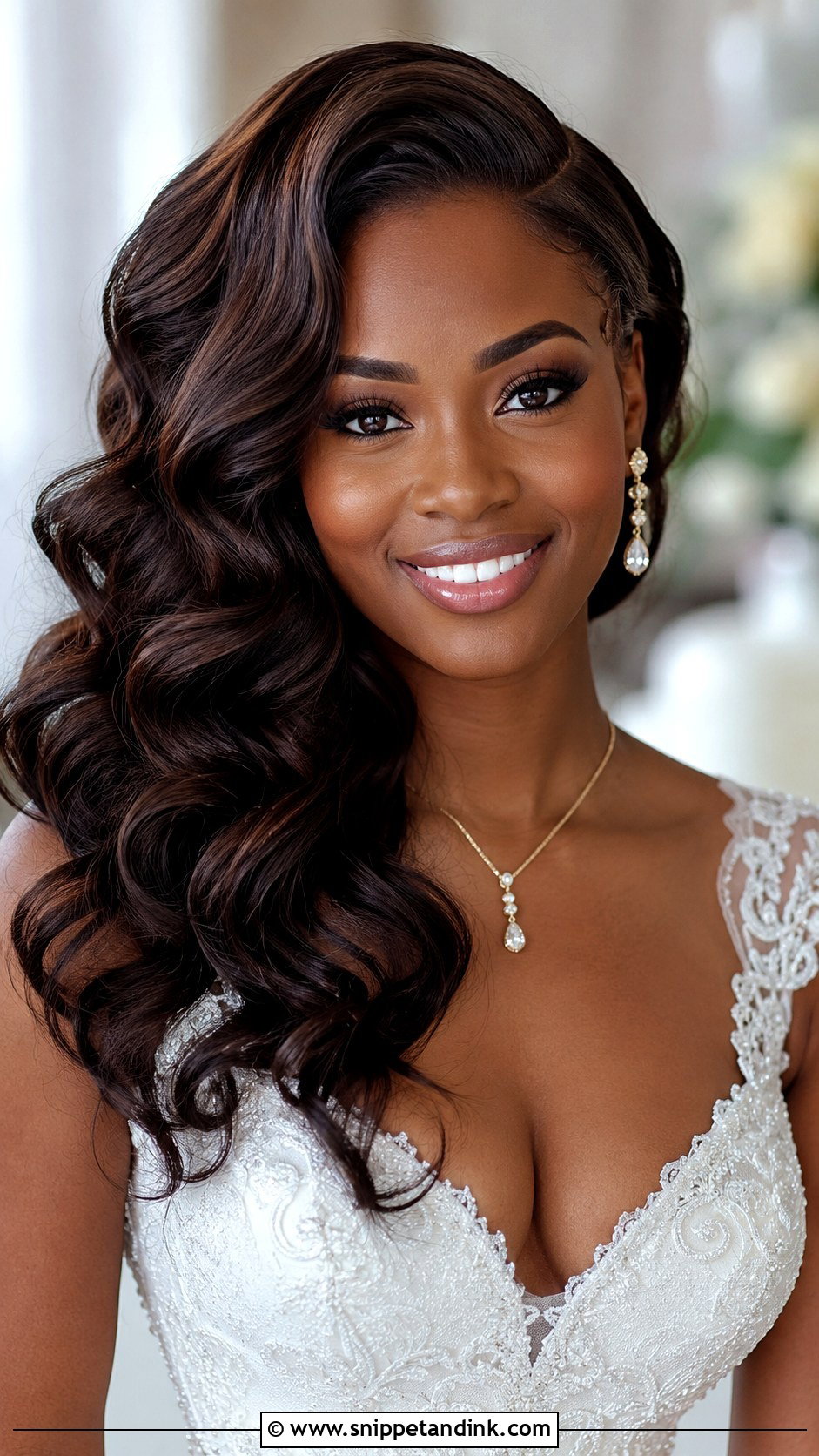
Voluminous waves on natural or relaxed hair have body and shine that’s hard to match on fine straight hair. On natural texture, I usually work from a silk press or a careful blowout, then set the waves with large rollers or a wand at a lower heat, since tightly coiled hair can be damaged by repeated high heat. Extensions are a good option if you want more length or fullness. Wear it down, half up or swept to one side, finished with a light shine serum. Gold jewelry looks rich against it.
13. Vintage Finger Waves Wedding Hair
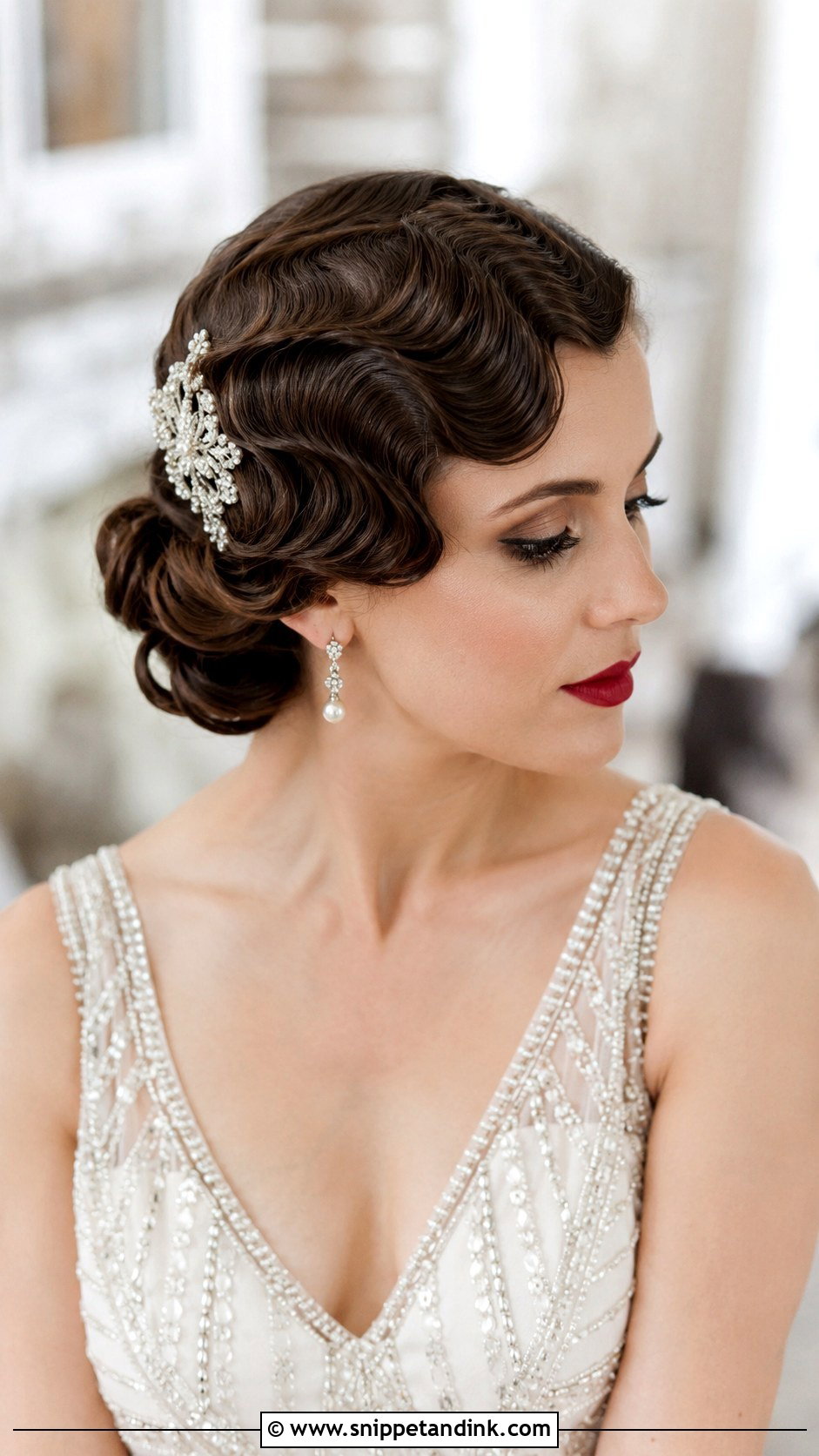
Finger waves are sculpted, not curled. The S-shapes are pressed in with fingers and a comb on wet hair set with gel, then dried under clips; a hot-iron version is quicker and slightly softer. They sit close to the head, so they suit short to medium hair and a 1920s theme. A beaded headpiece or a vintage comb completes it. Expect it to take longer in the chair than most waves, and practice it at your trial.
14. Wavy Wedding Hair With Tiara
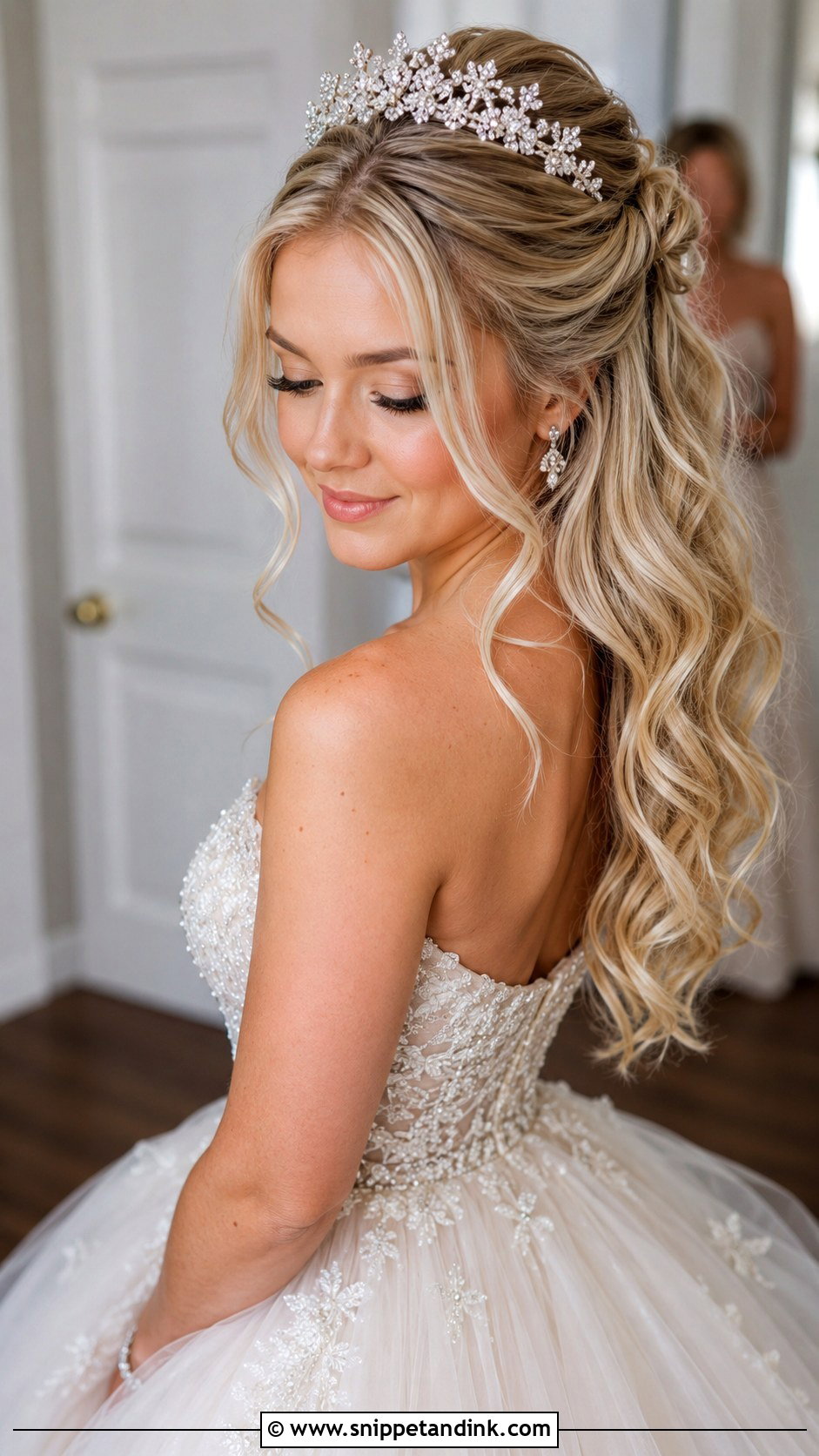
A tiara needs a firm base, or it tilts forward by the reception. Before placing it, I backcomb a small area where the band will sit, smooth the top over it, then secure the ends with pins pushed toward the scalp. The waves can then fall down or into a half-up style below. A delicate tiara suits a waist-length veil; a bold one belongs with a ballgown in a formal or cathedral venue.

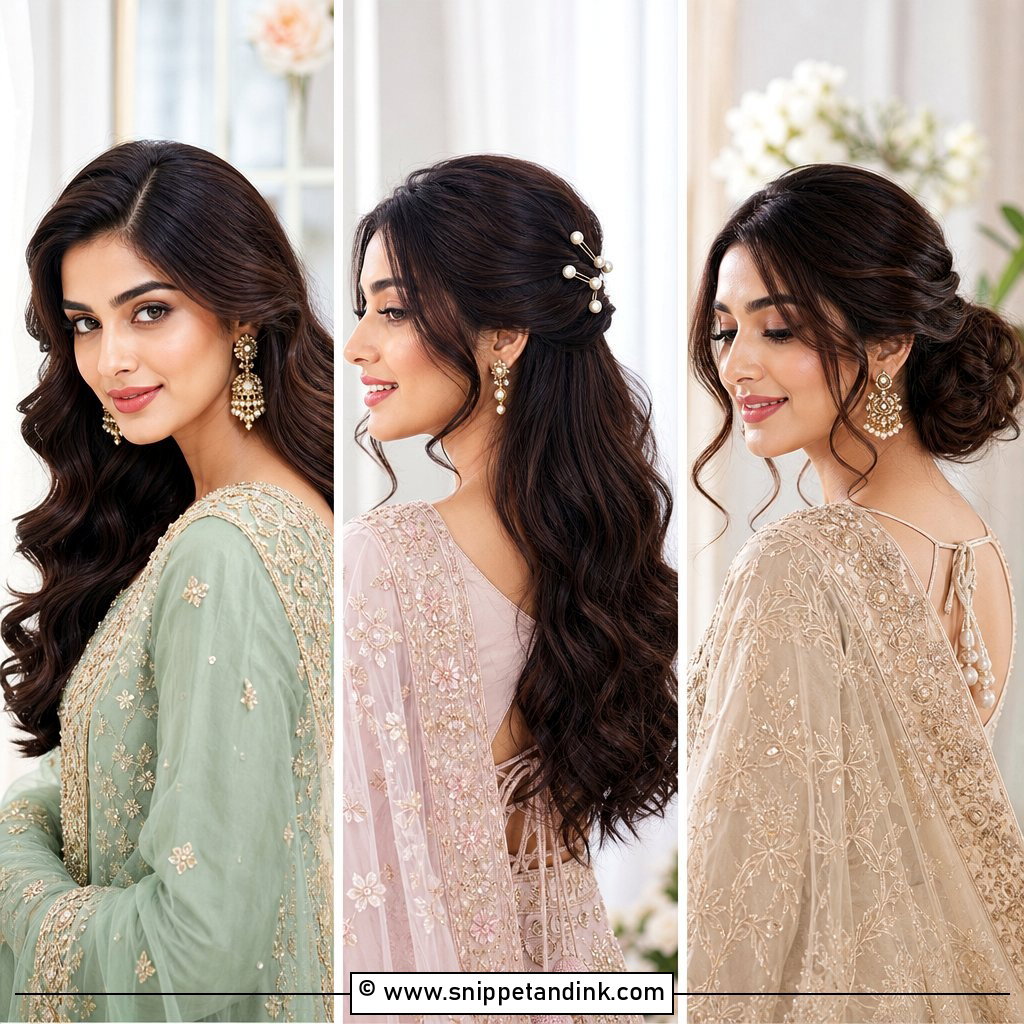
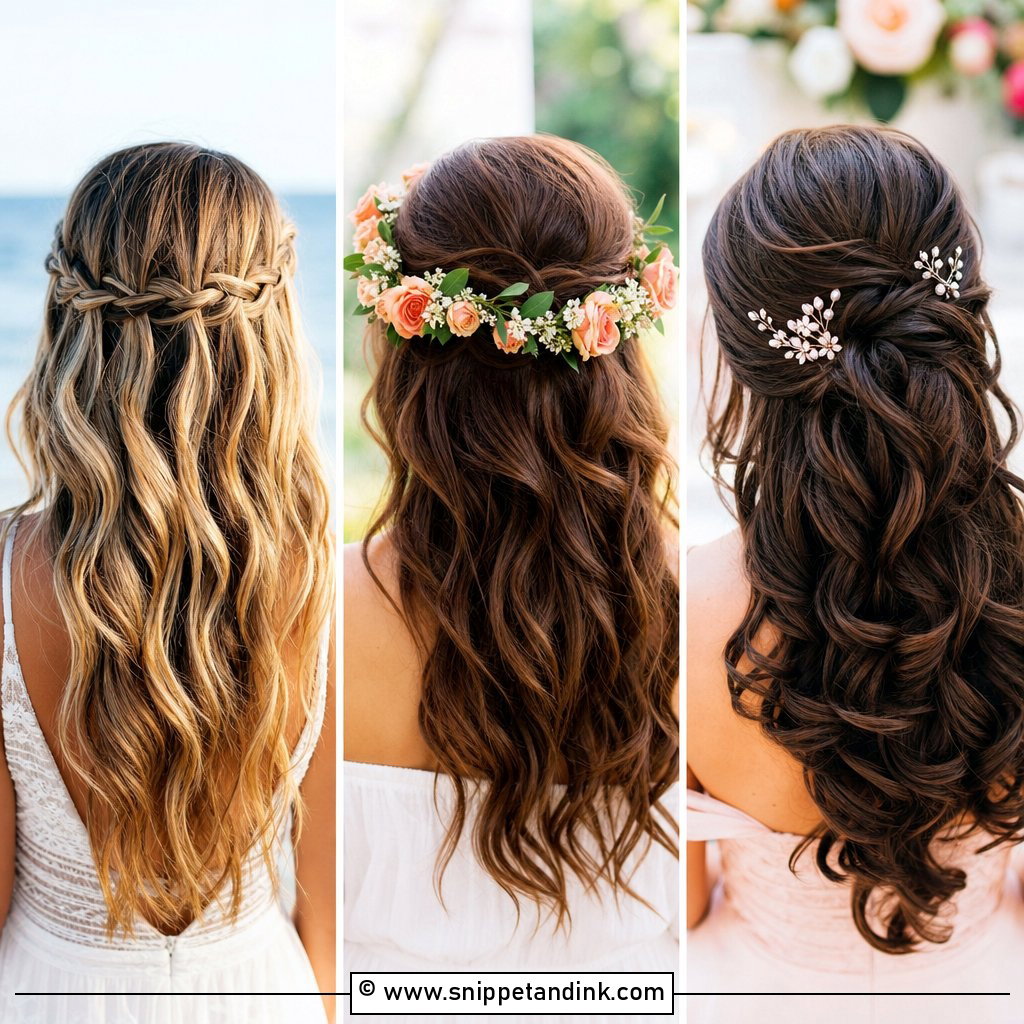
15. Wavy Wedding Hair for Short Hair
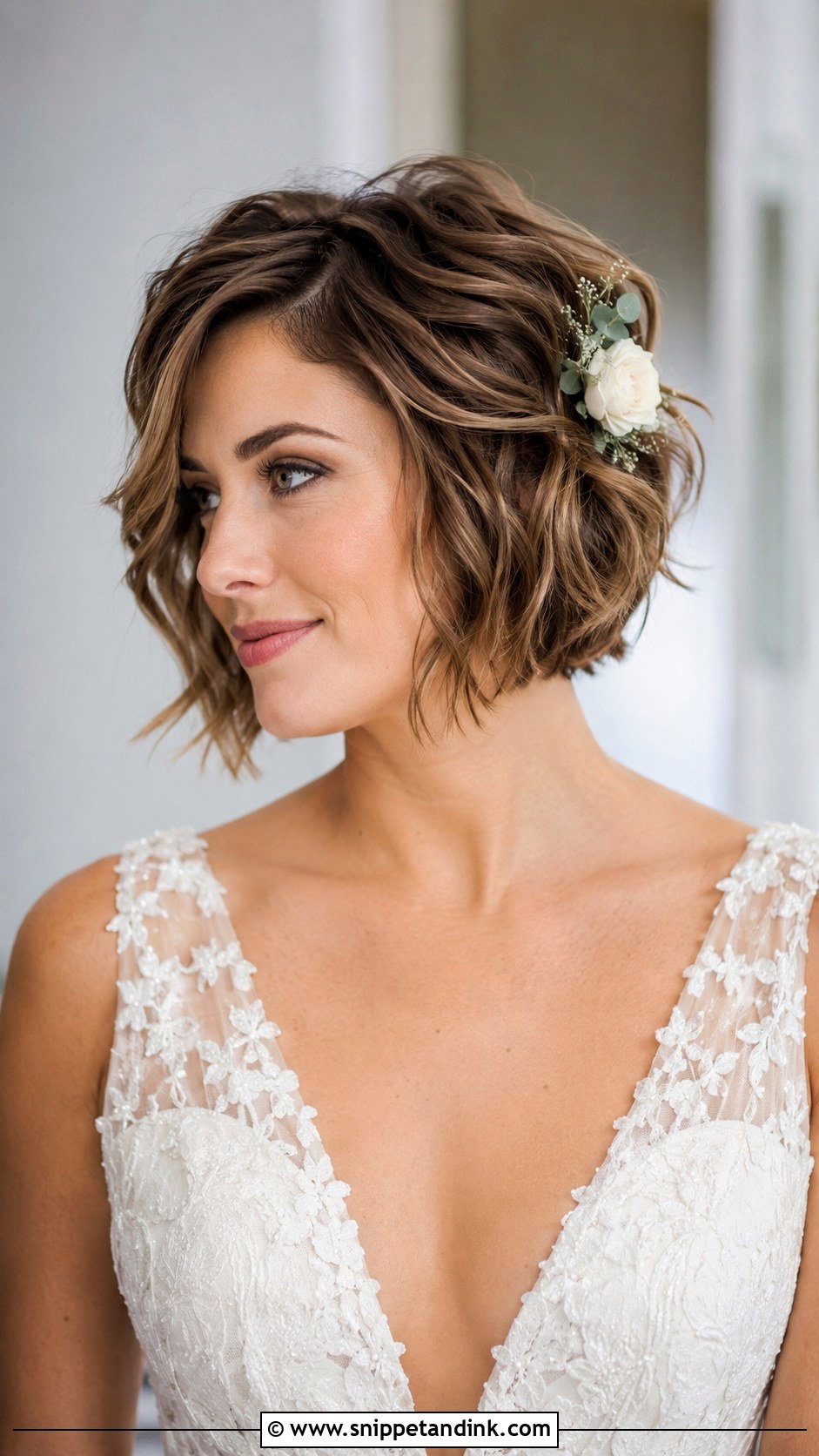
Bobs and lobs take waves well. Short hair has less weight, so curls bounce up tighter; I use a smaller barrel and brush them out more than I would on long hair. A side part adds elegance, and pinning back one side shows off a small flower or sparkling pin behind the ear. It suits a minimalist gown as easily as a detailed one, and it looks fresh rather than formal.
16. Wavy Wedding Hair With Curtain Bangs
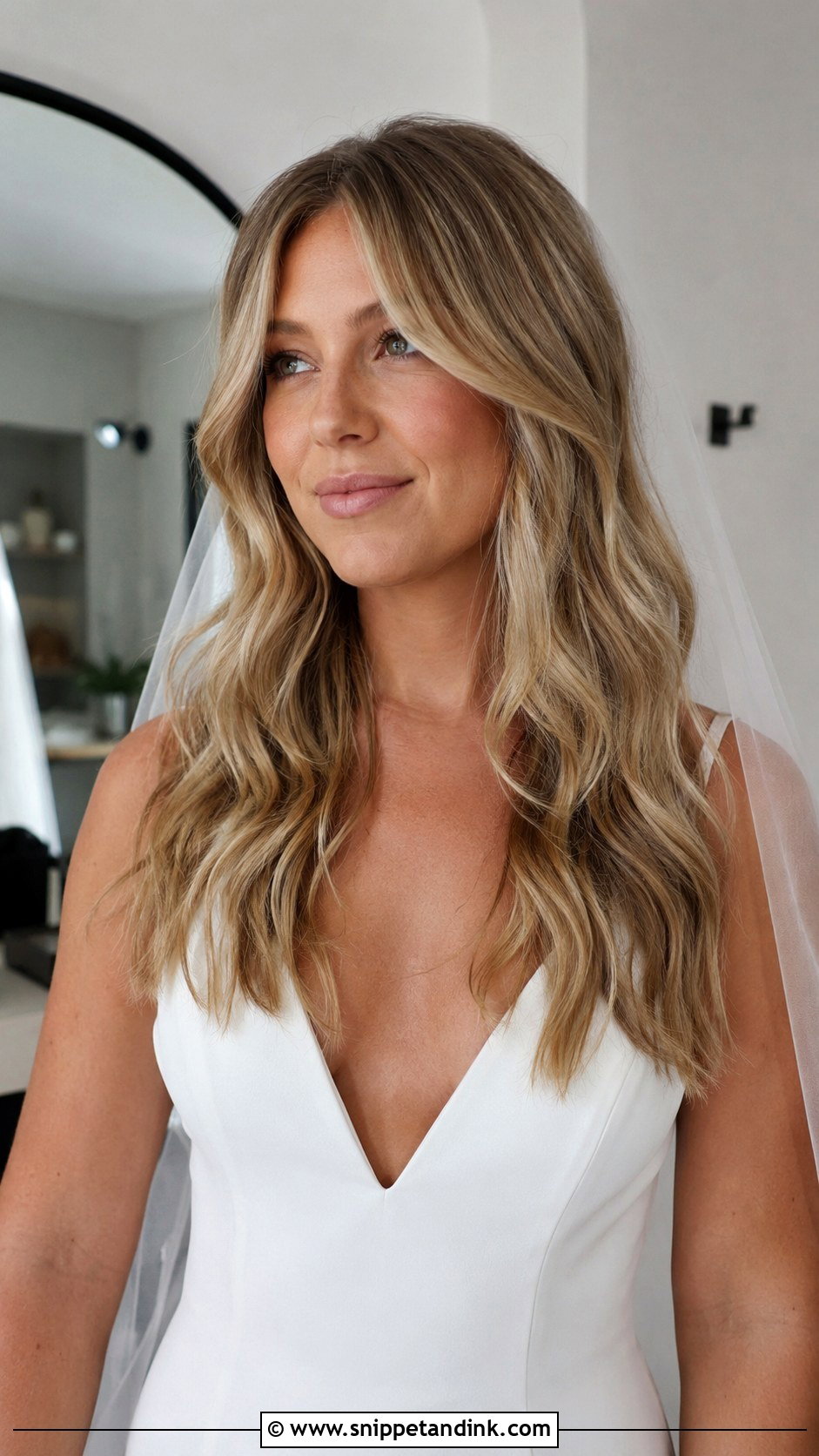
These ’70s-inspired bangs part in the middle and sweep to each side, framing the eyes and cheekbones. On the morning, I blow-dry them with a round brush first and wave them away from the face so they blend into the rest. Bangs that were cut too recently can sit too short, so I suggest any trim at least two weeks before the wedding. For softness at the face, wavy hair with curtain bangs works down or half up.
17. Wavy Wedding Hair With Braided Crown
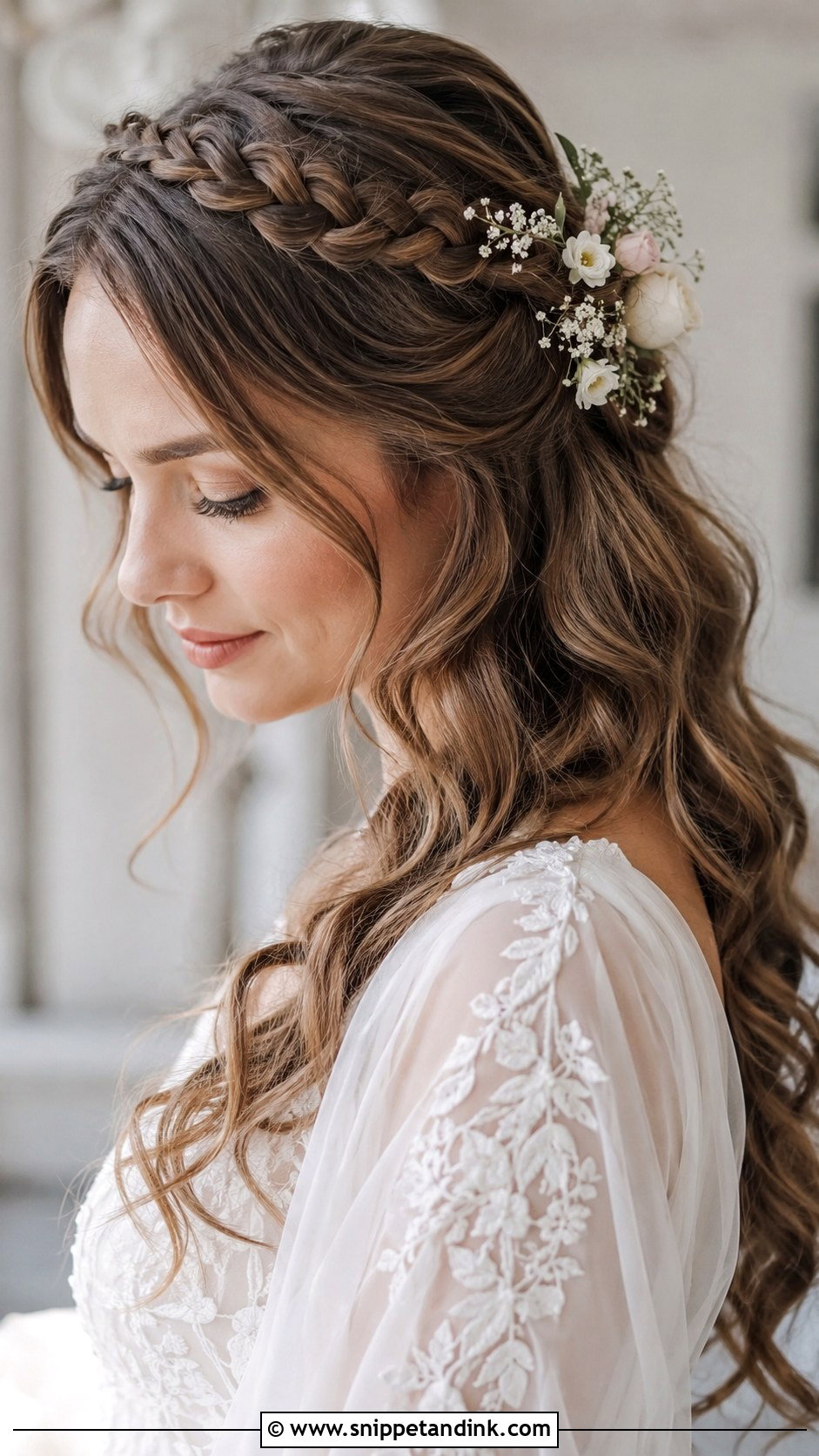
A braid circling the head like a halo, with waves falling below, gives the most secure boho look I do. The braid takes the stress of pins and holds even when the waves soften. It needs medium to long hair, or the braid comes up short at the back. Small flowers tuck neatly into the plaits for a garden or outdoor ceremony.
18. Wavy Wedding Hair With Pearls
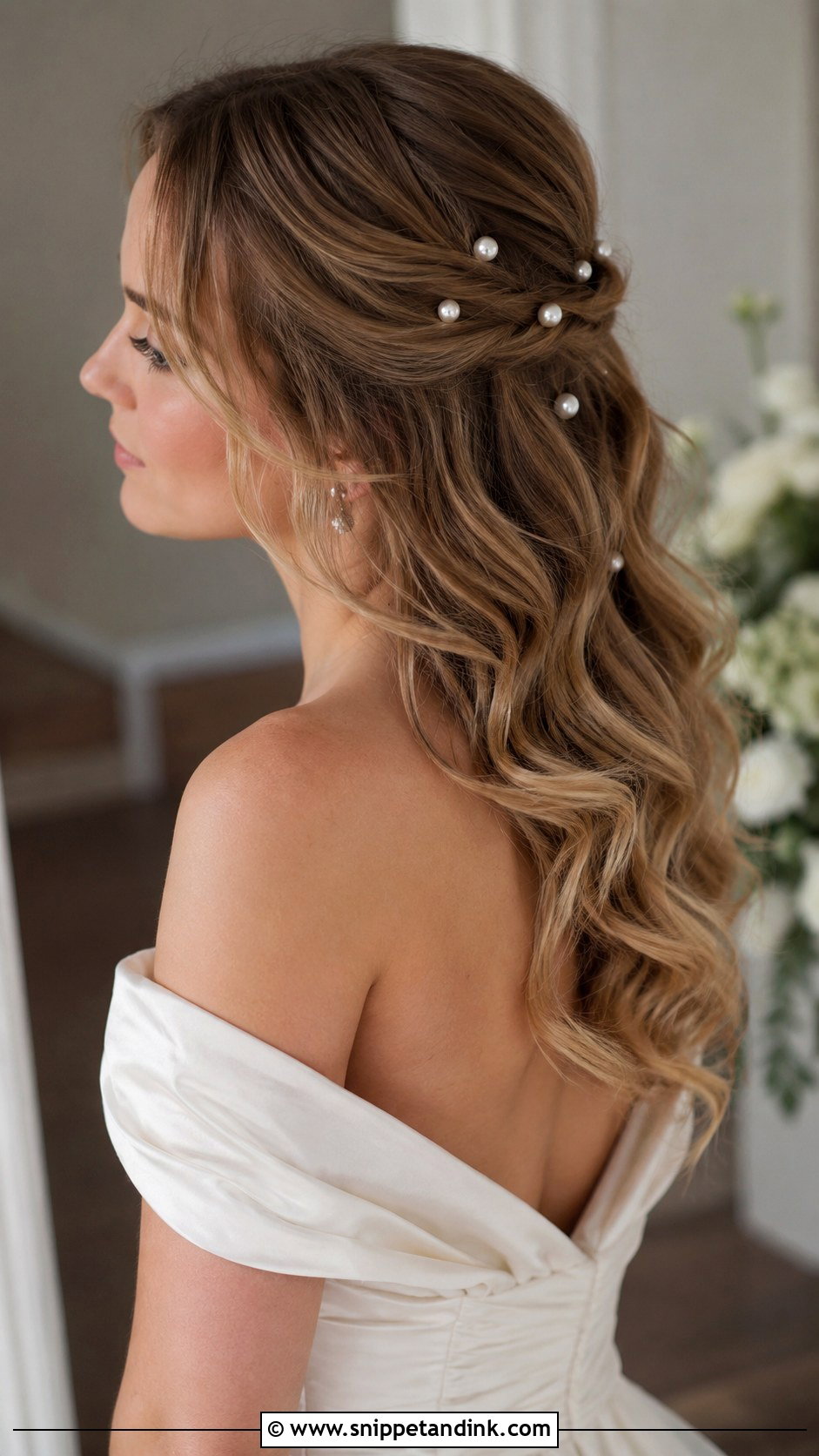
Pearls are easy to overdo. I scatter a small number of pearl pins through loose waves, or cluster three or four near a twist, so the hair still reads first. Ivory pearls sit better beside an ivory gown than bright white ones, which can make the dress look yellow by comparison. Classic, modern and vintage weddings all suit them, and they’re fine with soft makeup.
19. Wavy Wedding Hair With Deep Side Part
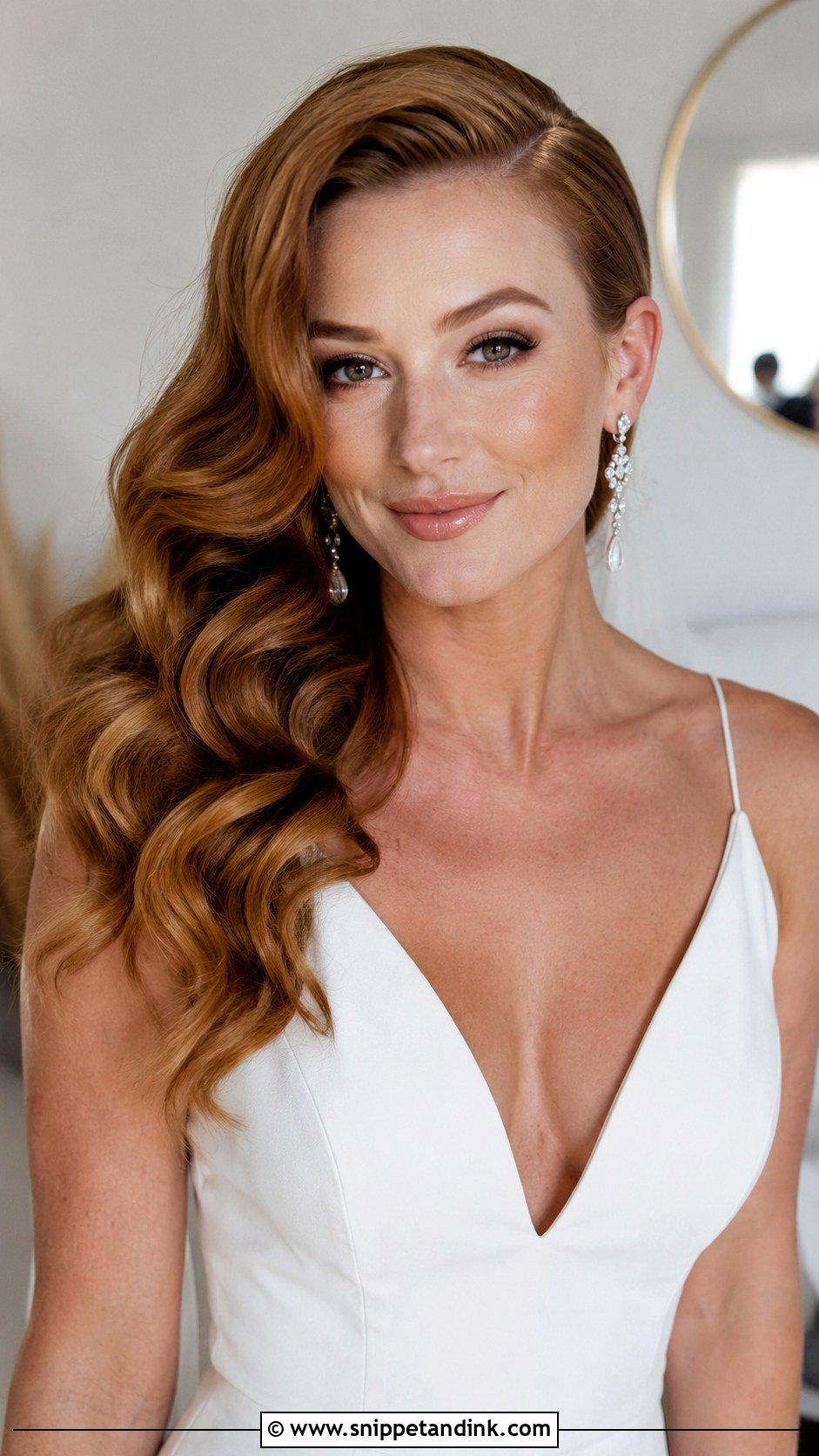
Moving the part far to one side lifts the crown on the heavy side and pushes volume toward the face. It’s especially flattering on round and oval faces, where the angle adds length. I set the part while the hair is still slightly damp so it stays put. Pair with statement earrings and a sleek gown at a formal reception.
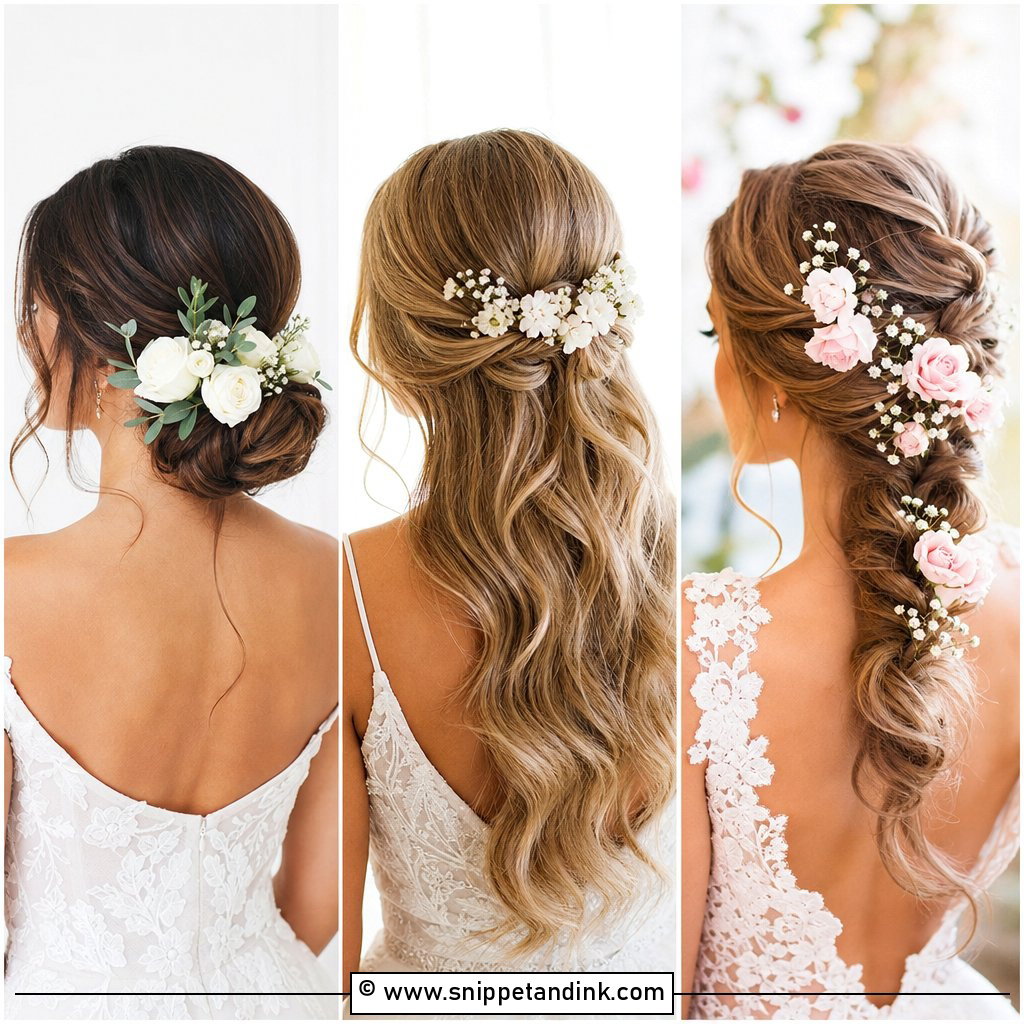
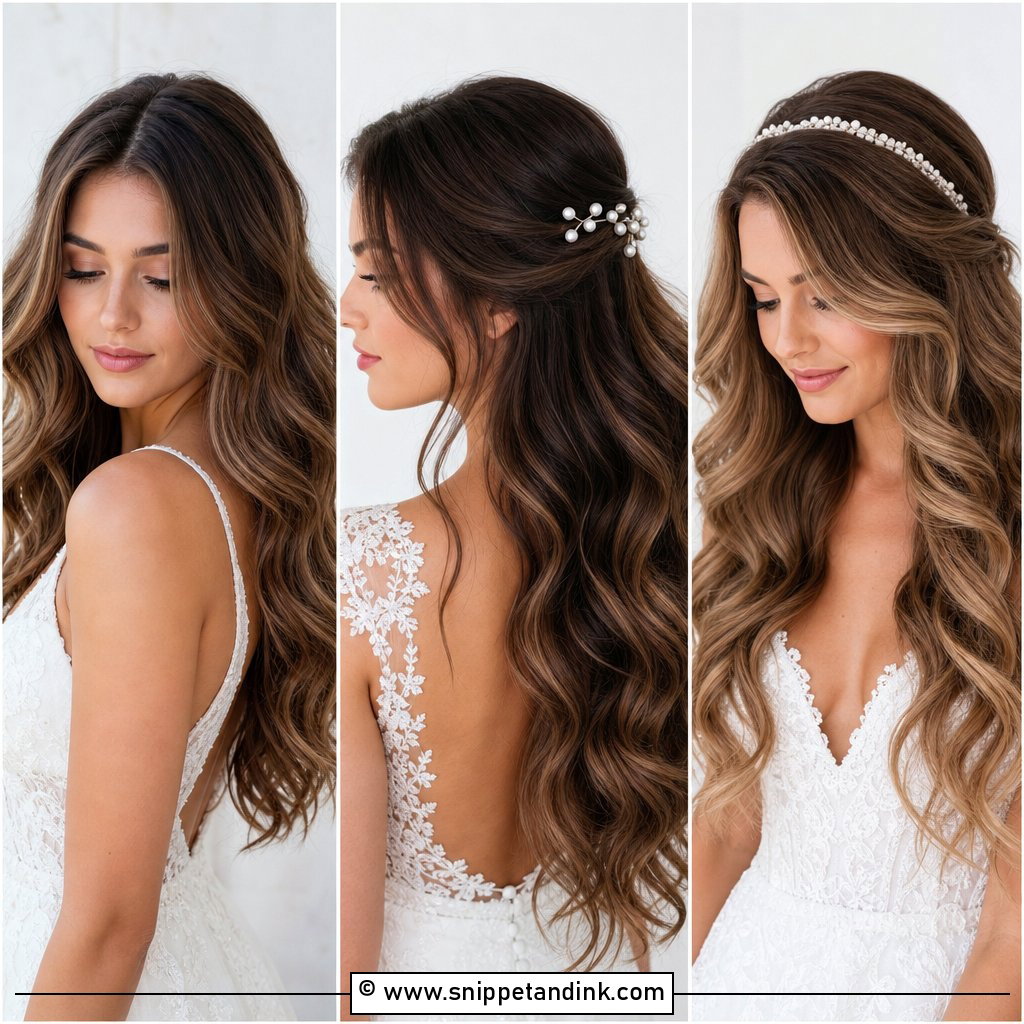
20. Wavy Wedding Hair With Ponytail
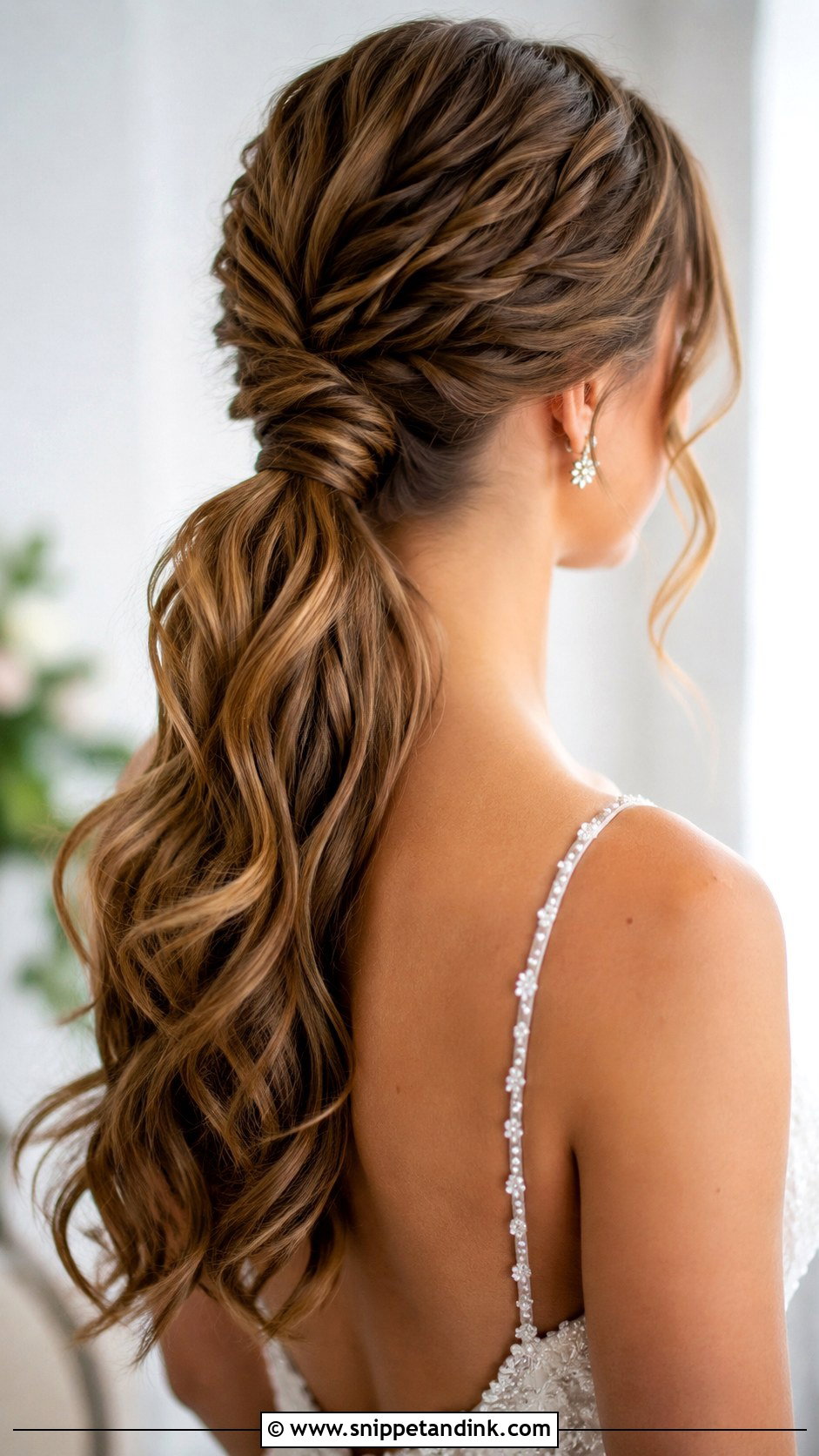
A wavy ponytail is practical, and it keeps hair secure for a full night of dancing. I tie the band first, curl the lengths afterward and wrap a strand around the base to hide the elastic, pinning the end underneath. Low or mid height both work. Leave a few pieces out at the front so it isn’t severe. A hair bow or sparkling pin at the tie is optional.
21. Wavy Wedding Hair With Headband
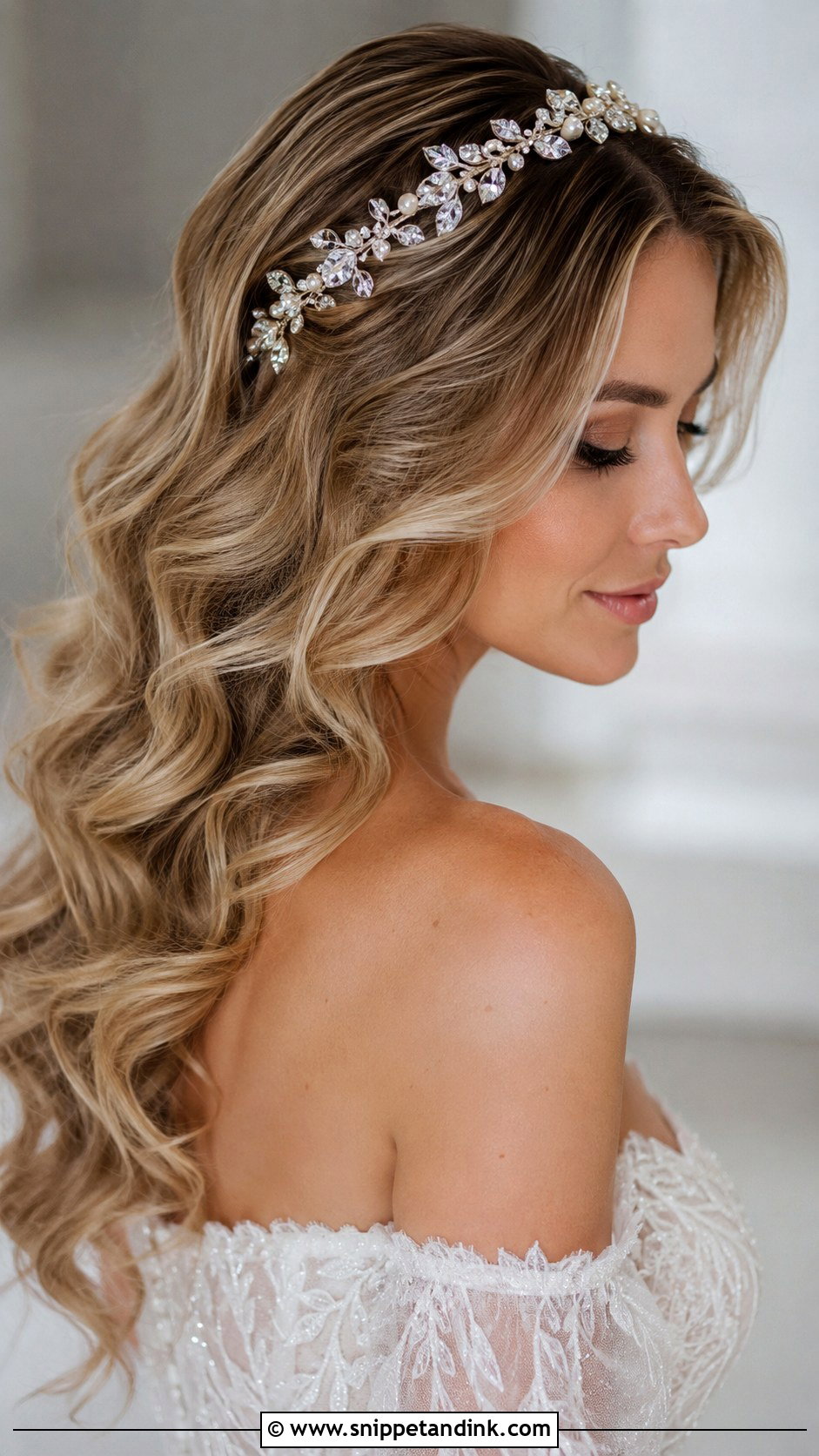
Headbands sweep hair off the face and add structure without a veil. I place it after the waves are done and anchor it with a bobby pin behind each ear, because a band on freshly curled, slippery hair tends to slide forward. Crystal, pearl or floral bands match different gowns. Hair down or half up both work behind it. A band with a firm metal base can press after a few hours, so wear it at home first. If you’d rather skip the veil, wavy hair with a headband gives you a contemporary finish instead.
22. Wavy Wedding Hair With Twisted Updo
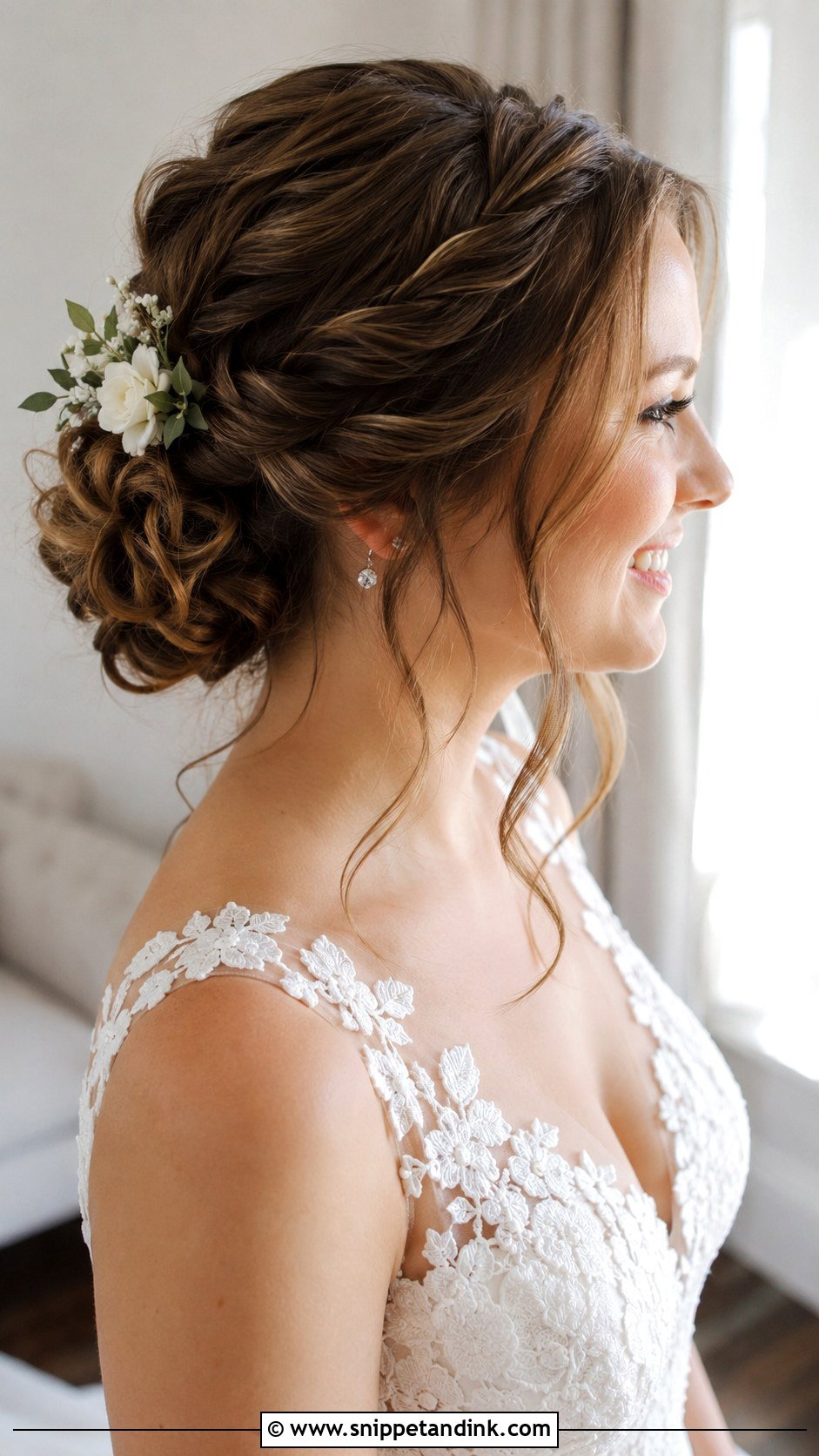
Twists add dimension to an updo while staying soft. I section the waved hair, twist each section loosely toward the back and pin it, building up rows that overlap. Loose tendrils at the face finish it. With the neck bare, a high or detailed neckline gets its moment. Hot days suit it, since hair stays off your skin. Add pins or flowers in the gaps between twists.
23. Asian Bridal Wavy Hair
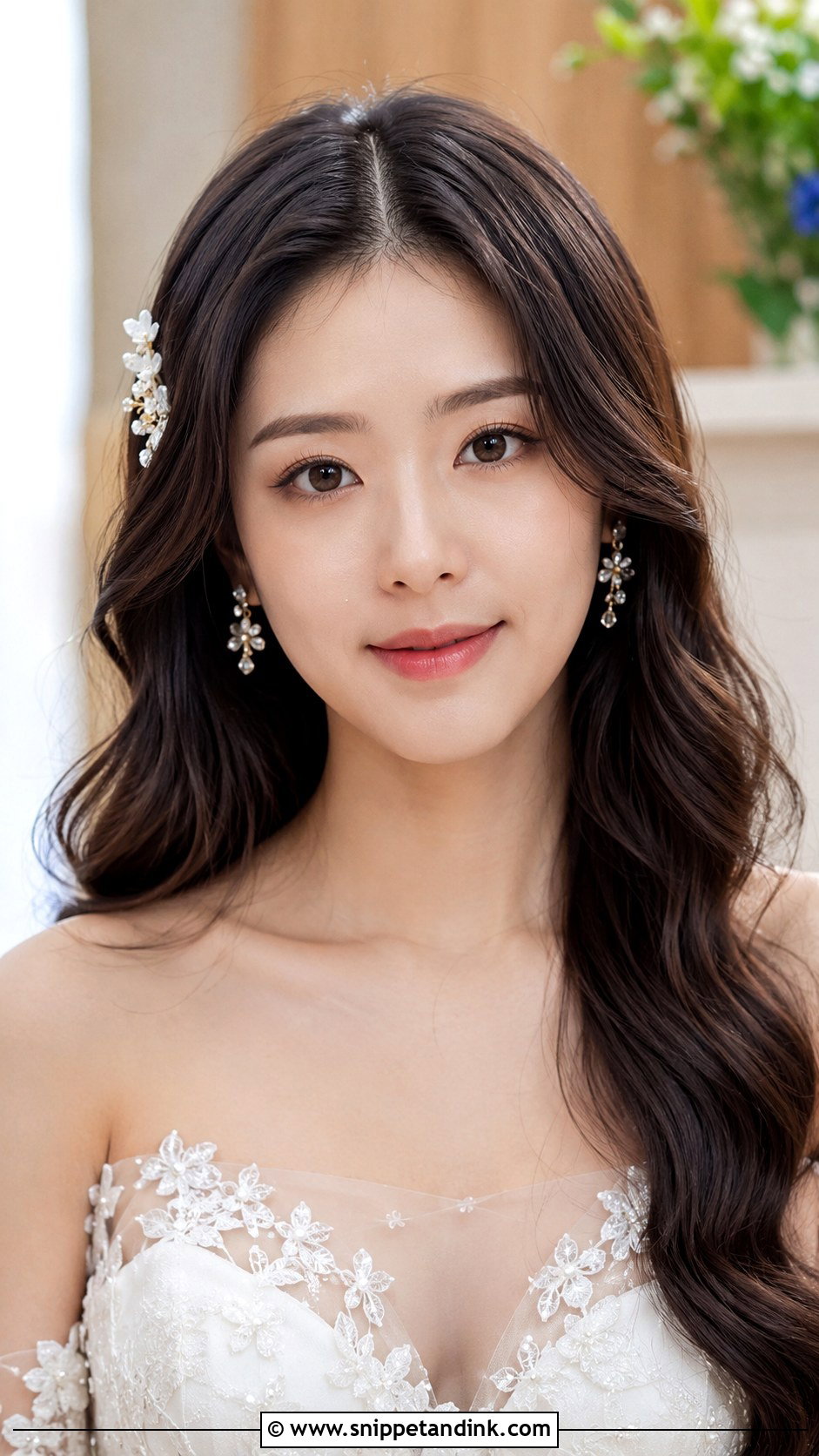
Sleek, dark, straight hair often resists curl. Waves made on it can drop within an hour unless the prep gives it grip, so I use a light mousse and a heat protectant, curl in small sections and let each set completely cool. Once the waves hold, the natural shine is the payoff. Wear them down, half up or swept to one side, with a center part for a classic finish and a smoothing serum on the ends. Delicate floral pins or a vine suit both traditional and modern celebrations.
24. Wavy Wedding Hair With Crystal Pins
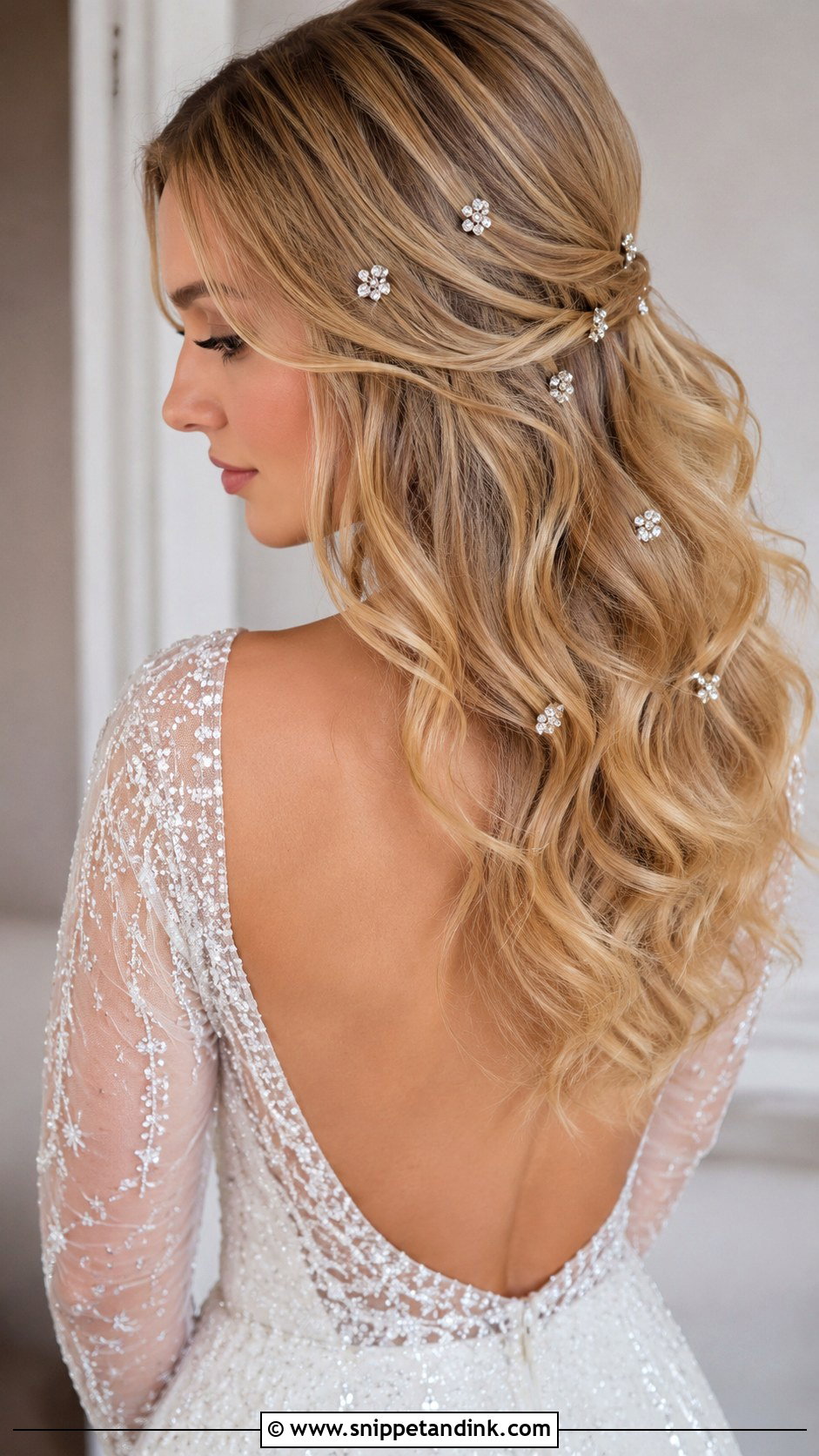
Crystal pins catch reception lighting in a way pearls don’t, which matters if you’ll be dancing under string lights. Scattered loosely through waves they feel modern; set in a line they look more formal. They’re also one of the more affordable ways to dress up simple waves. I push each one into a crossed bobby pin so it doesn’t work its way out by the cake cutting. They work with hair down, half up or in an updo.
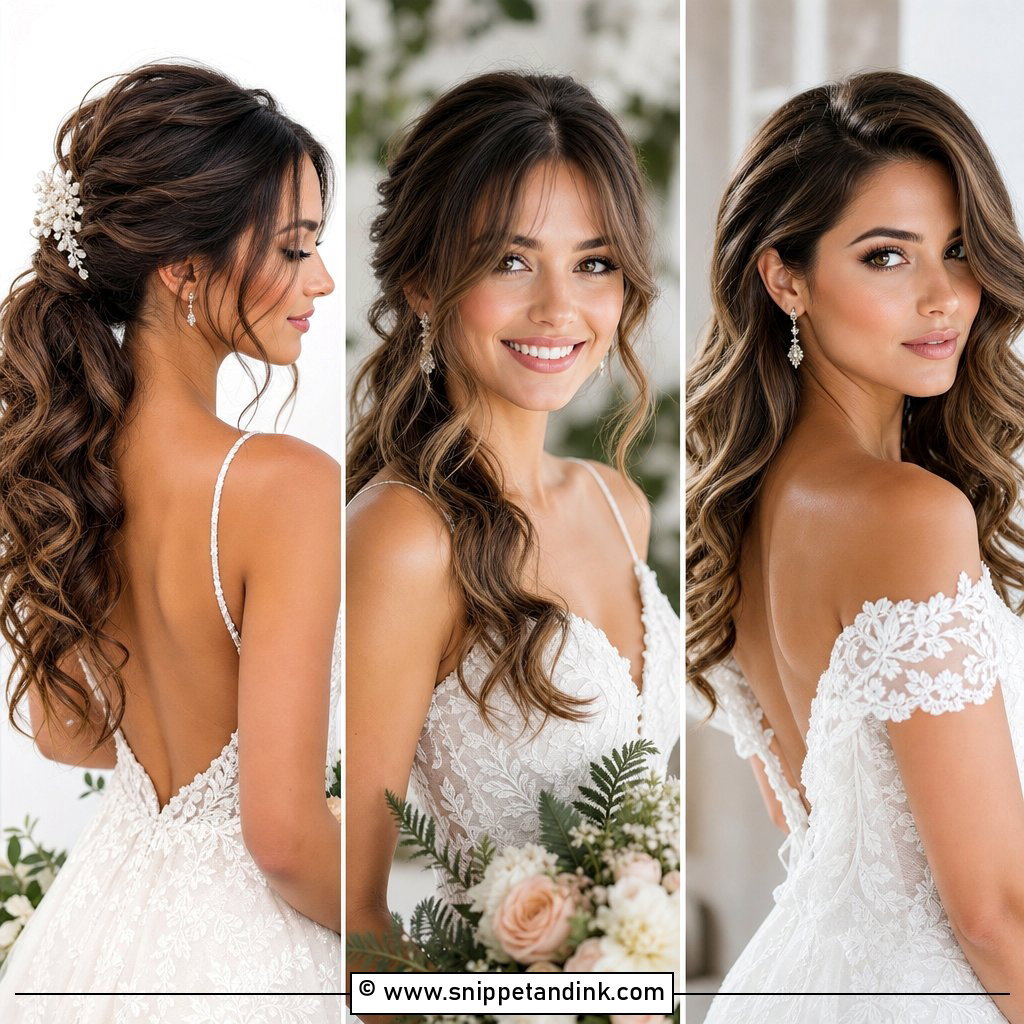
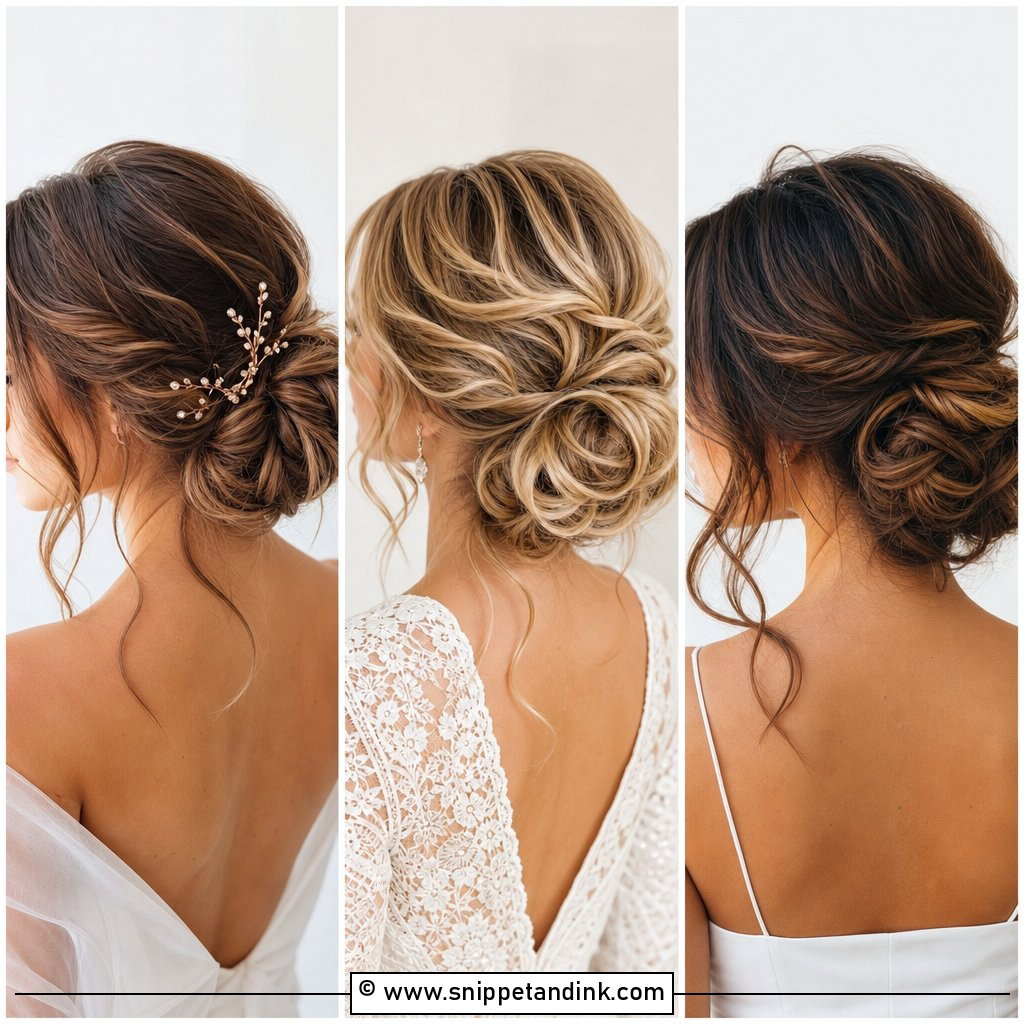
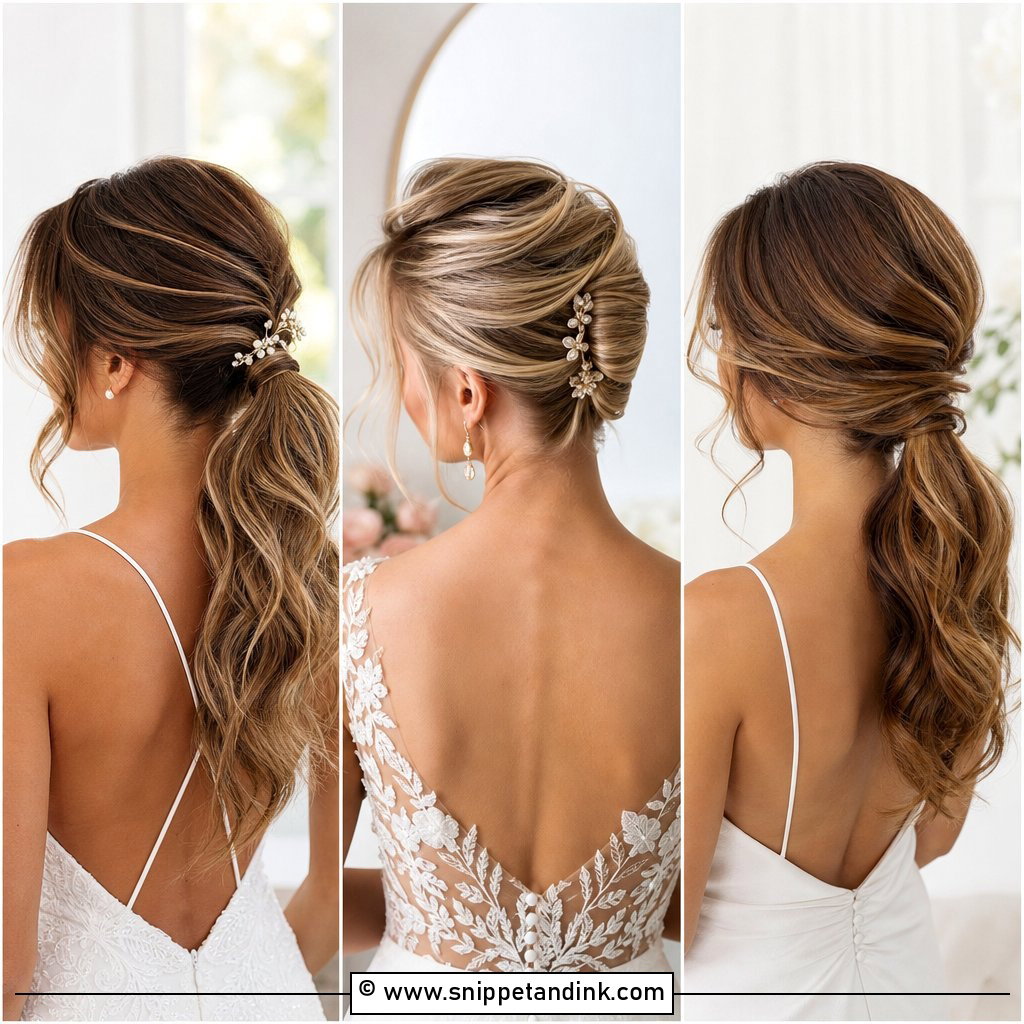
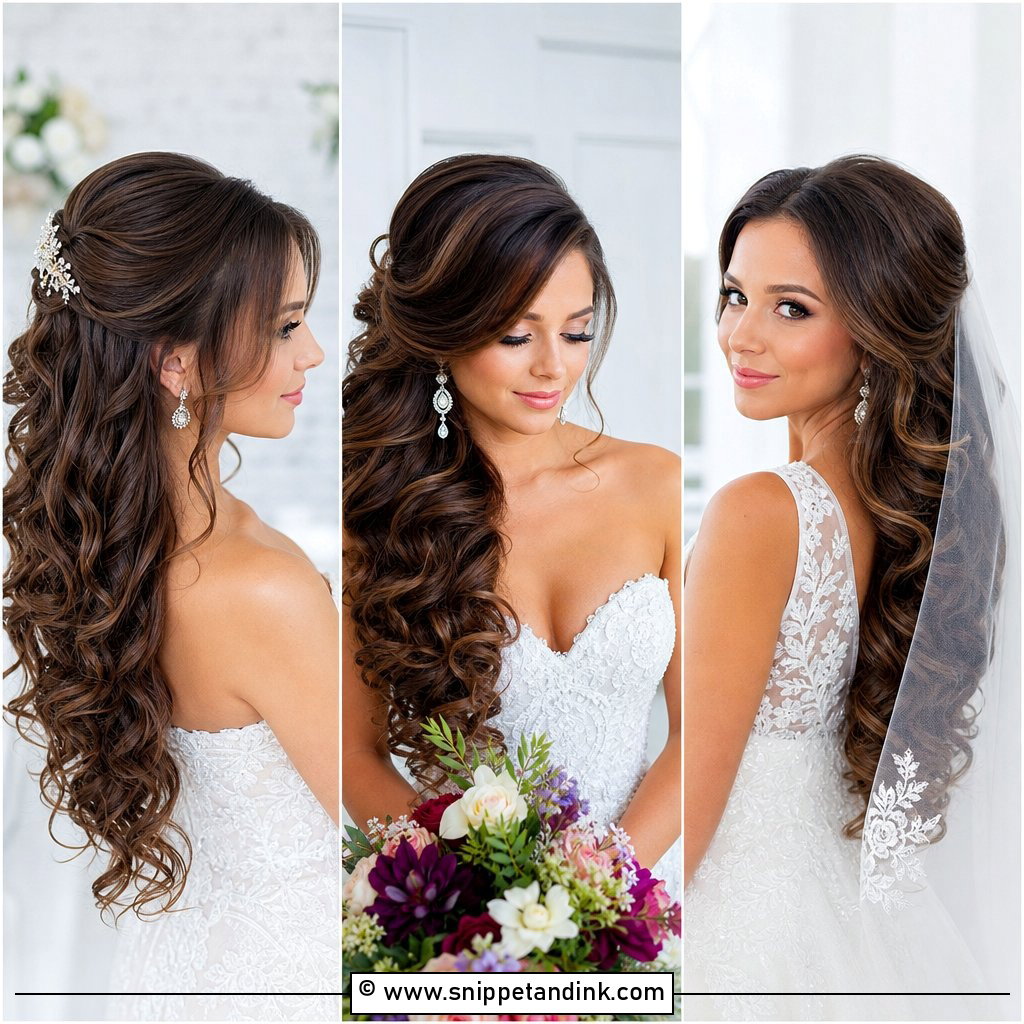
25. Wavy Wedding Hair With Low Chignon
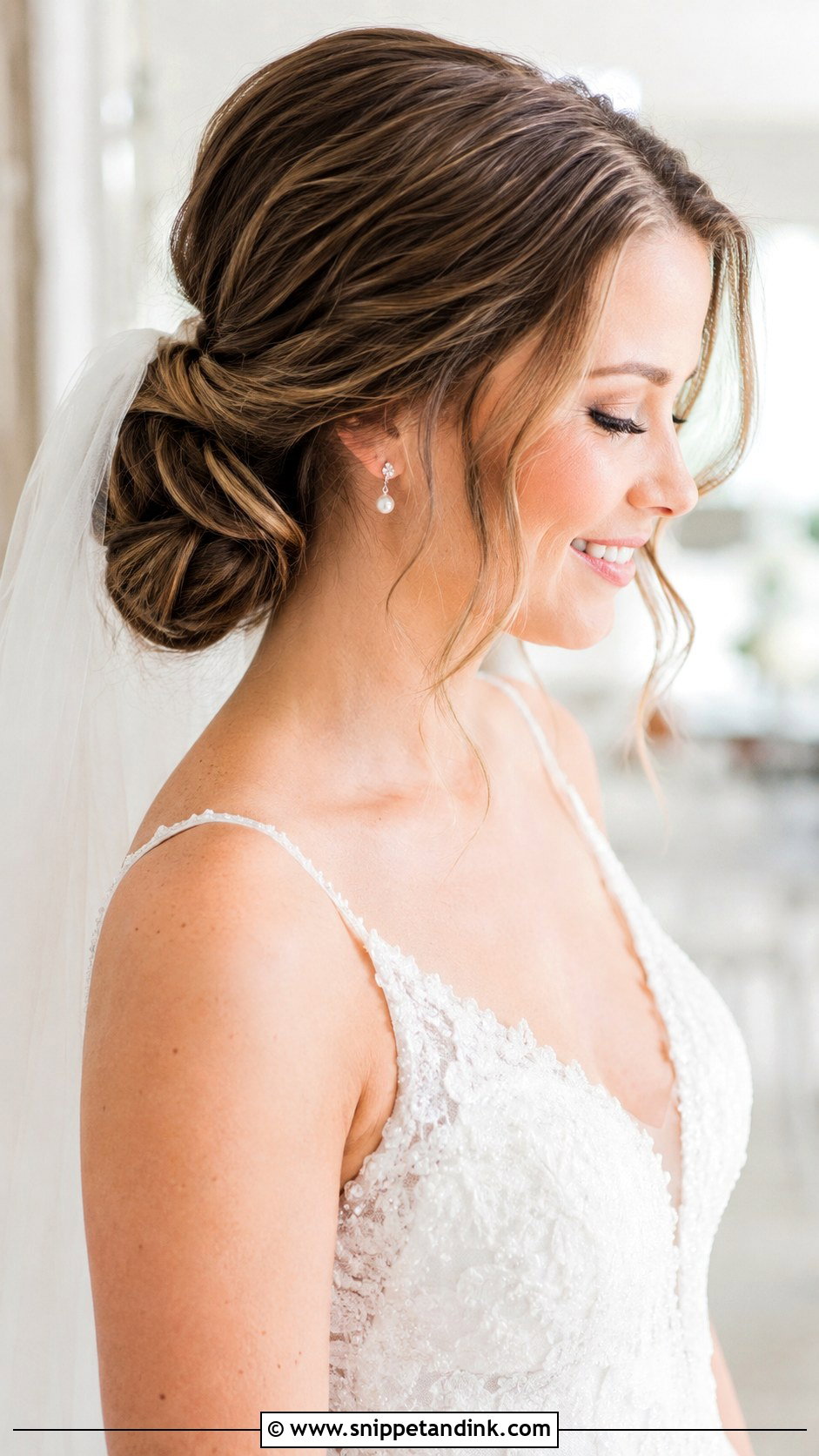
A low chignon with wavy texture is my most reliable classic updo. I gather the hair into a loose knot at the nape, keeping the waves on the surface so the shape has dimension. Tendrils at the temples soften it. Low placement suits almost every face shape and neckline, and a veil or vine sits neatly above it. Pinned well, it lasts from the morning to the last dance.
Heat, Extensions and Textured Hair
Not every head of hair should be waved the same way. On curly, coily and chemically relaxed hair, repeated high heat in the weeks before a wedding can weaken the strands, so I’d rather do one careful blowout or silk press close to the day and wave it at a moderate temperature. Heatless sets with flexi rods or rollers overnight are another option and can give a softer finish.
Clip-in or tape-in extensions add both length and the weight that helps fine hair hold a wave. Get them colour-matched and in place before your trial, not after, so your stylist can curl your hair and the extensions together and blend the join.
If the Waves Fall Before the Speeches
It happens, especially on fine hair or on a humid evening. Don’t reach for a brush, which turns waves into frizz. Instead, twist a few loose sections around your finger, pin each coil flat for ten minutes while you sit through dinner, then release and rake through with your fingers.
Keep a small kit with whoever’s carrying your lipstick: bobby pins in your hair colour, a travel hairspray and a couple of clips. If the waves really won’t come back, sweeping everything to one side or into a loose low bun hides the drop completely.
Wave Size, Placement and Your Texture Decide It
From Hollywood glamour to a boho braid or a low chignon, waves adapt to your dress and venue more than any other style. The decision comes down to three things: how big you want the wave, where you want the hair pinned, and how your texture takes heat. Flowers, pearls or crystal pins add personality without changing the technique. At your trial, ask your stylist to set the waves tighter than the finish you want, then wear them all day. You’ll see exactly how they’ll look in late-evening photos.
You'll Like These Ideas:



Leave a Reply