
A picture on a mood board shows you a hairstyle for one second, in perfect light, on someone else’s hair. On the day, it has to sit under a veil, survive hugs and a warm room, suit the neckline and still look right in the last photos of the night. That’s why I ask about the dress, the venue and the weather before I ask what you like. Below are 20 styles I’m booked for most often, with notes on who each one works for, how it holds up and what to ask for at the trial. Many of them translate well for bridesmaids and guests too.
How Long Each of These Styles Takes in the Chair
The schedule is where wedding hair most often goes wrong, not the style. Every look on this list takes a different amount of time, and the times below are rough guides that change with hair length, thickness and the stylist’s own pace.
- Sleek ponytail or simple low bun: around 30 to 45 minutes
- Soft waves or half-up with waves: around 45 minutes to an hour
- Hollywood waves, French twist or textured chignon: often an hour or a little more
- Braided updos and crowns: can run past an hour on thick or long hair
- Natural hair styles: depends heavily on the prep done in the days before
Add time for the veil and accessories, and leave a buffer at the end. I usually do the bride near the end, but not last, so there’s still a gap if anything runs over. If your stylist is handling several people, ask her to plan the order with you, not on the morning.
1. Low Bun Wedding Hairstyle
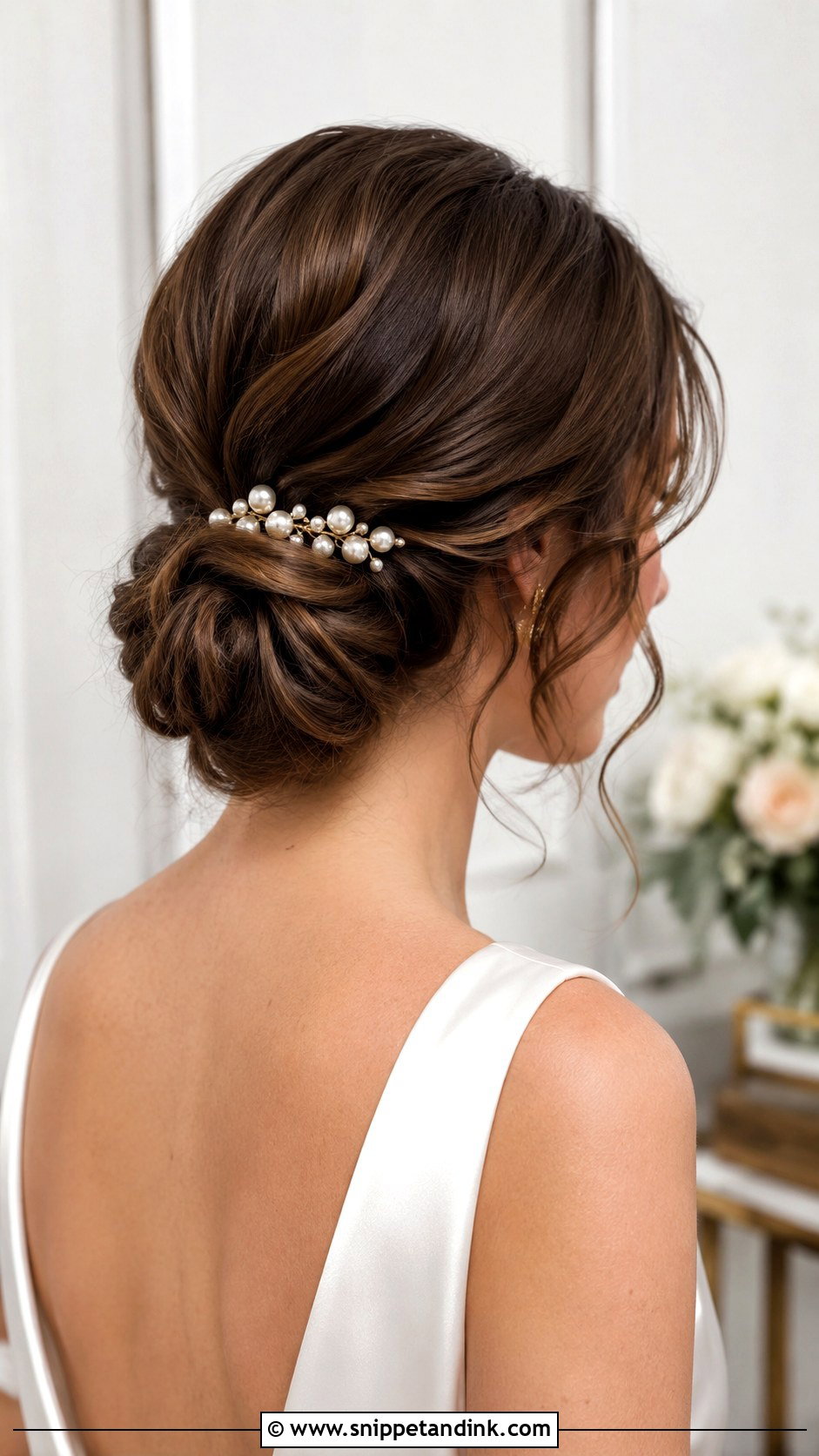
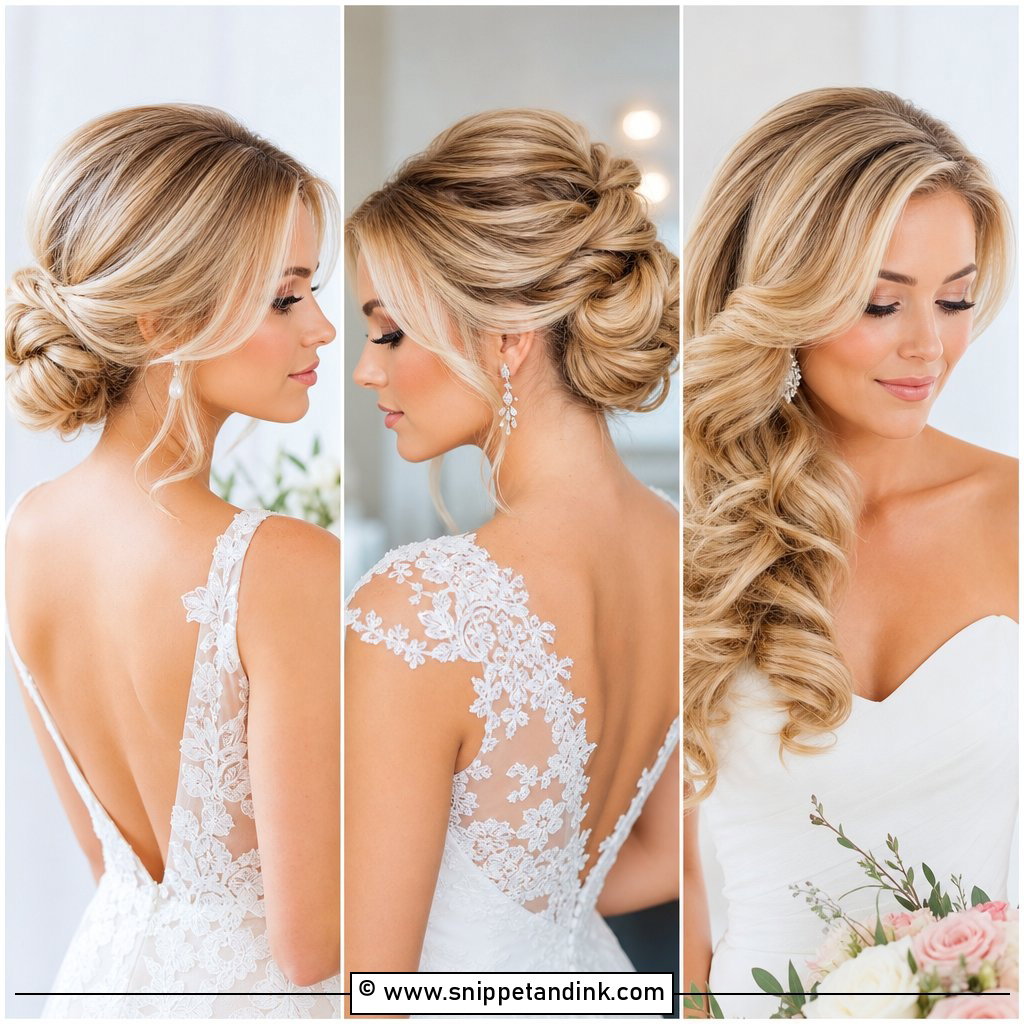
The low bun is the style I trust most on a long day. It sits at the nape, out of the way of hugs and car seats, and it barely changes between the morning photos and the last dance. I build it on a firm base, either a ponytail or two crossed sections pinned flat, so the weight doesn’t drag. It leaves strapless, off-the-shoulder and open-back dresses on show, and it takes veils and pearl pins easily. Ask for soft hold and a little lift at the crown, plus a couple of face-framing pieces if you want it softer.
2. Hollywood Waves Wedding Hairstyle
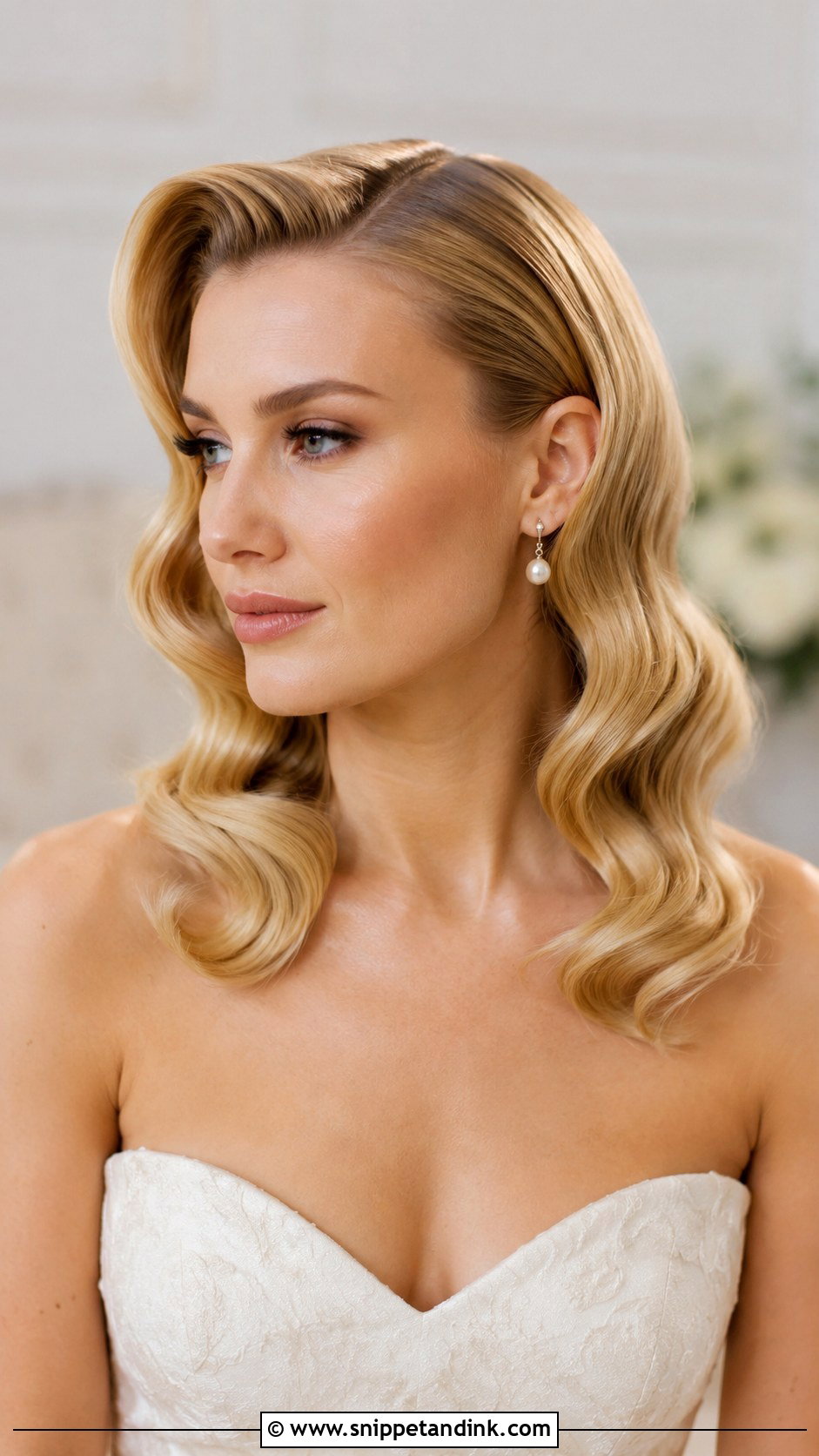
Hollywood waves are hair worn down that still reads formal, because the curls are brushed together into one continuous S-shape with a high shine. Getting that shape takes a uniform set: every curl in the same direction, pinned to cool, then brushed out with a boar bristle brush. Medium to long hair works best; fine hair often needs a few extensions to hold the wave’s width. They suit side parts, strapless dresses and satin gowns. Outdoors or in humidity, ask for strong prep and hidden pins behind the ear on the swept side, because this shape shows frizz more than any other.
3. Half Up Half Down Wedding Hairstyle
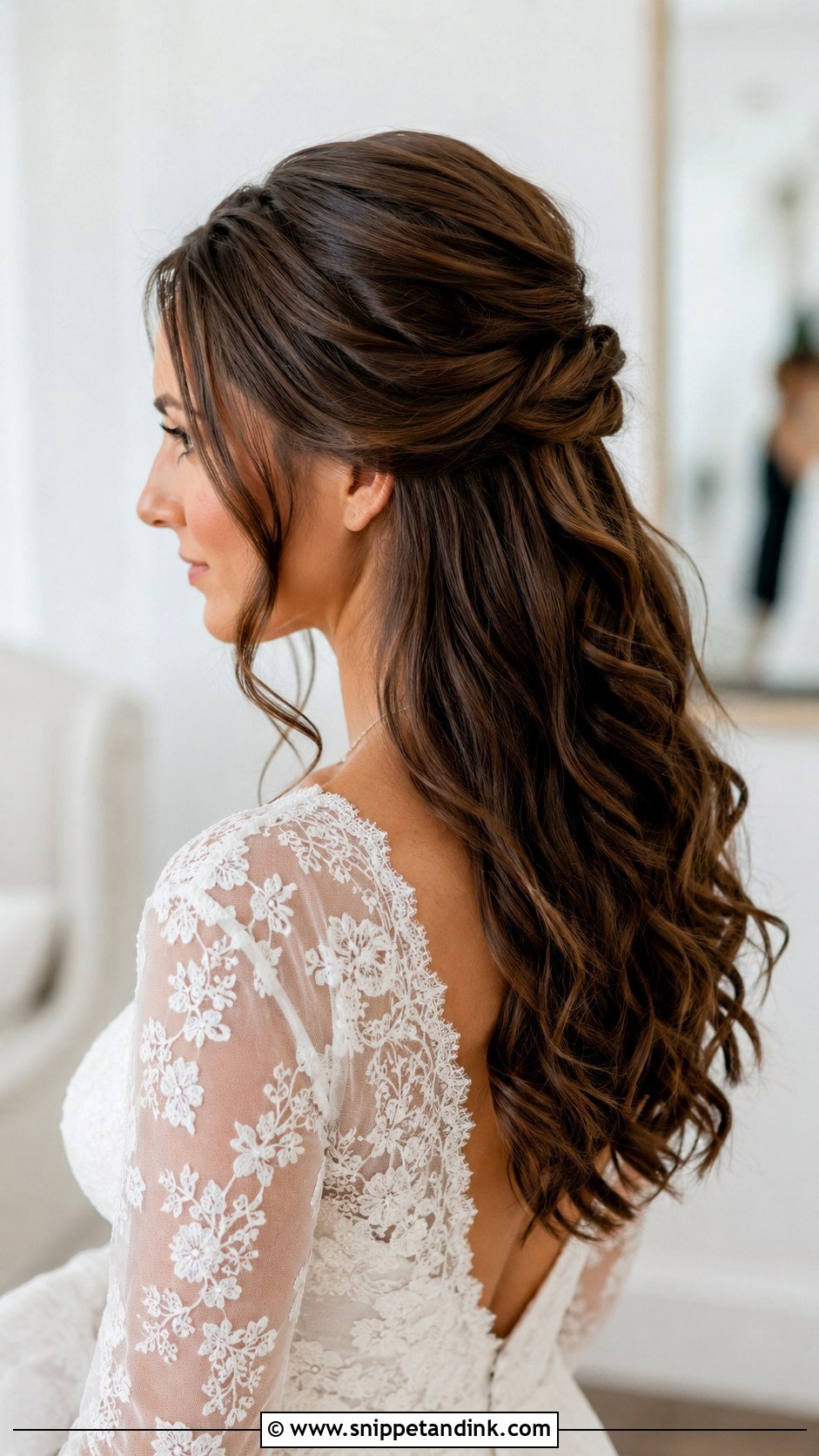
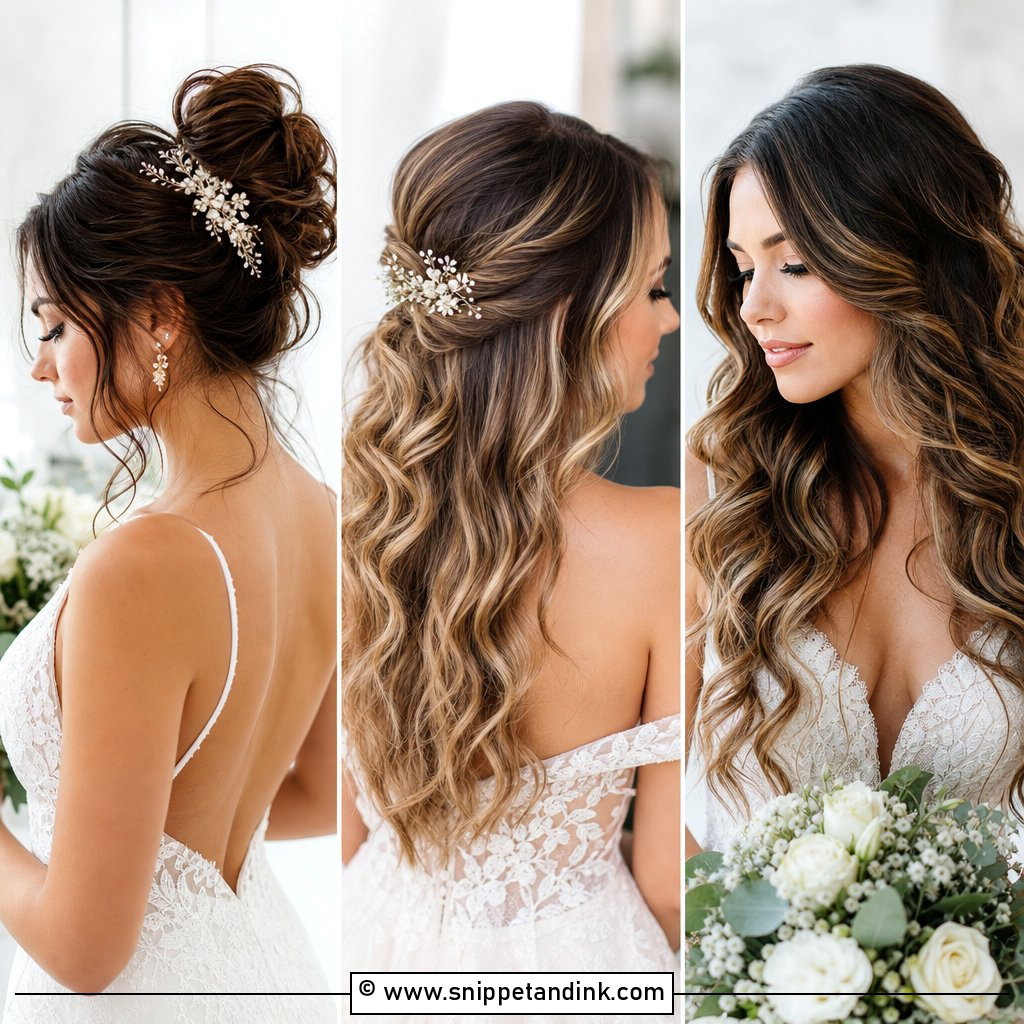
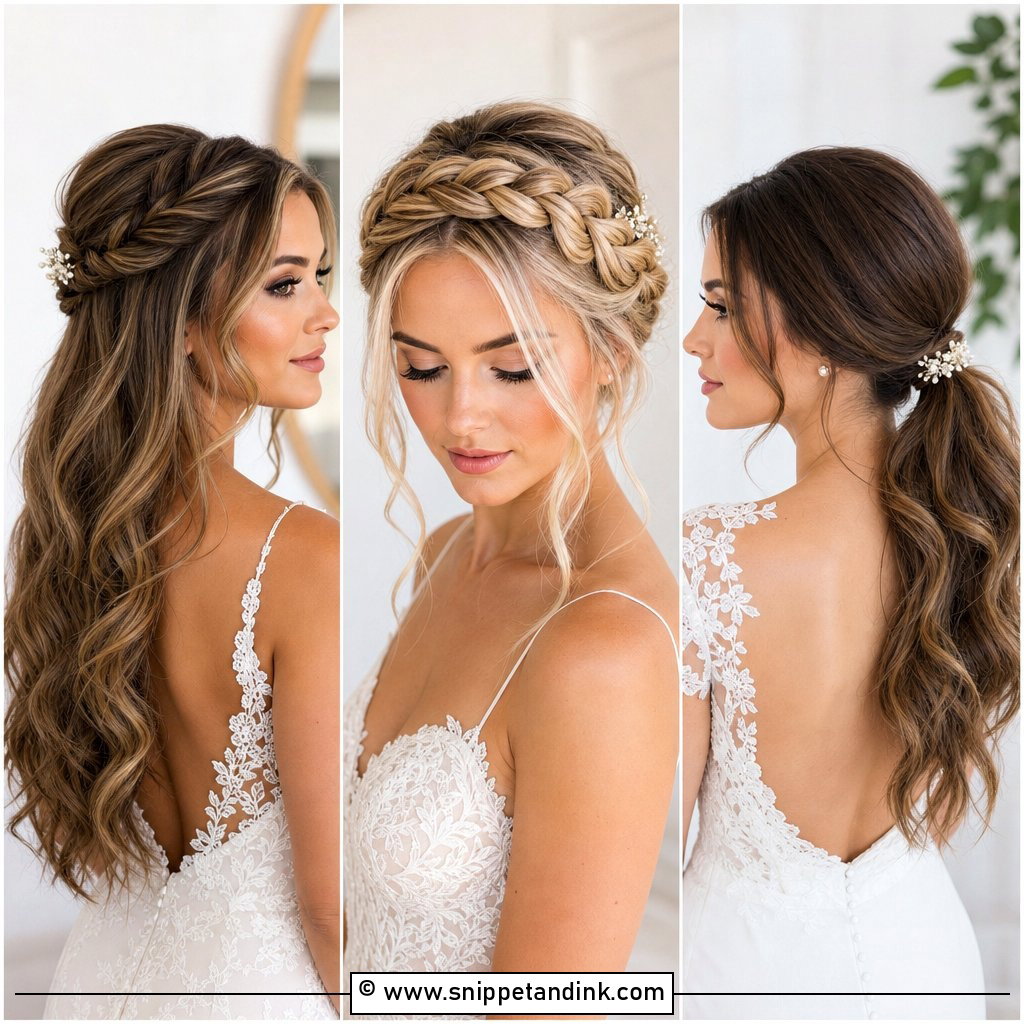
Half up, half down gives you the length and softness of loose hair with the face kept clear. The top section is lifted and secured, and the rest falls in waves or smooth bends. It’s often the answer for brides who feel too exposed in a full updo. What usually lets it down is the top section slipping by the evening, so I anchor it with crossed pins under a twist rather than a single clip. It takes veils, floral pins and pearl clips well. Add volume at the crown for a softer look or keep it sleek for something cleaner.
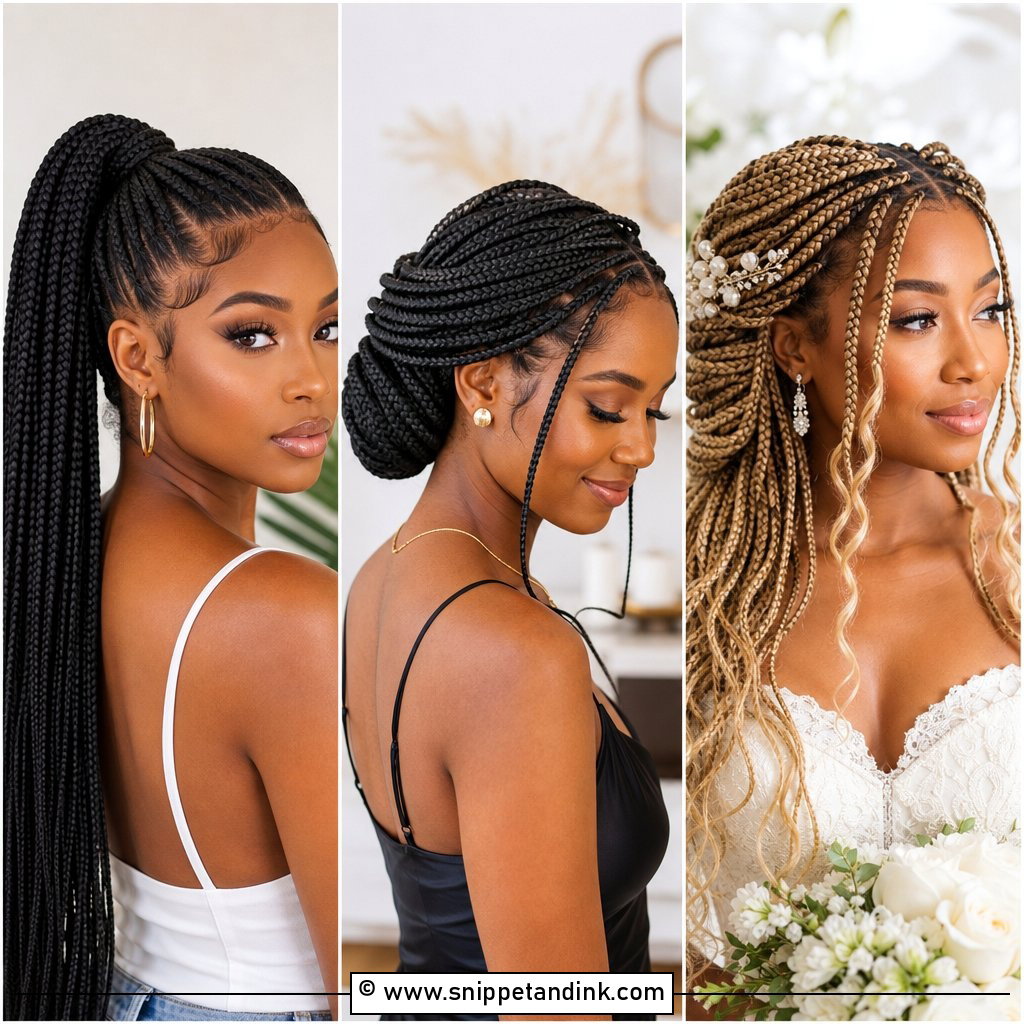
4. Sleek Ponytail Wedding Hairstyle
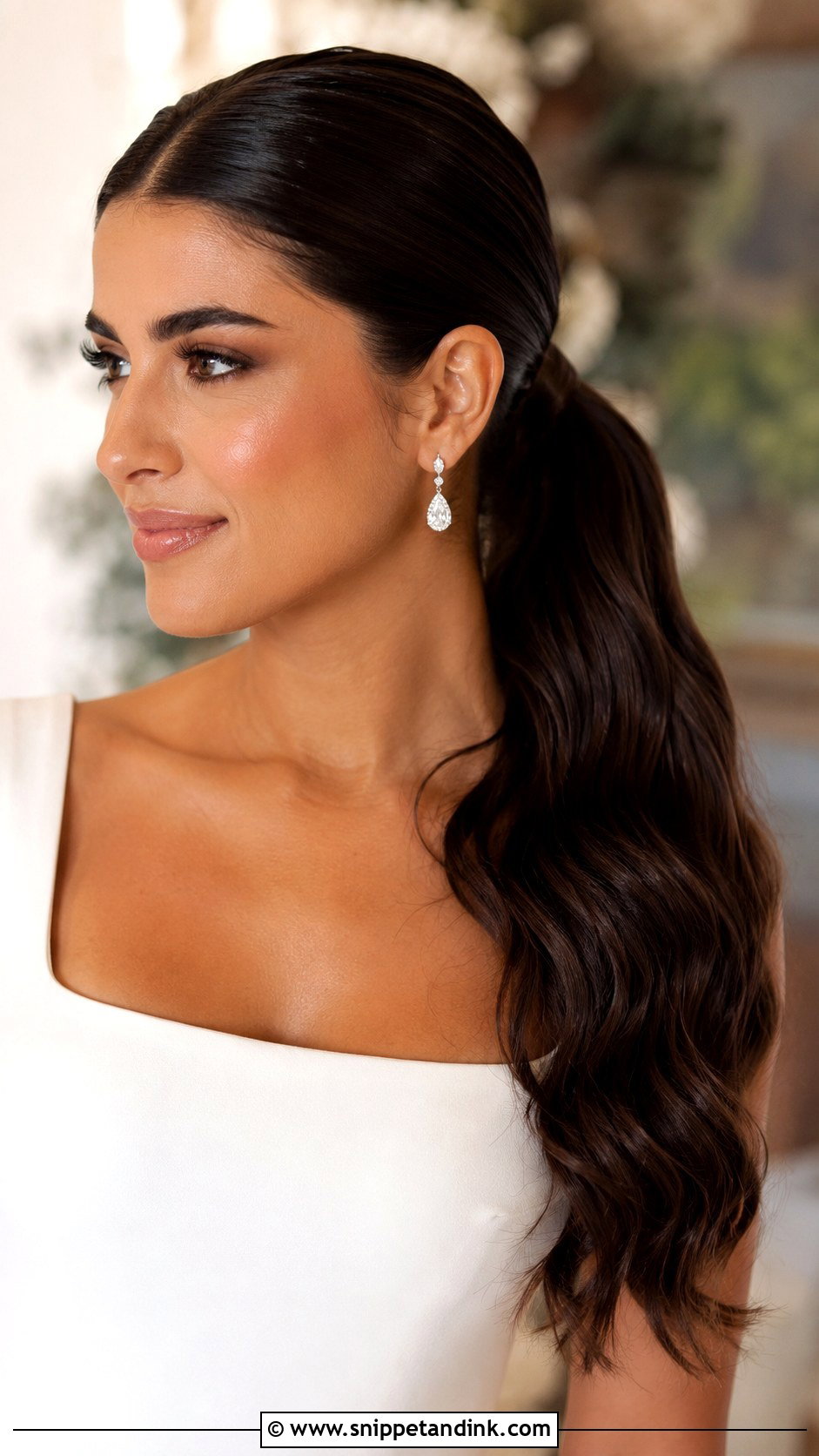
A sleek ponytail is modern and very practical in heat. It can sit low, at mid-height or high, and the height should follow the dress: low with a square neckline, higher with a one-shoulder or halter. A wrapped base hides the elastic. The difficulty is the smoothness. Any bump at the sides shows in photos, so I blow-dry the hair straight first and brush it into the band with a little gel or smoothing cream. Ask for shine spray, frizz control and a few pins under the wrap so it stays crisp all day.
5. Textured Chignon Wedding Hairstyle
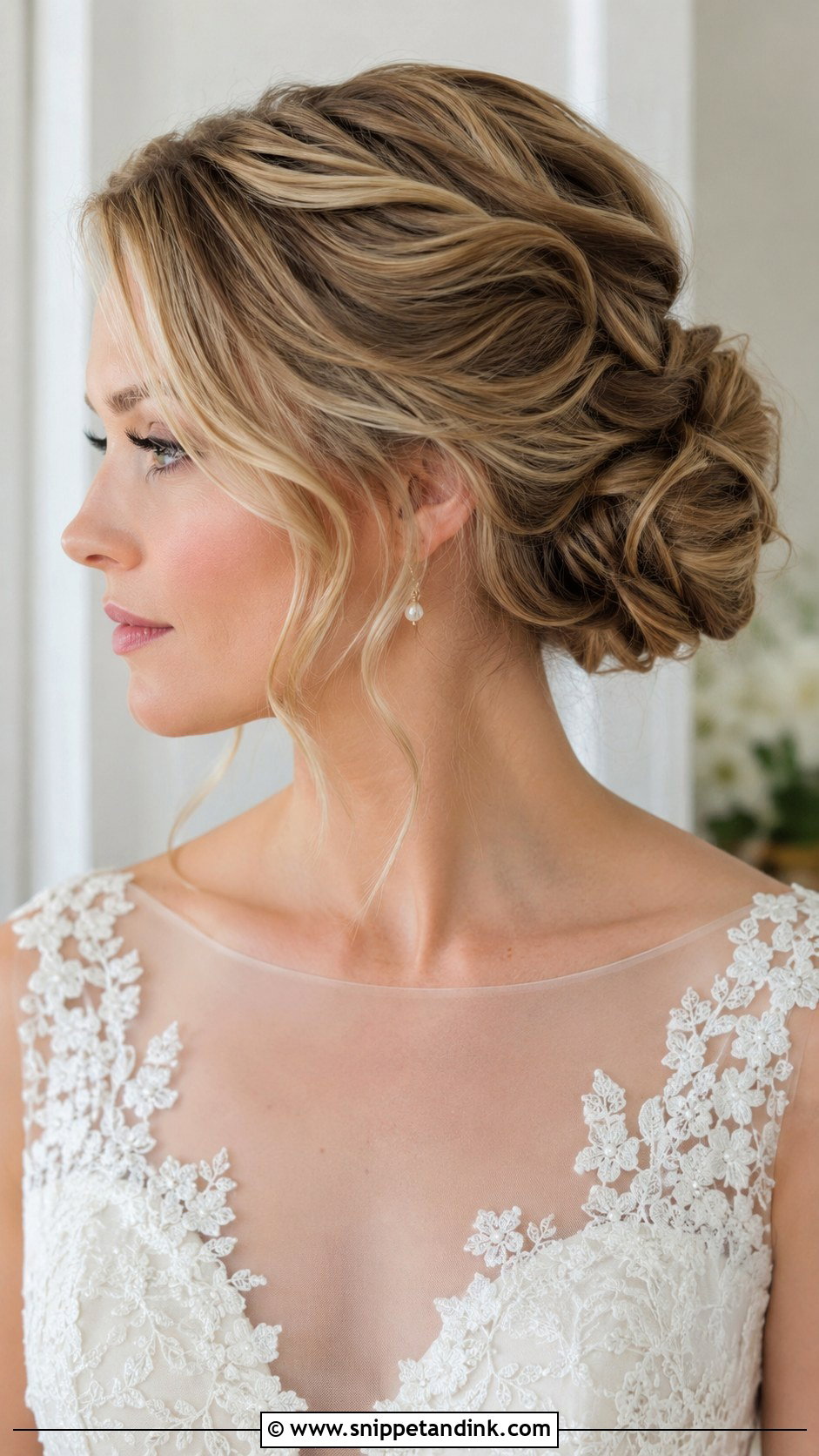
A textured chignon is a low updo built from twists and tucked sections, so it has more movement than a sleek knot. It shows highlights and balayage especially well, since the twisting brings the different tones to the surface. Very silky hair won’t hold the shape without help, so I add texture spray or light backcombing for grip before I start. It goes with lace dresses, garden weddings and cathedral veils. Keep a few loose tendrils at the front.
6. Braided Crown Wedding Hairstyle
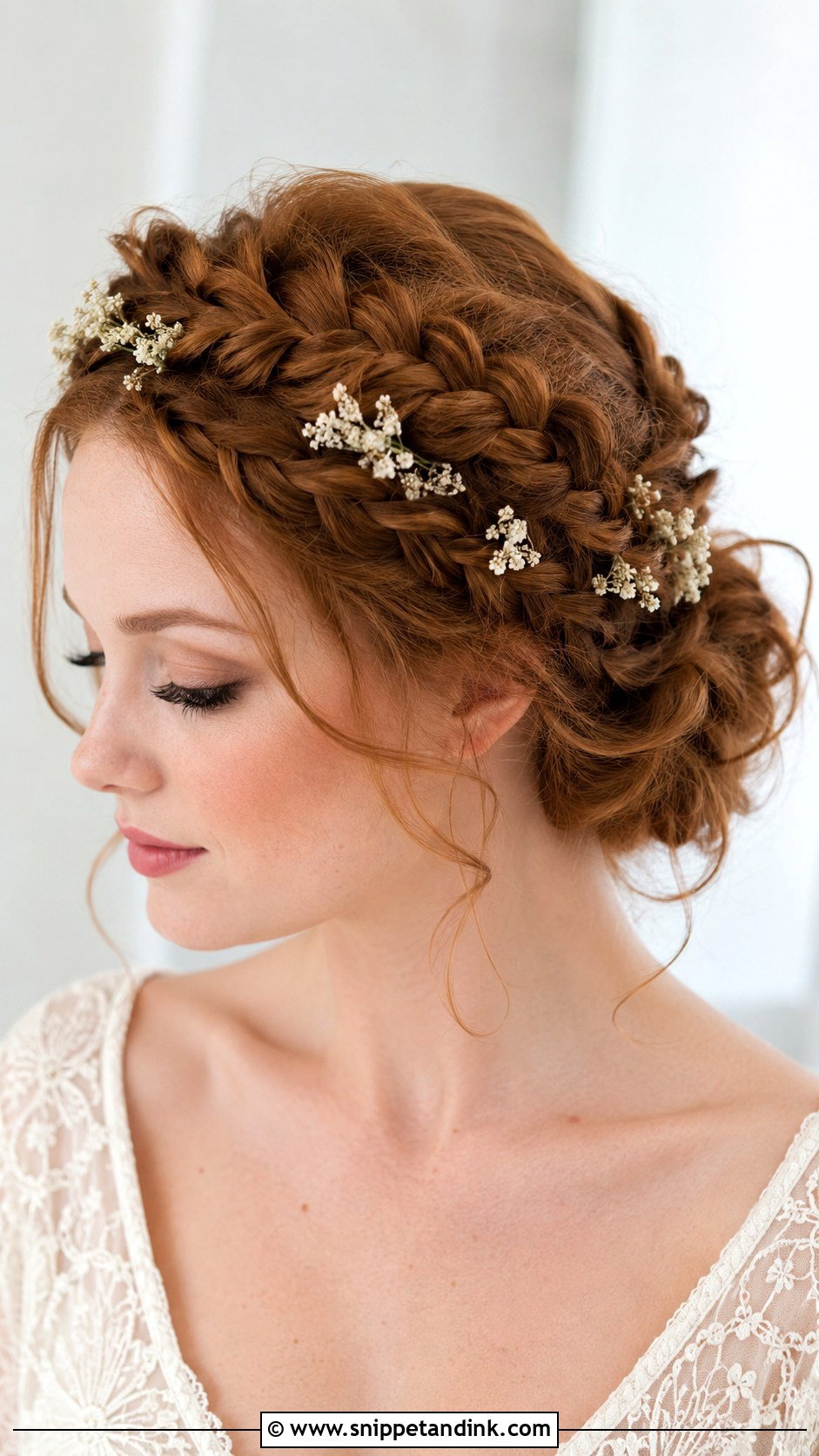
A braided crown is one of the most secure looks I do for outdoor weddings. The braid wraps around the head like a soft halo, and the rest of the hair can be tucked up or left in loose curls. It’s a useful veil alternative, because flowers or small pearls can be woven straight into the braid. I keep the braid full and gently pulled apart so it doesn’t look tight or childlike. It also holds shorter layers that would otherwise fall out of an updo.
7. Soft Waves Wedding Hairstyle
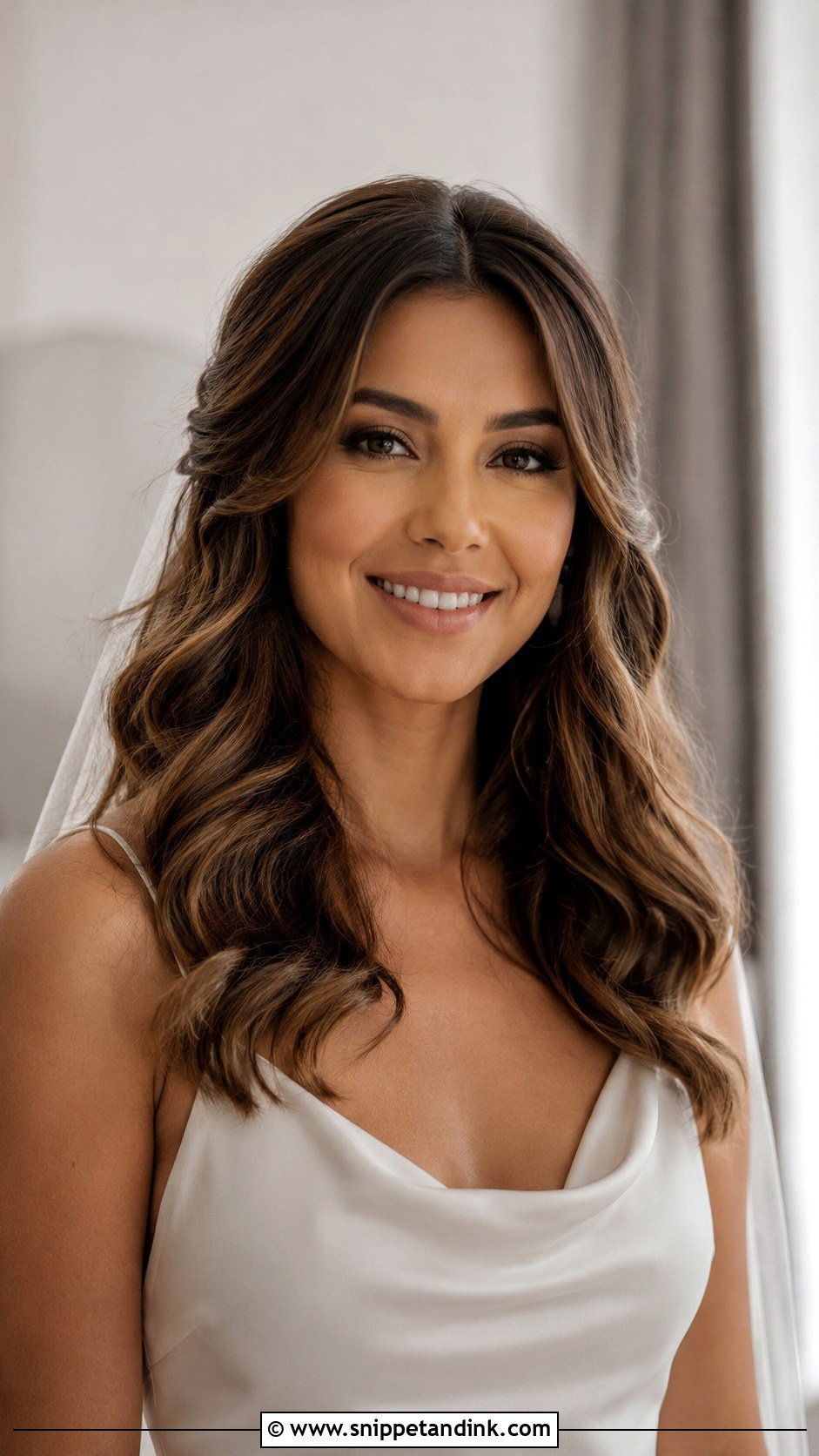
Soft waves are looser than Hollywood waves and more finished than everyday curls. They move freely, frame the face and sit with most dresses, at the beach or in a courthouse. Fine hair often needs light extensions or root lift so the waves don’t flatten after an hour. Thick hair is the opposite problem: I’d ask your stylist to curl in larger sections and smooth the shape so it feels light, not bulky. They work with a center or side part and with a veil, headband or floral clips.
8. High Bun Wedding Hairstyle
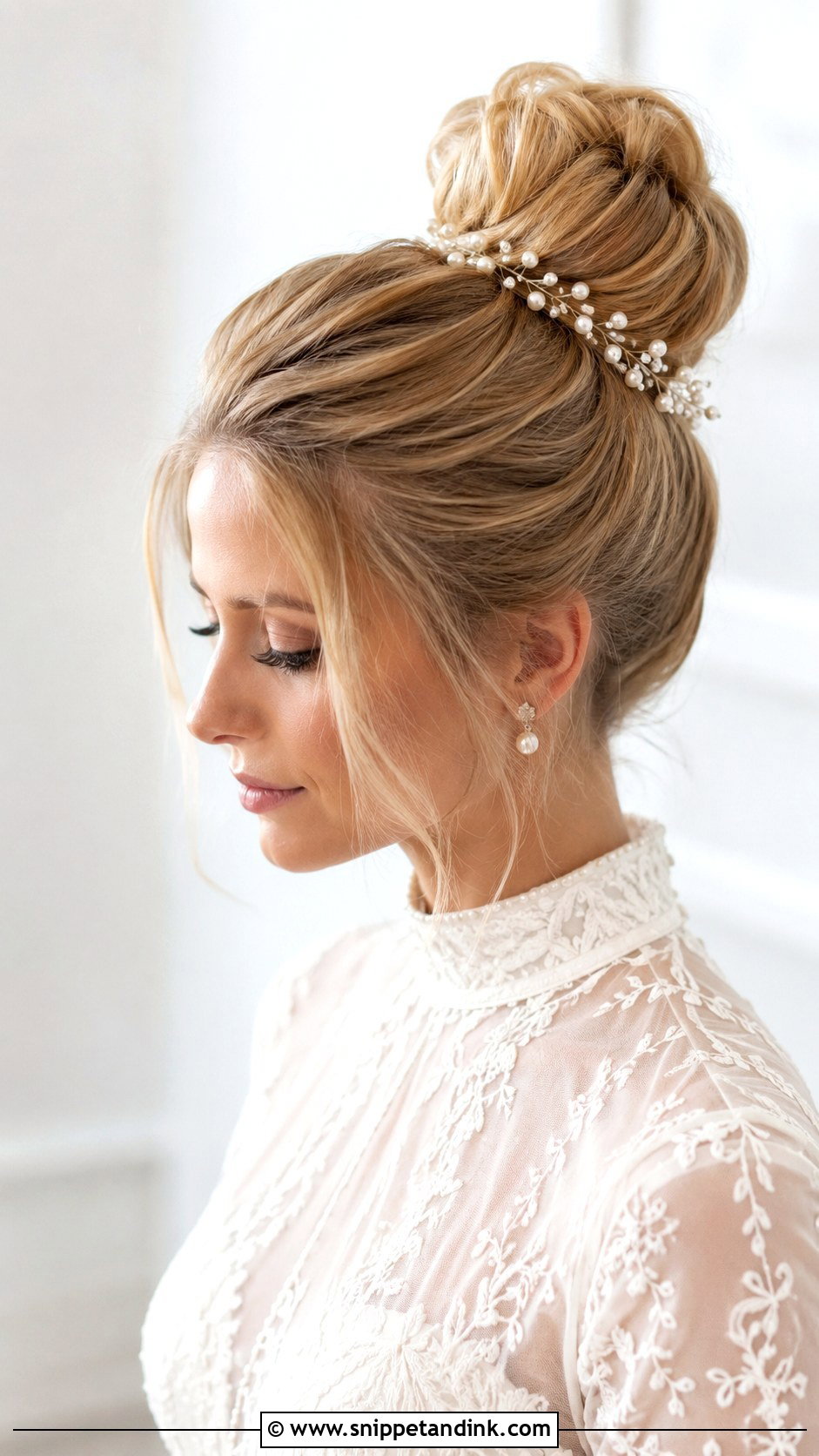
A high bun lifts everything upward and makes the neck look longer. It can be sleek and sculpted or soft and full. Halter necklines, high collars and ball gowns suit it, and it keeps hair off the shoulders in the heat. The thing to test at a trial is comfort: a heavy bun pinned high can pull at the scalp after a few hours, and the veil placement changes. Make sure it feels secure and light enough before you commit.
9. Side Swept Curls Wedding Hairstyle
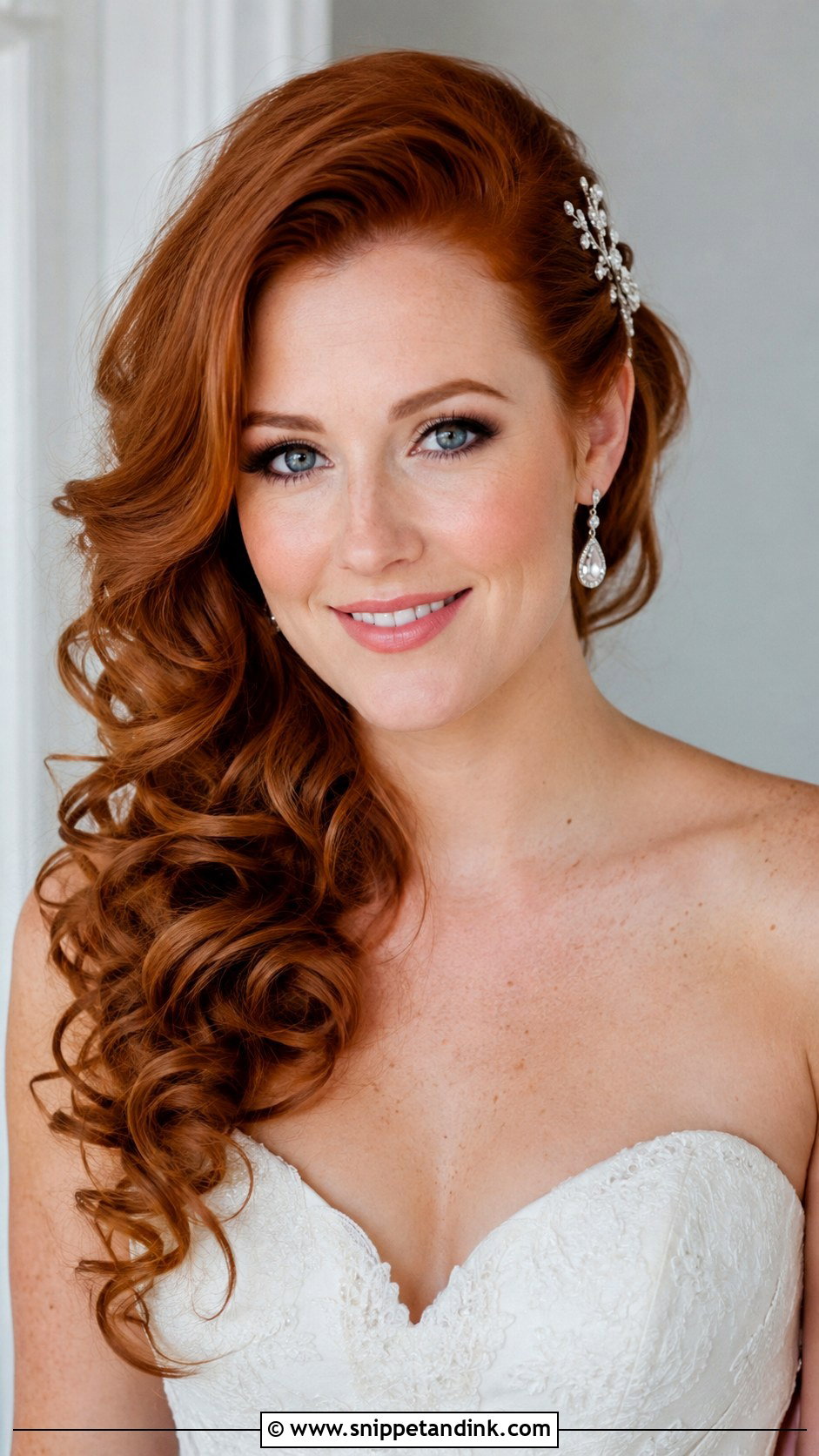
Side swept curls are styled to one side, often with a deep part, then pinned so the curls fall over one shoulder. It shows off the neckline on one side and keeps the softness of hair worn down. One-shoulder gowns and sweetheart necklines work well with it. The hidden side is what keeps the whole thing in place; I pin it in a vertical row behind the ear so the weight stays balanced through hugging and dancing. It’s also easy to keep a veil for the ceremony and then switch to a fuller side for the reception.
10. French Twist Wedding Hairstyle
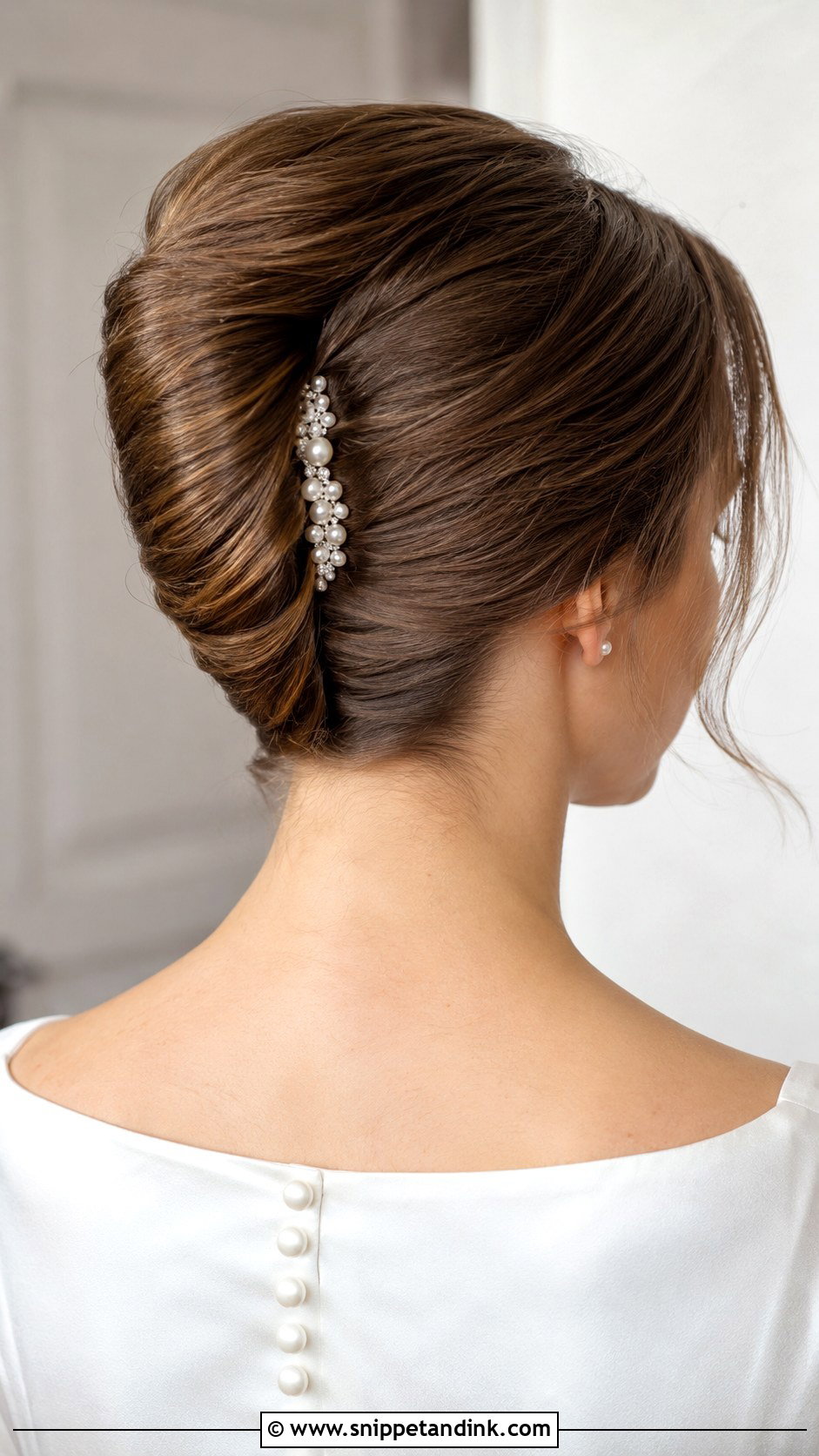
The French twist lifts hair vertically and tucks it into a smooth roll at the back of the head. It’s at home at formal weddings and city venues, and it pairs with pearl earrings, satin dresses and long veils. It’s a technical style. Layers tend to poke out of the roll, so if your hair is layered I’ll use texture spray and a lot of small pins to keep each section tucked. The twist can be sleek and traditional, or softened with face-framing pieces for a newer look.
11. Messy Bun Wedding Hairstyle
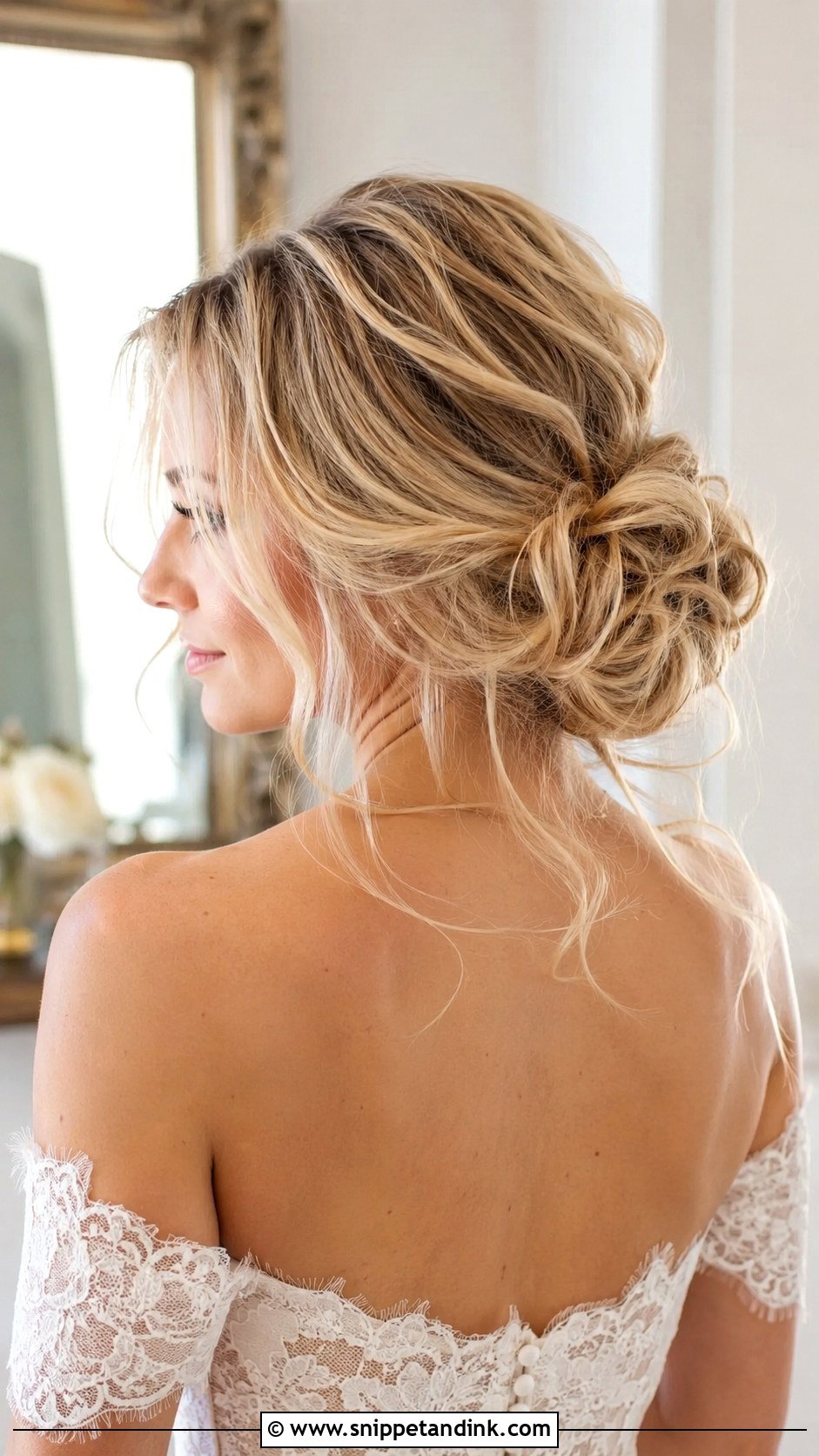
A messy bun should look intentional. The best version has balanced volume, loose pieces placed on purpose and a firm structure underneath. It suits relaxed weddings, outdoor venues and brides who don’t want a stiff updo, and it can sit low, mid-height or slightly to the side. Floral pins, small combs and light veils all work. A trial matters a lot here, because how messy the bun looks depends on hair density: thick hair can look heavy and thin hair can look sparse.
12. Long Curly Wedding Hairstyle
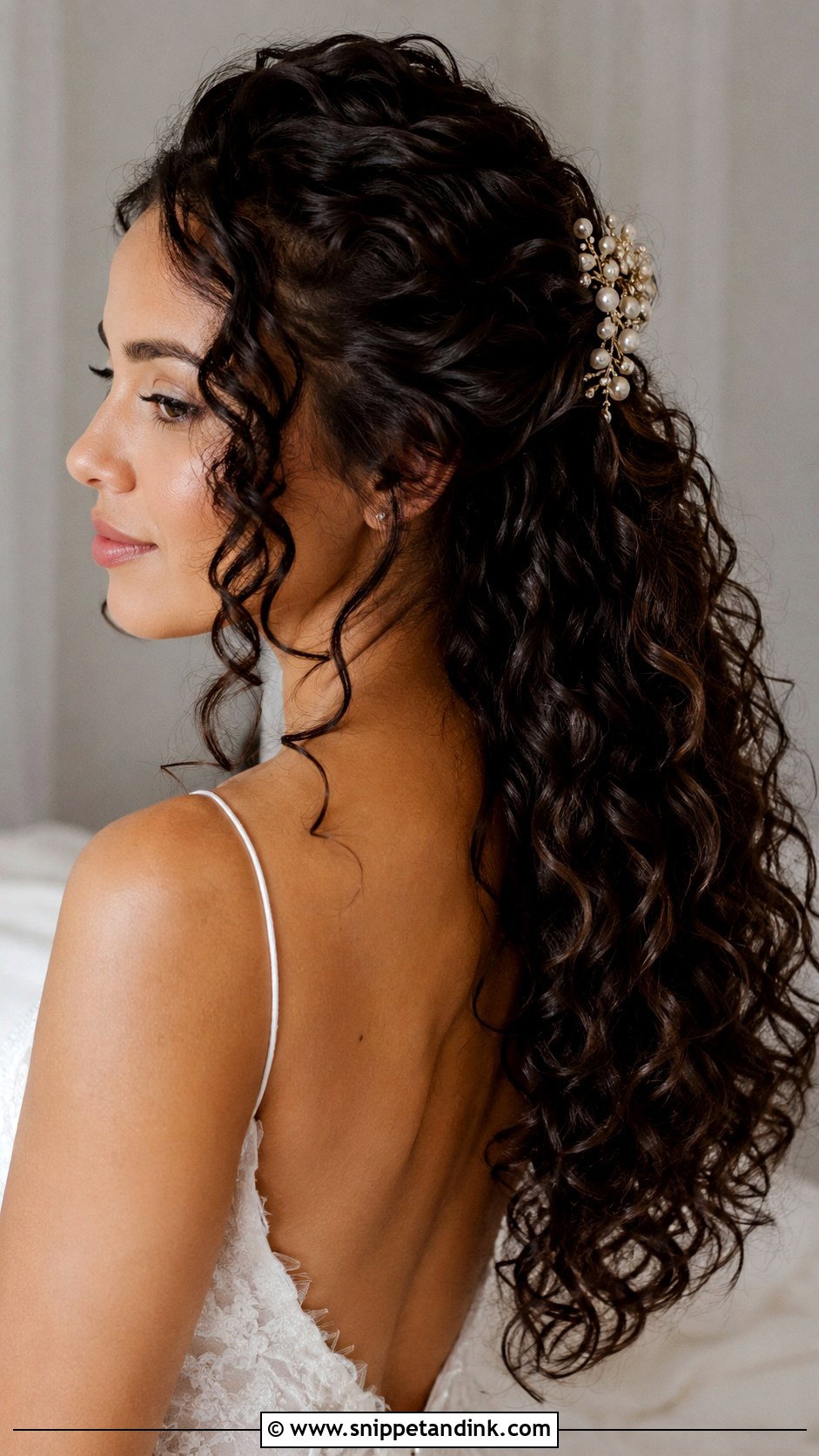
Long curls have volume and texture on their side, natural or styled. They can be worn down, partly pinned back or framed with a veil. What I’m after is definition without any crunch, so the curls stay soft to touch. Hydration, curl cream and anti-humidity finishing products matter far more than heat. Dresses with simple lines let the hair carry the look. Ask your stylist to shape the curls around your face, since loose curls can hide the face in side shots.
13. Short Hair Wedding Hairstyle
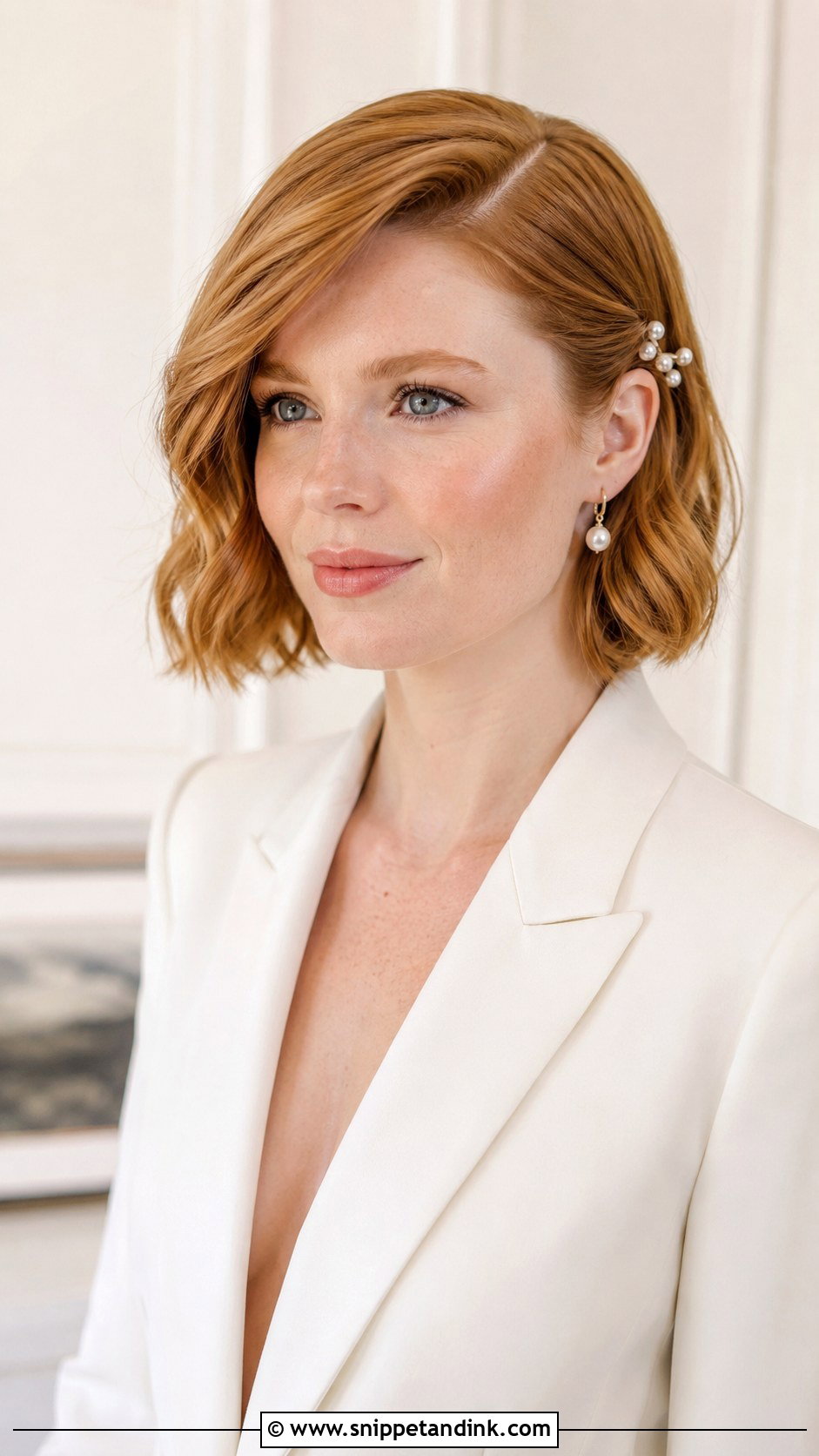
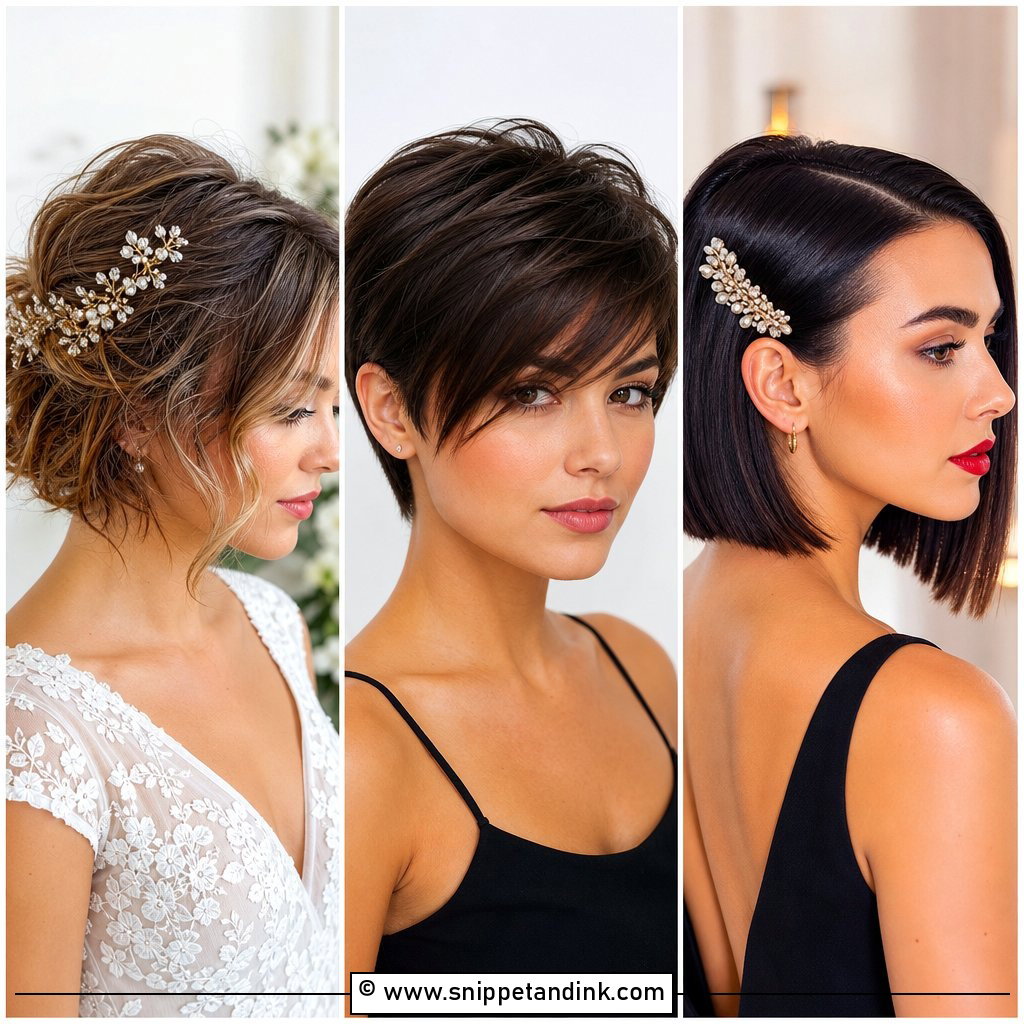
Short hair can be every bit as bridal as long hair; it just needs more precise styling. A bob, pixie, lob or cropped cut can be waved, smoothed, tucked or given a soft side part. Accessories do a lot of the work, so a pearl pin, a headband, a small veil or a floral comb makes a big difference. Get the cut a couple of weeks before the wedding so it has time to settle rather than looking freshly cut in photos. Strong finishing products are important, because short layers show any frizz.
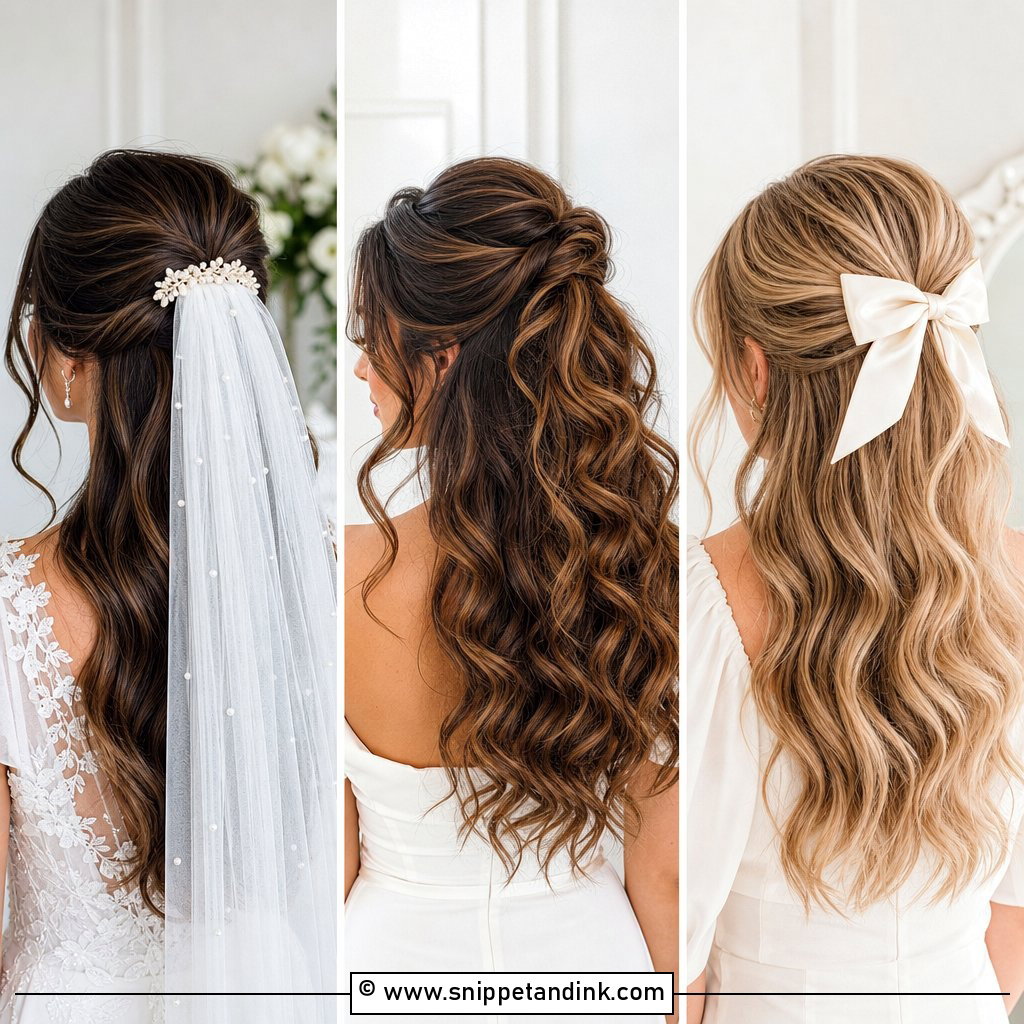
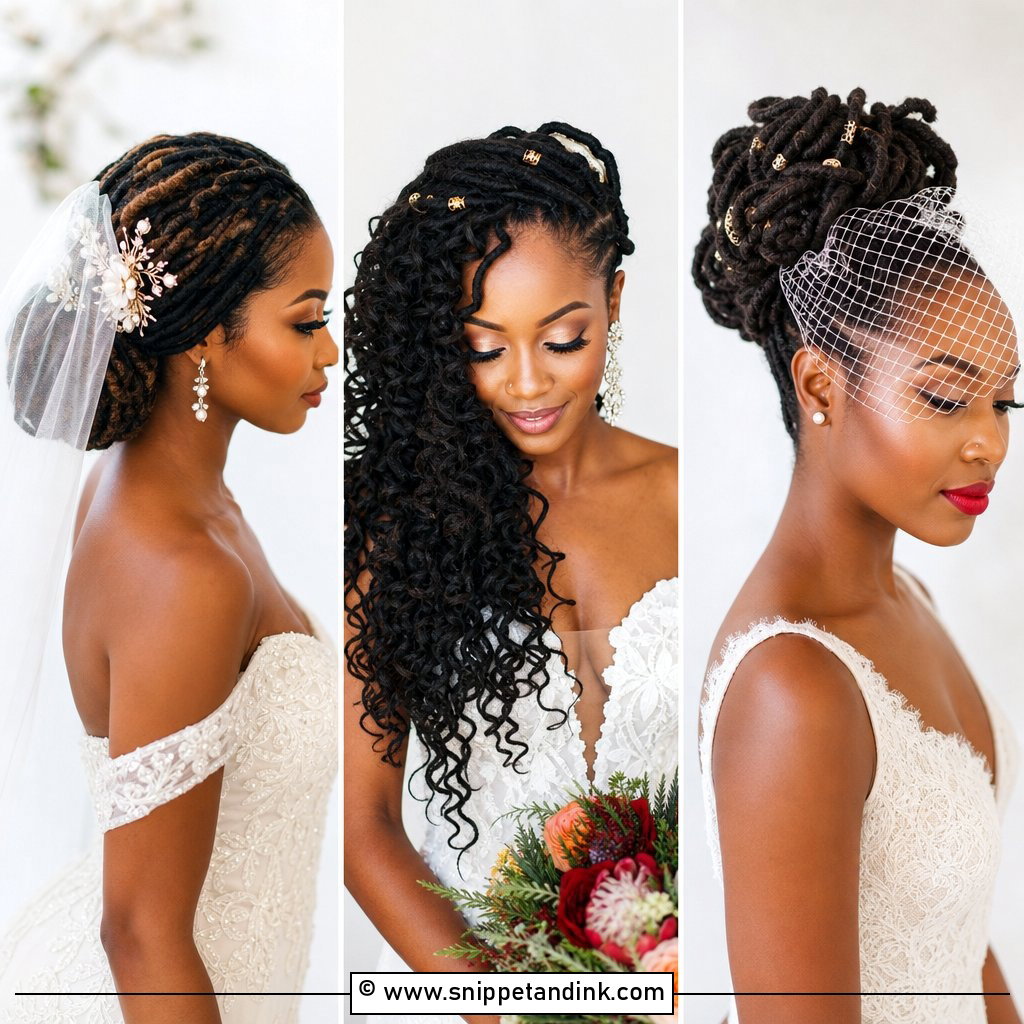
14. Wedding Hairstyle With Veil
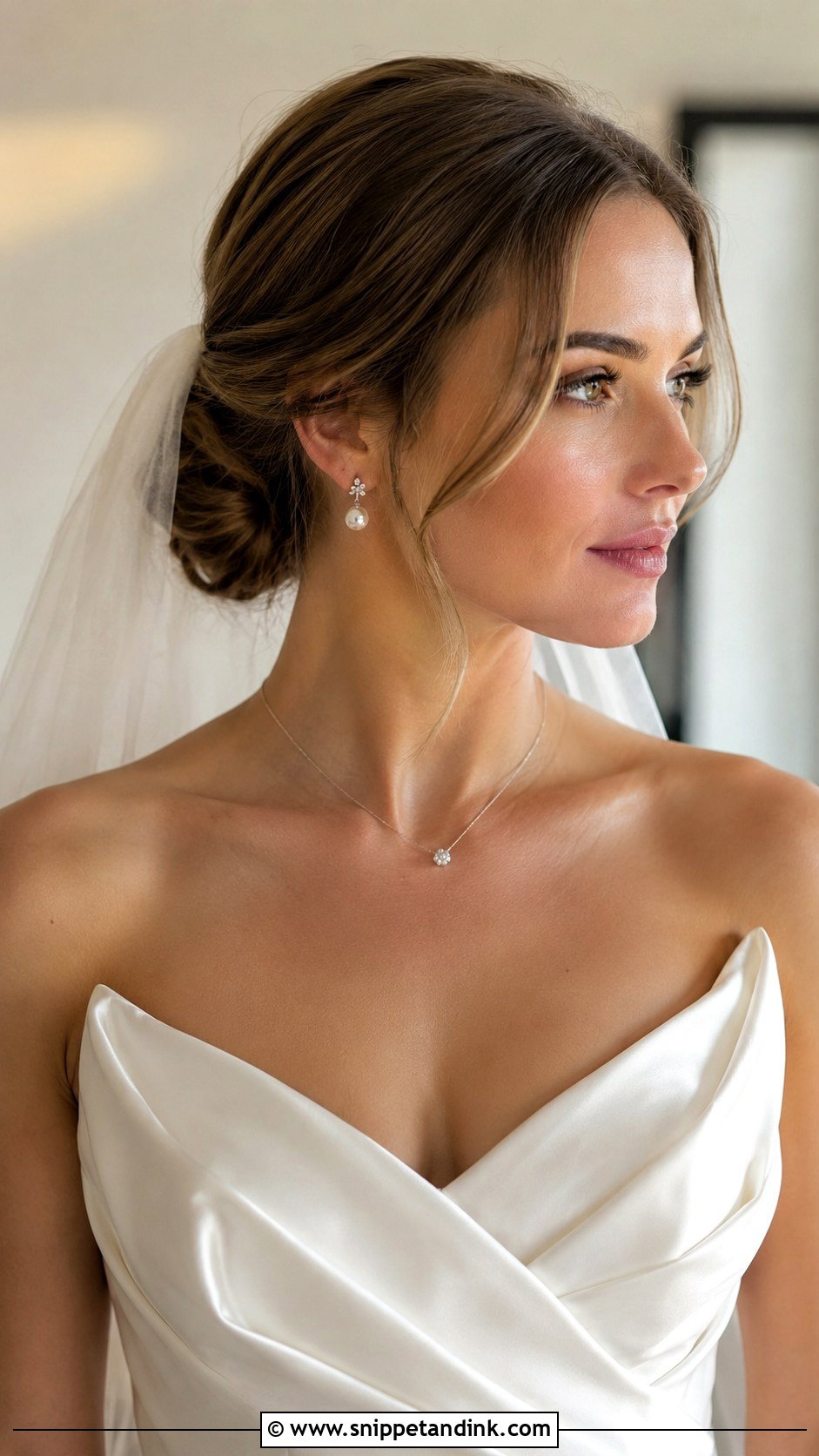
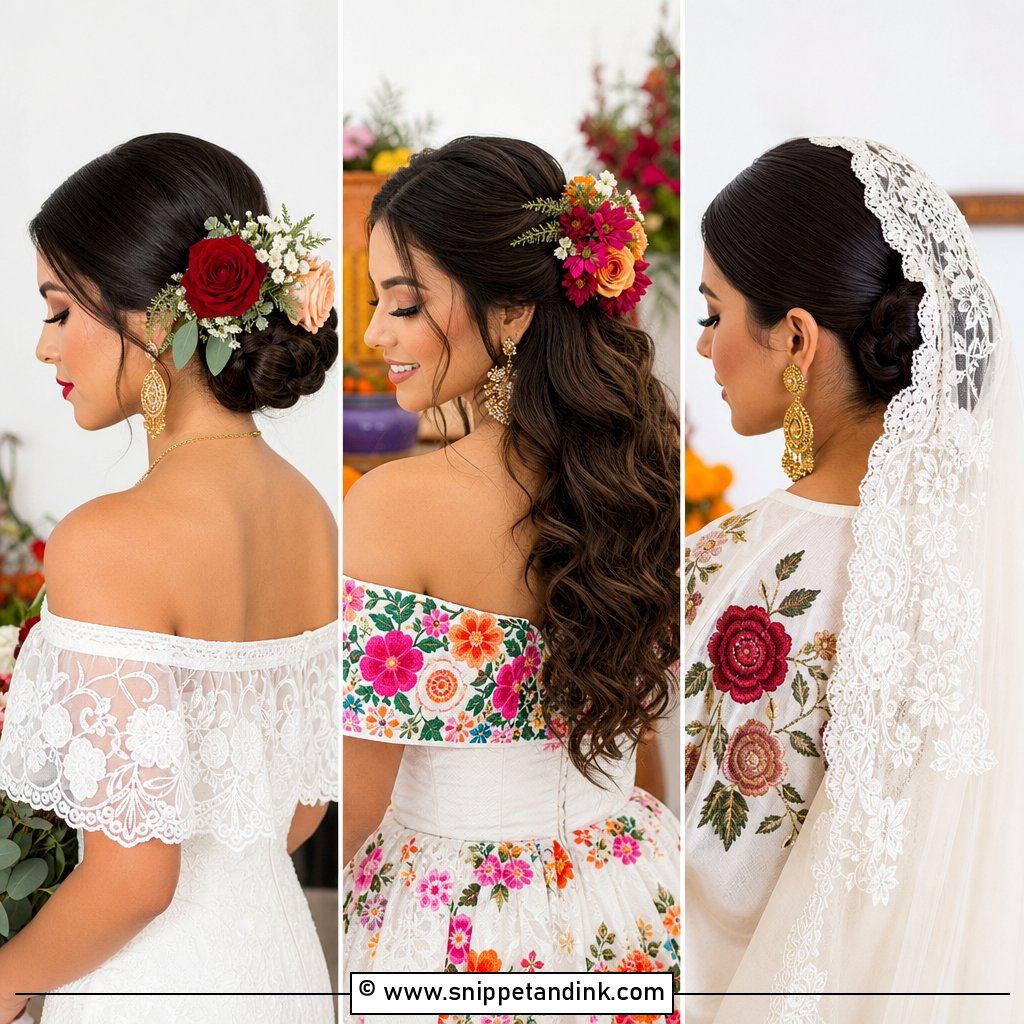
With a veil, I plan the placement before anything else, because it changes the whole style. The comb can sit above a bun, under it, at the crown or inside a half-up section. Low buns, chignons, Hollywood waves and half-up styles all take a veil well. Bring the actual veil, or one of similar weight, to your trial; a heavy cathedral veil needs far more support than a light fingertip one. Ask your stylist to hide the comb without flattening the style. A good veil style should look complete once the veil comes off for the reception.
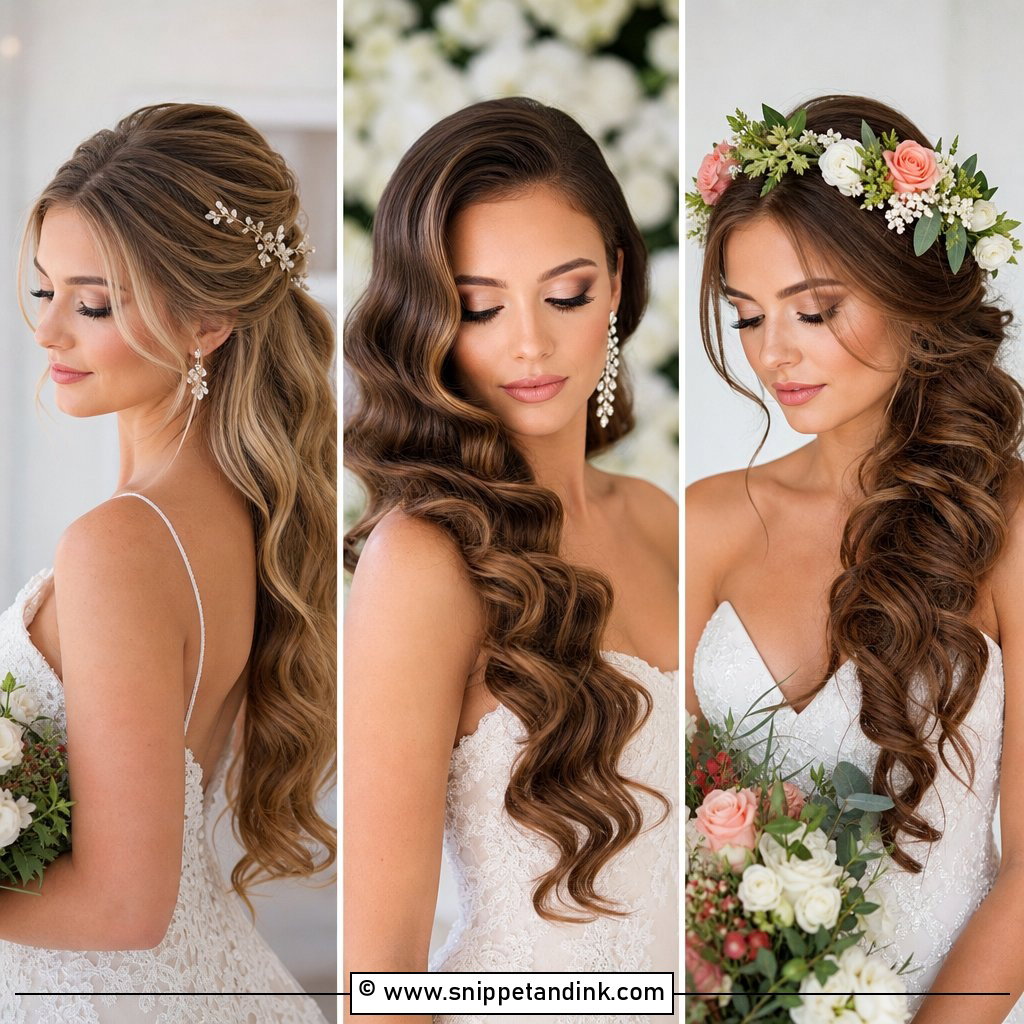
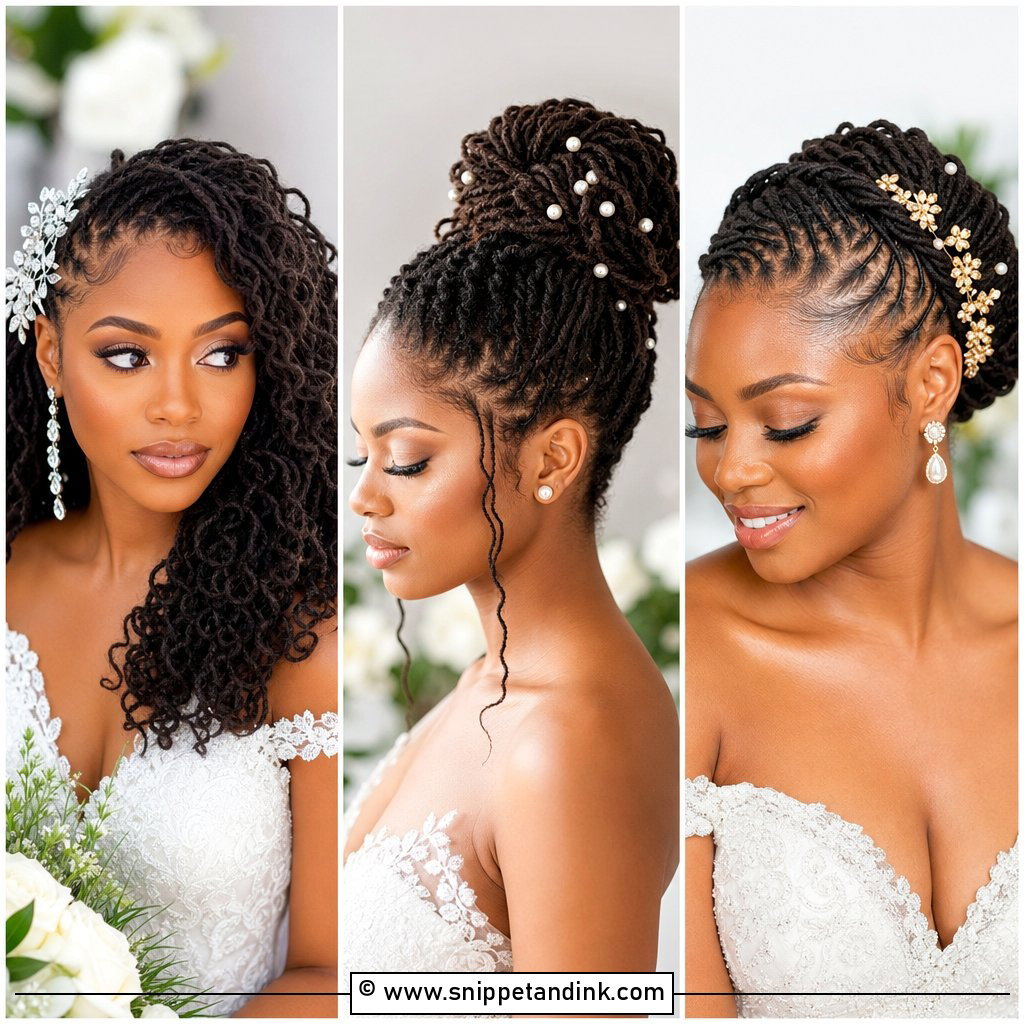
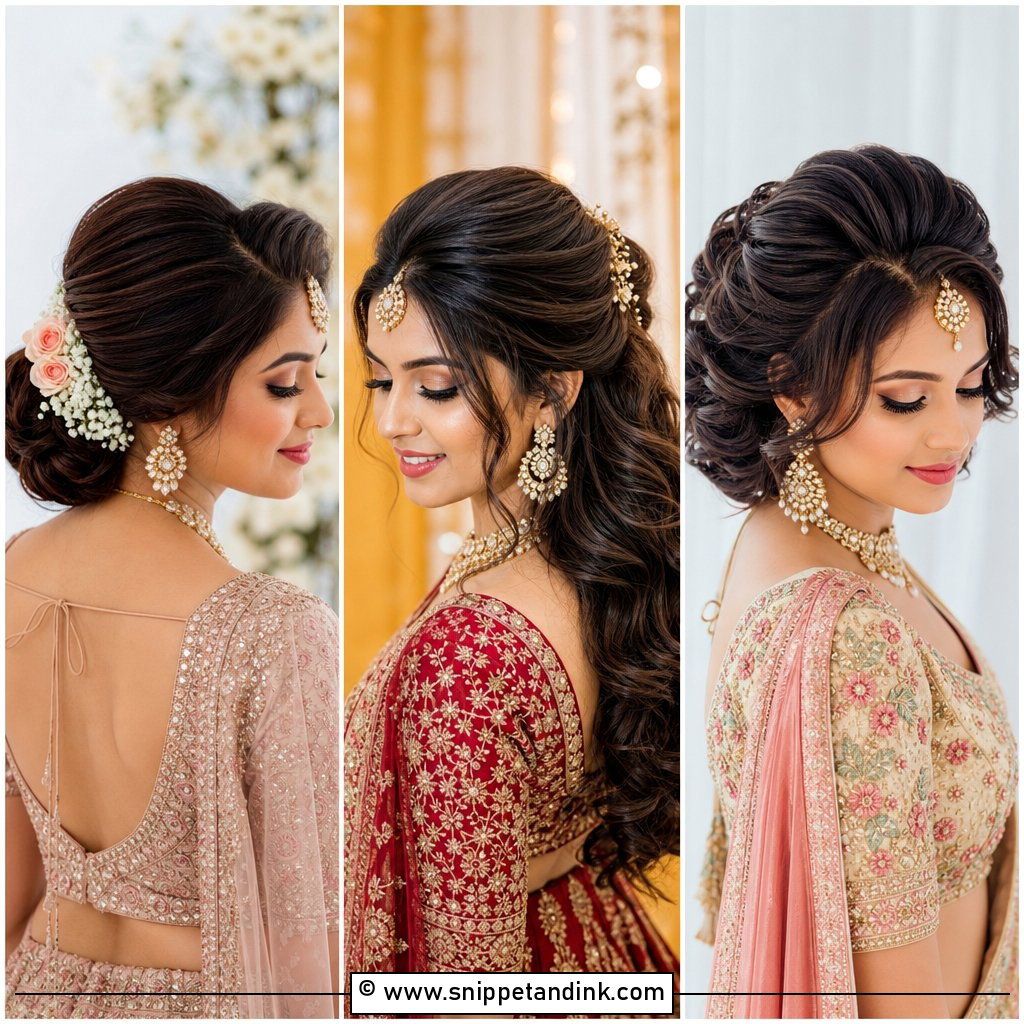
15. Wedding Hairstyle With Flowers
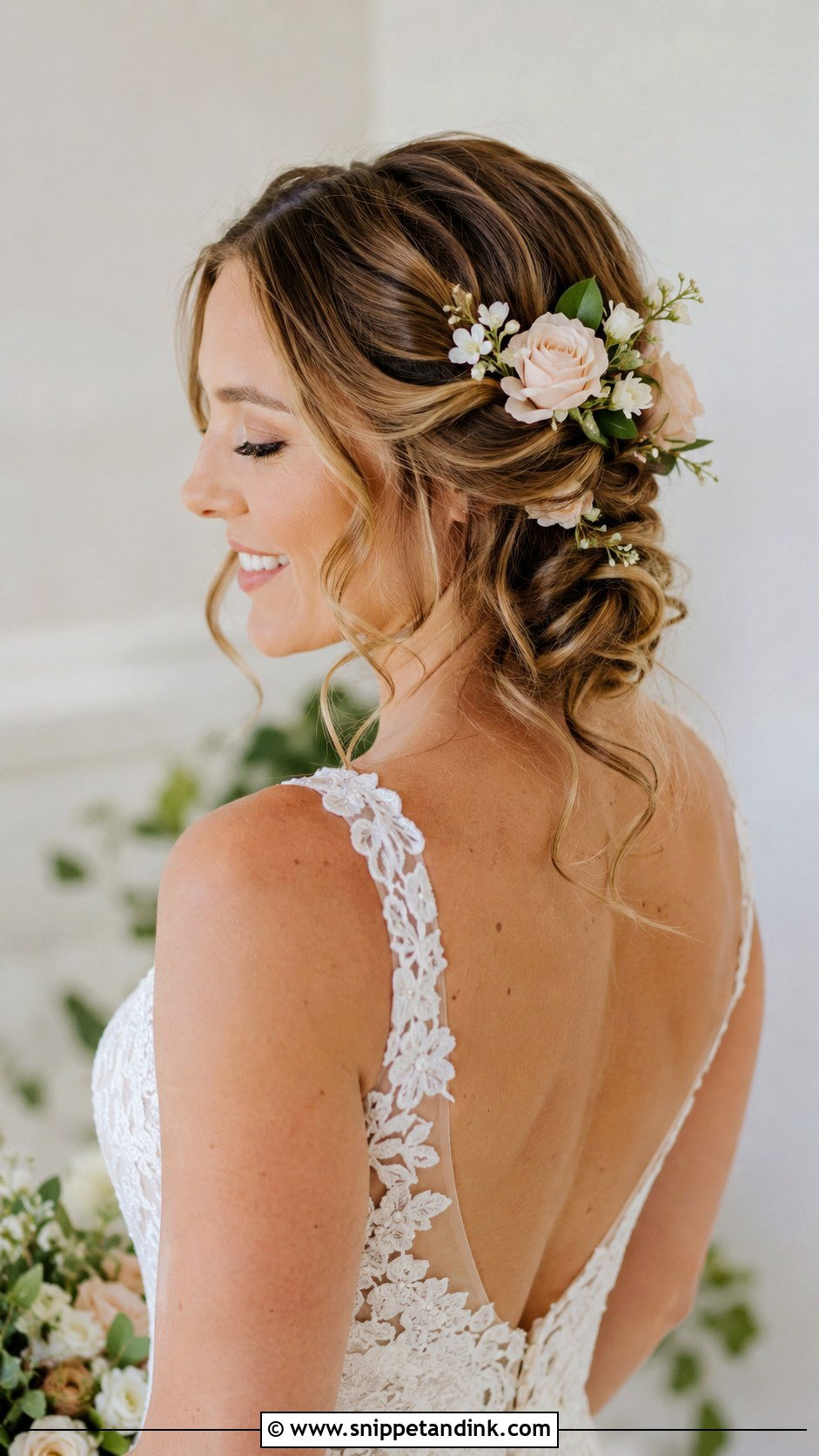
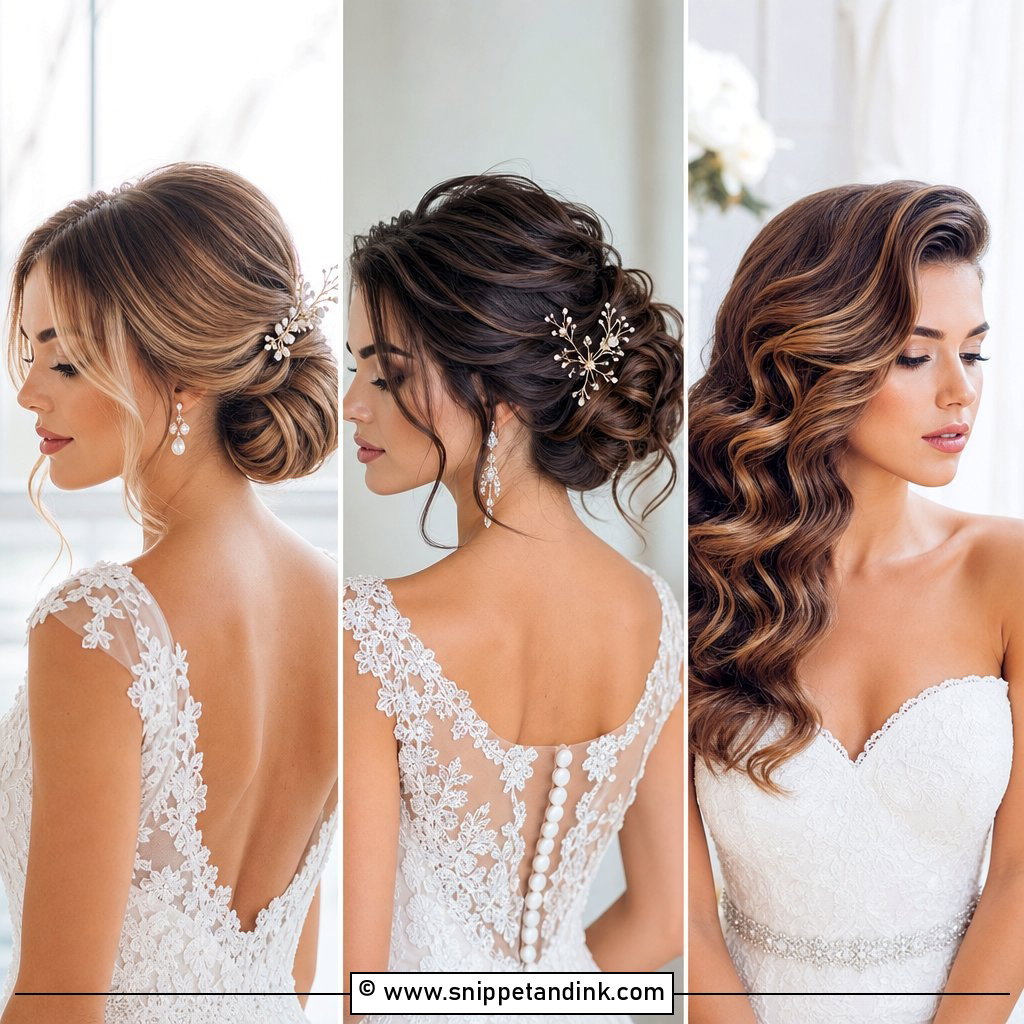
Small flowers can be tucked into braids, buns, half-up twists, ponytails or loose waves, and the scale is what makes them look right. Tiny blossoms suit delicate styles, while fuller blooms suit textured updos and thick waves. Fresh flowers need planning, since many wilt fast once they’re out of water and pinned to warm hair. Ask your florist and stylist to coordinate on sturdier blooms, and pin them in last. Placing them slightly unevenly looks more natural than a neat row.
16. Wedding Hairstyle For Thin Hair
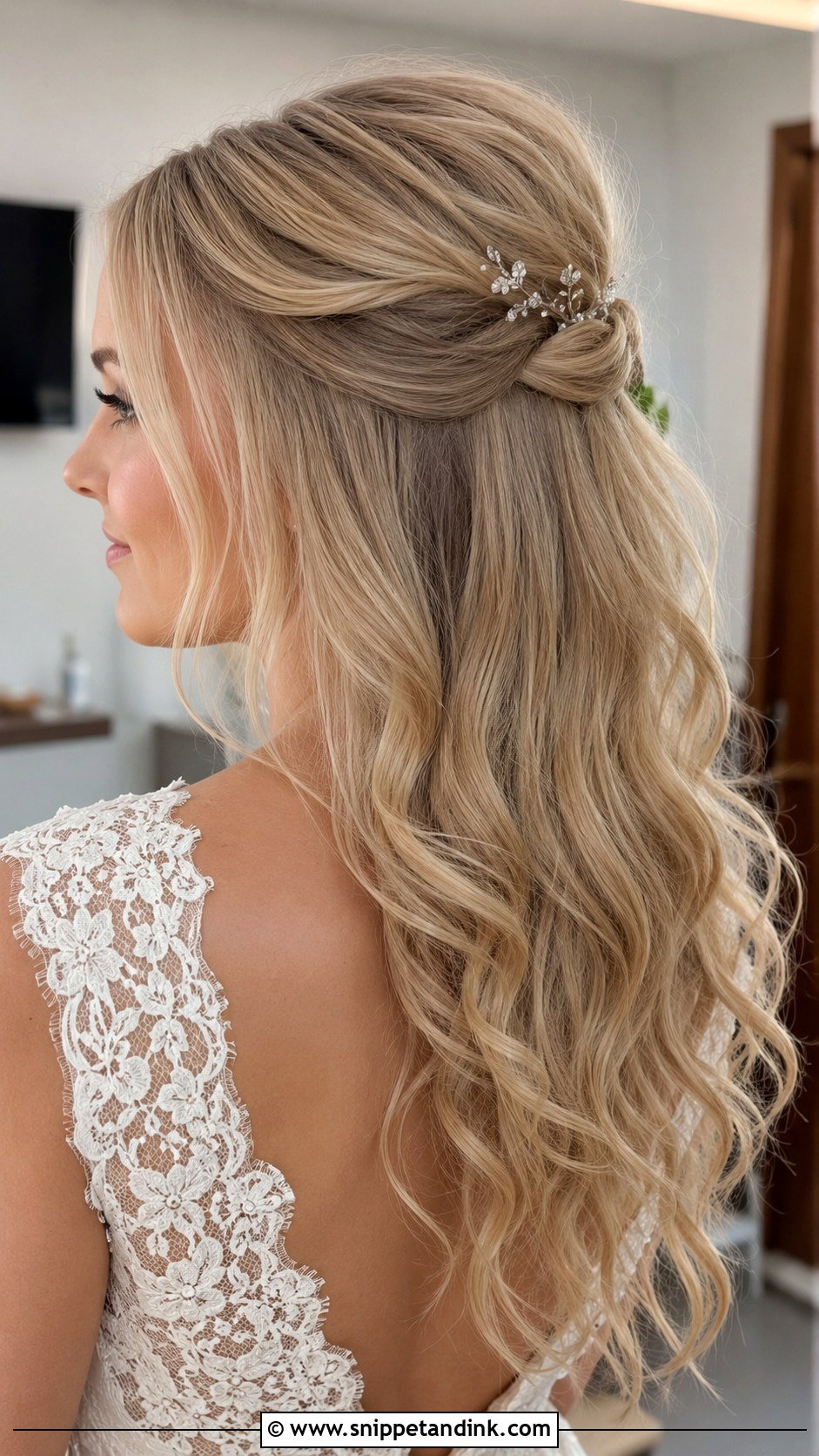
With thin hair, shape and fullness matter more than the specific style. Half-up waves, textured buns, soft chignons and low ponytails can all look fuller with the right prep. Extensions are very common for weddings, even when you only want volume rather than length. I’d also use root lift, texture spray, padding or clip-ins. I’d avoid very tight, sleek styles on fine hair, since they can show the scalp in flash photos. Soft waves and face-framing pieces help the hair look thicker. Your trial shows how much support your hair needs.
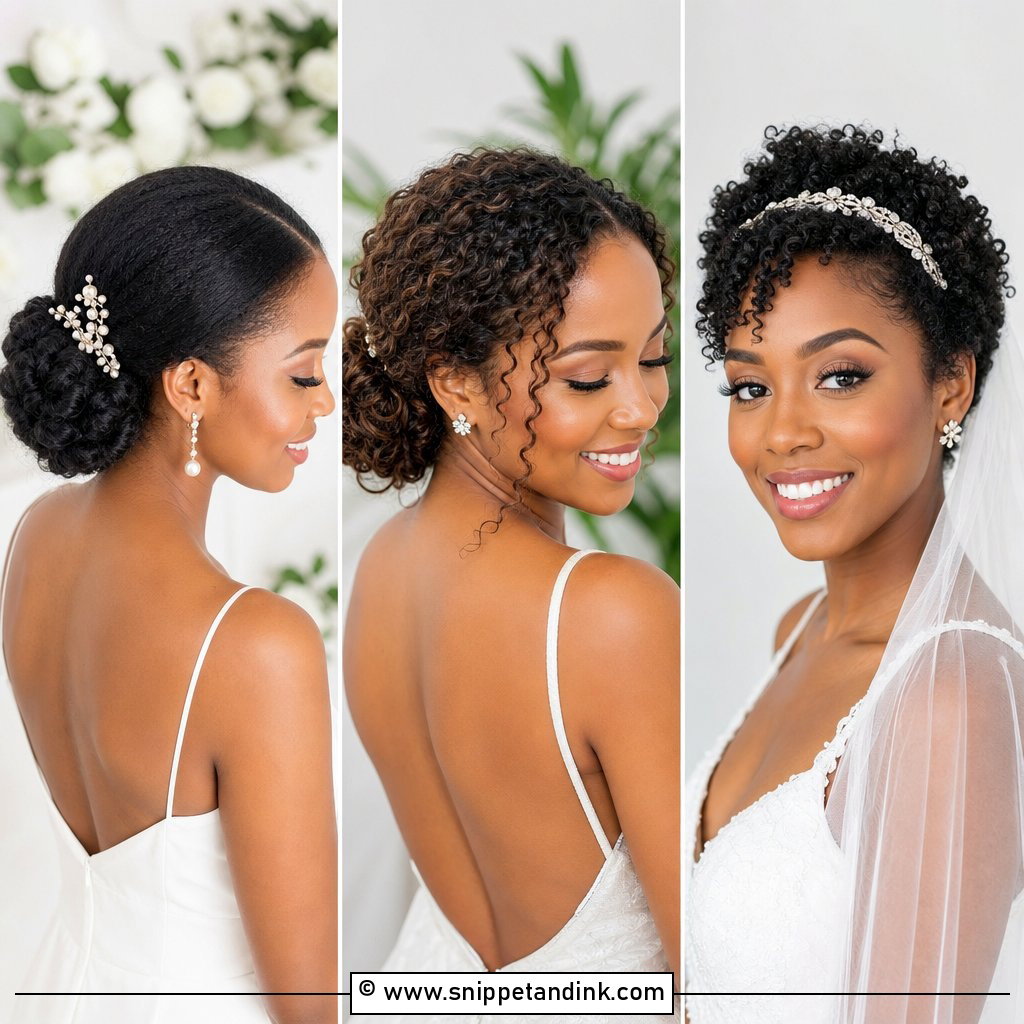
17. Wedding Hairstyle For Natural Hair
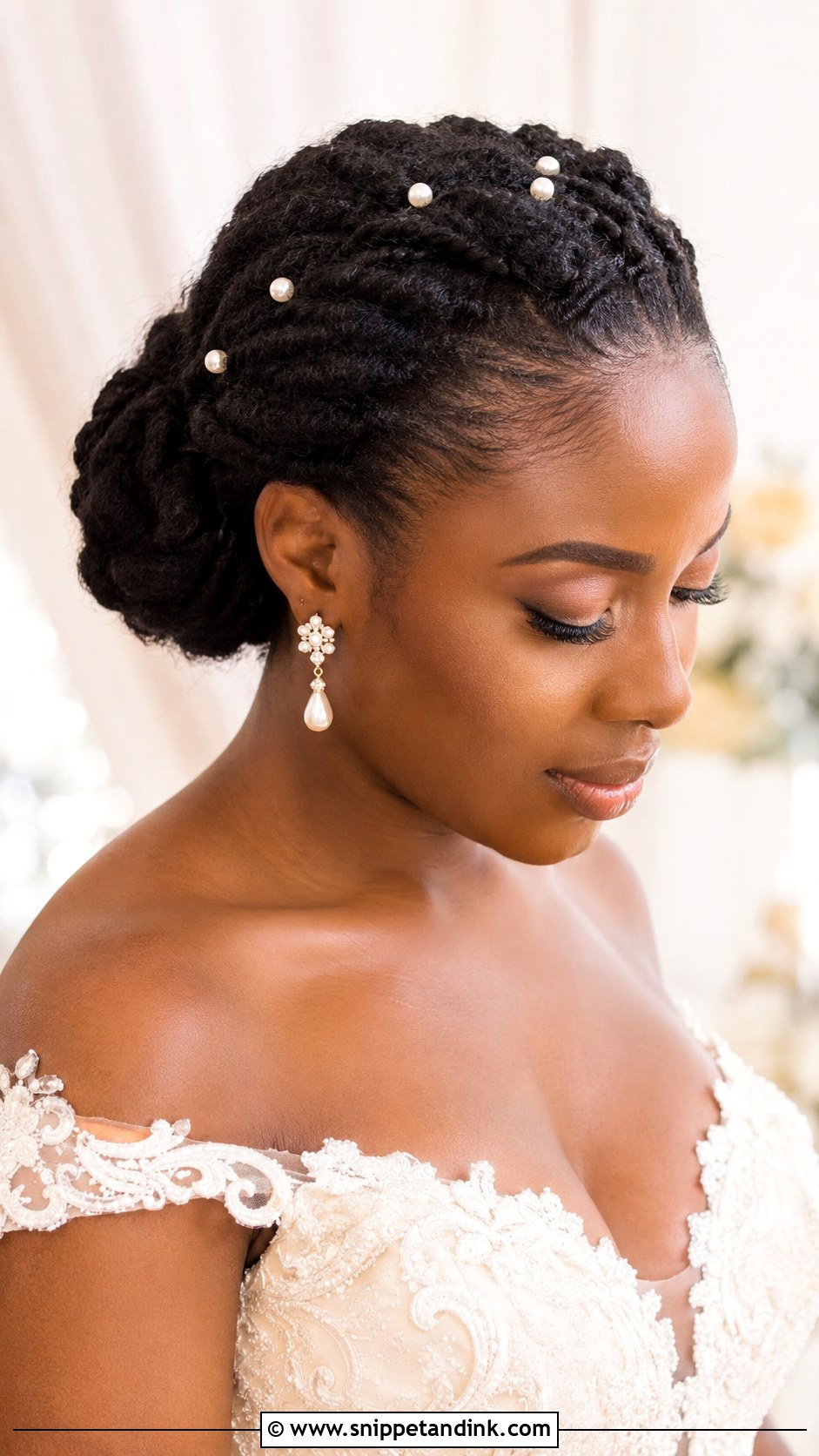
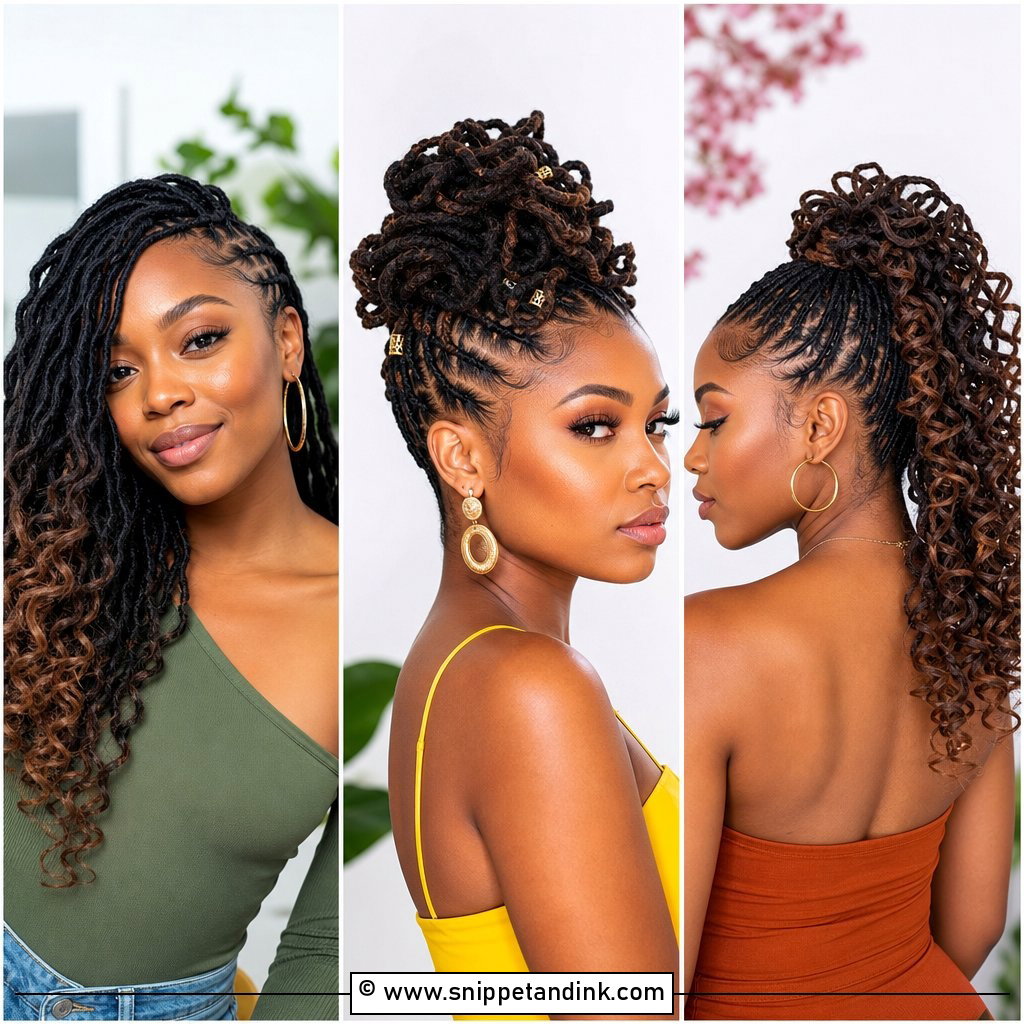
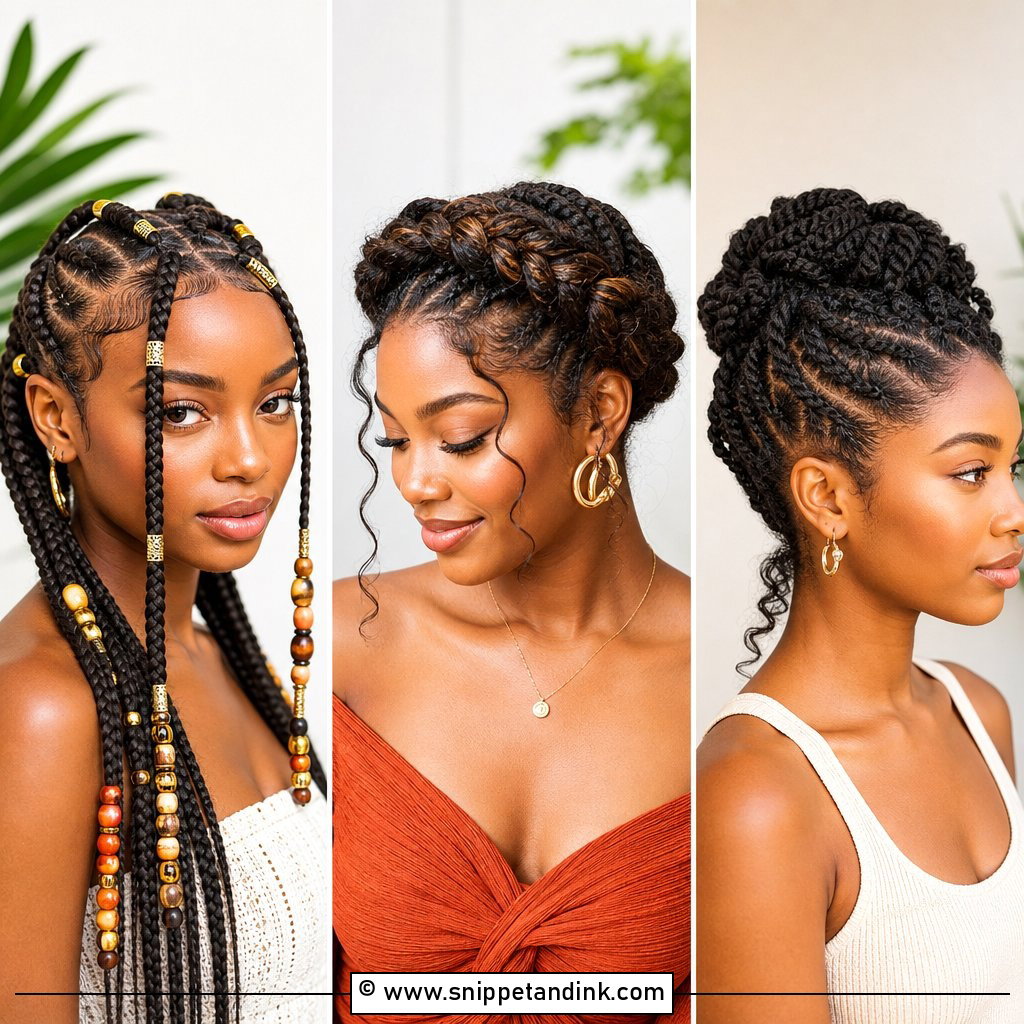
Natural hair offers a wide range: defined curls, twist-outs, braided updos, low buns, halo braids, flat twists and sculpted puffs. The right choice depends on your curl pattern, length, the expected humidity and how much volume you want. It looks great with veils, gold pins, pearls and fresh flowers. Moisture and prep matter most, so plan your wash, stretch or protective styling schedule before the wedding week. Choose a stylist who has real experience with textured hair, and ask to see her previous work on hair like yours.
18. Wedding Hairstyle For Medium Hair
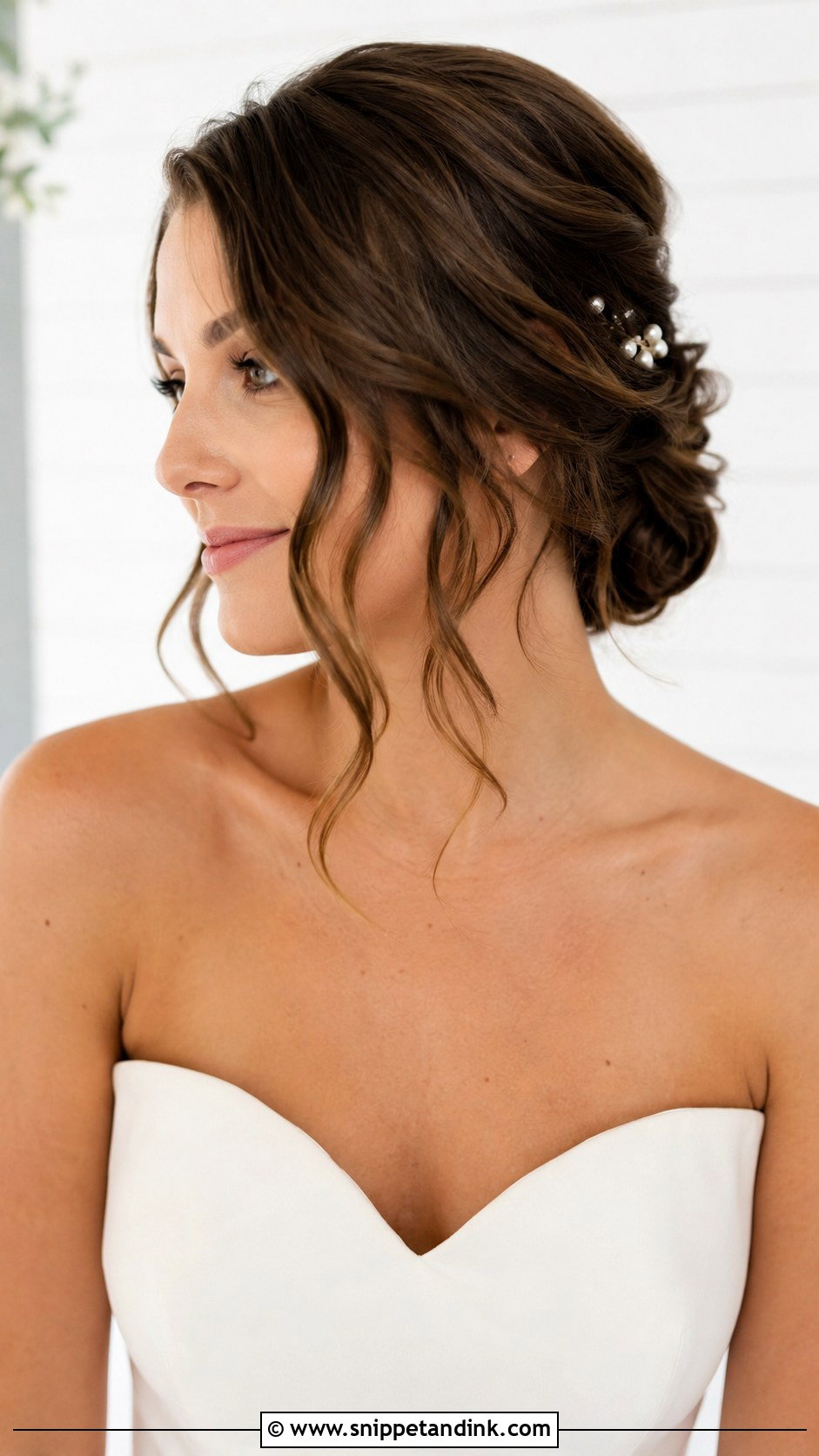
Medium hair, around the shoulders or collarbone, gives you more options than people expect. Low buns, tucked chignons, half-up waves and sleek side parts all work. If it’s just too short for a full updo, pins, padding or small extensions fill the gap. Medium hair often holds curl better than very long hair, simply because it isn’t weighed down by its own length. Bring photos from the front, side and back to your trial so you and your stylist agree on the whole shape.
19. Wedding Guest Hairstyle
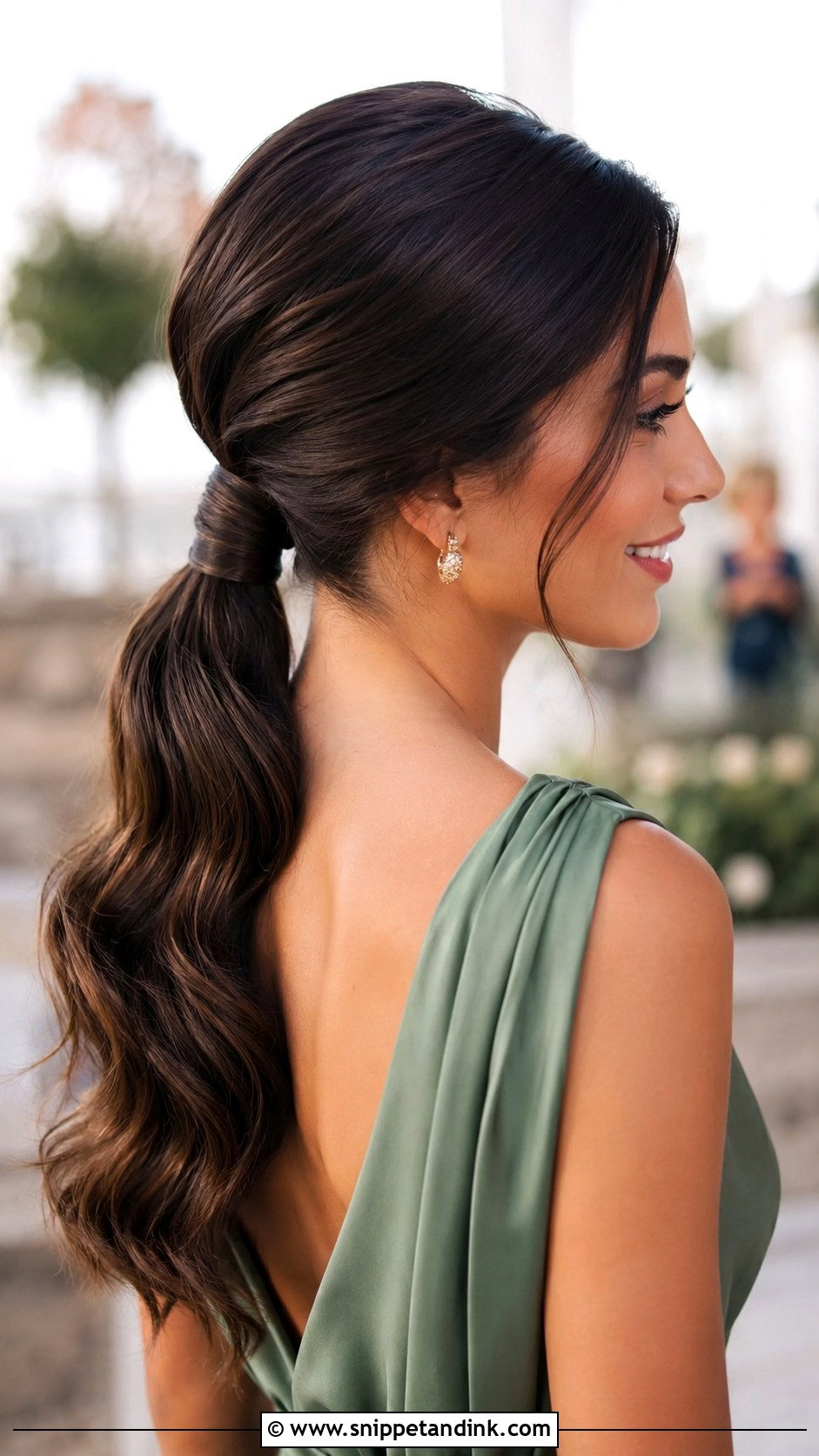
A guest’s hairstyle should look polished without competing with the bride. Soft waves, low ponytails, sleek buns, braided half-up looks and smooth blowouts are all safe choices. Let the dress code and venue guide you: a ballroom wedding suits a neater updo, while an outdoor ceremony can take soft curls or a textured ponytail. Skip anything that reads bridal, like a veil or large white flowers. Pick something you won’t need to fix every hour.
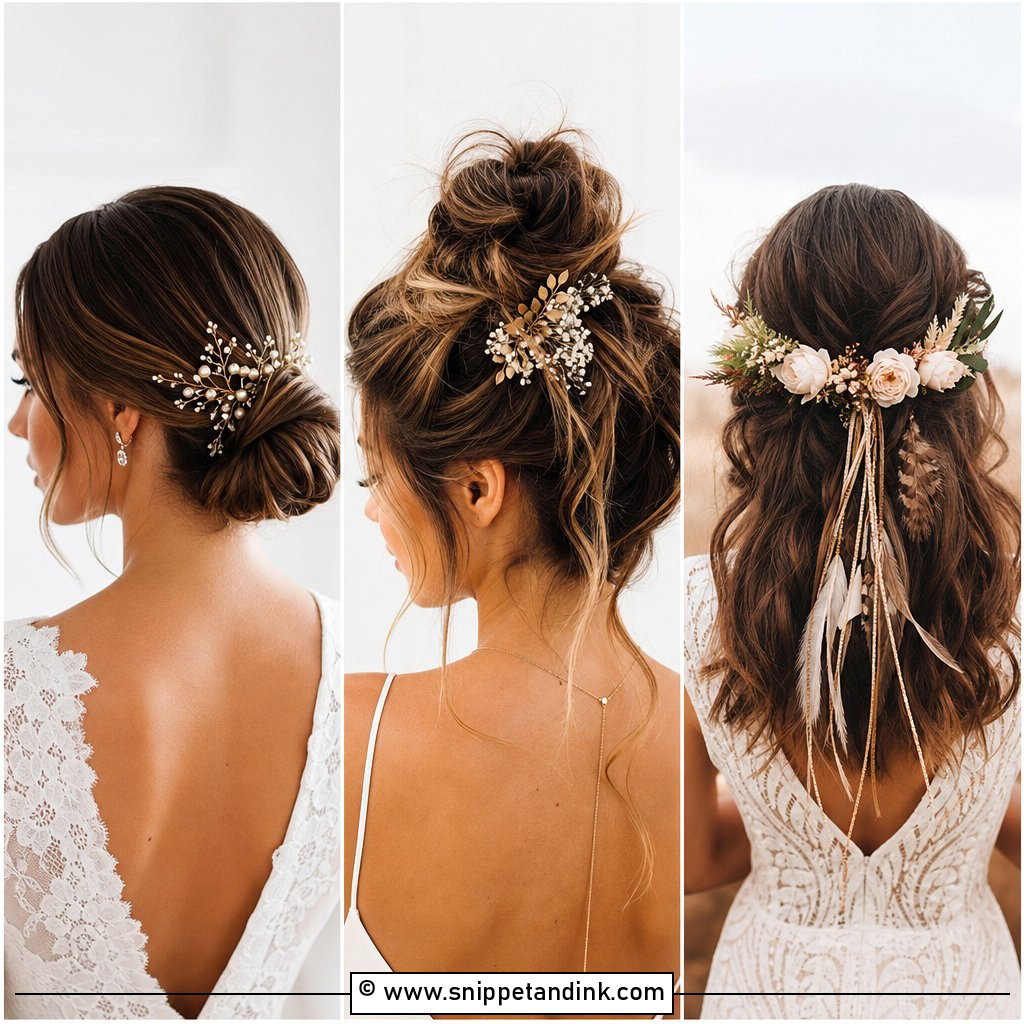
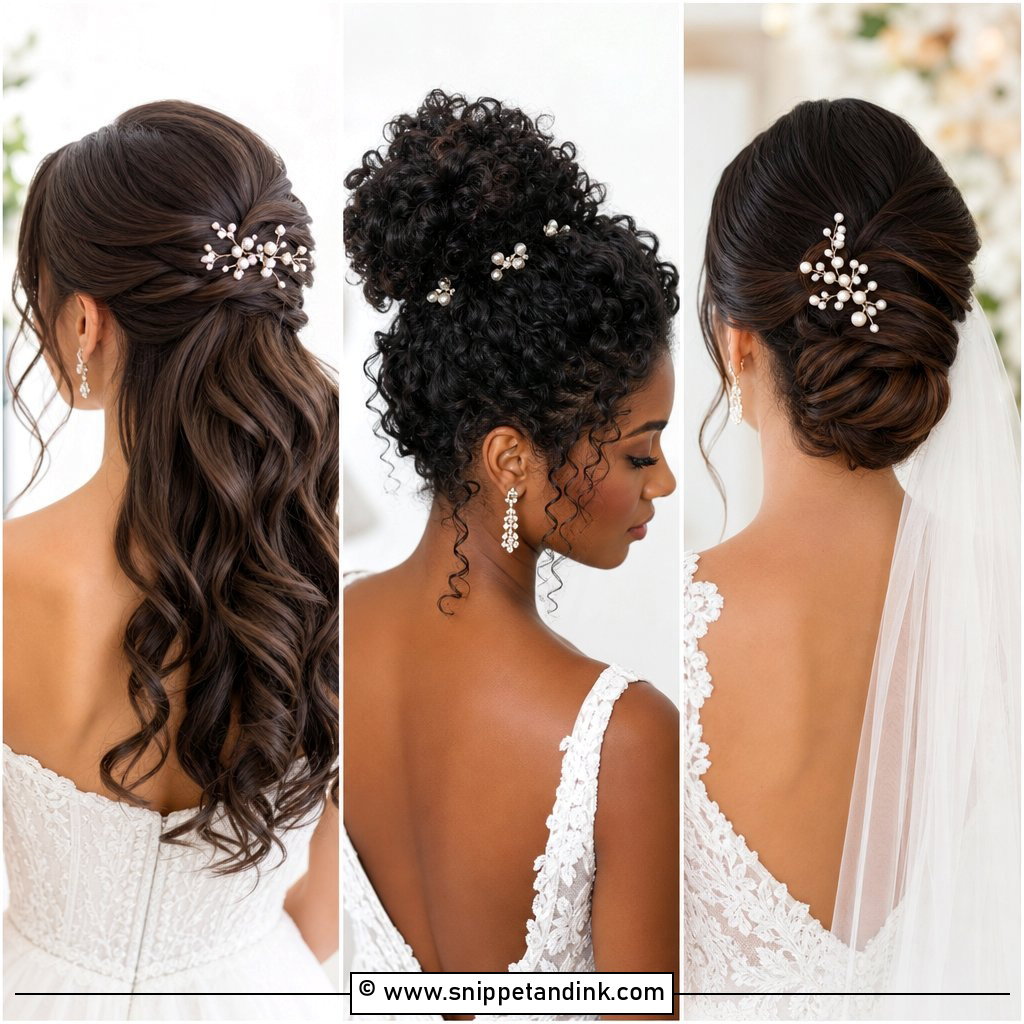
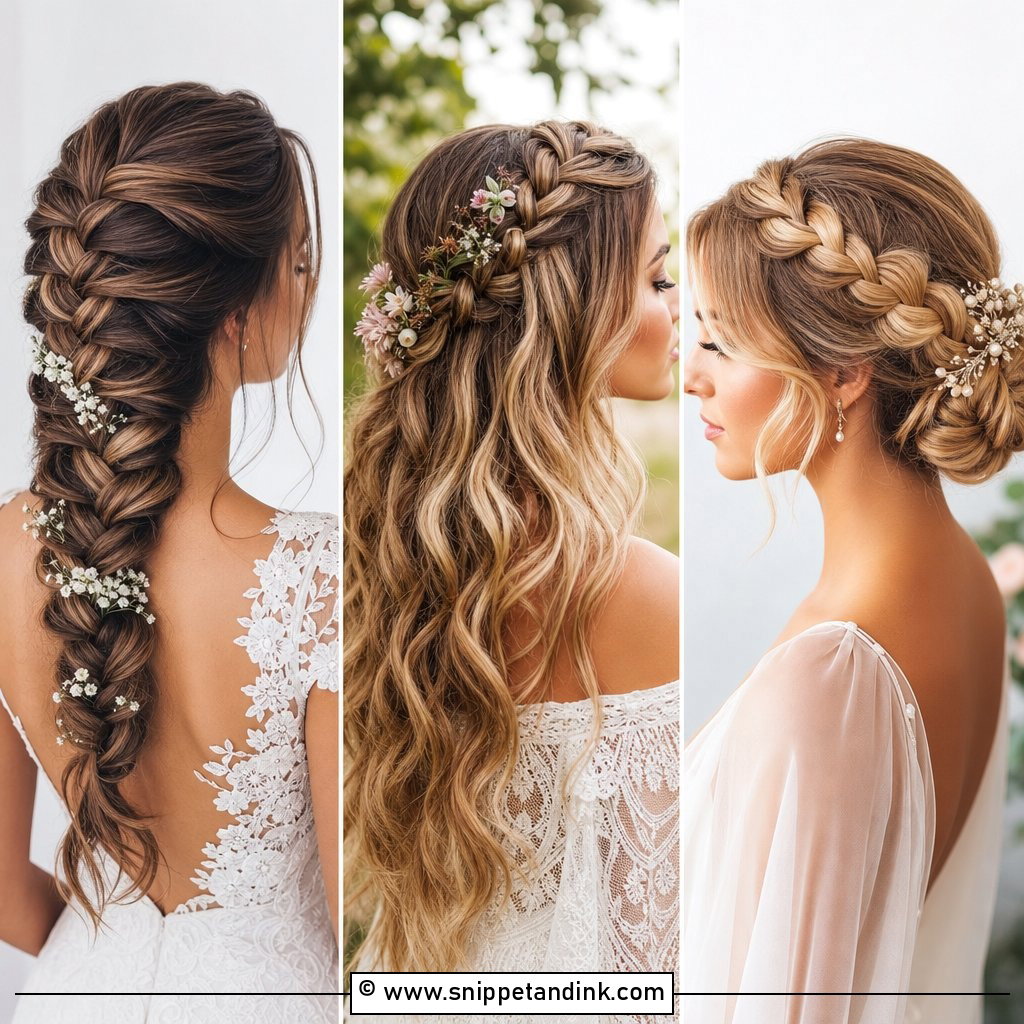
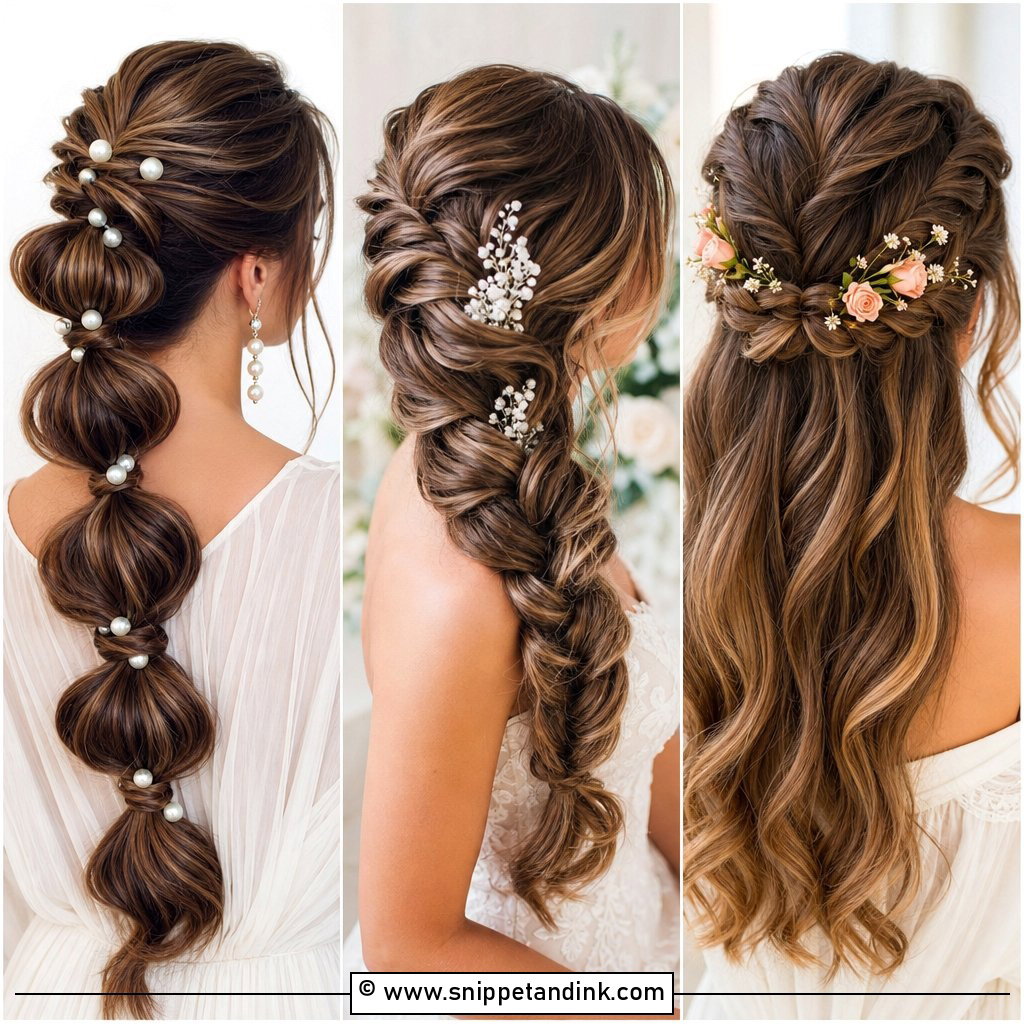
20. Bridesmaid Wedding Hairstyle
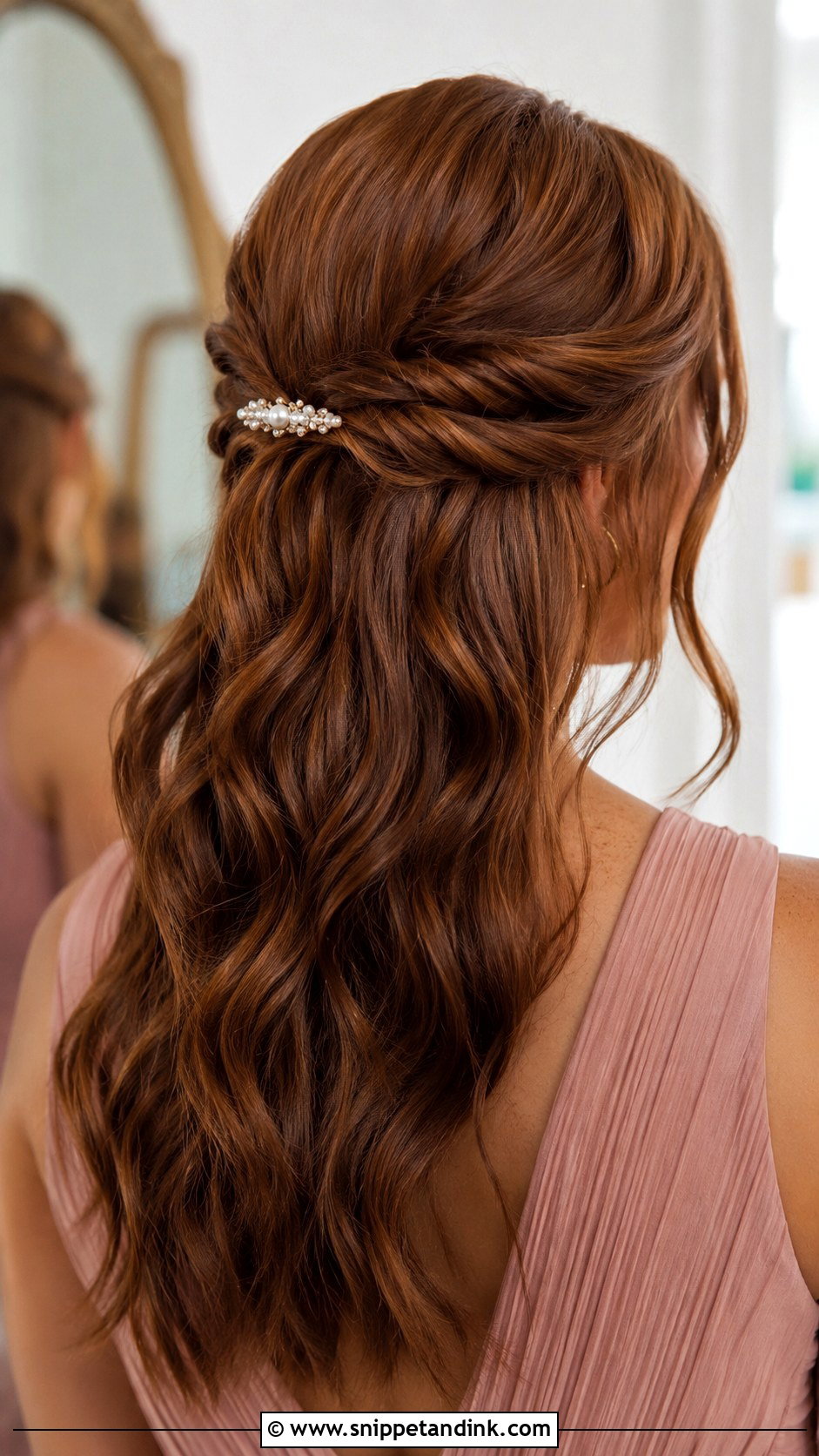
Bridesmaids rarely all wear the same style now. Many bridal parties mix buns, waves, ponytails and half-up looks, which works well when the bridesmaids have different hair lengths and textures. A shared detail, such as soft waves, a center part, pearl pins or a low placement, keeps the group together. Bridesmaid hairstyles also need to last from getting-ready photos to the dance floor. Something secure that can be refreshed with a few pins or a little spray is the practical choice.
A Guest’s Version With One Curling Iron and a Handful of Pins
Guests don’t usually have a stylist, and most of the half-up and low bun looks above can be done at home with basic tools. This is the order I’d follow:
- Start with hair washed the day before. It grips pins far better.
- Spray a heat protectant, then curl in sections about two fingers wide, all away from the face.
- Pin each curl while it cools, or at least leave it alone for ten minutes.
- Brush through with fingers or a wide comb, then gather the top or the whole length.
- Cross two bobby pins in an X wherever the hair needs to stay, and finish with a light hairspray.
Try it once a week or so before the wedding, so you know how long it takes you and whether it holds.
Accessories That Belong to the Bride
Veils, tiaras, large white flowers and long pearl vines read as bridal straight away, even on a guest. Smaller gold or tortoiseshell clips, a ribbon or a single colored flower add something without stepping on her toes. Bridesmaids are different: the bride often chooses or approves their accessories, so check with her first.
Fit the Style to the Dress, Then to the Forecast
The right style is the one that makes you feel confident and like yourself. Trends can help narrow the field, but your dress, venue, hair texture and face shape should decide it. Low buns, half-up waves, chignons, sleek ponytails, Hollywood waves, braids and natural curls each have a place. Schedule a trial, bring clear photos, test your veil or accessories, and be honest about weather worries. A well-planned style lets you forget about your hair and enjoy the day.
You'll Like These Ideas:


Leave a Reply